

「手つかずの廃墟」の記憶を留める遺跡の再生 - 230年放置された城に機能を付与する現代的介入〈シュテルノルプ城跡〉
©︎ Felix Gerlach
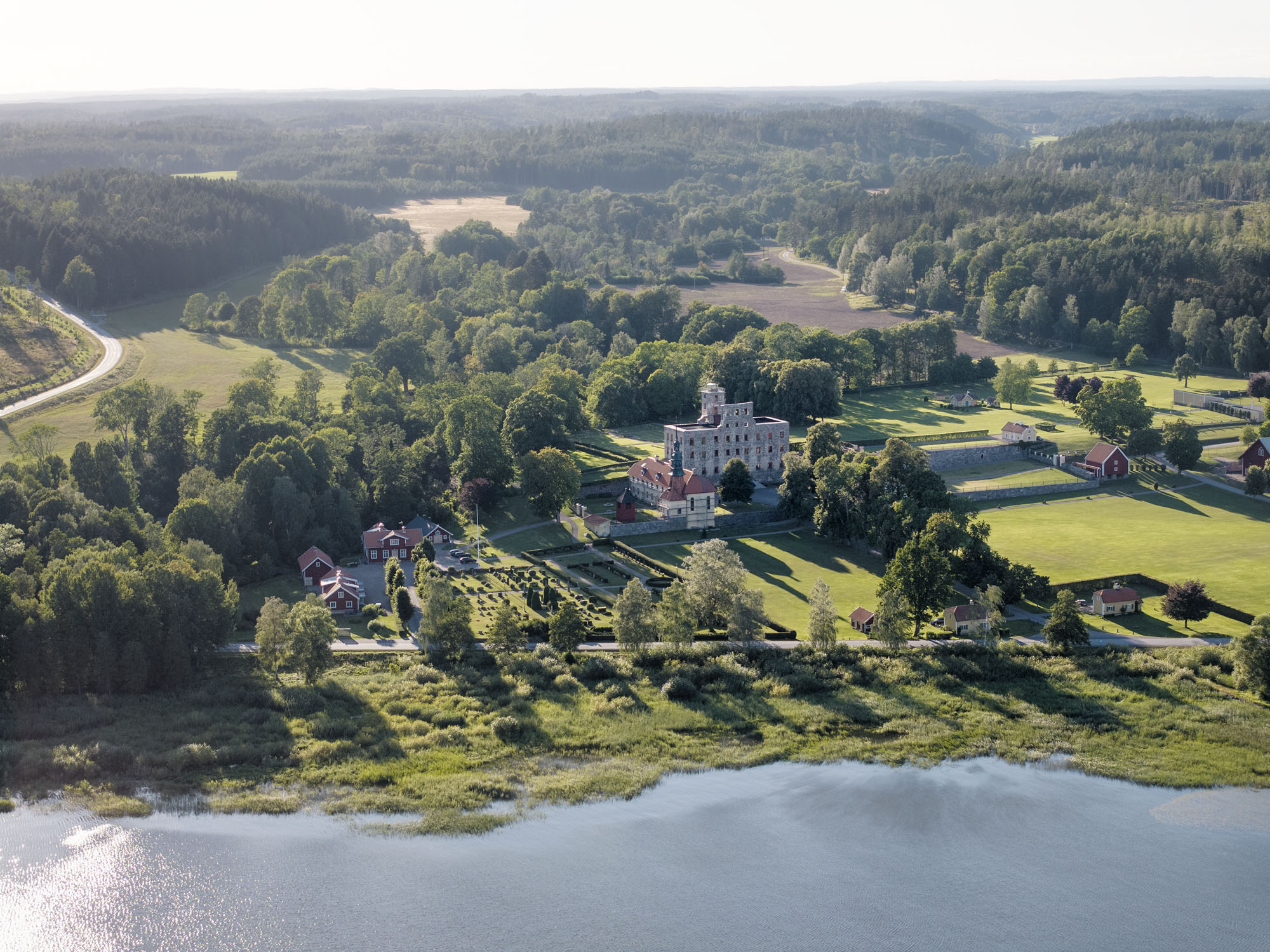
スウェーデン、リンシェーピング郊外の湖畔に位置する〈シュテルノルプ城跡(Stjärnorp Castle Ruin)〉は、230年以上にわたり放置された古代遺跡を立ち入り可能な状態へと再生したプロジェクトです。
スウェーデンの建築事務所 Tengbom(旧ヴィケルスタール・アーキテクト)が設計しました。
注目ポイント
- 「手つかずの廃墟」の佇まいを残す再生プロジェクト
- 既存の石造物を保護する現代的な構造要素やディテール
- 地場産木材とのハイブリッド構造による補強
- 既存空間と対比を生む、耐候性鋼と真鍮の手すりの現代的な階段
(以下、Tengbomから提供されたプレスキットのテキストの抄訳)
©︎ Felix Gerlach
©︎ Felix Gerlach
©︎ Felix Gerlach
湖畔に佇むシュテルノルプ城の歴史
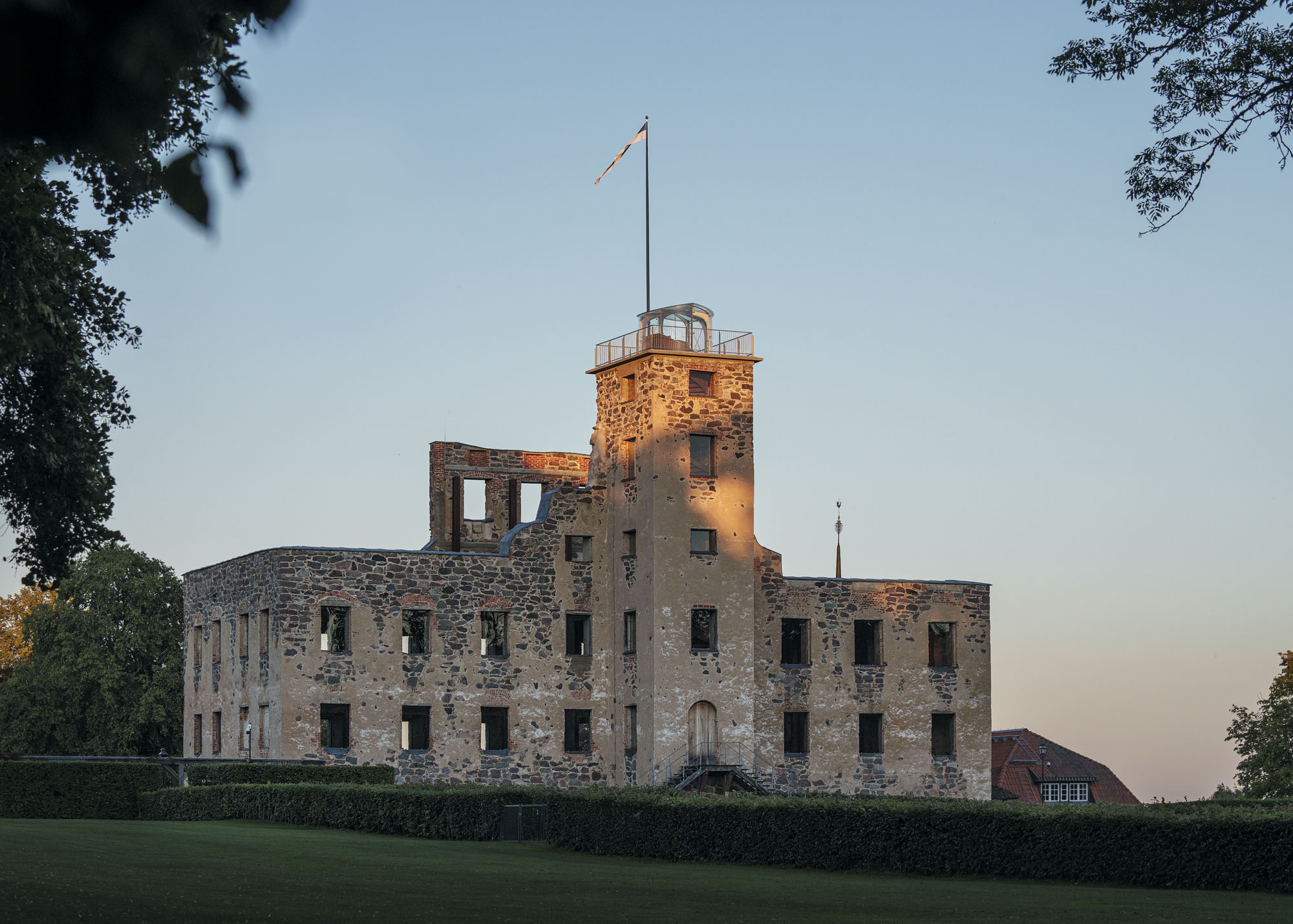
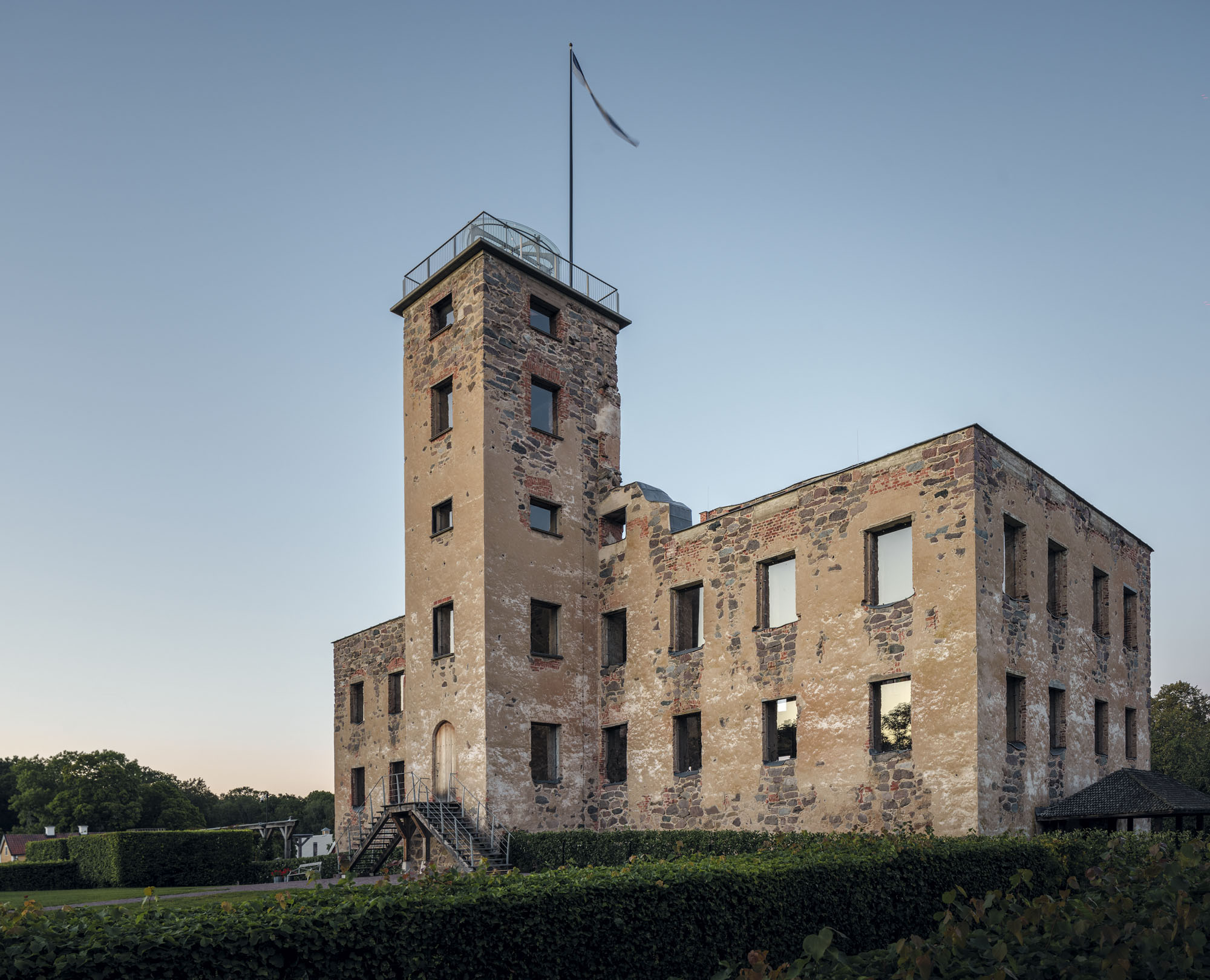
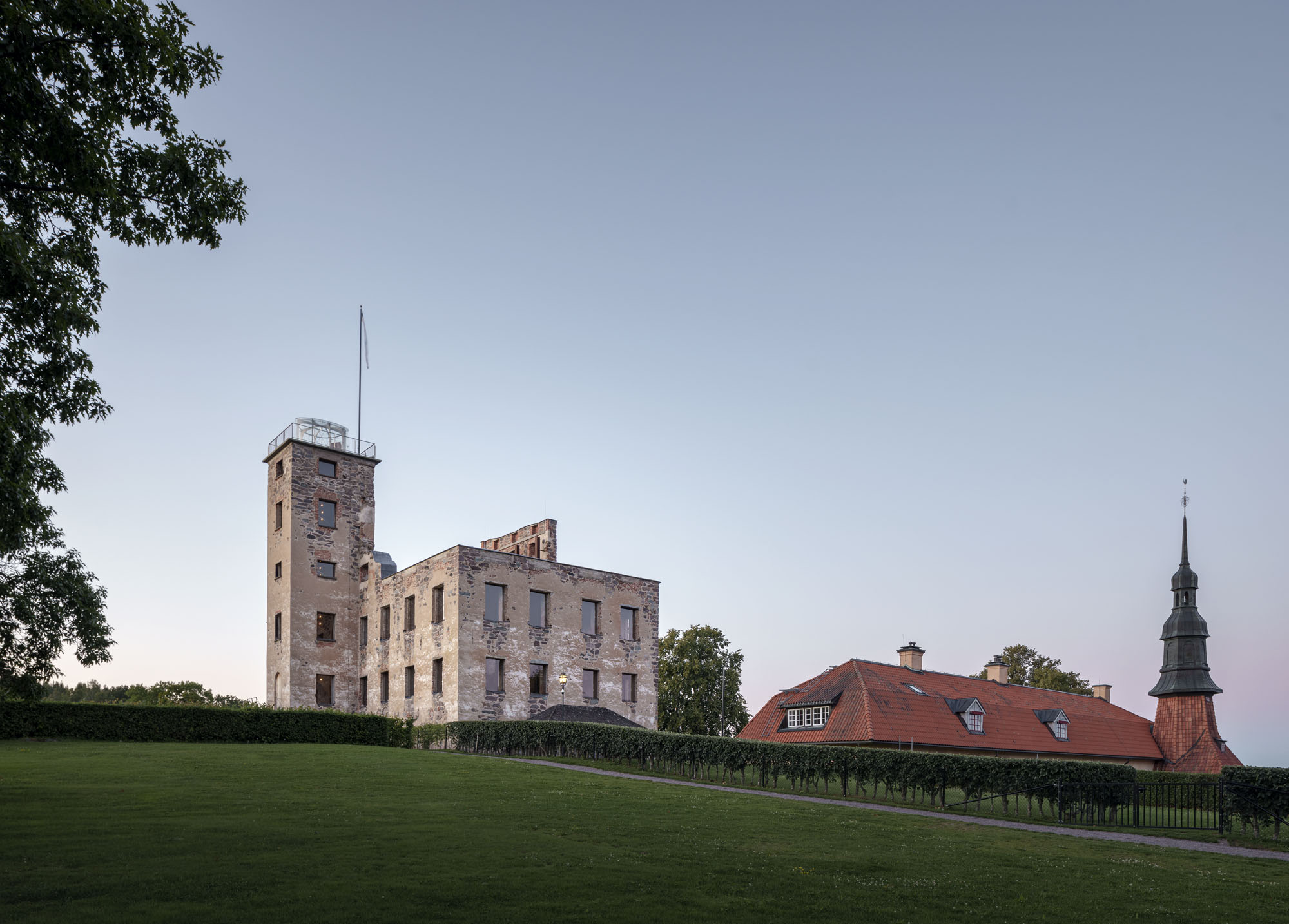
リンシェーピングの郊外、ロクセン湖の西岸には、シュテルノルプ城の遺跡が佇んでいる。この城は1654年から1662年の間に建設され、設計はニコデムス・テッシン(Nicodemus Tessin the Elder)によるものとされている。
かつての敷地内には、西側の公園に面して階段塔を備えた4階建ての石造本館と、東側のロクセン湖に面した2つの翼棟が配置されていた。この在りし日の城の姿は、1697年に出版されたエリク・ダールベルグ(Erik Dahlbergh)の著書『スウェーデンの古今(Suecia Antiqua et Hodierna)』にも描かれている。
©︎ Felix Gerlach
©︎ Felix Gerlach
大火による焼失と、230年にわたる廃墟化
1789年に発生した大火により、本館と両翼棟は焼失してしまった。城内礼拝堂を含む翼棟はその後修復されたものの、本館は廃墟のまま放置され、230年以上にわたり風雨にさらされ続けることとなった。
20世紀を通じて行われたのはごくわずかな補強工事のみであり、現在、この廃墟は保護対象の古代遺跡として指定されている。
©︎ Felix Gerlach
遺跡保存と活用に向けたプロジェクトの始動
2012年、スターノープ・エステート(Stjärnorp estate)は、廃墟を保存しつつも限定的な立ち入りを可能にする方法を模索するため、建築設計の並行委託を開始した。その結果、提案の策定および実現を担う設計事務所として、ヴィケルスタール・アーキテクト(Wikerstål Arkitekter、後に2017年にTengbomに買収)が選定された。
©︎ Felix Gerlach
廃墟の趣を残す、慎重な修復と保護アプローチ
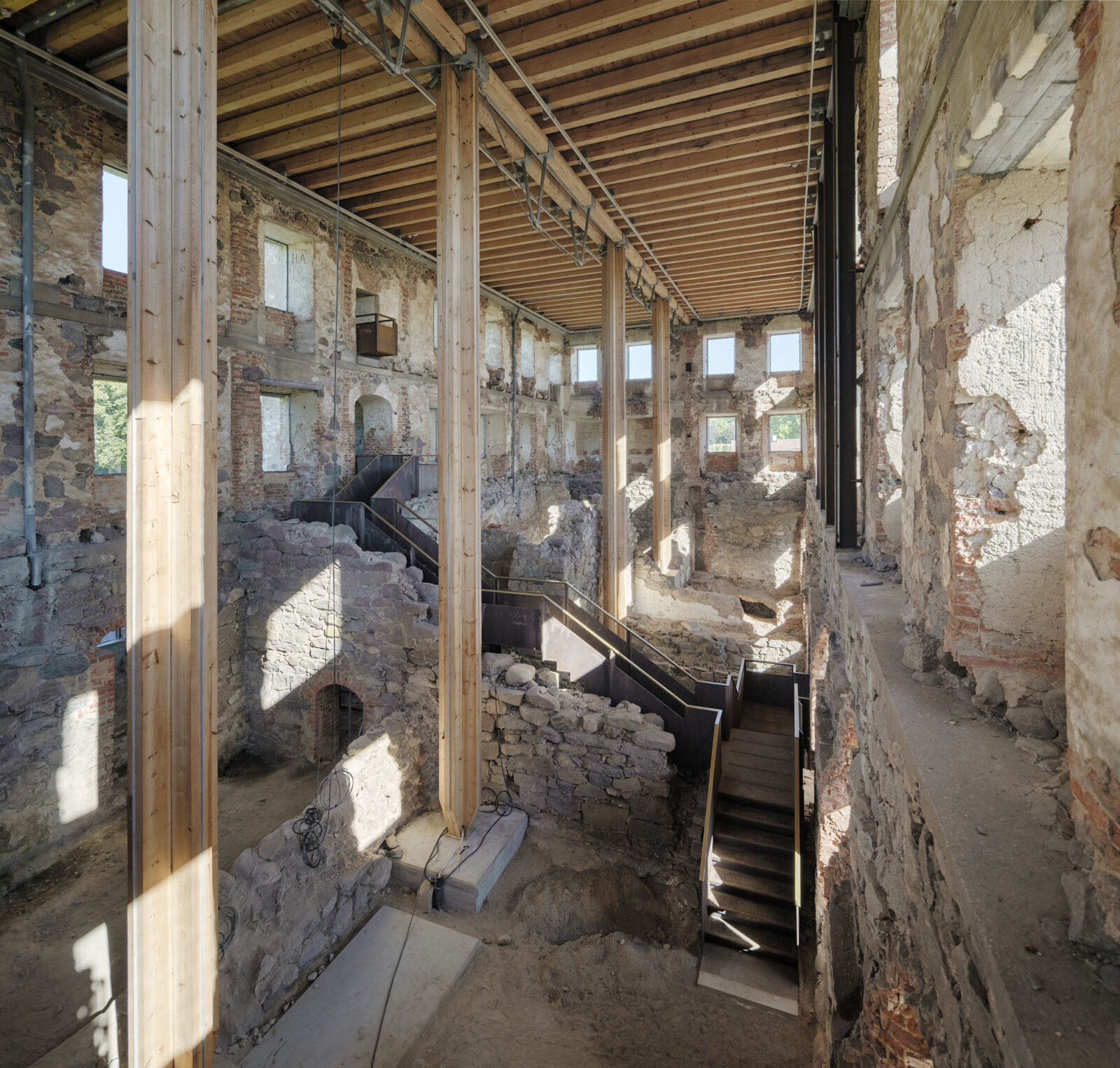
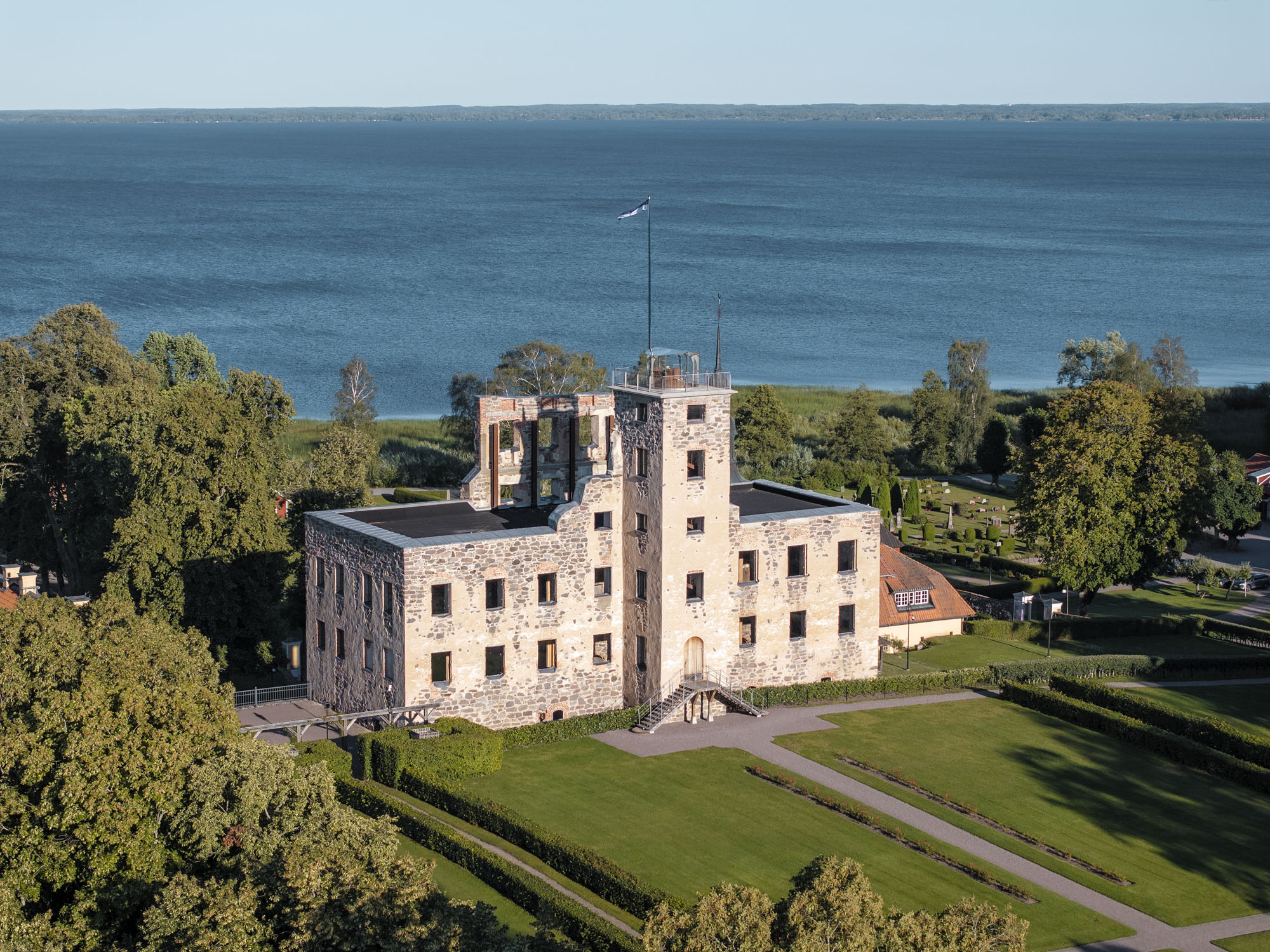
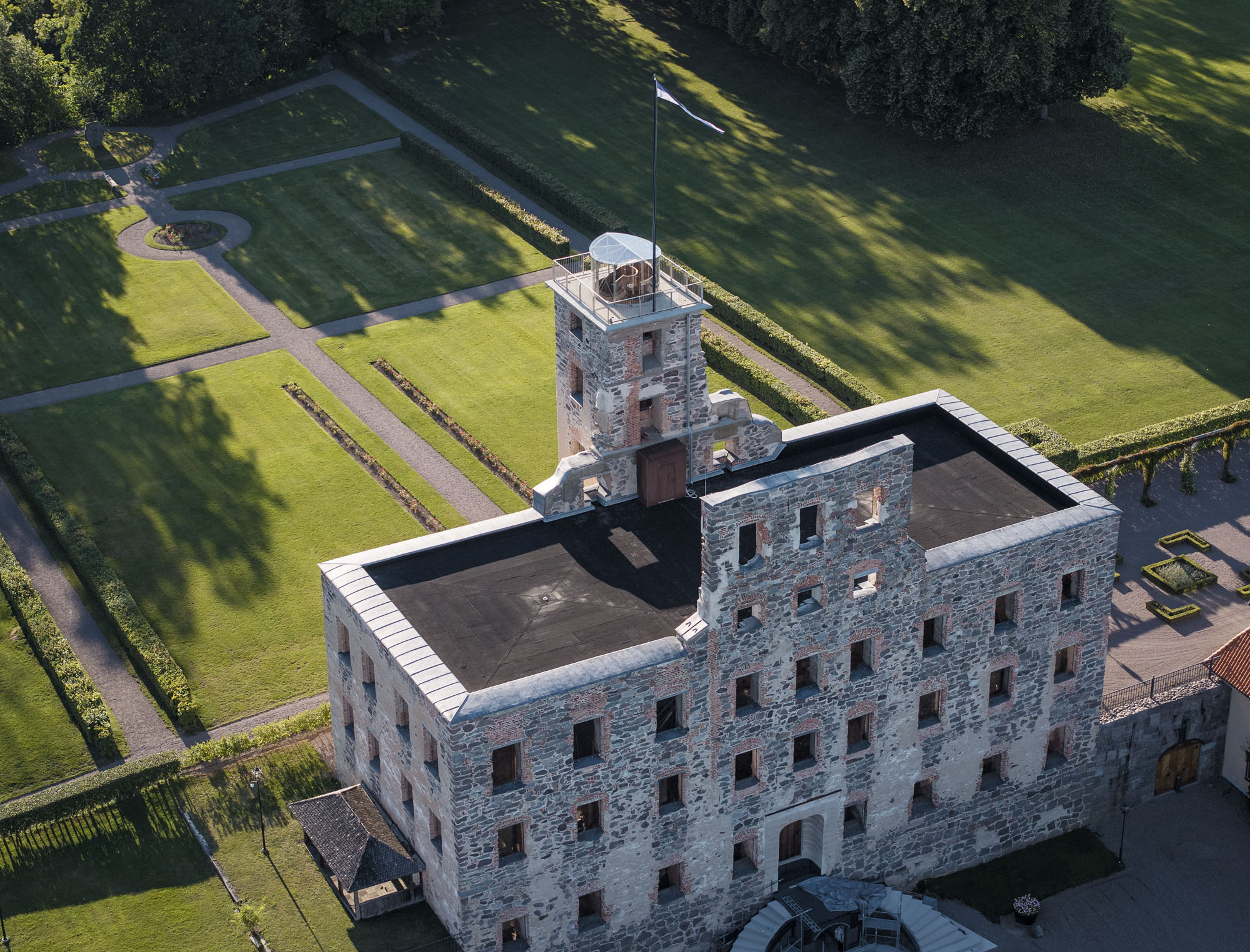
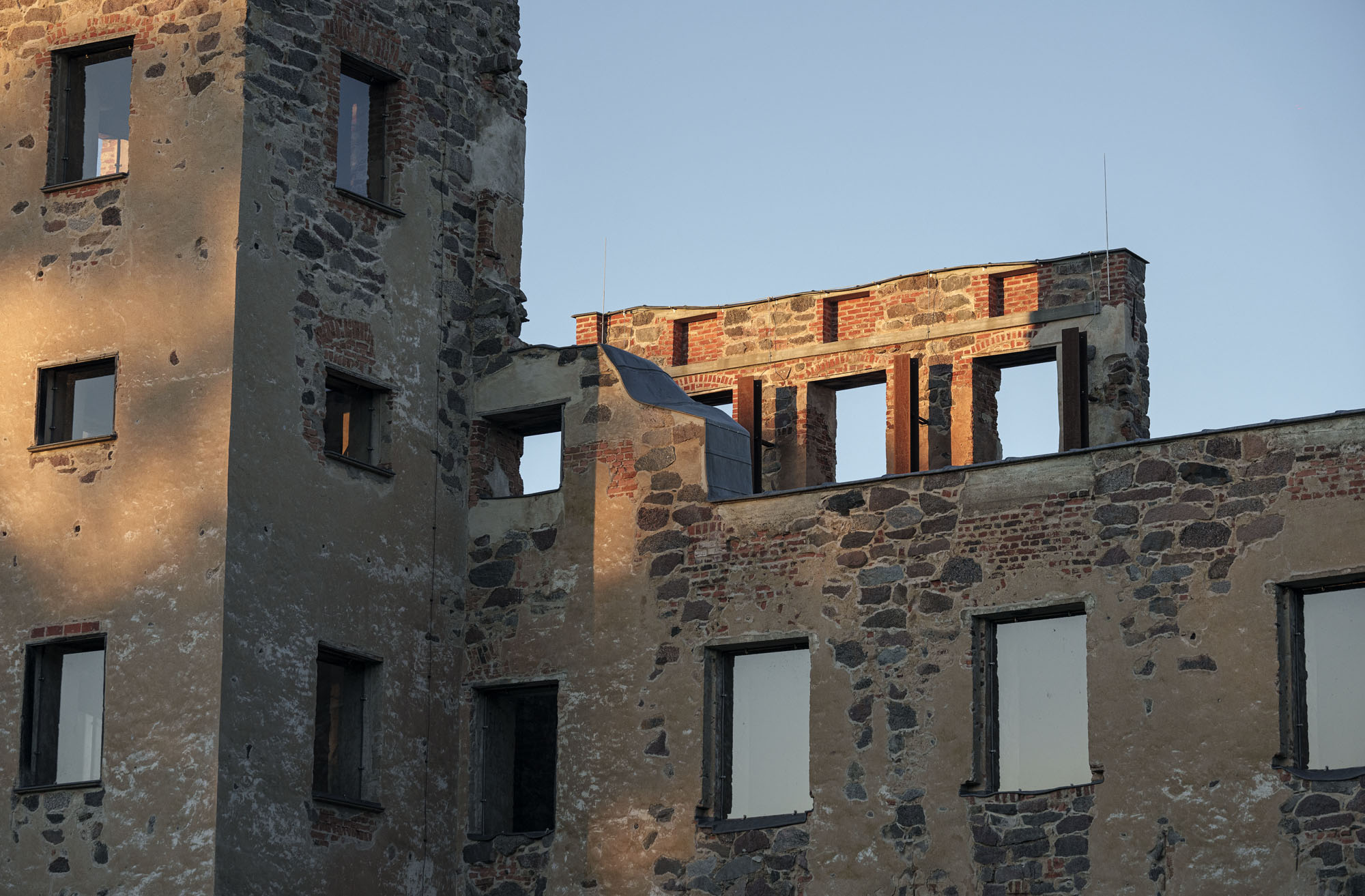
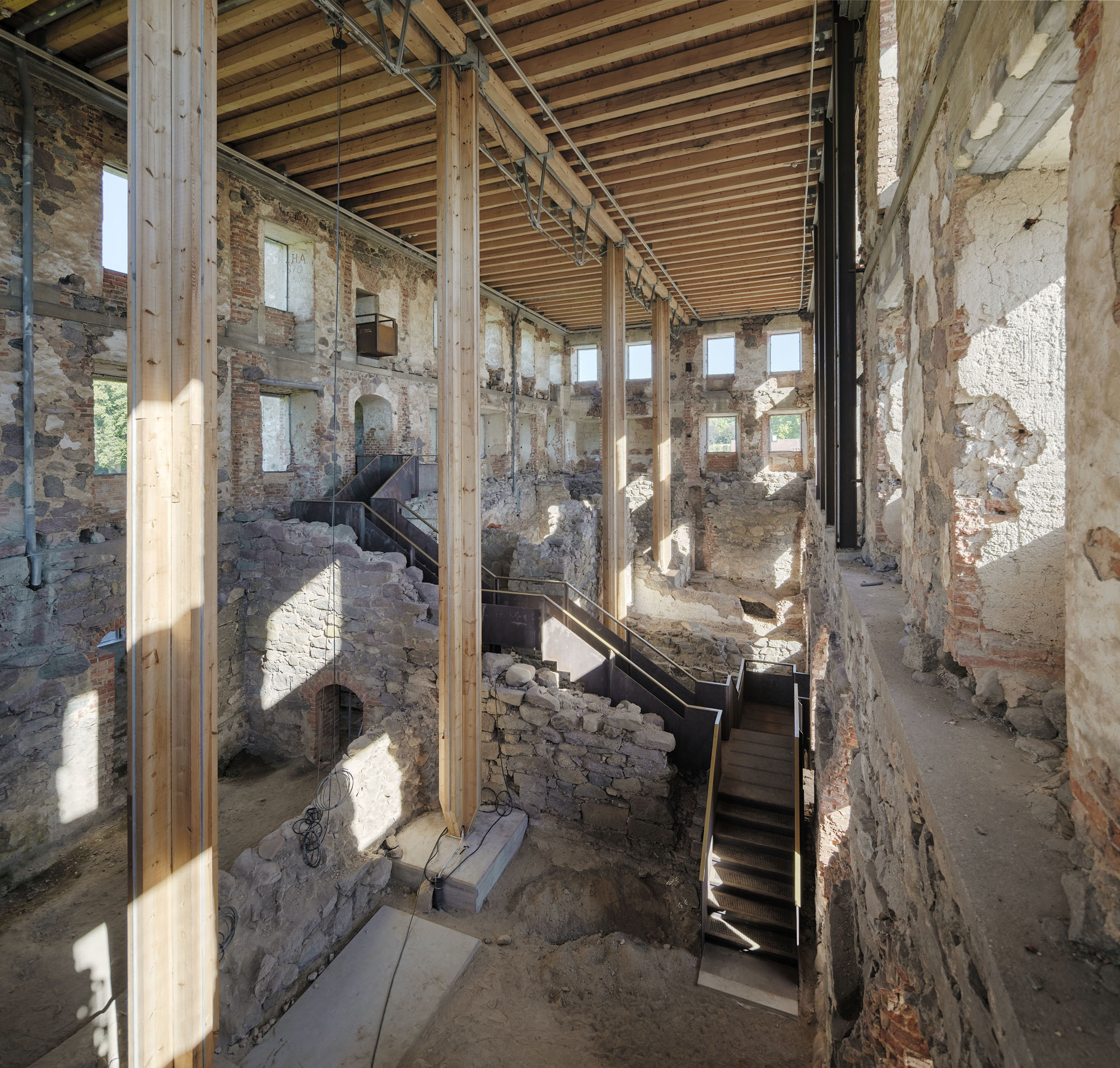
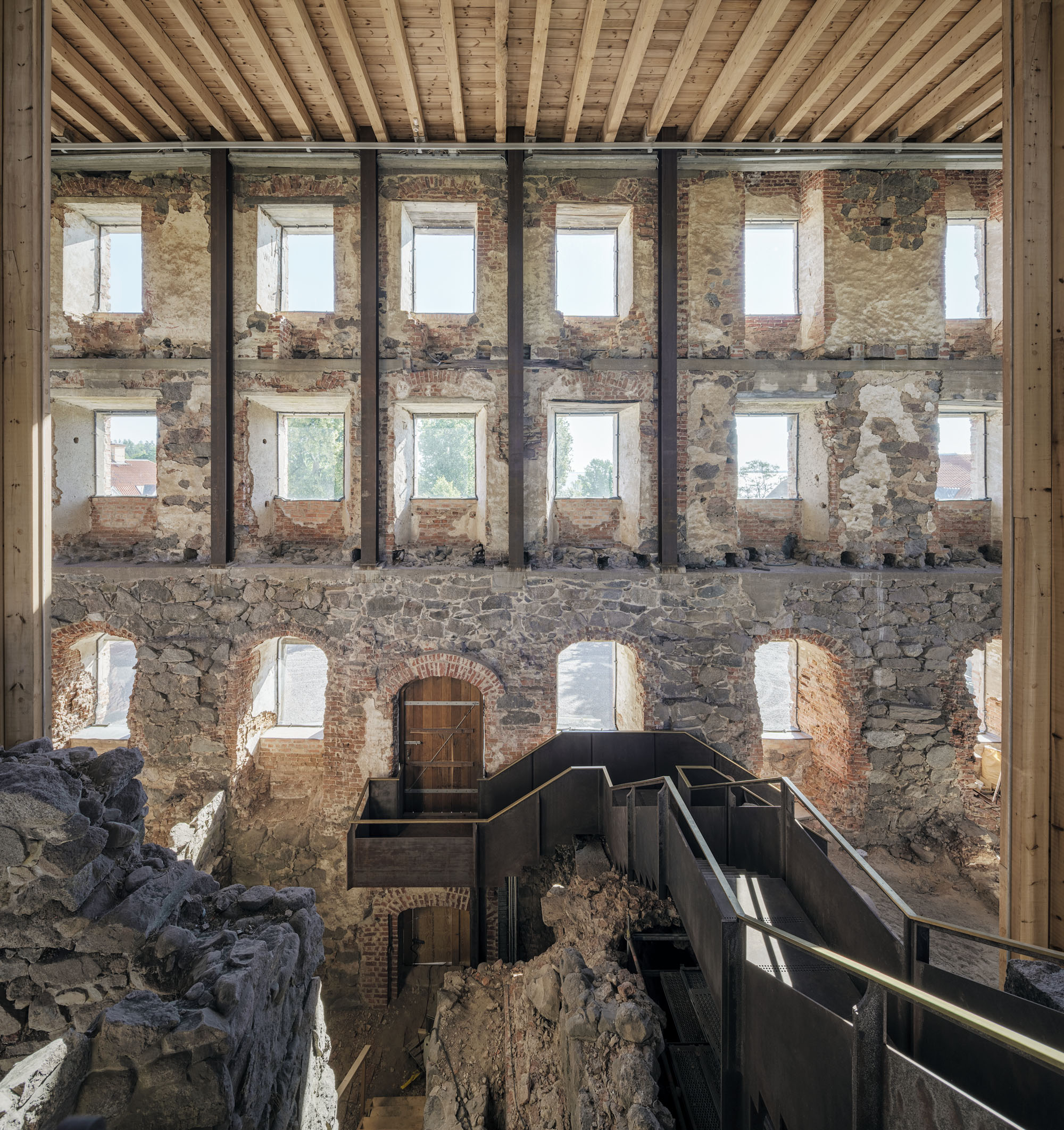
近年、石造りの保存と控えめな建築的追加を組み合わせた、慎重な修復作業が実施された。外観においては、あくまで「手つかずの遺跡」という印象を維持することを目指している。一方、内部には元の支持点で支えられた保護用の屋根構造が新たに追加された。
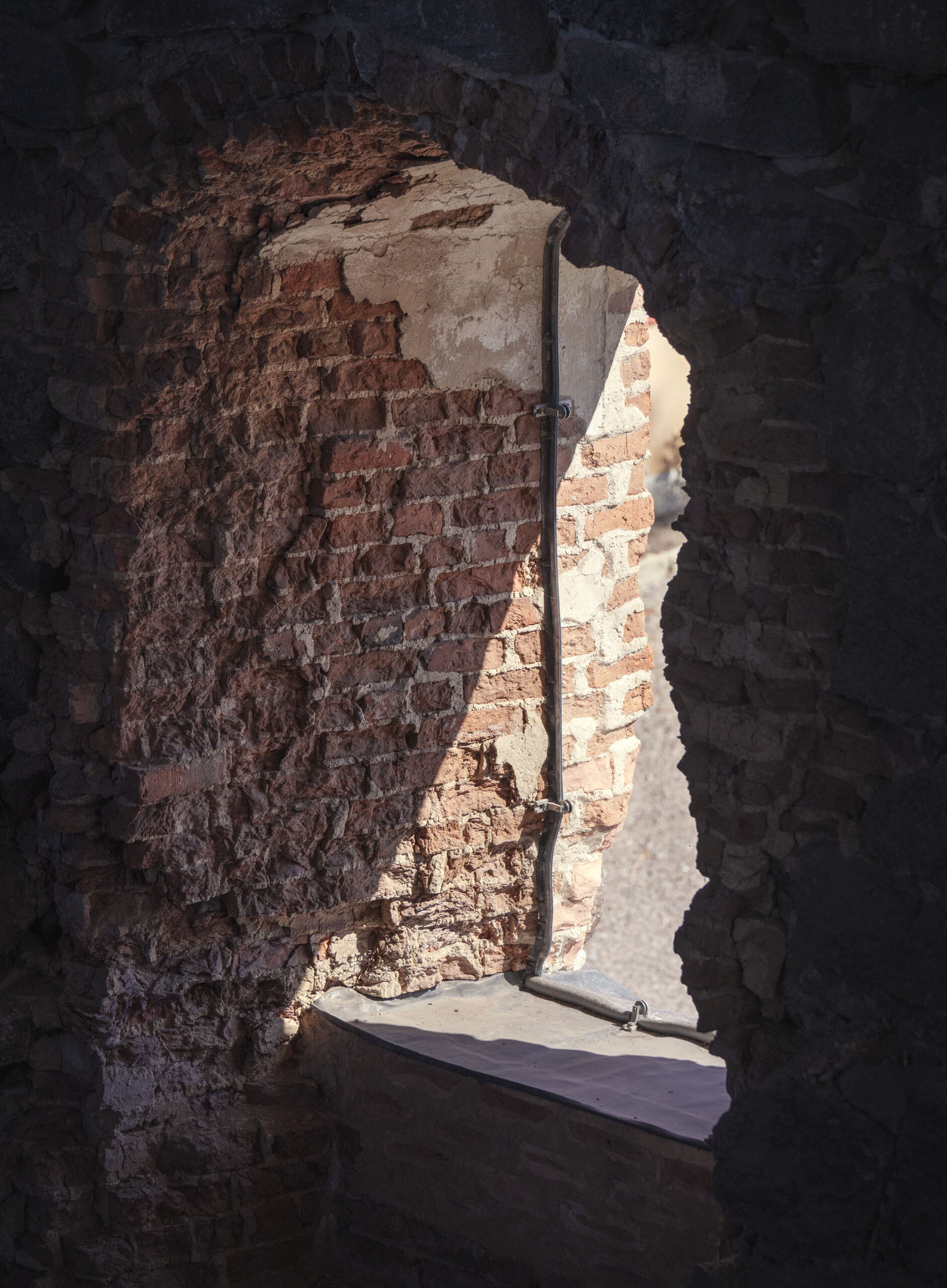
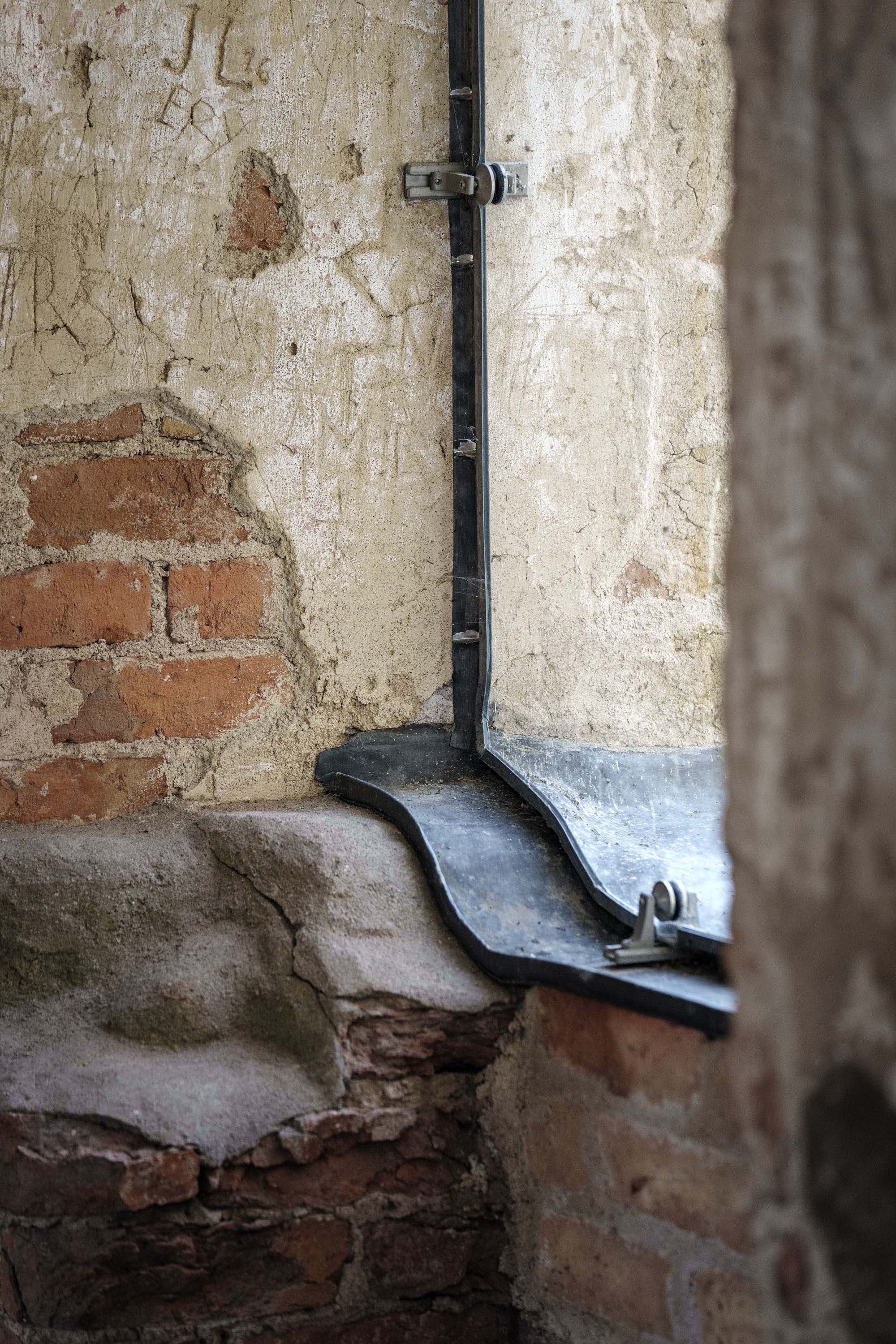
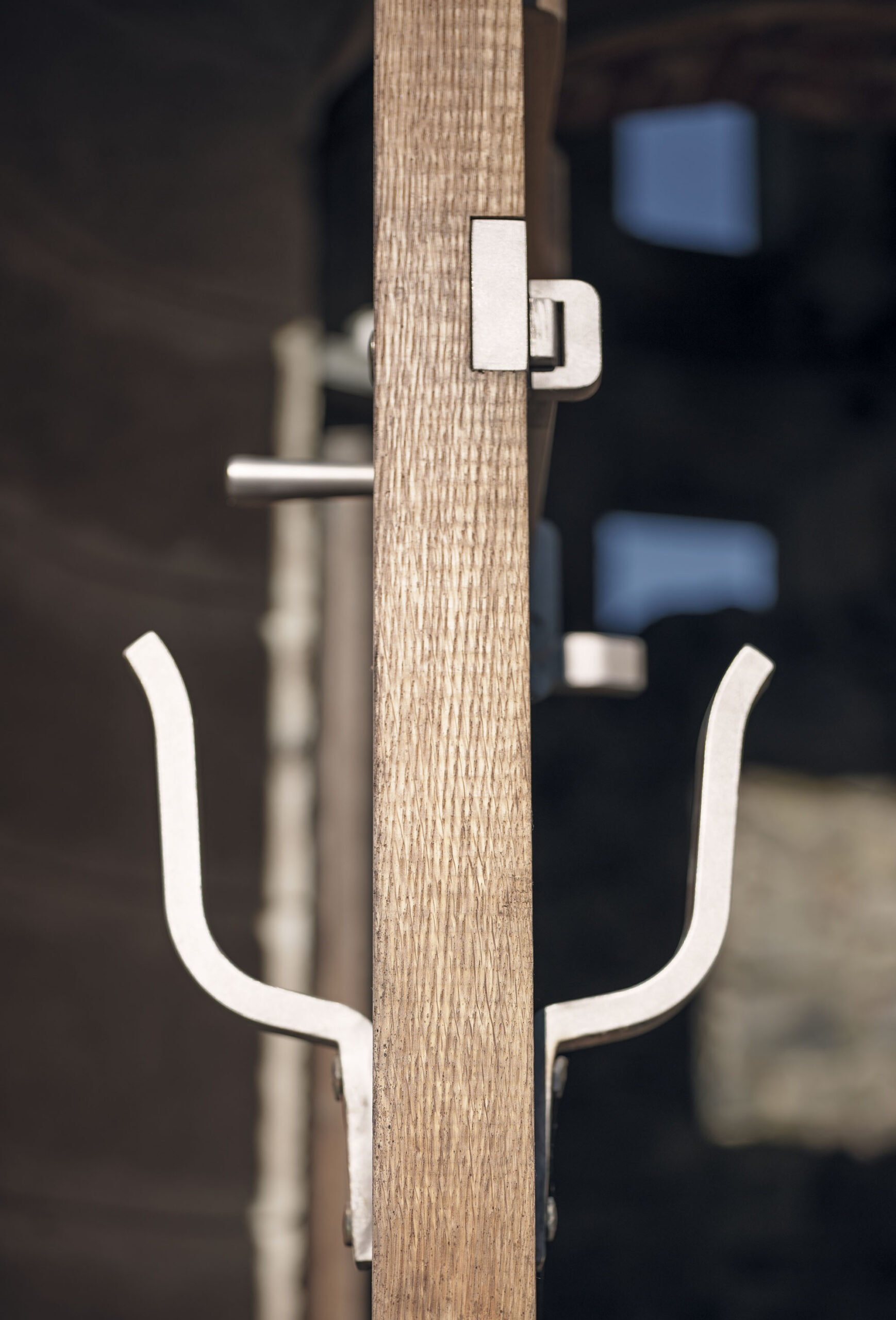
壁の上部と窓の欄干には曲面加工を施した鉛板が被せられ、窓の開口部には特注の合わせガラスを設置。さらに、オーク材の板張りによる新しい外扉も導入されている。
©︎ Felix Gerlach
©︎ Felix Gerlach
敷地内の木材を活用した屋根構造と構造補強
屋根構造には、敷地内の森林から調達した木材を現場で製材し、切断せずに一本のまま(全長材)用いた梁が使用されている。また、崩壊してしまった中央壁は、防火対策として木材で覆われた鉄骨柱に支えられた二重梁へと置き換えられた。
©︎ Felix Gerlach
アクセシビリティを向上させる現代的な階段の追加
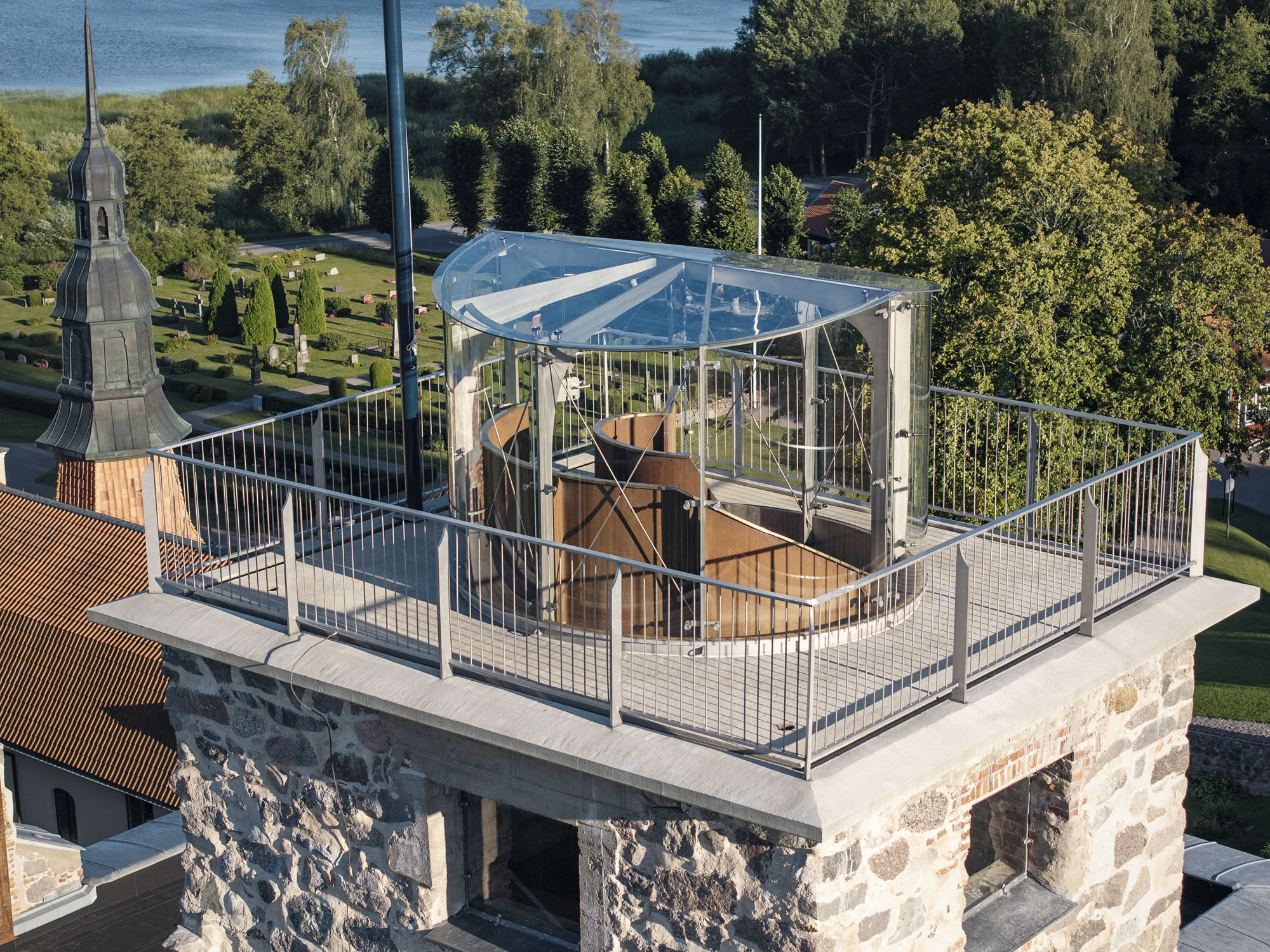
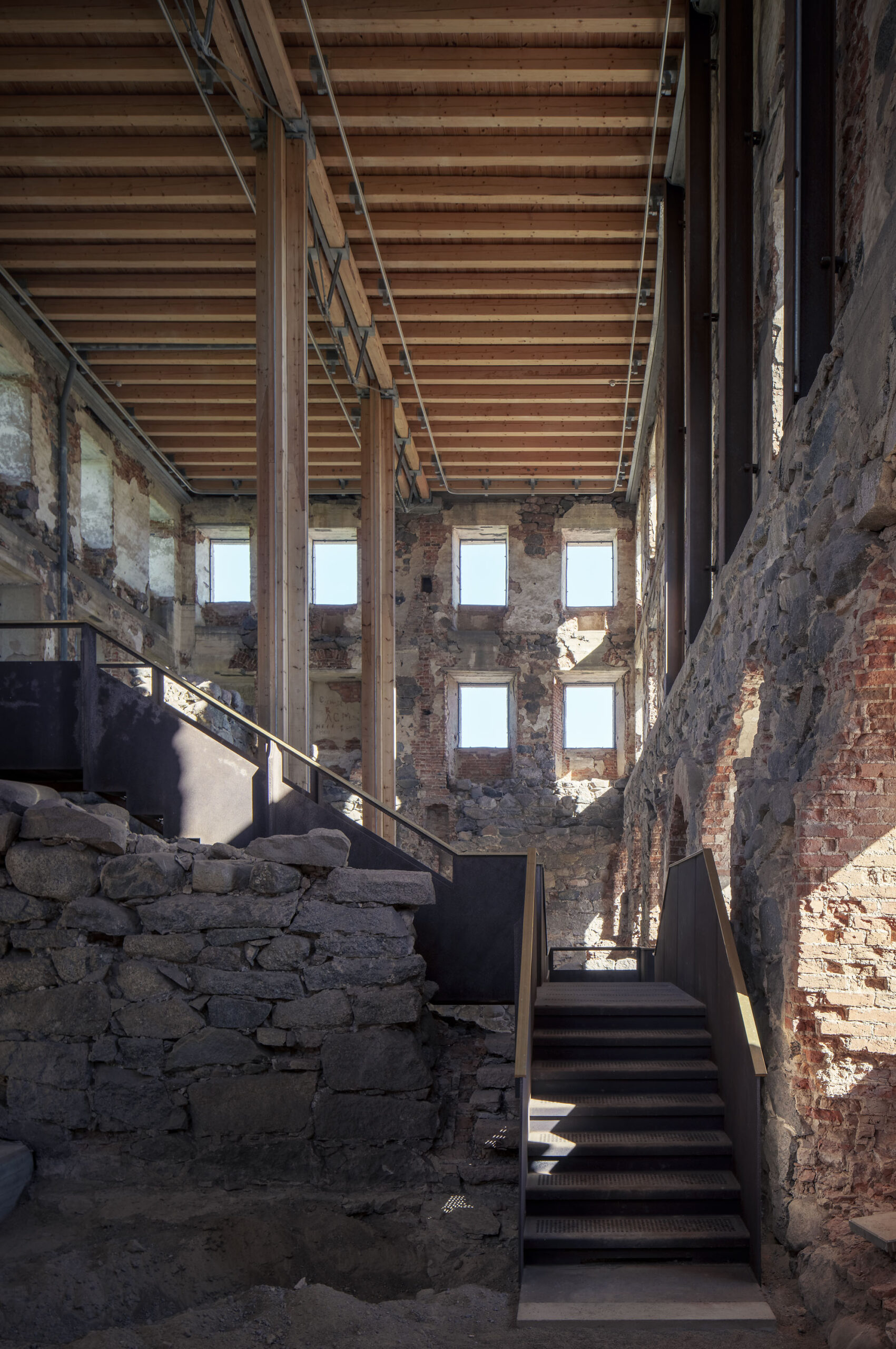
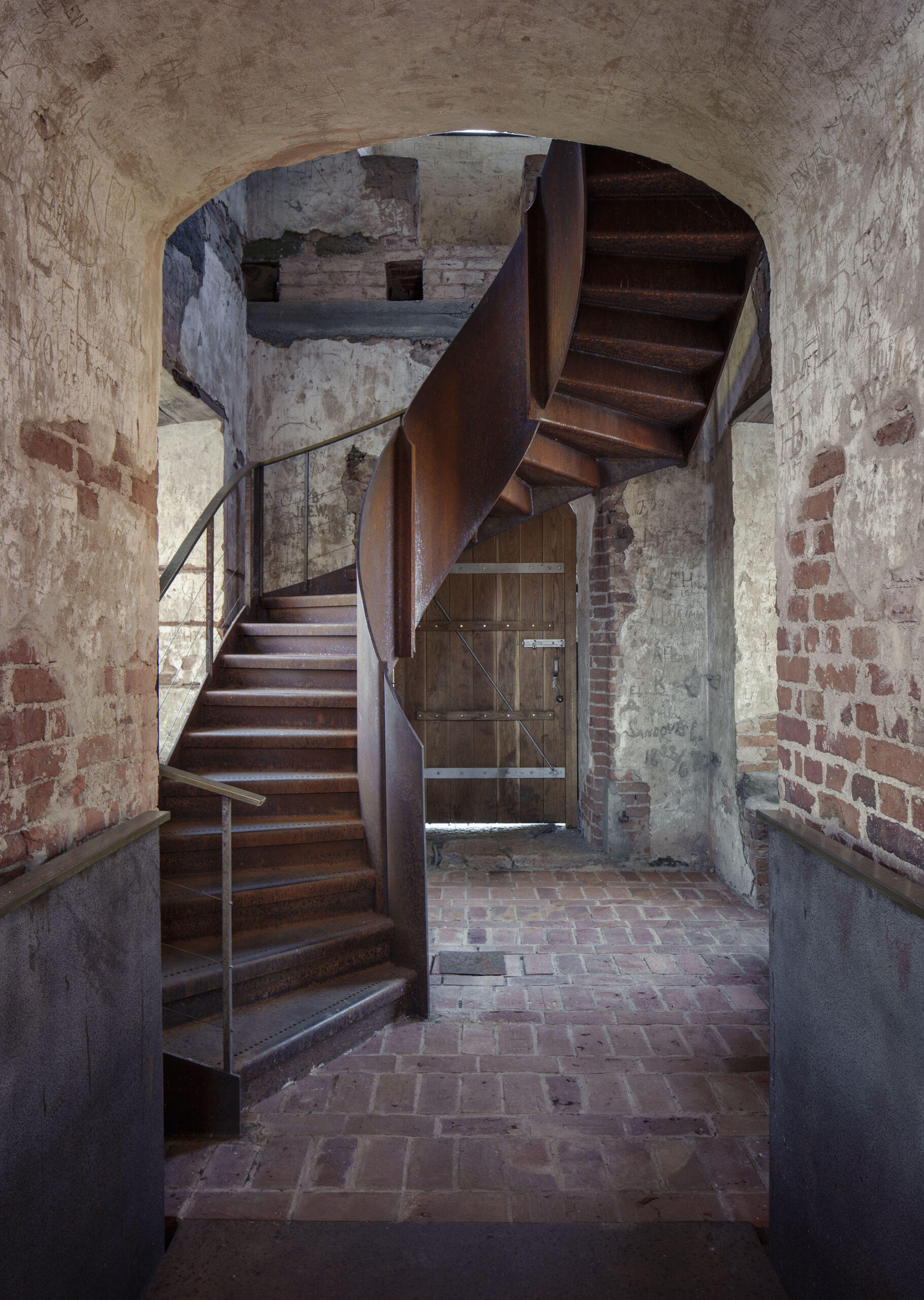
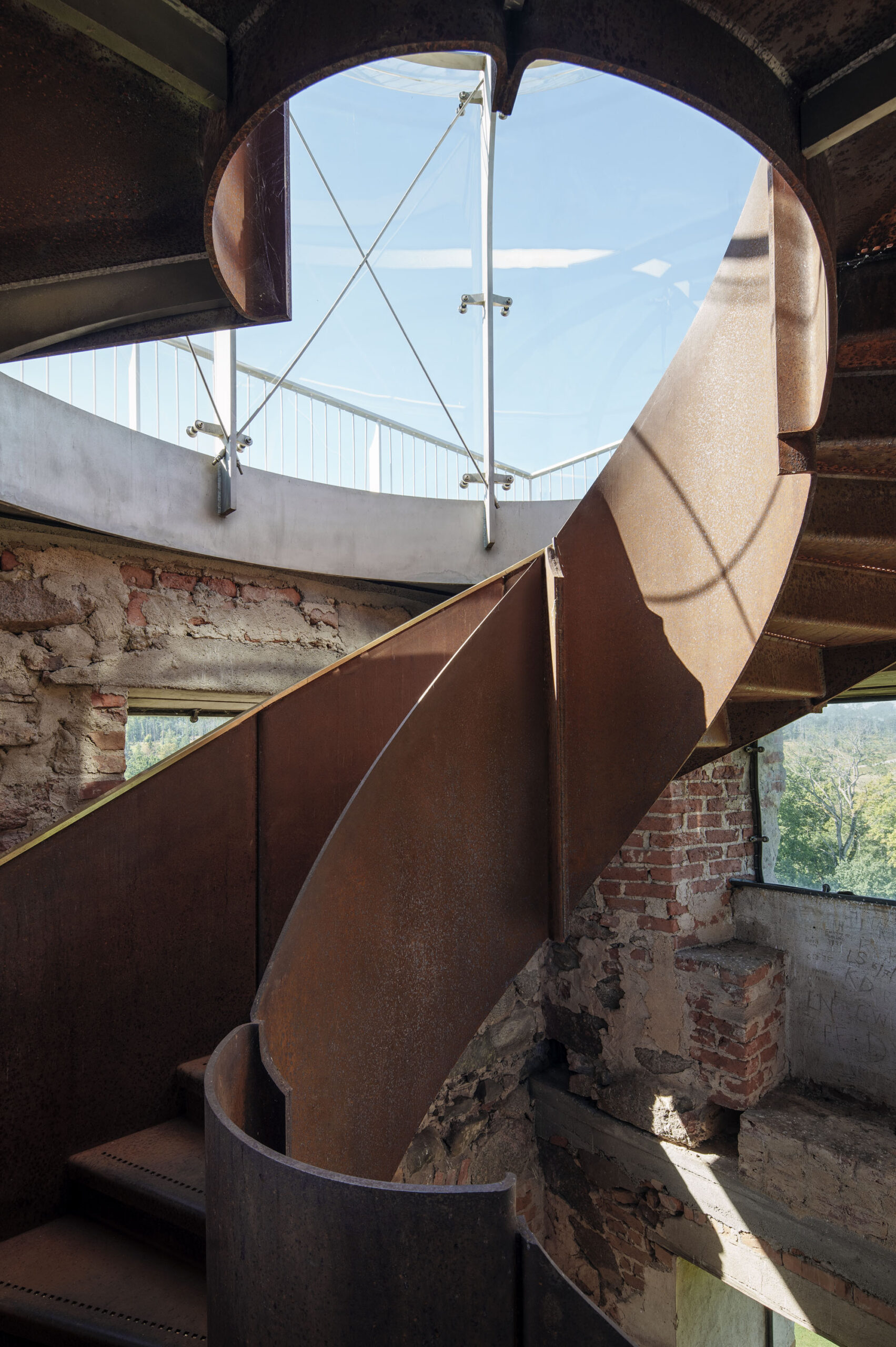
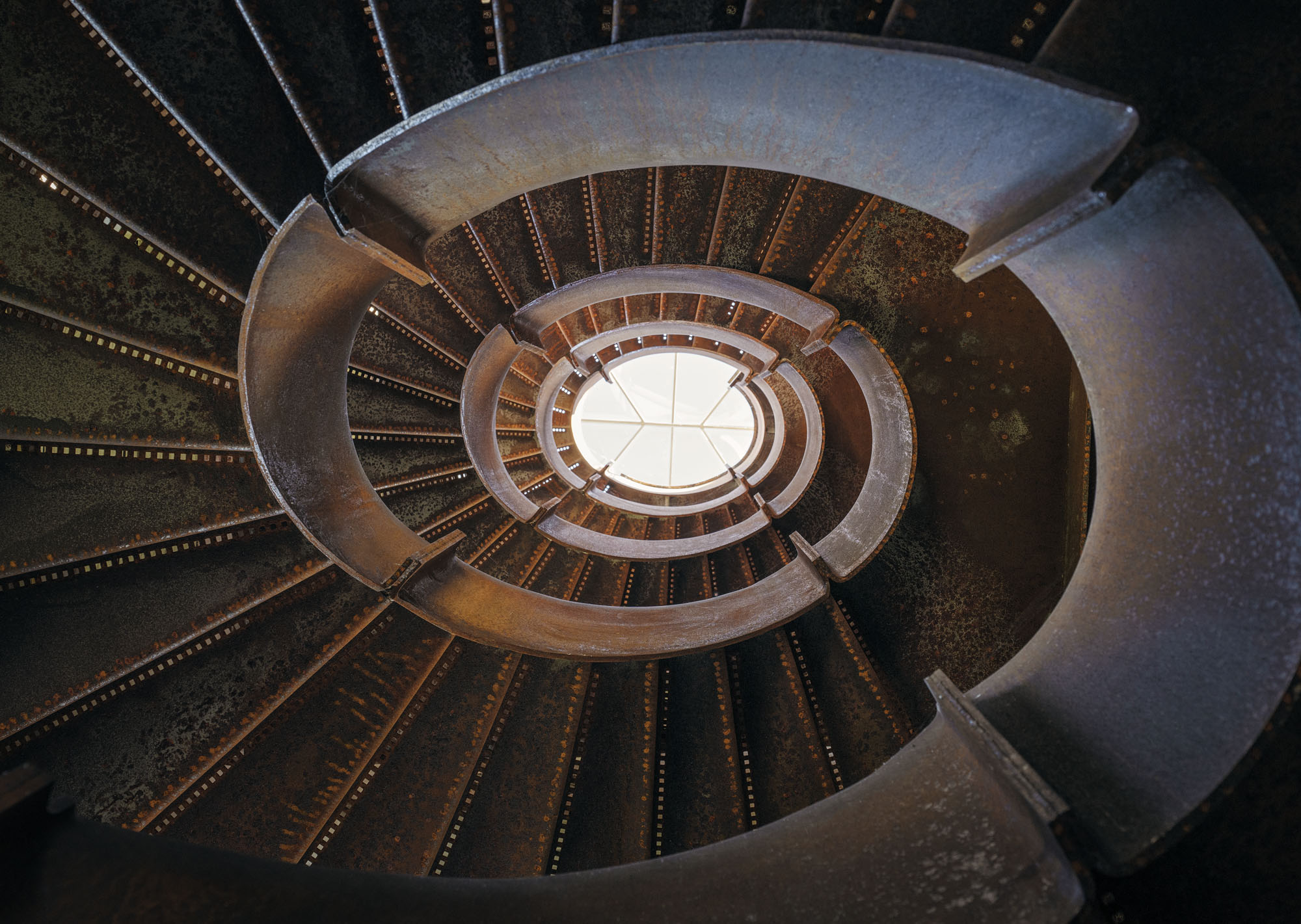
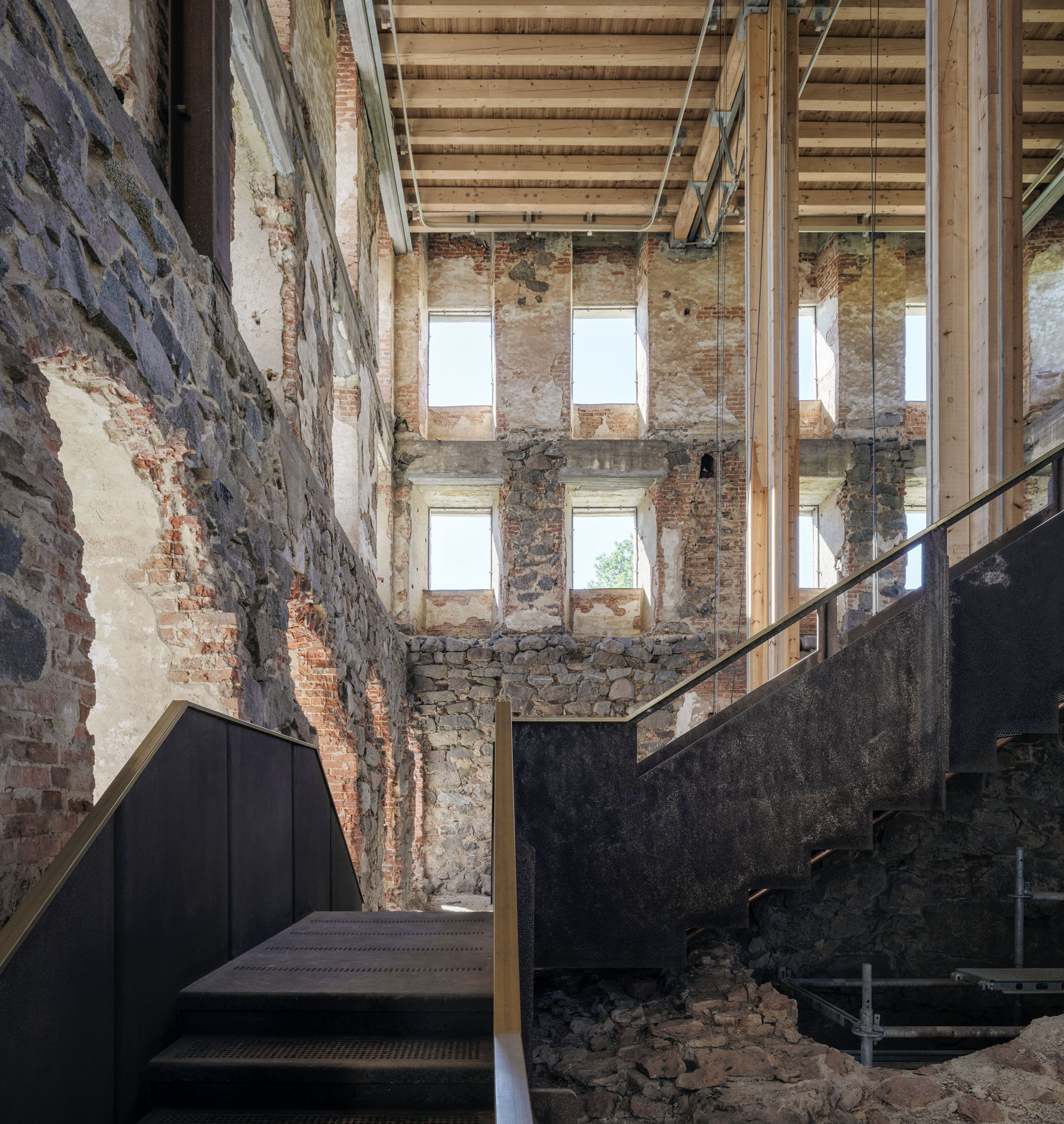
空間へのアクセシビリティを向上させるため、新しい階段が追加された。大広間には、地下室のアーチ間にある鉄柱の上に自立式の階段が設置され、階段塔にはガラス製のランタン(採光塔)の下に楕円形の螺旋階段が吊り下げられている。
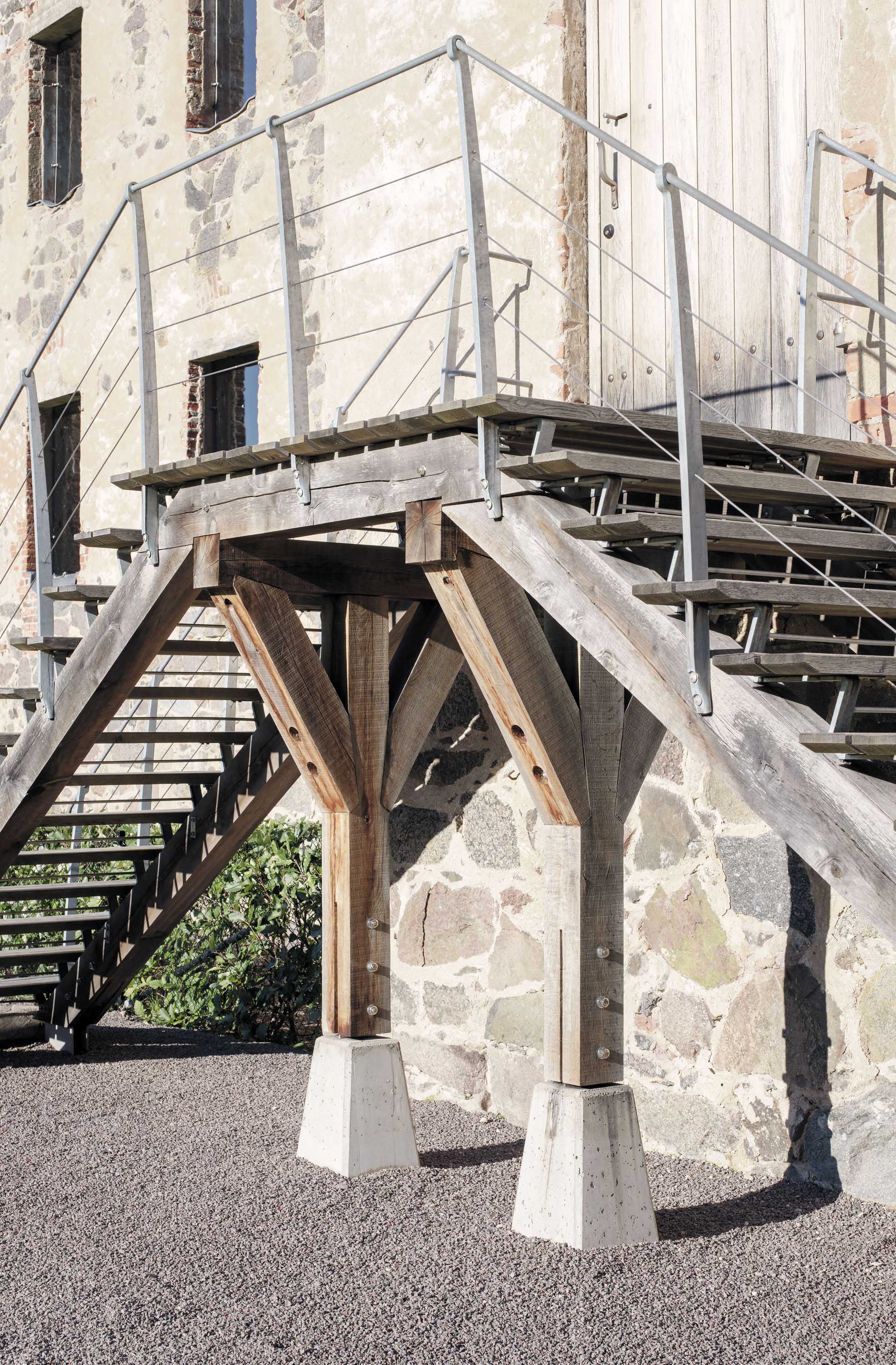
どちらの階段も耐候性鋼でつくられており、手すりには真鍮が用いられている。また、アクセスルートとして新しいオーク材の梁を使った階段が利用できるほか、中庭の入り口では現在、バロック様式の石造りの階段が建設中である。
©︎ Felix Gerlach
©︎ Felix Gerlach
©︎ Felix Gerlach
©︎ Felix Gerlach
©︎ Felix Gerlach
©︎ Felix Gerlach
©︎ Felix Gerlach
©︎ Felix Gerlach
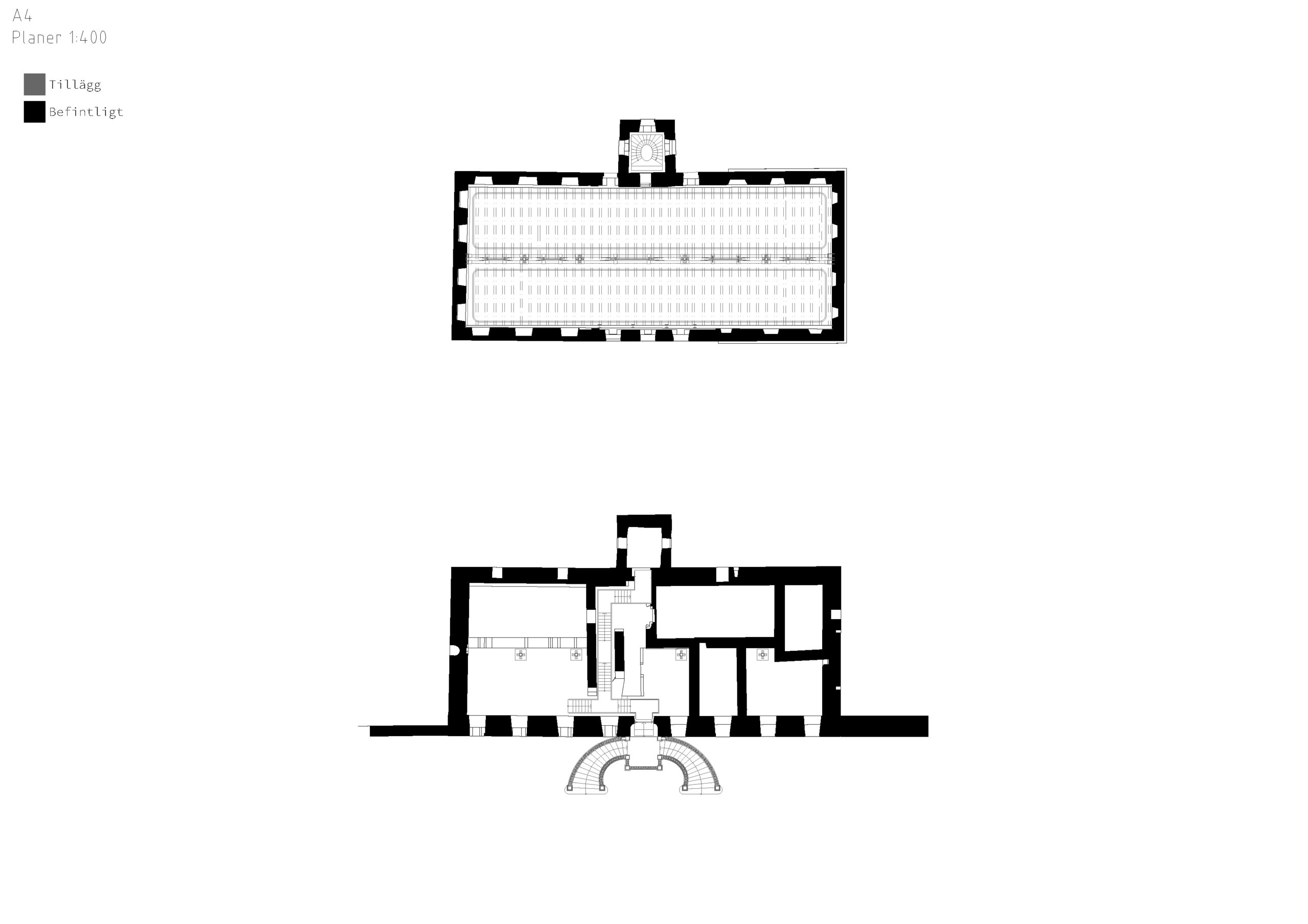
Plans
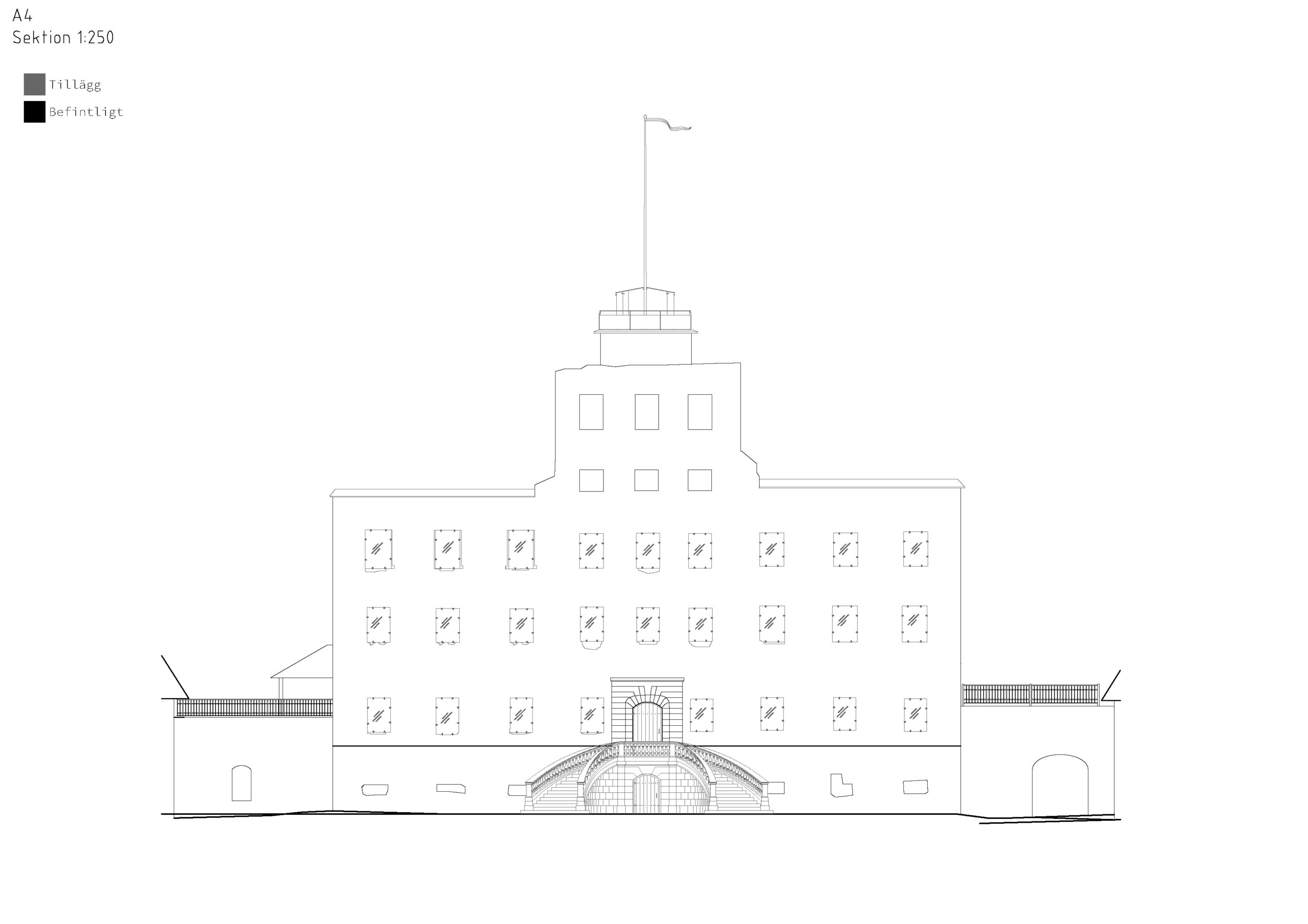
East elevation
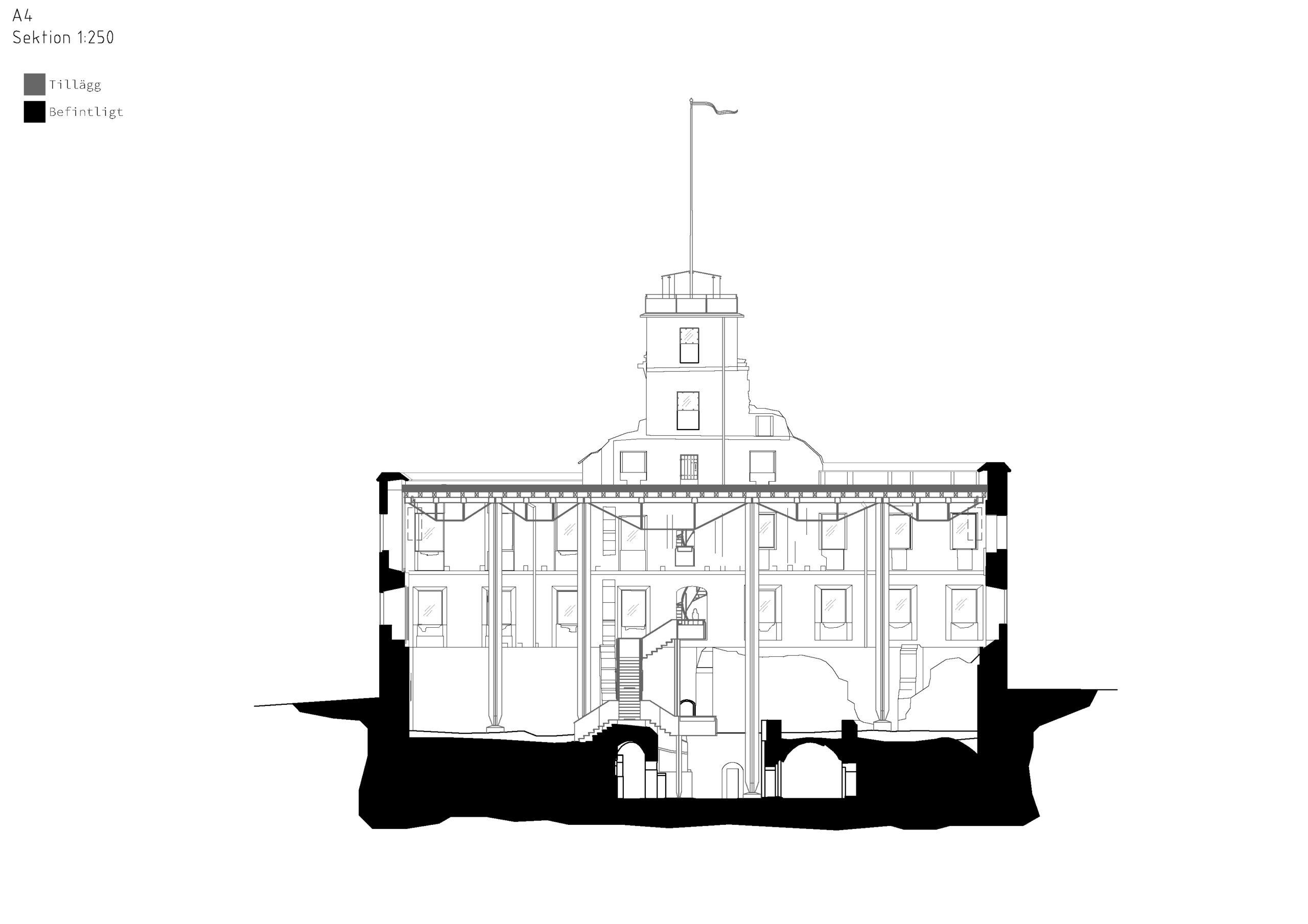
Long section
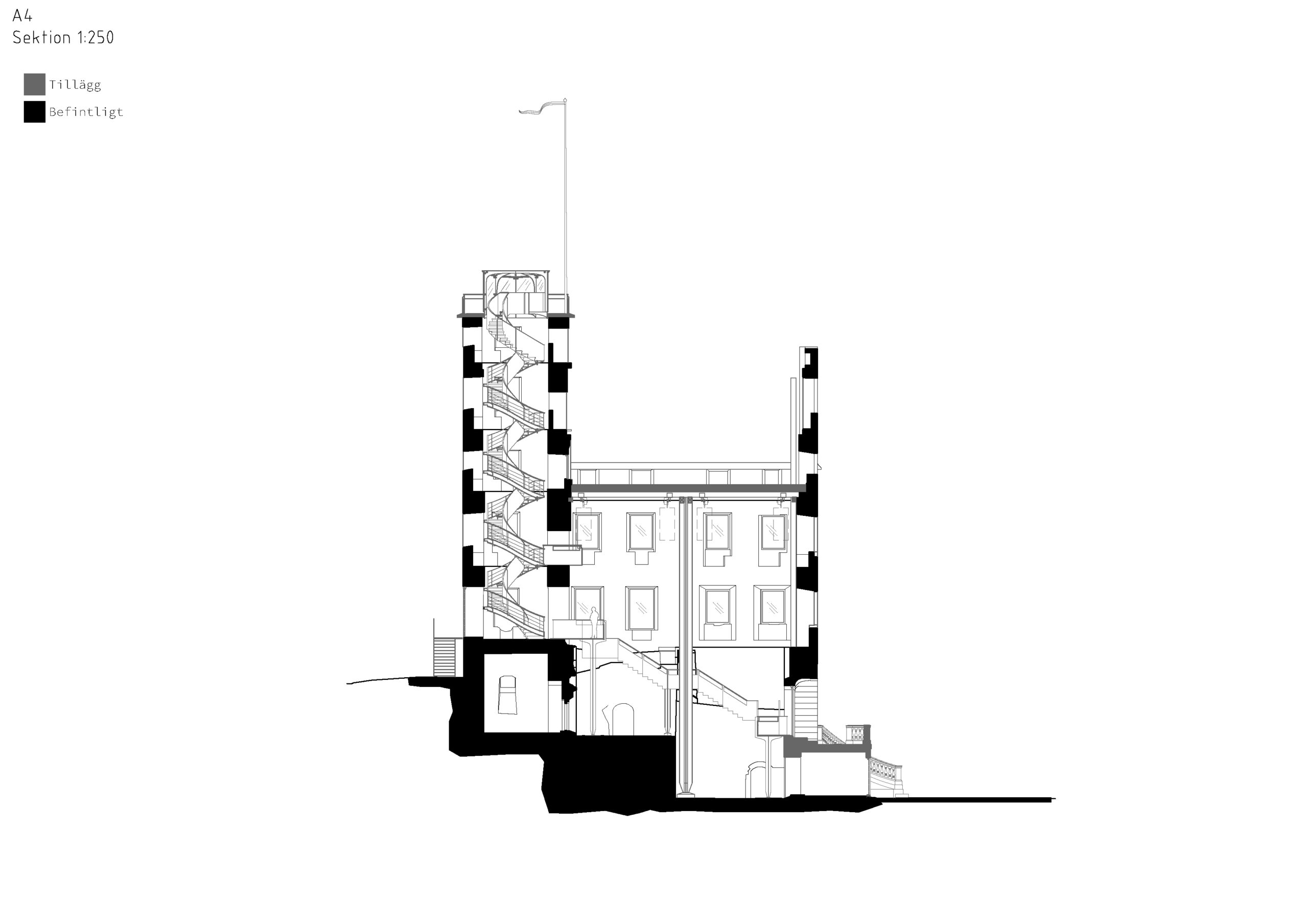
Cross section
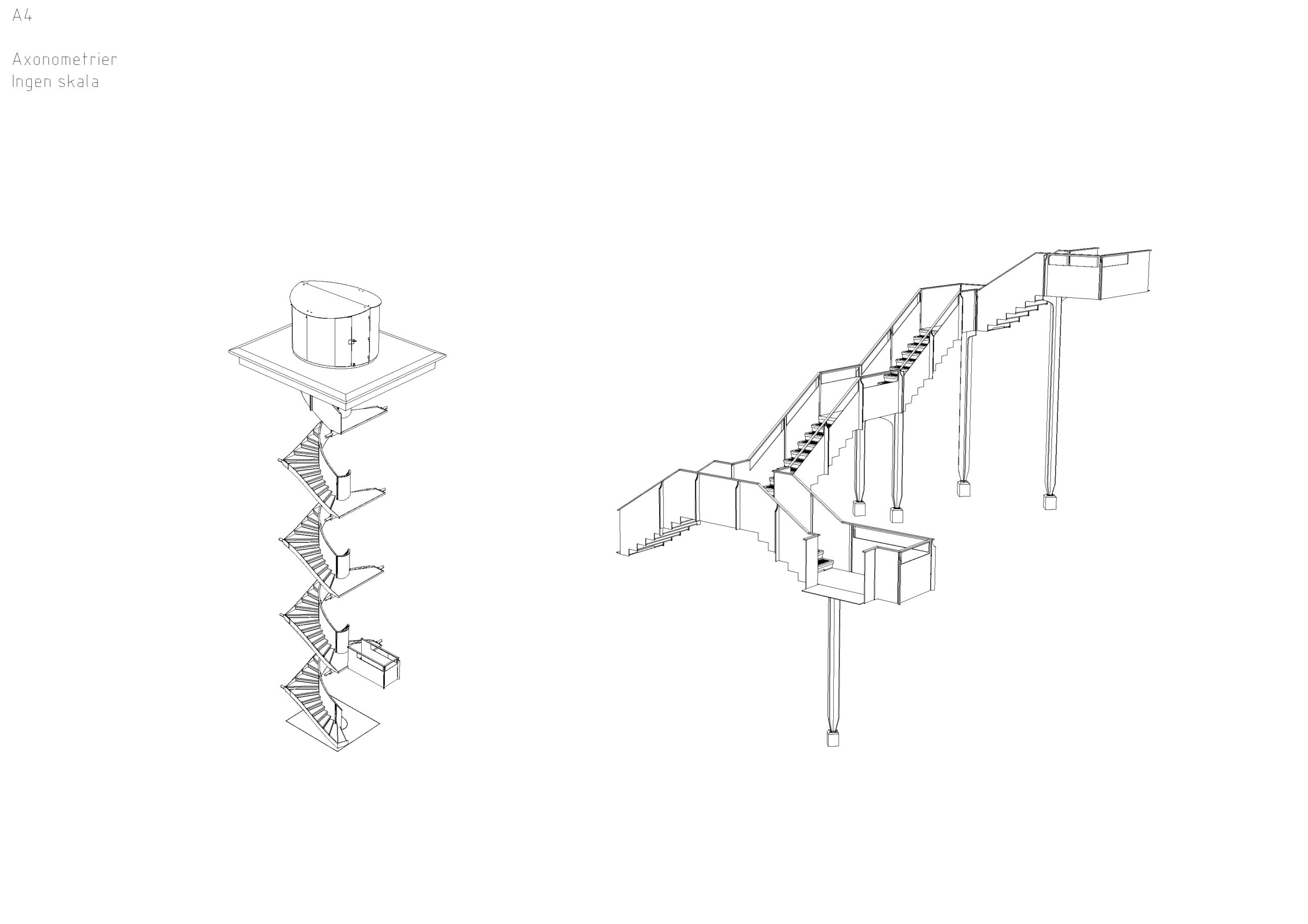
Axonometric
以下、Tengbomのリリース(英文)です。
Stjärnorp Castle Ruin
West of Lake Roxen, just outside Linköping, stands the ruin of Stjärnorp Castle, originally built between 1654 and 1662, most likely designed by Nicodemus Tessin the Elder. The estate comprised a four-storey stone main building with a stair tower facing the park to the west, and two wings facing Lake Roxen to the east. The castle is depicted in Erik Dahlbergh’s Suecia Antiqua et Hodierna from 1697.
A major fire in 1789 destroyed the main building and both wings. While the wings—one containing the castle chapel—were restored, the main building was left as a ruin and has remained exposed for over 230 years. During the 20th century, only minor stabilisation measures were carried out. Today, the ruin is a protected ancient monument.
In 2012, the Stjärnorp estate launched an architectural parallel commission to find ways to preserve the ruin while enabling limited access. Wikerstål Arkitekter, later acquired by Tengbom in 2017, was selected to develop and realise the proposal.
In recent years, a careful restoration has combined masonry conservation with restrained architectural additions. Externally, the aim was to maintain the impression of an untouched ruin. Internally, a protective roof structure has been added, supported at the original bearing points. Wall tops and window parapets have been capped with contoured sheet lead, and custom laminated glass panes installed in the window openings. New oak plank exterior doors have also been introduced.
The roof structure uses full-length beams sawn on site from timber sourced from the estate’s forest. The collapsed central wall has been replaced by double beams supported by steel columns clad in timber for fire protection.
To improve accessibility, new staircases have been added. A self-supporting staircase in the great hall rests on steel columns between the cellar vaults, while an elliptical spiral staircase in the stair tower is suspended beneath a glass lantern. Both staircases are made of weathering steel with brass handrails. Access is provided by a new oak beam staircase, and a Baroque-style stone staircase is currently under construction at the courtyard entrance.Location: Stjärnorp Castle, Linköping
Architect: Wikerstål Arkitekter, Tengbom
Lead Architect: Erik Wikerstål
Project Architect: Caroline Hahn Nilsson
Project Team: Ebbe Jensen, Martin Jakubowski, Thea Klitte, Rikke Hagedorf, Jenny Hennig, Jeppe Appelin, Simon Fast, Tarek El Ali, Hans Ahrland, Jonas Torle
Structural Engineer, Conservation and Heritage Consultant:
Tyréns and Balksten Byggnadsvård
Electrical Consultant: SWECO
Main Contractor: Miljöbyggarna Entreprenad, Linköping
Contractors: Byggnadssmide i Mjölby, Planglasteknik, Nordéns Skyddsglas, Åby Fasad, Berland Tak, Bravida, Svenska Hantverksplåtslageriet, and Stjärnorps Skog & Trädgård
Client: Slottstornet AB
Construction Period: 2014–2025
Tengbom 公式サイト
https://en.tengbom.se




![[Interview]廃墟から地域資産へ、石と建築の時間軸を再統合する〈大谷グランド・センター〉。建築家・針谷將史氏が語る再生のプロセス](https://magazine-asset.tecture.jp/wpcms/wp-content/uploads/2026/06/07172730/003_ASA4434-900x600.jpg)