MVRDVが設計支援ツール「CarbonSpace」を公開 - スケッチ段階からサステナビリティを考慮して設計するための新ツールが無料公開!
©︎ MVRDV NEXT, Studio AvW
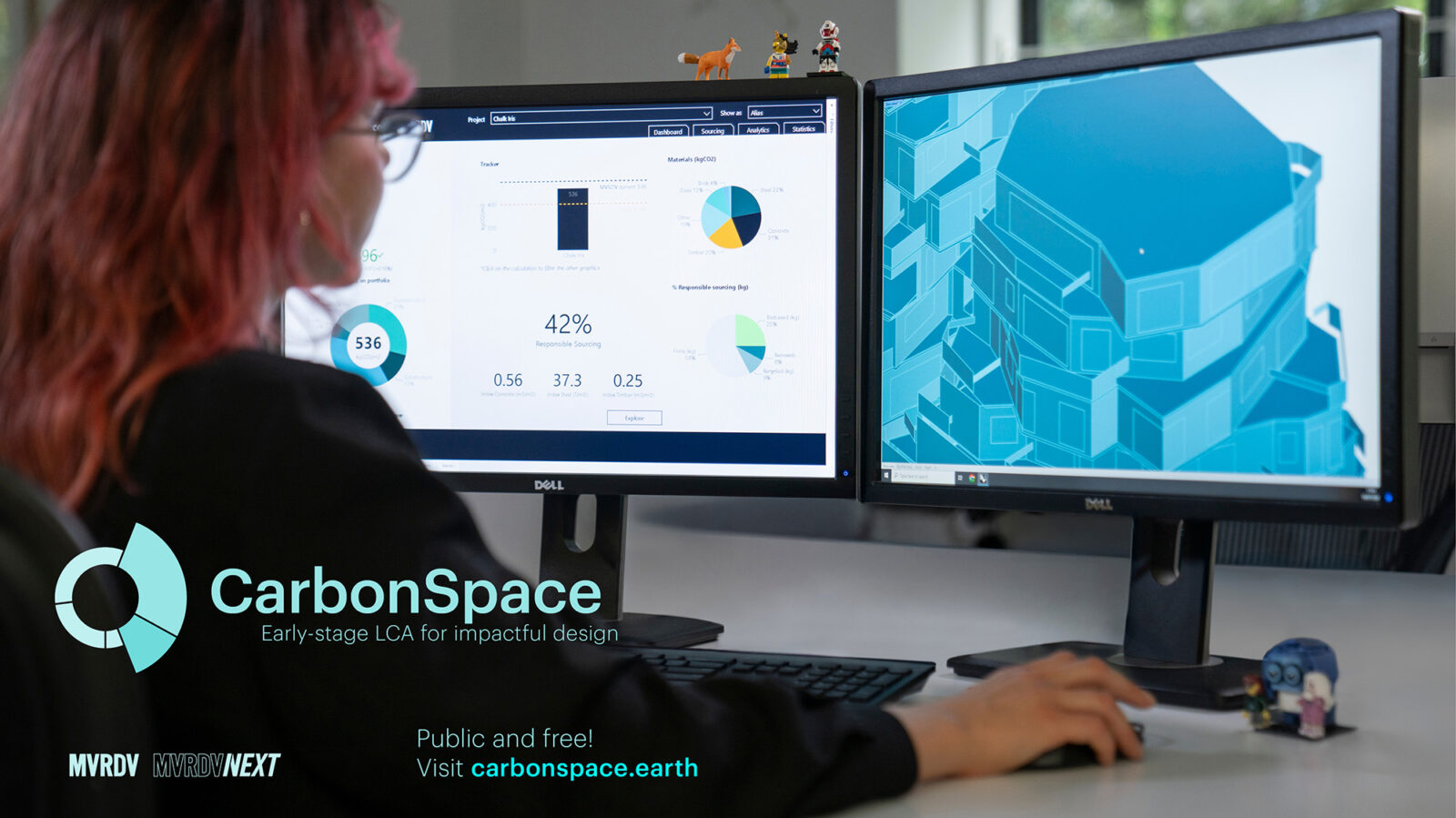
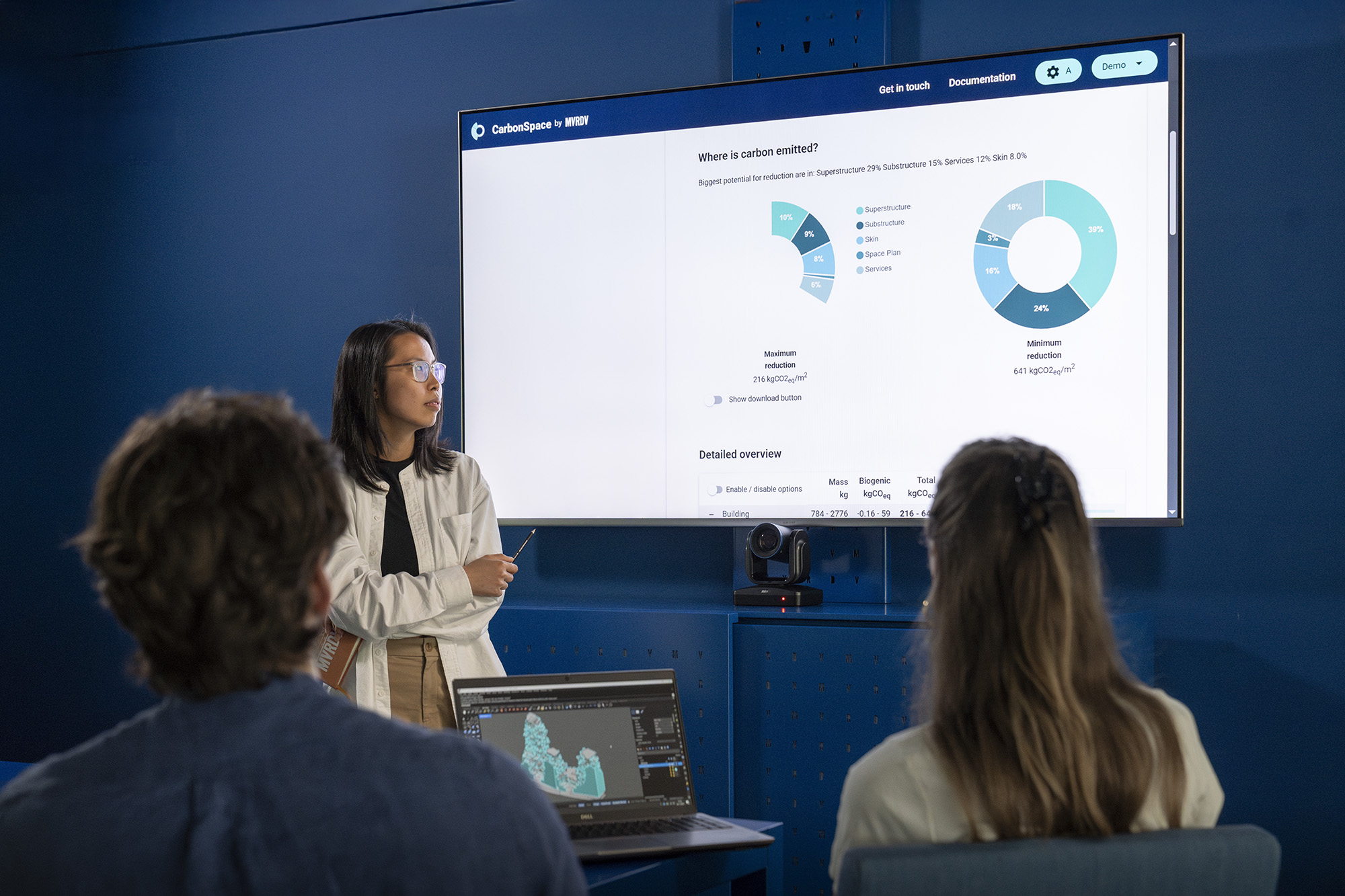
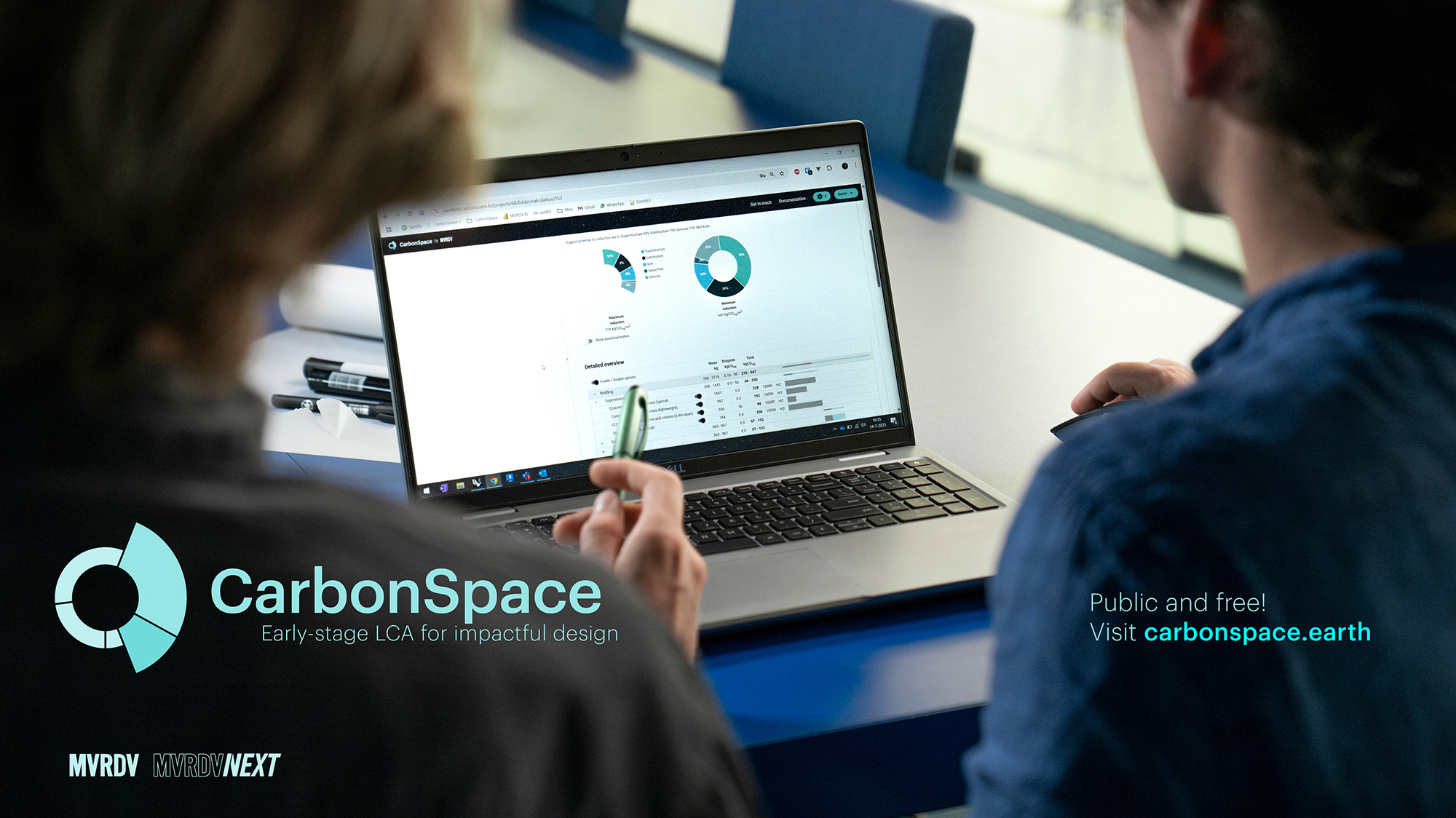
「CarbonSpace」は、MVRDVの研究開発部門MVRDV NEXTとStudio AvWが共同開発した、設計初日から埋蔵炭素を可視化できる新ツールです。
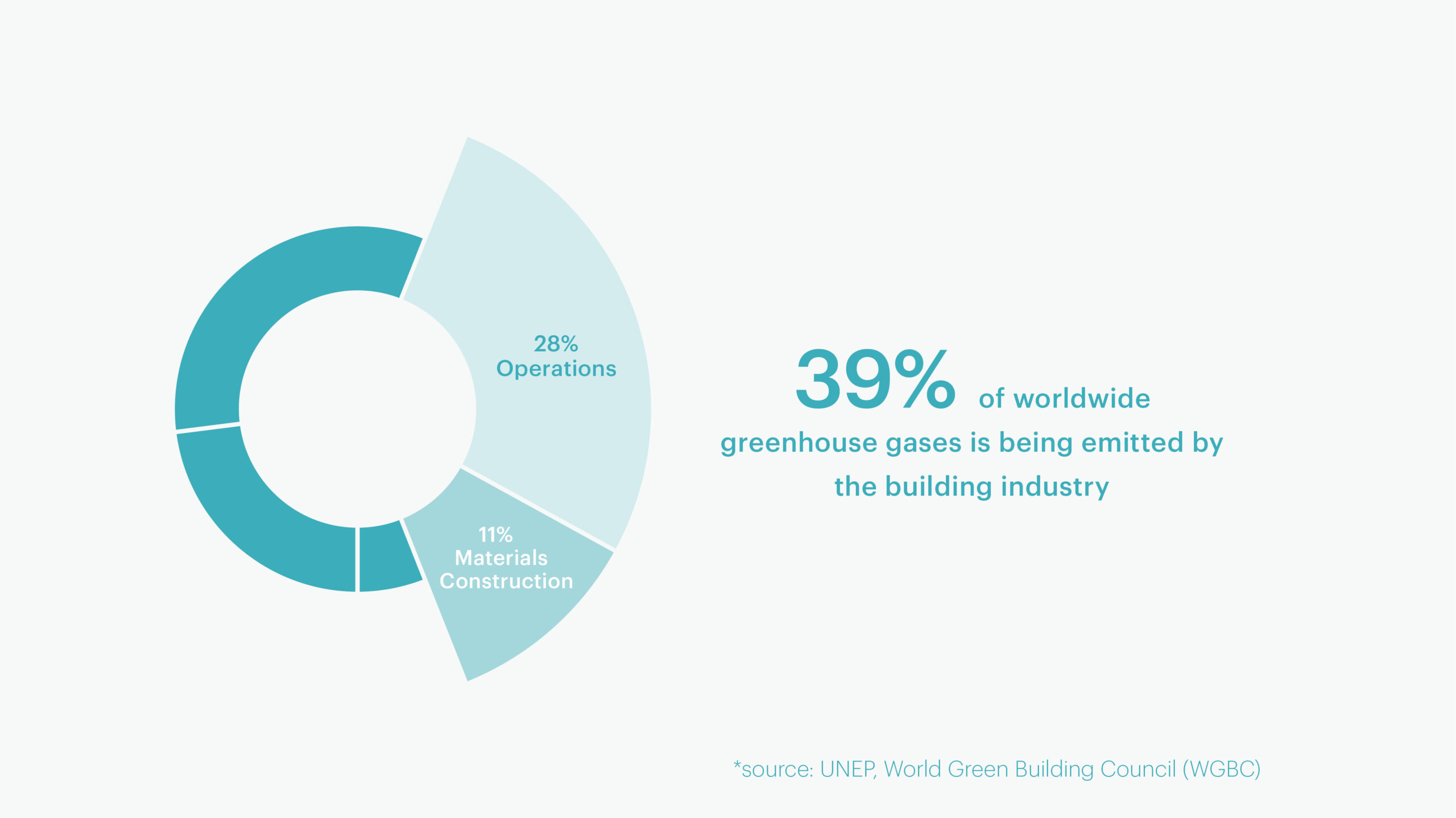
世界の炭素排出量の約39%を占めながらもCO2の削減が依然として難しい建築業界の課題を、「詳細なモデルやデータ、複雑なデータベースを必要とする計算ツールへの過度な依存」とし、ナプキンへのスケッチ段階から炭素排出量を考慮した設計を支援するため開発されました。
注目ポイント
- 設計初期から埋蔵炭素を可視化できる新ツール
- 数量見積もりとオープンデータベースの連携による、迅速なフィードバックや設計案の比較
- RhinoやRevitとのAPI連携、Microsoft Power BIによるデータ可視化など、既存環境との統合が可能
(以下、MVRDVから提供されたプレスキットのテキストの抄訳)
©︎ MVRDV NEXT, Studio AvW
設計初日から埋蔵炭素を考慮する「CarbonSpace」
MVRDVは、設計プロセス初日から埋蔵炭素を考慮した設計を支援するウェブベースツール「CarbonSpace」を一般公開した。カーボンリテラシーの向上とデータ透明性の促進を目的に開発された本ツールは、現在無料で利用可能となっている。
埋蔵炭素(embodied carbon):建築物の輸送や建設、修繕、廃棄・リサイクルなど、運用以外で排出されるCO2などの温室効果ガスの量
©︎ MVRDV NEXT, Studio AvW
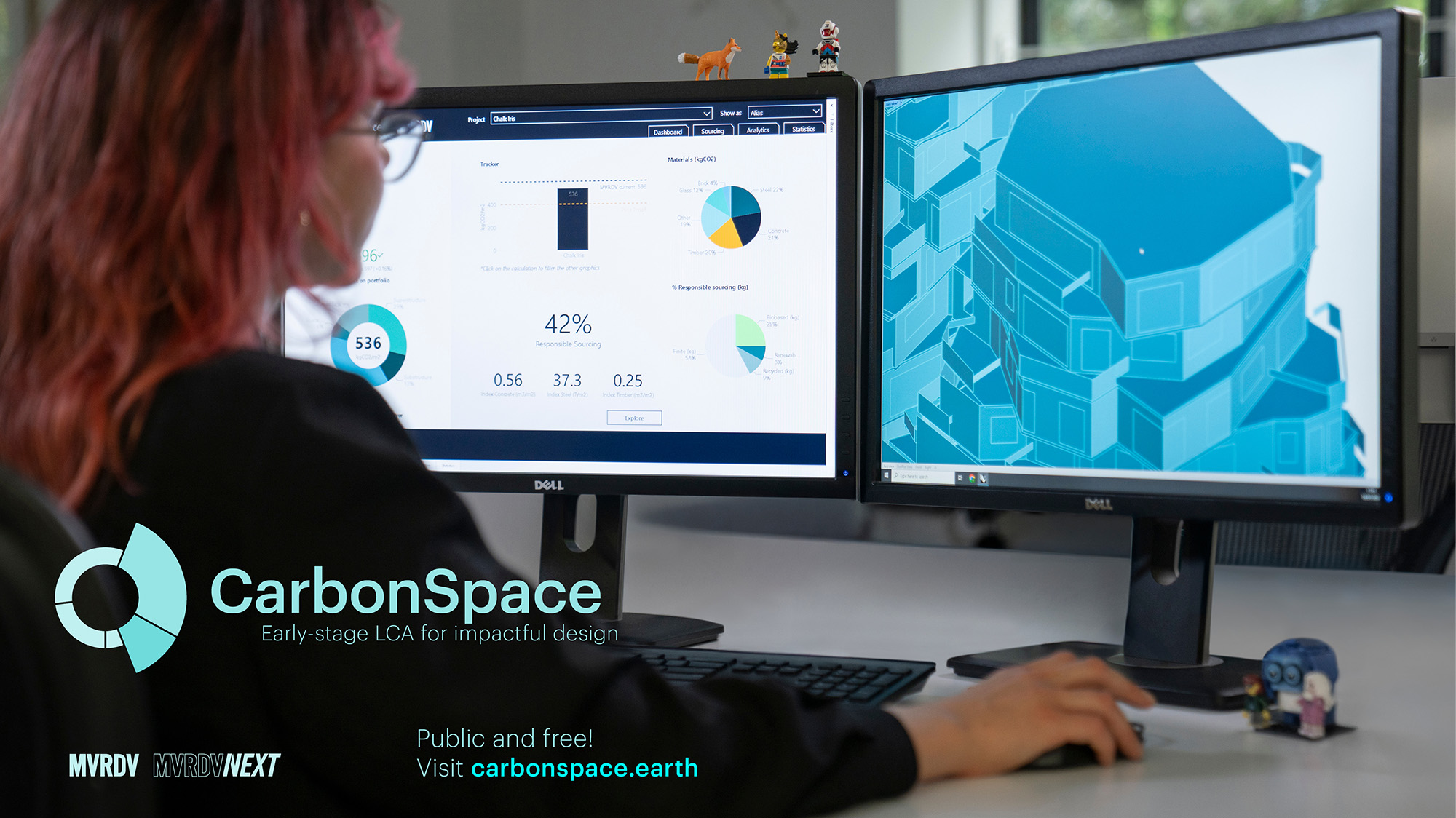
開発は同事務所の研究開発部門であるMVRDV NEXTとStudio AvWの共同によるもので、設計初期段階から情報に基づく意思決定を支援するよう設計されている。
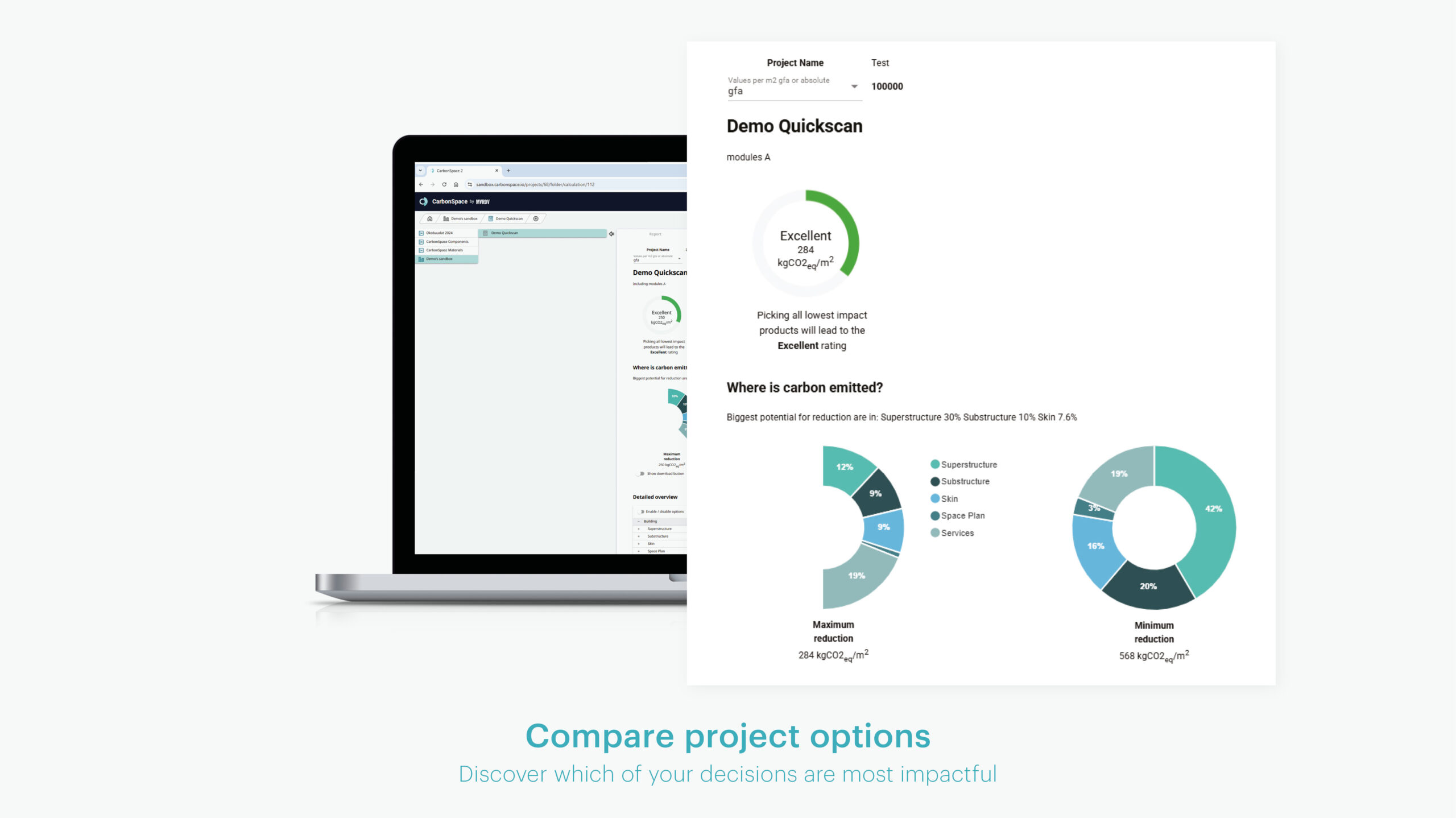
数量見積もりとオープンなデータベースを連携させることで、迅速なフィードバックや設計案の比較を可能にしている。今後は超高層建築・都市居住環境評議会(CTBUH)と連携し、建築物の埋蔵炭素量に関する国際的な共通理解の形成にも寄与する予定である。
©︎ MVRDV NEXT, Studio AvW
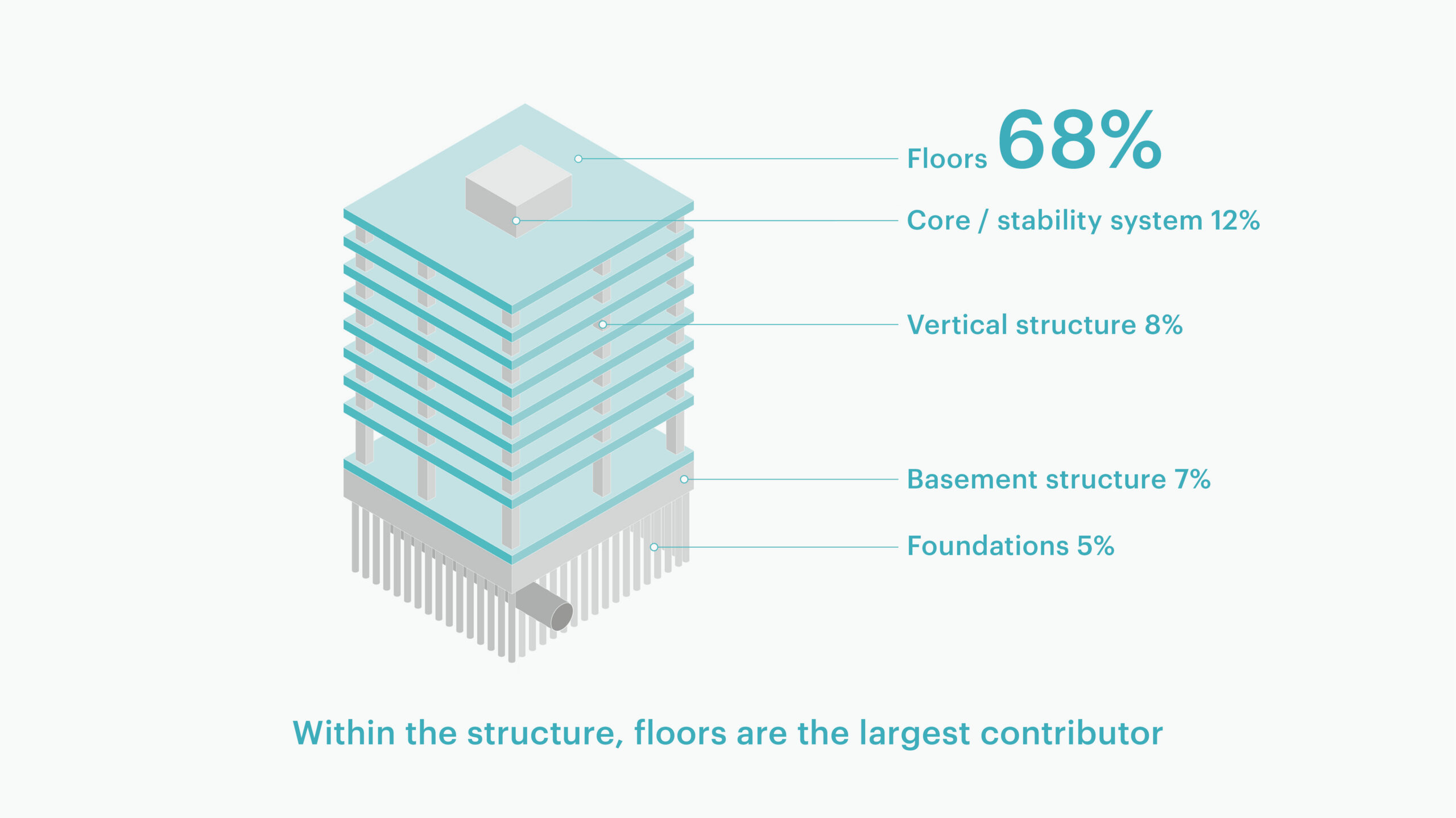
建築業界が抱える埋蔵炭素削減に向けた構造的課題
建築業界は世界の炭素排出量の約39%を占めており、気候変動への影響は大きい。環境への意識が高まっているにもかかわらず、埋蔵炭素の削減は依然として困難である。その主な要因の1つは、詳細なモデルや精密なデータ、複雑なデータベースを必要とする計算ツールへの過度な依存である。
その結果、埋蔵炭素の計算が完了する頃には、設計を変更する機会は既に失われていることが多々ある。こうした「精密さの追求」は、脱炭素化の加速や深化にはつながっておらず、むしろ報告業務への注力が設計者の実質的な行動を妨げているようにすら見える。さらに各国で規制や基準が異なるため、プロジェクト間の炭素排出量を正直に比較することはほぼ不可能といえる。
©︎ MVRDV NEXT, Studio AvW
©︎ MVRDV NEXT, Studio AvW
共通言語としての「CarbonSpace」
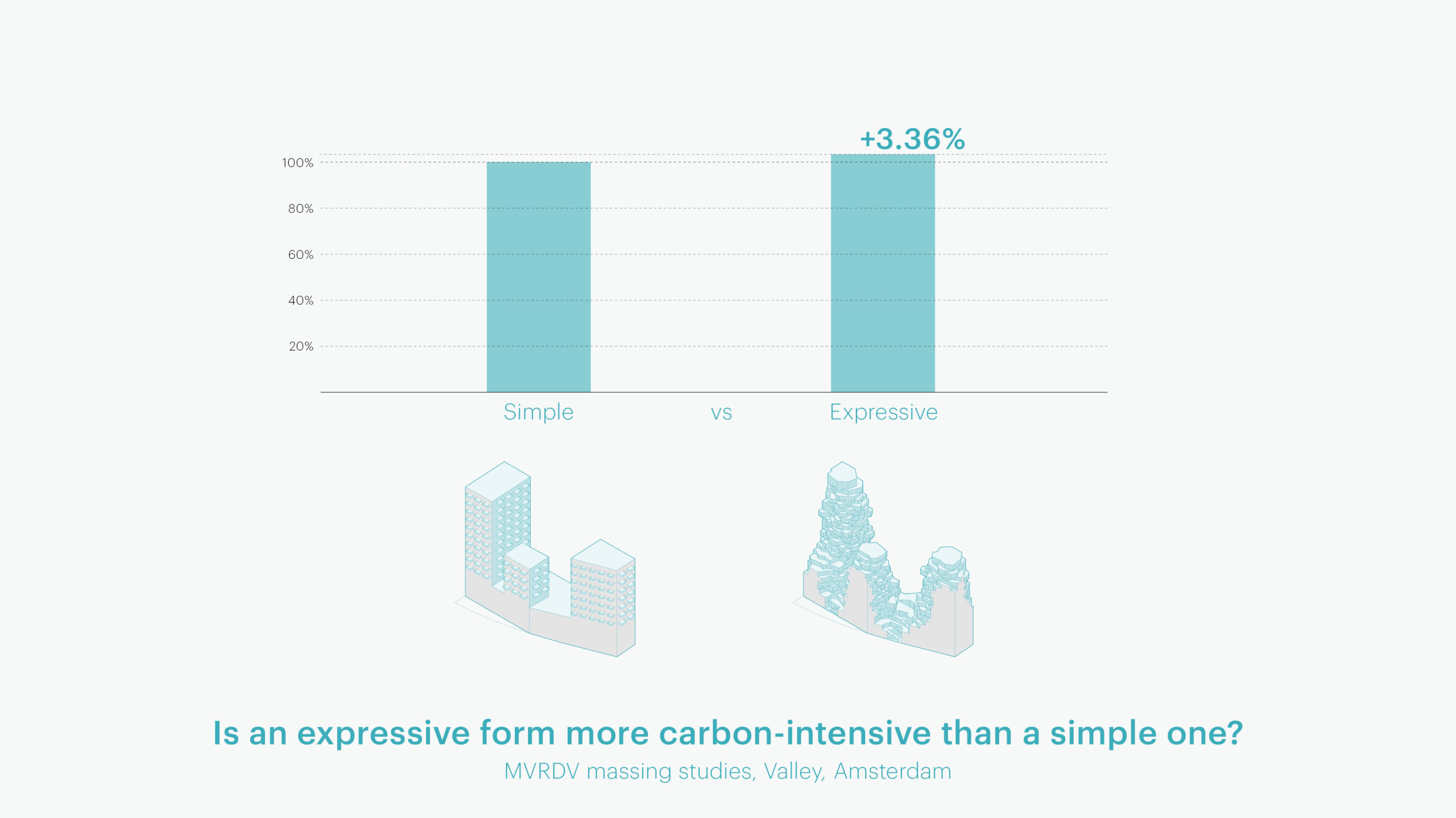
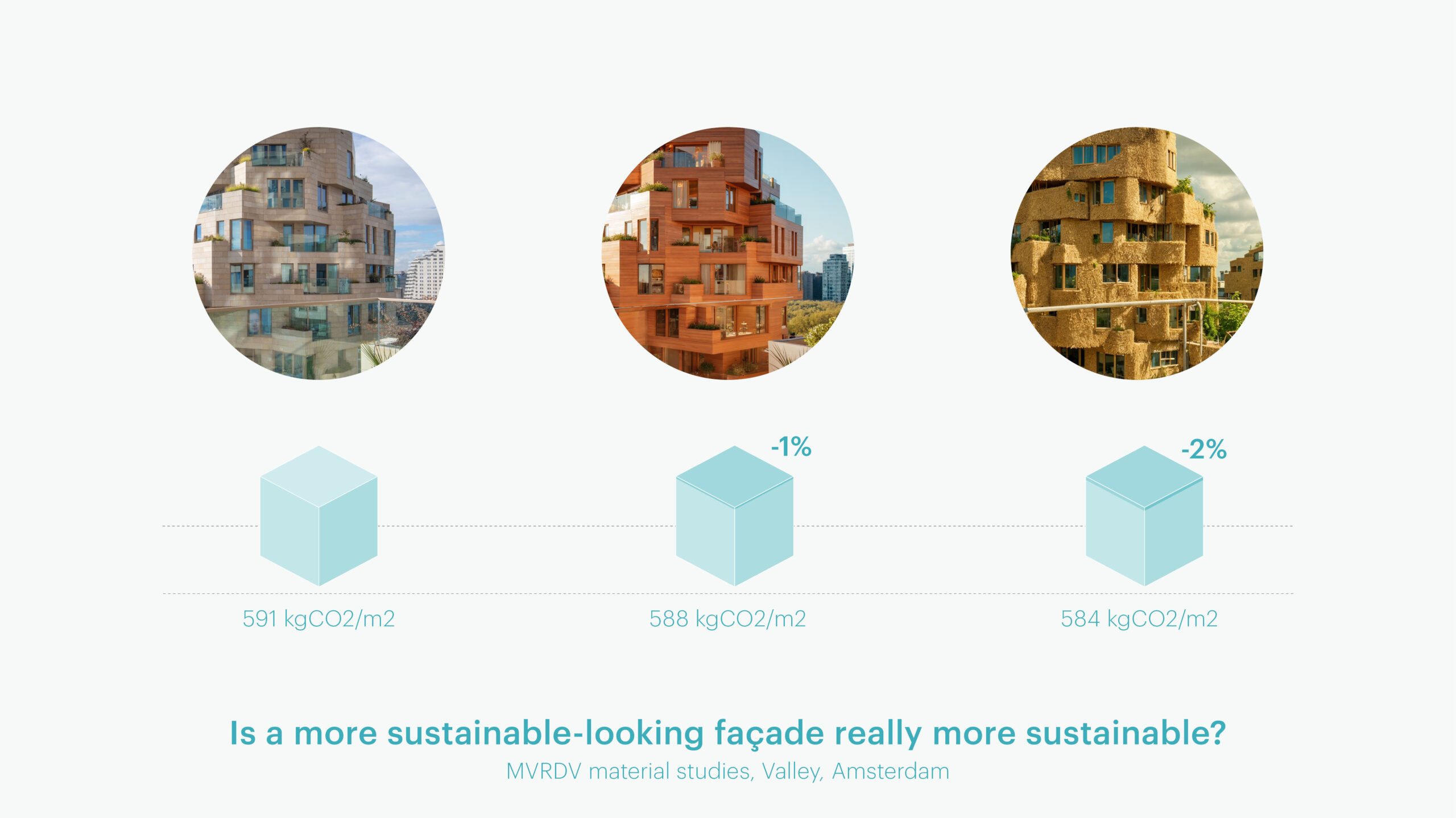
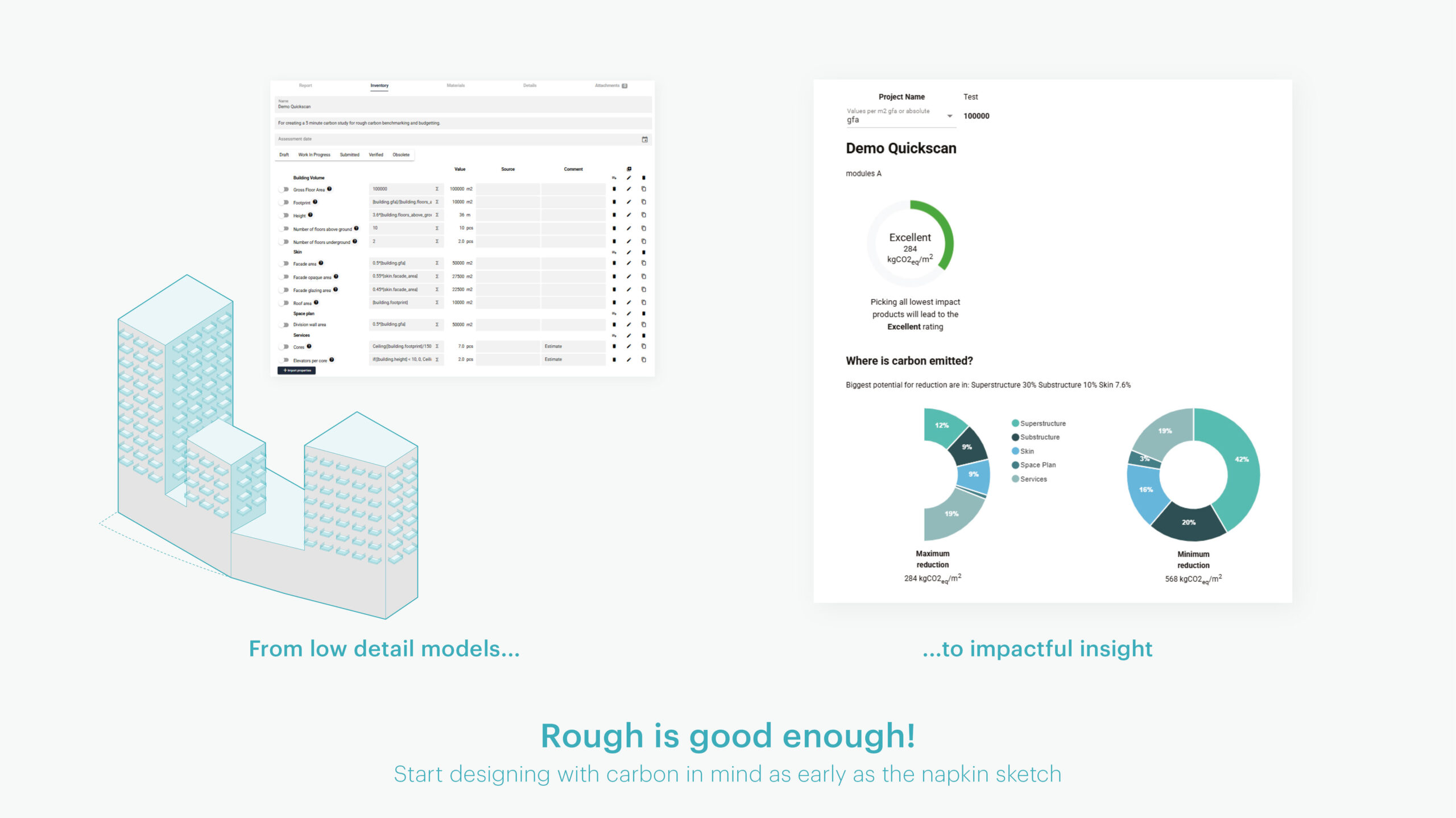
このような課題に対処するため、MVRDVは設計者向けの実用的かつ透明性の高いツールとしてCarbonSpaceを開発した。従来のように設計後期で詳細な炭素計算を行うのではなく、スケッチ段階から機能する点が特徴である。
大まかな入力データや単純な経験則さえも活用し、設計選択が炭素排出量に与える影響を即座にフィードバックする。したがって本ツールは検証ツールではなく、意思決定を支援するツールである。
MVRDV NEXT責任者のサンネ・ファン・デル・バーグ(Sanne van der Burgh)は次のように語る。
「CarbonSpaceが単独で気候危機を解決するわけではない。しかし設計初日から炭素を考慮することを可能にし、設計者に情報に基づいた判断を促すものである。完璧なデータを待たずに行動する自信を与えるとともに、業界全体で炭素の共通言語を築き、協働と学び合いを促進することを目指している」。
©︎ MVRDV NEXT, Studio AvW
©︎ MVRDV NEXT, Studio AvW
設計支援の仕組みと応用可能性
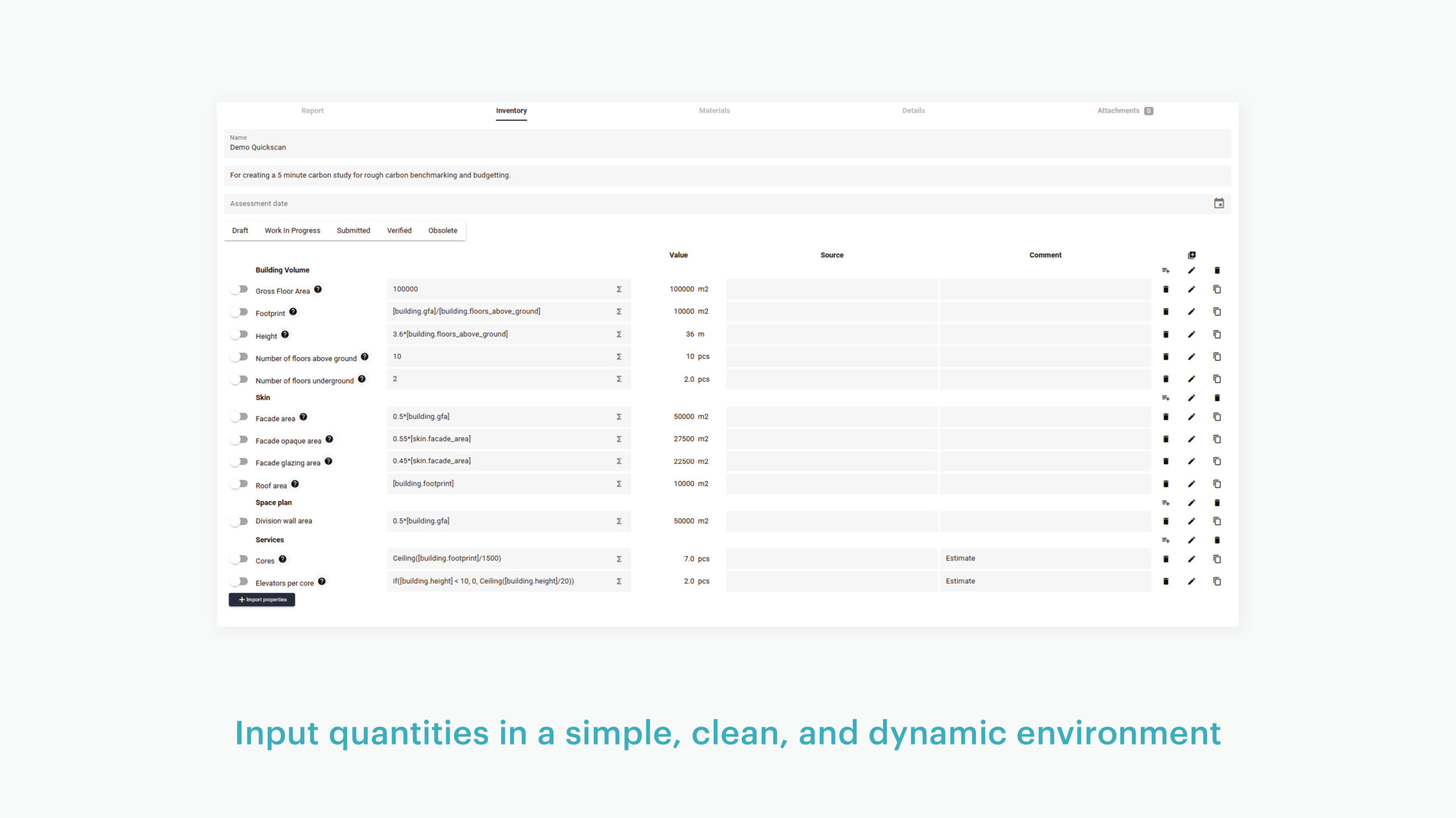
CarbonSpaceは、床面積やファサード面積、基礎体積などの数量データを入力すると、ドイツ連邦政府が運営するオープンソースデータベースÖkobaudatを簡略化した国際的な炭素データベースと連動して解析を行う。
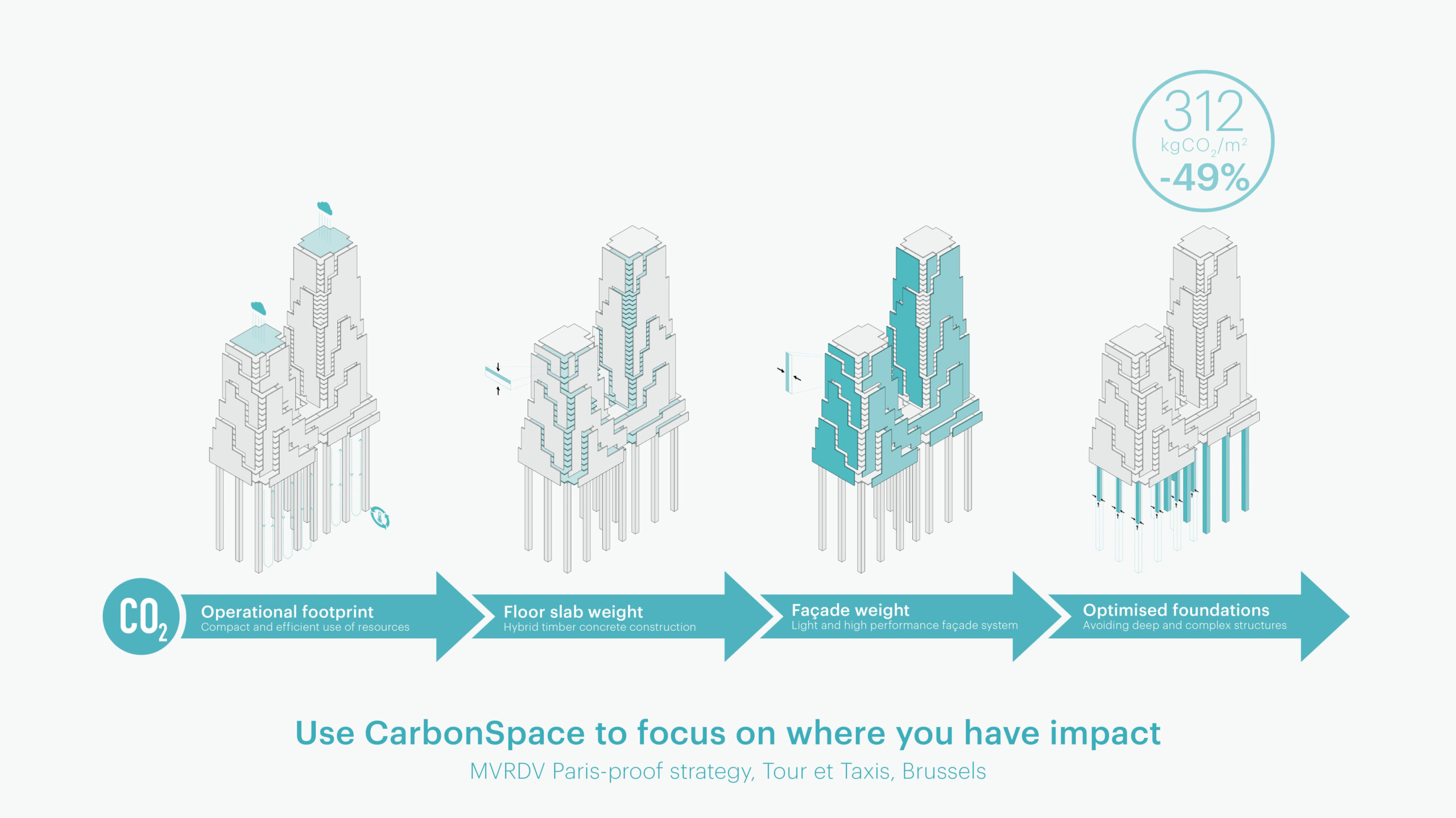
また、材料や構成要素のプリセットライブラリを備え、プロジェクトタイプに応じた迅速な試算を可能にしている。この仕組みにより、設計チームが異なる構造システムや材料が埋蔵炭素に及ぼす影響を理解するための手助けを行う。
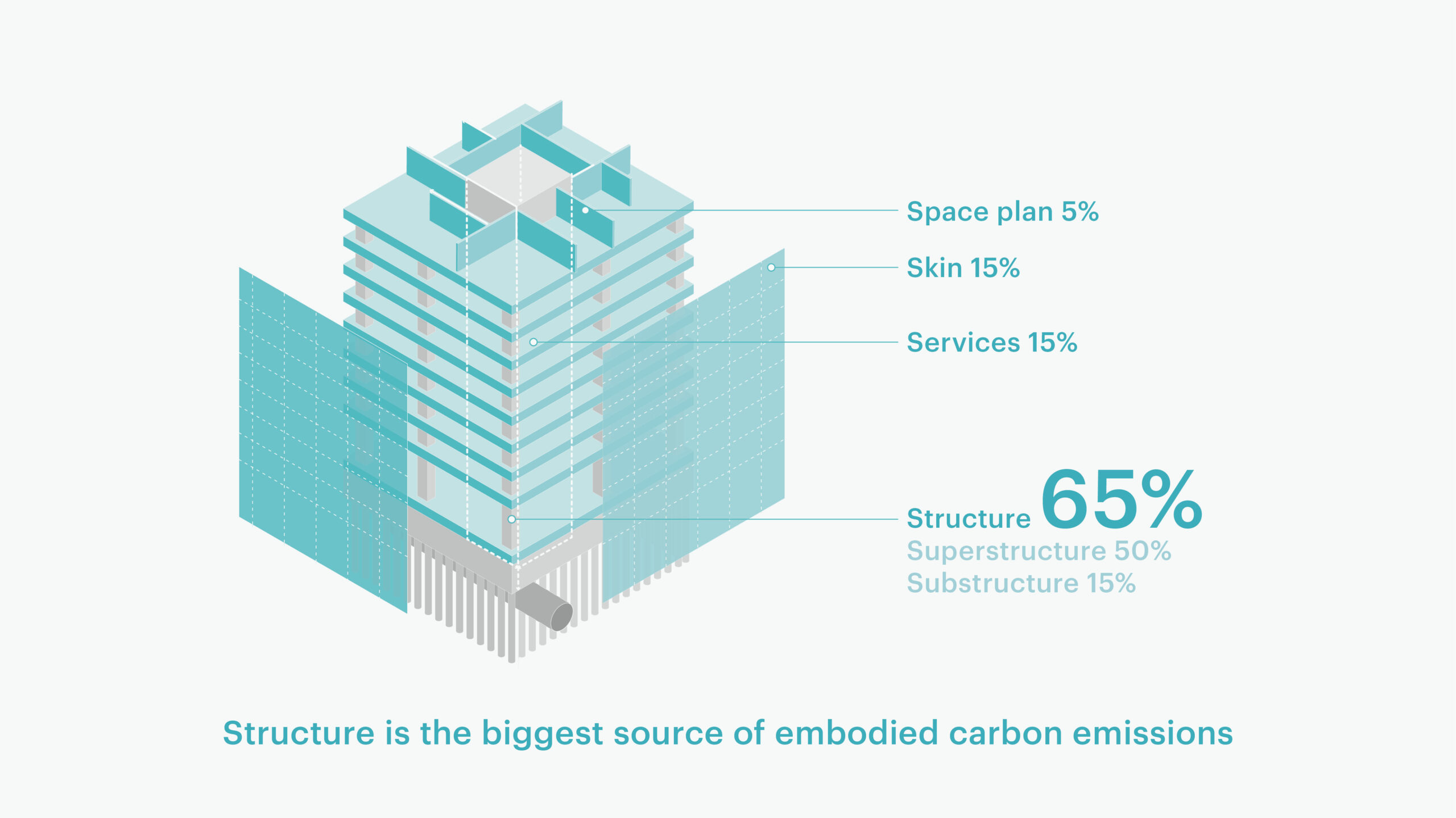
MVRDVではこのプロセスを通じて、埋蔵炭素に大きく影響する要因として「軽量設計」への注力を促している。また、設計開発段階で持続可能性目標が妥協によって失われそうな場合には、警鐘を鳴らす役割も果たす。
©︎ MVRDV NEXT, Studio AvW
拡張性とデータの可視化
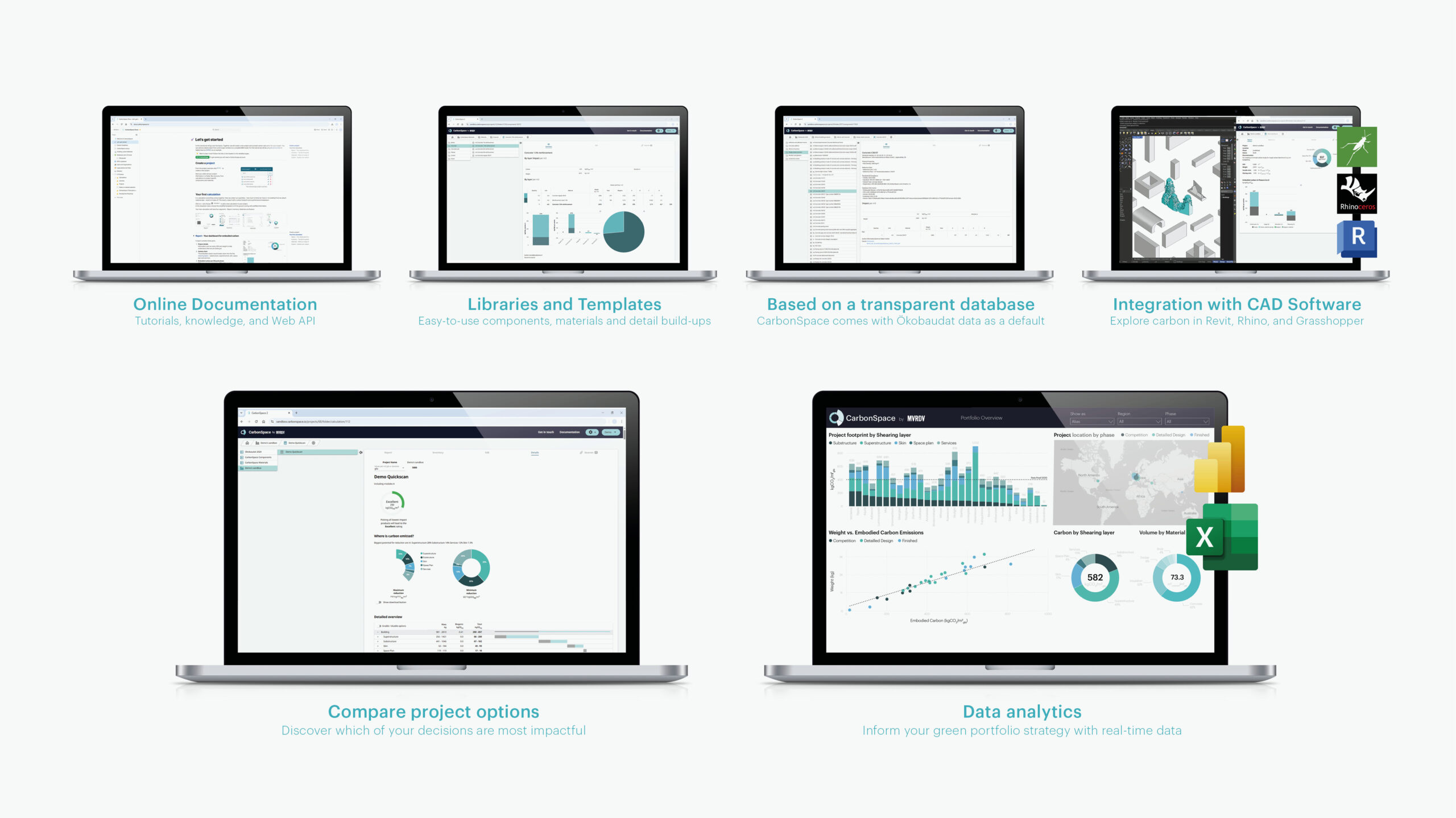
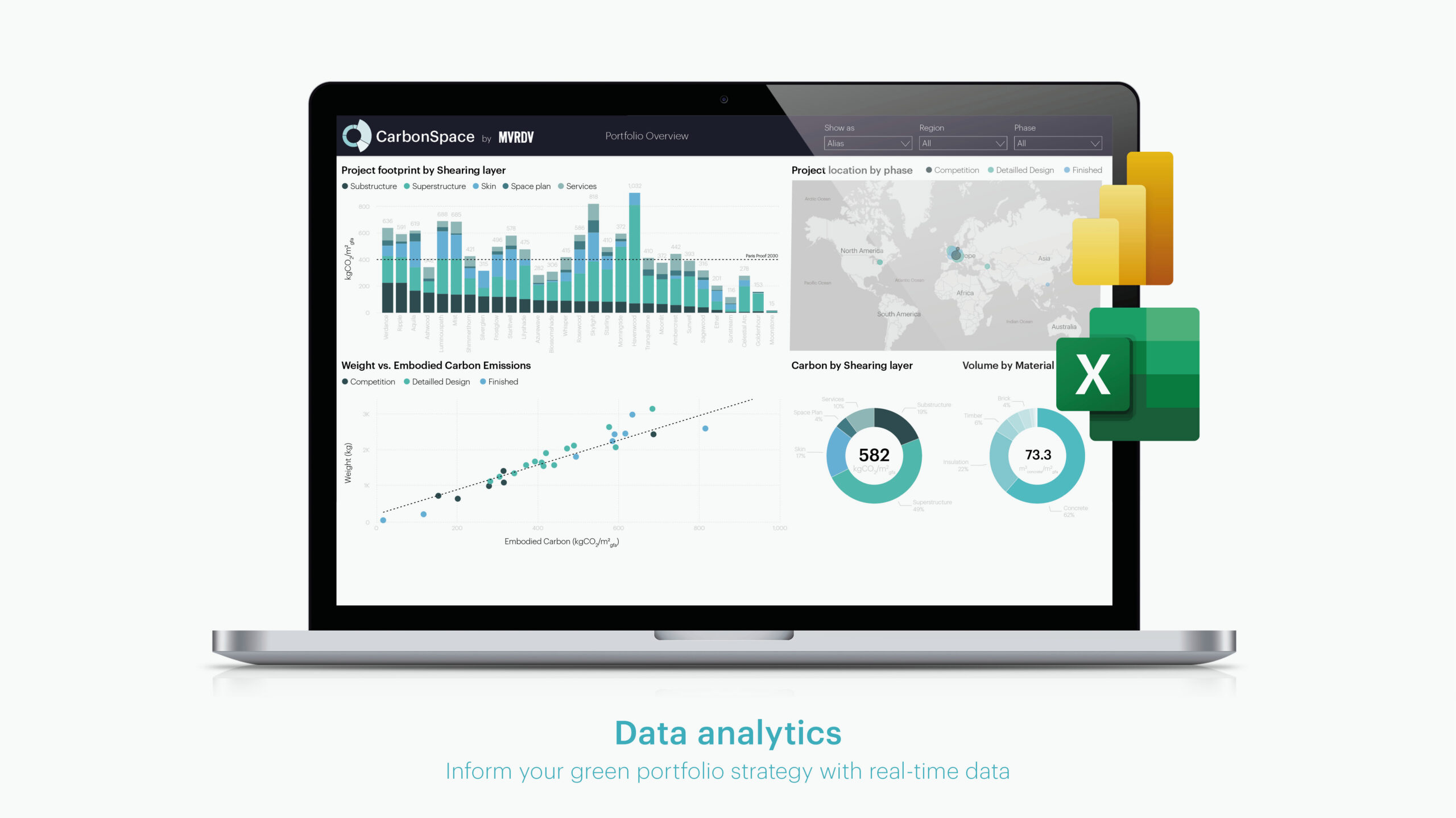
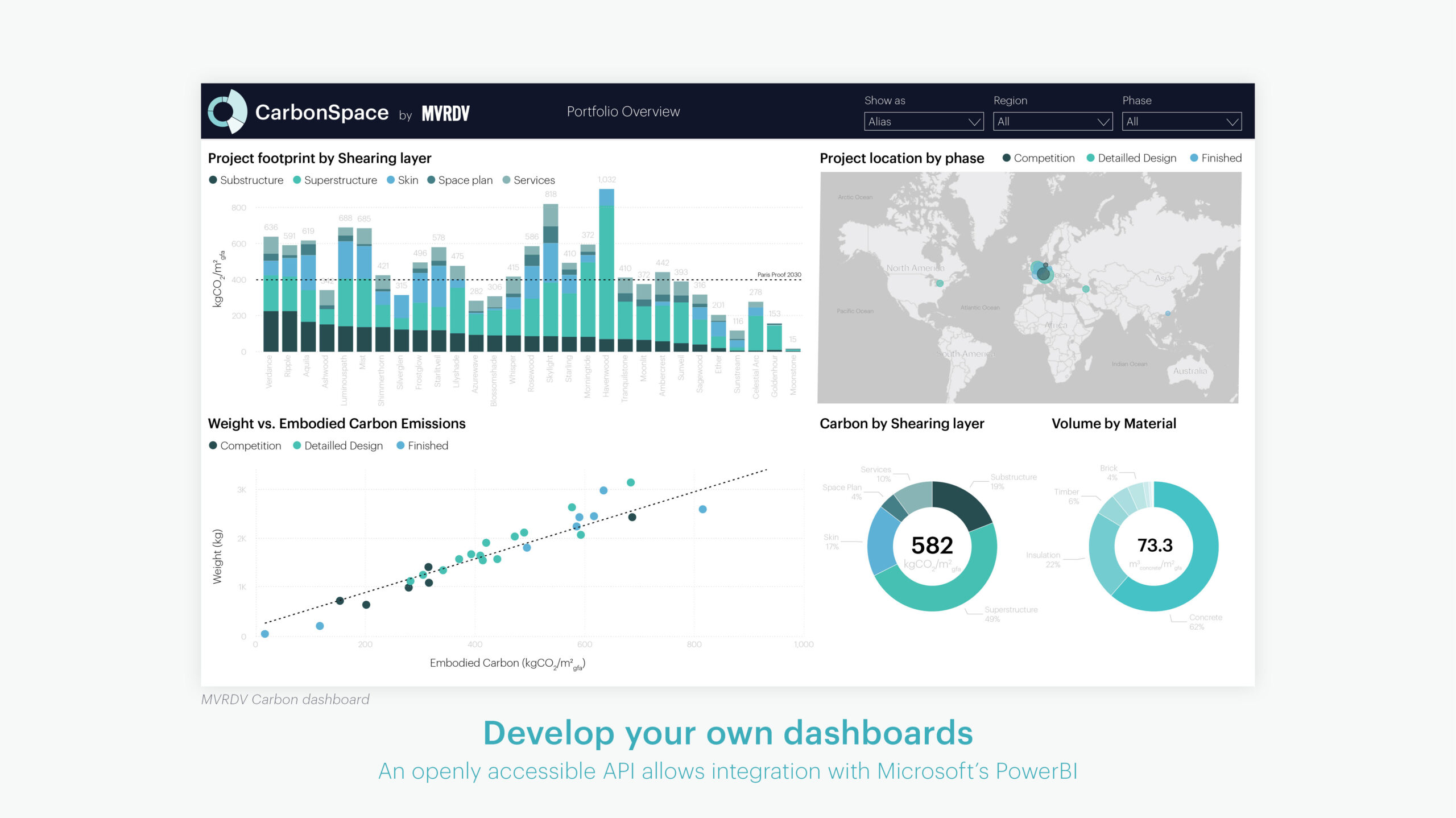
ユーザーは公開APIを活用することで、CarbonSpaceを他の設計・解析ツールと連携させることができる。RhinoやRevitとの接続、Microsoft Power BIによるデータ可視化にも対応する。
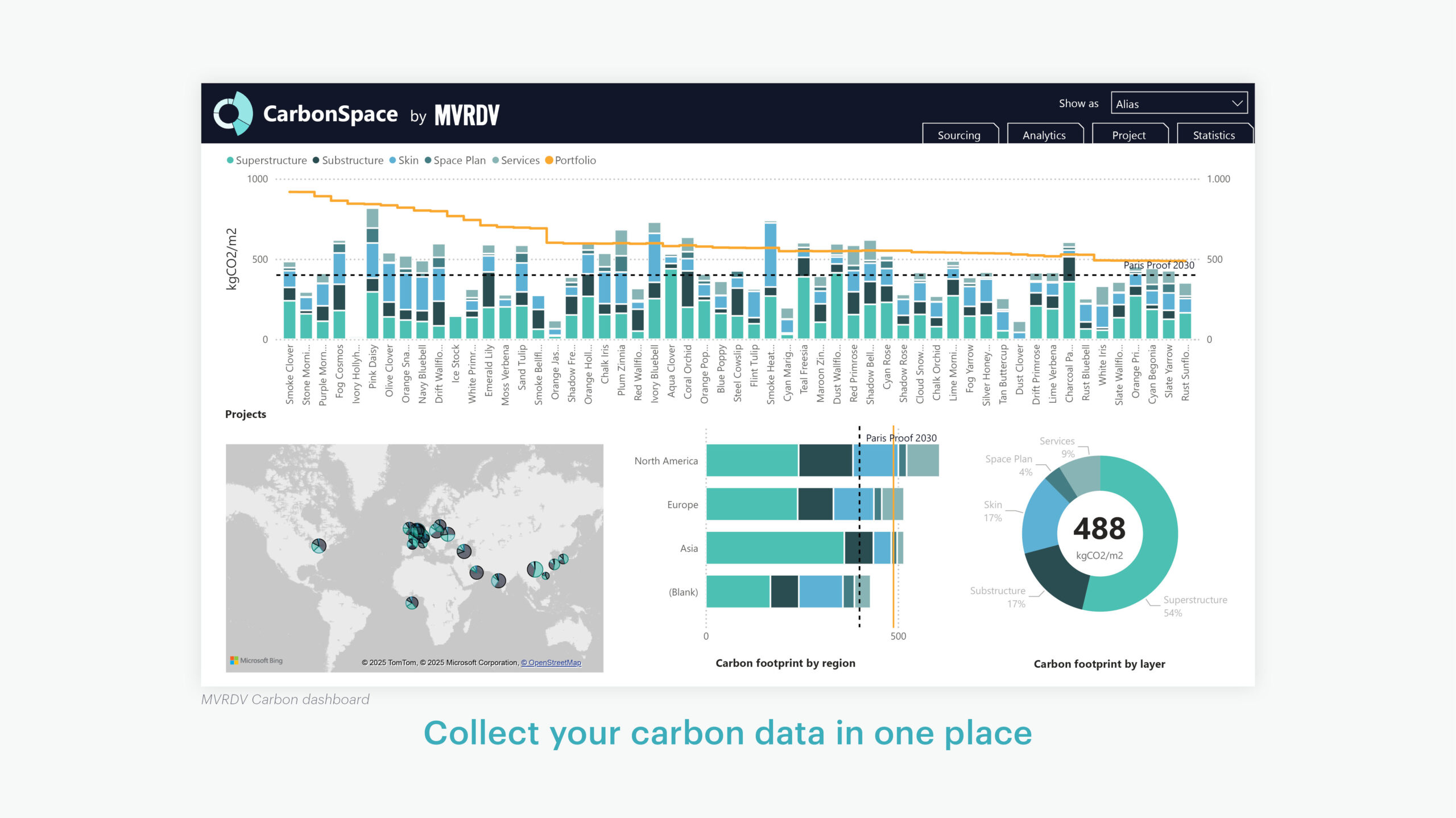
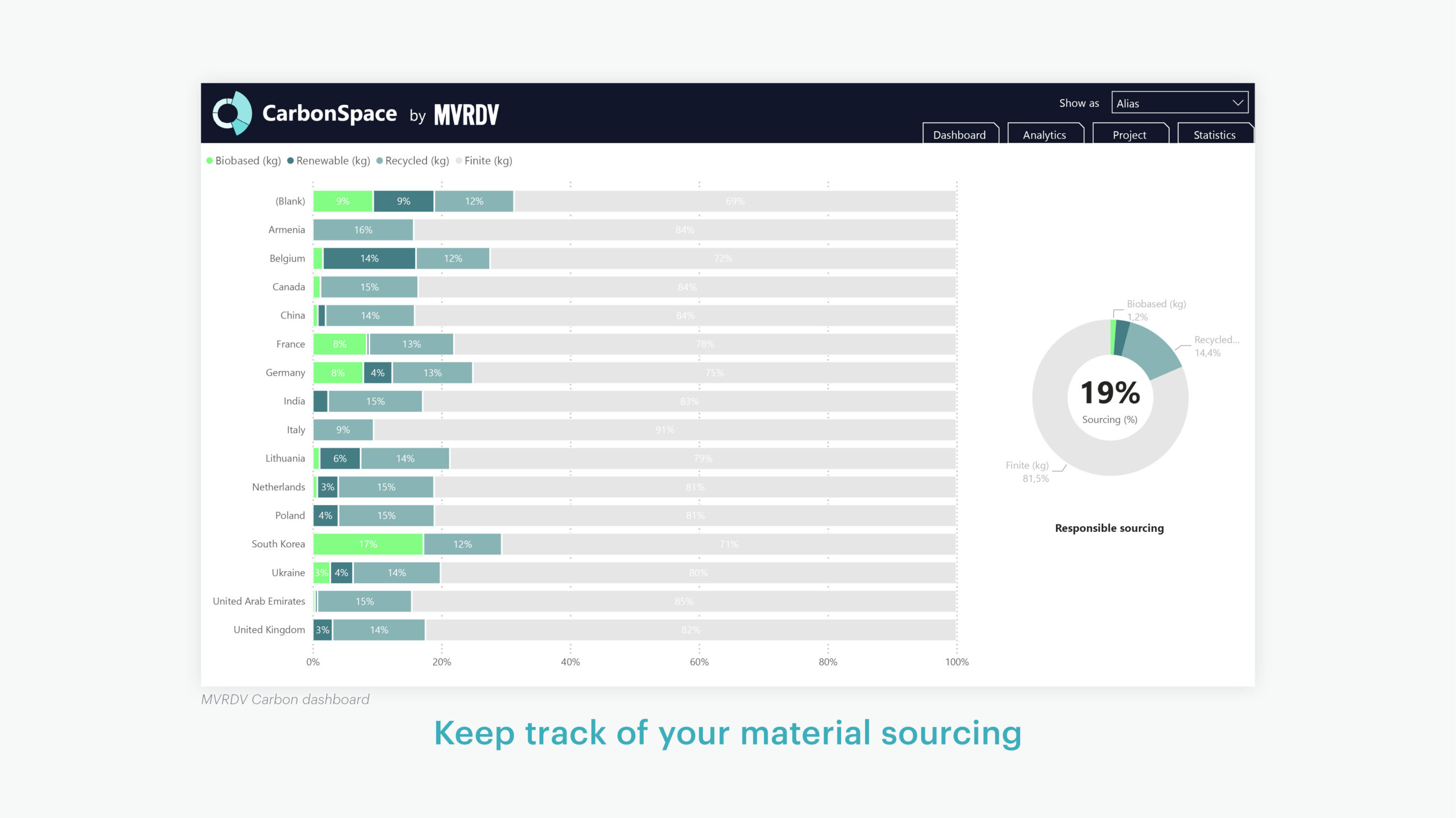
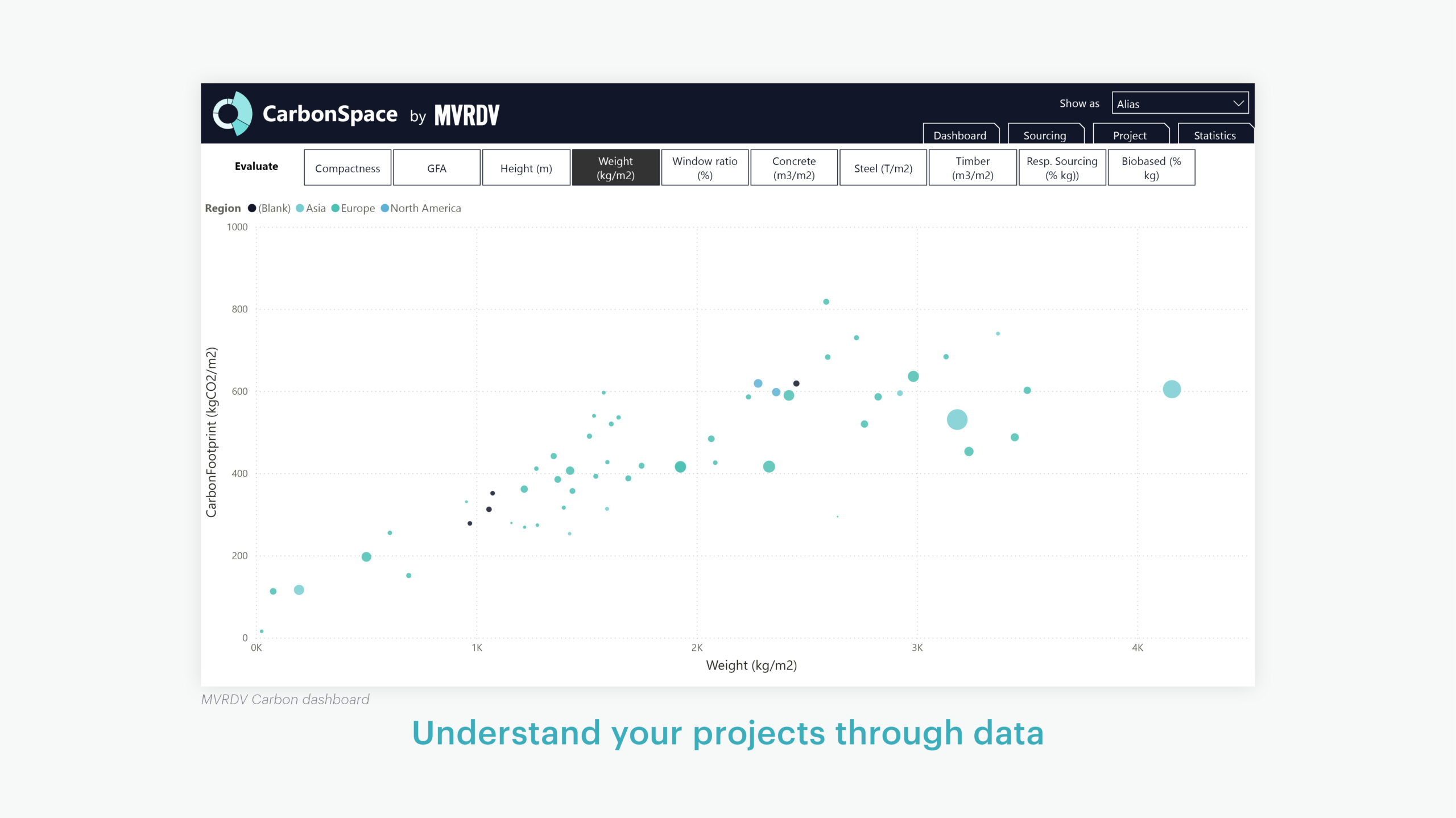
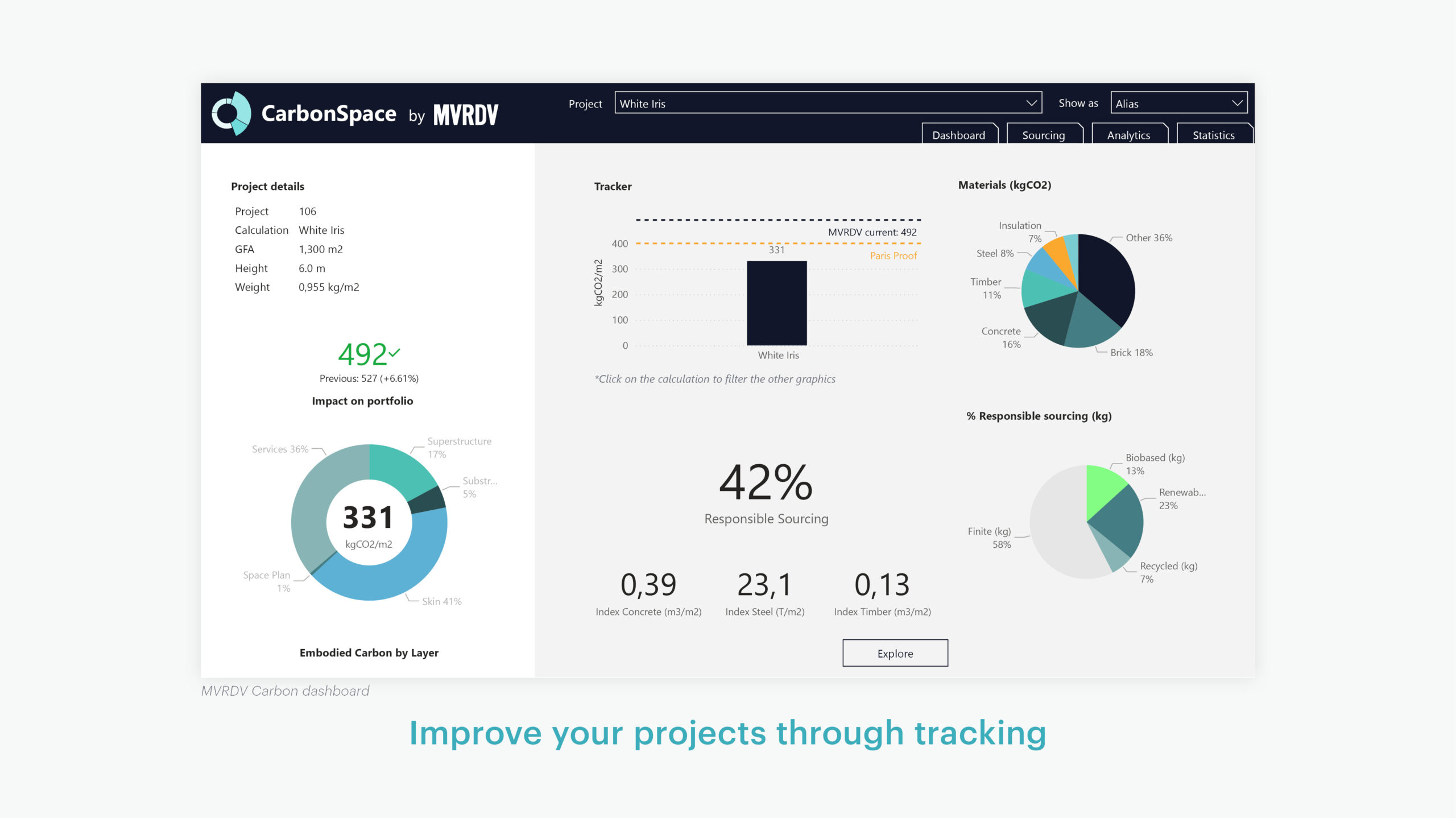
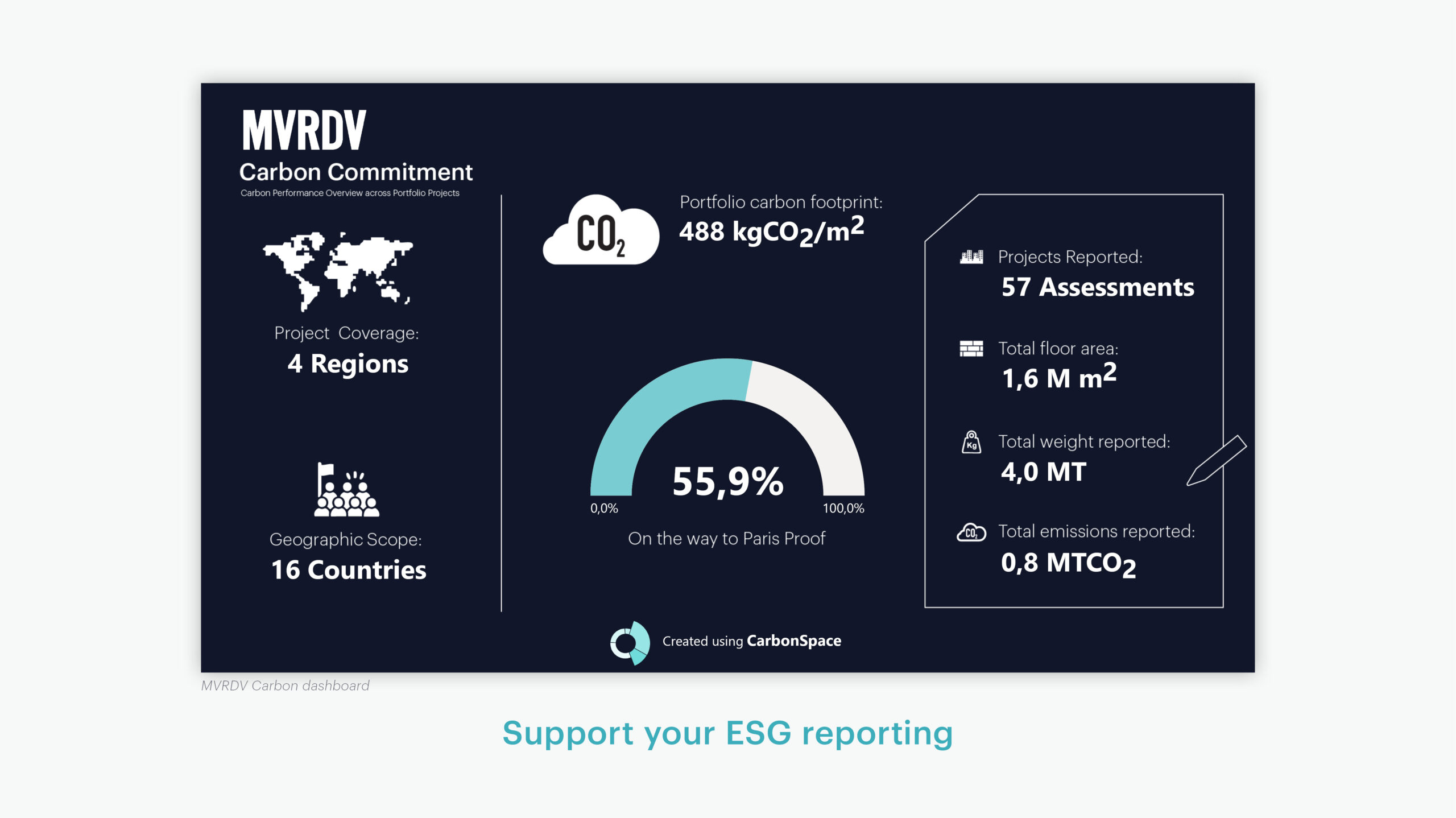
MVRDVではPower BIを用いて、全プロジェクトの炭素排出量を比較するダッシュボードを構築し、2030年気候目標に向けたポートフォリオ全体の進捗を追跡している。その他のユーザーも、自組織のニーズに合わせた独自の可視化環境を構築することが可能である。
©︎ MVRDV NEXT, Studio AvW
オープンアクセスによる業界連携
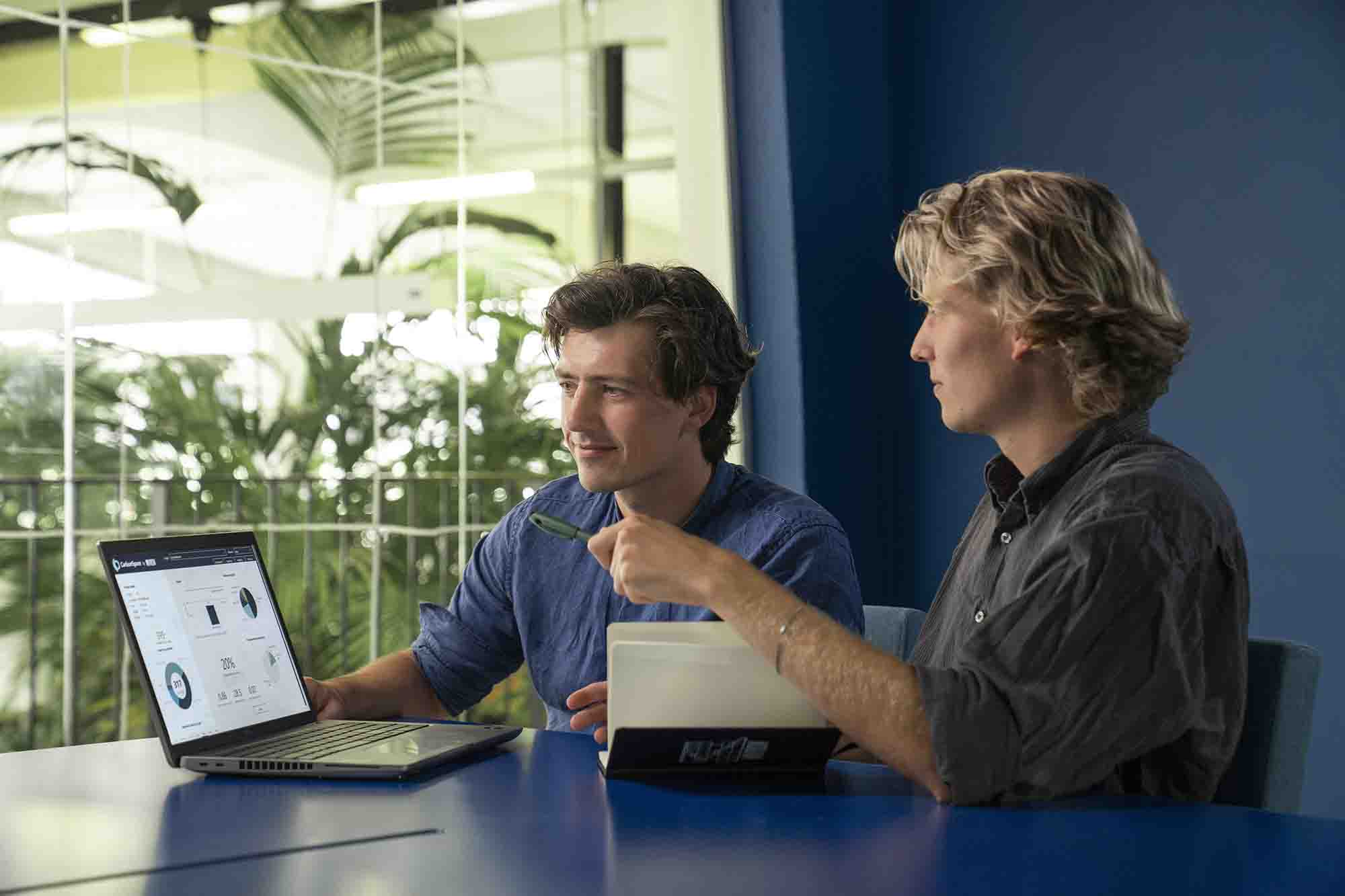
MVRDVはCarbonSpaceの影響力を高めるため、業界全体に向けてツールの使用・テスト・改善を呼びかけている。この決定は、オープン性と協働こそが有意義な気候行動の鍵であるという信念に基づく。
無料アクセスは、多くの設計者が「Carbon Race」と呼ばれる公開・匿名化ダッシュボードにプロジェクトを登録し、低炭素設計の達成度を競い合うことを促す仕組みである。既に建築家、エンジニア、学術機関、サステナビリティコンサルタントなどがベータパートナーとして参加しており、CTBUHとの新たな連携の中核を成している。
CTBUH会長ショーン・ミルズ(Shonn Millsは次のように語る。
「MVRDV NEXTとの協業により、重要な研究と革新的技術の共有を通じて持続可能な都市開発の未来を形づくることが可能となった。CarbonSpaceは2026年サステナビリティ・イニシアチブ・プログラムの一環として、専門家や学者、業界リーダーが建築データを共有し、超高層建築の実践と成果を比較評価する共同プラットフォームの実現を支援する。」
「CarbonSpaceは現在パブリックベータ版として無料で利用可能であり、MVRDVは業界全体の専門家に対して試用とフィードバック提供を呼びかけている。同事務所は、集合知とオープンな交流を通じ、より軽量でスマート、低炭素な未来のデザインを支援していく考えである。」
©︎ MVRDV NEXT, Studio AvW
展覧会「Confessions Carbone」と一般公開
CarbonSpaceの一般公開は、MVRDVがパリで開催する展覧会「Confessions Carbone」と時期を同じくしている。本展では、同事務所のサステナビリティへの取り組みを率直に紹介し、CarbonSpaceが重要な役割を果たす12のプロジェクトをカーボン分析形式で展示した。
なお、CarbonSpaceはGDPR(一般データ保護規則)に準拠しており、MVRDVおよび第三者がユーザーデータや設計情報にアクセスすることはない。
ツールは公式サイト「carbonspace.earth」にて利用可能となっている。
©︎ MVRDV NEXT, Studio AvW
©︎ MVRDV NEXT, Studio AvW
©︎ MVRDV NEXT, Studio AvW
©︎ MVRDV NEXT, Studio AvW
©︎ MVRDV NEXT, Studio AvW
©︎ MVRDV NEXT, Studio AvW
©︎ MVRDV NEXT, Studio AvW
©︎ MVRDV NEXT, Studio AvW
©︎ MVRDV NEXT, Studio AvW
©︎ MVRDV NEXT, Studio AvW
以下、MVRDVのリリース(英文)です。
MVRDV releases CarbonSpace for free public use: a transparent tool to help reduce embodied carbon from day one of the design processMVRDV has launched CarbonSpace, a transparent, web-based tool that helps architects design with embodied carbon from day one of the design process. Developed out of a wish to improve carbon literacy and promote data transparency, CarbonSpace is now available to the public free of charge. Created by the practice’s research and development unit MVRDV NEXT, in collaboration with Studio AvW, the tool is designed to support informed decision-making throughout the design process, starting as early as a napkin sketch. It works with quantity estimates and a transparent database, offering fast feedback and the ability to compare different design options. Following its launch, the tool will also be used in collaboration with the Council on Tall Buildings and Urban Habitat (CTBUH) to help establish a shared, global understanding of embodied carbon in buildings.The building industry plays a major role in climate change, accounting for 39% of global carbon emissions. Although awareness is growing, reducing embodied carbon is still difficult. One of the many hurdles in this process is the overreliance on calculation tools that require detailed models, precise data, and complex databases that are often hidden behind a paywall. As a result, by the time embodied carbon calculations are complete, the opportunity to change the design has often passed. This push for precision has not led to faster or deeper decarbonisation; in fact, a focus on reporting has seemingly distracted designers from taking meaningful action. On top of that, regulations and standards vary between countries, making honest carbon comparisons between projects nearly impossible.Without a common language, it is hard to know what works, and even harder to make progress. In response to this challenge, MVRDV developed CarbonSpace as a practical and transparent tool for designers. Rather than focusing on detailed carbon calculations late in the design process, the tool is built to work from the “napkin sketch” stage, using rough input data or even simple rules of thumb to give immediate feedback on the carbon consequences of design choices.As such, it is not a validation tool, but a decision-support tool: “CarbonSpace won’t solve the climate crisis on its own. But it will help architects design with carbon from day one and make informed decisions”, explains Sanne van der Burgh, head of MVRDV NEXT. “We want to give designers the confidence to act without waiting for perfect data. More importantly, we want to create a shared language for carbon, so we can collaborate, learn from each other, and make better decisions as an industry.”CarbonSpace links quantity inputs such as areas of floor and façade or the volume of a building’s foundation to a streamlined, internationally representative carbon database based on a simplified version of the open-source Ökobaudat database maintained by the German Federal Government. The tool also includes pre-set libraries of common components, materials, and detail build-ups, allowing for faster estimations across a wide range of project types. With this approach, CarbonSpace helps design teams understand how different systems, structures, and materials affect a project’s embodied carbon. For MVRDV, this process has already driven a focus on low-weight designs as the primary factor influencing embodied carbon. It has also allowed the practice to steer projects through the design development, sounding the alarm when the design’s initial sustainable ambitions are threatened by a series of compromises.Users can further amplify the power of CarbonSpace thanks to an openly accessible API, which allows users to connect the tool to Rhino, Revit, or to deliver data to Microsoft’s Power BI tool, creating useful data visualisations. In the case of MVRDV, the latter capability was used to create a dashboard comparing the carbon emissions of all the firm’s projects, and tracking the progress of the entire portfolio towards the 2030 climate targets. In a similar way, other users will be able to create their own dashboards that meet their organisation’s specific needs.To further extend its impact, MVRDV has decided to make CarbonSpace publicly available and to invite partners across the industry to use, test, and improve the tool. This decision reflects a core belief that openness and collaboration are essential to meaningful climate action. Free access will also encourage more people to contribute their projects to the Carbon Race, a public, anonymised (and optional) dashboard to encourage friendly competition and keep track of the whole community’s progress towards low-carbon designs. The tool is already being used by a range of beta partners, including architects, engineers, academic institutions, and sustainability consultants, and is at the heart of a new partnership with CTBUH. As part of its global Sustainability Initiative, CTBUH is adopting CarbonSpace to support honest, cross-border comparisons of tall building projects.“Our collaboration with MVRDV NEXT enables us to shape the future of sustainable urban development, through critical research and the dissemination of ground-breaking innovations”, says CTBUH chair Shonn Mills. “As part of our 2026 Sustainability Initiative Program, CarbonSpace will help facilitate a collaborative dashboard where professionals, academics, and industry leaders converge to exchange building data and benchmark their projects against innovative practices in the tall building industry.”CarbonSpace is now available in public beta and free to use. MVRDV encourages professionals from across the industry to explore the tool, give feedback, and contribute to its ongoing evolution. Through collective knowledge and open exchange, the practice hopes to support a future in which design is not only beautiful and functional, but also lighter, smarter, and lower in carbon.The public launch of CarbonSpace coincides with the opening of MVRDV’s exhibition Confessions Carbone in Paris. The exhibition gives an honest, behind-the-scenes account of MVRDV’s sustainability journey, in which CarbonSpace plays a key role, with 12 projects presented in the form of a carbon analysis. Confessions Carbone is on display at the Atelier Néerlandais from September 19th until September 27th.CarbonSpace is in compliance with GDPR legislation. Neither MVRDV nor other parties have access to user data or design information. The tool can be accessed at carbonspace.earth
MVRDV 公式サイト
https://www.mvrdv.com/projects/1273/carbonspace


![[Report]RUI Architectsが可動モジュールを設計して松竹のアートスペースをリニューアル、柿落とし展「継承のトランジション」の会場デザインも担当](https://magazine-asset.tecture.jp/wpcms/wp-content/uploads/2026/07/24141011/20260713shutl_press11-01309-c-900x629.jpeg)
![[Interview]BIM図面審査がスタート! さまざまな設計者のニーズに応えるVectorworksによる「限界のないデザイン」の世界](https://magazine-asset.tecture.jp/wpcms/wp-content/uploads/2026/07/13084316/rinterview_vectorworks_056-e1784200974912-900x555.jpg)