迷惑施設から都市ランドマークとなる新インフラ - サーキュラーエコノミーの未来を示す、上海のごみ焼却発電所〈宝山廃棄物発電センター〉
©︎ Derryck Menere Photographer
©︎ Derryck Menere Photographer
中国・上海に誕生した〈宝山廃棄物発電センター(Baoshan Waste-to-Energy Center)〉は、家庭ごみを燃料として年間300万トン以上のCO2削減を実現する、廃棄物処理と発電を融合した発電施設です。
北京、上海、香港にオフィスを構える設計事務所 Ballistic Architecture Machine(BAM)が設計しました。
注目ポイント
- 巨大な産業インフラの機能を隠しつつ、建築と景観の境界を曖昧にする設計
- サーキュラーエコノミーの未来へと牽引する新インフラ
- ランドスケープや公共プログラムを融合した「カモフラージュ手法」
- 建物が純粋な市民空間へと変容することを見据えた設計思想
(以下、BAMから提供されたプレスキットのテキストの抄訳)
©︎ Derryck Menere Photographer
©︎ Beidouxing Photographer
年間300万トン超のCO2削減を実現する、上海の最新ごみ焼却発電所
産業遺構から循環型経済を牽引する新インフラへ
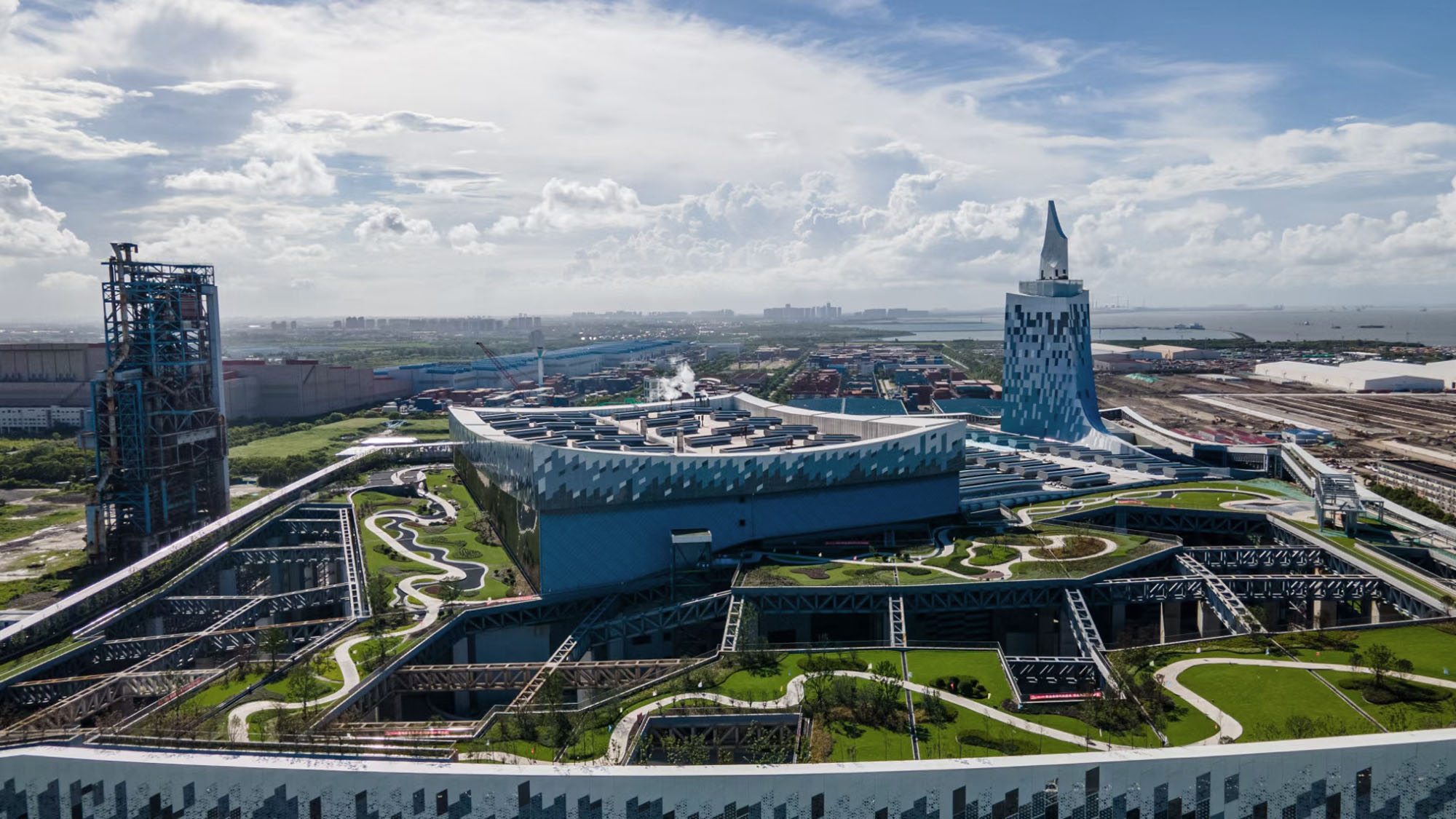
上海は、家庭ごみを燃料とする最新の発電所〈宝山廃棄物発電センター〉を稼働させ、持続可能な廃棄物インフラの整備に向けて大きな一歩を踏み出した。かつて石炭焚き高炉が存在したこの敷地は、現在、上海のCO2削減戦略において極めて重要な役割を担っている。
旧来の産業施設を置き換え、温室効果ガス排出の主要な原因である埋立地への廃棄物流入を阻止することで、同センターは年間300万トン以上の炭素排出を削減する。Ballistic Architecture Machine(BAM)の設計によるこの新世代施設は、サーキュラーエコノミーへの重要な一歩を示すと同時に、廃棄物インフラが持続可能な都市のランドマークへと進化し得る可能性を体現している。
©︎ Derryck Menere Photographer
©︎ Derryck Menere Photographer
巨大な処理能力と「カモフラージュ」による建築的アプローチ
128,000m²に及ぶこの複合施設は、発電を伴う「焼却処理」と、バイオガスを生成する「嫌気性消化処理」という2種類の廃棄物処理システムを備えている。4ライン構成の焼却炉は、最大効率時に日量3,000トンを処理する。一方、嫌気性消化処理ユニットは日量8,000トン以上の生ごみを処理する能力をもつ。
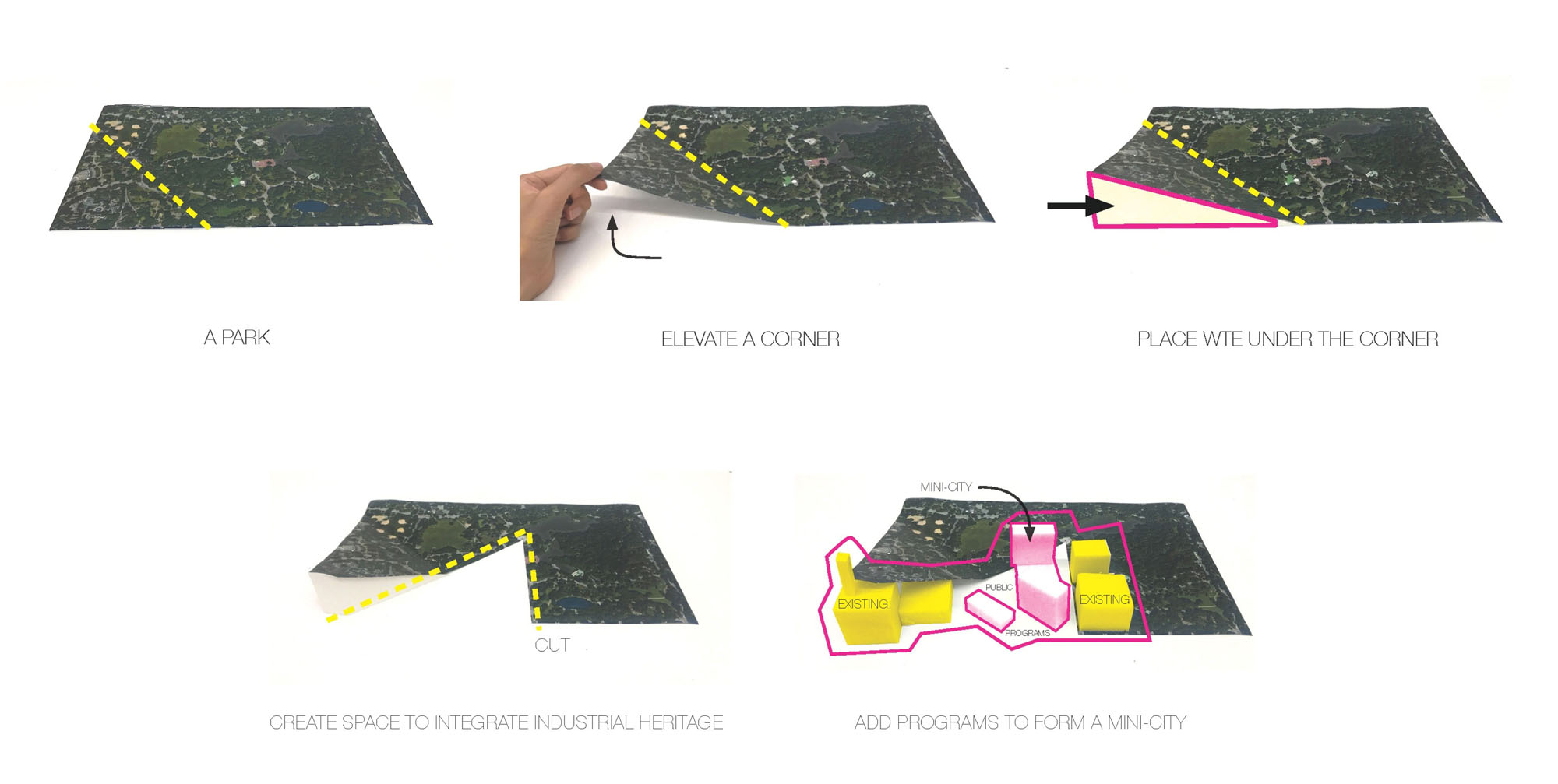
しかし、この巨大施設の設計において、BAMは現代の産業インフラに蔓延する「装飾された小屋」的なパラダイムから意図的に距離を置いた。代わりに彼らが開拓したのは、建築やランドスケープデザインと、公共プログラム(没入型の工場見学、廃棄物博物館、各種レクリエーション施設など)を融合させる「カモフラージュ手法」である。
単調な産業施設になり得た場所は、ランドスケープと建築の交差点に位置する、ダイナミックな教育拠点かつ全く新しいタイプの都市ランドマークへと変貌を遂げた。
©︎ Derryck Menere Photographer
©︎ Derryck Menere Photographer
©︎ Derryck Menere Photographer
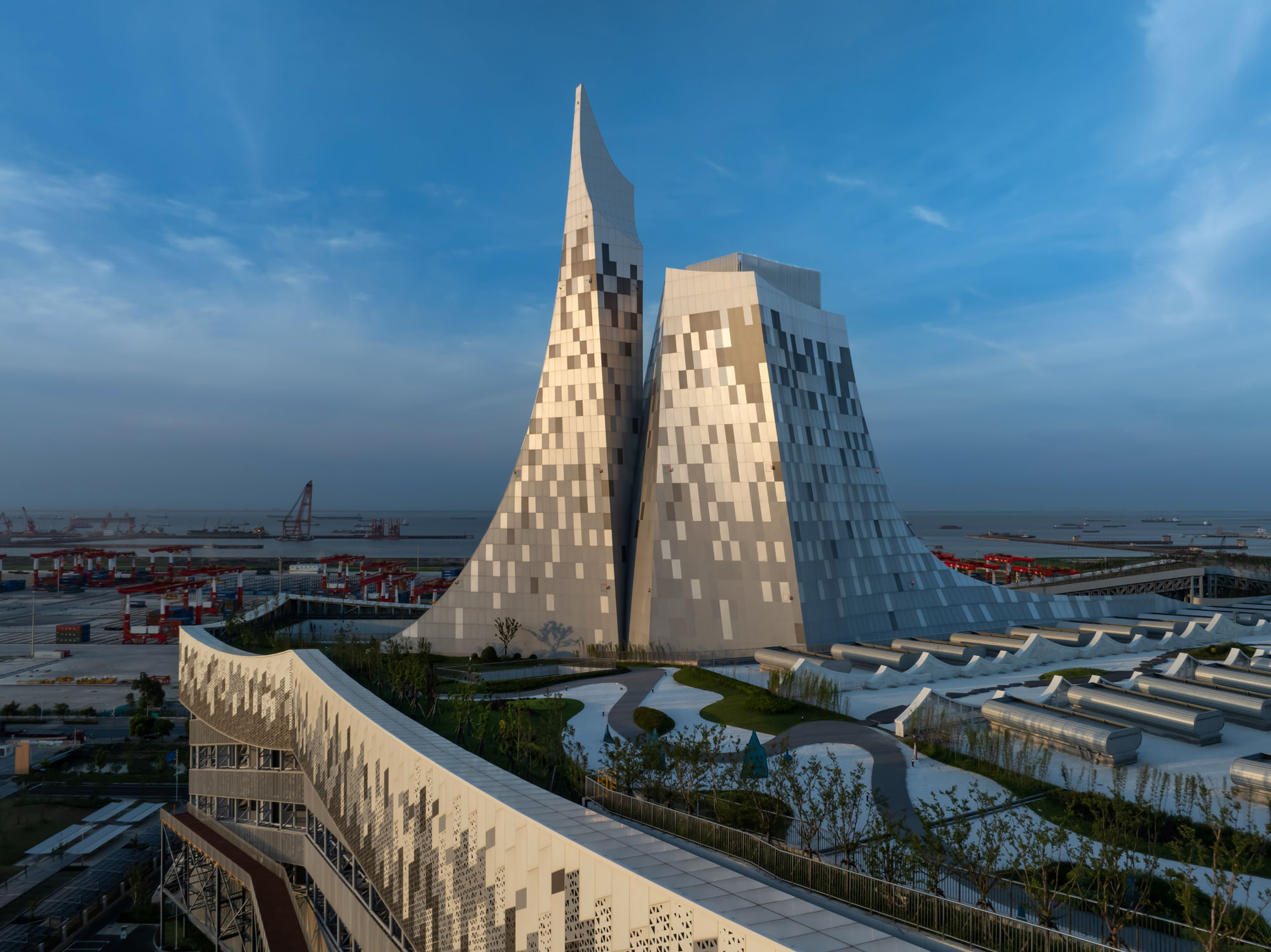
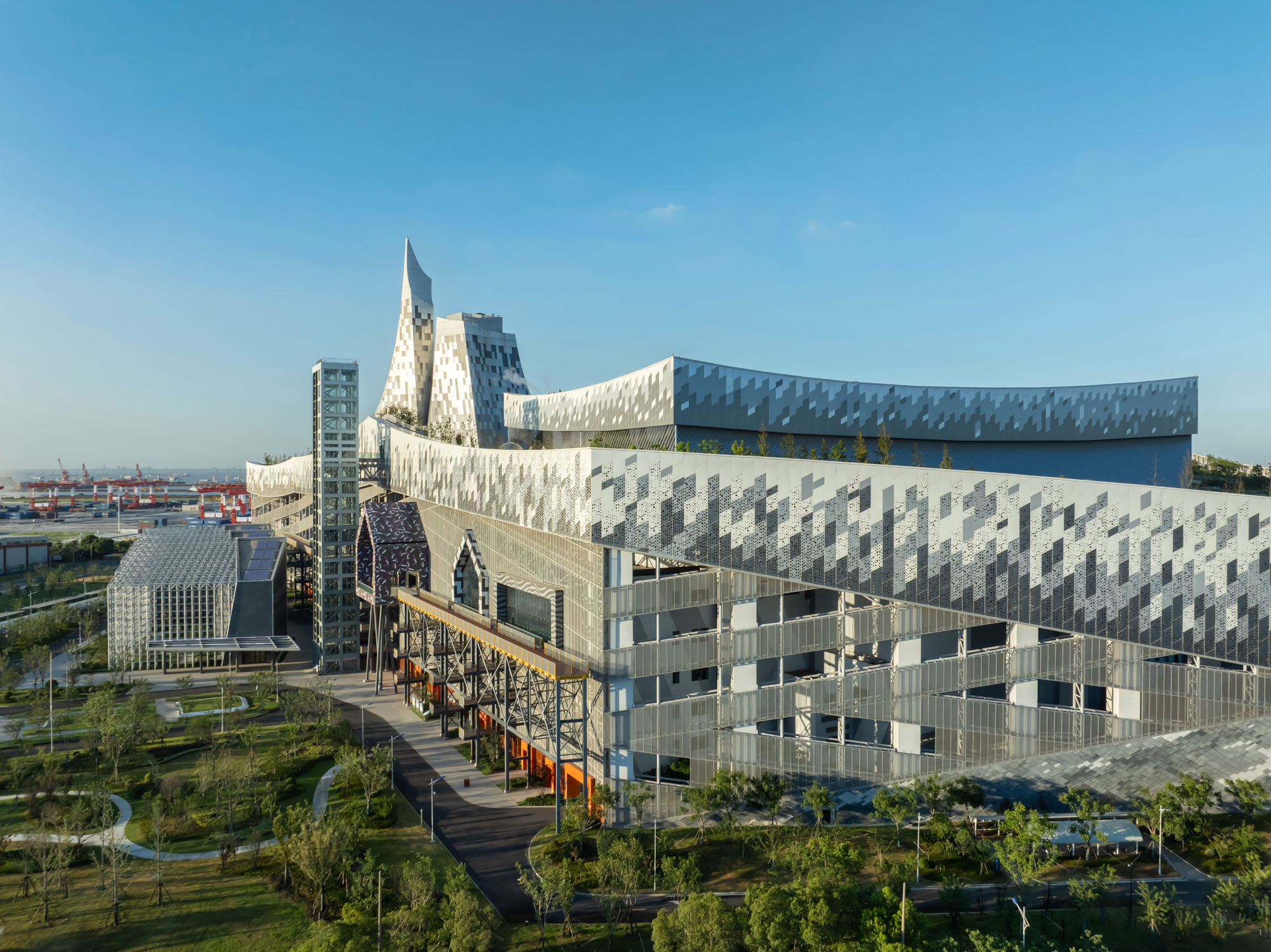
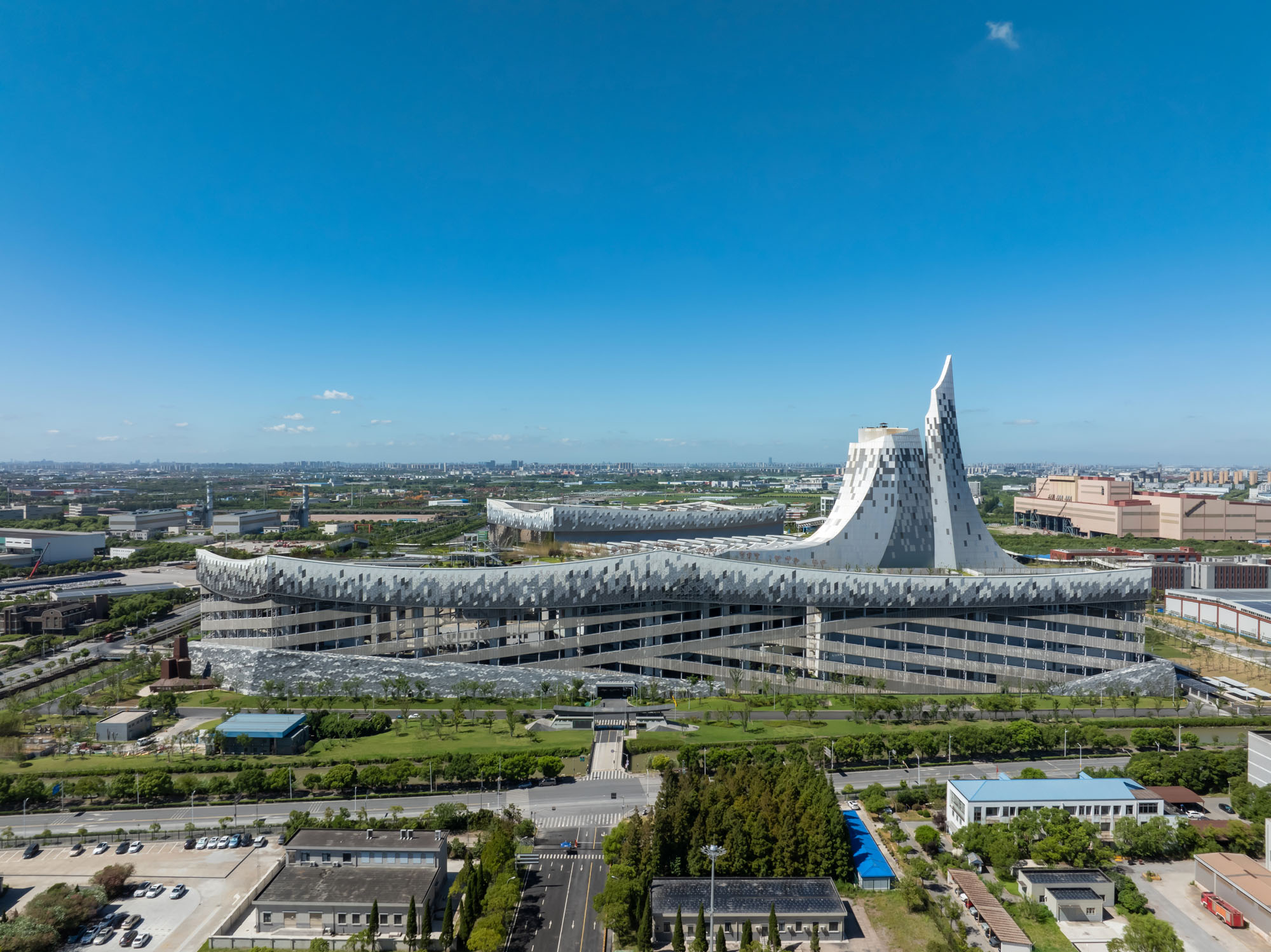
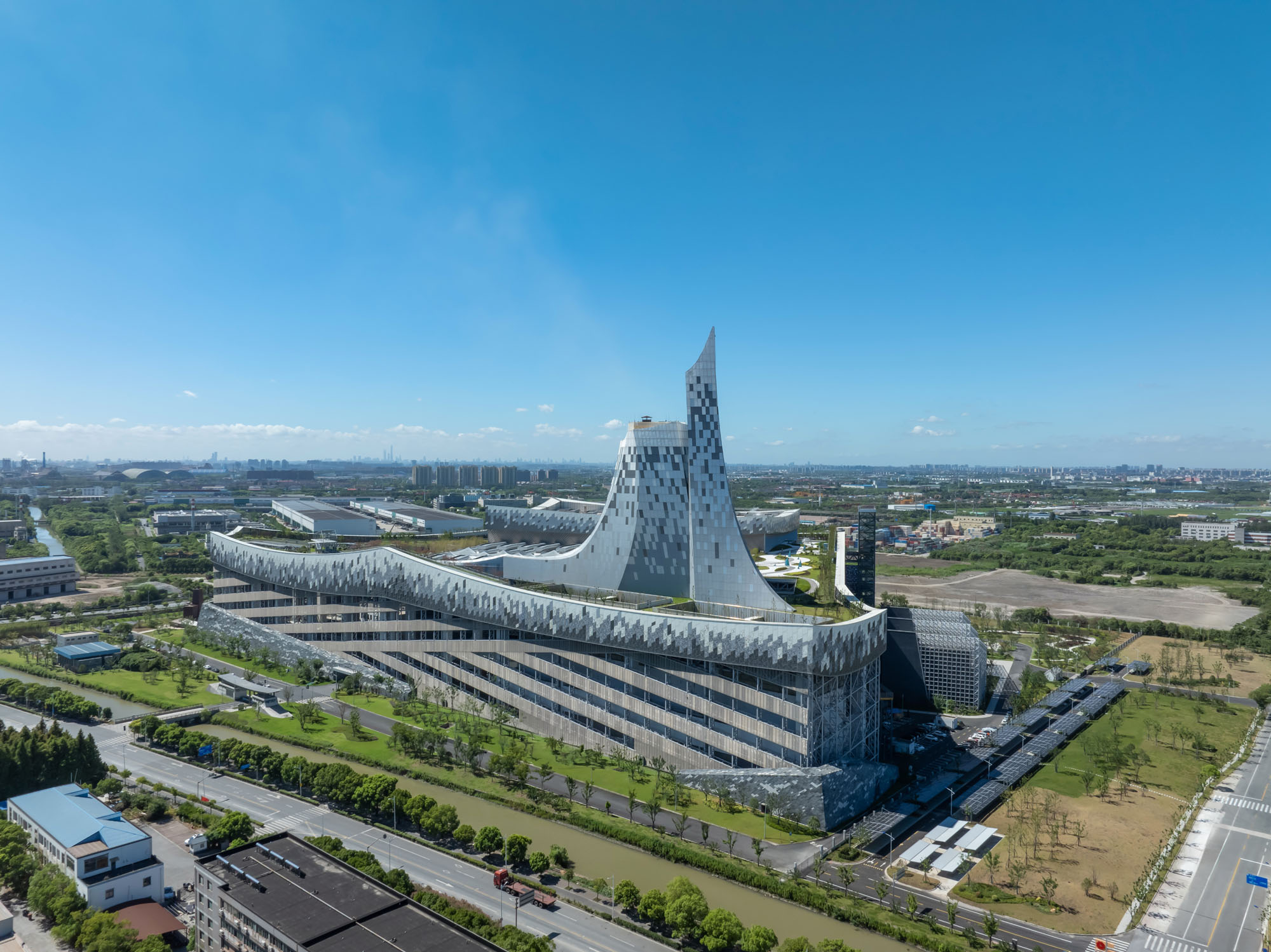
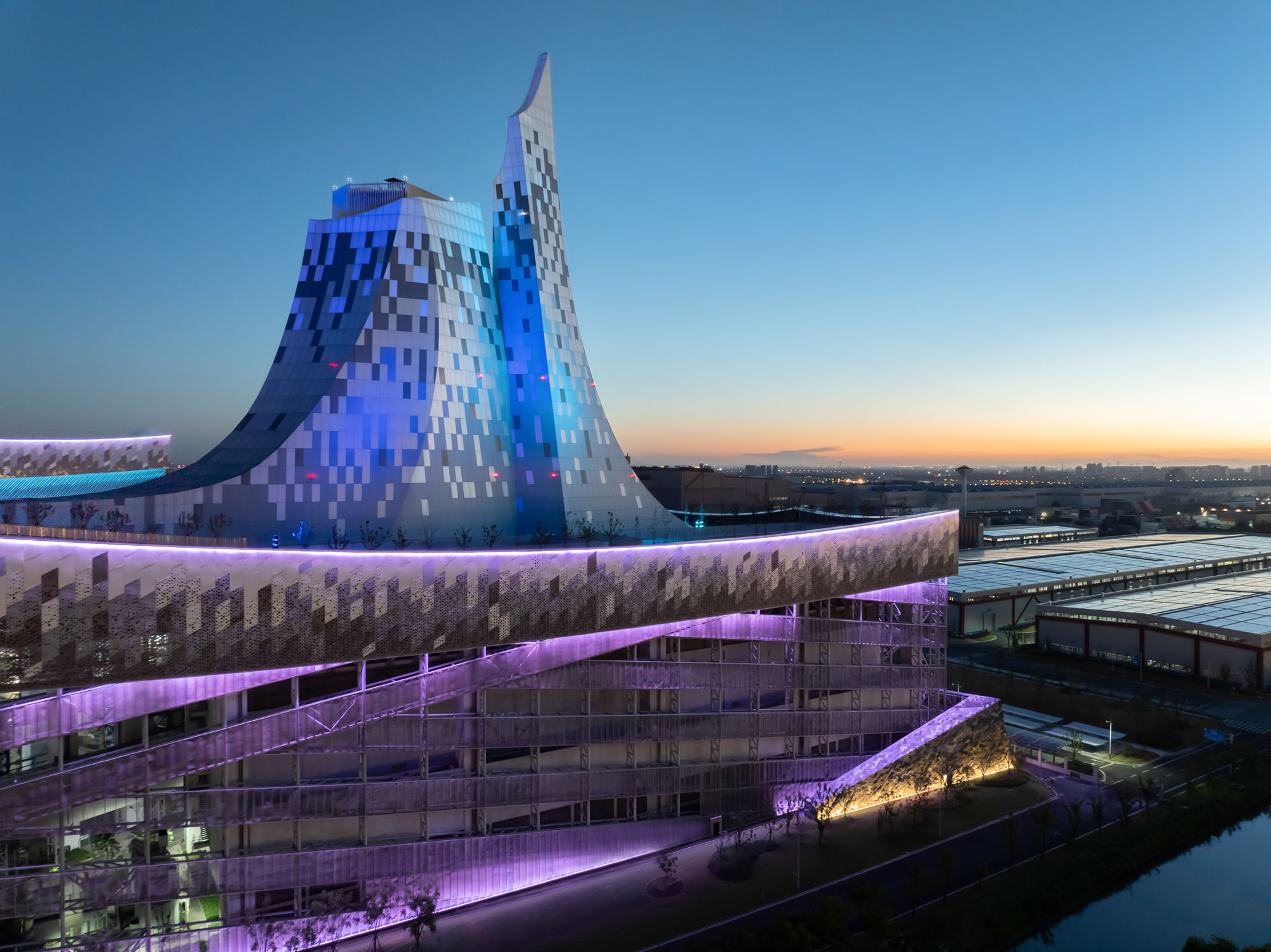
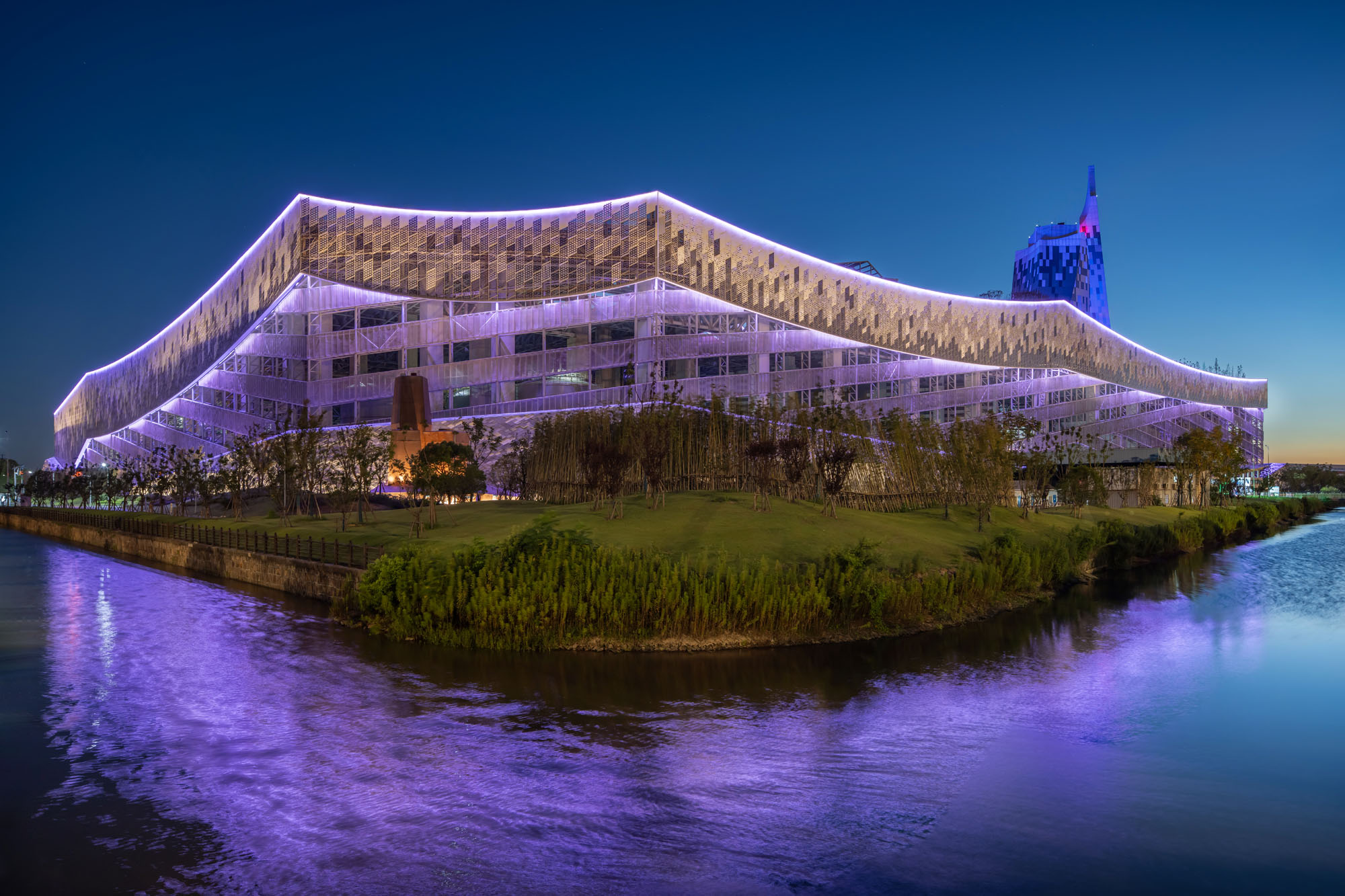
建築と景観の境界を曖昧にする「山」のような意匠
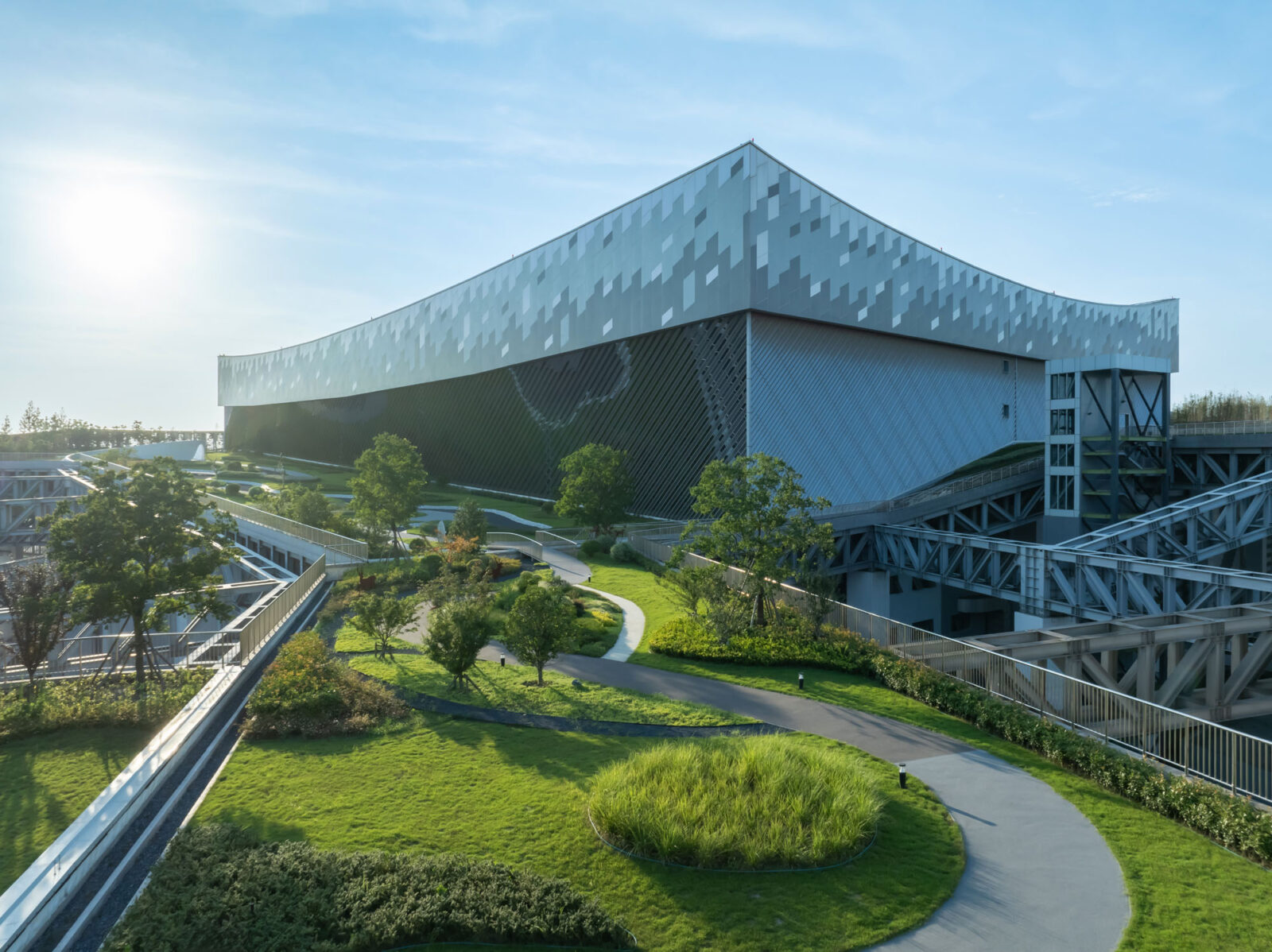
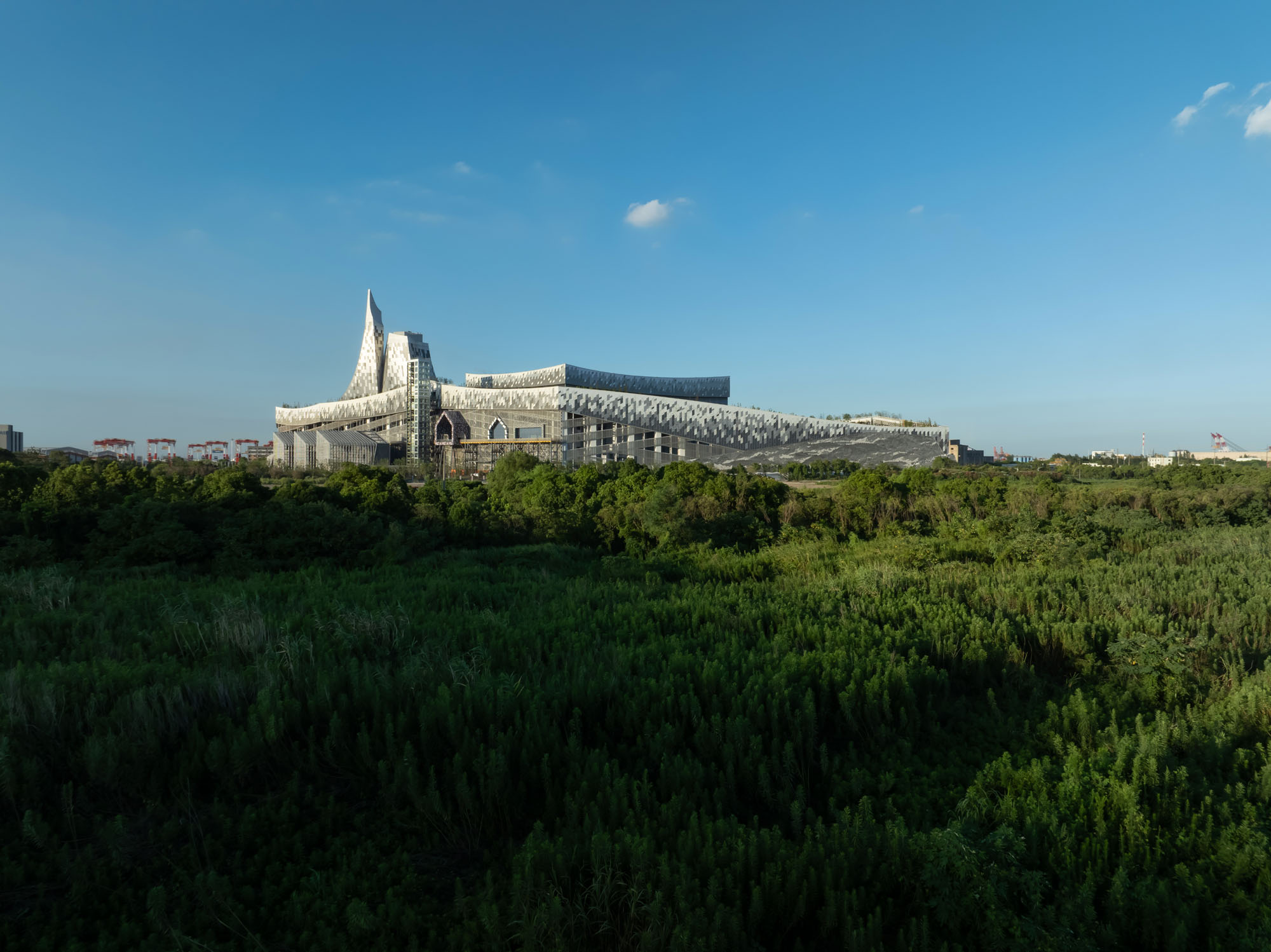
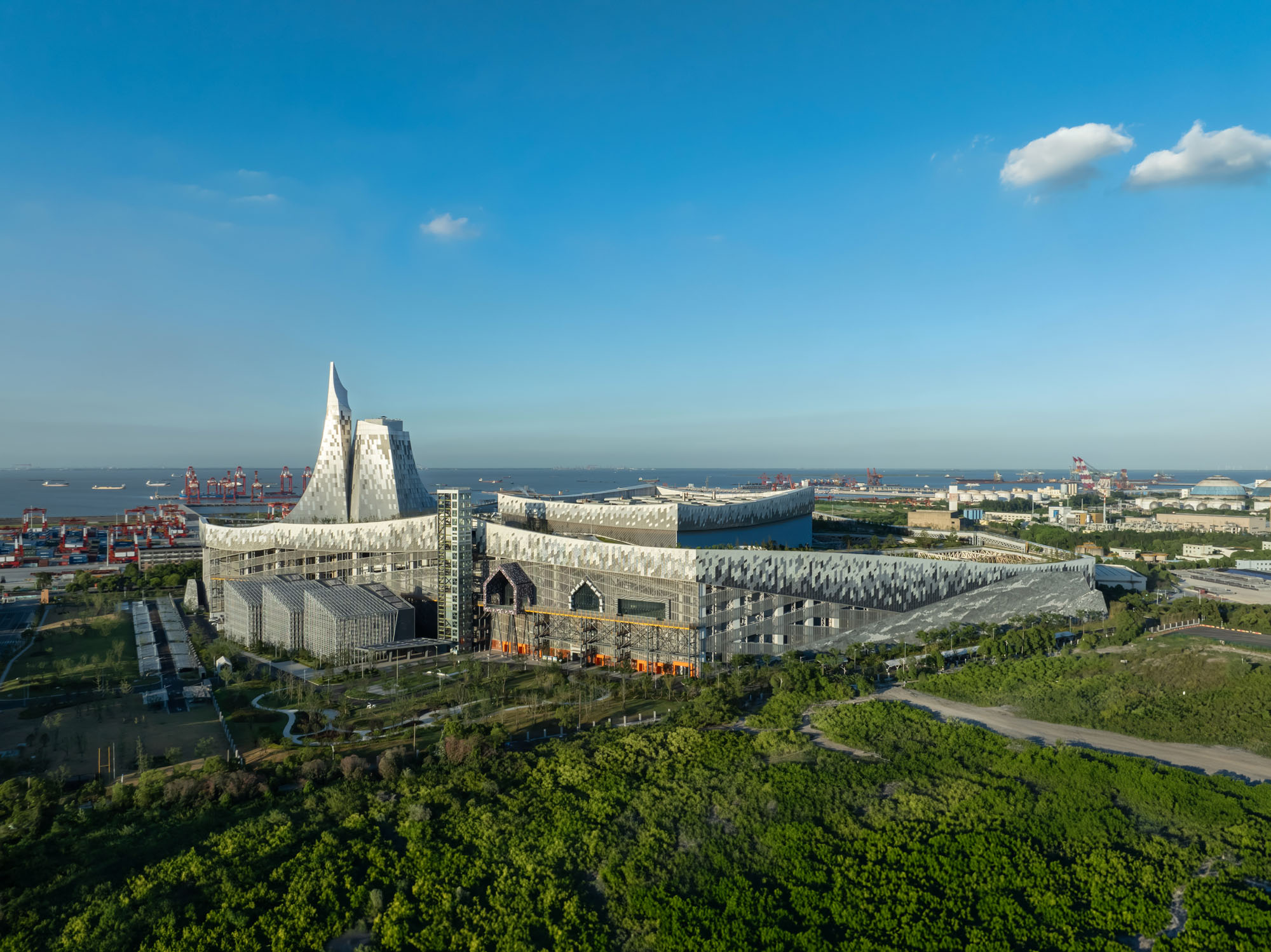
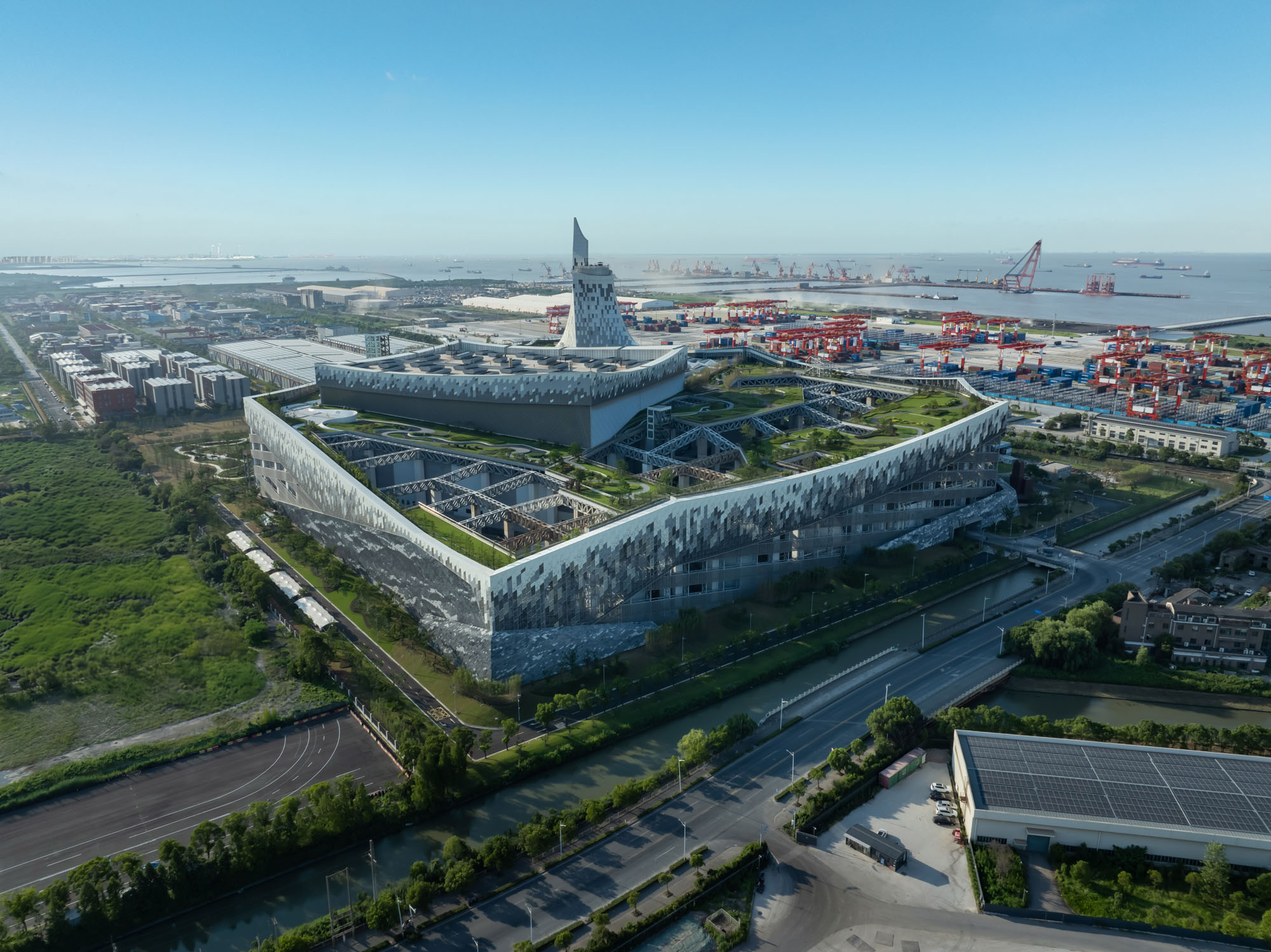
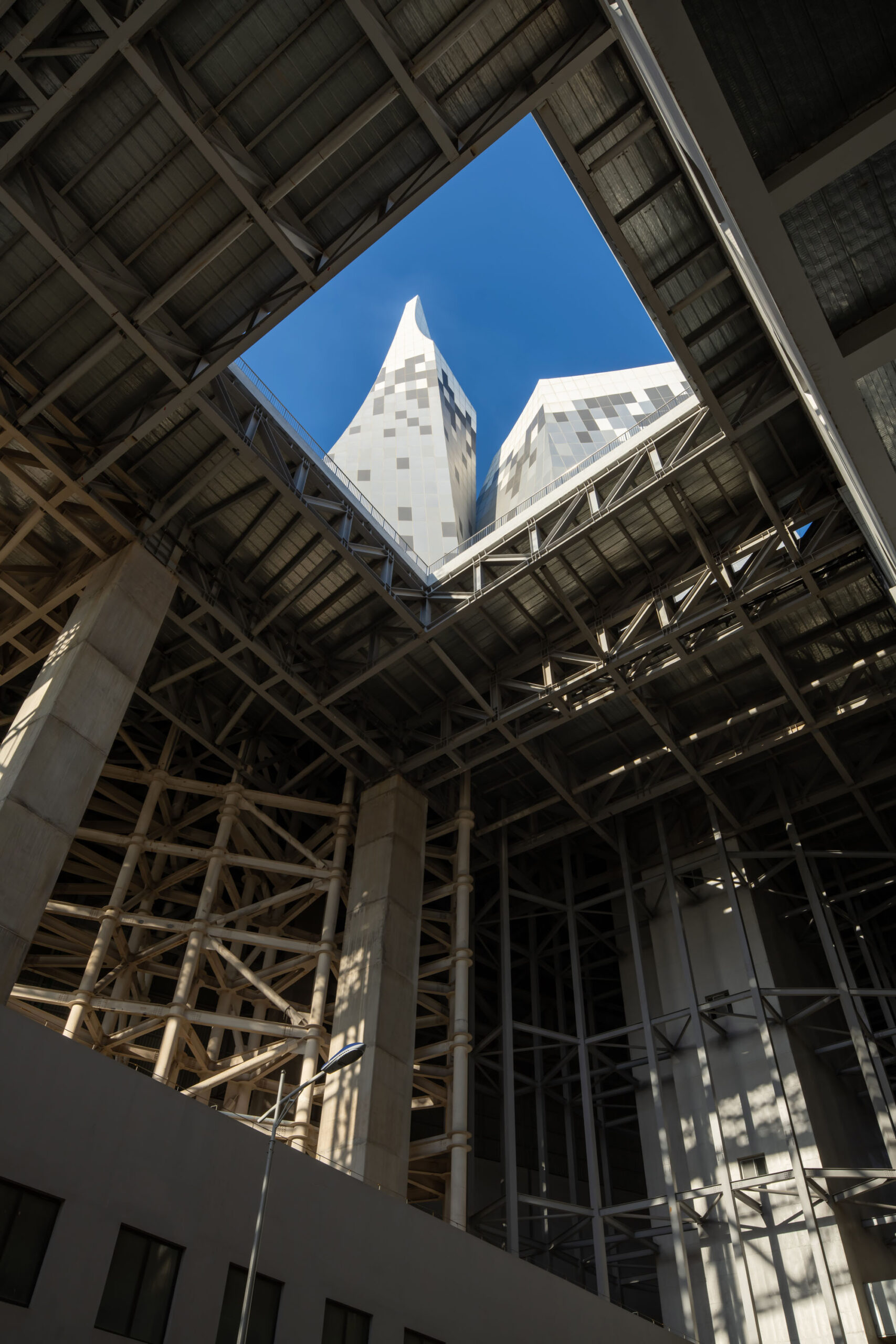
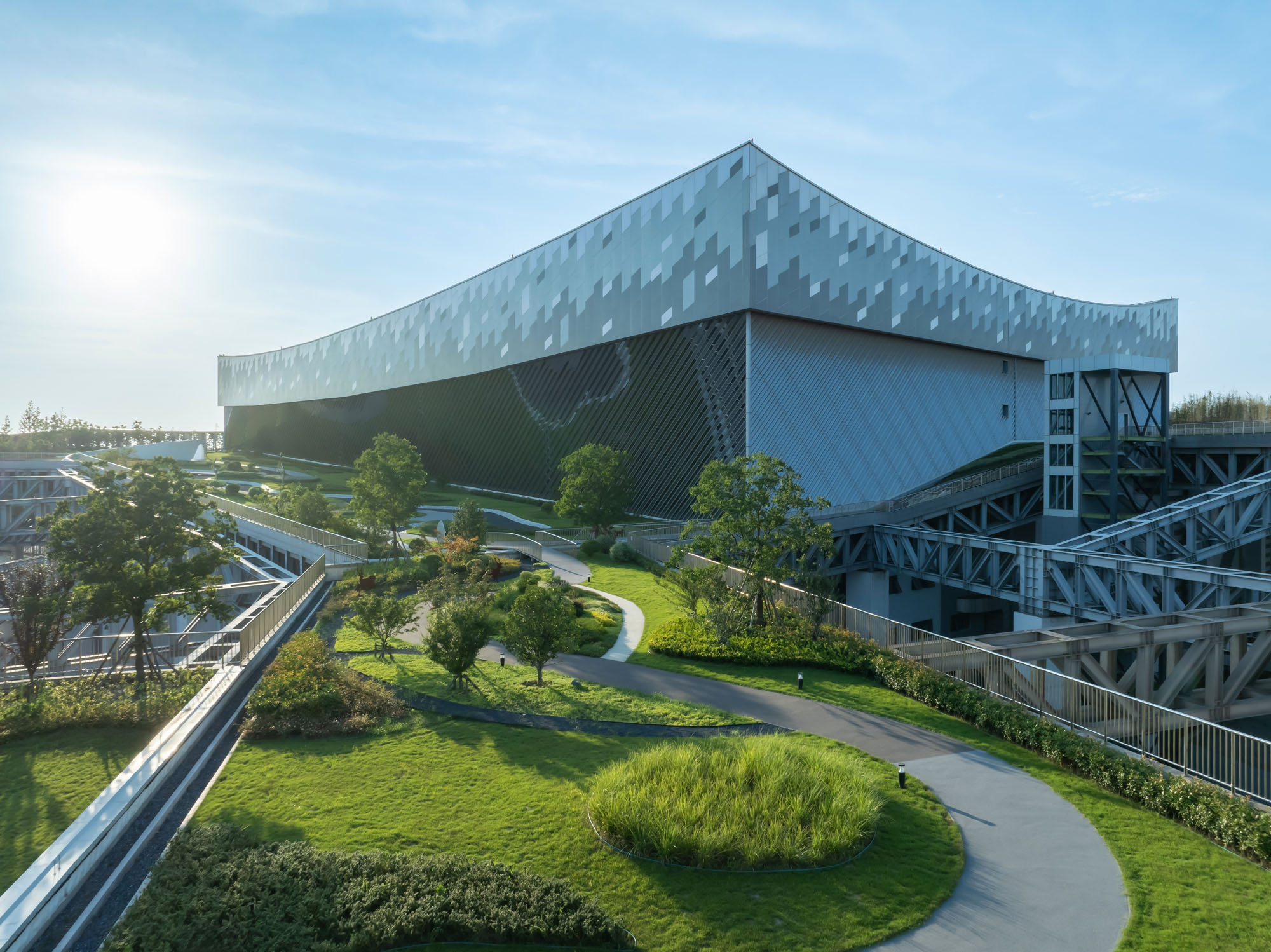
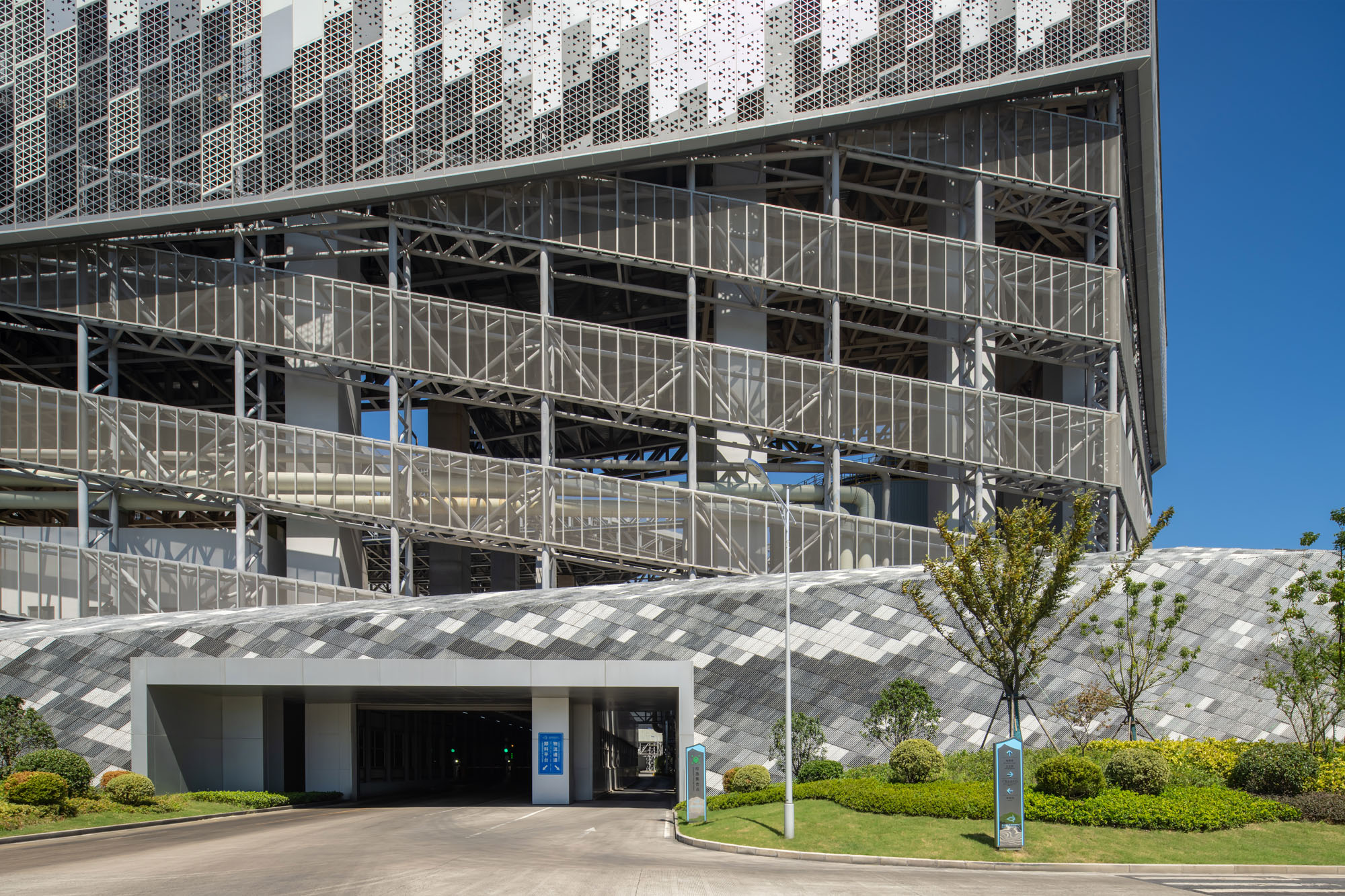
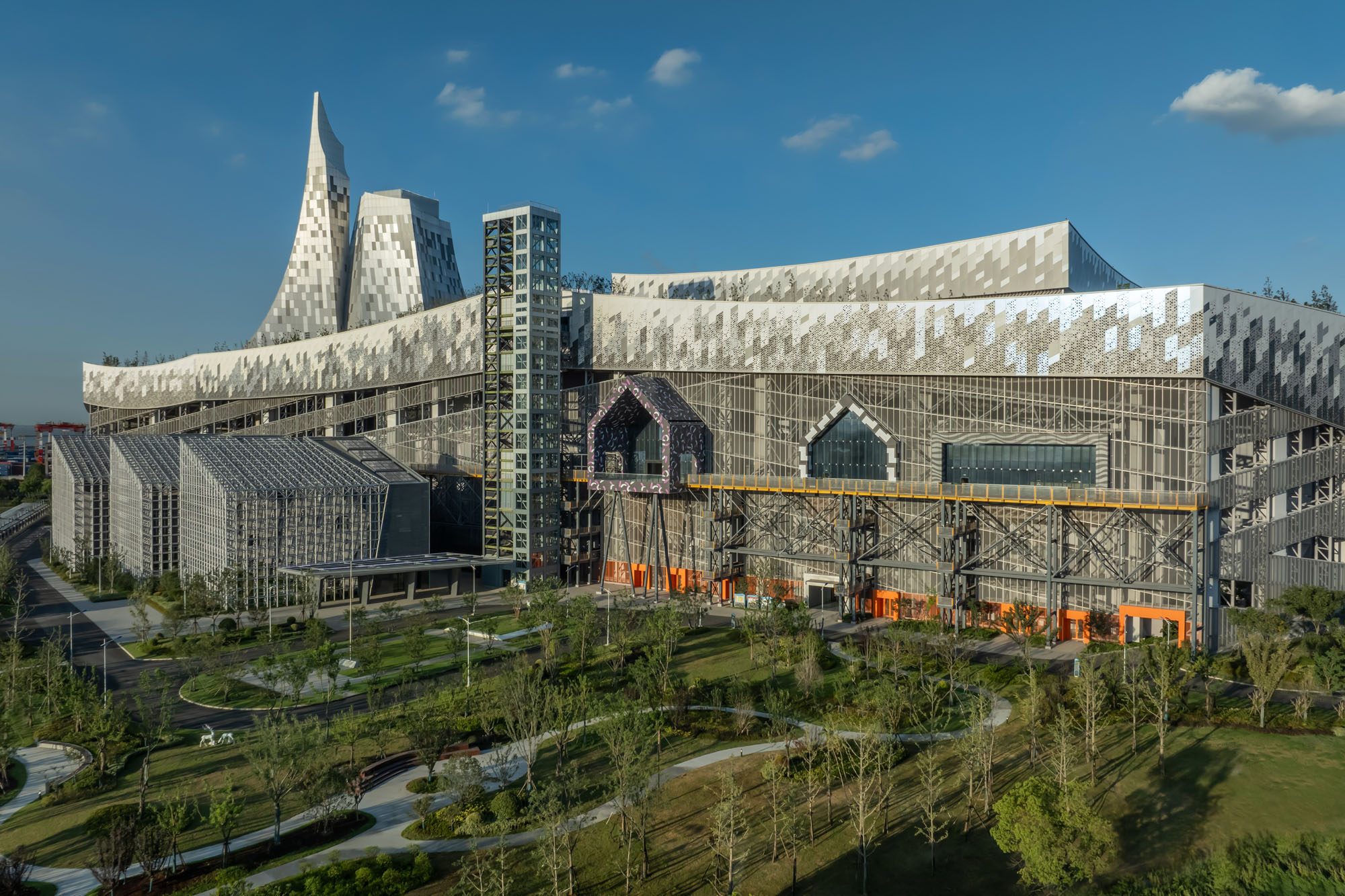
建築物単体に焦点を当てる一般的な廃棄物管理プロジェクトとは異なり、BAMの設計は敷地全体に及び、建物とその周囲の景観をシームレスに統合している。建物のボリュームは山のように形成され、ファサードは地質学的な地層を視覚的に模倣している。防火基準を満たすために屋根には大きな開口部が設けられており、完全な密閉型ではない設計となっている。
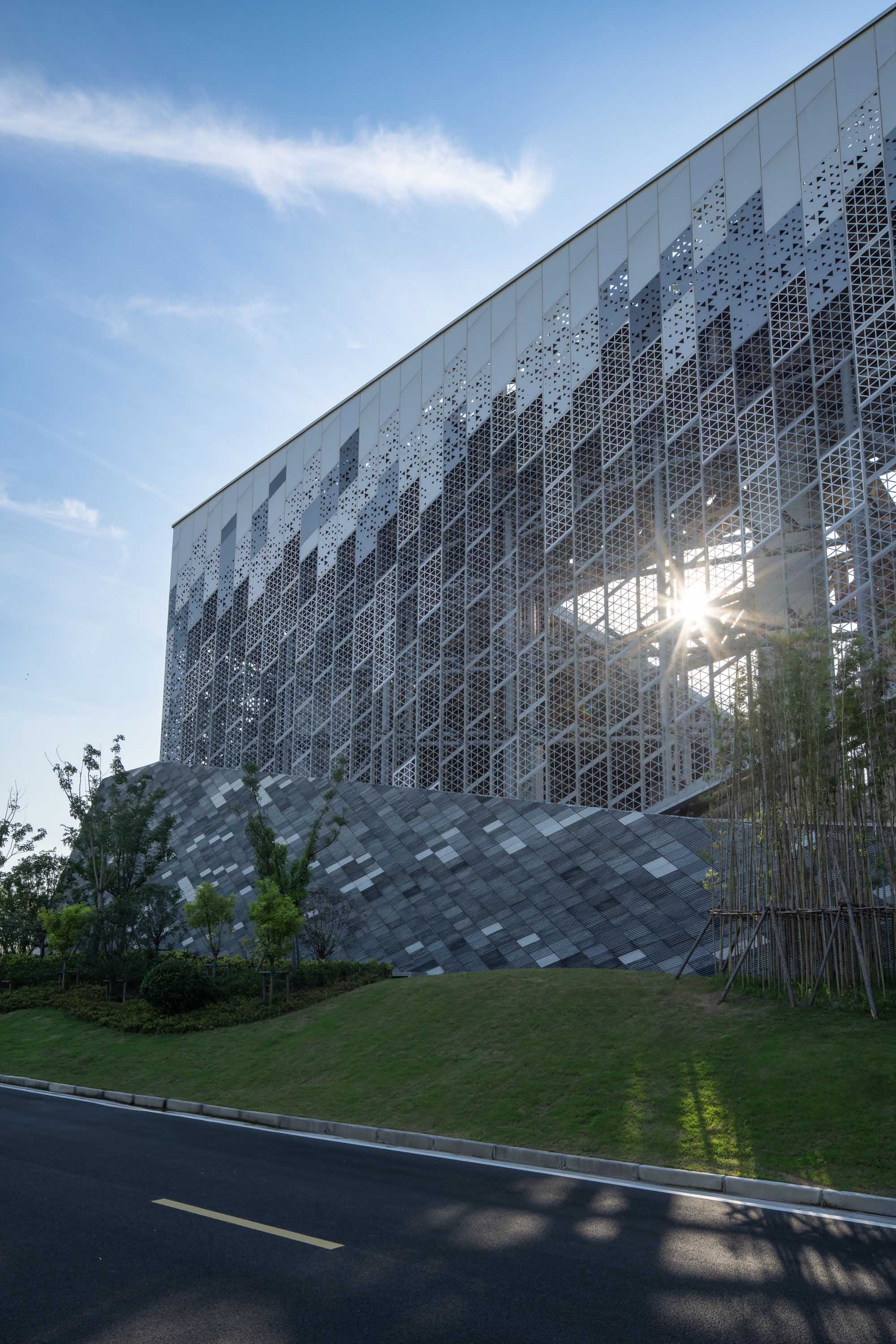
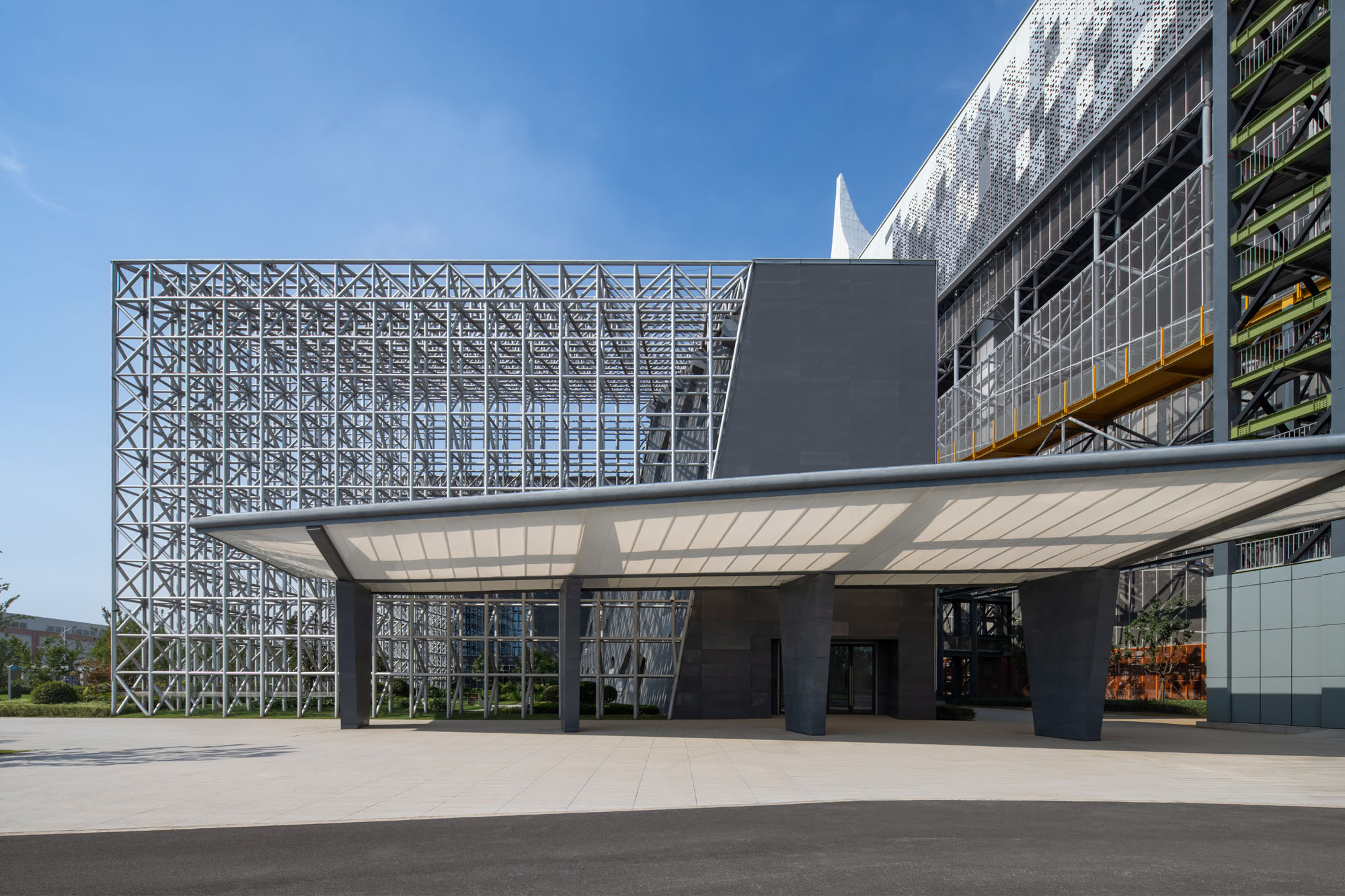
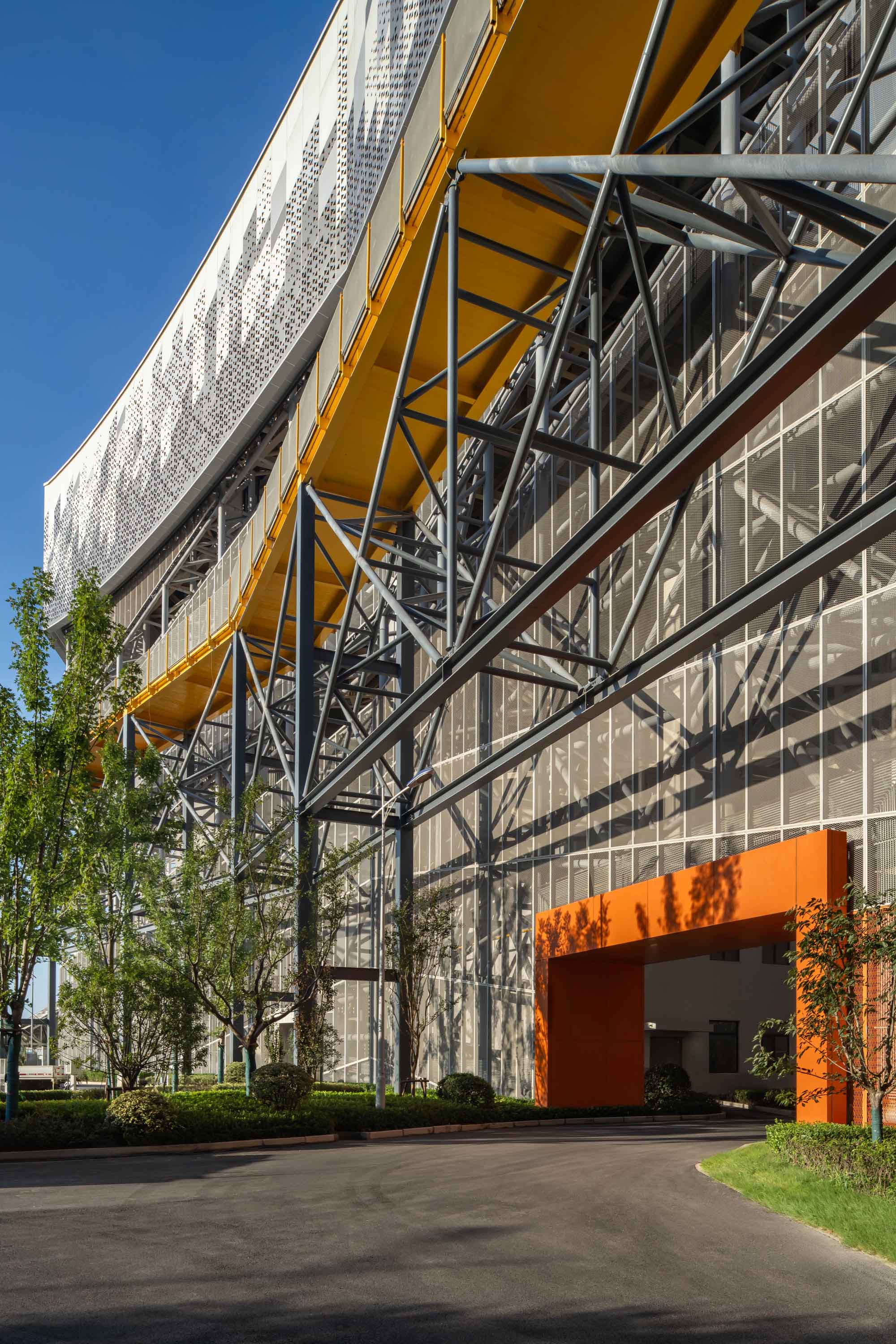
透過性のあるファサードにより、間近で内側から見上げた際、この建築は従来の建物というよりも「殻」のように映る。これは、遠景から見た際の巨大な山のような存在感とは鮮やかな対比を成している。景観に対して威圧感を与えるのではなく、開口部や穿孔によってその記念碑的な存在感を和らげ、環境の中に後退し溶け込むように設計されているのである。
10ヘクタールに及ぶ屋上公園はこの統合をさらに強固なものにし、レクリエーション、教育、そして公共の交流のための緑地を提供するのと同時に、下層で稼働する産業機能を隠蔽している。全体として、建築と景観の境界が曖昧な、型破りな建築類型がここに形成されている。
©︎ Derryck Menere Photographer
©︎ Derryck Menere Photographer
©︎ Derryck Menere Photographer
「ミニシティ」と廃棄物博物館:公共教育を通じた持続可能性の啓発
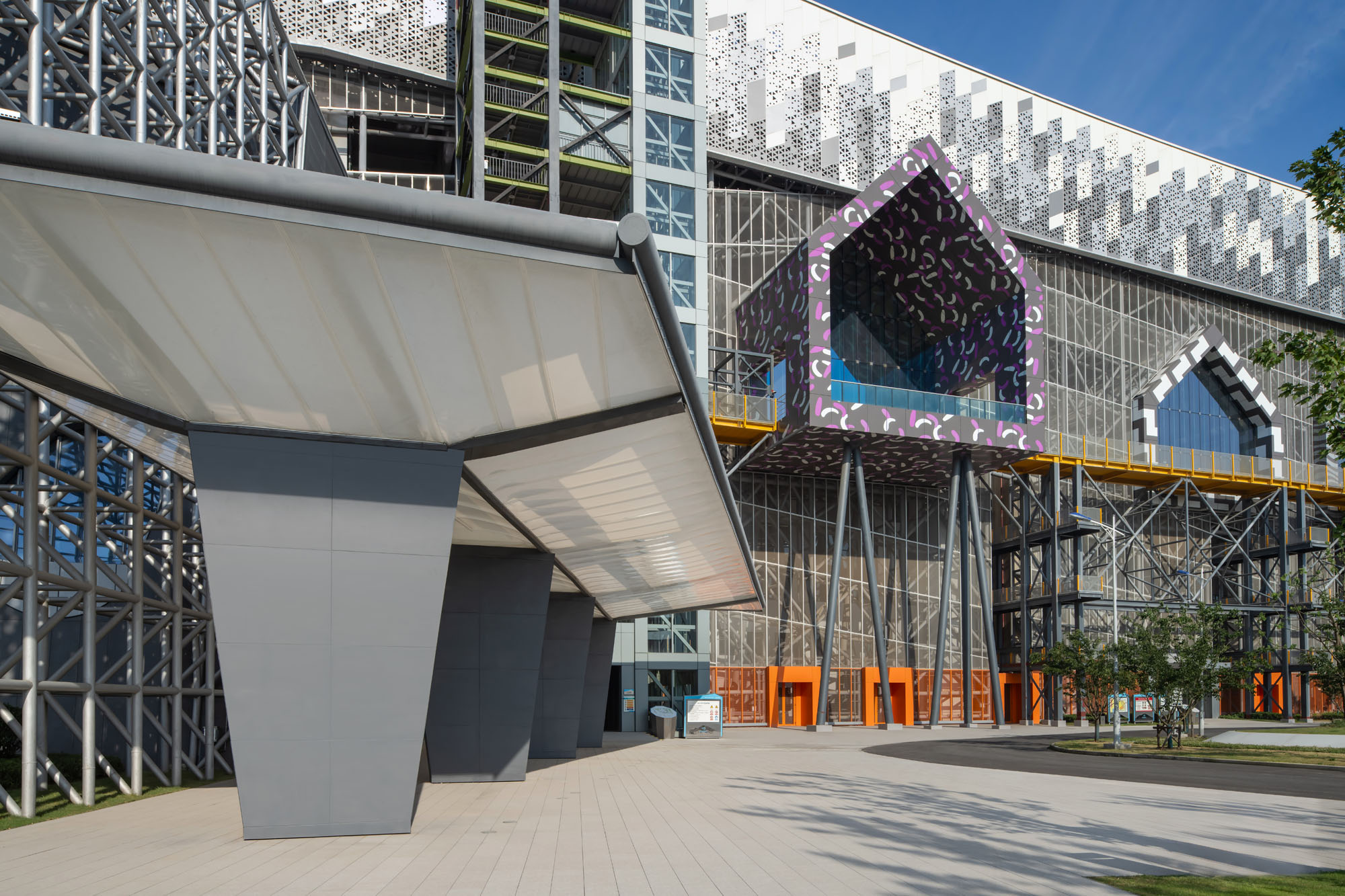
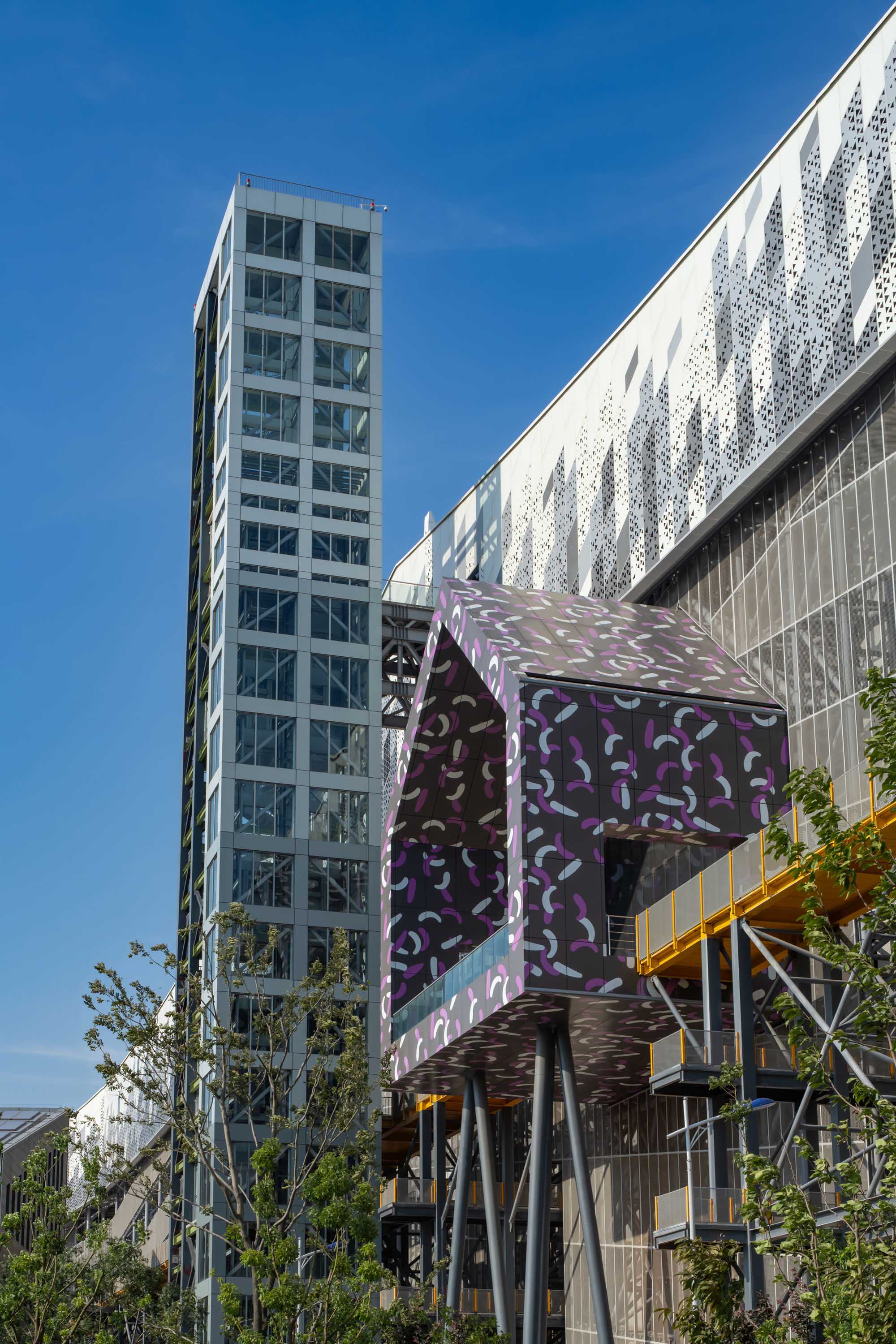
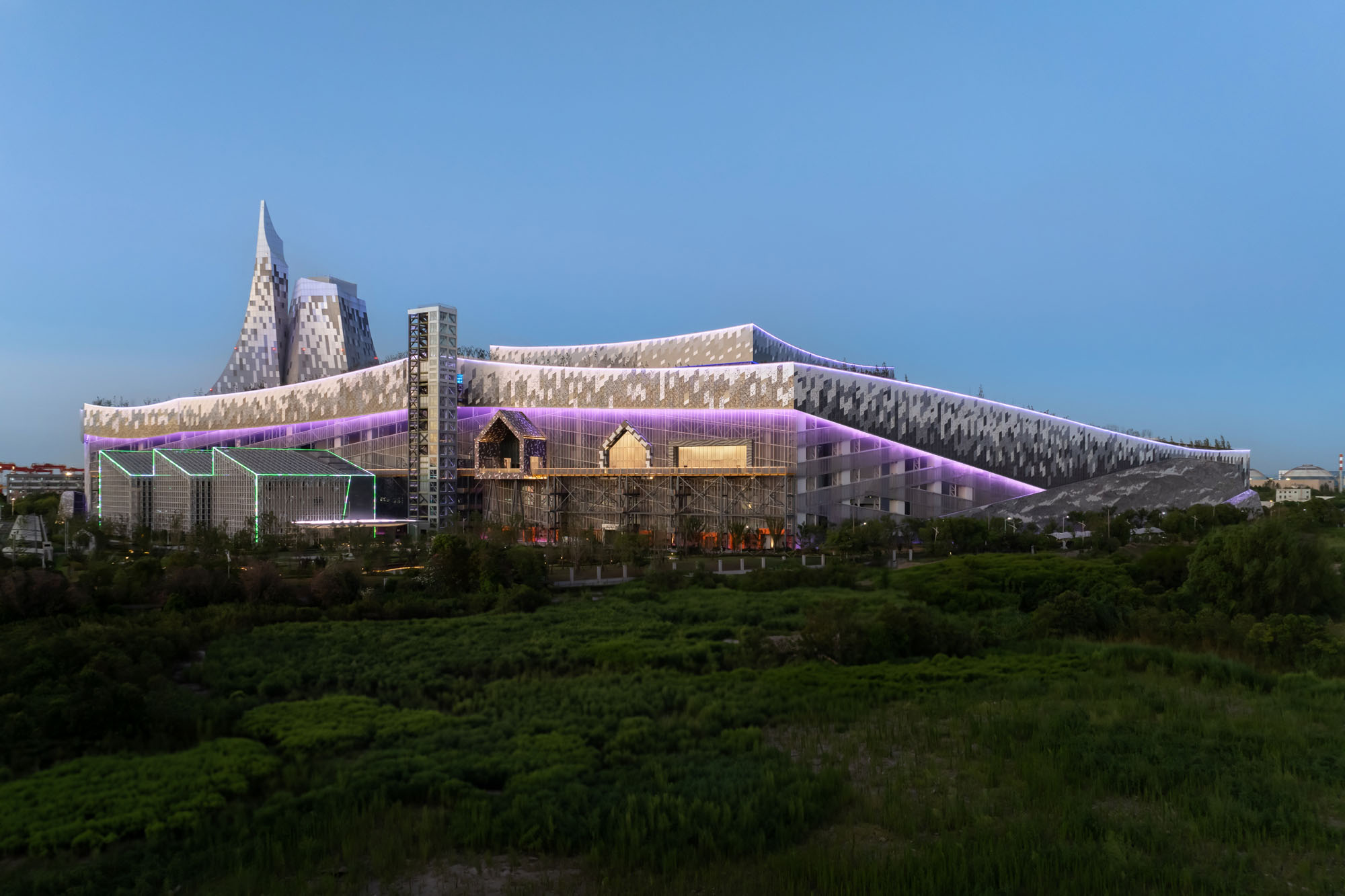
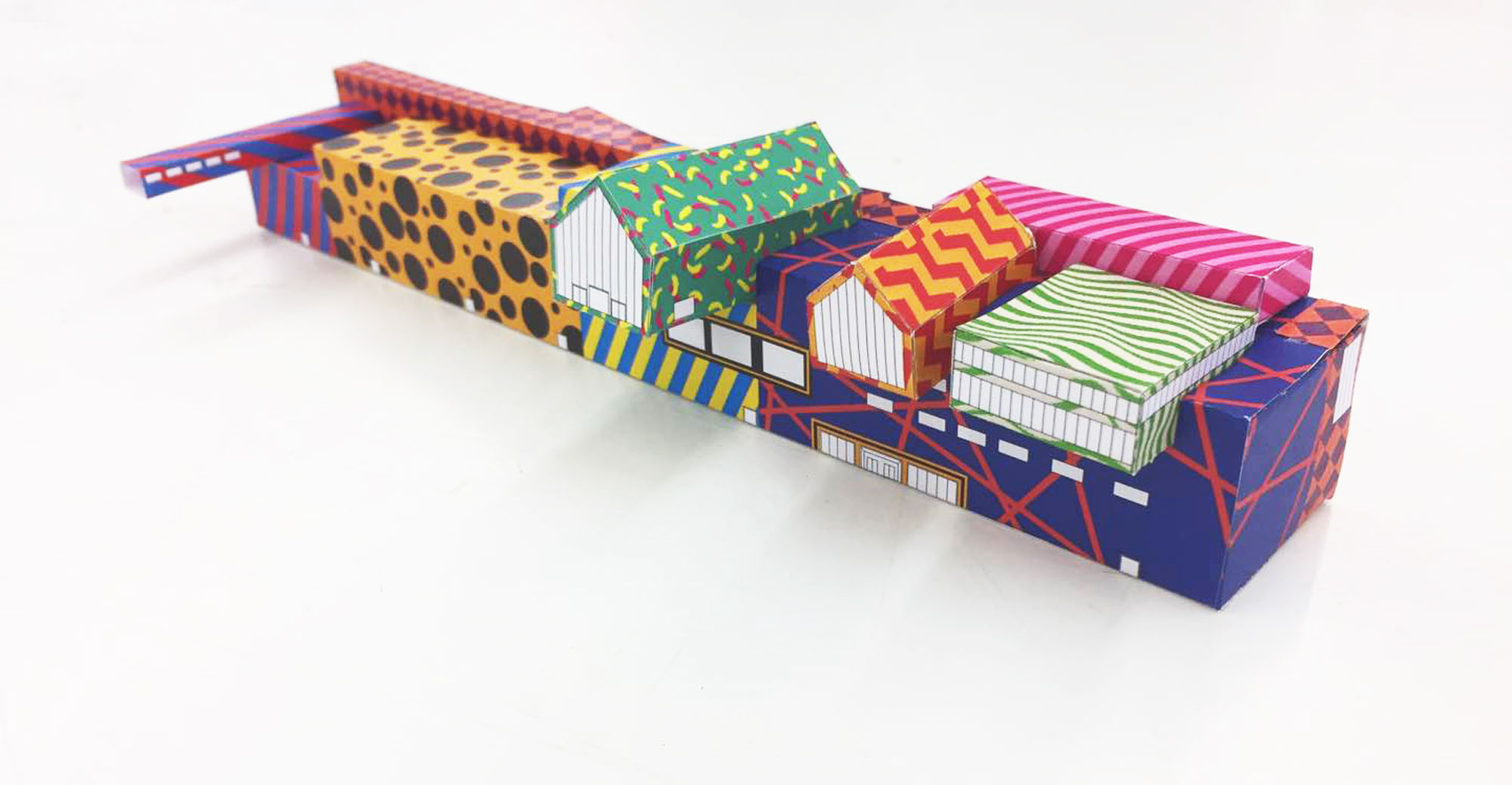
来館者の入口部分では、ファサードから遊び心のある模様を施した構造体が現れ、展示空間とレジャー空間が融合した活気に満ちた複合エリア「ミニシティ」を形成している。このエリアの目玉となる「廃棄物博物館」は、廃棄物発電(Waste-to-Energy:WTE)のプロセスを巡る没入型の体験を提供する。
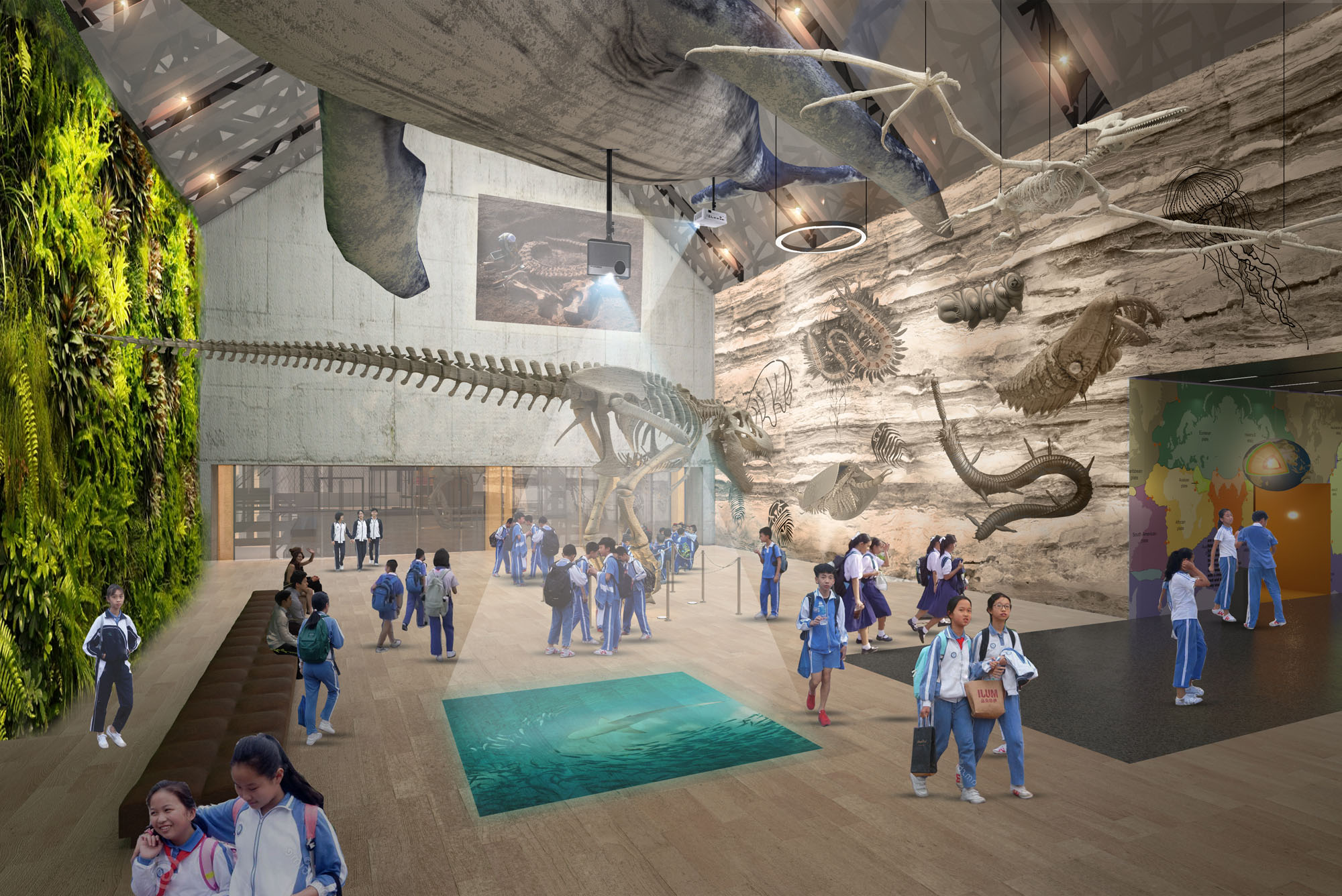
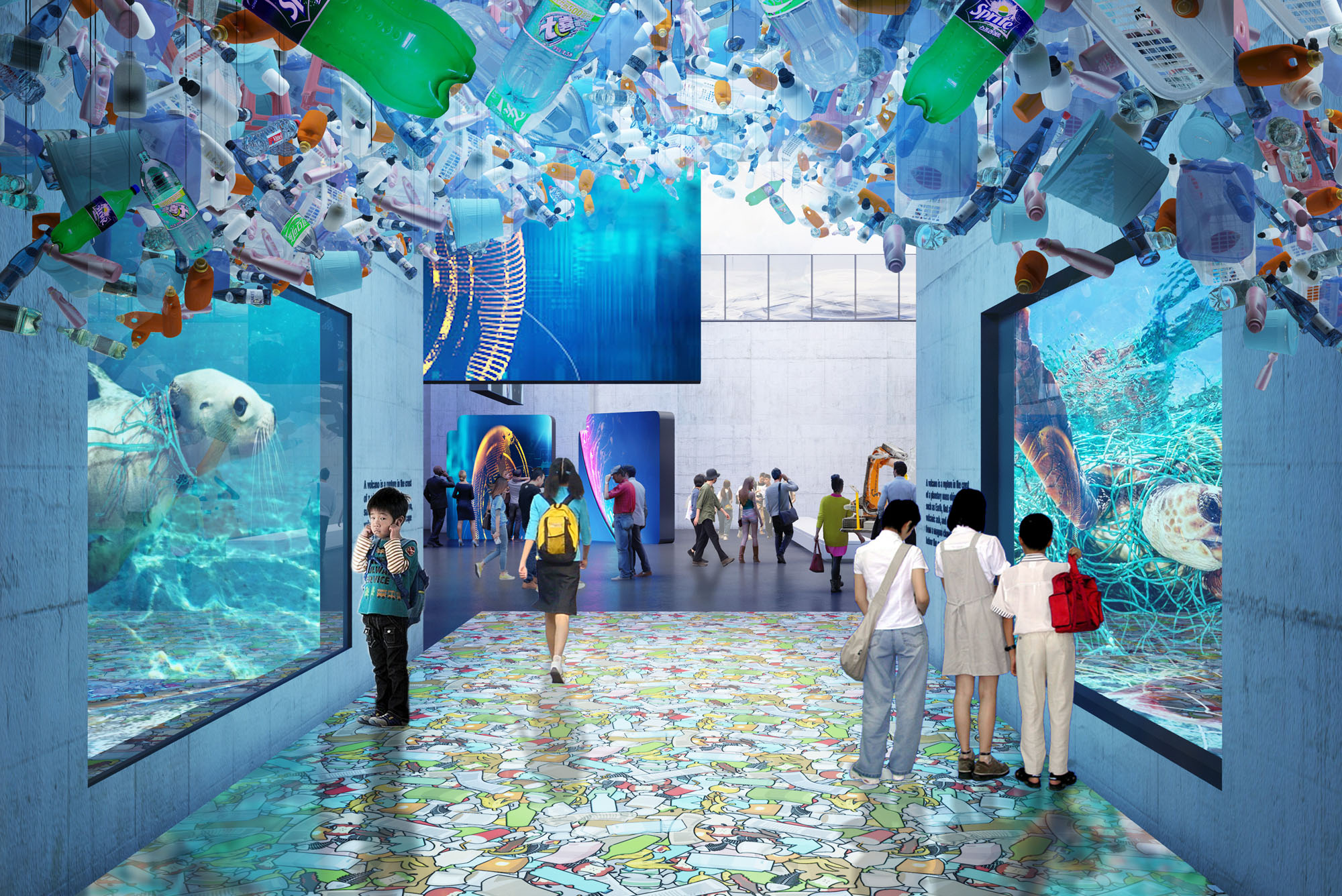
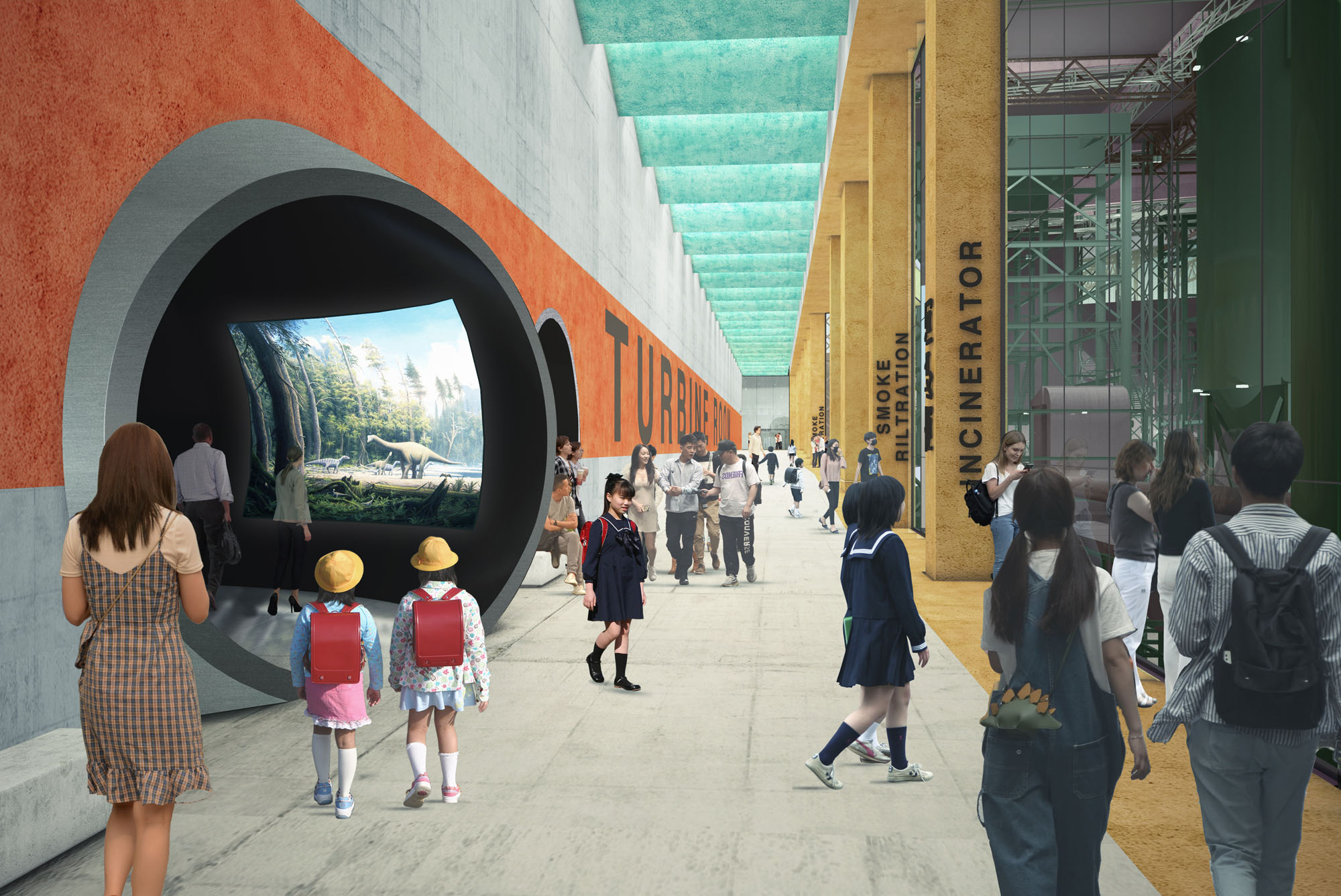
同博物館は、一連のテーマ空間を通じて、児童や一般市民を「ごみの物語」へと導く。教科書や講義といった従来の枠組みを超えた没入型環境の中で、子供たちは時空を超え、恐竜、化石燃料の誕生、産業革命、そしてプラスチックや半導体の革命的発明と出会う。展示を順に進むにつれて、来館者は廃棄物問題の圧倒的な規模の大きさに直面すると同時に、この課題に対して自身が果たすべき役割について深く考えるきっかけを得る。
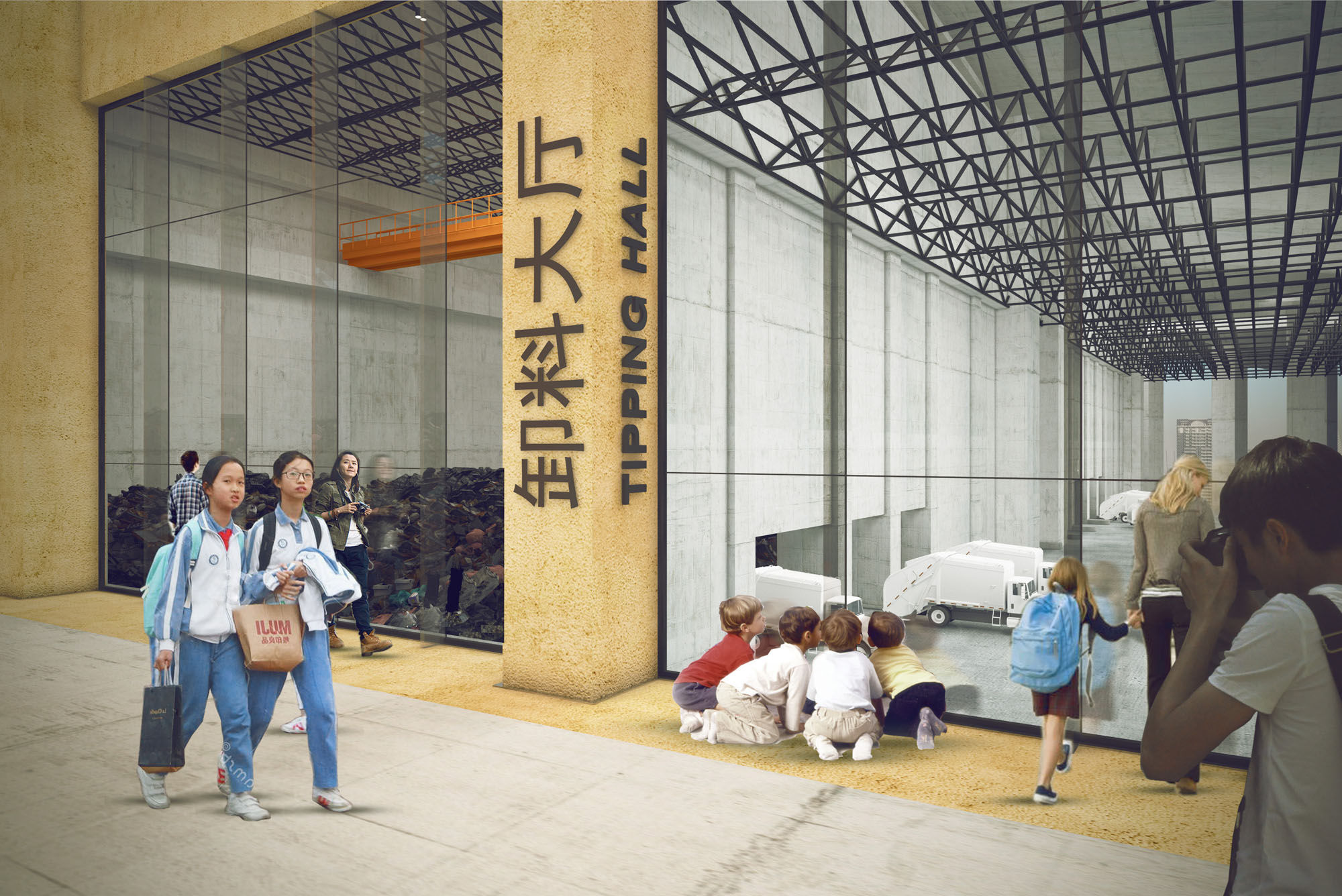
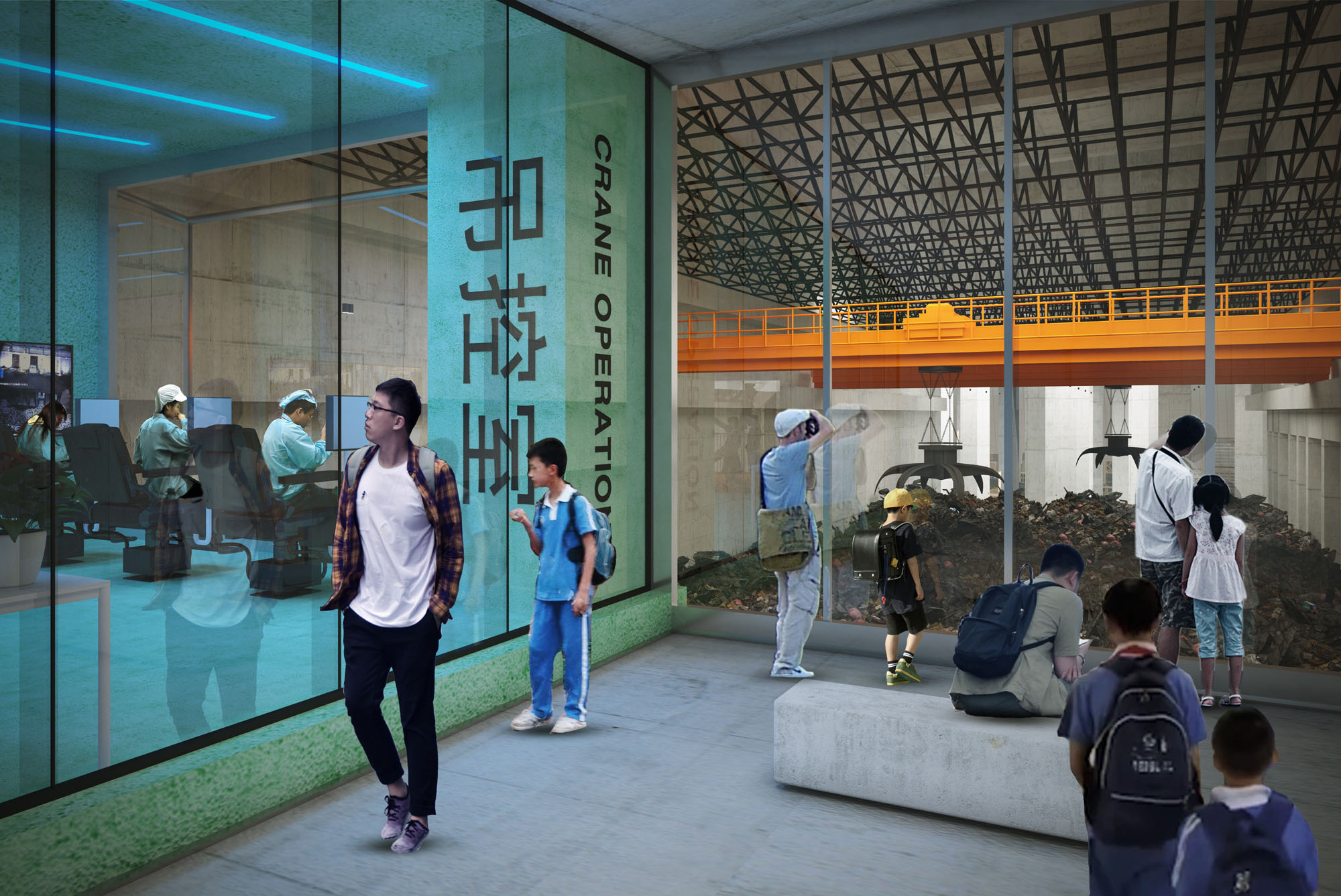
順路をさらに進むと、「WTE体験ホール」が現れ、クレーン操作、制御室の機能、焼却炉、バグハウス(集塵機)によるろ過、タービン室の操作など、廃棄物処理の主要な工程を間近で観察することができる。タービン室では、4Dシネマ体験によって「ごみの物語」が映像化され、施設の内部構造が生き生きと再現される。工場見学のクライマックスとなる10ヘクタールの屋上緑化公園では、峡谷のような屋根の開口部から、廃棄物処理機械が稼働する最終工程を垣間見ることができる。
Museum of Waste
Museum of Waste
Museum of Waste
Museum of Waste
Museum of Waste
2つの処理システムの統合と過渡期のプロトタイプとしての役割
〈宝山廃棄物発電センター〉は、廃棄物エネルギー化焼却施設と嫌気性消化施設を統合したことで、廃棄物管理における革新的な飛躍を実現している。この組み合わせにより、有機物は多様な用途に活用可能なバイオガスへ、無機物は発電用燃料へと効率的に処理される。この二重のアプローチは、エネルギーの回収率を高めるだけでなく、資源利用の最大化と廃棄物の最小化を通じて循環型経済の原則を強力に支えるものである。
屋上公園の維持といった追加の資材や資源の統合は、現行の持続可能性基準のみで評価した場合には困難を伴うかもしれないが、BAMの構想は本プロジェクトを「過渡期のプロトタイプ」として位置付けている。これは産業施設を都市の中心部へと統合するための実験的な試みであり、将来のグリーン技術の基盤を築くとともに、2060年までのカーボンニュートラル達成という上海市の長期目標に貢献するものである。
©︎ Derryck Menere Photographer
©︎ Derryck Menere Photographer
©︎ Derryck Menere Photographer
NIMBYの克服と市民空間への変容を見据えて
安全で清潔な廃棄物インフラを都市の中心部に移転することは、廃棄物管理のパラダイムシフトを推進するための鍵となる。これを実現するには、「近隣住民の反対(NIMBY:Not-In-My-Backyard)」という社会的な抵抗を克服し、公共の認識を再構築する必要がある。
最終的な目標は、廃棄物からエネルギーを生産する技術自体が最終的に不要となり、建物そのものが市民のための空間へと変容する「循環型経済への移行」である。この観点に立てば、宝山プロジェクトは単なる建物ではなく、廃棄物をエネルギーに変換し、廃棄物に対する社会の認識を根本から再構築する、真の都市ランドマークであると言える。
©︎ Derryck Menere Photographer
©︎ Derryck Menere Photographer
©︎ Derryck Menere Photographer
©︎ Derryck Menere Photographer
©︎ Derryck Menere Photographer
Concept Model Diagram
Mini City Model
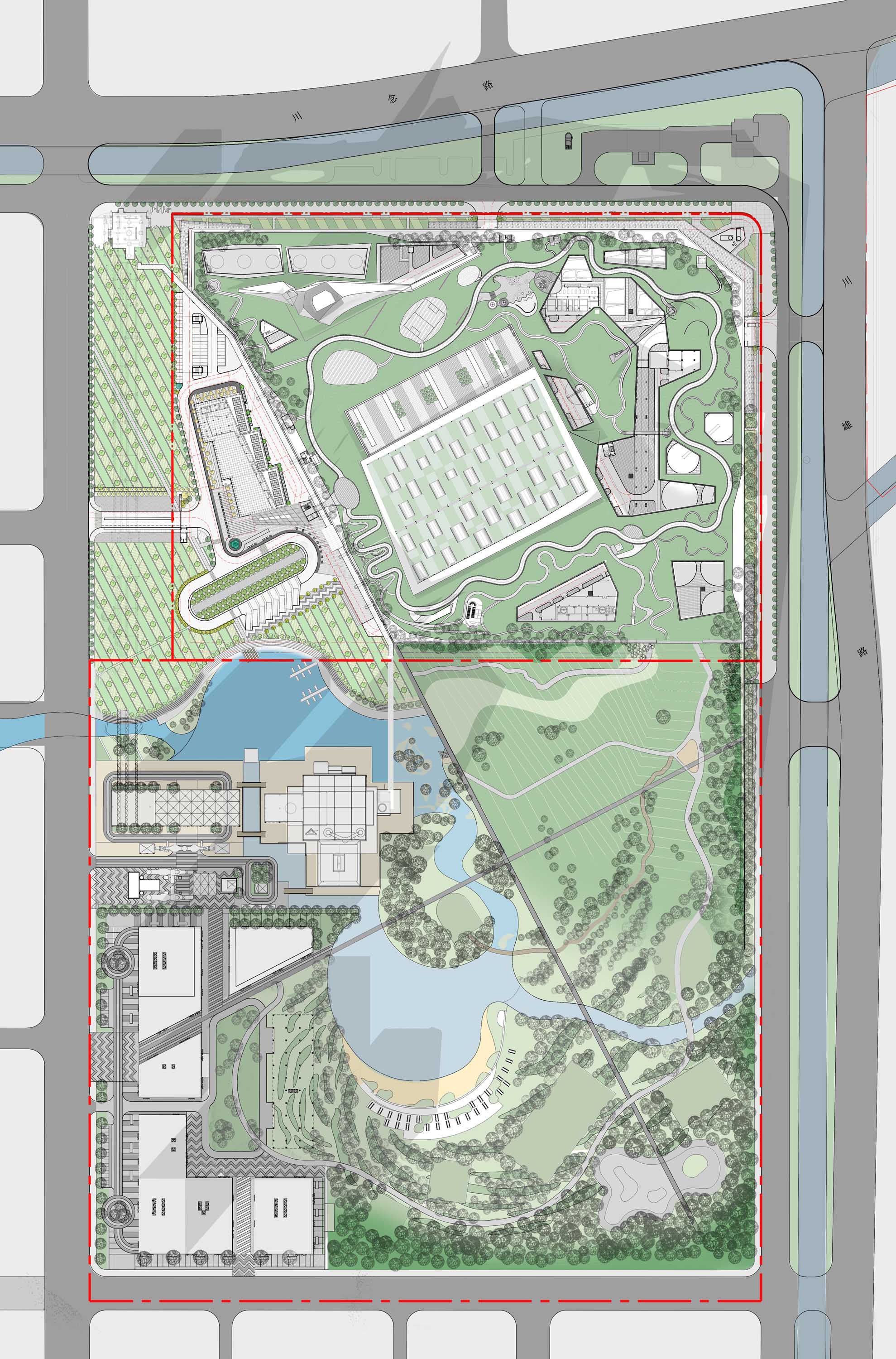
Master plan
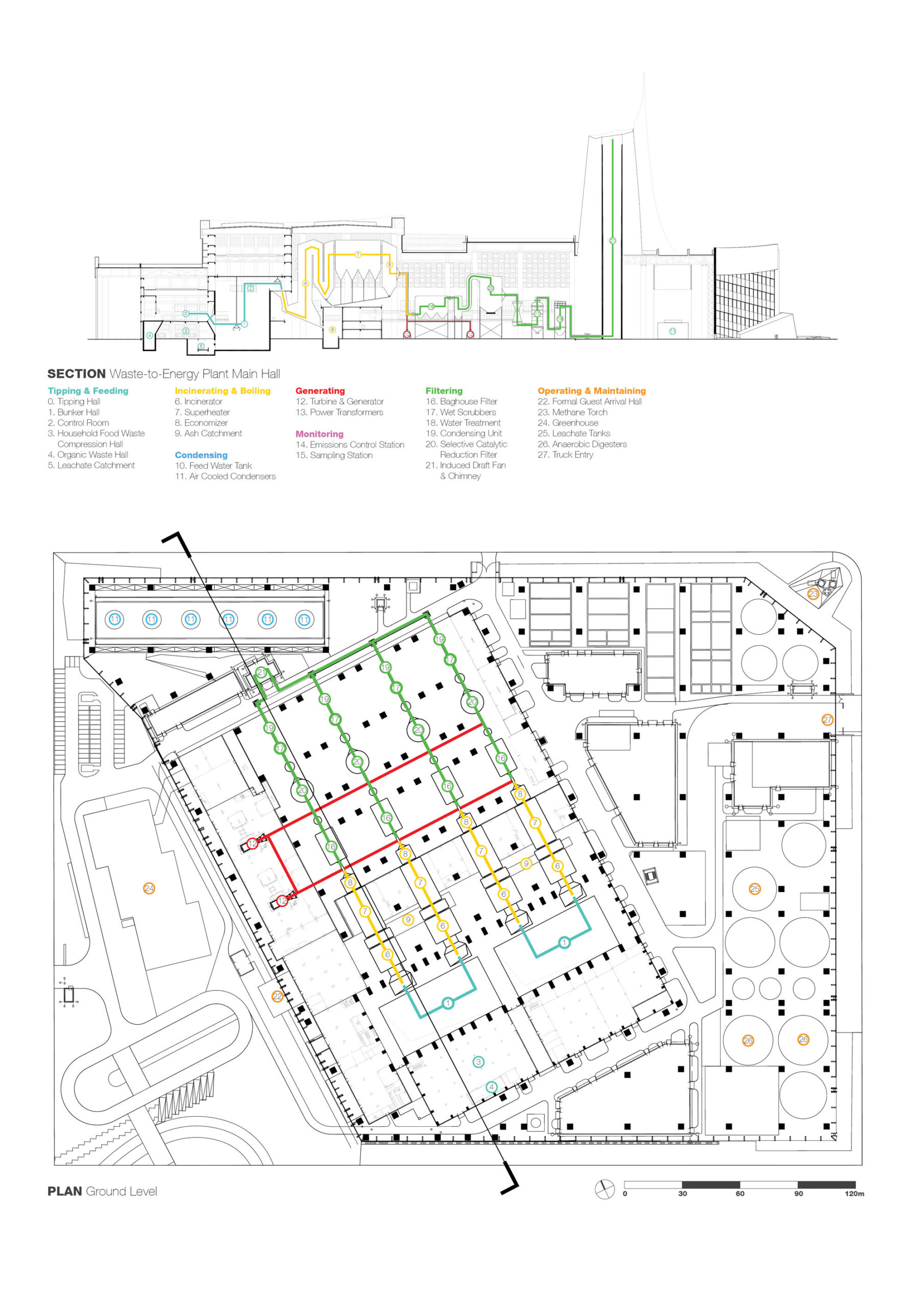
Plan, Section
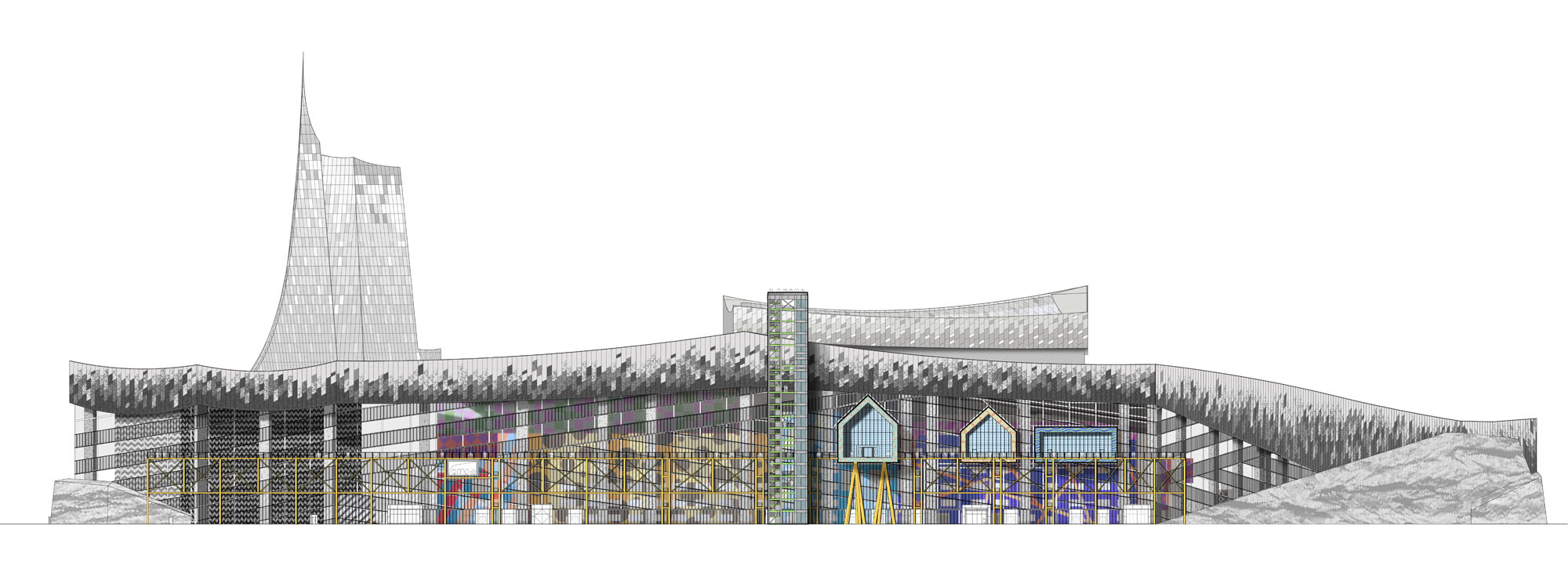
West elevation
以下、BAMのリリース(英文)です。
Press Release: Baoshan Waste-to-Energy Center
Shanghai’s Newest Waste-to-Energy Center Saves Over 3 Million Tons of Carbon a Year
Shanghai has taken a giant stride toward sustainable waste infrastructure with the newly unveiled Baoshan Waste-to-Energy Center, the city’s latest power plant fueled by household waste. Formerly the site of a coal-fired blast furnace, the facility now plays a critical role in Shanghai’s carbon reduction strategy. By replacing the old industry and diverting waste from landfills—one of the largest sources of greenhouse gas emissions—the center saves over 3 million tons of carbon emissions annually. Designed by Ballistic Architecture Machine (BAM), this new type of facility represents a significant step towards the circular economy, showing how waste infrastructure can evolve into sustainable urban landmarks.
This 128,000 sqm complex includes two types of waste processing: an incineration component that generates electricity and an anaerobic digestion unit producing biogas. At optimum efficiency, the four-line incinerator handles 3,000 metric tons daily. Meanwhile, the anaerobic digestion unit converts over 8,000 metric tons of wet waste per day. Yet, for the design of this massive facility, BAM consciously stepped away from the ‘decorated shed’ paradigm so prevalent in modern industrial infrastructure. Instead, the team pioneers a camouflage approach combining architectural and landscape design with public programming, including an immersive factory tour, a museum of waste, and an array of recreational facilities. What could have been a monolithic industrial site is instead a dynamic educational destination and a new type of urban landmark at the intersection of landscape and architecture.
Unlike other waste management projects, which often focus solely on the architecture, BAM’s design extends to the entire site, integrating the building and its surrounding landscape. BAM shapes the building massing into a mountain, while the façade visually mimics geological layers. The roof consists of large openings to satisfy fire safety requirements, resulting in a design that is not fully enclosed. With its permeable façade, the architecture appears more as a shell than a traditional building when experienced up close and from the inside out. This stands in stark contrast to the massive mountain-like presence the building presents from afar. Rather than imposing itself on the landscape, the building is designed to recede into the environment, with openings and perforations that soften its monumental presence. A 10-hectare roof park further reinforces this integration, offering green space for recreation, education, and public interaction, while concealing the industrial functions below. In totality, this results in an unconventional building typology where the lines between architecture and landscape are rather ambiguous.
At the visitor’s entrance, patterned structures playfully emerge from the façade, forming the ‘mini-city’—a vibrant complex of exhibition and leisure spaces. The highlight of this area is the Museum of Waste, an immersive experience that takes visitors on a journey through the waste-to-energy (WTE) process.
Sustainability Through Public Education
The Museum of Waste guides schoolchildren and the public through the ‘Story of Trash’ via a sequence of thematic spaces. Through these immersive environments, textbooks and lectures are left behind as children are transported through time, encountering dinosaurs, the birth of fossil fuels, the Industrial Revolution, and the revolutionary inventions of plastics and semiconductors. As visitors progress through the exhibition, they gradually come face-to-face with the overwhelming scope of the waste problem but also are inspired to contemplate their own role in addressing the waste challenge.Continuing the journey, the WTE Experience Hall offers an up-close look at key stages of waste processing, including crane operations, control room functions, incineration, baghouse filtration, and turbine room operations. In the turbine room, a 4D cinema experience animates the ‘Story of Trash’ narrative, bringing the inner workings of the facility to life. The factory tour culminates with the 10-hectare green roof park, offering a final peek into the waste-processing machine through the canyon-like openings in the roof.
The Baoshan Waste-to-Energy Center presents an innovative leap in waste management by integrating both waste-to-energy incineration and anaerobic digestion facilities. This combination allows for efficient processing of waste, where organic materials are converted into biogas for diverse applications, while non-organic waste is incinerated to generate electricity. This dual approach not only enhances energy recovery but also supports the principles of a circular economy by maximizing resource utilization and minimizing waste. While the integration of additional materials and resources (such as sustaining a park on the roof) may be challenging when evaluated solely against current sustainability standards, BAM’s vision is to establish this project as a transitional prototype. It is an experimental step toward integrating industrial facilities within urban cores, laying the groundwork for future green technologies and contributing to Shanghai’s long-term goal of carbon neutrality by 2060.
Moving safe and clean waste infrastructure into the city core is key to furthering the paradigm shift in waste management. This requires reshaping public perceptions to overcome “Not-In-My-Backyard” (NIMBY) social resistance. The ultimate goal is the transition to a circular economy where waste-to-energy technology itself eventually becomes obsolete and the building becomes a civic space. In this light, the Baoshan project is not just a building but an urban landmark transforming waste into energy and reshaping social perceptions of waste.
Project Data
Year Completed: 2025
Location: Shanghai, China
Client: Baojinggang
Year: 2019-2025
Scope: Lead Architecture Design, Lead Landscape Design, Masterplanning
Status: Complete
Planning Area: 355,000 m²
Architecture Size: 128,000 m²
Landscape Area: 110,000 m²
Dry Waste Capacity: 3,000 tons/day
Organic Waste Capacity: 8,000 tons/day
Collaborators: BAM (Architecture, Landscape, Masterplanning); ARUP (Structural and Fire
Consulting); Hyder (Façade Consultant); Wuzhou (Facilities).
Photographer: Derryck MenereProject Overview
BAM’s design for the Baoshan Waste-to-Energy Center sets a transformative precedent for municipal solid waste (MSW) treatment facilities, reimagining them as multifunctional urban amenities. Through design experimentation, BAM encourages the perception of these facilities as integral components of the urban landscape rather than undesirable infrastructure.Located on the 35-hectare decommissioned Bao Steel campus, the Baoshan Waste-to-Energy Center is a new-generation integrated waste-processing facility—one of the most ambitious municipal solid waste management projects globally and a pioneering example in China. BAM led the design of every aspect, from the master plan to the facility’s façade and landscaping, collaborating closely with local engineering institutes to realize this unique vision.
The Baoshan Waste-to-Energy Center represents an innovative leap in waste management by integrating both waste-to-energy (WTE) incineration and anaerobic digestion facilities. Operating at optimum efficiency, the four-line incinerator handles 3,000 metric tons of waste daily, while the anaerobic digestion unit processes over 8,000 metric tons of wet waste per day. This combination allows for efficient waste processing, converting organic materials into biogas for diverse applications and incinerating non-organic waste to generate electricity. It maximizes resource utilization, minimizes waste, and recovers energy. In addition to its waste management capabilities, the project features a 10-hectare roof park and a variety of exhibition and entertainment programs known as the ‘mini-city.’
The Baoshan Waste-to-Energy Center embodies the transition toward a circular future, where waste is minimized and reused. BAM’s ‘camouflage’ design strategy consciously departs from the prevalent ‘decorated shed’ paradigm, effectively disguising the monumental waste facility as a park and public amenity. This approach promotes public acceptance of waste management as an integral component of urban life and establishes a model for resilient, future-proof industrial facilities that can adapt to the evolving needs and priorities of our changing relationship with the environment.
BAM 公式サイト
https://bam.earth