CULTURE
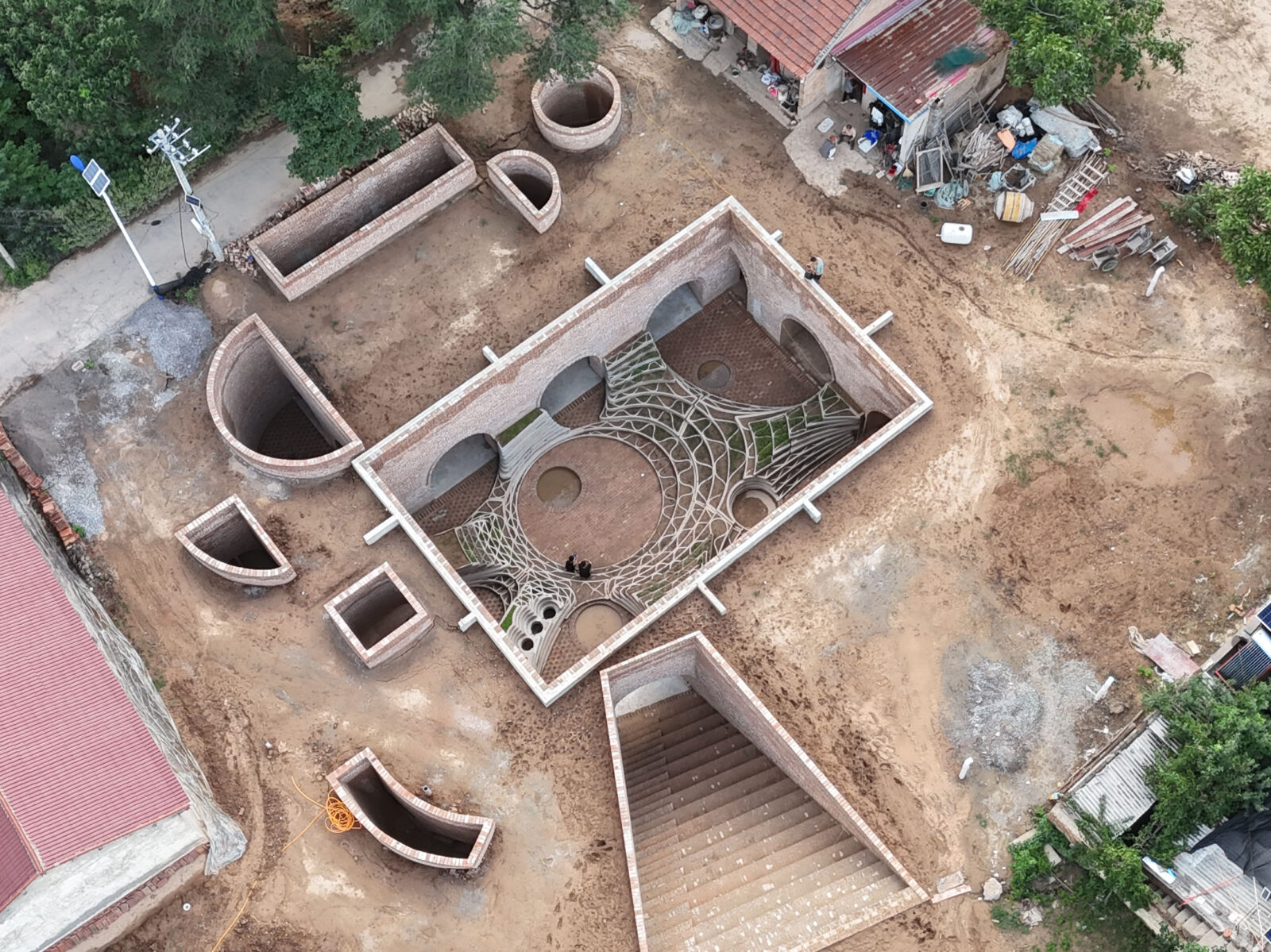
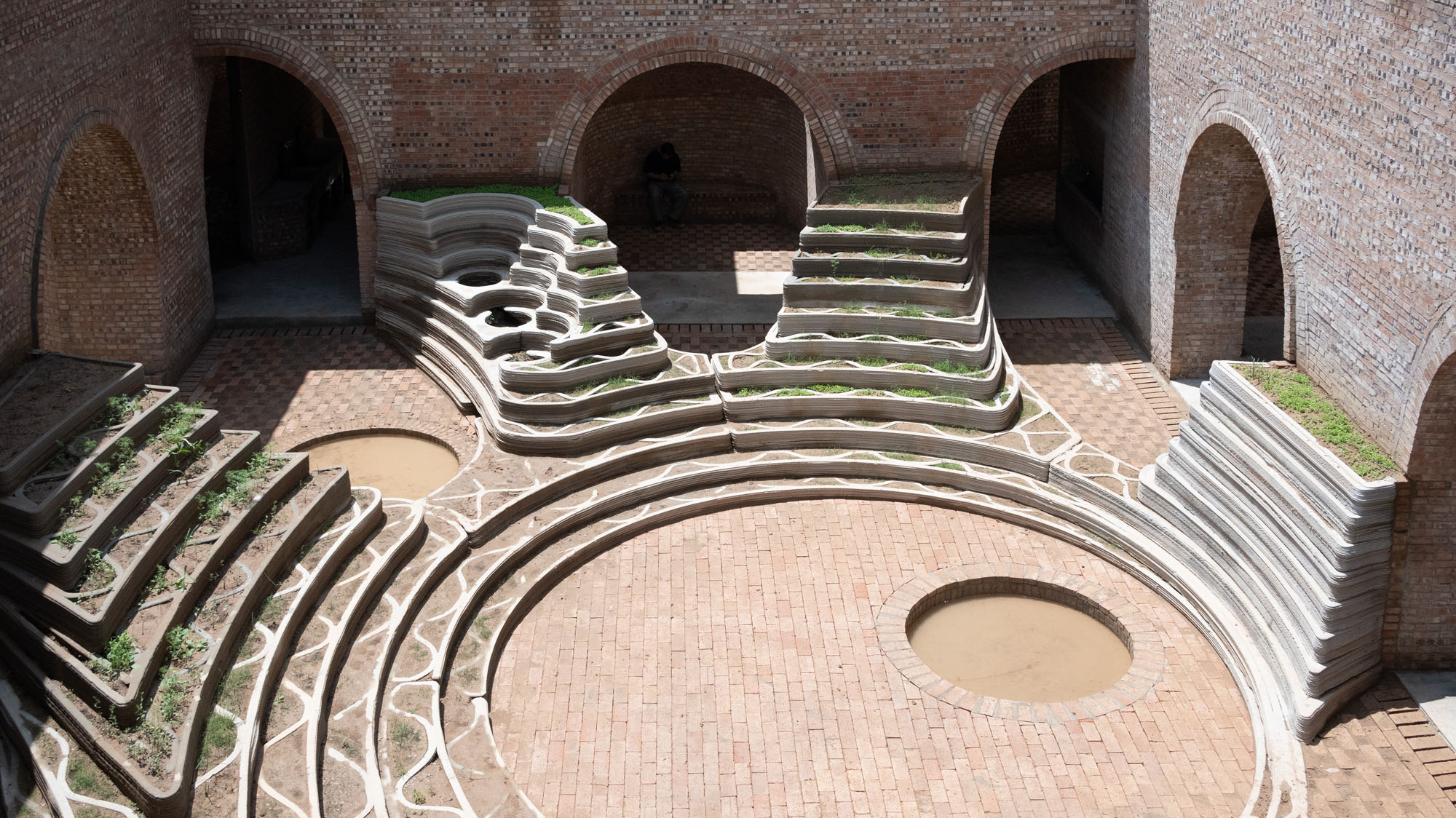
Courtyard ©︎ John Lin, Olivier Ottevaere, Lidia Ratoi
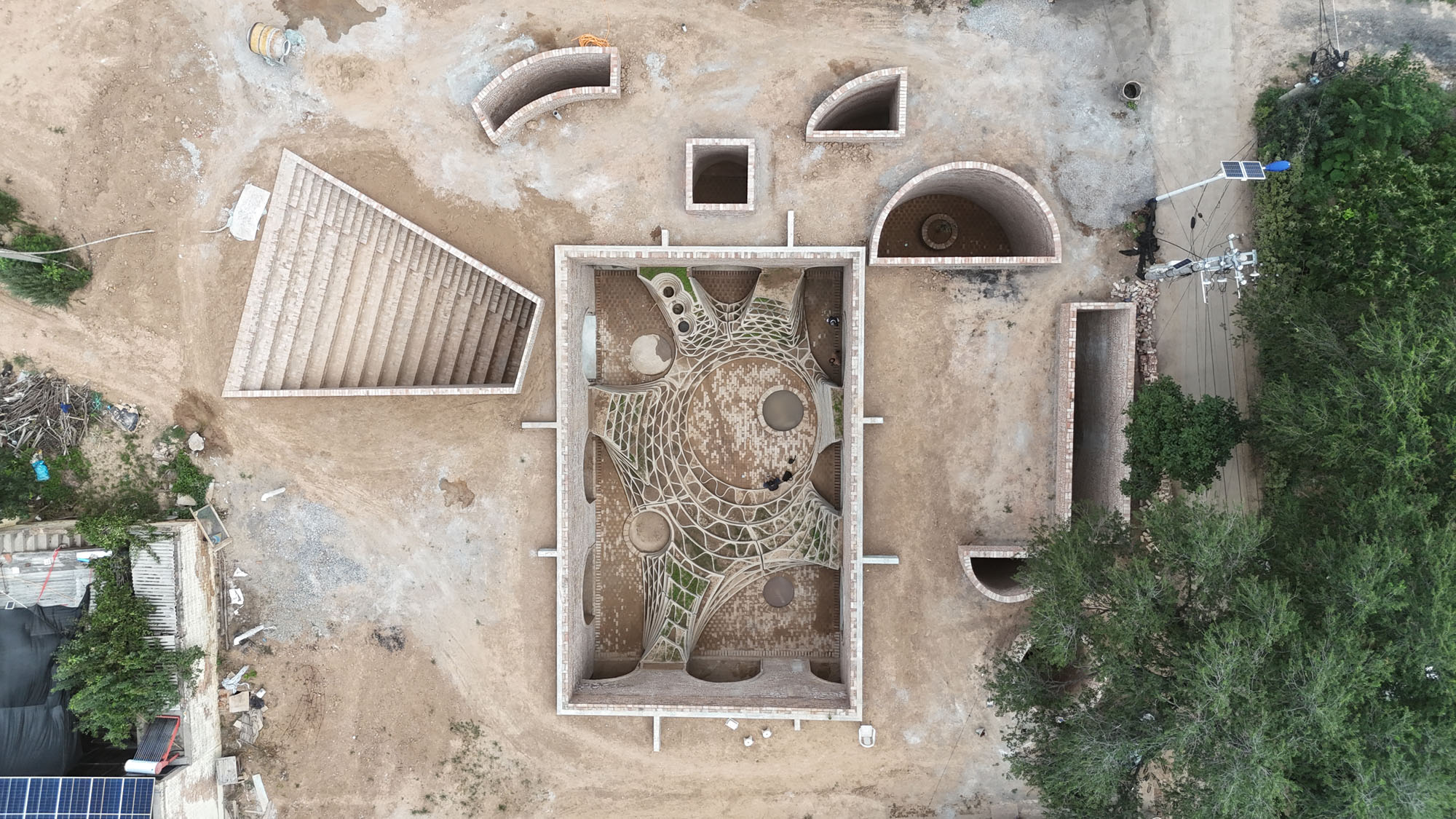
中国中北部の黄土高原に位置する〈未来の地下住宅(Underground House of the Future)〉は、この地域特有の伝統的な地下洞窟住居「地坑院(ディケンユアン)」を、先進技術と地域に根付く職人技を融合して改修した公共空間です。
香港大学のジョン・リン(John Lin)教授とオリヴィエ・オットヴェール(Olivier Ottevaere)助講師、リディア・ラトイ(Lidia Ratoi)助講師が共同で設計しました。
注目ポイント
- 先進技術を活用したヴァナキュラー建築の進化
- 中庭を気候変動に対応させる3Dプリント技術
- 伝統技術とデジタル技術の融合する「テクノダイバーシティ」の実践
- 「光と風」を獲得する、環境・構造性能のアップデート
(以下、ジョン・リンから提供されたプレスキットのテキストの抄訳)
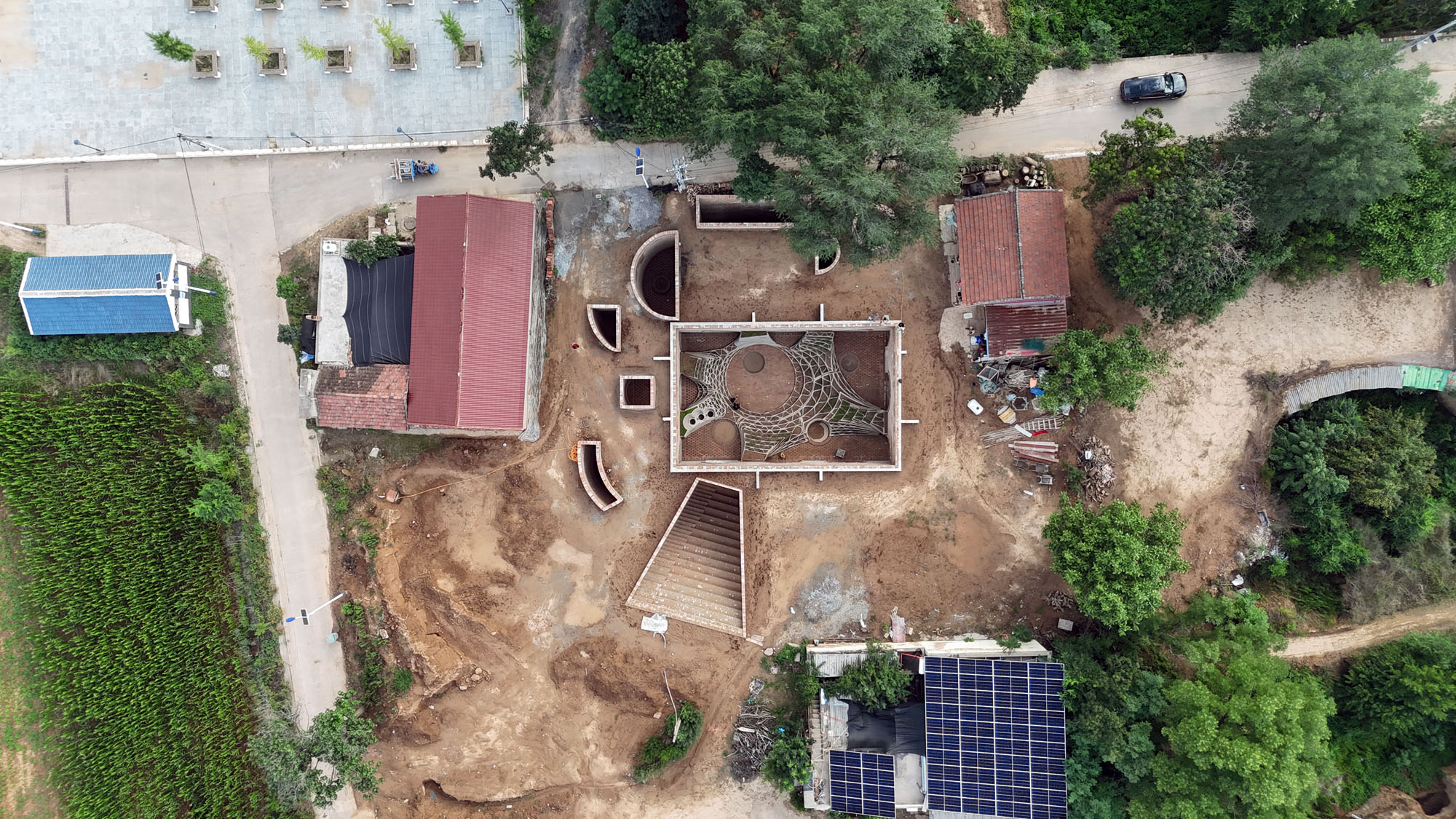
©︎ John Lin, Olivier Ottevaere, Lidia Ratoi
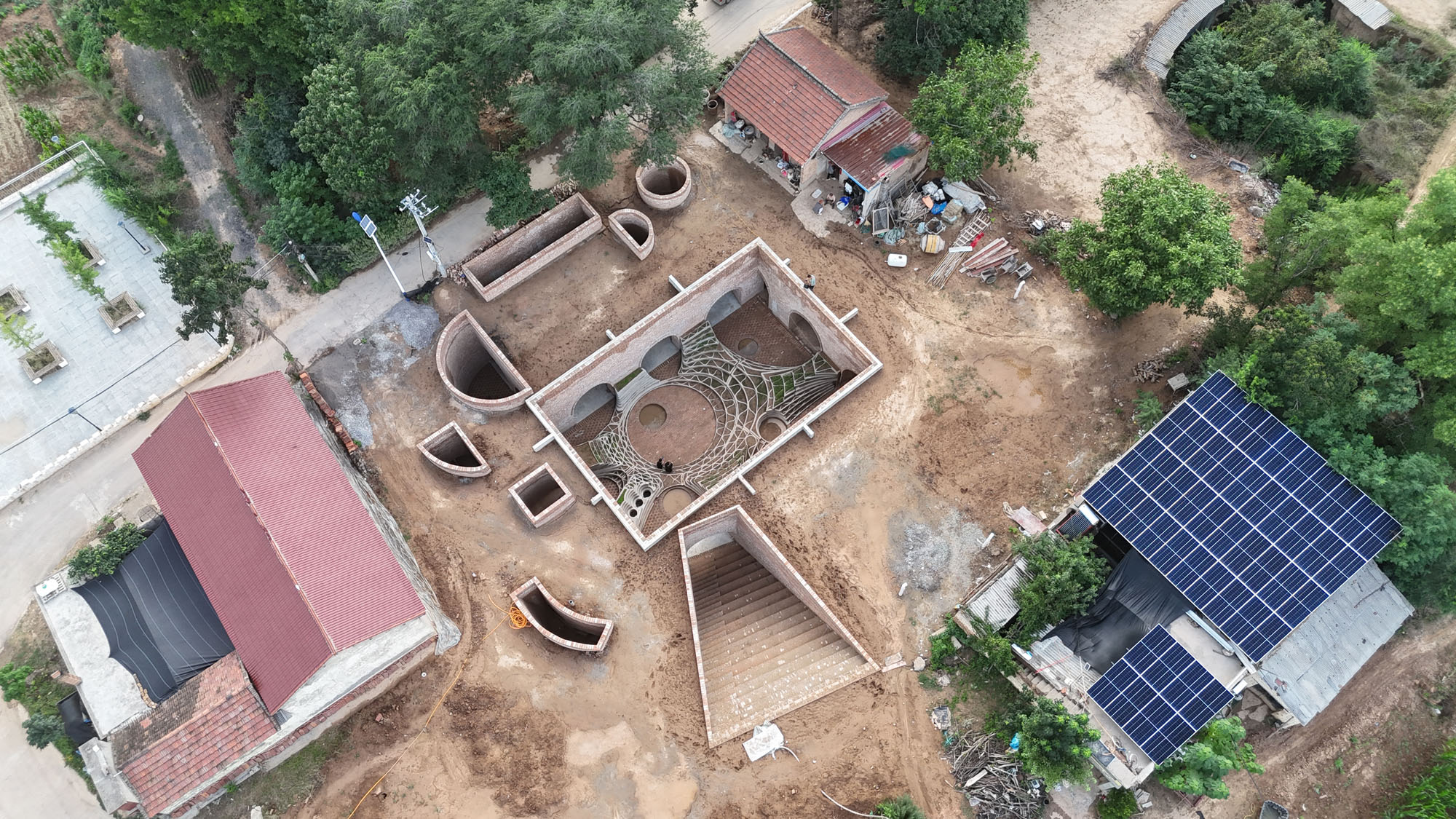
©︎ John Lin, Olivier Ottevaere, Lidia Ratoi
黄土高原における気候変動と伝統建築の再生
黄土高原の伝統的地下住居「ディケンユアン」と季節の暮らし
中国中北部の黄土高原に位置する地下洞窟住居「地坑院(ディケンユアン)」は、木材などの一般的な建築資材が歴史的に不足していた地域において、居住空間を確保するための独創的な解決策である。
古来より、この地域では住居が直接地中に掘削されてきた。典型的な構造としては、8×10mの長方形の中庭を深さ約6mまで掘り下げ、そこから黄土の壁面に対して水平に連続したアーチ型の部屋を穿つというものである。この簡素でありながらも空間的に洗練された形態は、中国人が好む中庭を中心とした生活様式を維持しつつ、地上の土地を最大限に農業へ活用することを可能にする。すなわち、地下で暮らし、地上で農作業を行うという優雅な調和を実現しているのである。
時代が下るにつれ、黄土高原の景観は多層的な様相へと進化を遂げた。現在、地下住居は地上に建設されたコンクリートやレンガ造りの住宅、学校、工場などと共存している。多くの家族は、地上に新たな家を構えた後でも季節に応じて地下住居を利用し続けており、夏や冬には大地が持つ蓄熱性の恩恵を受けている。これは単なる技術的な最適化にとどまらず、生活様式への適応に根ざした持続可能性のモデルを示している。地下住居は、季節や社会、そして環境条件の移り変わりに呼応する、柔軟な居住システムの一部なのである。
©︎ John Lin, Olivier Ottevaere, Lidia Ratoi
©︎ John Lin, Olivier Ottevaere, Lidia Ratoi
気候変動がもたらす脅威と住居の放棄
しかし、この長きにわたる均衡は、気候変動によって次第に崩れつつある。2021年、同地域は1954年以来となる歴史的な豪雨に見舞われ、かつての安定した気候条件のもとで整備された排水システムは完全に機能不全に陥った。広範囲に及ぶ洪水によって構造壁は次々と崩壊し、結果として地下住居の未曾有の放棄が引き起こされたのである。
Architecture without architects
観光地化の影で置き去りにされる現実
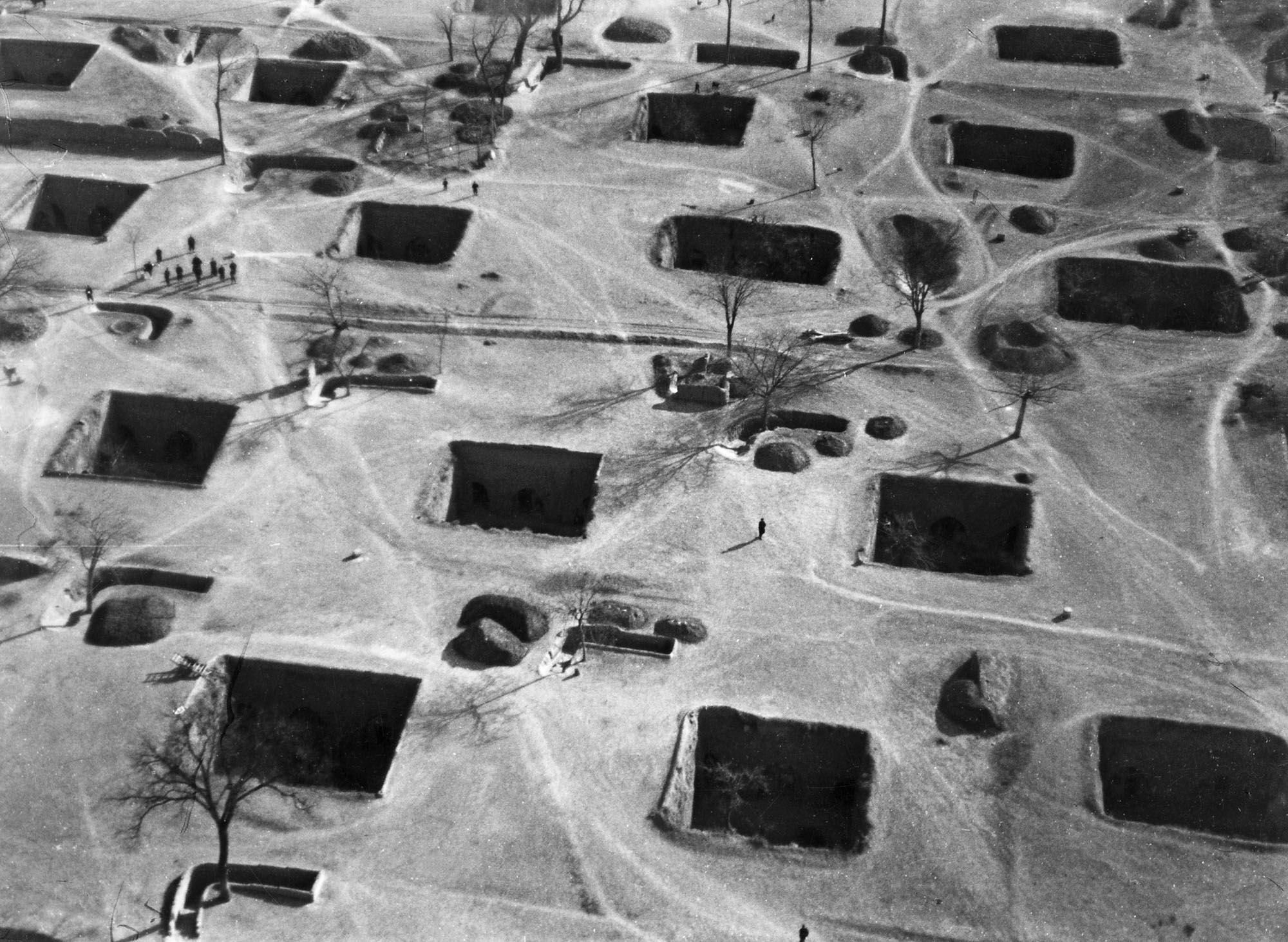
ディケンユアンの存在は、1933年にルフトハンザ航空のパイロットが撮影した航空写真を通じて、世界の建築界に広く認知されることとなった。その後、建築家バーナード・ルドフスキーが自身の展覧会『建築家なしの建築』で取り上げたことで、その名はさらに広まった。しかし今日、世間の注目は「ディケンユアン民俗文化公園」へと移ってしまっている。
このテーマパーク型のレプリカ施設が観光客を独占する一方で、実際に人々が暮らす近隣の地下村落は経済的な恩恵から排除されたままである。皮肉なことに、前述の1933年の航空写真は公園の入り口に掲げられており、本来の村落に対する空虚な追憶として機能してしまっている。
さらに、この不均衡はソーシャルメディアのプラットフォームによって増幅されている。新しいテーマパークの重要性ばかりが誇張され、本来の村落には経済的利益がいっさい還元されない。観光の波は、文字通り「人々の日常生活が営まれる場所」には決して届かないのである。
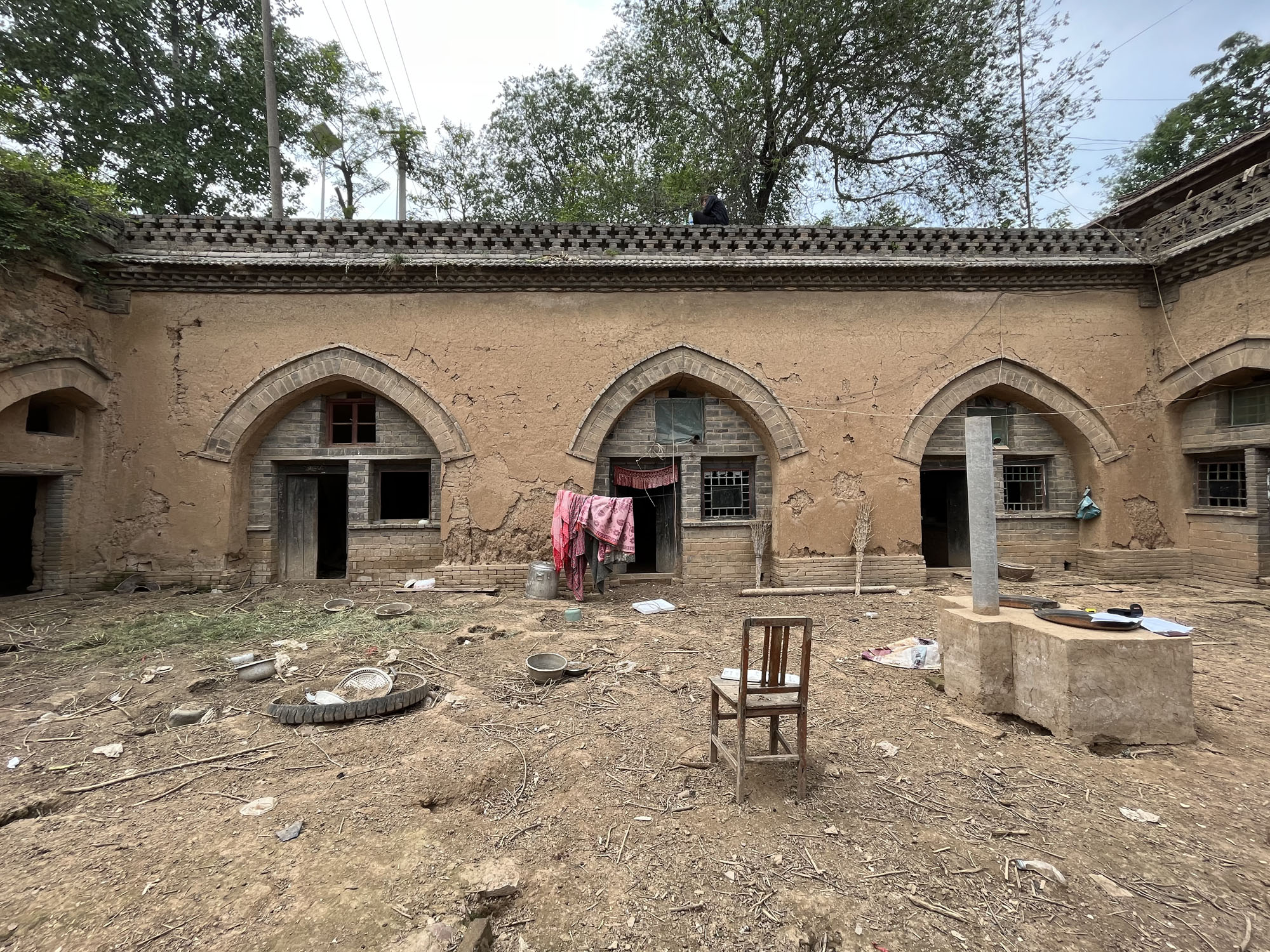
Original courtyard
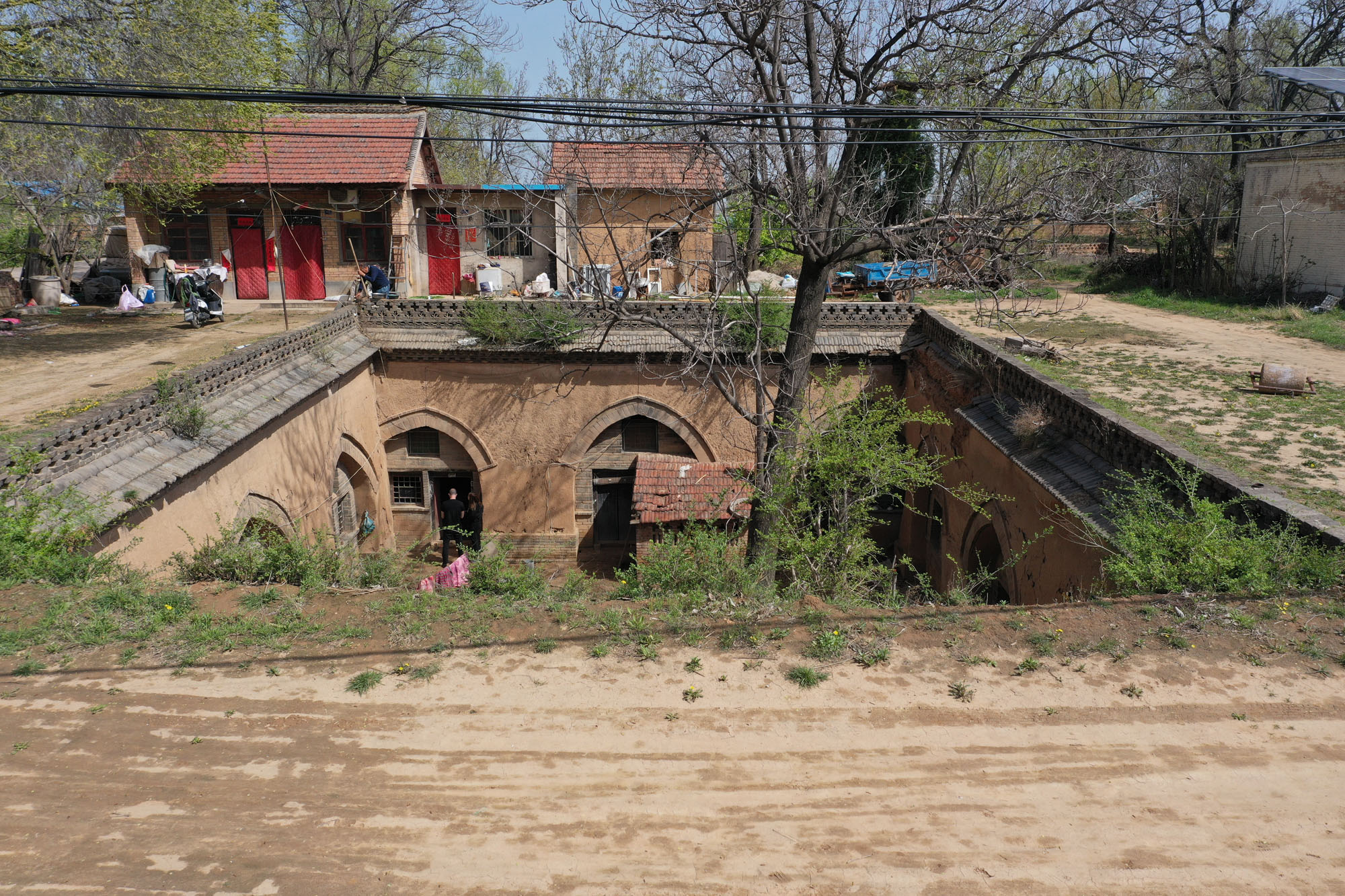
Original courtyard
私邸からコミュニティスペースへ:新たな再生プロジェクトの始動
このような環境的・社会的・経済的な圧力が複雑に絡み合う状況を受け、香港大学の建築学教授であるジョン・リン、オリヴィエ・オットヴェール、リディア・ラトイと学生たちは、明徳プロジェクト財団および河南省張弁郷(ちょうべんきょう)地方政府からの招きにより、地下住居を「生きた文化システム」と捉え、その未来像を検証するプロジェクトに着手した。
初期調査の時点では、同地域の地下住居の80%以上には依然として住民が暮らしていた。しかし、2021年の未曾有の豪雨を経てそのほぼすべてが損傷を受け、この伝統的な建築様式が新たな環境の現実へといかに適応すべきか、抜本的な再考を迫られることとなったのである。
本プロジェクトのキーパーソンとなったのは、地下住居の所有者である朱(Zhu)氏である。彼女はソーシャルメディアを通じて地下での日常生活を発信する、地元のインフルエンサーでもあった。設計チームが彼女との対話を通じて導き出した結論は、対象となる地下住居を単なる「私邸」として修復するのではなく、「コミュニティスペース」へと大胆に転換し、村における経済価値創出の核として機能させるというものであった。
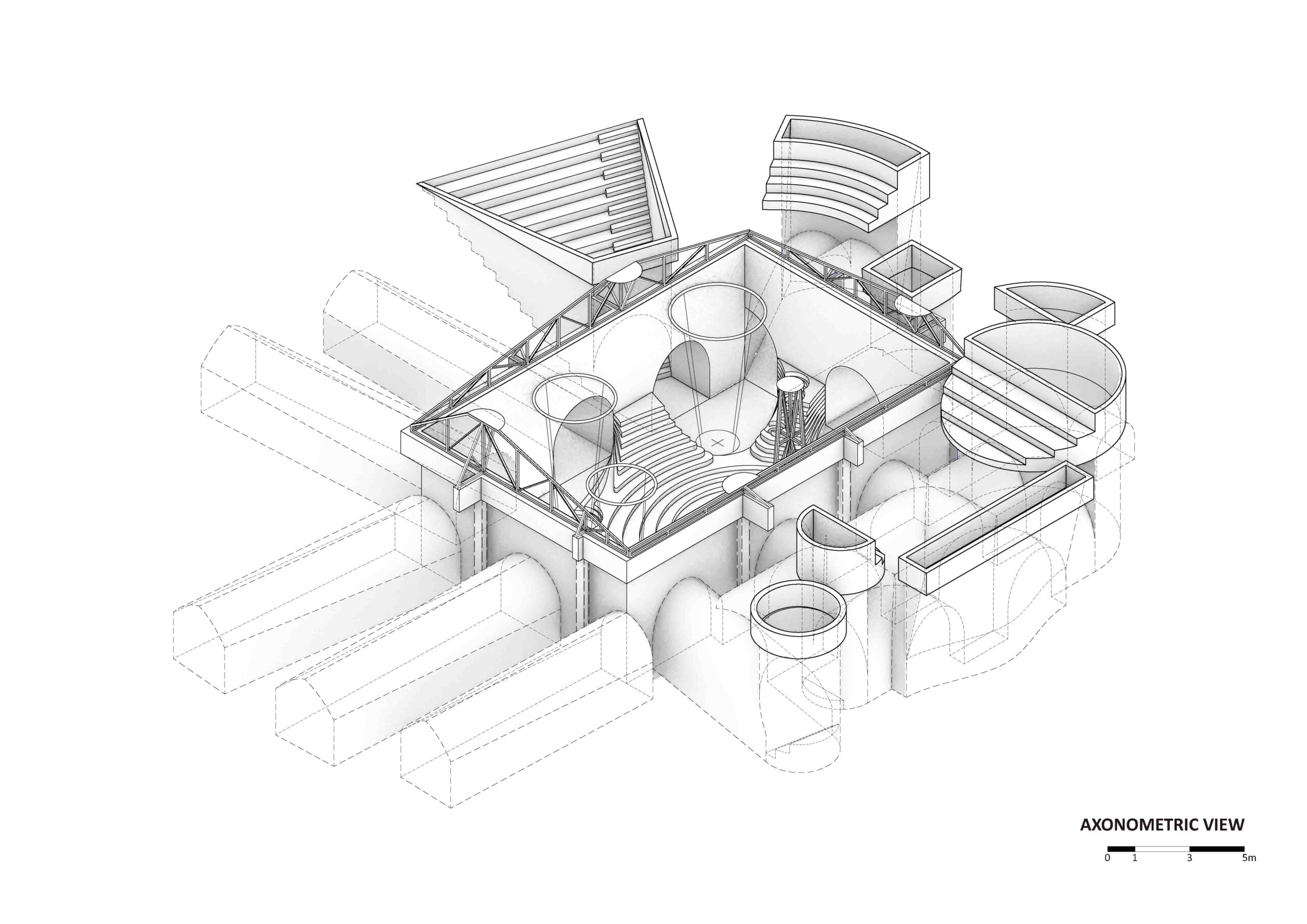
Axonometric view
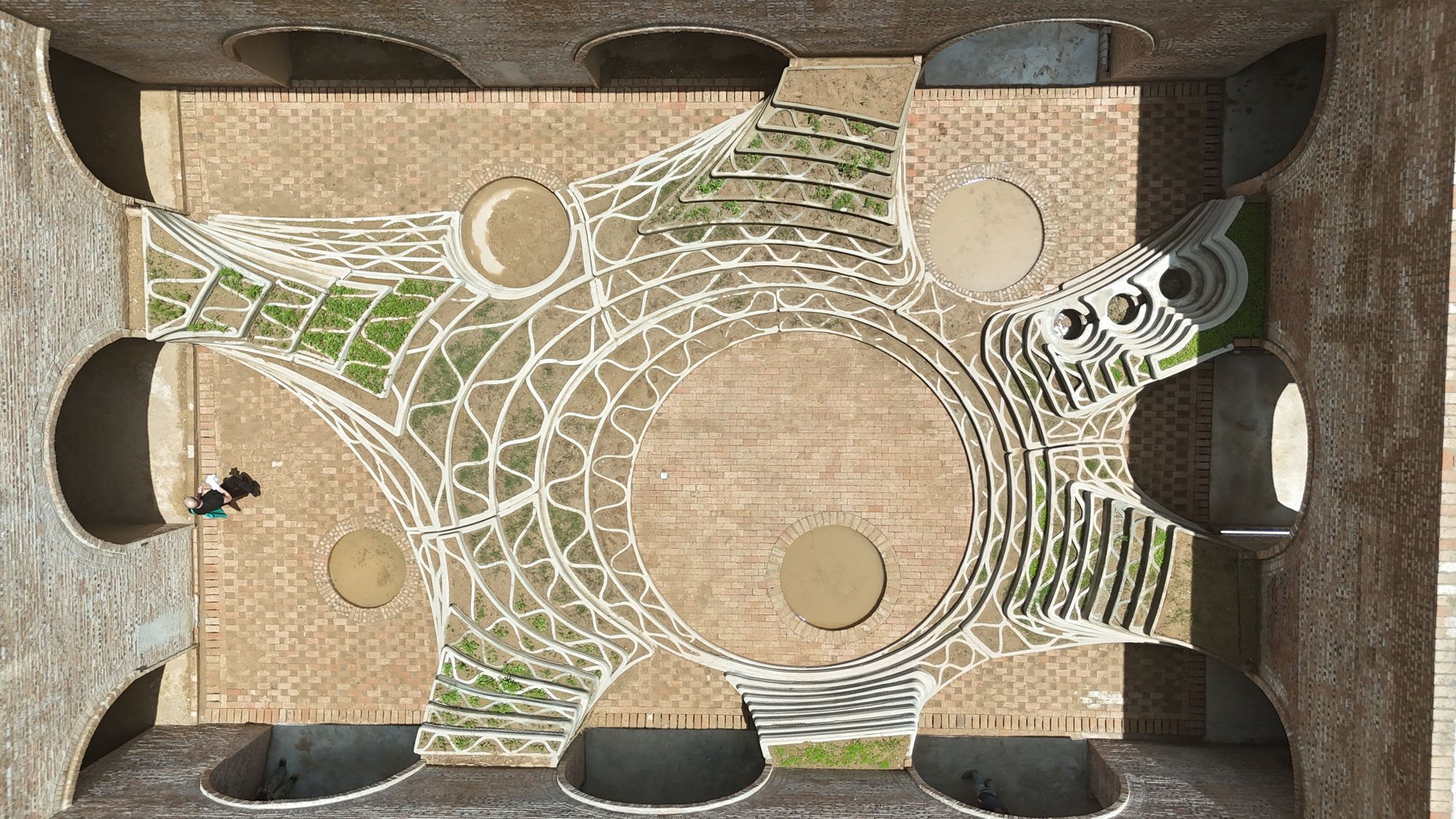
Courtyard landscape ©︎ John Lin, Olivier Ottevaere, Lidia Ratoi
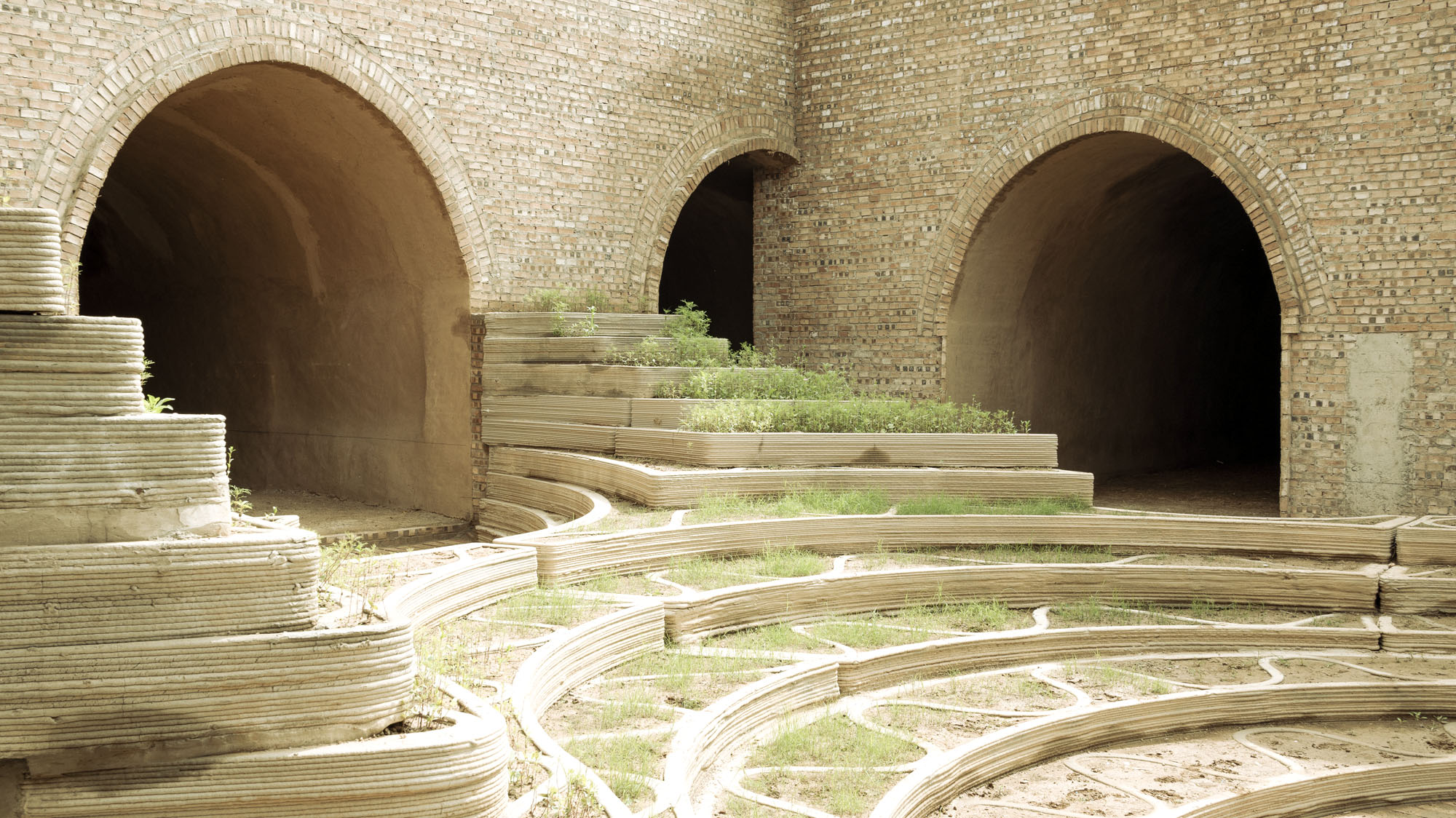
Courtyard ©︎ John Lin, Olivier Ottevaere, Lidia Ratoi
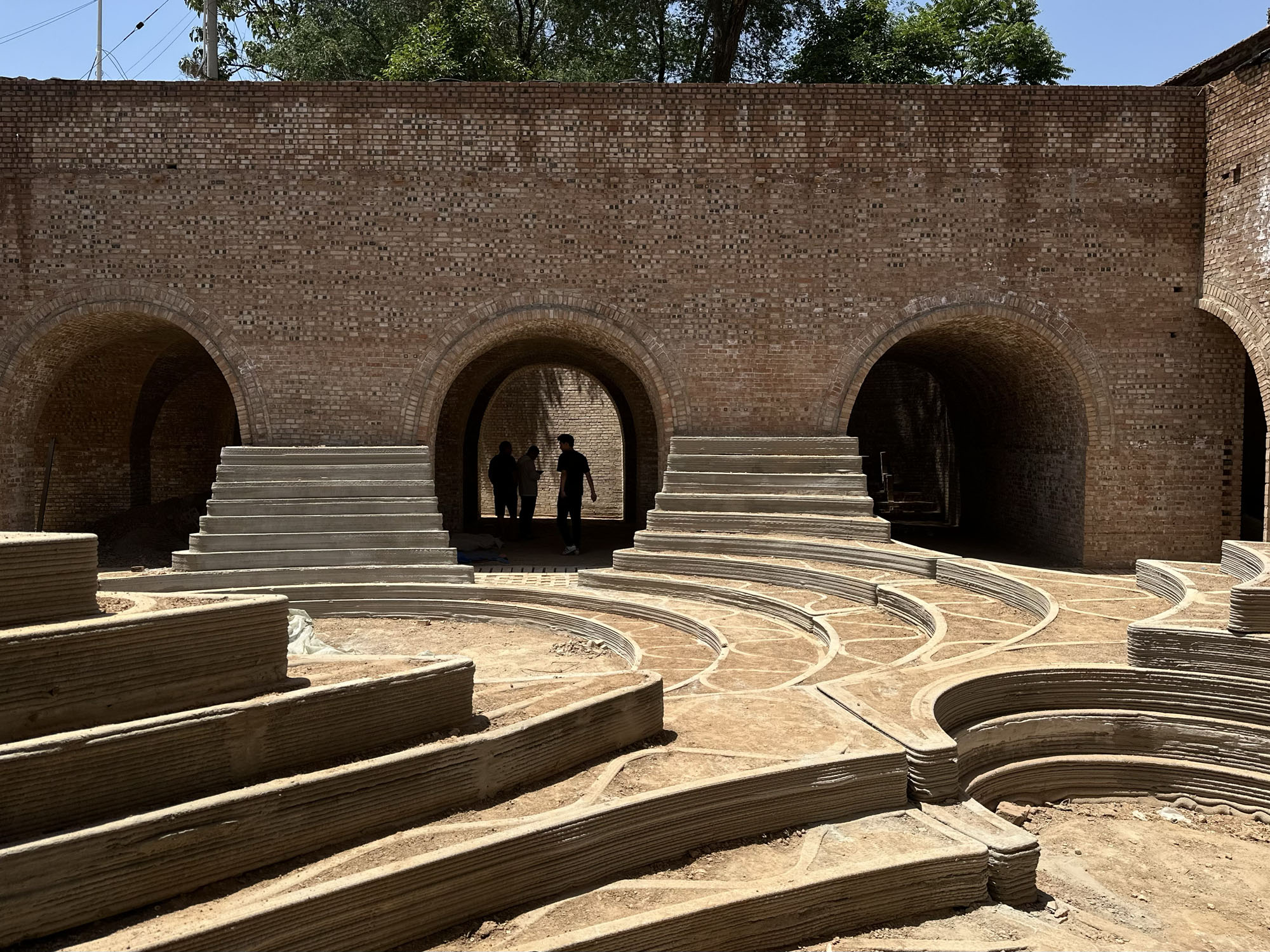
Courtyard ©︎ John Lin, Olivier Ottevaere, Lidia Ratoi
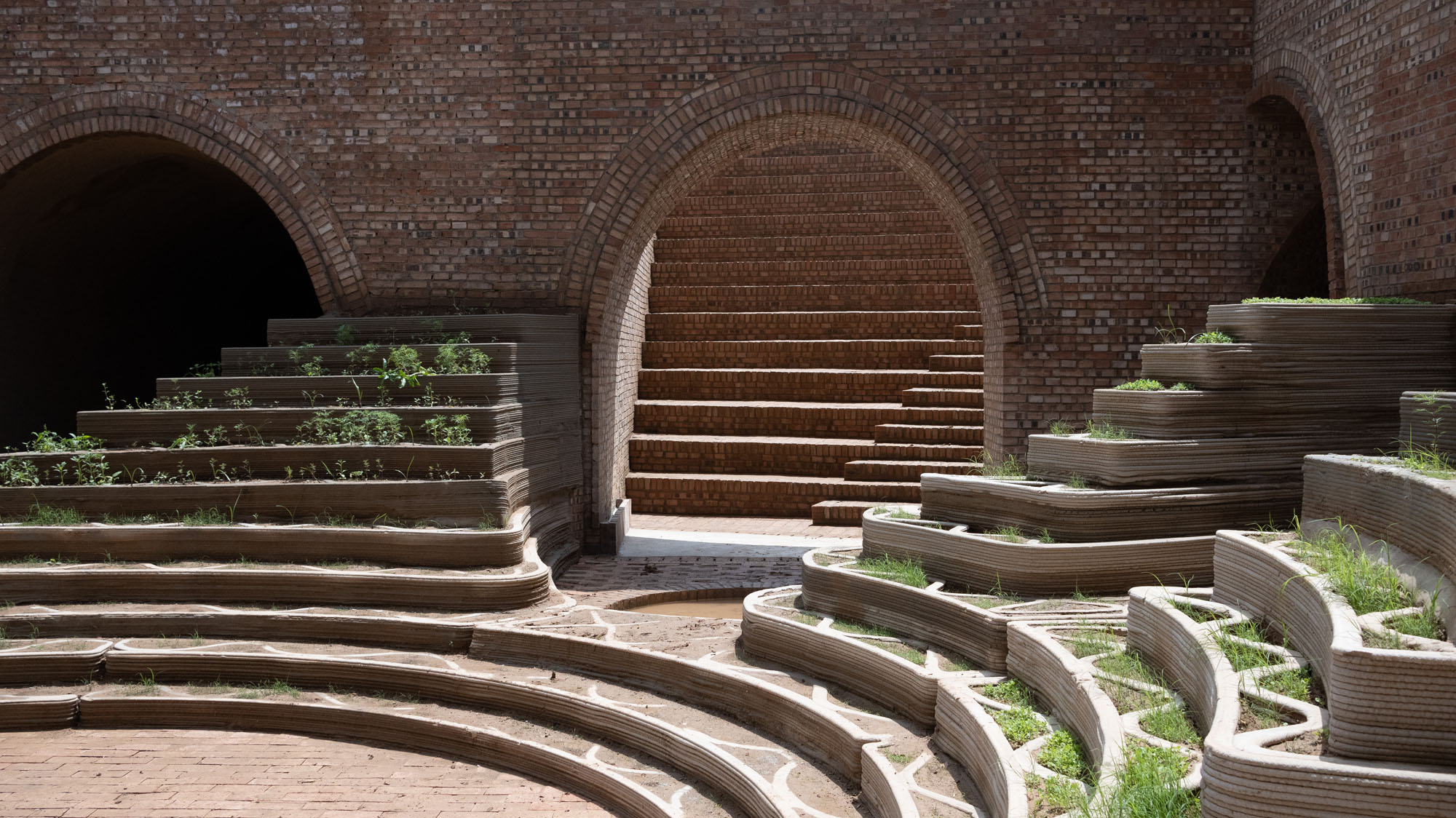
Courtyard ©︎ John Lin, Olivier Ottevaere, Lidia Ratoi
気候変動に応答する参加型プロセスと空間の再定義
プロジェクトの議論において中心的な課題となったのは、地下住居がいかにして気候変動への対応を図りながら現代のコミュニティのニーズに応え続けるか、そして、建築的な介入によって技術的制約を克服すると同時に、いかに村の内部から社会的・経済的価値を創出するかという点であった。
具体的には、損傷した構造物の保存、土造技術の改良や排水・換気システムの導入による環境性能および構造性能の向上、さらに新たな公共利用を見据えた空間構成への転換などが主要な検討事項として挙げられた。
村人たちと学生たちが共同でプログラムの概要を策定した結果、この家は結婚式や葬儀、その他の集団儀礼を執り行うためのパブリックスペースへと生まれ変わることになった。これは、地上に新築された現代的な家屋ではもはや対応しきれなくなった重要な社会的機能である。
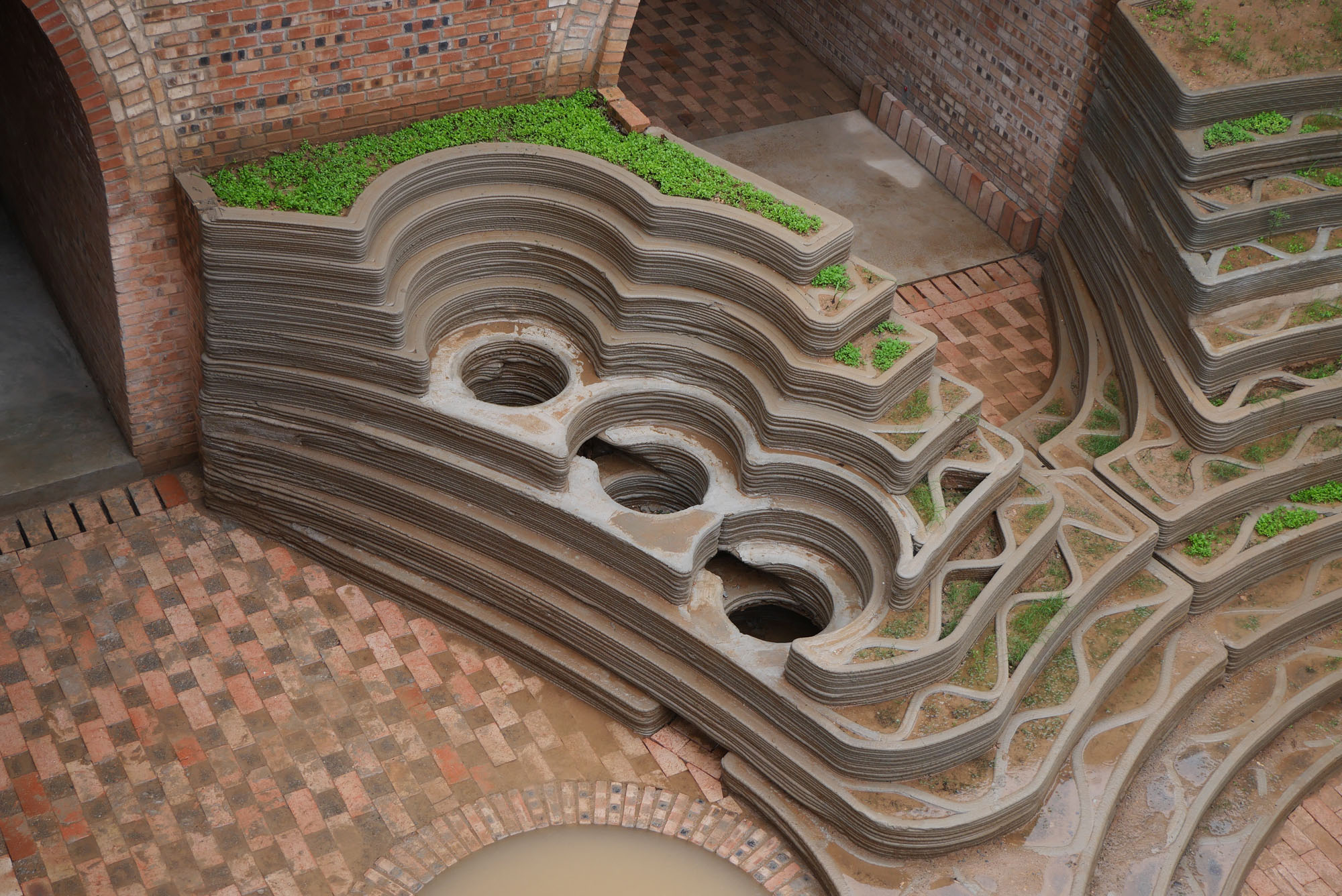
3Dprinted stove ©︎ John Lin, Olivier Ottevaere, Lidia Ratoi
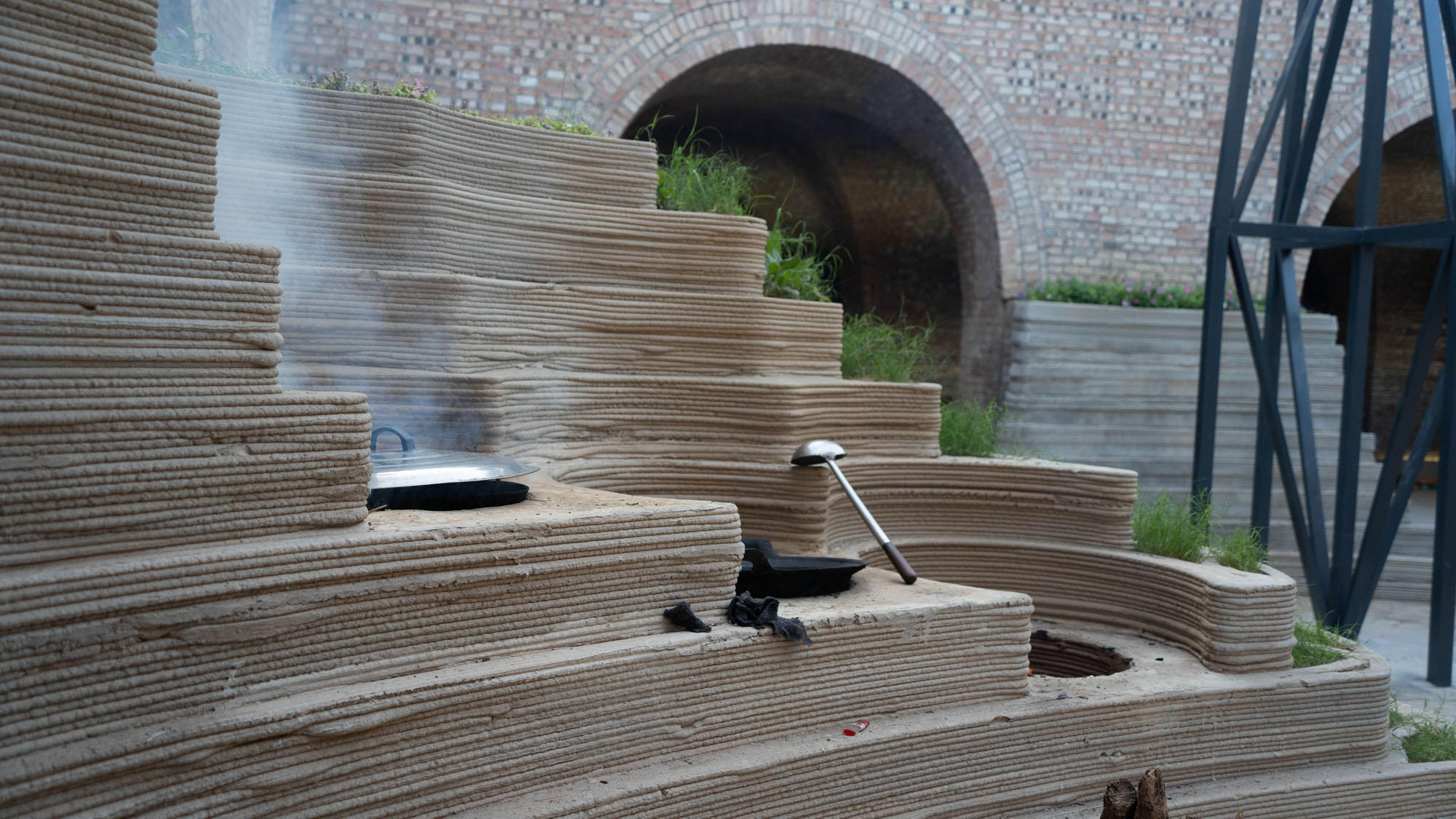
3Dprinted stove ©︎ John Lin, Olivier Ottevaere, Lidia Ratoi
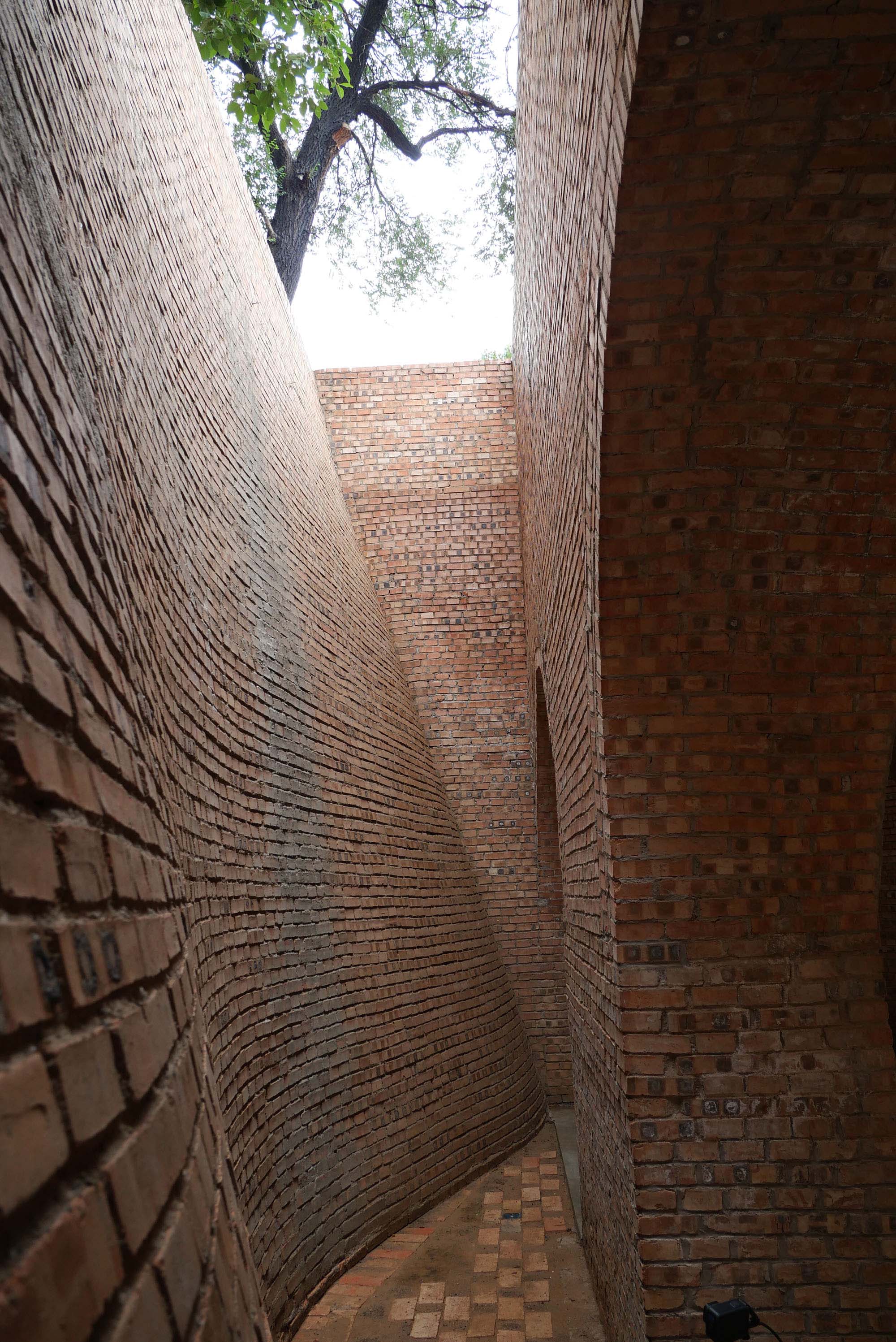
Narrow courtyard ©︎ John Lin, Olivier Ottevaere, Lidia Ratoi
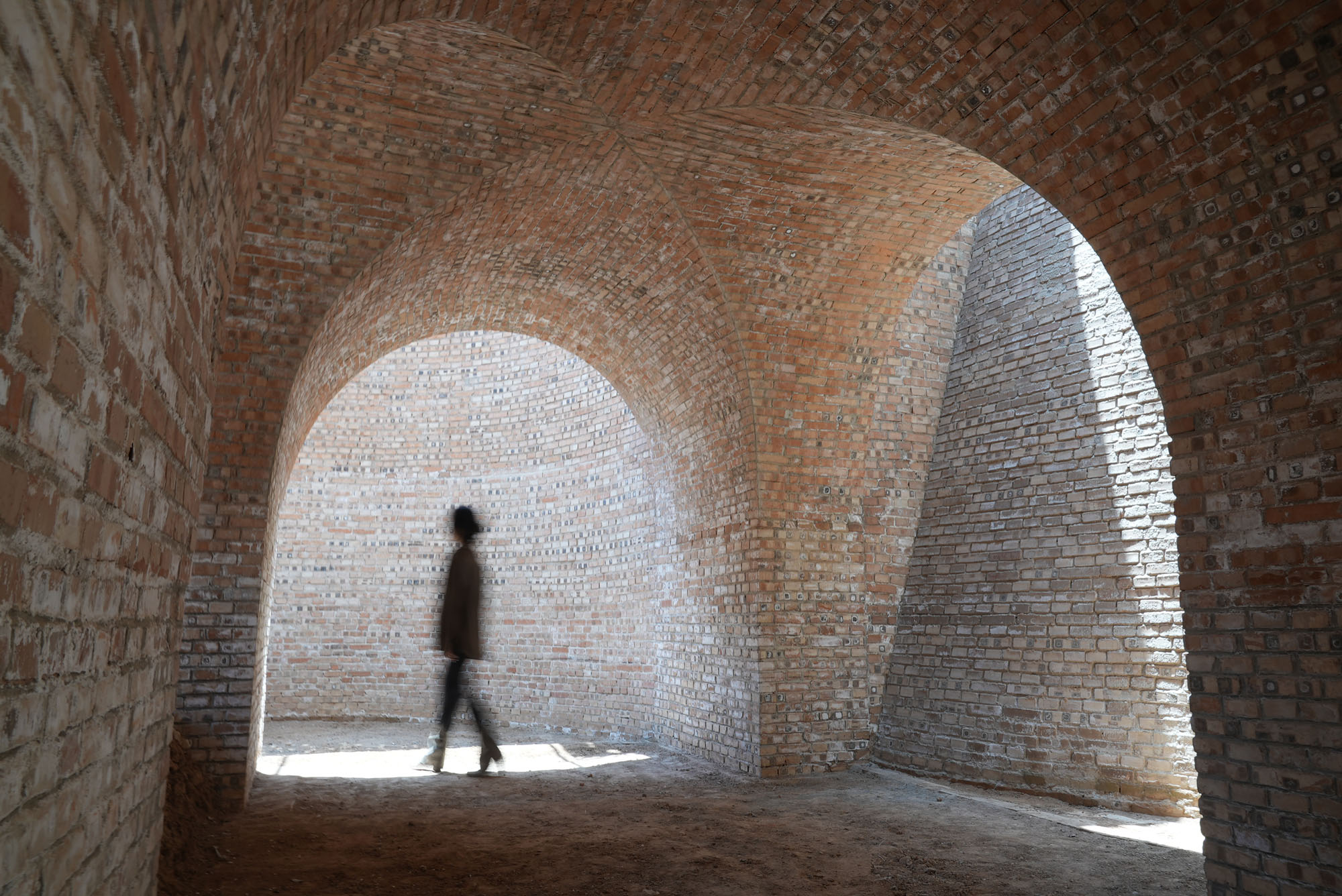
Room ©︎ John Lin, Olivier Ottevaere, Lidia Ratoi
3Dプリント技術による中庭の刷新と環境インフラの統合
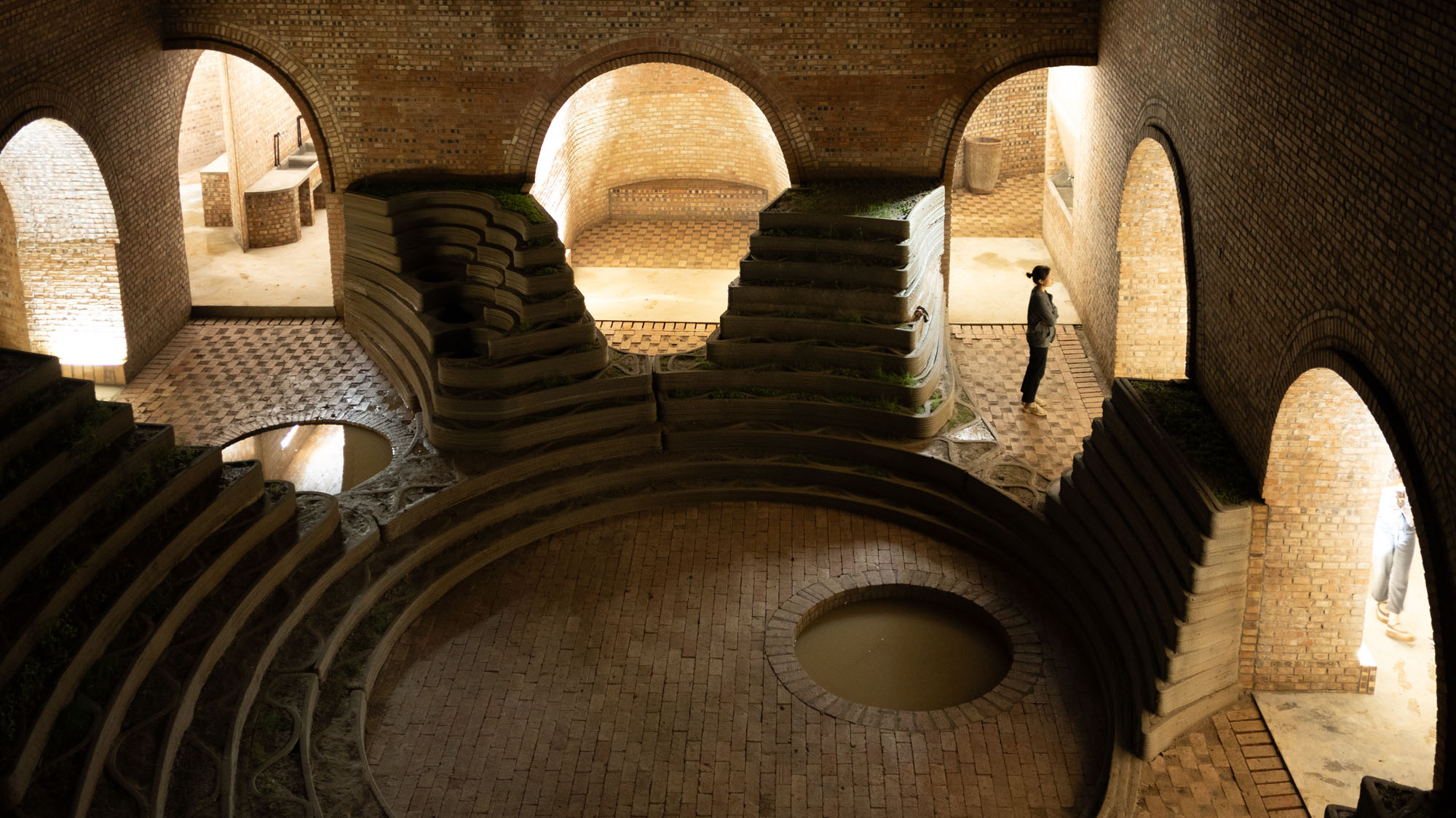
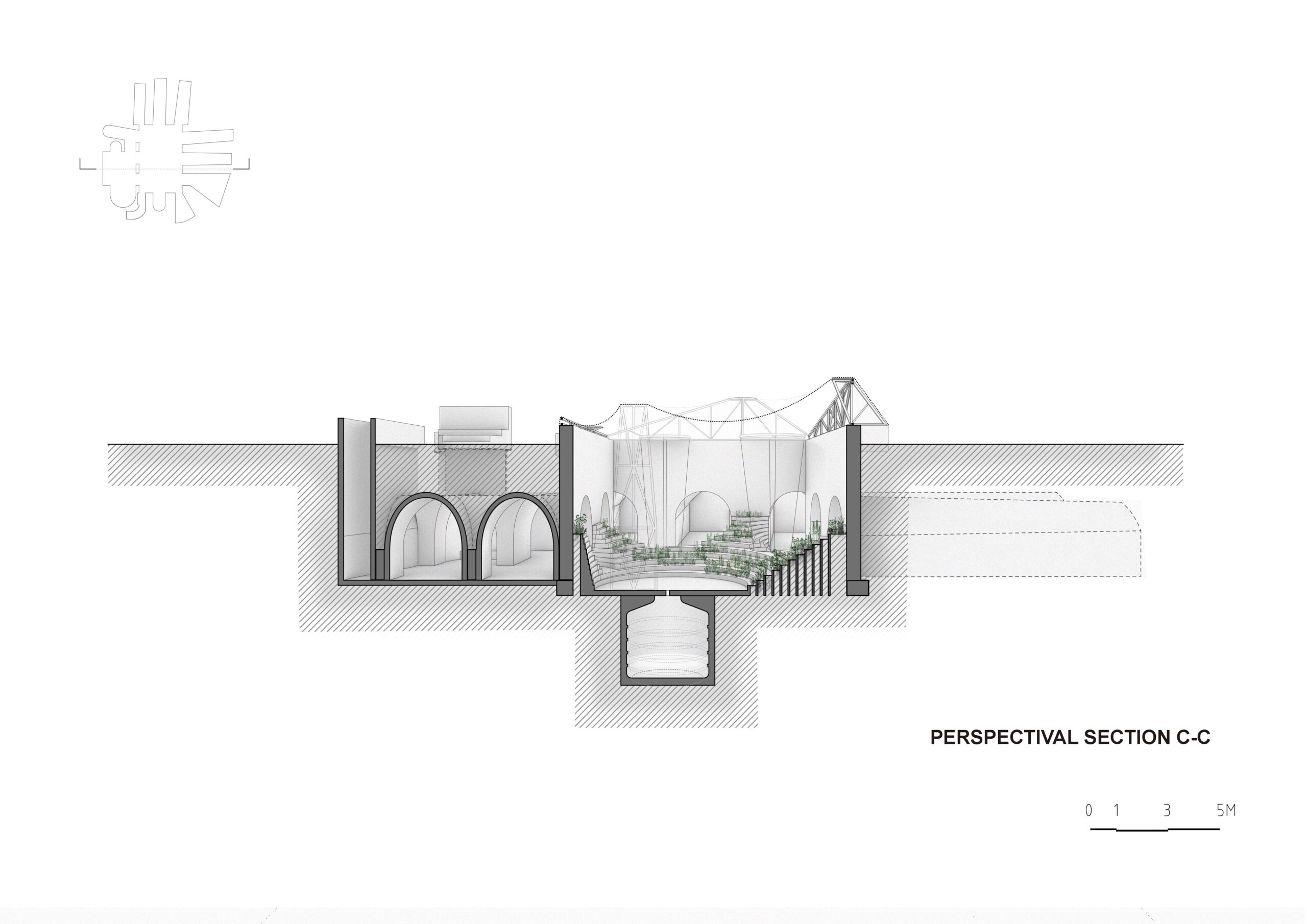
プロジェクトの空間的中心となる中庭は、集会や儀式、あるいは日常的な共有利用のための「円形劇場」へと変貌を遂げた。伝統的な地下住居の雨水管理は、土を踏み固めて排水を単一のピットへと導く手法が主流であった。この方法は安定した気候条件のもとでは有効に機能していたものの、近年の極端な降雨には到底太刀打ちできなくなっていた。
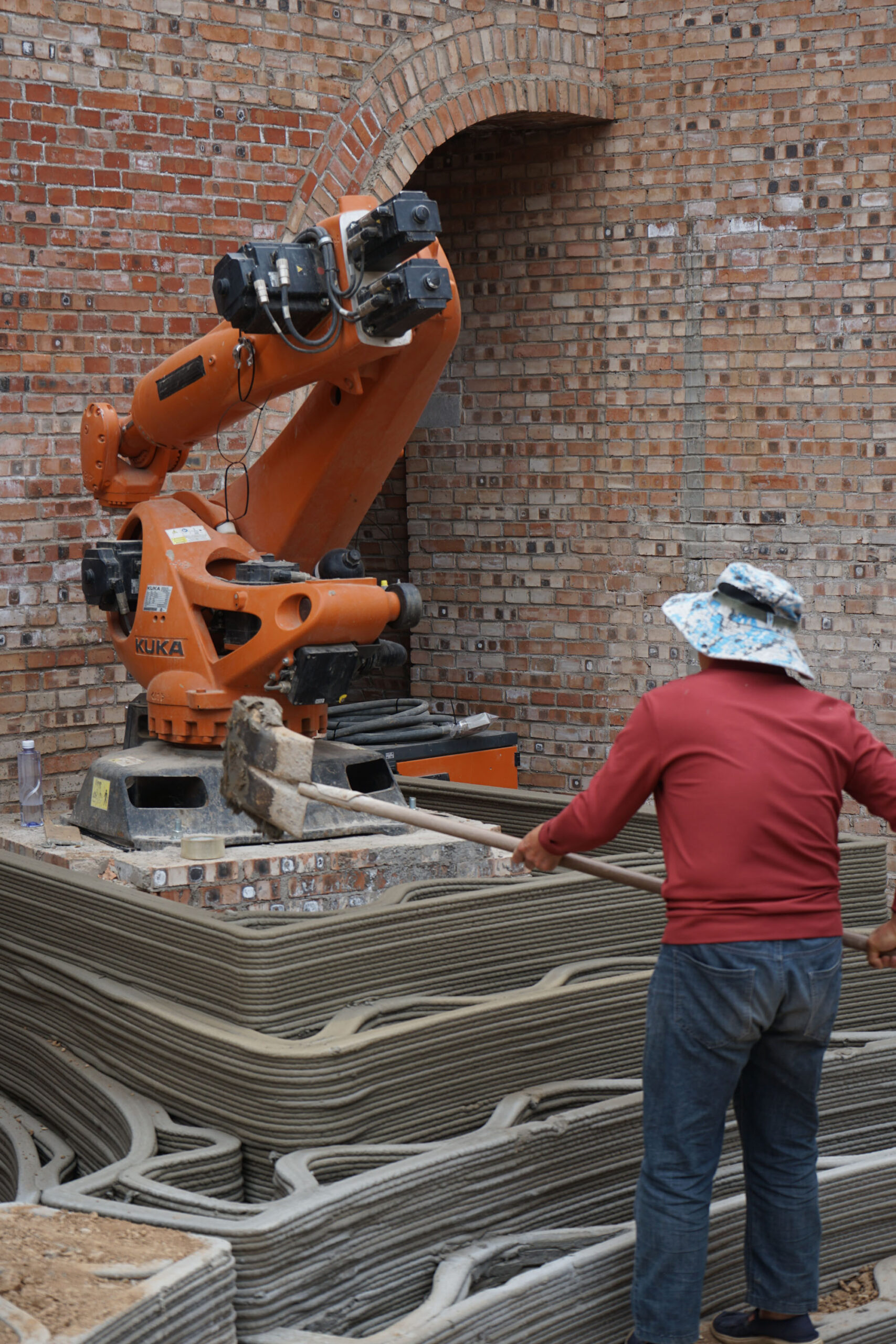
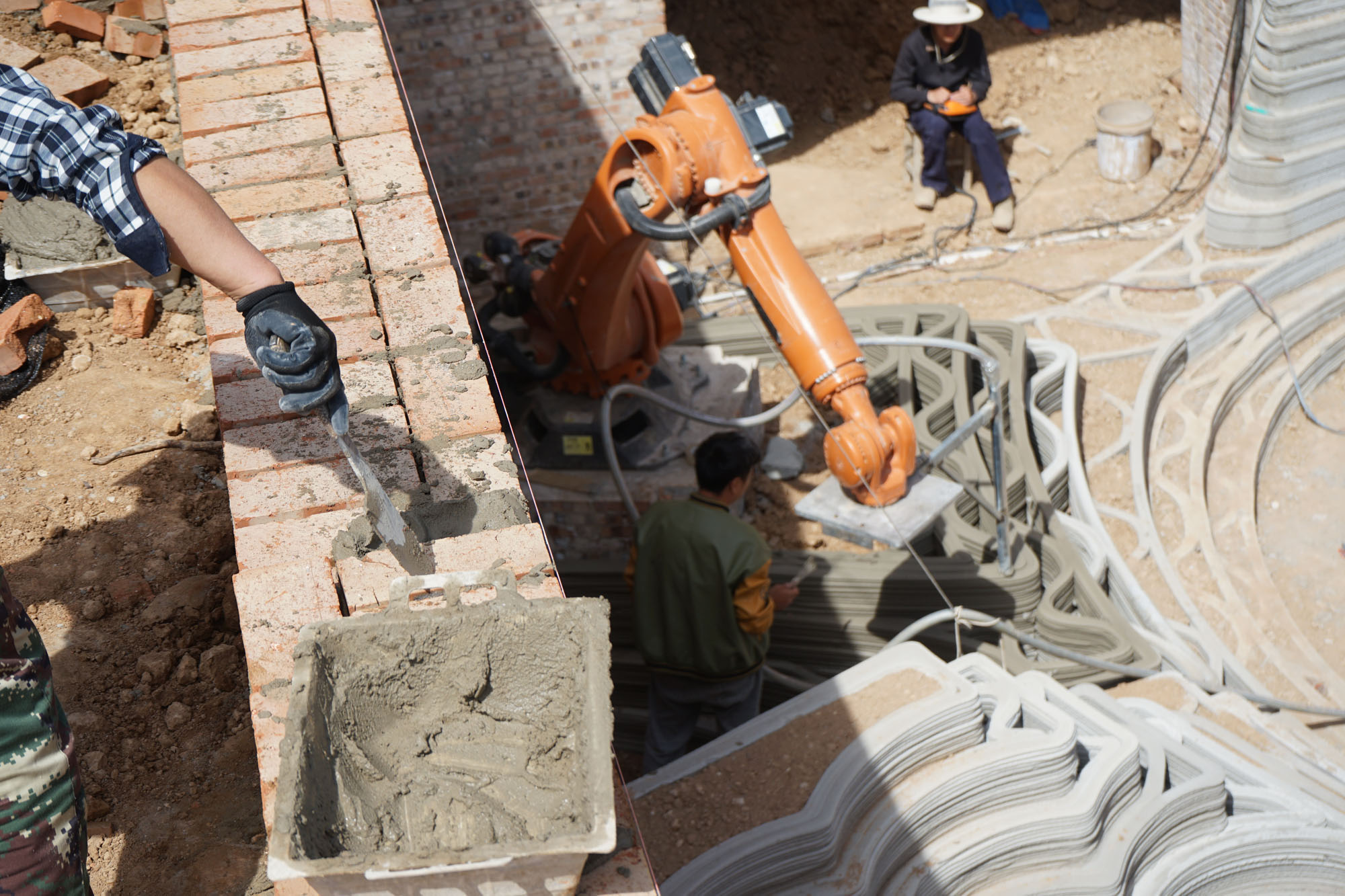
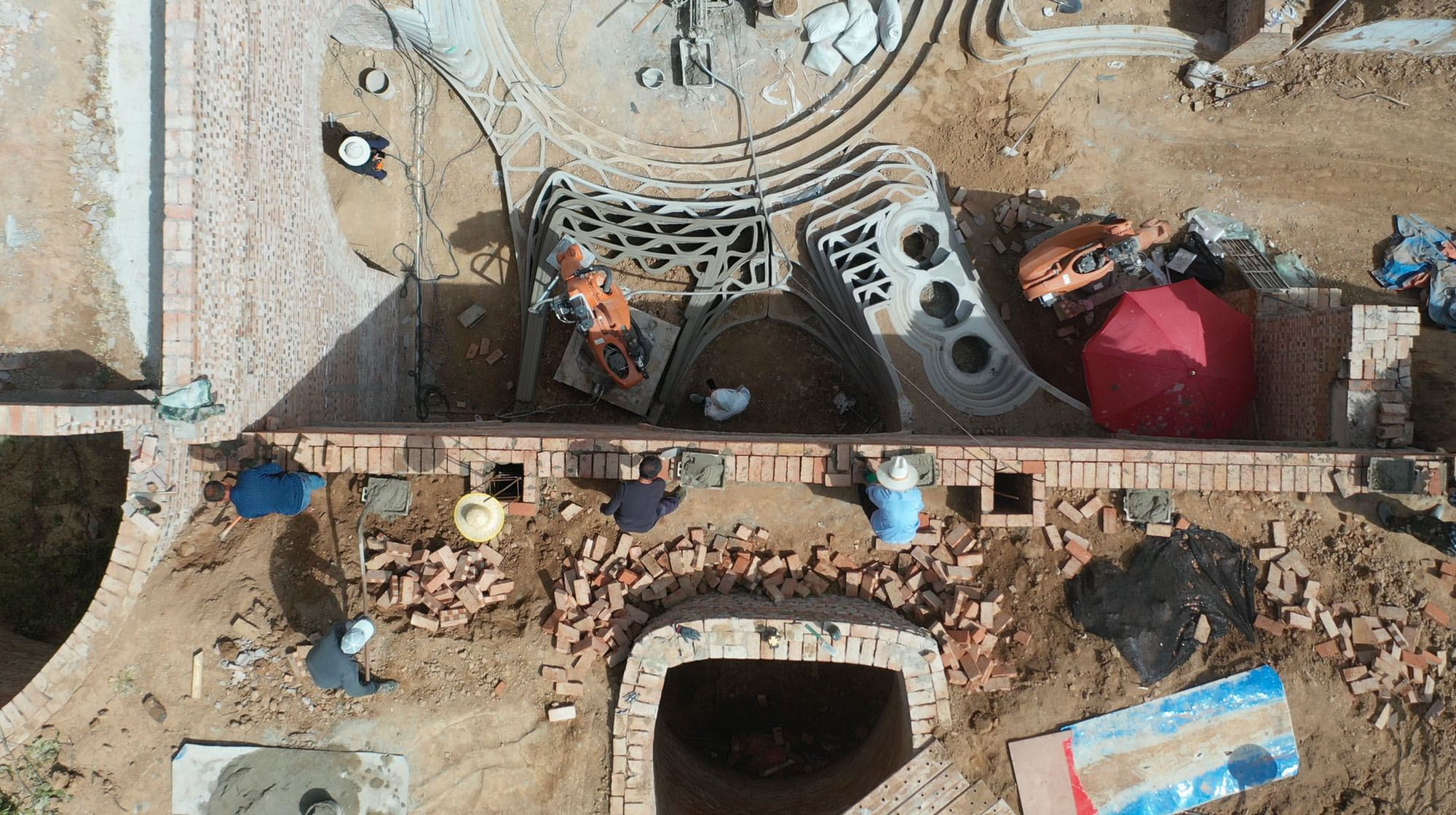
この課題に対する解決策として、中庭はロボットアームを用いた3Dプリント技術によって「階段状の円形劇場」として再構成された。これは座席や動線として機能するだけでなく、治水のための社会的インフラという役割も担っている。中庭の周囲に新設された排水路が溢れた雨水を地下貯水槽へと導いて再利用を可能にする一方、植栽が施されたテラスが雨水の吸収と食料生産の基盤を支える。さらに、現代的に再解釈された土窯もこの新たな構造の中に美しく統合されている。
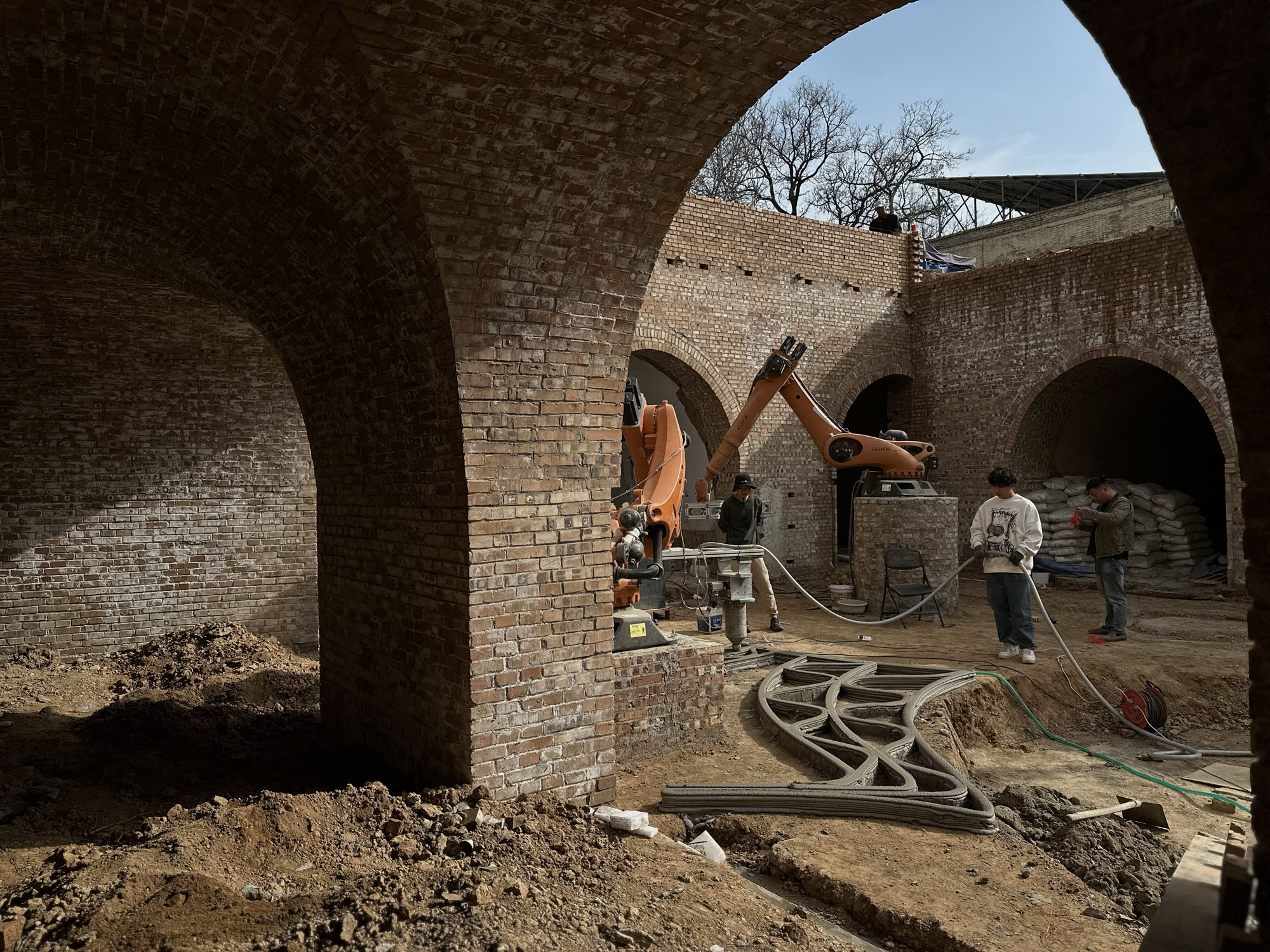
Construction
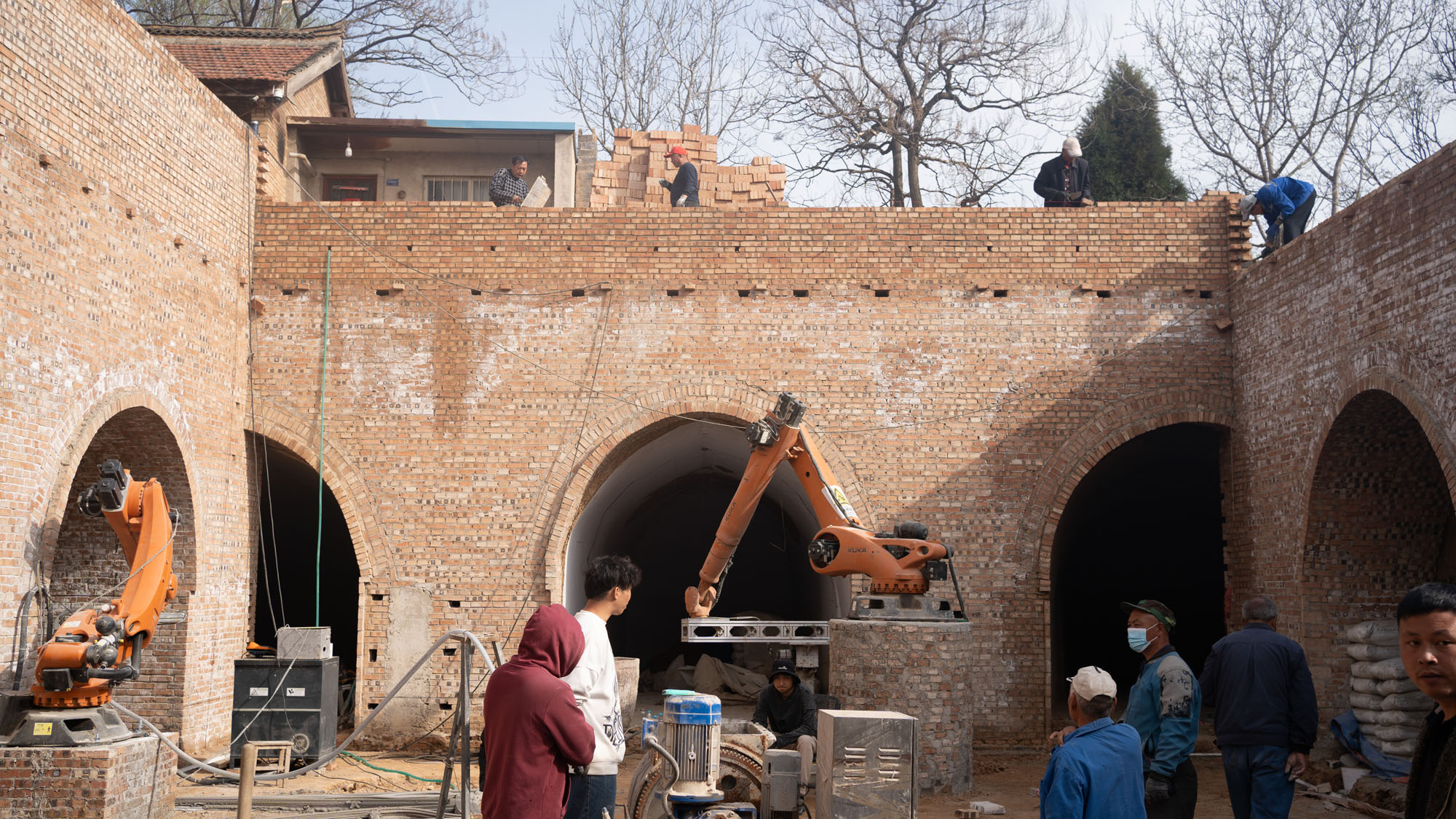
Construction
Construction
伝統技術と現代意匠の融合がもたらす新たな空間体験
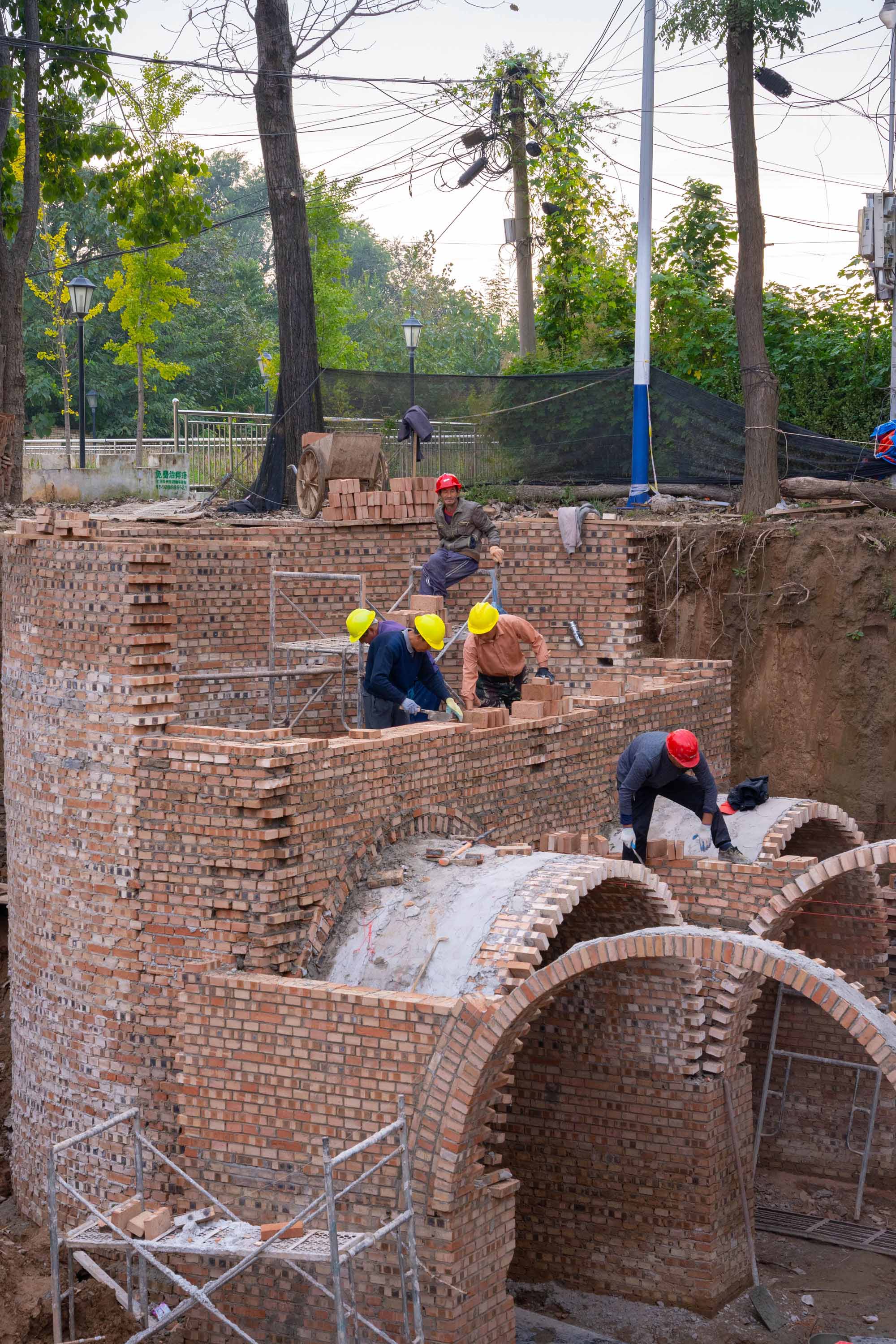
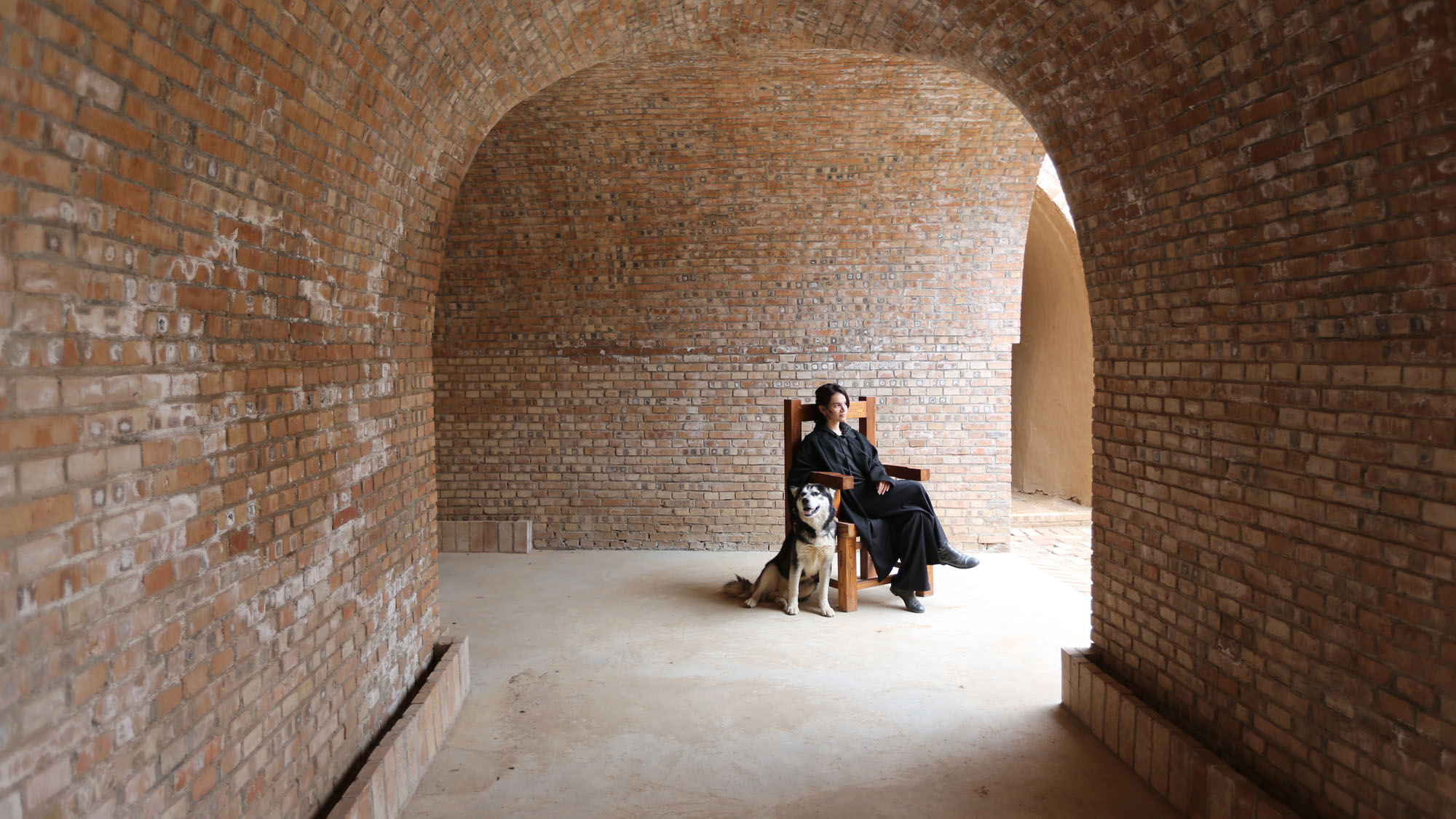
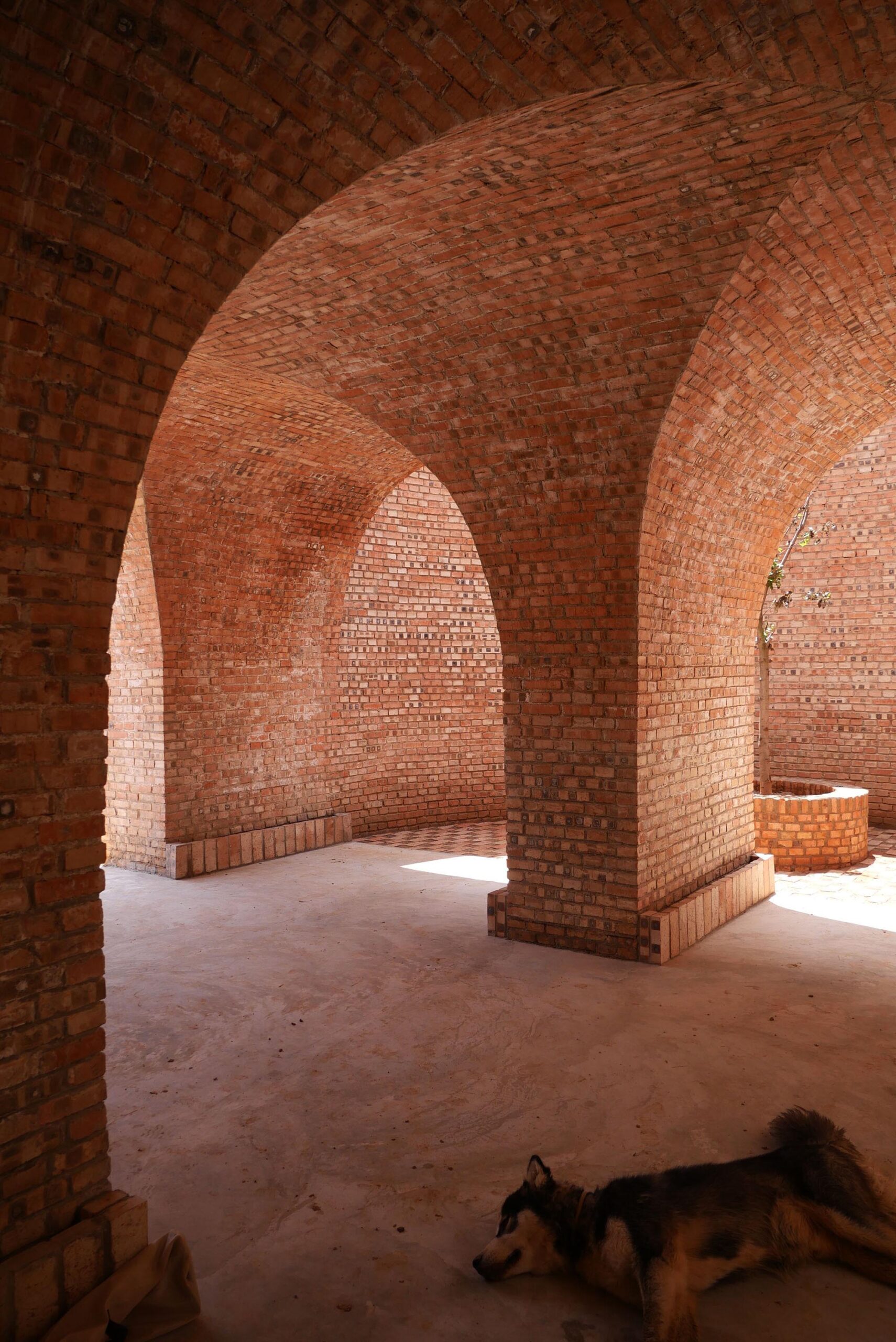
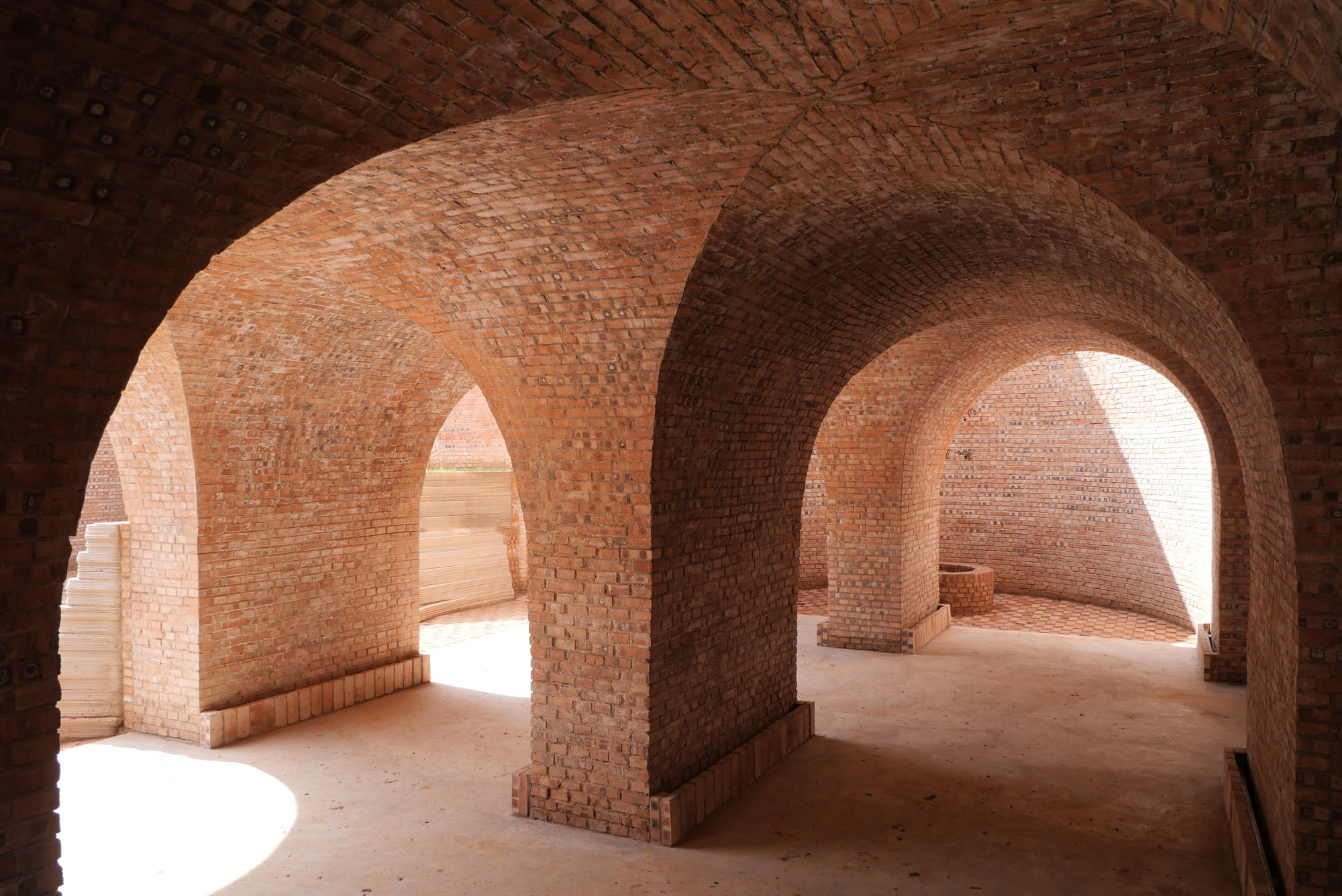
新たに生み出された公共空間は、この地域の建築的伝統を無闇に置き換えるのではなく、むしろそれを拡張するアプローチで設計されている。既存の土の洞窟はアーチ型のレンガ構造によって補強され、大地の蓄熱性を損なうことなく構造的耐久性を飛躍的に向上させた。
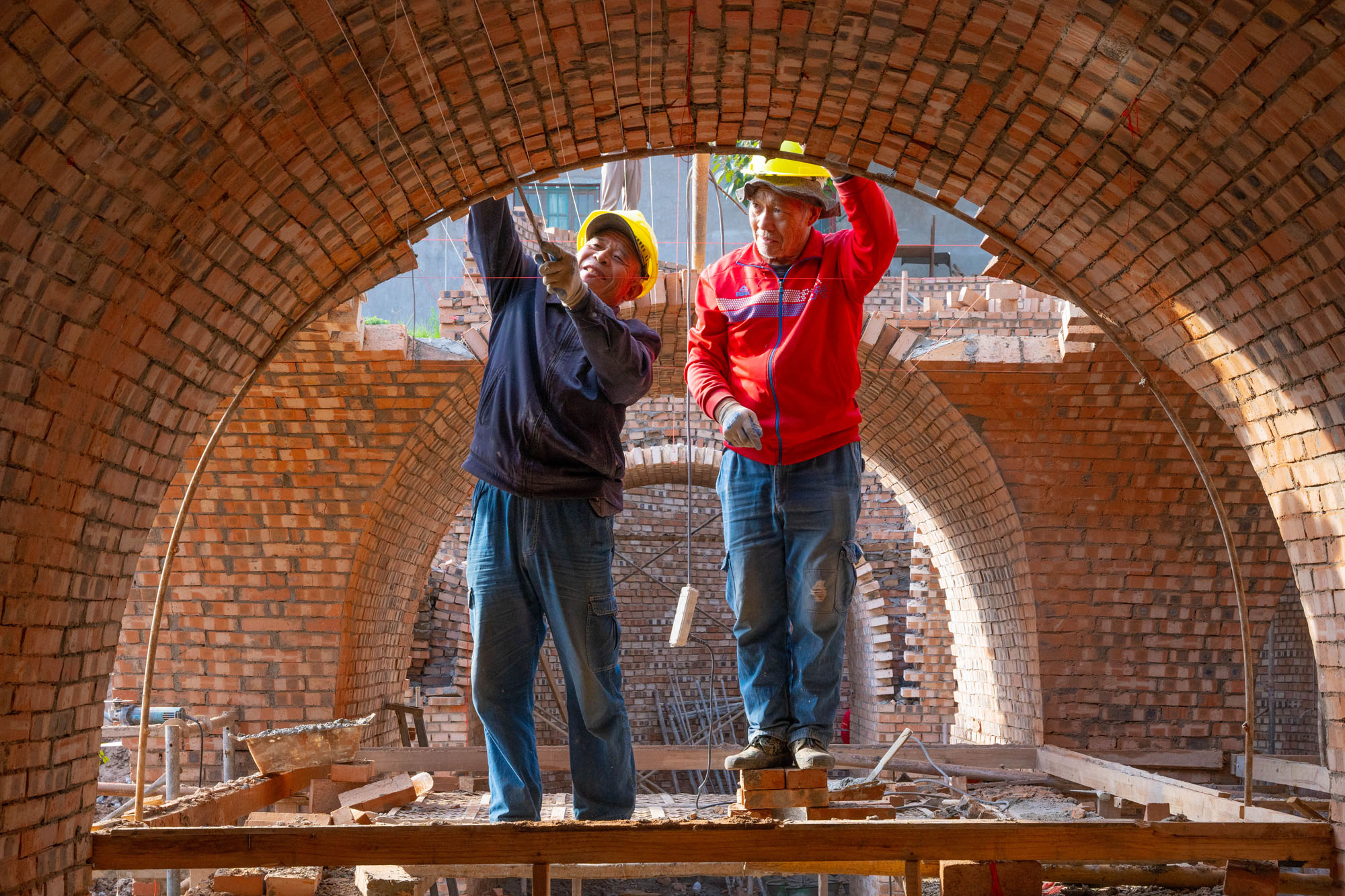
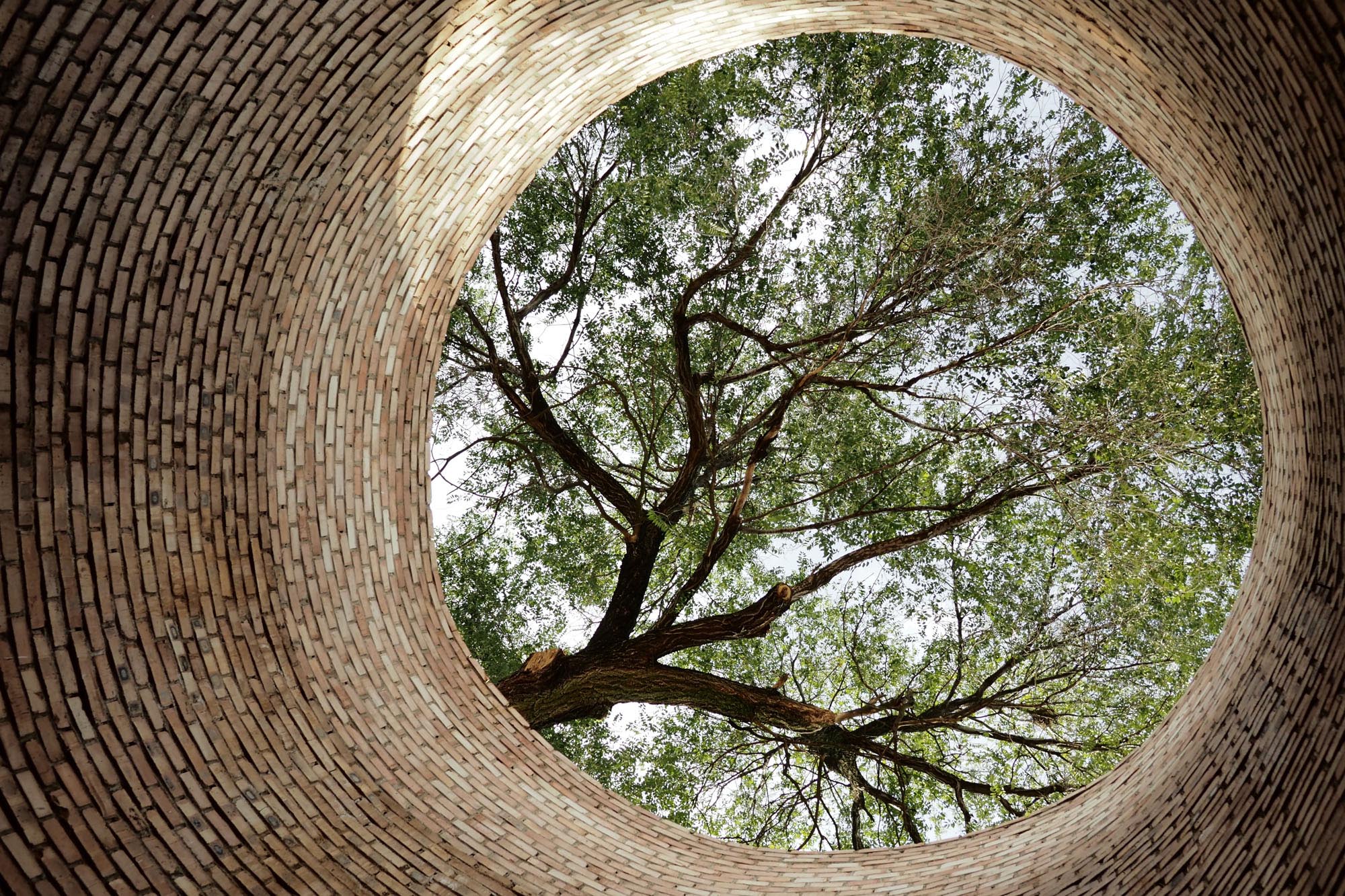
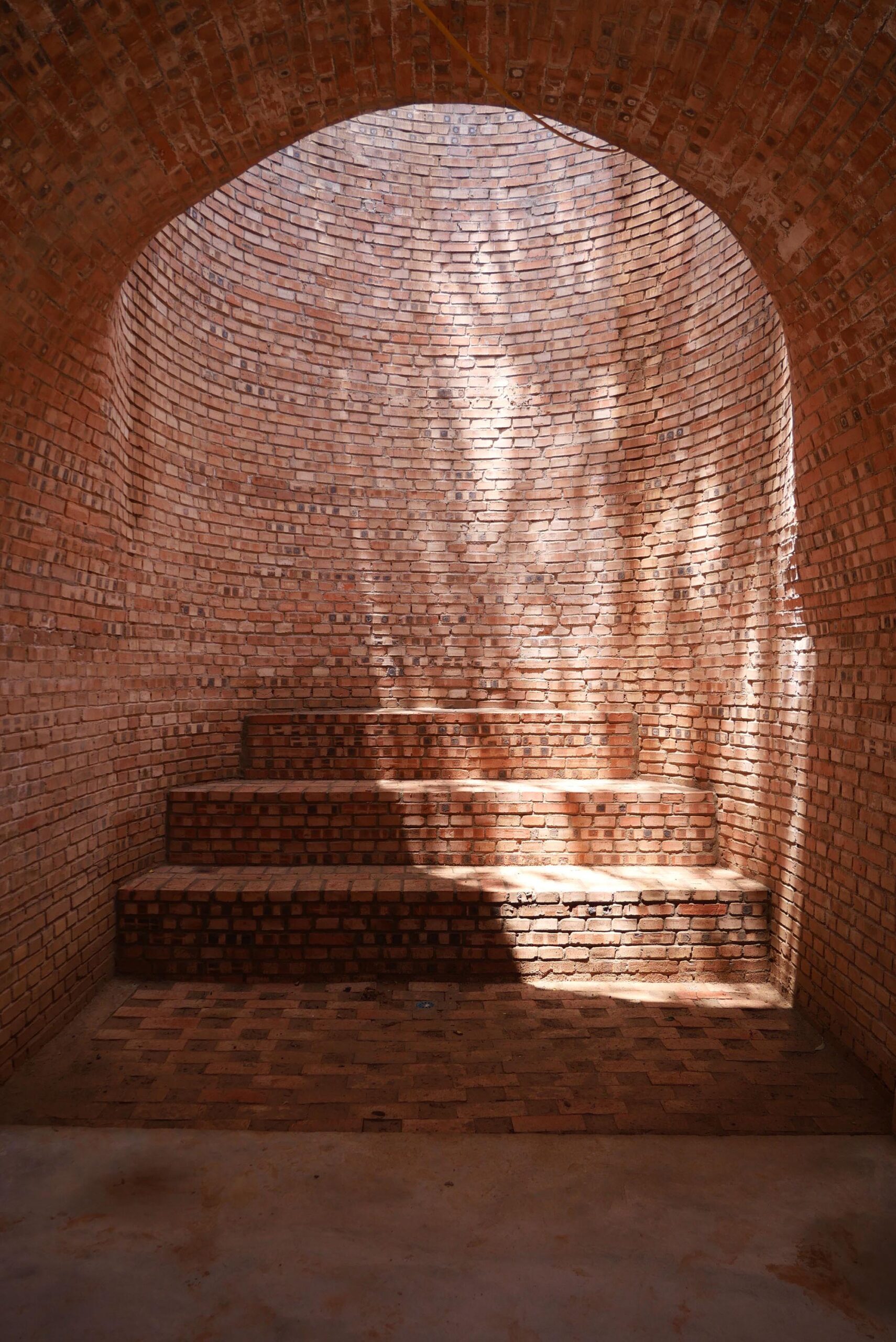
その施工プロセスにおいて伝統技術の応用が採用されており、地元の職人たちは湾曲した単純な竹の枝と紐だけを頼りに、極めて複雑な煉瓦アーチを精緻に組み上げることができる。また、改修された中庭や新設された天窓、後部の開口部を通じて地下深くへと自然光と心地よい通風がもたらされた。歴史的にこの建築様式の制約とされてきた「光と空気」が、新たな驚きに満ちた空間体験へと昇華されている。
Construction
Construction
Construction
Construction
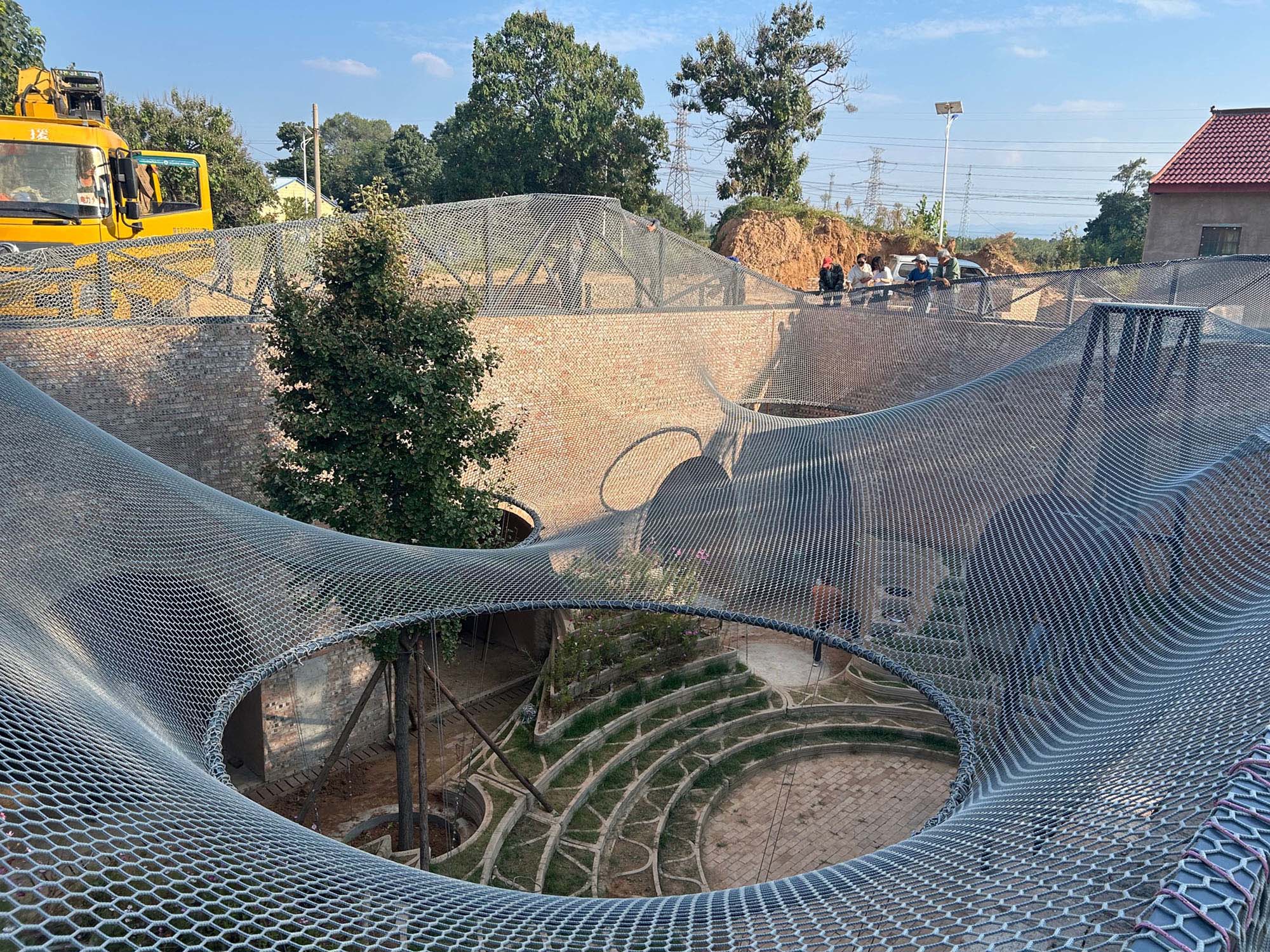
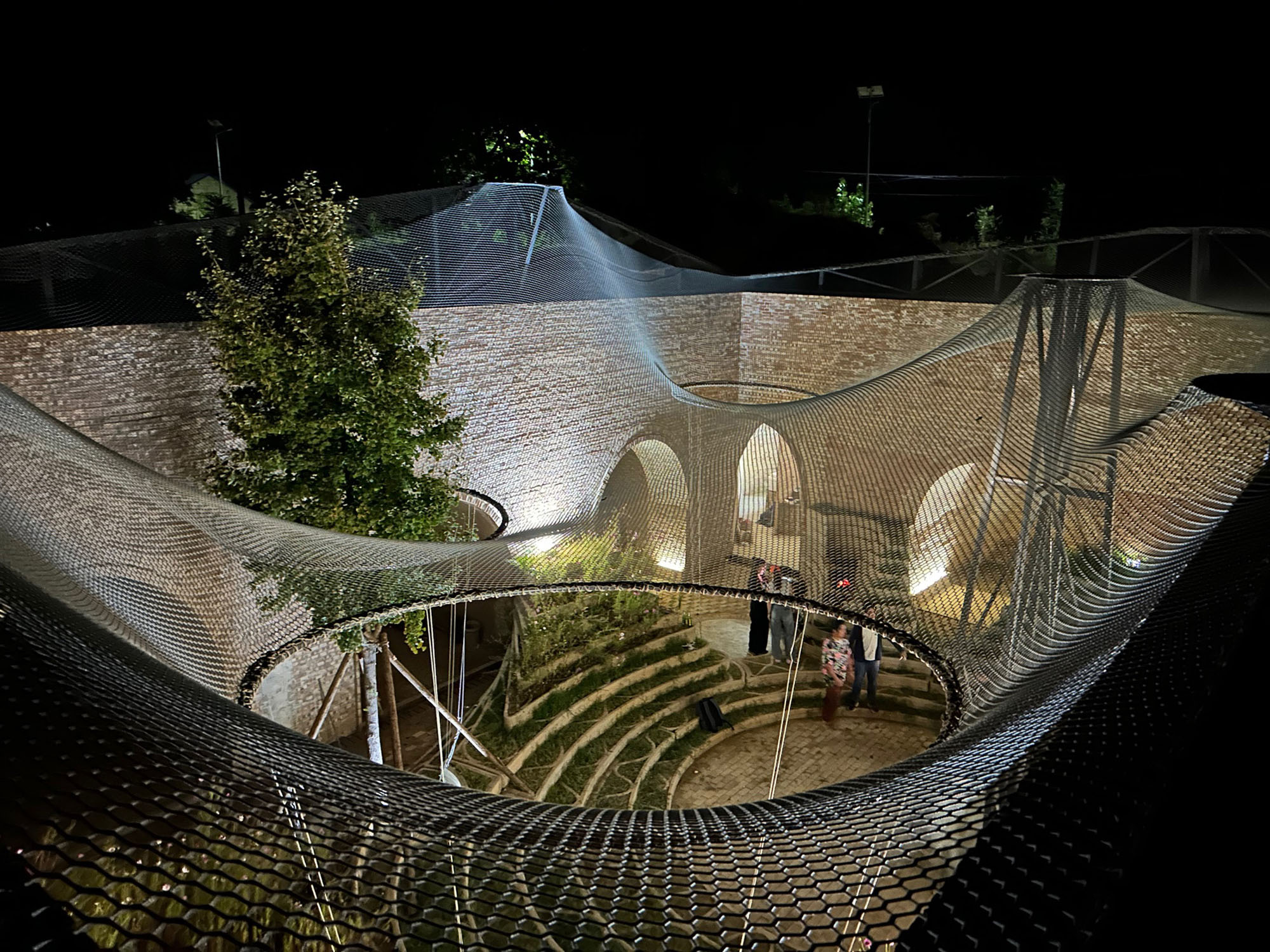
さらに中庭の上空には、軽量な張力構造のキャノピーが懸垂され、空間を閉ざすことなく快適な日除けを提供している。張力と圧縮の物理的プロセスによって形成されたこのキャノピーは、設計施工のワークショップの一環として現地でのモックアップを通じて検証されたものである。半透明のファブリックが移ろいゆく光と影のパターンを描き出し、「内と外の狭間」を縁取るようにして中庭を共同イベントのための光り輝く空間へと変容させる。
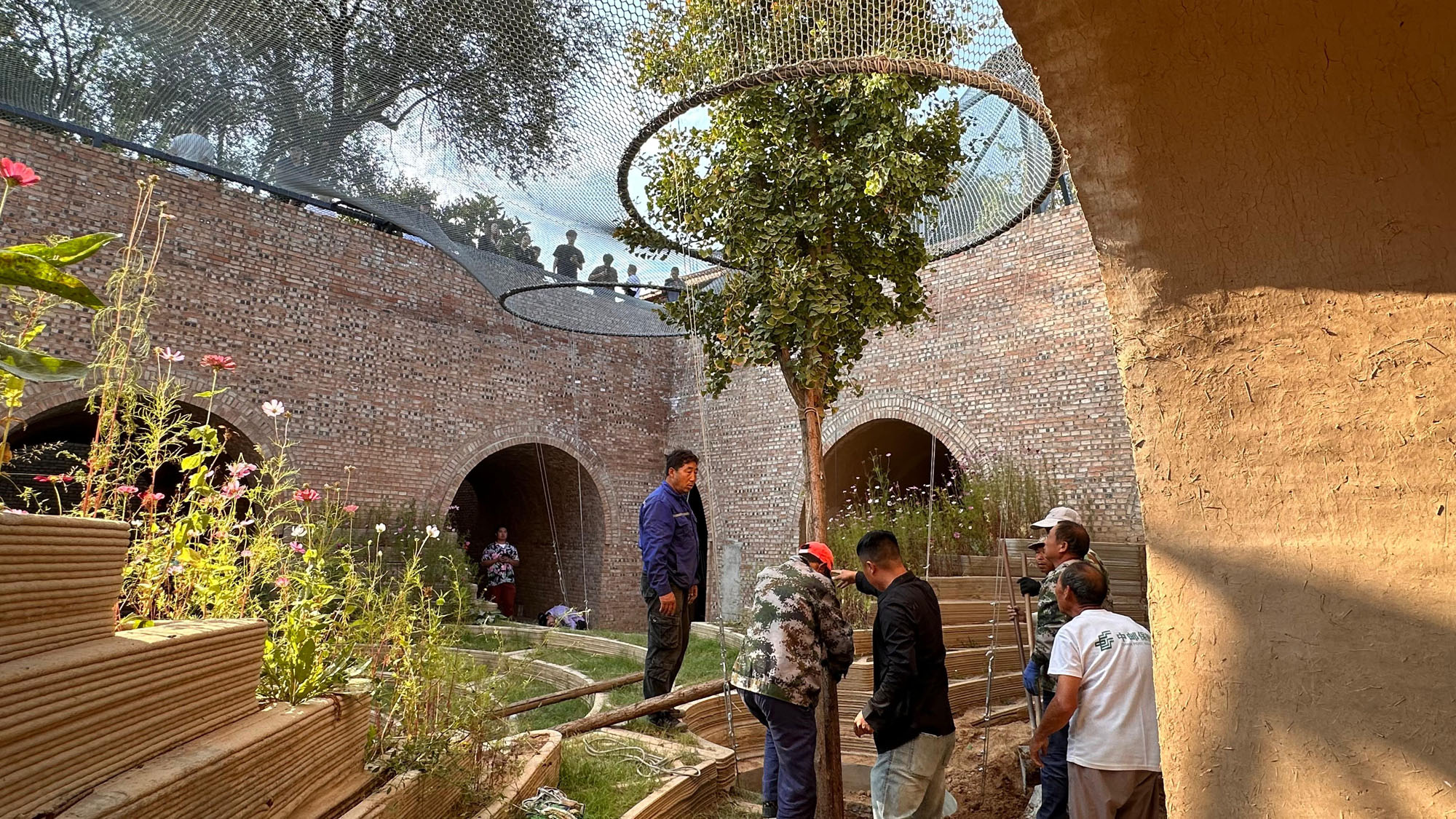
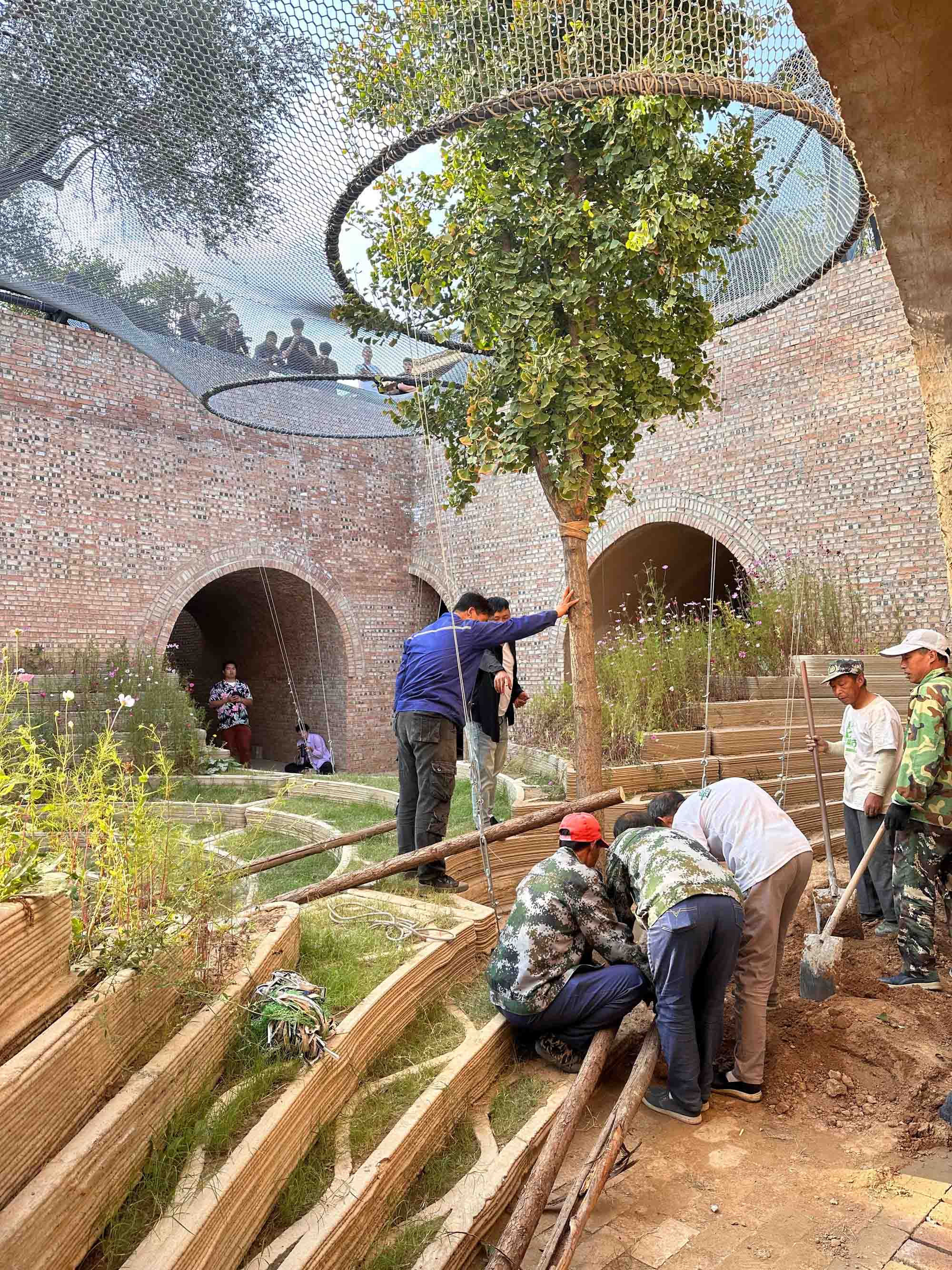
また、風水の原理に基づき、「地下住居には必ず樹木を配置すべきである」という教えに則って戦略的な開口部が設けられた。洪水によって元の樹木は失われていたため、大型クレーンを用いて新たな樹木が中庭へと降ろされた。これにより、失われた植生が回復しただけでなく、中庭の景観が担ってきた文化的・生態学的な役割が再び確立されたのである。
最先端のデジタルファブリケーション技術と地元の職人たちの手仕事を絶え間なく連携させることで、この建設プロセスそのものが村に経済的利益をもたらす直接的な手段となり、活気を失いつつあった地域に新たな雇用を創出した点も特筆すべきである。
Construction
Construction
テクノダイバーシティの実践と未来の地下住居
哲学者ユク・ホイは「テクノダイバーシティ(技術的多様性)」という概念を提唱し、技術システムがもつ文化的・道徳的・宇宙論的な特殊性を強調することで、技術的普遍主義に対して異議を唱えている。
当プロジェクトはこの枠組みにおいて実践されており、先進技術をどこにでも当てはまる「普遍的解決策」としてではなく、その地域の気候、儀式、習慣、社会的な慣行へと調整すべき「道具」として取り入れている。ロボットによる加工、3Dスキャン、張力シミュレーションといった先端技術が、土着の職人技と並行して機能しているのである。
本プロジェクトは、気候の不安定化、農村の衰退、メディア主導の表面的な可視化といった現代の課題に対し、我々が土着の建築といかに関わっていくべきかを示す、優れた適応モデルを提案している。〈未来の地下住居〉は、ディケンユアンという古代の建築類型を、環境、文化、技術の狭間で絶え間なく交渉と進化を続ける動的なシステムとして鮮やかに再発明したのである。
Room ©︎ John Lin, Olivier Ottevaere, Lidia Ratoi
Room ©︎ John Lin, Olivier Ottevaere, Lidia Ratoi
Room ©︎ John Lin, Olivier Ottevaere, Lidia Ratoi
Skylight ©︎ John Lin, Olivier Ottevaere, Lidia Ratoi
Small Courtyard ©︎ John Lin, Olivier Ottevaere, Lidia Ratoi
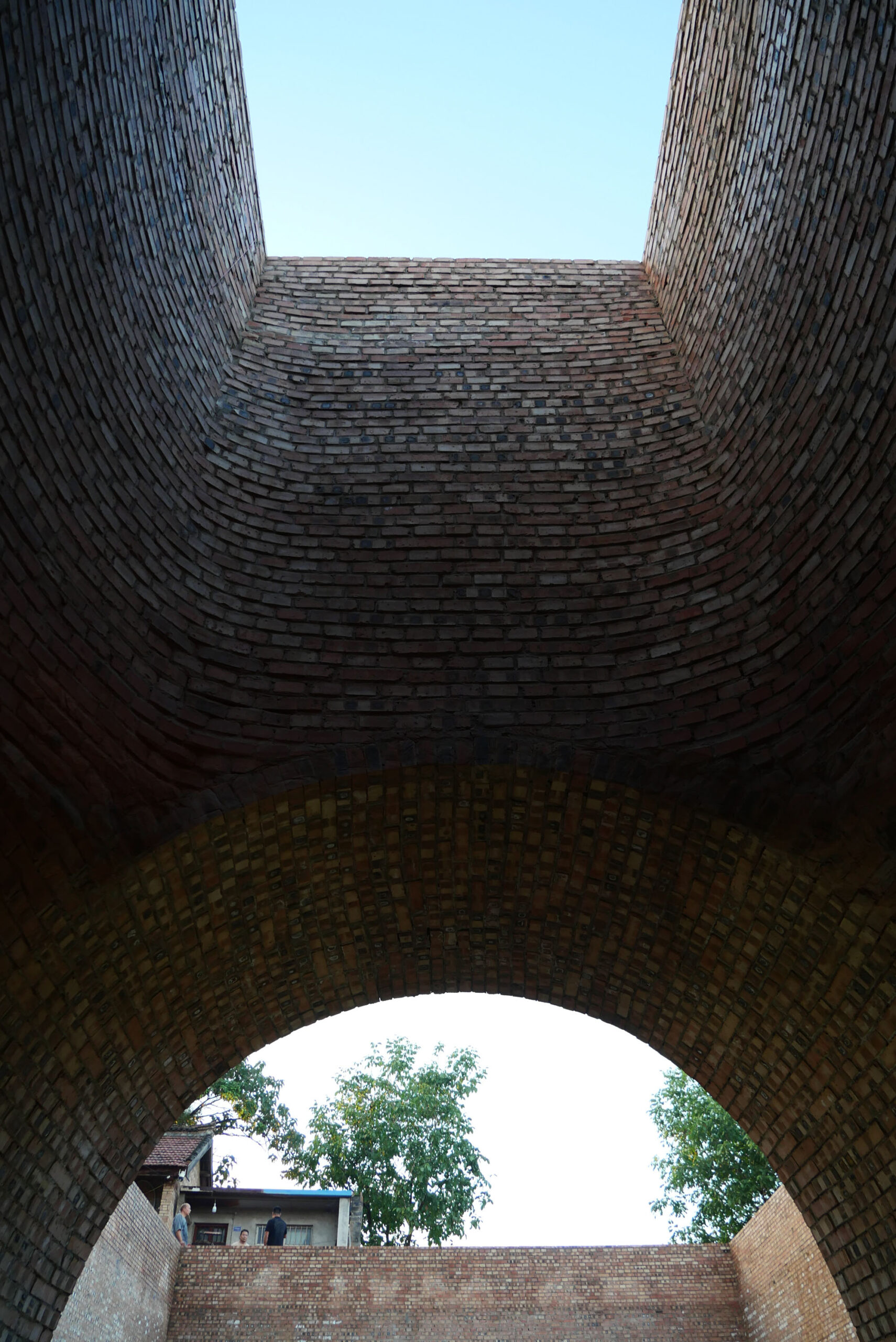
Square to circle courtyard ©︎ John Lin, Olivier Ottevaere, Lidia Ratoi
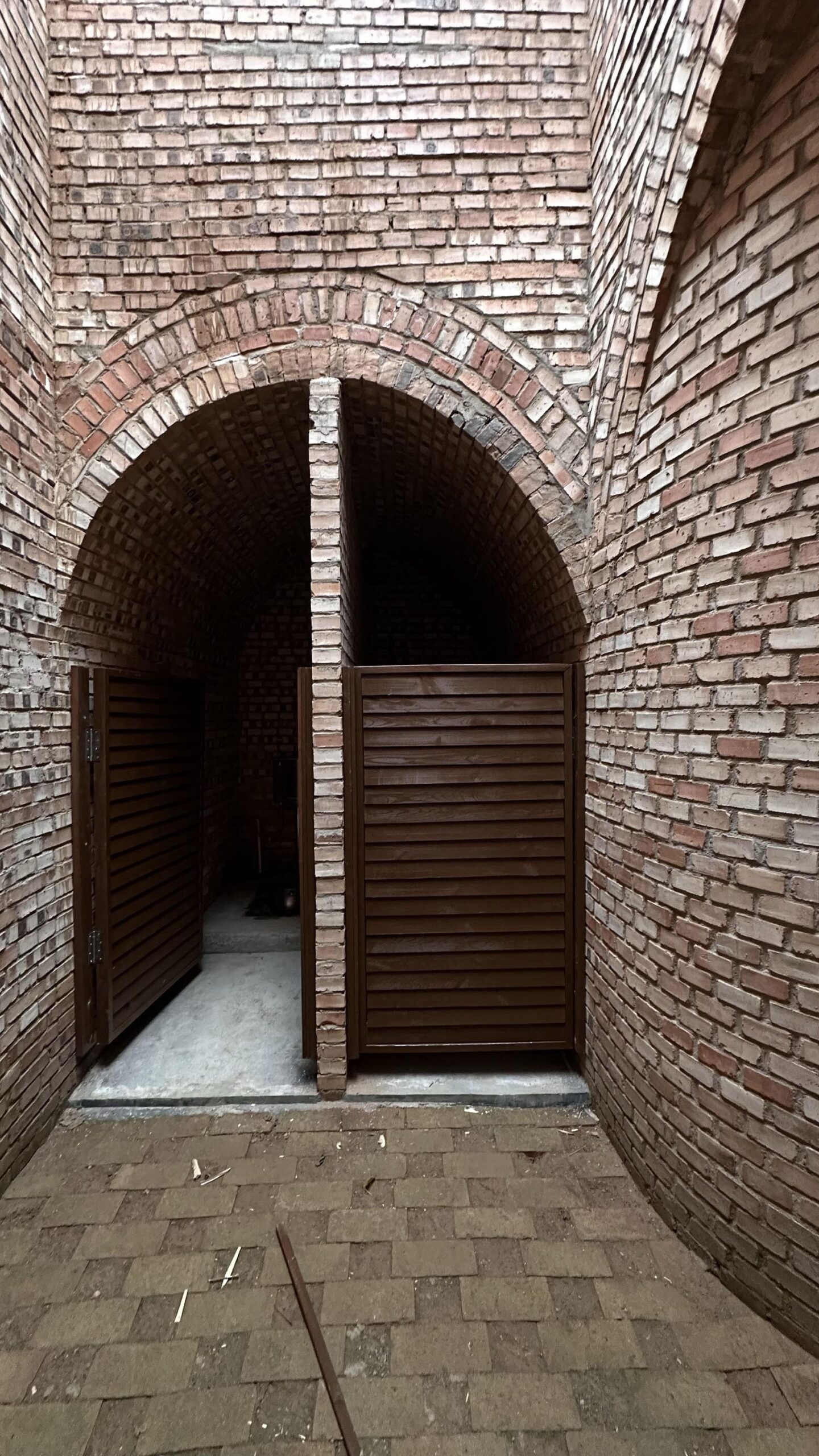
Toilet ©︎ John Lin, Olivier Ottevaere, Lidia Ratoi
©︎ John Lin, Olivier Ottevaere, Lidia Ratoi
©︎ John Lin, Olivier Ottevaere, Lidia Ratoi
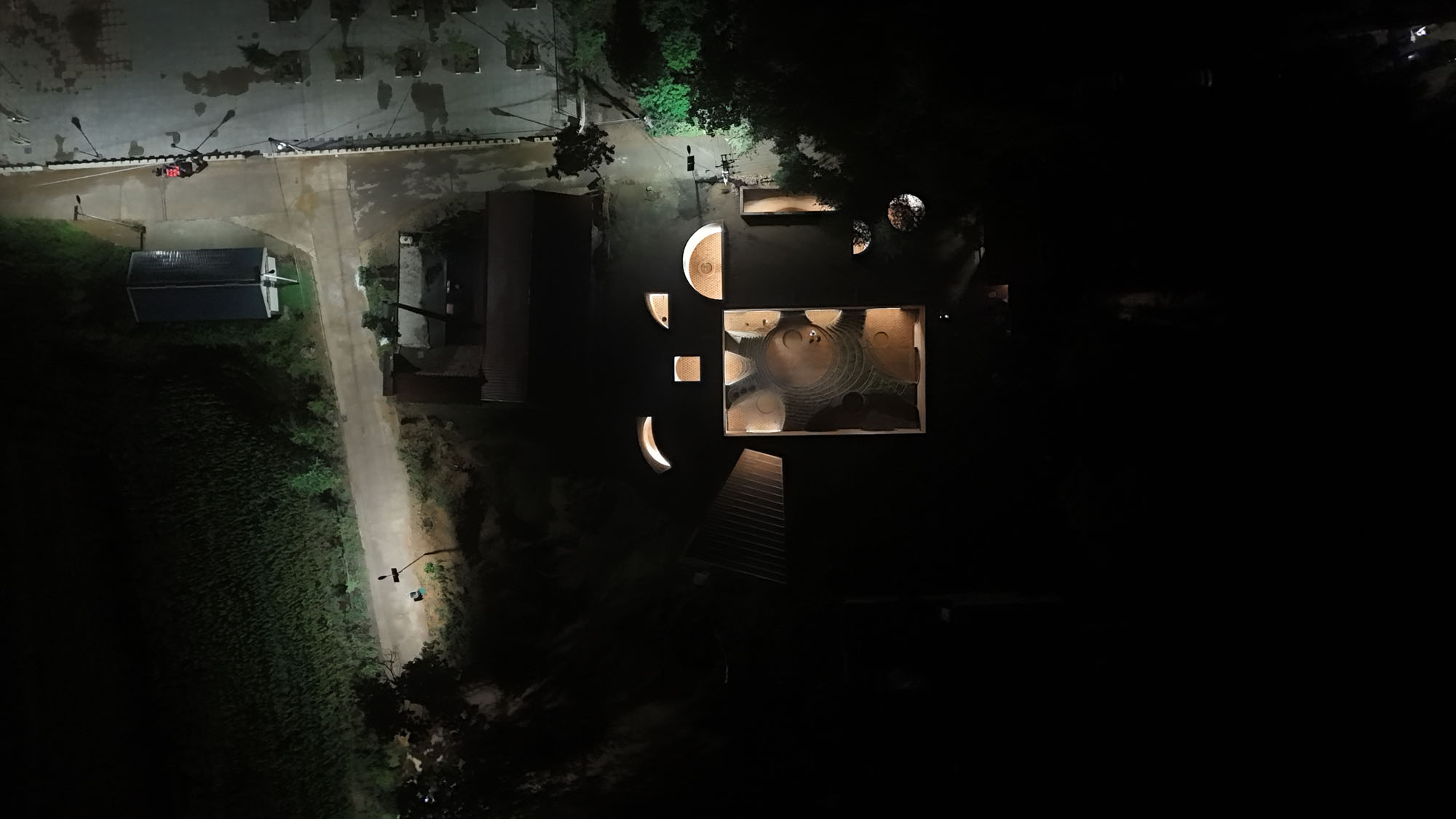
©︎ John Lin, Olivier Ottevaere, Lidia Ratoi
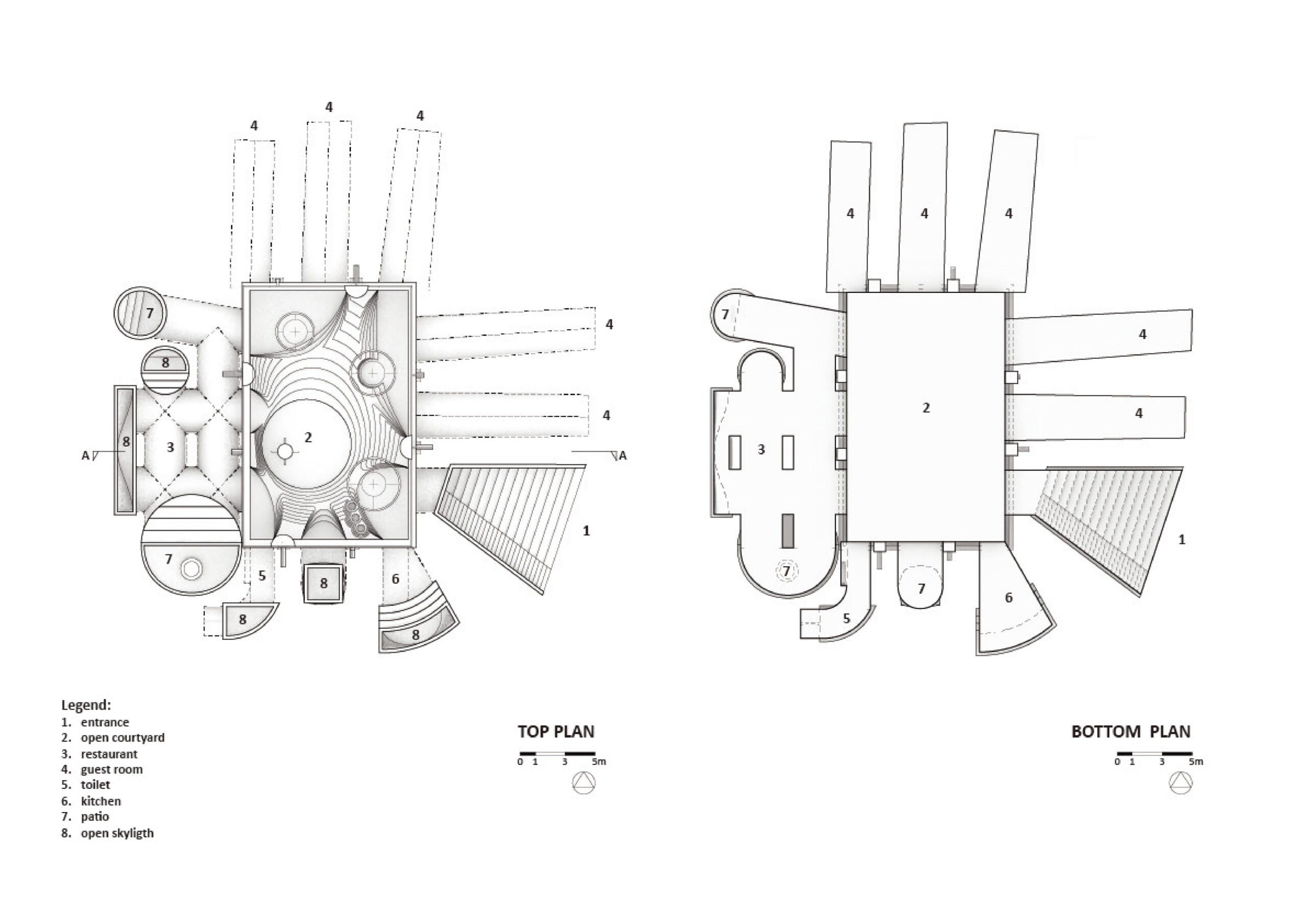
Roof and Ground plan
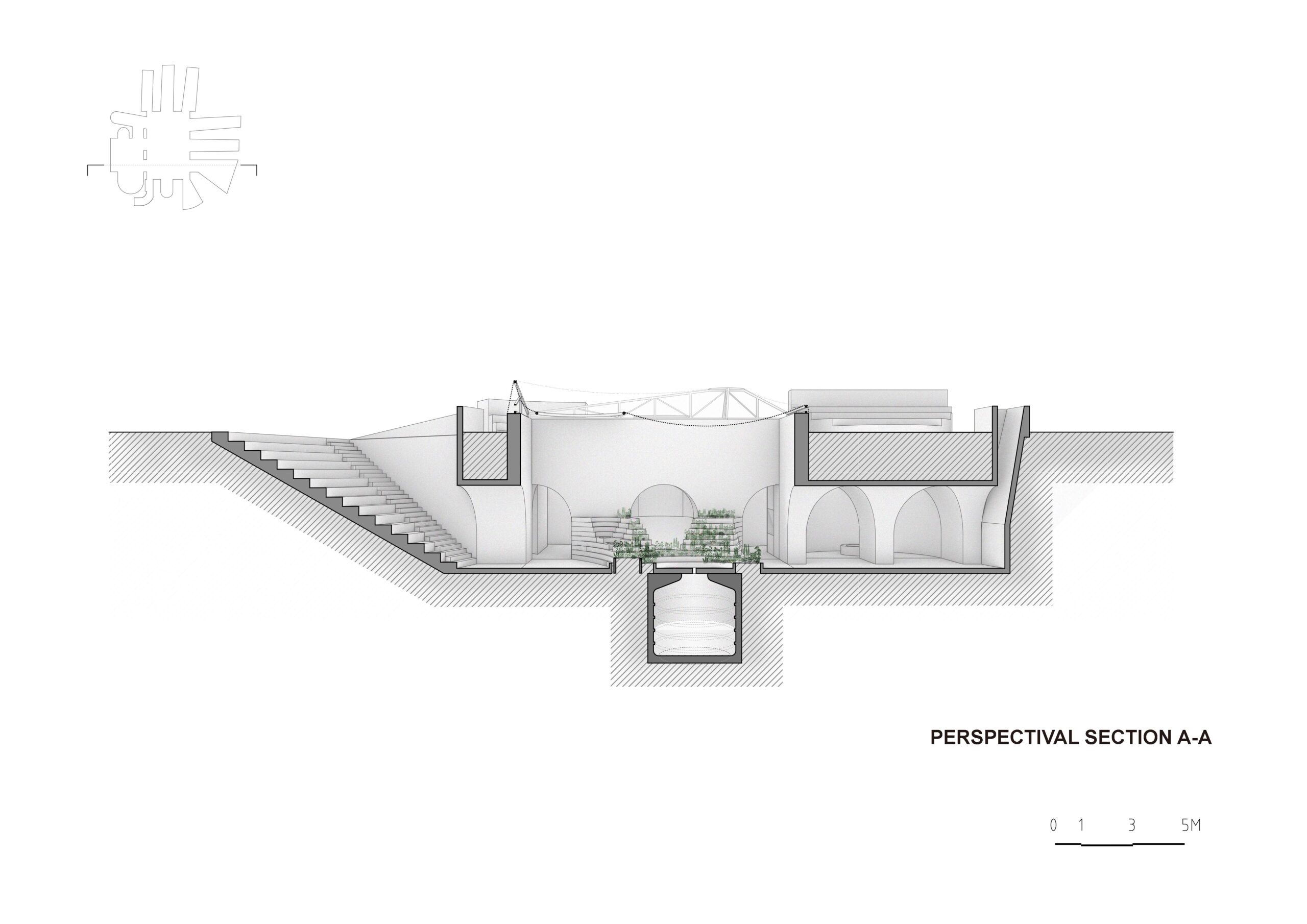
Section
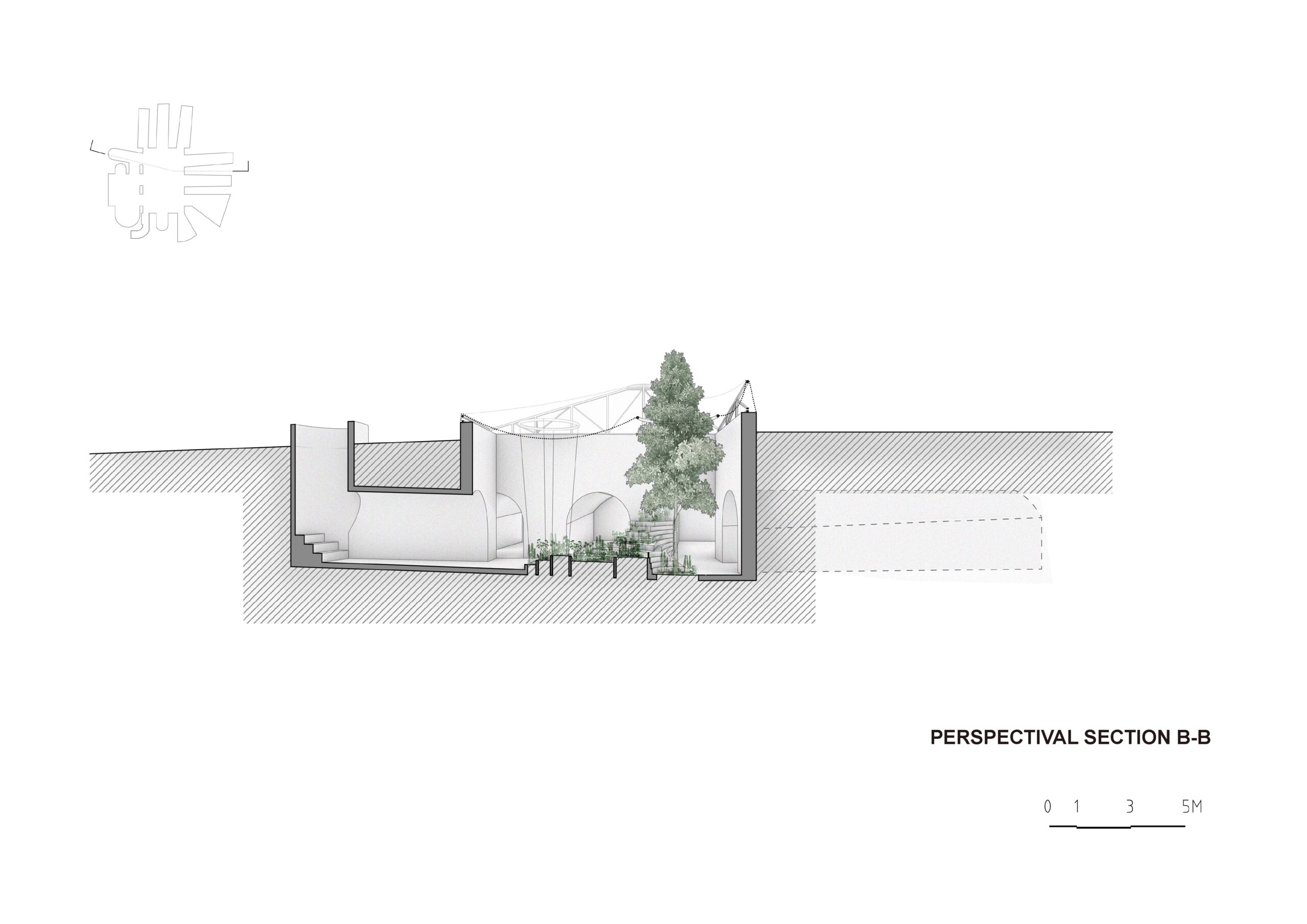
Section
Section
以下、リリース(英文)
Underground House of the Future
Seasonal Life
Located on the Loess Plateau in north-central China, the underground cave dwellings, or dikengyuan, represent an ingenious response to inhabitation in a region historically devoid of timber and other conventional building materials. Since ancient times, houses have been dug directly into the earth: typically, an 8 × 10 meter rectangular courtyard is excavated approximately six meters deep, from which a series of arched rooms are carved laterally into the loess walls. This simple yet spatially sophisticated form maintains the Chinese affinity for courtyard living while leaving the maximum possible amount of land above ground for agriculture – an elegant symmetry between living below and working above.
Over time, the landscape of the Loess Plateau has evolved into a layered condition in which underground houses coexist with concrete and brick dwellings, schools, and factories built above ground. Many families, even those who have built houses aboveground, continue to occupy their underground houses seasonally, benefiting from the earth’s thermal mass in both summer and winter. This reflects a model of sustainability grounded in lifestyle adaptation rather than technological optimization alone. The underground house is part of a flexible system of inhabitation that responds to seasonal, social, and environmental conditions.
Climate instability and the need to evolve
This long-standing equilibrium has been increasingly destabilized by climate change. In 2021, the region experienced its heaviest rainfall since 1954, overwhelming drainage systems developed under historically stable climatic conditions. Widespread flooding led to structural walls collapsing, and unprecedented abandonment of underground houses.
The dikengyuan entered global architectural consciousness through a 1933 aerial photograph taken by a Lufthansa pilot and later popularized by Bernard Rudofsky in the exhibition “Architecture Without Architects”. Today, however, public attention is redirected to the Dikengyuan Folk-Custom Cultural Park – a theme-park replica that absorbs tourism, while the nearby inhabited underground village remains economically excluded, with the 1933 photo placed at the entrance at the park – an ironic reminder to the original village.
This imbalance is intensified by social media platforms, that amplify the importance of places such as the new park, without redistributing this economic benefit to the original village. Tourism, quite literally, does not reach where everyday people live.
Miss Zhu
In response to these overlapping environmental, social, and economic pressures, three architecture professors (John Lin, Olivier Ottevaere and Lidia Ratoi) and their students from the University of Hong Kong, together with the Mingde Project Foundation and the local government of Zhangbian Township in Henan Province, were invited to examine the future of underground houses as a living cultural system. At the time of the initial survey, more than 80 percent of underground houses in the area were still occupied. Following the unprecedented rainfall of 2021, however, nearly all were damaged, prompting a reassessment of how this typology might adapt to new environmental realities.
A key member of the project was Miss Zhu – the owner of one such underground house, but also a local influencer who uses social media to document everyday underground life. The conclusion the team reached together with her was that the project will transform from a private home to a community space, therefore creating focal point for generating economic value in the village.
Participatory processes
Central to the discussion was how underground houses could continue to serve contemporary community needs while addressing climate instability, and how architectural intervention might resolve technical limitations while generating social and economic value from within the village itself. Preserving damaged structures, upgrading environmental and structural performance through improved earth-building techniques, drainage, and ventilation systems, and transforming spatial organization to accommodate new public uses were the main considerations.
As a result of working together with villagers and students in developing the programmatic brief, the house was to be transformed into a space hosting weddings, funerals, and other collective rituals—functions that newer above-ground houses could no longer accommodate.
At the center of the project is the courtyard, transformed into an amphitheater for gathering, ritual, and shared use. Traditionally, underground houses managed rainwater by tamping soil to direct runoff into a single drainage pit, an approach effective under stable climatic conditions but increasingly overwhelmed by extreme rainfall. In response, the courtyard is reconfigured as a stepped, robotically 3D-printed amphitheater that functions as seating, circulation, social infrastructure. A new perimeter drainage channel directs excess runoff into underground storage for reuse, while planted terraces absorb rainwater and support food production, and a reinterpreted earthen kiln is integrated into the structure.
The public rooms extend local construction traditions rather than replacing them. Existing earth caves are reinforced with vaulted brick structures, improving durability while preserving thermal mass. Construction relied on adaptations of traditional techniques, in which local craftspeople can build complex brick vaults using only a simple curved bamboo branch and string. New courtyards, skylights, and rear openings introduce daylight and cross-ventilation deep underground, transforming light and air—historically constrained elements—into new and surprising spatial experiences.
A lightweight tensile canopy is suspended above the courtyard, providing sun shading without enclosure – it was formed through a physical process of tension and compression, tested through on-site mock-ups as part of a design-build workshop. The translucent fabric creates a pattern of shifting light and shadow, transforming the courtyard into a luminous space for communal events—framing a room between inside and outside. Strategic opening allow that, according to feng shui principles, every underground house should host a tree – as the original was lost, a new one was lowered into the courtyard by crane, restoring vegetation lost during flooding and reestablishing the cultural and ecological role of the courtyard landscape.
Working in a continuous loop between high-end digital fabrication and local craftsmen, the construction phase itself becomes a means of benefiting the village financially, generating jobs in a disincentivized place.
Transformation of an ancient typology
The philosopher Yuk Hui has proposed a concept of technodiversity, which argues against technological universalism by emphasizing the cultural, moral, and cosmological specificity of technical systems. Within this framework, our project incorporates advanced technologies as tools that must be calibrated to local climates, rituals, habits, and social practices (rather than universal solutions) – with robotic fabrication, 3D scanning and tensile simulations operating alongside vernacular craftsmanship. This project proposes an adaptive model for engaging vernacular architecture under contemporary conditions of climate instability, rural decline, and media-driven visibility.
The Underground House of the Future re-invents the ancient typology of the dikengyuan as a dynamic system that has always evolved through the negotiation between environment, culture, and technique.Project Title: Underground House of the Future
Completion: November 2024
Design:
John Lin: Rooms, traditional brick masonry
Olivier Ottevaere: Roof, tensile netting
Lidia Ratoi: Courtyard, robotic 3-D printingProfessors at The University of Hong Kong
Donor / Funding Body: Project Mingde Foundation
Project Lead: Jenny Hsiao
Project Team:
Anila Ma (HKU Horizons Mingde)
Wilson Wu, Hayden Ng, Jiun-Yu Chang, Yiran Liu
and student volunteers from the HKU Department of Architecture, Department of Civil Engineering, and Master of Science in Advanced Architectural DesignConstruction: Anhai Liu with local masons and carpenters
Robotic Printing: Weiguo Xu, Tsinghua UniversityAdditional Funding:
Zhu Lin and family
Lee Hysan Foundation (student travel)
Special Projects Fund , HKU Department of Architecture
【購読無料】空間デザインの今がわかるメールマガジン TECTURE NEWS LETTER
RECOMMENDED ARTICLE