
建築そのものから学ぶ「生きた教材」としての学習・研究施設 - アーカンソー大学に誕生した、CLTとグルーラムのマス・ティンバー建築〈アンソニー・ティンバーランズ・センター〉
© Timothy Hursley
© Timothy Hursley
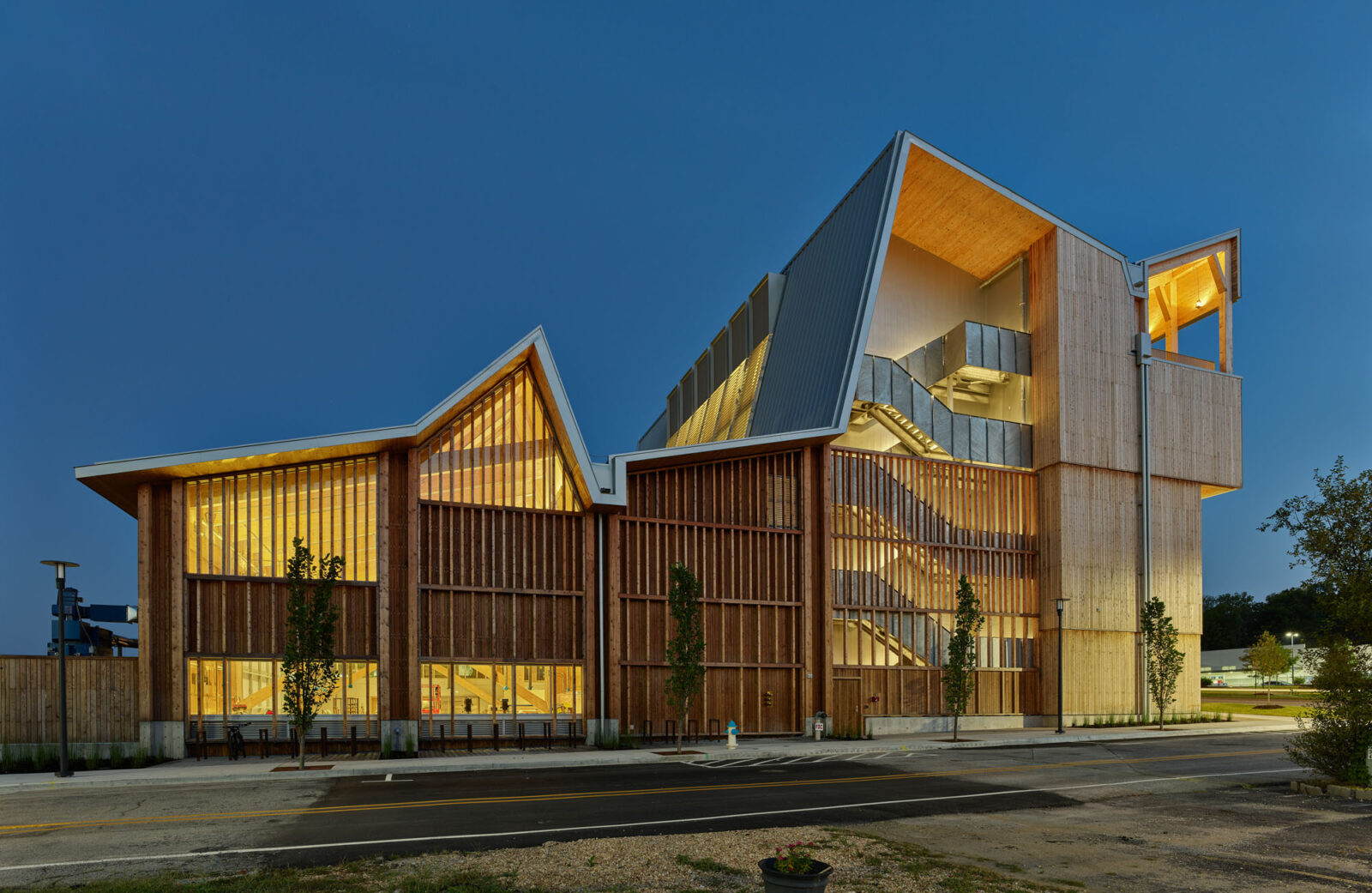
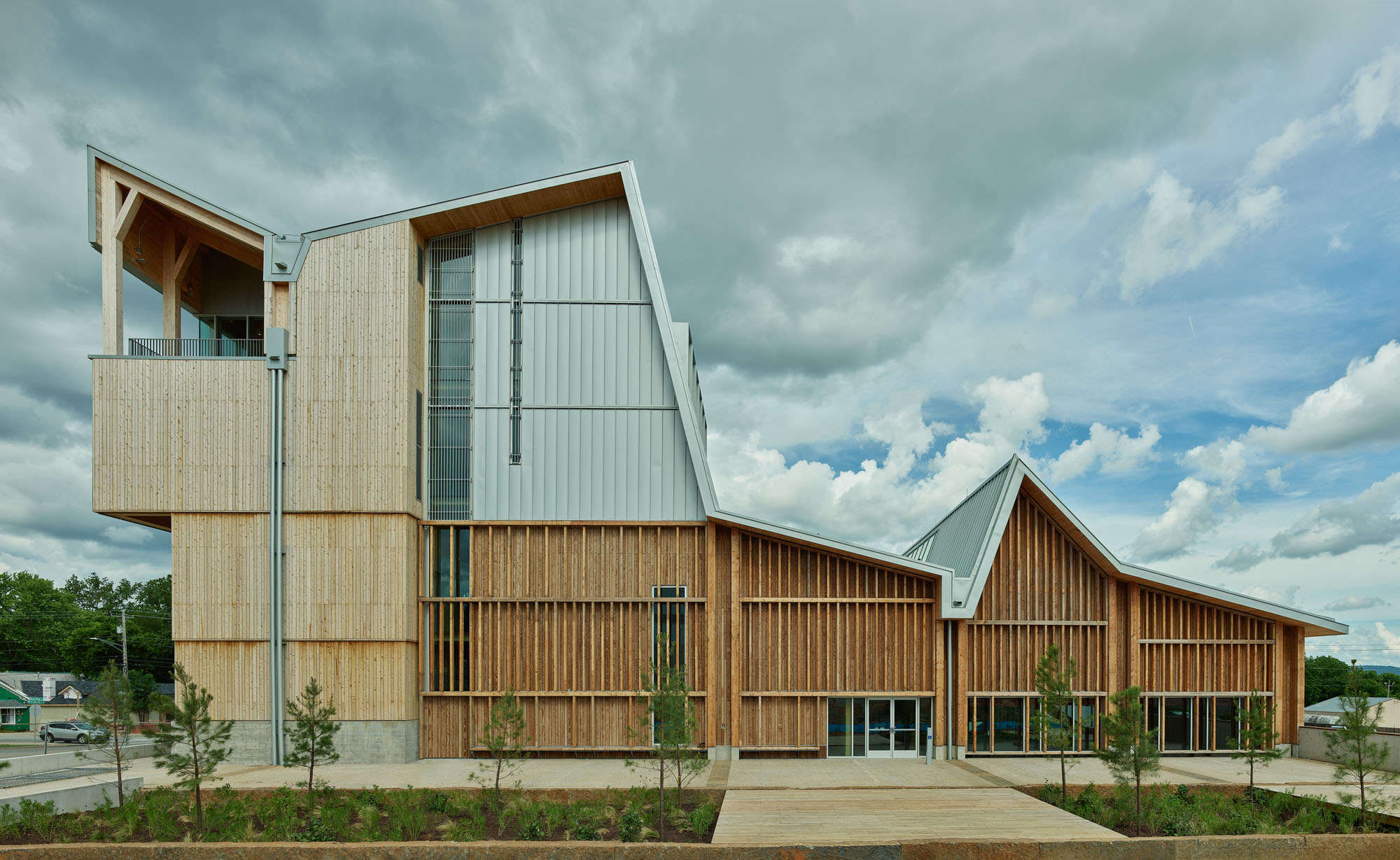
アメリカ・アーカンソー州に建つ〈アンソニー・ティンバーランズ・センター(Anthony Timberlands Center)〉は、アーカンソー大学のためのデザイン教育、応用研究、および先端製造ラボラトリーを兼ね備えた施設です。
地元アーカンソー州産の木材をふんだんに活用した建築であり、アイルランド・ダブリンに拠点を置く建築スタジオ グラフトン・アーキテクツ(Grafton Architects)が設計しました。
注目ポイント
- グルーラムとCLTを組み合わせたハイブリッドなマス・ティンバー建築
- 環境制御と一体化した屋根造形と「雨樋梁」
- 建築システムそのものを露出させた「生きた教材」としてのデザイン
- 活動を可視化するファサードとシームレスな空間の連続性
(以下、グラフトン・アーキテクツから提供されたプレスキットのテキストの抄訳)
© Timothy Hursley
© Timothy Hursley
木材の可能性を探求する「木材の物語」
〈アンソニー・ティンバーランズ・センター・フォー・デザイン・アンド・マテリアル・イノベーション〉は、アーカンソー大学のフェイ・ジョーンズ(Fay Jones)建築・デザイン学部のためのデザイン教育、応用研究、および先端製造ラボラトリーを兼ね備えた施設である。
その建設にはアーカンソー州産の木材がふんだんに使用されており、同州産の木材の活用に重点を置いた設計となっている。
木材が構造の骨格であると同時に建物の外皮をも担う「木材の物語」として構想された〈アンソニー・ティンバーランズ・センター〉は、同学部が展開するデザイン・ビルド(設計施工)および大学院プログラムの拠点である。さらに、州の経済発展を目的とした州内の林業関係者との共同プロジェクトや、地域貢献プログラムの拠点としての役割も担っている。
© Timothy Hursley
© Timothy Hursley
環境と呼応するランドスケープと屋根の造形
アーカンソー大学のメインキャンパスから1マイル(約1.6km)足らずの賑やかな商業通りに位置する〈アンソニー・ティンバーランズ・センター〉は、アート・アンド・デザイン・ディストリクトのサテライトキャンパスの北東角を占めている。
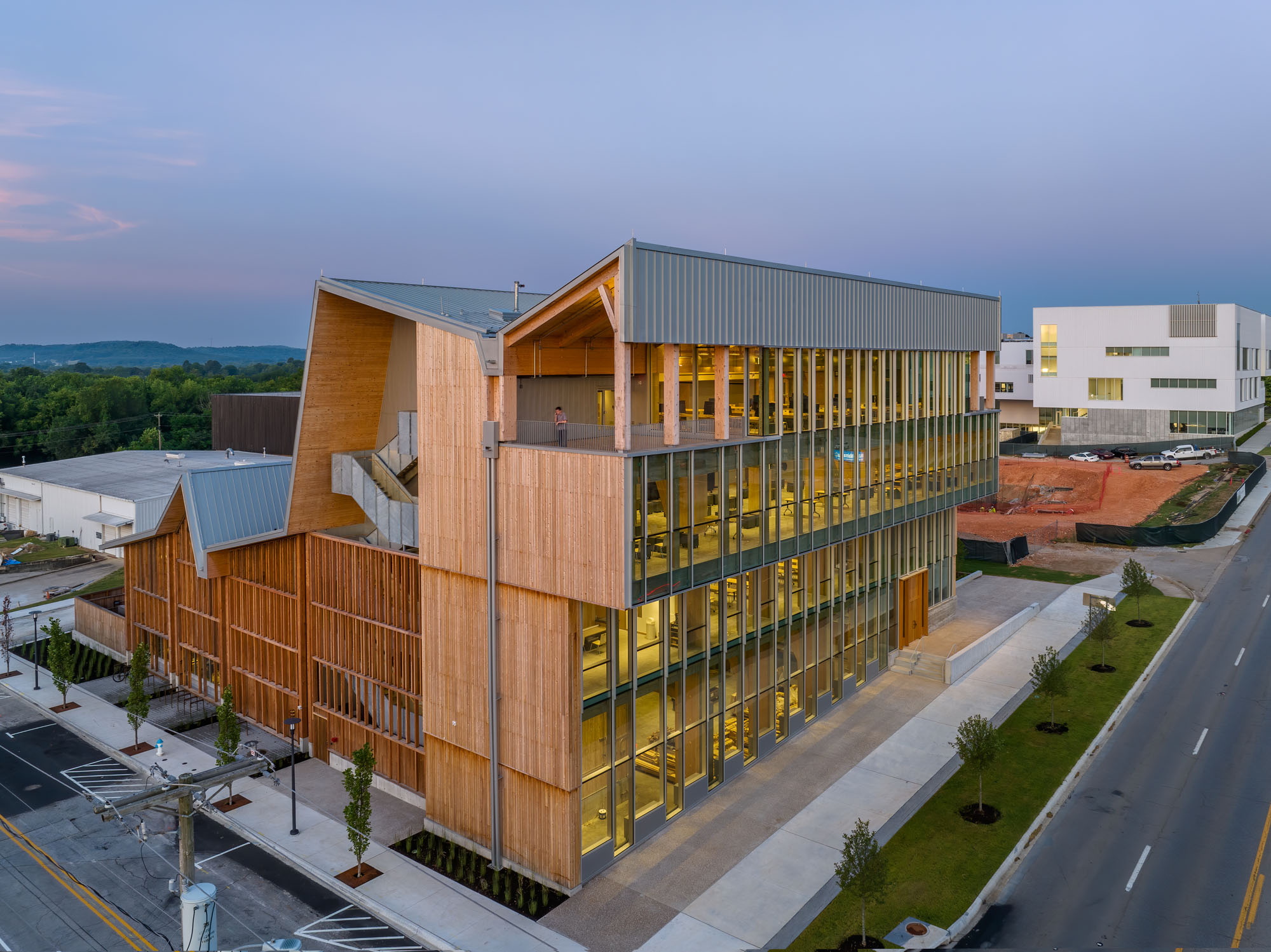
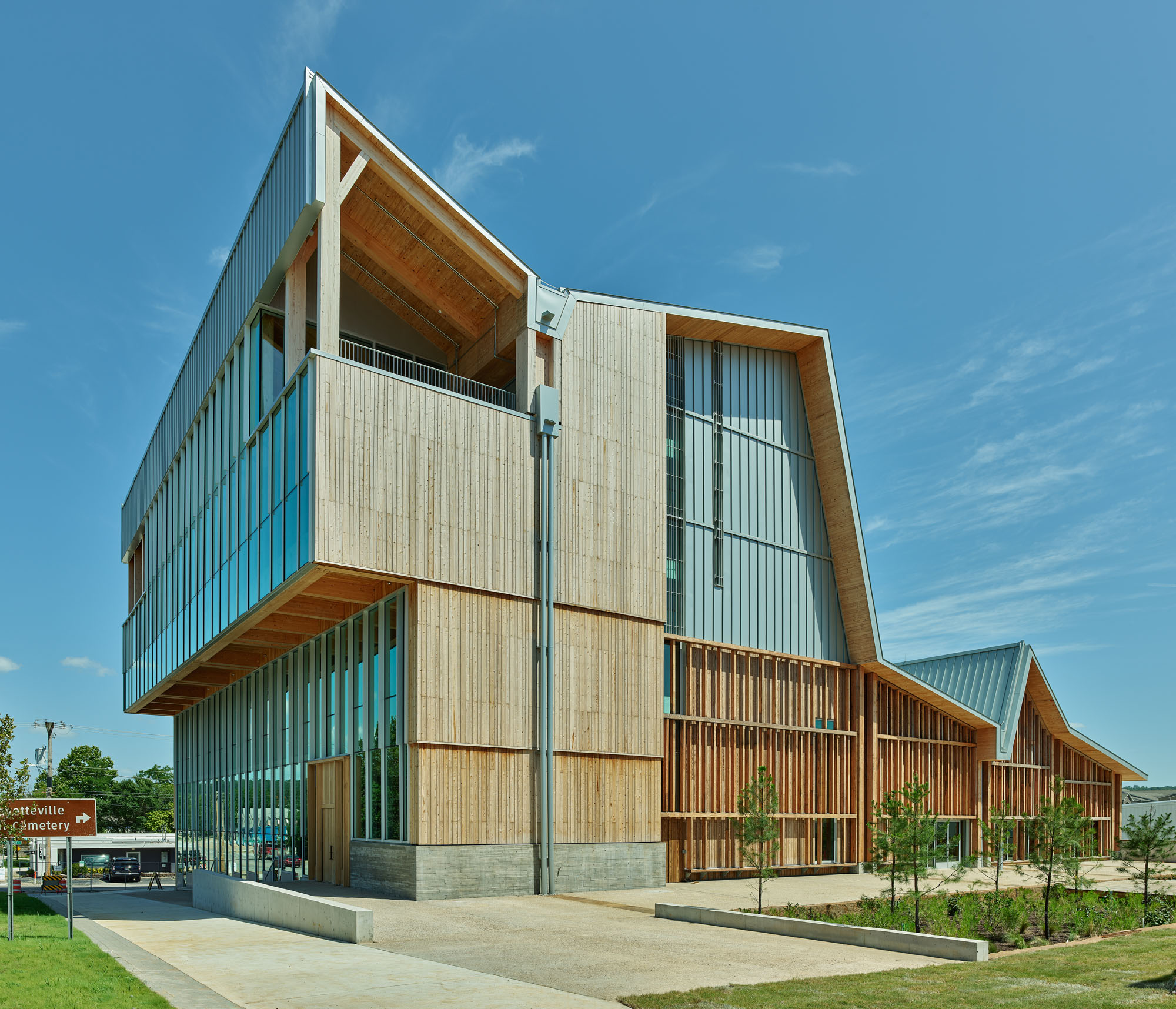
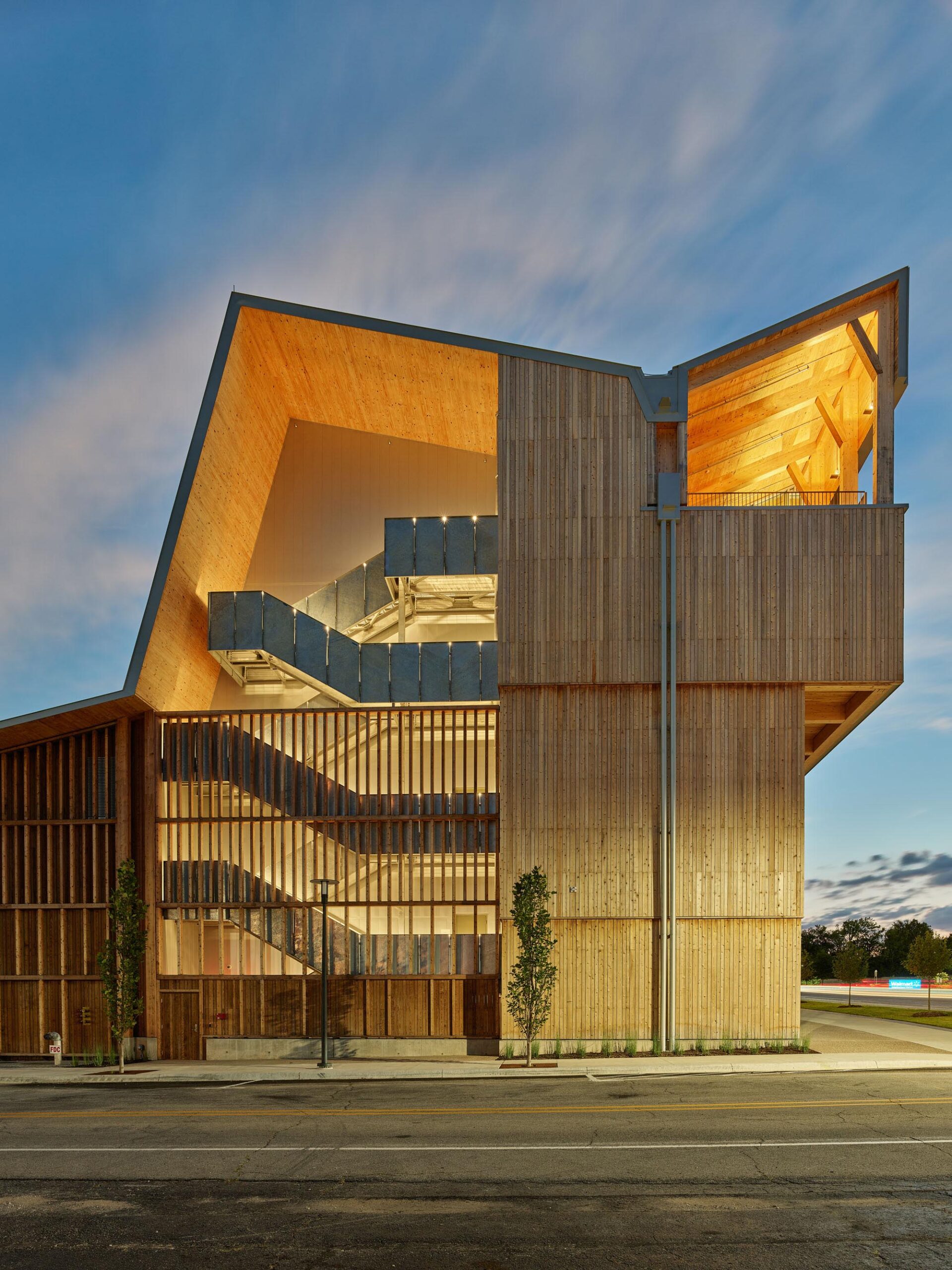
通り沿いとなる北側の最高点から、屋根は南側へと折り重なるように滝のように流れ落ちるデザインとなっている。その過程で集められた雨水は、大きな「雨樋梁(gutter beams)」を通じて隣接するアンソニー・ウェイ・プラザのレインガーデンへと導かれると同時に、内部の作業場やスタジオスペースに自然光を取り込んでいる。
〈アンソニー・ティンバーランズ・センター〉のランドスケープとそれに付随する屋外空間は、教員、学生、来訪者にとって没入型の学習環境となっている。ランドスケープは主に「ワーク・ヤード」と「アンソニー・ウェイ」という2つの屋外空間で構成されており、いずれも内部空間や関連するプログラムとシームレスに接続されている。さらに、隣接する賑やかな通り沿いの街路景観は、歩行者の安全性を向上させると同時に、建物へのアクセスを確保し、豊かな樹冠を形成している。
© Timothy Hursley
© Timothy Hursley
街に開かれたファサードとこだわりのエントランス
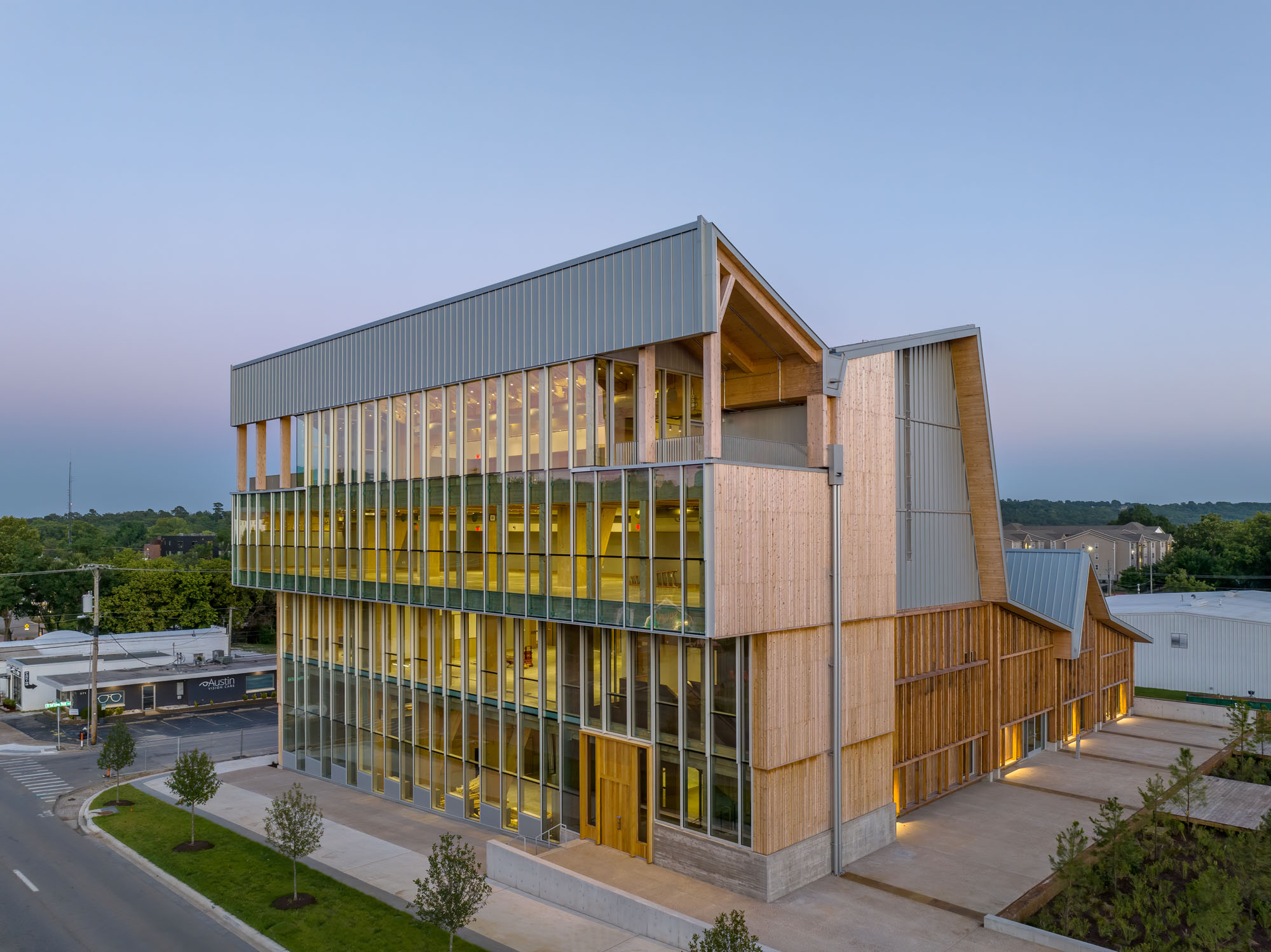
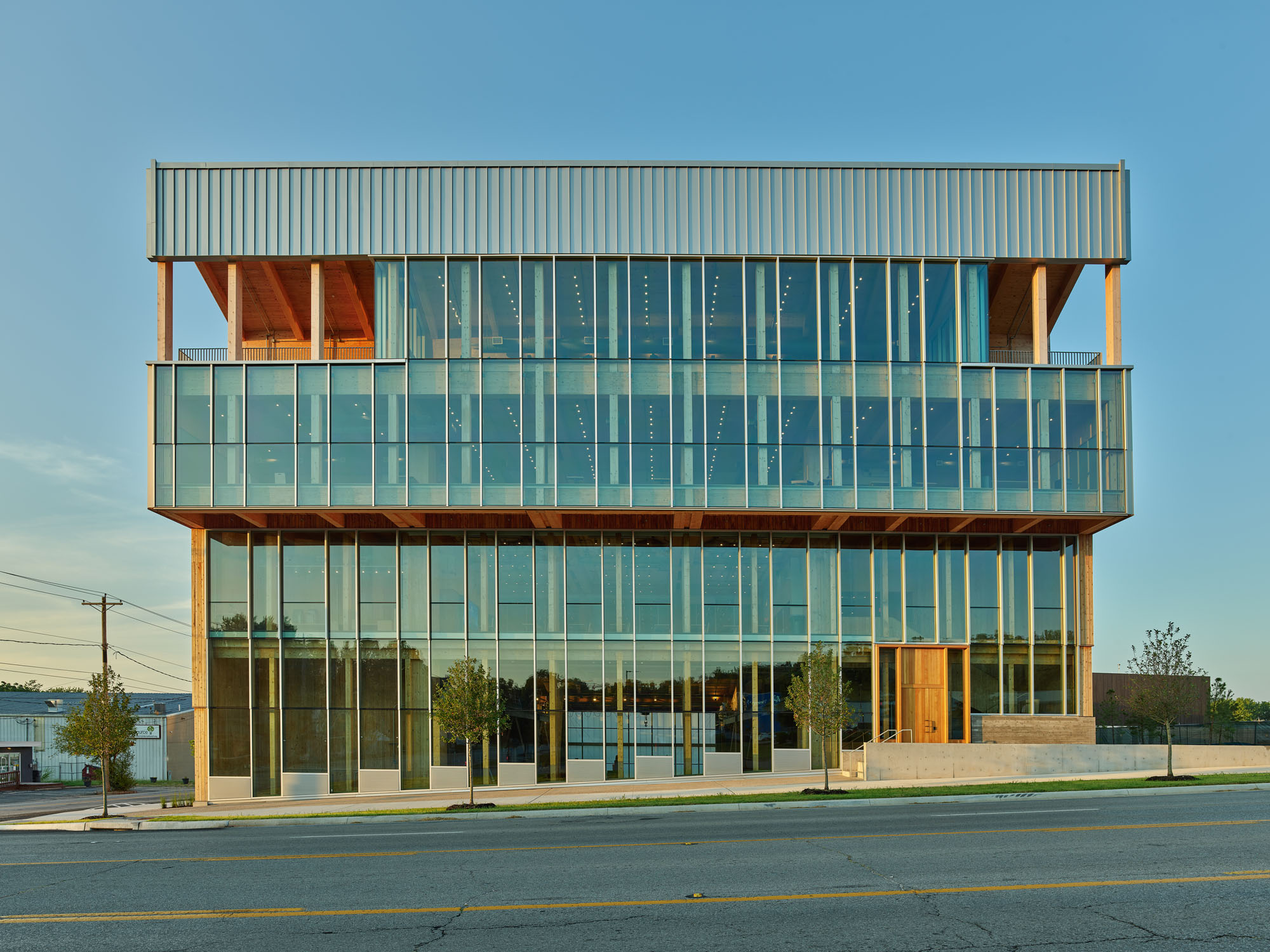
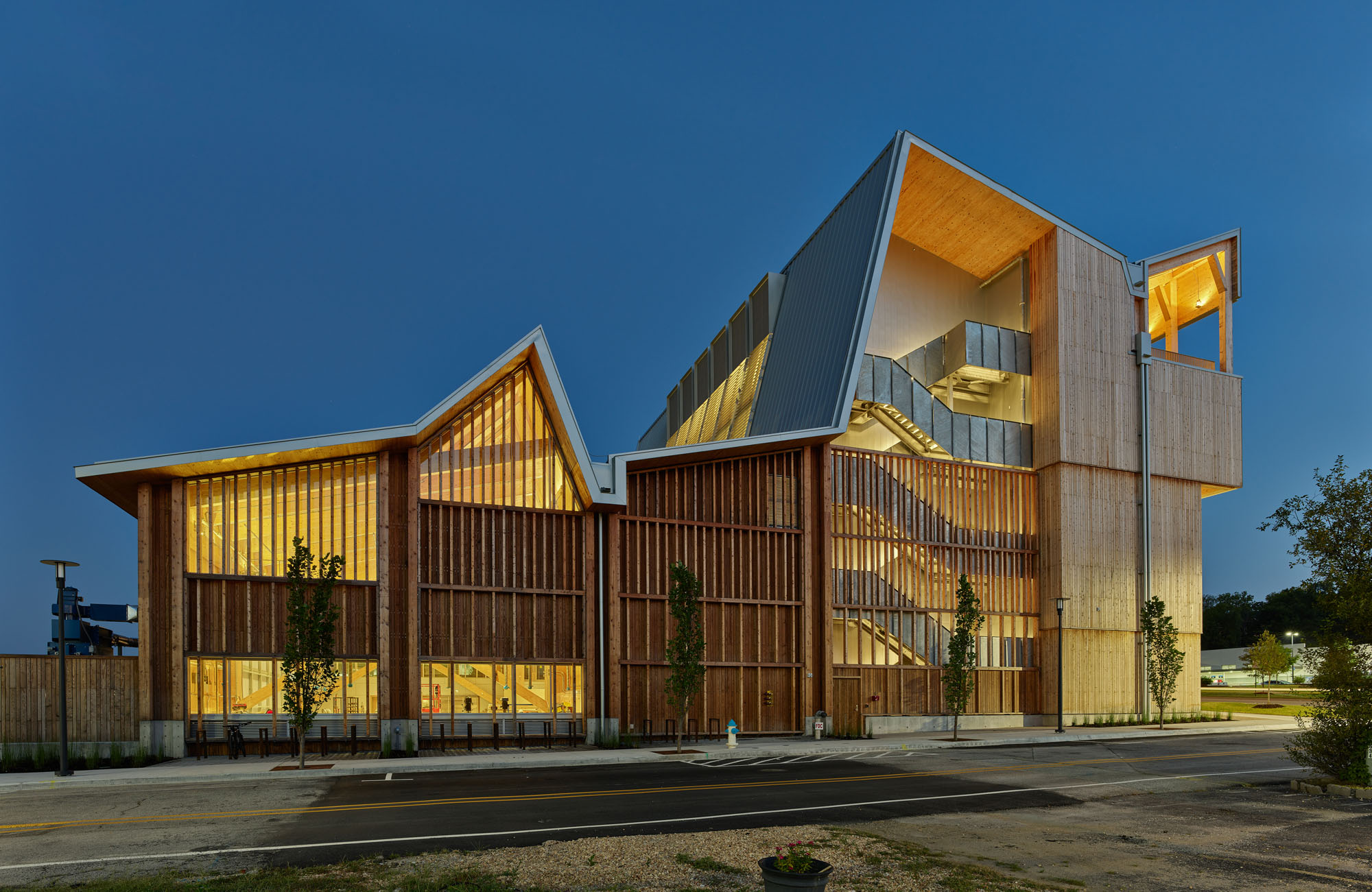
北側の主要ファサードは、豊富な自然光を取り入れつつ、校内の活気を街へと発信し、歩行者が建物の奥深くまで目を向け、研究やものづくりのプロセスを目の当たりにできるよう誘い込んでいる。
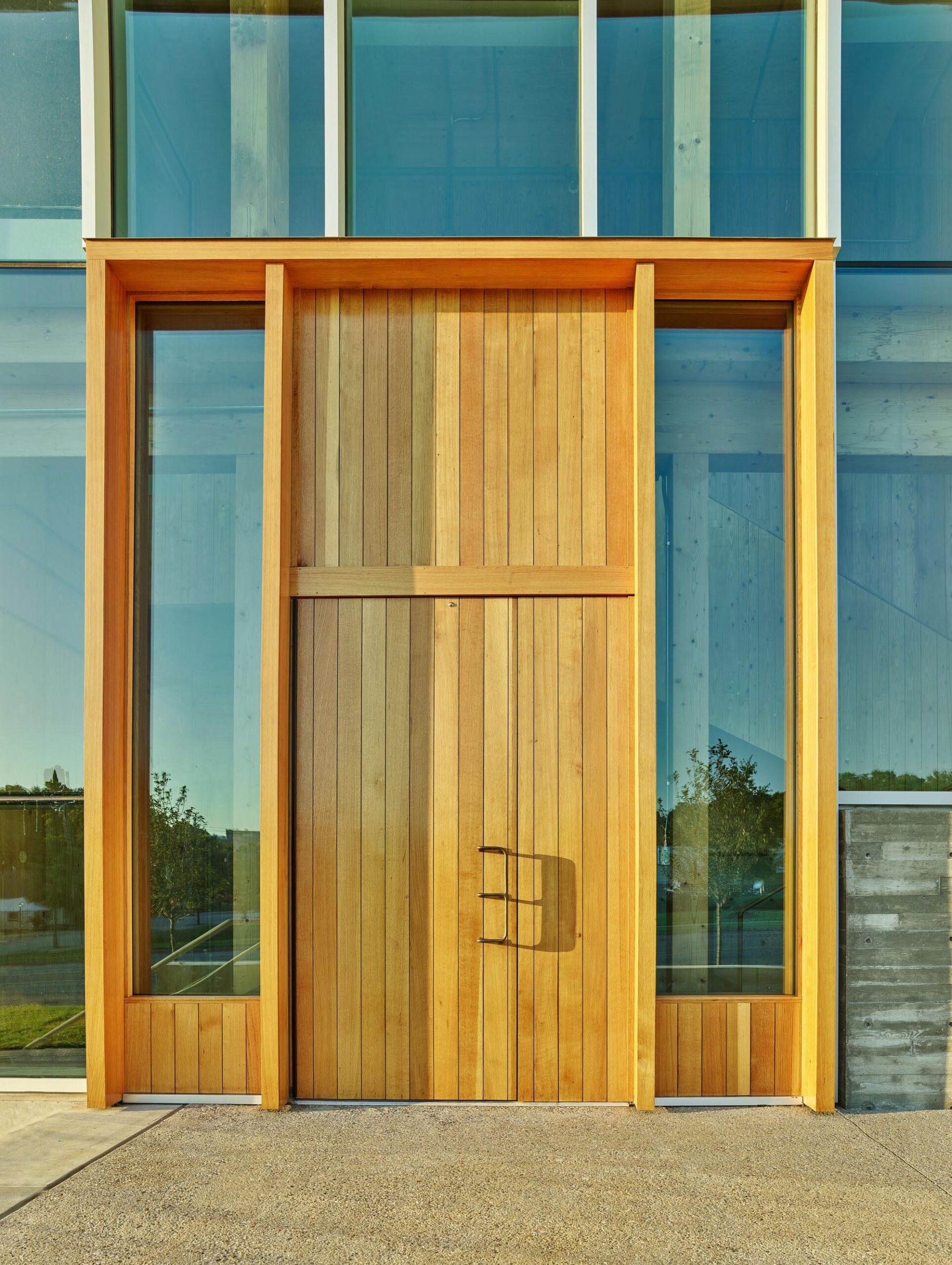
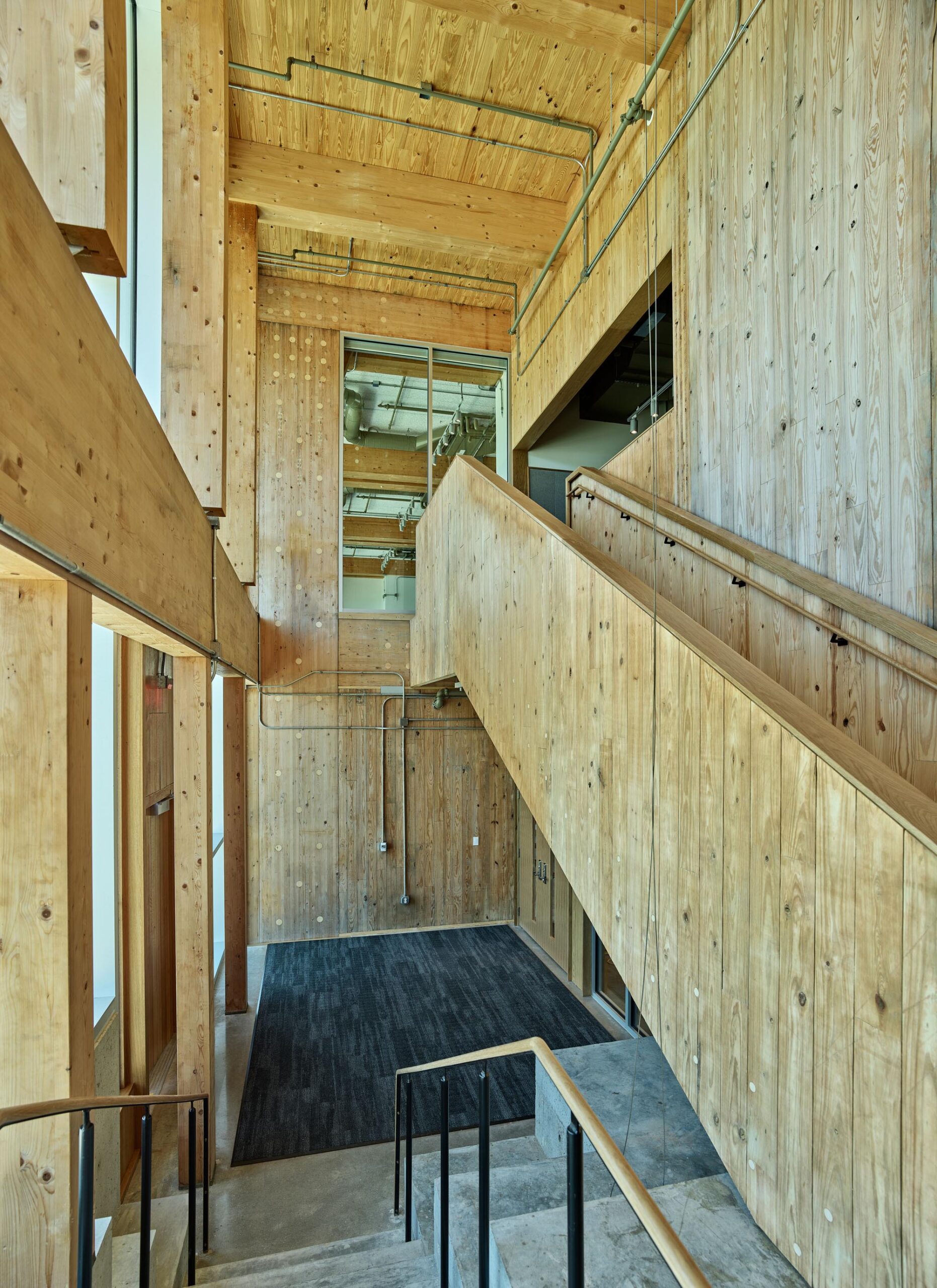
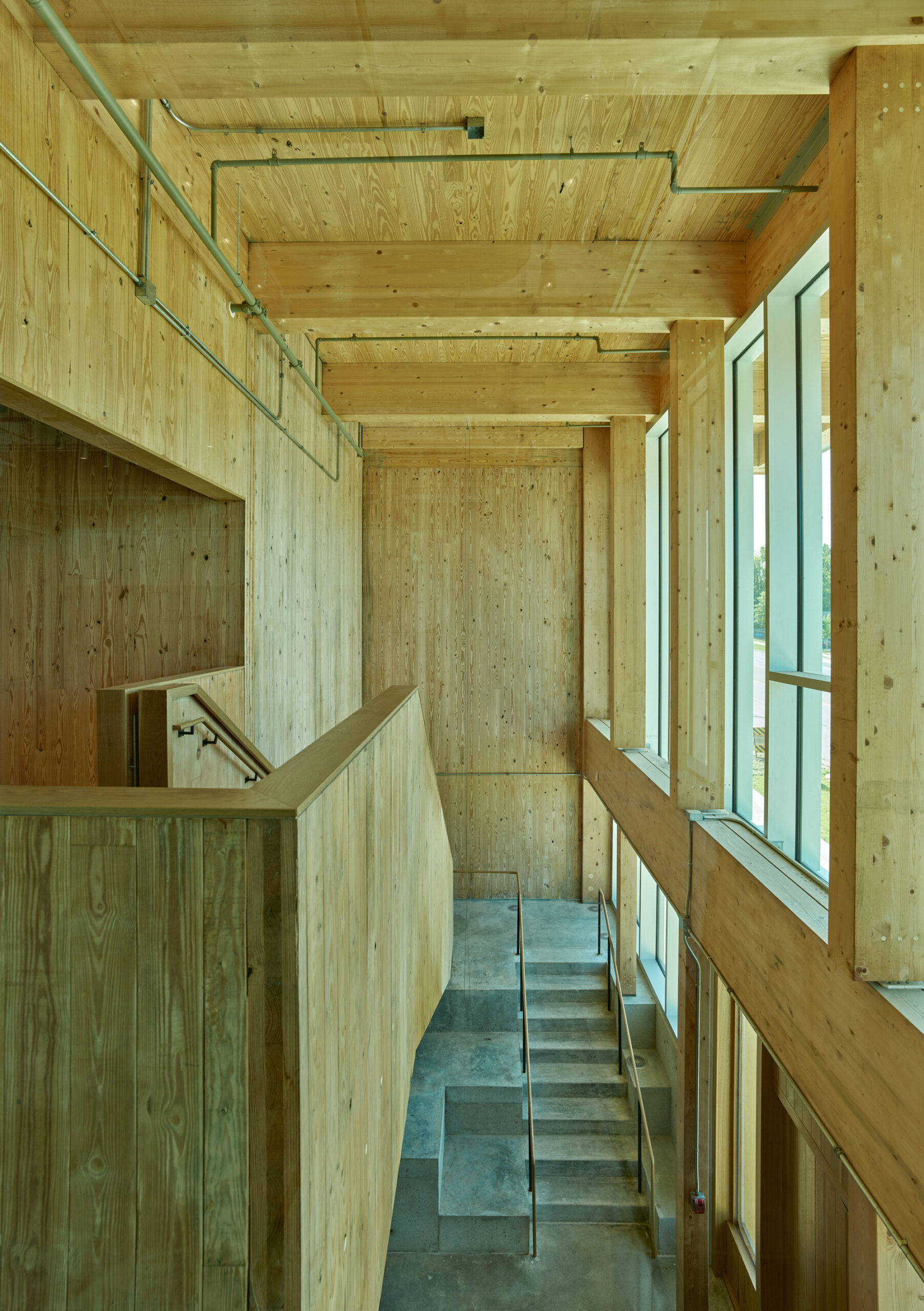
北側ファサードと屋根からの採光は、可能な限り頻繁に、少なくとも2つの異なる方向から自然光を内部に取り入れるという設計理念を反映したものである。メインとなる歩行者用エントランスは、下層階の製作ホールと2階の講堂の中間レベルに配置されている。特注されたオーク材の玄関ドアには、フィンランドの建築家であるユハニ・パラスマー(Juhani Pallasmaa)が本建築のために特別にデザインしたブロンズ製のドアハンドルが施されており、そこからロビーとメイン階段へと続いている。
© Timothy Hursley
ハイブリッド構造による大規模な製作ホール
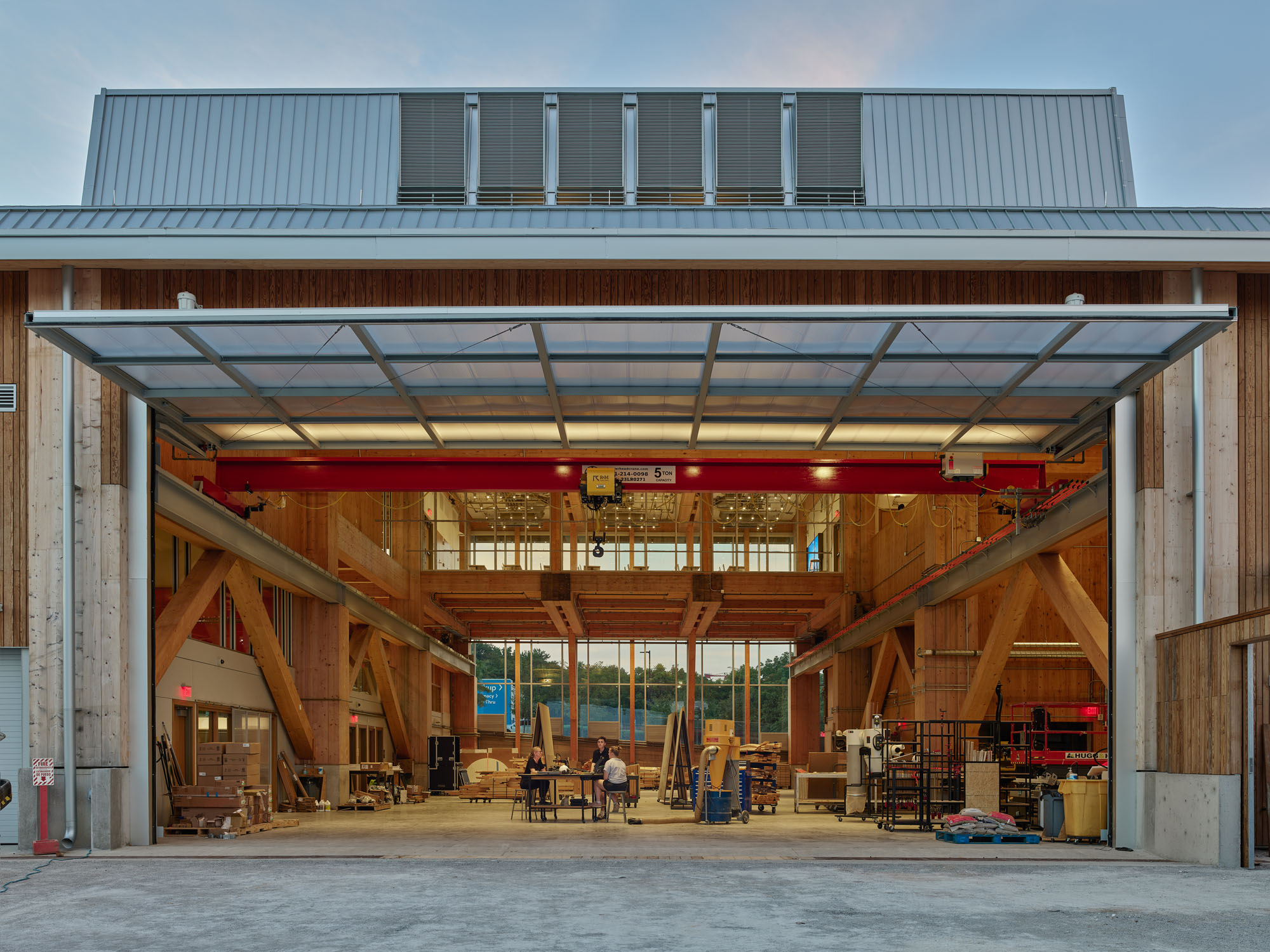
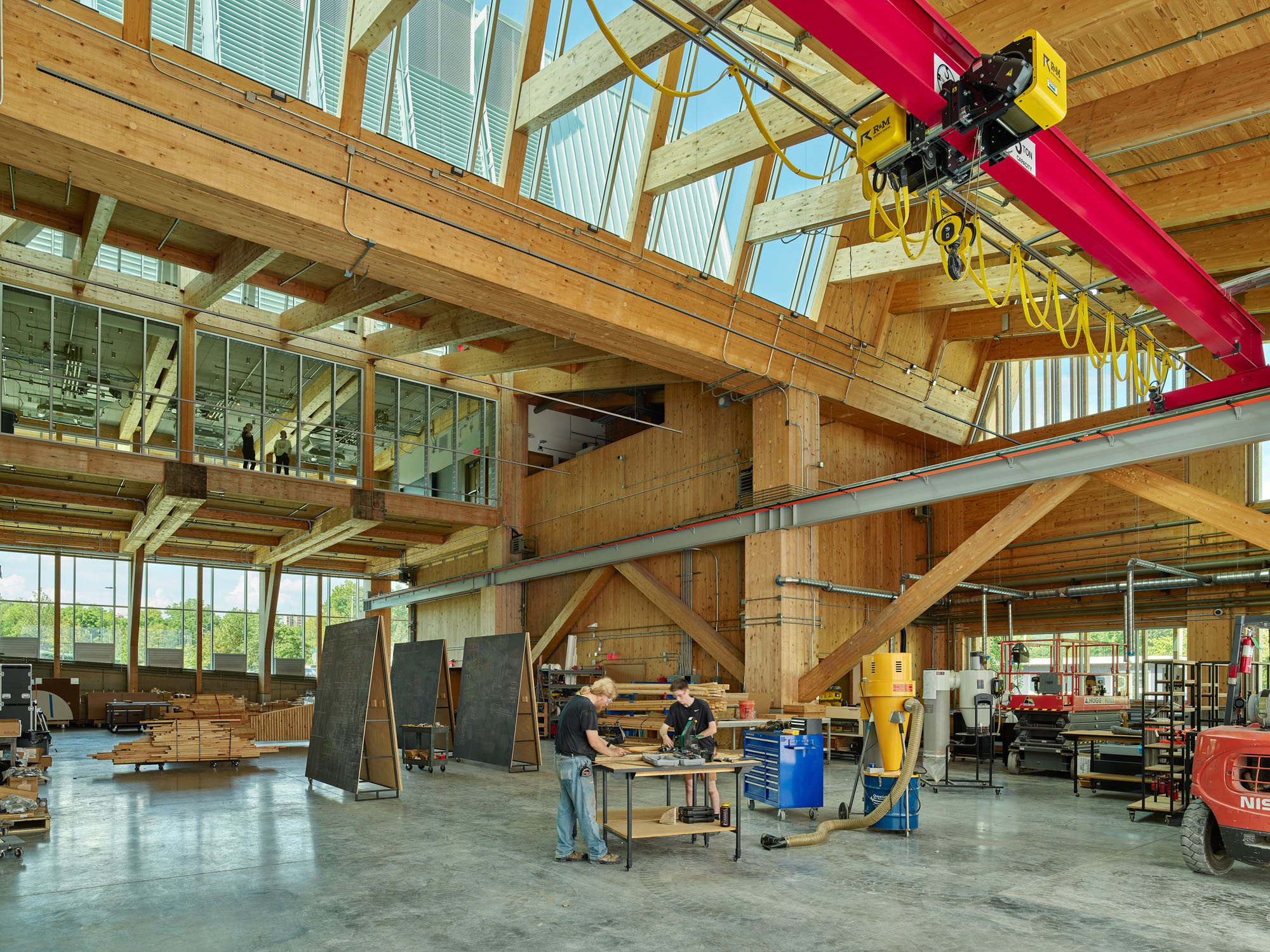
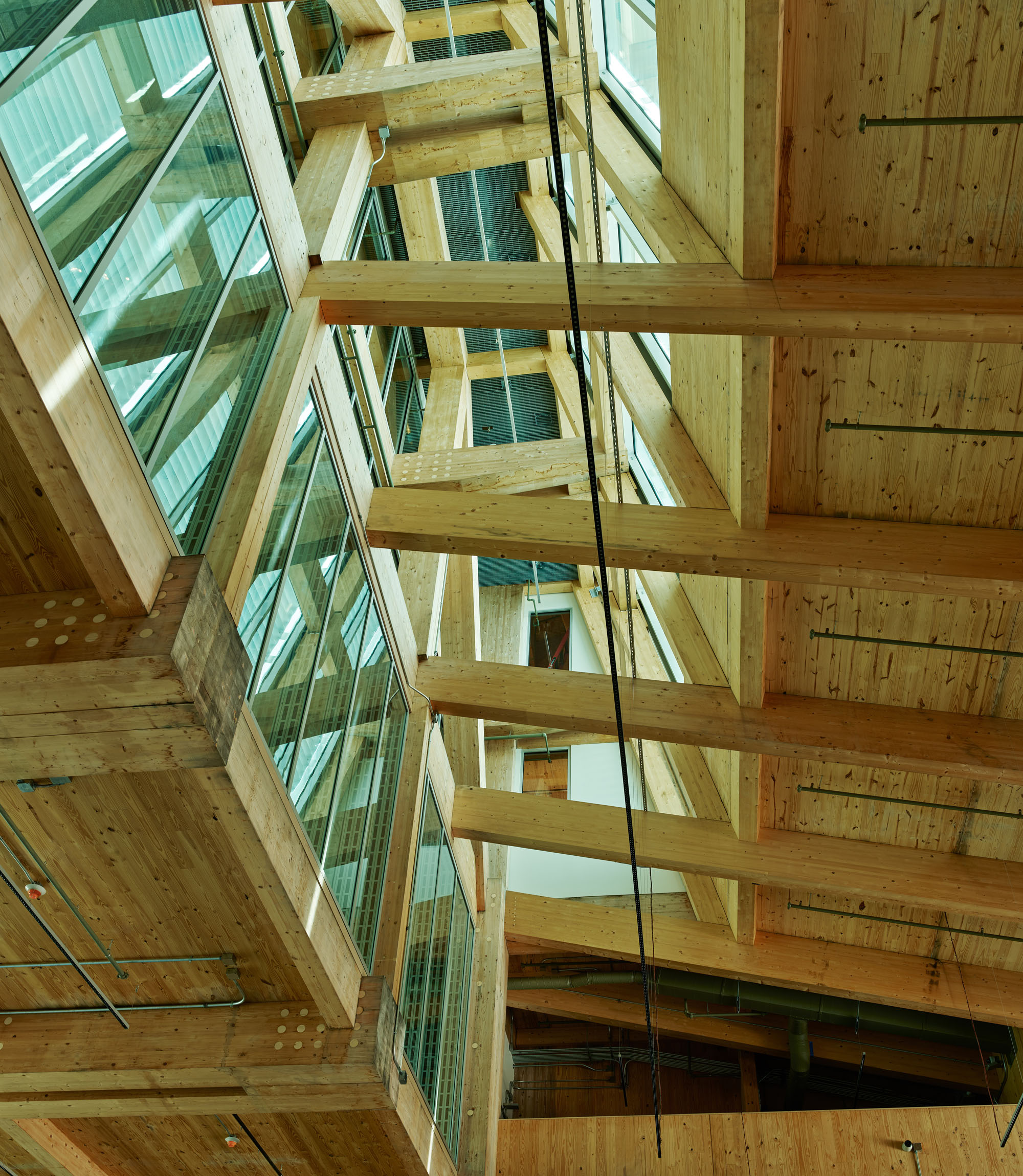
マス・ティンバー構造は、グルーラム集成材の柱と梁、およびクロスラミネートティンバー(CLT)の壁と床板を組み合わせたハイブリッド構造であり、7,673平方フィート(713m²)の製作ホールを囲んでいる。
50フィート(15.24m)のフリースパンと、頭上に設置された5トンのガントリークレーンにより、内部で実物大のモックアップやプレハブ住宅モジュールを製作し、南側のワーク・ヤードを経由して容易に移動・搬送することが可能である。この製作ホールは、木工室、溶接・金属加工室、高度なCNCルーター、ロボットミリングなどを含む専門的な実験室スペースによって支えられている。
© Timothy Hursley
© Timothy Hursley
学びとコミュニティを視覚的につなぐ上層階
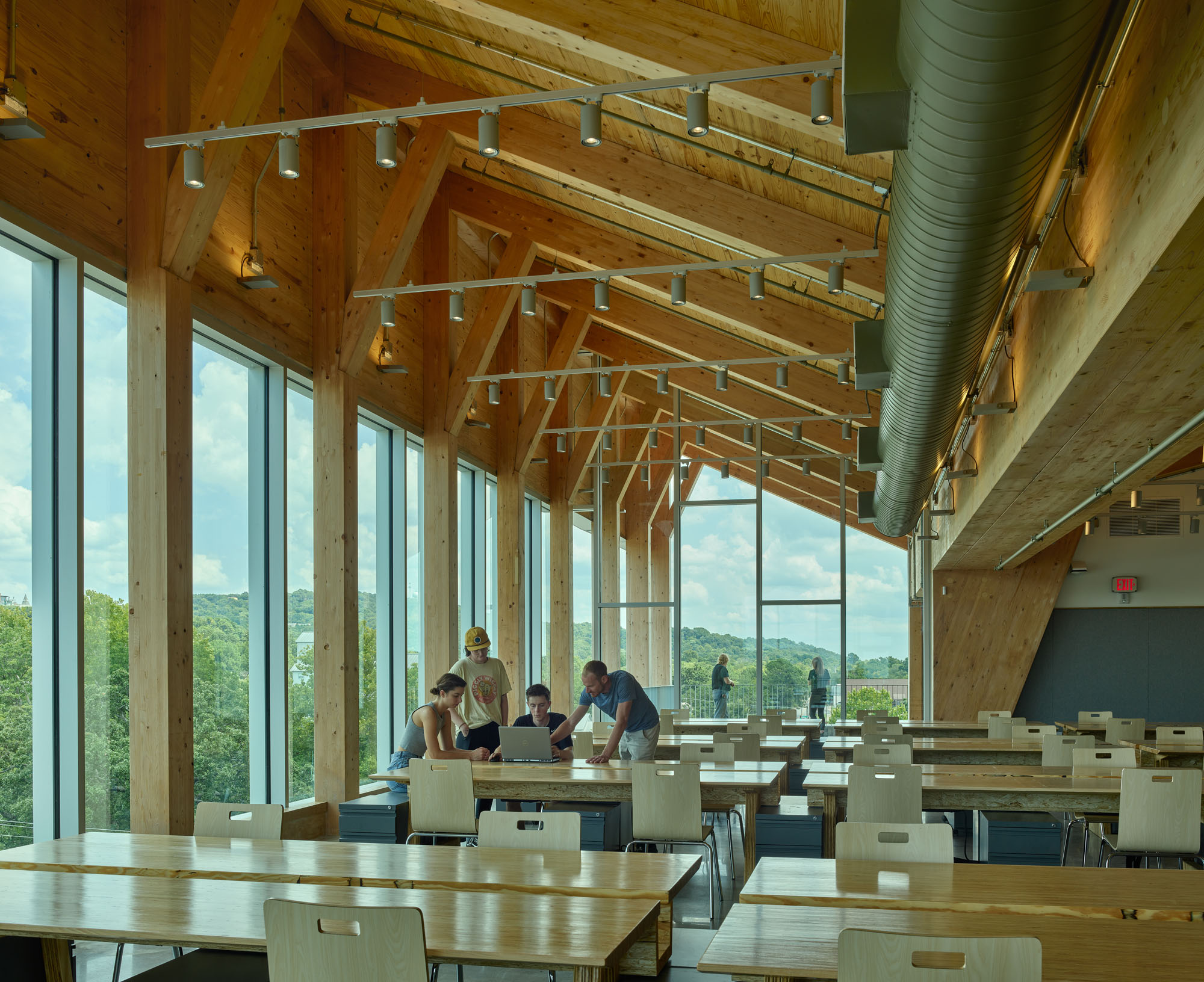
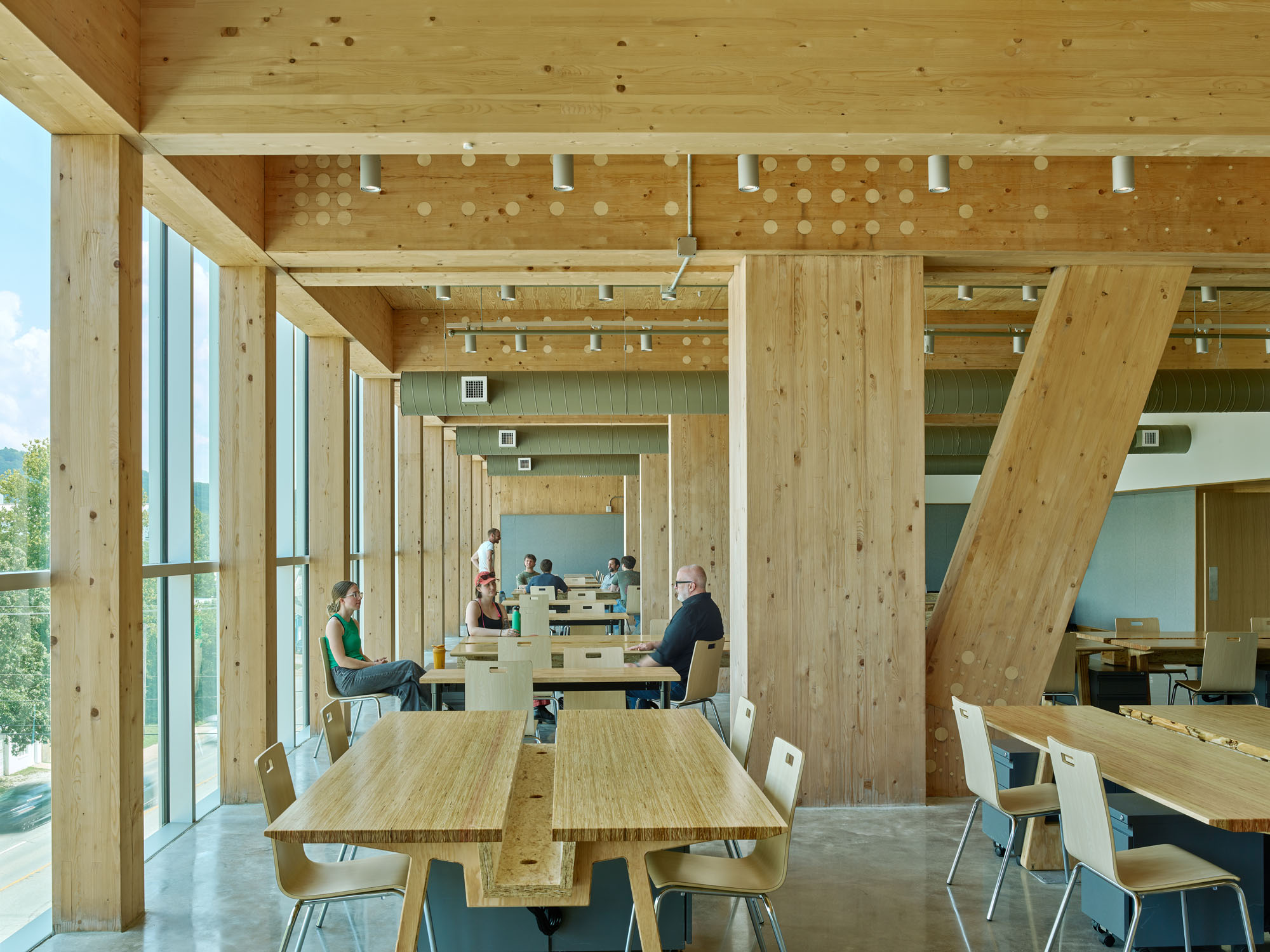
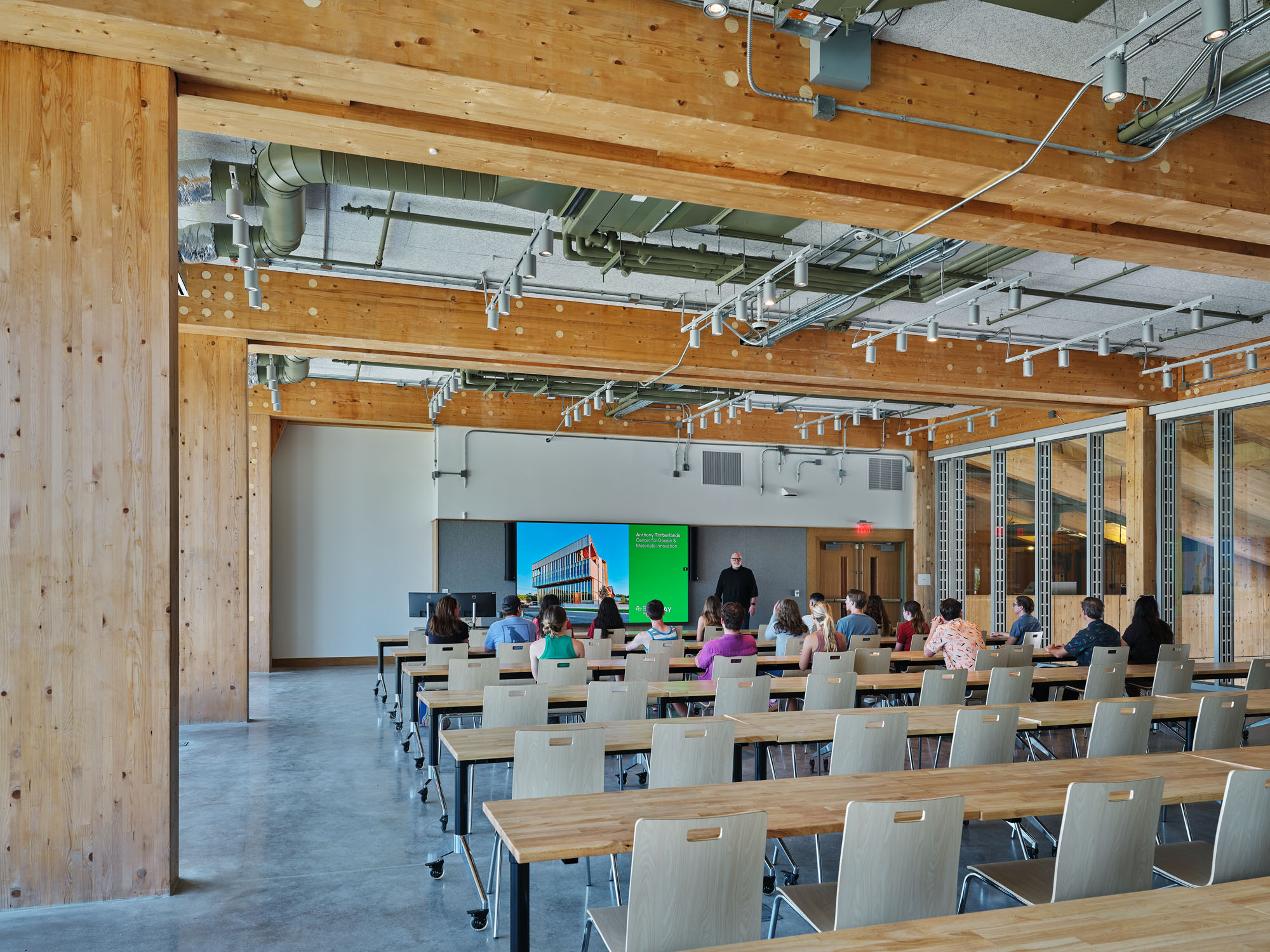
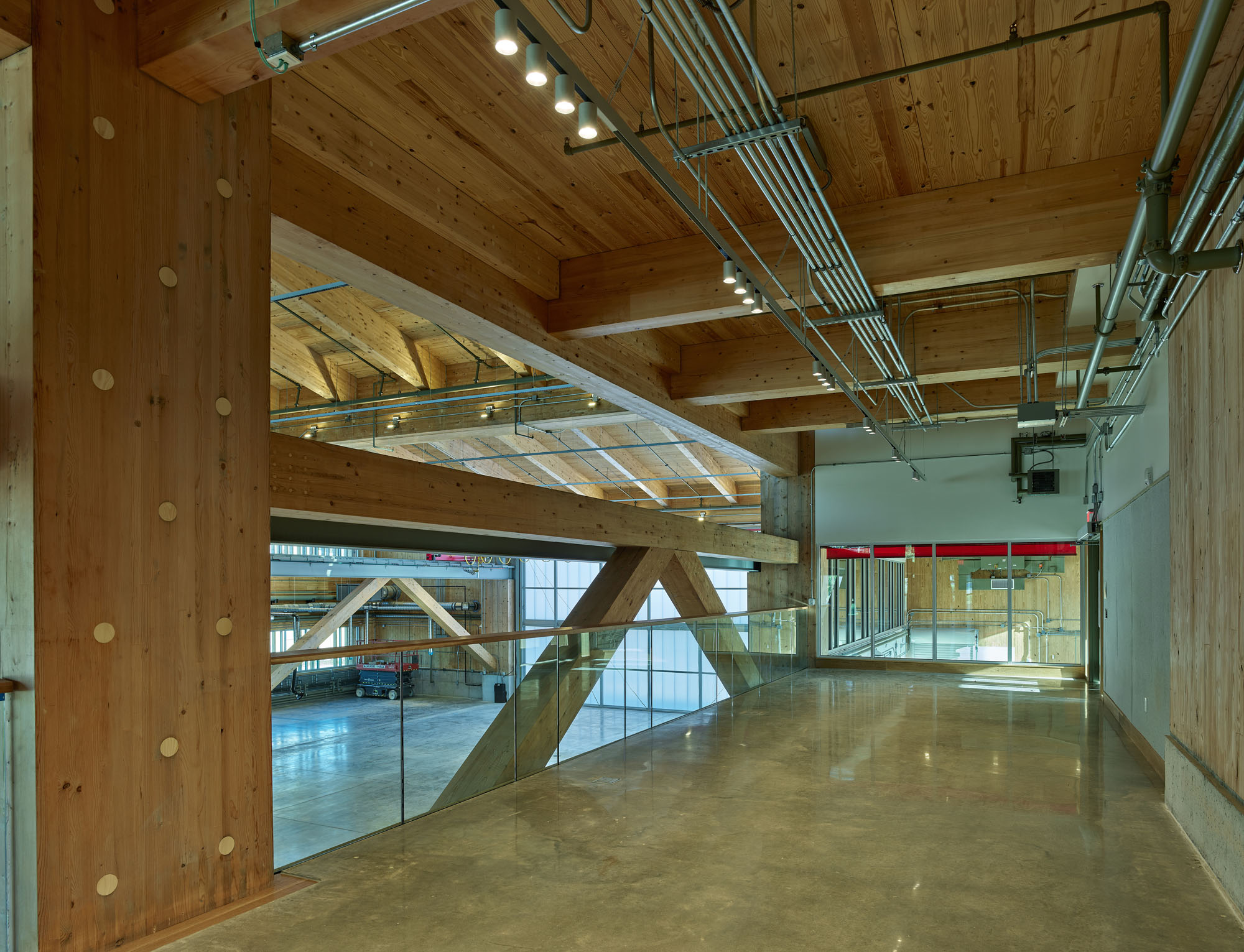
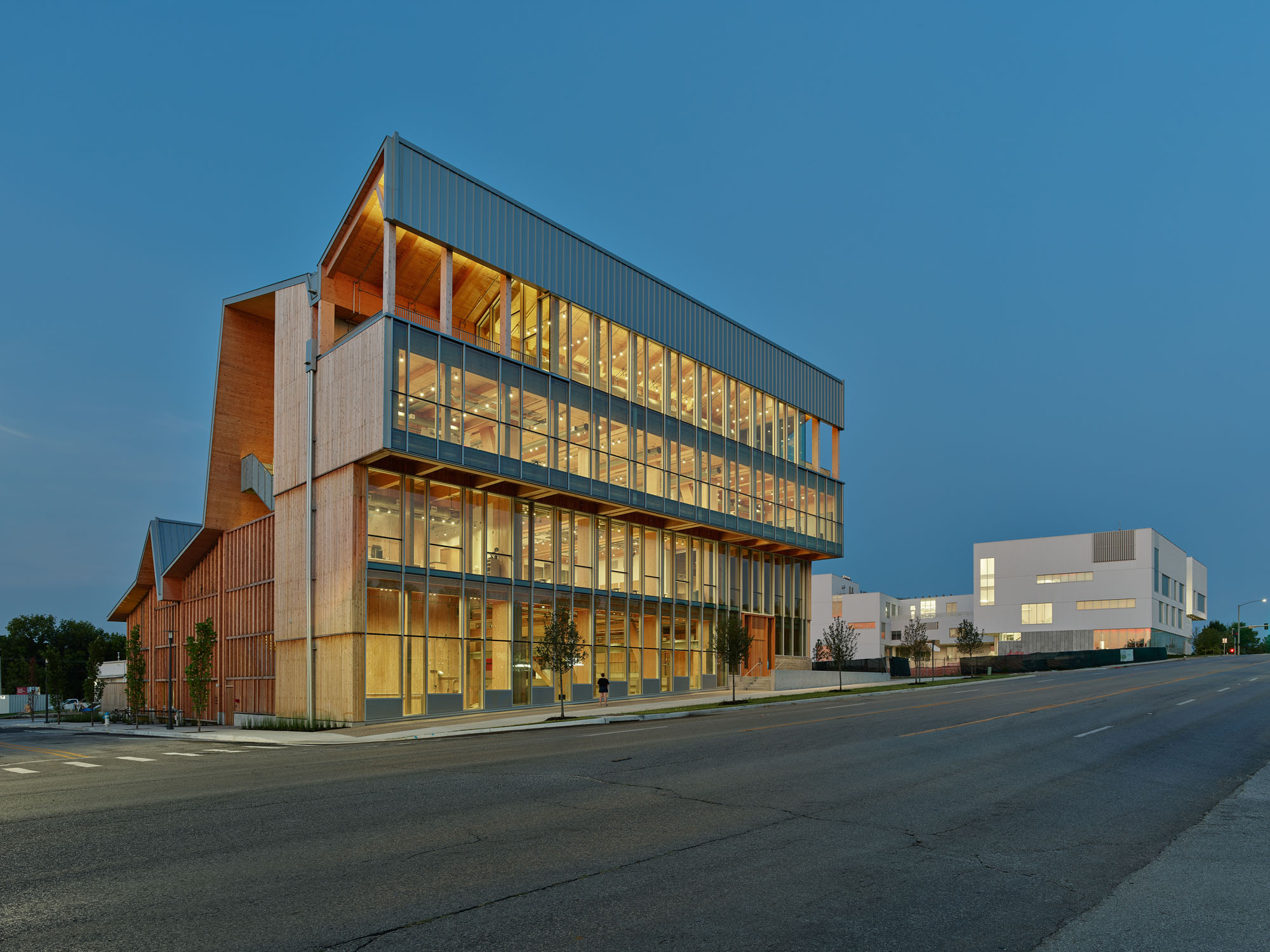
製作ホールの上方には、頑丈なクイーンポストトラスによって吊り下げられた講堂と、2階分のスタジオスペースが配置されている。上層階からは製作ホール内部を見下ろせるだけでなく、周囲の都市景観や自然の景色を眺めることができる。これらの視覚的なつながりは建物の教育的な要素として不可欠であり、デザイン、ものづくり、そしてコミュニティの関係性を強調している。
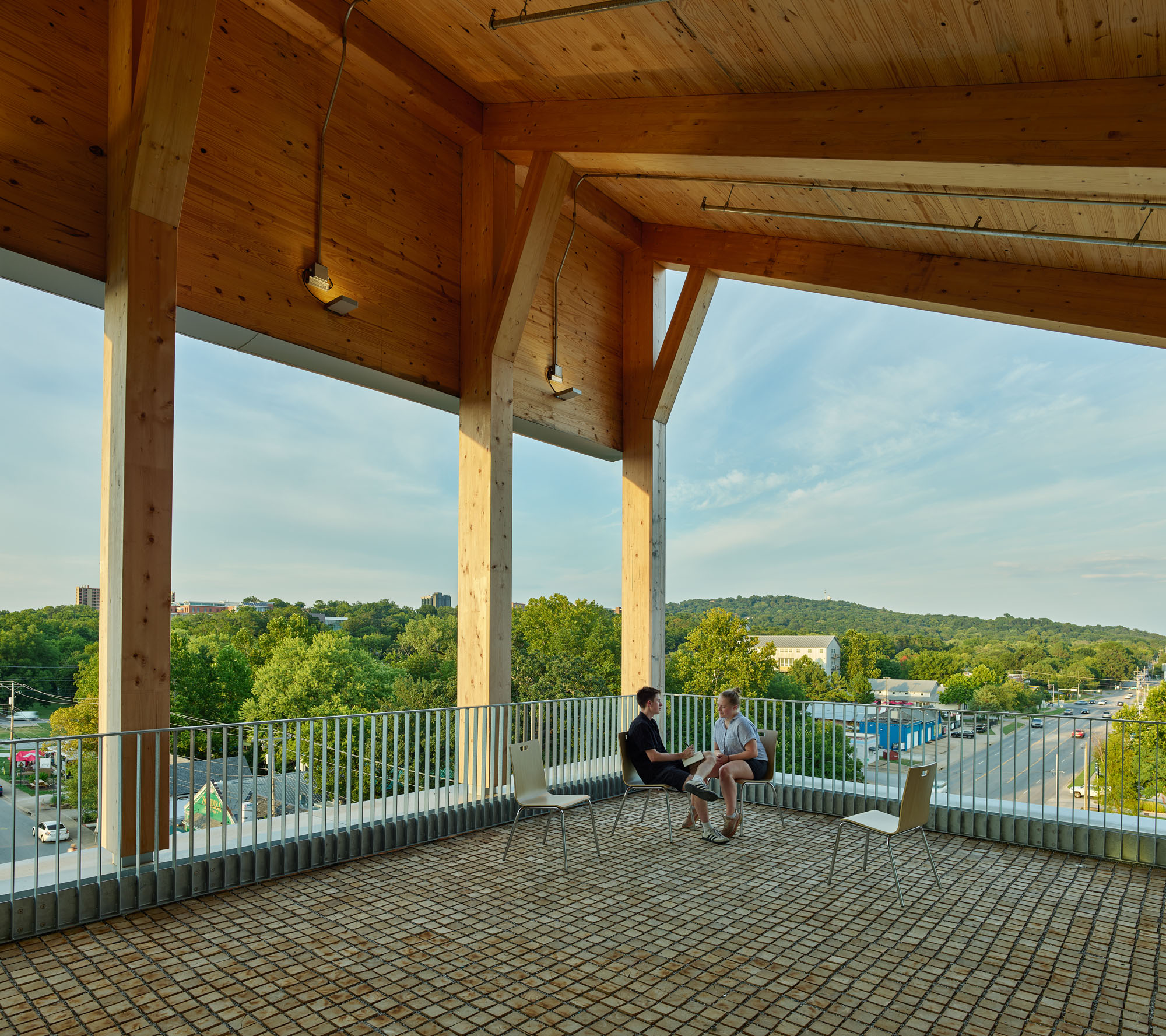
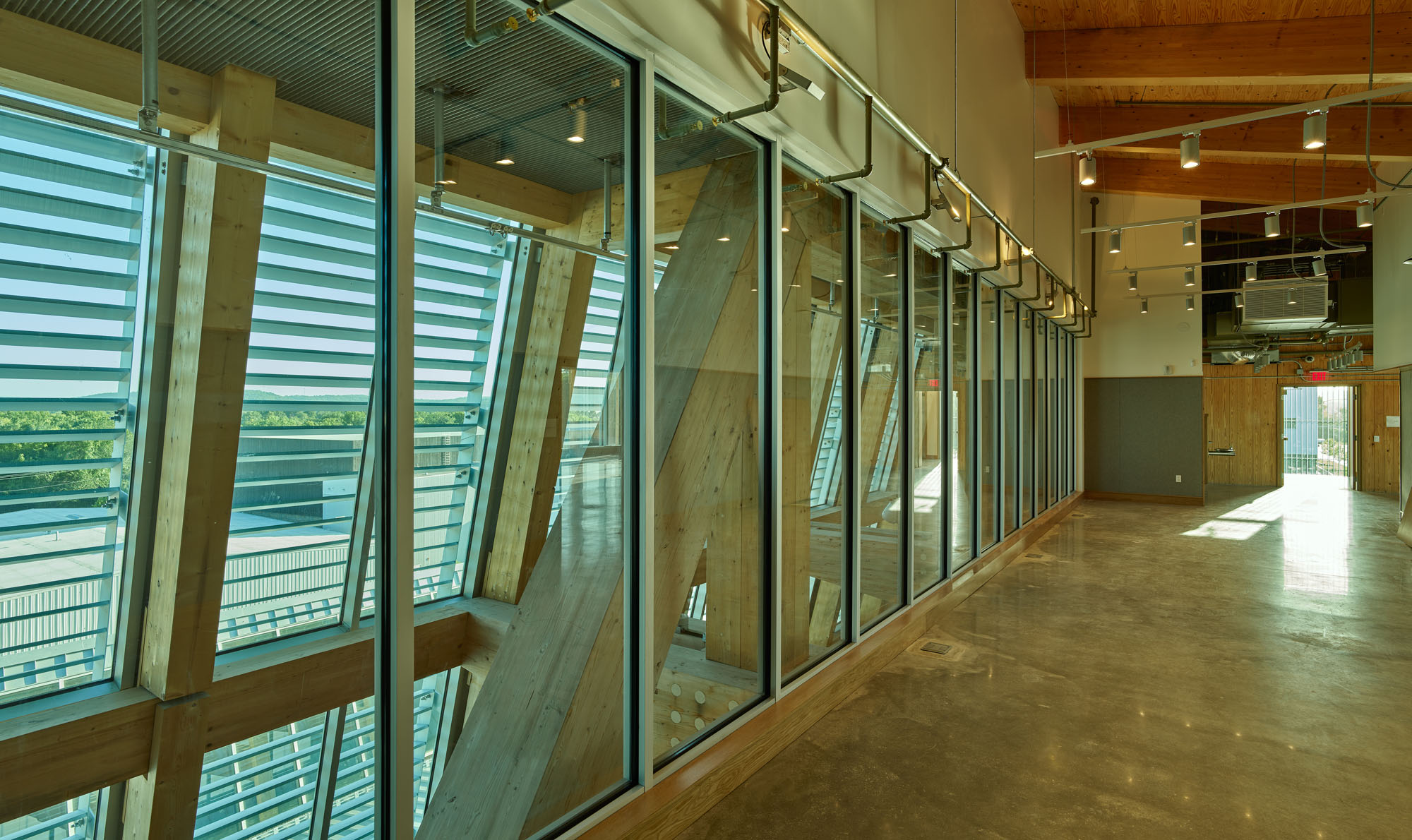
4階のスタジオからは、上部の屋根の傾斜と雨樋梁がさらに露わになり、東西両方向に向いた屋外テラスが設けられている。
© Timothy Hursley
© Timothy Hursley
建築そのものが生きた教材となるデザイン
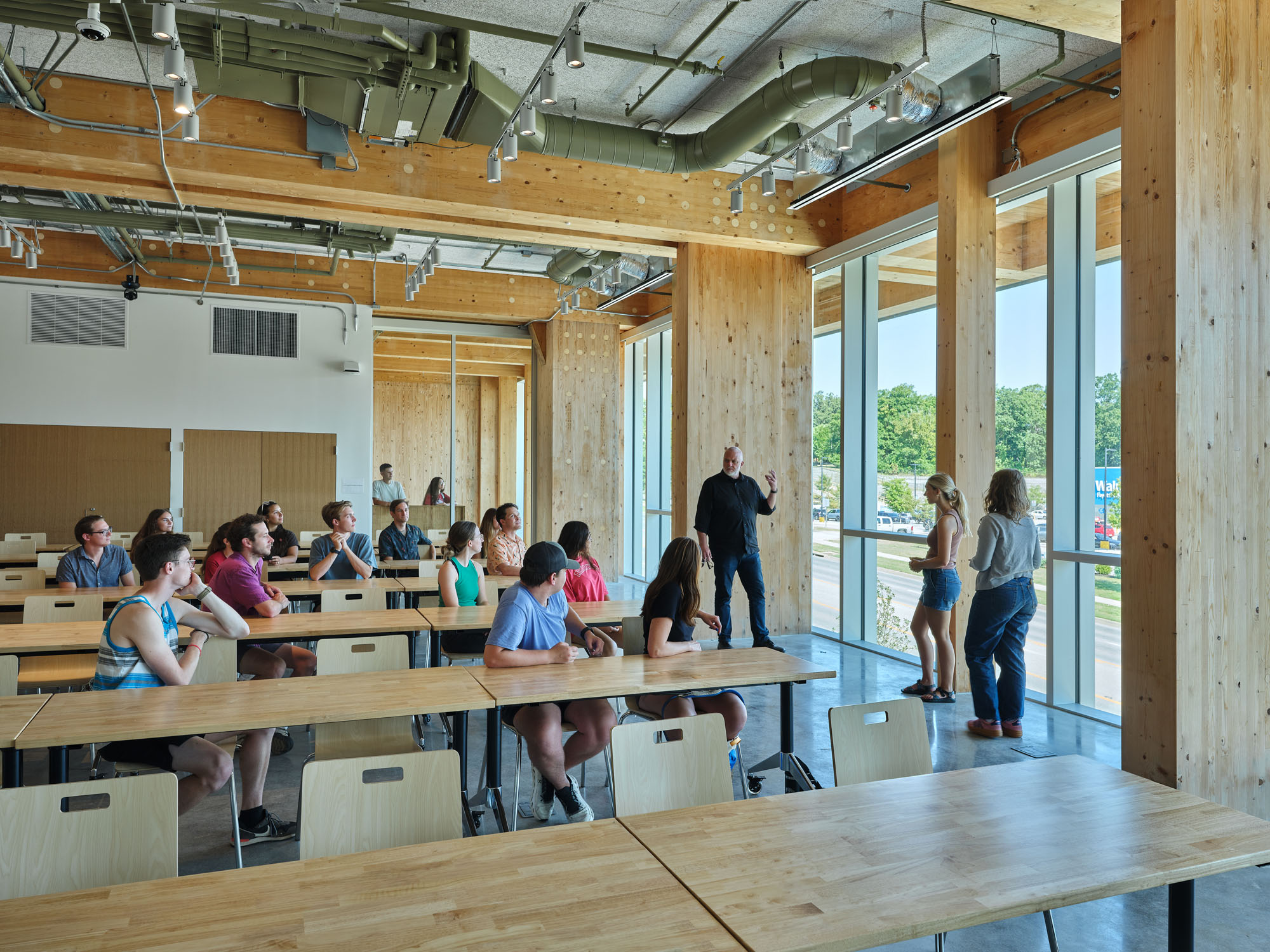
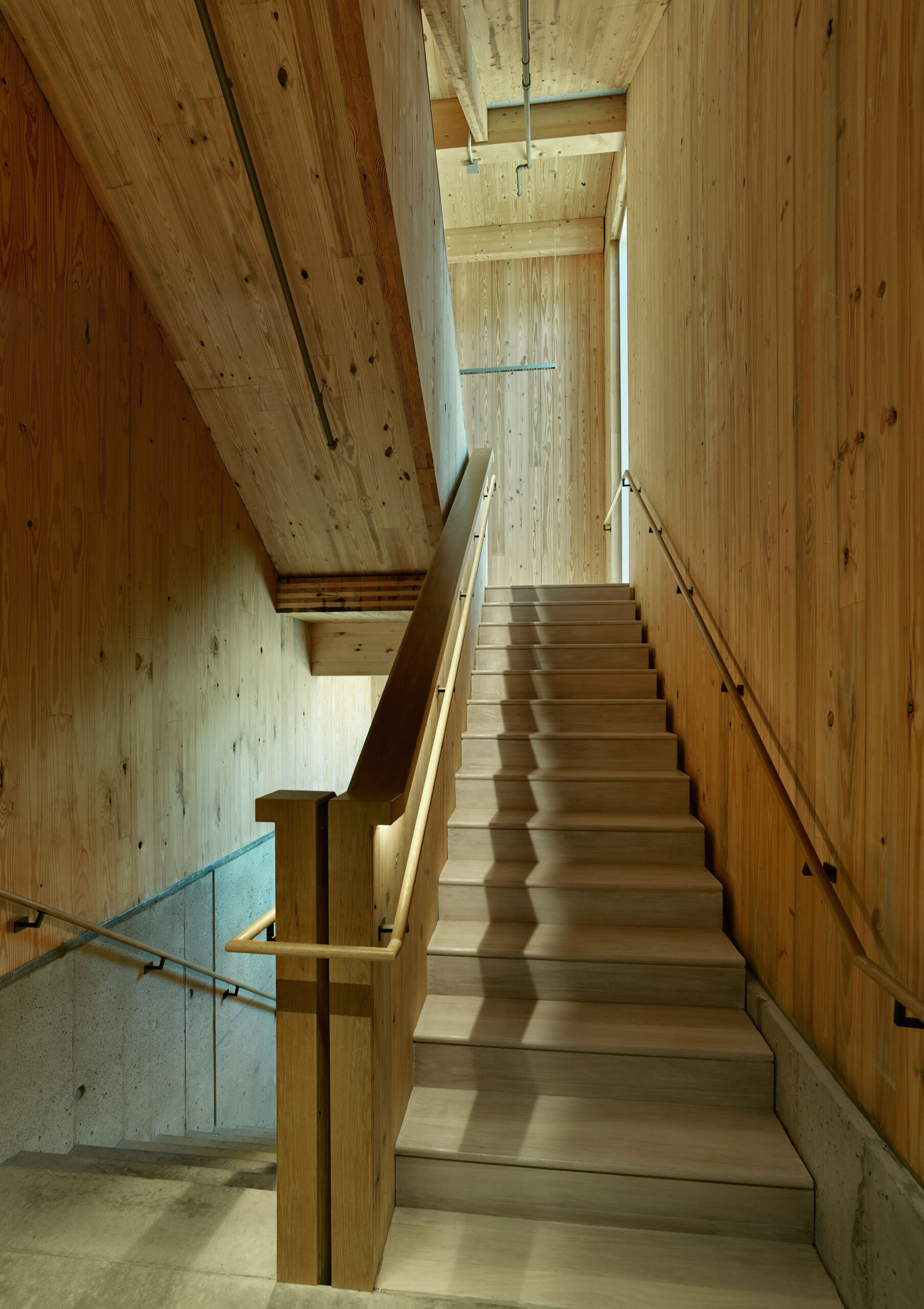
デザイン教育の拠点として、この建物は意図的に教育的な構成をとっており、構造から機械設備、照明システムに至るまで、建築システムが露出した状態で、木造構造によって生み出された空間の木目の中に組み込まれている。反復する梁と柱は、それらの要素の間に浮かぶ繊細な照明のネットワークによって補完され、光が建築から自然に発せられているかのような印象を生み出している。
照明器具を露出し、木材に直接取り付けることで、このデザインは素材とその構造の両方を称賛し、照明が木材そのものを引き立て、照らし出すことを可能にしている。その結果、構造と光がシームレスに絡み合う空間が生まれ、機能的であると同時に視覚的に没入感があり、人を魅了する学習環境を提供している。
© Timothy Hursley
© Timothy Hursley
© Timothy Hursley
持続可能性の拡張と地域経済への貢献
建物そのもの、そこに収められたプログラム、そしてそこで育まれる協働関係は、総合的に見て学生の建築教育に多大な恩恵をもたらすであろう。これらは、多層的で微妙な一連の相互関係を示し、持続可能性に対する理解を拡大させるものである。それは、製造エネルギーや炭素固定といった枠組みを超え、天然資源、環境の健全性、そしてコミュニティの活力といったより広範な問いへと視野を広げるものである。
さらに、フェイ・ジョーンズ建築・デザイン学部は、〈アンソニー・ティンバーランズ・センター〉を通じて、アーカンソー州、南東部地域、そして米国全体の公益のために、森林経済の発展を目指している。
© Timothy Hursley
© Timothy Hursley
© Timothy Hursley
© Timothy Hursley
© Timothy Hursley
© Timothy Hursley
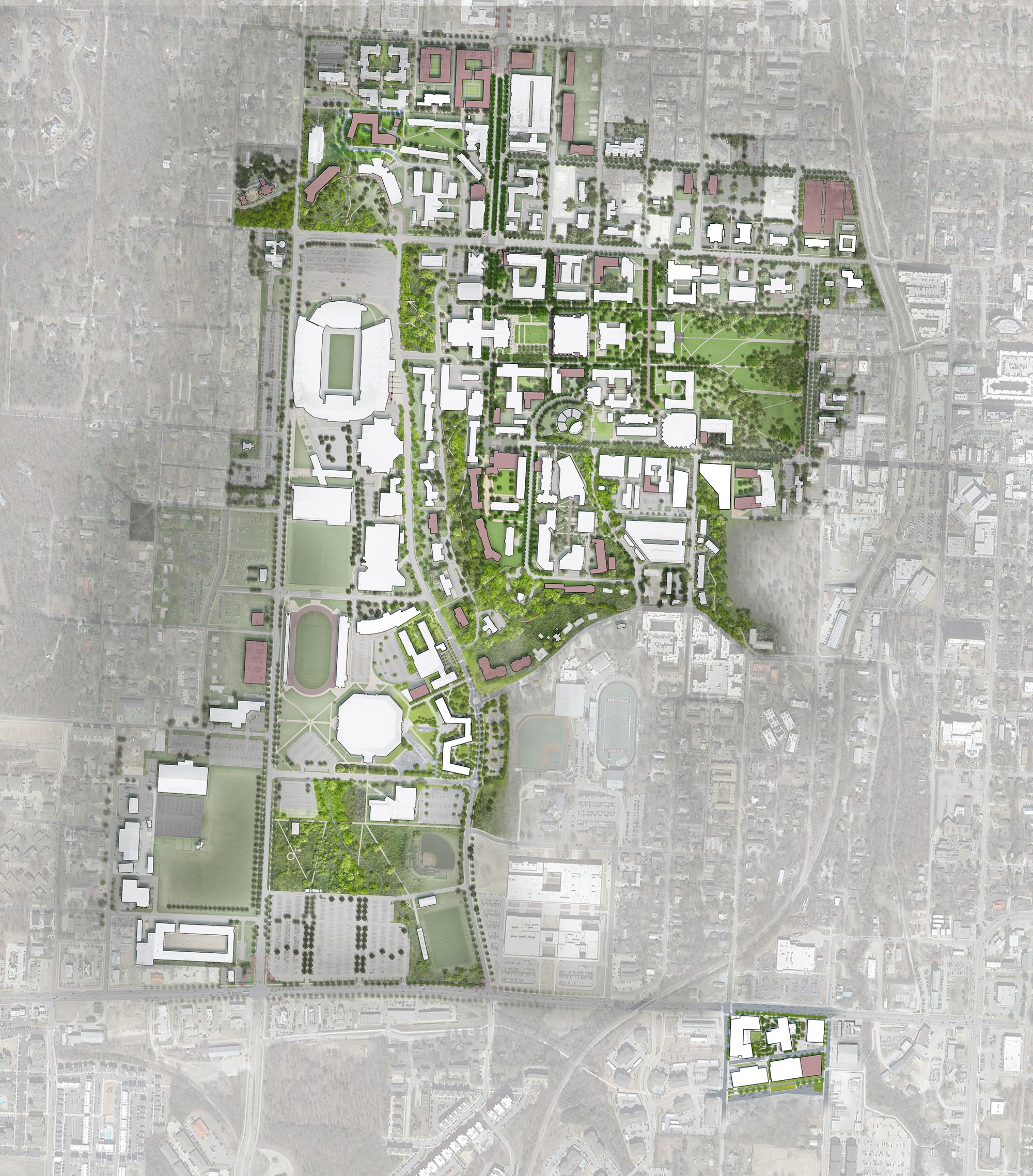
Masterplan
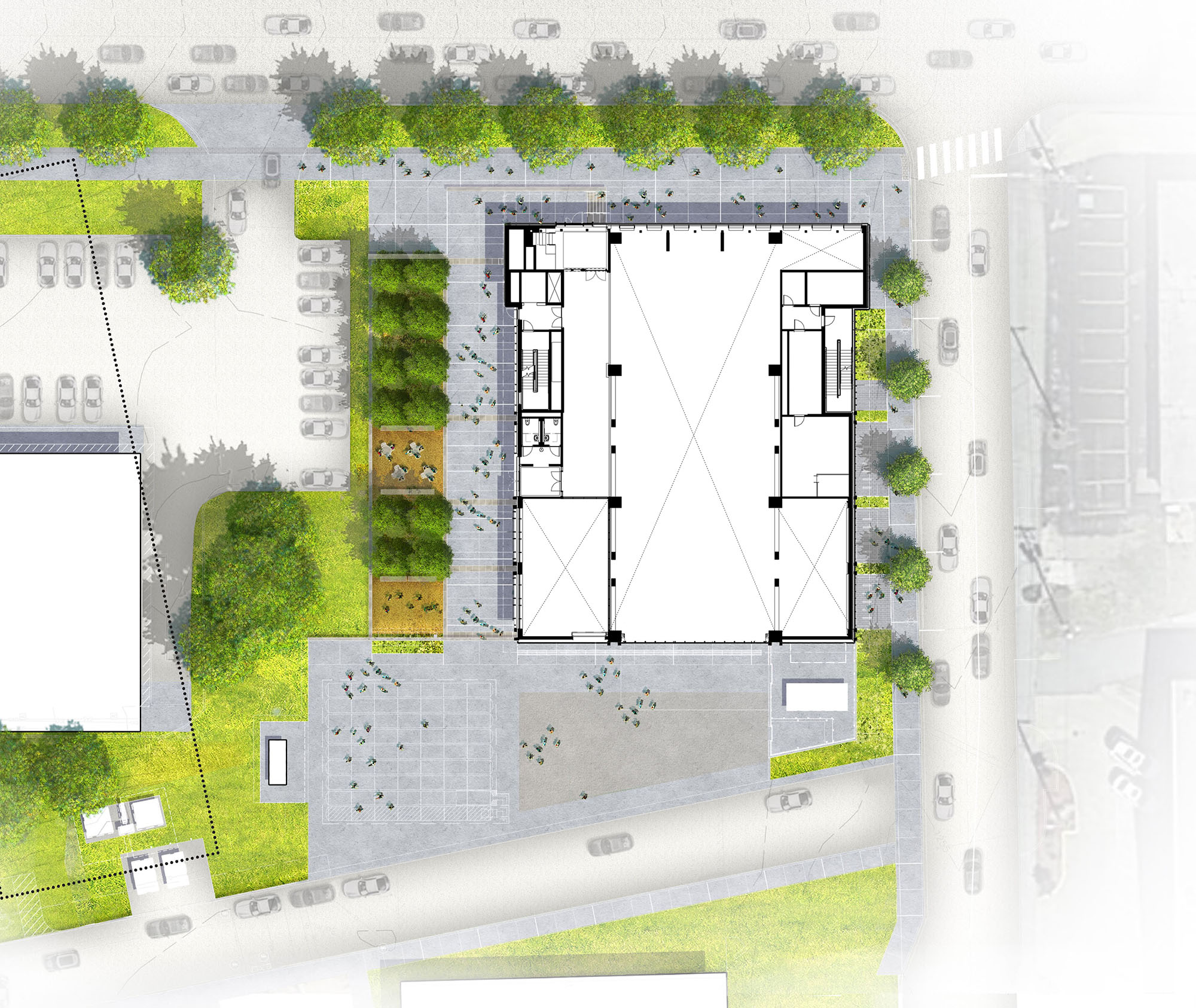
Site Plan
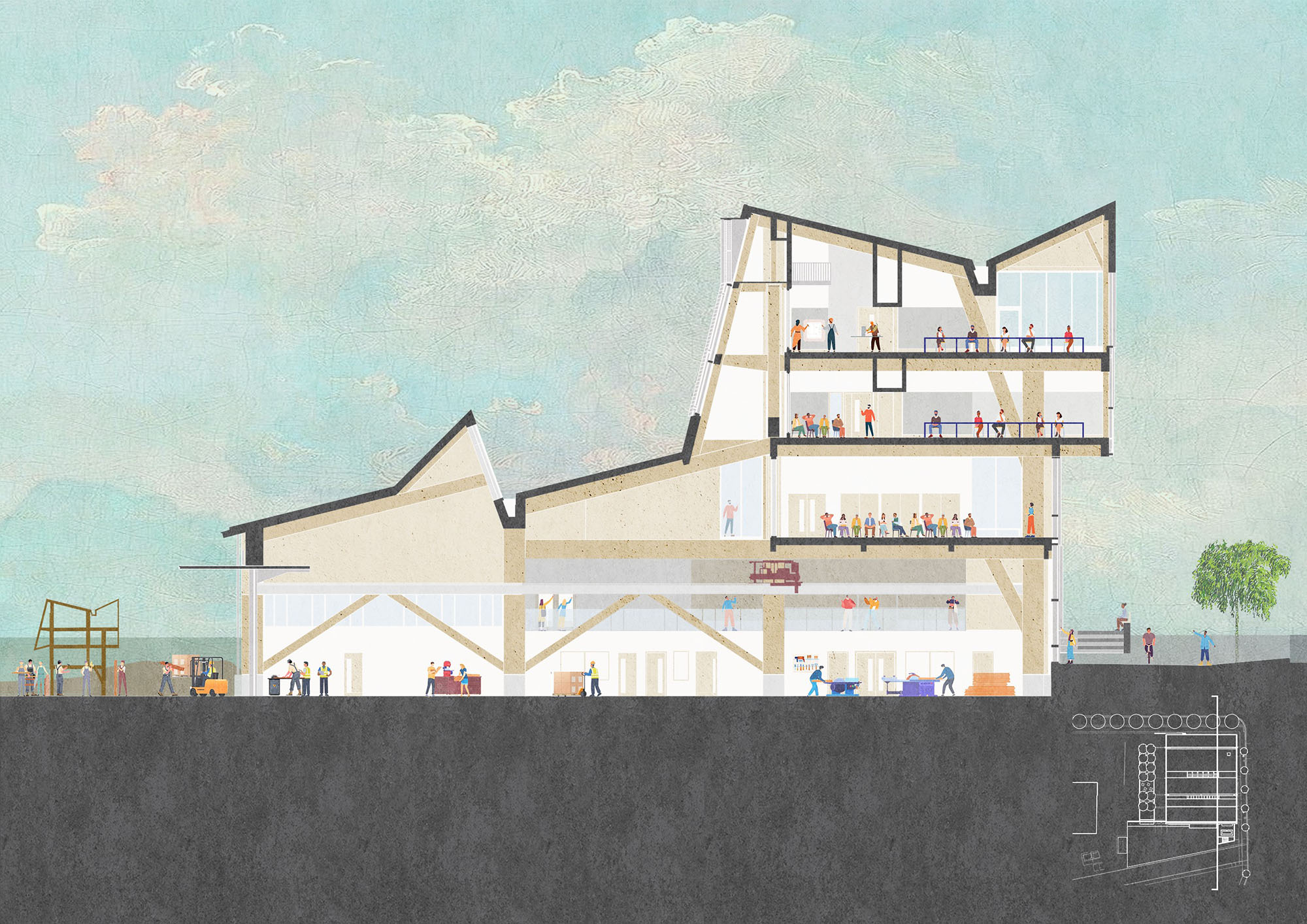
Long Section
以下、グラフトン・アーキテクツのリリース(英文)です。
The Anthony Timberlands Center for Design and Materials Innovation is a center for design education, applied research, and advanced fabrication laboratories for the Fay Jones School of Architecture and Design at the University of Arkansas that is constructed significantly from and focused on Arkansas-sourced timber and wood. Conceived as a “Story Book of Timber” where timber would be both the structural bones and the enclosing skin, the Anthony Timberlands Center is the home for the school’s ongoing design-build and graduate programs and houses collaborative efforts with partners in the state’s forest industries and outreach programs in the interest of the state’s economic development.
Set on a busy commercial street less than a mile from the University of Arkansas’ main campus, the Anthony Timberlands Center occupies the northeast corner of the Art and Design District satellite campus. From its highest point along the street to the north, the roof folds and cascades down to the south, collecting rainwater in large “gutter beams” that is directed to raingardens in the adjacent Anthony Way plaza while bringing in natural light to the shop and studio spaces inside. The landscape and associated outdoor spaces of the Anthony Timberlands Center provide an immersive learning tool for faculty, students and guests. The landscape consists primarily of two exterior spaces, the Work Yard and Anthony’s Way, which are both seamlessly connected to the interior spaces and associated programming. In addition, the streetscapes along the busy adjacent streets improve pedestrian safety, while also providing access to the building and establishing tree canopy.
The primary northern facade provides abundant daylight while revealing the activity of the school to the city, inviting pedestrians to look deep into the building to witness the research and the process of making. Daylight from the northern façade and the roof reflect a commitment to the admission of natural light from at least two different directions to the interior as often as possible. The main pedestrian entry is set at an intermediate level between the fabrication hall on the ground floor below and the auditorium on the second floor. Custom oak front doors feature bronze door handles designed specifically for the building by Finnish architect Juhani Pallasmaa, leading to the foyer and main stair.
The mass timber structure is a hybrid of glulam columns and beams with cross laminated timber (CLT) walls and decking that frame a 7,673 square foot (713 square meter) fabrication hall. With a free span of 50 feet (15.24 meters) and a 5-ton (5,000 kilogram) gantry crane overhead, full scale mockups and prefabricated housing modules can be constructed inside and easily moved or transported via the south working yard. The fabrication hall is supported by specialized lab spaces, including a wood shop, welding and metal working, advanced CNC routers, and robotic milling.
Suspended above the fabrication hall by a robust Queen Post truss are an auditorium and two floors of studio spaces. Each floor above affords views into the fabrication hall and views out to the surrounding city and landscape, connecting views that are essential educational components of the building, emphasizing the relationship between designing, making, and community. The fourth-floor studio further reveals the slope and “gutter beam” of the roof above with outdoor terraces facing both east and west.
As a center for design education, the building is intentionally didactic with exposed building systems – from structure to mechanical and lighting systems – which are embedded within the spatial “grain” created by the timber structure. Repetitive beams and columns are complemented by a finer network of lights that float between these elements, creating the impression that light emanates naturally from the architecture. By exposing the fixtures and mounting them directly on the timber, the design celebrates both the material and its construction, allowing the lighting to enhance and illuminate the timber itself, resulting in a space where structure and light are seamlessly intertwined, offering a learning environment that is both functional and visually immersive and captivating.
Collectively, the building, the programs it houses, and the collaborative relationships it fosters, will be of great benefit to students in their architectural education, revealing a layered and nuanced series of embedded relationships, creating an expanded understanding of sustainability, one that moves beyond embodied energy and carbon sequestration to consider broader questions of natural resources, environmental health and community vitality. Moreover, the Fay Jones School, through the Anthony Timberlands Center, seeks to develop the forest economy for the greater good of the state of Arkansas, the southeast region and the nation.
グラフトン・アーキテクツ 公式サイト
https://www.graftonarchitects.ie

![[Report]方丈庵から生き方を問う、21_21 DESIGN SIGHT 企画展「方丈記に学ぶ –生きるを編み直す小さな建築–」会場レポート](https://magazine-asset.tecture.jp/wpcms/wp-content/uploads/2026/09/01181900/20260828hojoki-ex_01_mag-endo4350-900x676.jpeg)