
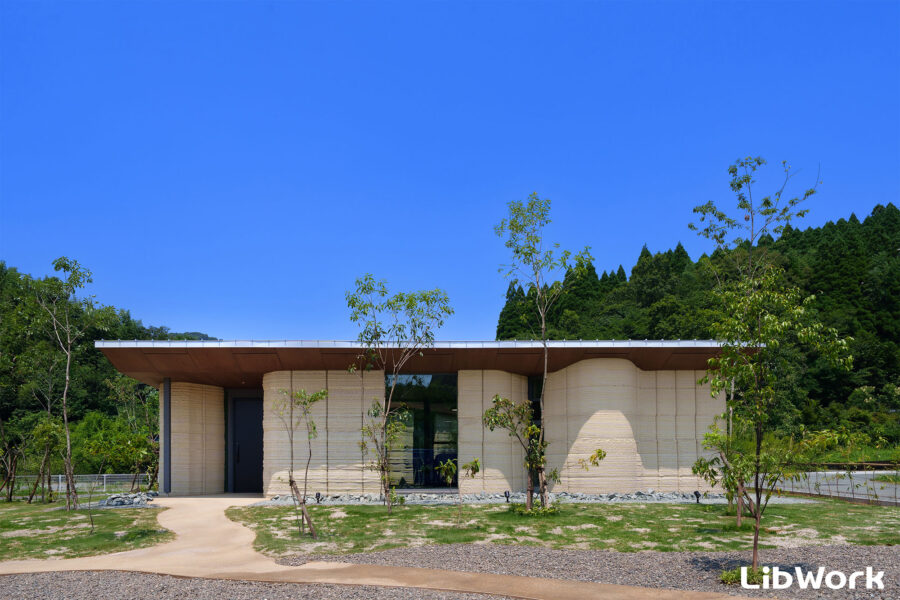
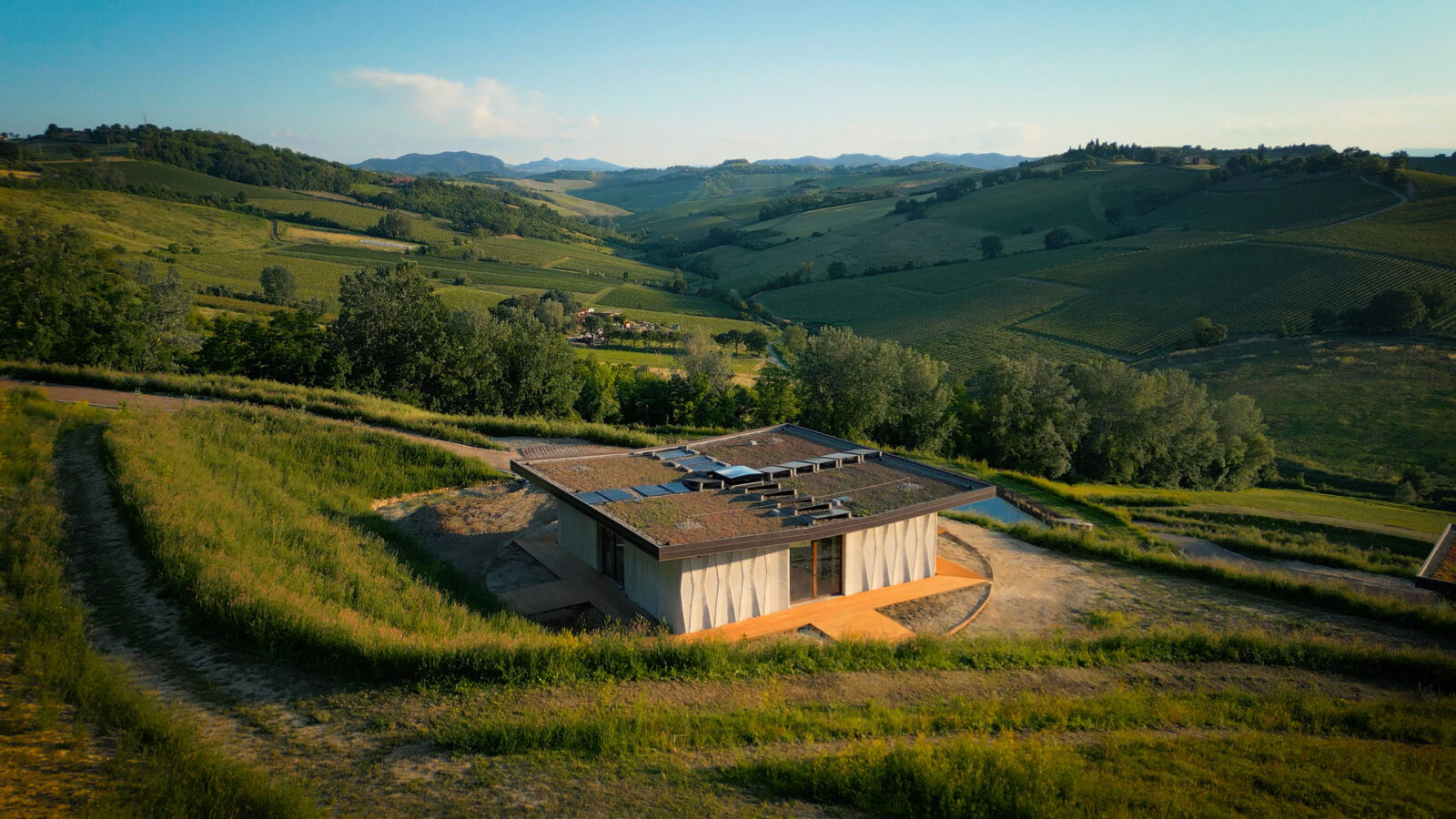
イタリアの3Dプリント企業WASPが手がけた、「マイクロ循環型経済」を実現する自給自足型住宅〈ITACA〉
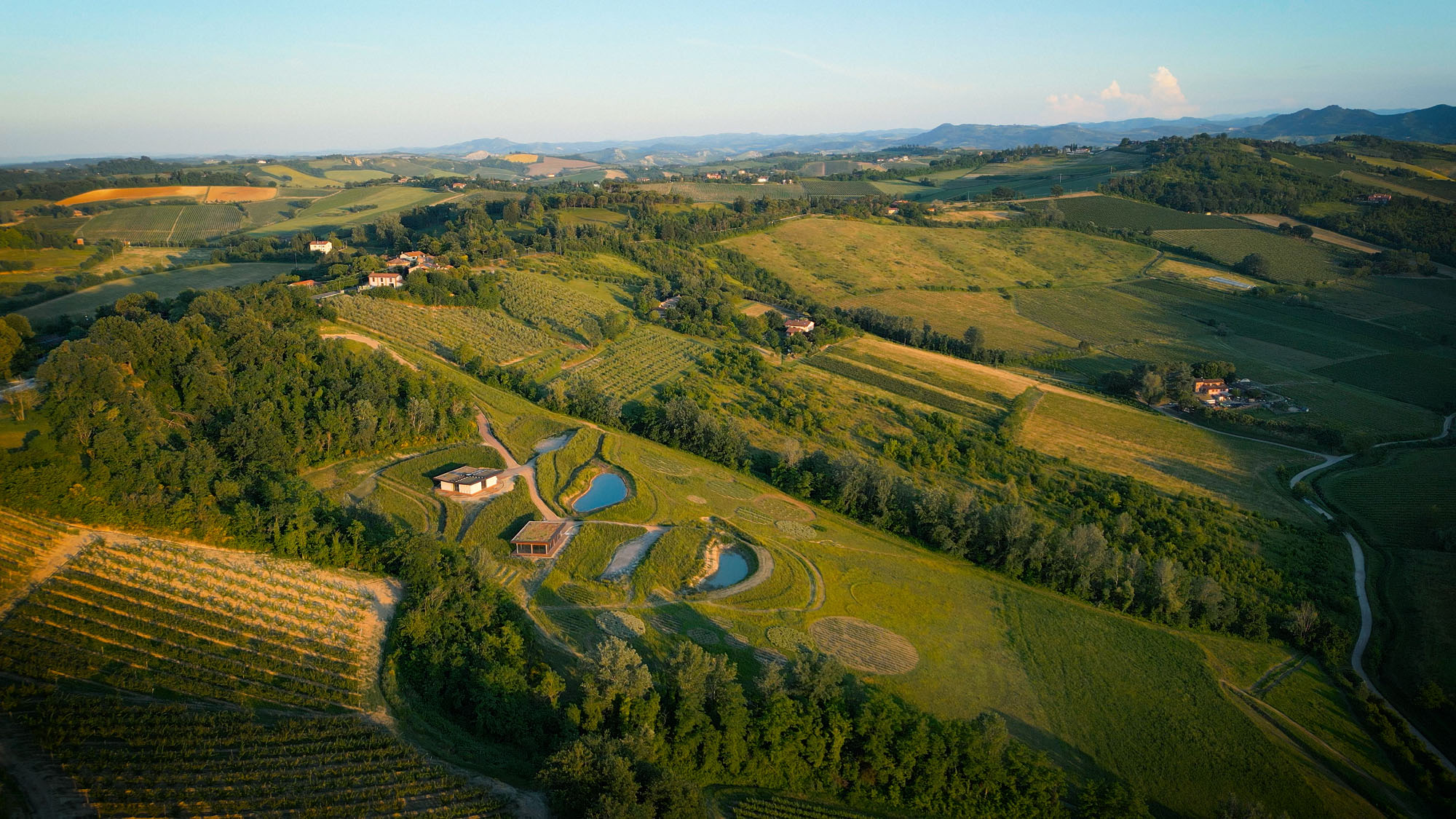
イタリア北部の丘陵地帯に、「マイクロ循環型経済」を体現する3Dプリント住宅〈ITACA〉が誕生しました。
イタリアの3Dプリント企業 WASPが手掛けた自給自足型農場兼居住モデルであり、コンクリートを一切使用しない石灰ベースの壁体構造などにより、「CO2排出量マイナス」を達成しています。
注目ポイント
- 仮説「直径33mの空間があれば、4人が自立した生活が可能」を実証するプロジェクト
- 厳格な欧州・イタリアの「耐震規制」をクリアした初の認証モデル
- 4本のアームが同時駆動する「マルチロボット・プリント」による高速施工
(以下、WASPから提供されたプレスキットのテキストの抄訳)
©︎ WASP
「マイクロ循環型経済」に基づく、自給自足と環境配慮の先進モデル
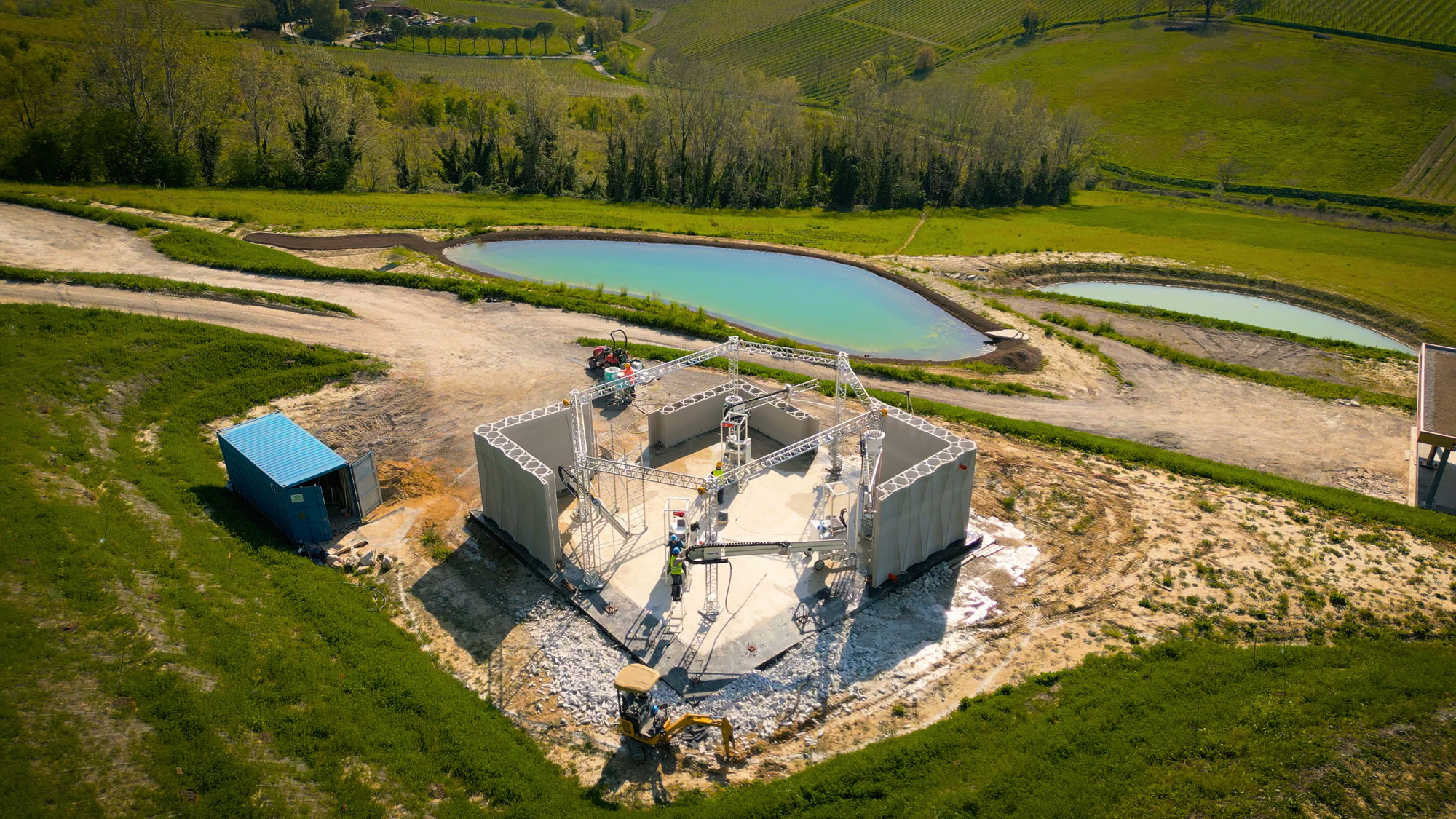
WASPは、イタリア北部の丘陵地帯にあるシャンバラ野外実験施設において、同国初となる認証取得済みの3Dプリント建築物〈ITACA〉の壁のプリントを完了した。これは、循環型マイクロ経済に基づいた、3Dプリントによる自給自足の農場兼居住モデルを開発するための新たな取り組みである。
本プロジェクトは、3Dプリント技術がもたらす迅速な情報伝達と、遠隔地でも稼働可能な汎用性が高く利用しやすい機械「Crane WASP」の活用により、世界中で容易に再現できる持続可能な建築の新たなパラダイムを確立することを目指している。
耐震性を含む、厳しい規制をクリアしたイタリア初の認証取得済み3Dプリント住宅
〈ITACA〉建設における主な目標の1つは、イタリアおよび欧州の規制に準拠し、耐震性を含む従来の構造物と同等の基準を満たす3Dプリント建築物を創り出すことであった。地震活動が活発な地域であるイタリアの厳格な規制基準を考慮すると、このような厳しい条件下で認証を取得できたという事実は、このモデルが世界のほとんどの地域で再現可能であるという可能性を実証している。
©︎ WASP
©︎ WASP
持続可能な3Dプリント建築の再定義
〈ITACA〉の建設は、Crane WASPシステムを用いた3Dプリント建築に特化したWASPの革新的なスタートアップ企業「WASP 3D Build」によって実施された。〈ITACA〉は、イタリア北部の丘陵地帯に位置する、WASPの持続可能な生活のための野外実験場「シャンバラ(Shamballa)」で完成した、初の3Dプリント構造物である。
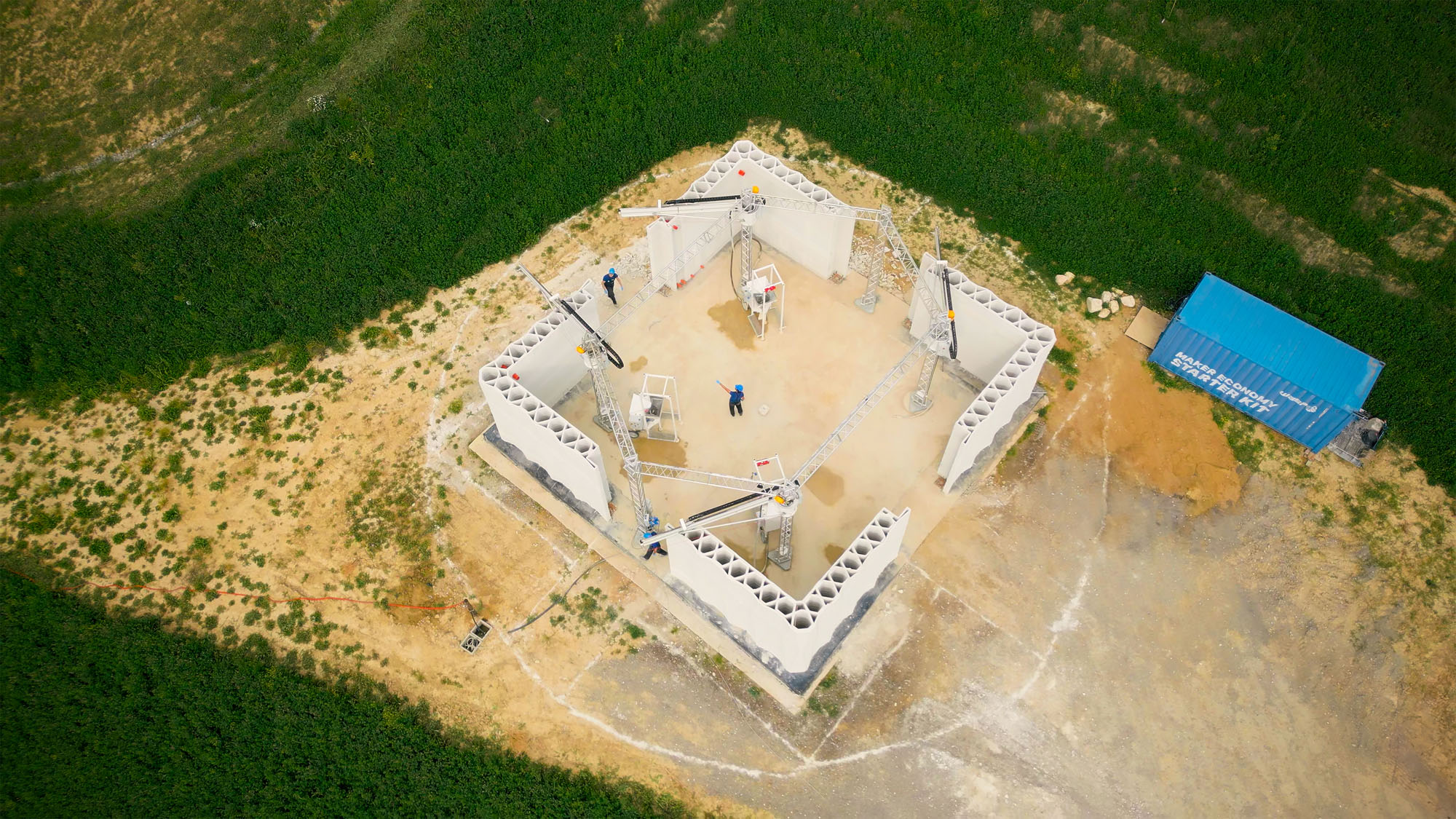
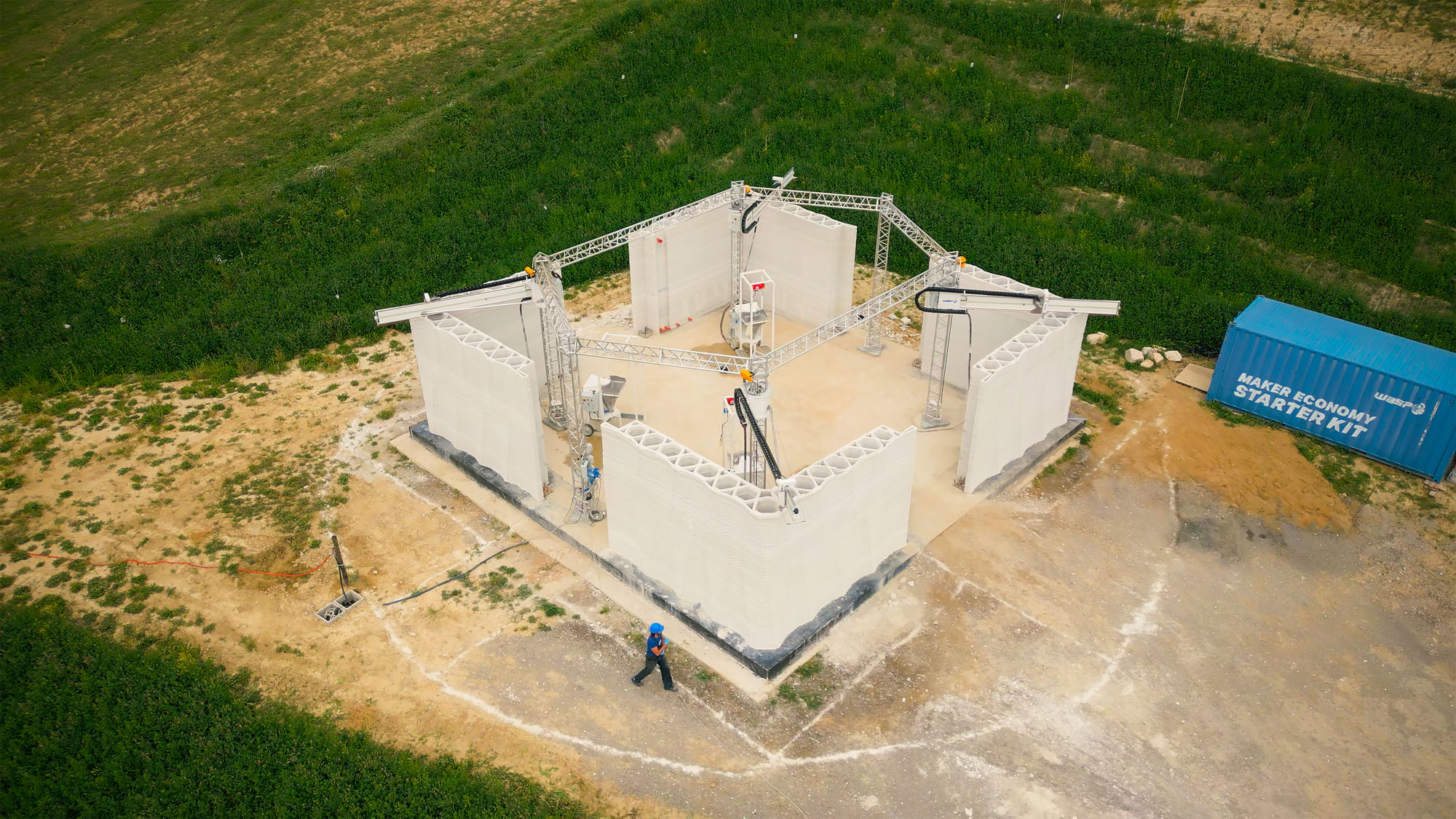
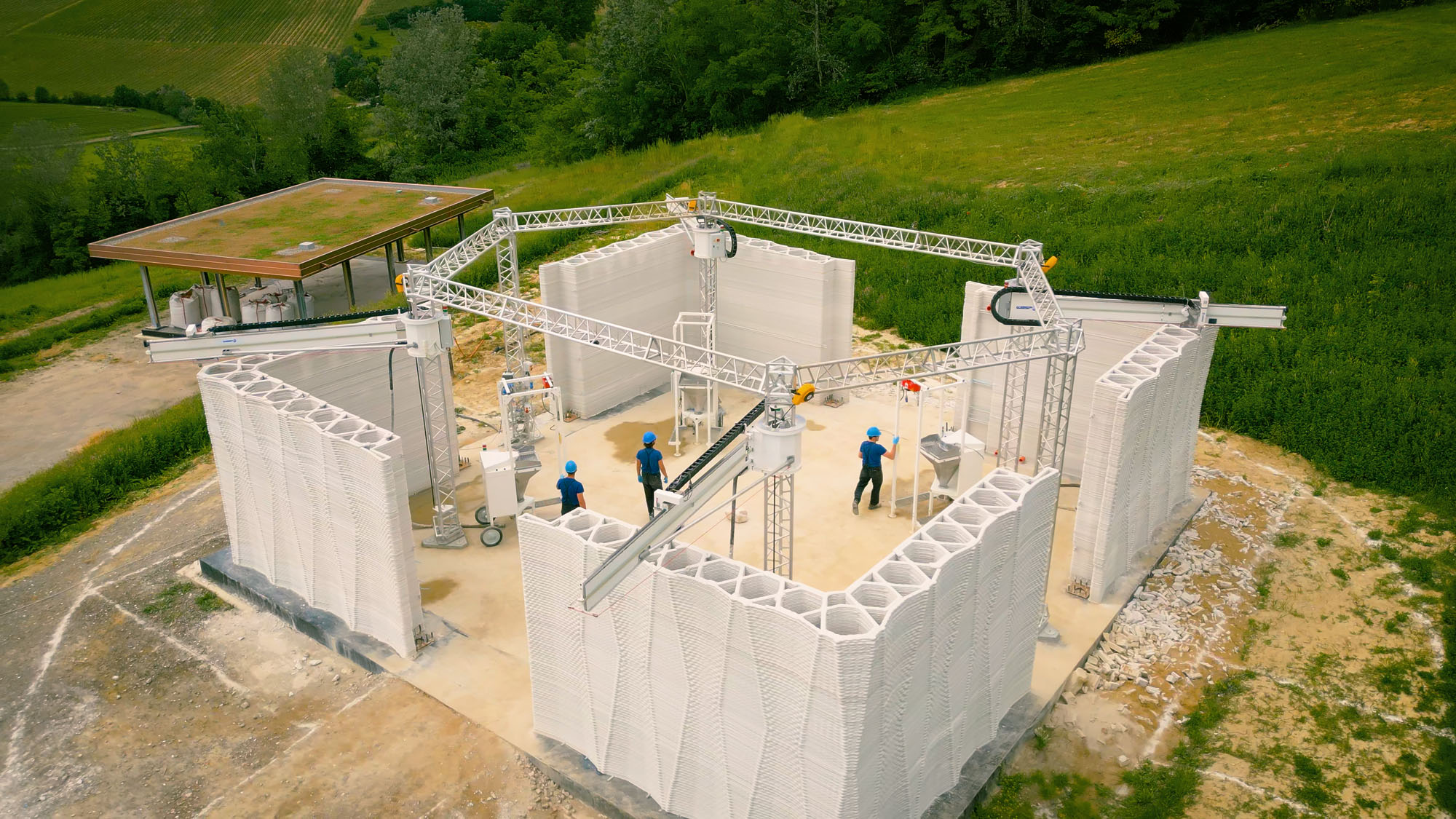
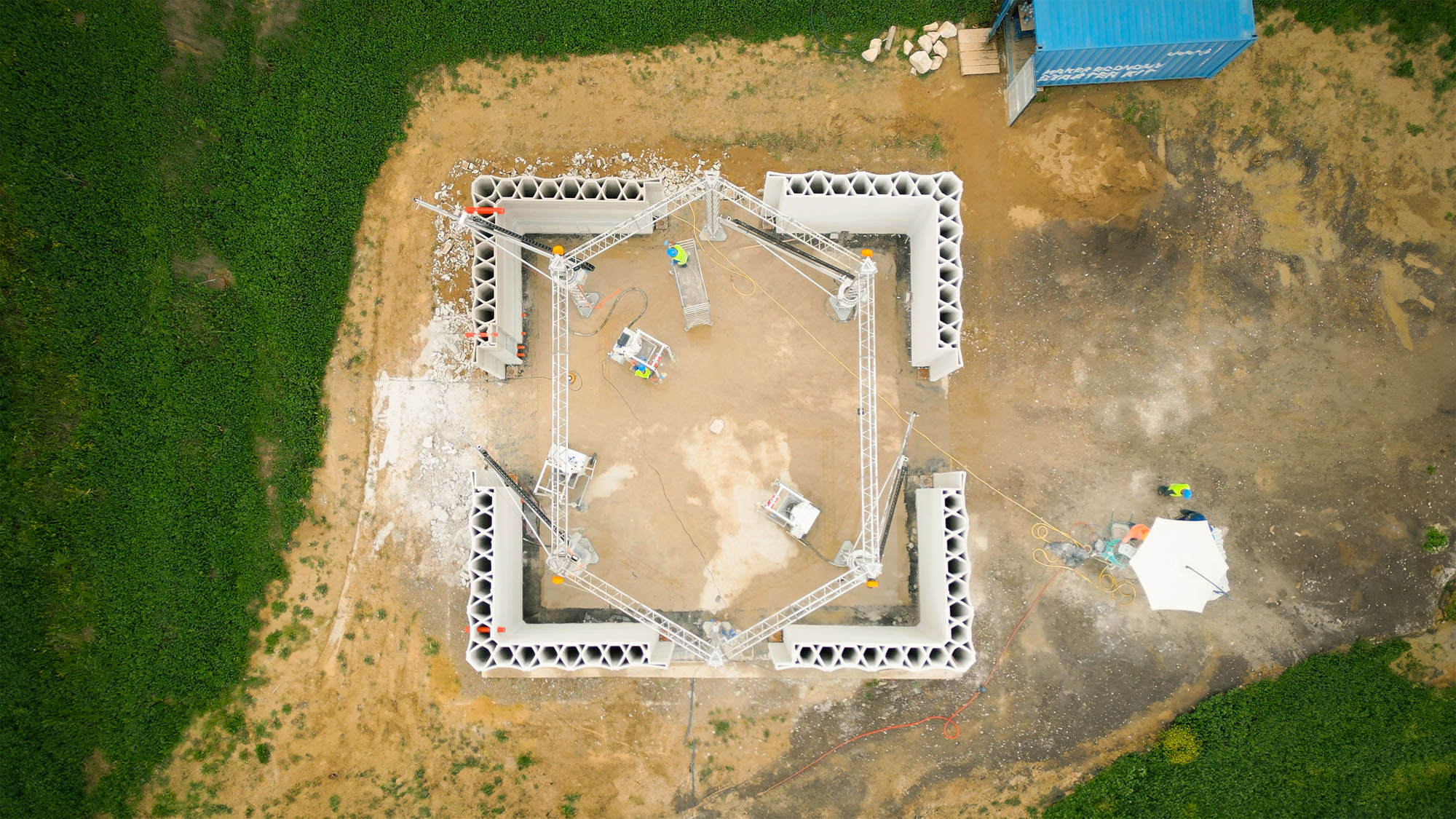
〈ITACA〉の建設には、六角形構造の頂点に4本のロボットアームを配置した、Crane WASPシステムの新たな構成が採用された。この構成により、4つの壁セクションを同時にプリントすることが可能となり、建設プロセスが大幅に加速した。4本のアームが同時に稼働すれば、わずか数日で住宅の構造シェルを完成させることができる。
©︎ WASP
©︎ WASP
©︎ WASP
セメントを使用せずに安全性を確保する素材の革新
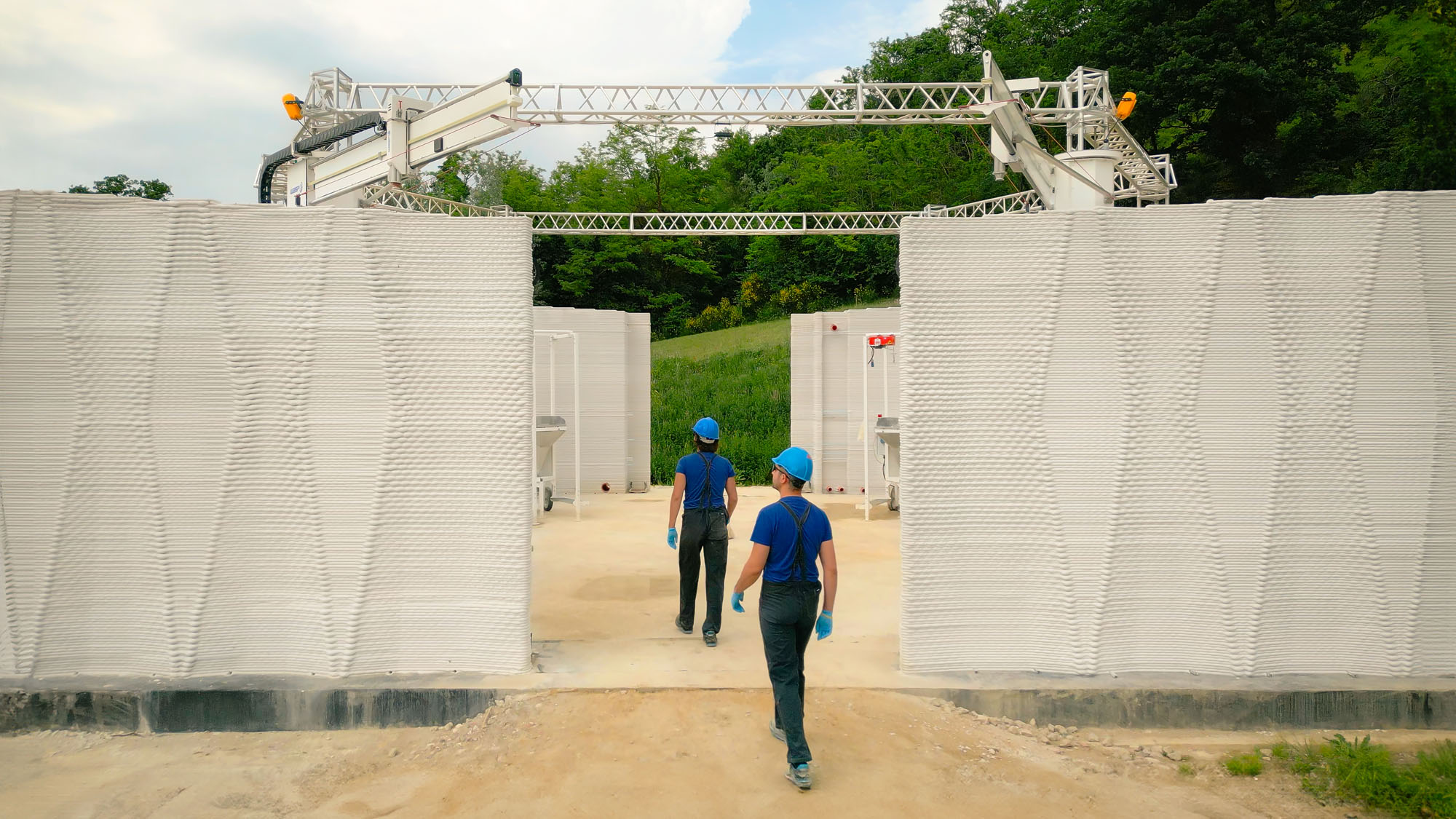
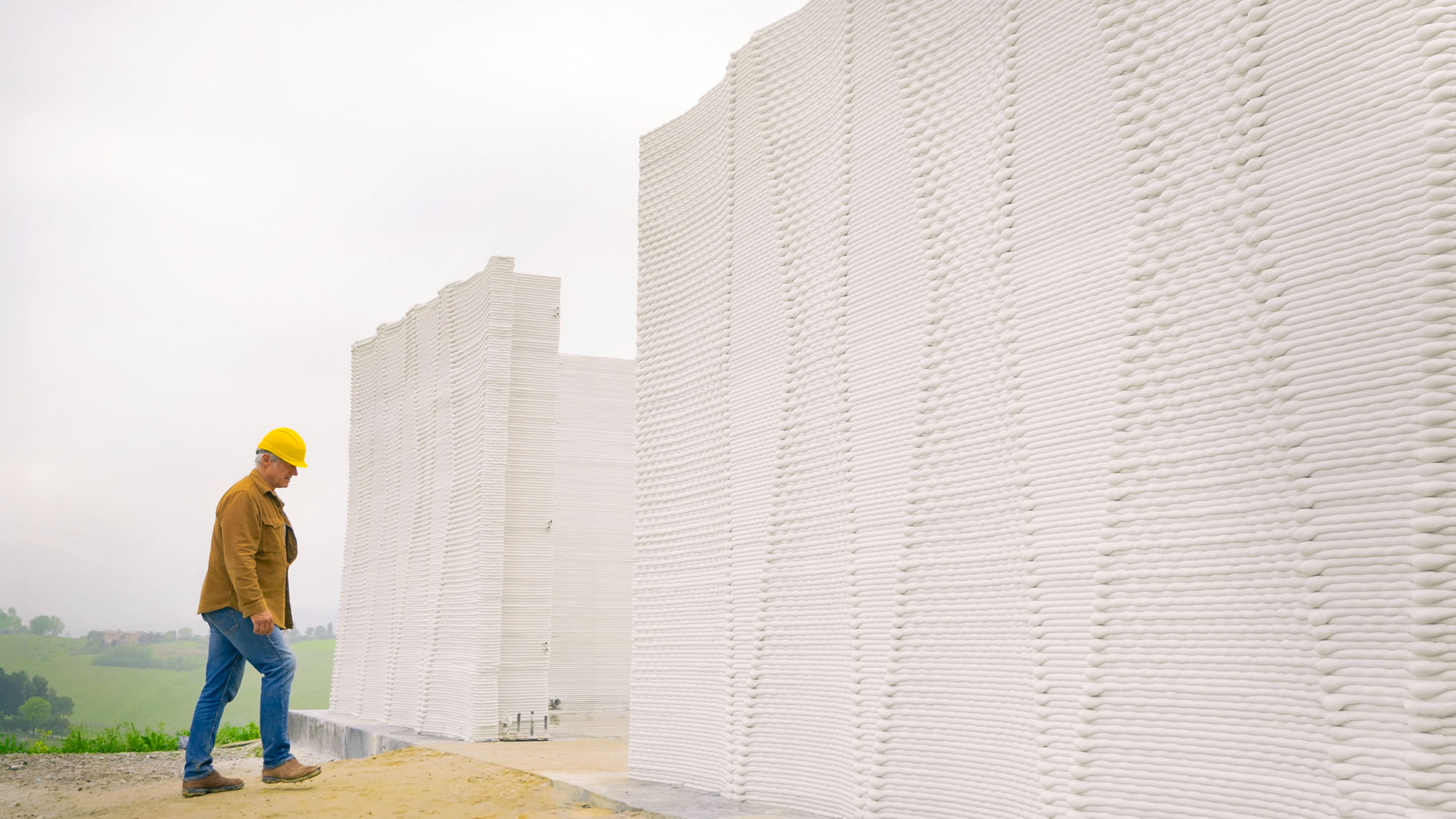
マンダラの幾何学から着想を得た〈ITACA〉のレイアウトは、円内に内接する正方形を基本としている。設計では、正方形の四隅に4つの主要な壁が配置され、各側面の中央には開口部が設けられている。建物の総面積は164.9 m²、各壁の高さは3,800mmであり、プリントには約24時間を要する。
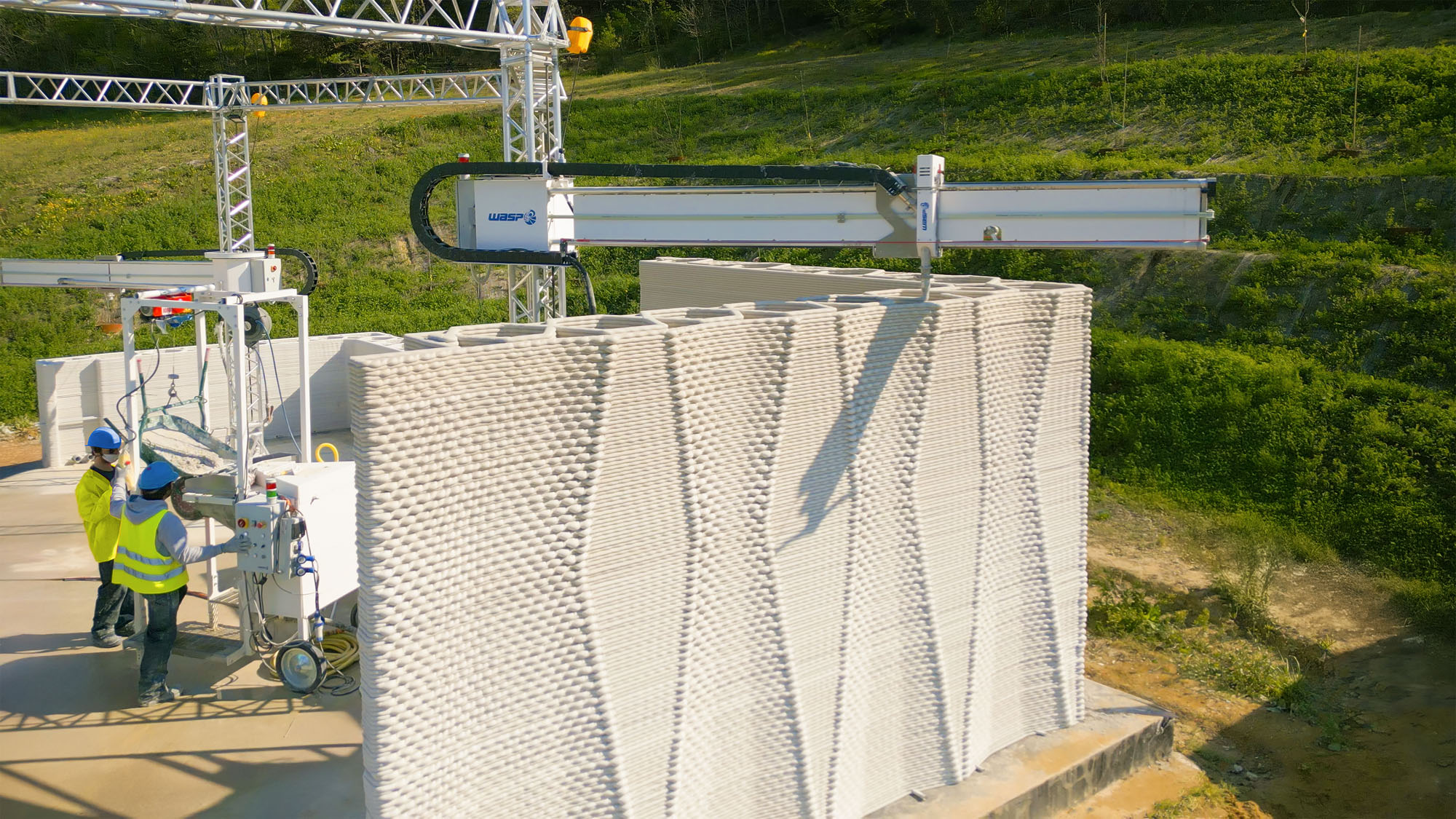
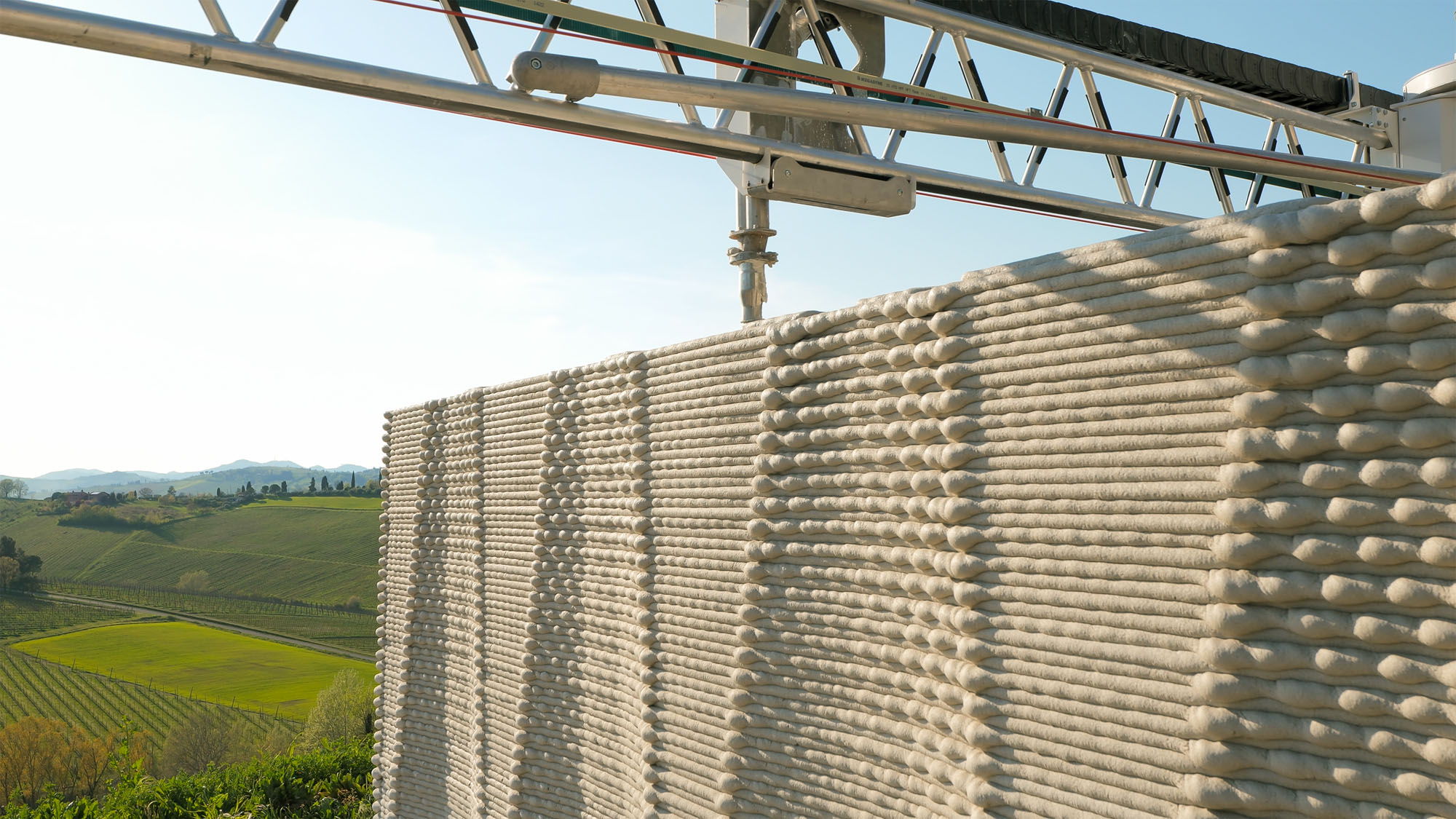
壁のプリントには、コンクリートを一切使用しない石灰ベースの混合物が用いられている。これは、従来のセメントに比べてCO2排出量が少ないにもかかわらず、安全で耐久性のある建築に必要な高性能基準を満たしていることから選定された。また、この石灰ベースの混合物は通気性が高く、壁が温度を自律的に調節しやすいため、表面のカビ発生を防ぐことができる点も選定理由の1つである。
©︎ WASP
©︎ WASP
©︎ WASP
壁の内側にも徹底するサステナビリティ
壁の充填部には、構造的完全性を高め、耐震規制への準拠を確保し、上部に設置されるグリーンルーフの荷重を支えるために、一連の補強柱が挿入されている。熱調節とエネルギー効率を向上させるため、壁は600〜700mmという厚さに設計されており、その充填部には、農業・食品サプライチェーンから発生する廃棄物である籾殻と天然石灰粉末が充填されている。このアプローチにより、外部断熱ではなく内部断熱を実現し、パッシブハウスとしての性能を備えることになる。
選定された建築材料と、産業副産物由来の天然断熱材を組み合わせることで、壁の環境負荷は劇的に低減され、CO2排出量がマイナスとなる水準にまで達する。規制が許す地域では、〈ITACA〉の同じ建築モジュールを、土を建築材料として使用して建設することも可能であり、建物の全体的な環境負荷の低減にさらに寄与する。
©︎ WASP
自給自足を実現する「マイクロ循環型経済」の実験場
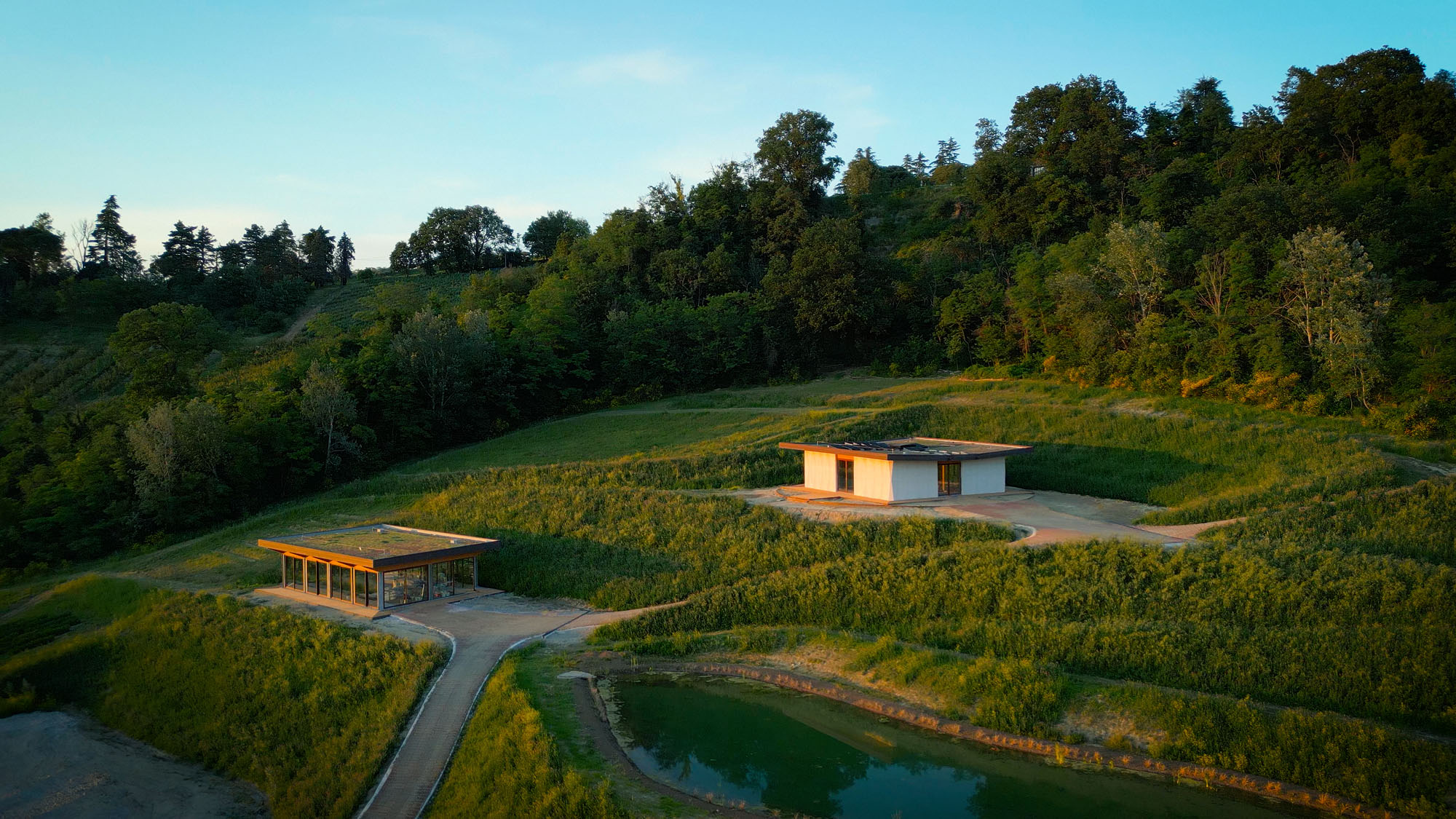
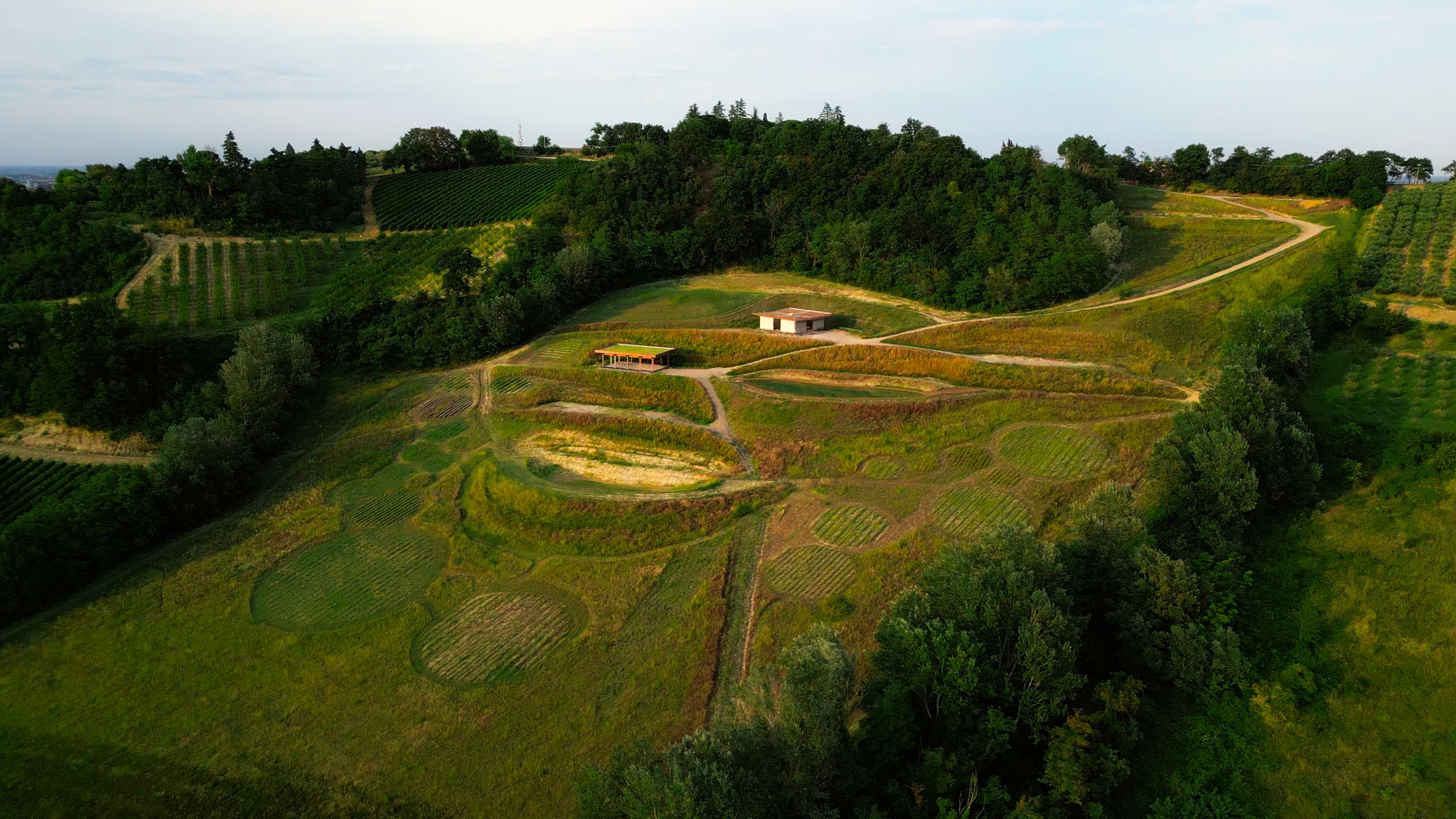
〈ITACA〉プロジェクトは、建物自体の建設だけでなく、周辺土地の管理に採用された革新的なソリューションにも焦点を当てている。これらの措置は、地域資源の賢明かつ持続可能な利用を可能にすることを目指しており、環境を尊重しつつ人間の生活を支えることができる「マイクロ循環型経済」の構築を最終目標としている。このビジョンに基づき、本プロジェクトは環境再生と持続可能なデザインに対する包括的なアプローチを採用している。
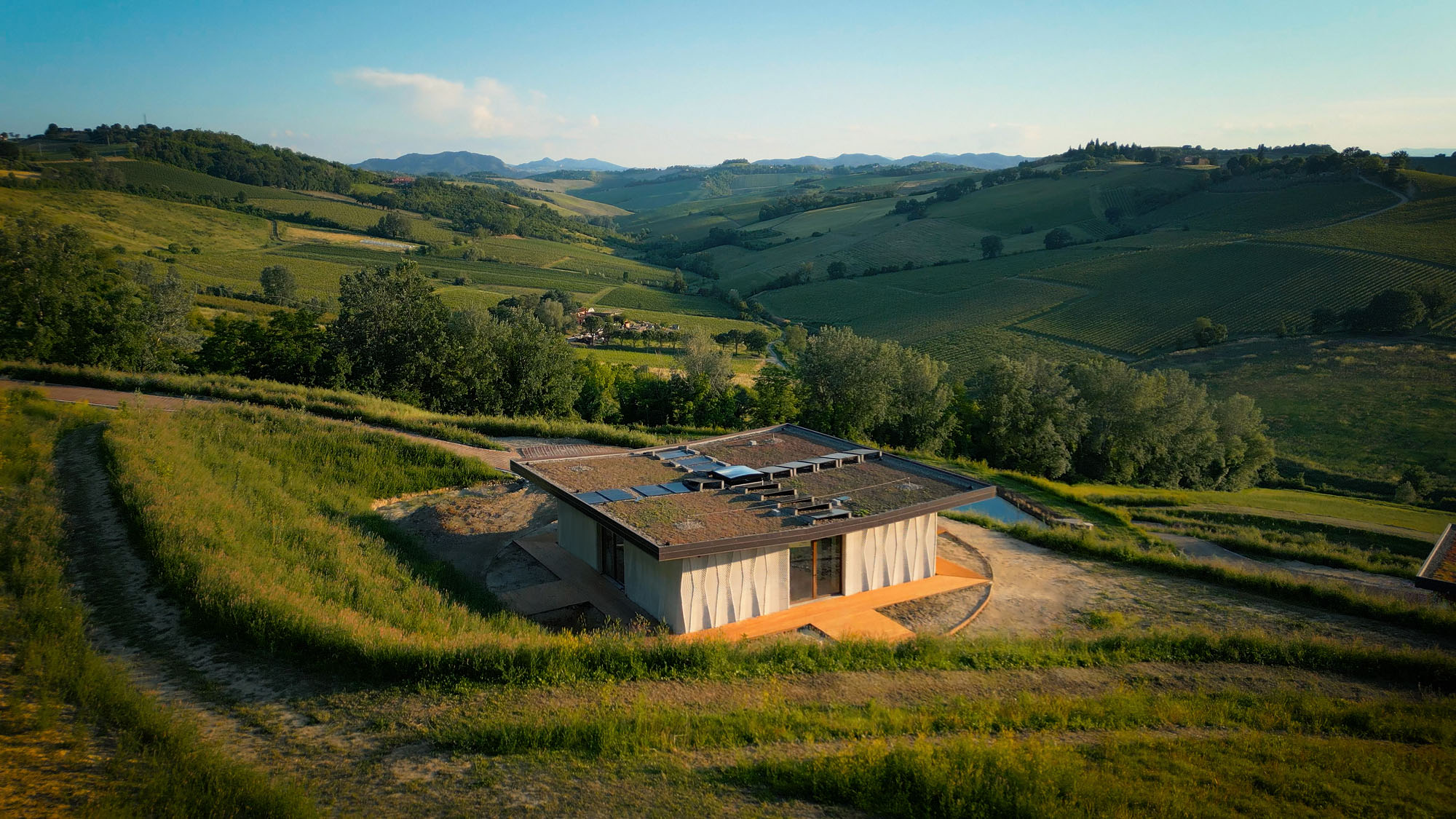
建物自体に目を向けると、通気性のある壁が室内の温度調節を助け、エネルギー需要を削減し、冷暖房による排出量を低減する。また、壁には輻射式暖房システムや電気設備が組み込まれており、これらはプリント工程中に埋め込まれるため、建設後の追加工事が不要である。これには、暖房、電気配線、断熱が含まれる。
©︎ WASP
©︎ WASP
自給自足のための住まいとインフラ
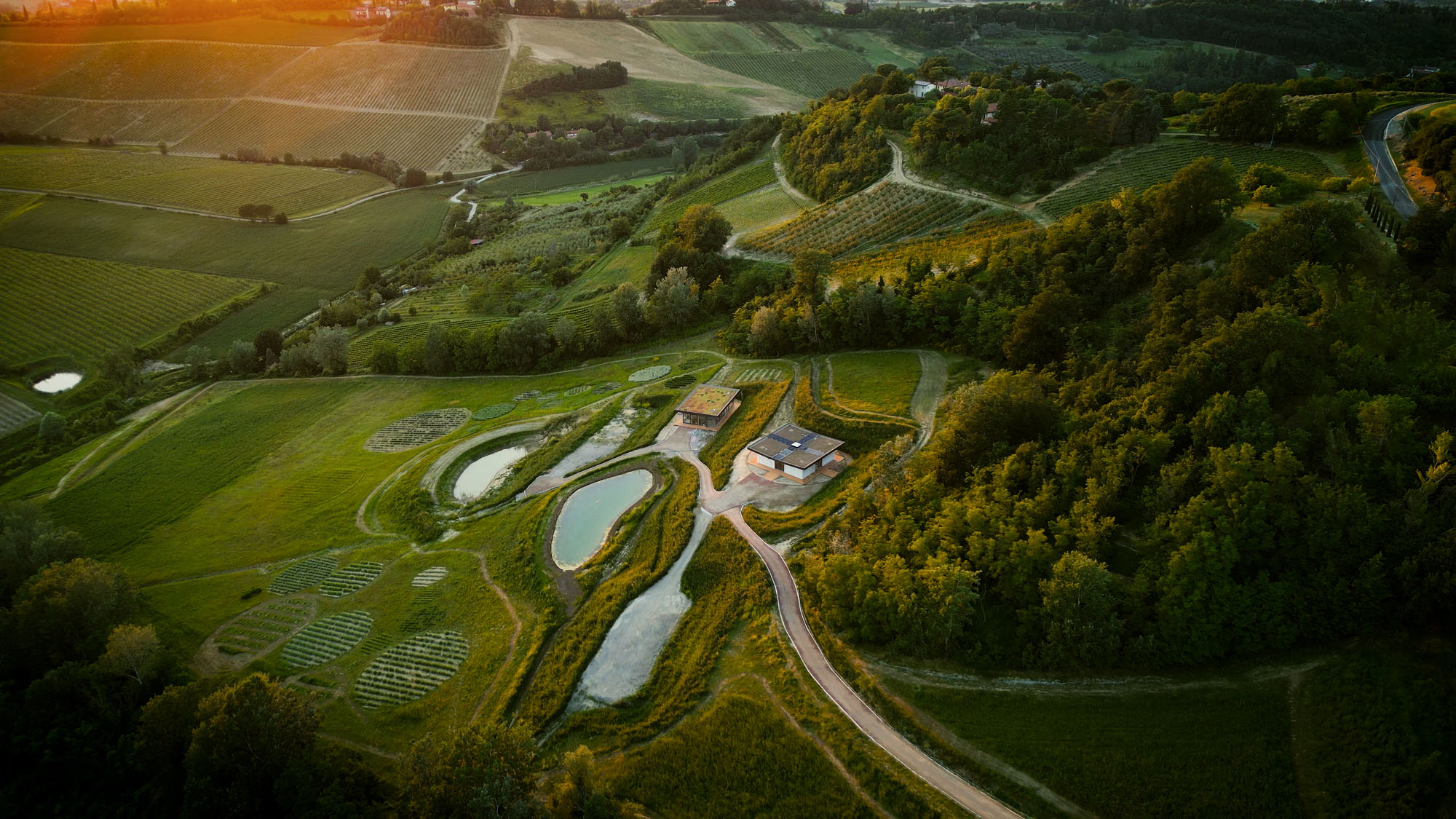
屋外敷地には、水の回収を促進し、土壌侵食を抑制し、作物の栽培を支援するために、2つの雨水貯留槽が建設された。〈ITACA〉の屋上には、断熱を確保しエネルギーコストを削減するとともに、都市の生物多様性を促進するため、グリーンルーフとソーラーパネルシステムが設置される予定となっている。
「直径33mの空間」で実証する、食料・水・エネルギーの自給自足
このプロジェクトは、「地球上で直径33mの空間があれば、最大4人が自立した生活を送るのに十分である」という仮説に基づいている。〈ITACA〉は、環境のバランスを維持しつつ、循環型のマイクロ経済を構築するために最適化された技術的ソリューションの集大成である。
共同研究・開発モデルとしての〈ITACA〉
集合知のデジタル化とデジタル製造が、このプロジェクトの開発を導くプロセスとなっている。〈ITACA〉は、実装されたすべてのソリューションがデジタル化され共有される、共同研究開発モデルとして提案されている。
「私たちWASPにとって、〈ITACA〉は食料、水、エネルギー、そして経済的な自給自足への道筋を表している。これは、社会、エネルギー、気候、および大規模な移民危機に対する解決策の提案であり、私たちにとって3Dプリントとデジタル化は、人類のニーズに応える手段なのである。」
WASP創設者
マッシモ・モレッティ(Massimo Moretti)
©︎ WASP
©︎ WASP
以下、WASPのリリース(英文)です。
ITACA
The self-sufficient and eco-sustainable 3D printed houseThe first certified 3D printed house in Italy
WASP has finished printing the walls of Itaca, the first certified 3D-printed construction located in the Shamballa open-air laboratory in the hills of Northern Italy. It’s a new initiative to develop a 3D-printed, self-sufficient farm and living model based on a circular micro-economy. The project aims to establish a new paradigm for sustainable construction that is easily replicable worldwide, thanks to the rapid transmission of information enabled by 3D printing technology and the use of Crane WASP, a versatile and accessible machine capable of operating even in remote areas.One of the main goals behind Itaca’s construction was to create a 3D-printed building that meets the same standards as traditional structures, including earthquake resistance, in compliance with Italian and European regulations. Given Italy’s stringent regulatory standards, being a region prone to seismic activity, achieving certification under such demanding conditions demonstrates the model’s potential for replicability in most parts of the world.
Redefining sustainable 3D printing construction
The construction of Itaca was executed by WASP 3D Build, WASP’s innovative startup dedicated to 3D-printed construction using the Crane WASP system. Itaca is the first 3D-printed structure to take shape in Shamballa, WASP’s open-air laboratory for sustainable living, nestled in the hills of Northern Italy.The construction of Itaca was executed using a new configuration of the Crane WASP system, featuring four robotic arms positioned at the vertices of a hexagonal structure. This setup enables the simultaneous printing of four wall sections, significantly accelerating the building process. When operating simultaneously, the four arms can complete the structural shell of a house in as little as a couple of days.
3D house with a negative CO₂ emissions balance
Inspired by the geometry of a Mandala, Itaca’s layout consists of a square inscribed within a circle. The design includes four main walls located at the corners of the square, each side featuring a central opening. The total area of the building is 164.9 m2, with each wall standing at 380 cm and requiring approximately 24 hours to print.The walls are printed using a lime-based mixture without any concrete, selected for its lower carbon emissions compared to traditional cement, while still meeting the high-performance standards required for safe and durable construction. The lime-based mix was also selected for its high breathability, which allows the walls to better self-regulate their temperature and avoid mold formation on their surfaces.
Inside the wall infills, a series of reinforcement columns will be inserted to enhance structural integrity, ensure compliance with earthquake regulations, and support the load of the green roof to be installed above. To improve thermal regulation and energy efficiency, the walls have been designed with a significant thickness of 60 to 70 cm, and their infills will be packed with rice husks sourced from waste produced by the agri-food supply chain and natural lime powder. This approach enables the creation of internal insulation rather than external, resulting in a passive energy house.
By combining the selected construction materials with natural insulating materials derived from industrial byproducts, the environmental impact of the walls is drastically reduced, to the point of achieving a negative CO₂ emissions balance. In regions where regulations allow, the same architectural module of Itaca can also be built using earth as a construction material, further contributing to the reduction of the building’s overall environmental impact.
A laboratory for self-sufficiency
The Itaca Project is not solely focused on the construction of the building itself, but also on the innovative solutions adopted for managing the surrounding land. These measures aim to enable intelligent and sustainable use of local resources, with the ultimate goal of creating a micro circular economy capable of supporting human life while respecting the environment. Building on this vision, the project embraces a holistic approach to environmental regeneration and sustainable design.Starting from the building itself, ventilated walls help regulate indoor temperatures, reducing energy requirements and lowering emissions from heating and cooling. The walls also feature radiant heating systems and electrical installations, which are embedded during the printing process, eliminating the need for post-construction intervention. This includes heating, electrical wiring, and insulation.
“Getting a place as harsh as the moon to be inhabited is hard to imagine, but science says it can be done. Why don’t we apply the same technologies here on Earth, to get even the most extreme environments to be hospitable?
Massimo Moretti, founder of WASPA home for self-sufficient living
Two rainwater collection basins have been built on the outdoor grounds to promote water recovery, control soil erosion, and support crop cultivation.A green roof and solar panel system will be installed on Itaca’s roof to ensure insulation and reduce energy costs, as well as promote urban biodiversity.
Food, water and energy self-sufficiency in a 33 meters diameter
The project is based on the thesis that, on Earth, a space of 33 meters in diameter is sufficient to make up to 4 people independent.Itaca represents a selection of technical solutions optimized to create a circular micro economy, while maintaining the environmental balance.
Itaca is a collective research and development model
The digitization of collective knowledge and digital manufacturing are the processes that guide the development of the project.Itaca proposes itself as a collective research and development model, where all the solutions implemented are digitized and shared.
“For us at WASP, Itaca represents a path towards food, water, energy and economic self-sufficiency. A proposal for a solution to the social, energy, climate, and mass migration crisis. For us, 3D printing and digitization are a response to the needs of humanity ”
Massimo Moretti, founder of WASP
WASP 公式サイト
https://www.3dwasp.com/en/



![[Report]方丈庵から生き方を問う、21_21 DESIGN SIGHT 企画展「方丈記に学ぶ –生きるを編み直す小さな建築–」会場レポート](https://magazine-asset.tecture.jp/wpcms/wp-content/uploads/2026/09/01181900/20260828hojoki-ex_01_mag-endo4350-900x676.jpeg)