CULTURE
©︎ Grand Egyptian Museum
©︎ Grand Egyptian Museum
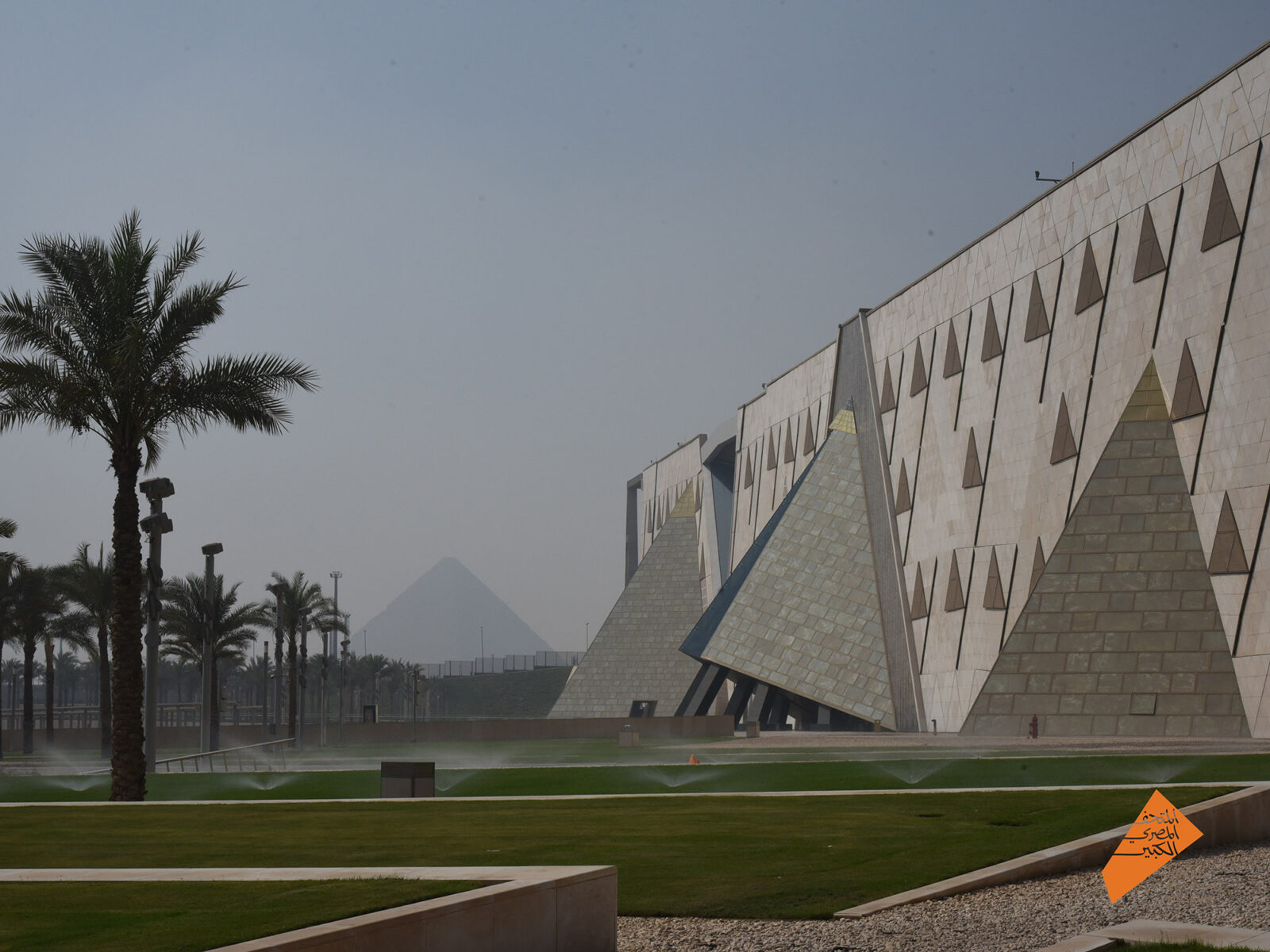
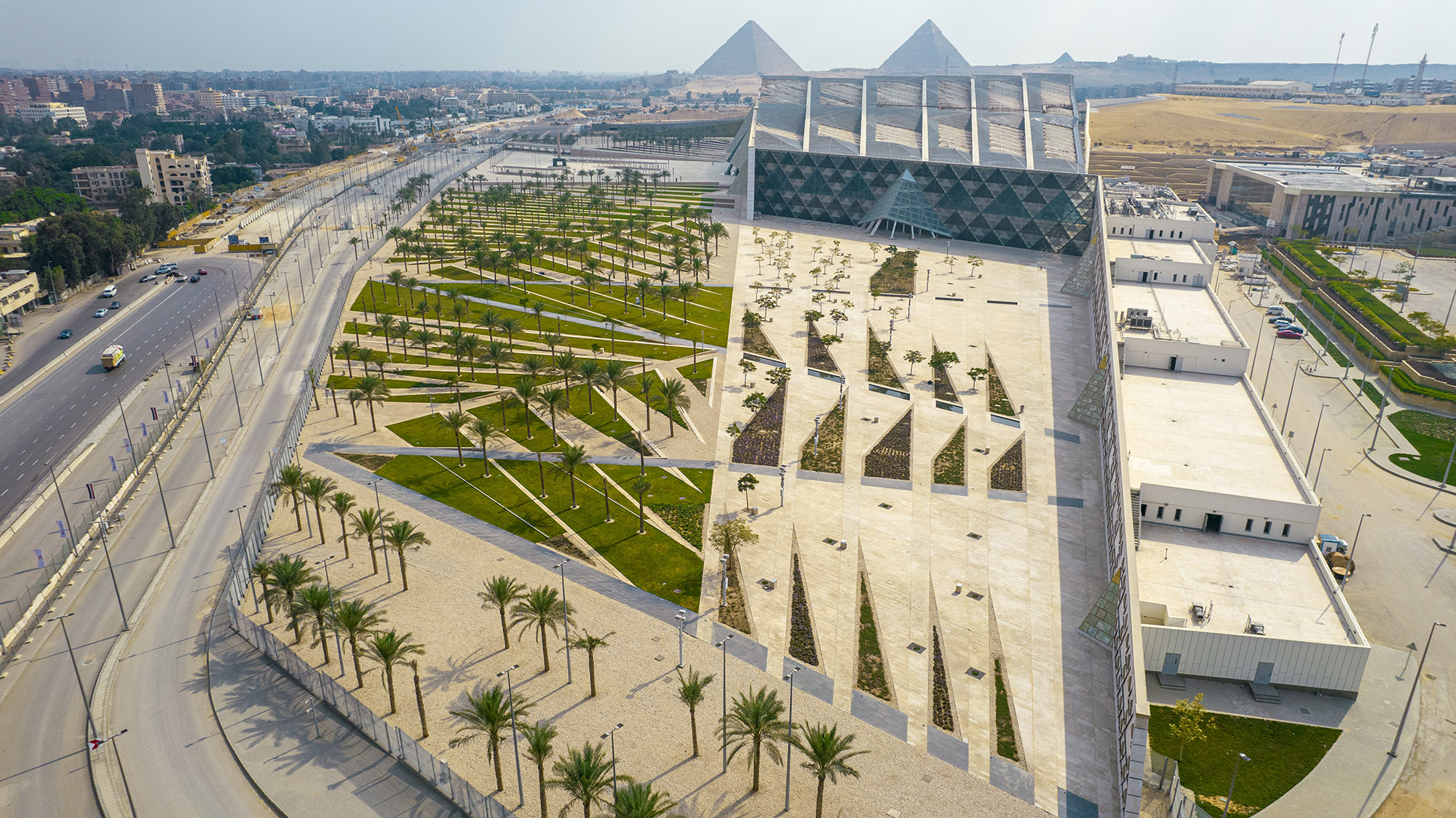
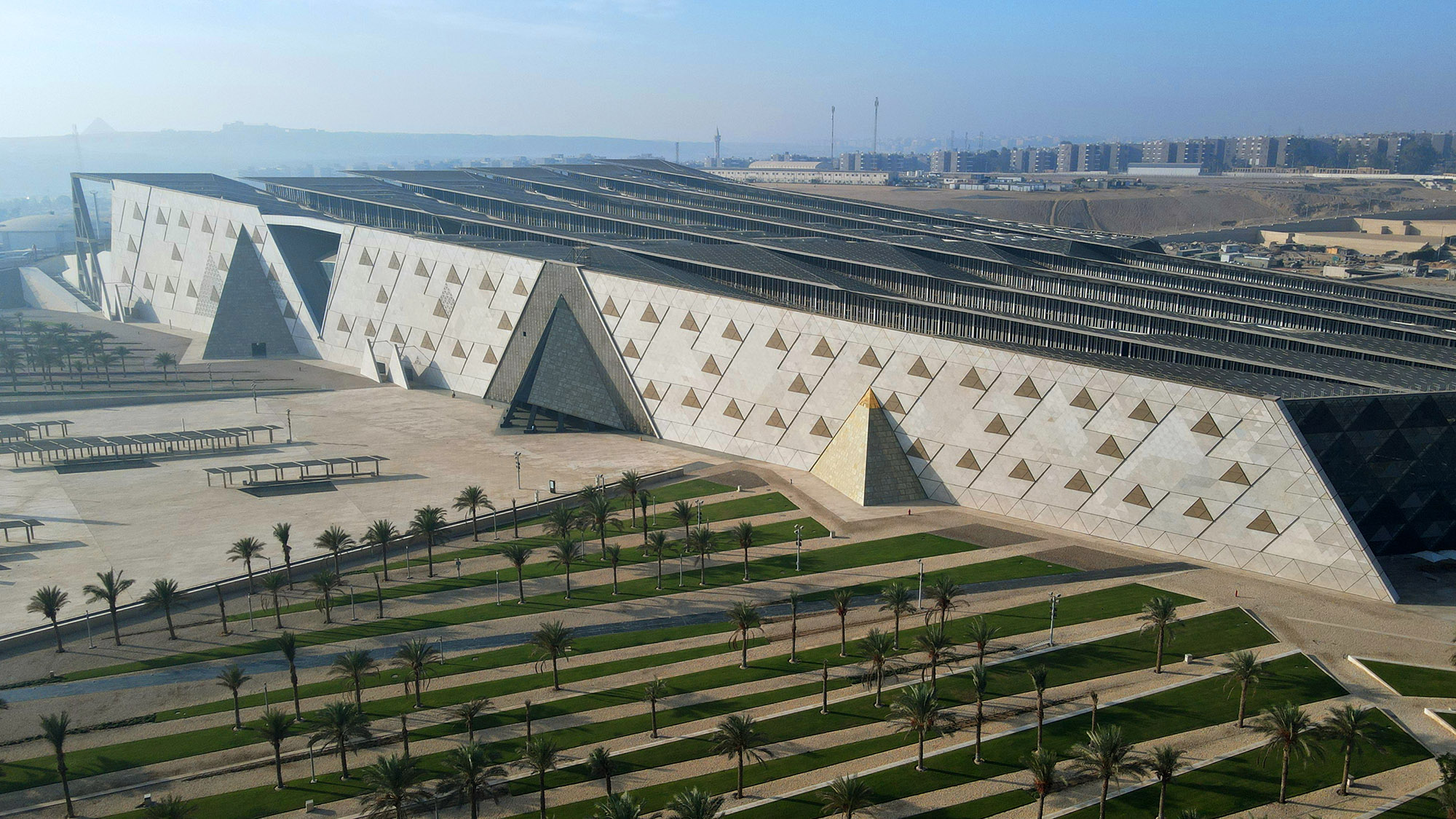
ギザのピラミッドから約1.6kmの地点に位置する〈大エジプト博物館(Grand Egyptian Museum)〉は、2025年11月にオープンした古代エジプト文明をテーマとした博物館です。
建築、ランドスケープ、都市デザインを手掛ける設計事務所 ヘネガン・ペン・アーキテクツ(heneghan peng architects)が設計しました。
注目ポイント
- 10万点以上の遺物を収蔵する世界最大の単一文明博物館
- ピラミッドの位置に正確に呼応する視覚軸
- 石造遺物の特性を活かした自然採光の導入
- 先王朝時代からコプト時代の展示を結ぶ壮大な階段
(以下、ヘネガン・ペン・アーキテクツから提供されたプレスキットのテキストの抄訳)
©︎ Georges & Samuel Mohsen – The GS Studio
©︎ Grand Egyptian Museum
ギザのピラミッドと対話する、世界最大の”単一文明”の博物館
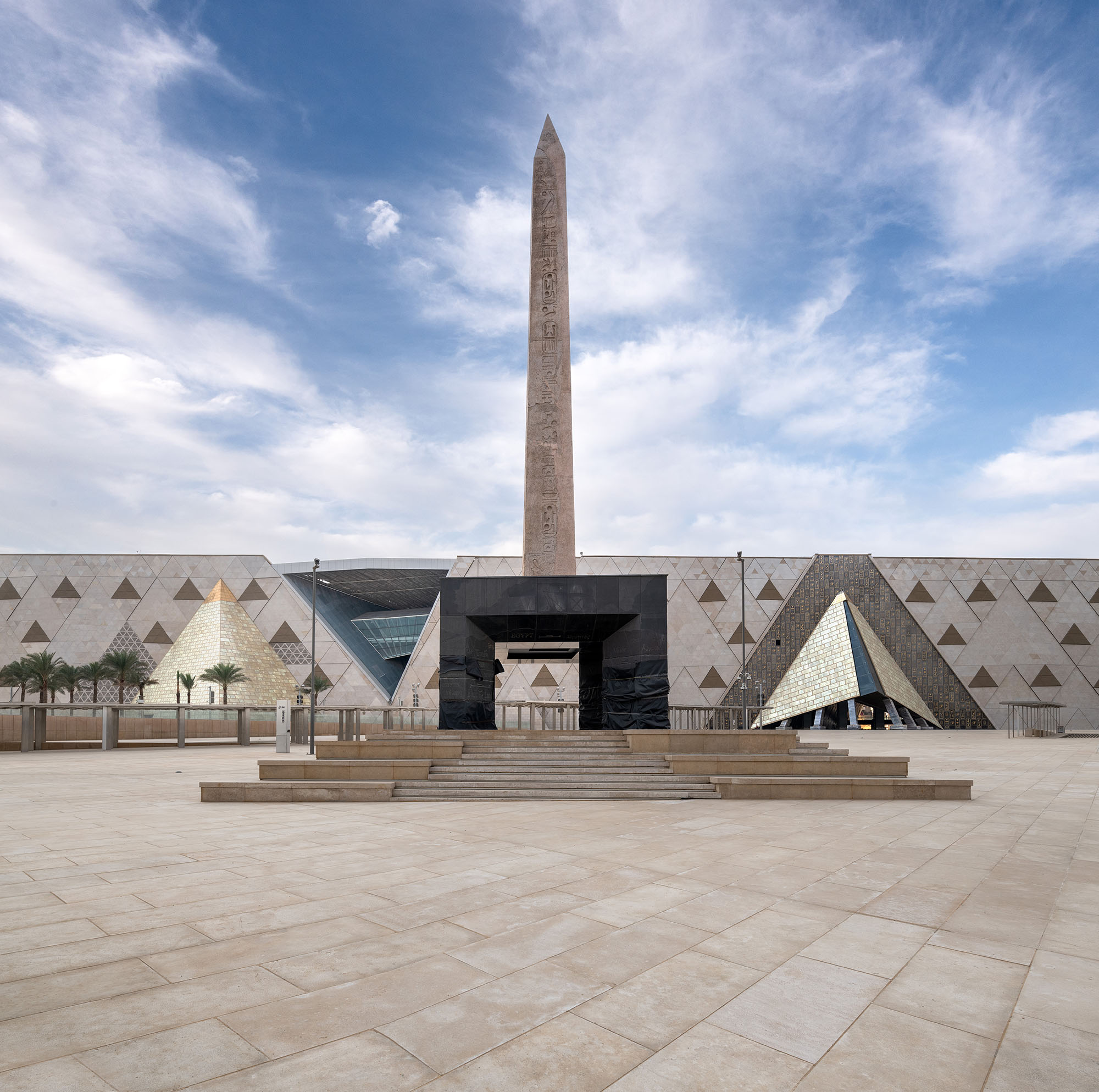
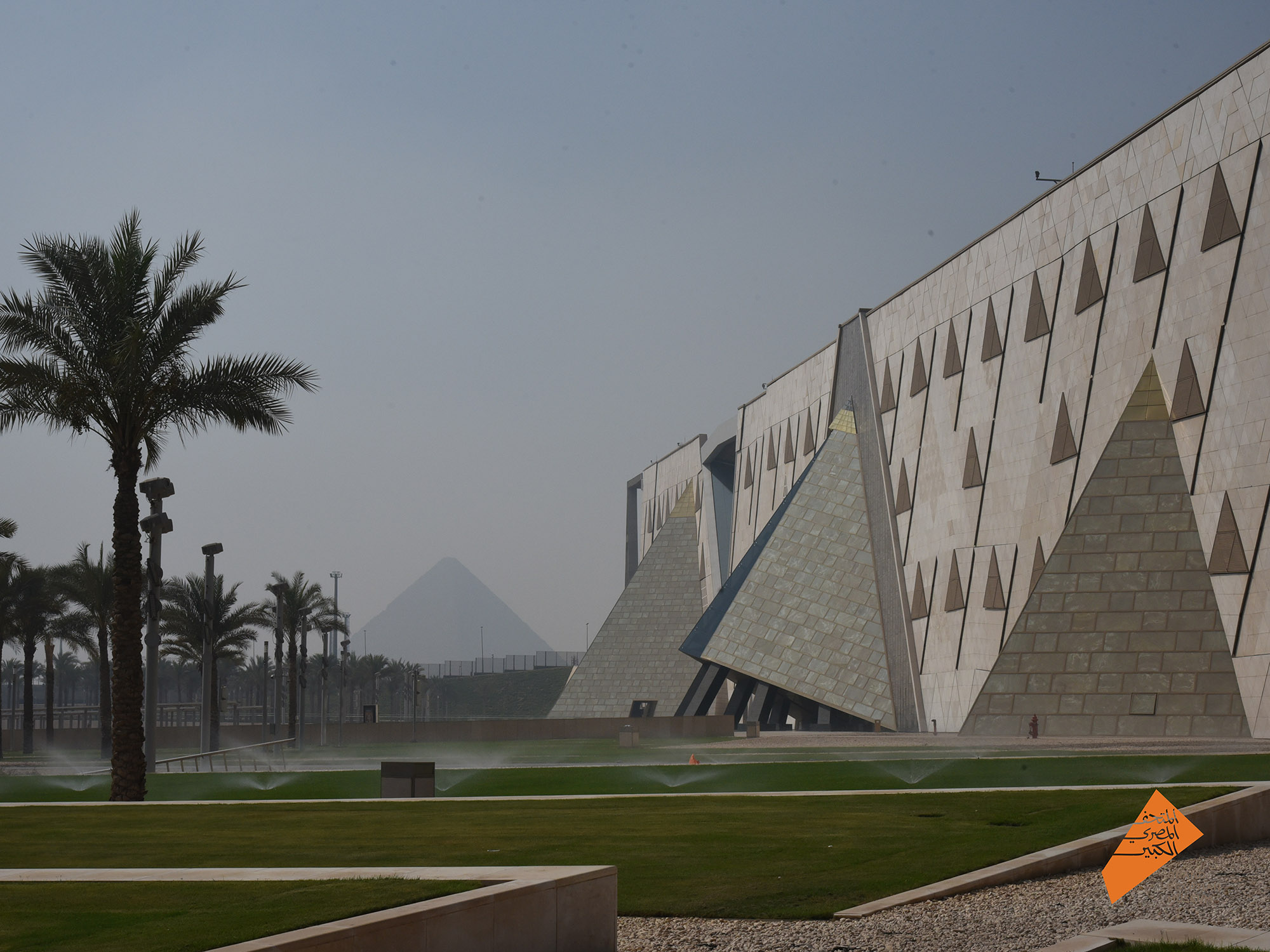
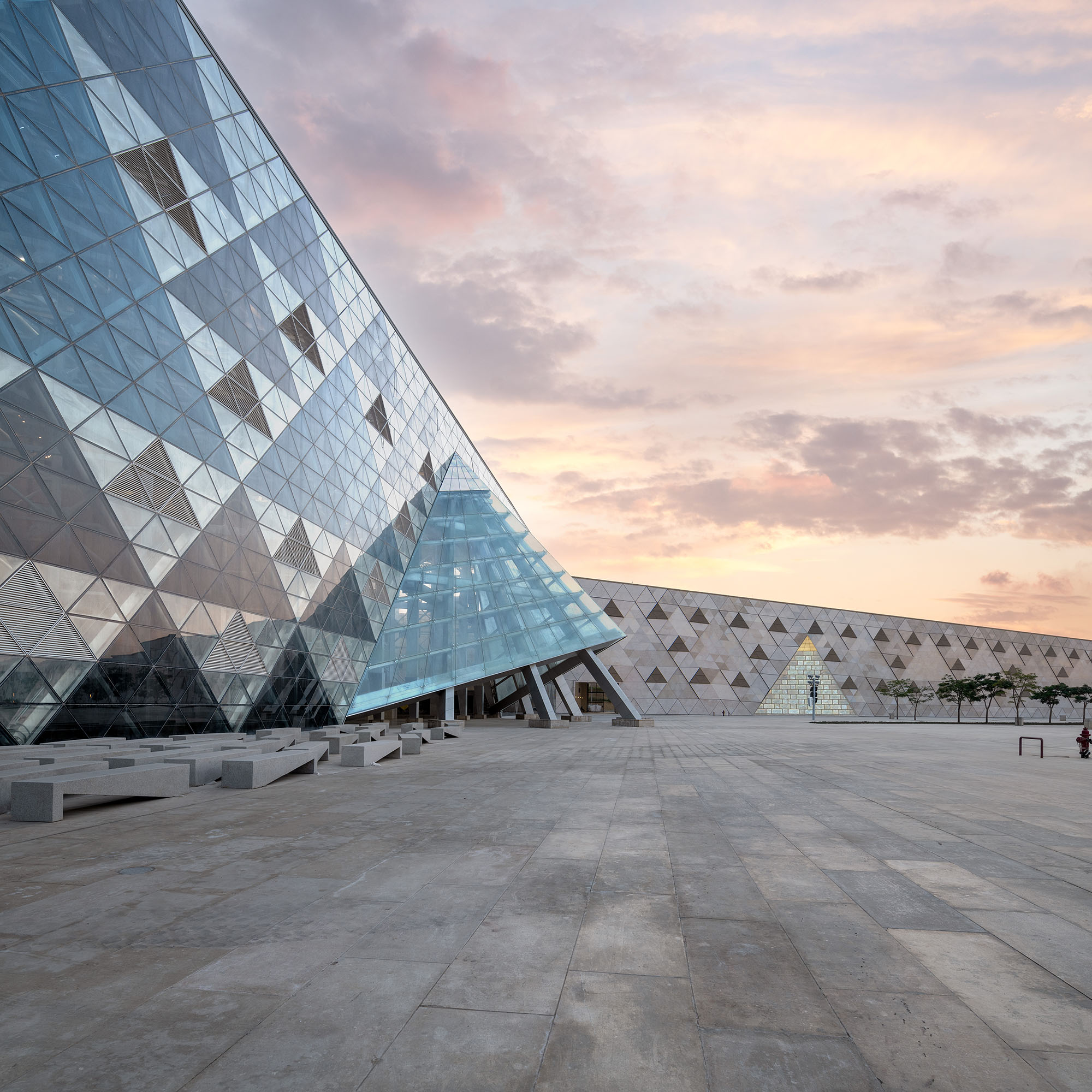
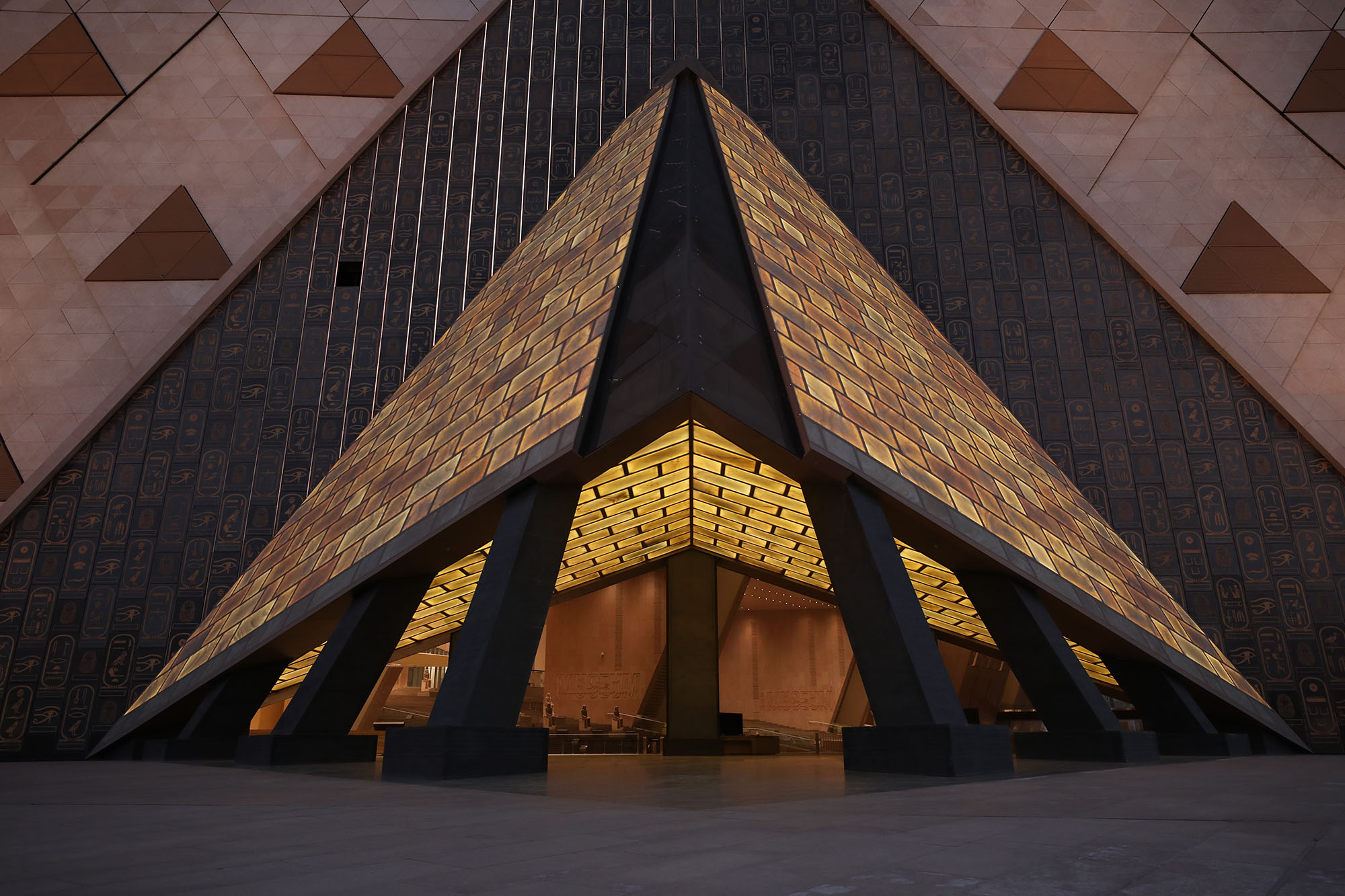
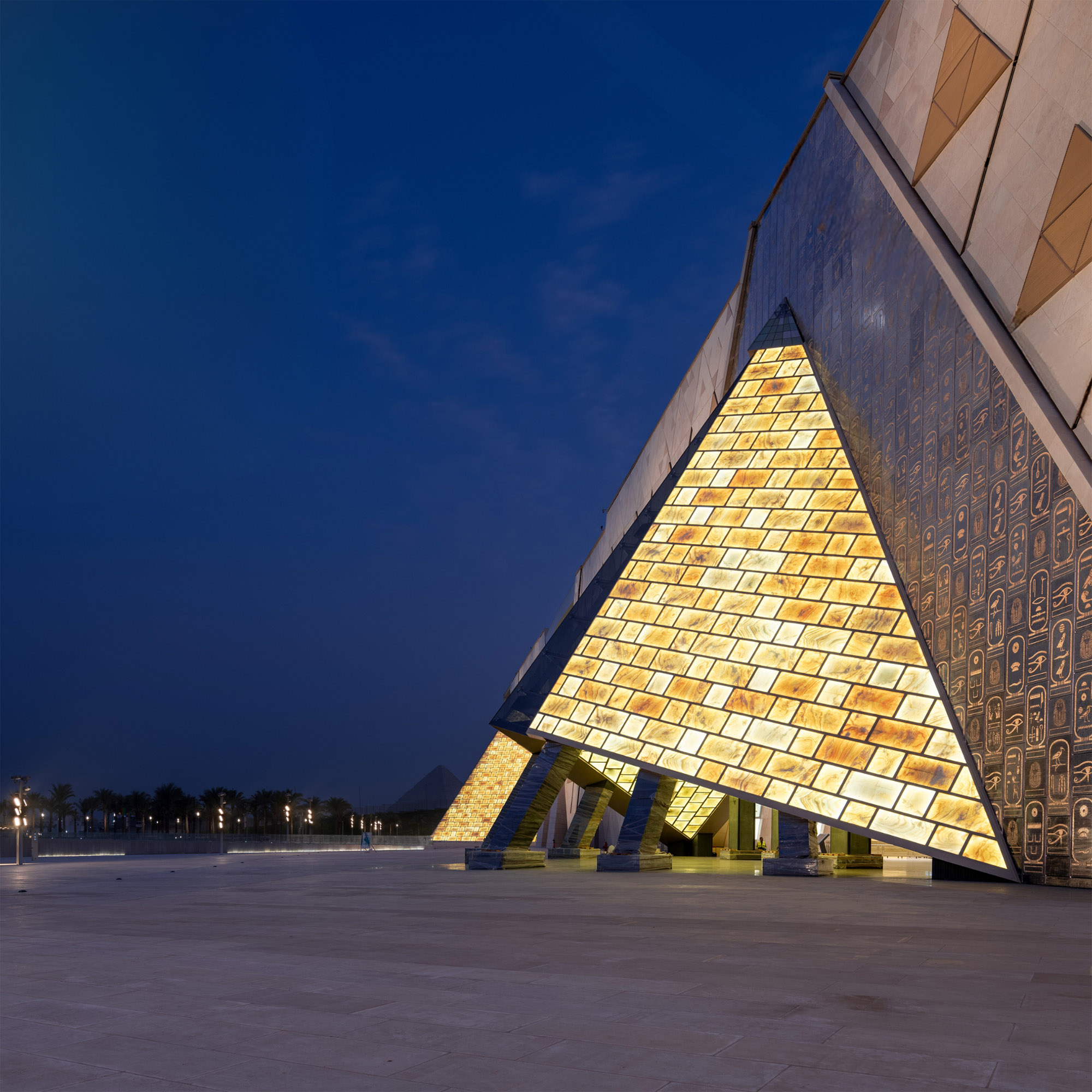
ギザのピラミッドから約1.6kmの地点に位置する〈大エジプト博物館〉は、古代エジプト文明の永続性とその規模、そして今日に至るまでの影響力を象徴する建築である。
10万点におよぶ遺物を収蔵する本博物館は、単一文明に特化した世界最大の施設である。完全竣工を記念し、ツタンカーメン展示室がオープンし、5,000点を超える遺物コレクションが初めて全点公開された。ヘネガン・ペン・アーキテクツは、ピラミッドの配置と直接呼応する設計により、歴史と現代性を思慮深く結びつけた。
©︎ Grand Egyptian Museum
©︎ Grand Egyptian Museum
世界最大規模の国際コンペを制した設計案
ヘネガン・ペン・アーキテクツは2003年、エジプト文化省が開催した世界最大級の建築設計コンペにおいて本プロジェクトを勝ち取った。ピラミッドを見下ろす由緒ある敷地に世界クラスの博物館を建設するという挑戦に対し、82カ国から1,556件の応募が寄せられた中での選出であり、アイルランドを拠点とする同事務所にとって重要な成果となった。
設計開発にはアラップ(Arup)およびビューロ・ハッポルド(Buro Happold)と合弁事業を組織した。さらにカルチュラル・イノベーションズ(Cultural Innovations)とメタファー(Metaphor)が博物館サービスを、ウエスト8(West 8)がランドスケープデザインを担当し、国際的な協働体制のもとで具現化された。
©︎ Georges & Samuel Mohsen – The GS Studio
©︎ Iwan Baan
©︎ Iwan Baan
歴史と場所を結ぶ「ピラミッドとの対話」
「ピラミッドという記念碑的で象徴的なランドマークのすぐ近くで、この規模の博物館を設計する機会は一生に一度であろう。私たちのデザインは、歴史と場所との結びつきを強化し、かつて公開されたことのない遺物を、それらが生まれたまさにその土地の上に安置する場を提供する。その結果生まれた体験は、古代エジプトの歴史の深さに畏敬の念を抱かせ、同時に現代的でありながら時代を超越した感覚を与えるものである。」
ヘネガン・ペン・アーキテクツ 創設パートナー
ロイシン・ヘネガン(Róisín Heneghan)
©︎ heneghan peng architects
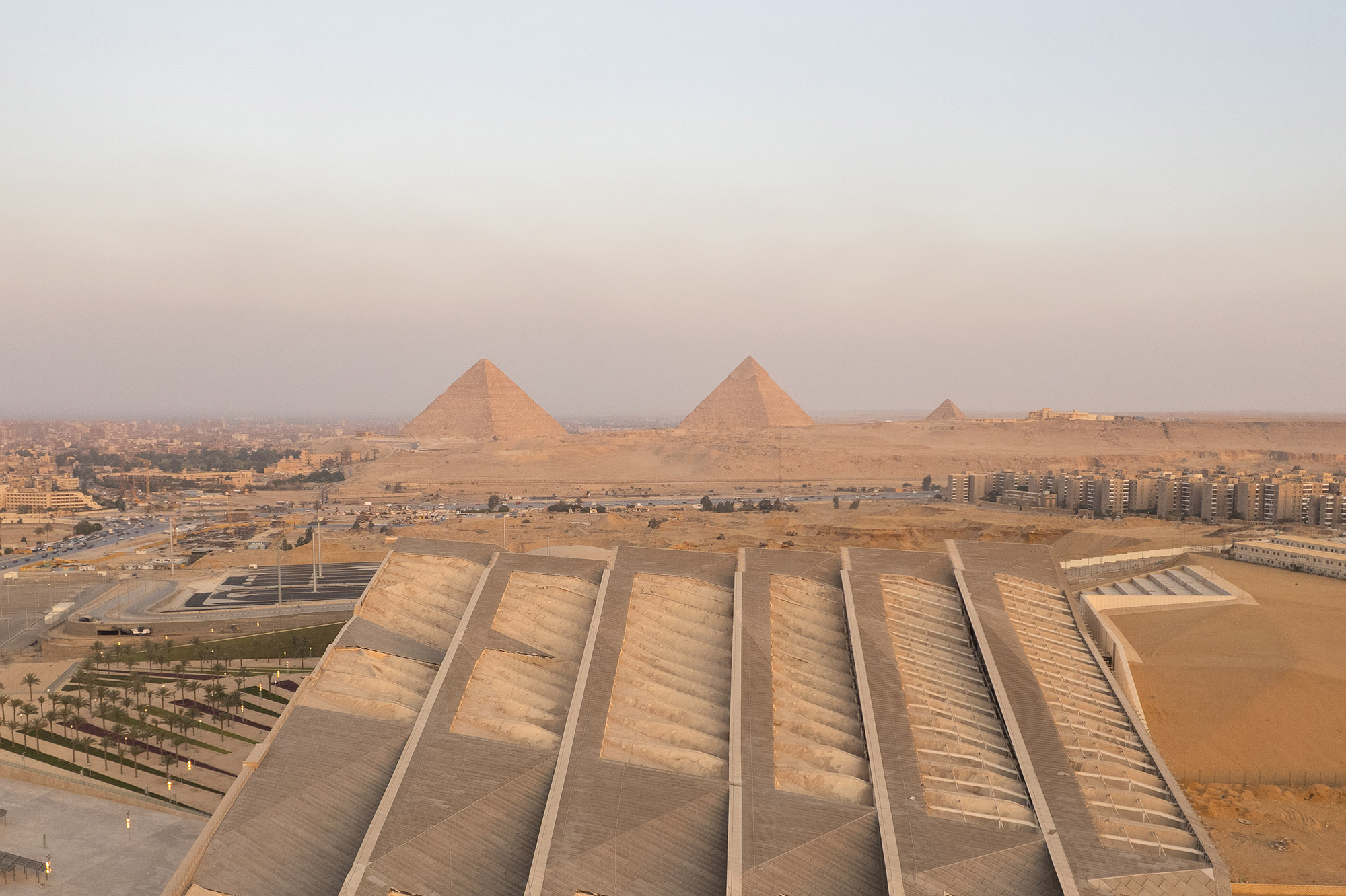
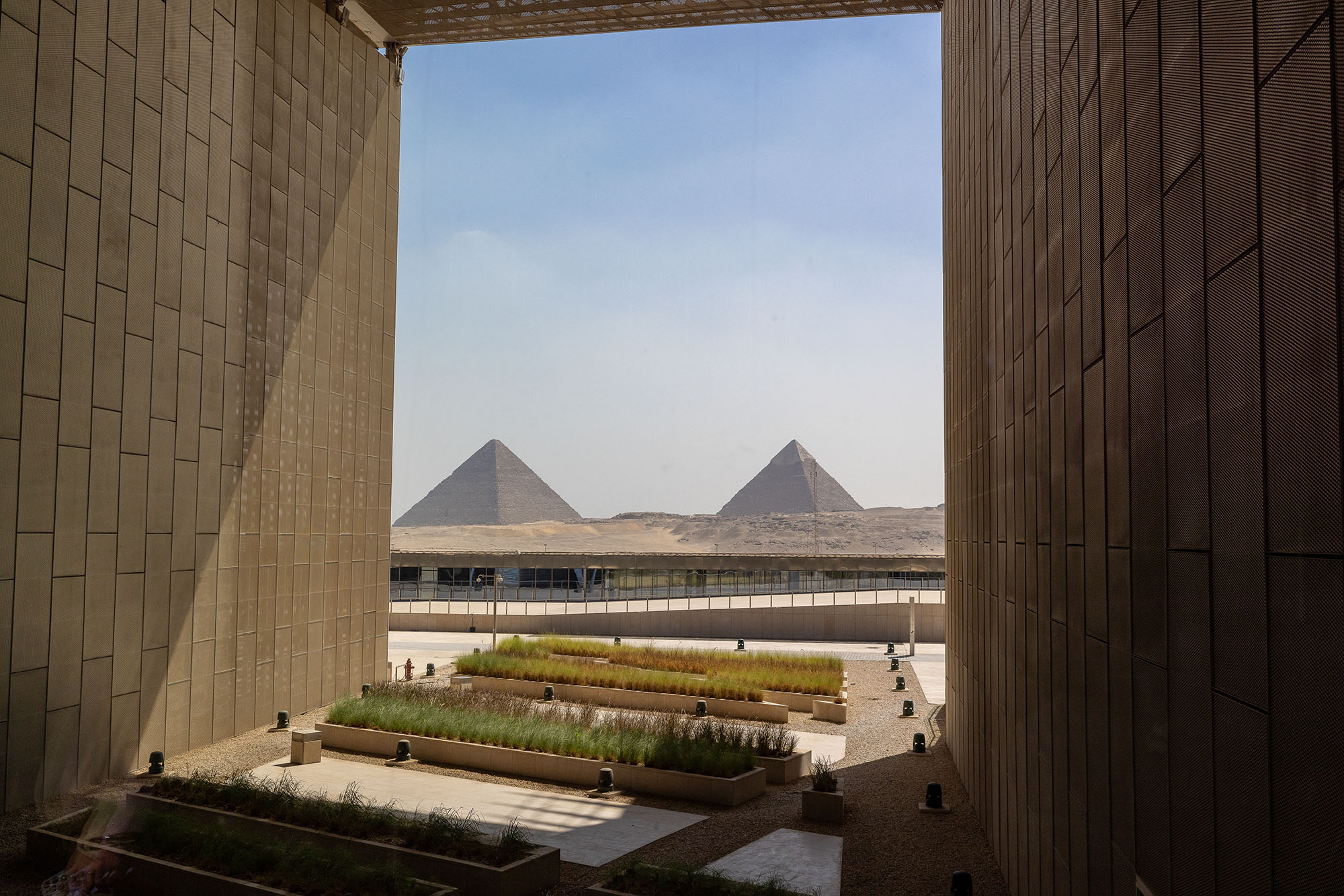
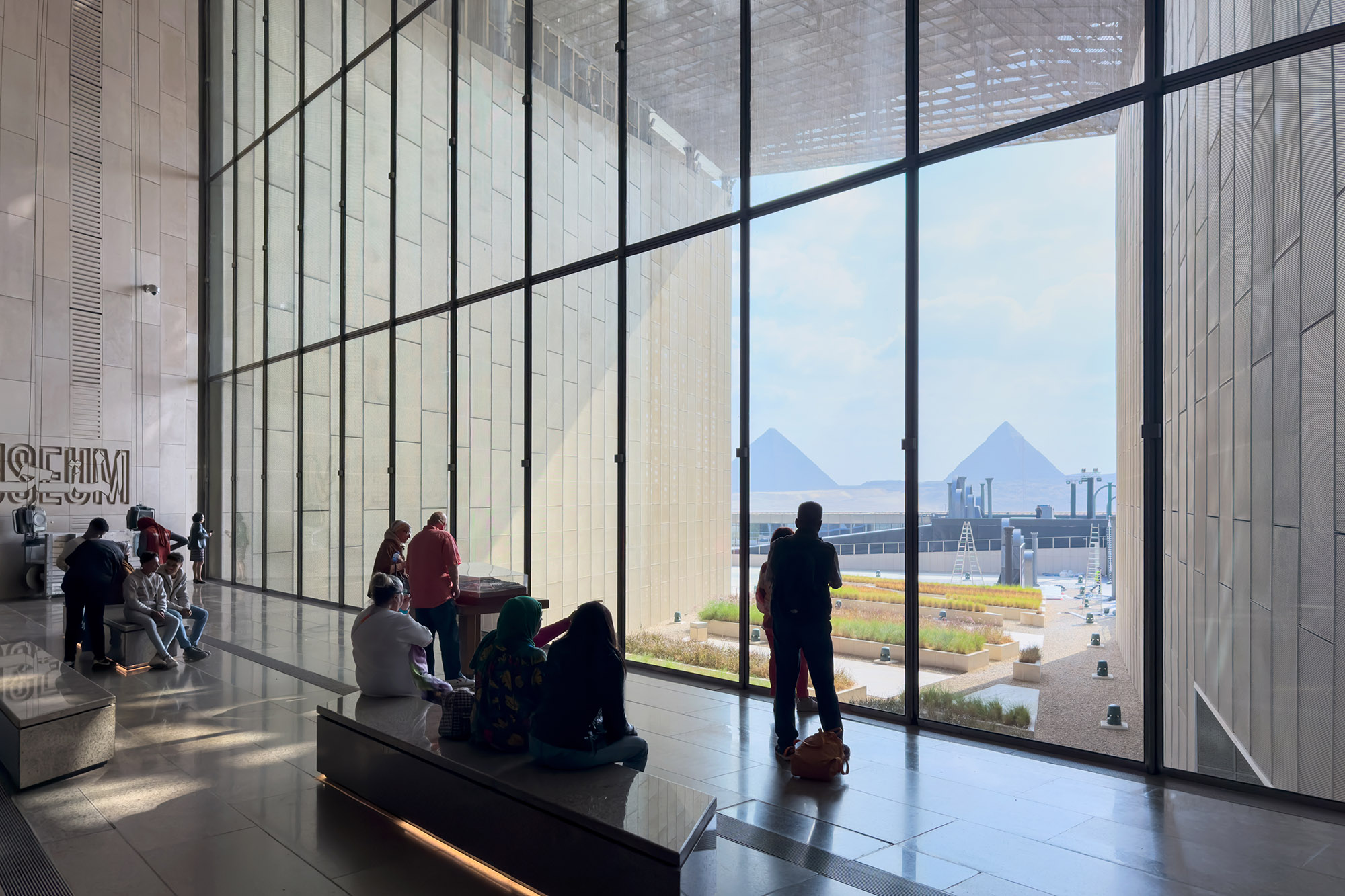
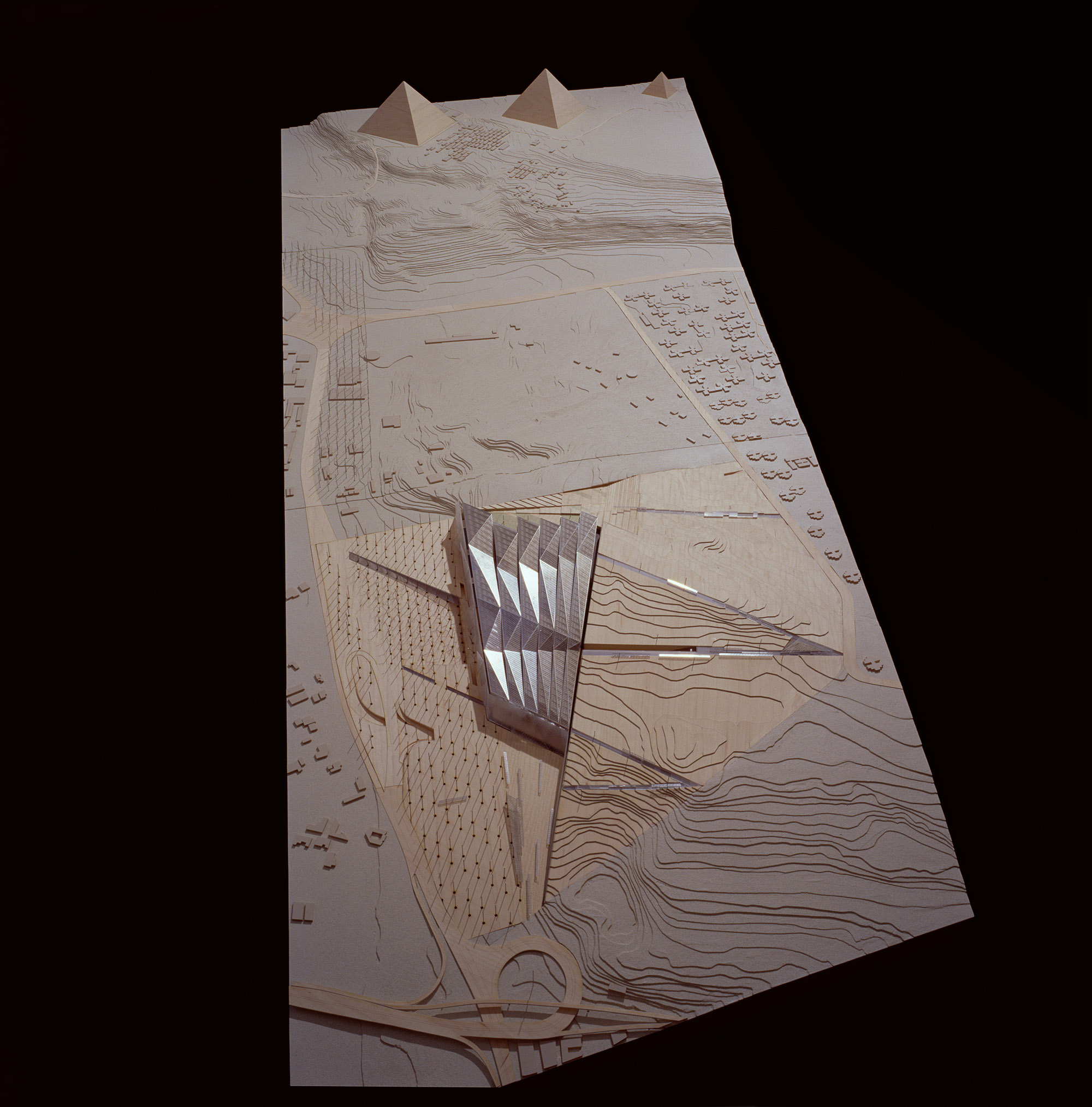
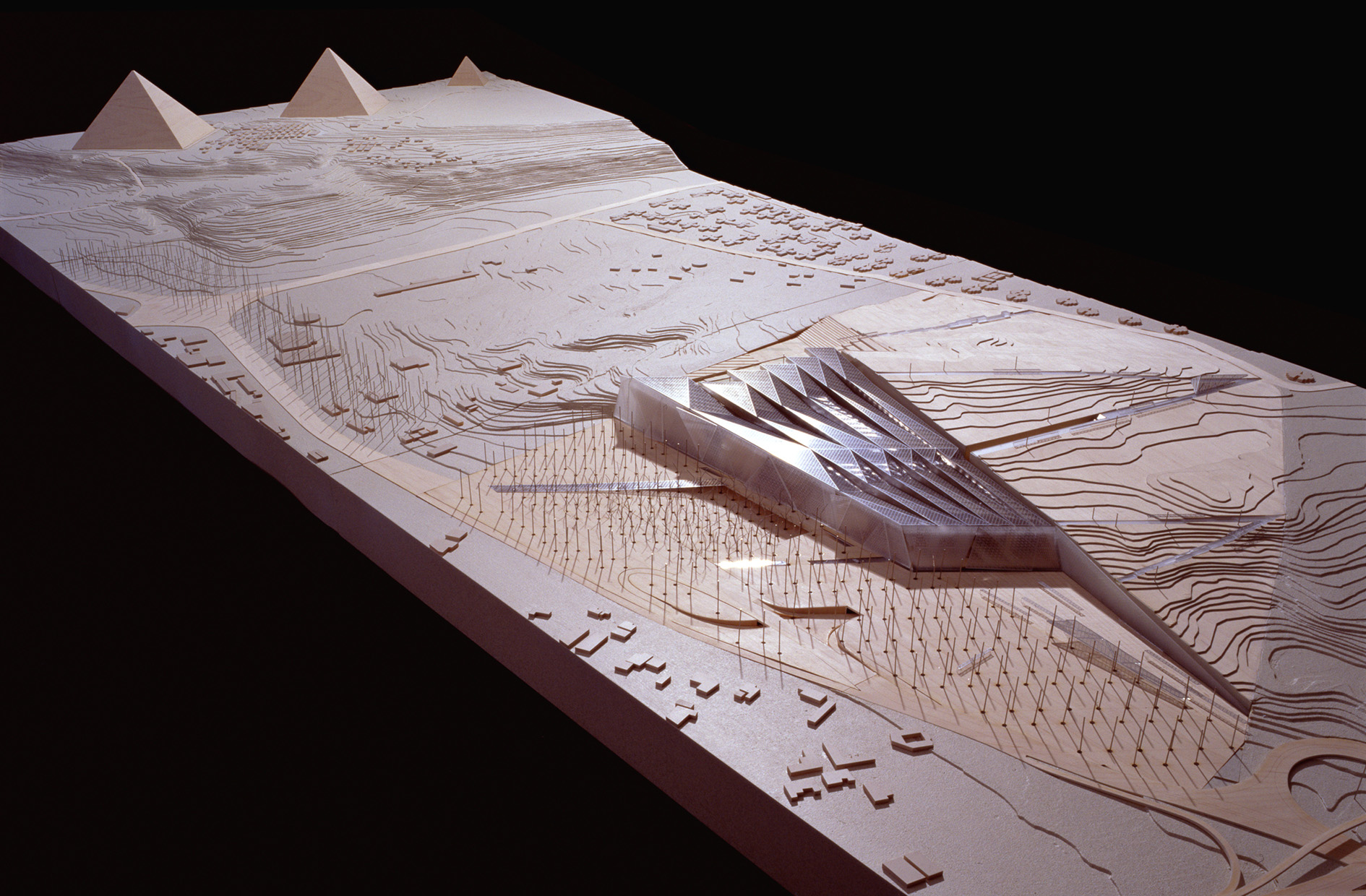
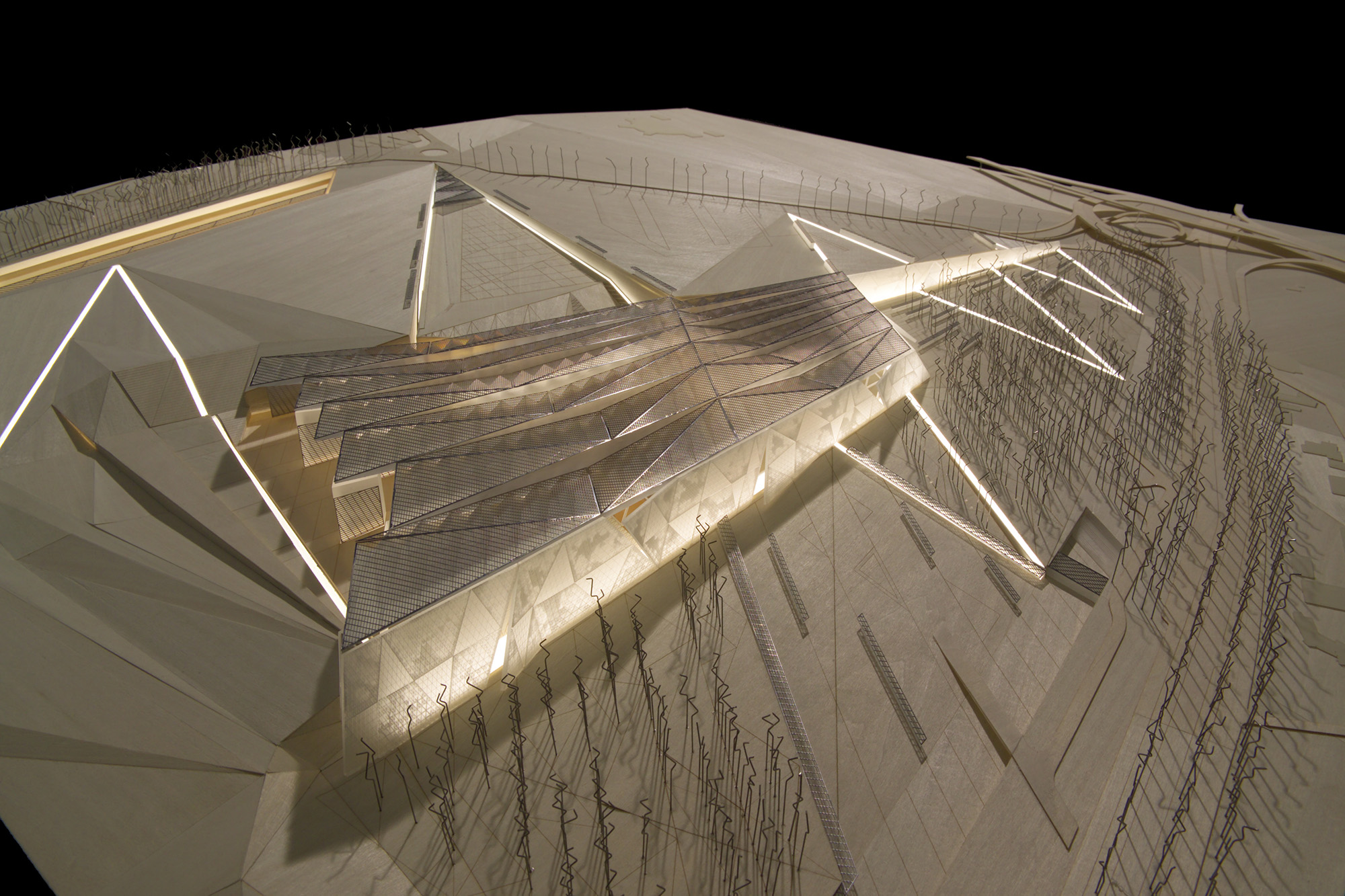
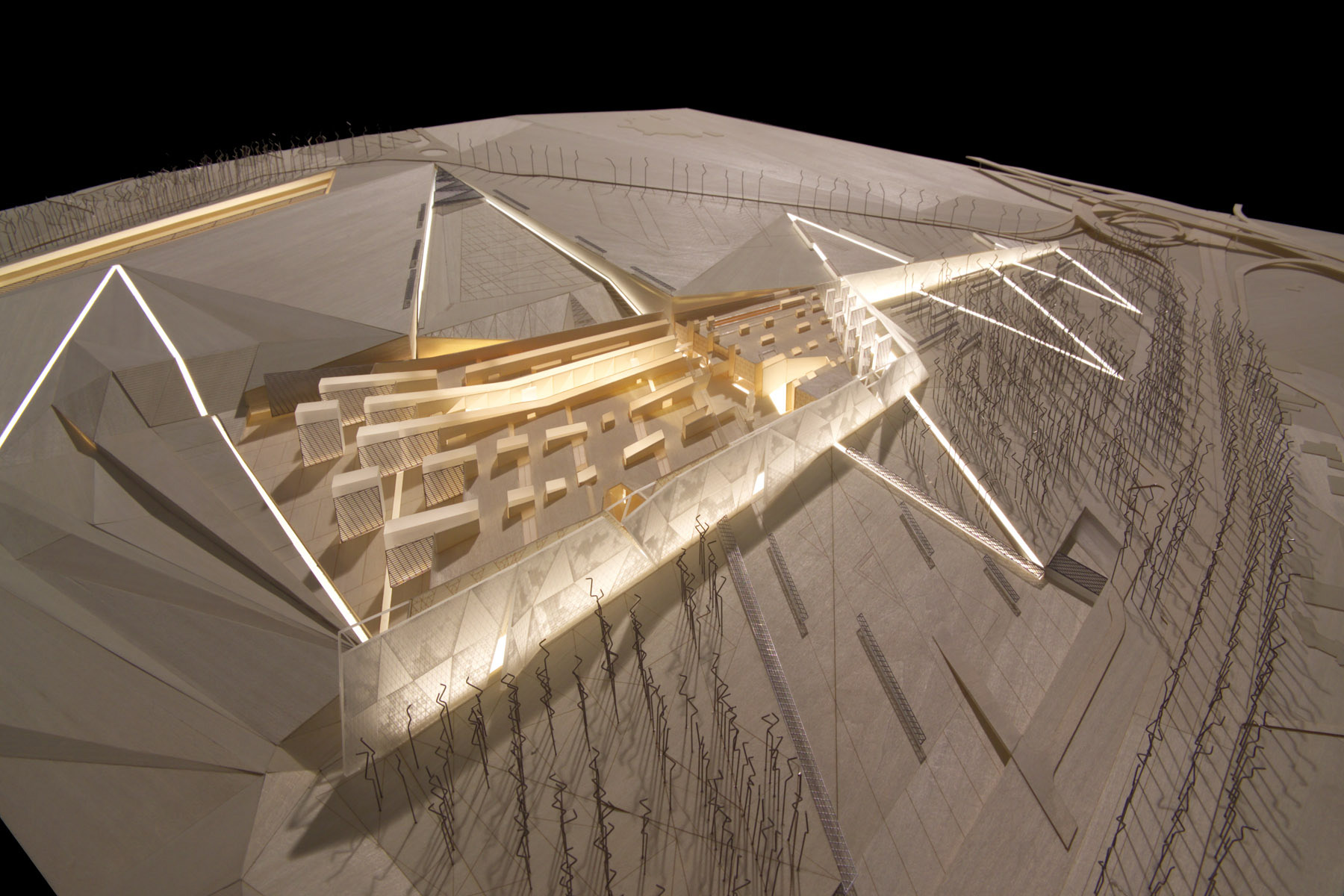
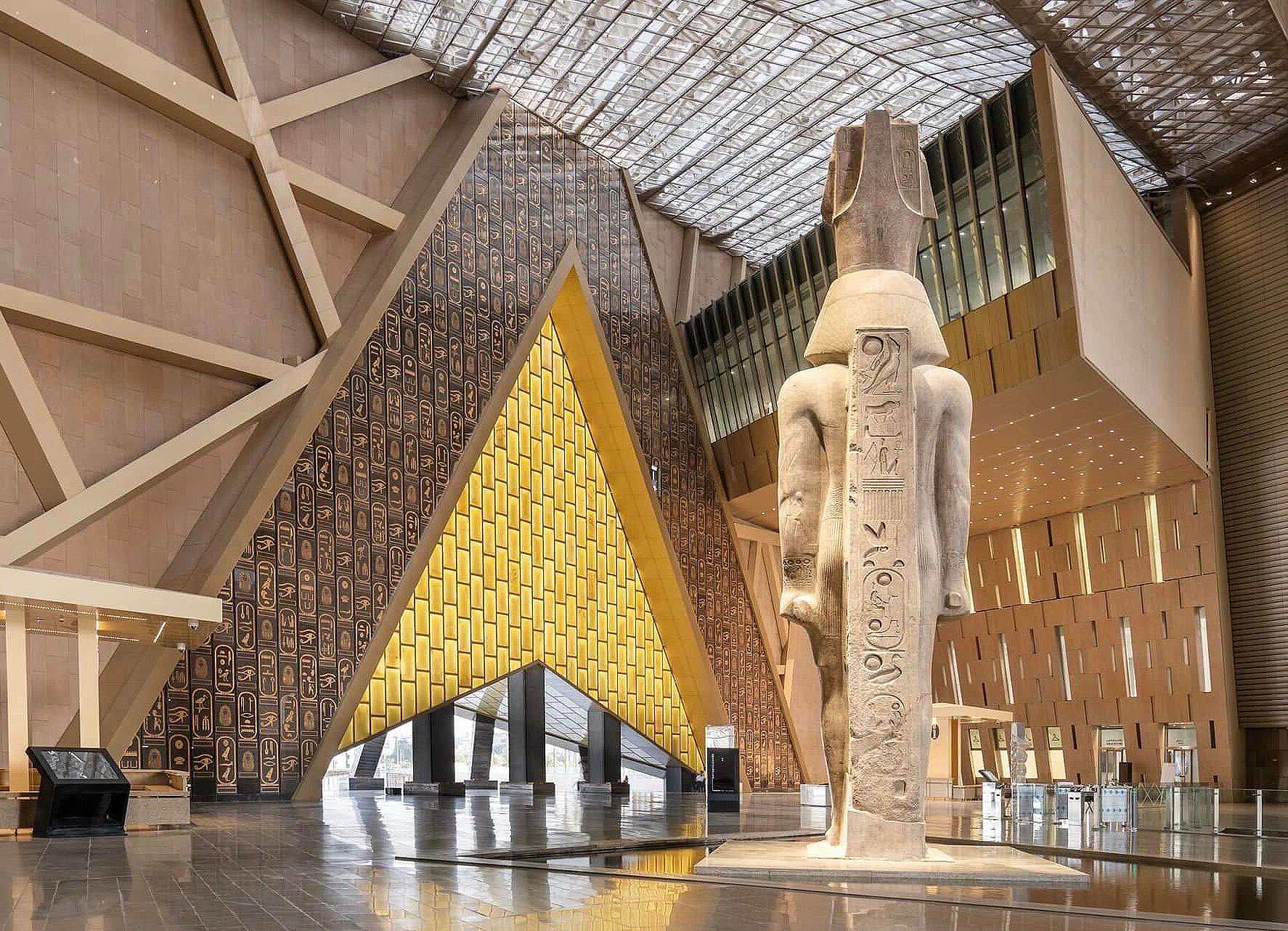
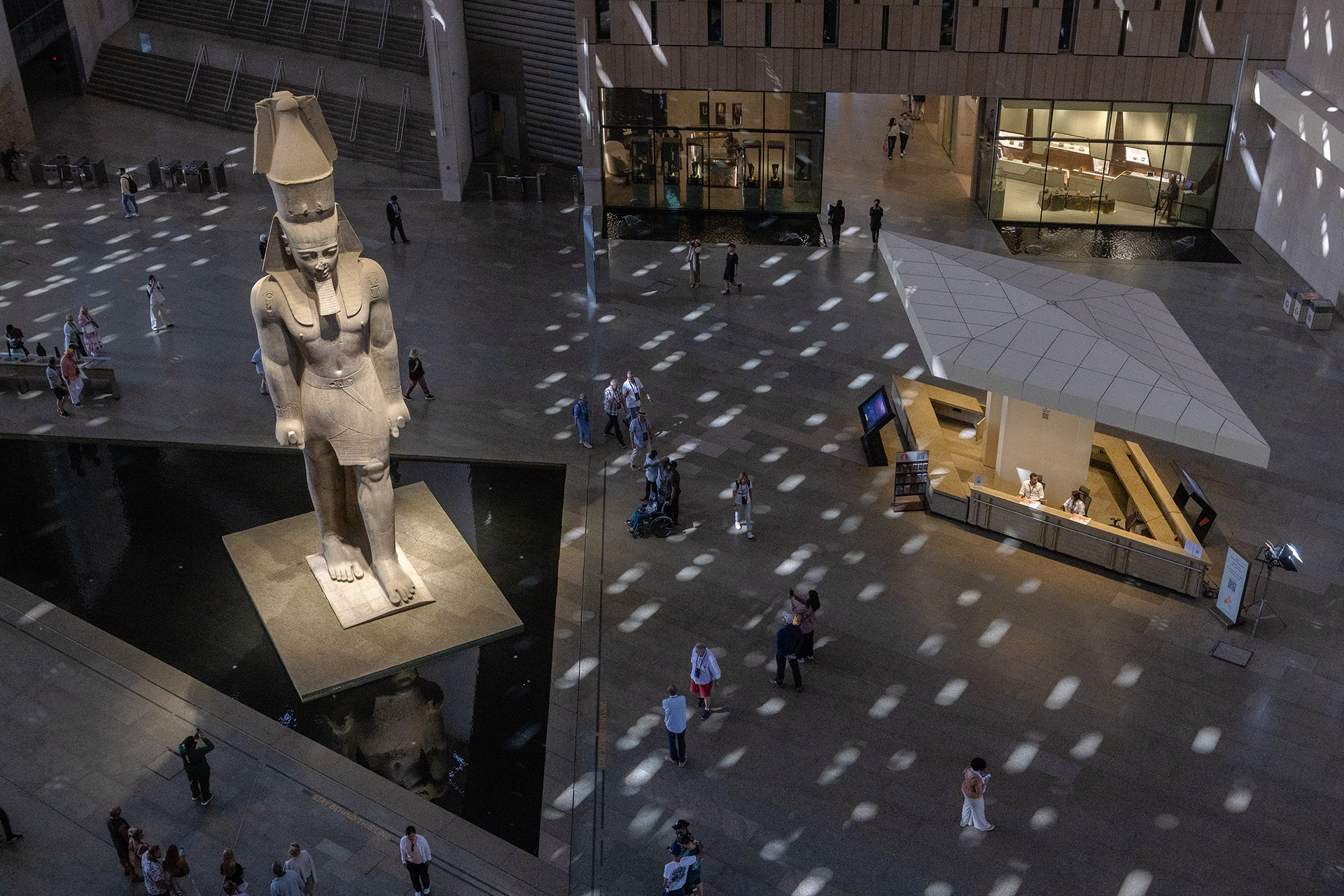
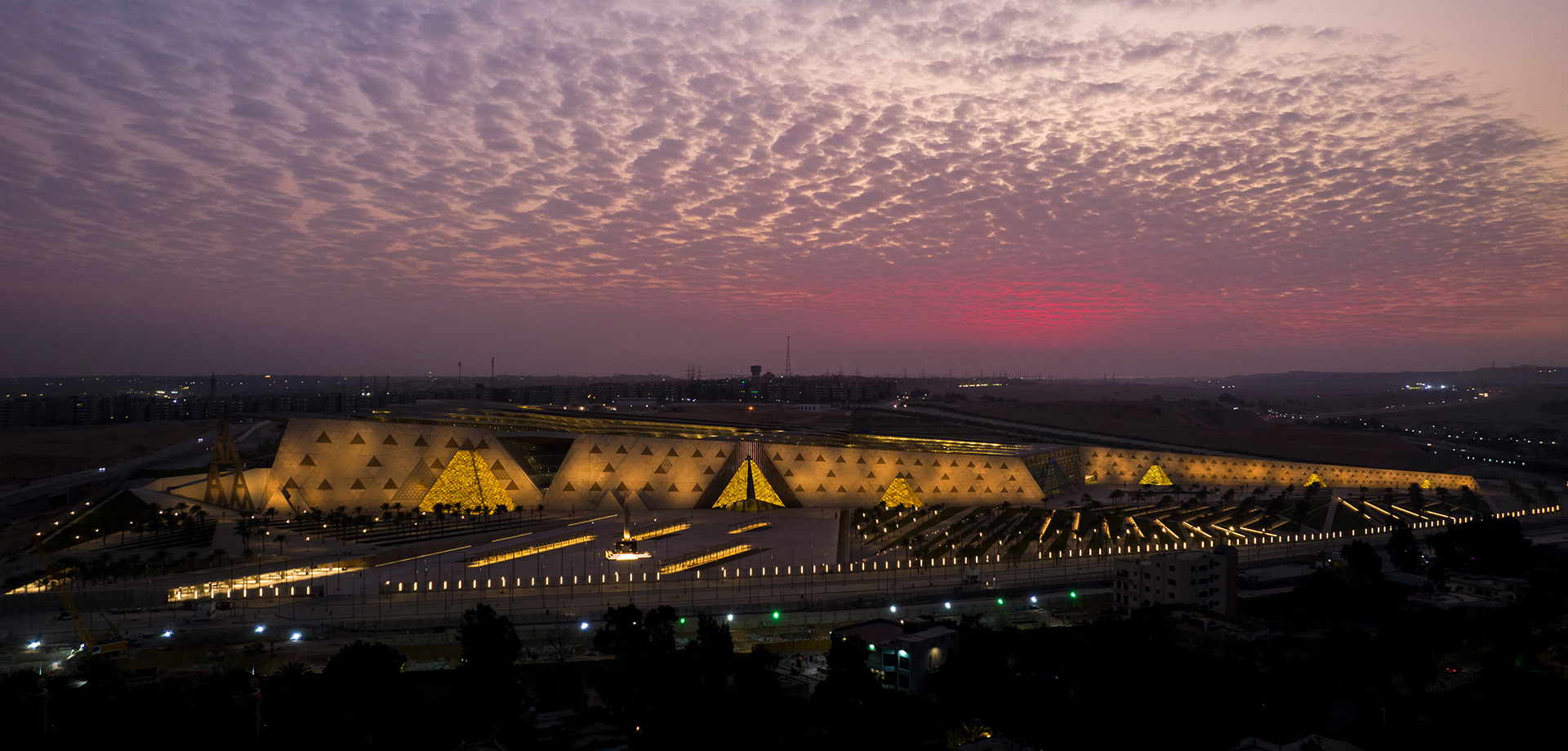
この博物館は、数千年前にナイル川によって形成された砂漠の高台に位置している。この地質的条件が設計において重要な要素となった。入口外部の焦点を起点に、建築構造は3つのピラミッドの位置に正確に呼応する視覚軸に沿って放射状に広がる。
内部の壁面はこれらの軸に従って扇状に展開し、屋根はピラミッドの頂点へと上昇するが、決してそれを超えることはない。この幾何学的対話により、博物館とピラミッドが相互に呼応する比類なき空間体験が生まれた。
©︎ heneghan peng architects
©︎ heneghan peng architects
©︎ heneghan peng architects
展示体験を導く「時間の階段」
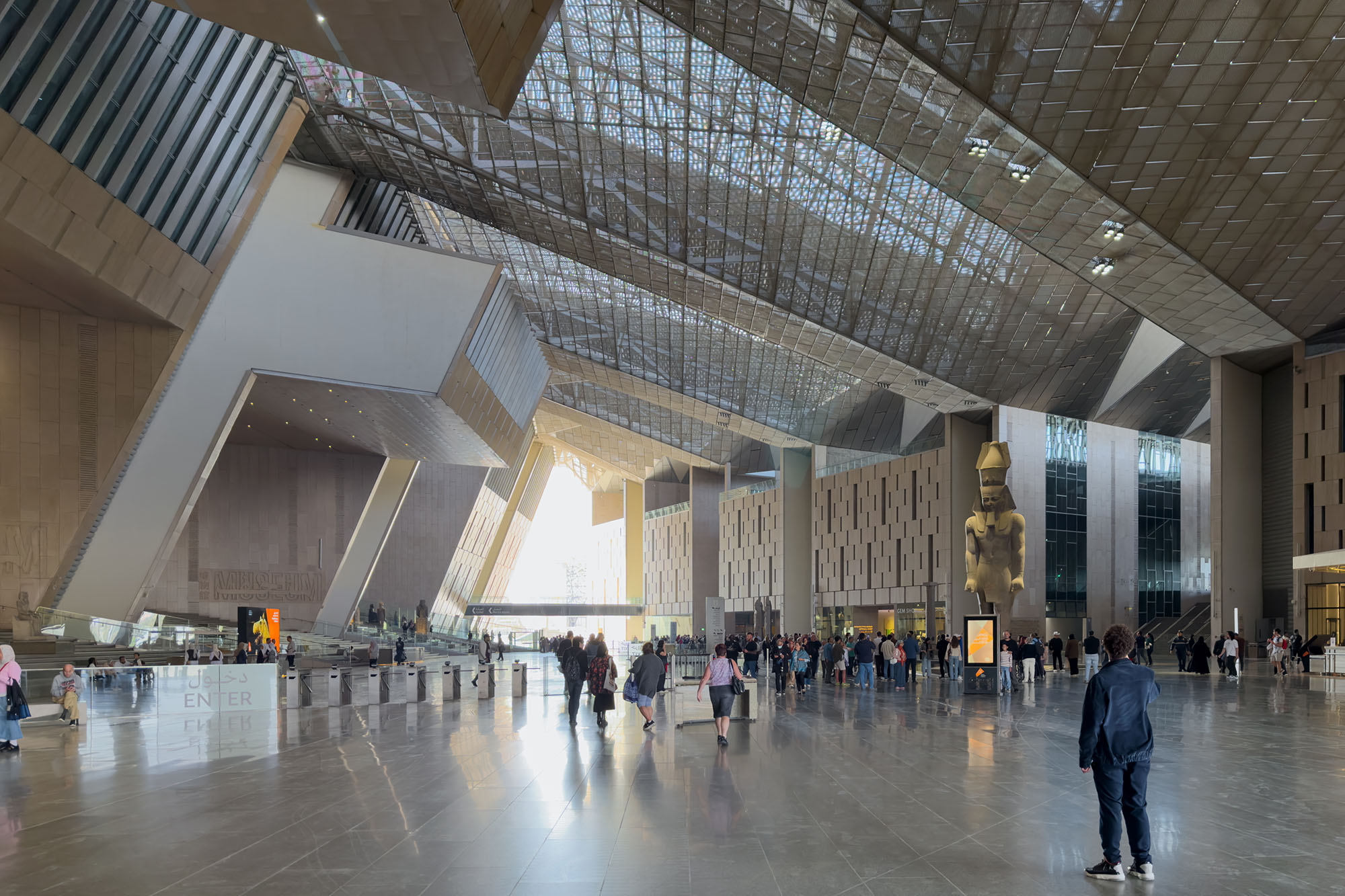
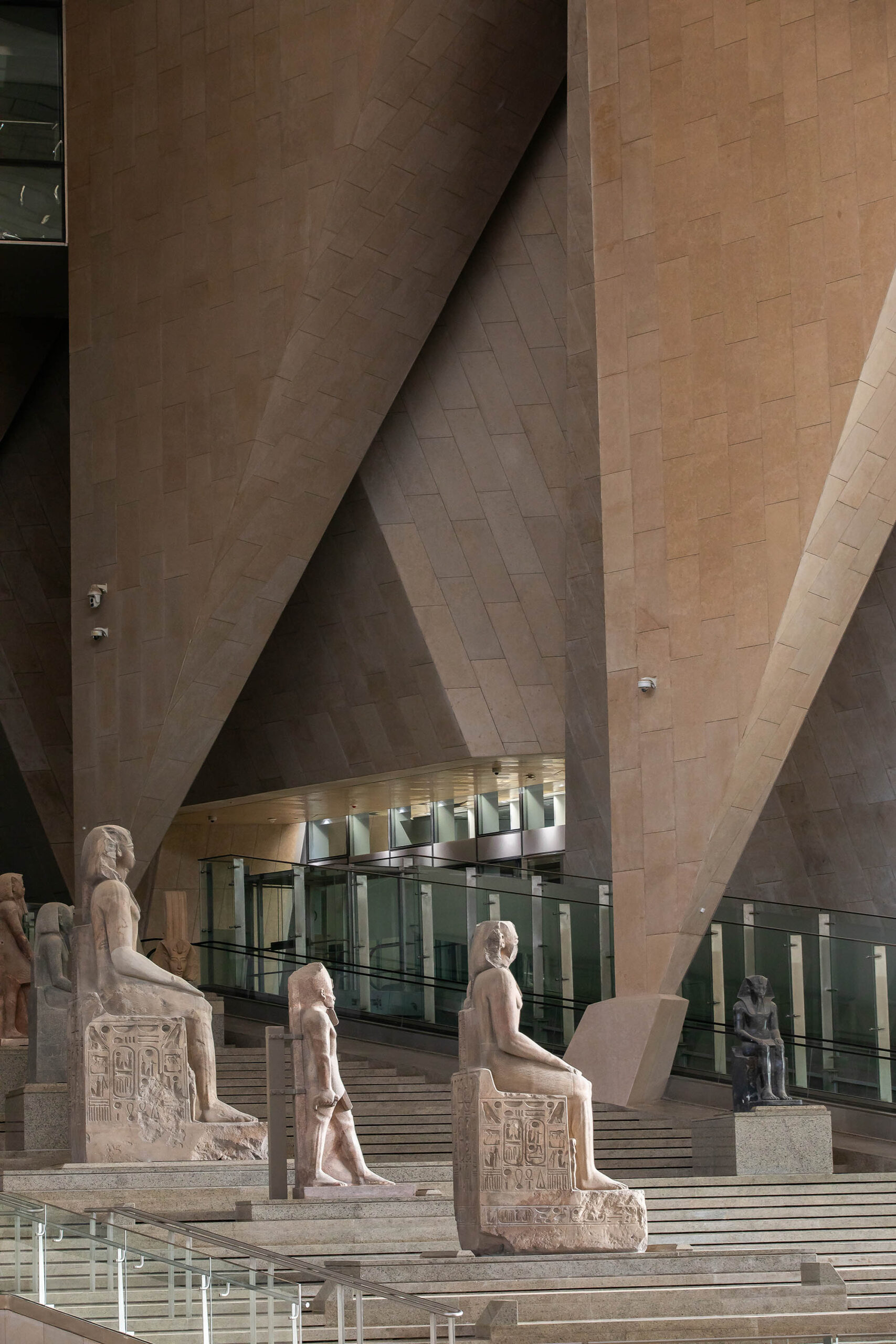
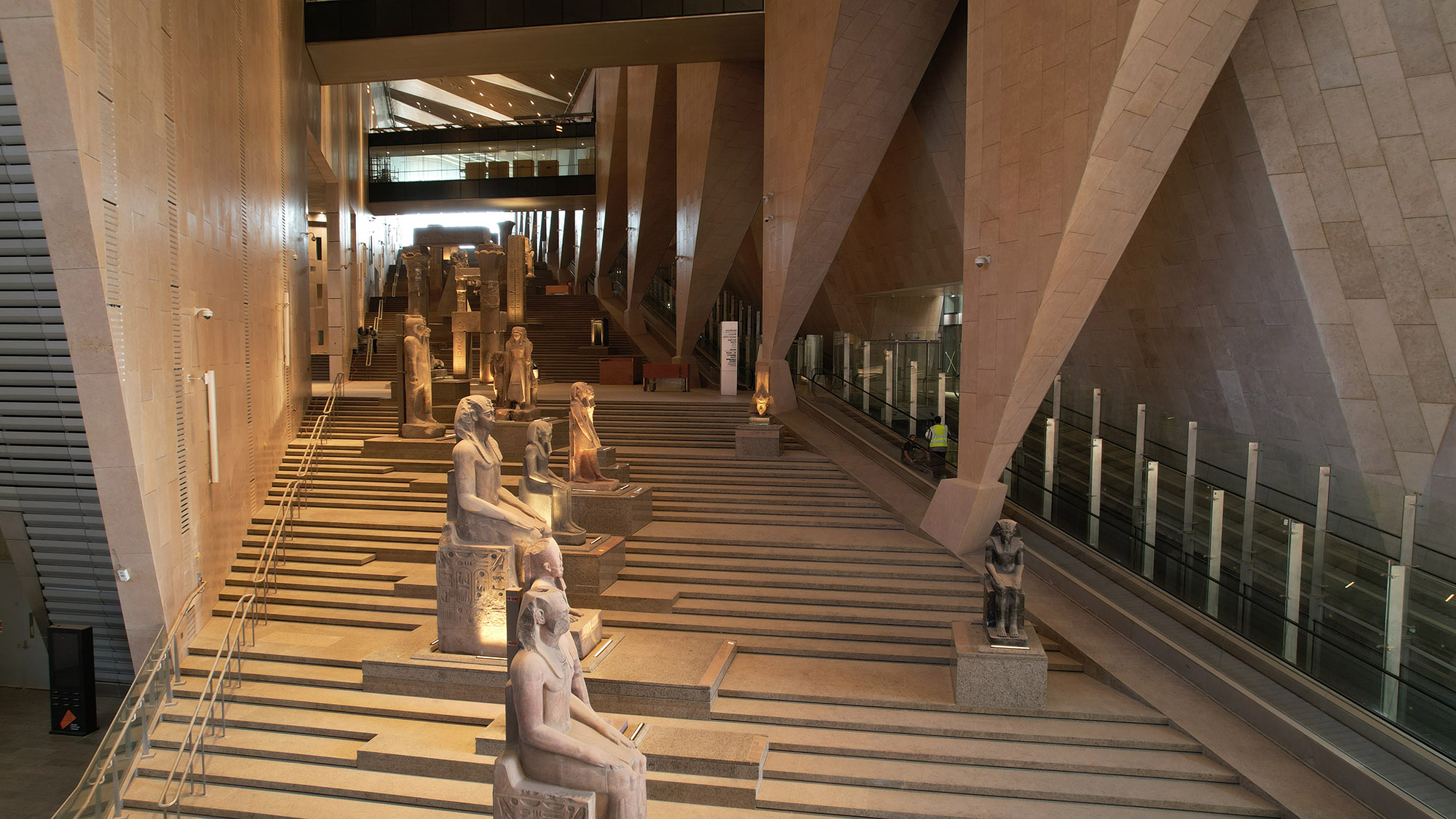
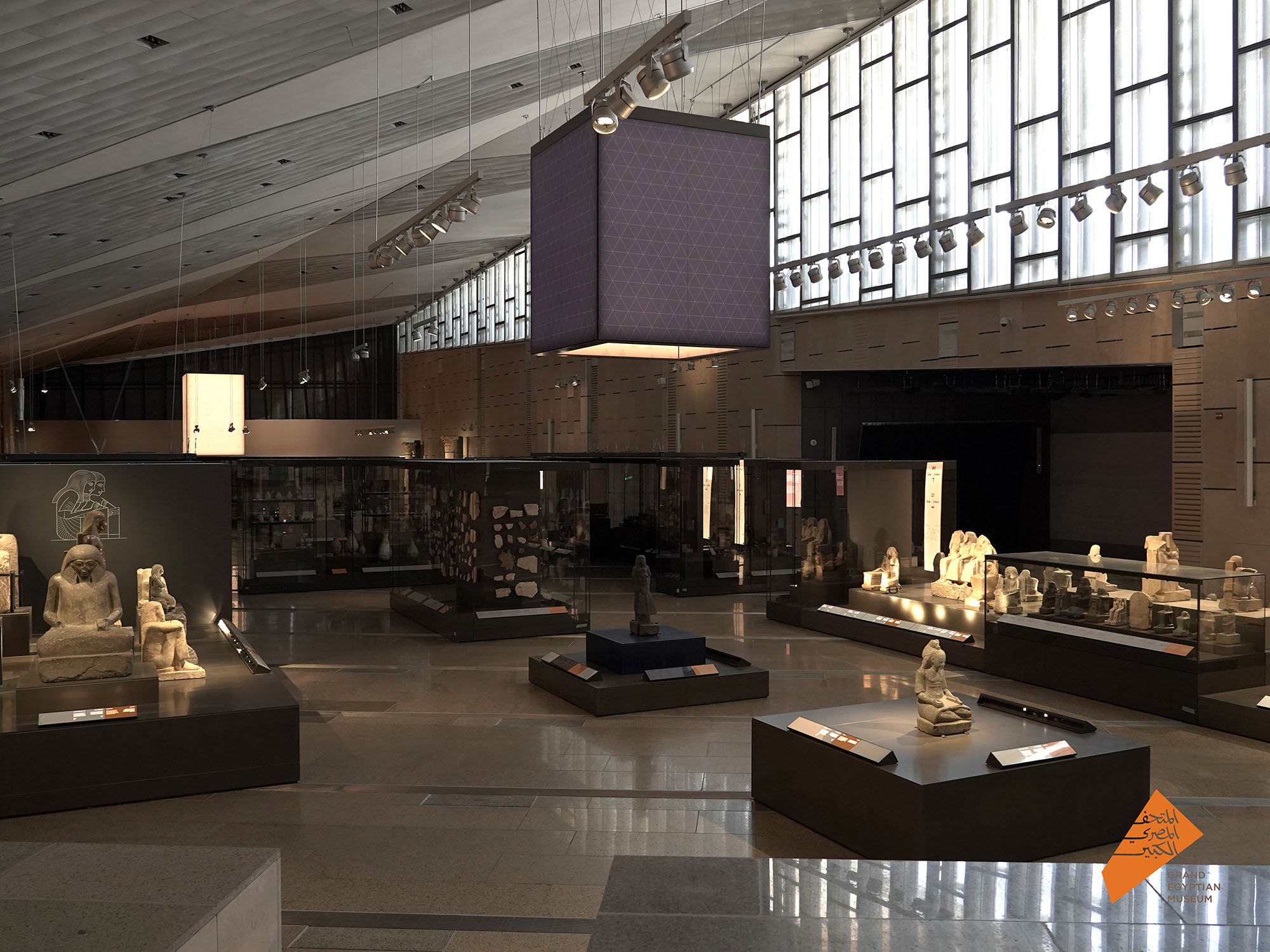
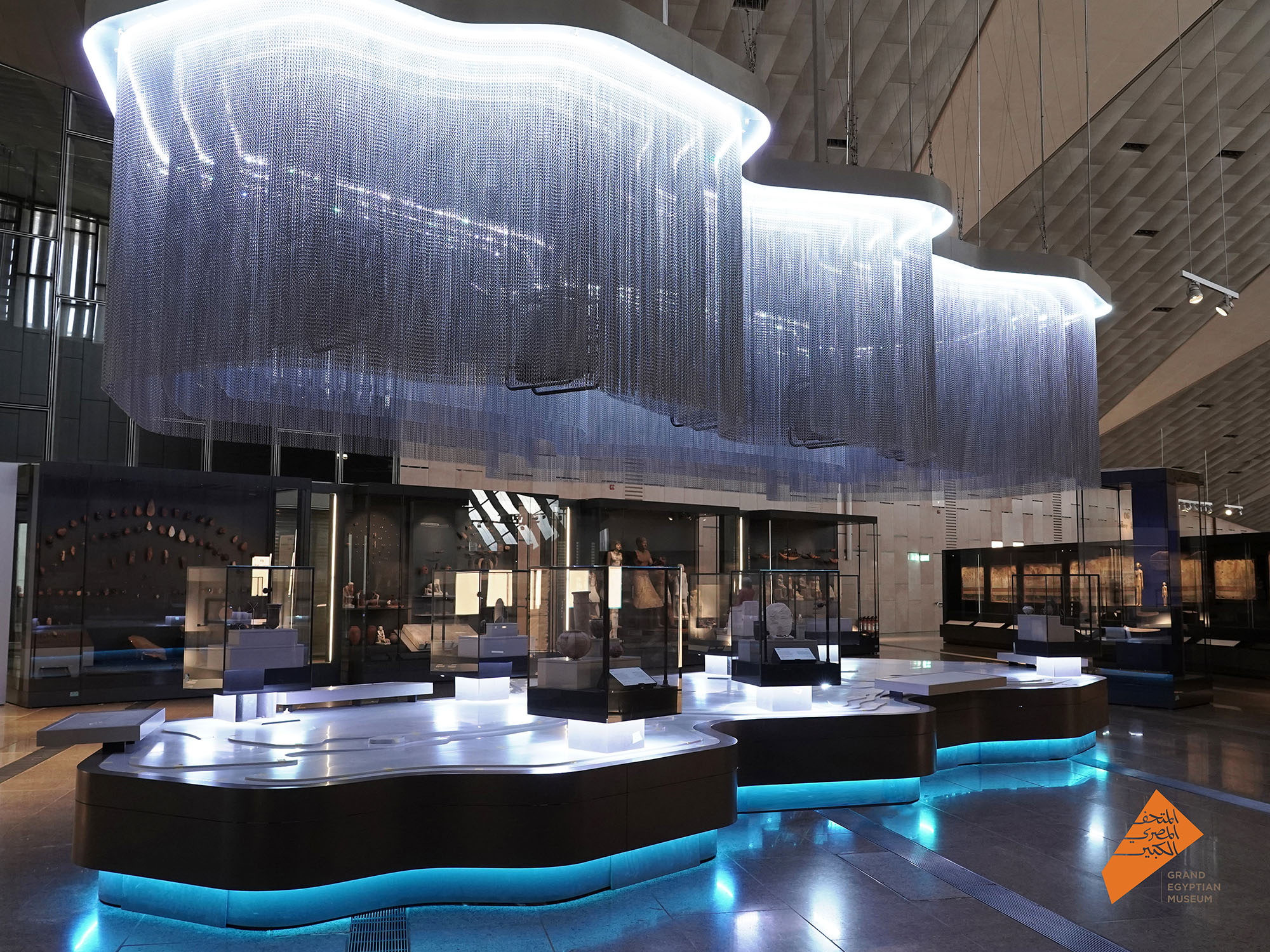
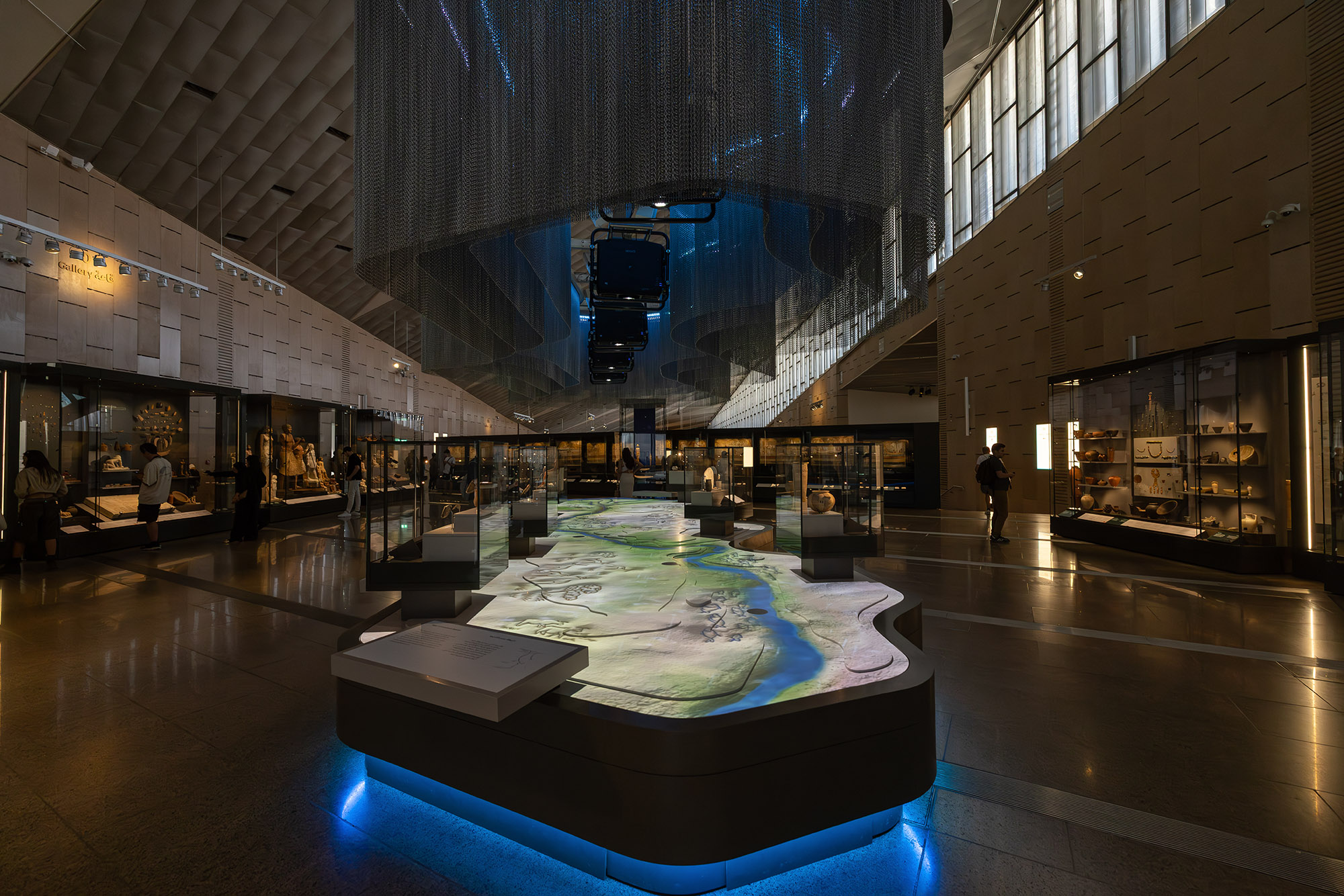
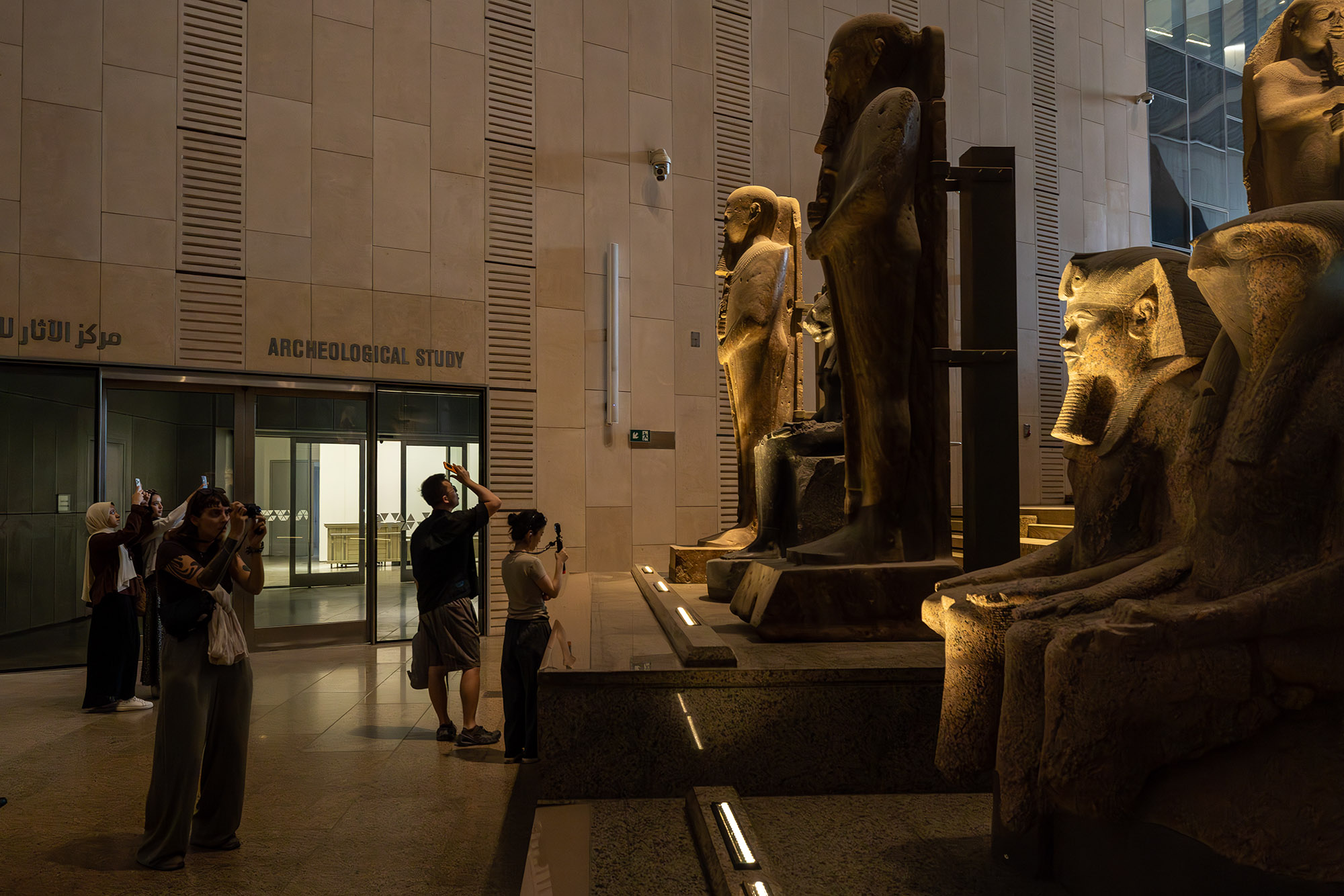
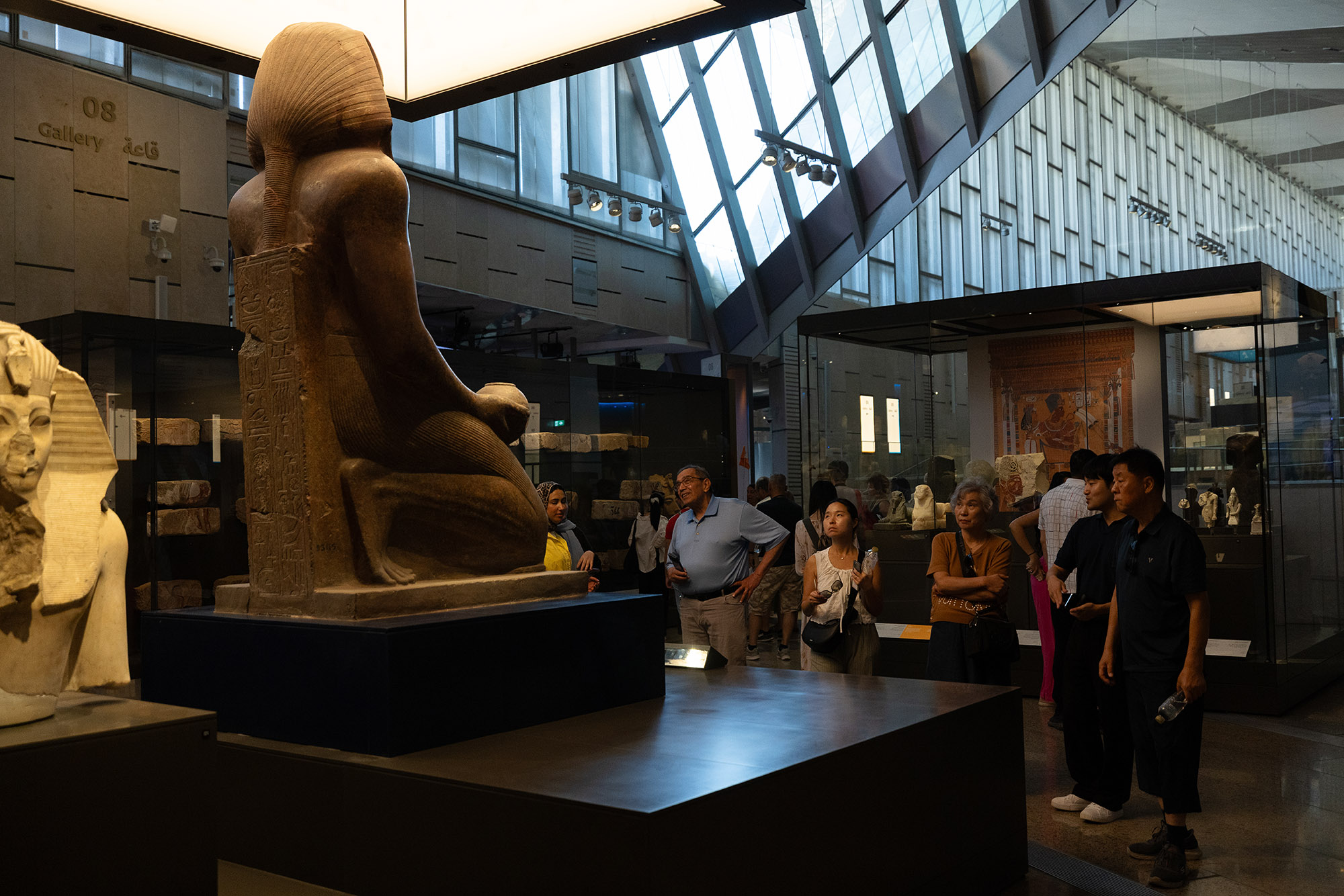
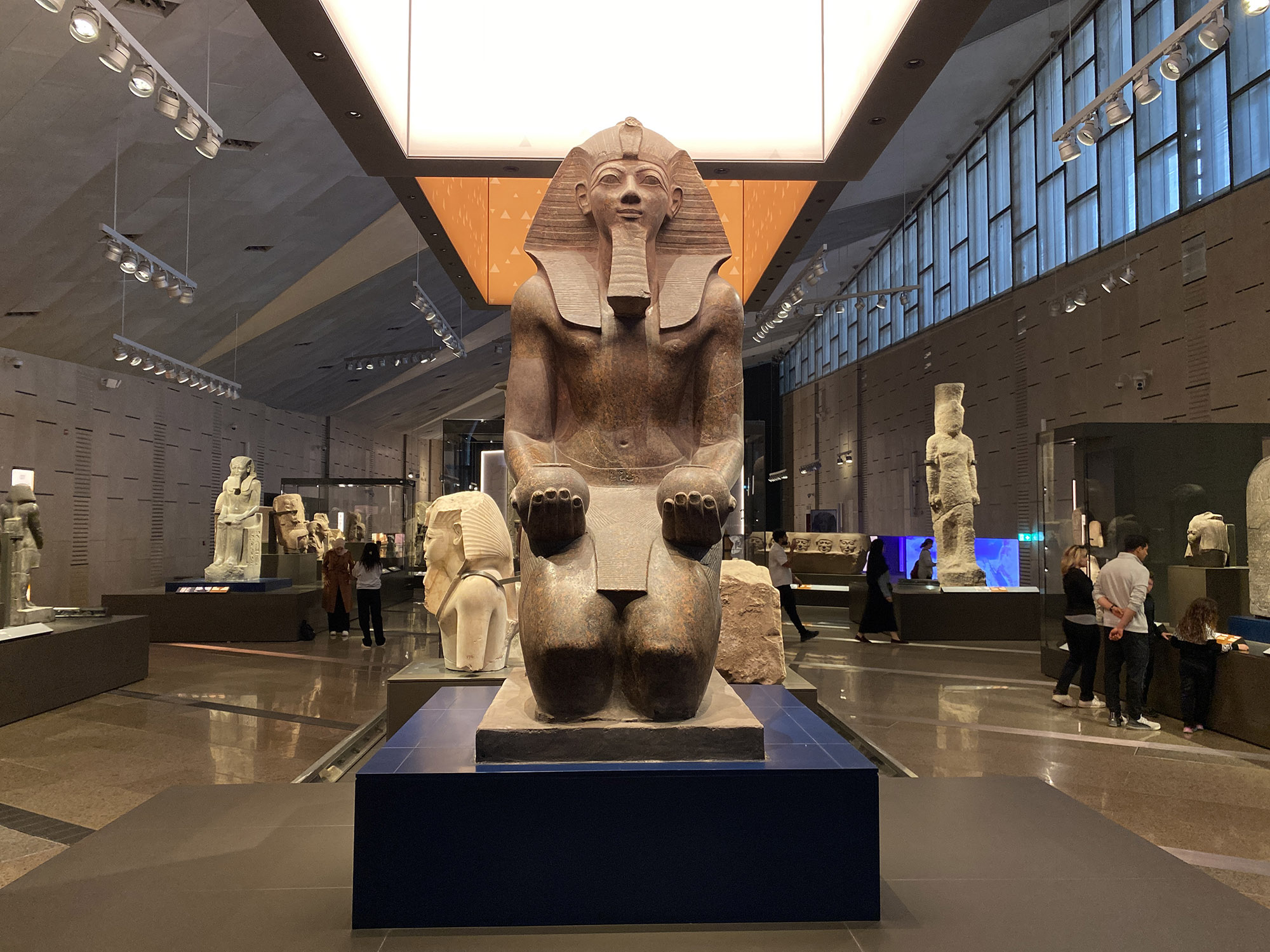
6層に連なる壮大な階段は、先王朝時代からコプト時代に至る時系列をたどるルートとして機能し、来館者を各展示室へと導く。カルチュラル・イノベーションズとメタファーによるマスタープランのもと開発された常設展示(新ツタンカーメン・ギャラリーを含む)は階段最上部に配置され、訪問者が各時代を順に体験し、最終的にピラミッドの象徴的な眺望を得て旅を終えるよう設計されている。
セヌセレット1世の10体の像を含む最大級の遺物も、階段の各層に配置され、訪問者の動線と展示のリズムを形成する。
©︎ Georges & Samuel Mohsen – The GS Studio
©︎ Grand Egyptian Museum
博物館に差し込む自然光
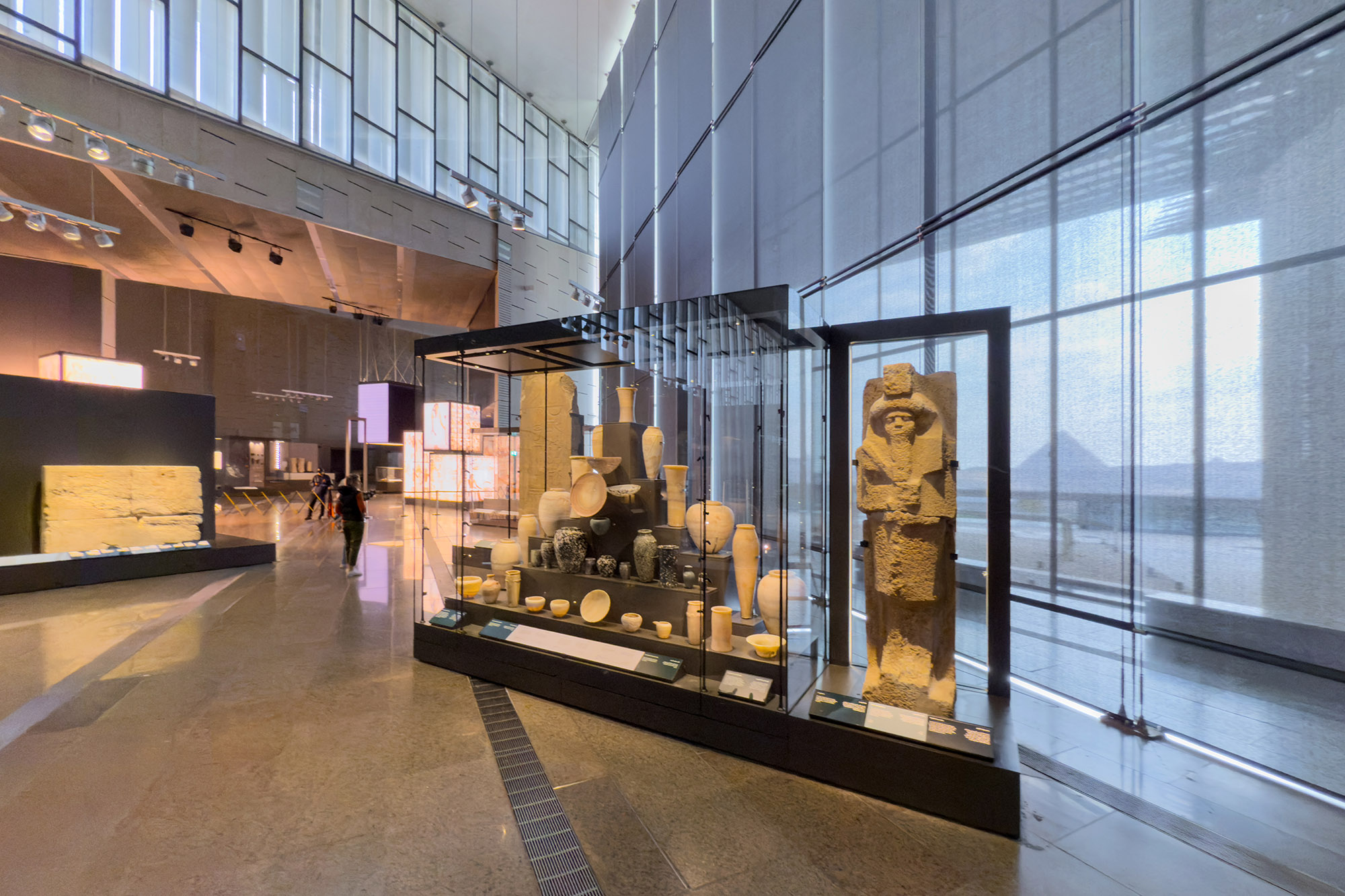
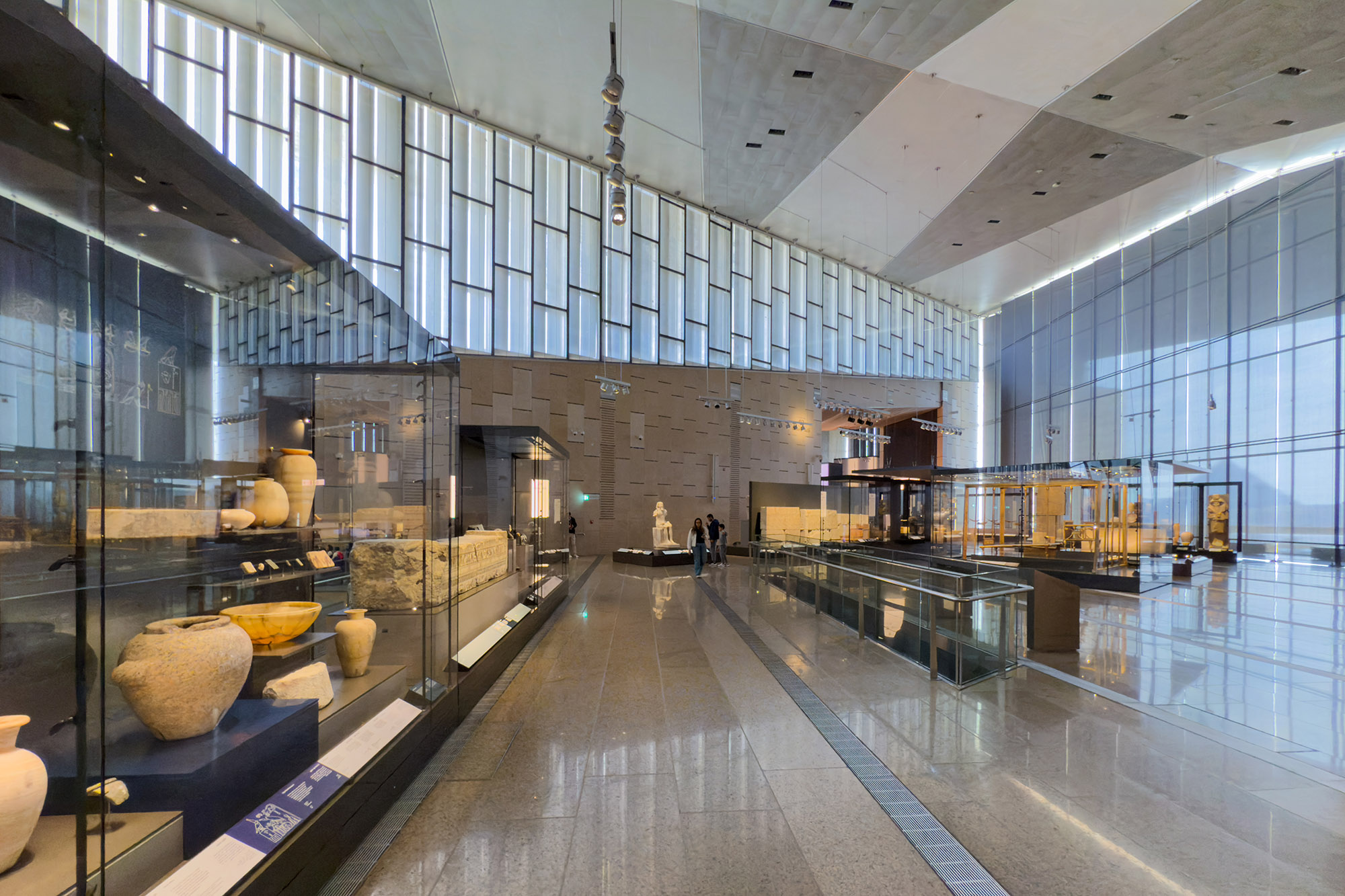
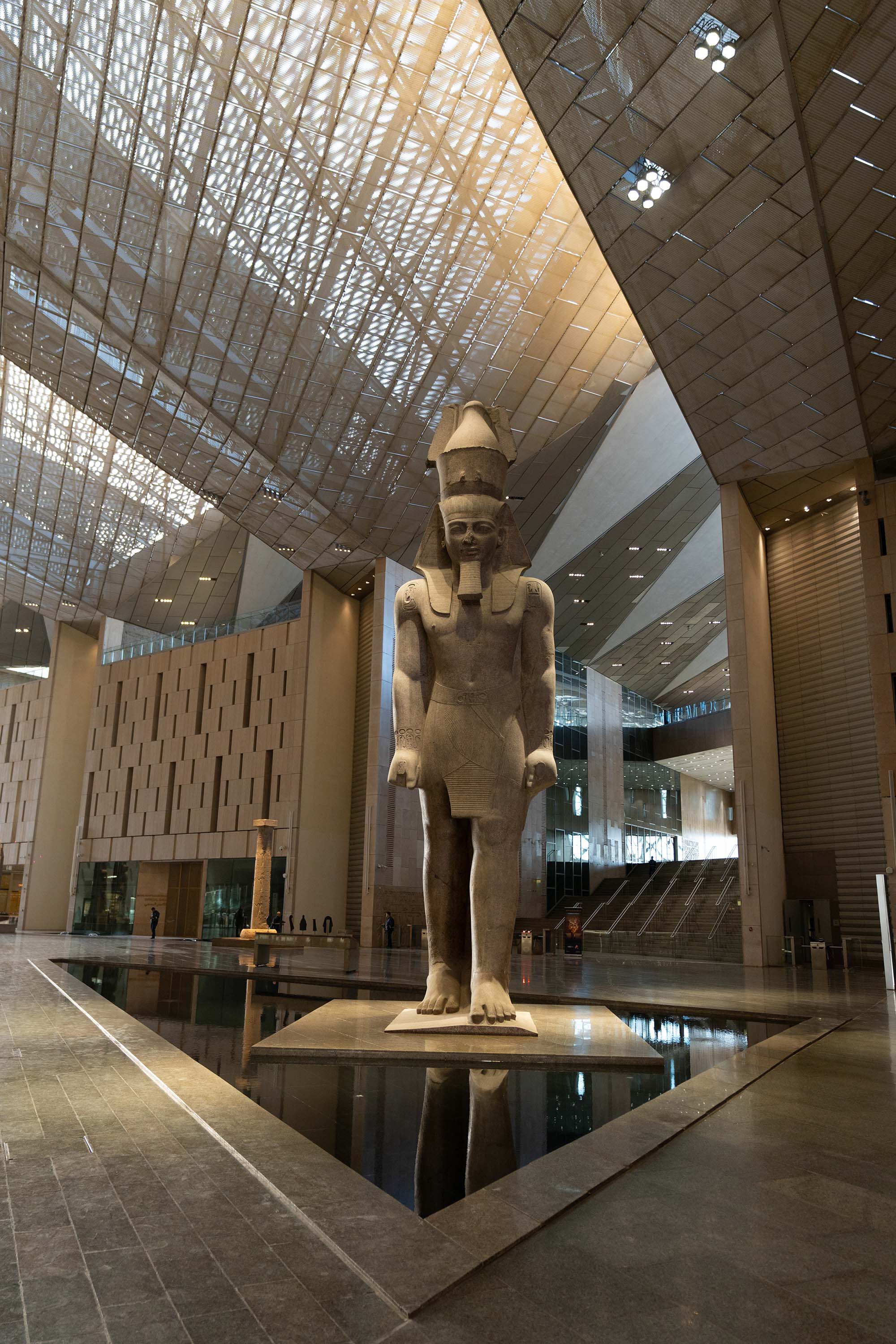
ヘネガン・ペン・アーキテクツは、博物館体験と地域の文脈を結ぶ要素として自然採光を重視した。通常、保存の観点から自然光は制限されるが、多くの展示物が石造であるため、主要空間において自然光を導入する独自の機会が生まれた。
構造体の大部分はコンクリートで構成され、温度変動を抑制しつつ、広大な空間の空調需要を最小限に抑える。こうして、建築の受動的性能と環境的持続性を高める設計を実現した。
©︎ Iwan Baan
©︎ Iwan Baan
都市資源としての博物館とランドスケープ
この博物館は、カイロの文化的・環境的資源としても設計されている。敷地内には広大な庭園が設けられ、地域コミュニティに開かれた公共緑地を提供する。ウエスト8と協働して設計されたテーマガーデン、ウェルカムプラザ、グランドホールは、周囲の砂漠景観と対比しつつ、ナイル川流域に起源をもつ文明の始まりを想起させる構成となっている。
ナツメヤシが点在する前庭は、かつてナイル川の氾濫原を利用してピラミッドの石材を輸送した歴史を語るものであり、博物館全長800mのファサードを見通すことができる。さらに、5ヘクタールにおよぶ屋外展示空間では、遺物が大地とともに展示される。
©︎ Grand Egyptian Museum
©︎ Grand Egyptian Museum
保存・研究機能を備えた世界最大級の施設
この博物館は、一般公開エリアのみならず、保存・研究・保管機能を備えた総合的施設として設計されている。本館とトンネルで接続された保存センターと研究所は世界最大級の規模を誇り、17の専門ラボが多様な素材の遺物を対象に保存活動を行う。
パピルスや織物、陶器、彫刻、人骨など、素材ごとに異なる保存環境を要する遺物に対応するための最先端技術が導入されている。
©︎ Grand Egyptian Museum
©︎ Georges & Samuel Mohsen – The GS Studio
「〈大エジプト博物館〉は文化インフラのランドマークである。精緻に設計された建築が、来館者の体験と博物館専門家の業務の両方を高めている。ヘネガン・ペン・アーキテクツとの緊密な連携を通じ、深く関与したエンジニア陣が技術的性能、環境耐性、長期的な実用性を、圧倒的な美しさと共に実現した。世界有数の重要古代遺物コレクションに新たな居場所を提供するこのプロジェクトに貢献できたことは、アラップにとって格別な栄誉である。世界的な意義をもつこの博物館は、今後何年にもわたり、ファラオの歴史と博物館設計の両方にとって重要な学習センターとなるだろう。」
アラップ アソシエイトディレクター
フランシス・アーチャー(Francis Archer)「〈大エジプト博物館〉は、低炭素保存戦略を印象的な建築コンセプトに統合した、持続可能な博物館設計の最先端の模範例である。ビューロハッポルドは、この素晴らしいプロジェクトに統合された持続可能性、建築環境、MEP(機械・電気・設備)、防火、セキュリティ、ITエンジニアリング設計を提供できたことを大変光栄に思う。コンペ段階から、エジプト政府、ヘネガン・ペン・アーキテクツ、そしてパートナーであるシェイカー・グループと緊密に連携し、この場所とコレクションにふさわしい強力な統合コンセプトを実現し、世界最高峰の博物館の1つとなった。」
ビューロ・ハッポルド 文化部門プロジェクト主任
スティーブン・ジョリー(Stephen Jolly)「〈大エジプト博物館〉は、世界遺産であると同時に21世紀エジプトの国家的象徴であり、広範な国際協力によって実現した。この非凡な博物館の設計・開発・実現に貢献できたことは、この上ない栄誉である。」
カルチュラル・イノベーションズ 創業者兼会長
マーティン・ベスト(Martyn Best)「このプロジェクトは想像を超える質をもたらし、その結果は先見的な協働の成功を示している。力強い建築コンセプトから、賢明で多層的な博物館キャンパスが誕生し、今日では数百万人の訪問者を迎え入れることが可能となった。建造物の歴史的遺産と規模の壮大さは、ギザ台地の縁辺に優雅に溶け込んでいる。これにより、歴史的・地質的文脈に真に根ざした博物館が実現した。緑の前景空間の美しさは、砂漠の縁辺まで続くナイル川の原初の氾濫原を強く想起させる点にある。」
ウエスト8 創設者
アドリアーン・ヘウゼ(Adriaan Geuze)
©︎ Georges & Samuel Mohsen – The GS Studio
©︎ Georges & Samuel Mohsen – The GS Studio
©︎ Georges & Samuel Mohsen – The GS Studio
©︎ Grand Egyptian Museum
©︎ Grand Egyptian Museum
©︎ Grand Egyptian Museum
©︎ Grand Egyptian Museum
©︎ Grand Egyptian Museum
以下、ヘネガン・ペン・アーキテクツのリリース(英文)です。
heneghan peng architects Celebrates the Completion of the Grand Egyptian Museum
Designed in direct dialogue with the Pyramids of Giza, the Museum is the largest in the world dedicated to a single civilization
Cairo, Egypt (November 1, 2025) – Today, internationally renowned architecture firm heneghan peng architects celebrates the official completion of its design of the Grand Egyptian Museum. Located just over one mile away from the Pyramids of Giza, the Museum is a testament to the longevity and scale of ancient Egyptian civilization and its enduring influences. Designed to house 100,000 artifacts, the Museum is the largest in the world dedicated to a single civilization. The full completion is marked by the opening of the Tutankhamen gallery, which will display the entire collection of over 5,000 artifacts to the public for the first time. heneghan peng designed the Museum in direct relation to the positioning of the pyramids, thoughtfully bridging the gap between history and modernity.
heneghan peng architects was awarded the project in 2003 after the Egyptian Ministry of Culture launched the largest architectural competition in the world for a completed building to date, calling for submissions to design a world-class museum on a prestigious site overlooking the pyramids. heneghan peng’s design triumphed over 1,556 other entries from 82 different countries, marking a significant achievement for the Ireland-based firm. heneghan peng worked with a global team of architects and engineers to bring the project to life, forming a joint venture with Arup and Buro Happold to develop the design and expanding to include Cultural Innovations and Metaphor for museological services and West 8 for landscape design. Full team credits can be found below.
“Designing a museum of this caliber, in such close proximity to a landmark as monumental and symbolic as the pyramids, is a once-in-a-lifetime opportunity,” said Róisín Heneghan, Founding Partner at heneghan peng architects. “Our design works to strengthen that connection to history and place, providing a home for some never-before-seen artifacts that rests upon the very land from which they were created. The result is an experience that evokes a sense of awe at the breadth and depth of ancient Egypt’s fascinating history in a way that feels both modern and timeless.”
Located on a desert plateau formed by the Nile thousands of years ago, the Museum’s geological setting was integral to the design. Beginning at a focal point outside of the entrance, the Museum structure radiates outward toward the pyramids along a visual axis that aligns directly with the positioning of the three pyramids. The interior walls follow these radial lines to create a fanning shape, with the roof sloping upward along a similar visual line to meet the highest point of the pyramids but never surpassing them. This direct dialogue between the Museum and the pyramids strengthens the connection to place and creates an unparalleled view that makes the pyramids feel like a part of the Museum itself.
The grand six-story staircase serves as a chronological route to guide visitors through the different galleries, beginning with the Predynastic Period through the Coptic era. Developed with masterplanning and museological advisory services from Cultural Innovations and Metaphor, the permanent exhibitions, including the new Tutankhamen Gallery, are placed at the top of the staircase, encouraging visitors to immerse themselves in each period before completing the experience with the iconic view of the pyramids. Many of the largest and heaviest artifacts, including the 10 statues of King Senusret I, are also placed upon the staircase at varying levels.
The incorporation of natural lighting is a key element of heneghan peng’s approach to the Museum experience and connection to the region’s historic context. While natural lighting is typically minimized in museums for conservation reasons, many of the artifacts are stone, creating a unique opportunity to introduce natural lighting wherever possible, particularly in the Museum’s main spaces. To help the building perform as passively as possible, the structure is largely made of concrete to reduce variation in temperature and minimize the need for air conditioning in such a vast space.
The Museum was designed to be a resource for Cairo in more ways than one. The site also includes extensive gardens that provide public green space for the local community. Developed in collaboration with landscape architecture firm West 8, the Thematic Gardens, Welcome Plaza and Grand Hall speak to the juxtaposition of the surrounding landscape, harking back to the beginnings of Egyptian civilization in the lush Nile valley. The broad, greened forecourt, dotted with date palms, was designed to tell the story of the Nile floodplain that once allowed the stones for the pyramids to be transported by ship. This open zone reveals the museum in its full 800-meter length and houses 5 hectares of outdoor exhibition space to be populated by artifacts.
In addition to the public-facing galleries, it was also imperative that the Museum had the capability to conserve and prepare artifacts for display. The conservation centre, laboratories and storage facility, connected to the main building via tunnel, is one of the largest in the world with 17 different labs dedicated to preserving the Museum’s priceless artifacts. Given the diversity of materials that make up the Museum’s collection, the design needed to cater to artifacts ranging from papyrus and textiles to pottery, sculptures, and human remains, which all require unique measures.
Quotes from Partners:
“The Grand Egyptian Museum is a landmark in cultural infrastructure – where highly considered architecture enhances both the visitor experience and the work of museum professionals. Through close collaboration with heneghan peng architects, deeply engaged engineers helped deliver technical performance, environmental resilience, and long-term utility alongside immense beauty. It was an extraordinary privilege for Arup to contribute to a project that gives a new home to one of the world’s most significant collections of antiquities ever found and preserved. With its global significance, the museum is set to be a vital learning centre for both pharaonic history and museum design for the years to come.” – Francis Archer, Associate Director at Arup
“GEM is a state-of-the-art exemplar of sustainable museum design, integrating a low carbon conservation strategy into a striking architectural concept. Buro Happold is delighted to have contributed integrated sustainability, building environmental, MEP, fire, security and IT engineering design to this fantastic project. From the competition stage, we have worked closely with the Egyptian Government, Heneghan Peng, and our partners Shaker Group to deliver a strong integrated concept fitting of the location and the collection that has become one of the world’s best museums.” – Stephen Jolly, Project Principal, Cultural Sector at Buro Happold
“The Grand Egyptian Museum is both a world heritage asset and a national symbol of 21st-century Egypt, made possible through the widest international collaboration and co-operation. It has been the ultimate privilege to contribute to the design, development and delivery of this extraordinary museum.” – Martyn Best, Founder and Chairman of Cultural Innovations
“The project brings qualities beyond imagination, and the result shows the successes of visionary collaboration. From a strong architectural concept, a clever and multi-layered museum campus was born that, today, is able to host millions of visitors. The grandeur of both the legacy and scale of the buildings has been elegantly merged into the edge of the Giza plateau. This delivered a museum that is truly embedded in the historical and geological context. The beauty of the green foreground spaces is that they strongly echo the authentic floodplain of the Nile, which reaches all the way to the edge of the desert.” – Adriaan Geuze, Founder of West 8
Project Team:
Architect: heneghan peng architects
Museology: Cultural Innovations
Structural/Civic/Traffic, Facade Engineering: Arup
Building Services, IT/Security/Fire/Acoustics: Buro Happold
Landscape, Public Space and Masterplanning: West 8
Exhibition Masterplanning: Metaphor
Local Architect: Raafat Millier Consulting
Local Structural/Civil Traffic: Arab Consulting Engineers
Local Building Services: Shaker Consulting Engineers
Local Landscape: SITES International Egypt
Design Team Management, QS: Davis Langdon
Specialist Lighting: Bartenbach Lichlabor
Signage & Wayfinding: Bruce Mau DesignAbout heneghan peng architects
heneghan peng architects (hparc) is a design partnership practicing architecture, landscape and urban design. The practice was founded by Shih-Fu Peng and Róisín Heneghan in New York in 1999 and in 2001 moved to Dublin, Ireland. In 2011 an office in Berlin was established. We take a multi-disciplinary approach to design and have collaborated with many leading designers and engineers on a range of projects which include larger scale urban masterplans, bridges, landscapes and buildings. Current projects include Kaiser Wilhelm Gedächtnis Kirche, Temporary exhibition Pavilions at Trinity College Dublin, Alte Kaserne at Festung Königstein and a children’s Museum in Waterford City Ireland. Completed projects include the Storm King Art Center Arrival and Conservation buildings, Palestinian Museum, the Giant’s Causeway Visitors’ Centre and the National Gallery of Ireland Historic Wing refurbishment.
ヘネガン・ペン・アーキテクツ 公式サイト
https://www.hparc.com/work/the-grand-egyptian-museum
【購読無料】空間デザインの今がわかるメールマガジン TECTURE NEWS LETTER
RECOMMENDED ARTICLE