

CULTURE
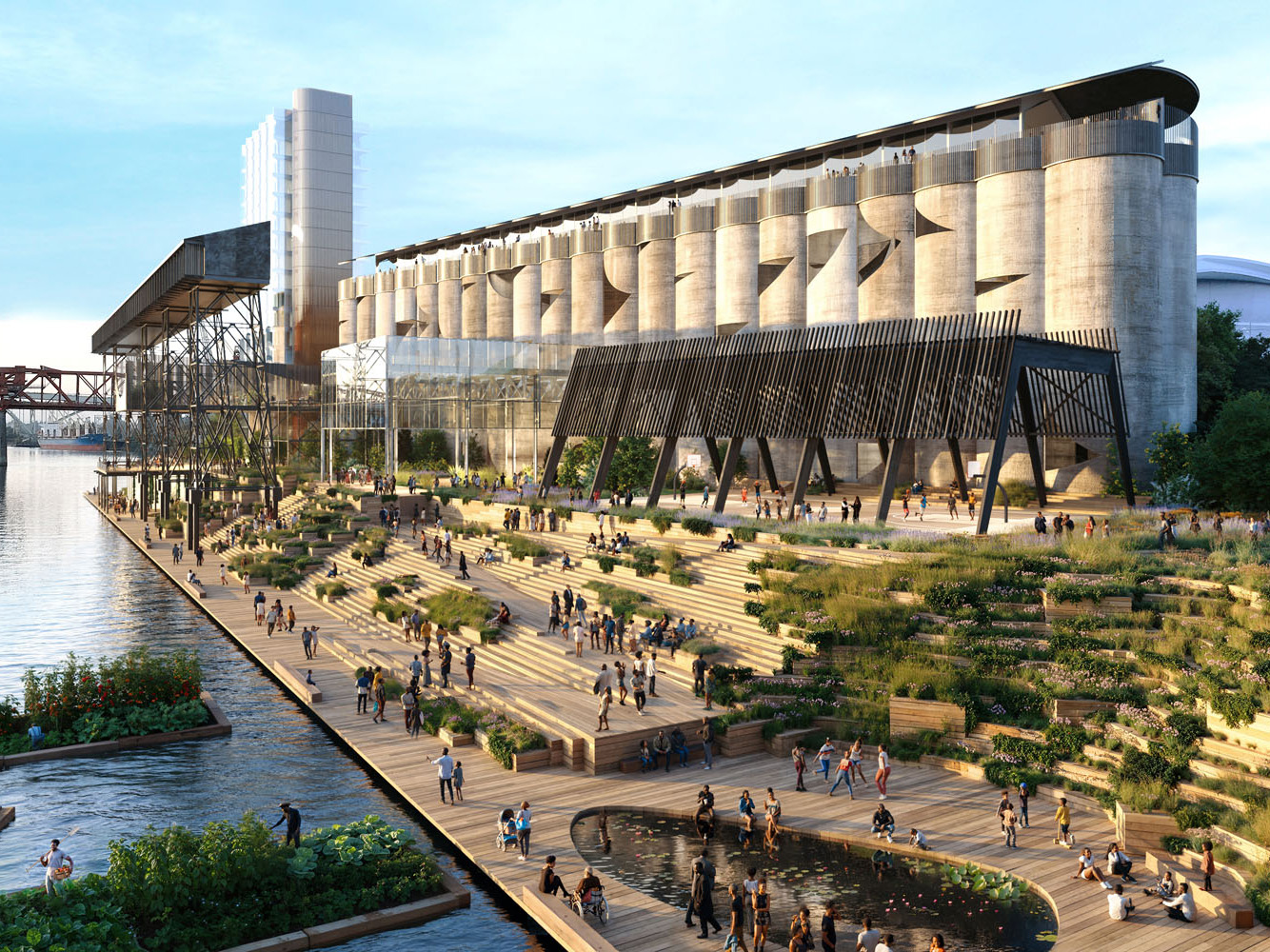
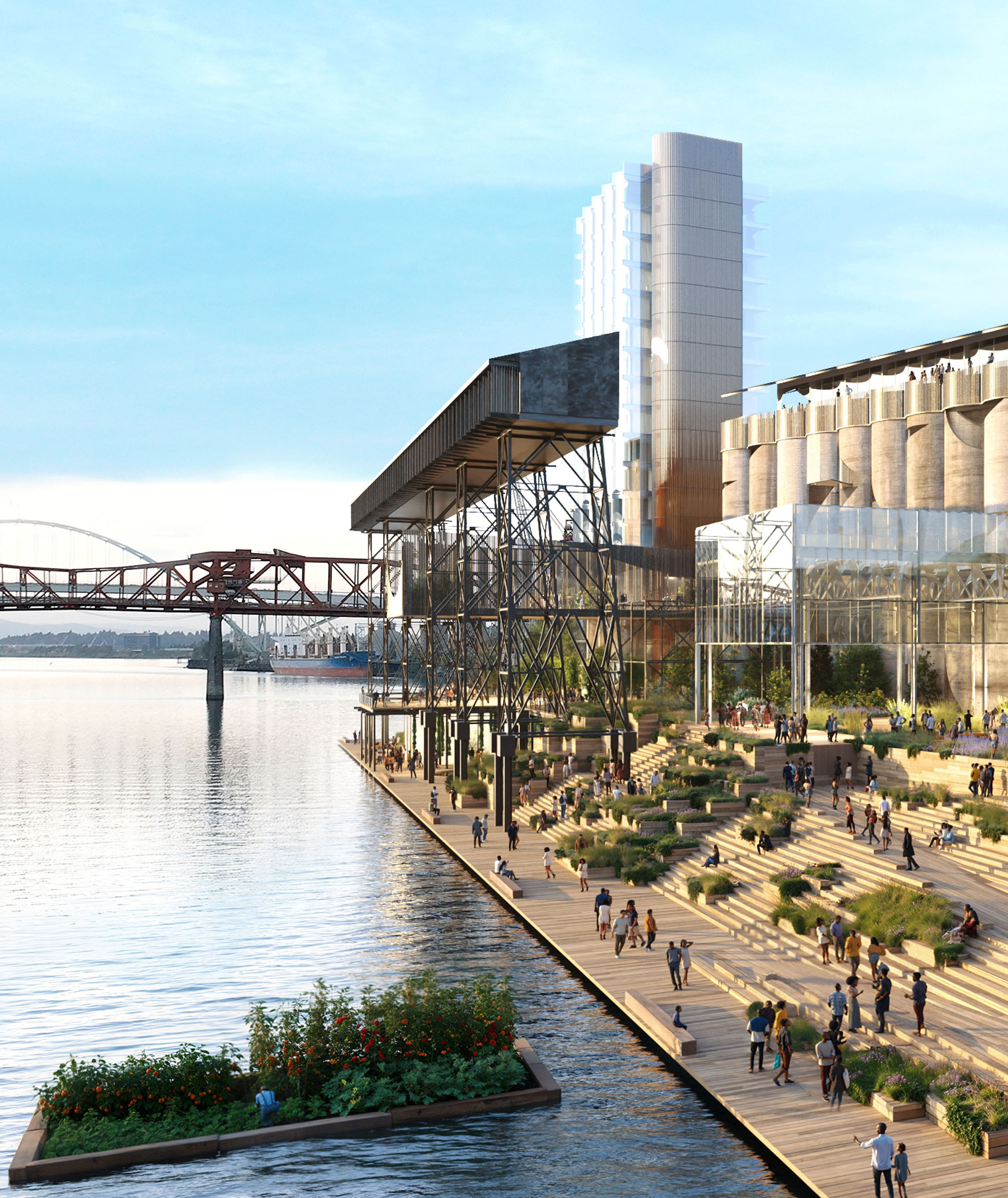
Waters Edge: Rendered by The Light We Make
〈アルビナ・リバーサイド(Albina Riverside)〉は、アメリカ・オレゴン州のポートランドに残る穀物サイロ等の歴史的な産業遺産を改修・転用するプロジェクトです。
芸術施設、スポーツ施設、植物園、公共空間、宿泊施設からなる複合施設として、AD—WOとMALL、Wayside Studioの3社の設計事務所が共同で設計しました。
注目ポイント
- 産業遺構の大胆なアダプティブリユース(適用的再利用)プロジェクト
- コンクリートのプラットフォームや産業用ドックを作り変える「修復的ランドスケープ」
- 過小評価されてきた空間を喜びの場に変える、「黒人の空間的伝統」の建築化
- 3社の設計事務所とグラフィックデザイナーが連携する領域横断的なデザイン
(以下、AD—WOから提供されたプレスキットのテキストの抄訳)
歴史的サイロを再生し、黒人文化と生態系をつなぐ新たな公共空間
〈アルビナ・リバーサイド〉は、ポートランドにある歴史的な穀物ターミナル跡地を、3.2エーカーの公共河川敷へと変革する大規模な都市デザイン・ランドスケープ・建築プロジェクトである。本計画は、黒人文化の生活様式、ダイナミックなコミュニティへのアクセス、そして生態系の再生を基盤としている。
1803 Fundの委託を受け、AD—WO、MALL、Wayside Studioが主導するこのプロジェクトは、象徴的なサイロの構造体と周辺の地形を適応させ、芸術、スポーツ、知的活動、環境保全のための集いの場が息づく活気ある景観へと再生するものである。
3.2エーカーのリバーフロント・エリアは、産業景観の生態系回復と歴史的穀物サイロのアダプティブリユースを通じ、芸術、レクリエーション、文化的な集い、そしてホスピタリティを融合させる。ギャラリーやスタジオといった芸術施設、スポーツ施設、植物園、公共空間が一体となった環境が創出されるのである。
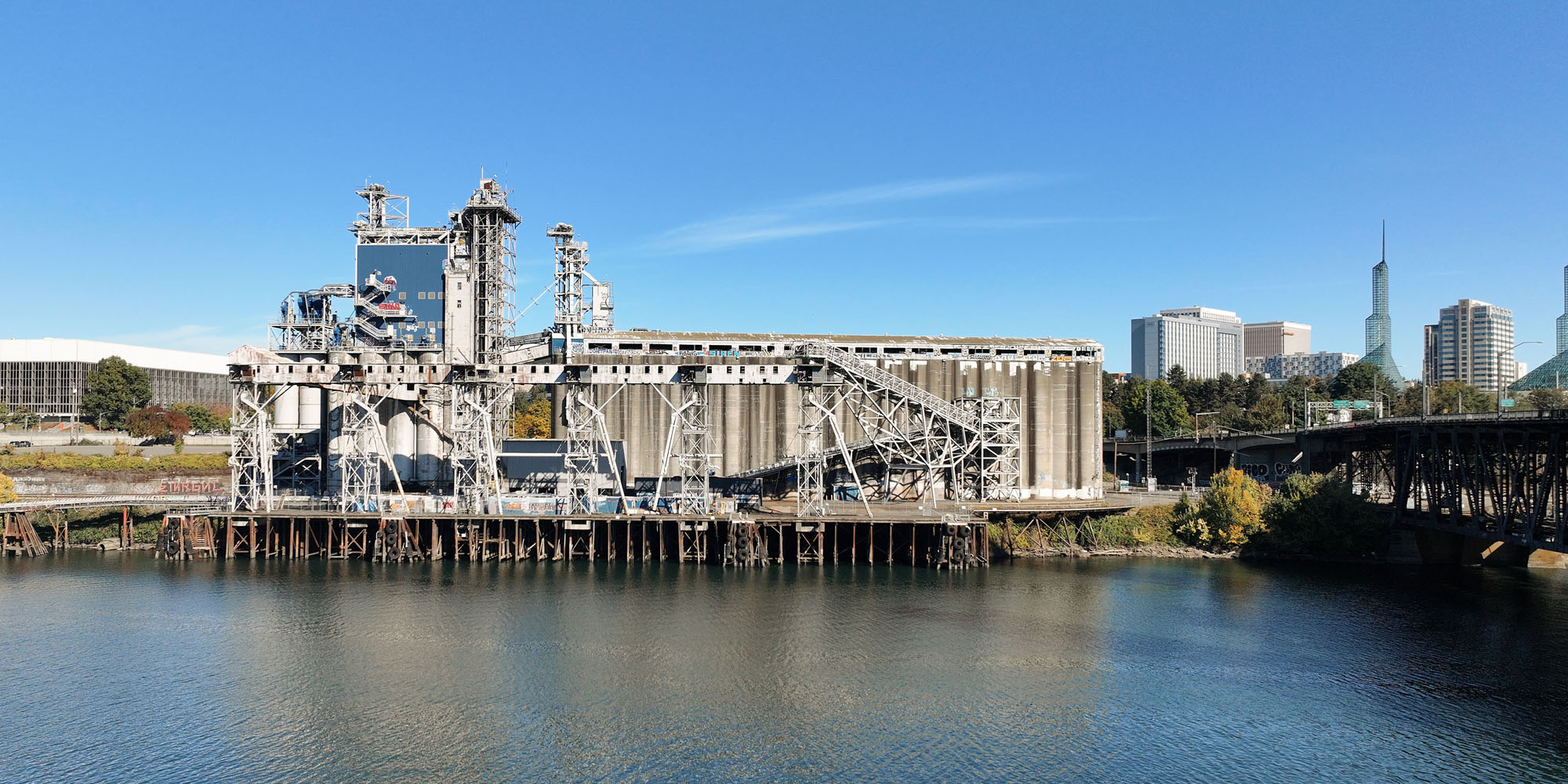
Elevation_Existing
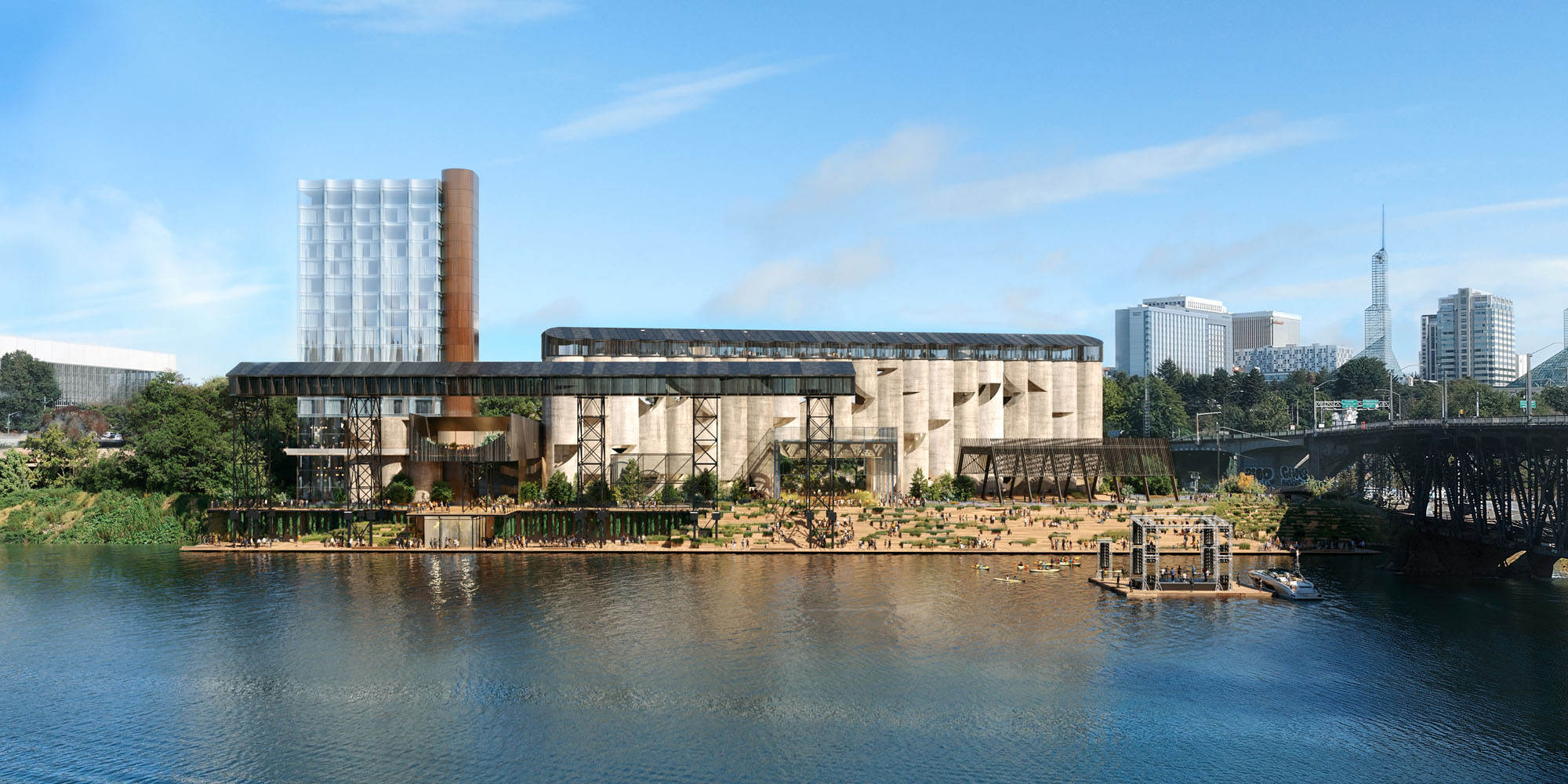
Elevation: Rendered by The Light We Make
かつて過小評価されてきた場所を、喜びと集いの場として再生・活性化させる「黒人の空間的伝統(Black spatial traditions)」に着想を得ており、サイロを「アート・シェッド(芸術小屋)」に、コンクリートのプラットフォームを湿地やコートに、産業用ドックを段丘状の湿地帯へと再構想している。
本プロジェクトは、1803 Fundによるアルビナ地区への世代を超えた投資の中核を成すものであり、黒人コミュニティの中心地であるポートランドにおいて川の存在感を回復させるとともに、文化・学び・遊び・コミュニティ生活が融合する新たな公共空間を提供する。
構想の枠組み
本プロジェクトは以下の3つのフレームワークによって構成されている。
- アクセスと主体性(Access & Agency): スポーツと巡礼という行為を通じ、ローワー・アルビナ地区とウィラメット川を物理的・精神的に接続する。
- 再生と内省(Restoration & Reflection): 産業景観を環境的に修復し、内省とパフォーマンスのための場として再生する。
- インスピレーションと芸術性(Inspiration & Artistry): 芸術の創造と共有のための空間を提供する。
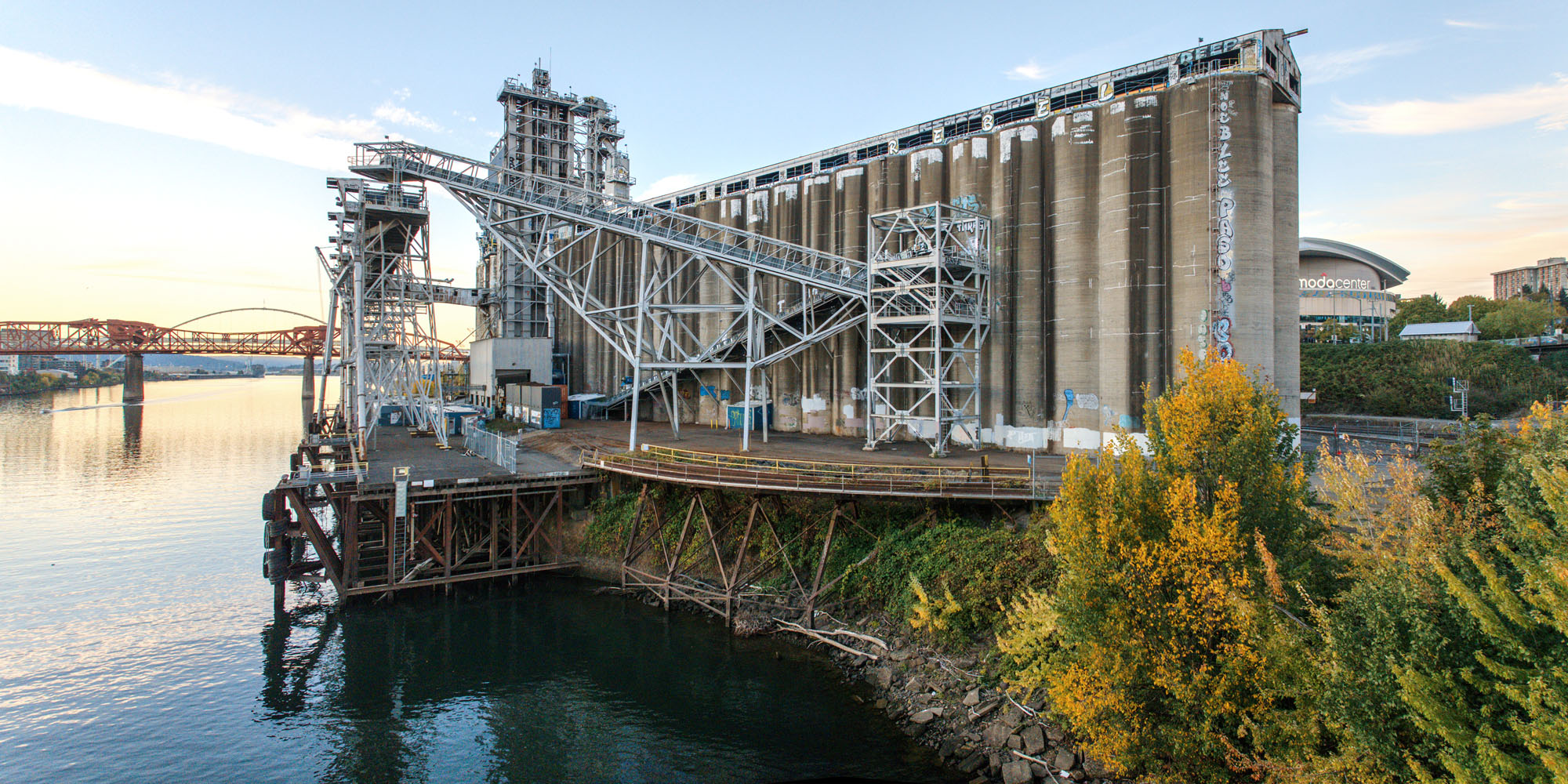
Waters Edge_Existing
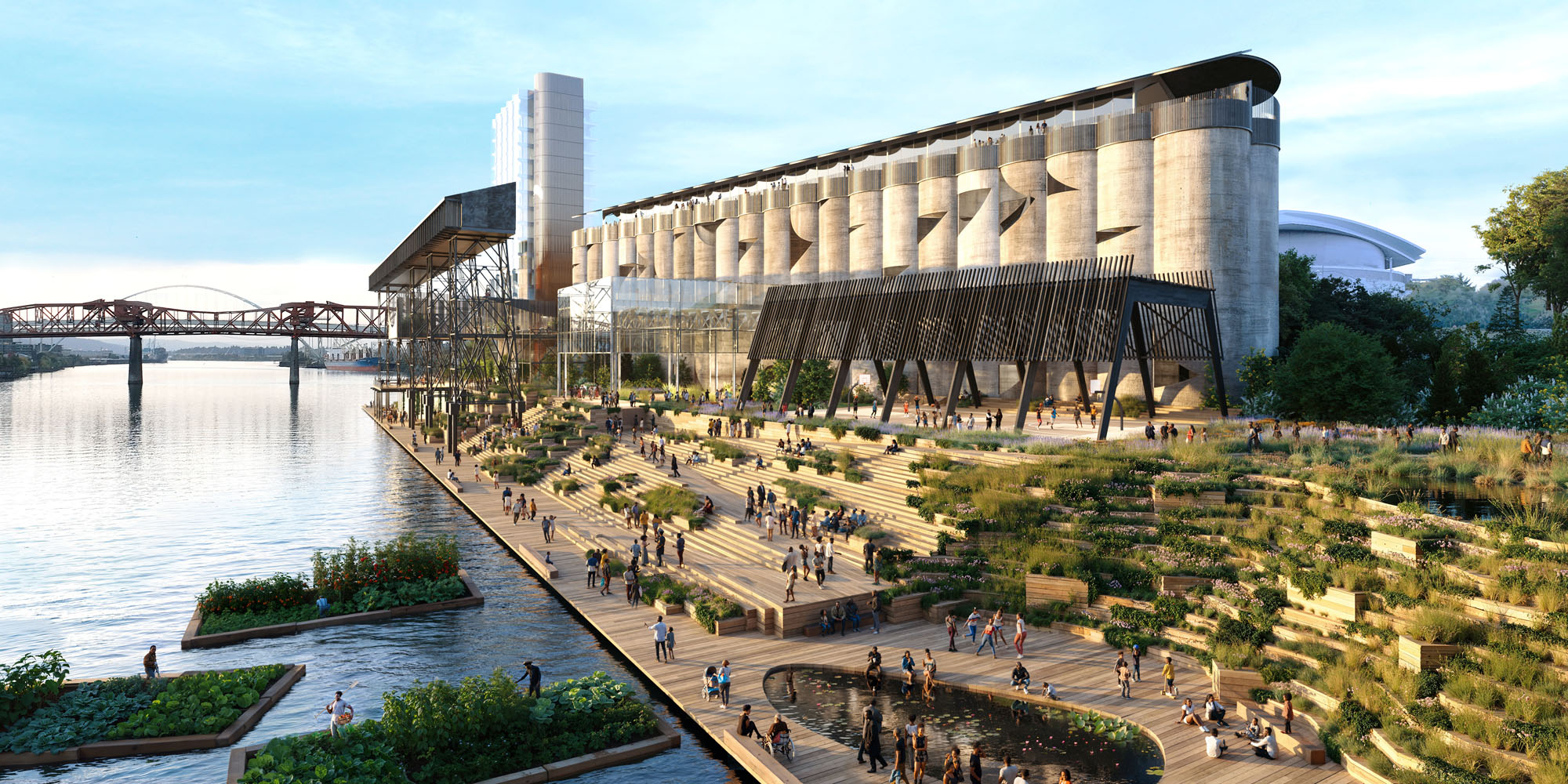
Waters Edge: Rendered by The Light We Make
主要な構成要素
ザ・クロッシング(The Crossing)
27,500平方フィート(約2,550m²)の「ザ・クロッシング」は、高架道路と川岸を結ぶアルビナ・リバーサイドへの主要な歩行者動線として機能する。橋でありながら公共テラスでもあるこの空間は、緩やかなプロセッシオン(行進するような動線)に沿ってプランター、ベンチ、展望スポットが統合されている。この構造物はホテルや上層ドック、アート・シェッドの動線コアに直結しており、公共施設とパノラマビューを兼ね備えた多層的な到着体験を創出する。
アート・シェッド(The Art Shed)
13,000平方フィート(約1,200m²)の「アート・シェッド」は、既存サイロのヘッドハウス(頂部建屋)をアダプティブリユースし、芸術制作やコミュニティプログラムのための開放的かつ柔軟な環境を創出する施設である。
既存の鋼製モーメントフレームは保持・補強され、アーティストスタジオやギャラリーを支える構造的な骨格となる。新たに追加される2つの動線コアが訪問者をサイロ内部へと導き、周囲を囲むバルコニーへと至る。外装には可動式の木製スラットスクリーンが採用されており、敷地全体へ開放することも、より親密な利用のために閉鎖することも可能である。
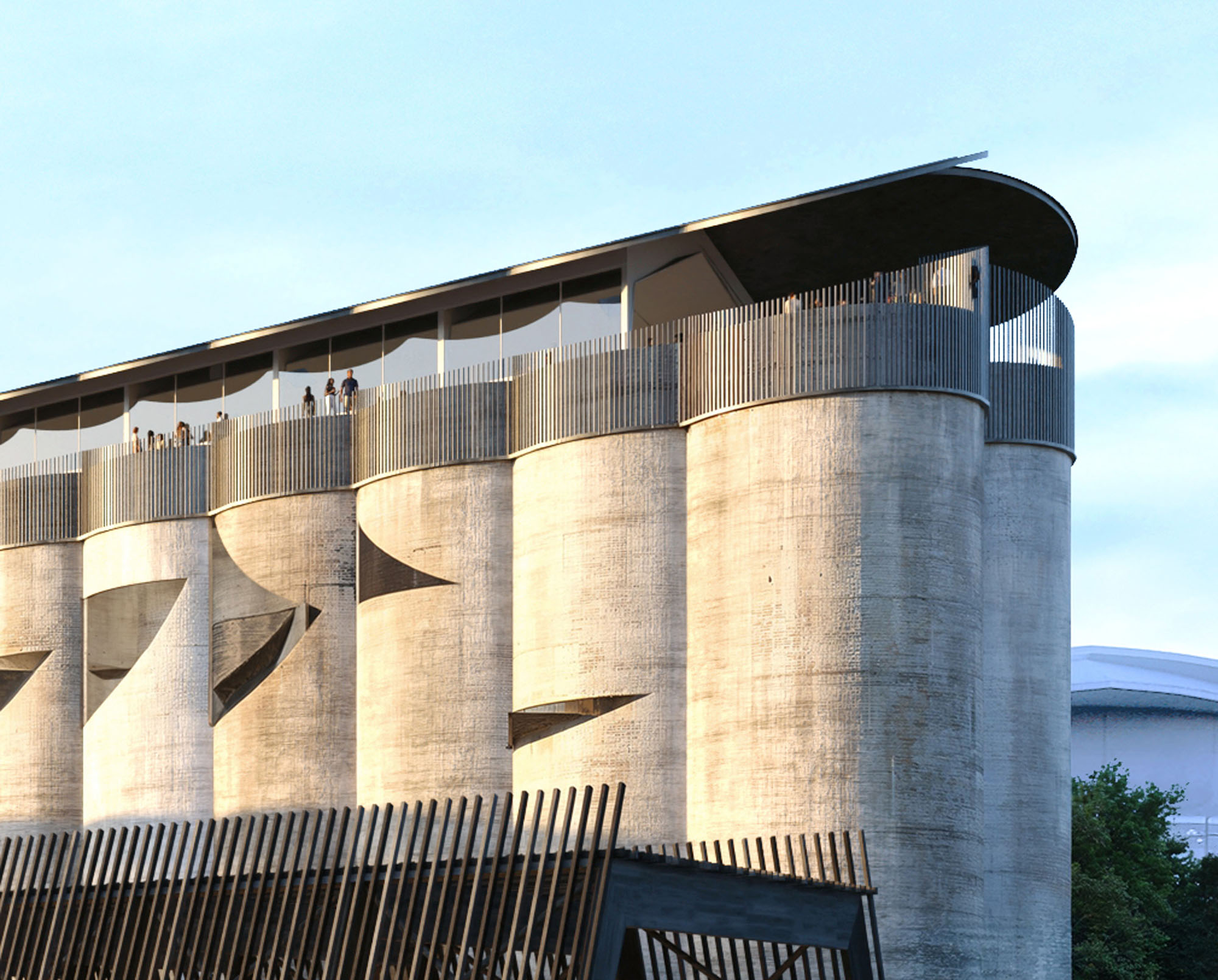
Rendered by The Light We Make
アート・キューブ(The Art Cube)
2,700平方フィート(約250m²)の「アート・キューブ」は、公共彫刻、インスタレーション、パフォーマンス、アーティスト・レジデンシーなどのプログラムを回転展示するための野外パビリオンである。木造フレームとメッシュの囲いによって構成され、制作過程に対する市民の関与を促すデザインとなっている。
バスケットボール・シェッド(The Basketball Shed)
9,900平方フィート(約920m²)の「バスケットボール・シェッド」は、塗装されたコミュニティコートを収容する大規模な木造(マスティンバー)の半屋外構造物である。可動式のキャノピーが天候からの保護を提供することで、年間を通じたプレイや公共イベント、トーナメント、パフォーマンスの開催を支援する。
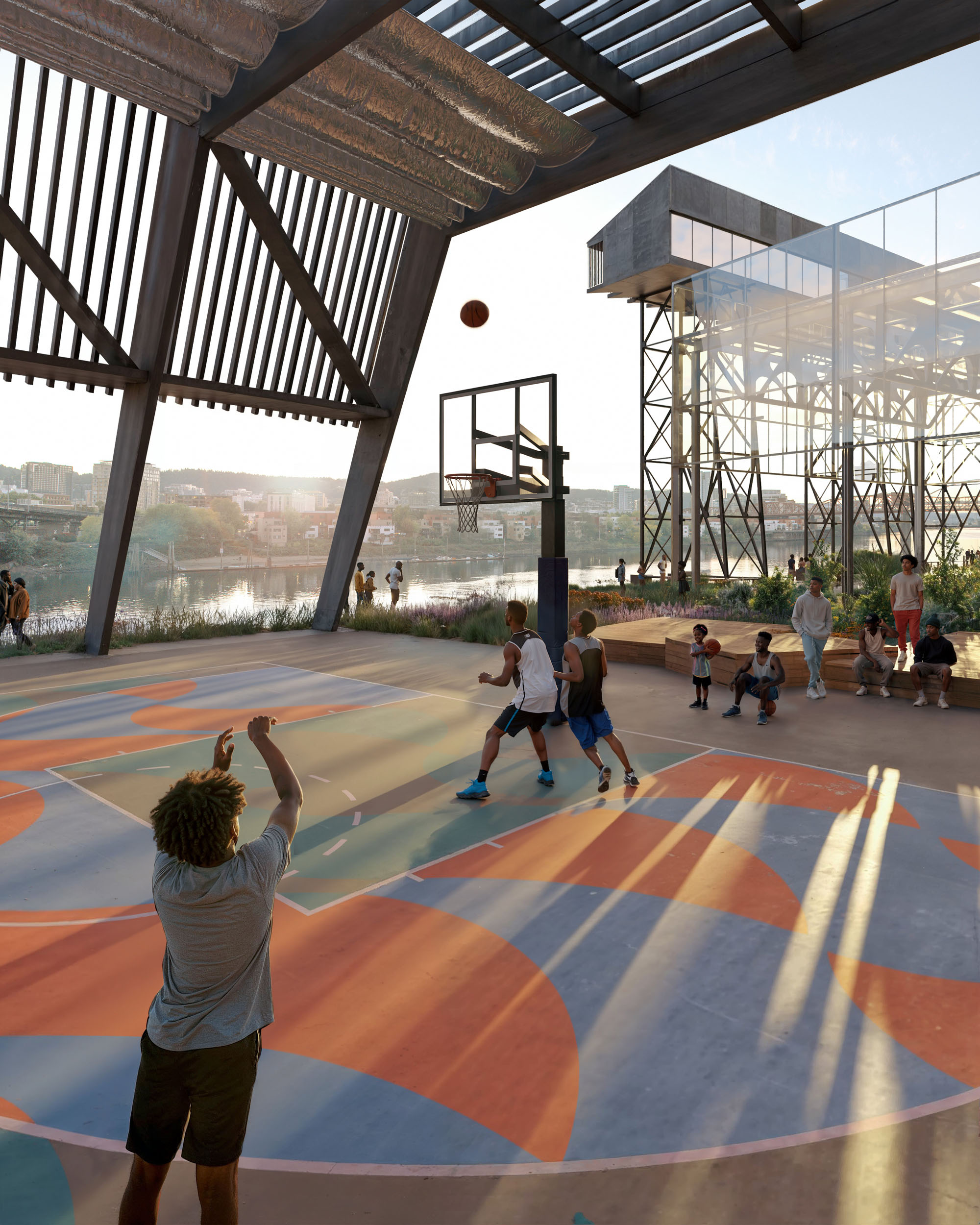
Basketball Shed: Rendered by The Light We Make
アーティキュレイテッド・ドック(Articulated Dock)
53,500平方フィート(約4,970m²)の二層式ドックは、リバーフロントの遊歩道を延長し、歩行者やサイクリストを水辺へと直接導く。段状のプランターと浅瀬のプールが設けられ、生態学的なろ過機能を果たすとともに、川との直接的な接触点を作り出す。
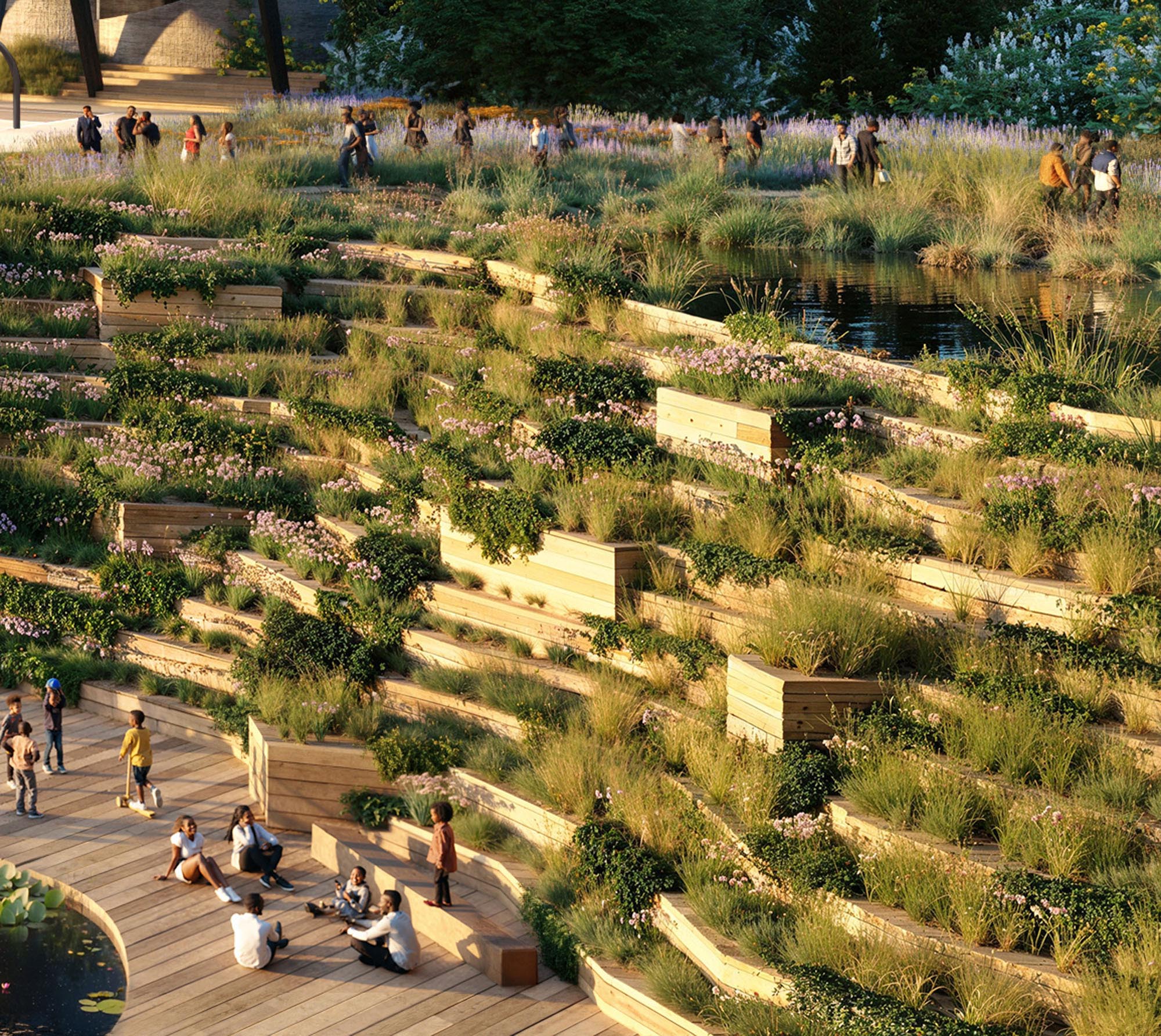
Waters Edge: Rendered by The Light We Make
修復的景観(Reparative Landscapes)
〈アルビナ・リバーサイド〉における1.1エーカーのランドスケープは、高地帯、河岸帯、草原帯、湿地帯(スワンプ)にゾーニングされ、水管理と生物の生息地支援を実現する。段状の湿地と植生豊かな斜面が敷地の地盤を安定させ、訪問者をウィラメット川の豊かな生態系へと再接続させる。
拡張された公共歩道(Expanded Public Walkways)
本プロジェクトでは、ウィラメット川沿いの自転車・歩行者用トレイルを敷地内へと延伸する。上下流で分かれた歩道は敷地北端で合流し、〈アルビナ・リバーサイド〉をより広域な河岸ネットワークへと縫い合わせる役割を果たす。
ホテル(Hotel)
敷地の核となるのが16階建てのホテルである。3階建ての公共ポディウムの上部に客室が配置される構成となっている。1階の「サイロ・ギャラリー」では、6基の既存サイロを展示やイベントのためのフレキシブルな会場へと転換している。
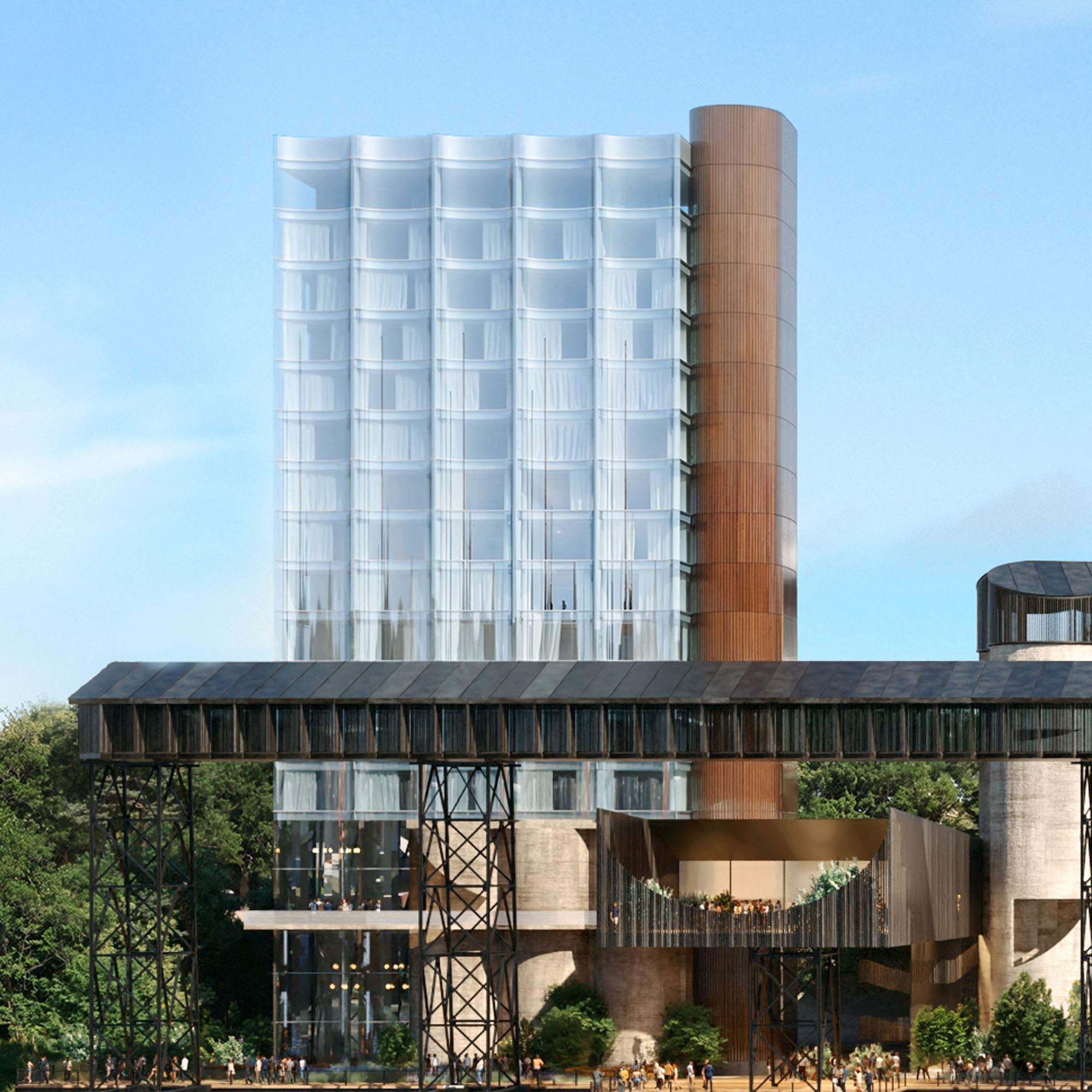
Elevation: Rendered by The Light We Make
AD—WOによるコメント
「〈アルビナ・リバーサイド〉は、放置されたポスト産業時代の水辺地を、黒人コミュニティの巡礼地・創造の場・生態系回復の拠点へと変貌させることで、1803 Fundのビジョンを具現化するものである。過小評価された空間を再生し活気づける先祖から続くレガシーに着想を得て、このプロジェクトはサイロをアート・シェッドに、コンクリートのハードスケープを湿地に、輸送用ドックを多様で生き生きとした景観へと再構想し、ローワー・アルビナとブラック・ポートランドをウィラメット川と再接続する。」
「この野心的な建築・ランドスケープ・都市デザインのイニシアチブは、バスケットボールコートから『ウッズシェディング(woodshedding:こもって練習すること)』の概念に着想を得た実験的芸術空間まで、遊び・探求・学び・儀式の場を多層的に提供する。ここはアーティスト、教育者、研究者が代替的な未来を育み、即興し、創造できる場となるのである。」
エマニュエル・アドマス(Emanuel Admassu)
「ランドスケープは修復システムとして再構築され、ウィラメット川流域の水文特性と調和して機能する。主要な手法は、敷地全体に生態学的勾配を形成する一連の植生帯である。線路から始まり、高地の森林が低木地帯へ、湿性草原が湿地へと移行する。訪問者が水辺に近づくにつれて変化していく景観を創り出すことが私たちの目標である。」
ジェン・ウッド(Jen Wood)
MALLによるコメント
「デザインプロセスは驚くほど新鮮なものであった。AD—WOとWayside Studioが主導し、沼地の水、農業、精神性を通じて『黒人性(Blackness)』を中心に据えた想像力豊かな提案が展開された。これにより、私がこれまで関わったどのデザインプロセスよりも迅速に、オーナーに空間を理解してもらうことができたのである。」
「3社の設計事務所、グラフィックデザイナー、そしてオーナーの間で、流動的なアイデアの交換に参加できたのは美しい経験であった。『コラボレーション』は現在頻繁に用いられる言葉であるが、実務において成功させるのは通常困難なことである。しかし、〈アルビナ・リバーサイド〉のプロジェクトは、このポスト・インダストリアルな敷地全体において、水平・垂直の基準点を通じ、グラフィック的、雰囲気的、そして技術的なアイデアを見事に融合させている。」
「コンセプト設計の段階で、私たちは時速5マイルの電動ボートで現地に到着した。その圧倒的なスケールに、私たちは互いに畏敬の念を抱きながら見渡したものである。1803 Fundがポートランドの黒人コミュニティや遠方からの訪問者に向けて、このポスト産業の景観を開放するという構想は、まさにワイルドなビジョンである。埠頭で行われる祝祭の光景が、私にはすでに目に浮かんでいる。」
ジェニファー・ボナー(Jennifer Bonner)
以下、AD—WOのリリース(英文)です。
Albina Riverside
Project Description
Albina Riverside is a major urban design, landscape, and architecture initiative transforming Portland’s historic Louis Dreyfus Co. grain terminal site into a 3.2 acre public riverfront rooted in Black cultural life, dynamic community access, and ecological renewal. Commissioned by 1803 Fund and led by AD—WO, MALL, and Wayside Studio, the project adapts the iconic silo structures and surrounding terrain into a vibrant landscape of gathering spaces for arts, sports, intellectual activity, and environmental stewardship. Drawing from Black spatial traditions that reclaim and animate undervalued sites into places of joy and assembly, Albina Riverside reimagines silos as art sheds, concrete platforms as sloughs and courts, and industrial docks as terraced wetlands. The project anchors 1803 Fund’s generational investment in Albina—restoring the river’s presence in the heart of Black Portland and offering a new kind of public space where culture, learning, play, and community life come together.
Location
900 N Thunderbird Way, Portland, OR 97227
South of the Moda Center across I-99W
North of the Willamette River and the Steel BridgeOwner
1803 FundTeam
AD—WO (Design Lead: Public Space, Arts Programming, Sports & Landscape Design)
Jennifer Bonner / MALL (Design Lead: Hotel & Hospitality)
Wayside Studio (Conceptual Consultant)
Amen Amen (Identity and Graphic Design)
Natanya Jones (Community Strategist)
Hanif Kara (Structural Concept)Conceptual Frameworks
Access & Agency: Connect Lower Albina to Willamette River through sports and pilgrimage.
Restoration & Reflection: Remediate industrial landscape as site for reflection and performance.
Inspiration & Artistry: Offer spaces for making and sharing art.Major Site Components
The Crossing: The 27,500 sf Crossing serves as the primary pedestrian entry into Albina Riverside, connecting the elevated road to the riverfront. It functions as a bridge and public terrace, integrating planters, seating, and overlooks along a gradual procession. The structure links directly to the hotel and upper dock along with the circulation cores for the Art Shed, creating a layered arrival experience with public amenities and panoramic views.
The Art Shed: The 13,000 sf Art Shed adaptively reuses the existing silo headhouse, creating an open and flexible environment for artmaking and community programming. Its original steel moment frames are retained and reinforced, forming the structural backbone for artist studios and galleries. Two new circulation cores bring visitors up through the silos to a wraparound balcony, where an operable wood-slat screen allows the building to open fully to the site or close for more intimate use.
The Art Cube: The 2,700 sf Art Cube is an open-air pavilion for rotating public sculptures, installations, performances, and artist residencies. Its wood frame and mesh enclosure invite public interaction with the process of making.
The Basketball Shed: The 9,900 sf open-air Basketball Shed is a mass-timber structure housing a painted community court. A movable canopy provides weather protection, supporting year-round play and public events, along with tournaments and performances.
Articulated Dock: The 53,500 sf bi-level dock extends the riverfront trail and brings pedestrians and cyclists directly to the water’s edge. Terraced planters and a wading pool create ecological filtration and direct river contact.
Reparative Landscapes: Albina Riverside’s 1.1-acres of landscaping is organized into upland, riparian, meadow, and slough zones that manage water and support habitat. Terraced wetlands and vegetated slopes stabilize the site and reconnect visitors to the Willamette River’s vibrant ecology.
Expanded Public Walkways: The project extends the Willamette’s bike and pedestrian trails through the site. Separate upper and lower paths merge at the northern point, stitching Albina Riverside into the larger riverfront network.
Hotel: The 16-story hotel anchors the site, offering guest rooms above a three-level public podium. Its ground-floor Silo Gallery converts six silos into a flexible venue for exhibitions and events.
Program Summary
A 3.2-acre riverfront combines arts, recreation, cultural gathering, and hospitality through the ecological restoration of an industrial landscape and the adaptive reuse of the historic grain silos—creating a unified environment of art amenities (galleries and studios), sports facilities, flora gardens, and public spaces.
Building Materials
●Existing Concrete Silos — retained to support the Art Shed and selectively perforated.
●Existing Structural Steel Frames — reused and reinforced to support the Art Shed.
●Existing Steel Conveyor Trusses — selectively removed and reused on the Articulated Dock.
●Wooden Dock Platform — selectively removed and reused on the Articulated Dock.
●Pre-Oxidized Copper — used as the roofing material for the Art Shed and the Crossing.
●Wood-Slat Screens — warm, natural cladding for the Art Shed and Crossing.
●Fire-Treated Mass Timber — primary structure for the Basketball Shed, wrap-around railing for Art Shed and Crossing.
●Landscape Materials — native wetland substrates, hardwood decking, and four-zone ecological planting palettes supporting slough, meadow, shrub, and upland conditions.Technical, Sustainability & Ecological Features
●Terraced Wetlands for Stormwater Filtration — modeled on regional watershed ecologies.
●Underground Stormwater Detention Vaults for peak-flow mitigation.
●Grey-Water Recycling Systems integrated across the site.
●Floating Gardens + Mussel Habitat to improve water quality and support aquatic ecosystems.
●Four-Zone Ecological Planting System (slough, meadow, shrub, upland) with habitat-specific substrates.
●Native Planting Palette supporting pollinators, birds, amphibians, and riparian ecologies.
●Pre-Oxidized Copper Roofing for extended lifespan and reduced maintenance.
●Mass Timber Construction for Basketball Shed as a low-carbon structural system.
●Operable Wood-Slat Rainscreen on Basketball Shed moderating light, airflow, and thermal gain.
●Accessible Crossing Bridge integrating public circulation, viewing terraces, and planted edges.
●Articulated Dock with ADA “Stramp” for multilevel water access, planting terraces, and gathering.
●Landscape-as-Infrastructure Strategy reducing hardscape area and embedding ecological performance into every public space.Here are some quotes from AD—WO:
“Albina Riverside materializes 1803 Fund’s vision by transforming a neglected postindustrial waterfront into a vibrant site for Black pilgrimage, creativity, and ecological restoration. Drawing on ancestral legacies that reclaim and animate undervalued spaces, the project reimagines silos as art sheds, concrete hardscapes as sloughs, and shipping docks as diverse, living landscapes—reconnecting Lower Albina and Black Portland to the Willamette River.” —Emanuel Admassu, AD—WO
“This ambitious architecture, landscape, and urban design initiative offers multiple stages for play, exploration, learning, and ritual, from basketball courts to experimental arts spaces inspired by the concept of “woodshedding;” where artists, teachers, and researchers can cultivate, improvise, and invent alternative futures.” —Emanuel Admassu, AD—WO
“The landscape is reframed as a reparative system, working in concert with the hydrological character of the Willamette watershed. The primary gesture is a series of vegetative bands that establish an ecological gradient across the site. Beginning from the railway lines, an upland forest yields to scrublands, then a wet meadow to slough. The goal is to create a landscape that transforms in concert with a visitor’s approach towards the water’s edge.” —Jen Wood, AD—WO
Here are some quotes from MALL:
“The design process felt wildly fresh—one where AD—WO and Wayside Studio—led with imaginative proposals that centered Blackness via swampy waters, farming, and spirituality. We were able to help the owner understand space faster than any other design process I’ve participated in.” —Jennifer Bonner / MALL
“It was beautiful to participate in a fluid exchange of ideas between three design offices, graphic designers and the owner. “Collaboration” is a word floated around a lot right now, yet typically a difficult thing to successfully pull off in practice. The Albina Riverside project blends graphic, atmospheric, and technical ideas together in horizontal and vertical datums throughout this post-industrial site.” —Jennifer Bonner / MALL
“During the concept design process, we arrived at the site via 5 mph on an electric boat. We looked at each other in awe of the sheer scale. For the 1803 Fund to open up this postindustrial landscape for the Black community in Portland and visitors beyond is a wild vision. I can already imagine the celebration that will take place on the docks.” —Jennifer Bonner / MALL
AD—WO 公式サイト
https://ad-wo.com
【購読無料】空間デザインの今がわかるメールマガジン TECTURE NEWS LETTER
RECOMMENDED ARTICLE




![[Interview]I IN:「FRAME」インタビュー日本語版](https://magazine-asset.tecture.jp/wpcms/wp-content/uploads/2025/03/28171248/top_thumbnail_20250328_003.jpg)

