CULTURE
©︎ Usssajaeree Studio
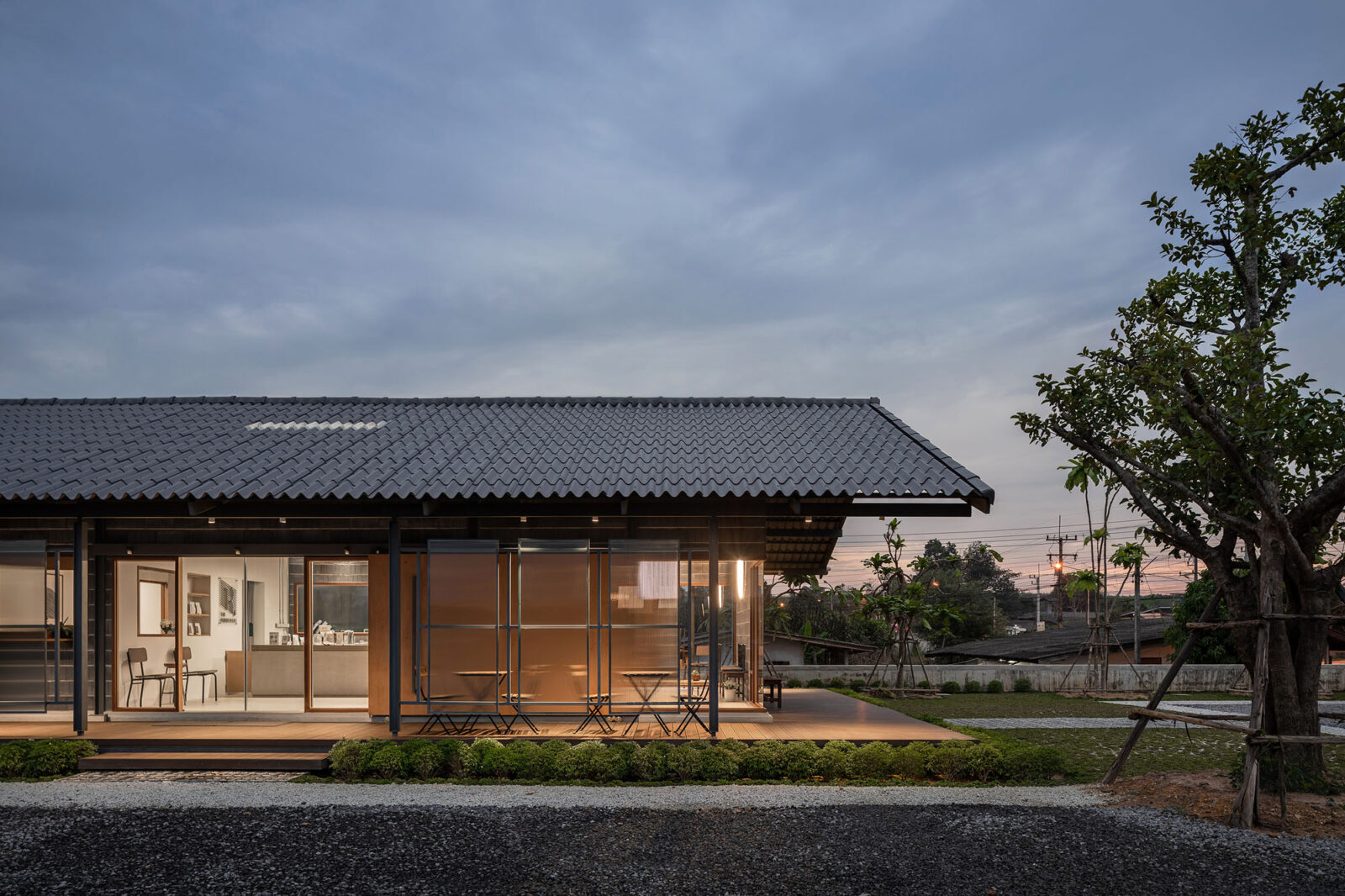
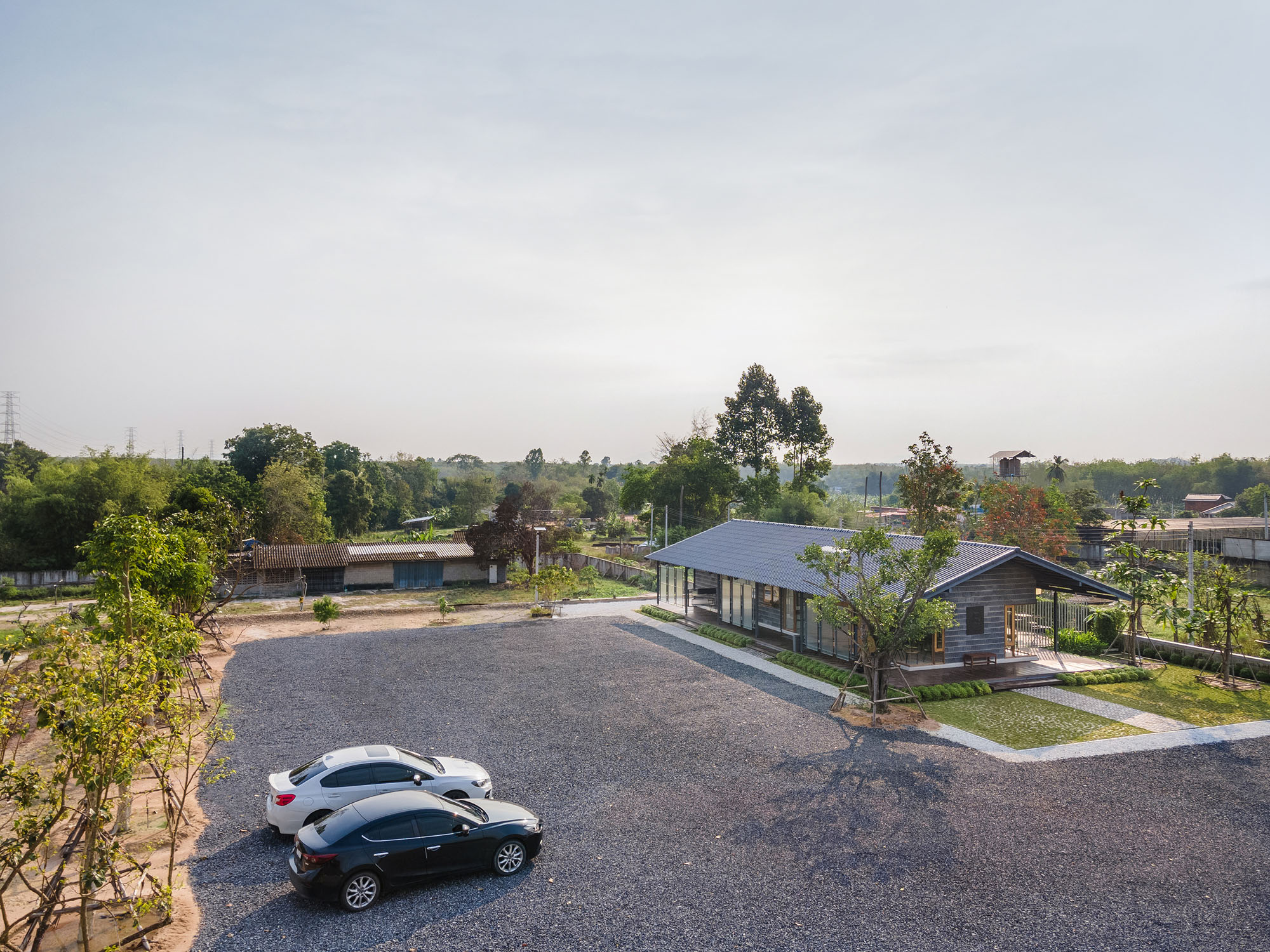
タイのラヨーンに位置する〈The Rubber(er) Café〉は、敷地に建っていたゴム工場を、その建築的特徴や素材まで受け継いだカフェです。
タイの設計事務所 SA-ARDスタジオ(SA-ARD studio)が設計しました。
注目ポイント
- かつての工場を「建築的参照源」として継承するプロジェクト
- 工場のプロポーションや構成を建築言語へと翻訳
- 既存工場の建材の80%以上を再利用・再構成
(以下、SA-ARDスタジオから提供されたプレスキットのテキストの抄訳)
©︎ Usssajaeree Studio
©︎ Usssajaeree Studio
工業の記憶を継承する新たな公共空間
タイのラヨーンに位置する〈The Rubber(er) Café〉は、かつて家族経営のゴム工場が営まれていた跡地に開発された小規模なカフェプロジェクトである。設計を手掛けたSA-ARDスタジオは、既存の工業建築が持つ素材と構造の論理を再解釈し、ゴム生産の記憶を保存しながら、現代的な公共空間へと変容させている。
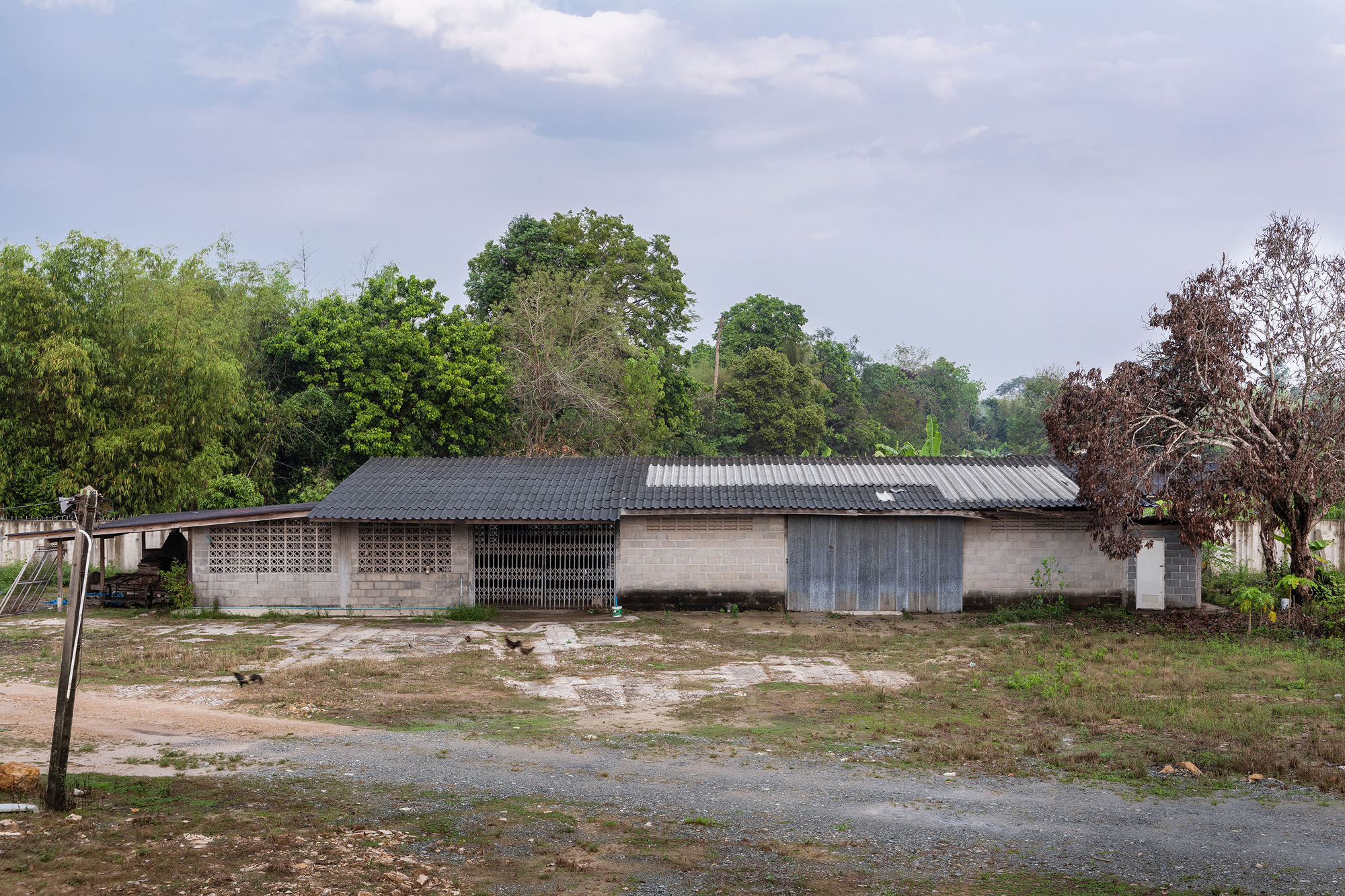
Existing building
©︎ Usssajaeree Studio
「建築的参照源」としての既存工場
建築家は、この敷地を単なる空白の土地として扱うのではなく、かつての工場を重要な「建築的参照源」として捉えた。ゴム加工用建物のプロポーション、直線的な空間構成、そして実用性を重視した建築手法を徹底的に研究し、それらを現代的な用途に適した新たな建築言語へと翻訳している。
©︎ Usssajaeree Studio
景観に溶け込む静謐なシルエット
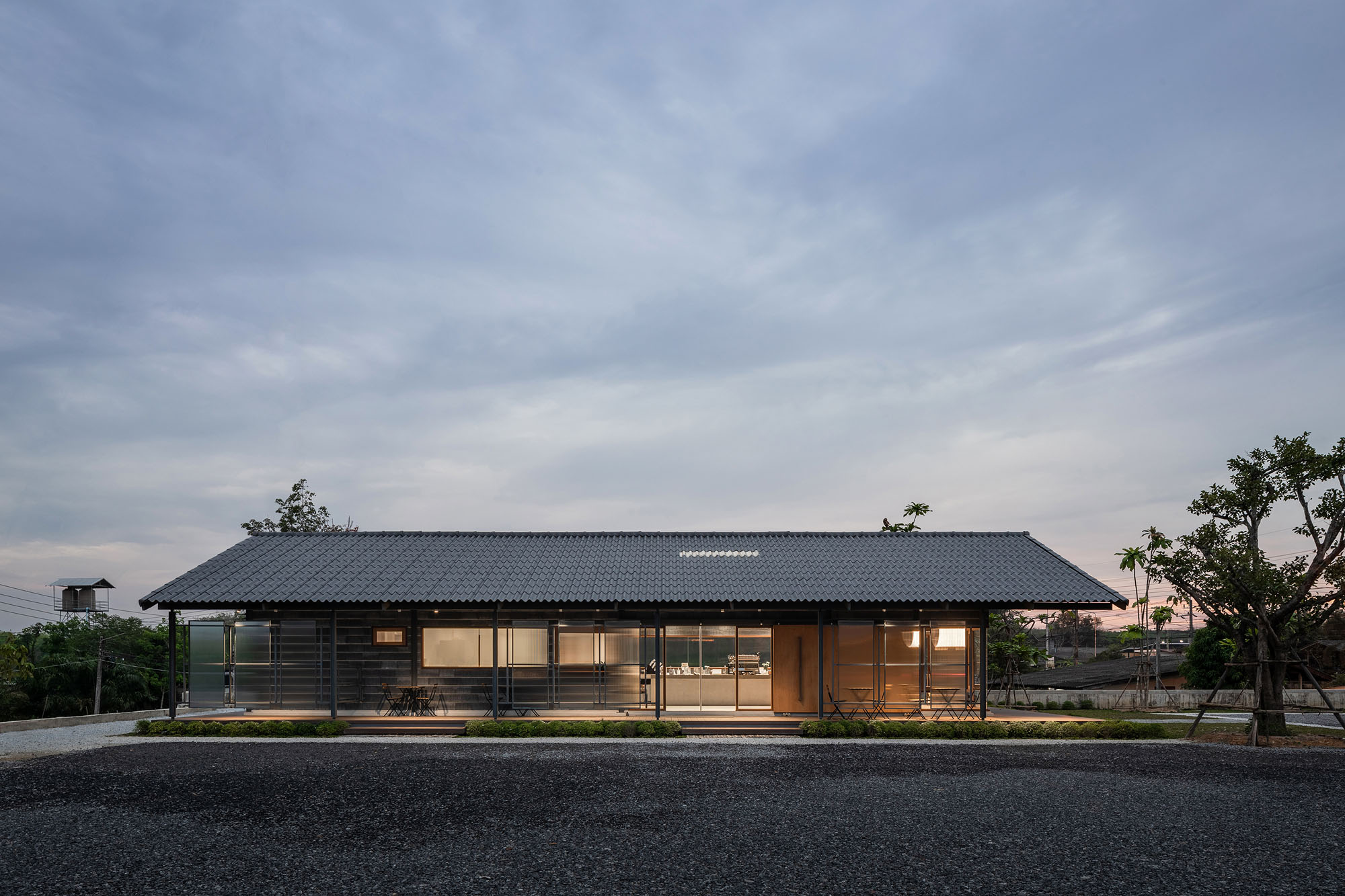
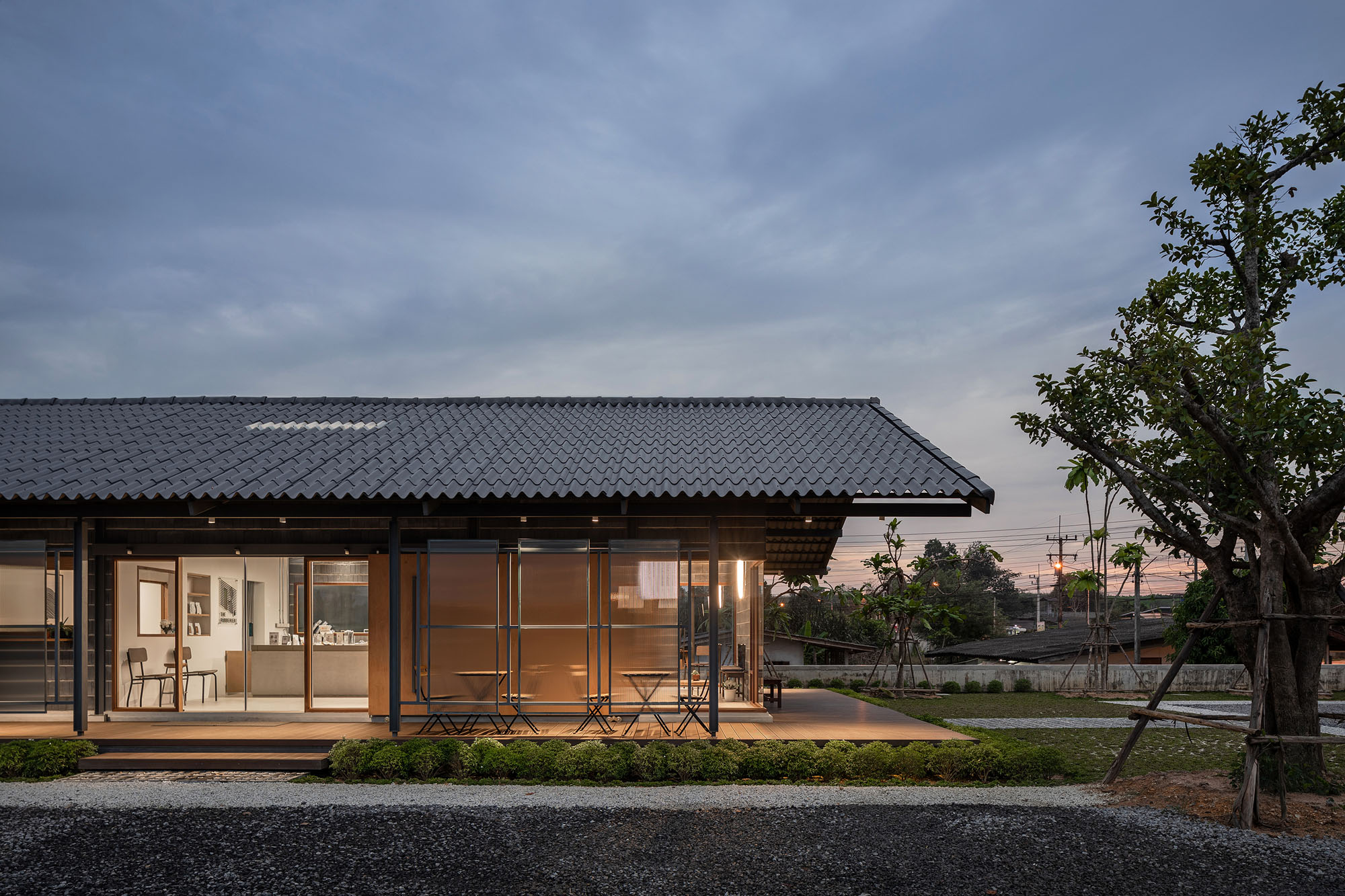
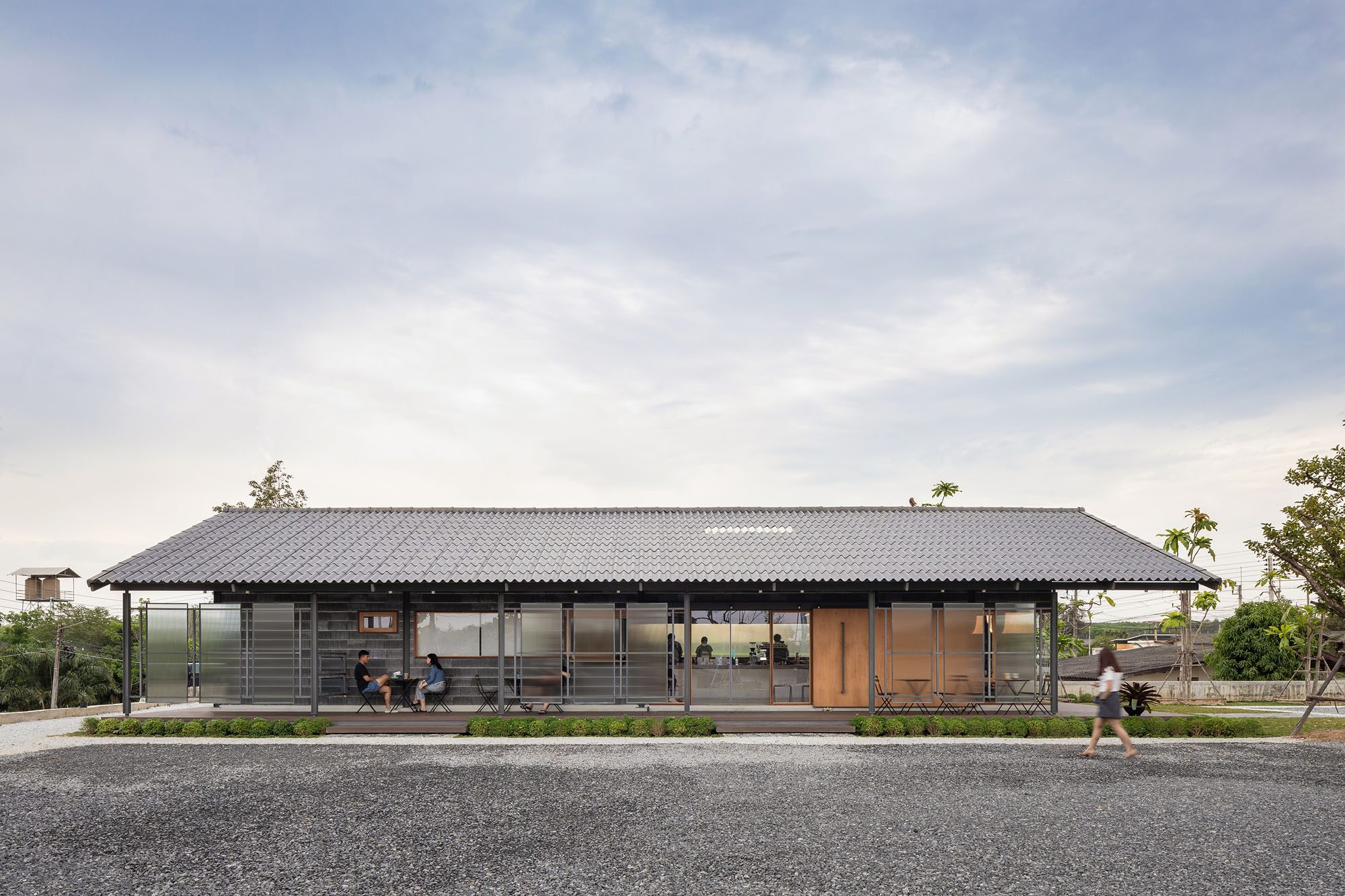
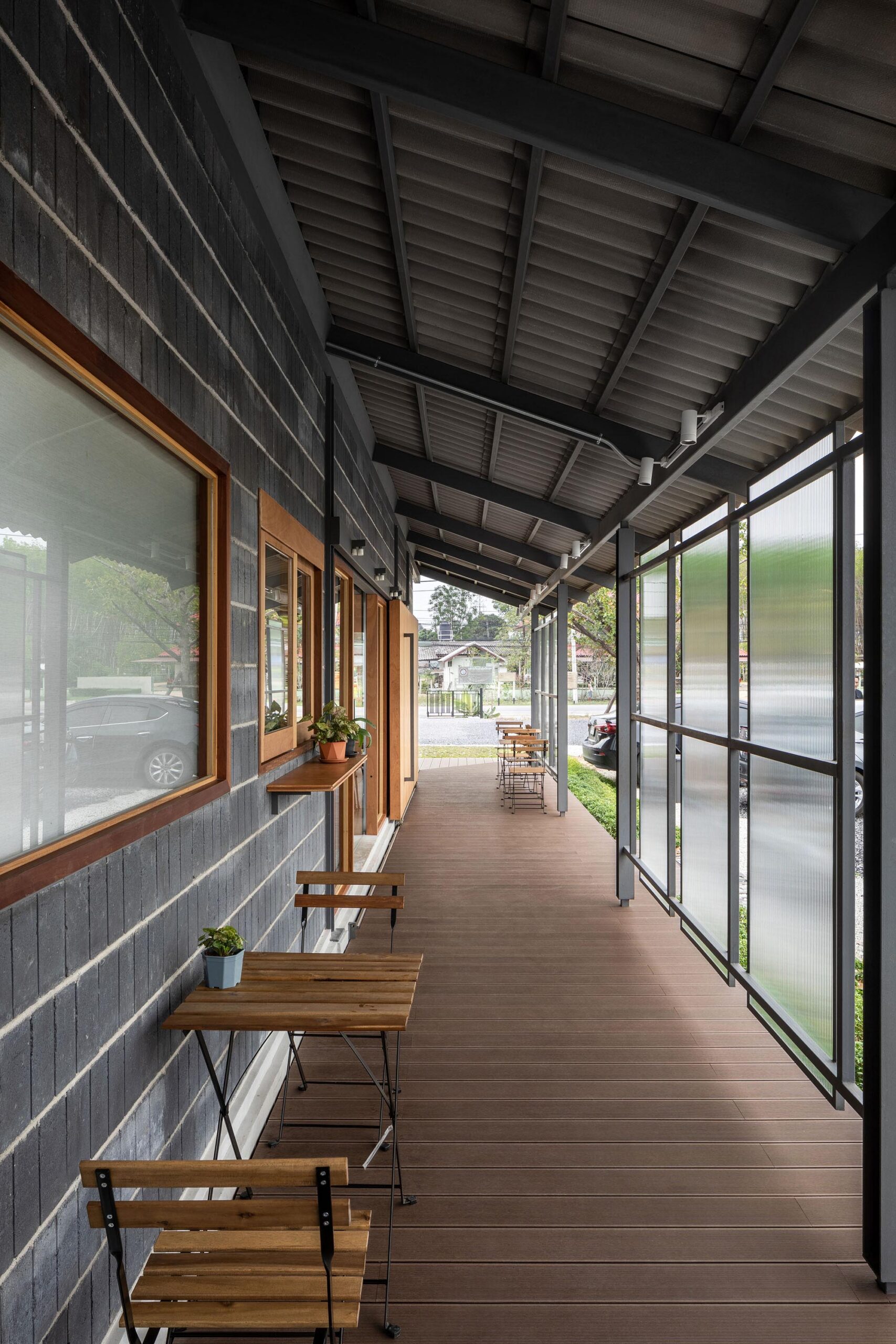
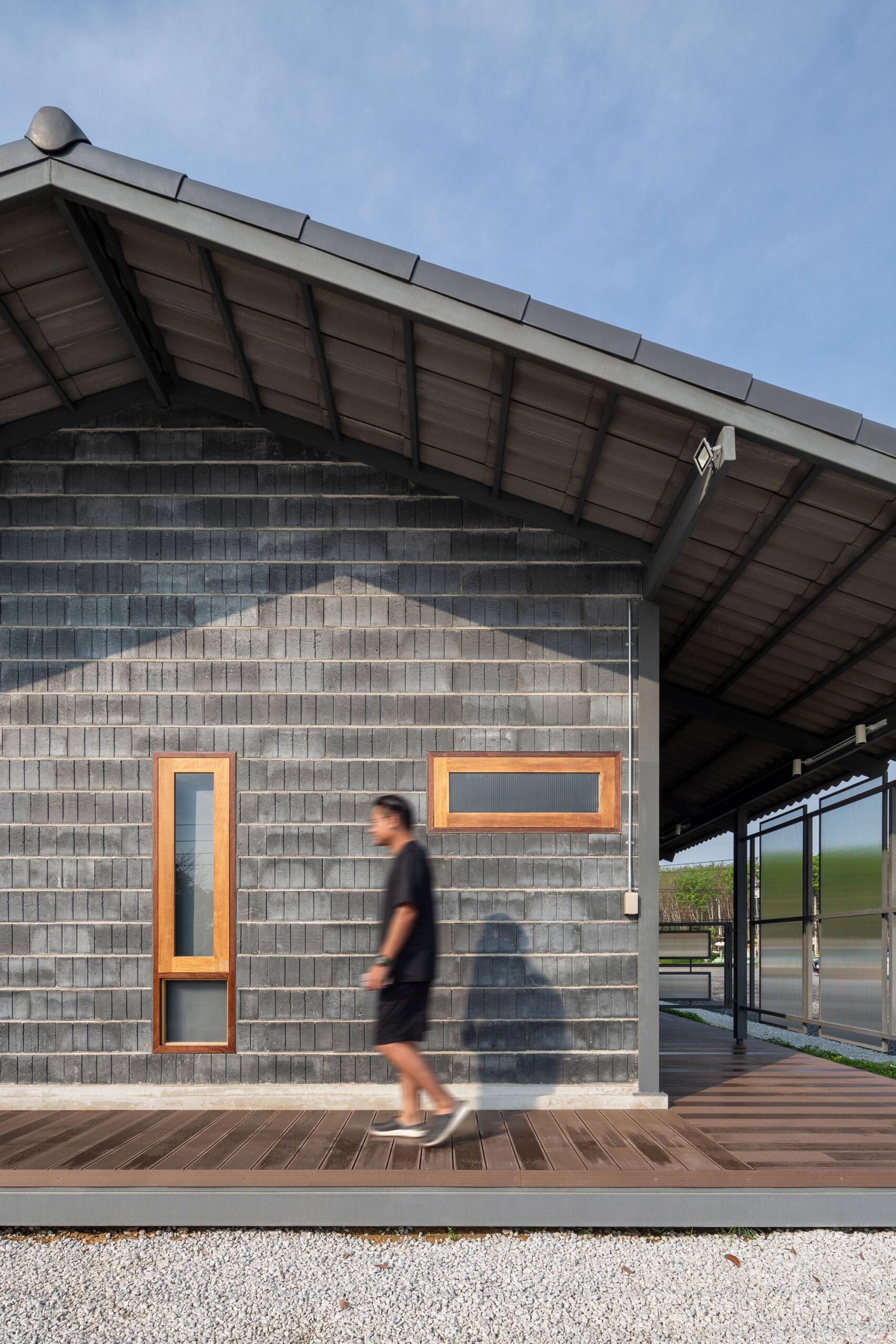
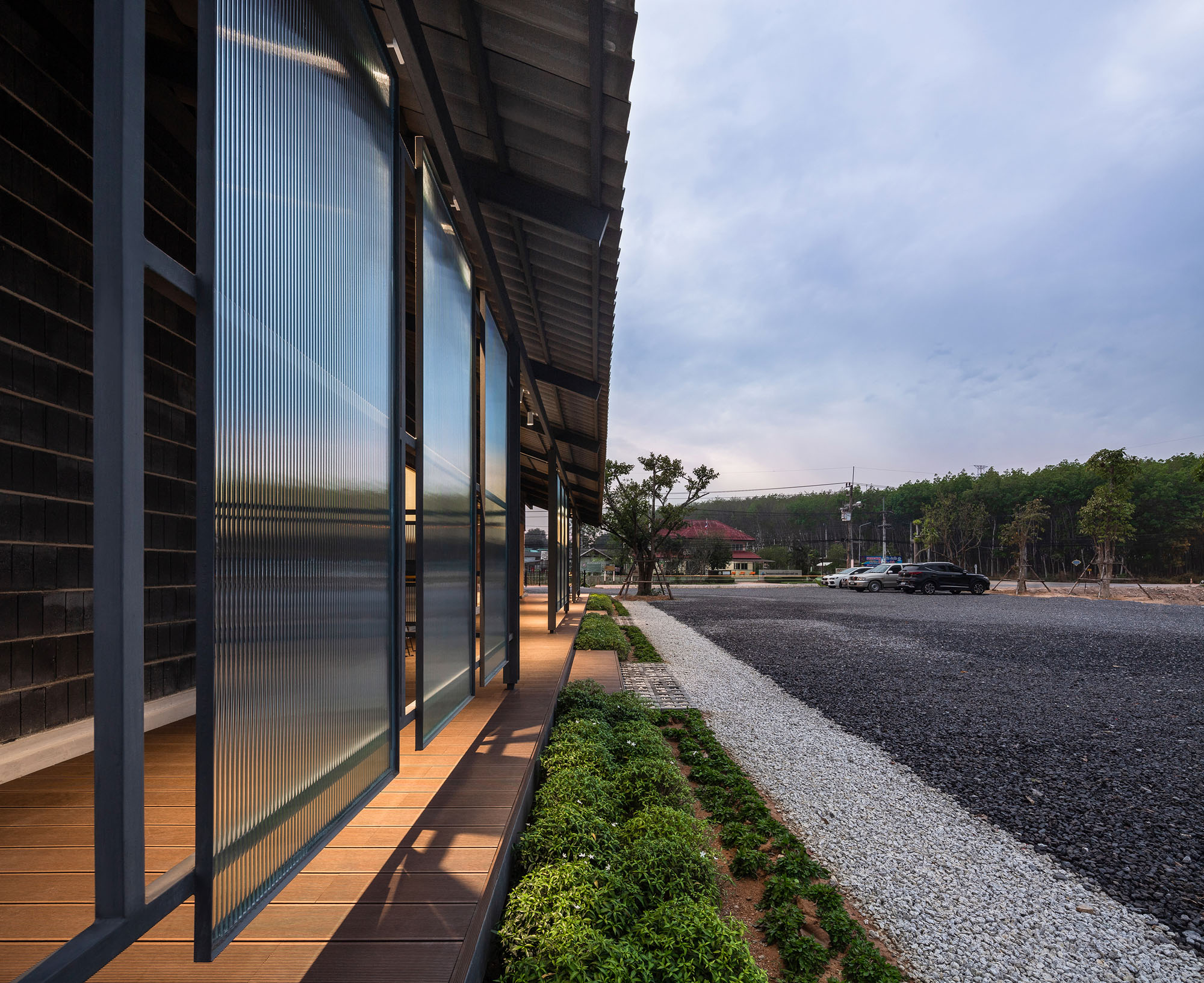
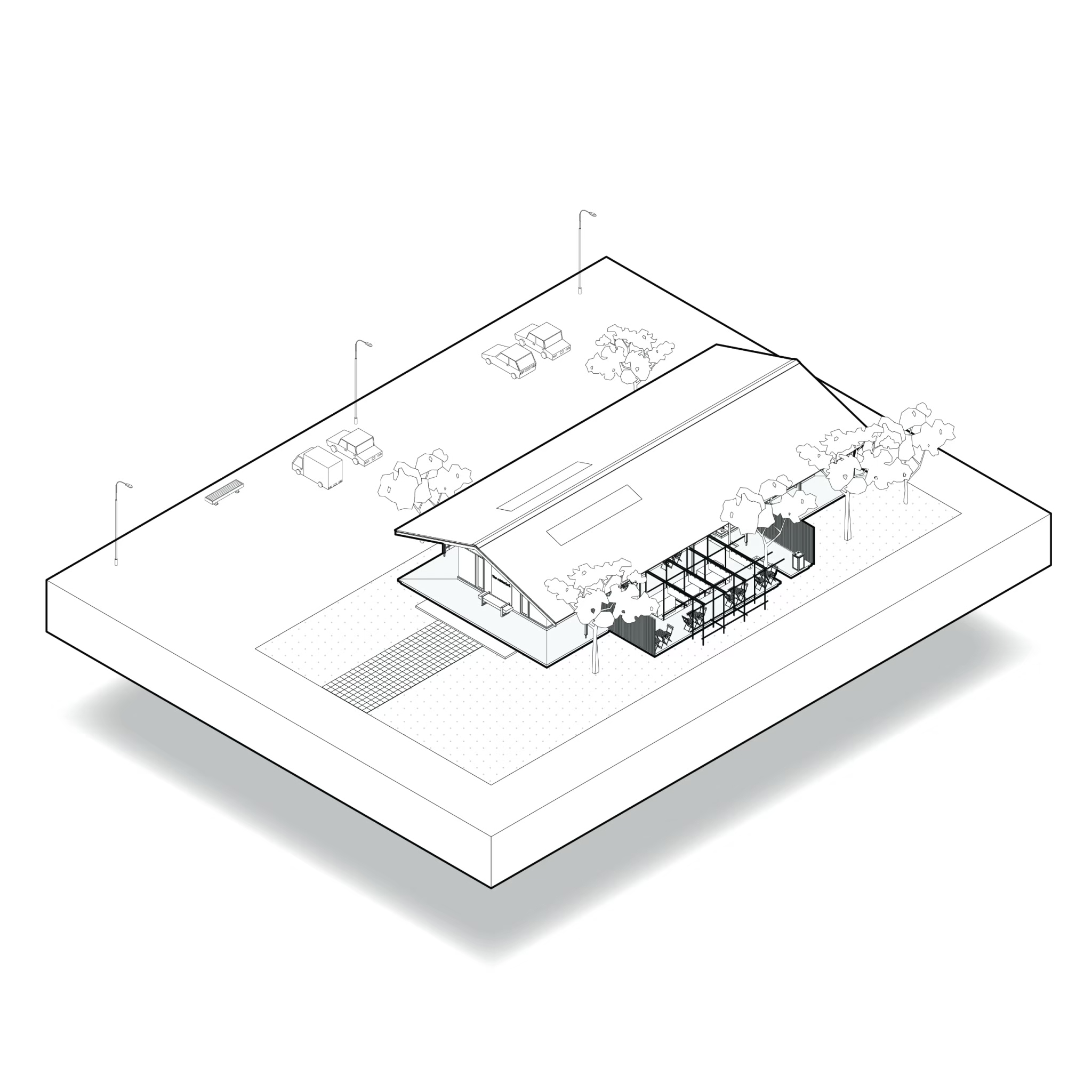
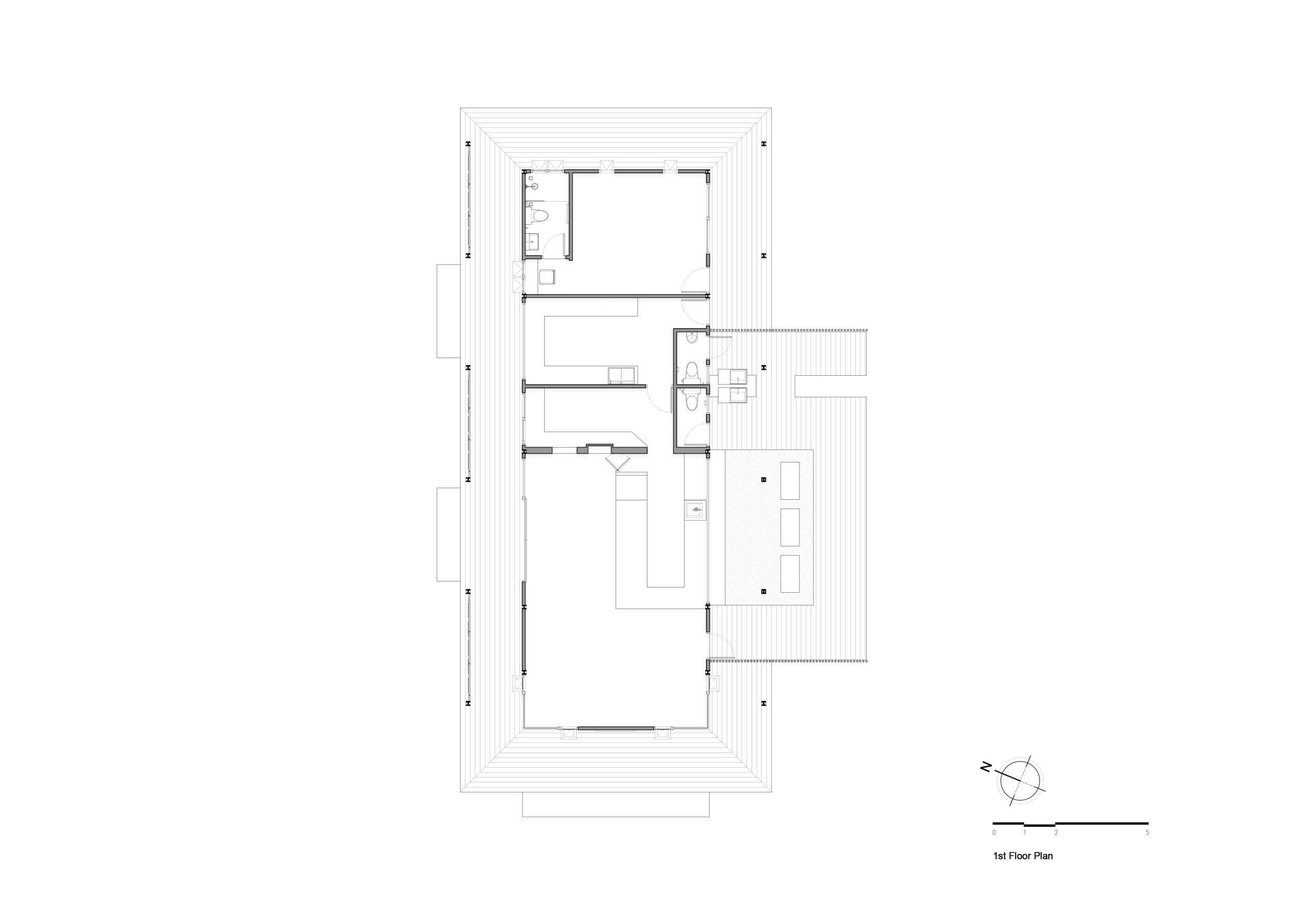
カフェのデザインは、ゴム工場に典型的であった細長いレイアウトを反映し、全長約20mの平屋構造として計画された。緩やかな勾配をもつ屋根と深い軒は、日陰をつくり出し熱取得を抑制する。これにより、産業建築としての機能性を維持しつつ、周囲の景観に溶け込む、静謐で抑制されたシルエットが形成されている。
©︎ Usssajaeree Studio
©︎ Usssajaeree Studio
再生素材と構法の再構築
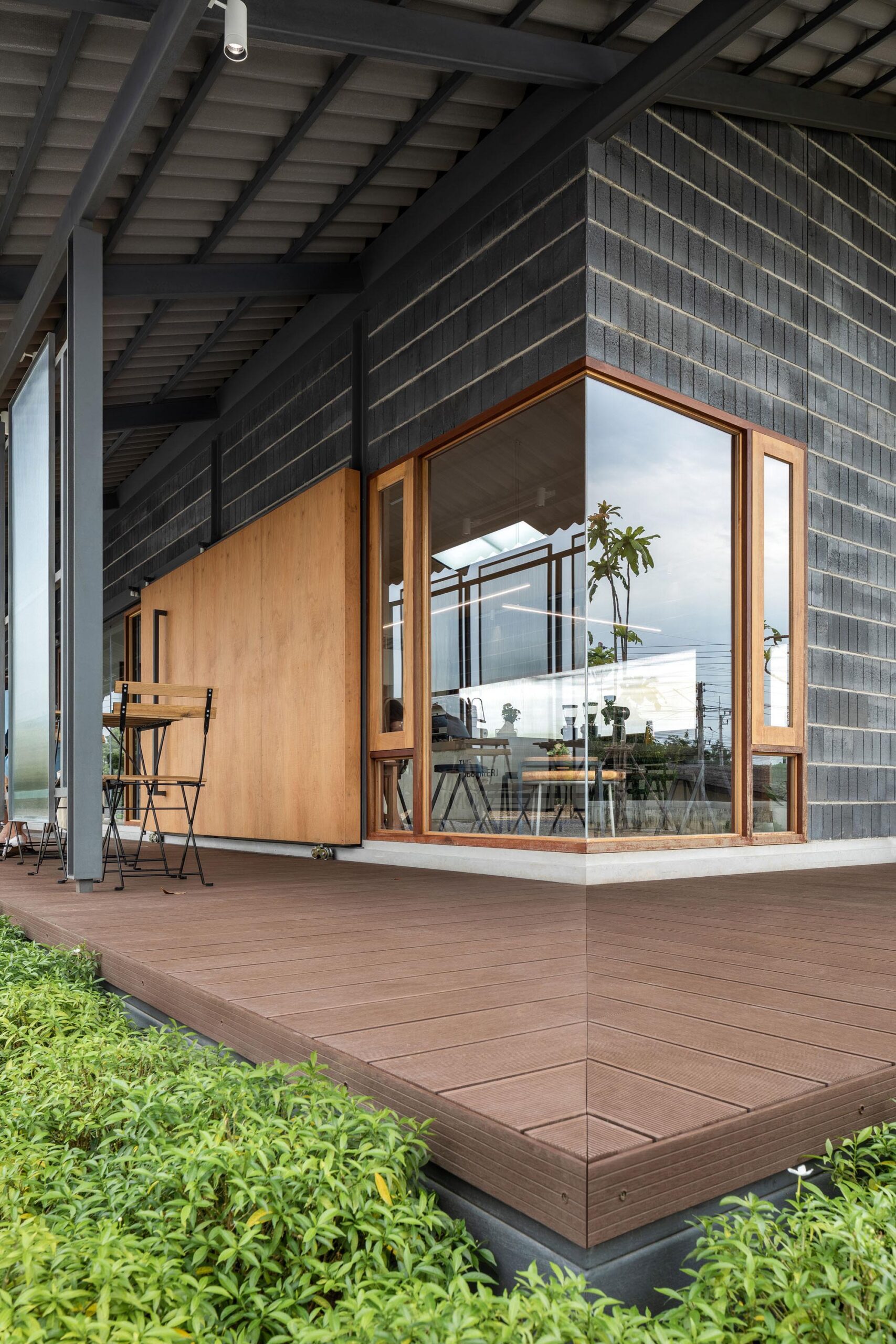
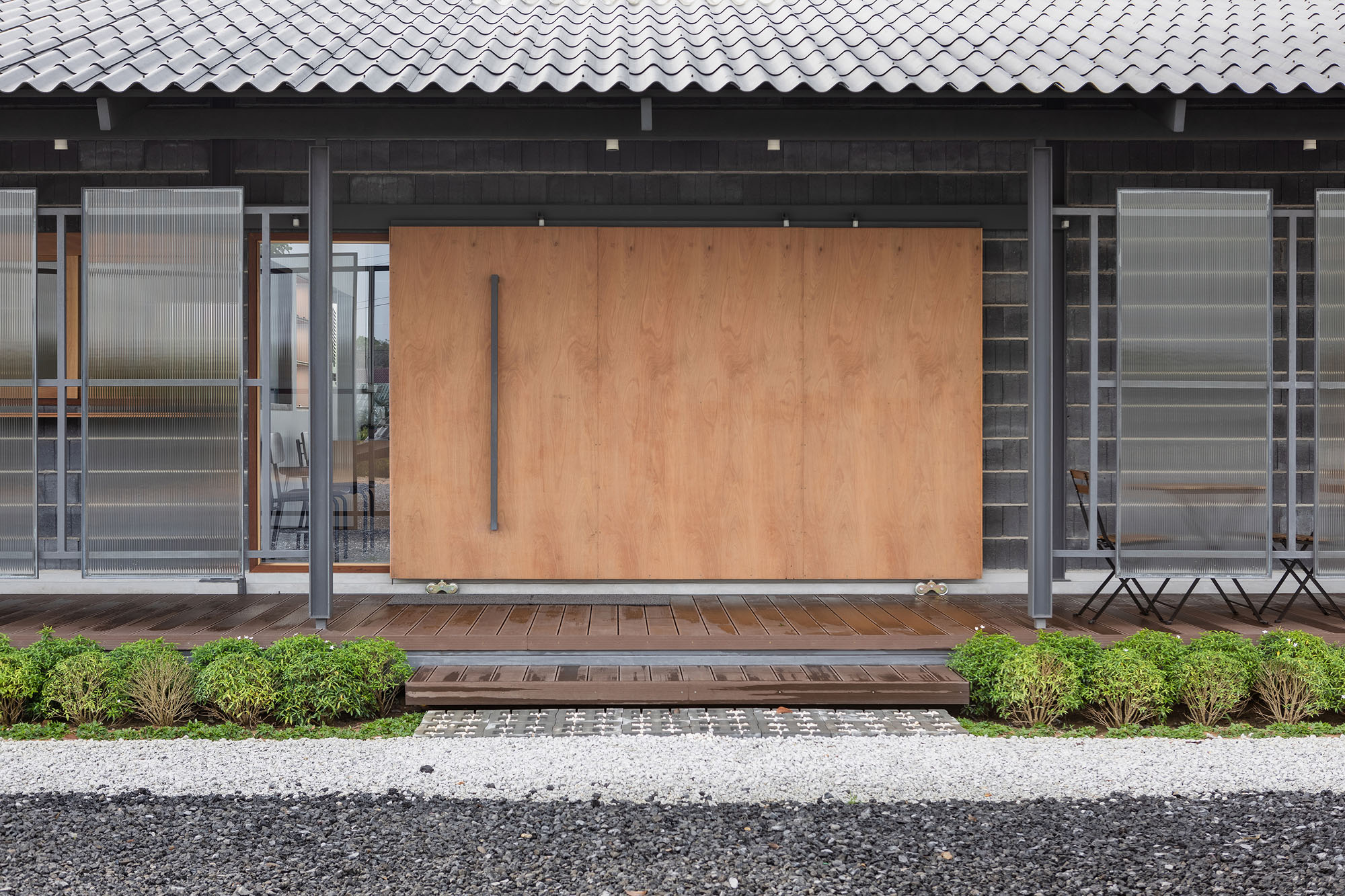
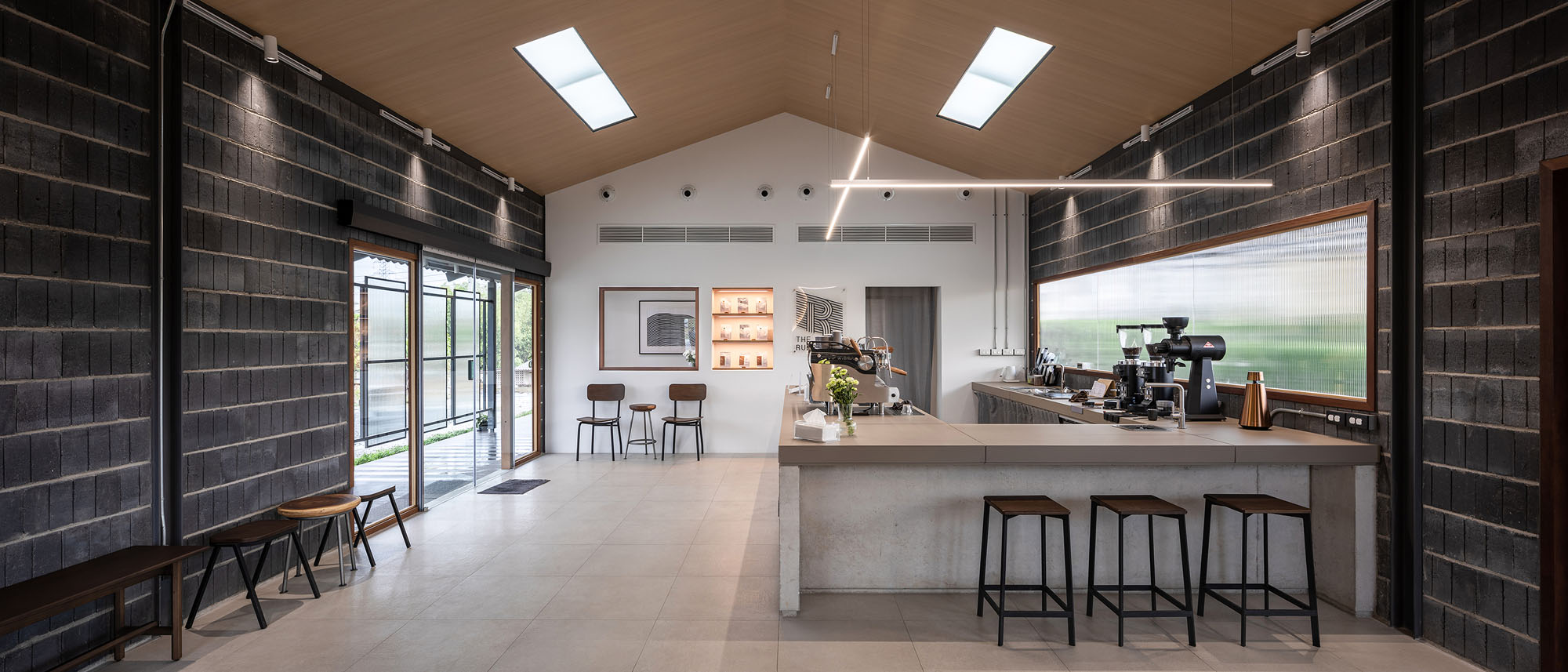
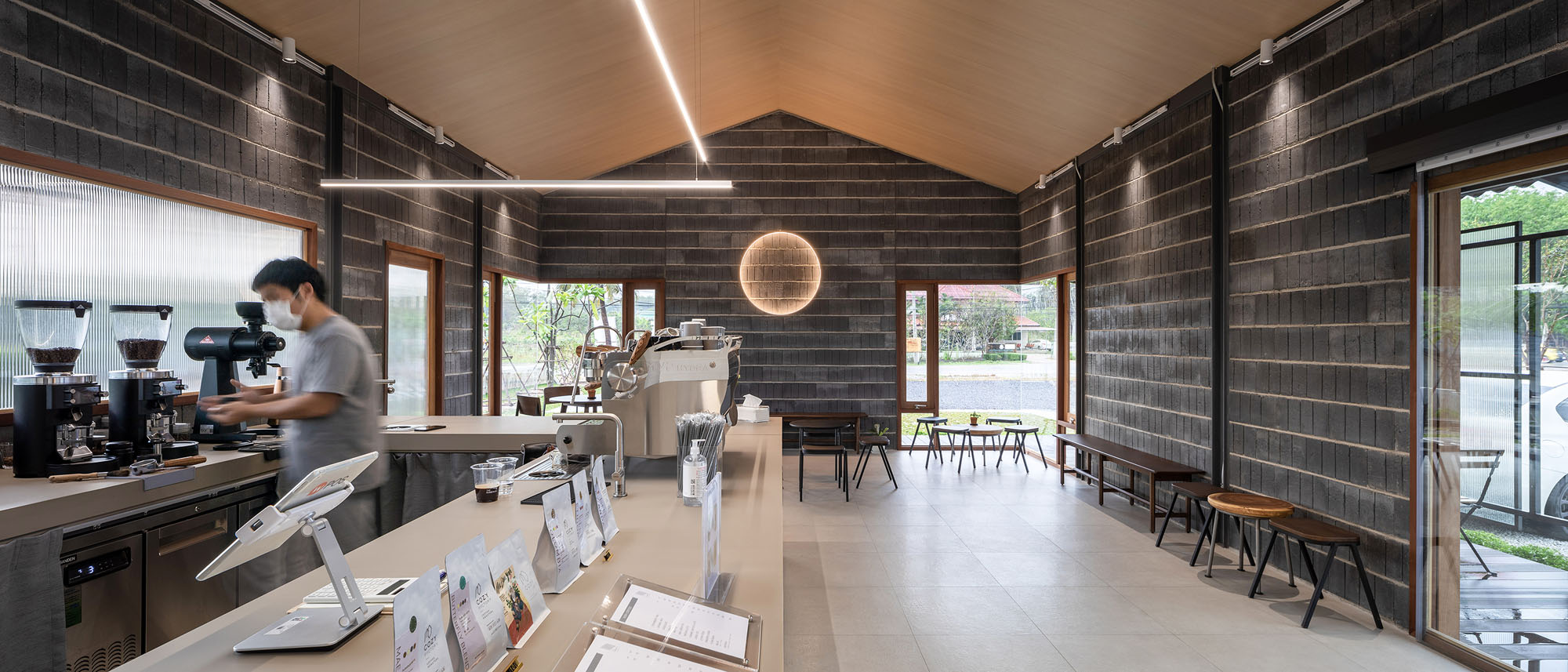
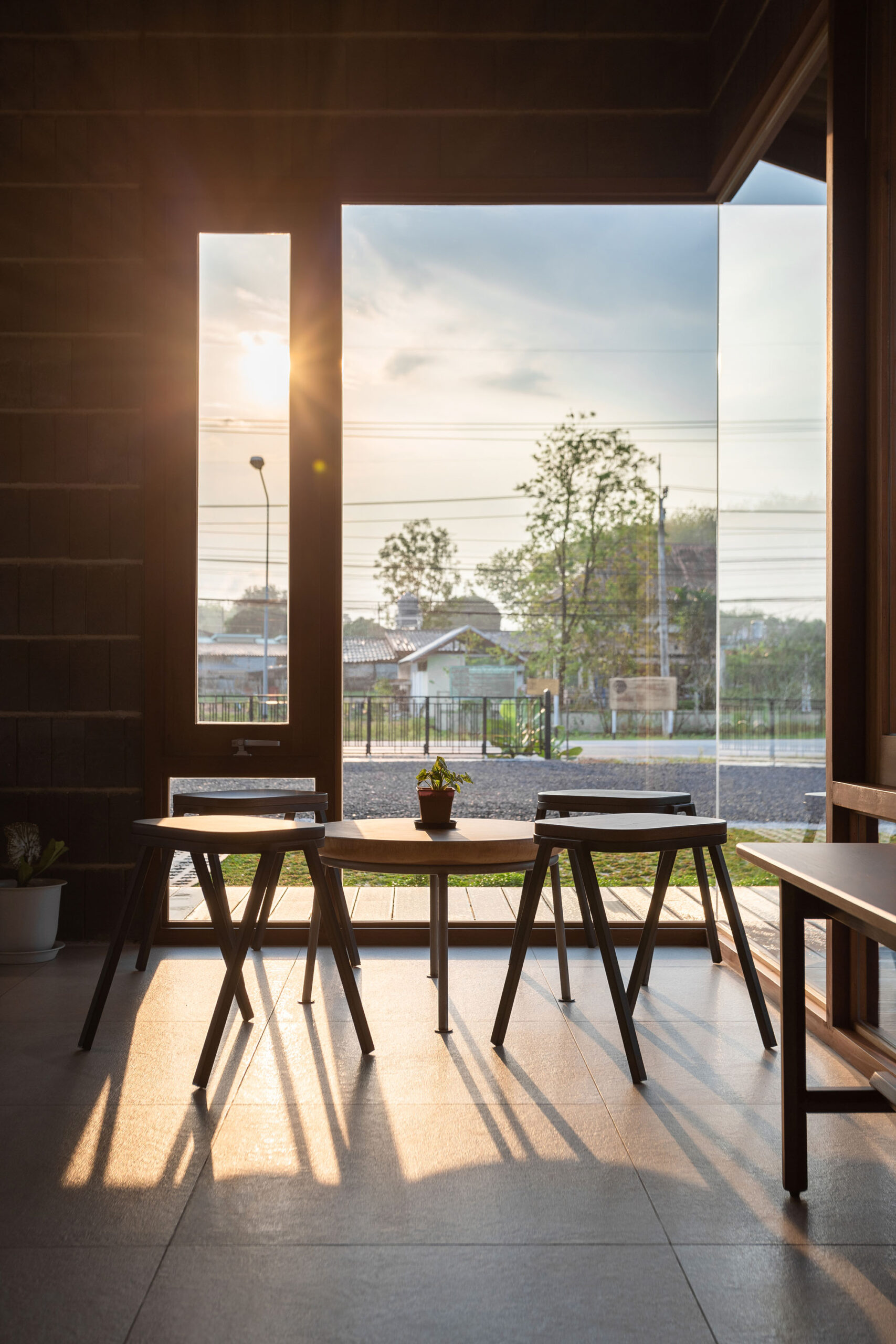
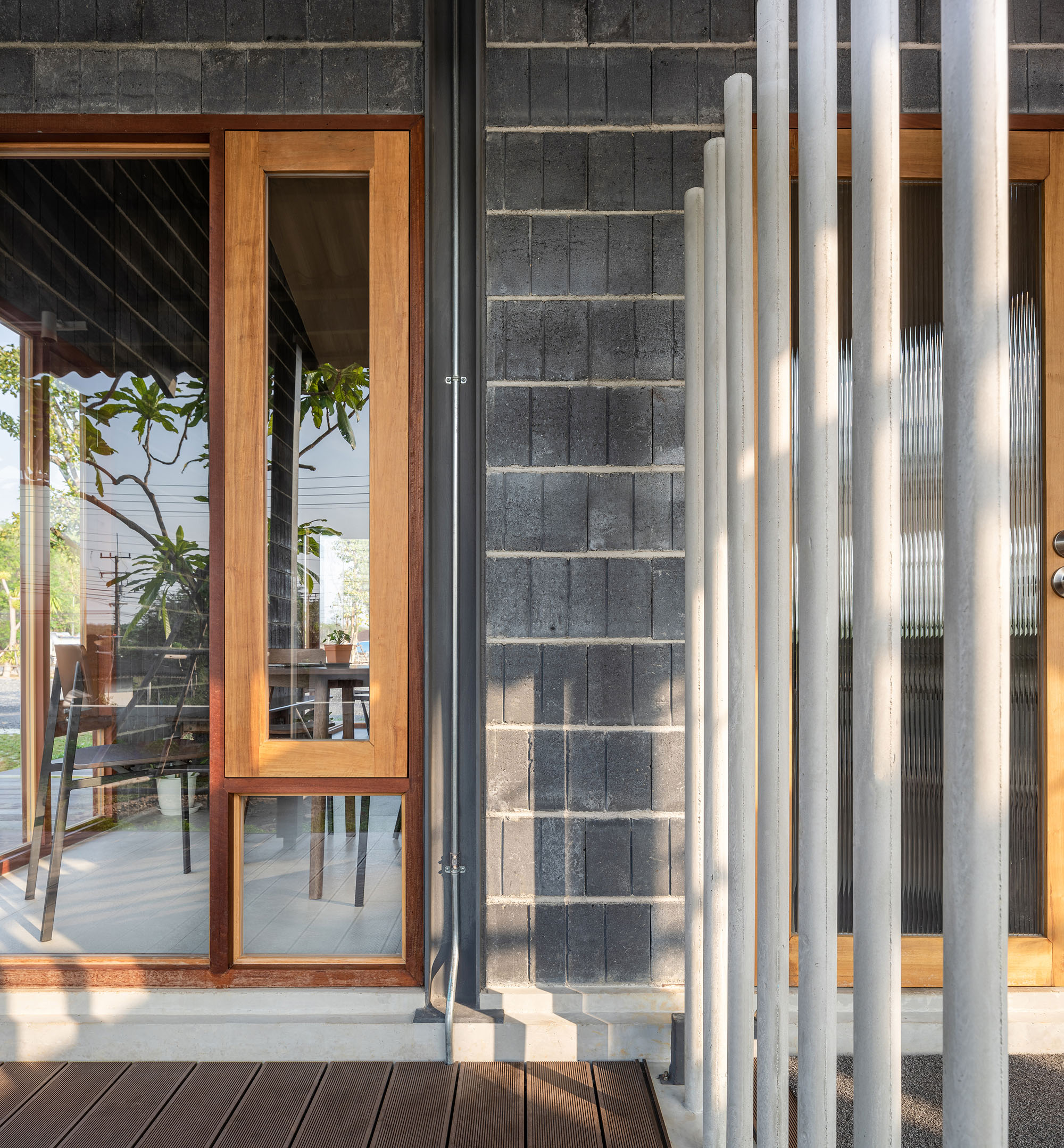
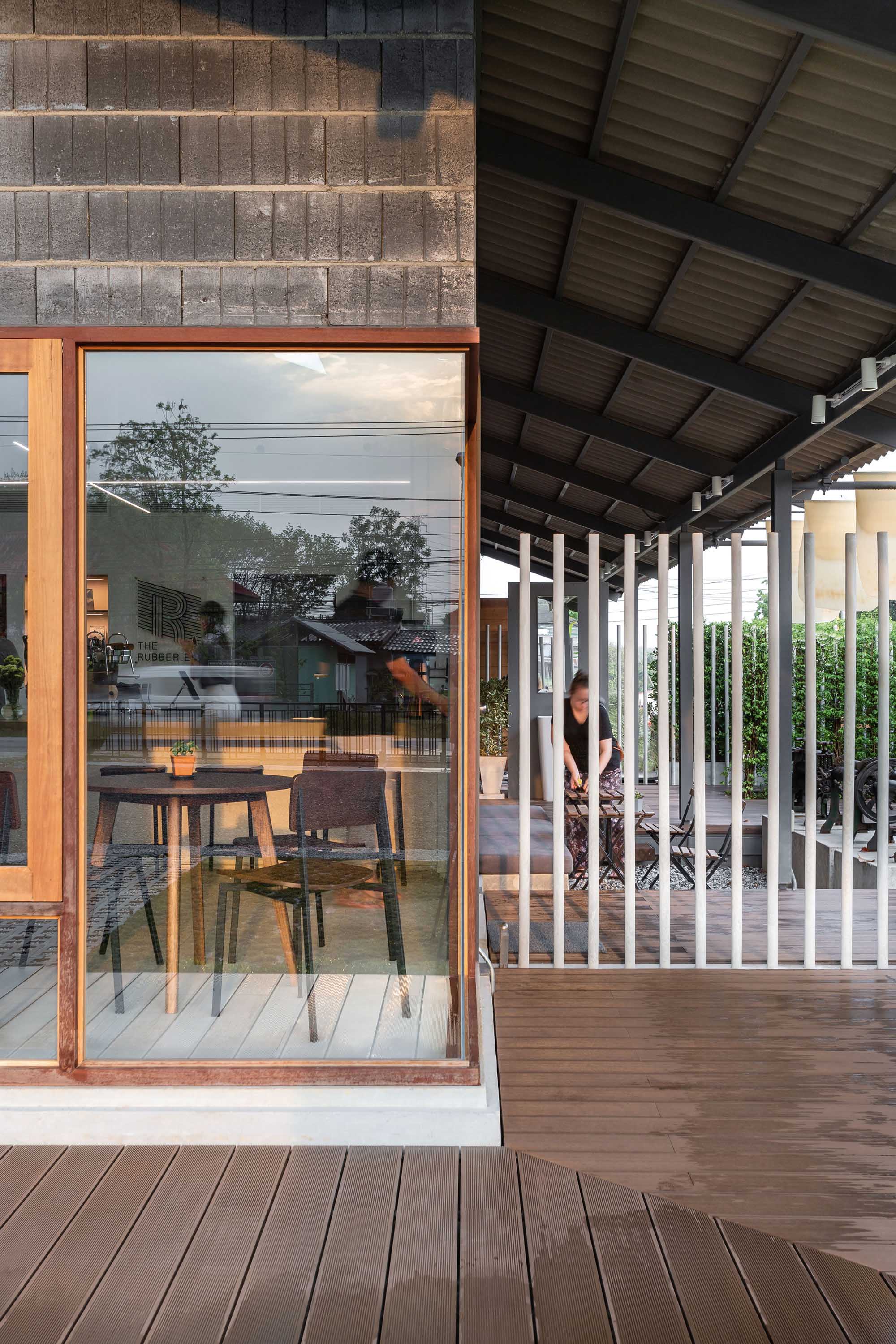
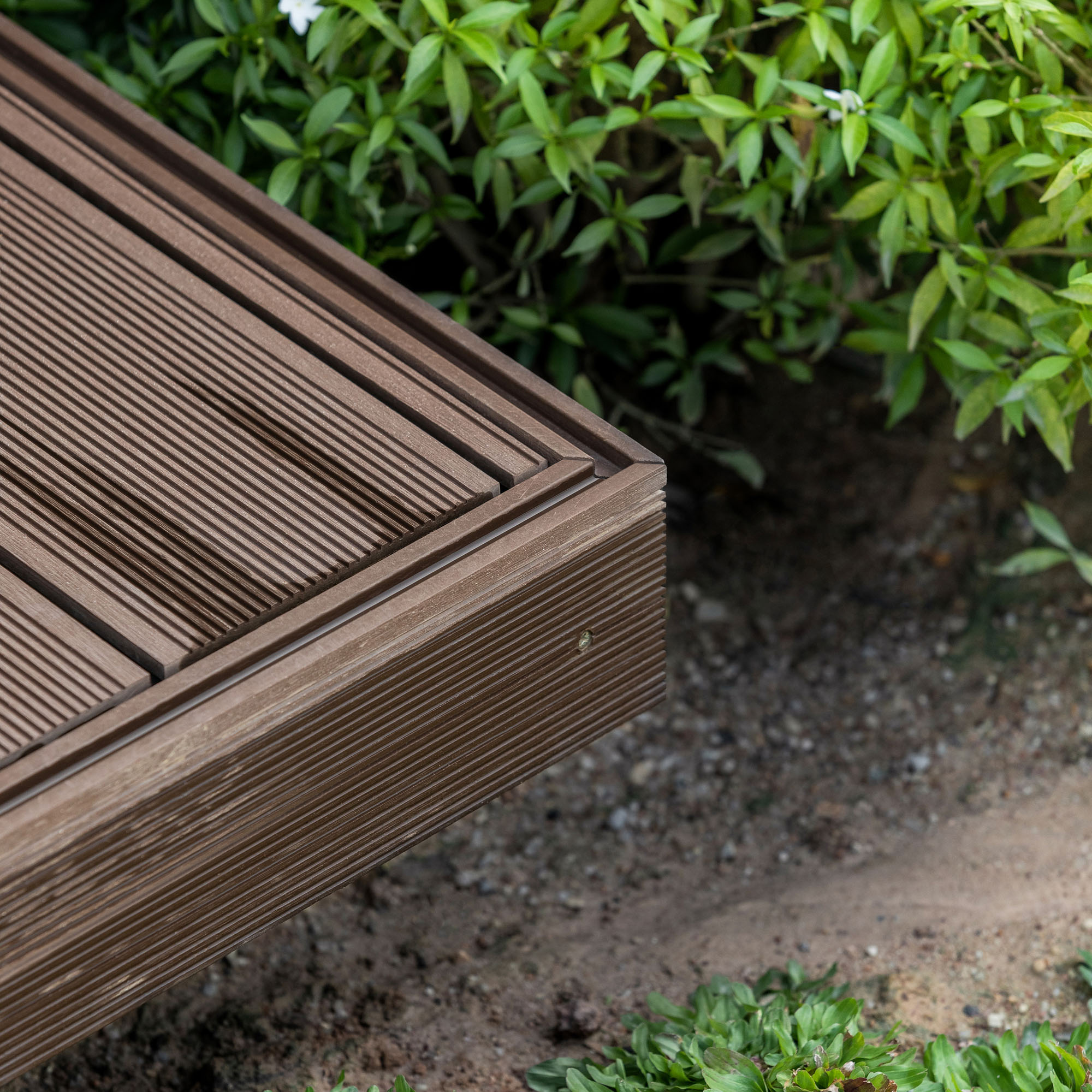
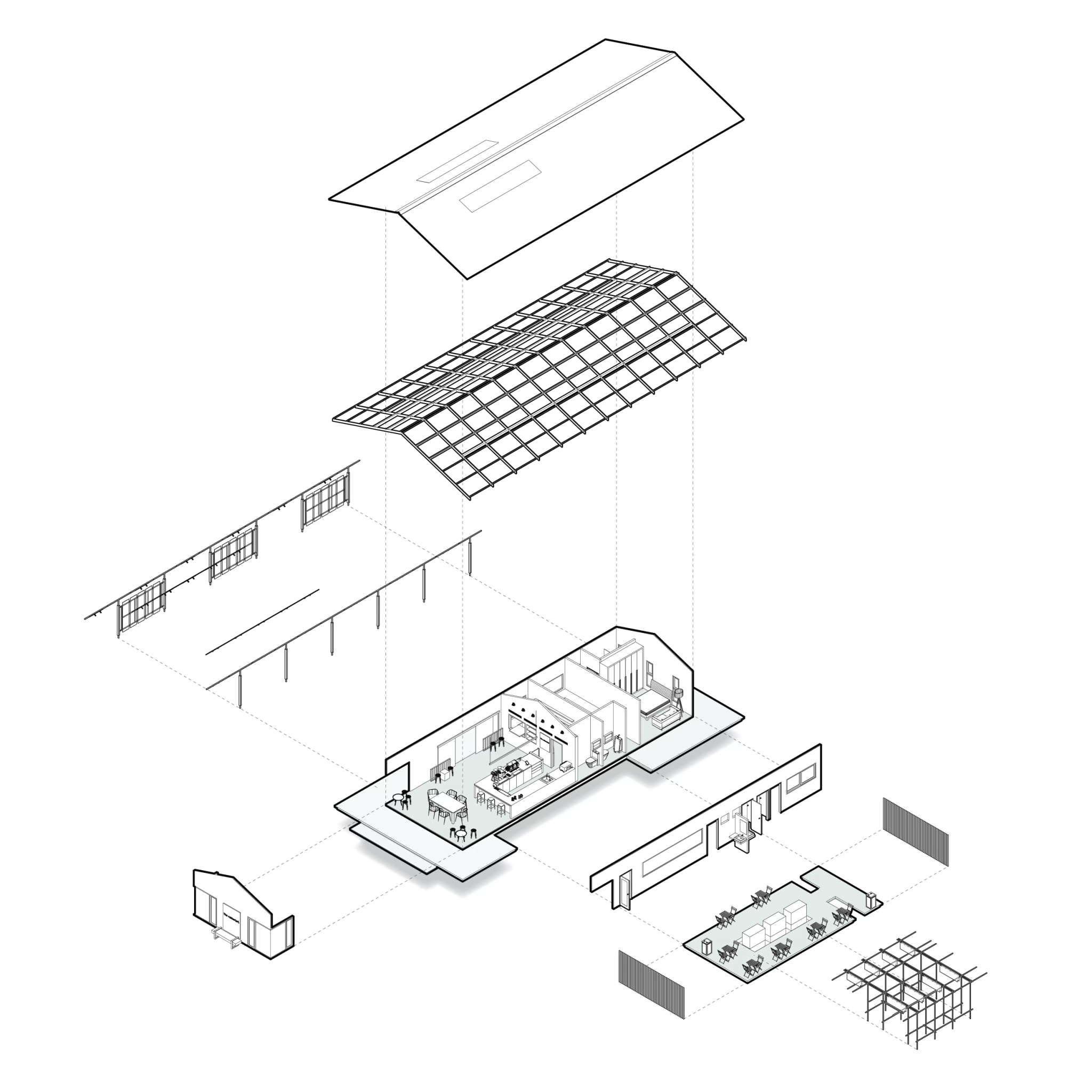
特筆すべきは、既存工場の建材の80%以上が再利用、あるいは再構成されている点である。建物の外装は、再生材からつくられた「エコブロック」によって構築されている。ブロックに元来備わっている水平方向の溝を注意深く揃えることで、連続性のある表面パターンをつくり出し、内外壁に繊細なリズムを与えた。また、このブロックはその視覚的な特質に加え、断熱材としても機能するため、エネルギー効率に貢献すると同時に、追加の仕上げ層を不要にしている。
構造面では、従来の鉄筋コンクリート製梁の代わりに、エコブロックと鋼製アングルフレームを組み合わせて壁面を構成した。この工法により資材消費を削減し、さらに接合部をあえて露出させることで構造を直接的に表現し、建物がもつ工業的な特徴を強調している。
©︎ Usssajaeree Studio
©︎ Usssajaeree Studio
©︎ Usssajaeree Studio
©︎ Usssajaeree Studio
素材の対比と空間体験の演出
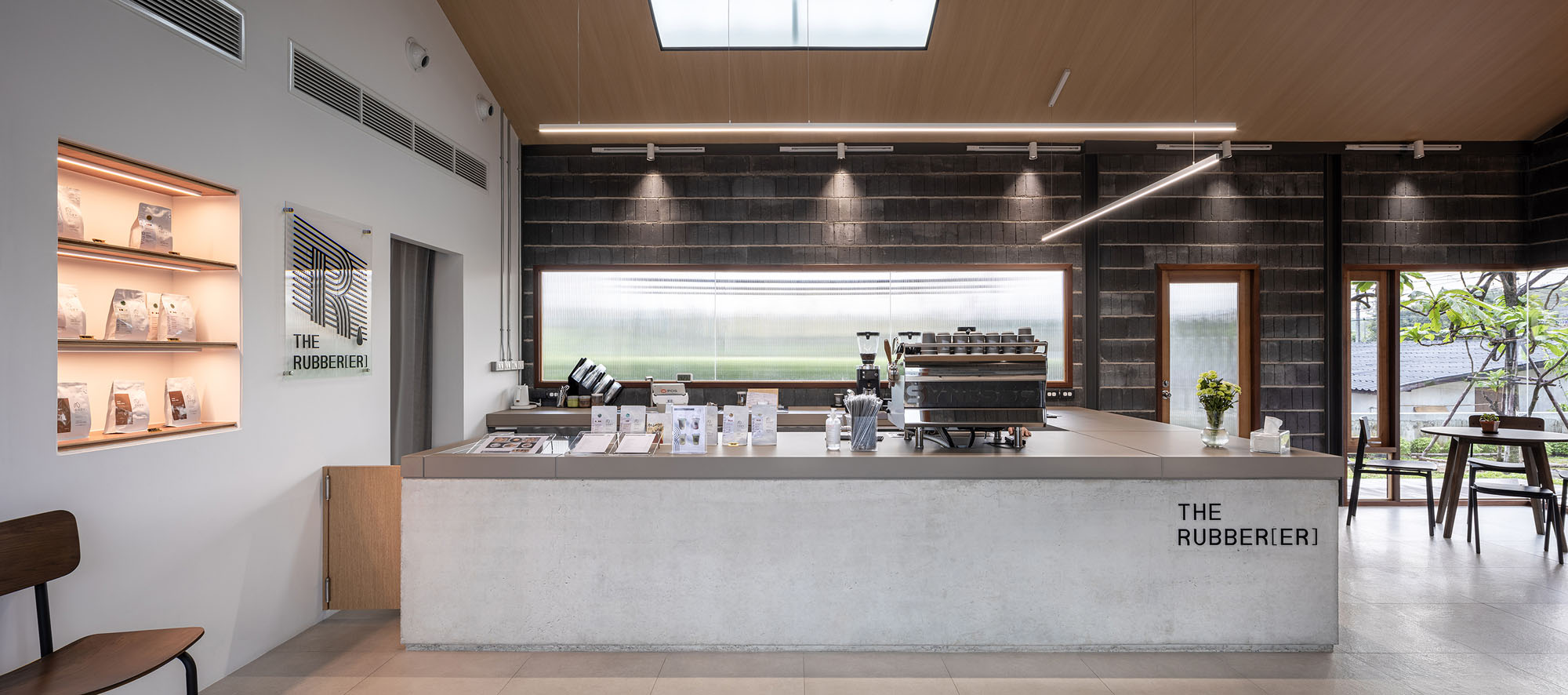
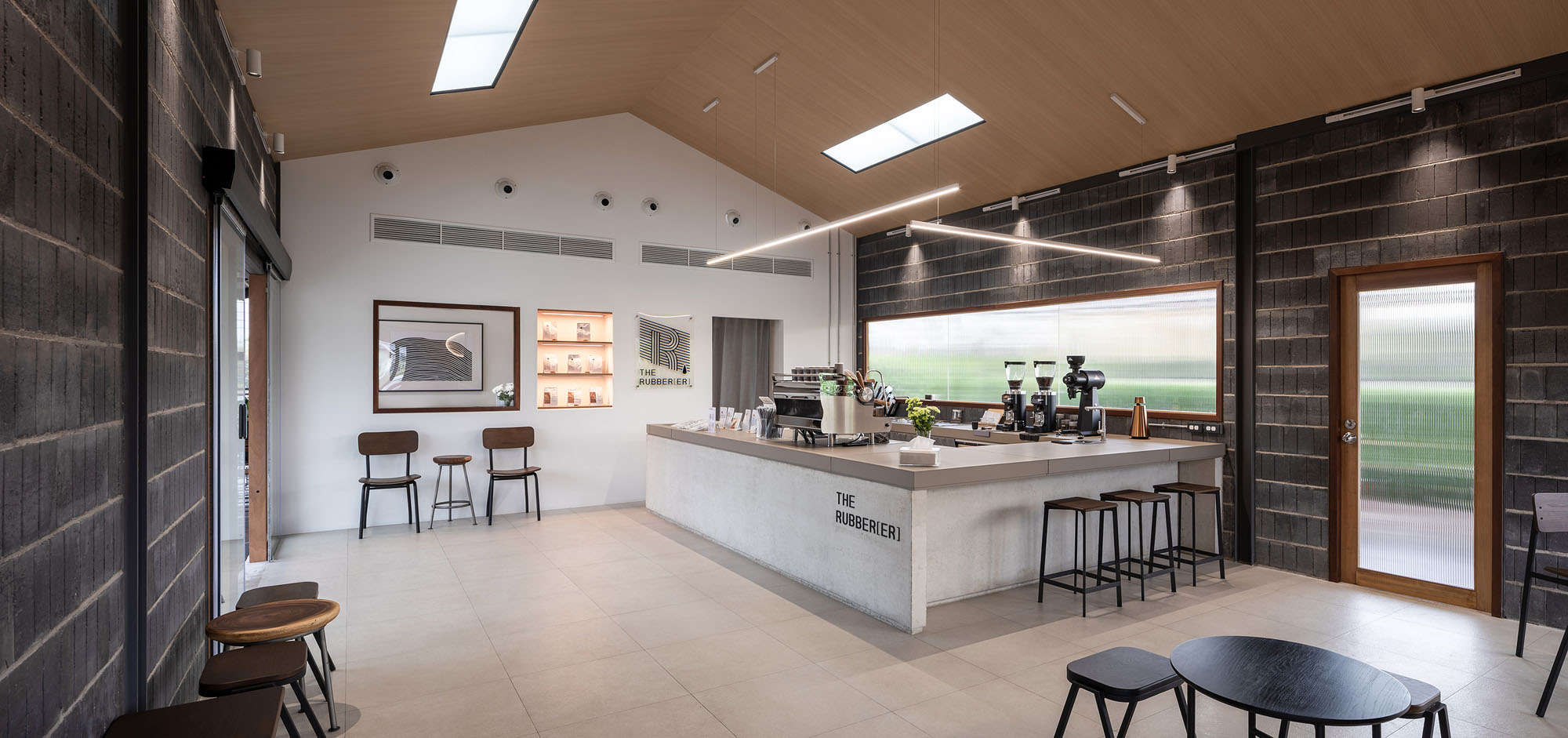
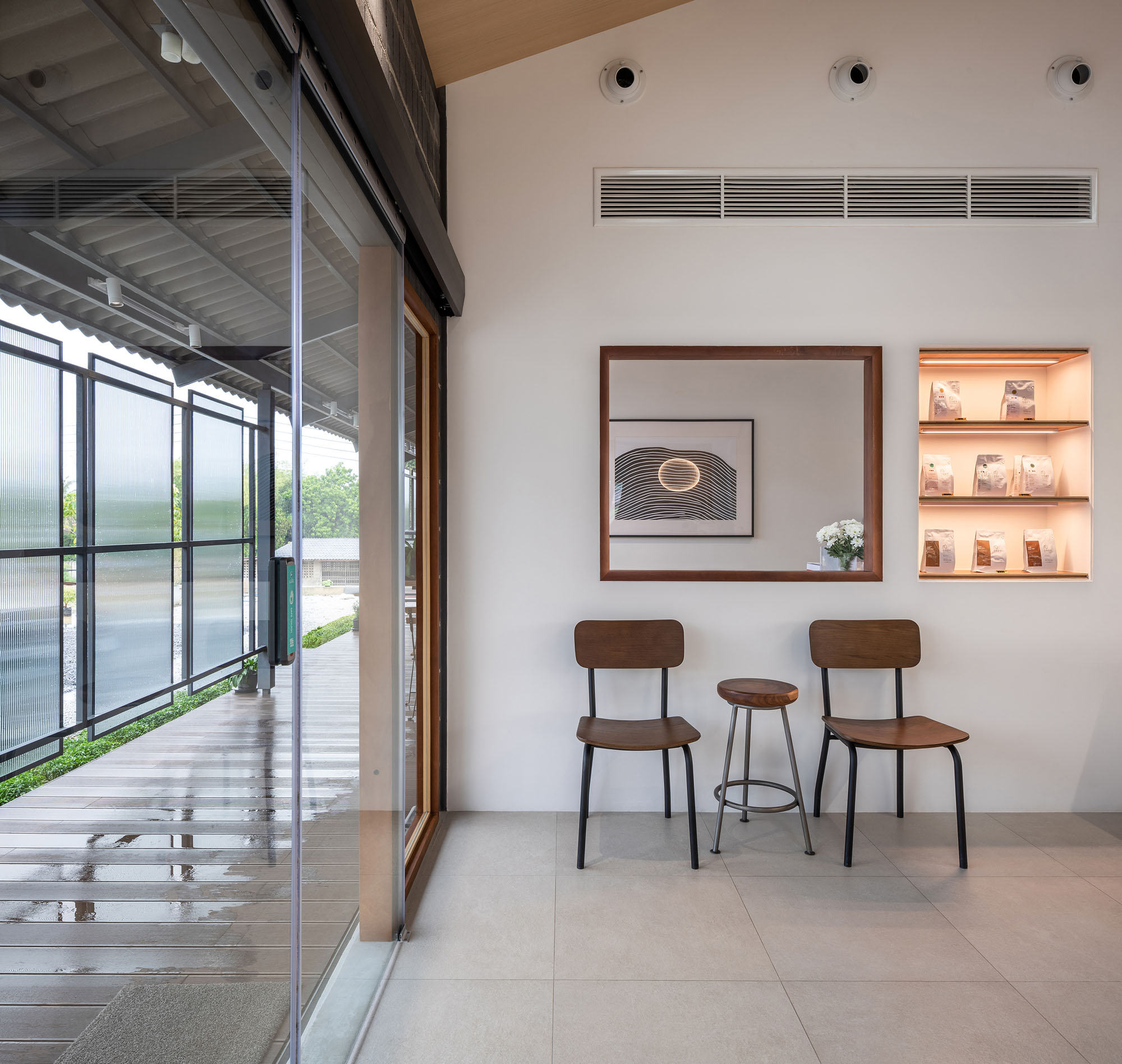
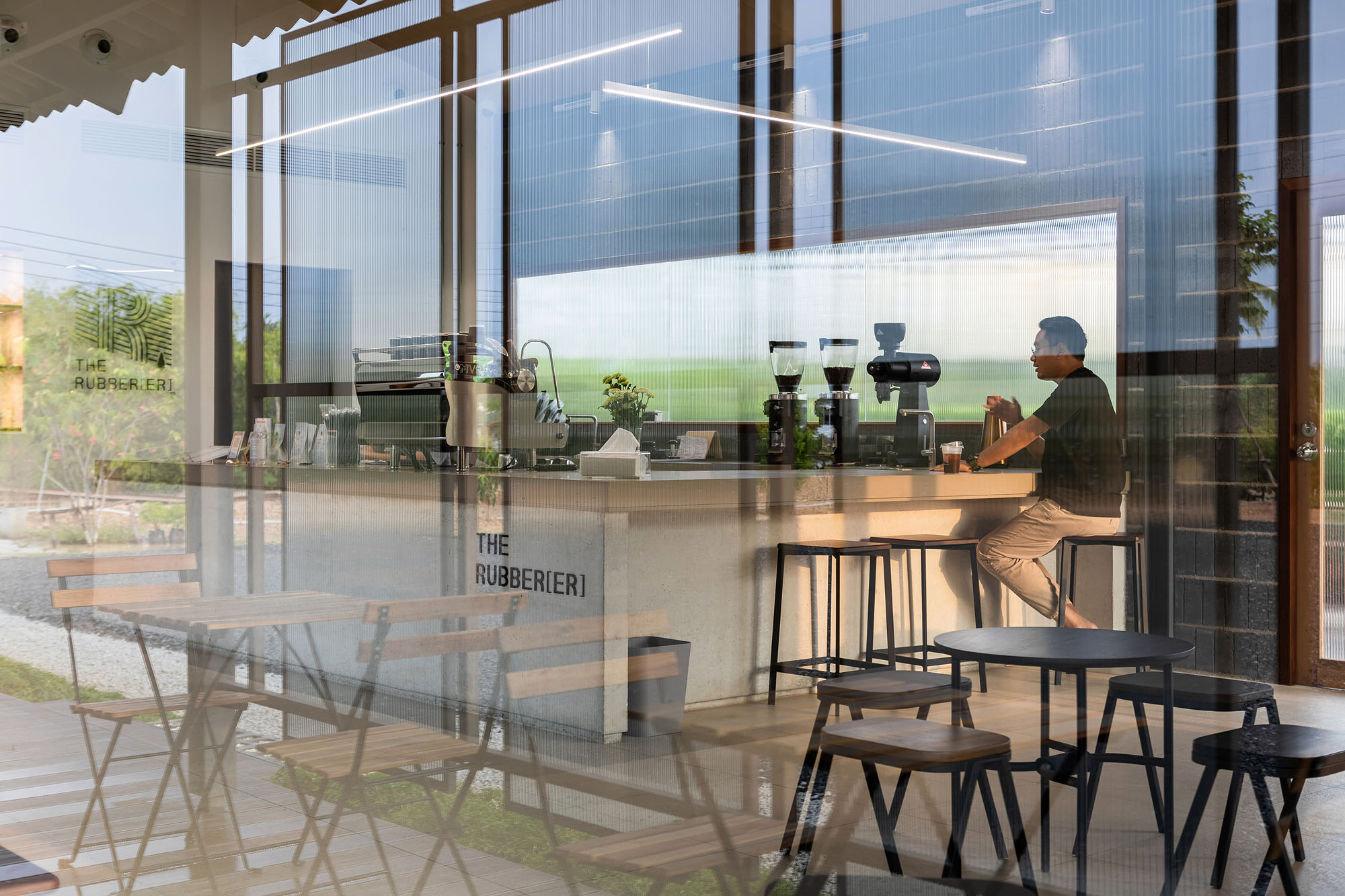
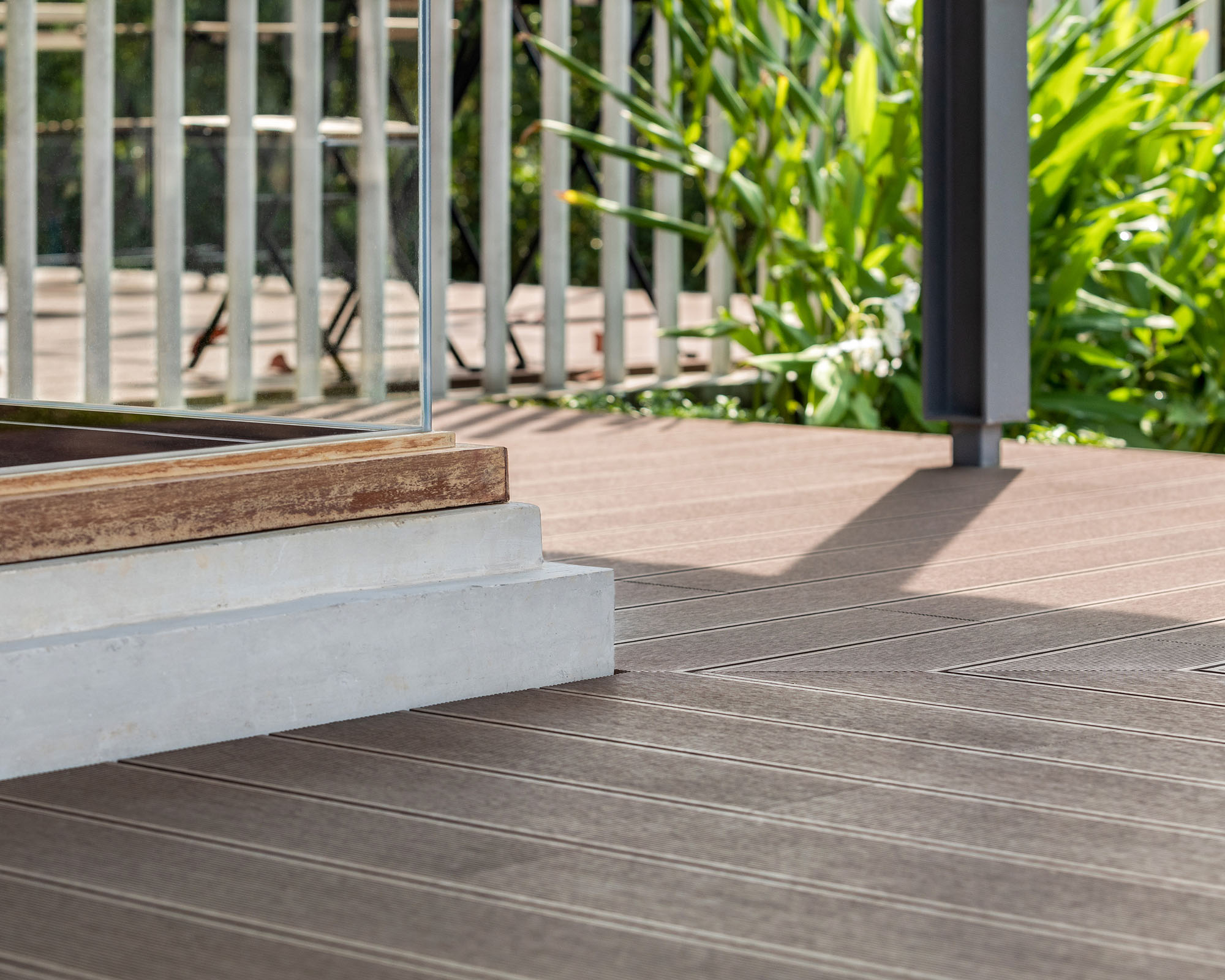
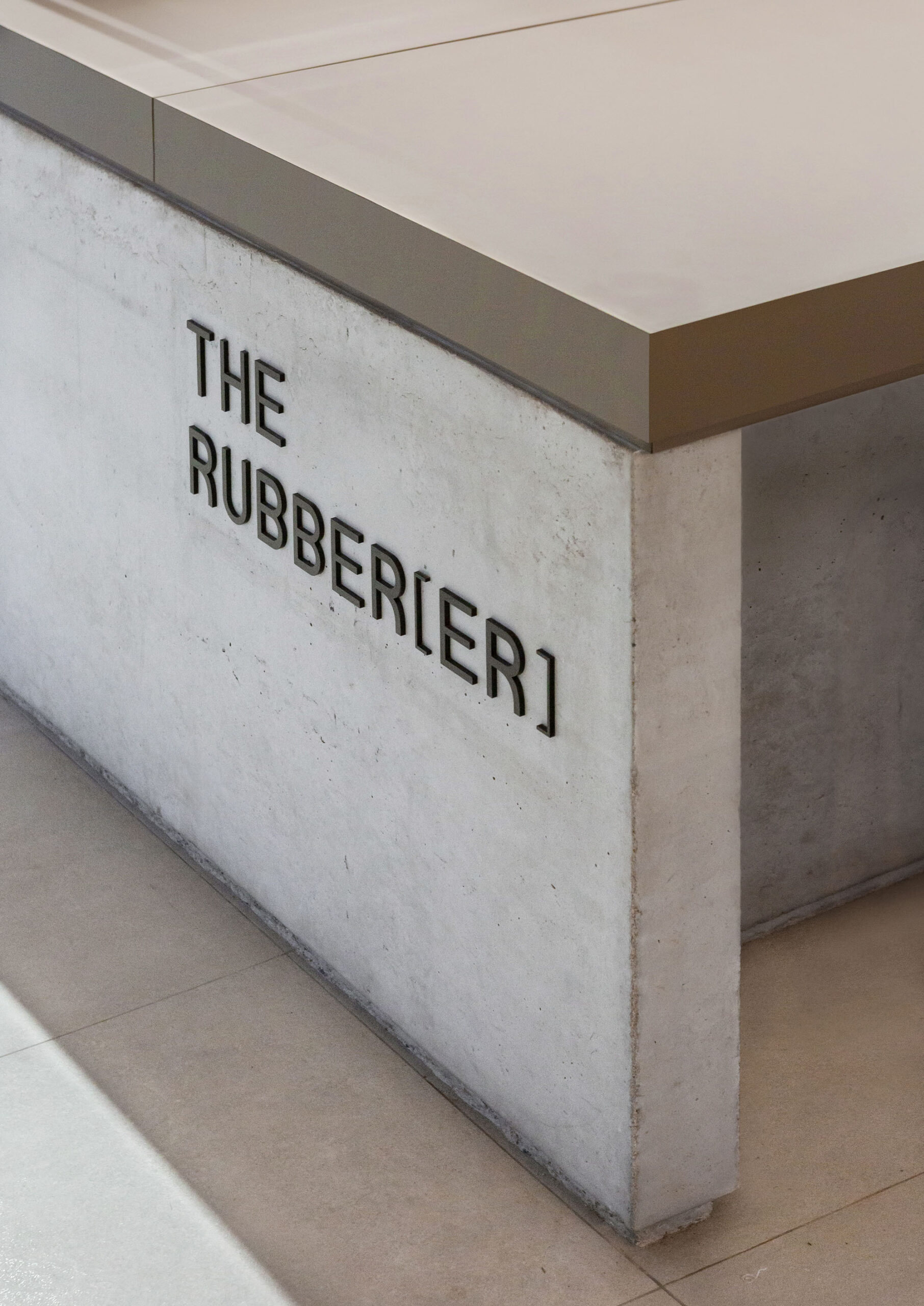
店内においては、現場打ちコンクリート製の大型カウンターがカフェ空間の核となっている。一方で、ドア枠や窓パネル、造り付け家具には厳選された木材を使用し、抑制された素材パレットを維持しながらも、空間に温もりと手触りを導入している。コンクリート、再生ブロック、鋼材、そして木材の対比は、意図的に最小限に留められた。
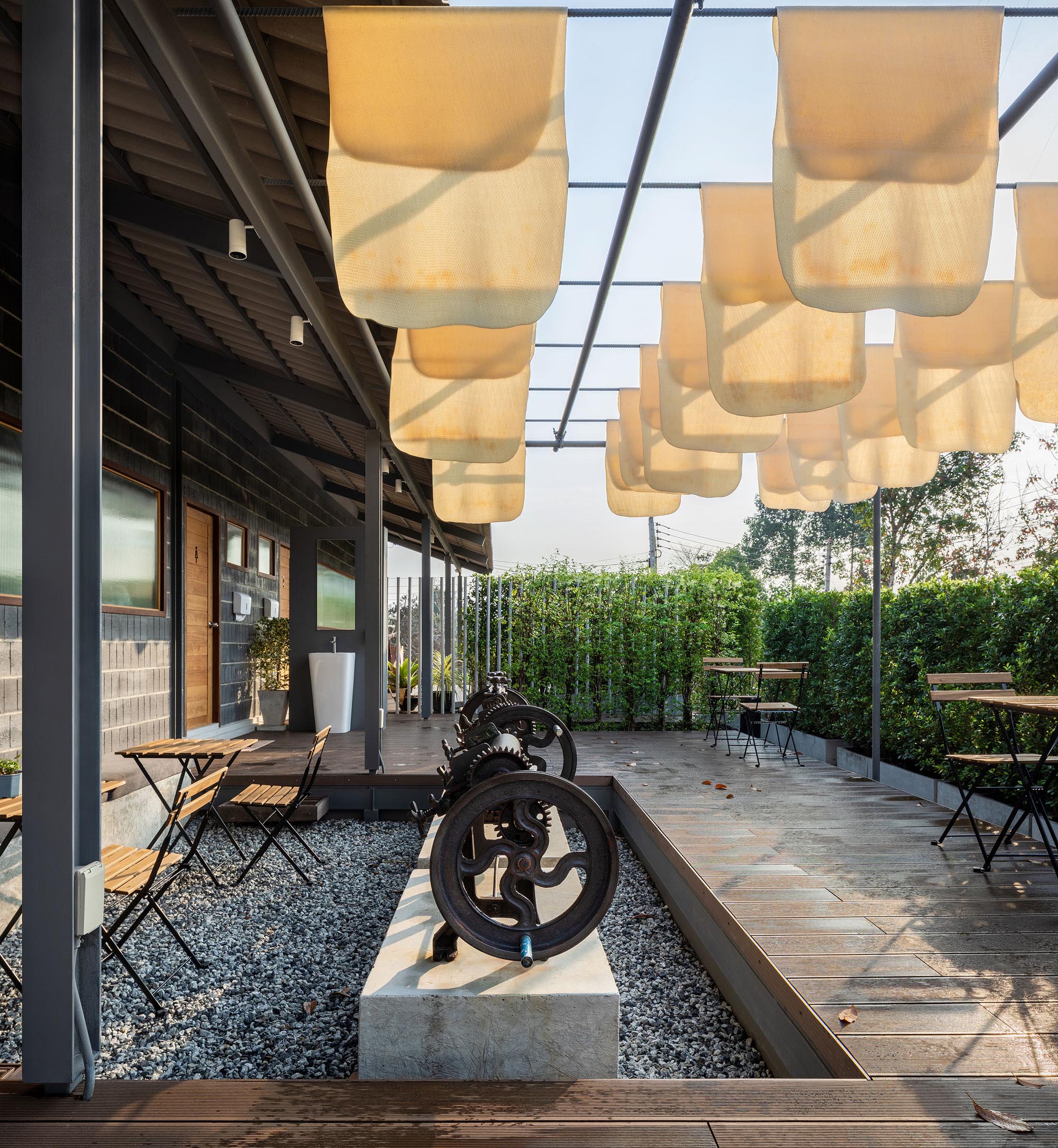
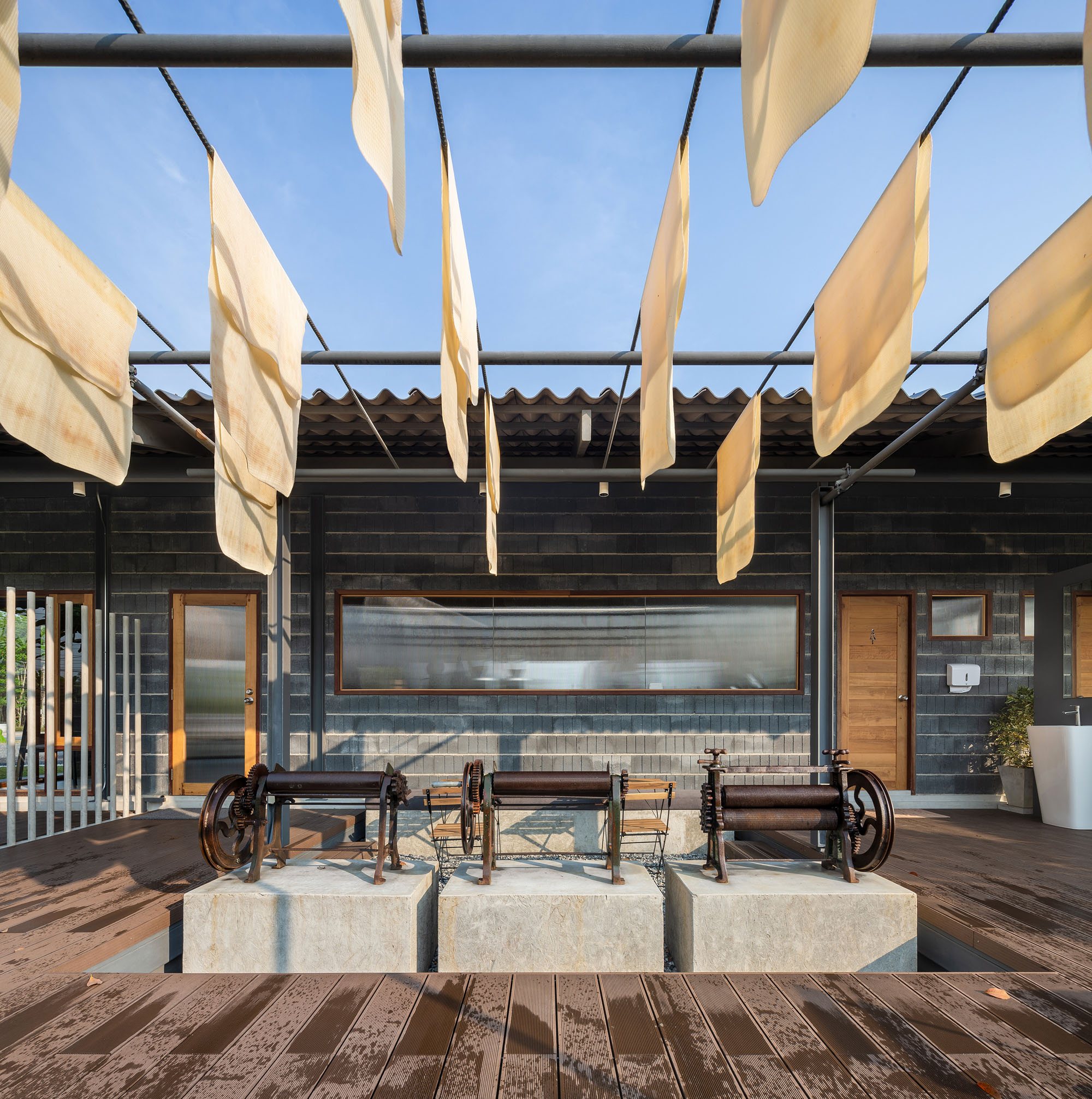
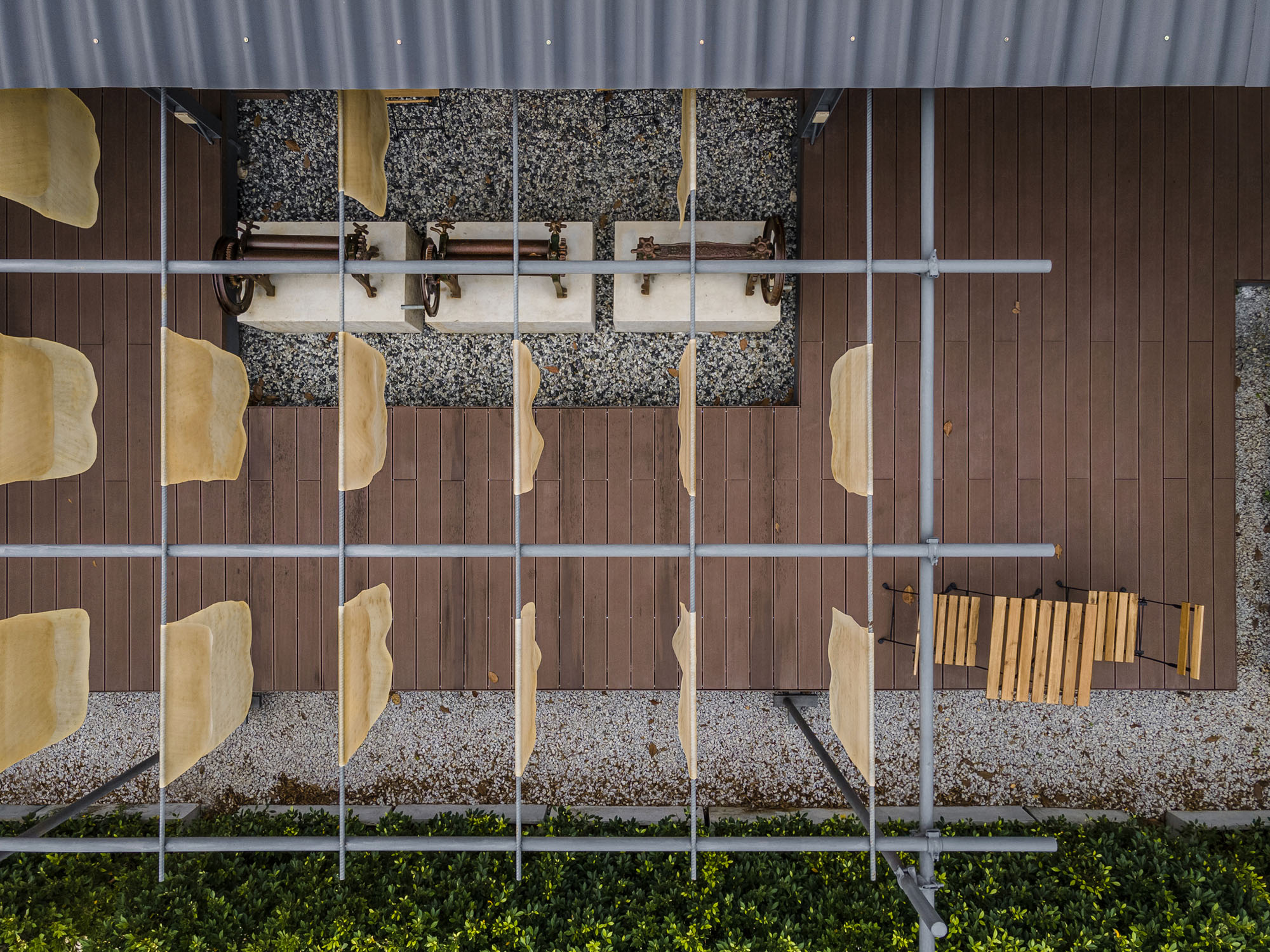
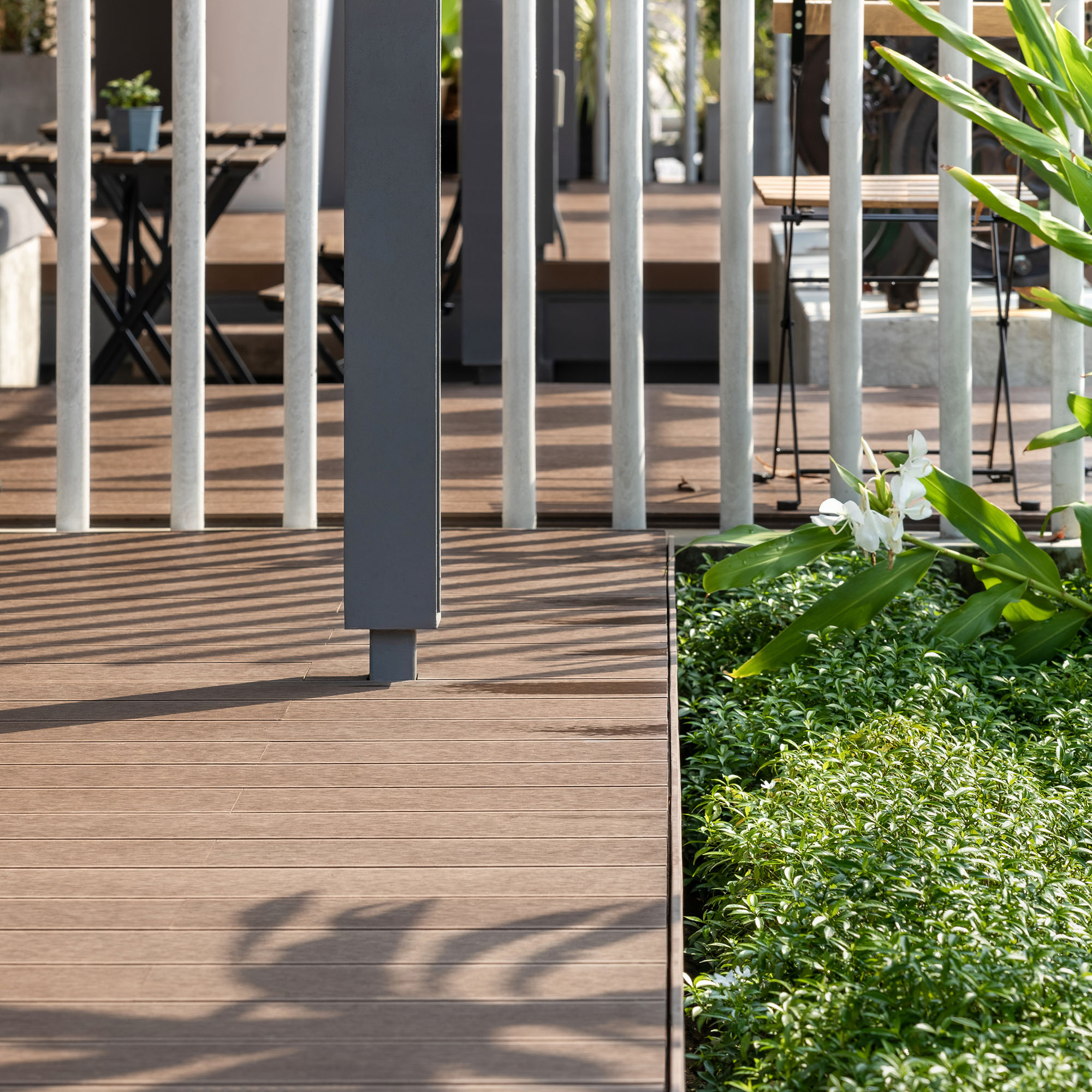
カフェの奥には、座席スペース兼展示ゾーンとして機能する半屋外エリアが設けられている。ここには工場由来の3台の手動ゴム圧延機が現場保存されており、鋼製フレームからは未加工のゴムシートが吊り下げられている。これらの要素は、かつてのゴム生産における乾燥工程を想起させ、工業的な作業風景を空間的な体験へと変換する装置となっている。
©︎ Usssajaeree Studio
©︎ Usssajaeree Studio
ノスタルジーを超えた建築的プロセス
〈The Rubber(er) Café〉は、単なるノスタルジックな復元ではない。それは、素材の再利用と構造の明快さを通じて、場所に記憶を埋め込む建築的プロセスとして構想されたものである。控えめな手法とディテールへの配慮によって、小規模な建築がいかにして地域の産業遺産を静かに保存し、同時に新たな公共利用の形態を受け入れられるかを示している。
©︎ Usssajaeree Studio
©︎ Usssajaeree Studio
©︎ Usssajaeree Studio
©︎ Usssajaeree Studio
©︎ Usssajaeree Studio
©︎ Usssajaeree Studio
©︎ Usssajaeree Studio
©︎ Usssajaeree Studio
©︎ Usssajaeree Studio
©︎ Usssajaeree Studio
©︎ Usssajaeree Studio
©︎ Usssajaeree Studio
©︎ Usssajaeree Studio
Isometric
Isometric
Plan
以下、SA-ARDスタジオのリリース(英文)です。
The Rubber(er) Café
SA-ARD studio
The Rubber(er) Café is a small café project in Rayong, Thailand, developed on the site of a former family-owned rubber factory. Designed by SA-ARD studio, the project reinterprets the material and construction logic of the existing industrial building, transforming it into a contemporary public space while preserving the memory of rubber production.
Rather than approaching the site as an empty plot, the architects treated the former factory as a source of architectural reference. The proportions, linear spatial organization, and pragmatic construction methods of the original rubber-processing buildings were studied and translated into a new architectural language suitable for present-day use.
The café is designed as a single-storey structure approximately 20 meters in length, reflecting the elongated layout typical of rubber factories. A low-pitched roof and deep overhangs provide shade and reduce heat gain, maintaining the functional qualities of industrial architecture while creating a calm and restrained silhouette within the surrounding landscape.
More than 80 percent of the materials from the original factory were reused or reconfigured. The building envelope is constructed entirely from Eco Blocks made of recycled materials. Their inherent horizontal grooves were carefully aligned to create a continuous surface pattern, giving subtle rhythm to both interior and exterior walls. In addition to their visual qualities, the blocks function as thermal insulation, contributing to energy efficiency while eliminating the need for additional finishing layers.
Instead of conventional reinforced concrete tie beams, the walls are assembled using Eco Blocks combined with steel angle frames. This construction method reduces material consumption and allows joints and connections to remain visible, expressing the building’s structure directly and reinforcing its industrial character.
Inside, a large cast-in-place concrete counter anchors the café space. Timber is used selectively for door frames, window panels, and built-in furniture, introducing warmth and tactility while maintaining a restrained material palette. The contrast between concrete, recycled blocks, steel, and wood is kept deliberate and minimal.
Behind the café, a semi-outdoor area functions as both seating space and exhibition zone. Three manual rubber-rolling machines from the original factory are preserved on site, while sheets of raw rubber are suspended above from a steel frame. These elements recall the drying process of rubber production, translating an industrial operation into a spatial experience.
The Rubber(er) Café is conceived not as a nostalgic reconstruction, but as an architectural process that embeds memory through material reuse and construction clarity. Through modest means and careful detailing, the project demonstrates how small-scale architecture can quietly preserve local industrial heritage while accommodating new forms of public use.
Photographer : https://www.facebook.com/usssajaereestudio
SA-ARDスタジオ 公式Facebook
https://www.facebook.com/saardarchitect
【購読無料】空間デザインの今がわかるメールマガジン TECTURE NEWS LETTER
RECOMMENDED ARTICLE