プランターが覆うベトナム都市部の住宅 - 建築と農業の融合「アグリテクチャー」を実践する〈フライング・ベジテーション〉
©︎ Le Minh Hoang
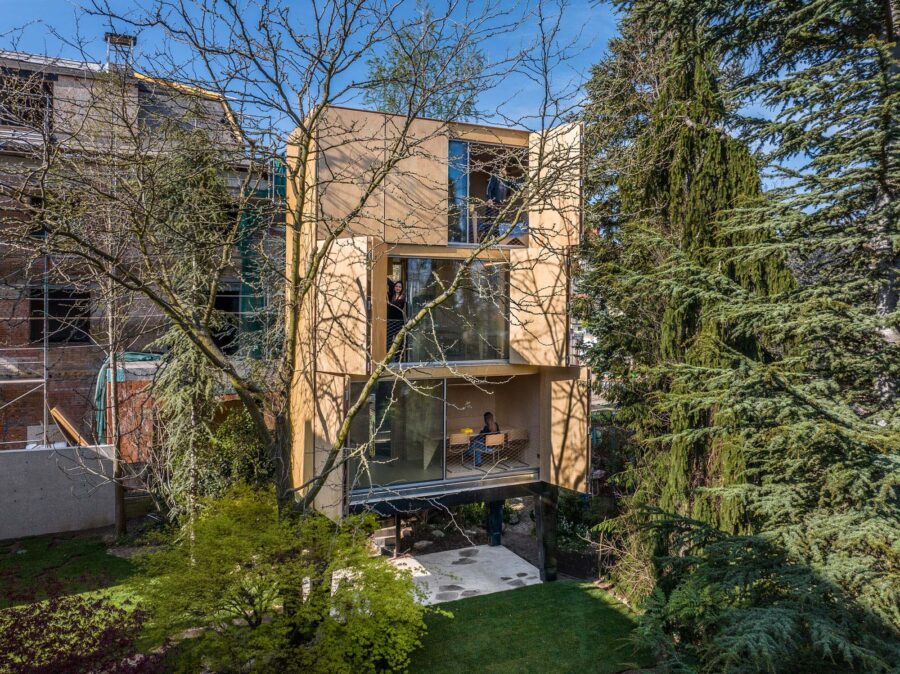
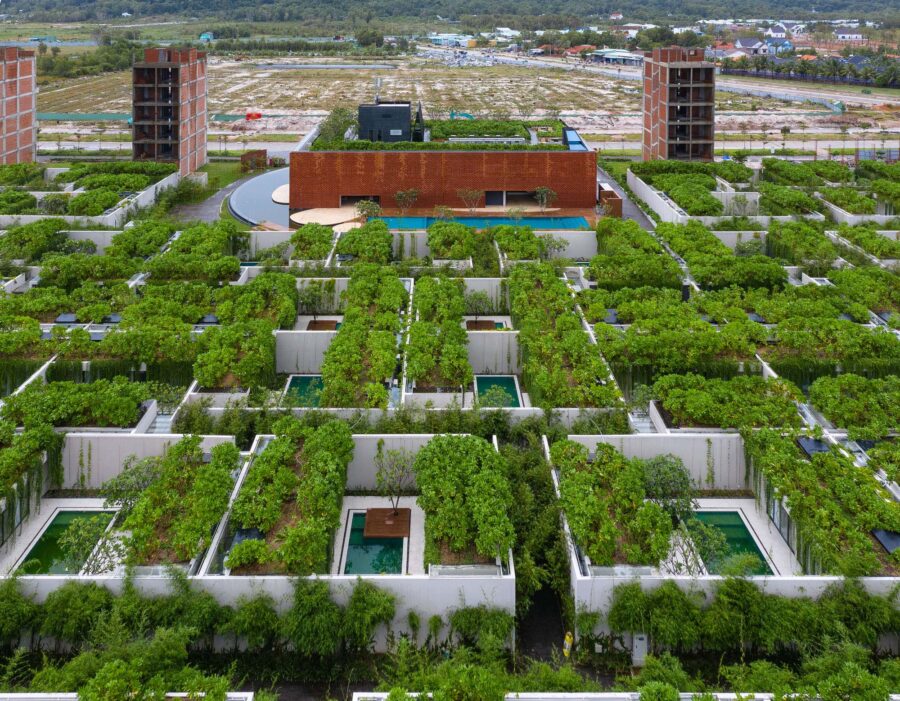
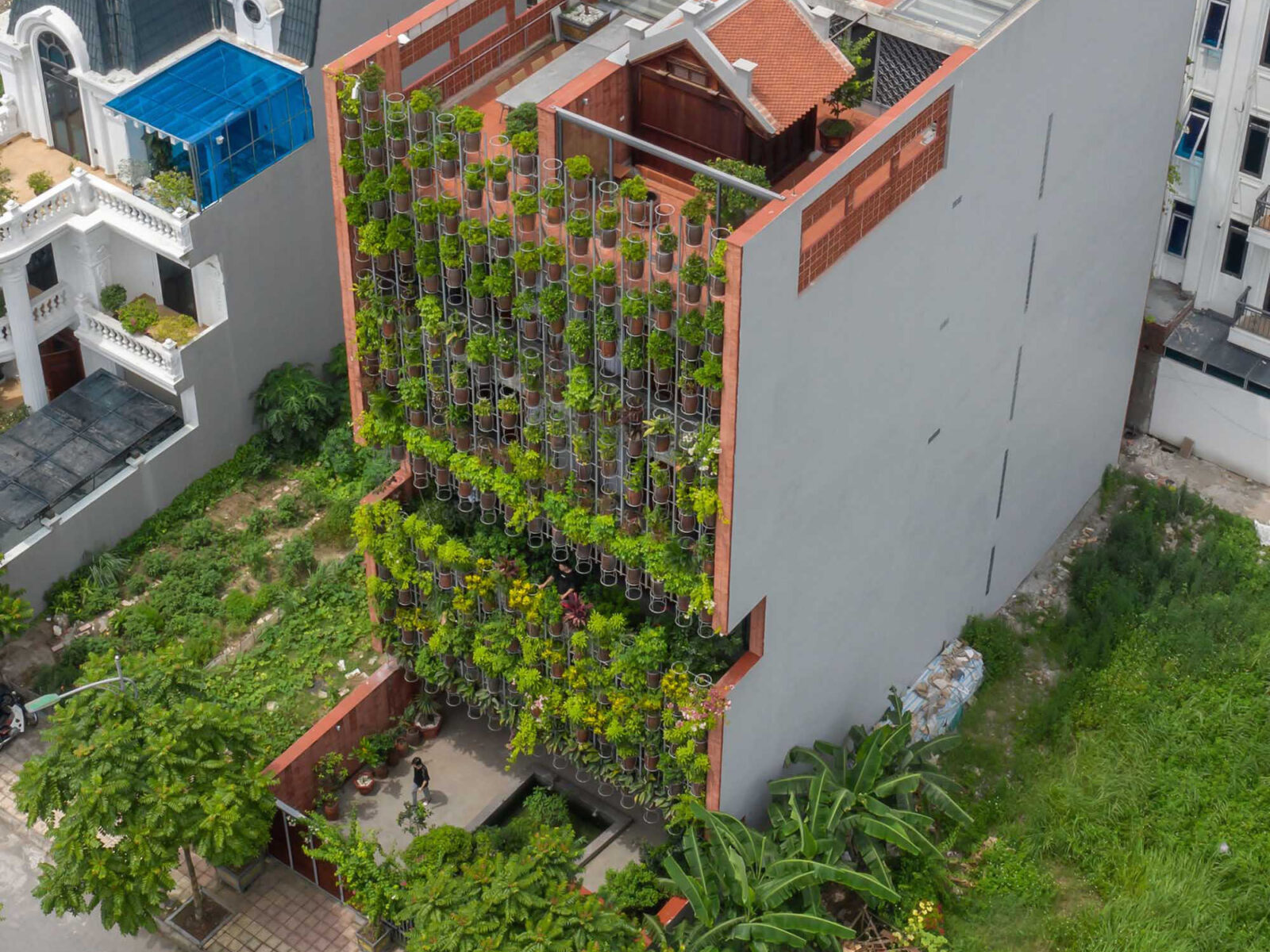
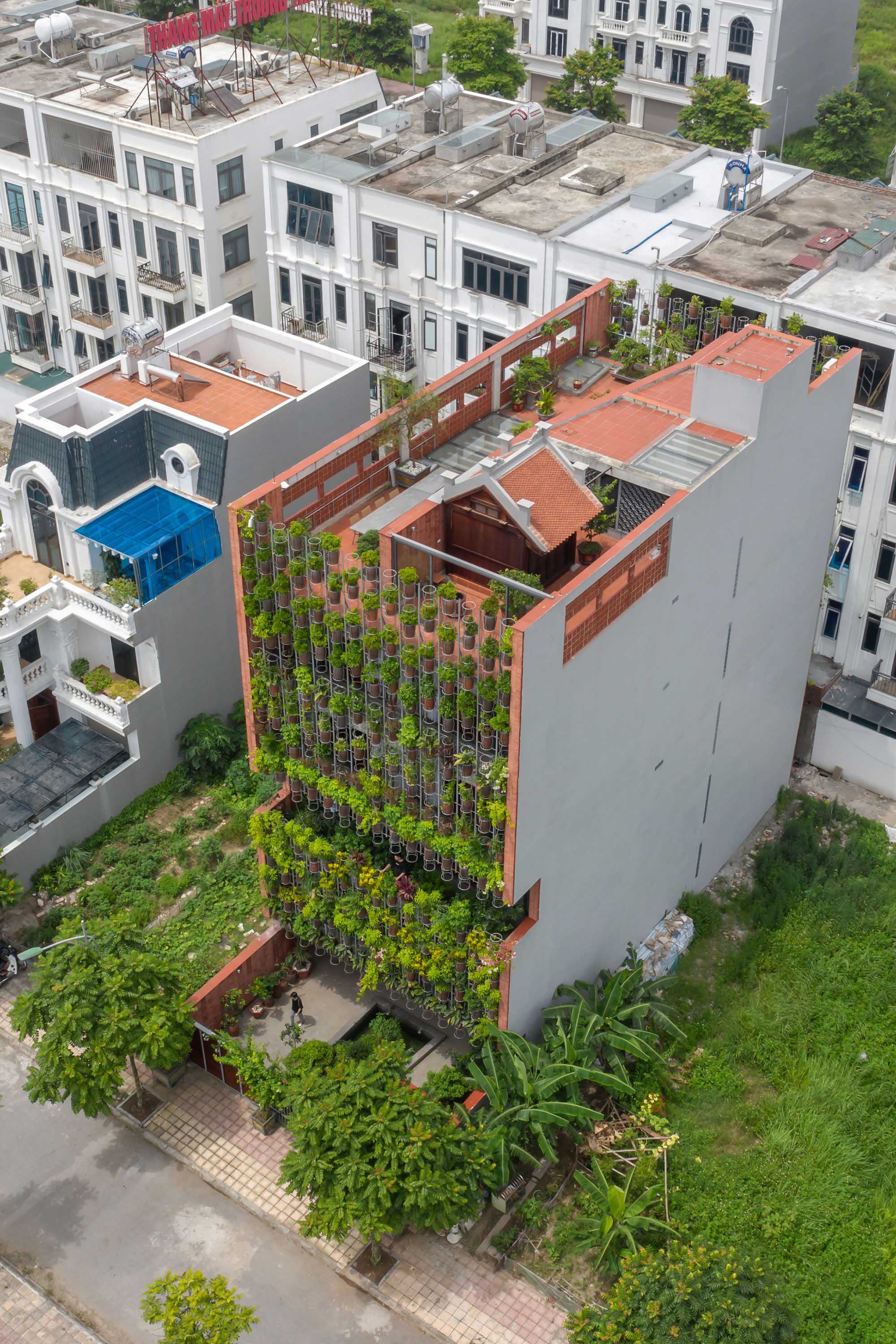
ベトナム・タイビン市の新興住宅地に建つ〈フライング・ベジテーション(Flying Vegetation)〉は、建築と農業を掛け合わせた「アグリテクチャー」の視点から生み出された住宅です。
オーナーの居住空間と賃貸空間を内包する住宅であり、建築から都市デザインまで手がけるベトナムの設計事務所 H&Pアーキテクツ(H&P Architects)が設計しました。
注目ポイント
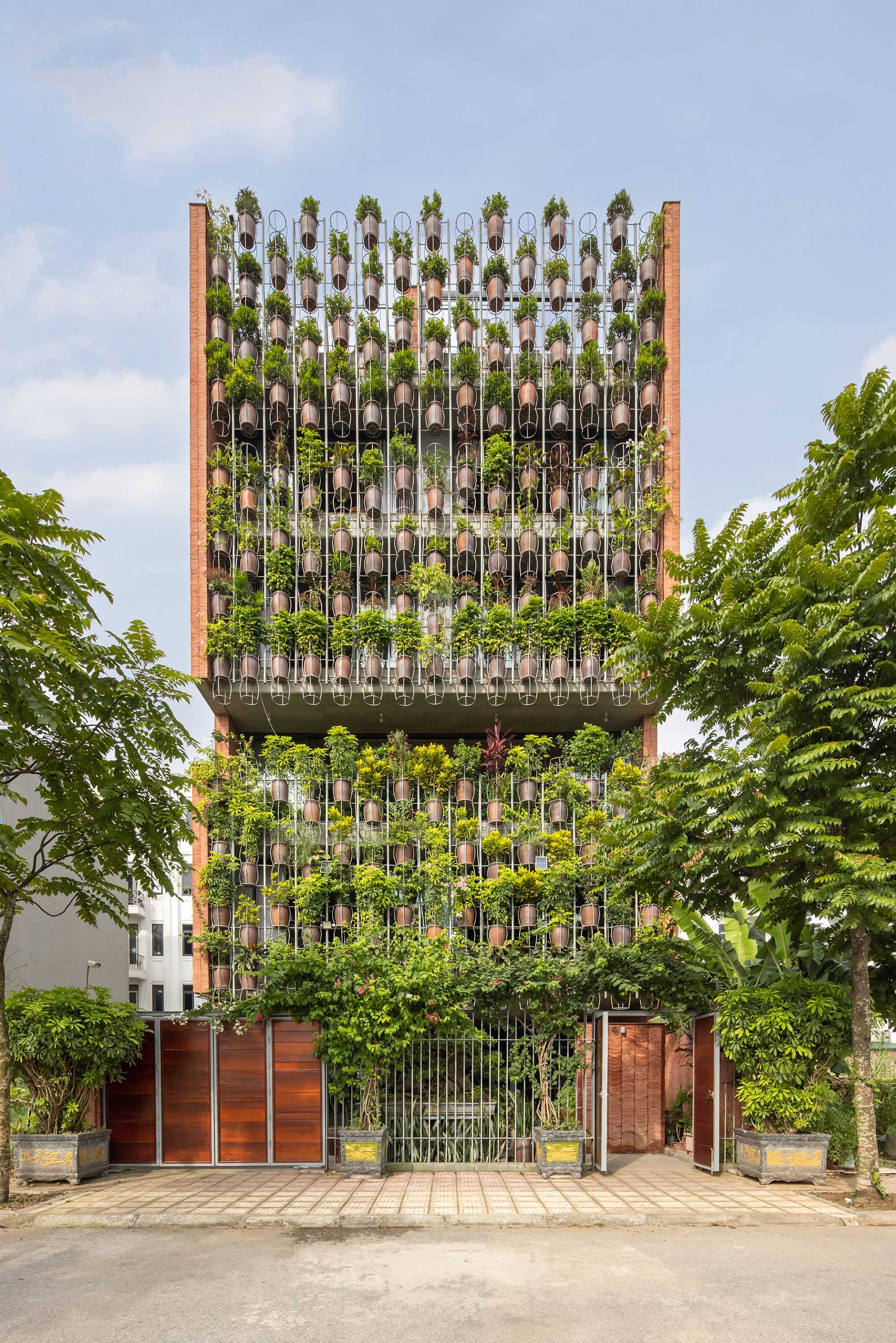
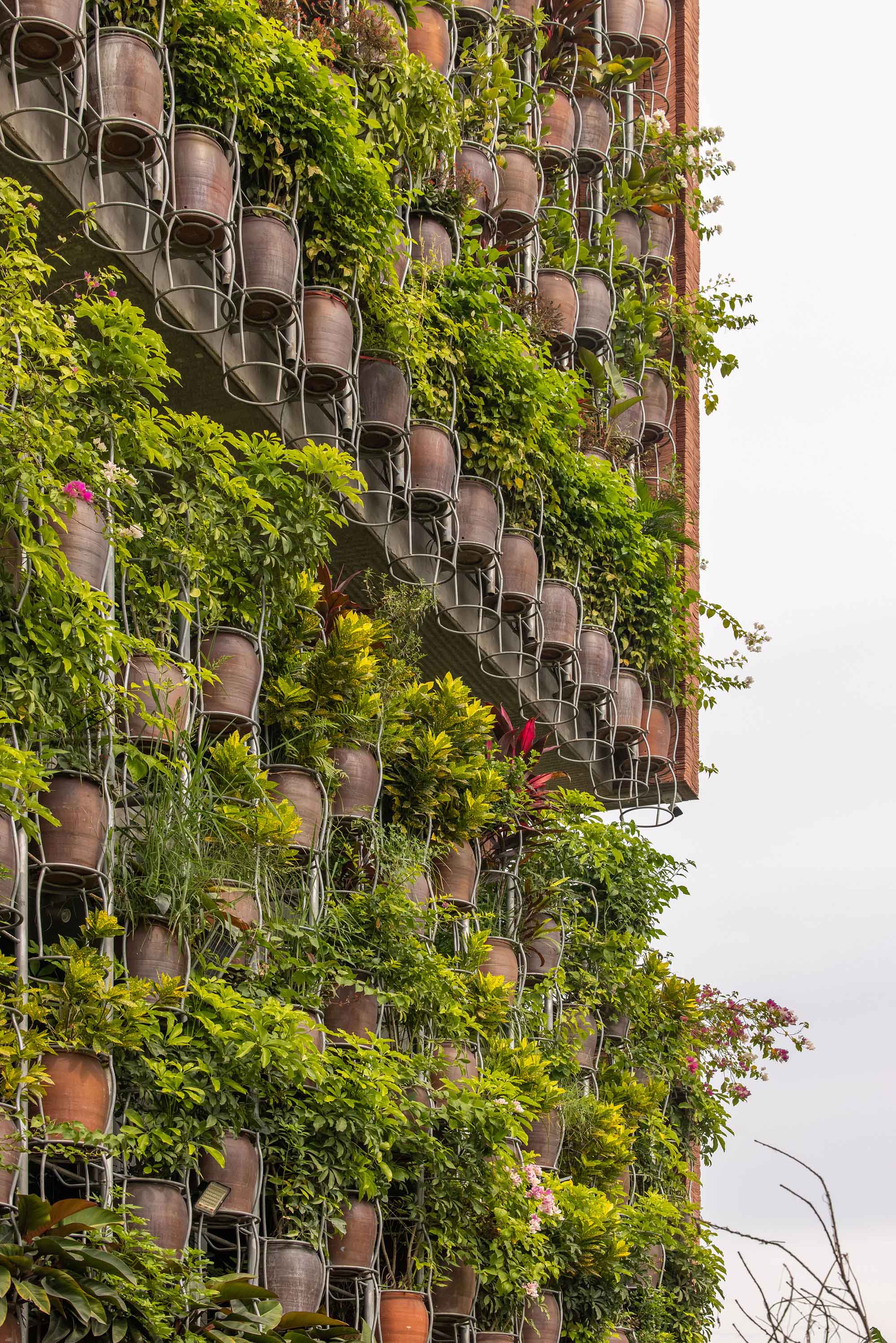
- 無数の吊り鉢がファサードを覆う「ベジテーション・スクリーン」
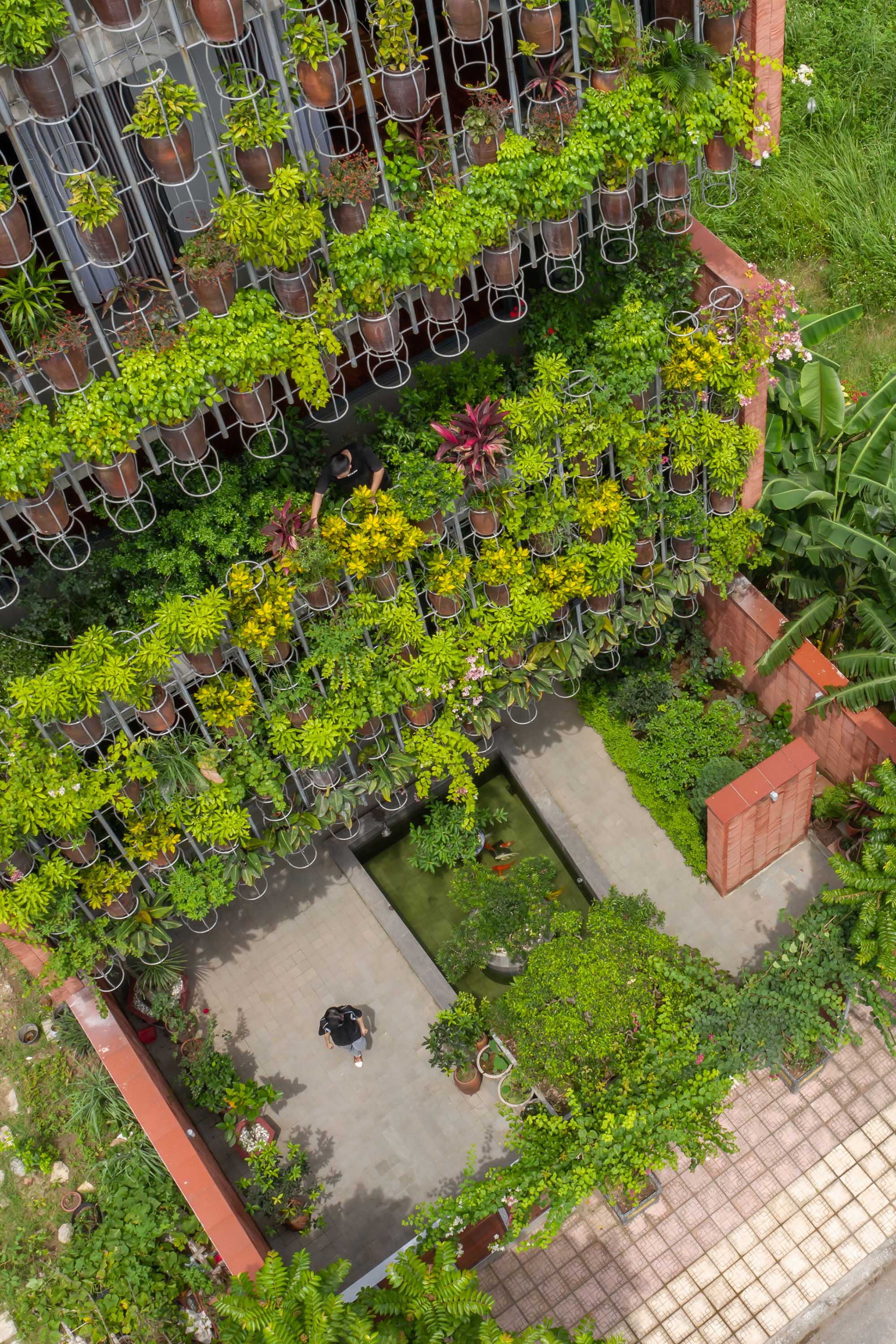
- 都市の中で自然と共生する「都市の中の畑」としての居住環境
- 騒音や粉塵を低減するバッファーとしても機能するスクリーン
- 社会課題に応答する「アグリテクチャー」の実践
(以下、H&Pアーキテクツから提供されたプレスキットのテキストの抄訳)
©︎ Le Minh Hoang
建築と農業を融合する「アグリテクチャー」
〈フライング・ベジテーション〉は、「アグリテクチャー(Agritechture)」という視点に向けた一連の作品の1つである。これは、地球規模の気候変動という文脈において、未来の居住空間を創出するために、建築と農業を融合させたものである。
ベトナム全土で進行する都市化の波は、農村地域に不均衡をもたらしている。農地の面積は減少の一途をたどり、定住型農業や地域社会の再定住に深刻な影響を及ぼしているのである。
©︎ Le Minh Hoang
©︎ Le Minh Hoang
境界を曖昧にする「ベジテーション・スクリーン」
〈フライング・ベジテーション〉は、タイビン市の新興住宅地に位置する住宅である。
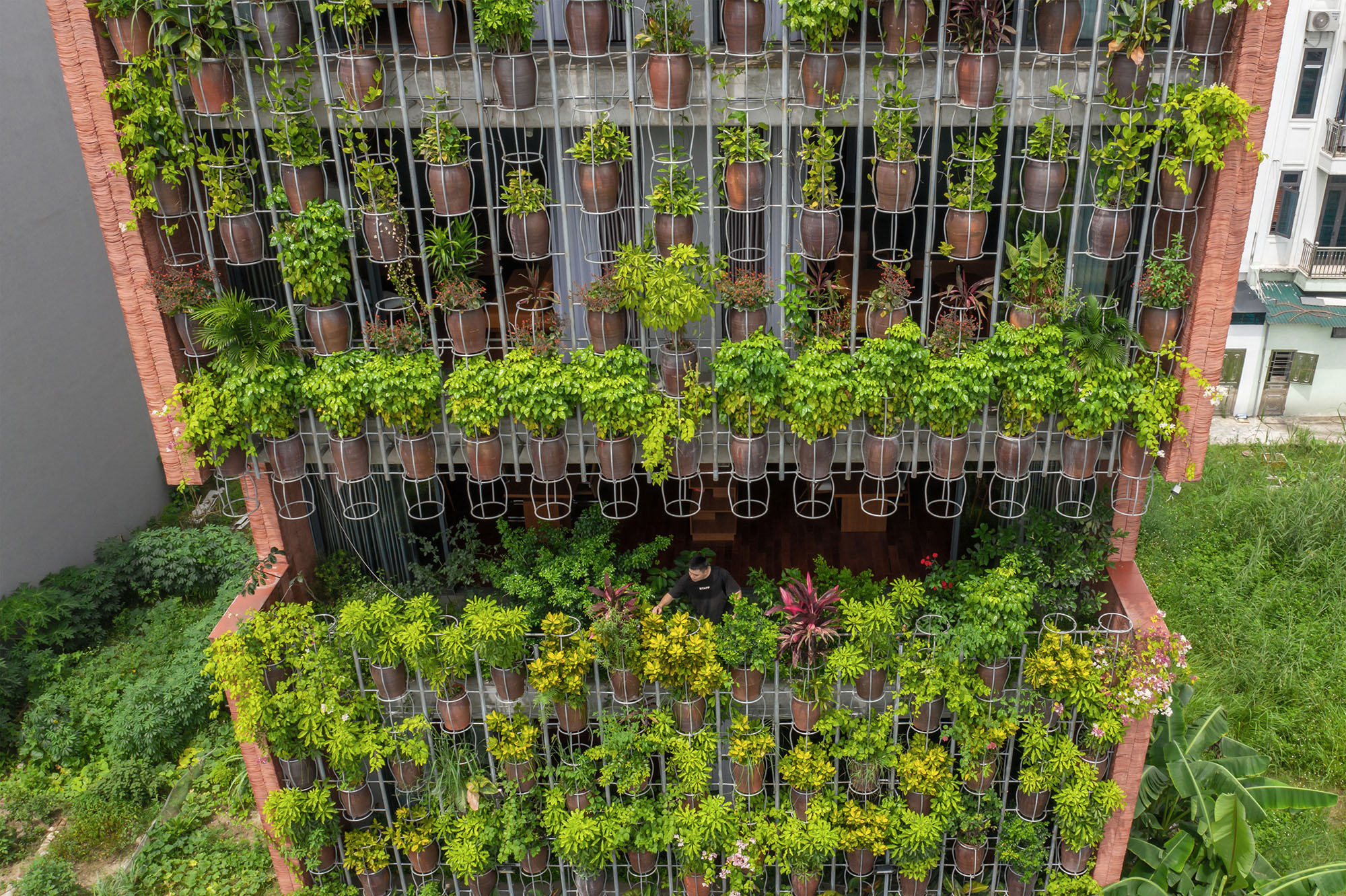
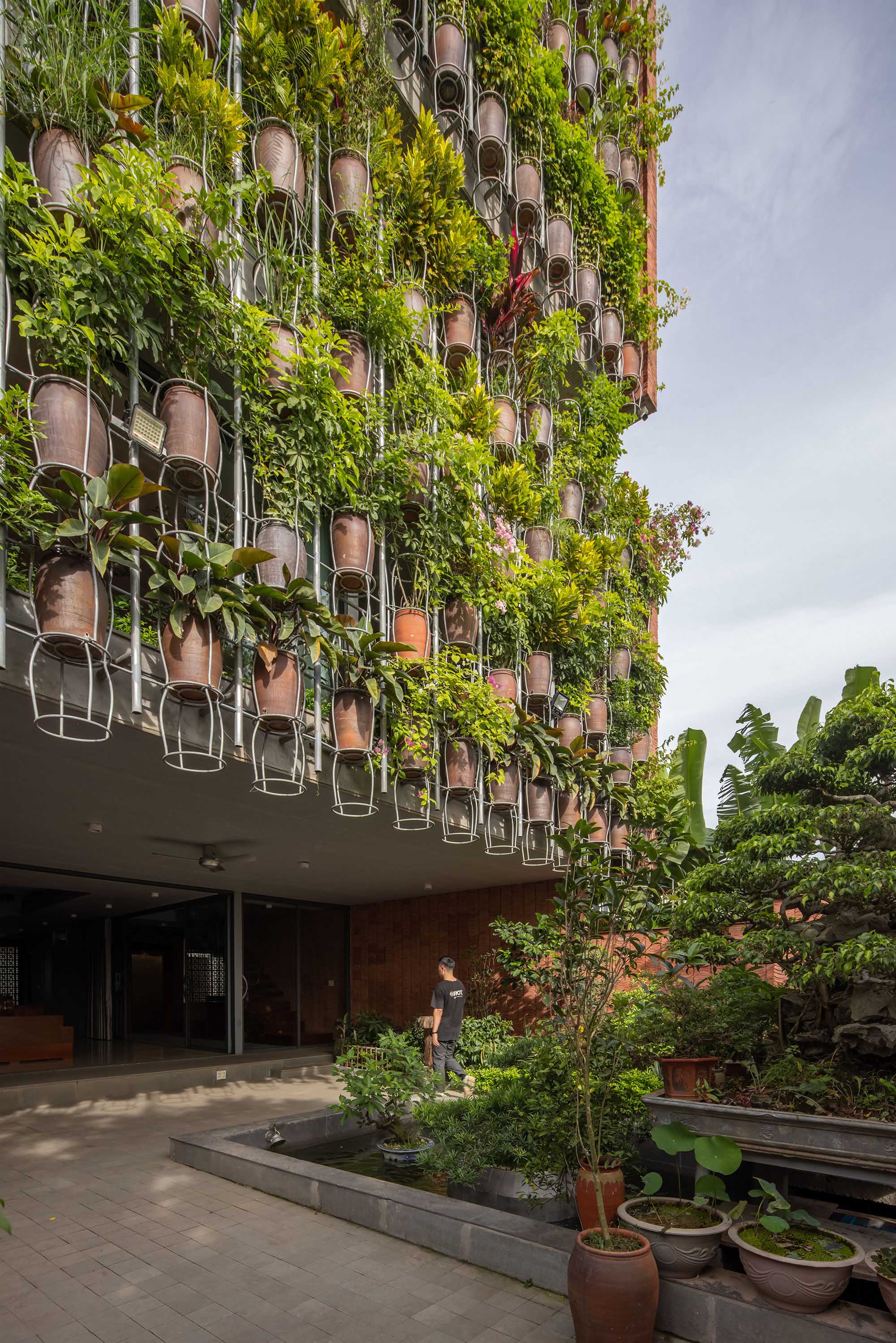
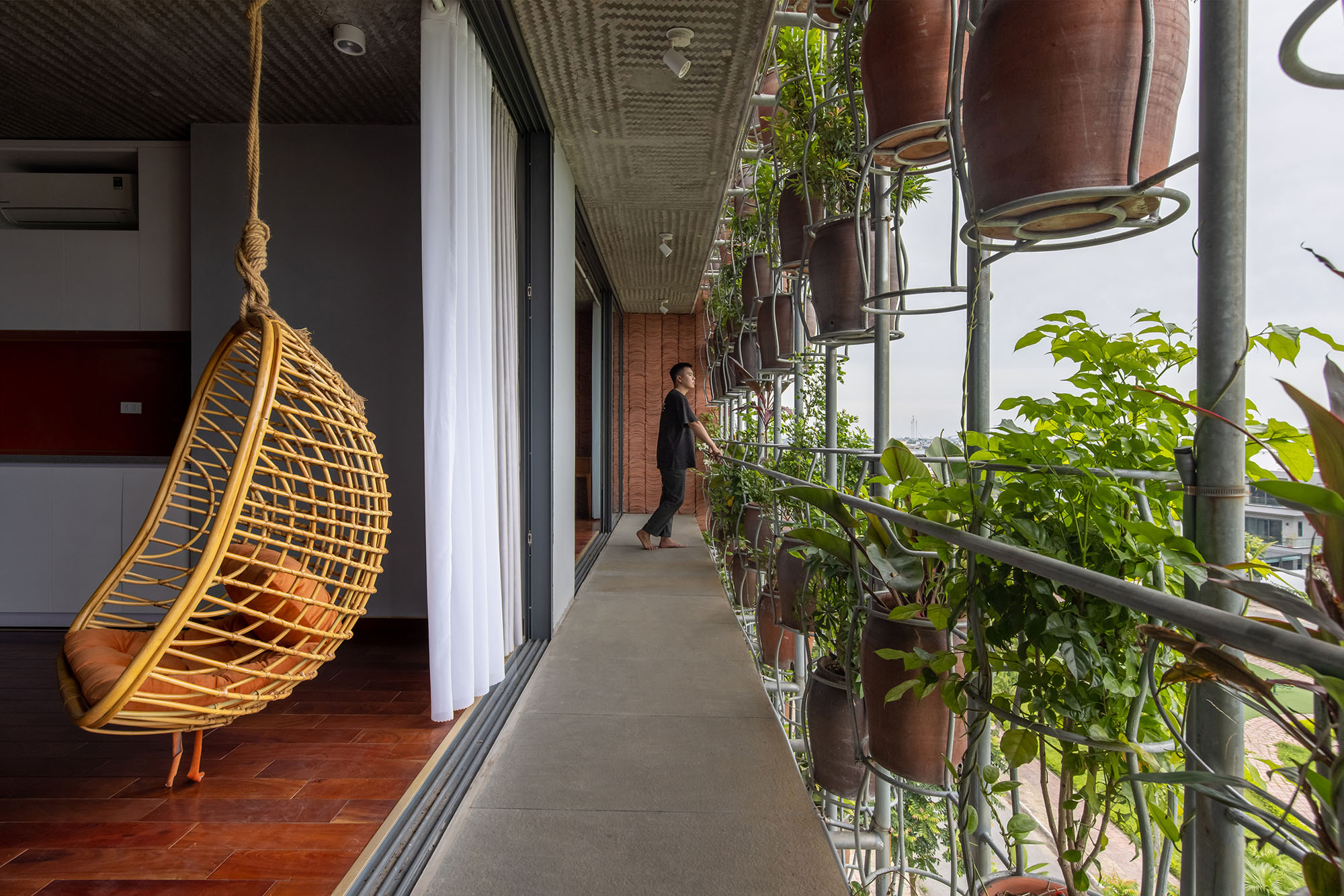
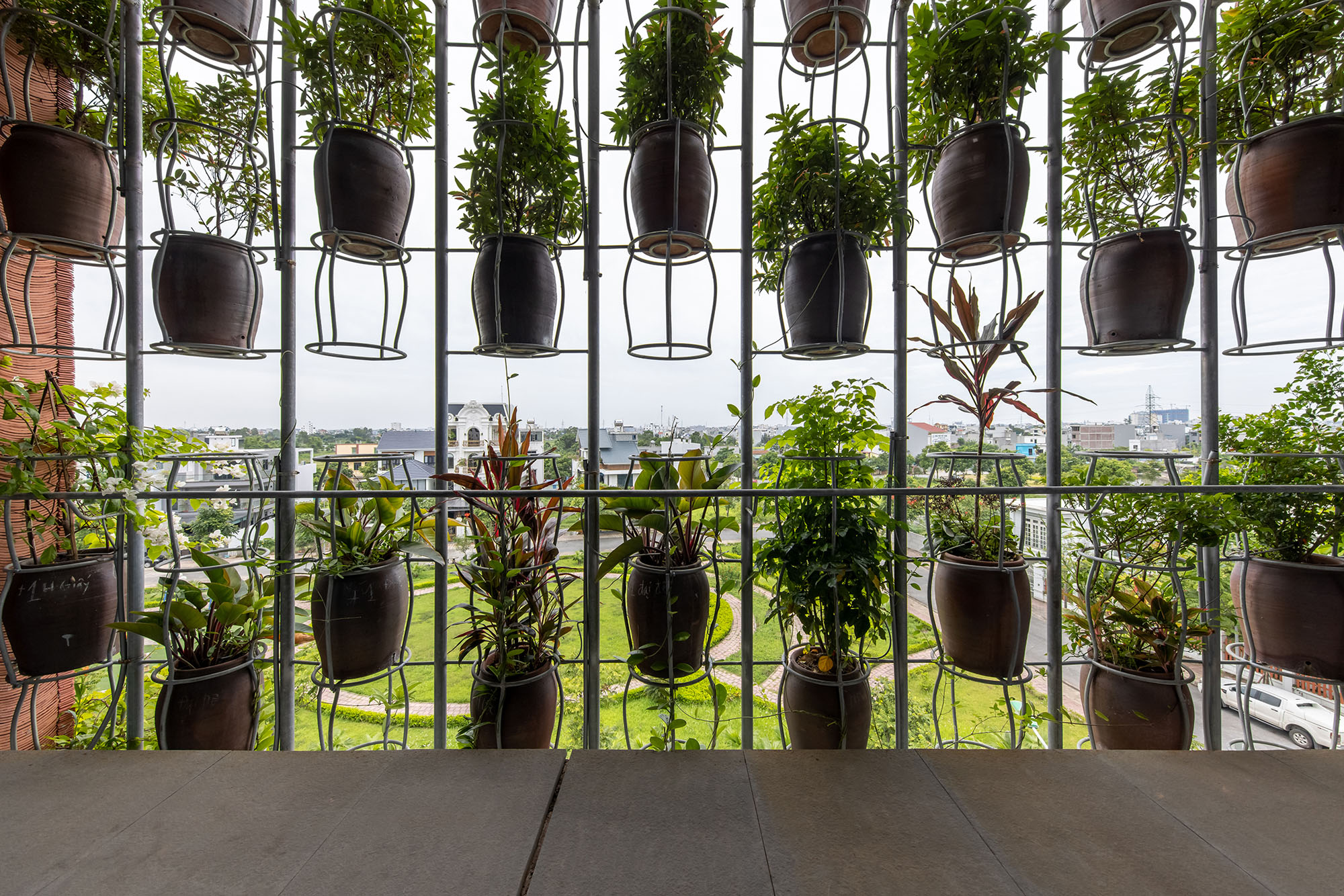
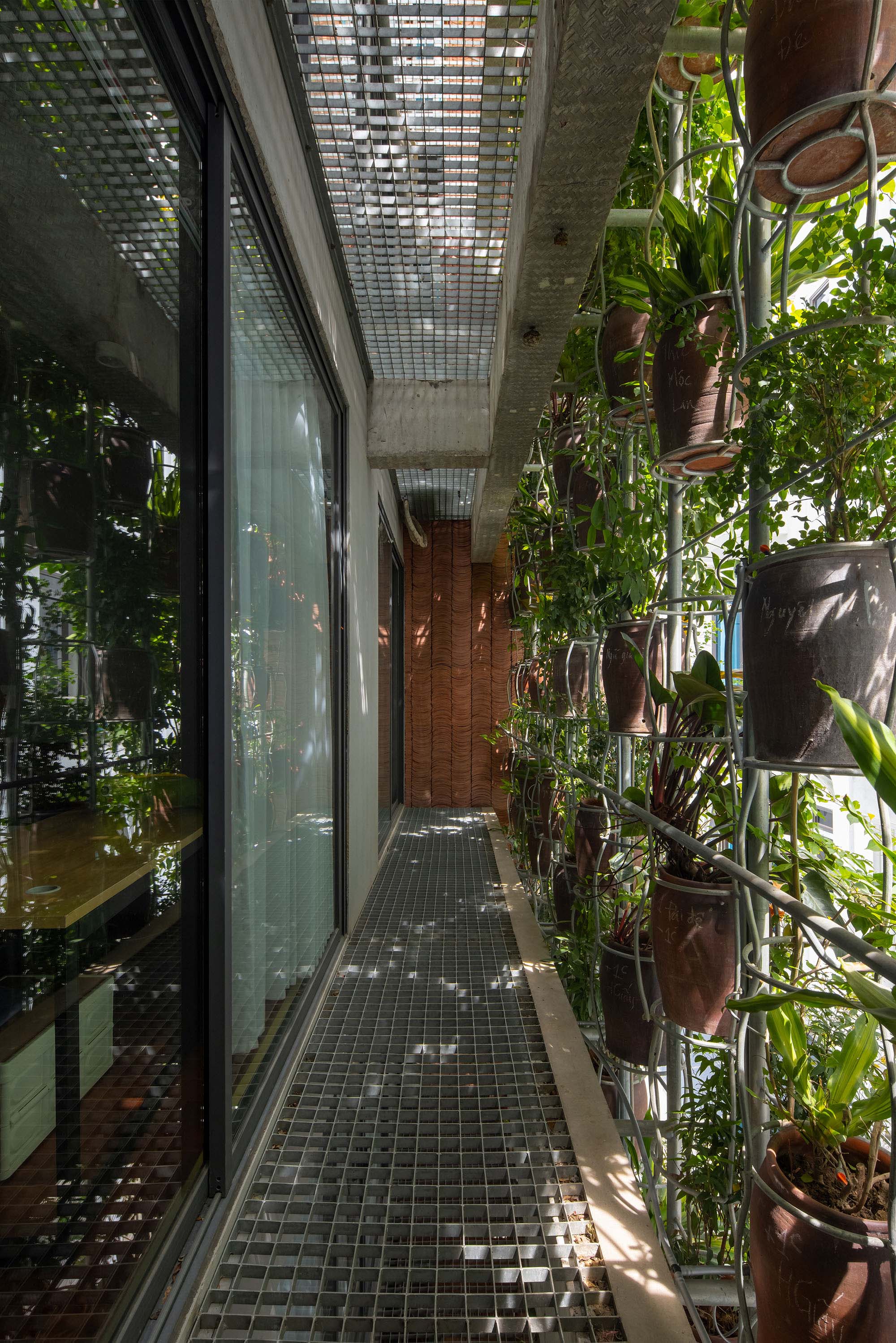
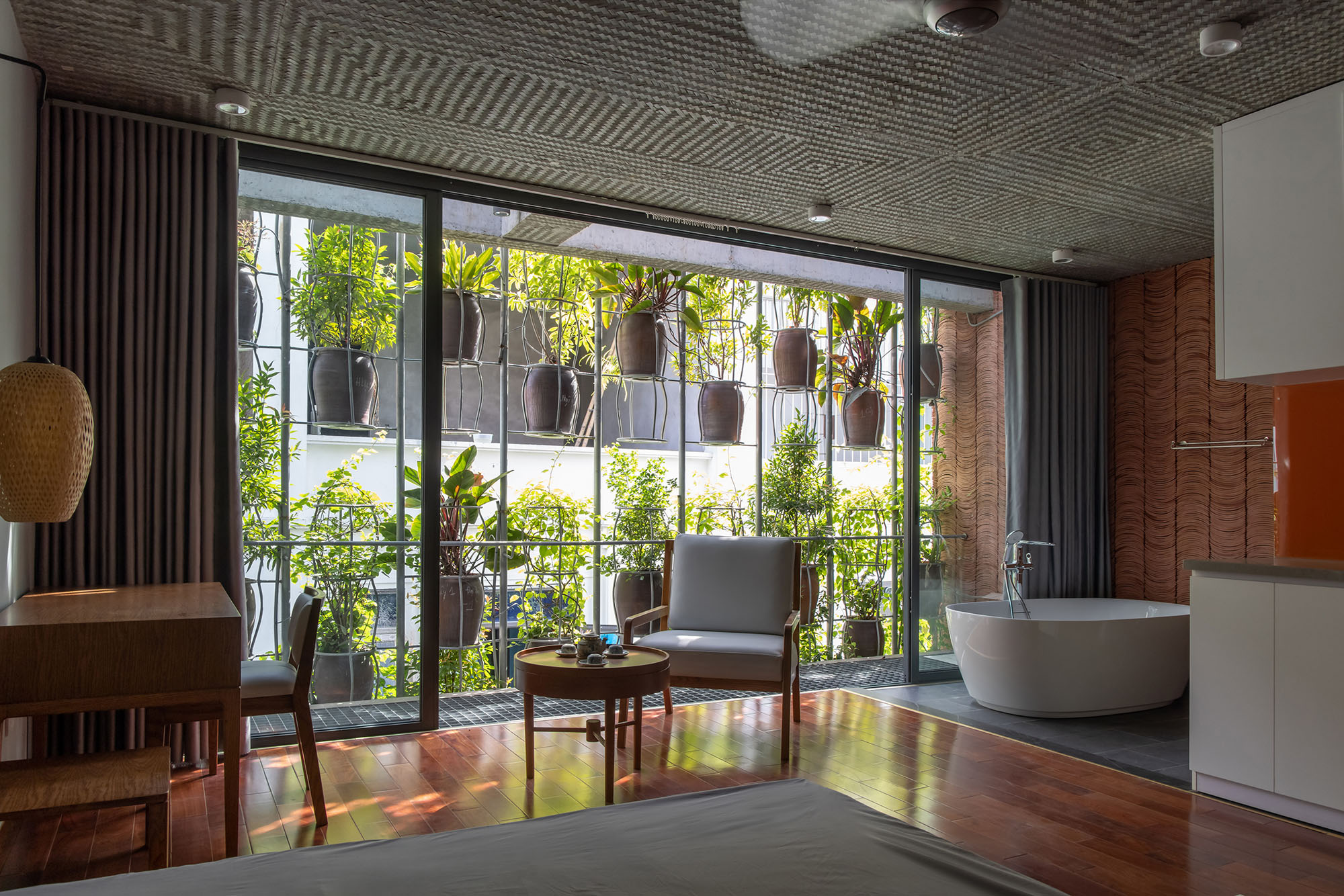
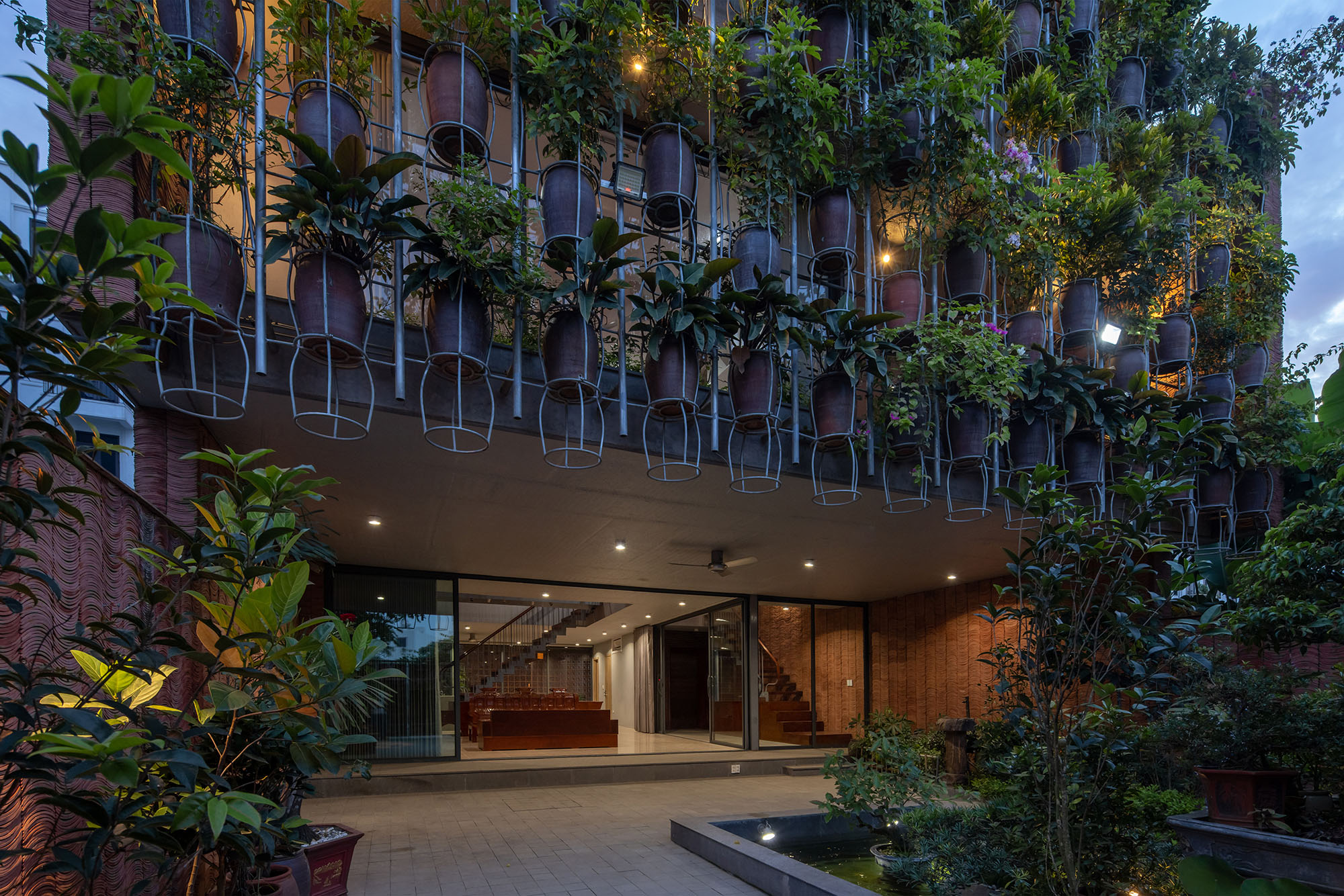
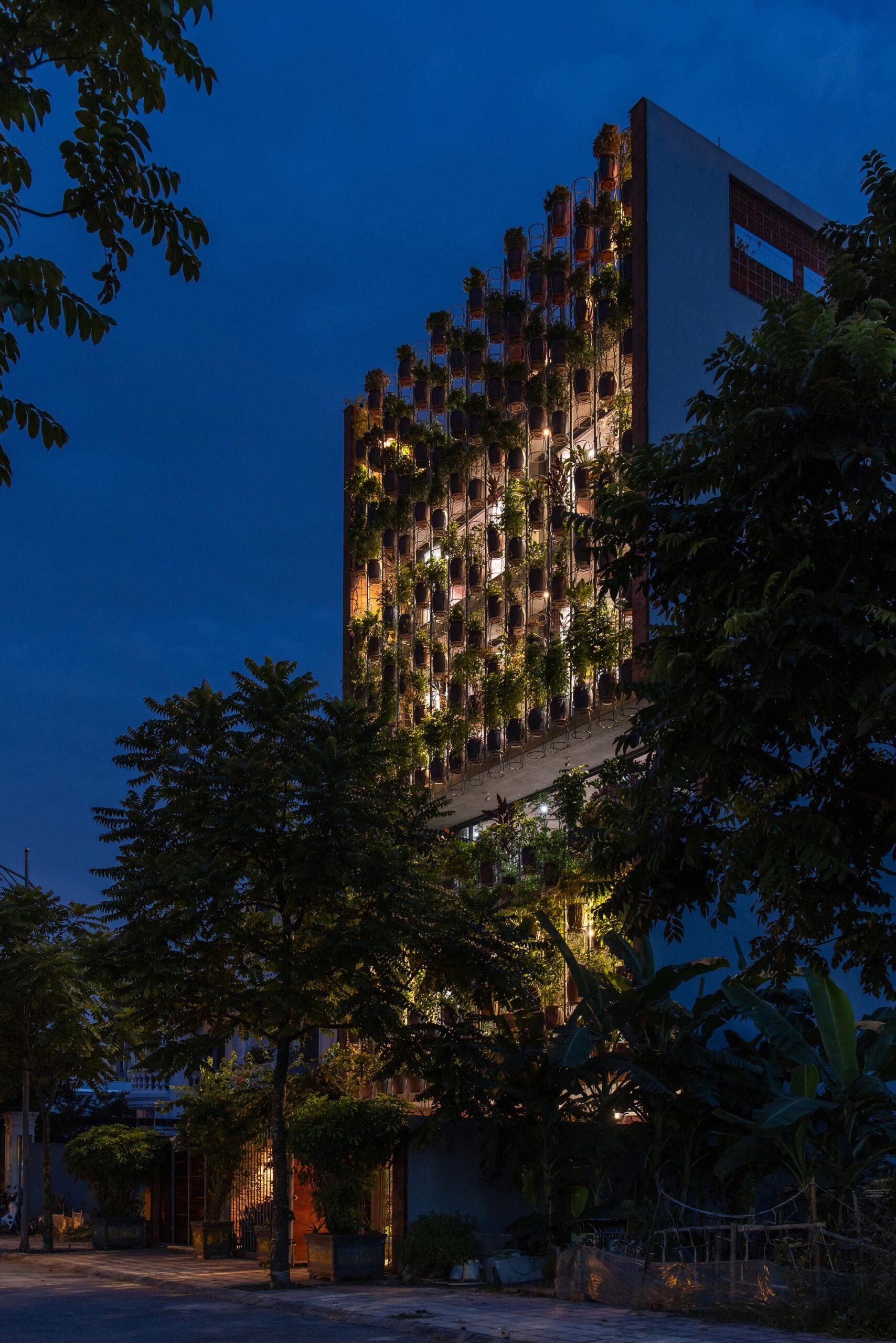
敷地の正面には近隣住民が共有する庭園があり、そこから着想を得て、居住空間のためのプライベートな緩衝地帯となる「ベジテーション・スクリーン」を創出した。これにより、騒音や粉塵を低減しつつ、住人が緑地を楽しむのに十分な開放感を保っている。
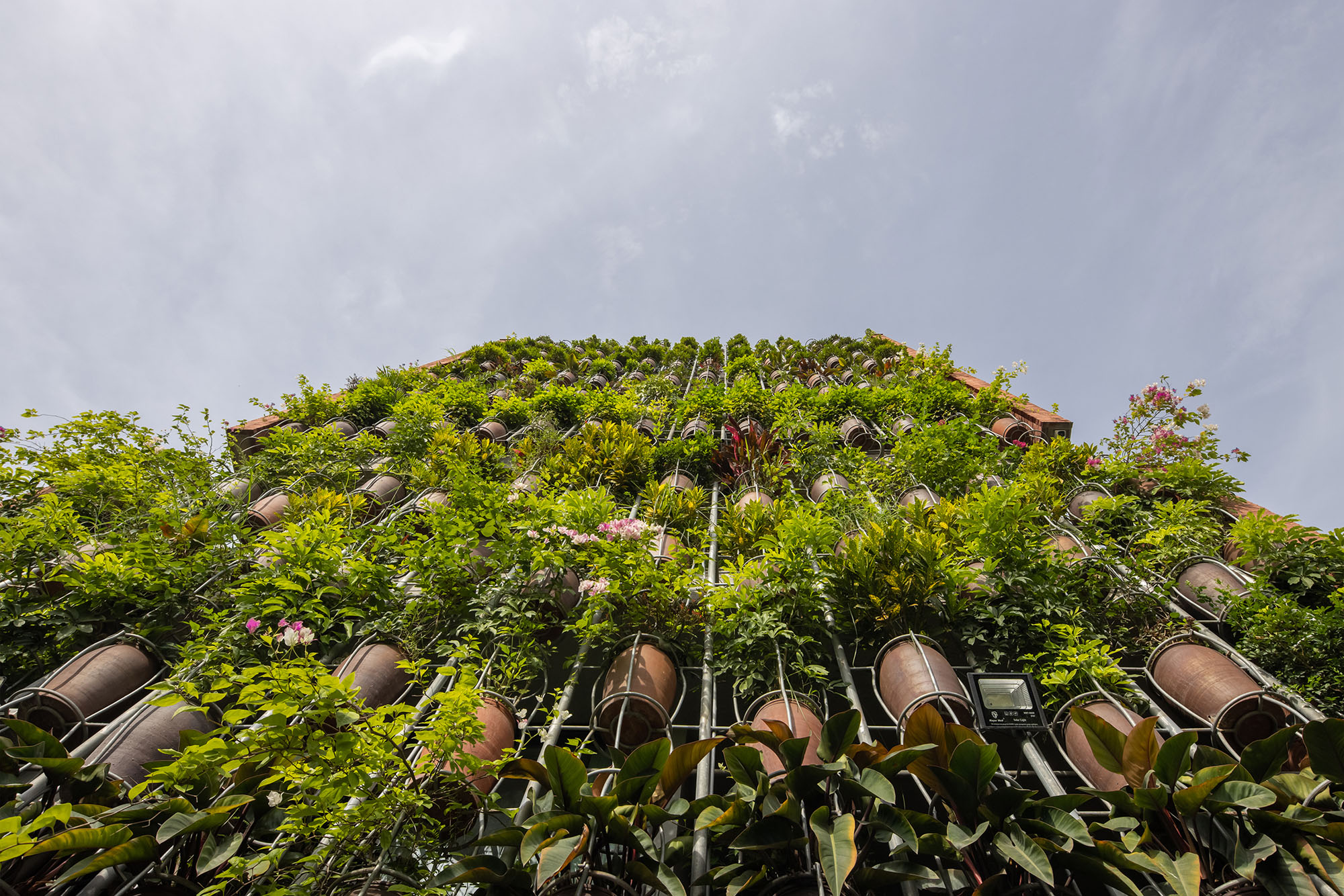
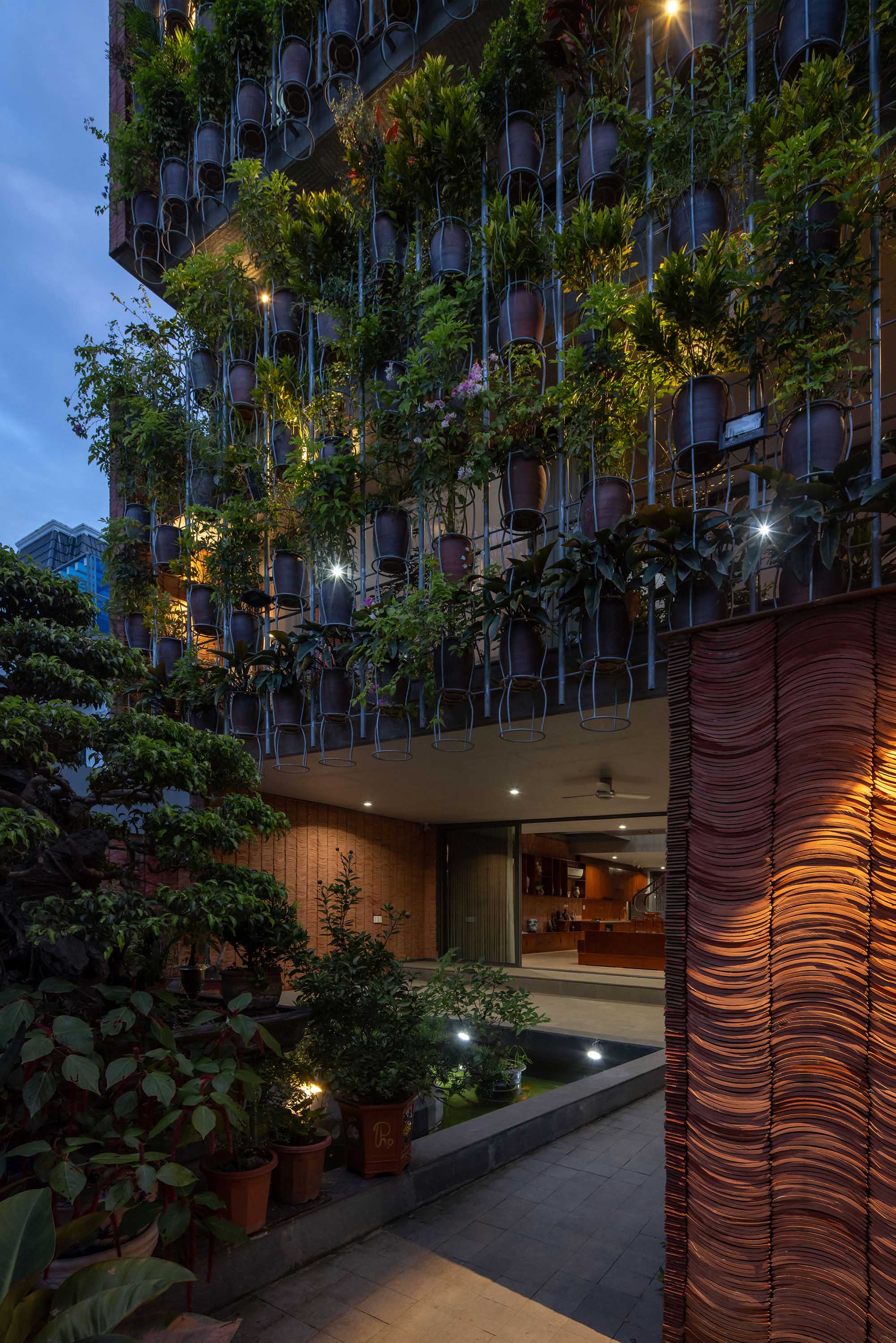
このスクリーンは空中に浮かんでいるかのように見え、建築と景観の境界を曖昧にし、森の中や水田のそばで暮らしているような感覚を生み出している。
©︎ Le Minh Hoang
©︎ Le Minh Hoang
©︎ Le Minh Hoang
居住空間を共有する運営モデル
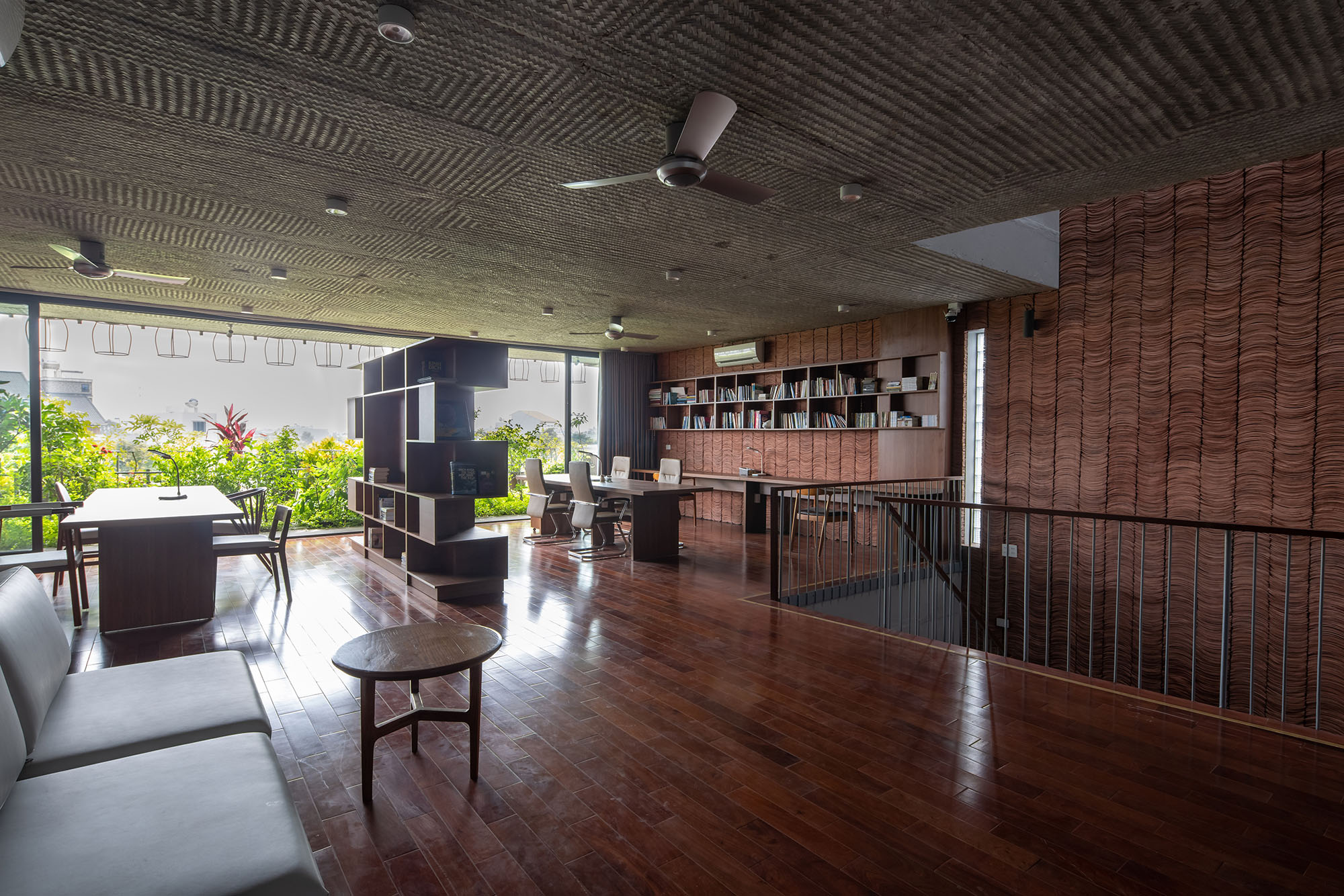
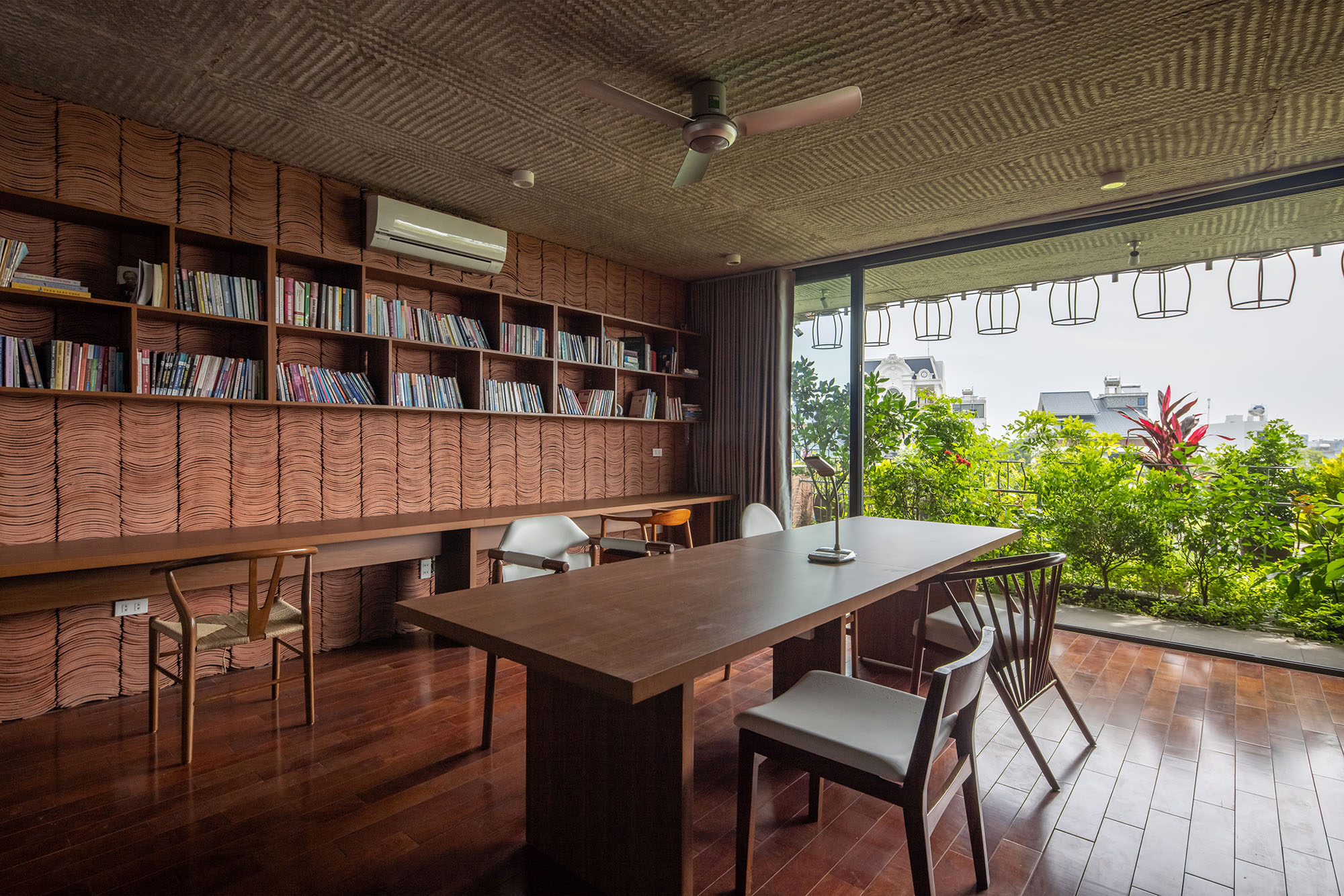
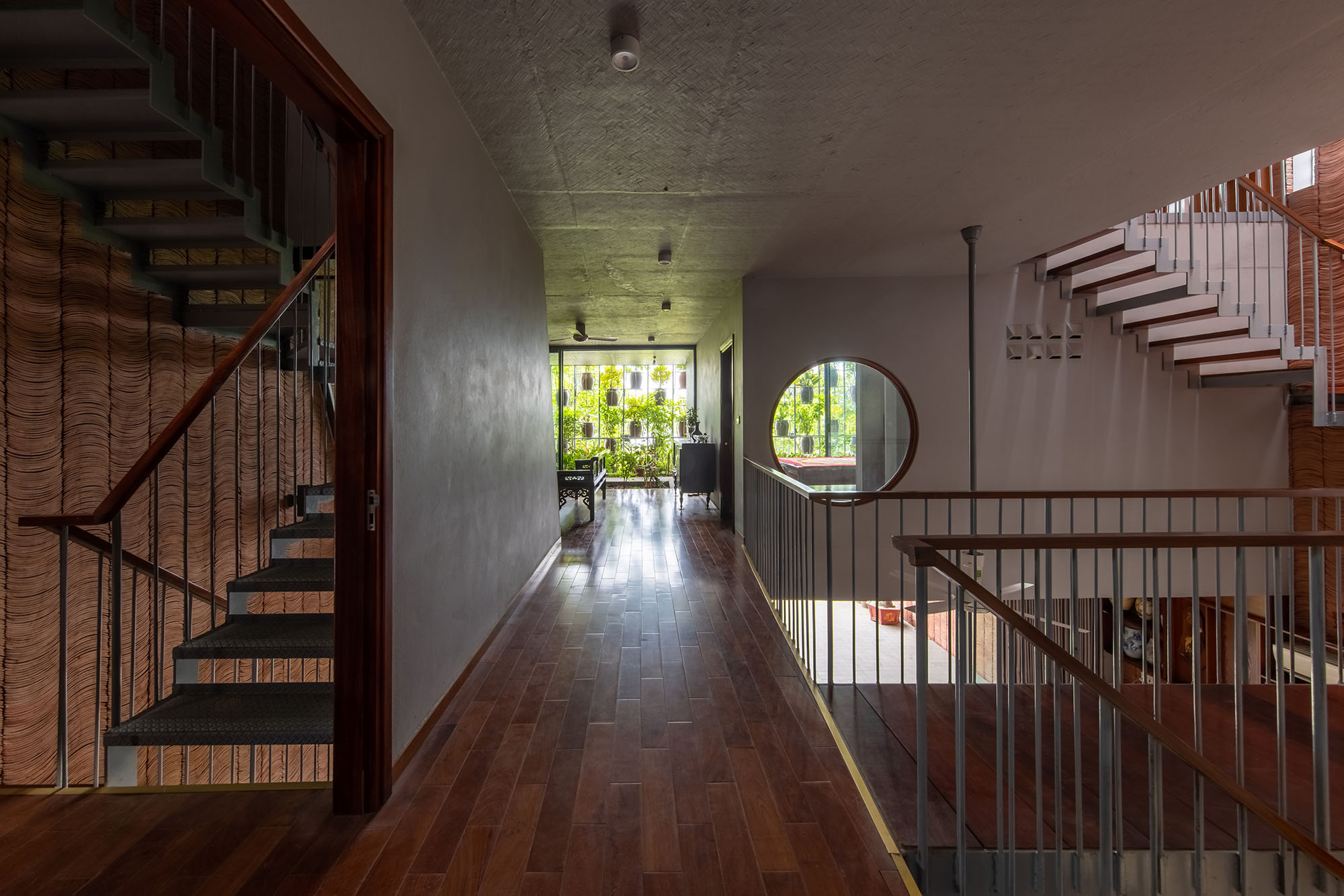
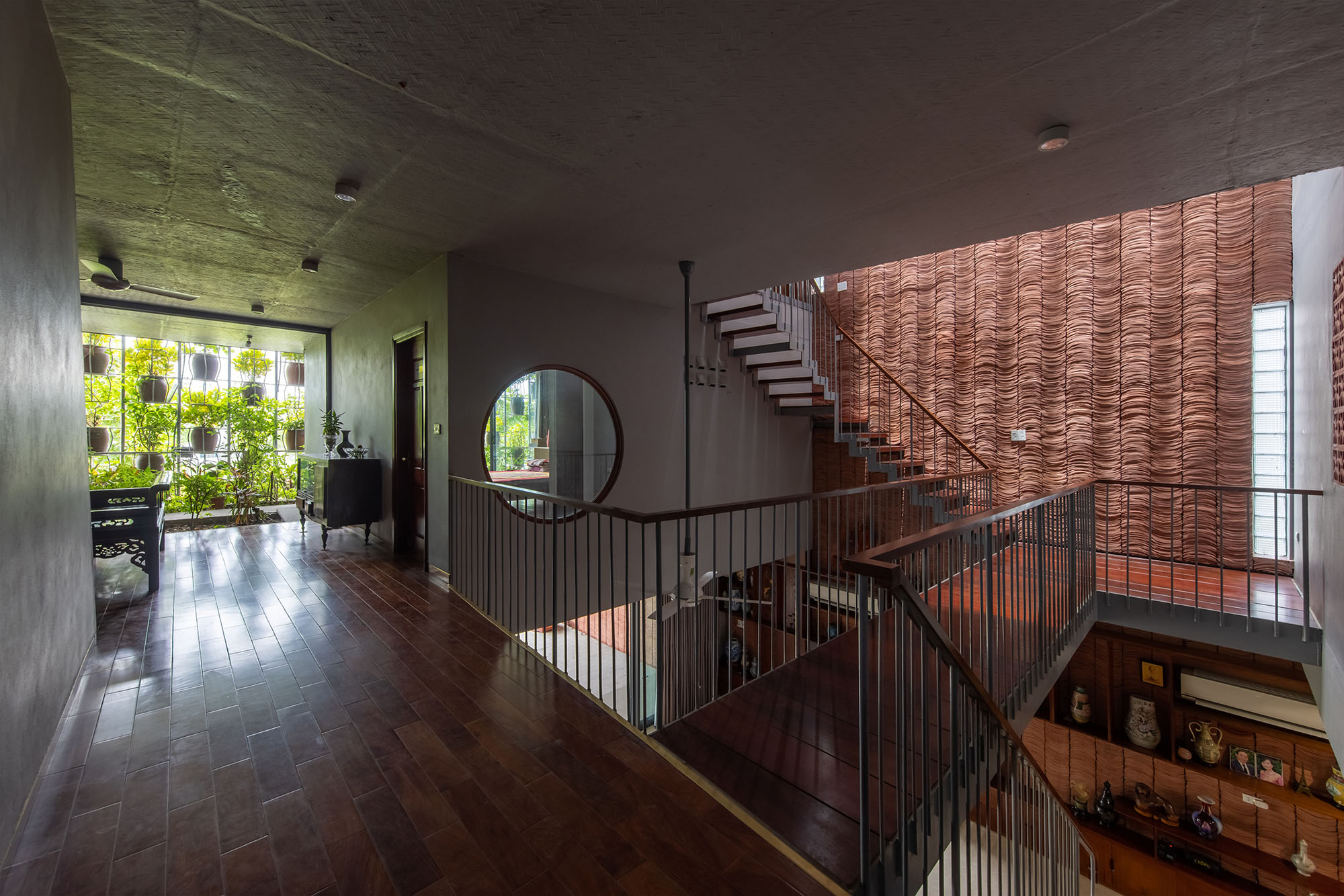
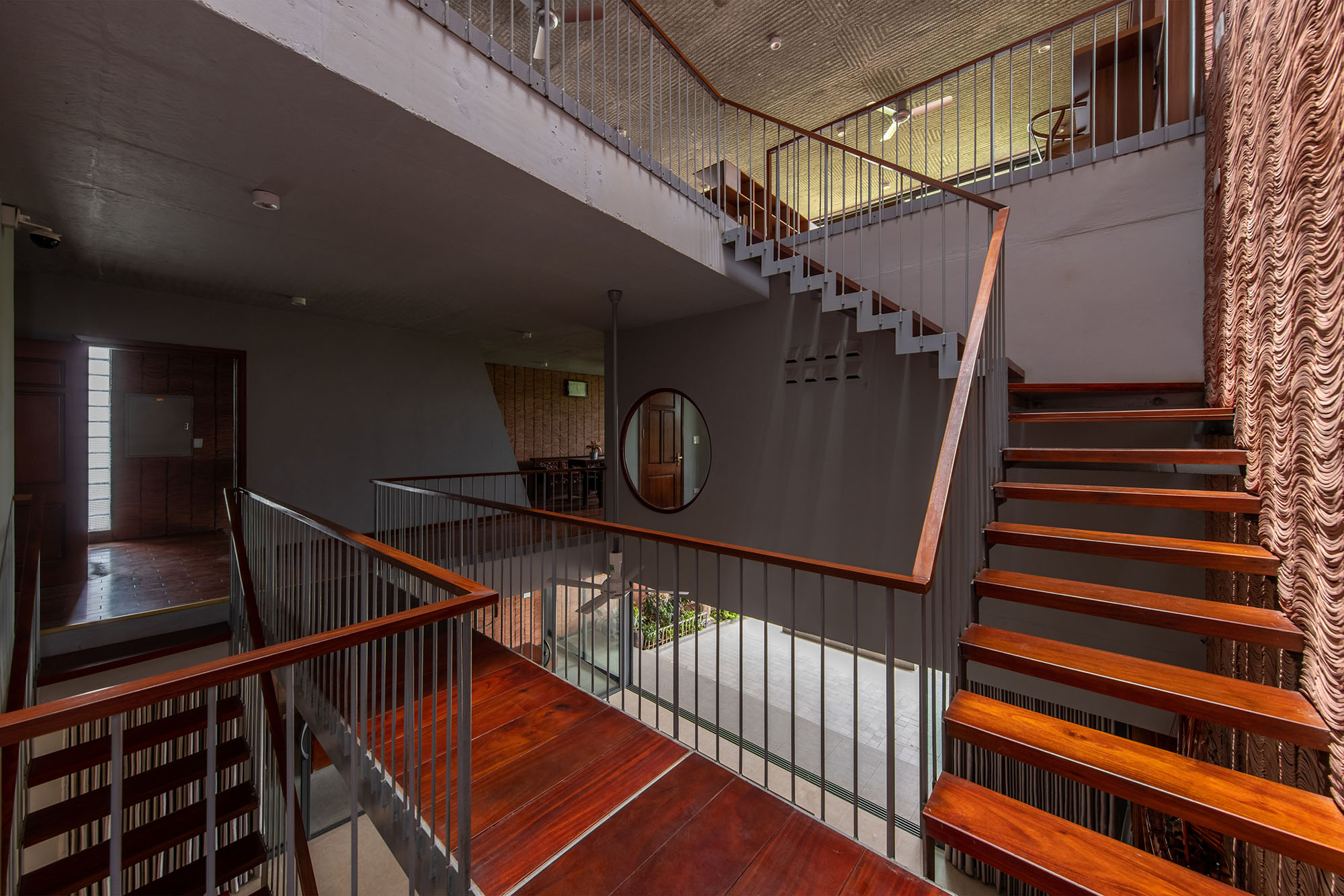
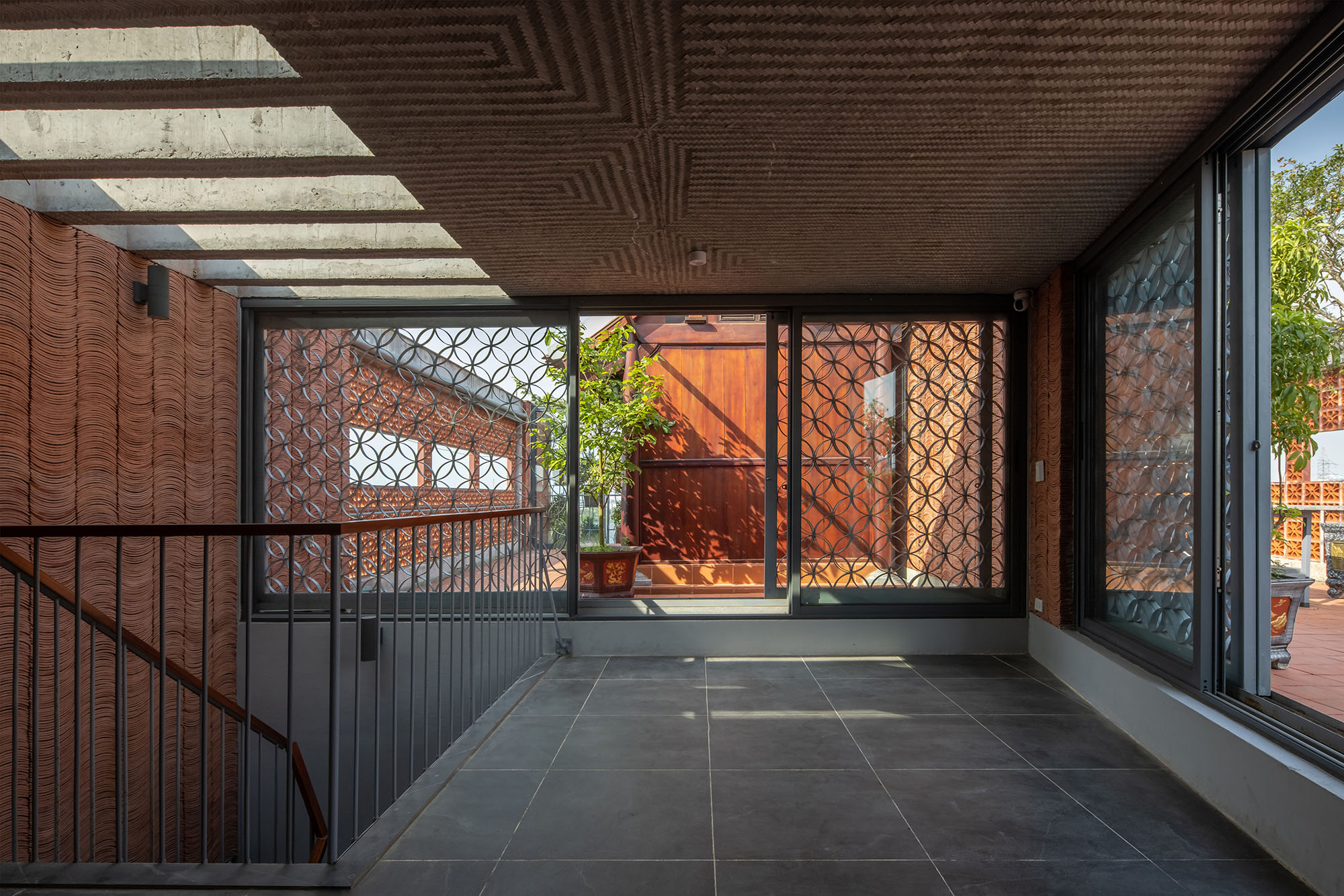
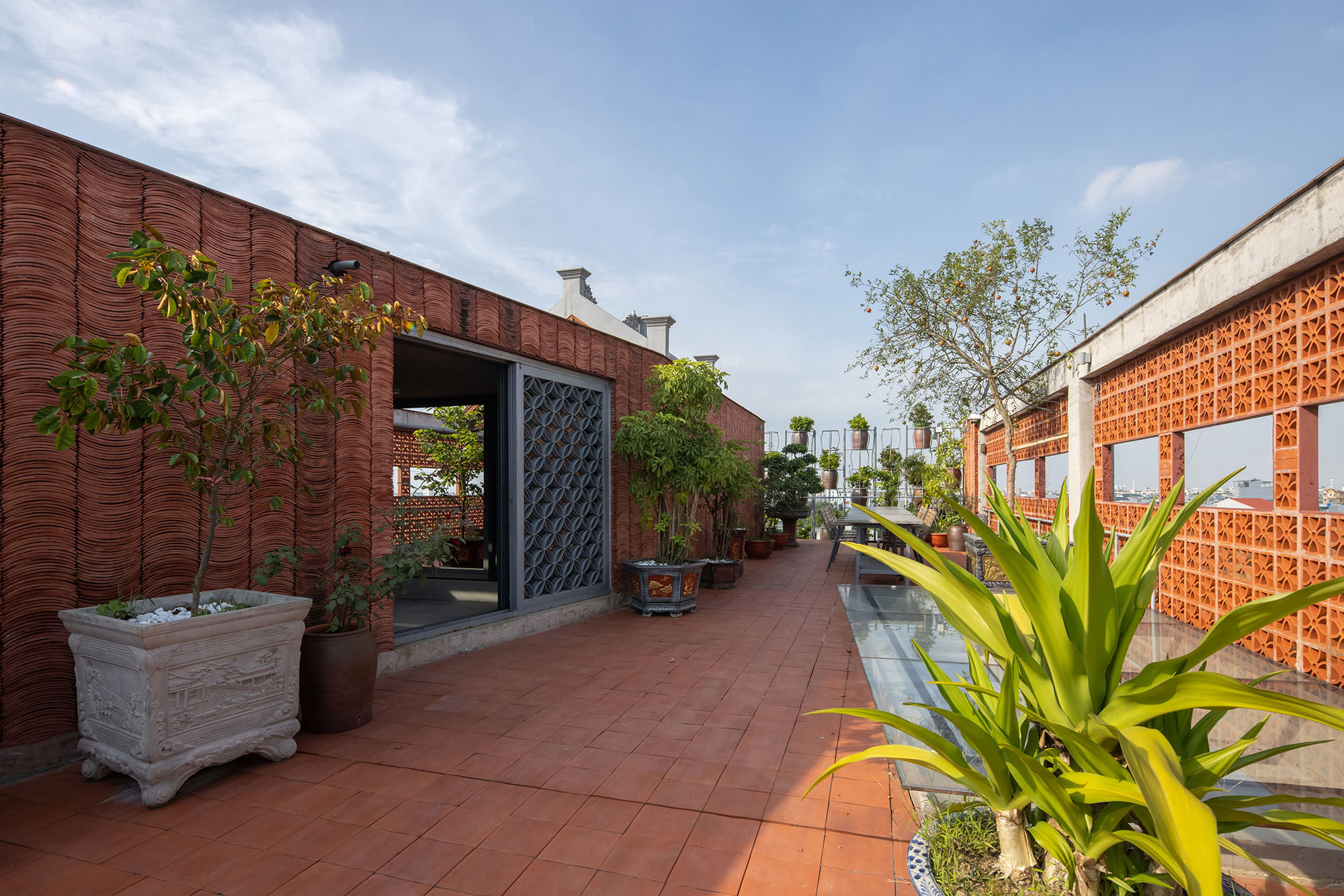
この住宅は、居住用(1~3階)と賃貸用(4~5階)に分かれており、所有者と入居者が居住空間を共有するという精神で運営されている。3階と屋上は、各階に住むメンバーのための多目的ミーティングスペースとなっている。
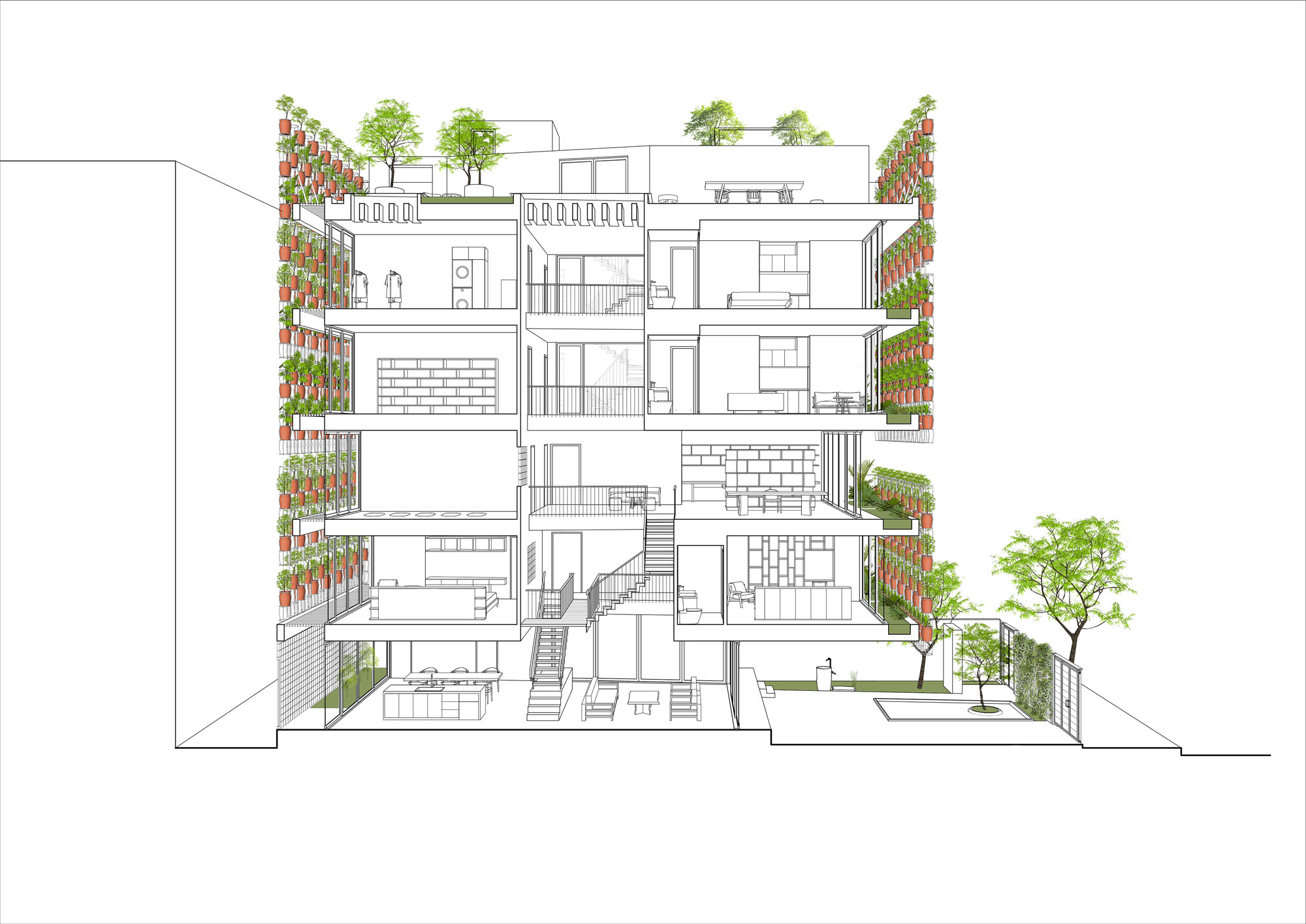
Sectional perspective
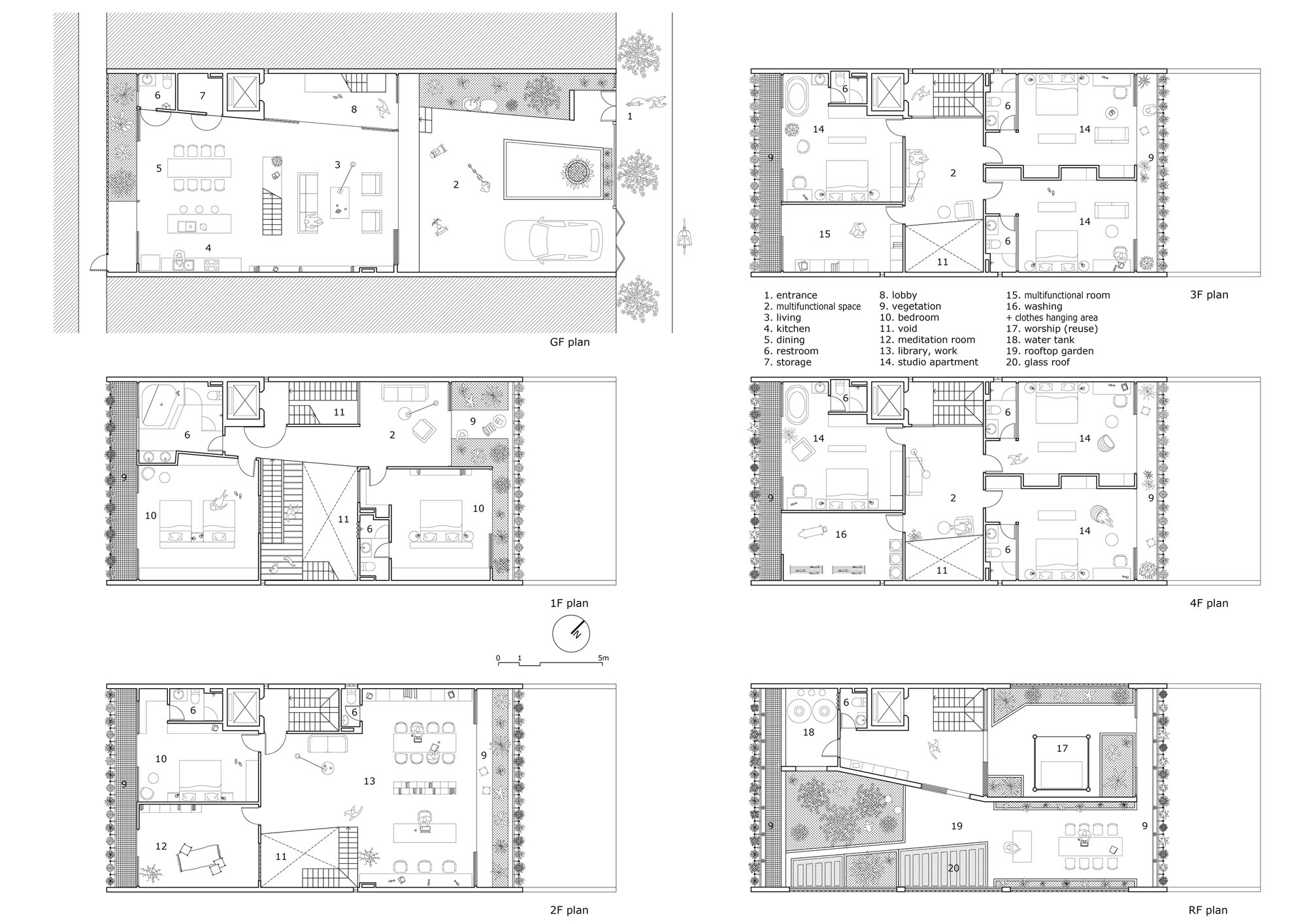
Plans
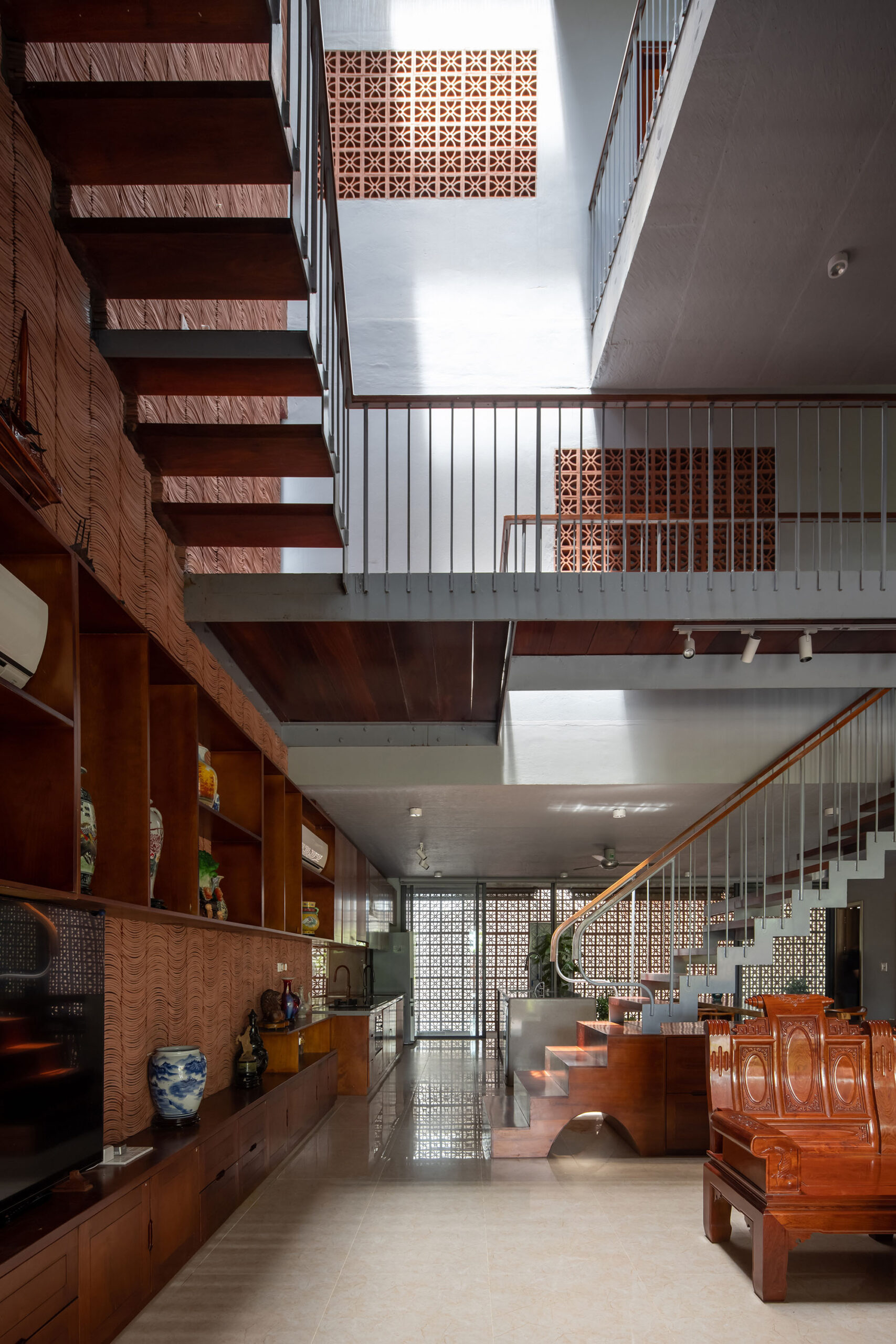
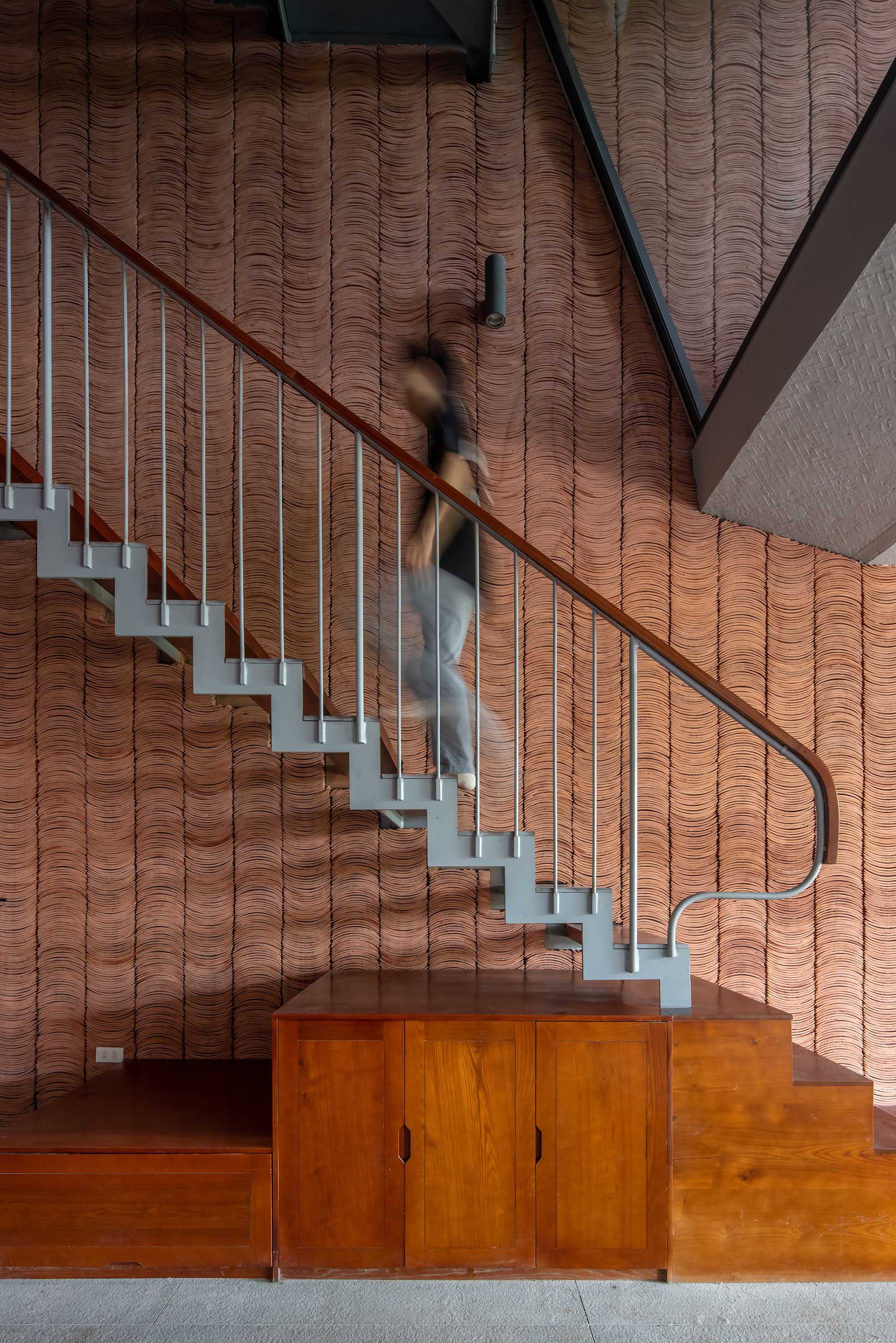
根源的な素材である「木と土」への共鳴
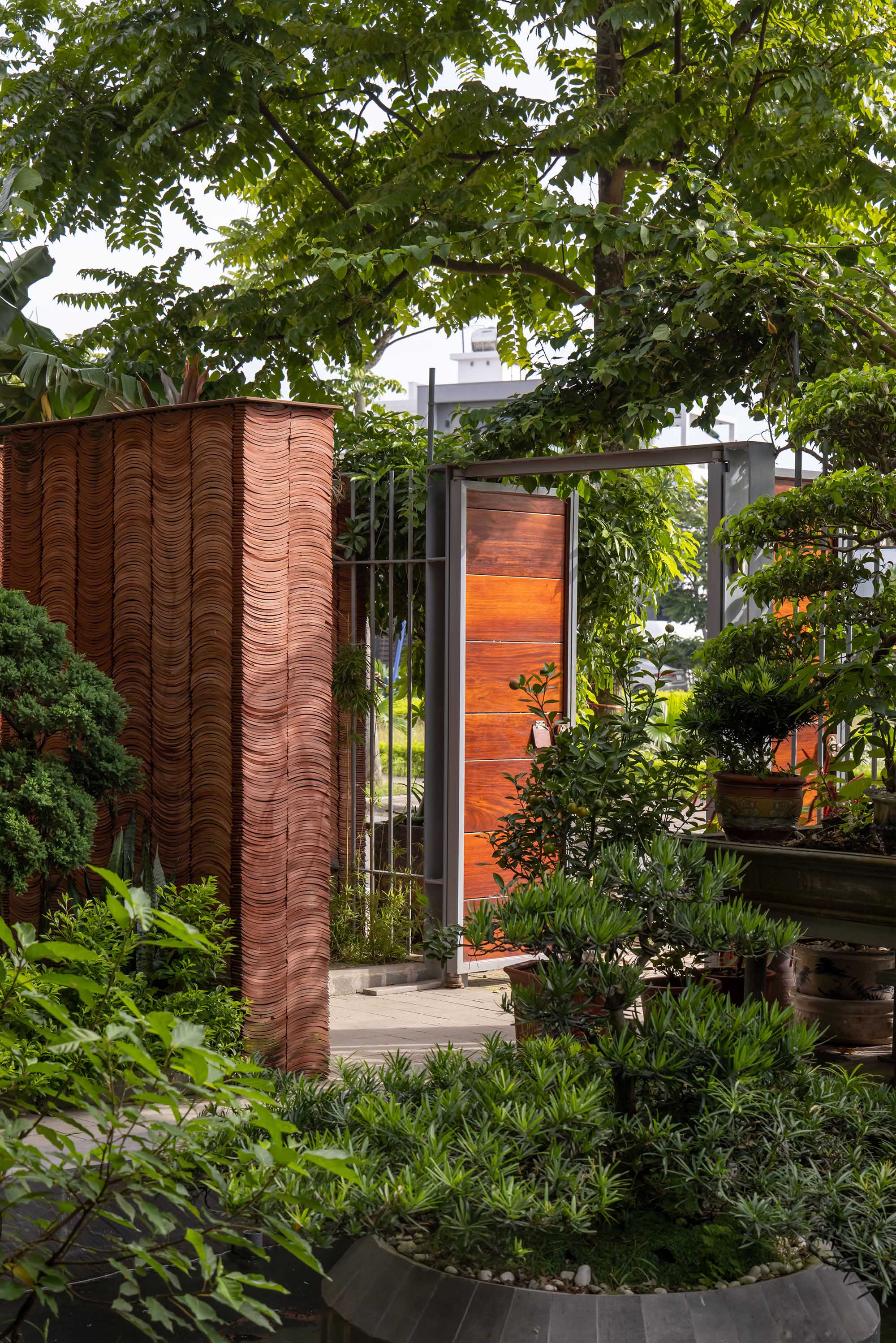
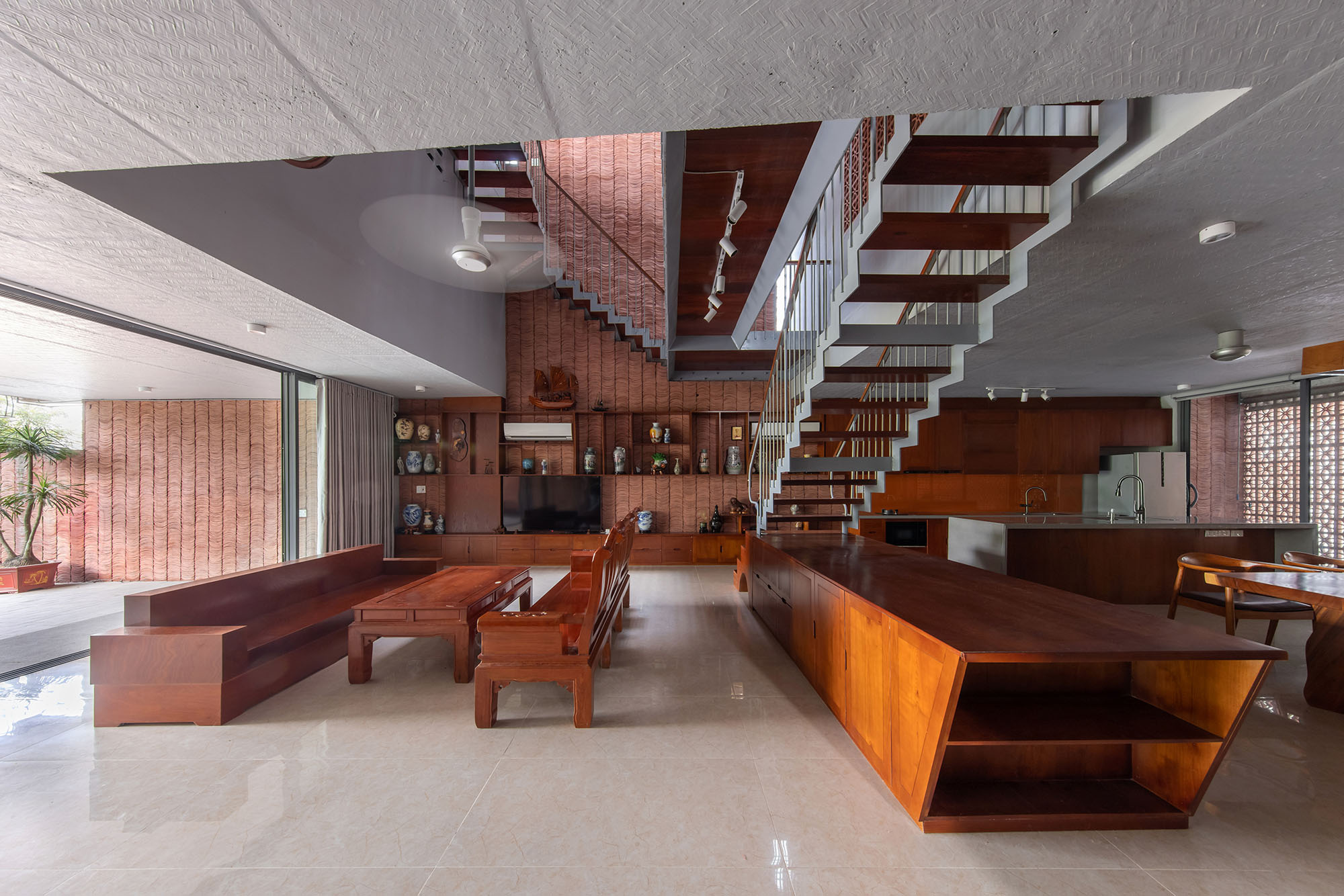
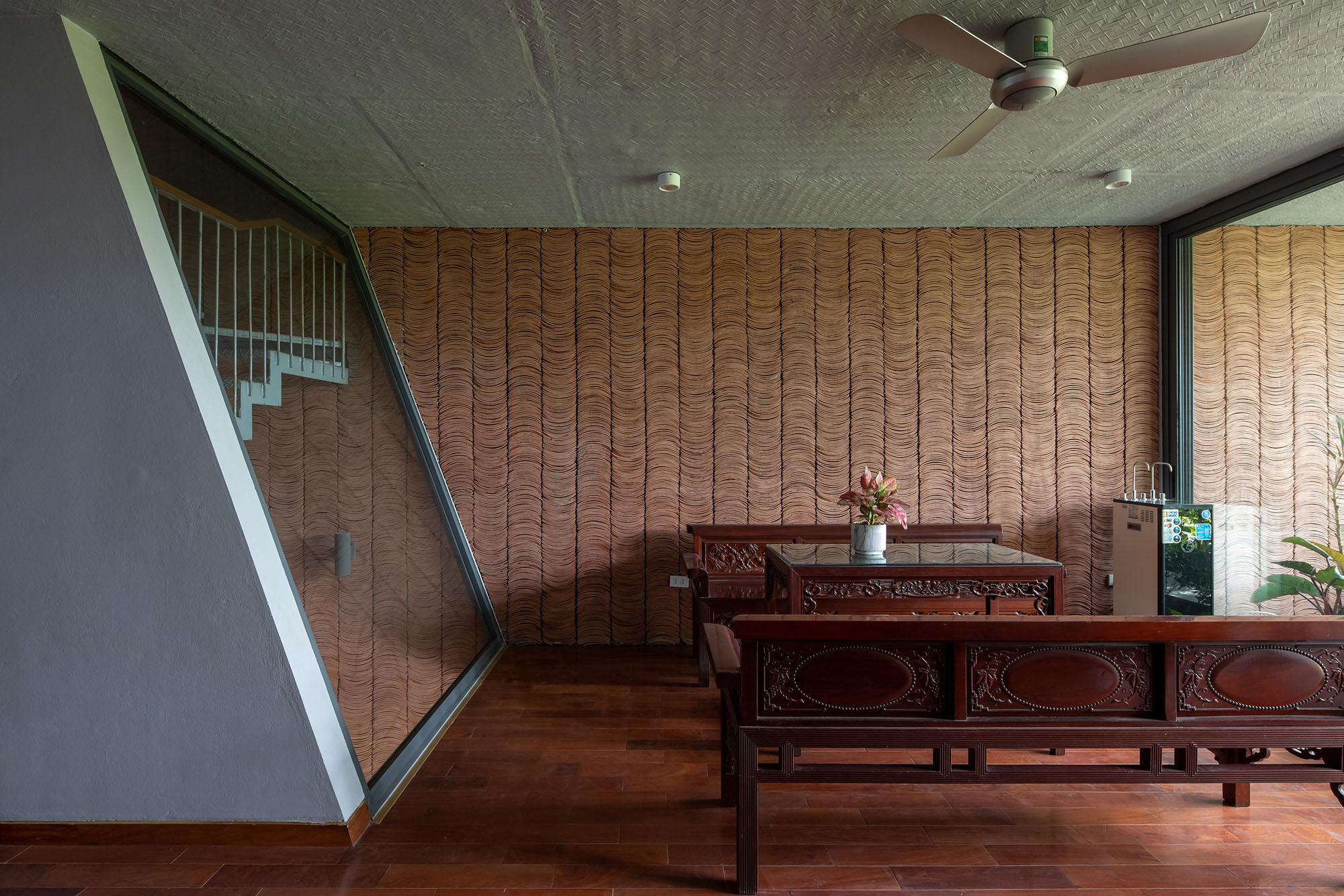
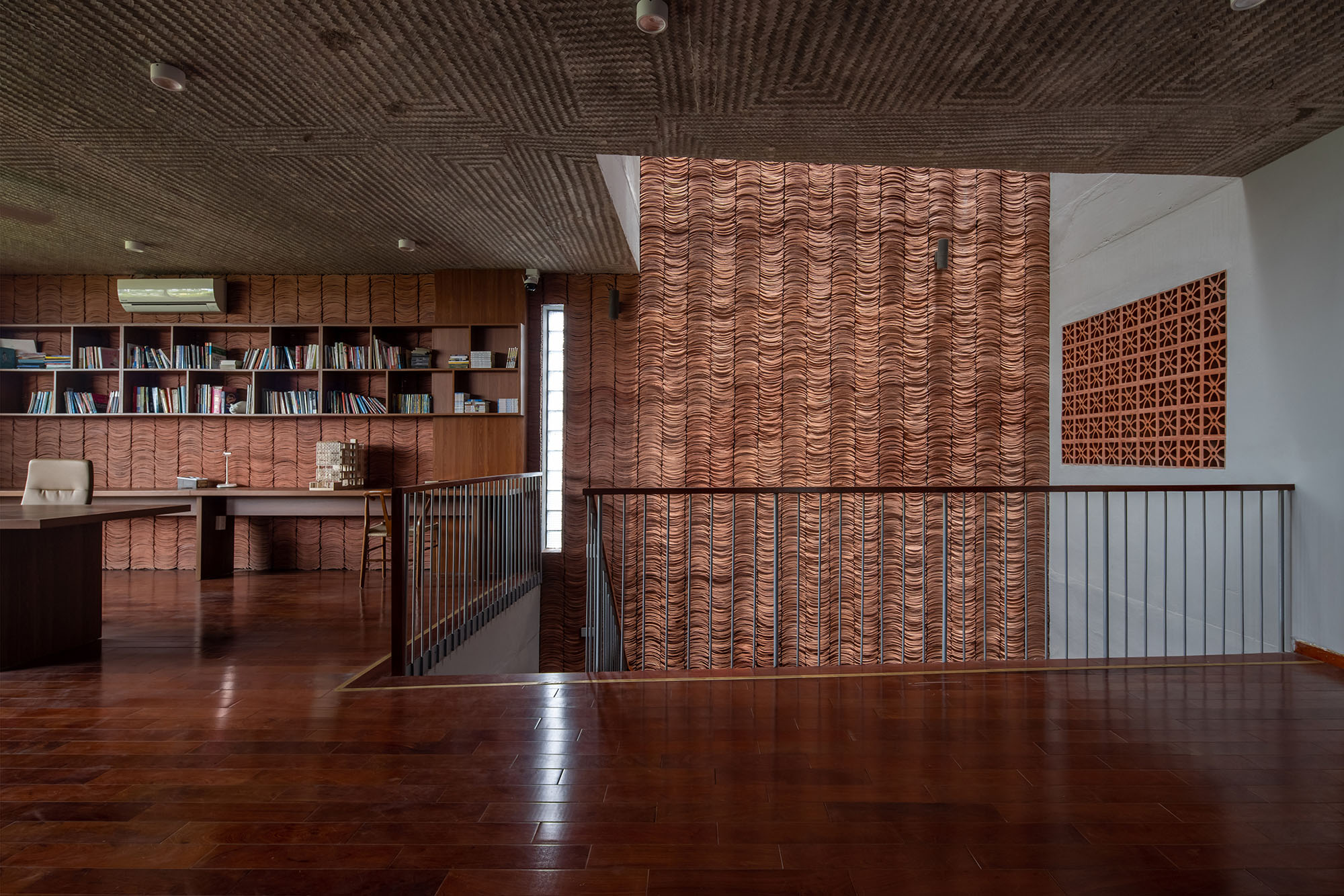
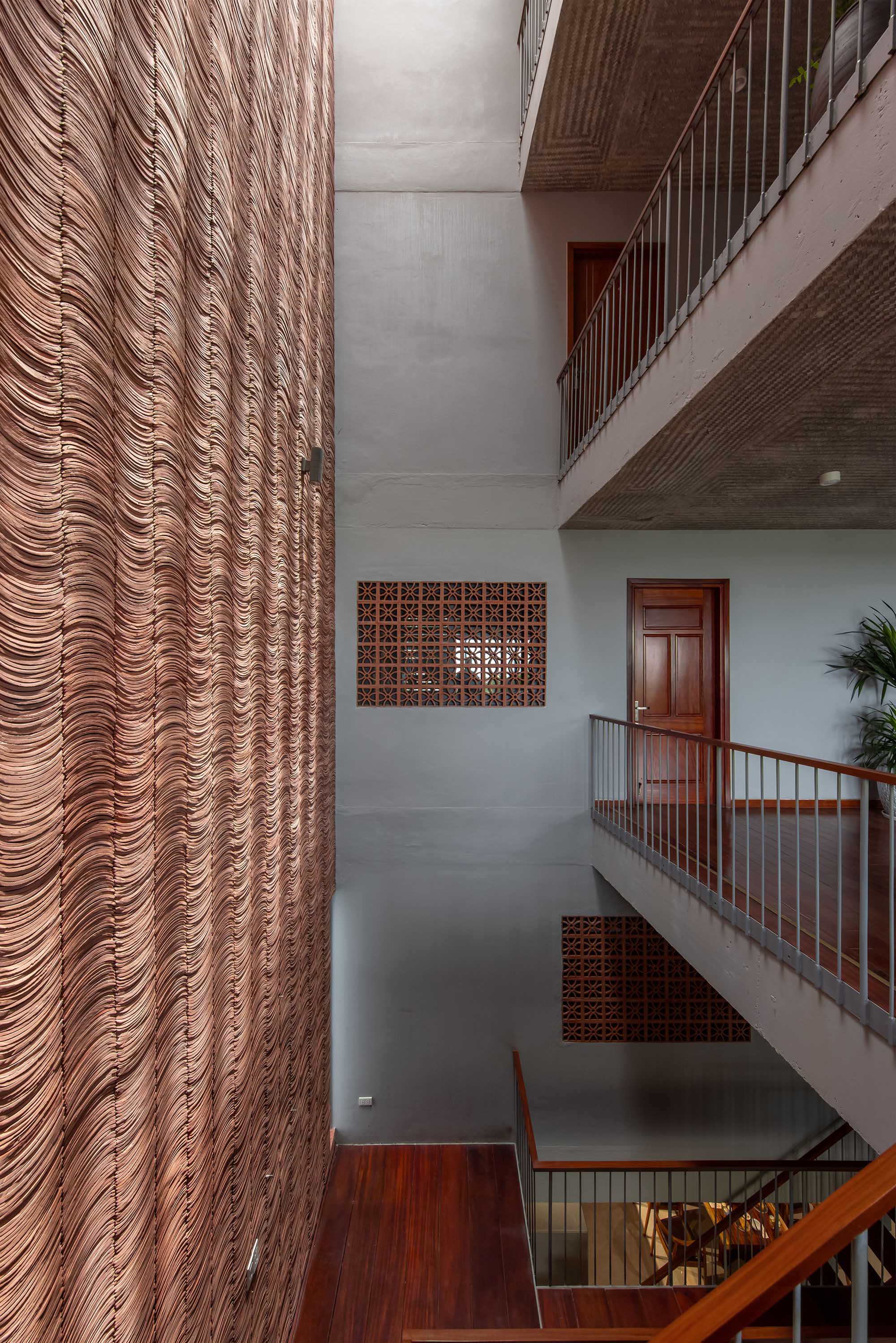
この住宅の所有者は植物に興味をもち、園芸の才があり、「木」だけでなく植樹やタイル・陶器を作るためにも使われる「土」が、あらゆる文化に馴染み深い2つの根源的な素材であることを理解している人々である。
木と土は、1つの家の中で、多くの大陸から集まった人々をつなぎ、集めているのである。
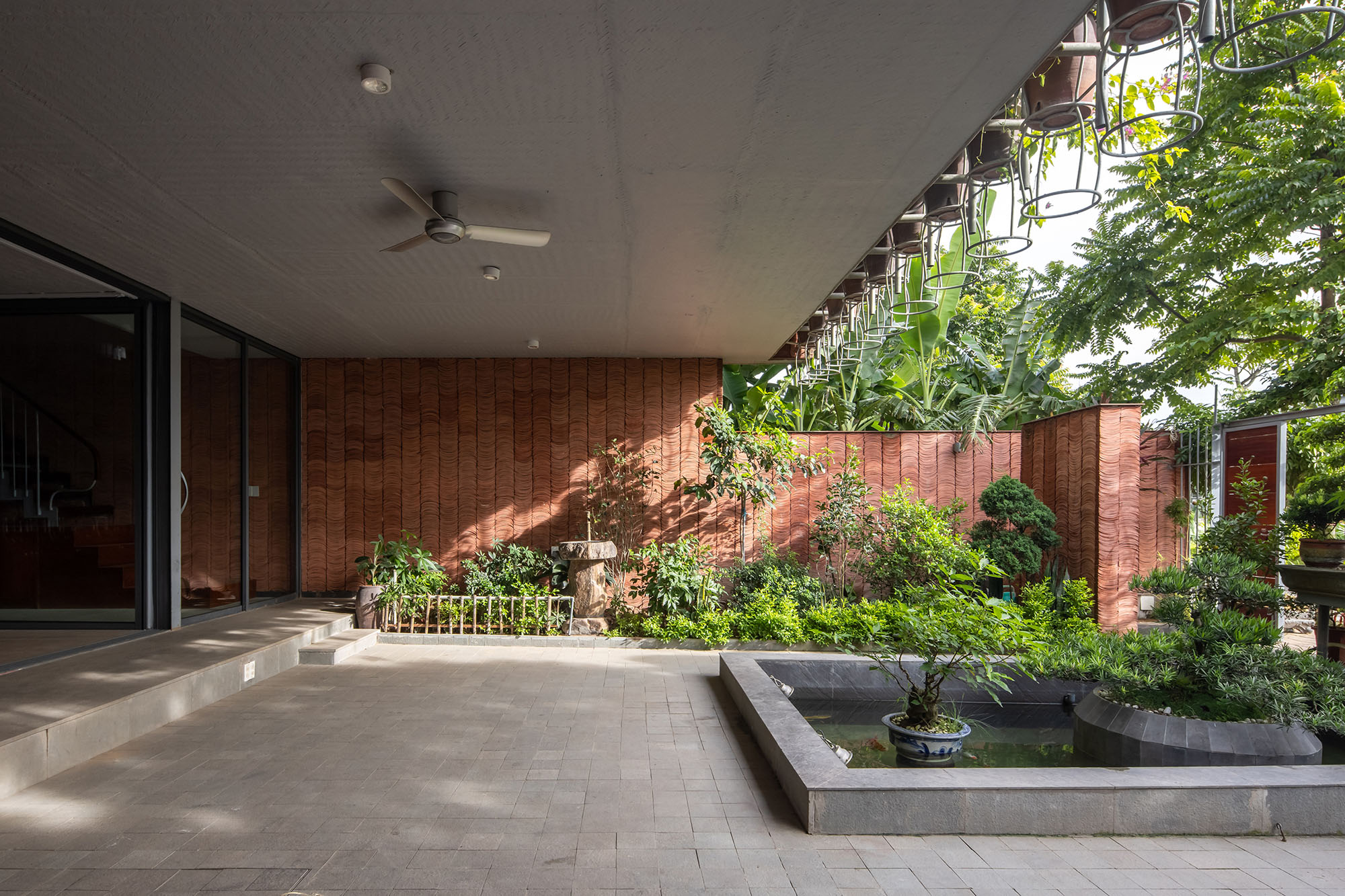
©︎ Le Minh Hoang
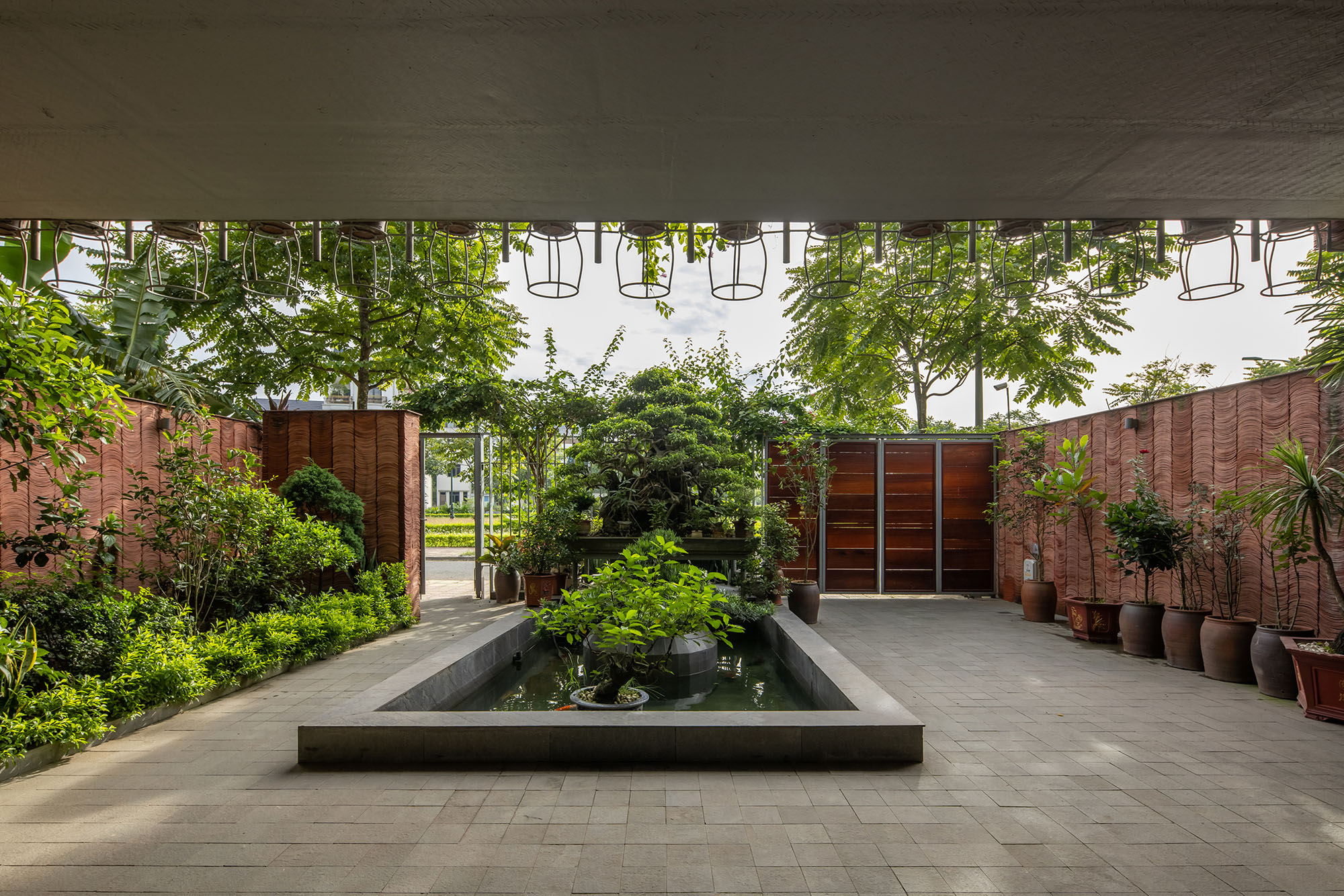
©︎ Le Minh Hoang
©︎ Le Minh Hoang
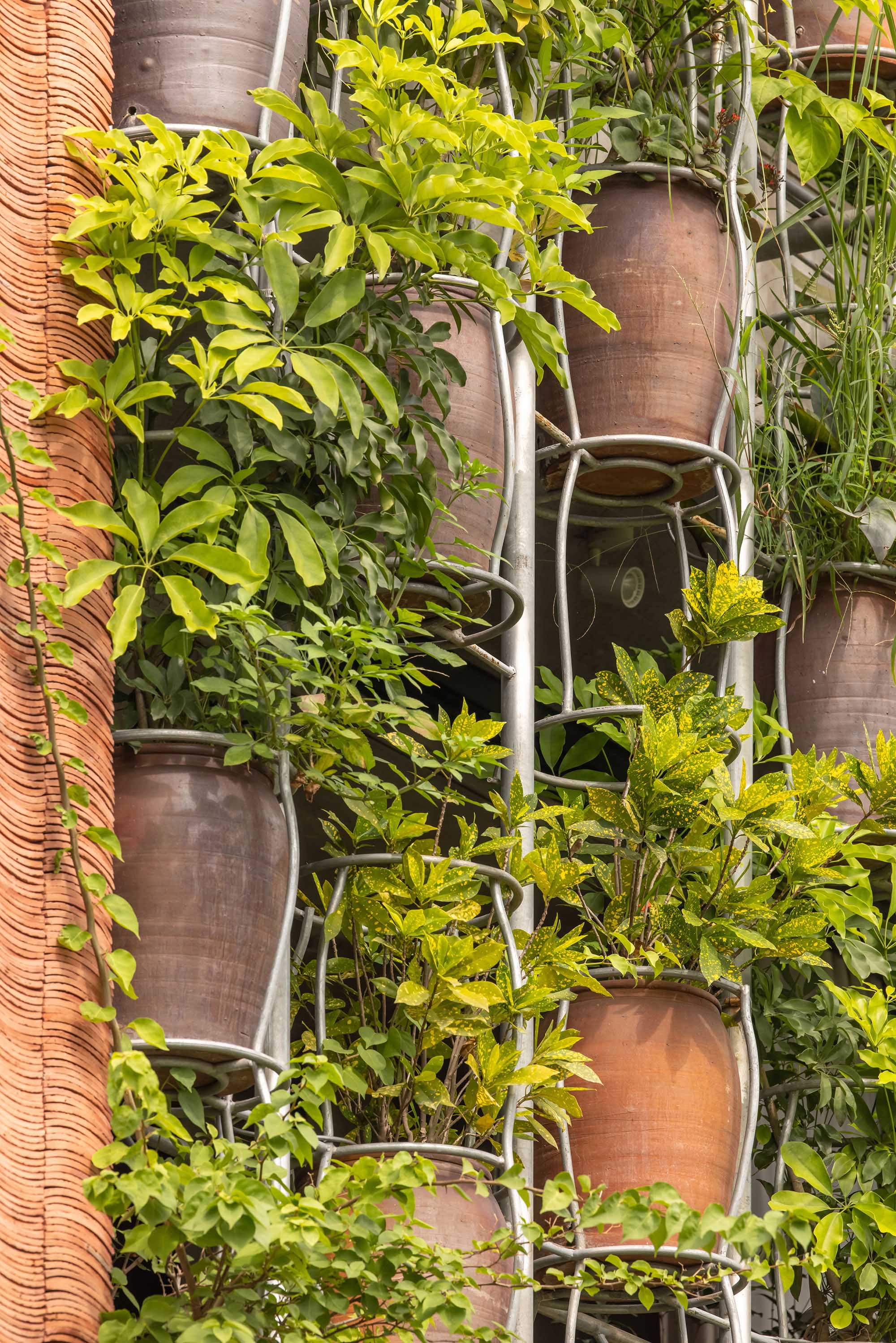
宙に浮かぶ吊り鉢のシステム
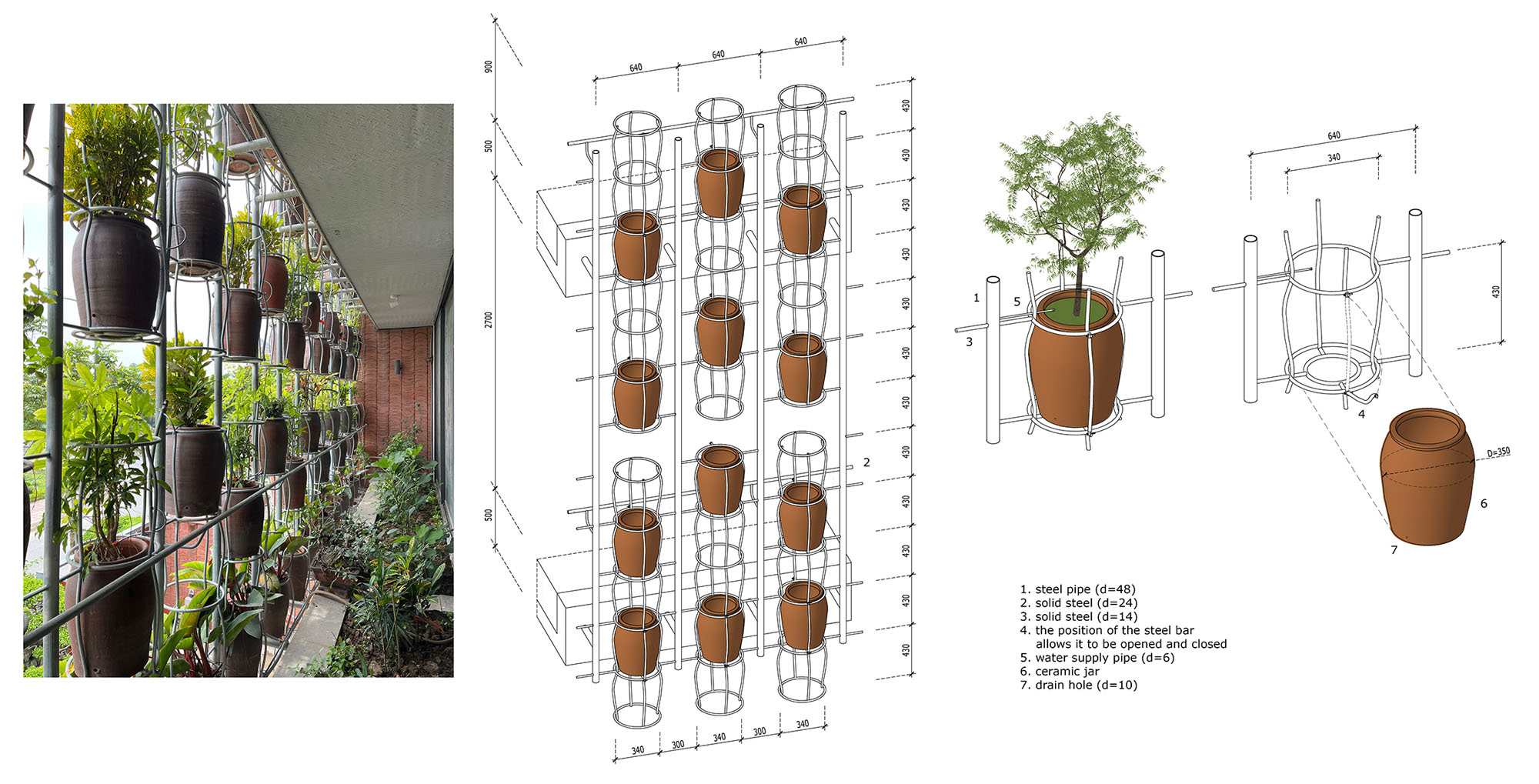
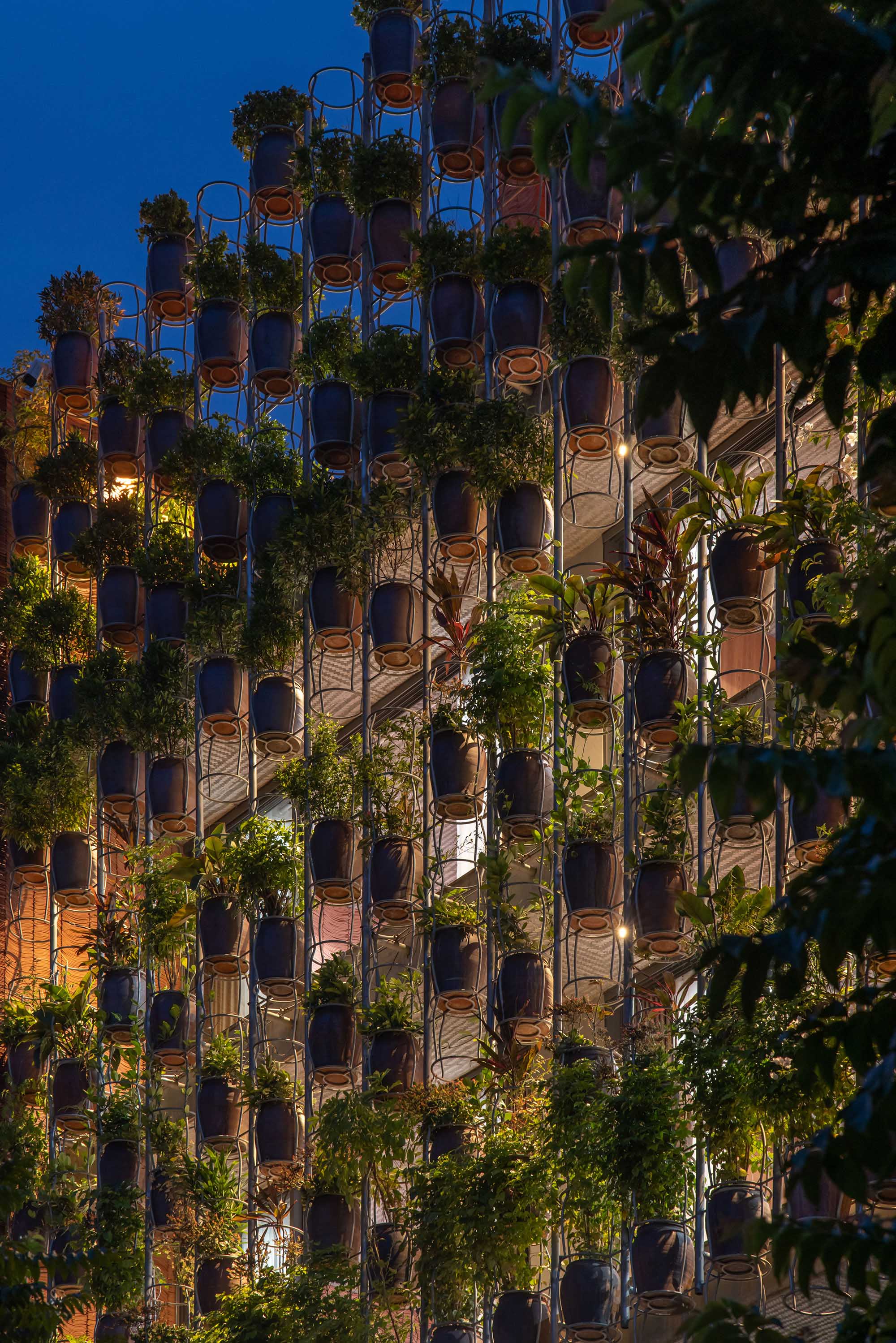
住居の正面と背面は、まるで空を飛んでいるかのように見える、果てしなく続く列の吊り鉢によって形づくられている。この列を形成するフレームシステムは、必要に応じて植物の鉢を配置した位置で開閉でき、メンテナンスや交換が可能である。これらの鉢は、植物が健やかに育つよう、交互に間隔を空けて配置されている。
Detail
©︎ Le Minh Hoang
©︎ Le Minh Hoang
日々の喜びに寄り添う「都市の中の畑」
この住宅は、住人が植物を育て、世話をし、植木鉢や菜園で採れた作物を近隣の人々と分かち合う機会を得られるため、日々の活動に喜びを見出す助けとなっている。
また、自宅での農業は、都市住民が自然や田園に親しむことを可能にし、故郷への愛着を呼び起こす。そのため、このモデルは普及し、「都市の中の畑」となり、人々の日々の生活に必要な緑の空間と野菜を提供していくであろう。
©︎ Le Minh Hoang
©︎ Le Minh Hoang
©︎ Le Minh Hoang
©︎ Le Minh Hoang
©︎ Le Minh Hoang
©︎ Le Minh Hoang
©︎ Le Minh Hoang
©︎ Le Minh Hoang
©︎ Le Minh Hoang
©︎ Le Minh Hoang
©︎ Le Minh Hoang
©︎ Le Minh Hoang
©︎ Le Minh Hoang
©︎ Le Minh Hoang
©︎ Le Minh Hoang
©︎ Le Minh Hoang
©︎ Le Minh Hoang
©︎ Le Minh Hoang
©︎ Le Minh Hoang
©︎ Le Minh Hoang
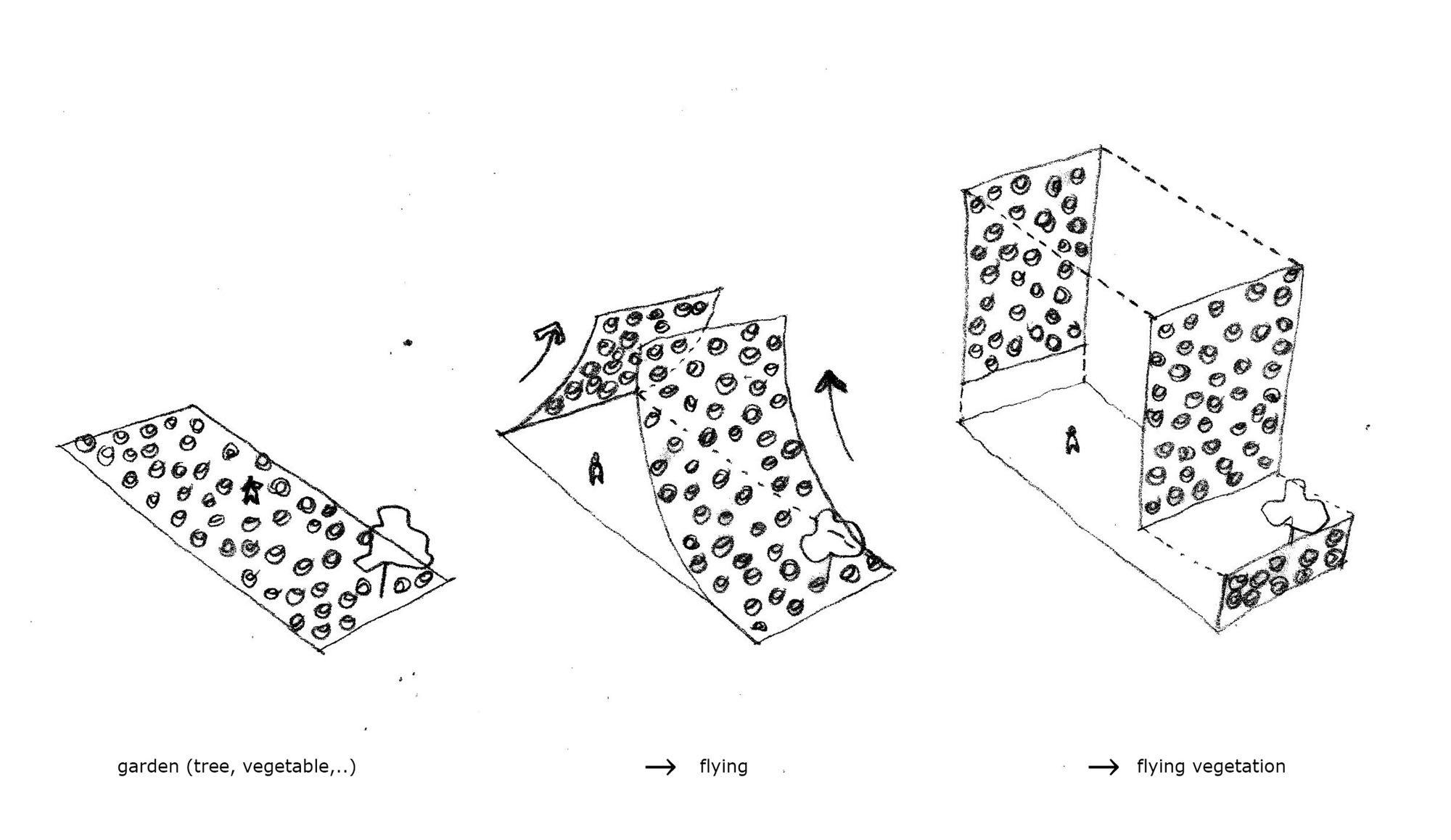
Sketch
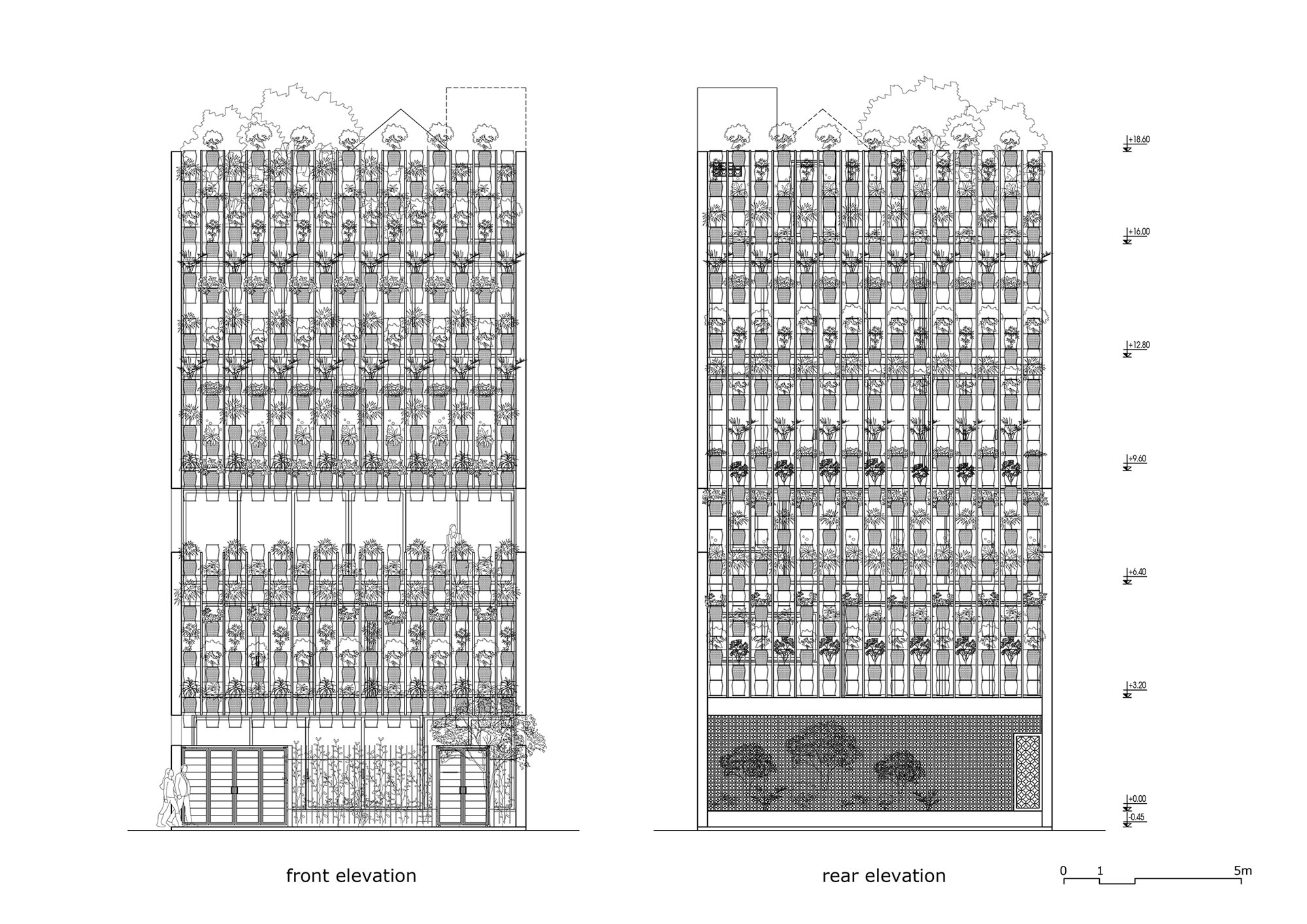
Elevations
以下、H&Pアーキテクツのリリース(英文)です。
Flying Vegetation
‘Flying vegetation’ is a works in a series of those toward the Agritecture perspective: combining Architecture with Agriculture in order to create a living space for the future in the context of global climate change. The prevalent urbanization process across Vietnam has been causing an imbalance in rural areas. The area of agricultural land is decreasing, seriously affecting the sedentary farming and resettlement of the community.
Flying vegetation is a house located in a new urban area in Thai Binh city. In front of the construction site is a common garden of the neighbourhood, which generates the idea of creating a vegetation screen – a private buffer for the living space, thus reducing noise and dust while still open enough for the house owners to enjoy the green space. The screen seems to fly in the air, blurring the boundary between architecture and landscape, creating the feeling of living in the forest or next to the rice fields.
The house is for residential purpose (1st-2nd-3rd floors) and for rent (4th-5th floors), which is operated in a spirit of sharing (non-profit) the living space between its owners and tenants. The 3rd floor and the roof are multifunction meeting spaces for members living on each floor.
House owners are people interested in plants, have green fingers and understanding that Trees and Soil (for planting trees and making tiles and ceramic jars out of raw materials) are two primitive materials familiar to all cultures. Trees and Soil connect and gather people from many continents in a common house.
The front and back of the house are shaped by a system of hanging pots of plant in endless columns that seem to be flying. The frame system that creates the columns can be opened and closed at the positions where pots of plants are placed for maintenance and replacement when needed. These pots are arranged in an alternate and spaced manner so that the plants can grow healthily.
The house has helped its owners find joy in their daily activities because they have a chance to grow plants, take care of them and share products from their vegetable pots and gardens with their neighbours. Home-based farming also allows city residents to live closer to nature and to the countryside, thereby evoking a feeling of attachment to their homeland. For this reason, this model is likely to be multiplied and become “Fields inside the city”, providing green living spaces and vegetables for people’s daily needs.
…………………………………………………………………..
Architects: H&P Architects
Website: www.hpa.vn
Location: Phu Xuan commune, Thai Binh city, Viet Nam
Designers: Doan Thanh Ha, Nguyen Hai Hue, Tran Van Duong, Luong Thi Ngoc Lan, Vu Minh Dien, Nguyen Van Thanh, Nguyen Van Thinh
Construction area: 245 m2
Total floor area: 1.200 m2
Completed: December, 2022
Main materials: Yin yang tiles, ceramic jars, steel, concrete
Photographer: Le Minh Hoang
H&Pアーキテクツ 公式サイト
https://hpa.vn