森に宿る多面体の「ステルス」キャビン - 中国の原生林に散らばり溶け込むリトリート空間〈Houses of Stealth(Tonglu Senbo Resort)〉
© Su Shengliang
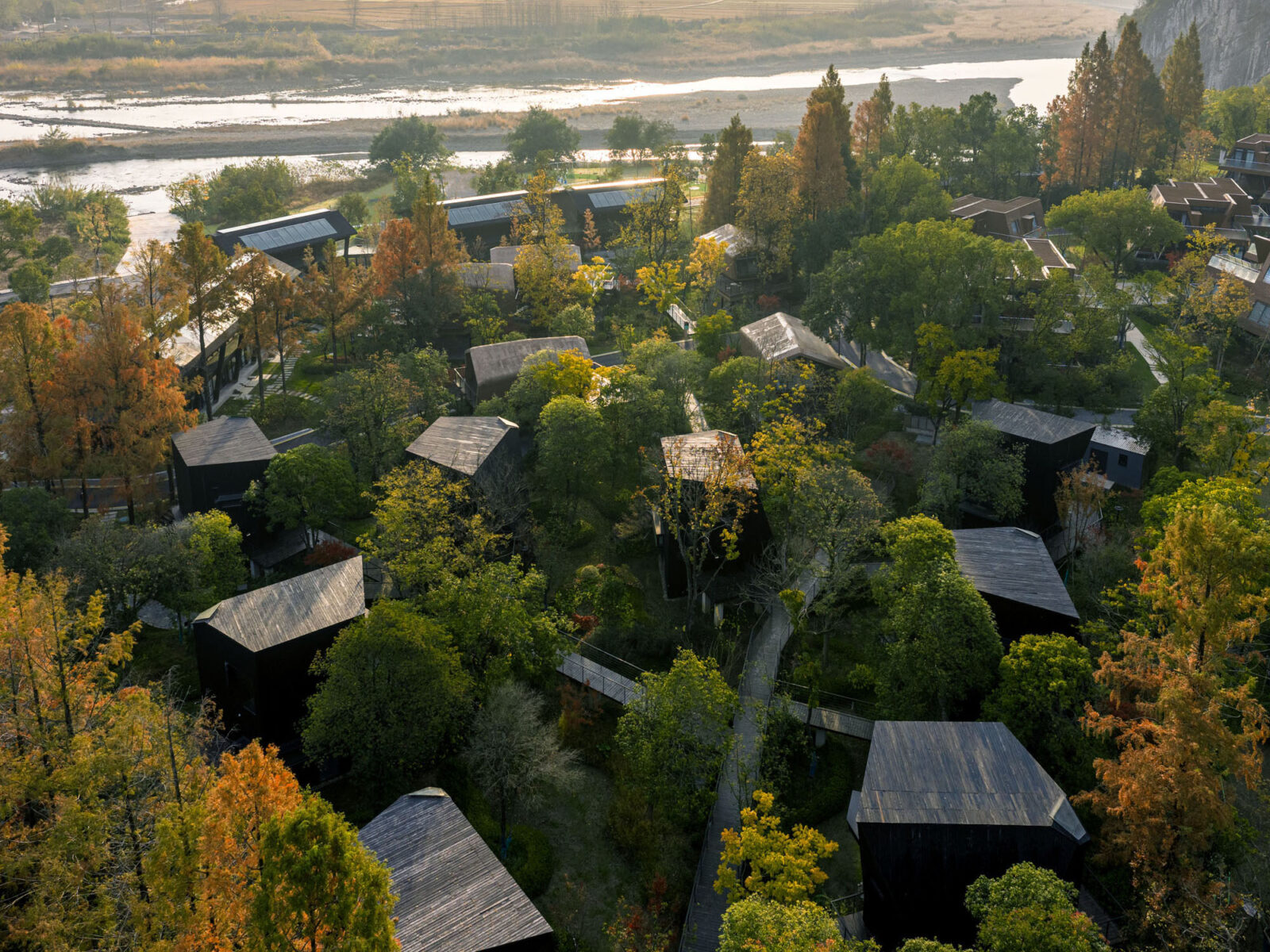
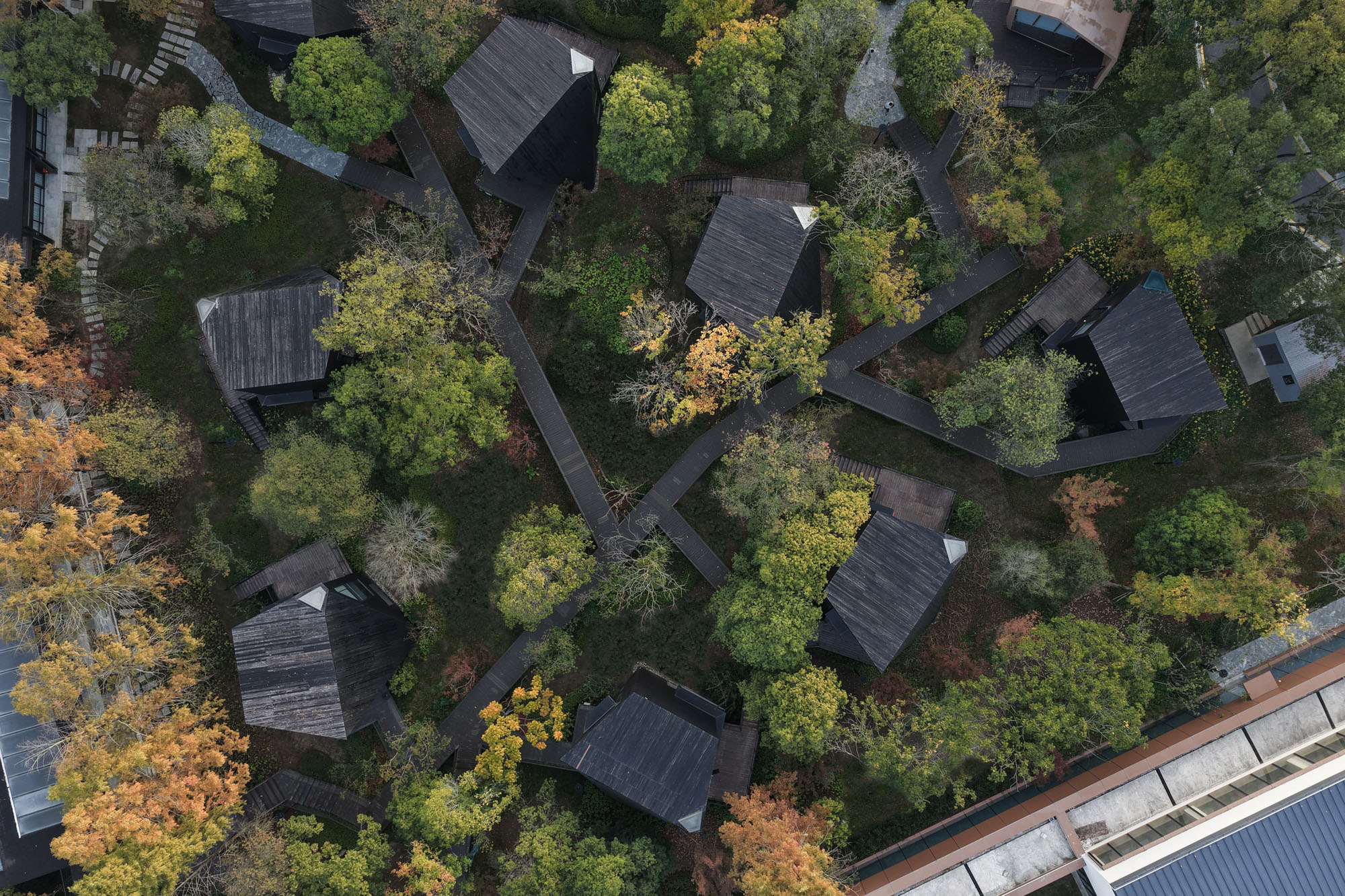
〈Houses of Stealth(Tonglu Senbo Resort)〉は、中国・杭州市の桐廬(とうろ)に位置するリゾート施設内に誕生した宿泊キャビンです。
上海、北京、ロンドンを拠点とする建築デザイン事務所 SpActrumが設計を手掛けた、豊かな原生林の中にひっそりと佇む、「ステルス」をコンセプトとしたリトリート空間となっています。
注目ポイント
- 五角柱を切り取ったような多面的な幾何学フォルム「形態的ステルス」
- 地面の生態系をそのまま保全する高架歩道システム「生態学的ステルス」
- 既存の生態系を維持する「非介入的」な配置計画
- 黒いキャビンが森の中にさまざまな表情で現れる視覚体験
(以下、SpActrumから提供されたプレスキットのテキストの抄訳)
© Su Shengliang
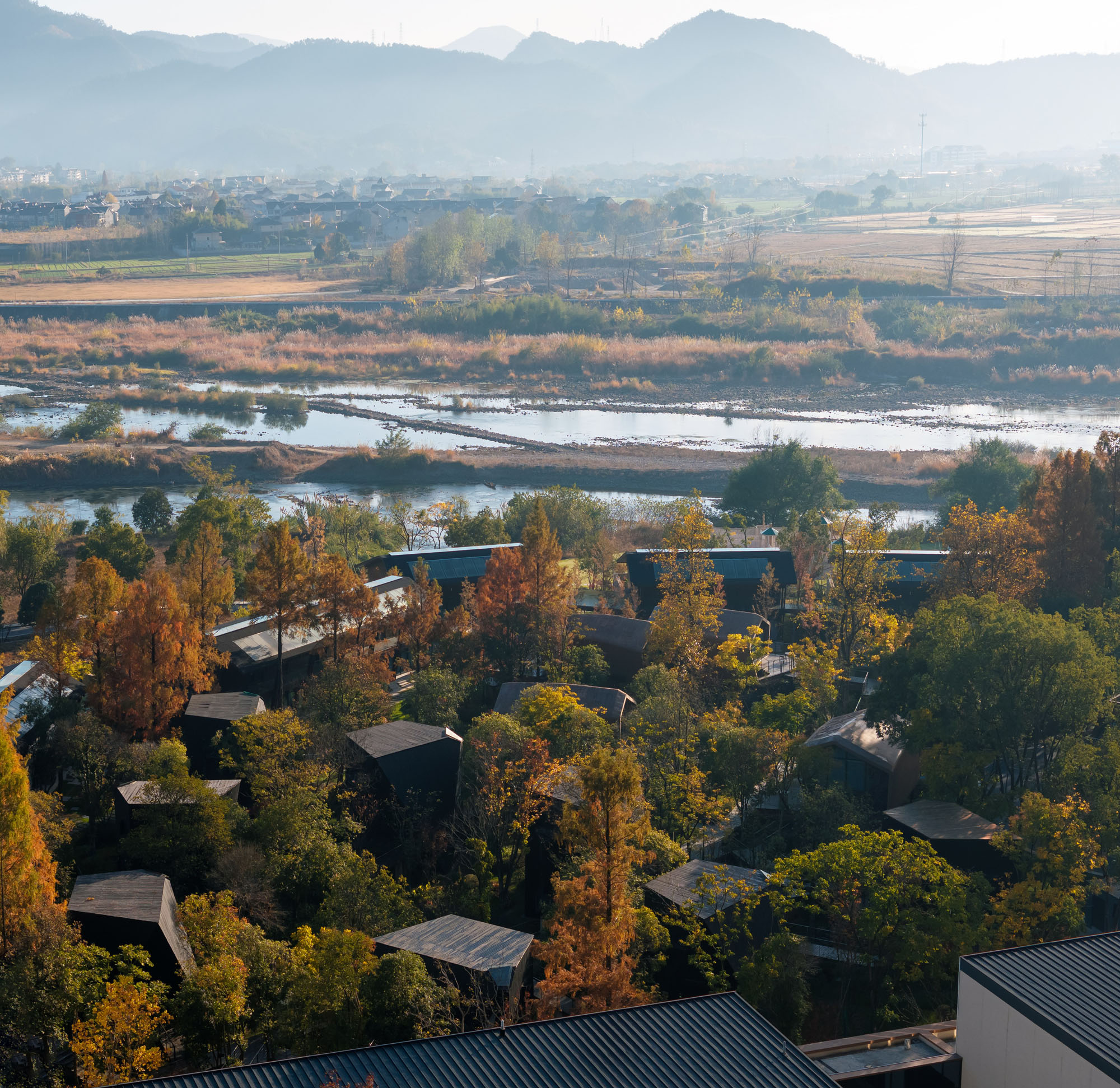
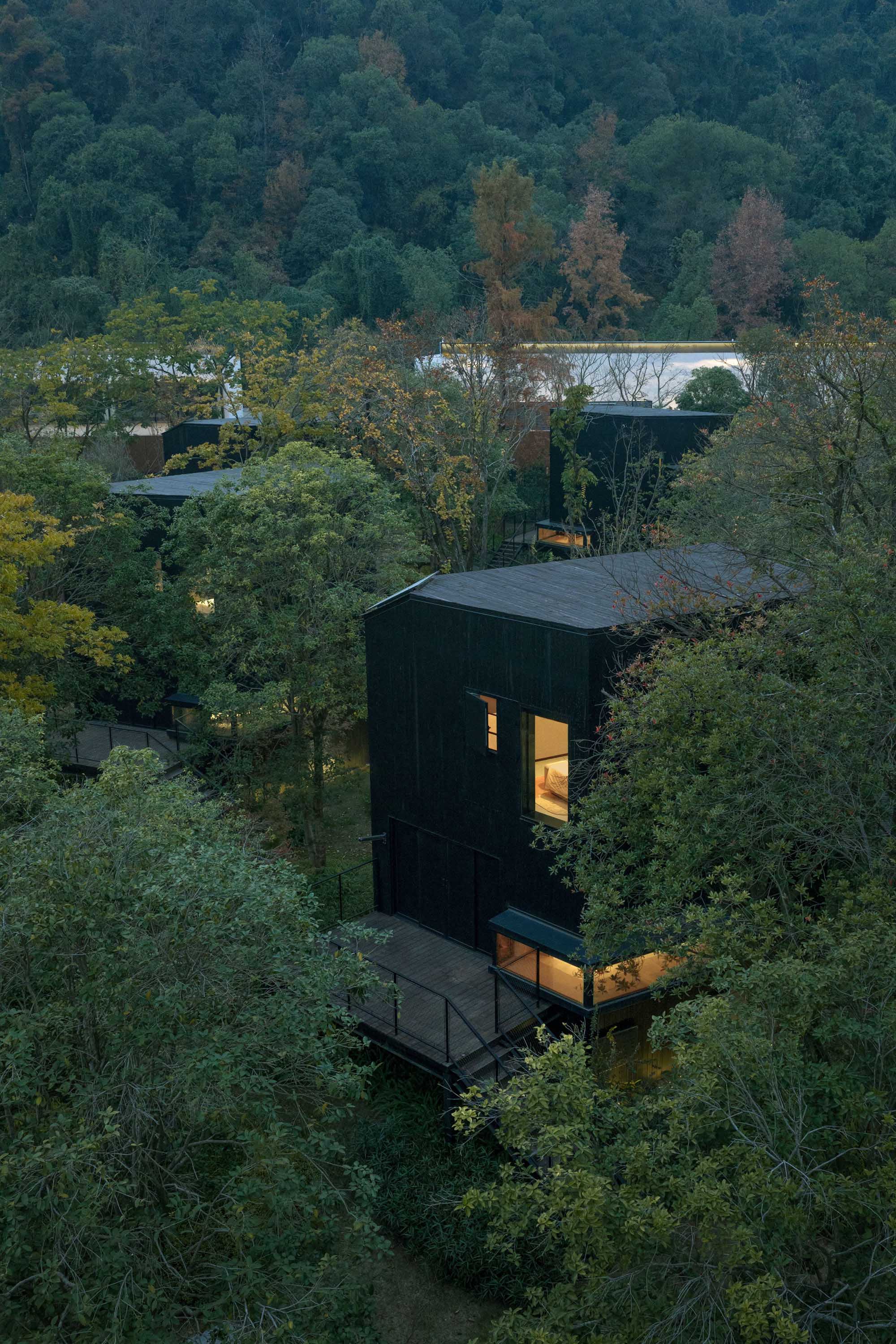
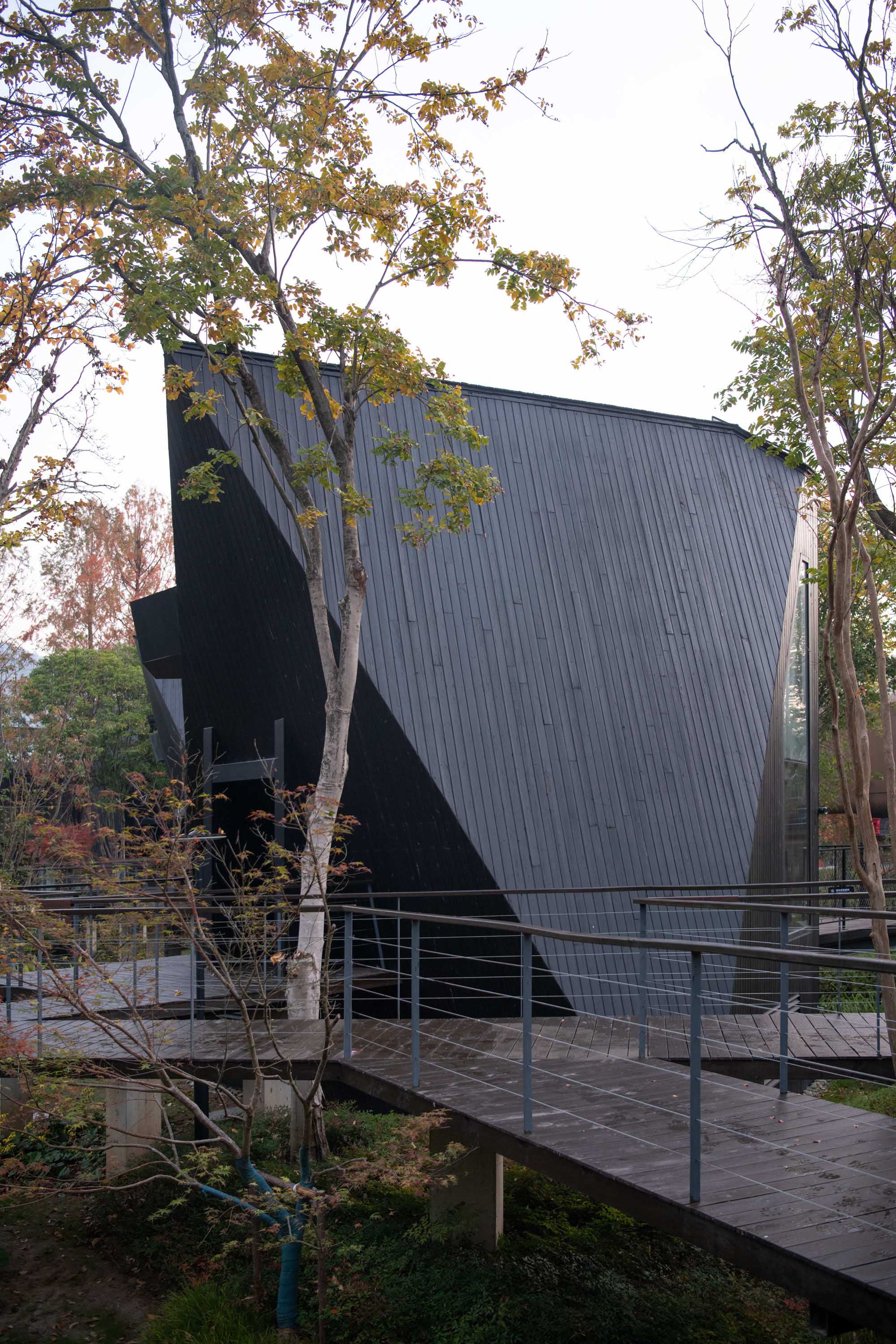
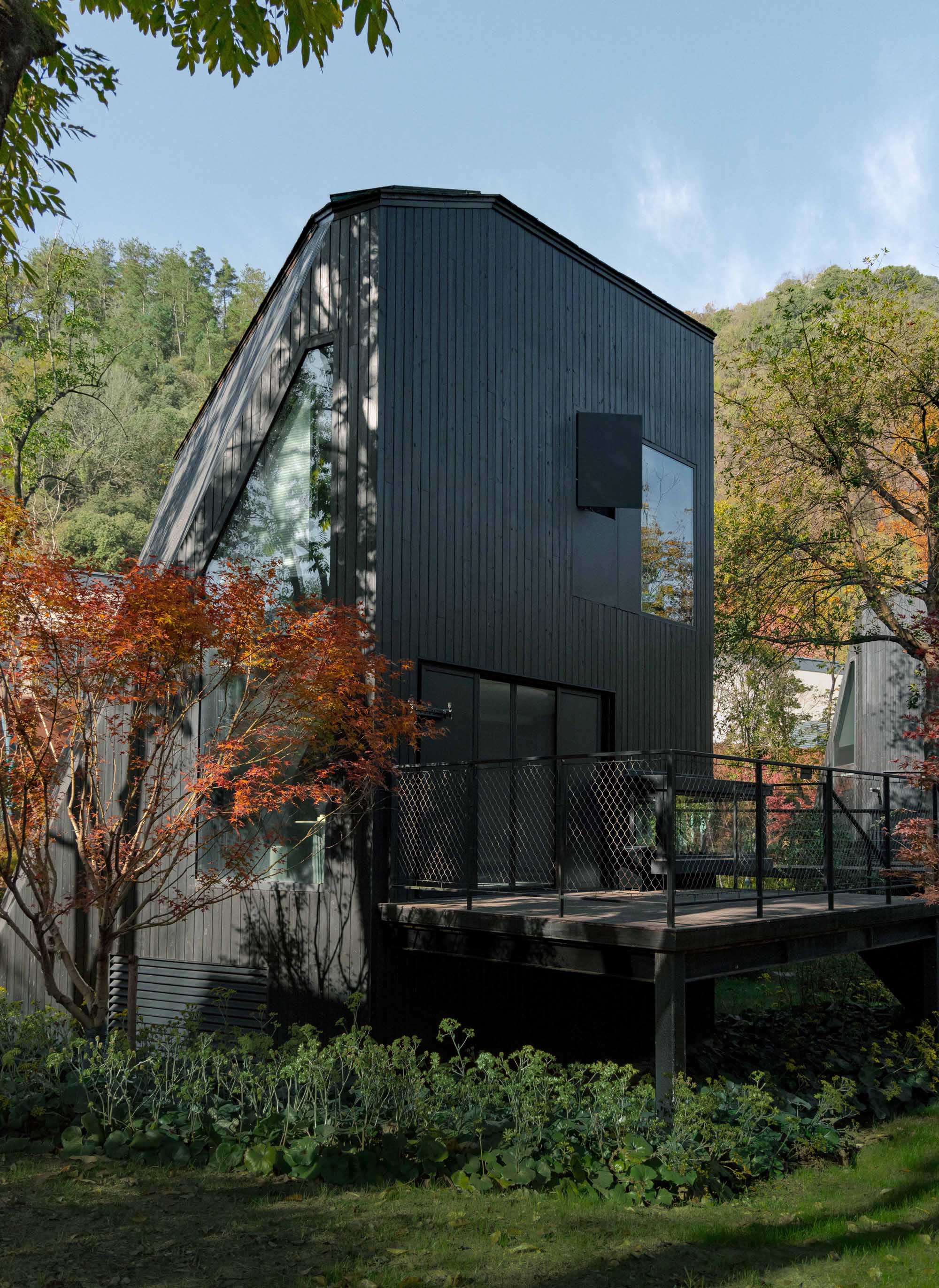
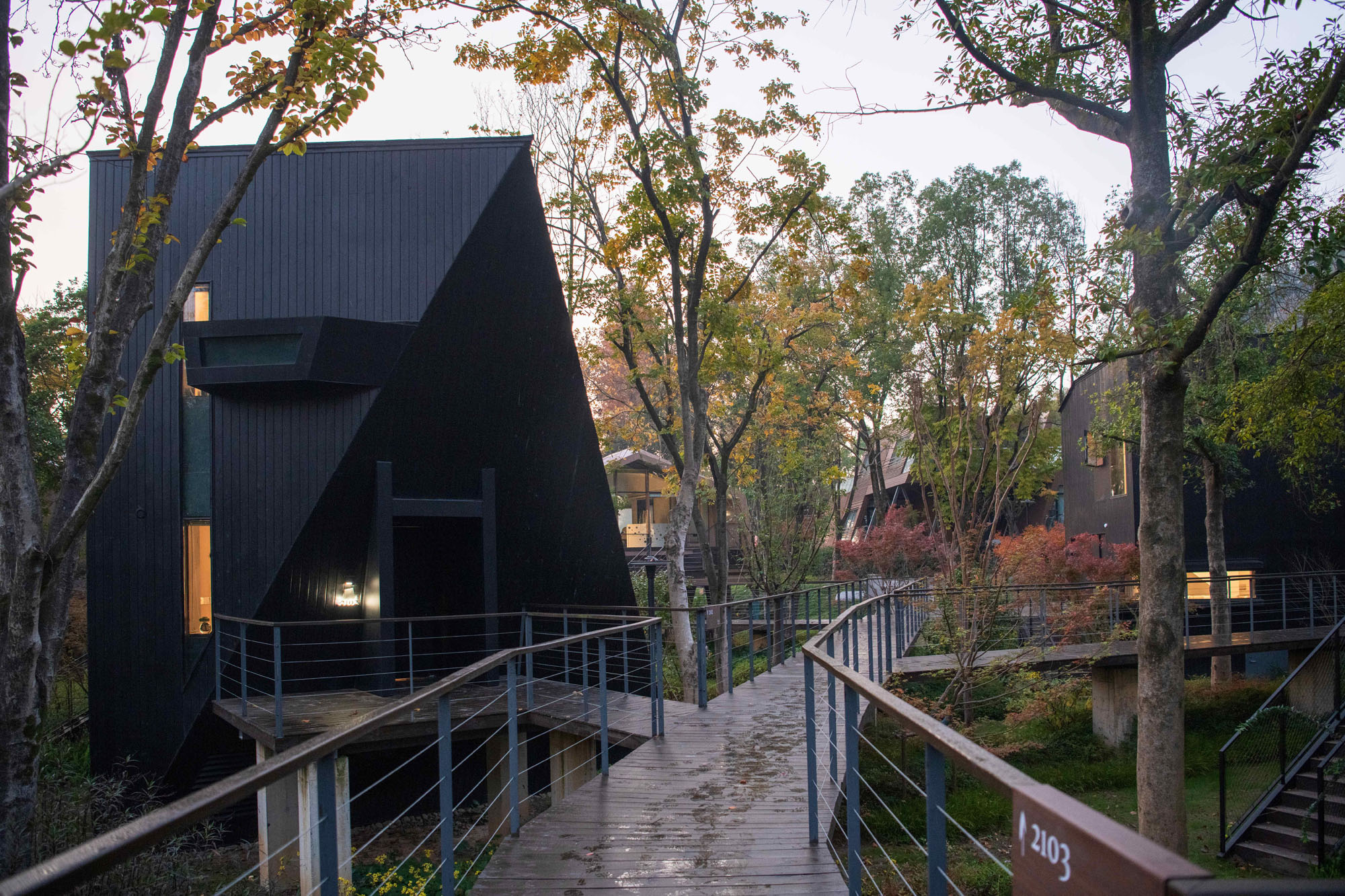
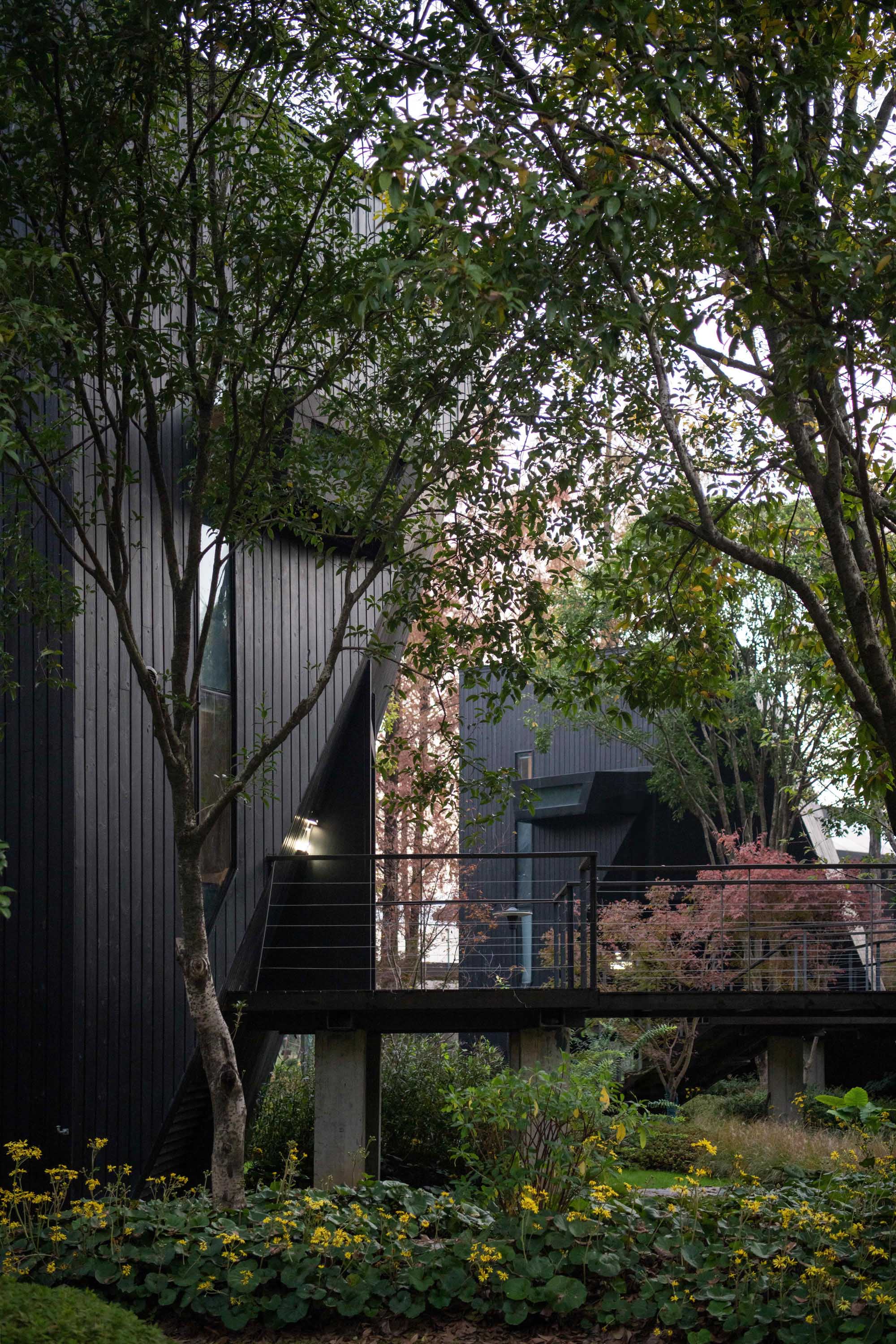
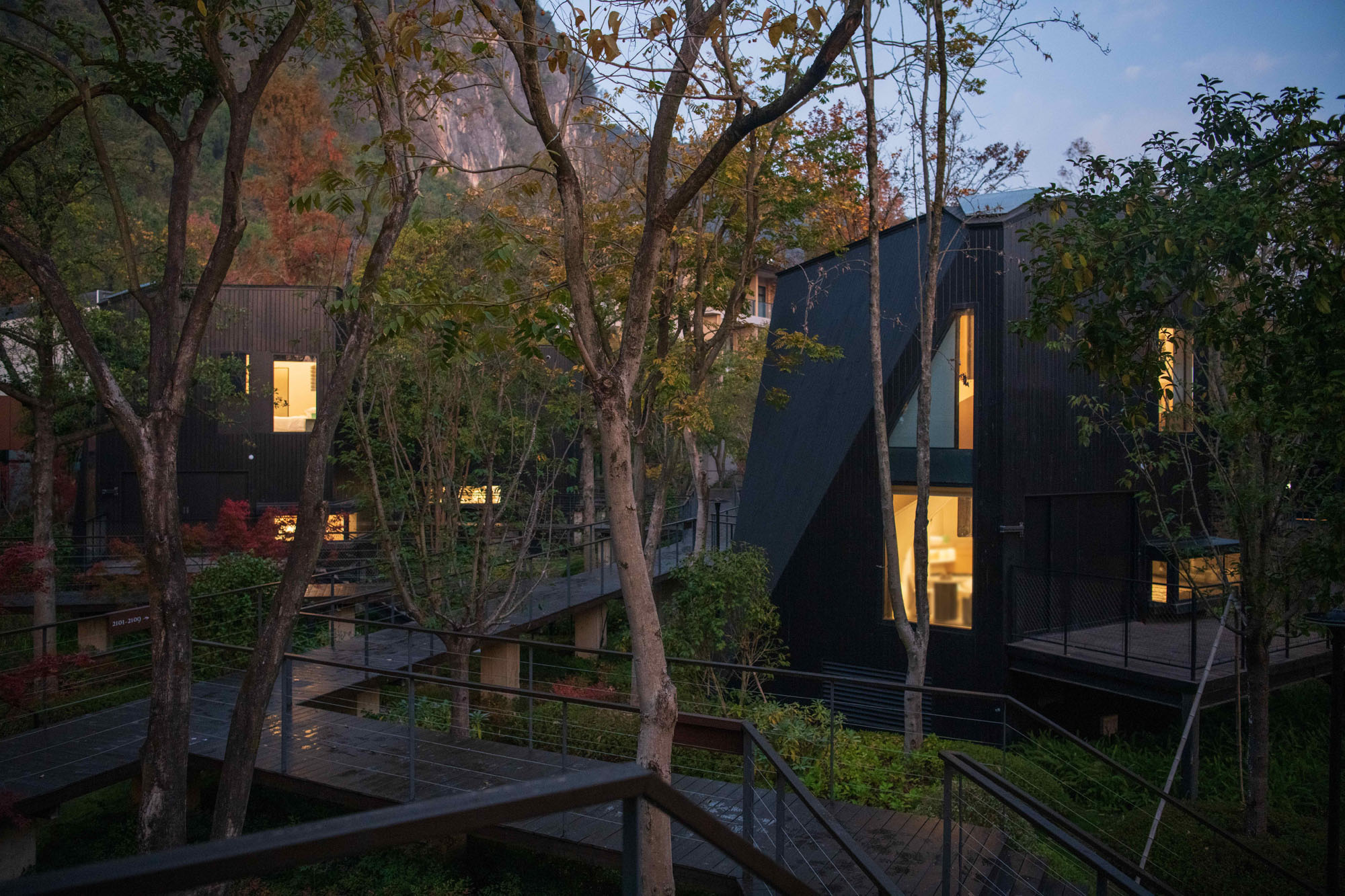
黒、それはステルスの色。黒いキャビンは五角柱を基にしており、2つの面を切り取ることで、見る角度ごと1つの存在に対する断片的な知覚の間に緊張感を生み出している。これが「形態的なステルス」である。
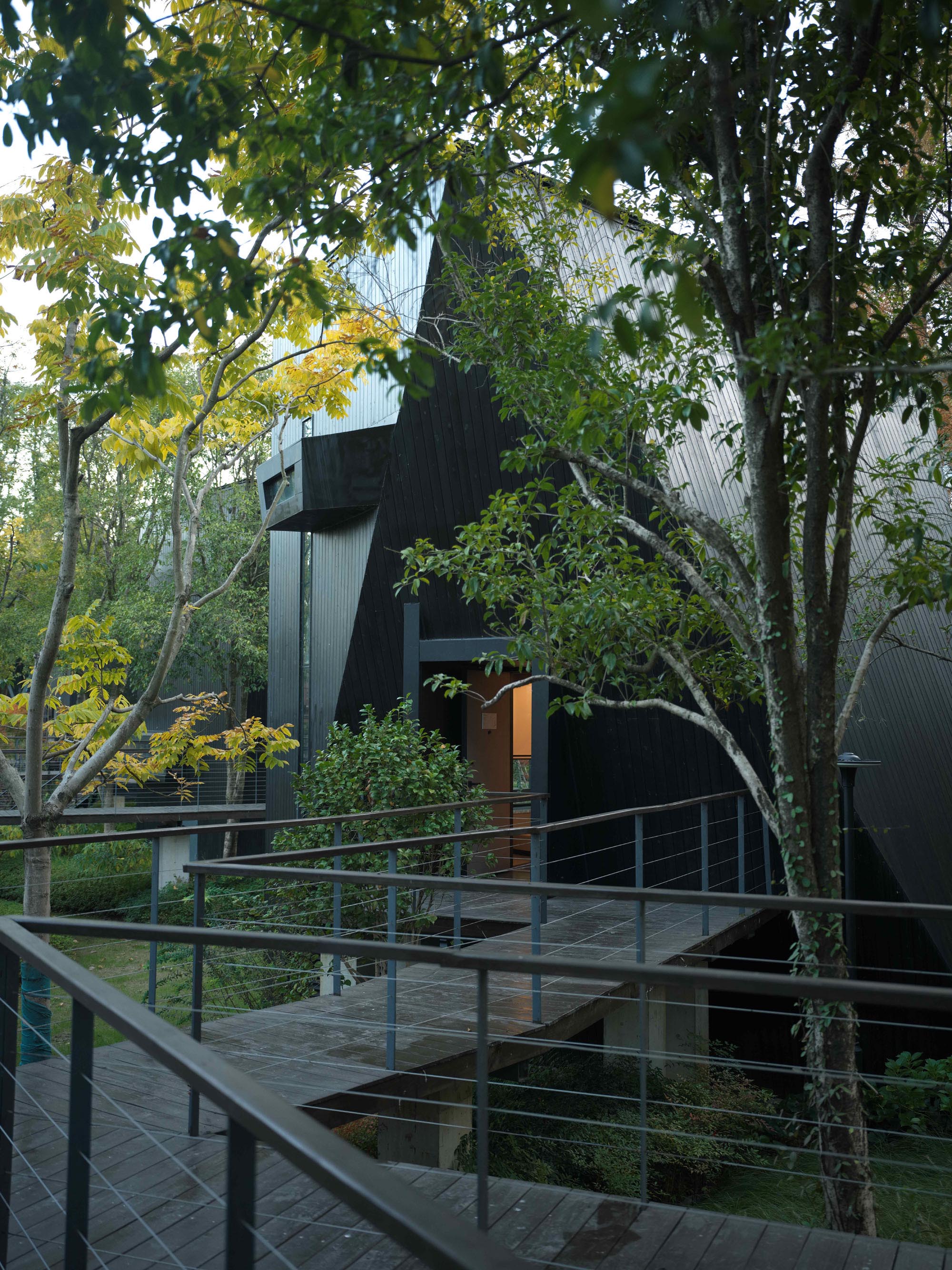
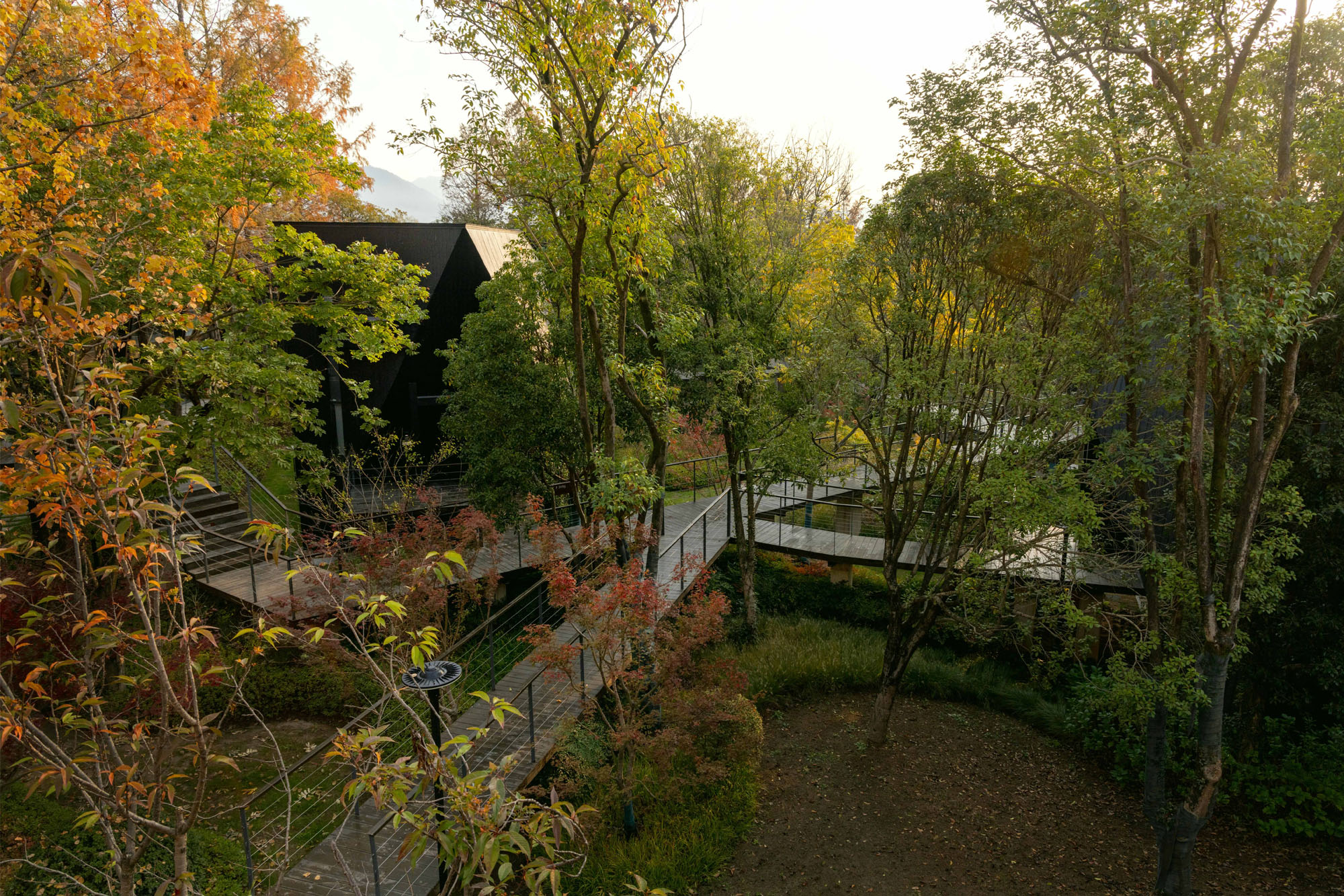
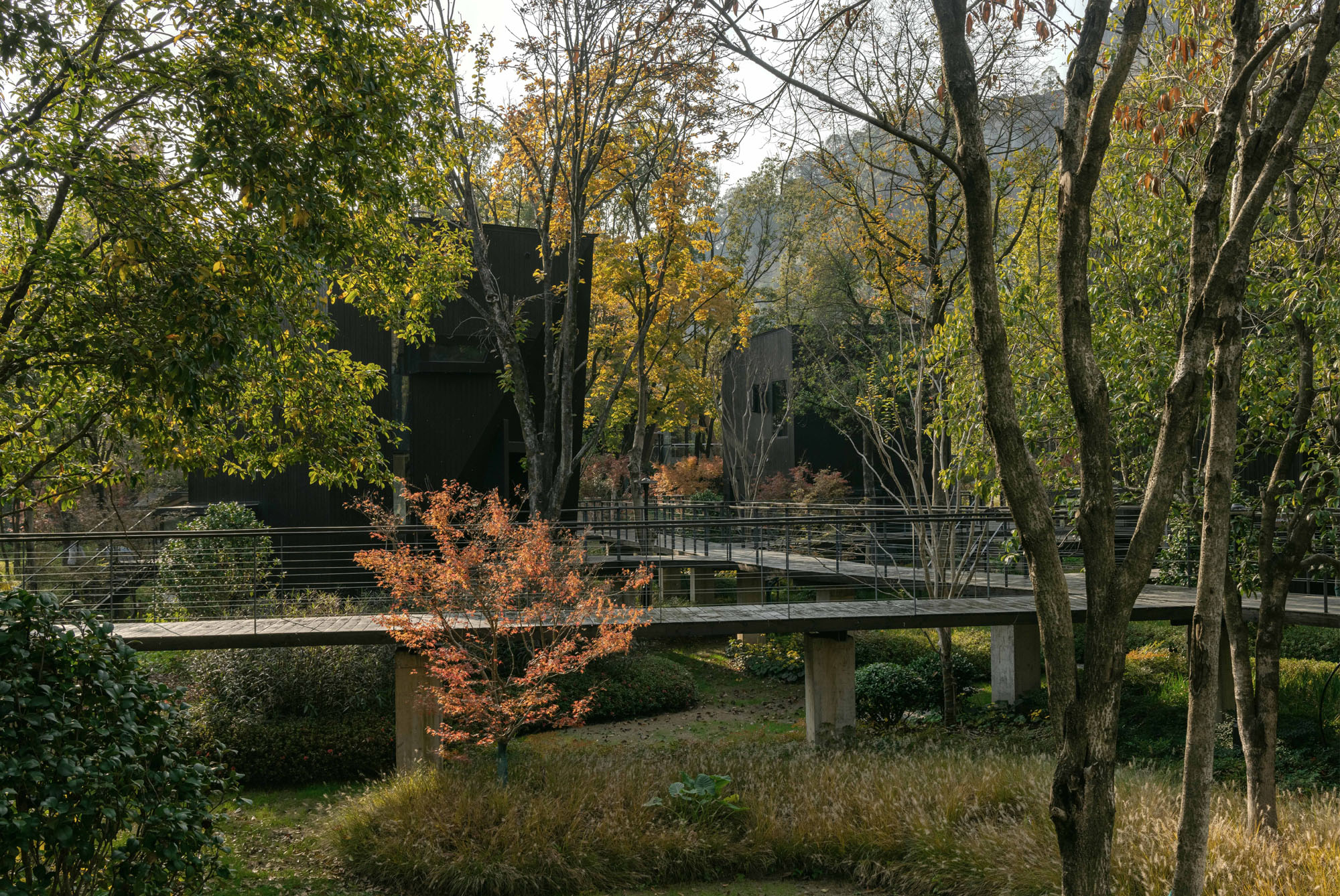
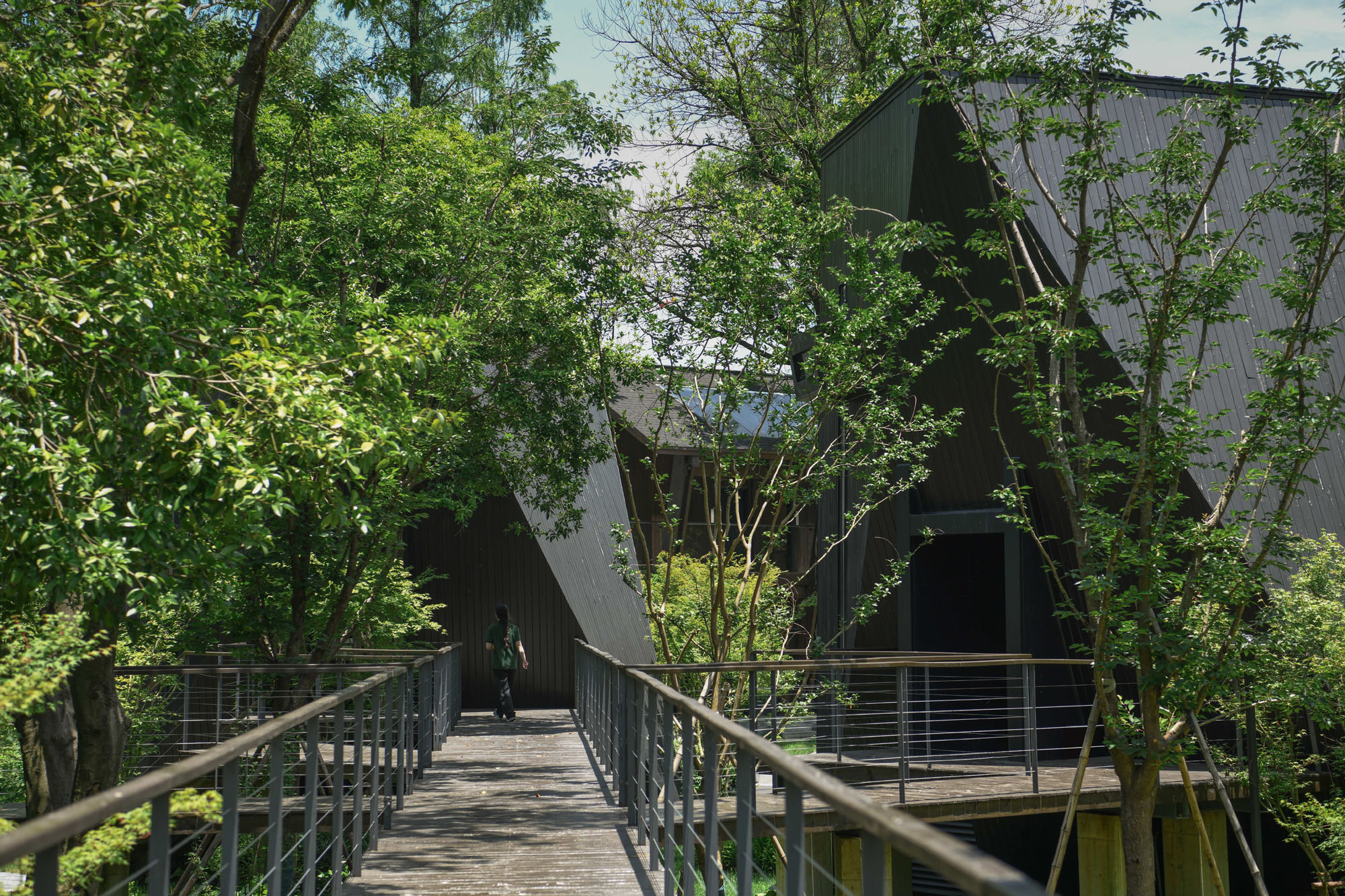
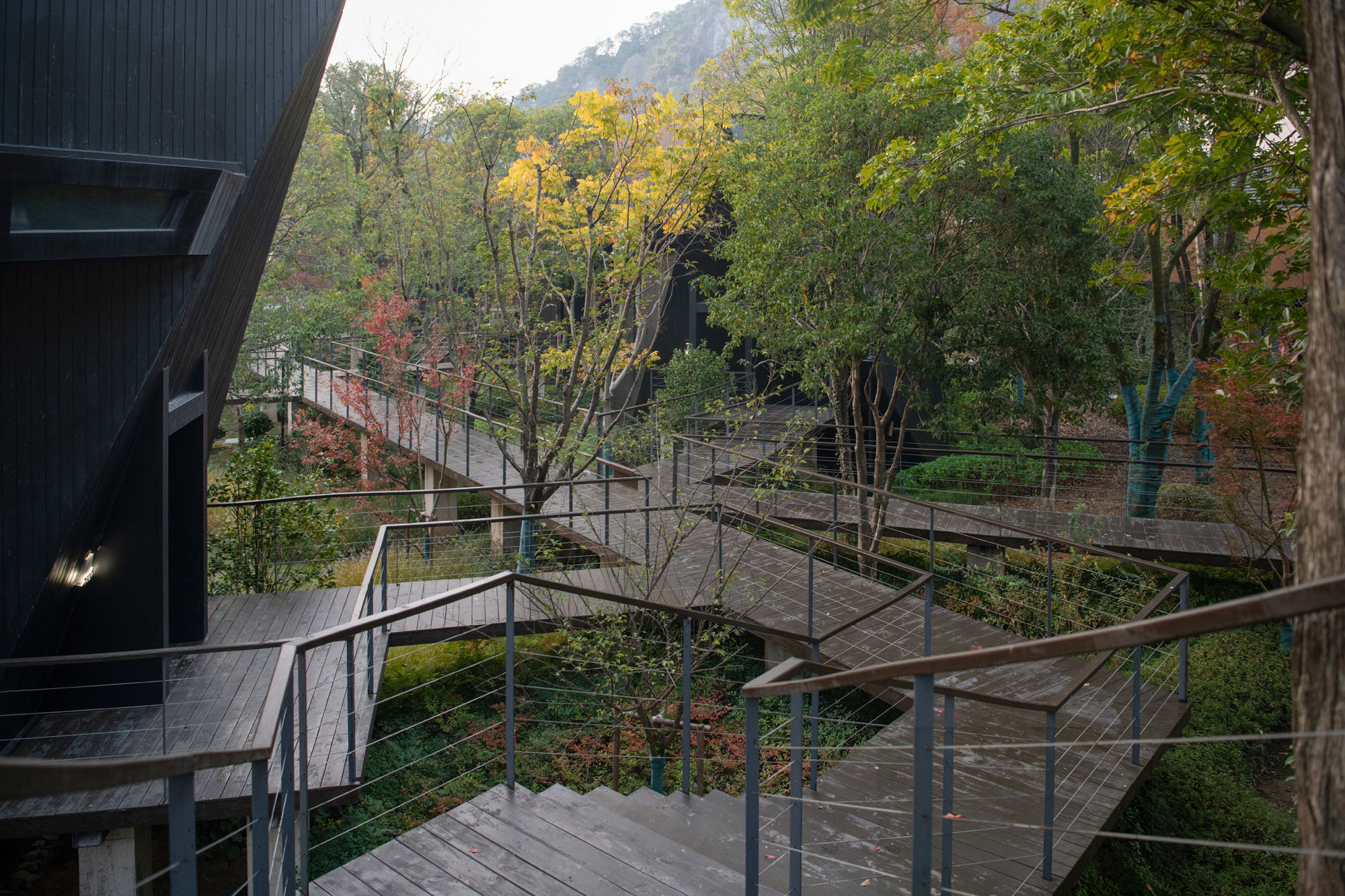
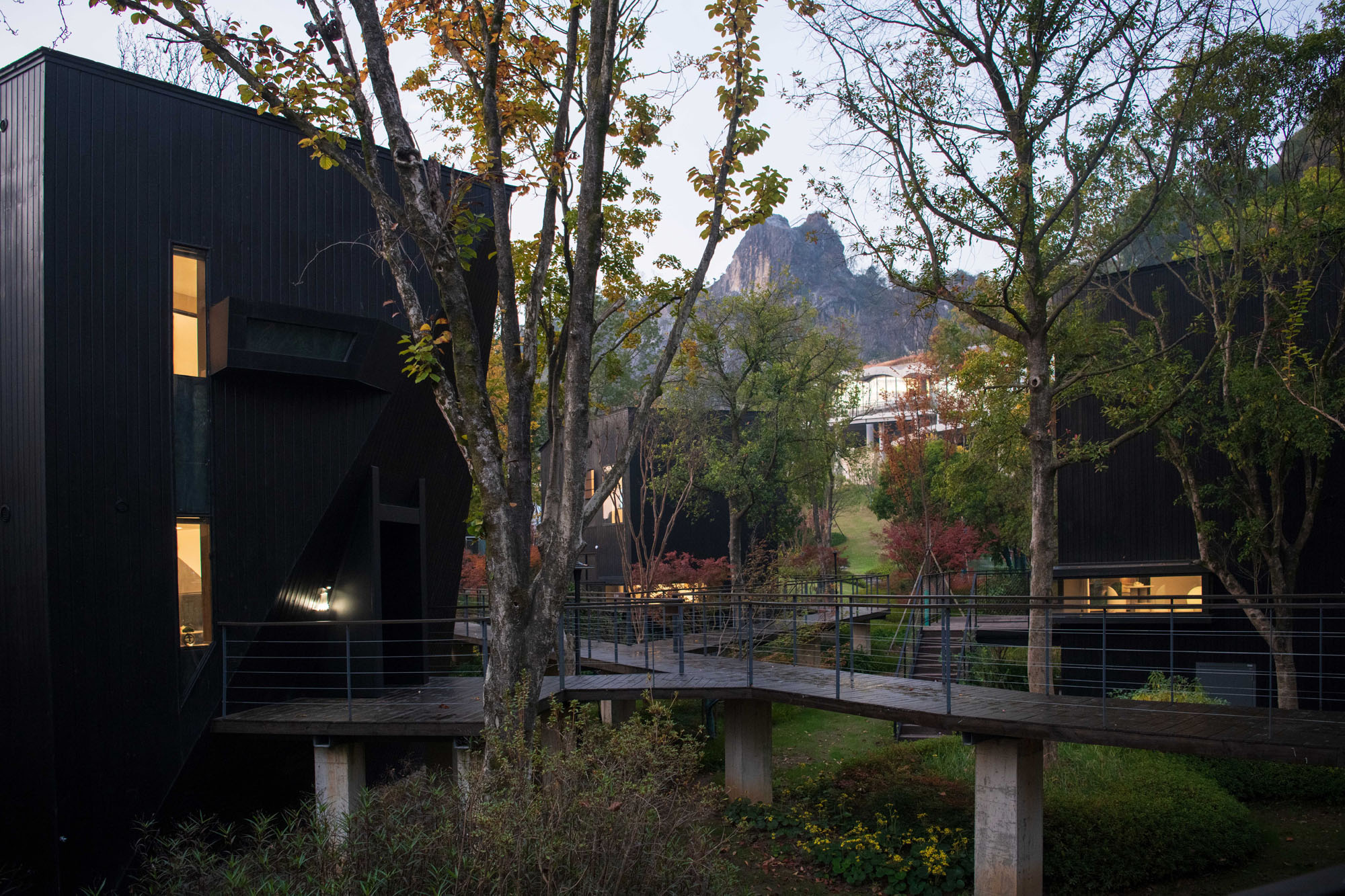
元の建物の位置を保ち、原生林をほぼそのまま残すことで、高架歩道は自然システムの連続性を乱すことなく維持している。これが「生態学的なステルス」である。
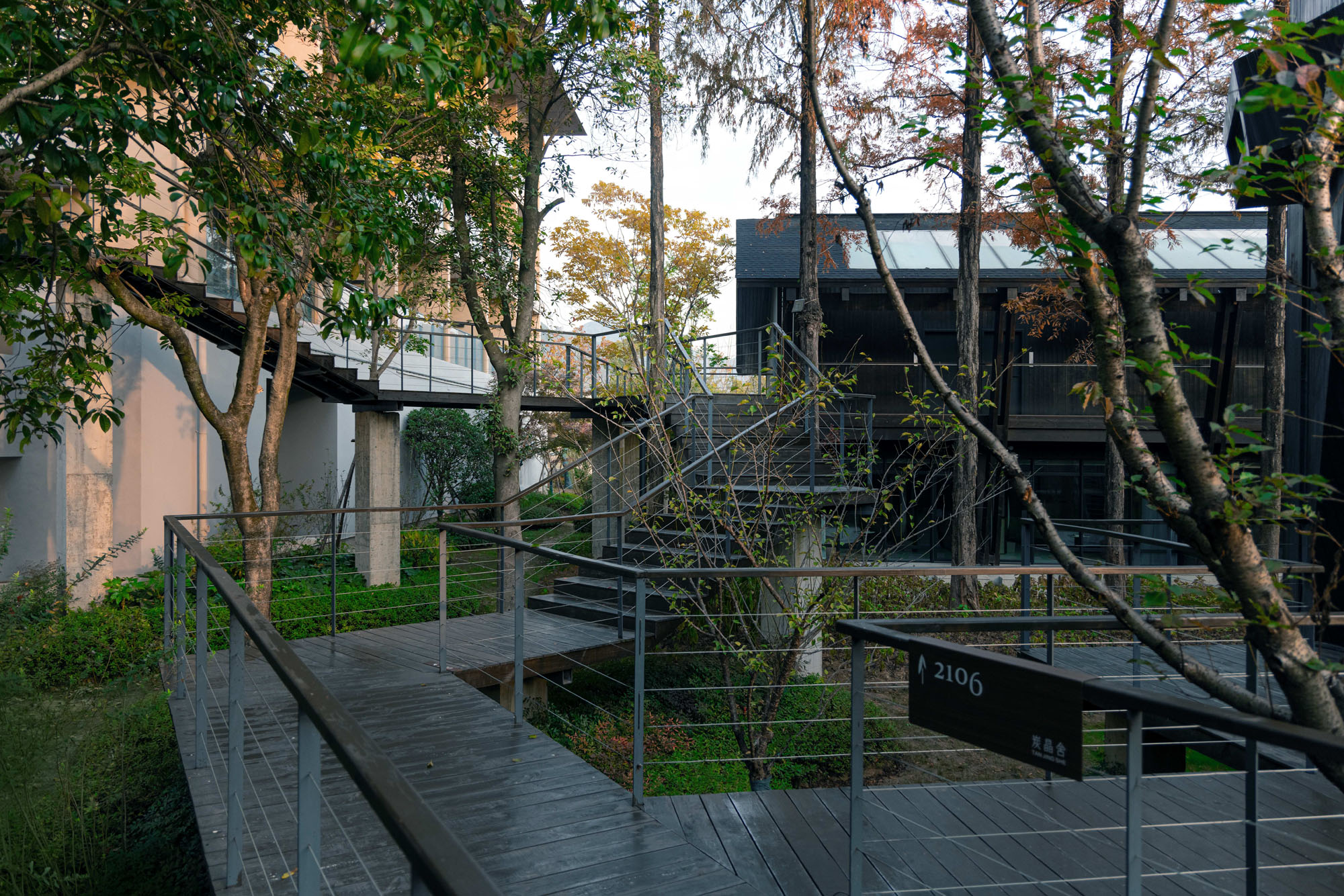
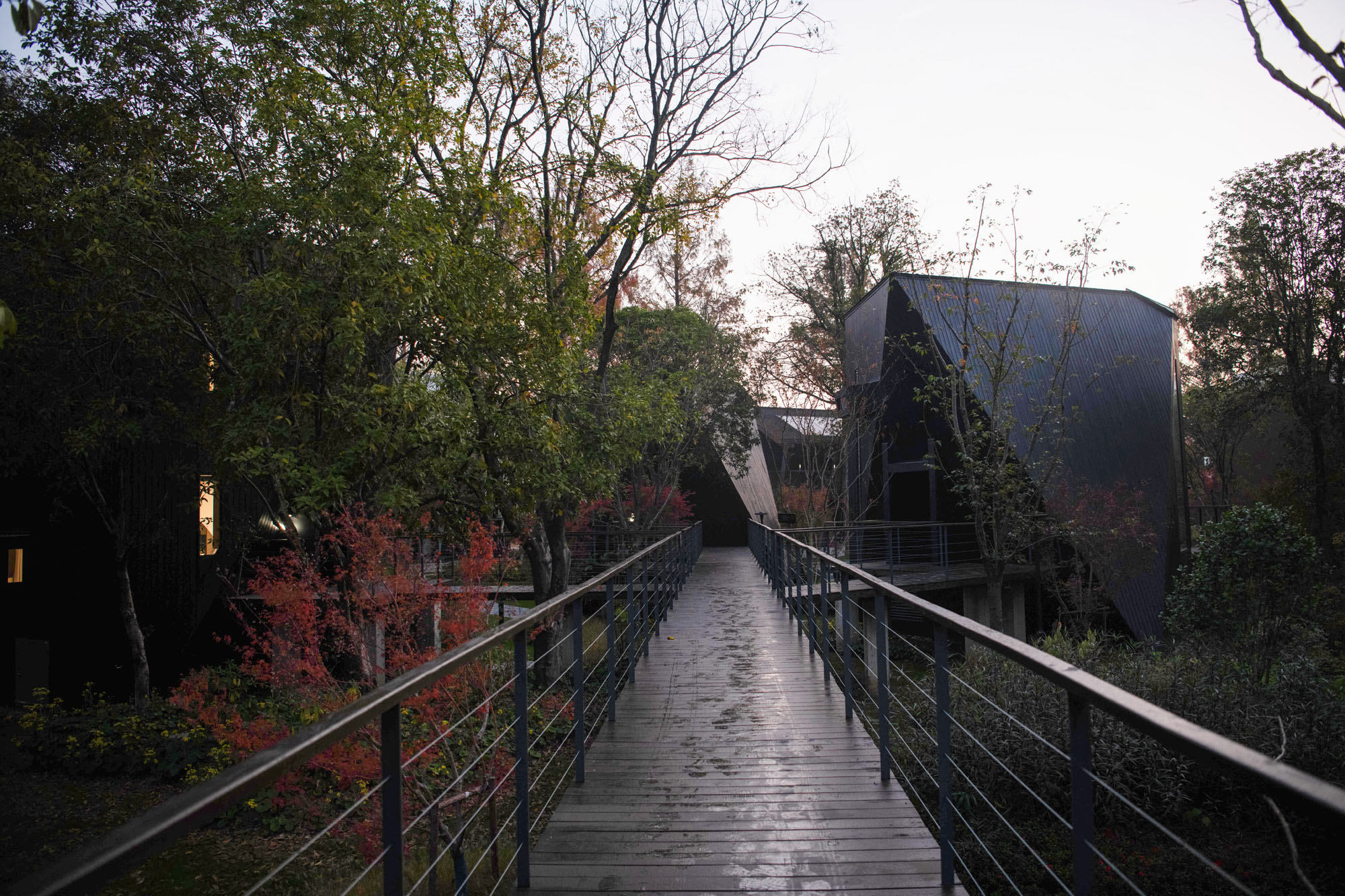
高架歩道システムは、人為的な介入を意図的に制限しつつ、木々の間を通り抜け、その中に隠された黒いキャビンを探すよう来訪者を導く。ステルス、それは動詞への原点回帰である。
© Su Shengliang
© Su Shengliang
ステルスの道:森との共生を尊重する再生戦略
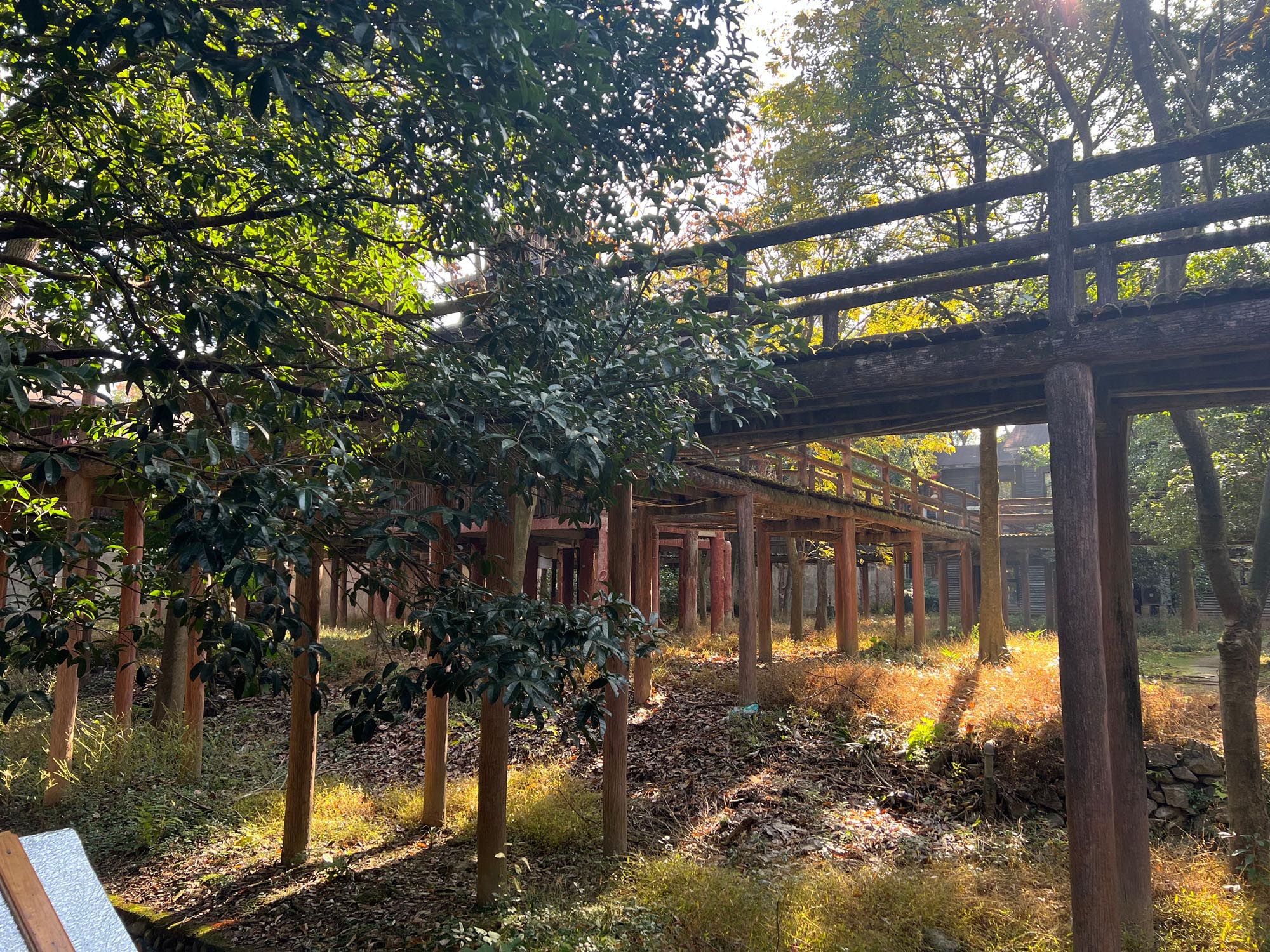
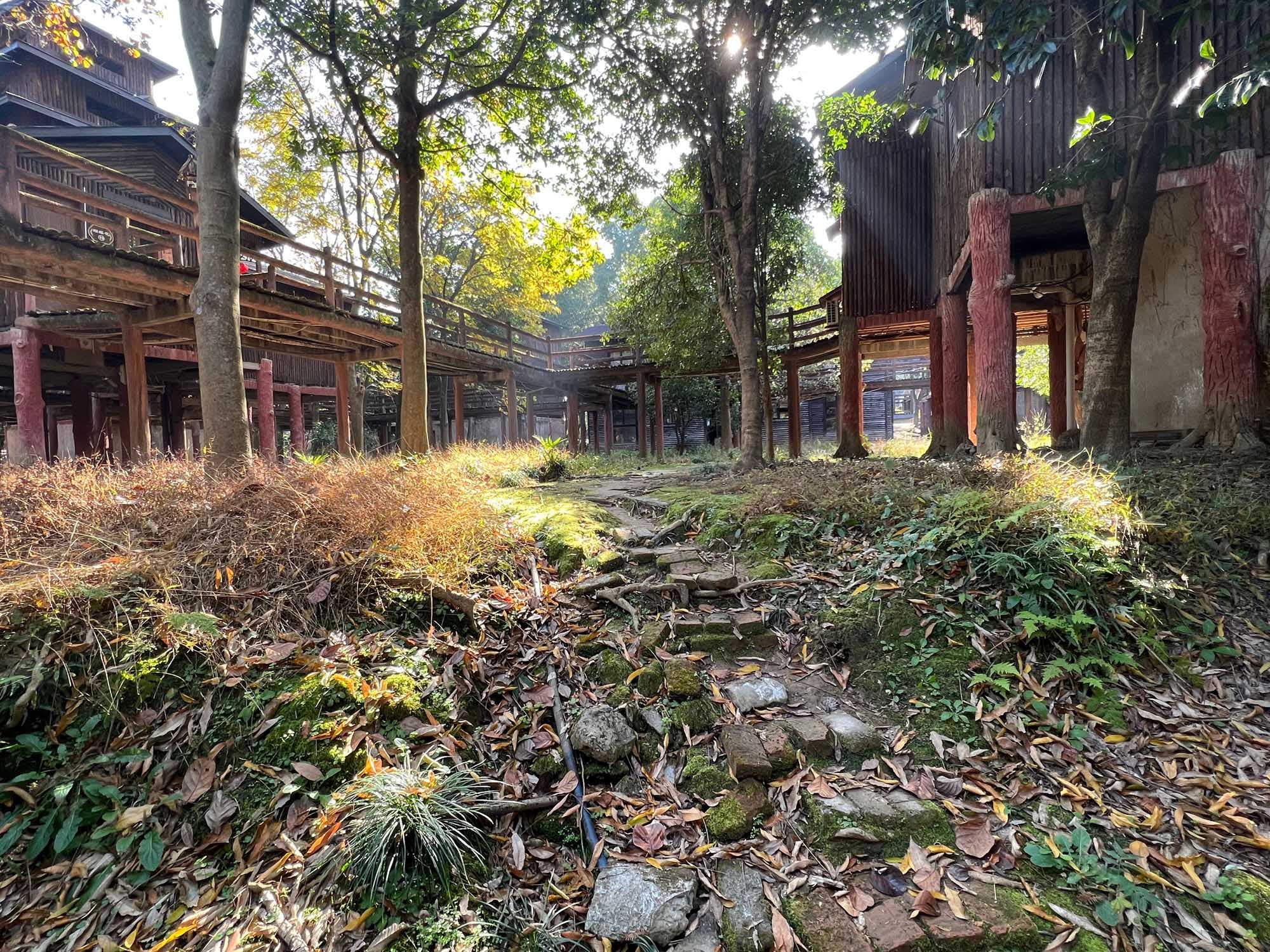
落ちた小枝や枯れ葉を踏みしめ、高架歩道の真下を歩くと、草や苔が地形に沿ってうねるようなリズムを刻み続けている。これこそが、この場所が放つ究極の呼び声である。
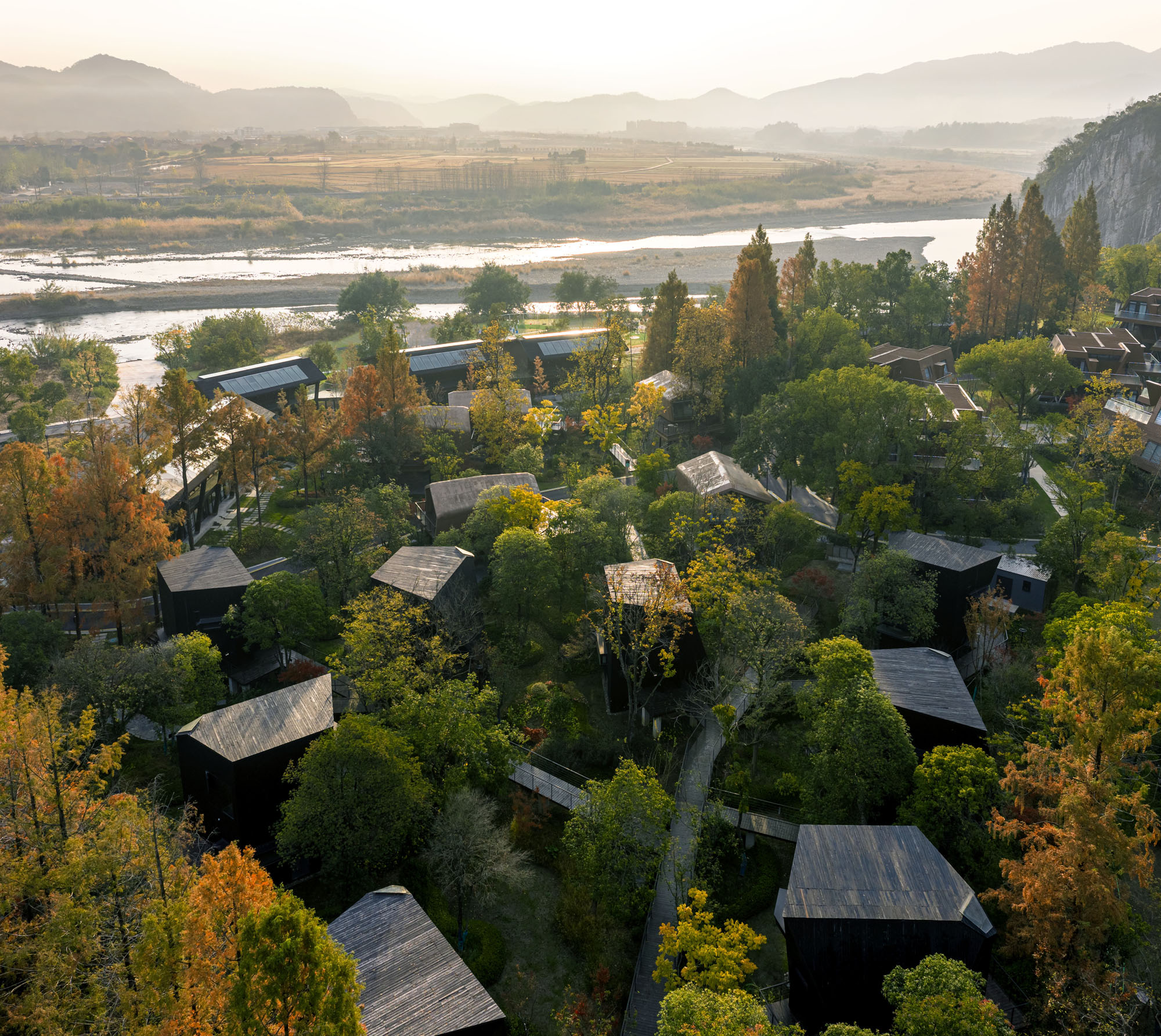
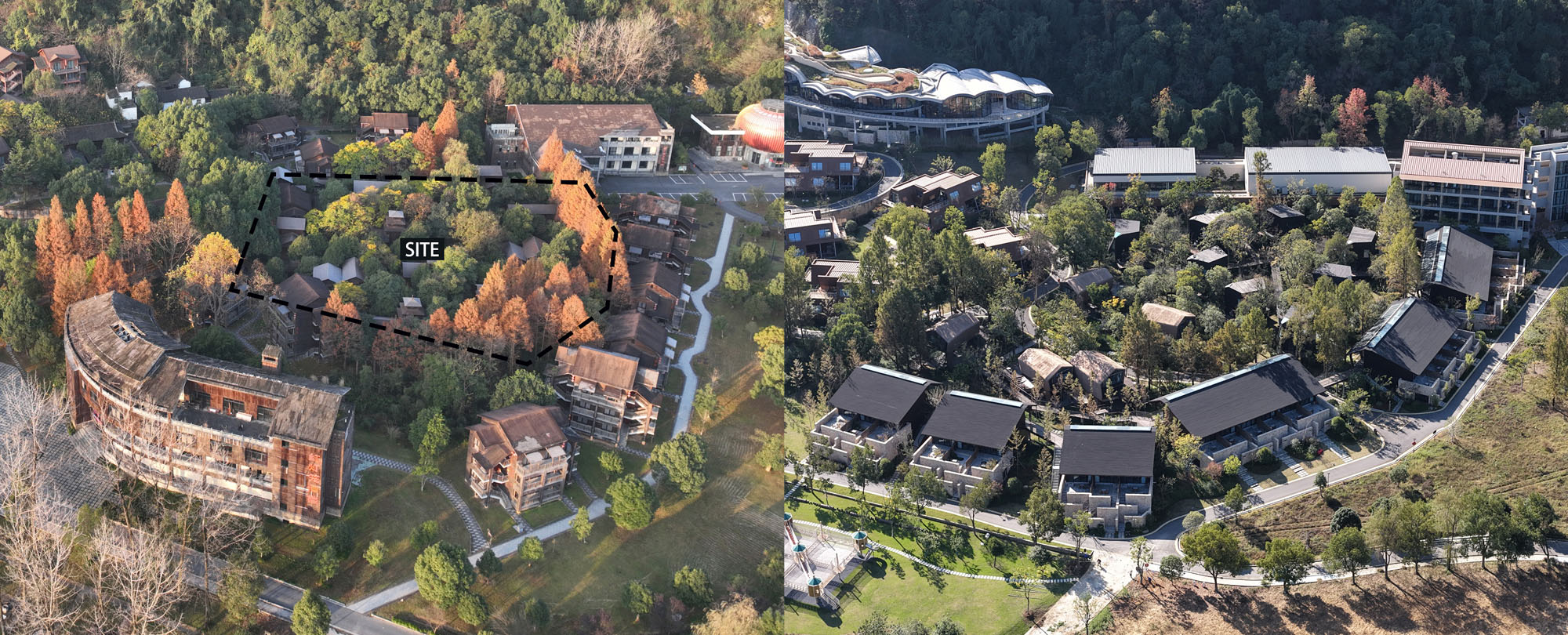
2022年以降、杭州・桐廬(とうろ)の「Grandma’s Home」リゾートエリアにあるこの景観は、1990年以来最大の変貌を遂げている。中国における20年以上にわたる劇的な変化の中で、隠れ家(リトリート)の意味や外観は大きく進化してきた。しかし、SpActrumは入念な現地調査の結果、当初の敷地戦略は具体的な形態や素材の面では失敗に終わったものの、過去20年間にわたり建物と共に育ってきた木々が、自然が生み出した効果的な敷地戦略として際立っているとの結論に至った。
したがって、SpActrumの最初の課題は、クライアントに対し、「抜本的な刷新」や外観の完全な変貌といった野心を放棄するよう説得することであった。その代わりに、彼らは特定の建物を建て替え、キャビンや歩道システムを現代的な技術で再構築し、建築言語を固定された「スタイル」から解放した。ヴァレリオ・オルジアティ(Valerio Olgiati)の用語を借りれば、これは「非参照的」な状態への回帰であり、敷地の条件と直接向き合うことで知覚を生み出す試みである。
© Su Shengliang
©︎ SpActrum
独立して交差する歩道とキャビンの関係
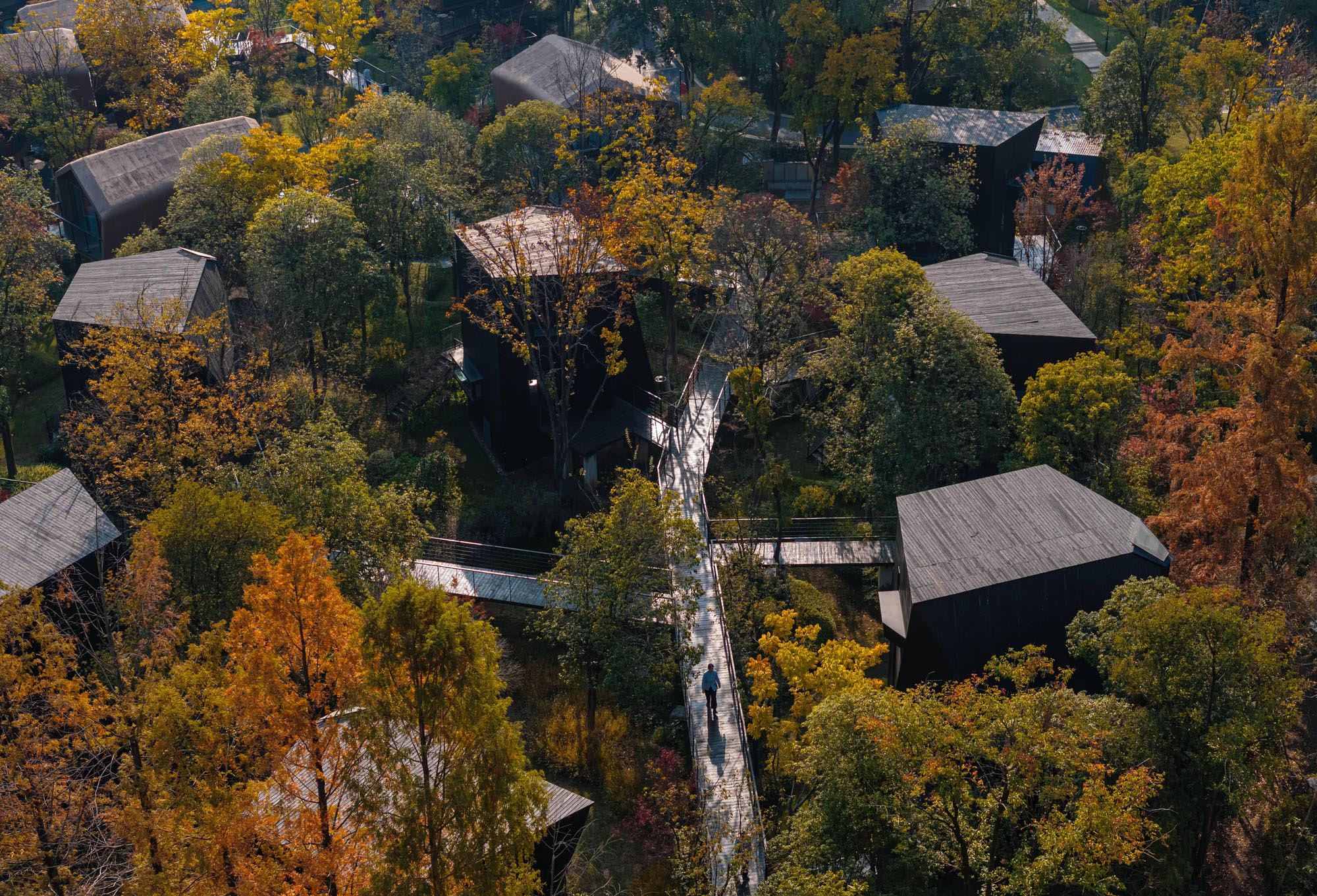
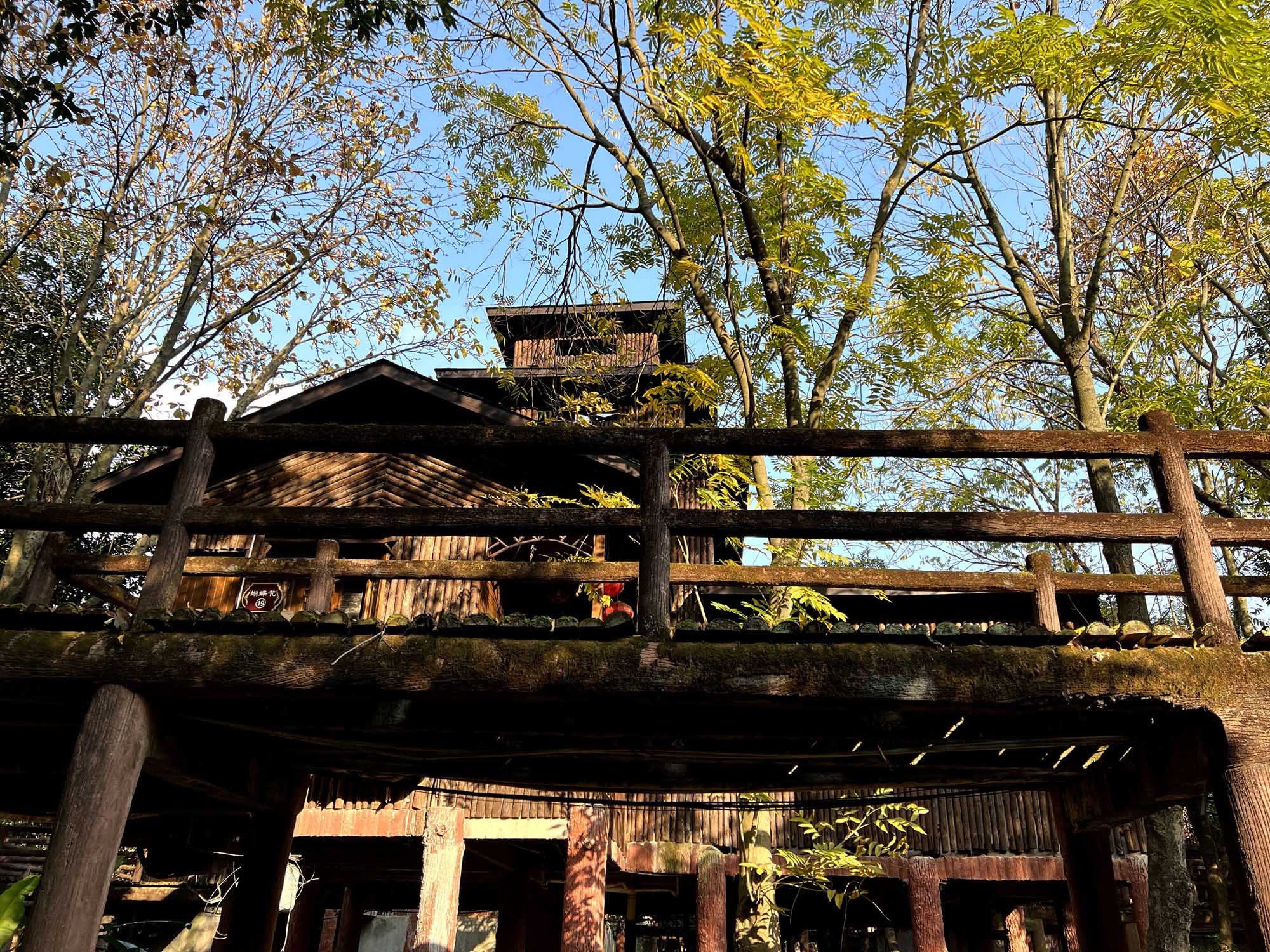
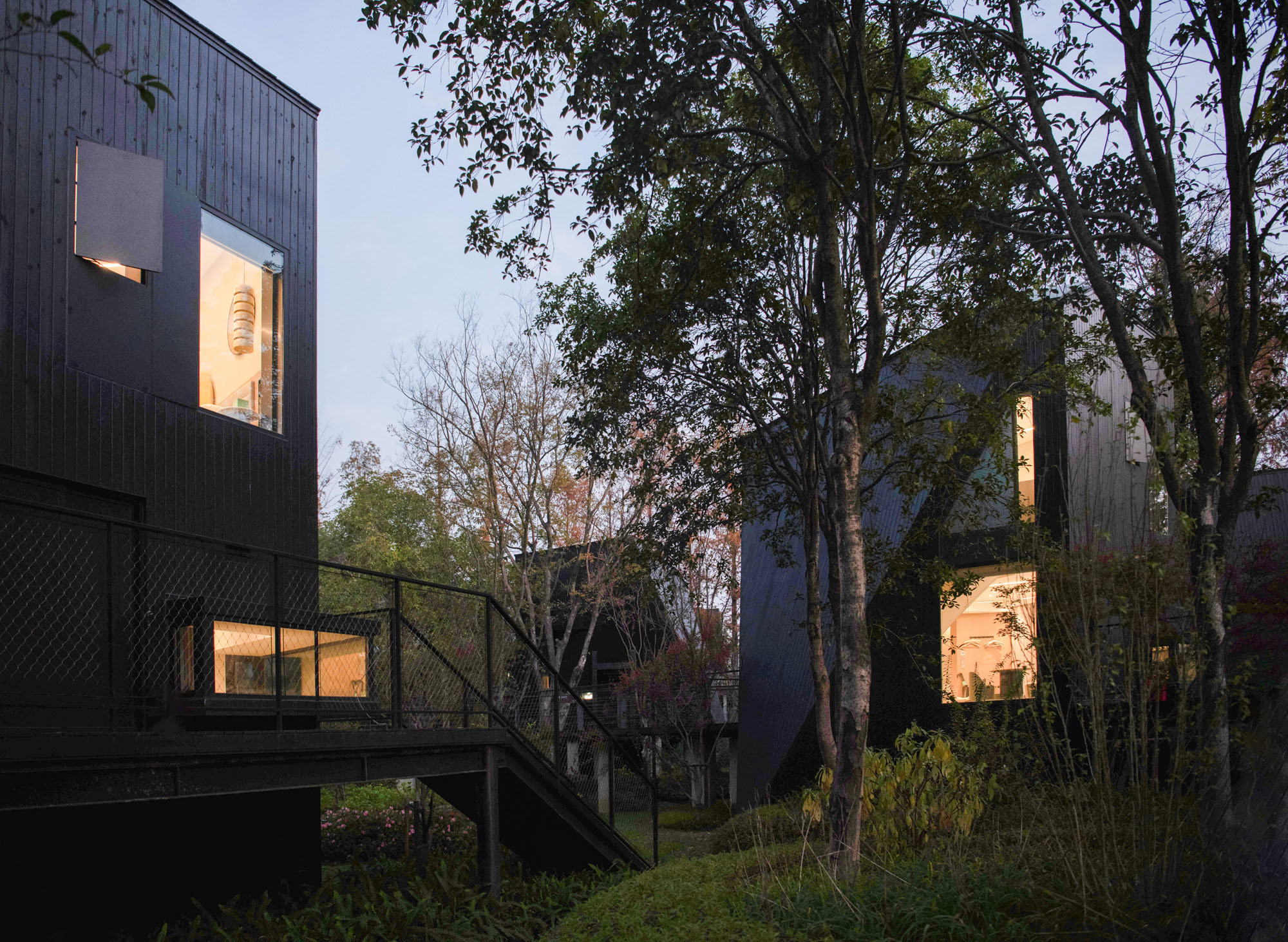
ゲストは歩道に沿って歩く。軽量鉄骨と木材の構造で建てられた新しい連絡歩道は、危険感を軽減するために高さを低く設定されているが、それでもゲストの動線を地面から分離した状態を保っている。歩道の高さはキャビンの入口と一致しており、キャビンのサービススペースは、入口と地面との間の空間に隠されている。また、地面は連続した生態系として保たれている。
この2つのシステムは絡み合い、交差しながらも、互いに干渉することなく独立した状態を保っている。消防車用のアクセス路として必要な伐採区域を除き、森林は可能な限り保全されている。建設中、建築家たちはこの敷地にハヤブサが依然として生息しているのを確認した。
©︎ SpActrum
©︎ SpActrum
節度ある建築への意識の変化
2022年にプロジェクトが構想された当時、不動産ブームが終息しつつあった時期において、在来樹木の保護、節度ある建築、そして建築と自然のより遊び心のある関係の構築は、依然として稀なアプローチであった。設計から完成に至るまでの年月を経て、このアプローチが多くの建築家にとって意識的な選択となり、また人々がますます受け入れ、歓迎する戦略となっていることは喜ばしい。
ステルスのかたち:建築の画一性を打ち破る幾何学的プロトタイプ
この戦略のもと、新しい黒いキャビンが、かつてその場所にあったタイ風の木造ロッジに取って代わった。このデザインが取り組もうとしている課題の1つは、「建築的な連続性は常に必要なのか?」ということである。
©︎ SpActrum
Site Photo ©︎ SpActrum
Site Photo ©︎ SpActrum
Site Photo ©︎ SpActrum
動と静の均衡を保つシンプルな幾何学
最も単純な形態的操作を通じて、1つの形に多様な表現を与えることは可能であろうか。三角形は単純な幾何学形状であり、与えられた周長に対して最小の空間を囲む。二軸および中心に対する二重の対称性を持つ四角形は、制約が強すぎて発展の可能性に欠ける。五角形はこれら2つを超える最も単純な形態であり、1つの中心対称軸と一つの左右対称性を備えている。
そこから、デザインはボリュームを切り込み、一角を地面に向かって、もう一角を空に向かって除去することで、不安定と安定の間を行き来する「ゴンボック(Gömböc)」のような幾何学を生み出し、静止した形態に動きの傾向を与えている。この形態は、動きと静止の間に緊張感ある均衡を成し遂げている。
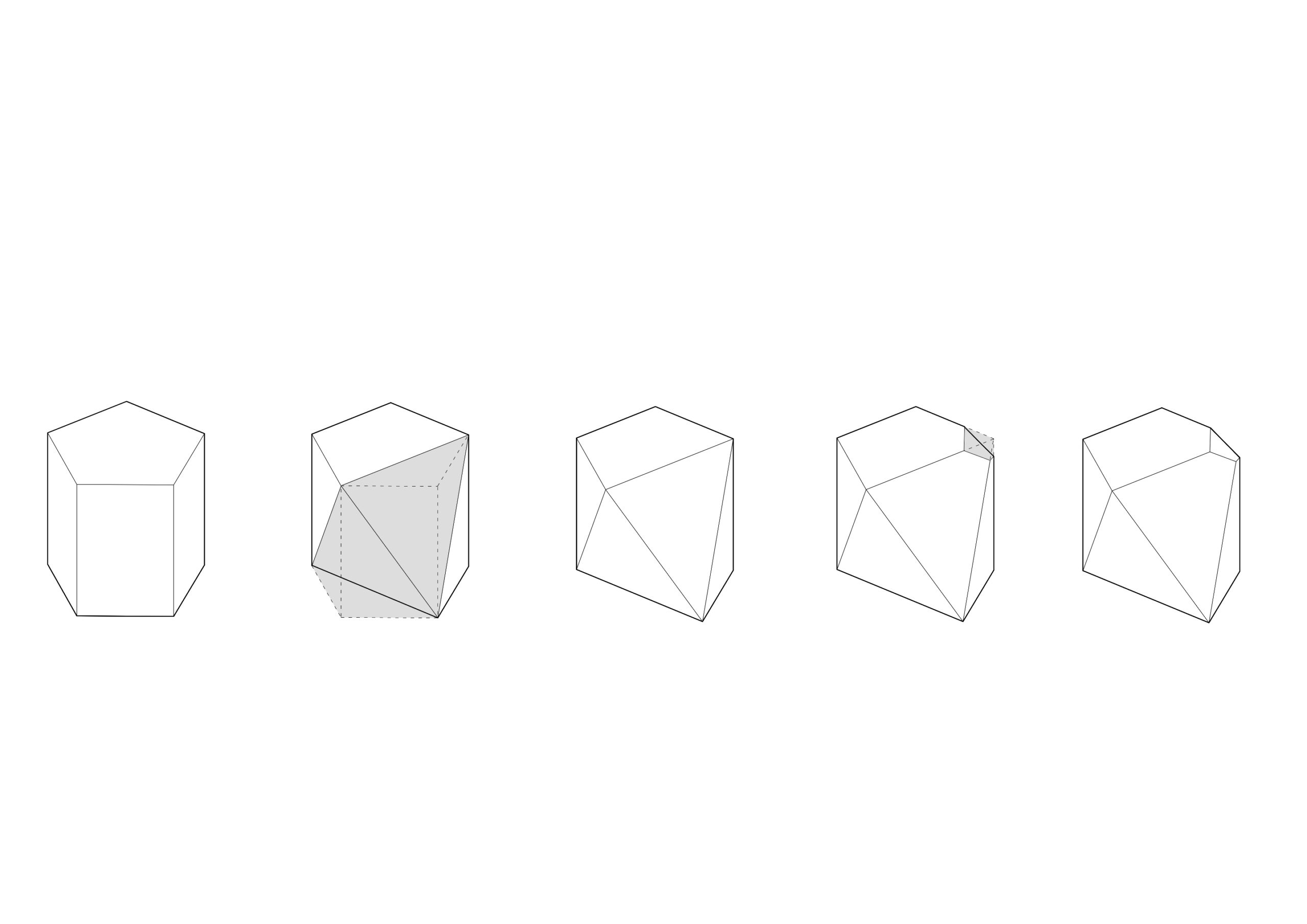
Process
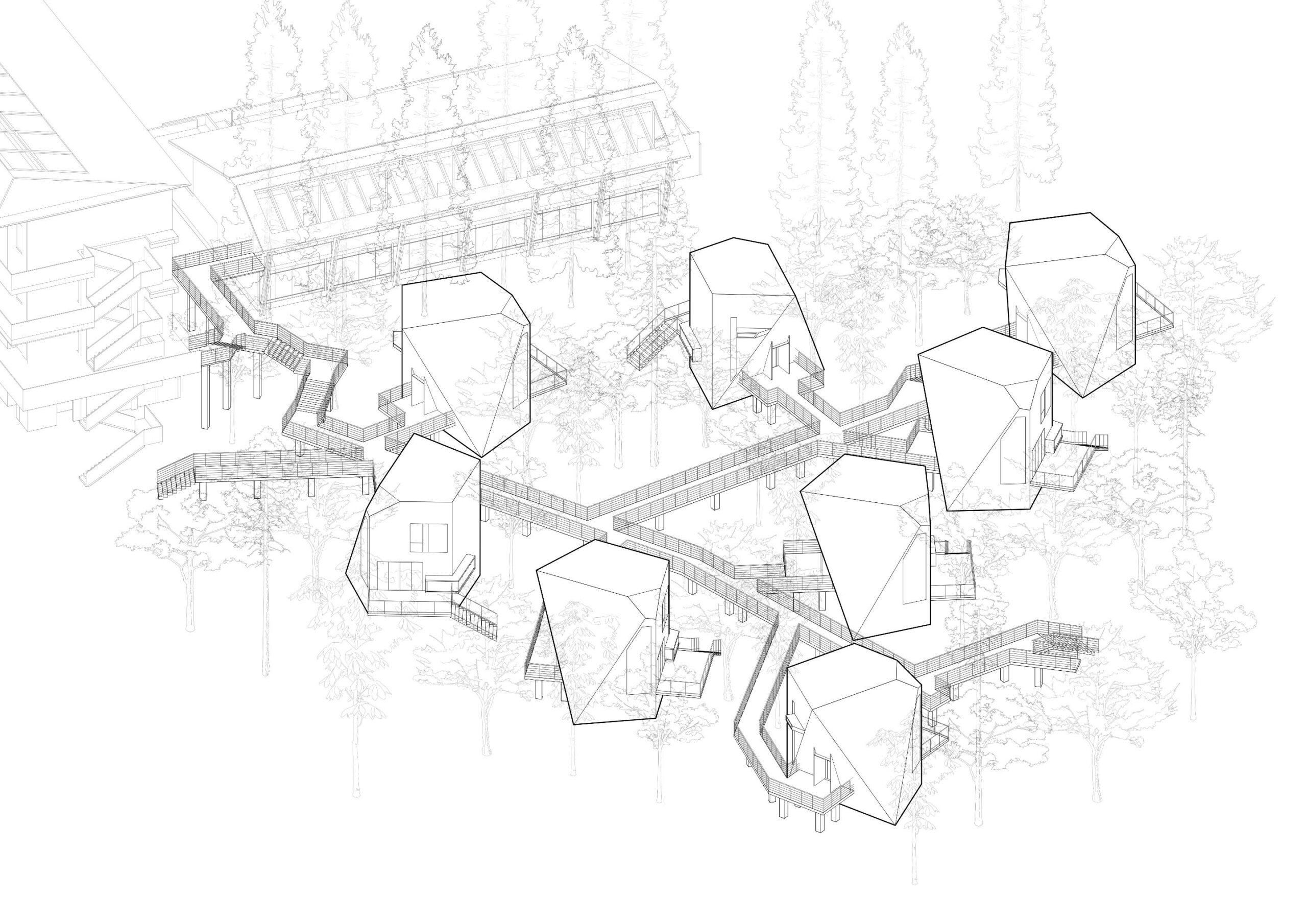
Houses of Stealth in Native Forest & Pedestrian Walkway
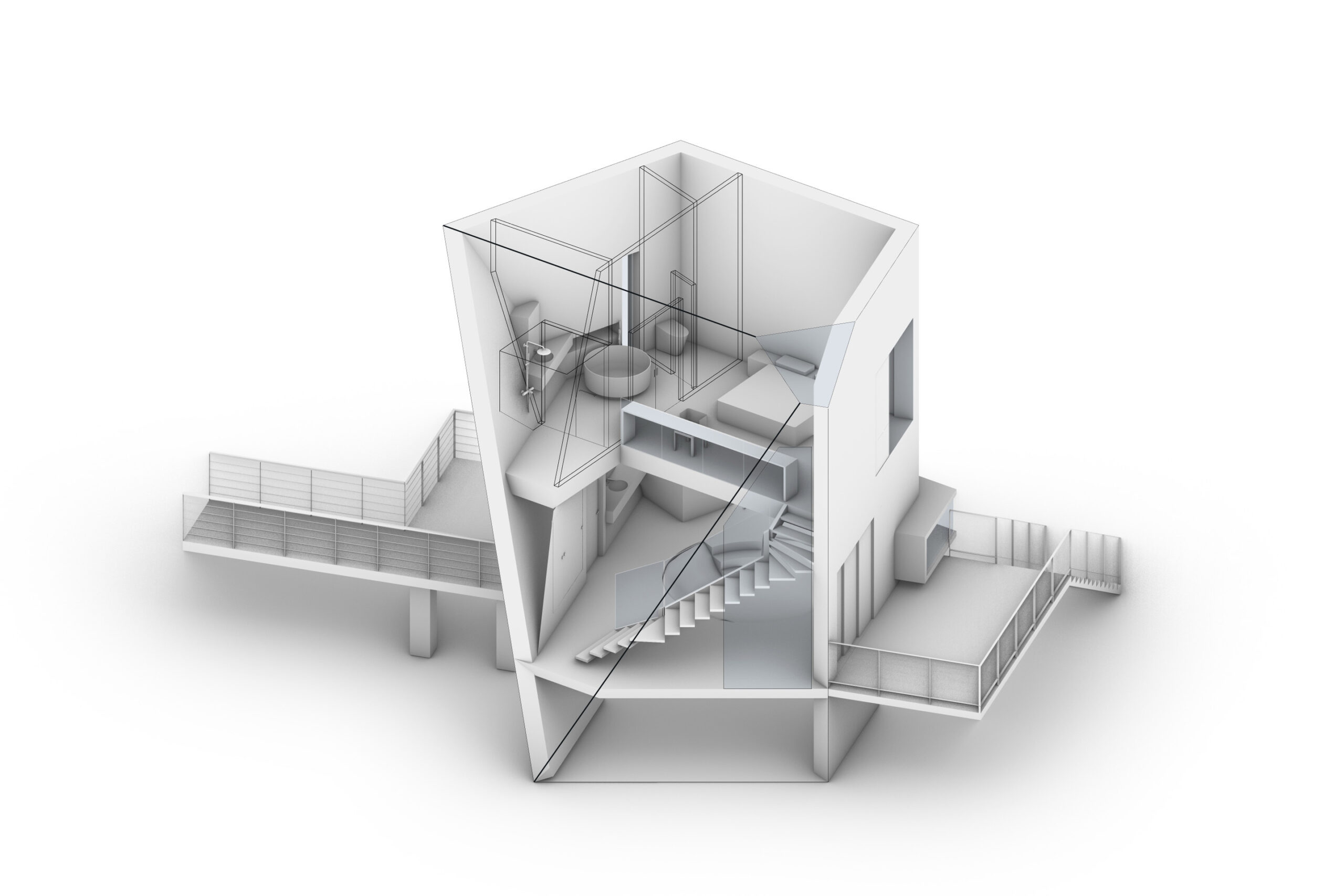
House Unit Cutaway Interior Perspective
内外をつなぐ開口部の設計
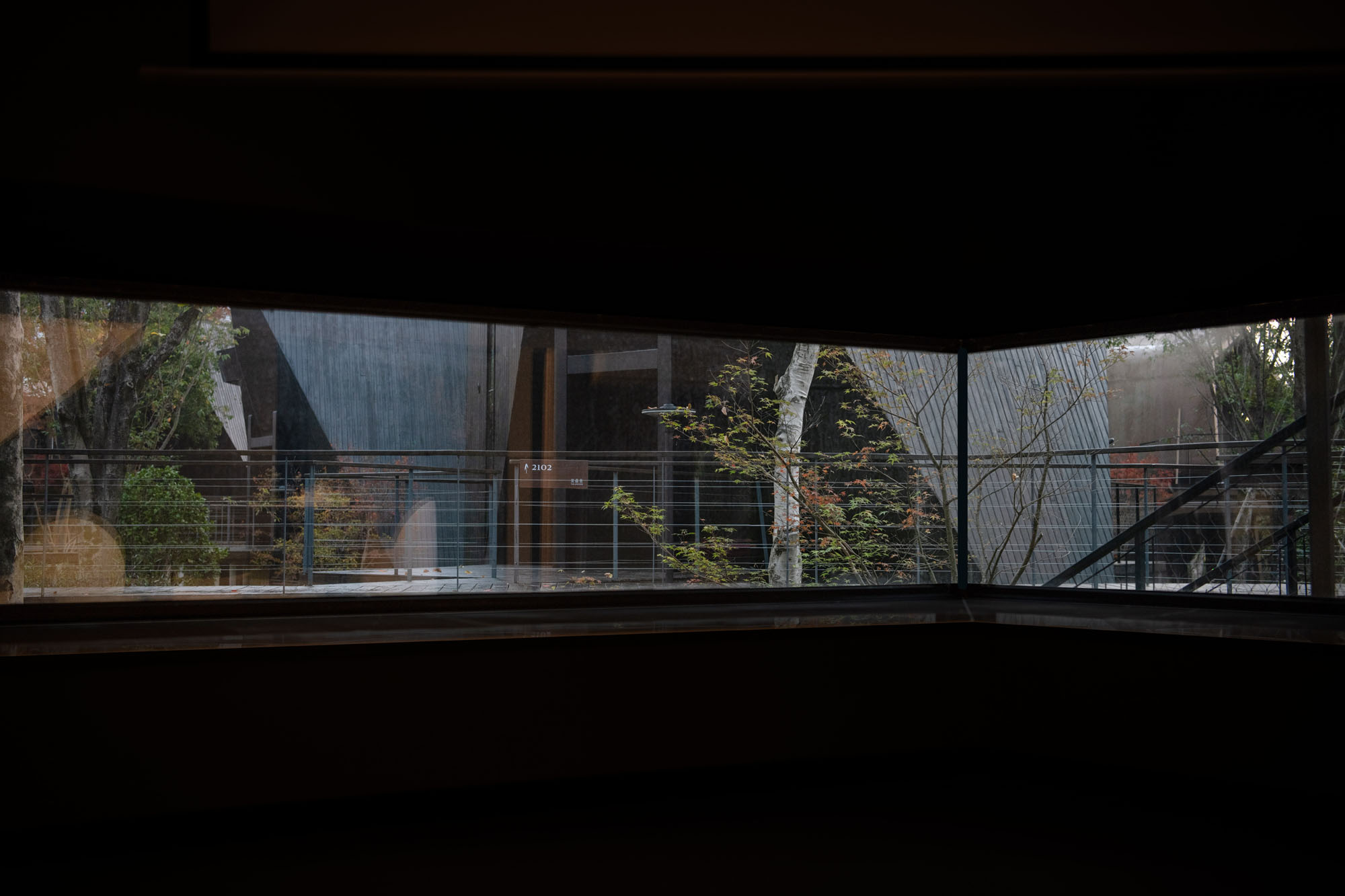
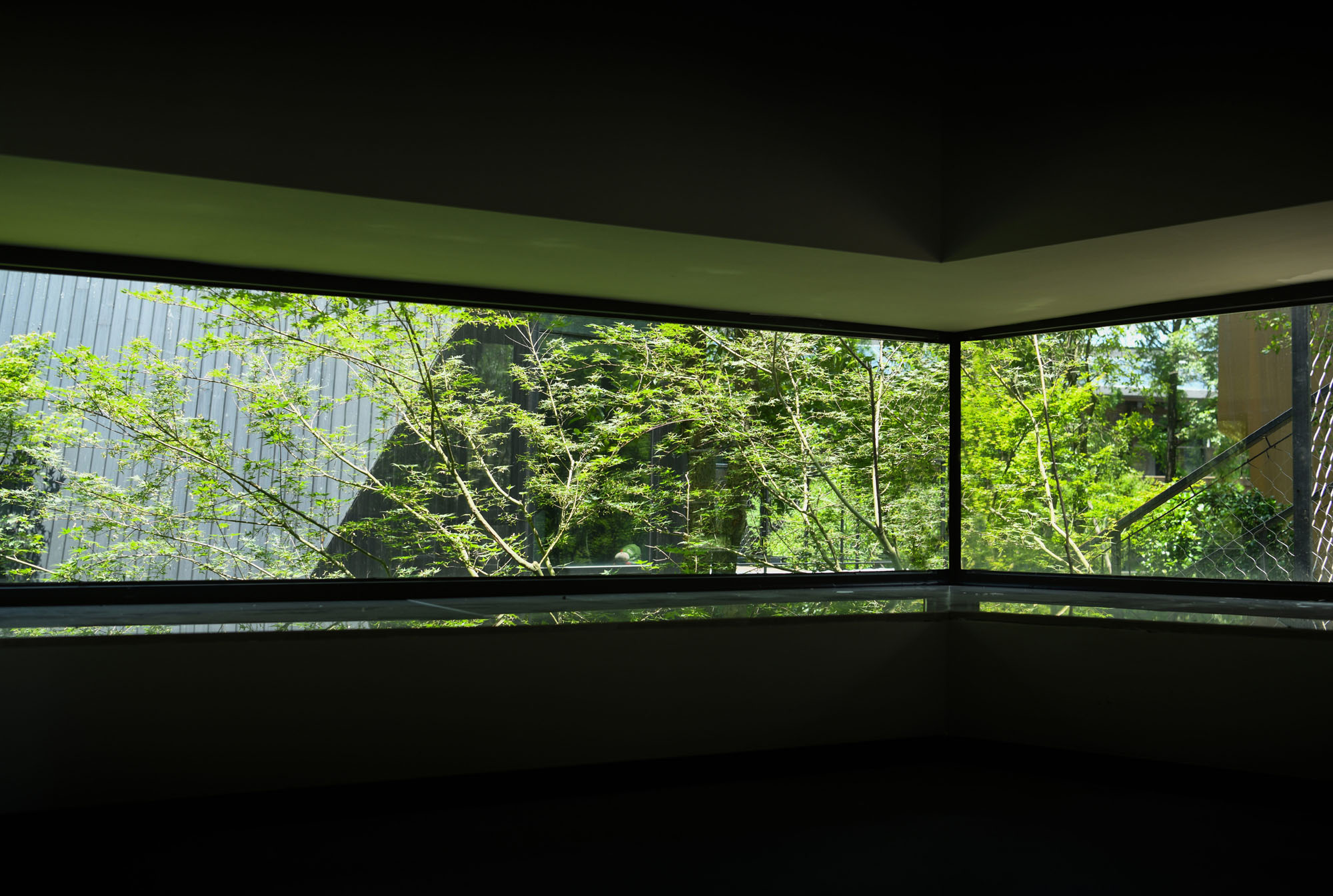
この多面的な幾何学構造の上で、窓の開口部は主に垂直面に沿って配列されている。これらの開口部は、内部空間の広がりを最大限に引き出すことを目的としている。吹き抜け空間に面した垂直のガラス面は細いスリットのように見え、一方、一段下がった座席エリアに面した水平のガラス面は外側へと広がり、外の森を絵巻物のようなパノラマ風景へと変容させる。
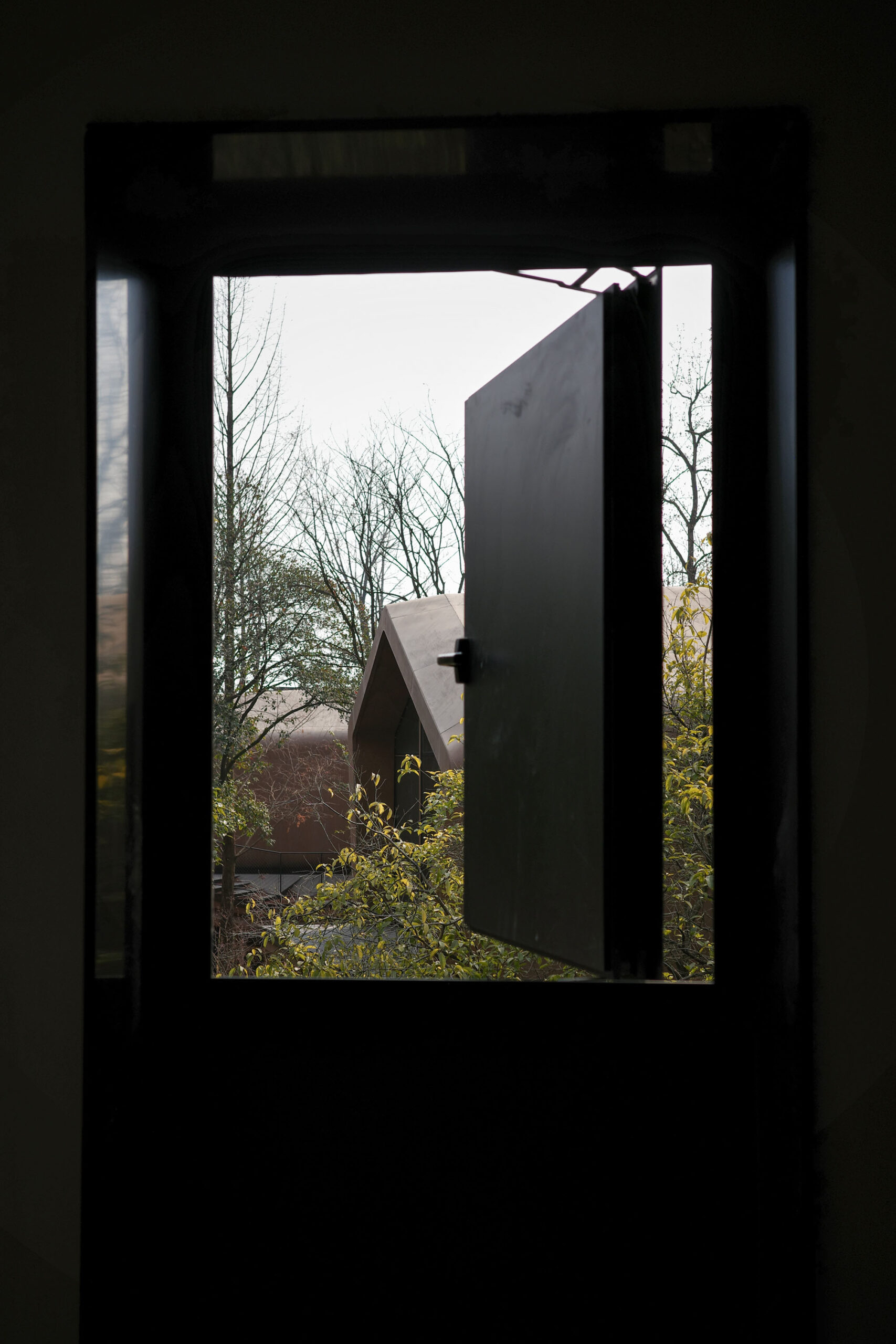
2階では、ベッドに面した窓が採光と換気の機能を分離している。外を臨むガラス面は純粋で遮るものがない状態を保ちつつ、換気用の窓はより大きな窓システムに統合されている。浴室の窓は、浴槽に横たわった時の視線と一直線になるように配置されている。外部に突き出た水平の要素が視界を制限し、内部からは外をちらりと見ることができる一方で、外部からの視線は一切遮断されている。
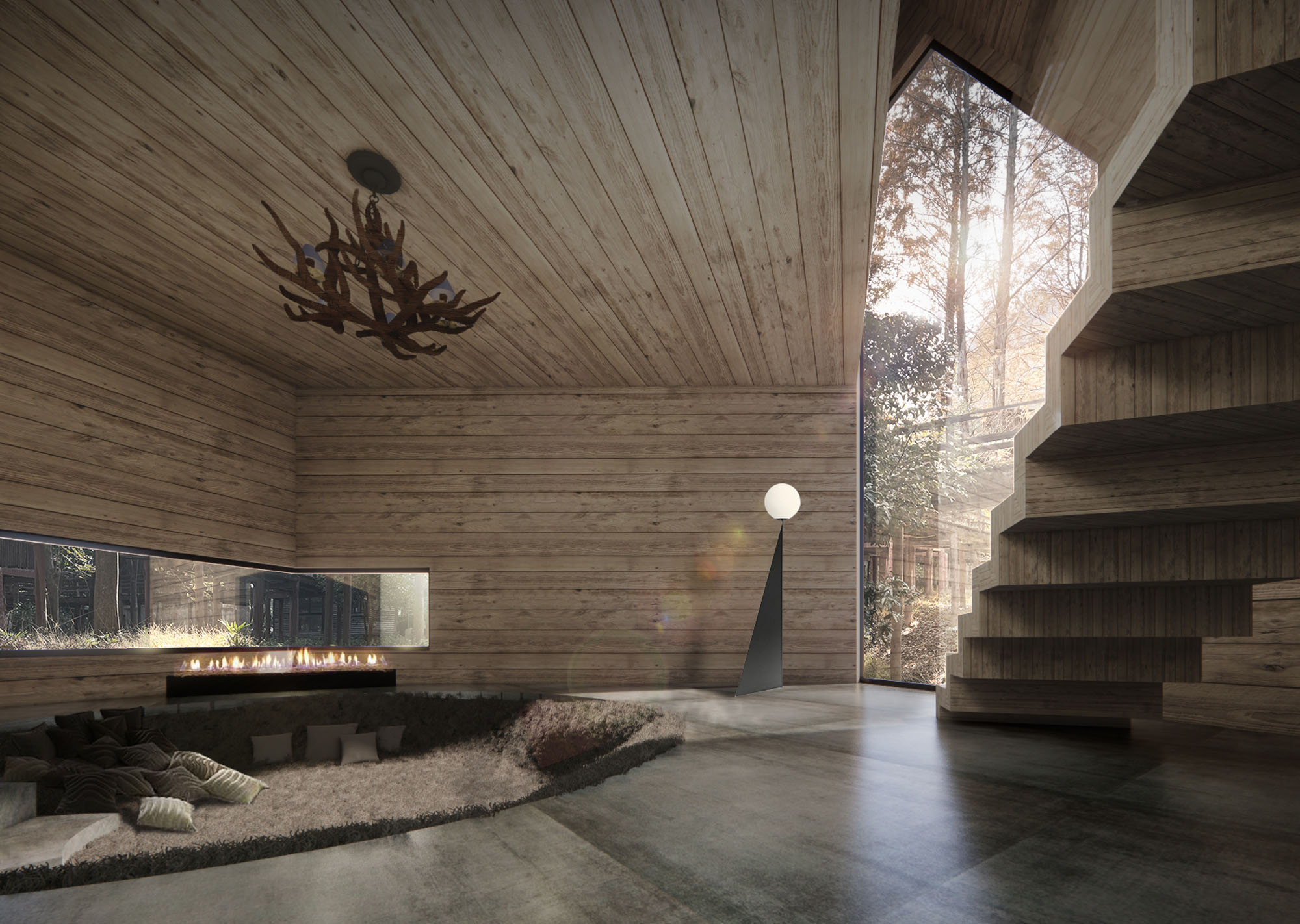
©︎ SpActrum
©︎ SpActrum
©︎ SpActrum
空間を際立たせる2つの扉
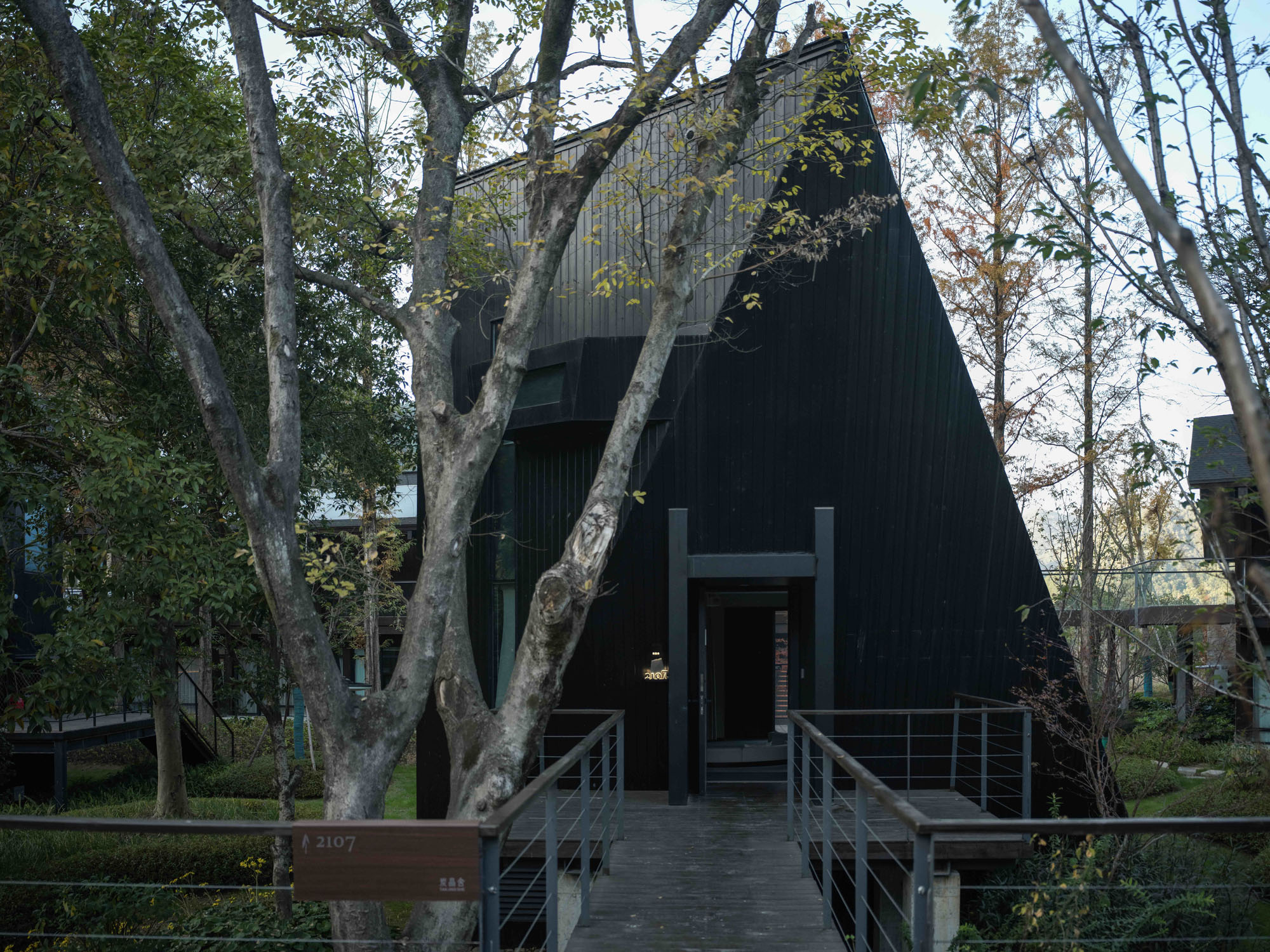
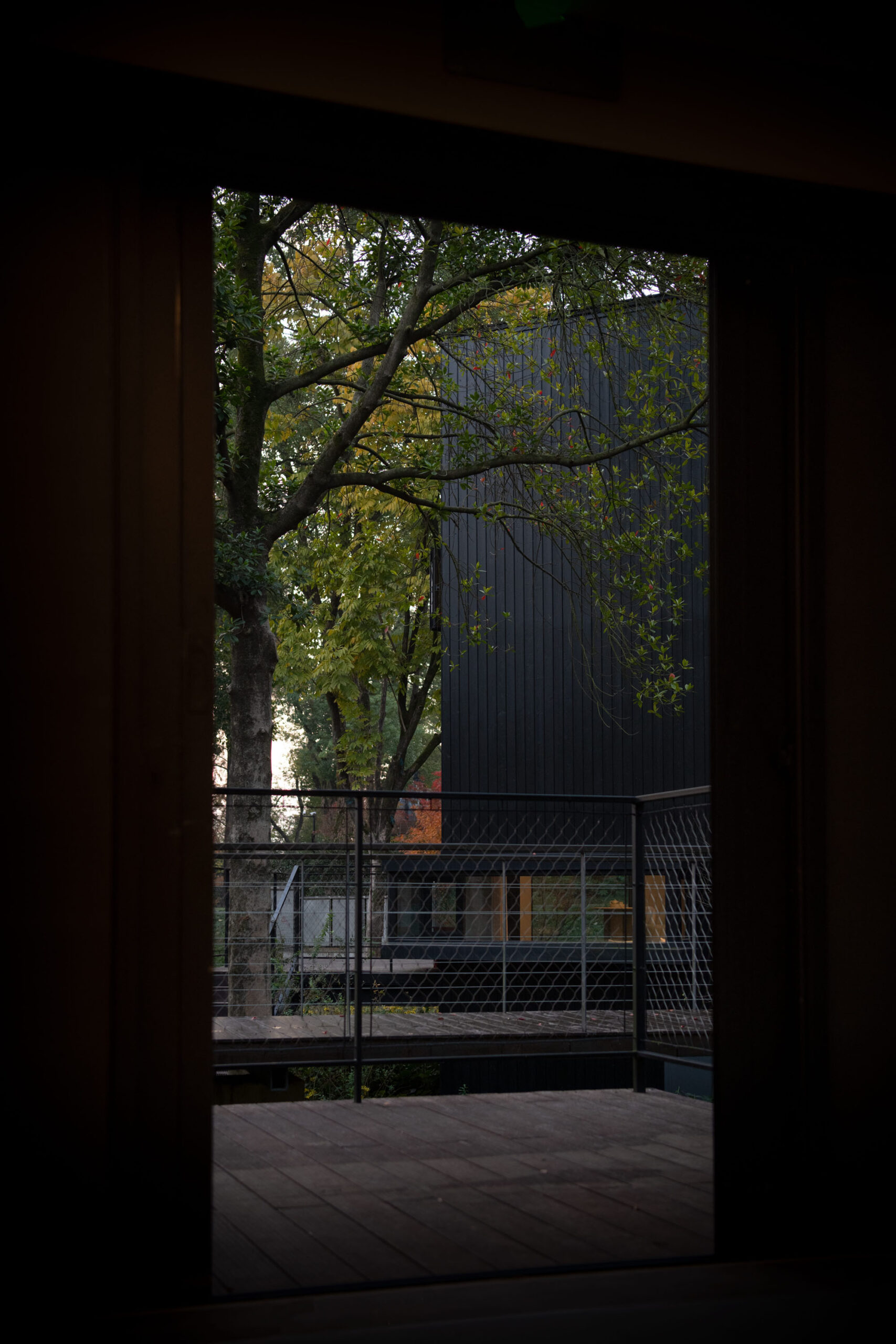
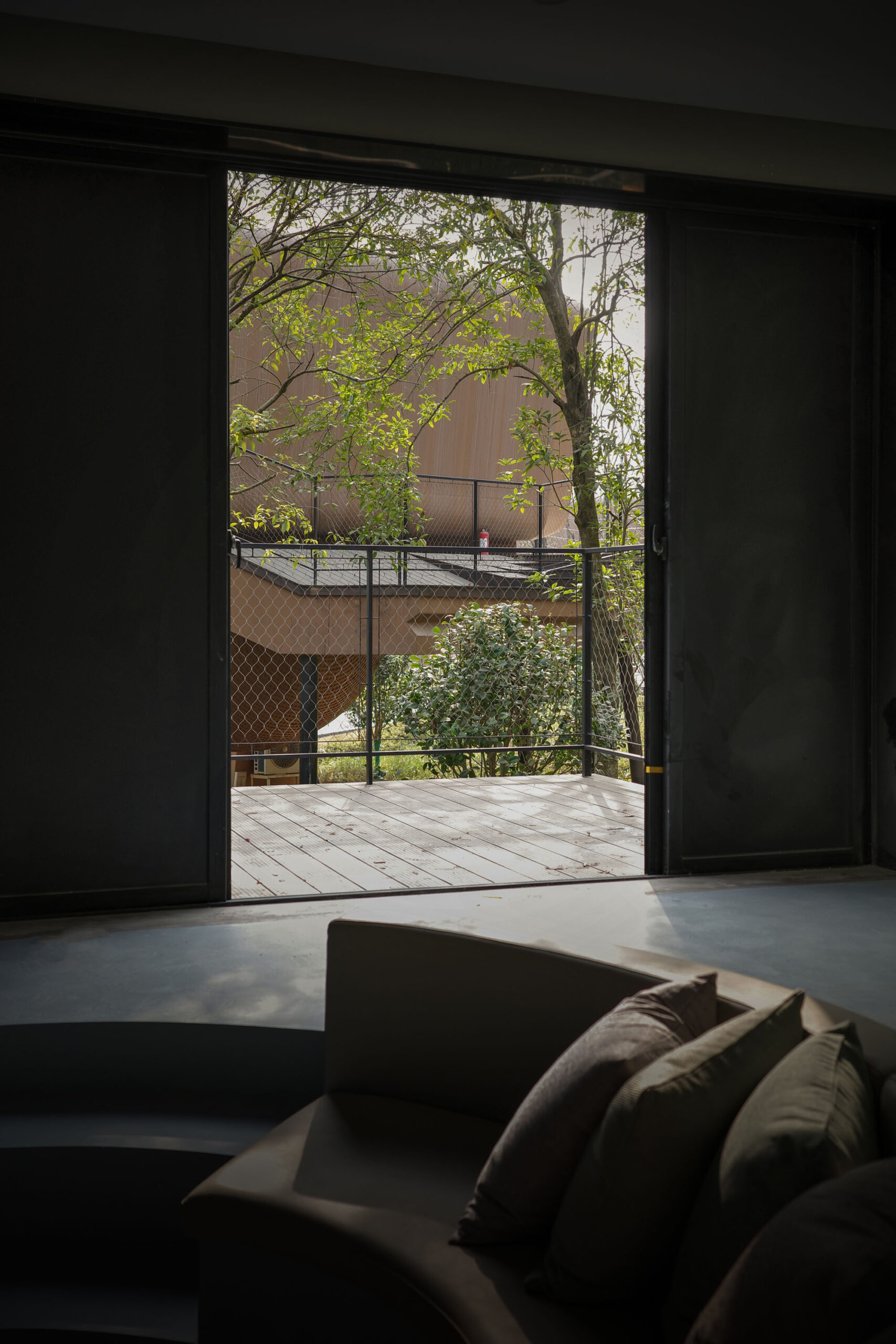
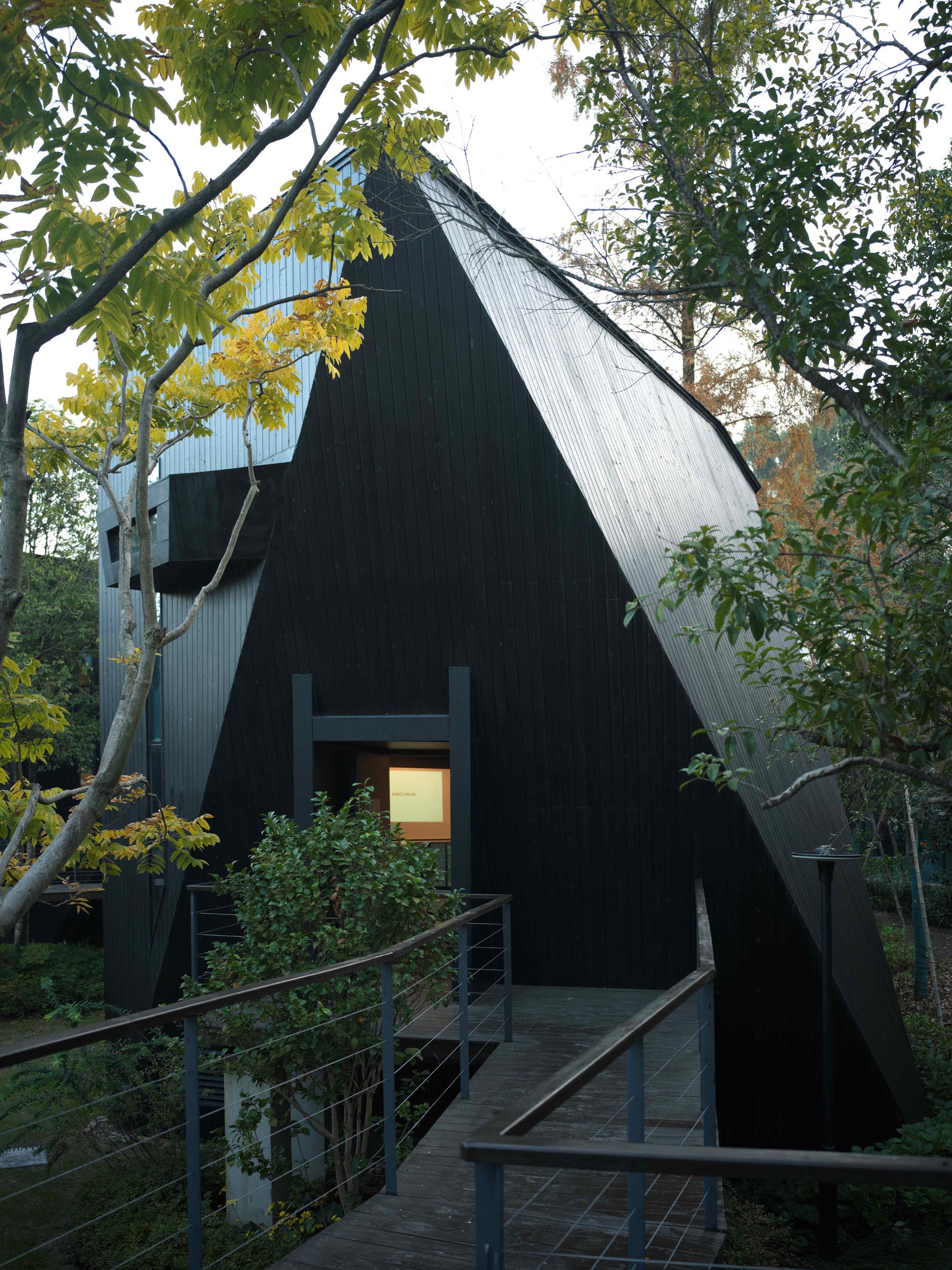
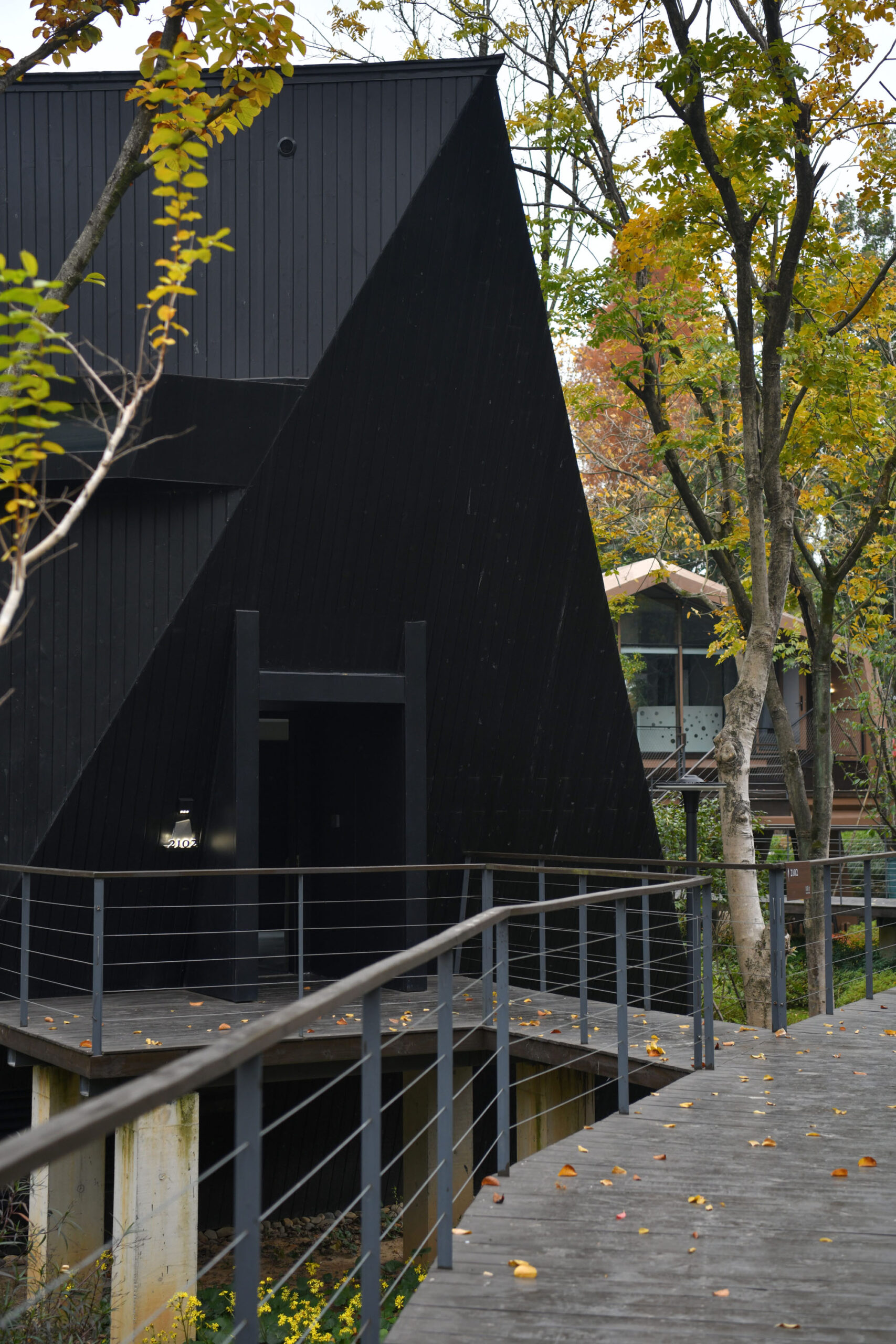
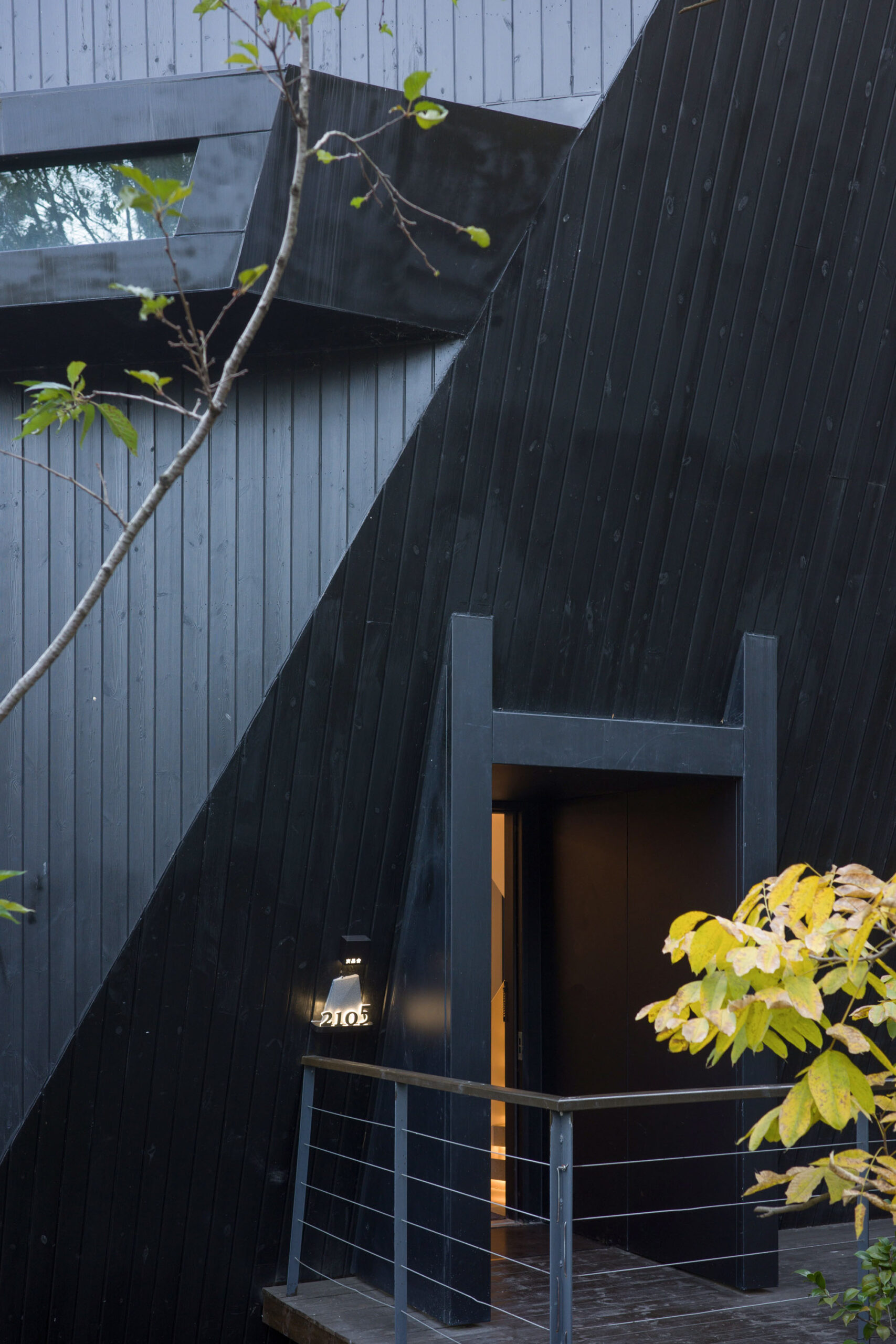
キャビンには2つのドアがある。1つは傾斜した入口の面に設けられ、H字型の構造体に囲まれており、奥行きのある暗い建物本体に対して出入り口を際立たせている。もう1つのドアはプライベートテラスへと通じており、大きく開くことができるため、天候が許せば室内とテラスが一体となる。
©︎ SpActrum
©︎ SpActrum
©︎ SpActrum
森、歩道、黒いキャビン:共鳴する知覚の生成装置
歩道とキャビンとの視覚的関係は、キャビンの非連続性を浮き彫りにする仕掛けとなる。各キャビンの向きは、近隣のキャビンや周囲の建物との視線を最小限に抑えつつ、プライバシーを最大限に確保するよう調整されている。
©︎ SpActrum
©︎ SpActrum
断片化された視覚体験
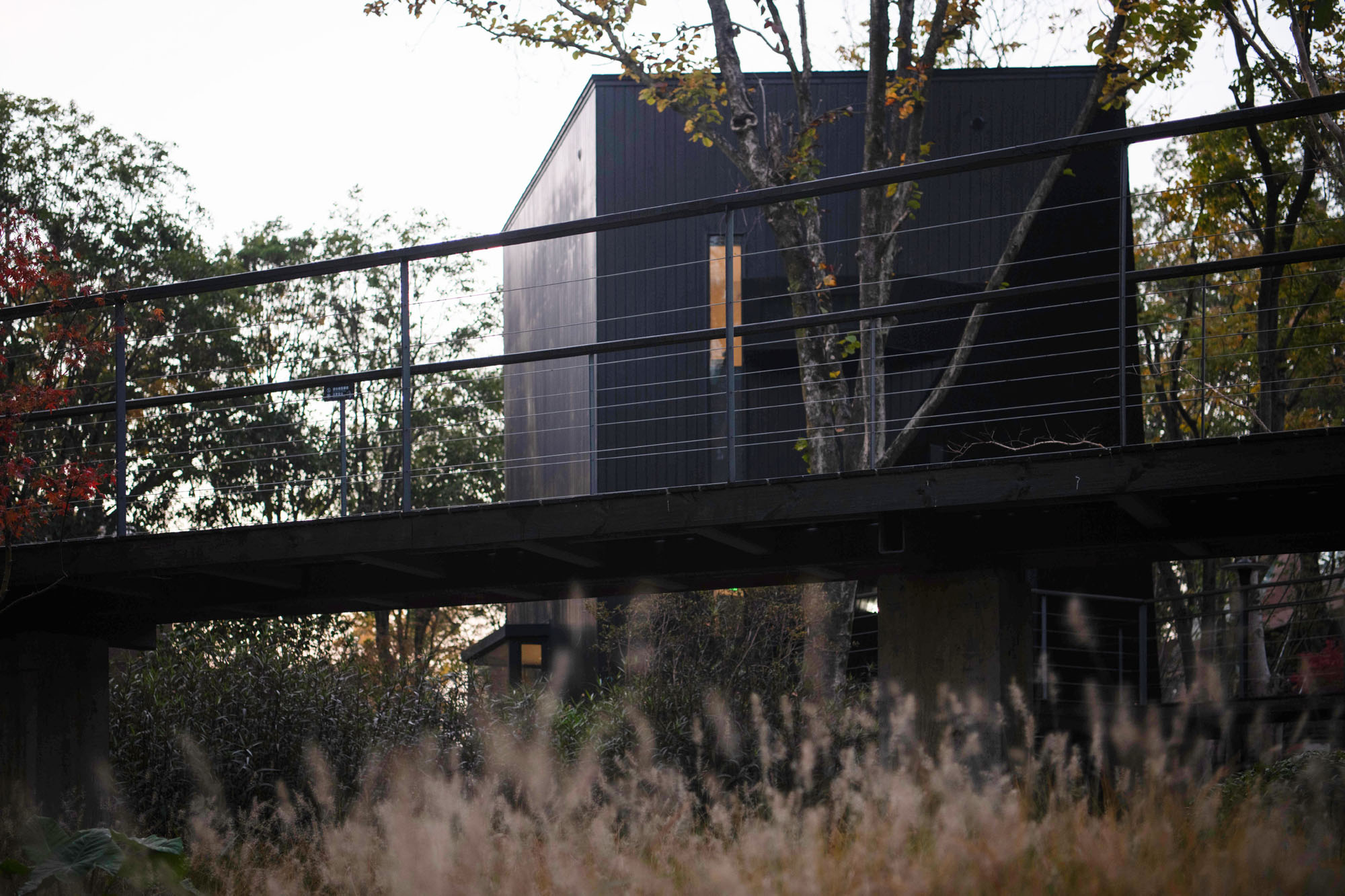
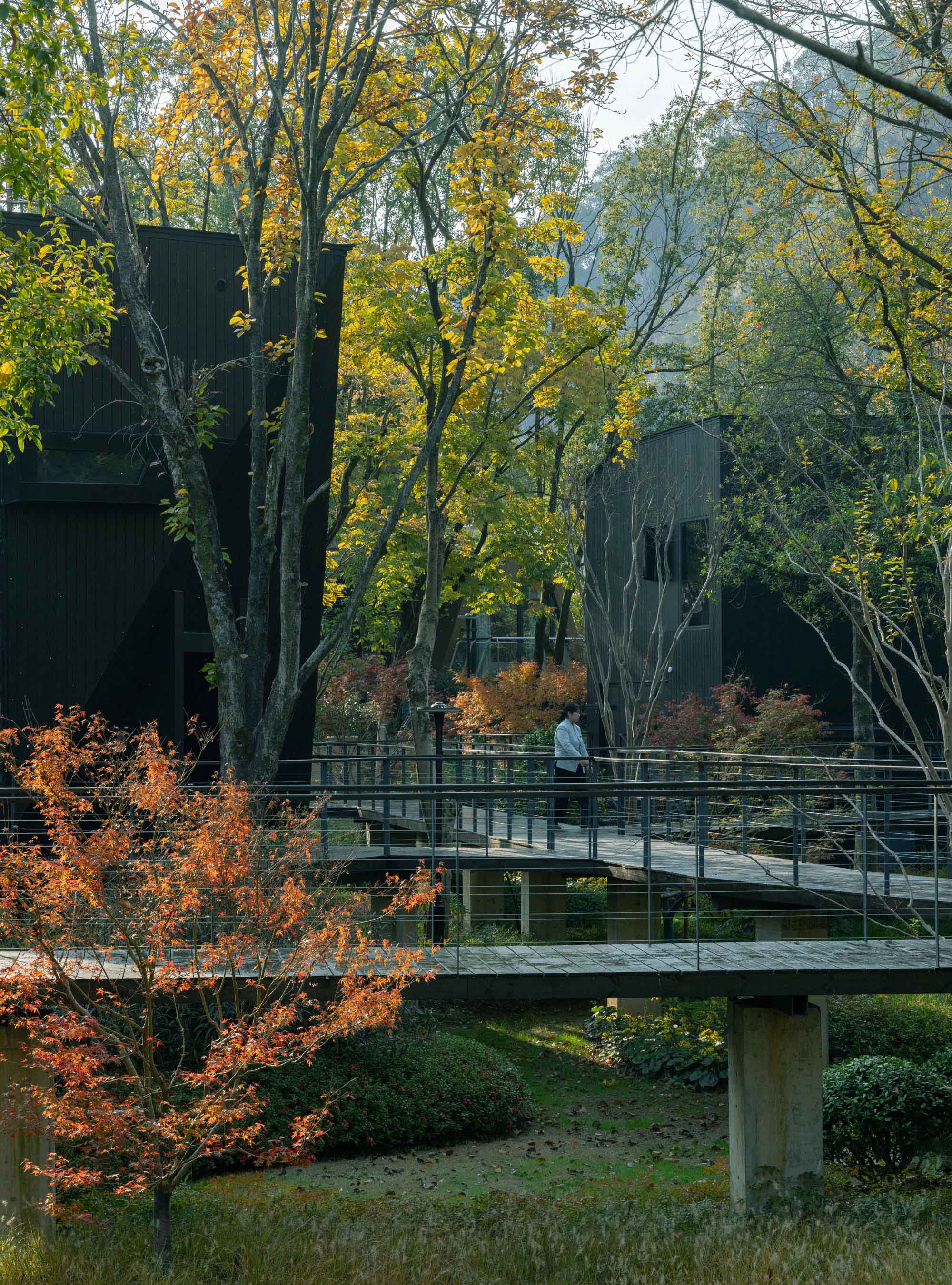
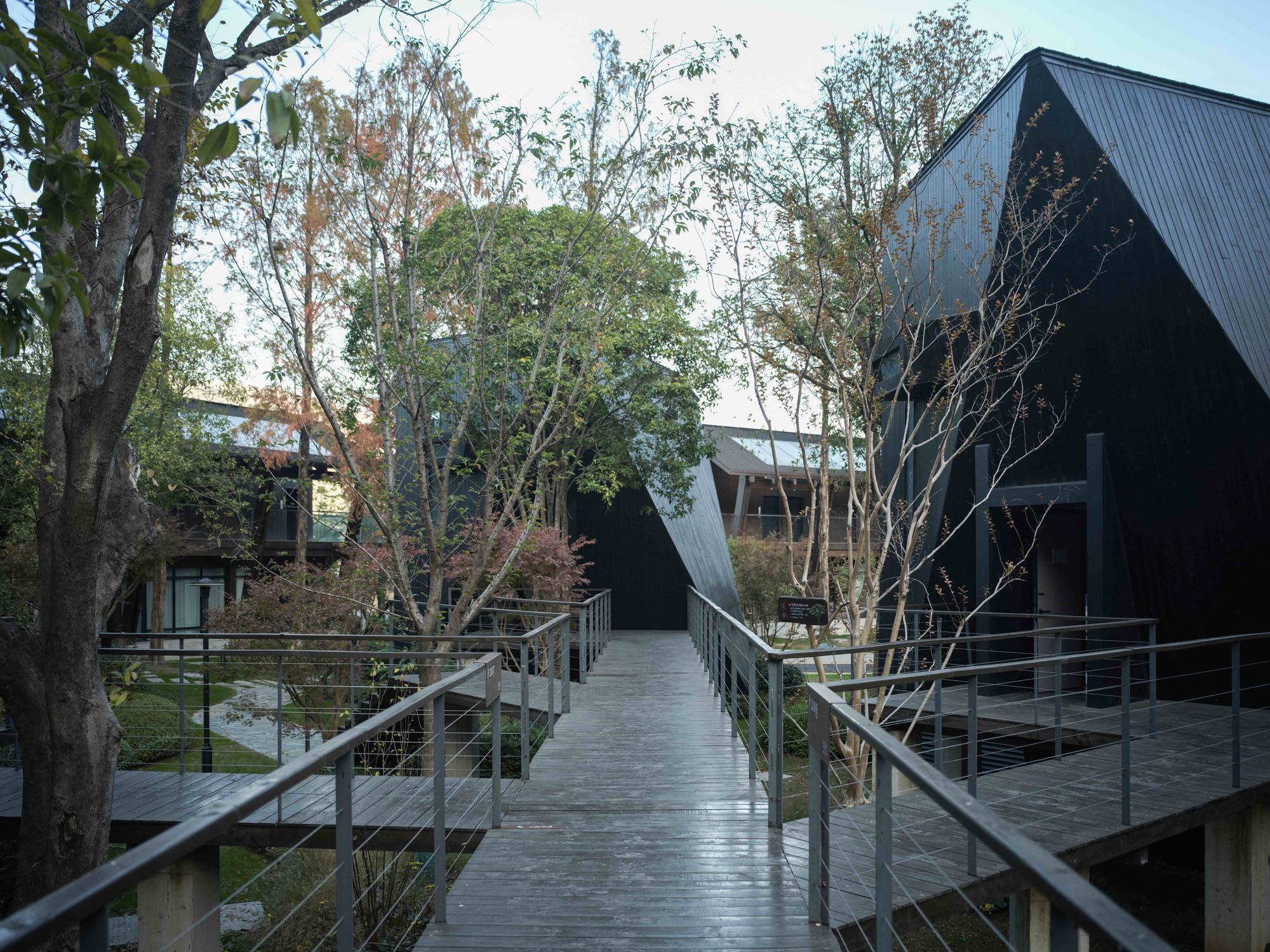
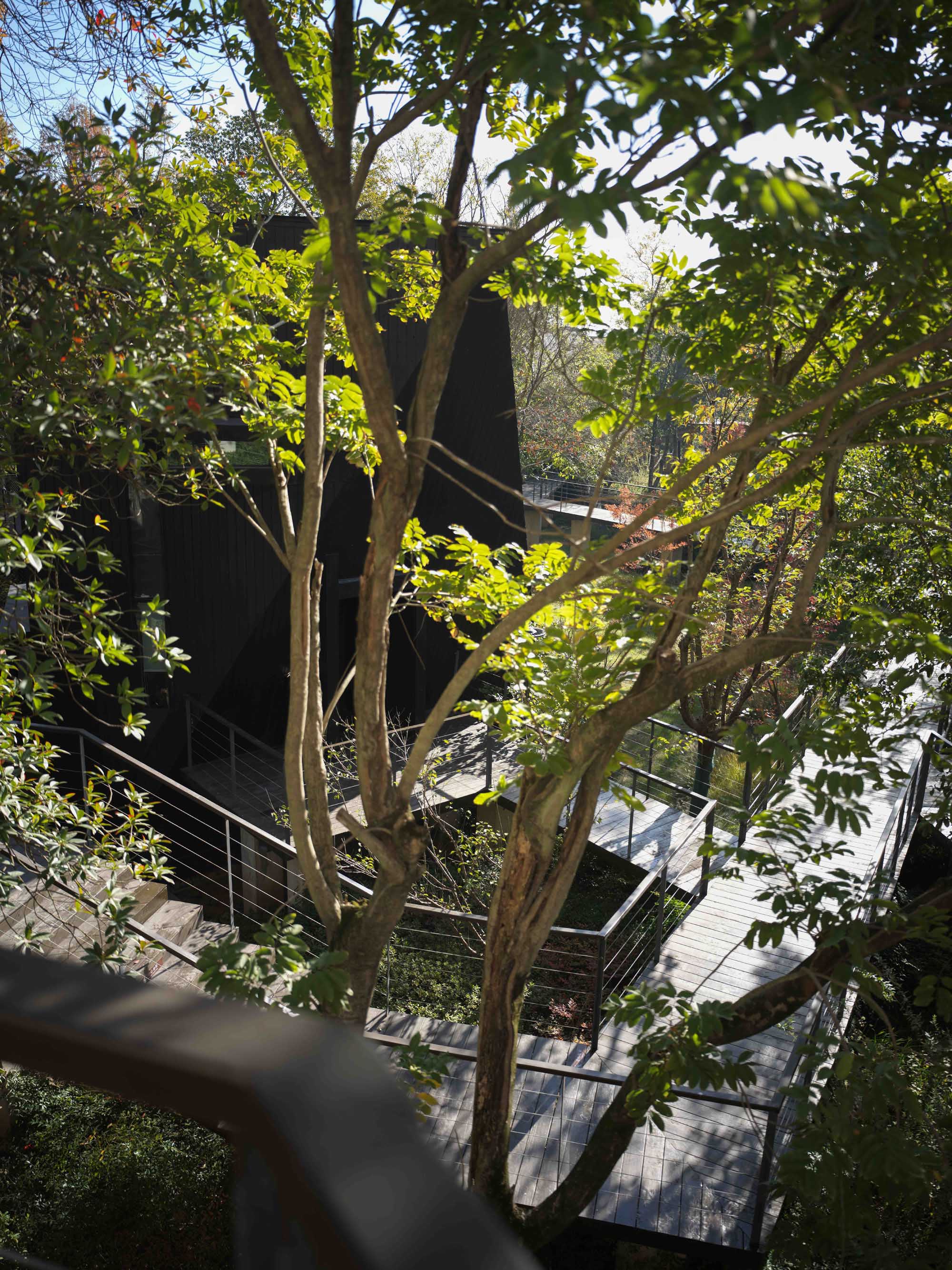
高架の歩道を歩くと、建物はまるでその場にテレポートしたかのように見える。それはまるで、さまざまな表情で凍りついた黒い精霊のようである。移動するにつれ、キャビンは断片的に姿を現す。閉じた傾斜した三角形の面、三角形と四角形で継ぎ合わされた表面、辺と辺が接する二つの三角形、純粋に直交する四角形の面。歩道が導く視点から眺めた小さなボリュームは、無限の数の面を持っているかのように見える。
© Su Shengliang
© Su Shengliang
森の有機性と建物の融合
森と黒いキャビンは、さらに複雑な相互作用を繰り広げている。森は逆三角形であり、その枝は力強くねじれた線として放射状に広がり、葉は季節ごとに斑模様を成して移ろい、その境界は曖昧である。一方、黒いキャビンはあらゆる自然の色彩の背後に溶け込んでいる。その形状は木々の有機的なフォルムによって部分的に覆い隠され、移ろいゆく影によって局所的に深みを増している。
遊歩道が織りなす旅路、キャビンと森が織りなすシルエット。これらすべてが融合し、生態系と知覚を目覚めさせる住まいのシステムを形成している。
©︎ SpActrum
©︎ SpActrum
©︎ SpActrum
©︎ SpActrum
© Su Shengliang
© Su Shengliang
© Su Shengliang
©︎ SpActrum
©︎ SpActrum
©︎ SpActrum
©︎ SpActrum
©︎ SpActrum
©︎ SpActrum
©︎ SpActrum
©︎ SpActrum
©︎ SpActrum
Site Photo ©︎ SpActrum
Site Photo ©︎ SpActrum
Site Photo ©︎ SpActrum
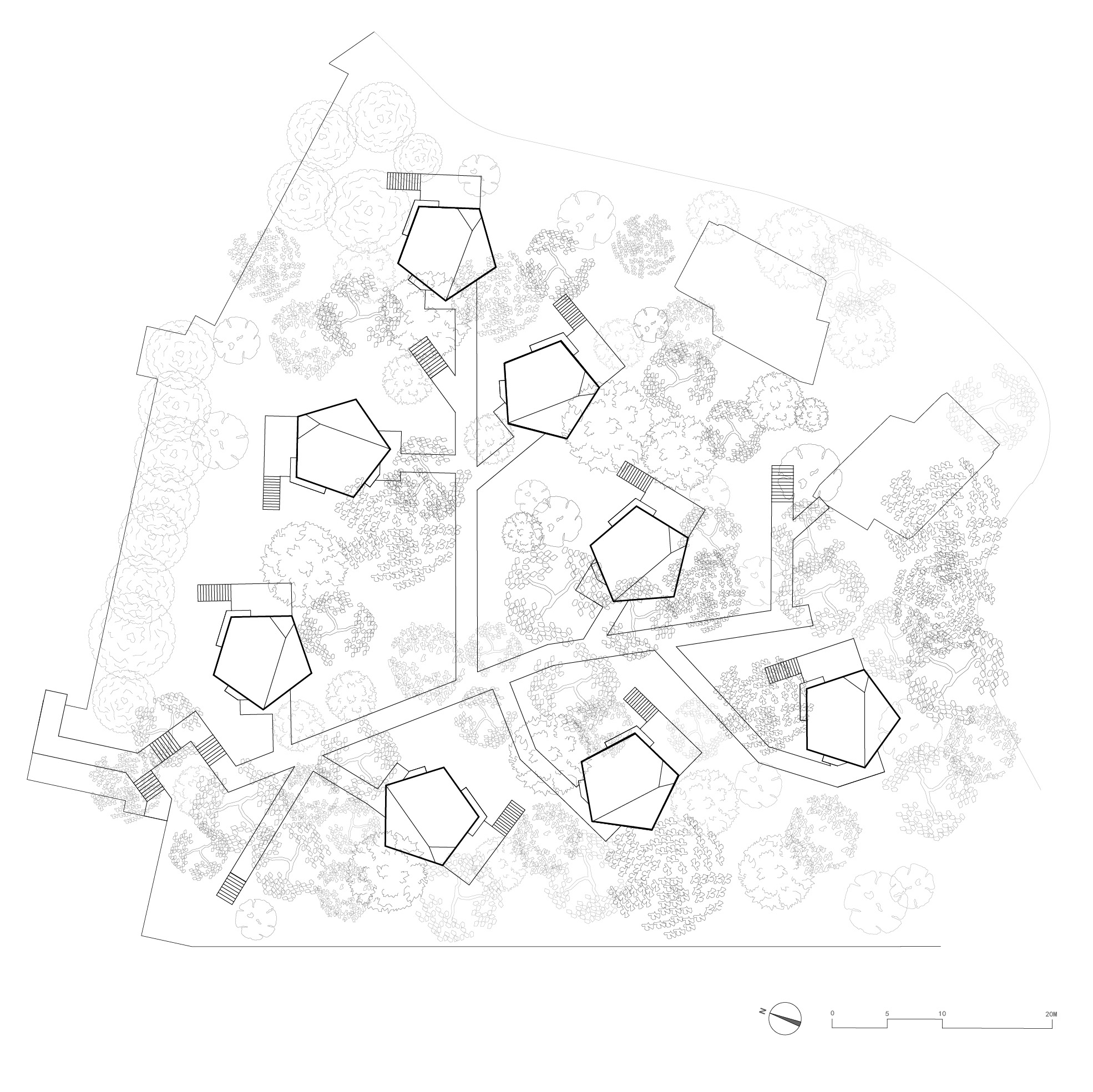
Site Plan
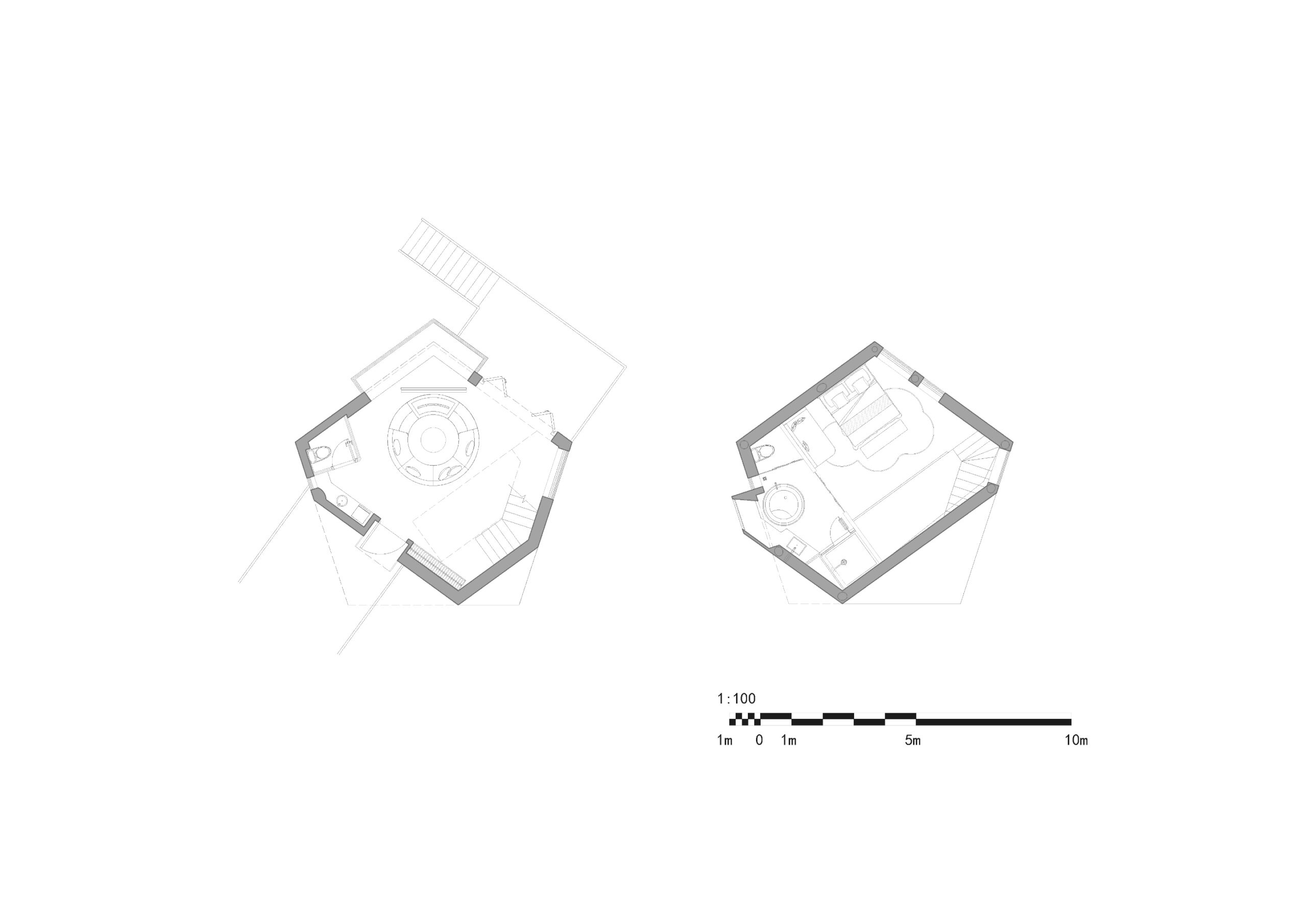
Plans
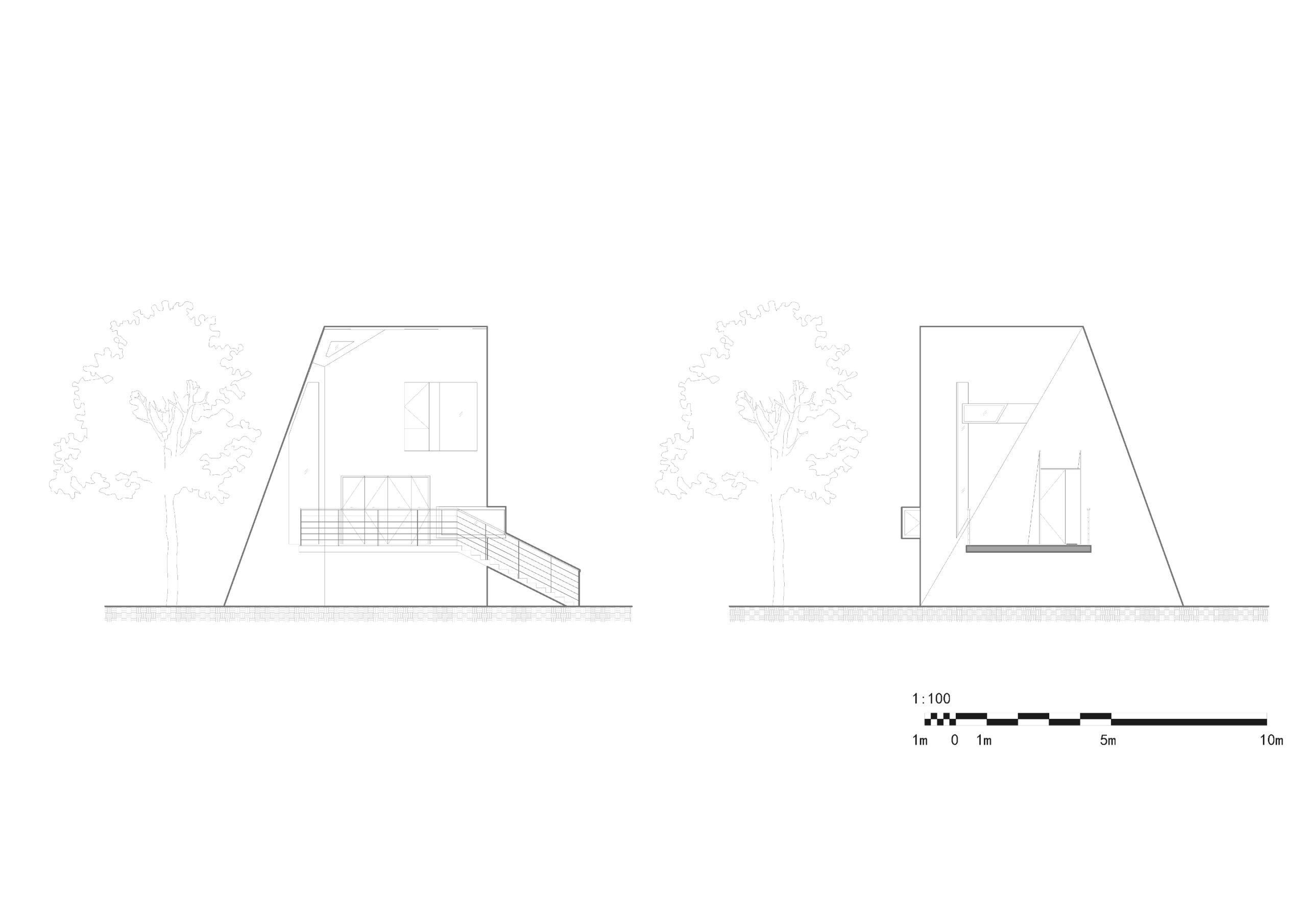
Elevations
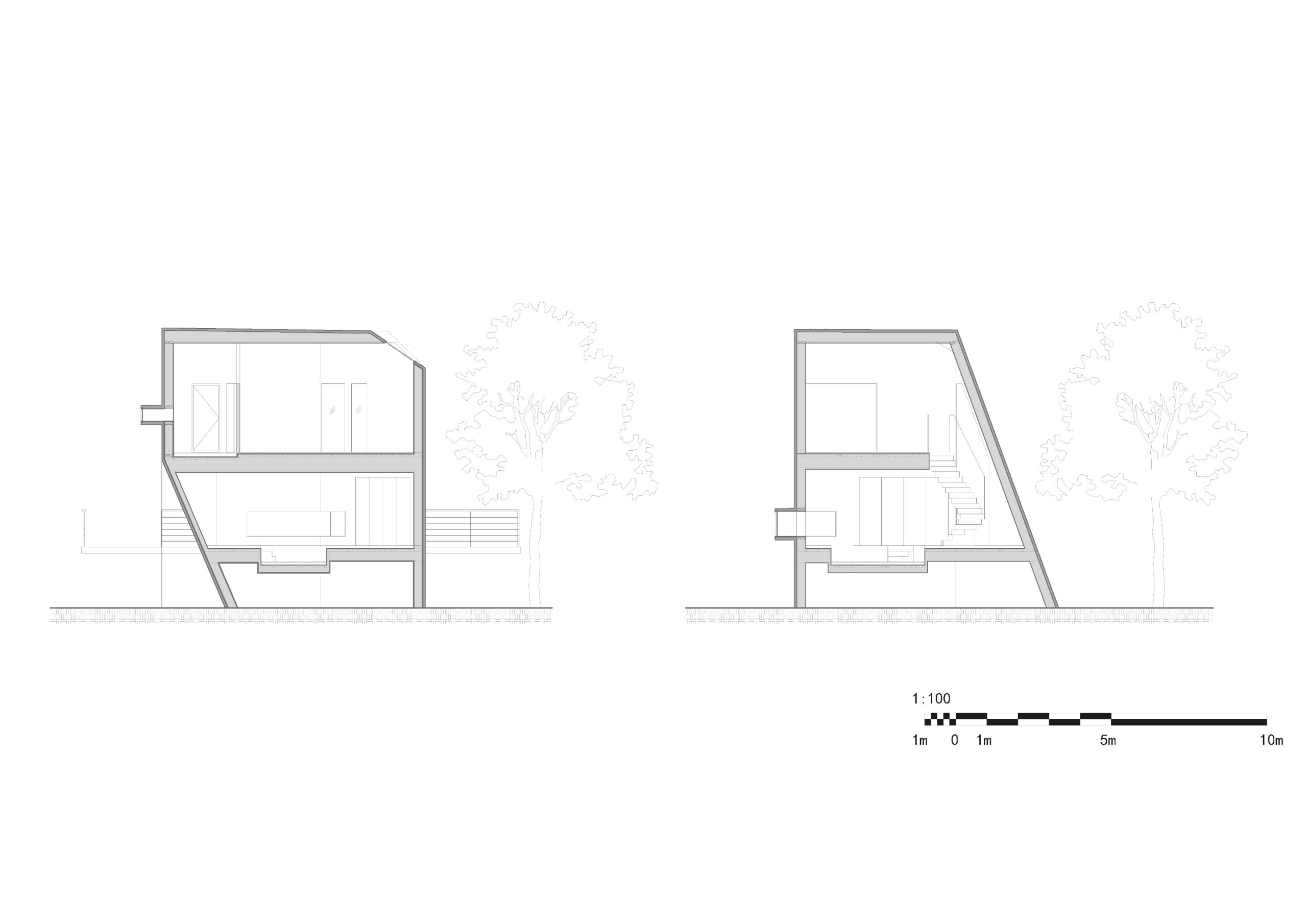
Sections
以下、SpActrumのリリース(英文)です。
Houses of Stealth
—— Faceted Spirits in the Native ForestText: SpActrum
Black, the colour of stealth.
The black cabins are based on pentagonal prisms, with two faces cutaway to create tension between discontinuous perceptions of one entity from each angle – a form of stealth.
By keeping a minimal footprint that preserves the original building’s position, and leaving the native forest largely intact, the elevated walkways maintain the continuity of the natural system without disturbance – ecological stealth.
The elevated walkway system, while consciously limiting human intervention, leads guests through the trees in search of the black cabin hidden among them. Stealth – returning to a verb.The Way of Stealth: A Renewal Strategy That Respects Coexistence with the Forest
Stepping on fallen twigs and withered leaves, walking beneath the raised walkways, the grass and moss continue their undulating rhythm across the terrain – this is the ultimate call of the site.
Since 2022, this landscape in Hangzhou Tonglu’s “Grandma’s Home” resort area has undergone its largest transformation since 1990. Over more than two decades of dramatic change in China, the meaning and outward forms of retreat have evolved enormously. Yet after careful site investigation, SpActrum concluded that while the original site strategy had failed in terms of specific forms and materials, the trees that have grown alongside the buildings over the past twenty years stood out as an effective, naturally grown site strategy.
Thus, SpActrum’s first task was to persuade the client to abandon any ambition for a “radically refreshed” or completely transformed look. Instead, they replaced the specific buildings, rebuilding the cabins and walkway systems with contemporary techniques, freeing the architectural language from any fixed “style.” Borrowing a term from Valerio Olgiati, this is a return to a “non-referential” state – confronting the site’s conditions directly to generate perception.
Guests walk along the pathways. The connecting walkway, built with a new light-weight steel-and-timber structure, are lowered to reduce any sense of risk, while still keeping the guest route separate from the ground. The height of walkway align with the cabin entrances; the cabins’ service spaces are hidden within the height between the entrance and the ground below. The ground remains a continuous ecosystem. The two systems intertwine and intersect, yet remain independent – undisturbed by each other. Beyond the necessary clearing for fire-access routes, the forest is preserved to the greatest extent possible. During construction, the architects even observed that falcon still inhabit the site.
Back to 2022 and the project was first conceived, protecting native trees, building with moderation, and fostering a more playful relationship between building and nature was still a rarely taken path when the real estate frenzy was just coming to an end. We are delighted to see that, over the years from design to completion, this approach has gradually become a conscious choice for many architects, as well as a strategy that people increasingly embrace and welcome.
The Form of Stealth: A Geometric Prototype that Breaks Architectural Uniformity
Under this strategy, the new black cabins replace the former Thai-style wooden lodges in situ. One challenge the design seeks to address: is architectural continuity always necessary? Can a single form be given multiple expressions through the simplest formal operations? The triangle is a simple geometry, enclosing the smallest space for a given perimeter. The quadrilateral, with double symmetry about both two axis and centre, is too much regulated and lacks developmental potential. The pentagon is the simplest form beyond these two, possessing one central axis of symmetry and one bilateral symmetry. From there, the design cuts into the volume – removing one corner toward the ground and another toward the sky – creating a Gömböc-like geometry that oscillates between instability and stability,giving the still form a tentency of movement. The form achieves a tense balance between motion and stillness.
On this faceted geometry, window openings are arranged in series, mainly distributed across vertical planes. The apertures aim to maximise the internal dimensions of the interior. The vertical glazing facing the double-height void appears as narrow slits, while the horizontal glazing facing the sunken seating area extends outward, transforming the forest outside into scrolls and panoramic landscapes. On the second floor, the window facing the bed separates daylight and ventilation – leaving the outward-viewing glazing pure and unobstructed, while integrating the ventilation window into a larger window system. The bathroom window aligns with the line of sight when lying in the bathtub; a protruding horizontal element outside restricts the view, allowing only outward glances from inside while preventing any view in from the outside.
The cabin has two doors. One is set into the slanted entry face, framed by an H-shaped structure that emphasises the doorway against the recessive dark body of the house. The other door opens onto a private terrace and can be swung open wide, allowing the interior to merge with the terrace in suitable weather.Forest, Walkways, Black Cabins: A Resonant Perception Generator
The visual relationship between the walkways and the cabins become a device that reveals the cabins’ non-continuity. The orientation of each cabin is calibrated to minimise mutual sightlines with neighbouring cabins and surrounding buildings while maximising privacy.
Walking along the raised paths, the buildings seem to teleport into place – black spirits frozen in different expressions. As one moves, the cabins reveal themselves in fragments: a closed, sloping triangular face; a surface pieced together by triangles and quadrilaterals; two triangles meeting edge to edge; a purely orthogonal quadrilateral face. A small volume, seen from the perspective guided by the walkway, appears to possess an infinite number of facets.
The forest and the black cabins engage in an even more complex interplay. The forest is an inverted triangle – its branches radiate as vigorous, twisting lines; its leaves form dappled, shifting patches with the seasons; its boundaries are blurred. The black cabins, in turn, are immersed behind every natural tone. Their shapes are partially obscured by the organic forms of the trees, deepened locally by shifting shadows.
The journey orchestrated by the walkways, the interwoven silhouettes of cabins and forest – all of this coalesces into an ecological, perception-awakening dwelling system.Project information:
Project name: Houses of Stealth (Tonglu Senbo Resort)
Client: Tonglu Tourism Investment, Kaiyuan Cultural Tourism
Location: Tonglu, Hangzhou
Site area: 5,740 sqm
Building area: 705 sqm
Completion date: 2026. 01
Architecture design & site planning team: SpActrum
Lead architect: Yan Pan
Architecture design team members: Yijie Zhang, Ning Guo, Yue Zhang, Jinyu Wan, Zhen Li, Yimeng Tang
Preliminary design: Shanghai Zhongsen Architecture & Engineering Design Consultants Co., Ltd.
Construction drawing design: China United Engineering Corporation Limited
Landscape design: Zhejiang Andao Design
Landscape design team members: Ting Mao, Sihan Liu
Interior design: Hangzhou Pan Tianshou Environmental Art Design Co., Ltd.
Constructor: Zhejiang Third Construction Group Co., Ltd.
Photography: Su Shengliang, Yan Pan, Jinyu Wan
Video shooting & production: SpActrum
SpActrum 公式サイト
http://spactrum.com/