A FABRiCA architetturaらが設計した、フランス・バラーニュの風景に溶け込む文化施設〈Spaziu Davia Franceschini〉
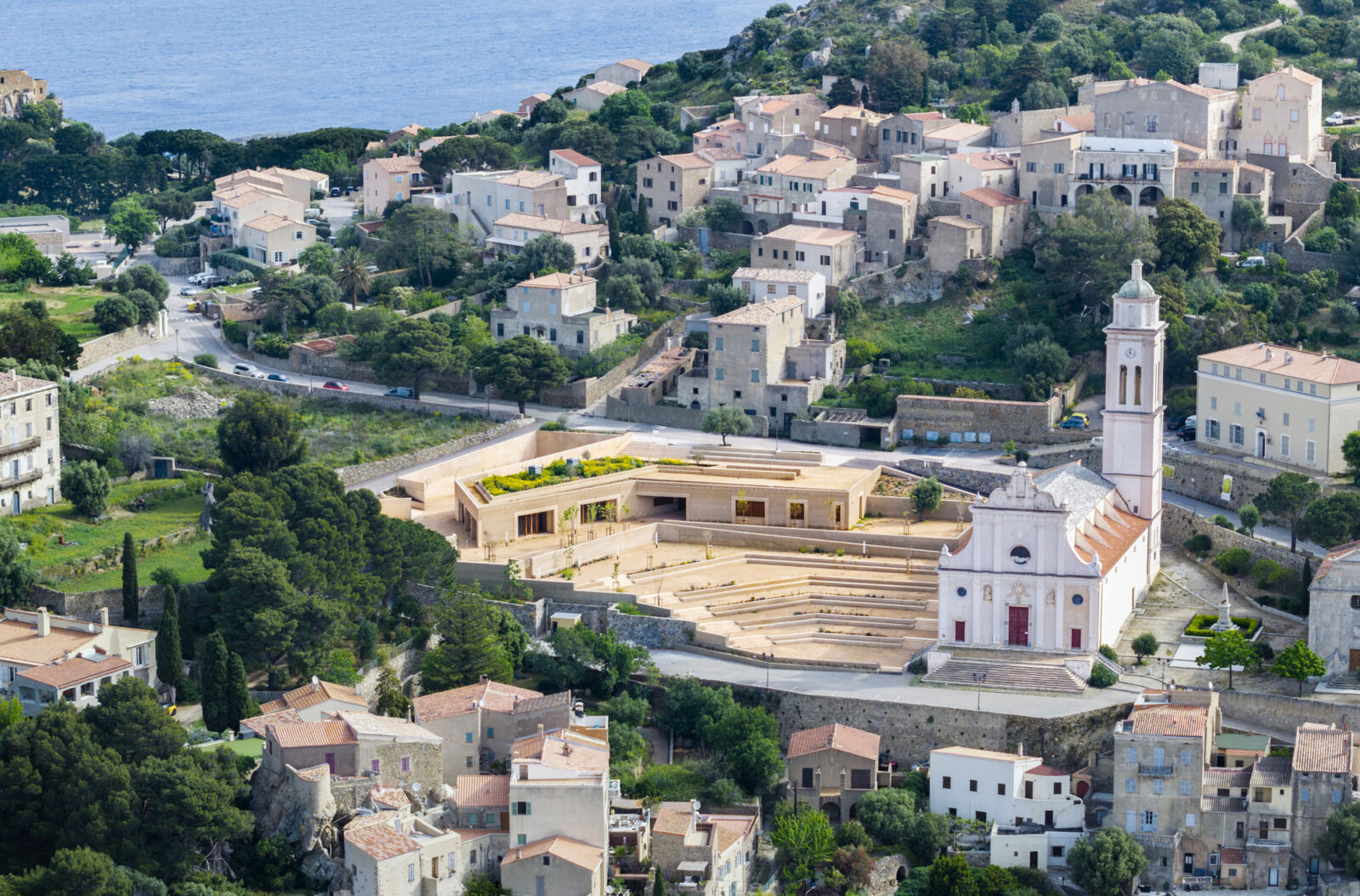
フランス・バラーニュのコルバラに位置する〈Spaziu Davia Franceschini〉は、A FABRiCA architettura(リードアーキテクト)とCGZ architectes(アソシエイトアーキテクト)が設計を手がけた文化施設です。
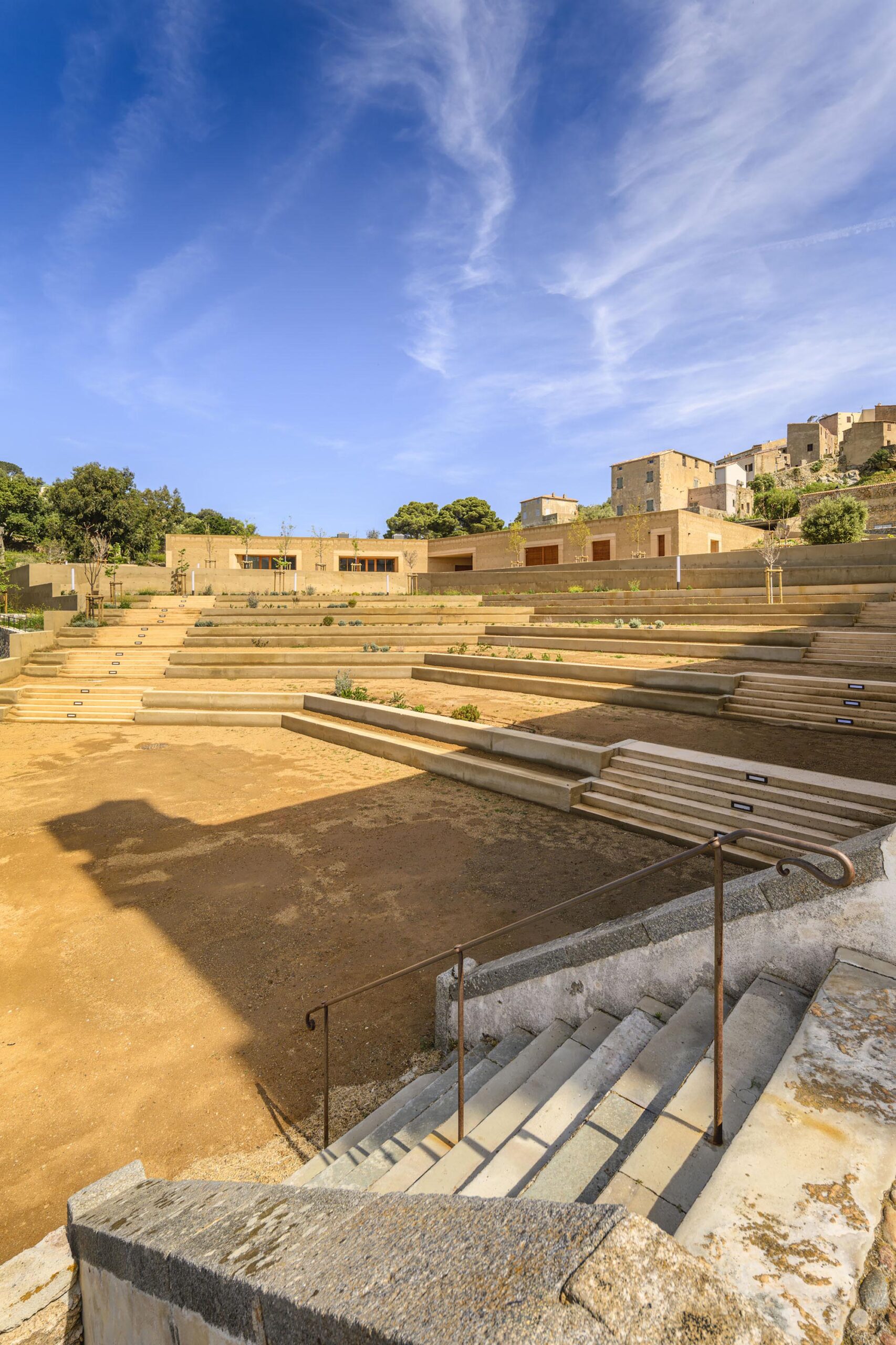
雄大な景色と隣接する教会という環境に対し、「消し去ること」を選択することで風景に溶け込みつつ地面を拡張する建築として設計されています。
注目ポイント
- 風景と同化する「再構築された地形」
- 村の散策路を延長するパブリック・ルーフ
- 段々畑の記憶を受け継ぐテラス
(以下、A FABRiCA architetturaから提供されたプレスキットのテキストの抄訳)
©︎ Antoine Mangiavacca
風景へと溶け込み地面を拡張する建築
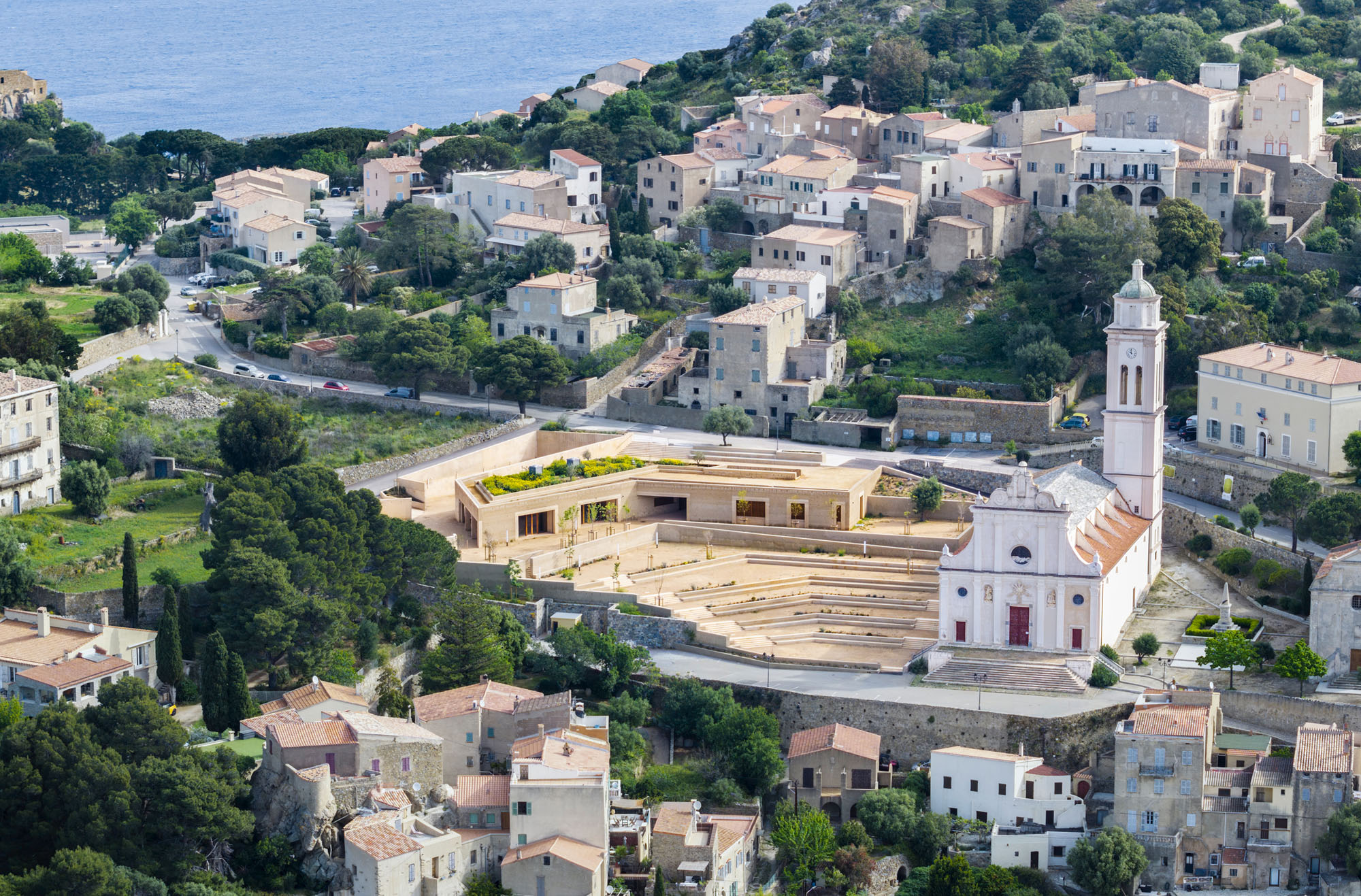
受胎告知教会とバラーニュの風景を前にして、このプロジェクトは自らを誇示するのではなく、周囲へと消し去ることを選択した。古い村の記憶、特有の地形、そして教会がもつ象徴的な力が刻まれたこの繊細な敷地において、目的は新たな建築物を付け足すことではない。地面を拡張し、斜面を露わにしながら、土地の連続性を生み出すことにあった。
このプロジェクトは、建物を風景の中に溶け込ませることで、その場所がもつ本来の魅力をより鮮明に浮かび上がらせるという意図から生まれている。
©︎ Antoine Mangiavacca
©︎ Antoine Mangiavacca
地域に根付く段々畑の記憶
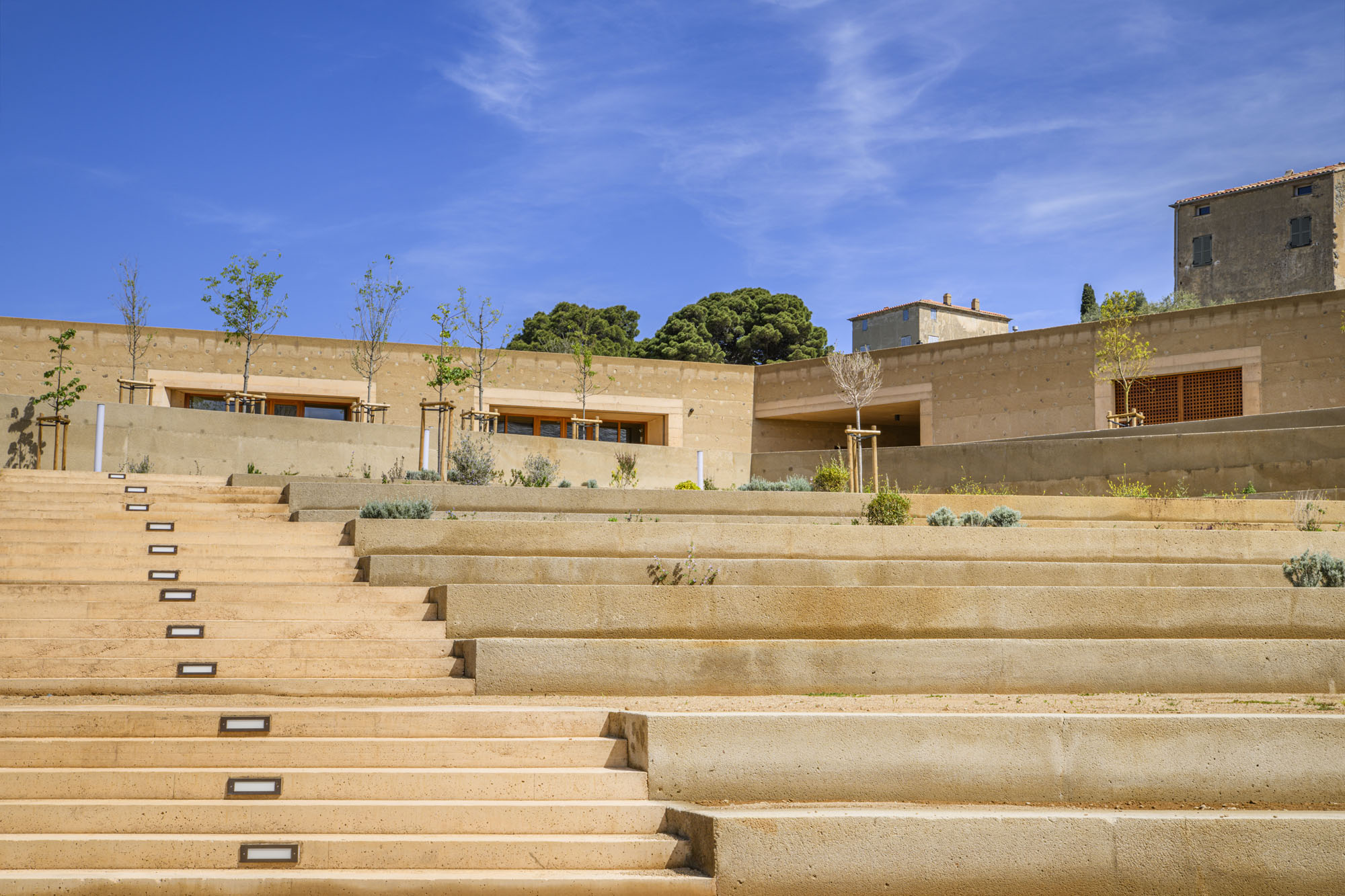
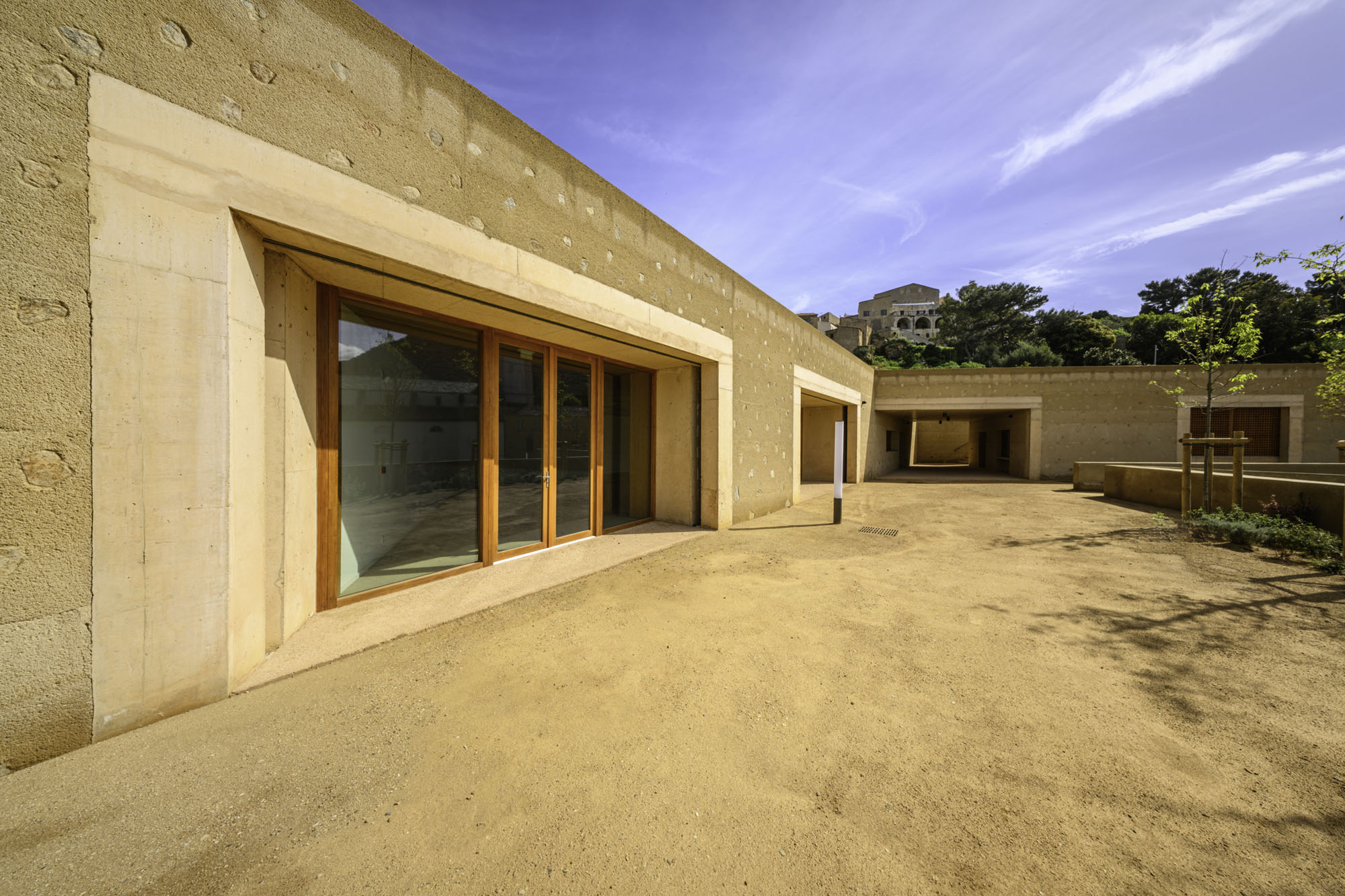
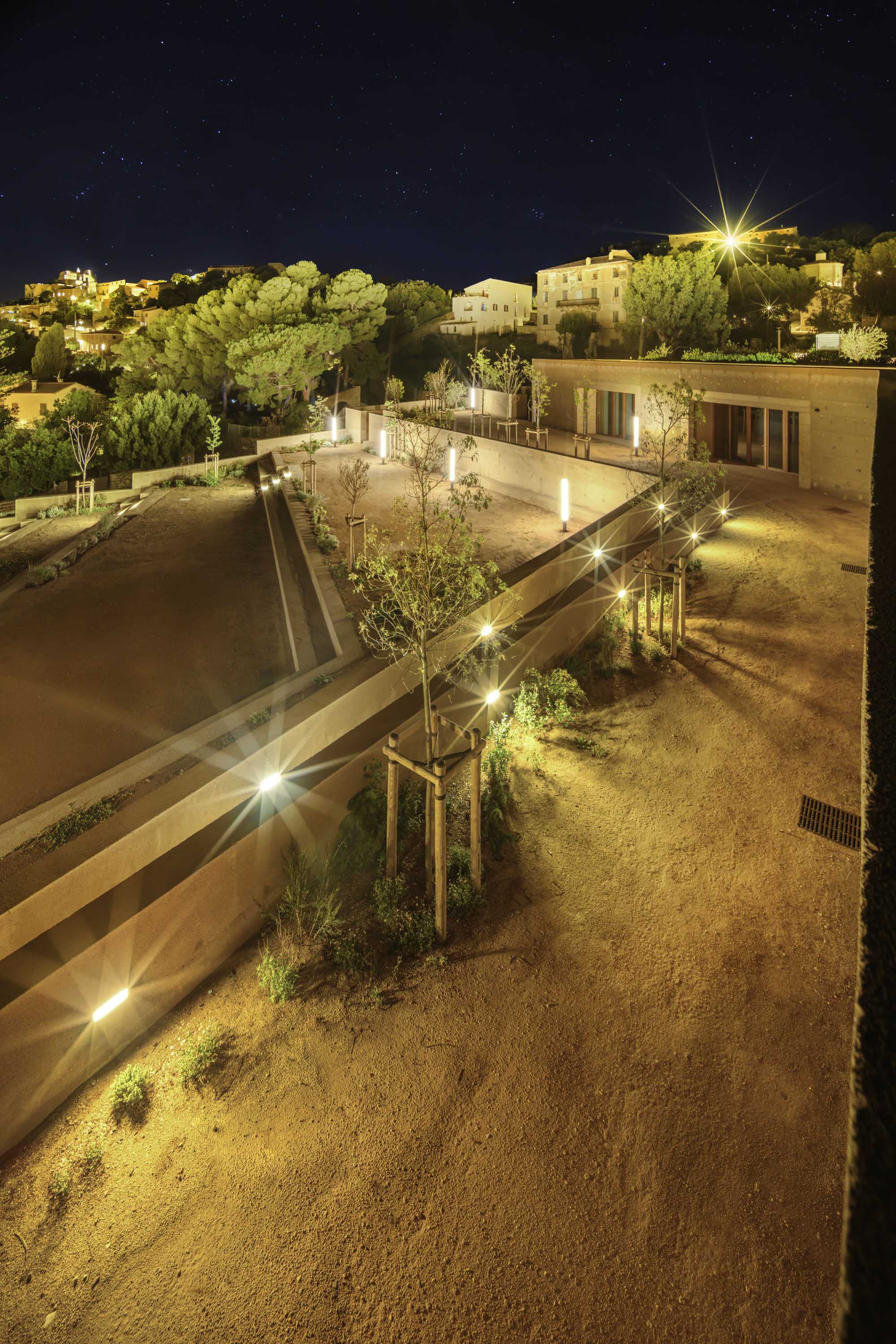
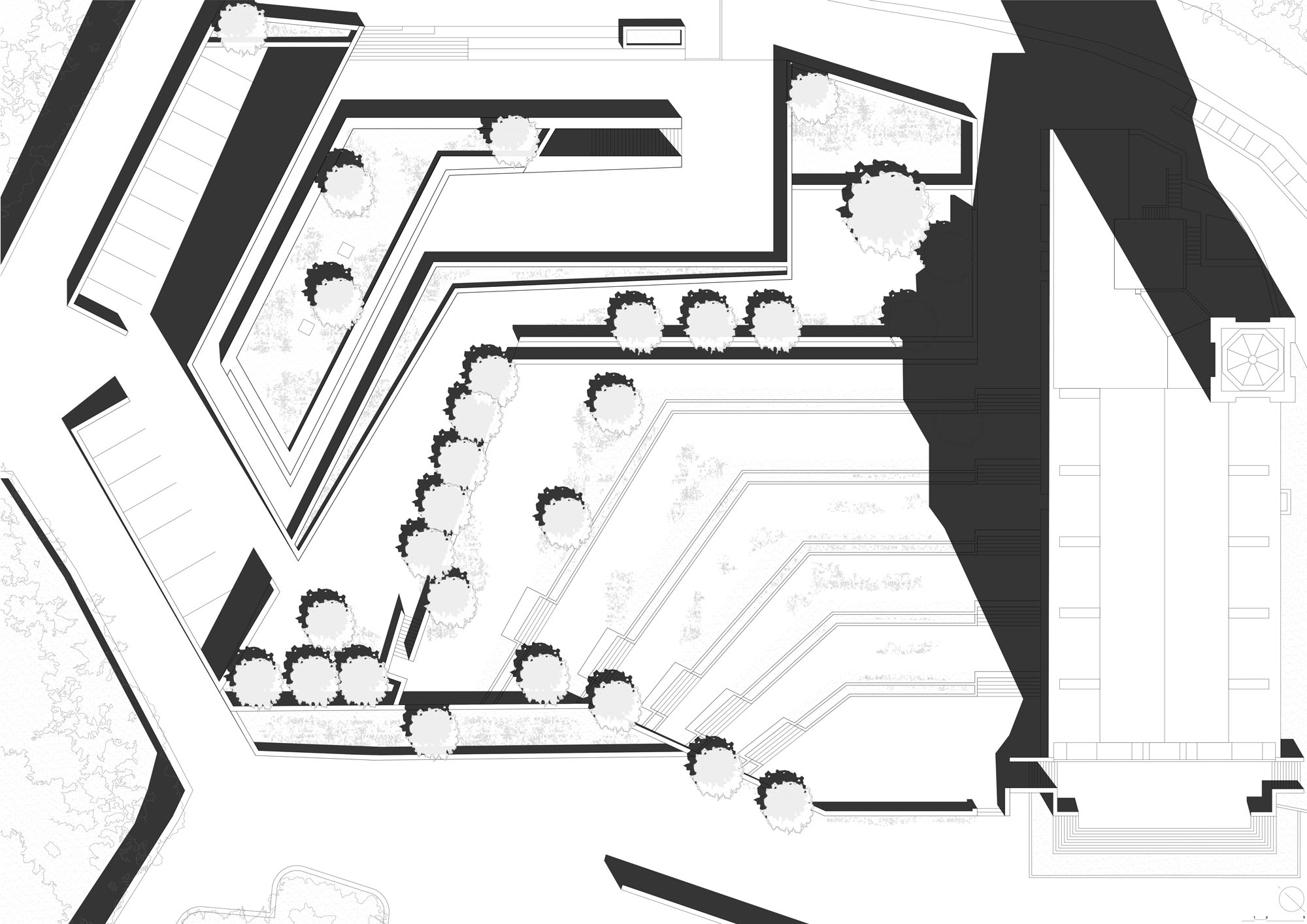
この文化施設は、狭い路地、壁、敷居、階段、そしてバラーニュの丘陵地帯を形づくってきた農業用テラス(段々畑)からなる、すでに人々の生活が息づく地理的環境の中に位置する。かつて耕作されていたこれらの連続するテラスは、急な斜面を有効に活用できるようにし、人の手によって豊かな景観を形成してきた。ここでのテラスは、単なる形式的なデザインの参照ではない。包み込み、支え、寄り添い、そして枠組みを与えるという、配置における根本的な原則として機能している。
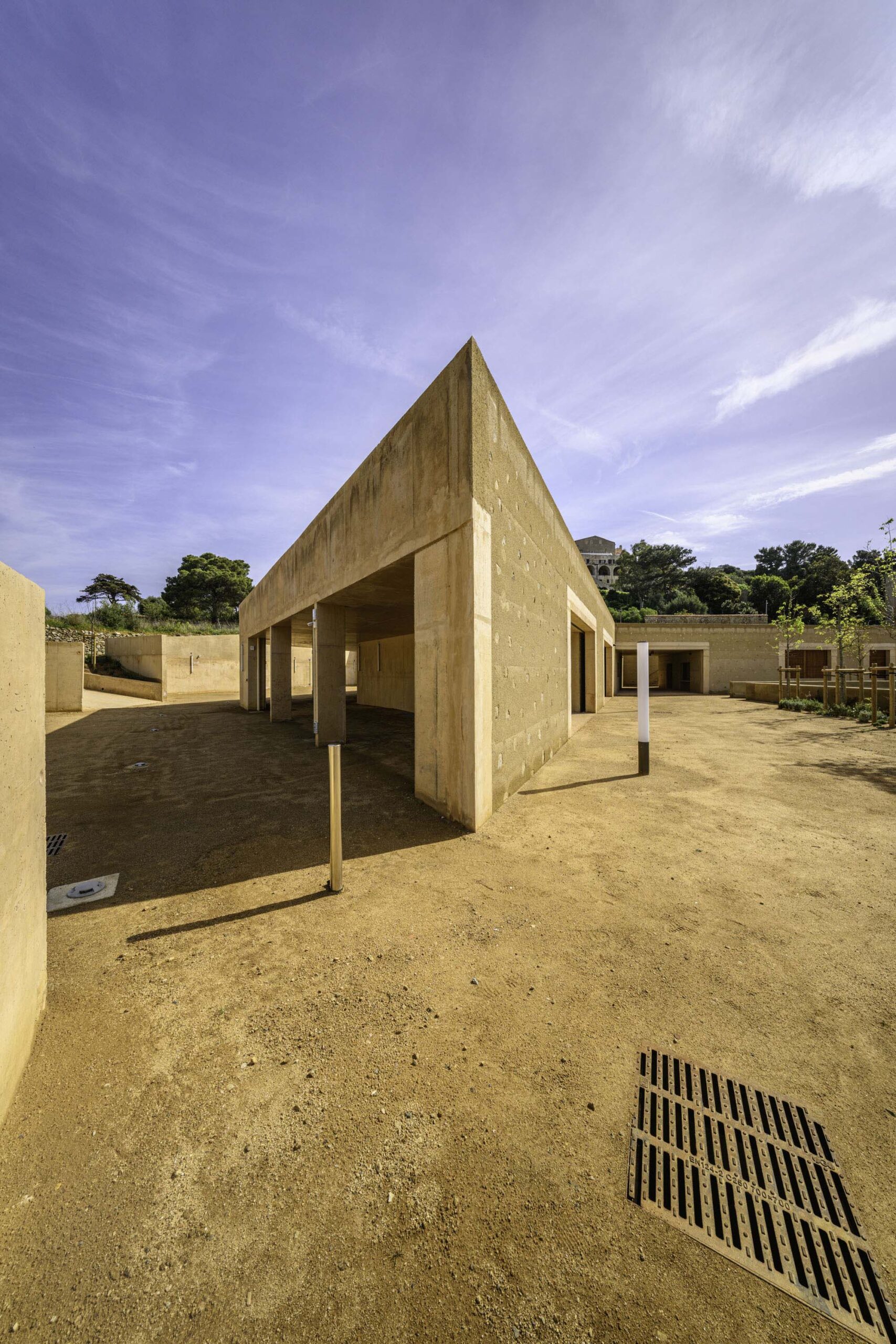
したがって、建物は再構築された地形として展開する。大地が折り重なり、自身へと折り返されることで、そのまま建築へと昇華されているのである。擁壁、囲い、居住空間としてのファサード、そして展望台を交互に兼ね備えたこの構造は、村の境界線をそのまま延長し、建物と景観の境界を意図的に曖昧にしている。
©︎ Antoine Mangiavacca
村の散策路とつながる、新たな動線
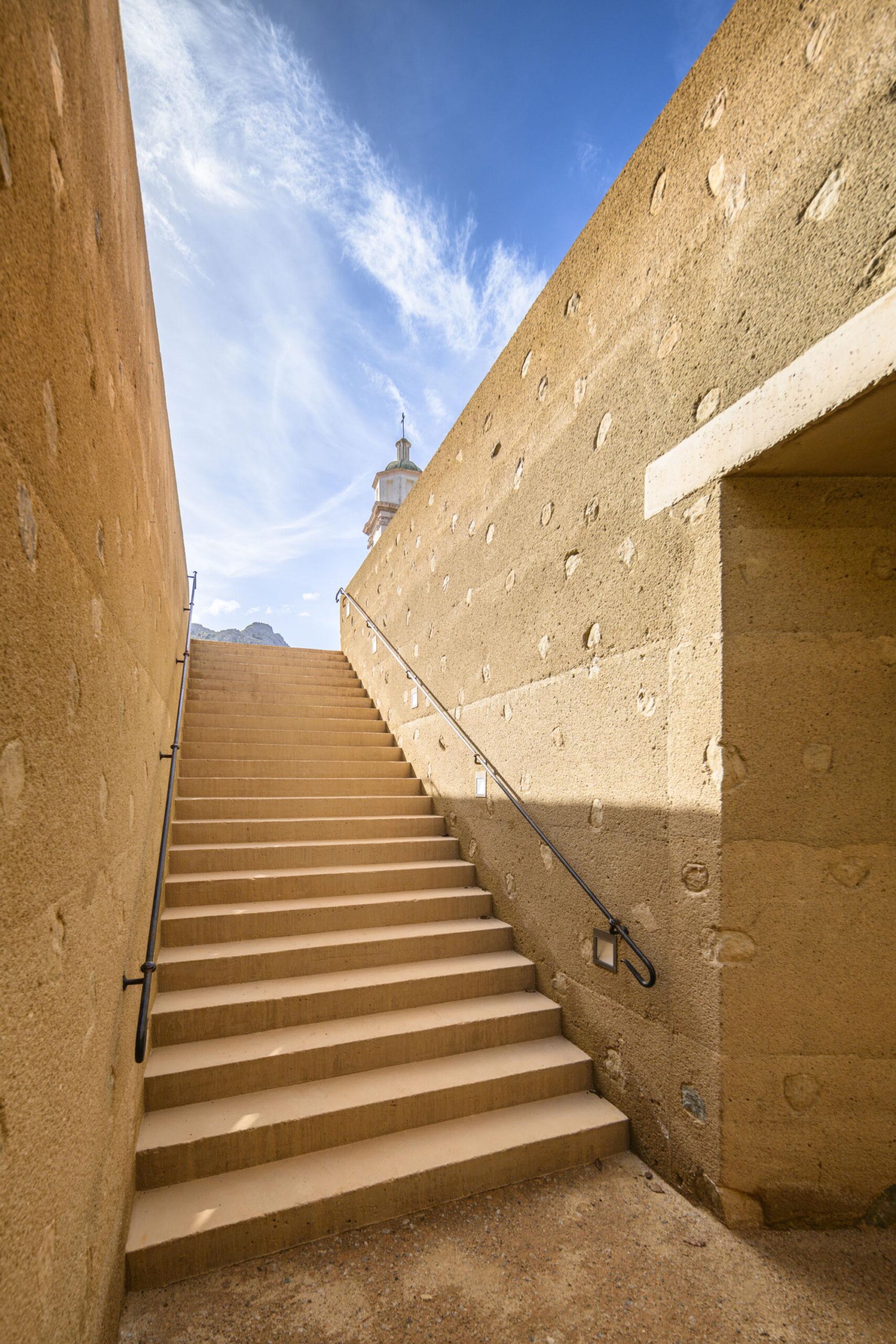
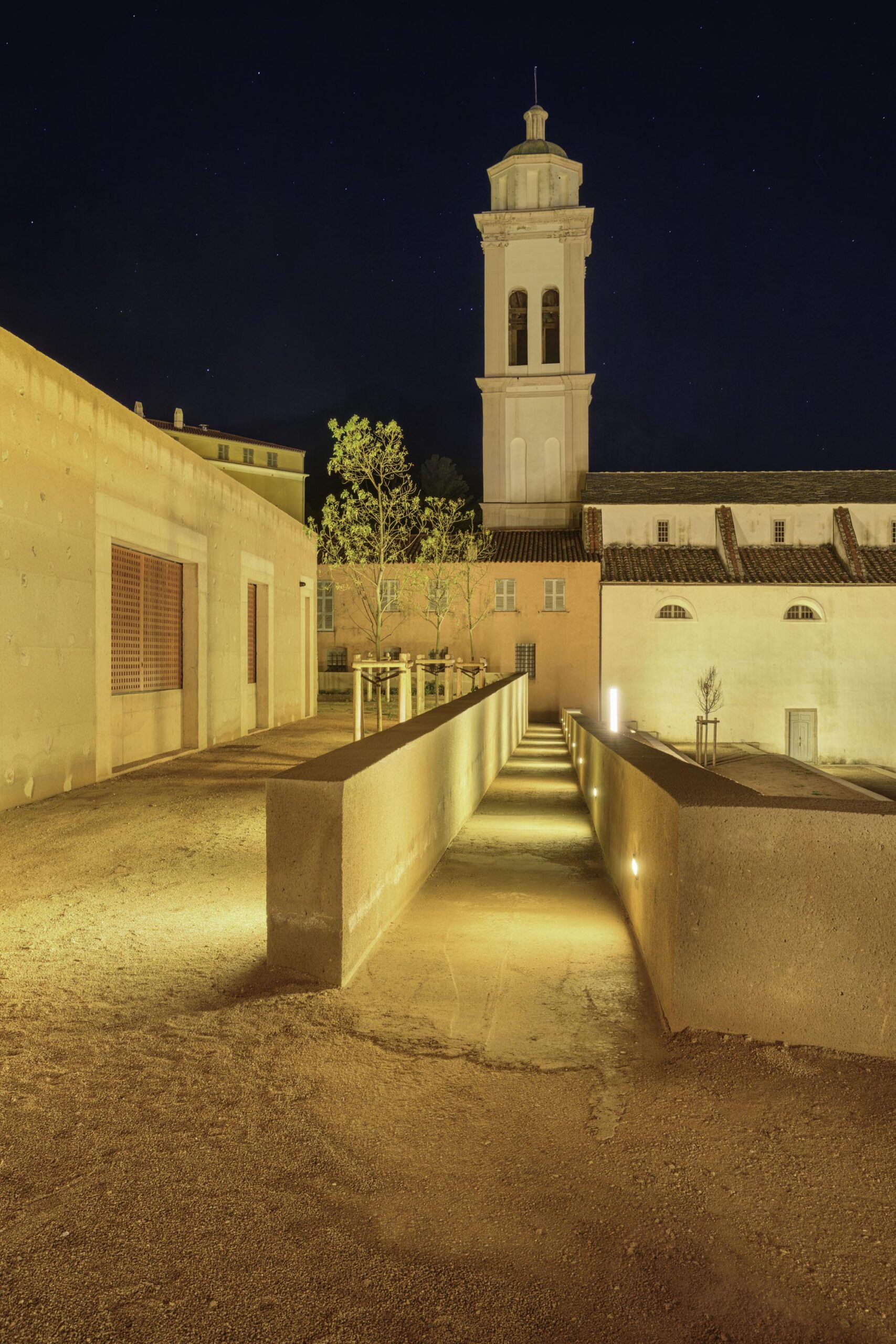
敷地の上部では、屋根が公共の広場となり、この地域を一望できる展望の場として機能する。ここに配された小道は村の散策路をそのまま延長したものであり、既存の狭い路地、教会の前庭、造園されたテラス、そして野外劇場を軽やかにつなぎ合わせる。このプロジェクトは、孤立した目的地として存在を押し付けるのではない。人々が行き交う通り道となり、村の散策路における新たな一連の流れを生み出している。
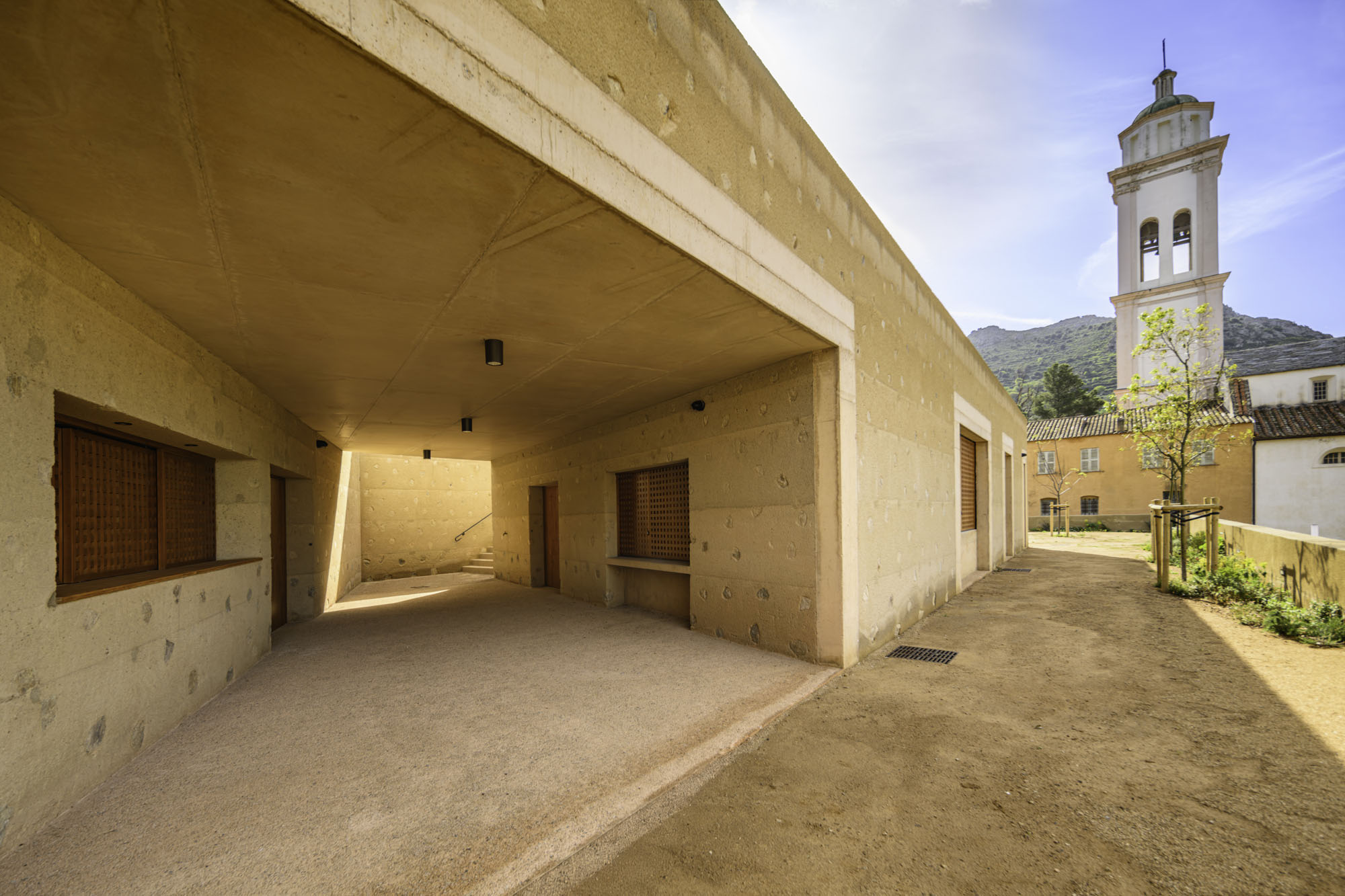
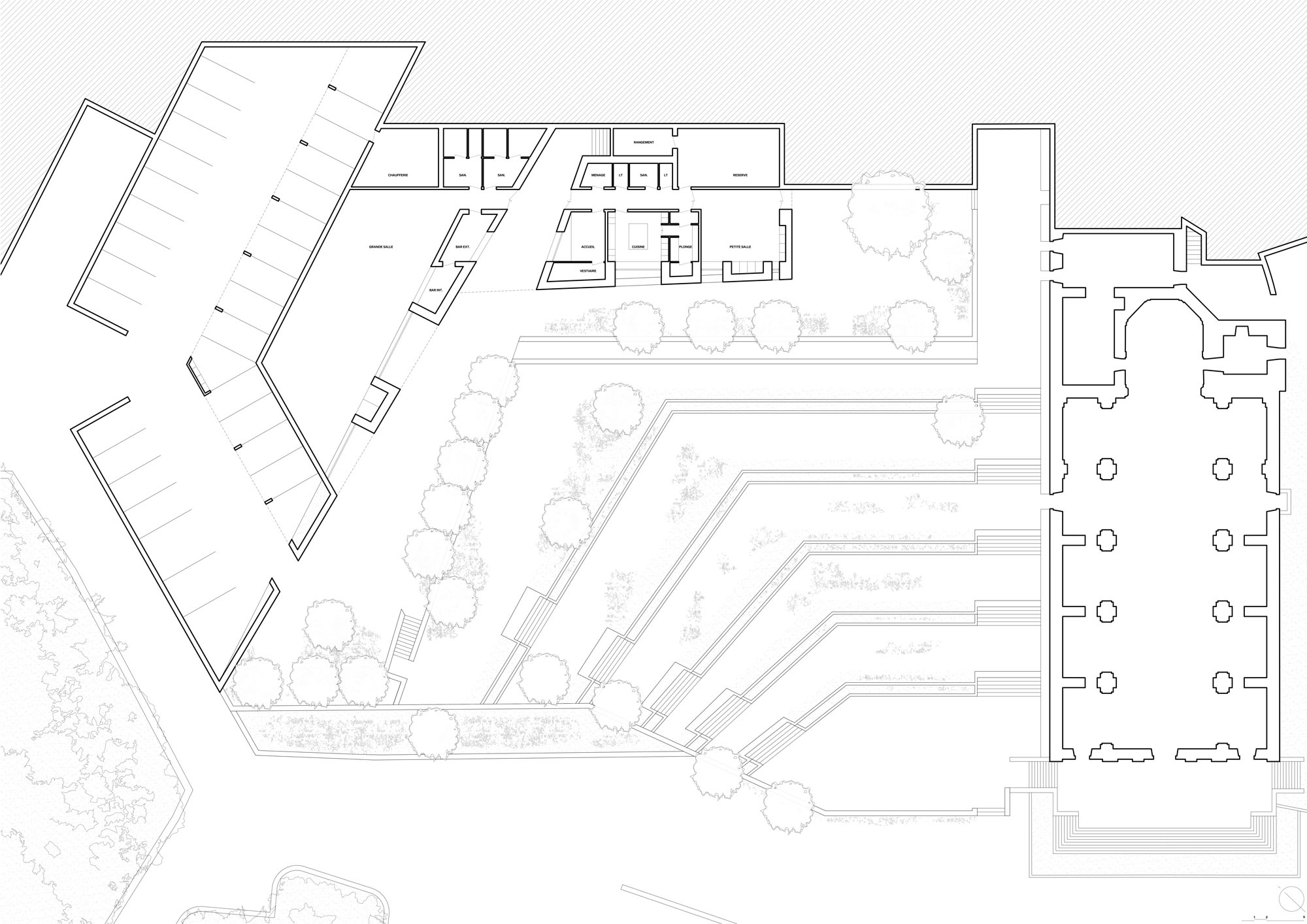
この「挿入」の論理は、内部空間の構成にも貫かれている。急勾配の敷地であるにもかかわらず、建物は完全に単層構造として計画された。空間を横切り、全体を構造化する開放的な通路を中心に展開している。この内部通路は、施設内の各機能へアクセスする動線となるだけでなく、村のルートを施設の中心部へと引き込む役割も果たしている。
©︎ Antoine Mangiavacca
©︎ Antoine Mangiavacca
多用途に応える空間設計と、土地に根ざした素材感
外部へと広く開かれたメインホールは、教会と周囲の景観に向かって配置されている。多目的スペースとして設計されたこのホールは、式典、展示会、セミナー、あるいは村のイベントなど、多様な催しに対応可能である。サービスエリアはこの明快な構造の周囲にシンプルに配置されており、建物が年間を通じて様々な用途や季節に柔軟に適応できるよう配慮されている。
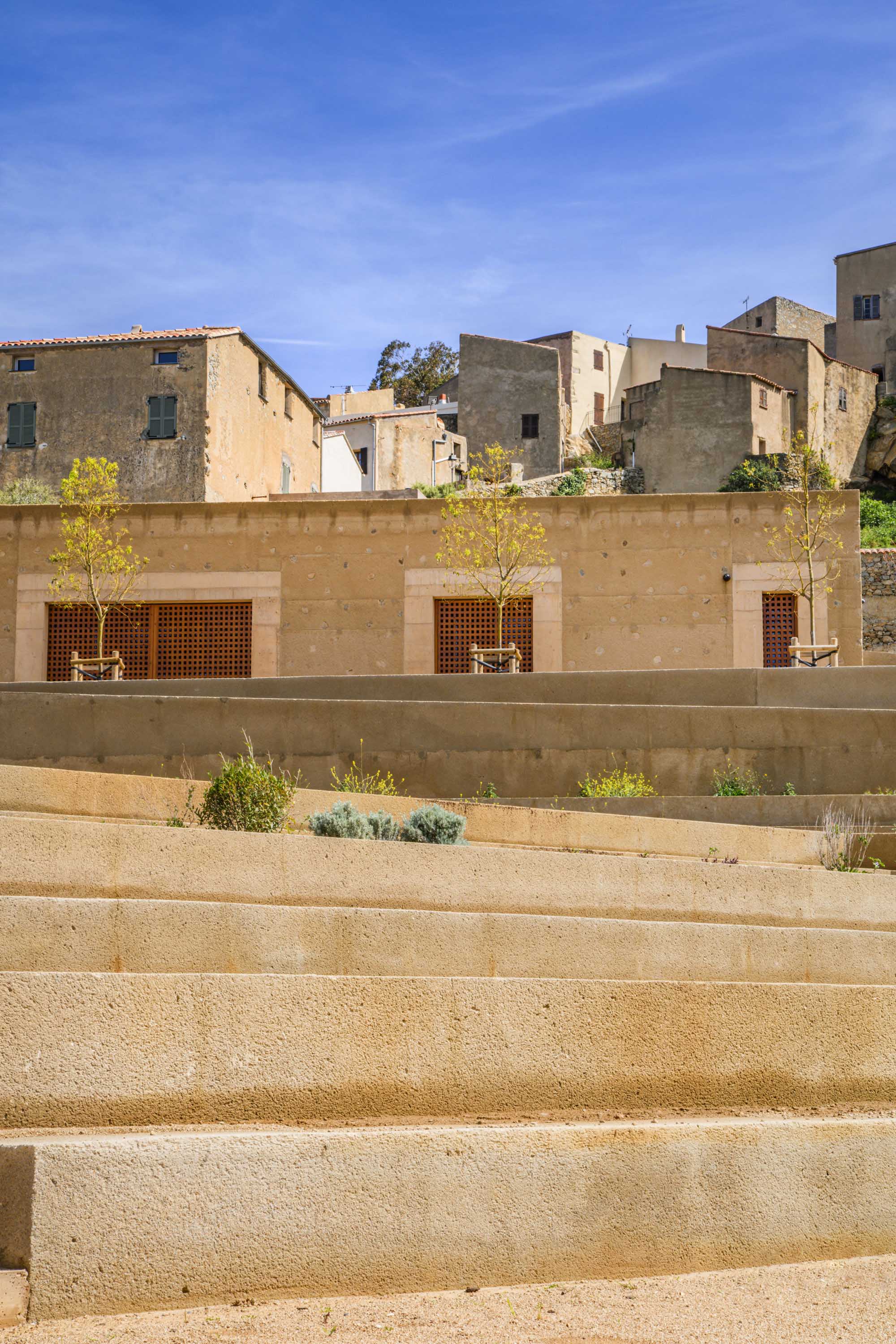
この建築が追求しているのは、抑制された控えめな存在感である。その重厚で鉱物的な質感は、この土地に古くからある擁壁や民家、農業用建造物を想起させる。現場打ちコンクリートでつくられた建物は、地面やテラス、周囲の建造物の色調をそのまま引き継いでいる。
ファサードは、地面にしっかりと根を下ろし、大きな開口部が穿たれた厚い壁として構想された。窓枠、敷居、まぐさといった要素は、現代的で静密な建築言語を通じて、村の伝統的な家屋がもつモノリシックな要素を再解釈したものである。
©︎ Antoine Mangiavacca
©︎ Antoine Mangiavacca
光がつむぐ、土着と現代の融合
内部と外部のいずれにおいても、このプロジェクトは空、教会、村の家々、段々畑、そして遠くの風景へと向けられた一連の「額縁」のような美しい眺めを構成している。ここでは光もまた構成の素材であり、壁の厚み、敷居の奥行き、そして公共空間、造園空間、居住空間の間に存在する連続性を鮮やかに浮き彫りにする。
この文化センターは、土着的でありながらも極めて現代的な建築として構想されている。それは過去の単純な模倣ではない。斜面と調和して建てること、大地と共生すること、眺望を守ること、動線を拡張すること、そして村に新たな共有空間をもたらすことという、その場所が持つより深い論理を再解釈した結果である。
控えめでありながら、確かに人々が暮らす風景の一部となる建築。それは、その場所の価値を明らかにしながら、その土地へと誠実に奉仕している。
©︎ Antoine Mangiavacca
©︎ Antoine Mangiavacca
Site Plan
Plan
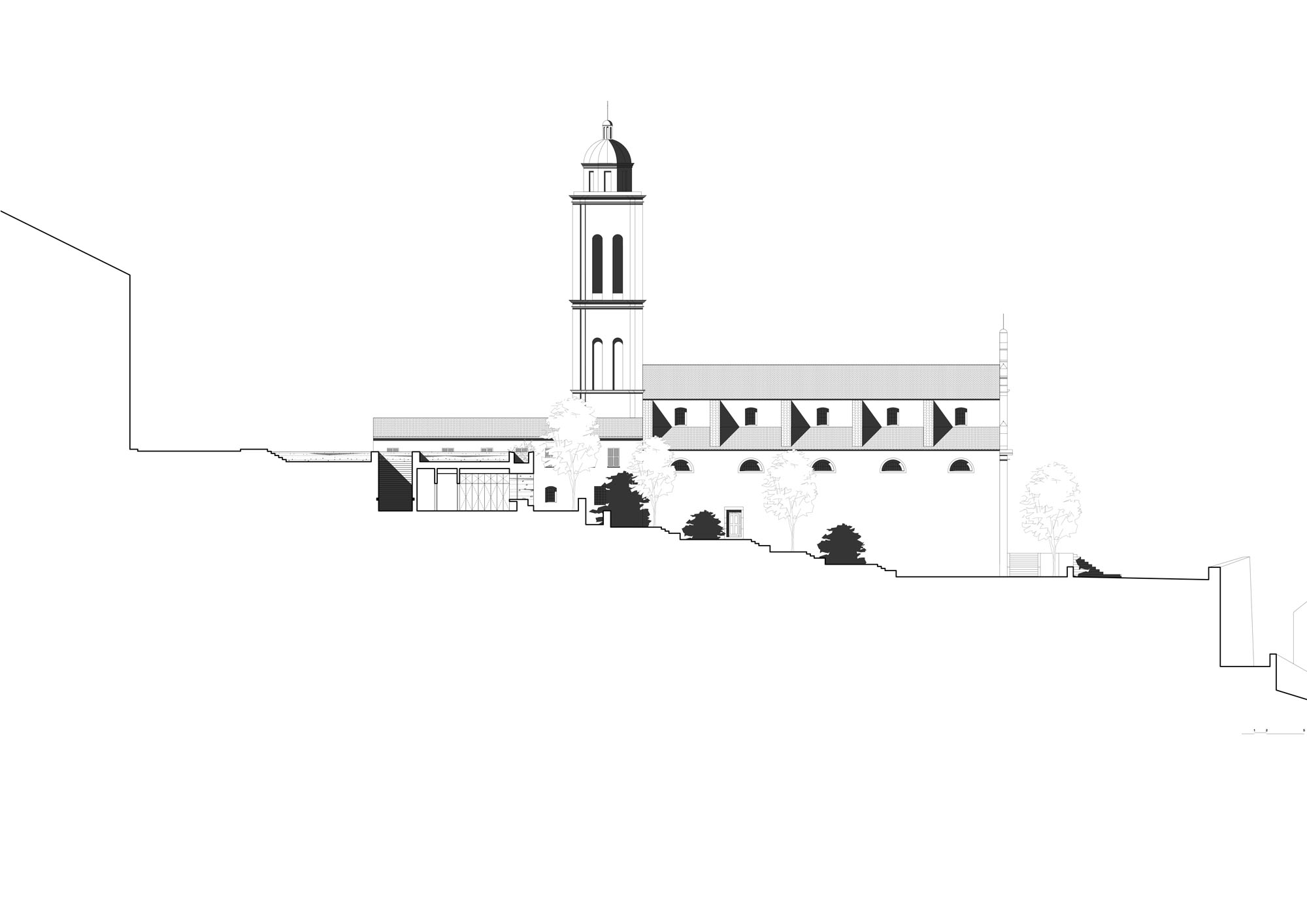
Section
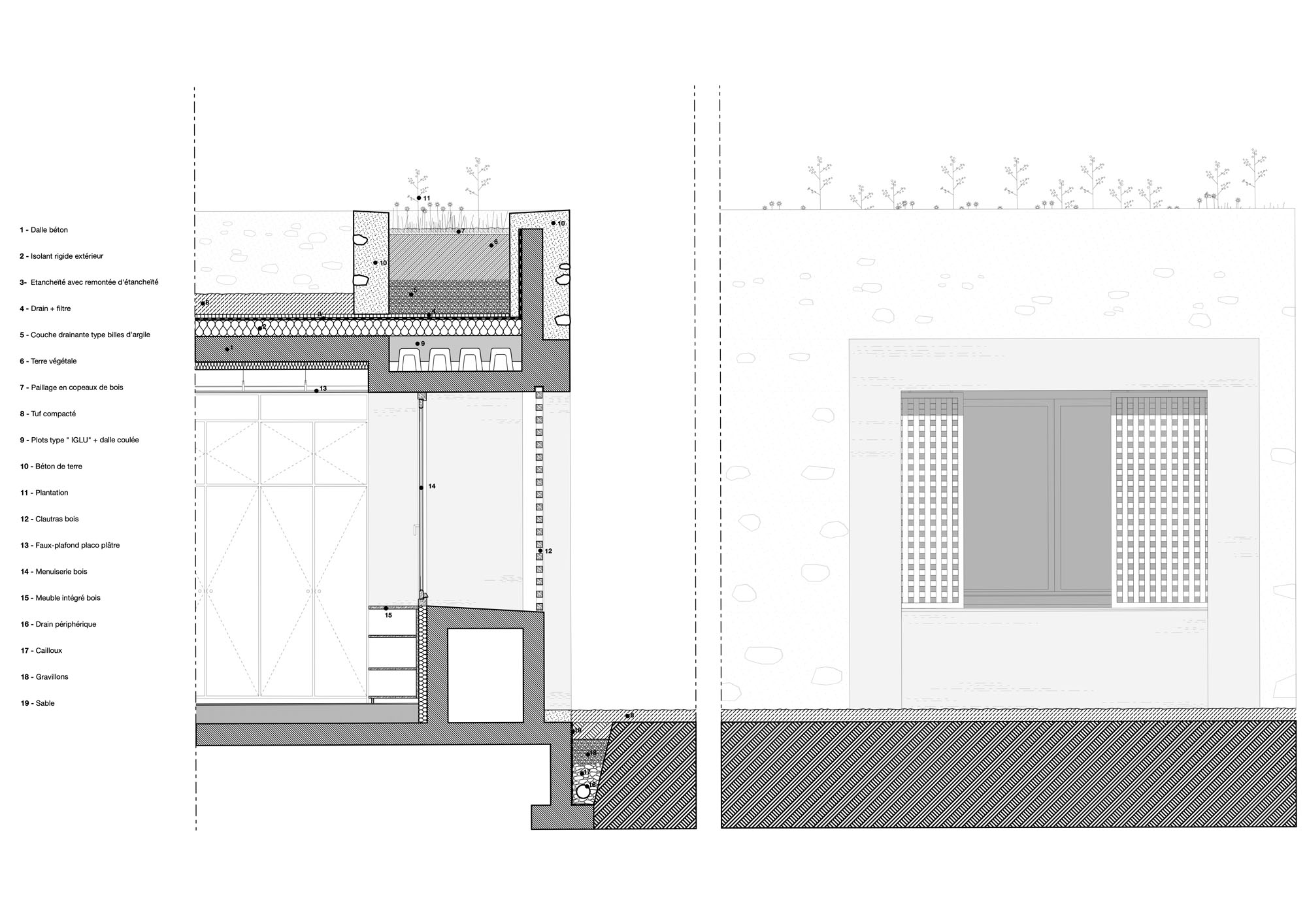
Detail
以下、A FABRiCA architetturaのリリース(英文)です。
Programme: Construction of a cultural, heritage and landscape-oriented facility
Location: Corbara, Corsica, France
Client: Municipality of Corbara
Construction Cost: € 2,300,000 exVAT
Surface area building: 450 m2, open-air theatre: 3,500 m2
Lead architect: A FABRiCA architettura (Instagram: @afabrica_architettura)
Associate architect: CGZ architectes
Engineering consultants: Domene, Ekium, Ingenia, STD Paysage, Atelier Rouch
Architectural services: BASE / EXE / SSI / OPC / QE
Construction companies: Beveraggi, EIB, Fourny Jardins, Rossi Frères Peintures, Baldocci, Isola Étanchéité, Les Nouveaux Menuisiers
Completion 2026
Text & graphic documents: A FABRiCA
Photos crédits : Antoine MangiavaccaSpaziu Davia Franceschini
An inhabited terrace facing the great Balagne landscapeIn Corbara, facing the Church of the Annunciation and the landscape of Balagne, the project chooses effacement rather than assertion. On this sensitive site, marked by the presence of the old village, the topography, and the symbolic force of the church, the aim was not to add an architectural object, but to extend the ground, reveal a slope, and create continuity.
The project was born from this intention: to make the building disappear into the landscape in order to reveal the place more fully.
The cultural facility is set within an already inhabited geography, made of narrow lanes, walls, thresholds, stairways, and agricultural terraces that have shaped the Balagne foothills. Once cultivated, these successive terraces made the steep slopes usable and formed a landscape built by human hands. Here, they are less a formal reference than a principle of implantation: to contain, support, accompany, and frame.
The building therefore develops as a reconstructed topography. A ground that folds, turns back on itself, and becomes architecture. Alternately retaining wall, enclosure, inhabited façade, and belvedere, it extends the lines of the village and deliberately blurs the boundary between building and landscape.
From the upper part of the site, the roof becomes a public square, a place from which to look out over the territory. The pathways extend the village walks, connecting the existing narrow lanes, the church forecourt, the landscaped terraces, and the open-air theatre. The project does not impose itself as an isolated destination; it becomes a passage, a new sequence within the village promenade.
This logic of insertion also guides the interior organization. Despite the steeply sloping site, the building develops entirely on one level, around a welcoming passageway that crosses and structures it. This internal lane distributes the different parts of the programme and extends the village routes into the heart of the facility.
The main hall, widely open to the outside, is oriented towards the church and the landscape. Designed as a polyvalent space, it can host ceremonies, exhibitions, seminars, or village events. The service areas are arranged simply around this clear structure, allowing the building to adapt to different uses and seasons.
The architecture seeks a measured presence. Its massive, mineral materiality evokes the retaining walls, old houses, and agricultural structures of the territory. Made with site-cast concrete, the building extends the tones of the ground, the terraces, and the surrounding constructions. The façades are conceived as thick walls, anchored in the ground and pierced by large openings. The frames, thresholds, and lintels reinterpret the monolithic elements of the village houses through a contemporary and silent architectural language.
Inside and outside, the project composes a series of framed views towards the sky, the church, the village houses, the terraces, and the distant landscape. Light becomes a material of composition, revealing the thickness of the walls, the depth of the thresholds, and the continuity between public spaces, landscaped spaces, and inhabited spaces.
The cultural centre is conceived as both vernacular and contemporary architecture. Not an imitation of the past, but a reinterpretation of the deeper logics of the place: building with the slope, inhabiting the ground, preserving views, extending routes, and giving the village a new shared space.
A discreet and inhabited landscape-architecture, serving the site it reveals.
A FABRiCA architettura 公式サイト
https://www.afabrica.fr/