DEBアーキテクチャらが手がけた、コロンビアの都市とラグーンをつなぐエコパーク〈エコパルケ・シエナガ・デ・マジョルキン〉
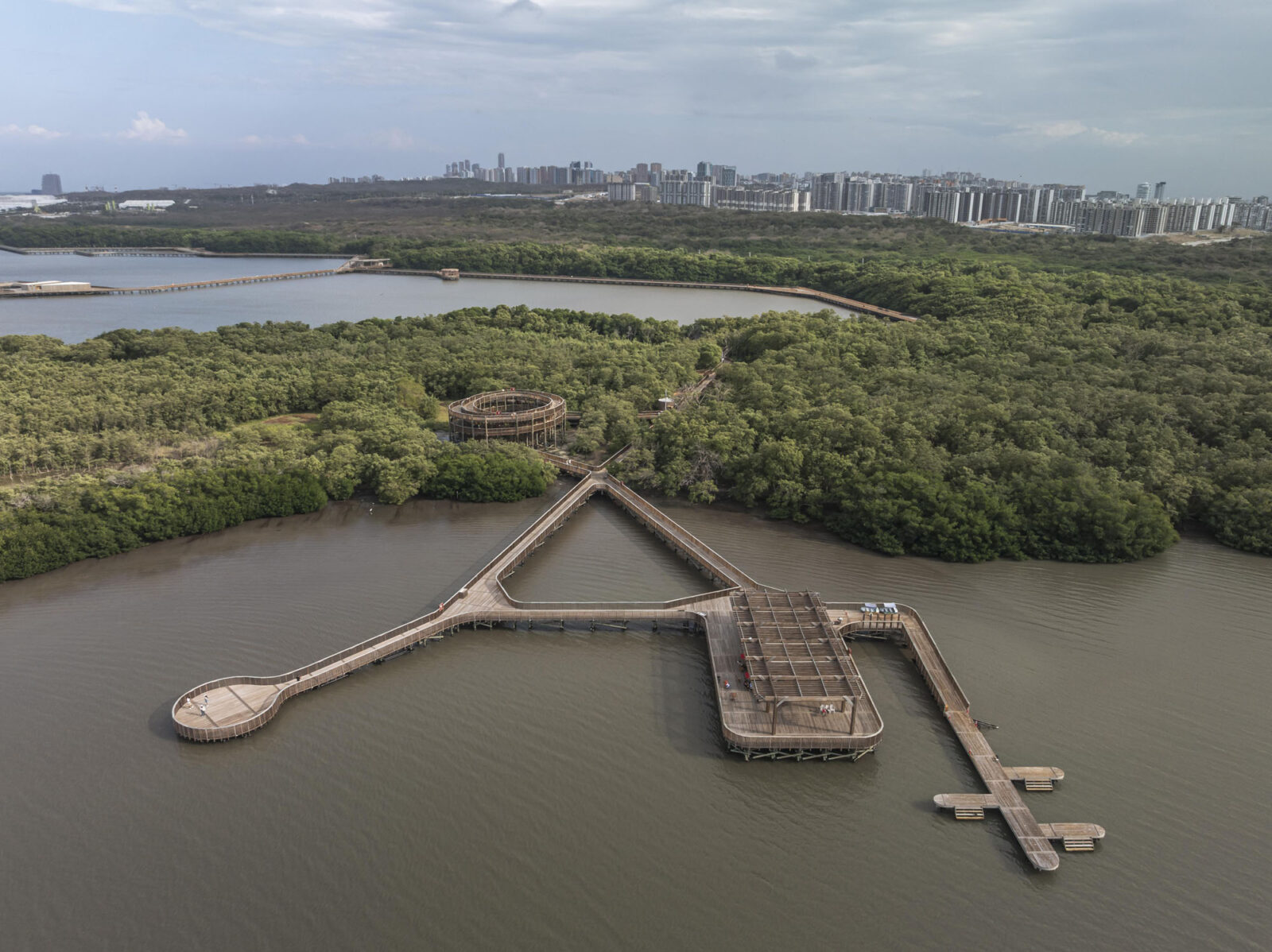
コロンビアの都市バランキージャにDEBアーキテクチャ(DEB Architecture)とエル・エクイポ・マッツァンティ(El Equipo Mazzanti)が設計した〈エコパルケ・シエナガ・デ・マジョルキン(Ecoparque Ciénaga de Mallorquín)〉は、沿岸地域の環境再生と都市周辺部の再編を目的としたエコパークです。
景観に新たな形を押し付けるのではなく、都市の拡大とラグーンの生態系を調停するよう設計されており、都市と自然をつなぎ、学びの場を提供する「生きた境界」となっています。
注目ポイント
- 自然のサイクルを妨げずに両者をつなぐアプローチ「リビング・エッジ(生きた境界)」
- ラグーンへの保護バリアであり入り口でもあるインターフェース
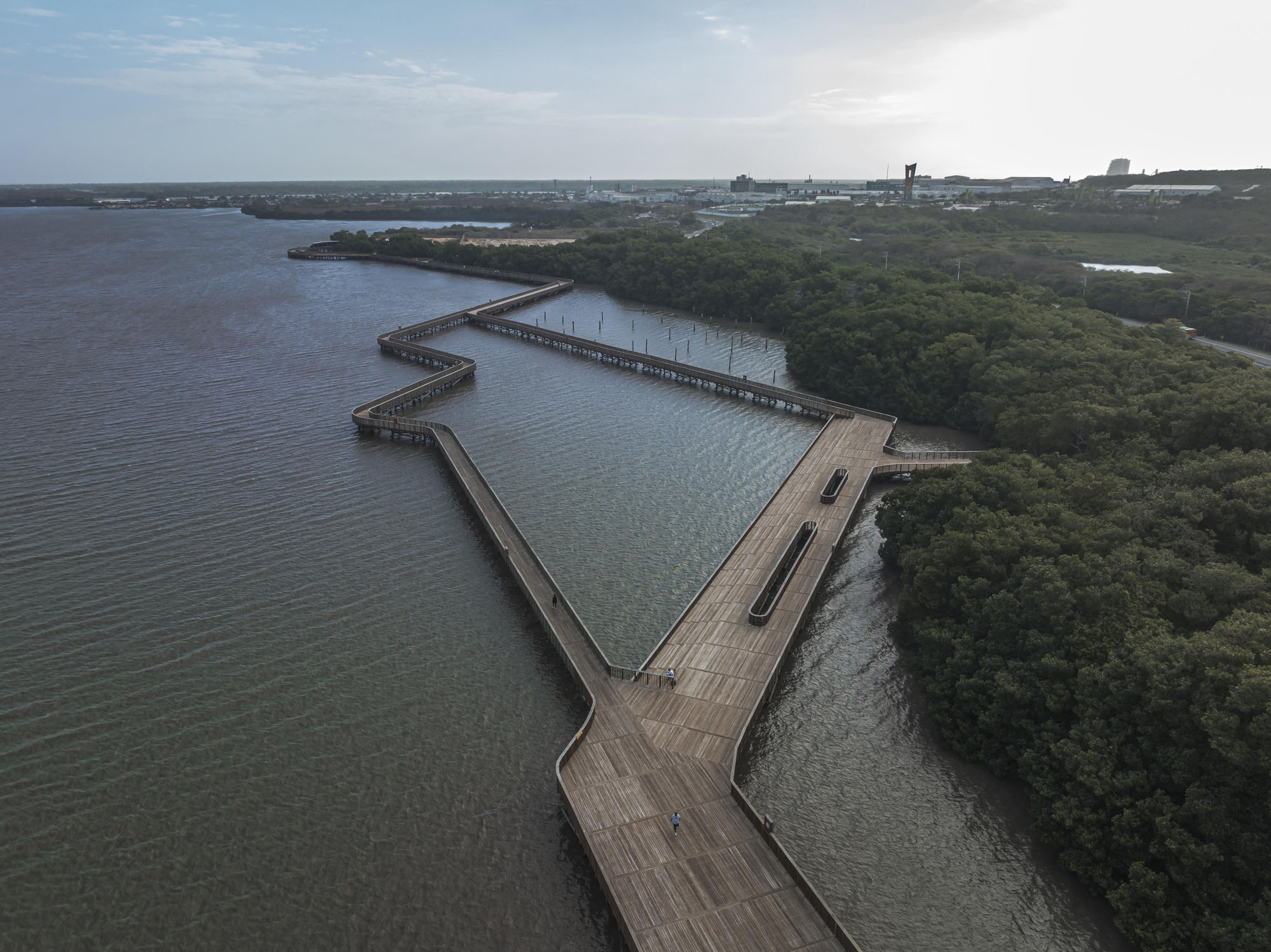
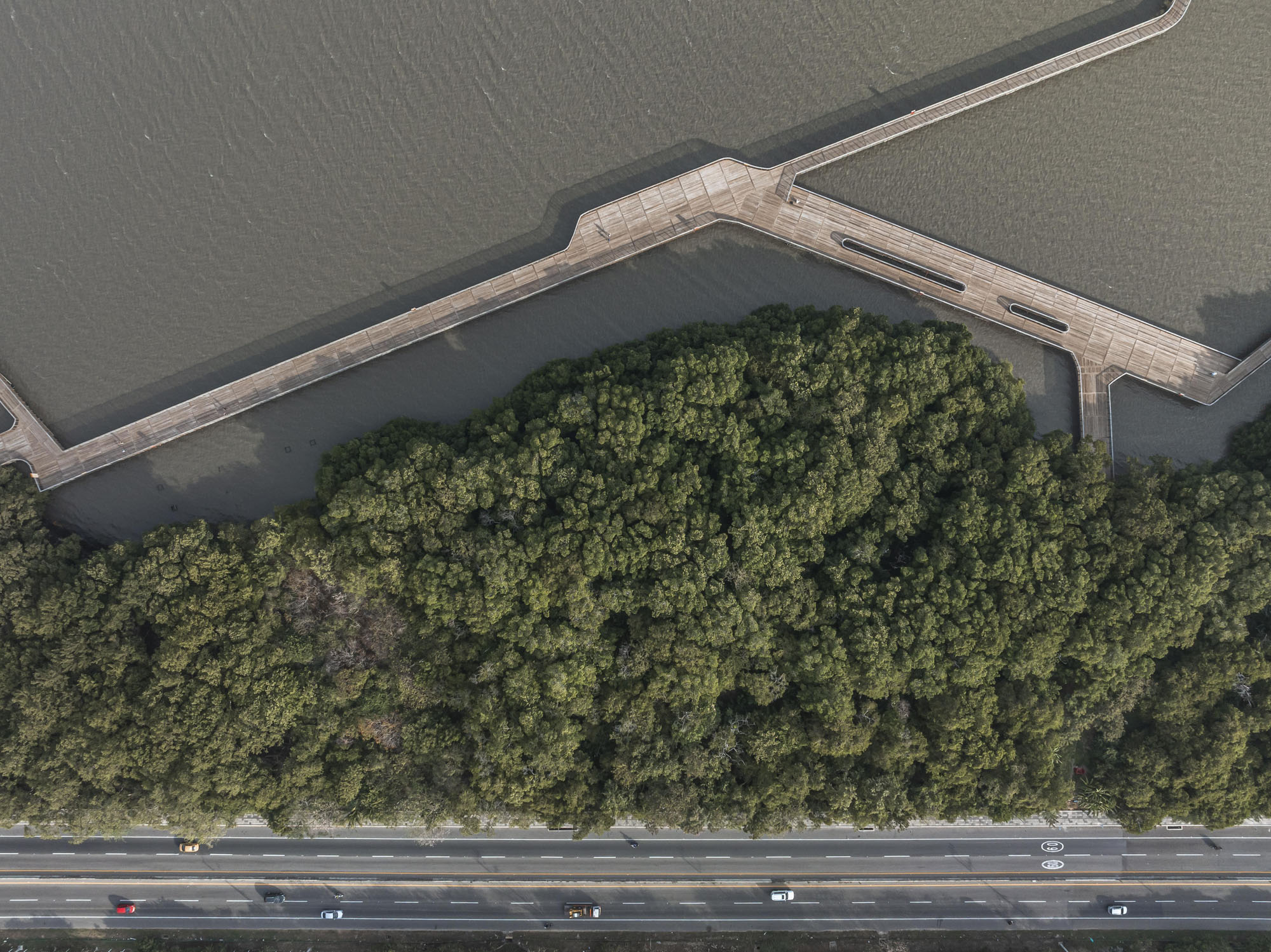
- 水と生態系のサイクルを妨げない高架構造
- 他の脆弱な沿岸地域にも応用可能な「再現性のある介入モデル」
(以下、DEBアーキテクチャから提供されたプレスキットのテキストの抄訳)
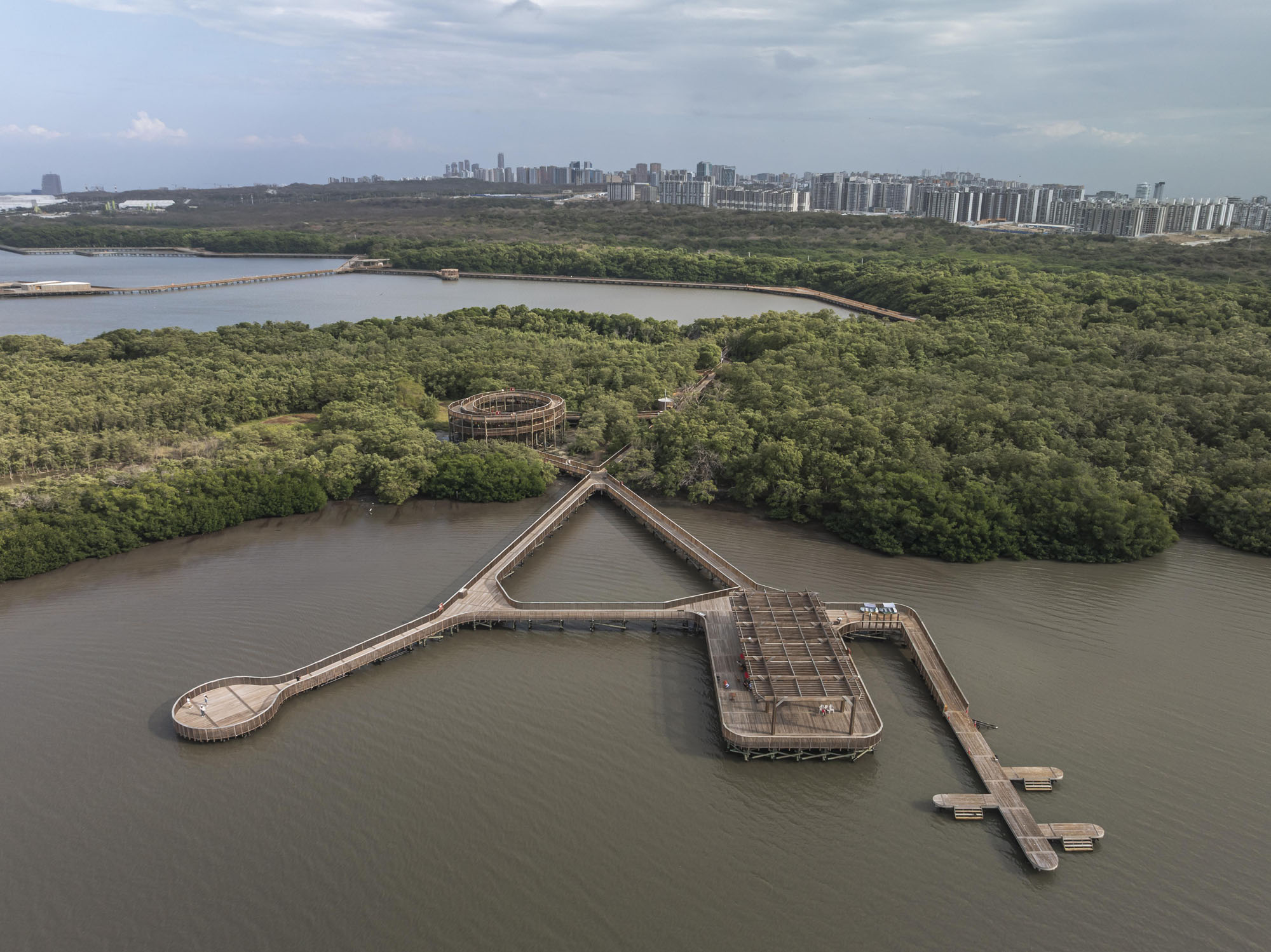
©︎ Alejandro Arango
プロジェクトの背景と地理的条件
〈エコパルケ・シエナガ・デ・マジョルキン〉は、沿岸地域における環境再生と都市周辺部の再構成という現代的な取り組みの一環である。コロンビアのバランキージャに位置するこのプロジェクトは、都市と、その最も重要な生態系の1つである「シエナガ・デ・マジョルキン」との歴史的な関係に焦点を当てている。シエナガ・デ・マジョルキンとは、大西洋とマグダレナ川が合流する地点に位置するラグーンである。この地理的条件は、この場所の生態学的豊かさだけでなく、都市の文化的発展をも形づくってきた。
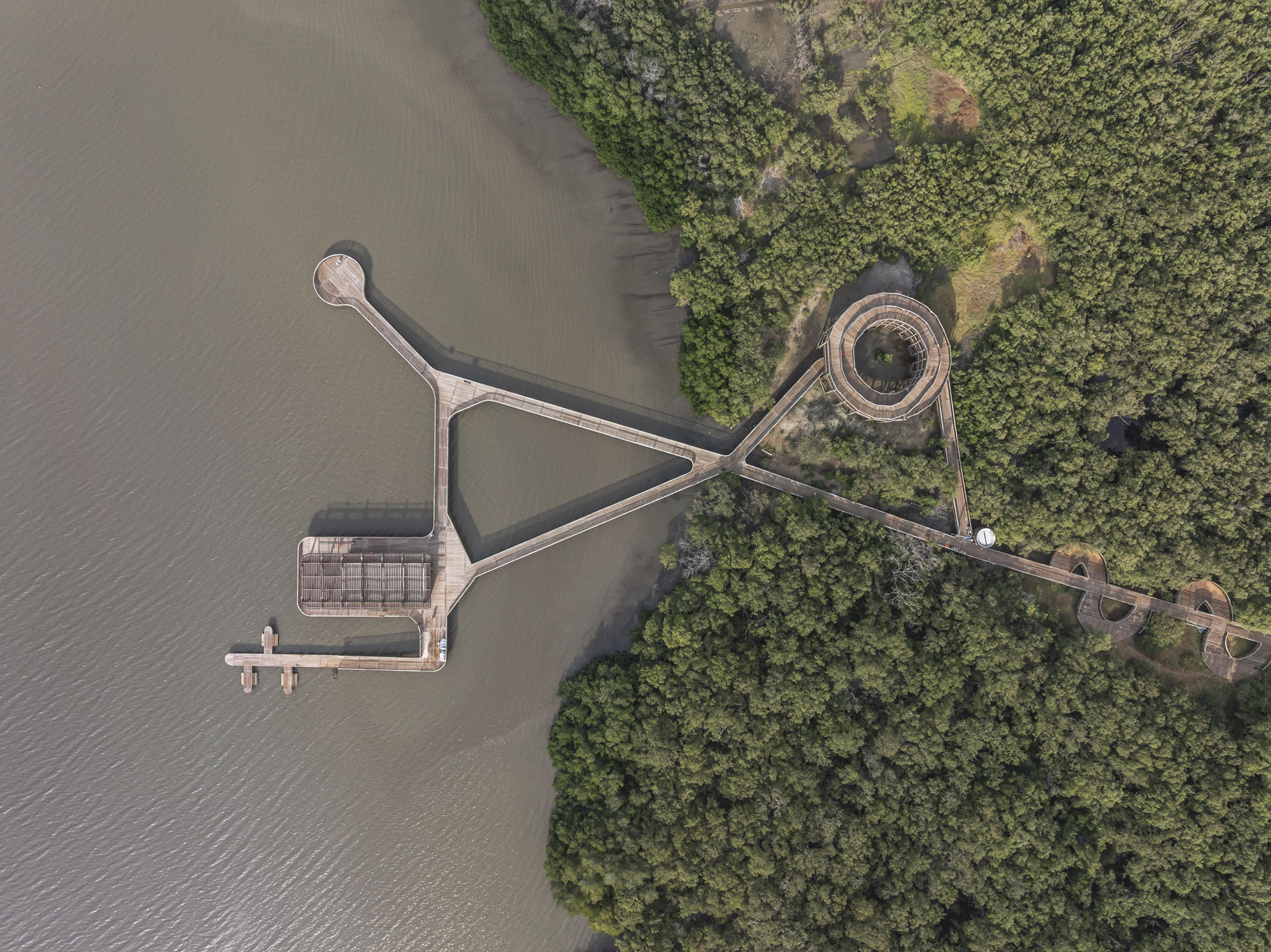
©︎ Alejandro Arango
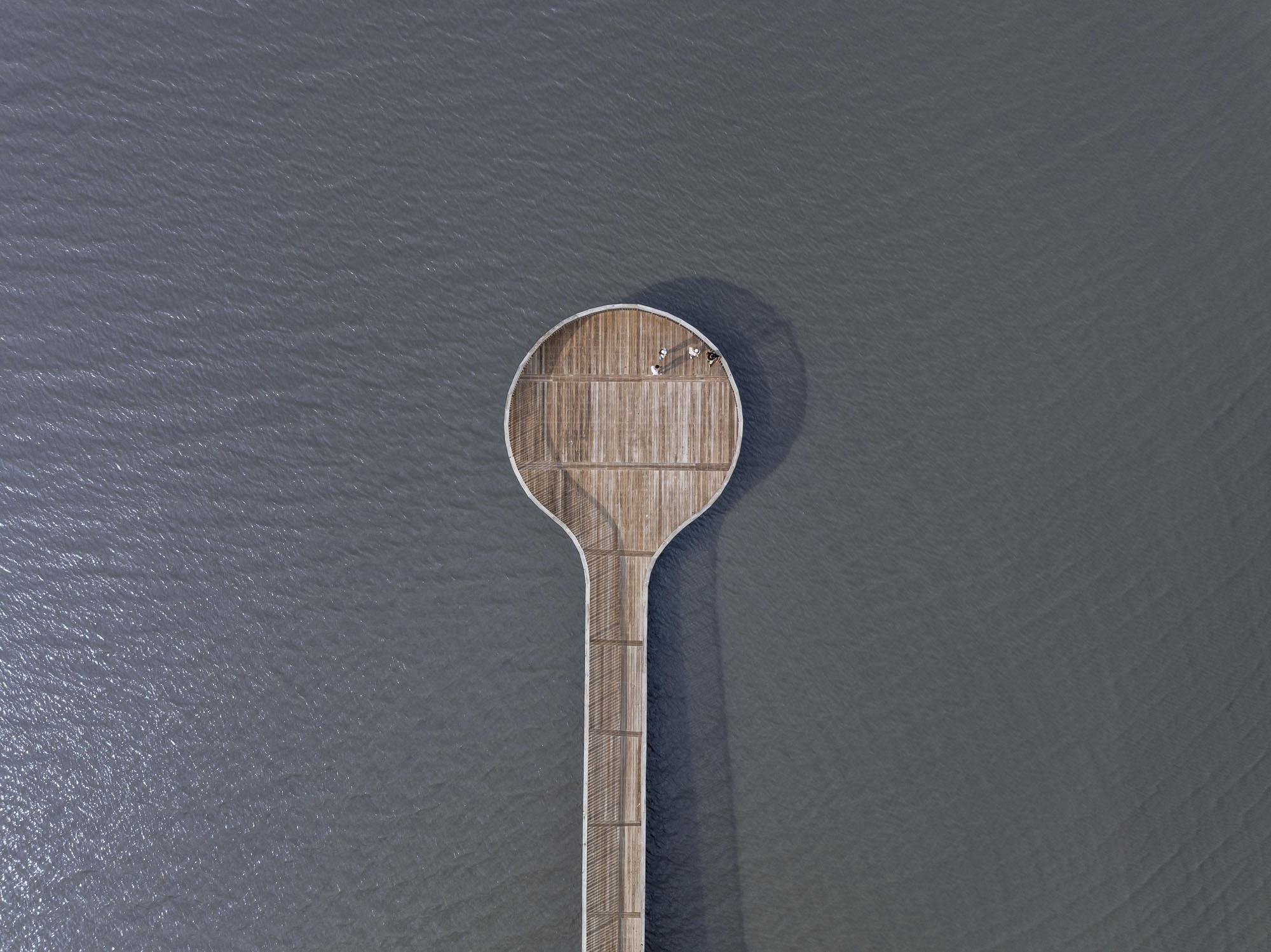
©︎ Alejandro Arango
地形の変化と生態系の回復力
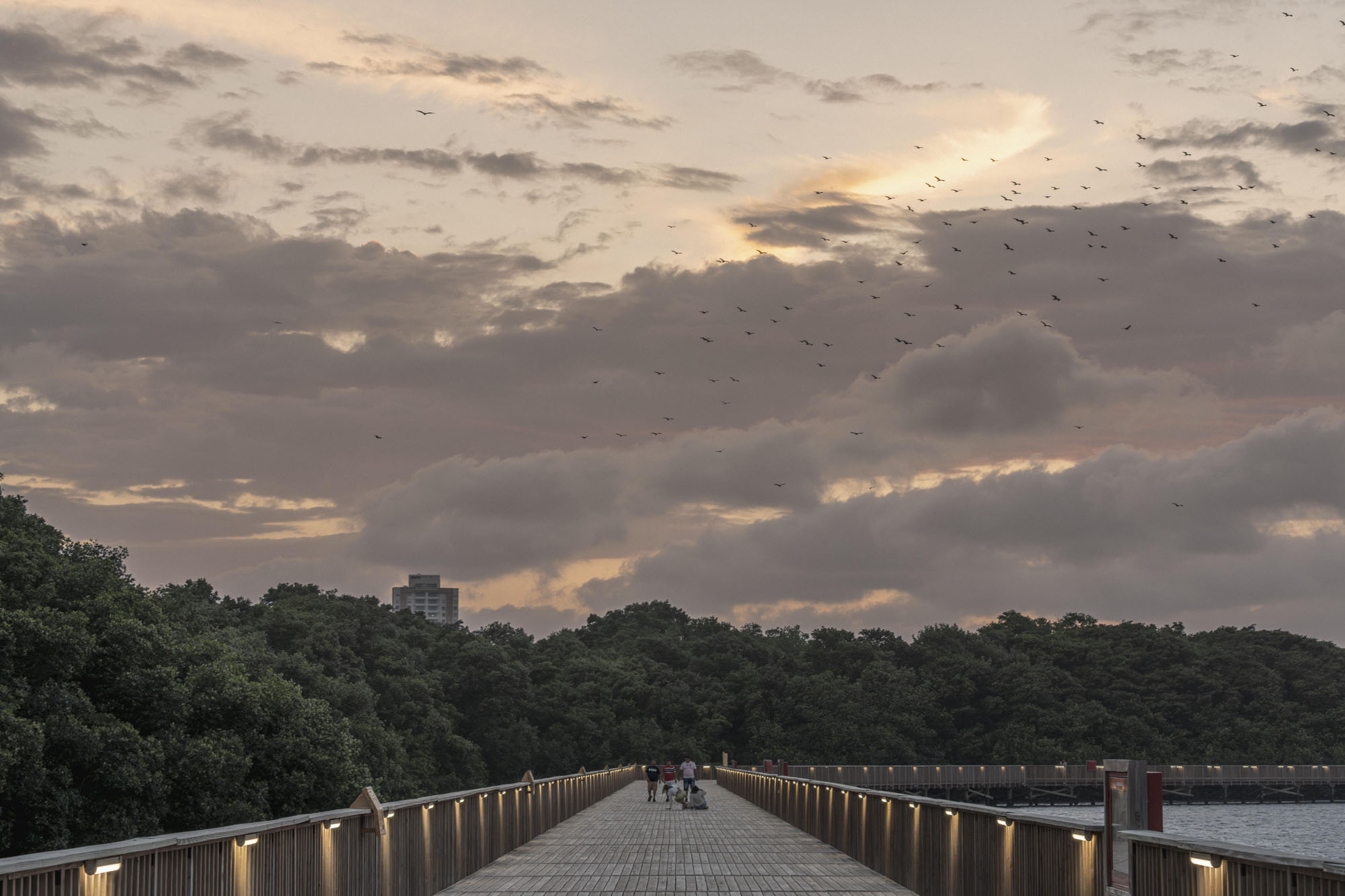
過去1世紀にわたり建設された人工運河といった大規模な介入により、この地域の地形は著しく変化し、水流が改変され、湿地の生態学的バランスに影響が及んだ。その結果、このラグーンは劣化や汚染が進み、都市生活から徐々に隔絶されていった。しかし、この生態系は驚くべき回復力を示しており、200種以上の留鳥や渡り鳥を含む生物多様性の維持や、広大なマングローブ地域の存続がその証左となっている。
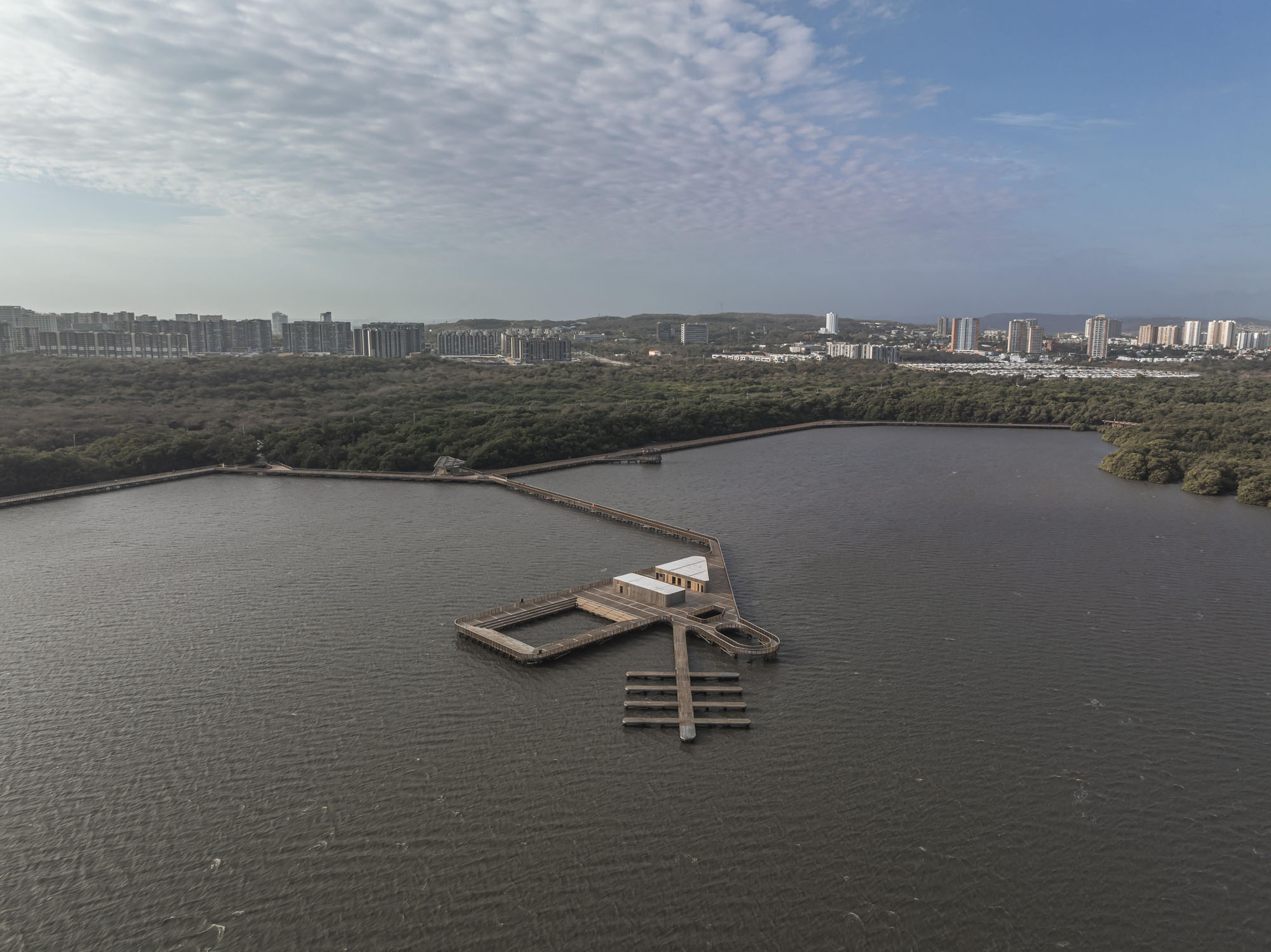
©︎ Alejandro Arango
©︎ Alejandro Arango
©︎ Alejandro Arango
都市と自然をつなぎ、学びの場を提供する「生きた境界」
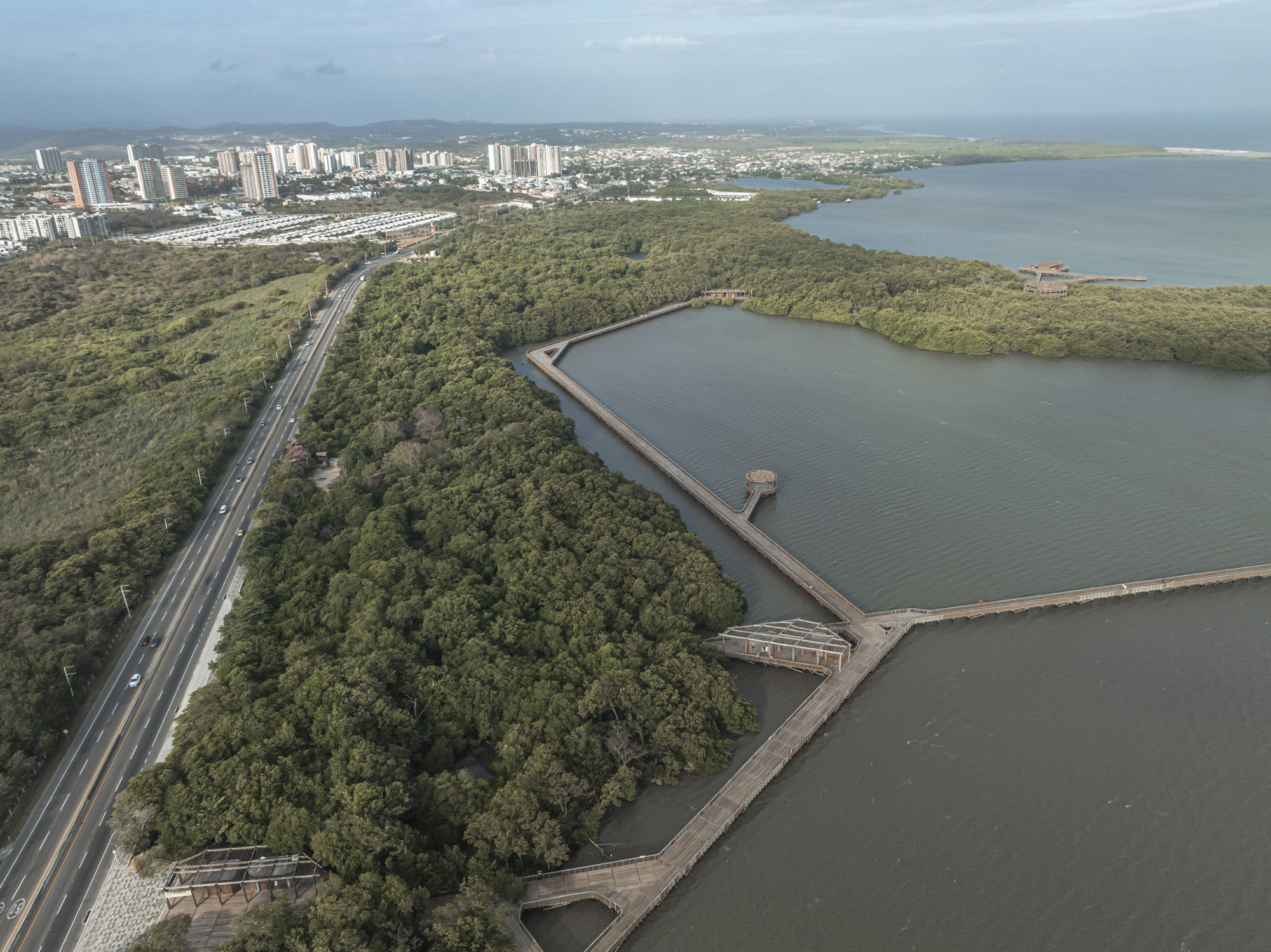
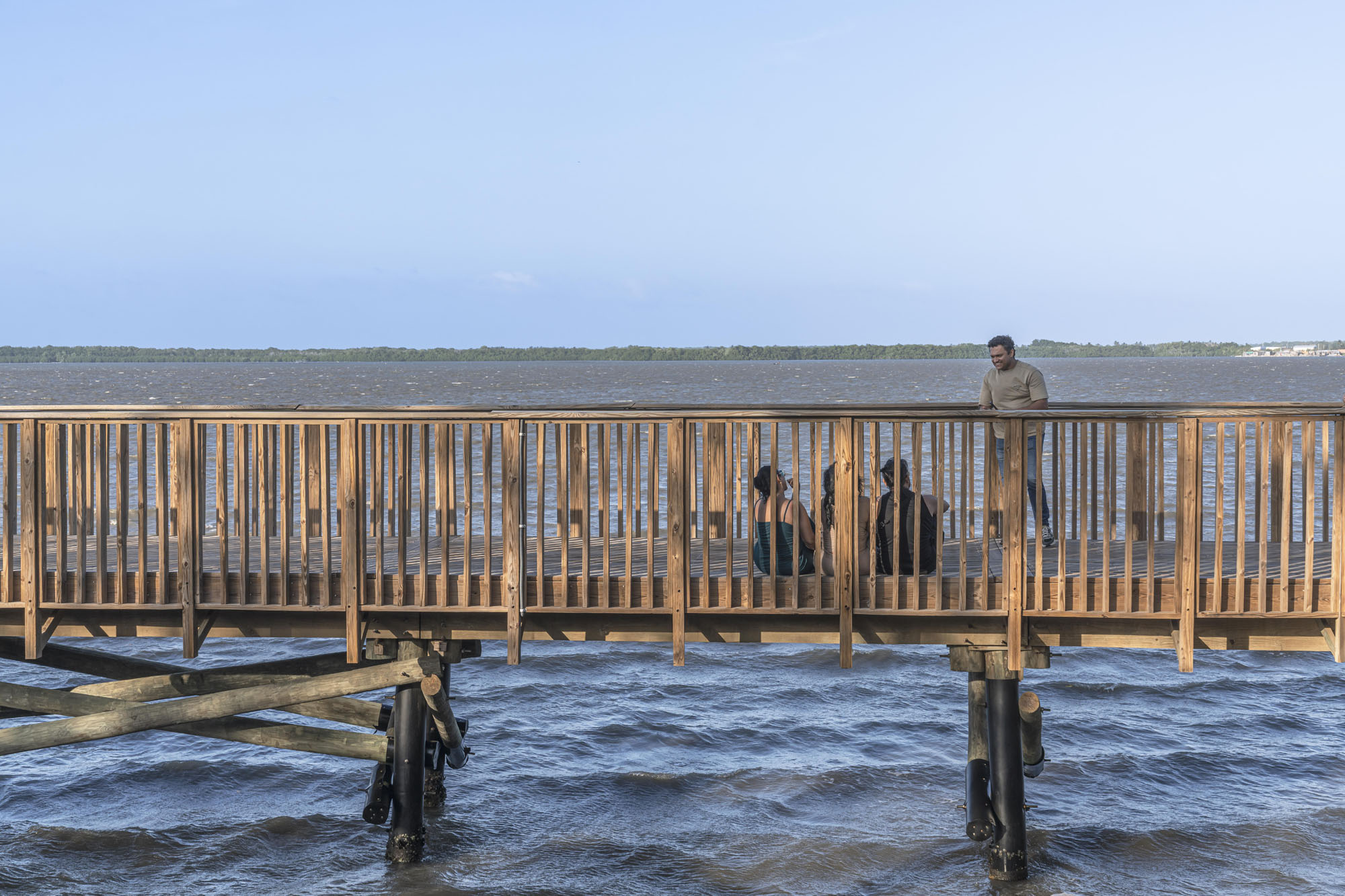
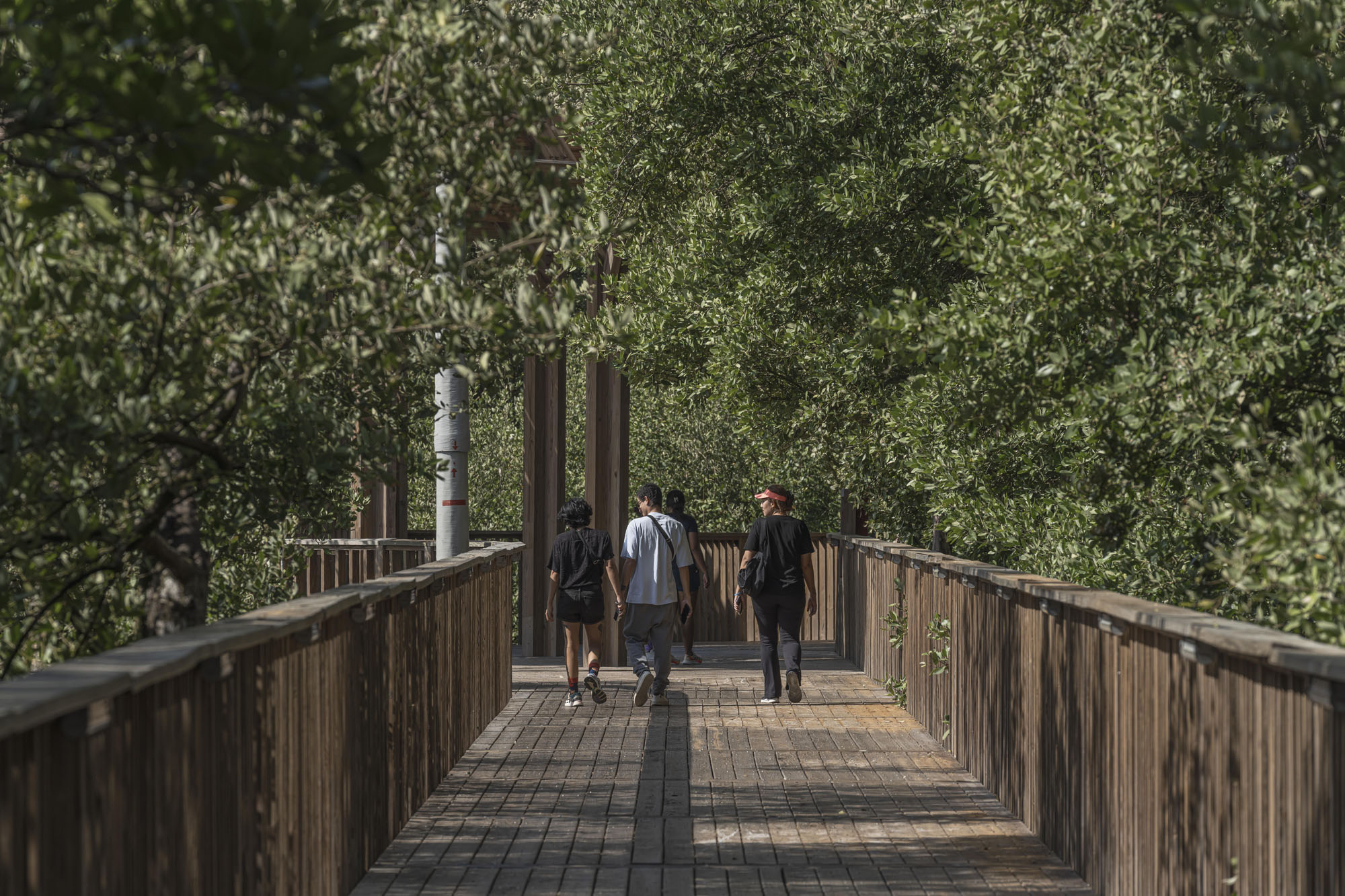
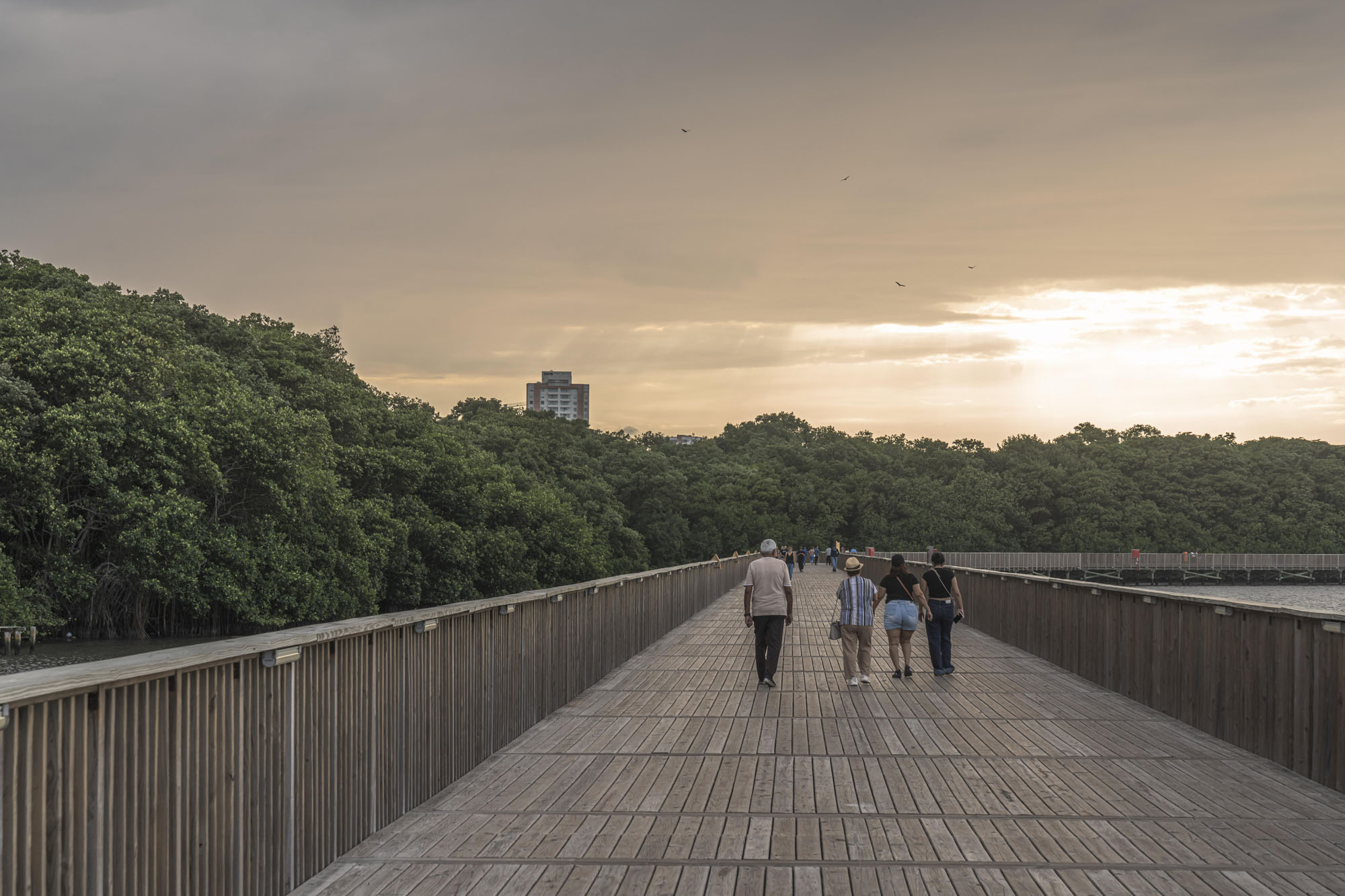
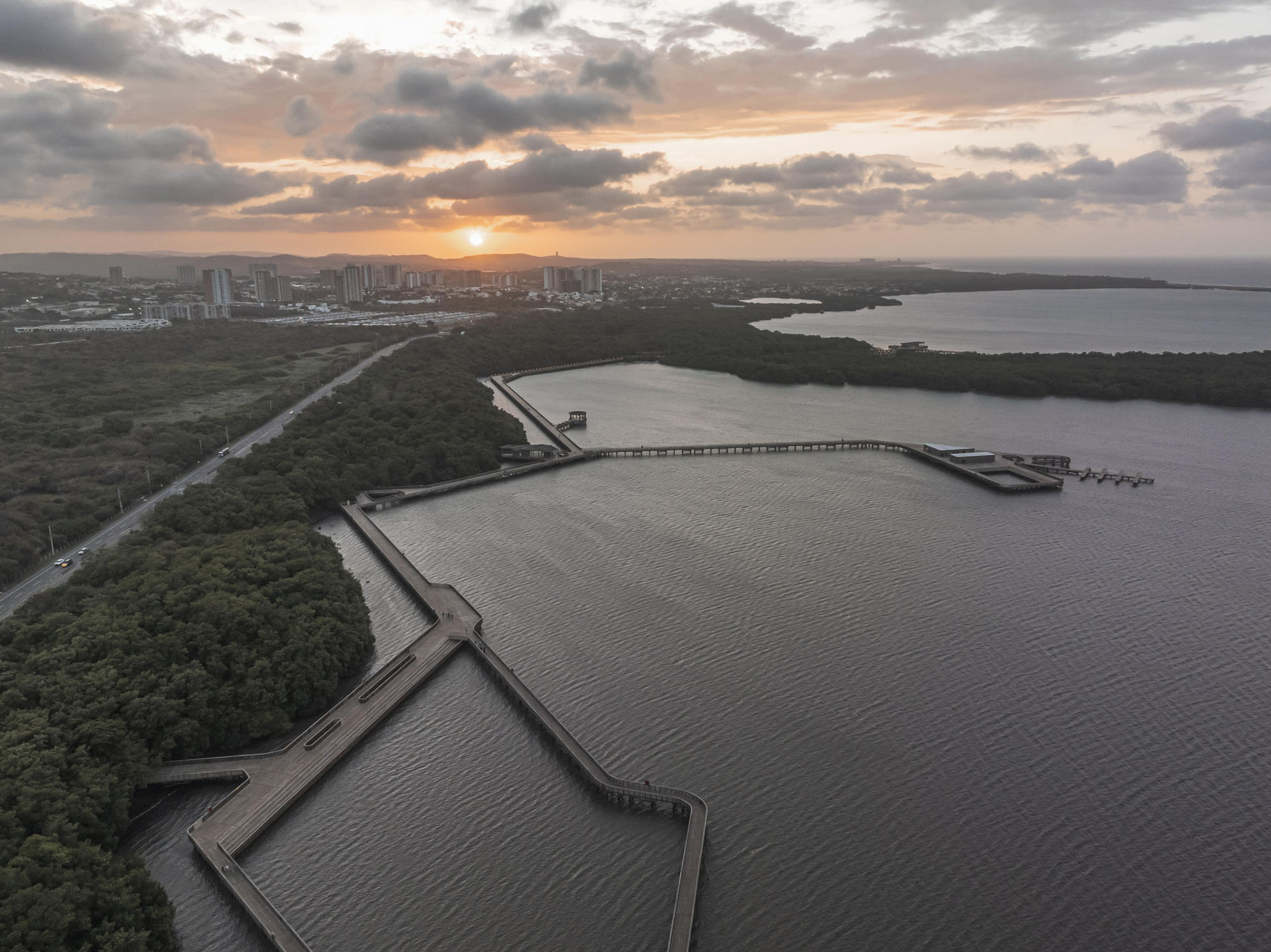
こうした状況下で設計されたこのエコパークは、景観に新たな形を押し付けるのではなく、都市と自然のダイナミクスの間に仲介のシステムを確立することを目指す地域インフラとして構想されている。このプロジェクトは、小道、プラットフォーム、オープンスペースのネットワークを通じて具現化され、それらが「リビング・エッジ(生きた境界)」を形成している。これは、都市の拡大と生態系の関係を調整する活動的な帯であり、保護バリアであると同時に、アクセスへの入り口としての役割も果たす。
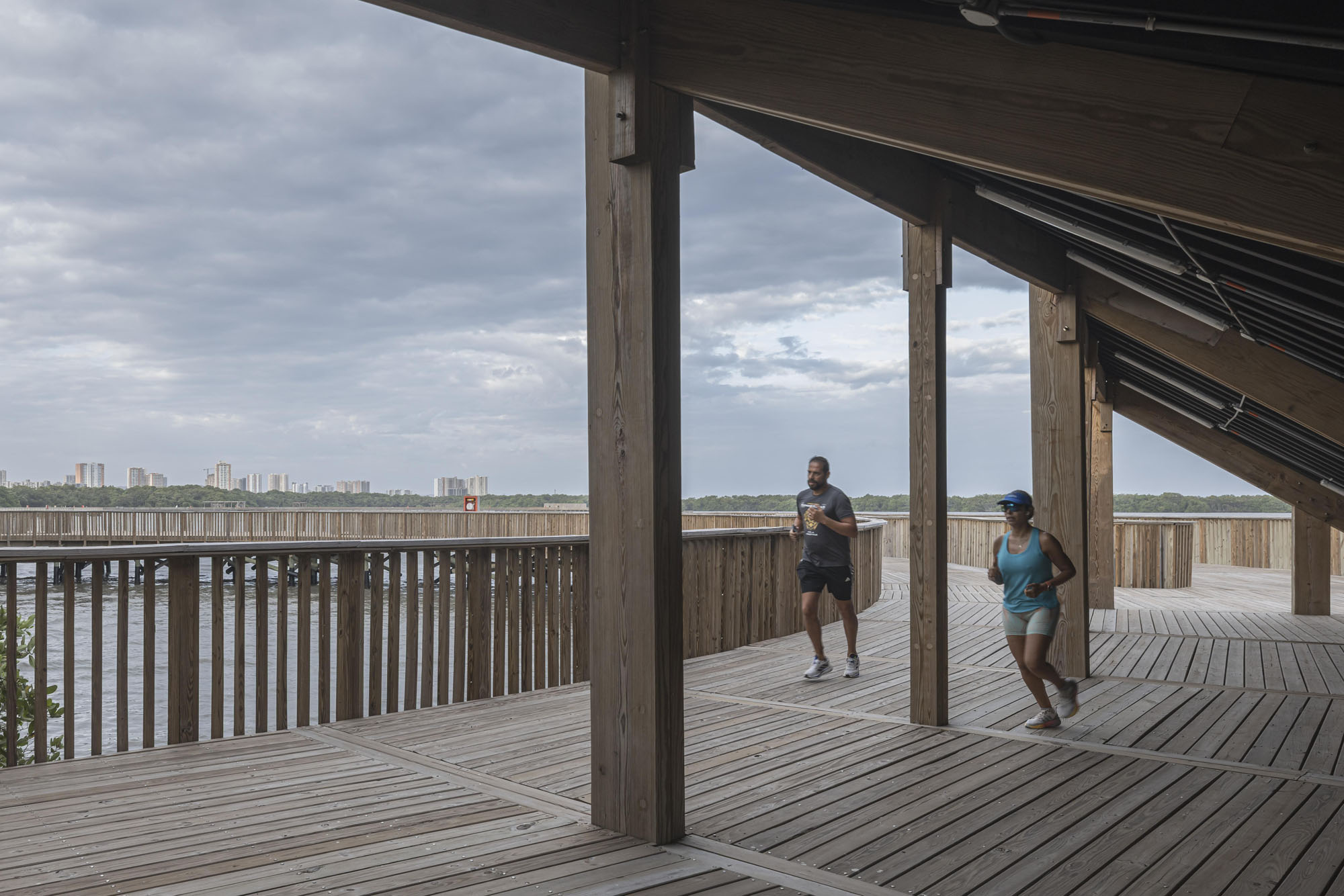
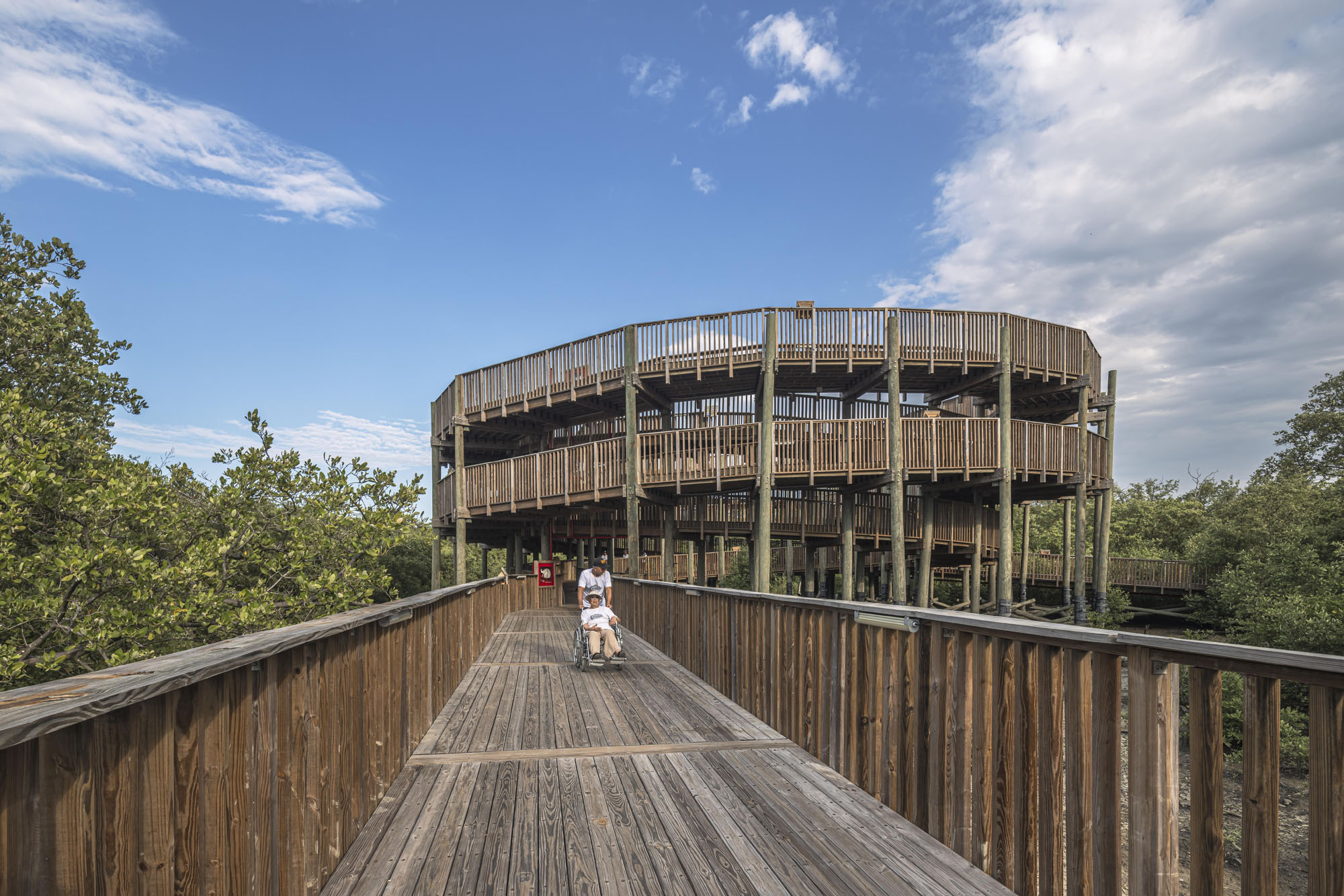
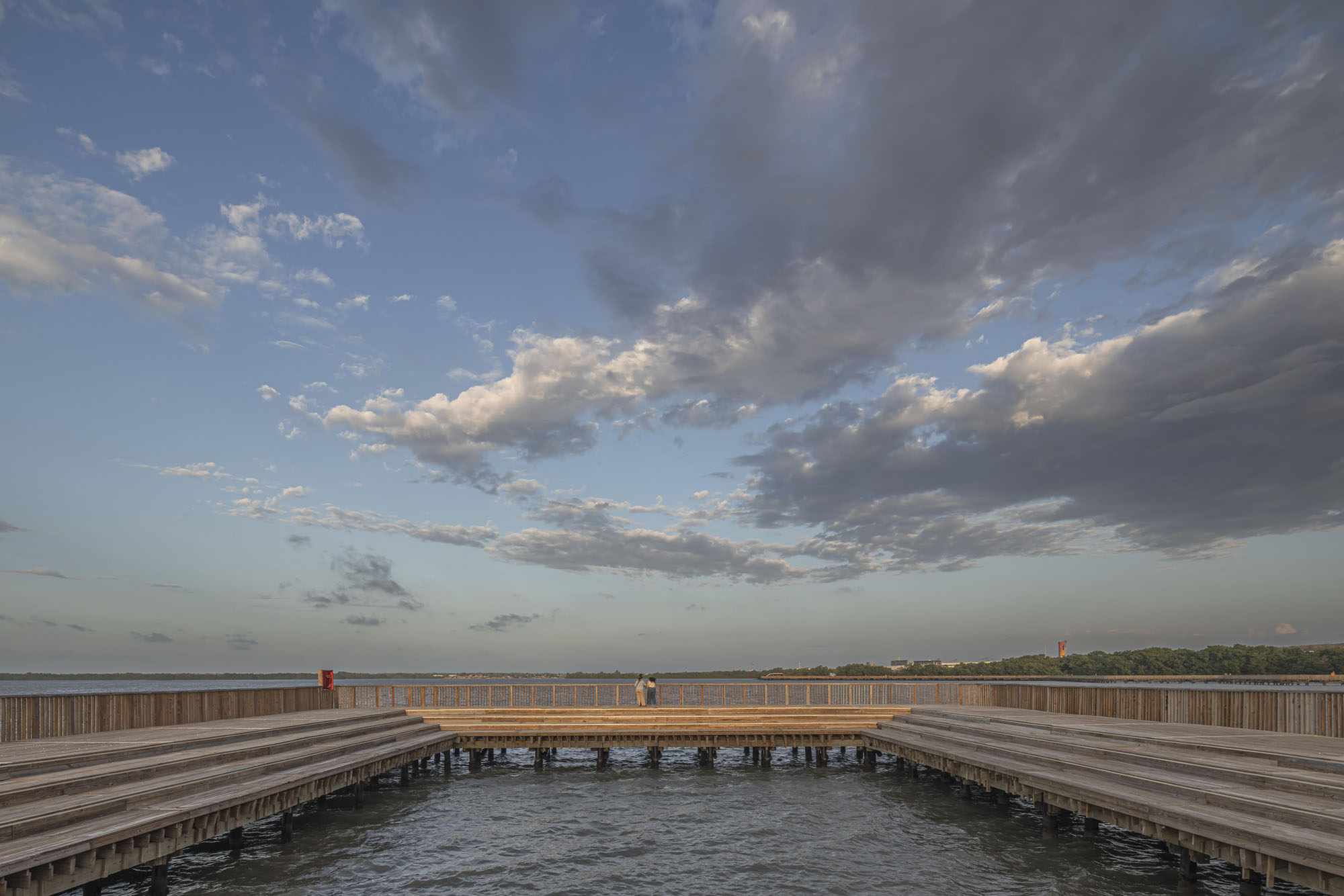
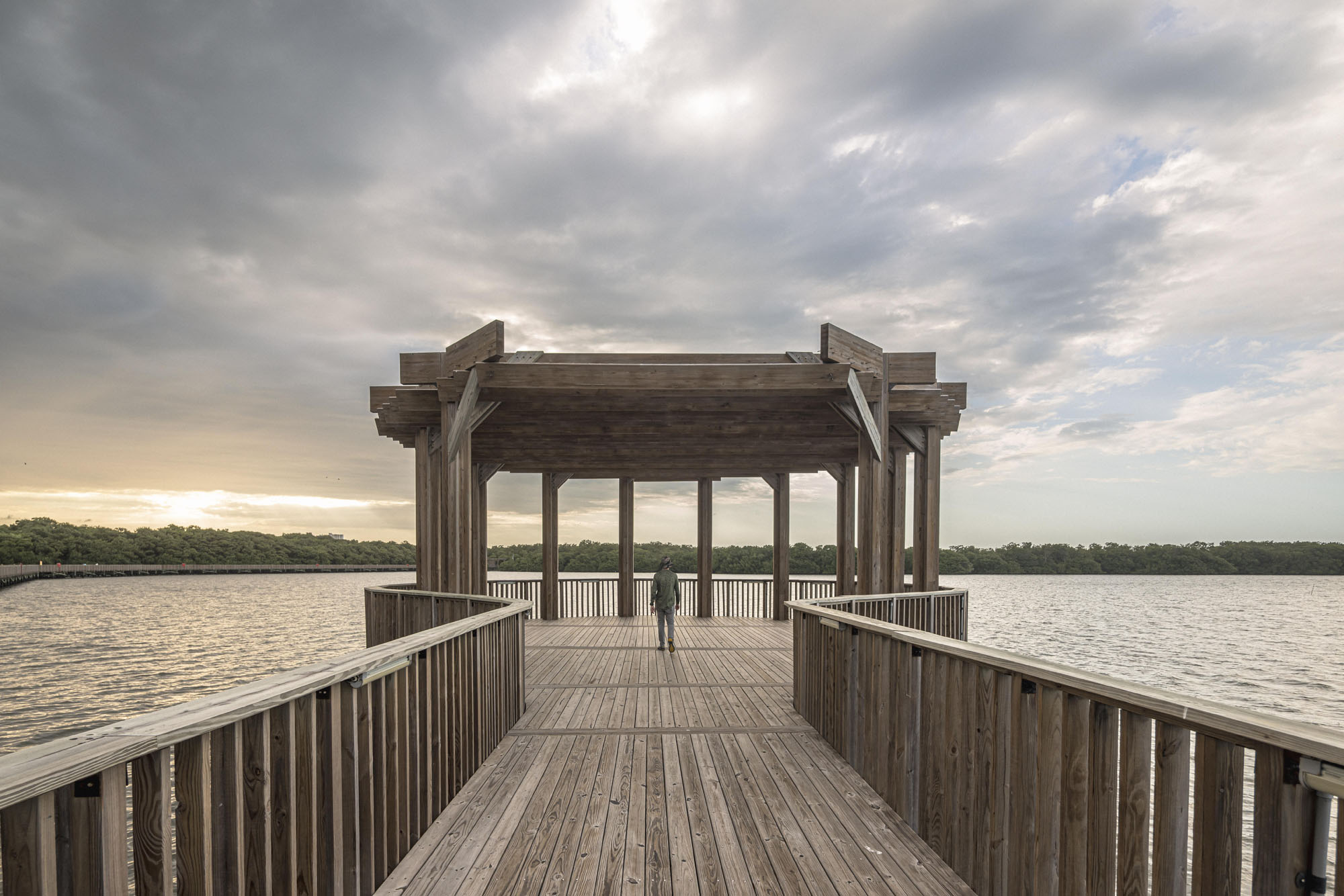
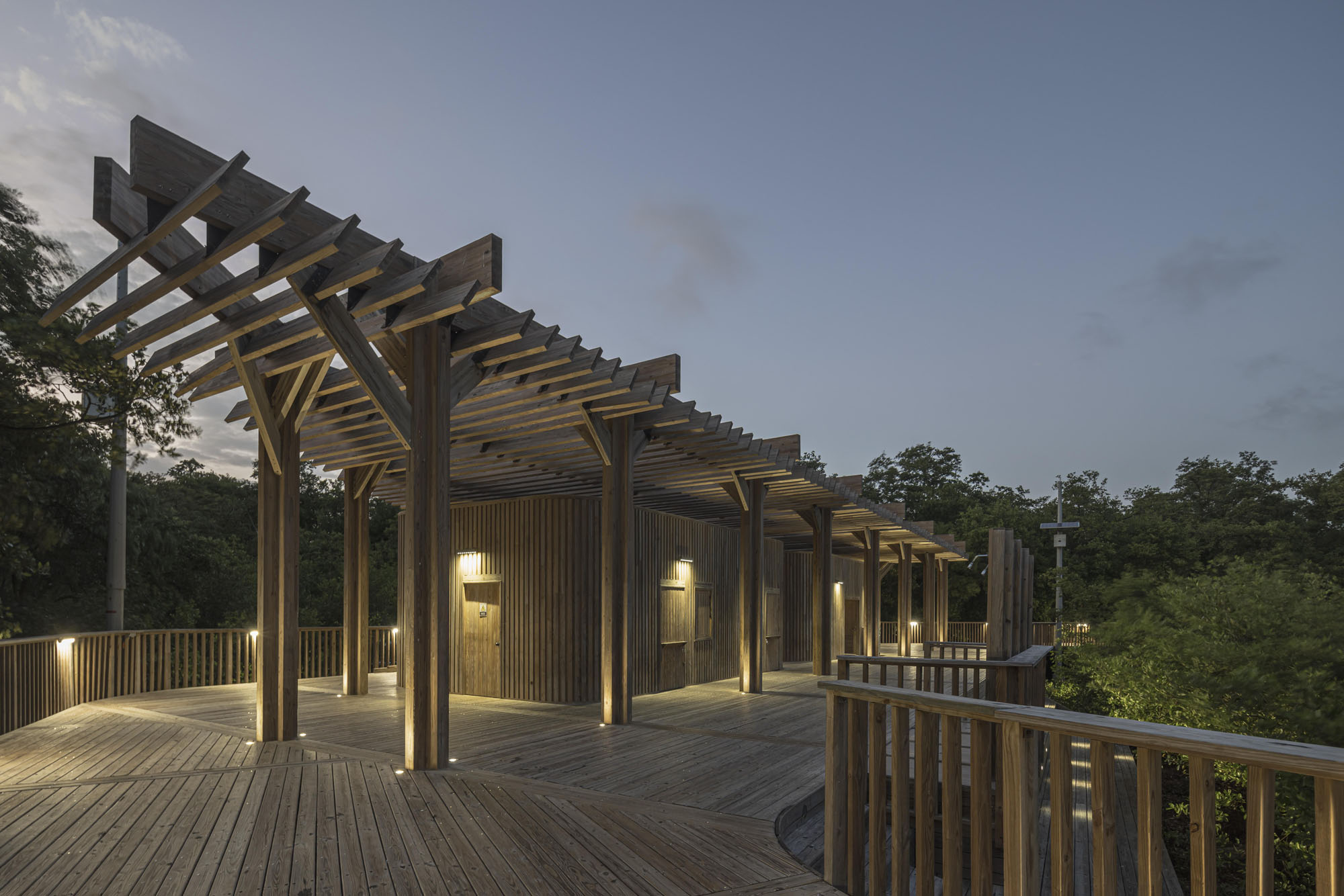
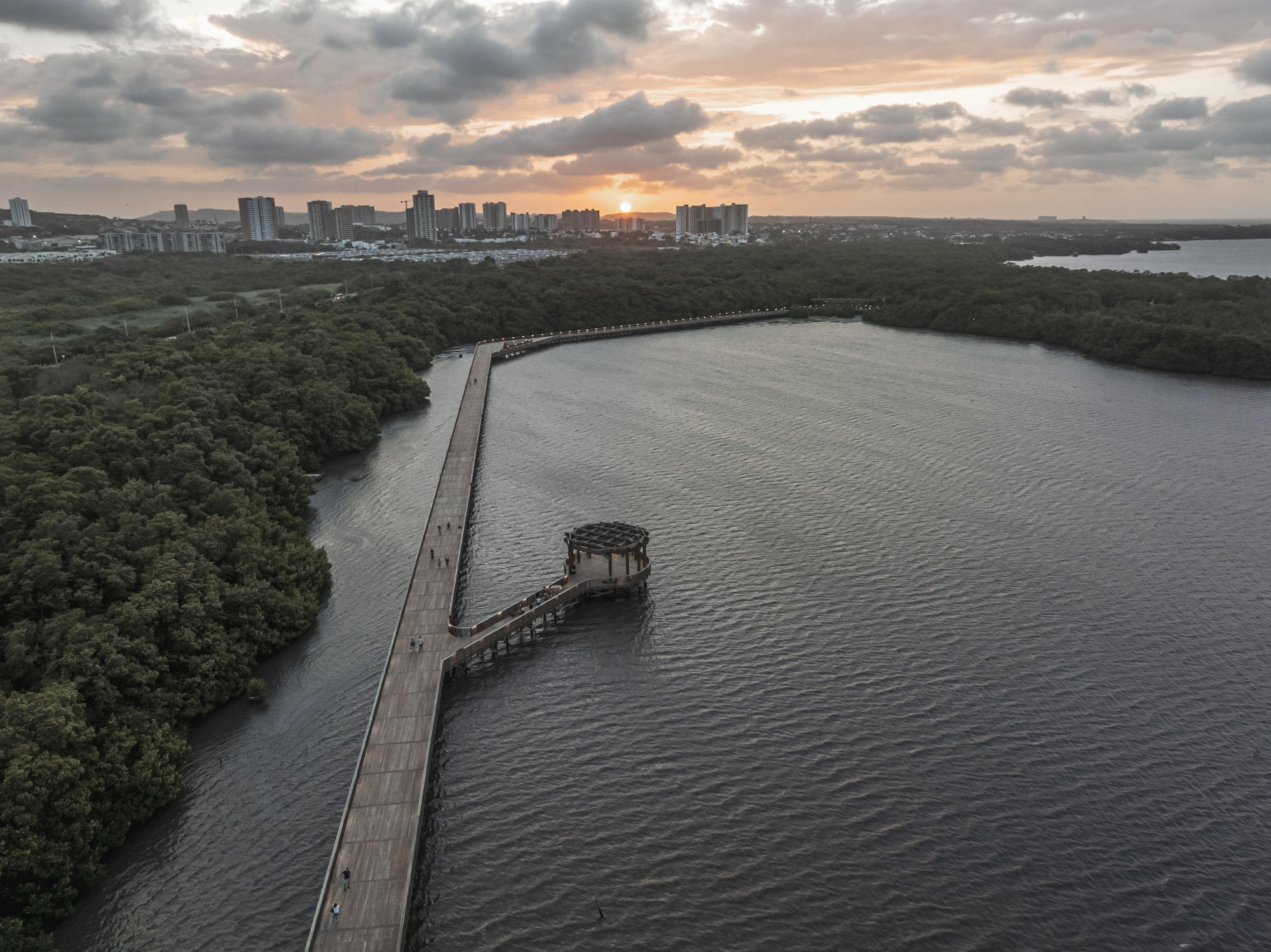
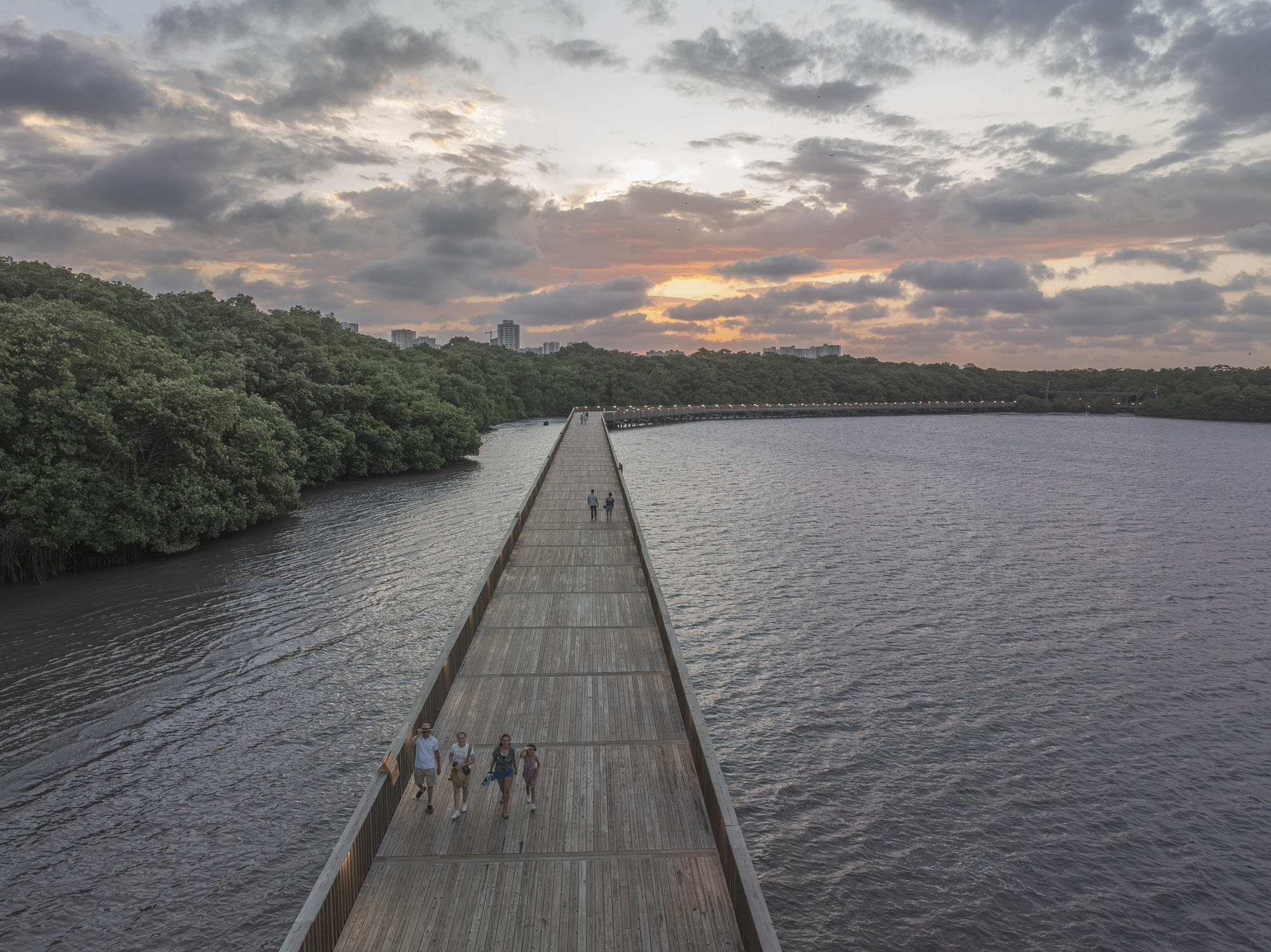
このインターフェースは、硬直した境界とは程遠く、湿地の動的な性質を認識しつつ、地域の変化する状況に適応していく。高架歩道は、水の循環や生物学的循環を妨げることなく景観内を移動することを可能にし、観察プラットフォームは自然の観察や学習の場を提供する。このようにしてエコパークはマングローブを科学、教育、文化的な活動が交わる「知識の場」へと変容させるのである。
©︎ Alejandro Arango
©︎ Alejandro Arango
©︎ Alejandro Arango
多様な活動を支える「地区」構成と自然との共存
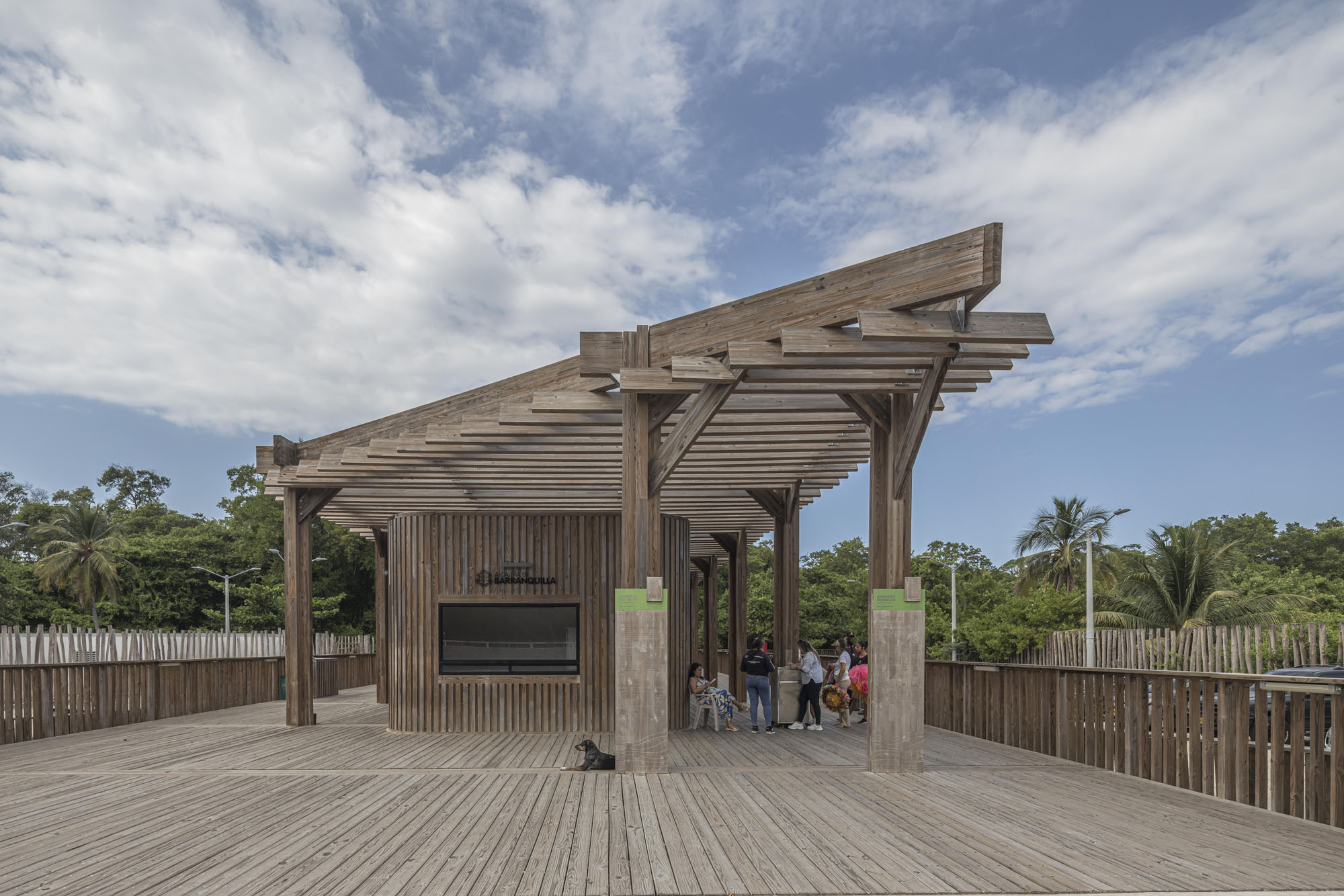
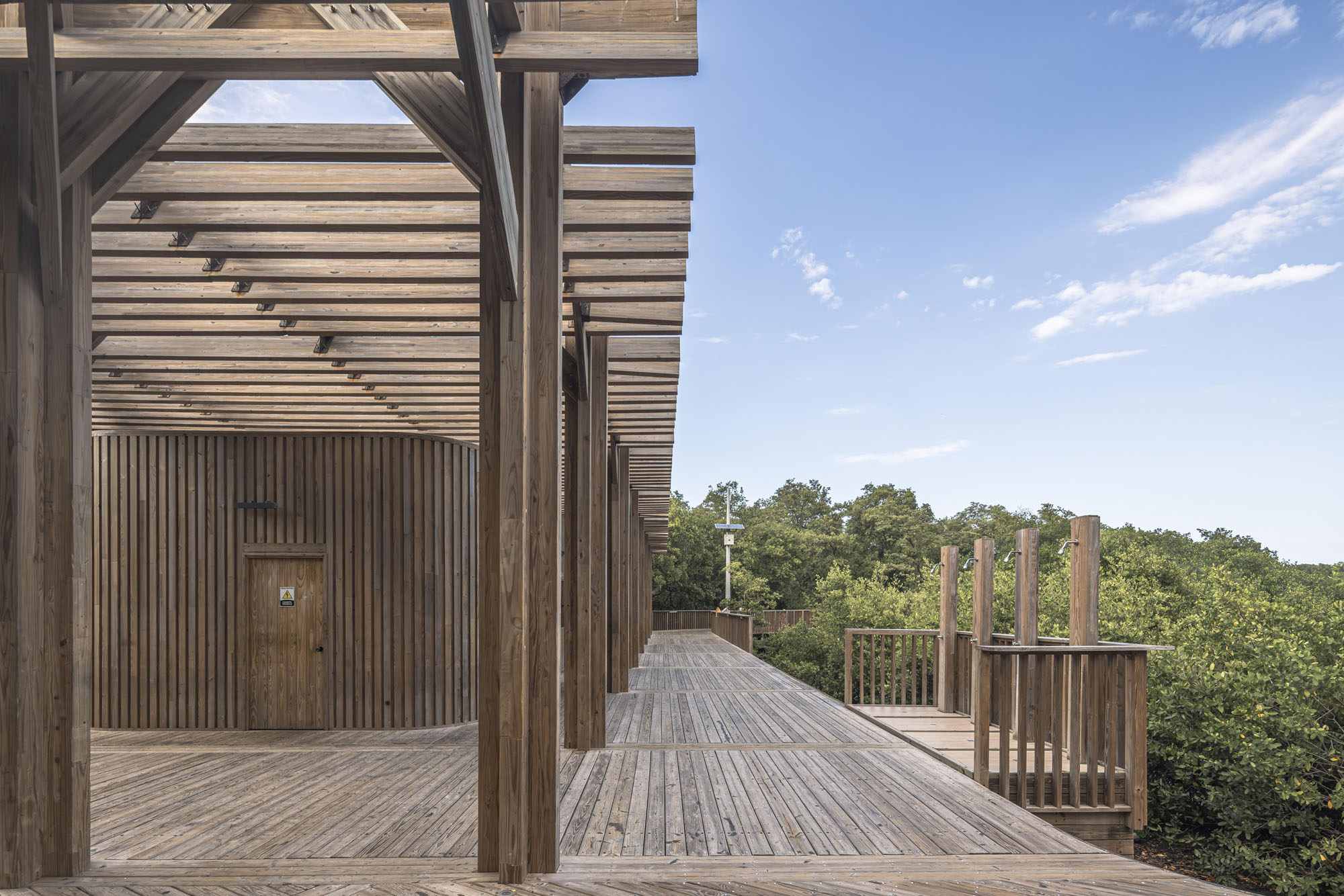
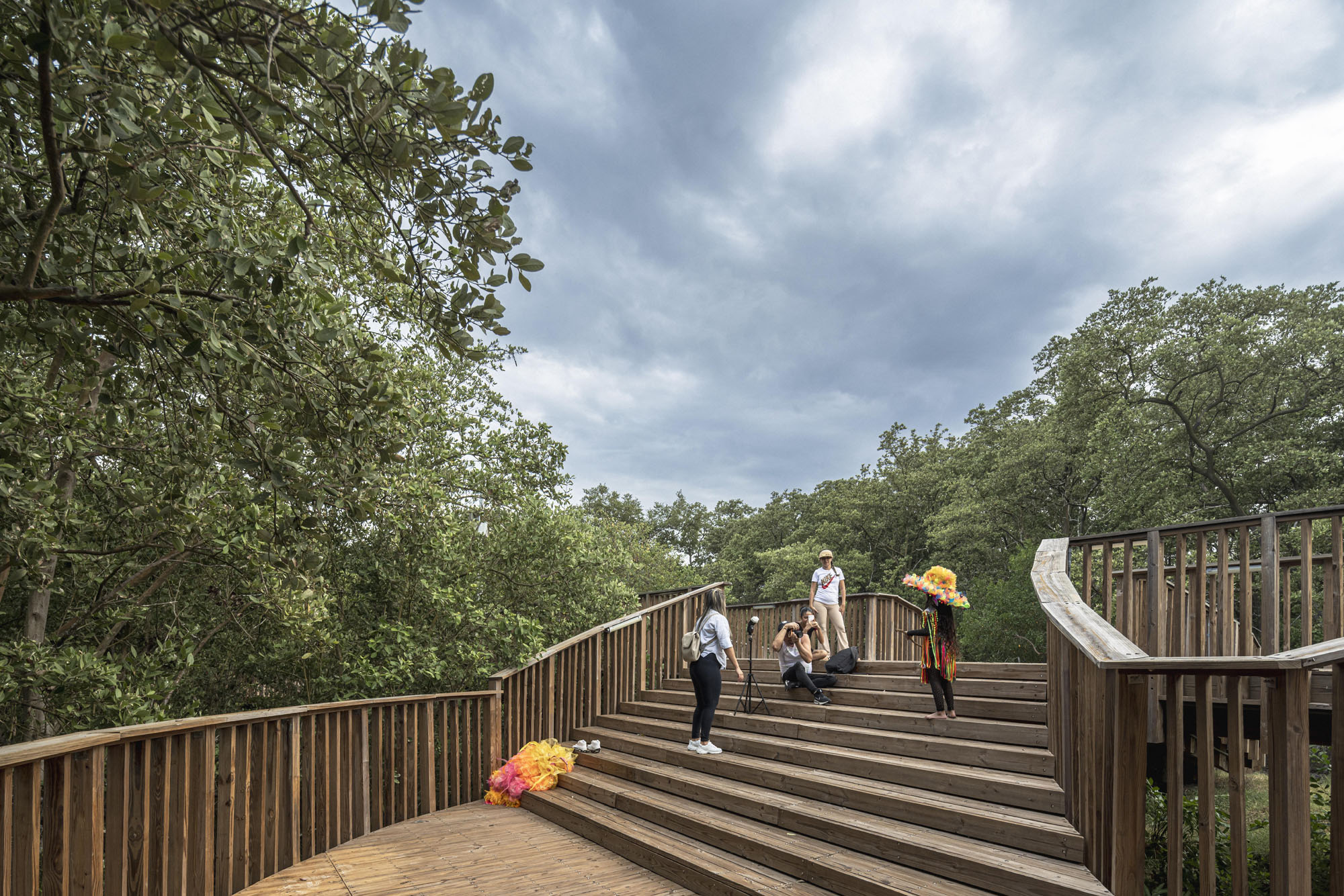
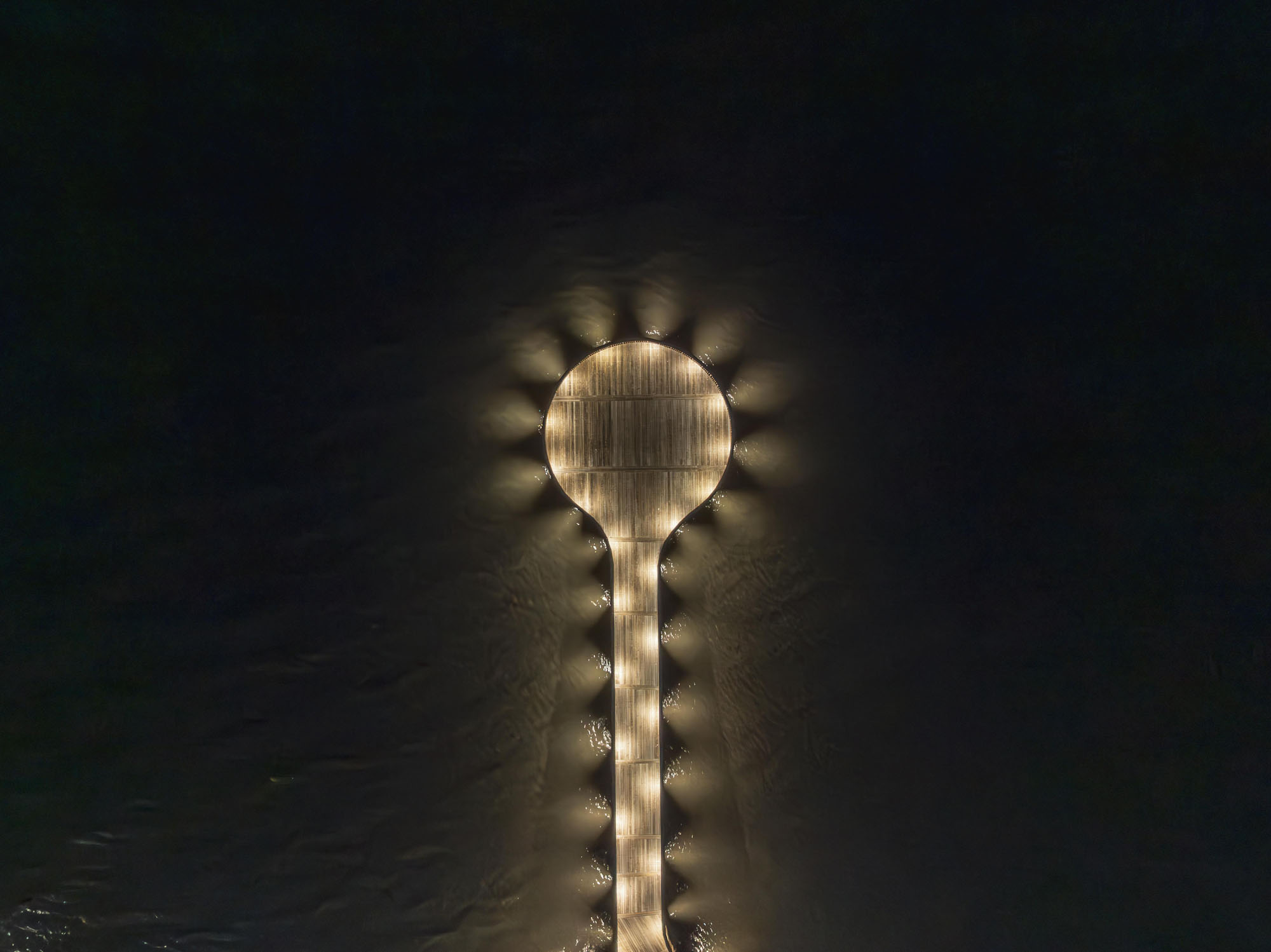
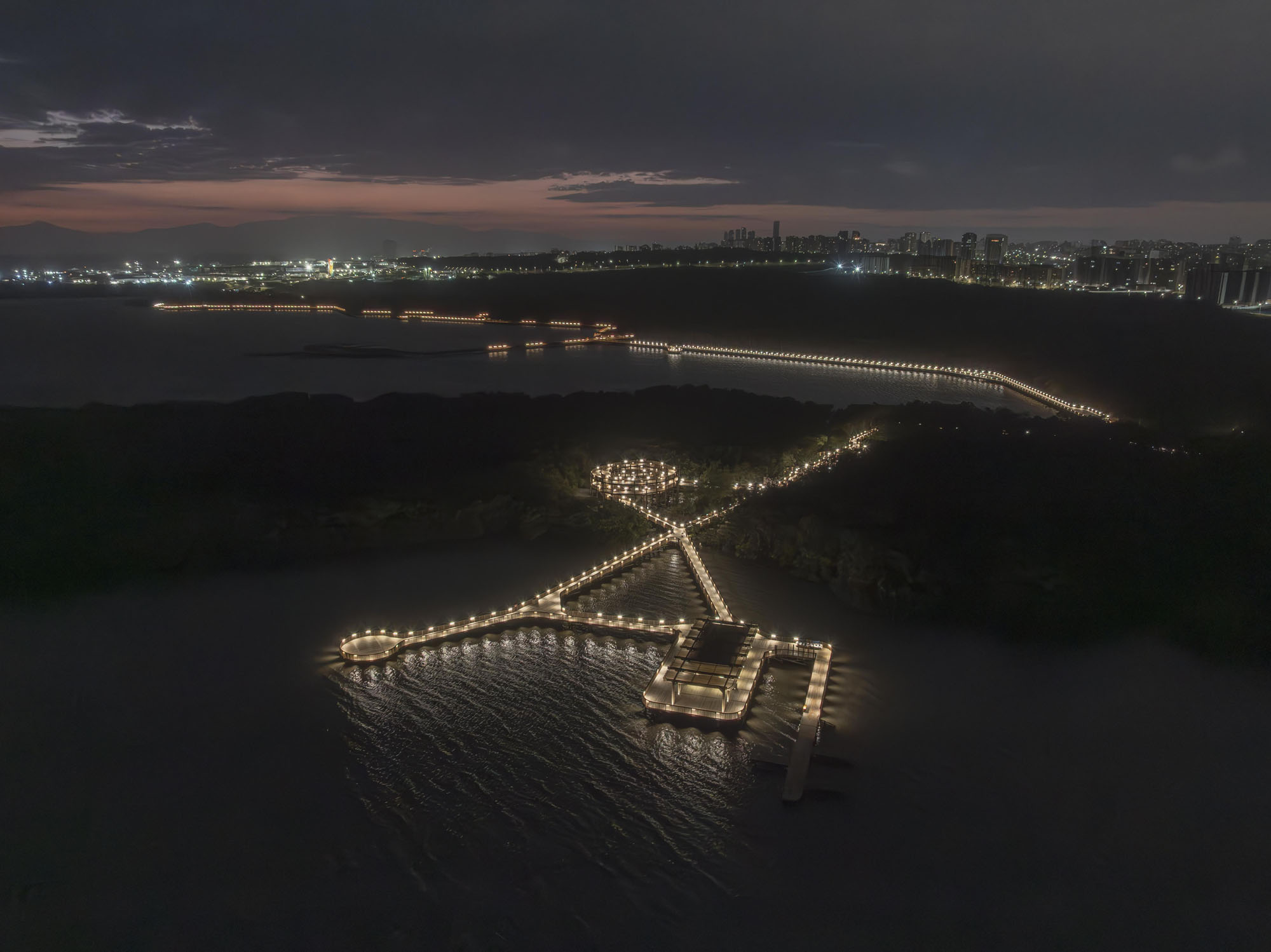
この計画は、さまざまな利用形態や活用方法を整理した地区によって構成されている。現在の開発では、主に2つの建築エリアに焦点を当てている。1つは生態系の観察と環境教育を目的とした「瞑想地区」、もう1つは集いやレクリエーションの場として構想された「ファミリー地区」である。これらの地区はいずれも公園を活性化させ、敷地の生態学的完全性を損なうことなく、地域社会と景観との間に直接的な関係を築く。
またこのエコパークは、伝統的な漁業などの既存の慣行を認識し、それらを空間的・プログラム的な論理の中に組み込んでいる。都市と自然の境界は、公共空間の連続性と植生戦略を通じて解決され、都市システムが景観へと徐々に拡張されていく。
©︎ Alejandro Arango
©︎ Alejandro Arango
©︎ Alejandro Arango
建築を超えた「生きたインフラ」としての役割
〈エコパルケ・シエナガ・デ・マジョルキン〉は、単なる建築物という枠を超え、絶えず変容し続ける開放的で柔軟なシステムである。その目的は、劣化した生態系を回復させるだけでなく、バランス、尊重、共存に基づいて、都市と自然環境との新たな関わり方を提案することにある。
ランドスケープを「生きたインフラ」として、公共空間を都市システムと生態系システムの間の能動的な媒介者として捉えることで、本プロジェクトは脆弱な沿岸地域に向けた再現可能な介入モデルを確立している。そのアプローチは、建築、都市計画、生態学がどのように連携して戦略的な生態系を再生しつつ、出会い、教育、市民による主体的な関与のための新たな機会を創出できるかを示している。
©︎ Alejandro Arango
©︎ Alejandro Arango
©︎ Alejandro Arango
©︎ Alejandro Arango
©︎ Alejandro Arango
©︎ Alejandro Arango
©︎ Alejandro Arango
©︎ Alejandro Arango
©︎ Alejandro Arango
©︎ Alejandro Arango
©︎ Alejandro Arango
©︎ Alejandro Arango
以下、DEBアーキテクチャのリリース(英文)です。
Ecoparque Ciénaga de Mallorquín
1. Technical Sheet
Location: Barranquilla, Colombia
Area: 61,834 m²
Year: 2022
Design: DEB ARCHITECTURE and EL EQUIPO MAZZANTI
Project Director: Francisco Ricardo Marino
Client: Puerta de Oro Barranquilla
President and Project Structurer: Ricardo Vives
Team: Luis Guillermo Barrera, Jorge Robledo Manco, Natalia Gamez, Jose Daniel Rosado, Juan Sebastian PerezConsultants:
Topography and Bathymetry – SINTH Ingeniería
Structural Engineering – Estructuras Sostenibles
HVAC Design – Ing. José Solano Pérez Design and HVAC Consulting
Electrical Design – RPB
Telecommunications Design – AP Ingeniería
Hydrosanitary Design – SINTH Ingeniería
Traffic Study – M Ingeniería y Planeación
Environmental Impact Assessment (EIA) – PIMAS
Life Safety – AGR
Road Geometry – M Ingeniería y Planeación
Cost Estimation – MB Ingeniería Vial
Bioclimatic Study – Oleb Arquitectura Bioclimática & Sostenibilidad2. Short Description
The Ecoparque Ciénaga de Mallorquín is framed as an environmental and urban regeneration project in the contemporary Colombian Caribbean context. Conceived as a system of pathways and public spaces, the project establishes an active boundary between the wetland ecosystem and the urban expansion of Barranquilla, creating an interface capable of articulating natural and social dynamics.Located in a strategic enclave where the Atlantic Ocean meets the Magdalena River, this lagoon system is one of the most biodiverse ecosystems in the region, hosting more than 200 bird species and a complex mangrove network. The ecopark acknowledges this condition and proposes an intervention based on minimal territorial occupation, through elevated walkways, observation platforms, and resting areas that allow controlled access without disrupting ecological processes.
The project acts as a transitional layer between the city and the wetland, integrating civic, recreational, and educational activities with existing practices such as artisanal fishing. Through a flexible and adaptive structure, the ecopark promotes a sustainable relationship between the built environment and the natural landscape, consolidating a living edge that protects the ecosystem while making it accessible to citizens.
3. Extended Description
The Ecoparque Ciénaga de Mallorquín is part of contemporary processes of environmental regeneration and urban edge reconfiguration in coastal contexts. Located in Barranquilla, Colombia, the project addresses the historical relationship between the city and one of its most significant ecosystems: the Ciénaga de Mallorquín, a lagoon system located at the meeting point between the Atlantic Ocean and the Magdalena River. This geographical condition has defined not only the ecological richness of the site but also the urban and cultural development of the city.Over the past century, large-scale interventions such as the construction of Bocas de Ceniza significantly transformed the territory’s morphology, altering hydrological flows and affecting the ecological balance of the wetland. As a result, the lagoon experienced processes of degradation, pollution, and progressive isolation from urban life. However, the ecosystem has demonstrated remarkable resilience, evidenced by the persistence of its biodiversity, including more than 200 resident and migratory bird species, as well as extensive mangrove areas.
In this context, the ecopark is conceived as a territorial infrastructure that does not seek to impose a new form on the landscape, but rather to establish a system of mediation between urban and natural dynamics. The project is materialized through a network of pathways, platforms, and open spaces that configure a “living edge”: an active strip that regulates the relationship between urban expansion and the ecosystem, acting simultaneously as a protective barrier and an access threshold. Far from being a rigid boundary, this interface adapts to the changing conditions of the territory, acknowledging the dynamic nature of the wetland. Elevated walkways allow movement through the landscape without interfering with hydrological and biological cycles, while observation platforms enable contemplation and learning. In this way, the ecopark transforms the mangrove into a space of knowledge, where scientific, educational, and cultural practices converge.
The program is structured through districts that organize different forms of use and appropriation. The current development focuses on two main built areas: the Contemplation District, oriented toward ecosystem observation and environmental education, and the Family District, conceived as a space for gathering and recreation. Both districts activate the park and generate a direct relationship between the community and the landscape without compromising the ecological integrity of the site.
The ecopark also recognizes and integrates existing practices such as artisanal fishing, embedding them within its spatial and programmatic logic. Transitions between city and nature are resolved through the continuity of public space and vegetation strategies, gradually extending urban systems into the landscape.
More than an architectural object, the Ecoparque Ciénaga de Mallorquín is an open, flexible system in constant transformation. Its goal is not only to restore a degraded ecosystem, but also to propose a new way of relating the city to its natural environment, based on balance, respect, and coexistence.
By understanding landscape as living infrastructure and public space as an active mediator between urban and ecological systems, the project establishes a replicable intervention model for vulnerable coastal territories. Its approach demonstrates how architecture, urbanism, and ecology can work together to regenerate strategic ecosystems while creating new opportunities for encounter, education, and civic appropriation.
4. DEB Architecture + El Equipo Mazzanti Statement
DEB Architecture and El Equipo Mazzanti are two architectural practices collaborating on high-impact urban, social, and environmental projects. Their approach combines territorial research, architectural design, and urban regeneration strategies to develop context-sensitive interventions focused on cultural and ecological value. Their work explores new relationships between city, landscape, and community, integrating architecture, urbanism, and sustainability as tools for transformation.5. Awards and Recognitions
AIA International Honor Award for Urban Design 2025 – Ecoparque Ciénaga de Mallorquín
AIA International Sustainable Future Award for Urban Design 2025 – Ecoparque Ciénaga de Mallorquín
Dedalo Minosse OCCAM UNDER 40 Award 2025 – Ecoparque Ciénaga de Mallorquín
Winner Jury Award 2026 Architizer A+Awards – Ecoparque Ciénaga de Mallorquín
DEBアーキテクチャ 公式インスタグラム
https://www.instagram.com/deb_architecture/