

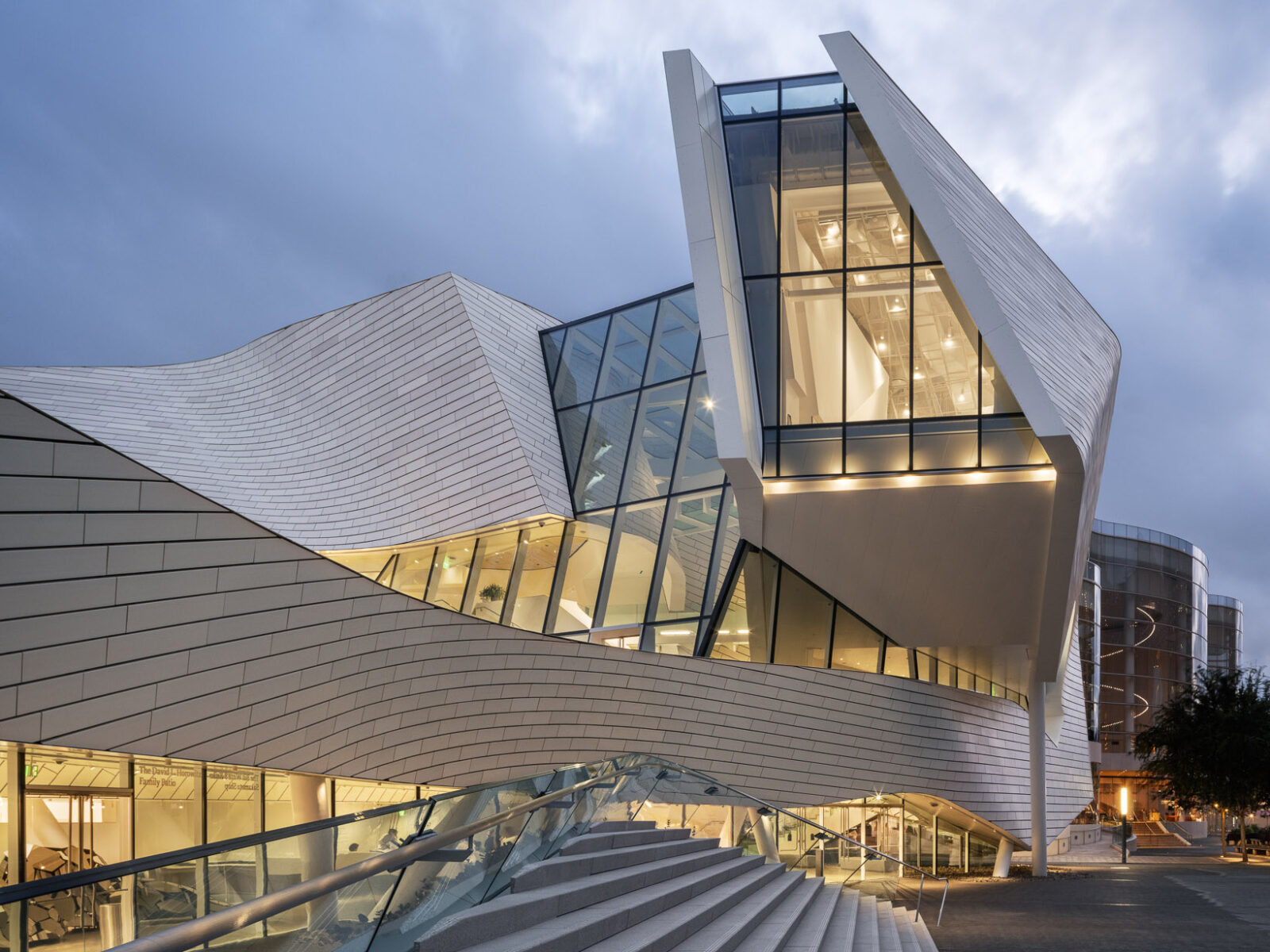
有機的な外壁がゲストを引き込む美術館 - カリフォルニア州の芸術複合施設内に誕生した彫刻的な建築〈オレンジ郡美術館〉
© Mike Kelley
© Mike Kelley
アメリカ・カリフォルニア州に位置する〈オレンジ郡美術館(Orange County Museum of Art)〉は、芸術複合施設〈セゲルストロム芸術センター〉内に新たに誕生した美術館です。
2005年にプリツカー賞を受賞したアメリカ人建築家トム・メイン(Thom Mayne)が主宰するモーフォシス・アーキテクツ(Morphosis Architects)が設計しました。
注目ポイント
- 記憶に残りつつアートを引き立てる「建築強度のグラデーション」
- 自然光が降り注ぐ彫刻的なアトリウム空間
- イベントや映画上映などに対応する建築面積の70%を占める屋上テラス
- 美術館としての機能性、ランドマーク性、周辺建築との調和を両立
(以下、モーフォシス・アーキテクツから提供されたプレスキットのテキストの抄訳)
© Mike Kelley
都市とつながる開かれた美術館
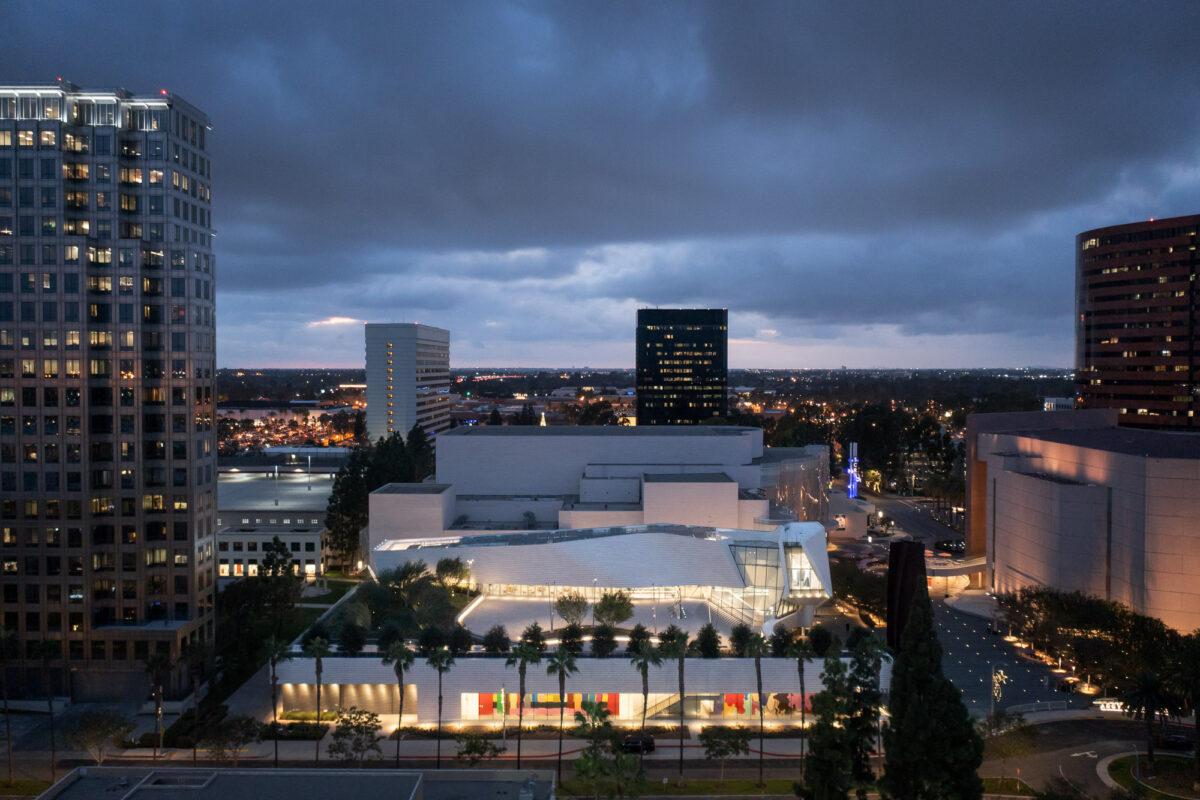
〈オレンジ郡美術館〉は、カリフォルニア州・オレンジ郡の芸術複合施設〈セゲルストロム芸術センター〉のキャンパス内に位置する新館であり、オレンジ郡の都市コスタメサにおける活気ある文化の拠点として誕生した。
オープンかつ親しみやすい都市型のデザインが特徴の〈オレンジ郡美術館〉は、多様な背景をもつアーティストによる刺激的な作品を通じて地域社会の豊かさを育み、幅広いメディアを横断する芸術作品を展示する。
© Mike Kelley
© Mike Kelley
柔軟性と多機能性を備えた新館
フレキシブルな展示ギャラリー、教育プログラム専用のスペース、公共の集いの場を備えた新館は、カリフォルニア州内外の現代アートとコンテンポラリーアートの重要作品を含む美術館のコレクションへのアクセスを拡大し、世界クラスの特別展プログラムも楽しむことができる。
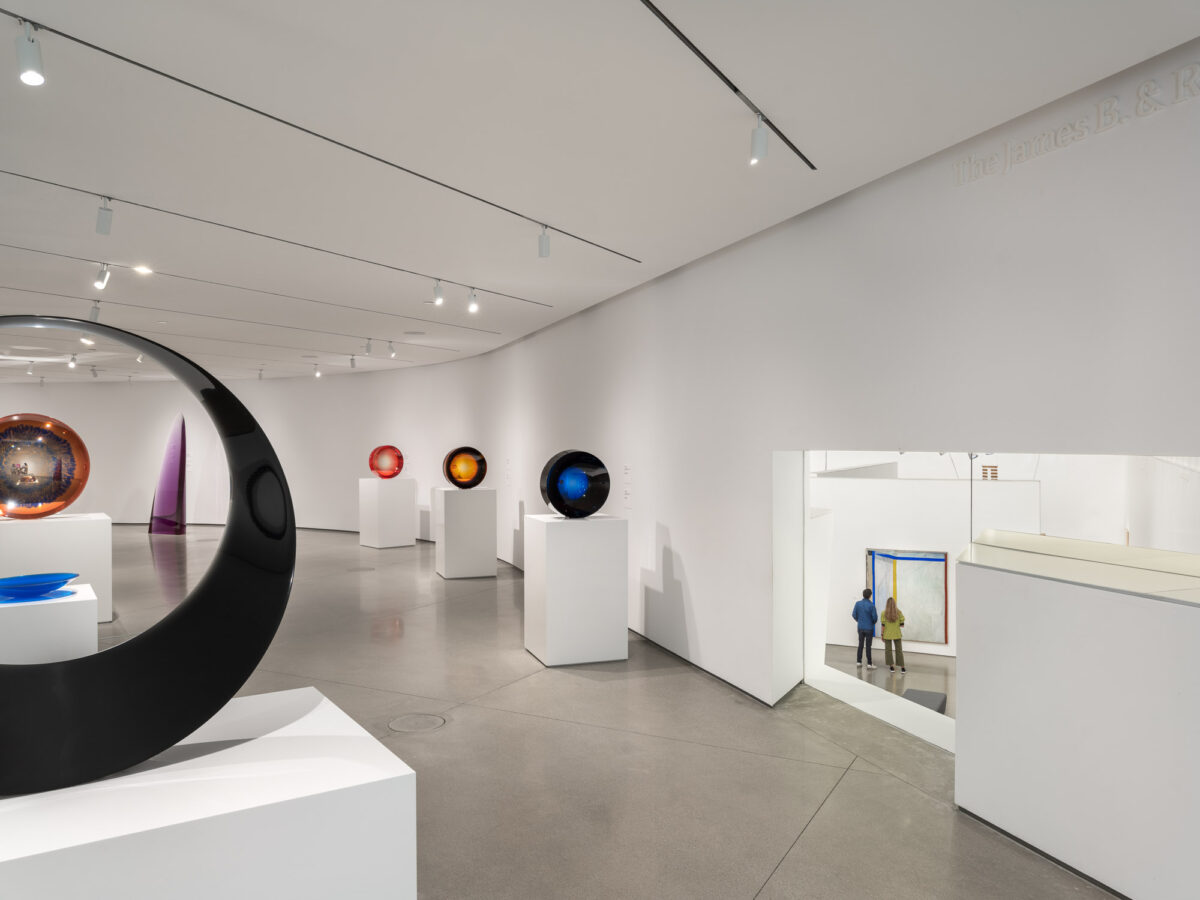
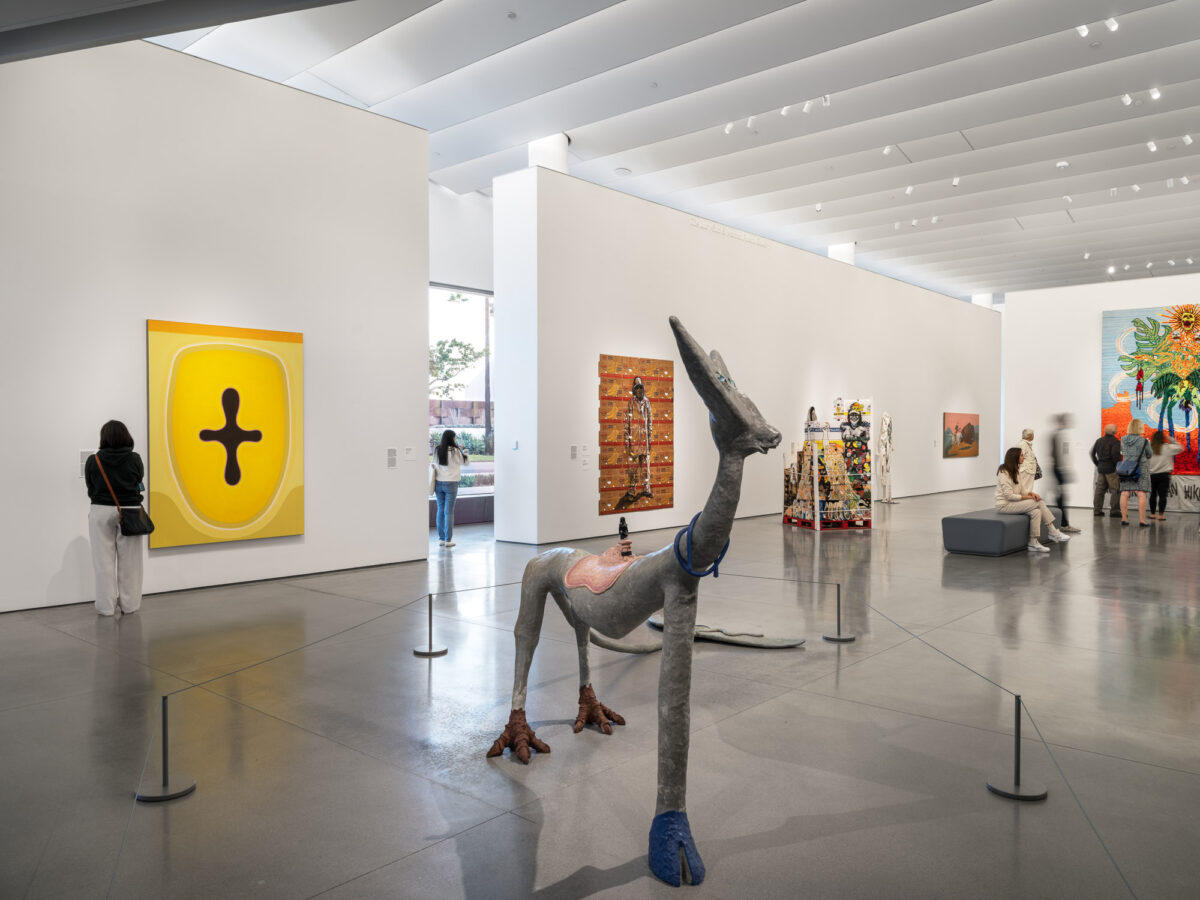
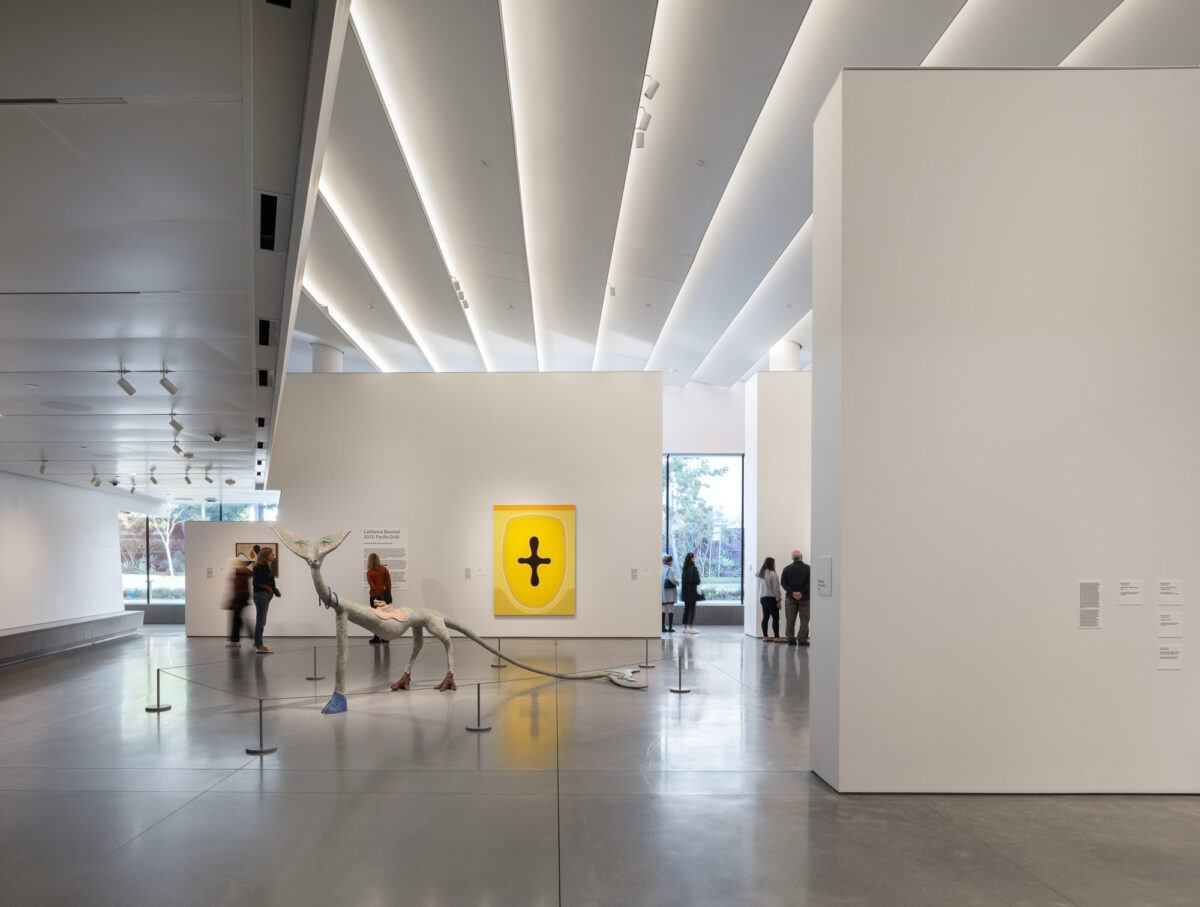
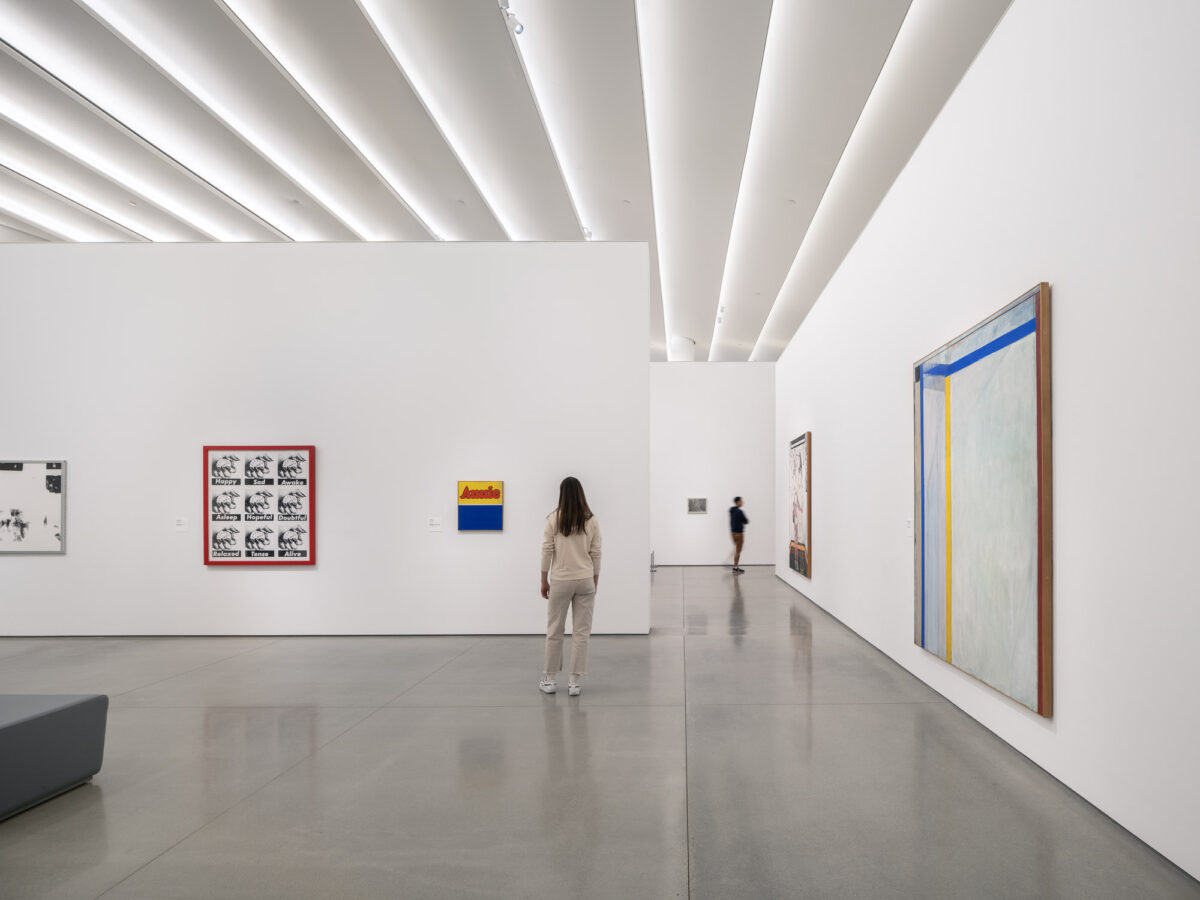
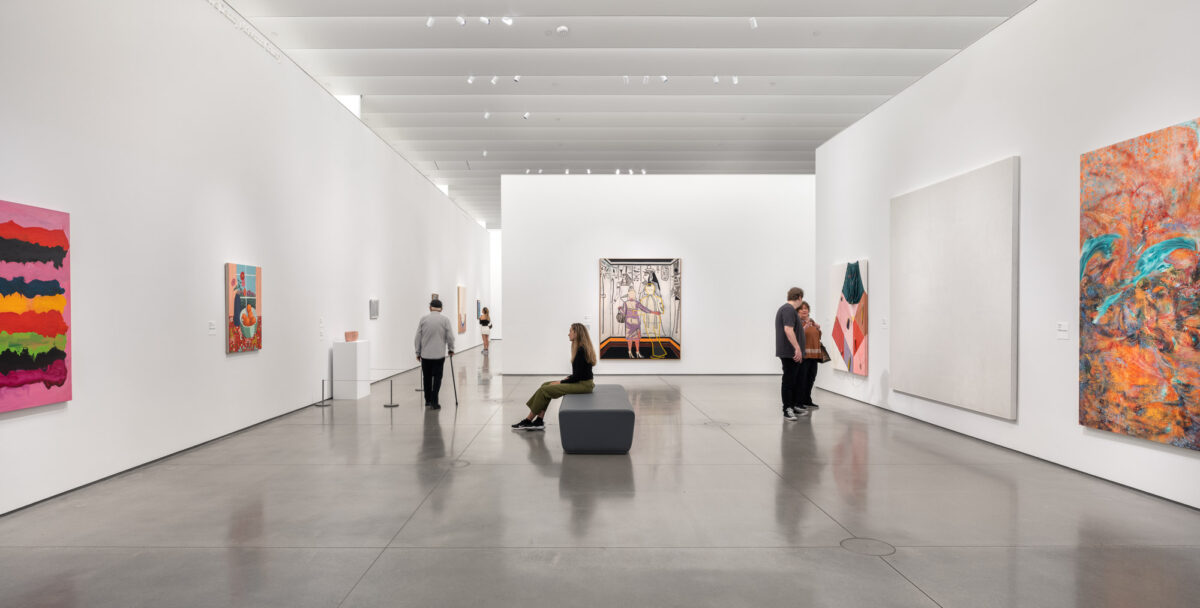
建物の全体的な設計は、美術館空間が柔軟性と機能性を兼ね備えつつ、親しみやすく記憶に残るものである必要性を反映している。1階は広々とした展示スペースをメインに、メザニン(中二階棚)と店舗型ギャラリーが併設され、多様な規模とメディアの臨時展示や永久コレクション展示に対応可能である。
© Mike Kelley
建築面積の70%に相当する広大な屋上テラスは、インスタレーション、彫刻庭園、屋外映画上映会、イベントなどに利用できるオープンエアスペースを形成している。
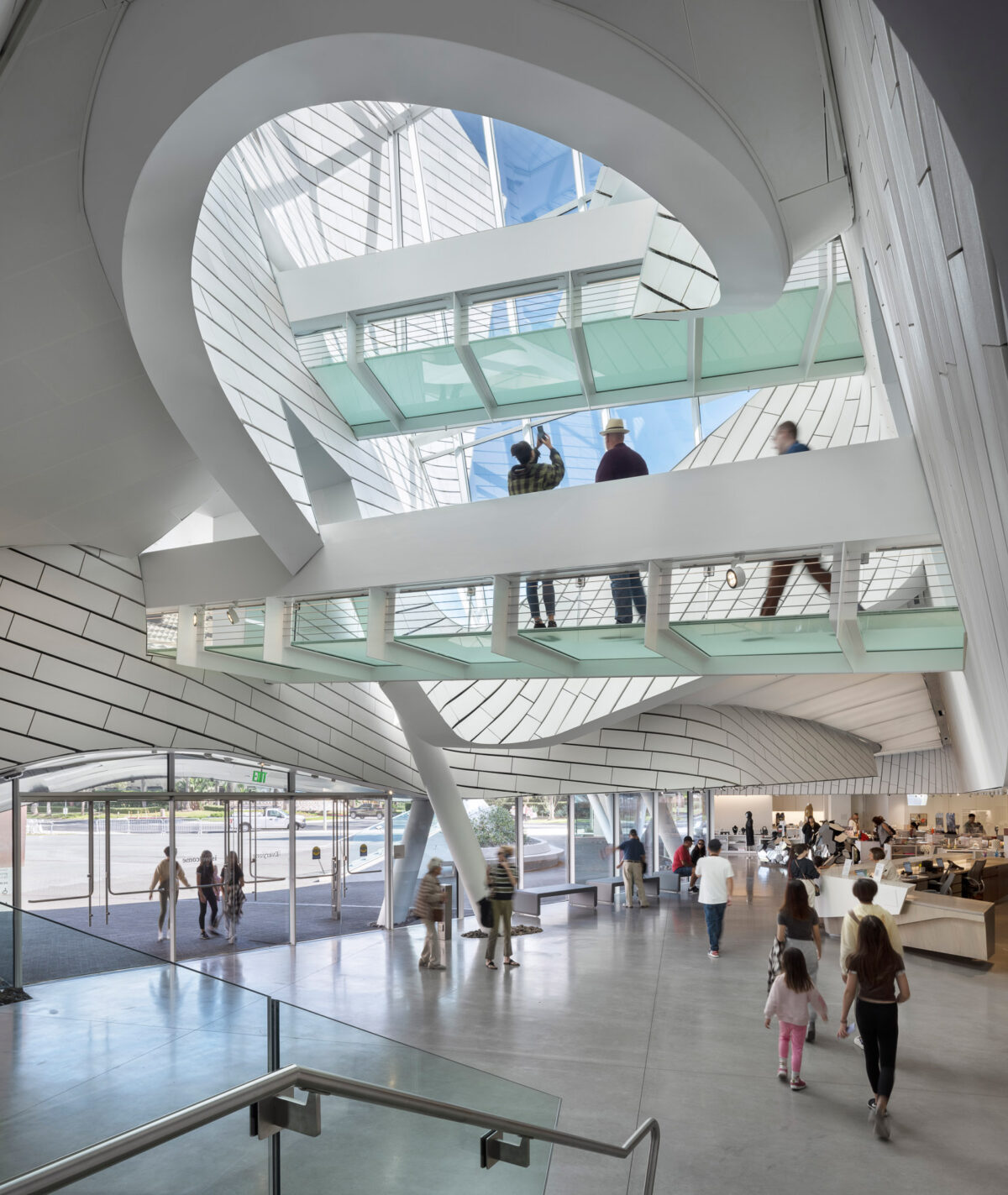
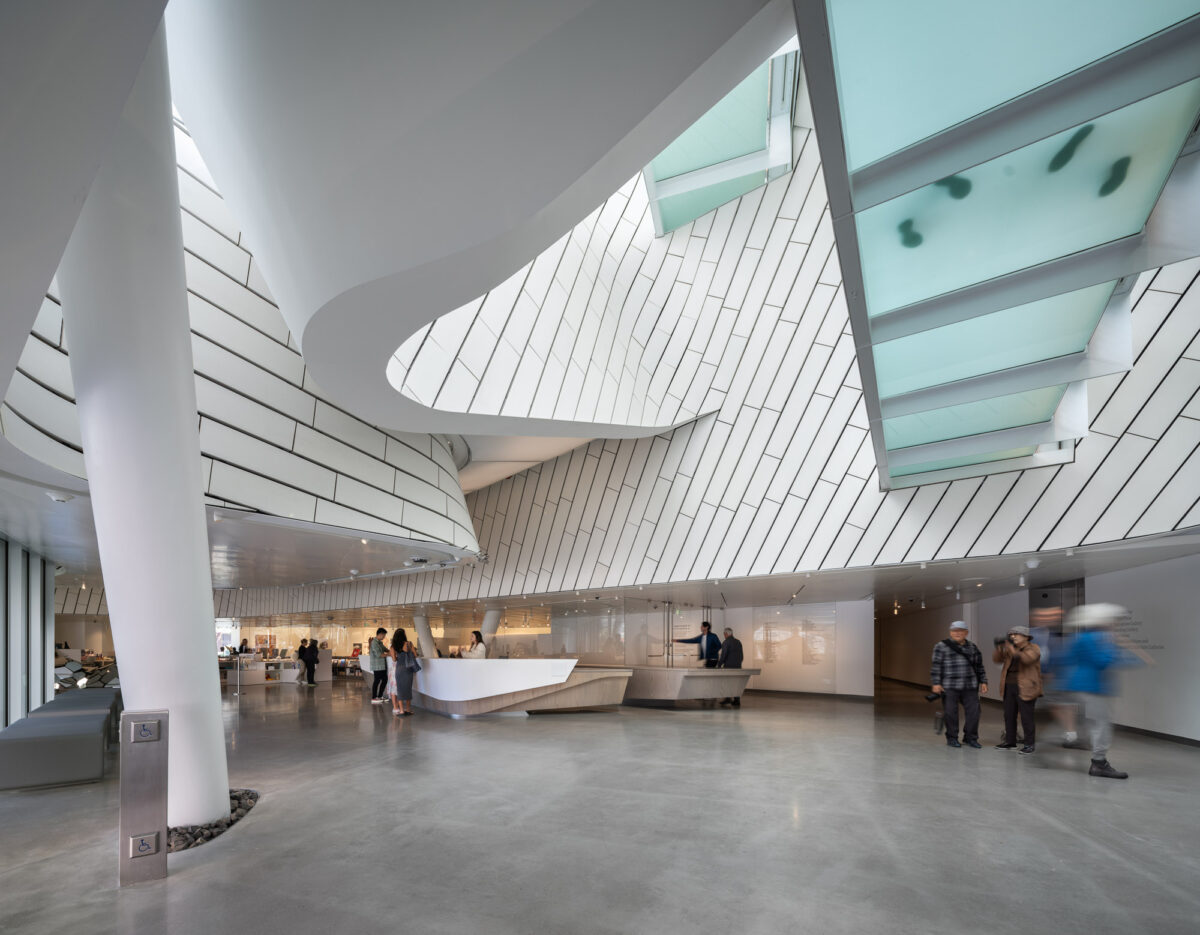
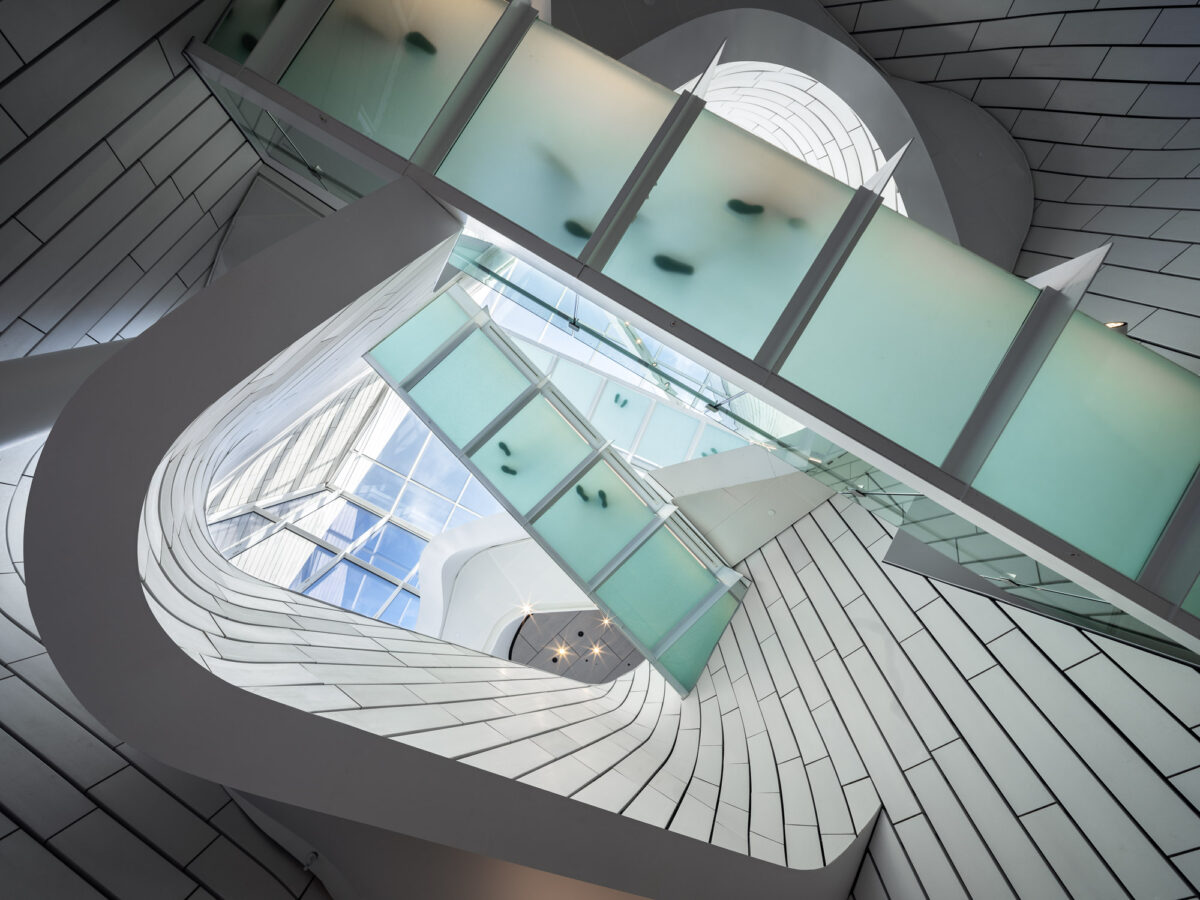
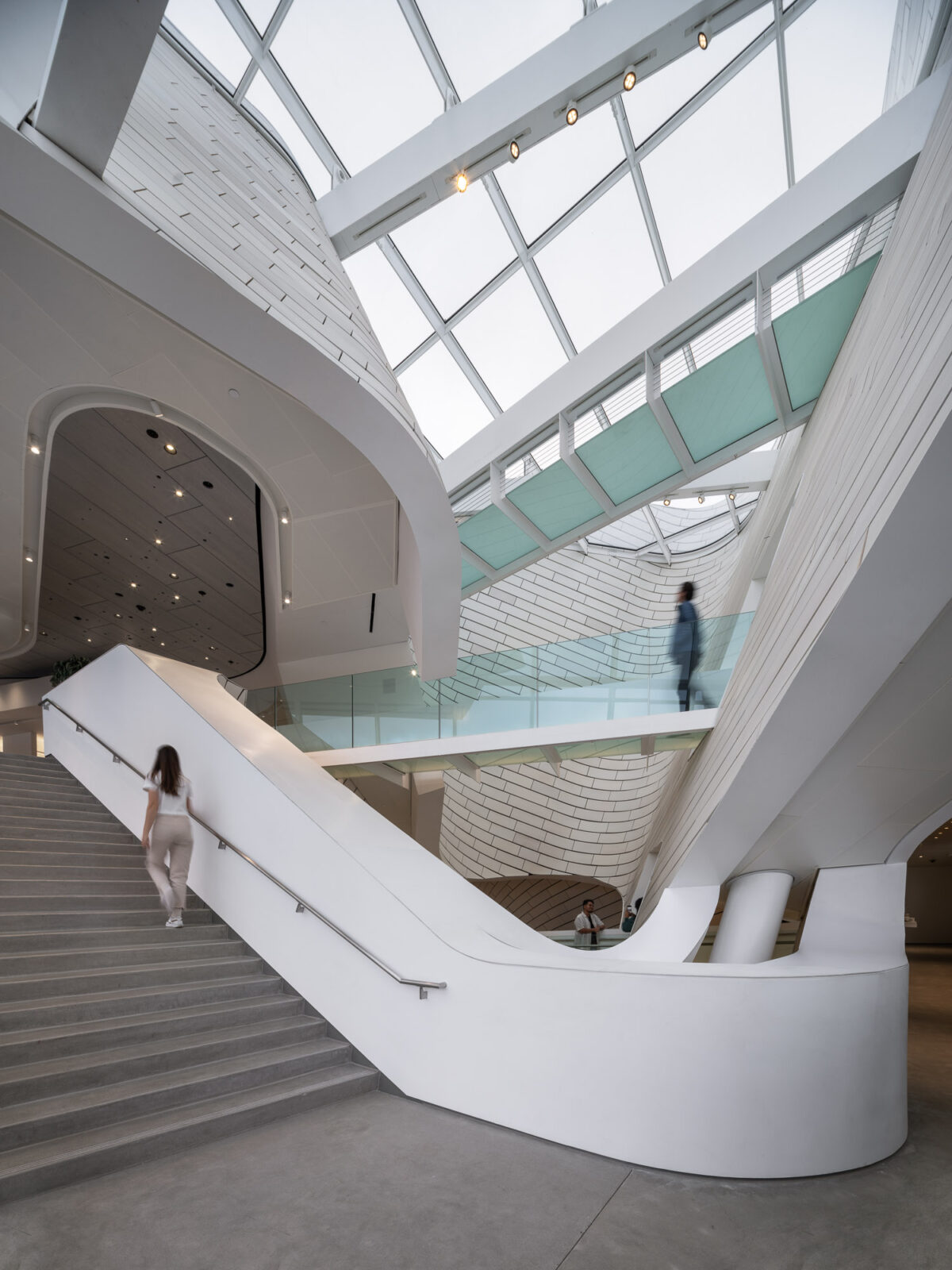
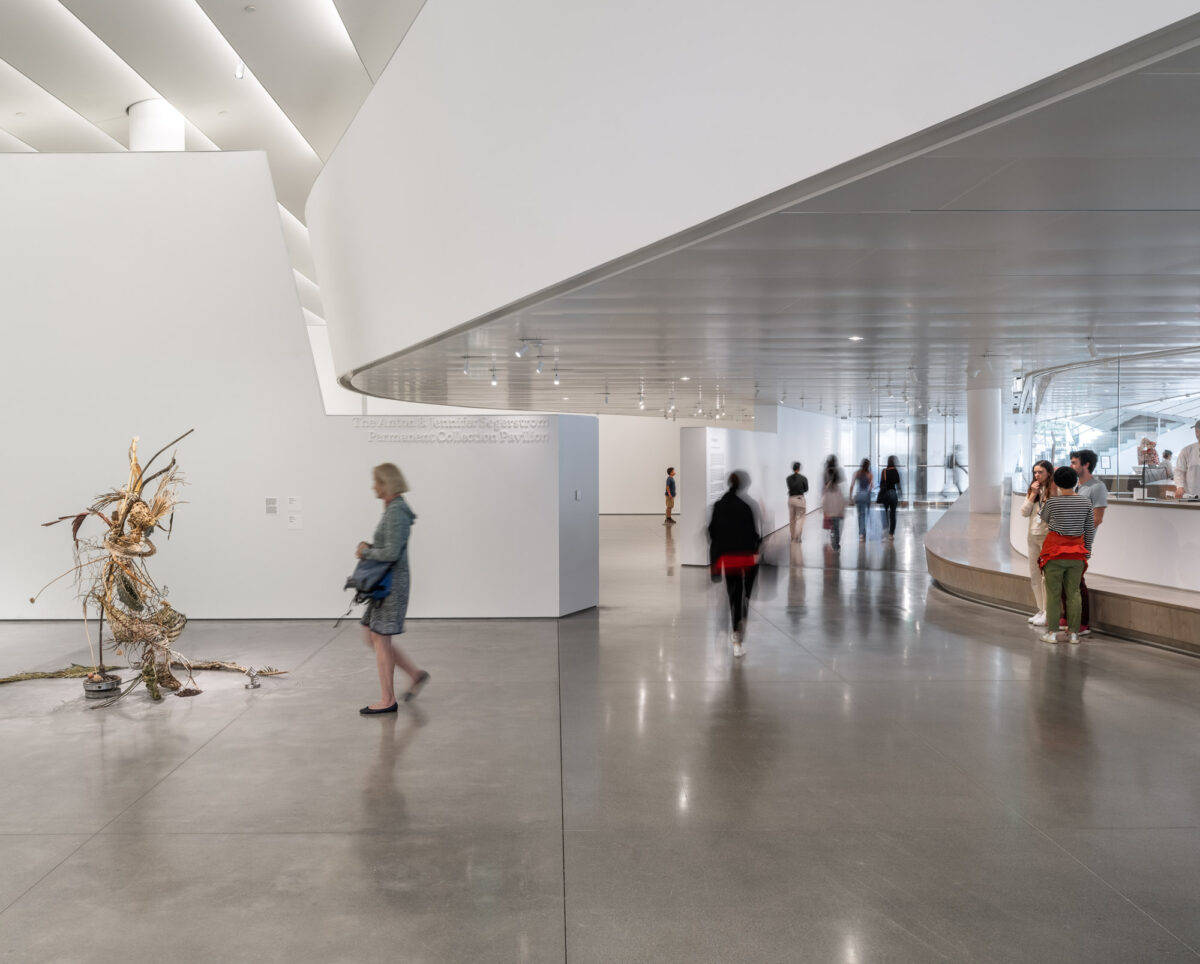
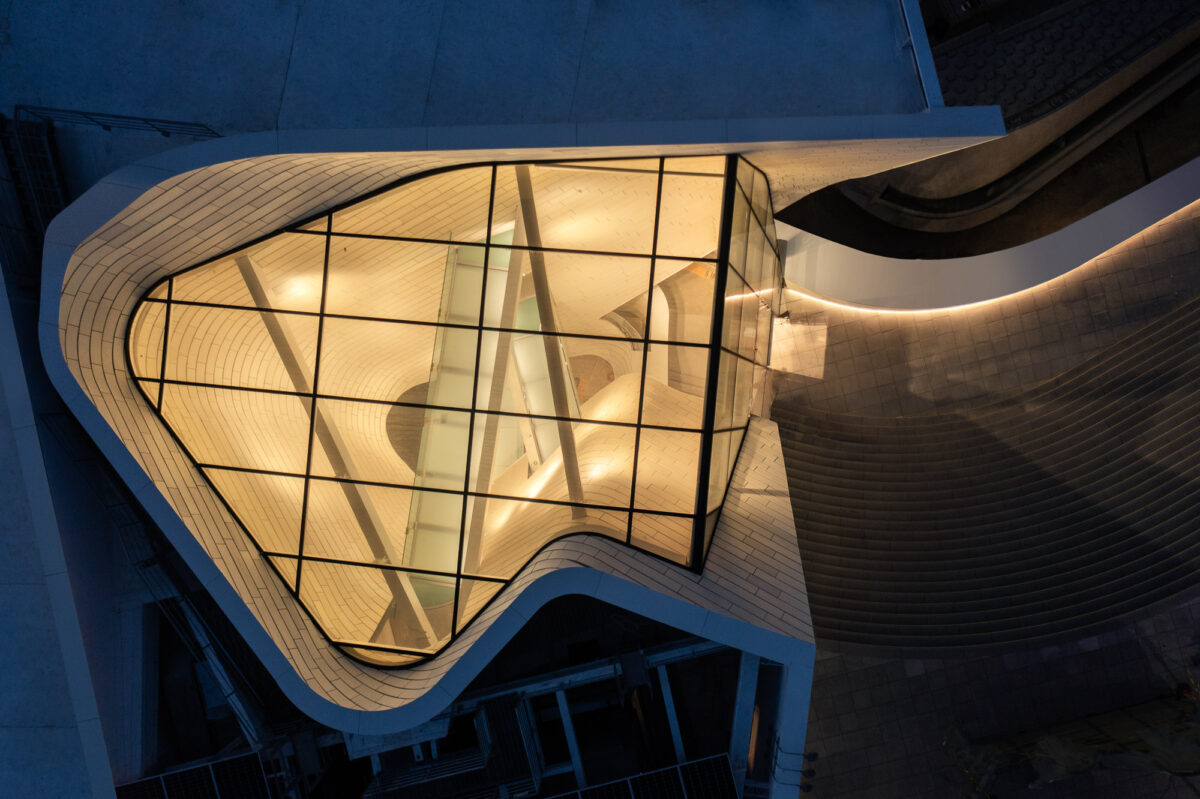
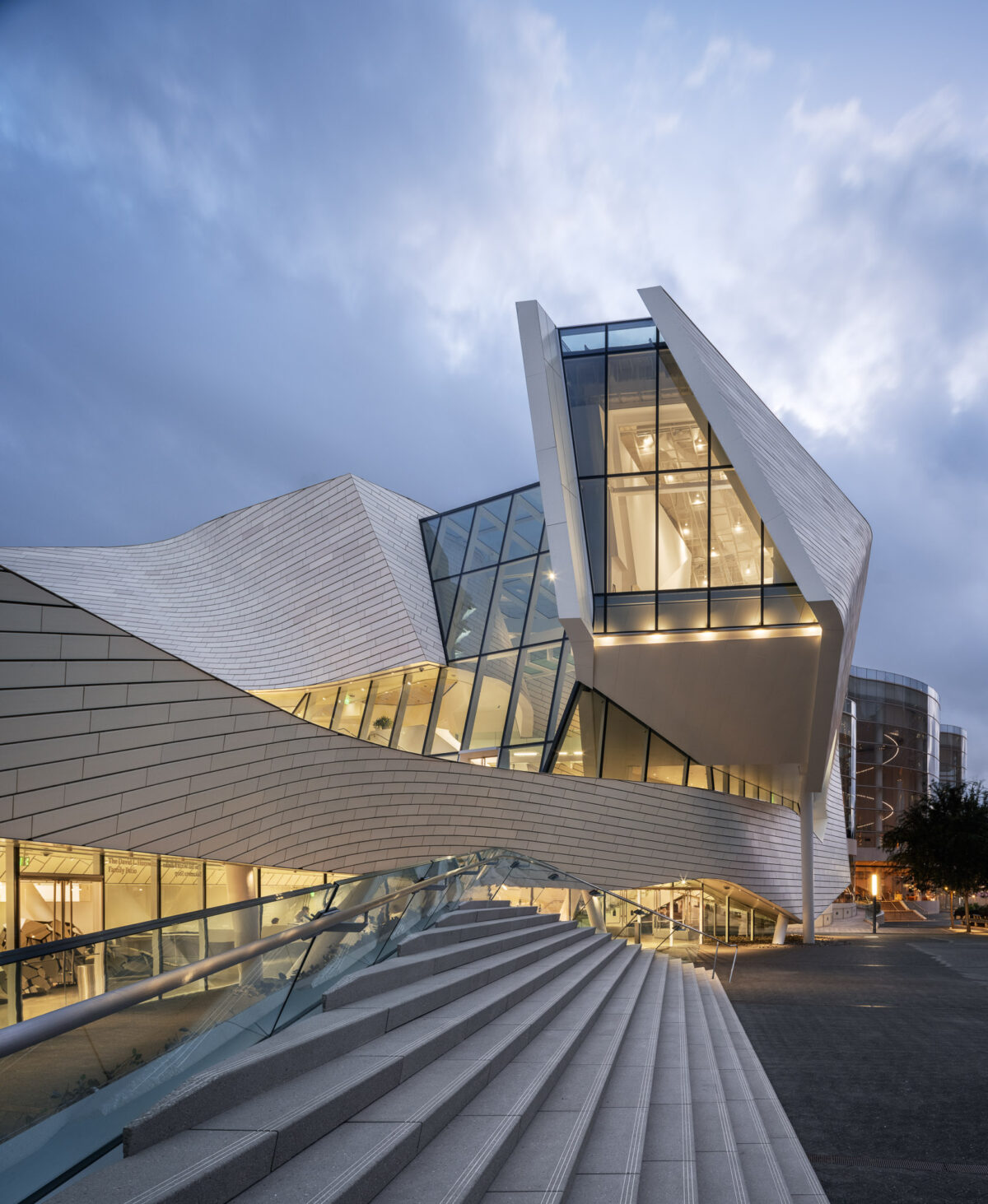
ロビーのアトリウム上空には彫刻的な要素が浮かび、テラスを見下ろすフルハイトの窓から自然光が差し込むことで、芸術的でダイナミックな空間が広がる。
© Mike Kelley
© Mike Kelley
周囲と調和しつつ個性を示す建築デザイン
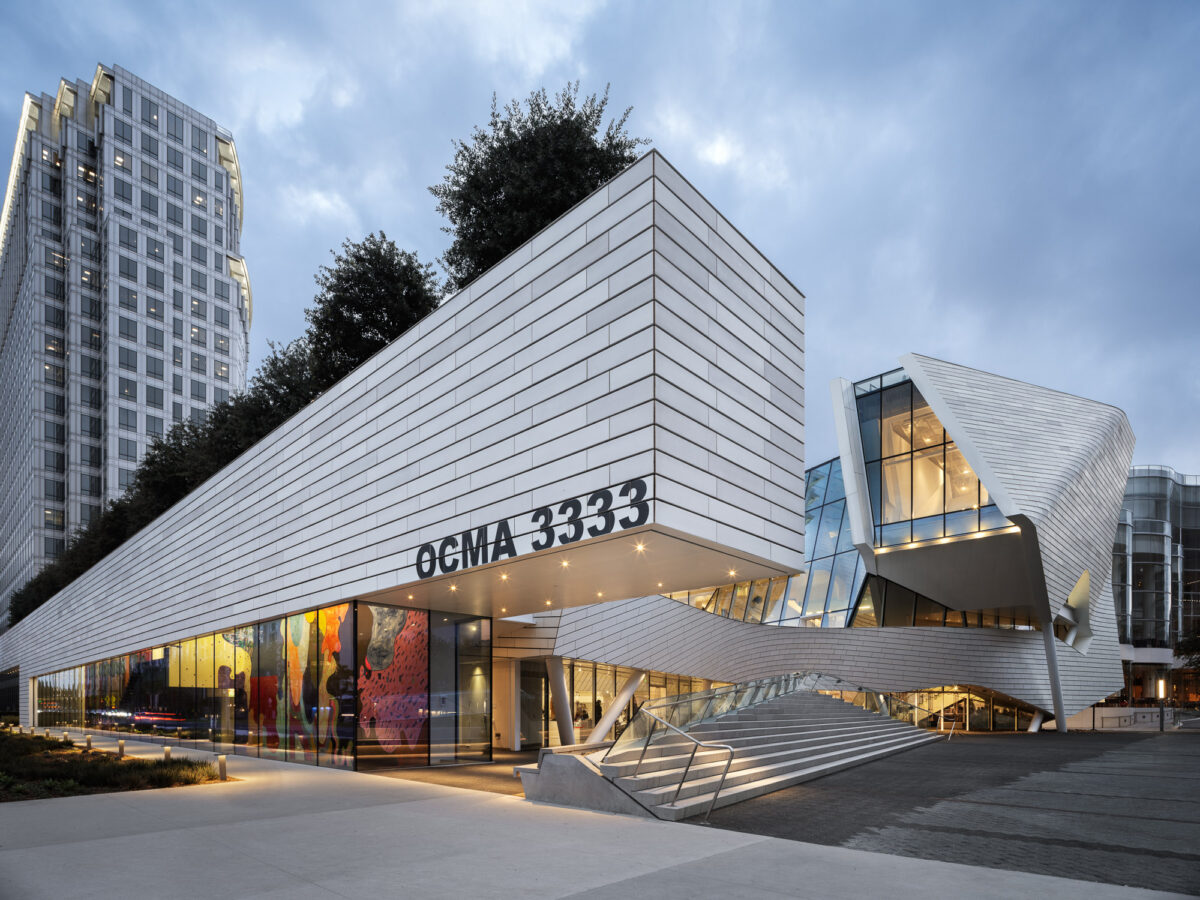
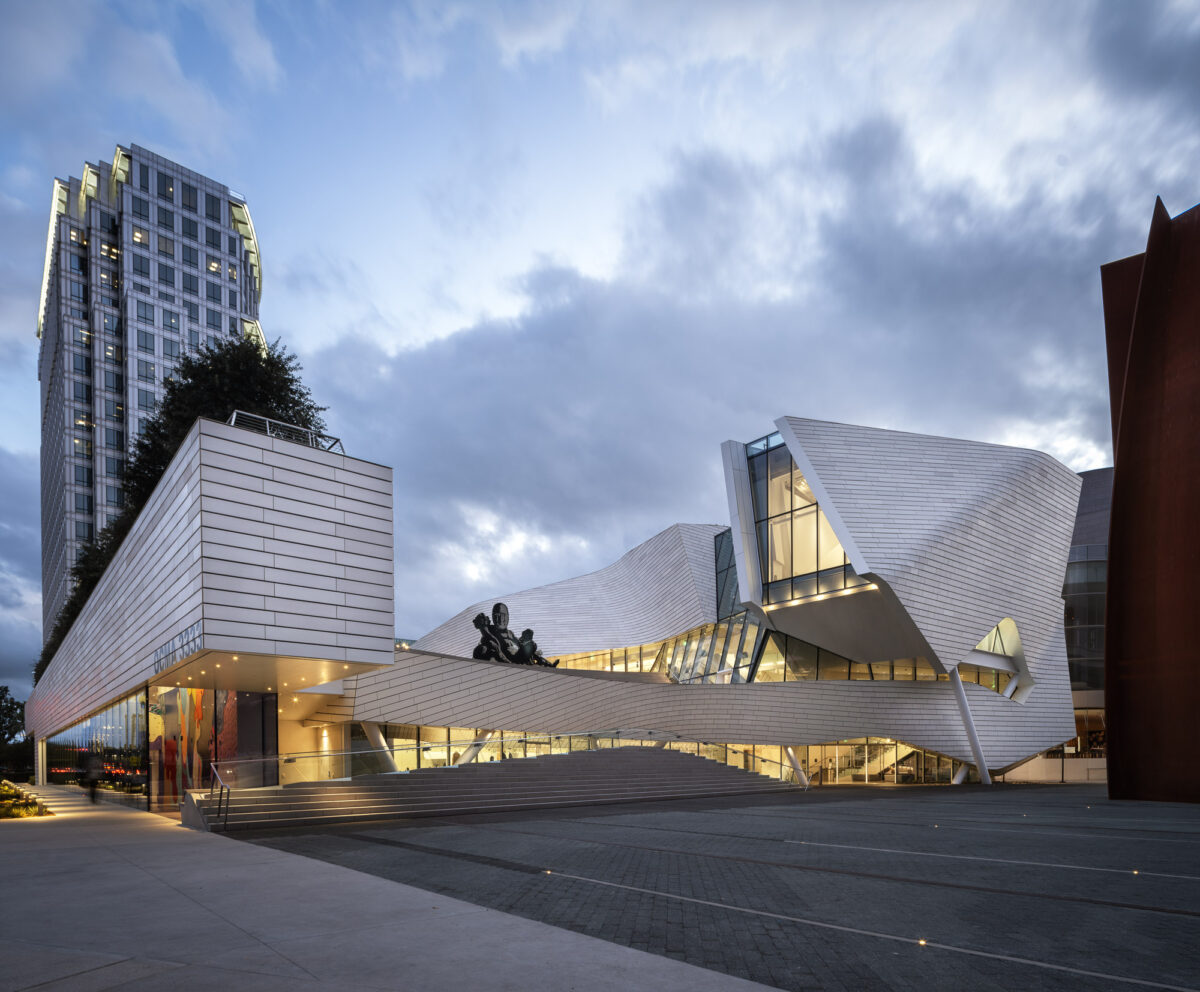
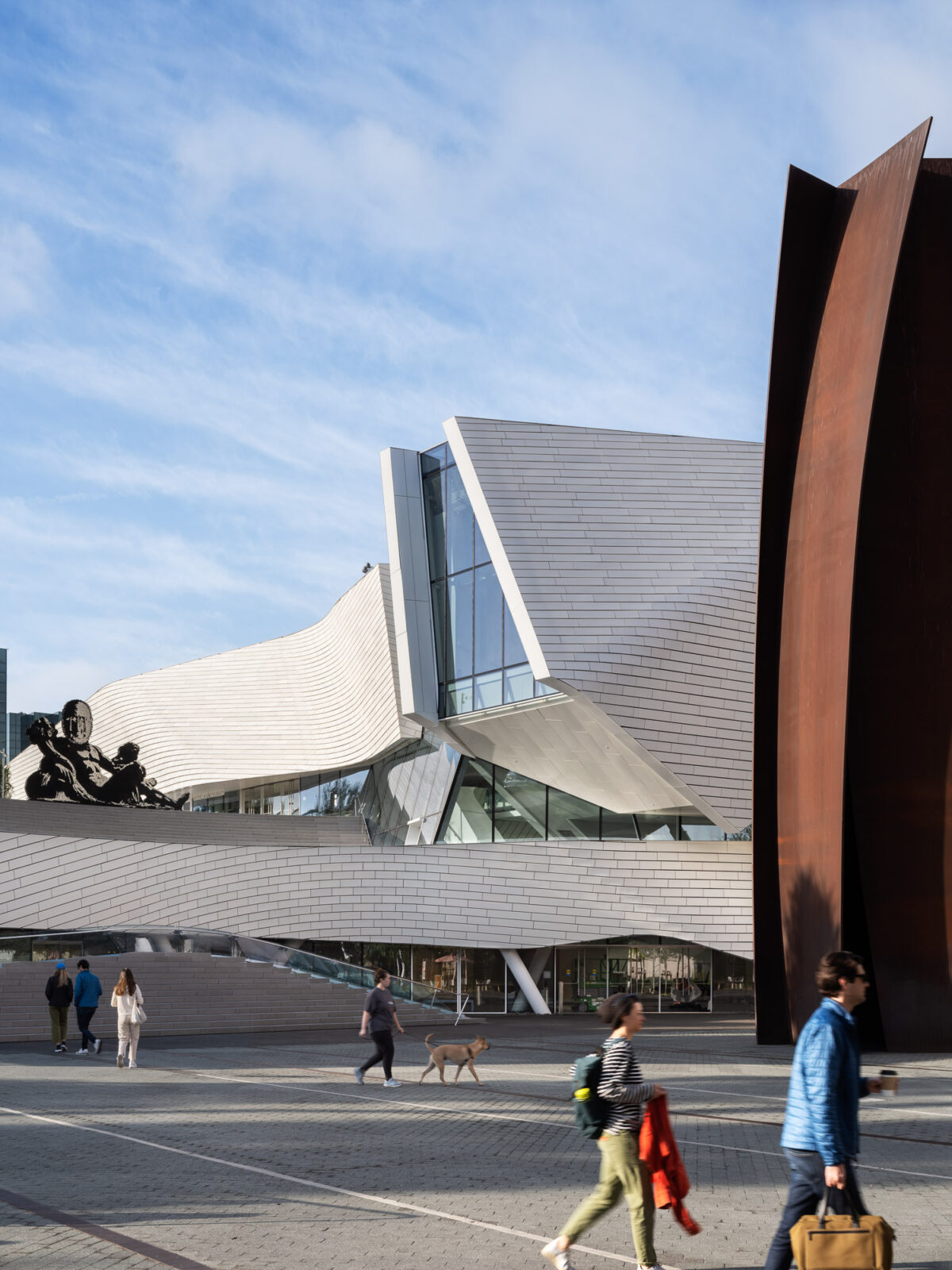
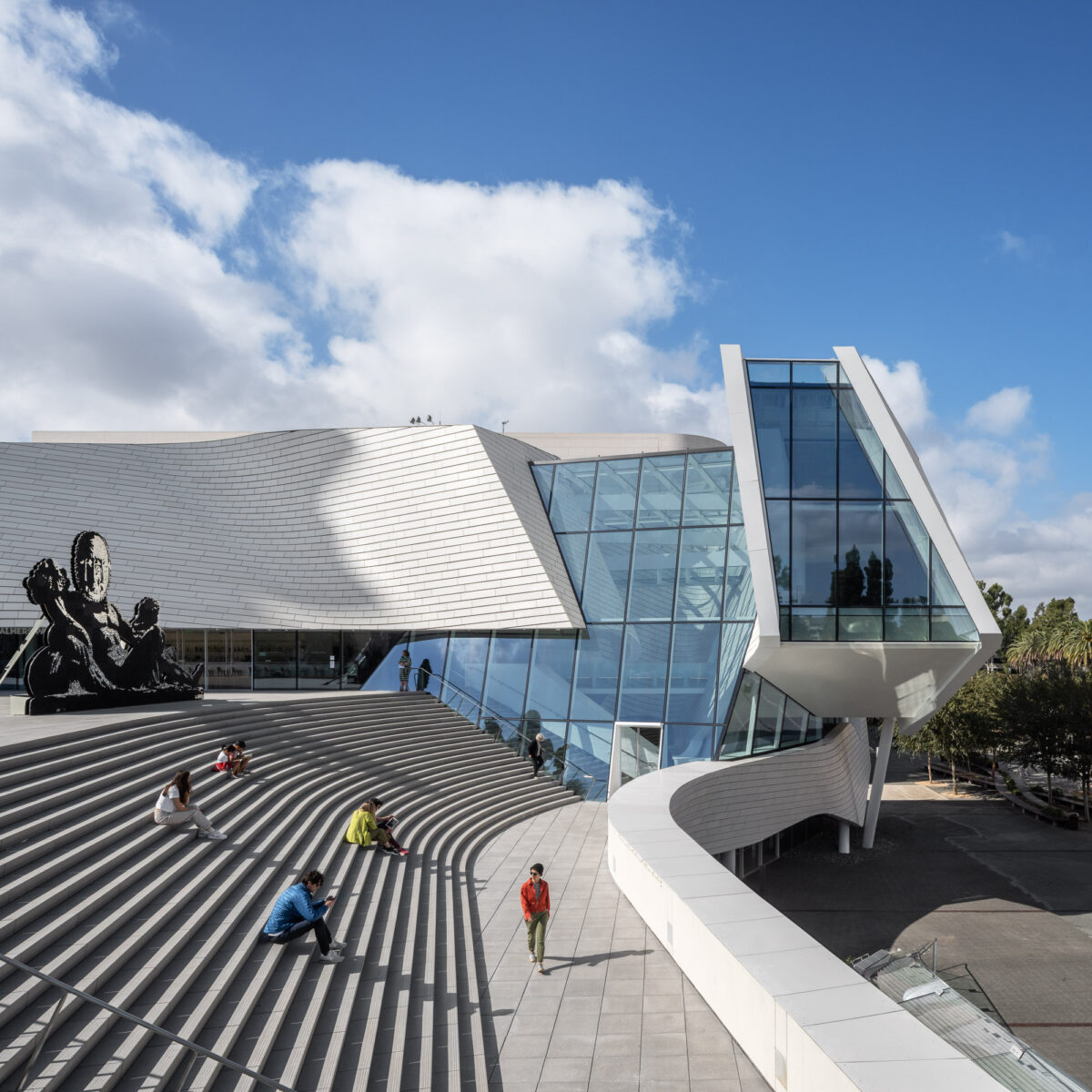
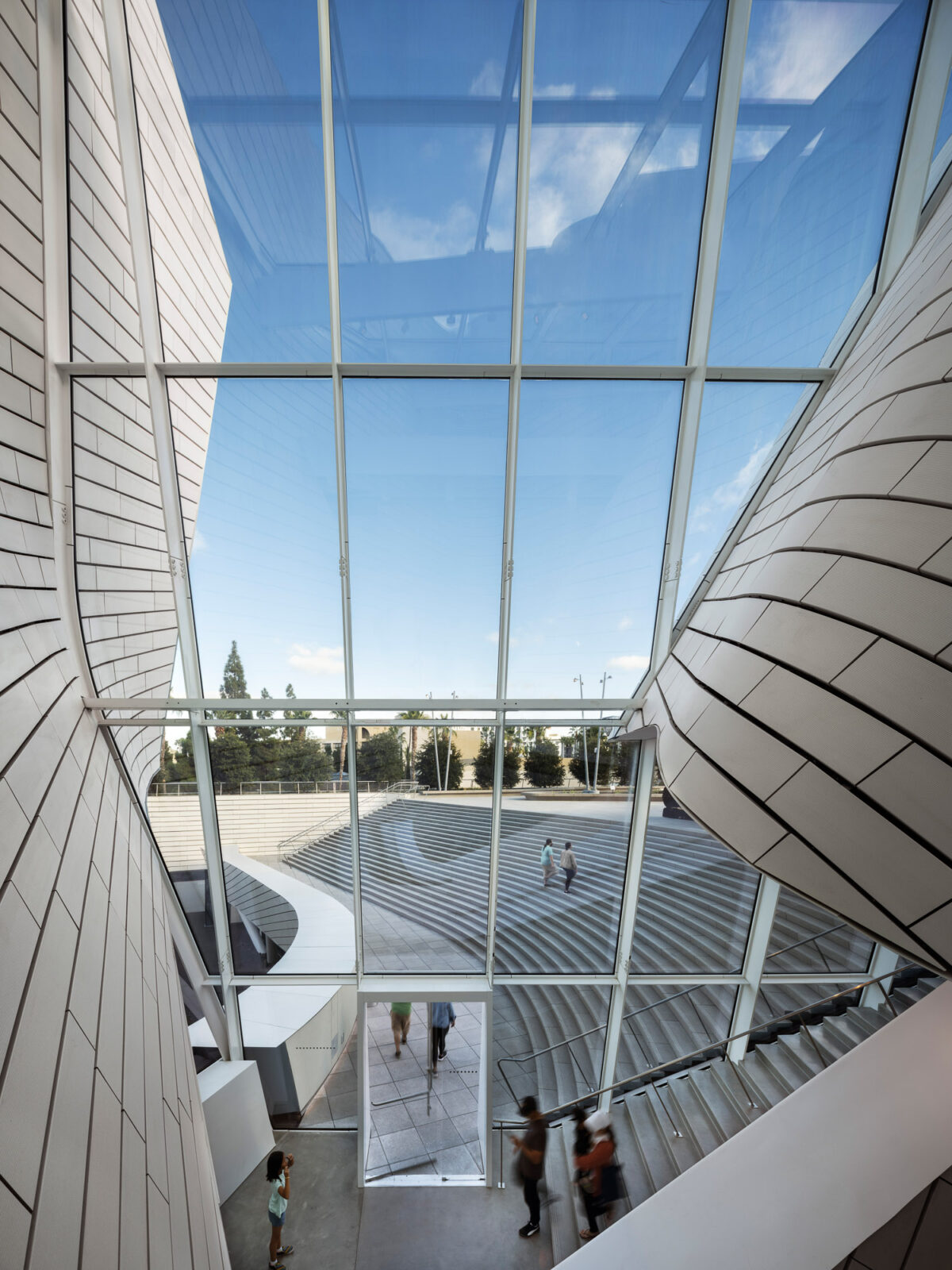
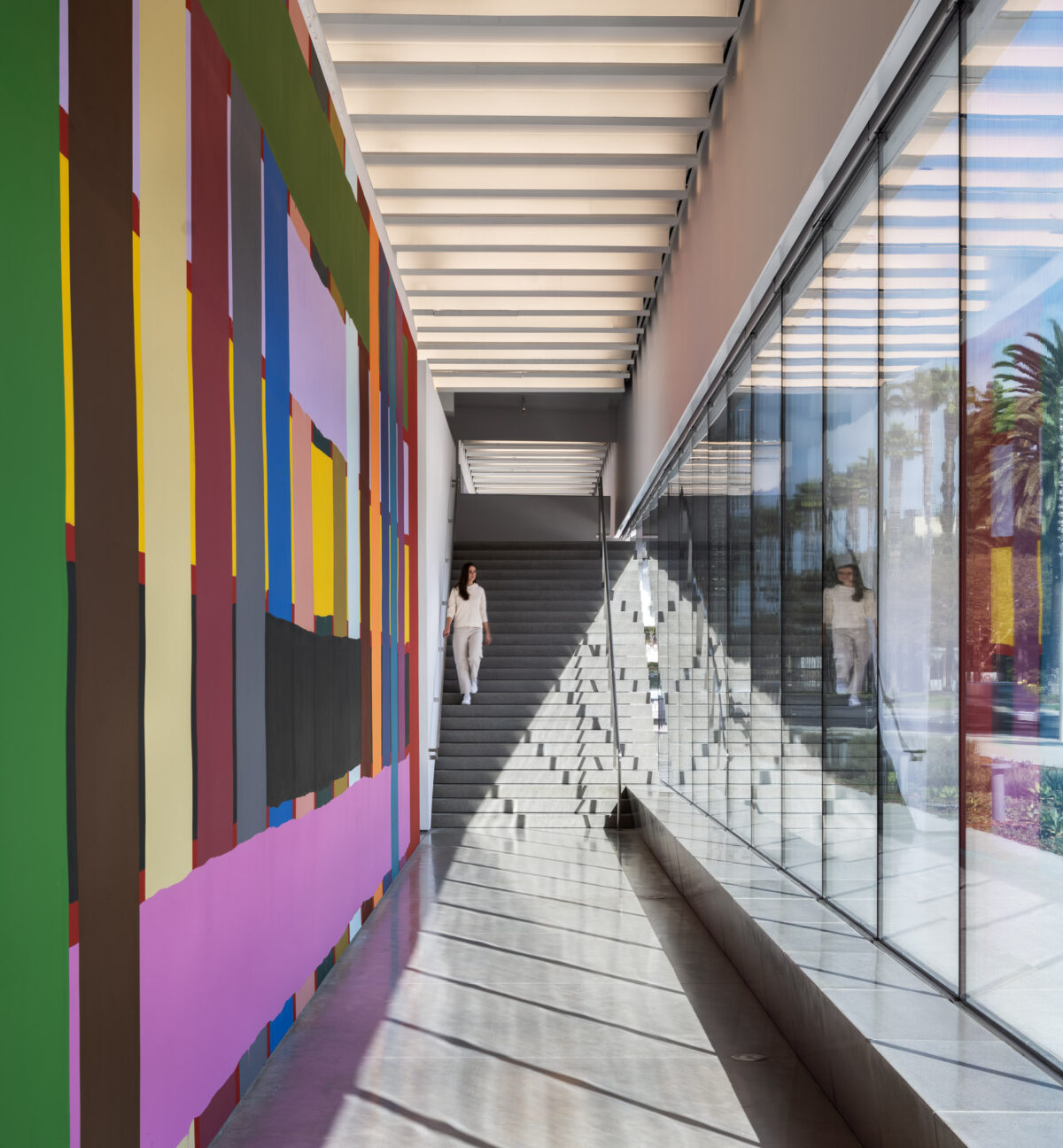
美術館のエントランスに向かって曲線を描く壮大な屋外公共階段は、〈セゲルストロム芸術センター〉の中心部に位置するリチャード・セラの記念碑的彫刻「コネクター」と対話しており、施設全体との有機的なつながりを生み出している。
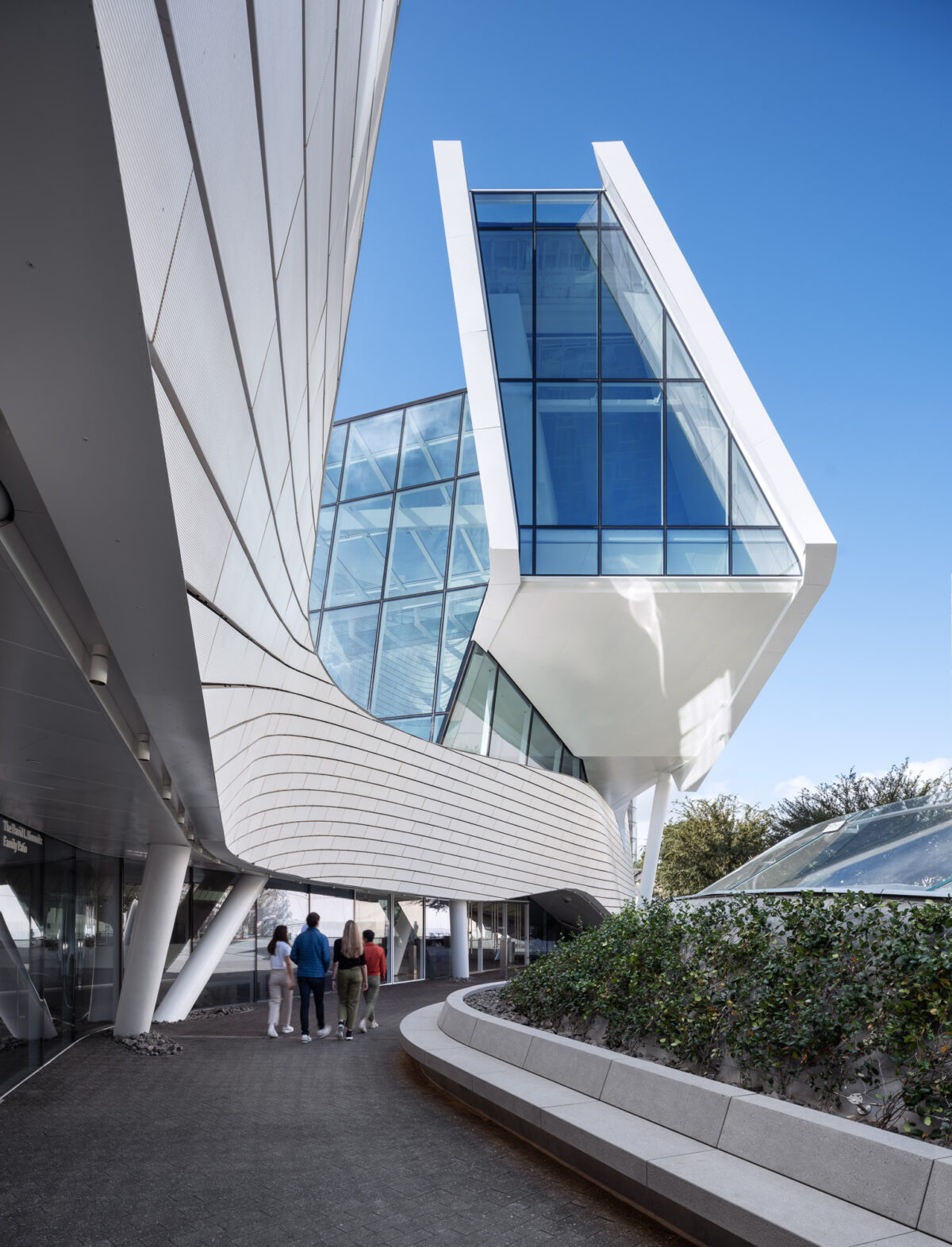
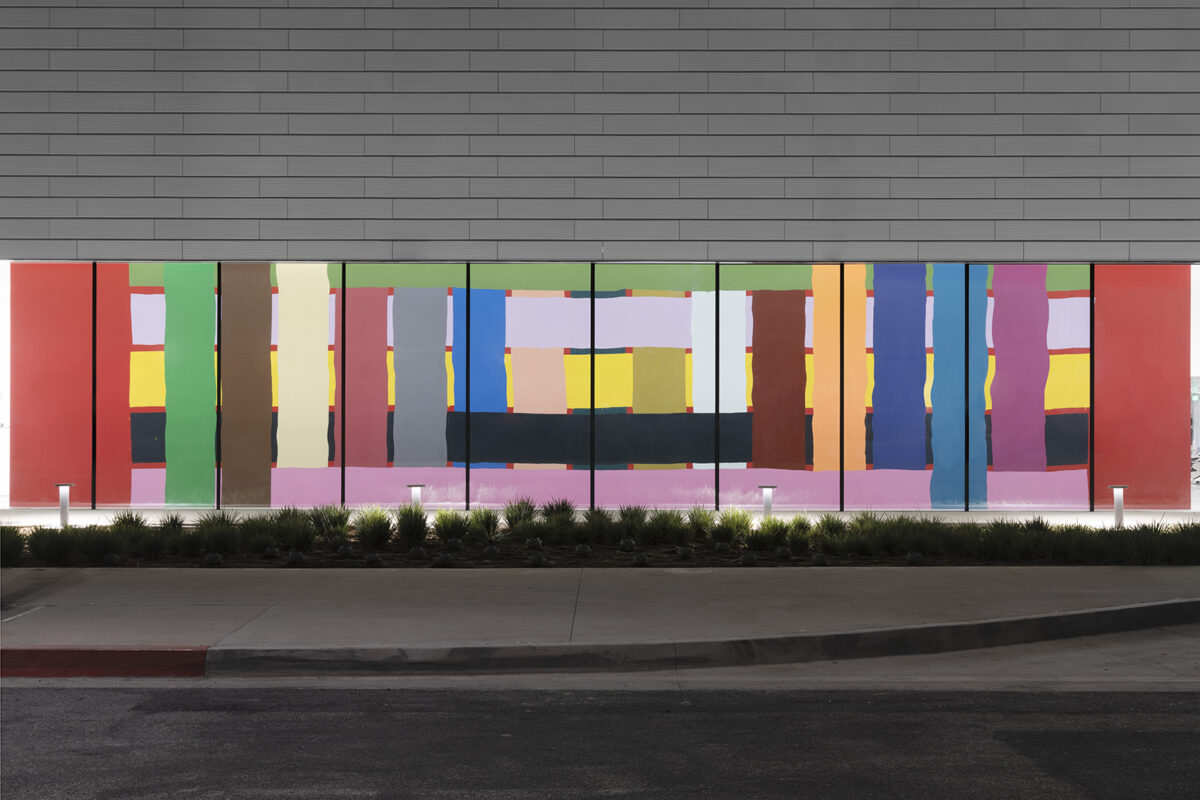
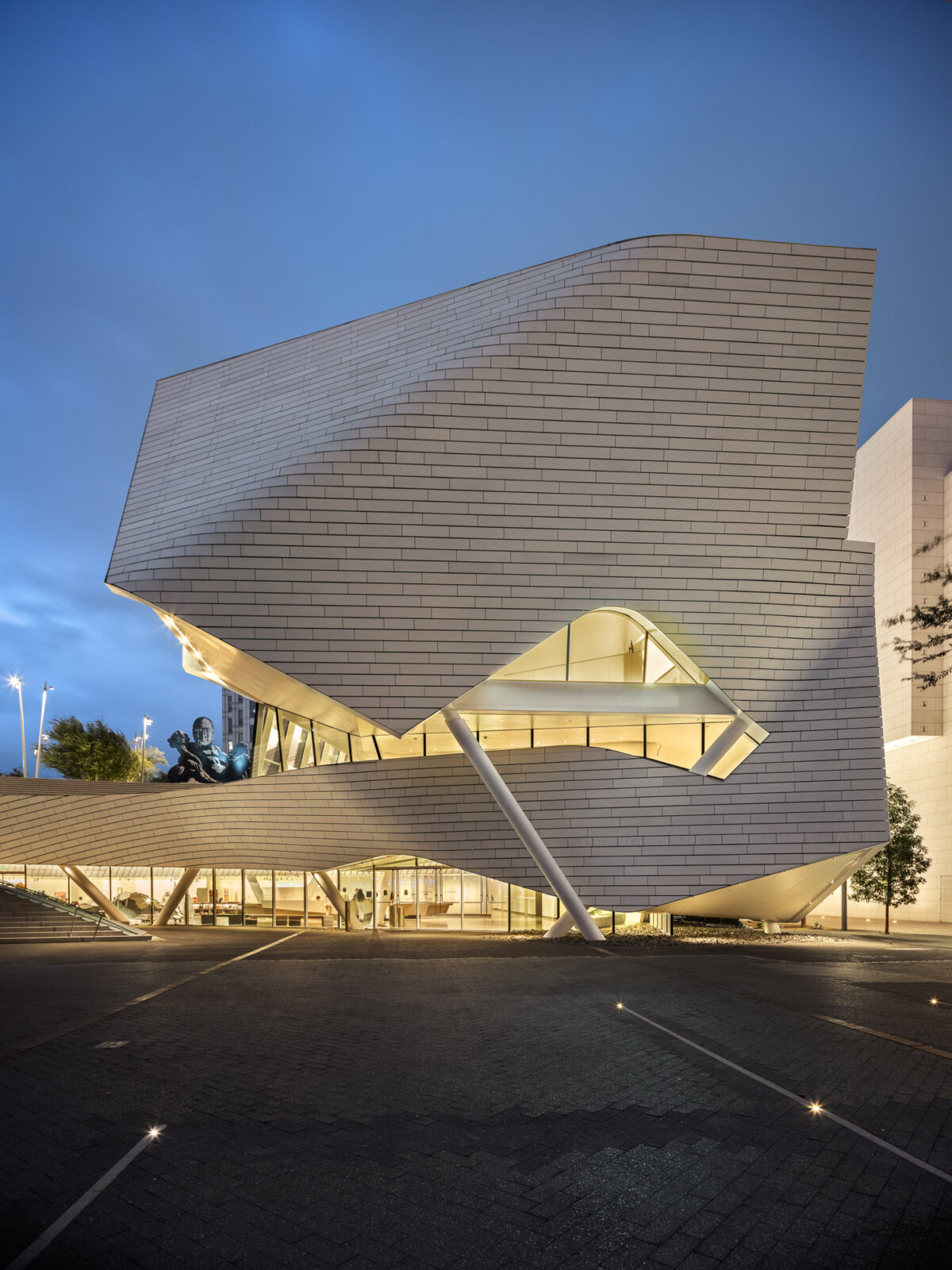
明るい色調の波打つテラコッタパネルとガラス張りのファサードは、建物の特徴的なキャラクターを形づくると同時に、周辺の建築物の形態と建築言語と調和している。
© Mike Kelley
© Mike Kelley
記憶に残る形態とアートのための空間を両立する、建築的強度のグラデーション
美術館のエントランスの複雑な形態からギャラリー内の直線的で柔軟な形態へと、建築的な強度をグラデーションさせることで、建物は記憶に残る印象的な存在でありながら、アートを支える舞台としても機能している。
内外の空間の強い関係性は、光、空気、空間がアーティストに影響を与えてきた南カリフォルニアの気候に浸ることを促し、訪れるゲストに没入型の体験を提供している。
© Mike Kelley
© Mike Kelley
© Mike Kelley
© Mike Kelley
© Mike Kelley
© Mike Kelley
© Mike Kelley
© Mike Kelley
© Mike Kelley
© Mike Kelley
© Mike Kelley
© Mike Kelley
以下、モーフォシス・アーキテクツのリリース(英文)です。
ORANGE COUNTY MUSEUM OF ART
Costa Mesa, California, USALocation: 3333 Avenue of the Arts, Costa Mesa, CA 92626
Client: Orange County Museum of Art
Client Representative: Michael OConnor, OConnor Consulting
Site Area: 1.69 acres / 0.68 hectares
Size: 53,000 gross ft² / 4,924 gross m²
Program: Museum including exhibition galleries, multi-purpose education hall, roof terrace, event spaces, museum store, café, administrative and support spacesDesign: Dec. 2015 – March 2019
Construction: Sept. 2019 – Sept. 2022 (formal opening Oct 8, 2022)
Type: CulturalProject Narrative
The Orange County Museum of Art’s new home is situated at Orange County’s major arts complex, on the campus of Segerstrom Center for the Arts, creating a vibrant cultural destination in Costa Mesa. Defined by an open and engaging urban presence, OCMA’s new home will build on the museum’s history of community enrichment and presentation of thought-provoking works of art across a wide range of mediums, by artists of diverse backgrounds. With flexible exhibition galleries, dedicated space for educational programming, and areas for public gathering, the new building will provide expanded access to the museum’s permanent collection, which comprises important works of modern and contemporary art from California and beyond, as well as to its world-class special exhibition program.
The overall design of the building addresses the need for museum space to be both flexible and functional as well as inviting and memorable. The main floor is dedicated to open-span exhibition space, complemented by mezzanine and storefront galleries that can accommodate temporary and permanent collection exhibitions spanning a variety of scales and mediums. A spacious roof terrace, equivalent in size to 70 percent of the building’s footprint, creates open-air spaces that can be configured for installations, a sculpture garden, outdoor film screenings, or events. A sculptural wing hovers over the lobby atrium and creates a prominent location for the educational hall, an inspiring, artful, and dynamic architectural space illuminated by a full-height window overlooking the terrace. A grand outdoor public stair curves toward the museum’s entry, creating dialogue with Connector, the monumental sculpture by Richard Serra at the heart of Segerstrom Center for the Arts. A high-performance façade of light-colored, undulating bands of glazed terracotta paneling creates a distinctive character for the building, playing off the forms and language of neighboring works of architecture.
By creating a gradient of architectural intensity, from complex forms at the museum’s entry to rectilinear and flexible forms within the galleries, the building is both memorable and striking, while serving primarily as a supportive stage for art. Its strong relationship between indoor and outdoor space encourages visitors to immerse themselves in the celebrated climate of Southern California, where light, air, and space have influenced generations of artists.
モーフォシス・アーキテクツ 公式サイト
https://www.morphosis.com/architecture/270/



![[Report]方丈庵から生き方を問う、21_21 DESIGN SIGHT 企画展「方丈記に学ぶ –生きるを編み直す小さな建築–」会場レポート](https://magazine-asset.tecture.jp/wpcms/wp-content/uploads/2026/09/01181900/20260828hojoki-ex_01_mag-endo4350-900x676.jpeg)