

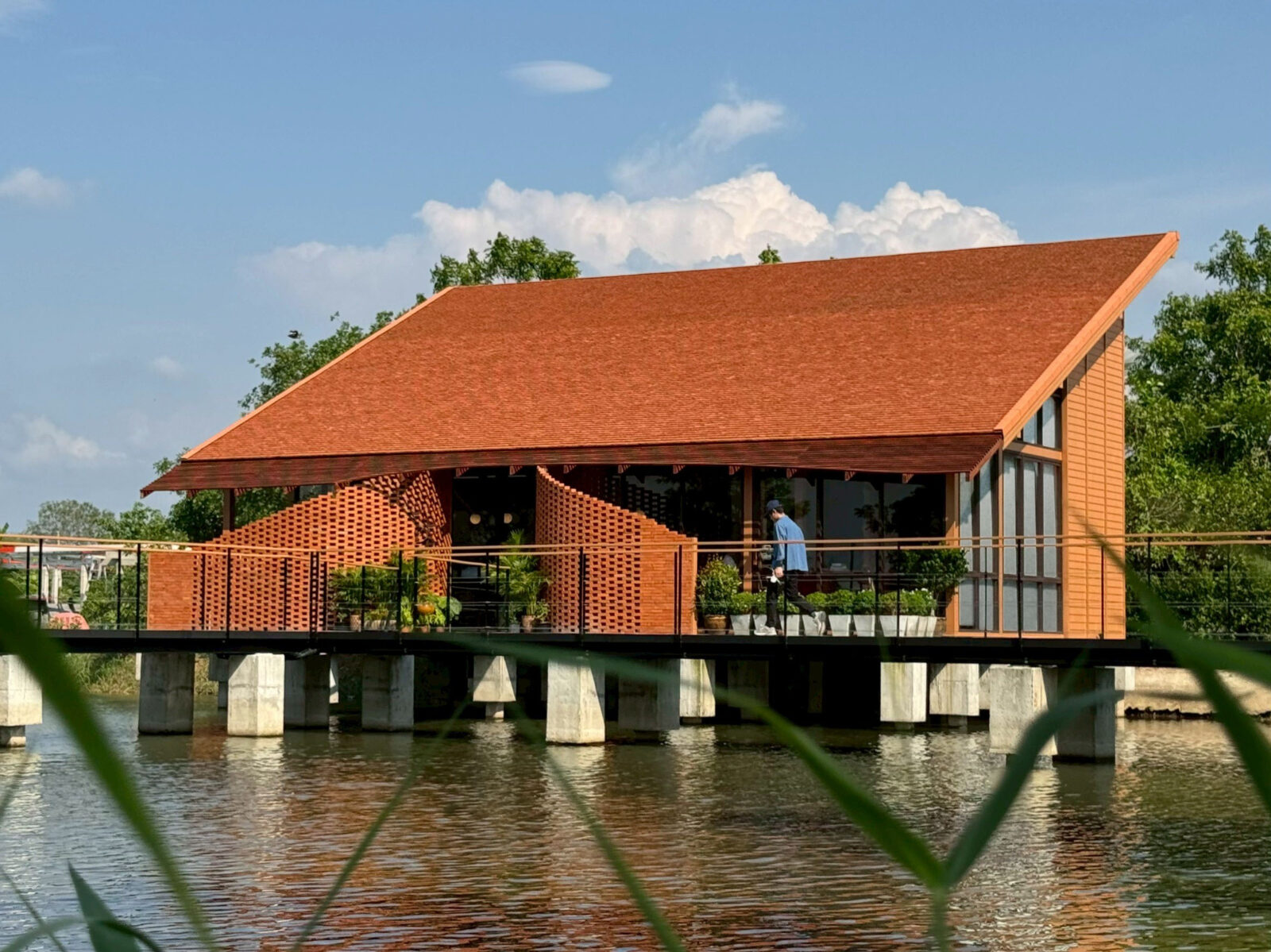
水上に佇むテラコッタに包まれたカフェ空間 - タイの陶芸村に広がるクラフト風景を物語る〈テラコッタ・カフェ〉
© Koraphin Oantaralok, Atiroj Thongsen
© Koraphin Oantaralok, Atiroj Thongsen
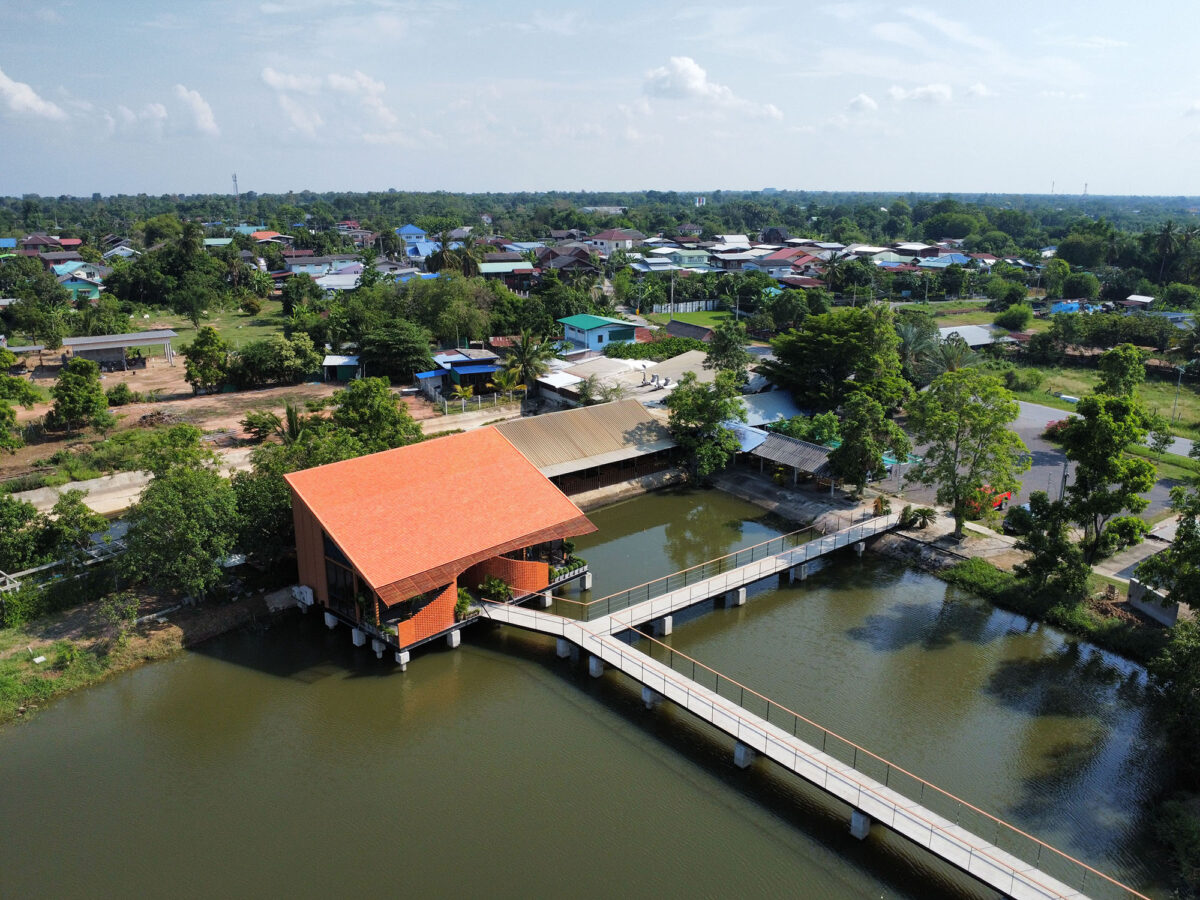
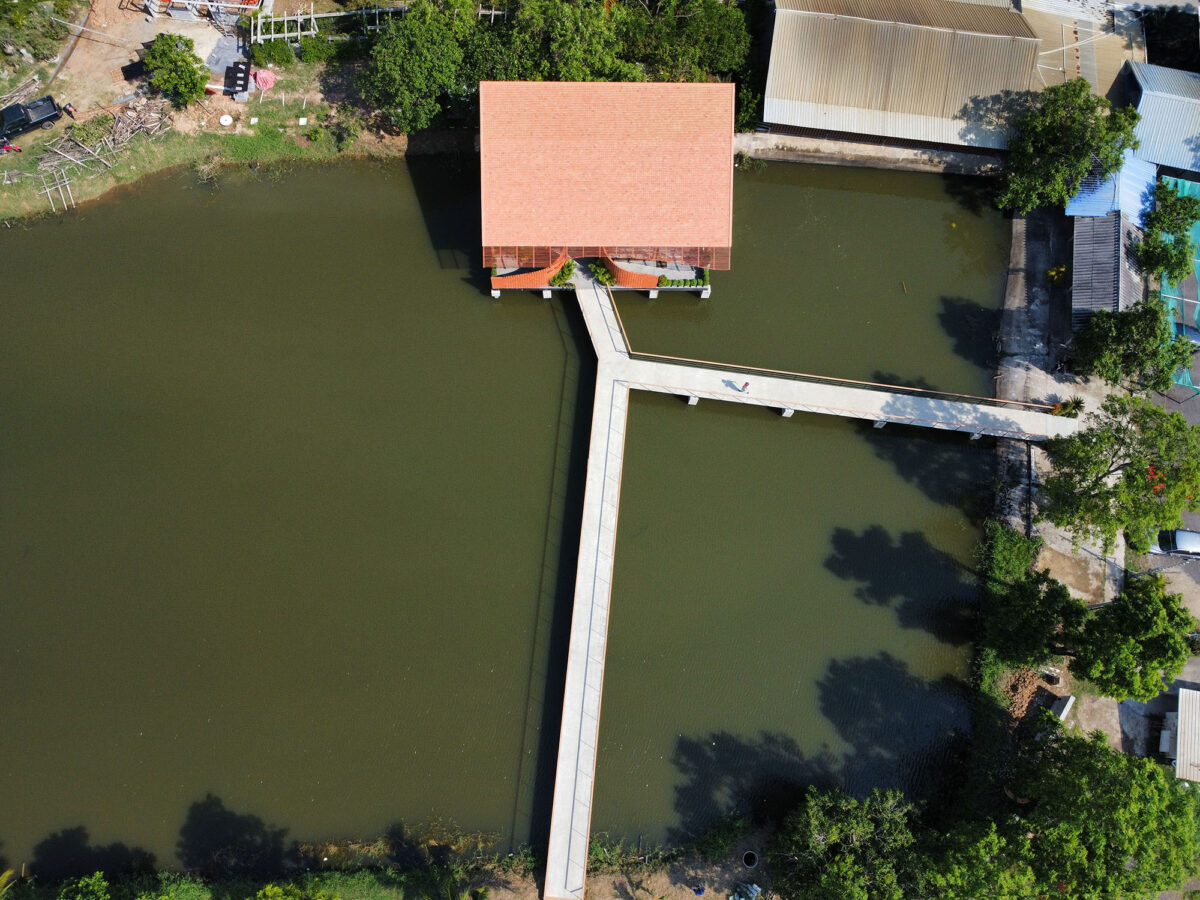
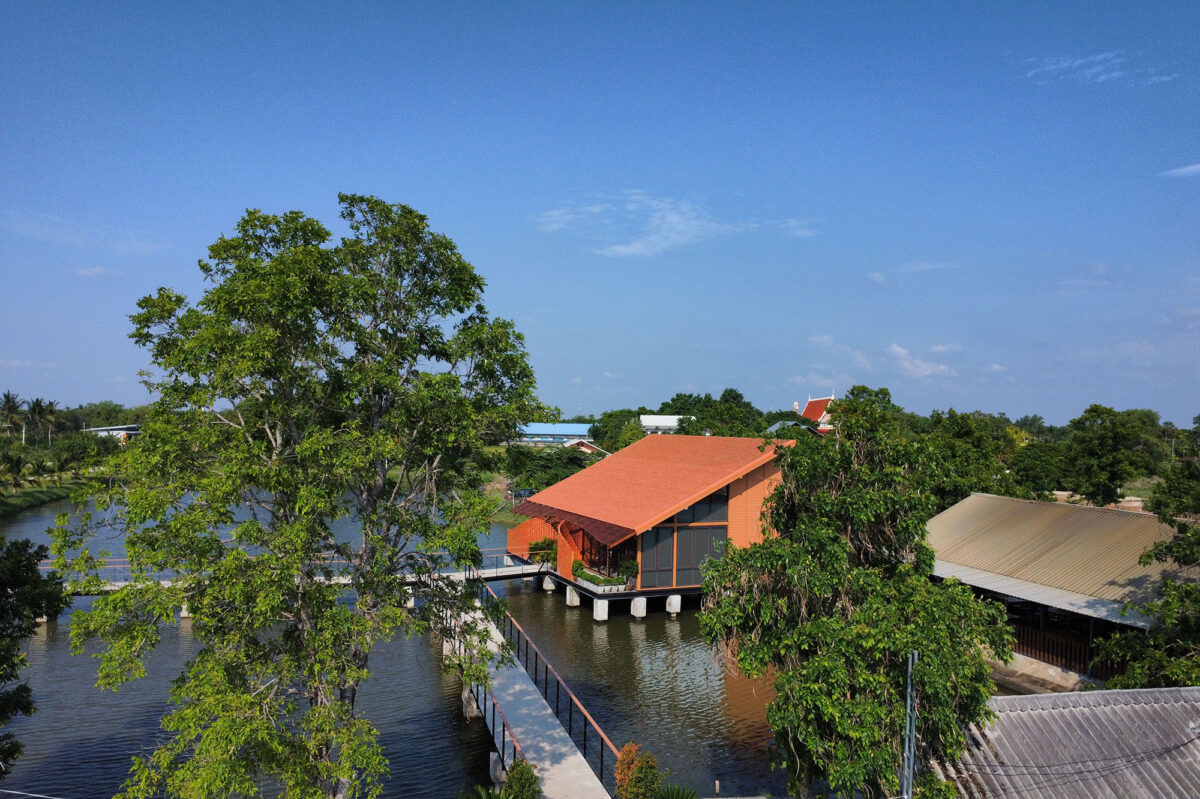
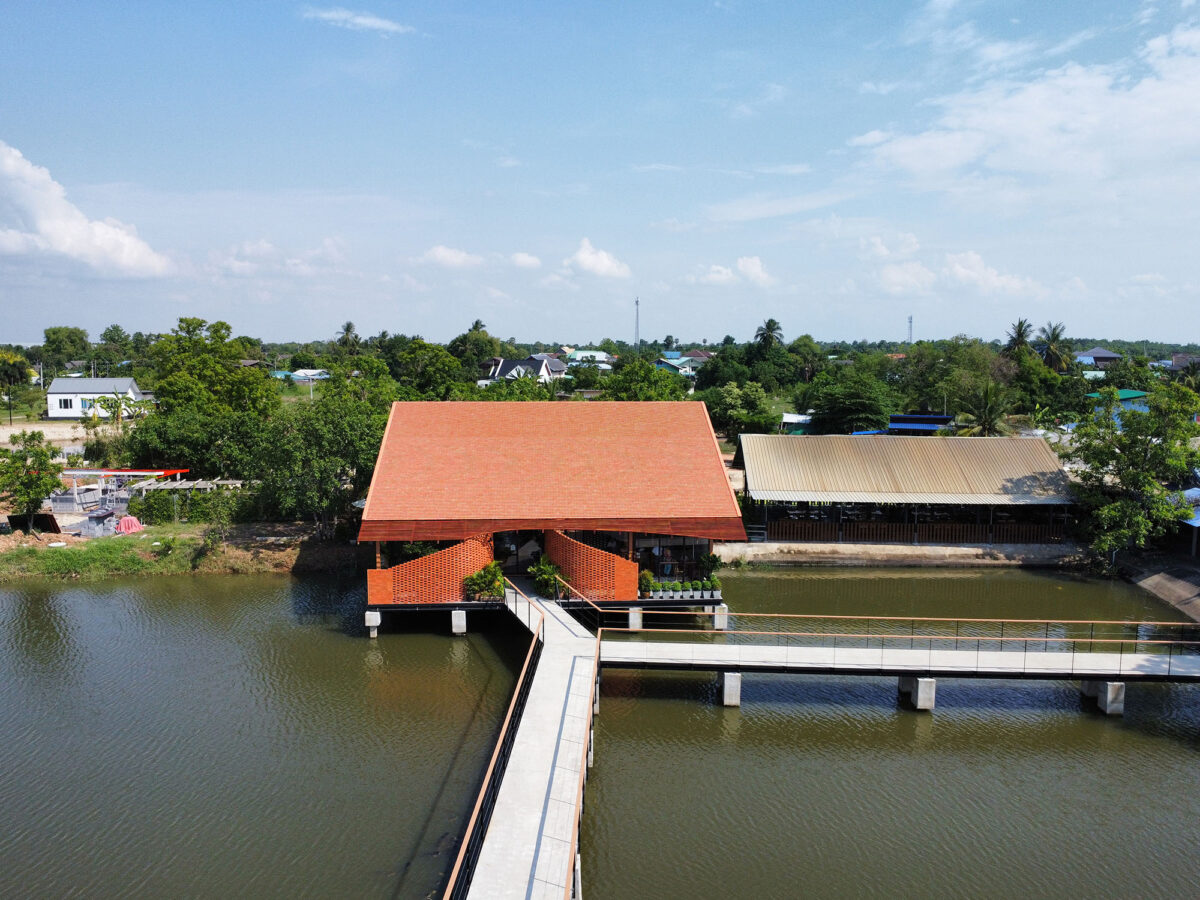
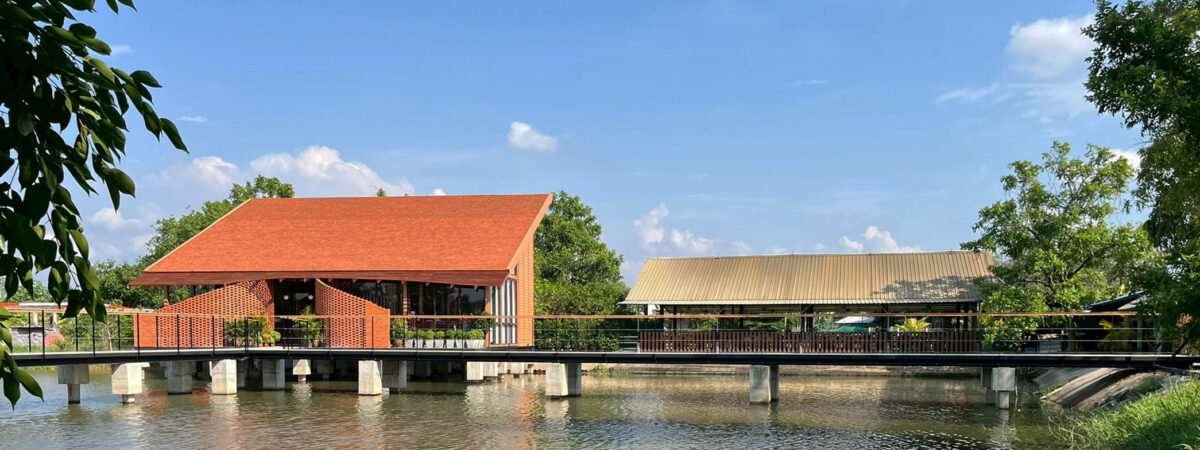
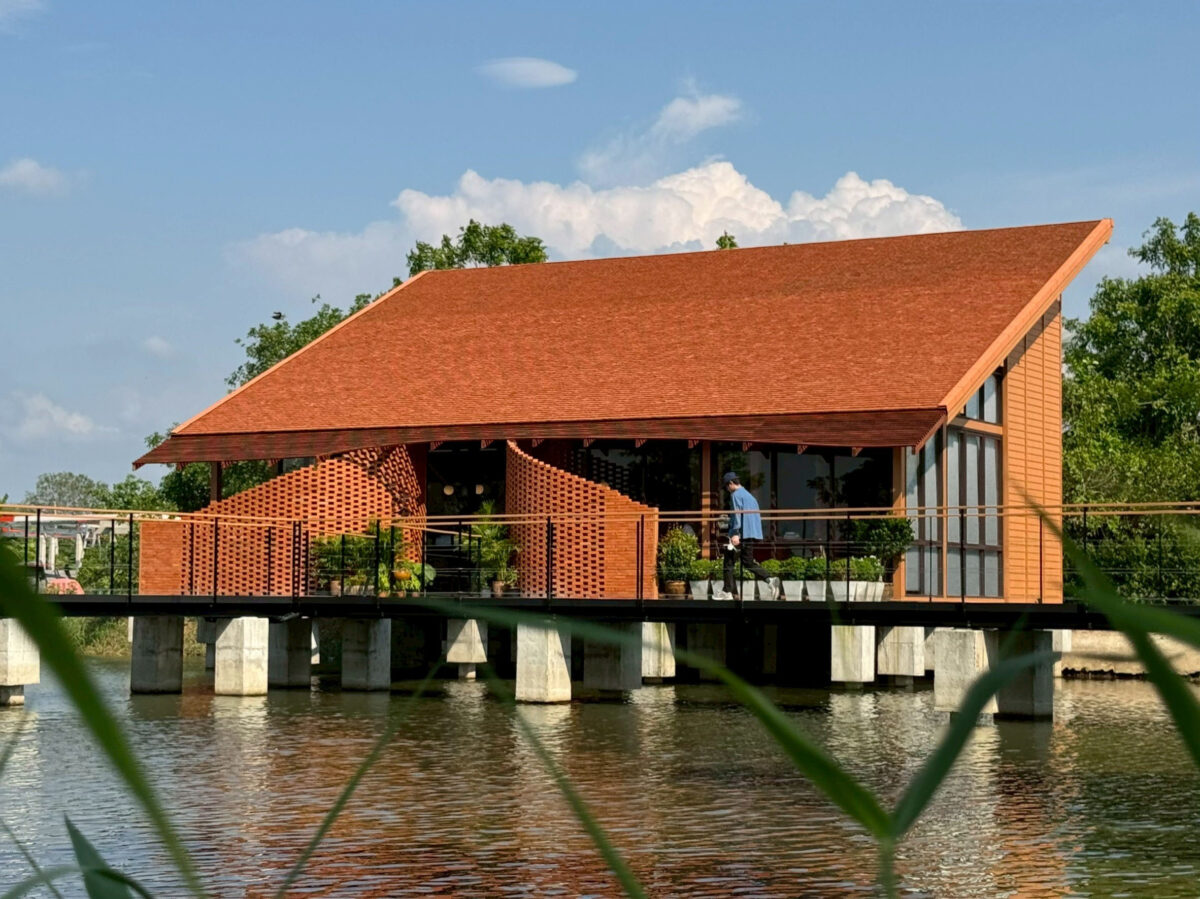
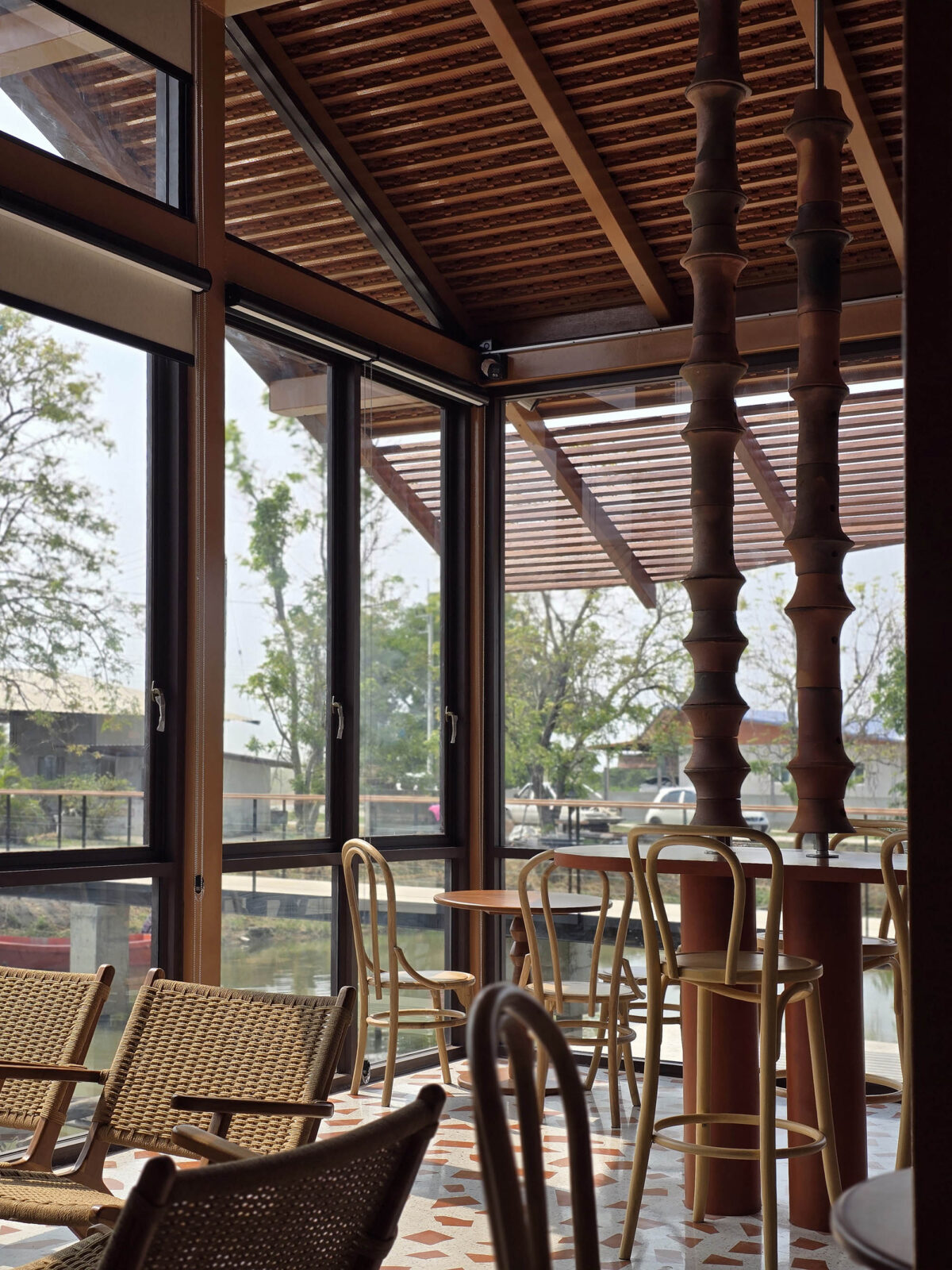
タイの都市ナコーンラーチャシーマー(通称コラート)に建つ〈テラコッタ・カフェ(The Terracotta Cafe)〉は、陶器の名産地である周辺地域を象徴する素材「テラコッタ」を屋根や床、壁、装飾にも活用した、池の上に構築されたカフェです。
タイを拠点に活動するStudio Bewellが設計しました。
注目ポイント
- 地元のレストラン「チャイ・トゥン・レストラン」との文脈的連続性
- 地場素材の活用した、伝統工芸との融合
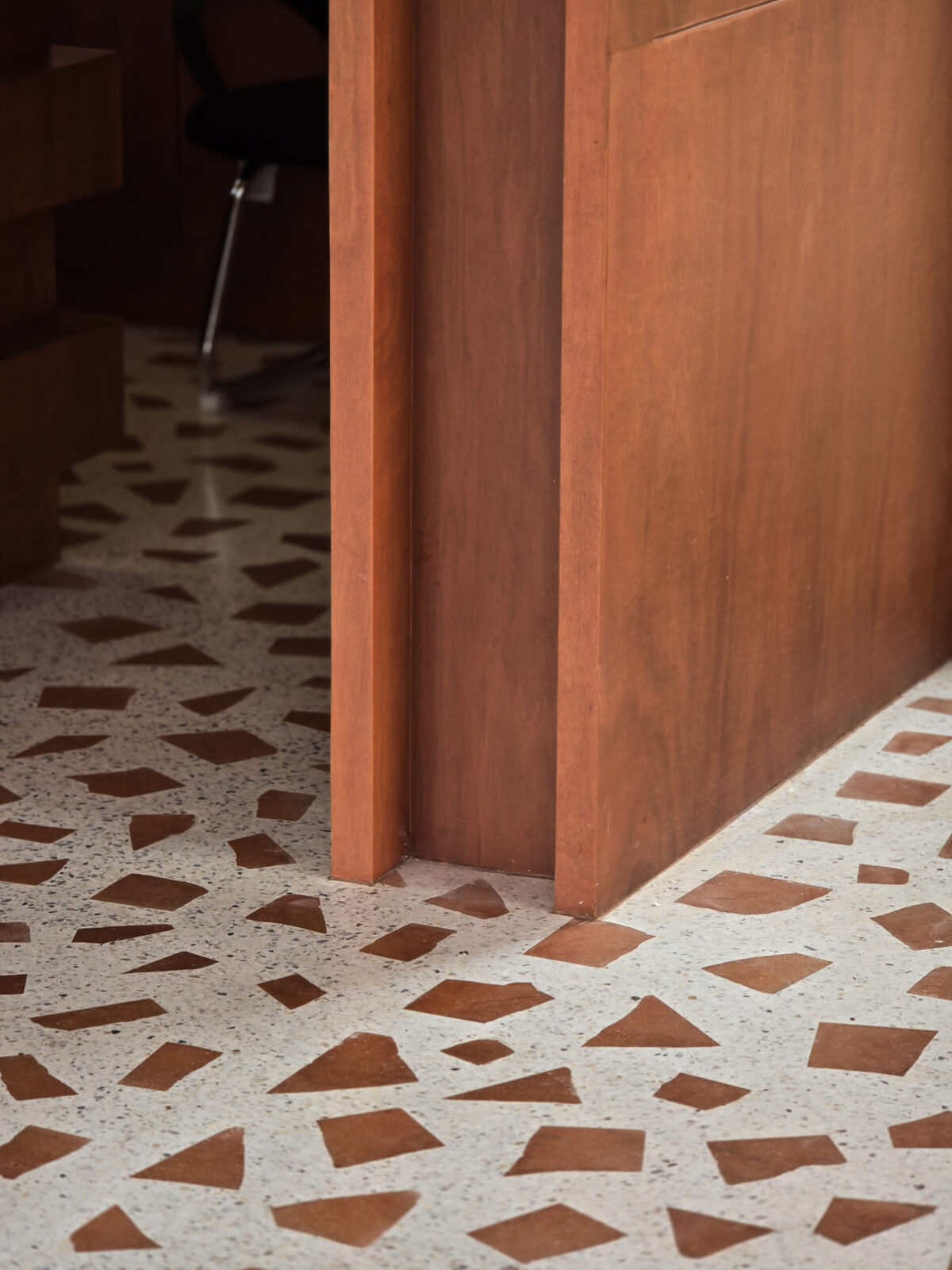
- 工場に残っていた破片を活かしたテラゾー仕上げの床
- 焼成時に使われる「ジョル(匣鉢)」を活用した視覚的なアクセント
(以下、Studio Bewellから提供されたプレスキットのテキストの抄訳)
© Koraphin Oantaralok, Atiroj Thongsen
© Koraphin Oantaralok, Atiroj Thongsen
© Koraphin Oantaralok, Atiroj Thongsen
地域の手工芸と風景を結びつける、水上の〈テラコッタ・カフェ〉
水面に浮かぶように設計されたこのカフェは、コラートの豊かな手工芸の伝統と、陶器で知られるダーン・クイアン村から調達した素材を基盤に構成されている。
設計にあたり、池のほとりに建つ地元のレストラン「チャイ・トゥン・レストラン(Chai Thung Restaurant)」の文脈に調和する水辺の建築が求められた。この要件に応じて、カフェは元の空間の雰囲気を損なうことなく、来訪者を迎え入れるための追加ゾーンとして構想された。
© Koraphin Oantaralok, Atiroj Thongsen
© Koraphin Oantaralok, Atiroj Thongsen
地場素材とクラフトマンシップの再解釈
設計のコアには、地域で入手可能な素材の使用と、コラートの職人技の知恵を空間に反映させるという明確な意図がある。
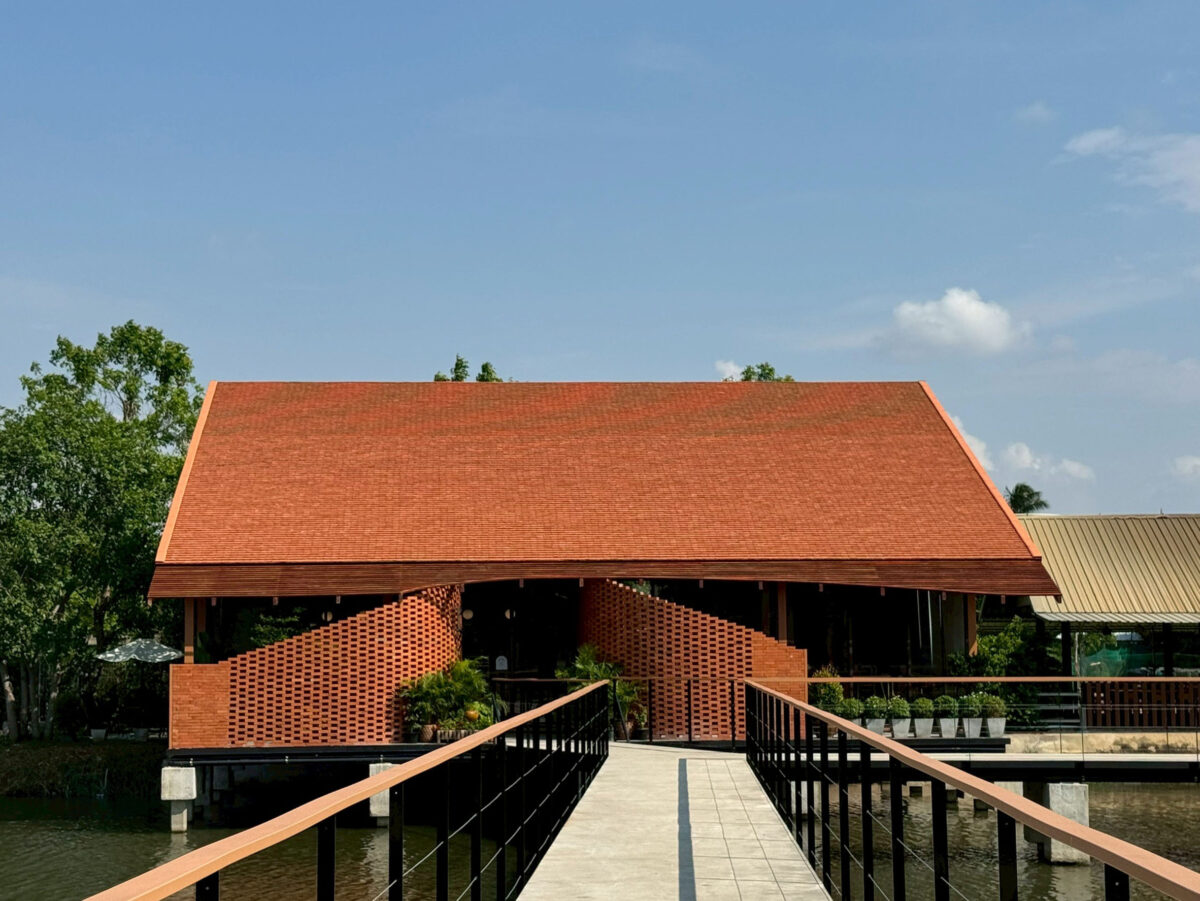
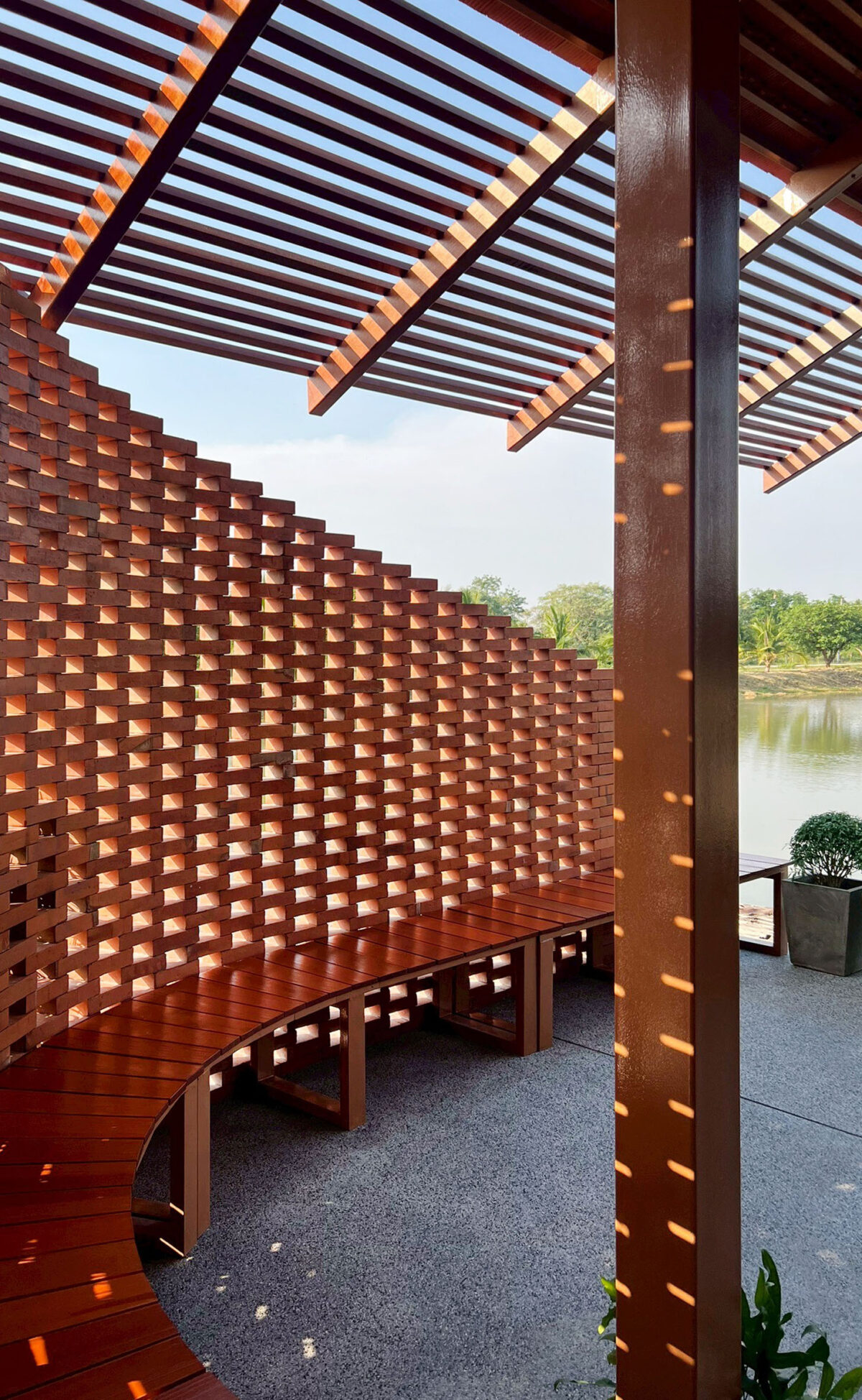
とりわけ、ダーン・クイアン村の代表的な素材であるテラコッタは、クライアントとデザイナーの双方から支持され、主要な建材として採用された。高温で焼成されるこの素材は、赤褐色から黒までの自然な色調を呈し、それがカフェ全体の色彩パレットの基盤をなしている。
© Koraphin Oantaralok, Atiroj Thongsen
© Koraphin Oantaralok, Atiroj Thongsen
© Koraphin Oantaralok, Atiroj Thongsen
屋根と床に展開されるテラコッタの造形
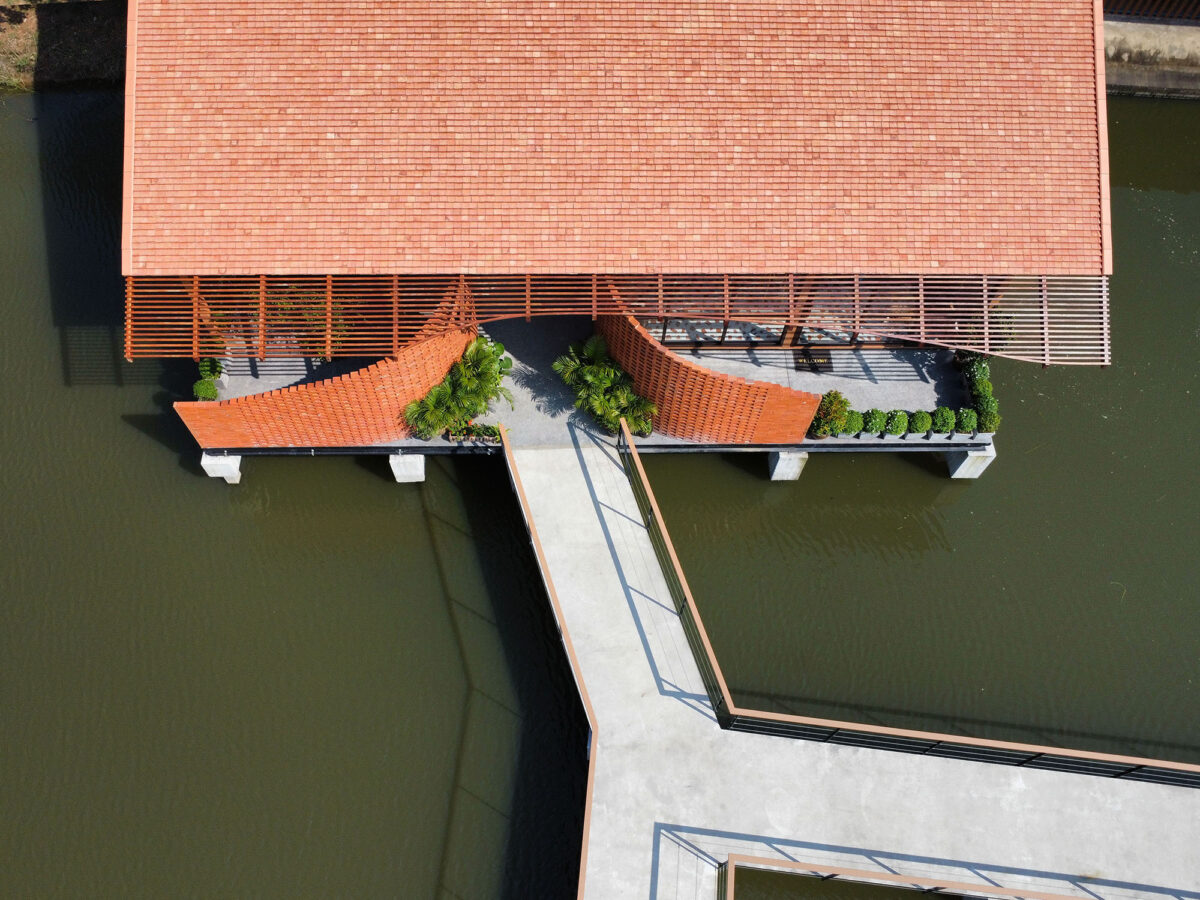
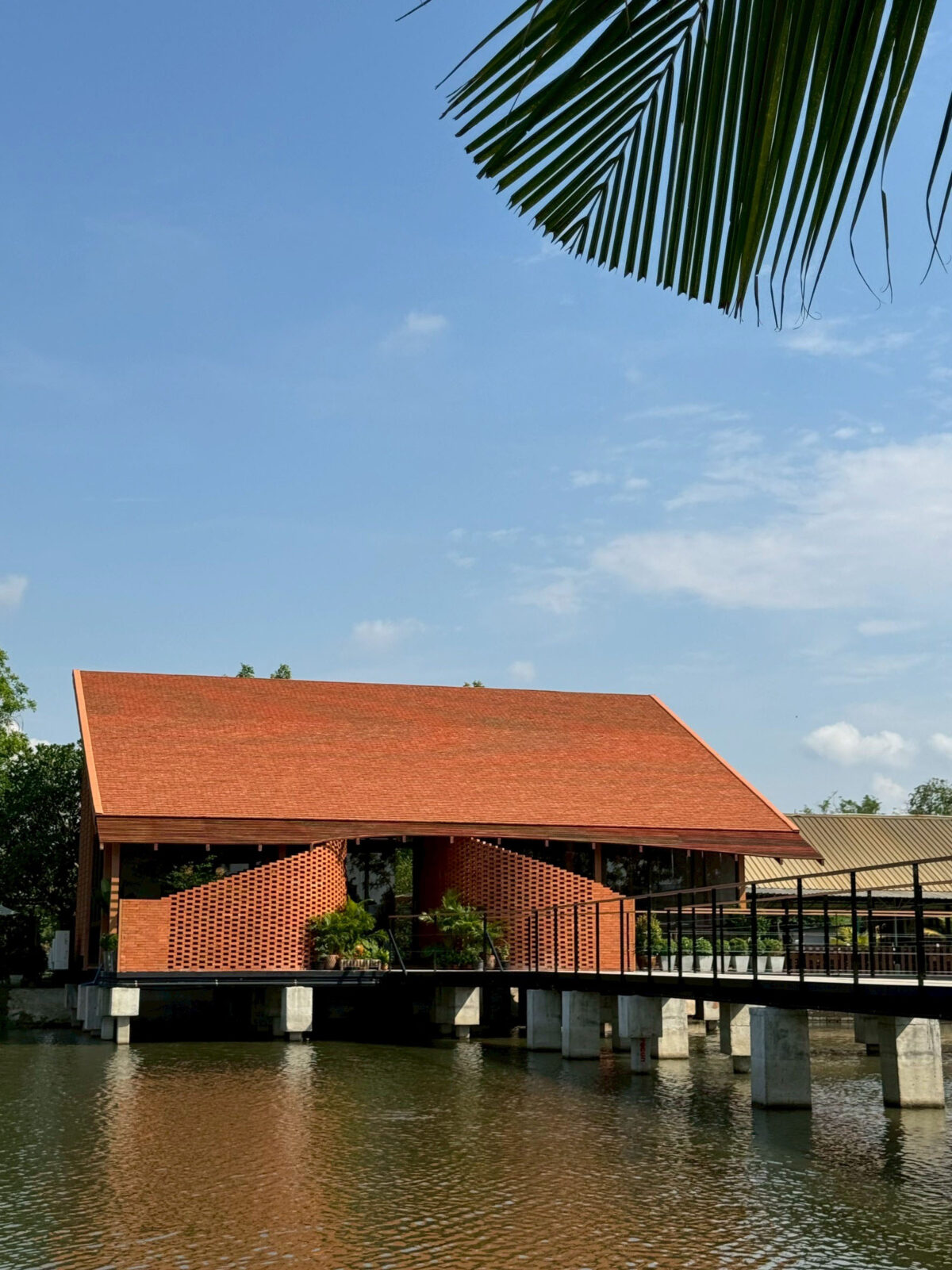
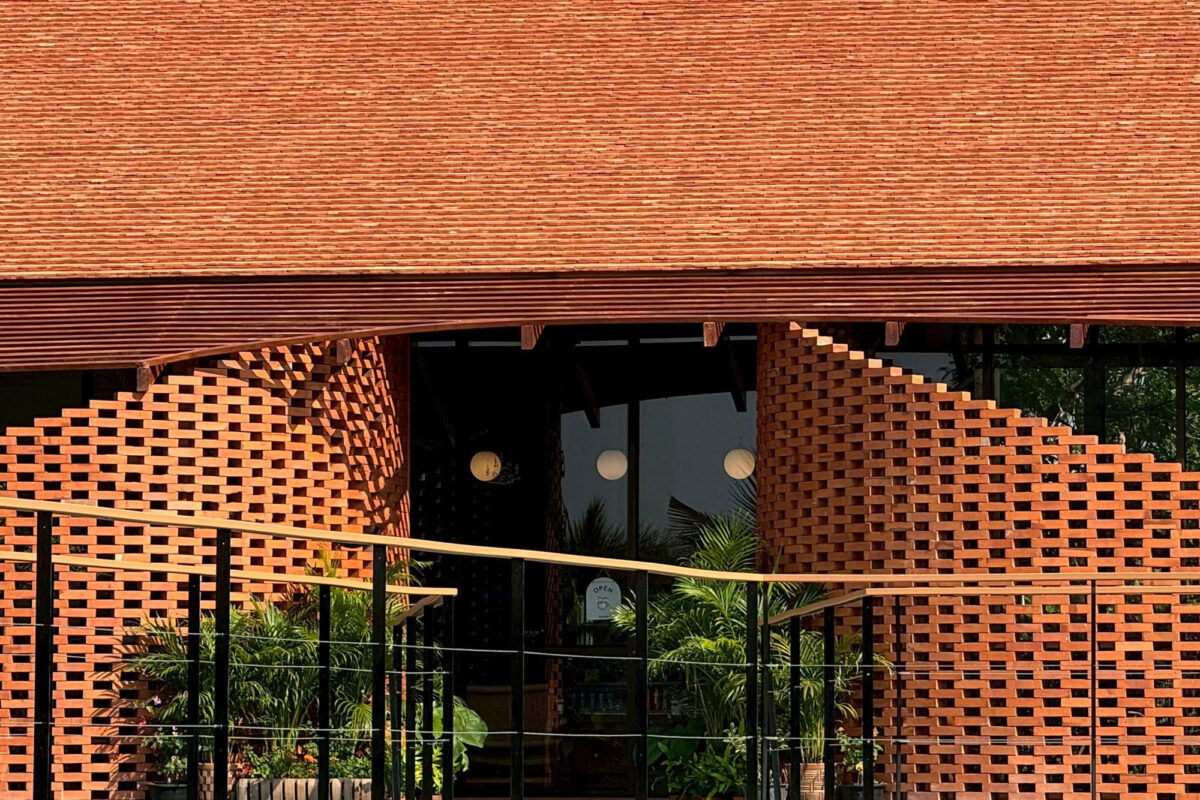
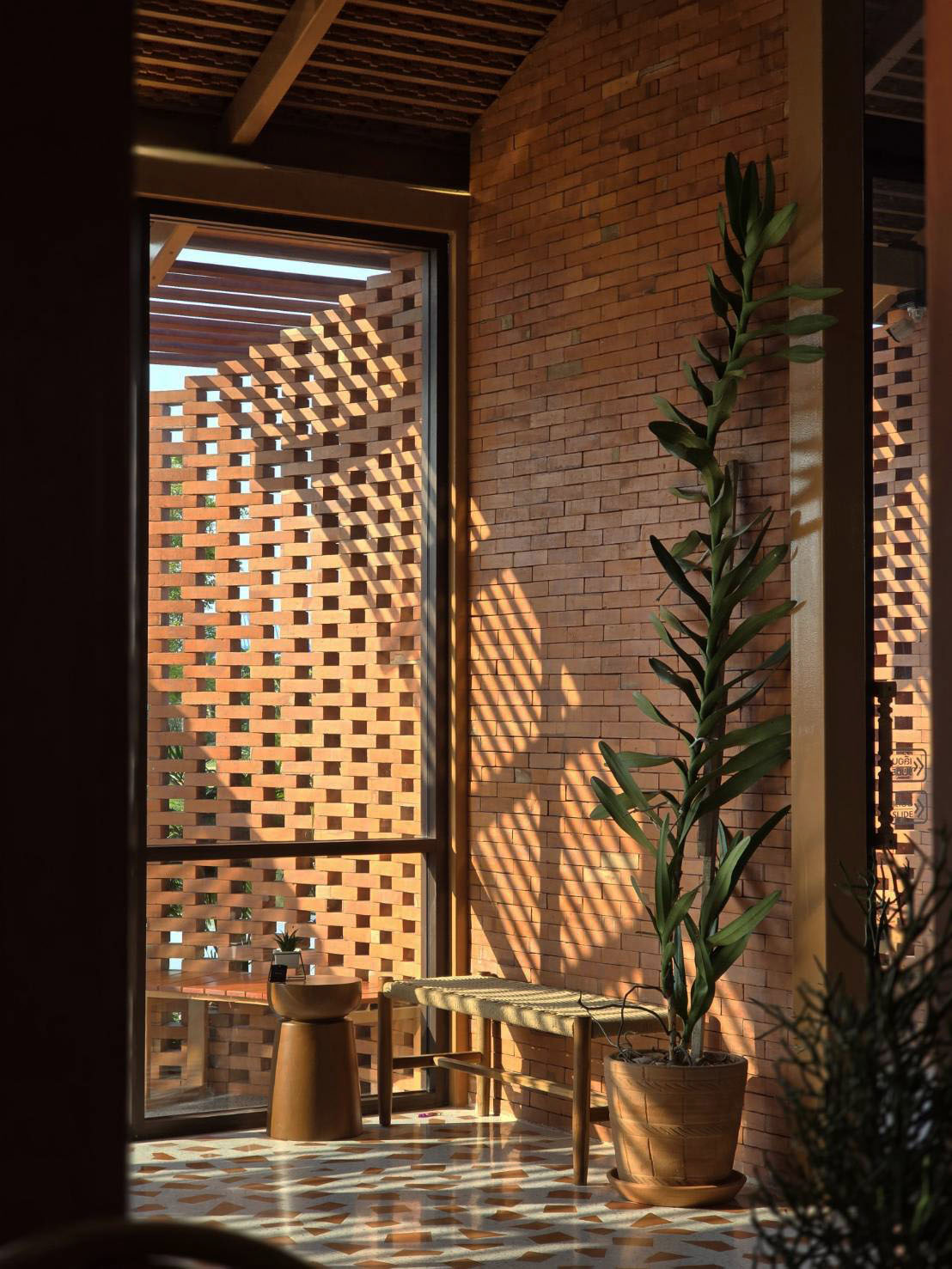
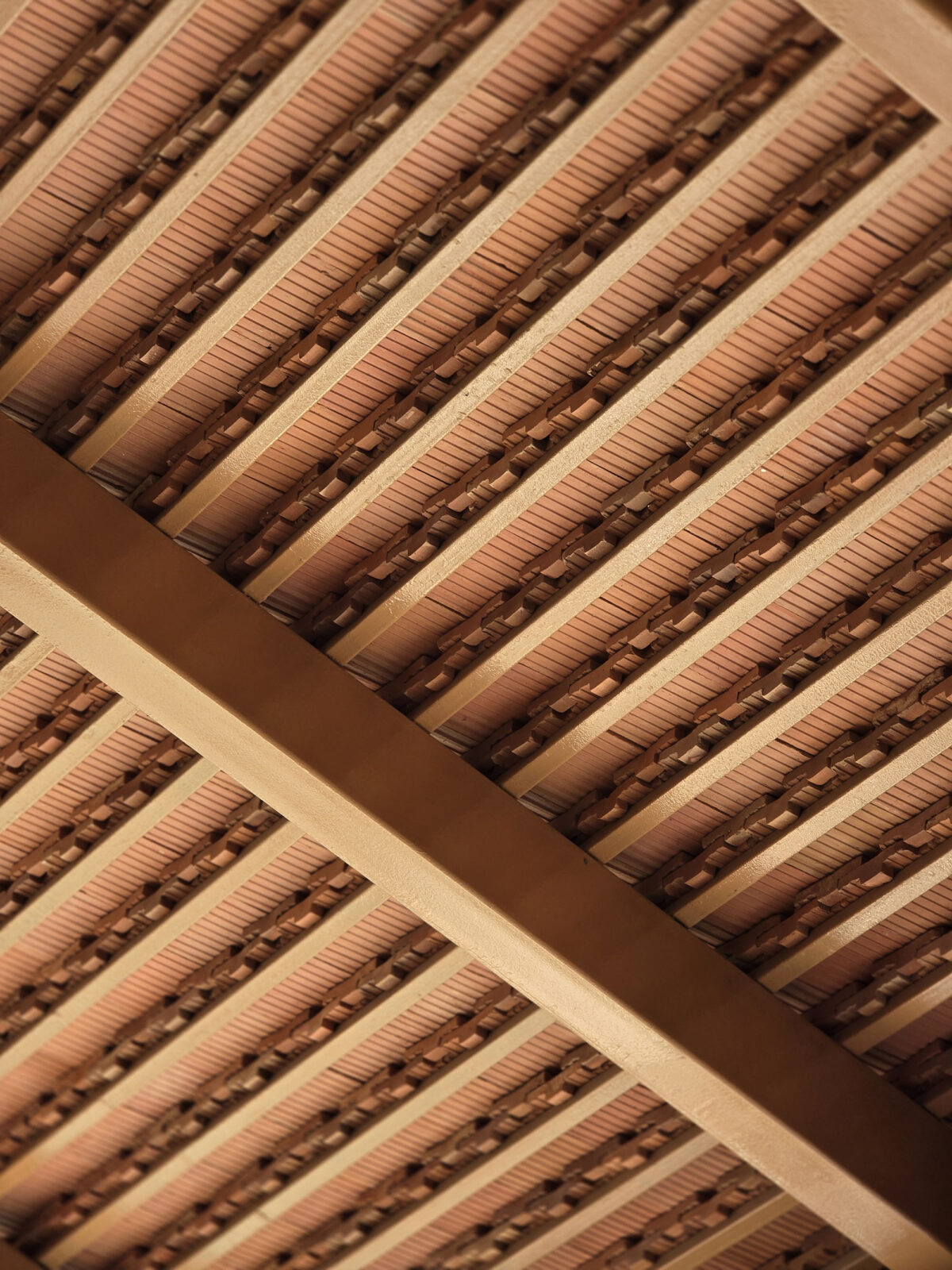
テラコッタタイルは、屋根や床など複数の建築要素に用いられている。特徴的な切り口をもつ屋根タイルは、レストランの元の屋根の幾何学を参照しながらも、新たな角度で設置することで、独自の造形美を与えている。
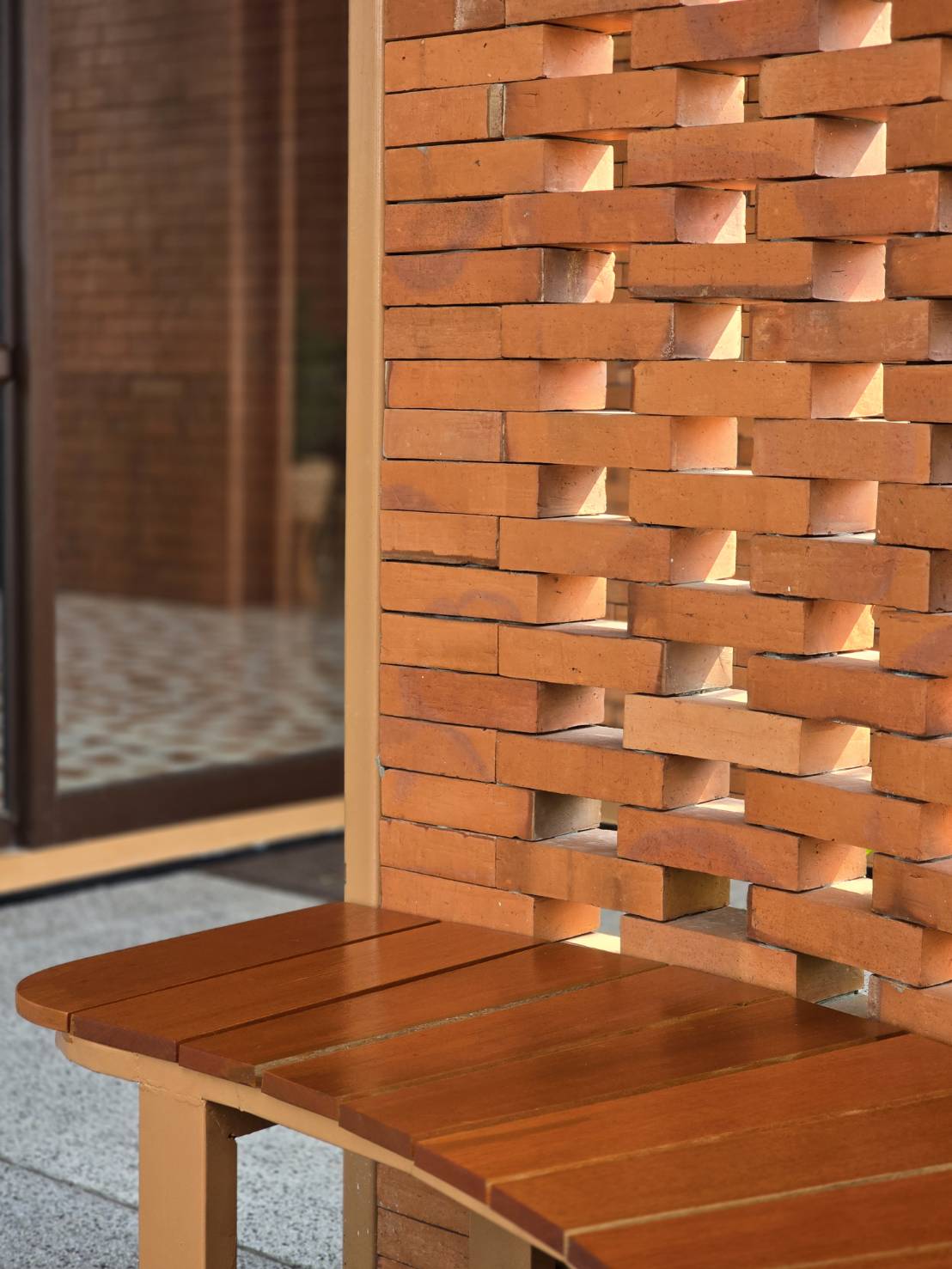
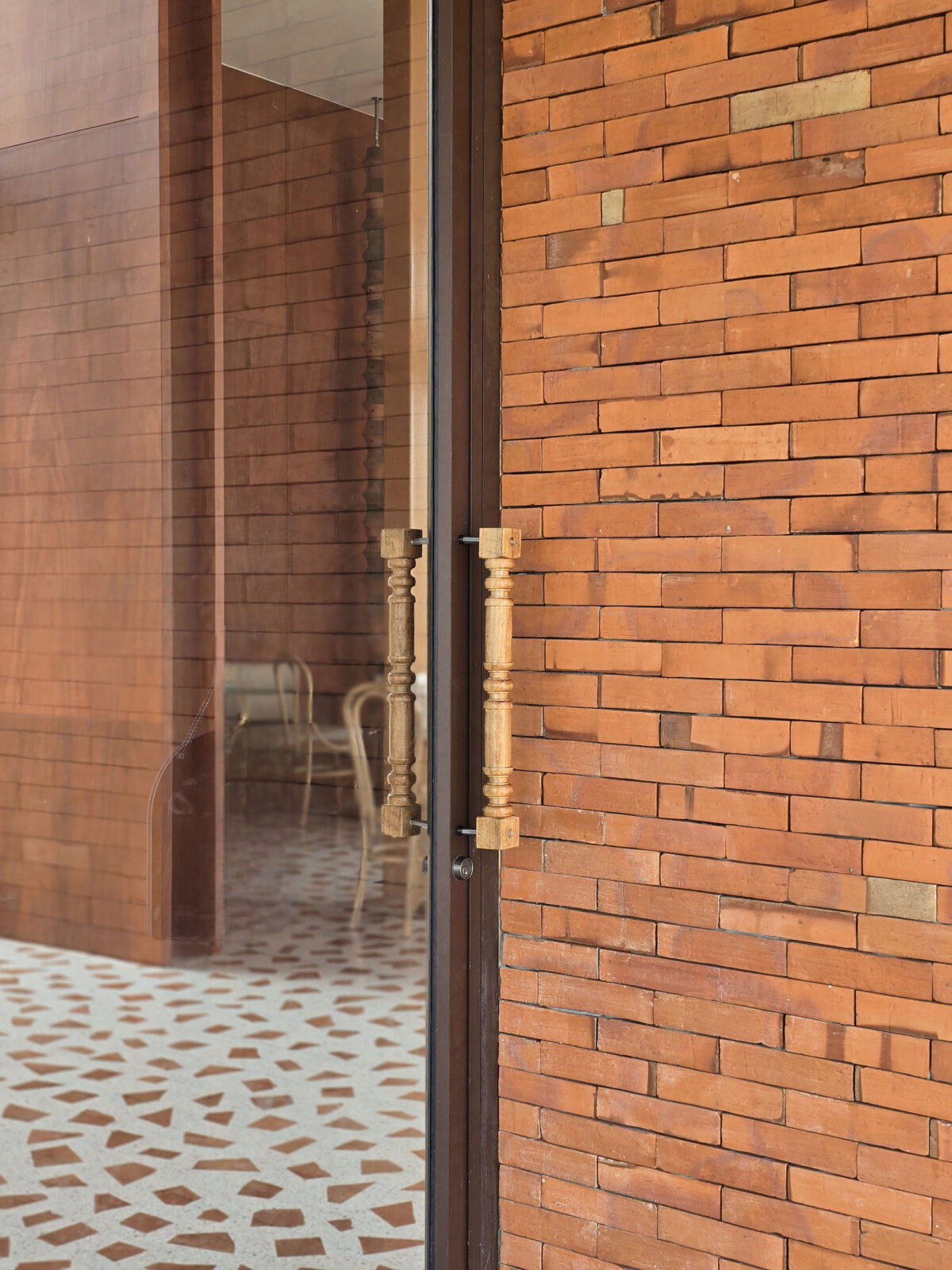
さらに、伝統的な陶器のフォルムに着想を得た曲線的なエントランスには、赤レンガが遊び心をもって配置されており、コンパクトな構造でありながらも、開放性と屋外とのつながりを感じさせる設えとなっている。
© Koraphin Oantaralok, Atiroj Thongsen
廃材を活かしたテラゾー仕上げの床
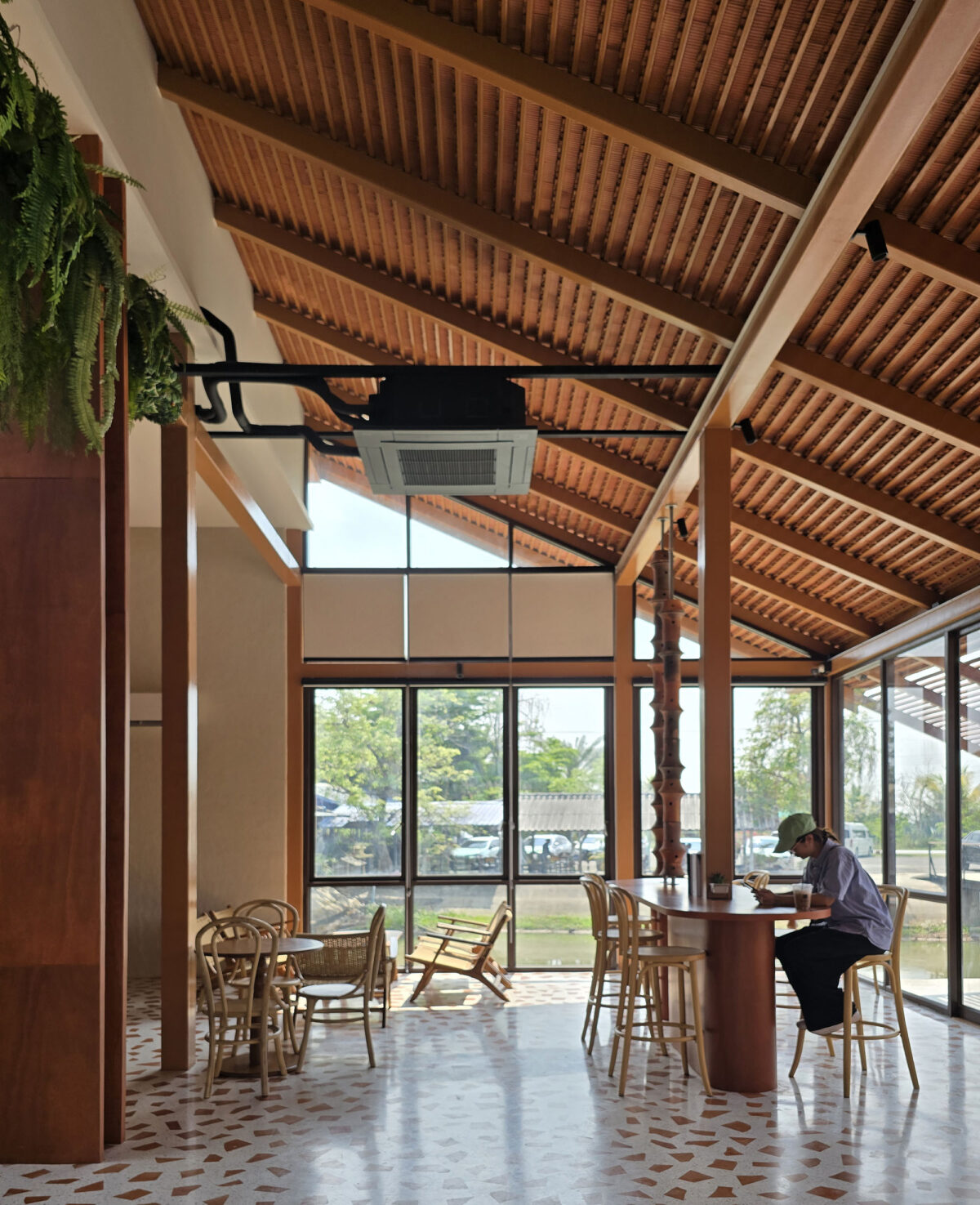
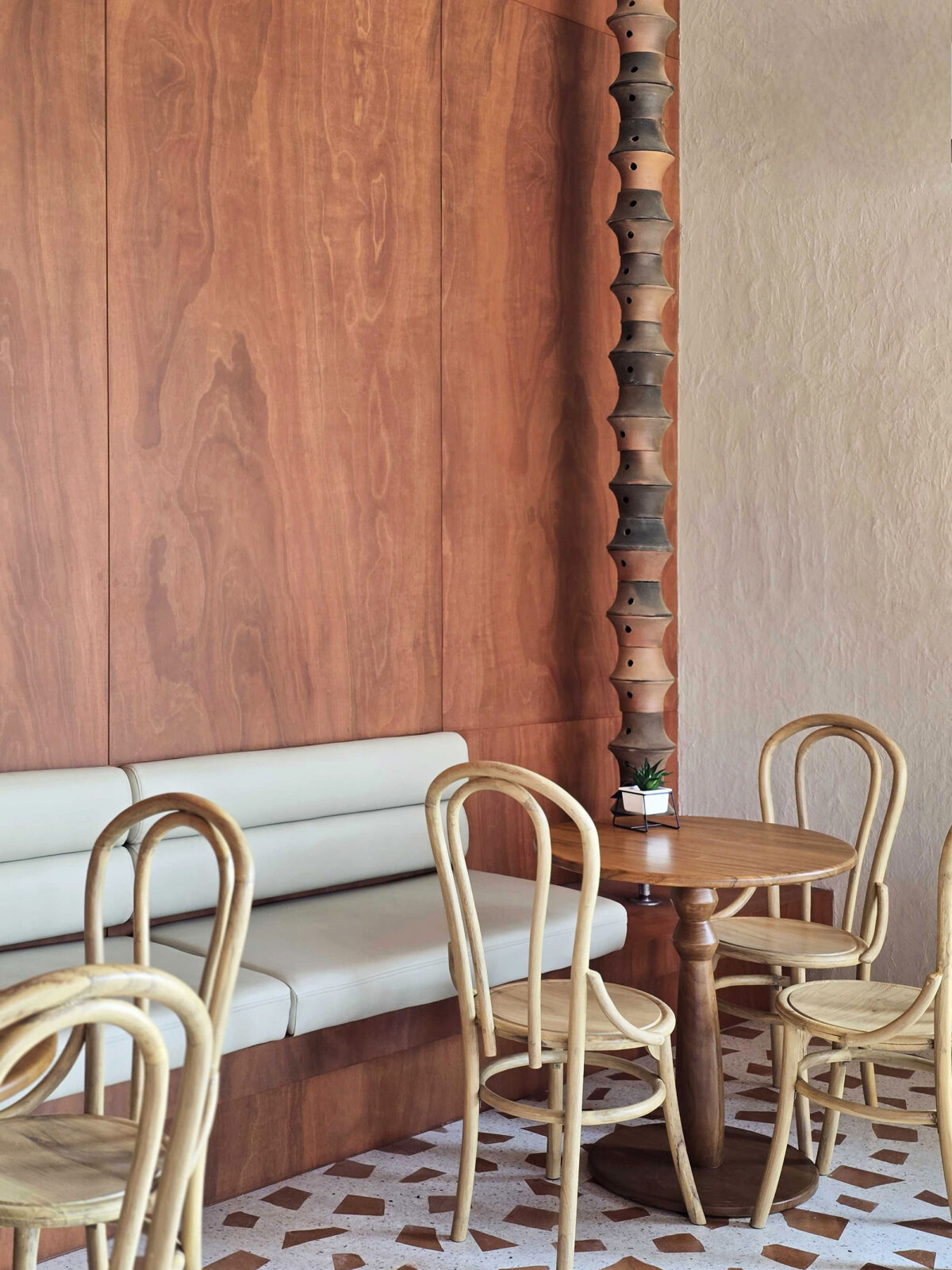
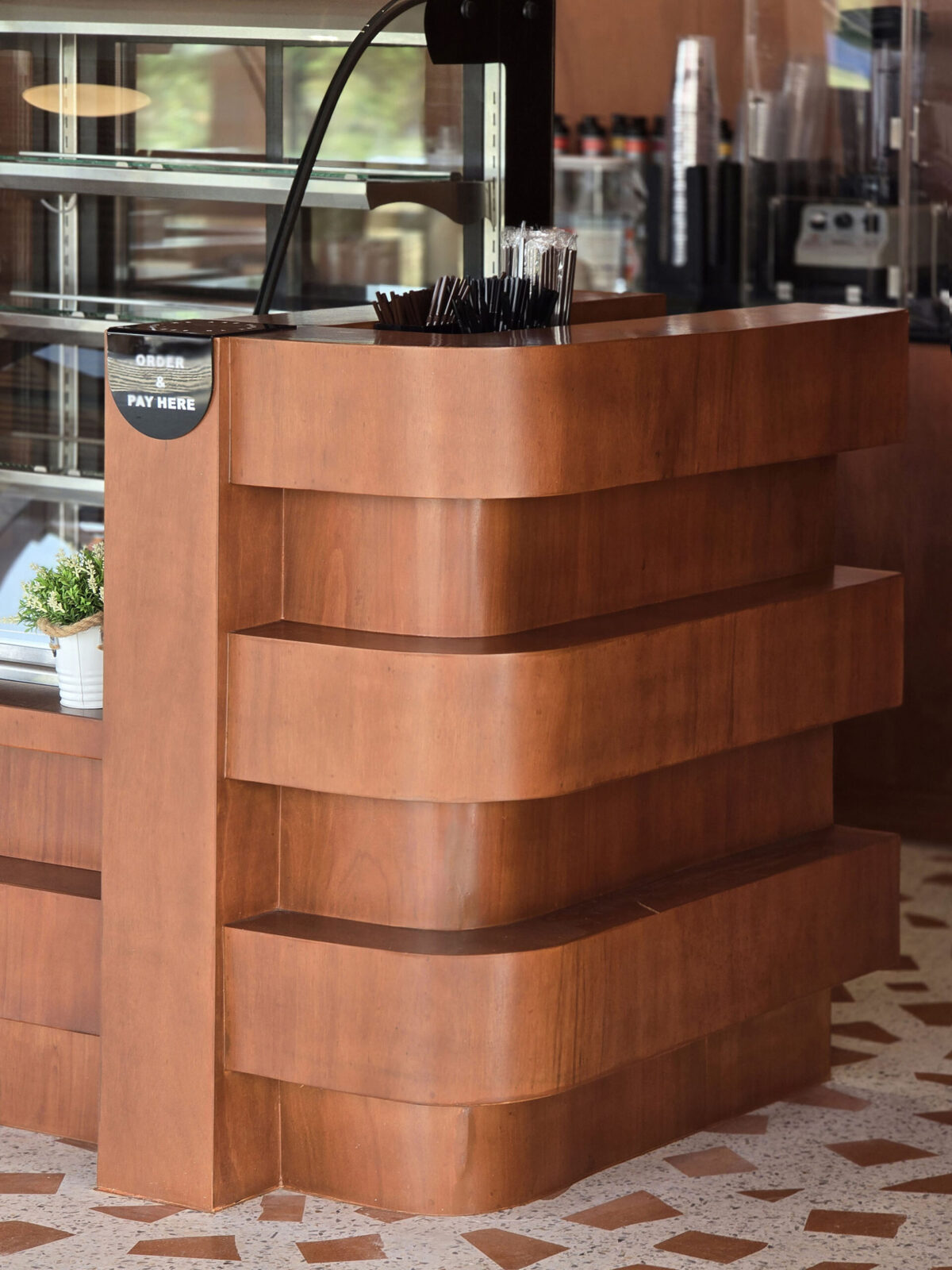
カフェの床面には白いテラゾーが採用されており、その中には地元の工場に残っていたB等級のテラコッタタイルの破片が使用されている。これらの破片は、地域の職人によって砕かれ、再配置され、模様として床面に組み込まれた。結果として、室内空間には触覚的な質感と遊び心ある視覚的変化がもたらされている。
© Koraphin Oantaralok, Atiroj Thongsen
彫刻的に再解釈された「ジョル」の存在感
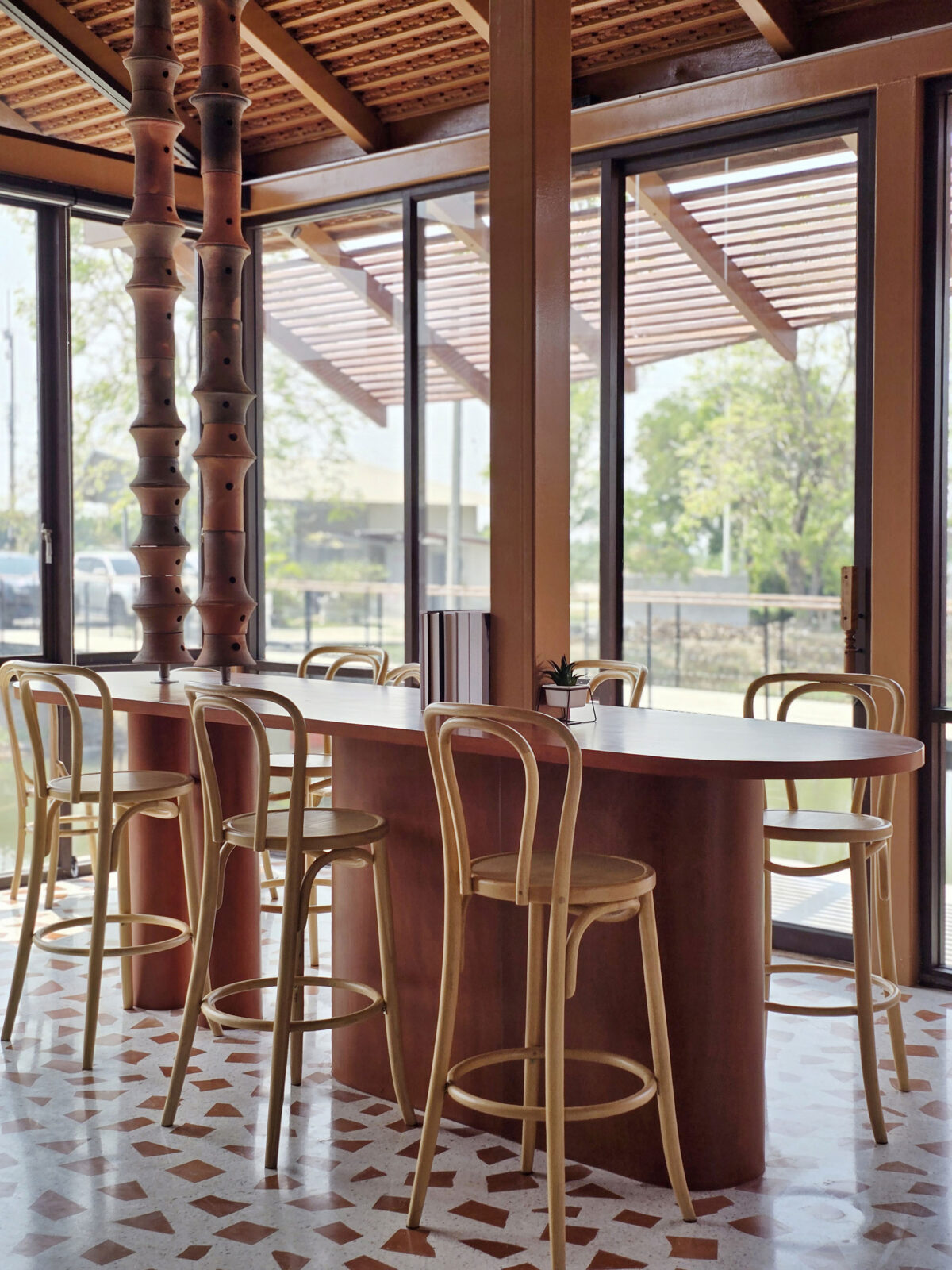
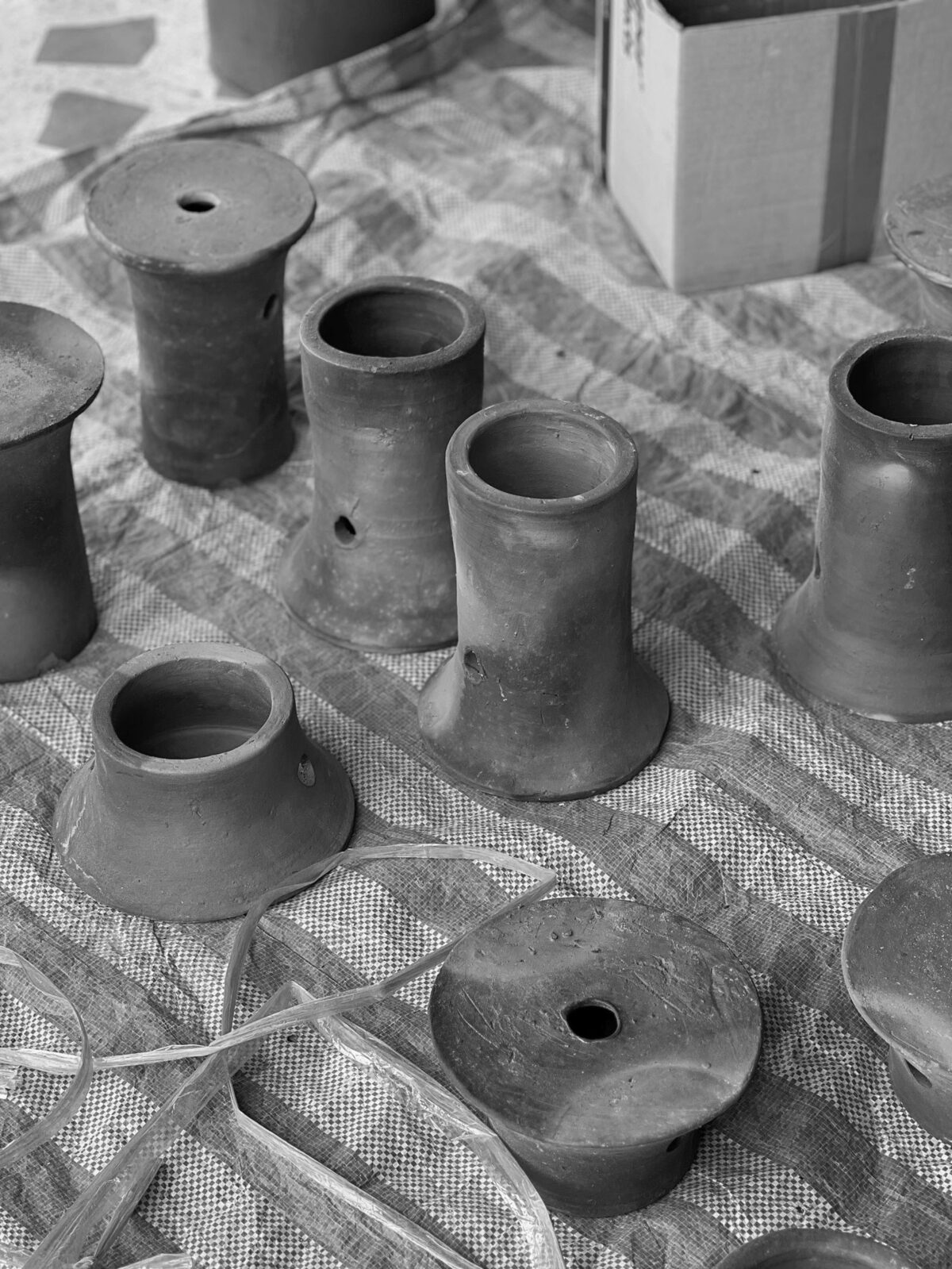
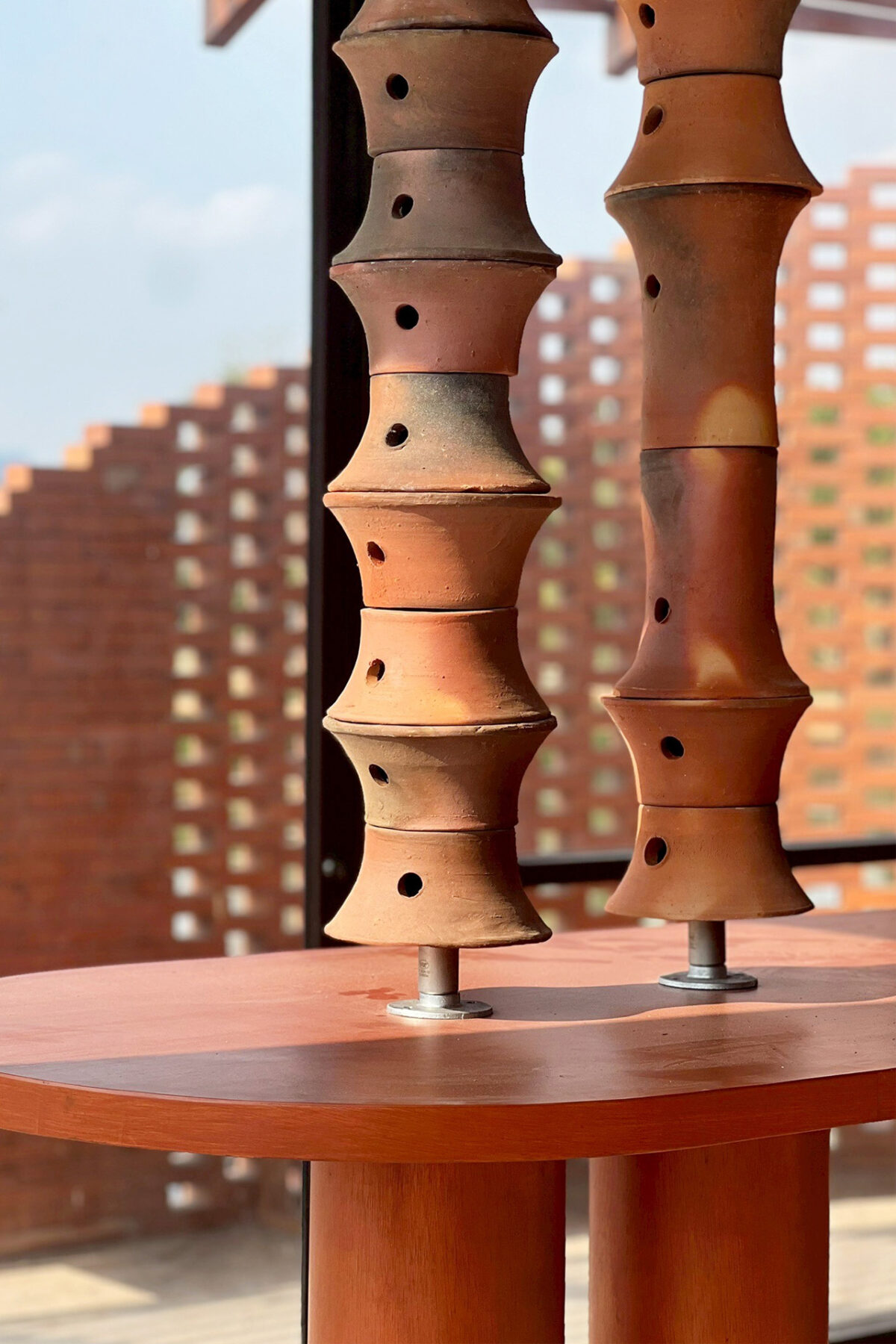
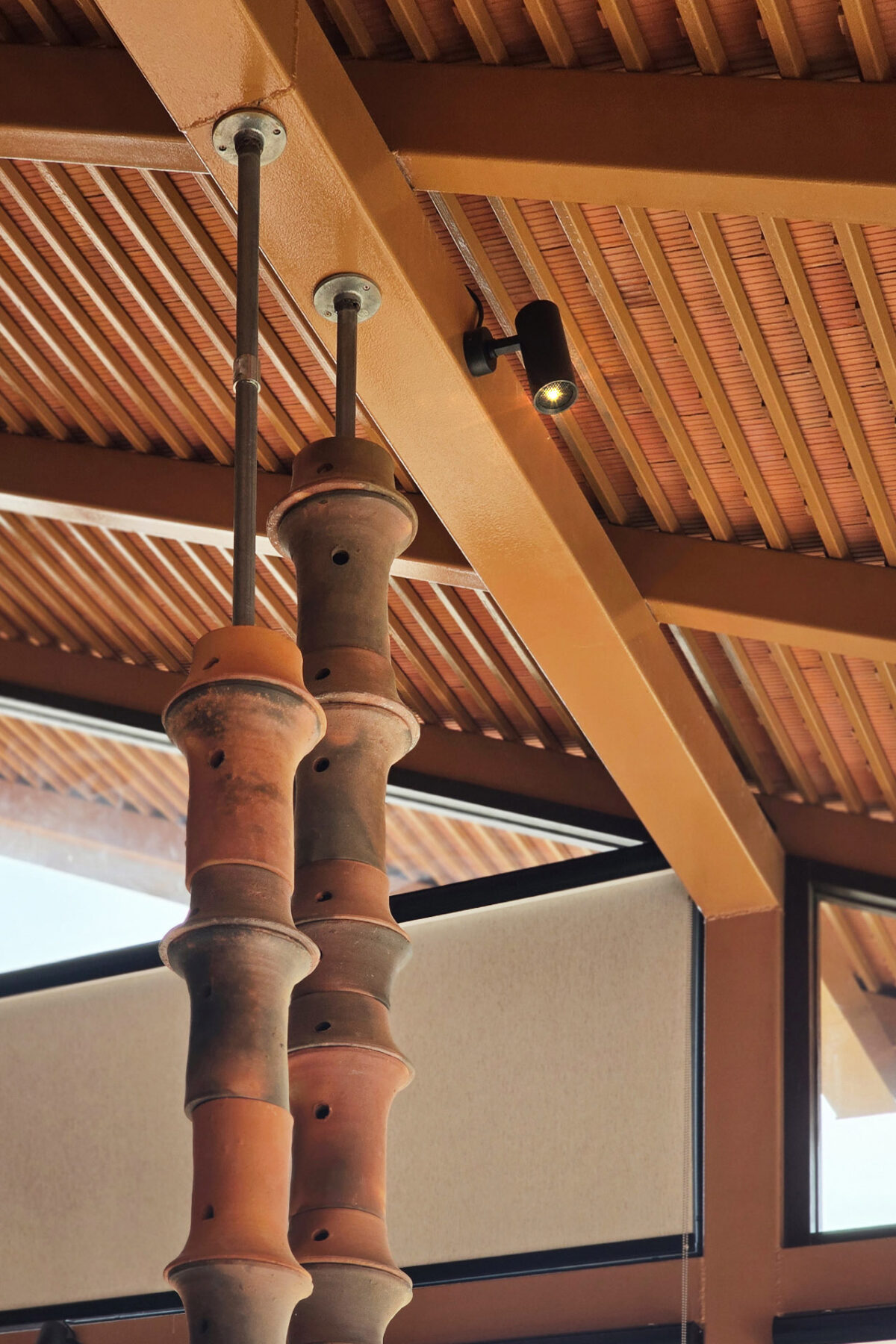
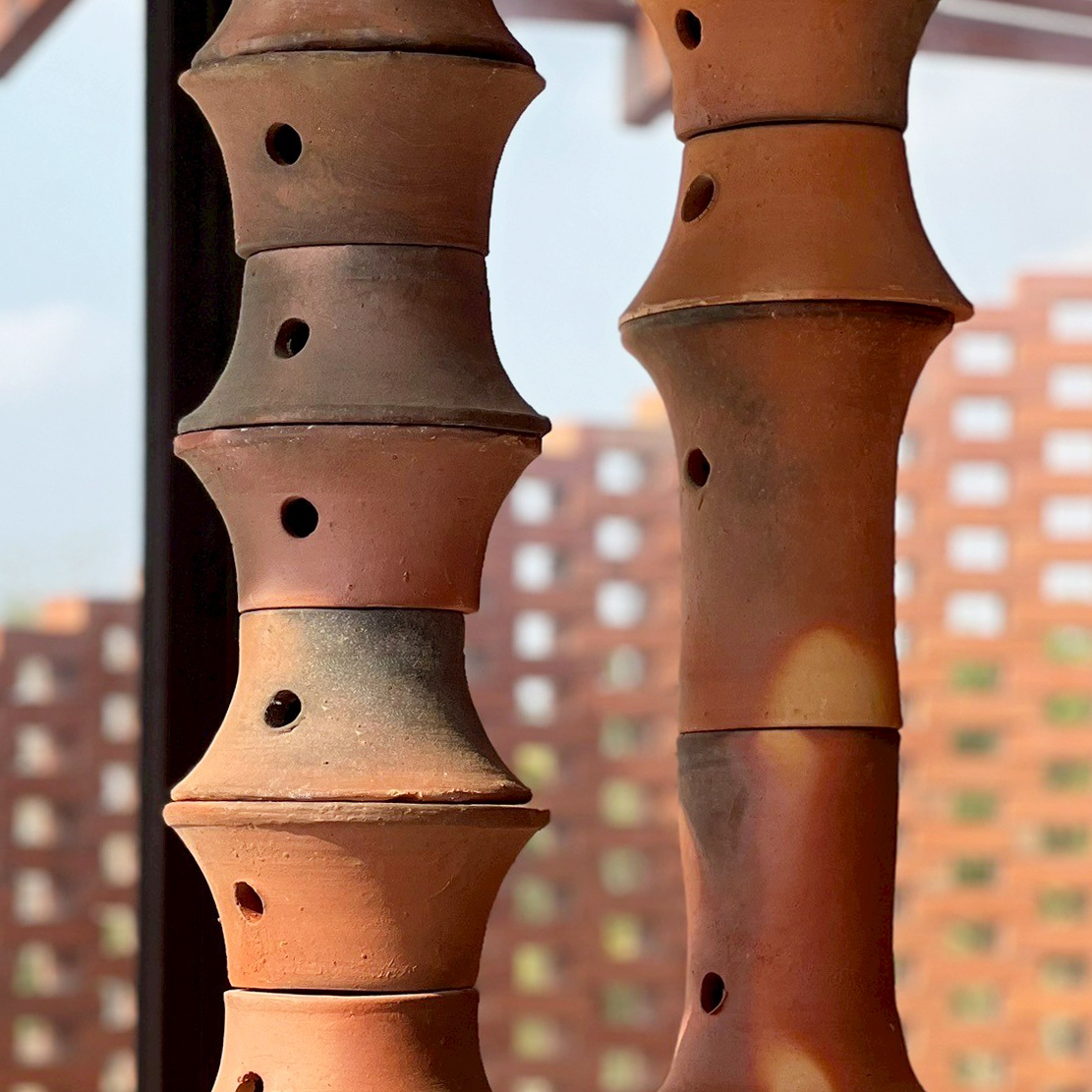
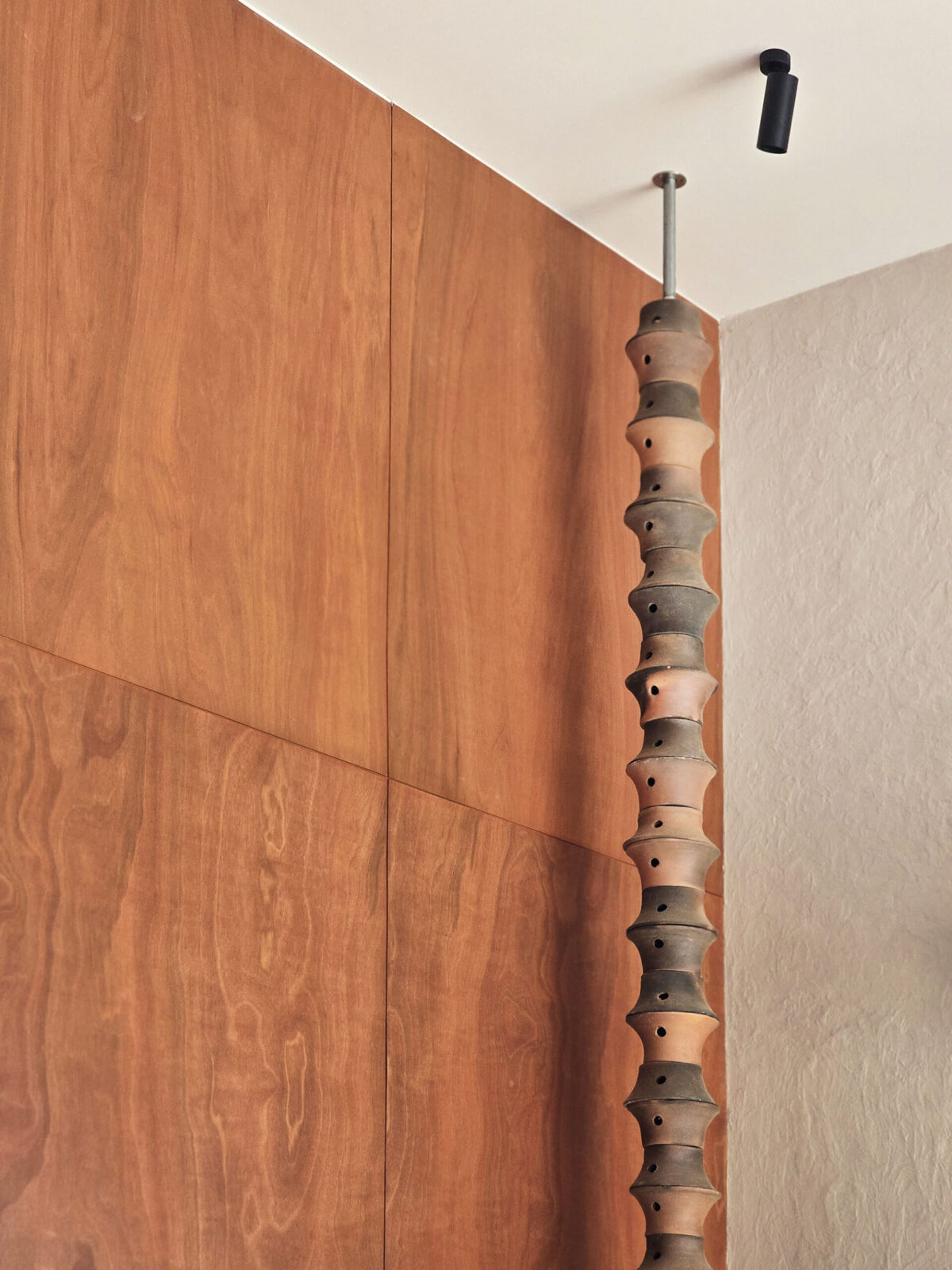
このプロジェクトにおいて特筆すべき要素の1つが、「ジョル(Jor:日本では「匣鉢」と呼ばれる、陶器や陶磁器を焼成する際に使用される器具)」という曲線状のセラミック容器の活用である。
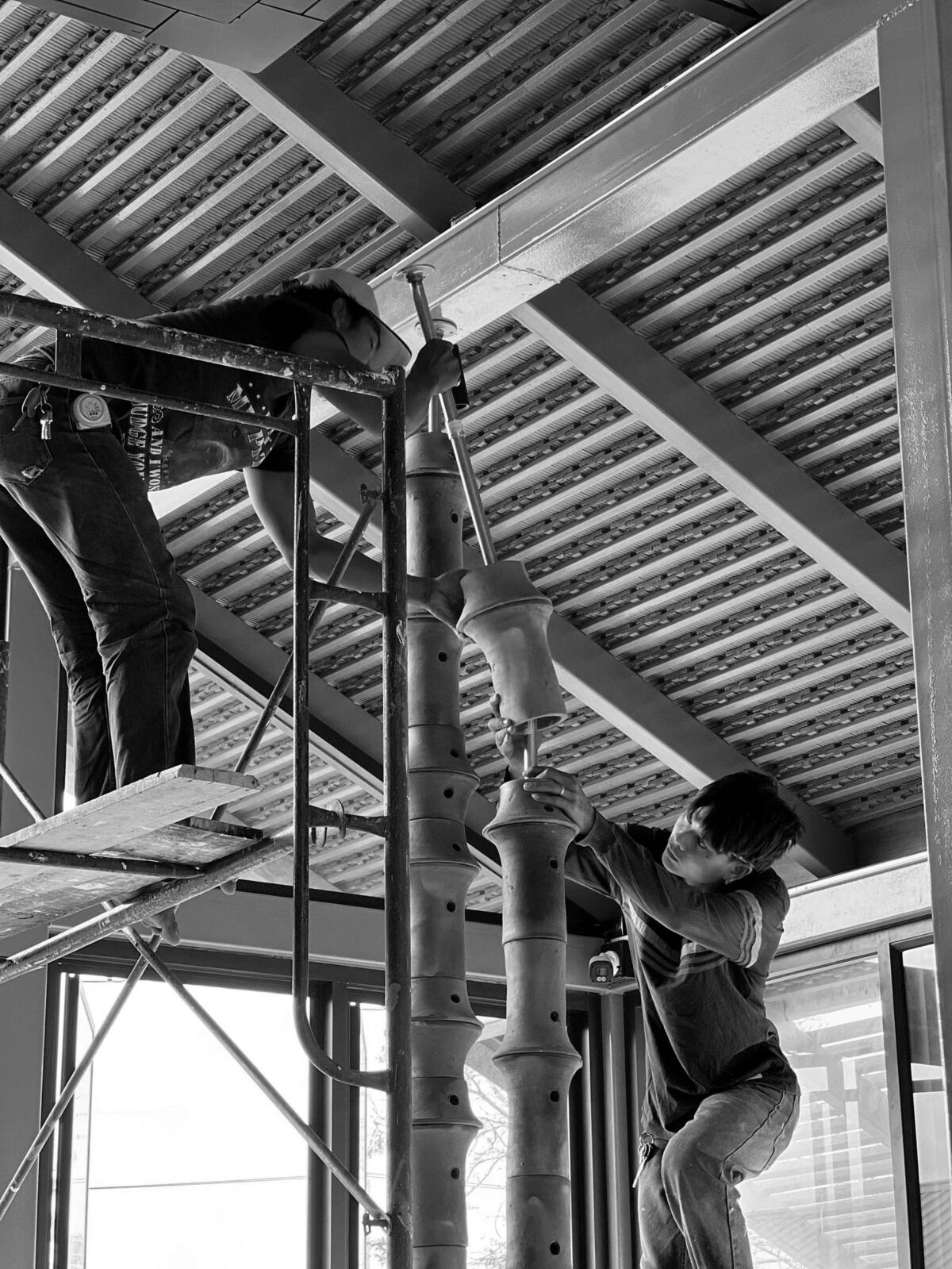
一般には馴染みのないこの器具は、ダーン・クイアン村における焼成プロセスにおいて不可欠な存在であり、窯内で他の陶器を支える「見えない家具」として機能してきた。ここでは、それらが彫刻的なインスタレーションとして再構成され、視覚的なアクセントとなると同時に、地域のクラフト生産の舞台裏を静かに、そして雄弁に物語っている。
© Koraphin Oantaralok, Atiroj Thongsen
Process
Process
© Koraphin Oantaralok, Atiroj Thongsen
© Koraphin Oantaralok, Atiroj Thongsen
© Koraphin Oantaralok, Atiroj Thongsen
© Koraphin Oantaralok, Atiroj Thongsen
© Koraphin Oantaralok, Atiroj Thongsen
© Koraphin Oantaralok, Atiroj Thongsen
© Koraphin Oantaralok, Atiroj Thongsen
© Koraphin Oantaralok, Atiroj Thongsen
© Koraphin Oantaralok, Atiroj Thongsen
© Koraphin Oantaralok, Atiroj Thongsen
© Koraphin Oantaralok, Atiroj Thongsen
© Koraphin Oantaralok, Atiroj Thongsen
以下、Studio Bewellのリリース(英文)です。
Project Name: The Terracotta Cafe
Architecture Firm: Studio Bewell
Contact e-mail: studiobewell.architect@gmail.com
Firm Location: Nakhon Ratchasima, Thailand.Completion Year (if applies): 2025
Gross Built Area: 153 sq.m.
Project location: Nakhon Ratchasima, Thailand.Photo: Koraphin Oantaralok, Atiroj Thongsen
Project Description
The Terracotta Cafe on Water, Bridging Local Craft and Landscape
This café, set gently over a body of water, draws from the rich local craftsmanship of Korat and materials sourced from the Dan Kwian village an area famed for its traditional pottery. The project reinterprets these elements in a contemporary language, responding to the design brief which called for a water-based structure that complements the existing context of “Chai Thung Restaurant”, a local restaurant by the pond. The café was envisioned as an additional zone to accommodate customers while maintaining the ambiance of the original space.
With a focus on using locally available materials and reflecting the wisdom of Korat artisans, Dan Kwian’s signature terracotta emerged as the key material endorsed by both the client and the designer. The natural bronze-like tones, ranging from reddish-brown to black, come from high-temperature firing without any added pigment. These tones formed the café’s primary palette.
Terracotta tiles were applied across multiple architectural elements roof and flooring alike. The signature cut-edge roof tiles were installed at a new angle, subtly reflecting the geometry of the restaurant’s original roof. Solid red bricks were playfully arranged along a curving entryway, inspired by traditional pottery forms. This approach helps scale down the structure, making it feel more welcoming, while still preserving a sense of openness and connection to the outdoors.
The café’s white terrazzo floor features fragments of grade B terracotta tiles leftover stock from local factories. These were broken, reorganized, and patterned by local craftsmen, introducing a playful and tactile detail to the interior.
One of the most striking elements is the use of “jor” (saggars) curved ceramic containers unfamiliar to the public but essential in the Dan Kwian firing process. These vessels serve as supports for other pottery pieces in the kiln, acting as the unseen ‘furniture’ of the firing chamber. Reimagined here as sculptural installations, the jor not only add visual intrigue but also quietly narrate the behind-the-scenes story of the region’s craft production arguably more eloquently than any other ceramic form.
Studio Bewell 公式インスタグラム
https://www.instagram.com/studio.bewell/?next=%2Ftarannum9481%2F&hl=bn



![[Report]方丈庵から生き方を問う、21_21 DESIGN SIGHT 企画展「方丈記に学ぶ –生きるを編み直す小さな建築–」会場レポート](https://magazine-asset.tecture.jp/wpcms/wp-content/uploads/2026/09/01181900/20260828hojoki-ex_01_mag-endo4350-900x676.jpeg)