

デジタル×ローテク素材で生み出す超軽量建築 - 竹の可能性を3Dプリント接合部が拡張する〈デジタル・バンブー〉
©︎ Benjamin Dillenburger
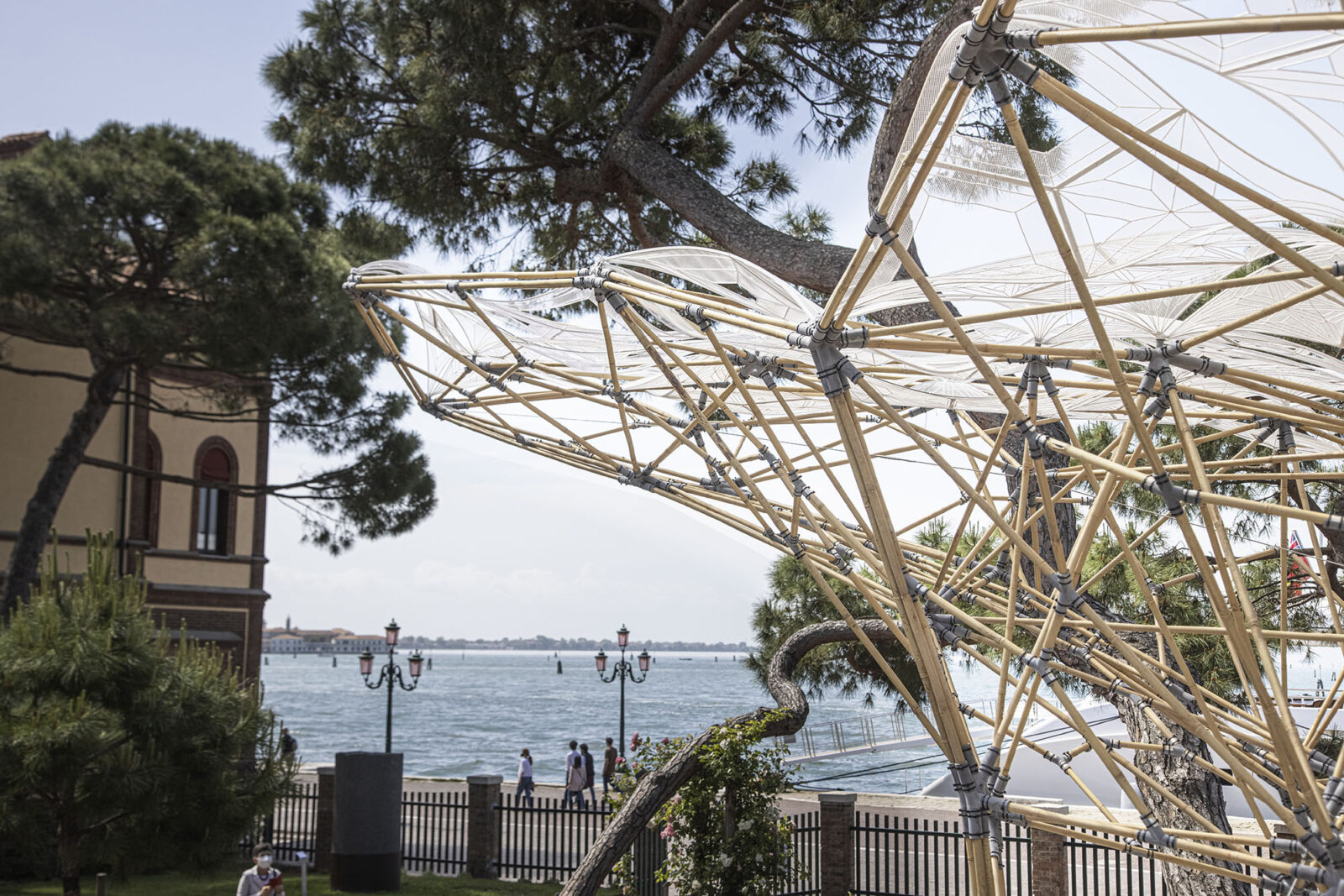
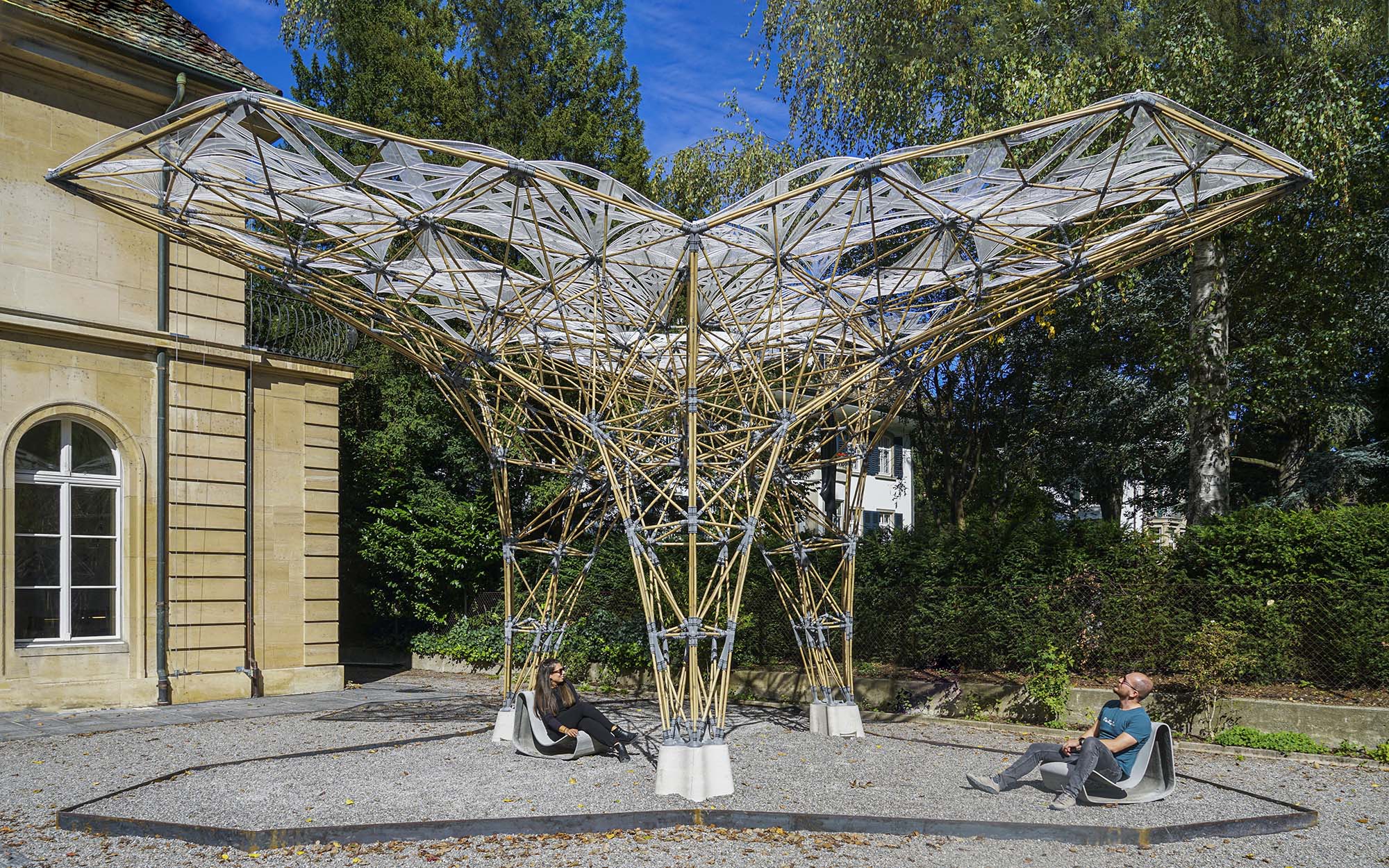
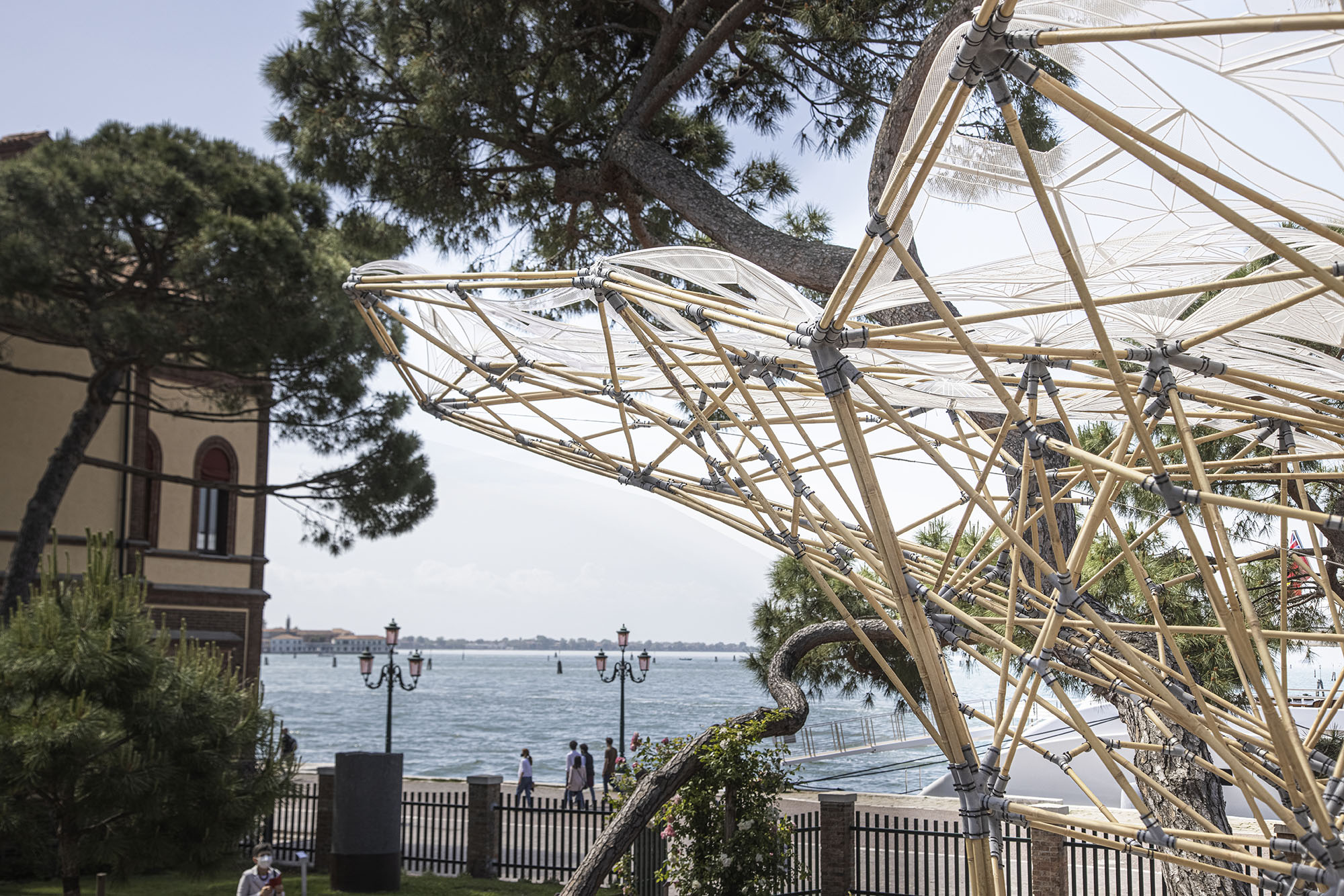
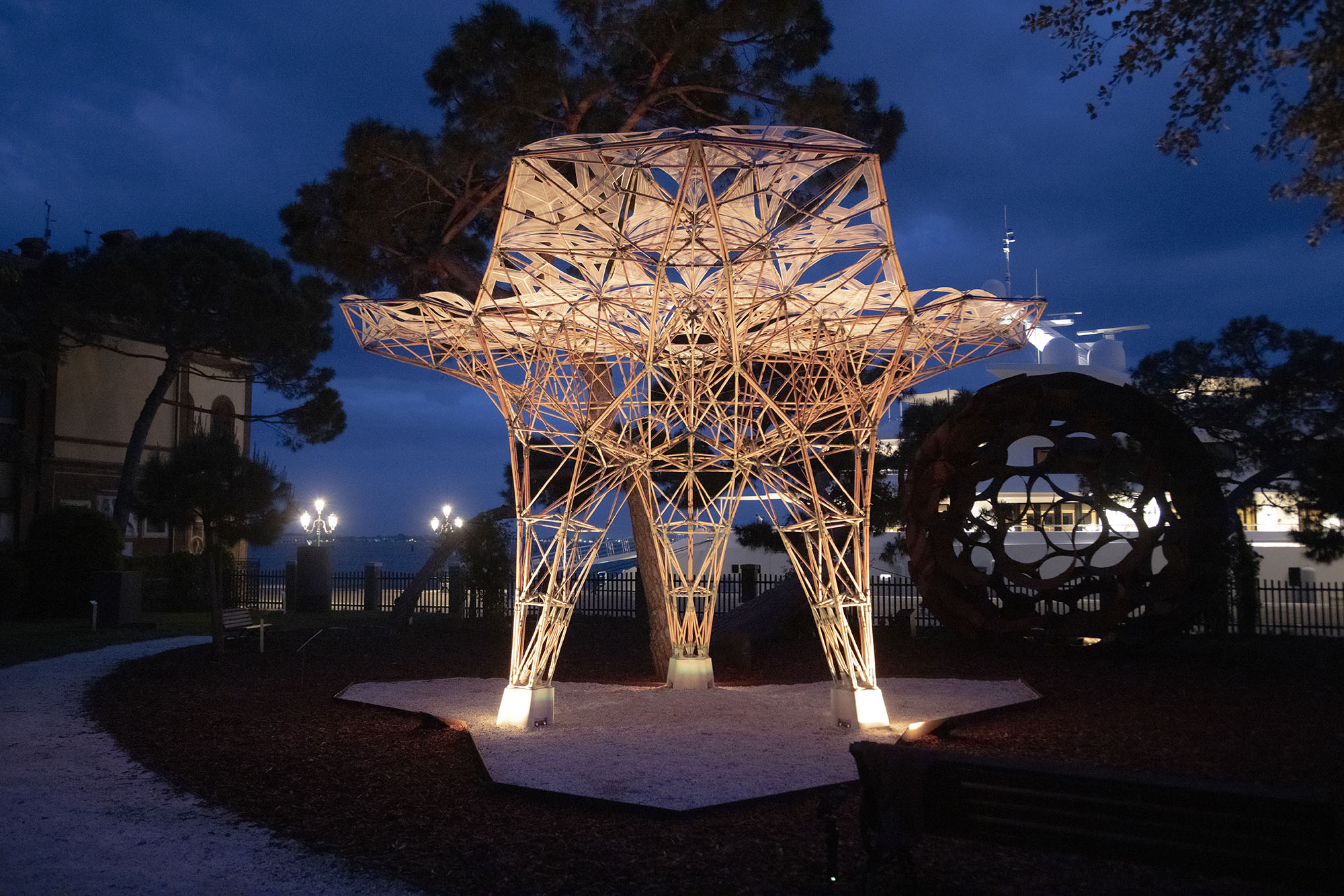
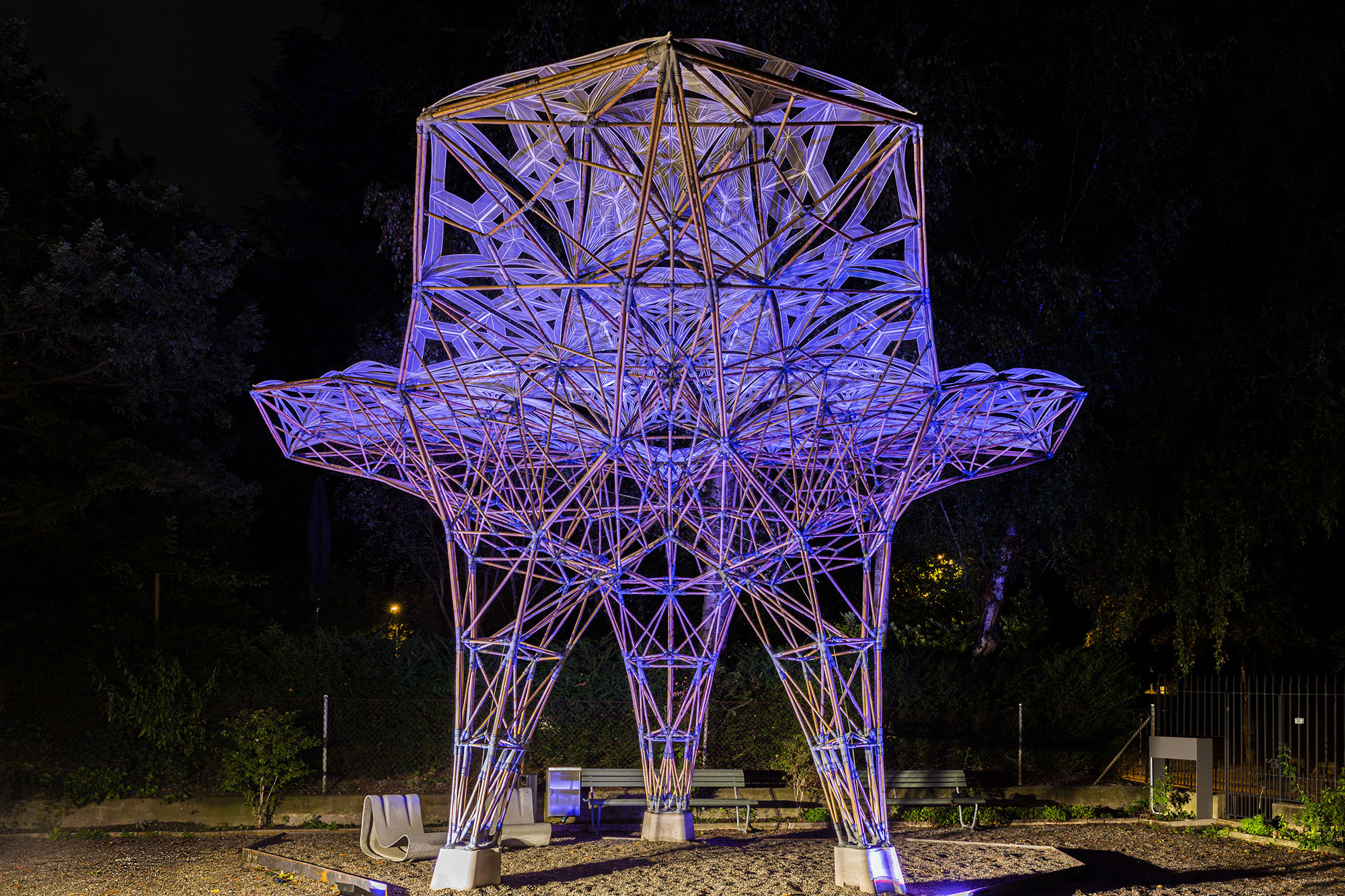
〈デジタル・バンブー(Digital Bamboo)〉は、コンピュテーショナルデザインや3Dプリントといった「先進技術」と、竹という「再生可能素材」で構成された超軽量建築です。
チューリッヒ工科大学(ETH Zurich)のデジタル建築技術研究グループ「デジタル・ビルディング・テクノロジーズ(Digital Building Technologies)」が開発しました。
注目ポイント
- 900本以上の竹を用いた超軽量なトラス構造
- 竹のばらつきに対応するデジタルデザイン・ファブリケーション
- 軽量テキスタイルに熱可塑性樹脂をプリントし、遮光性と触覚的質感を両立
- 世界中で3Dプリント可能な接合部品と現地調達可能な竹によるグローバルかつローカルな建設モデル
(以下、デジタル・ビルディング・テクノロジーズから提供されたプレスキットのテキストの抄訳)
©︎ Marirena Kladeftira
©︎ Marirena Kladeftira
「先進技術×再生可能素材」で生み出す超軽量建築
一時的な空間構造体〈デジタル・バンブー〉は、先進ファブリケーション技術と再生可能素材の組み合わせにより、超軽量建築を再構築するプロジェクトである。
デジタル・ビルディング・テクノロジーズが開発した、コンピュテーショナルデザインと積層造形技術を組み合わせた本プロジェクトは、再生可能で低コストな素材がいかに高性能かつ超軽量な構造体を生み出せるかを実証している。
©︎ Marirena Kladeftira
竹の可能性と課題
竹は強度重量比と成長速度の高さから古くから評価され、東南アジアやラテンアメリカを中心に建築材料として利用されてきた。しかし、その利用は地域の知識や職人技に大きく依存し、伝統的な接合技術は構造の種類に制約を与え、多大な手作業を必要とする。
〈デジタル・バンブー〉は、こうした課題をデジタルデザイン及びデジタルファブリケーション技術で乗り越え、再生可能素材の不正確さや変動性を排除せずに取り込みながら、新しい建築手法の可能性を模索するものである。
©︎ Andrei Jipa
©︎ Marirena Kladeftira
超軽量の構造システム
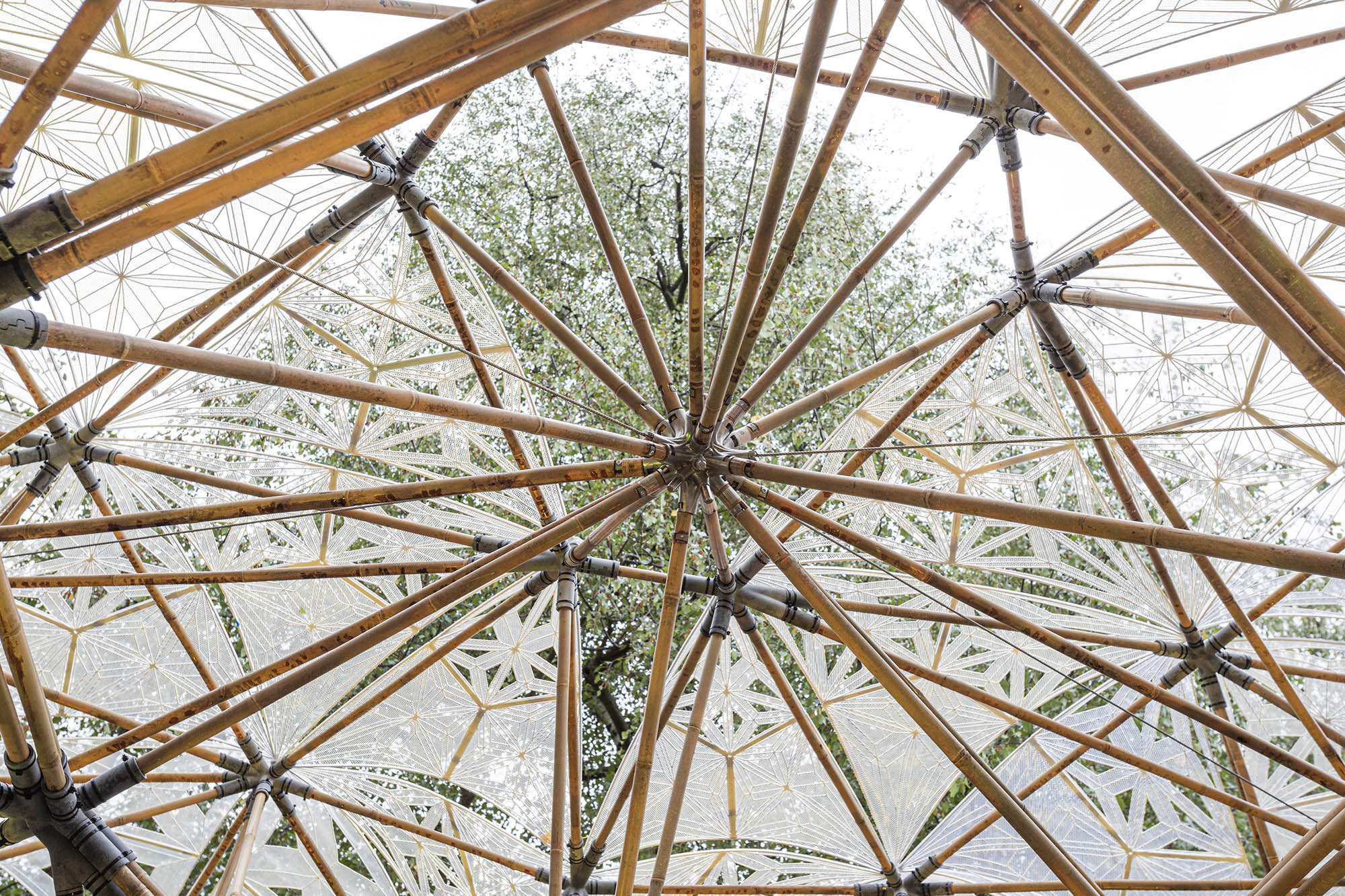
構造体は900本以上の竹竿で構成され、ポストテンションケーブルで補強された階層最適化トラスとして組み上げられた。40m²を超えるキャノピーの重量はわずか200kg程度であり、控えめな素材が卓越した性能と建築的インパクトをもたらし得ることを示している。
©︎ Marirena Kladeftira
カスタム接合部の開発
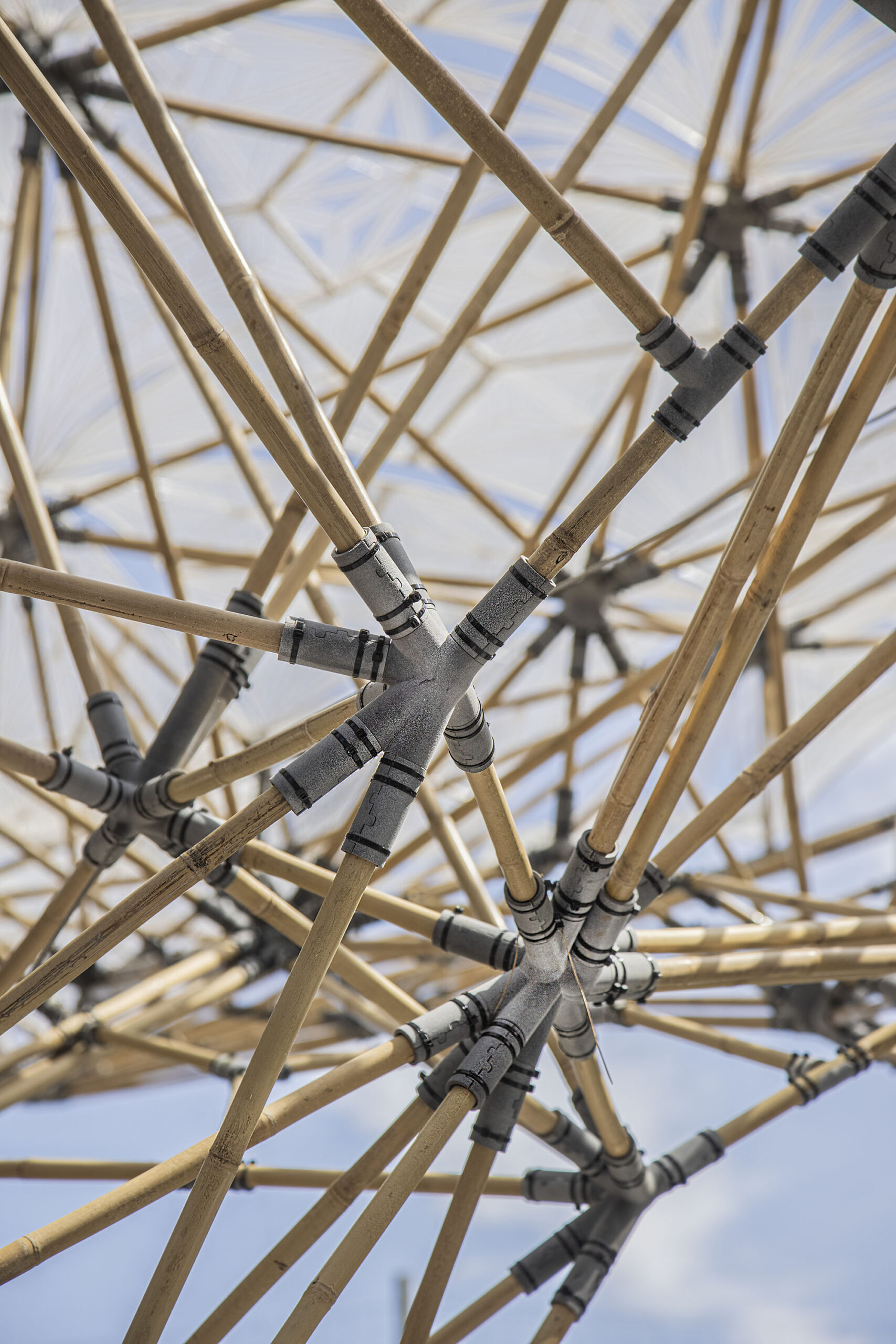
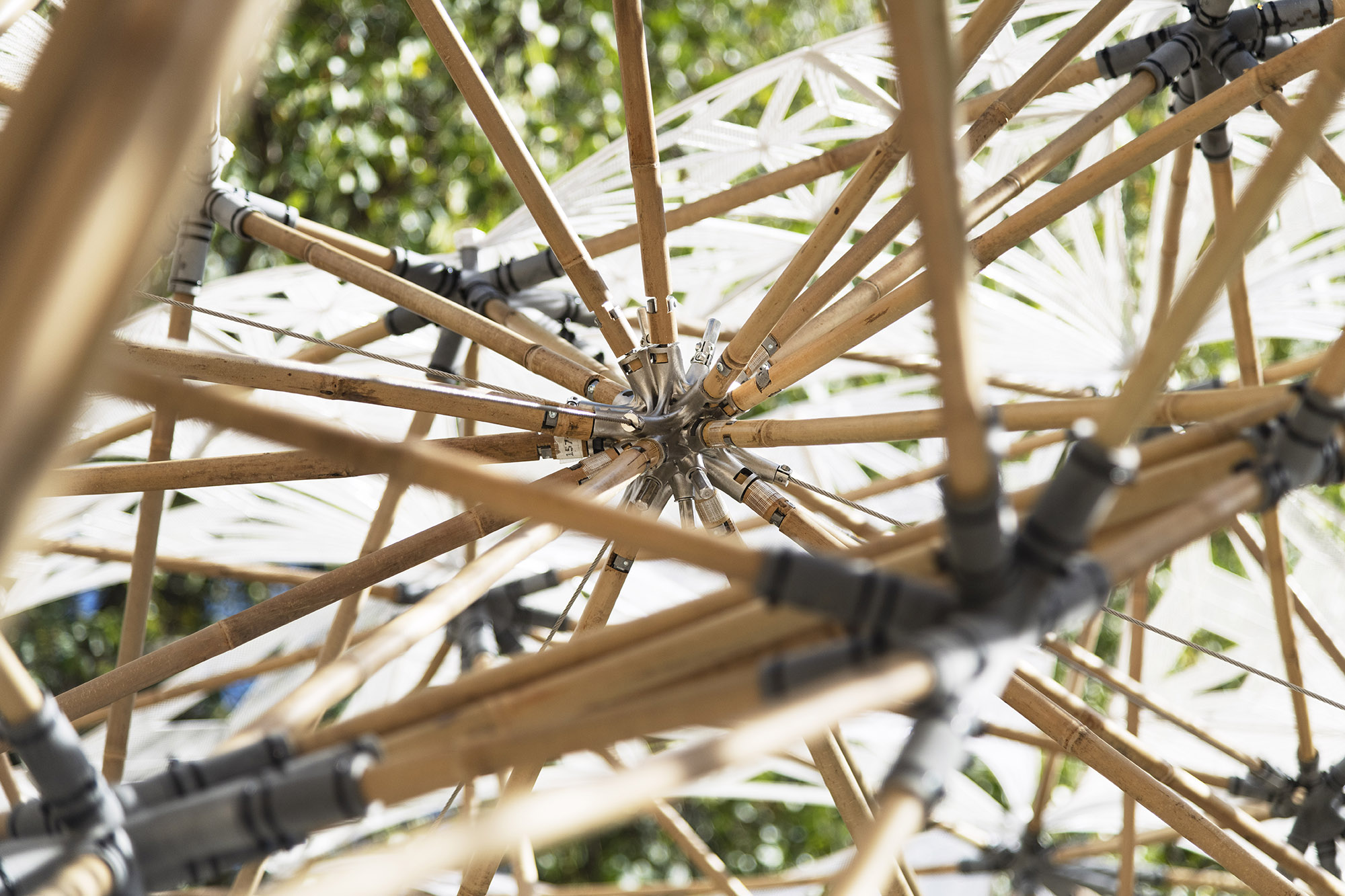
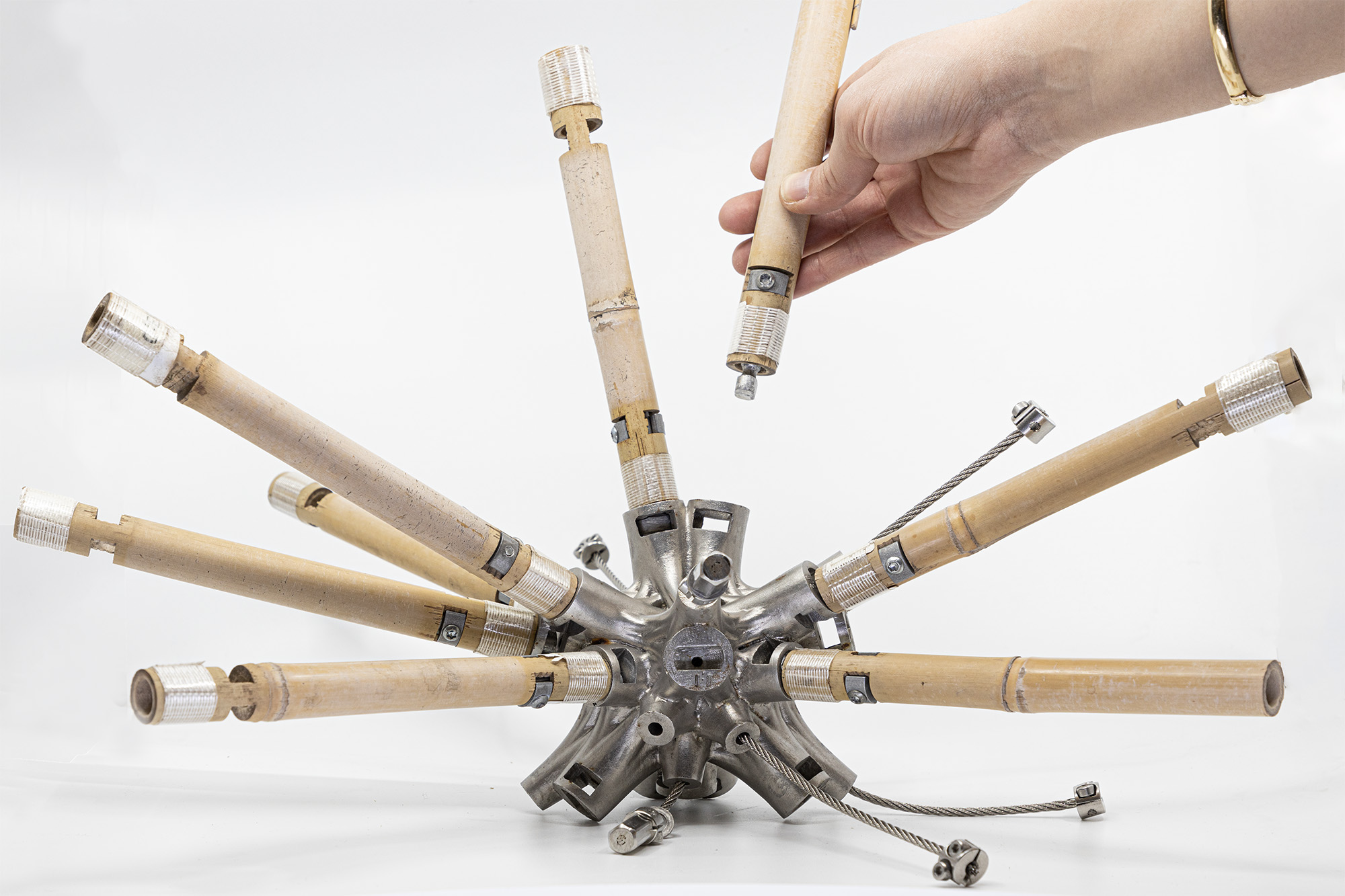
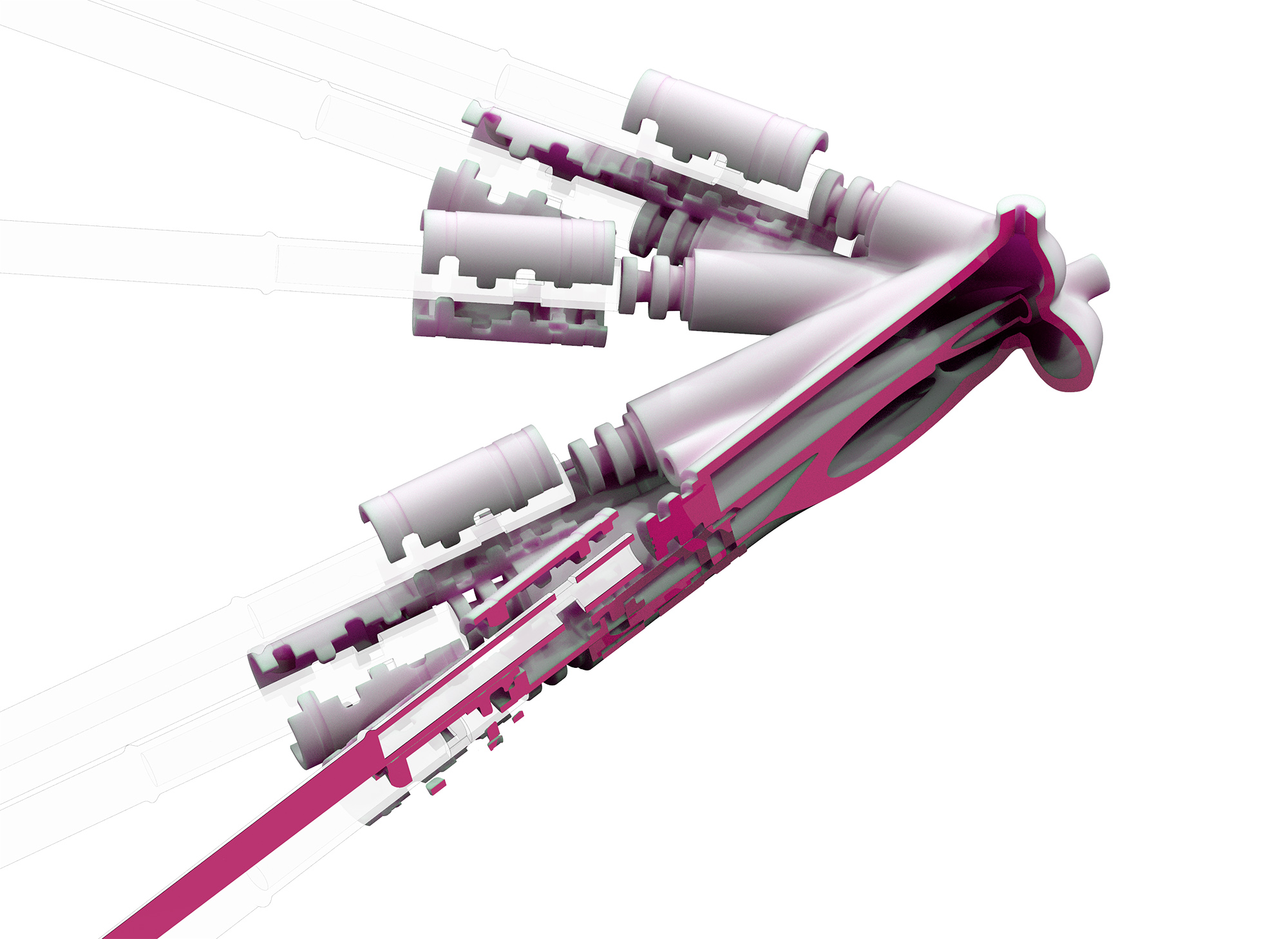
竹のばらつきに対応するため、接合部設計・形状探索・構造最適化を可能にするカスタムデジタルツールを開発した。380箇所の接合部はそれぞれ局所的な幾何学的・機能的・構造的要件に応じて調整されている。
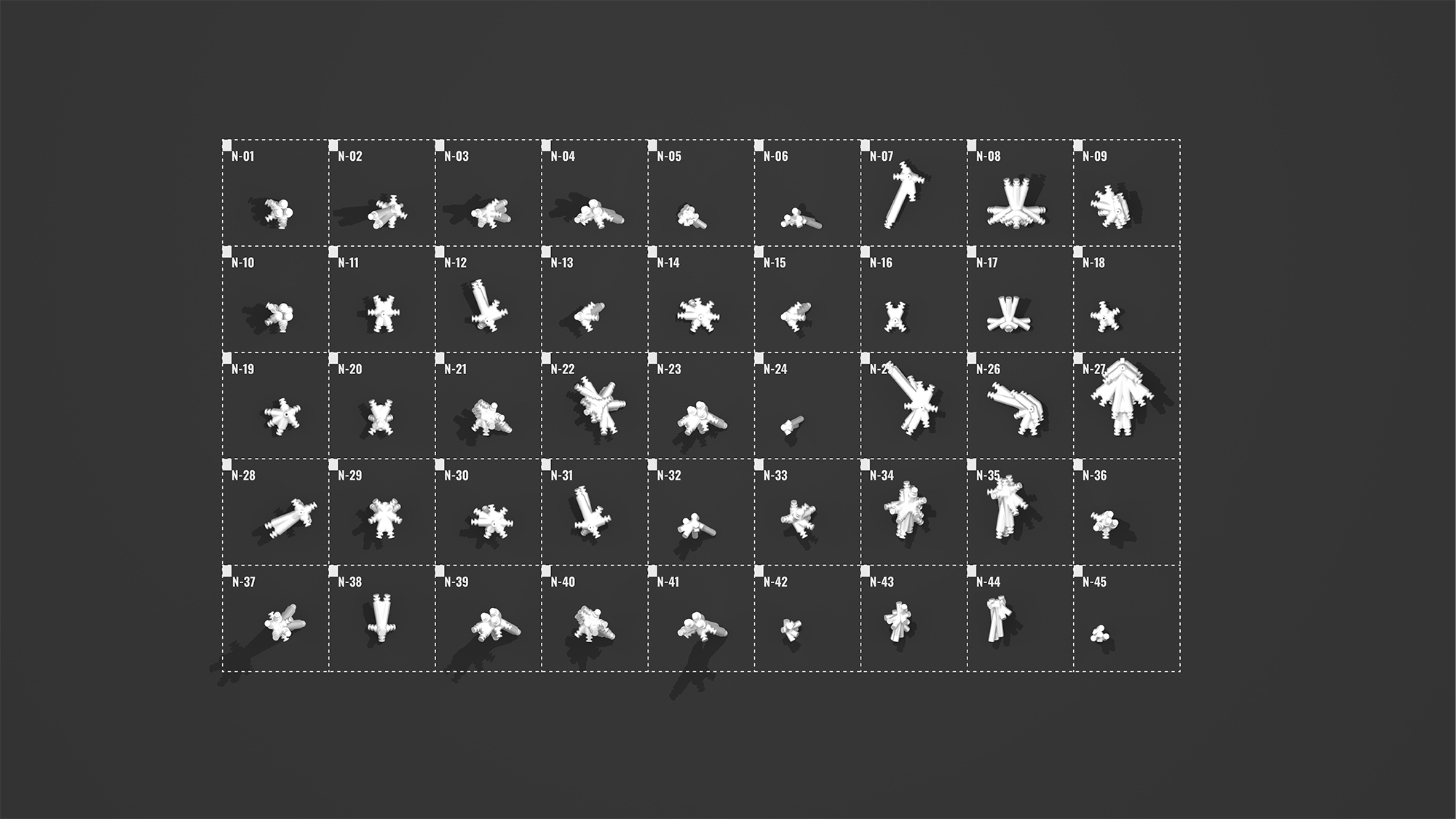
NodeCatalog ©︎ Marirena Kladeftira
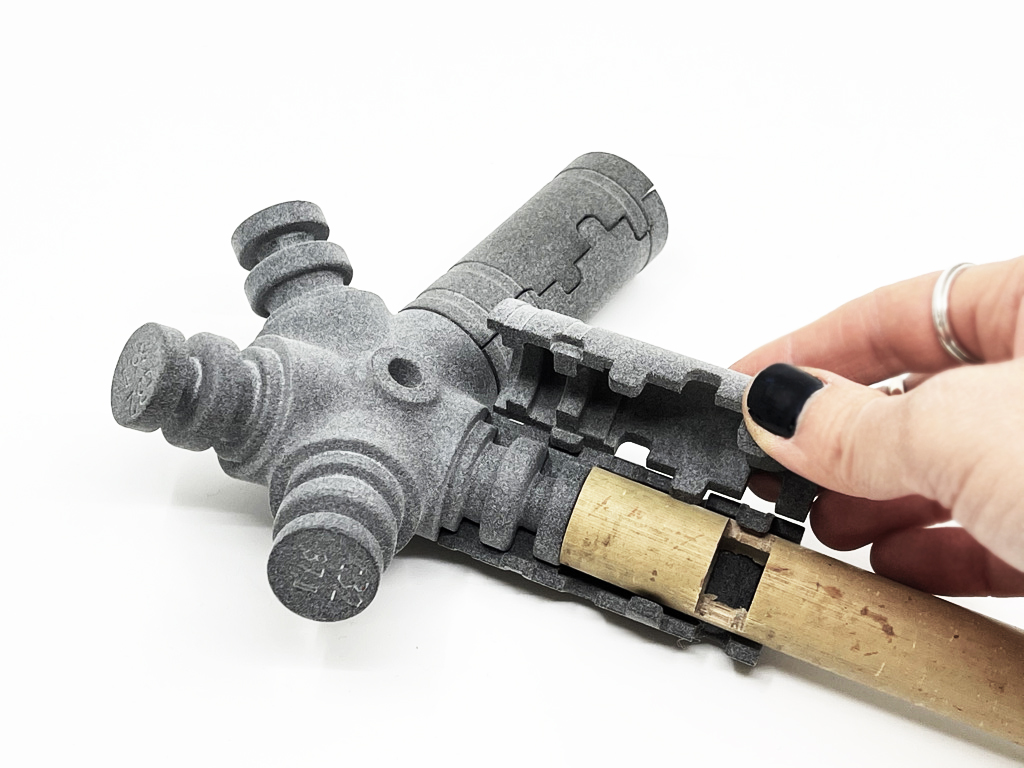
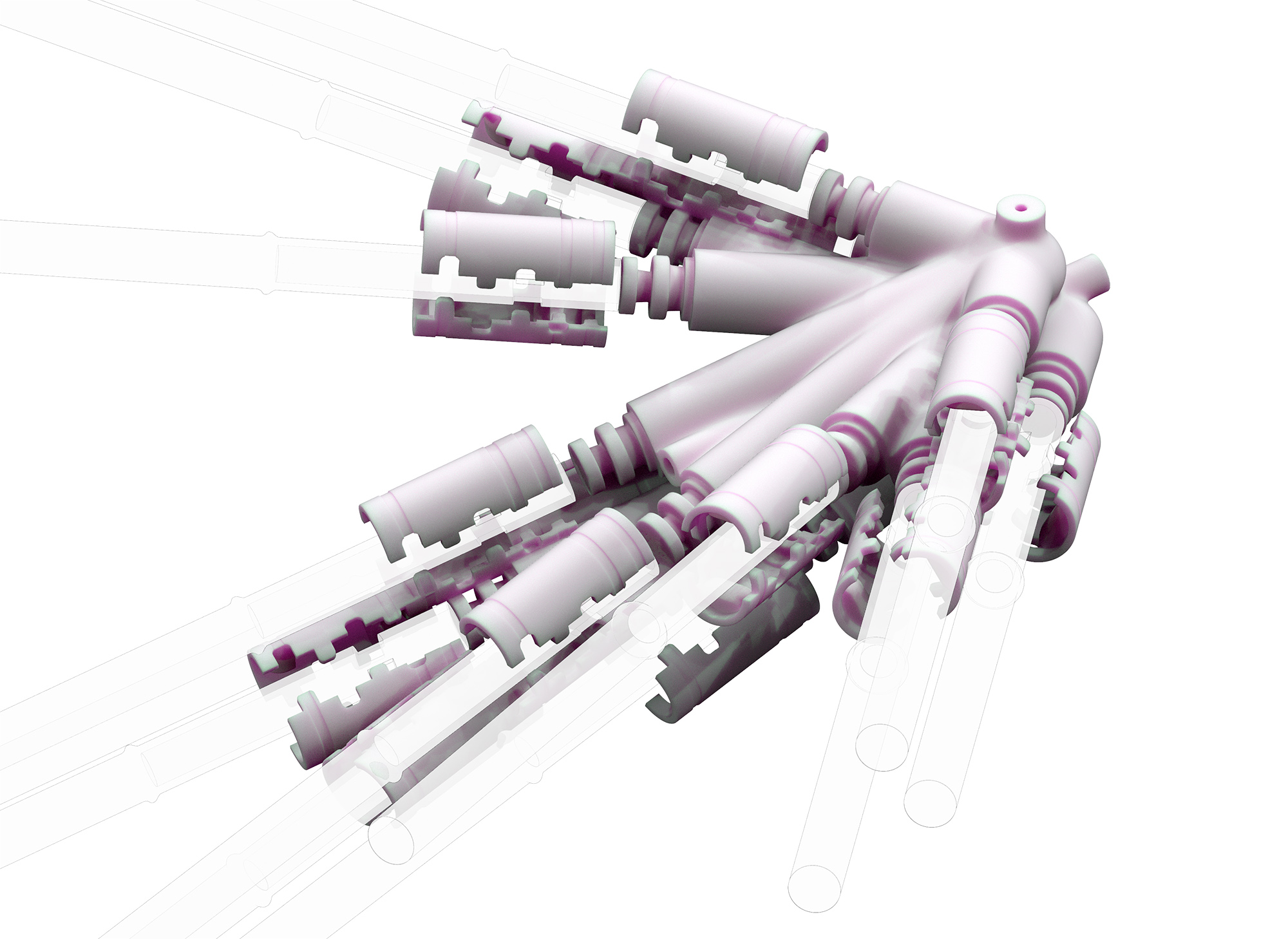
コネクターはモジュラー組立原理を採用し、2つの嵌合部品が竹竿を確実に固定しつつ公差を吸収し、効率的な荷重伝達を保証する。積層造形の自由度を活かして各接合部は固有の形状をもち、ラベル表示や部材三重化、外装固定点といった追加機能を統合する。
ナイロンと金属による高精度造形で製作された接合部により、小型の部品に複雑性を集約することで、製造コスト・時間・物流を削減し、建築スケールにおける低炭素・現地調達素材の活用を可能にしている。
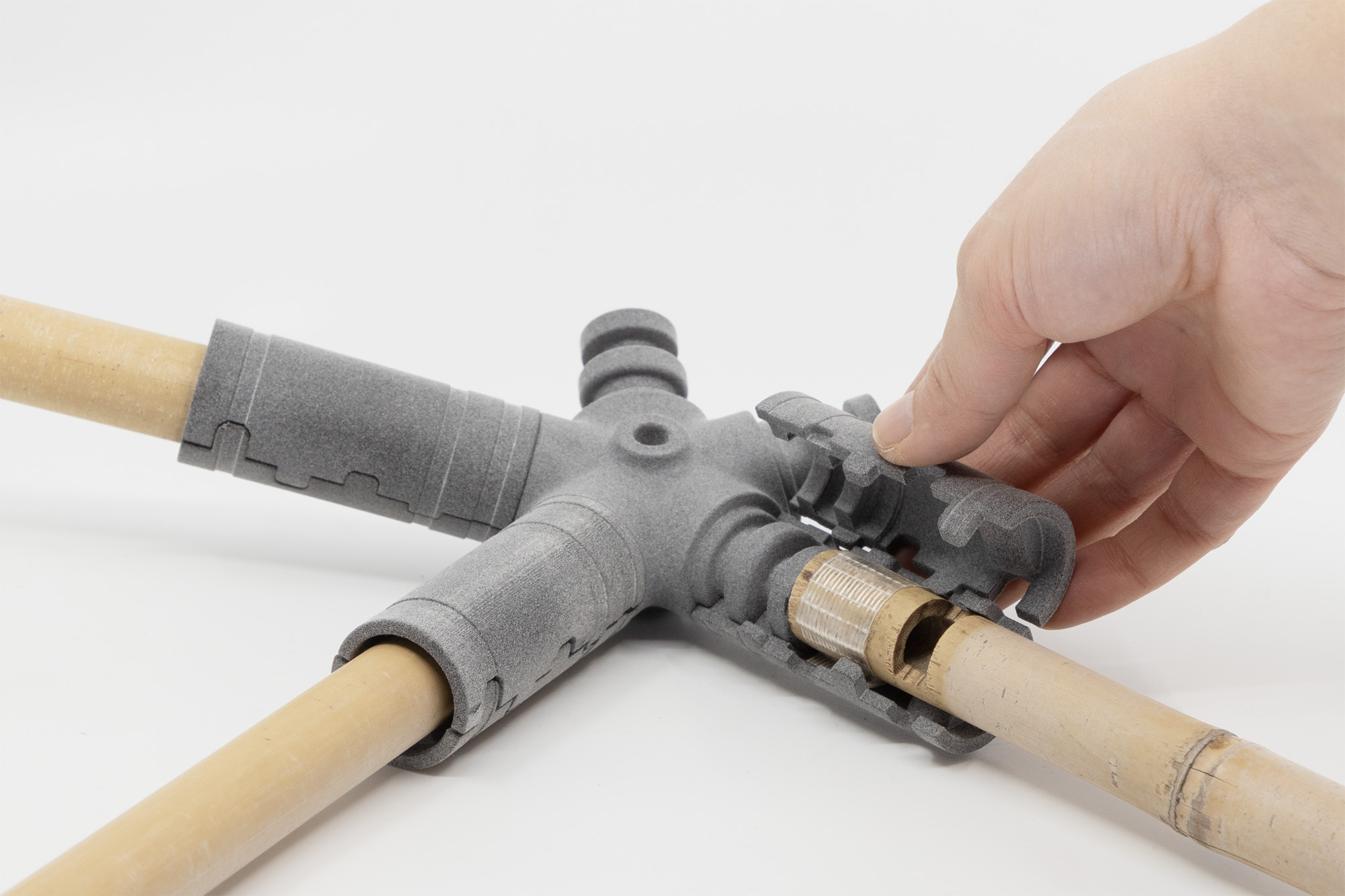
©︎ Marirena Kladeftira
©︎ Marirena Kladeftira
外装膜の実験的アプローチ
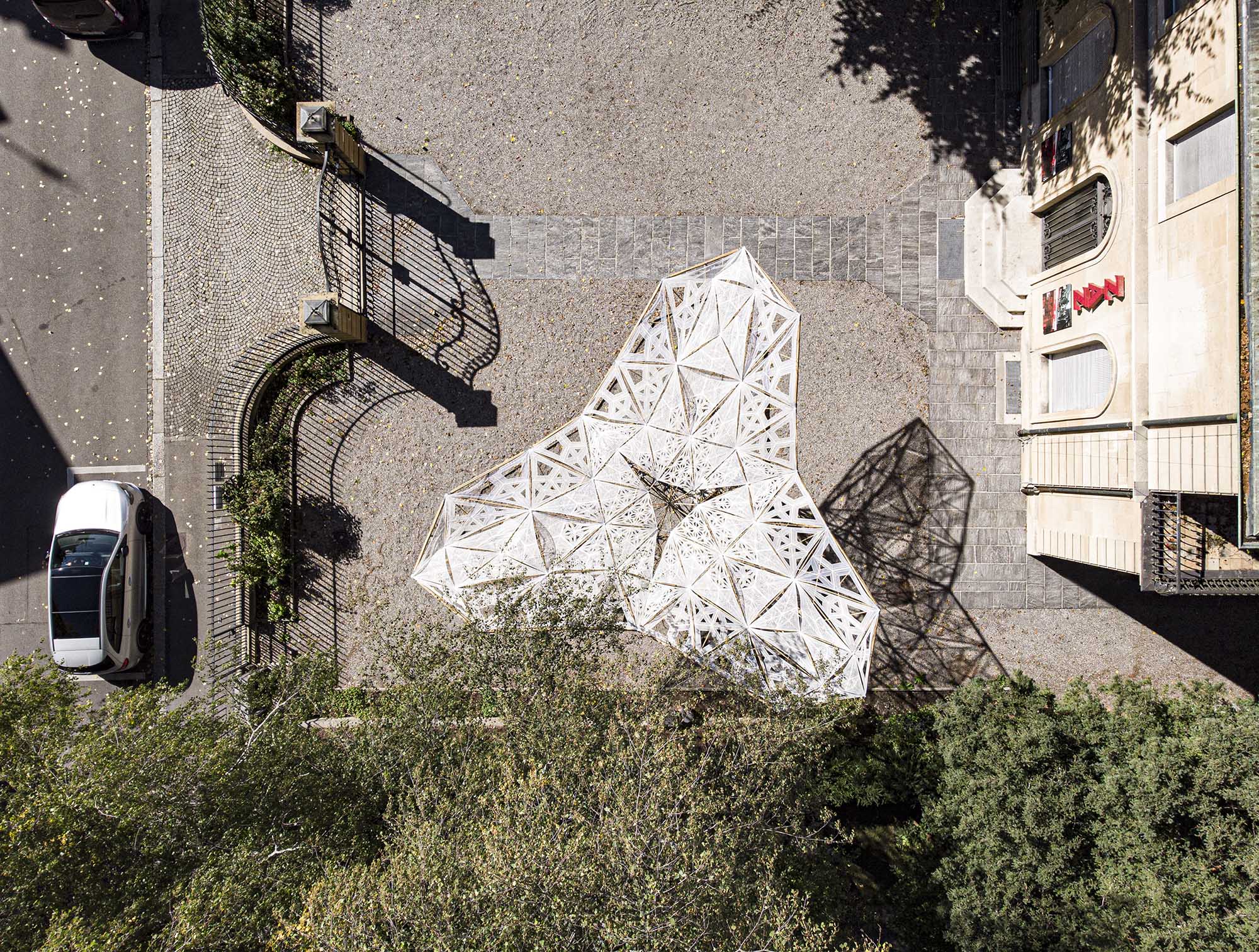
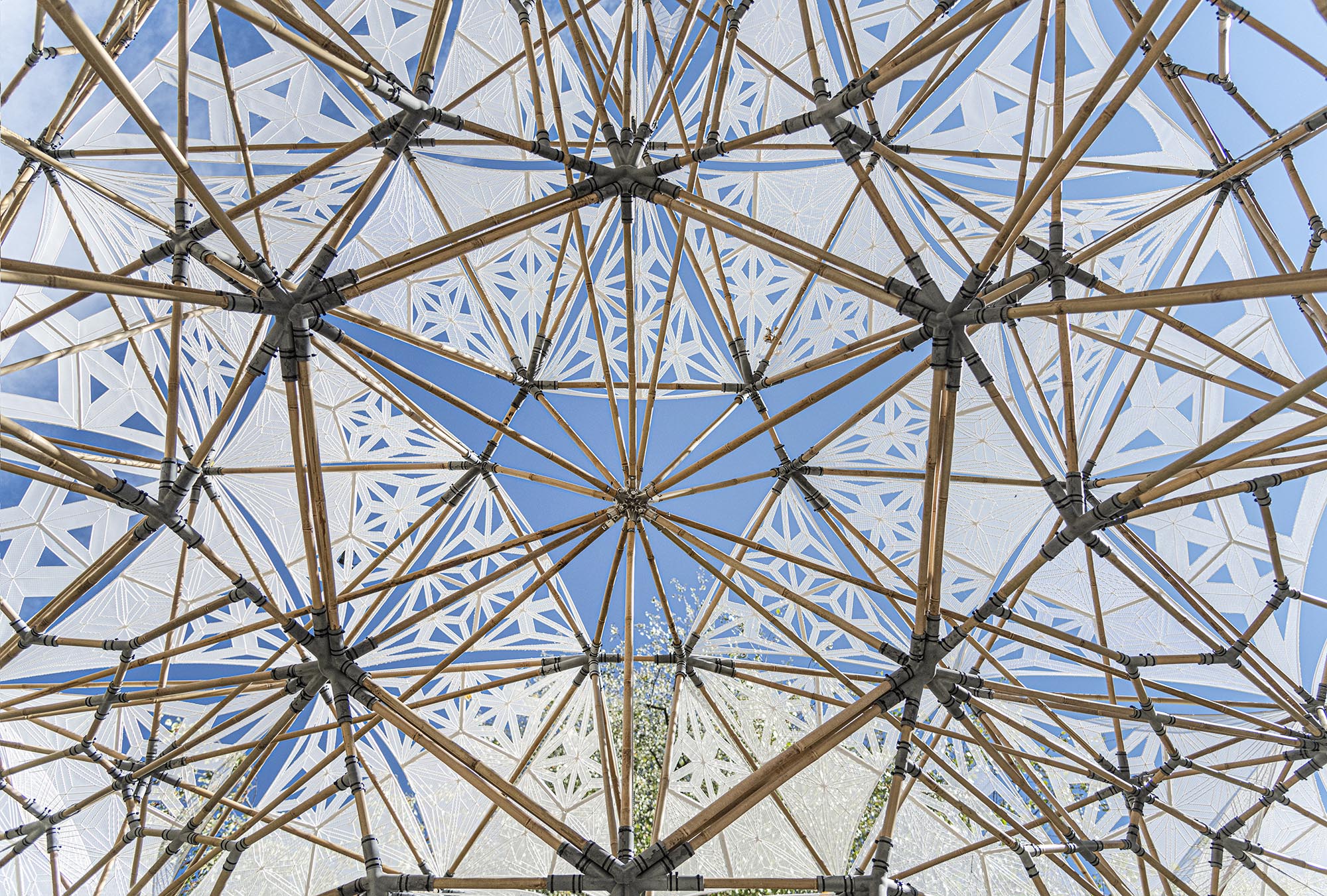
パビリオンの外装には、さらに実験的な要素を付加している。軽量テキスタイルは耐紫外線熱可塑性樹脂を印刷して補強することにより、超軽量構造の論理を継承しつつ素材の使用を最小限に抑えている。
これにより特注のパターンや遮光性能を実現しており、柔軟性と耐久性を備えたハイブリッド膜がトラスを覆い、触覚的な質感と独自の遮光効果が空間に新しい体験をもたらした。
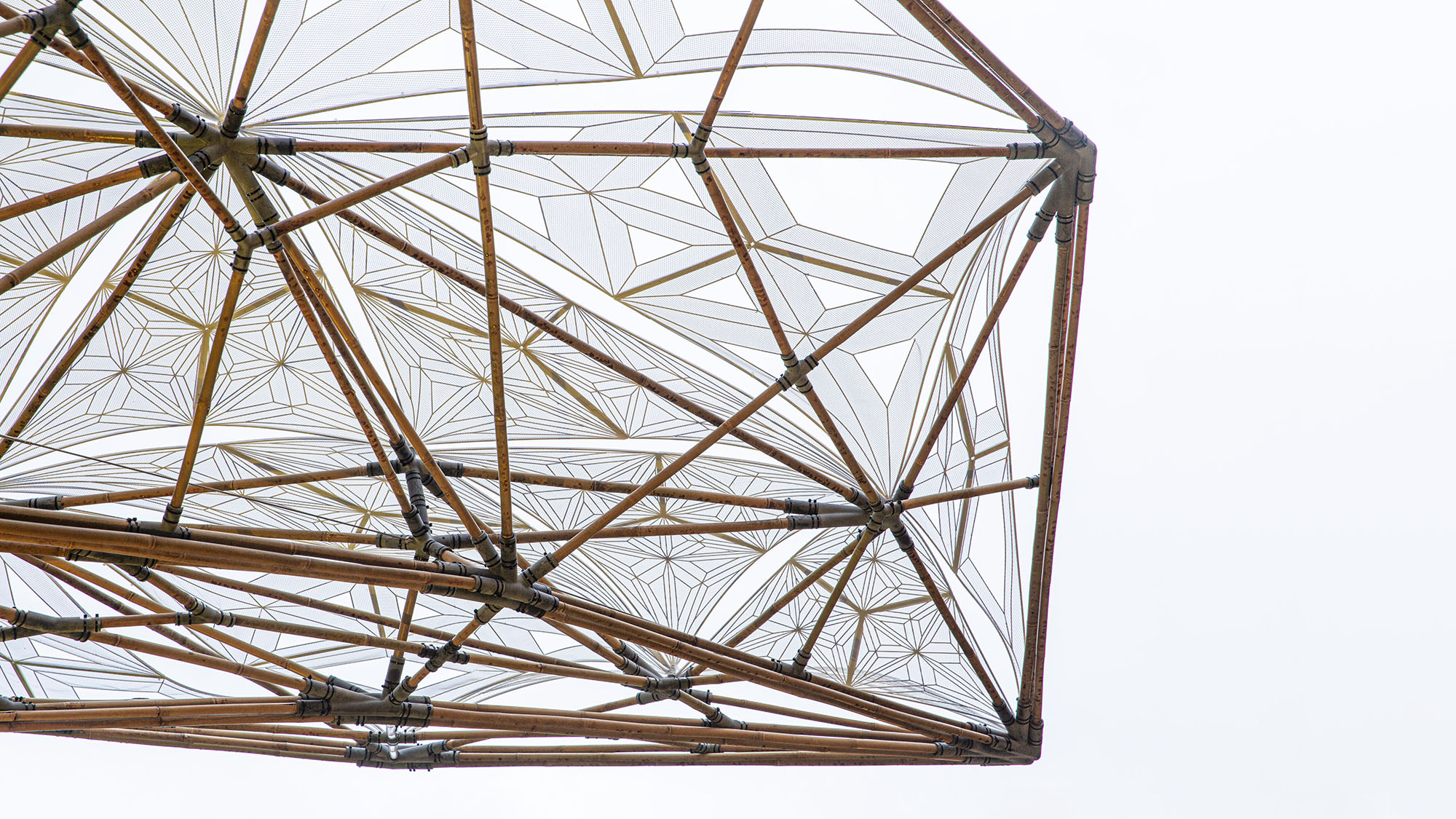
©︎ Andrei Jipa
©︎ Marirena Kladeftira
グローバルでローカルな分散型プレファブ戦略
分散型プレファブリケーション戦略は、プロジェクトの環境的野心をさらに強調する。
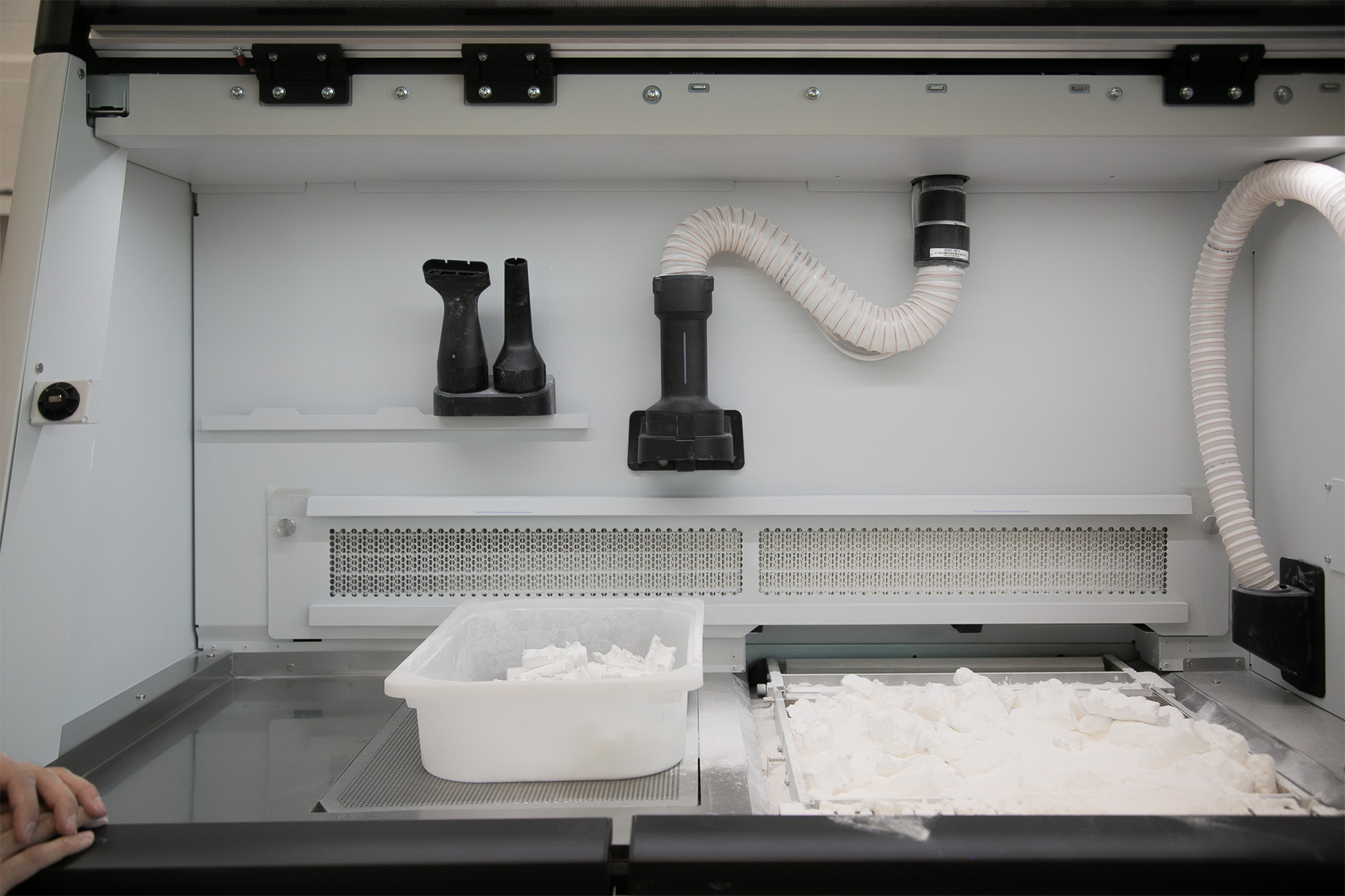
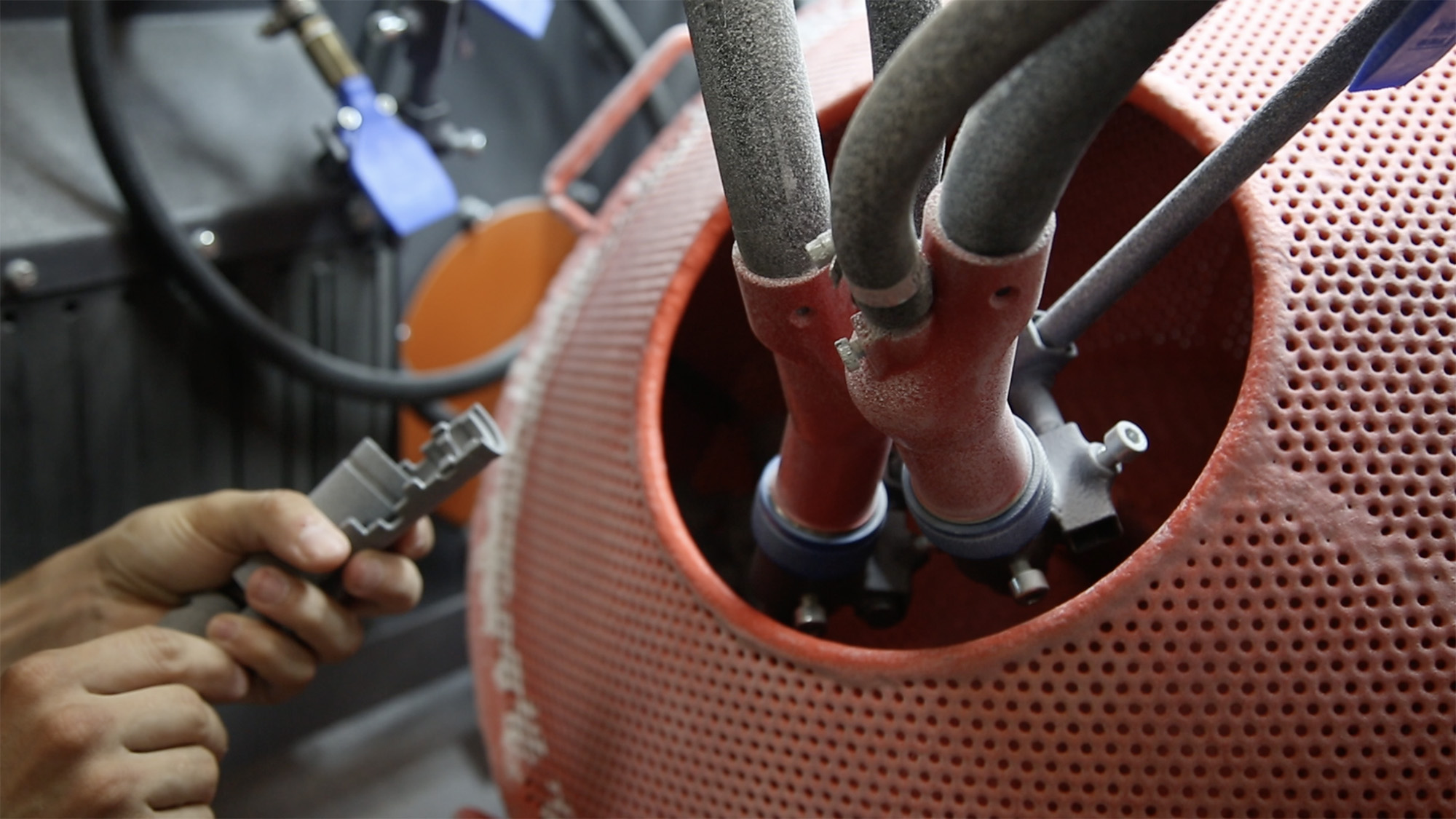
接続部品はシステムのごく一部であるため、どこでも3Dプリント可能であり、竹は現地で調達されるため、輸送と物流が大幅に削減される。パビリオンはわずか48時間で現地で完全に組み立てられ、グローバルでありながらローカルでもある、迅速で資源を意識した建設のモデルを提供した。
©︎ Amelie Bargetzi
©︎ Amelie Bargetzi
「よりスマートで、軽量で、環境に優しい」プロジェクト
本プロジェクトは「よりスマートに、より軽量に、より環境に優しい」建築手法を実証するものである。ローテクな竹とハイテクなデジタル部品を融合させることで、建築物の潜在エネルギーを削減しつつ空間構造の建築的語彙を拡張する。
これは単なる材料効率の問題ではなく、分散型で適応性があり持続可能な建設システムの未来像を提示するものである。
©︎ Marirena Kladeftira
©︎ Marirena Kladeftira
本プロジェクトは博士課程研究員マリレナ・クラデフティラ(Marirena Kladeftira)の主導のもと、ETHチューリッヒ建築工学科の研究者や学生と共同で開発された。
建築と工学を横断する学際的デザイン文化を体現し、軽量・モジュール式・分解可能な〈デジタル・バンブー〉は、伝統と革新の境界を越え、地域性とデジタル性の相乗効果から生まれる建築の新しい可能性を示唆している。
©︎ Benjamin Dillenburger
©︎ Marirena Kladeftira
©︎ Andrei Jipa
以下、デジタル・ビルディング・テクノロジーズのリリース(英文)です。
Digital Bamboo
An ephemeral spatial structure, Digital Bamboo, reimagines ultralightweight architecture through the pairing of emergent fabrication technologies and regenerative materials. Developed at the Digital Building Technologies research group at ETH Zurich, the project demonstrates how rapidly renewable, low-cost materials paired with computational design and additive manufacturing technologies can create high-performance structures that are ultra-light.
Bamboo, long valued for its strength-to-weight ratio and rapid growth, has been used as a building material across Southeast Asia and Latin America. Yet, most structures built with it rely on local knowledge and craft. Moreover, traditional jointing techniques present limitations to the kind of structures one can build and require a lot of manual labor. Digital Bamboo explores how the use of digital design and fabrication technologies can unlock new opportunities for contemporary structures, embedding the natural imprecision and variability of regenerative materials rather than eliminating them, offering alternatives to conventional construction methods.
The structure is composed of more than 900 bamboo poles, which were assembled into a hierarchical optimized truss reinforced by post-tensioned cables. The canopy spans over 40 square meters yet weighs only around 200 kilograms, proving how modest materials can yield significant performance and architectural impact.
To address the variability inherent in bamboo, custom digital tools were developed for joint design, form-finding, and structural optimization. Each of the 380 joints was tailored to local geometric, functional, and structural requirements. The connectors employ a modular assembly principle with two interlocking parts that fasten bamboo poles securely while accommodating tolerances and ensuring efficient load transfer. Taking advantage of the freedom of digital manufacturing, each joint is unique and integrates additional functions such as labeling, member tripling, and anchoring points for the pavilion’s skin. Produced through high-precision additive manufacturing in nylon and metal, the joints illustrate how concentrating complexity into small, digitally fabricated components reduces manufacturing costs, time, and logistics, while enabling the use of locally sourced, low-carbon materials at architectural scale.
The skin of the pavilion adds another layer of experimentation. Lightweight textile was stiffened with selectively printed UV-resistant thermoplastics, allowing for bespoke patterns and shading while minimizing material following the ultralightweight logic of the structure. These hybrid membranes, both flexible and durable, cover the truss structure and introduce a tactile quality and a unique shading effect.
A distributed prefabrication strategy further underscores the project’s ecological ambition. Since connectors form a small fraction of the system, they can be 3D-printed anywhere, while bamboo is locally sourced, significantly reducing transport and logistics. The pavilion was fully assembled on site in just forty-eight hours, offering a model for rapid, resource-conscious construction that is at once global and local.
The project demonstrates a way of building that is “smarter, lighter, and greener.” By combining low-tech bamboo with high-tech digital components, it reduces embodied energy while expanding the architectural vocabulary of spatial structures. As the designers emphasize, the project is not only about material efficiency but also about proposing a future where construction systems are decentralized, adaptive, and sustainable.Led by doctoral researcher Marirena Kladeftira and developed in collaboration with researchers and students at ETH Zurich’s Institute of Technology in Architecture, the pavilion exemplifies interdisciplinary design culture bridging architecture and engineering. Light, modular, and deconstructable, Digital Bamboo points to a construction paradigm that transcends the divide between tradition and innovation, suggesting an architecture that grows from the synergy of the local and the digital.
Team
Digital Building Technologies: Dr. Marirena Kladeftira (Project lead), Dr. Matthias Leschok, Eleni Skevaki
Chair of Structural Design: Dr. Davide Tanadini
MAS ETH DFAB coordination: Yael IfrahSupport Structural Design: Dr. Ole Ohlbrock, Dr. Pierluigi D’Acunto
Design Development MAS ETH DFAB 19-20 Students
Research Collaboration Partner on AM for Bespoke Joints
HS HI-TECH, Seoul, South Korea
The development of the hybrid joints project in collaboration with HS HI-TECH is supported by the Bilateral Science and Technology Cooperation Program of ETH Zurich with an Innovation Partnership Grant (Project #IPG 02-112019 “AM for bespoke temporary structures.”)Supporting technicians
Christian Egli, Tobias Hartmann, Michael Lyrenmann, Thomas Posur, Andrea Perissinotto, Andreas ReusserSponsoring and Support
HP Inc., SGSolution AG, AF Fercher AG, Holcim, Abuma Gmbh, RapLab ETH Zurich
デジタル・ビルディング・テクノロジーズ 公式サイト
https://dbt.arch.ethz.ch/project/digital-bamboo/
![[Interview]iF Design代表のウヴェ氏に聞く、建築と都市の2026年メガトレンド](https://magazine-asset.tecture.jp/wpcms/wp-content/uploads/2026/07/23221054/iF_AwardCeremony_2026_AwardCeremony-82-900x600.jpg)
![[Report]激変する時代の中で、建築とデザインはどう拡張するか。「iF DESIGN AWARD 2026」授賞式&最新トレンド](https://magazine-asset.tecture.jp/wpcms/wp-content/uploads/2026/07/24010304/iFDesignTrendConference26-45-900x600.jpg)
![[Report]RUI Architectsが可動モジュールを設計して松竹のアートスペースをリニューアル、柿落とし展「継承のトランジション」の会場デザインも担当](https://magazine-asset.tecture.jp/wpcms/wp-content/uploads/2026/07/24141011/20260713shutl_press11-01309-c-900x629.jpeg)