砂漠に溶け込む光のスクリーン - 7,200枚のパネルが織りなす、太陽光発電の建築的インターフェース〈Kalyon Karapınar 1.350 MWp SPP – Central Control Building〉
©︎ Egemen Karakaya
©︎ Egemen Karakaya
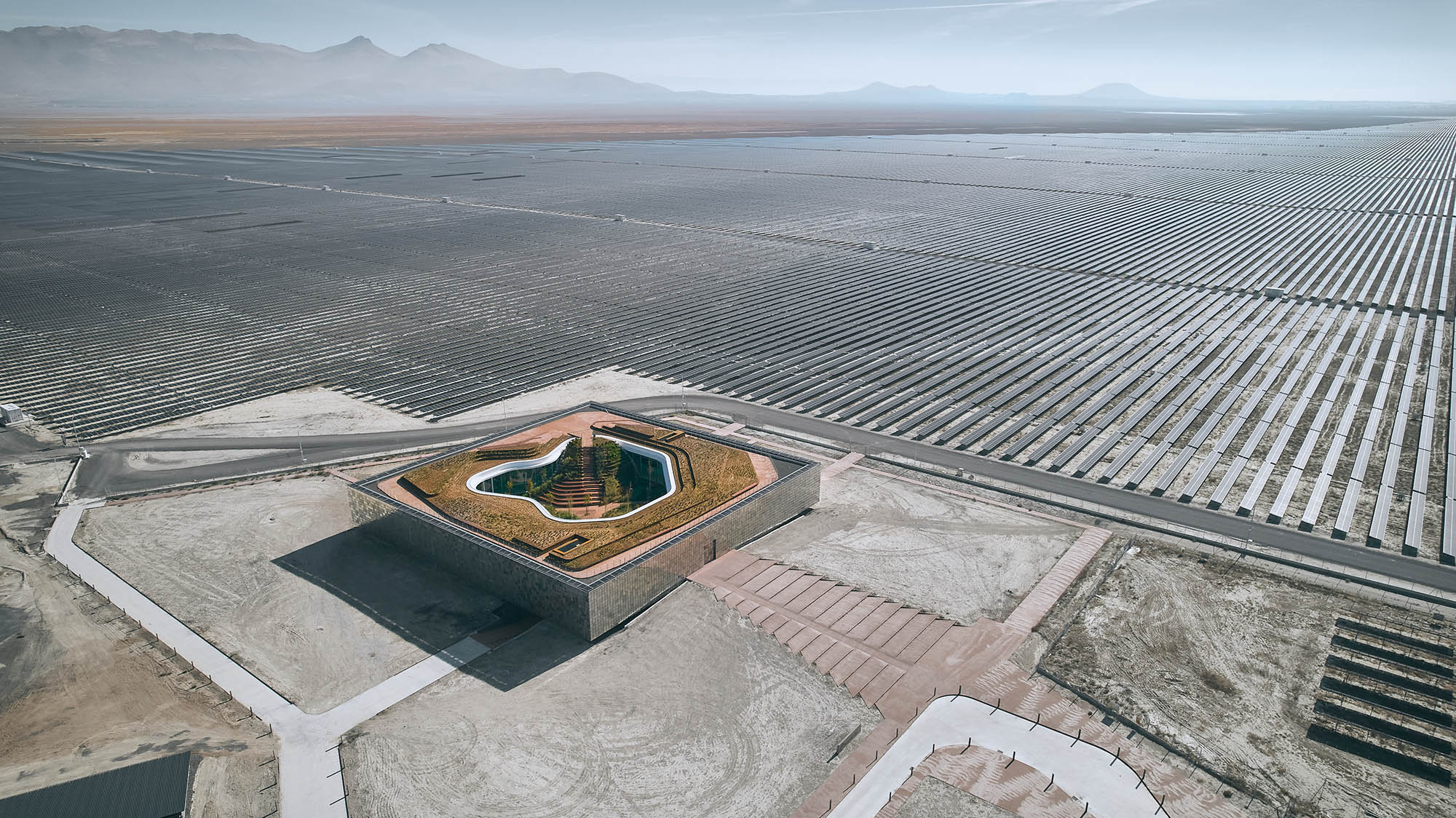
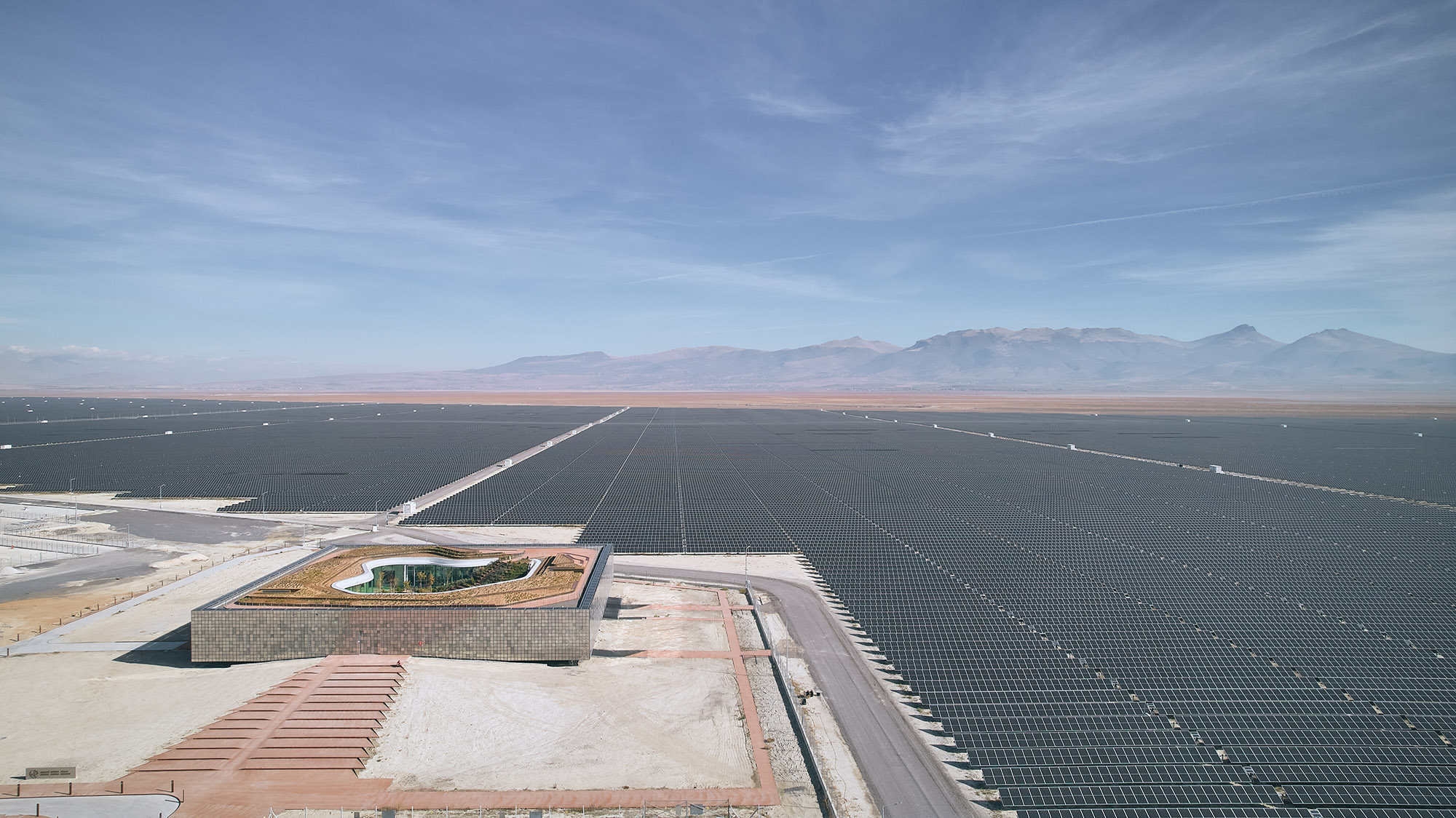
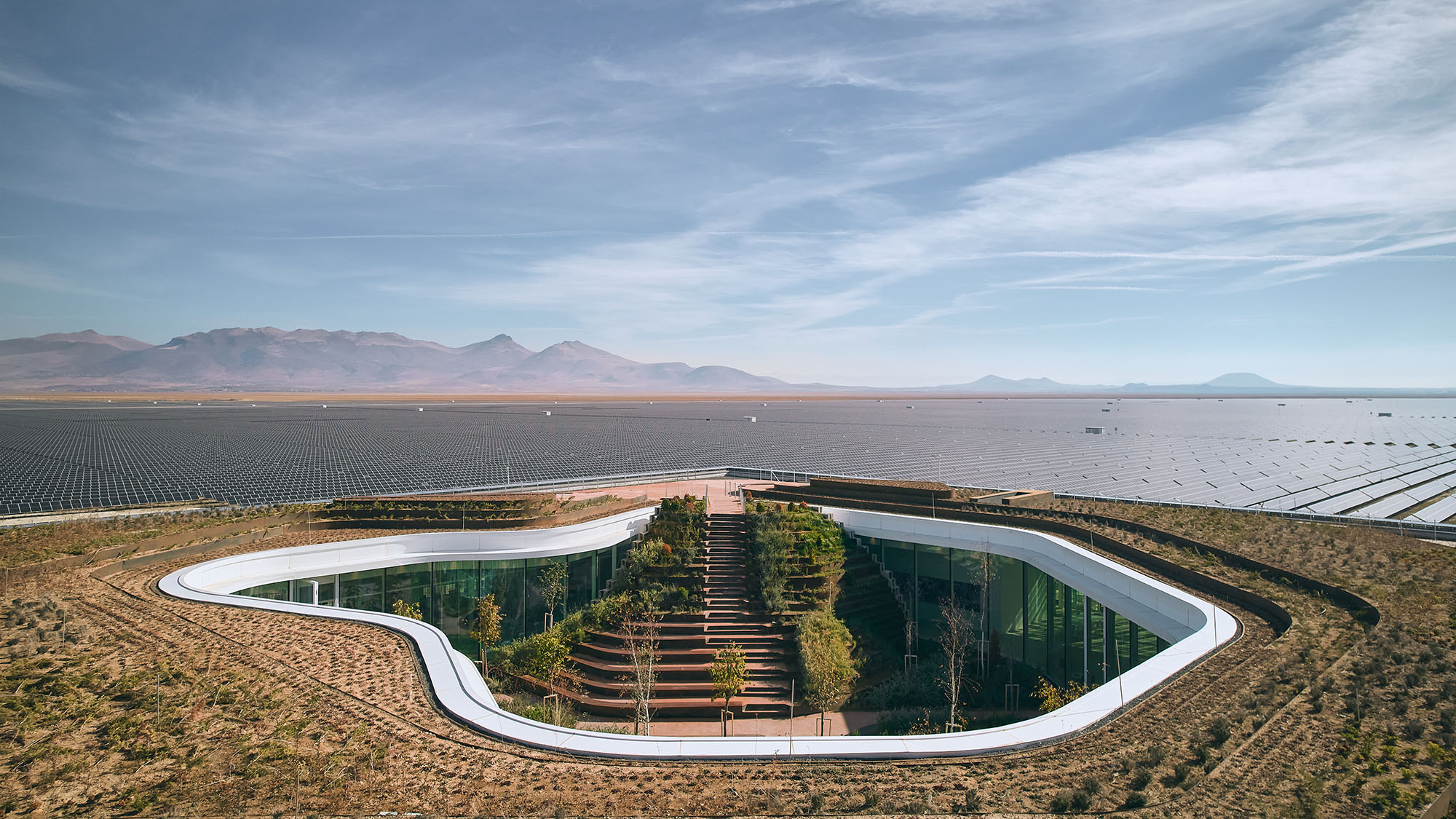
トルコ唯一の砂漠気候地域に位置する〈Kalyon Karapınar 1.350 MWp SPP – Central Control Building〉は、320万枚の太陽光パネルを有する大規模太陽光発電所の中央制御棟です。
太陽光パネルのような要素で構成されたファサードが特徴的な建築であり、イスタンブールに拠点を置く建築事務所 Bilgin Architectsが設計しました。
注目ポイント
- 持続可能なエネルギー技術を象徴する「インターフェース」として設計
- 地平線のシルエットを映し込み、大地や空と一体化するファサード
- 熱負荷軽減と動的な光体験を両立する、異なる透明度のパネル
- 周囲の環境と対比する「オアシス」のような中庭
(以下、Bilgin Architectsから提供されたプレスキットのテキストの抄訳)
©︎ Egemen Karakaya
©︎ Egemen Karakaya
地球との対話 – 太陽光パネルと呼応する建築
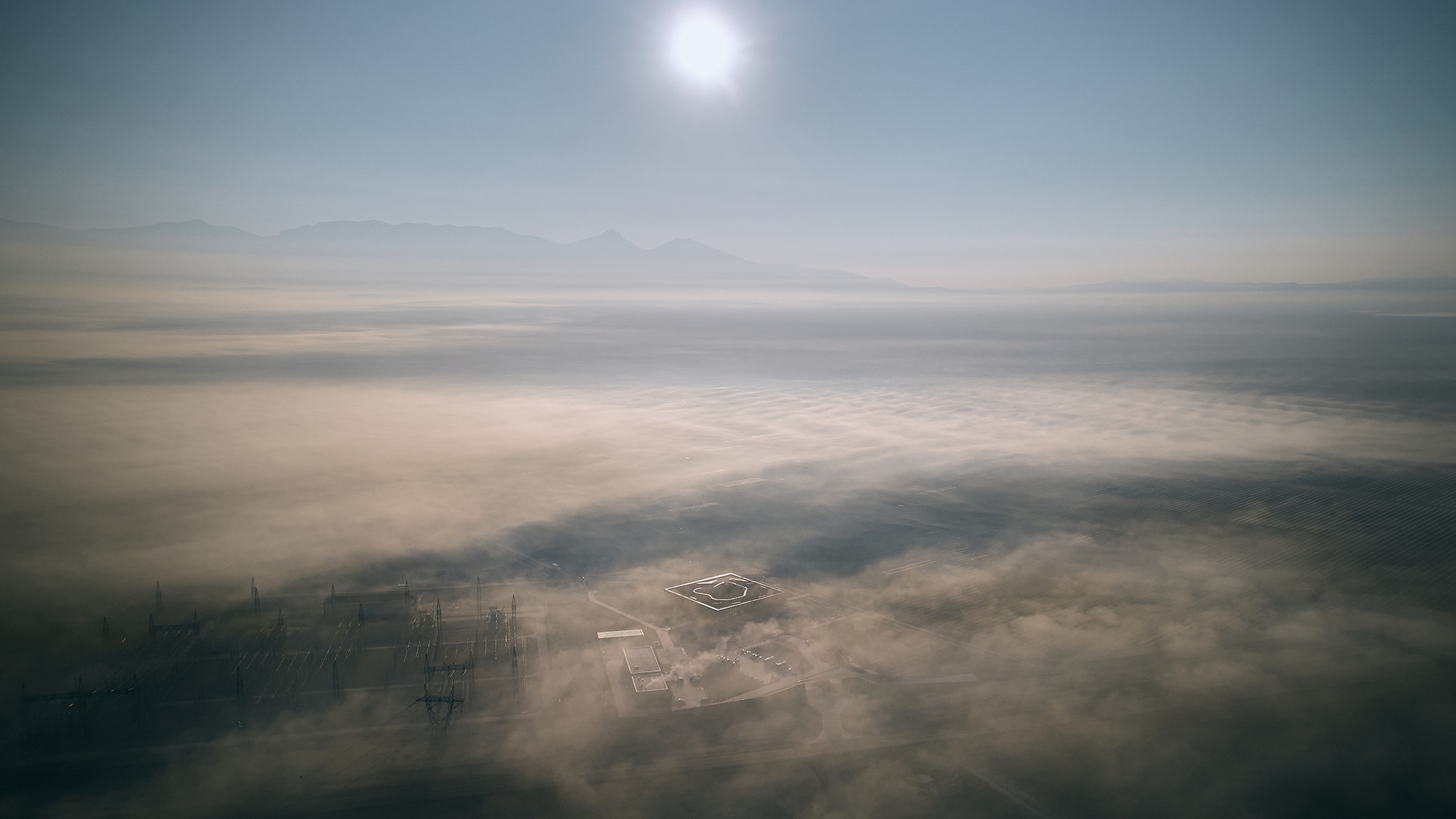
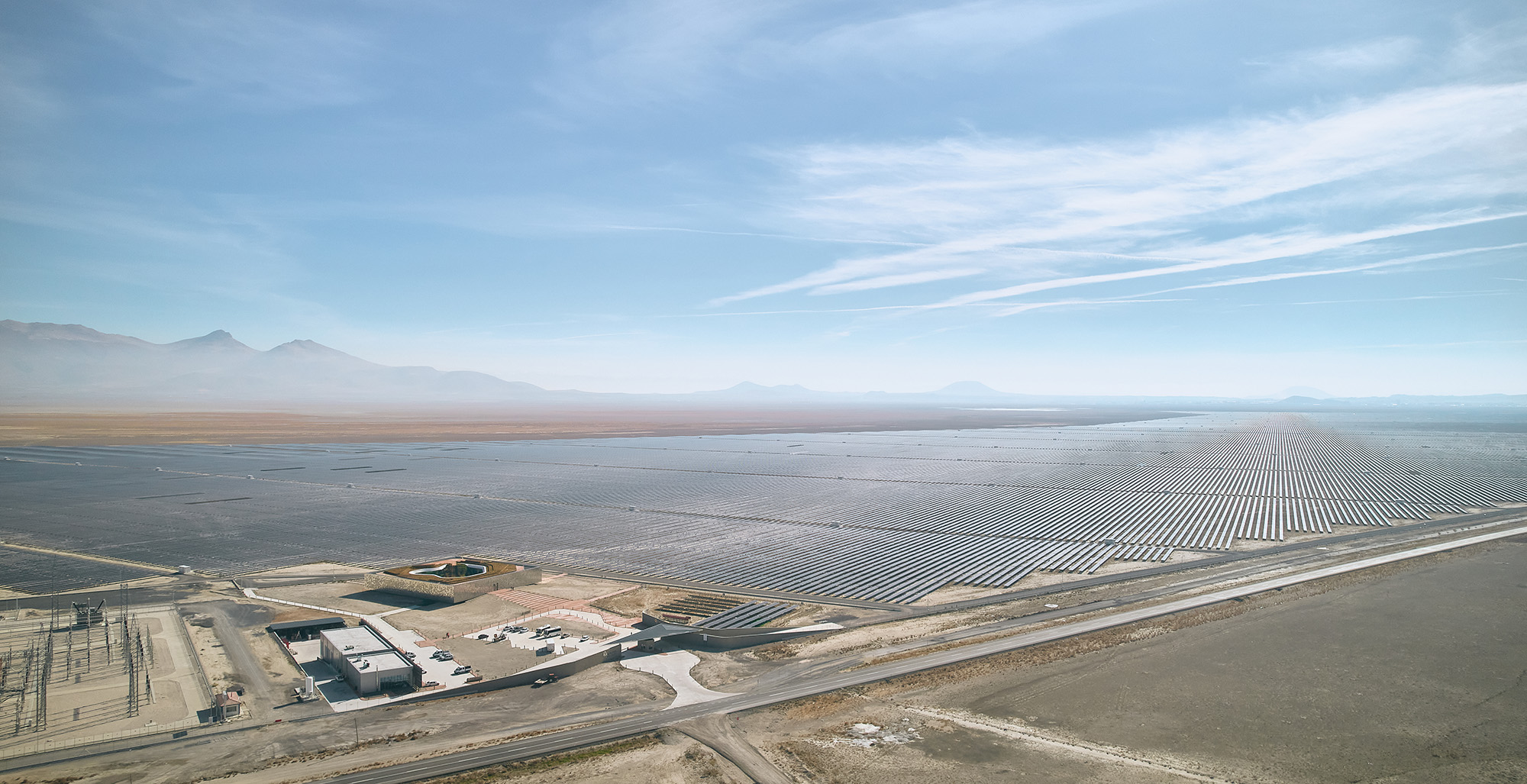
本施設は、トルコ唯一の砂漠気候地域であるカラピナルに位置している。農業には不向きであるが、砂漠気候ゆえに高いエネルギー潜在力をもつ20km²がエネルギー専門区域に指定された。
カリヨン・エナジー(Kalyon Energy)は、この地にヨーロッパで最大級となる1,350 MWpの太陽光発電所を建設した。発電所の運営は中央制御棟を通じて統括されている。
©︎ Egemen Karakaya
©︎ Egemen Karakaya
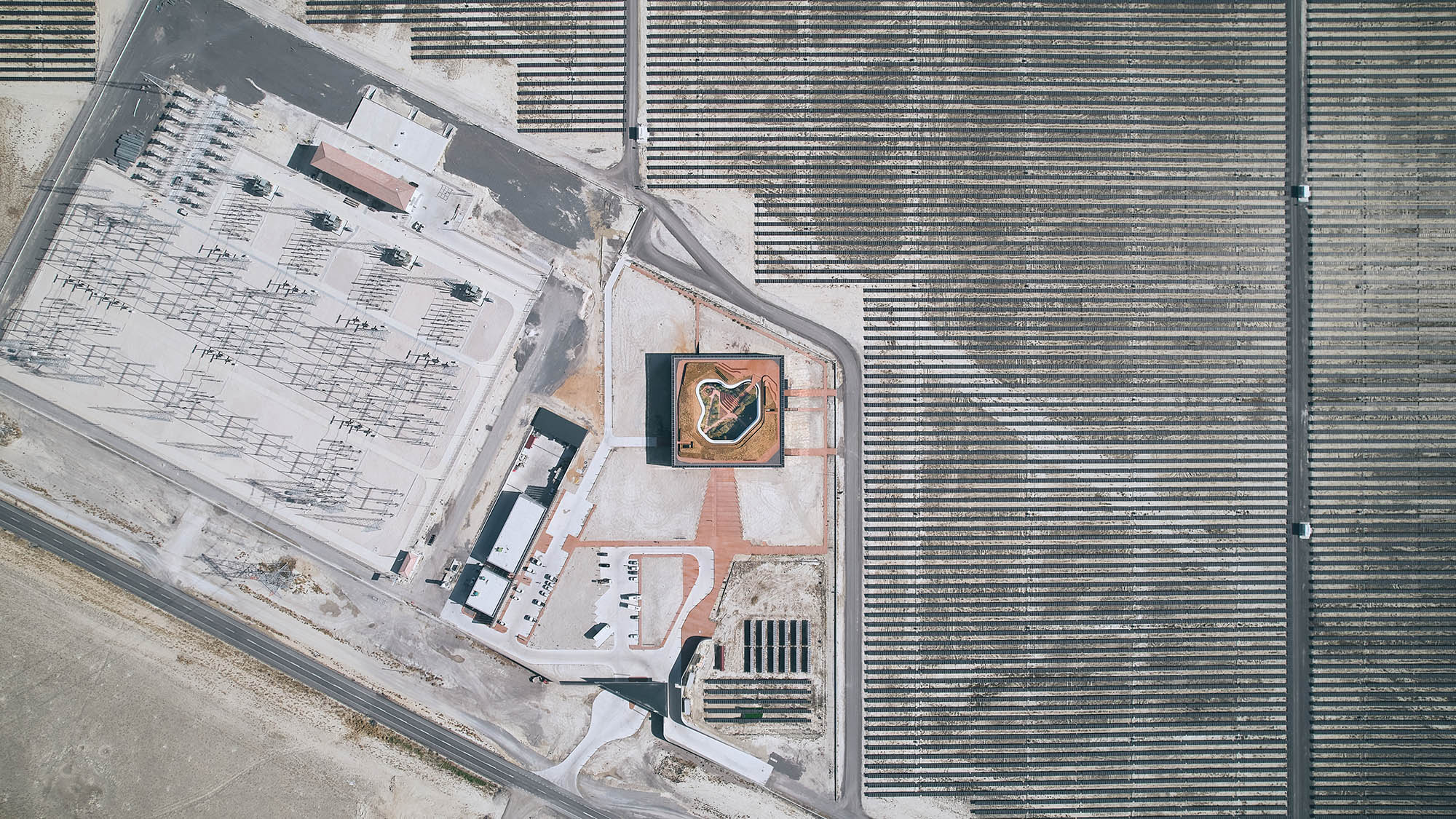
建物の主な機能の1つは、発電所を制御するための技術的インフラを提供することである。しかし、それにとどまらず、この建物は持続可能なエネルギー技術を象徴するインターフェースとして位置づけられている。地平線まで広がる平坦な地形と、過酷な砂漠環境の中において、新たなエネルギー技術を体現する場である。
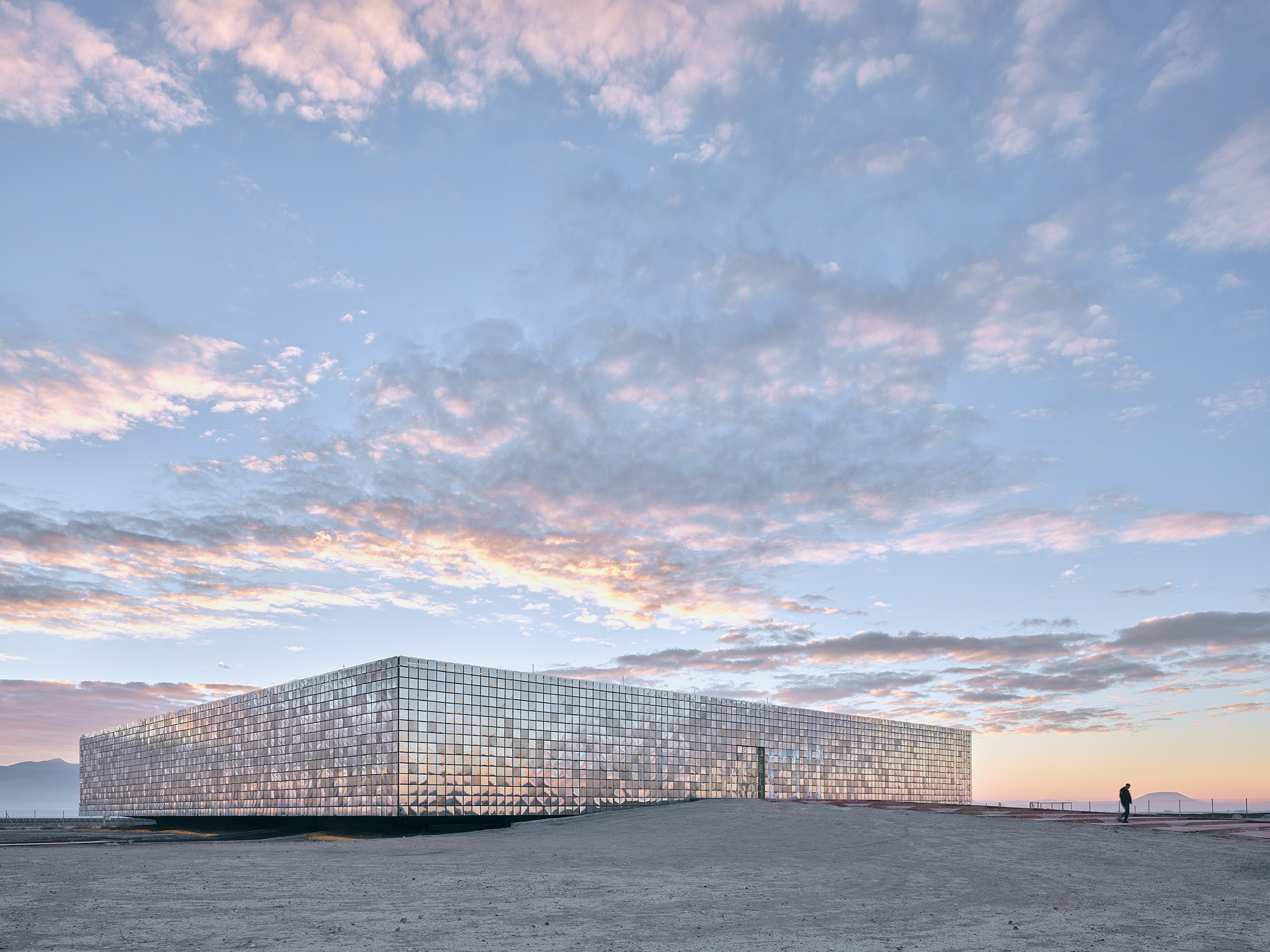
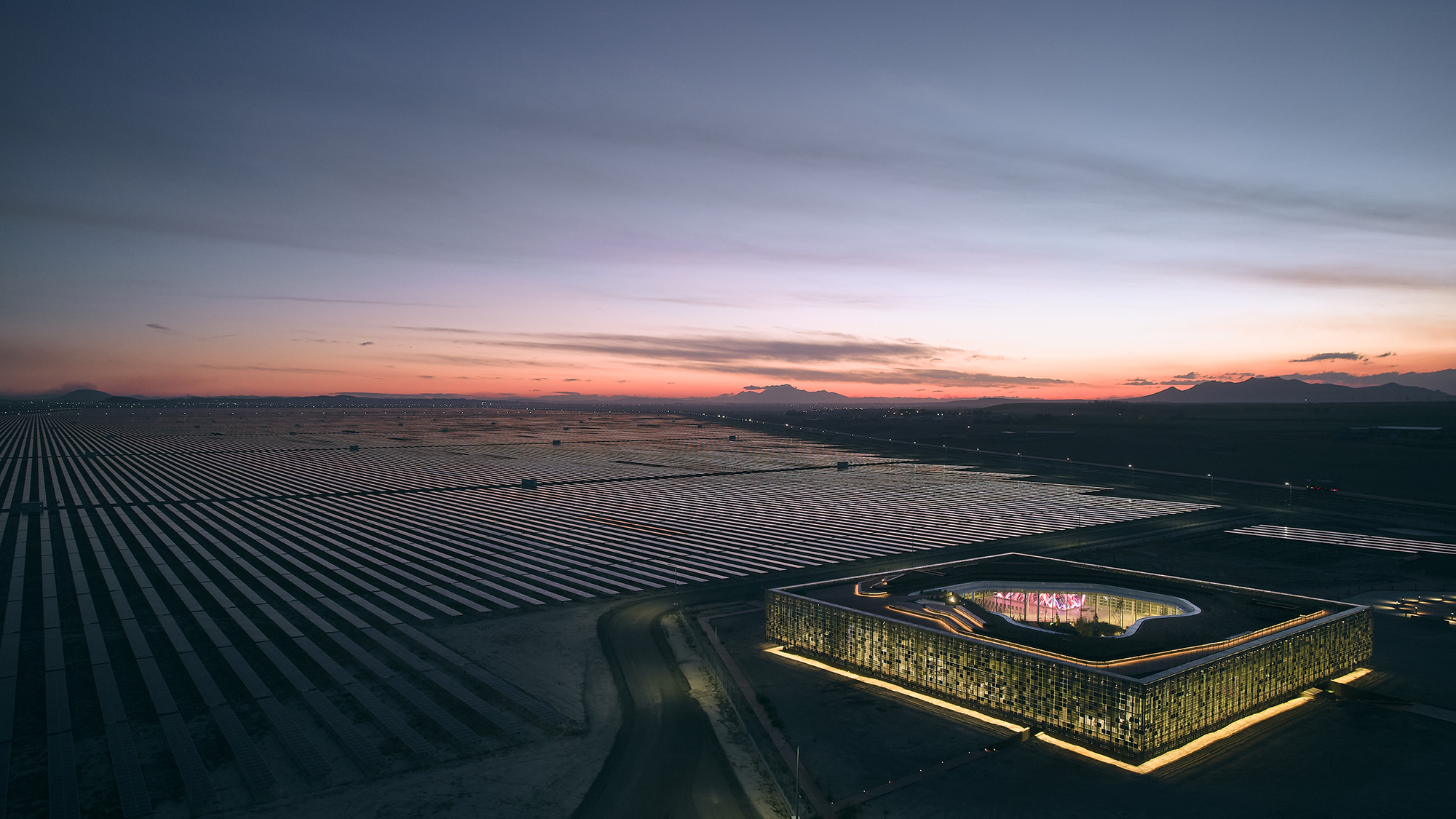
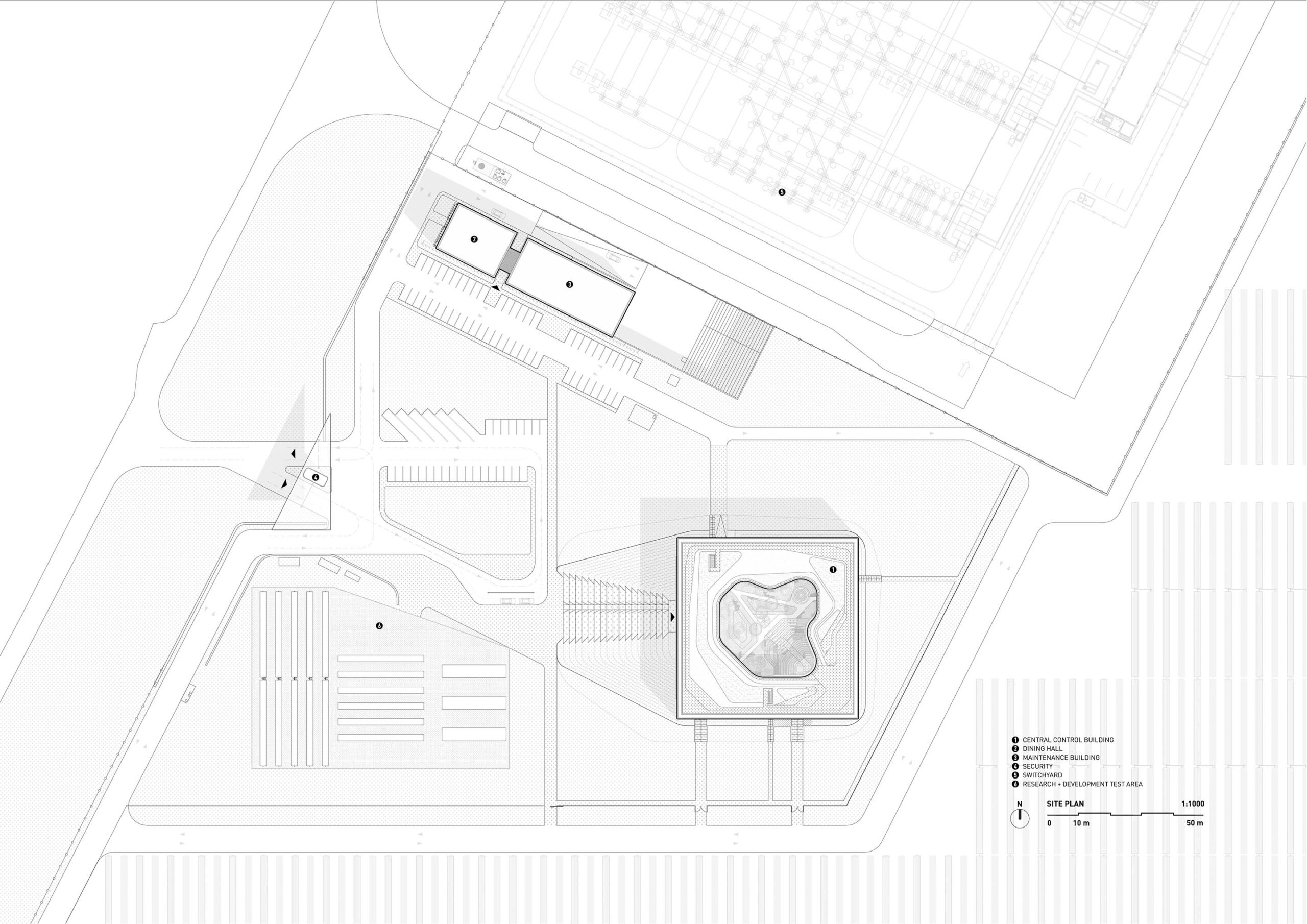
このインターフェースは、地域に設置された320万枚の太陽光パネルの延長線上にあり、既存パネルから40m離れた位置に配置されている。パネルと同じ方向を向き、影を落とさない領域に設置されている点が特徴である。
©︎ Egemen Karakaya
©︎ Egemen Karakaya
空との対話 – 空に溶け込むファサード
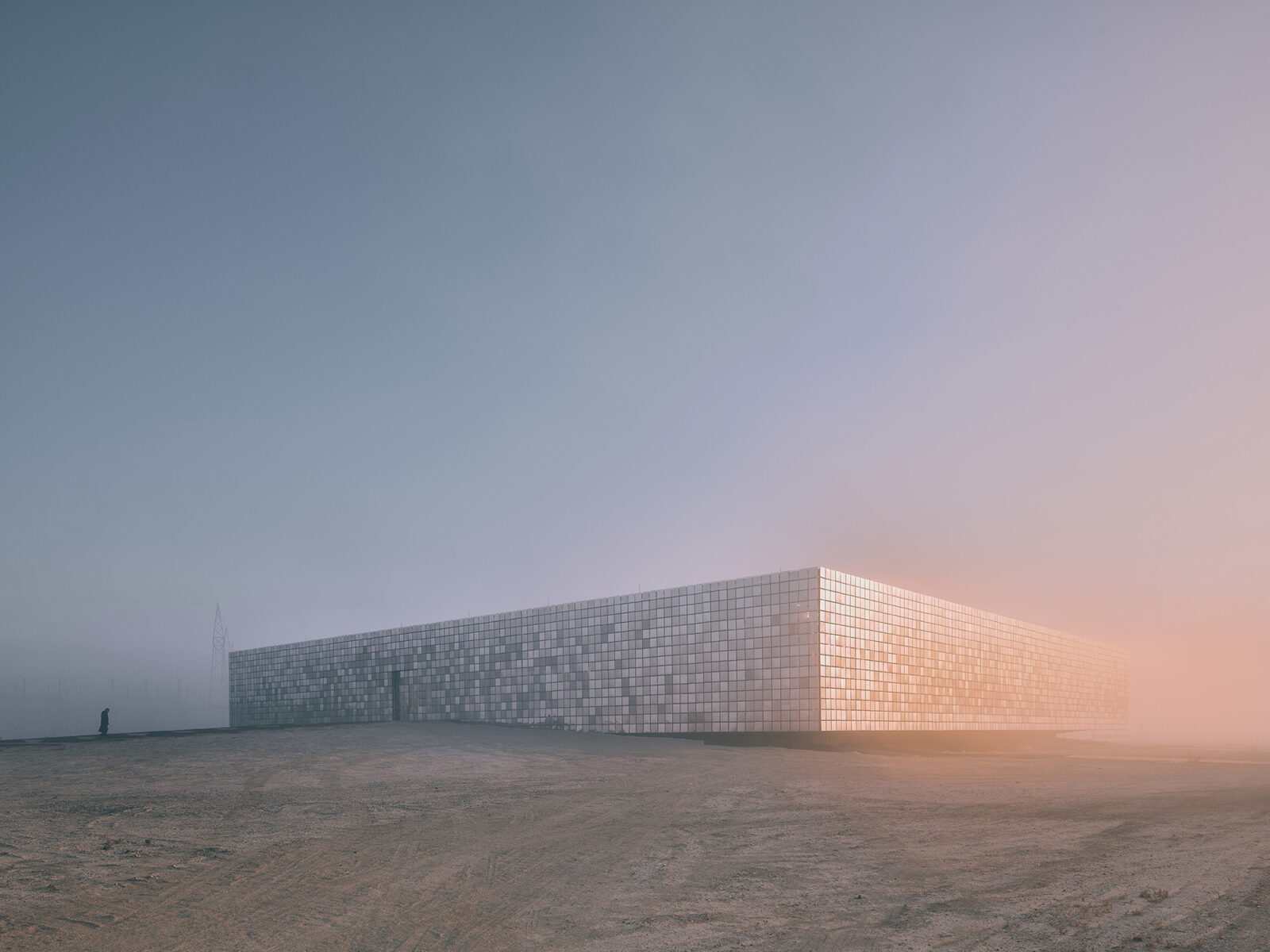
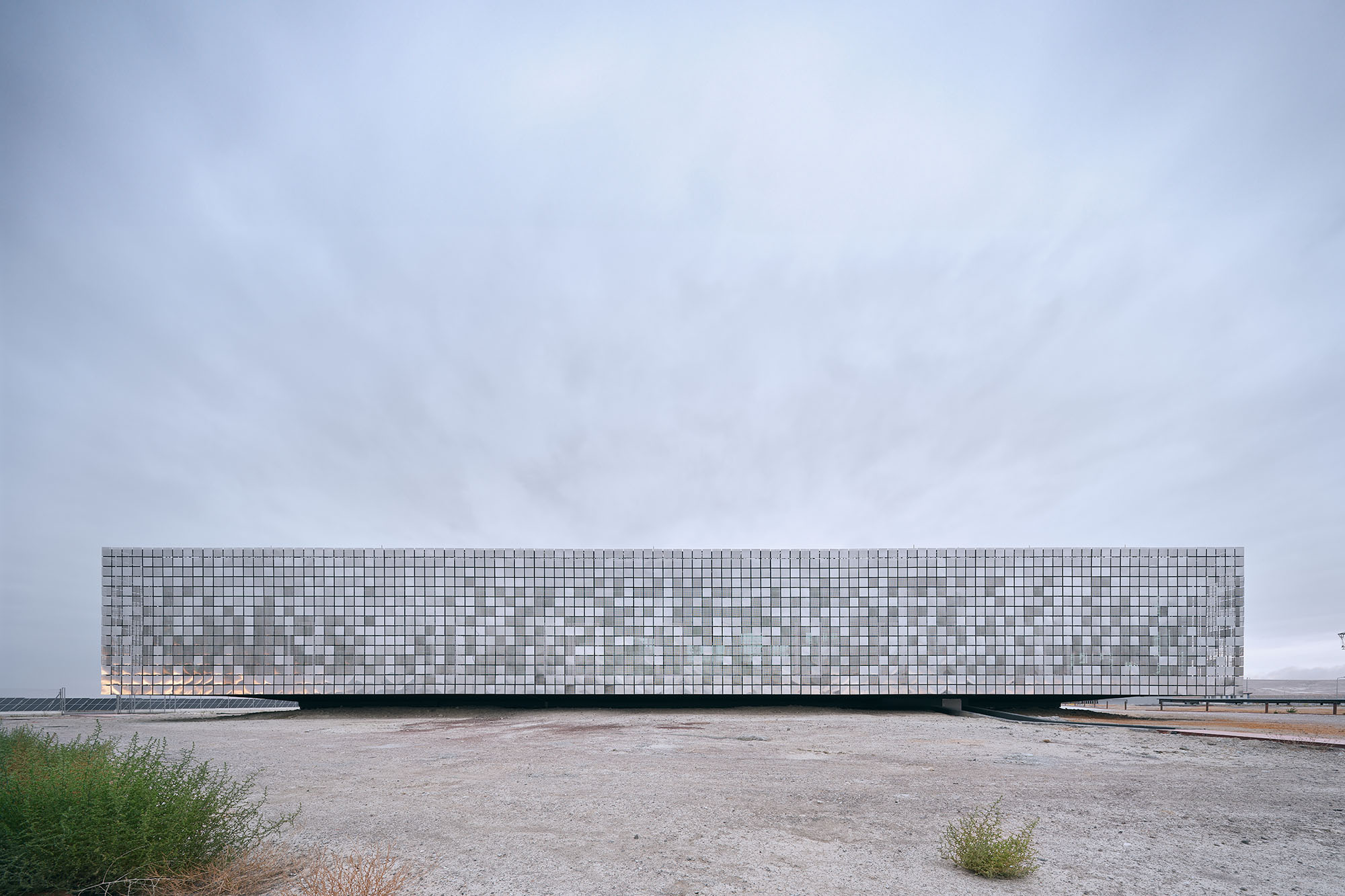
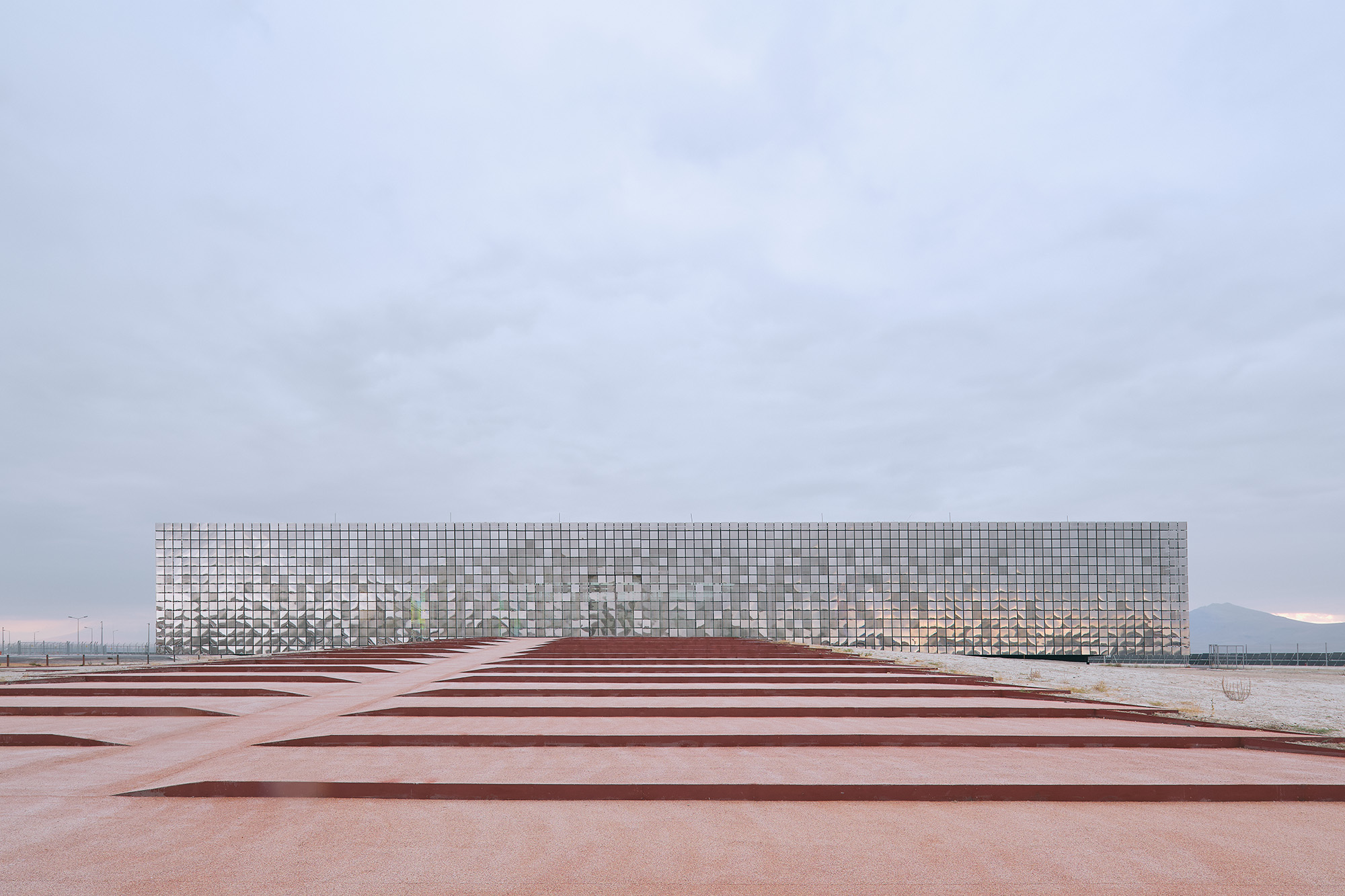
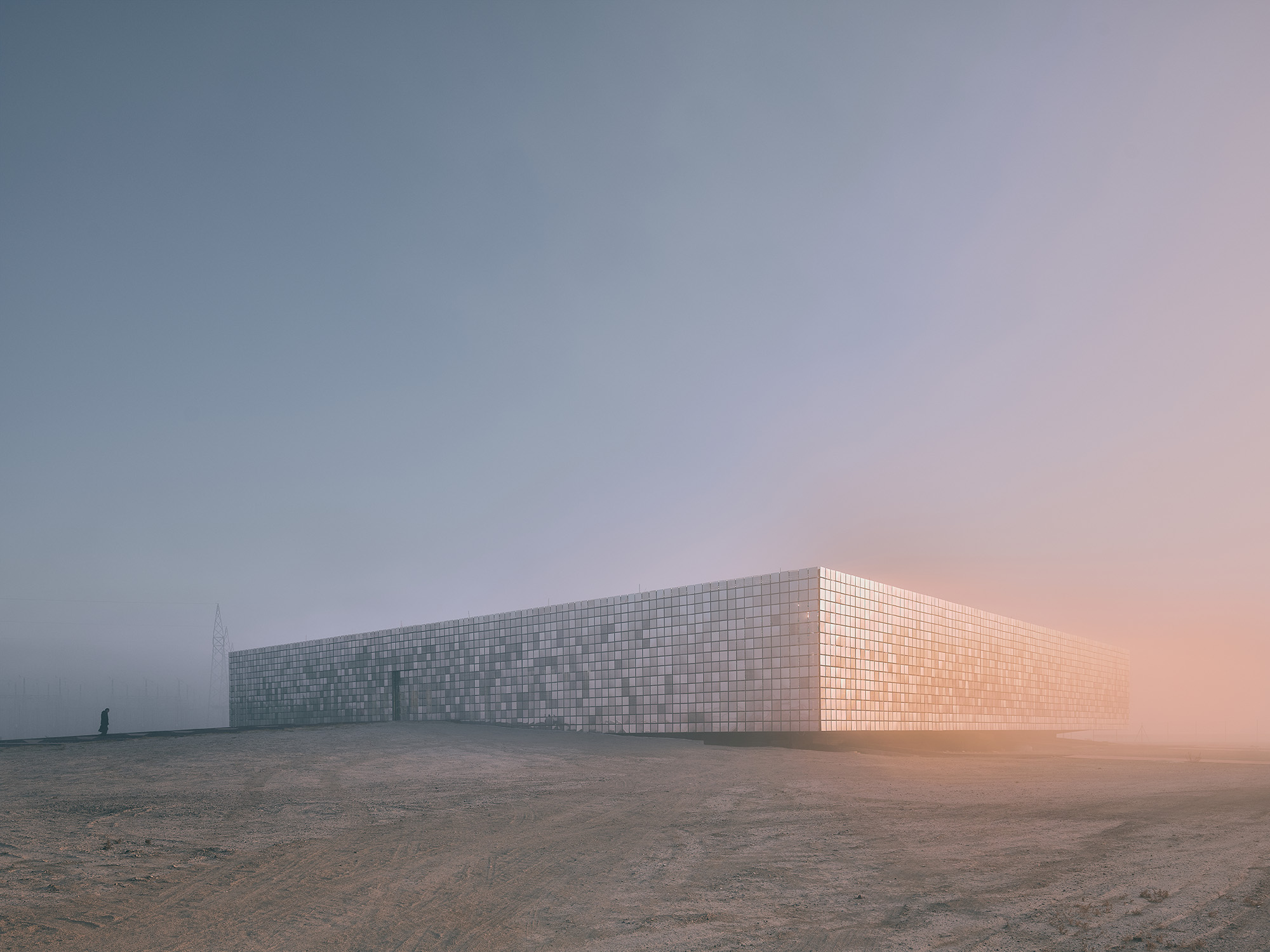
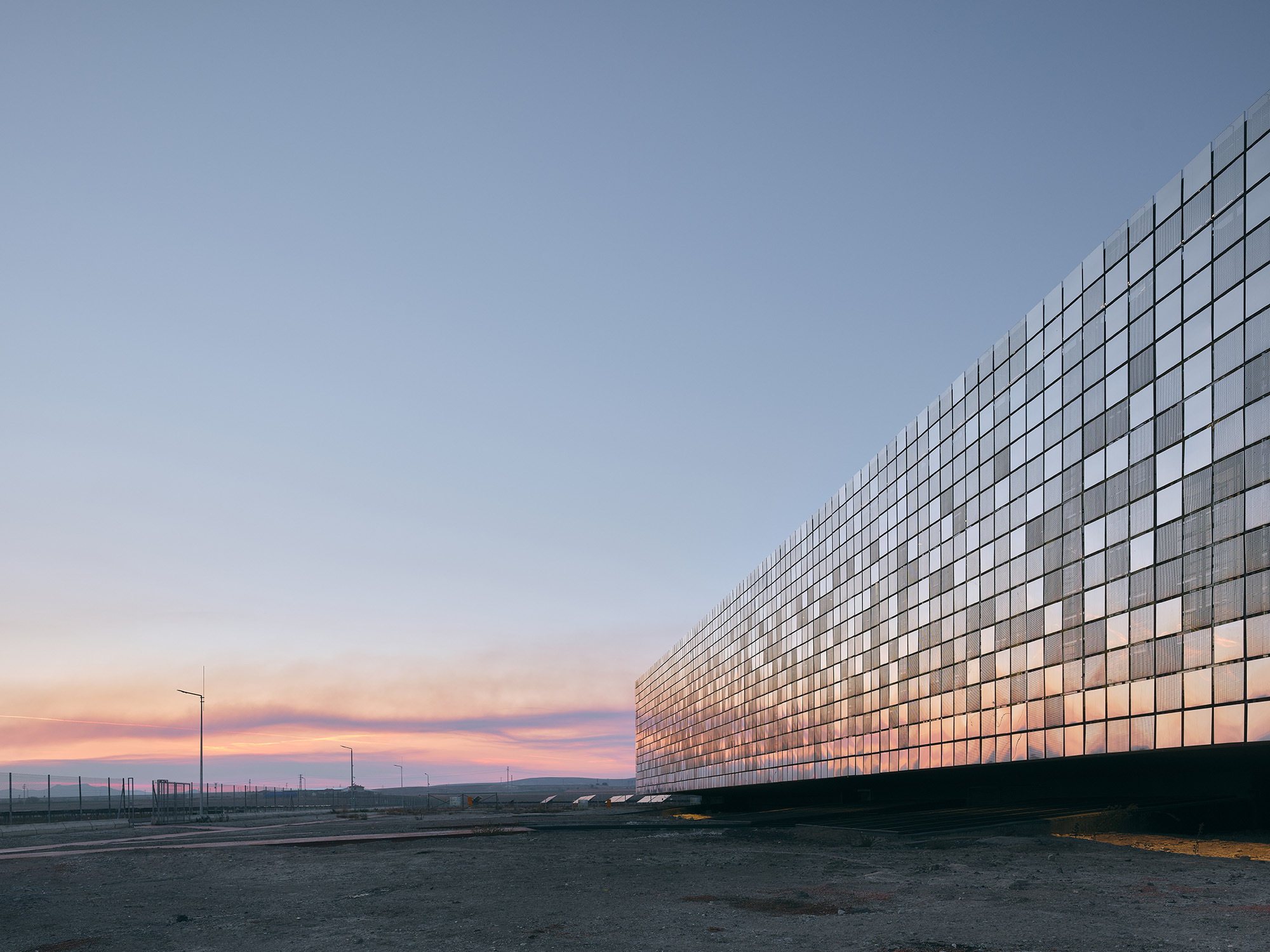
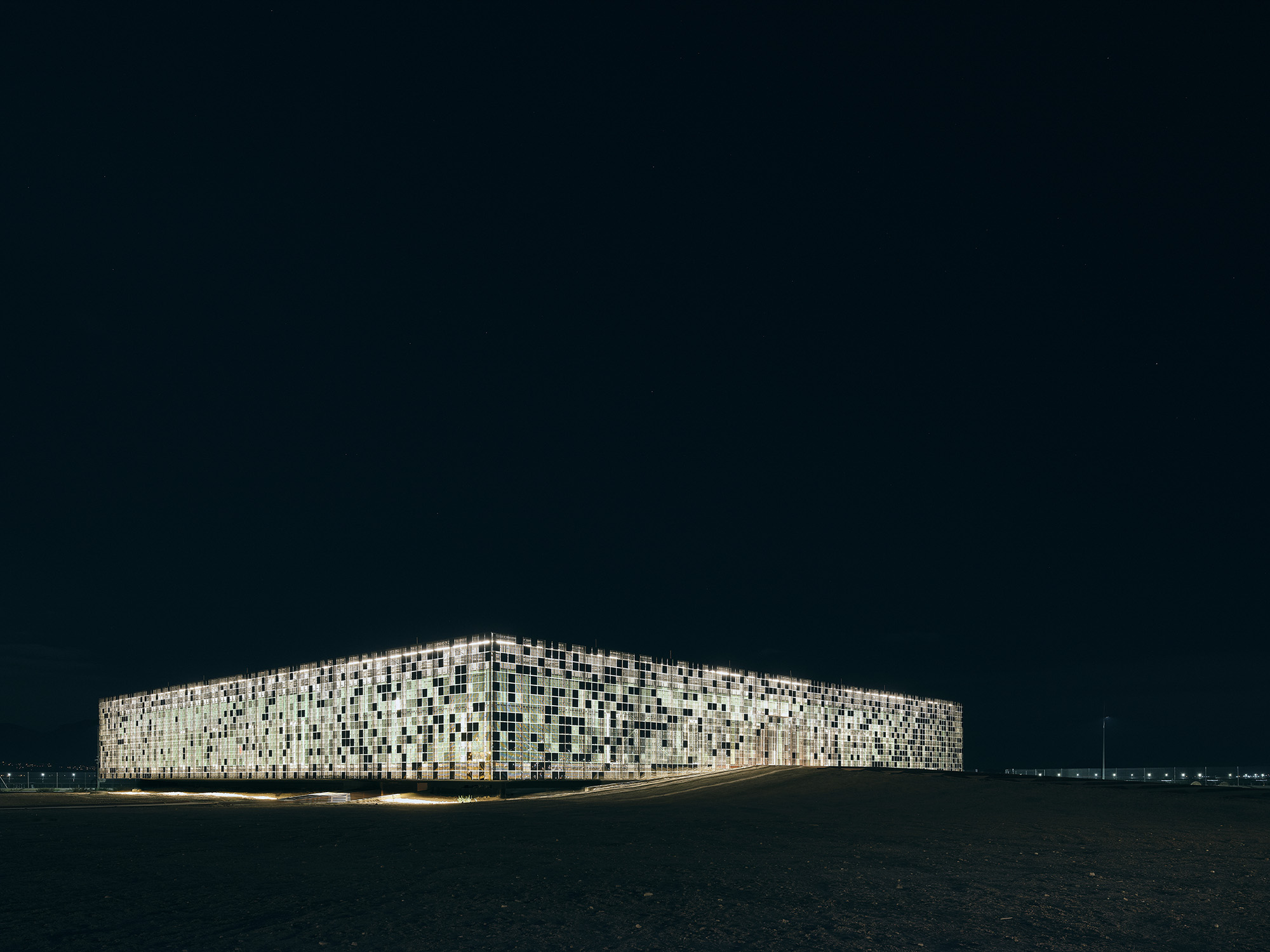
建物のファサードは単なる建築要素ではなく、大地の一部であり、さらには空の一部として設計されている。高い反射率をもつファサードにより、建物は立地する地形と一体化し、地平線上のシルエットがファサード上に連続する。
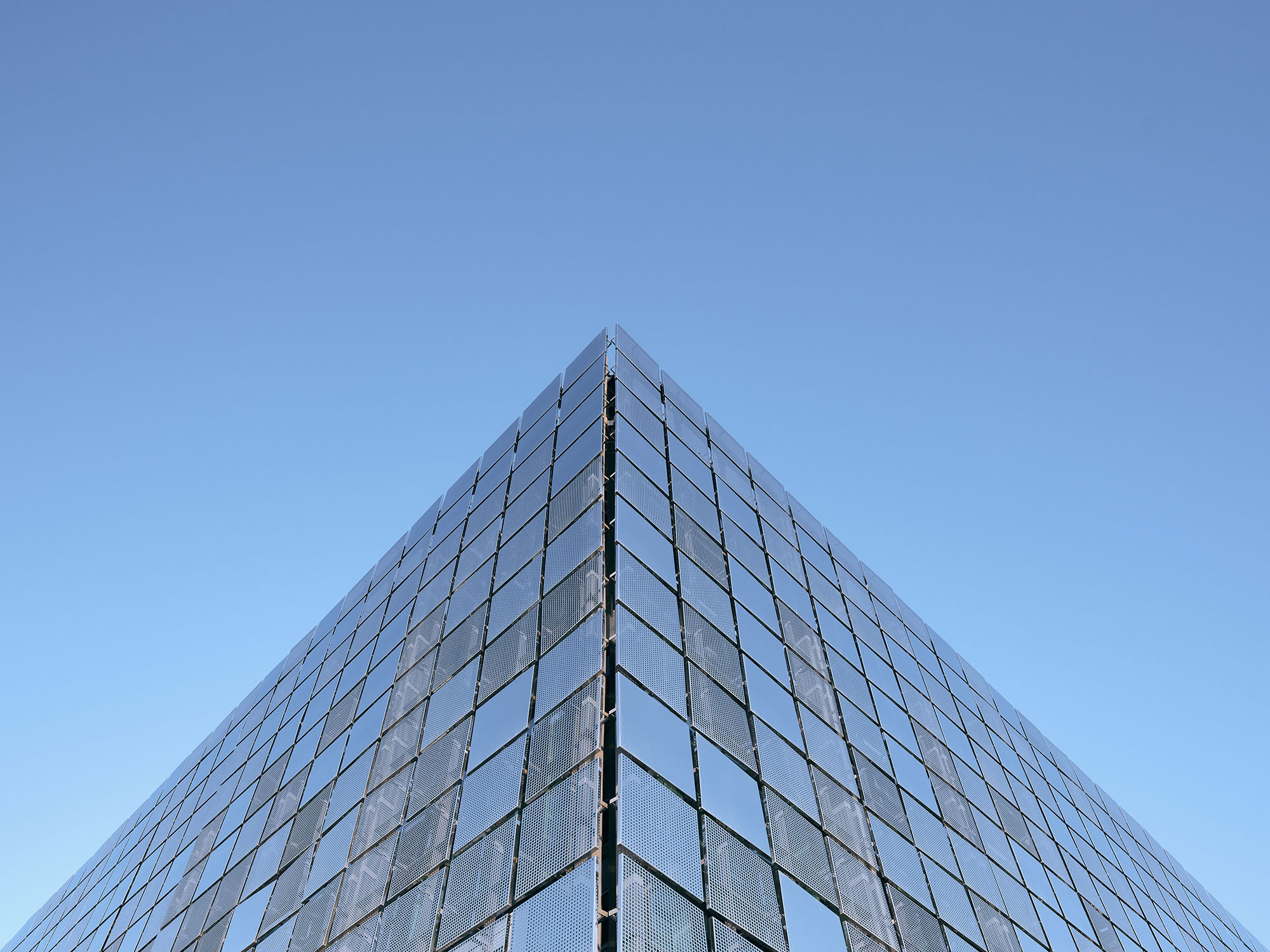
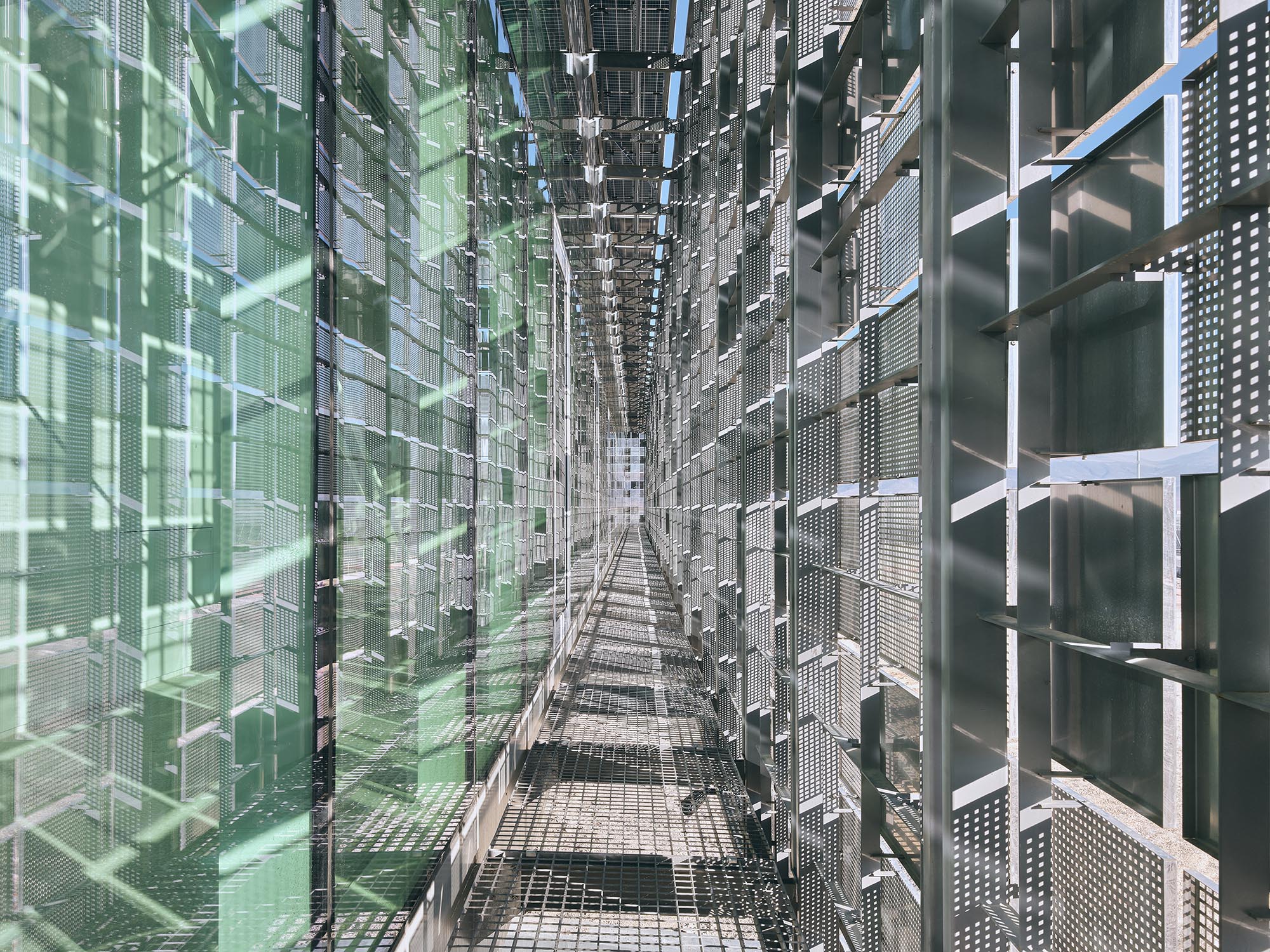
エネルギー使用を精緻に管理すると同時に、ファサードデザインは建物のアイデンティティを規定する重要な要素となっている。二層構造の外壁は、メインファサードへの放射熱を最小限に抑えるよう設計されており、年間を通じて高温曝露を防ぐ。
©︎ Egemen Karakaya
©︎ Egemen Karakaya
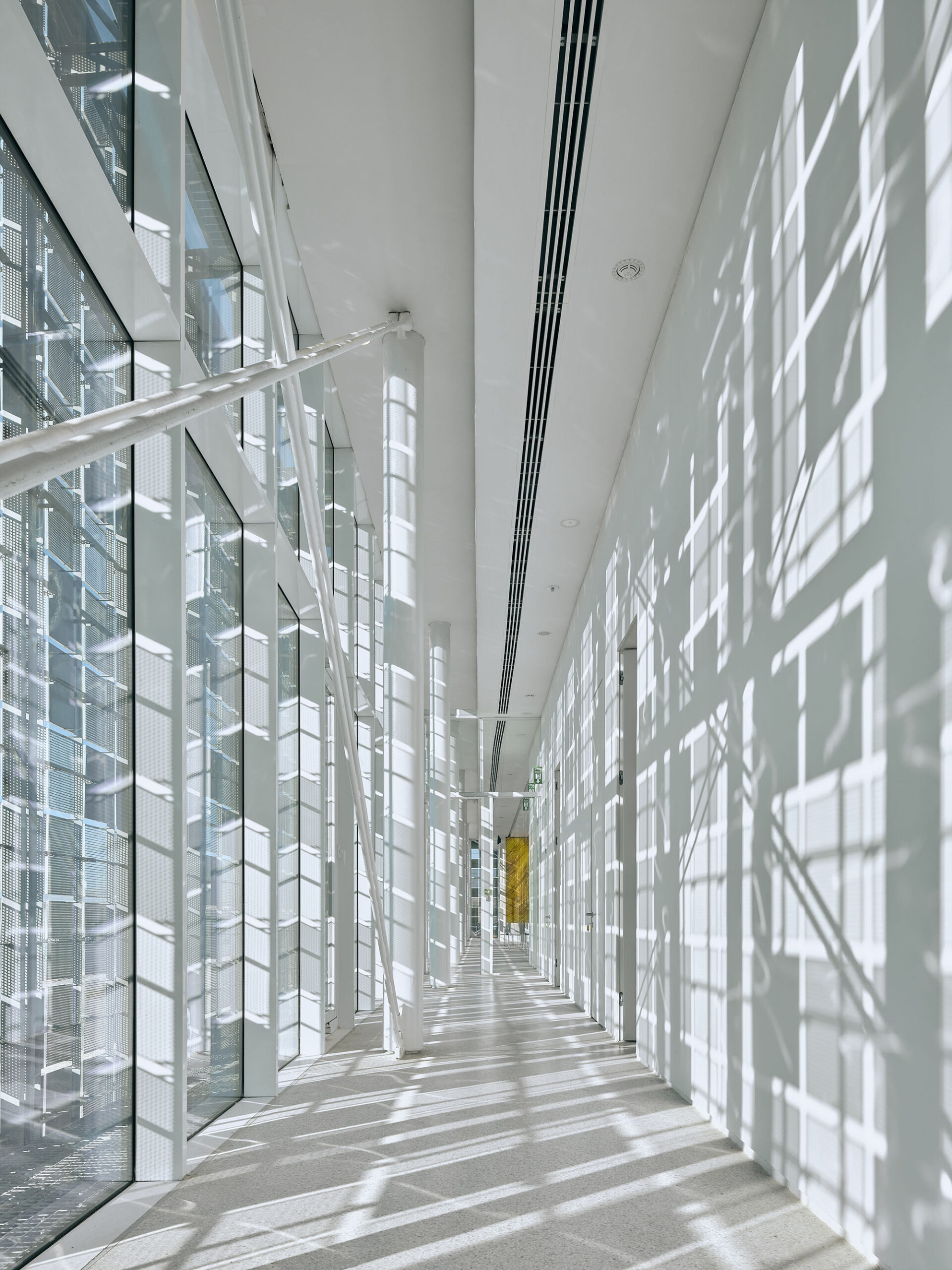
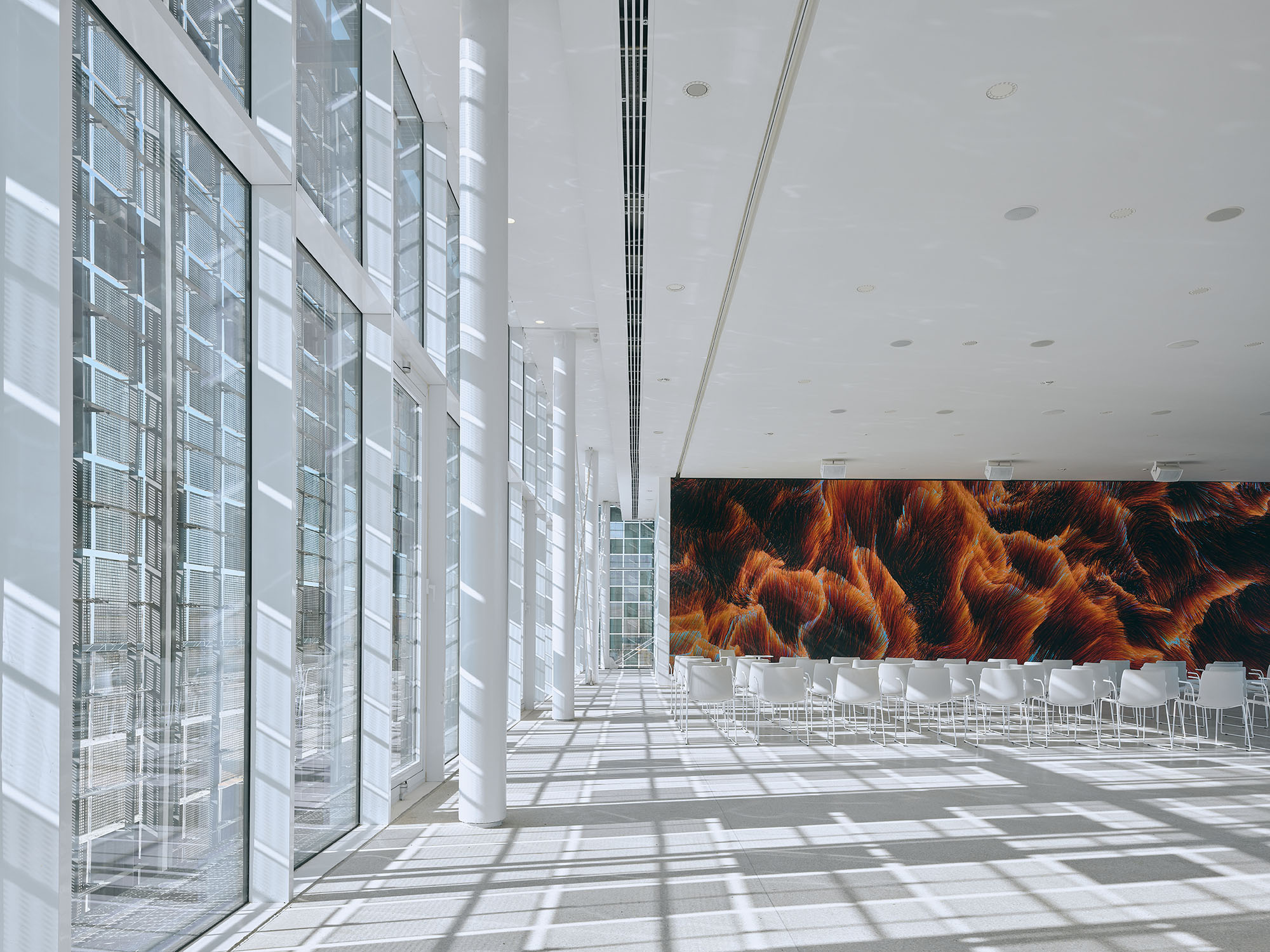
この二次外壁は、透明度の異なる4種類のステンレス鋼パネル7,200枚で構成され、地理的方向性や周辺環境、採光条件に基づき反復のない独自のパターンを形成する。
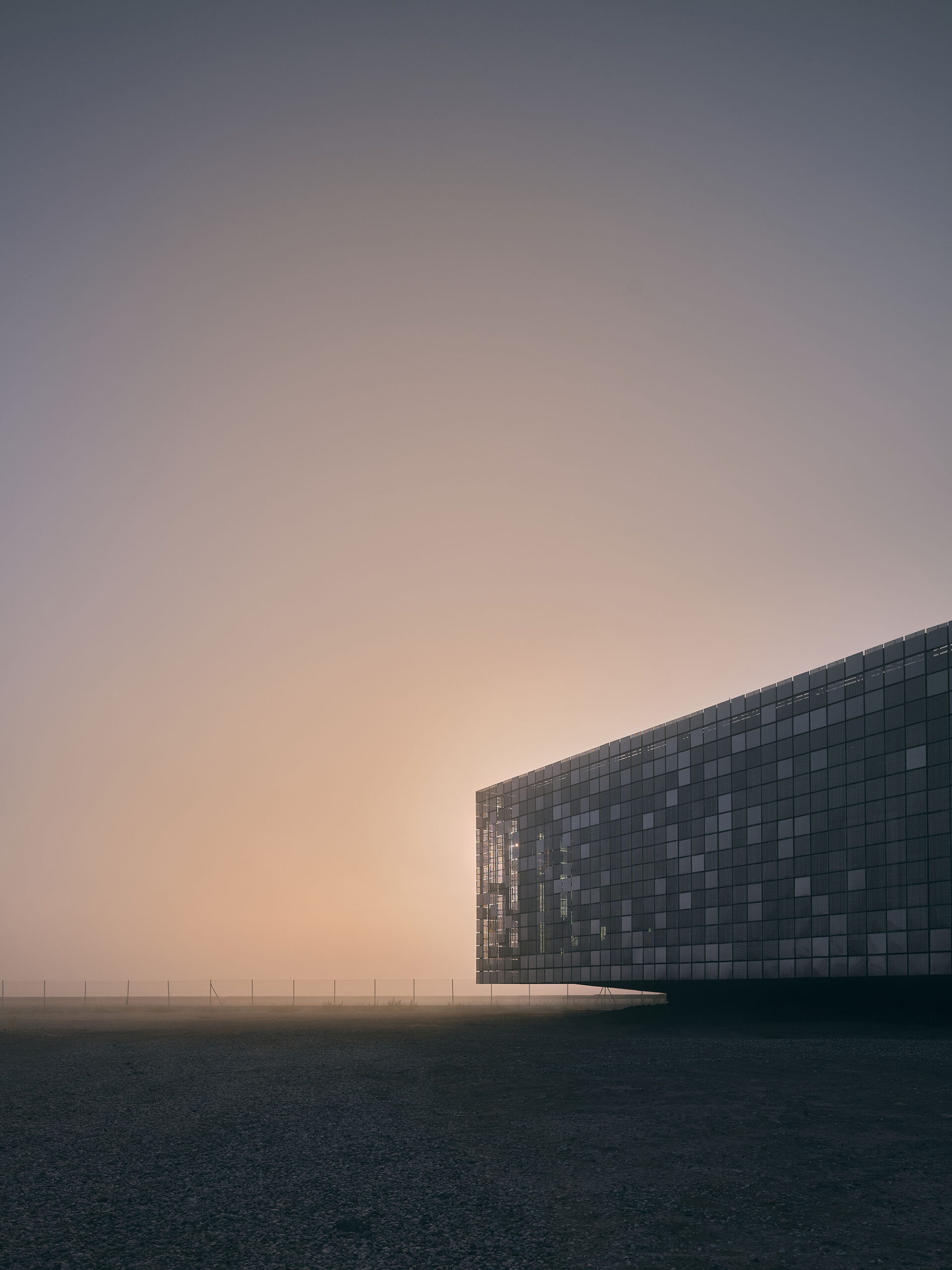
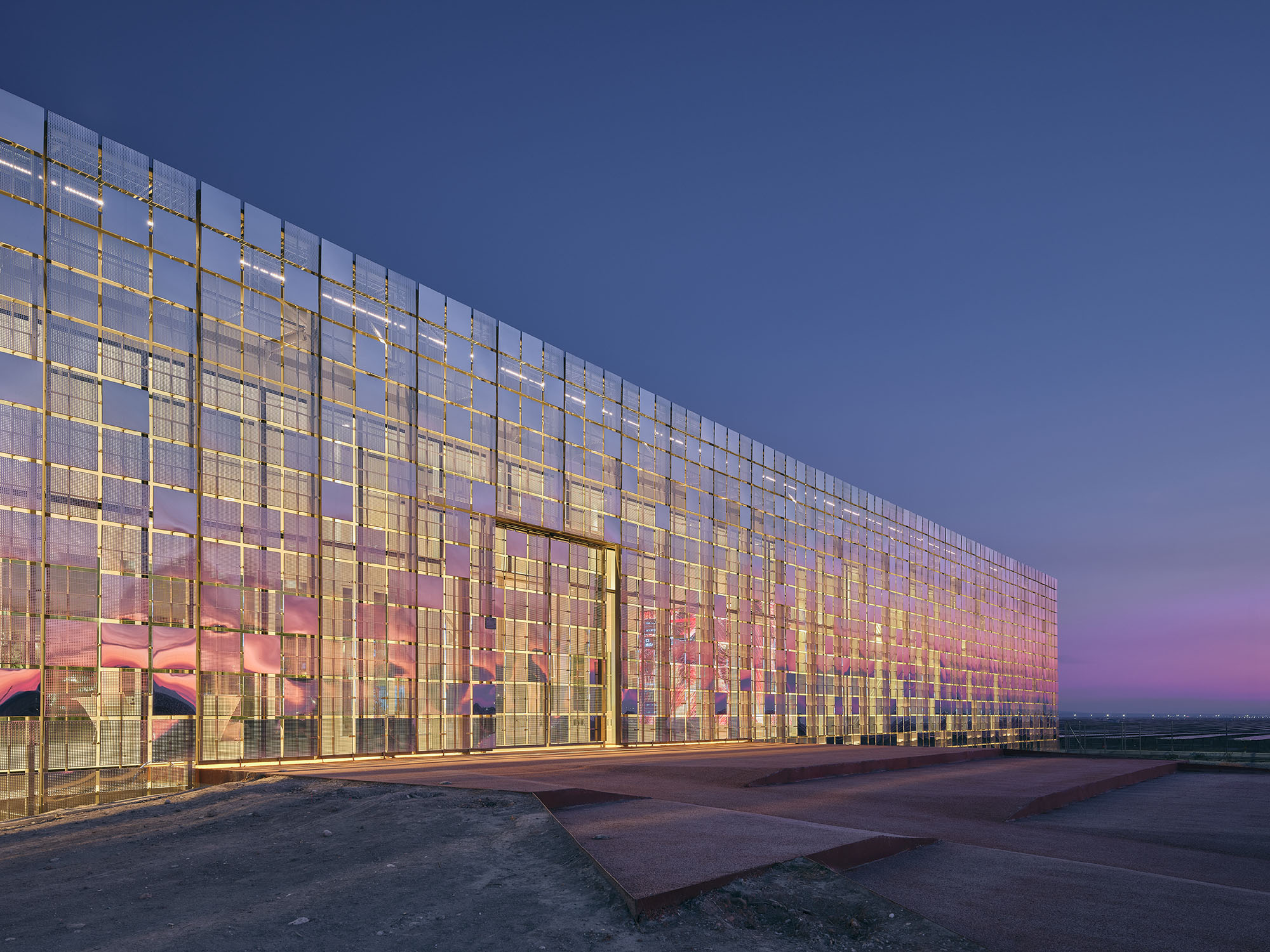
反射性をもつ素材は色調を変化させ、1日の光環境に応じて受動的で動的な体験を生む。曇天時にはファサードの境界が曖昧となり、建物は空の一部として認識される。夜になるとファサードは内外が反転し、昼間とは対照的に内部空間と中庭を浮かび上がらせる。
©︎ Egemen Karakaya
グラウンド・ゼロ
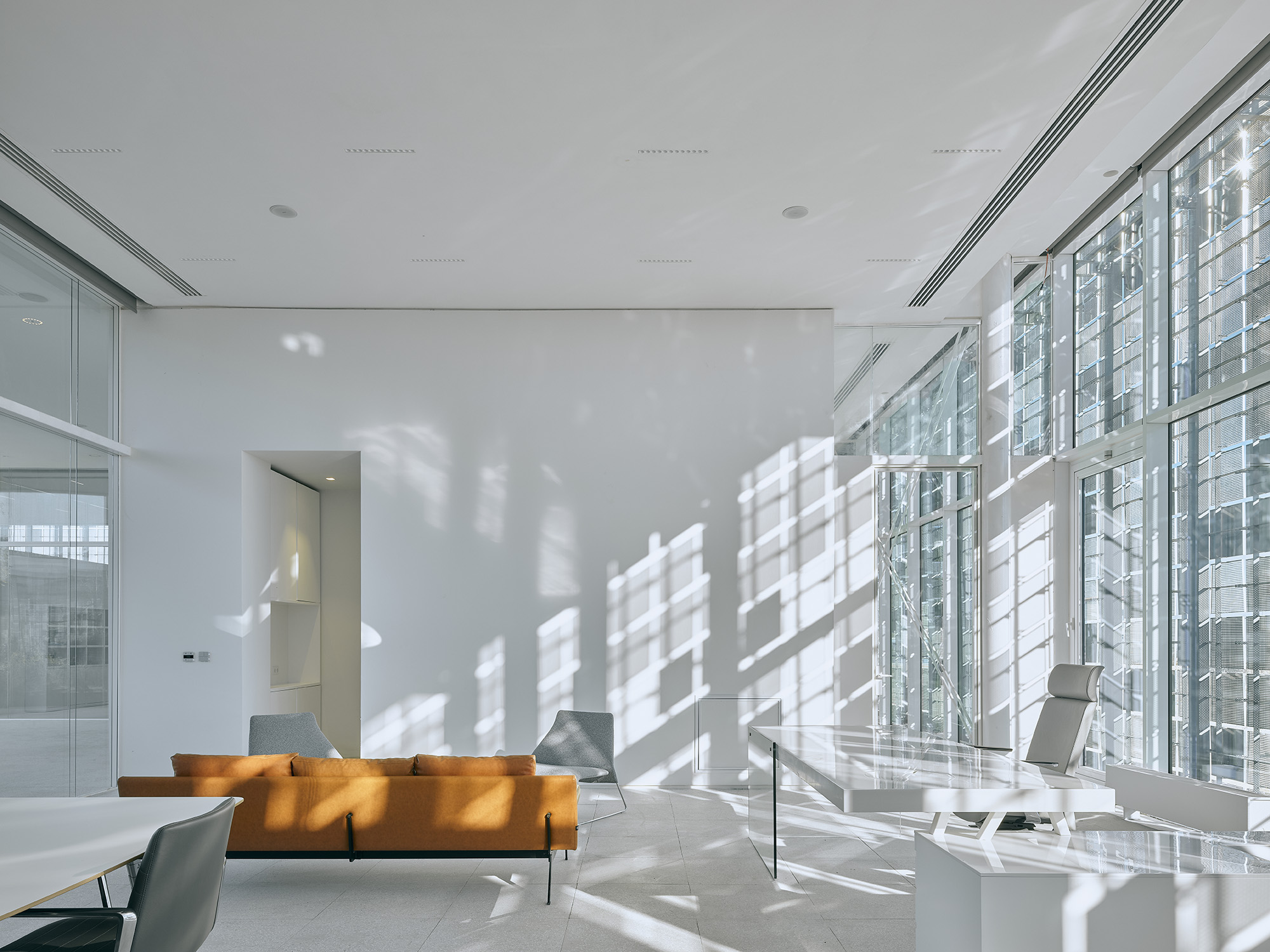
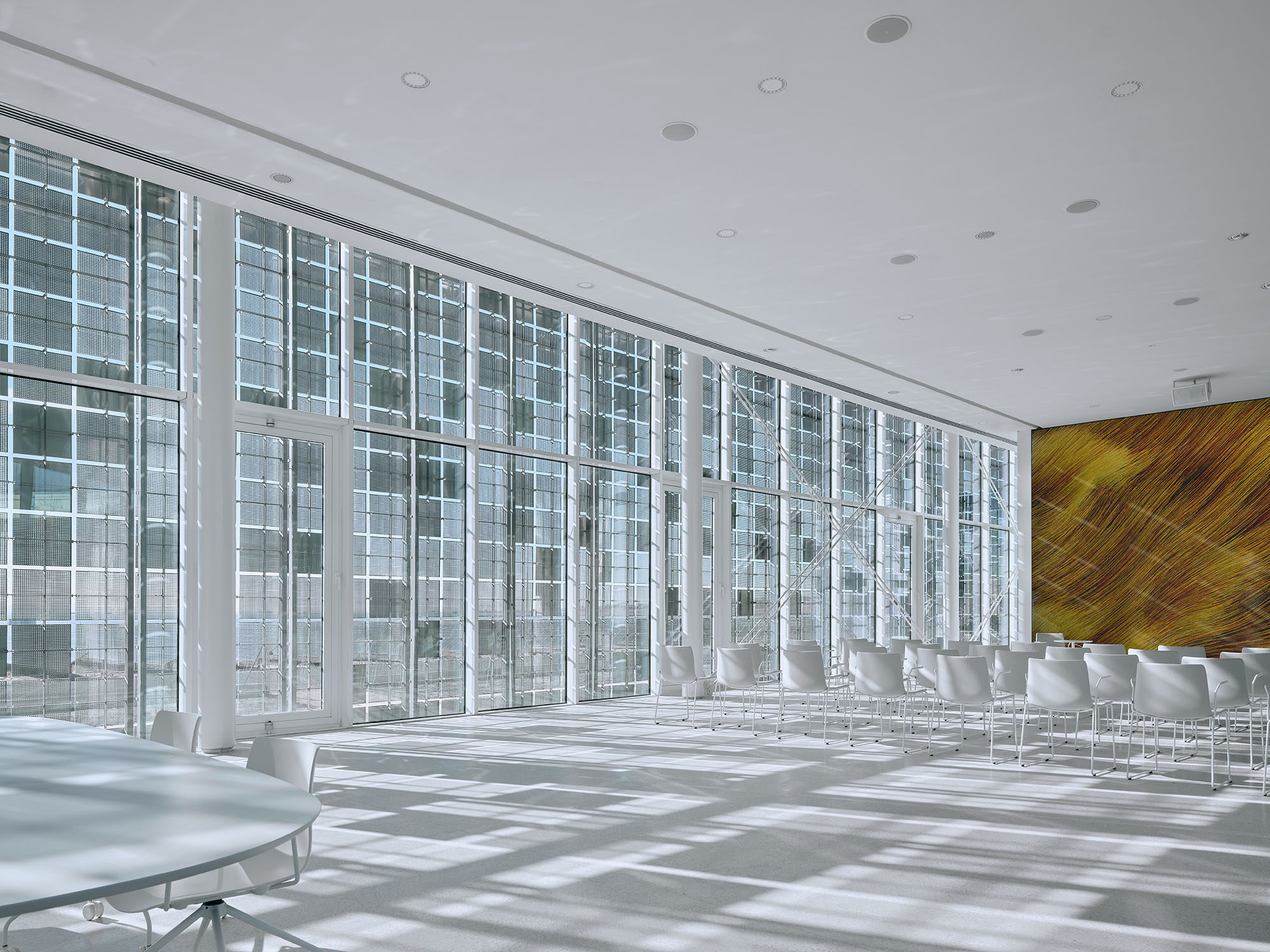
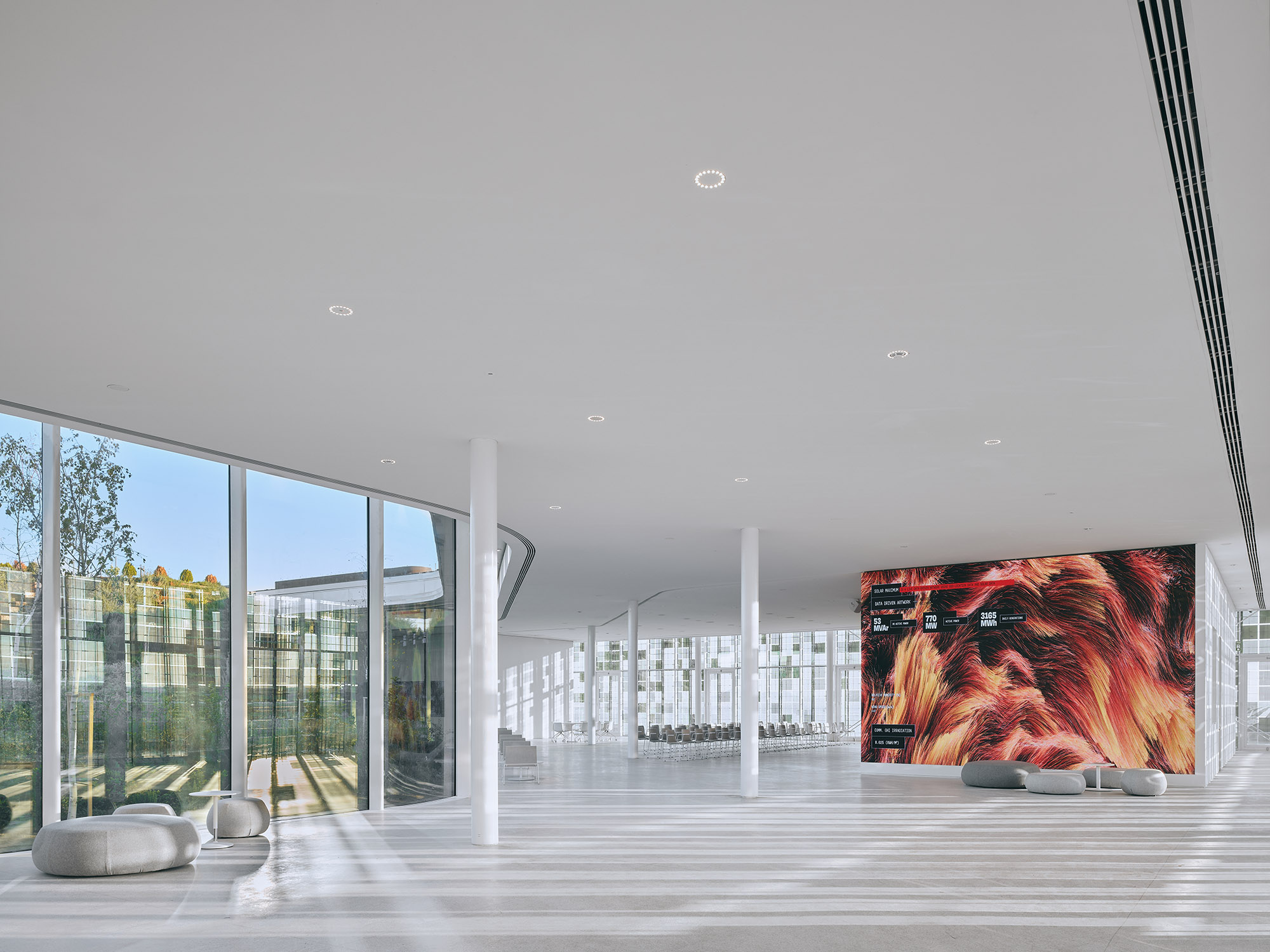
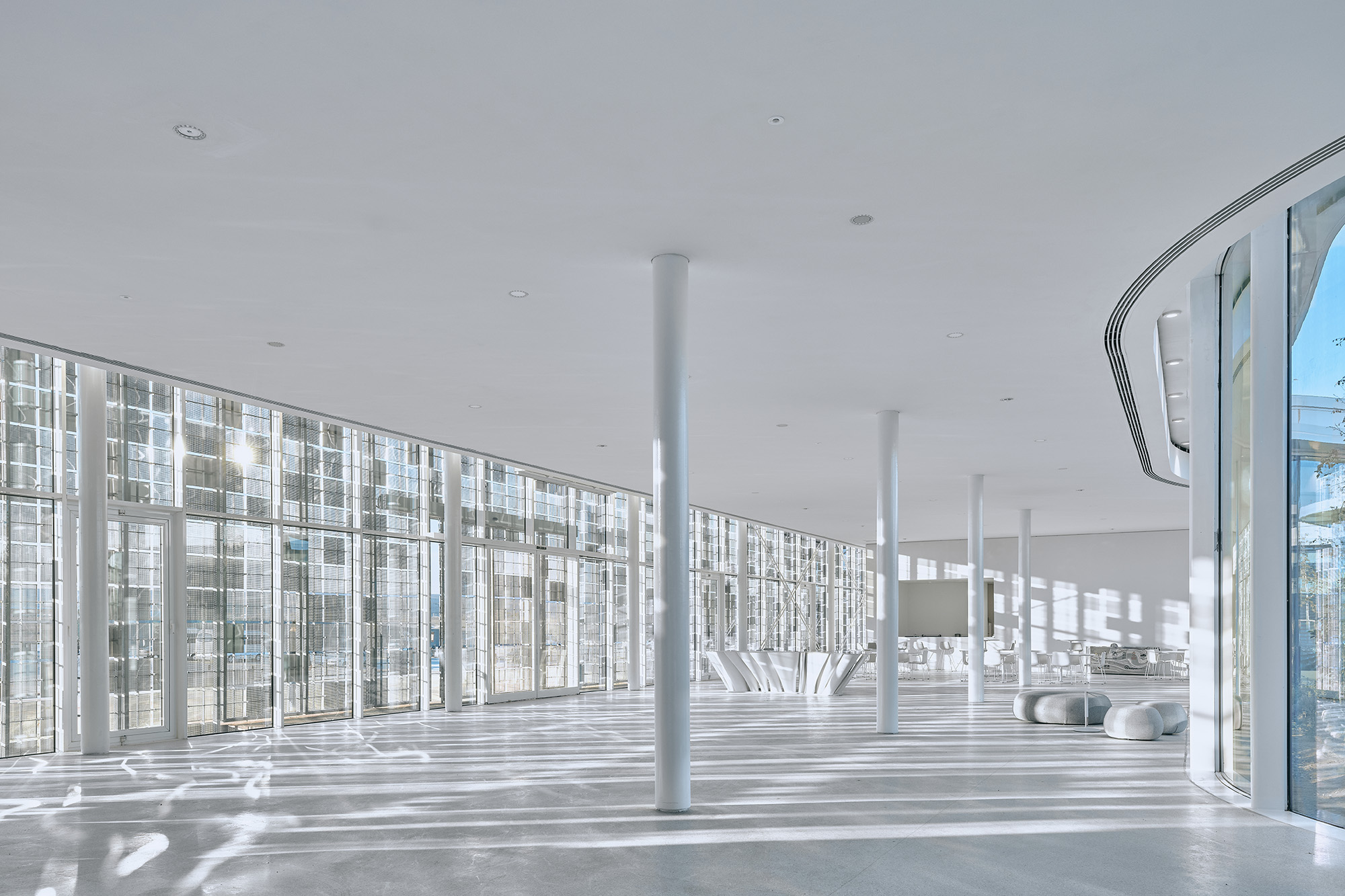
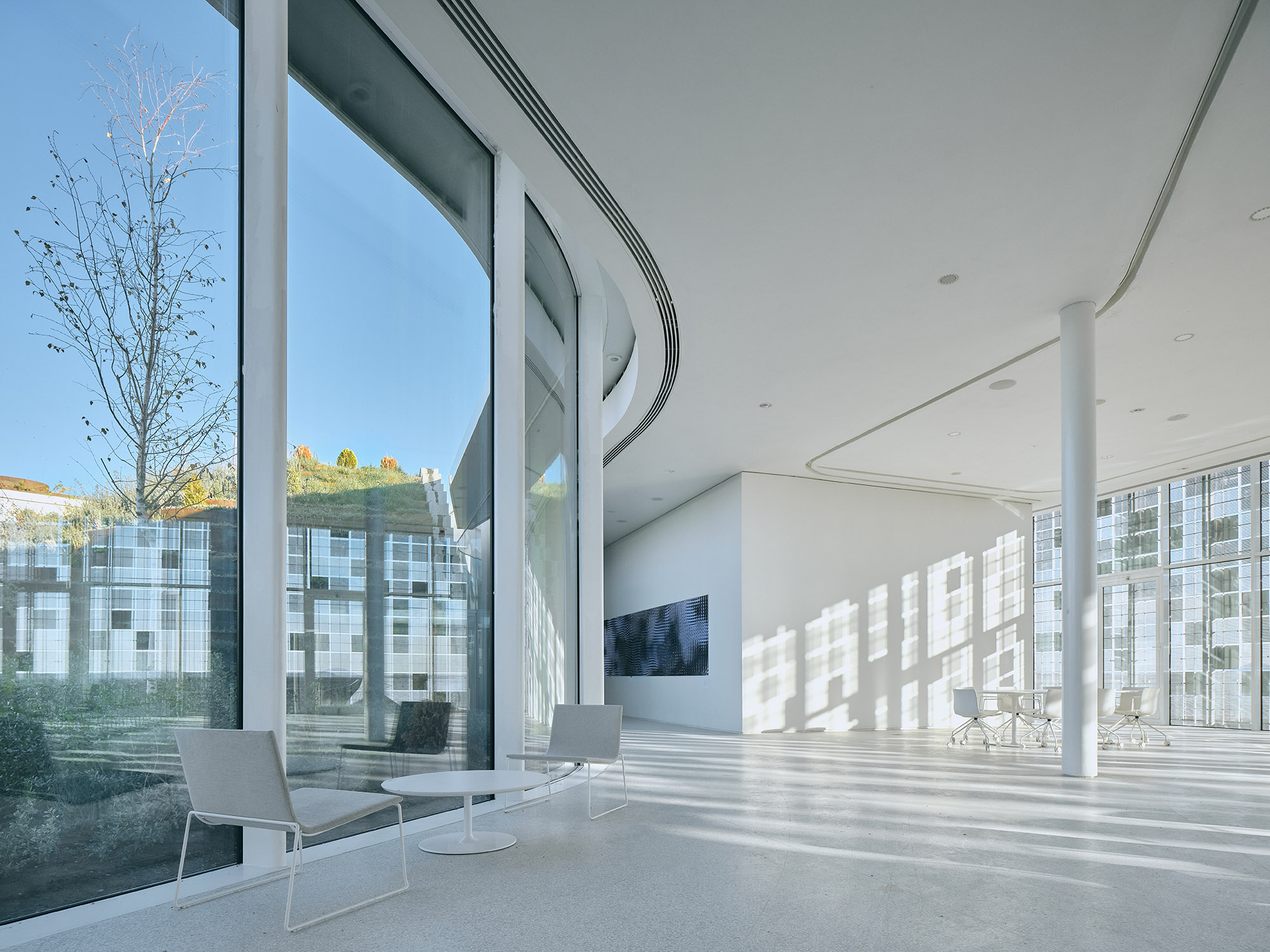
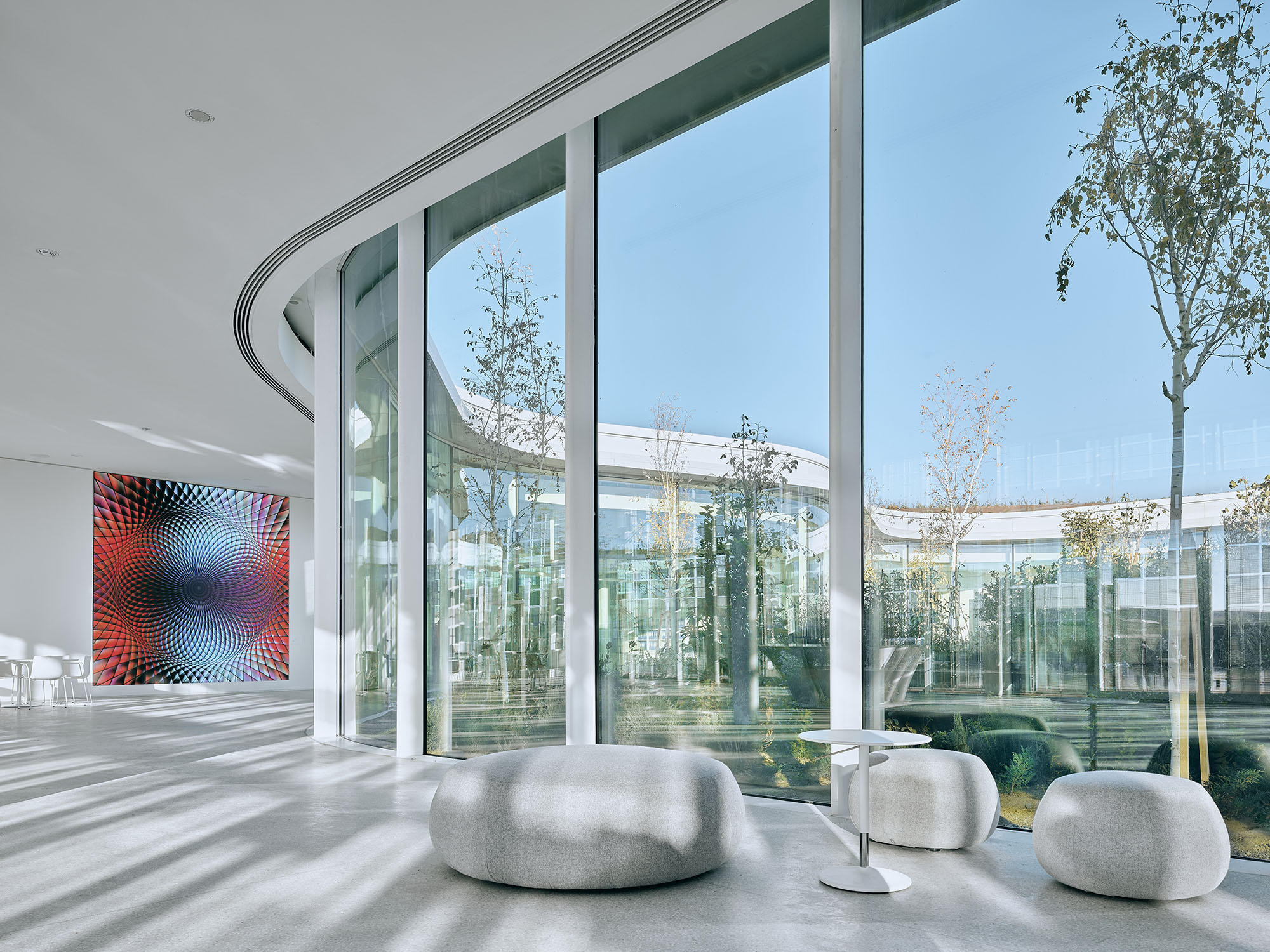
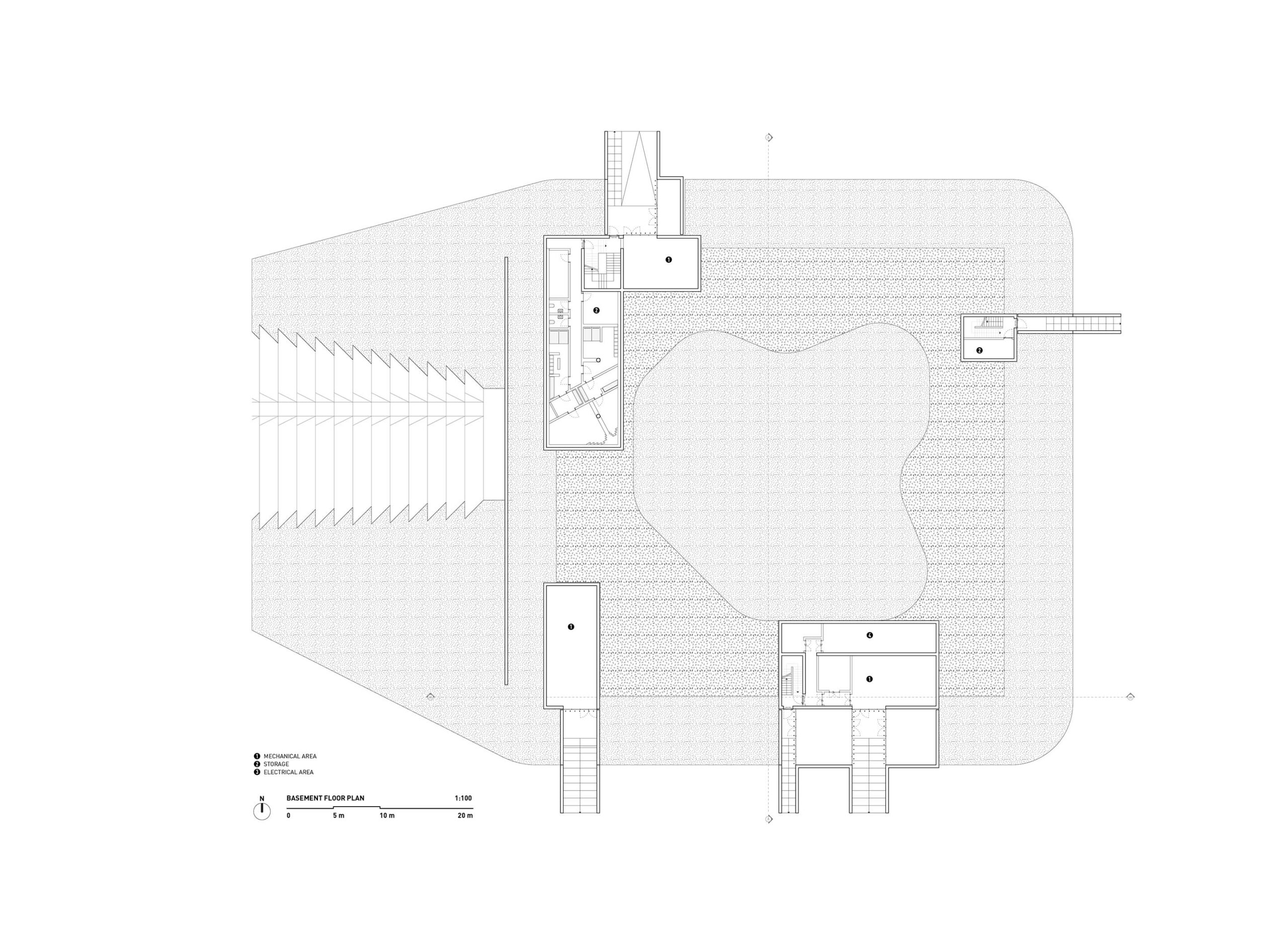
地上から浮遊するように設計されたこの平屋建築は、人間・自然・技術の交差点に多様な体験空間を提供する。ファサードは周囲を映し出す鏡面として機能する一方、内部では薄いカーテンのような柔らかな障壁を形成する。
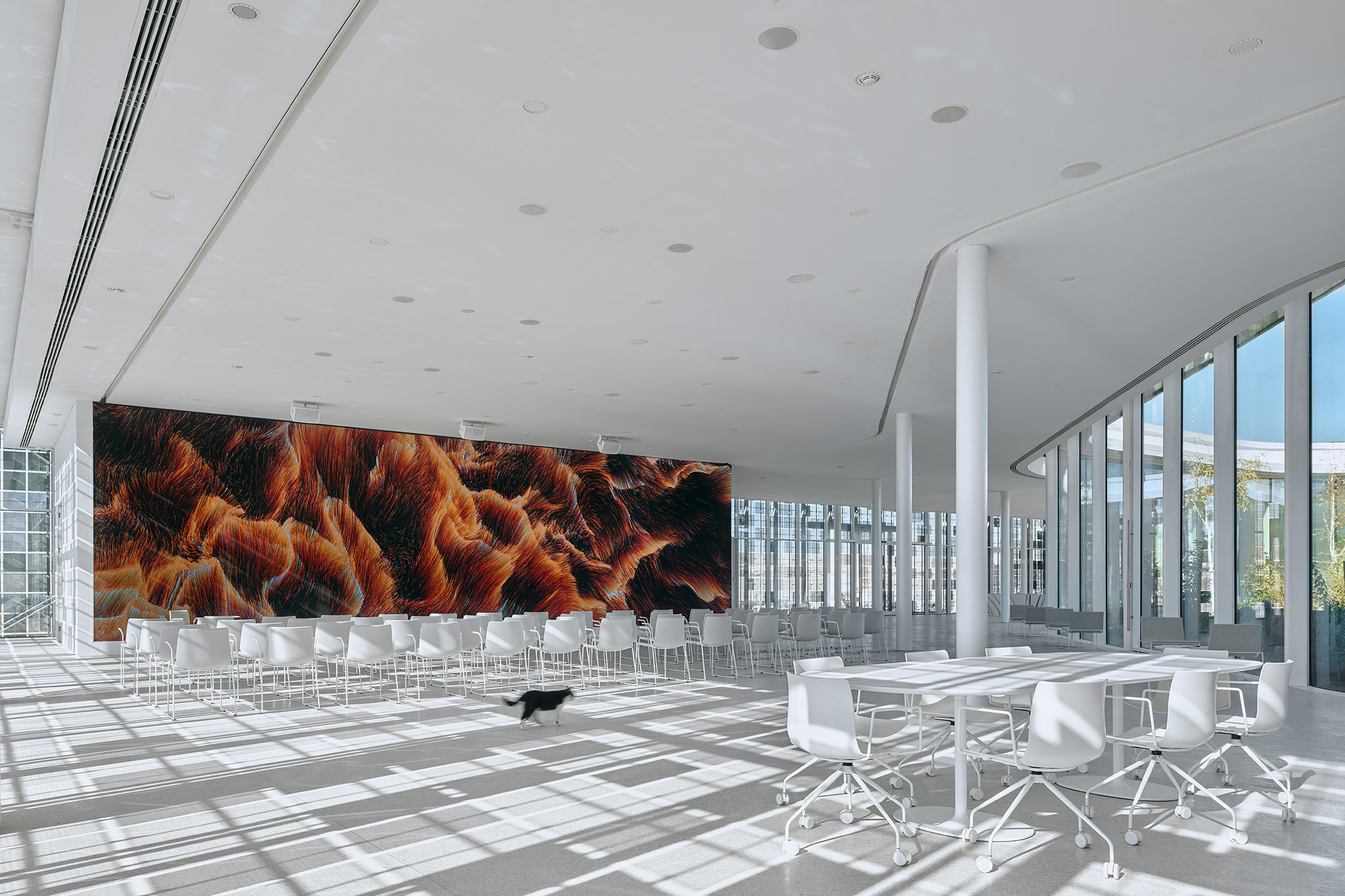
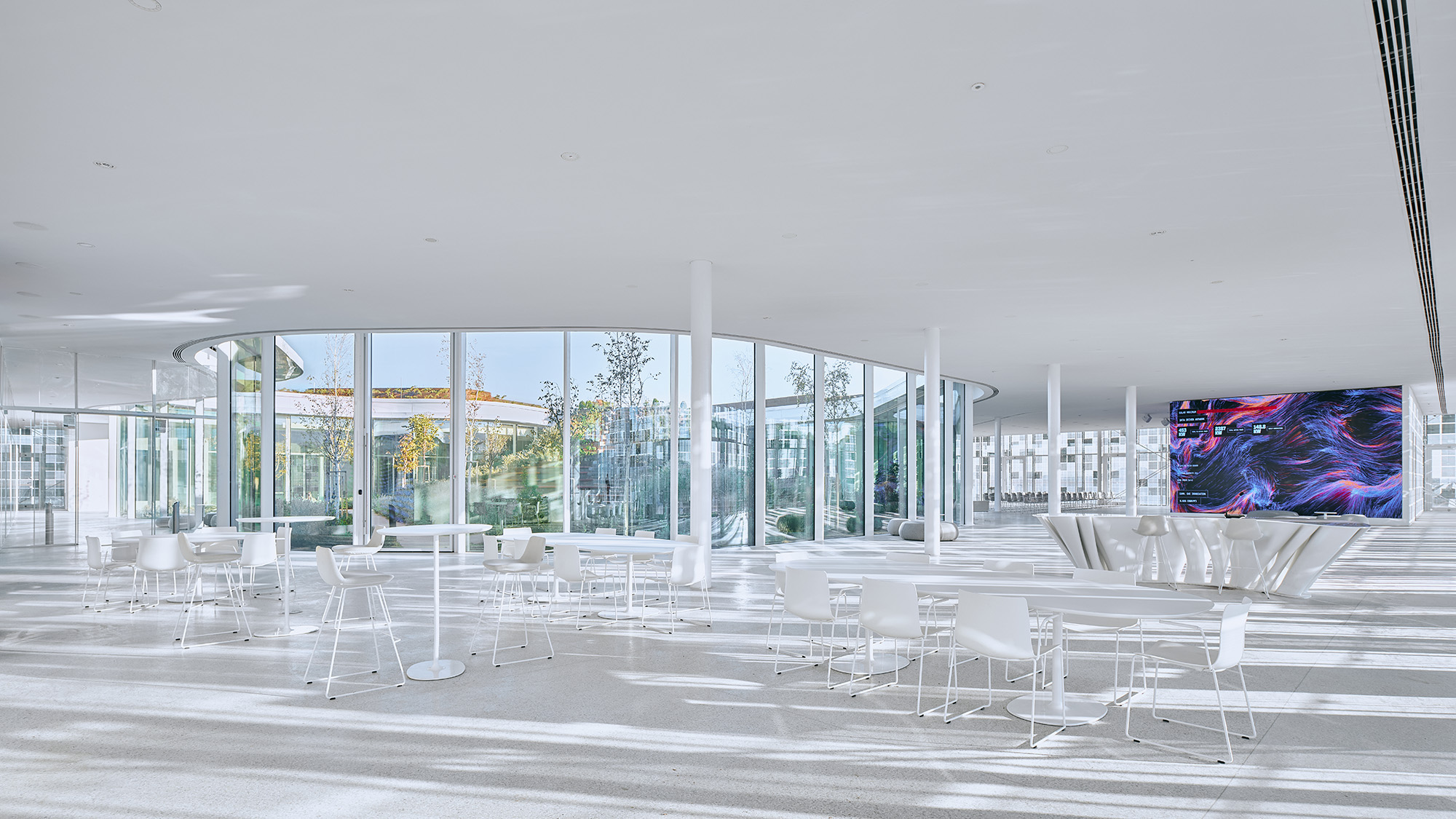
境界が曖昧なホワイエは中庭に面したファサードで来訪者を迎え、そこからカフェテリアや多目的ホールへと空間が連続する。これらの空間は、多様な団体やイベント、パネルディスカッション、ワークショップを受け入れるためのインフラを備えている。
©︎ Egemen Karakaya
©︎ Egemen Karakaya
砂漠の中のオアシス
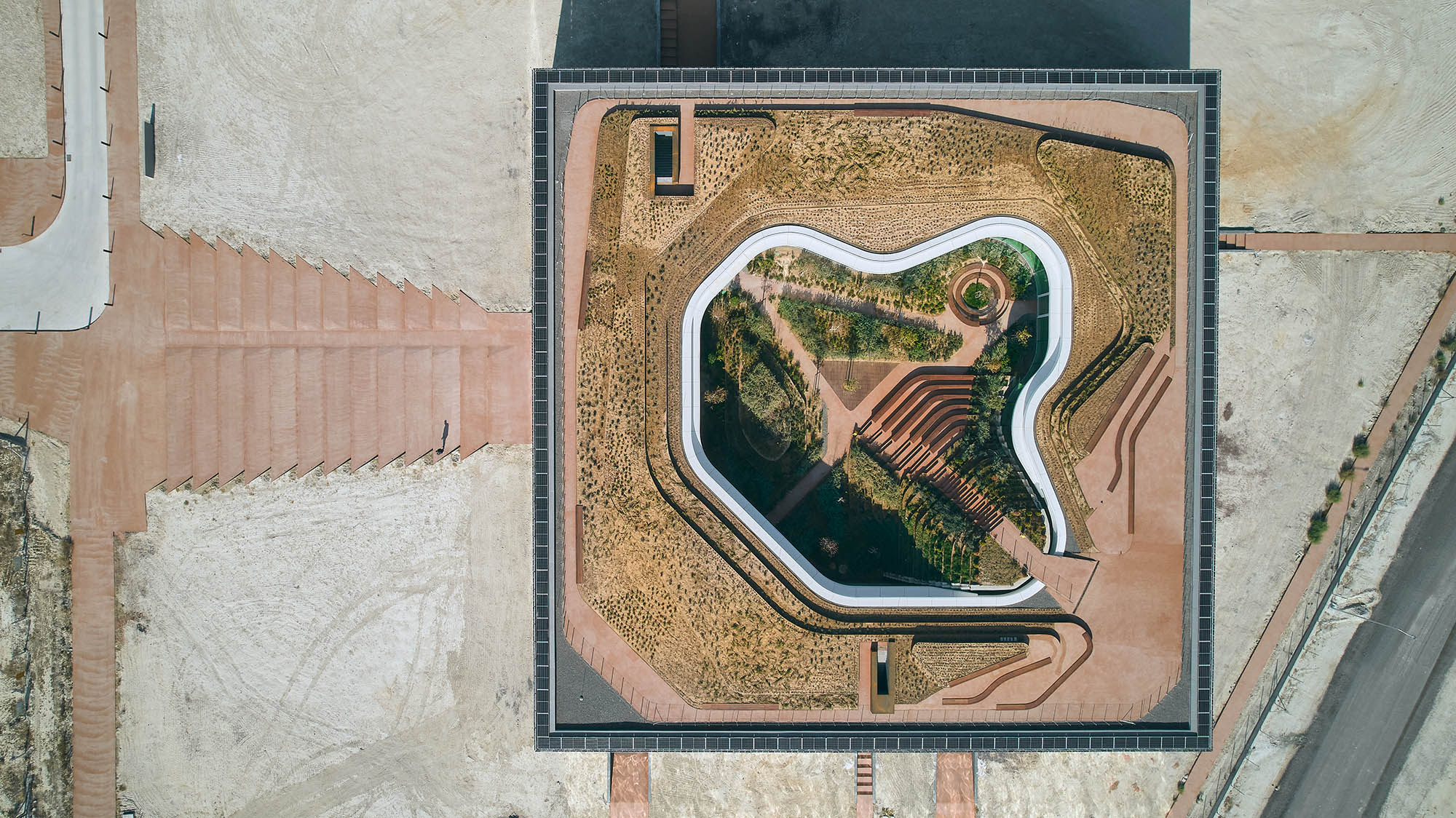
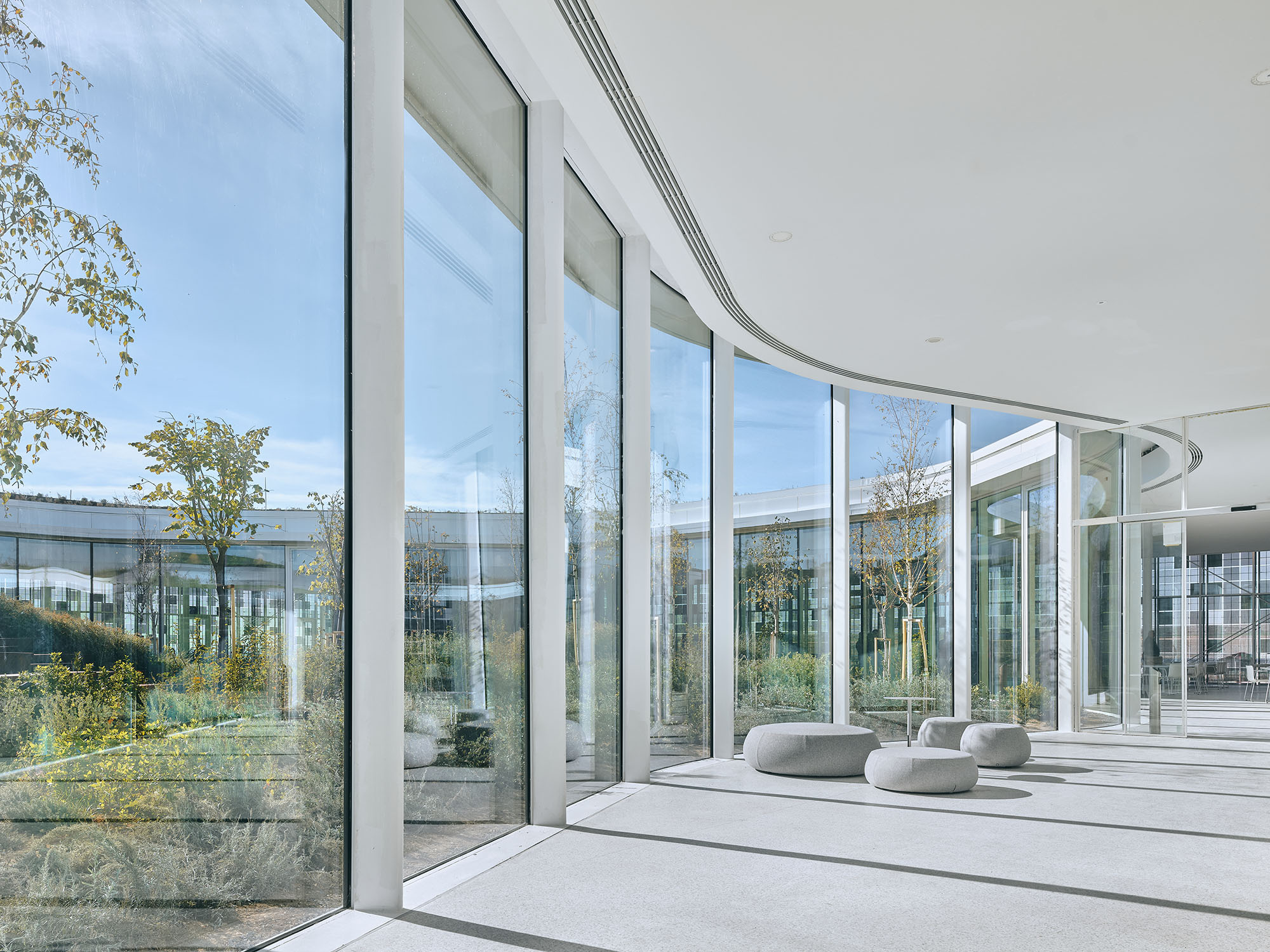
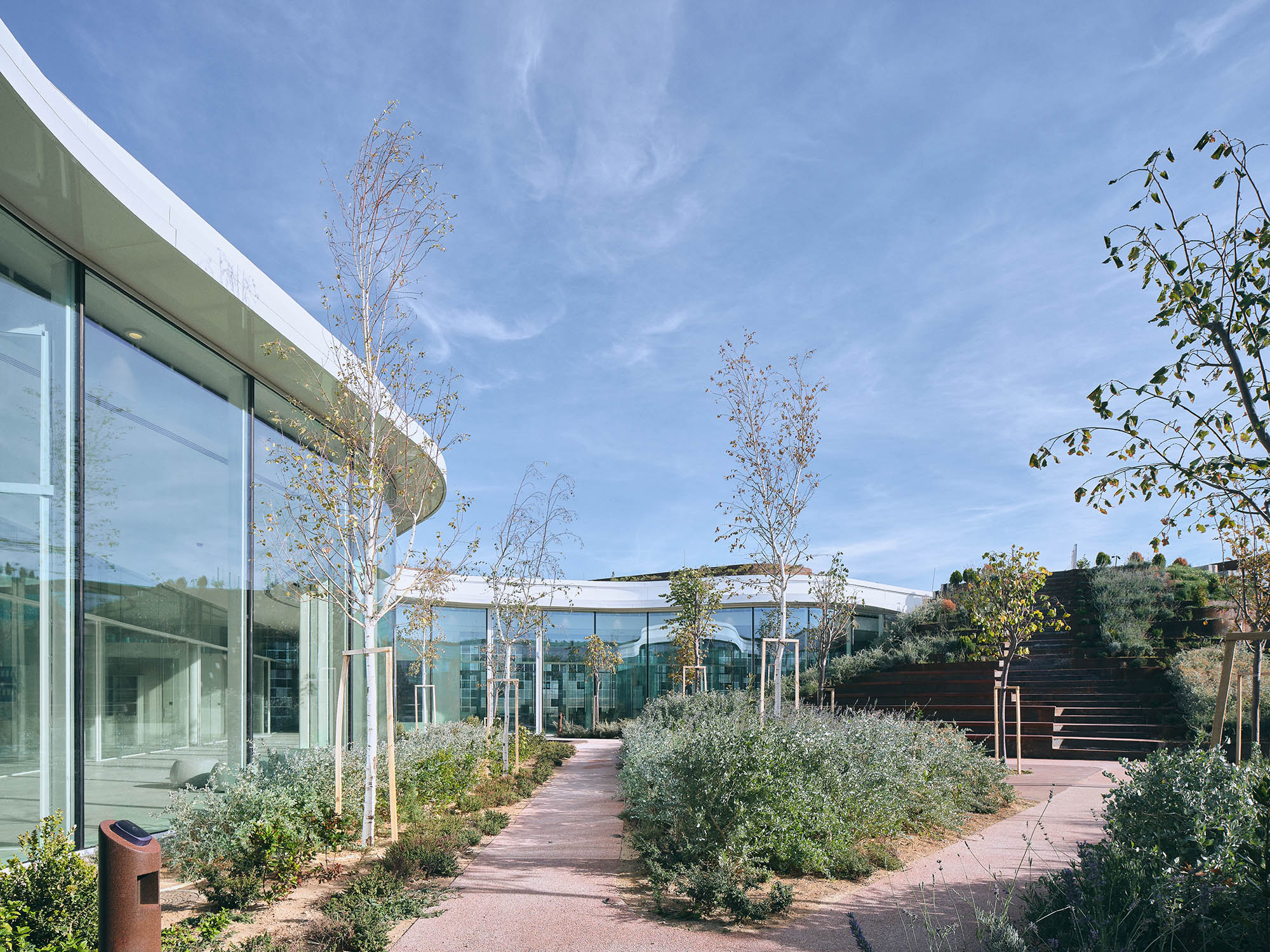
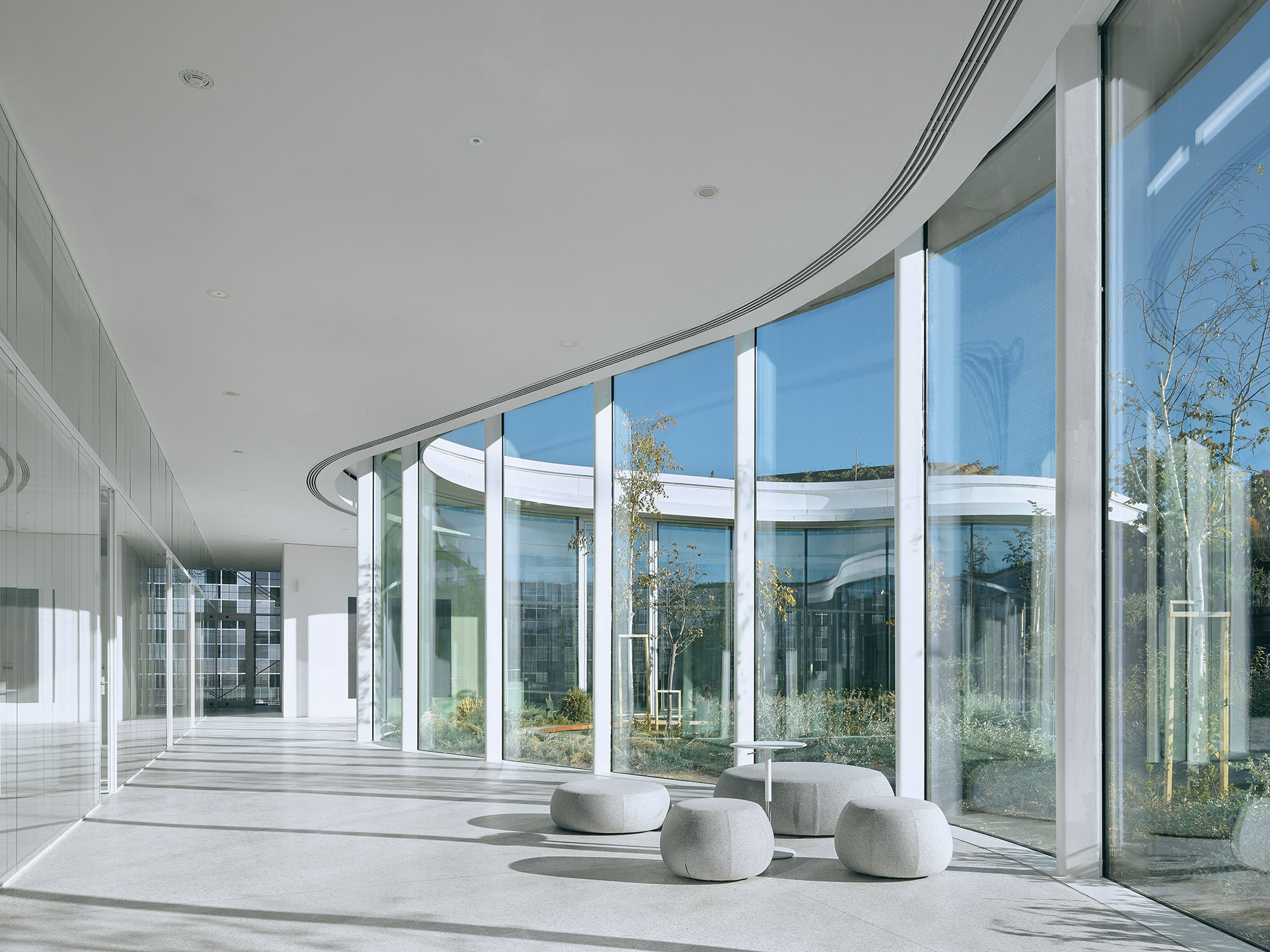
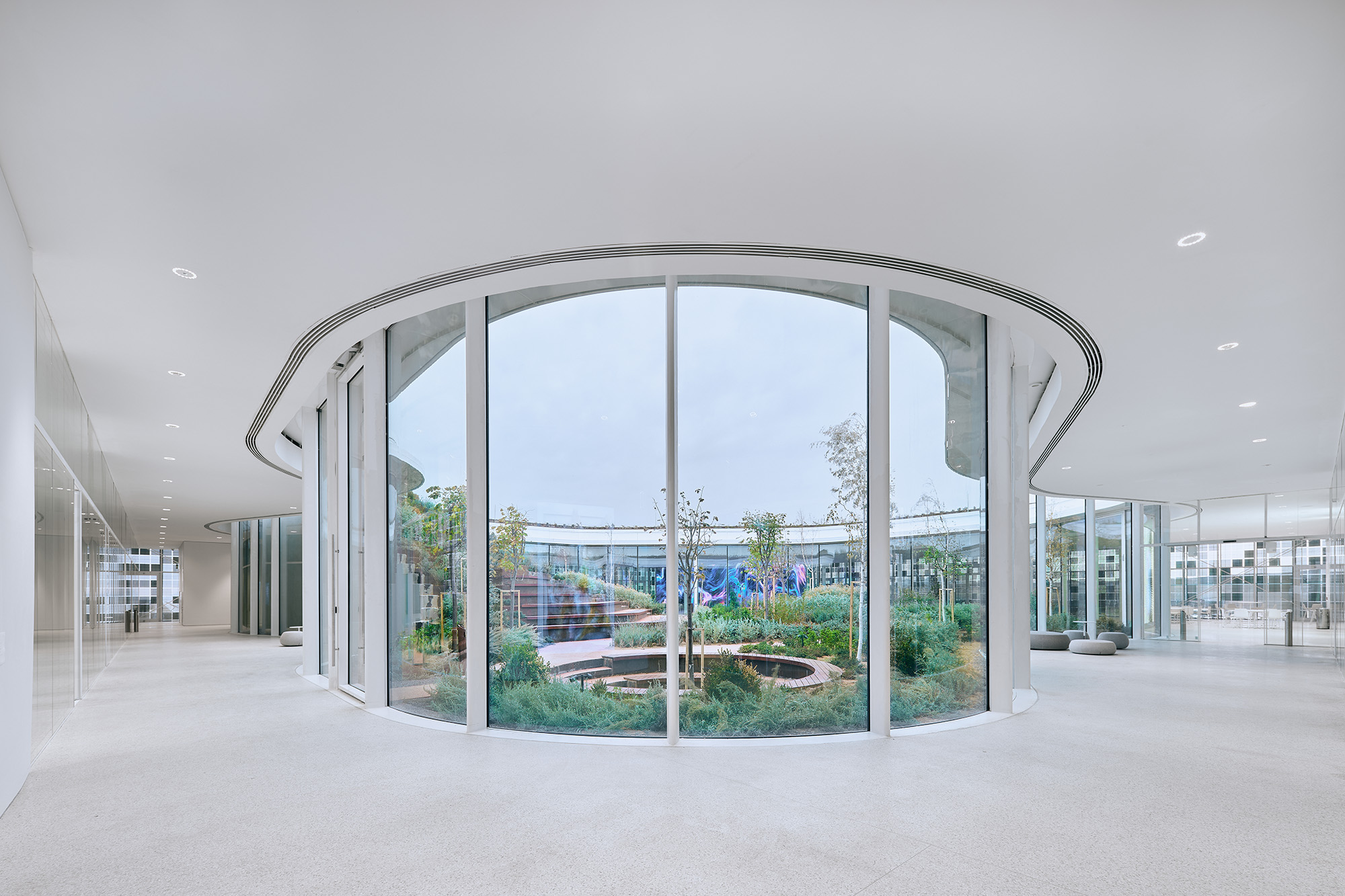
ファサードにおける対比のデザインは、中庭にも反映されている。建物の中央には緑豊かな中庭が配置され、乾燥した地域の質感との対比を生み出している。この中庭は、最小限の灌漑と維持管理で育成可能な固有植物種によって構成され、持続可能な微気候を形成する。
さらに、中庭は建物のすべての動線と空間階層を規定する役割を担っている。過酷な気候から守られた休息や活動の場として機能すると同時に、建物の私的領域と共用領域を分離し、全体の秩序を形成している。
©︎ Egemen Karakaya
©︎ Egemen Karakaya
©︎ Egemen Karakaya
©︎ Egemen Karakaya
©︎ Egemen Karakaya
©︎ Egemen Karakaya
©︎ Egemen Karakaya
©︎ Egemen Karakaya
©︎ Egemen Karakaya
©︎ Egemen Karakaya
©︎ Egemen Karakaya
©︎ Egemen Karakaya
©︎ Egemen Karakaya
©︎ Egemen Karakaya
©︎ Egemen Karakaya
©︎ Egemen Karakaya
©︎ Egemen Karakaya
©︎ Egemen Karakaya
©︎ Egemen Karakaya
Site Plan
Basement Floor Plan
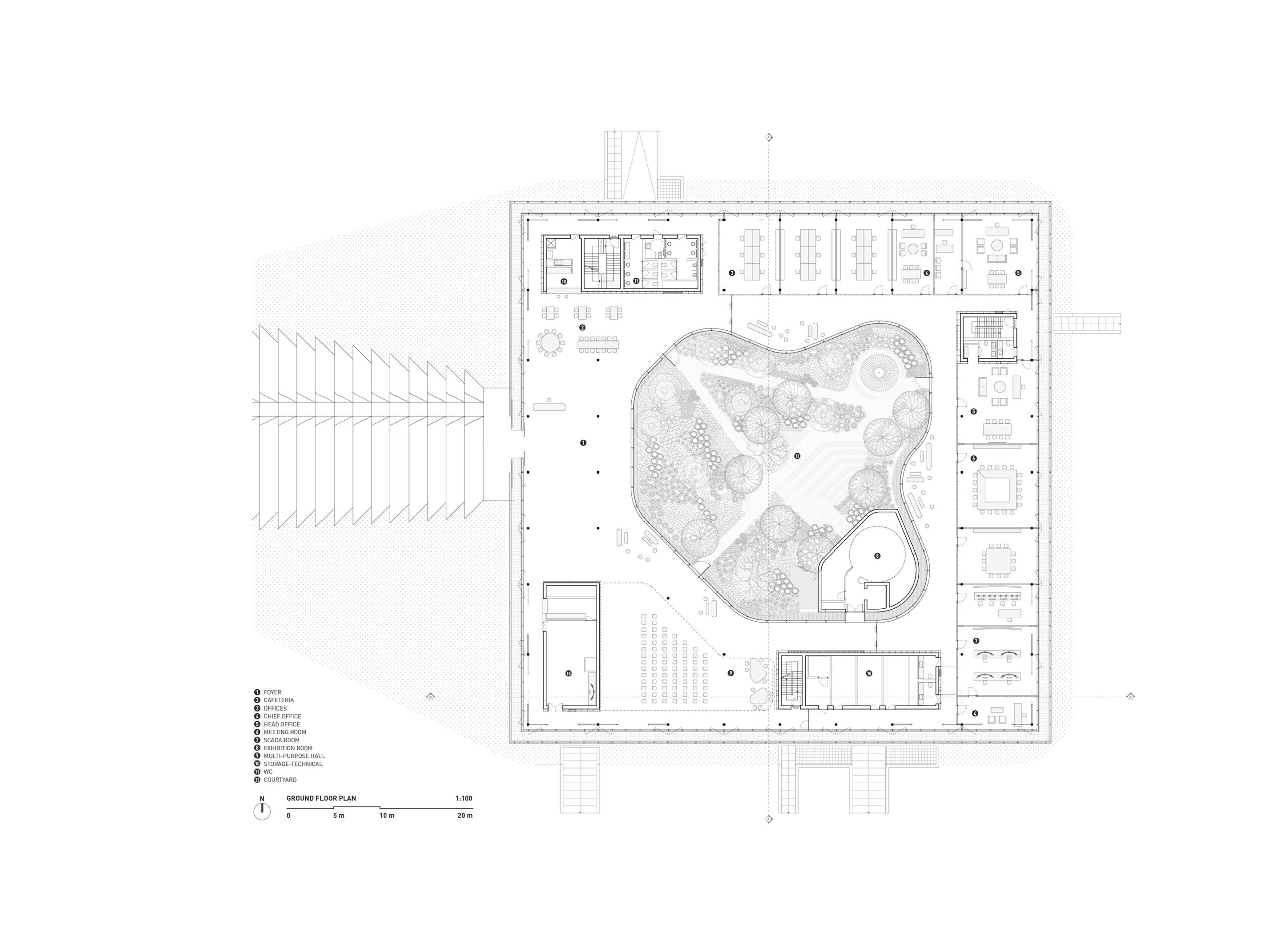
Ground Floor Plan
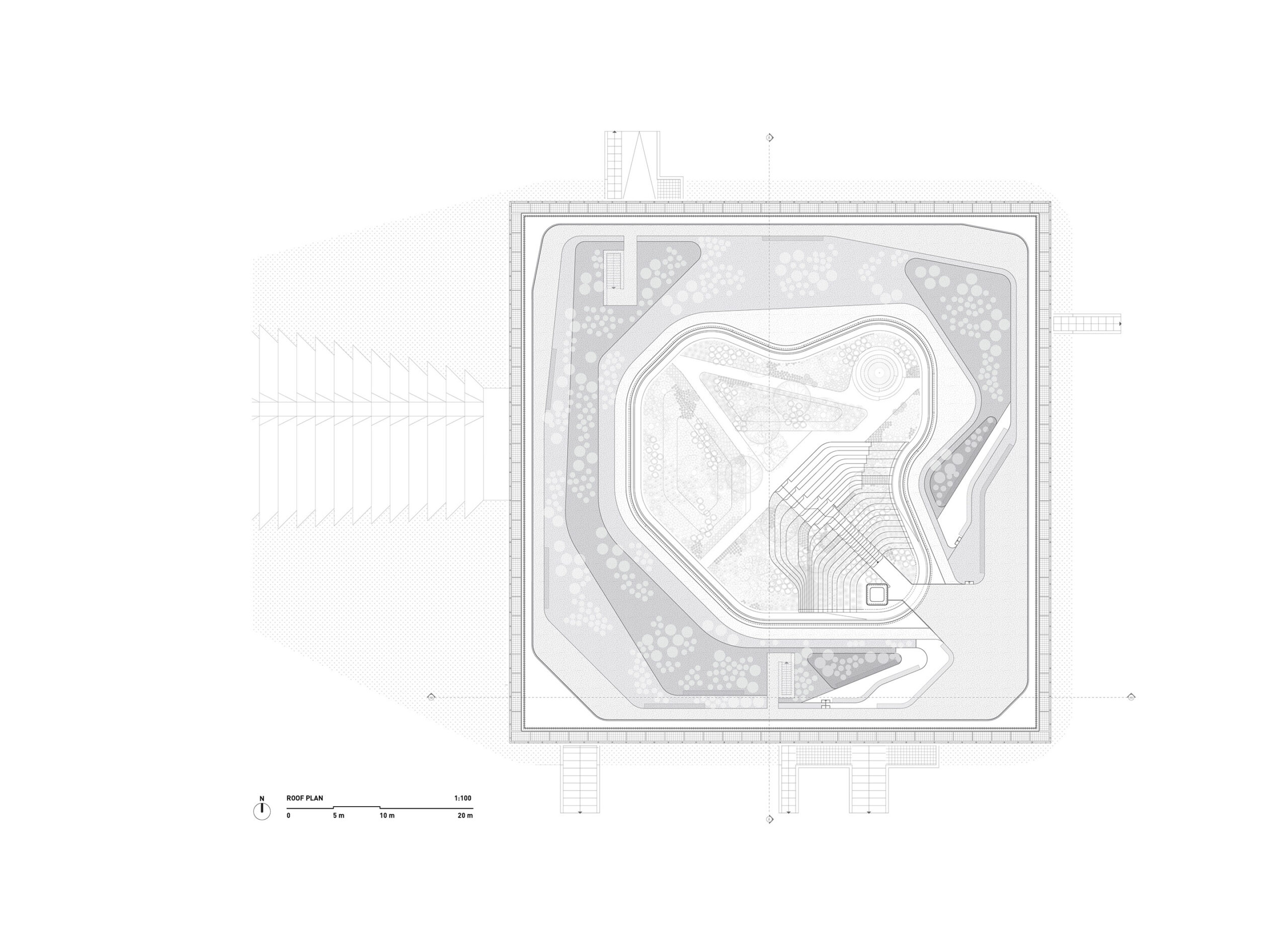
Roof Plan
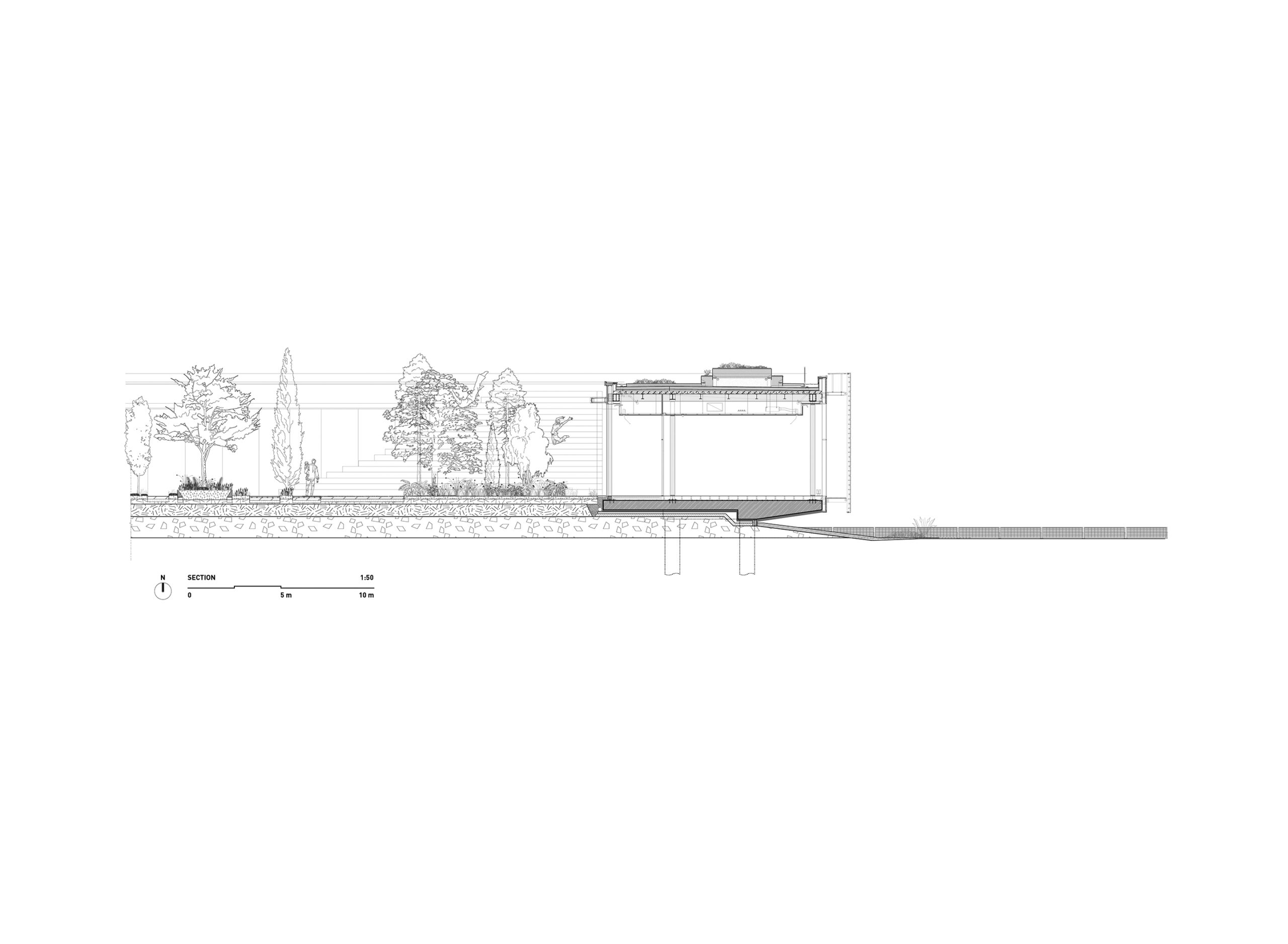
Section
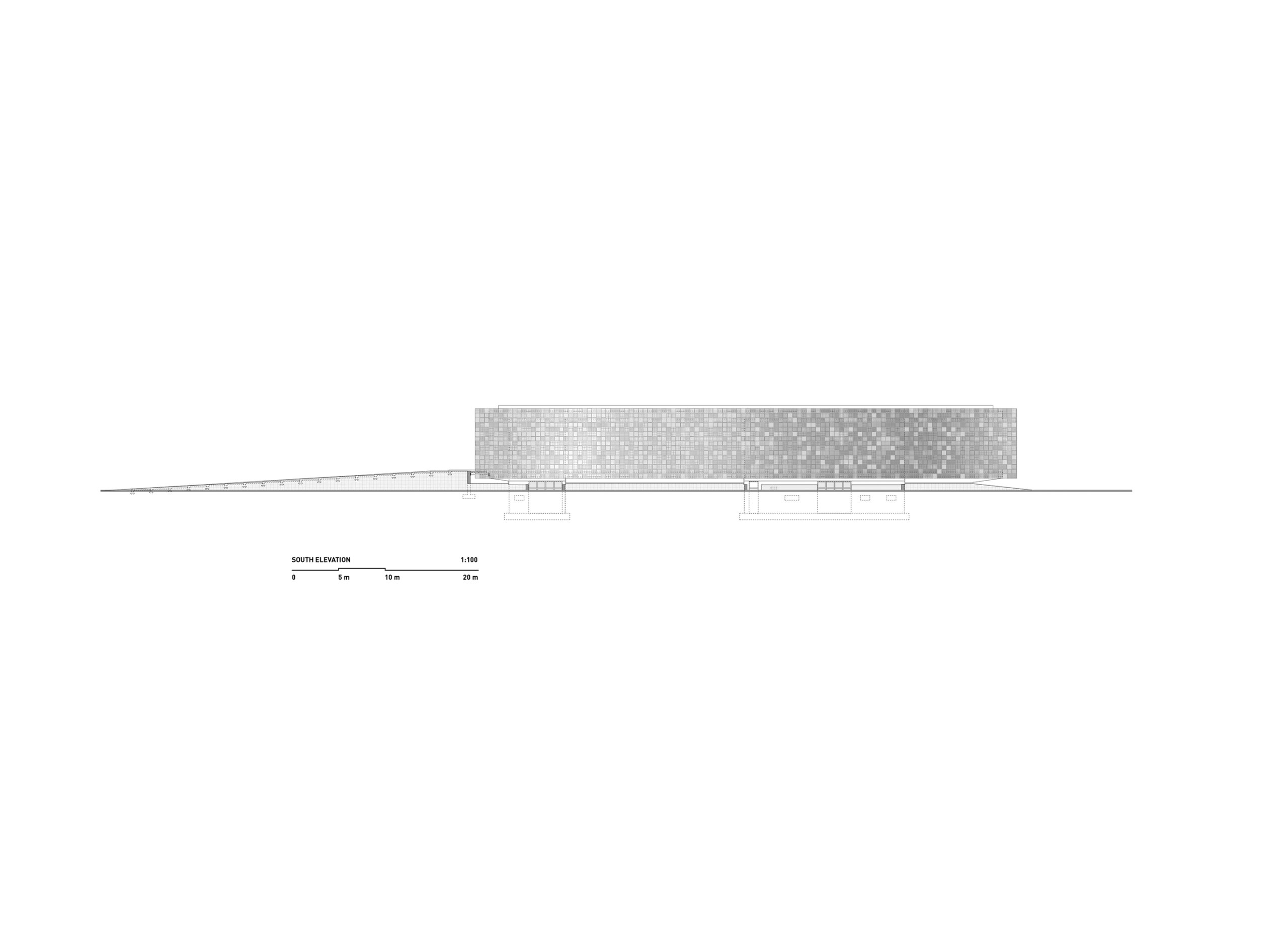
South Elevation
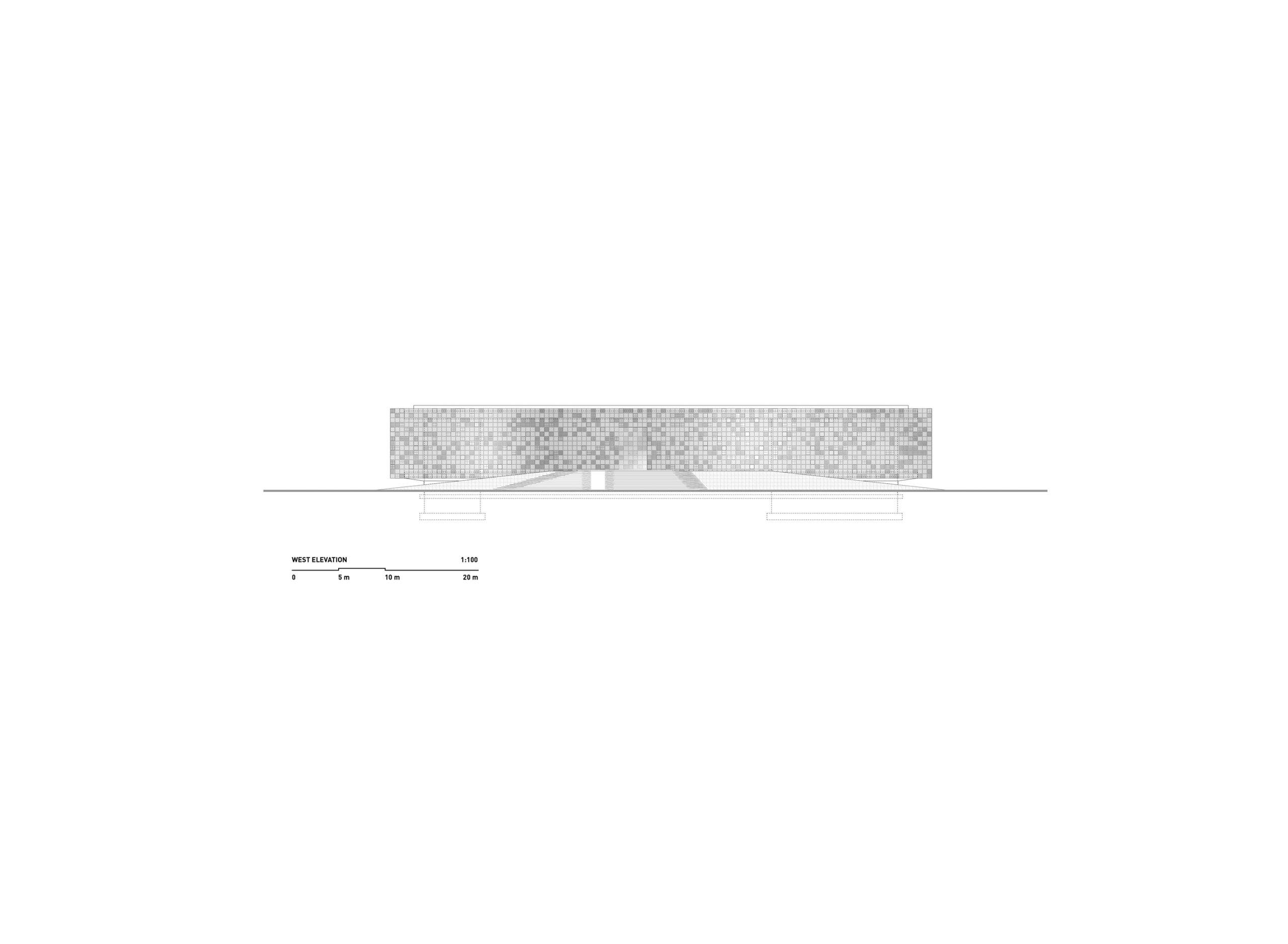
West Elevation
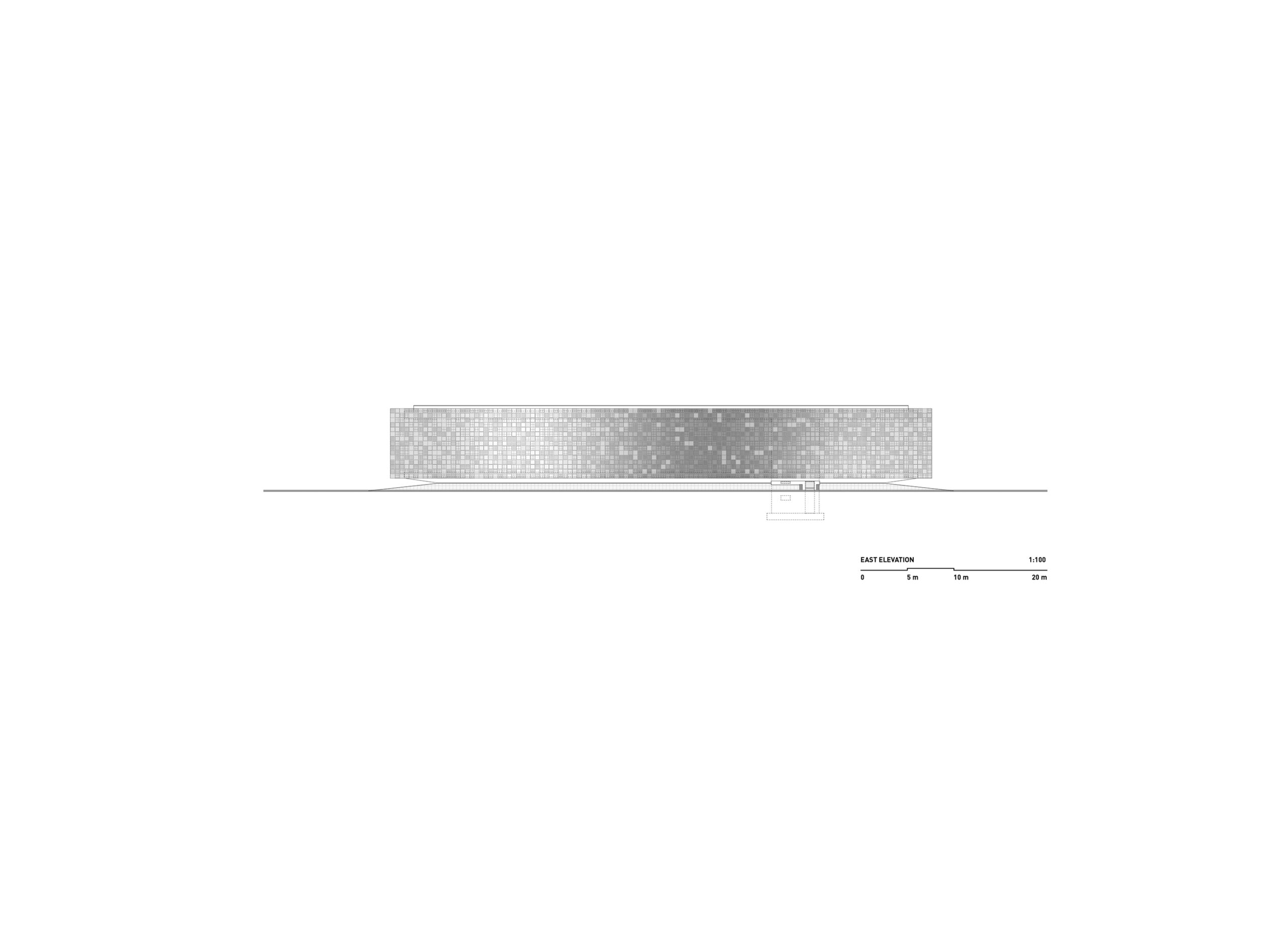
East Elevation
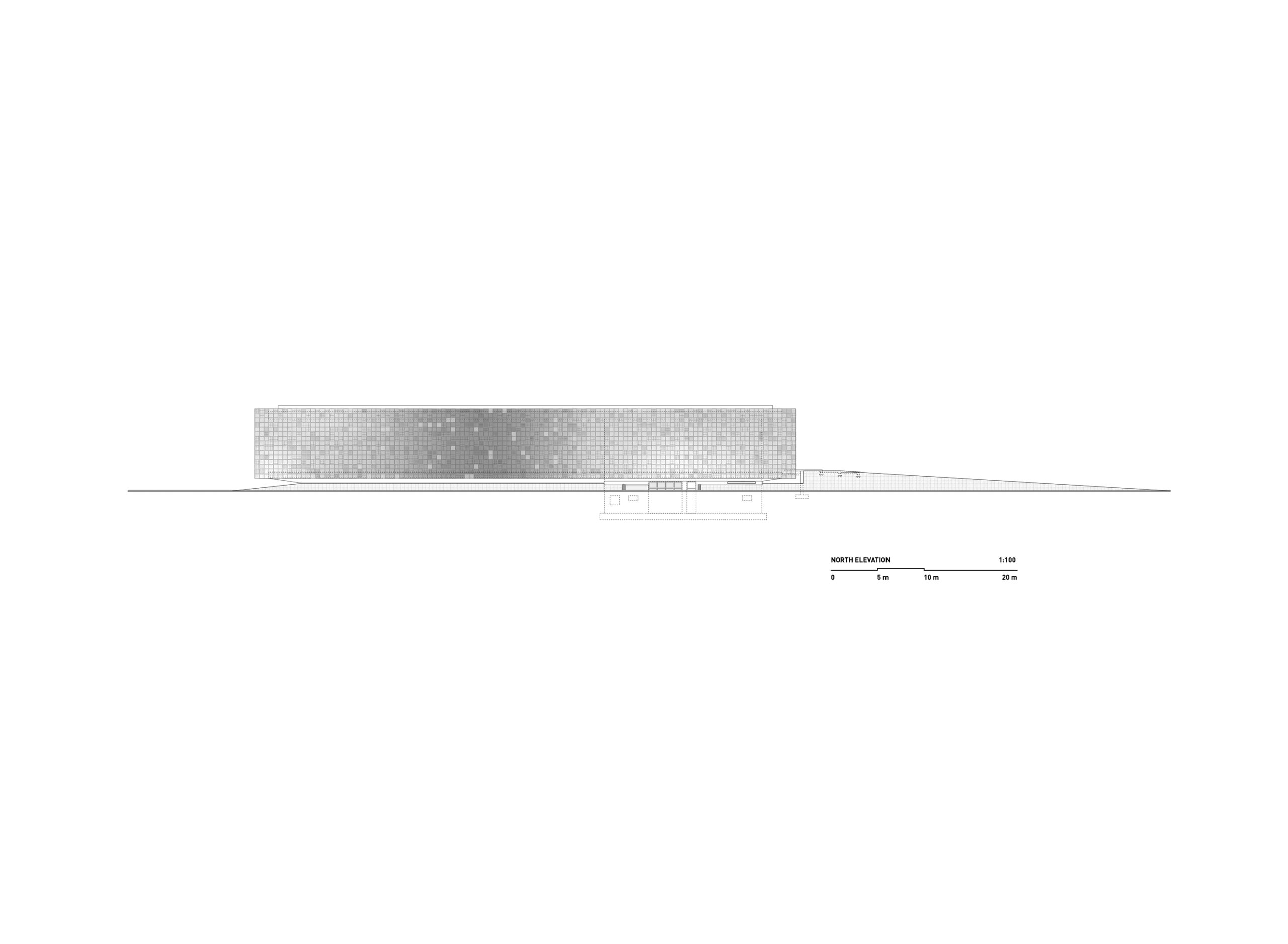
North Elevation
Section Detail
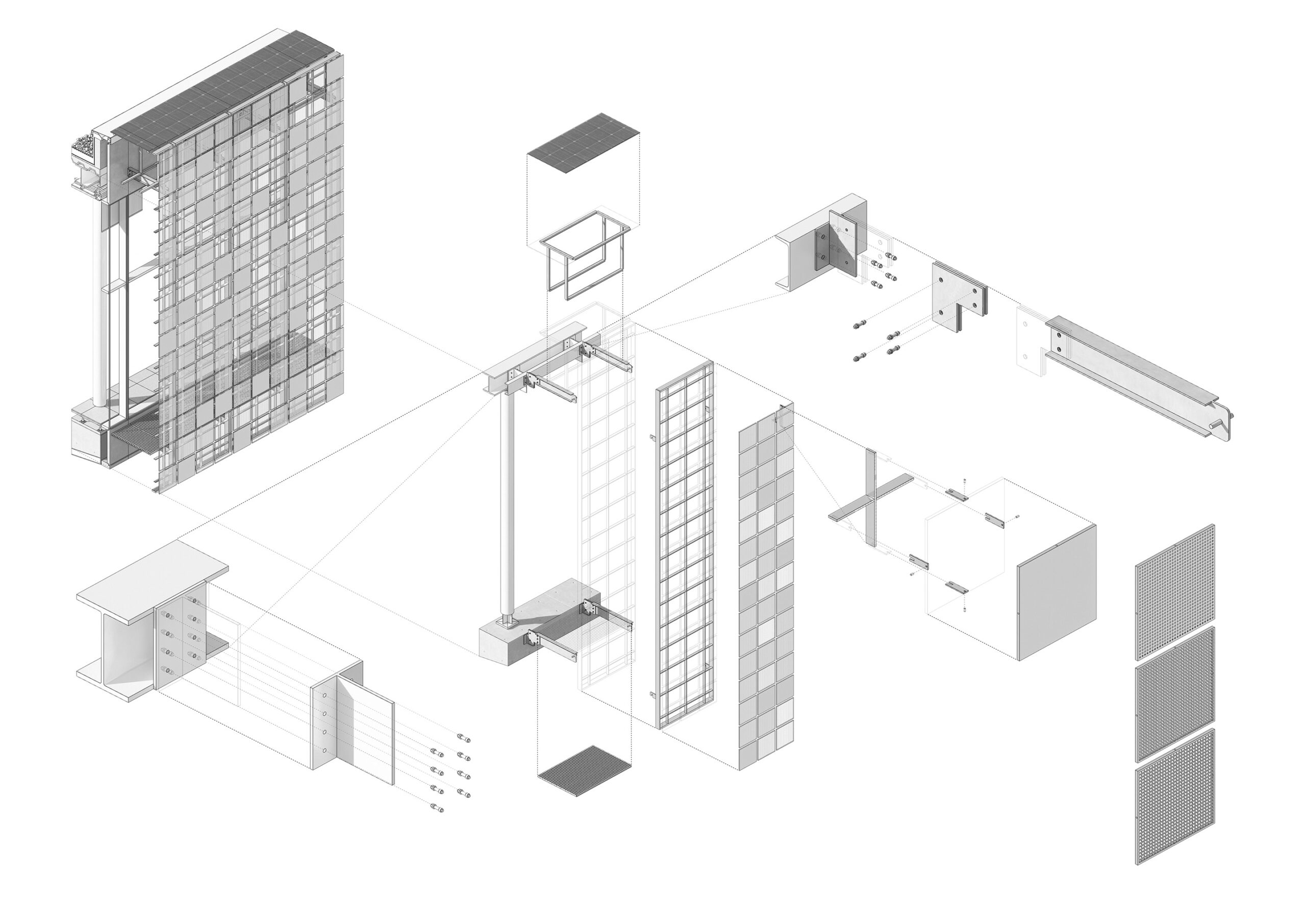
Facade Detail
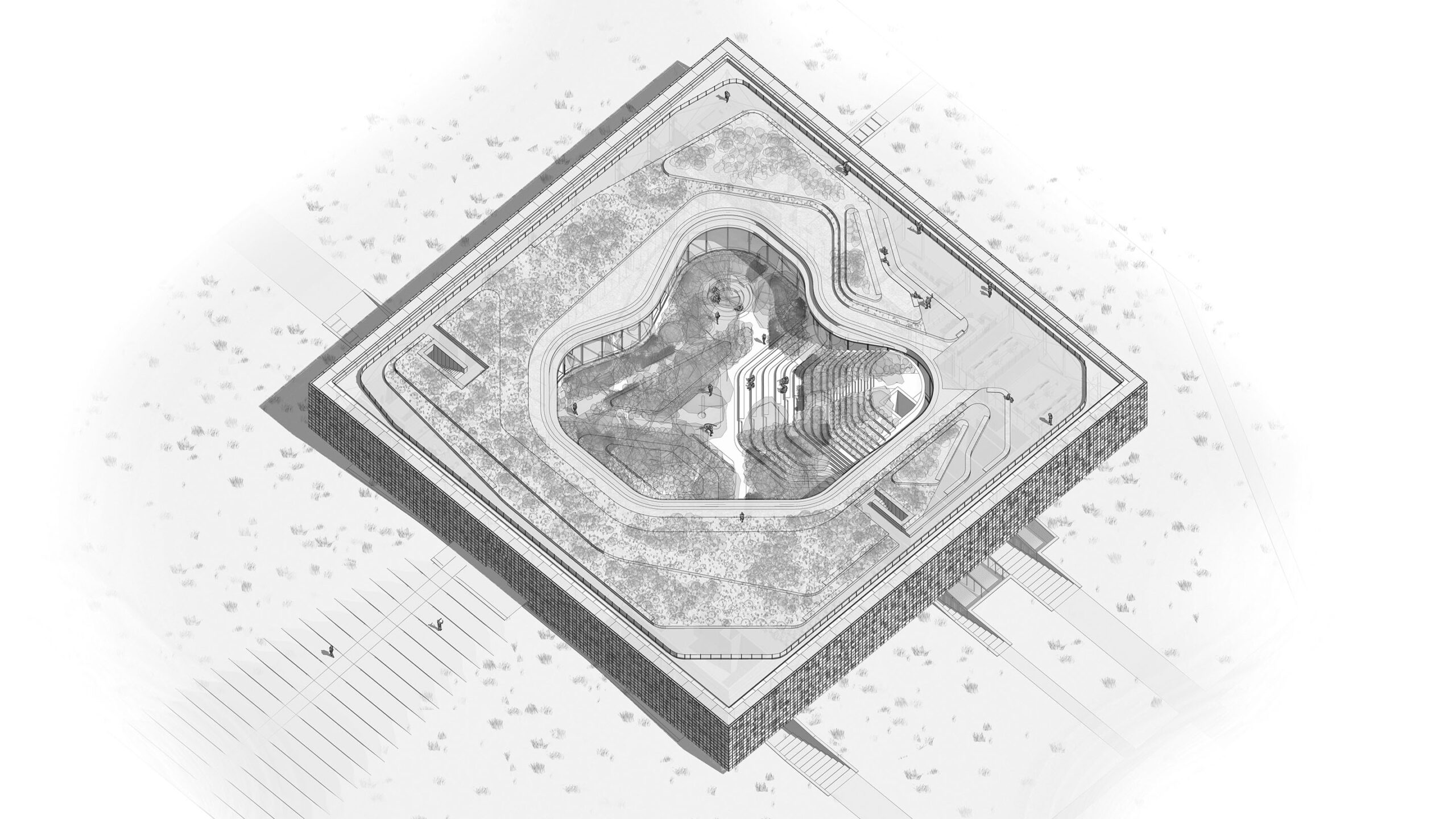
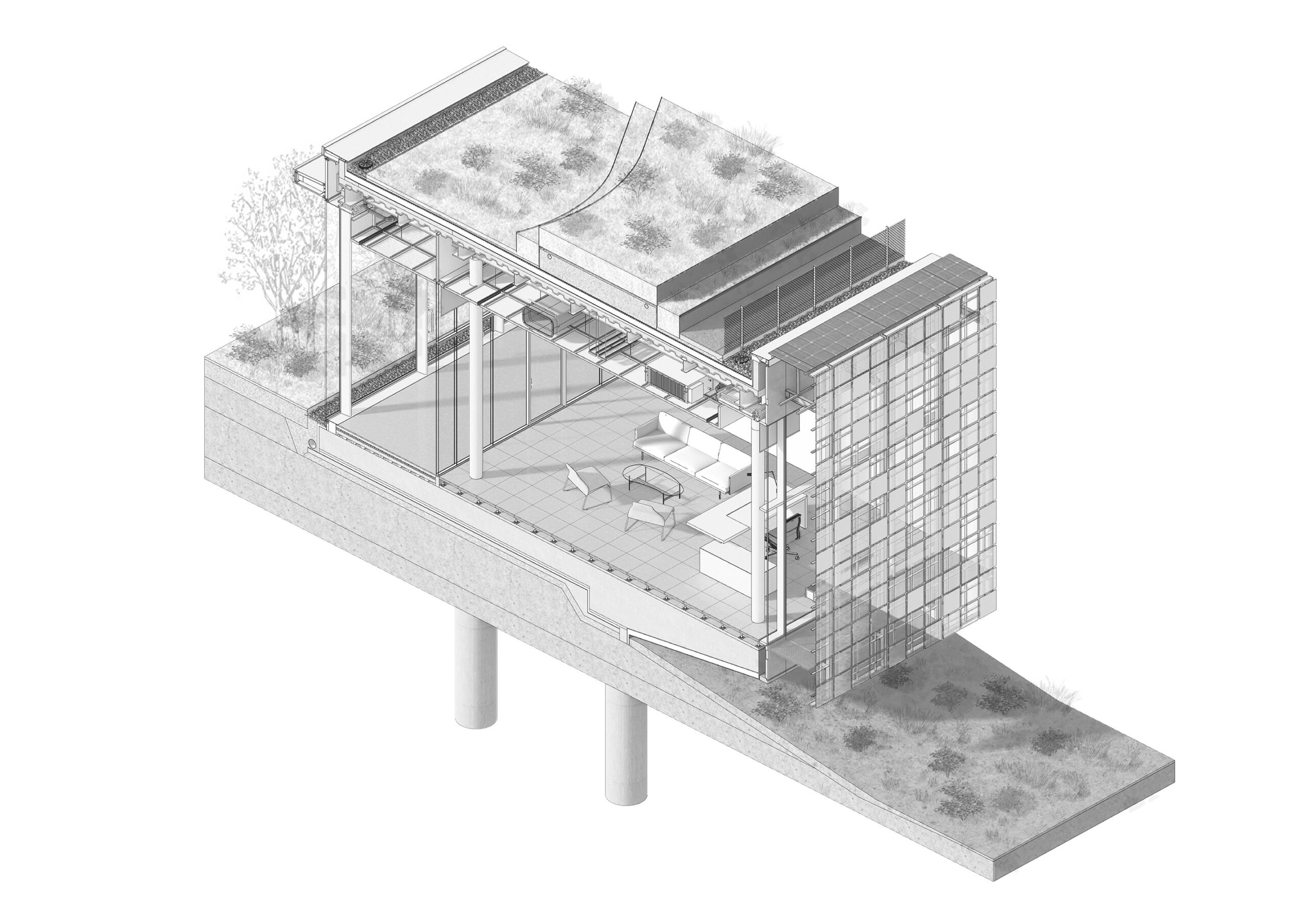
Axonometric View
以下、Bilgin Architectsのリリース(英文)です。
Kalyon Karapınar 1.350 MWp SPP – Central Control Building
Dialogue with the Earth
The building is located in Karapınar, the only region in Turkey with a desert climate. A 20-square-kilometer area in this region, which has become unsuitable for agriculture but holds significant energy potential due to its desert climate, is designated as an energy specialization area. Kalyon Energy has established a 1,350 MWp solar power plant in this region with the capacity to be the largest solar energy power plant in Europe. The operation of the plant is managed through the Central Control Building.
One of the primary functions of the building is to provide a technological infrastructure for controlling the plant. However, beyond providing this infrastructure, the building is considered as an interface representing sustainable energy technologies. In the challenging geography of a desert, an interface representing new energy technologies in a flat topography extending to the horizon.
This interface, an extension of the 3.2 million solar panels in the region, is positioned 40 meters away from the existing solar panels and in the same direction, in an area that will not cast shadows on the panels.
Dialogue with the Sky
The facades of the building are designed not only as an architectural element but also as a part of the earth and even the sky. Thanks to the high reflectance levels of the facades, the building becomes integrated with the geography it inhabits. The silhouette on the horizon continues on the facades.
While ensuring meticulous energy usage, the facade design also serves as a significant part of the building’s identity. The facade, consisting of two layers, is designed to minimize the radiation falling on the main facade. This secondary facade, which prevents high heat exposures for most of the year, is formed by 7,200 stainless steel panels at four different transparency levels. The facade design is based on parameters such as geographical direction, surrounding space, and optimum light requirements while creating a non-repetitive, unique pattern. Due to its reflective surface, the material changes color, providing a passive kinetic experience in a variety of lighting conditions throughout the day. On cloudy days, the boundaries of the facade become blurred. The facade becomes not only a part of the building but also a part of the sky. As the night falls, the facade turns inside out, contrasting with the experience in daylight and revealing the interiors and courtyard at night.
Ground Zero
This single-story building, detached from the ground, offers different experiential spaces at the intersection of humans, nature, and technology. While the facade takes on a reflective role for the surroundings, it forms a gentle barrier like a sheer curtain for the interior. The foyer area, where boundaries are blurred, welcomes visitors with a courtyard facade. This series of spaces extending to the cafeteria and multipurpose hall is designed with infrastructure that can host various organizations, events, panels, and workshops.
Oasis
A similar opposing situation in the design of the facade is also present in the courtyard of the building. In the center of the structure, a lush courtyard has been positioned, creating a contrast to the arid texture of the region. This courtyard, designed with endemic plant species requiring minimal irrigation and maintenance, establishes a sustainable microclimate. The courtyard determines all circulation areas and space hierarchies of the building while functioning as a sheltered resting and activity area against harsh climate conditions. While shaping circulation areas nested on its perimeter, the courtyard separates the building’s private and common areas.Project Location: Karapınar / Konya / Turkey
Project Office: Bilgin Architects
Architectural Project Team:
Caner Bilgin, Begüm Yılmaz Bilgin, Cem Katkat, Serenay Gürkan, Elif Özüçağlıyan, Yıldırım Erbaz
Client: Kalyon Energy
Main Contractor: Kalyon Construction
Interior Design Project: BILGIN
Structural Project: Attec Design
Mechanical Project: Okutan Engineering
Electrical Project: Erke Sustainable Building Design Consulting
Landscape Project: BILGIN + MY Landscape
Infrastructure Project: Diyap Project
Facade Consultancy: CWG Consultancy
Parametric Design Consultant: Cemal Koray Bingöl
Lighting Design: UKON Lighting Consultancy
Acoustic Project: Mezzo Studio
Fire Safety Consultant: Mercek Fire Consultancy
Graphic Design: Dilara Sezgin
Architectural Consultant: İdil Erkol Bingöl
3d Print Reception Desk Design and Manufacturing: Rolab Studio
Architectural Model: Serdar Albaz
Photography: Egemen Karakaya
Digital Art Works: Süleyman Yılmaz, Hakan Yılmaz, Ali Tan Uçer, Ecem Dilan Köse– Construction Start Year: 2021
– Construction End Year: September, 2023
– Site Area (m2): 38,000 m2
– Total Gross Floor Area (m2): 2,778 m2
Bilgin Architects 公式サイト
https://bilgin.studio/works/scadabuilding/




![[Interview]廃墟から地域資産へ、石と建築の時間軸を再統合する〈大谷グランド・センター〉。建築家・針谷將史氏が語る再生のプロセス](https://magazine-asset.tecture.jp/wpcms/wp-content/uploads/2026/06/07172730/003_ASA4434-900x600.jpg)