
![[Interview]iF Design代表のウヴェ氏に聞く、建築と都市の2026年メガトレンド](https://magazine-asset.tecture.jp/wpcms/wp-content/uploads/2026/07/23221054/iF_AwardCeremony_2026_AwardCeremony-82-900x600.jpg)
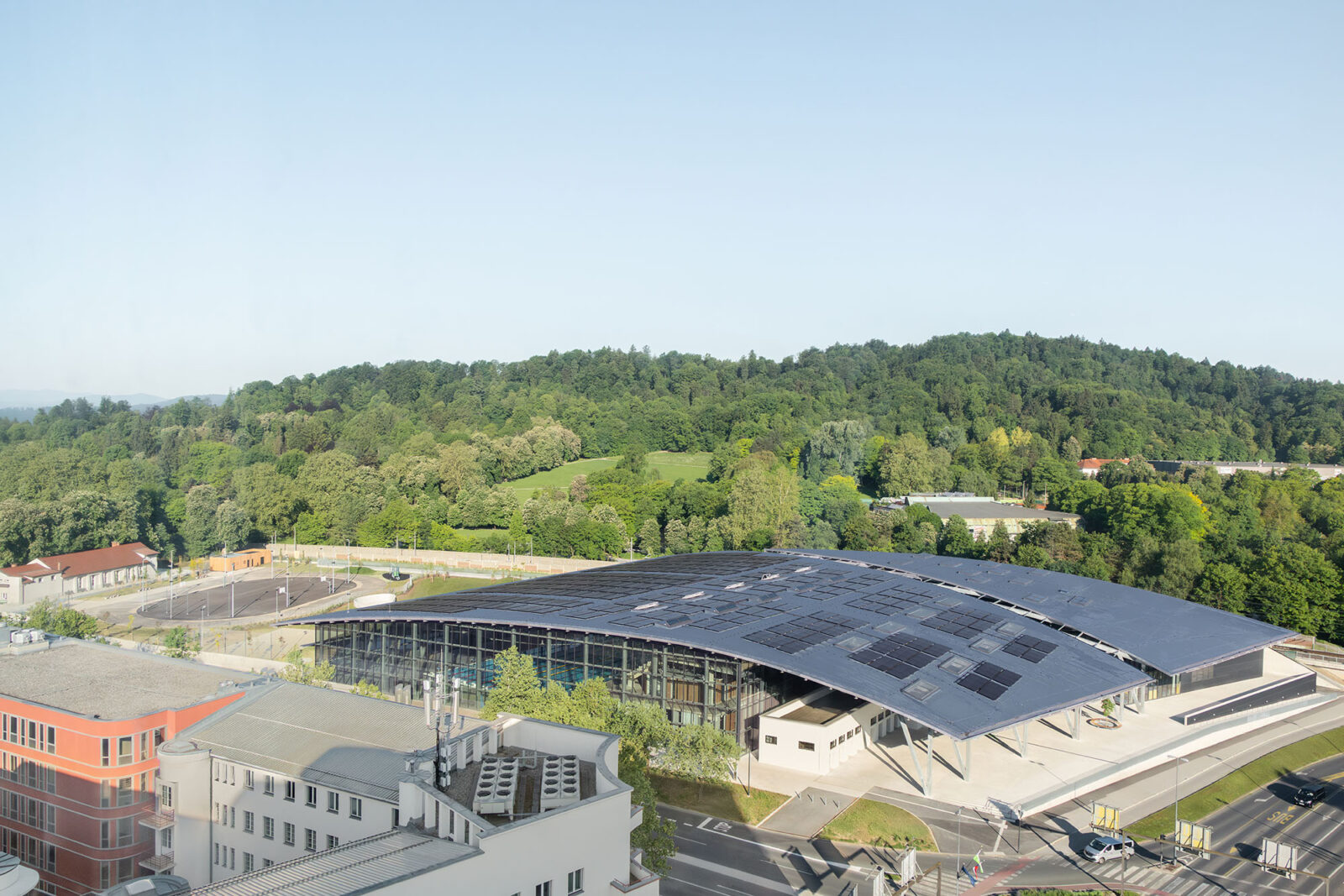
歴史ある屋外プールを再生する巨大な屋根 - スポーツを軸に陸地の孤島を都市に再統合するプロジェクト〈イリリヤ・スポーツシティ〉
Photography by anaskobe
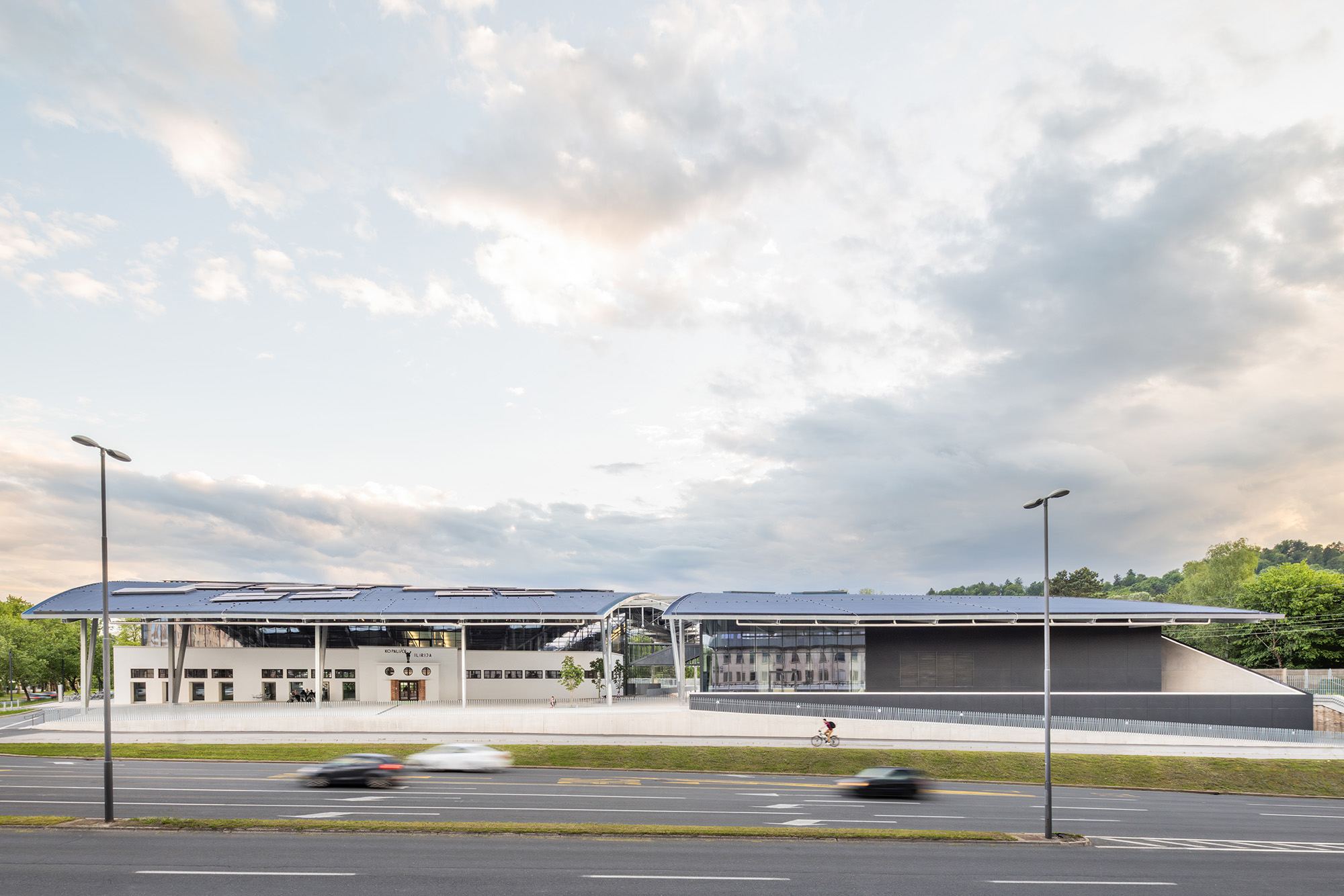
スロベニアの首都リュブリャナに建つ〈イリリヤ・スポーツシティ(Ilirija Sports City)〉は、約100年の歴史ある屋外プールを都市の新たな一部として生まれ変わらせた、スポーツ・文化・市民活動を横断する多目的複合施設です。
四半世紀の時をかけて完成したプロジェクトであり、オーストリアの建築事務所 LORENZATELIERSが設計しました。
注目ポイント
- 幹線道路に囲まれた「孤立した土地」を、再び都市へ統合する都市計画的アプローチ
- 計画の長期化による要件の変化と、一貫し続けた都市開発コンセプト「スポーツ都市」
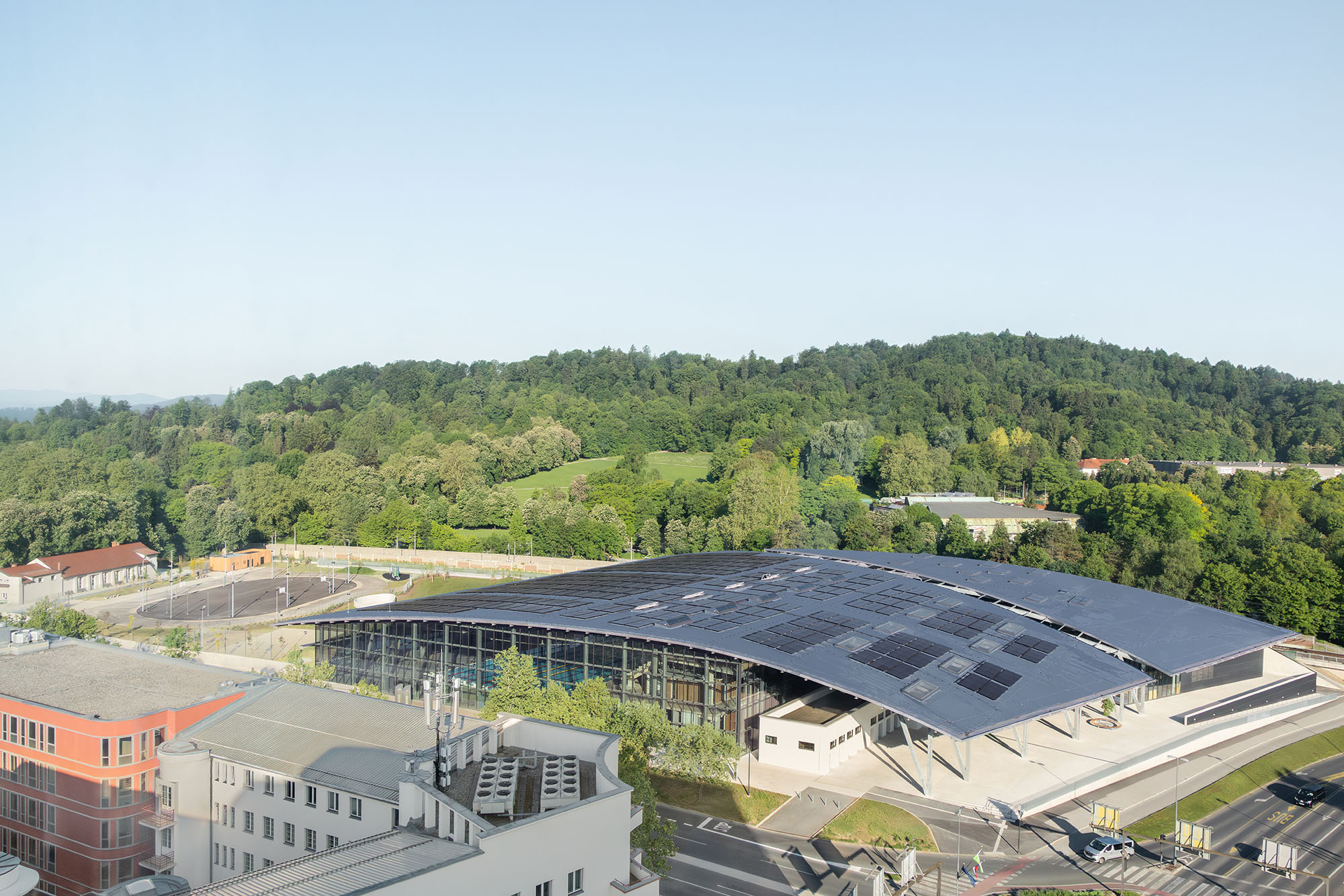
- 総面積12,000m²を覆う、象徴的な「アイコン・ルーフ」
- 化石燃料を完全排除した持続可能なスポーツ施設の先駆事例
(以下、LORENZATELIERSから提供されたプレスキットのテキストの抄訳)
Photography by anaskobe
リュブリャナに誕生した「都市の要塞」
2025年春、スロベニアの首都リュブリャナにオープンした〈イリリヤ・スポーツシティ〉は、四半世紀をかけて完成したものであり、約100年の時を経て、歴史ある屋外プールが都市の新たな一部として生まれ変わったものでもある。
交通量の多い幹線道路に囲まれながらも独自のアイデンティティを確立し、「都市の要塞」とも呼ばれるこの施設は、住民のウェルビーイングのために設計された。ここでは多様なスポーツが楽しめるだけでなく、フェスティバルやプレゼンテーション、文化イベントなども開催可能である。
Photography by anaskobe
Photography by anaskobe
歴史的背景:スポーツ都市の原点
1929年にティヴォリ公園北東部に完成した〈イリリヤ屋外プール〉は、リュブリャナの新たなスポーツのランドマークとなった。プールにはスポーツ施設や観覧席、文化・商業イベント用の仮設ホール群、展示棟などが設けられていた。
1942年には鉄道の移設により、ラテルマン通りがティヴォリ公園への主要アクセス路としての役割を失い、イリリヤ地区は再び公園から切り離された。その後、1945年にティヴォリ公園は純粋な緑地としての性格を取り戻した。
Photography by anaskobe
Photography by anaskobe
スロベニア共和国の成立(1991年)を契機に、近代的なスポーツインフラ整備が注目されるようになったが、屋外プールは老朽化が進み、改修は非経済的と判断された。1995年、リュブリャナ市は老朽化したプール跡地にオリンピック規格の50m競泳センターを建設する決定を下した。これは中心部立地を重視した戦略的な選択であった。
2000〜2001年には、スロベニア初の国際建築コンペが開催され、LORENZATELIERSが優勝し、ヴィクトリヤ・ポトチニク市長の下で多様なバリエーションを含むPPP(官民連携)モデルの開発が進められた。2007年、新市長ゾラン・ヤンコヴィッチは商業・小売スペースを排除し、規模を縮小してプロジェクトを実施する方針を決定した。
Photography by anaskobe
2011年にはブロウデック棟が文化財指定を受けたことが、プロジェクトの転換点となった。2012年には新たな開発計画が法的効力をもち、2018年に総合設計事務所Elea iCとLORENZATELIERSが正式に実施を委託され、2021年から2025年にかけて建設が進み、2025年3月の開業を迎えた。
なお、1995年に既存立地を選択した市議会の決定は、今日では環境に配慮した都市計画として先見性があったと評価されている。交通量の減少や公共交通・自転車・徒歩でのアクセス性、エネルギー中立のコンセプト、複合利用による運営コスト削減などが、その有効性を裏付けている。
Photography by anaskobe
都市構想:孤立した土地を再び都市へ
本プロジェクトの設計は、「交通量の多い道路に囲まれた孤立した土地を、いかにして都市の一部として再統合するか」という課題のもと、当初から都市計画として構想されたものである。かつて公園と都市が強く結びついていた関係を再生することが重要なテーマであった。
2000〜2001年に選ばれた優勝案は、ランドアート的アプローチを採用していた。ホールとプールを覆う歩行者通行可能な巨大屋根によって限られたオープンスペースを拡張し、大型スライド式屋根によって屋内ホールを屋外プールへと転換する仕組みを提案した。
Photography by anaskobe
Photography by anaskobe
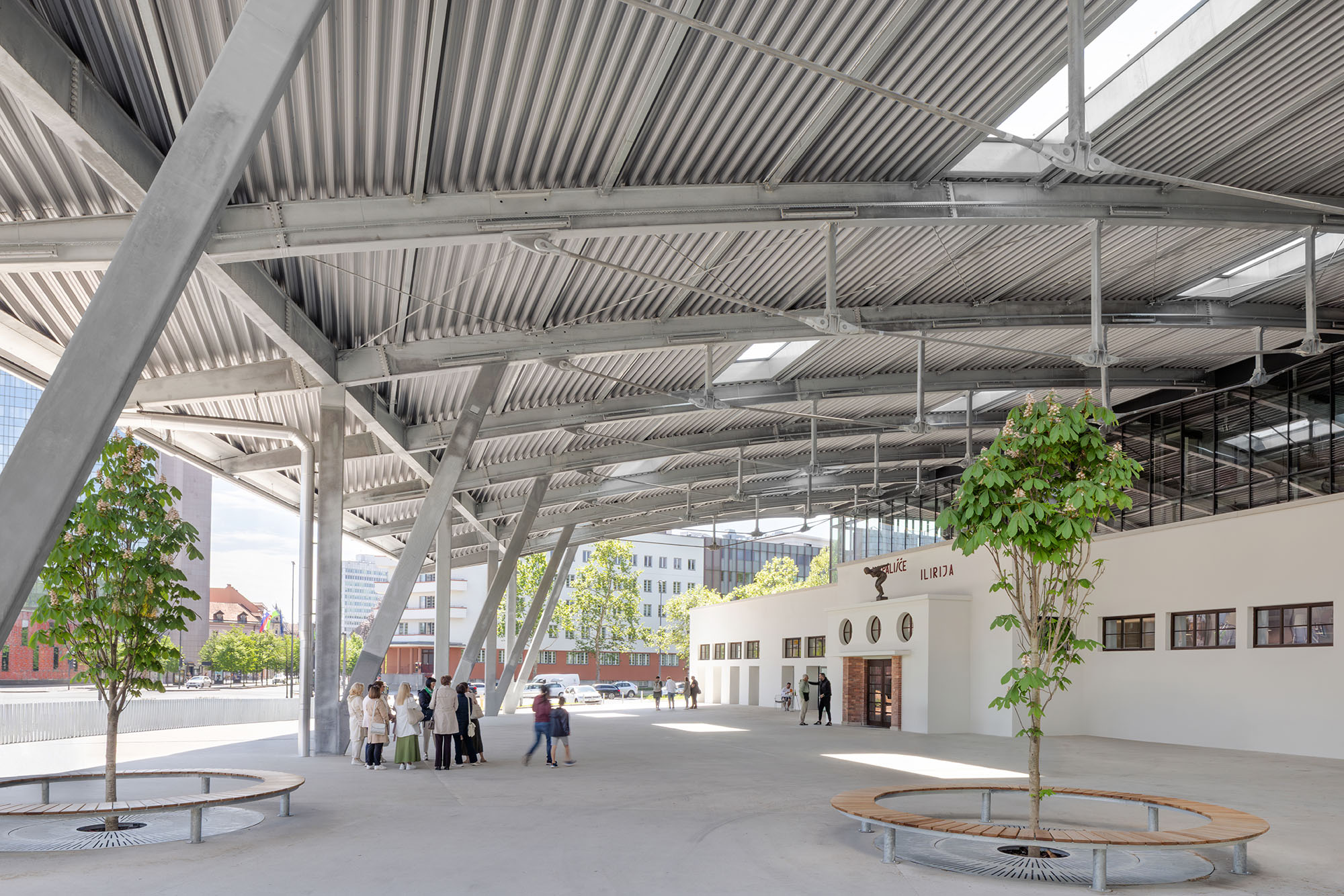
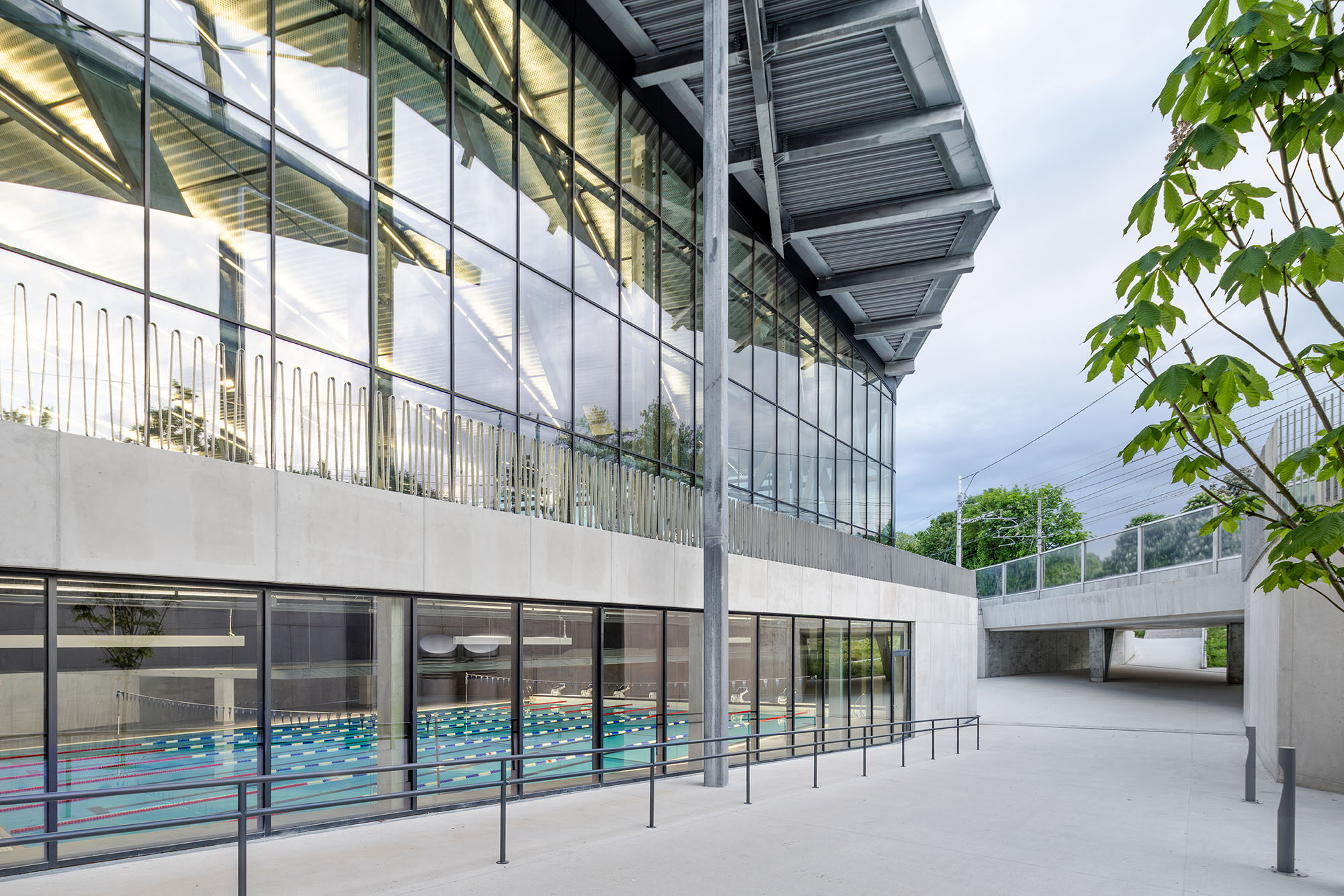
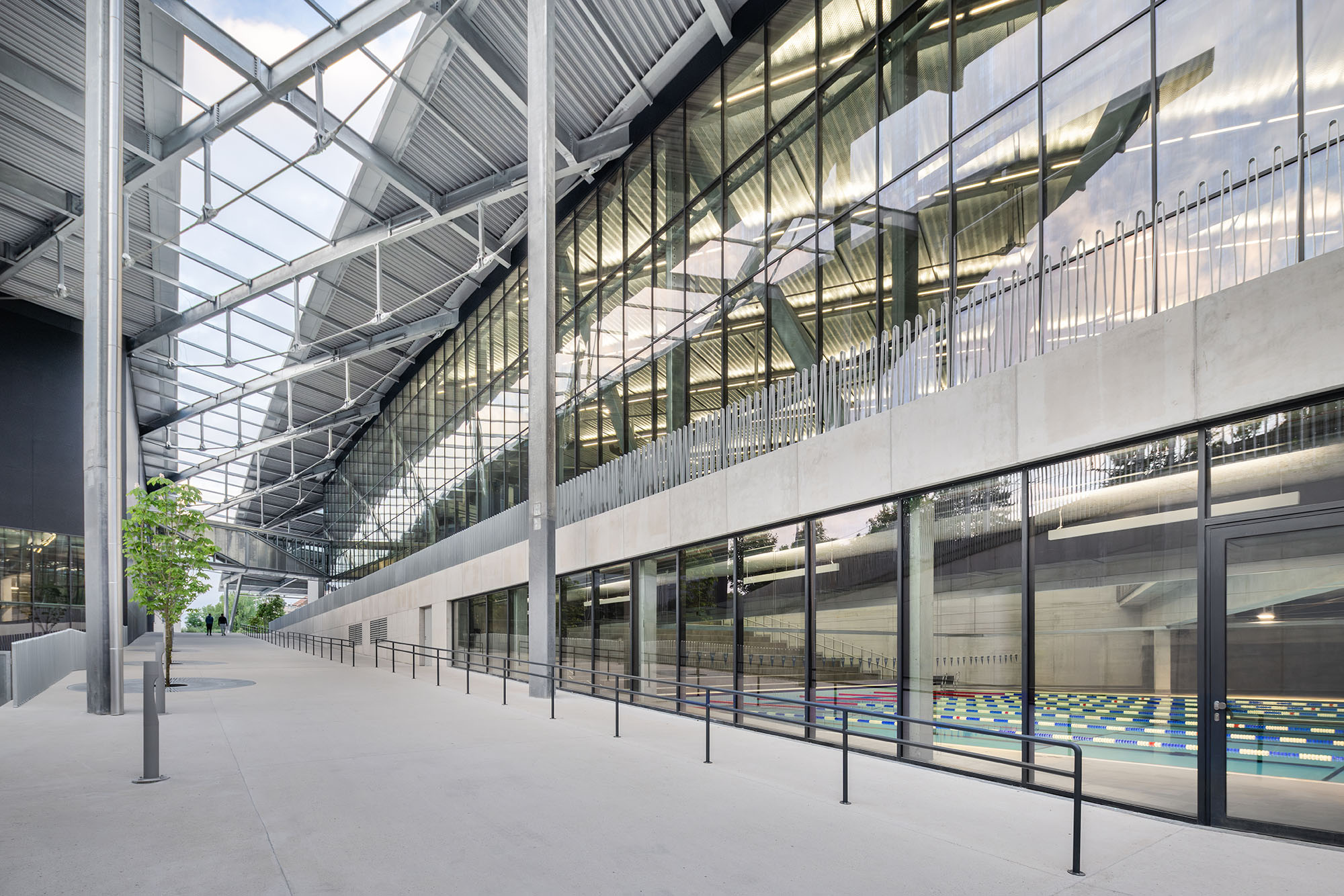
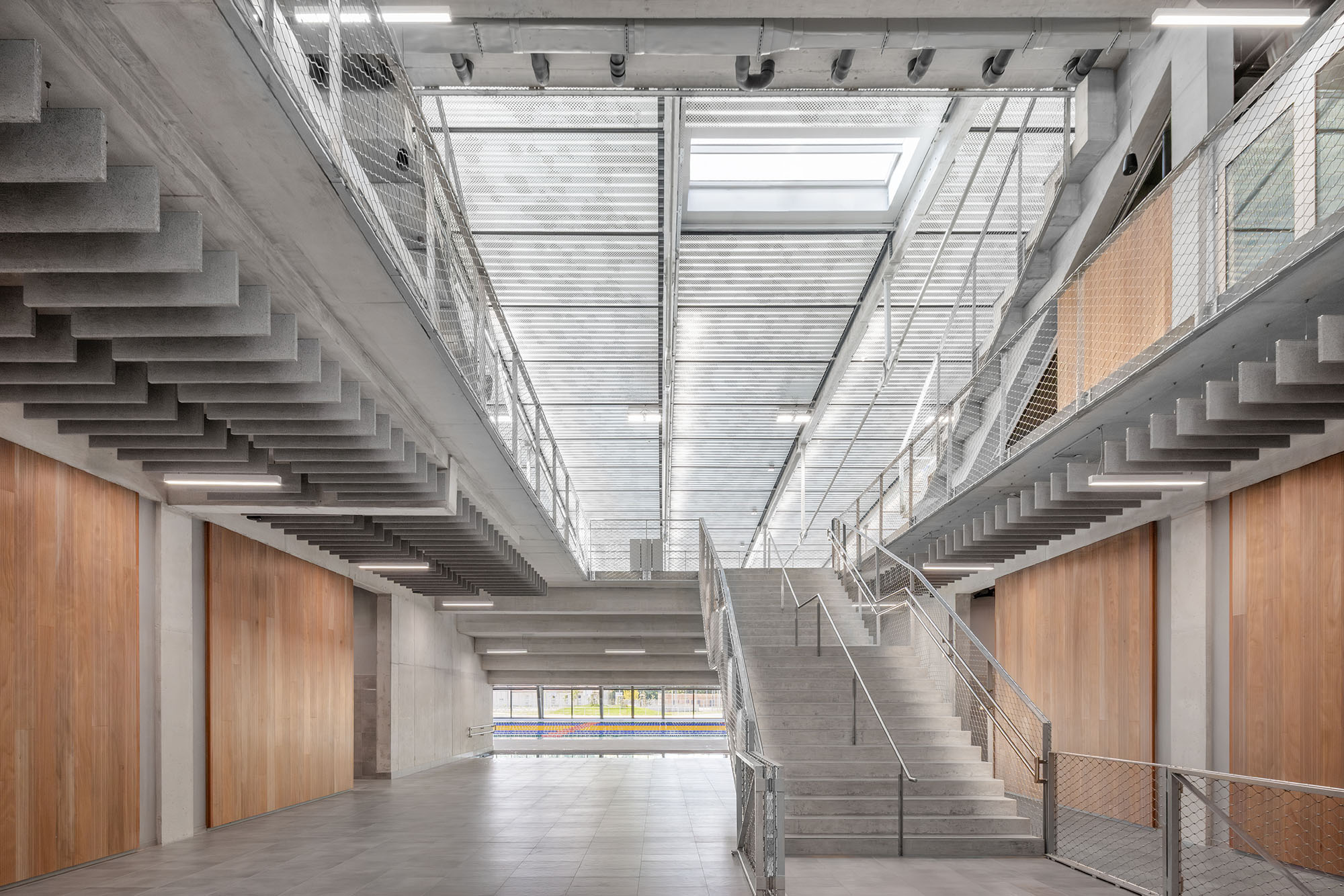
スポーツセンターを斜めに貫く復元されたラターマン通りは、都市的にも象徴的にも極めて重要な軸線である。さらに建物前には公共広場が新設され、都市と公園をつなぐ新たな結節点となった。また、ホールの多目的利用(スポーツ・文化・コンサート・イベント)により運営コストを削減し、施設の経済性を実現した。
長年にわたるプロジェクトのため、PPPモデルが検討され、記念物保護要件が統合され、化石燃料が排除されるなど、プログラムや枠組み条件は変化した。しかし核となるスポーツ都市という都市開発コンセプトは、これらすべての変遷を経ても一貫している。
Photography by anaskobe
Photography by anaskobe
アイコン・ルーフ:都市を覆う象徴的な屋根
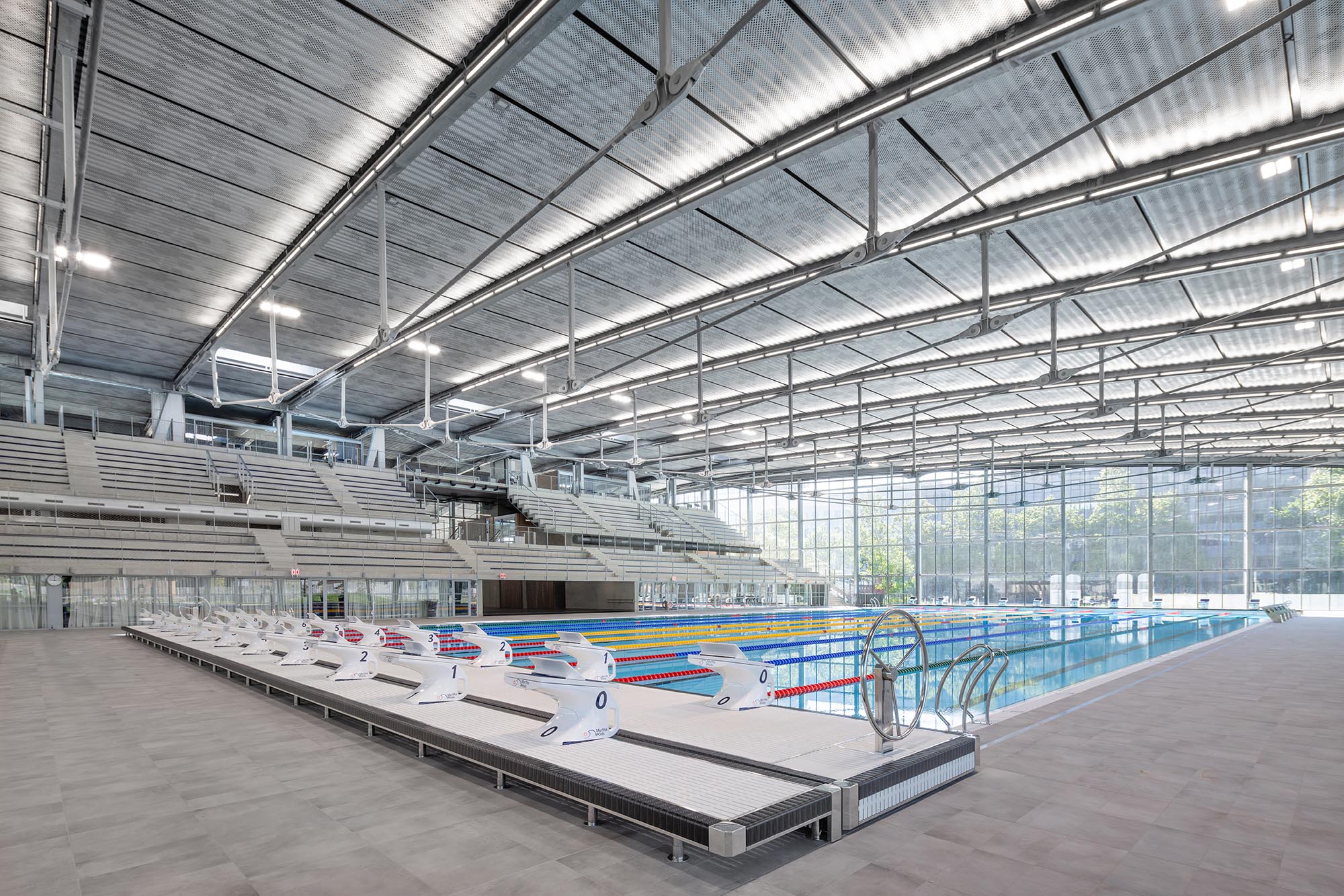
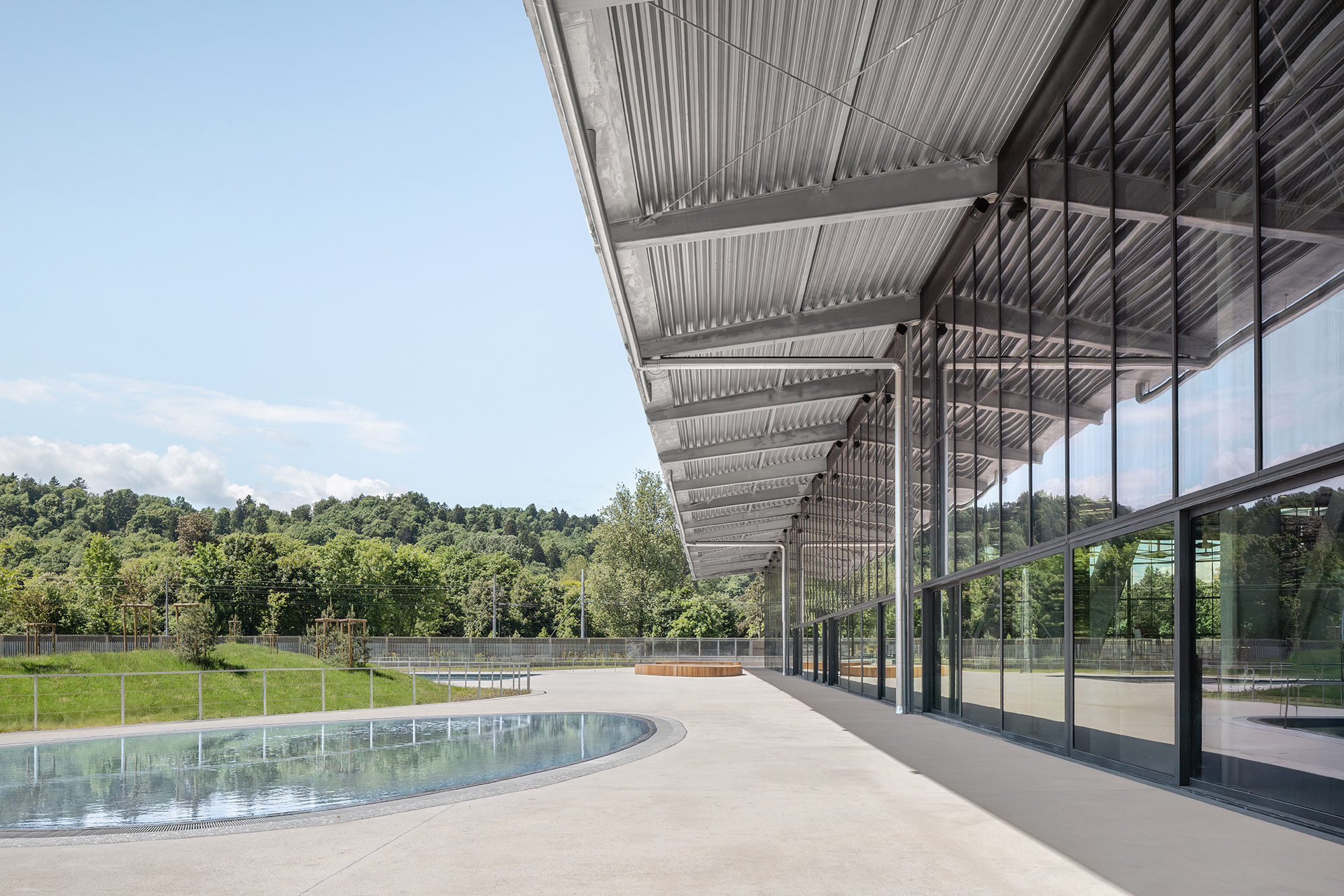
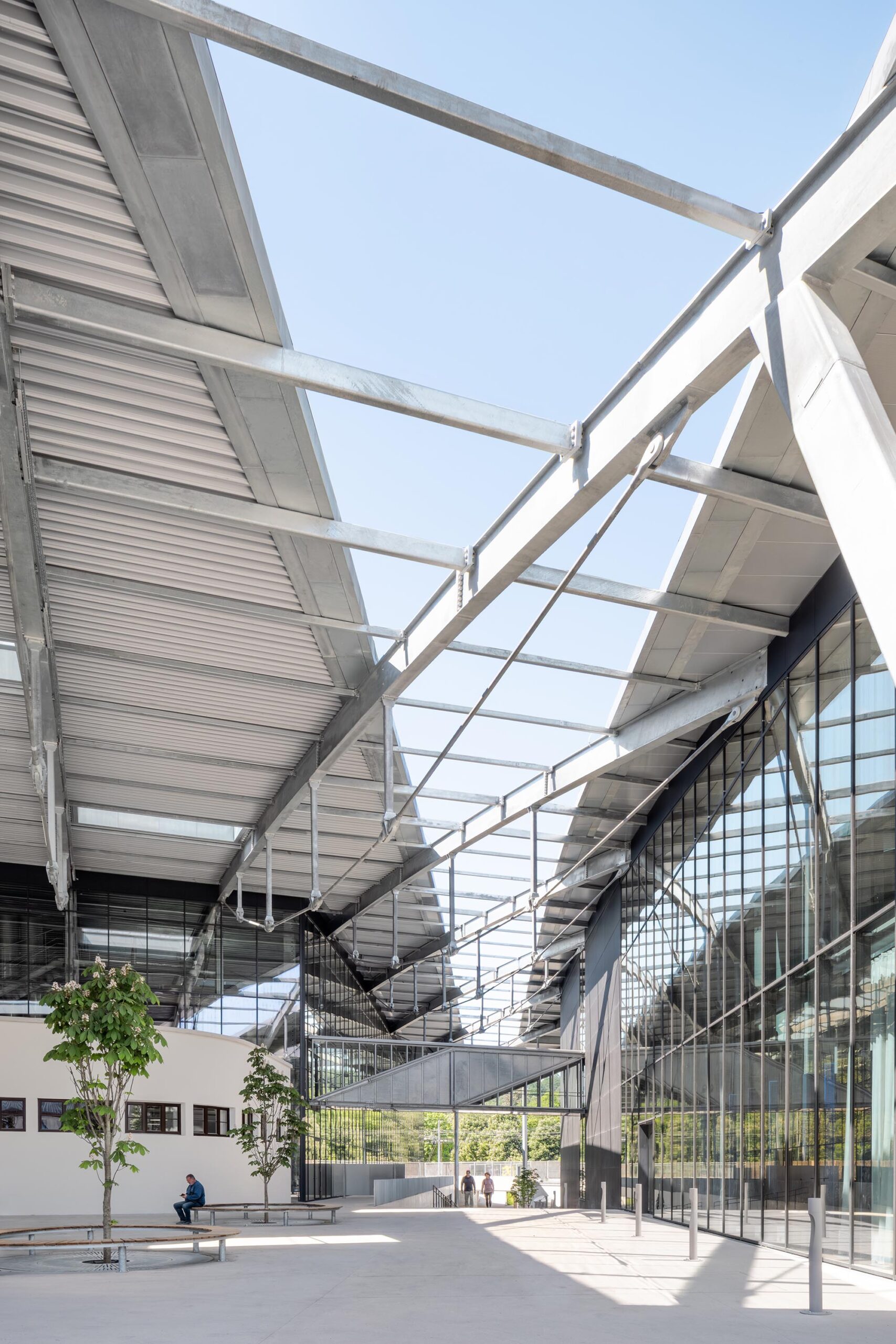
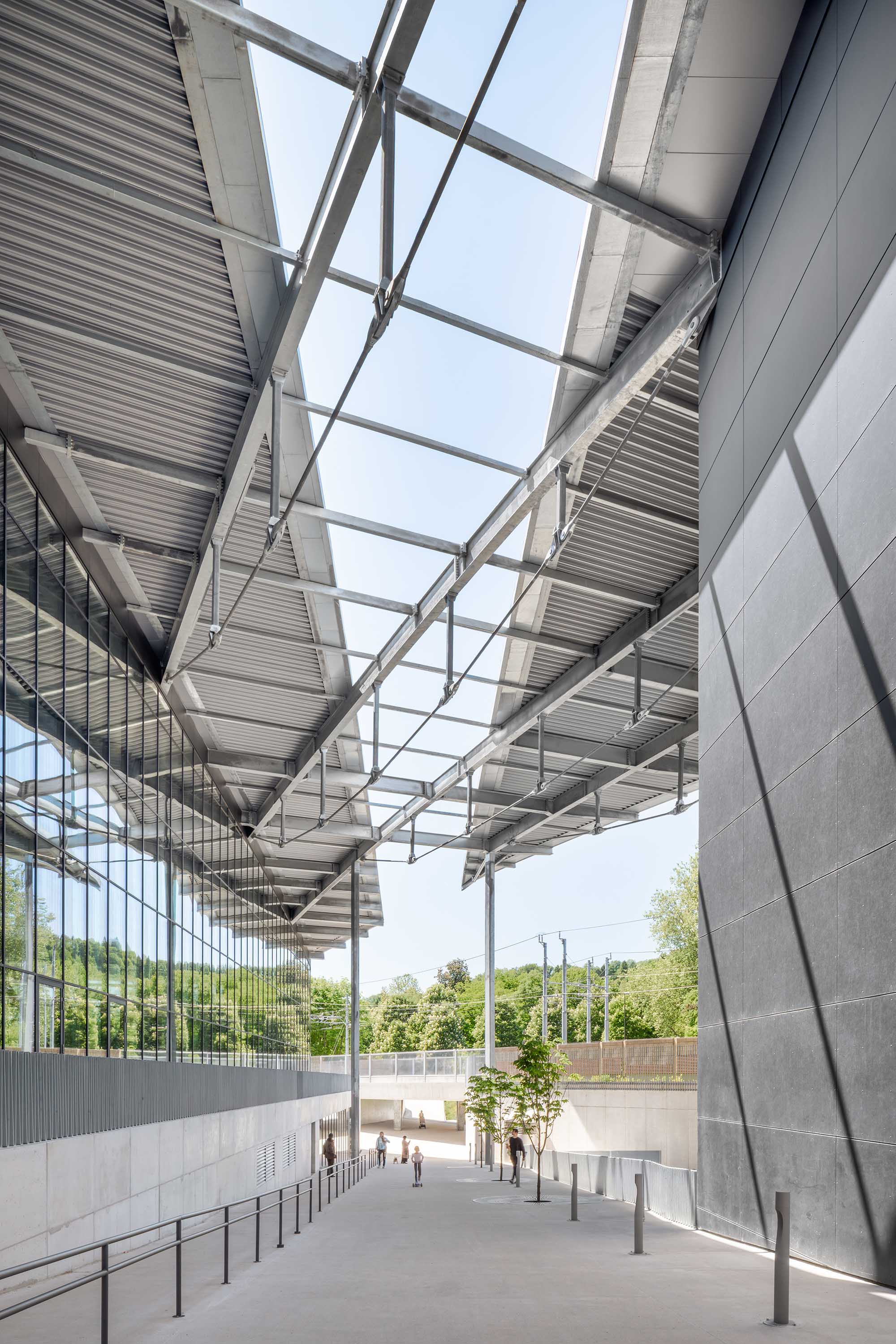
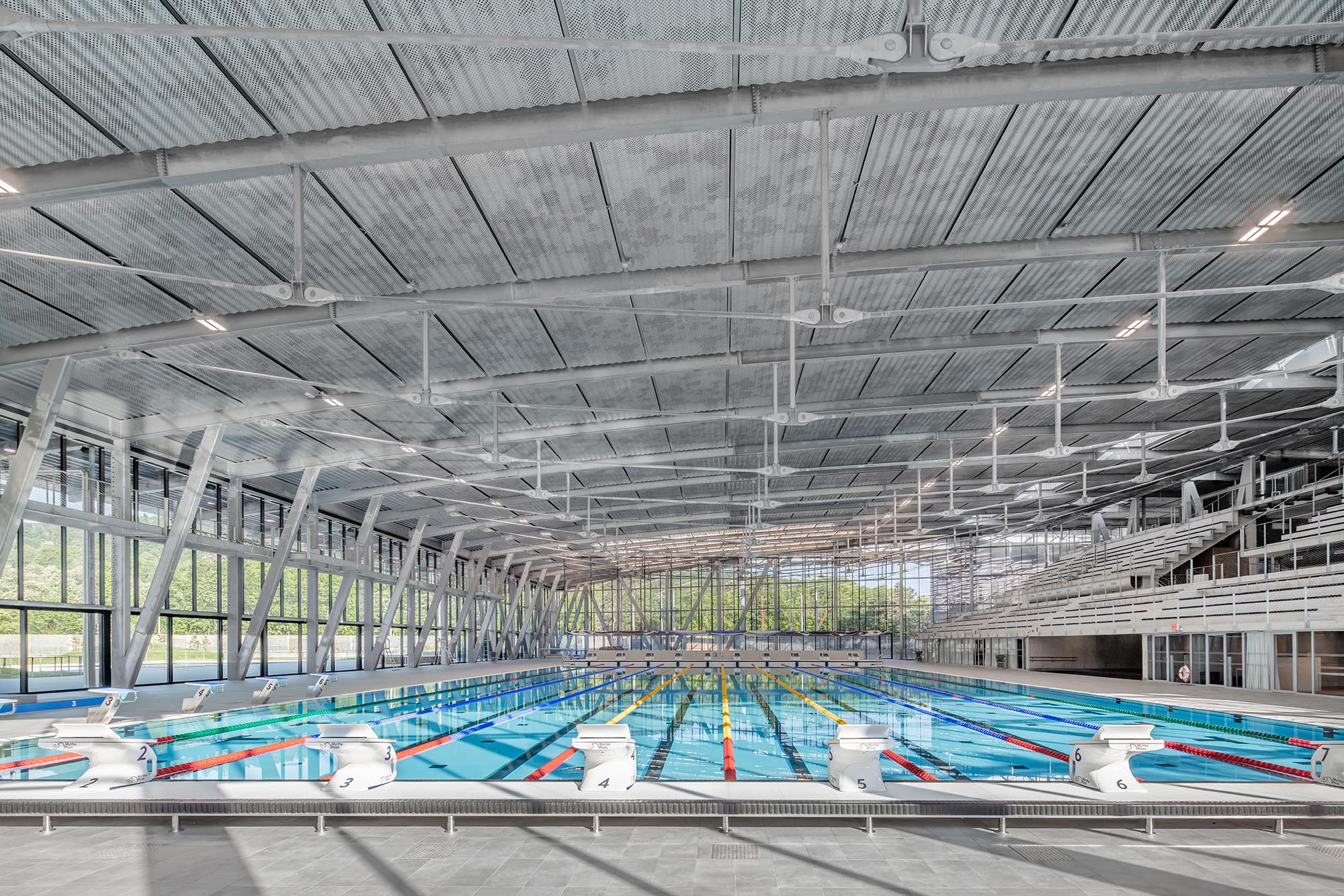
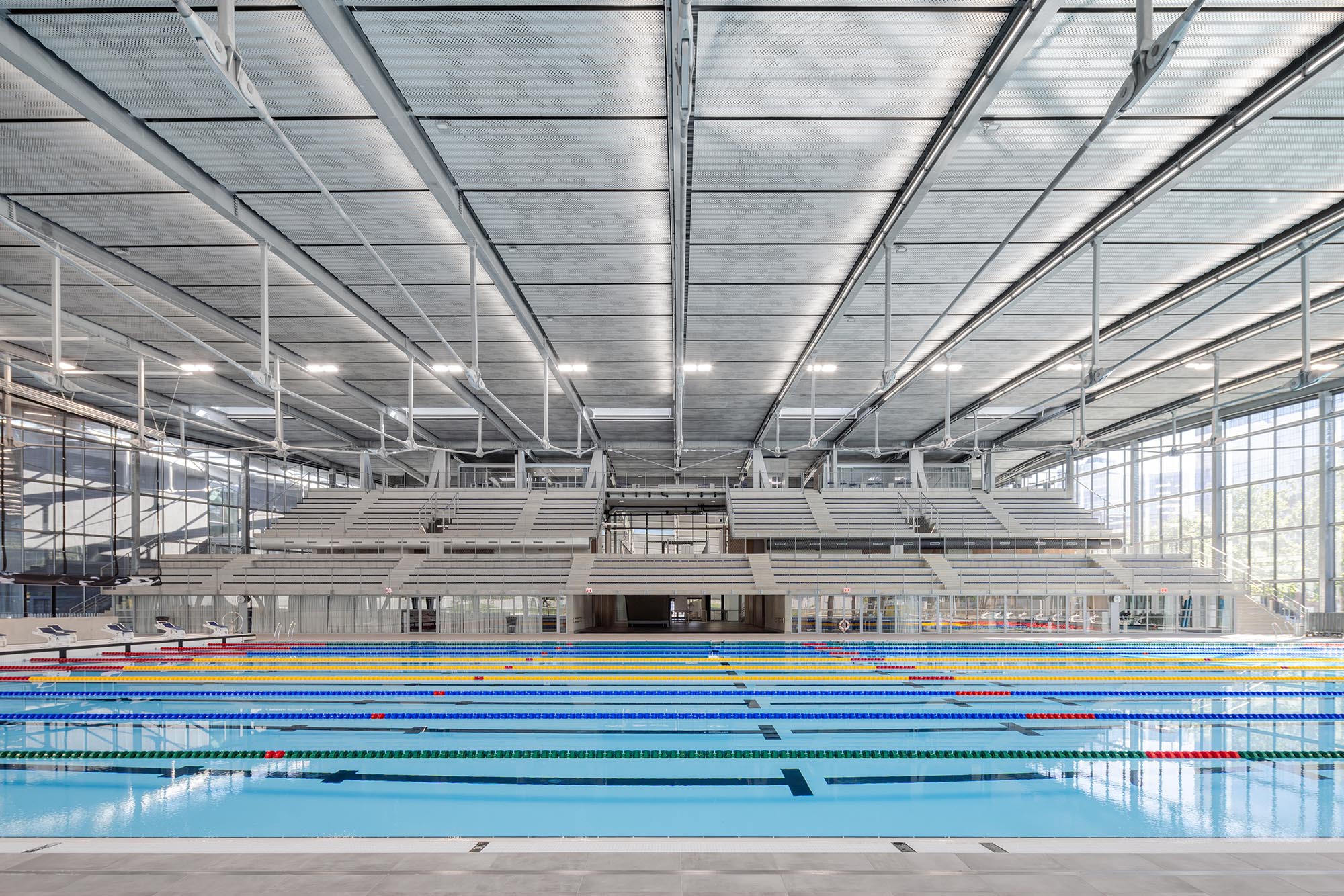
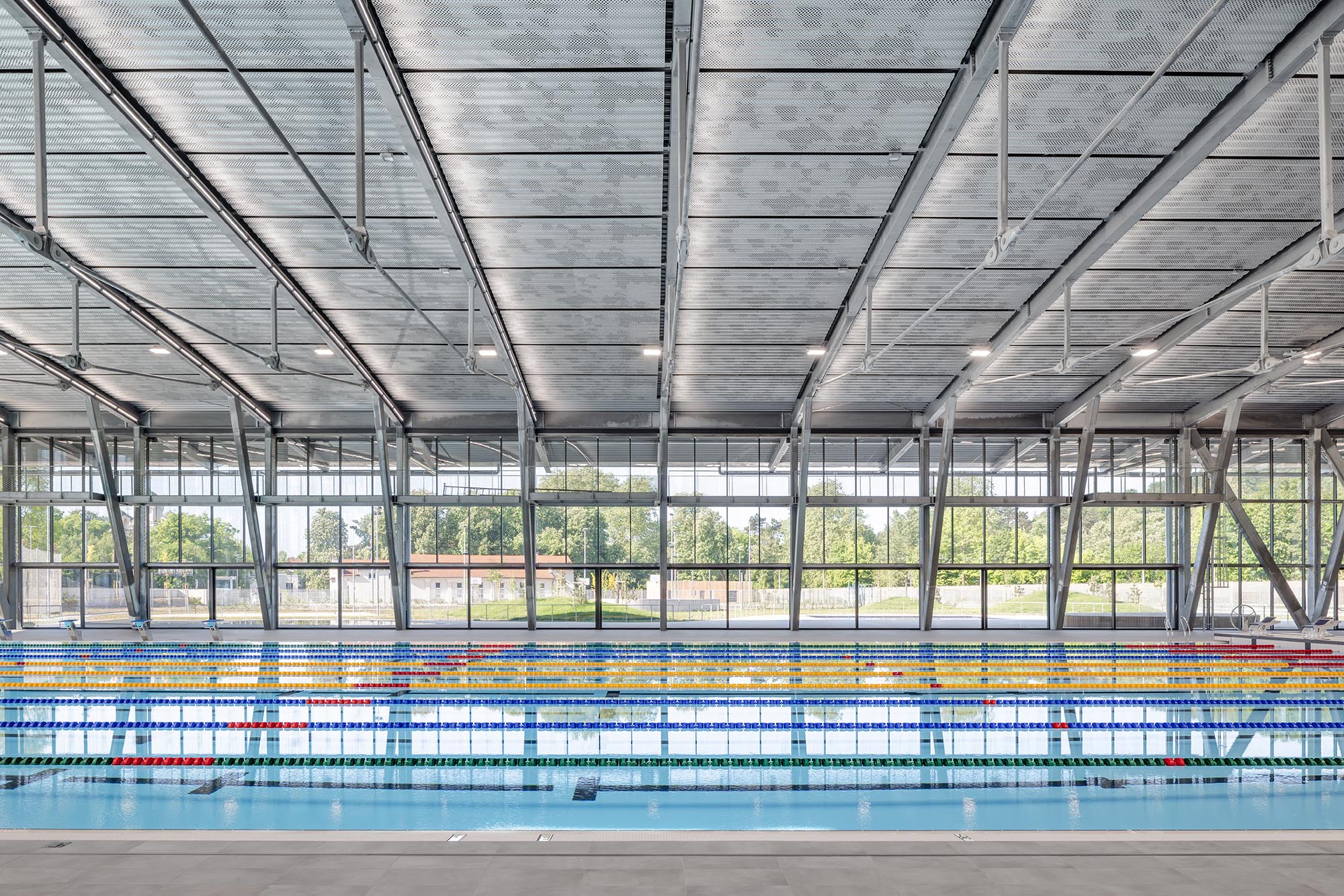
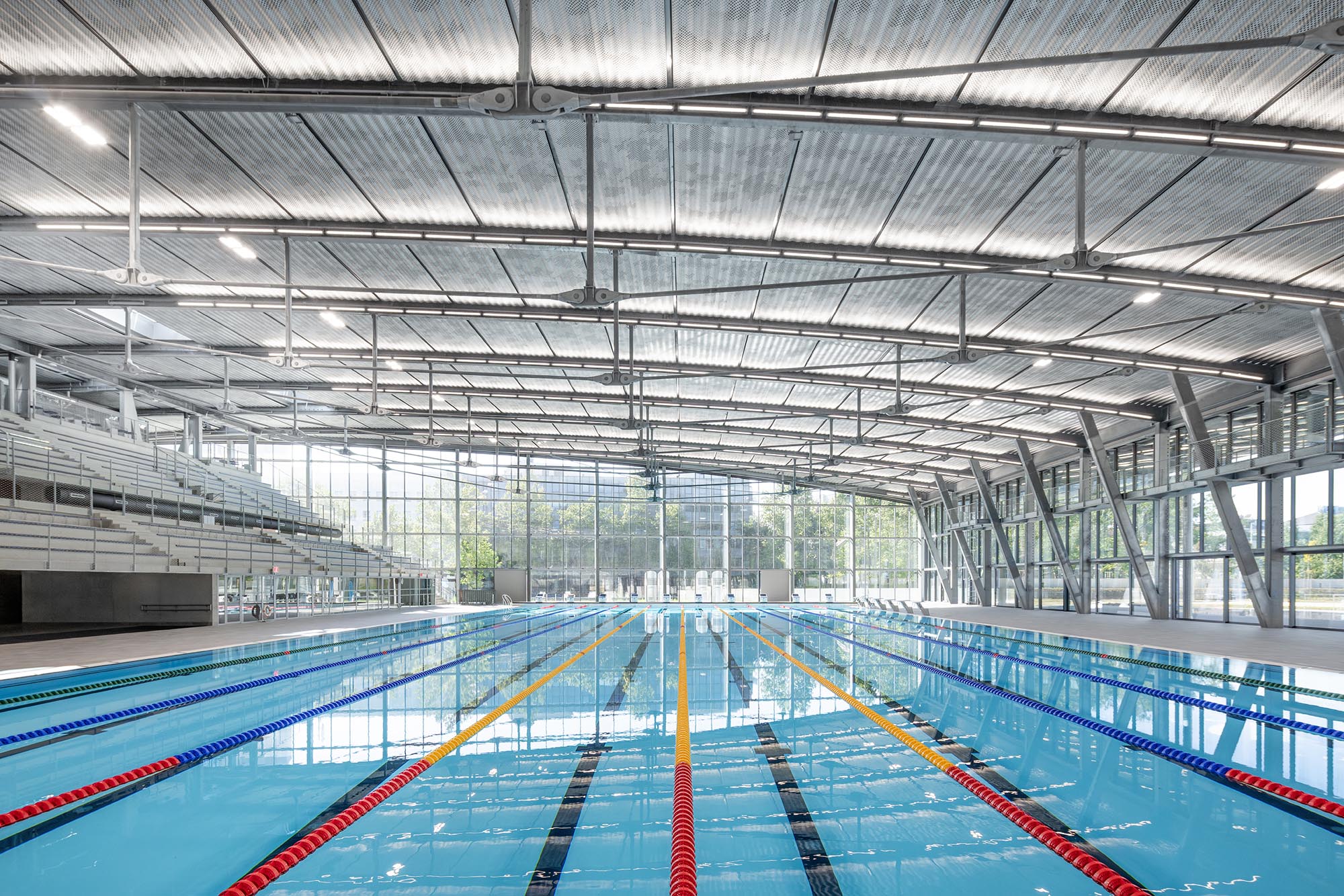
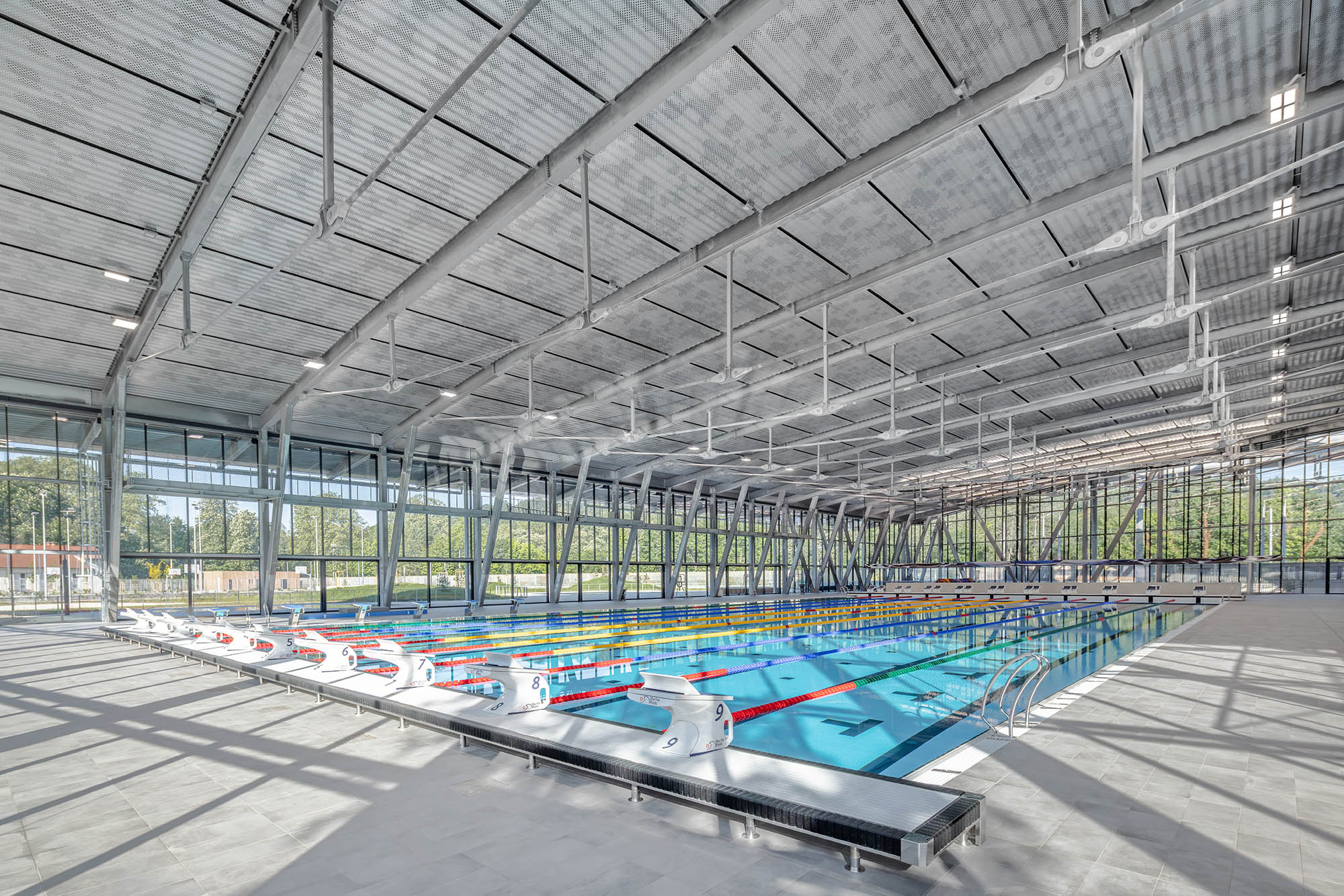
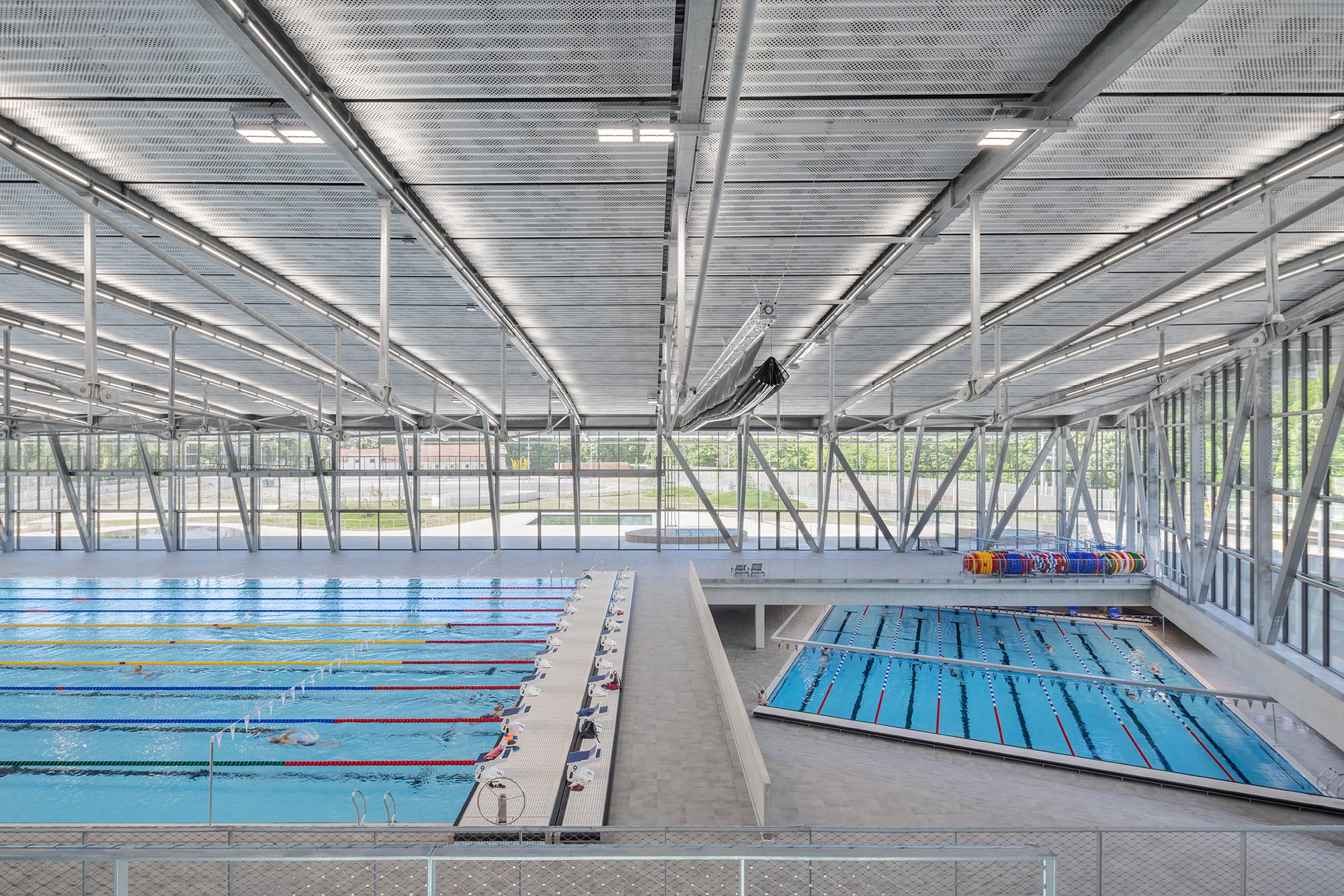
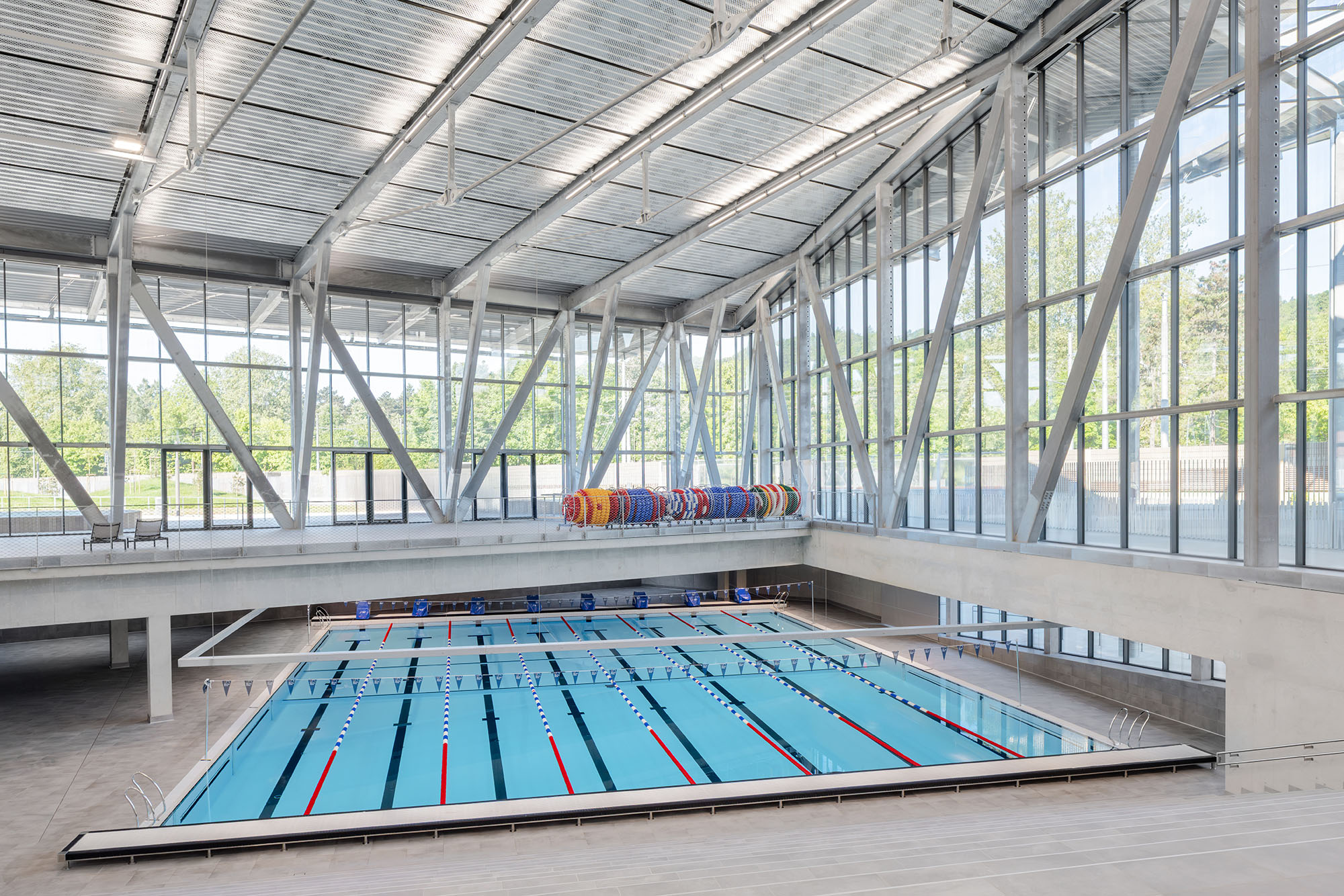
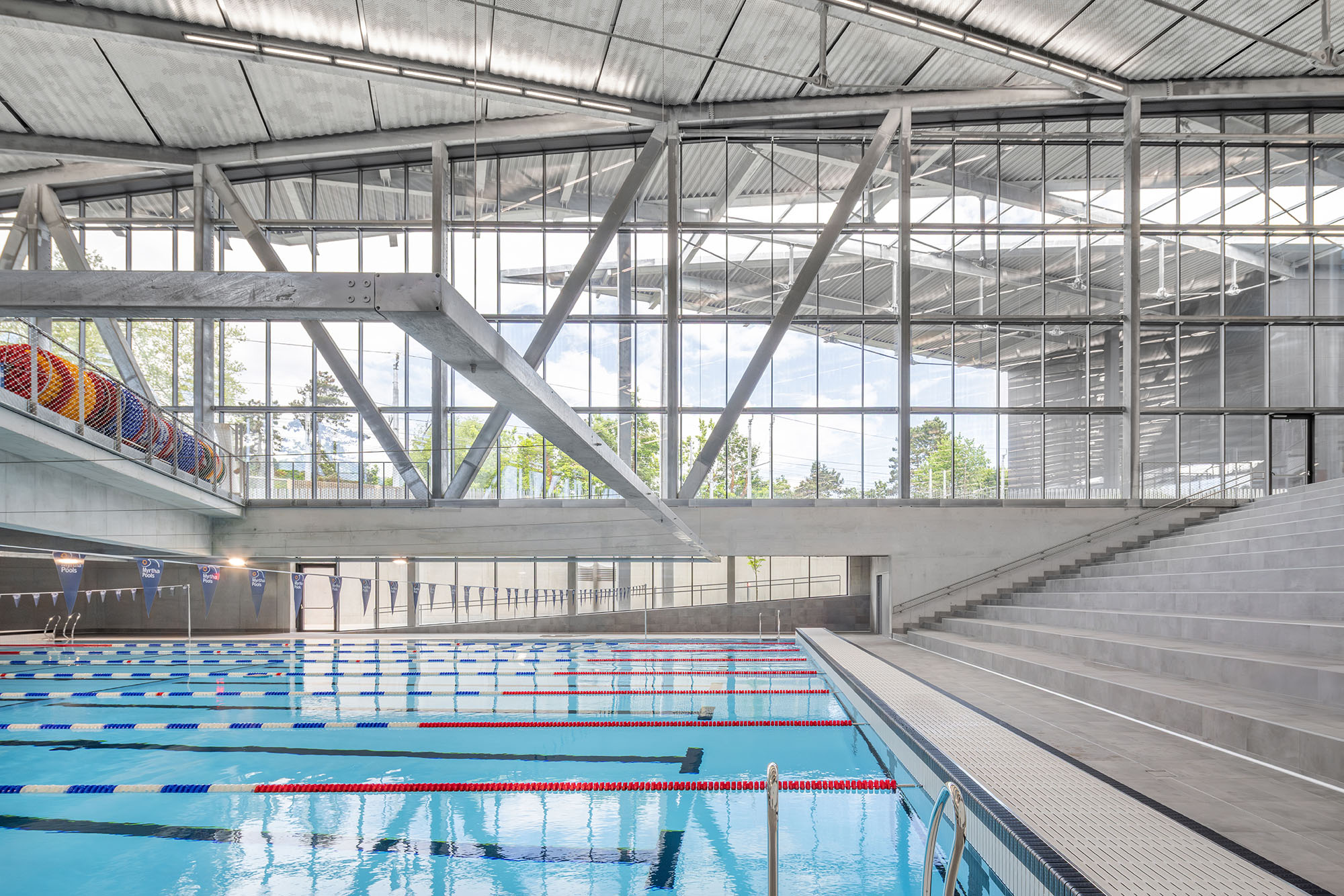
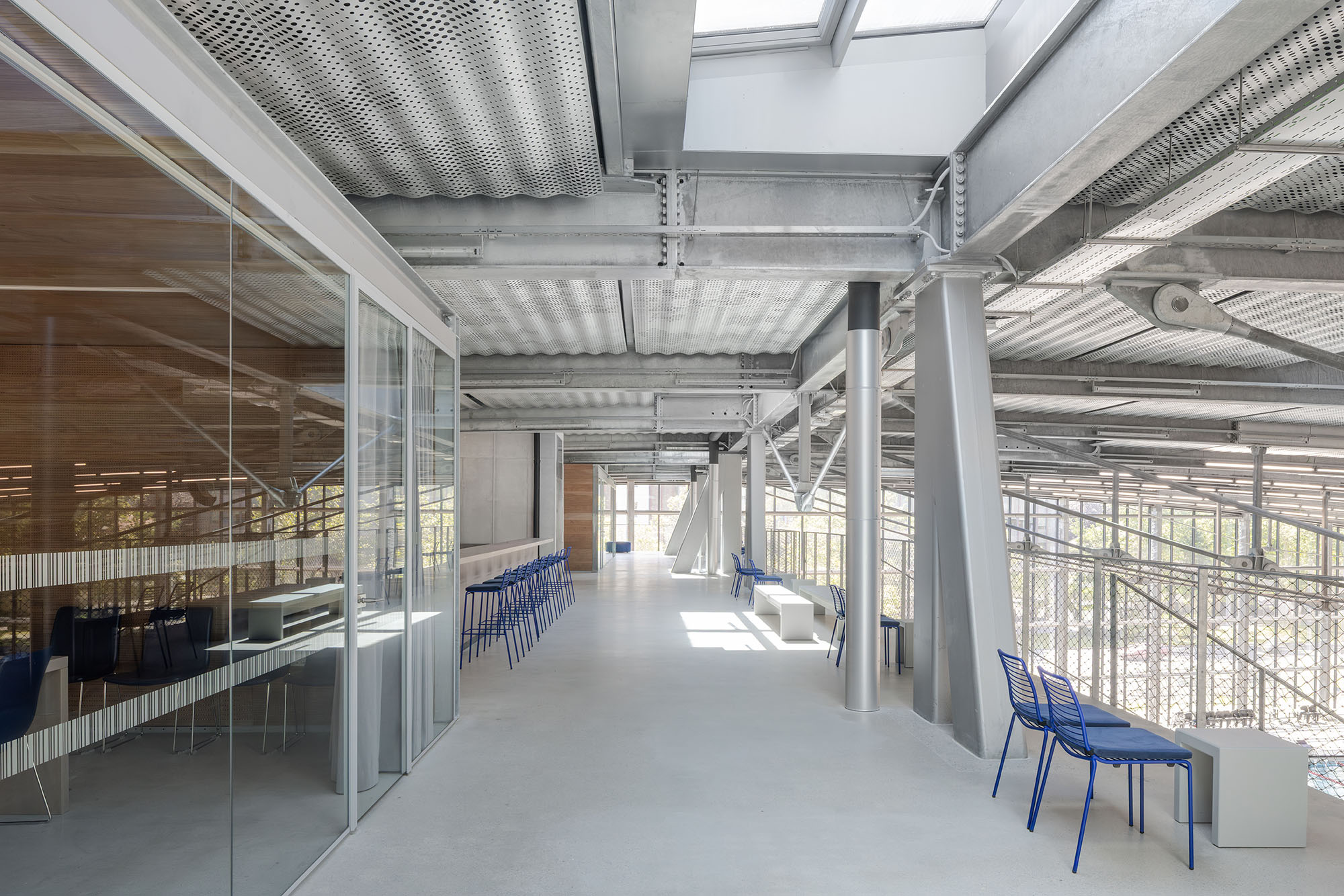
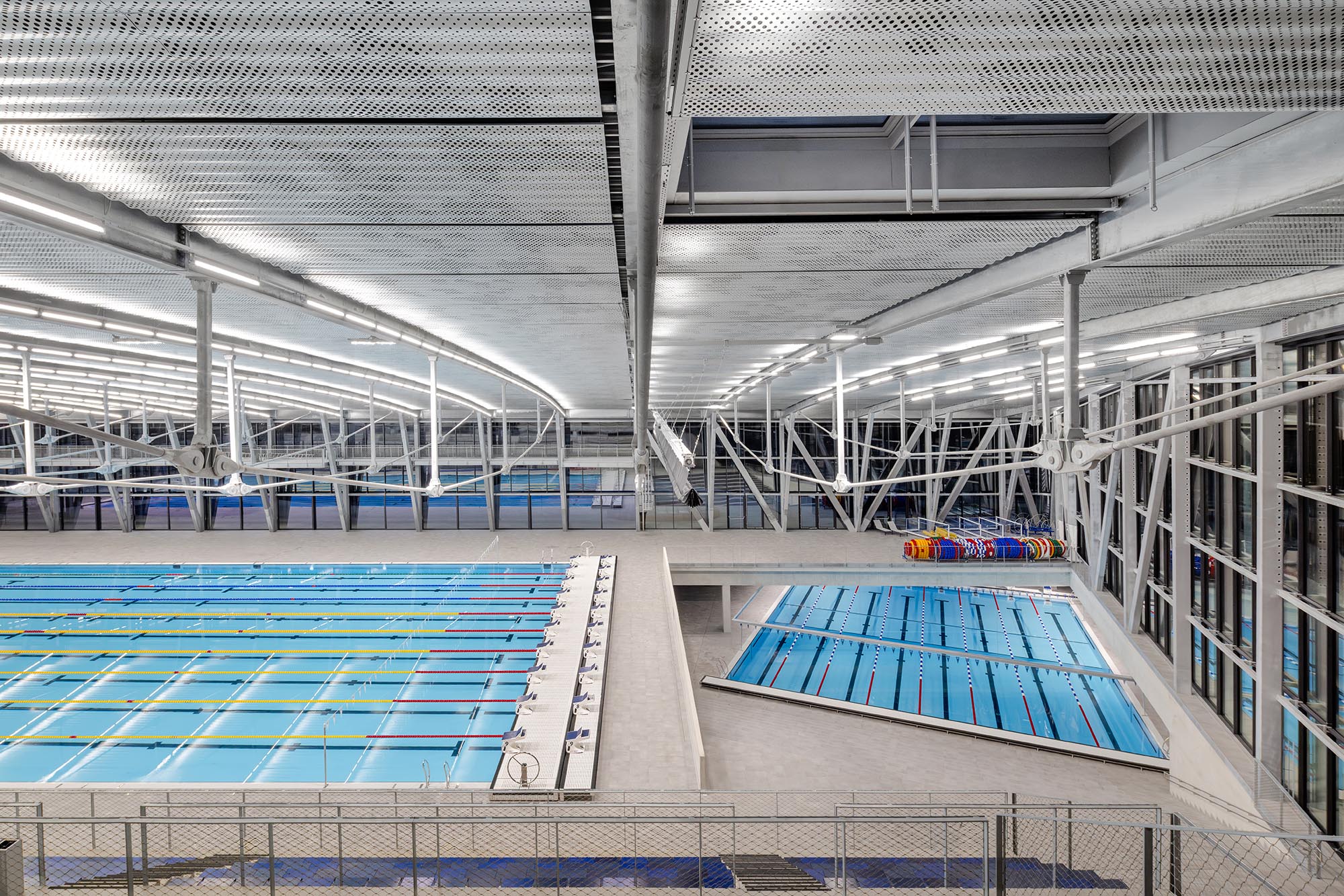
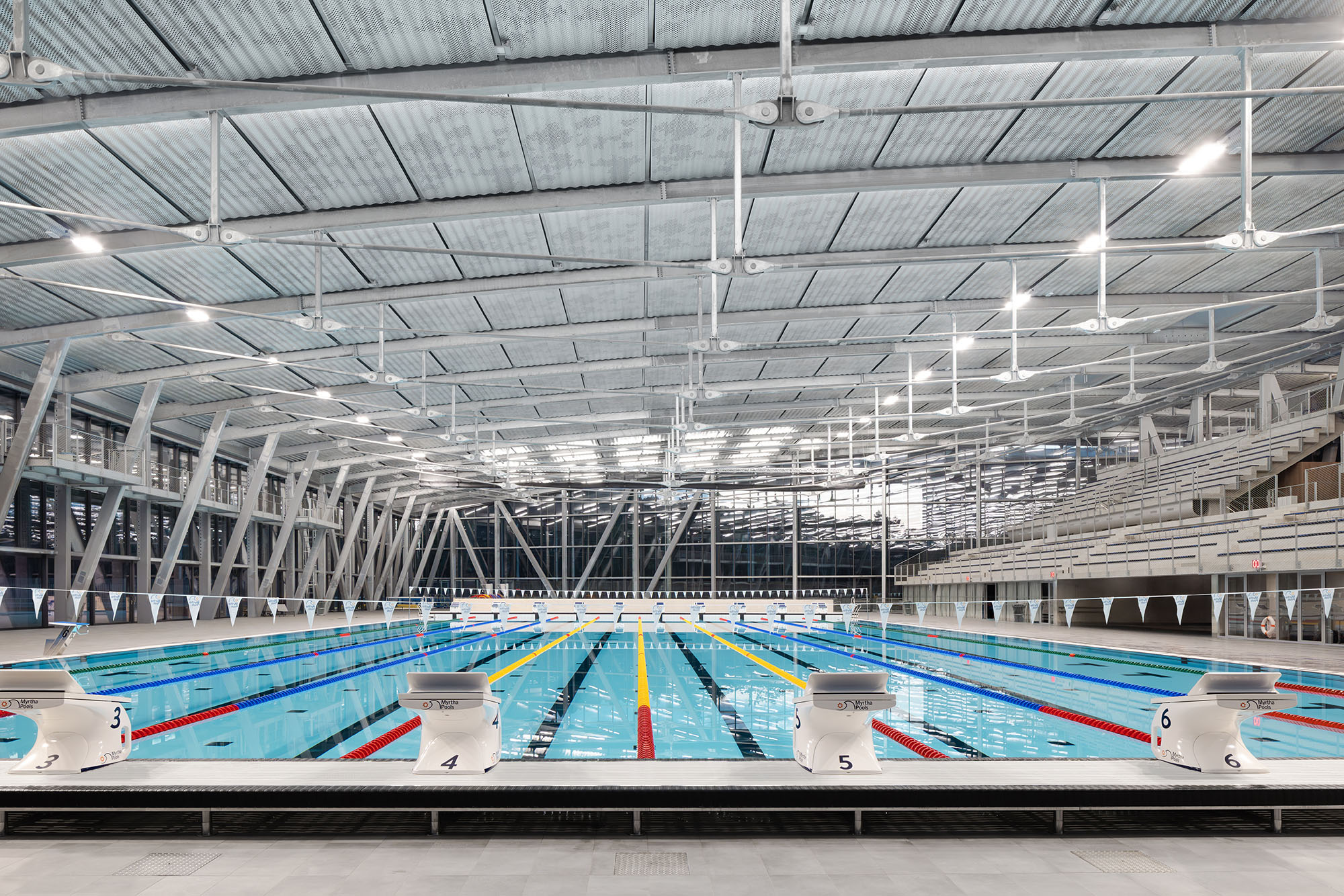
施設の多様な機能は、総面積12,000m²の屋根下に配置されている。水泳ホールは54mのスパンをもつ軽量鋼構造で支えられており、屋根の上部には4,000m²の太陽光パネルが設置されている。
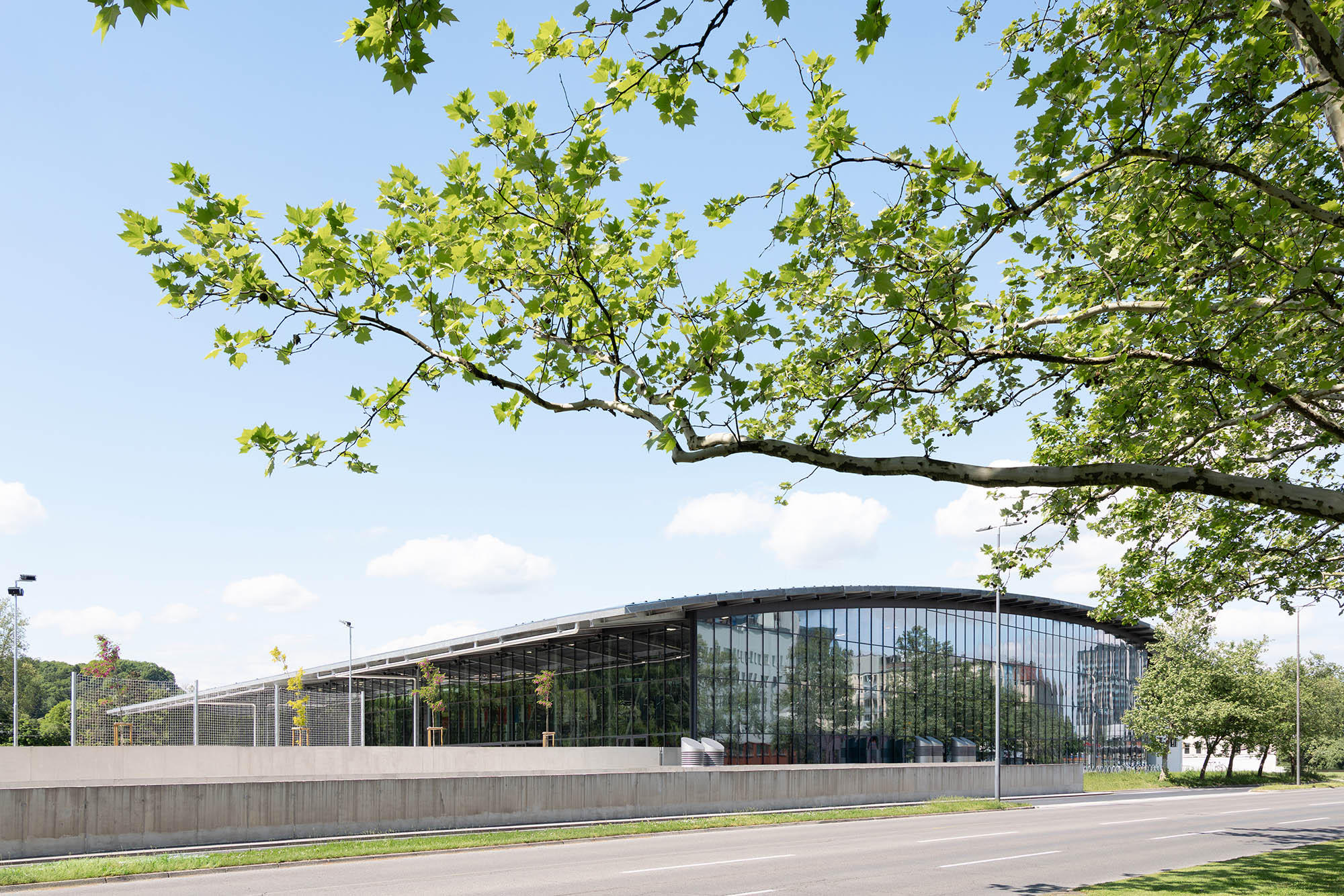
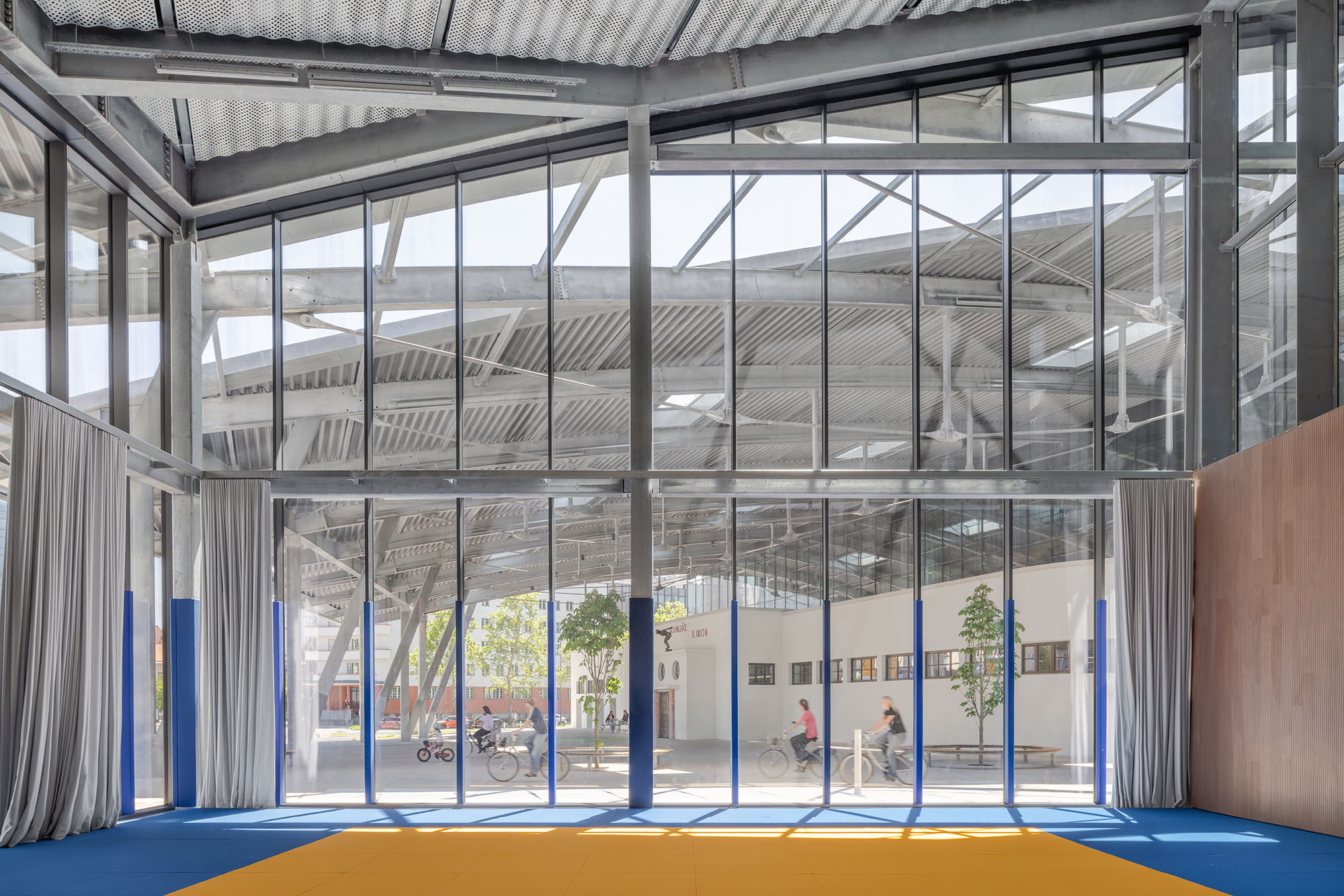
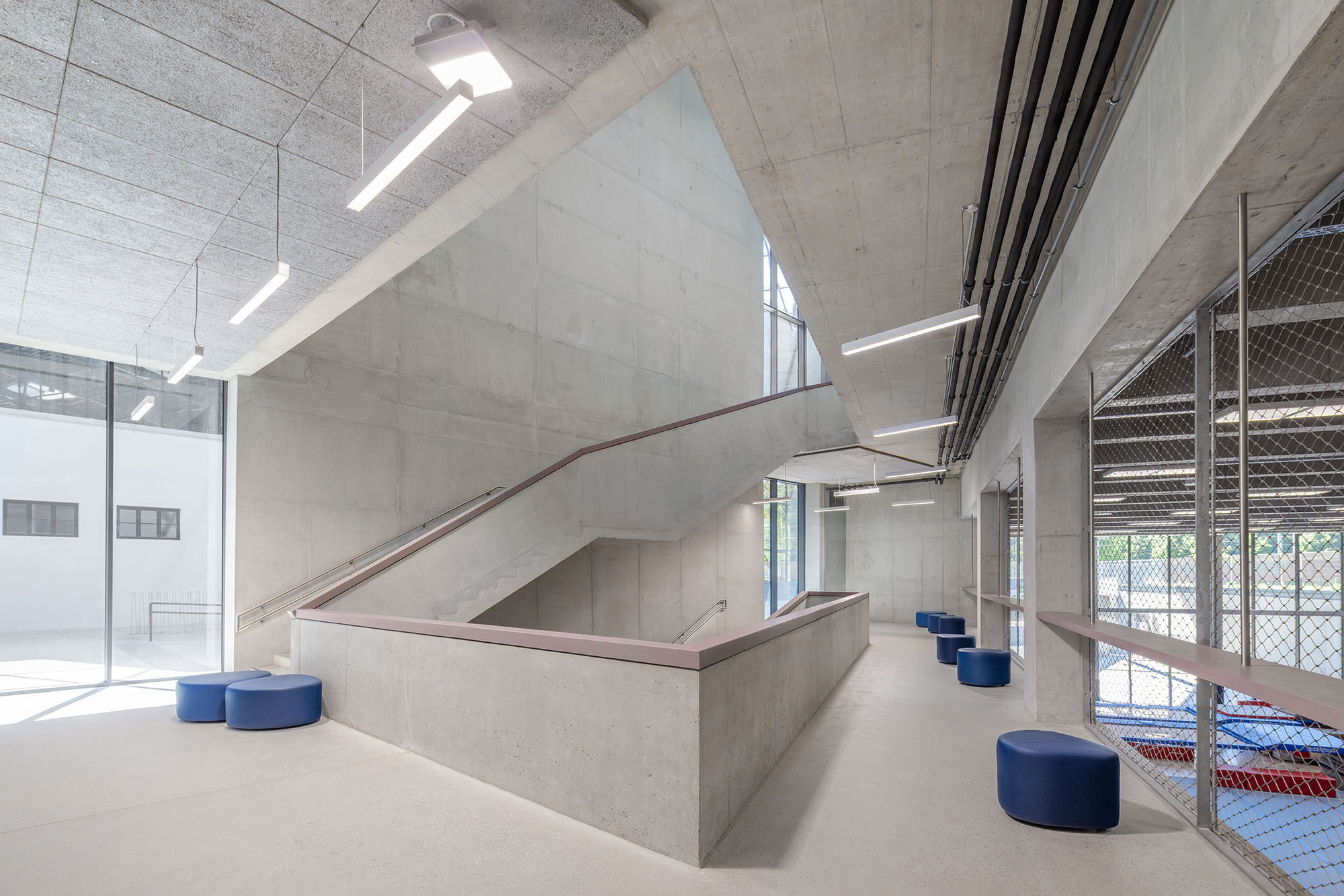
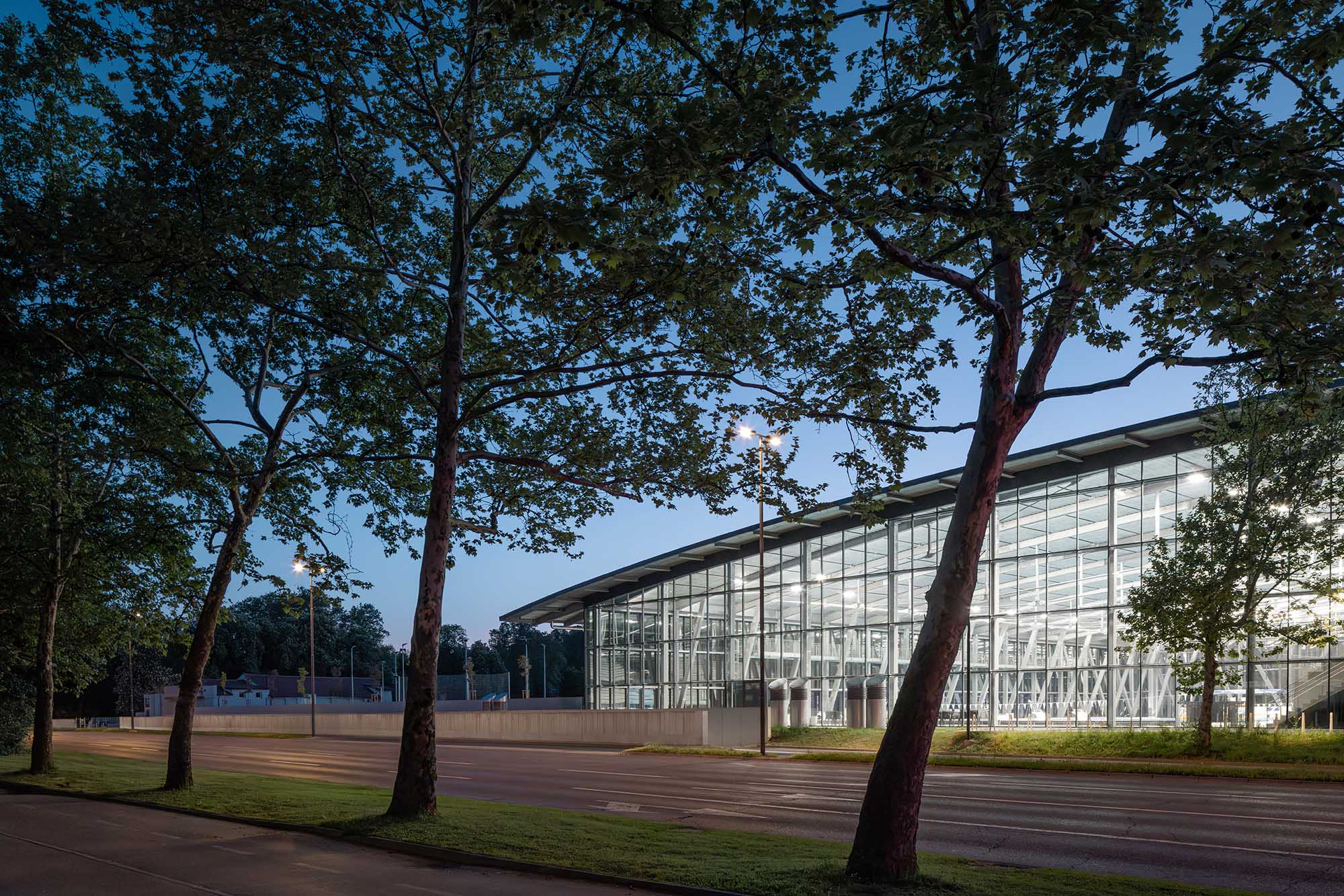
ガラスファサードは開放的な透明性を生み、自然光を取り込みながら、通り、鉄道、公園への視覚的連続性を確保している。主要素材は打ち放しコンクリート、亜鉛メッキ鋼材、3色の青系カラードットである。
Photography by anaskobe
Photography by anaskobe
機能構成:都市と連続する複合施設
〈イリリヤ・スポーツシティ〉は以下のような多様な機能を有している。また、都市の新たなブロックであり、モビリティハブとしても機能する。
- 公共スペース(全天候対応型)
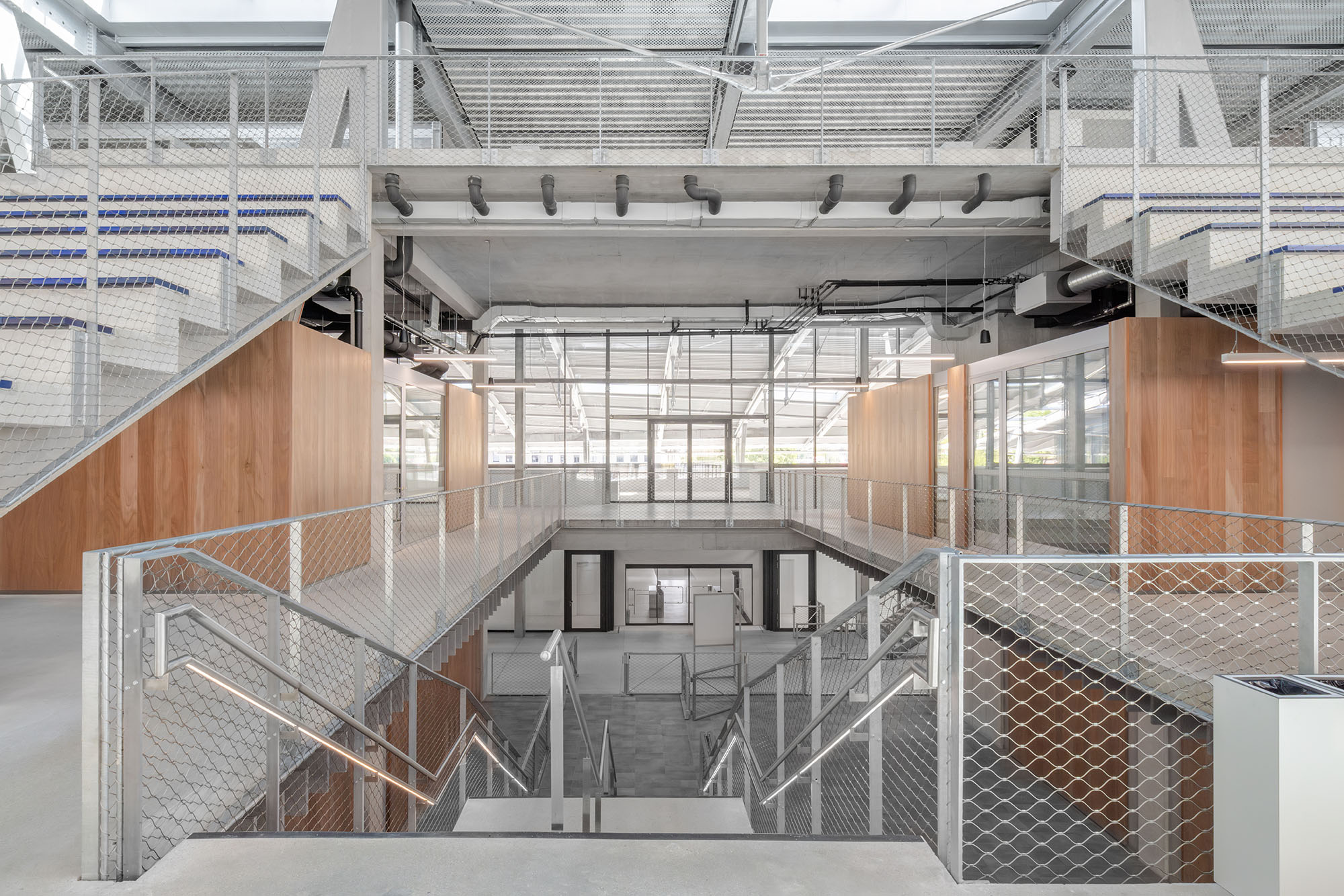
- ブロウデック棟:カフェ、展示室、博物館、受付
- 屋内プール:オリンピックプール(50×25m)、25m練習用プール、児童用プール、1,500人収容観覧席
- スポーツホール:球技・体操・武道・イベント用多目的ホール4棟
- 屋外施設:陸上トラック、ビーチバレーコート、バスケットコート
- インフラ:1,000台収容の地下駐車場、新設歩道・自転車道
Photography by anaskobe
Photography by anaskobe
持続可能性:ゼロエネルギービルディングとしての挑戦
〈イリリヤ・スポーツシティ〉は、太陽光パネルと地中熱ヒートポンプによってエネルギー自給を実現し、化石燃料は完全に排除しており、ゼロエネルギービルディングの基準を満たしている。
また、国家エコ基金が本プロジェクトに多額の資金を提供している。
Photography by anaskobe
Photography by anaskobe
批判と議論:公共建築が生む対話
重要な公共プロジェクトは、民主主義社会において常に議論を生む。異なる意見が交錯し、その正当性は最終的に実現と利用を通してのみ証明される。
批判派は「規模が過大で立地が不適切」と主張し、既存の屋外プールの改修を求めた。一方で支持派は、都市的付加価値や気候政策への寄与を評価した。建築評論家クリスティアン・キュン(Christian Kühn)はその空間的多様性を「空間芸術の傑作」と称し、イリリヤを「都市の中の都市」と定義した。
Photography by anaskobe
Photography by anaskobe
社会・文化的価値:都市の舞台としての城塞
都市的多様性を備えたイリリヤの「要塞」は、自らを都市の舞台として位置づける。
学校・大学・クラブ・市民・観光客が利用可能であり、コンサートや文化イベント、社交行事の場として機能することで、スポーツと市民の融合による経済的持続可能性を重視した活用を目指してる。
Photography by anaskobe
Photography by anaskobe
また、都市に対する透明性と開放性は、開かれた社会への発展を象徴している。リュブリャナは未来志向かつ自信に満ちた都市として、ヨーロッパの首都群と並び立つ存在へと進化している。
このモデルは、スポーツ・文化・都市開発がどのように相互に結びつくかを示す好例である。数十年にわたる議論と変化する政治的優先事項、建築的粘り強さの結晶として生まれた本プロジェクトは、中心市街地における「スポーツ都市」のパイロットケースとして、持続可能で多様性に富み、開かれた都市像を体現している。
Photography by anaskobe
Photography by anaskobe
Photography by anaskobe
Photography by anaskobe
以下、LORENZATELIERSのリリース(英文)です。
THE ILIRIJA CITADEL IN LJUBLJANA 2025
A DIVERSE SPORTS CITY IN THE URBAN CITY CENTREIn spring 2025, Ljubljana opened its Ilirija Sports City – a project that took a quarter of a century to complete: After almost 100 years, a historic outdoor swimming pool has been transformed into a new part of the city, an ‘urban citadel’ with a strategically dominant location, bordered by busy transport routes and with its own identity – created for the well-being of the population, who can not only enjoy a wide range of sports there, but also hold festivals, presentations and cultural events.
1. HISTORY
1929: Interwar period – with the Ilirija outdoor swimming pool built by Stanko Bloudek in 1929, Ljubljana gained a sporting landmark in the north-eastern part of Tivoli Park; nestled in an area that was used for a variety of purposes at the time, it was also a meeting place for famous architects such as Maks Fabiani (Jakopič Pavilion 1923–1962), Jože Plečnik (Jakopič Promenade, 1920s/1930s), and equipped with sports facilities, smaller grandstands, an ensemble of temporary halls and exhibition buildings for cultural and commercial events.
1942: Due to the relocation of the railway, the Baroque Latterman Avenue loses its function as the main access point to Tivoli Park. Ilirija was cut off from the park again. 1945: Tivoli Park regained its character as a purely green space.
1991: With the founding of the Republic of Slovenia, the question of modern sports infrastructure came into focus. The outdoor swimming pool was dilapidated and renovation seemed uneconomical.
1995: The city of Ljubljana decides to build an Olympic-standard 50-metre swimming centre on the site of the dilapidated pool – a conscious decision in favour of the central location.
2000/01: Slovenia’s first international architecture competition, won by Lorenzateliers (CEO Peter Lorenz, Vienna/Innsbruck). The mayor is Viktorija Potočnik, followed by the development of a PPP model with many variants.
2007: The new mayor, Zoran Janković, decides to implement the project himself, without commercial and retail space and with a reduced space allocation plan.
2011: The Bloudek building is listed – a turning point in the planning process.
2012: The new development plan becomes legally valid.
2018: General planners Elea iC and Lorenzateliers ZT GmbH are officially commissioned with the implementation.
2021–2025: Construction period, general contractor Makro 5, opening in March 2025
The city council’s decision in 1995 to choose the existing location is now proving to be very forward-looking for a climate-friendly city: less traffic, easy accessibility by public transport, by bicycle/on foot, energy-neutral concept, lower operating costs through multiple use, attractive urbanity.
2. URBAN CONCEPT
The design was always intended as an urban concept: how can this remaining plot of land, an isolated island between busy traffic routes, be reintegrated into the city? A renaissance of the park’s historic, strong connections with the city.
・The winning project in 2000/01 envisaged land art architecture: a large roof spanning the halls and pools, accessible to pedestrians, to expand the limited open spaces, and a large sliding roof to transform the hall into an outdoor swimming pool.
・The restored Latterman Avenue runs diagonally through the sports centre into Tivoli Park as a ramp under the tracks – a connection of great urban and symbolic significance.
・The new public square in front of the buildings becomes an urban link between the city and the park.
・The multiple use of halls for sports, culture, concerts and events reduces operating costs and makes the facility economical.Over the years, programmes and framework conditions changed, PPP models were considered, monument protection requirements were integrated, fossil fuels were eliminated, etc. The urban development concept of the sports city in the centre has endured all these years.
3. ICON ROOF
・The diverse functions are located under a 12.000 m² roof, and the swimming hall itself is spanned by a light steel structure with a 54-metre span, the roof surface equipped with 4.000 m² of PV panels, executed in the wrong colour.
・Open transparency via glass facades, daylight, visual connections to the street, railway and park.
・Raw materials: exposed concrete, galvanised steel, colour dots in three shades of blue.4. FUNCTIONS
・Public space, weather-protected
・Bloudek building: café, exhibition, museum, reception
・Indoor swimming pool: Olympic pool (50×25 m) , 25-metre training pool, children’s pool, grandstand for 1.500 spectators
・Sports halls: Four multi-purpose halls for ball sports, gymnastics, martial arts and events
・Outdoor facilities: Athletics track, beach volleyball, basketball courts
・Infrastructure: Underground car park with 1.000 parking spaces, new footpaths and cycle pathsThe Ilirija sports centre is a new urban building block and mobility hub.
5. SUSTAINABILITY
The centre meets the standard of a zero-energy building:
・Solar panels and geothermal heat pumps ensure energy self-sufficiency.
・Fossil fuels have been consistently excluded.
・The national eco-fund is providing substantial funding for the project.6. CRITICAL DEBATE
Important public projects generate a striking commonality in our democracies – different ideas provoke criticism, and only the realisation and use of the project can prove its validity:
・Critics accused the project of being oversized and poorly located – the outdoor pool should be renovated.
・Proponents emphasised the urban added value and the importance for climate policy.
・Architectural critic Christian Kühn praised the spatial diversity as a ‘work of spatial art’ and defined Ilirija as a ‘city within a city’.The project authors invite constructive discourse on the survival of European cities.
7. SOCIAL AND CULTURAL VALUE
With its urban diversity, the Ilirija citadel sees itself as an urban stage:
・Use by schools, universities, clubs, the general public, tourists
・Spaces for concerts, cultural events and social occasions
・Sport and the public are brought together and focus on economically viable use
・Transparency and openness to the city reflect the development towards an open society
・Ljubljana is positioning itself with a future-oriented and confident approach alongside other European capitals.The ILIRIJA model shows how sport, culture and urban development can intertwine: the result of decades of debate, changing political priorities and architectural perseverance – today a pilot project for a ‘sports city’ in the heart of the city centre – sustainable, diverse and open.
8. PROJECT DATA
Client: City of Ljubljana
Competition: 2000/2001, 1st prize Lorenzateliers
General planner: ELEA
Planning: 2001–2020
Construction period: 2022–2025
Covered area: 12,000 m²
Opening: March 2025
LORENZATELIERS 公式サイト
http://www.lorenzateliers.at/portfolio/ilirija-stadtsport/
![[Report]激変する時代の中で、建築とデザインはどう拡張するか。「iF DESIGN AWARD 2026」授賞式&最新トレンド](https://magazine-asset.tecture.jp/wpcms/wp-content/uploads/2026/07/24010304/iFDesignTrendConference26-45-900x600.jpg)
![[Report]RUI Architectsが可動モジュールを設計して松竹のアートスペースをリニューアル、柿落とし展「継承のトランジション」の会場デザインも担当](https://magazine-asset.tecture.jp/wpcms/wp-content/uploads/2026/07/24141011/20260713shutl_press11-01309-c-900x629.jpeg)
![[Interview]BIM図面審査がスタート! さまざまな設計者のニーズに応えるVectorworksによる「限界のないデザイン」の世界](https://magazine-asset.tecture.jp/wpcms/wp-content/uploads/2026/07/13084316/rinterview_vectorworks_056-e1784200974912-900x555.jpg)