

BIGの展覧会と共に始動する新たな美術館 - 波打つ屋根が建築と自然をつなぐ〈蘇州現代美術館〉がまもなく竣工
© Ye Jianyuan
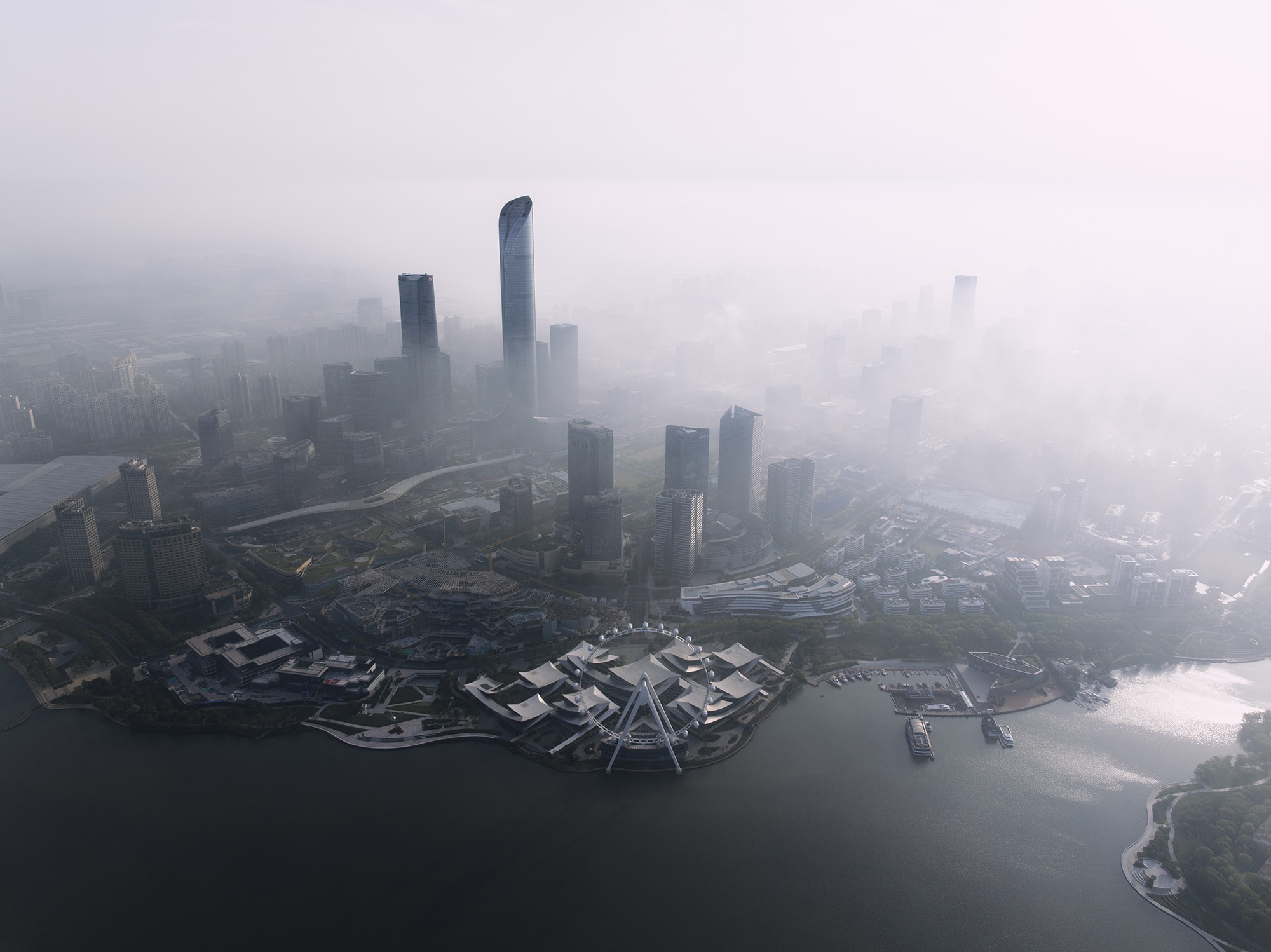
〈蘇州現代美術館(Suzhou Museum of Contemporary Art)〉は、ビャルケ・インゲルス(Bjarke Ingels)率いるビャルケ・インゲルス・グループ(Bjarke Ingels Group、以下BIGと表記)が中国・蘇州市の湖畔に設計した新たな現代美術館です。
2026年に竣工予定であり、BIGキュレーションの展覧会「マテリアリズム」の開催を機に一般公開される予定となっています。
注目ポイント
- 蘇州の伝統的な庭園文化を参照しつつ、「廊(lang)」を現代的に再構築
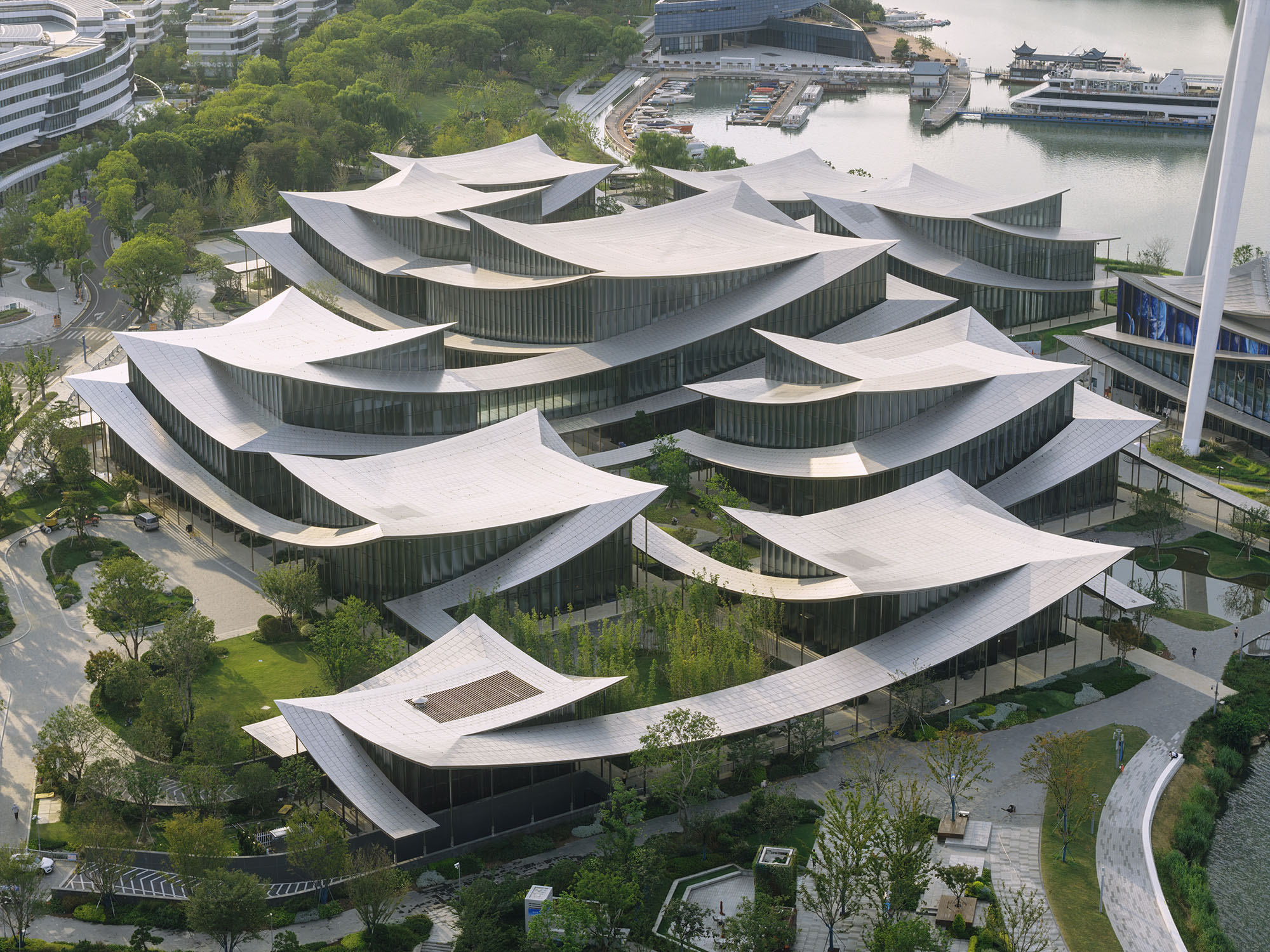
- リボンのように波打つ屋根が12のパビリオンをつなぐ「村」のような構成
- 都市・建築・ランドスケープの境界を横断する「庭園的構成」によるデザイン
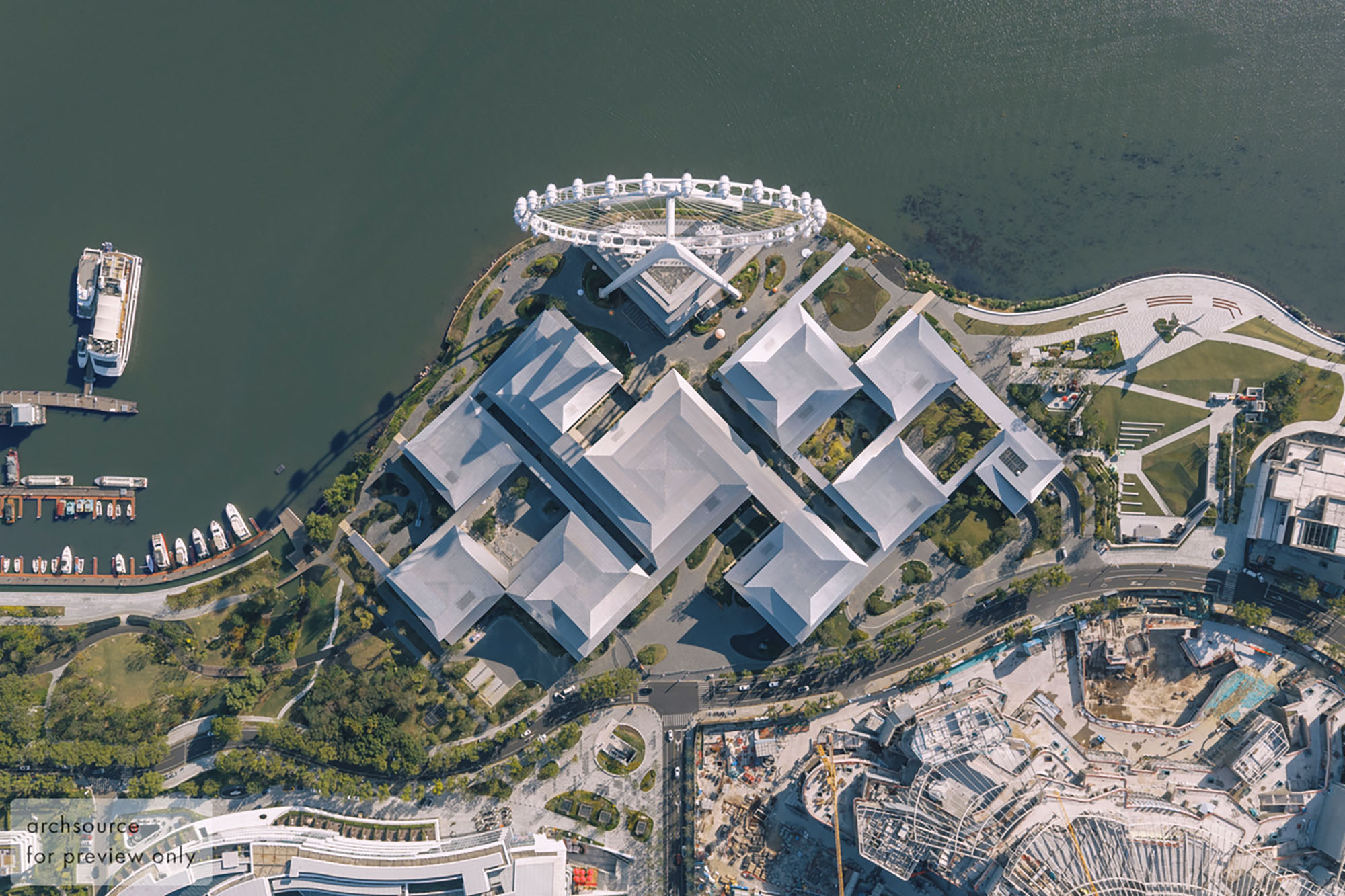
- 観覧車から見下ろすとあらわれる「第5のファサード」としての屋根
(以下、BIGから提供されたプレスキットのテキストの抄訳)
© Ye Jianyuan
まもなく竣工する〈蘇州現代美術館〉とBIGがキュレーションする展覧会
BIGが設計した〈蘇州現代美術館〉はまもなく一般公開され、展覧会「マテリアリズム(Materialism)」が開催される。
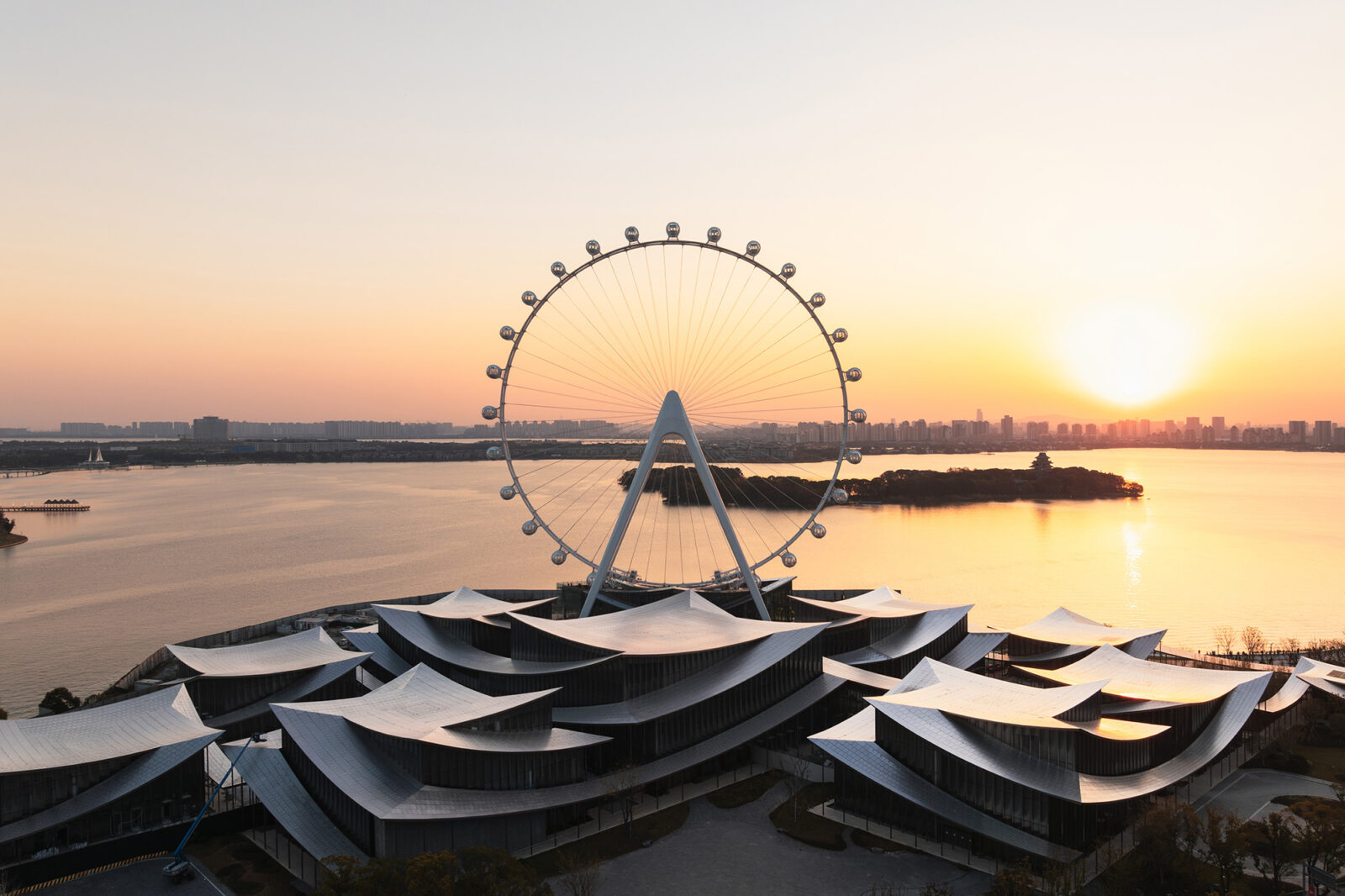
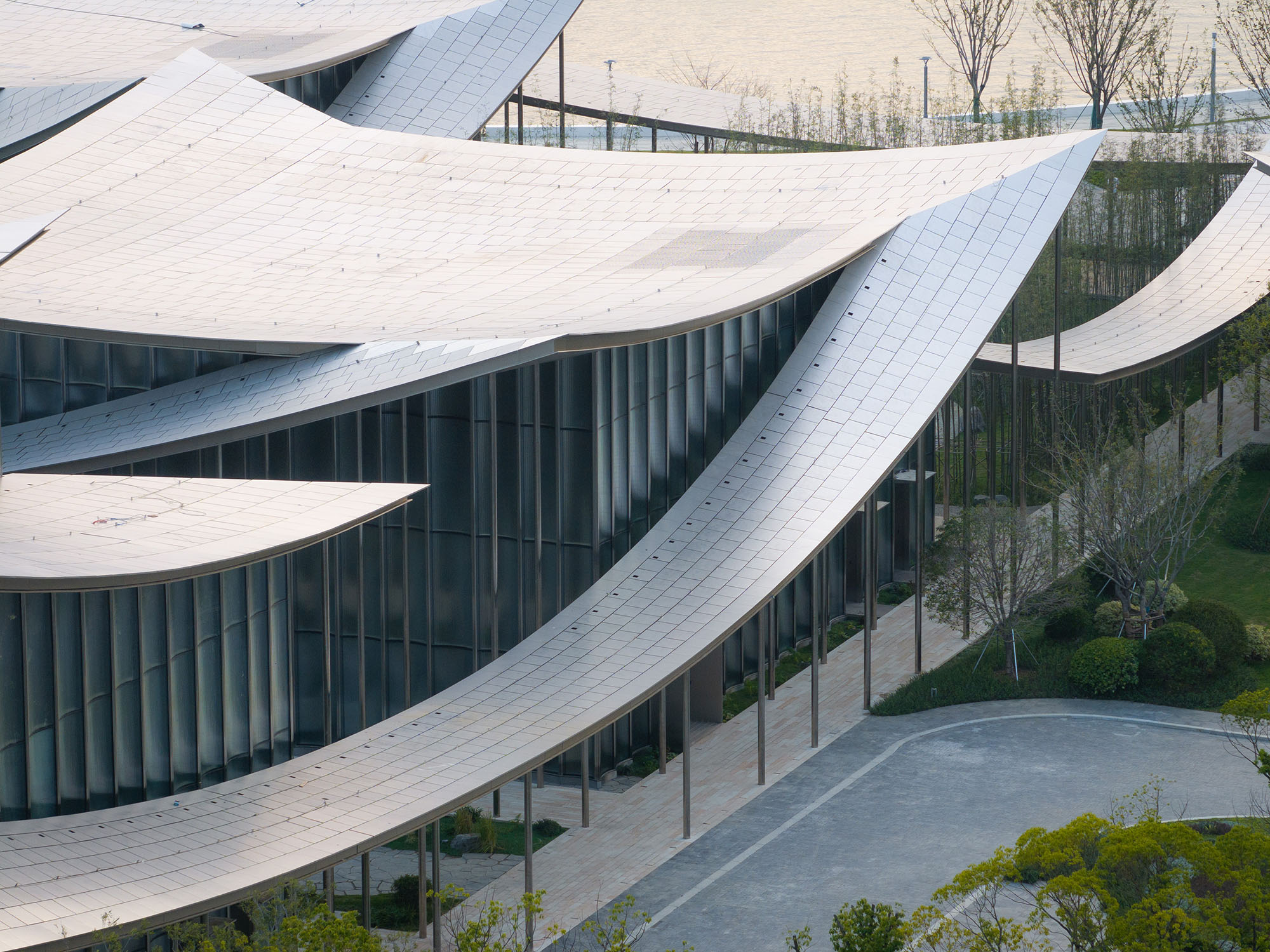
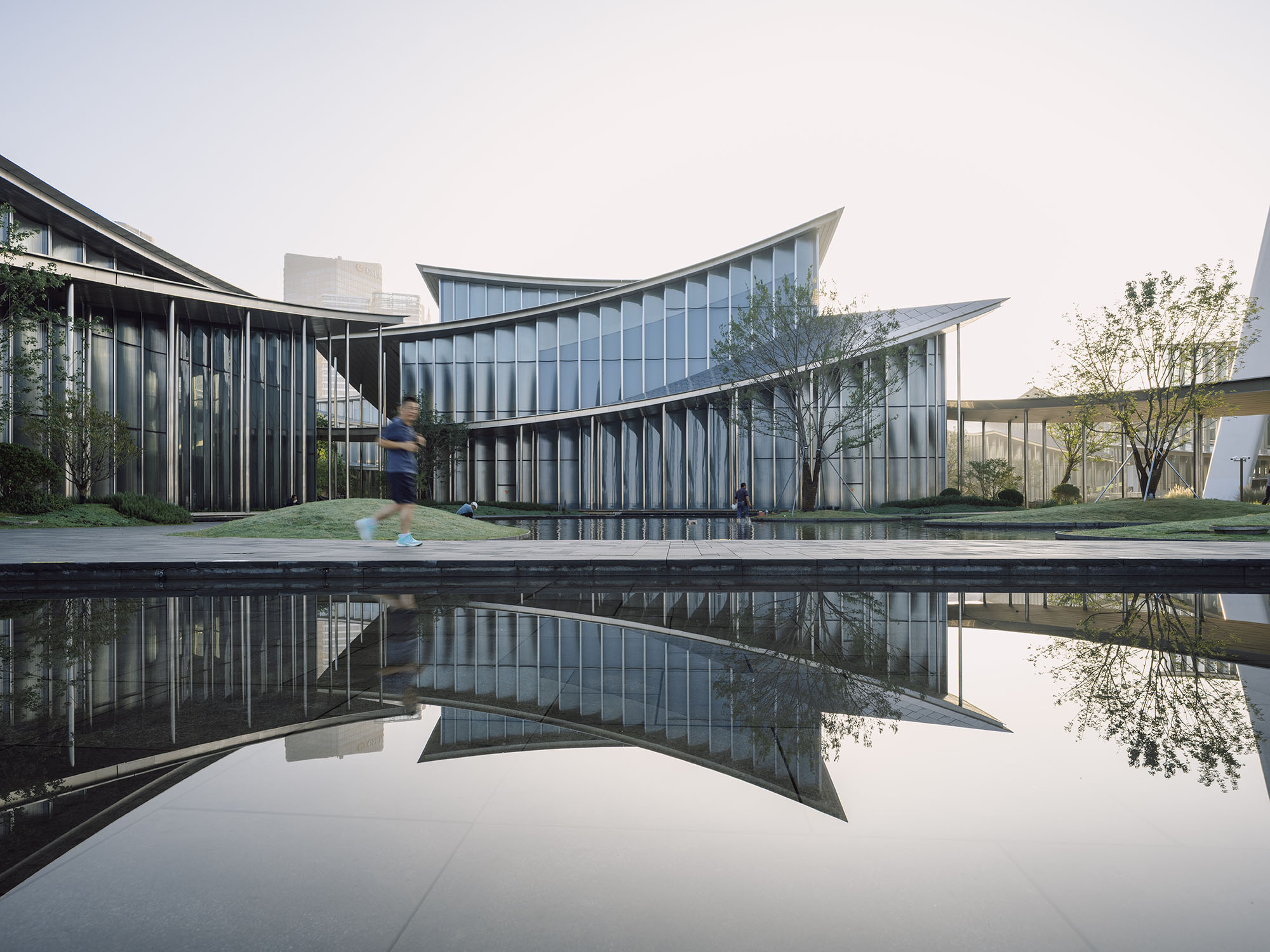
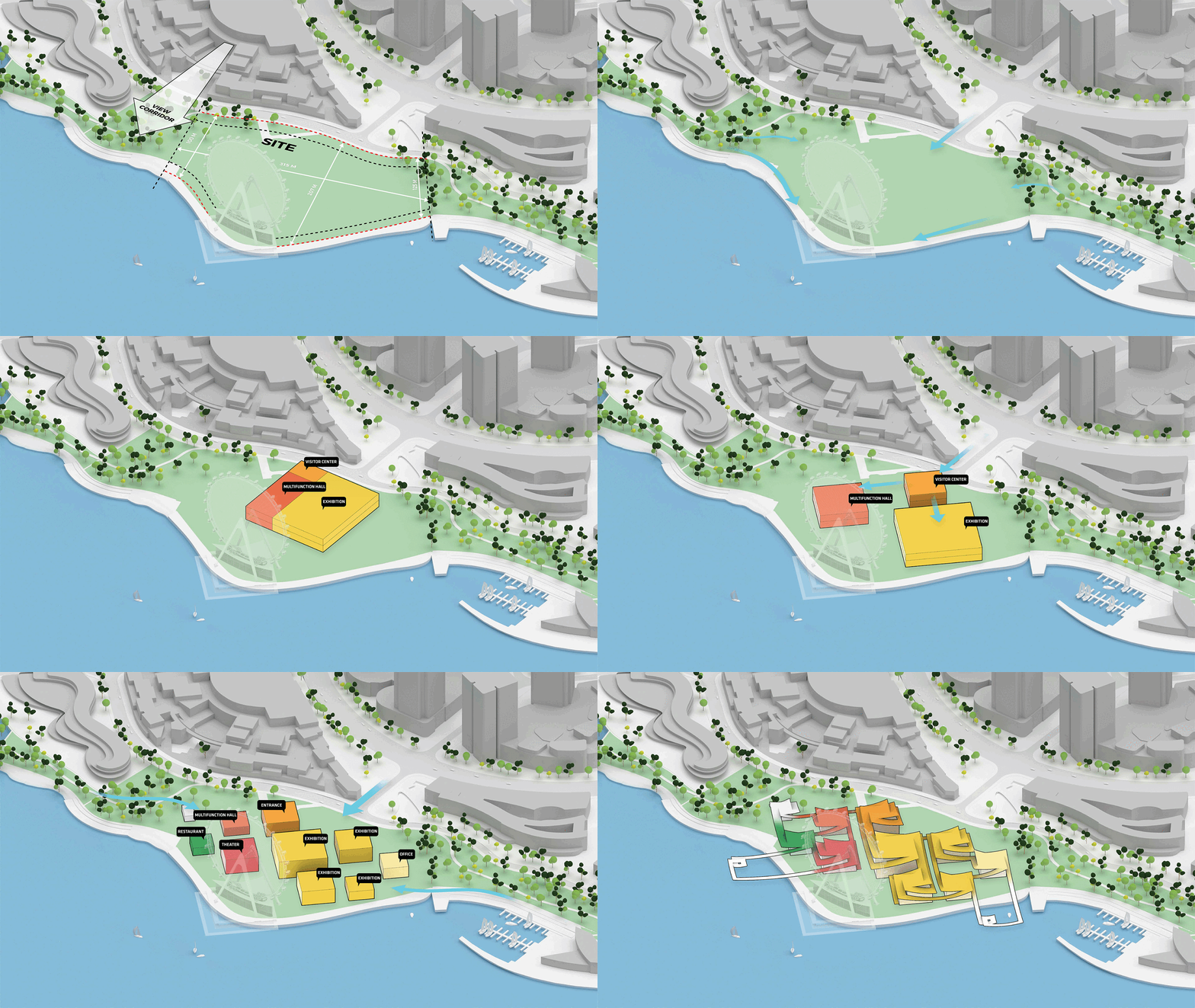
リボンのように波打つ屋根の下に12のパビリオンが連なる「村」として構想された60,000m²の美術館は、何世紀にもわたり蘇州の都市計画や建築、景観を特徴づけてきた「庭園」の要素を現代的に解釈したものである。
© Ye Jianyuan
© StudioSZ Photo / Justin Szeremeta
BIGがキュレーションを手がける展覧会「マテリアリズム」は、石から始まりリサイクル素材で終わる、素材の旅へと訪問者を誘う。
本プロジェクトは蘇州圓融発展集団(Suzhou Harmony Development Group)からの委託のもと、BIGがARTSグループ(ARTS Group)およびフロント社(Front Inc.)と協働して設計した。金鶏湖畔に位置する〈蘇州現代美術館〉は、中国における現代美術、デザイン、公共生活の新たな拠点となる施設であり、正式な一般公開は2026年に予定されている。
© Ye Jianyuan
© Ye Jianyuan
庭園の系譜を継ぐ、「廊」を再構築した美術館
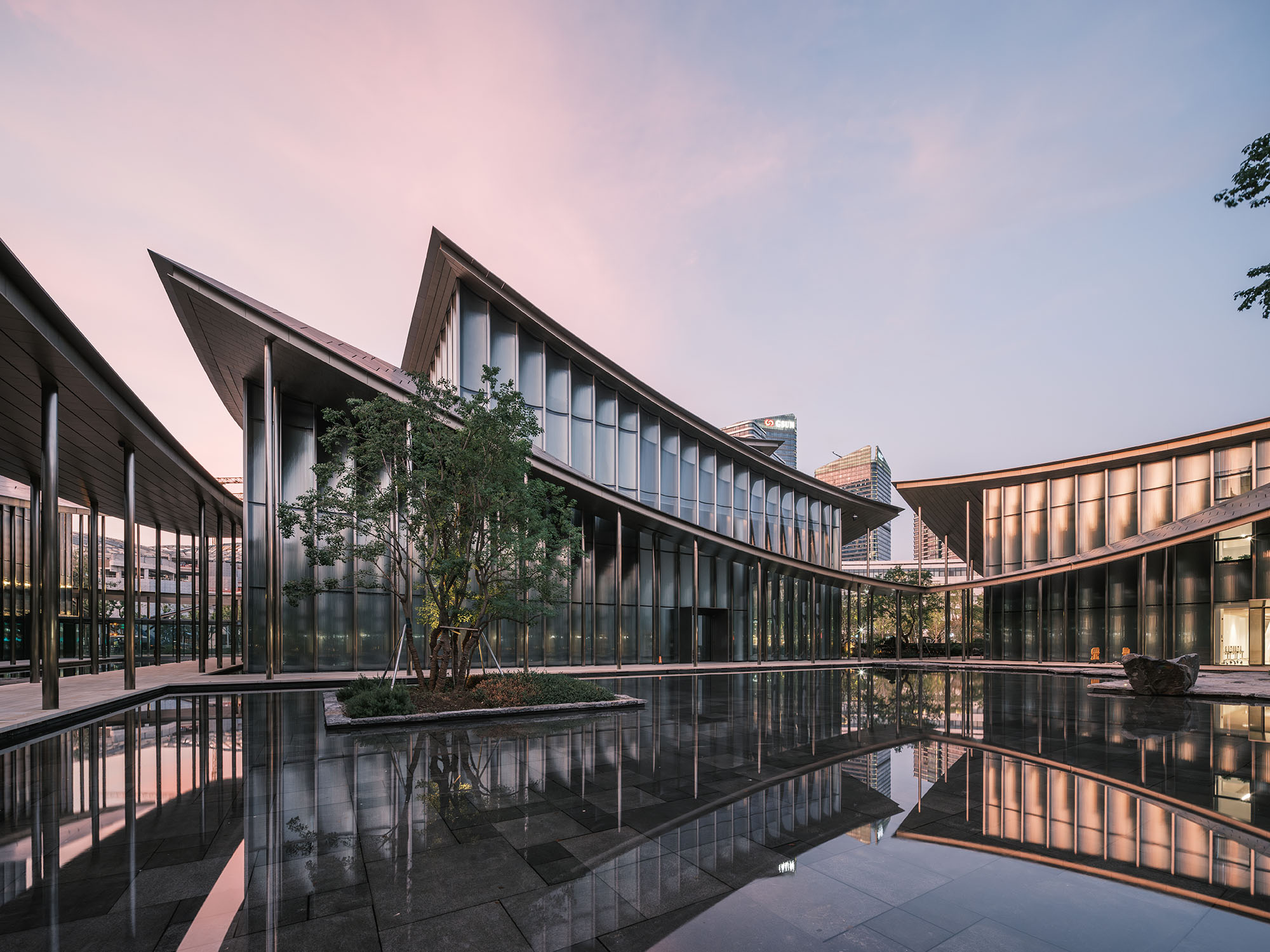
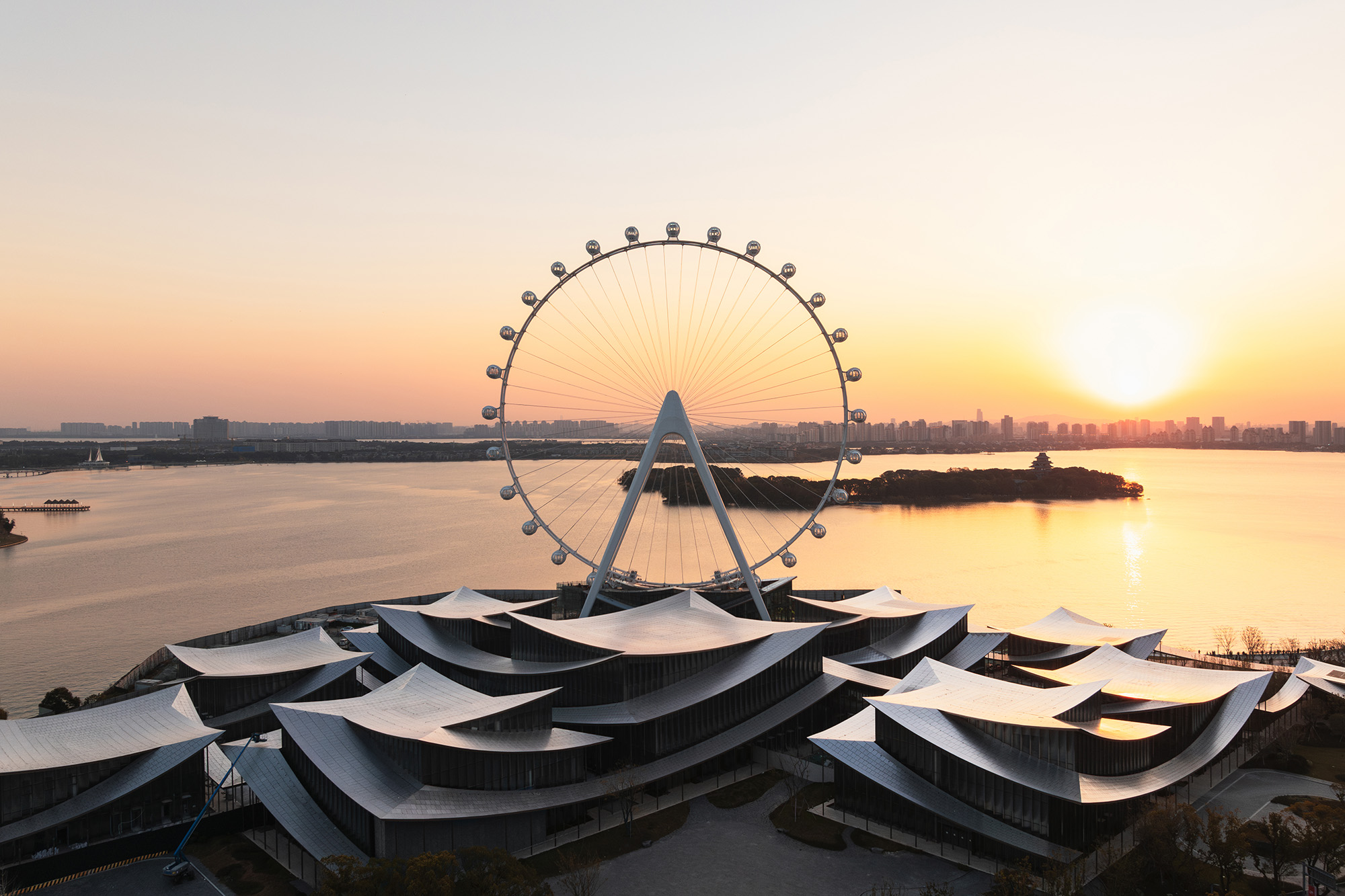
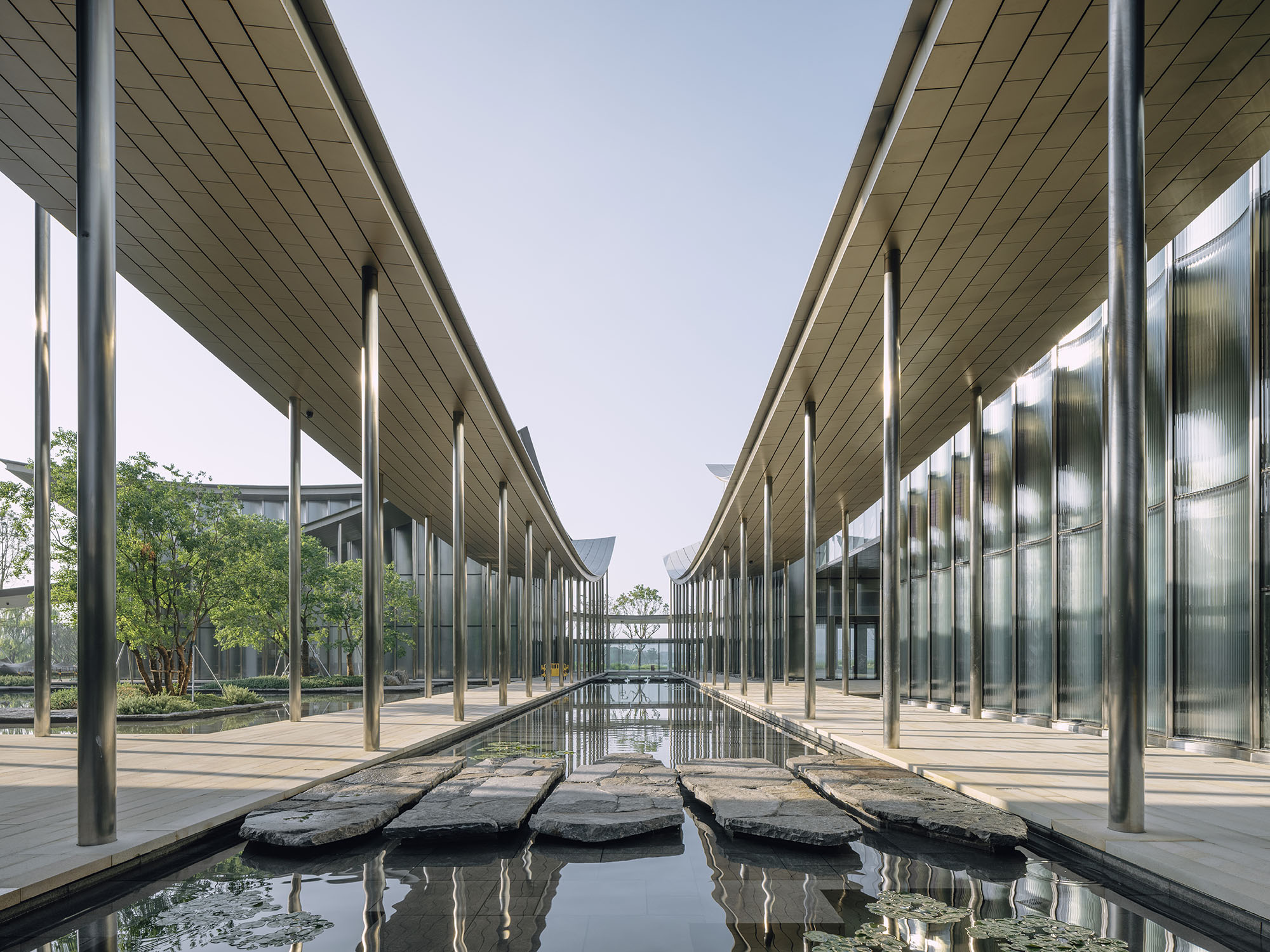
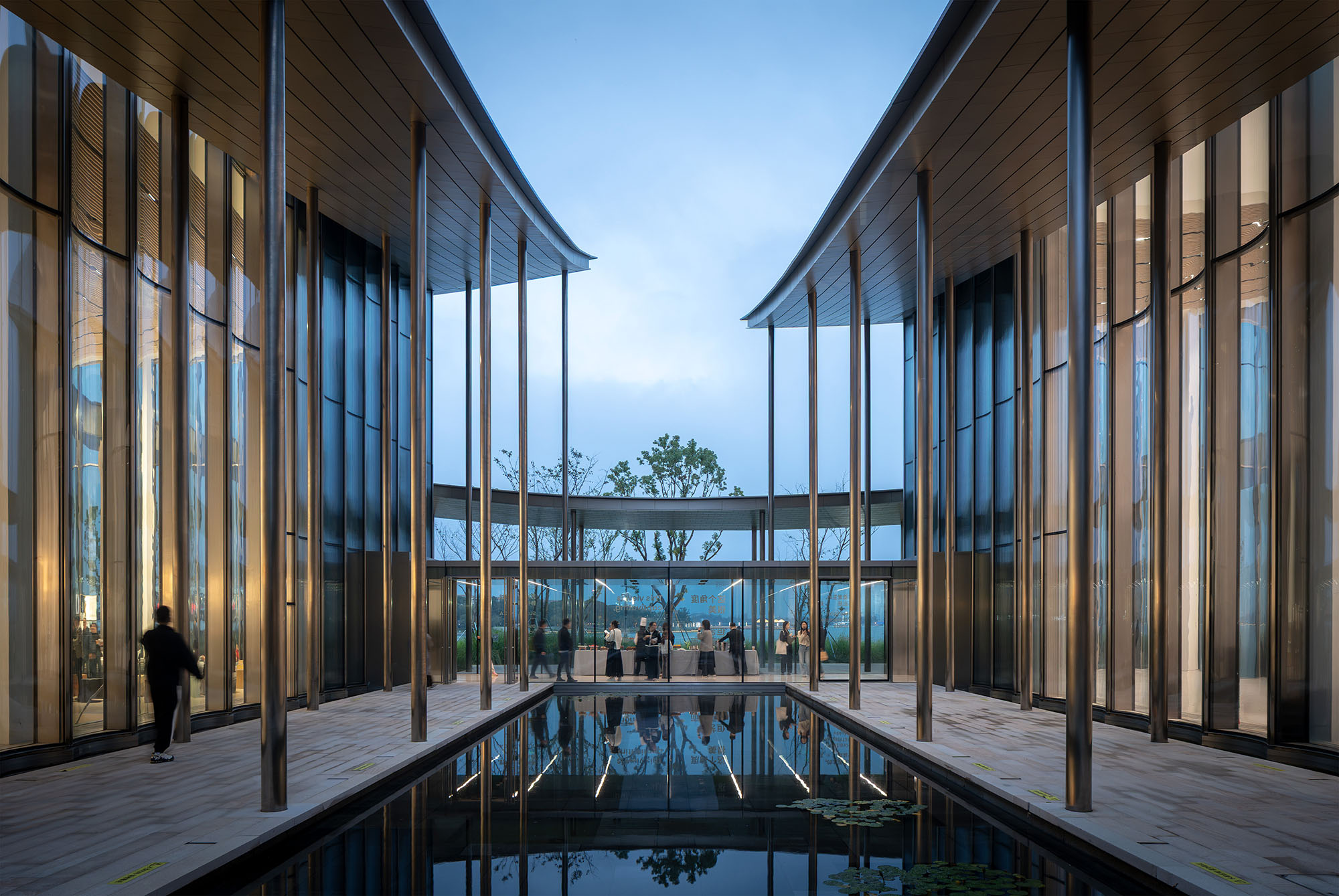
〈蘇州現代美術館〉の建築は、蘇州の伝統的な庭園文化に根ざしており、「廊(lang)」と呼ばれる長い屋根付きの回廊を再構築している。
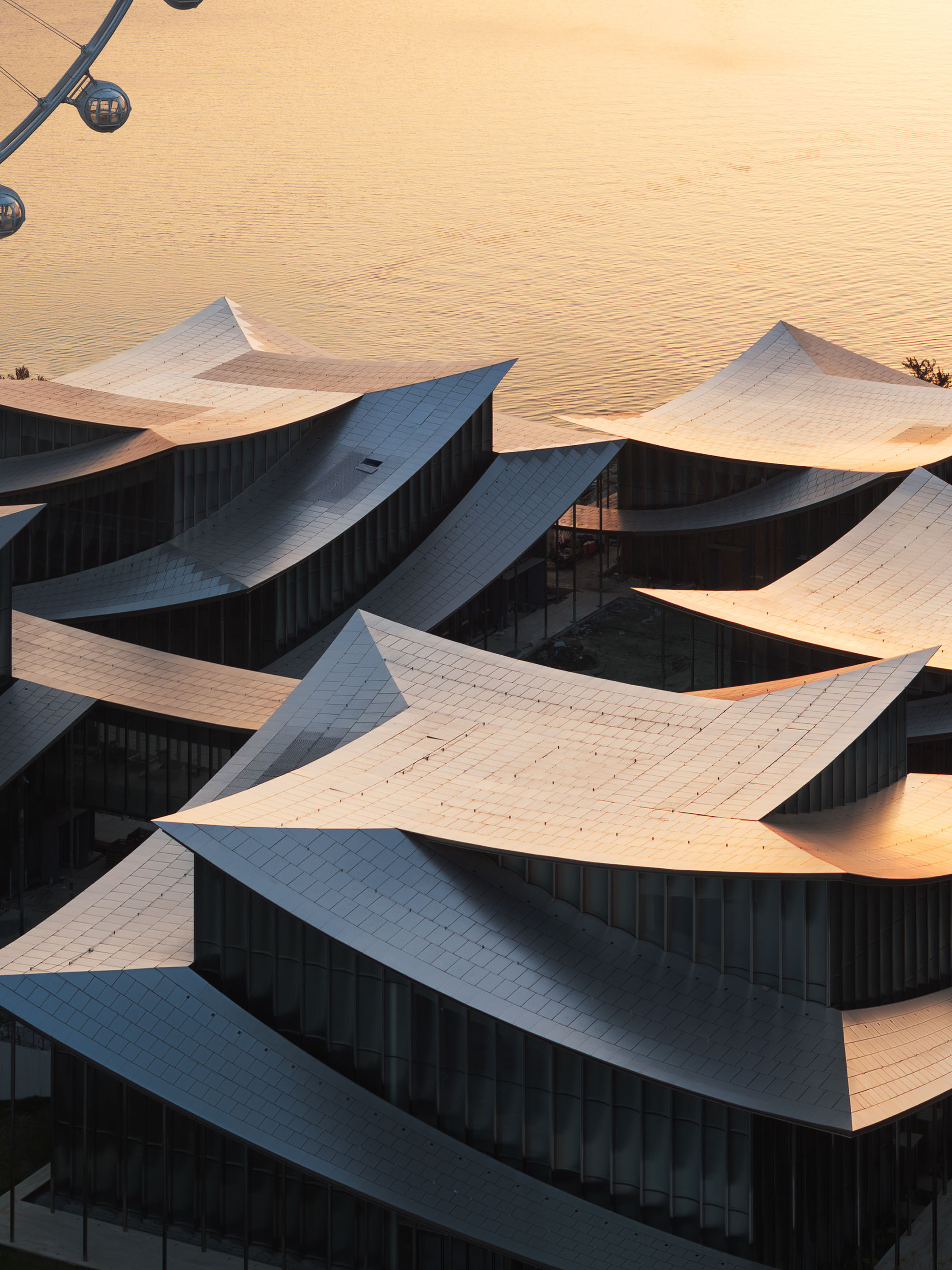
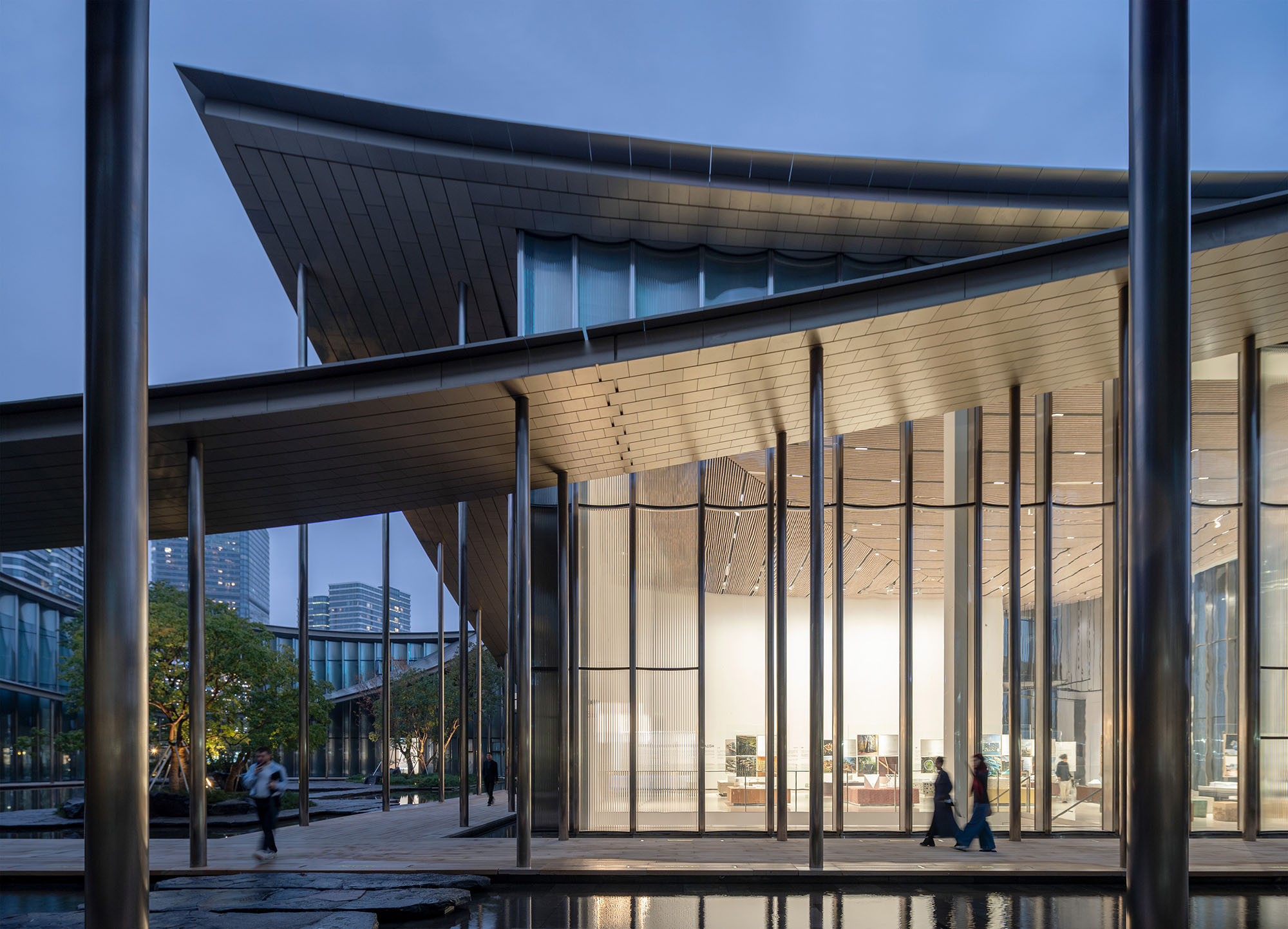
10の相互接続されたパビリオンは、瓦屋根の軒のシルエットを思わせる緩やかな起伏をもつ連続した屋根の下に統合されており、残る2つのパビリオンは来年に建設され、金鶏湖の上へと延び、屋根付き通路によって主要構造と接続される計画である。
© BIG / Bjarke Ingels Group
「蘇州は中国庭園の発祥の地である。だからこそ〈蘇州現代美術館〉のデザインは、パビリオンと中庭による庭園として構想されている。個々のパビリオンはガラス張りのギャラリーとポーチによって織り合わされ、相互に接続された彫刻の中庭と展示空間の中国結びを形成している。観覧車の脚の間を縫うように、美術館は根茎のように枝分かれし、都市と湖を結びつける。その結果、植物とアートワークが交錯する人工的な迷路が生まれた。その結節的な構造は、上空のゴンドラから見ると明瞭に識別できる。湖の開放的な空間に対して、屋根の穏やかな円錐形の湾曲が水辺に優雅なシルエットを描く。上空から見ると、ステンレス製の屋根瓦が『第5のファサード』を形成するのである。」
BIG創設者・クリエイティブディレクター
ビャルケ・インゲルス
© Ye Jianyuan
© Ye Jianyuan
建築と自然の境界を曖昧にするデザイン
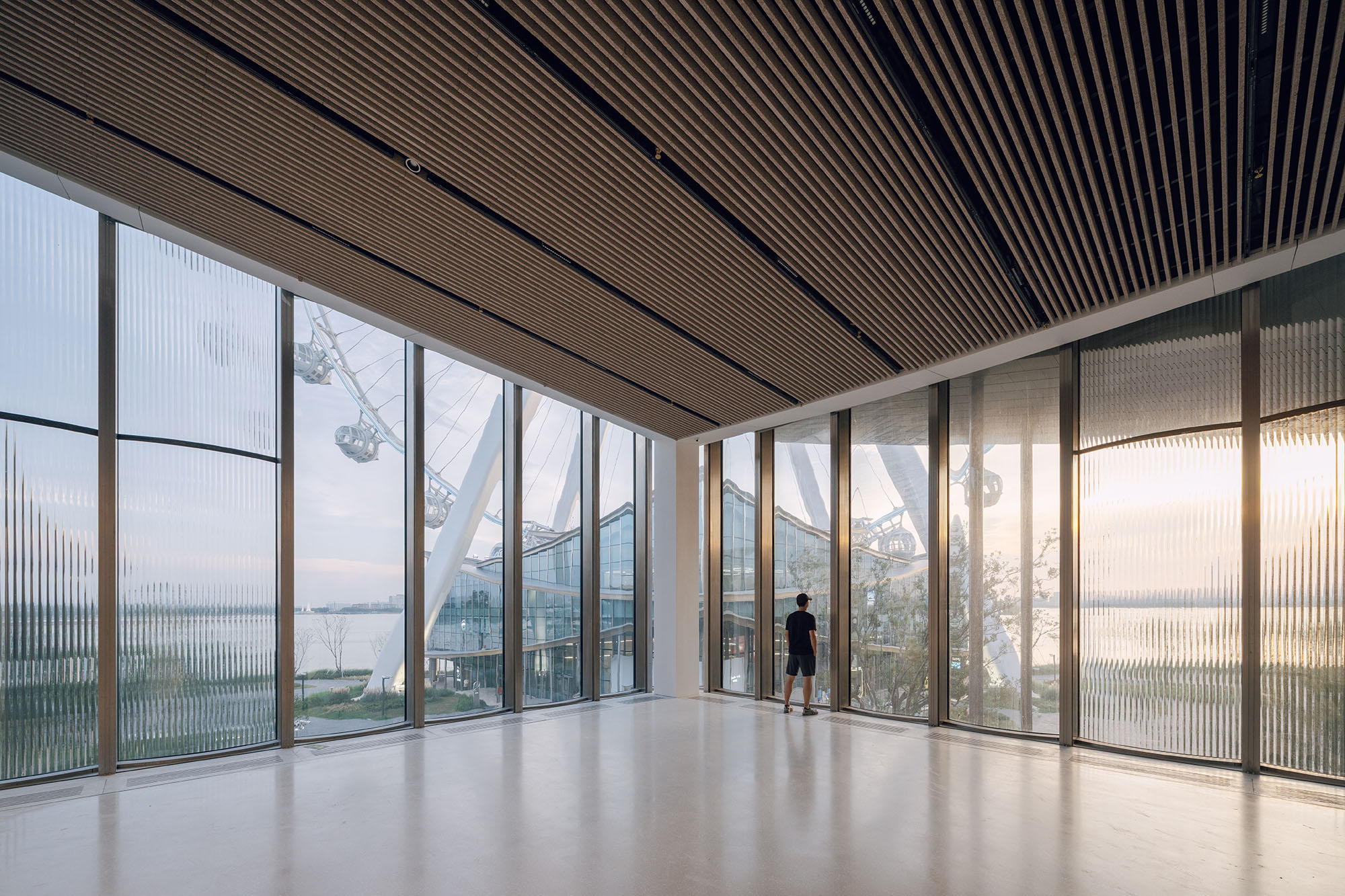
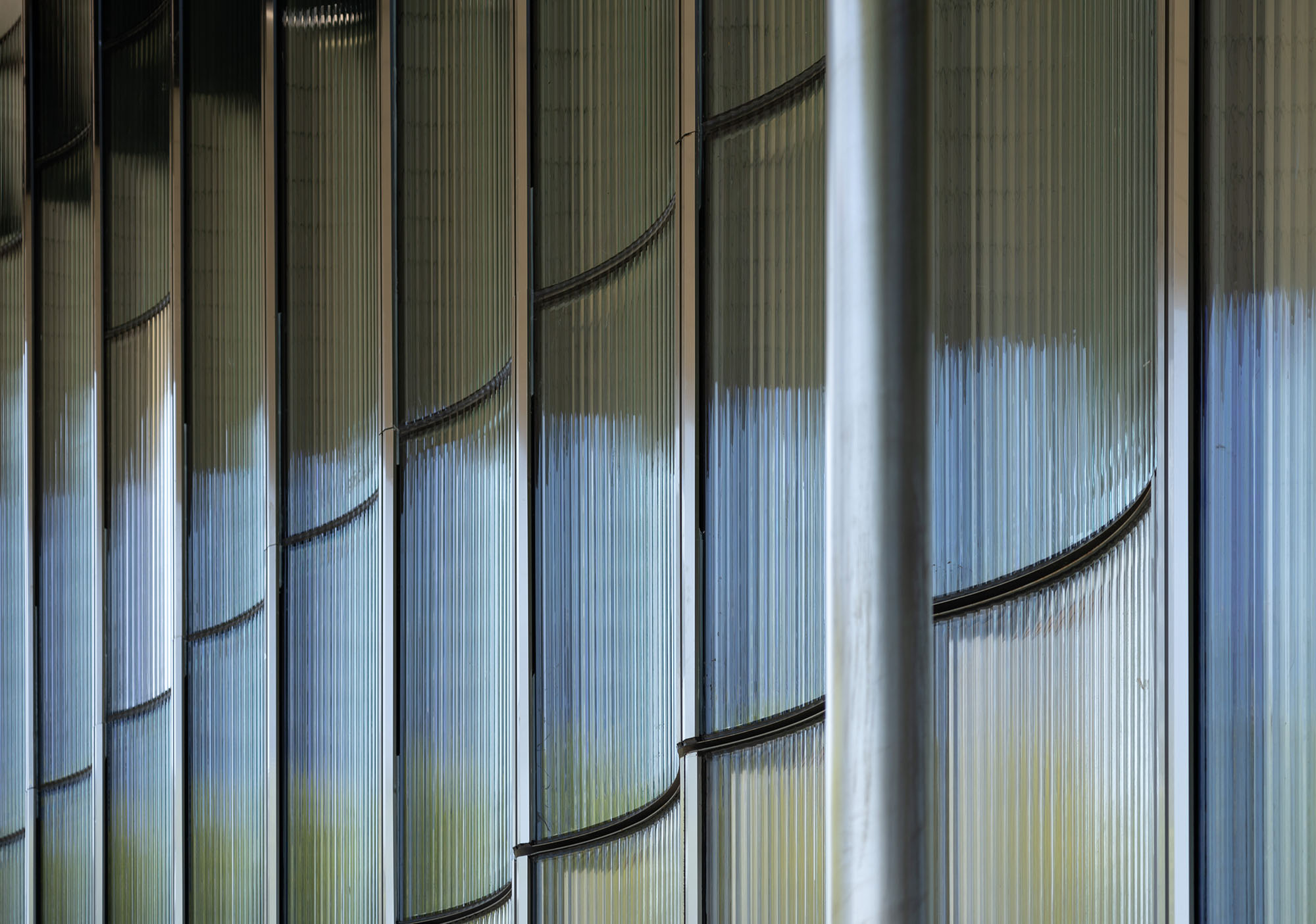
波打つ湾曲ガラスと温かみのあるステンレス鋼で覆われたファサードは、周囲の空、水、庭園を映し出し、建築と自然環境の境界を曖昧にしている。
各パビリオンは橋とトンネルによって地上・地下の両方で接続されており、季節や展示に応じて動線を柔軟に制御できる構成である。空間全体が庭園と中庭の連続として設計され、訪問者を芸術・歴史・自然・水が交錯する旅へと導く。
© Ye Jianyuan
来館者を迎えるシークエンス
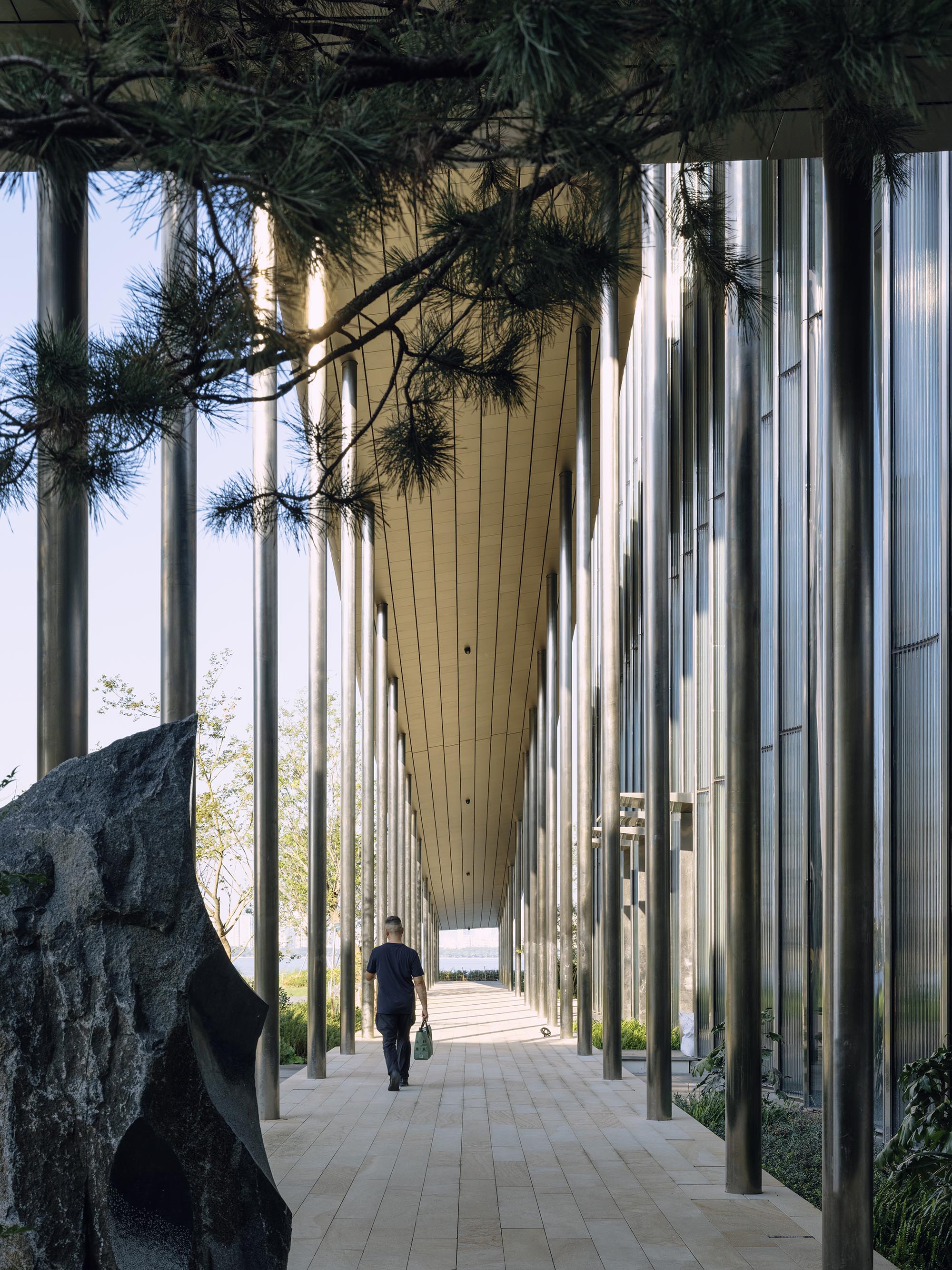
来館者はまずビジターセンター前の広大な広場に迎えられる。ここから美術館内部へ進むことも、敷地を散策し金鶏湖へ伸びる遊歩道を歩くこともできる。この湖は観覧車に乗り上空から眺めることも可能であり、都市と水景が一体となったランドスケープ体験を形成する。
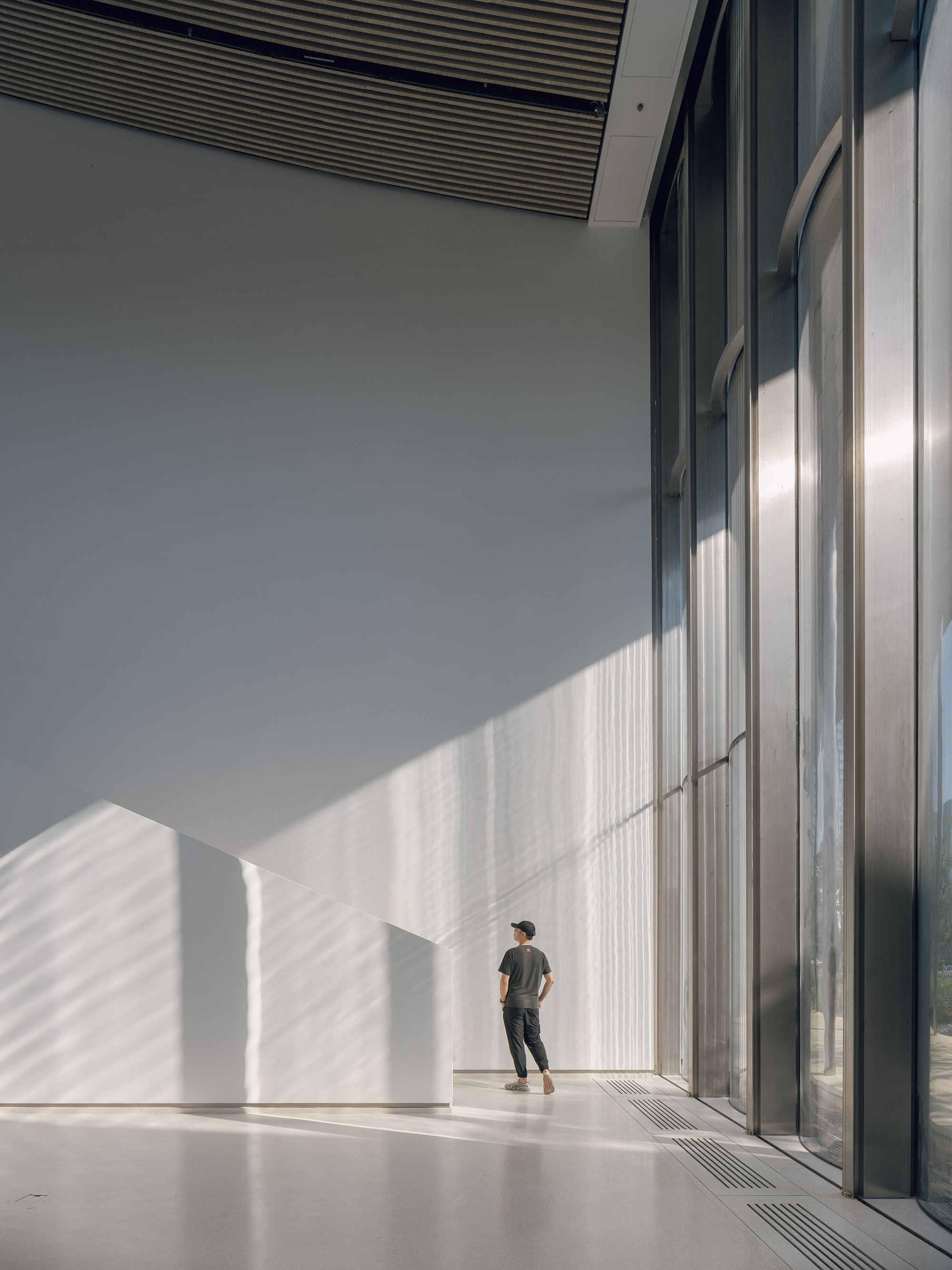
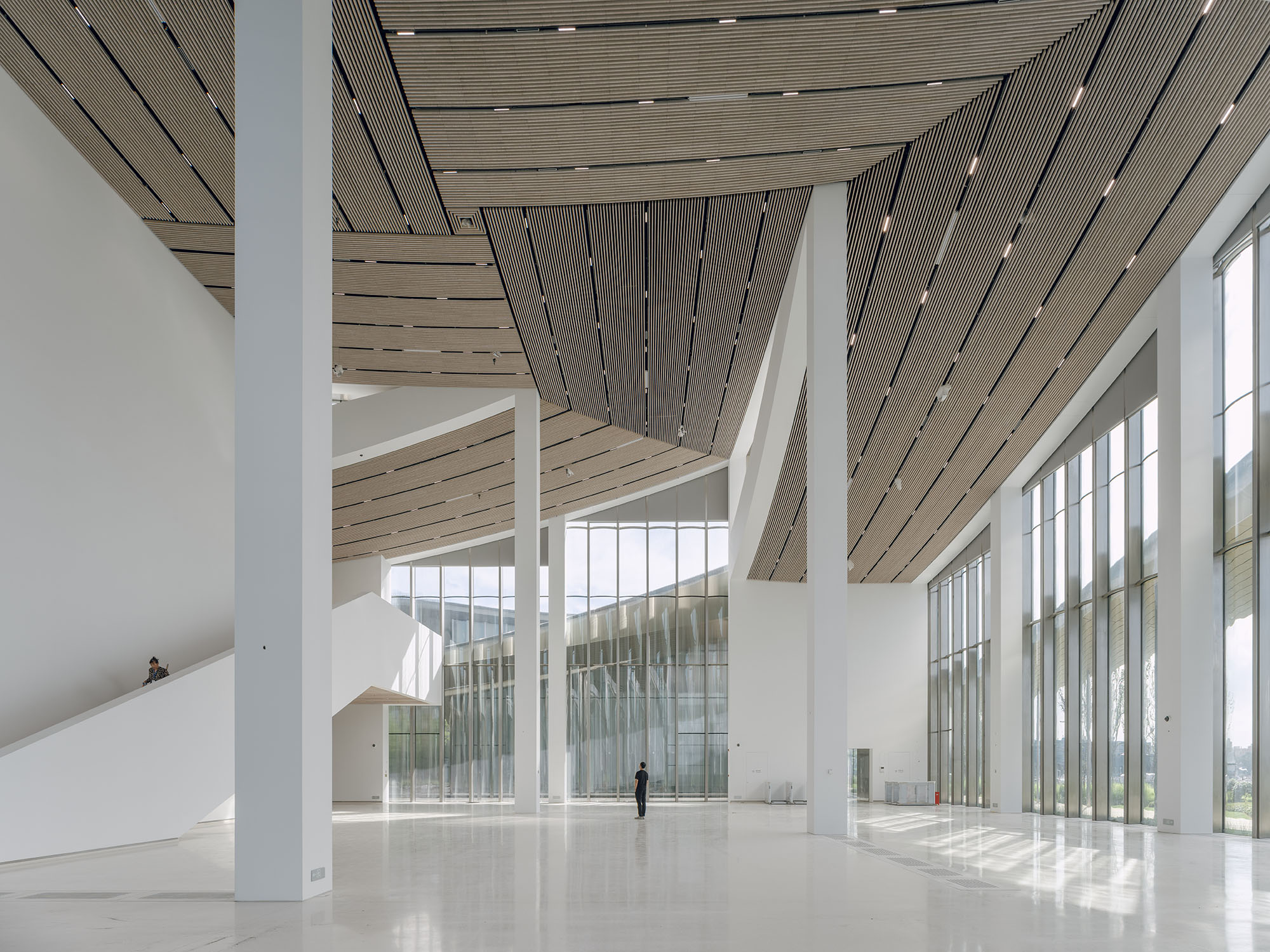
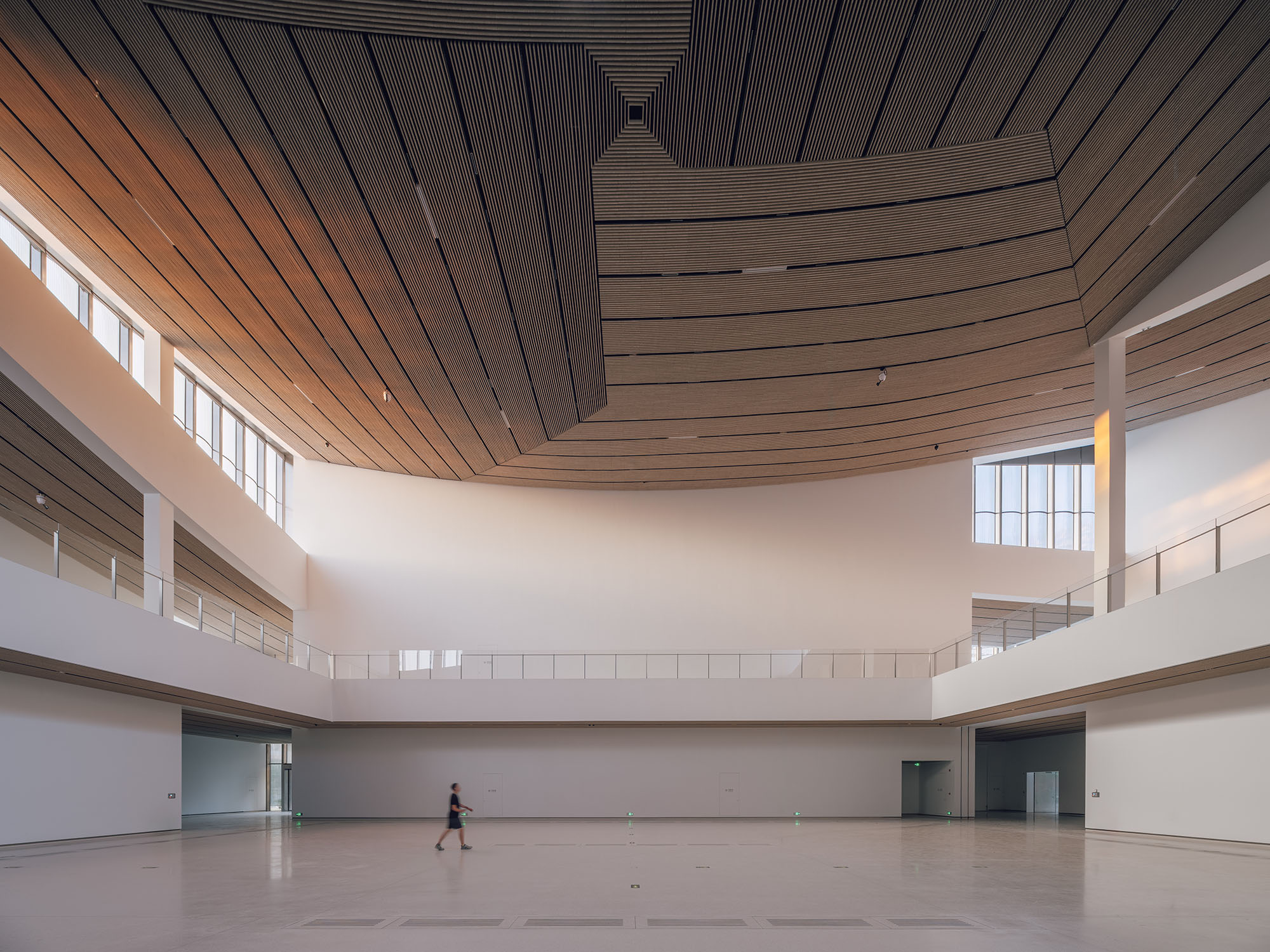
内部空間には高窓と天窓から自然光が差し込み、光と影の戯れによってギャラリーに生命感をもたらす。美術館の4つのパビリオンが主要なギャラリー体験を構成し、その他のパビリオンには壮大なエントランスホール、多目的ホール、劇場、レストランなどが含まれる。
連続する通路が訪問者を導き、各ギャラリー間には小径が枝分かれしている。
© Ye Jianyuan
湖畔と呼応するランドスケープデザイン
美術館のランドスケープデザインは、相互に連なる庭園群を通じて金鶏湖沿いに開かれた公共空間を形成する。湖へ近づくにつれて、庭園はハードスケープから緑地、そして水生植物へと段階的に移行し、美術館から陸地、そして湖面への自然な連続性を表現している。
〈蘇州現代美術館〉は中国のGBEL 2つ星グリーンビルディング認証を目指して設計されており、パッシブシェーディング、自然換気、地域産素材の活用を通して、都市の文化的ランドマークを形成している。
© Ye Jianyuan
BIGの建築を素材から読み解く「マテリアリズム」展
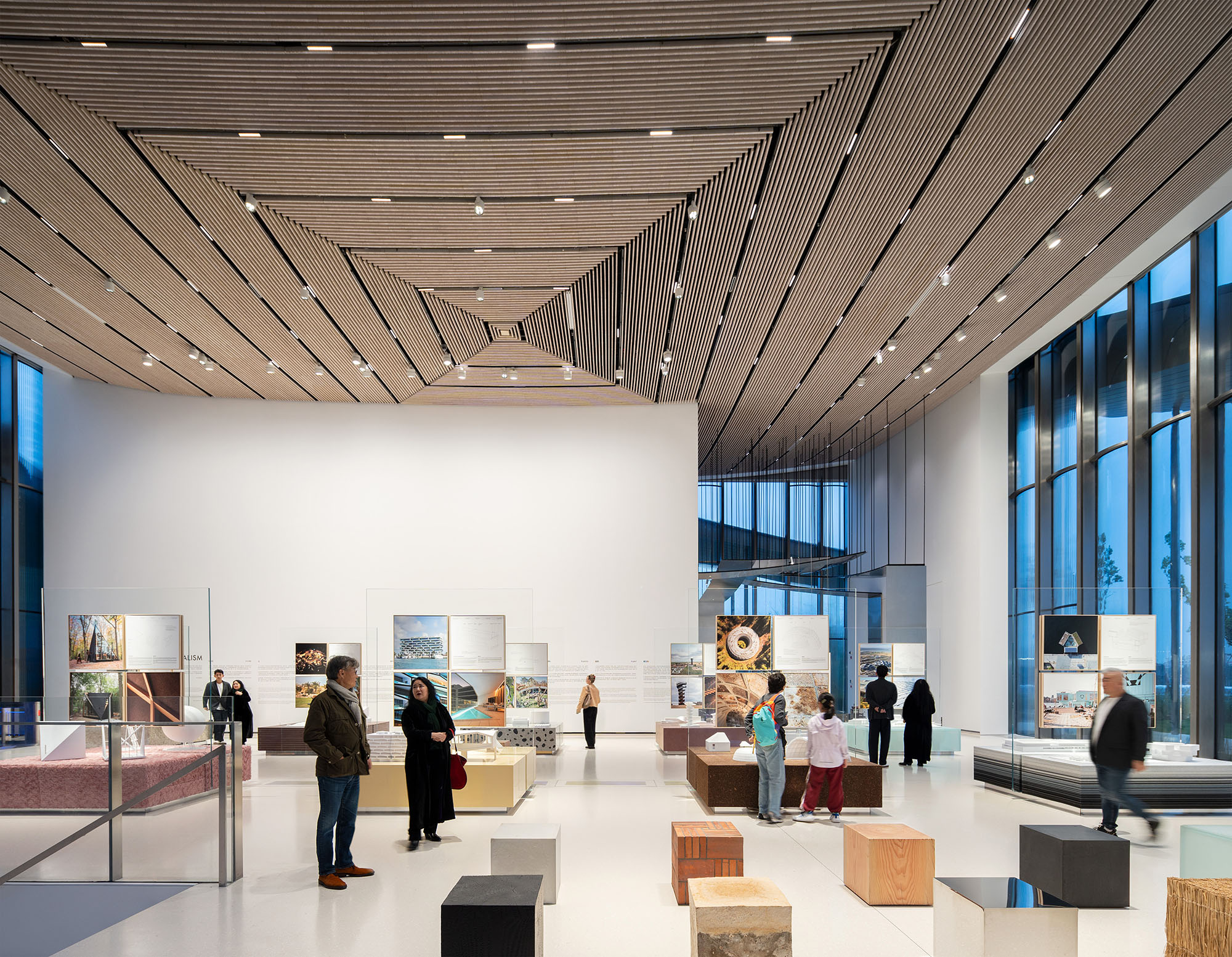
「マテリアリズム」展は、ビャルケ・インゲルスがイタリアのデザイン誌「Domus」で1年間ゲスト編集長を務めた際に、各号が単一素材に焦点を当てた企画を基にしている。本展では、石、土、コンクリート、金属、ガラス、木材、布、プラスチック、植物、リサイクル素材といった各素材が、いかにしてBIGの建築を形成してきたかを探る。
展示には、〈コペンハーゲン本社〉、〈デンマーク海洋博物館〉、〈Google Bay View〉、〈The Plus〉といった、BIGの代表的な20のプロジェクトの大規模モックアップや模型が登場し、BIG作品を特徴づける触覚的・空間的な質を体験的に示している。ギャラリー内の座席は展示されている素材そのもので製作され、質感と形態を通して感覚的な旅を創出している。各セクションの銘板も、黄錆石、版築土、テラゾーなど対応する素材でつくられており、素材の多様な表現と可能性を提示している。
© Ye Jianyuan
© StudioSZ Photo / Justin Szeremeta
〈蘇州現代美術館〉は、ノルウェーのキステフォス彫刻公園に建つ〈The Twist〉、スイスの〈オーデマ・ピゲ美術館〉、デンマークの〈レゴ博物館〉などに続く、BIGの文化施設プロジェクトの一環である。
「マテリアリズム」展は、「Yes Is More」(2009年)、「Hot to Cold」(2015年)、「Formgiving」(2019年)といった展覧会に続くものであり、2026年の蘇州現代美術館の正式オープンに先立ち、今後数カ月のうちに一般公開される予定である。
© Ye Jianyuan
© Ye Jianyuan
© StudioSZ Photo / Justin Szeremeta
© StudioSZ Photo / Justin Szeremeta
© StudioSZ Photo / Justin Szeremeta
以下、BIGのリリース(英文)です。
PREVIEW: SUZHOU MUSEUM OF CONTEMPORARY ART TO COMPLETE SOON WITH EXHIBITION CURATED BY BIG
The Suzhou Museum of Contemporary Art (Suzhou MoCA) designed by BIG will soon open its doors to the public for the exhibition, Materialism. Conceived as a village of 12 pavilions under a ribbon-like roof, the 60,000-m2 museum offers a modern interpretation of the garden elements that have defined Suzhou’s urbanism, architecture, and landscape for centuries. Materialism, curated by BIG, will take visitors on a material odyssey starting from stone and ending with recyclate.
Commissioned by Suzhou Harmony Development Group and designed by BIG-Bjarke Ingels Group in collaboration with ARTS Group and Front Inc., Suzhou MoCA is located along the Jinji Lake waterfront as a new venue for contemporary art, design, and public life in China. The museum will officially open its doors to the public in 2026.
The architecture of the museum is rooted in the tradition of Suzhou’s gardens by reimagining the ‘lang’ 廊- a long, covered corridor that traces a path. Ten interconnected pavilions are unified beneath a continuous roof whose gentle undulations recall the silhouette of tiled eaves. The remaining two pavilions will be built next year, extending over Jinji Lake and linking to the main structure via covered pathways.
“Suzhou is the cradle of the Chinese garden. Our design for the Suzhou Museum of Contemporary Art is conceived as a garden of pavilions and courtyards. Individual pavilions are woven together by glazed galleries and porticoes, creating a Chinese knot of interconnected sculpture courtyards and exhibition spaces. Weaving between the legs of the Ferris wheel, the museum branches out like a rhizome, connecting the city to the lake. The result is a manmade maze of plants and artworks to get lost within. Its nodular logic only becomes distinctly discernible when seen from the gondolas above. Against the open space of the lake, the gentle conical curvature of the roofs forms a graceful silhouette on the waterfront. From above, the stainless roof tiles form a true fifth facade.” – Bjarke Ingels, Founder & Creative Director, BIG
Clad in rippled and curved glass and warm-toned stainless steel, the façades reflect the surrounding sky, water, and gardens – blurring the boundaries between architecture and the natural environment. The pavilions are connected above and underground via bridges and tunnels, offering the museum flexibility to manage circulation according to seasons and exhibitions. Together, the rooms frame a sequence of gardens and courtyards, guiding visitors on a journey that intertwines art, history, nature, and water.
Arriving at the museum, visitors are welcomed by an expansive plaza in front of the Visitor Centre. From here, museumgoers can proceed inside or explore the grounds, meandering along the walkways that extend out into Jinji Lake, which can be seen from above while on the Suzhou Ferris wheel.
Inside, natural light enters through clerestories and skylights, animating the galleries with a play of shadow and reflection.
Four of the museum’s pavilions comprise the main gallery experience, while the remaining pavilions include a grand entrance space, multifunction hall, theater, and restaurant. A continuous path guides visitors through the museum, branching off into smaller routes between the galleries.
The museum’s landscape design creates a welcoming public space along Jinji Lake through a series of interconnected gardens. As visitors approach the waterfront, the gardens gradually transition from hardscape to greenery to finally water-themed plantings, reflecting a natural progression from museum to land to lake.
Designed to achieve China’s GBEL 2-Star Green Building certification, Suzhou MoCA integrates passive shading, natural ventilation, and locally sourced materials to create a cultural landmark for the city.
The Materialism exhibition expands on Bjarke Ingels’ year-long guest editorship of Italian design magazine Domus, where each issue focuses on a single material. The exhibition explores how stone, earth, concrete, metal, glass, wood, fabric, plastic, plant, and recyclate each shape the firm’s architecture. Large-scale mock-ups and models of 20 BIG projects, such as the studio’s own Copenhagen headquarters, the Danish Maritime Museum, Google Bay View, and The Plus, invite viewers to experience the tactile and spatial qualities that define BIG’s work.
The seating throughout the galleries is made of the very substances on display, creating a full sensory journey through texture and form. Each section’s plaque is crafted from its corresponding medium – including yellow rust stone, rammed earth, and terrazzo – further revealing the varied expressions and possibilities of matter.
Suzhou MoCA joins BIG’s portfolio of cultural projects around the world, including The Twist at Kistefos Sculpture Park in Norway, the Musée Atelier Audemars Piguet in Switzerland, and the LEGO Museum in Denmark. Materialism follows BIG’s previous exhibitions, including Yes Is More (2009), Hot to Cold (2015), and Formgiving (2019). The Materialism exhibition will open to the public in the coming months, ahead of the official opening of the Suzhou Museum of Contemporary Art in 2026.
PROJECT FACTS
Name: Suzhou Museum of Contemporary Art
Size: 60,000 m²
Location: Suzhou, Jiangsu, China
Client: Suzhou Harmony Development Group Co. Ltd, 苏州工业园区宣传和统战部
Owner: 苏州工业园区文体旅游局
Collaborators: ARTS Group Co., Ltd. [中衡设计集团股份有限公司], Front Inc., Shanghai Shuishi Landscape Design Co.,Ltd [上海水石景观环境设计有限公司], Rdesign International Lighting [上海瑞逸 环境设计有限公司]PROJECT TEAM
Partners-in-Charge: Bjarke Ingels, Catherine Huang
Project Manager: Molly Hsiao Rou Huang
Project Architect: Tyrone Cobcroft, Kekoa Charlot, Tseng-Hsuan Wei
Design Lead: Matteo Pavanello
Team: Aileen Koh, Amanda Lima Soares Da Cuncha, Arda Özker Cincin, Athena Morella, Chih-Han Chen, Christian Vang Madsen, Cris Guoyu Liu, Desislava Georgieva, Eddie Can, Eric Wen Tung Li, Federico Martínez De Sola Monereo, Filip Fot, Filippo Cartapani, Finn Nørkjær, Haochen Yu, Huiyao Fu, Izabella Banas, Jakub Kulisa, Jan Magasanik, Jana Semaan, Jason Cheuk Hei Lee, Jiaqi Yang, Jiawen Huang, Julia Wilkosz, Jurica Pajic, Mathis Paul Gebauer, Megan Nhat Xuan Dang, Narisara Ladawal Schröder, Ole Elkjær-Larsen, Oliver Steen, Paula Domka, Pei Huang, Philip Kaefer, Phoebe Cowen, Riad Tabbara, Romain Thijsen, Shu Du, Sol Anaid Chaocon Levin, Tarek Shater, Todor Todorov Rusev, Tomasz Jakubowski, Xavier Thanki, Yanis Amasri Sierra, Yihan Liu, Yingying Guan, Zahra Khademi, Zhonghan Huang, Zuzana FaskovaBIG Engineering: Andrea Hektor, Adele Scampoli, Alexander Gale Heiede, Andreas Bak, Bjarke Koch-Ørvad, Cristina Minguela, Ingrid Albina Oliva Lampa, Janis Bronka, Jens Max Jensen, Jesús Fernández Lindqvist, Jonathan Russell, Kannan Selvaraj, Konstantinos Koutsoupakis, Maria Capuozzo, Miles Treacy, Thomas Lejeune, Tim Christensen
MATERIALISM EXHIBITION PROJECT FACTS
Name: Materialism Exhibition
Location: Suzhou Museum of Contemporary Art, ChinaMATERIALISM EXHIBITION PROJECT TEAM
Partner in Charge: Bjarke Ingels, Kai-Uwe Bergmann, Jakob Lange, Cat Huang
Project Manager: Tseng-Hsuan Wei
Design Lead: Søren Martinussen, Yongwon Jo, Haochen Yu
Team: Shu Du, Claudia Bertolotti, Devanga Phukan, Dora Jiabao Lin, Futa Oba, Guanxin Luo, Jean Kekoa Charlot, Jeronimo Idarraga, Keyao Liu, Matteo Pavanello, Paula Madrid, Siyu Tian, Xiaomeng Chi, Yingying Guan
BIG 公式サイト
https://big.dk/projects/suzhou-museum-of-contemporary-art-18410


![[Interview]iF Design代表のウヴェ氏に聞く、建築と都市の2026年メガトレンド](https://magazine-asset.tecture.jp/wpcms/wp-content/uploads/2026/07/23221054/iF_AwardCeremony_2026_AwardCeremony-82-900x600.jpg)
![[Report]激変する時代の中で、建築とデザインはどう拡張するか。「iF DESIGN AWARD 2026」授賞式&最新トレンド](https://magazine-asset.tecture.jp/wpcms/wp-content/uploads/2026/07/24010304/iFDesignTrendConference26-45-900x600.jpg)
![[Report]RUI Architectsが可動モジュールを設計して松竹のアートスペースをリニューアル、柿落とし展「継承のトランジション」の会場デザインも担当](https://magazine-asset.tecture.jp/wpcms/wp-content/uploads/2026/07/24141011/20260713shutl_press11-01309-c-900x629.jpeg)
![[Interview]BIM図面審査がスタート! さまざまな設計者のニーズに応えるVectorworksによる「限界のないデザイン」の世界](https://magazine-asset.tecture.jp/wpcms/wp-content/uploads/2026/07/13084316/rinterview_vectorworks_056-e1784200974912-900x555.jpg)