
波打つガラスが街を映す オーストラリアの新劇場 - スノヘッタとブライト・レイナー・アーキテクチャによる〈グラスハウス・シアター〉
©︎ Christopher Frederick Jones
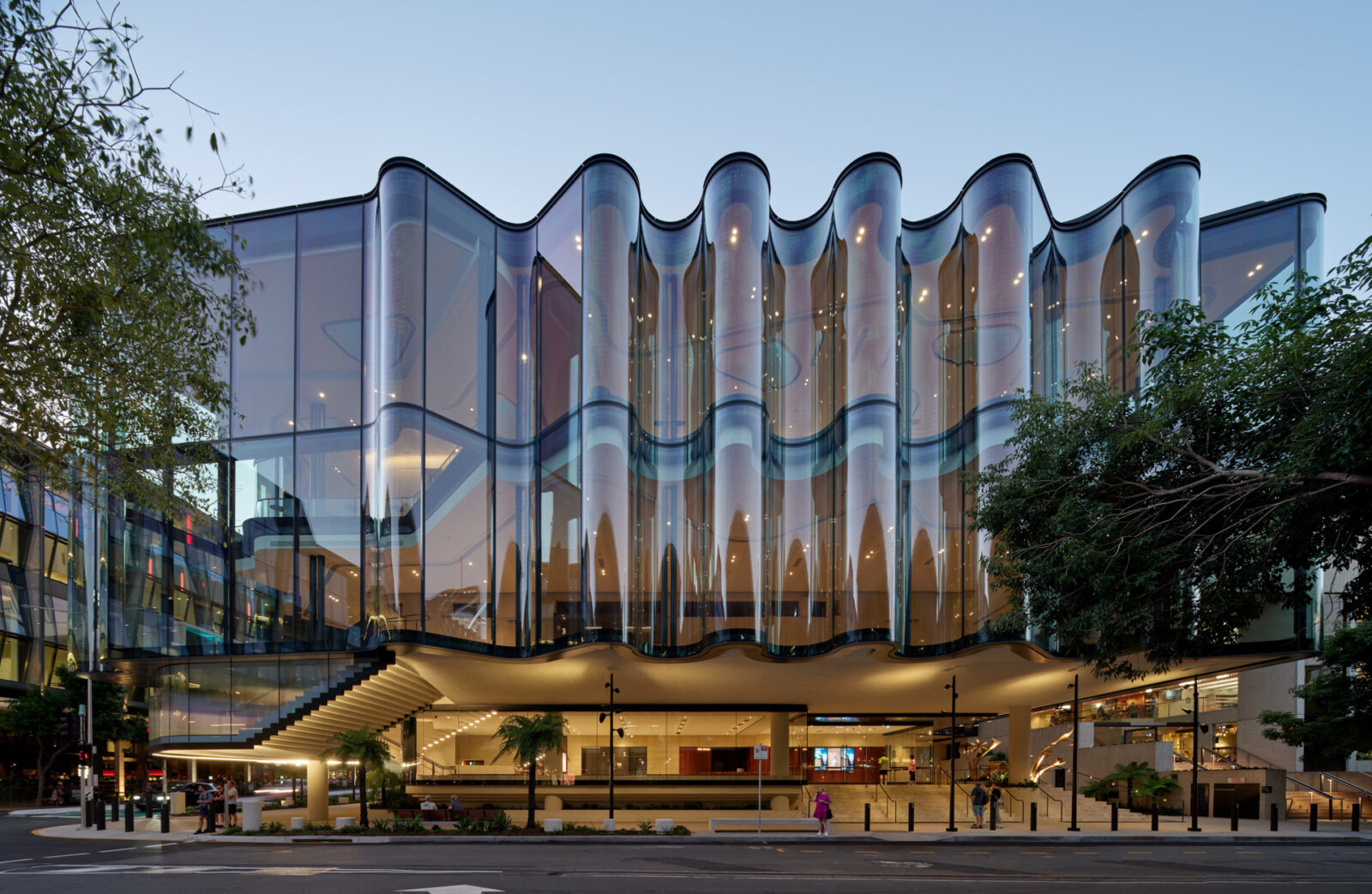
〈グラスハウス・シアター(Glasshouse Theatre)〉は、クイーンズランド州サウスバンクのクイーンズランド・パフォーミング・アーツ・センター(QPAC)に誕生した、「波打つガラスファサード」が特徴的な新たな劇場です。
スノヘッタ(Snøhetta)とブライト・レイナー・アーキテクチャ(Blight Rayner Architecture)が設計しました。
注目ポイント
- 新たな文化ランドマークとしての劇場
- 環境性能と意匠を両立する「4層構造の波打つガラスファサード」
- 先住民族の物語を建築的に統合するプロジェクト
(以下、スノヘッタから提供されたプレスキットのテキストの抄訳)
©︎ Christopher Frederick Jones
あらゆる舞台芸術のための劇場
波打つガラスファサードが象徴する新たな文化のランドマーク
クイーンズランド州サウスバンクに位置するクイーンズランド・パフォーミング・アーツ・センター(QPAC)の新しい〈グラスハウス・シアター〉は、波打つようなガラス張りのファサードと、主要な文化施設が都市とどのように関わるべきかという概念を刷新しようとするその志によって特徴づけられている。
ブライト・レイナー・アーキテクチャとスノヘッタが共同で設計したこの1,500席の劇場により、QPACは国内最大規模の単一施設内パフォーミングアーツセンターとなり、世界クラスのバレエ、ダンス、交響楽、オペラ、演劇、ミュージカルを同等の水準で上演できるようになった。
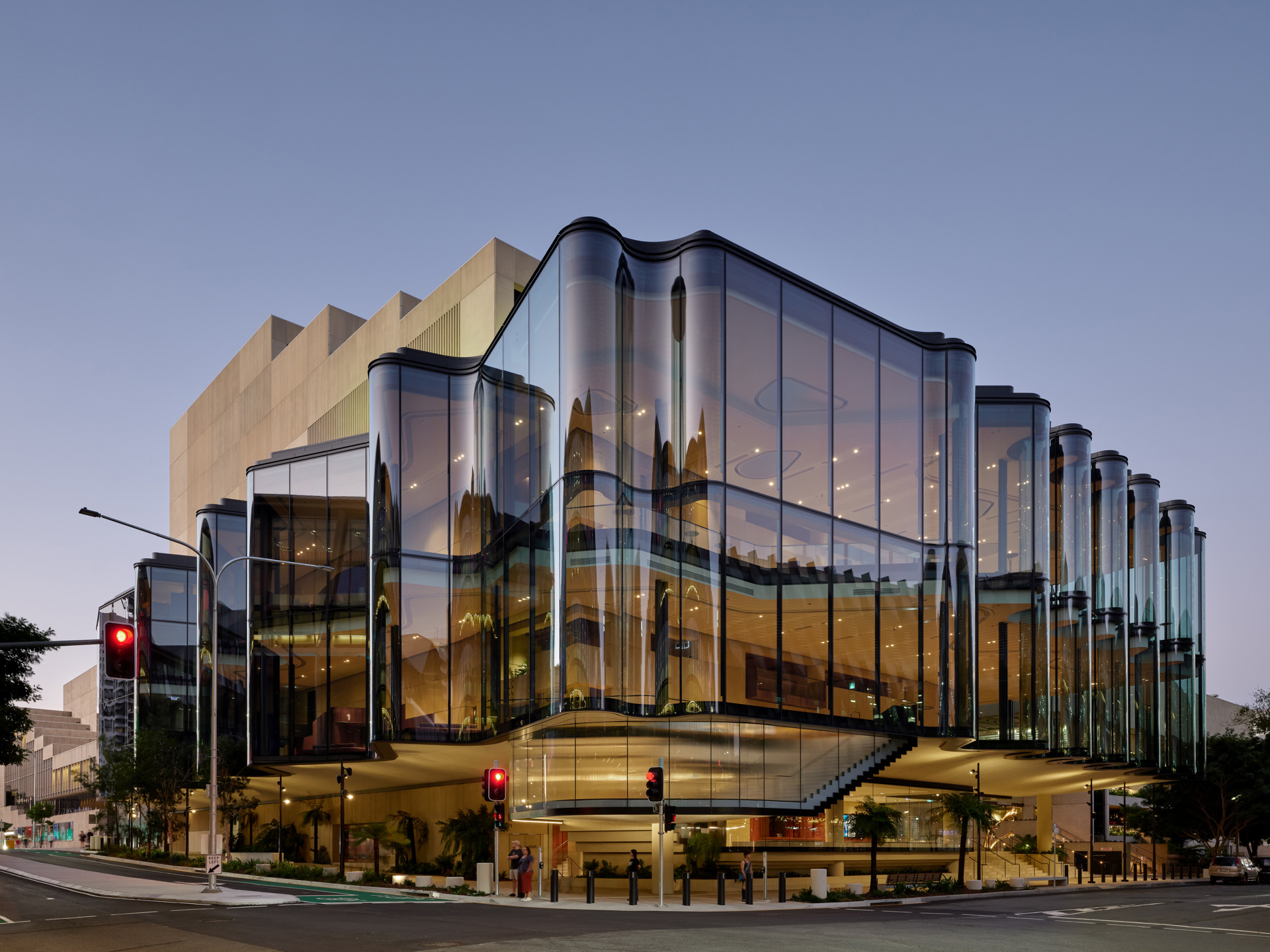
ブライト・レイナーとスノヘッタは、2019年5月にこのプロジェクトの国際設計コンペで優勝した。設計要件では、敷地内に必要な規模を確保するため、既存の「プレイハウス・グリーン」の上空に、2つの通り沿いのファサードを約6m張り出すことが認められていた。
©︎ Christopher Frederick Jones
先住民の物語を織り込む「透明なエッジ」
建築家たちの構想は、張り出し部分の視覚的な影響を最小限に抑えるため、そのエッジを極めて透明なものにすることであった。その透過面を通して見ると、劇場の「ブロック」は既存の建物のデザインと見事に調和している。これは、QPACおよびクイーンズランド・カルチュラル・プレシンクトの設計者であるロビン・ギブソンAOの遺産的地位を尊重する戦略の一環である。
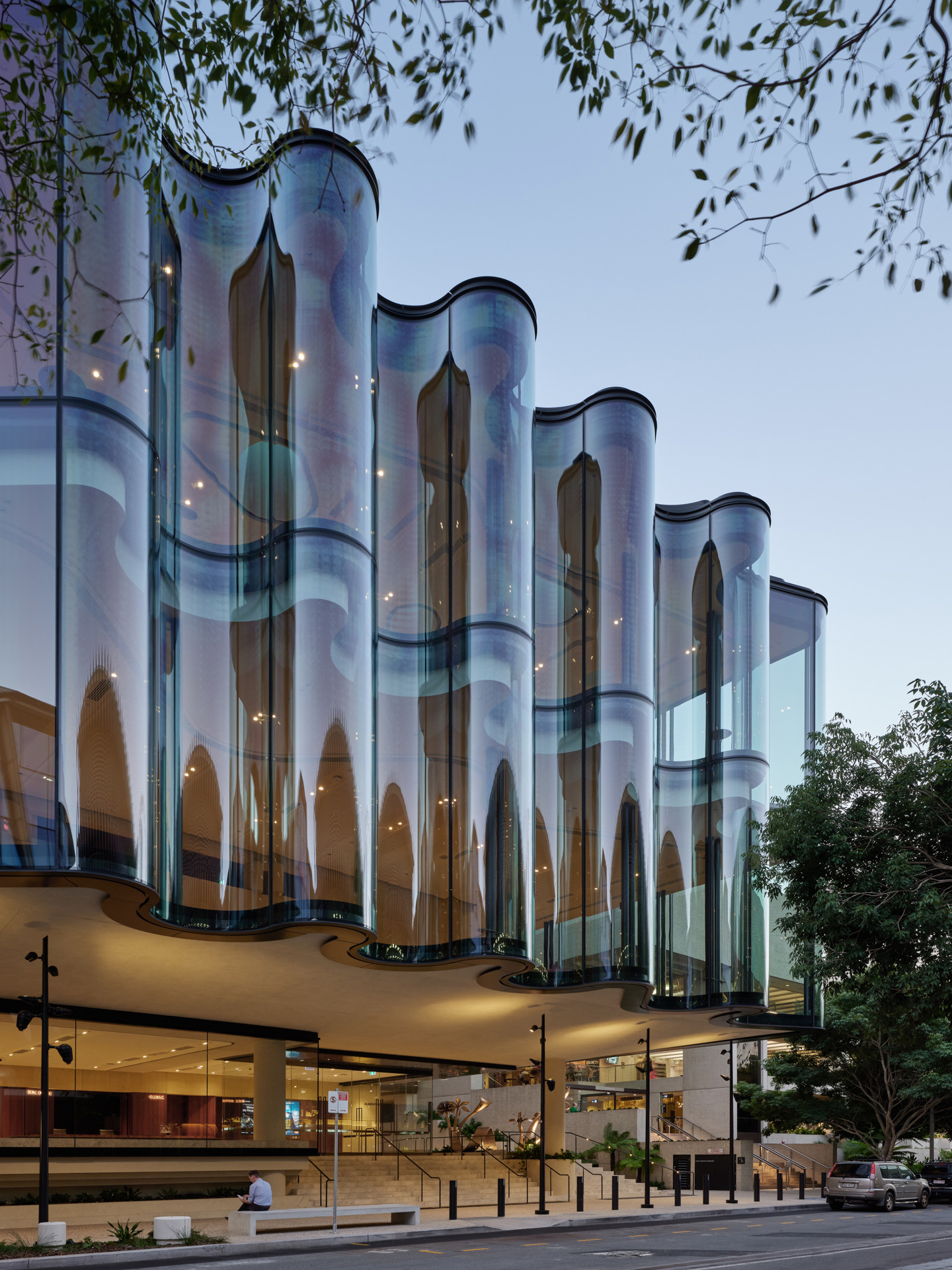
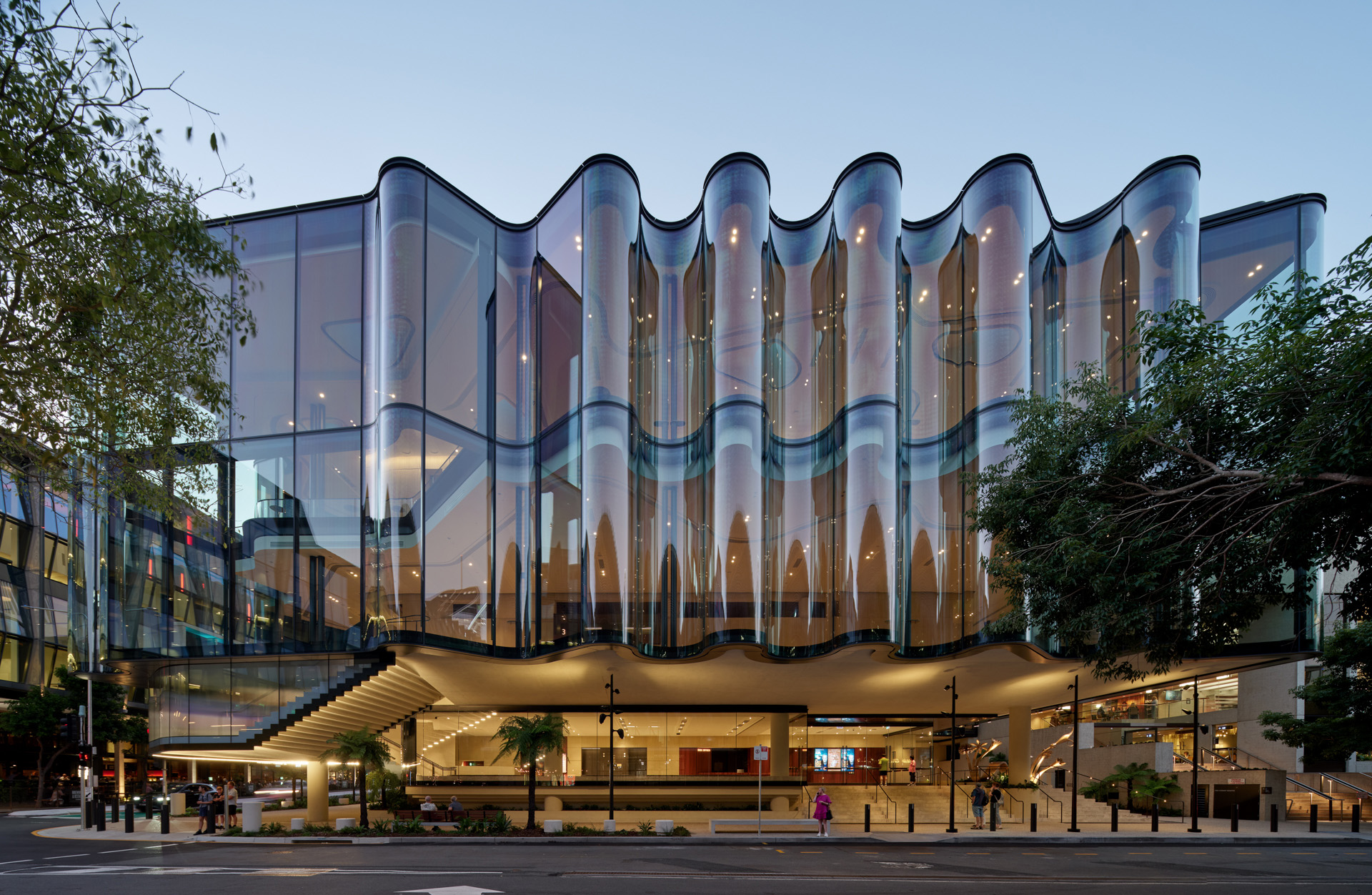
ガラスファサードにうねりを与えるというアイデアは、アボリジニの長老でありアーティストでもあるリラ・ワトソン(Lilla Watson)が書いた散文詩に由来している。その詩は、ブリスベン川のさざ波や、水面下を泳ぐ魚に言及したものであった。
「私たちは、この透明なファサードをある種のパブリック・シアターの舞台として捉えた。そうすると、通りから見るロビーにいる人々の姿が、時には鮮明に、時にはぼやけて見えてくる。また、この場所の文脈に関連する先住民族の物語の始まりを、デザインに織り込もうと考えたからである。」
ブライト・レイナー・アーキテクチャ
ディレクター
マイケル・レイナー(Michael Rayner)
©︎ Christopher Frederick Jones
クイーンズランドの自然を体現する空間設計
こうした物語の1つに、先住民の長老であるアンティ・コリーン・ウォール(Aunty Colleen Wall)による調査に基づいた、クイーンズランド州の7つの流域を表す屋根の7つの天窓がある。ここには、トレス海峡諸島出身のアーティスト、ブライアン・ロビンソン(Brian Robinson)による彫刻『フロリアート』が展示されている。この作品は、同州全域に豊富に自生する7種の象徴的な花をモチーフにしたものである。
「私たちはデザインを通じて、都市の公共生活と舞台芸術との関わりを最大限に高め、芸術をより身近に感じてもらえるように努めた。」
ブライト・レイナー・アーキテクチャ
ディレクター
ジェイソン・ブライト(Jayson Blight)
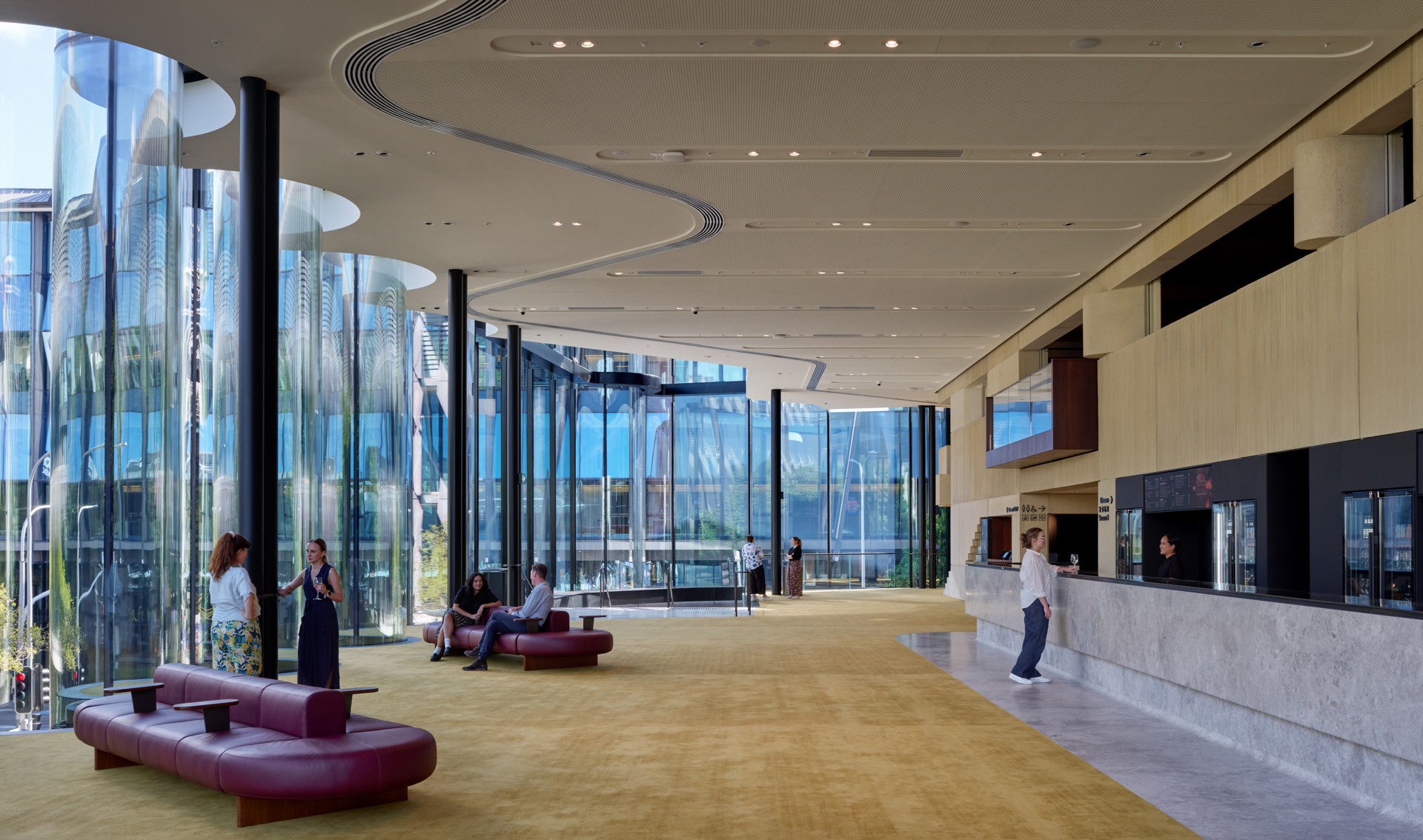
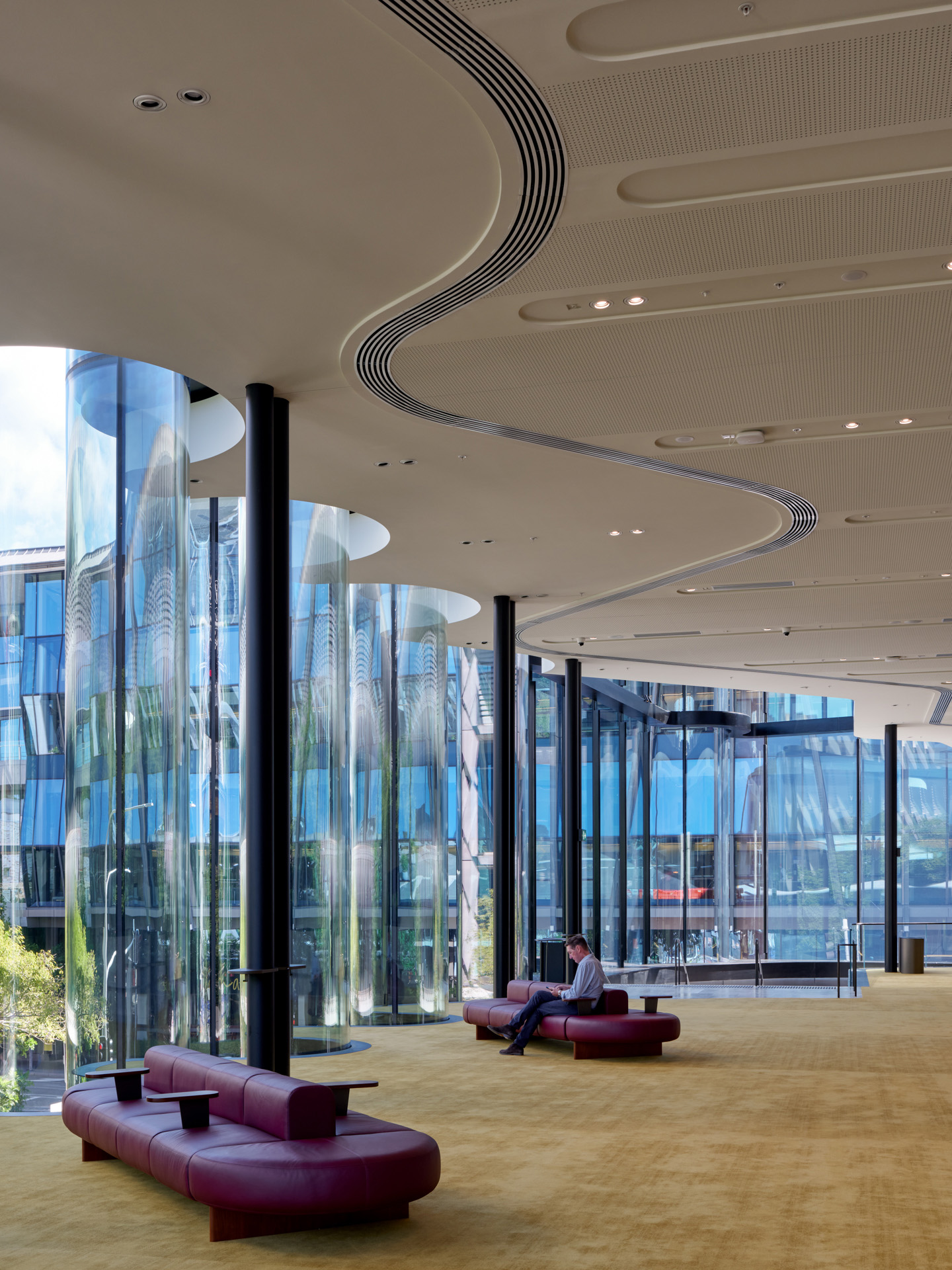
波打つようなガラス壁は、ロビーにドラマチックな個性を与えている。これらは断熱性能を高めるために高度な技術を用いて設計され、間に空気層を挟んだ4層構造で製作されている。直射日光を受ける面には、黒色のセラミックインレイが埋め込まれており、一体型のルーバーとして機能して日射を遮断する。これにより、建物のエネルギー性能を最適化するとともに、まぶしさを最小限に抑えている。
©︎ Christopher Frederick Jones
開放的なロビーと対比をなす、親密な劇場内部
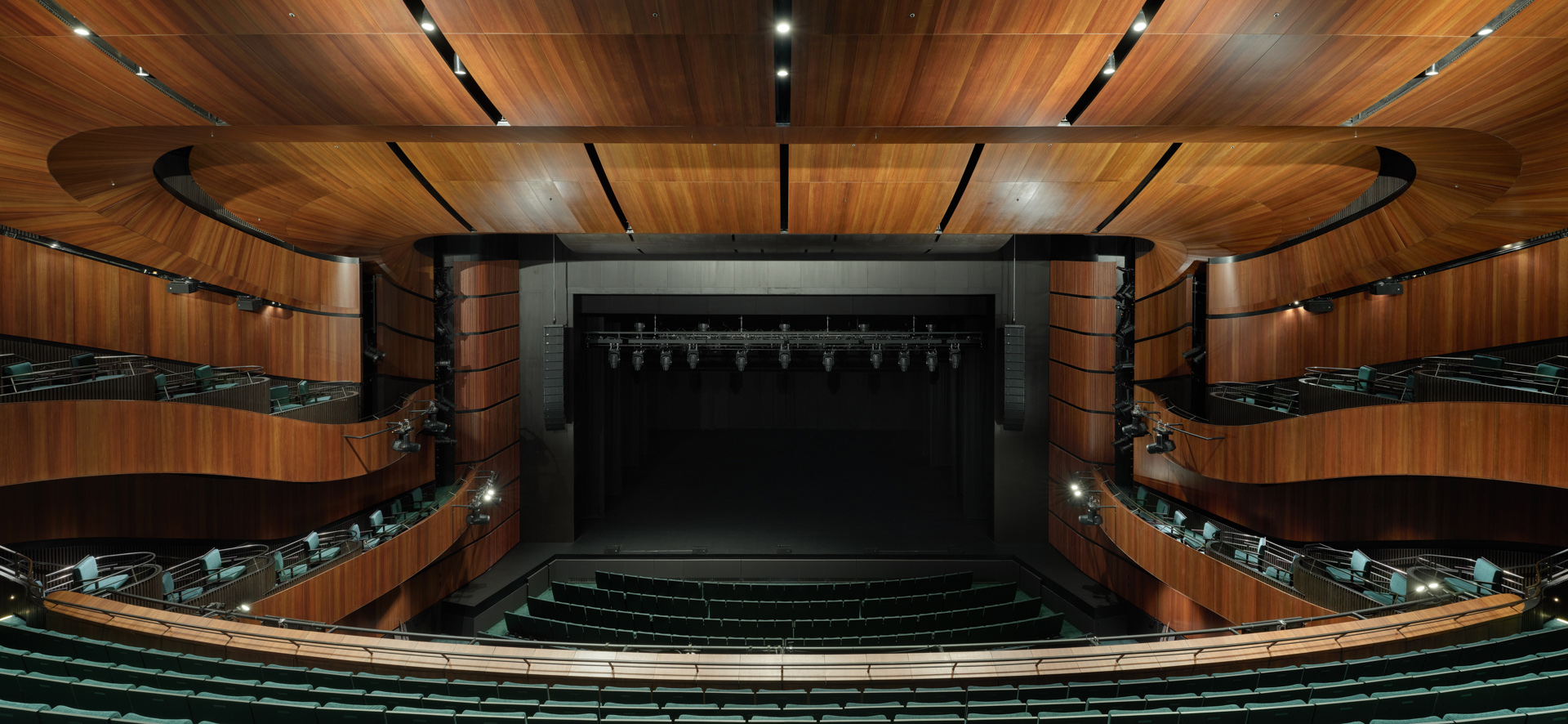
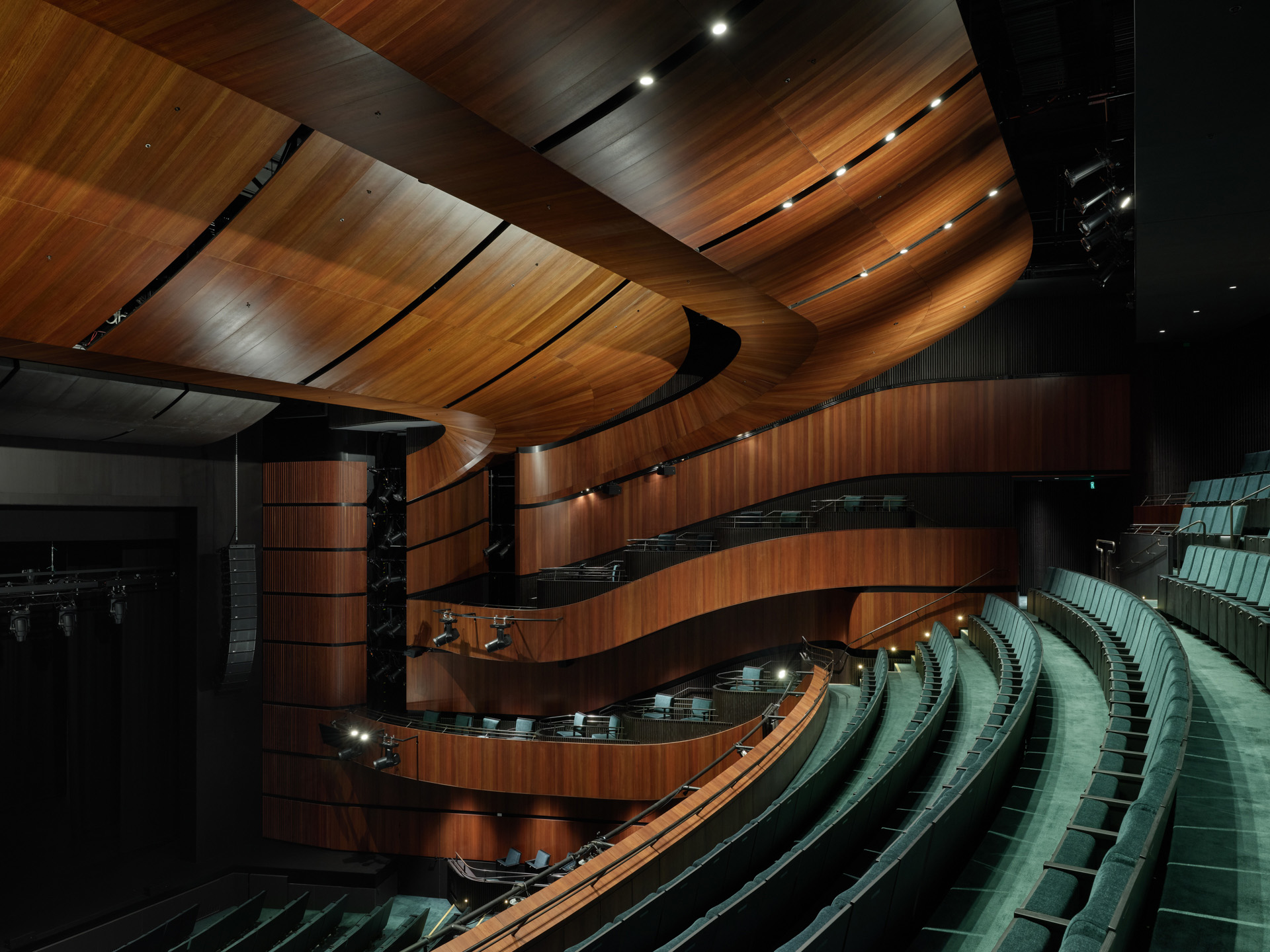
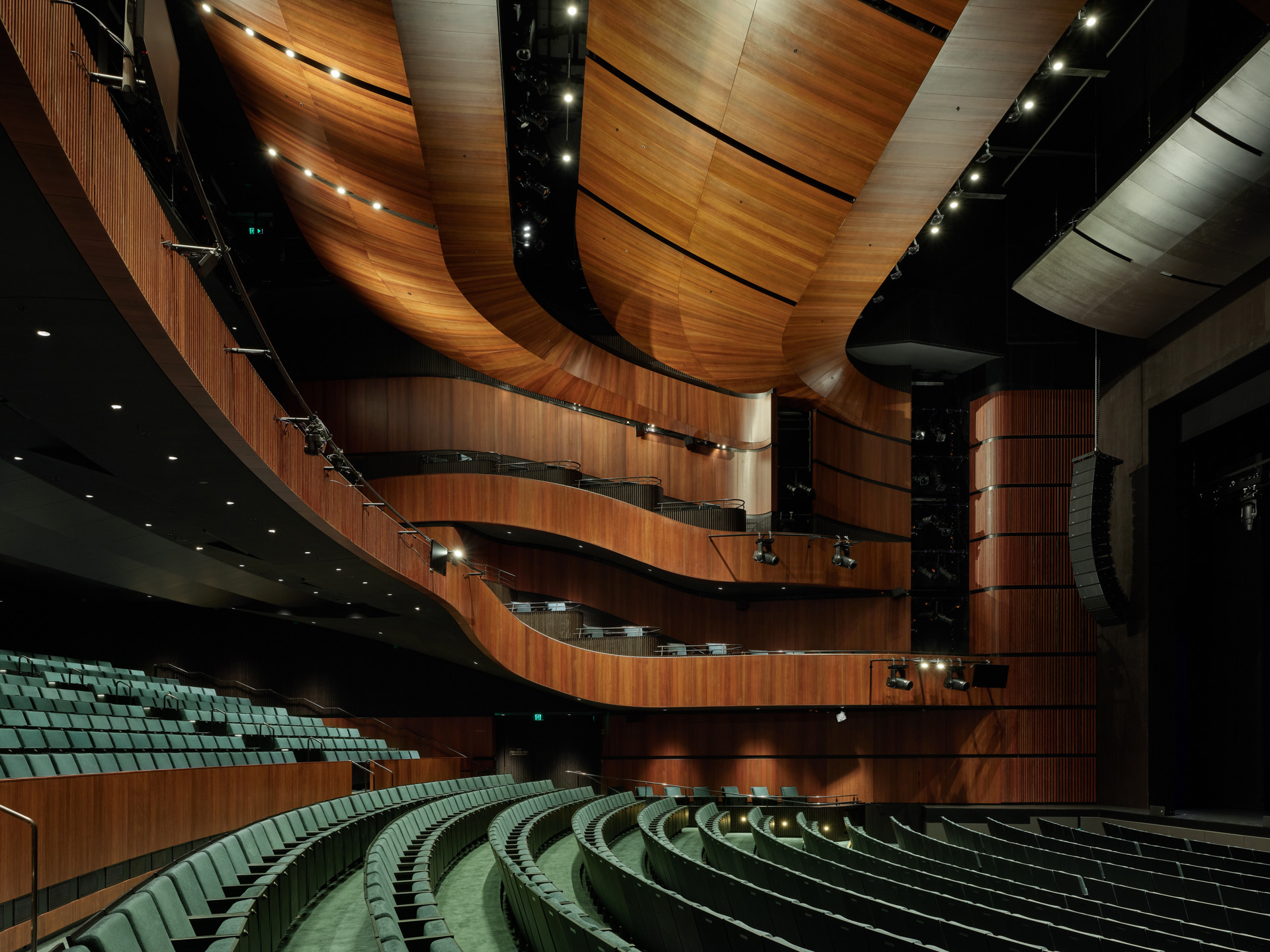
ロビーの軽やかで開放的な雰囲気は、ダークグレーのアイアンバークの壁と熱帯雨林のような緑色のカーペットに包まれた、まるで繭のような劇場内部と劇的な対比を成している。
舞台から劇場の最奥の座席までの距離はわずか28mであり、周囲を囲むバルコニーと相まって、観客にとっても出演者にとっても、信じられないほど親密な雰囲気を生み出している。
「客席は、幅広い芸術形態に対応できる、高い適応性を備えたパフォーマンス空間として構想されている。この劇場は、精密に調律された楽器のように機能するよう設計されており、世界クラスのオペラ、バレエ、ダンス、交響楽、演劇、ミュージカルなどの公演に対応できるよう調整可能である。」
「弦楽器の特性に着想を得て、技術的な精度と雰囲気のある親密さを融合させた。さらに、クイーンズランドの真髄を感じさせる重なり合った木製のリボンが、その魅力をさらに引き立てている。」
スノヘッタ・オーストララシア
マネージング・ディレクター
グムジ・カン(Gumji Kang)
©︎ Christopher Frederick Jones
©︎ Christopher Frederick Jones
最新鋭の舞台機構と文化観光地としての展望
オーケストラピットは3つの床セクションで構成されており、オーケストラの規模に合わせて各セクションを個別に昇降させることが可能である。ピットの配置パターンは4種類あり、これは従来の標準より2種類多い仕様となっている。
フライシステムは完全に自動化されており、高さ24mのフライタワーと、オブジェクトや出演者が観客席の遥か上方に到達できるよう張り出されたフライラインを備えている。
「〈グラスハウス・シアター〉は、文化観光地としてのクイーンズランドの評判を確固たるものにするランドマークである。」
「クイーンズランド州における舞台芸術への需要は尽きることがなく、新しい劇場の必要性は10年以上前から指摘されていた。既存の4つの劇場に加え、〈グラスハウス・シアター〉がオープンしたことで、年間来場者数が30万人増え、160万人に達すると見込んでいる。」
「この1,500席の劇場は、世界的な音楽のアイコンであるスティングの『ザ・ラスト・シップ』のような、世界クラスの才能やオーストラリア限定公演をクイーンズランドに誘致する能力をさらに高めてくれる。また、ブリスベン2032オリンピック・パラリンピック大会に向けて、クイーンズランド・カルチャー・プレシンクトがオーストラリア最大かつ最も活気ある文化地区の1つとなるだろう。」
クイーンズランド・パフォーミング・アーツ・センター(QPAC)
最高経営責任者(CEO)
レイチェル・ヒーリー(Rachel Healy)
「ブライト・レイナーとスノヘッタチームは、メインコンサルタントであるシューラー・シュック社(Schuler Shook)およびアコースティック・スタジオ社(Acoustic Studios)と共に、この劇場を完成させるために多大な努力を注いだ。私たちは、グラスハウス・シアターが、市民的観点からも文化的観点からも、この街への貢献が認められることを願っている。」
ブライト・レイナー・アーキテクチャ
ディレクター
ジェイソン・ブライト
©︎ Christopher Frederick Jones
以下、スノヘッタのリリース(英文)です。
Unveiling the Glasshouse Theatre in Queensland, Australia
A THEATRE FOR ALL THE PERFORMING ARTS
Photo by: Christopher Frederick Jones
Queensland Performing Arts Centre’s (QPAC) new Glasshouse Theatre in South Bank is a sight to behold, defined by its rippling glass façade and its ambition to reframe how a major cultural building engages with the city.
Designed by Blight Rayner Architecture in partnership with Snøhetta, the 1,500 seat venue makes QPAC the largest performing arts centre under one roof in the country and capable of presenting world-class ballet, dance, symphony, opera, theatre and musicals to the same standard.
Blight Rayner and Snøhetta won the international design competition for the project in May 2019. The brief had allowed for the building to cantilever some six metres out on its two street frontages in order to fit the required size on to the site, over the preexisting Playhouse Green.
Transparent edge
The architects’ idea was to create a highly transparent edge to the cantilever to minimise its visual impact. Seen through it, the theatre ‘block’ aligns with the existing building design as one part of the strategy to respect the heritage status of QPAC and Queensland Cultural Precinct architect Robin Gibson AO.
The idea of undulating the glass façade emanated from a prose-poem written by Aboriginal Elder and artist Lilla Watson which referred to ripples of the Brisbane River and fish swimming underneath the surface.
“We thought to make the transparent façade a setting for a kind of public theatre where people in the foyers would be seen variously clear and blurred from the street. And we wanted to embed the beginnings of First Nations narratives related to the context into the design,” explains Michael Rayner, Director at Blight Rayner Architecture.
Seven watersheds
One of these narratives concerns seven skylights in the roof representing the seven watersheds of Queensland, based upon research by First Nations Elder Aunty Colleen Wall. This is complemented by the sculpture Floriate by Torres Strait Islander artist Brian Robinson that features seven emblematic flowering plants that grow in abundance across Queensland.
“We’ve tried through the design to maximise engagement between the public life of the city and the performing arts, and make the arts feel more accessible,” says Jayson Blight, Director at Blight Rayner Architecture.
The wavy glass walls give dramatic character to the foyers. They are highly engineered for thermal performance, fabricated in four layers with an intervening air gap. The facets that receive direct sunlight are embedded with a black ceramic inlay that acts as an integrated louvre to block solar penetration, optimising the building’s energy performance and minimising glare.
Contrasts
The lightness and airiness of the foyers contrast dramatically with the theatre interior, conceived like a cocoon of dark grey ironbark walls and rainforest green carpet.
“The auditorium was conceived as a highly adaptable performance environment capable of hosting a wide spectrum of artforms.The theatre was designed to operate like a finely tuned musical instrument – adjustable to support world-class opera, ballet, dance, symphony, theatre and musical productions,” says Gumji Kang, Managing Director of Snøhetta Australasia.
The distance from the stage to the furthest seat in the theatre is only 28 metres, only three metres longer than a half-Olympic pool. Together with wrap-around balconies, the atmosphere is incredibly intimate for both patrons and performers.
“Inspired by the qualities of stringed instruments, we have combined technical precision with atmospheric intimacy, enriched by layered timber ribbons that feel quintessentially Queensland,” says Kang.
Fully automated
The orchestra pit has three floor sections that can be raised or lowered independently to accommodate orchestras of different sizes, and there are four different pit configurations, two more than the convention.
The fly system is fully automated, with the fly tower being 24 metres high and fly lines extending out for objects and performers to reach far out over the audience.
Rachel Healy, Chief Executive, QPAC, said the Glasshouse Theatre was a landmark that fortified Queensland’s reputation as a cultural tourism destination.
“The appetite for the performing arts in Queensland is insatiable and the need for a new theatre was flagged more than a decade ago. With the Glasshouse Theatre now open alongside our four other theatres, we expect to welcome an extra 300,000 people to increase our visitation to 1.6million visitors per year,” says Rachel Healy, Chief Executive, QPAC.
The Chief Executive continues:“This 1,500-seat theatre also gives us greater capacity to attract world-class talent and Australian exclusives to Queensland – such as global music icon Sting in The Last Ship – and will see the Queensland Cultural Precinct become one of Australia’s biggest and busiest cultural precincts as we move towards the Brisbane 2032 Olympic and Paralympic Games.”
Team effort
FInally, Jayson Blight remarks that the Glasshouse theatre is a result of great teamwok.
“Our Blight Rayner / Snøhetta team spent a huge effort perfecting the theatre along with our key consultants Schuler Shook and Acoustic Studios. We equally hope that the Glasshouse Theatre becomes recognised for the contribution it makes to the city, in a civic sense as well as culturally.”
KEY FACTS
・The glass façade consists of two tiers of seven metre high panels, with an overall height of 14.28 metres – each panel is unique
・It was manufactured by Austrian company Seele who also created the renowned 5th Avenue Apple retail store in New York
・The auditorium has two levels with 1000 seats in the stalls and 500 at the balcony level – a gradual elevating of the seating enhances sightlines up through the stalls
・There are 100 fly bars in the fly tower, all fully automated
・An in-house digital broadcast suite enables live performances to be broadcast to towns and cities Australia-wide including livestream production in 4K HDR with Dolby Atmos sound quality
・Aunty Lilla Watson’s prose poem which inspired the glass façade is displayed as part of a visual artwork at the entry to kuril dhagun in the nearby State Library of Queensland
・The automated fly system comprises 107 hoists and 29km of steel wire controlling theatre scenery, lighting rails, battens and curtains, and moving bars up and down at up to 1.8 metres per second.About Blight Rayner Architecture
Blight Rayner Architecture is a multi-award winning architecture, urban design and interior design practice established in Brisbane in 2016 by Jayson Blight and Michael Rayner, formerly principal directors of Cox Rayner for 36 years.
Jayson and Michael’s international projects include the National Maritime Museum of China and the iconic Helix Bridge in Singapore. Among Blight Rayner’s noted projects are the Kangaroo Point Bridge, the National Rugby Training Centre at Ballymore, Jubilee Place in Fortitude Valley, and in addition to the Glasshouse Theatre, the practice has just completed the refurbishment of the Lyric Theatre at QPAC. In 2025, Blight Rayner was awarded the Australian Urban Design Award, the Queensland Minister’s Urban Design Award and a record 9 Australian Institute of Architects Queensland State Awards including the Queensland Medal.
The practice has an underlying design ethos based upon principles of Structure, Craft, Art and Nature, with a focus upon cultural identity and environmental sustainability.
スノヘッタ 公式サイト
https://www.snohetta.com



![[Interview]iF Design代表のウヴェ氏に聞く、建築と都市の2026年メガトレンド](https://magazine-asset.tecture.jp/wpcms/wp-content/uploads/2026/07/23221054/iF_AwardCeremony_2026_AwardCeremony-82-900x600.jpg)
![[Report]激変する時代の中で、建築とデザインはどう拡張するか。「iF DESIGN AWARD 2026」授賞式&最新トレンド](https://magazine-asset.tecture.jp/wpcms/wp-content/uploads/2026/07/24010304/iFDesignTrendConference26-45-900x600.jpg)
![[Report]RUI Architectsが可動モジュールを設計して松竹のアートスペースをリニューアル、柿落とし展「継承のトランジション」の会場デザインも担当](https://magazine-asset.tecture.jp/wpcms/wp-content/uploads/2026/07/24141011/20260713shutl_press11-01309-c-900x629.jpeg)
![[Interview]BIM図面審査がスタート! さまざまな設計者のニーズに応えるVectorworksによる「限界のないデザイン」の世界](https://magazine-asset.tecture.jp/wpcms/wp-content/uploads/2026/07/13084316/rinterview_vectorworks_056-e1784200974912-900x555.jpg)