装飾が環境を制御する「アール・ヌーヴォー2.0」 - フランス・モンペリエに誕生した、有機的ファサードの集合住宅〈THEIA〉
© Vincent Callebaut
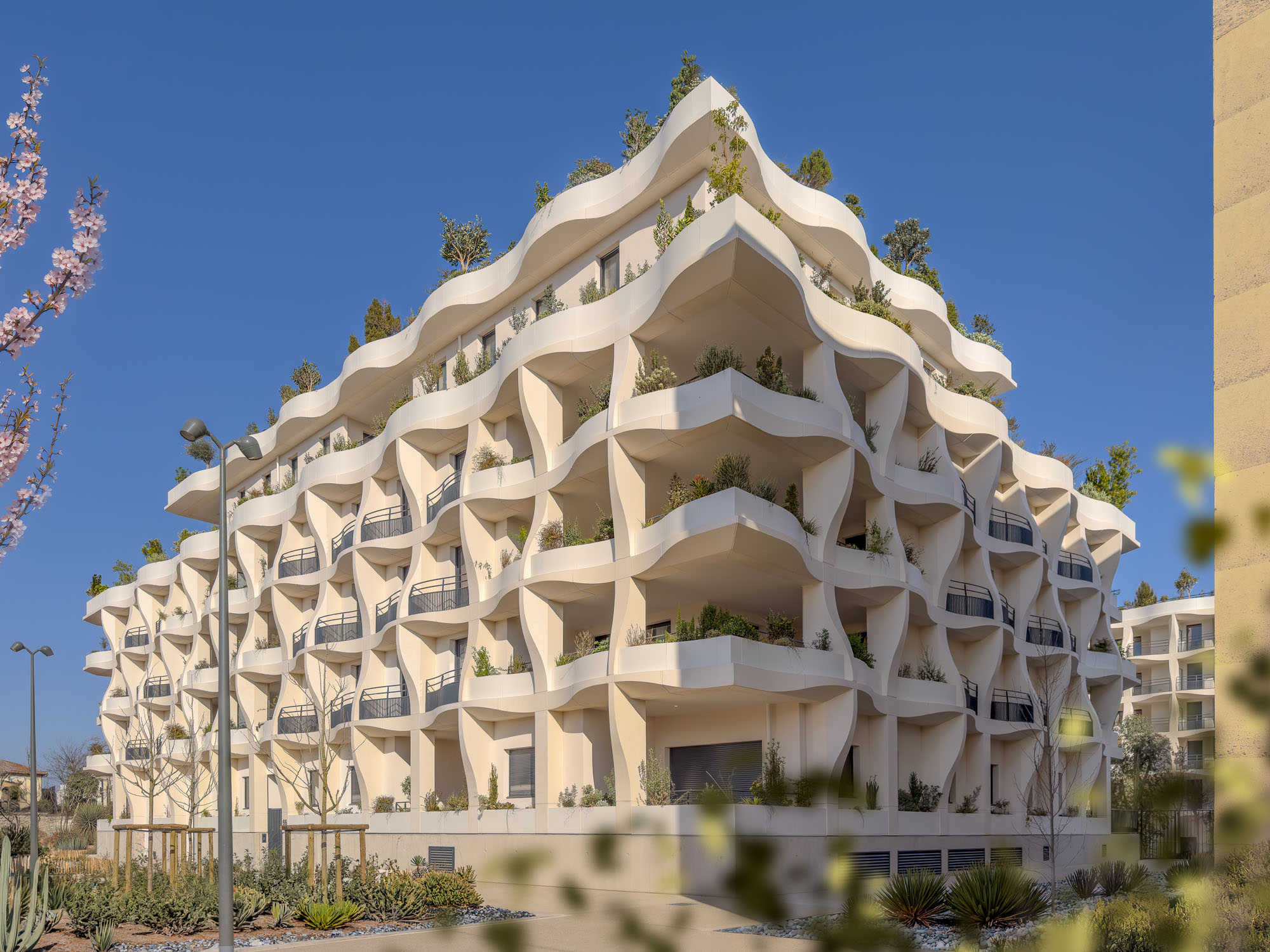
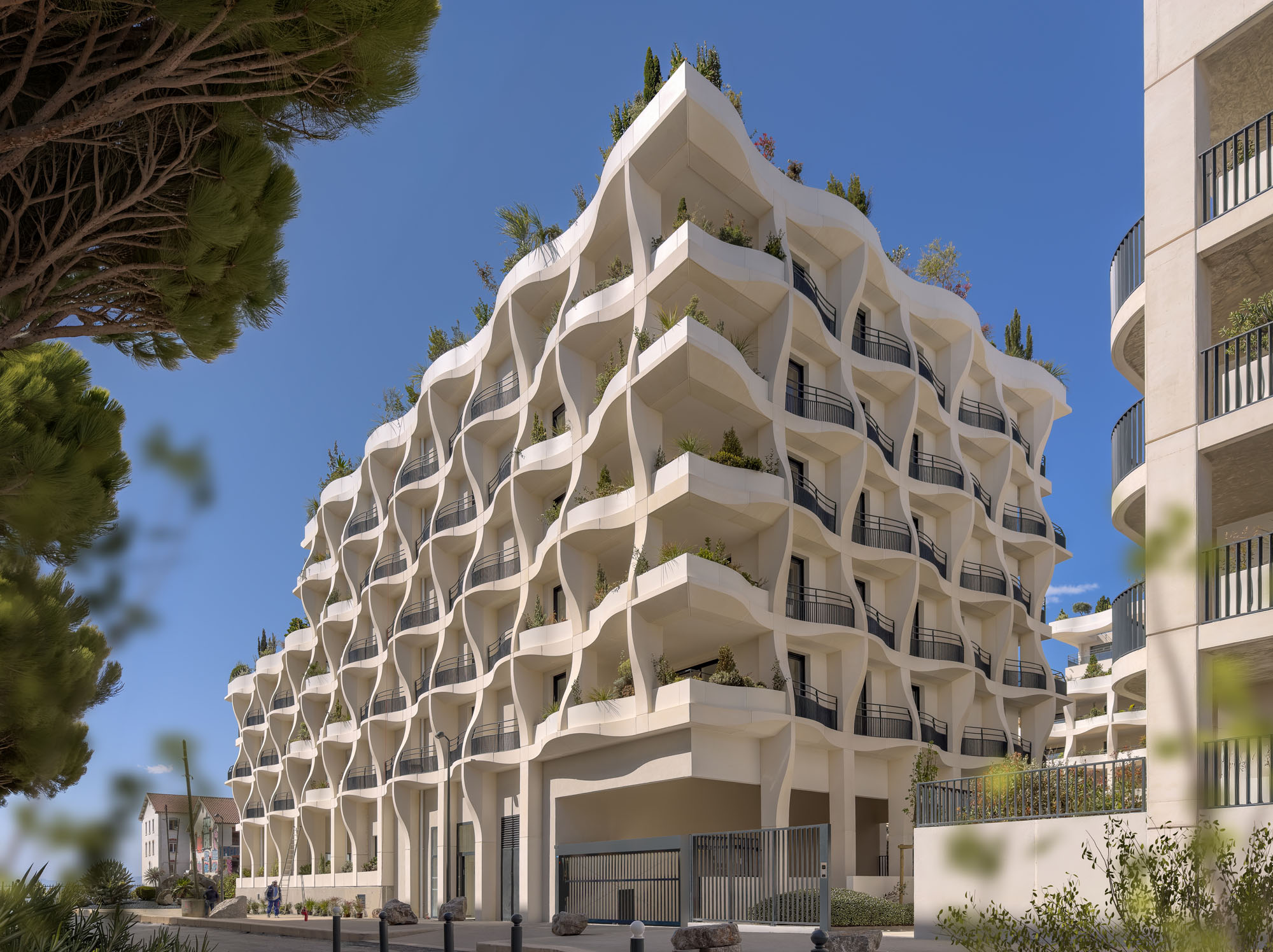
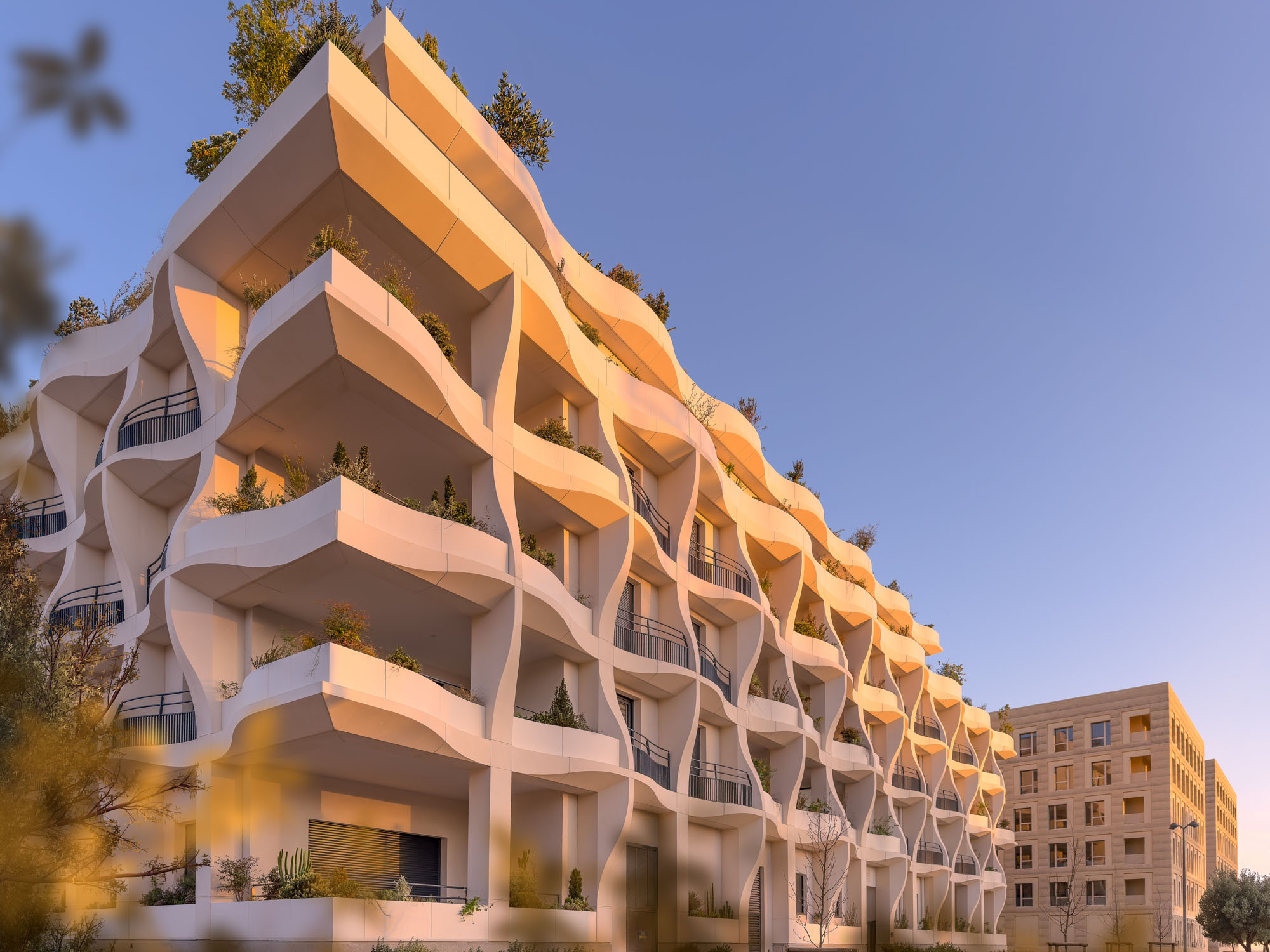
フランス・モンペリエの歴史的中心部と新たな都市開発エリアの接点に位置する〈THEIA〉は、パリを拠点に活動するヴィンセント・カレボー・アーキテクチャー(Vincent Callebaut Architectures)が設計を手がけた集合住宅です。
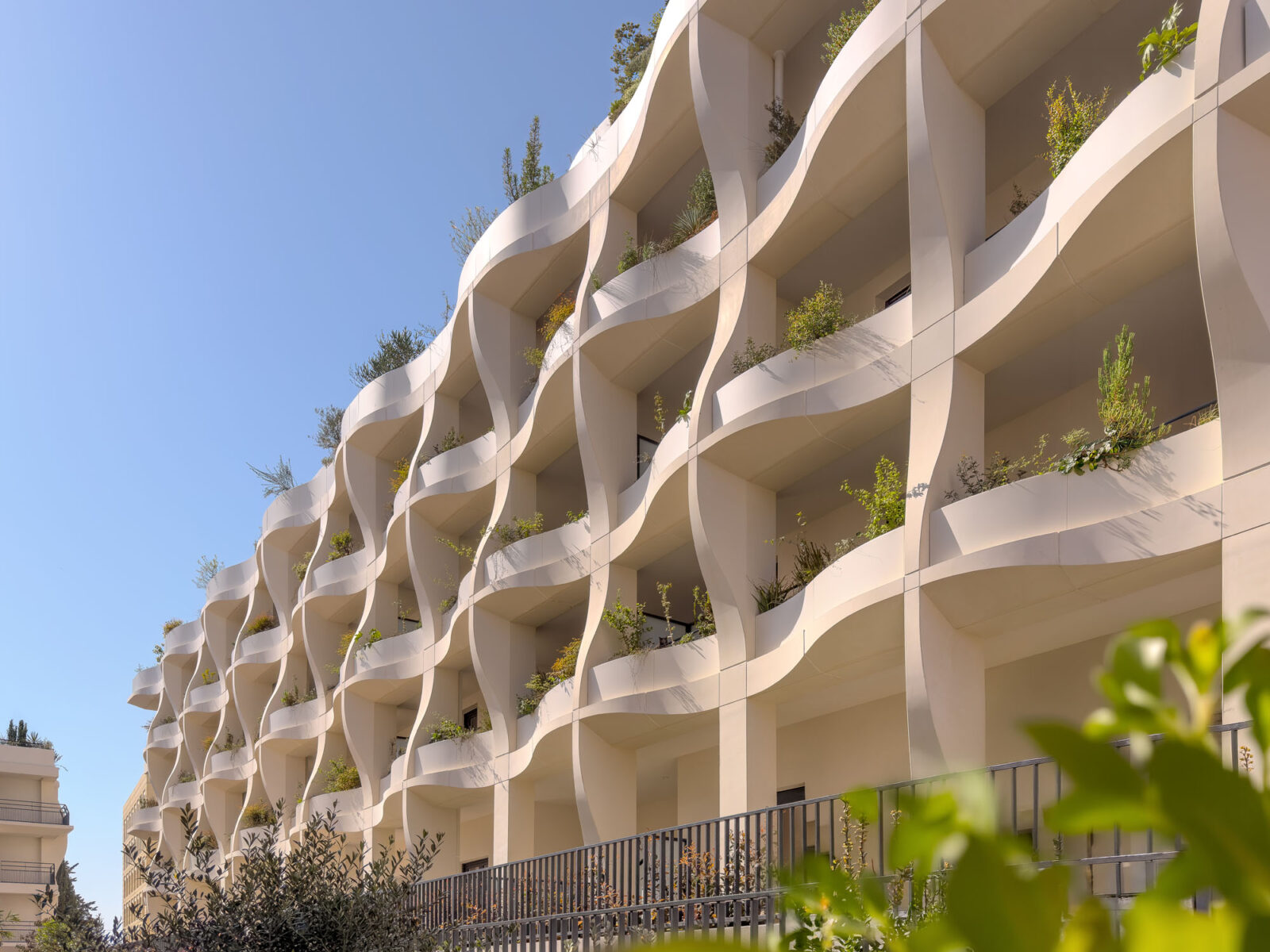
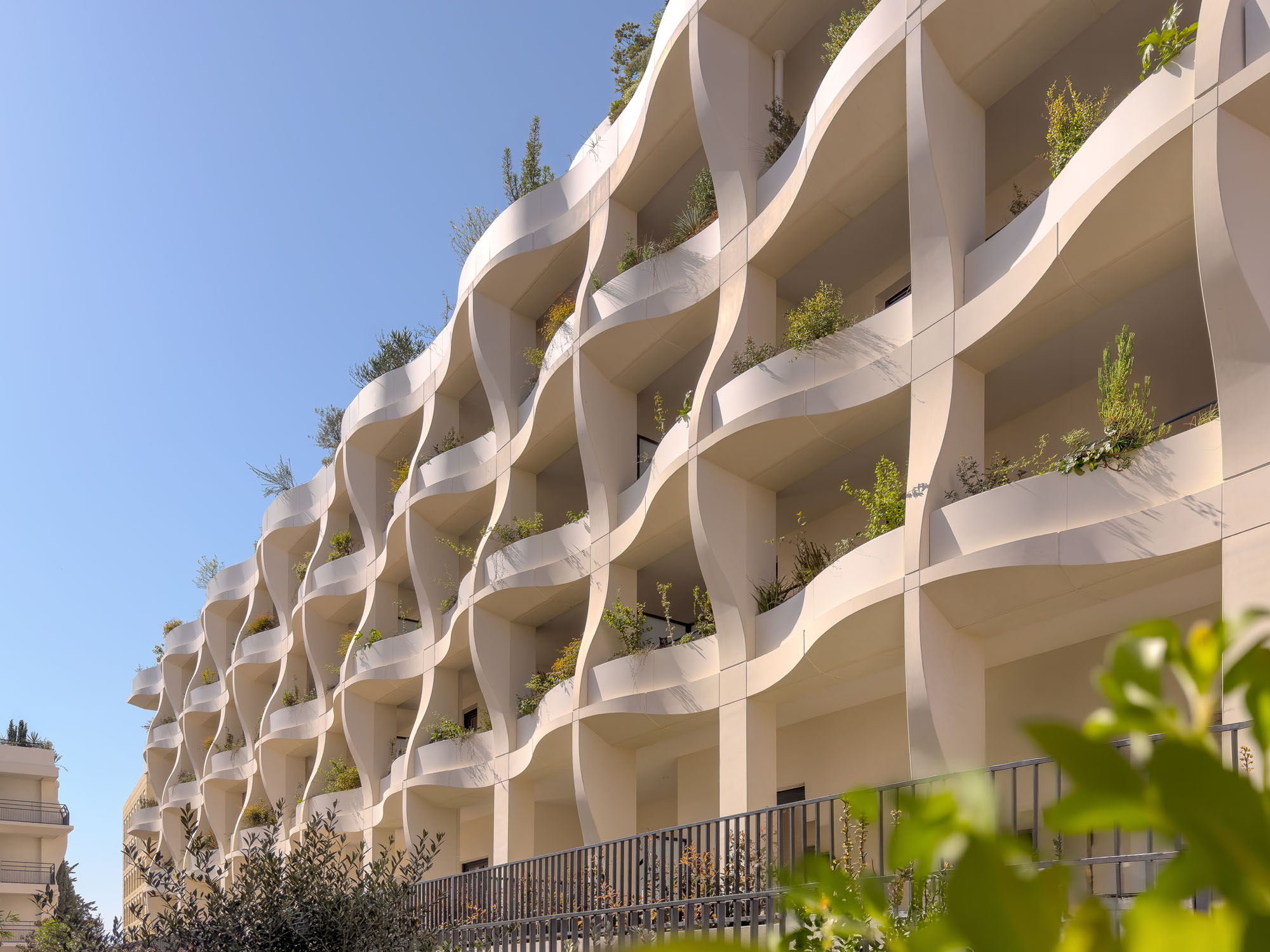
装飾そのものが環境装置として機能する「アール・ヌーヴォー2.0」を体現した独創的なファサードが最大の特徴となっています。
注目ポイント
- パラメトリック技術を駆使した「バイオクリマティック・スキン」
- 装飾と環境機能が融合する「アール・ヌーヴォー2.0」
- パッシブデザインやバイオベース素材を活用した高い環境性能
- 旧市街の「狭い通り」や「広場」のスケール感を現代的に再解釈した空間構成
(以下、ヴィンセント・カレボー・アーキテクチャーから提供されたプレスキットのテキストの抄訳)
© Vincent Callebaut
© Vincent Callebaut
〈THEIA〉が目指す「アール・ヌーヴォー2.0」
歴史と環境が融合する新たな住宅プロジェクト
〈THEIA〉は、モンペリエの「シテ・クレアティフ(創造都市)」の中心であり、かつての歩兵応用学校(EAI)が置かれていた象徴的な敷地に位置している。
2021年の「ジャルダン・セクレ」プログラムにおいて選定された、ヴィンセント・カレボー(Vincent Callebaut)が率いる建築事務所によるこのプロジェクトは、全体の30%を手頃な価格の住宅とする住宅開発である。ここでは、地域の遺産、環境分野のイノベーション、そして洗練された建築表現が見事に融合している。
© Vincent Callebaut
地中海の光を讃えるデザイン
地中海の光への賛歌として構想された〈THEIA〉は、太陽、月、そして夜明けの母であるギリシャの女神テイヤ(Theia)にちなんで名付けられた。この名称は、光と影を形づくりながら、建築と気候との間にダイナミックな関係性を築き上げるという、プロジェクトの核心となる志を反映している。
© Vincent Callebaut
© Vincent Callebaut
都市の文脈を現代的に解釈した空間構成
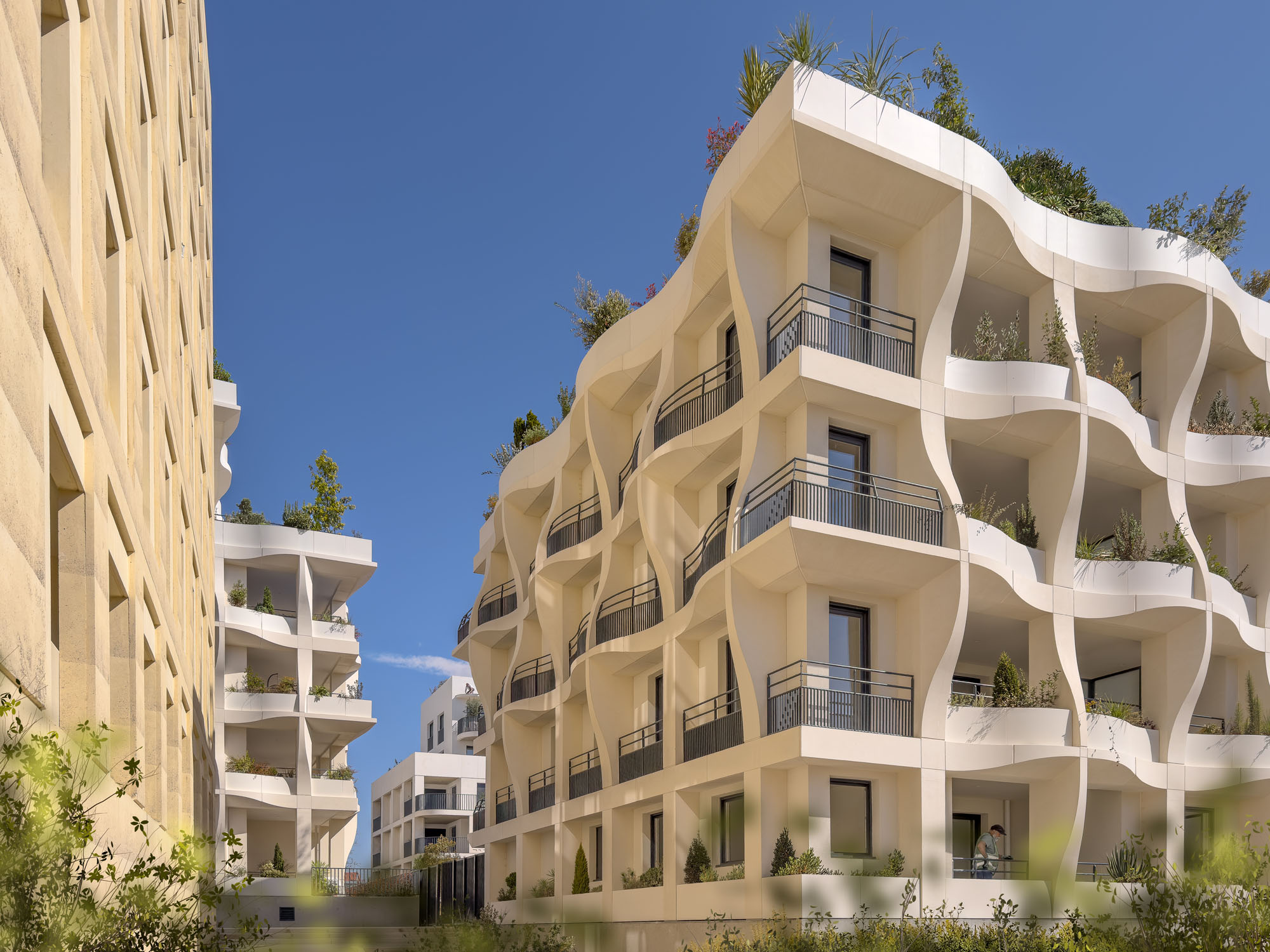
モンペリエの歴史的な中心部と、トラム5号線の開通によって活性化する新興の都市開発エリアとの接点に位置する〈THEIA〉は、その都市的文脈へと見事に溶け込んでいる。このプロジェクトは、周辺環境のスケールや用途に合わせ、建物の高密度化、開放的な緑地、そして空間の透過性を絶妙なバランスで調和させている。
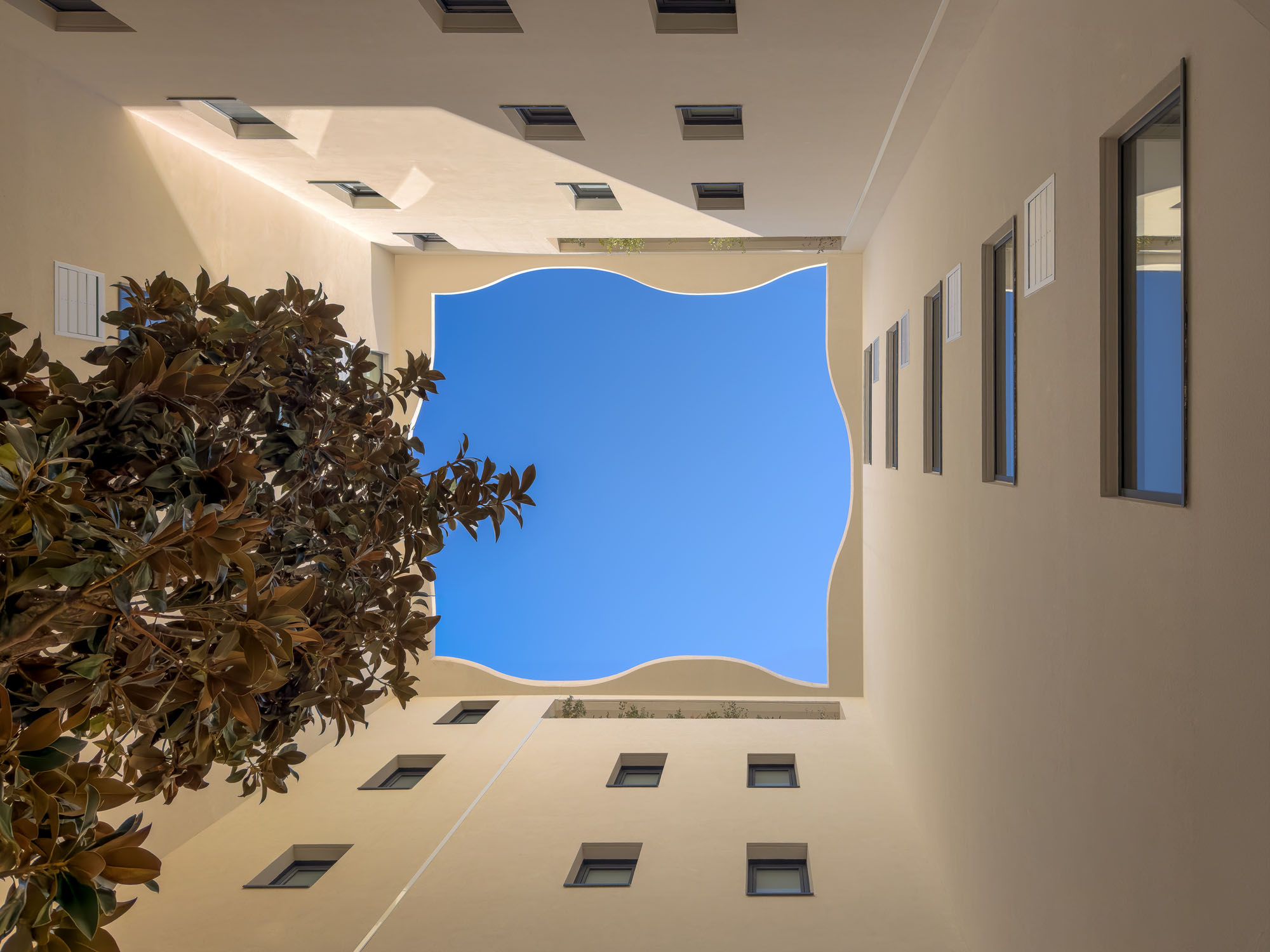
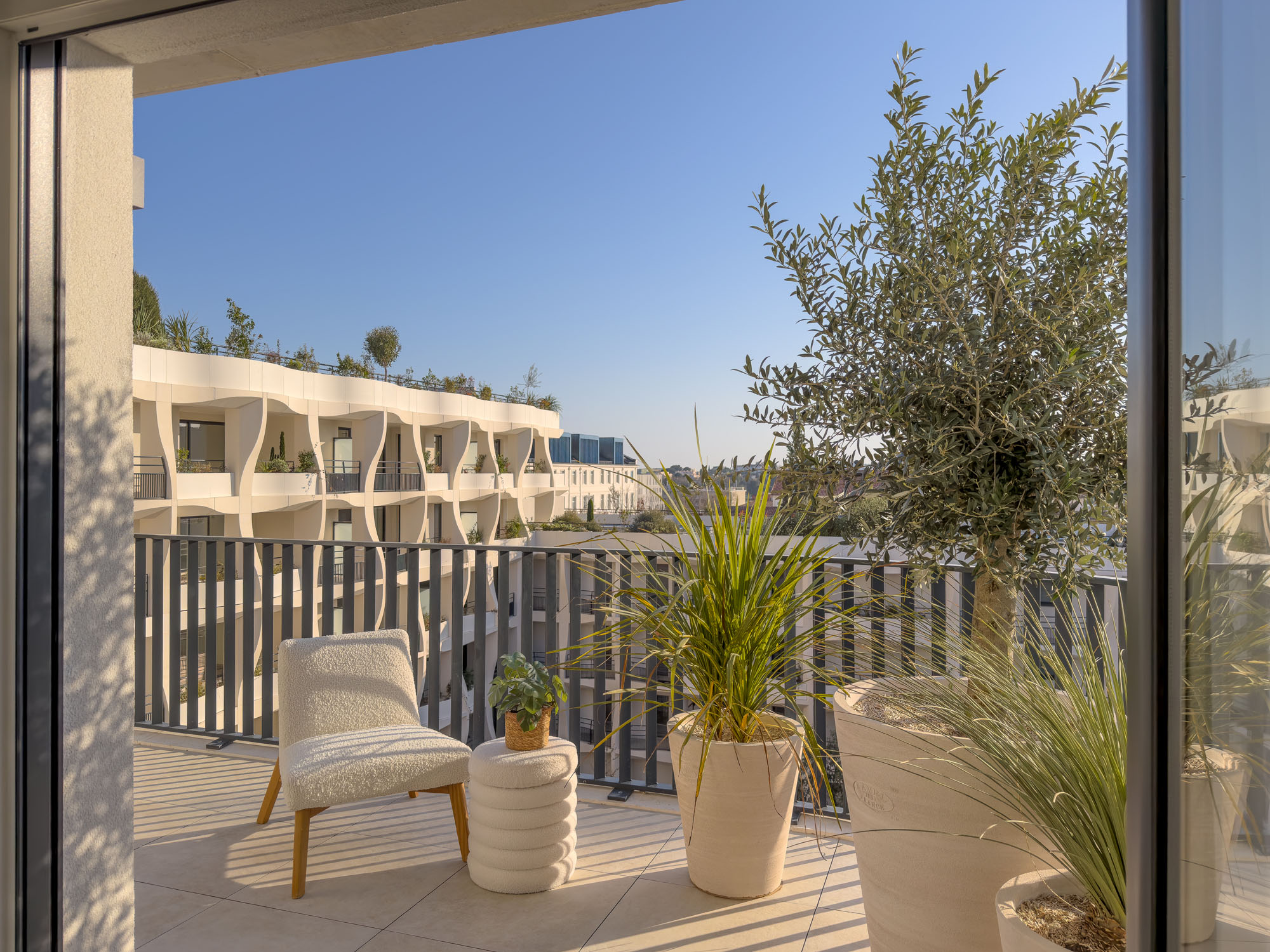
狭い通りや木陰の通路、活気あふれる広場といったモンペリエの旧市街「レキュソン」の都市構造から着想を得て、このレジデンスはそれらの現代的な再解釈を提示している。開放的なパティオ、屋外の通路、彫刻を思わせるエントランスホール、そしてメゾネット形式のテラスが、人々の交流を促す流動的な空間構成を生み出している。この建築は、居住者のプライバシーを守りつつ、空間の共有利用を同時に促進する設計となっている。
© Vincent Callebaut
© Vincent Callebaut
環境性能と詩情を両立するバイオクリマティック・スキン
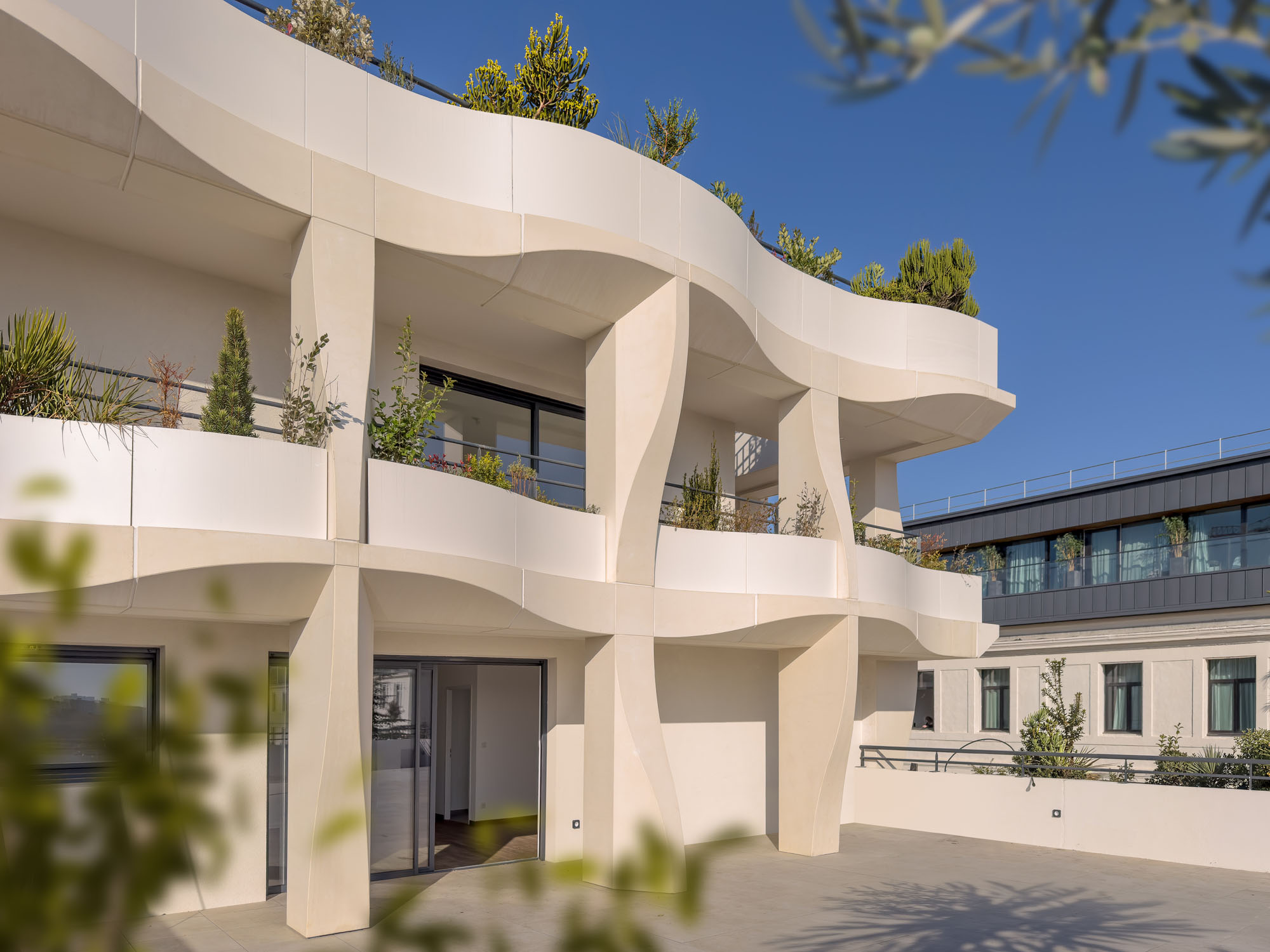
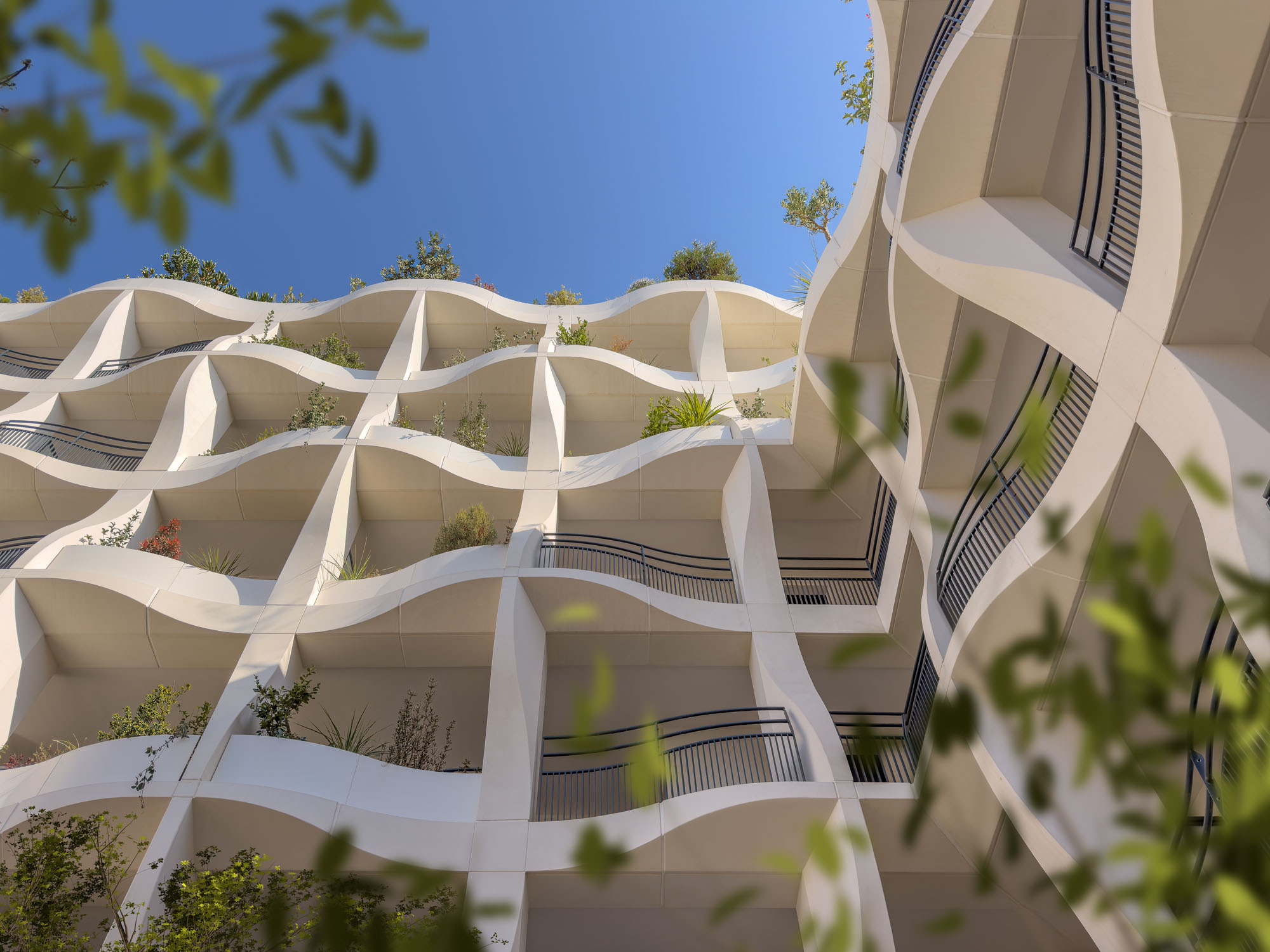
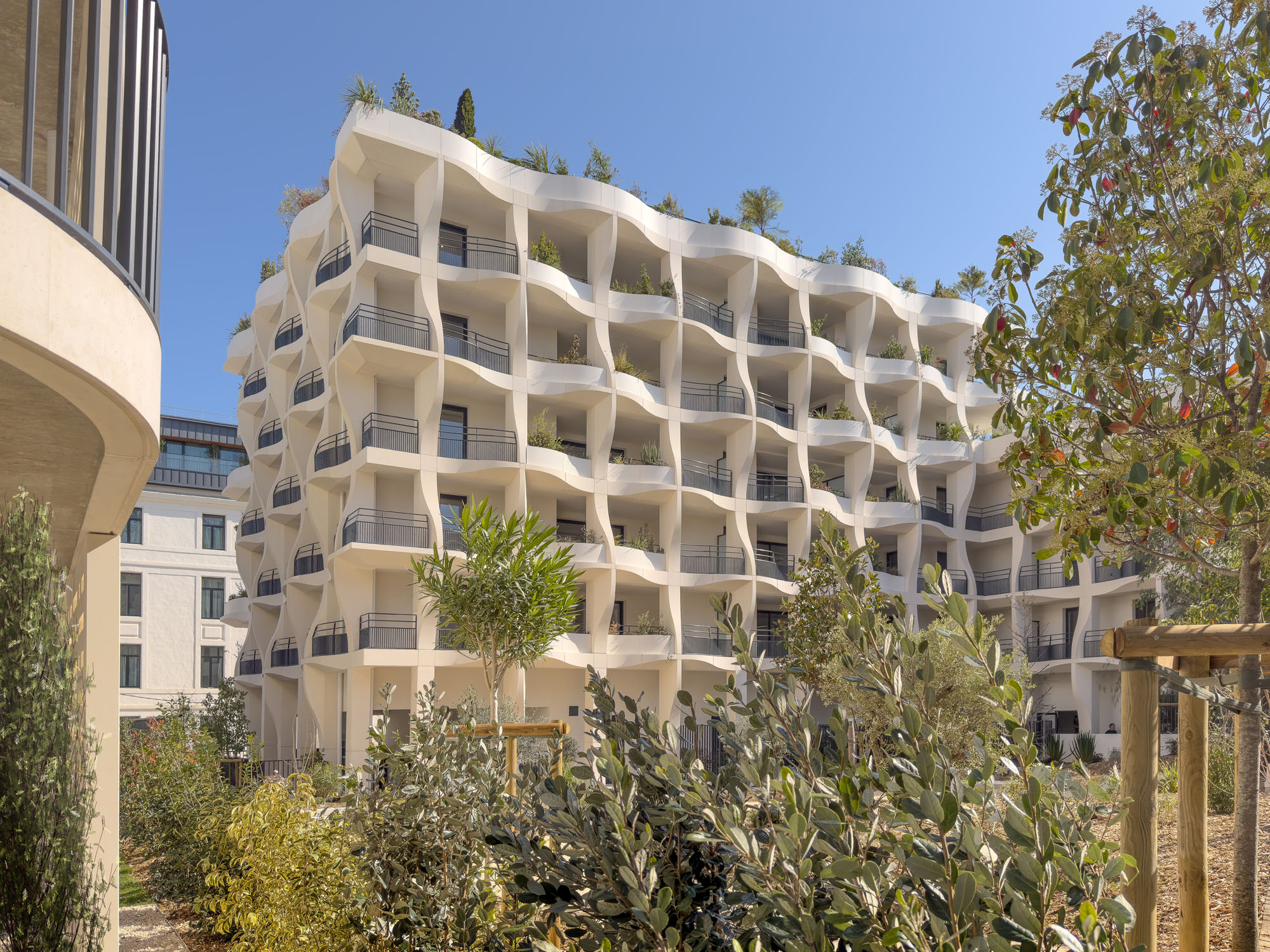
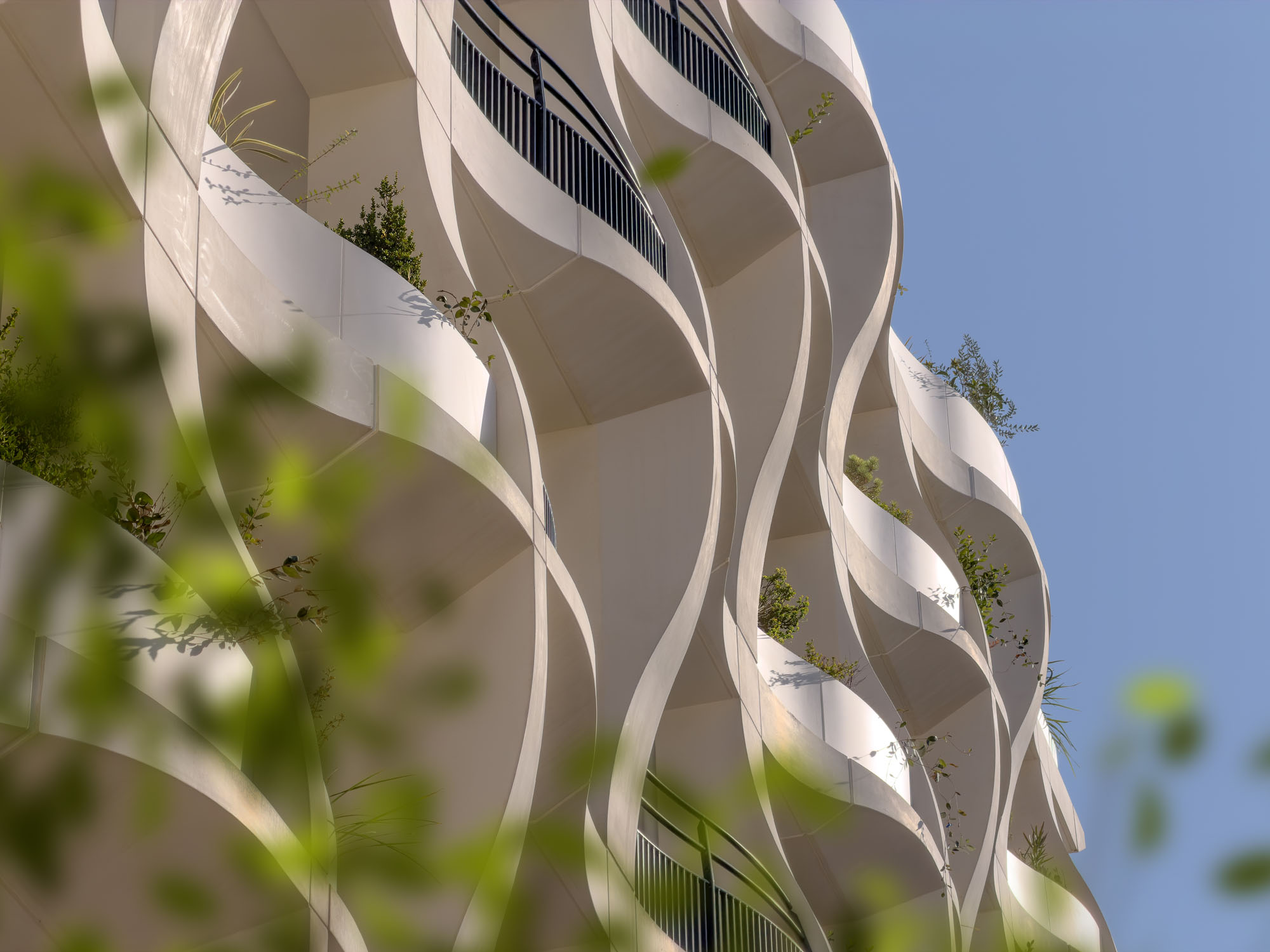
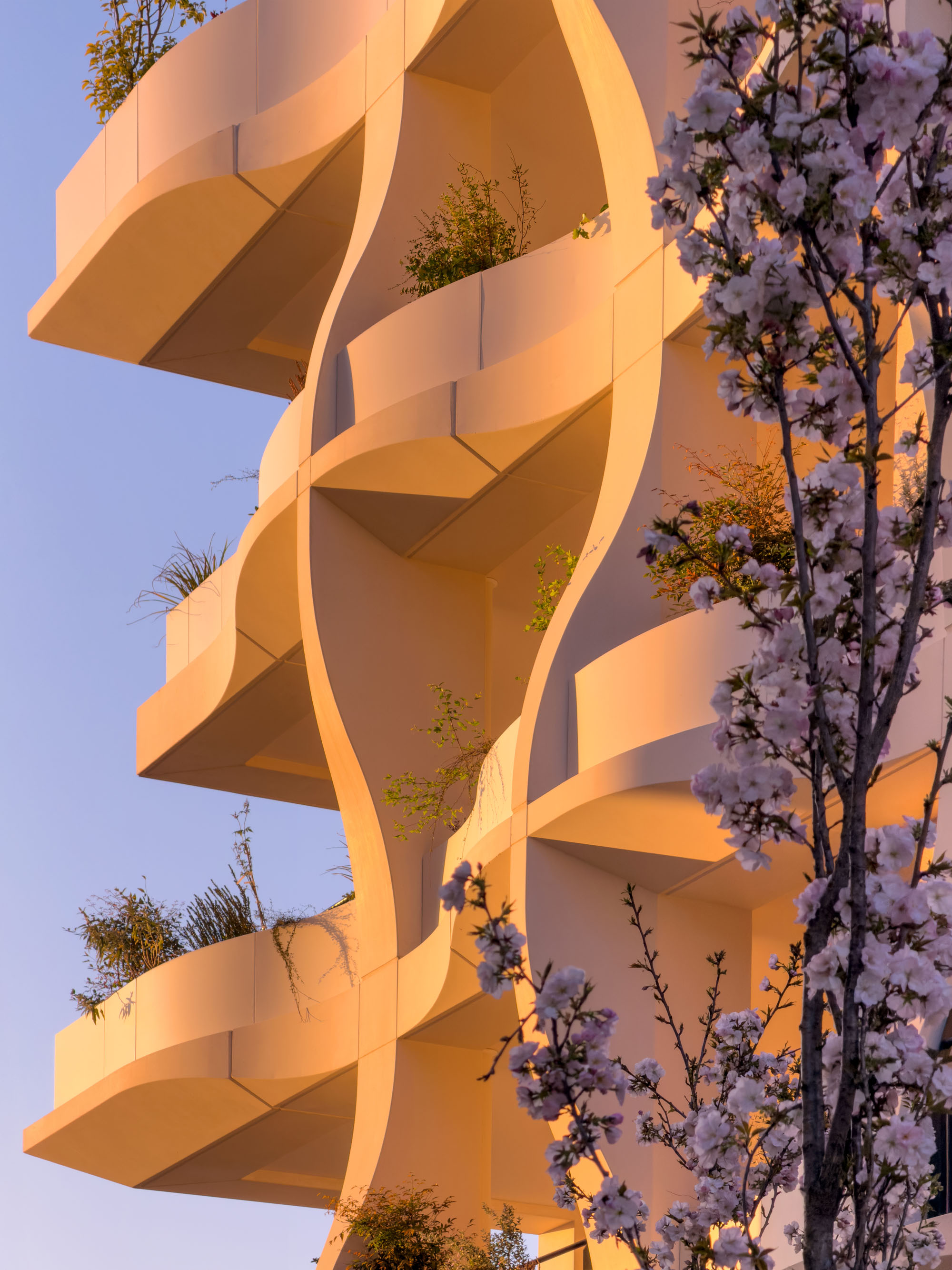
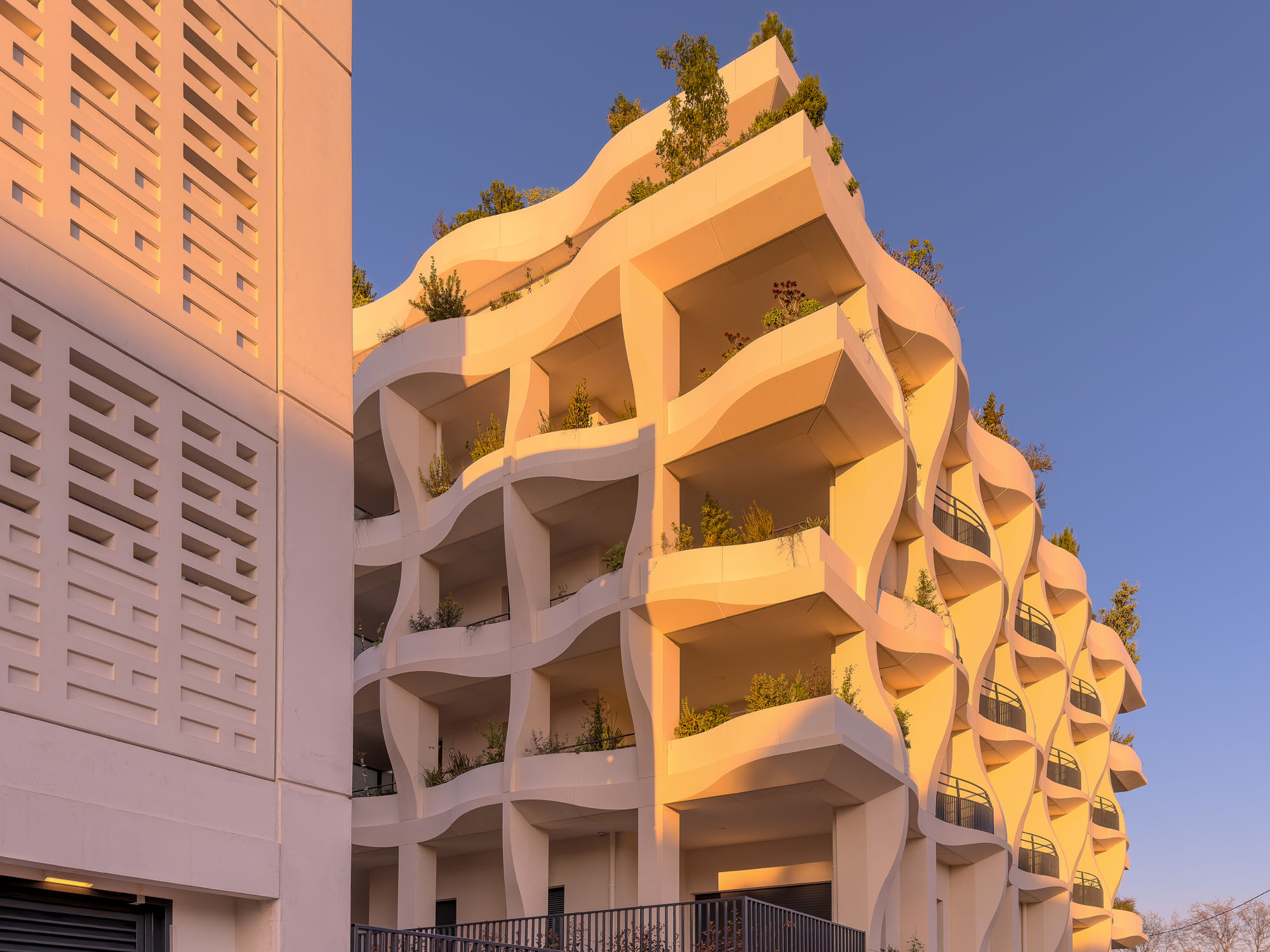
〈THEIA〉は、居住空間を外部へと拡張する、片持ち梁式のロッジアを用いた流動的なボリューム構成を特徴としている。このデザインは、自然換気、採光、そしてパッシブな日射遮蔽を最適化することで、フランス南部の気候条件に的確に対応している。
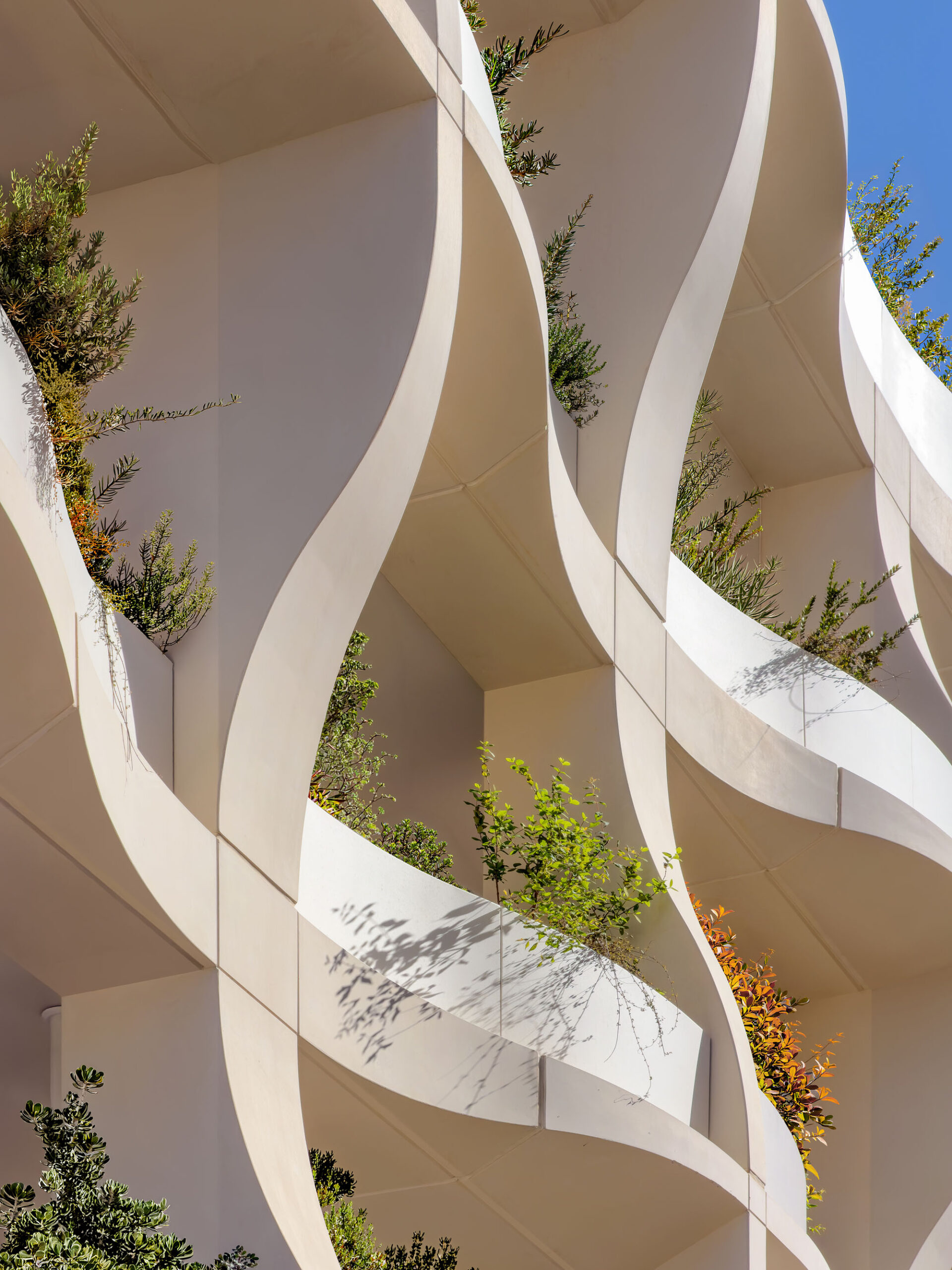
建物のファサードには、アラブの伝統的なムシャラビーヤ(格子窓)から着想を得て、建築スケールへと再解釈されたパラメトリックシステムが組み込まれている。太陽の向きや主要な風向きに合わせて最適化された独自の穿孔パターンが、光の量を調節し、室内の過熱を抑え、空気の流れを促進する。この建物の外皮は、アルゴリズム・デザイン、バイオミメティック(生物模倣)の原理、そして高度な技術的専門知識を統合したものであり、優れた環境性能と独自の建築的アイデンティティを融合させている。
© Vincent Callebaut
© Vincent Callebaut
都市のレジリエンスを高める緑豊かなランドスケープ
植生は、このプロジェクトの構造において極めて中心的な役割を果たしている。地上階の庭園、植物が植えられたロッジア、そして緑化と太陽光発電を兼ね備えた屋根が、連続するひとつのランドスケープシステムを形成している。
このアプローチは単なる美観の向上にとどまらず、夏季には最大で5°Cの温度低下をもたらすなど、居住者の熱的快適性に大きく寄与すると同時に、雨水管理や生物多様性の保全を支えている。さらに〈THEIA〉は、バイオベース素材(生物由来素材)の採用、灌漑を目的とした中水の再利用、バイオマスエネルギーネットワークへの接続などを通じて、NF Habitat HQE(高環境品質)という極めて高い環境基準をクリアしている。
© Vincent Callebaut
© Vincent Callebaut
自然と共生する「アール・ヌーヴォー2.0」
〈THEIA〉は、有機的な形態と自然システムの統合を通じて、アール・ヌーヴォーの遺産を現代に継承している。ヴィクトル・オルタ(Victor Horta)の鉄細工から、アントニ・ガウディ(Antoni Gaudí)の生物形態的建築、そしてエミール・ガレ(Émile Gallé)の自然モチーフに至るまで、過去のマスターたちからの様々なインスピレーションを現代的な枠組みの中で再解釈している。
このアプローチは、環境への効率性と都市の文脈への適応性を兼ね備えた建築を実現するという、より広範な志を反映したものである。〈THEIA〉は、形態、性能、そして環境が完全に融合する新たなモデルを提案している。装飾そのものが環境機能に寄与し、自然が設計プロセスの不可欠な要素となる「アール・ヌーヴォー2.0」の原則を、このプロジェクトが定義づけているのである。
© Vincent Callebaut
© Vincent Callebaut
© Vincent Callebaut
以下、ヴィンセント・カレボー・アーキテクチャーのリリース(英文)です。
THEIA
Mediterranean Habitat,Montpellier 2026,
FranceCLIENT : Bouygues Immobilier
TYPE : Competition, First Prize Winner in 2021
PROGRAM : 75 residential units (30% affordable housing)
GFA : 5,364 m²
LOCATION : Cité Créative, Jardins Secrets, Montpellier, France
STATUS : Built & Delivered in March 2026
AWARDS : Winner of “La Pyramide d’Argent de la Qualité Globale”, Fédération des Promoteurs Immobiliers OM & GIP – Groupement des Industriels de la Prescription
CERTIFICATIONS : NF Habitat HQE – High Environmental Quality
ARCHITECTURE : Vincent Callebaut Architectures, Paris
STRUCTURE : André Verdier Ingénieur Conseil
MEP : Dexo
LANDSCAPE : Land’Act Paysages & Territoires
CONSTRUCTION COST : ACEEC
CONTROL OFFICE : Groupe Qualiconsult
CITY OF MONTPELLIER : Groupe SERM/SA3M Montpellier, Ville, Métropole et CCAS
URBANISM : West 8
MOEX : CIC Delmas
MAIN CONTRACTOR : Sectp
FACADE : Rampa Prefa
PLANTERS : Atech
PLANT & TREE NURSERY : Sariviere
GREY WATER RECYCLING : FgwrsTHEIA, TOWARDS AN “ART-NOUVEAU 2.0”
A Mediterranean Habitat in the Heart of MontpellierDelivered in March 2026 in partnership with Bouygues Immobilier, THEIA is located at the heart of Montpellier’s Cité Créative, on the emblematic site of the former Infantry Application School (EAI). Awarded in 2021 under the “Jardins Secrets” program, the project by Vincent Callebaut Architectures embodies a residential development – with 30% of affordable units – that brings together heritage, environmental innovation, and a refined architectural expression.
Conceived as an ode to Mediterranean light, THEIA takes its name from the Greek goddess Theia, mother of the Sun, Moon, and Dawn. This reference reflects the project’s core ambition: to shape light and shadow while establishing a dynamic relationship between architecture and climate.
A Contemporary Interpretation of Place
Situated at the junction between Montpellier’s historic center and its emerging urban developments – supported in particular by tramway line 5 – THEIA integrates coherently into its urban context. The project balances density, open green spaces, and permeability, aligning with the scale and uses of its surroundings.
Inspired by the urban fabric of L’Écusson – its narrow streets, shaded passages, and lively squares – the residence offers a contemporary reinterpretation. Open patios, external walkways, sculptural entrance halls, and duplex terraces create a fluid spatial organization designed to encourage interaction. The architecture promotes both residential privacy and shared uses.
A Bioclimatic Skin Between Performance and Poetry
THEIA is defined by a fluid volumetric composition, articulated by cantilevered loggias that extend living spaces outward. The design responds to southern climatic conditions by optimizing natural ventilation, daylight access, and passive solar protection.
The façades incorporate parametric systems inspired by traditional moucharabieh screens, reinterpreted at the building scale. Perforated patterns, calibrated according to solar orientation and prevailing winds, regulate light, reduce overheating, and facilitate airflow. This envelope combines environmental performance with architectural identity, integrating algorithmic design, biomimetic principles, and technical expertise.
A Mediterranean Inhabited Nature, a Framework for Urban Resilience
Vegetation plays a central role in structuring the project. Ground-level gardens, planted loggias, and green and photovoltaic roofs form a continuous landscape system.
Beyond aesthetics, this approach contributes to thermal comfort – with temperature reductions of up to 5°C during summer – while supporting rainwater management and biodiversity. THEIA meets high environmental standards – NF Habitat HQE (High Environmental Quality), incorporating bio-based materials, greywater recycling for irrigation, and connection to a biomass energy network.
Towards an “Art-Nouveau 2.0”
THEIA draws on the legacy of Art Nouveau through its organic forms and integration of natural systems. References range from Victor Horta’s ironwork to Antoni Gaudí’s biomorphic architecture and Émile Gallé’s natural motifs, reinterpreted within a contemporary framework.
This approach reflects a broader ambition: to deliver an architecture that is both efficient and contextually responsive. THEIA proposes a model in which form, performance, and environment converge – defining the principles of an “Art-Nouveau 2.0” where the ornament contributes to environmental function and nature becomes an integral component of the design process.
ヴィンセント・カレボー・アーキテクチャー 公式サイト
https://vincent.callebaut.org
![[Report]第20回ヴェネチア・ビエンナーレ国際建築展 日本館展示概要発表! キュレーターは金野千恵氏、アジアの建築家らが出展](https://magazine-asset.tecture.jp/wpcms/wp-content/uploads/2026/06/16124421/20260615venezia-biennale-jp-ex2027_teco-konno_mag-endo0515-900x675.jpeg)