CULTURE
© hyperSity
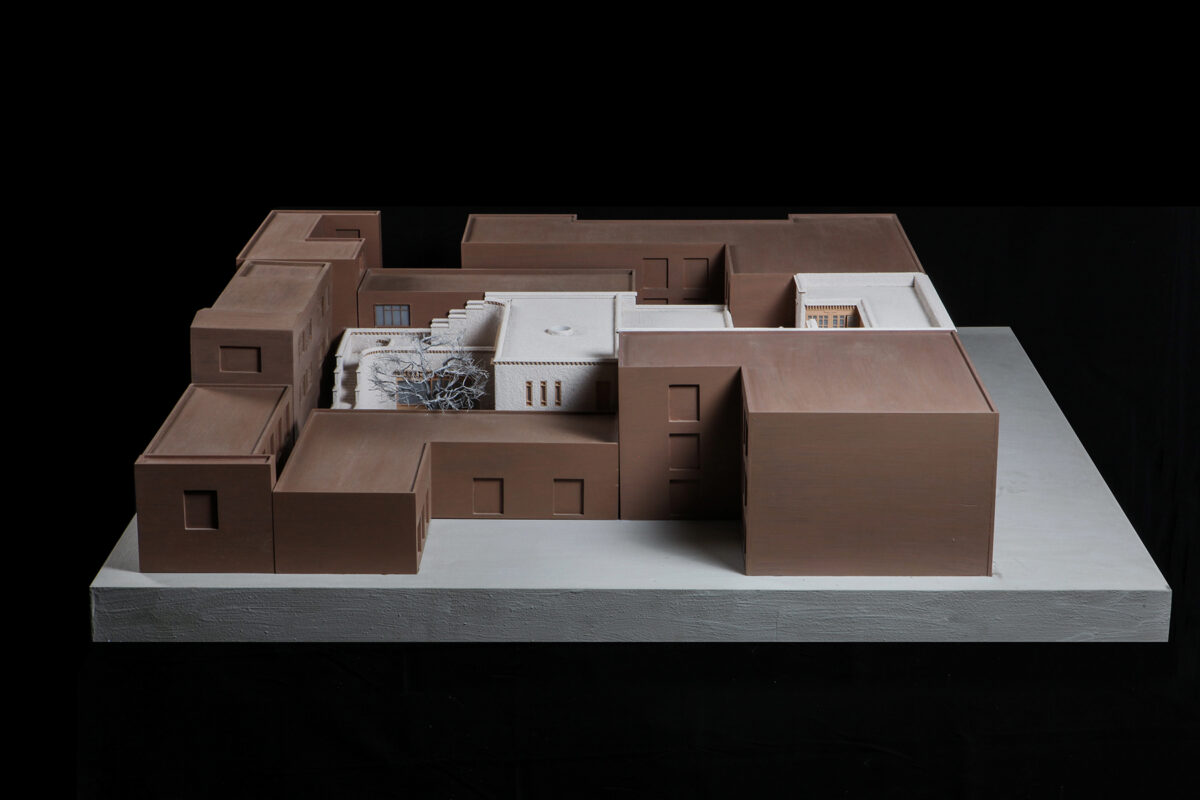
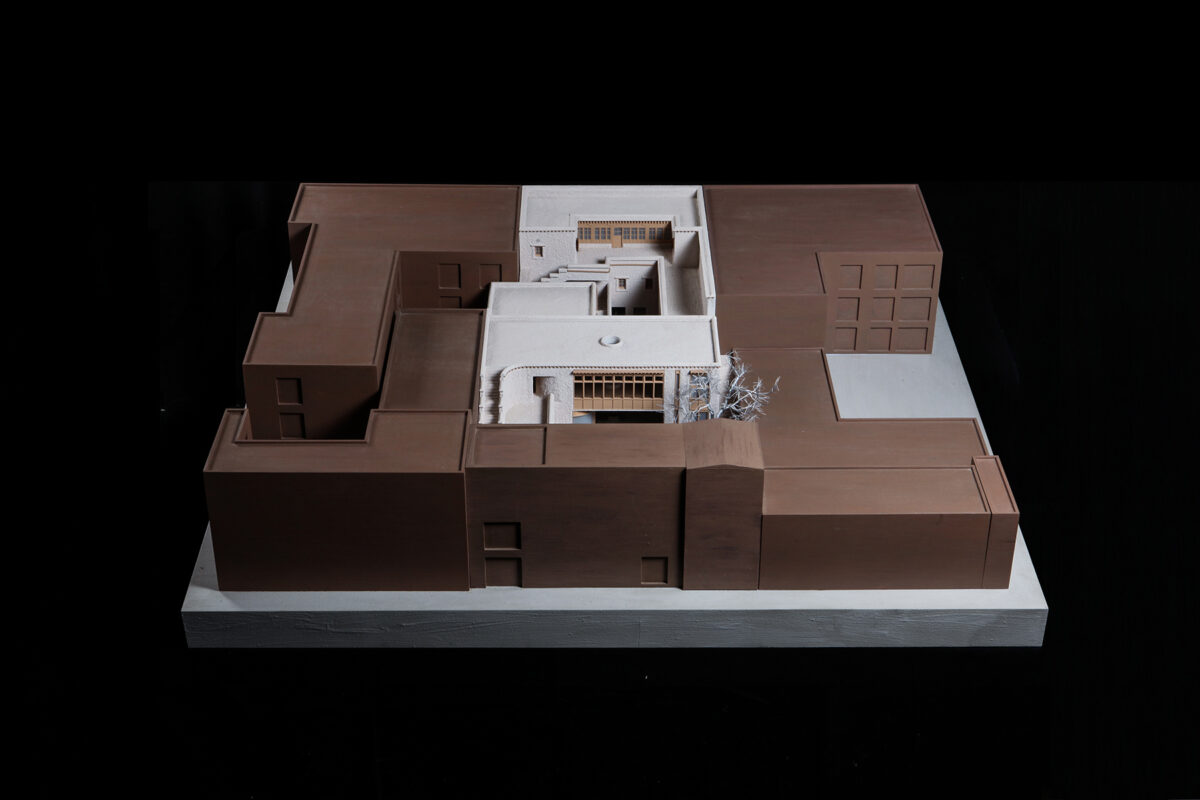
〈The Architectural Ark〉は、チベット・ラサのバーコフ通り(Barkhor Street)に位置する、都市の市場と寺院が融合する「キャカシャール古代のコートヤード(Kyakashar Ancient Courtyard)」の改修プロジェクトです。
ロッテルダムで設立され、北京を拠点に活動するハイパーシティ・アーキテクツ(hyperSity Architects)が設計しました。
注目ポイント
- 漢族とチベット族の絆を象徴する伝承に基づく場所「キャカシャール」
- 宗教施設と都市生活(住宅、商店、宿屋)が融合する独特な都市構造
- 漢とチベットの建築技術を統合しつつ現代的に再解釈した空間
- 羊乳を使った伝統的プラスターやカラー鋼板といった、伝統と現代素材の共存
(以下、ハイパーシティ・アーキテクツから提供されたプレスキットのテキストの抄訳)
© hyperSity
© hyperSity
市場と寺院が融合するラサの中心地
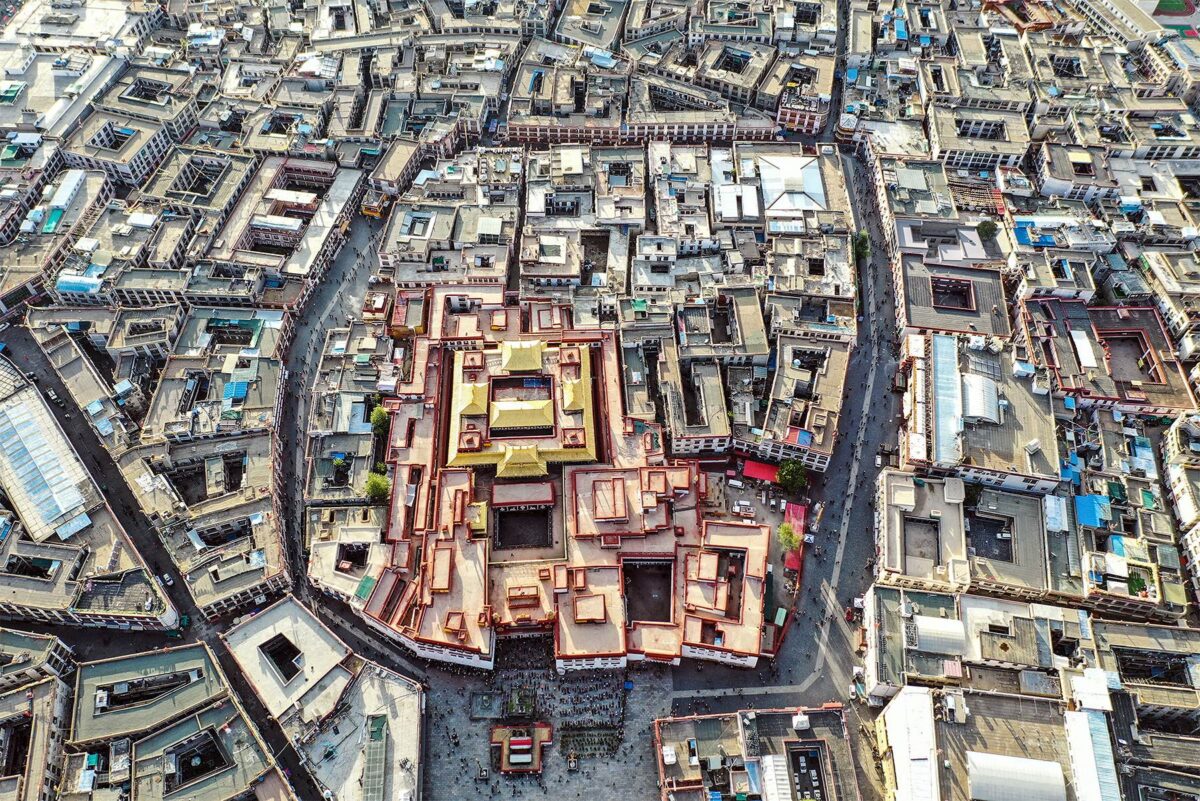
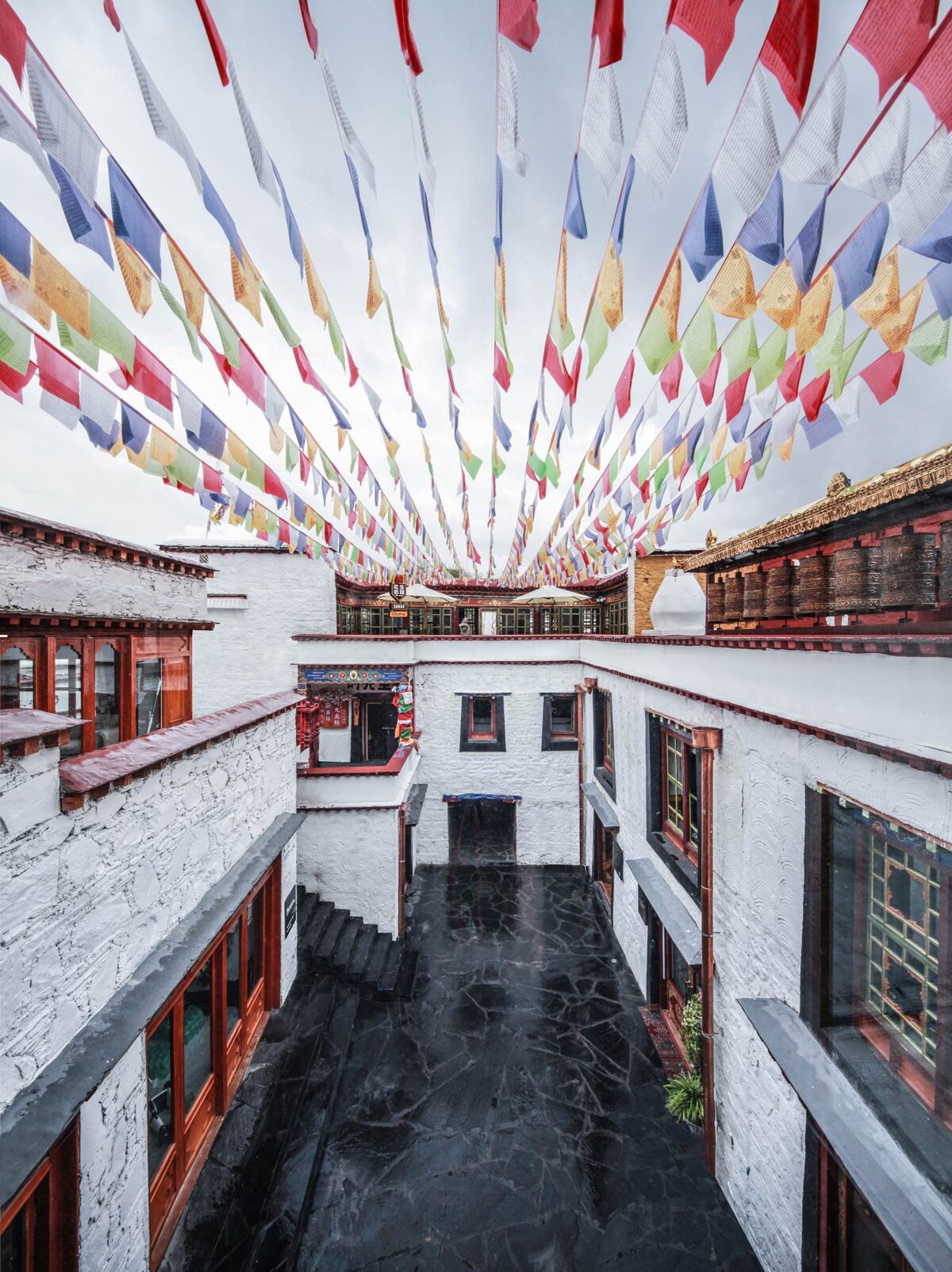
ラサのバーコフ通り周辺は、ジョカン寺を中心に、僧侶や官僚の住居が民間住宅、商店、宿屋と混在し、「都市市場と寺院の融合」という独自の空間構成を成す、都市の最も活気ある中心地である。
プロジェクトの敷地である「キャカシャール(Kyakashar)」は、チベット語で「カササギの休憩所」を意味する。唐の皇女・文成公主が植えた柳の木にカササギが群がったという故事に由来し、漢族とチベット族の深い絆を象徴する場所である。
© hyperSity
歴史的構造と現代的機能の融合
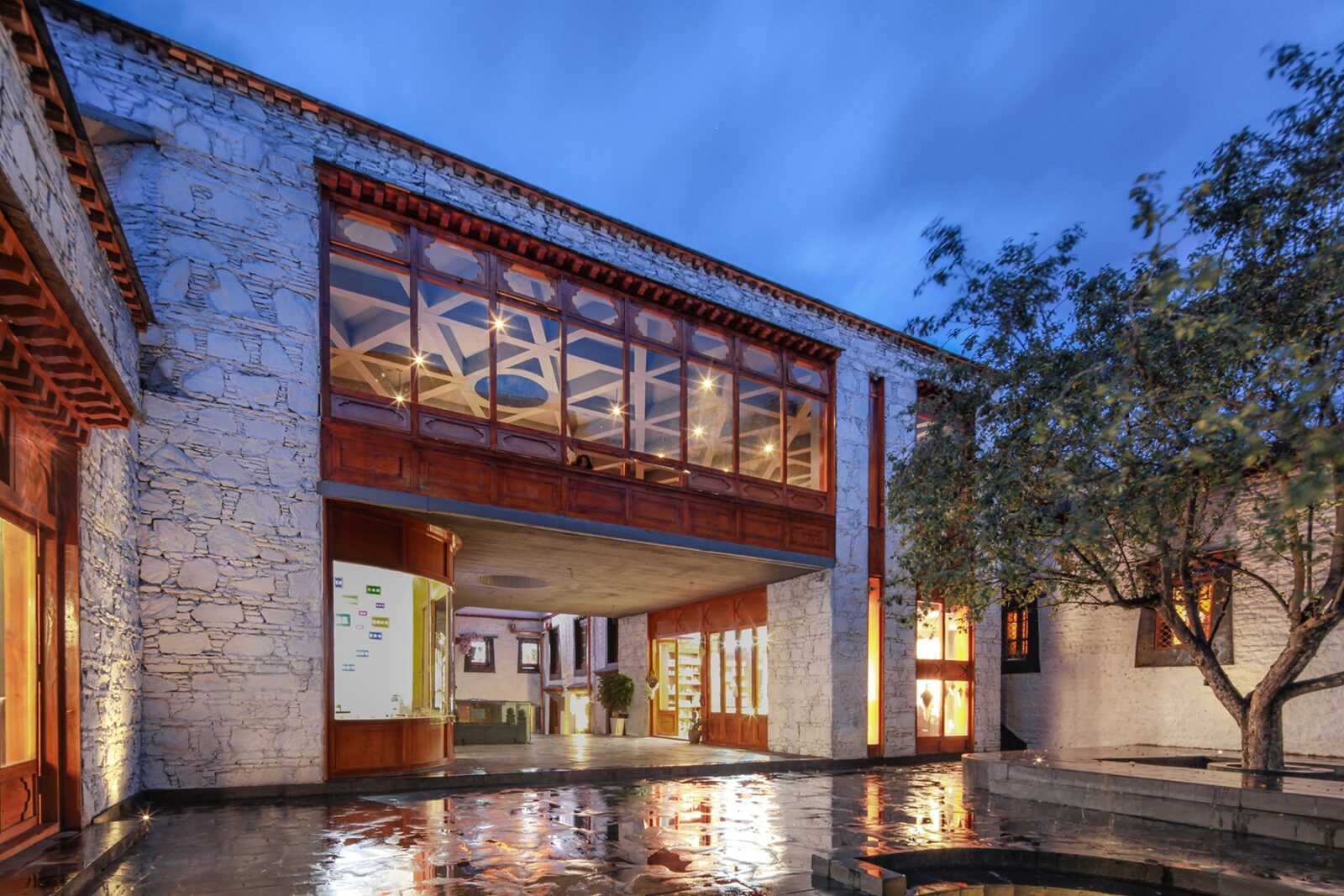
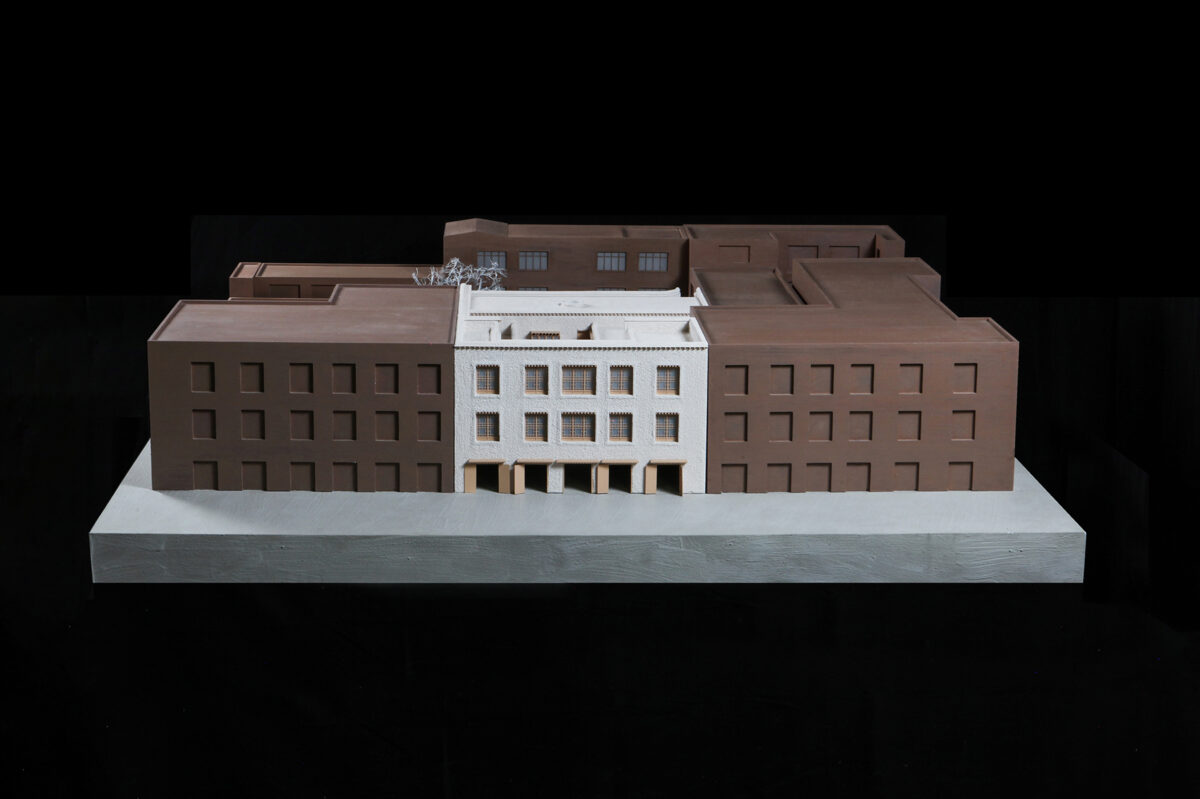
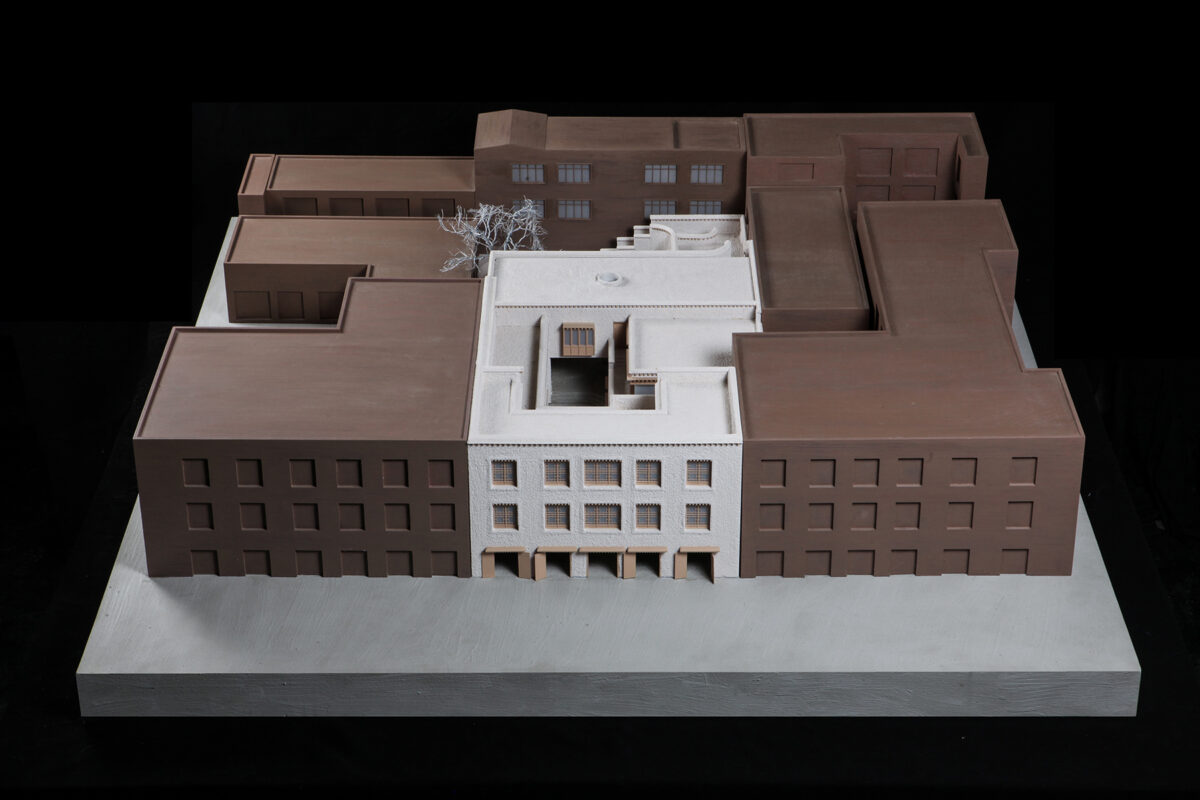
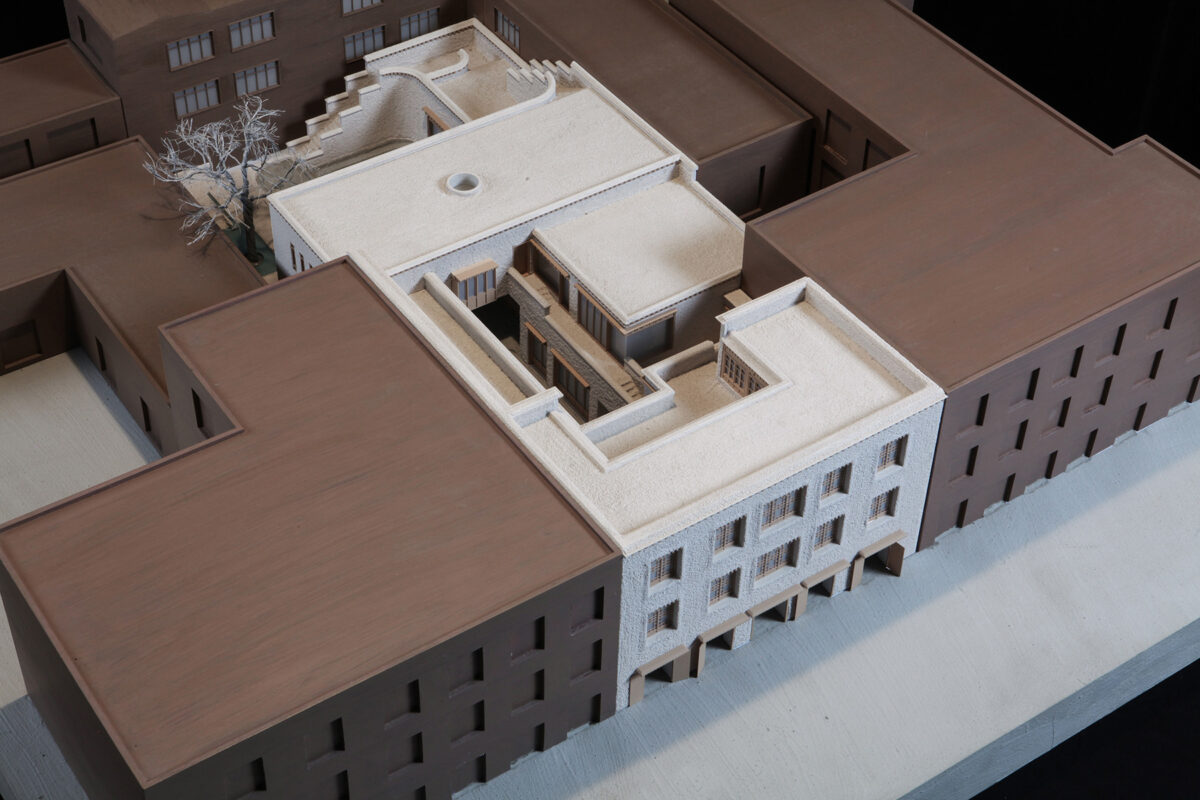
この2階建ての複合用途のコートヤードは、ブロックハウス風の構造を採用し、街路沿いの歴史的なチベット商業建築と、1990年代後半に建てられた〈パラダイス・タイム・ブックストア(Paradise Time Bookstore)〉といった現代的要素が融合して構成されている。
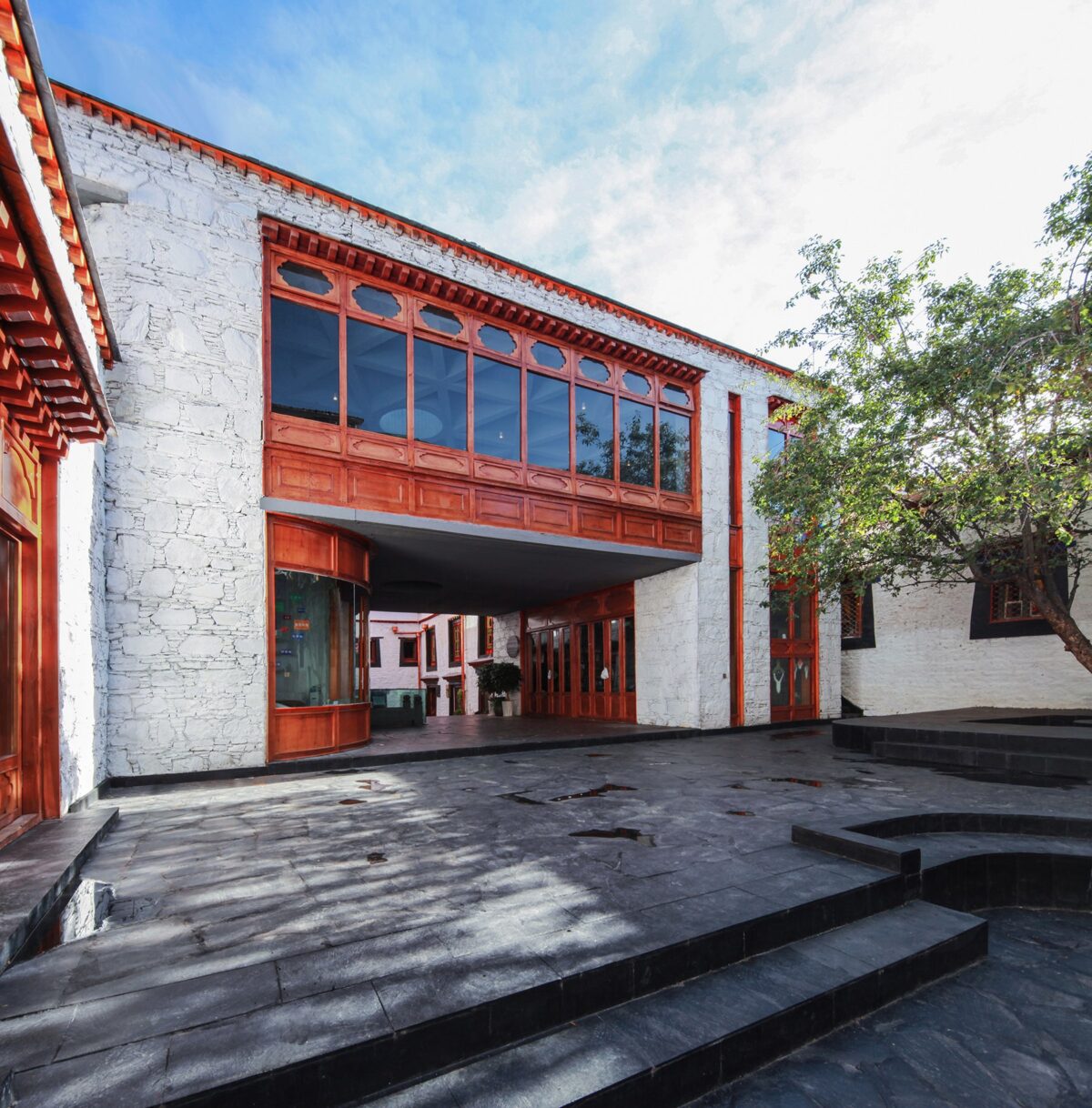
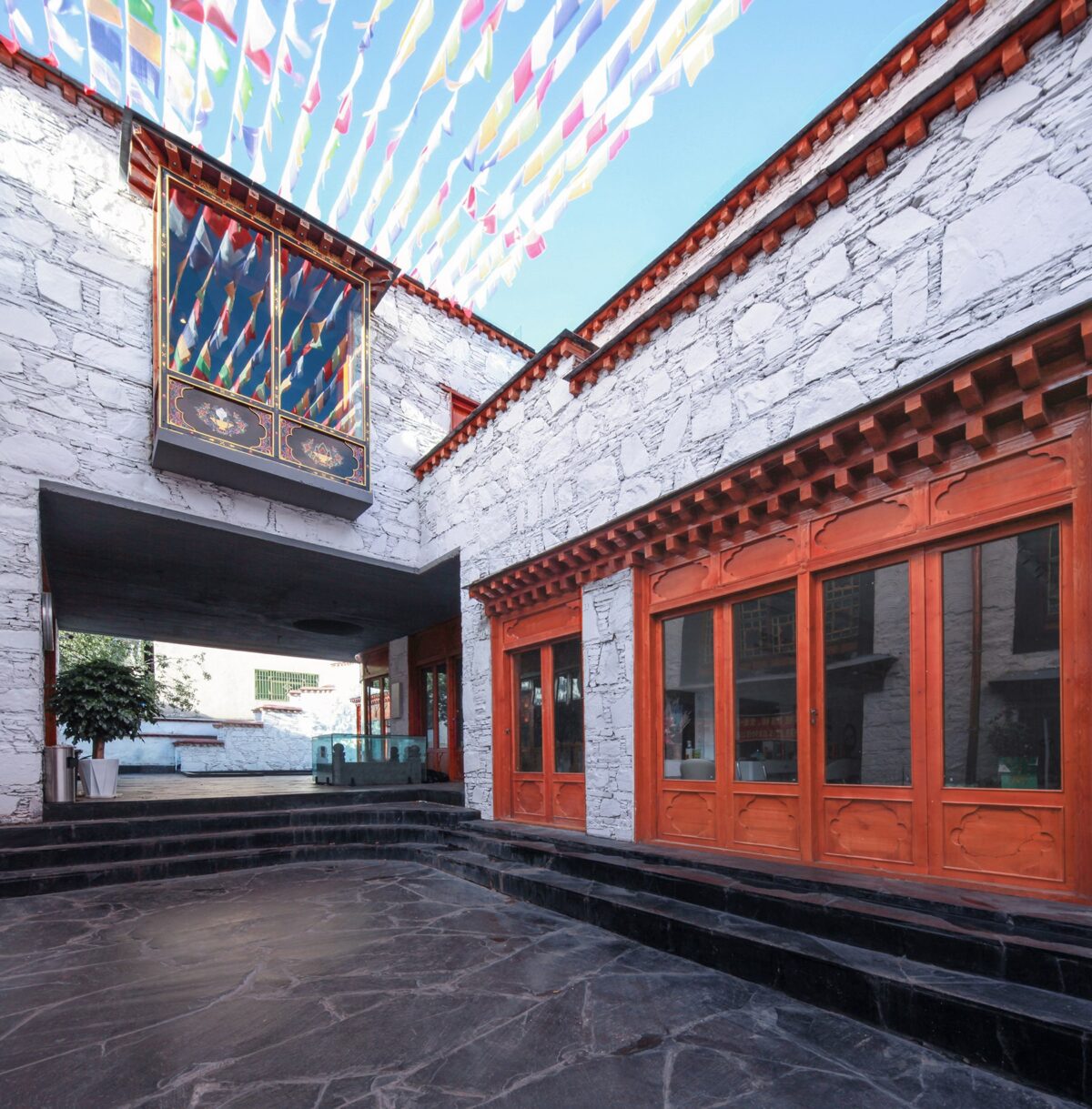
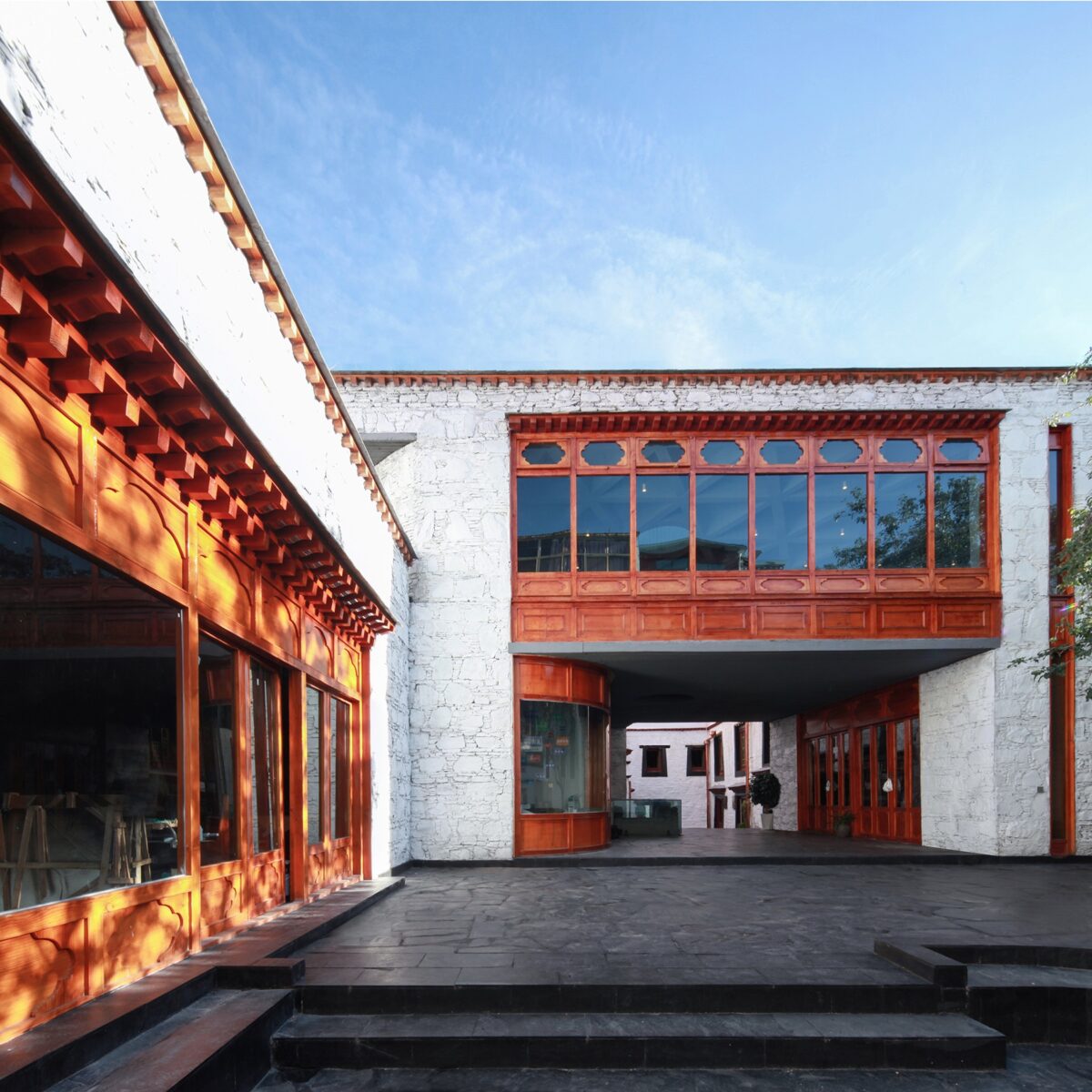
チベットの伝統的な石積み工法は、コンクリート、軽量鋼構造、プラスチック製キャノピー、カラー鋼板などの現代的素材と対話し、過去と現在が交錯する建築表現を生み出している。
© hyperSity
© hyperSity
歴史建築の保存と再解釈
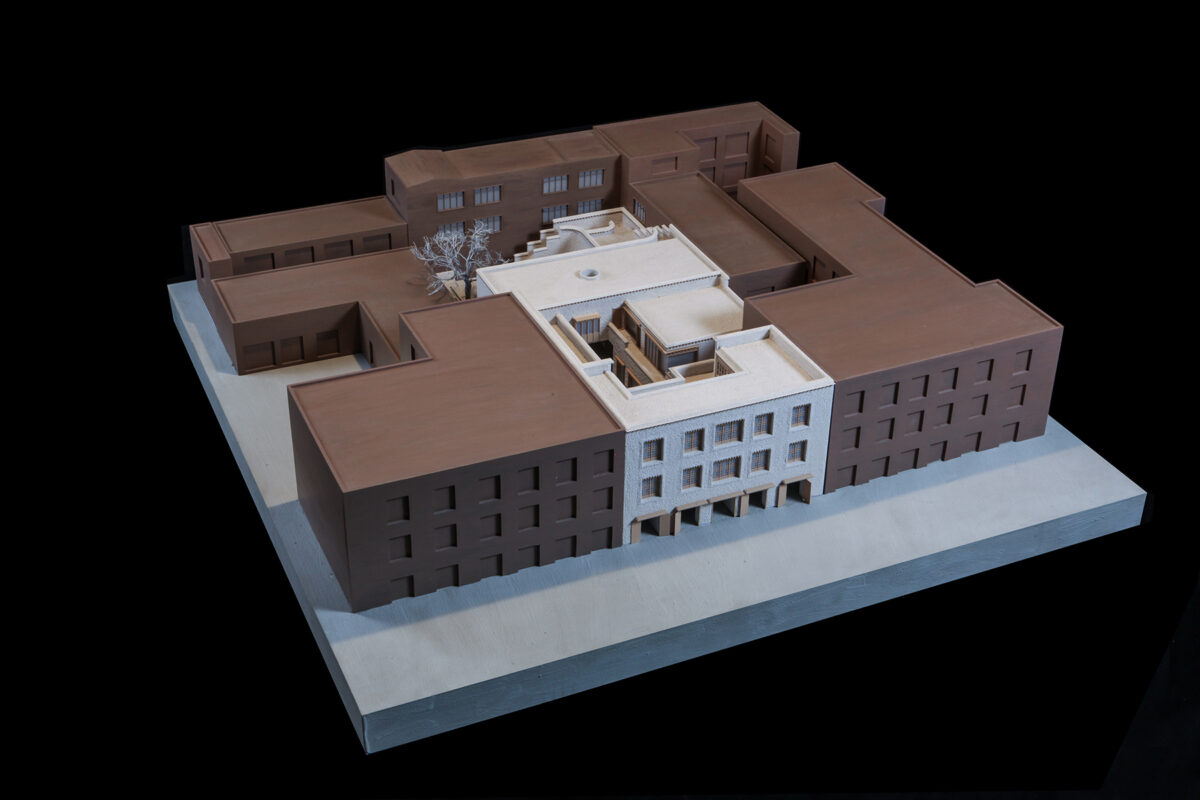
古代のコートヤード建築への深い敬意から、ネパール人商人によってこの改修プロジェクトは提唱された。千年以上の歴史を有する構造物を荒廃から救い、後部に増築された混沌とした部分を整理・再建することで、チベット建築の保存、継承、そして進化のモデルを提示することを目的としている。
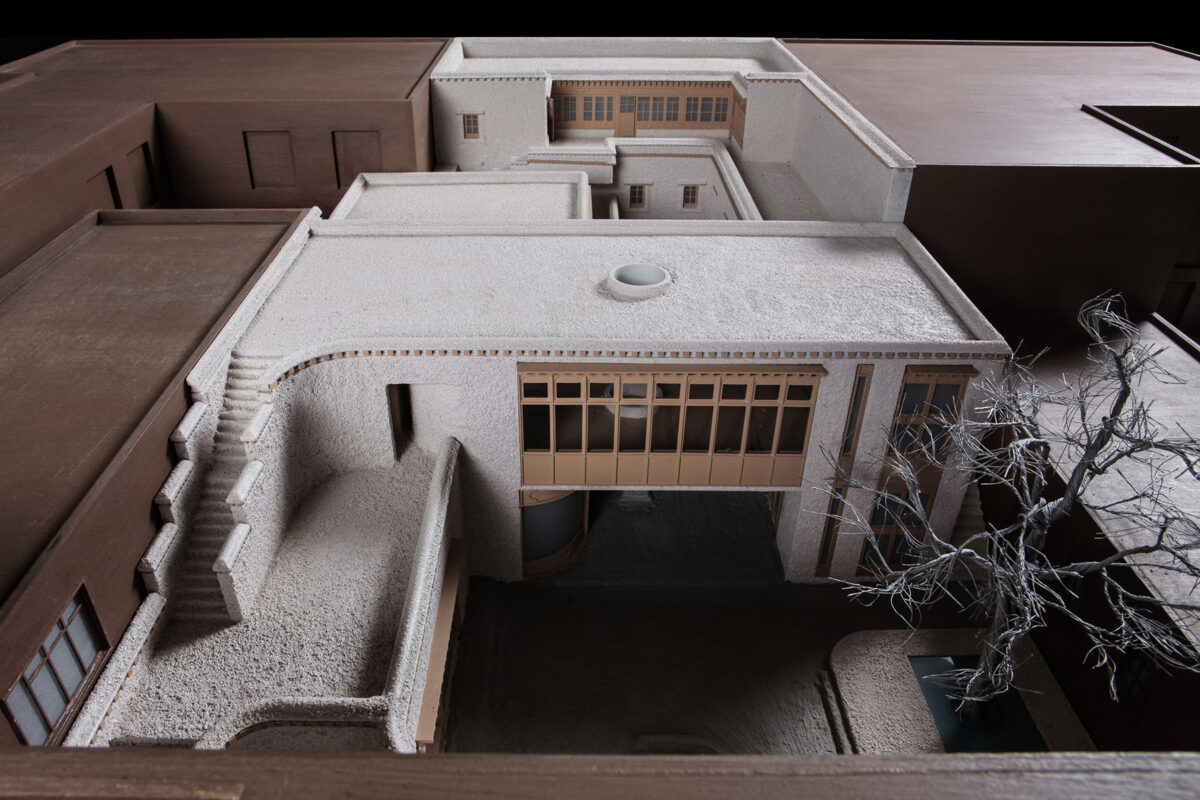
改修には二重の戦略が採用されている。前面部分では伝統的なチベットの職人技を再現し、後部では「チベット的であり中国的」な静謐さを持つ現代的中庭を創出している。
© hyperSity
© hyperSity
建築技術の融合による空間の刷新
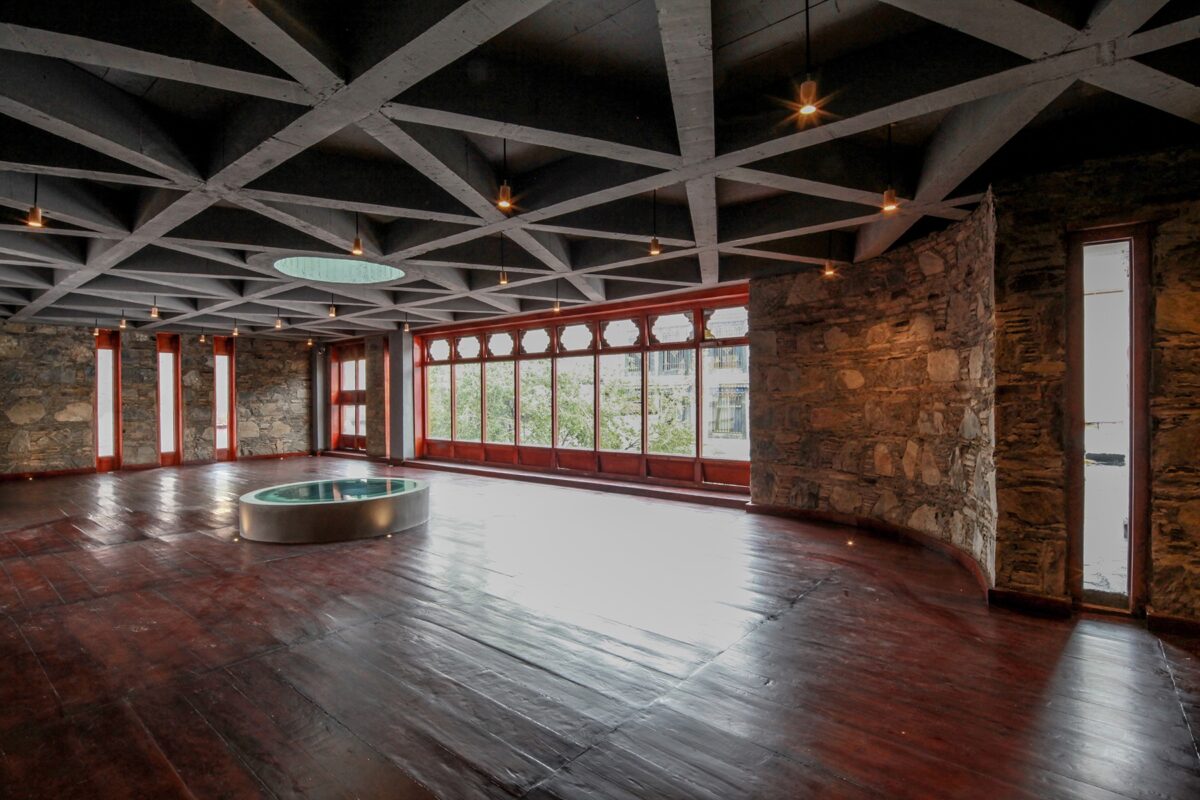
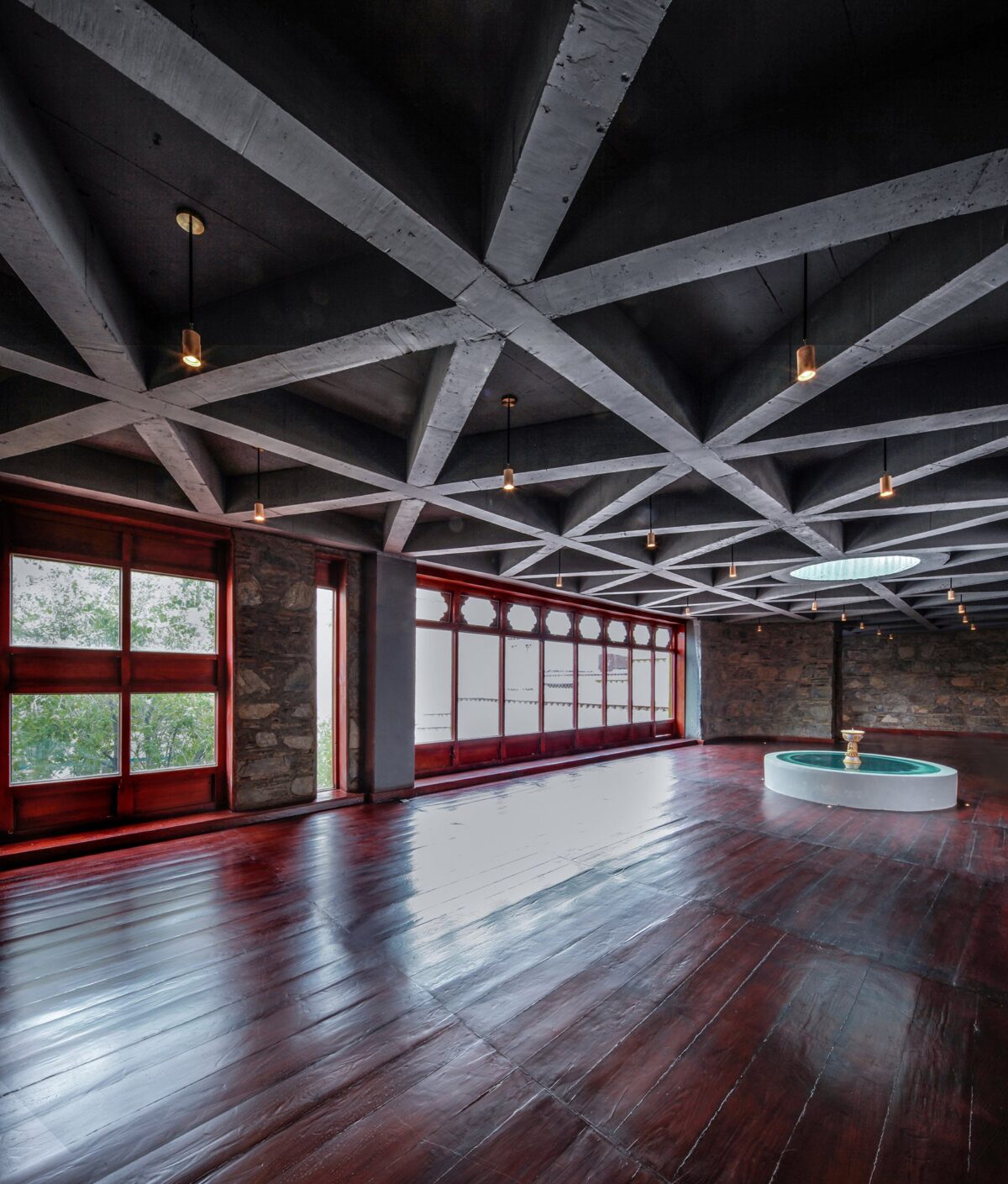
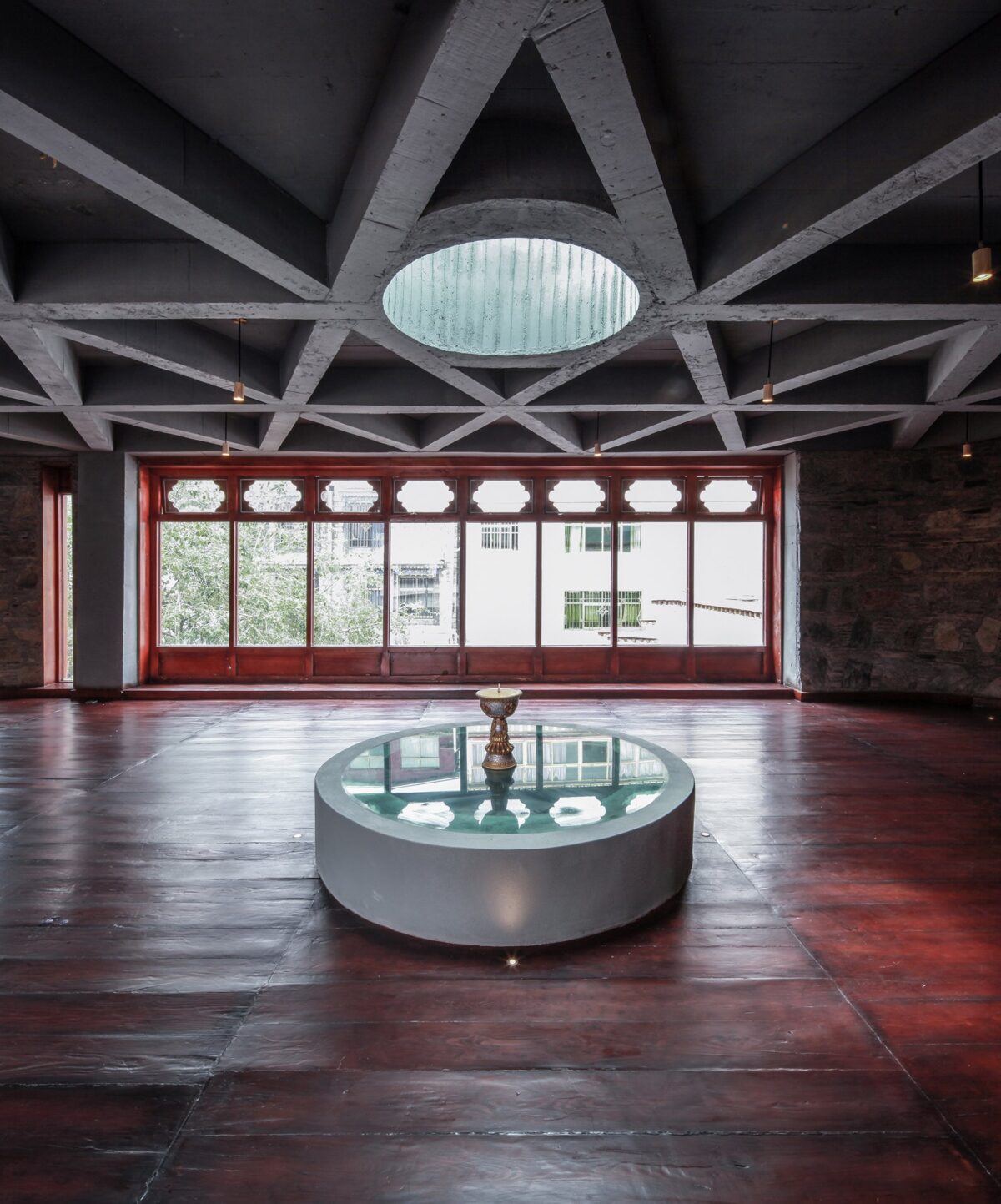
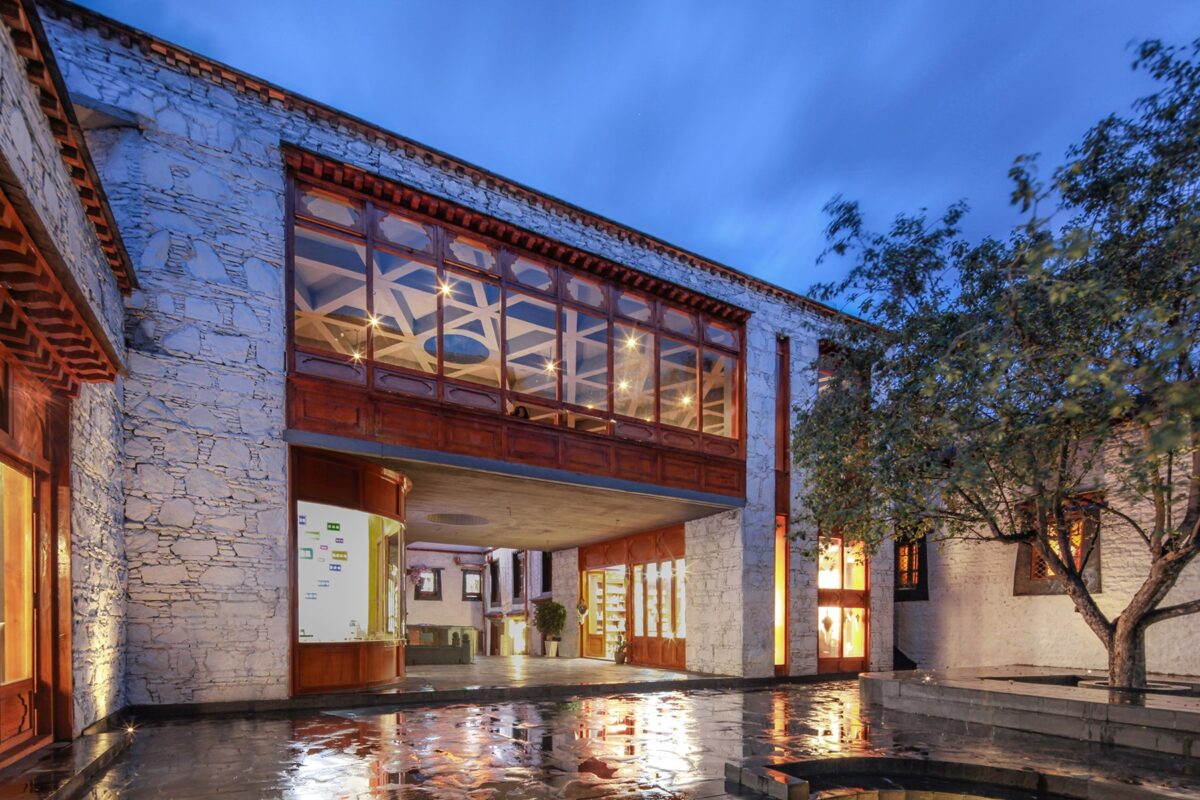
このプロジェクトでは、漢族とチベットの建築技術を融合させることで、従来の厚い壁と小さな開口部という制約を乗り越え、広々とした空間と天井まで届く窓を実現している。これにより、伝統と調和しながらも現代の都市生活に対応した建築空間が生まれている。
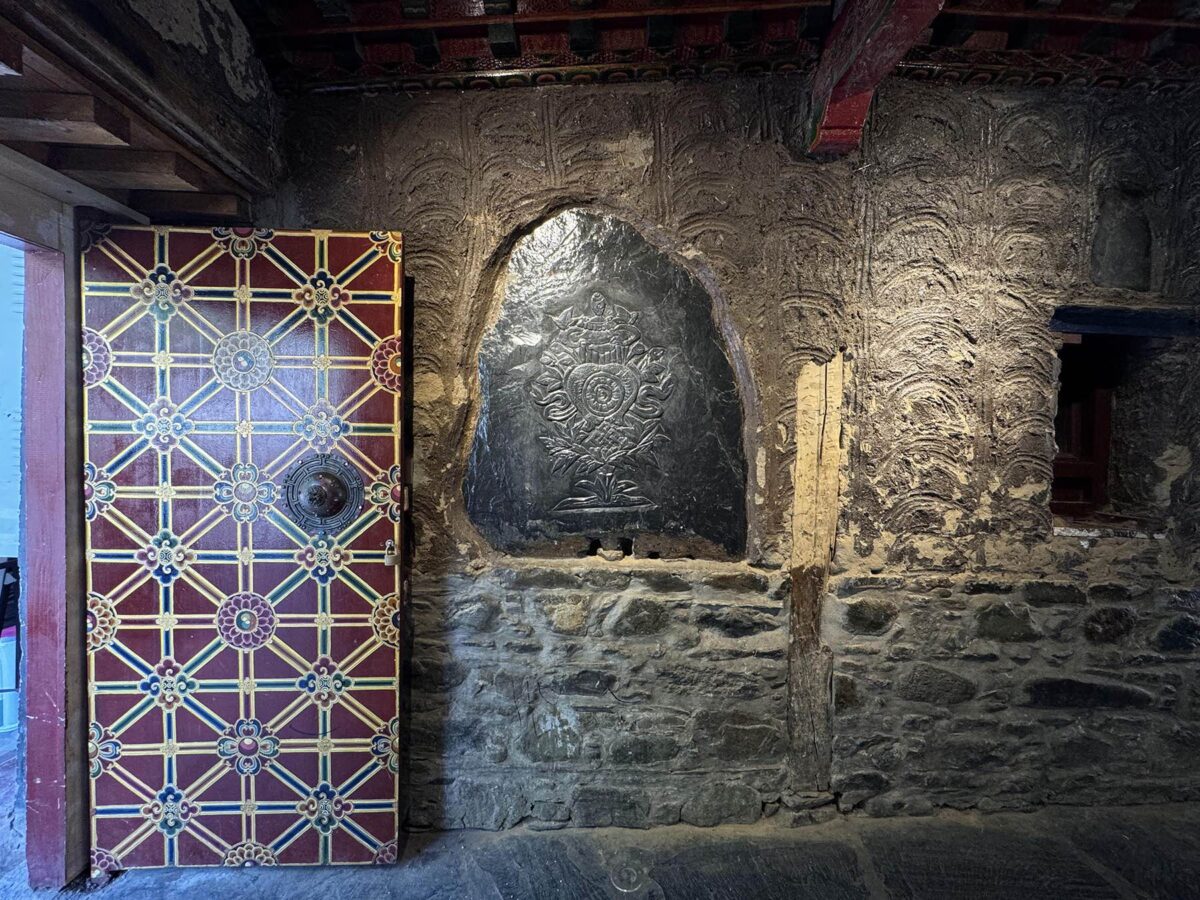
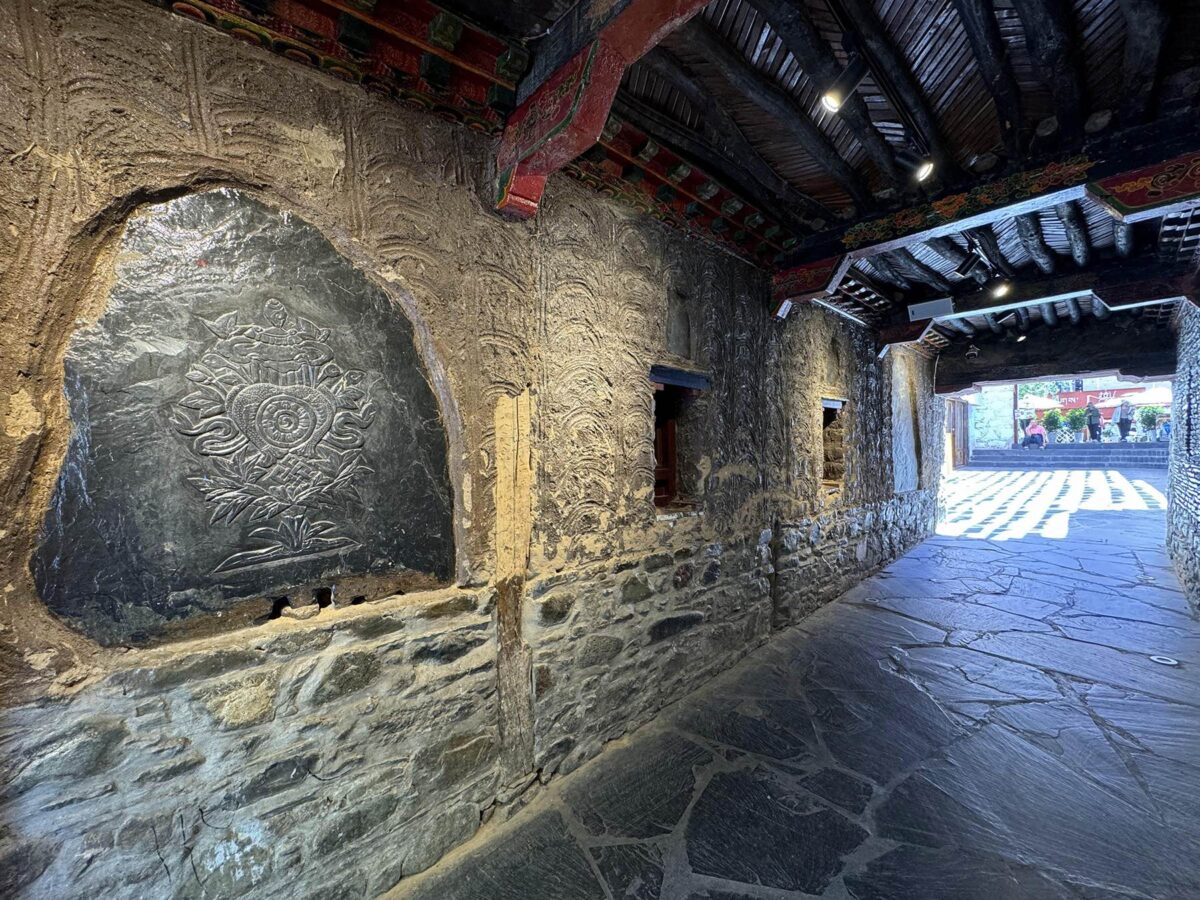
改修は既存の礼拝動線を尊重しつつ、ナビゲーション可能な建築体験を提供している。通りのメインゲートから入り、中央の展示ホールを抜けると、第6代ダライ・ラマであるツァンヤン・ギャツォが茶を飲んだと伝えられる聖なる古井戸に至る。
© hyperSity
© hyperSity
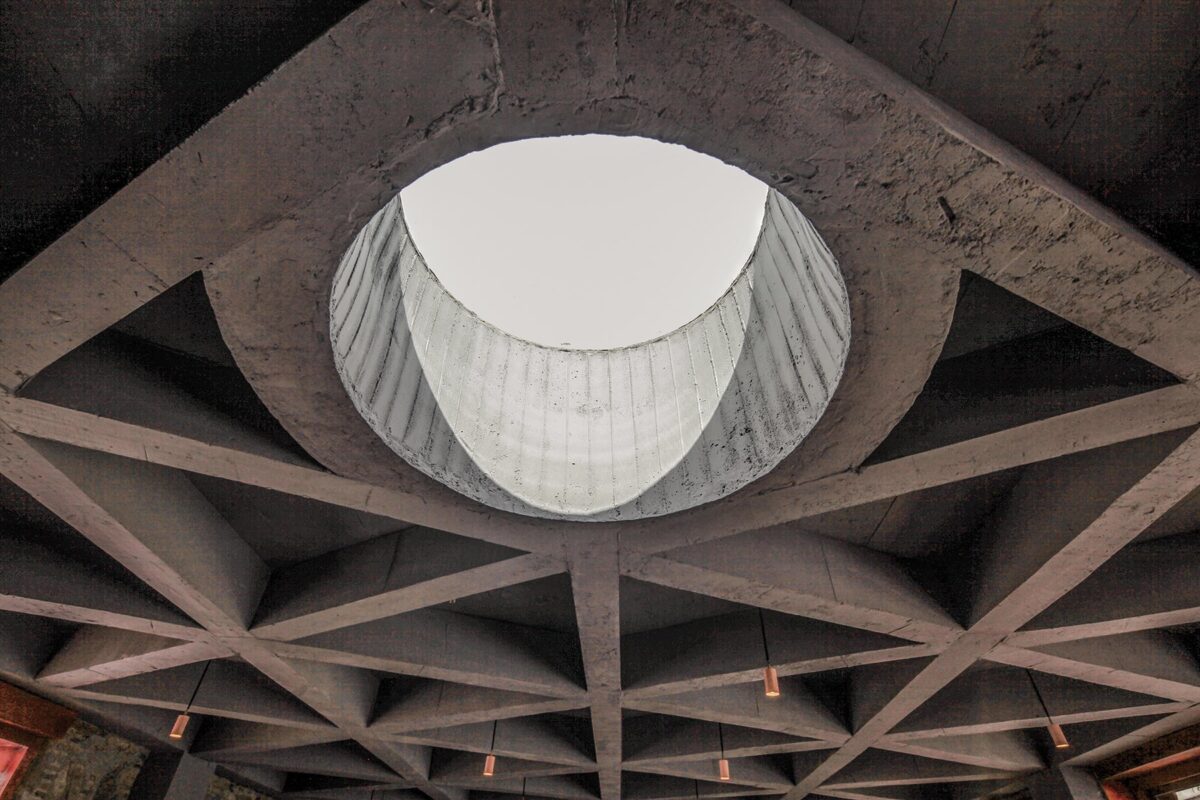
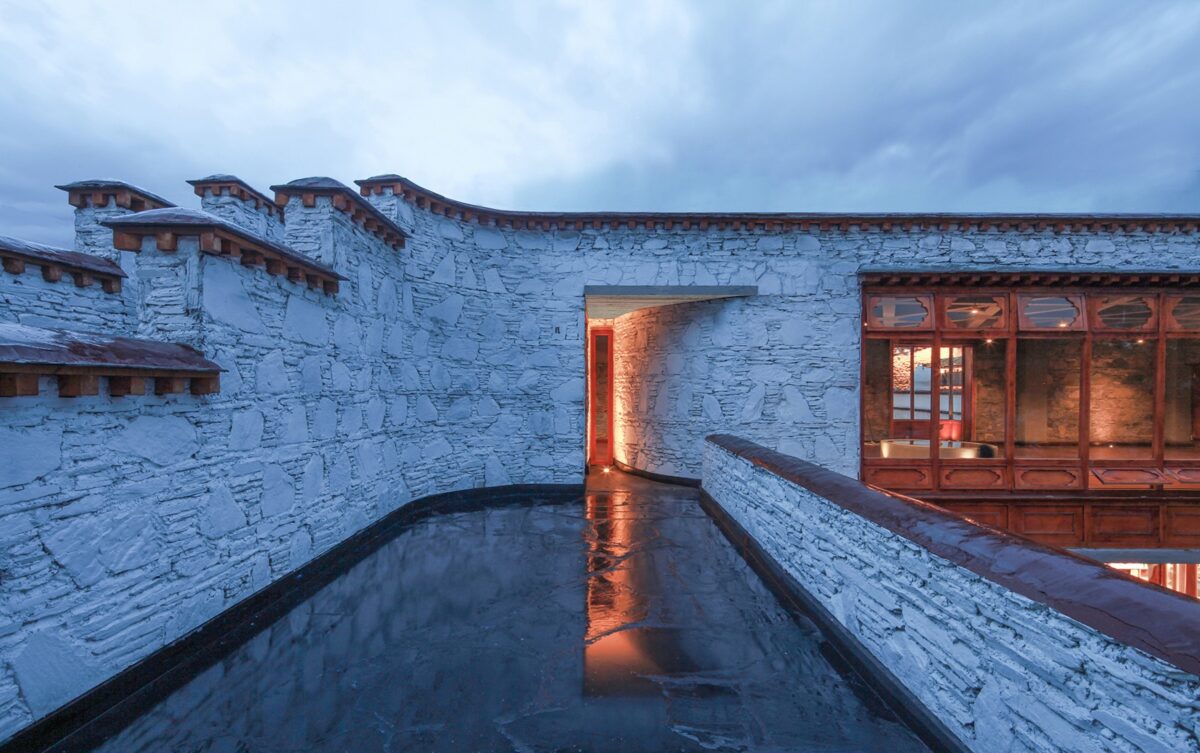
井戸の上の吹き抜けは空の景色を縁取り、新しい建築は井戸の歴史的意義を尊重して慎重に迂回する形状となっている。
屋上からは、壮大な宮殿、ジョカン寺のような金色の屋根、そして賑わうバーコフ通りのまち並みが一望でき、物理的な移動と視覚的な探検が融合したダイナミックな「ビューイングプラットフォーム」を形成している。コートヤードから屋上へと続く階段は、1,000m²の空間を迷路のような立体的な動線に変え、空間の多様性を豊かにしている。
© hyperSity
© hyperSity
この建築は、漢民族のコンクリート構造を表面的に模倣しチベットの象徴を付け加えるか、現代のニーズに合わない高コストな伝統的な手法に完全に依存するかという、2つの極端な手法を避けている。
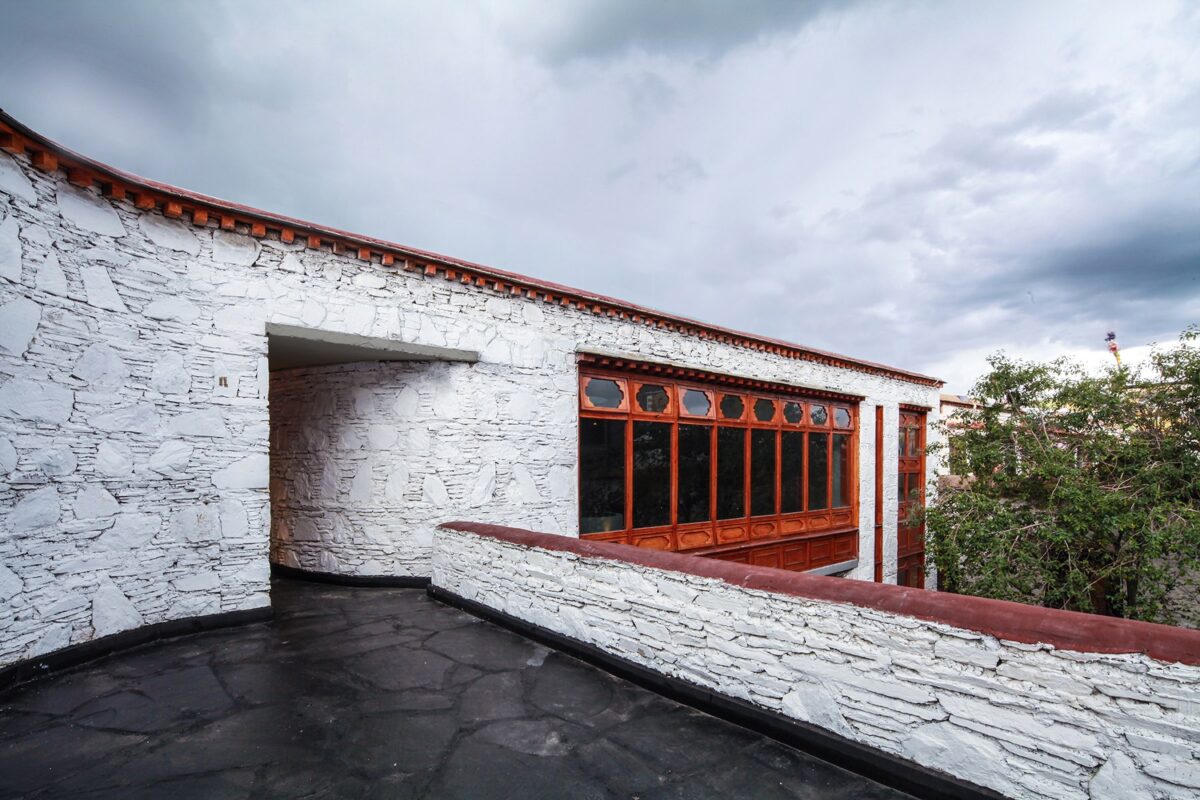
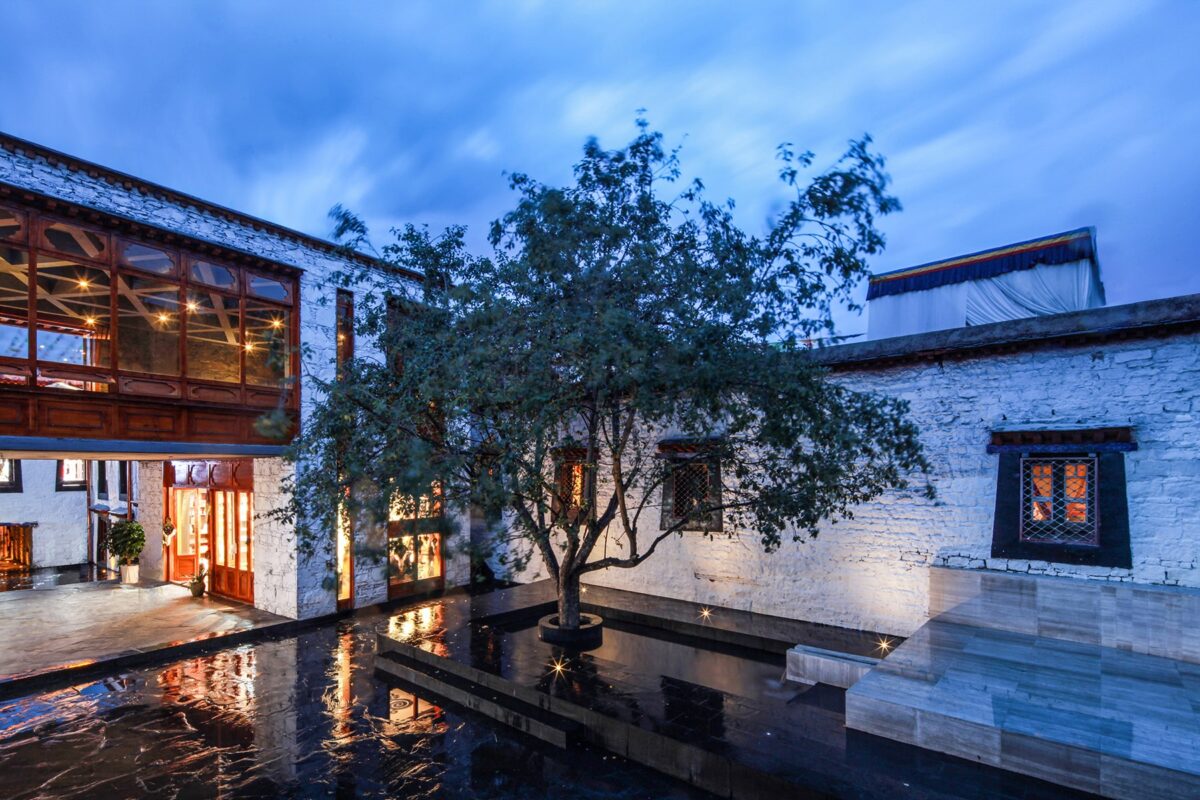
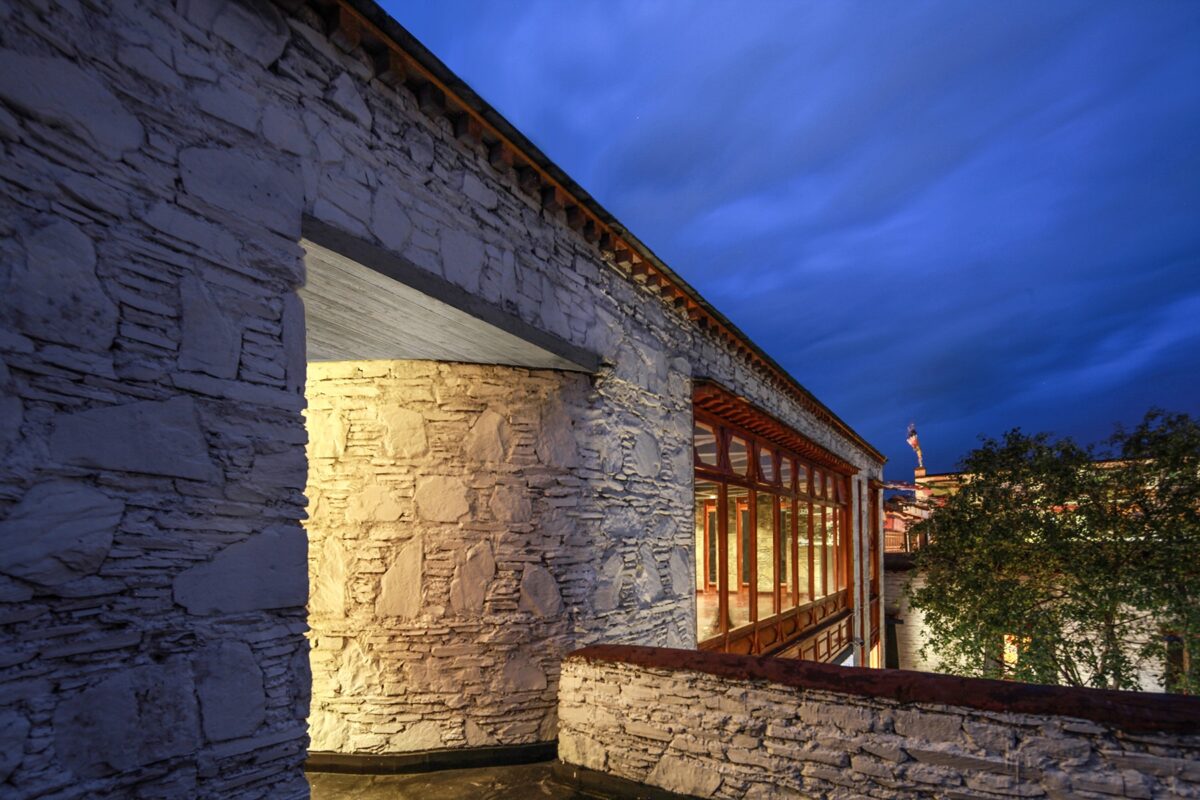
代わりに、コンクリート構造と伝統的なチベットの石積み技術を統合し、壁を薄くし自然光を採り入れつつ、建築の伝統性を維持している。
© hyperSity
© hyperSity
伝統技術と現代技術の共存
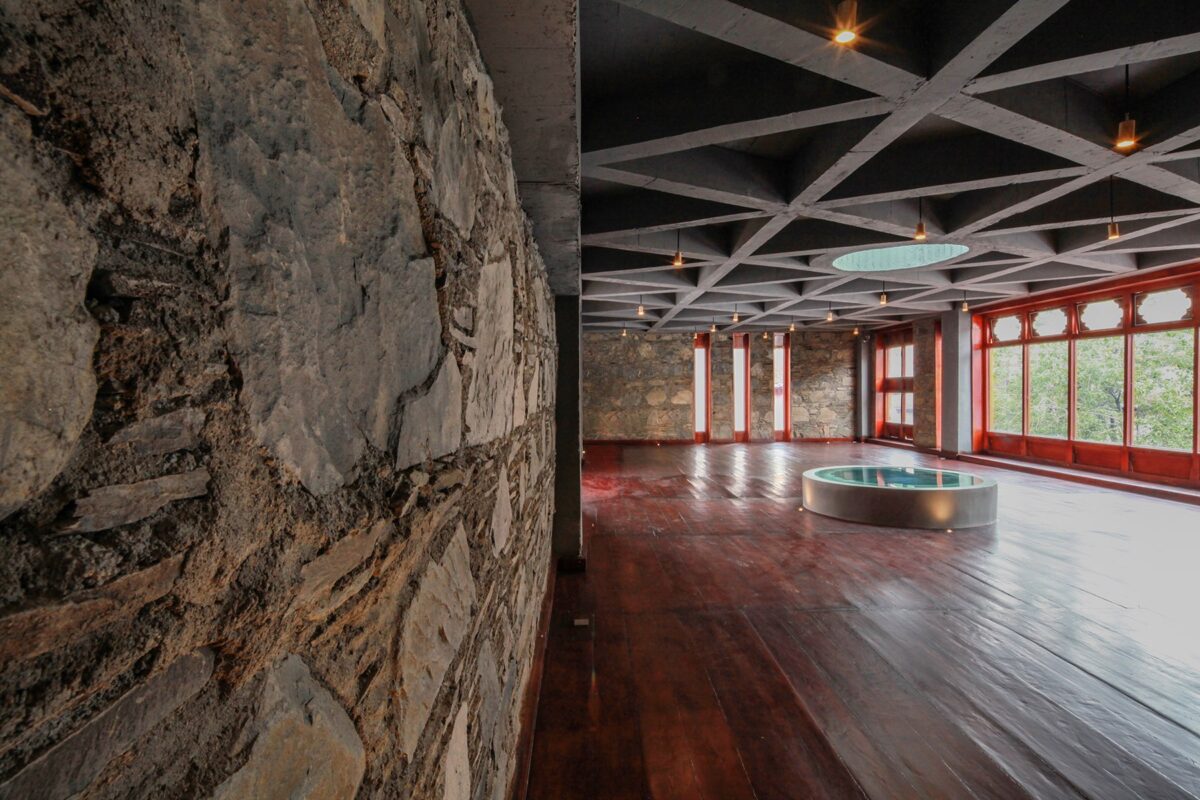
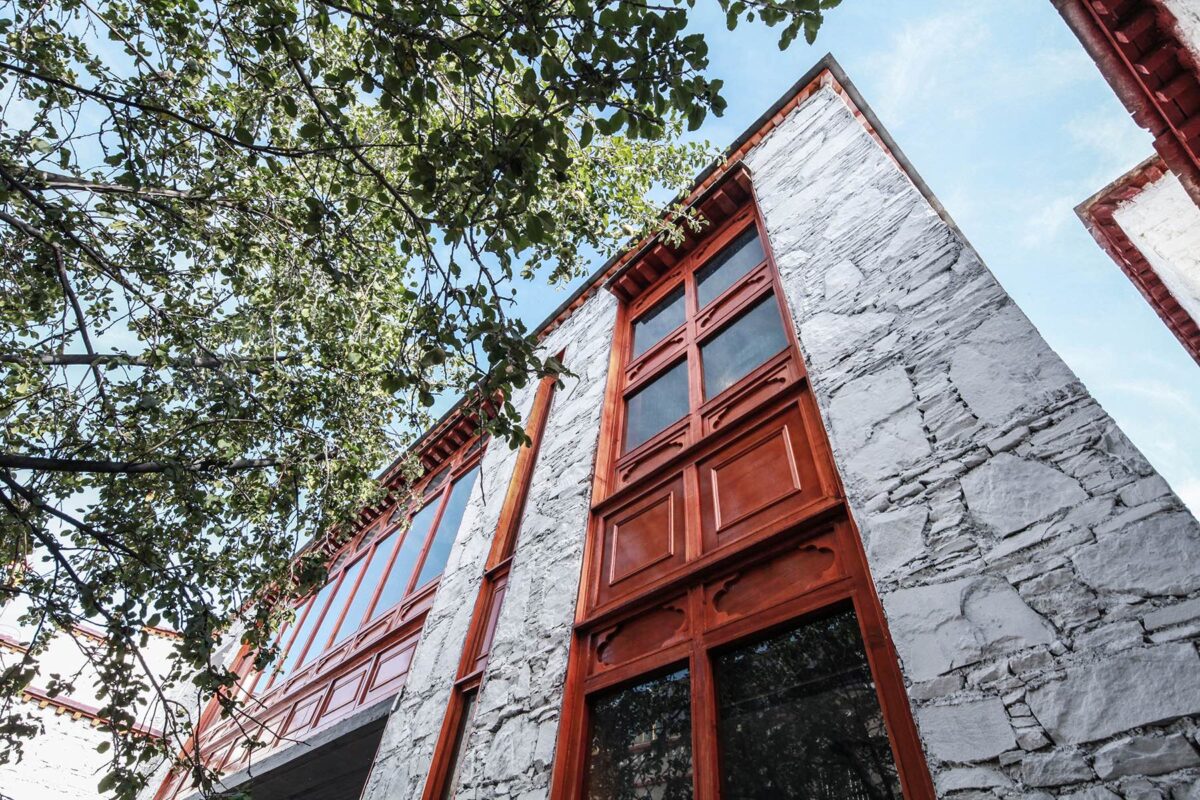
例えば、厚い石と薄い石を交互に積み重ね、小さな詰め石で補強して塔のような耐震構造を形成する「ジアバレ(Jiabalé)」と呼ばれる石積み技術は、50cmごとに鉄筋を埋め込んだ40cm厚の壁に適用されている。
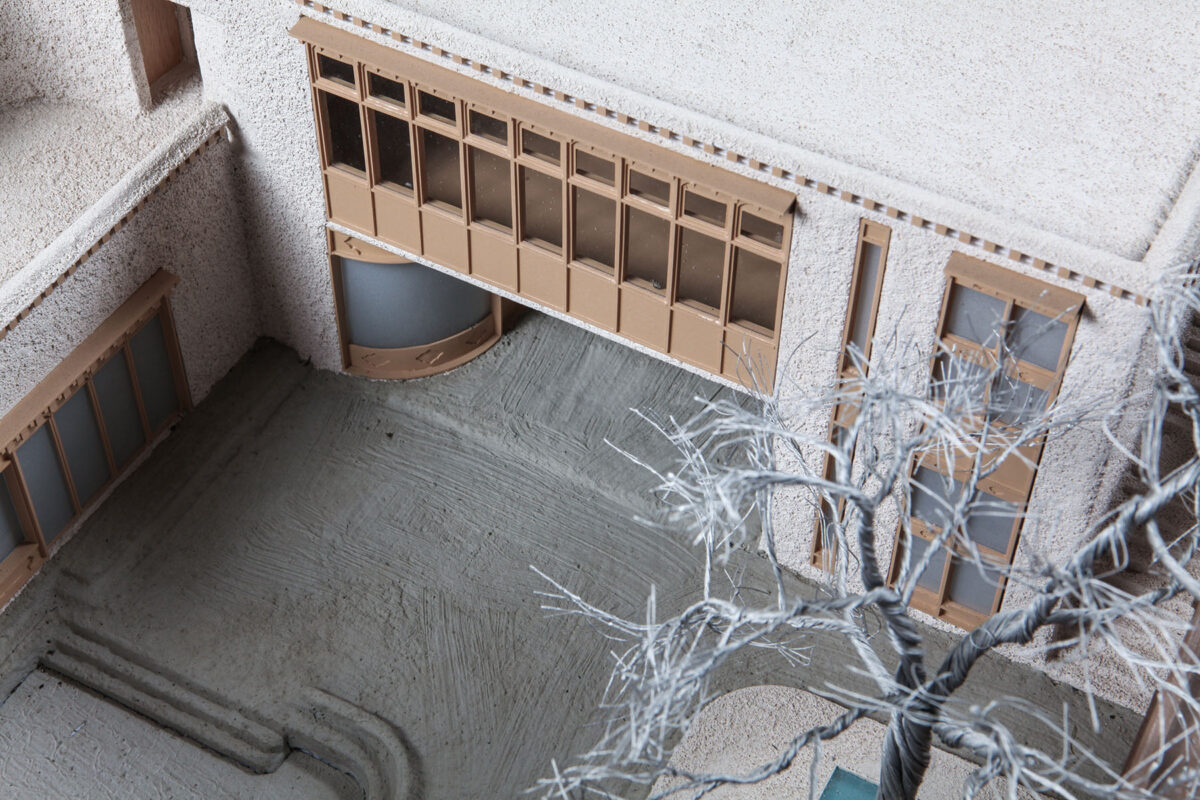
また、山南地区の大工が製作した木製のドアと窓には、伝統的な「バス(Basu)」の軒と「フェイジム(Feizimu)」と呼ばれる突き出す木が施され、コンクリートと石の構造に調和するよう組み込まれている。外壁には、ヤンバジン産の羊の乳を使った伝統的なプラスターが塗られており、白石灰に羊乳、砂糖、蜂蜜を加えることで、質感と耐久性を両立させている。
© hyperSity
© hyperSity
空間としてのコートヤードの再定義
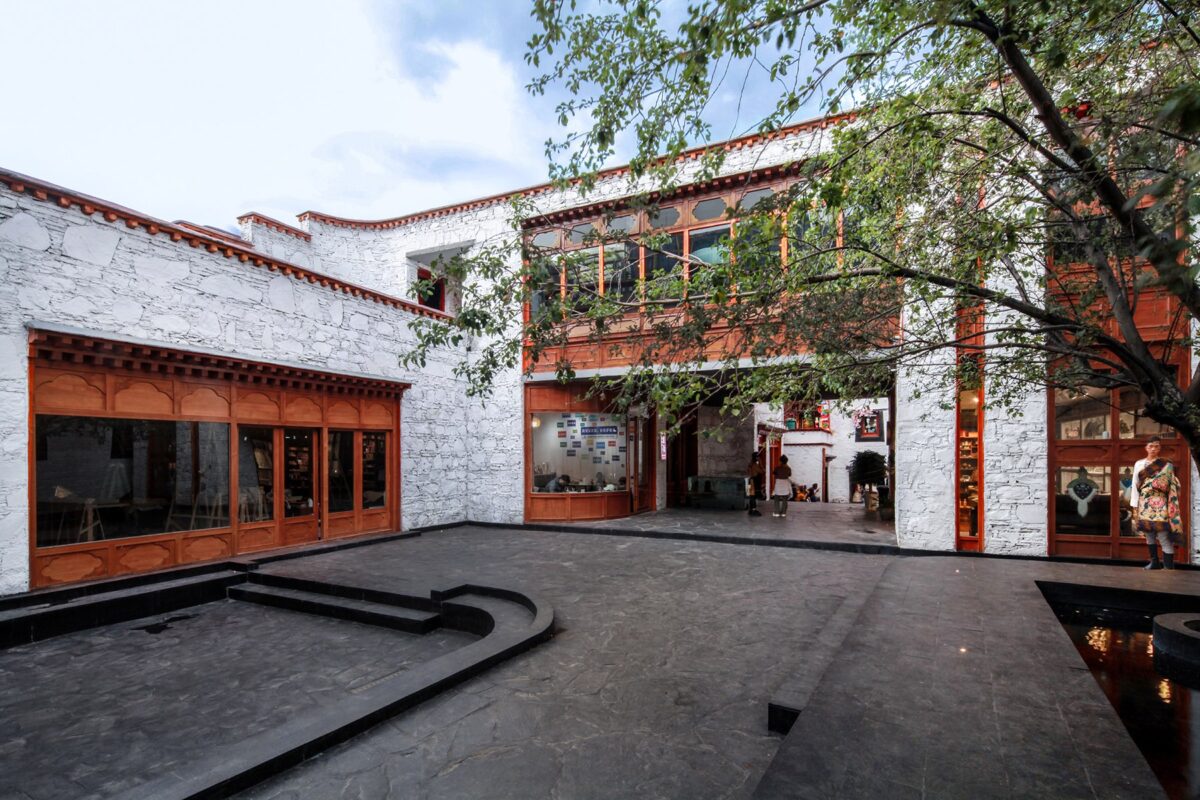
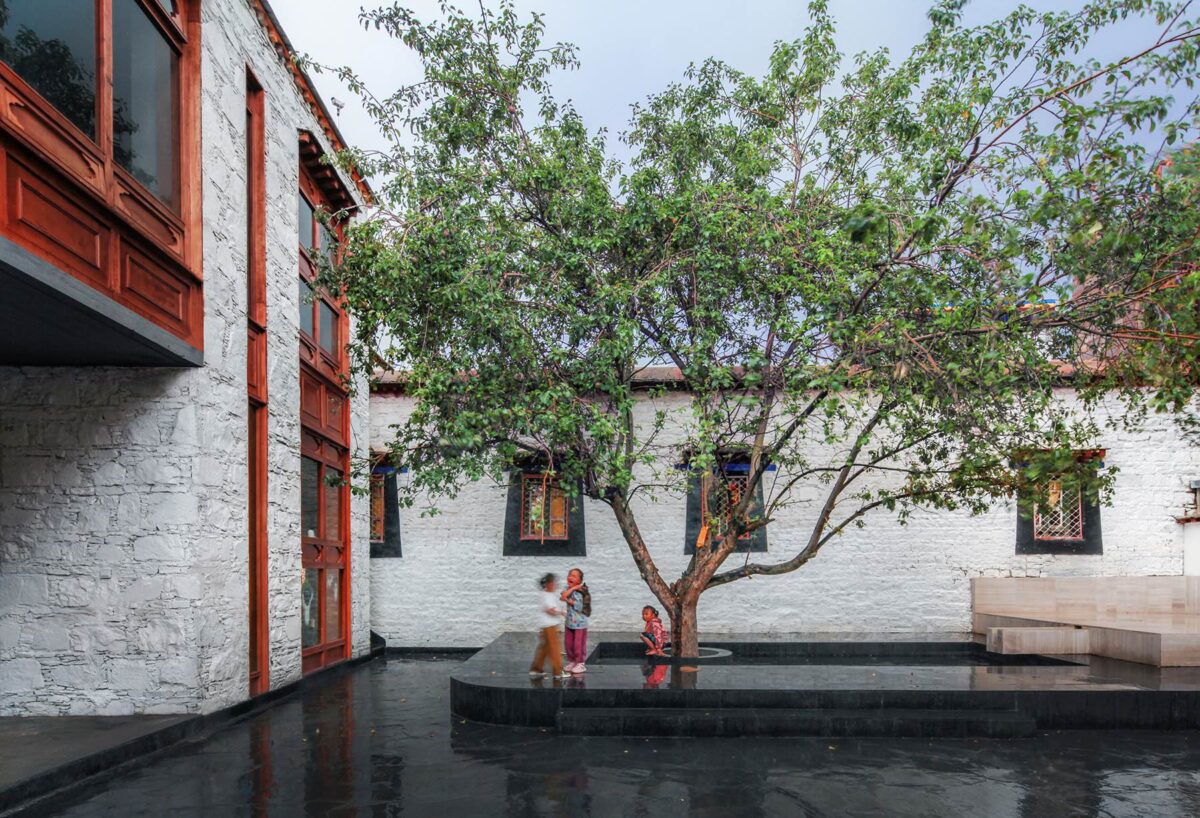
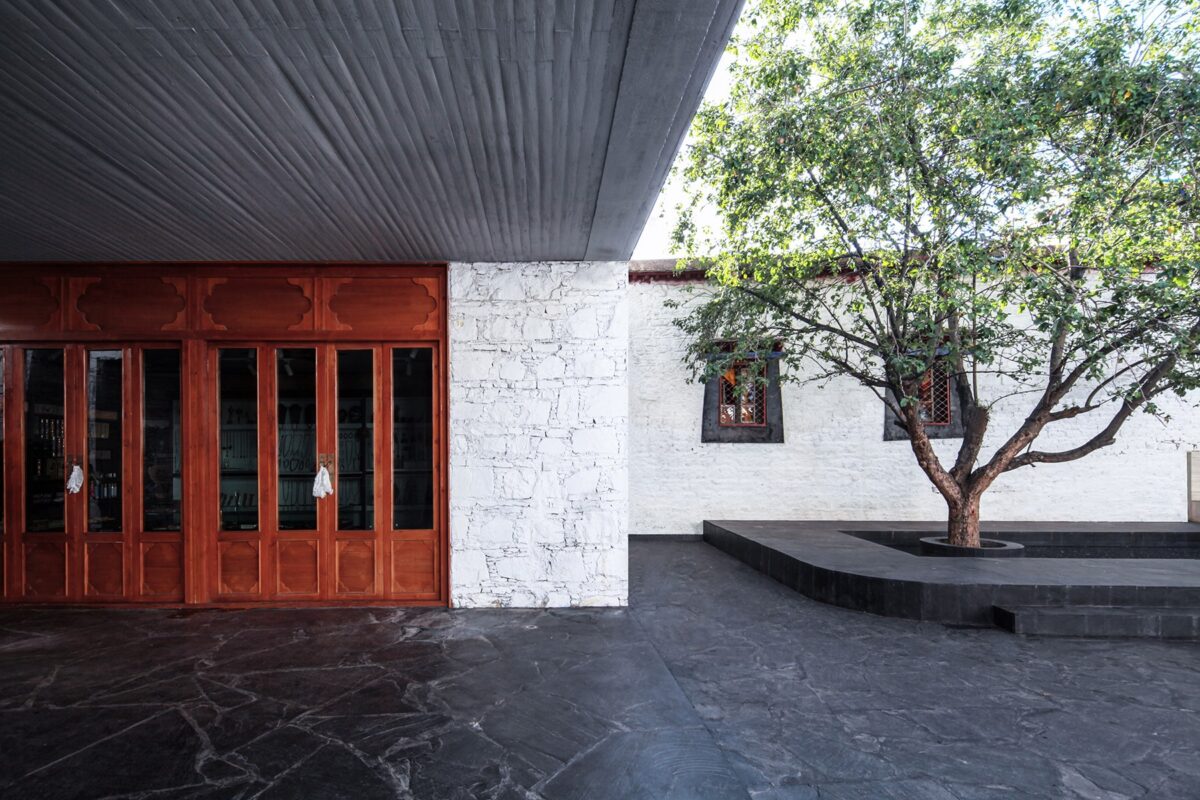
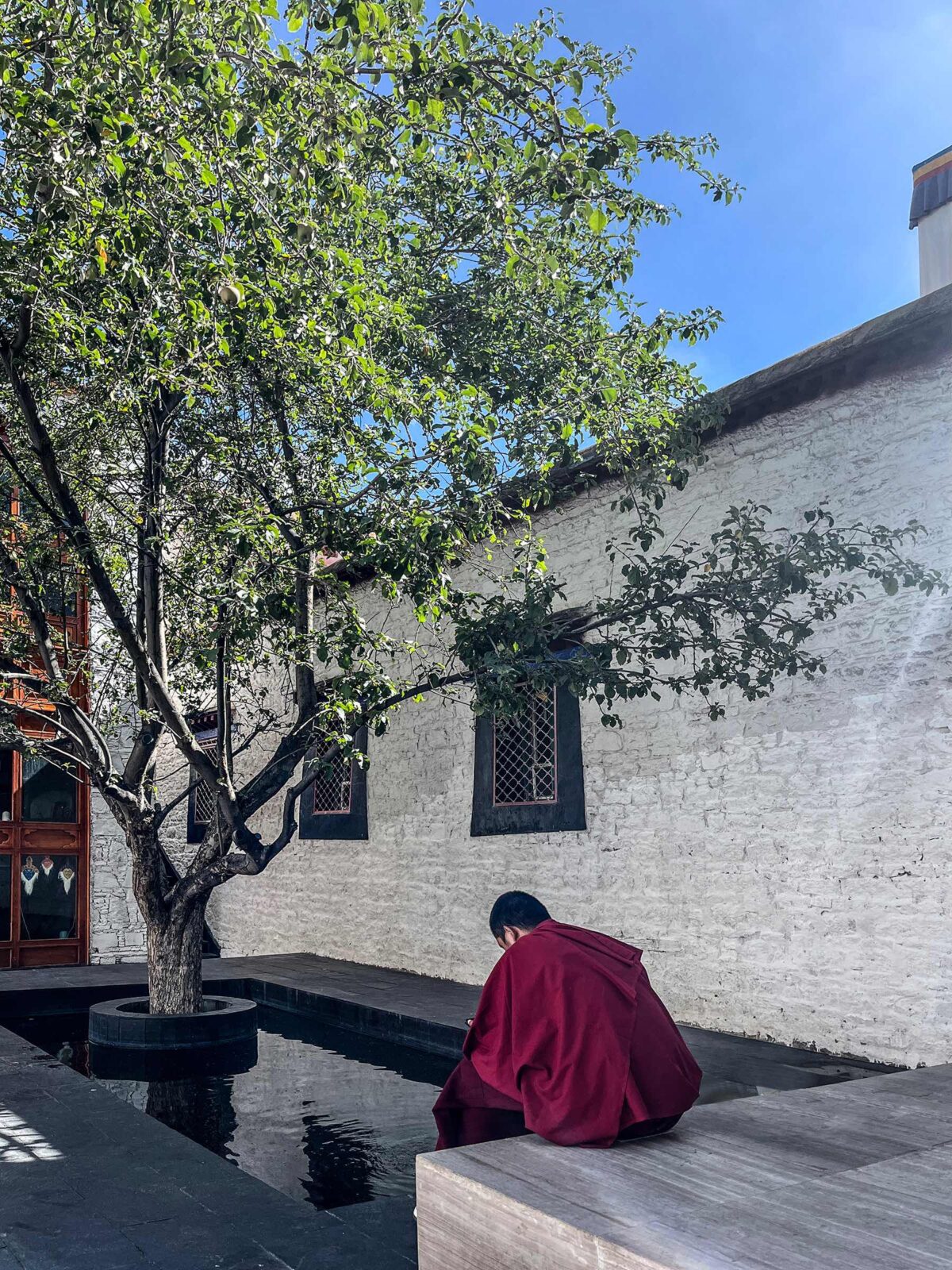
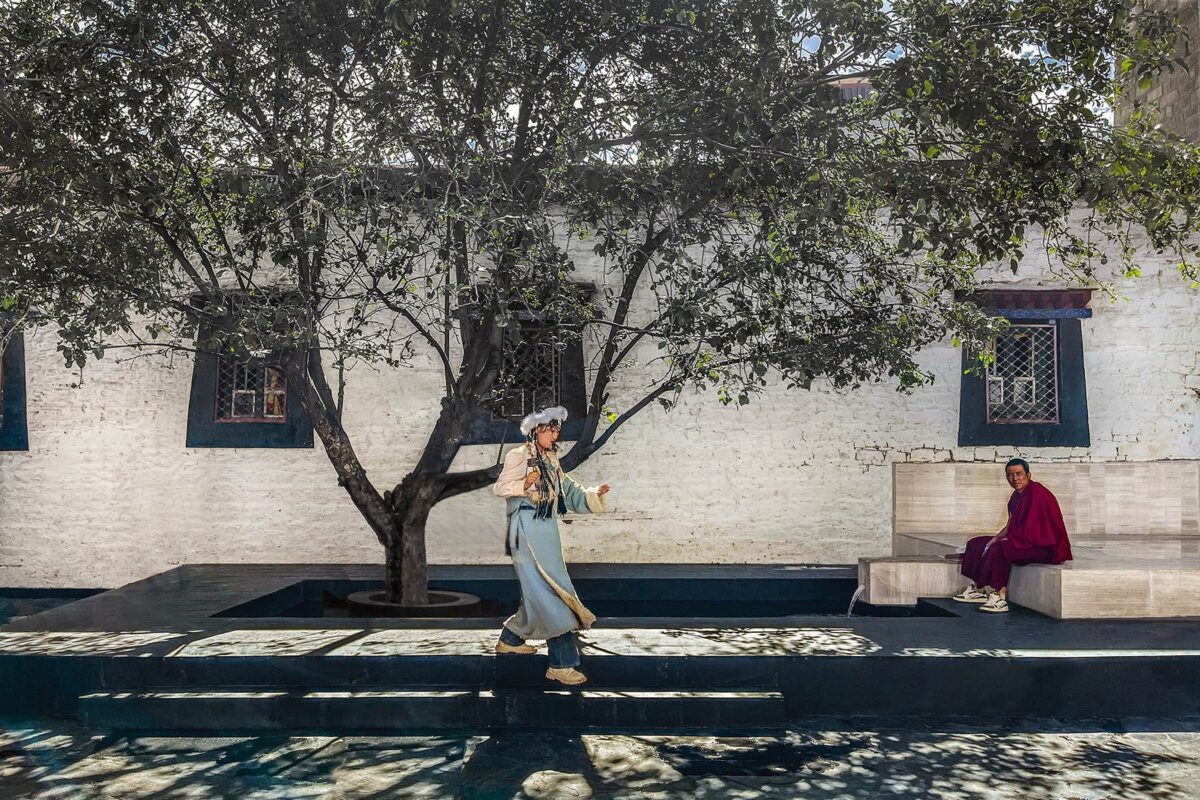
コートヤードは、パブリックとプライベート、一時性と永続性が重層する複雑な空間として立ち現れる。密集した都市の織り目から低いポーチを通って中へ入ると、「ポケット・コートヤード」と呼ばれる多層的空間が展開し、公共の生活が建築の内部へと拡張されていく。
井戸に着想を得た弧を描くデザインは、階段、手すり、壁のディテールにも反映されており、空間の中で動きを誘発し、認識を拡張する役割を果たしている。現在この空間には、都市の散策者と精神的探求者が共存しており、瞑想、観察、写真撮影など多様な営みを通して、時間と空間を超えた社会的階層とアイデンティティの交差点へと昇華している。
© hyperSity
© hyperSity
© hyperSity
© hyperSity
© hyperSity
© hyperSity
© hyperSity
© hyperSity
© hyperSity
© hyperSity
© hyperSity
© hyperSity
© hyperSity
© hyperSity
© hyperSity
以下、ハイパーシティ・アーキテクツのリリース(英文)です。
Project Name: The Architectural Ark: Renovation of the Kyakashar Ancient Courtyard in Barkhor Street,Tibet
Completion Year: 2024
Gross Built Area: 1100m²
Design Firm: hypersity architects 殊至建筑
Company Website: www.hypersity.cn
Contact Name: shaojun
Contact e-mail: studio@hypersity.cn
Firm Location: Beijing
Lead Architects: Shi Yang
Lead Architects e-mail: studio@hypersity.cn
Project location: Barkhor Street,Lhasa,Tibet
Design Team: Li Shaojun, Yin Manyu, Na Risu Ma Xiaoqing, Wang Ziming
Photo credits: hyperSityProject DescriptionThe Architectural Ark: Renovation of the Kyakashar Ancient Courtyard in Barkhor StreetIn Lhasa, the area around Barkhor Street, centered on the Jokhang Temple, stands as the city’s most bustling hub. Here, official residences of both monks and lay officials coexist with numerous civilian homes, shops, and inns, forming a unique spatial configuration of “urban-market and temple syncretism.” The project site, “Kyakashar” (Tibetan for “Magpie Pavilion”), derives its name from the magpies that once populated the willow trees planted by Princess Wencheng. It embodies the profound bond of “harmony as one family” between the Han and Tibetan peoples. This two-story mixed-use courtyard, featuring a blockhouse-style structure, integrates historical Tibetan commercial architecture along the street with a modern “Paradise Time Bookstore” built by tenants in the late 1990s in the rear. Here, Tibetan stone masonry dialogues with contemporary elements like concrete, light steel structures, plastic canopies, and color steel panels.Inspired by deep reverence for the ancient courtyard, a devout Nepalese merchant initiated its transformative renovation, aiming to rescue the millennium-old structure from disrepair and rebuild the chaotic rear additions. The project seeks to explore a model for preserving, inheriting, and evolving Tibetan architecture. The renovation adopts a dual strategy: restoring the traditional Tibetan craftsmanship of the front section while creating a serene contemporary “Pan-Tibetan-Pan-Chinese” courtyard in the constrained rear space. By integrating Han and Tibetan construction techniques, the new design breaks free from the dark, thick-walled, and small-windowed limitations of traditional Tibetan architecture, introducing large-span spaces and floor-to-ceiling windows to accommodate modern urban life.The renovation preserves the circulation of the prayer path, creating a navigable architectural experience. Entering from the main gate on Barkhor Street, visitors pass through a central exhibition hall to reach a sacred ancient well, said to have been used by the Sixth Dalai Lama, Tsangyang Gyatso, for tea. An atrium above the well frames a view of the sky, while the new architecture carefully circumvents the well to preserve its historical significance. On the rooftop, visitors can gaze at the grand Potala Palace, the golden roofs of Jokhang Temple, and the bustling Barkhor Street below, forming a dynamic urban 观景台 (viewing platform) that merges physical movement with visual exploration. Stairs from the inner courtyard lead to the rooftop, creating a three-dimensional circulation that makes the 1,000-square-meter space feel labyrinthine and rich in spatial variation.The construction avoids two extremes: purely imitating Han Chinese concrete frameworks with superficial Tibetan symbols or relying entirely on costly traditional methods incompatible with modern needs. Instead, it integrates concrete frameworks with traditional Tibetan masonry techniques, thinning walls and enhancing natural light while maintaining architectural authenticity. For example, the “Jiabalé” stone-laying technique—stacking alternating layers of thick and thin stones with small infill stones to form a pagoda-like, earthquake-resistant structure—is adapted into 40cm-thick walls reinforced with steel bars every 50cm. Wooden doors and windows crafted by carpenters from Shannan Prefecture, featuring traditional “Basu” eaves and “Feizimu” (overhanging wood) motifs, are seamlessly embedded into the concrete and stone framework. The exterior walls are coated with a historic sheep’s milk plaster from Yangbajing, blending white lime with milk, sugar, and honey for texture and durability.The courtyard emerges as a complex of layered meanings—public yet intimate, transient yet eternal. Entering through a low porch from the dense urban fabric, visitors discover an open “pocket courtyard” where multi-level spaces connect functional areas, extending public life into the building’s interior. Arcing designs, inspired by the well’s location, guide movement and expand spatial perception, echoed in staircases, railings, and wall details. Now, urban wanderers and spiritual seekers coexist here, whether meditating, taking photos, or simply observing, transforming the courtyard into a crossroads where diverse social strata and identities converge across time and space.
ハイパーシティ・アーキテクツ 公式サイト
http://www.hypersity.cn/
【購読無料】空間デザインの今がわかるメールマガジン TECTURE NEWS LETTER
RECOMMENDED ARTICLE