CULTURE
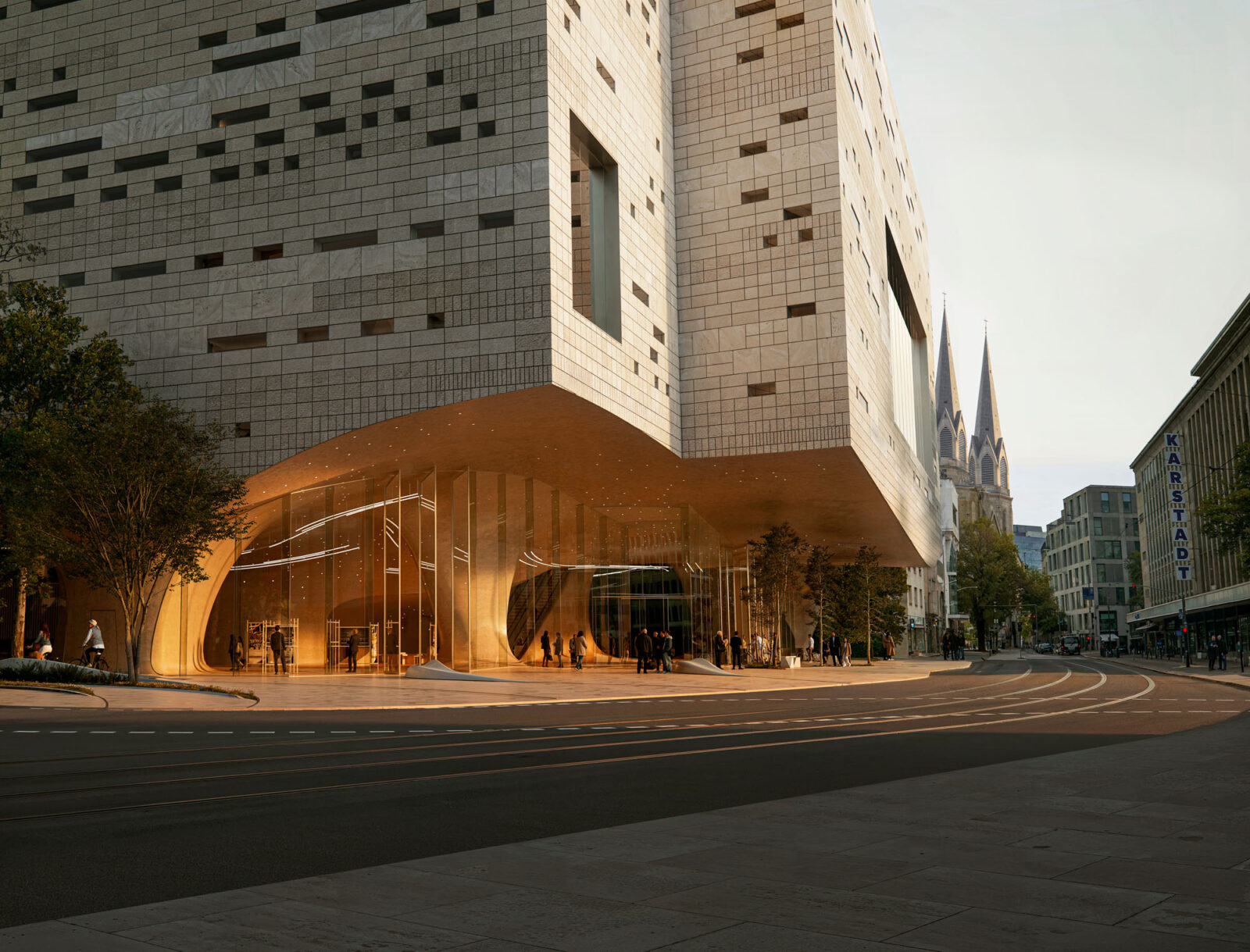
ドイツの都市デュッセルドルフに新たに計画する〈デュッセルドルフ・オペラハウス(Düsseldorf Opera House)〉のコンペティションにて、世界各地にスタジオを構える設計事務所 スノヘッタ(Snøhetta)が勝利しました。
ライン川の蛇行・浸食作用からインスピレーションを得た、「侵食された洞窟」として構想された1階の有機的なフォーラムが特徴的な建築です。
注目ポイント
- 3つの非対称台形セグメントによる建物構成
- ドイツ・オペラ/音楽学校/音楽図書館の3機関の統合を象徴
- 四方に開き、都市との境界を曖昧にし公共性を最大化したパブリック・フォーラム
- 芸術だけでなく日常の出会いや会話、コミュニティを包み込む場所として構想
(以下、スノヘッタから提供されたプレスキットのテキストの抄訳)
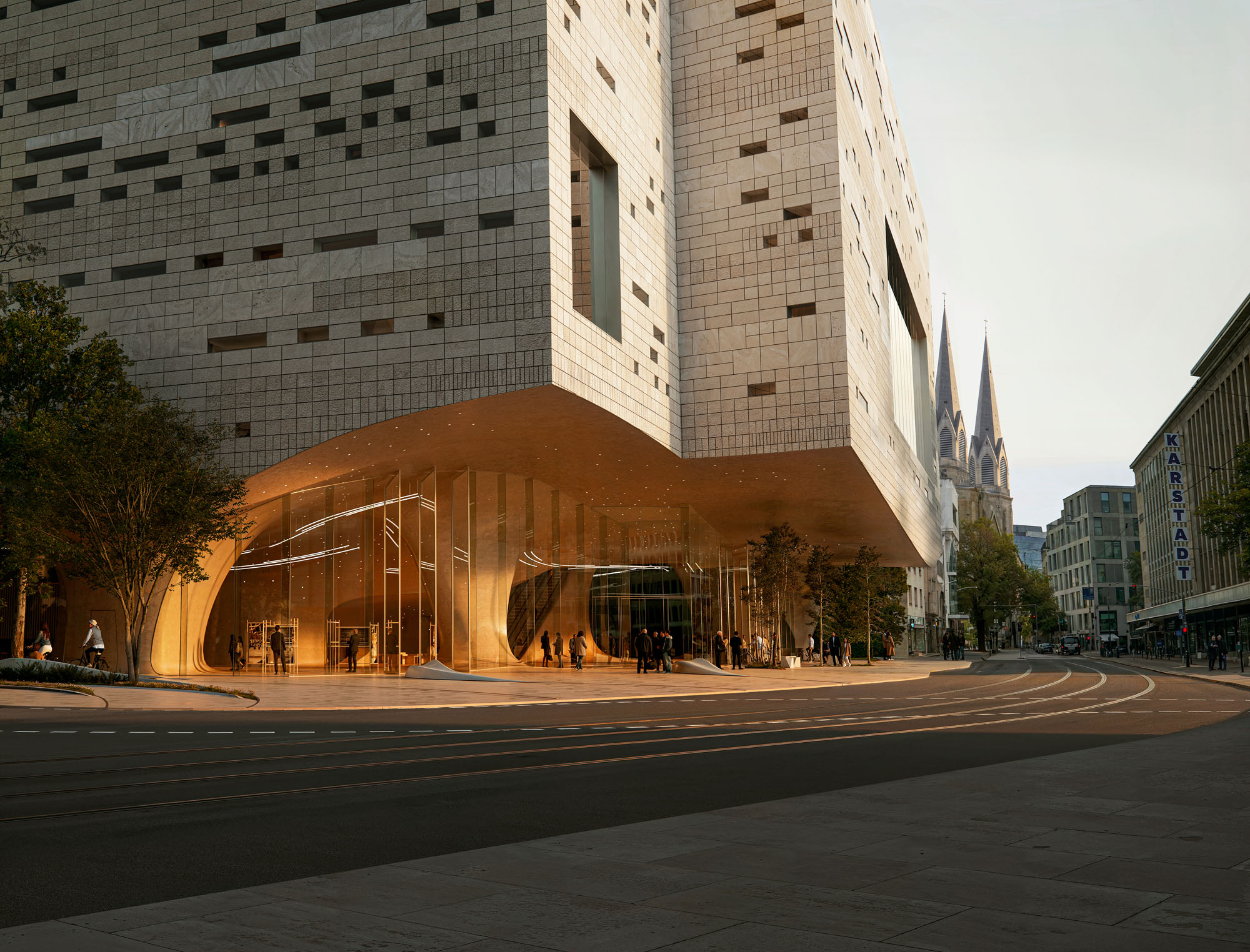
ガラスファサードに包まれた、視覚的および空間的な透明性を保証するパブリックな1階(Illustration: Mir/Snøhetta)
洞窟のような地上階をもつ新たなオペラハウス
「未来のオペラハウス(Opera House of the Future)」コンペティションにおいて、25名の審査員全員の賛同を得て選ばれたこの設計案は、デュッセルドルフのライン川オペラ座の新たな本拠地となることを想定している。
建物は3つの非対称な台形セグメントに分割され、地上階に通路を導入することで日光の浸透を可能にし、コンパクトな敷地において市民参加を促進する構成となっている。
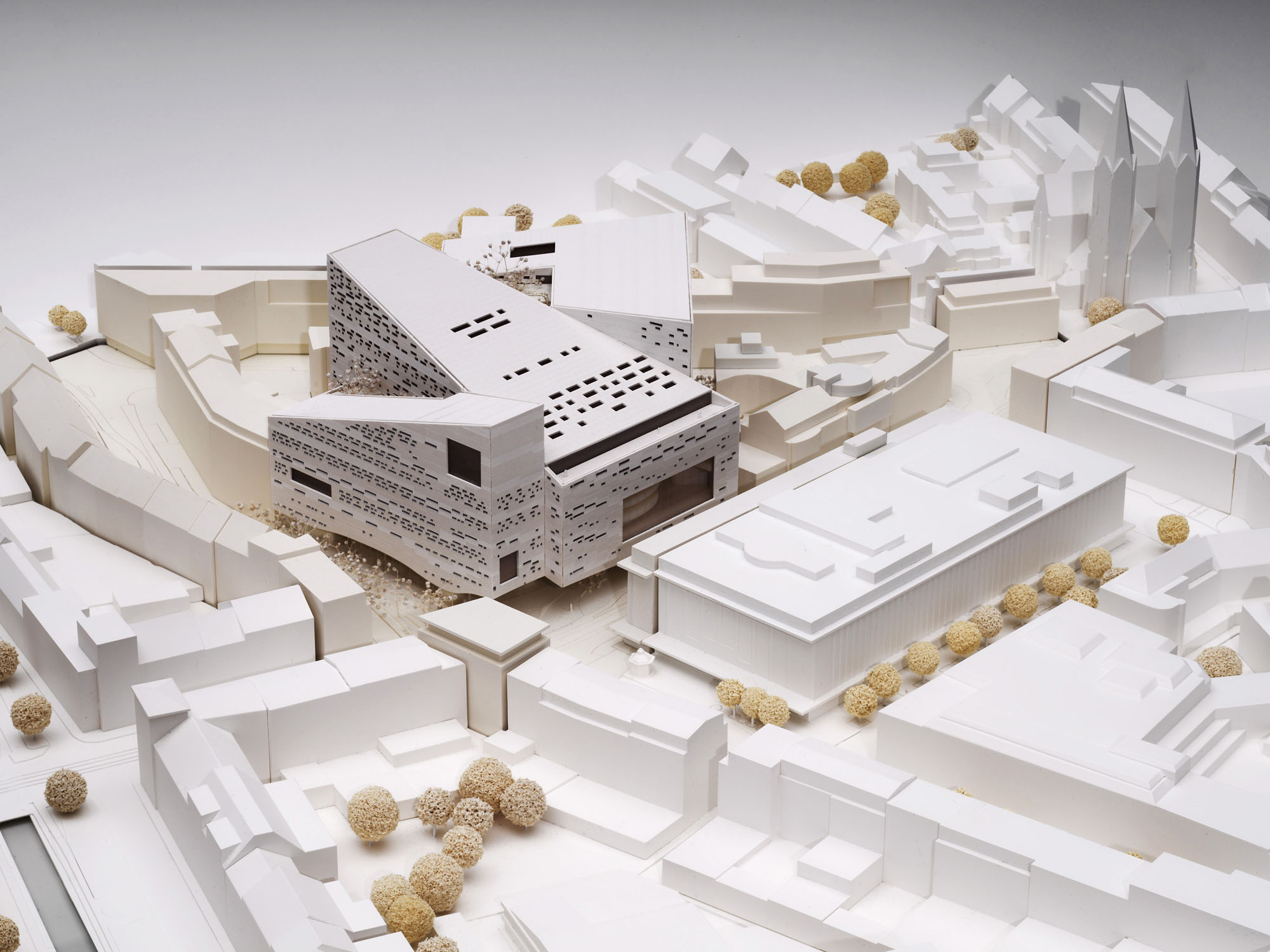
Photo: Landeshauptstadt Düsseldorf/Claus Langer
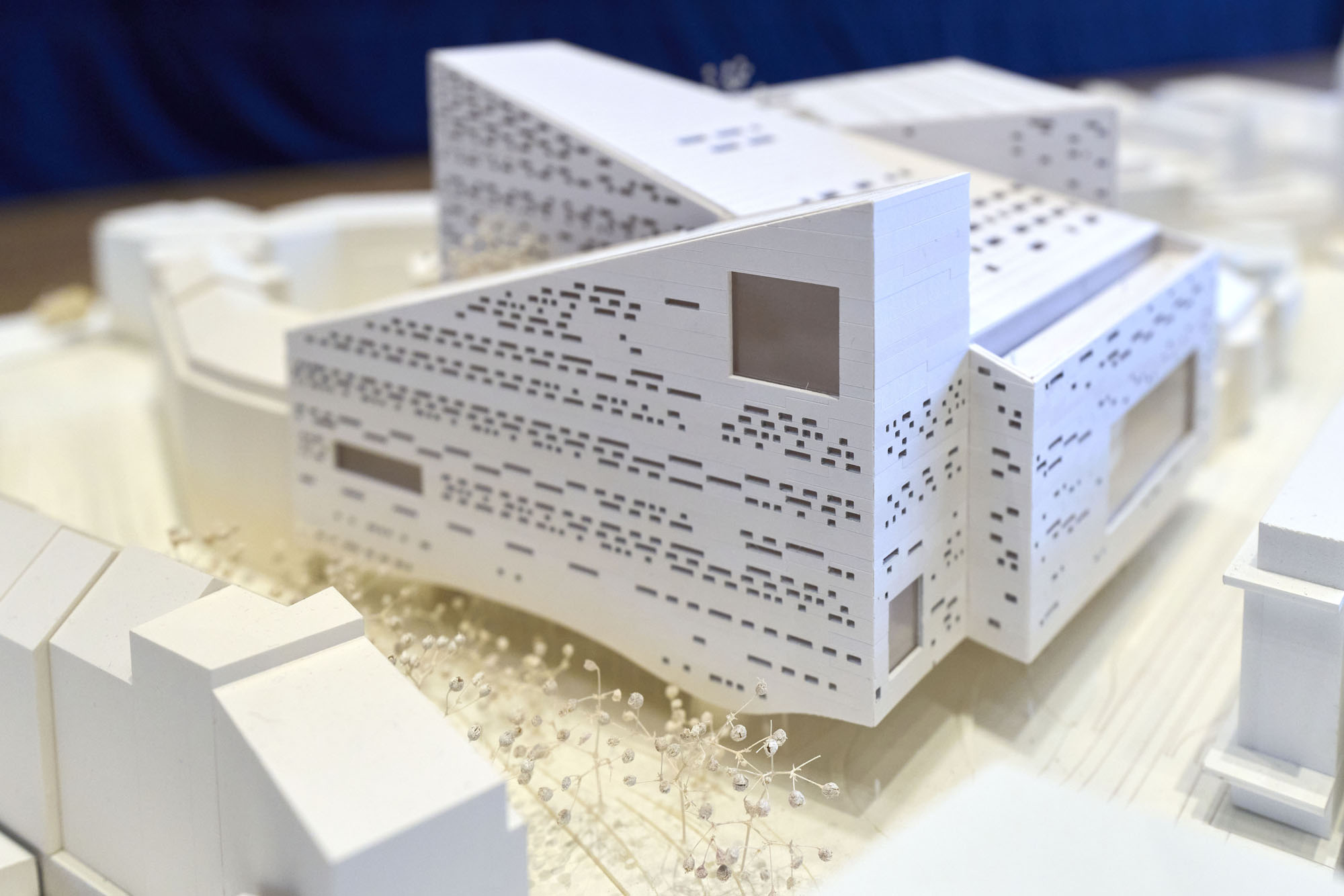
3つの機関の団結を象徴するシルエット(Photo: Landeshauptstadt Düsseldorf/Claus Langer)
3つの屋根は互いに反対方向に傾斜し、周囲の環境に呼応して低く抑えられる一方で、オペラの存在を示すように高くそびえ立つ。
こうして生まれた3つに分かれたシルエットは、ライン川ドイツ・オペラ(Deutsche Oper am Rhein)、クララ・シューマン音楽学校(Clara Schumann Music School)、音楽図書館(Music Library)という3つの機関が1つ屋根の下に集う統合の象徴となっている。
有機的で開放された「侵食された洞窟」としての1階空間
ライン川は、この建築の核心となるインスピレーション源である。何百万年もの歳月をかけて蛇行しながらラインラントを浸食し、デュッセルドルフの基盤を形づくってきた川の姿を手がかりに、オペラハウスの1階は「侵食された洞窟」として構想されている。有機的で開放的な空間が、新たな都市の文化的舞台となるのである。
この彫り込まれたデザインは1階部分を四方へ開放し、オペラハウスと都市環境を豊かに結びつけ、誰もがそのコンテンツに触れられるよう誘う。
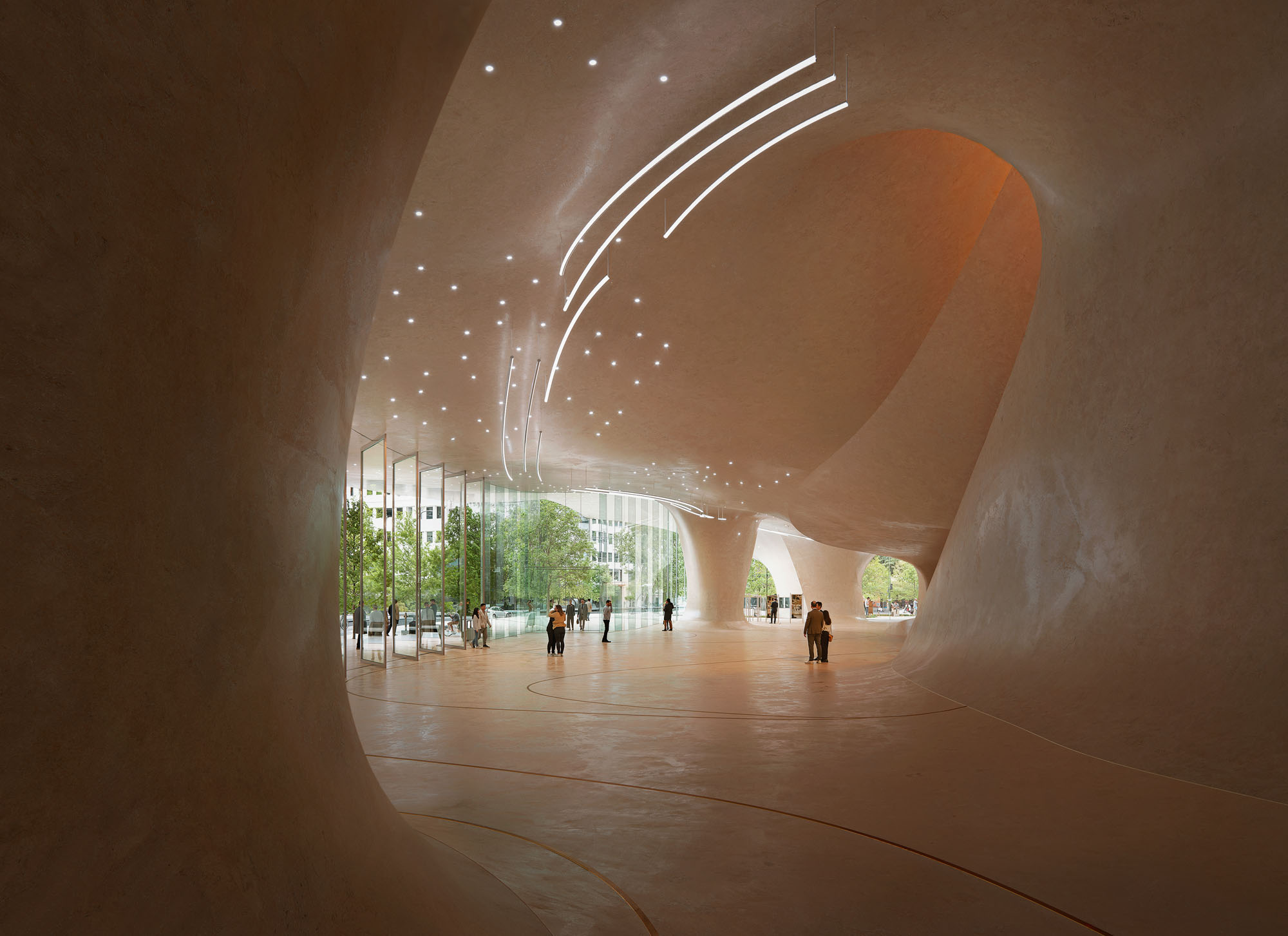
印象的な建築のジェスチャーが1階の四方を開放し、フル・パブリック・フォーラムを形成。都市空間は、テラス状の有機的な形のインテリアランドスケープにシームレスに流れ込む(Illustration: Mir/Snøhetta)
「〈デュッセルドルフ・オペラハウス〉を設計するにあたり、この中心的な建物が都市から隔絶されるのではなく、1階へ市民を引き込み、都市生活が自由に行き来できるパブリック・フォーラムを創出することが不可欠であった。」
「1階全体を占めるフォーラムは、都市の中心に位置する広大で開放的かつアクセス可能な空間となり、都市から舞台へと明確なグラデーションを生み出す。出会いの場、リハーサルの覗き見、非公式なパフォーマンス、休憩のための空間などが配置され、結果としてこのオペラハウスは孤立した記念碑ではなく、都市構造の不可欠な一部として構想されている。」
「〈オスロ・オペラハウス〉がフィヨルドに開かれ人々を屋上へ招いたように、この施設も芸術だけでなく、日常の出会いや会話、コミュニティを包み込む場所となることを目指している。3つの要素の統合を通じて、建物はすべての年齢層の利用者に開かれ、市民の真の集いの場となるだろう。」
スノヘッタ共同創業者
シェティル・トレーダル・トールセン(Kjetil Trædal Thorsen)
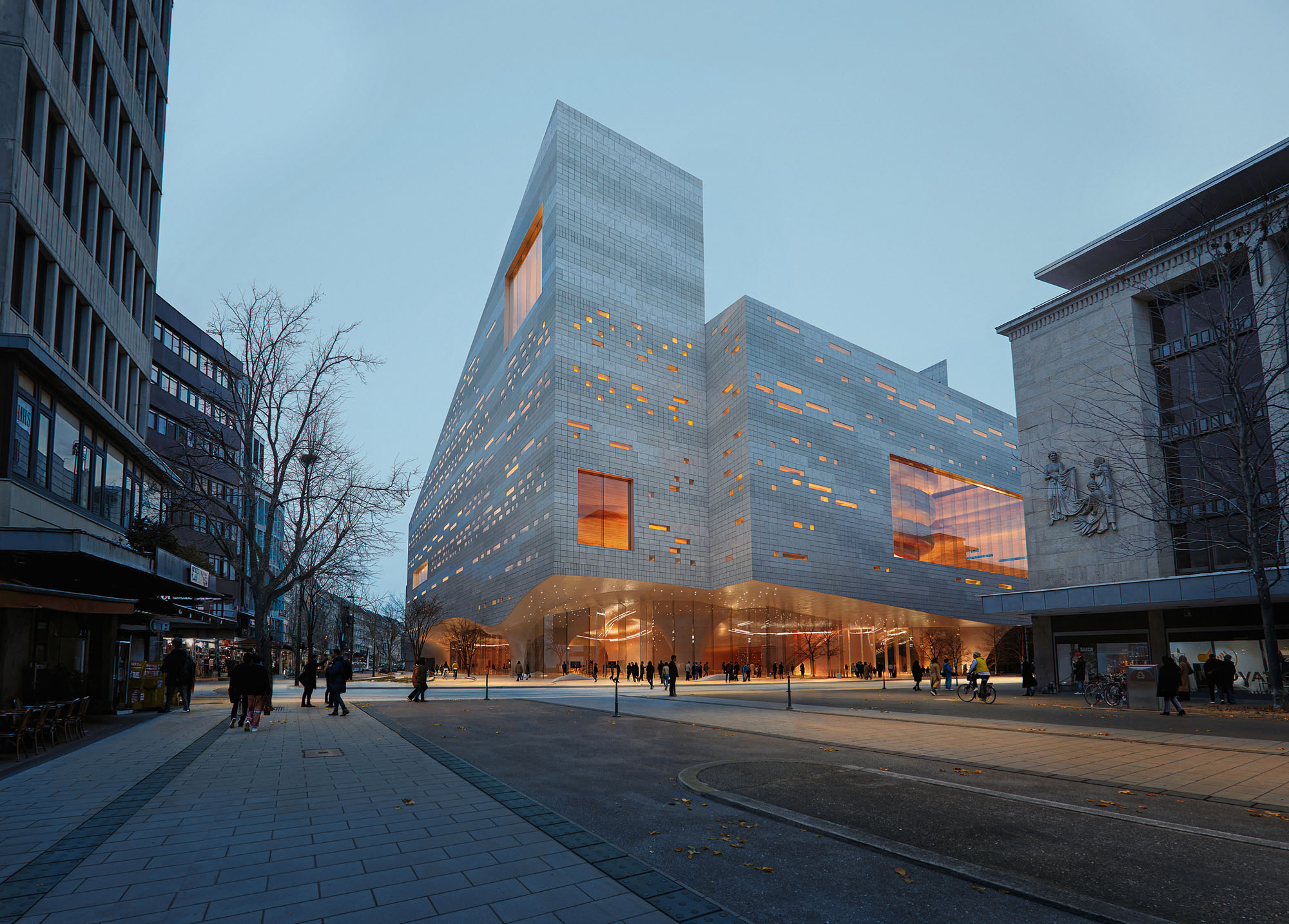
3つの中央通りによって囲まれた三角形の区画内における高密度化としてのオペラハウス(Illustration: Mir/Snøhetta)
デュッセルドルフのパレットとの調和
ファサードは淡色系の通気式天然石張り仕上げとなっている。その色調はデュッセルドルフの都市景観と調和しつつ、夏季の熱取得を低減し、ヒートアイランド現象を緩和する。
多様な石材モジュール形状により、材料厚と廃棄物を最小化に抑える。異なる形状には、非常に粗いものから細かく研磨されたものまで、様々な表面仕上げが施されており、堆積層を思わせる波状の帯状に配置され、侵食された地上階のモチーフをファサードへとつなぐ。
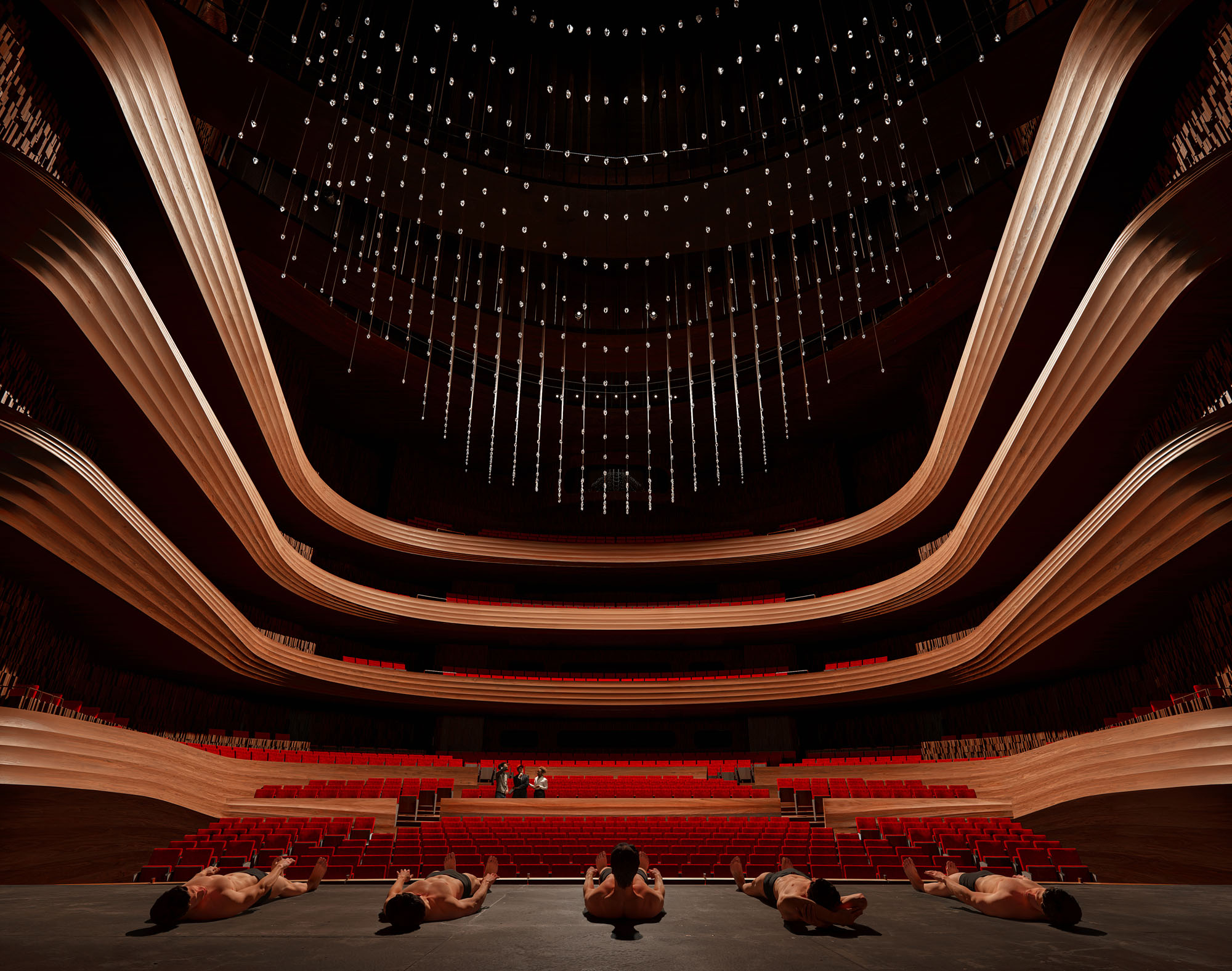
1,300席すべてに視覚的・音響的な親密さを提供するよう設計されたメインオーディトリアム(Illustration: Mir/Snøhetta)
大きな開口部はロビー、バー、選定されたリハーサル室など中核的な公共エリアを強調し、一方、小さな「フィルター窓」は均一な採光、遮光、換気を提供する。これらの2種の窓コンセプトが柔軟性とパフォーマンスを保証する。
シルエット、窓の構成、そして凹んだテラスが一体となり、ダイナミックでありながら文脈に配慮した存在感を醸し出し、周囲に溶け込みながらも確固たる表現力をもつ文化施設を創出する。
屋根景観とバイオソーラー屋根
インテリアにはファサードの論理と侵食のテーマを踏襲し、落ち着いた色調と質感の流れをもつ鉱物素材を採用した。1,300席のメインオーディトリアムは、スモークドオークのパネルと赤い座席を備えており、解体が予定されている既存オペラハウスの配色と関連している。
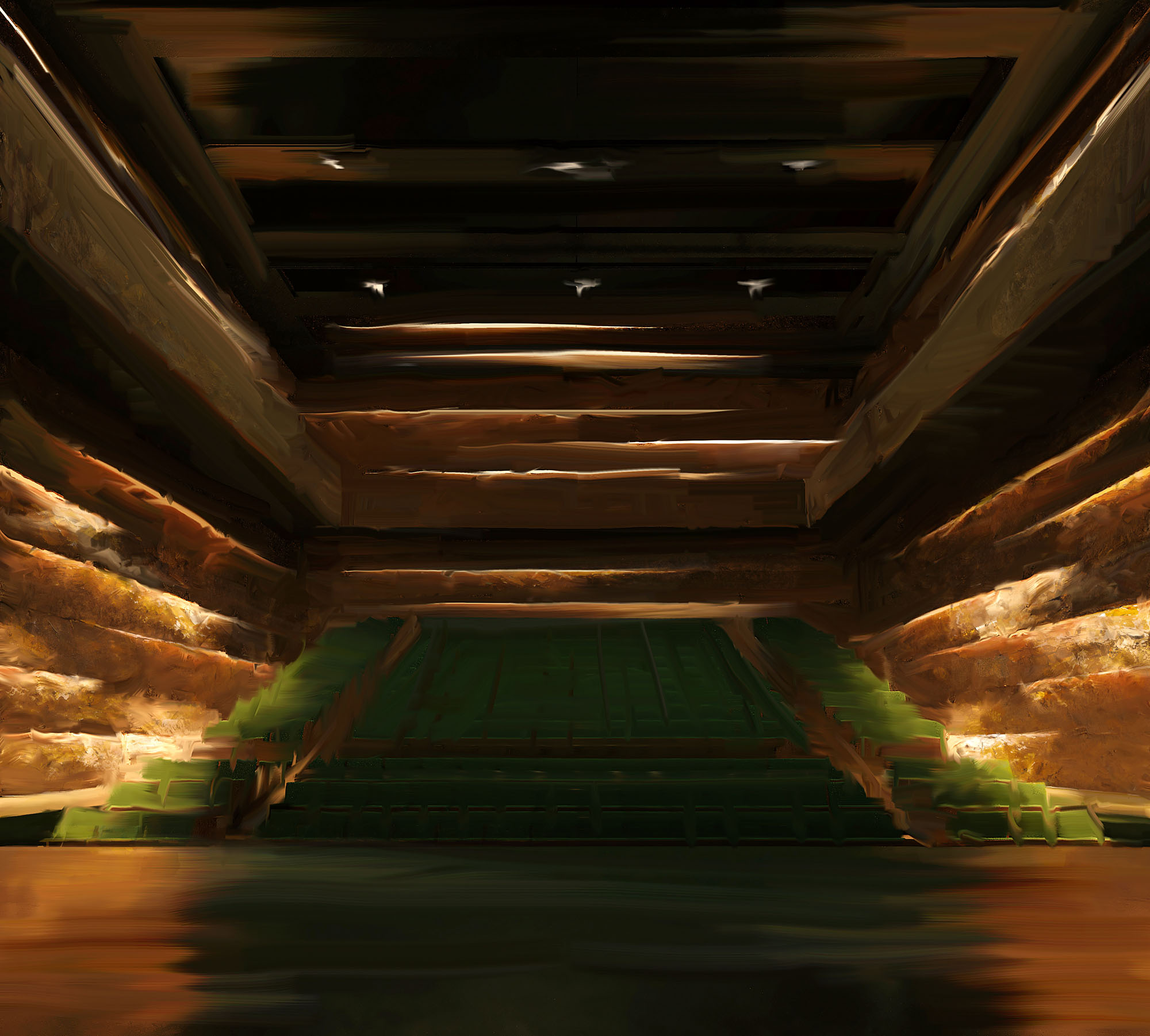
Illustration: Mir/Snøhetta
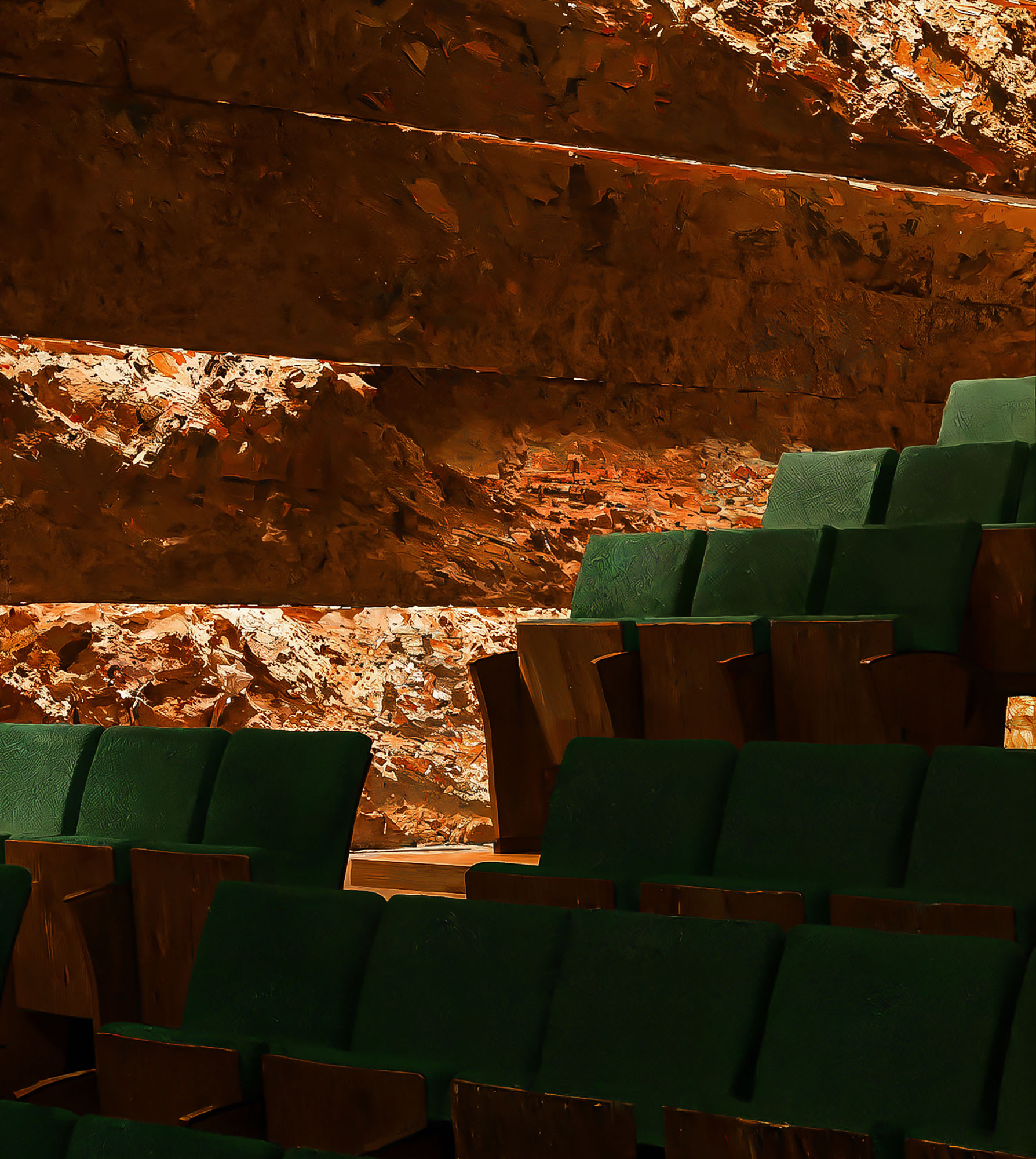
ニュートラルで温かみのあるグレーの色調とダークグリーンの座席を備えたスタジオステージ(Illustration: Mir/Snøhetta)
屋根景の観は太陽光発電、天窓、技術インフラを統合したバイオソーラー屋根を形成している。ライン川下流域の氾濫原に自生する植物を植栽した緑のテラスが、PVフィールドと技術帯の間に縞状に配置される。
「新たな文化複合施設は都市環境に高い評価をもって統合される。巧みに3つのセグメントに分割された建物は周囲に機敏に対応し、多様な都市景観を開放し、高度な洗練性を示すデザインを体現している。フォーラムは独特の雰囲気を提供し、文化環境における市民全体の出会いの場を創出する。」
「未来のオペラハウス」コンペティション審査委員長
建築家兼都市計画家
ハイナー・ファーヴィック(Heiner Farwick)
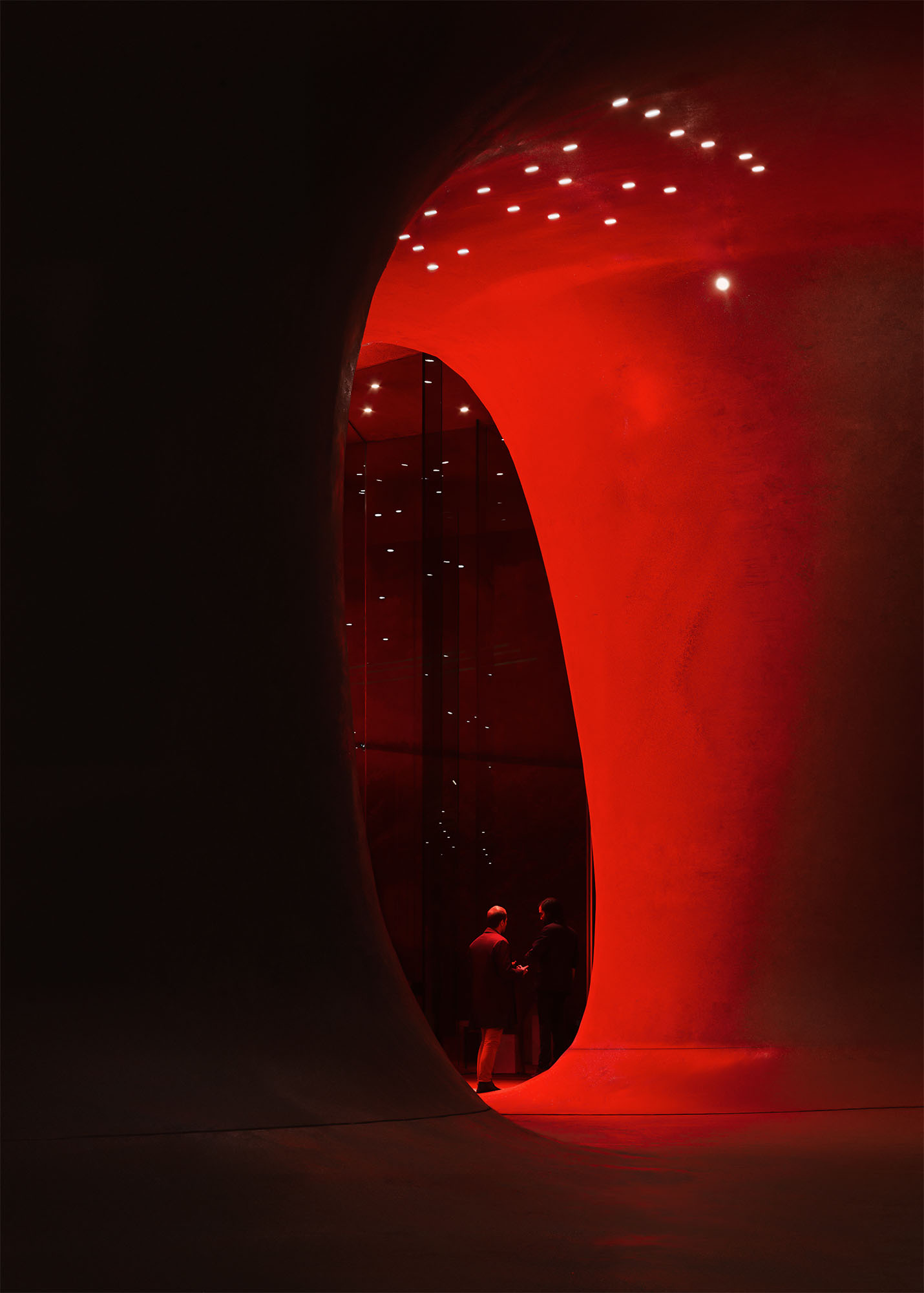
Illustration: Mir/Snøhetta
以下、スノヘッタのリリース(英文)です。
Düsseldorf Opera House
The new opera house in Düsseldorf opens up to the city with a cave-like ground floor, inspired by the Rhine’s meandering path through the region
The design proposal, unanimously selected by a 25-member jury in the prestigious Opera House of the Future competition, is envisioned as the future home of the Oper am Rhein in Düsseldorf.
By dividing the building mass into three asymmetrical, trapezium-shaped segments and introducing pathways across the ground floor, the design allows daylight to penetrate and fosters public participation on the compact central plot.
The roofs of the three figures slope in opposite directions—lowering themselves in response to their immediate surroundings and rising to announce the presence of the opera.
The resulting tripartite silhouette symbolizes the unity of three institutions under one roof: the Deutsche Oper am Rhein, the Clara Schumann Music School, and the Music Library.
An organic, open space
The Rhine is the central source of inspiration for the building. Just as the river has carved its meandering path through the Rhineland over millions of years, shaping the sedimentary foundation upon which Düsseldorf is built, the ground floor of the opera is conceived as an eroded cave: an organic, open space that becomes the city’s new cultural arena.
This carved-out design opens the ground floor on all sides, creating generous connections between the opera and its urban surroundings, inviting everyone to engage with its content.
“When designing the Düsseldorf Opera House, it was essential to us that this central building should not shut itself off from the city, but instead draw the public into the ground floor, creating a public forum where urban life can flow freely in and out,” says Snøhetta’s founding partner Kjetil Trædal Thorsen.
“This forum, filling the entire ground floor, will become a large, open, and accessible space in the heart of the city — staging a clear gradient from city to stage: a constellation of rooms for encounter, rehearsal glimpses, informal performance, and pause. As a result, the opera is not conceived as a stand-alone monument, but as an integral part of the urban fabric.”
“Just as the Oslo Opera House opened up to the fjord and invited people onto its roof, we envision this as a contemporary house that will embrace not only art, but also everyday encounters, conversations, and community. Through the integration of the three components, the building opens itself to users of all ages and becomes a true gathering place for the citizens of Düsseldorf,” Thorsen says.
Harmonizing with Düsseldorf’s palette
The façade is designed as a light-colored, rear-ventilated natural stone cladding. Its tone harmonizes with Düsseldorf’s city palette while reducing summer heat gain and mitigating the urban heat island effect.
Varied stone module formats minimize material thickness and waste. The different formats are also accompanied by different surface finishes – from very rough to finely ground – which are arranged in wave-like bands reminiscent of sedimentary layers, connecting the eroded ground floor motif to the facade.
Two window concepts ensure flexibility and performance: large openings highlight central public areas such as the foyer, bar, and selected rehearsal rooms, while smaller ‘filter windows’ provide uniform lighting, shading, and ventilation.
Together, the silhouette, window composition, and recessed terraces create a dynamic yet context-sensitive presence—a cultural institution embedded in its surroundings yet confident in its expression.
Roof landscape and biosolar roof
The interiors follow the logic of the façade and the theme of erosion; mineral materials with a calm flow of tone and texture. The main auditorium, with 1,300 seats, features smoked oak paneling and red seating, tying in with the color scheme of the existing opera house, which is expected to be demolished.
The roof landscape combines photovoltaics, skylights, and technical infrastructure to form a biosolar roof. Striped, green terraces planted with species native to the Lower Rhine floodplains are staggered between PV fields and technical strips.
“The new cultural building block will be integrated into the urban context with a high mark. The building, which is cleverly divided into three segments, skilfully reacts to its surroundings, opens up a variety of views of the city and shows a design of high sophistication. The Forum offers a unique atmosphere and thus creates a place of encounter in the environment of culture for all citizens,” Heiner Farwick, architect, urban planner and chairman of the jury said at a press conference.
Facts:
Client: Landeshauptstadt Düsseldorf
Status: Ongoing
Typology: Performance space
Location: Düsseldorf, Germany
Disciplines: Architecture, Landscape architecture, Interior architectureCollaborators:
Structural & Facade Engineering: Bollinger + Grohmann GmbH
MEP Engineering: Buro Happold GmbH
Acoustics: Nagata Acoustics International, Inc
Theatre Planning: Theatre Project Consultants Ltd, TheaPro GmbH
General Planning Management Services, Cost Consulting: Drees & Sommer SE
Fire safety Consulting: Gruner Deutschland GmbH
Lightning Design: Kardorff Ingenieure Lichtplanung GmbH
Visualisations: Mir
Model building: Made by Mistake
スノヘッタ 公式サイト
https://www.snohetta.com/projects/dusseldorf-opera-house
【購読無料】空間デザインの今がわかるメールマガジン TECTURE NEWS LETTER
RECOMMENDED ARTICLE