建築が創る新たな学びの風景 - 全長850mのリングと放射状U字棟が構成する大学施設〈XJTLU太倉キャンパス〉
© Creat AR Images
中国江蘇省の太倉市(たいそうし)に位置する〈XJTLU太倉キャンパス(XJTLU Taicang Campus)〉は、世界各地にオフィスを構えるHPP Architektenが設計した、西安交通大学・リバプール大学の新キャンパスです。
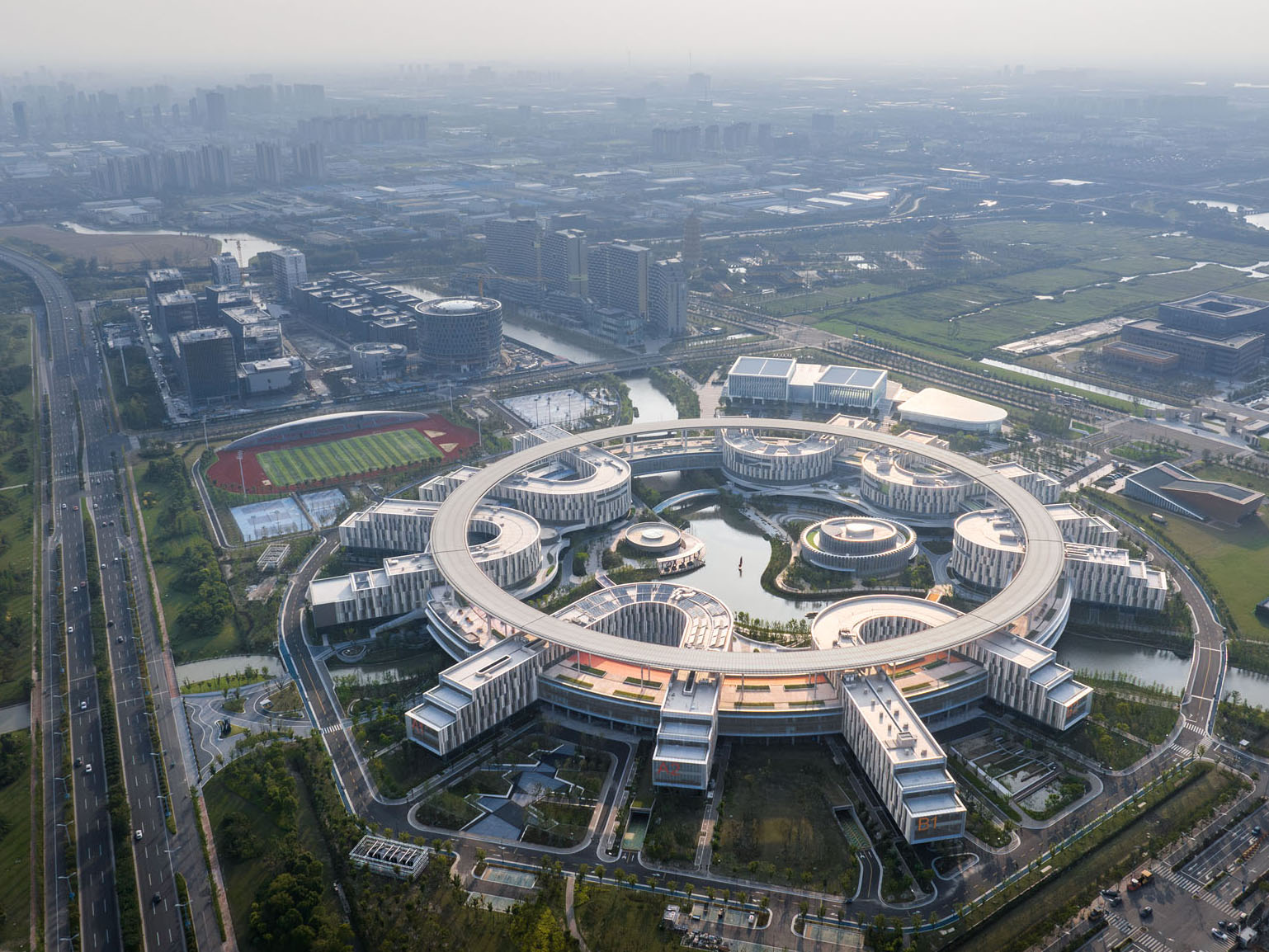
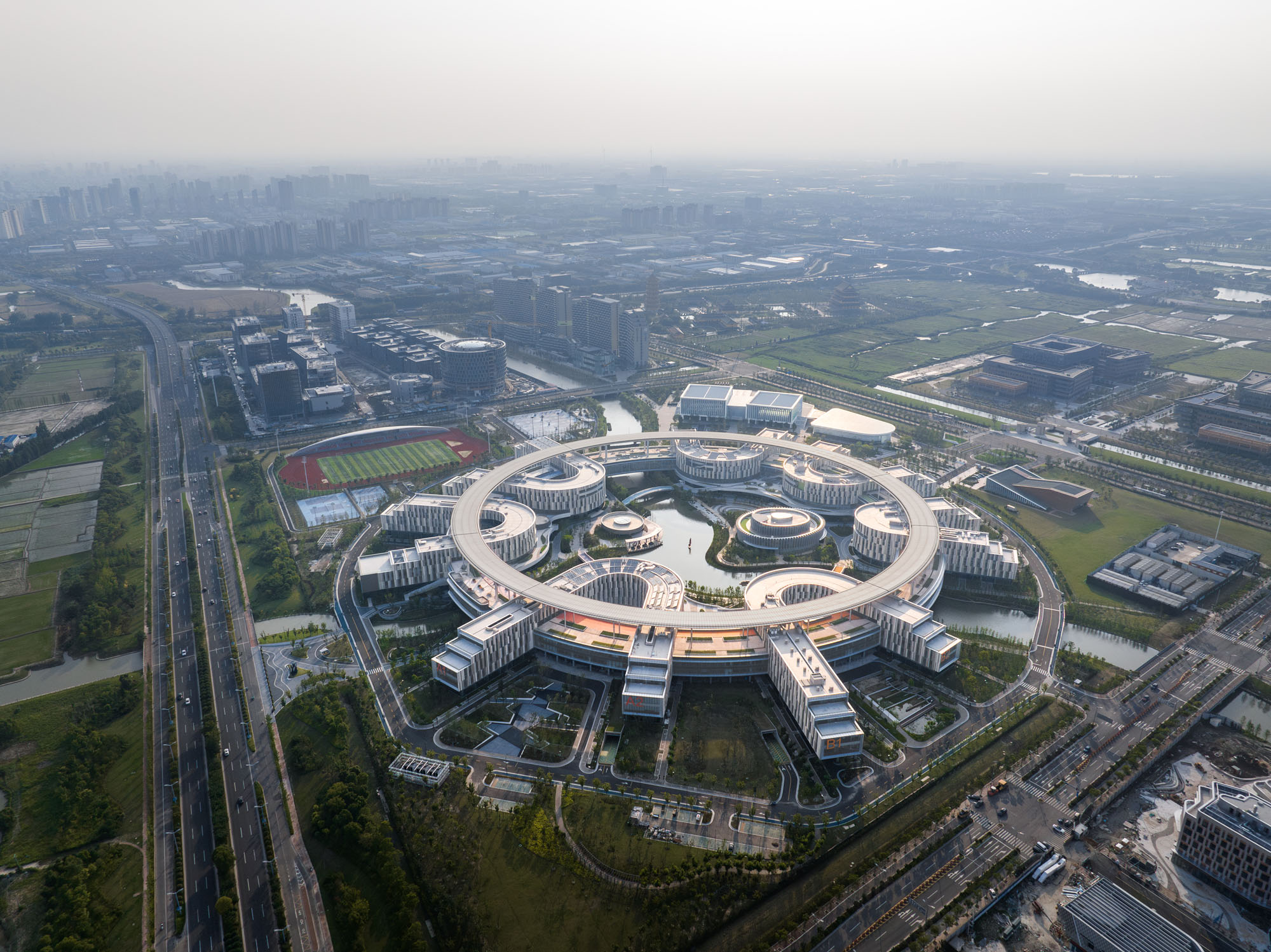
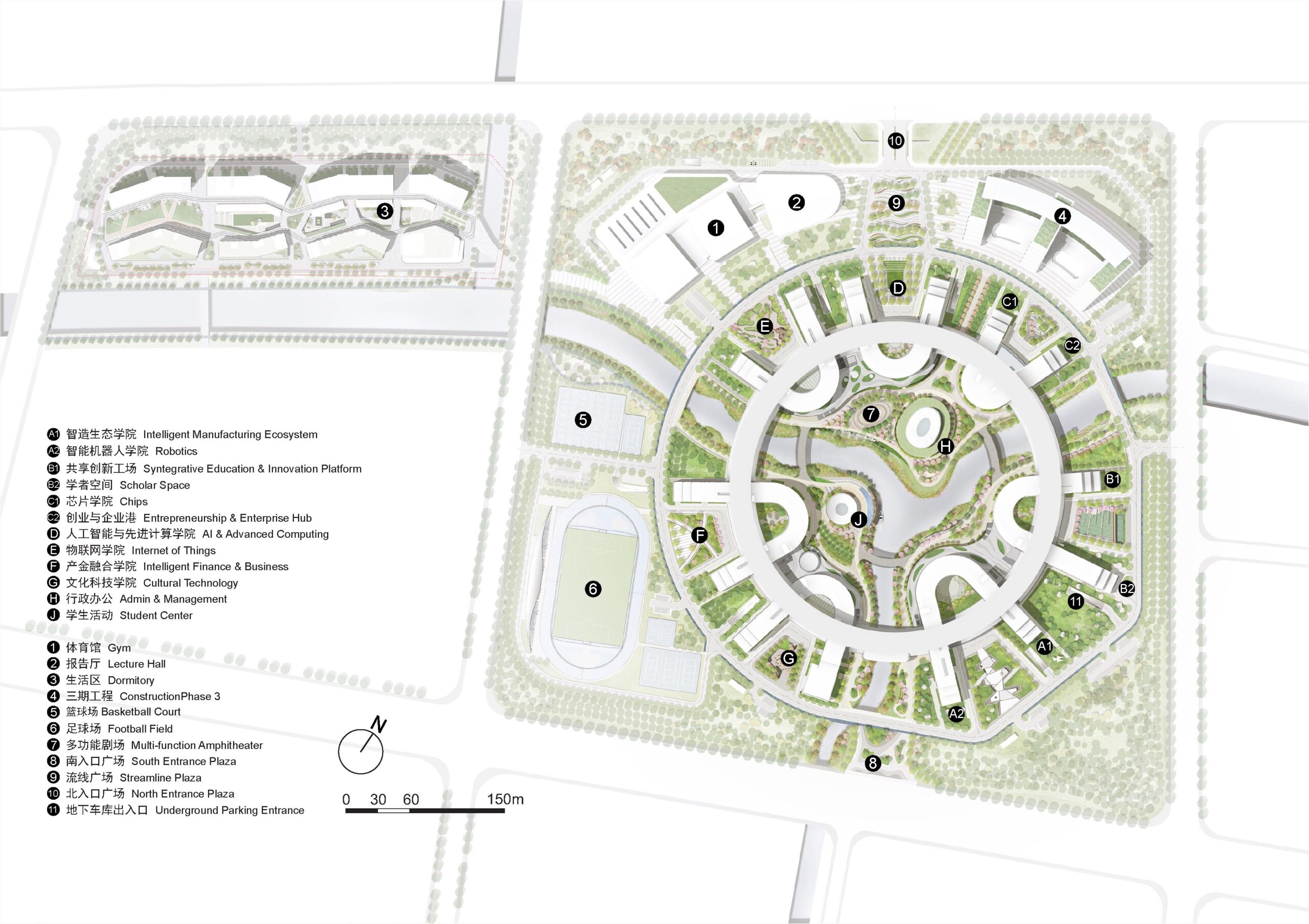
全長850mに及ぶ巨大な円形建築を軸とした放射状の空間レイアウトにより「新たな学びの風景」を生み出しています。
注目ポイント
- 全長850mの円を描く中心軸「ラーニング・モール」
- 巨大な円でつながる7つの「U字型研究所棟」
- 偶発的なコミュニケーションを24時間誘発する建築的アプローチ
- 内外の境界を曖昧にするシームレスな空間設計
(以下、HPP Architektenから提供されたプレスキットのテキストの抄訳)
© Creat AR Images
概要:次世代の多機能キャンパス
- 中心軸となる、全長850mの「ラーニング・モール」
- 放射状に配置された7つの「U字型研究所棟」
- 従来の講義形式に代わる、24時間365日対応の「マルチネットワーク型教育」
- オープンなコミュニケーション空間を備えた「リゾマティック(根茎状)」な学習モデル
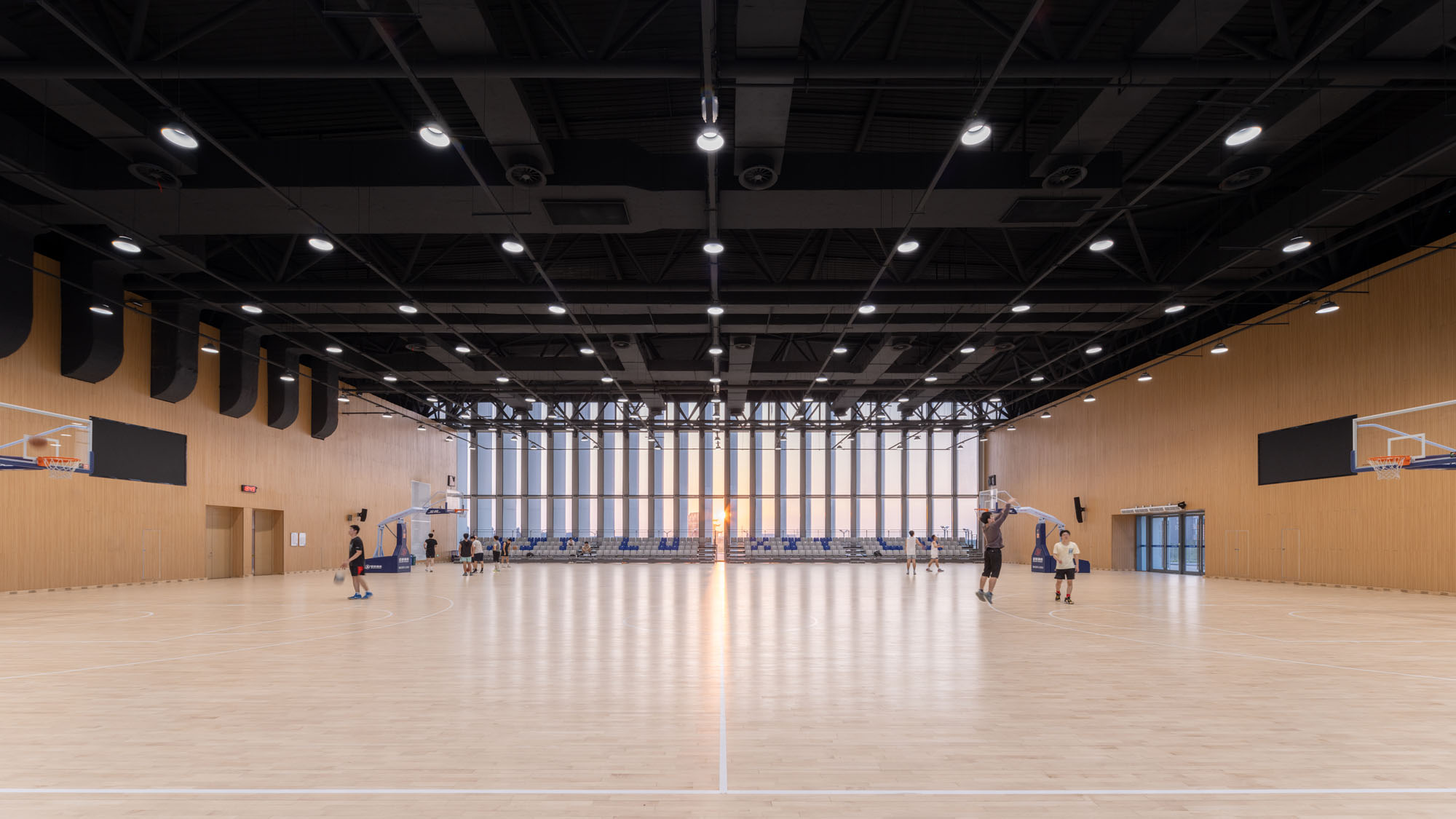
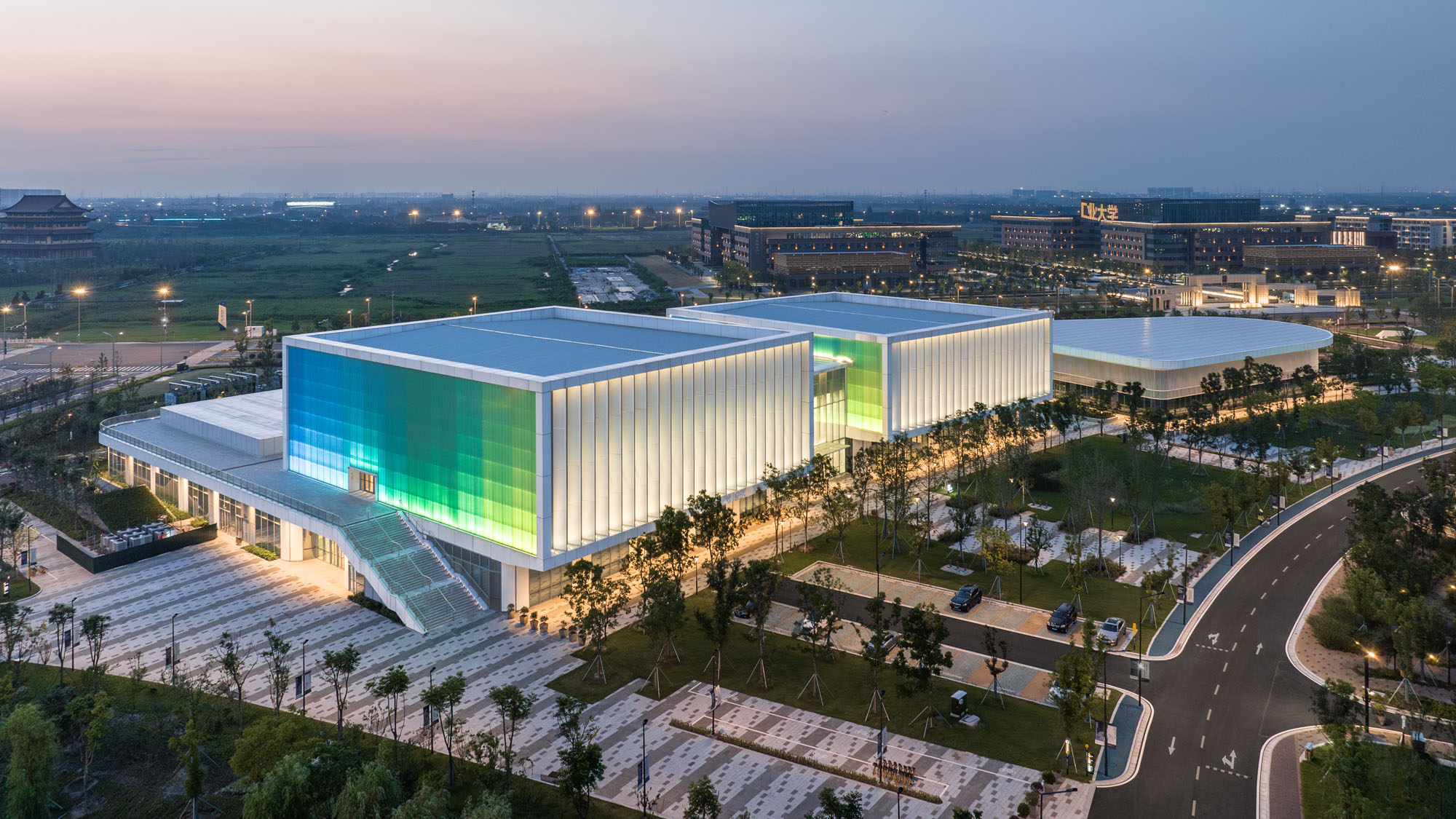
- 学生寮、スポーツホール、フィットネスセンター、レストラン、小売店を備えた多機能キャンパス
© Creat AR Images
現代を映し出す建築
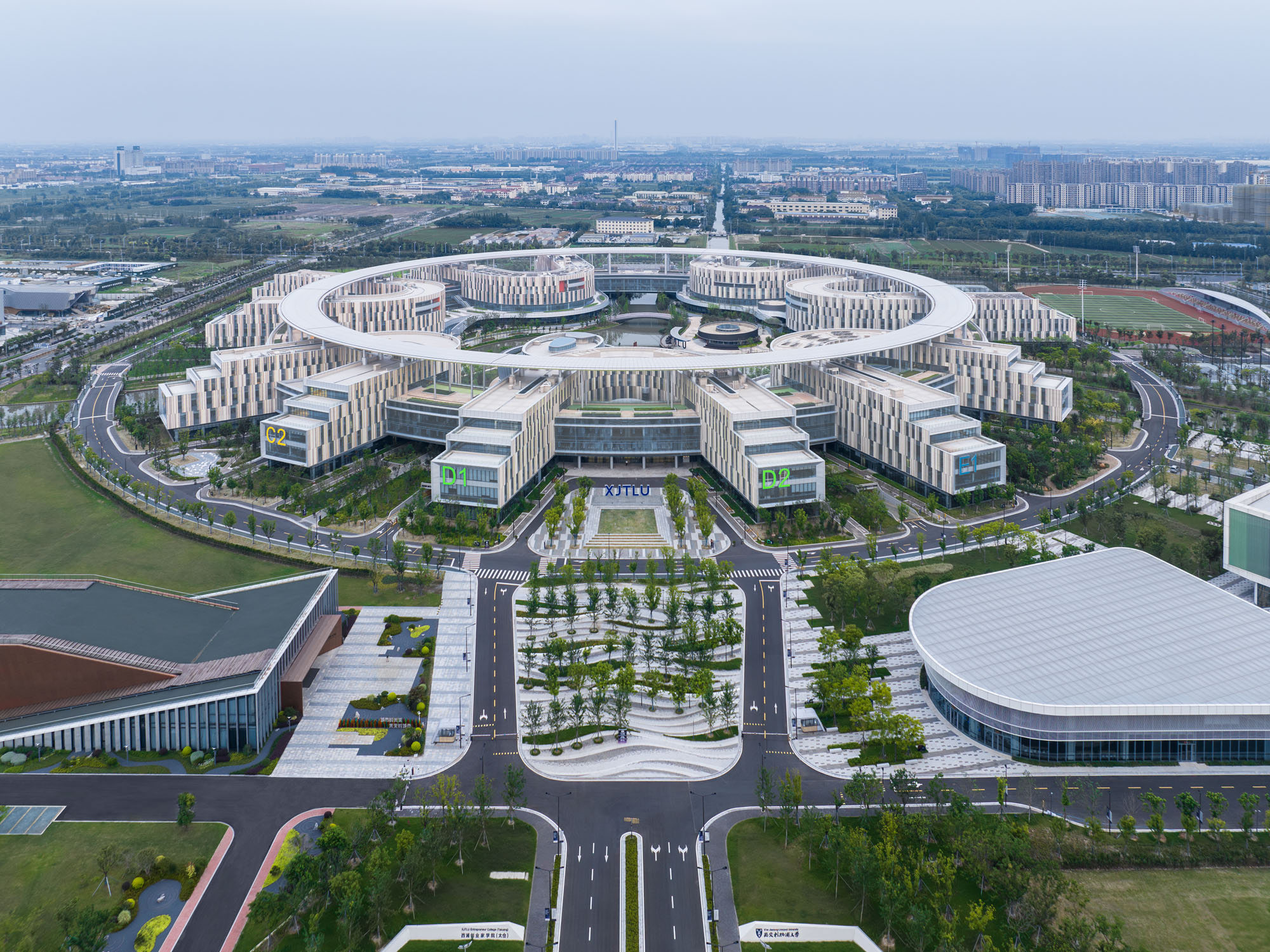
太倉に位置する西安交通大学・リバプール大学の新キャンパスは、円形のレイアウトで構成されている。
そこでは従来の教育形式が、相互作用、交流、そして開放性を生み出す空間的ネットワークを形成する放射状の配置へと置き換えられている。ここでの学びは単に組織化されているだけでなく、非公式かつ空間に組み込まれたつながりによって支えられている。これは24時間体制で、学際的に、そして都市と直接結びつきながら実践されているのである。
© Creat AR Images
グリッドではなく、リゾーム(根茎)型の学習モデル
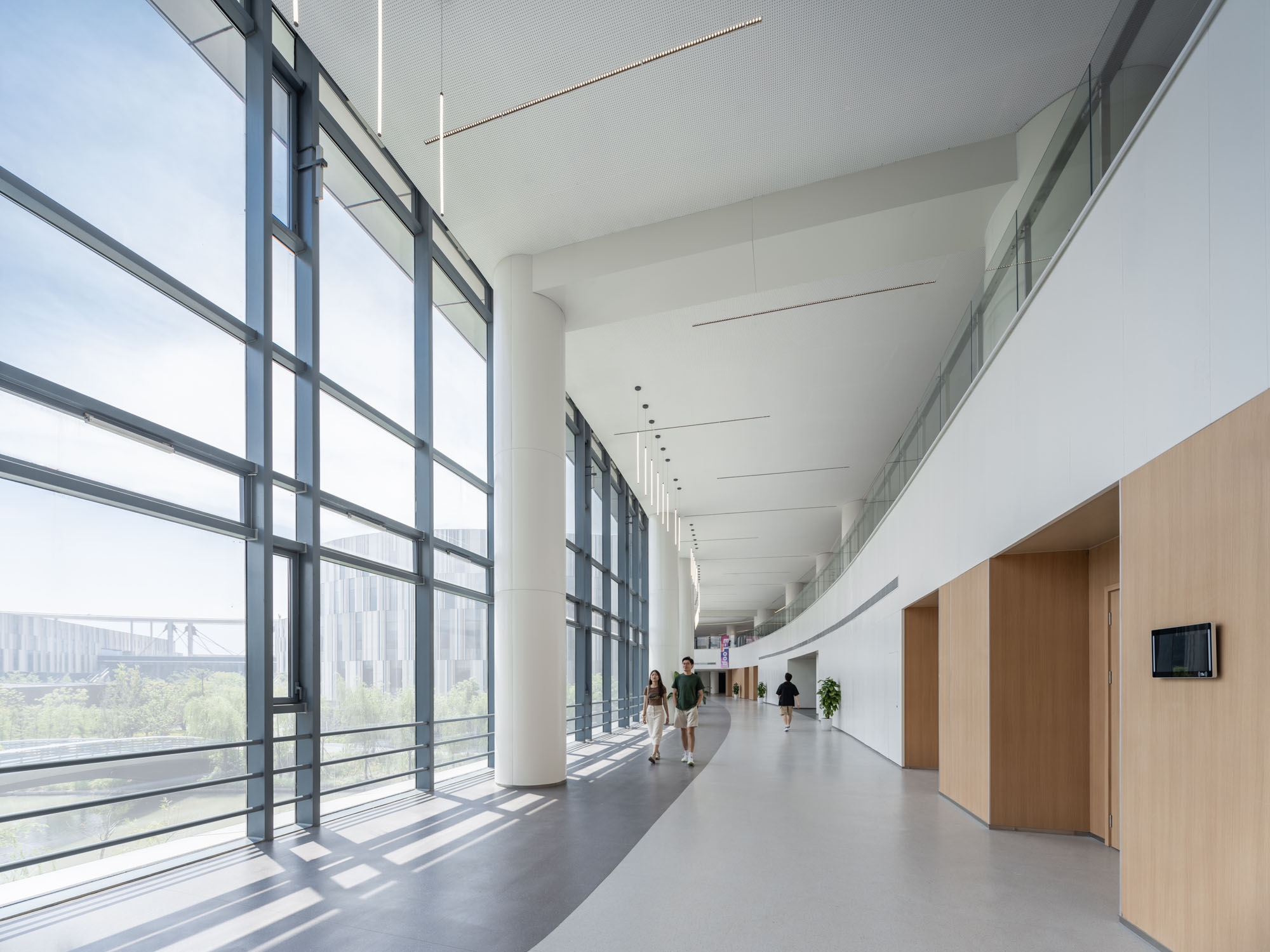
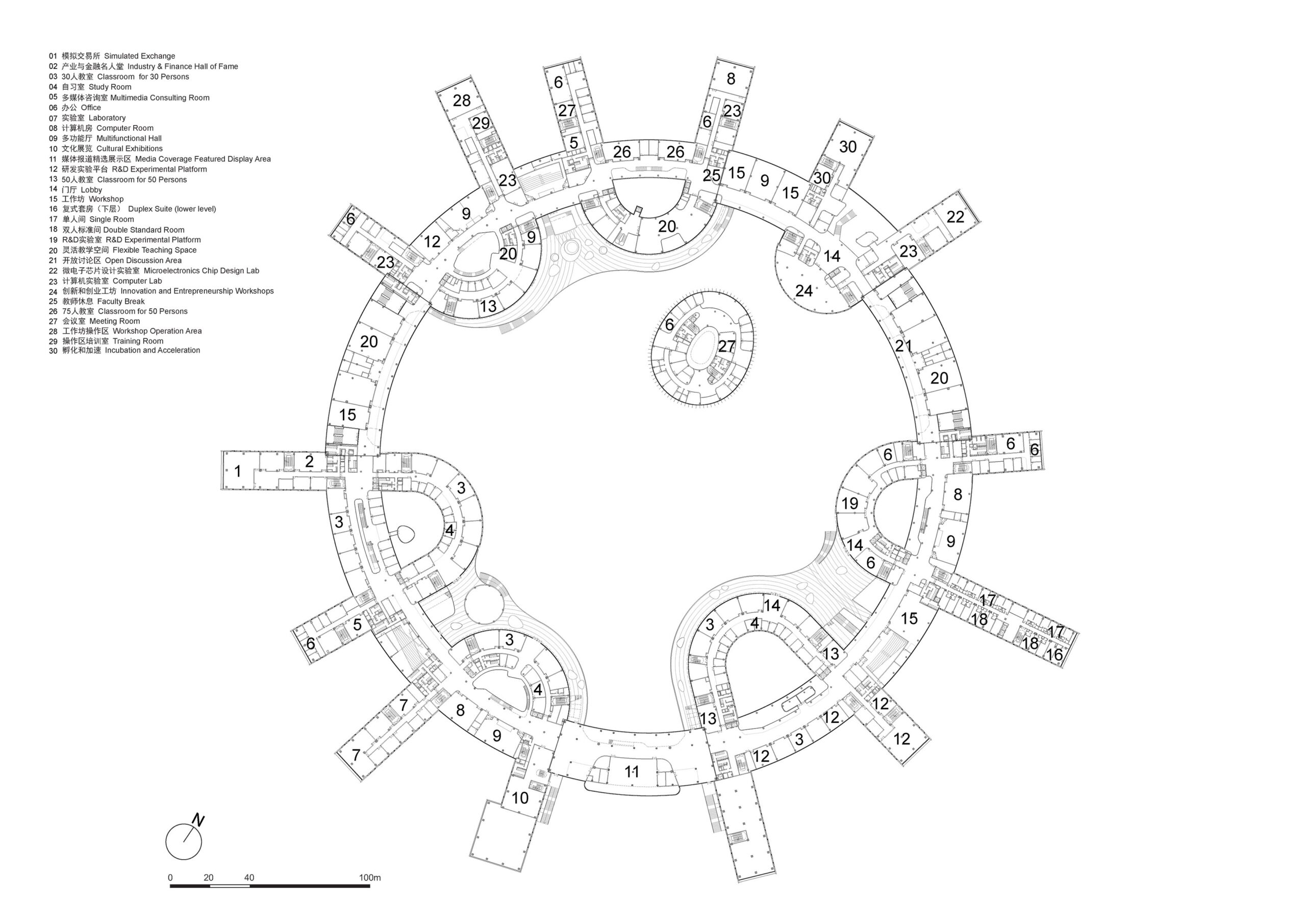
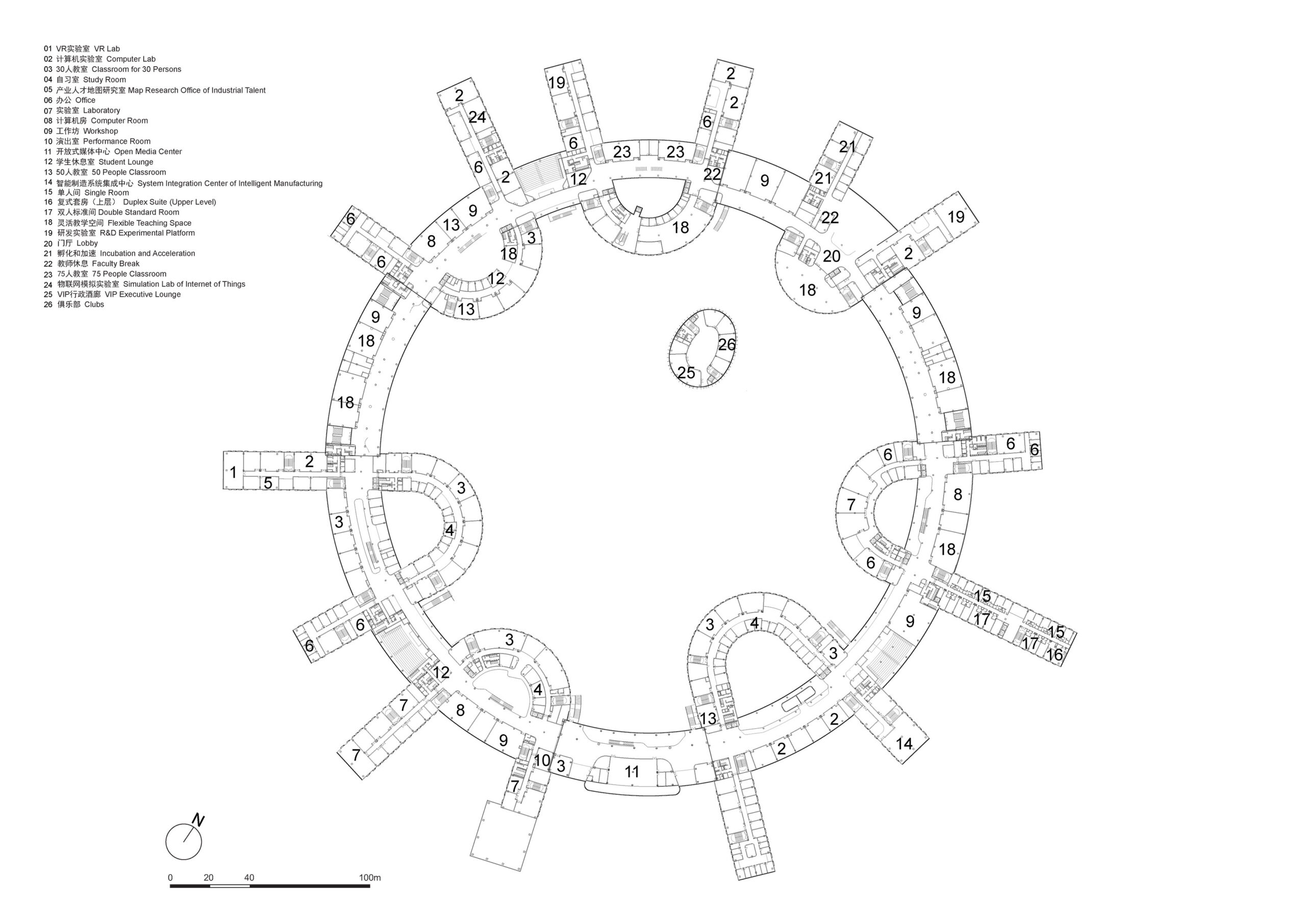
キャンパスの中心となるのは、全長850mに及ぶラーニング・モールである。この円形の建築構造が、すべての研究所棟をつないでいる。リング沿いには、予約制の教室、オープンな学習ゾーン、自然発生的な出会いの場など、公式・非公式のコミュニケーションのための多様な空間が配置されている。
この建築は、リゾーム(根茎)型学習モデルの原則に従っている。すなわち、階層的な組織ではなく、個々の学習経路を支える柔軟で分散型のつながりを重視しているのである。
© Creat AR Images
集合的なプロセスとしての学習
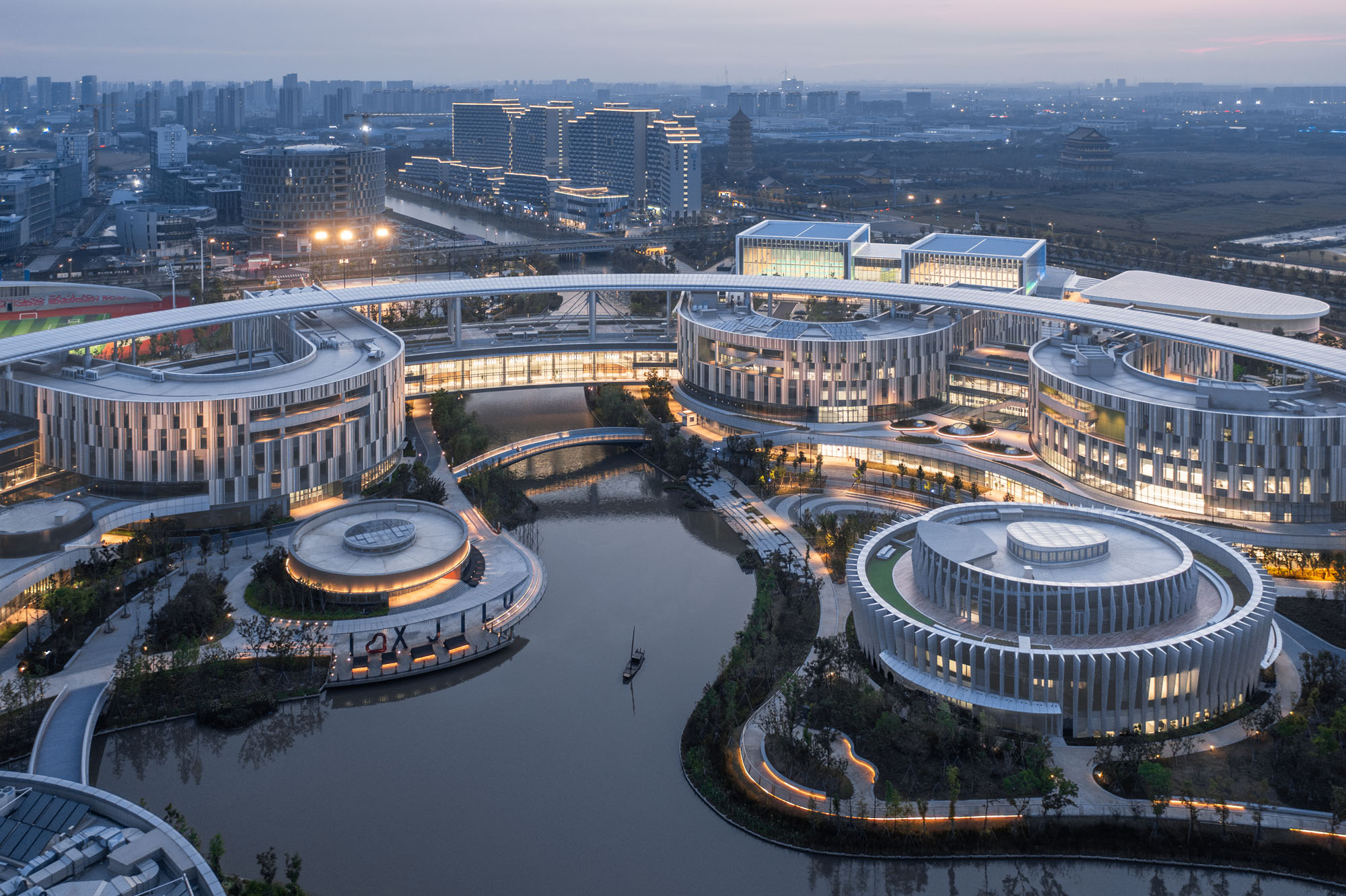
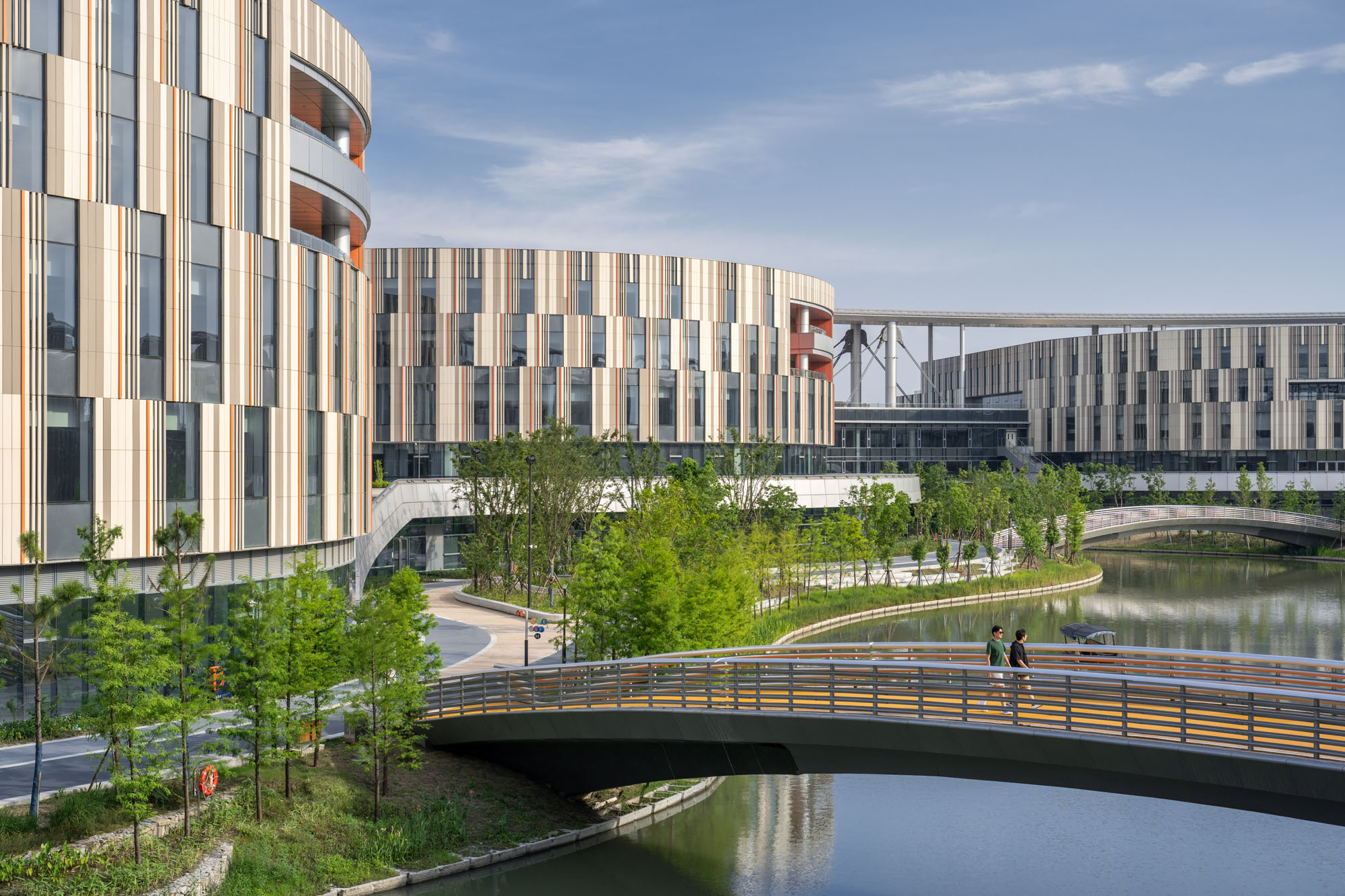
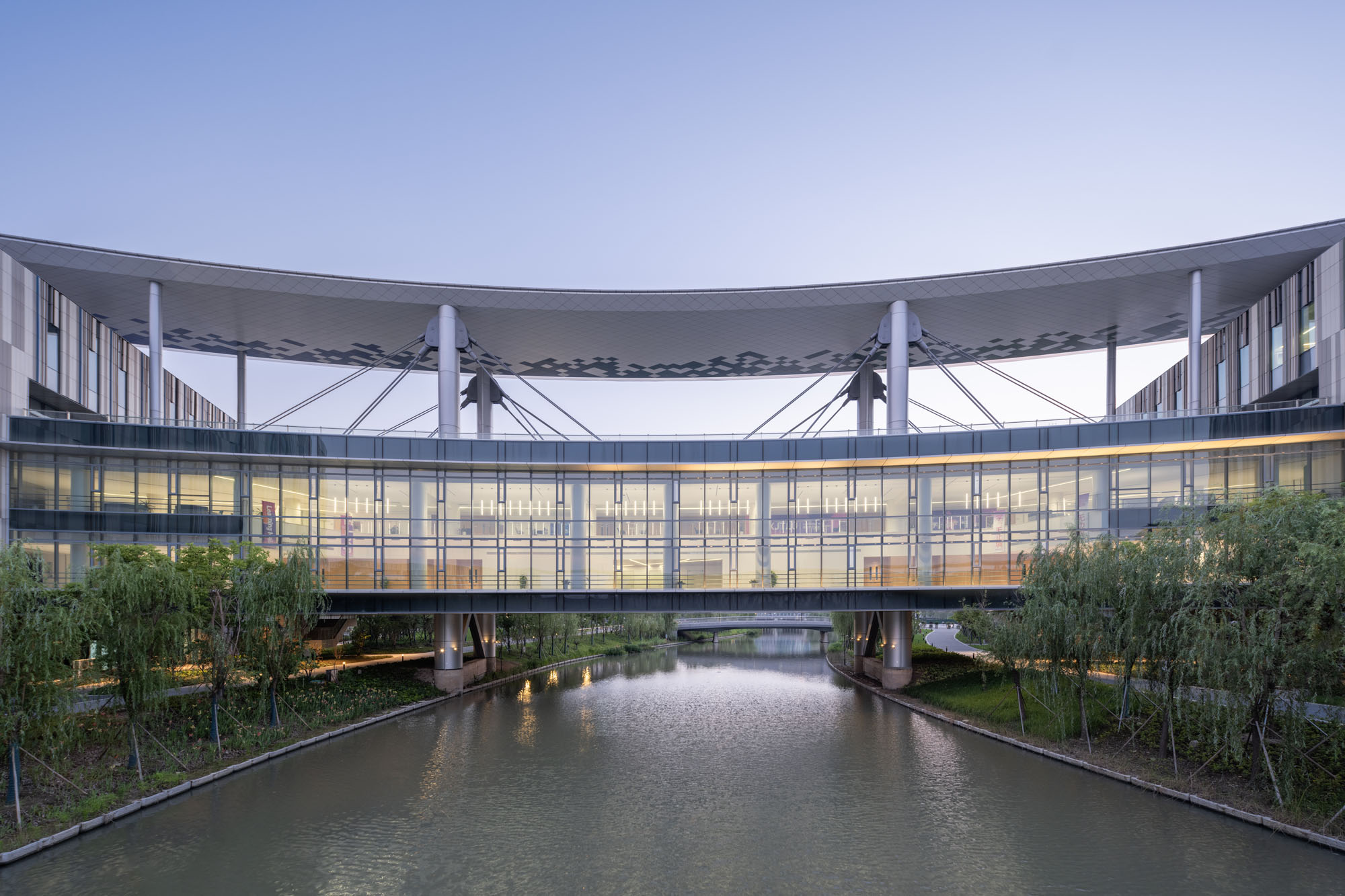
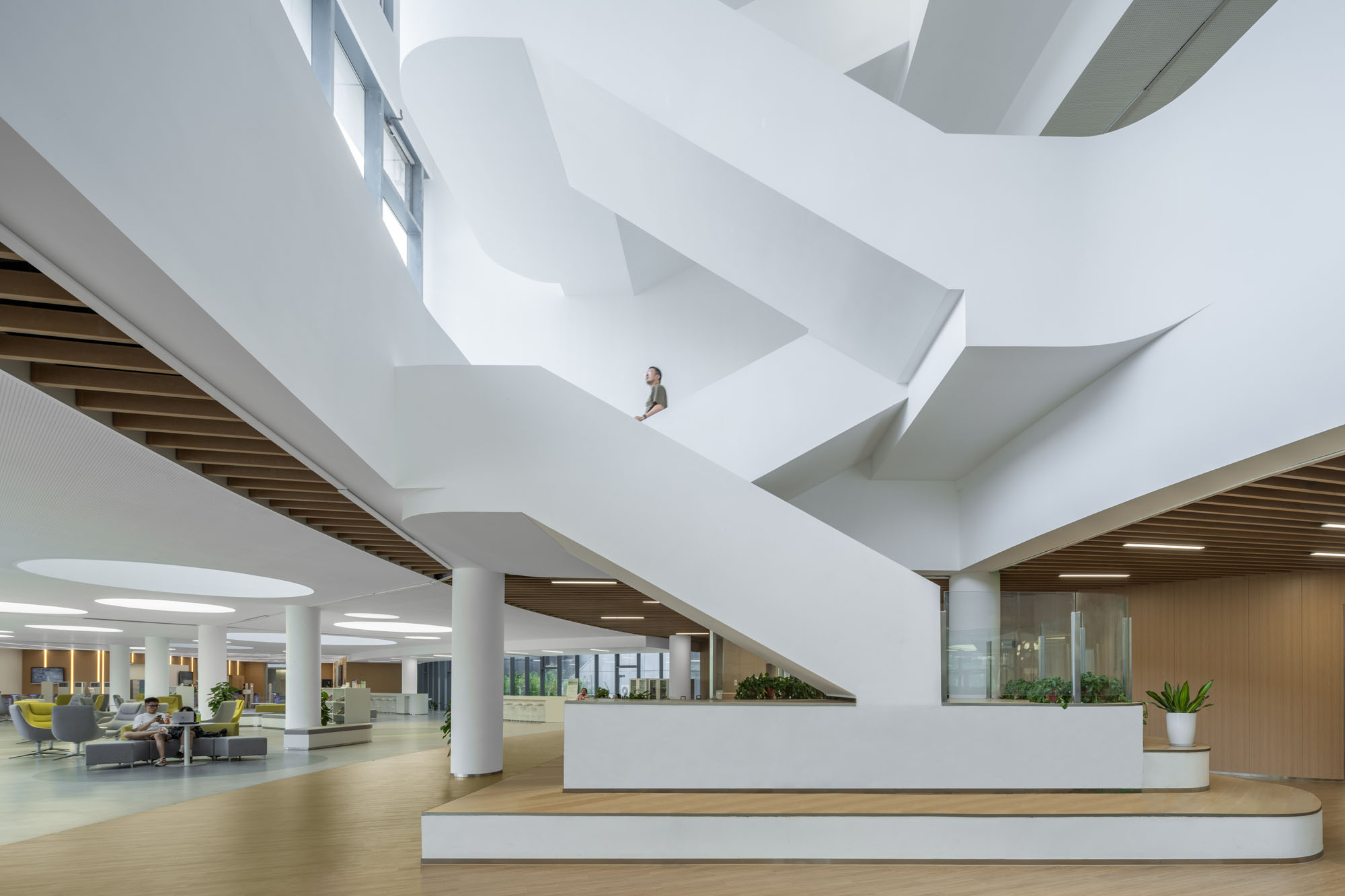
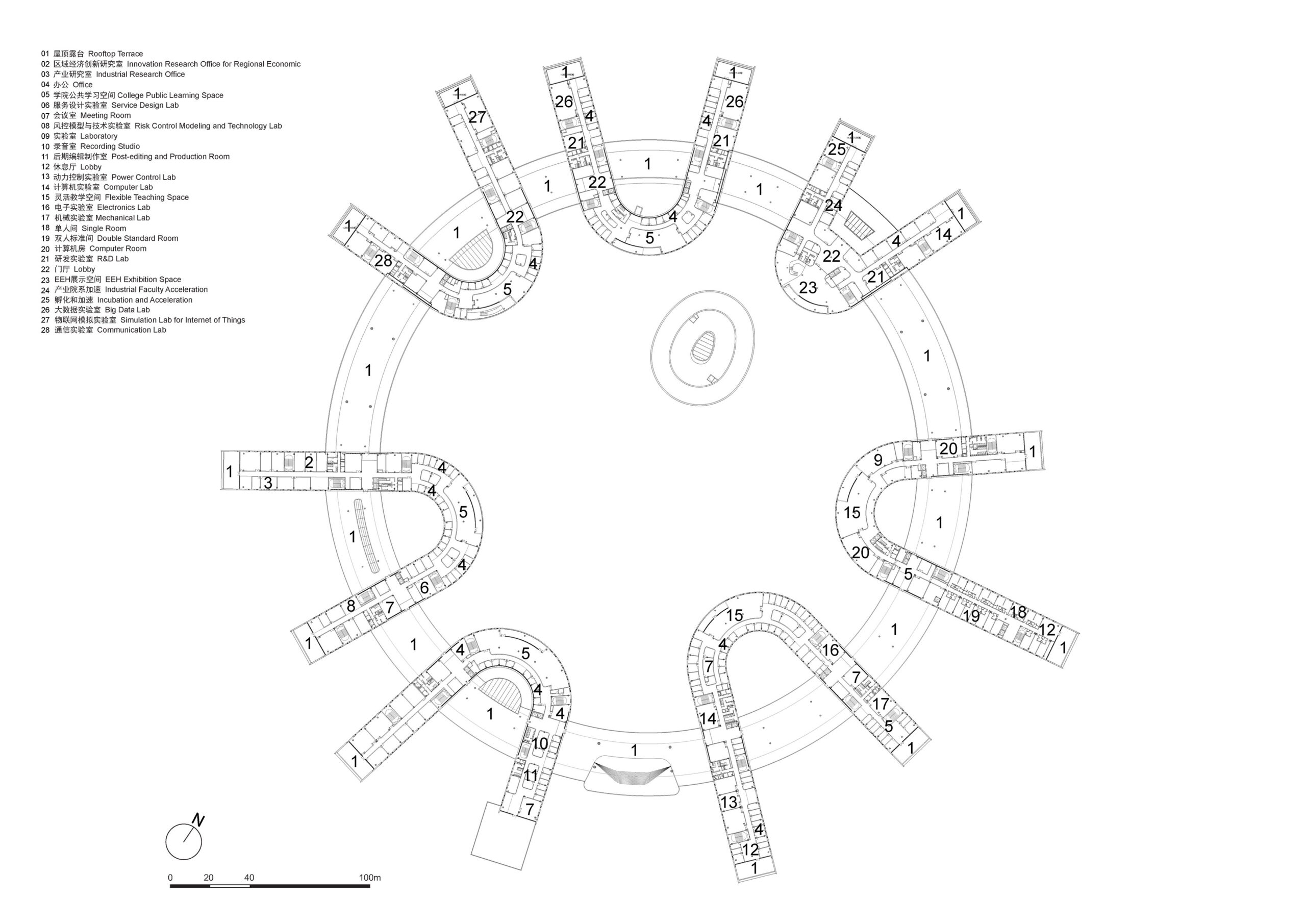
7つのU字型の研究所棟が、中央のラーニング・モールにより接続している。これらは内側と外側の両方に開かれており、日常の学術生活における教育、研究、そして非公式な交流の間に流動的な移行を生み出している。
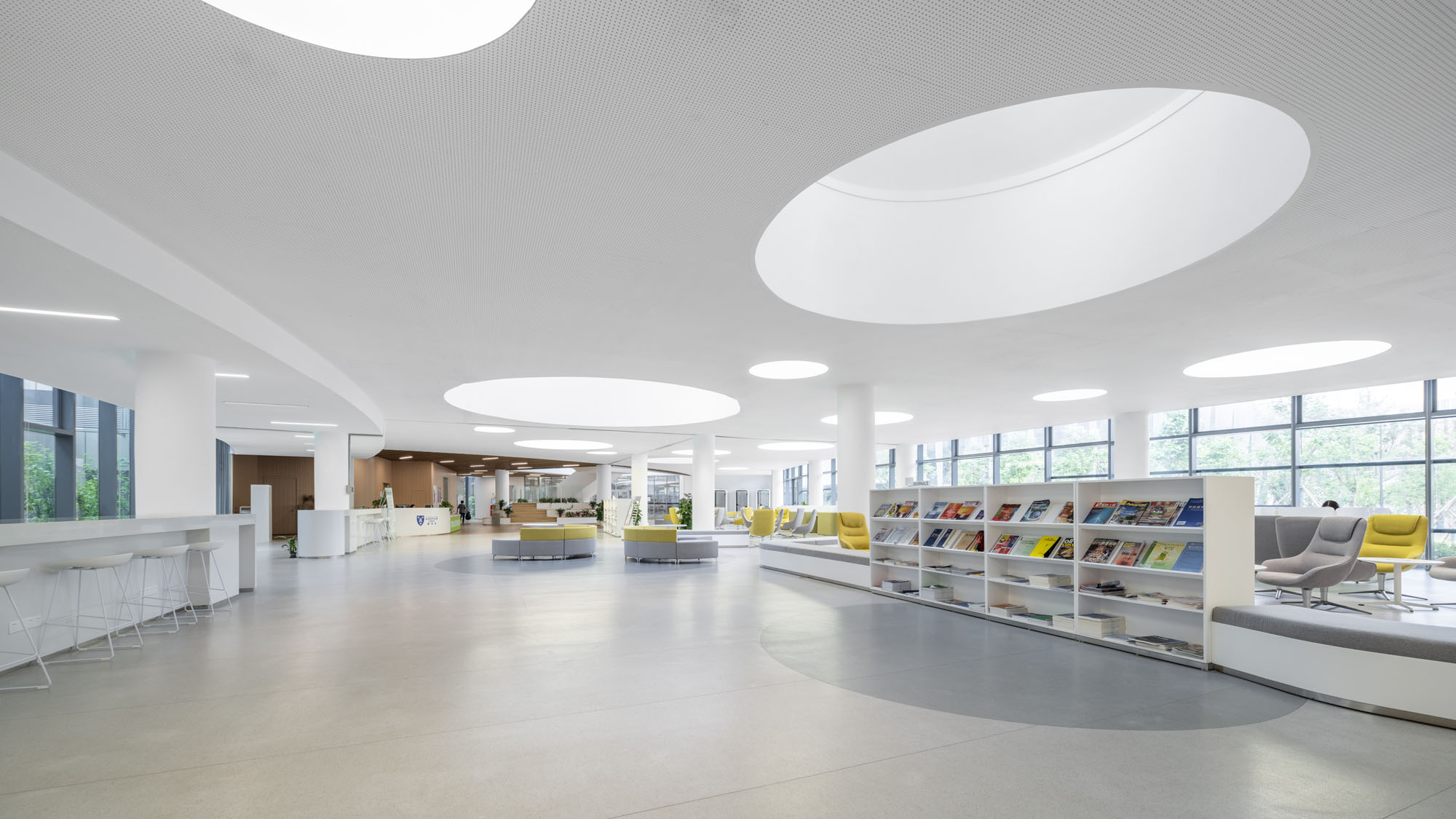
リングと研究所棟の空間的な相互作用は、活動ゾーンとして機能し、全体的な学習の雰囲気を育むアトリウムを形成している。
© Creat AR Images
生活と学習の場としてのランドスケープ
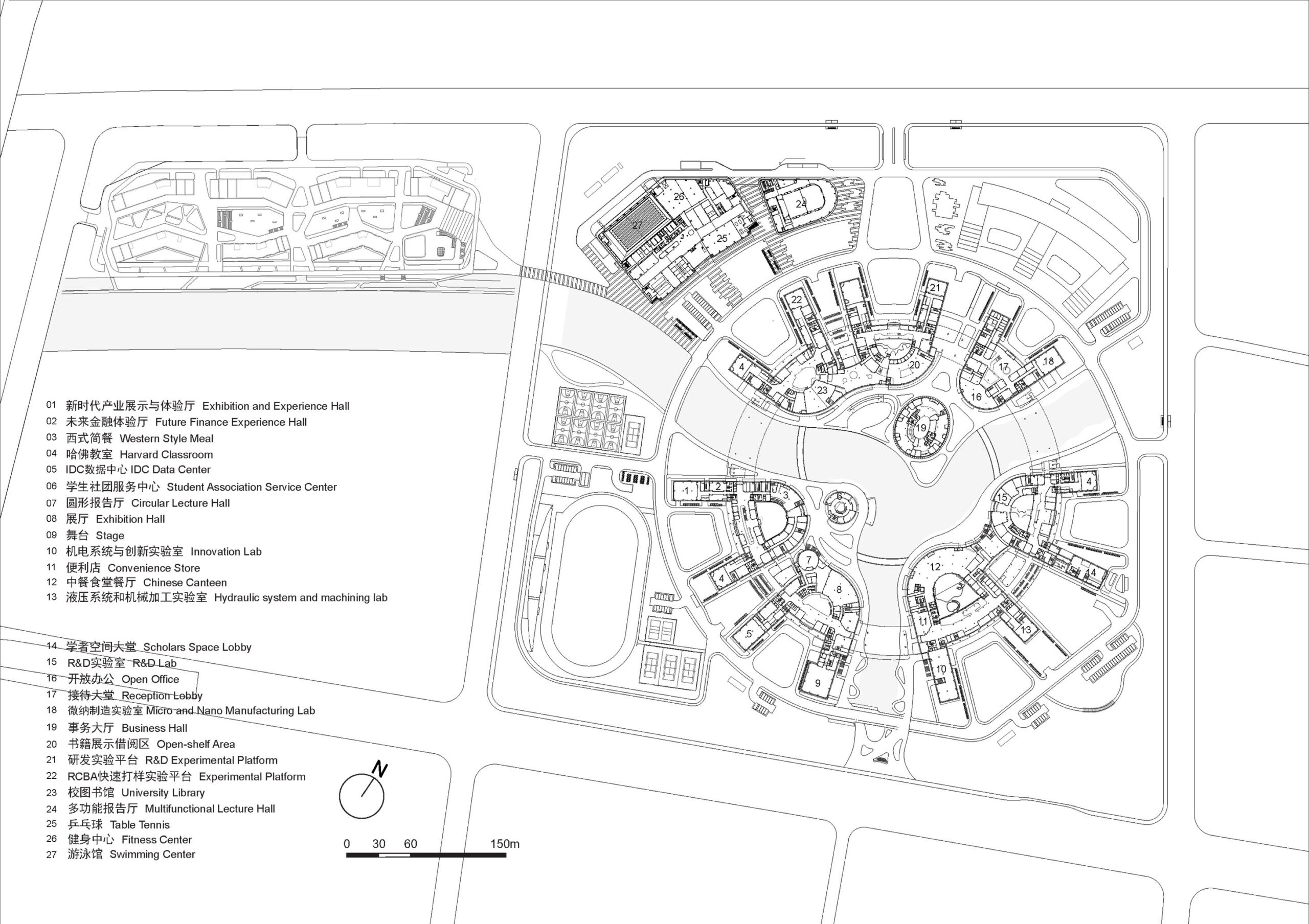
分岐する水景がキャンパス内を蛇行し、緑豊かな屋外エリアや公共の交流ゾーンが形成されている。桃の庭園がランドスケープの中心を成しており、オープンスペースにおける静寂、出会い、そして気取らない交流の場となっている。
敷地の北西部には、学生寮、スポーツ・レジャー施設、飲食店が配置され、キャンパス全体を活気あふれる都市の縮図へと変容させている。
© Creat AR Images
© Creat AR Images
© Creat AR Images
© Creat AR Images

© Creat AR Images
Masterplan
1F plan
2F plan
3F plan
4F plan
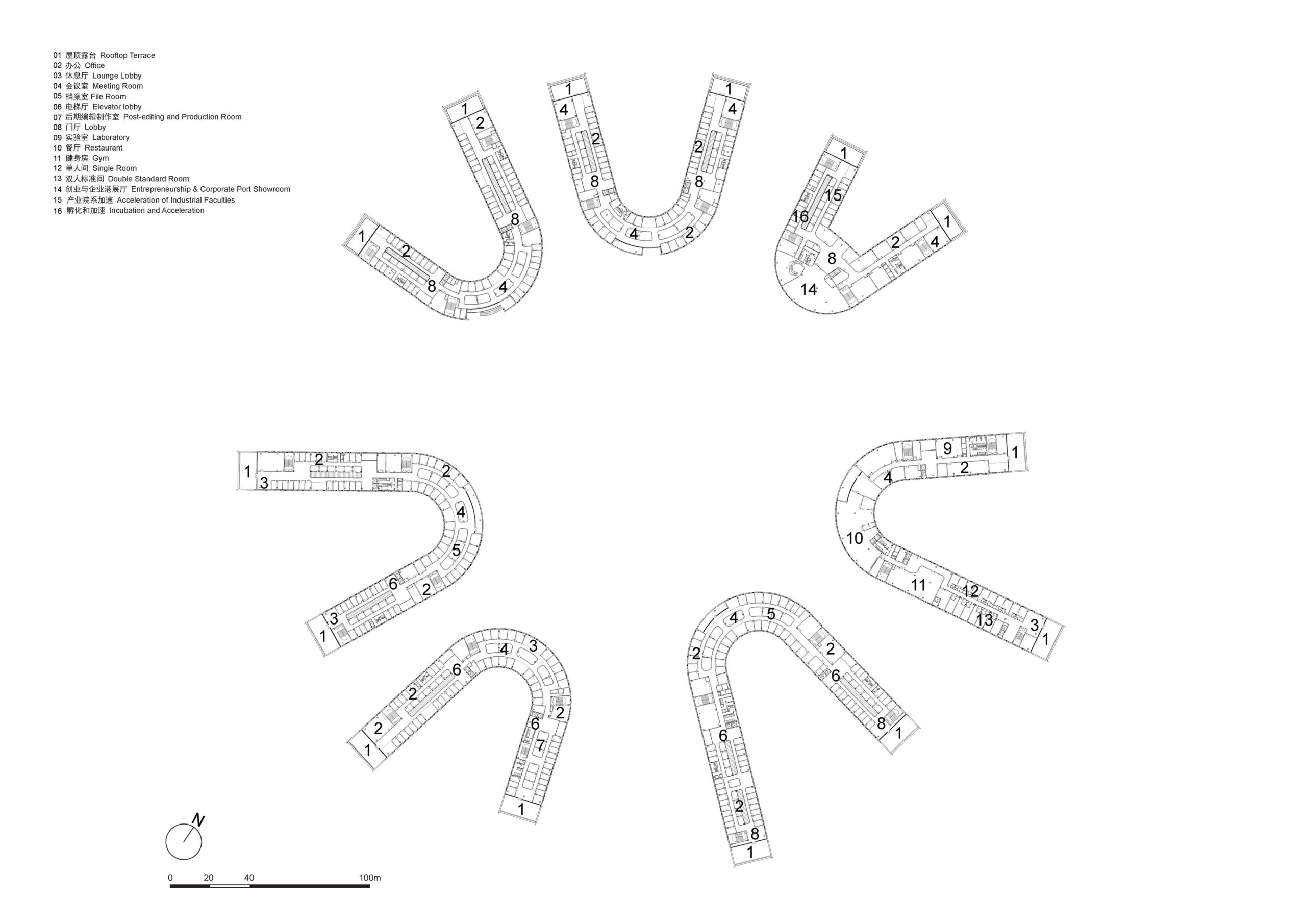
5F plan
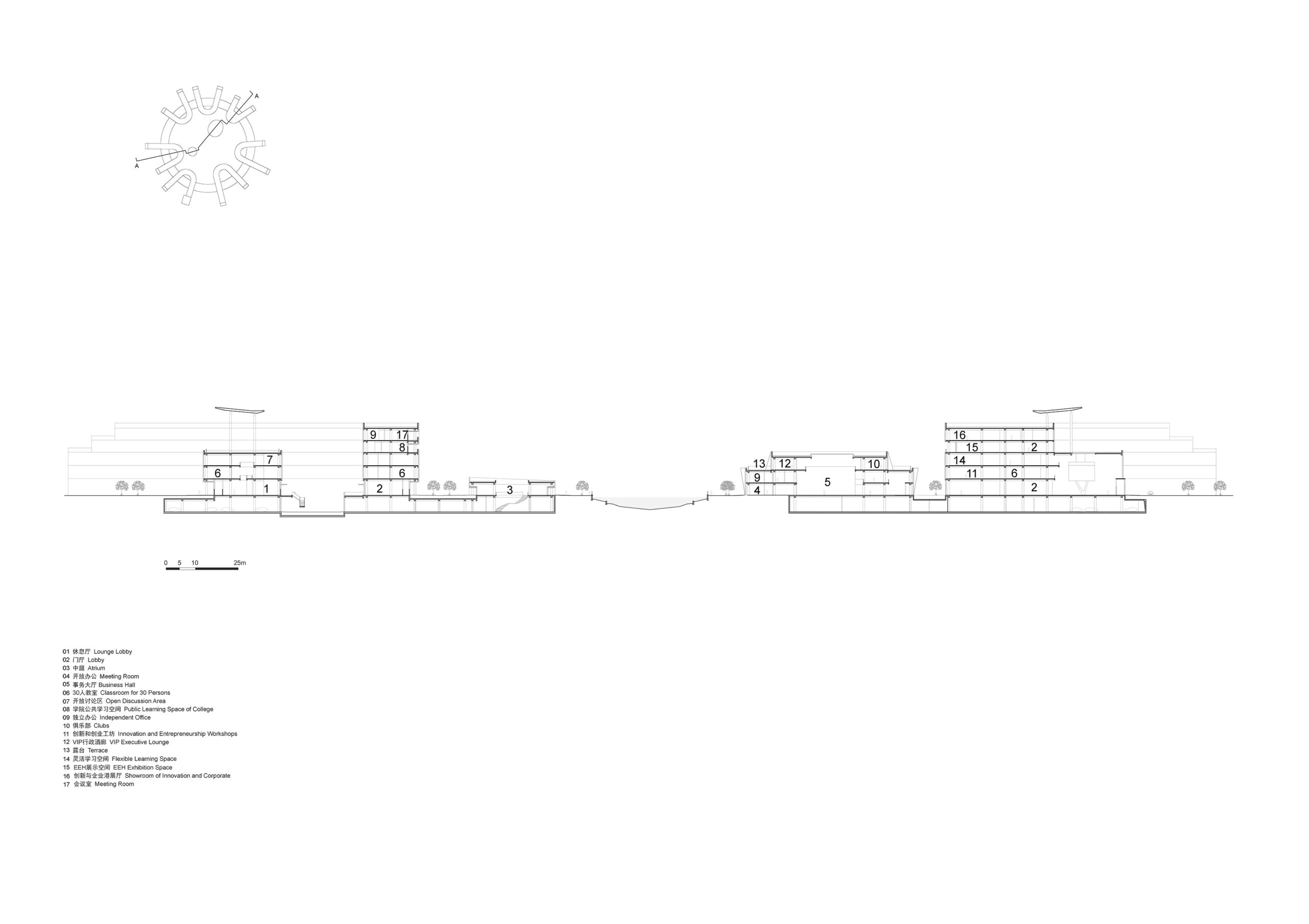
Section
以下、HPP Architektenのリリース(英文)です。
XJTLU Taicang Campus
New learning landscapesAt a Glance
• 850-metre “Learning Mall” as the central backbone
• 7 U-shaped institutes, arranged radially
• 24/7 multi-network teaching instead of traditional frontal instruction
• Rhizomatic learning models with open communication spaces
• Multifunctional campus with dormitories, sports hall, fitness centre, restaurants and retailArchitecture as a mirror of the present
The new campus of the Xi’an JiaotongLiverpool University in Taicang is organised in a circular layout. Traditional teaching formats are replaced through a radial arrangement that creates a spatial network of interaction, exchange, and openness. Learning here is not simply organised — it is supported through informal and spatially embedded connections. This takes place around the clock, interdisciplinary, and in direct relation to the city.Rhizome instead of grid
The central element is the 850-metre “Learning Mall”. This circular architectural structure connects all institutes. Along the ring, a wide range of spaces for formal and informal communication are arranged: bookable classrooms, open learning zones, spontaneous meeting points. The architecture follows the principle of the rhizomatic learning model: no hierarchical organisation, but flexible, decentralised connections that support individual learning paths.Learning as a collective process
Seven U-shaped institute buildings connect to the central mall. They open both inwards and outwards, creating fluid transitions between teaching, research and informal exchange in day-to-day academic life. The spatial interplay between the ring and the institute buildings forms atria that act as activity zones and foster a holistic learning atmosphere.Landscape as space for living and learning
A branching water landscape meanders through the campus. Green outdoor areas and public communication zones emerge. A peach garden forms the landscape centre — a place of calm, encounter and informal interaction in the open space. In the northwest of the site, student housing, sports, leisure facilities, and gastronomy complete the campus, turning it into a vibrant urban microcosm.Project Data
Project name: XJTLU Taicang Campus
Code: 218088
Location: Taicang, China
Client: Taicang Culture and Education Investment Group Co., Ltd.
Completion: 2022
GFA: 427,000 m²
Uses: University campus, dormitories, sports hall, fitness centre, restaurants, retail
Certification: LEED Gold
Awards: 2021 WAN Future Education Projects AwardCompetences: Architecture, general planning
Typologies: Research & education
HPP Architekten 公式サイト
https://www.hpp.com/en/