

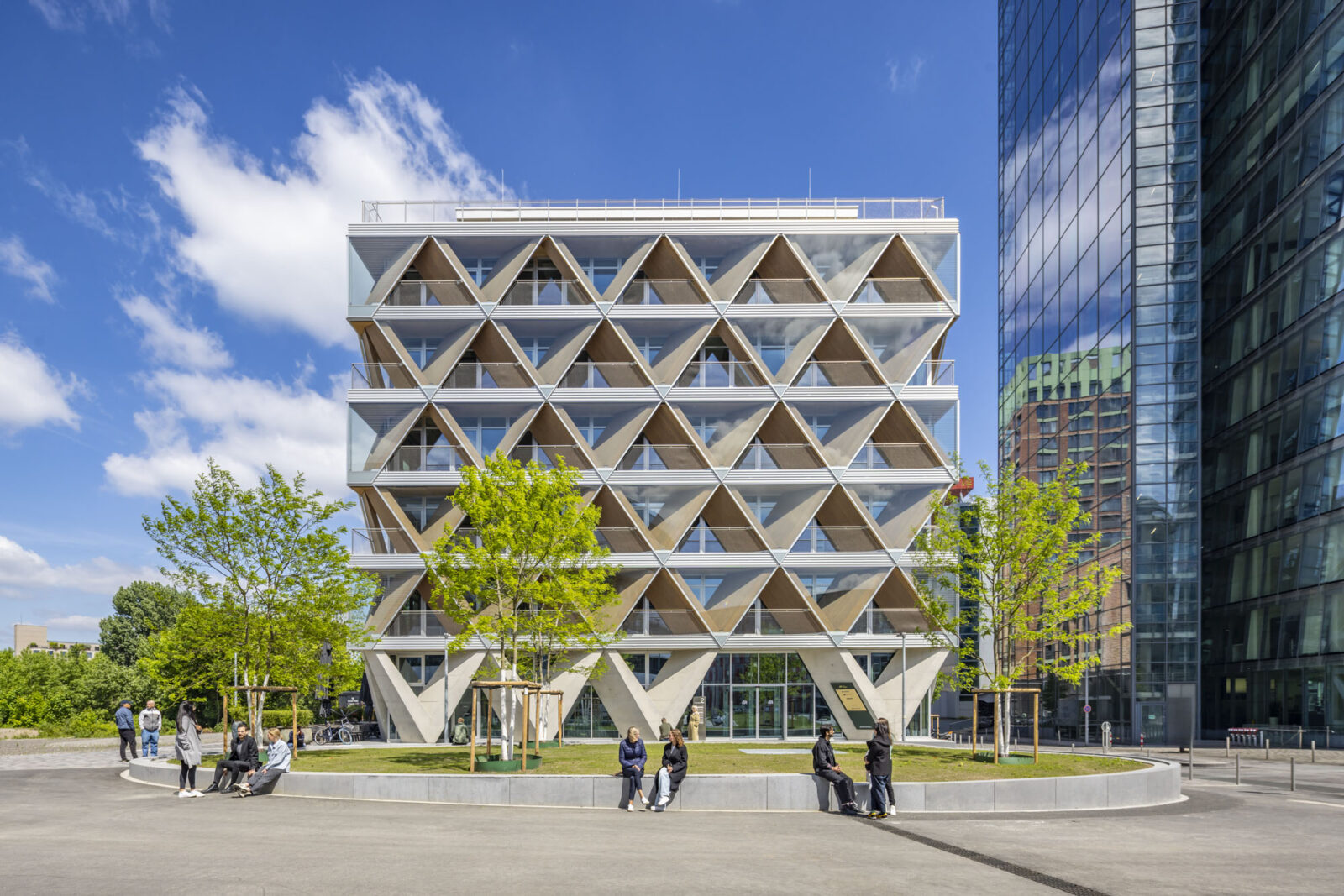
建築であり「素材の倉庫」でもある次世代オフィス - マテリアルパスポートと分解・再利用を前提とした設計が実現する循環型建築〈ザ・クレードル〉
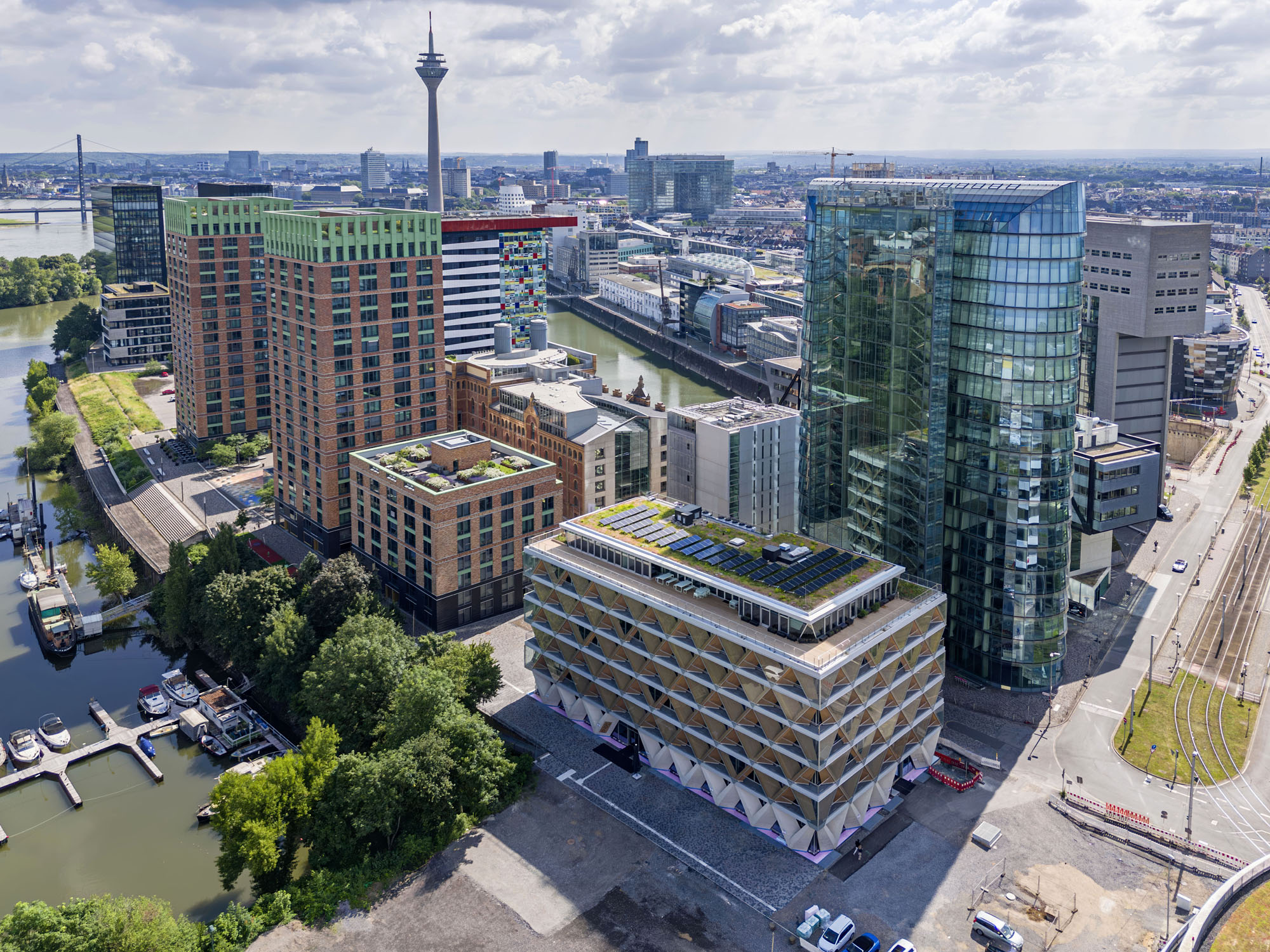
© Ralph Richter
ドイツ・デュッセルドルフのウォーターフロントに誕生した〈ザ・クレードル(The Cradle)〉は、HPP Architektenが設計を手掛けた、クレードル・トゥ・クレードル(Cradle to Cradle)、日本語で「ゆりかごからゆりかごまで」の理念を体現する建築です。
オフィスを中心に、1階には飲食施設やモビリティハブを内包する、未来の循環型建築を牽引する木造ハイブリッド・オフィスビルとなっています。
注目ポイント
- 全要素がマテリアルパスポートに記録された「素材の倉庫」としての建築
- パラメトリック・デザインによる多機能な木製ファサード
- 「分解を前提とした設計(DfD)」と特殊ディテールの開発
(以下、HPP Architektenから提供されたプレスキットのテキストの抄訳)
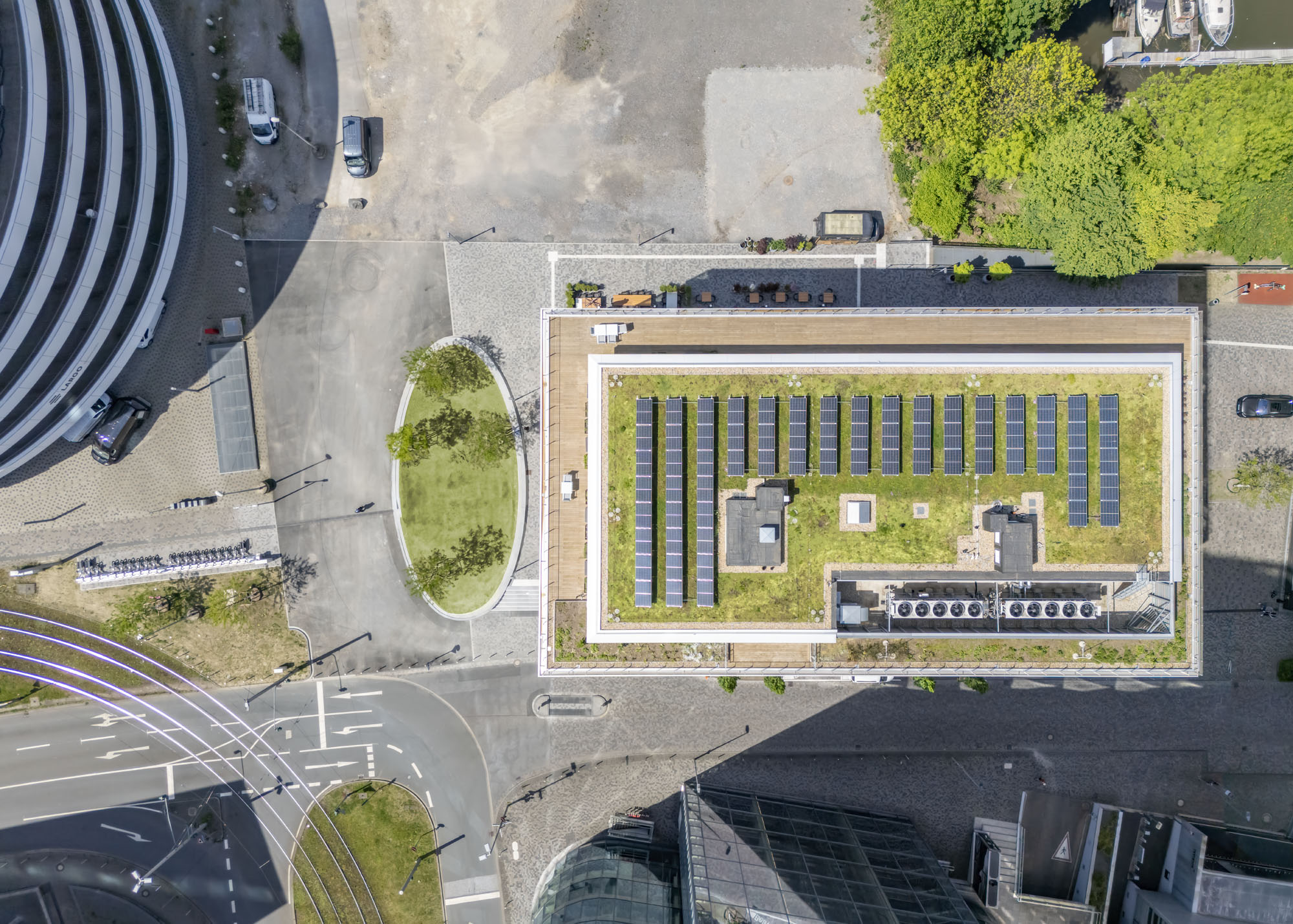
© Ralph Richter
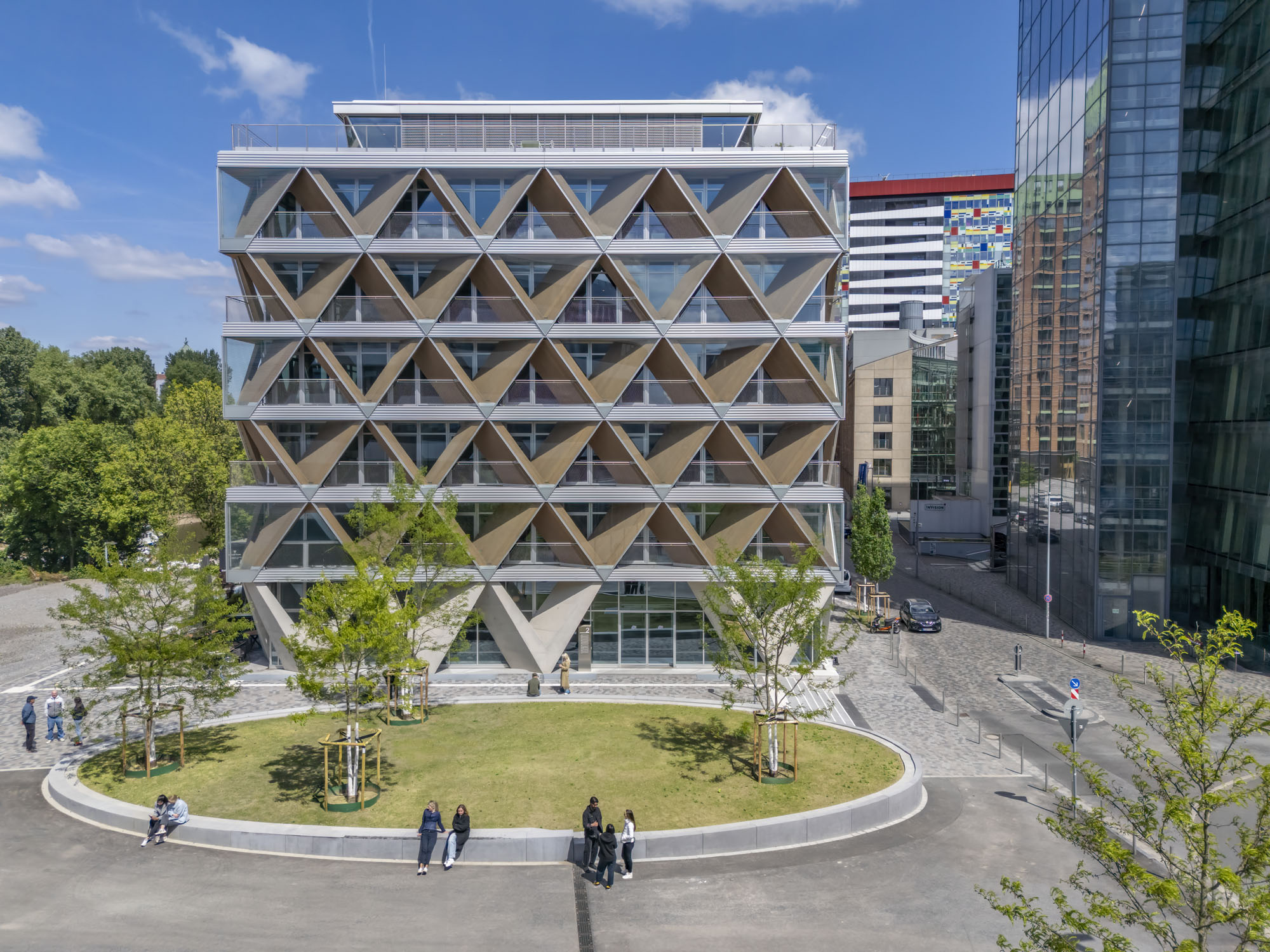
© Ralph Richter
未来を先取りする建築的アプローチ
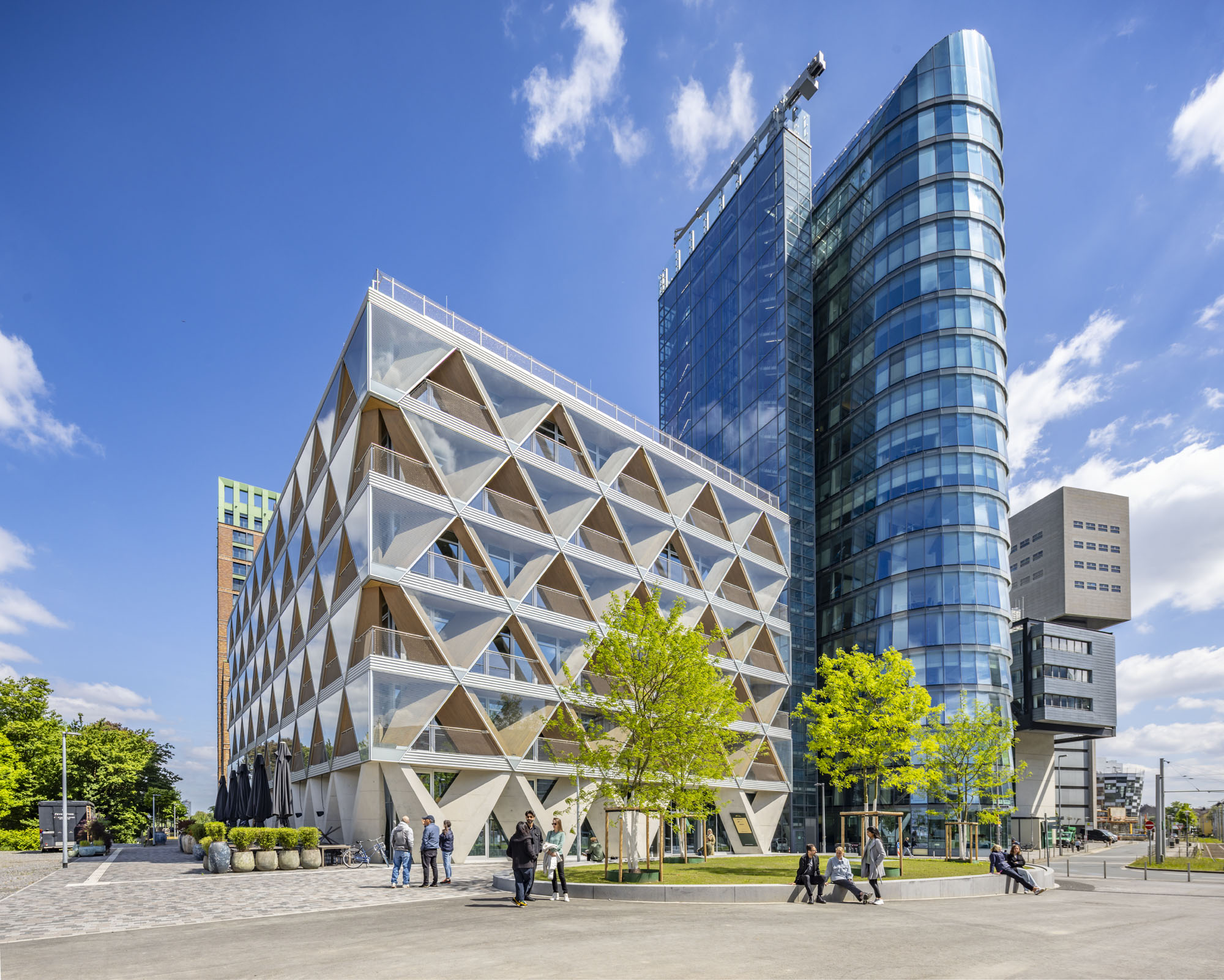
デュッセルドルフのメディアハーフェンに位置し、水辺に直接面したこのプロジェクトは、サステナビリティを新たな可能性として捉えている。〈ザ・クレードル〉は建物そのものが「素材の倉庫」として機能し、すべての構成要素が記録され、解体可能であり、再利用を前提としている。
開発当初、こうした手法はまだほとんど知られていなかったが、特別に編成された統合チームのなかで、新たな課題の解決と循環型ソリューションの模索・開発が行われた。
© Ralph Richter
© Ralph Richter
水辺と都市空間の結節点
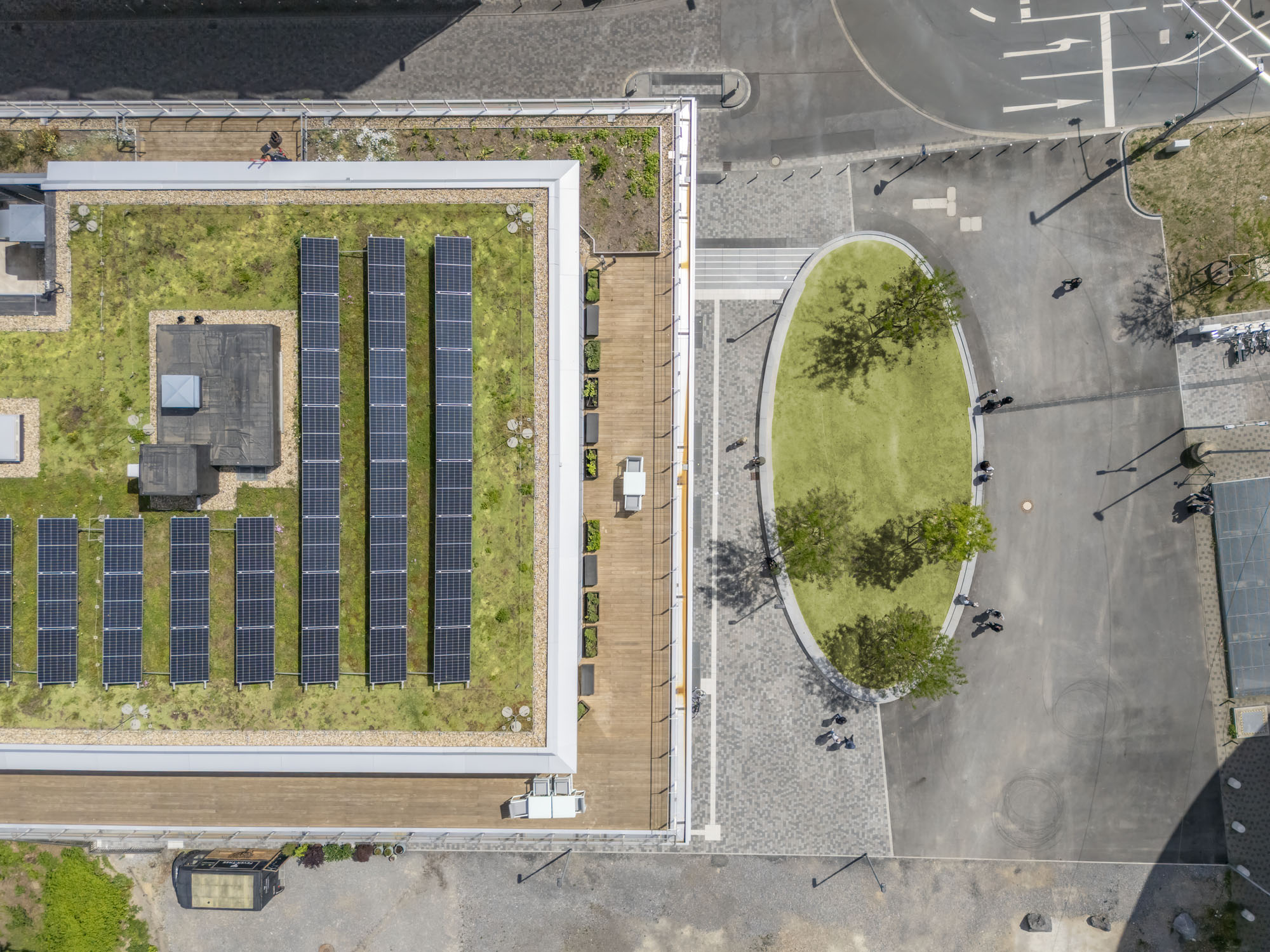
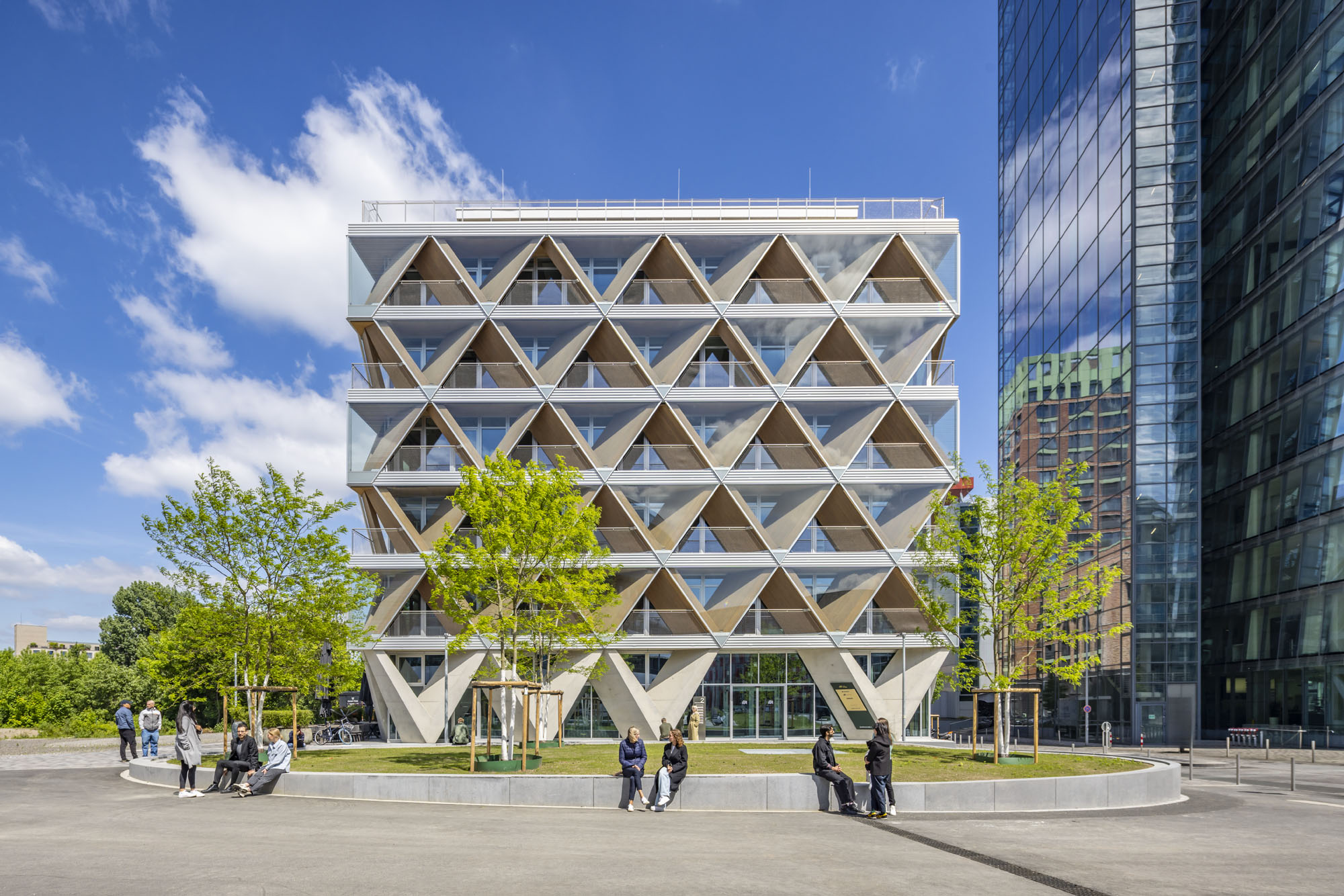
ウォーターフロントで最後に残された区画として、〈ザ・クレードル〉はメディアハーフェンにおけるシュペディツィオン通りの開発を完成させる存在である。建物前の楕円形の緑地は人々に憩いの場を提供し、周辺の公共空間とシームレスにつながる。
バリアフリー設計のファサードは港湾エリアや隣接する遊歩道に向かって大きく開かれており、1階を活気づける飲食施設は、建築とその用途、そして都市空間を結びつける歓迎のジェスチャーとなっている。
© Ralph Richter
アイデンティティを形成するファサード
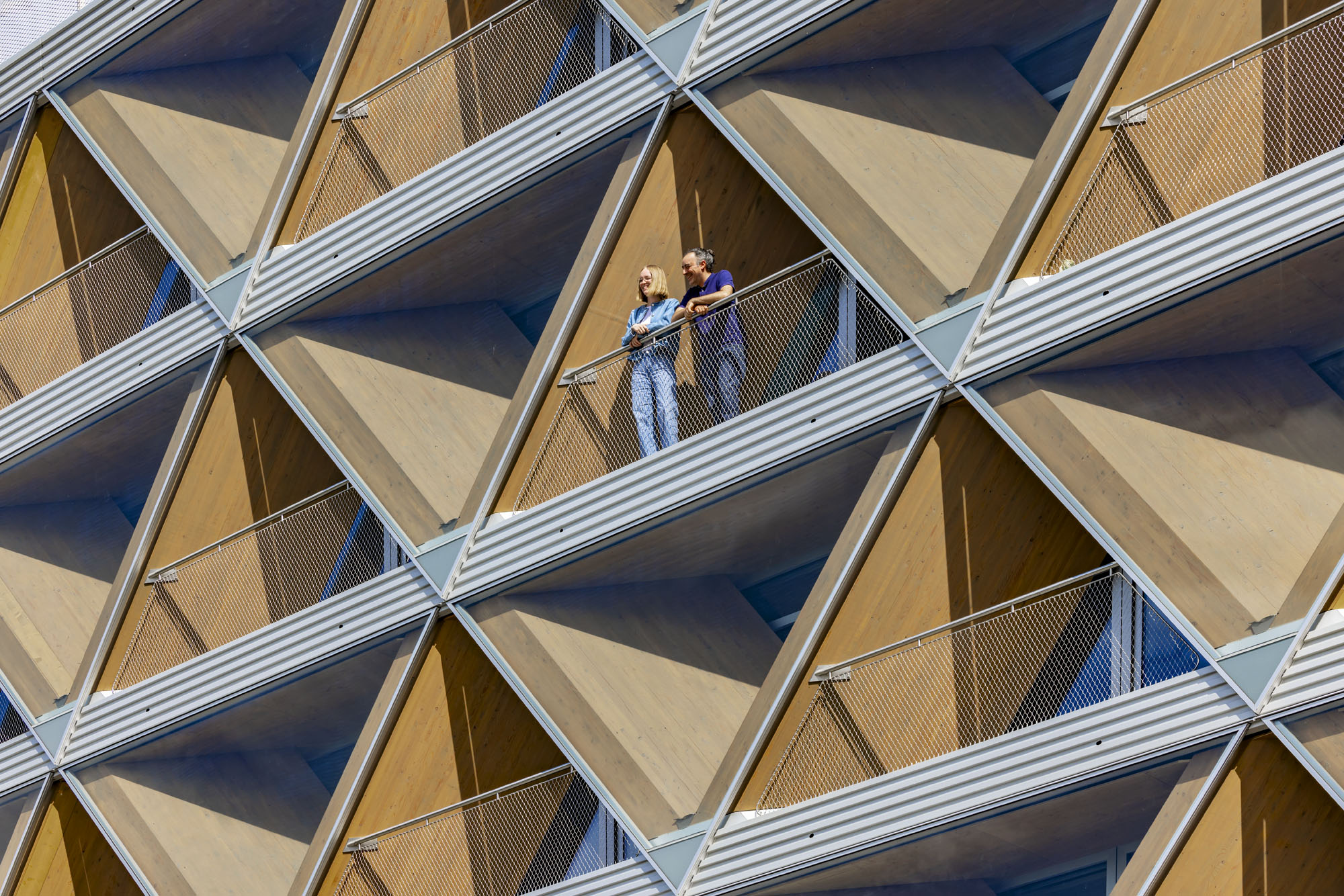
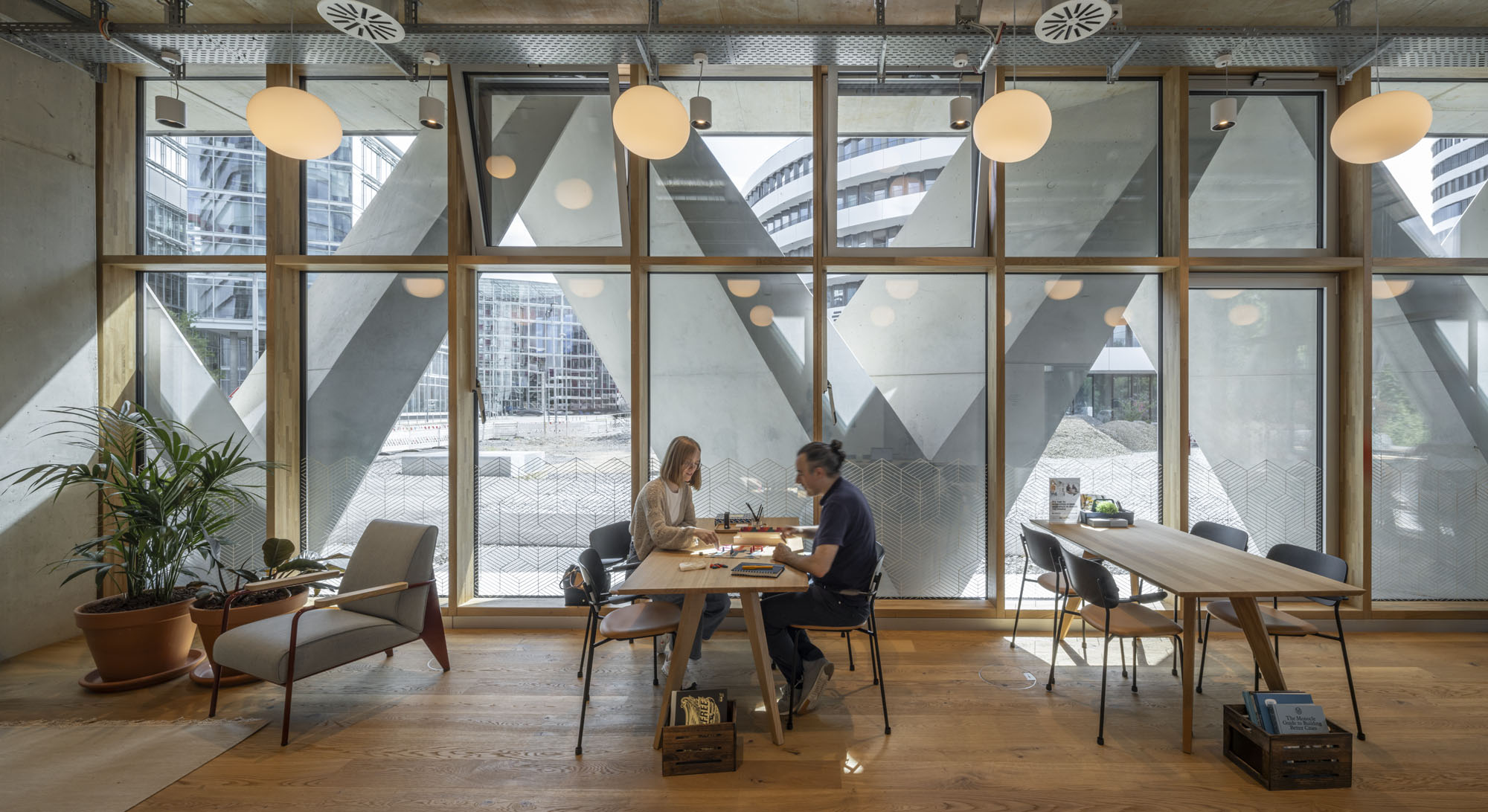
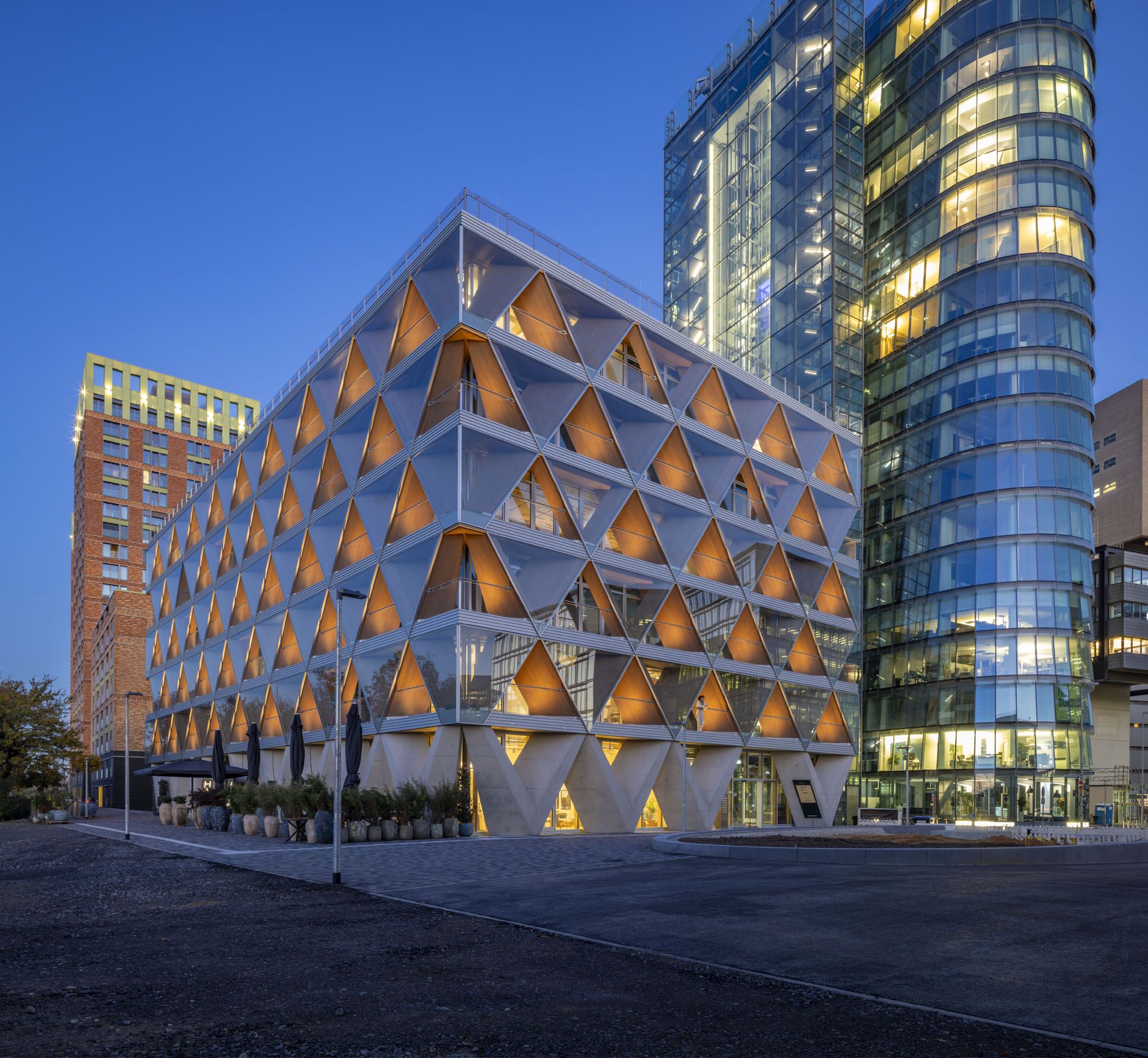
菱形に組み込まれた木製ファサードは、単なるデザイン要素にとどまらない。構造体であり、日除けであり、ロッジアを形成しつつ、「ゆりかごからゆりかごまで(Cradle to Cradle)」の理念を体現している。
日射角と視線に基づき、100以上のモデルを用いたパラメトリック・デザインによって開発されたV字型のカラマツ材支柱は、それぞれ寸法や向きが異なり、見る角度によって開放的にも閉鎖的にも表情を変える。これらは三角形の衝撃吸収パネルと組み合わさることでリズムと変容性を生み出し、建物の内外において確固たるアイデンティティを確立している。
© Ralph Richter
解体可能な木造ハイブリッド構造
〈ザ・クレードル〉は、要素工法を取り入れた持続可能な木造ハイブリッド構造として構想されている。地下階、1階、および中央コアを除き、主要な構成要素はすべて木材で構成されている。
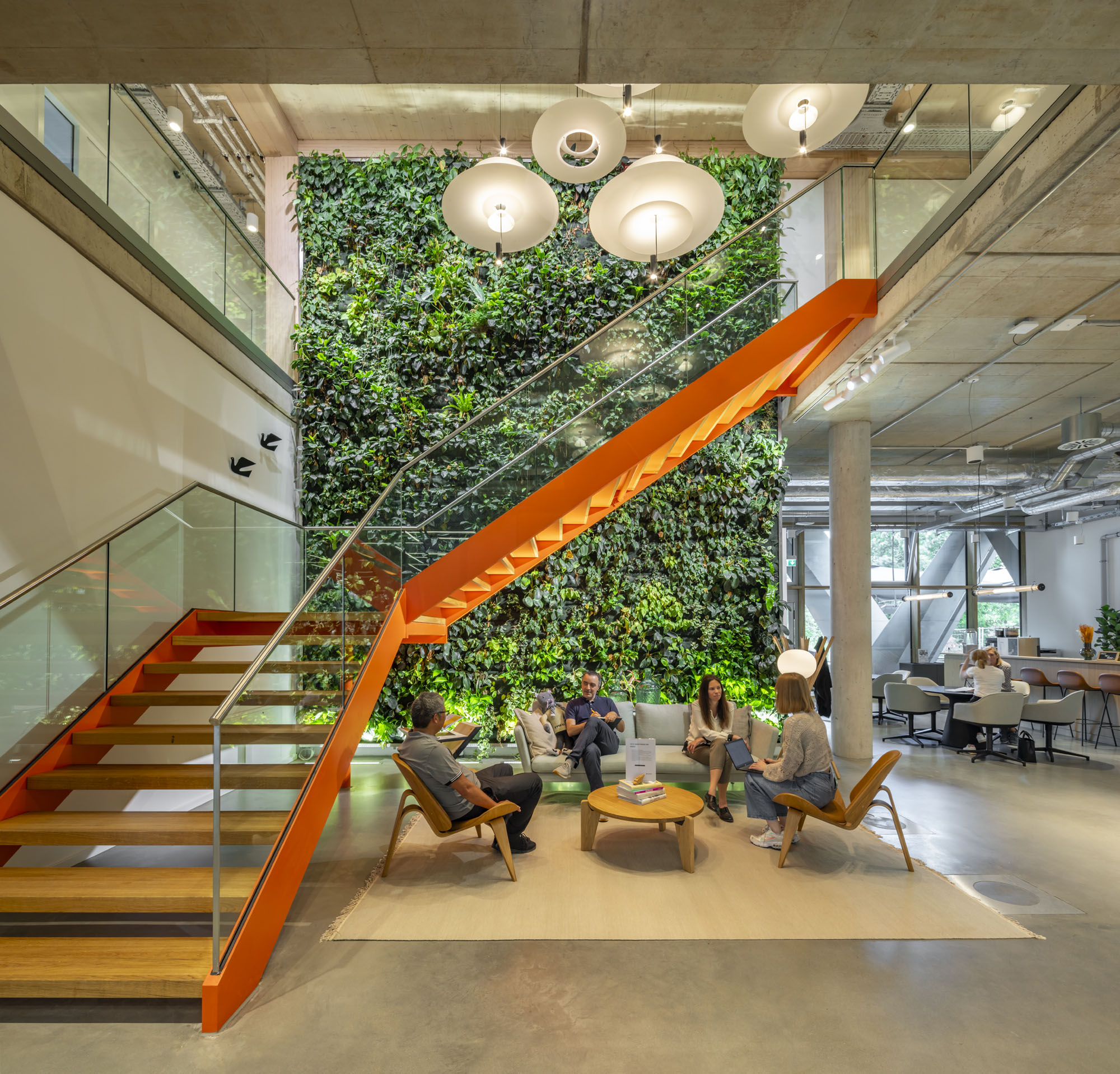
上層階は「分解を前提とした設計(DfD:Design for Disassembly)」の原則に基づき、差し込み式およびネジ接合によるプレファブリケーション・モジュールとして組み立てられた。これにより、将来的な解体と部材の再利用が容易となり、循環型建築コンセプトの強固な基盤となっている。
© Ralph Richter
細部に宿る循環への徹底
循環性の実現は、数多くの構造的な意思決定に反映されている。ファサードの支柱と端部梁の接合部には、部材を破壊することなく解体できる特殊なコネクタを開発した。
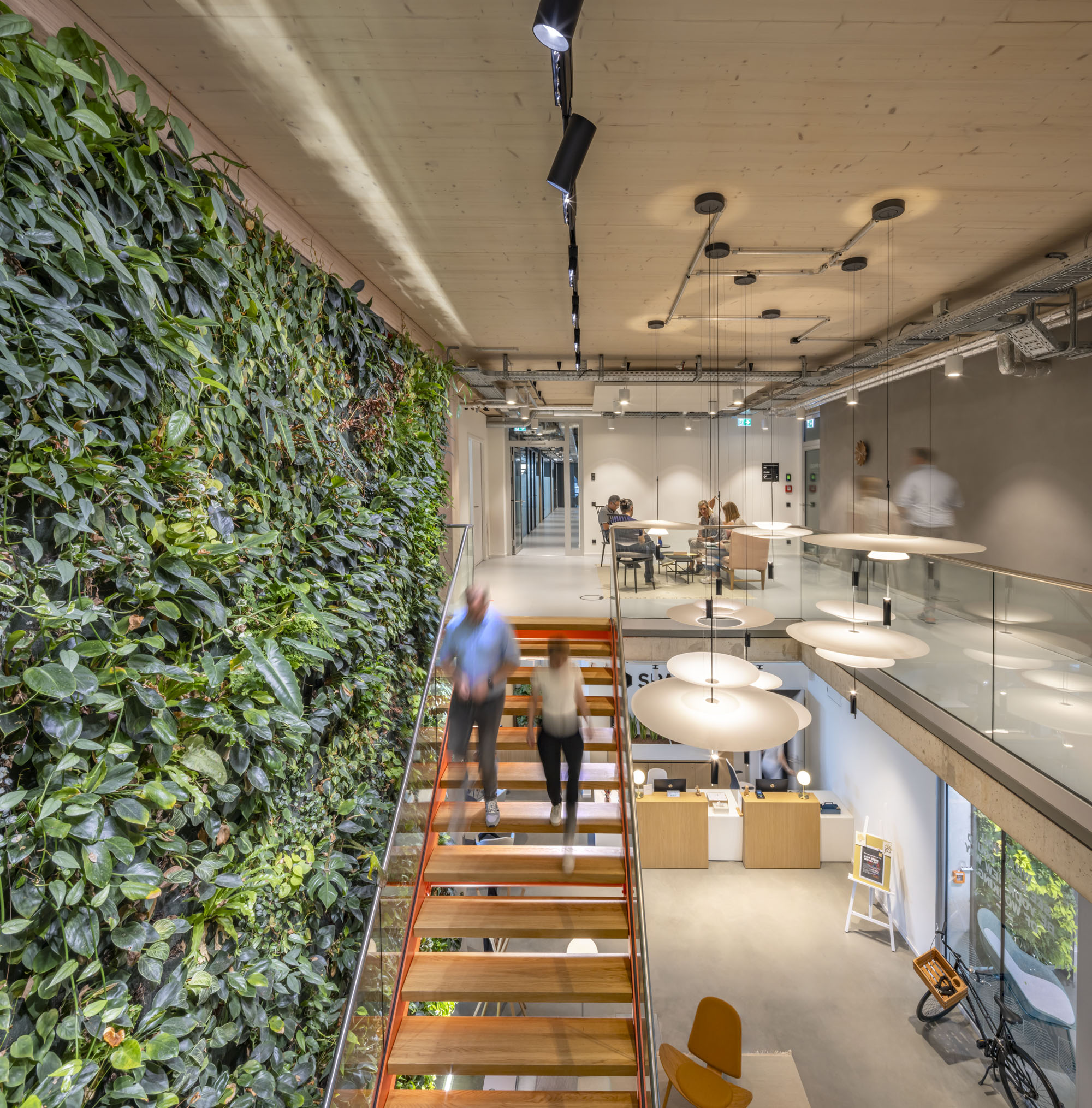
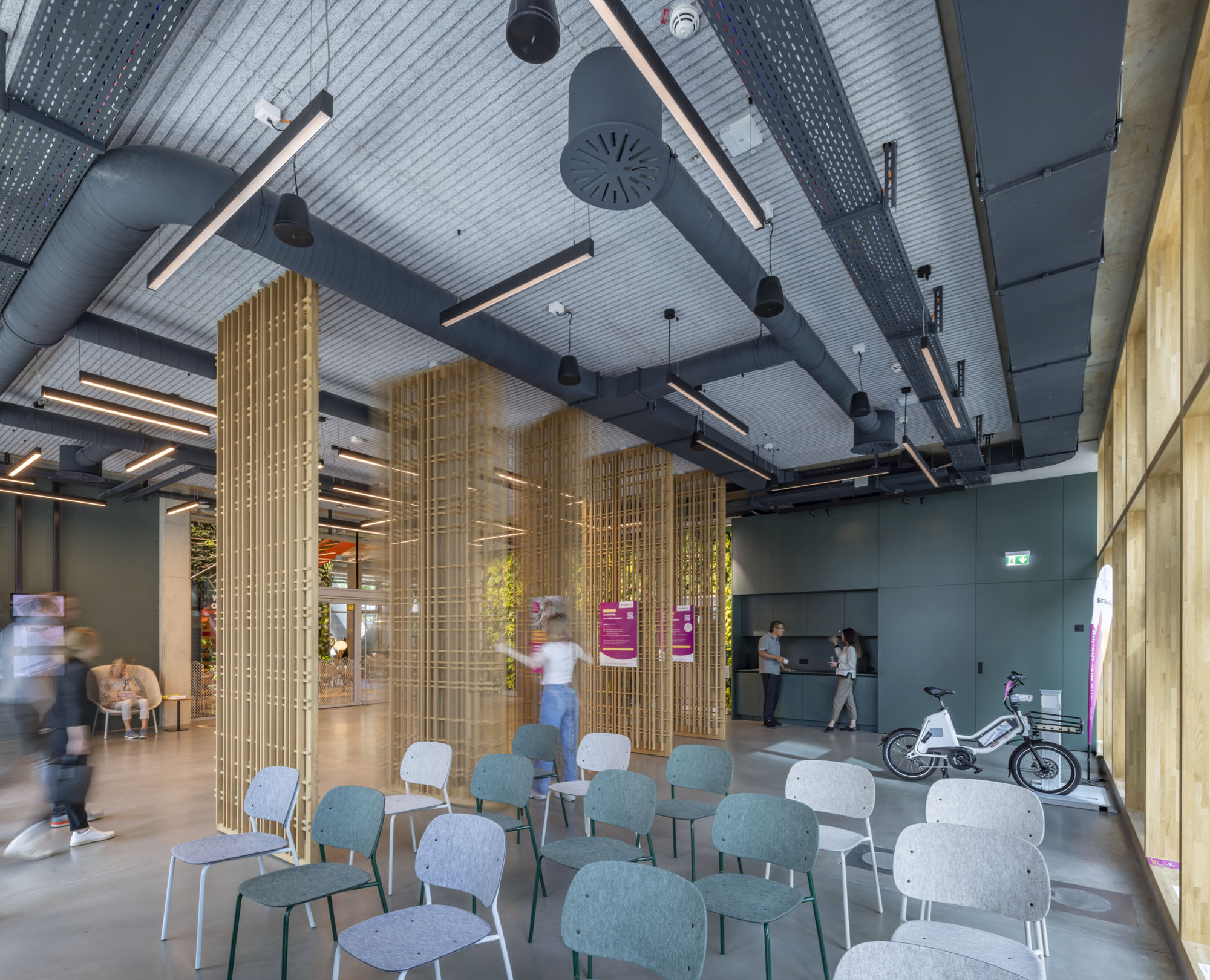
床スラブは材質ごとに分離可能な層構造を採用している。また、配管や配線をあえて露出させ、アクセス可能なサービス経路を確保し、外装材を意図的に省くことで、技術インフラの柔軟性と将来への適応性を担保した。
このハード面のコンセプトは、賃貸借契約におけるグリーンリース条項や、木造建築会社による木材の回収義務といったソフト面の仕組みによってさらに補完されている。
© Ralph Richter
記録化・価値化された「原材料の貯蔵庫」
「ゆりかごからゆりかごまで」の原則に基づき〈ザ・クレードル〉は、正しく記録された「原材料の貯蔵庫」として機能する。デジタルで連携された資材パスポート(Circularity Passport®)には、材料の安全性やリサイクル可能性、解体可能性に至るまで、使用された製品のあらゆる特性が記録されている。
この取り組みはMadasterプラットフォームを通じて評価され、ドイツ初の新築プロジェクトとして「価値化」された。使用材料の90%以上がリサイクル可能であり、従来の建物と比較して材料の健全性は56%、CO2フットプリントは50%改善されている。
© Ralph Richter
© Ralph Richter
人と環境のための空間設計
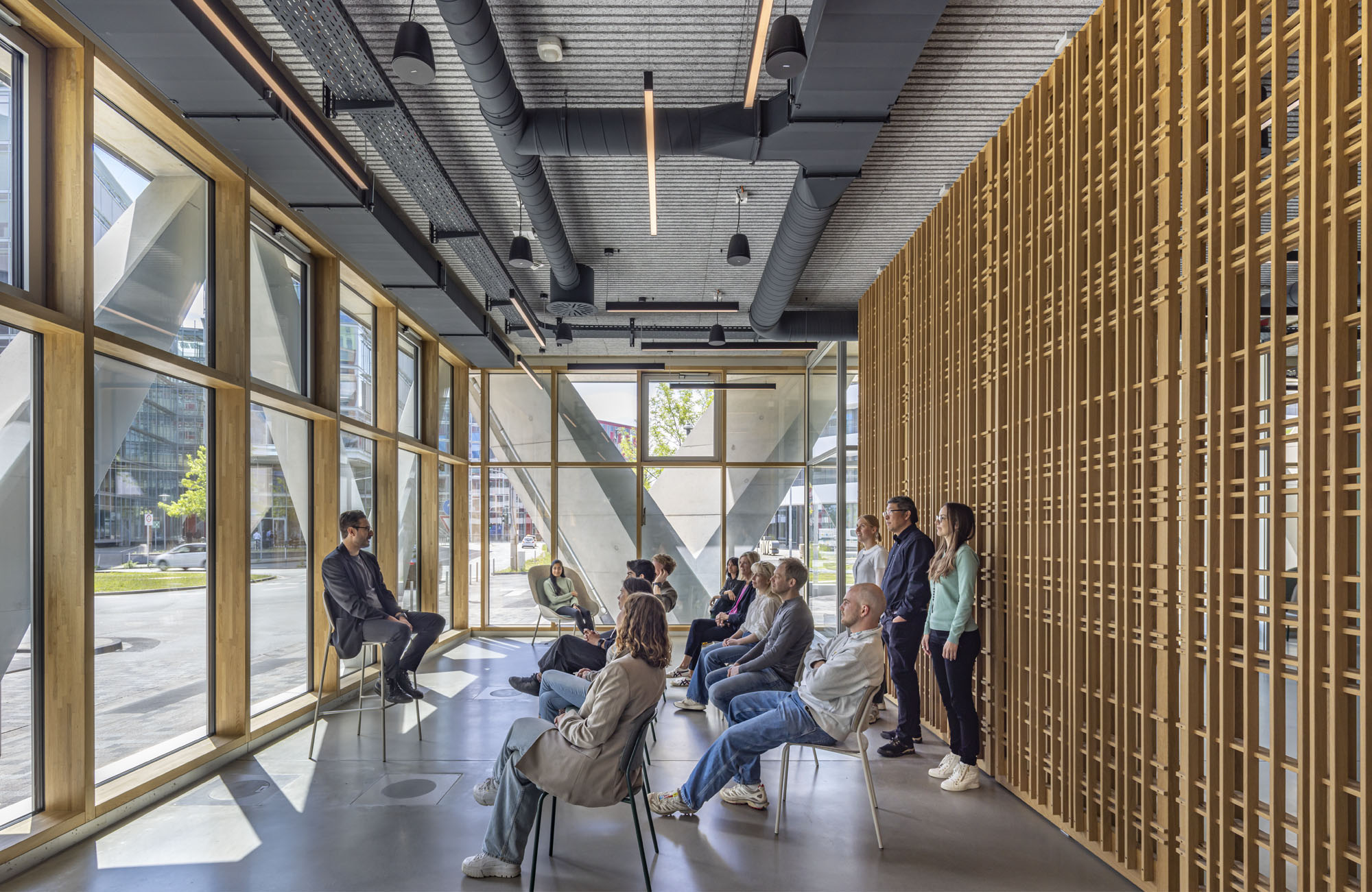
内部空間では、むき出しの木材表面、粘土壁、そして植栽エリアが、健康的な室内環境を創出している。CO2モニタリングや活性炭フィルターの導入、汚染物質を含まない材料の選定により、利用者のウェルビーイングが最優先されている。柔軟に区画変更が可能なオフィスユニットとモジュール式の内装は、現在から未来にわたる多様で個別的な利用コンセプトの実現を可能にする。
© Ralph Richter
地域と環境にもたらす付加価値
1階には飲食店やイベントスペースに加え、電気自動車(EV)や電動自転車のシェアリングサービスを提供するモビリティハブが配置されている。さらに、緑化された屋上テラス、巣箱、昆虫の生息地を設けることで、地域の生物多様性を積極的に支援している。
このように、〈ザ・クレードル〉は開放的で持続可能、かつ未来の環境変化に対応できる、地域社会のアクティブな一員として機能しているのである。
© Ralph Richter
以下、HPP Architektenのリリース(英文)です。
The Cradle, Düsseldorf
A statement for circular constructionAt a Glance
Timberhybrid office building with integrated façade
CradletoCradle principle as guiding concept
Madaster Germany pilot project: first newbuild project in Germany to be registered on the Madaster platform, a global online cadastre for materials and building products
In numbers: 56% improved material health, 50% reduced CO₂ footprint, 90% material recyclability, 2,150 m³ of timber from sustainable German forestry
Awarded: DGNB Gold targeted, and prizes such as the MIPIM/AR Future Project Award and Iconic Award: Innovative Architecture
Office, mobility hub, gastronomy & public uses
A building that anticipates the future
Located directly by the water in Düsseldorf’s Medienhafen, the project embraces sustainability as an opportunity. The building functions as a material depot: all components are documented, demountable, and reusable. At the time of development, this was still a largely unfamiliar approach. Working within a specially curated, integral team, new questions and circular solutions were explored and developed.
By the water, within the district
As the last available plot on the waterfront, The Cradle completes Speditionstraße in Düsseldorf’s Medienhafen. The elliptical green space in front of the building creates a place to stay and connects with the public realm. The barrierfree façade opens towards the harbour basin and the adjoining promenade, with gastronomy activating the ground floor a welcoming gesture that links architecture, groundfloor uses and the city.
Architecture with identity
The rhombic integrated timber façade is more than a design element. It is structure, solar shading, creates loggias and embodies the CradletoCradle idea. Developed parametrically through more than 100 models based on solar angles and sightline the Vshaped larch timber supports vary in dimension and orientation, appearing open or closed depending on the viewpoint. Together with the triangular impact panes, they create rhythm and transformability, making the façade an identityforming element both inside and out.
Demountable timber hybrid
The Cradle is conceived as a sustainable timberhybrid structure in element construction. With the exception of the basement levels, ground floor, and central core, all major components are made of timber. The upper storeys were assembled as prefabricated modules with plugin and screw connections, designed according to the “Design for Disassembly” principle. This enables later dismantling and reuse of components and forms the basis of the circular building concept.
Circularity down to the detail
The implementation of circularity is reflected in numerous constructive decisions: special connectors were developed for the joints between façade supports and edge beams, allowing dismantling without destruction. Floor slabs consist of layers that can be separated by material type. Exposed installations, accessible service runs, and the deliberate omission of cladding ensure that the technical infrastructure remains flexible and adaptable. The concept is complemented by greenlease clauses in tenancy agreements and a takeback obligation for the timber implemented by the timber construction company.
Documented & monetised material depot
In line with the CradletoCradle principle, The Cradle functions as a documented rawmaterial depot. A digitally linked material passport (Circularity Passport®) records all properties of installed products from material health and recyclability to dismantling potential. Through the Madaster platform, the building was monetised as the first newbuild project in Germany. More than 90% of the materials are recyclable; material health improved by 56% compared to conventional buildings, and the CO₂ footprint by 50%.
Space for people and ideas
Inside, exposed timber surfaces, clay walls and planted areas create a healthy indoor climate. CO₂ monitoring, activatedcarbon filters and pollutantfree materials place human wellbeing at the centre. The flexibly divisible office units and modular fitout enable individual usage concepts today and in the future.
Added value for the district & the environment
The ground floor accommodates gastronomy, event space, and a mobility hub with ecar and ebike sharing. Green roof terraces, nesting boxes, and insect habitats support biodiversity. The building thus becomes an active part of the neighbourhood: open, sustainable, and futureready.Project Data
Project name: The Cradle
Location: Düsseldorf
Client: The Cradle GmbH & Co. KG
Completion: 2023
GFA: 11,400 m²
Plot area: 1,200 m²
Uses: Office, coworking, gastronomy, mobility hub
Services: Architecture
Awards: MIPIM/The Architectural Review Future Project Award 2018, ICONIC AWARD: Innovative Architecture 2018, Special Award BIM Heinze ArchitektenAWARD 2020
Certifications: DGNB Gold targeted
HPP Architekten 公式サイト
https://www.hpp.com/en/



![[無償モニター]キノシタの家具ブランド「Coccole」から新作チェア・ソファが登場。選べる体験モニターの応募は12月31日まで](https://magazine-asset.tecture.jp/wpcms/wp-content/uploads/2026/10/13222506/f07965e0ad312e8170b6bee7af7adb5b-900x590.png)
![[建築NOTE]不利な敷地条件を建築体験へと転換。倉方俊輔が読み解く、谷口吉生が〈資生堂アートハウス〉に込めた設計思想](https://magazine-asset.tecture.jp/wpcms/wp-content/uploads/2026/06/13180420/arthouse_18-900x675.jpg)