

木造アーチが生み出す癒やしの空間 - ウェルビーイングに働きかける木質診療空間〈コペンハーゲン健康センター〉

©︎ Adam Mørk
〈コペンハーゲン健康センター(Centre for Health in Copenhagen)〉は、高齢者のためのケアと健康、ウェルビーイングの中心地区である「デ・ガムレス・ビー」に建設された、木に包まれた健康センターです。
「建築が人の行動・感情・身体的健康に影響を与える」という考えを基に、デンマークの建築スタジオ ドルテ・マンドラップ(Dorte Mandrup)が設計しました。
注目ポイント
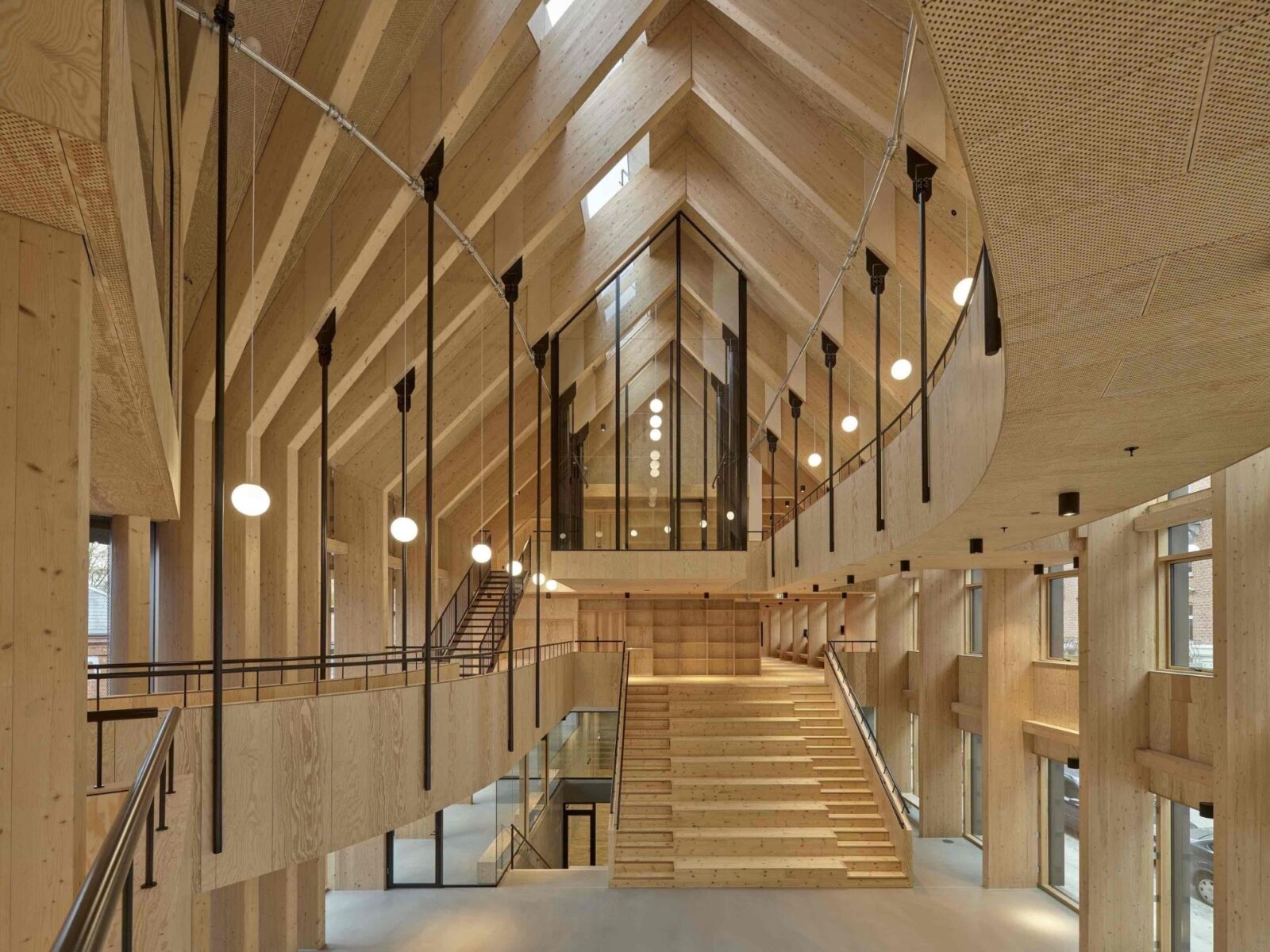
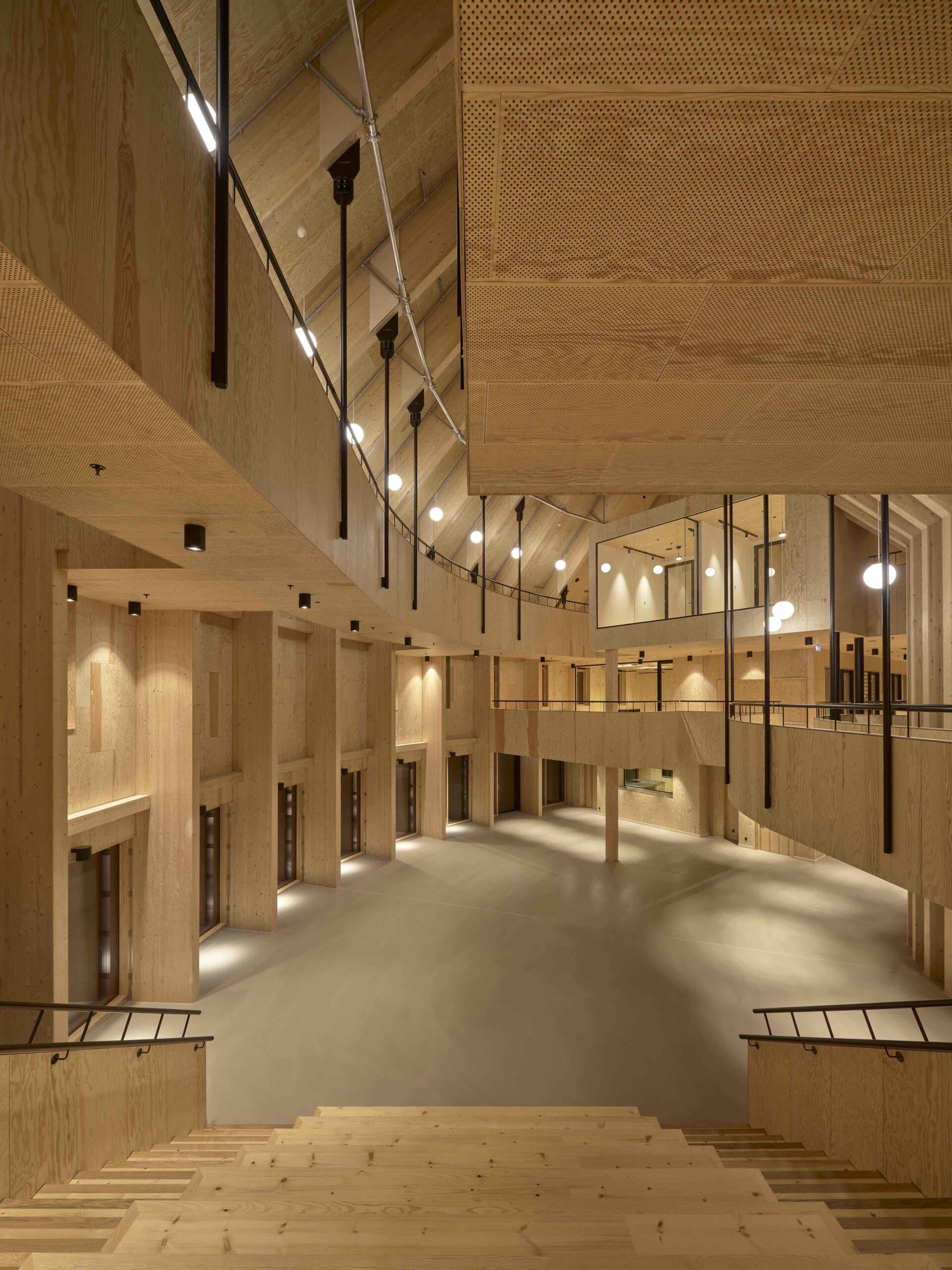
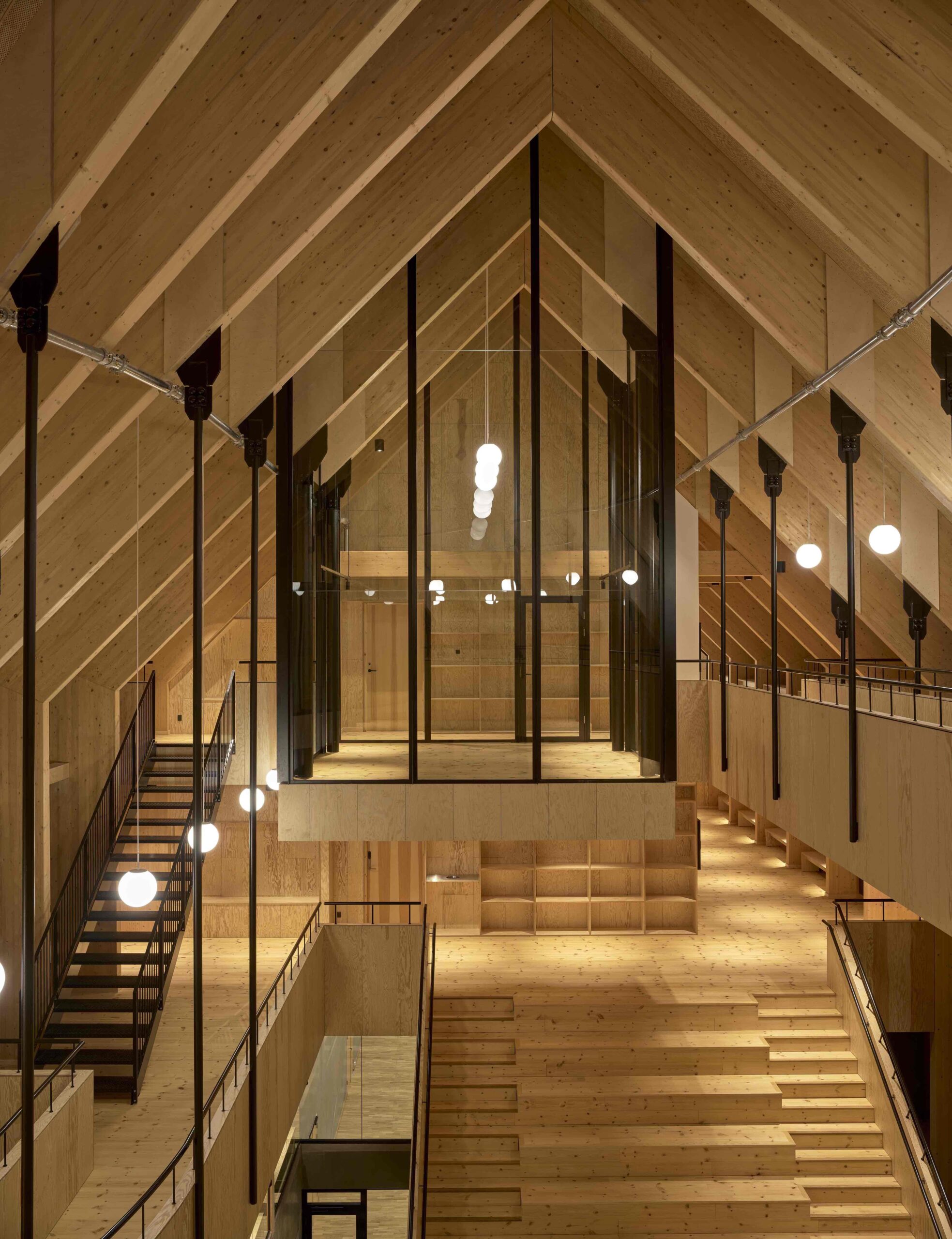
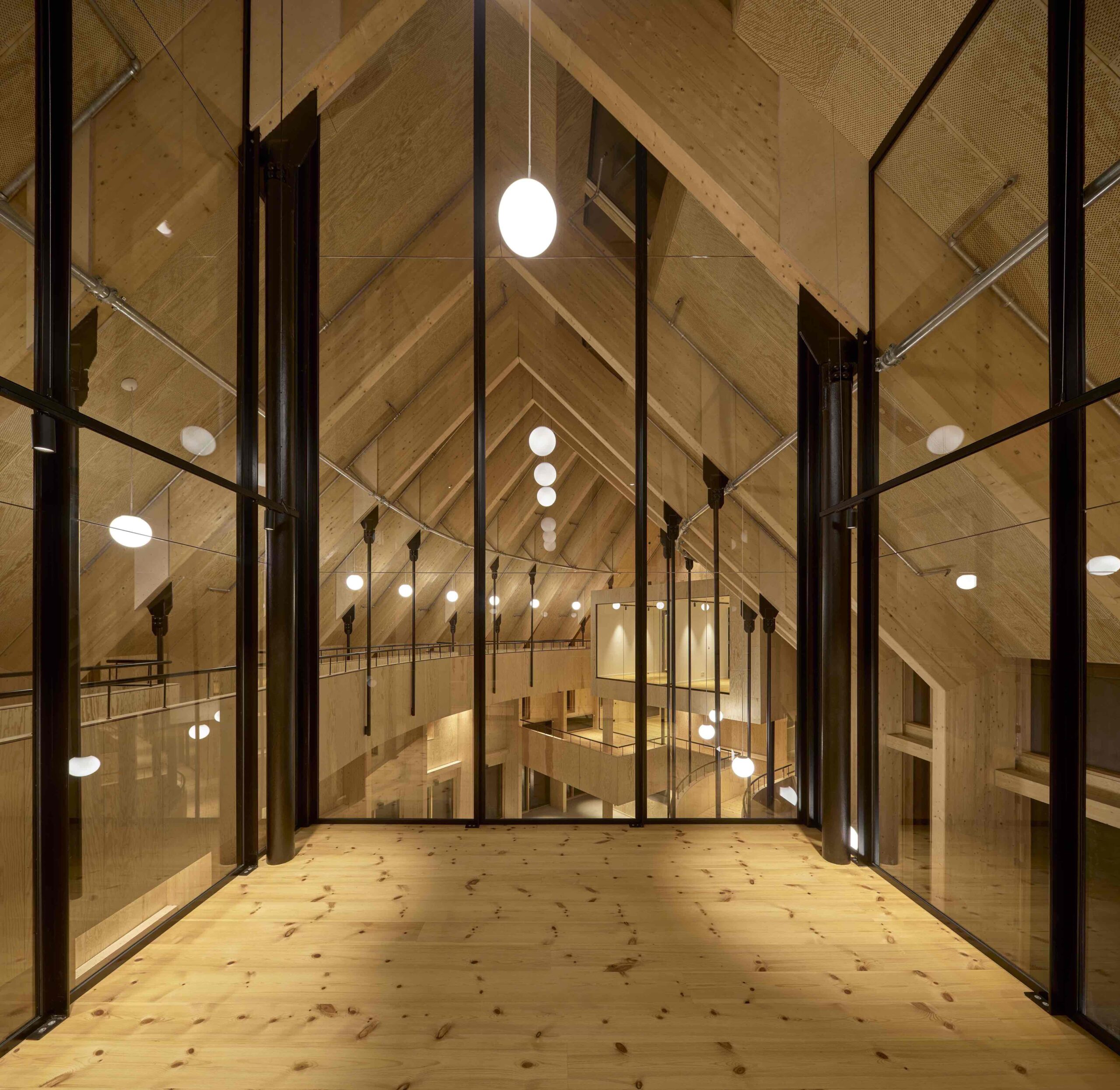
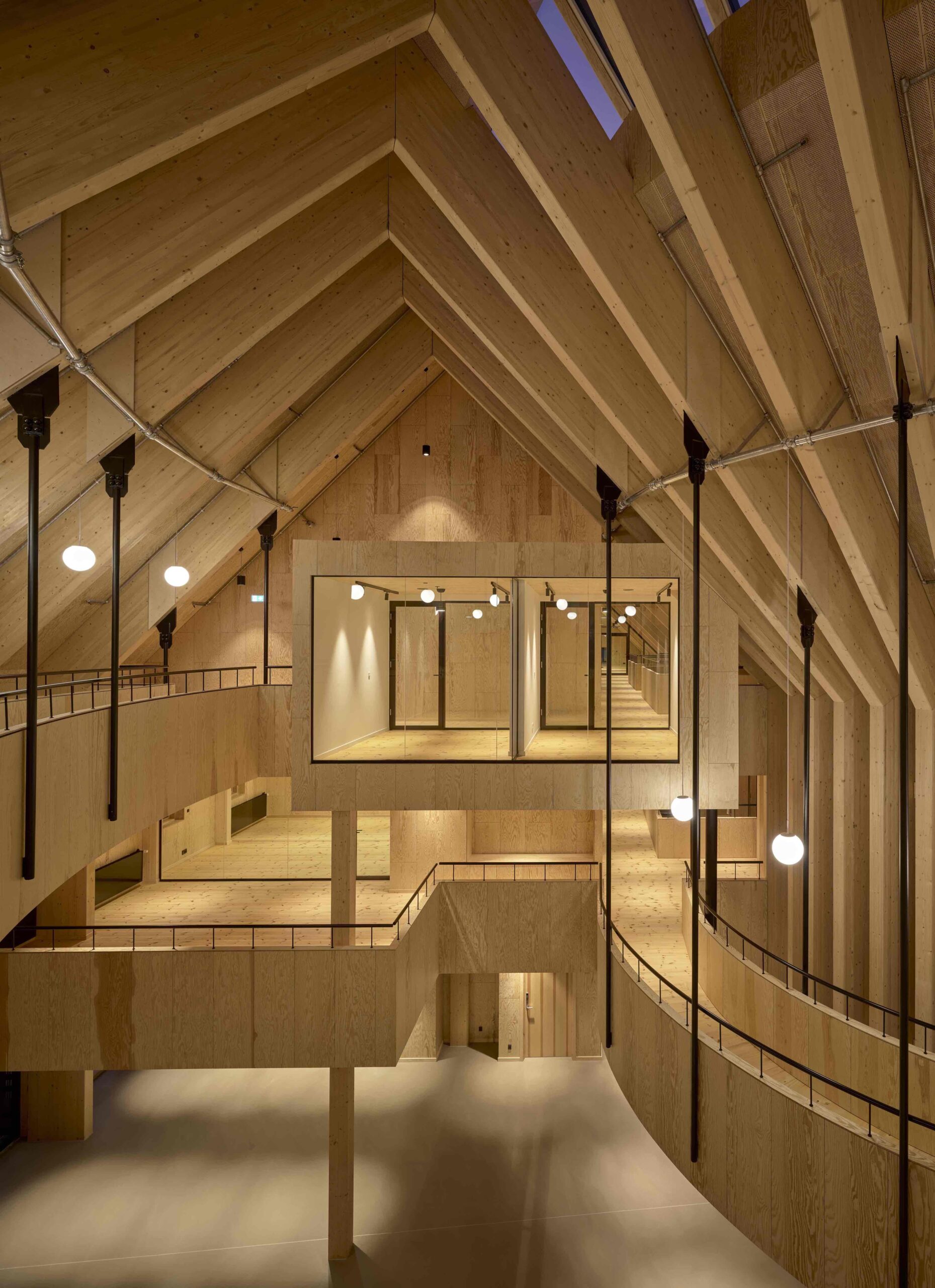
- 建物全体を結ぶ、高さ15mの木造アーチが連続する中心空間「ハートルーム」
- 偶発的な出会いを誘発する木製大階段のアトリウム
- 木材による快適性、空気質の向上、ストレス軽減など、人の健康に寄与する効果を重視
- 医療施設の「臨床的」イメージを変える、人間中心・ウェルビーイング志向の空間づくり
(以下、ドルテ・マンドラップから提供されたプレスキットのテキストの抄訳)

©︎ Adam Mørk
木のアーチが形づくる「癒やしの空間」
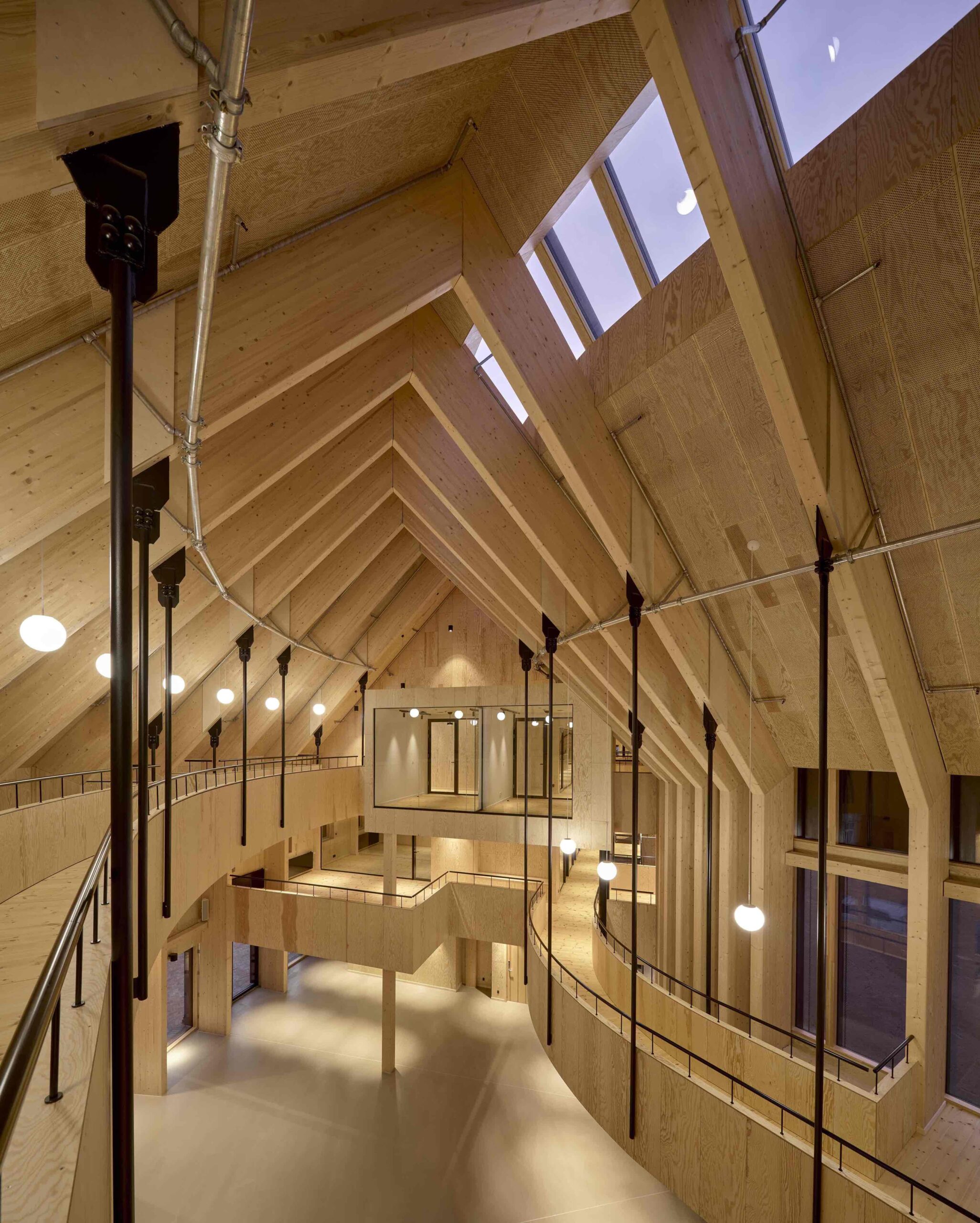
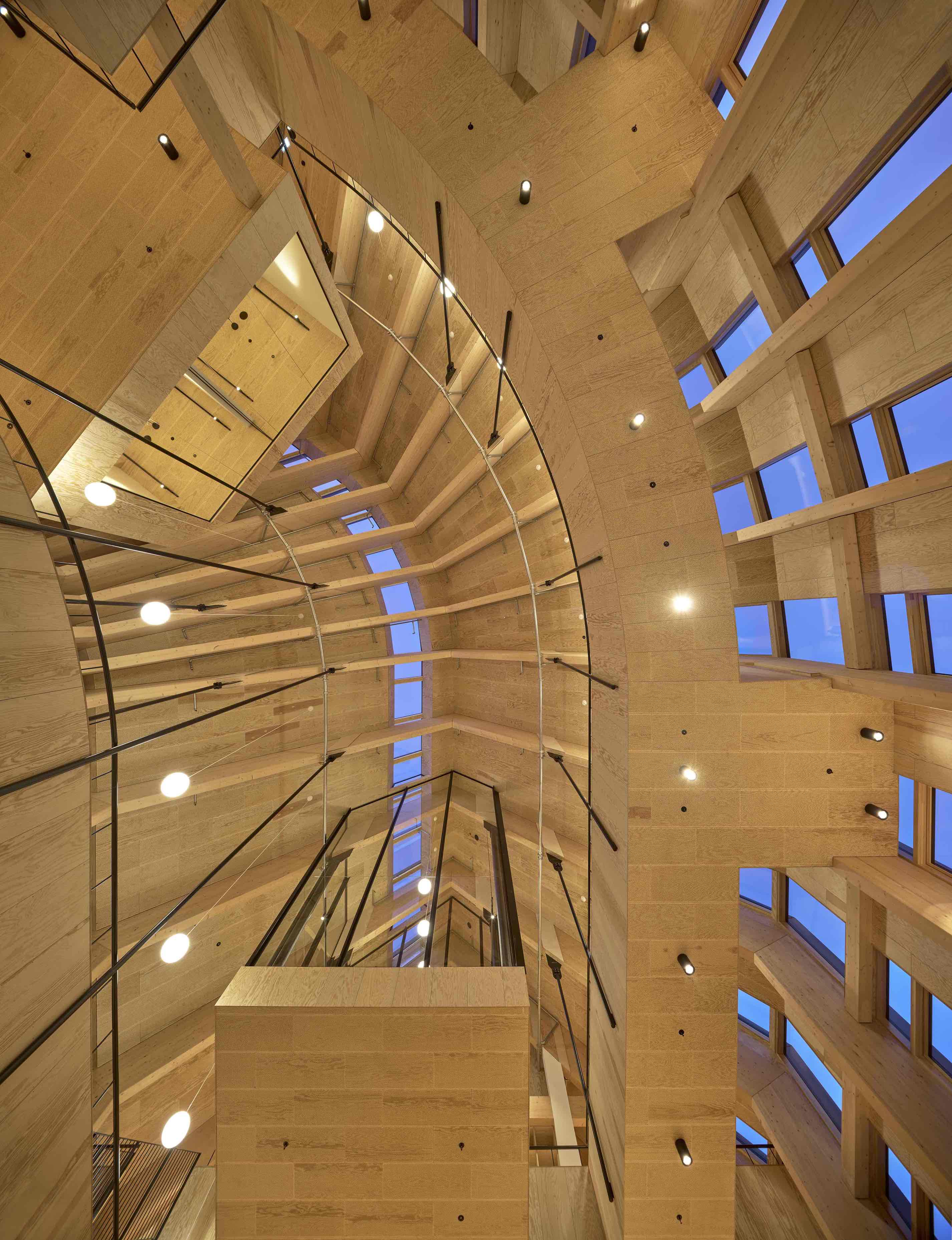
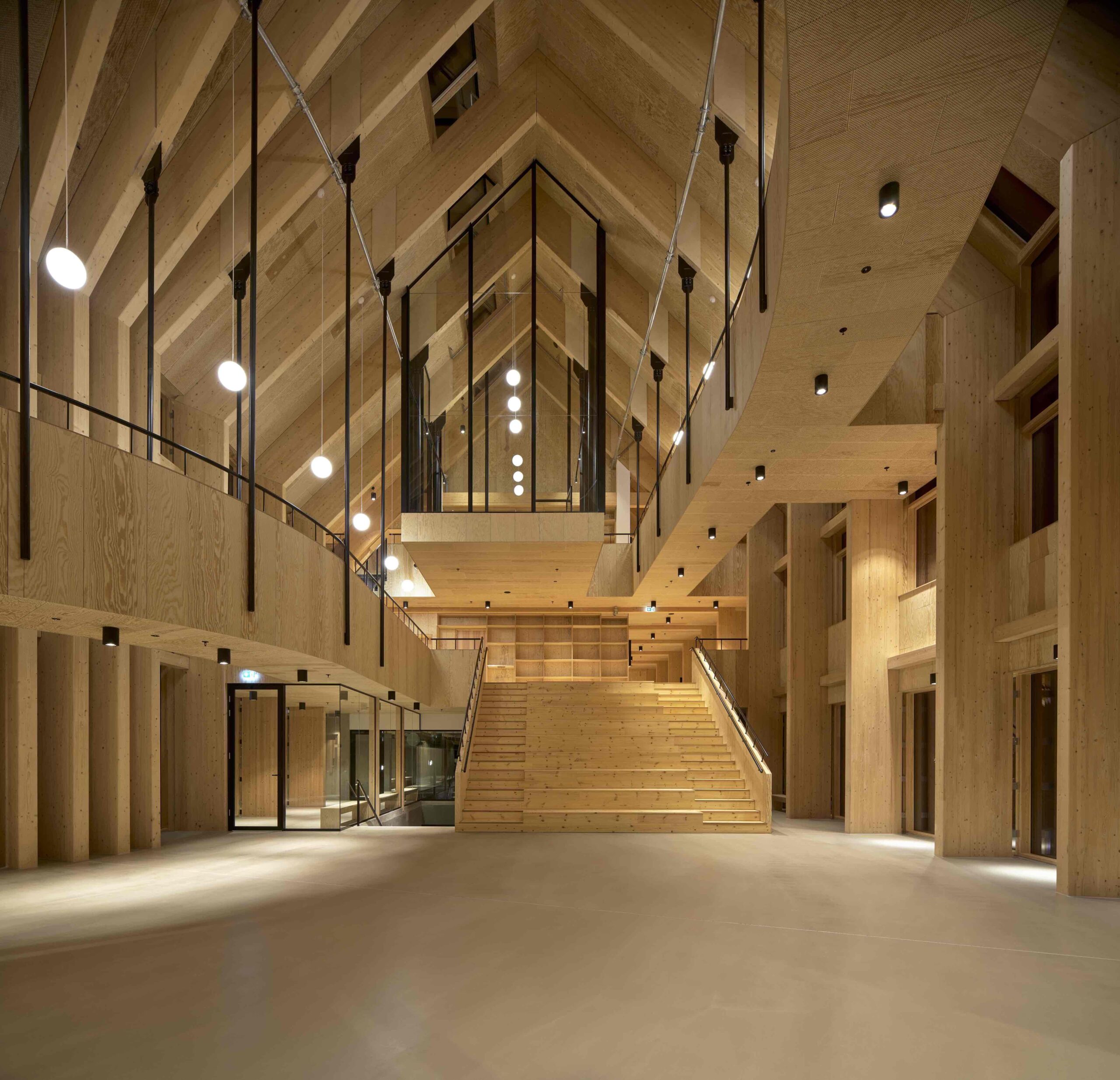
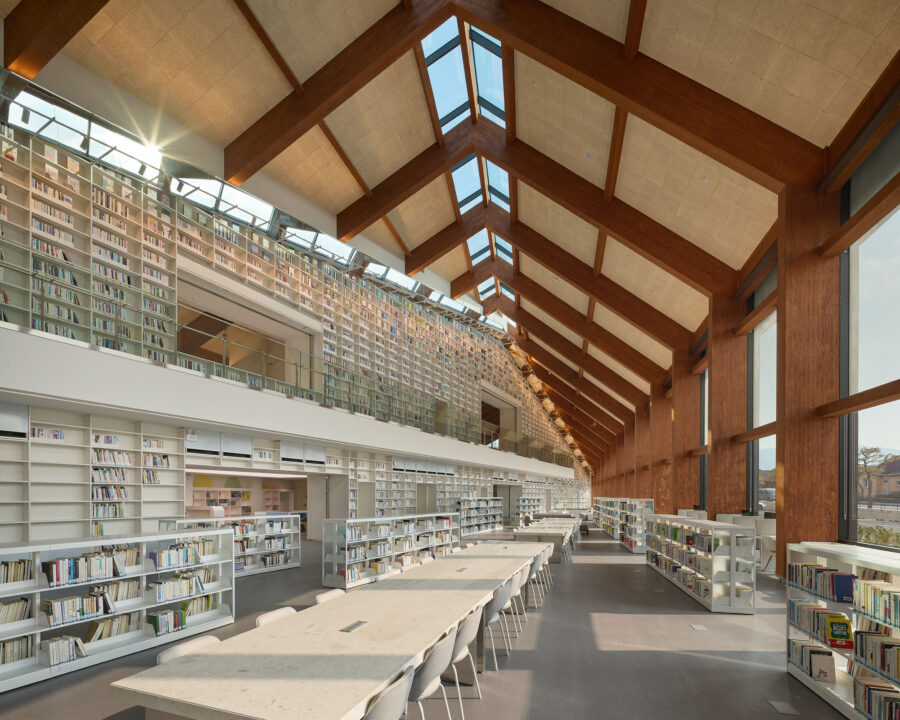
コペンハーゲンに新たな健康センターが誕生した。本施設は、豊富な自然光、天然素材、緑、そして運動と交流のための空間を組み合わせ、生活習慣病のリハビリテーションと治療を支援する建築であり、高さ15mの木製アーチが連続する彫刻的なリズムによって、印象的な空間を形成している。

©︎ Adam Mørk
人の行動と感情に寄り添う建築
私たちを取り巻く建物や景観は、行動や感情、身体的健康に深く影響を与える。ドルテ・マンドラップはこの考えを基に、生活習慣病に苦しむ人々の身体活動促進と生活の質向上を目的として本センターを設計した。
緑地、自然光、温かみのある素材、そして交流の場を重視することで、非人間的で臨床的な雰囲気を排した、居心地のよい環境を実現している。
「このセンターでは、治療を受ける人々の生活の質を高めるだけでなく、より健康的なライフスタイルへと導く空間を創造したいと考えた。設計は、将来の利用者やスタッフ、行政部門との協働的なプロセスを通じて発展し、リハビリテーションを支える機能や空間性、触感、素材を探求することができた。とりわけ重要だったのは、人と人が出会い、支え合うための空間を確保することであった。」
創設者兼クリエイティブディレクター
ドルテ・マンドラップ

©︎ Adam Mørk

©︎ Adam Mørk
木の温もりがもたらす安心感
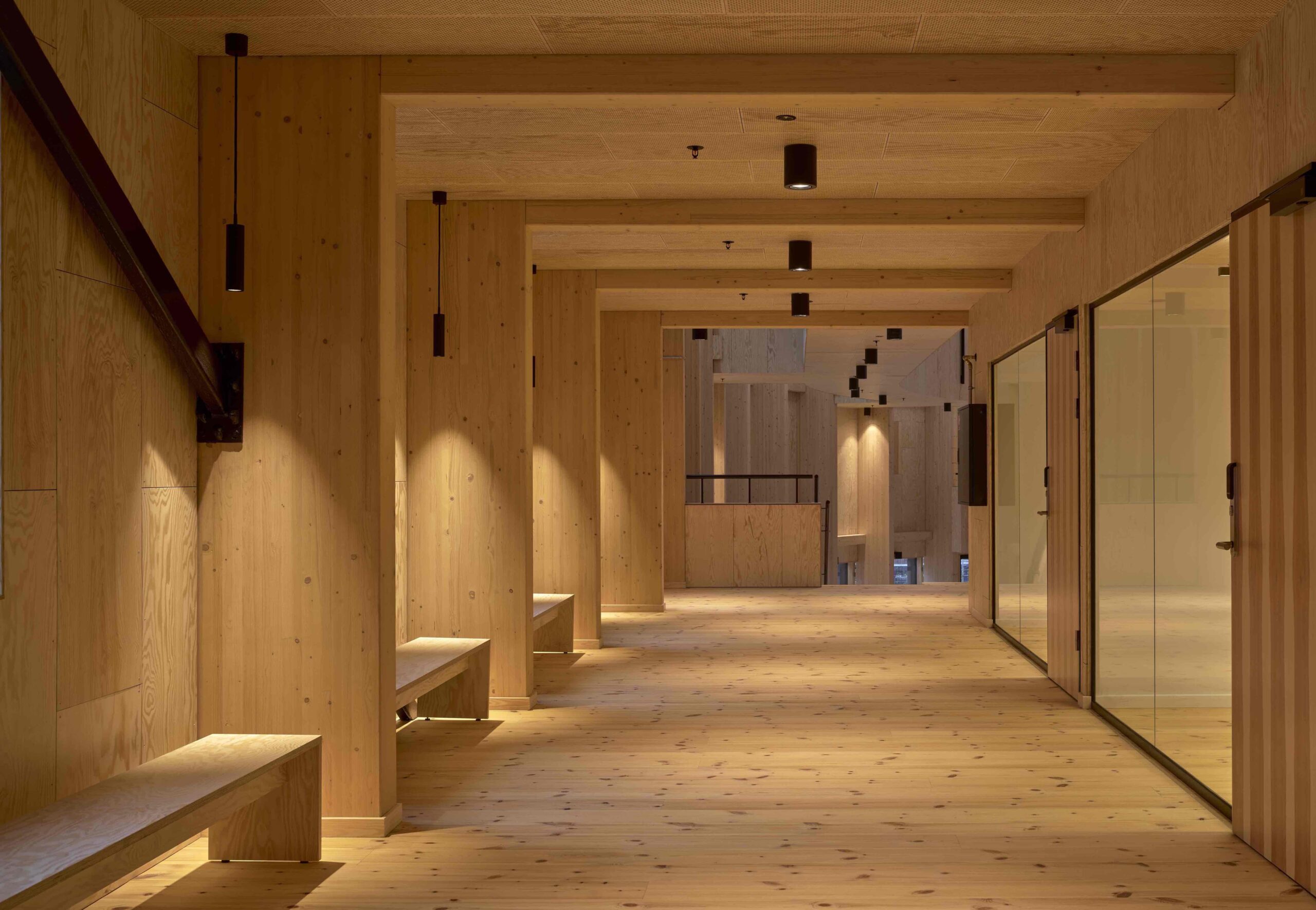
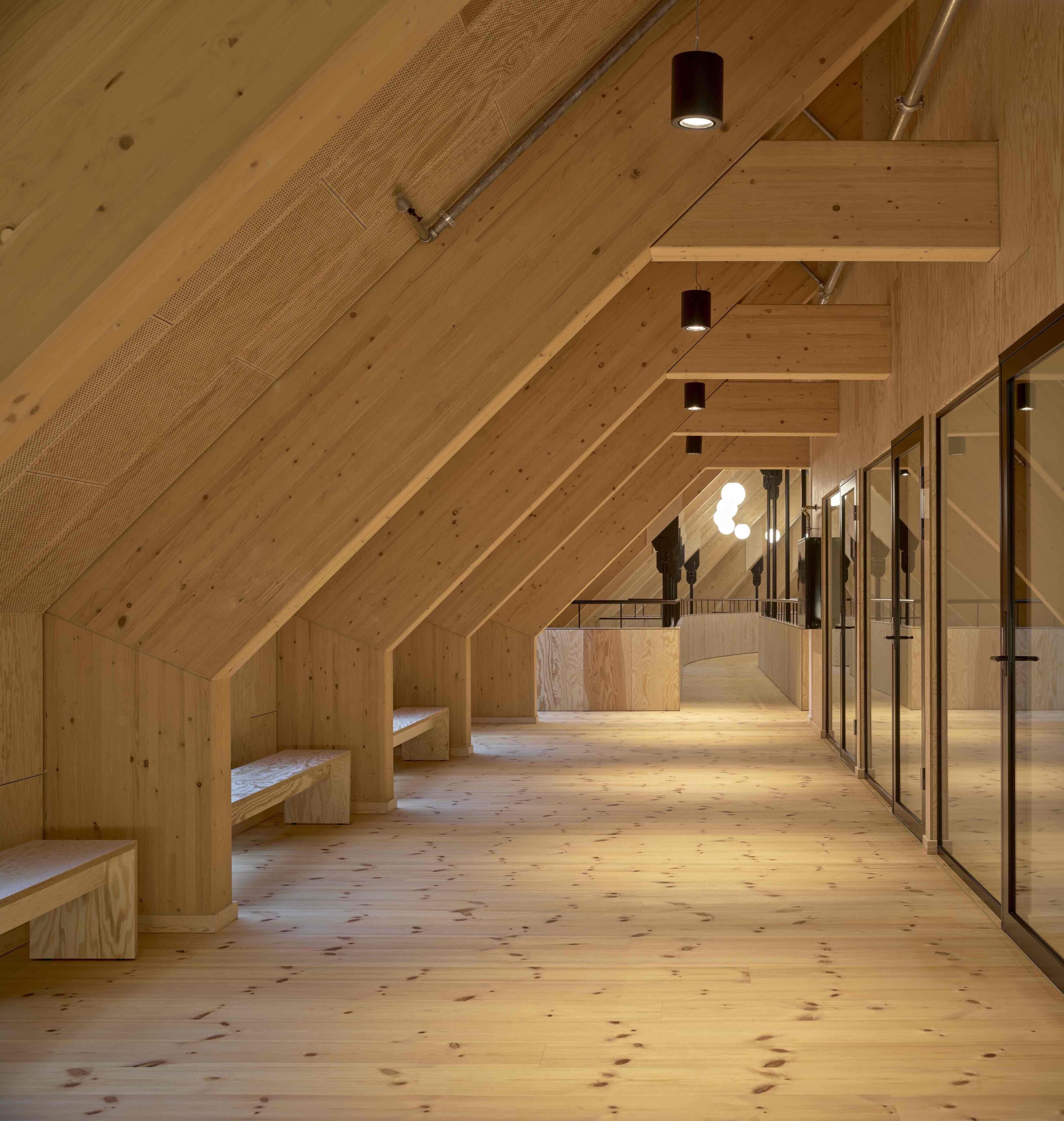
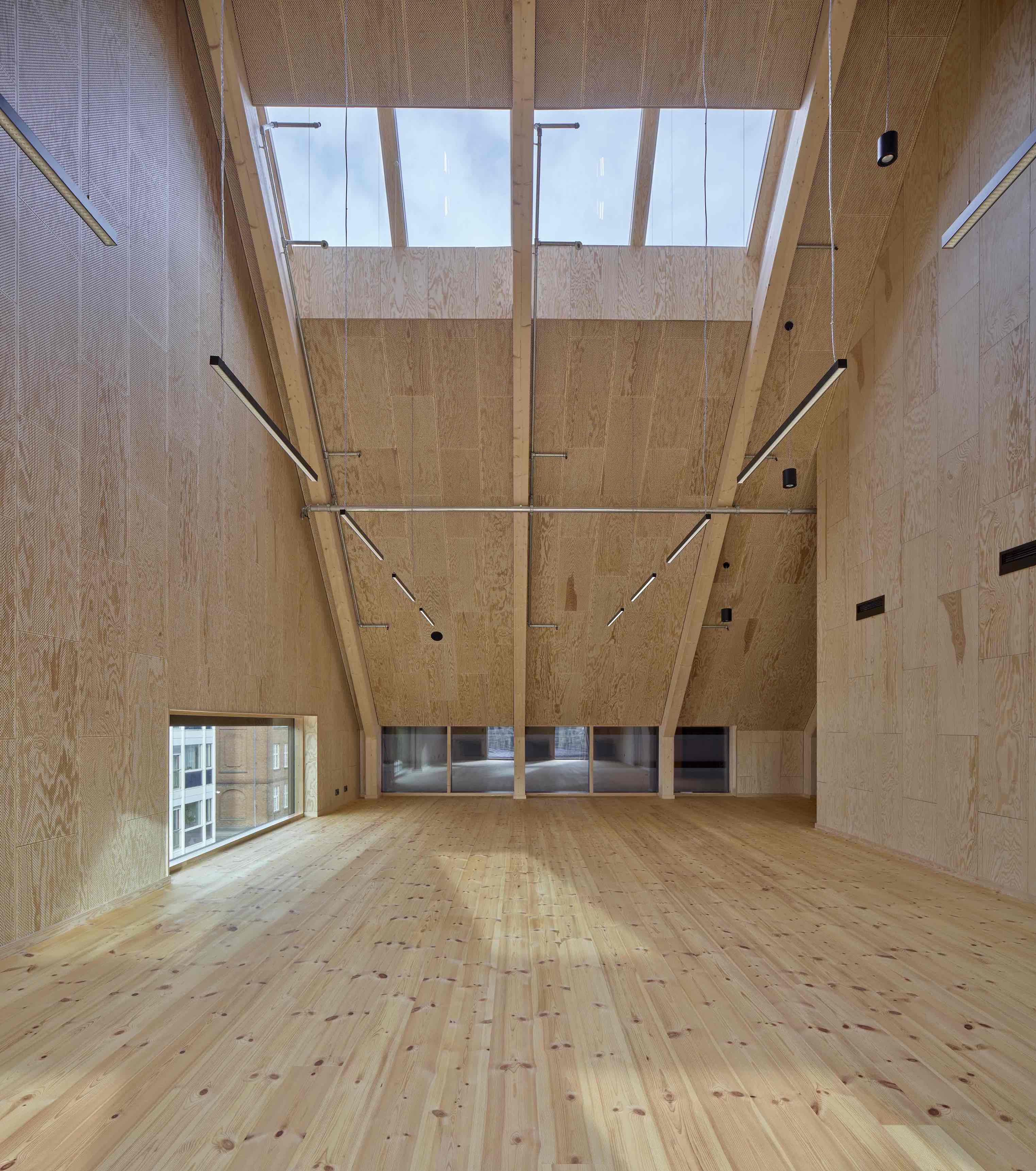
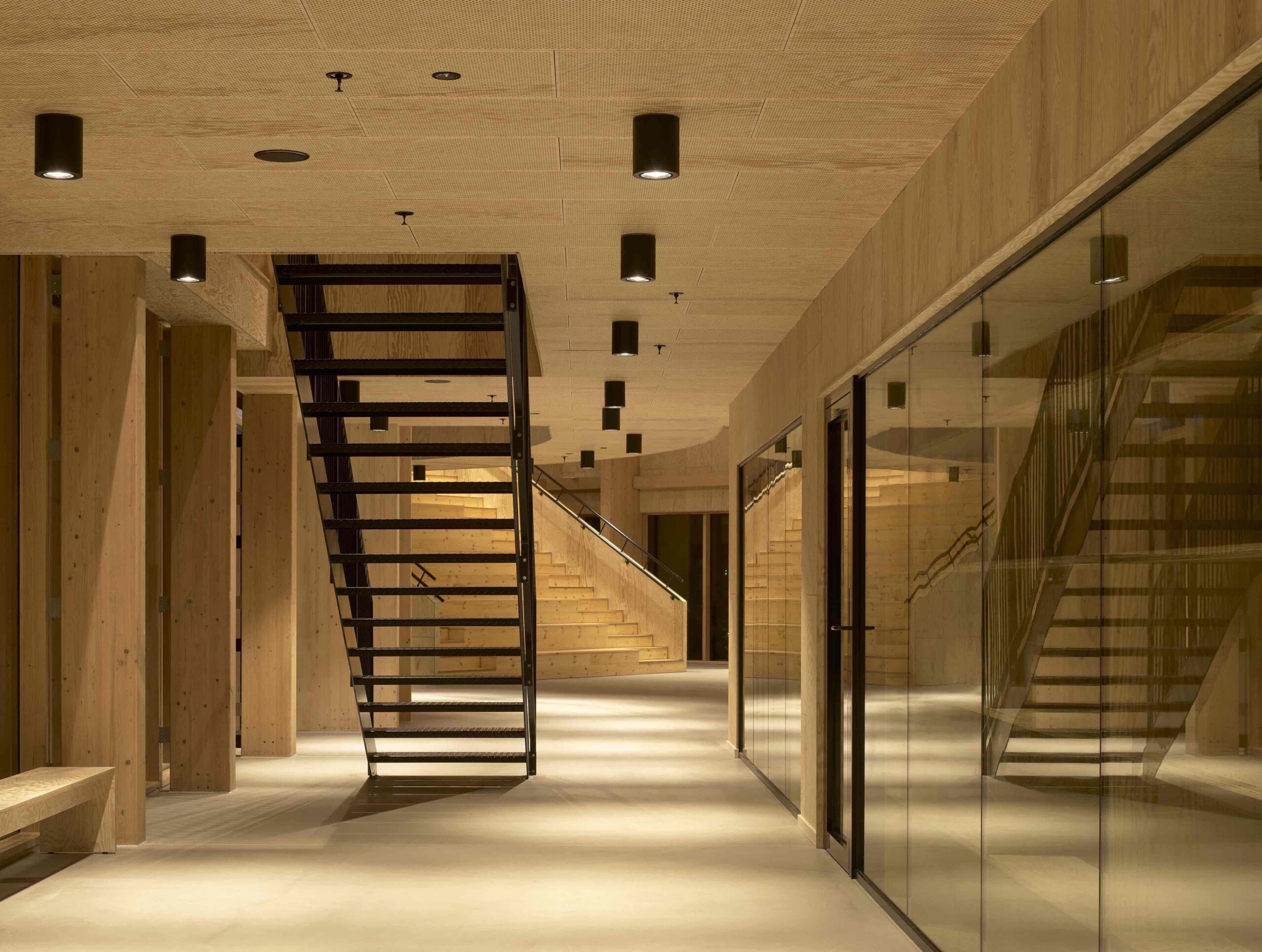
内部の壁と天井は木製建材で覆われており、その一部は音響調整のため穿孔加工が施されている。この素材は快適性を高め、空気質を改善し、ストレス軽減に寄与する特性から採用された。
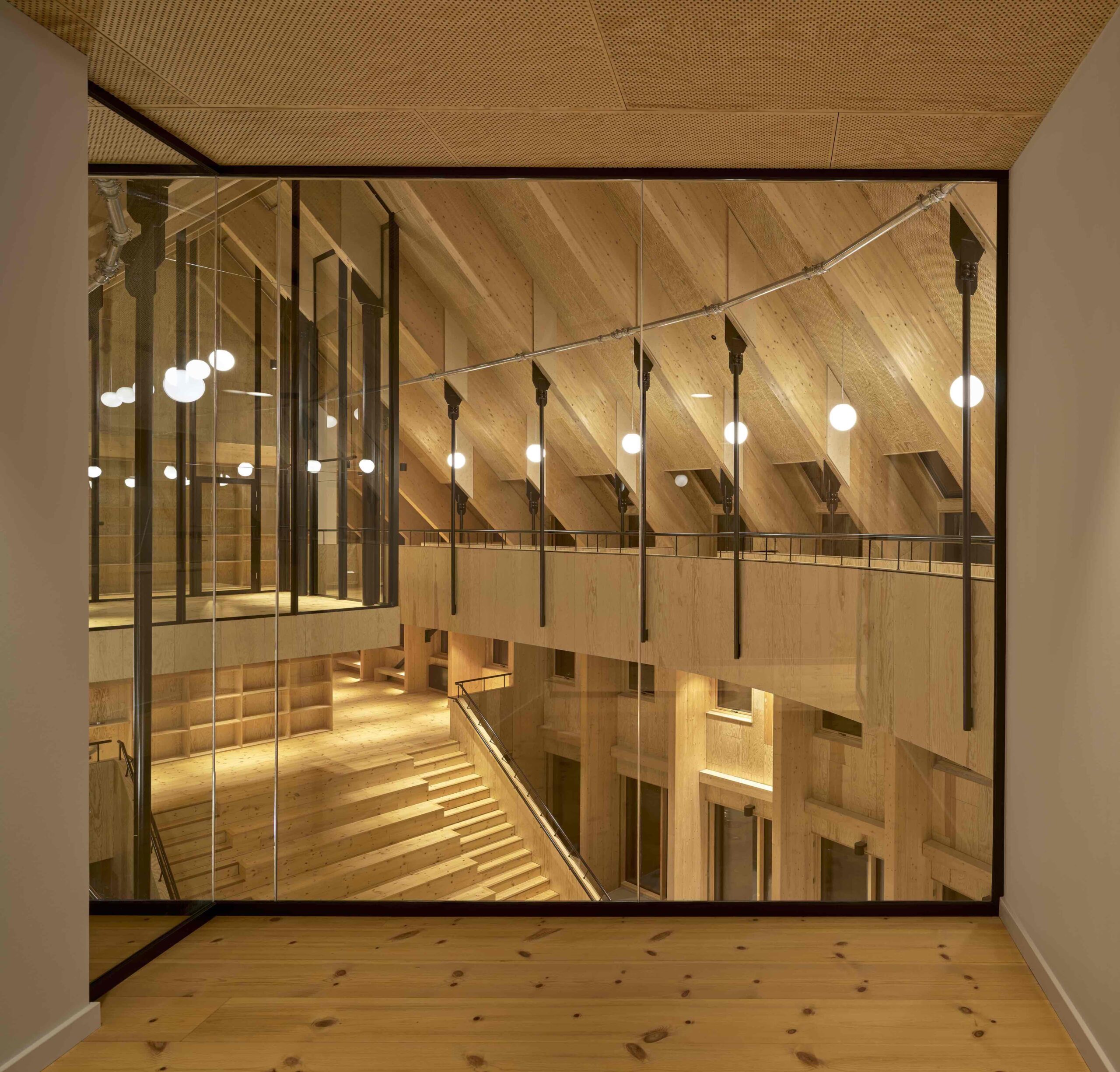
建物に入ると、15mの高さを誇る三関節集成材アーチによる開放的なアトリウムが来訪者を迎える。この中心空間は「ハートルーム」と名付けられ、建物の循環システムと連動しながら、教室、トレーニングエリア、相談室、ミーティングスペース、健康的な料理ワークショップのためのキッチンなどを結びつける。

©︎ Adam Mørk
アトリウム内には座席を組み込んだ大きな木製階段が設けられ、人々が集い交流する場所として機能している。
そこでは即興的な活動や偶発的な出会いが生まれる。ファサードと屋根に設けられた大きな開口部から柔らかな自然光が差し込み、1日を通して空間に変化する表情を与えている。

©︎ Adam Mørk
文脈を反映し対比する
新たなヘルスセンターは、コペンハーゲンの人気地区「デ・ガムレス・ビー(De Gamles By:高齢者の街)」の入口に位置し、長年にわたりケアと健康、ウェルビーイングの象徴とされてきた地域の一部をなす。
1892年に高齢者のための病院兼住居として建設されたこの地区は、共同生活の理念を体現し、静かで自立した村のような環境を提供してきた。今日、この地区は開放的な公共空間として再構想され、密集したノアブロ地区内に多様なコミュニティサービスとユニークなレクリエーション空間を提供している。
©︎ Adam Mørk
〈コペンハーゲン健康センター〉は、周辺地域に特徴的な切妻屋根のモチーフから着想を得つつ、既存建築とは現代的な対比を形成している。建物は庭園に向かって開く柔らかなアーチ形状を呈している。黒褐色の金属板が街路側に向かって内部空間を包み込み、まるで屋根からファサードへと引き伸ばされた皮膜のように保護する。
屋根には164m²の太陽光パネルがシームレスに組み込まれ、再生可能エネルギーを生産・貯蔵する。内部の木造構造は、外装ファサードと通りレベルまで続く深いスリットにおいて、外からも視認性の高い特徴となっている。庭園側には全面ガラスファサードを採用し、自然光を取り込みながら、内部空間と緑豊かな屋外空間を視覚的に連結している。
©︎ Adam Mørk
ヘルスセンターについて
〈コペンハーゲン健康センター〉は、2型糖尿病や心臓病を含む生活習慣病患者のリハビリテーション・治療需要の高まりに対応するため、コペンハーゲン市が設立した。糖尿病は世界で最も急速に増加する慢性疾患の1つであり、コペンハーゲン市だけでも2型糖尿病患者数は2045年までに2万人から3万3千人に増加すると予測されている。
がんセンターやコペンハーゲン大学病院など、多くの研究機関に近接して立地する当センターは、ケアを必要とする多くのコペンハーゲン市民の生活において重要な役割を果たすと同時に、将来の予防・治療・リハビリテーションに関する研究に貢献する。
©︎ Adam Mørk
©︎ Adam Mørk
©︎ Adam Mørk

©︎ Adam Mørk
©︎ Adam Mørk
©︎ Adam Mørk
©︎ Adam Mørk
©︎ Adam Mørk
©︎ Adam Mørk
©︎ Adam Mørk
以下、ドルテ・マンドラップのリリース(英文)です。
Dorte Mandrup completes Centre for Health in Copenhagen with a striking wooden interior
13.10.2025The new Centre for Health in Copenhagen combines plenty of daylight, natural materials, greenery, and room for movement and community to support rehabilitation and treatment of lifestyle-related diseases. Designed by Danish architecture studio Dorte Mandrup, the building features an impressive central space, formed by the sculptural rhythm of 15-metre-high timber arches.
The buildings and landscapes that surround us can affect our behaviour, emotions, and physical health in profound ways. With this in mind, Danish architecture studio Dorte Mandrup has designed Centre for Health in Copenhagen to promote physical activity and improve quality of life for people struggling with lifestyle-related diseases. By prioritising green spaces, plenty of daylight, natural warm materials, movement and places for people to meet and interact, the architecture forms an inviting and calming place that eschews the often impersonal and clinical character of traditional health institutions.
“With Centre for Health, we wanted to create a space that not only contributes to improving the quality of life for the people receiving treatment but actively nudges and empowers them towards a healthier lifestyle. The design has evolved through an inclusive and collaborative process with future users, employees and central administration which has allowed us to explore functions, spatiality, tactility and materials that supports their specific needs and strengthens rehabilitation. An important consideration has been to ensure room for interaction and community as having this sense of belonging and togetherness is a crucial part of making treatment more accessible, engaging and supportive, and thus encourage long-term changes,” says Dorte Mandrup, Founder and Creative Director.
Warmth and homeyness are drawn through the interior spaces by exposed wooden cladding on walls and ceiling – some perforated for acoustic regulation – chosen for its ability to provide comfort, enhance indoor air quality, and reduce stress. Upon arriving, you are met by an open atrium, shaped by a striking loadbearing structure consisting of 15-metre high three-hinged glulam arches. This central, communal area has been named the Heart Room, and like a heart, it connects to the buildings circulatory system and binds the different functions together. From here, there is access to classrooms, areas for physical training, consultation rooms, open meeting spaces, and a kitchen for healthy cooking workshops. A large wooden staircase with integrated seating forms a meeting place in the central atrium where people can gather and interact with each other, enabling spontaneous, impromptu activities and social encounters. The interior spaces are illuminated by a gentle natural light influx through large windows in the façade and roof which continuously offer new impressions throughout the day.
Reflecting and contrasting the context
Nestled by the entrance to the beloved Copenhagen neighbourhood ‘De Gamles By’ (City of the Elderly), the new Centre for Health is part of an area that has long been synonymous with care, health, and wellbeing. Originally built in 1892 as a hospital and home for the city’s elderly, the architecture and landscapes of ‘De Gamles By’ were designed to provide a calming, self-contained village atmosphere, embodying a vision of communal living for those who were no longer able to care for themselves. Today, the neighbourhood has been reimagined as an open, public environment, offering different community services and a unique recreational pocket within the dense Nørrebro district.The new Centre for Health draws inspiration from the gable motifs and saddle roofs characteristic of the surrounding area yet forms a contemporary contrast to the existing. The building is shaped as a softly curved arch that opens towards a garden. Black-brown metal sheets embrace and shelter the interior spaces towards the street – like a protective skin pulled from the roof over the façade. Seamlessly integrated into the roof are 164 square metres of solar cells that will produce and store renewable energy. The interior timber structure is a readable feature in the exterior façade as well as in the deep slats that continue down to street level, providing protection from solar gain. Towards the garden, the building opens with a full glass façade, inviting natural daylight and visually connecting the interior with the green, outdoor spaces.
About Centre for Health
Centre for Health was initiated by the City of Copenhagen to meet the growing demand for the rehabilitation and treatment of people suffering from lifestyle-related diseases, including type-2-diabetes and heart diseases. Diabetes is one of the fastest growing chronic diseases in the world with the number of people with type-2-diabetes in Copenhagen alone expected to increase from 20.000 to 33.000 by 2045. Located close to many surrounding research institutions, including Centre for Cancer and Copenhagen University Hospital, the centre will play an important role in the lives of the many Copenhageners in need of care while contributing to research on future prevention, treatment and rehabilitation.About Dorte Mandrup
Danish architecture studio Dorte Mandrup is internationally renowned for their contextual and human-centred approach, designing buildings that enhances the awareness and experience of each place. Founded by architect Dorte Mandrup in 1999, the studio consists of an international team of 85 employees working across scale and geography. In recent years, the studio has distinguished itself in the architectural field with their ability to work within complex and sensitive contexts. Among the most prominent projects are the Wadden Sea Centre in Denmark, Kangiata Illorsua – Ilulissat Icefjord Centre in Greenland, The Whale in Norway, the Exile Museum in Berlin, and the Nunavut Inuit Heritage Centre in Canada’s Northernmost territory. Read more: www.dortemandrup.dkOther credits:
Client: City of Copenhagen
Architect: Dorte Mandrup
Engineer: AB Clausen and Spangenberg & Madsen
Landscape architect: Bisgaard LandscapePhotos & Drawings
Photos and drawings can be used in mention of Centre of Health and Dorte Mandrup. Photos must be credited ©Adam Mørk as indicated in the file name. Drawings must be credited ©Dorte Mandrup.
ドルテ・マンドラップ 公式サイト
https://dortemandrup.dk/work/centre-health-denmark


![[Report]方丈庵から生き方を問う、21_21 DESIGN SIGHT 企画展「方丈記に学ぶ –生きるを編み直す小さな建築–」会場レポート](https://magazine-asset.tecture.jp/wpcms/wp-content/uploads/2026/09/01181900/20260828hojoki-ex_01_mag-endo4350-900x676.jpeg)