

遊牧民の文化を織り込む小さな森のようなホテル - ウイグル自治区の風景と共生する〈ホテルインディゴ・ナラティ〉
©︎ Wang Ting
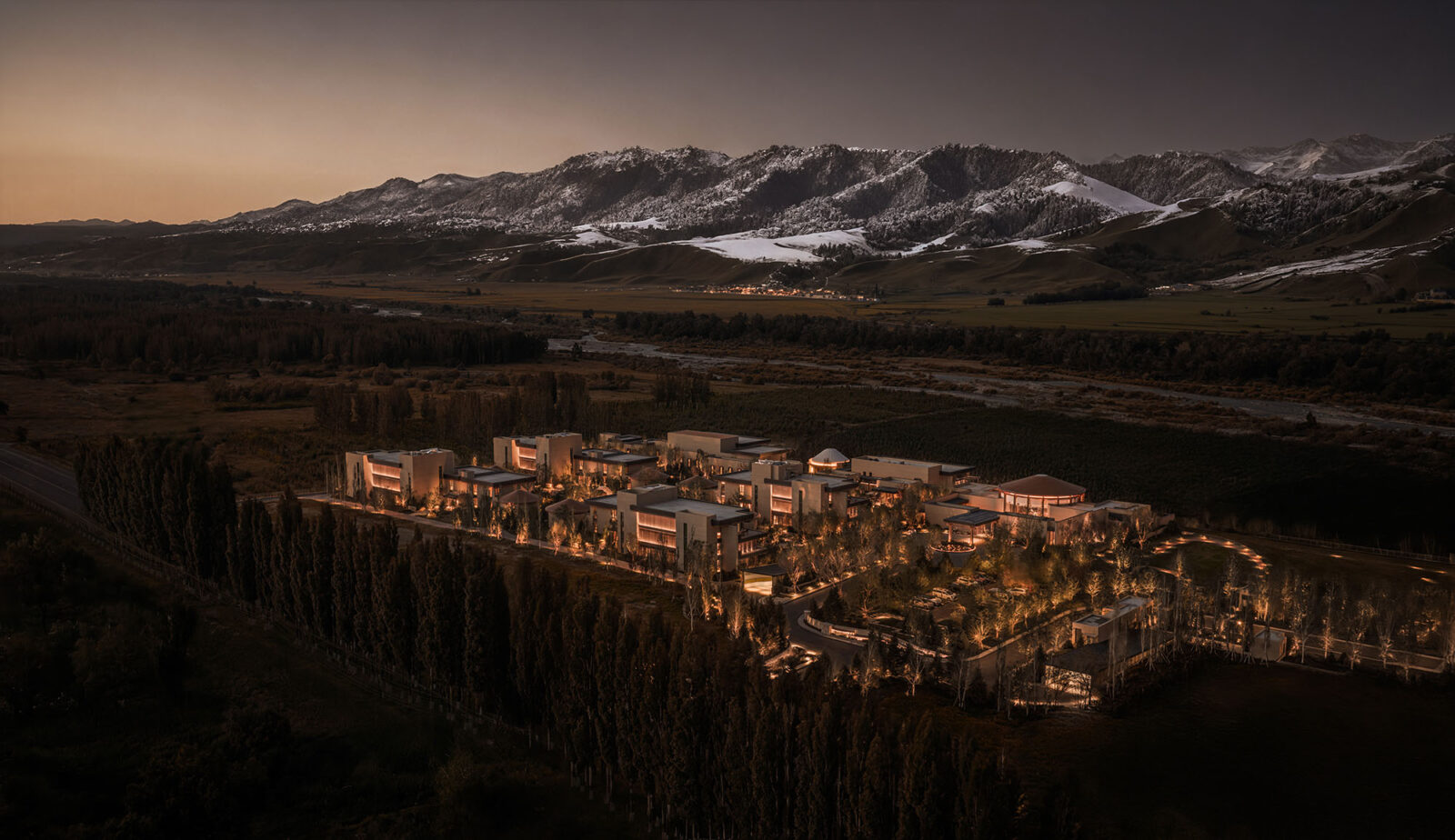
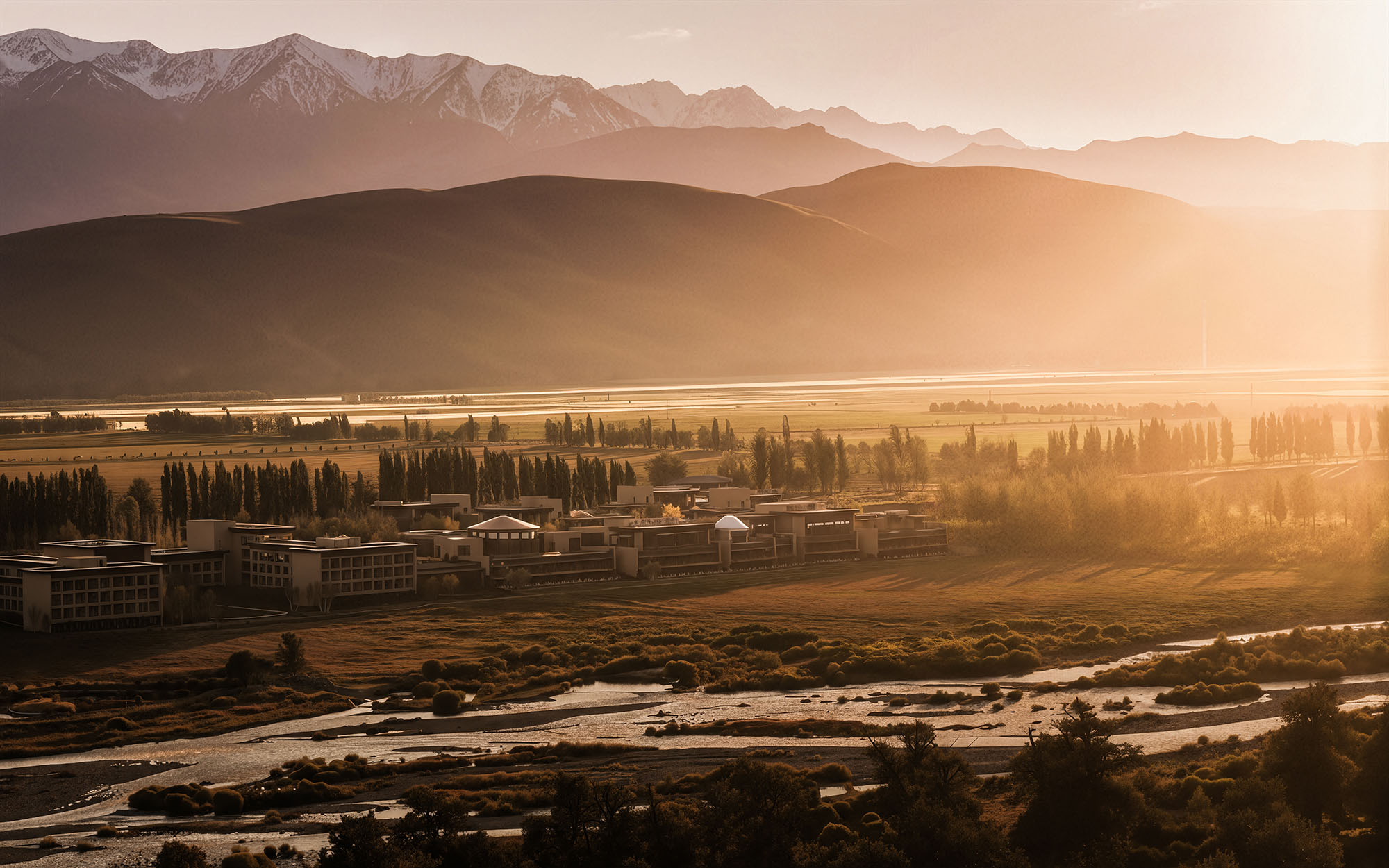
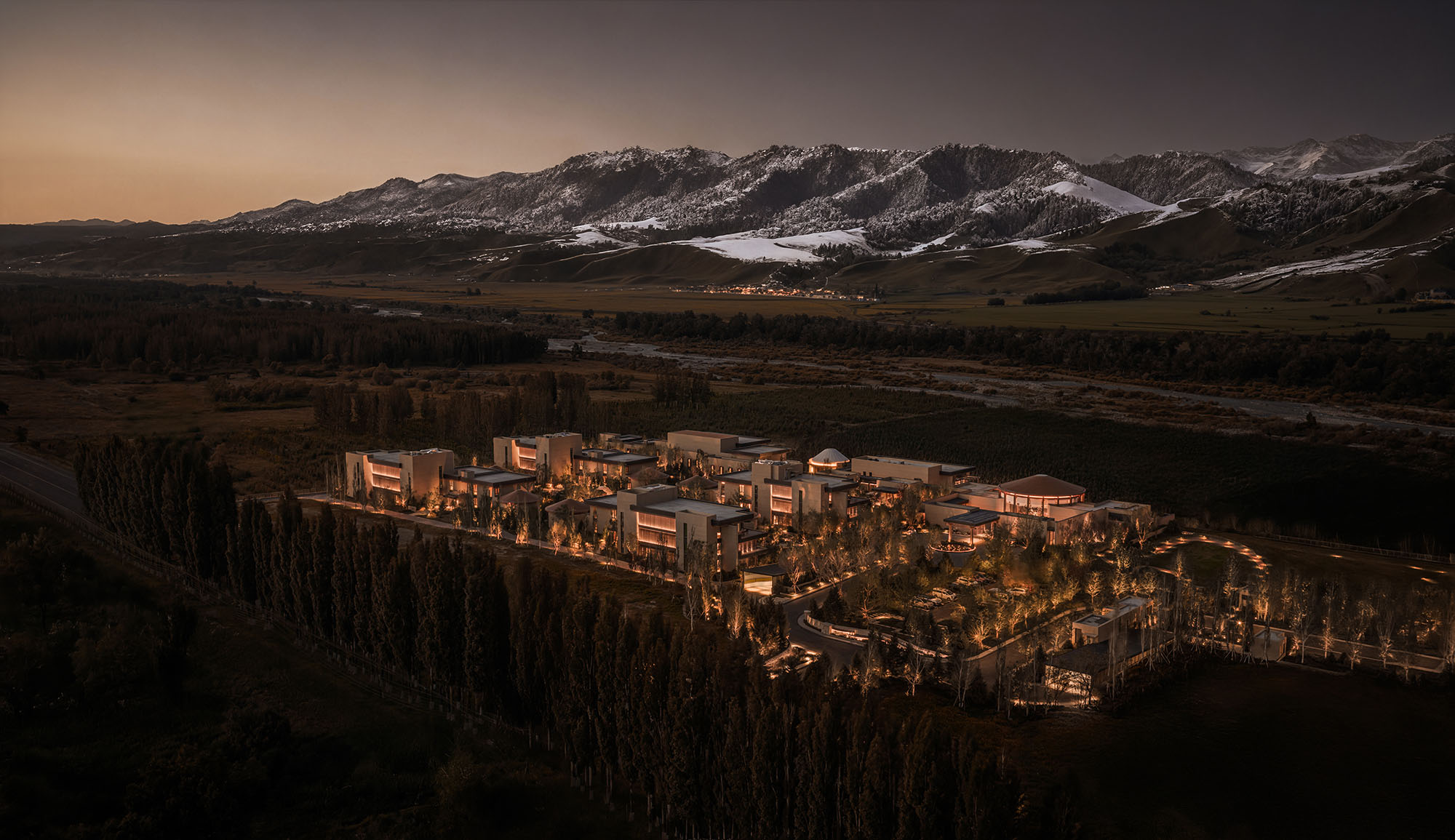
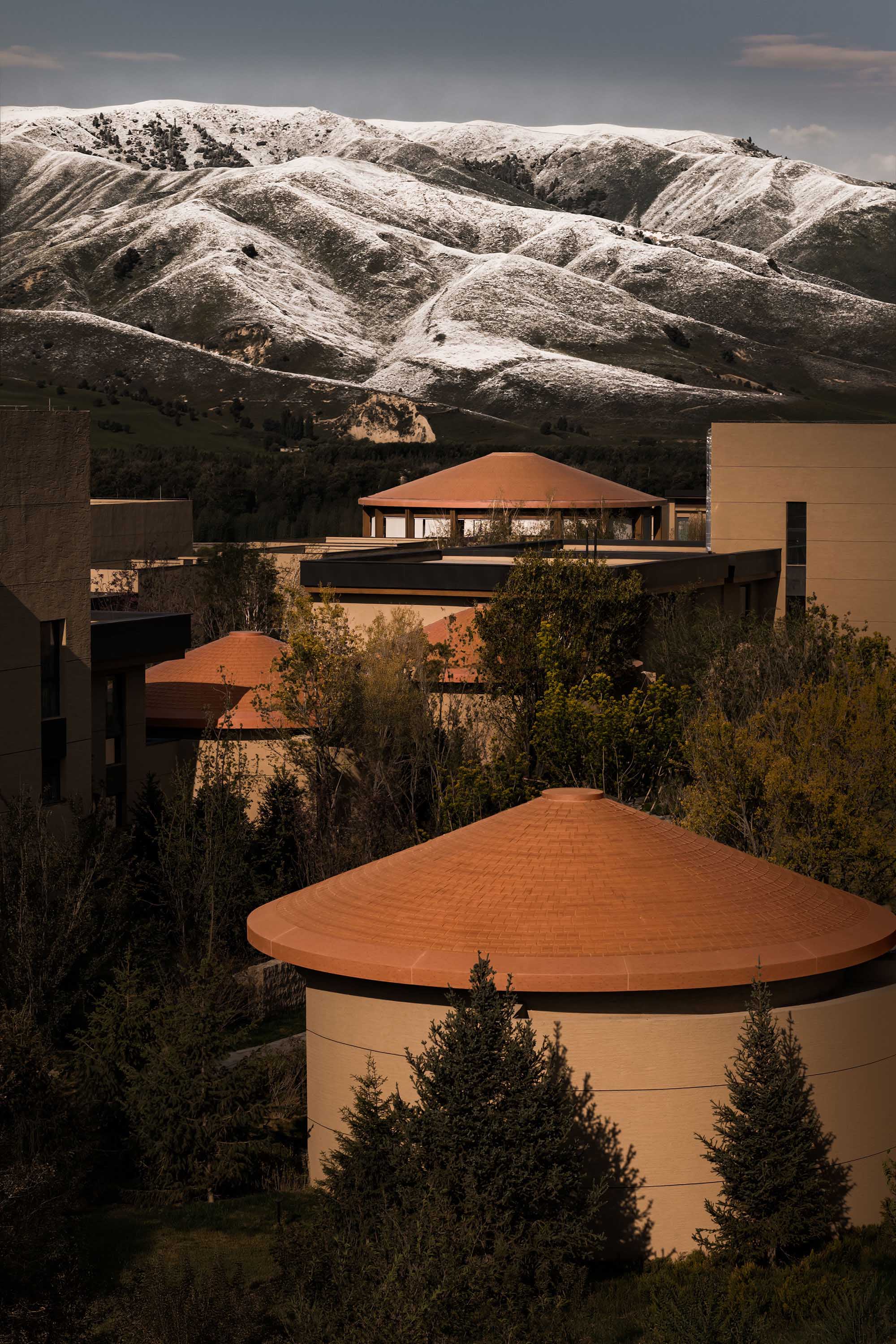
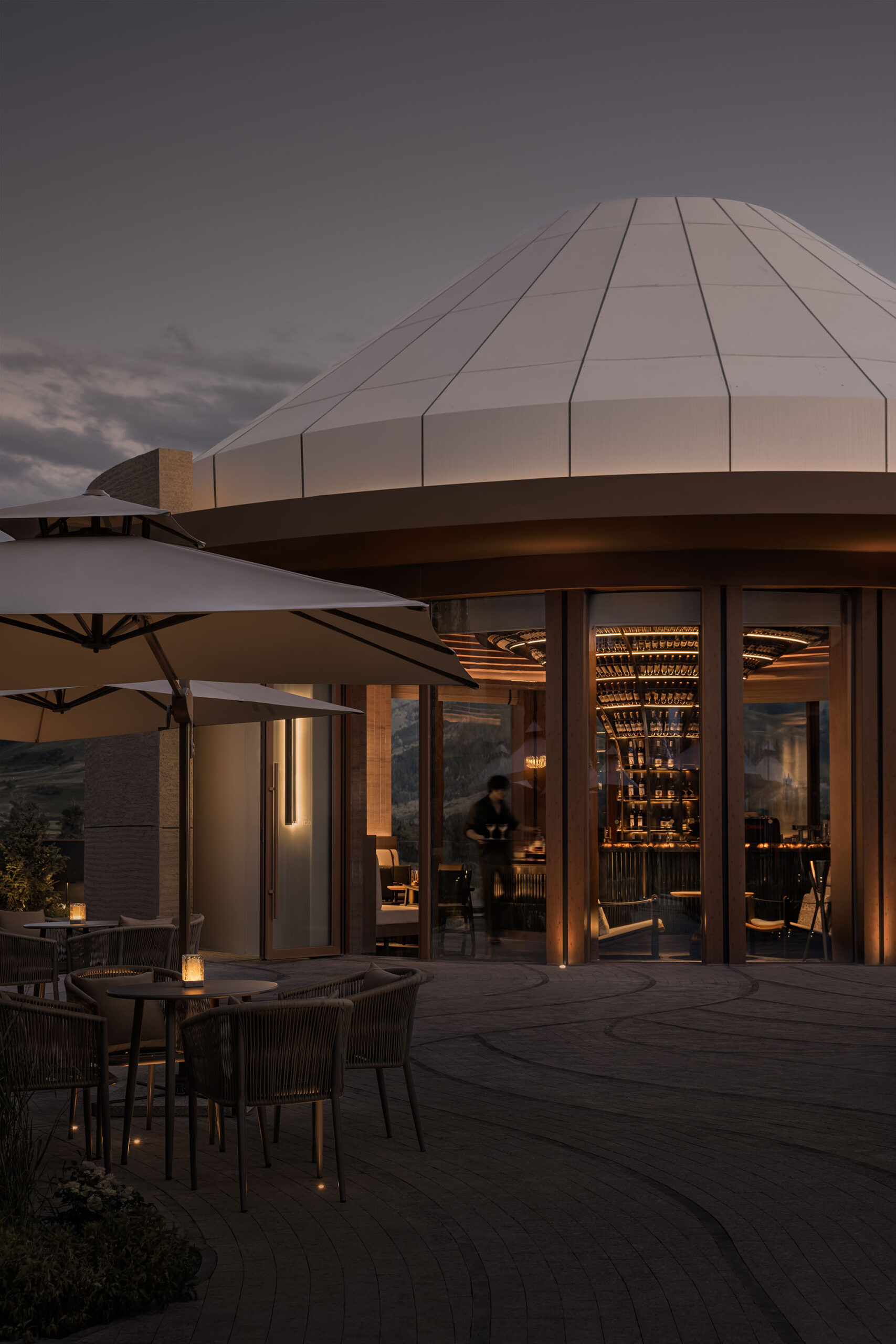
中国の新疆ウイグル自治区に建つ〈ホテルインディゴ・ナラティ(Hotel Indigo Nalati)〉は、移動式住居「パオ」のような建物が点在する、遊牧民の文化を取り入れた小さな森のようなホテルです。
香港、シンガポール、ロンドン、東京に拠点をおくデザイン事務所 CCD(Cheng Chung Design)が設計しました。
注目ポイント
- 四季や遊牧民の生活様式を織り込むホテル空間
- 風景と共生する「分散型レイアウト」
- パオや伝統的な格子といった、ヴァナキュラーな要素の現代的再解釈
- 休息以上のものを提供する、魂の旅路としての滞在体験
(以下、CCDから提供されたプレスキットのテキストの抄訳)
©︎ Wang Ting
©︎ Wang Ting
草原の四季と遊牧の物語を織りなす
〈ホテルインディゴ・ナラティ〉は、イリ・カザフ自治州ナラティ町の中心部にあり、広大な草原と天山山脈に抱かれた絶好のロケーションを誇る。「独庫公路を辿る壮大な旅、ナラティの四季を巡って」というデザインテーマのもと、CCDはカザフ語で「季節」を意味する「マウシム(mausym)」を空間の物語に織り込み、ナラティの四季の移ろいと遊牧民の日常の営みを捉えた。
全体のデザインは草原における遊牧生活の文化的系譜に着想を得ている。伝統的なパオや冬営地の要素がデザイン言語へと繊細に織り込まれ、この地域特有の文化的アイデンティティを静かに物語る空間となっている。
©︎ Wang Ting
風景に溶け込む分散型レイアウト
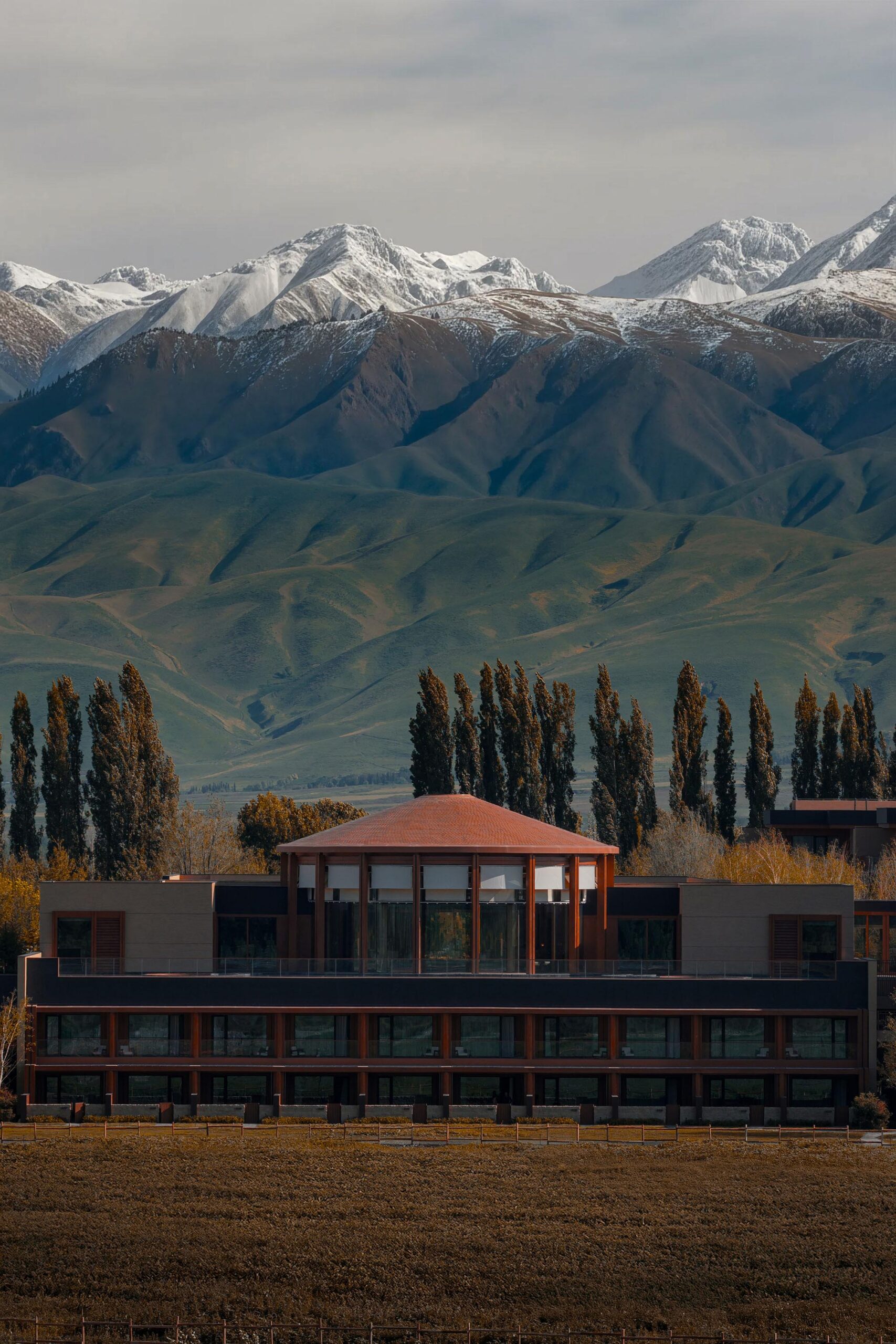
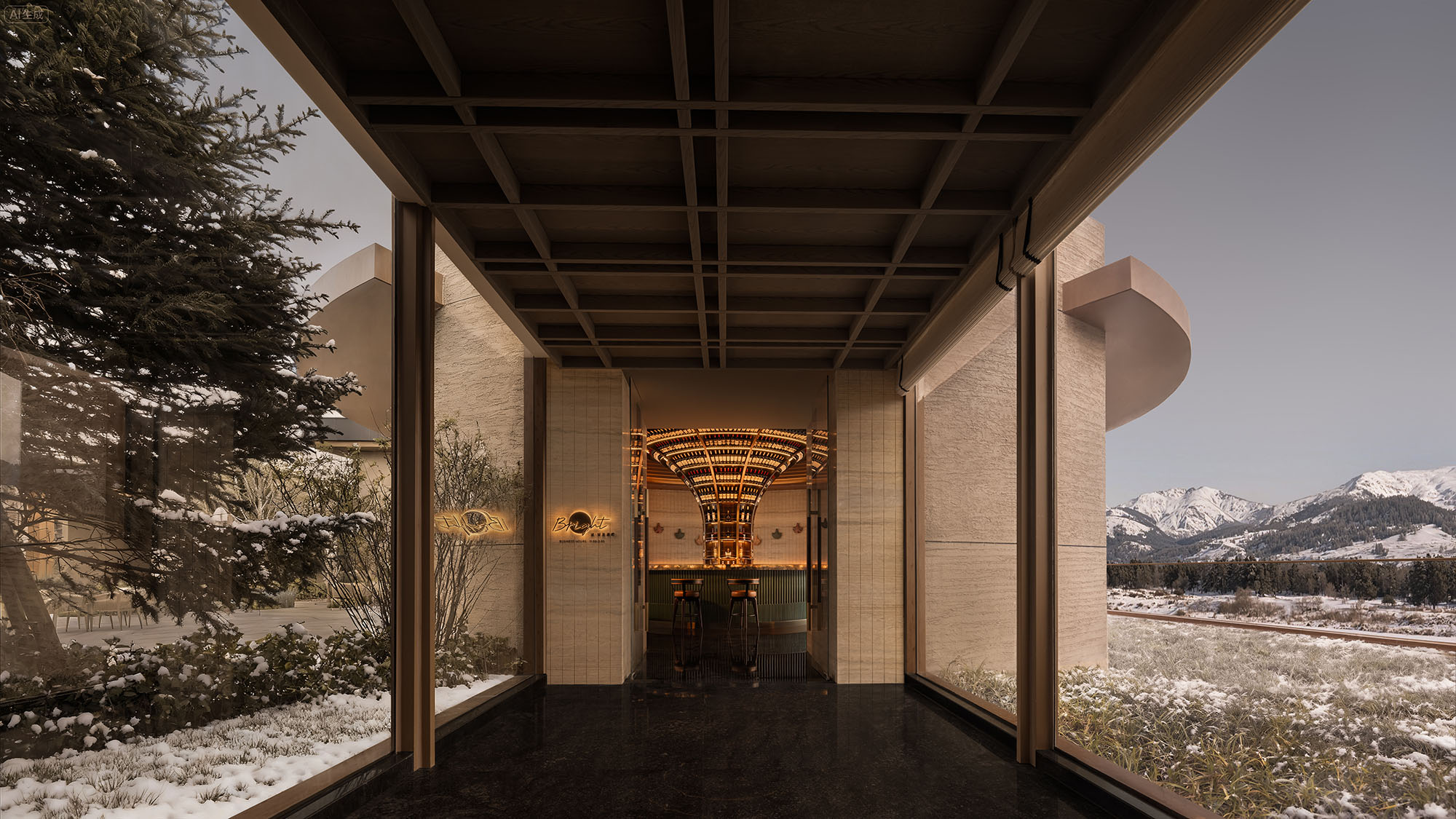
広大な荒野に点在する建物群は、遠景からは小さな森のように映る。草原文化に根ざした分散型のレイアウトを採用し、個々の構造物は曲がりくねった森の小道によって結ばれている。周囲の森林景観はホテルの生態系にシームレスに統合され、自然と共生するホスピタリティ環境が創出された。
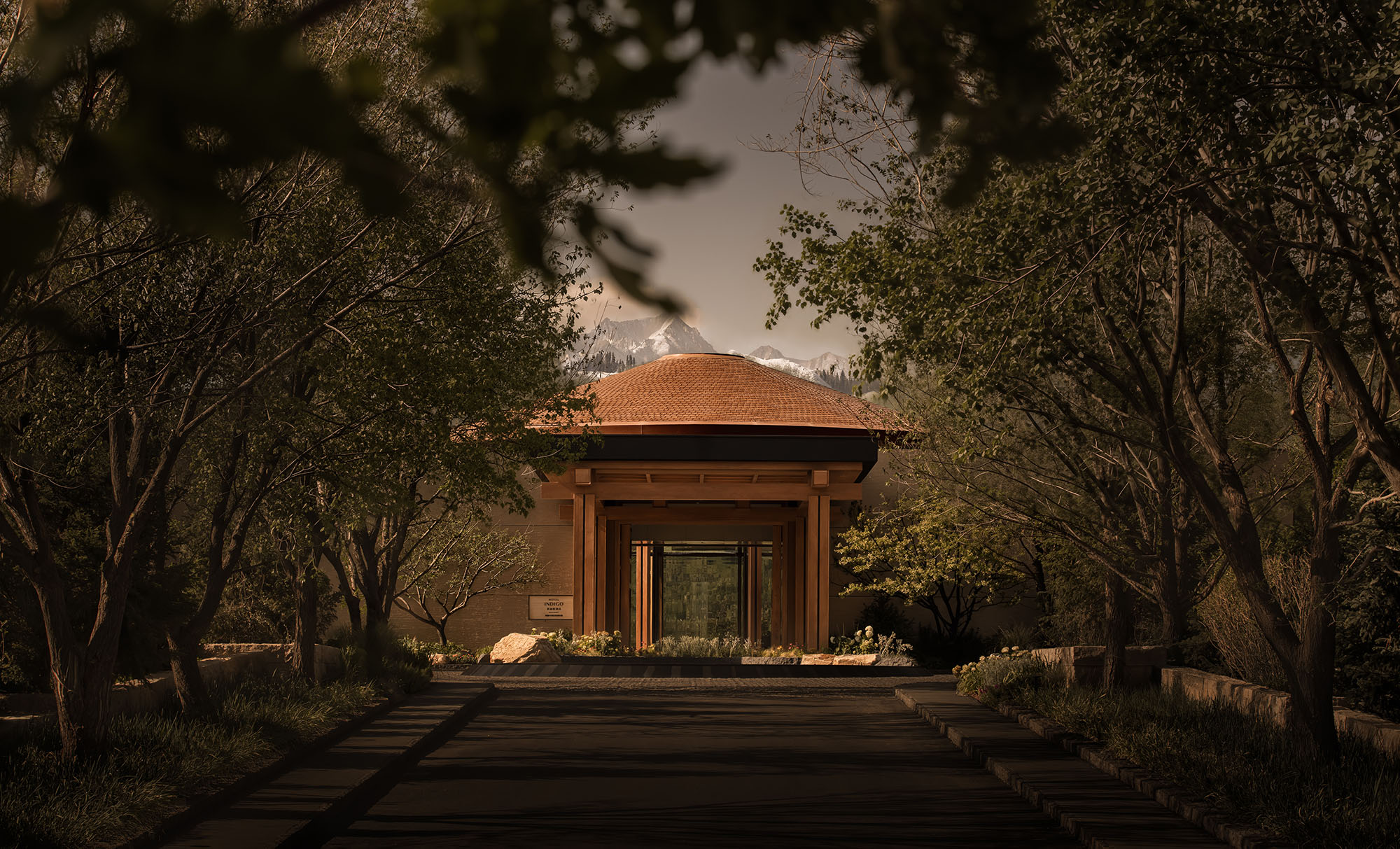
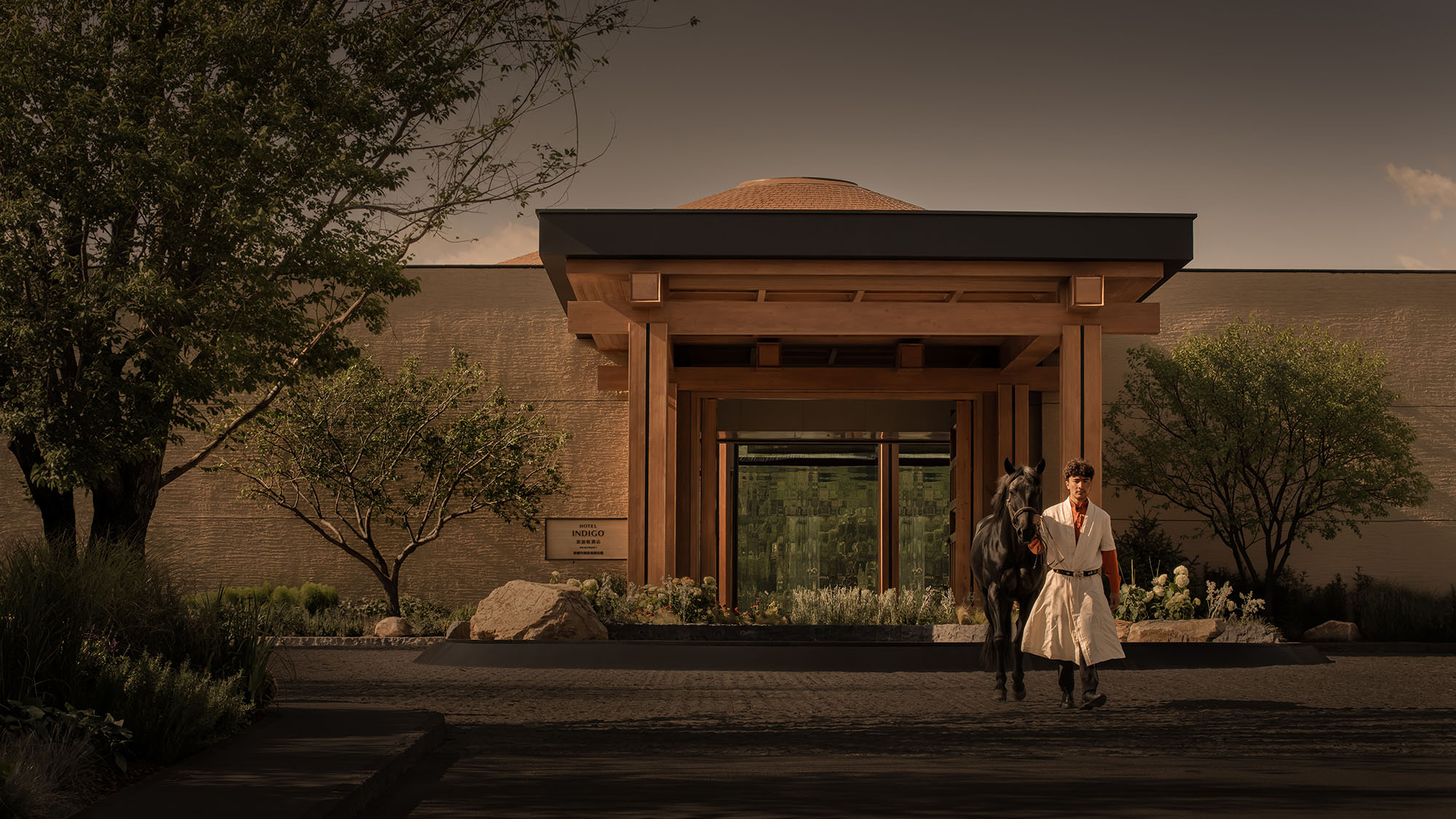
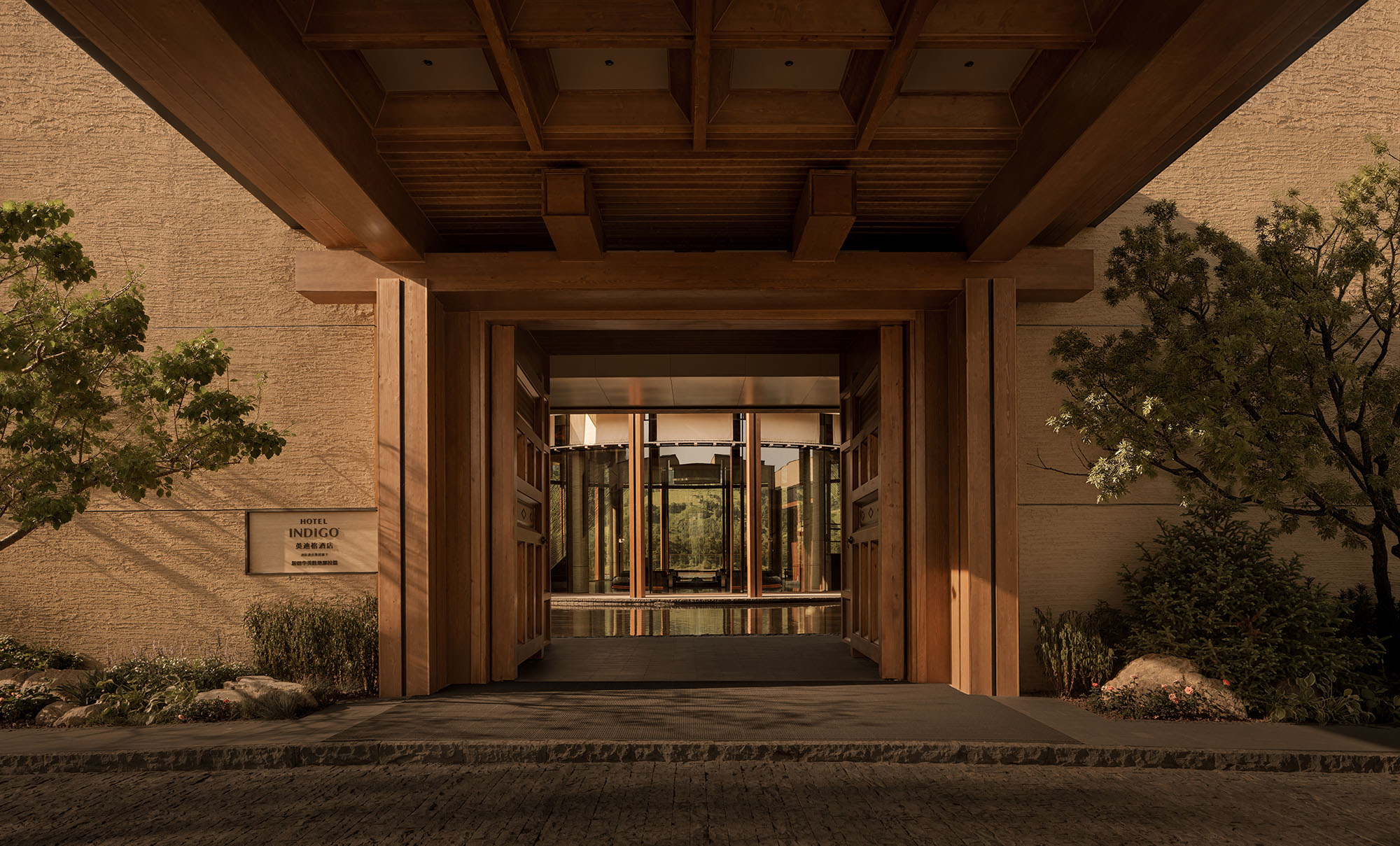
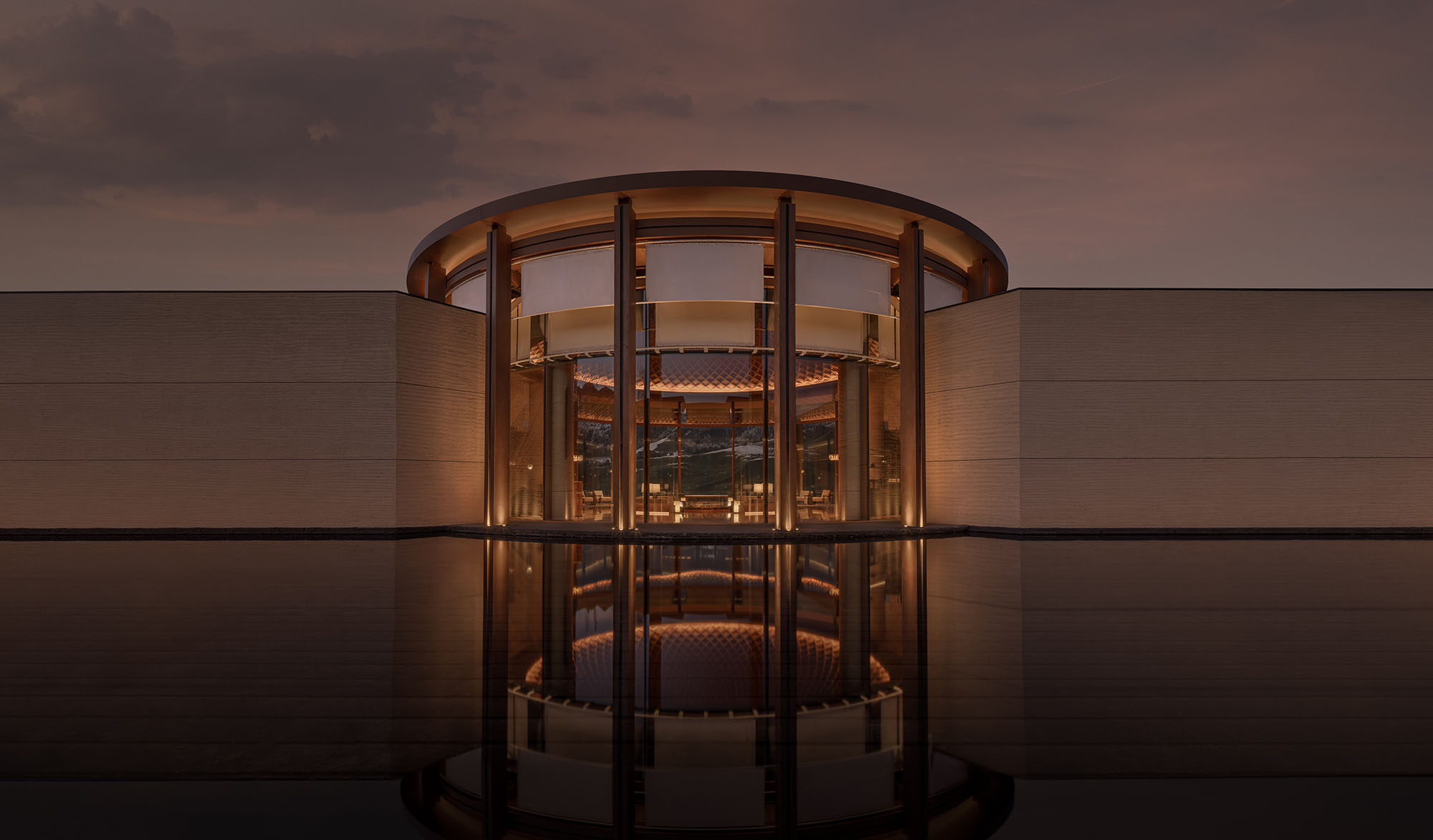
旅は、光を求めることから始まる。ナラティの日の出に着想を得たホテルのエントランスには、放射状に広がる陽光を想起させる曲線状のキャノピーが設けられた。伝統的な「アウル(遊牧民の集落)」式の歓迎を受け、ゲストは即座に豊かな地域文化の雰囲気に包まれることとなる。
降車エリアは「浮遊するキャノピー」の下に配置され、日陰を提供すると同時に中庭空間を自然に形成している。柔らかな曲線と温かみのあるトーンのエントランスは、あたかも草原の伝統的遊牧民集落へ足を踏み入れるかのような期待感を喚起する。
©︎ Wang Ting
©︎ Wang Ting
©︎ Wang Ting
©︎ Wang Ting
光と影が織りなす導入部
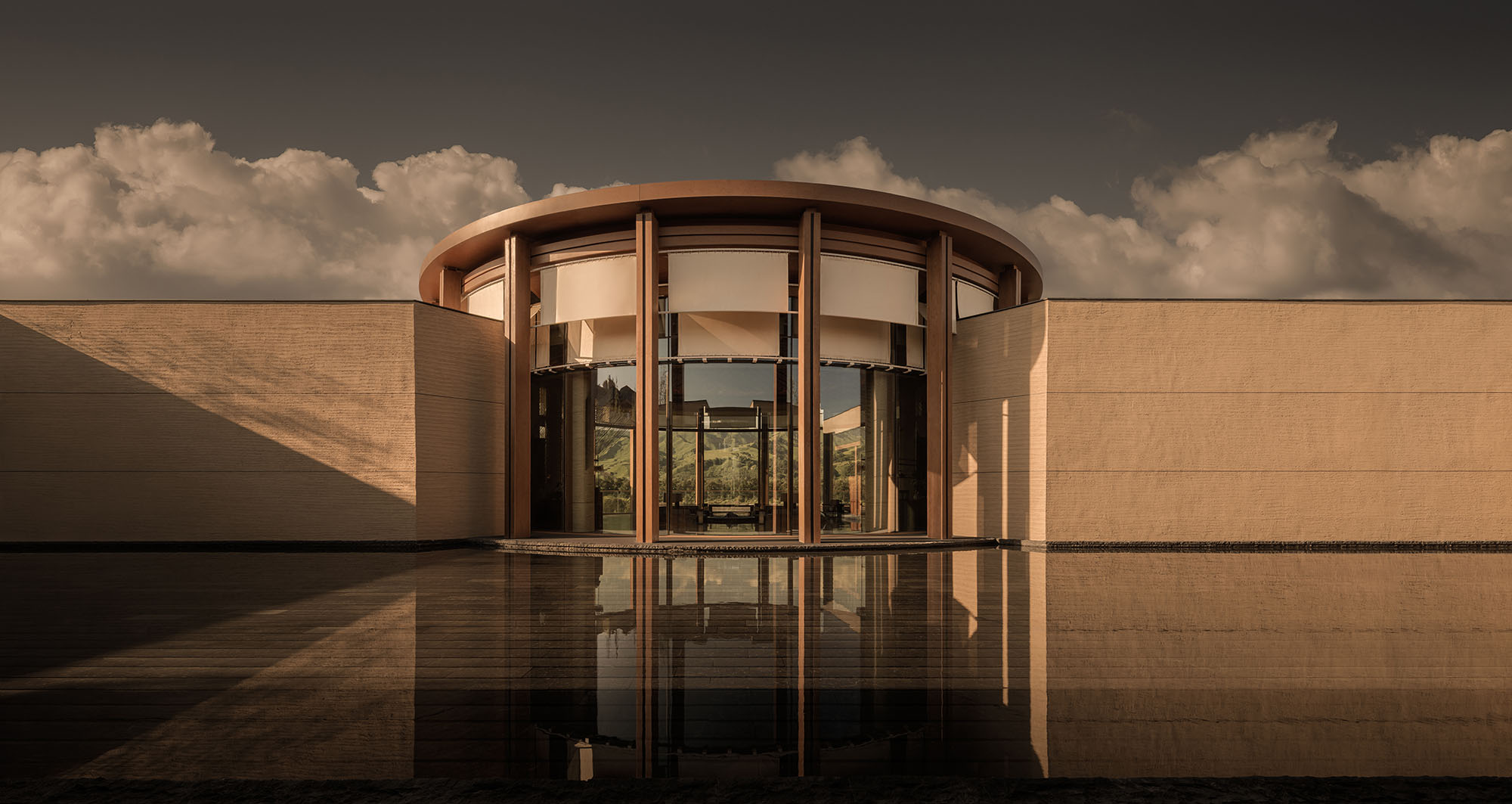
天山山脈、ナラティの日の出、ゴンナイシ川、ウスン族のトーテム柱といったモチーフが到着体験に繊細に織り込まれ、儀式的な移行を創出している。これにより、ゲストは外界の喧騒から草原の静謐な荘厳さへと導かれる。
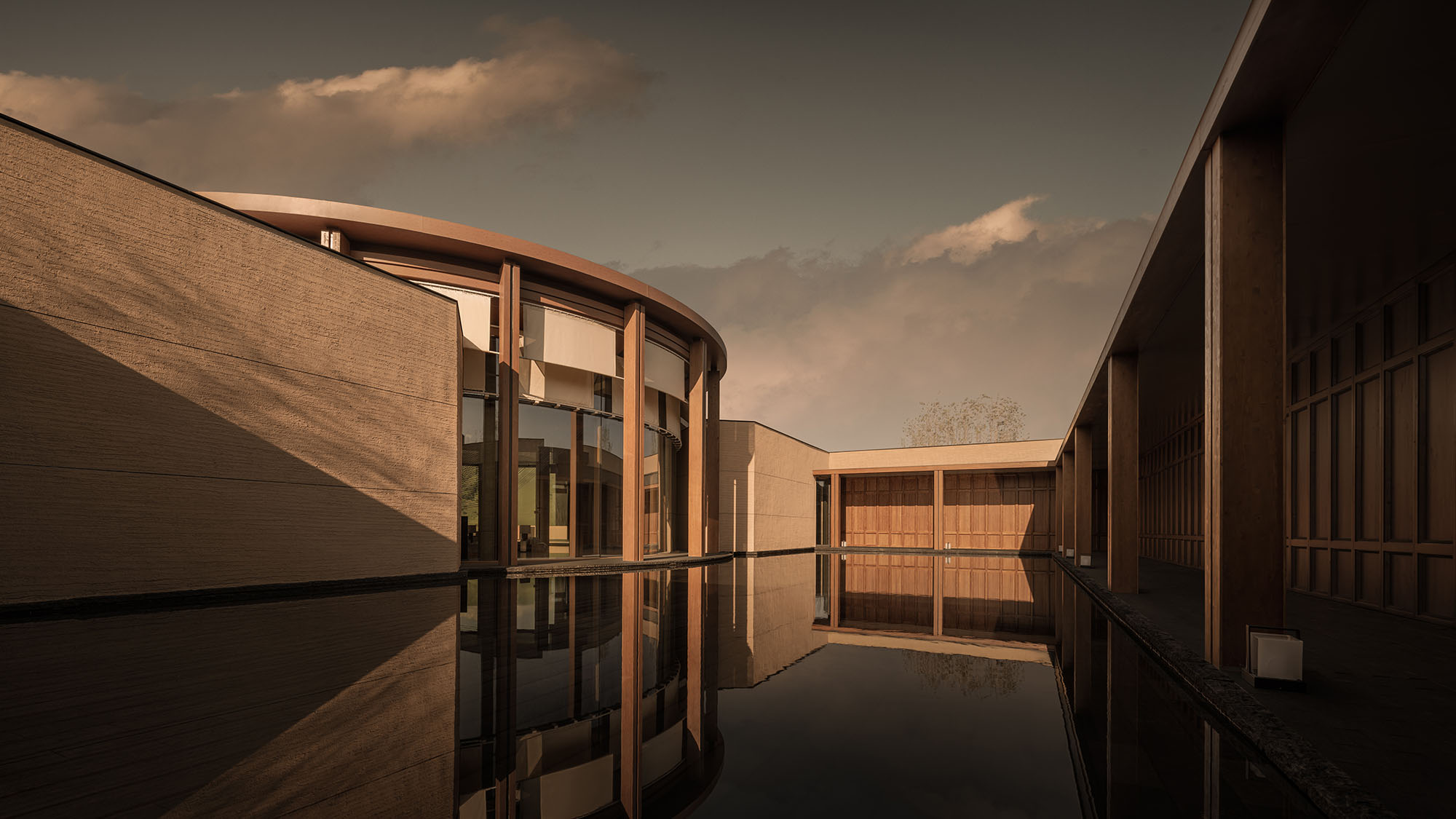
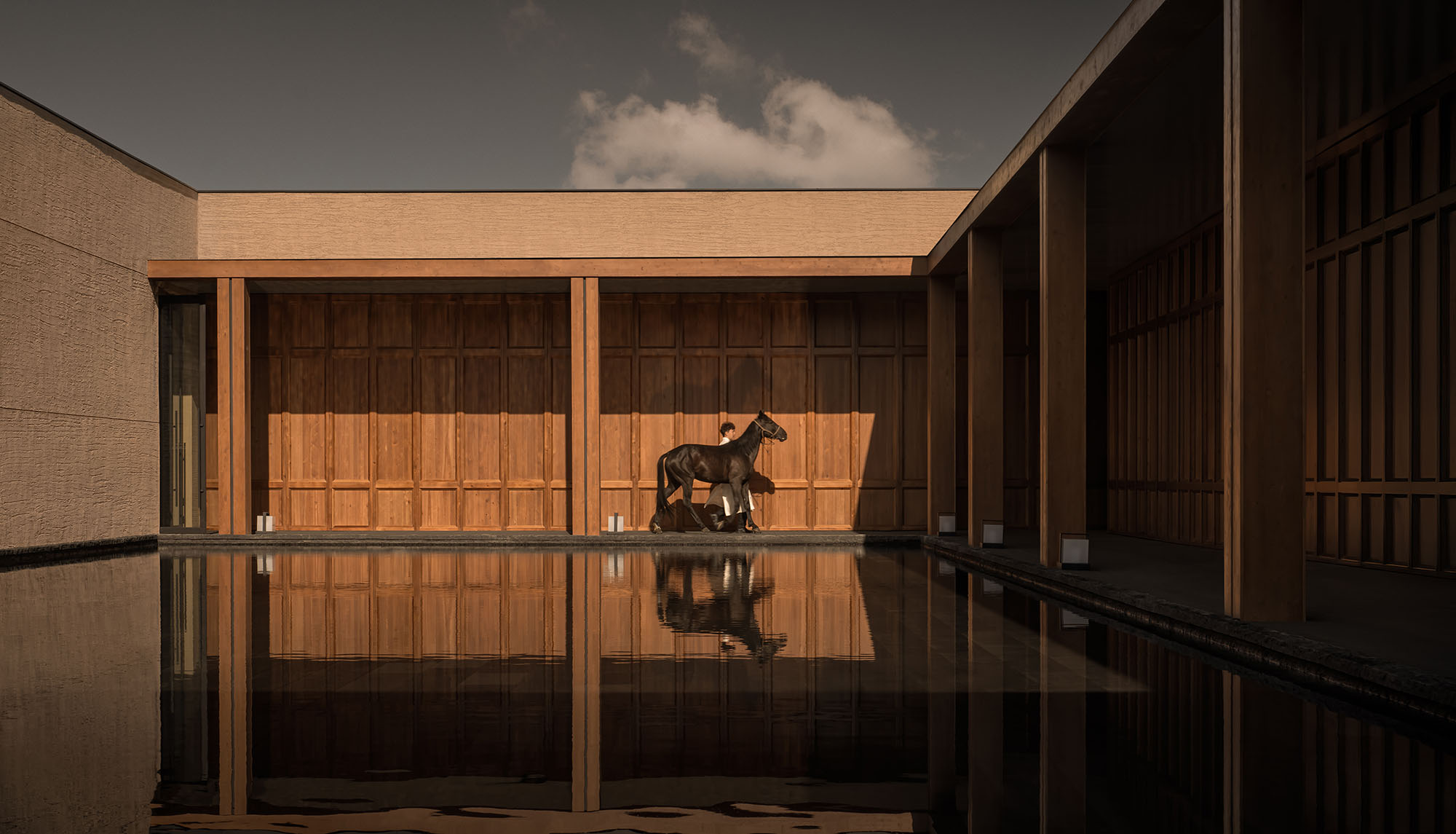
光の優しい庇護のもと、一歩一歩が数千年かけて静かに形づくられた大地に降り立つ感覚をもたらす。光が中庭に漂い込み、石段や木製の手すりをそっと撫でる。ゆったりとした優雅さをもって動きながら、やがて静寂に包まれた隅々まで命を吹き込んでいく様は、まるで中庭が白昼夢から目覚めるかのようである。
ここでは石と木が絡み合い、軽やかさと重厚さが調和している。東洋の瞑想的な感性と現代的なリラックスした表現が融合し、光と影の戯れの中で静謐な交響曲を生み出しているのである。
©︎ Wang Ting
©︎ Wang Ting
©︎ Wang Ting
ロビー:大地を包む光のドーム
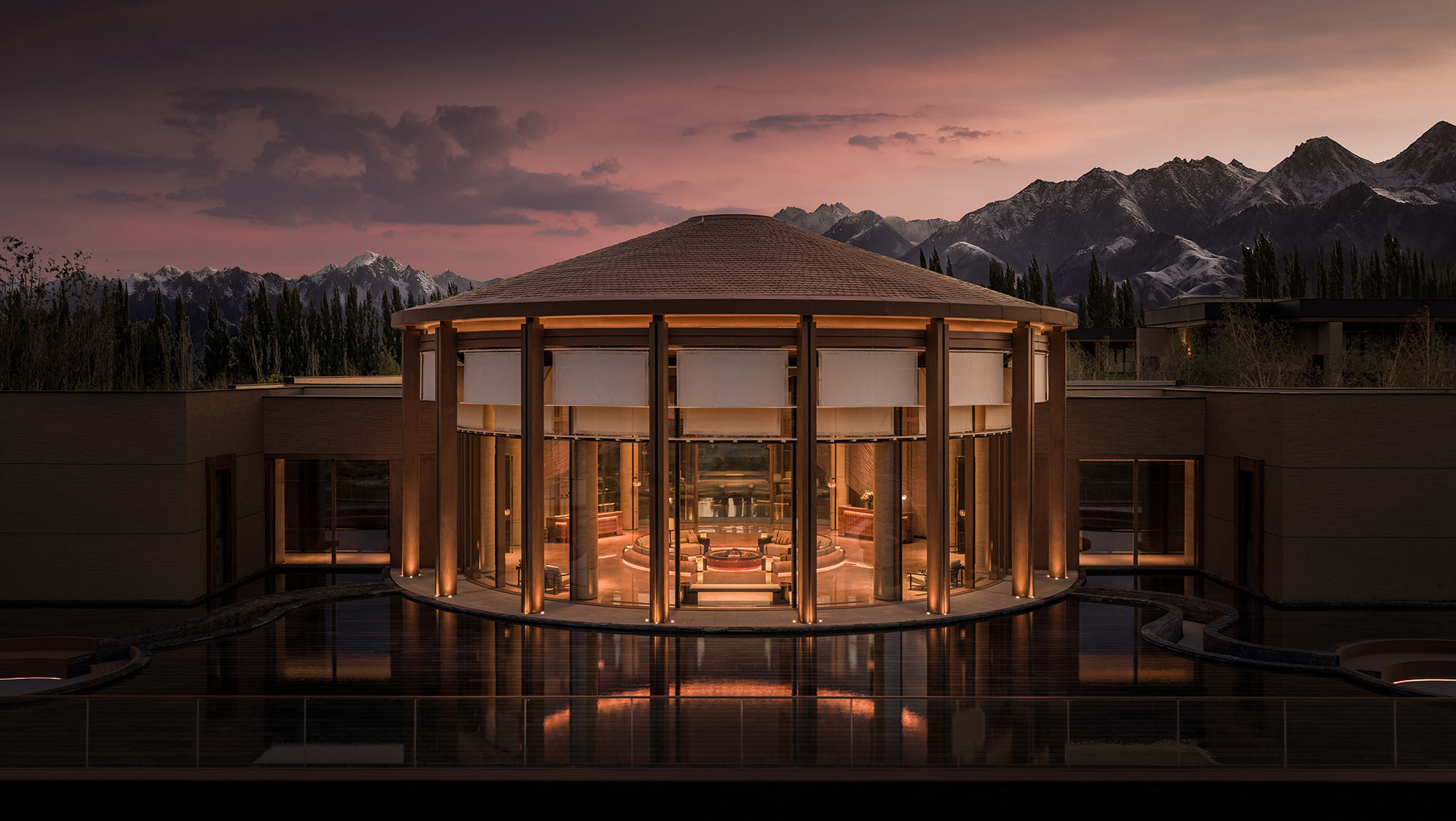
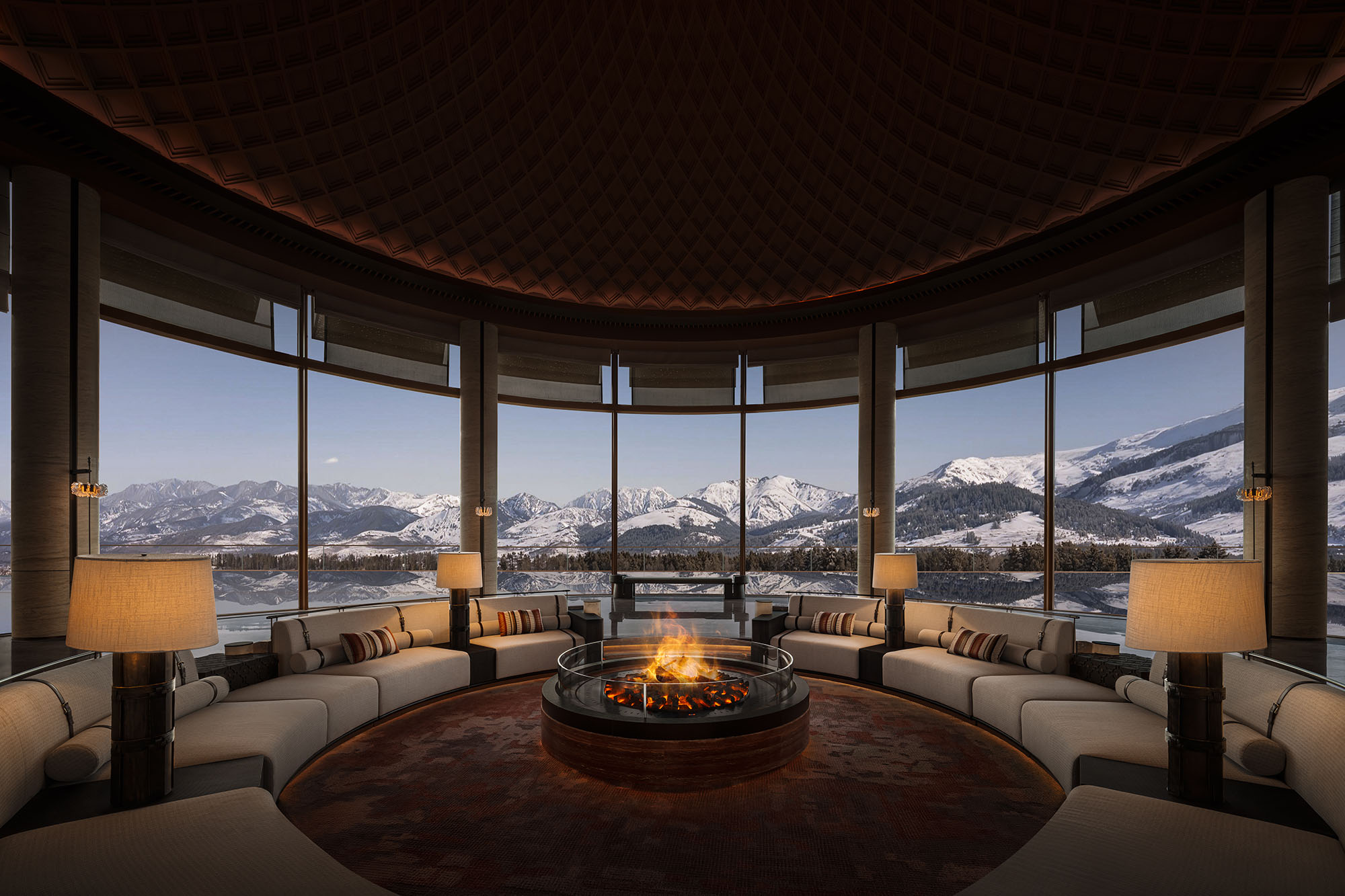
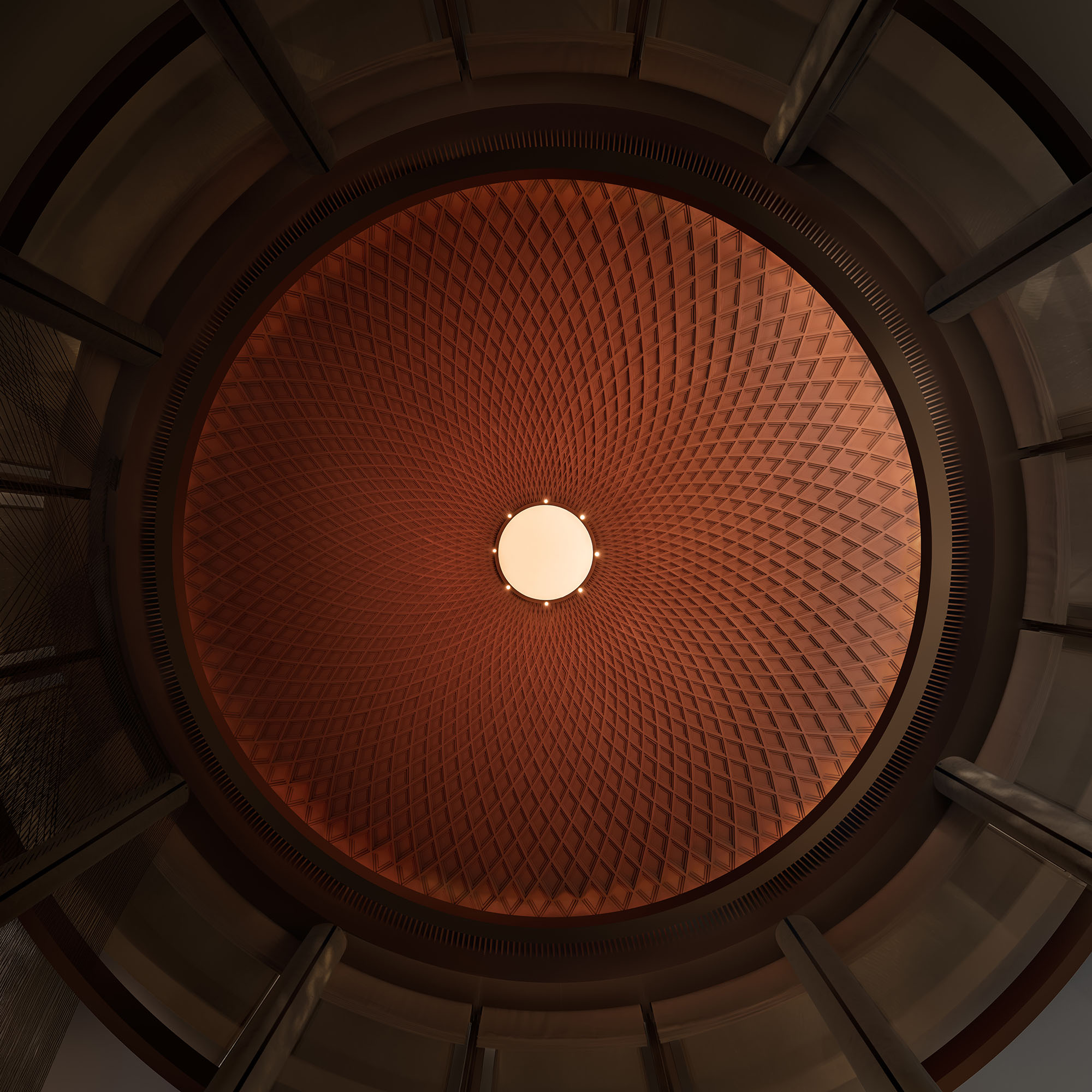
ロビーに足を踏み入れると、草原の真ん中で開かれる親密な集いに招かれたような感覚に包まれる。高くそびえるドームはパオのように開き、訪問者をアースカラーの温もりで包み込む。赤レンガの壁は移り変わる光の中でそっと囁き、まるで遊牧民の足跡を辿っているかのようである。頭上では、ドームが層をなす鱗のような模様を現している。それは羽のように軽やかでありながら、解けゆく大地をも思わせる。これらの質感は、均等に配置された柱のリズムと共鳴し、重厚さと軽やかさの相互作用を生み出し、静謐で控えめな開放感を醸し出している。
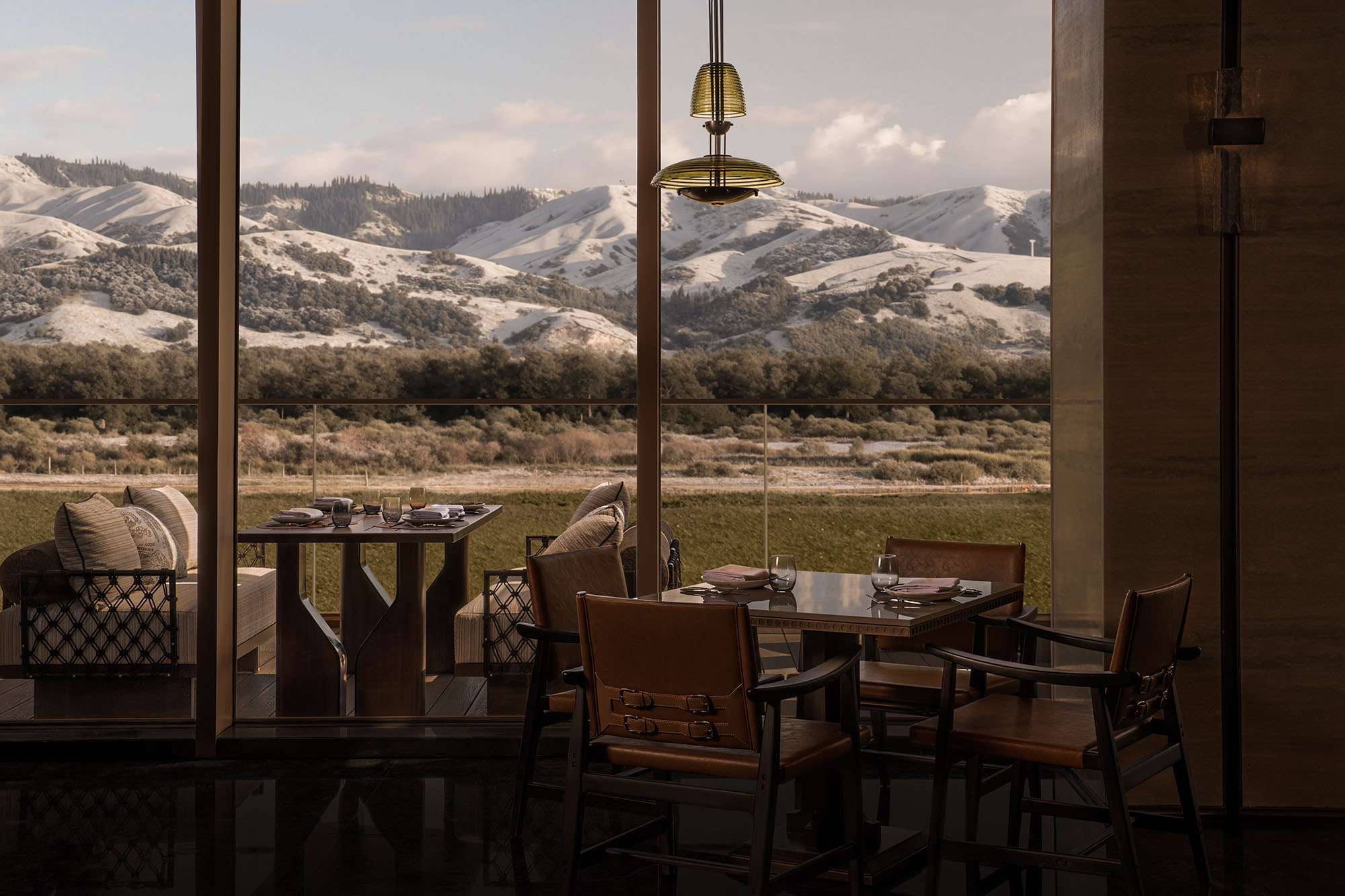
空間は静かな抑制感を放ち、草原の広大さと落ち着きを反映する。大きく弧を描く窓が果てしない景色を額縁のように収め、遠くのナラティ草原と雄大な天山山脈を内部へと引き込む。光は詩的な語り手となり、煉瓦色のキャンバスに刻まれる移りゆく季節を紡ぎ出す。
©︎ Wang Ting
©︎ Wang Ting
現代に蘇る「囲炉裏」の温もり
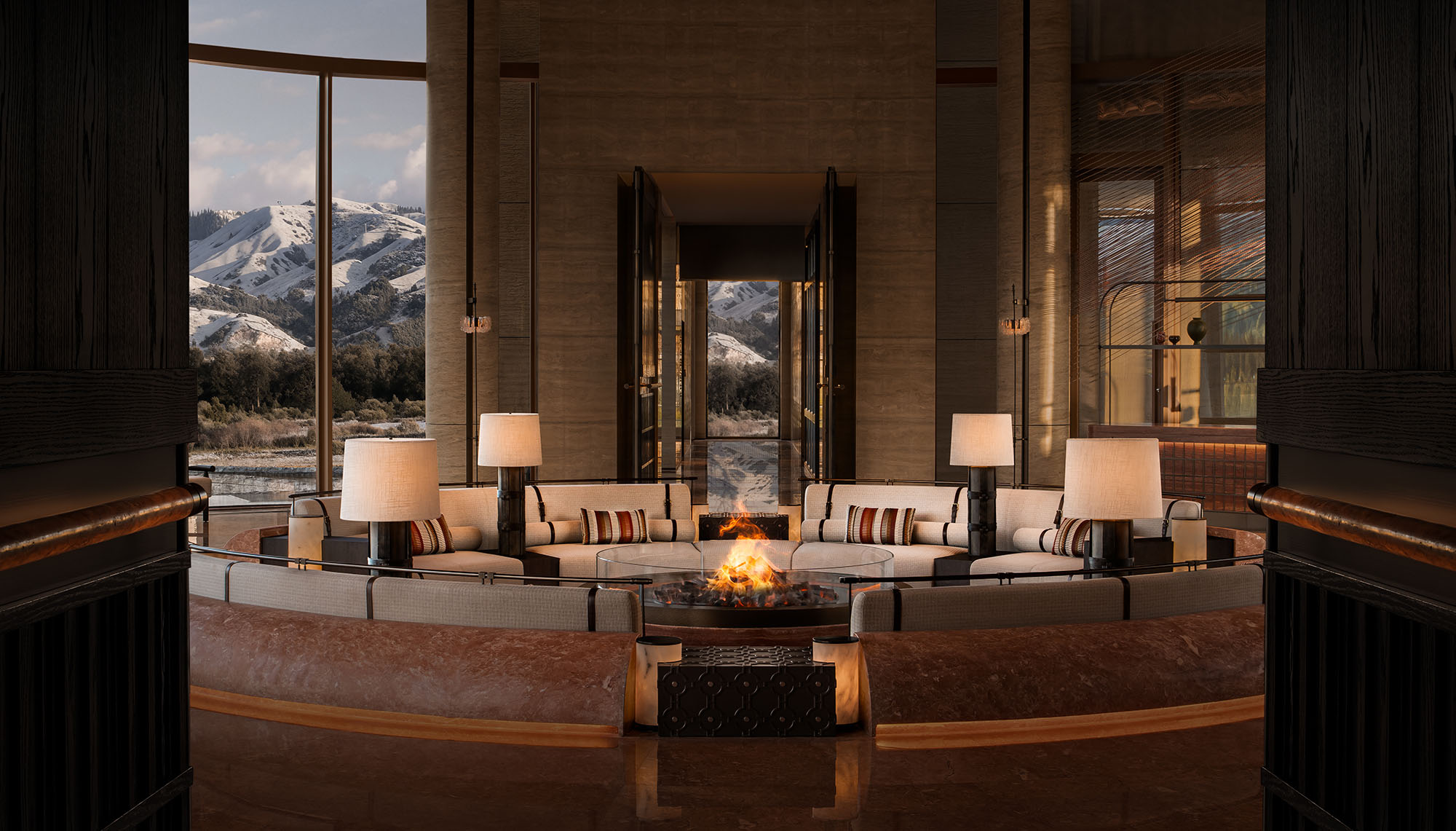
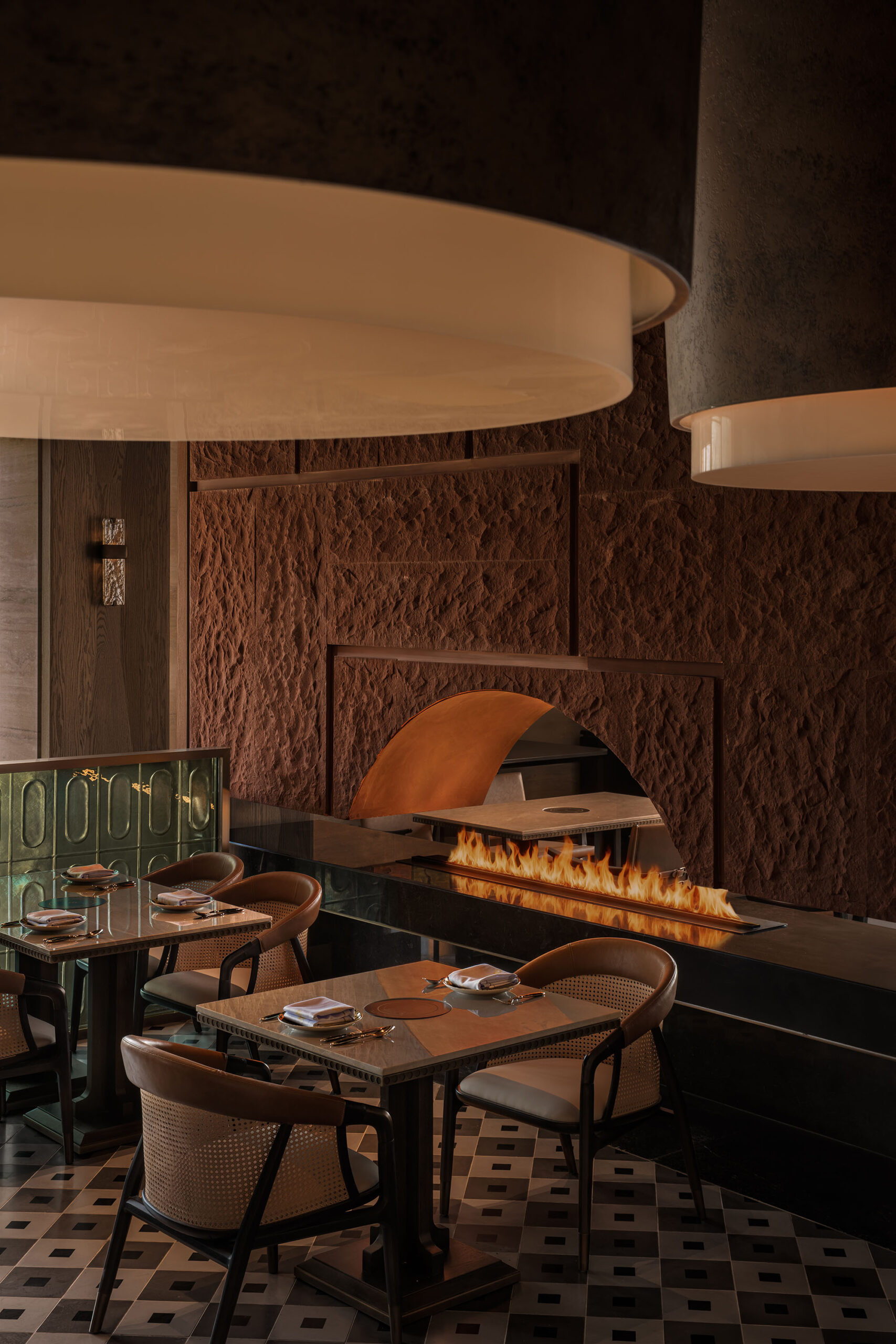
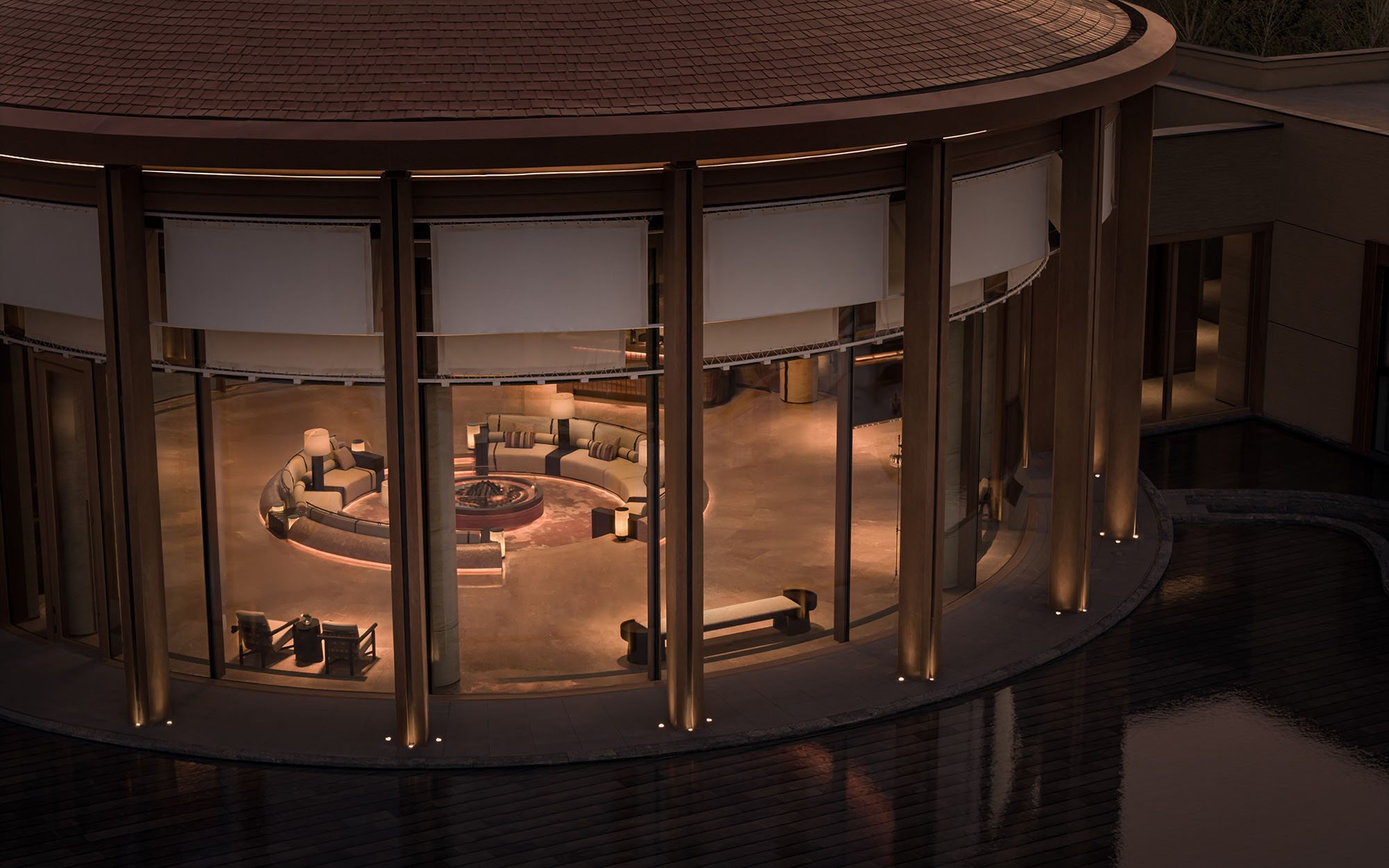
遊牧文化において、囲炉裏は家の心臓部であり、暖かさと光、栄養、そして共有される物語の源である。ここでは伝統的な囲炉裏が現代的な暖炉のインスタレーションとして再解釈され、空間の中心的存在となっている。周囲に配置された座席は、遊牧民の家族や友人が共有する暖かさに集う草原の中庭の集いを想起させる。1人で本を読む時も、静かな会話を交わす時も、ゲストは草原の優しい抱擁に包まれ、地に足がついたような静けさを感じることができる。
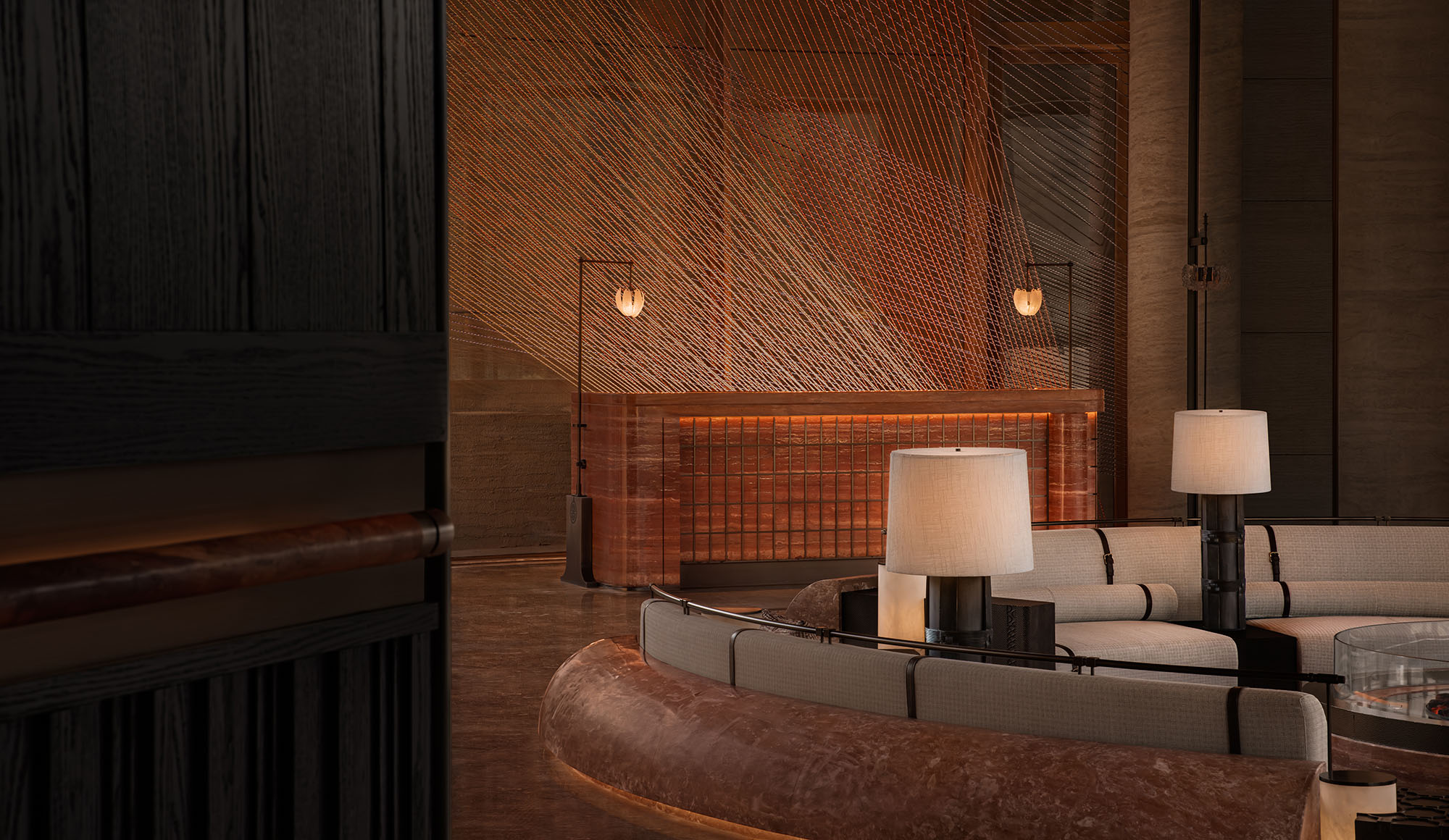
空間全体に、職人技が繊細で思慮深いディテールとして現れている。地元の民族伝統から着想を得たモチーフが足元の絨毯に織り込まれ、レセプションデスクの背景には伝統的なフェルト糸技法でつくられたアートワークが飾られている。それらが織りなすのは、この土地の物語、その遺産、そして不滅の精神を語る、静かで言葉を超えた叙事詩である。
窓の外に広がるナラティ草原の果てしない星空とささやく風を映すかのように、光は優しく揺らめく。この空間は遊牧民の生活の親密さを呼び起こす。夜、家族が火を囲み、料理をし、物語を分かち合う光景を。ここは心を解き放つ場所となる。草原の静かな鼓動を感じ、自分自身と、そして他者との絆を再確認する場となるのである。
©︎ Wang Ting
©︎ Wang Ting
©︎ Wang Ting
レストラン&バー:五感で味わう草原の饗宴
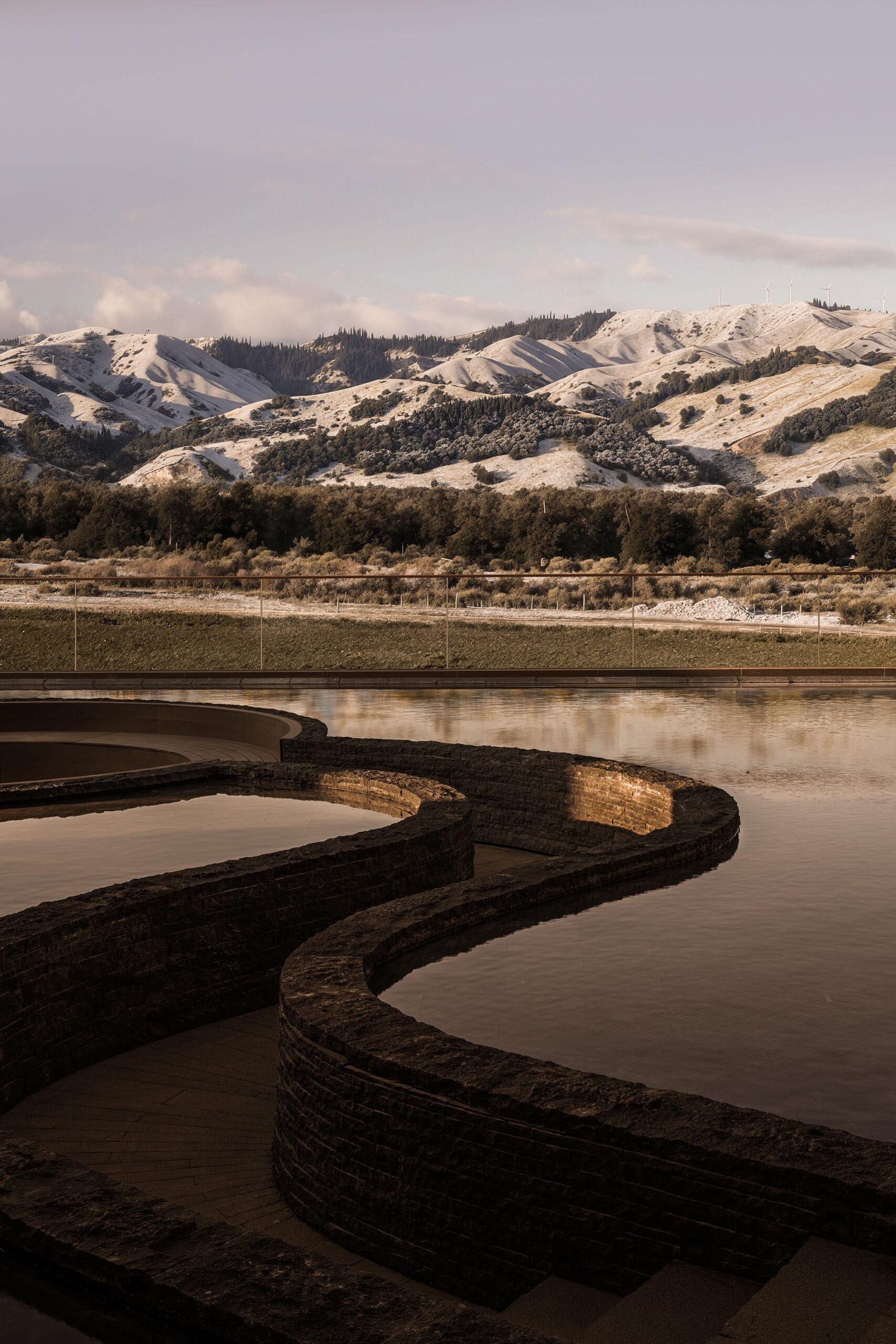
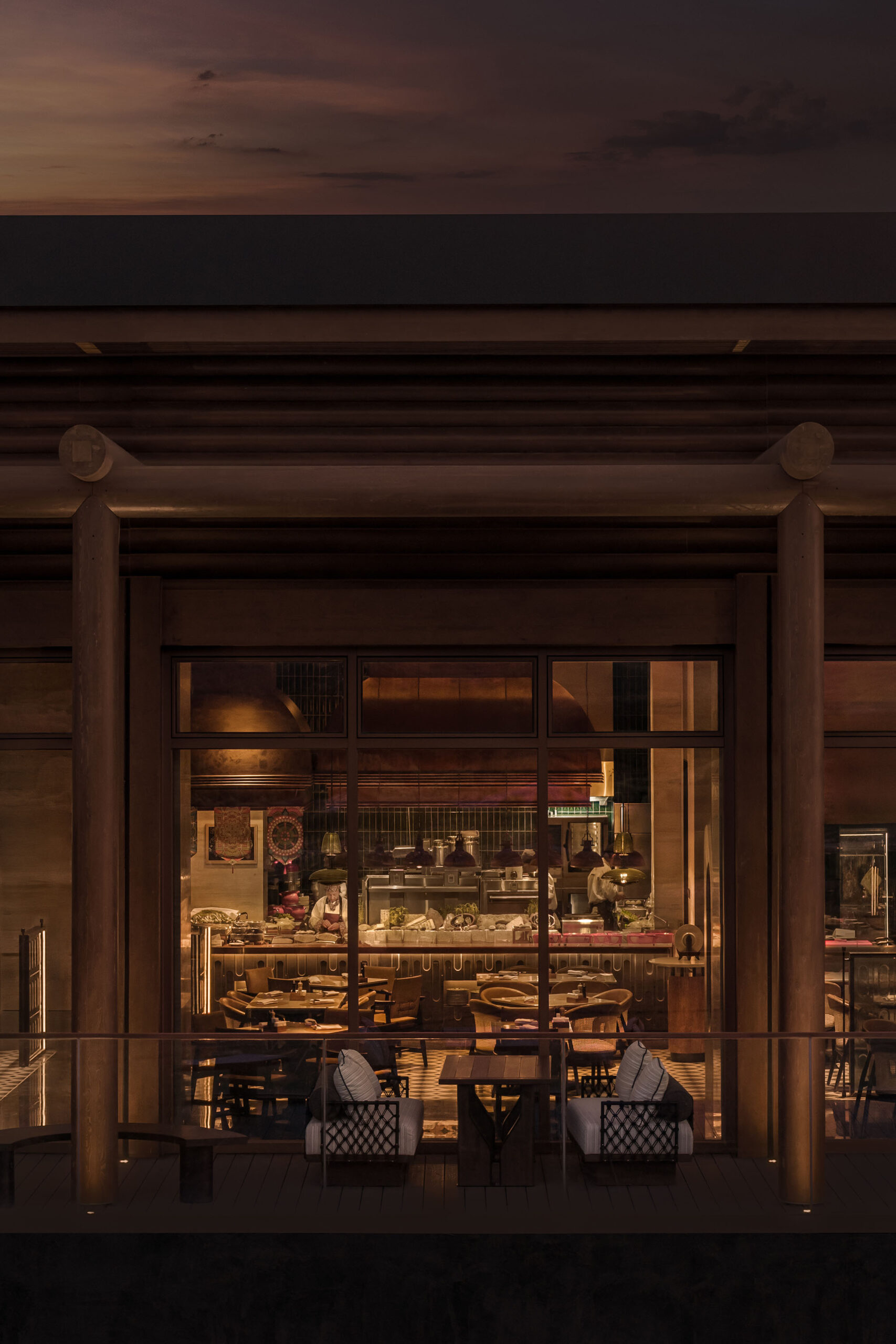
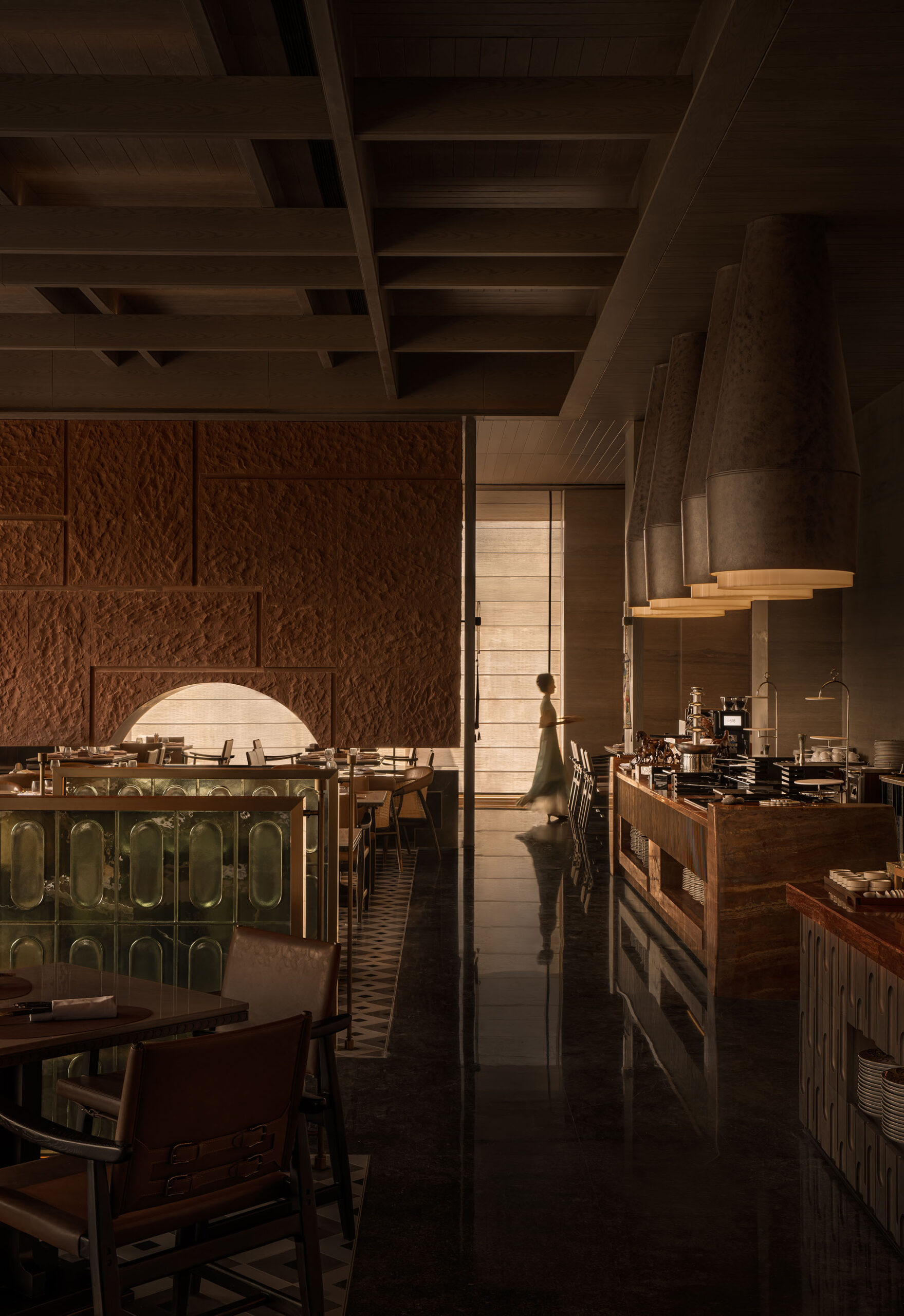
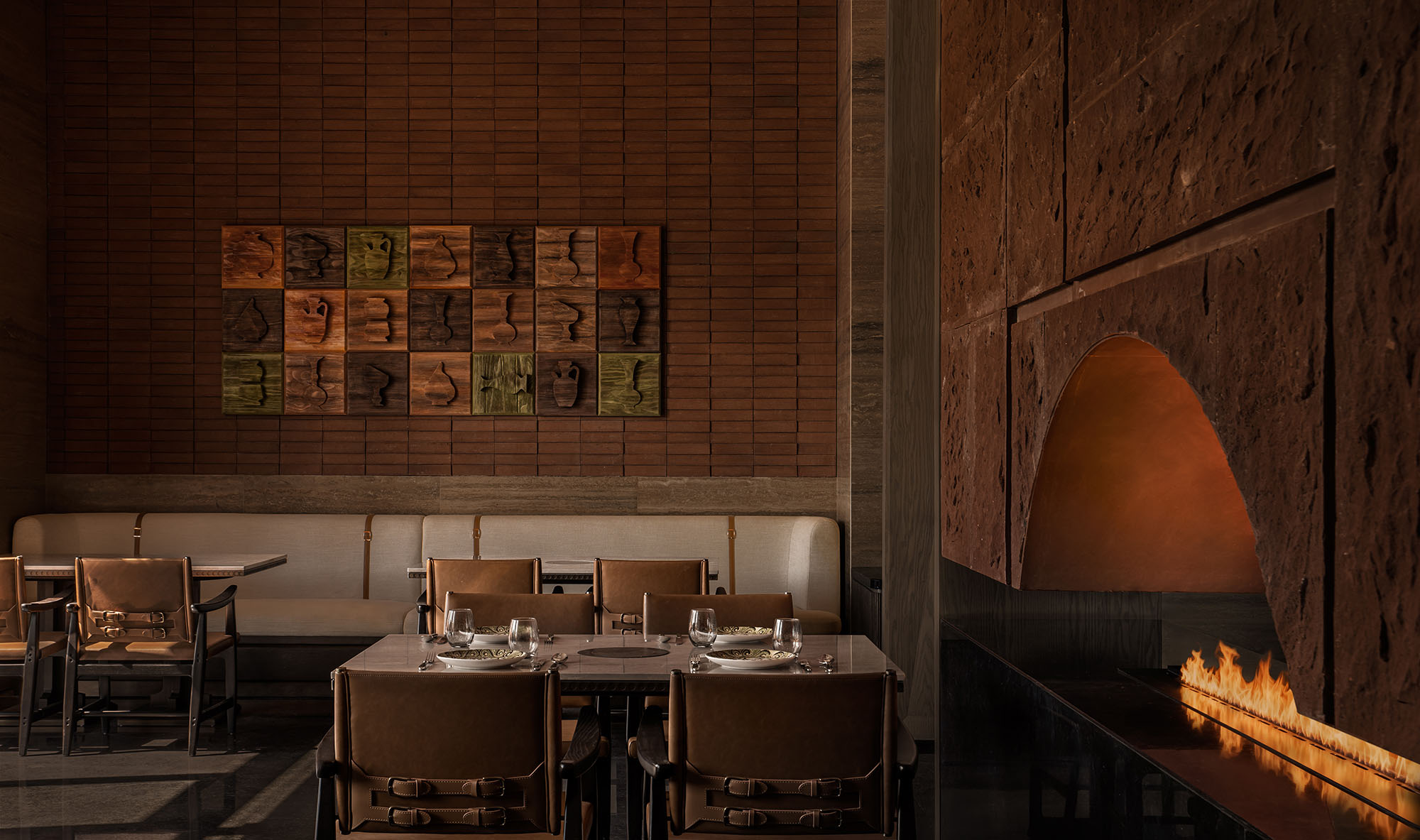
「SHOW · A Neighborhood Café」と名付けられたレストランは、カザフの伝統的なもてなしの心である歓迎の儀式「チャシュ」と祝福の言葉「バタ」を基調としている。そのデザインは遊牧生活の鮮やかな情景を紡ぎ出す。草原を蛇行する小川、水を飲むために立ち止まる馬、水と草原が交わる場所に佇むパオ、これらすべてが空間にシームレスに織り込まれている。
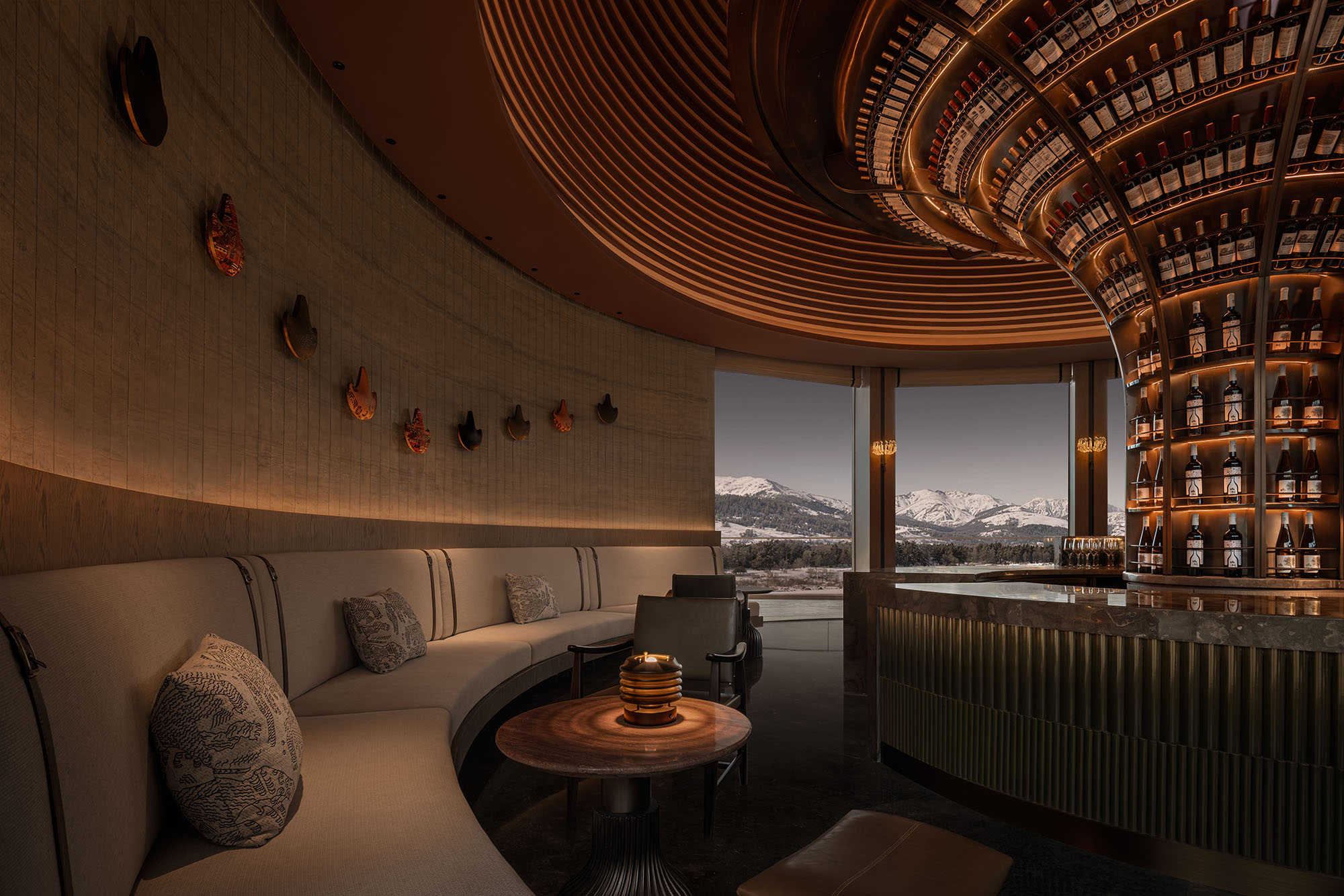
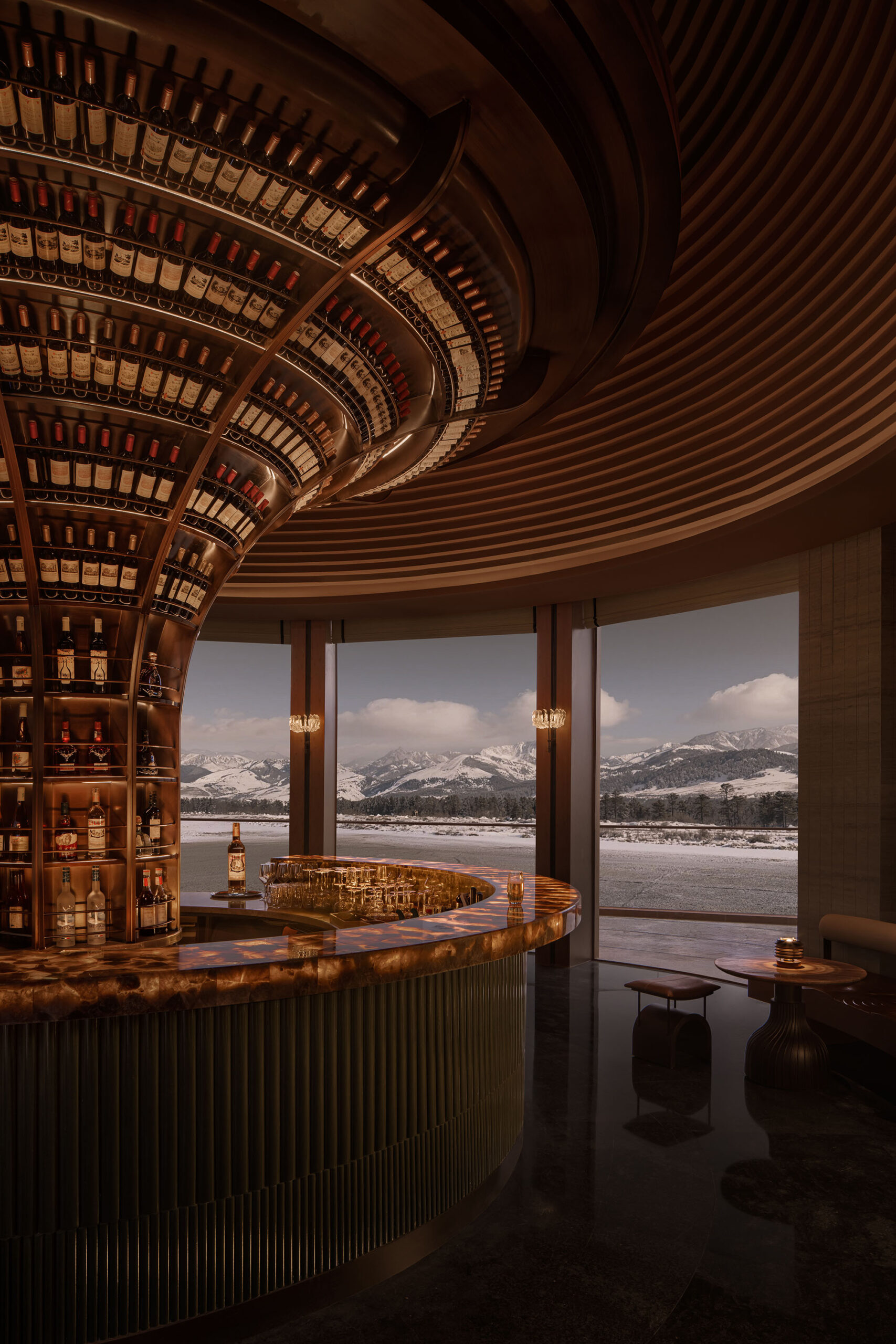
円形のバーは草原に佇む1本の木を想起させ、象徴的なオアシスとなる。微妙な遠近法の遊びに着想を得たデザインは、視覚的な流れと拡張感をもたらし、感情的な共鳴と没入感を育む。
曲線的な動線、円形のレイアウト、計算された視線が空間のリズムを定義する。ここでは食事と交流、内と外が明確でありながら静かな対話を続けている。素材と色彩が物語を静かに豊かにする。赤レンガと洗い出し石の仕上げが大地の色調を響かせ、温もりある木材と金属のアクセントが現代的な触感を添える。流れるような曲線との対話の中で、これらの要素は統一されたデザイン言語を形成し、空間に温もりと永続的な共鳴を吹き込んでいる。
あらゆるデザインの手法は人間の体験に根ざしている。円形のラウンジに腰を下ろすこと、窓の向こうの景色を静かに眺めること、飲み物を手に曲線的な小道を散策すること。空間は単に定義されるのではなく、彷徨い、感じ取り、共鳴を見出す旅となる。
©︎ Wang Ting
©︎ Wang Ting
©︎ Wang Ting
©︎ Wang Ting
©︎ Wang Ting
©︎ Wang Ting
©︎ Wang Ting
©︎ Wang Ting
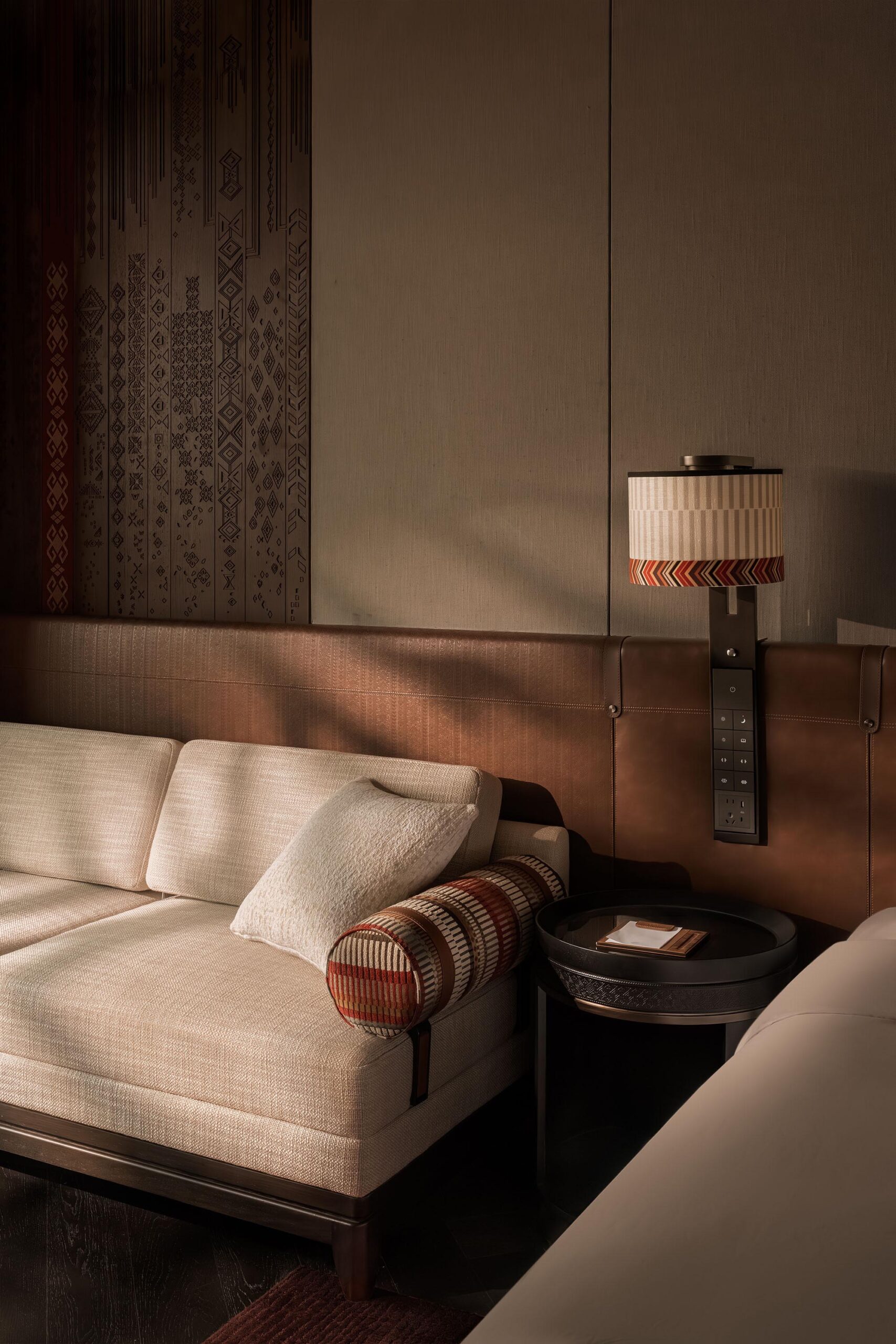
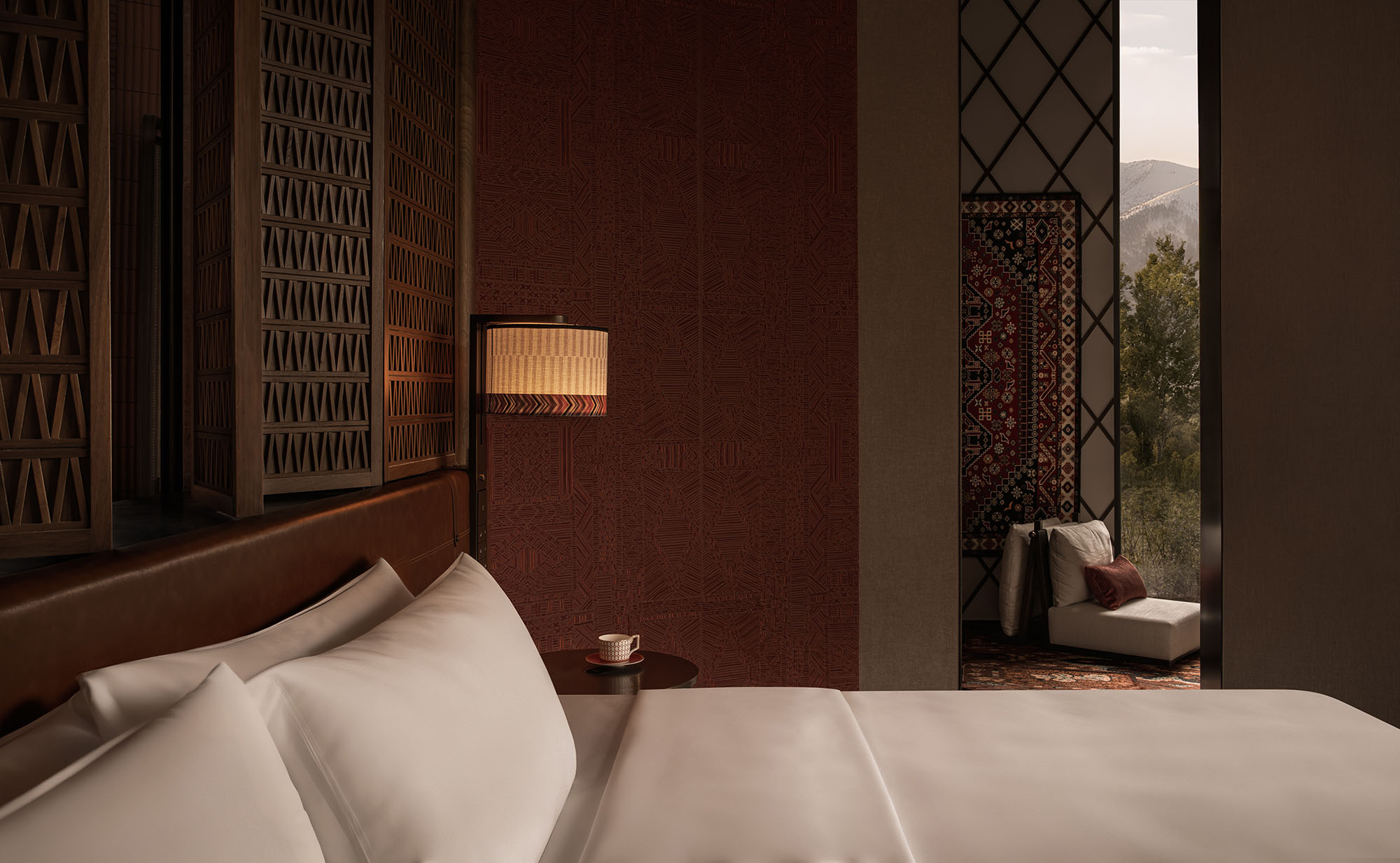
客室:ユルトの共鳴と静寂
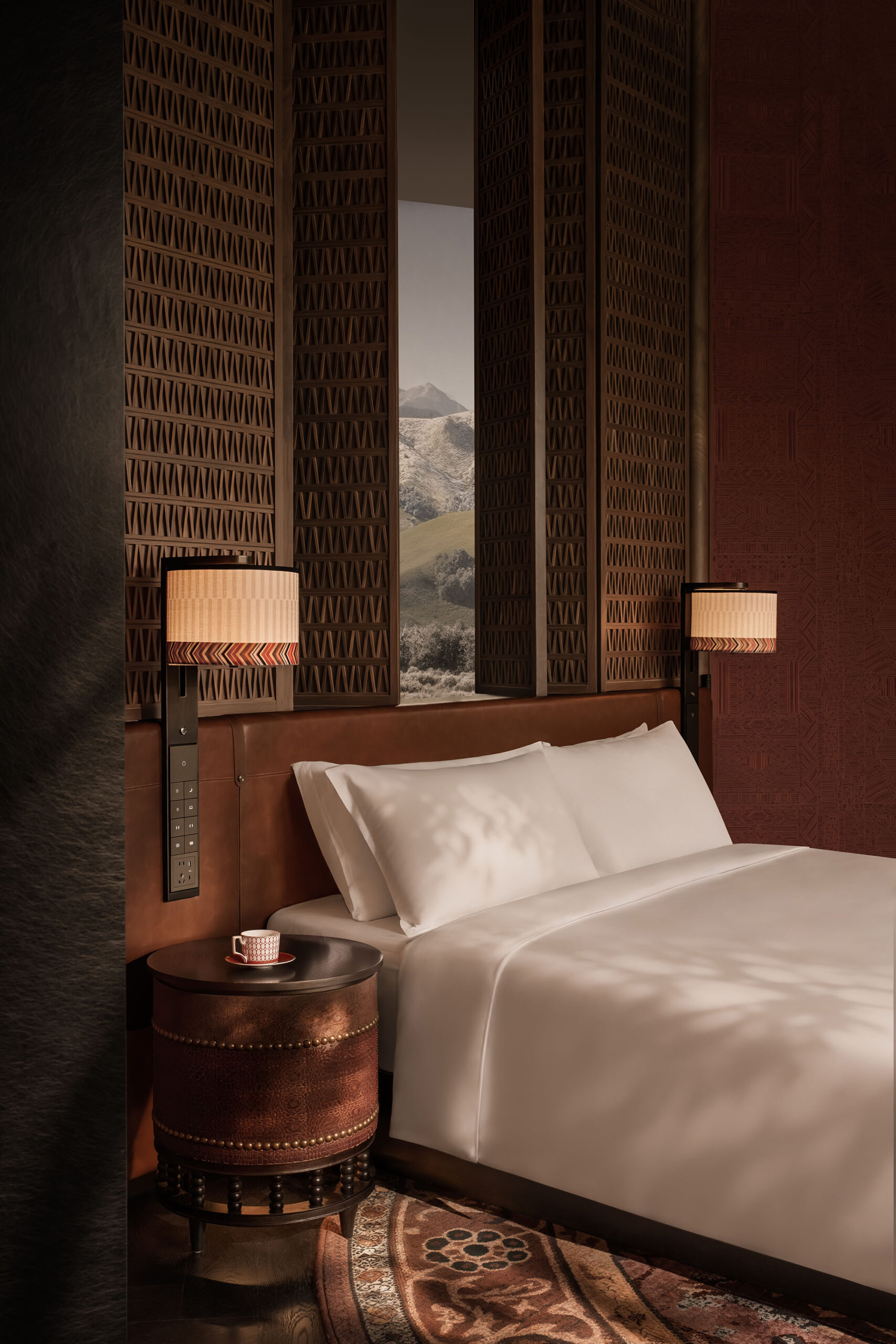
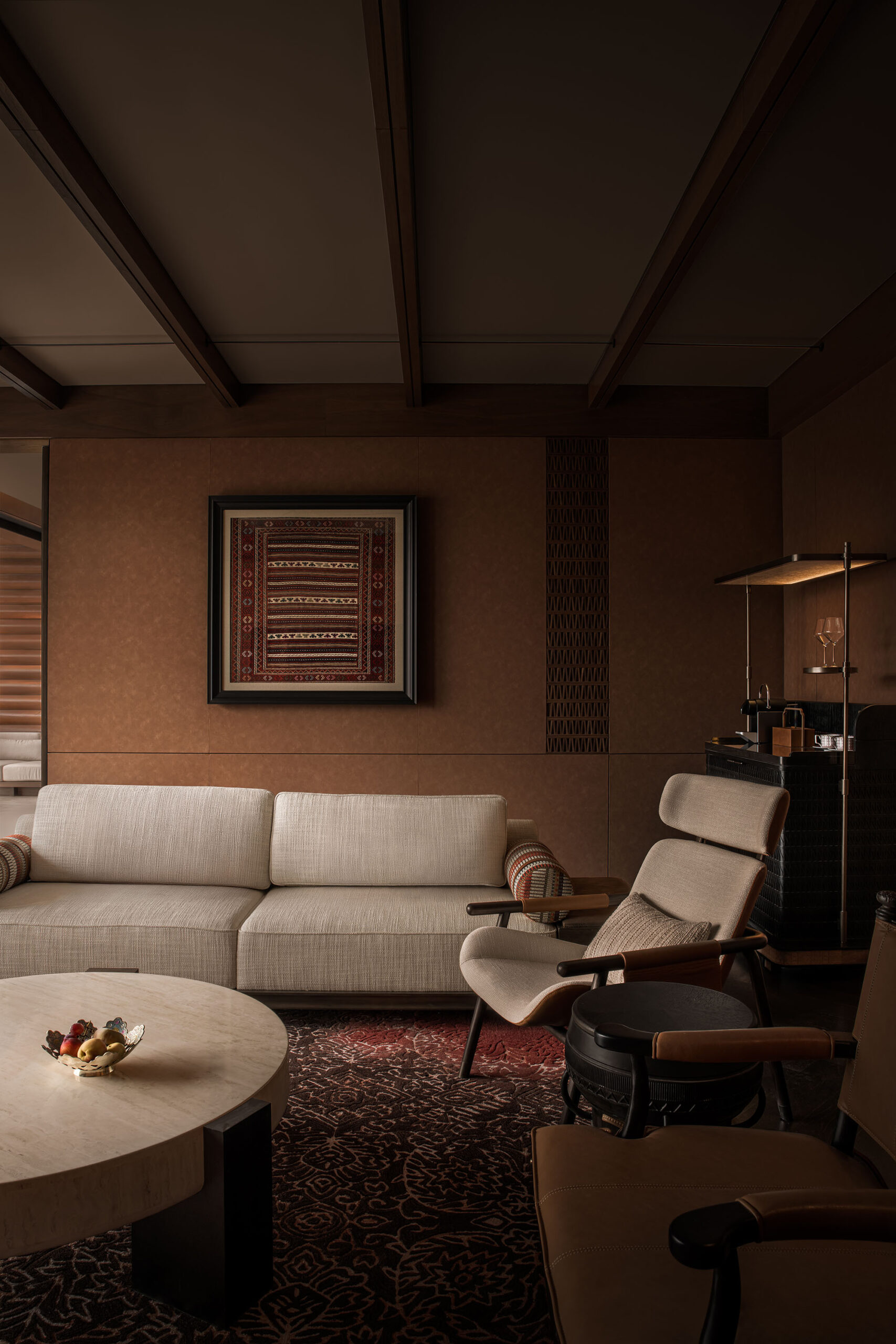
精巧に彫刻された二重の木製扉を押し開けると、ゲストは優しい温もりに包まれる。深さの異なる彫刻は草原の物語を囁き、伝統的なユルトの採光方法に着想を得た上部の天窓が空間を安定させる。昼は陽光が透過し、床に詩的な模様を刻み、夜は星空が流れ込み、ゲストを穏やかな眠りへと誘う。
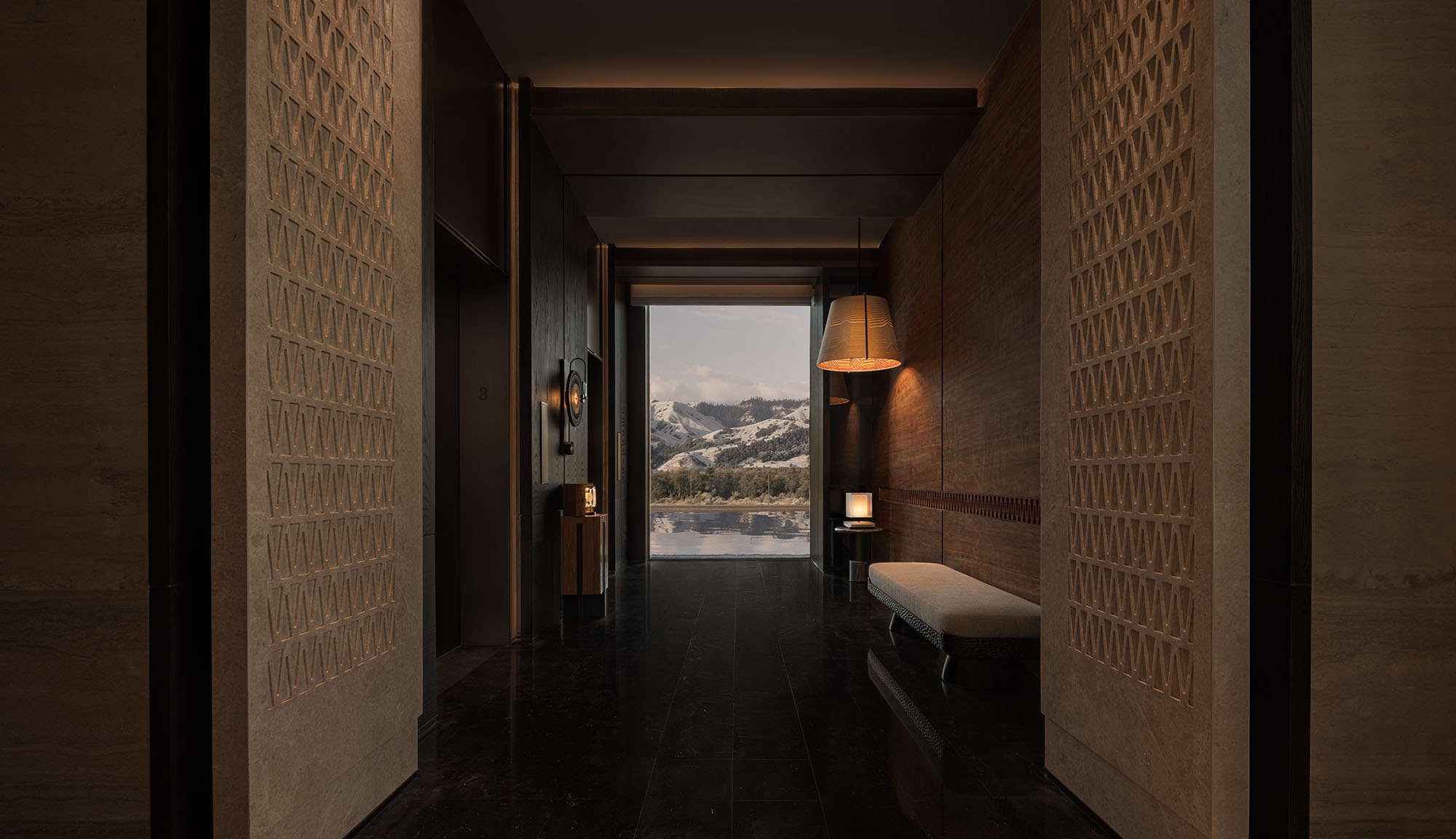
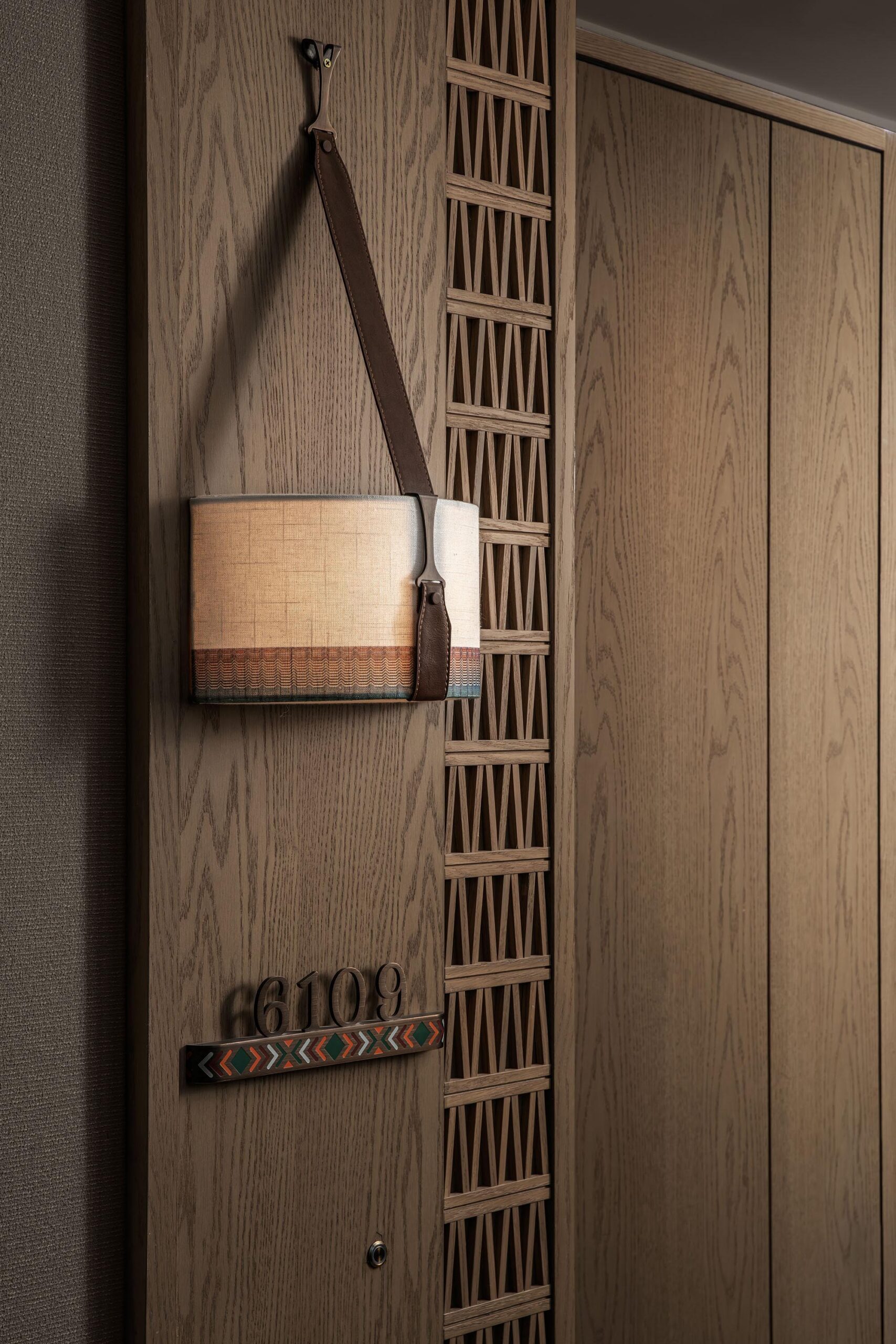
エレベーターホールの照明器具は、早春にナラティ草原の氷を突き破って最初に咲く花「クロッカス・アラタヴィクス」に着想を得ている。霜と雪に抗い咲くその姿は、極寒における生命の逞しさを体現している。このデザインは、植物の形態と照明、生態学的物語を1つに織り込み、静謐でありながら力強い瞬間を表現している。
精巧な彫刻が洗練された芸術的感性を露わにする。扉に施された幾重にも絡み合うモチーフは、外壁の地域に根ざした装飾的アクセントと呼応し、その移ろいゆく奥行きが木工細工に物語を紡ぐ存在感を与えている。
©︎ Wang Ting
©︎ Wang Ting
©︎ Wang Ting
©︎ Wang Ting
©︎ Wang Ting
©︎ Wang Ting
遊牧の美学を現代に紡ぐディテール
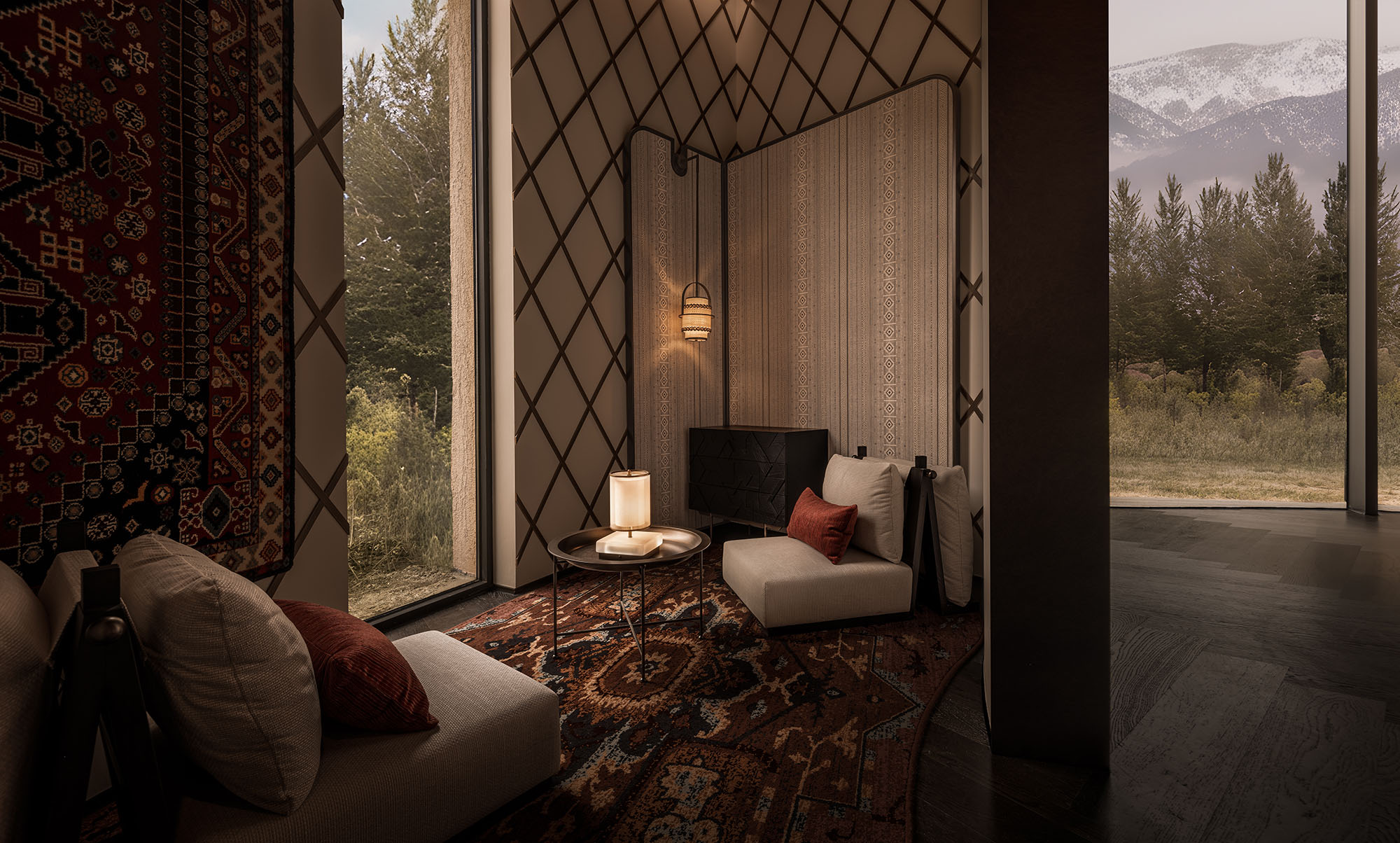
壁とカーペットはフェルト工芸の伝統を継承している。これは実用性と芸術性を両立させた地域の家庭工芸である。タペストリーやラグからクッション、伝統的な帽子に至るまで、その鮮やかな色彩と独特の模様は、幾世代にもわたる熟練の技を反映し、深い文化的感情と美的アイデンティティを宿している。これらの要素は単なる装飾ではなく、文化の永続的な刻印を伝えているのである。
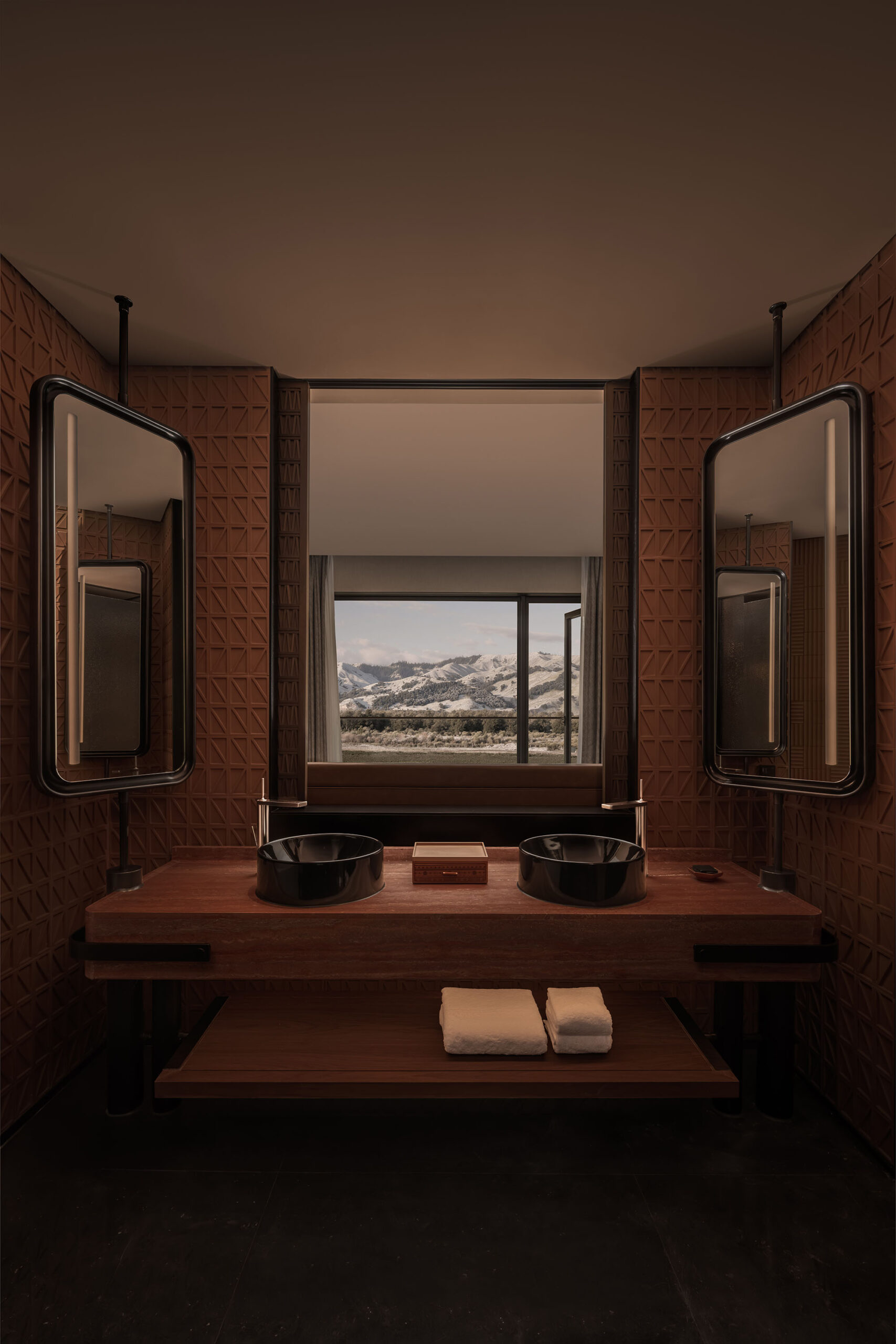
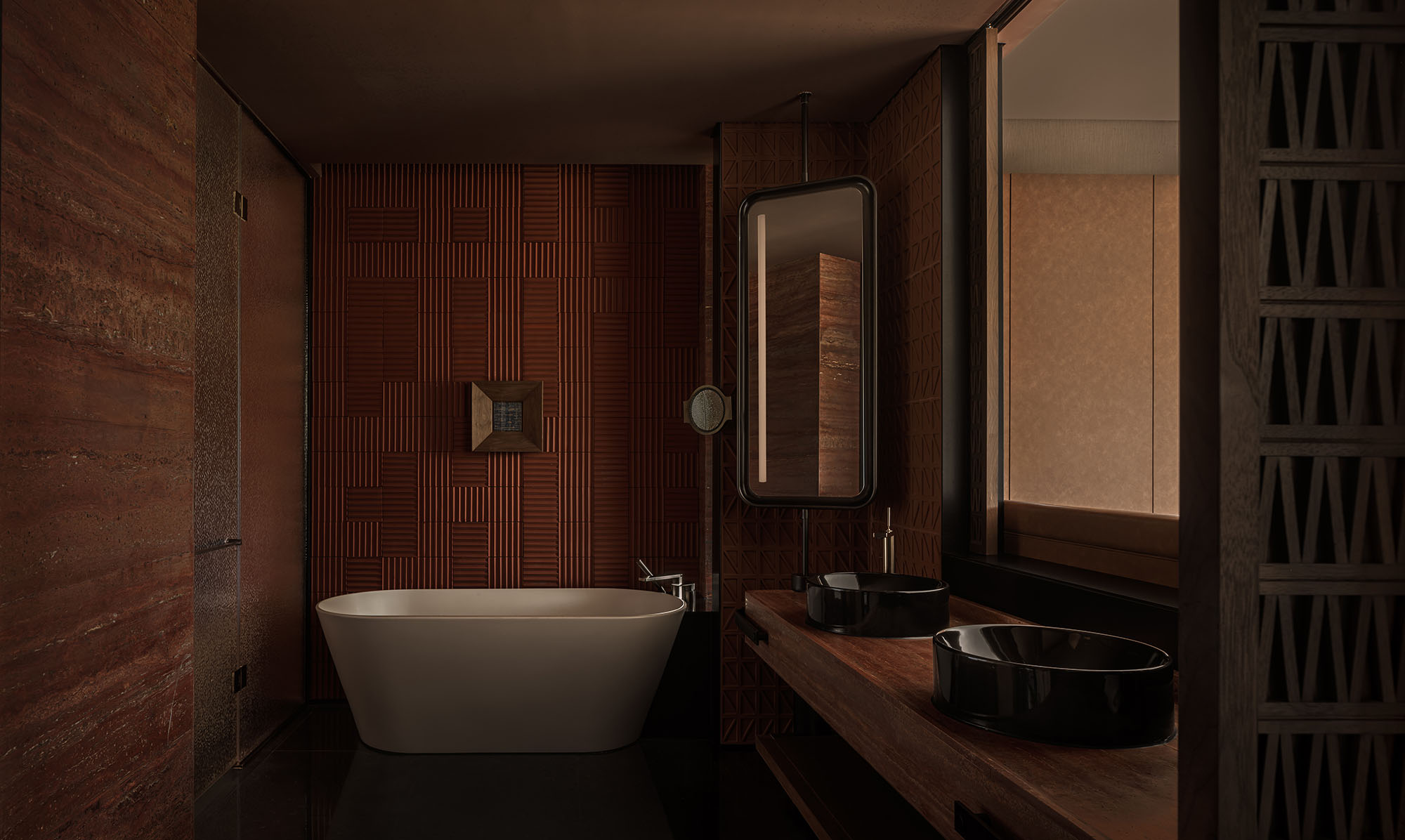
間仕切りと壁面装飾は、現地のユルトに見られるダイヤモンド格子の木枠構造を繊細に再解釈したものであり、頑丈でありながら洗練されており、空間に開放感、リズム、安らぎをもたらす。銀メッキの馬具、ナンやコムズへの象徴的なオマージュ、馬や草原の生き物にインスパイアされたアートワークといった精巧なアクセントが調和し、遊牧の精神が息づく温かく家庭的な聖域を形成している。
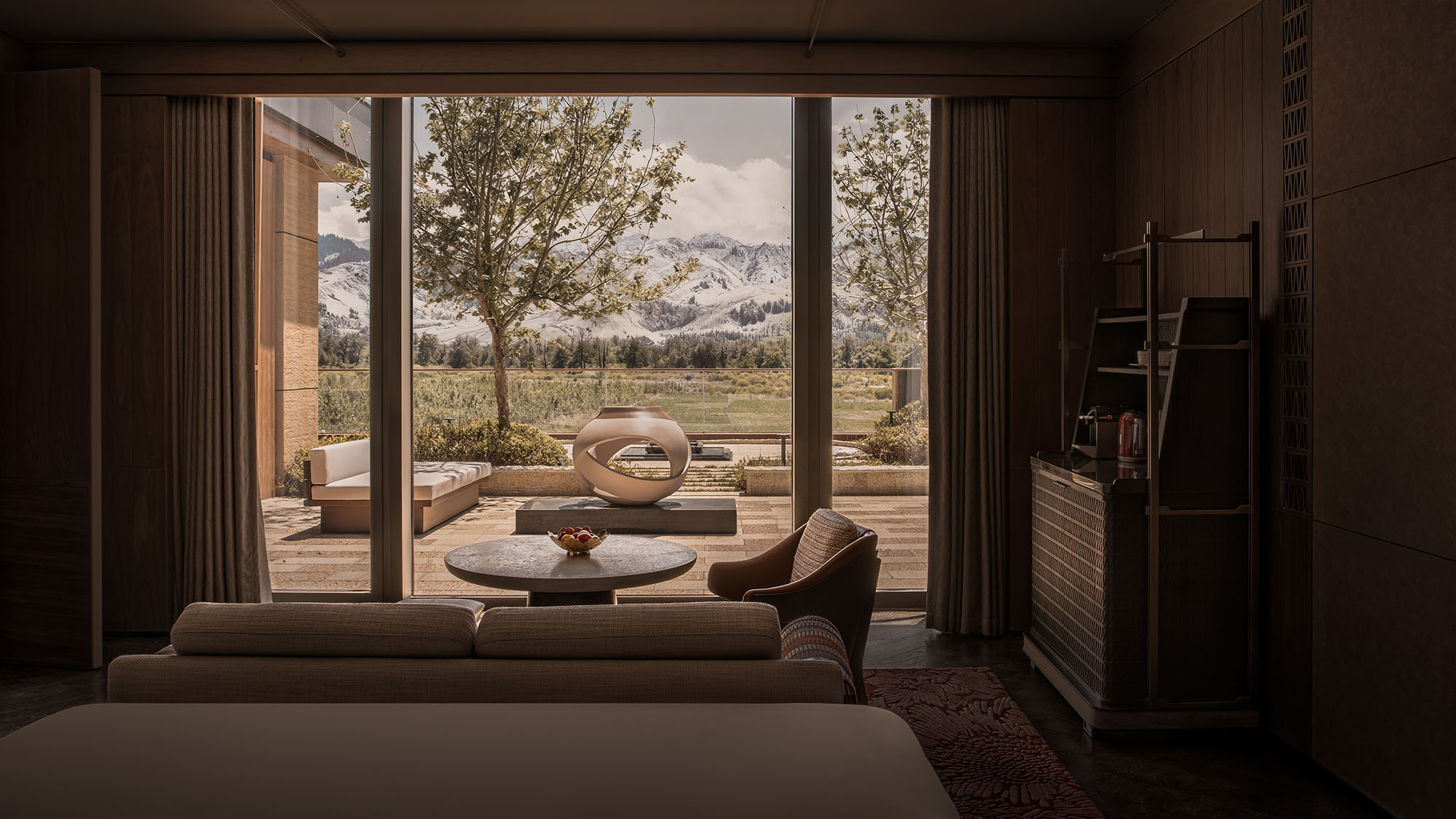
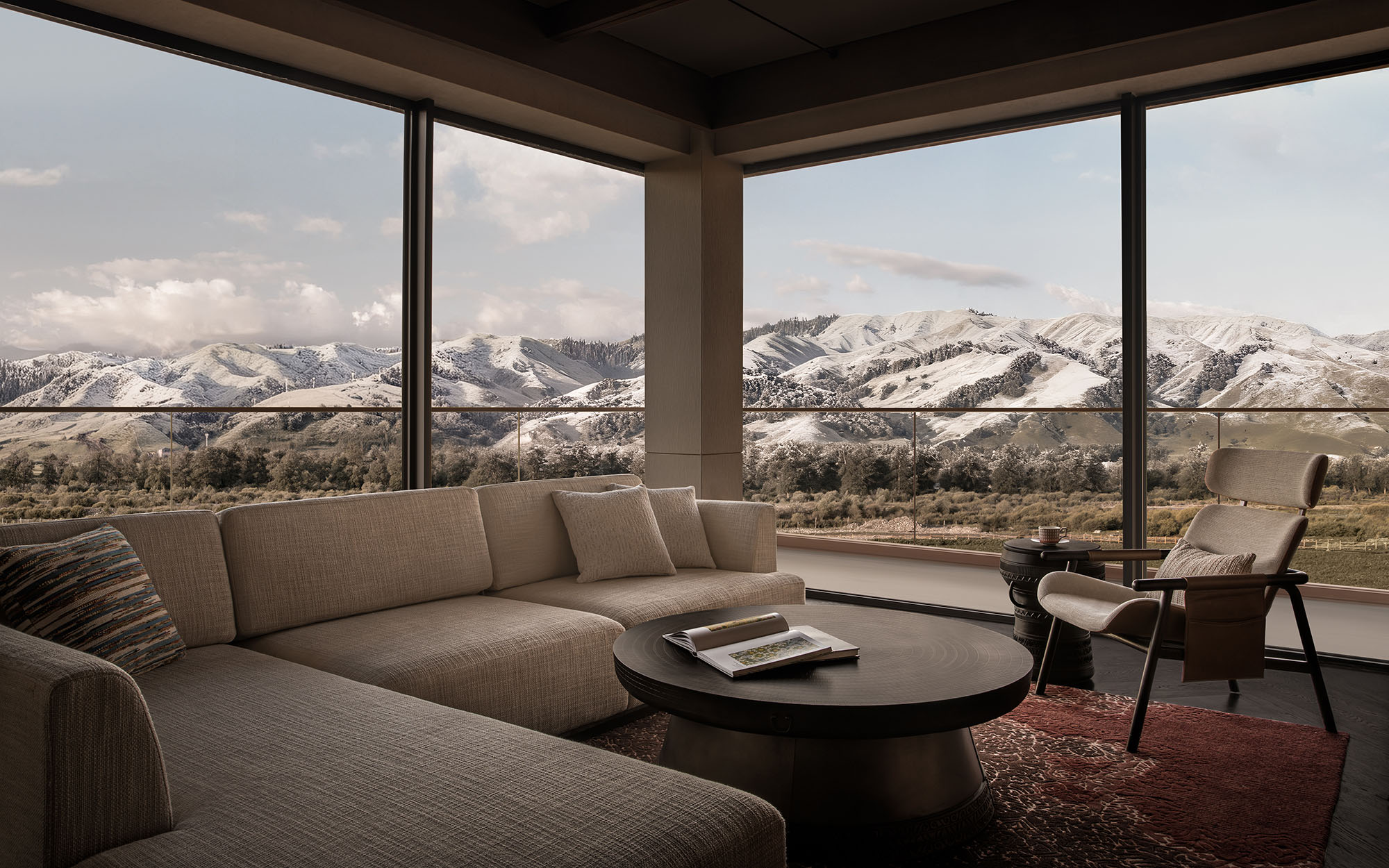
ユルトを思わせる空間で眠りにつくことは、自然と調和した体験となる。夕風に揺れる葦のざわめき、遠くでささやく小川の音、雪を冠った山々の松の微かな囁きが、自然の子守唄を紡ぐ。天窓からは、星明かりの空が手の届きそうなほど近く感じられるだろう。
細部へのこだわりも徹底されている。ナラティの野草図鑑に着想を得た絵画、地元の乾燥花、繊細なフラワーアレンジメント、そして多孔質の石から優しく広がる特注の「野草」の香りが、部屋全体に草原の柔らかく余韻を残す感覚を宿している。また、伝統的なユルトのダイヤモンド格子木枠は、浴室の壁や仕切りにも再解釈されて採用された。温かみのある木の色調と相まって、空間は静かな親密さと心地よい安らぎを醸し出している。
©︎ Wang Ting
©︎ Wang Ting
魂の旅路としての滞在
〈ホテルインディゴ・ナラティ〉での滞在は、単なる休息以上のもの、すなわち魂の旅路として展開する。草原の広大さ、陽光のもつ優しさ、地元の伝統が心に響く温もり、そして静かな自由と開放感、生命力が、訪れるすべての人の記憶に長く残る。ここで旅は共鳴し、心は安らぎの場を見出すのである。
©︎ Wang Ting
©︎ Wang Ting
©︎ Wang Ting
©︎ Wang Ting
©︎ Wang Ting
©︎ Wang Ting
以下、CCDのリリース(英文)です。
Hotel Indigo Nalati by CCD
Situated at the convergence of the Duku Highway and the Ili “Figure-8” Scenic Loop, Hotel Indigo Nalati occupies a prime location in the heart of Nalati Town, part of the Ili Kazakh Autonomous Prefecture, and is embraced by vast steppes and the Tianshan Mountains. Anchored in the design theme “A Grand Journey Along the Duku Highway, Through the Seasons of Nalati,” CCD weaves mausym—meaning “season” in Kazakh—into the spatial narrative, capturing the shifting rhythms of Nalati’s four seasons and the everyday rituals of nomadic life.
The overall design draws on the cultural lineage of steppe nomadic life. Traditional elements of yurts and winter settlements are subtly woven into the design language, quietly narrating the region’s distinctive cultural identity.
With its building volumes scattered across the open wilds, the hotel complex appears like a small forest when viewed from afar. Rooted in steppe culture, it adopts a dispersed layout, with individual structures linked by winding woodland paths. The surrounding forest landscape is seamlessly integrated into the hotel’s ecological system, creating a hospitality environment in symbiosis with nature.
The journey begins in pursuit of light. Inspired by the Nalati sunrise, the hotel’s entrance features a curved canopy that evokes radiating sunbeams. Greeted with a traditional Aul-style welcome, guests are immediately immersed in an atmosphere rich with local culture.
The drop-off area is sheltered beneath a “floating canopy,” providing shade and naturally shaping a courtyard space. The softly curved, warm-toned entrance evokes a sense of anticipation, as if stepping into an Aul—a traditional Kazakh nomadic settlement on the steppe.
References to the Tianshan Mountains, Nalati sunrise, Gongnaisi River, and Wusun totem pillars are subtly woven into the arrival experience, creating a ceremonial transition that guides guests from the bustle of the outside world into the quiet majesty of a steppe retreat.
Beneath the gentle shelter of light, each step falls upon the land shaped quietly over millennia. Light drifts into the courtyard, whispering across stone steps and wooden railings. Moving with unhurried grace, it gradually brings every silent corner to life, as if the courtyard were waking from a reverie.
Here, stone and wood intertwine; lightness and solidity find balance. Eastern contemplative sensibilities meet a relaxed contemporary language, composing a serene symphony in the play of light and shadow.
Lobby
The Dome of Light
Entering the lobby feels like stepping into an intimate gathering at the heart of the steppe. The soaring dome opens like a yurt, embracing visitors in earth-toned warmth. Red brick walls murmur softly in the shifting light, as though tracing the footprints of migrating herders. Overhead, the dome unveils layered, scale-like patterns—light as feathers, yet evocative of thawing earth. These textures resonate with the rhythm of the evenly spaced columns below, creating an interplay of solidity and lightness, and revealing a serene, understated sense of openness.The space exudes a quiet sense of restraint, echoing the vastness and quiet composure of the grasslands. A sweeping curved window frames a boundless view, drawing the distant Nalati Grassland and the majestic Tianshan Mountains into the interior. Light becomes a poetic storyteller, tracing the shifting seasons across a brick-red canvas.
In nomadic culture, the hearth is the heart of the home—a source of warmth, light, nourishment, and shared stories. Here, the traditional fire pit is reimagined as a modern fireplace installation and spatial centerpiece. Seating around it evokes the sense of courtyard gatherings on the grasslands, where nomadic families and friends gather in shared warmth. Whether sitting alone with a book or engaging in a quiet conversation, guests feel a grounded calm in the gentle embrace of the steppe.
Throughout the space, craftsmanship reveals itself in subtle, thoughtful details. Motifs drawn from local ethnic traditions are woven into the carpets underfoot, while the backdrop behind the reception desk is adorned with artworks crafted through traditional felt-thread techniques. Together, they offer a quiet, wordless narrative of this land—its stories, its heritage, and its enduring spirit.
Light flickers gently, as if reflecting the boundless starlit sky and the whispering winds of the Nalati Grassland beyond the windows. The space evokes the intimacy of nomadic life—families gathering by the fire at night, cooking, and sharing stories. It becomes a place to unwind, to feel the quiet pulse of the grassland, and to reconnect—with oneself and with others.
Restaurant & Bar
A Grassland Feast for the Senses
The restaurant, named “SHOW · A Neighborhood Café,” draws on local Kazakh hospitality traditions—Qiaxiu, the ritual of welcome, and Bata, the words of blessing. Its design unfolds a vivid scene of nomadic life: streams meandering across the steppe, horses pausing to drink, and yurts rising where water and grassland meet, all seamlessly woven into the space.The circular bar evokes the imagery of a solitary tree on the steppe, becoming a symbolic oasis. Inspired by the subtle play of perspective, the design introduces a sense of visual flow and extension, fostering emotional resonance and immersion.
Curved circulation paths, circular layouts, and orchestrated sightlines define the spatial rhythm. Here, dining and socializing, interior and exterior, remain distinct yet in quiet dialogue.
Materiality and color quietly enrich the narrative. Red bricks and washed stone finishes echo the tones of the earth, while warm wood and metal accents introduce a contemporary tactility. In dialogue with fluid curves, these elements shape a cohesive design language and imbue the space with warmth and lasting resonance.
Every design gesture is rooted in the human experience—whether settling into the circular lounge, quietly taking in the view beyond the window, or strolling along the curved paths with a drink in hand. The space is not simply defined; it becomes a journey to wander, to sense, and to find resonance.Guestrooms
The Resonance of the Yurt
Pushing open the intricately carved double wooden doors, guests are embraced by a gentle warmth. The carvings, with their varying depths, seem to whisper stories of the grasslands, and the skylight above—drawn from the traditional yurt’s way of gathering light—anchors the space. By day, sunlight filters through, casting shifting, poetic patterns across the floor; at night, the starlit sky pours in, lulling guests into a serene sleep.In the elevator hall, the lighting fixture draws inspiration from Crocus alatavicus—the first flower to pierce through the ice on the Nalati Grassland in early spring. Blooming against frost and snow, it embodies the resilience of life in extreme cold. The design captures this quiet yet powerful moment, weaving botanical form, lighting, and an ecological narrative into a single expressive piece.
Intricate carvings reveal a refined artistic sensibility. The door’s layered, interwoven motifs echo the locally inspired decorative accents on the exterior walls, their shifting depths lend the woodwork a storytelling presence.
Walls and carpets draw on the tradition of felt craft—a local domestic handicraft that balances utility with artistry. From tapestries and rugs to cushions and traditional caps, its vivid colors and unique patterns reflect generations of skilled craftsmanship, carrying profound cultural sentiment and aesthetic identity. These elements are more than decoration; they carry the enduring imprint of culture.
Partitions and wall features subtly reinterpret the local yurt’s diamond-grid wooden framework—robust yet refined—bringing openness, rhythm, and ease to the space. Finely crafted accents, such as silver-plated horse tack, symbolic nods to naan and the komuz, and artworks inspired by horses and other grassland creatures, together form a warm, homelike sanctuary infused with nomadic spirit.
Falling asleep in the yurt-inspired space offers an experience attuned to nature. The rustle of reeds in the evening breeze, the distant murmur of streams, and the faint whisper of pines on the snowy mountains weave a natural lullaby. Through the skylight, the starlit sky feels almost within reach.
Thoughtful details—paintings inspired by Nalati’s wildflower atlas, local dried blossoms, delicate floral pieces, and even a bespoke “wildflower” scent diffused gently through porous stones—imbue the room with a soft, lingering sense of the grasslands.The traditional yurt’s diamond-lattice wooden framework is reimagined across the bathroom walls and partitions. Paired with warm wood tones, the space exudes quiet intimacy and a soothing calm.
At Hotel Indigo Nalati, a stay is more than a brief respite—it unfolds as a journey of the soul. The vastness of the grasslands, the gentleness of sunlight, the heartfelt resonance of local traditions, and a quiet sense of freedom, openness, and vitality linger in every guest’s memory. Here, the journey finds its echo, and the heart finds its sanctuary.
Project Name: Hotel Indigo Nalati
Client: Xinjiang Huamei Resort Tourism Co., Ltd.
Location: Nalati Town, Xinyuan County, Ili Kazakh Autonomous Prefecture, Xinjiang
Architectural Design: H2 Architecture Design Group
Interior Design: CCD / Cheng Chung Design (HK)
Soft Furnishings: CCD / Cheng Chung Design (HK)
VI Design: CCD·ATG BEYOND
Material Platform: IDEAFUSION
Area: 13,052 square meters
Completion: June 2025
Photographer: Wang Ting
CCD 公式サイト
https://www.ccd.com.hk
![[Report]方丈庵から生き方を問う、21_21 DESIGN SIGHT 企画展「方丈記に学ぶ –生きるを編み直す小さな建築–」会場レポート](https://magazine-asset.tecture.jp/wpcms/wp-content/uploads/2026/09/01181900/20260828hojoki-ex_01_mag-endo4350-900x676.jpeg)