インドの夜空に浮かぶ巨大なシャトル - 象徴的なフォルムに高度な環境制御と競技性を内包した〈The Shuttle〉
©︎ Andre J Fanthome
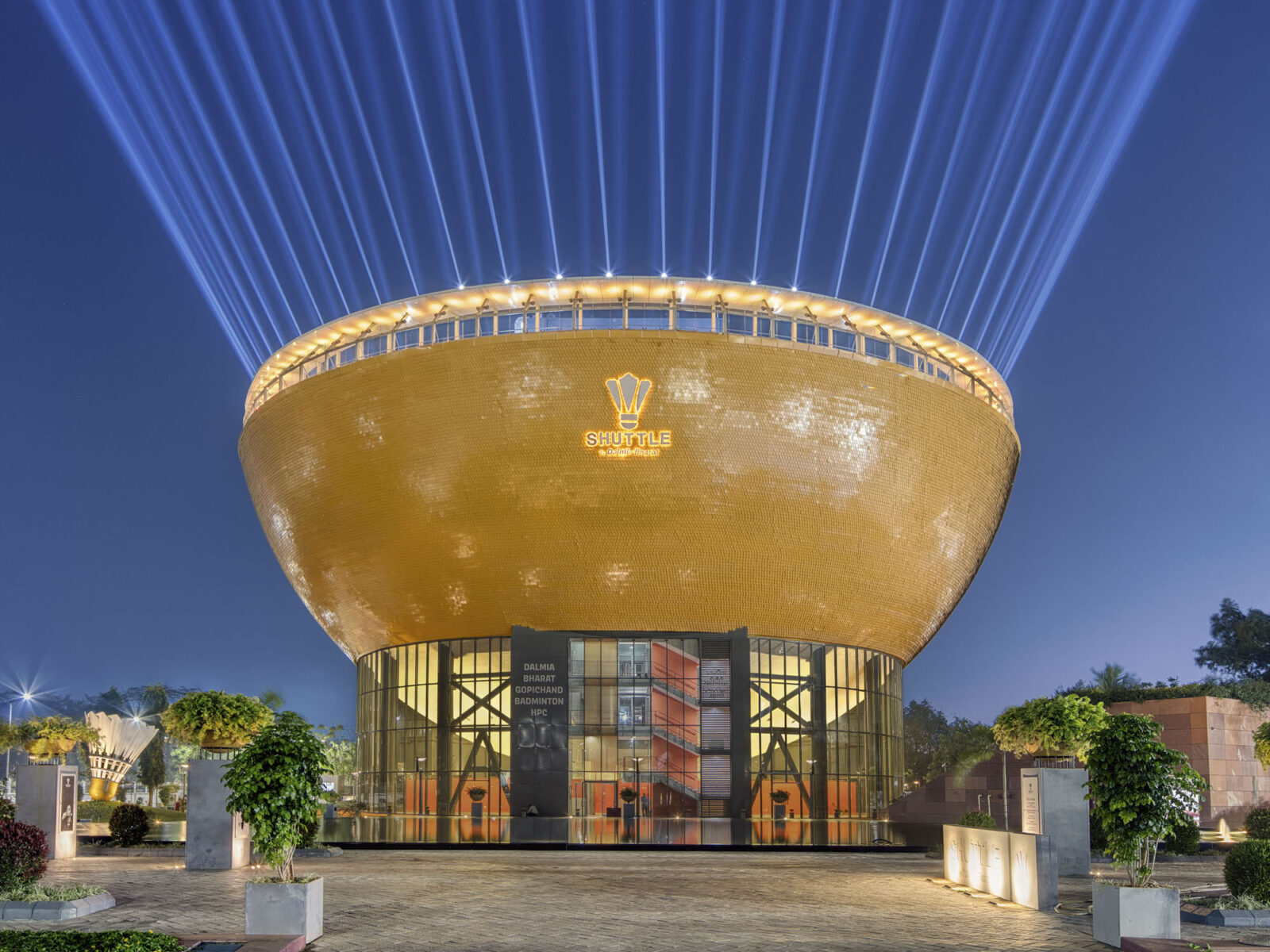
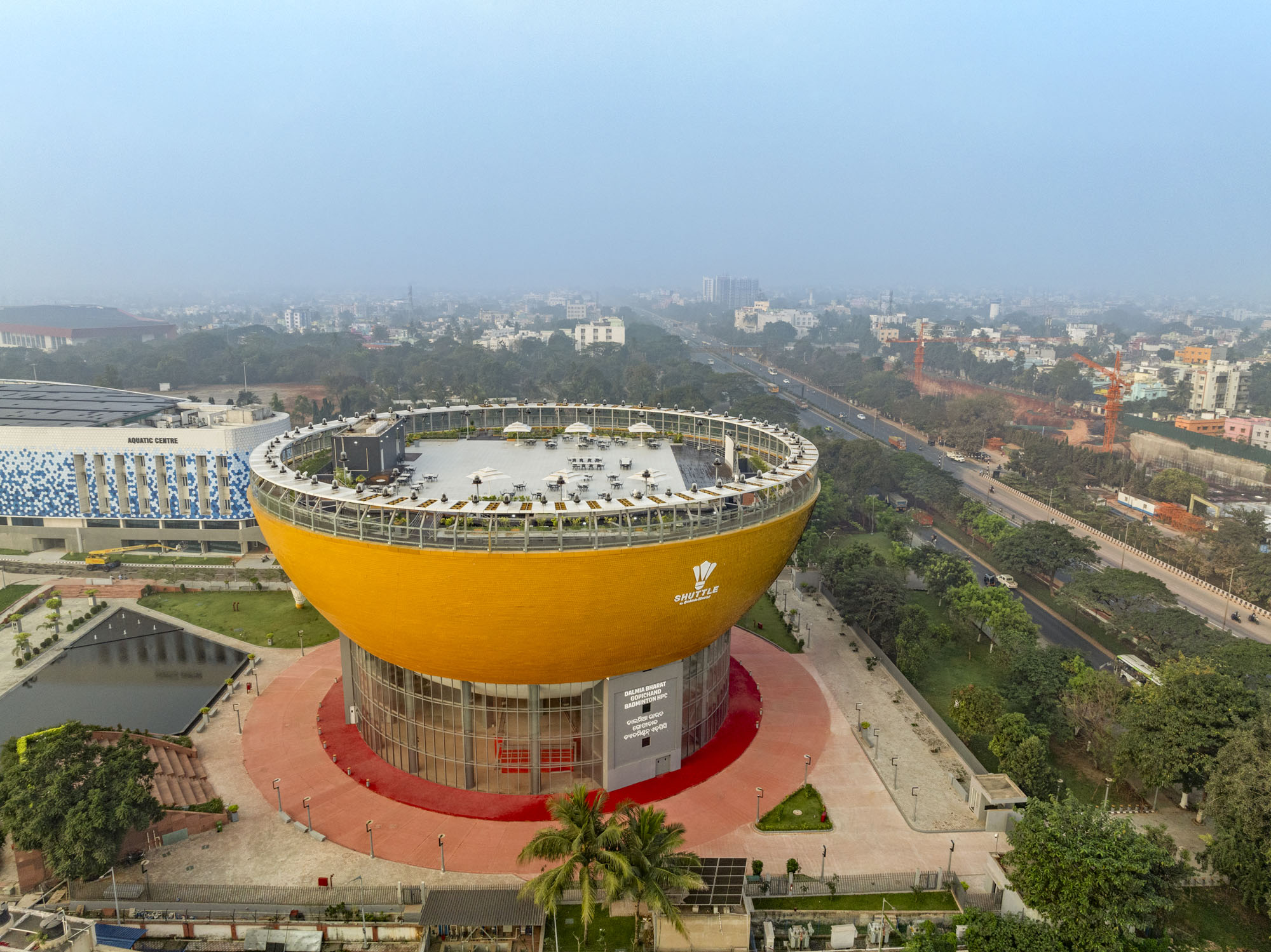
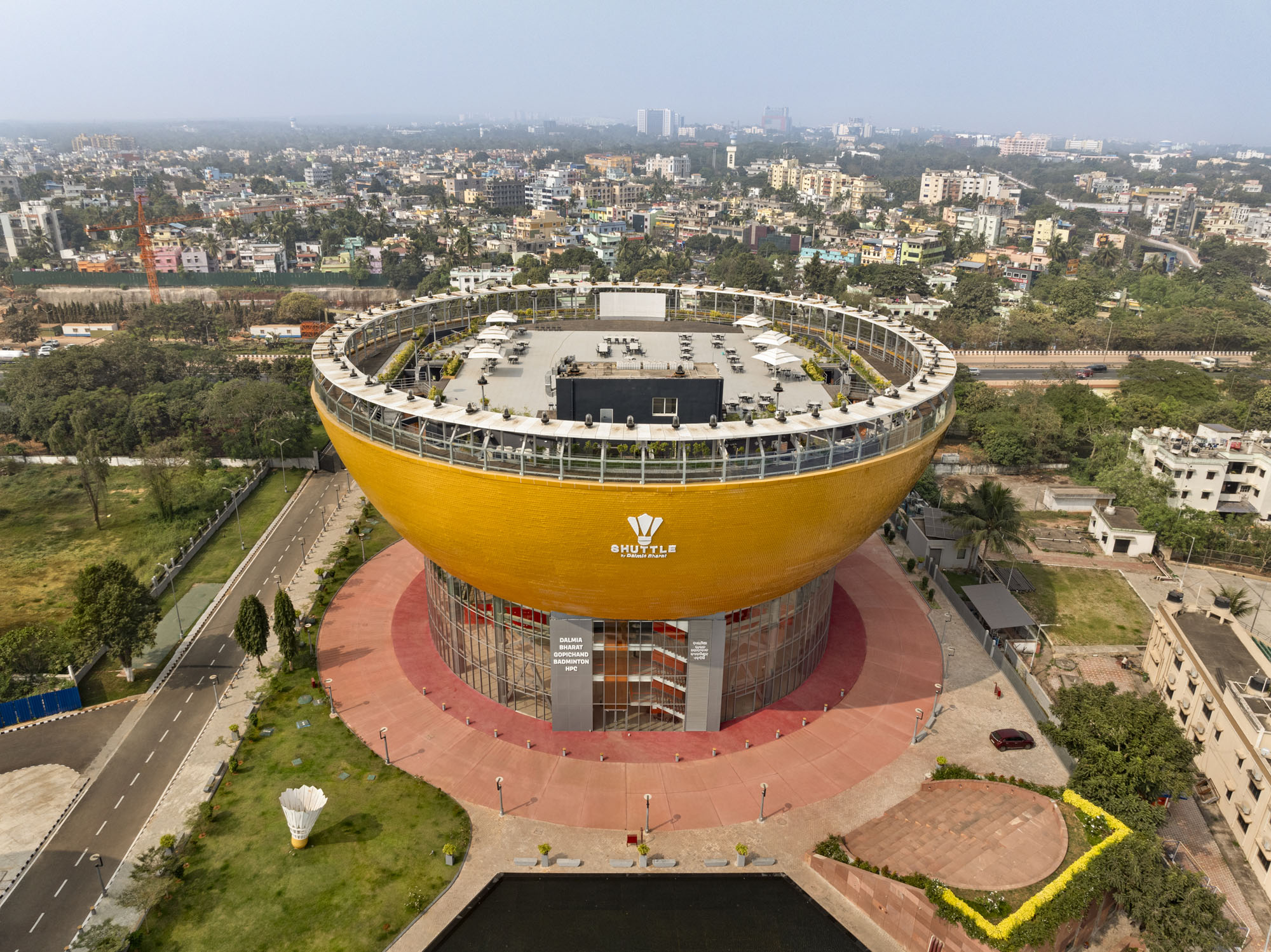
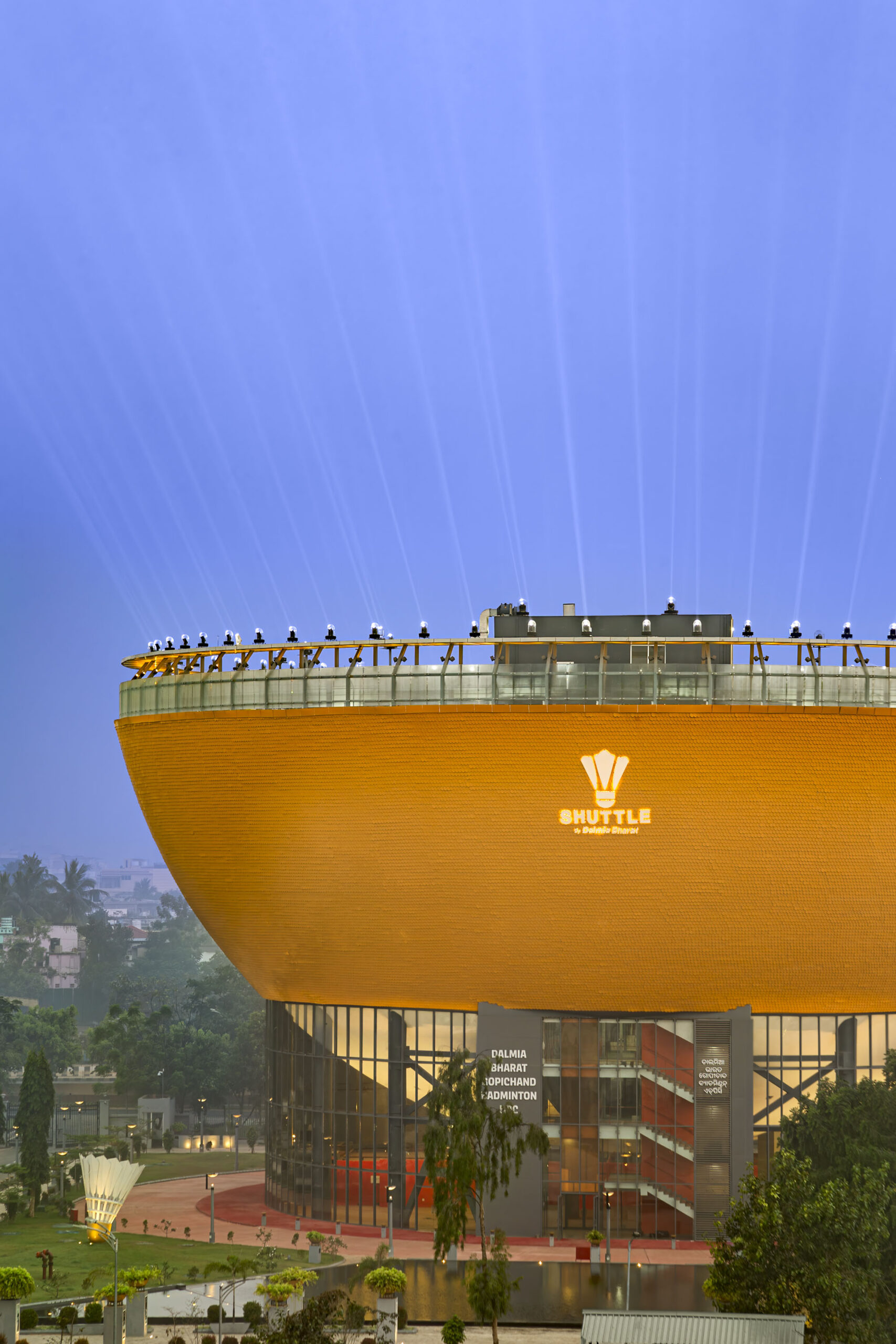
インド・オリッサ州のブバネーシュワルに誕生した〈ダルミア・ゴピチャンド・バドミントンアカデミー(The dalmia-gopichand badminton academy)〉(通称:The Shuttle)は、都市の新たなランドマークとなる高機能バドミントン施設です。
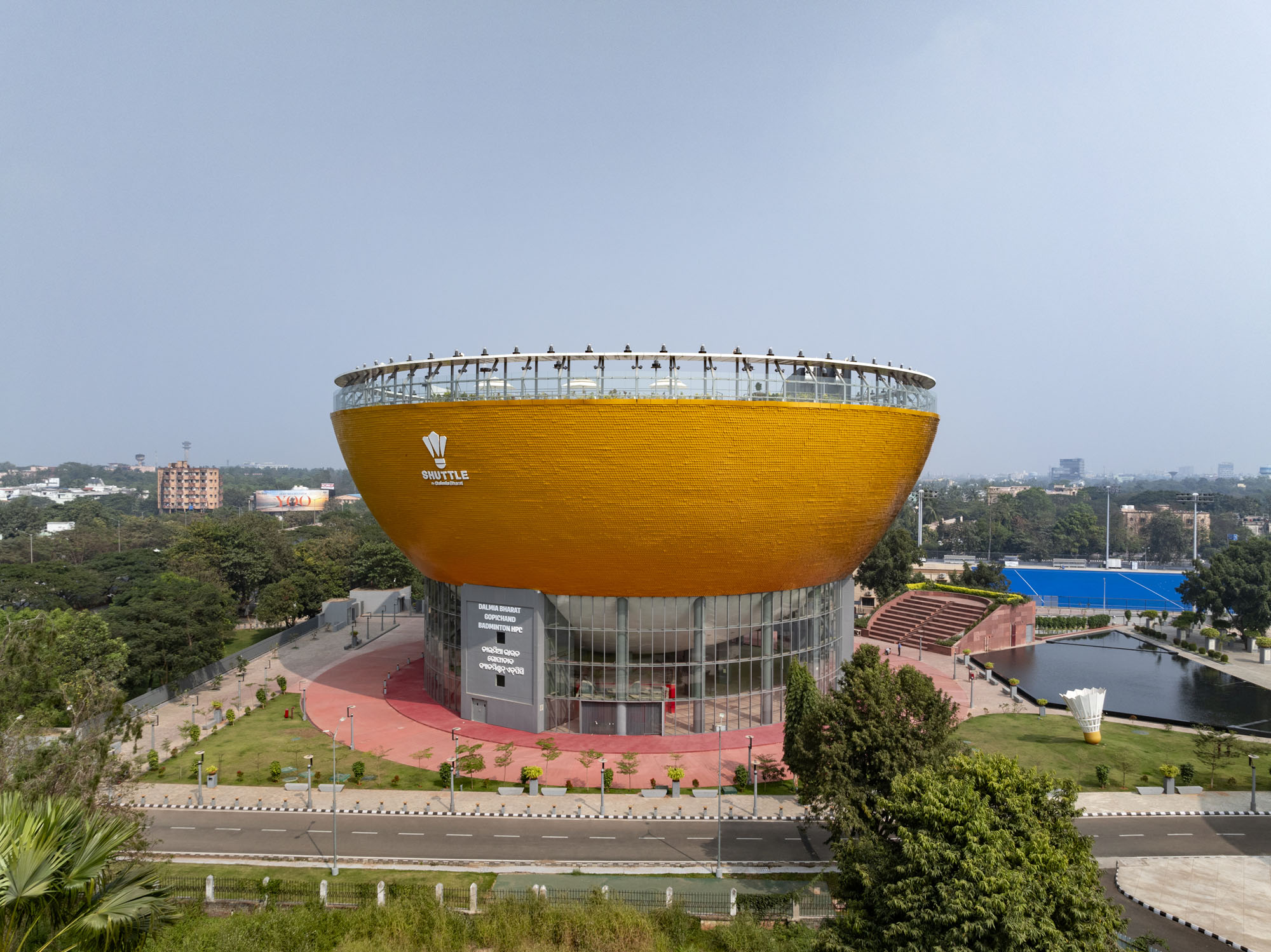
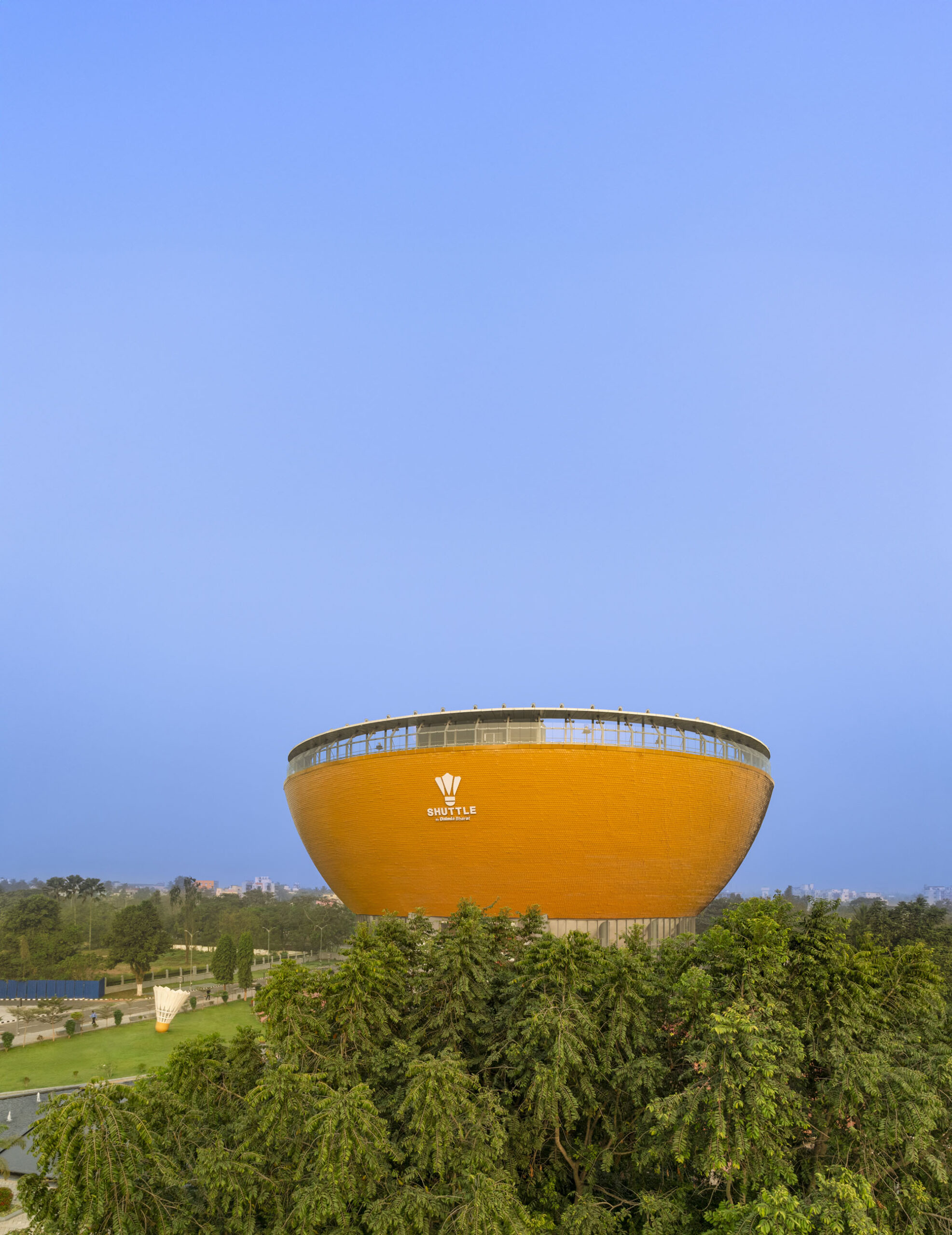
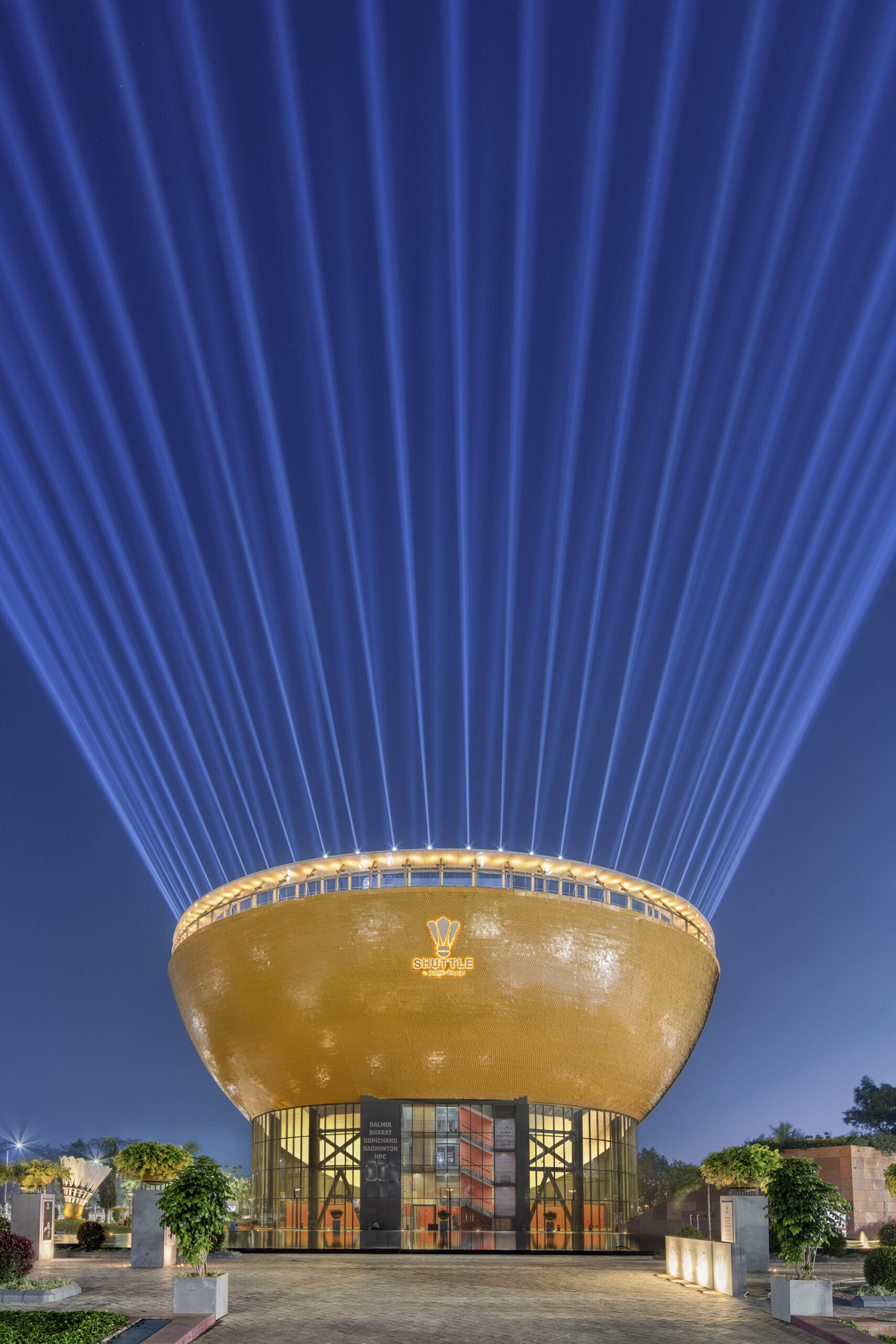
バドミントン競技の象徴である「シャトルコック」を模した大胆な逆半球状のフォルムが特徴的な建築であり、インドの設計事務所 Studio Archohmが設計しました。
注目ポイント
- 彫刻的フォルムを実現する鉄骨トラスとプレファブ工法
- モニュメント性にとどまらず環境制御と競技性を両立する構成
- 都市に開かれたパブリックスペースも有したスポーツ施設
- 夜間のランドマーク性を確立する緻密な照明デザイン
(以下、Studio Archohmから提供されたプレスキットのテキストの抄訳)
©︎ Andre J Fanthome
©︎ Andre J Fanthome
建築とスポーツが織りなす新たな可能性
〈ダルミア・ゴピチャンド・バドミントンアカデミー〉、通称〈The Shuttle〉は、建築が構築された環境においてスポーツの機会を創出する可能性を証明するものである。これはひいてはスポーツマンシップとコミュニティ精神を育み、建築がスポーツの文化的・経済的意義をいかに増幅しうるかを示している。
本プロジェクトは、都市のアイデンティティと志を形作る建築の役割を体現するように設計された。実験への勇気、機能性を保つ知恵、そして人々を鼓舞するビジョンを象徴している。その核心は、建築がスポーツと同様に人々を結びつけ、成長を促し、世界に永続的な影響を残す可能性を私たちに想起させる点にある。
©︎ Andre J Fanthome
都市のランドマークとしての象徴的なデザインと協働
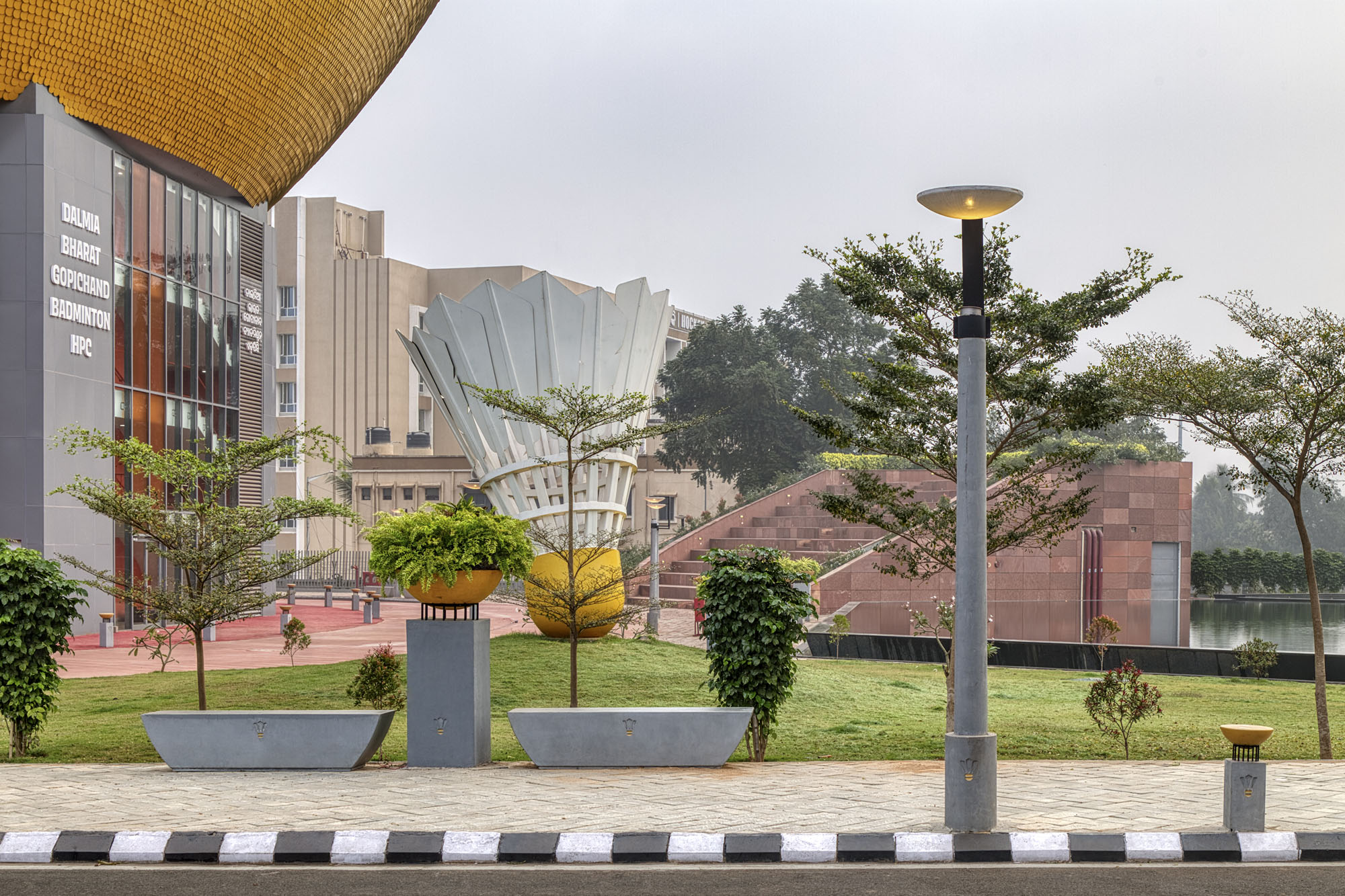
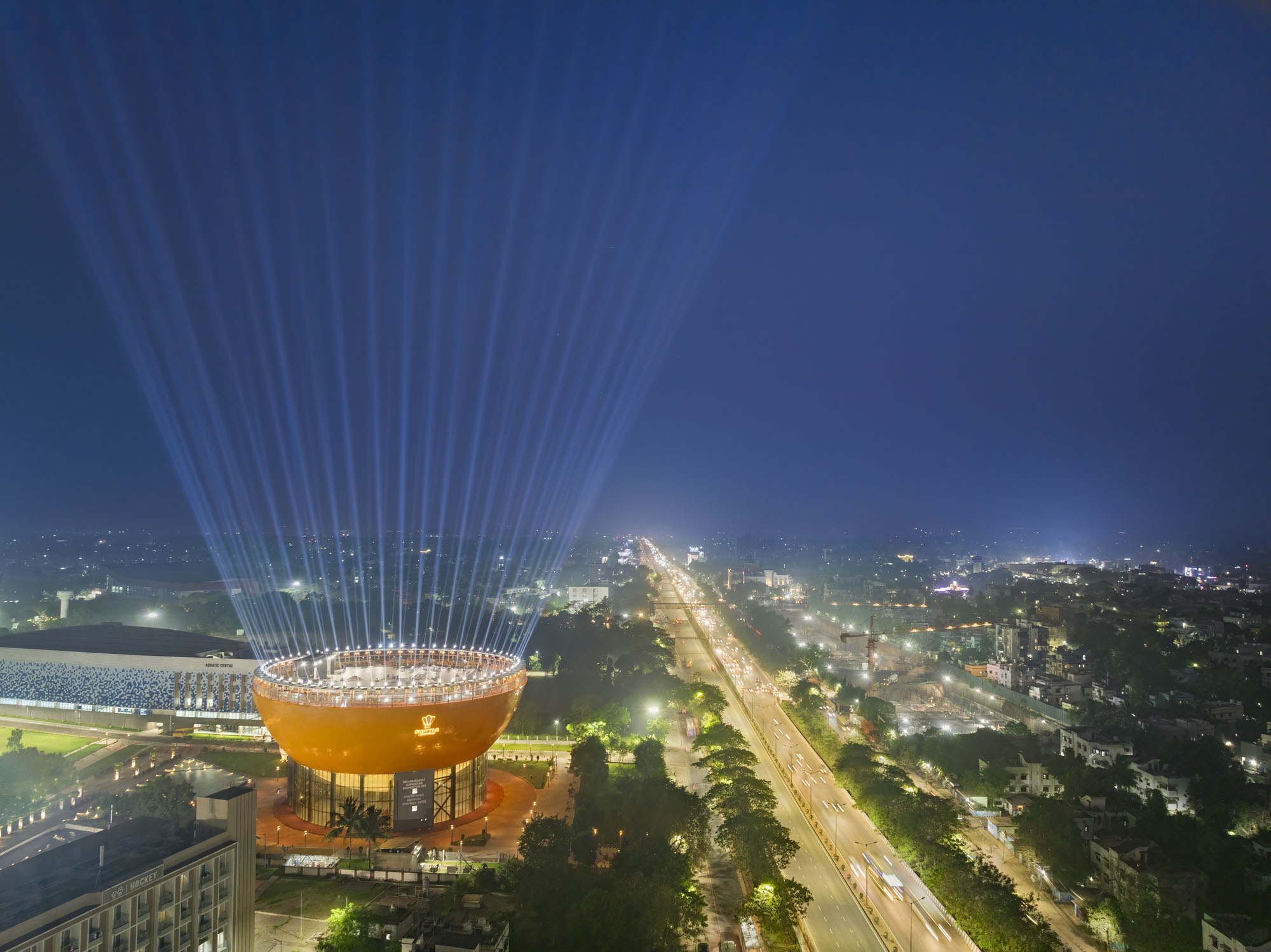
都市の二大幹線道路が交差する地点であり、名高〈カリンガ・スタジアム〉の縁に佇む本プロジェクトは、スポーツと建築の革新を象徴する灯台として姿を現している。バドミントン競技のトロフィーを連想させるデザインは、遊び心がありながらも意味をもち、大胆でありながら目的を確固たるものとする公共建築としての役割を体現している。
このプロジェクトを支えた協働関係は、そのビジョンそのものと同じく感動的であった。ダルミア・グループが州に非凡なものを捧げたいという願い、州のスポーツに対する先見的な姿勢、そして著名選手であるゴピチャン氏による機能的ニーズの詳細への洞察が相まって、建築家は自由な発想で革新的なアイデアを探求できたのである。
ダルミア・グループは、産業革新、回復力、そして未来に向けた建設の代名詞である。〈The Shuttle〉は、構造的に大胆で、気候に反応し、素材的に頑強であることで、これらの特質を見事に体現している。ダルミアがインドの産業景観を形づくってきたように、このアカデミーは今後数十年にわたり、オリッサ州の文化的・スポーツ的アイデンティティを形づくる構造物として構想されている。
©︎ Andre J Fanthome
©︎ Andre J Fanthome
©︎ Andre J Fanthome
大胆なフォルムを実現する鉄骨構造と施工技術
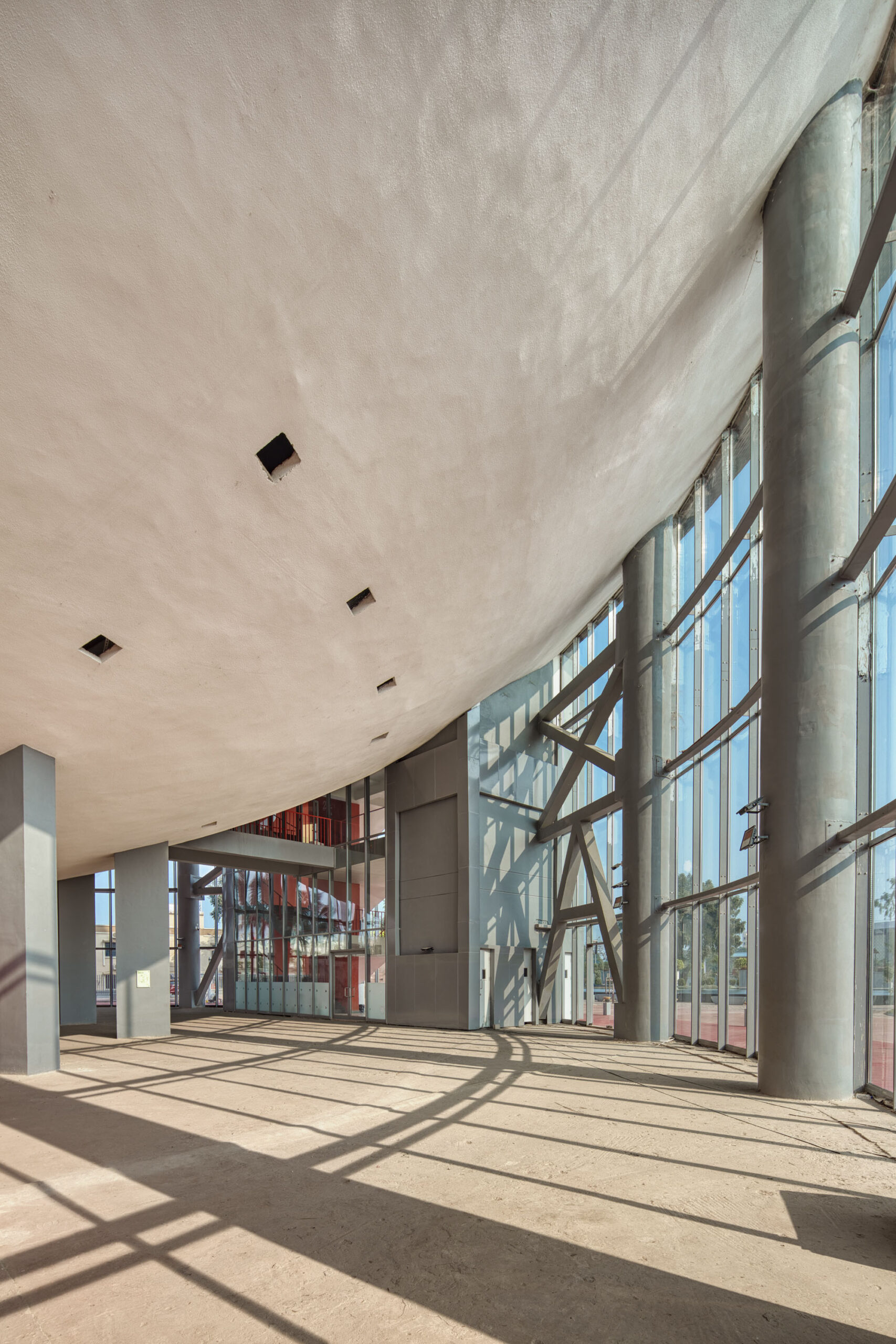
構造物の逆半球形状は、〈The Shuttle〉の骨格を成す主要素材である鋼材によってのみ、経済的かつ実用的に実現可能な長スパントラスと曲線部材を必要とした。鋼材の柔軟性により、建築家と技術者は大胆な彫刻的かつ空力学的な形状を実現しつつ、内部を柱のない空間に保ち、バトミントンコートがシームレスに機能することを保証した。
プロジェクトでは特注の曲げ鋼部材とトラスシステムを採用し、プレファブリケーション部材と統合することで公差管理と施工速度の向上を図っている。このモジュール設計により、規模と曲率が極めて大きい形状であるにもかかわらず、現場での組み立てが可能となった。
©︎ Andre J Fanthome
機能性を極めた高機能スポーツ空間
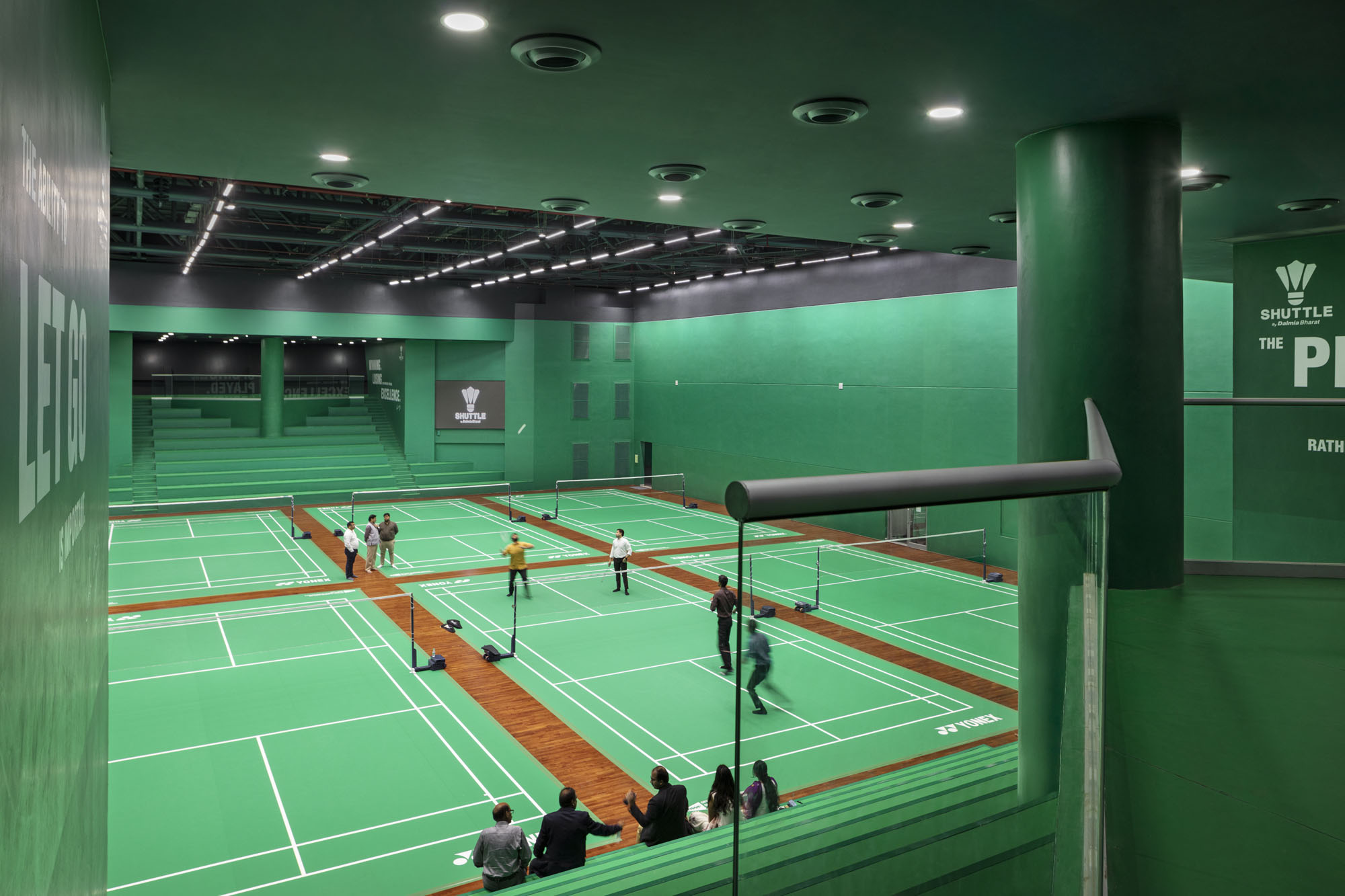
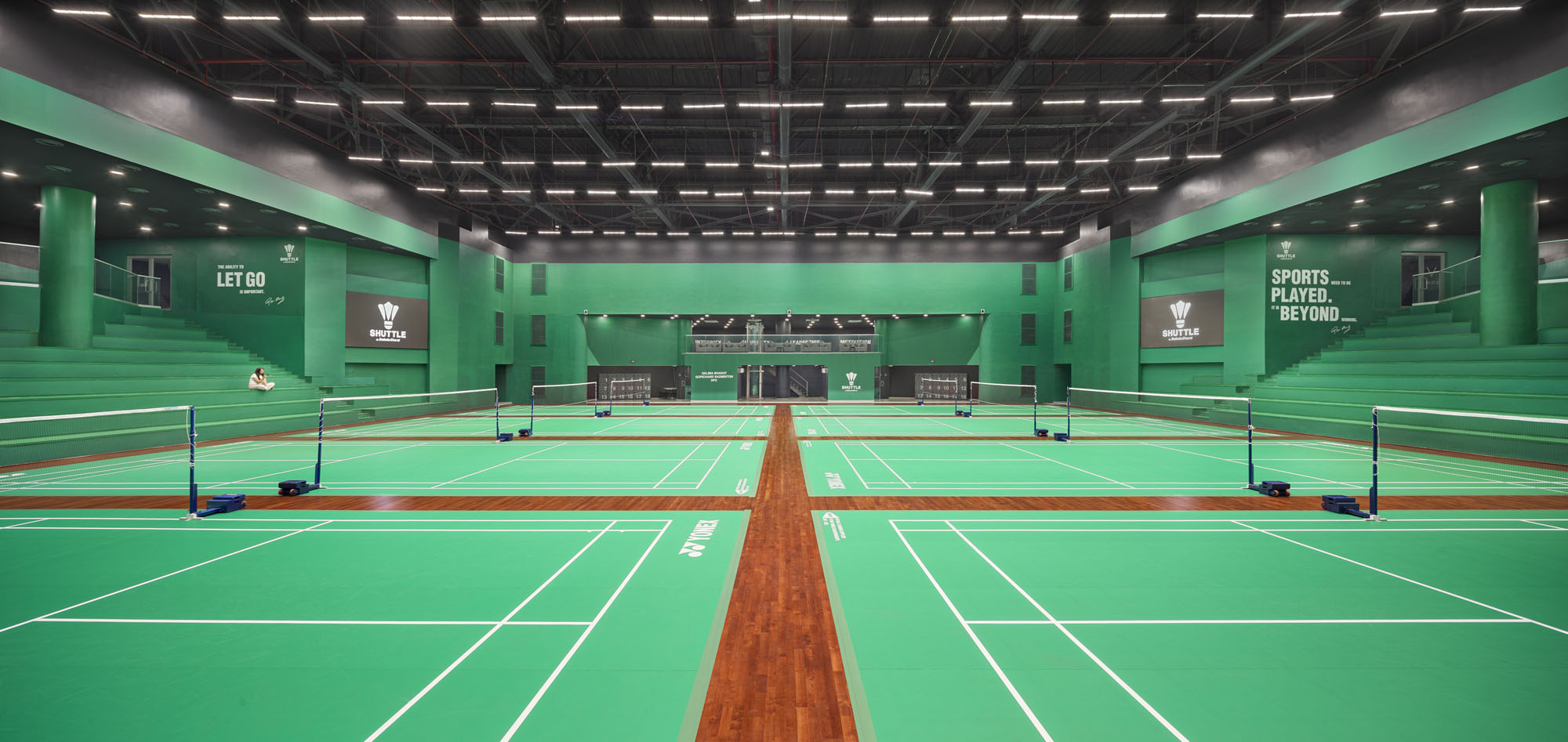
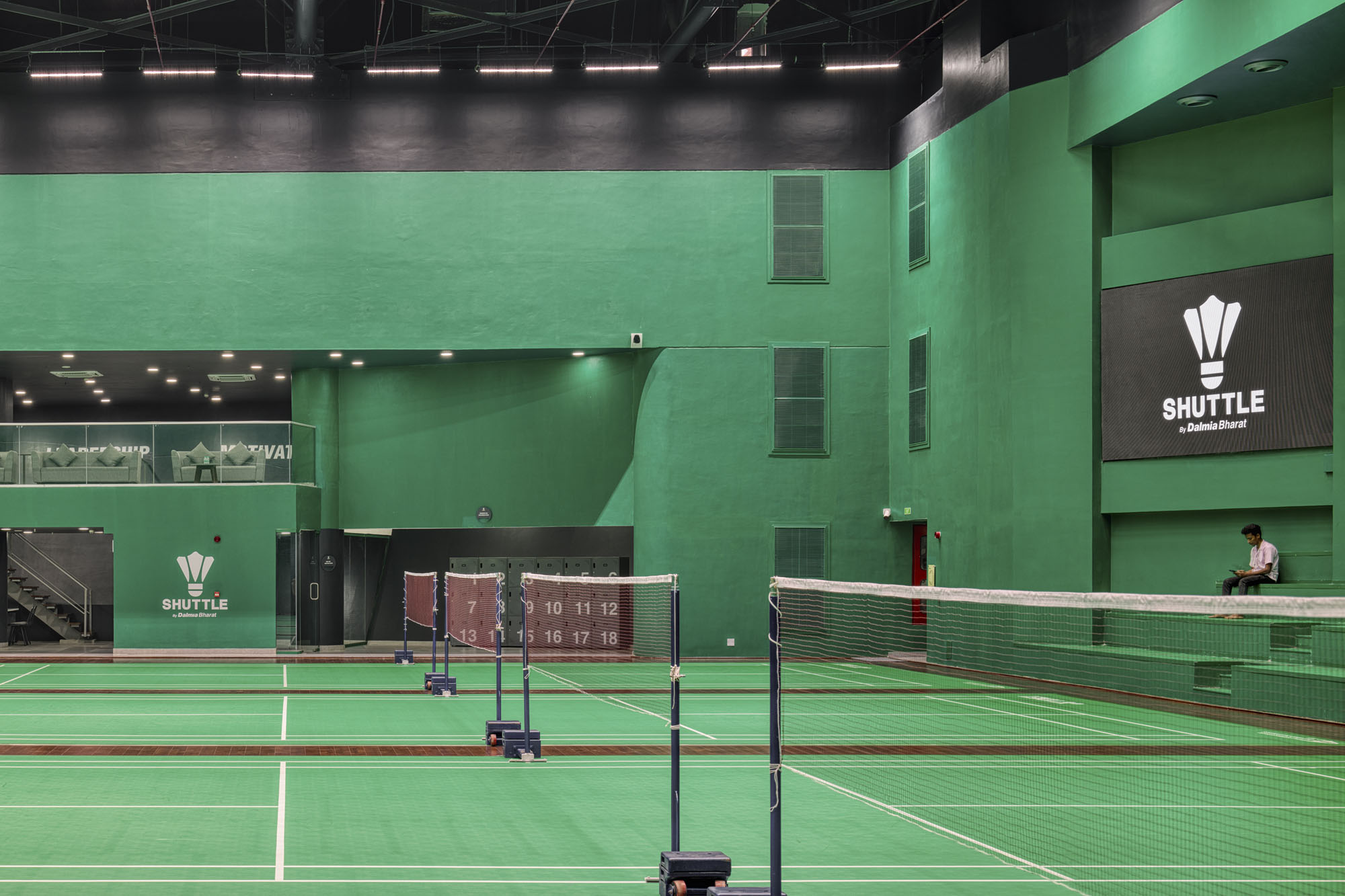
アカデミーの核心は、バドミントン向けの高性能空間創出という主要な機能的要請に応えることにある。建物はスポーツに不可欠な「ダークボックス構成」で8面のコートを収容し、講堂・教室・ジム・コーチ室・寮が垂直方向に効率的に配置されている。
また、コンクリートは、ブバネーシュワルの酷暑とサイクロン気候から内部を遮断し、逆半球形状の重量を支える役割を担っている。この大胆な彫刻的形態はシャトルコックのコルク基部を模しており、象徴するスポーツとの視覚的・象徴的な関連性を確立している。
©︎ Andre J Fanthome
©︎ Andre J Fanthome
©︎ Andre J Fanthome
都市に開かれたパブリックスペース
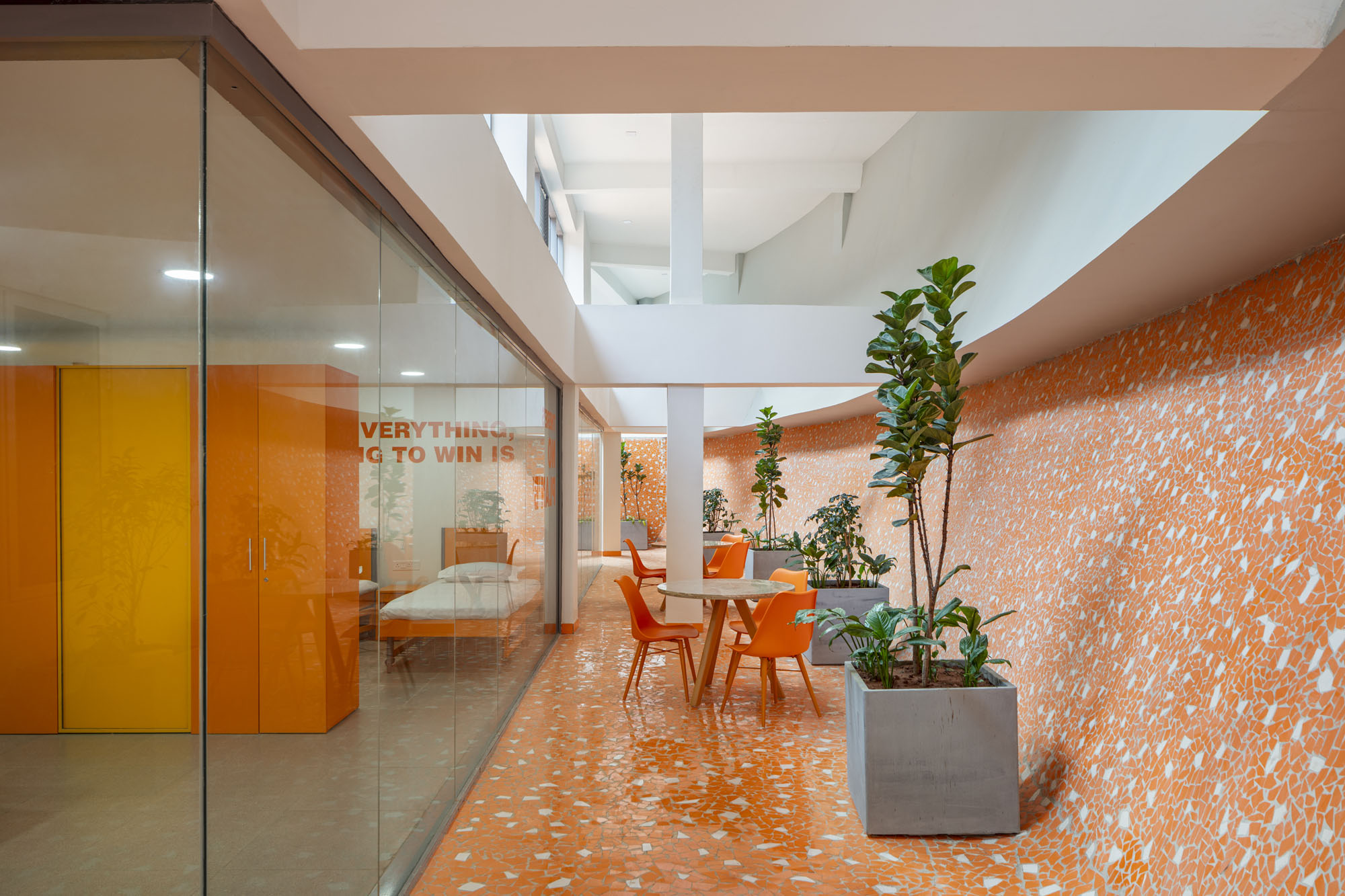
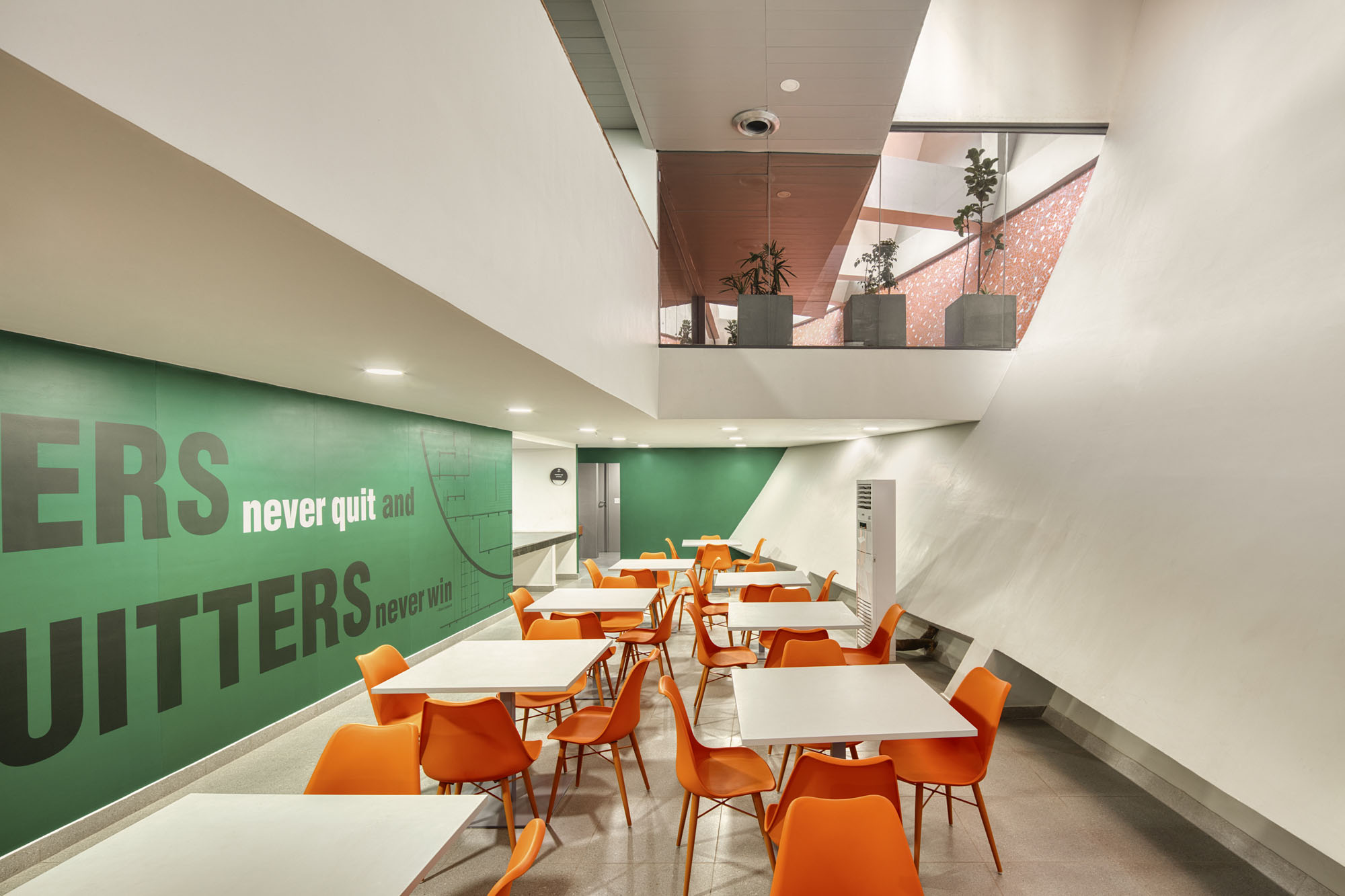
アカデミーは決して閉鎖的なスポーツ施設ではなく、交流と参加を促す公共空間である。1階にはカフェ、スポーツショップ、商業スペースを配置し、実用性と活気をシームレスに融合させている。
透明なガラスボリュームに囲まれたこれらの公共向け要素は、建物の視覚的な重厚感を軽減し、都市に開かれた魅力的なインターフェースを形成している。
©︎ Andre J Fanthome
©︎ Andre J Fanthome
©︎ Andre J Fanthome
©︎ Andre J Fanthome
©︎ Andre J Fanthome
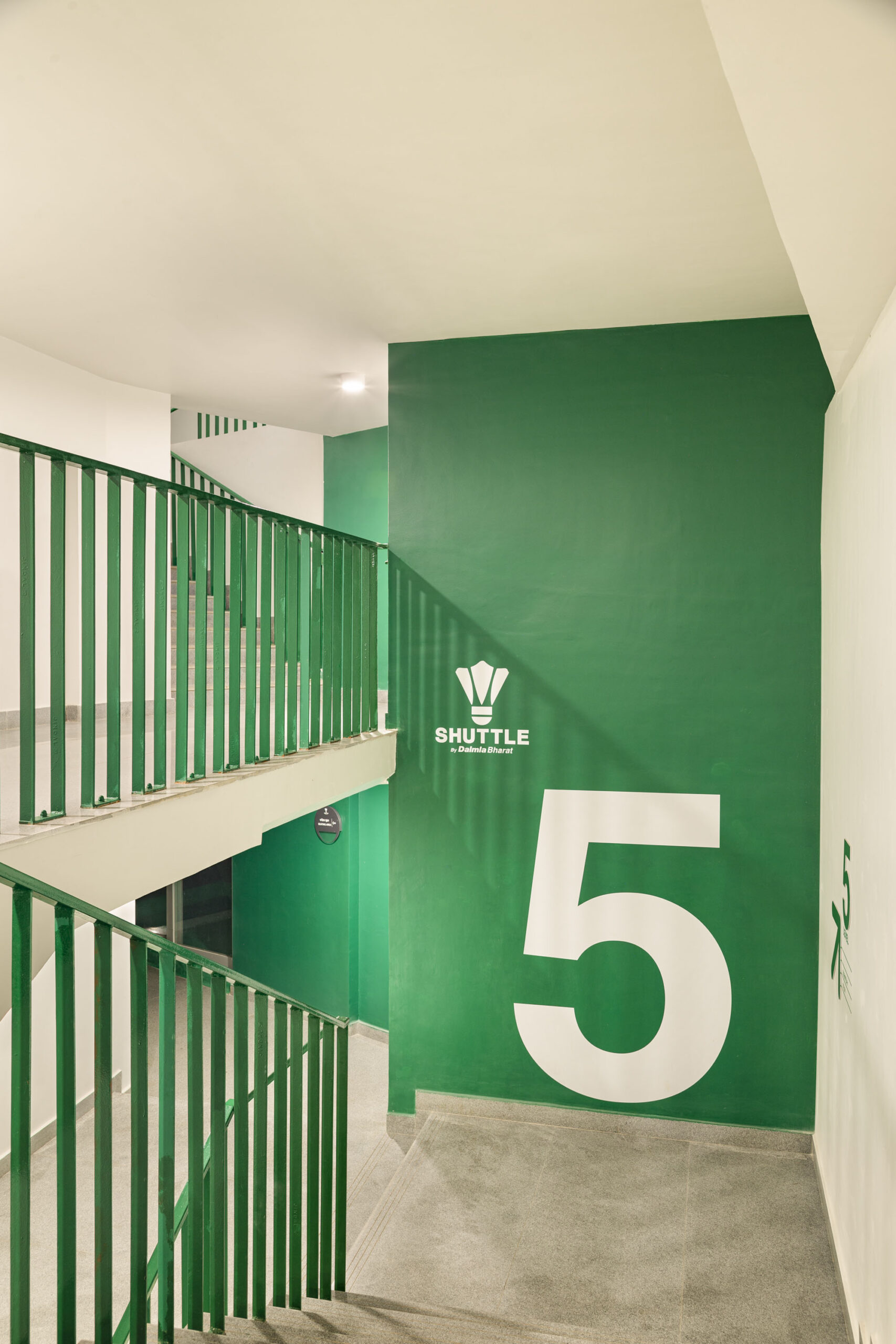
©︎ Andre J Fanthome
コミュニティの拠点となるランドスケープ
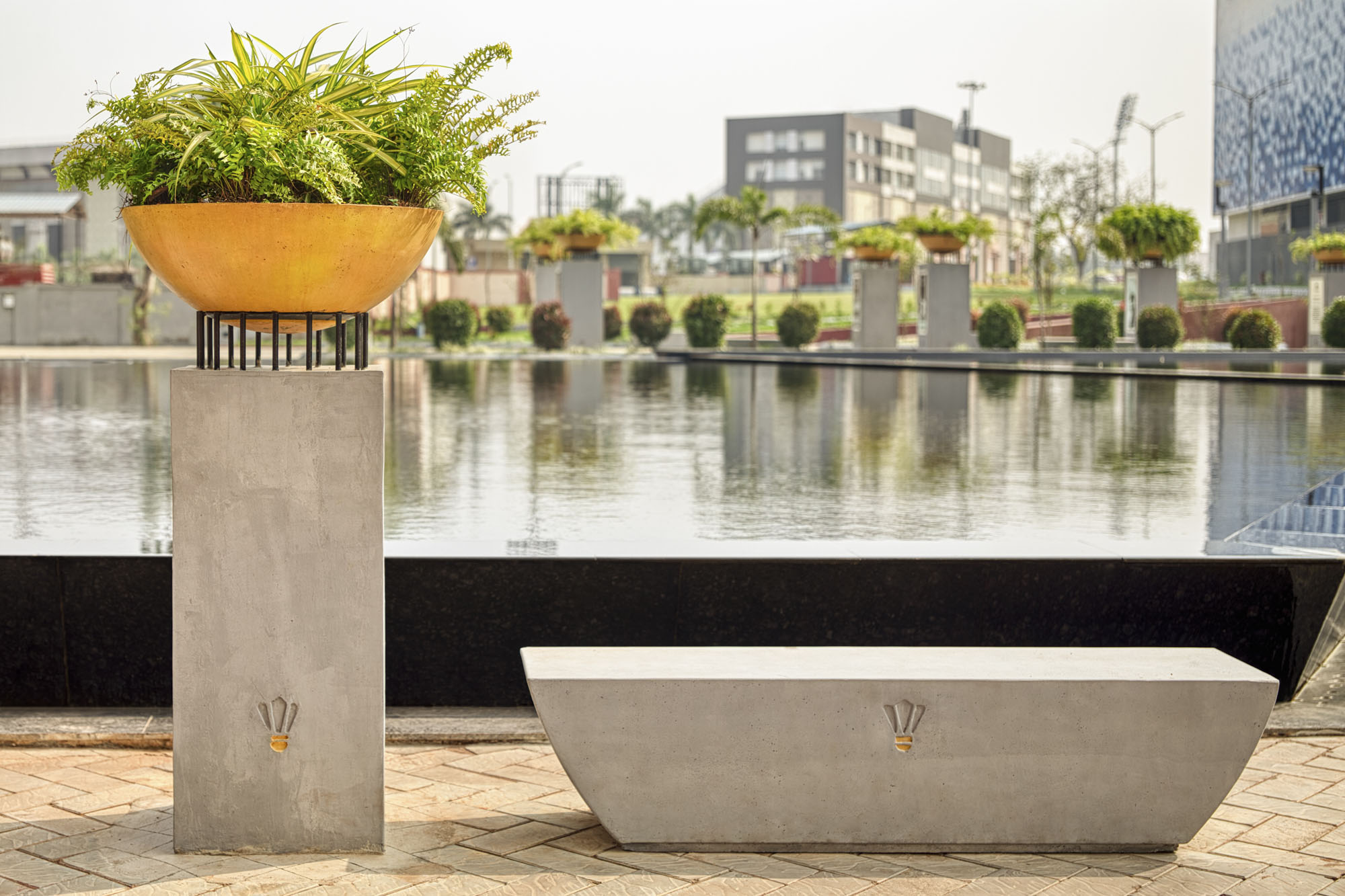
ランドスケープデザインは、コミュニティハブとしての役割をさらに強化するものである。敷地は周囲の公園地へと広がり、500席の日陰付き観覧席、円形劇場、そして集いと交流を促すように設計された眺望を備えている。建築と景観のこの配慮ある統合により、アカデミーは主要機能を超え、都市の社会的・文化的拠点へと変貌する。
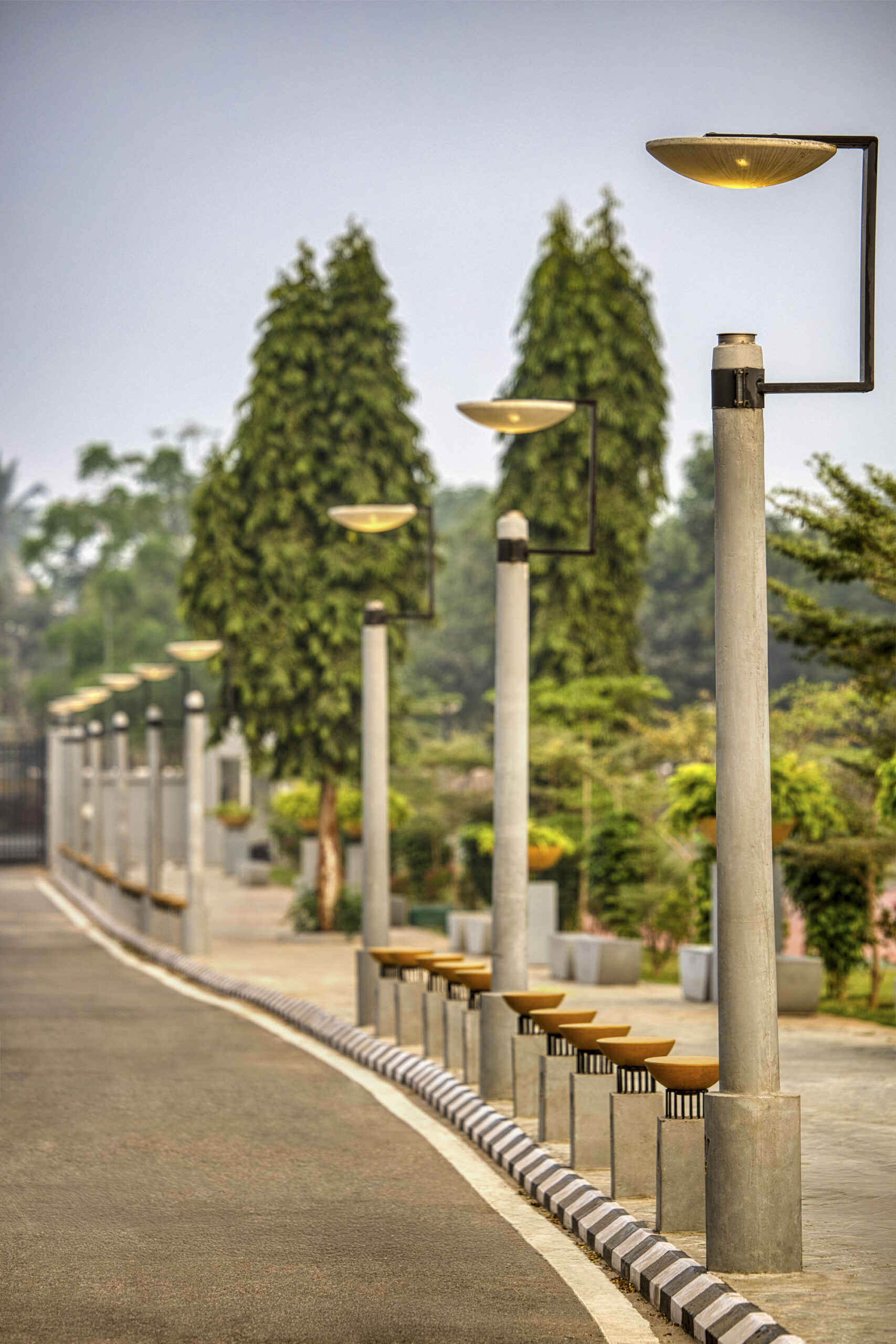
©︎ Andre J Fanthome
夜のまちを彩る照明デザインと長期的な機能性の両立
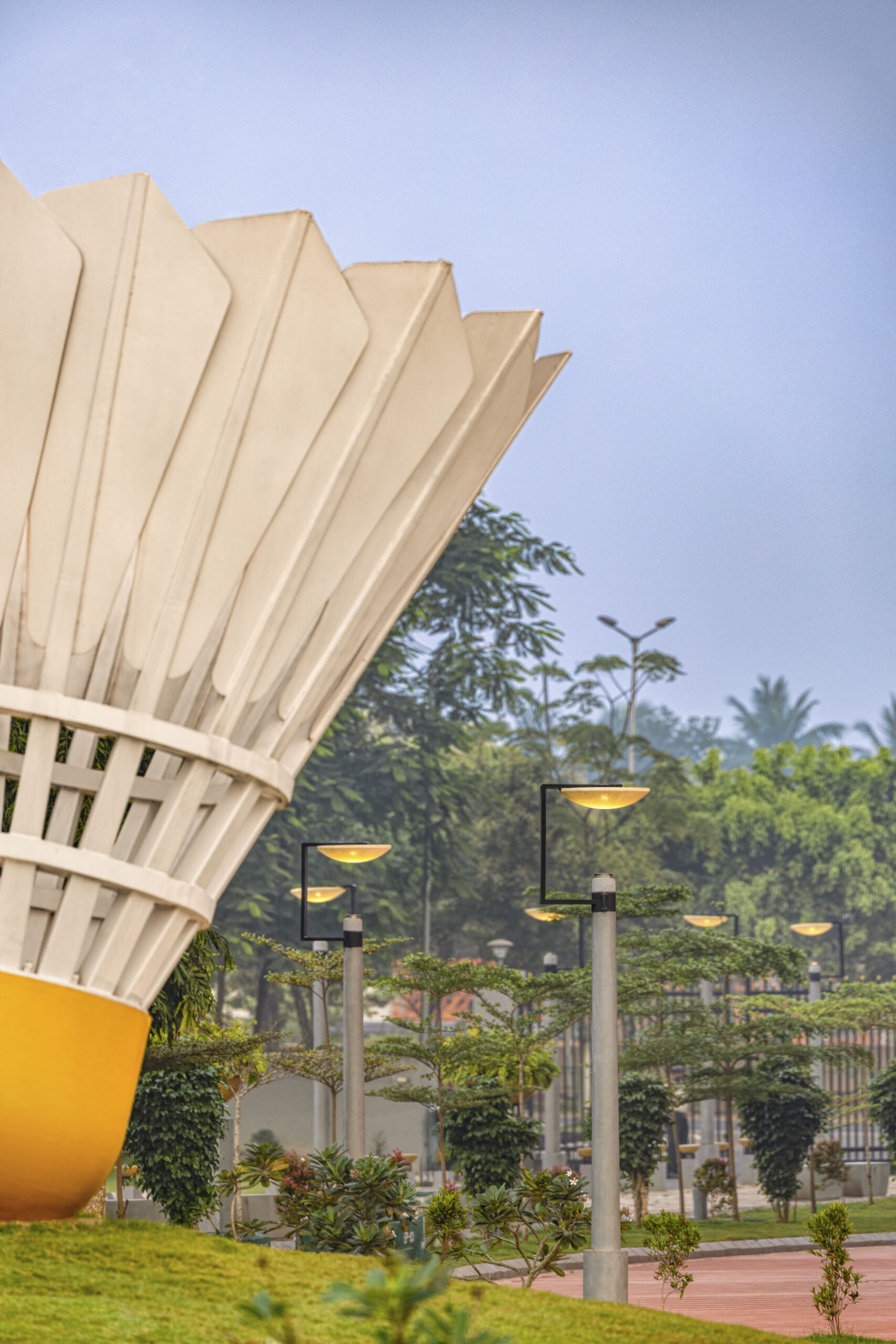
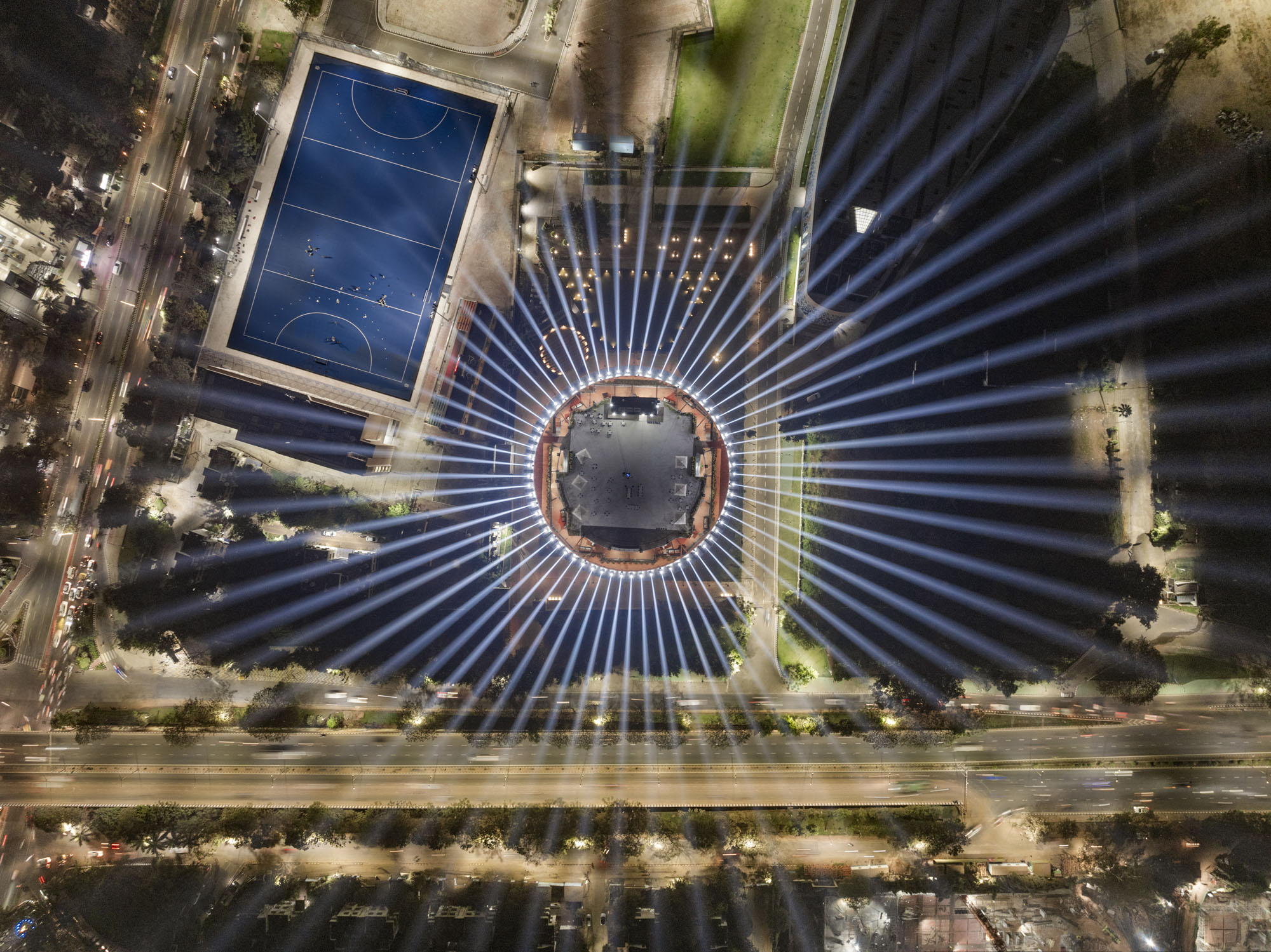
照明は、アカデミーのアイデンティティを強化する重要な役割を担っている。夜間、建物はシャトルコックの羽根を想起させる特注照明により、バドミントンの輝く象徴へと変貌する。この劇的な視覚効果は、スポーツを称えるだけでなく、アカデミーをブバネーシュワールの夜間のランドマークとして確立している。
設計プロセスにおいては、短期的な華やかさよりも長期的な意義を優先した。アカデミーの大胆な形態と象徴性は機能性に根ざしており、高性能スポーツ施設としての本質を損なうことはない。建築が確かに象徴的である一方で、イメージを機能よりも優先する落とし穴を回避し、ランドマーク性と機能空間の微妙な均衡を保っているのである。
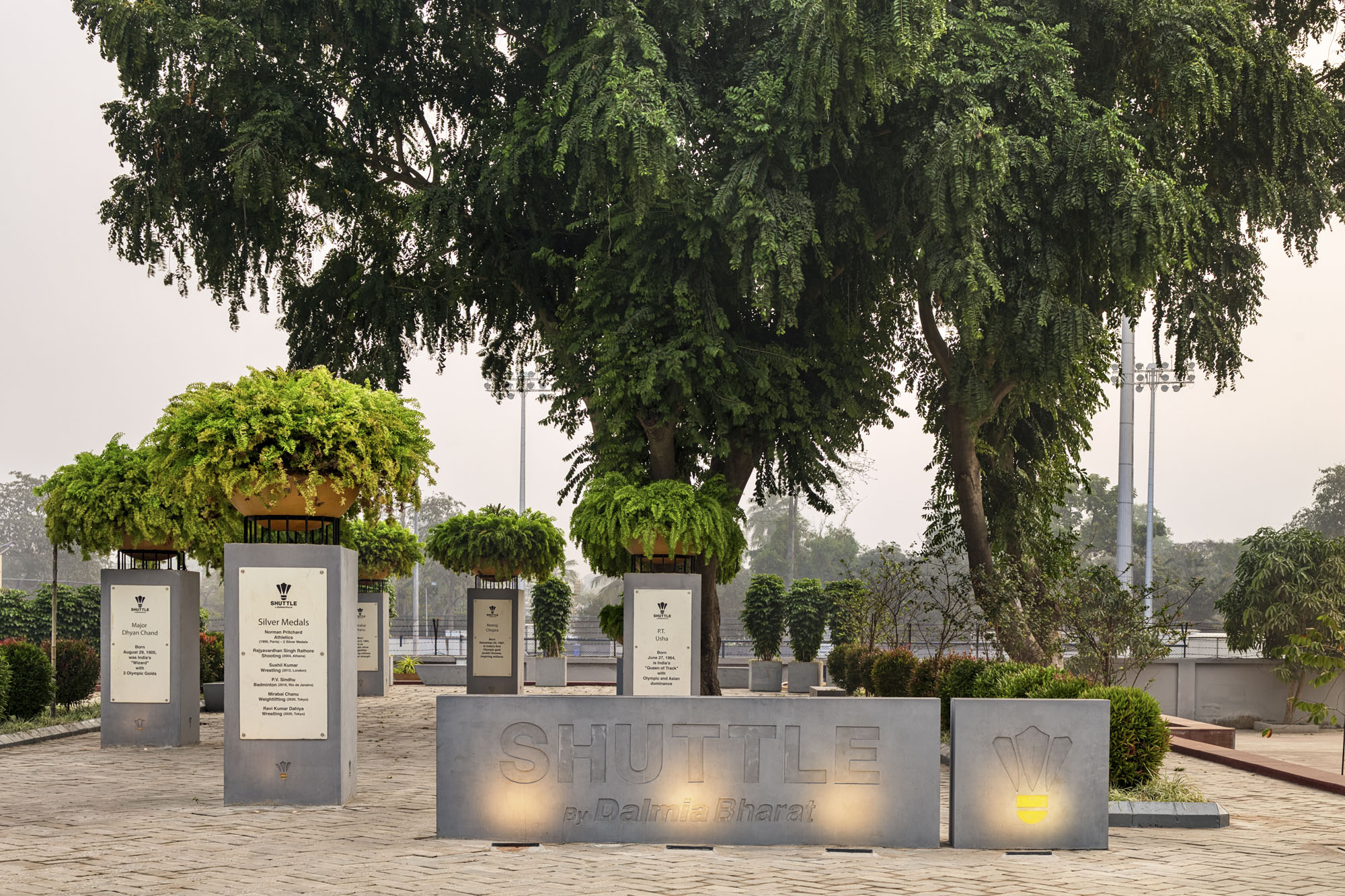
©︎ Andre J Fanthome
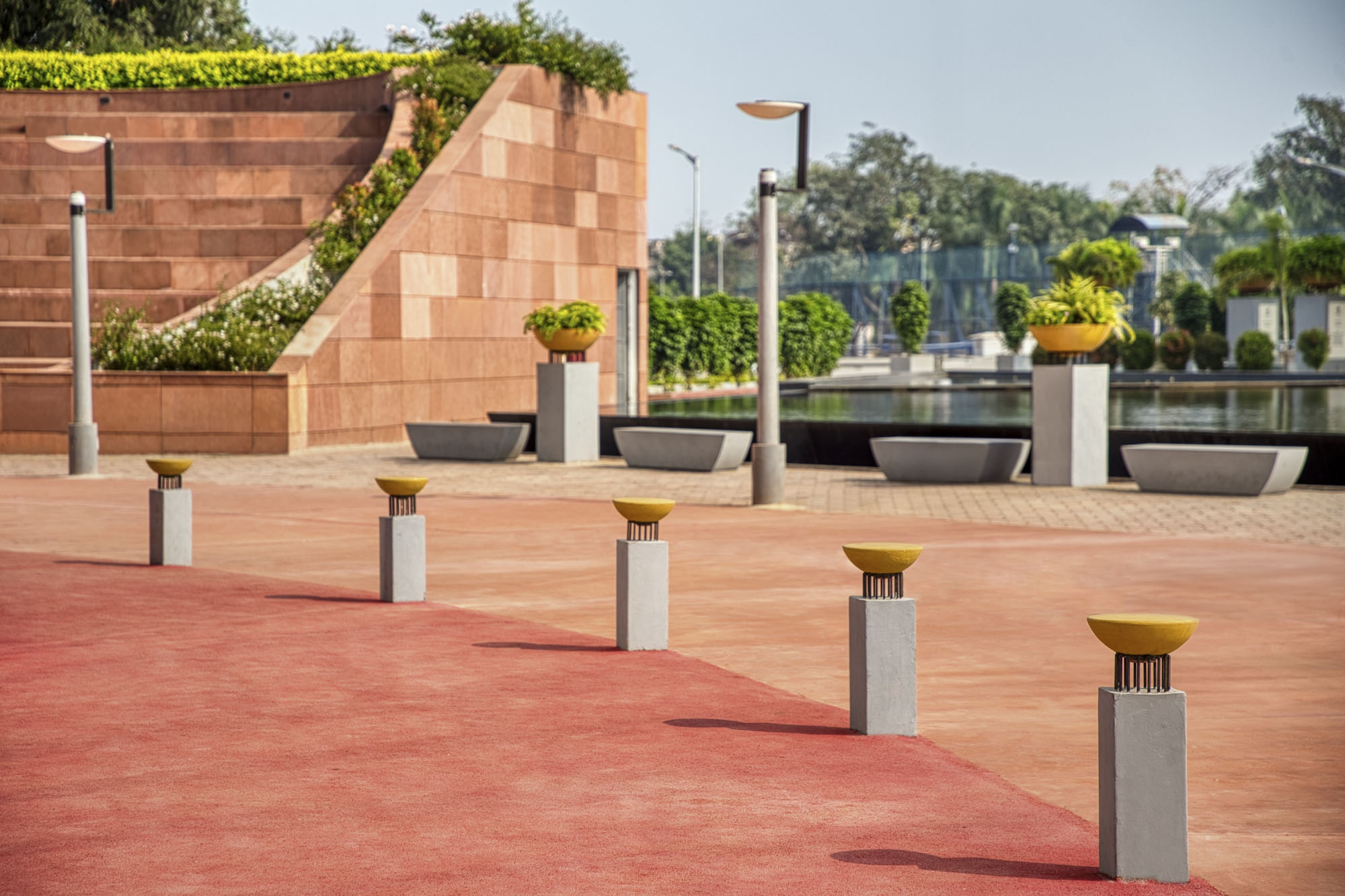
©︎ Andre J Fanthome
機能と象徴の融合を証明するプロジェクト
コンセプト立案から設計、最終引き渡しまで約3~4年を要した本プロジェクトでは、象徴的意義の大きさから、構造と照明の詳細検討に特に時間を費やした。このプロジェクトは、機能性と象徴性を両立させる建築の可能性を実証する事例である。
©︎ Andre J Fanthome
©︎ Andre J Fanthome
©︎ Andre J Fanthome
©︎ Andre J Fanthome
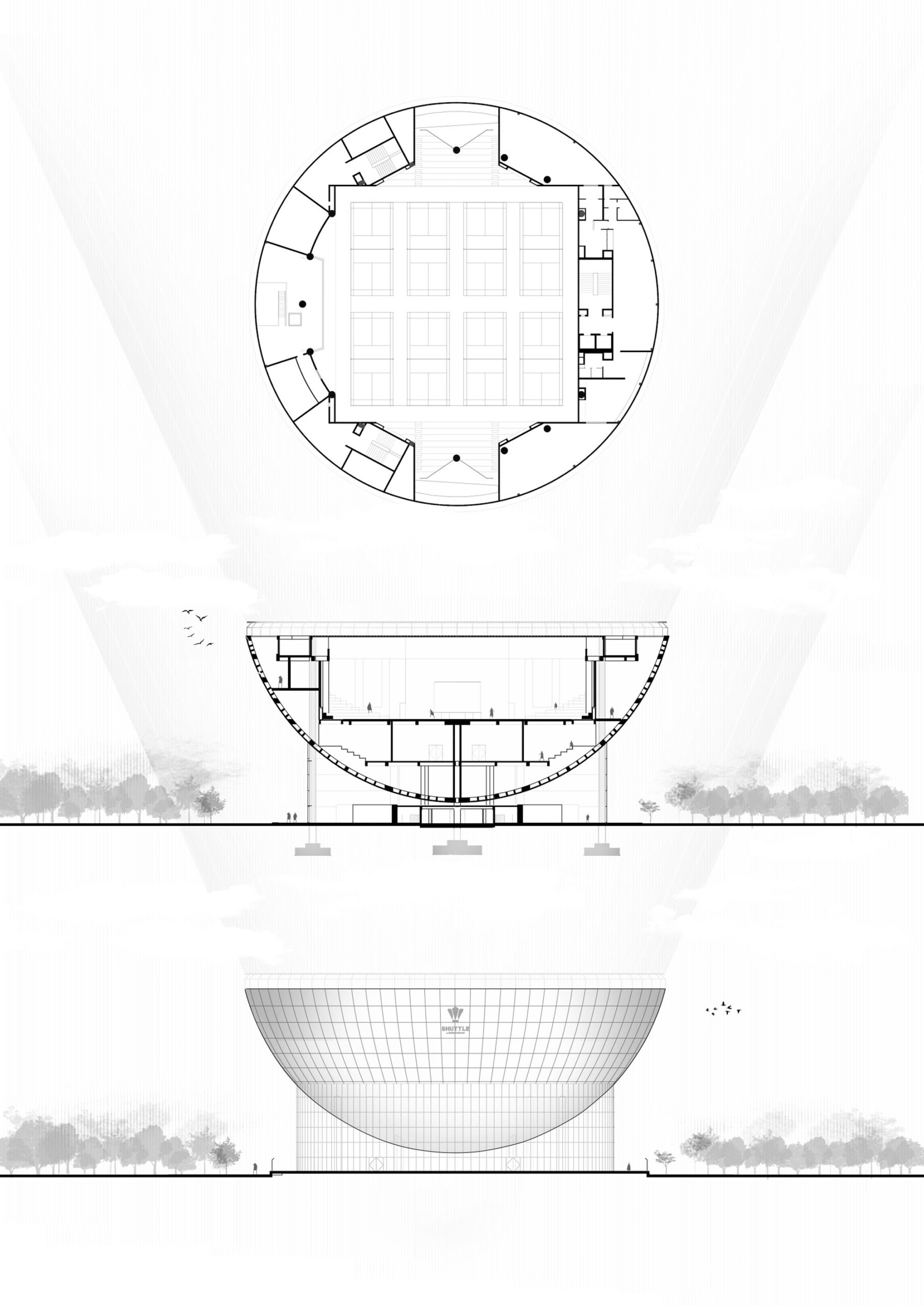
Drawing © STUDIO ARCHOHM
以下、Studio Archohmのリリース(英文)です。
the shuttle, bhubaneswar, odisha, india | Photographer: Andre J Fanthome
the dalmia-gopichand badminton academy or the shuttle is a testament to the potential of architecture to create opportunities for sports in the built environment. this, in turn, fosters the spirit of sportsmanship and community, thereby demonstrating how architecture can amplify the cultural and economic significance of sports. this project was designed to exemplify the role of architecture in shaping a city’s identity and aspirations. it represents the courage to experiment, the wisdom to remain functional and the vision to inspire. at its core, it reminds us that architecture, like sports, has the potential to bring people together, foster growth and leave a lasting impact on the world.
at the crossroads of the city’s two major arteries and on the edge of the renowned kalinga stadium, this project emerges as a beacon of sporting and architectural innovation. designed to be cognitively associated with a trophy for the sport of badminton, the building embraces its role as a public object, playful yet meaningful, bold yet grounded in purpose. the collaboration behind this project was as inspiring as the vision itself. the dalmia group’s desire to give something extraordinary to the state, coupled with the state’s forward-looking approach to sports and famous player gopichand’s insights into the details of functional needs, allowed the architects to explore innovative ideas with a free hand. the dalmia group is synonymous with industrial innovation, resilience, and building for the future. the shuttle embodies these qualities by being structurally daring, climatically responsive, and materially robust. just as dalmia has shaped india’s industrial landscape, the academy is imagined as a structure that will shape the cultural and sporting identity of odisha for decades.
the inverted hemispherical geometry of the structure demanded long-span trusses and curving members that could only be economically and practically achieved in steel, the main material that frames the shuttle. steel’s flexibility allowed the architects and engineers to realise a bold sculptural aerodynamic form while keeping the interior column-free, ensuring that the courts function seamlessly. the project relied on custom-fabricated curved steel members and truss systems, integrated with prefabricated sections to control tolerances and speed up construction. modular detailing allowed on-site assembly despite the scale and curvature of the form.
at its heart, the academy addresses the primary functional need of creating a high-performance space for badminton. the building houses eight courts in a “dark box configuration” essential for the sport, stacked above lecture theatres, classrooms, gym, coach rooms and dormitories to maximise vertical efficiency. concrete was used to insulate the interiors from bhubaneswar’s heat and cyclonic weather, and to anchor the inverted hemisphere’s mass. this bold, sculptural form mirrors the cork-base of a shuttlecock, establishing a visual and symbolic connection to the sport it represents.
the academy is not just an insular sports facility but a public space that invites interaction and engagement. its ground floor features cafes, sports shops and commercial spaces, seamlessly blending utility with vibrancy. these public-facing elements, enclosed in a transparent glass volume, reduce its monumental visual weight and create an inviting urban interface.
the project’s landscape design further enhances its role as a community hub. the site extends into the surrounding parkland with a shaded 500-seat spectator gallery, amphitheatres and curated views that encourage gathering and social interaction. this thoughtful integration of architecture and landscape transforms the academy into a place that goes beyond its primary function to become a social and cultural hotspot for the city.
lighting plays a critical role in reinforcing the academy’s identity. at night, the building transforms into a glowing symbol of badminton, with custom lighting designed to evoke the feathers of a shuttlecock. this dramatic visual impact not only celebrates the sport but also establishes the academy as a night-time landmark for bhubaneswar. the design process prioritises long-term relevance over short-term spectacle. the academy’s bold form and symbolism are grounded in functionality, ensuring that it remains true to its purpose as a high-performance sports facility. while the architecture is undoubtedly iconic, it avoids the pitfall of prioritising image over use, maintaining a delicate balance between being a landmark and a functional space.
the project spanned about 3–4 years from concept, design to final handover, with detailed explorations in structure and lighting taking significant time due to their symbolic importance. the project demonstrates that architecture should be and can be both functional and iconic.
details
name: the shuttle or the dalmia-gopichand badminton academy
location: bhubaneswar, odisha
typology: assembly building
design: studio archohm
client: dalmia cement (bharat) limited
principal architect: sourabh gupta
design team: suboor khan, prachi saxena, yashvir singh, priyansh seth, vineet rao, rachna sharma
interior design: studio archohm (swapnil sharma, hari mohan, sebanti sarkar, sahil sachdeva)
electrical: studio archohm (amit das, deepak kumar, rajveer singh, angrej singh)
visual communication designers: studio archohm (akanksha thapa, syed imran hussain rizvi, nandini goel, bhavya jain)
date of completion: december 15, 2024
Studio Archohm 公式サイト
https://www.archohm.com


![[Interview]廃墟から地域資産へ、石と建築の時間軸を再統合する〈大谷グランド・センター〉。建築家・針谷將史氏が語る再生のプロセス](https://magazine-asset.tecture.jp/wpcms/wp-content/uploads/2026/06/07172730/003_ASA4434-900x600.jpg)

![[モニター企画]アートワークスタジオの「ビジョン LEDペンダントライト」製品体験モニター募集中 申し込みは2026年12月末日まで!](https://magazine-asset.tecture.jp/wpcms/wp-content/uploads/2026/09/03012110/AW-0703-0704.-0705-0706_main-900x565.jpg)