舞踊から生まれた有機的建築 - 中国の港湾都市にゆらめく複合文化施設〈湛江文化センター〉
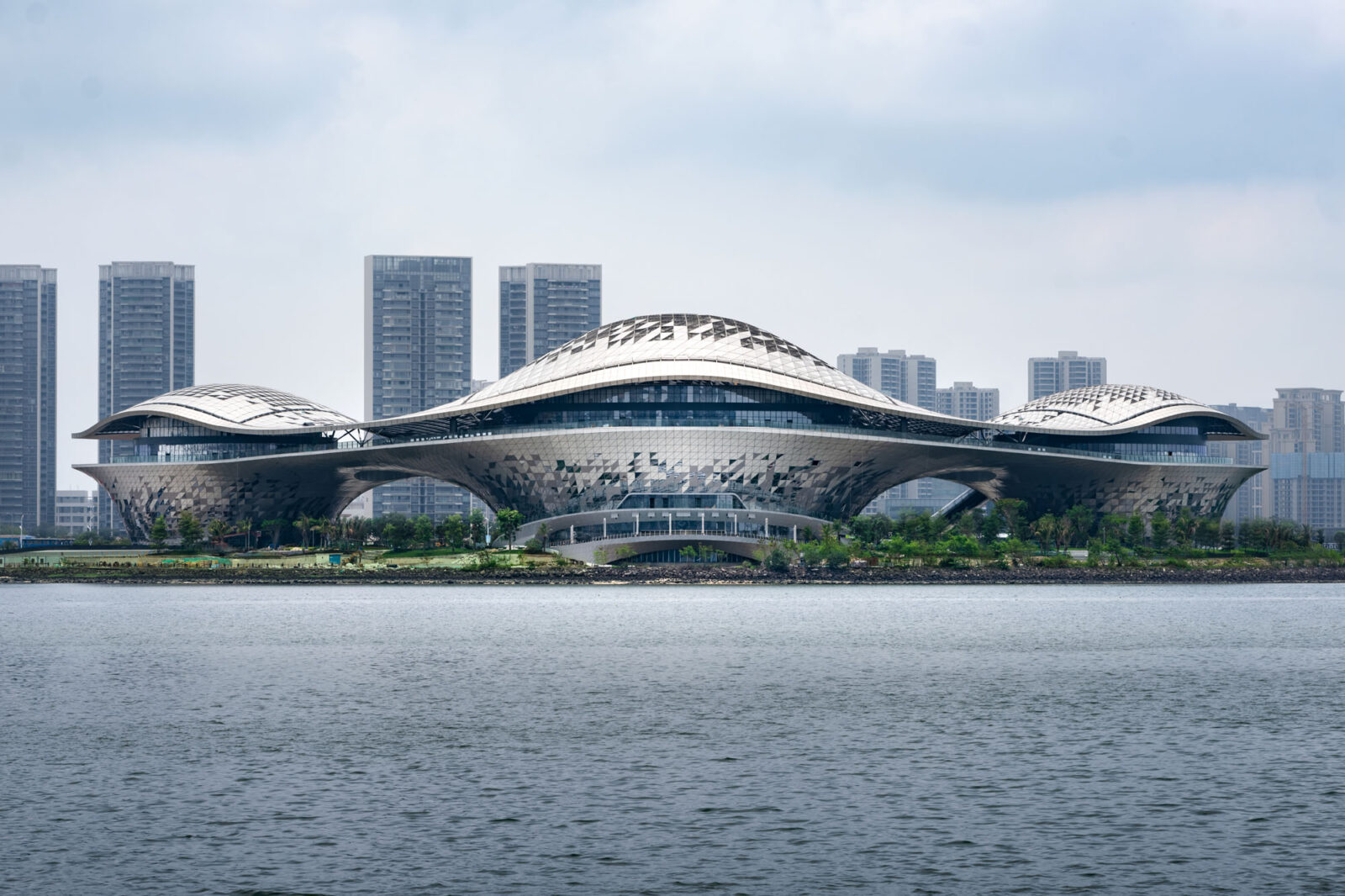
中国南部の湛江に建つ〈湛江文化センター(Zhanjiang Cultural Center)〉は、HPP Architektenの設計による、劇場や博物館、教育スペース、公共エリアを統合した複合文化施設です。
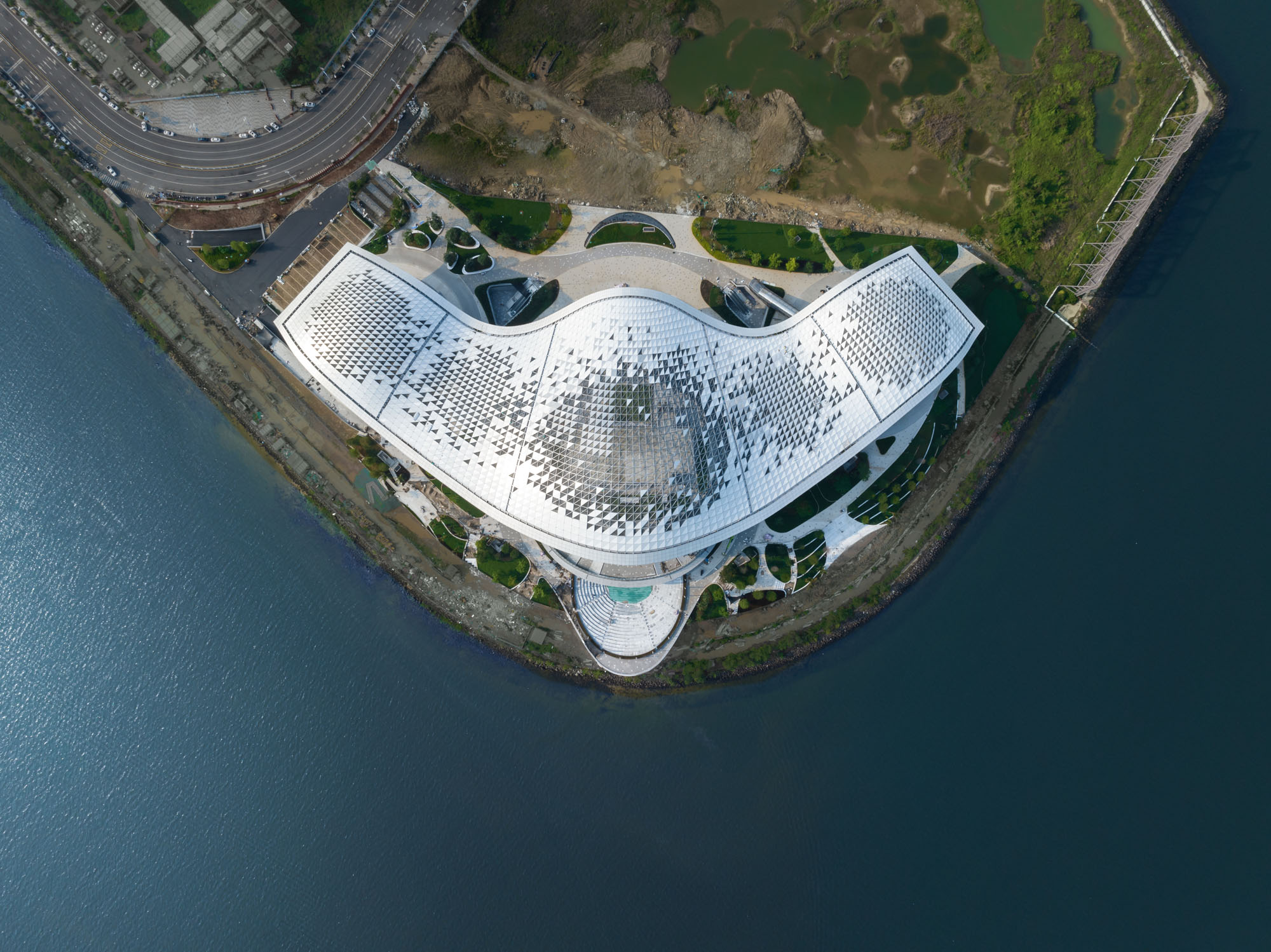
地元の伝統的な儀式「網龍舞(mesh dragon dance)」の躍動感を空間のモチーフに落とし込んだダイナミックな造形を最大の特徴としています。
注目ポイント
- 文化的文脈のファサードへの変換
- 立体的なパブリックスペースと回遊性の構築
- 屋内外をシームレスに接続する空間の柔軟性
(以下、HPP Architektenから提供されたプレスキットのテキストの抄訳)
© AST Studio
概要:湛江湾の新たな文化的拠点
- 劇場、博物館、教育スペース、公共エリアを結びつけ、連続した都市体験を生み出す開放的な文化キャンパス
- 伝統的な「網龍舞」から着想を得た、ダイナミックなシルエット
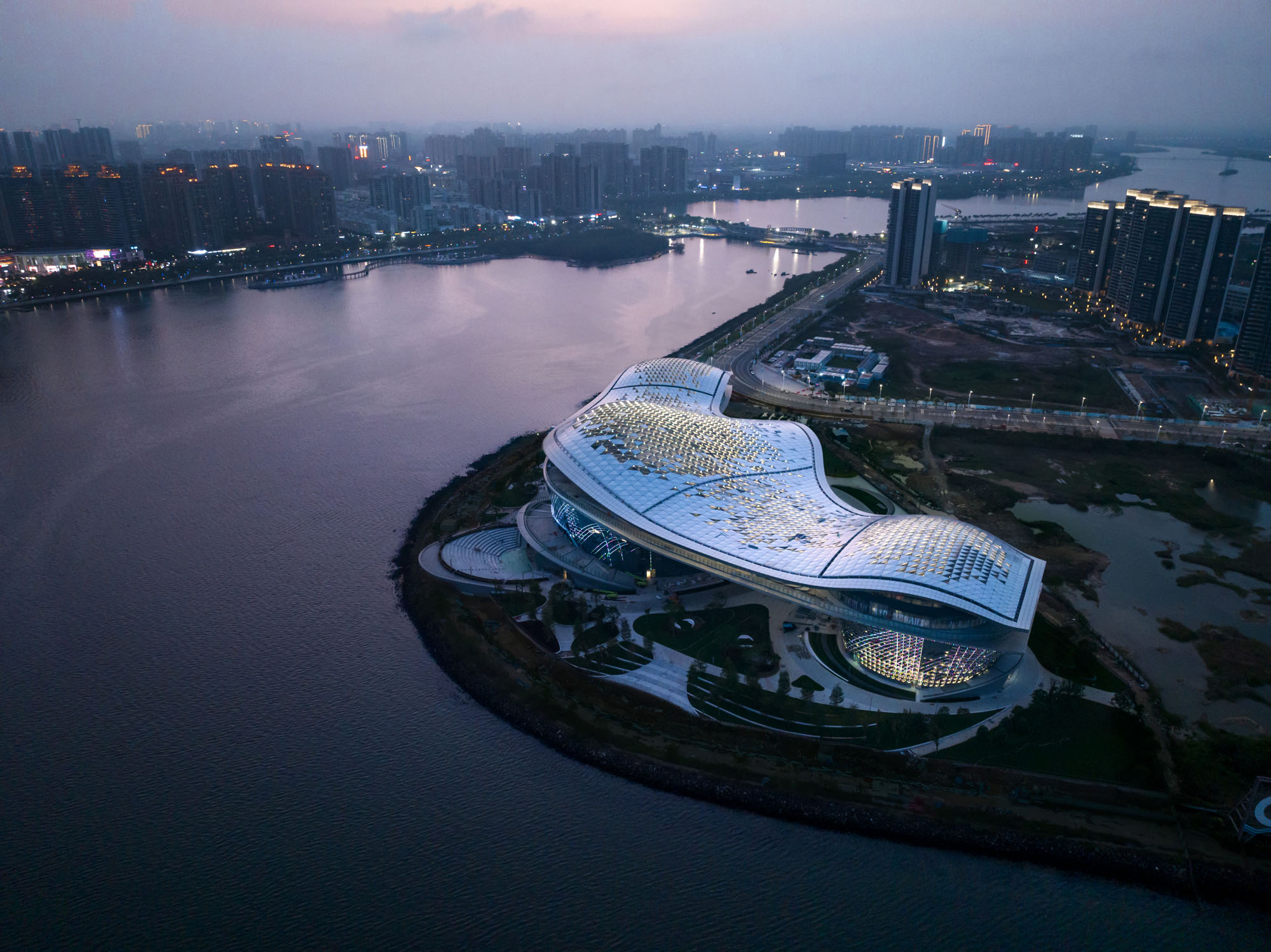
- 編み込まれた漁網を思わせる質感あるファサードが、光と水面の反射を捉える
- 文化ゾーンを水平・垂直の両方向で都市や湾と結びつける空間の連なり
網龍舞の躍動感を体現する建築デザイン
〈湛江文化センター〉は、中国南部の港湾都市である湛江に、新たな文化的アイデンティティを形成する。その建築は、広範囲にわたり絡み合う舞踊の図形を描く地元の儀式「網龍舞(mesh dragon dance)」の躍動感を、力強い空間的モチーフへと昇華させている。
このモチーフは、屋根の景観、ファサードの構造、そして都市空間における配置のすべてに展開されており、複合施設全体に湾岸沿いでの際立った識別性と強い存在感をもたらしている。
また、この施設全体を形づくる包括的なモチーフは、ファサードの素材においても継承されている。三角形のガラスとアルミニウムのグリッドは伝統的な漁網を想起させ、文化的な参照をきらめく質感へと変容させている。
© AST Studio
都市と水辺をつなぐ、開かれた文化キャンパス
この複合施設は、開放的な文化キャンパスとして構想されている。広場、遊歩道、そして地下に設けられた屋外エリアが様々な用途をつなぎ、公演時間外でも建物を活気ある空間に保っている。
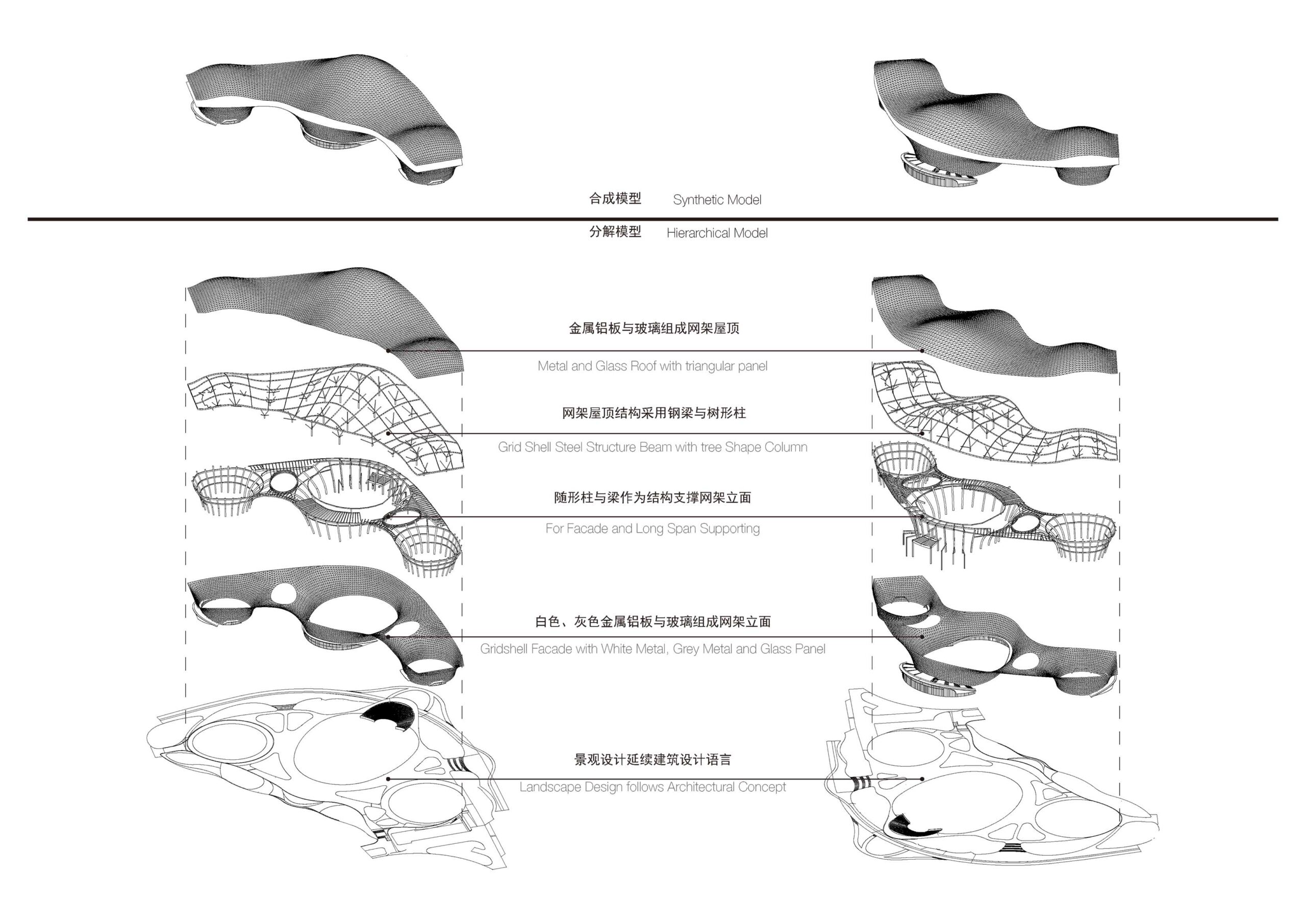
グランド・シアター、多目的劇場、博物館、アートギャラリーといった各施設は、明確な空間的連続性によって水平方向に連結されている。一方、垂直方向には、アトリウム、スロープ、開放的な連絡通路のシステムが、一般に開放された「スカイプロムナード」へと導く。このプロムナードは文化エリアとウォーターフロントを結びつけ、公演スケジュールに左右されることなく、教育スペースや商業施設と並行して機能する都市体験を生み出している。
Analysis
多様なパフォーマンスに対応する3つのステージ
本センターは、3つの異なる公演会場を統合している。
- グランド・シアター:1,500席を擁し、文化の中核を成す劇場である。オペラ、オーケストラ公演、大規模な舞台作品に対応する。
- 多目的劇場:柔軟な舞台技術と完全に格納可能な座席を備え、映画上映からエレクトロニック・ミュージックまで、幅広い形式の公演に対応する。
- サンクン・アウトドア・シアター:この地下のパフォーマンス空間は、可動式の仕切りを通じて屋内と屋外をつなぎ、舞台としても人々の集いの場としても使い分けることができる。
© AST Studio
ウォーターフロントの公共空間と環境への適応
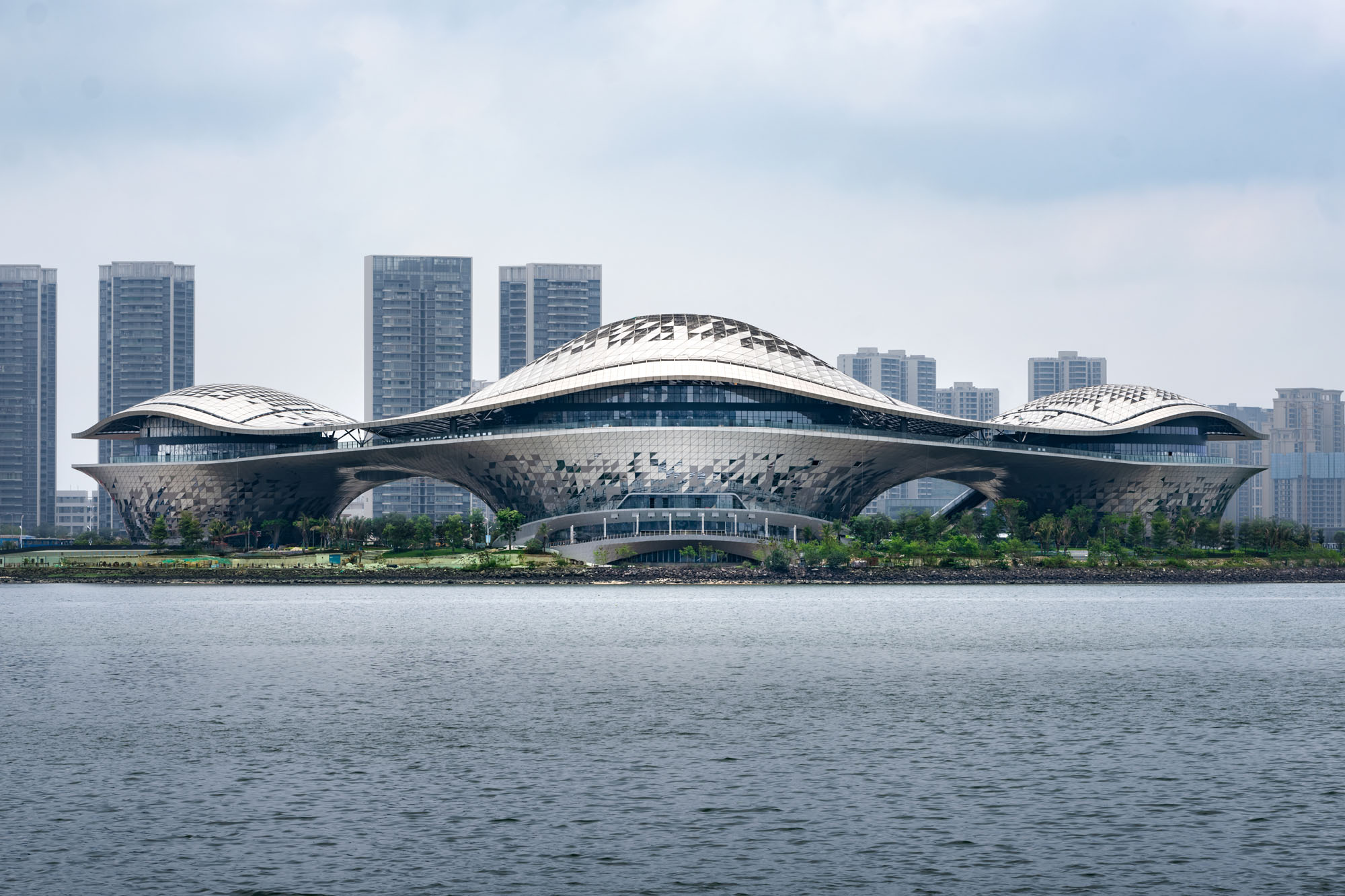
屋外スペースは、開放的な広場、緑地、そして日常の集いの場としても公演会場としても機能する地下式円形劇場が重なり合う景観を形成している。基壇(ポディウム)の下には雨風をしのげるゾーンが生まれ、機能的にも雰囲気的にも都市と文化を結びつけている。この建築は、建造物と湾の景観との間に滑らかな移行を生み出している。
さらに、この建物は沿岸という立地条件の気候にも適応している。柔らかな曲線を描く屋根のラインは気流を最適化するように設計されており、頑丈な金属とガラスの要素が、海洋性気候下における長期的な耐久性を確保している。
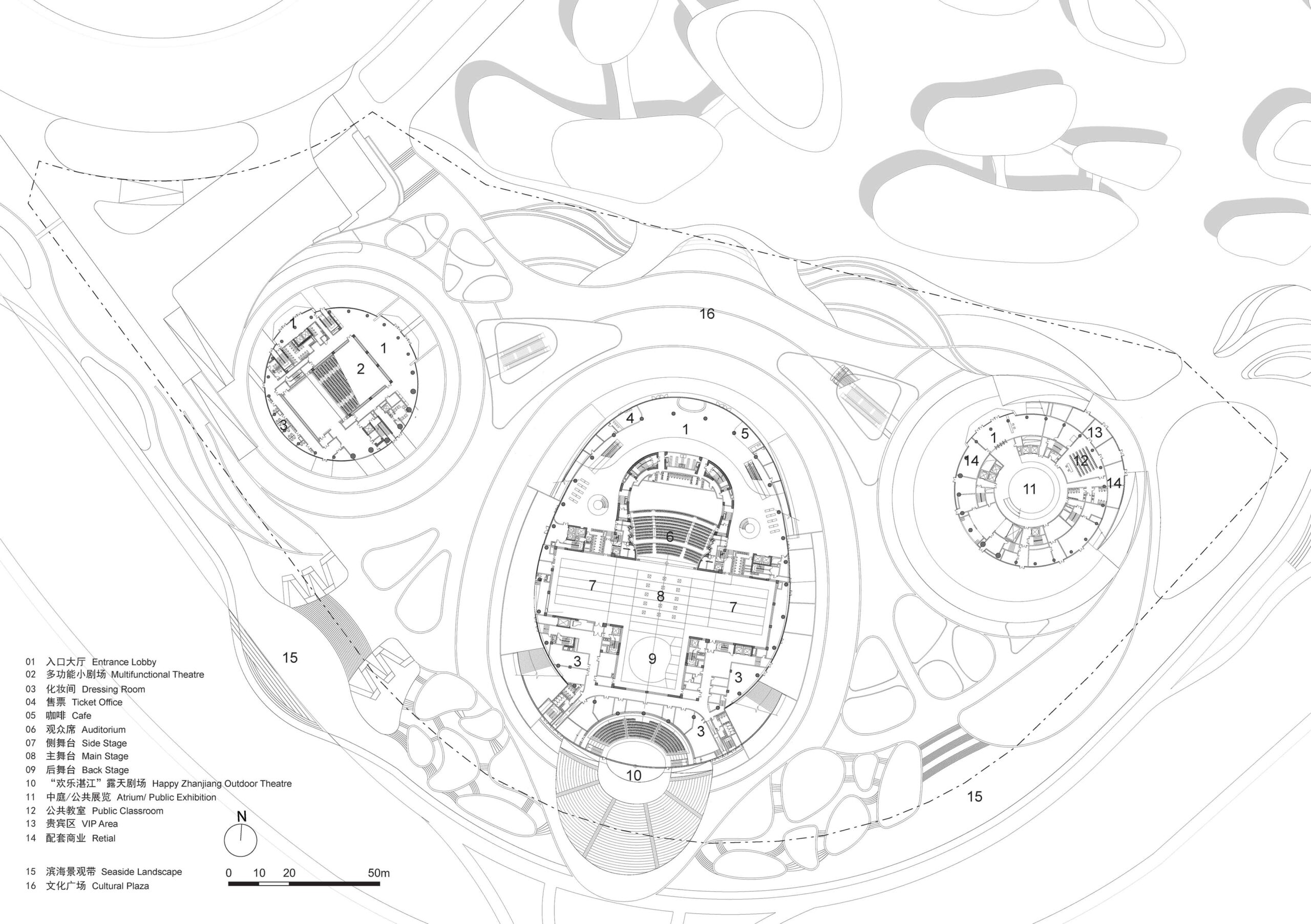
1F plan
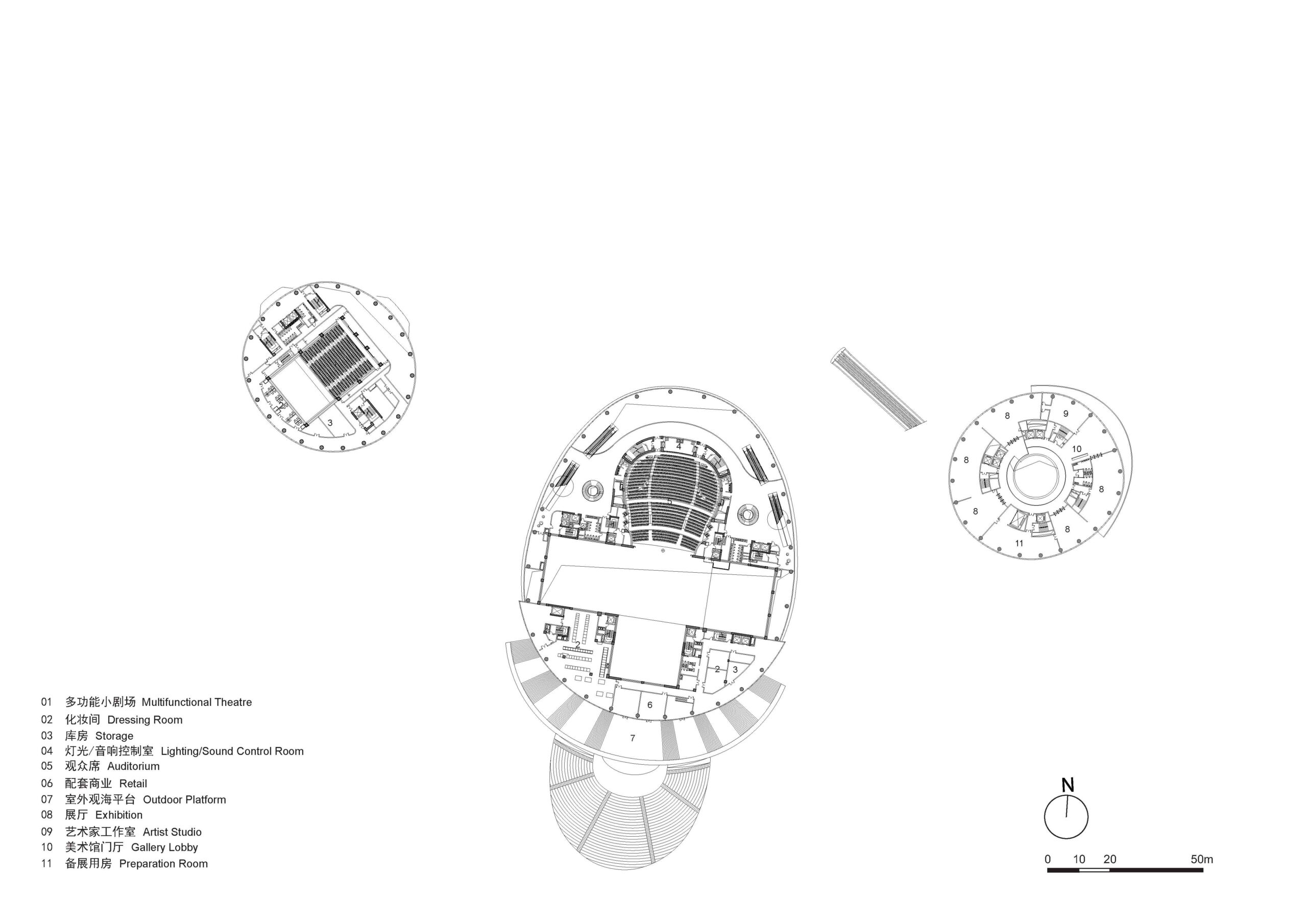
2F plan
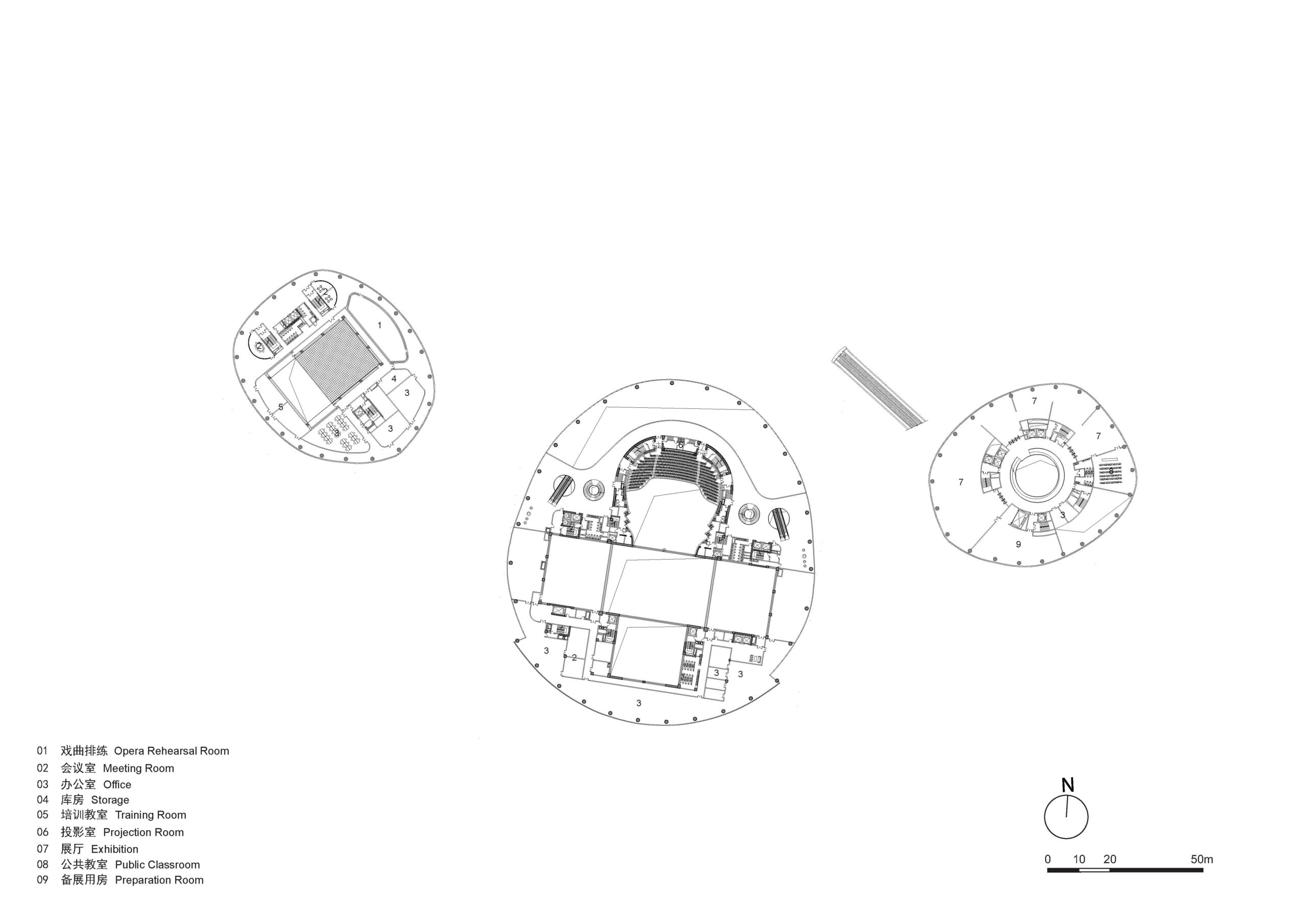
3F plan
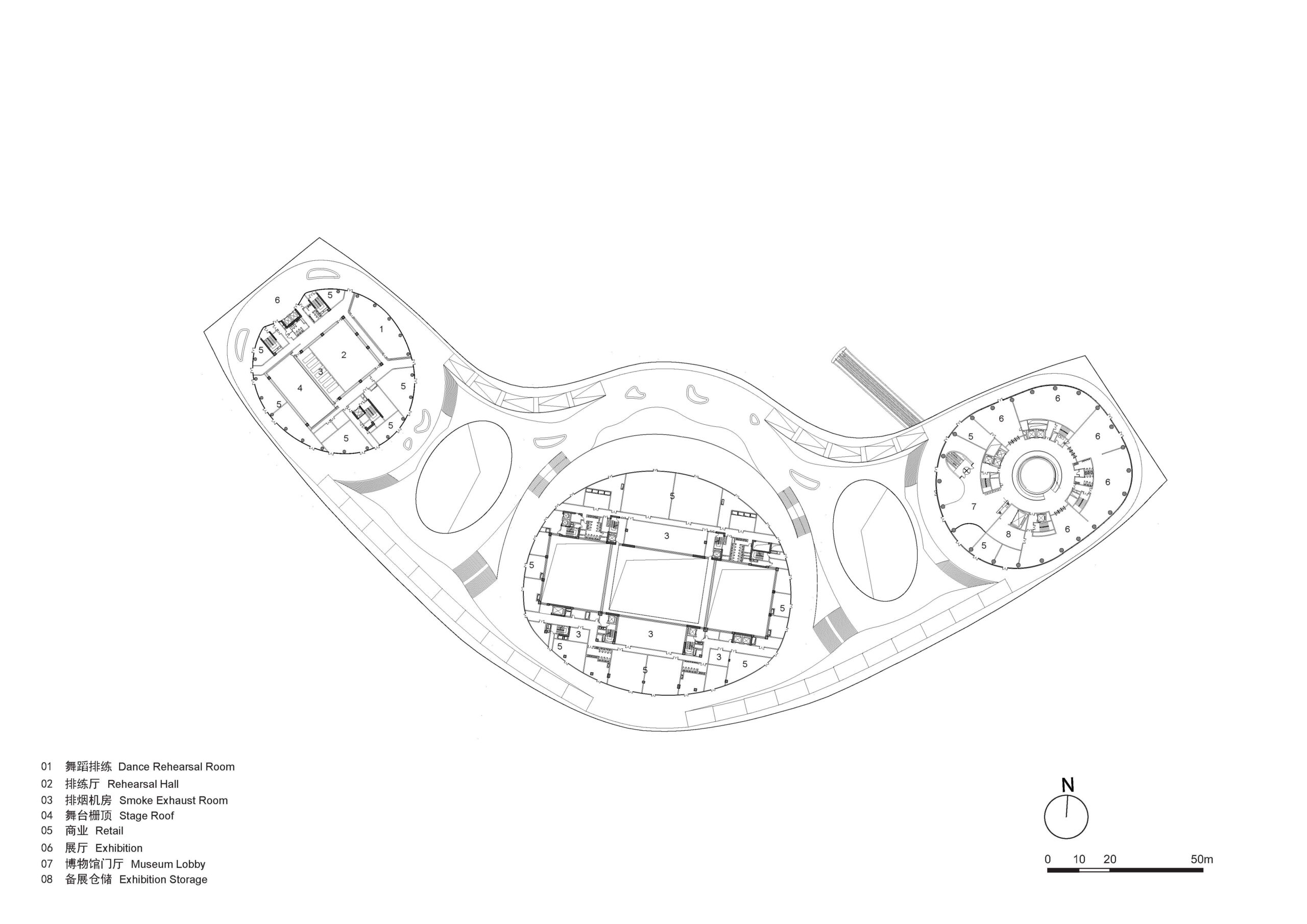
4F plan
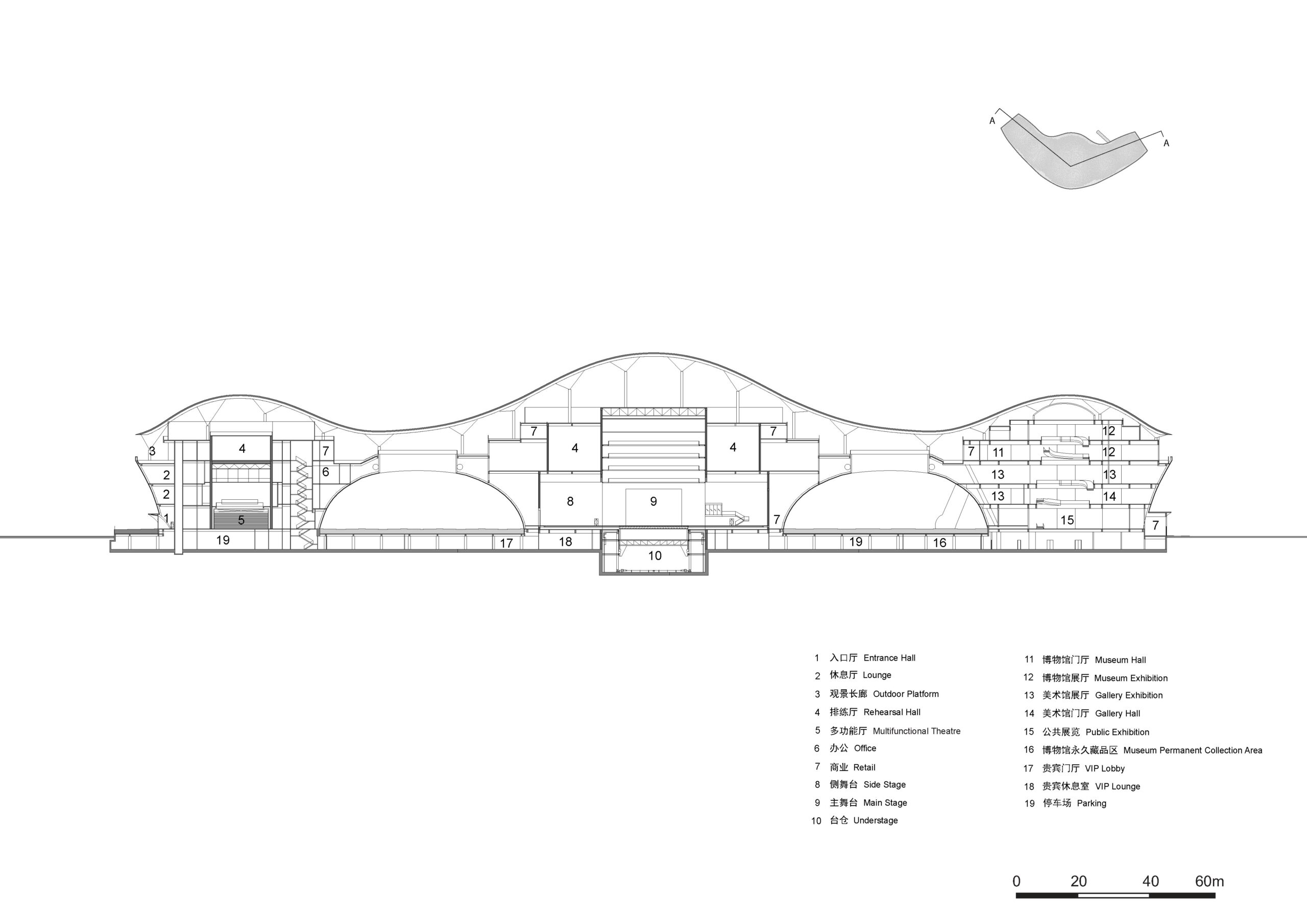
Section
以下、HPP Architektenのリリース(英文)です。
Zhanjiang Cultural Center
A New Cultural Anchor for the Bay of ZhanjiangAt a Glance
An open cultural campus linking theaters, museums, educational spaces, and public areas into a continuous urban experience
A dynamic silhouette inspired by the traditional mesh dragon dance
A textured façade recalling woven fishing nets, capturing light and reflections from the water
A spatial sequence that connects cultural zones both horizontally and vertically with the city and the bayA New Cultural Identity for Zhanjiang
The Zhanjiang Cultural Center forms a new cultural identity for the southern Chinese port city. Its architecture translates the dynamics of the mesh dragon dance into a powerful spatial motif that unfolds across the roofscape, façade structure, and urban positioning. This movement gives the ensemble a distinctive recognizability and a strong presence along the bay.
Expression of Local Identity
The movement of the mesh dragon dance, a local ritual with sweeping, interwoven choreographic figures shape the overall dynamic of the ensemble. This overarching motif continues materially in the façade. The triangulated glass‑and‑aluminium grid evokes traditional fishing nets, transforming the cultural reference into a shimmering texture.
Cultural Connectivity and Programmatic Diversity
The ensemble is conceived as an open cultural campus. Squares, promenades, and the sunken outdoor area connect the various uses, keeping the building active beyond performance hours.
The Grand Theatre, Multifunctional Theatre, Museum and Art Gallery are linked horizontally through a clear spatial sequence. Vertically, a system of atria, ramps, and open connections leads up to the publicly accessible Sky Promenade. This promenade connects the cultural areas with the waterfront and creates an urban experience that functions alongside educational spaces and commercial offerings independent of performance schedules.Three Stages, Three Characters
The cultural center brings together three distinct performance venues:
Grand Theatre: With 1,500 seats, it forms the cultural core and accommodates opera, orchestral performances, and large-scale stage productions.
Multifunctional Theatre: Equipped with flexible stage technology and fully retractable seating, it supports formats ranging from film screenings to electronic music.
Sunken Outdoor Theatre: This lowered performance space connects interior and exterior through a movable partition and can shift between stage and public gathering spot.
A Public Waterfront Destination
The outdoor spaces form a layered landscape of open plazas, green areas, and a sunken amphitheater that serves both as an everyday meeting place and as a performance venue. Below the podium, a sheltered zone emerges that unites city and culture both functionally and atmospherically. The architecture creates a fluid transition between built form and the character of the bay.
Adaptive and Resilient
The building responds to the climatic conditions of its coastal location. The softly modelled rooflines are shaped to optimize airflow, while the robust metal and glass elements ensure long‑term durability in the maritime climate.
Project Facts
Project Name: Zhanjiang Cultural Center
Code: 219047
Location: Zhanjiang
Client: Zhanjiang Haiquan Investment Development Co., Ltd
Completion: 2025
GFA: 92,000 m²
Uses: Grand Theatre, Multifunctional Theatre, Museum, Art Gallery, educational spaces, commercial areas, public promenade
Services: Architecture, Interior Architecture, Landscape ArchitectureWebsite Filters
Competences: Architecture
Typologies: Cultural Venues
HPP Architekten 公式サイト
https://www.hpp.com/en/
![[Report]東北に想いを寄せる3,000名と宮島達男が協働制作する〈Sea of Time – TOHOKU〉の実験展示、日本橋三井ホールにて4日間限定公開](https://magazine-asset.tecture.jp/wpcms/wp-content/uploads/2026/07/05092750/20260704seaoftime_press04-5_interior-900x600.jpeg)