オックスボウ・アーキテクチャーらがカナダに手がけた、先住民の知恵と現代の技術を融合した木造円形建築〈マスコペトゥング・パウワウ・アーバー〉
カナダ・サスカチュワン州南部に建つ〈マスコペトゥング・パウワウ・アーバー(Muscowpetung Powwow Arbour)〉は、先住民族マスコペトゥング・ソルトー族の夏の集会(パウワウ)の中心地となるコミュニティ施設です。
ダルハウジー大学名誉教授リチャード・クローカー(Richard Kroeker)とカナダの建築事務所 オックスボウ・アーキテクチャー(Oxbow Architecture)が共同で設計しました。
注目ポイント
- 伝統的な先住民族の知恵と現代の構造技術の融合
- 弓や太鼓の張力を応用した「中央に支柱のない無柱円形スパン」
- サプライチェーンを短縮する「構造用丸太(SRT)」の活用
- 地域の技能と資源を前提とした「地域循環型の施工プロセス」
(以下、オックスボウ・アーキテクチャーから提供されたプレスキットのテキストの抄訳)
©︎ Lindsay Reid
©︎ Lindsay Reid
伝統と知恵が息づく木造建築
〈マスコペトゥング・パウワウ・アーバー〉は、祝いの場である。ここは、カナダ・サスカチュワン州南部の条約第4号地域に位置するマスコペトゥング・ソルトー族が、夏にパウワウ(ネイティブ・アメリカンの言葉で「集まり(Gathering)」を意味する)を開く中心地である。
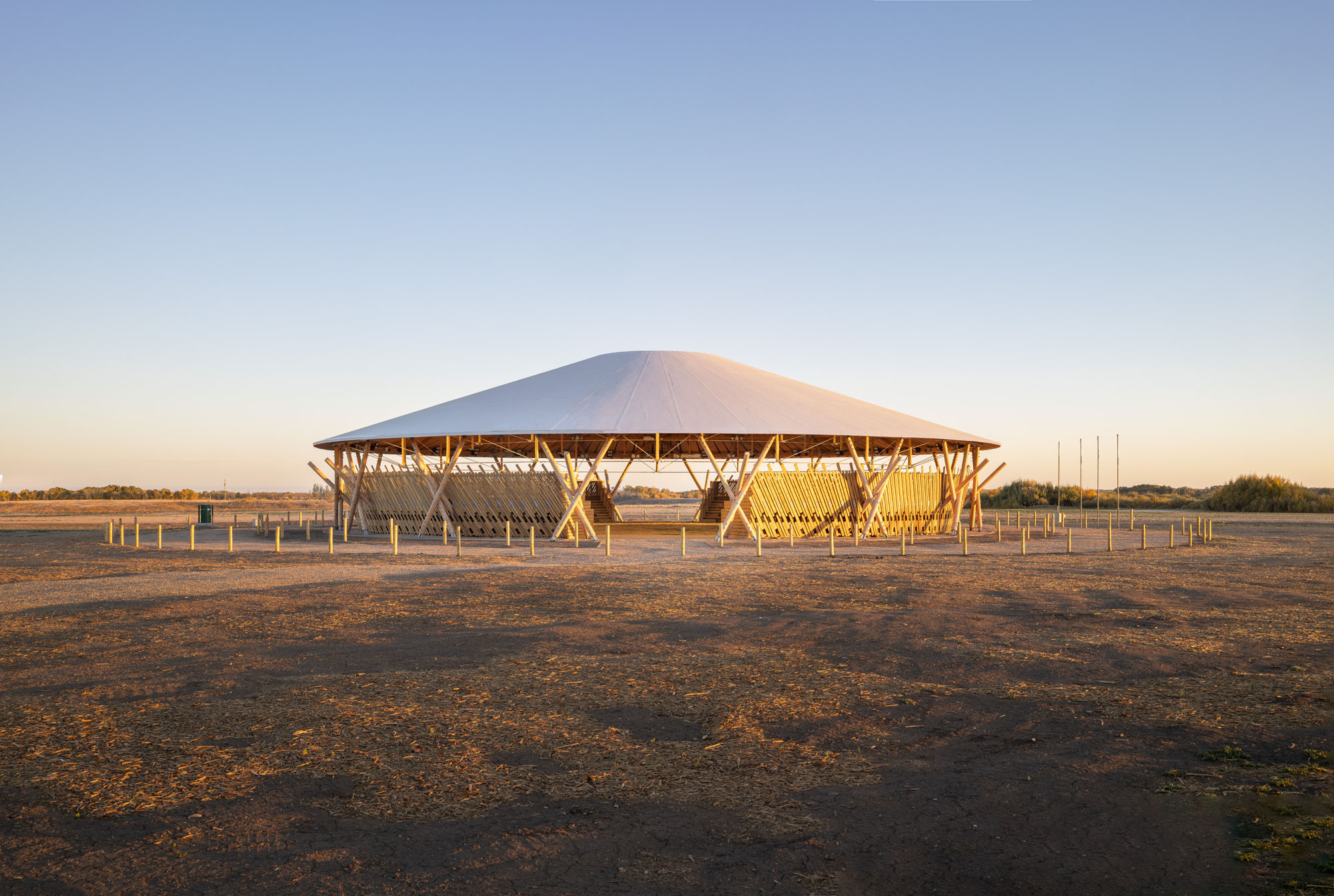
この建造物は、ソルトー族の物質文化と、彼らの世界観において「円」がもつ重要性からインスピレーションを得ている。また、伝統的な手法や、手に入る資源を活用して建物を築くという創意工夫も反映された。その結果、人々の心を高揚させるコミュニティ施設が誕生した。これは、ソルトー族の伝統的な知恵が形態の探求や構造設計を導き、地域の知識、労働力、資材を考慮・活用した意義深い作品を生み出すための手本となっている。
©︎ Lindsay Reid
©︎ Lindsay Reid
文化的活力を発散する円形空間
ドラムグループやダンサーたちは夏の間、パウワウの巡回ルートを辿って長距離を移動し、競技に参加して歌や踊りを共有し、多様なネイション(先住民族の共同体)の間で伝統的な慣習を復活させている。こうした集まりには、それぞれのコミュニティ特有の装束や衣類、食べ物を提供する出店者たちが集まる。
〈マスコペトゥング・パウワウ・アーバー〉のデザインは、この文化的な活力を取り入れており、その機能、規模、そして全体的な意図を洗練させるために不可欠であった広範な協議に基づいている。これにより、建築的・構造的な表現がコミュニティの優先事項と確実に一致するよう配慮された。
©︎ Lindsay Reid
徹底したリサーチに基づく建築形態
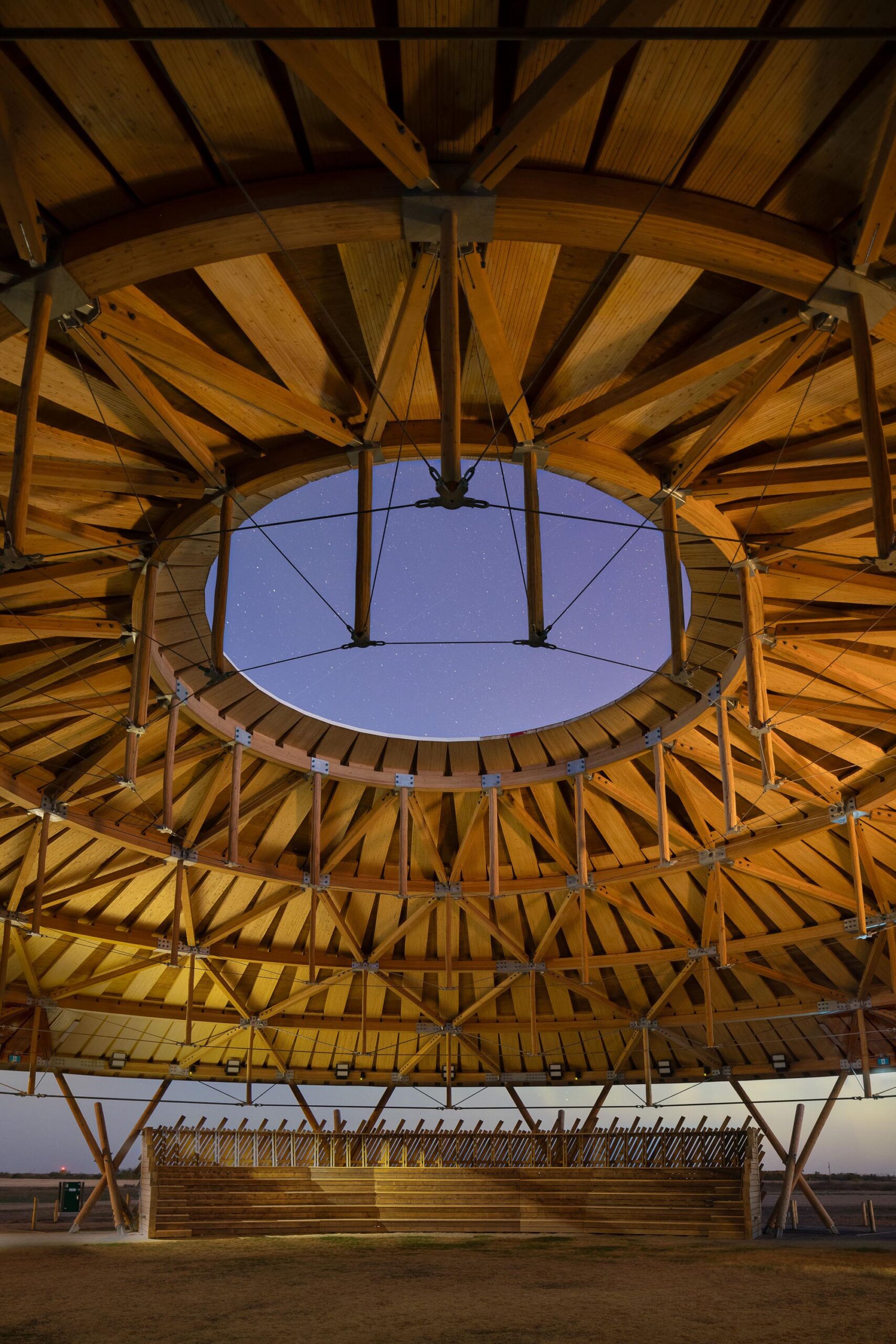
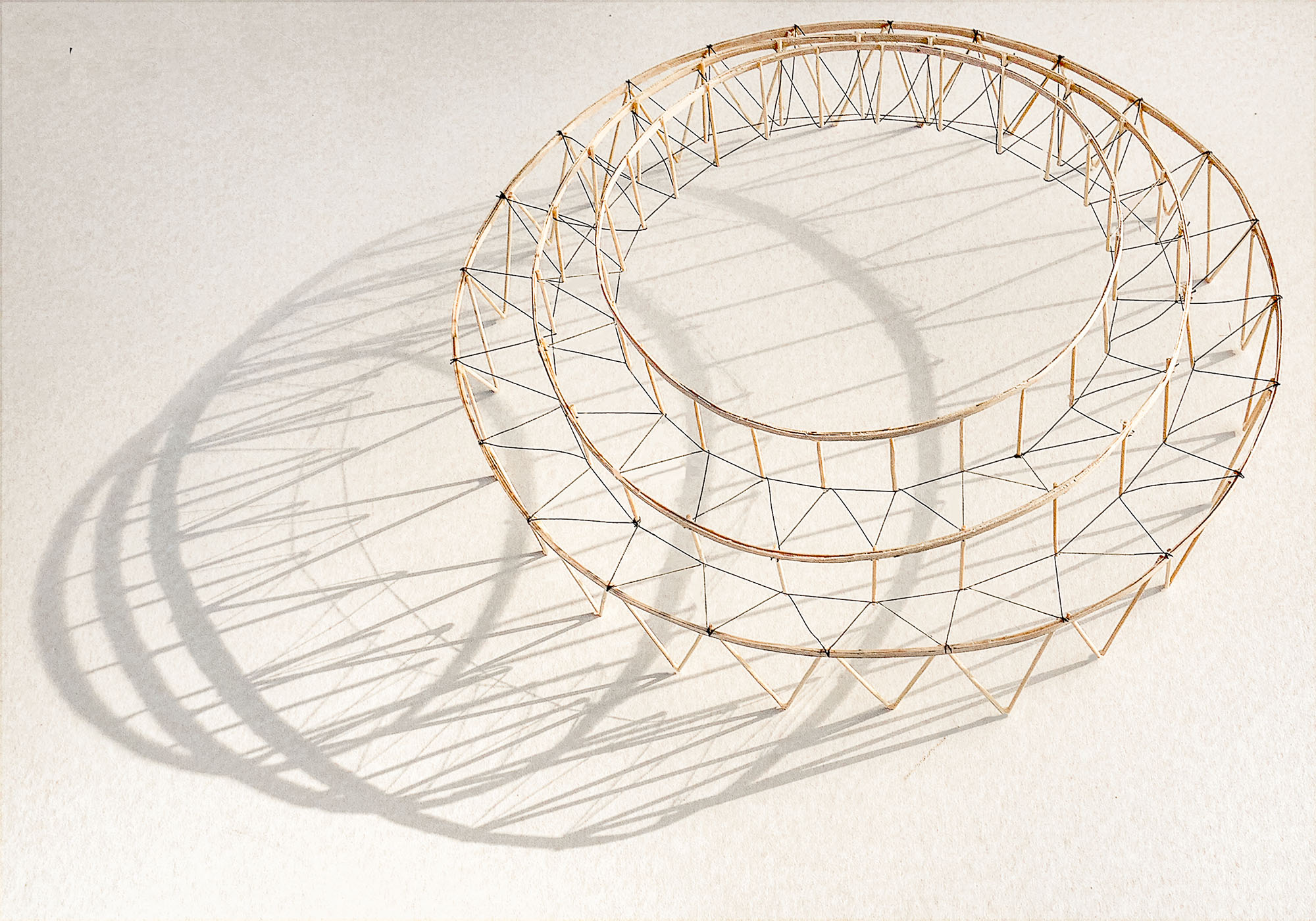
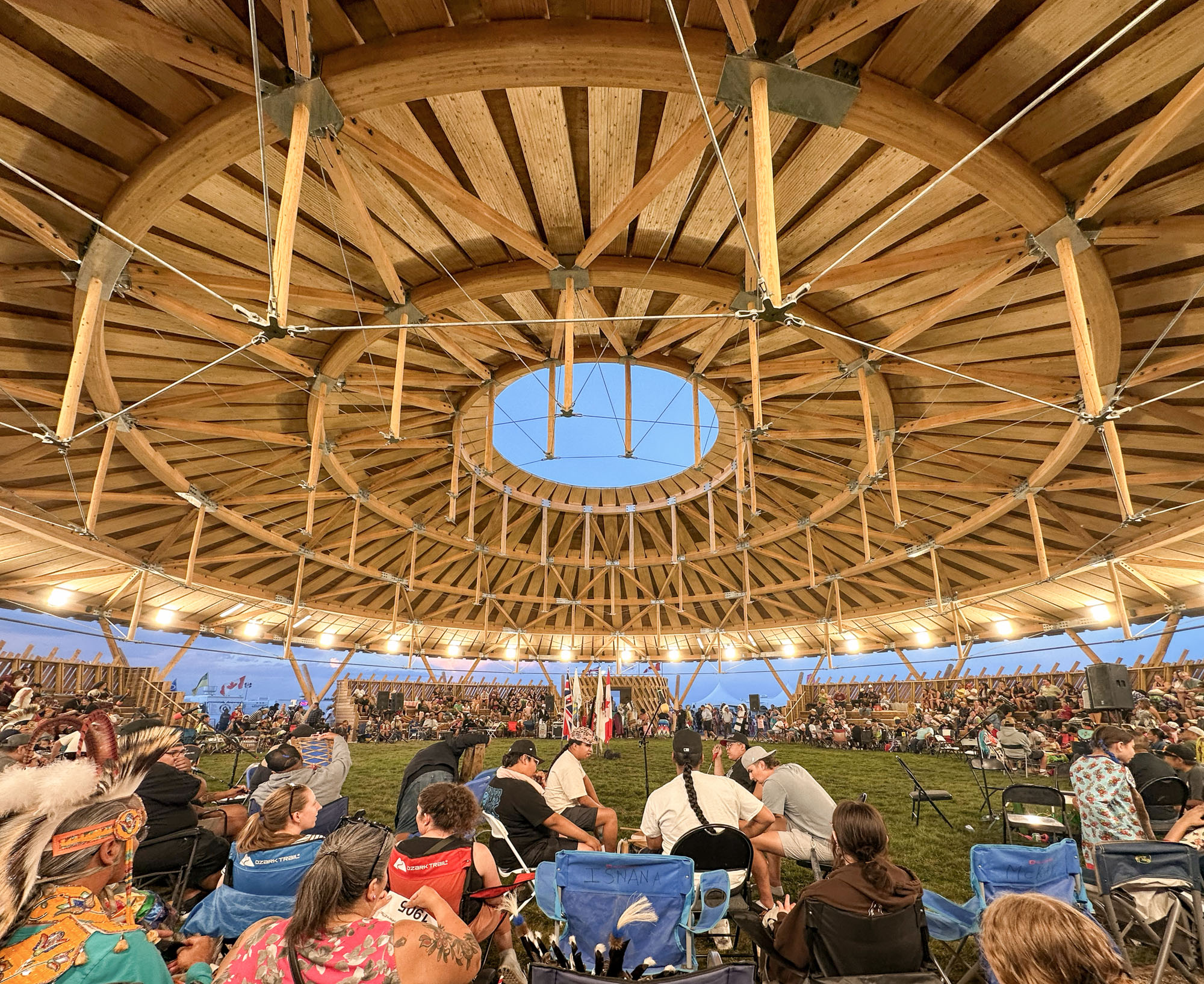
マスコペトゥング族のジェフ・カッポ(Jeff Cappo)氏が主導した長老たちとの協議を通じて、〈マスコペトゥング・パウワウ・アーバー〉は中央に支柱をもたない伝統的なソルトー族のロッジを反映させる必要があることが明らかになった。その結果無柱スパンには、荷重のバランスを取りつつ、円がもつ深い文化的意義を強調する円形の構造システムが採用された。
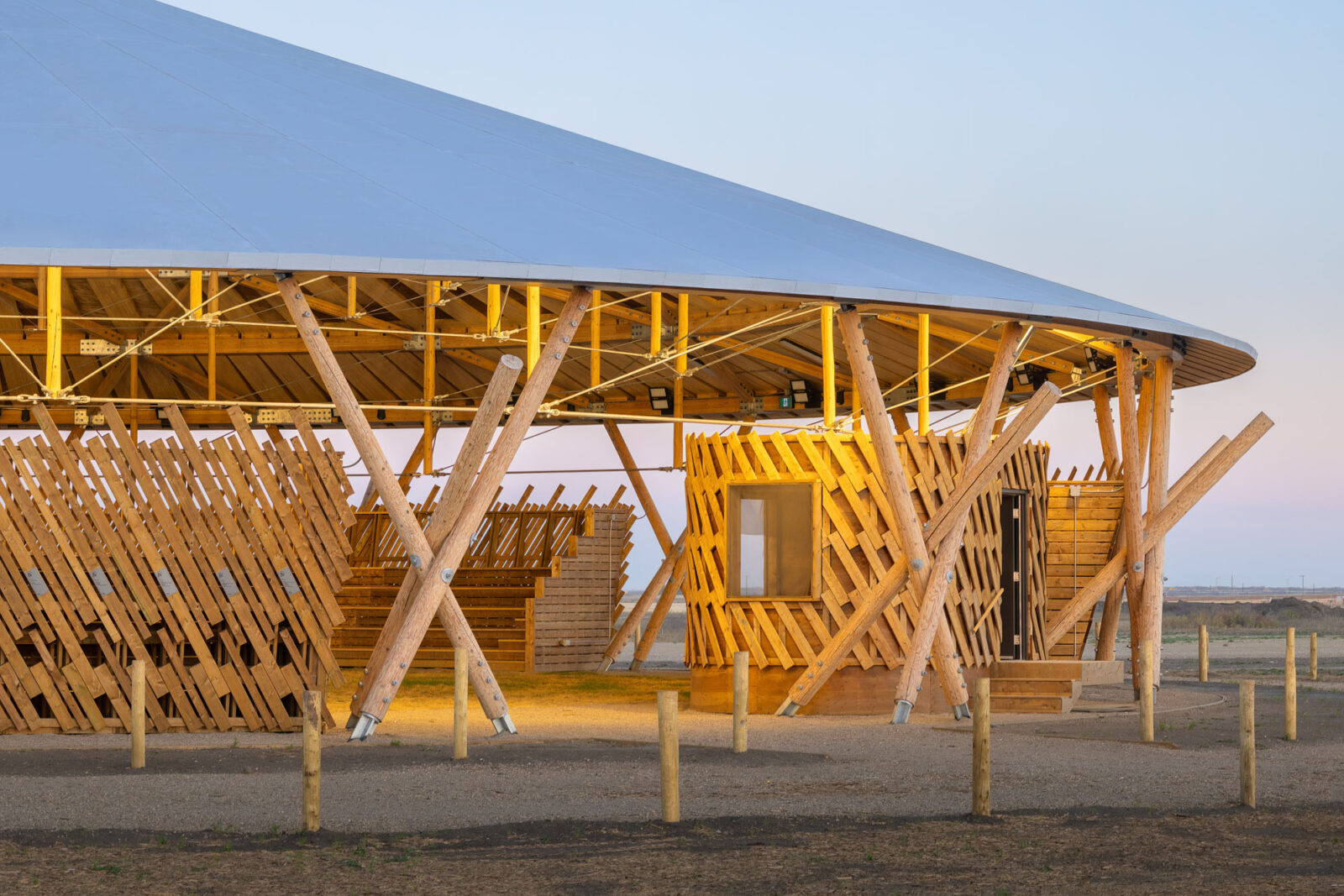
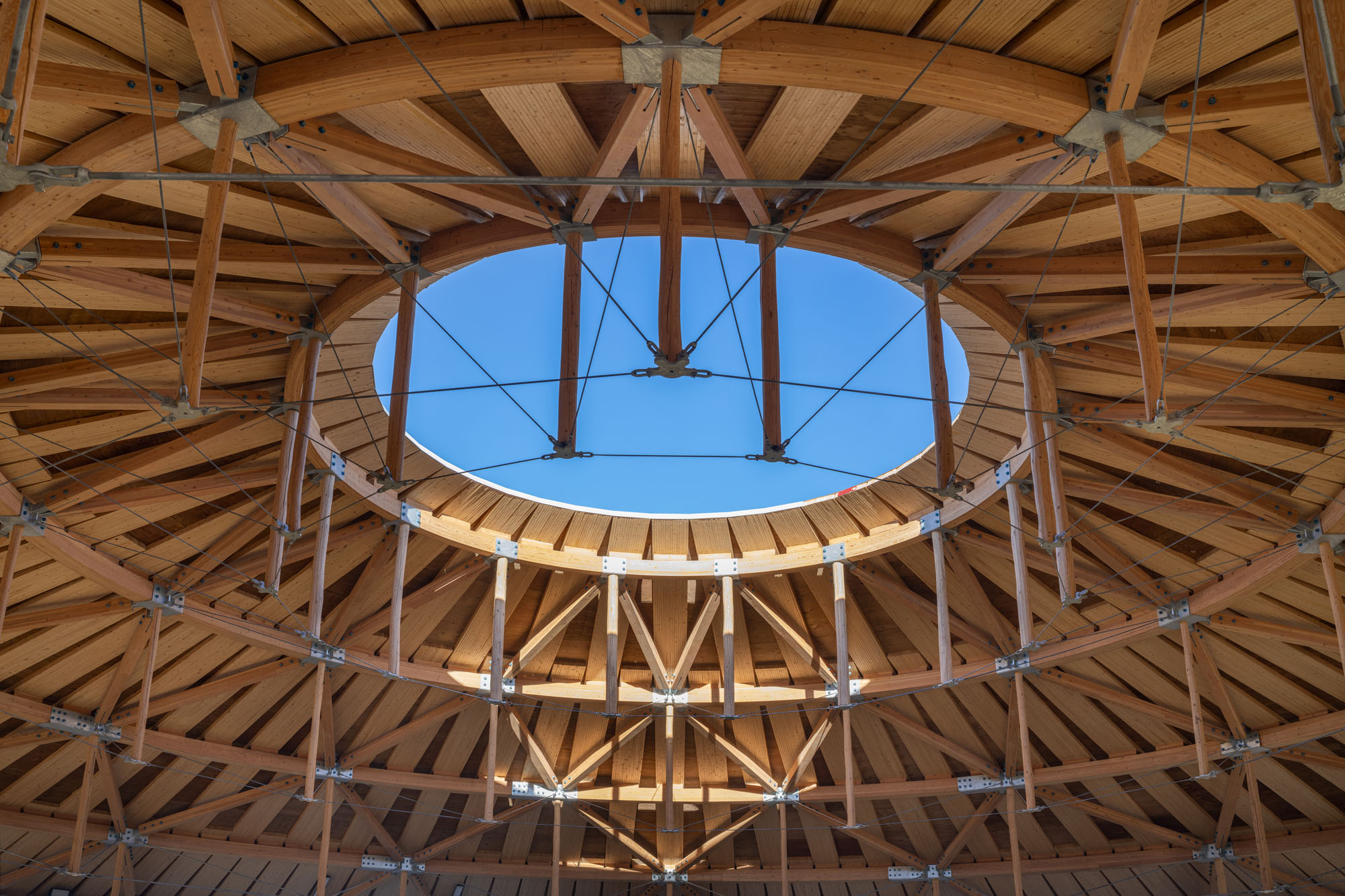
歴史的に、大平原地域のソルトー族は、最小限の軽量な材料を用いて効率的な構造物を製作・建設してきた。構造部材のデザインは、引き絞られた弓の弦に蓄えられたエネルギーや、太鼓の皮を張る張力要素を視覚的に表現しており、大草原の地平線の上に浮かんでいるかのように見える軽量な屋根構造を生み出している。
©︎ Richard Kroeker
民族の再生を照らす道しるべ
何世代にもわたり、マスコペトゥング族の家族は、今日に至るまで彼らが耐え続けている苦難を形づくり続けている制度的な差別に直面してきた。この歴史が、同民族の子供たちのうち、養護施設で暮らす割合が不釣り合いに高くなっている一因となっている。
現在、児童福祉から家族福祉への転換が進められており、保護から予防へと軸足を移し、家族が癒やしを得て共に暮らせるよう支援することに重点が置かれている。〈マスコペトゥング・パウワウ・アーバー〉はこの取り組みにおいて重要な役割を果たしており、子供と家族の安全と幸福に専念する予防サービスを支える文化的拠り所となっている。部族が可能な限り多くの子どもたちを家庭に迎え戻そうとする中、〈マスコペトゥング・パウワウ・アーバー〉は文化的強さと再生の象徴として、道しるべとなっている。
©︎ Oxbow Architecture
地域へと還元する持続可能な経済効果
このプロジェクトは、相互に関連する2つの方法で地域の経済目標を強化している。
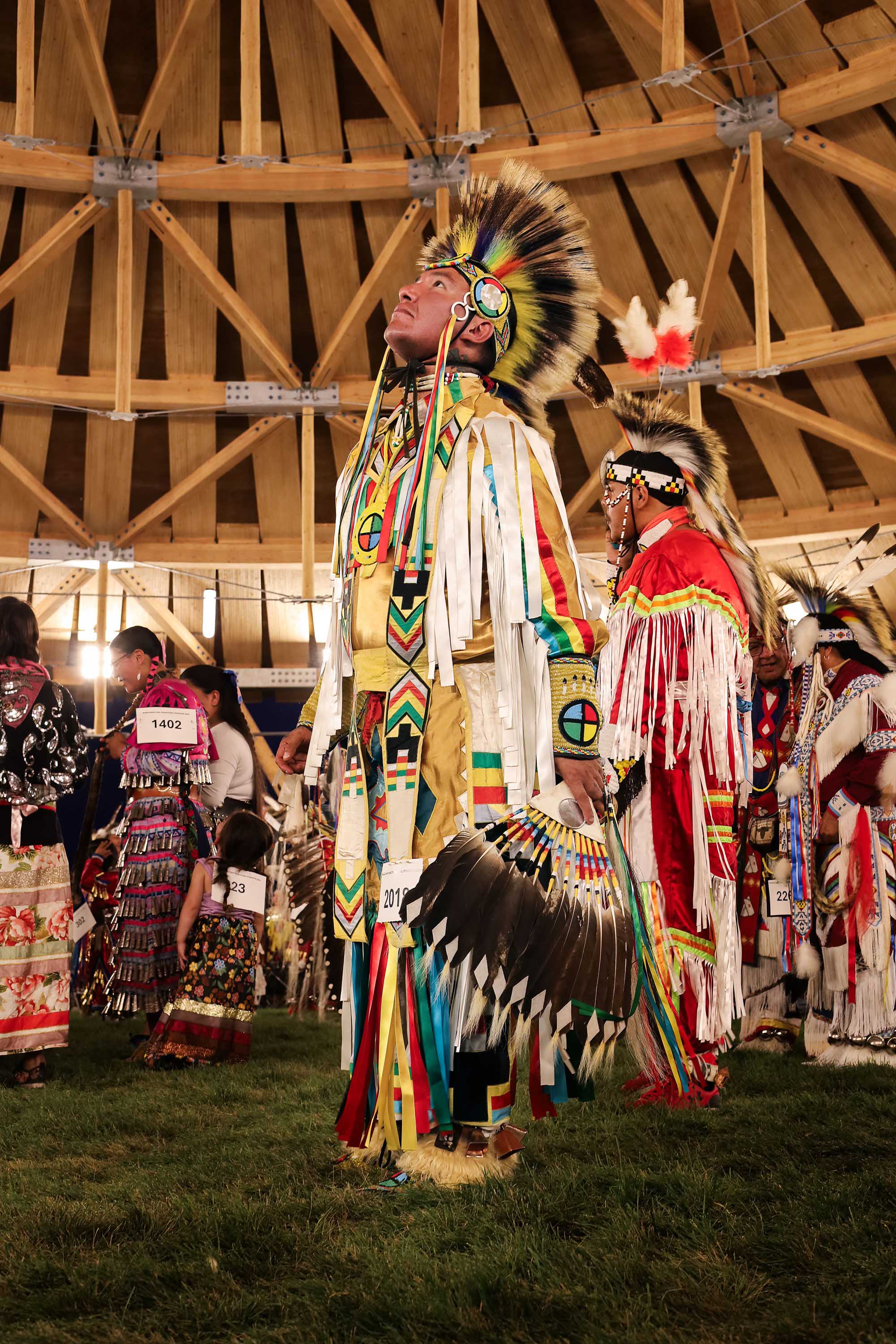
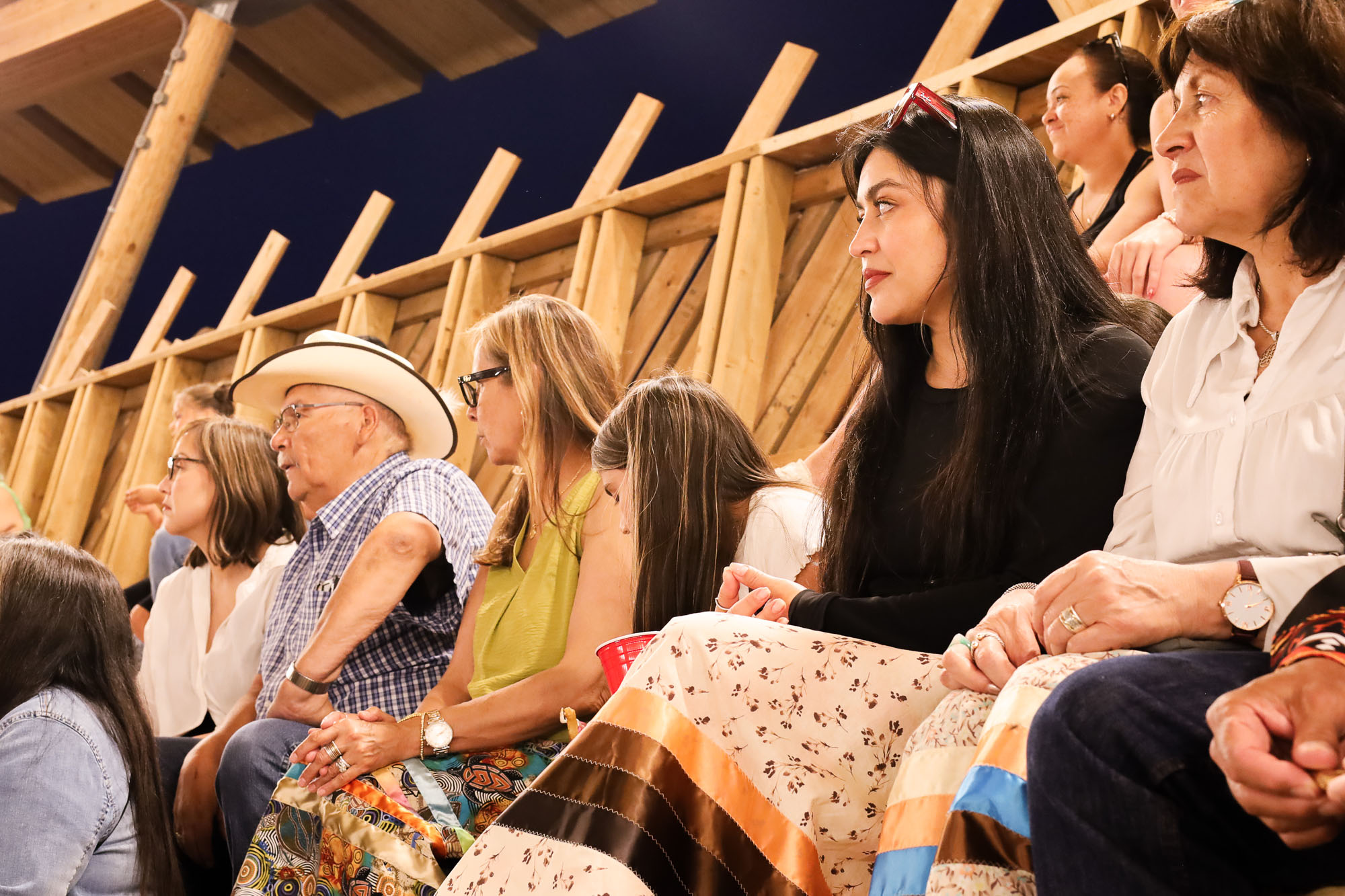
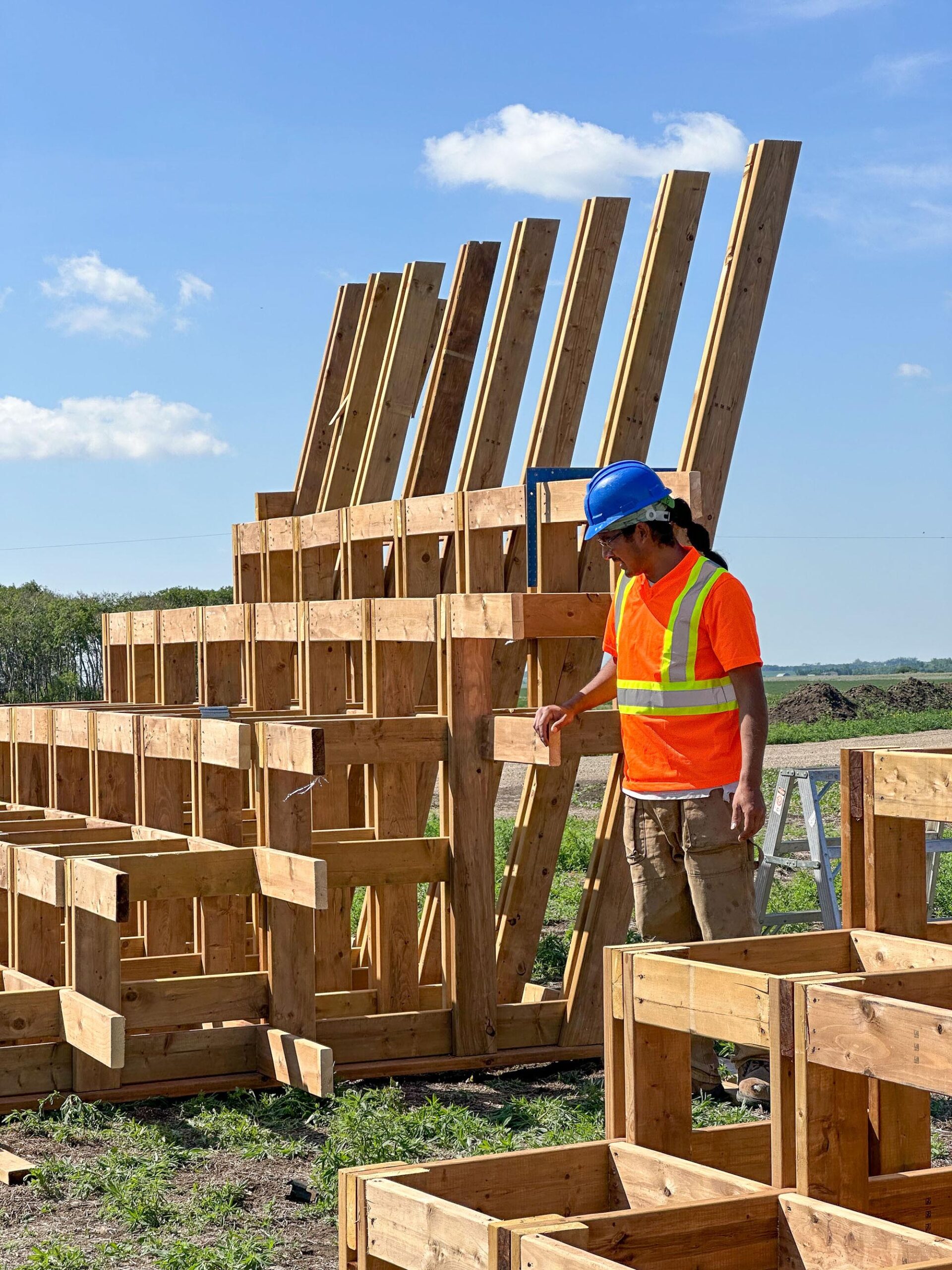
第1に、地元の労働力を優先している点である。資材の選定や施工方法は、地域社会の技能や利用可能な資源に合わせて調整された。屋根の組立構造には地域産の木材が使用され、観覧席や木製の目隠しは現地の労働力を活用して現場で製作されており、マスコペトゥング族のメンバーに雇用と技能向上の機会を提供している。
第2に、完成したこの建物が観光やイベントの開催を通じて長期的な経済発展を支えている点である。現在、〈マスコペトゥング・パウワウ・アーバー〉はイベントスペースとして、また部族の学校のための野外教室として、地域社会に役立っている。
©︎ Chris Ross (Muscowpetung Photographer)
©︎ Chris Ross (Muscowpetung Photographer)
ソルトー族の知恵が導く気候対応型デザイン
ソルトー族の伝統的な知恵や慣習を学び、それに基づいて取り組むことで、自然と気候対応型のデザインが生まれた。〈マスコペトゥング・パウワウ・アーバー〉の全体的なデザイン、構造用丸太(SRT)の使用、そして農地からの敷地再生は、このプロジェクトが伝統的な知恵と慣習を優先したことを示す2つの直接的な例である。
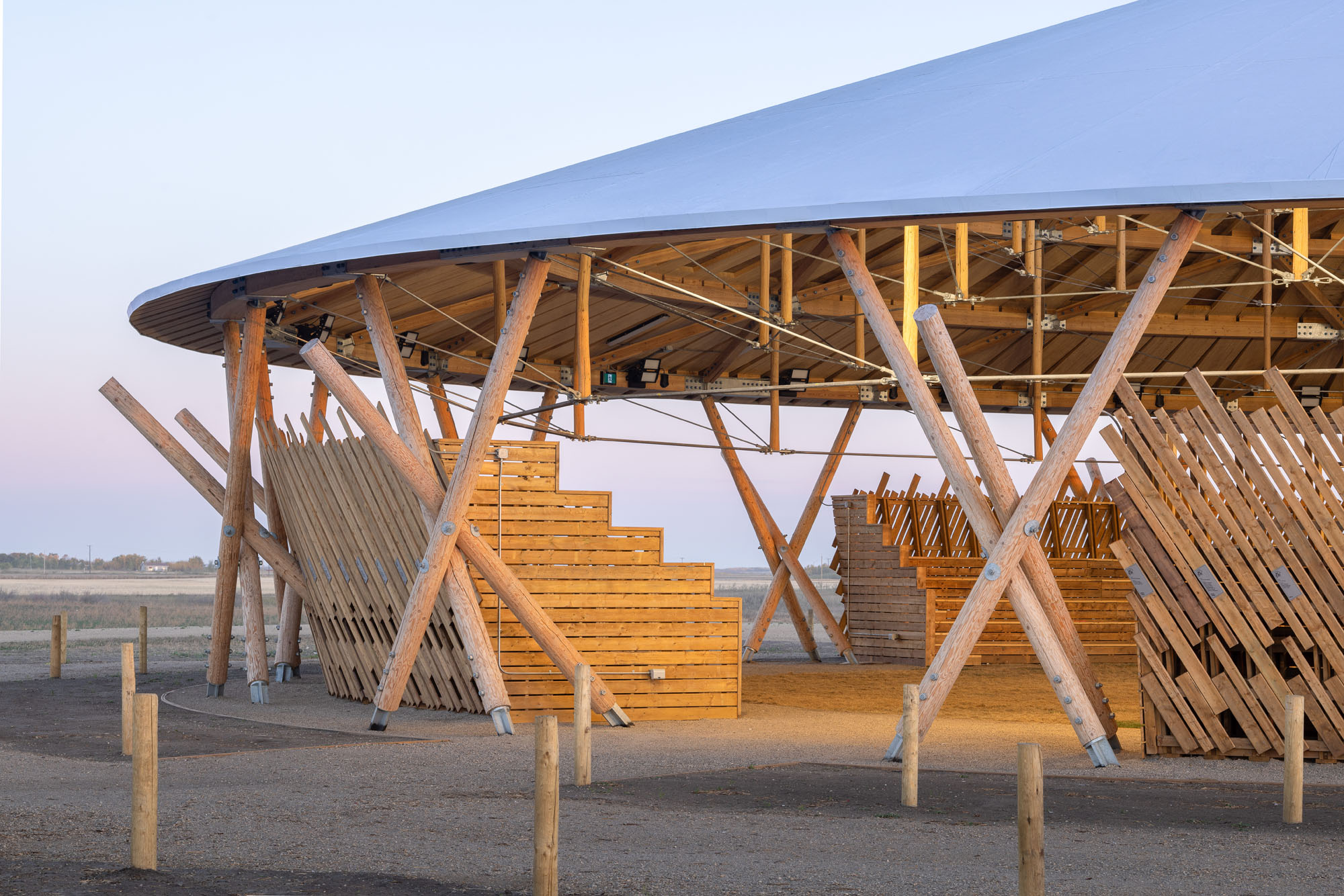
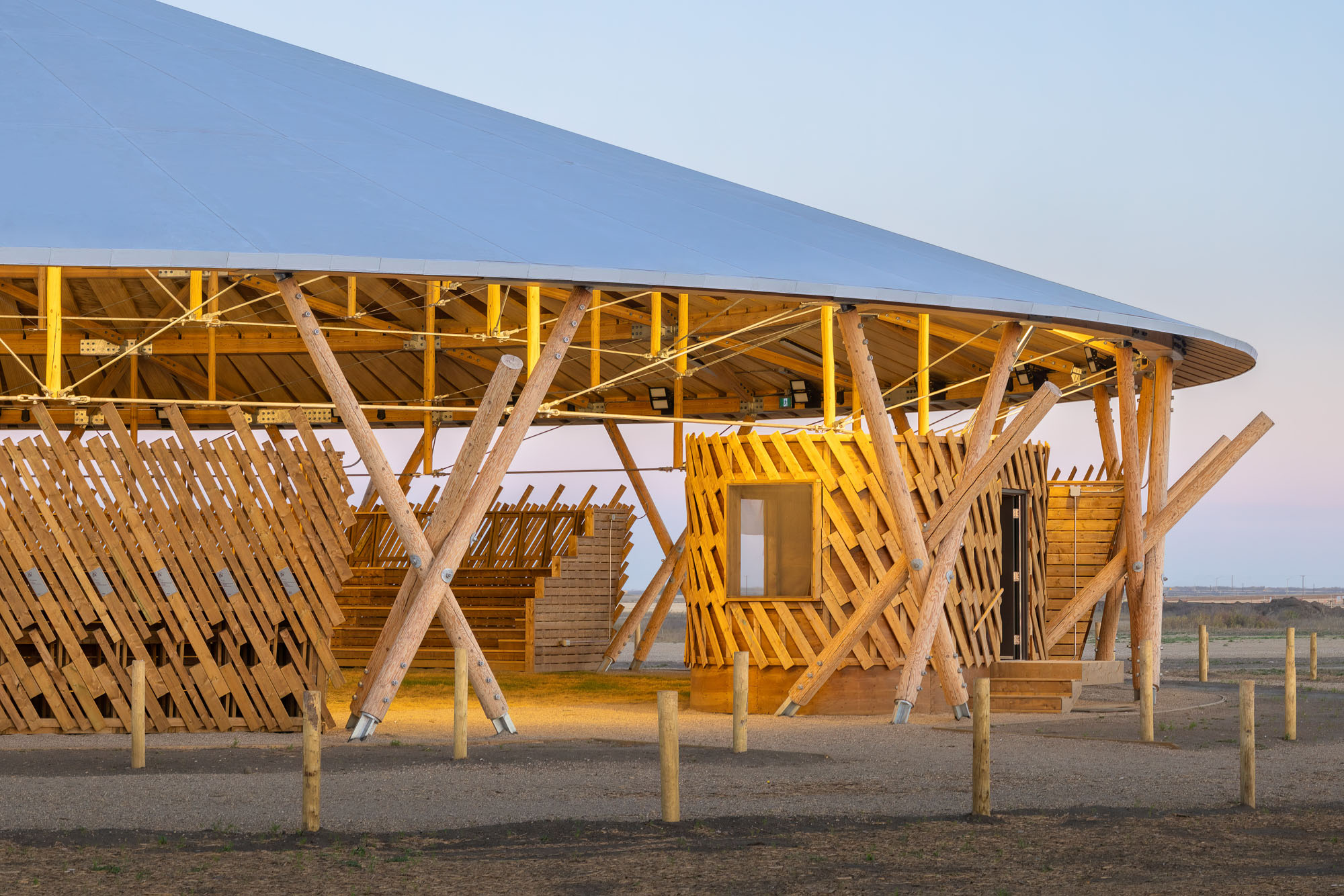
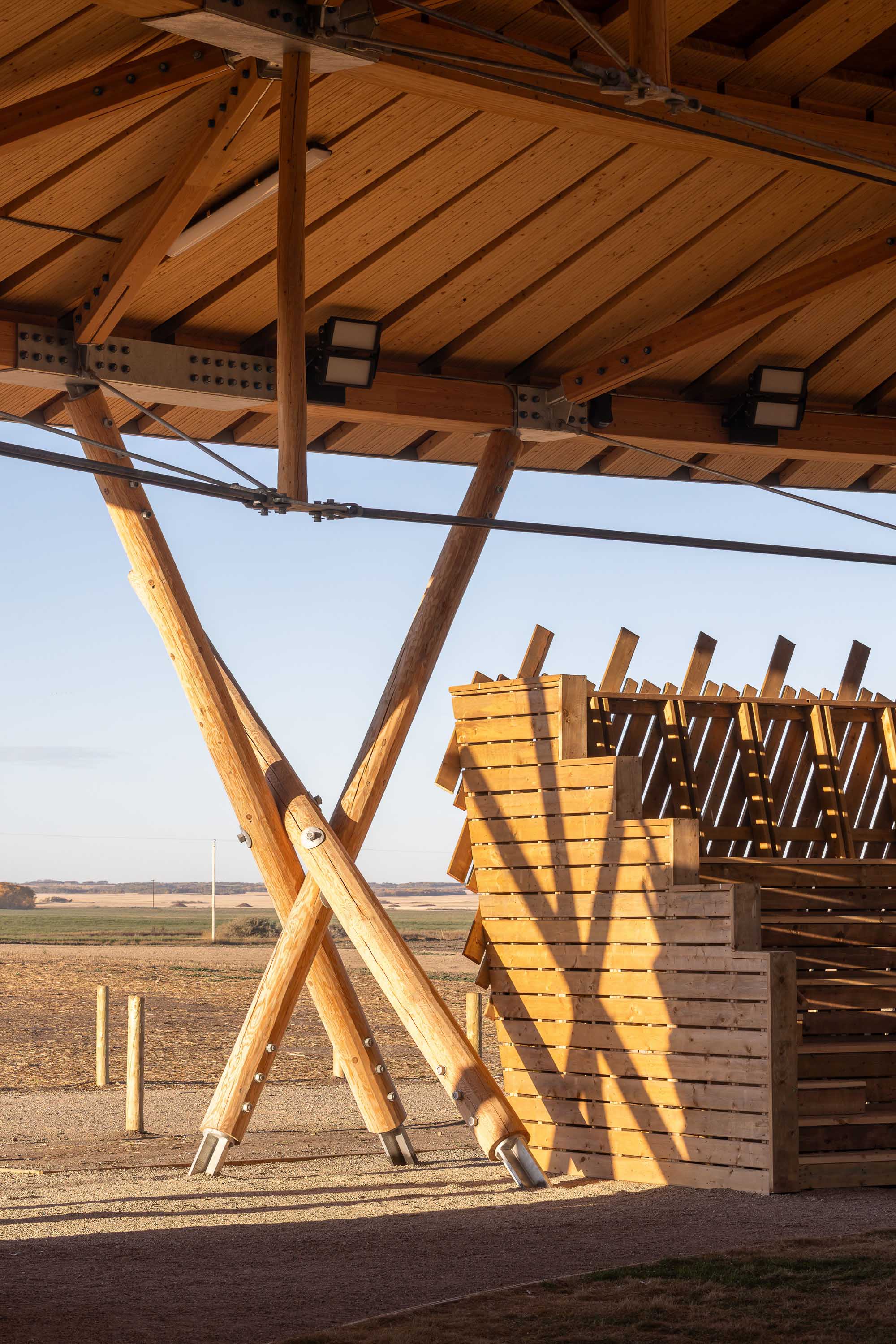
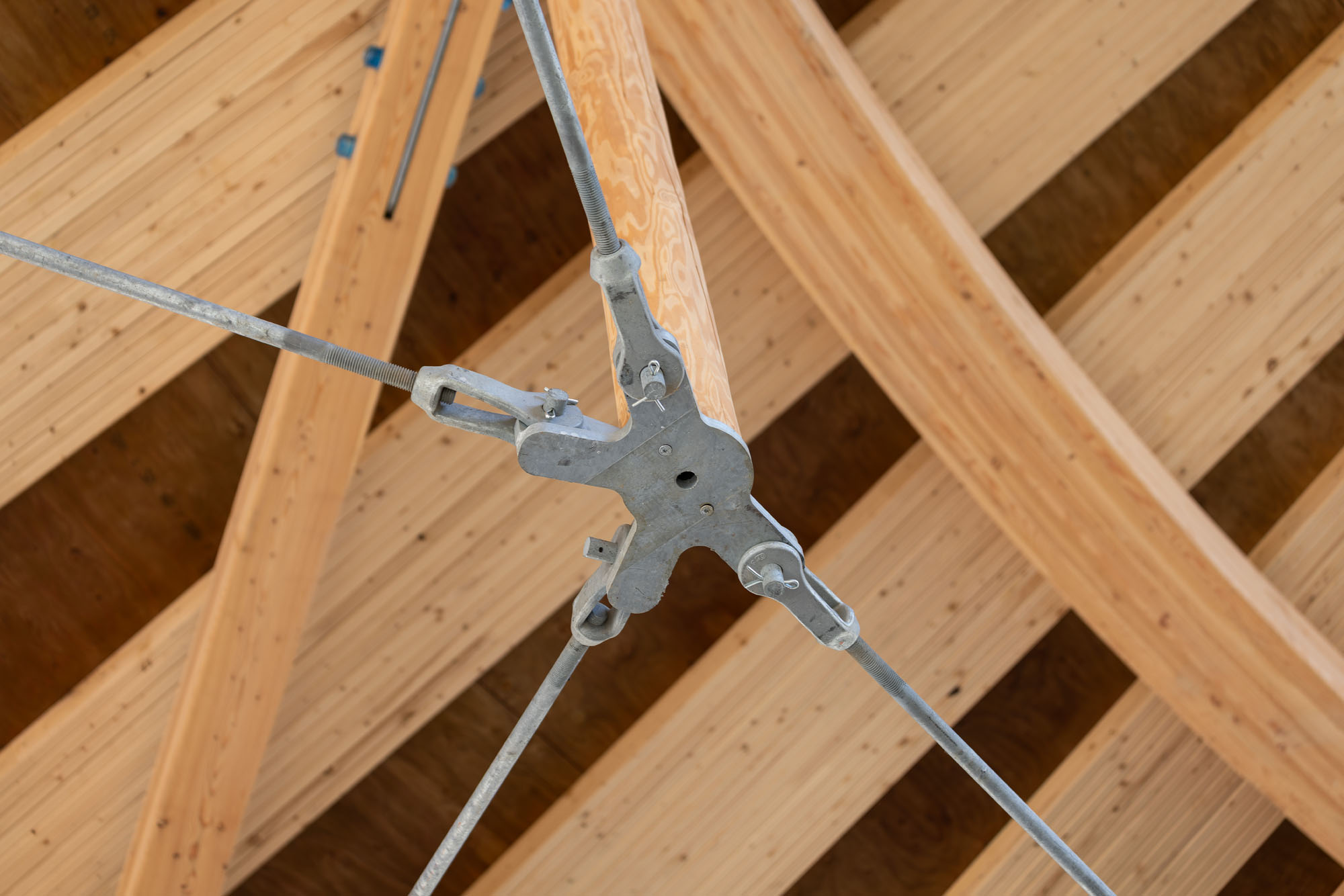
円形の形状は、文化的連続性を象徴するだけでなく、構造的な効率性と安定性も支えている。屋根の基部にある三脚柱は本質的に安定しているため、より小さな丸太を使用することが可能である。これは、より大きな木を伐採する必要がある大型の製材材を使用するよりも効率的なものとなっている。
屋根の軽量なスパンシステムでは、構造用丸太が戦略的に随所に活用されている。丸太材は加工を最小限に抑え、木繊維の向きを連続的に維持し、外注を排除することで、サプライチェーンの長さを短縮する。これは、構造性能を向上させつつ、資源管理に関する伝統的な視点とも合致している。
©︎ Lindsay Reid
©︎ Lindsay Reid
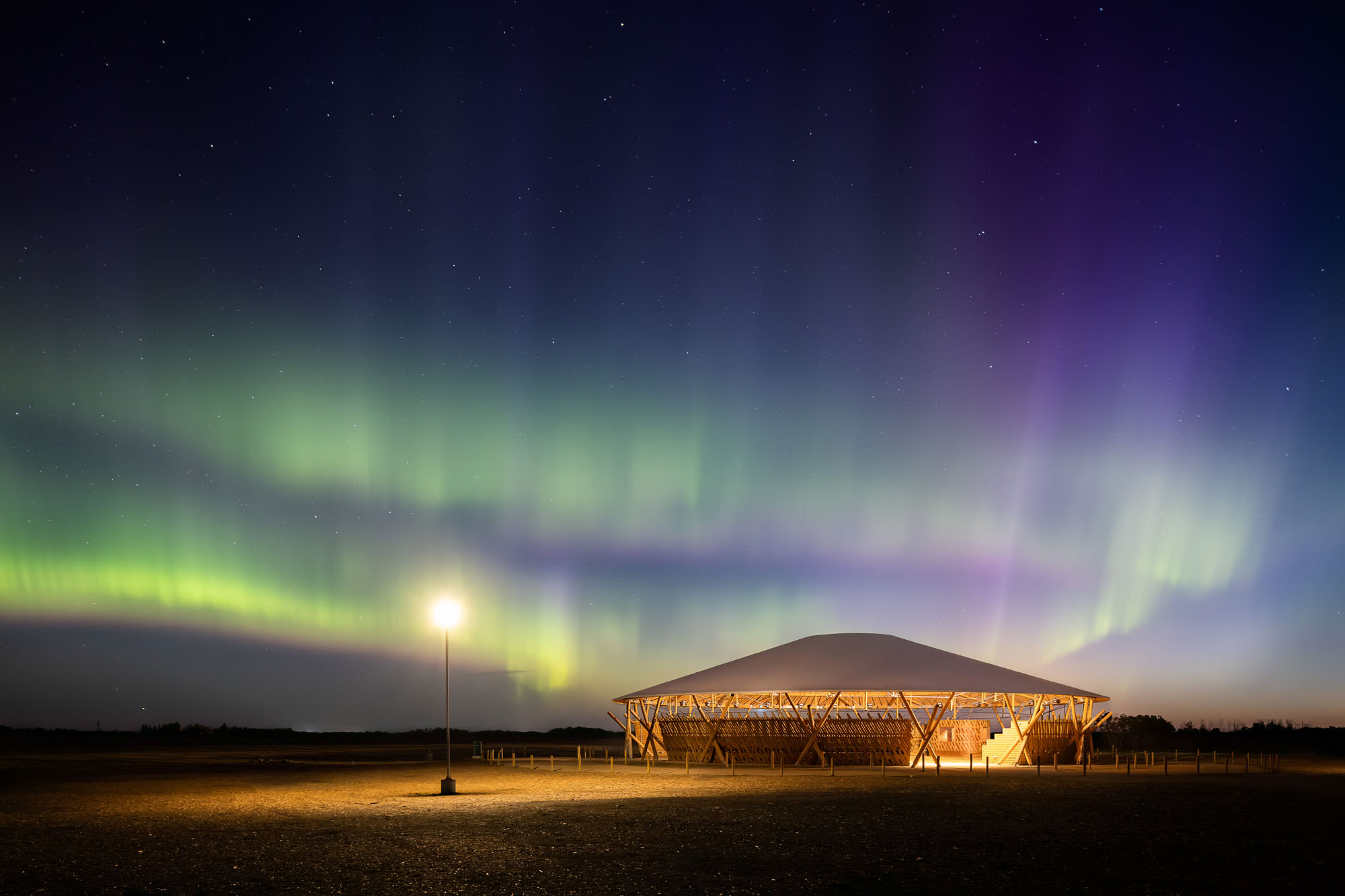
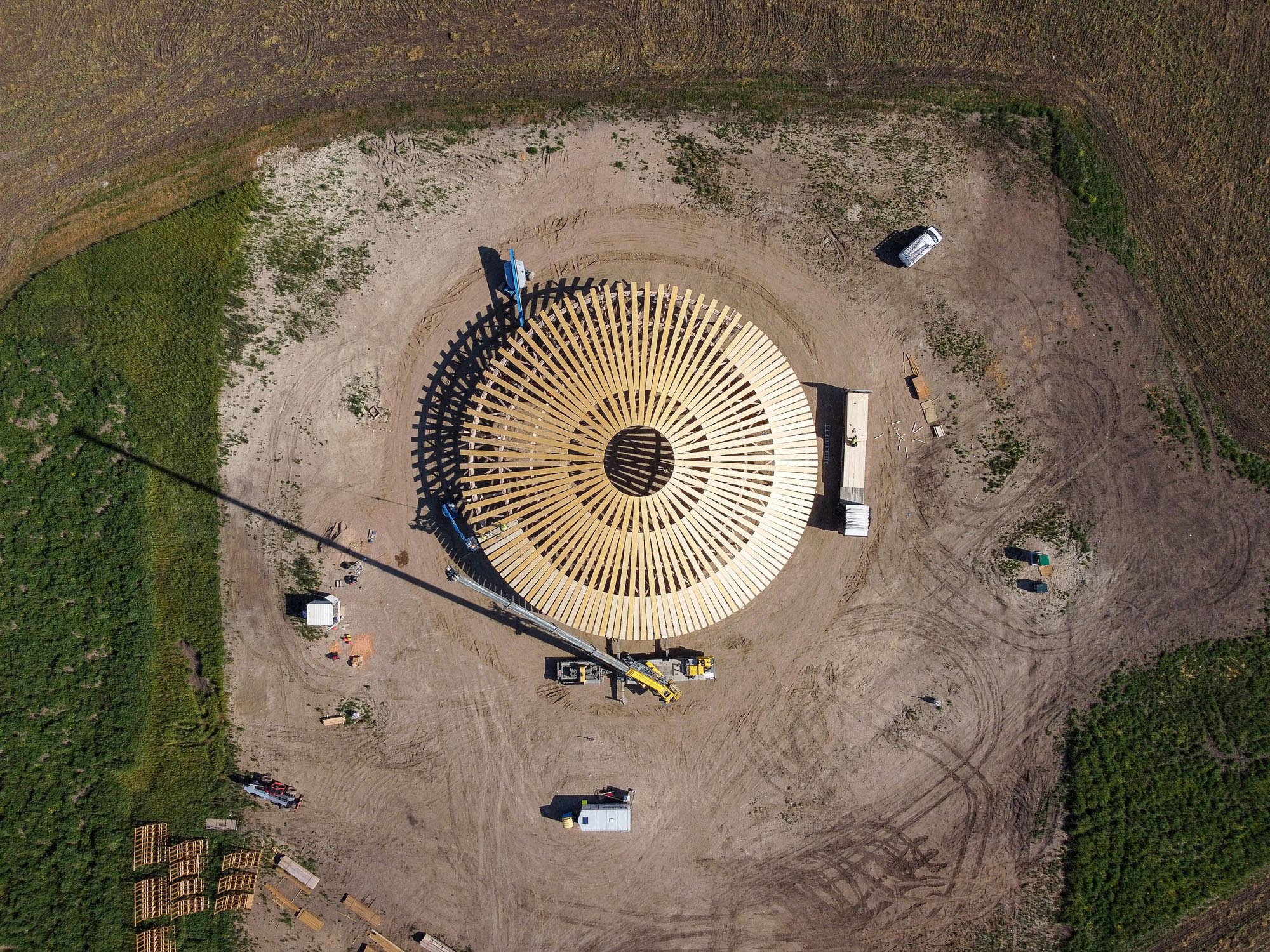
中央が空に開かれ、同心円状の構造をもつ円錐形の屋根は、三脚の土台の上に浮かんでいるように見え、建物内に光を取り込むことで、その下にあるダンスエリアの日陰に強い草を育んでいる。これにより、景観と建築が一体となる。
周辺の農地は在来の草原に復元され、この敷地は文化的景観へと変貌を遂げることになる。炭素排出量の多い農地を在来の多年生植生へと転換することは、プロジェクトのライフサイクル全体における炭素評価において大きなメリットをもたらす。具体的には、炭素固定と排出回避を含め、このプロジェクトは2031年までにカーボンニュートラルを達成することが示されている。〈マスコペトゥング・パウワウ・アーバー〉は、再生型開発として誕生し、今後何世代にもわたり、この土地とマスコペトゥング族に恩恵をもたらし続けるであろう。
©︎ Oxbow Architecture
©︎ Oxbow Architecture
©︎ Westridge Construction
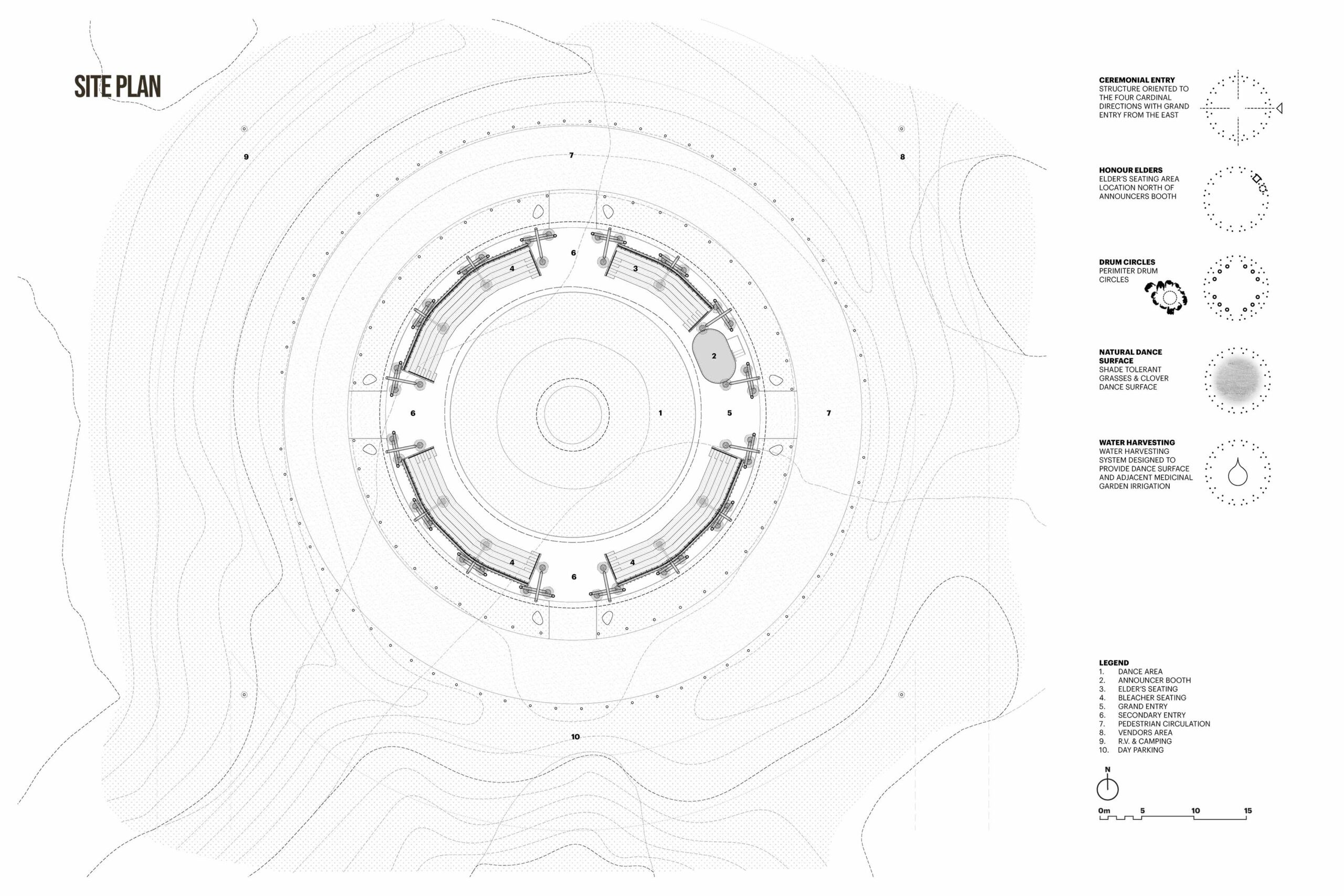
Site Plan ©︎ Oxbow Architecture
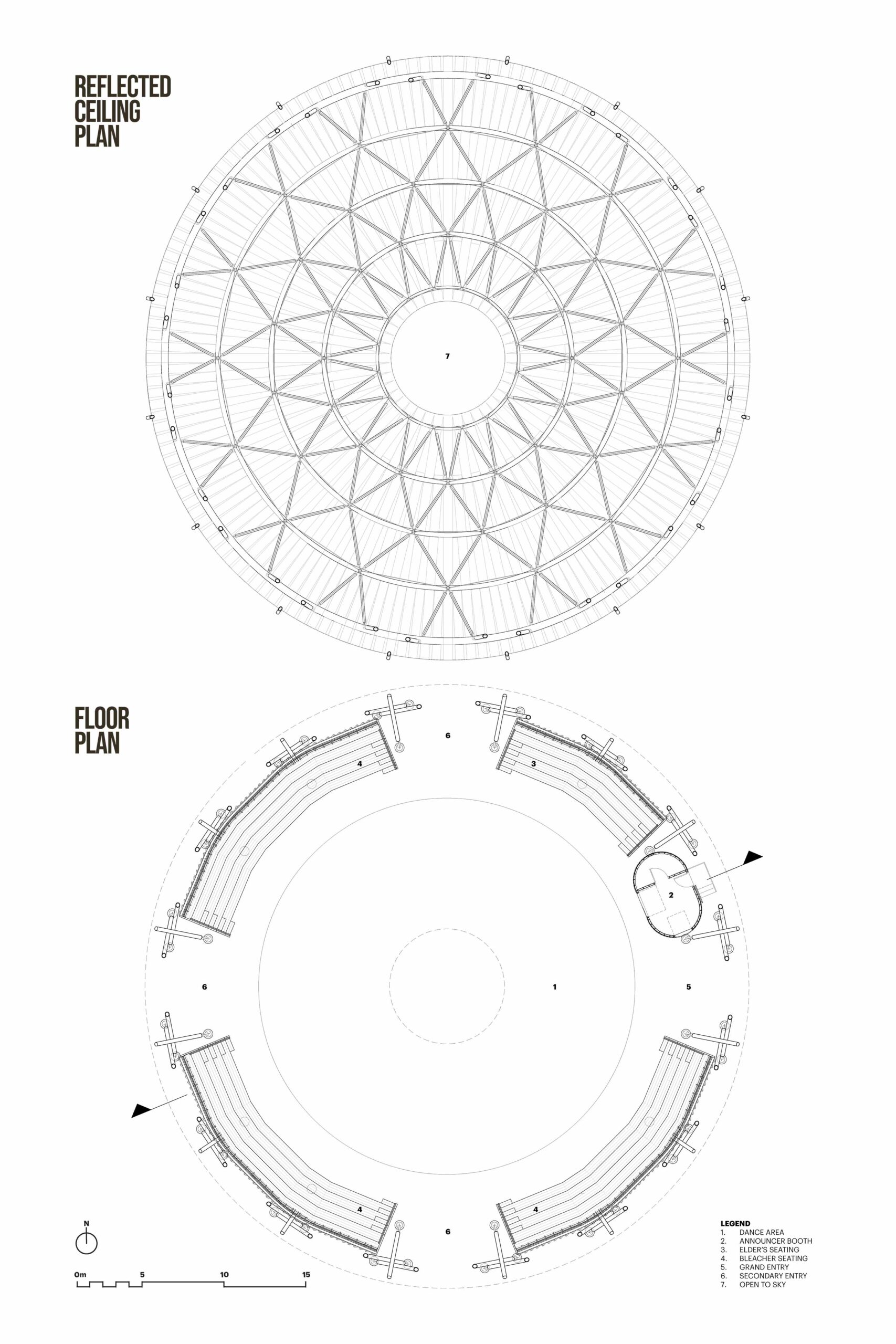
Floor Plan and RCP ©︎ Oxbow Architecture
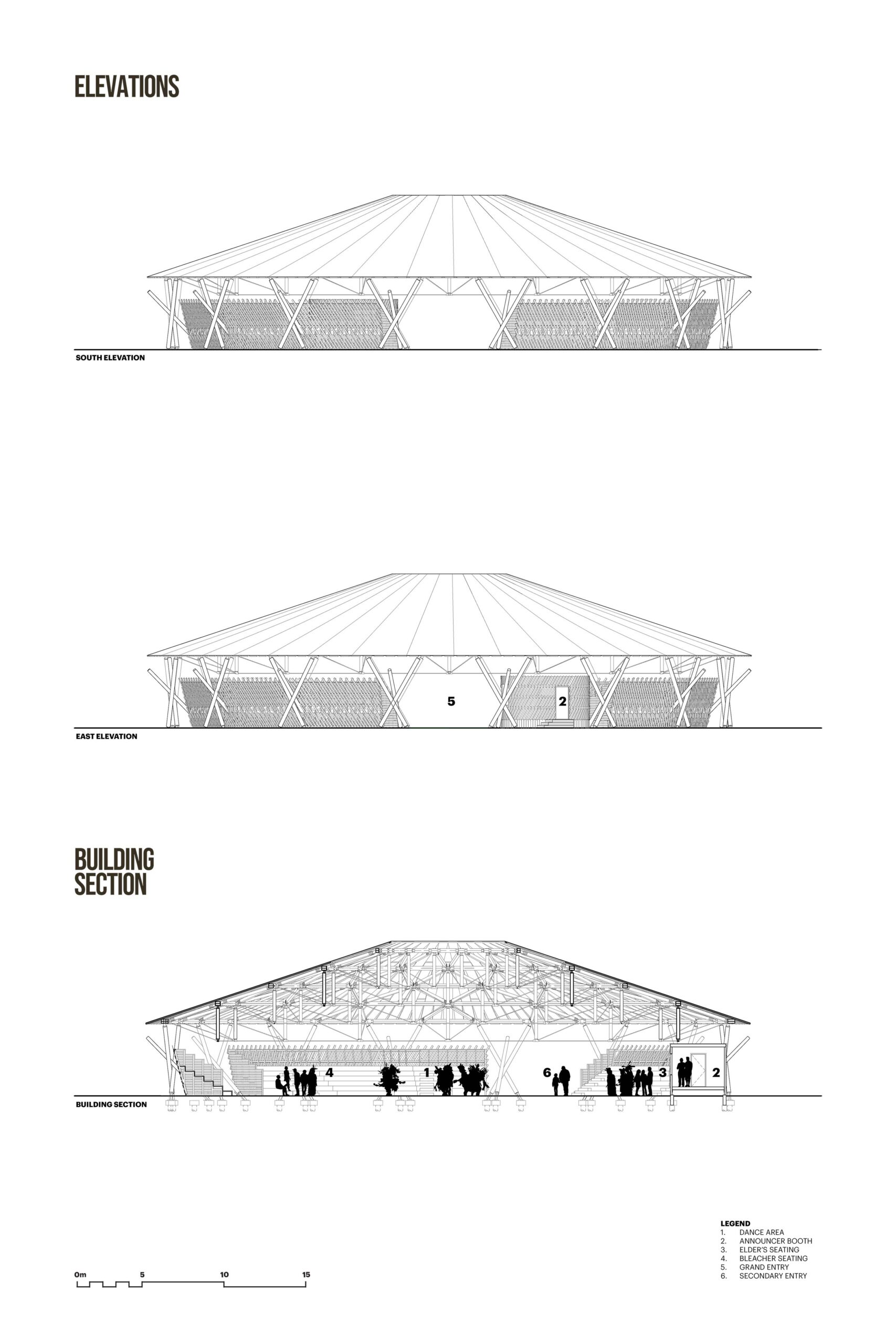
Elevations, Section ©︎ Oxbow Architecture
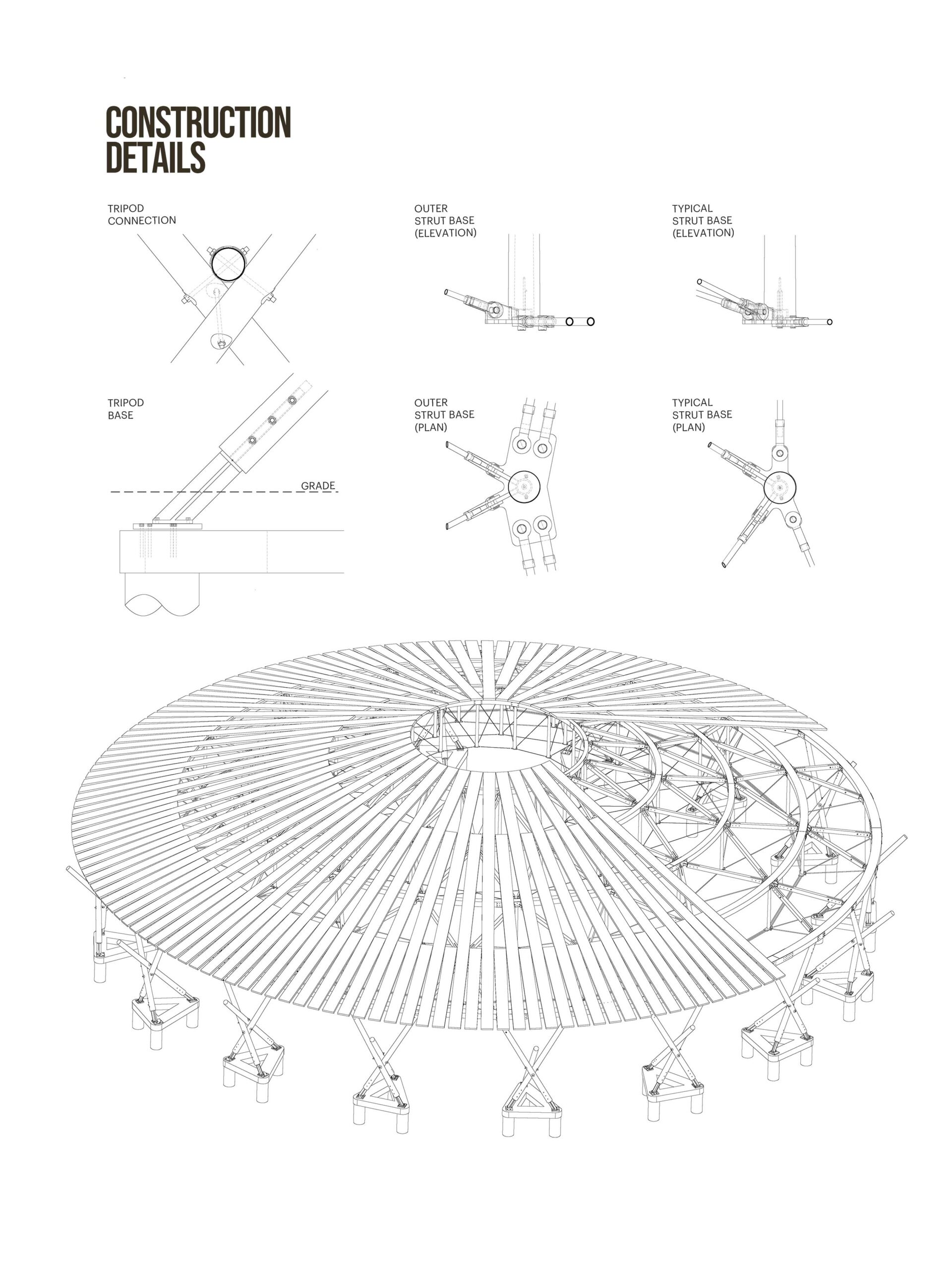
Construction Details ©︎ Oxbow Architecture
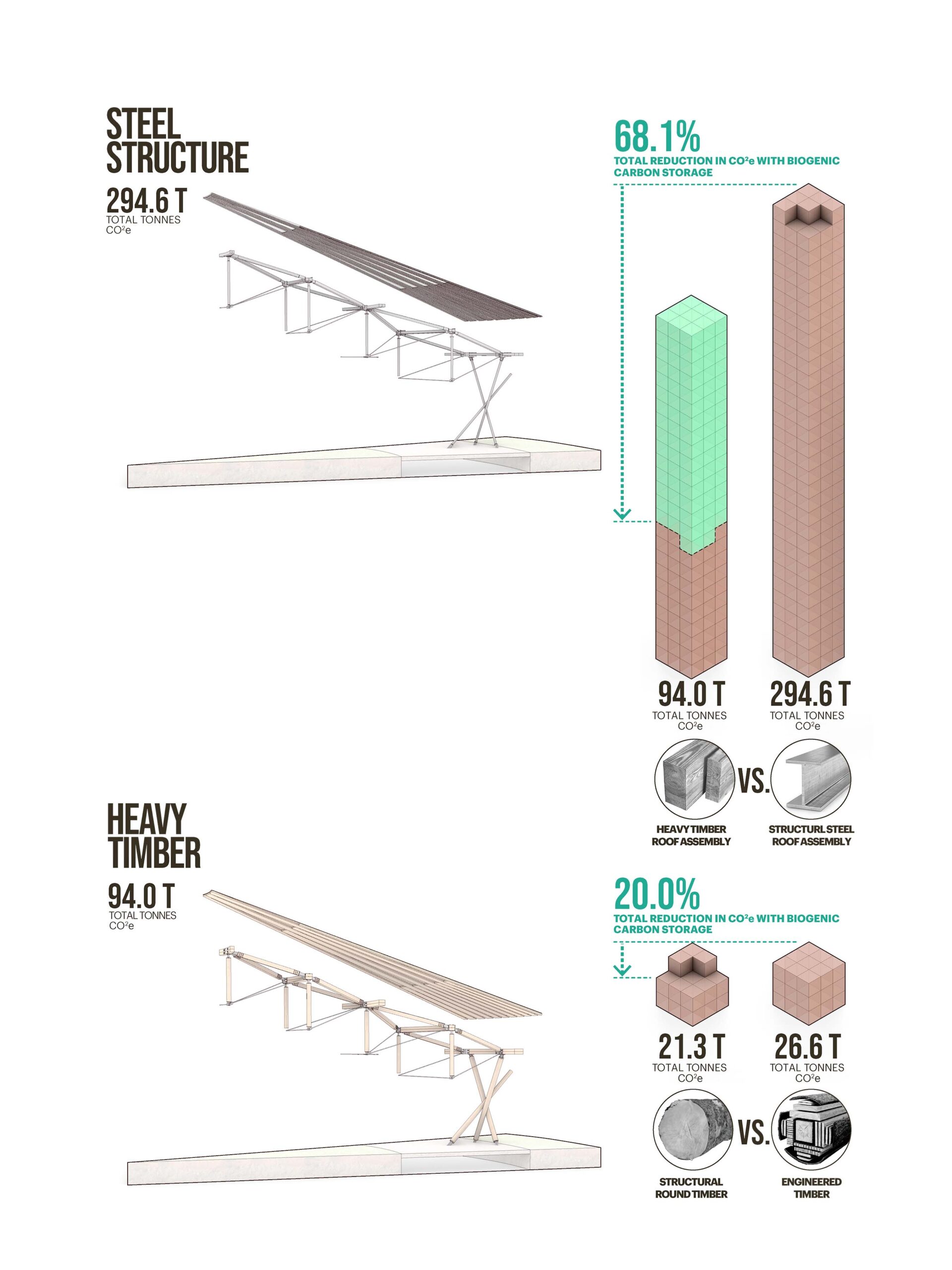
Life Cycle Assessment: Material Selection ©︎ Oxbow Architecture
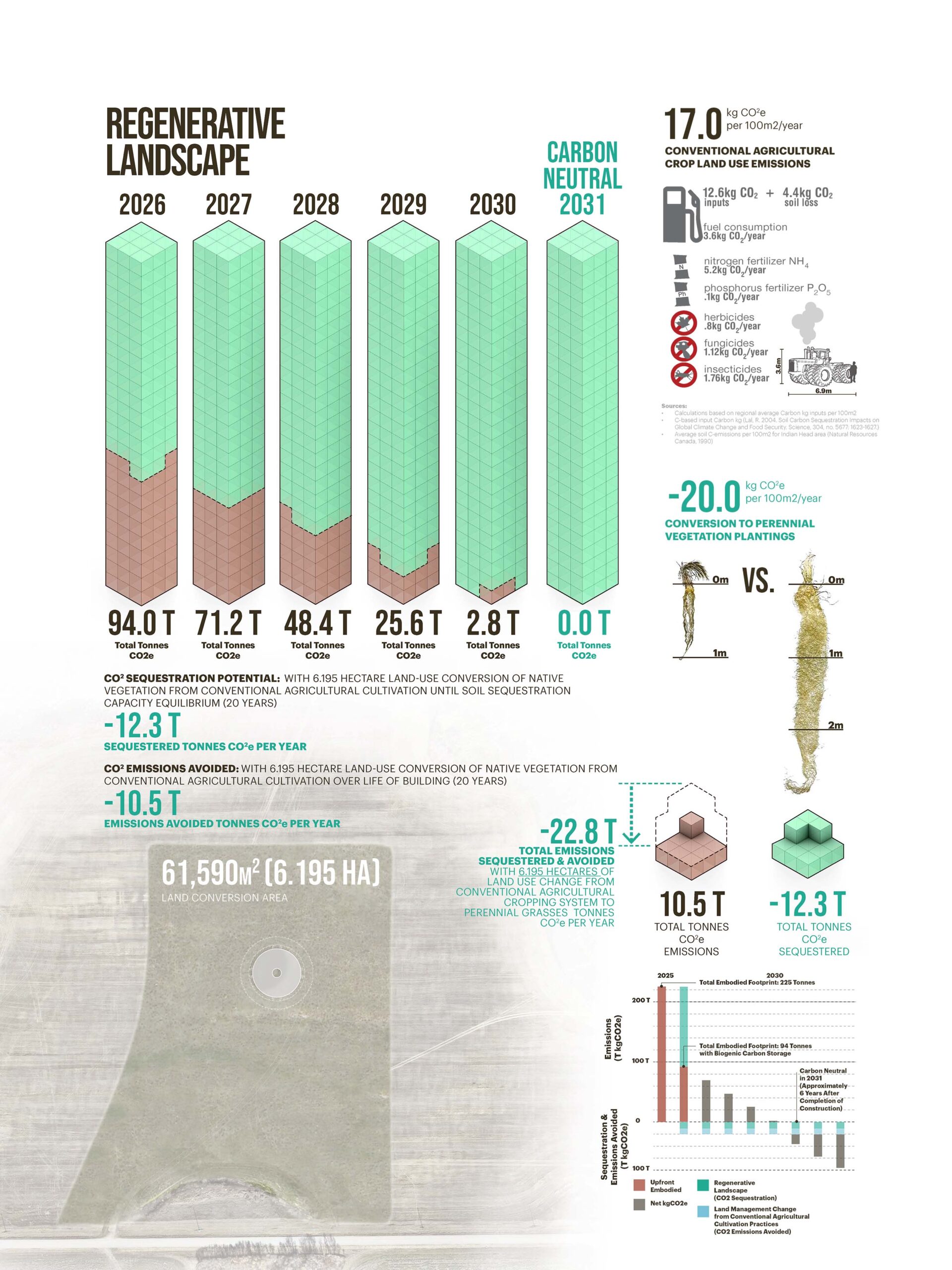
Life Cycle Assessment: Regenerative Landscape ©︎ Oxbow Architecture
以下、オックスボウ・アーキテクチャーのリリース(英文)です。
Project Title: Muscowpetung Powwow Arbour
Project Details
Name of lead architects and joint venture partners
Oxbow Architecture & Richard KroekerList of contributing team members from each architecture firm
Richard Kroeker
Oxbow Architecture
Andrea Clayton, Anna Ringstrom, Ashley Graf, Brad Pickard, Jim Siemens, Jordyn Loy, Mason Loy, Megan Florizone, Meghan Taylor, Rory Picklyk, Sam Lock, Sarah Robertson, Tanis WormeProject address: Muscowpetung Saulteaux Nation, Saskatchewan, Canada
Project client: Muscowpetung Saulteaux Nation
Interior area and, if relevant, exterior area, in square metres
1,222 m²(outer extent of roof circumference)
61,590 m² (land area conversion to native perennial vegetation from conventional agricultural land use)Occupation date of the project: August 18, 2025
A list of all key consultants to be credited, ie. structural engineer, electrical engineer, landscape architect, sustainability consultant, etc.
Structural engineer: Wolfrom Engineering
Electrical engineer: Ritenburg & Associates
Timber Structures Specialist: Chris J. K. Williams
Sustainability Consultant: Ha/f Climate DesignThe Muscowpetung Powwow Arbour is a place of celebration. It is a centre for the summer powwow gatherings of the Muscowpetung Saulteaux Nation on Treaty 4 territory in southern Saskatchewan, Canada. The structure draws inspiration from Saulteaux material culture and the importance of the circle within the culture’s worldview. It reflects traditional ways and the ingenuity of building with available resources. The result is an uplifting community building and a case study in how traditional Saulteaux knowledge can guide form finding, structure, and creating meaningful work that considers and capitalizes on local knowledge, labour and materials.
Uplifting Space
Drum groups and dancers spend summers on the powwow trail, travelling long distances to compete, share songs, dance, and revitalize traditional practices among diverse Nations. These gatherings draw vendors offering regalia, clothing, and food unique to their communities. The design of the Arbour embraces this cultural vitality and is rooted in extensive consultation that was essential to refining the Arbour’s function, size, and overarching intentions, ensuring the architectural and structural expression aligned with community priorities.
Elder engagement, led by Muscowpetung member Jeff Cappo, informed the need for the Arbour to reflect a traditional Saulteaux lodge, a structure with no center pole. The resulting clear span of the Arbour utilizes a circular structural system that balances loads while reinforcing the deep cultural significance of the circle. Historically, the Saulteaux people of the Great Plains crafted and built efficient structures with minimal, lightweight materials. The design of structural members make legible the stored energy of a drawn bow-string and the tensioning elements of a drum head; creating a lightweight roof assembly that appears to float on the Prairie horizon.A Beacon for the Nation
For generations, Muscowpetung families have faced systemic discrimination that continues to shape the hardships they endure today. This history has contributed to a disproportionately high number of the Nation’s children living in care. A shift is now underway from child welfare to family welfare—moving from protection to prevention, focusing on supporting families to heal and stay together. The Arbour plays a meaningful role in this work, providing a cultural anchor that supports prevention services dedicated to the safety and well-being of children and families. As the Nation seeks to bring home as many of their children as possible, the Arbour stands as a beacon, a symbol of cultural strength and renewal.Viable Economics
The project strengthens local economic objectives in two interconnected ways:
First, it prioritizes local labour. Material choices and construction methods were aligned with community skills and available resources. The roof assembly structure utilizes regionally sourced timber and the bleachers and timber screening are fabricated on-site using local labour, providing employment and skill-building opportunities to Muscowpetung members.
Second, the completed Arbour supports long-term economic development through tourism and event hosting. The Arbour now serves the community as an event space and an outdoor classroom for the Nation’s school.Saulteaux Knowledge Guides Climate-Responsive Design
Learning and working with traditional Saulteaux knowledge and practices has naturally resulted in a climate-responsive design. The overall design of the Arbour, the use of structural round timber (SRT) and the reclamation of the site from agricultural purposes are two direct examples of how this project prioritized traditional knowledge and practices.
The circular form not only symbolizes cultural continuity but also supports structural efficiencies and stability. The tripod columns at the base of the roof are inherently stable which allows them to utilize smaller round timbers which are more efficient than larger dimensional milled timbers that require harvesting larger trees. The lightweight spanning system of the roof uses SRT strategically throughout. SRT requires minimal processing, maintains continuous wood fibre orientation, and eliminates outsourcing – reducing the length of the supply chain. This aligns with traditional perspectives of resource stewardship while improving structural performance.
Open to the sky at its centre and built-in concentric rings, the conical roof appears to float above the tripod bases, allowing light to enter the building which sustains shade tolerant grasses of the dance area below. Landscape and building become one.
The surrounding agricultural land is to be restored to native prairie, transforming the site into a cultural landscape. Converting carbon-intensive agricultural land to perennial native vegetation yields significant benefits in the project’s whole life carbon assessment. Specifically, with sequestration and emissions-avoidance included, the project demonstrates carbon neutrality by 2031. The Muscowpetung Powwow Arbour was born as a regenerative development and will give back to the land and the Muscowpetung people for generations to come.
オックスボウ・アーキテクチャー 公式サイト
https://www.oxbowarch.ca/studio
![[Interview]レム・コールハース率いるOMA参画の「サローネ・コントラクト」も開始 2026年ミラノサローネの現在地](https://magazine-asset.tecture.jp/wpcms/wp-content/uploads/2026/04/24005359/07_SALONESATELLITE-AWARD_Rong-Design-Award-900x600.jpg)
![[Report&Interview]注目の2人展、東京オペラシティ アートギャラリー企画展「ほぼ、空:青木淳 + リチャード・タトル」会場レポート&インタビュー](https://magazine-asset.tecture.jp/wpcms/wp-content/uploads/2026/08/20092208/202608almost-sky-ex_10endo4216-900x676.jpeg)