CULTURE
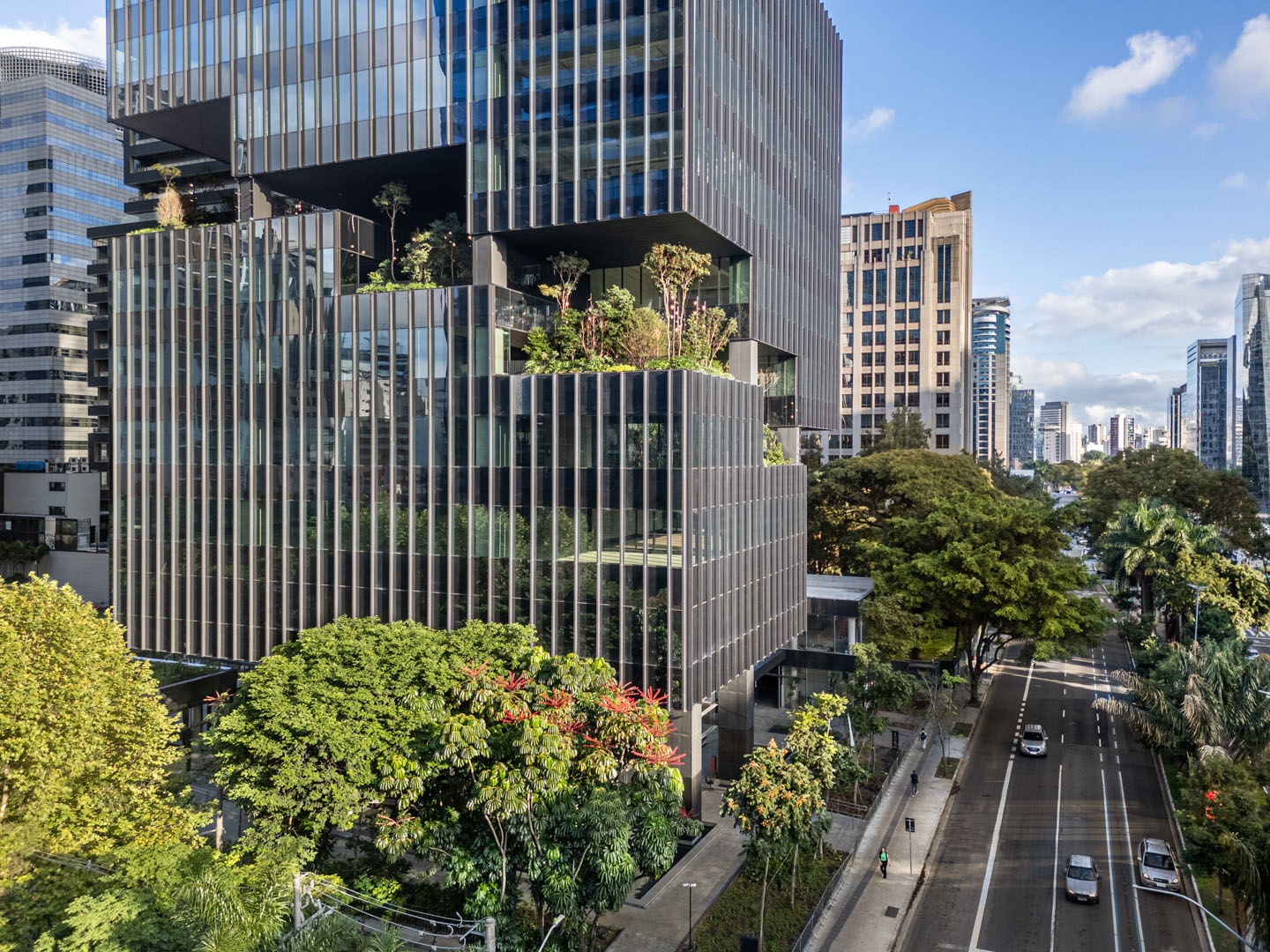
ブラジルのサンパウロに建つ〈サルマ・タワー(Salma Tower)〉は、螺旋状に連続する緑のテラス「垂直の森」が特徴的な、1階には商業施設を有するオフィスビルです。
LEEDプラチナ認証を取得した建築であり、ブラジルを拠点に活動する設計事務所 aflalo/gasperini arquitetosが設計しました。
注目ポイント
- 各階に設置された、熱的・音響的バリアとしても機能する「垂直の森」
- 利用者が裸足で歩ける日常的な利用を想定した緑地設計
- 企業開発における新たなモデルを提案する建築
(以下、aflalo/gasperini arquitetosから提供されたプレスキットのテキストの抄訳)
©︎ Pedro Mascaro
LEEDプラチナ認証を取得した、「垂直の森」を備えたオフィスビル
aflalo/gasperini arquitetosが設計した16階建てのタワーは、螺旋状の緑のテラスや都市の透過性、高い環境性能を通じて、建築と自然の関係を再定義する存在である。3つの通りからアクセス可能な敷地に建つ〈サルマ・タワー〉は、企業開発における新たなモデルを提案する建築として構想された。
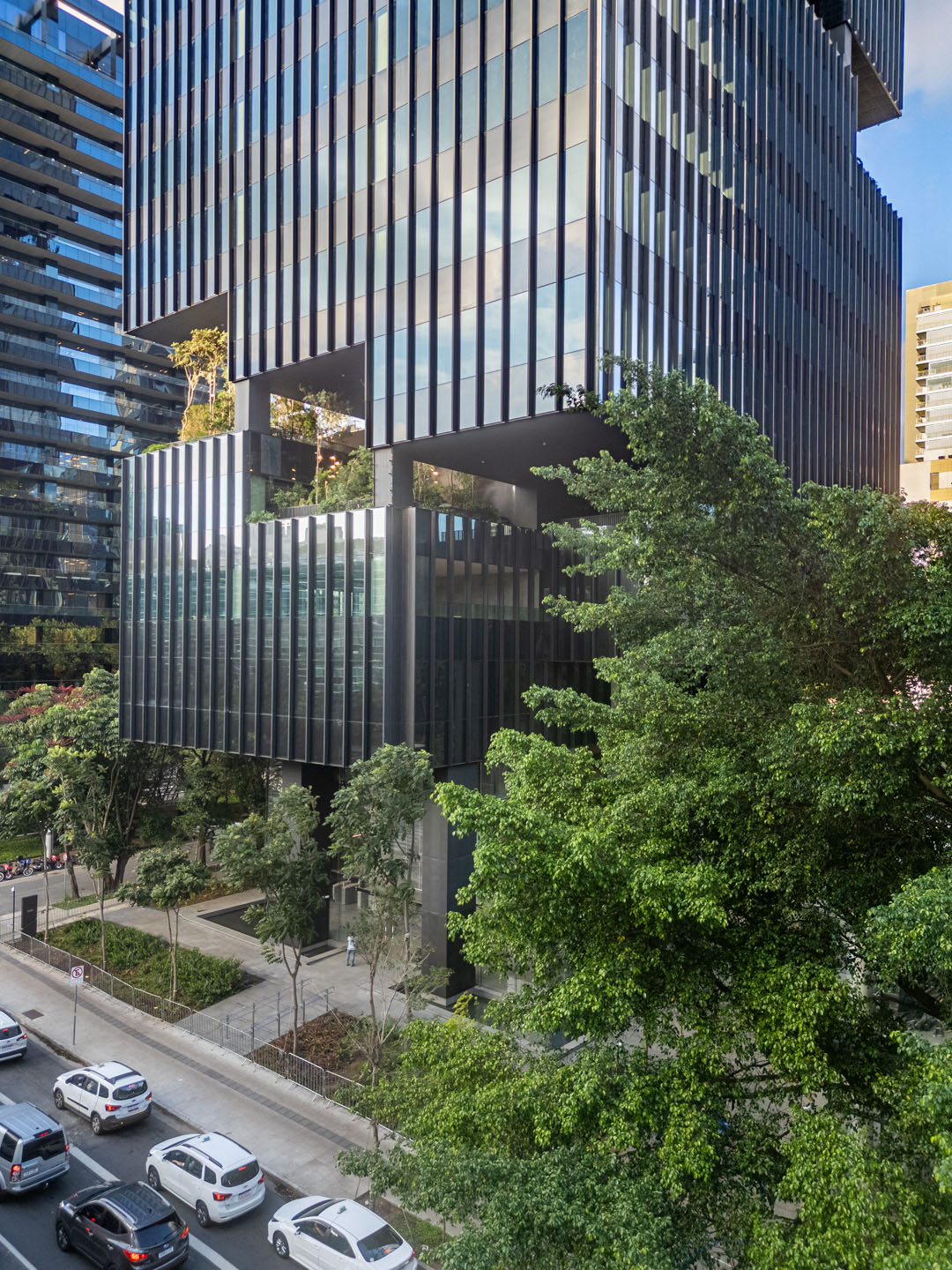
1階部分は壁や手すりを排したオープンスペースとして計画され、レストランや店舗を収容するアクティブなファサードによって都市環境との統合を促進している。16階建てで平均床面積1,200m²を確保し、階高4.68mとすることで、自然換気や広がりのある空間性を実現している。
©︎ Pedro Mascaro
垂直の森による新たな空間体験
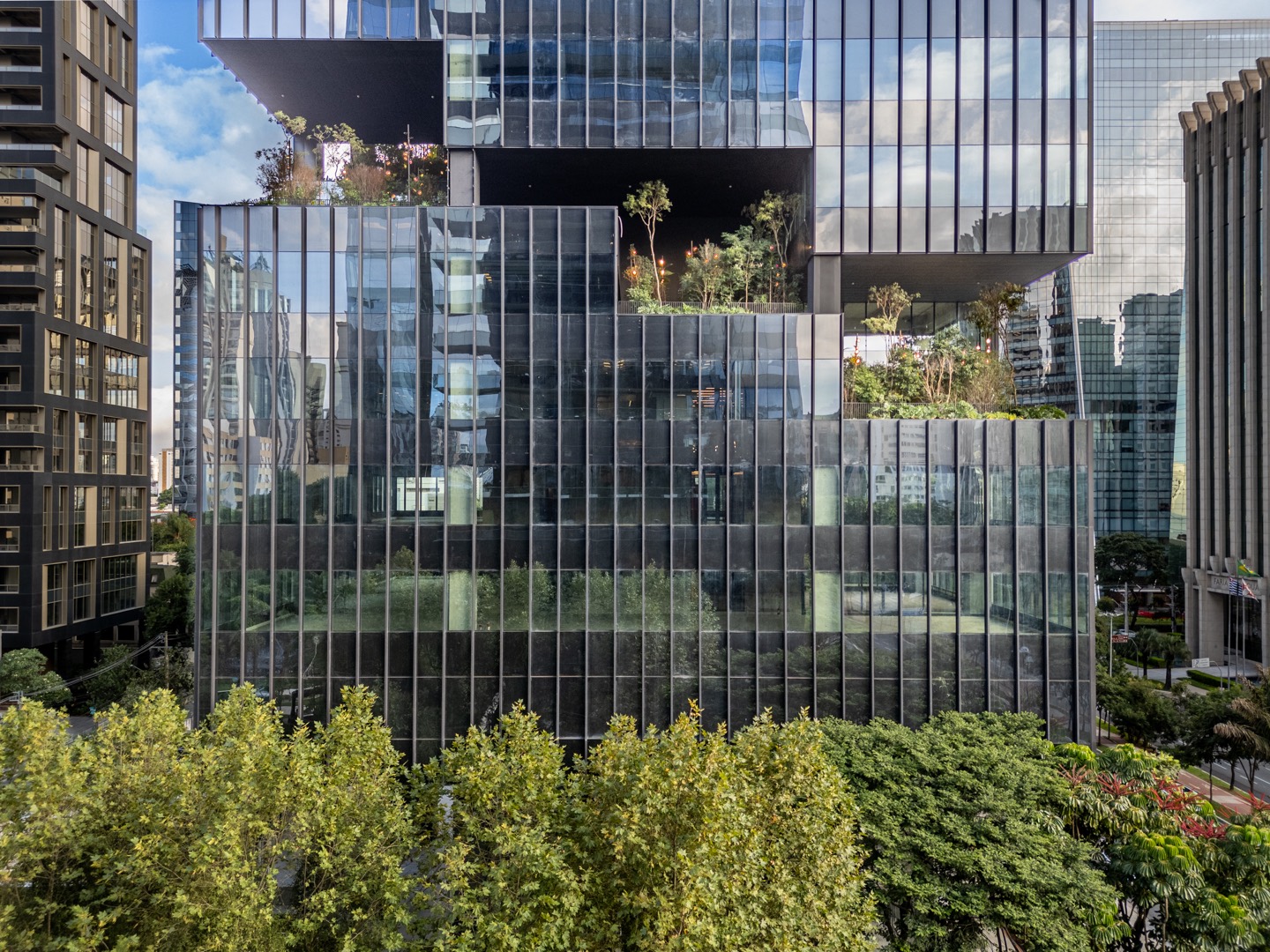
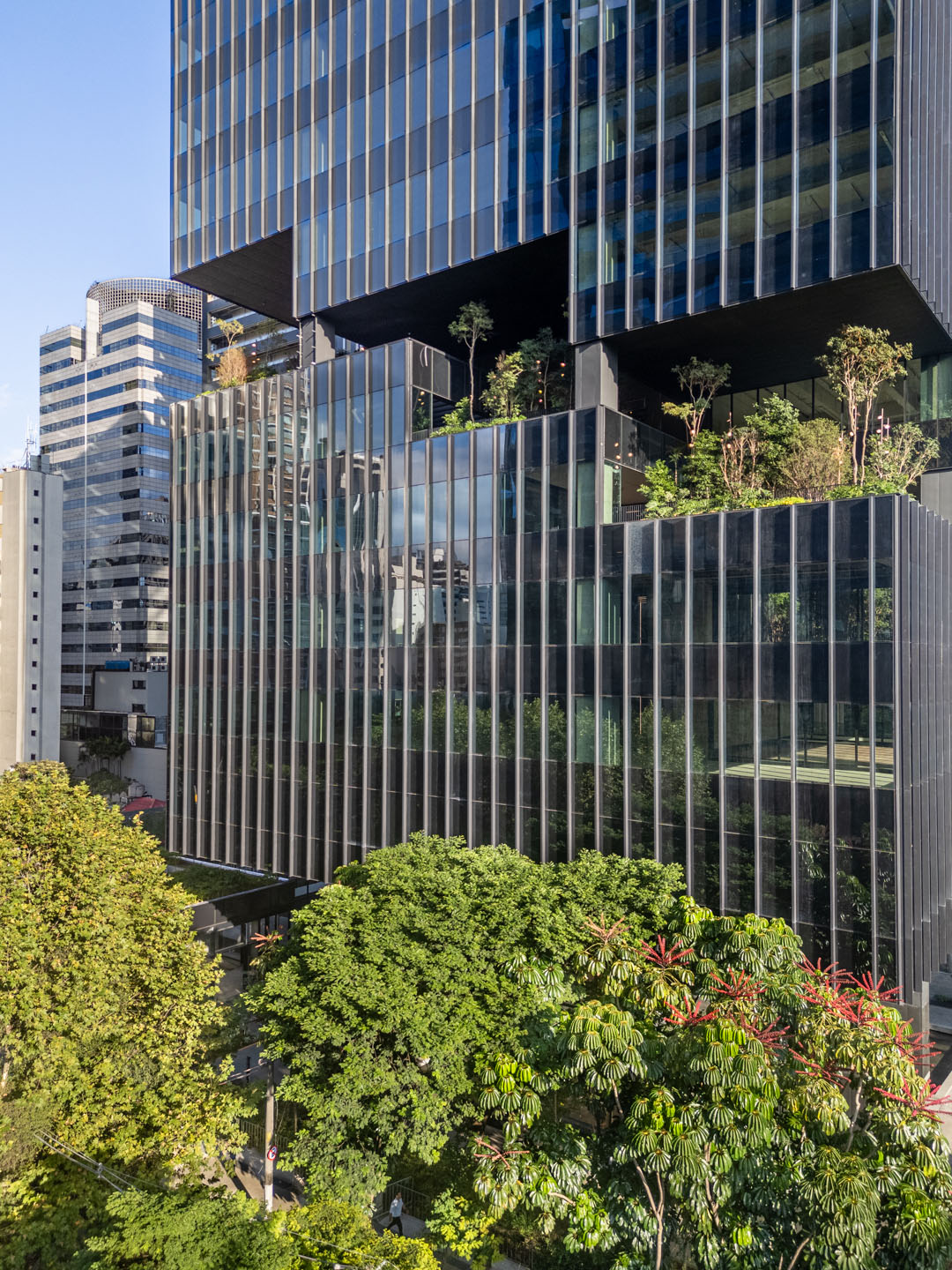
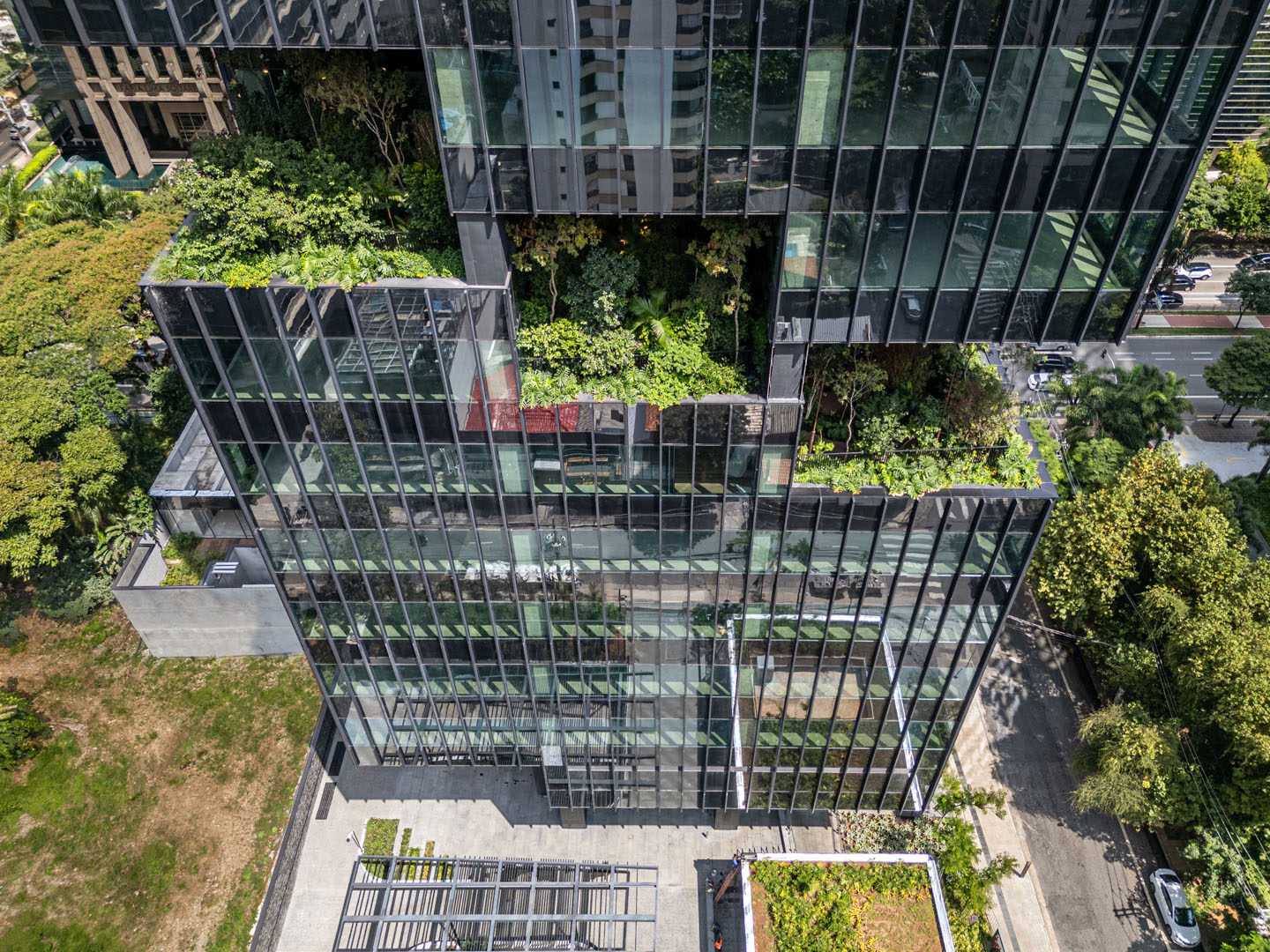
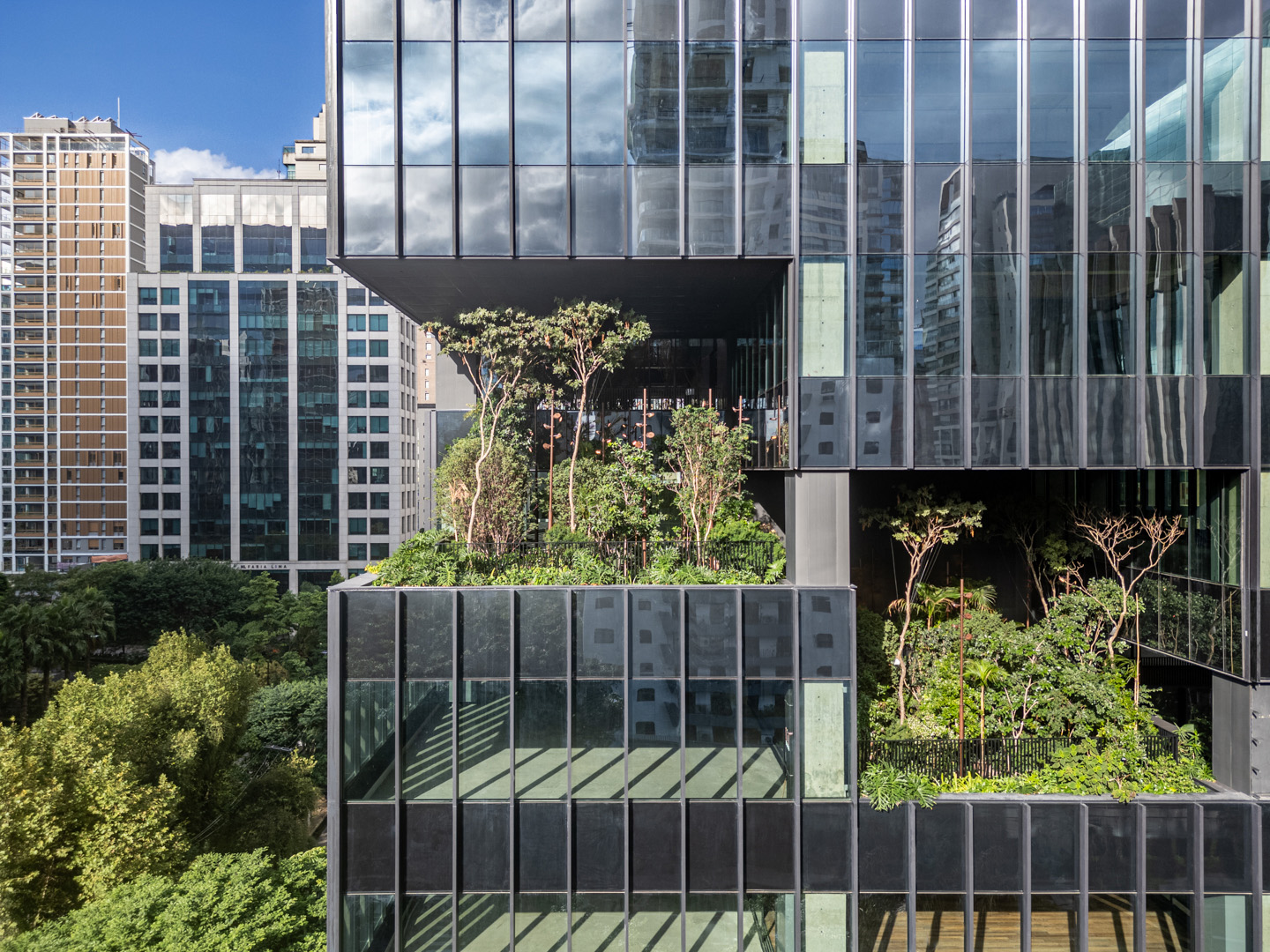
設計におけるコア的要素は、全階に設けられた2層分の高さをもつ110m²の森林空間である。これらは中央のコア部分を螺旋状に囲むように配置され、総計1,760㎡に及ぶ垂直緑化を形成している。
樹木は熱的・音響的バリアとして機能し、内部に独自の微気候を生み出すとともに、企業空間の新たな使い方を提示している。
©︎ Pedro Mascaro
世界最高峰のサステナビリティ
同建物はブラジル・グリーンビルディング評議会より、国際的な環境認証制度であるLEEDプラチナを取得した。
LEED v4 BD+C: CSカテゴリーにおいて83点を獲得し、ブラジル国内で3番目に高いスコアを記録するとともに、サンパウロ市では初めてこの基準を満たした事例となった。世界的に見ても、このスコアを達成したプロジェクトは全体のわずか8%に過ぎない。
©︎ Pedro Mascaro
空中の庭園とランドスケープデザイン
本プロジェクトは、敷地面積の5%にあたる植栽を高層部に施した。これにより入居者が日常的に利用できる空中庭園が形成され、密集した植栽の中を裸足で歩く体験が可能である。隣接地の樹木群ともつながる連続的な緑地が創出されている。
ランドスケープデザインはSoma ArquitetosとCardim Arquiteturaの協働によるものであり、当初からバイオアーキテクチャに基づいたガイドラインが採用された点も特徴的である。
©︎ Pedro Mascaro
開発プロセスとクライアントの協業
開発段階では森林のフルスケール模型が作成され、比例や寸法の感覚を確認するテストが行われた。クライアントであるG4Mグループはプロジェクト全体に積極的に参加し、設計ガイドラインの確立に決定的な役割を果たした。
aflalo/gasperini arquitetosのマネージングパートナー、グラッツェリ・ゴメス・ロチャ(Grazzieli Gomes Rocha)は次のように語る。
「建築家とクライアントのビジョンが一致することで創造的なプロセスは強化される。G4Mグループは実験に寛容であり、開発全体で前例のない解決策を可能にした。」
©︎ Pedro Mascaro
ブラジルを代表する持続可能な建築
建物の外壁には断熱性能の高いガラスが用いられ、灌漑やトイレ、冷却塔に再利用水システムを導入することで総消費量を最大60%削減している。LEED認証はこれらの戦略を裏付けるものであり、エネルギー効率、水資源管理、室内環境品質、材料利用など多岐にわたる分野での持続可能な実践が評価された。
ブラジル・グリーンビルディング評議会は76カ国に広がる国際ネットワークの一員であり、600社を超える会員企業とともに土木建設の変革を推進している。〈サルマ・タワー〉はその中で、ブラジルを代表する持続可能な建築の象徴的な存在となっている。
以下、aflalo/gasperini arquitetosのリリース(英文)です。
Salma Tower: new office building in São Paulo integrates vertical forests and receives LEED Platinum
Designed by aflalo/gasperini arquitetos, the 16-story tower redefines the relationship between architecture and nature with spiral green terraces, urban permeability, and high environmental performance.
São Paulo, August 2025 – Temporarily called “Bosco Corporate”, the building is now officially named Salma Tower, a family tribute to the developer. Located on a plot of land that occupies half of a block and with access by three roads – Rua Professor Atílio Inocenti, Av. Horácio Lafer and Av. Faria Lima – the project proposes a new model for corporate developments.
The ground floor was conceived as an open space, without walls or railings, with active facades that house restaurants and shops, encouraging integration with the urban surroundings. With 16 floors and average slabs of 1,200m², the tower has a height between floors of 4.68m, which favors ventilation and the spaciousness of the environments.
One of the design’s central solutions is the 110m² woods with double height on all floors. Organized in a spiral around the central core — where elevators and stairs are concentrated — they total 1,760m² of vertical vegetation. The presence of the trees acts as a thermal and acoustic barrier, creating a microclimate in the internal spaces and proposing a new way for occupying the corporate space.
Recently, the Salma Tower hosted a monumental installation by Damien Hirst, a British artist associated with the Young British Artists (YBAs) movement. With works in institutions such as Tate Modern, MoMA and Guggenheim, Hirst is the author of the series “Spot Paintings”, marked by vibrant colors and repetition. A 7×7 meter panel was installed in the lobby of the building, visible from Avenida Faria Lima. The painting, composed of colored circles arranged in a grid, dialogues with the urban dynamics and transforms the street into a point of contemplation.
The work complements the glazed façade and the triple height of the ground floor, reinforcing the integration between art, architecture, and culture in the city’s everyday life.
In addition, the building has just obtained the LEED Platinum certification, granted by the Green Building Council Brazil. This is the highest level of the international Leadership in Energy and Environmental Design (LEED) system. With 83 points in the LEED v4 BD+C: CS category, the building is the third highest-scoring project in Brazil and the first in the city of São Paulo to reach this mark – the first two are located in Curitiba. Only 8% of the projects evaluated in the world achieve this score.
To make the hanging gardens viable, the project uses the parameters of the Terraces Law, dedicating 5% of the land area to vegetation at higher levels. The spaces were designed to promote the daily use of the occupants, including the possibility of walking barefoot through dense vegetation, continuing the tree mass of the neighboring lots.
One of the highlights of the project is that, from the beginning, the G4M Group, responsible for the investment and ownership of the building, adopted guidelines based on bio architecture. The landscaping is the result of the collaboration between Soma Arquitetos and Cardim Arquitetura.
During development, a full-scale mockup of the forest was made, allowing sensory tests of proportion and dimension. The active participation of the client throughout the process was decisive for the consolidation of the proposed guidelines.
“The creative process is enhanced when there is alignment of vision between architect and client. The G4M group was open to experimentation, and this enabled unprecedented solutions throughout the development”, says Grazzieli Gomes Rocha, managing partner of aflalo/gasperini arquitetos.
The project incorporates technologies that increase the efficiency of the building. The façade has insulated glass that favors thermal control, and there is a water reuse system for irrigation, external faucets, toilets and cooling towers, reducing total consumption by up to 60%.
Obtaining the LEED Platinum certification reinforces this strategy. Created by the U.S. Green Building Council and present in more than 160 countries, LEED guides and certifies sustainable practices for projects at distinct stages – from new construction to ongoing operations. The score obtained depends on the application of strategies in areas such as energy efficiency, water resources management, indoor environmental quality, and use of materials. Certification levels vary between Certified, Silver, Gold, and Platinum — the latter awarded to enterprises that receive up to eighty points or more.
The Green Building Council Brazil is part of an international network with operations in seventy-six countries, focused on the transformation of civil construction. With more than 600 member companies, the organization consolidates Brazil as one of the agents of this global movement.
aflalo/gasperini arquitetos 公式サイト
https://aflalogasperini.com.br/en/corporativo-faria-lima/
【購読無料】空間デザインの今がわかるメールマガジン TECTURE NEWS LETTER
RECOMMENDED ARTICLE