

CULTURE
©︎ Maximiliano Allendes Medeiros
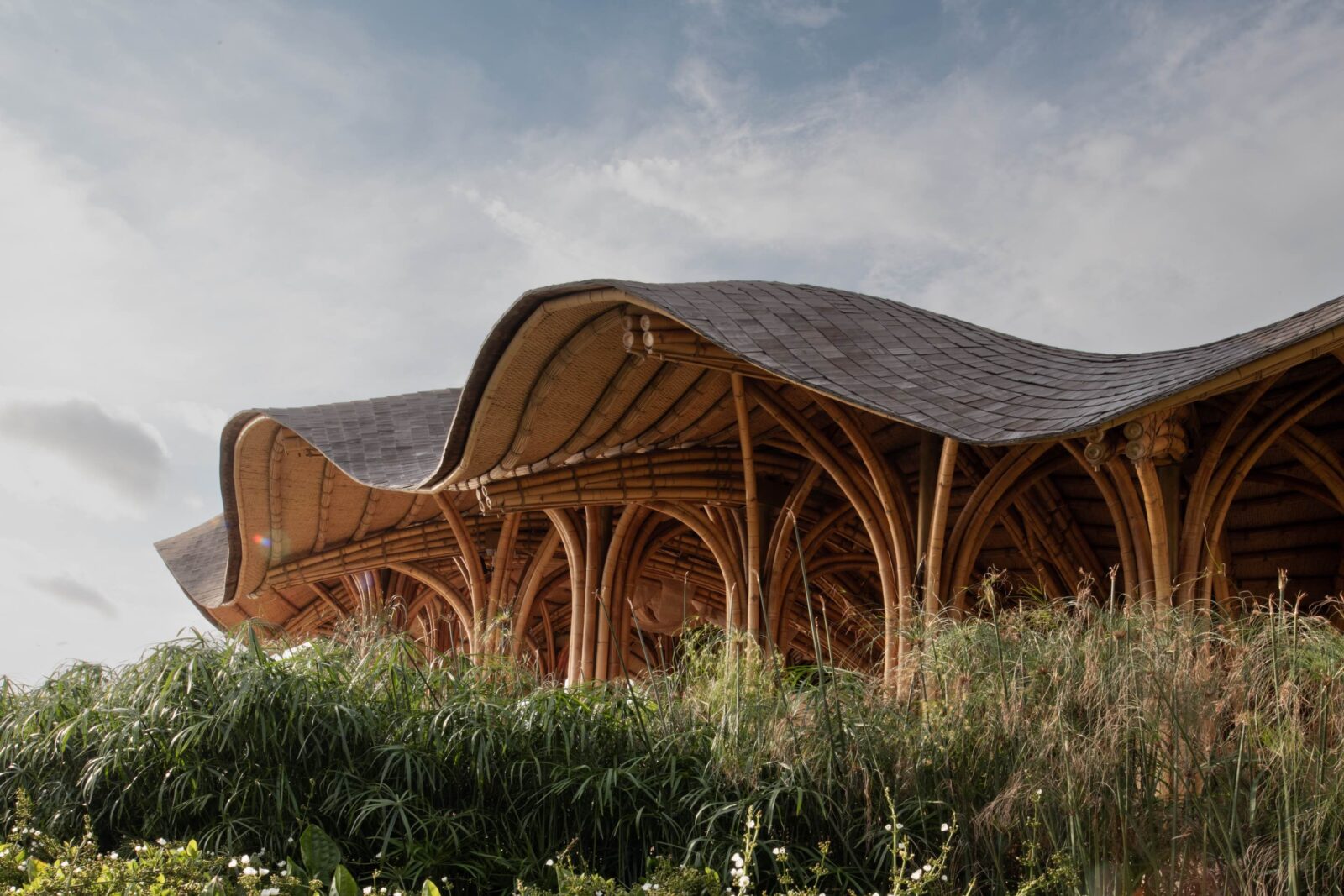
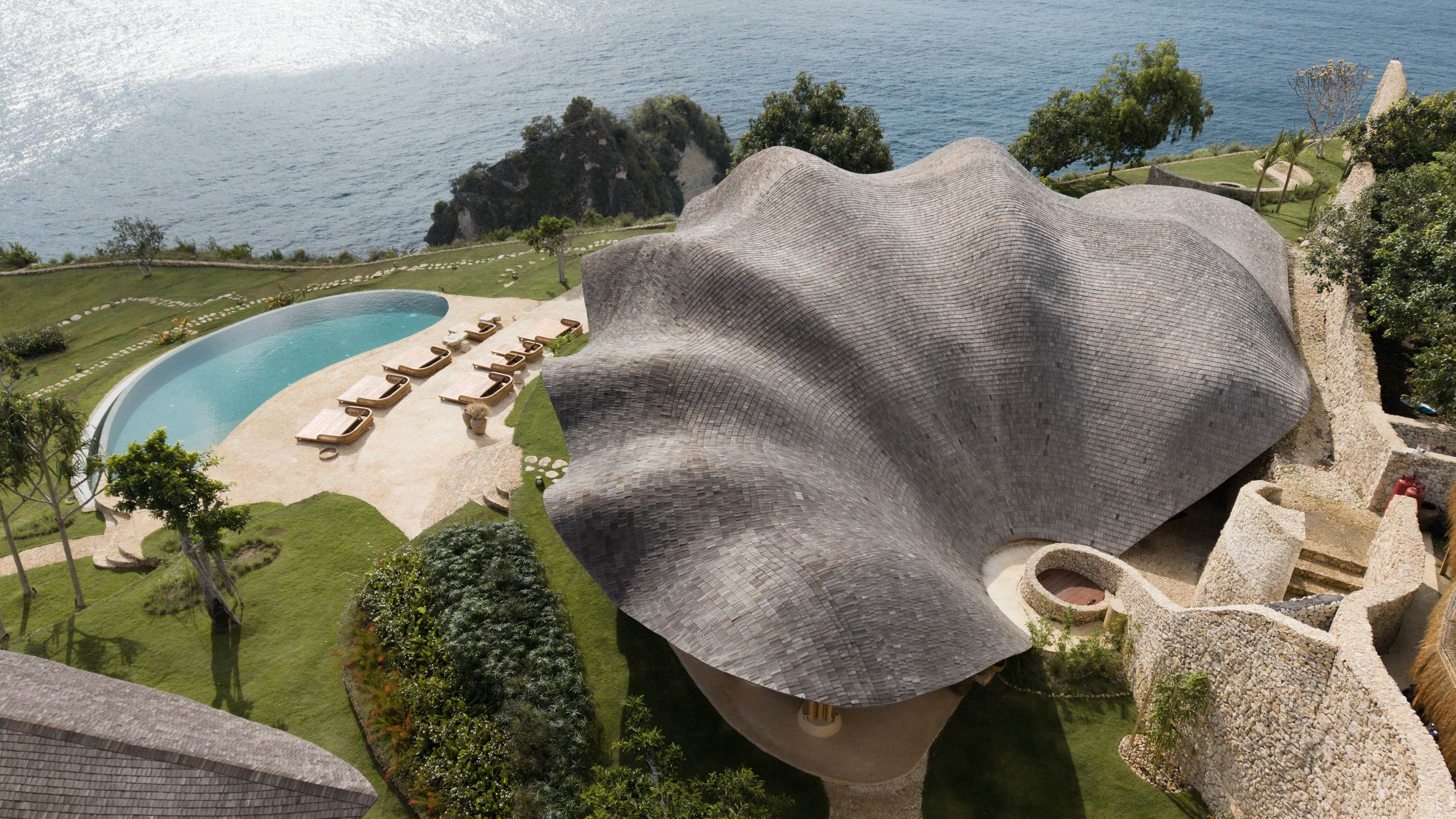
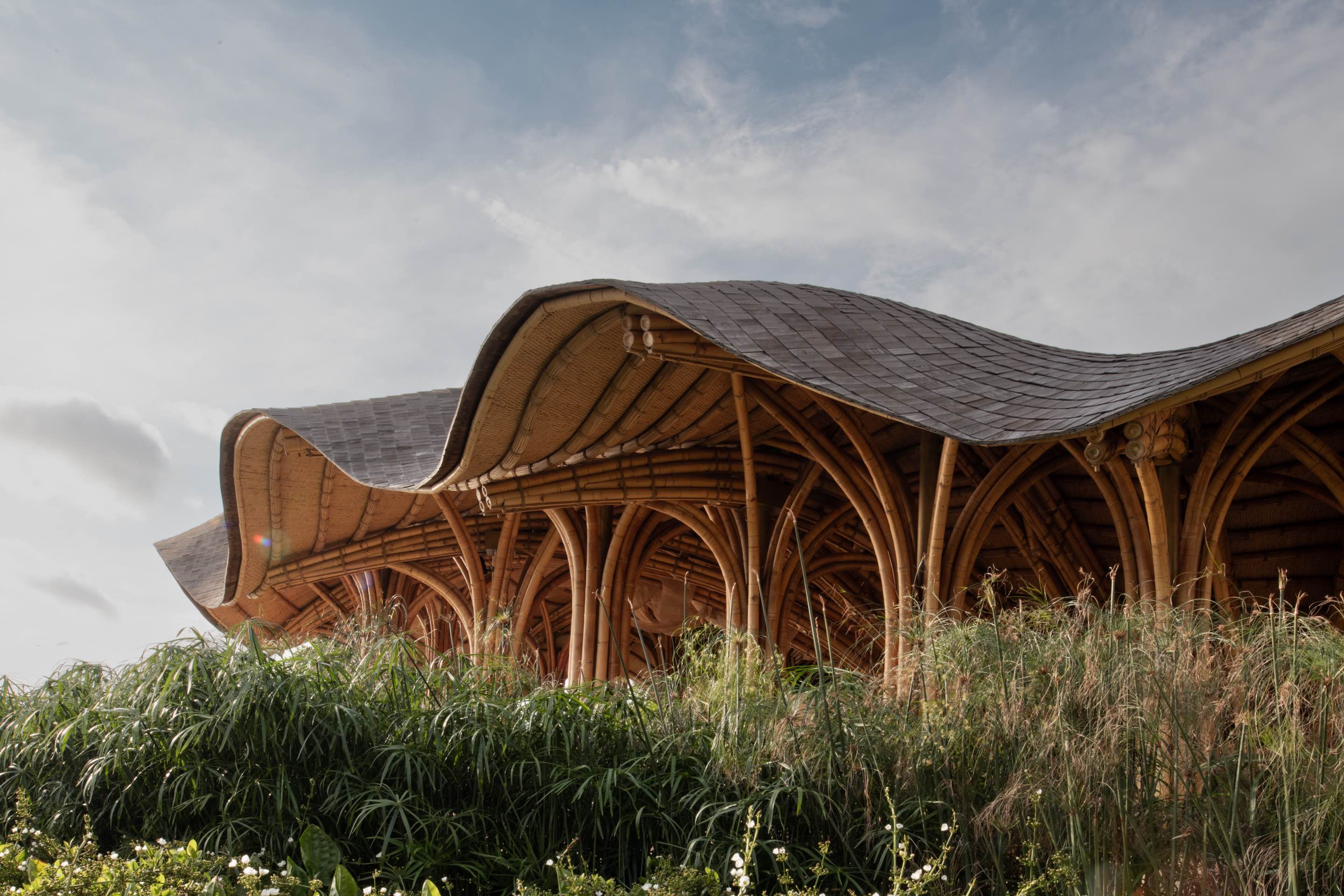
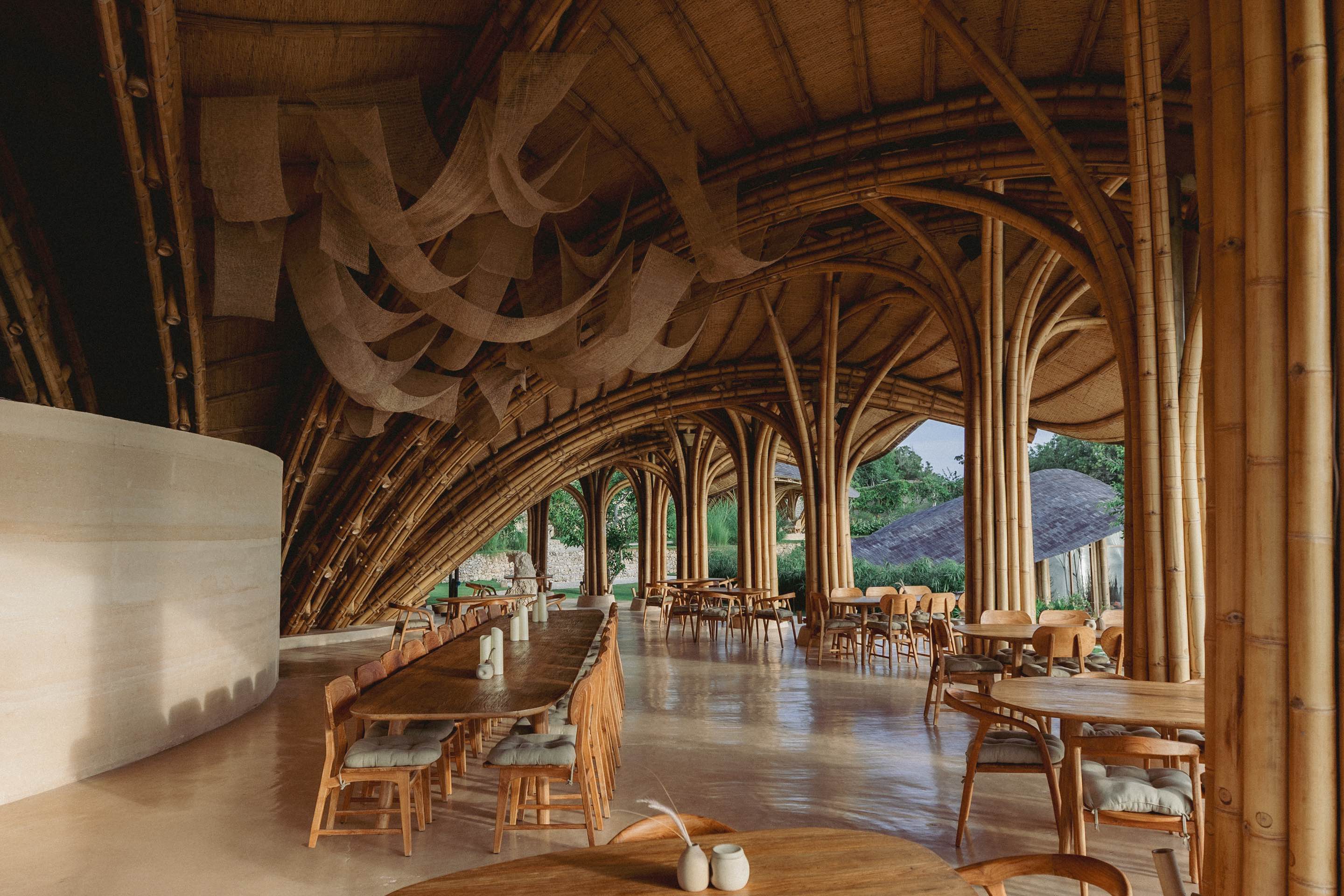
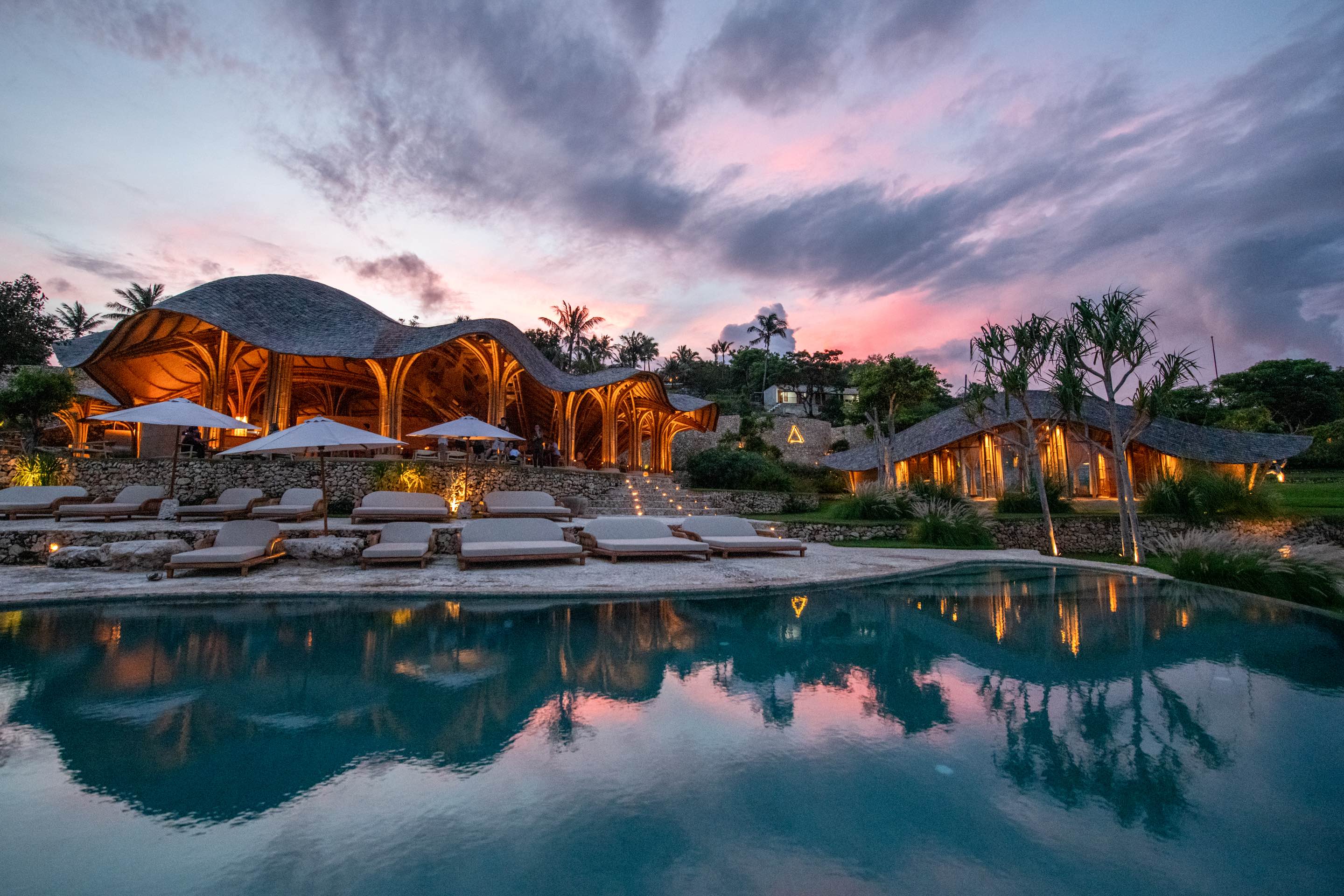
インドネシア・バリ島に位置する〈シェル・レストラン(Shell Restaurant)〉は、自然と建築の共生を理念とするリトリート施設「インタヤ」の一部として建設された、貝のような形態が特徴的な竹で建てられたレストランです。
バリ島を拠点とし、竹や土といった自然素材を用いたさまざまなプロジェクトを手がける建築事務所 パブロ・ルナ・スタジオ(Pablo Luna Studio)が設計しました。
注目ポイント
- 設計の中心に据えた、景観とのシームレスな統合と環境負荷の最小化
- 海からのインスピレーションを反映する、波と貝を想起させる建築フォルム
- 水と電気を自給自足する環境的なサステナビリティ
- 竹トラスにより実現するフレキシブルな空間
(以下、パブロ・ルナ・スタジオから提供されたプレスキットのテキストの抄訳)
©︎ Tommaso Riva
自然と調和するリトリートの一部としての建築
〈シェル・レストラン〉は、バリ島ヌサペニダのダイヤモンドビーチの崖上に位置する〈インタヤ・リトリート〉の重要な構成要素の1つであり、周囲の環境に対する建築的応答として構想された。
本建築は景観とシームレスに調和し、持続可能性を最優先事項としている。地形に寄り添った施工や地元産資材の採用など、環境負荷を最小限に抑えるための設計判断が随所になされている。
©︎ Maximiliano Allendes Medeiros
©︎ Maximiliano Allendes Medeiros
水や電気を自給自足するサステナビリティ
リトリート全体では、水資源の自給自足を実現している。深井戸からの取水に加え、雨水貯留システムや高効率水機器、低灌漑型の造園を導入し、消費量の削減を図っている。さらに、バイオスフィア財団と共同開発した廃水処理庭園によって、すべての廃水を自然浄化し、庭園灌漑へ再利用することで再生可能な水循環を確保している。
また、建設過程においても環境責任を徹底し、汚染防止・浸食抑制・廃棄物管理を目的とした持続可能な建設計画を実施した。さらに、プロジェクトの電力需要の大部分は太陽光発電パネルで賄われており、エネルギー効率の向上に寄与している。
©︎ Maximiliano Allendes Medeiros
©︎ Maximiliano Allendes Medeiros
海の形態から生まれた構造
〈インタヤ・リトリート〉の設計は、海とそこに生息する海洋生物から深いインスピレーションを得ている。
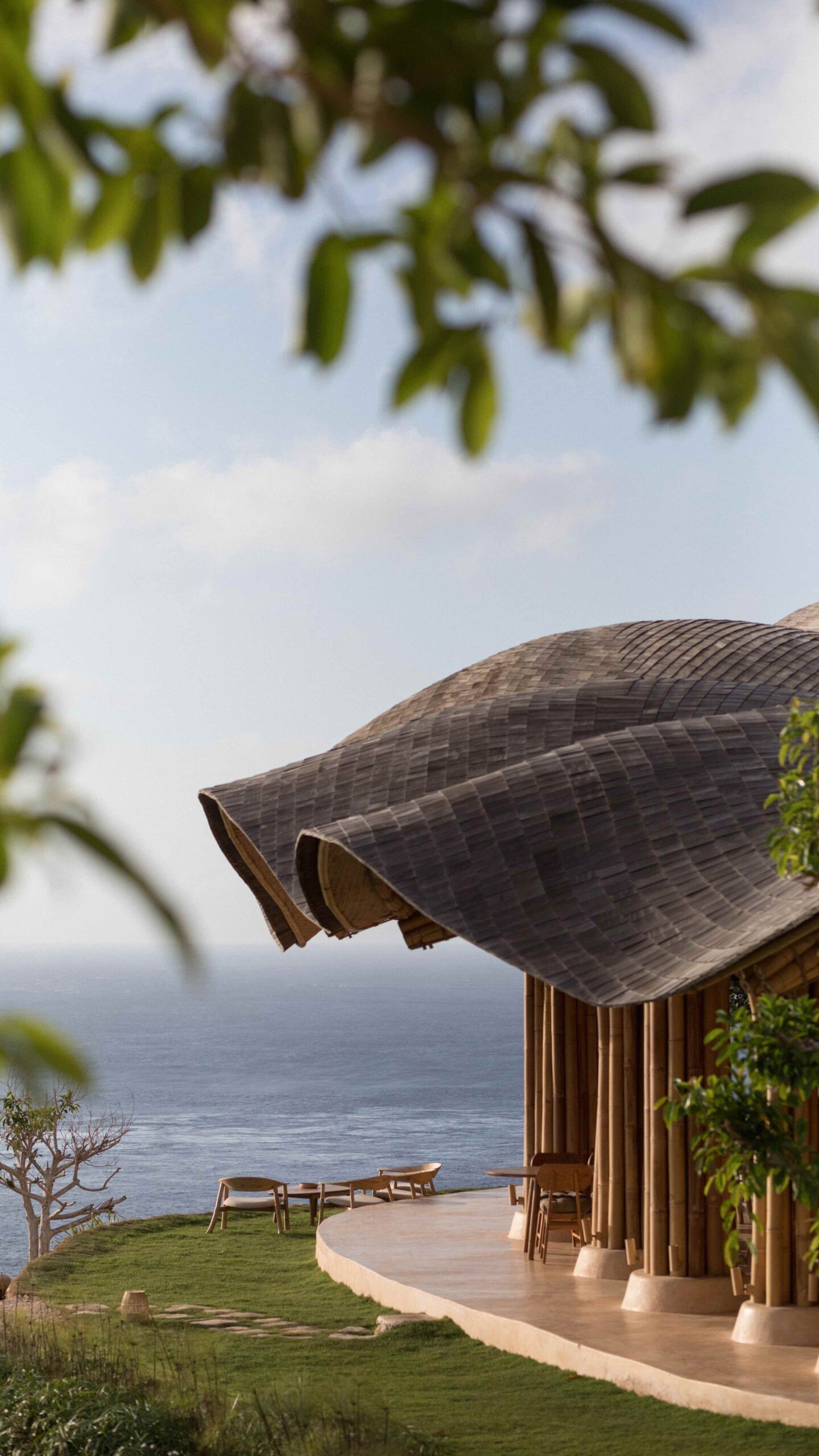
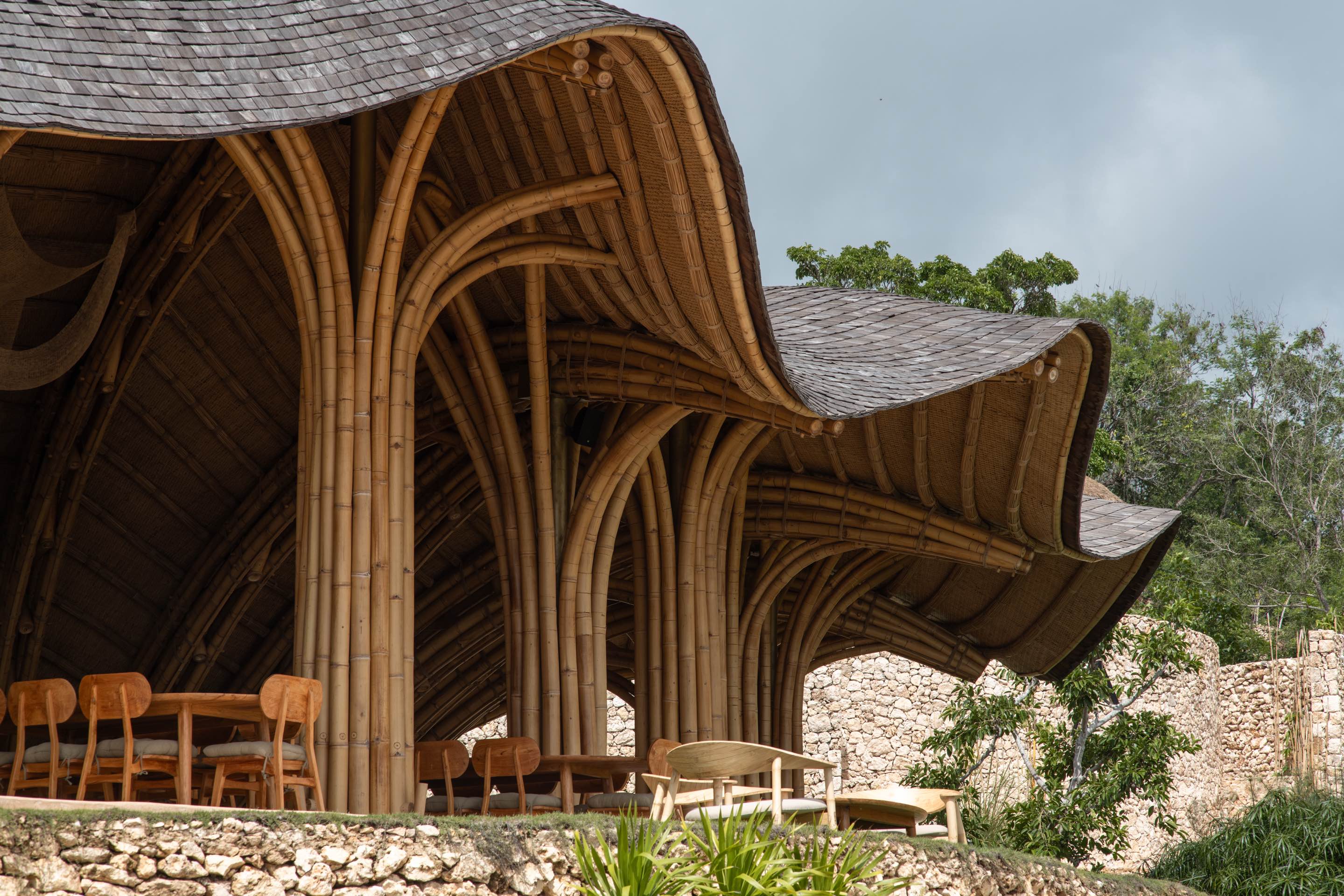
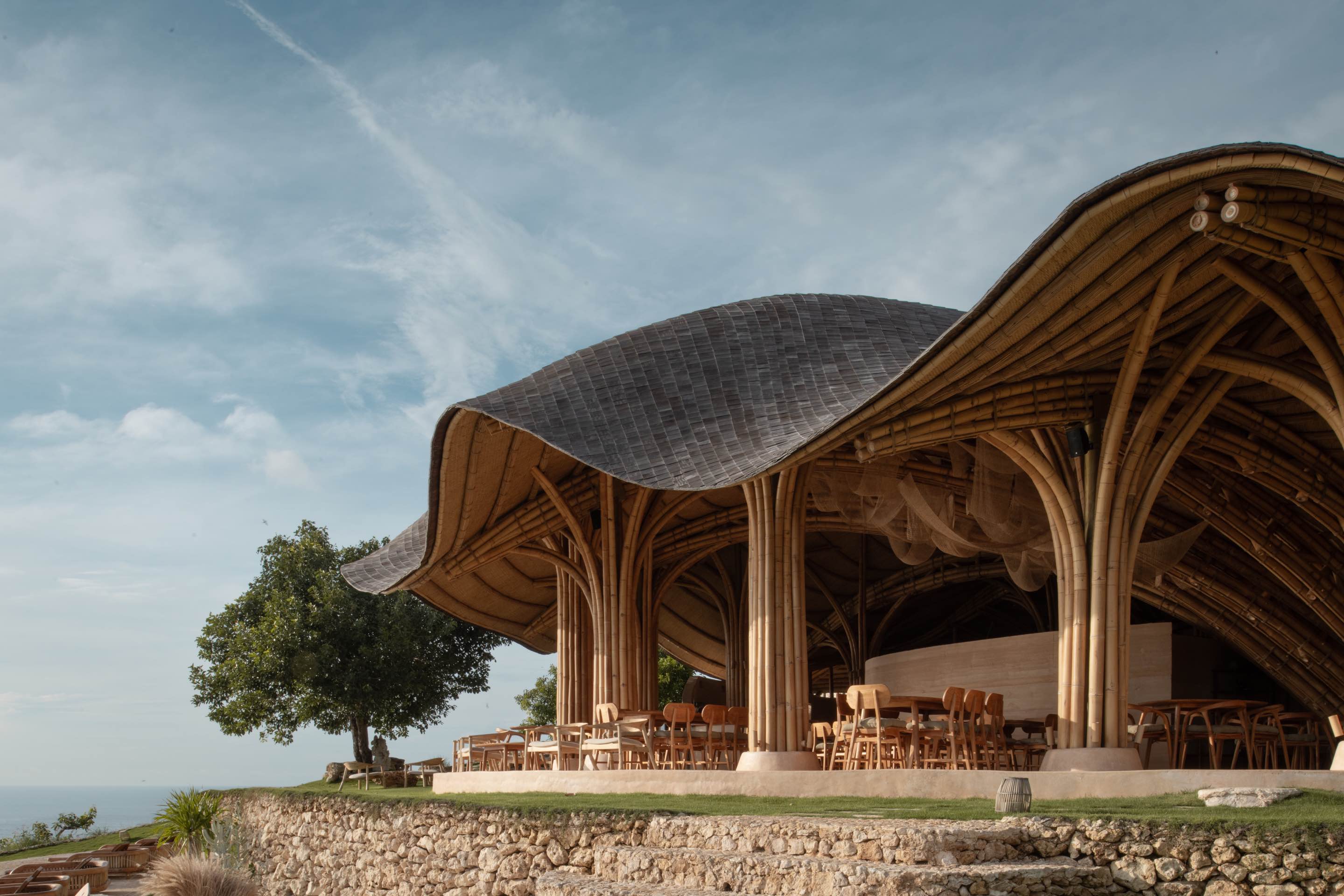
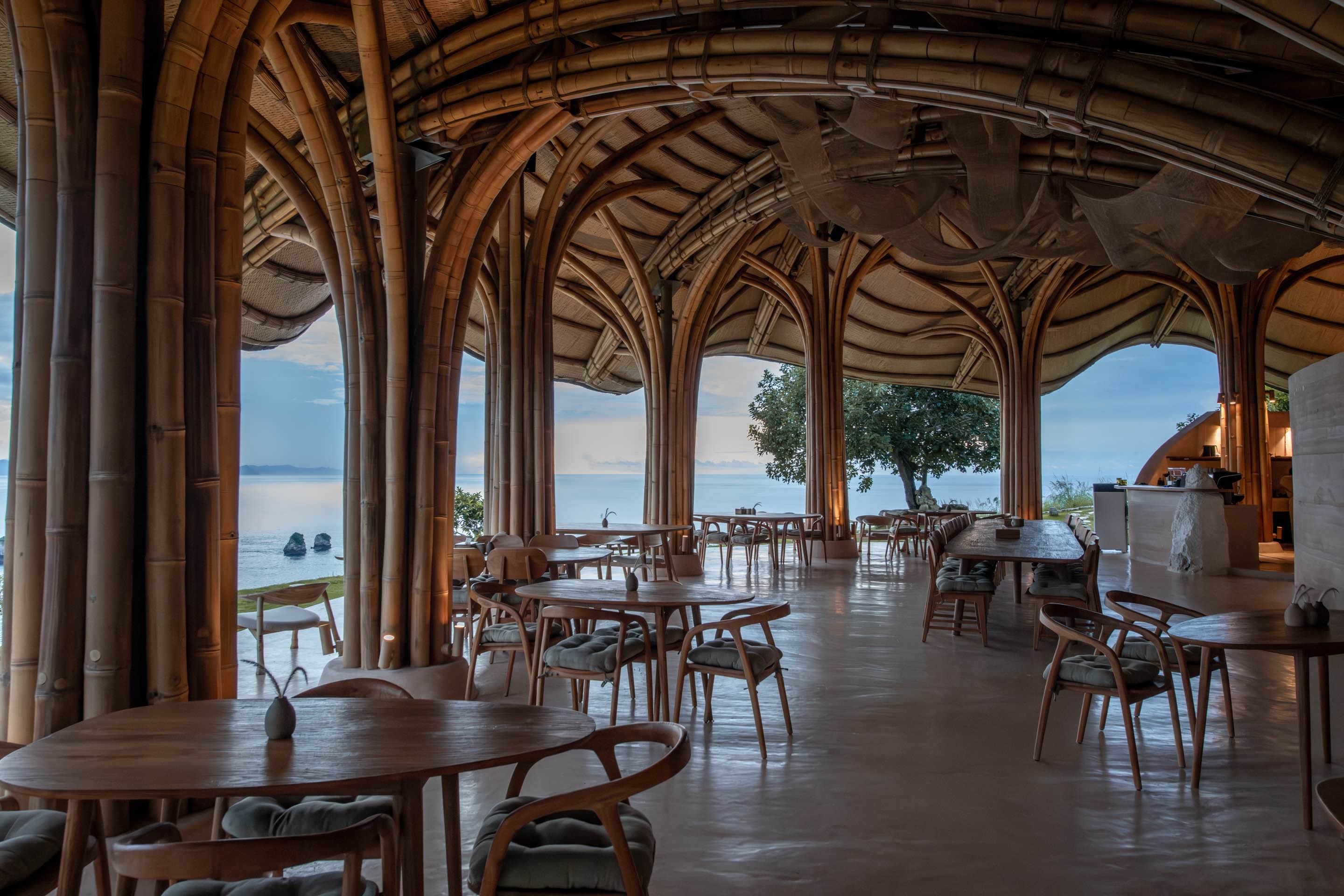
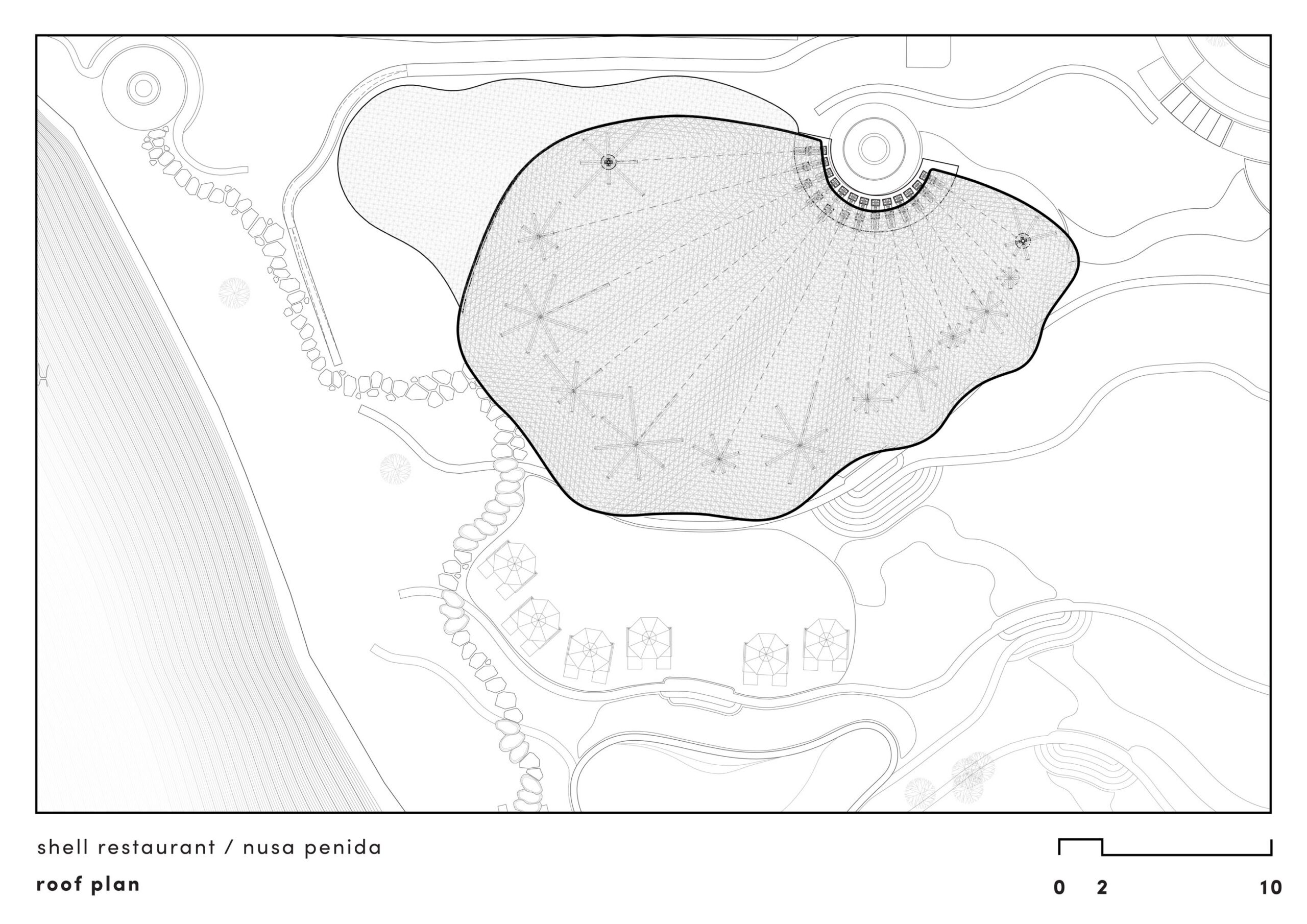
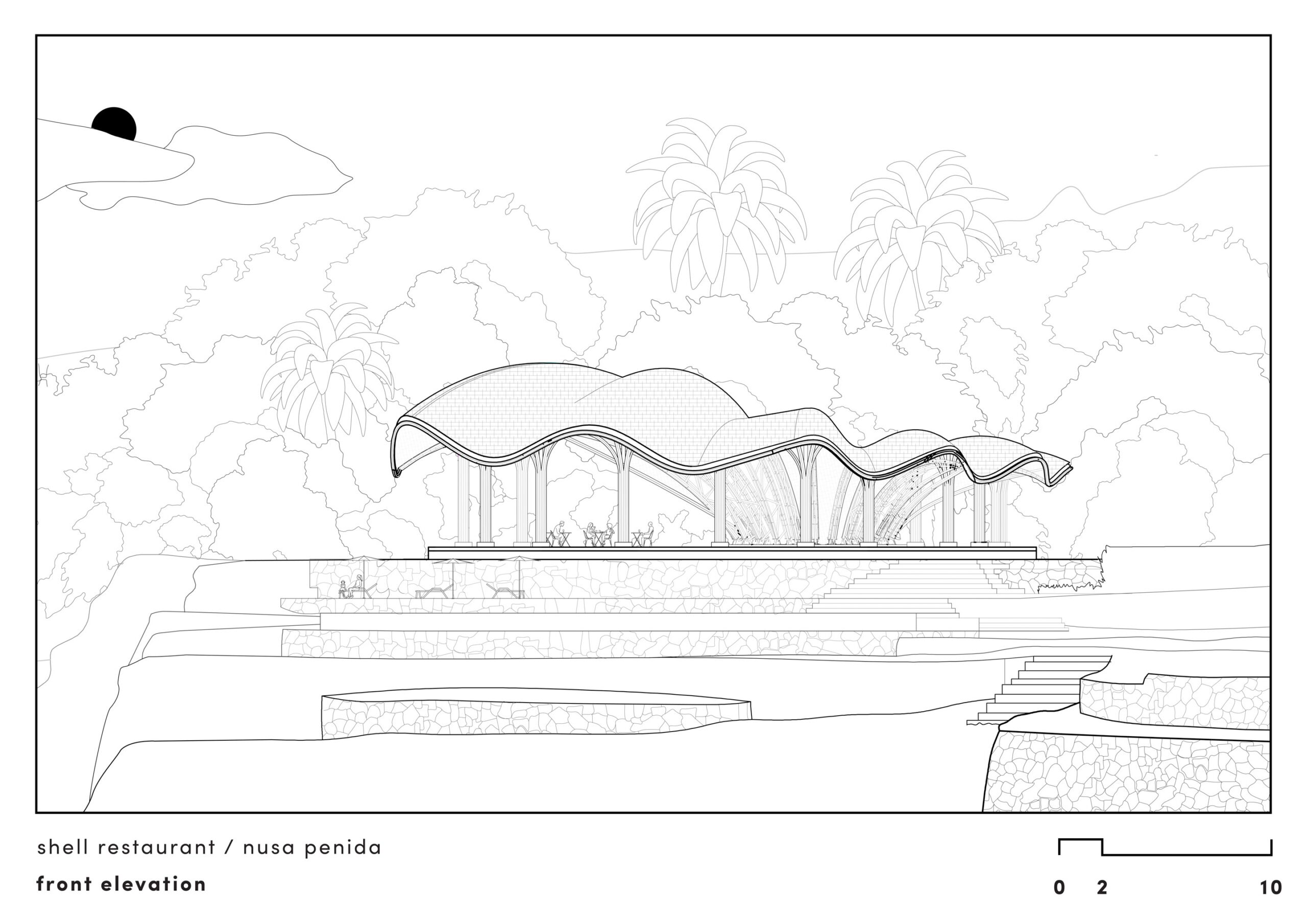
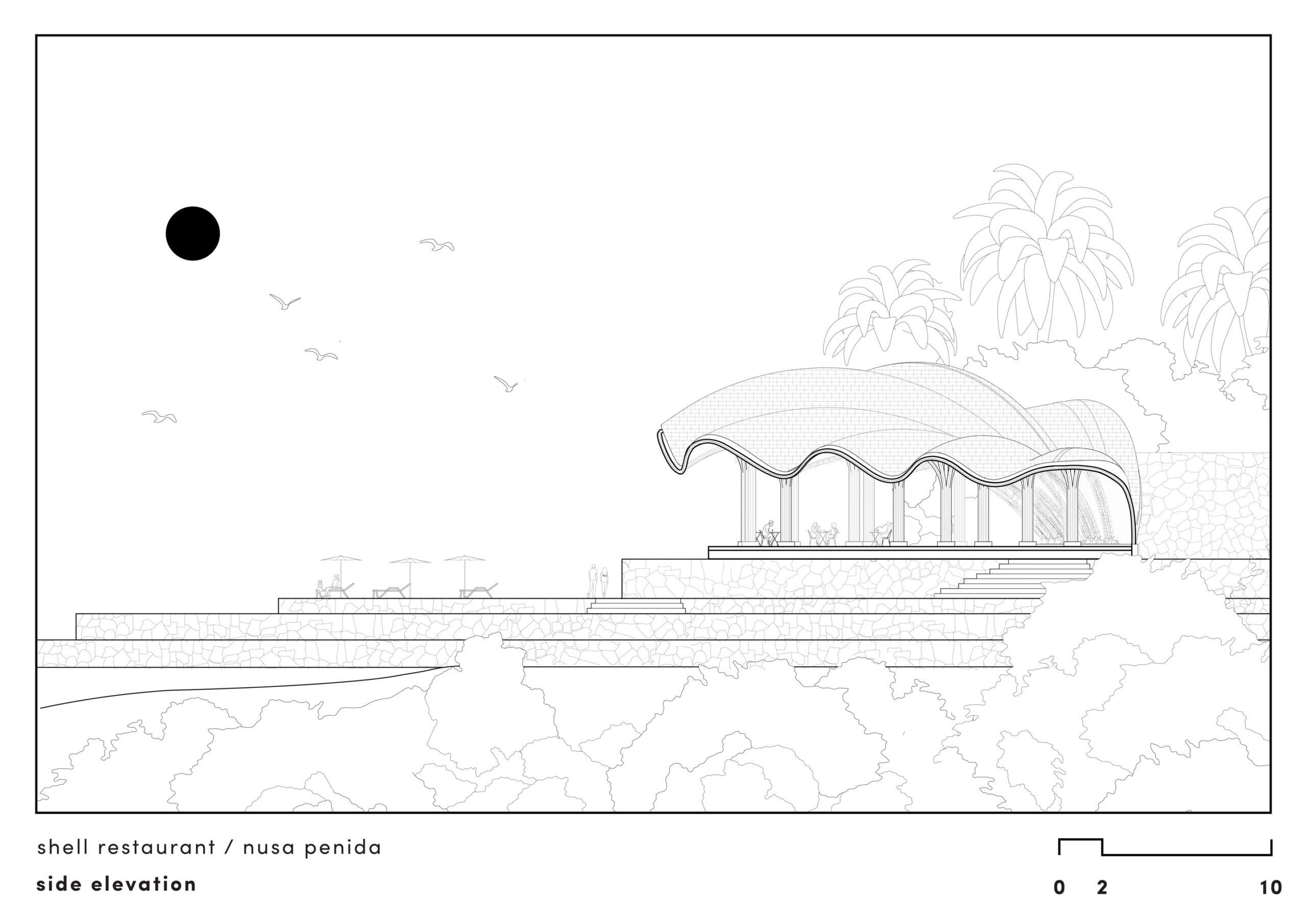
なかでも〈シェル・レストラン〉は貝殻や波の動きを着想源とし、有機的で温かみのある構造として具現化された。黄色いペトゥン竹による湾曲した屋根は、貝殻の肋骨を想起させながら、建物後方から地面から自然に立ち上がるように形成されている。
©︎ Maximiliano Allendes Medeiros
©︎ Maximiliano Allendes Medeiros
13の竹トラスが生み出すリズム
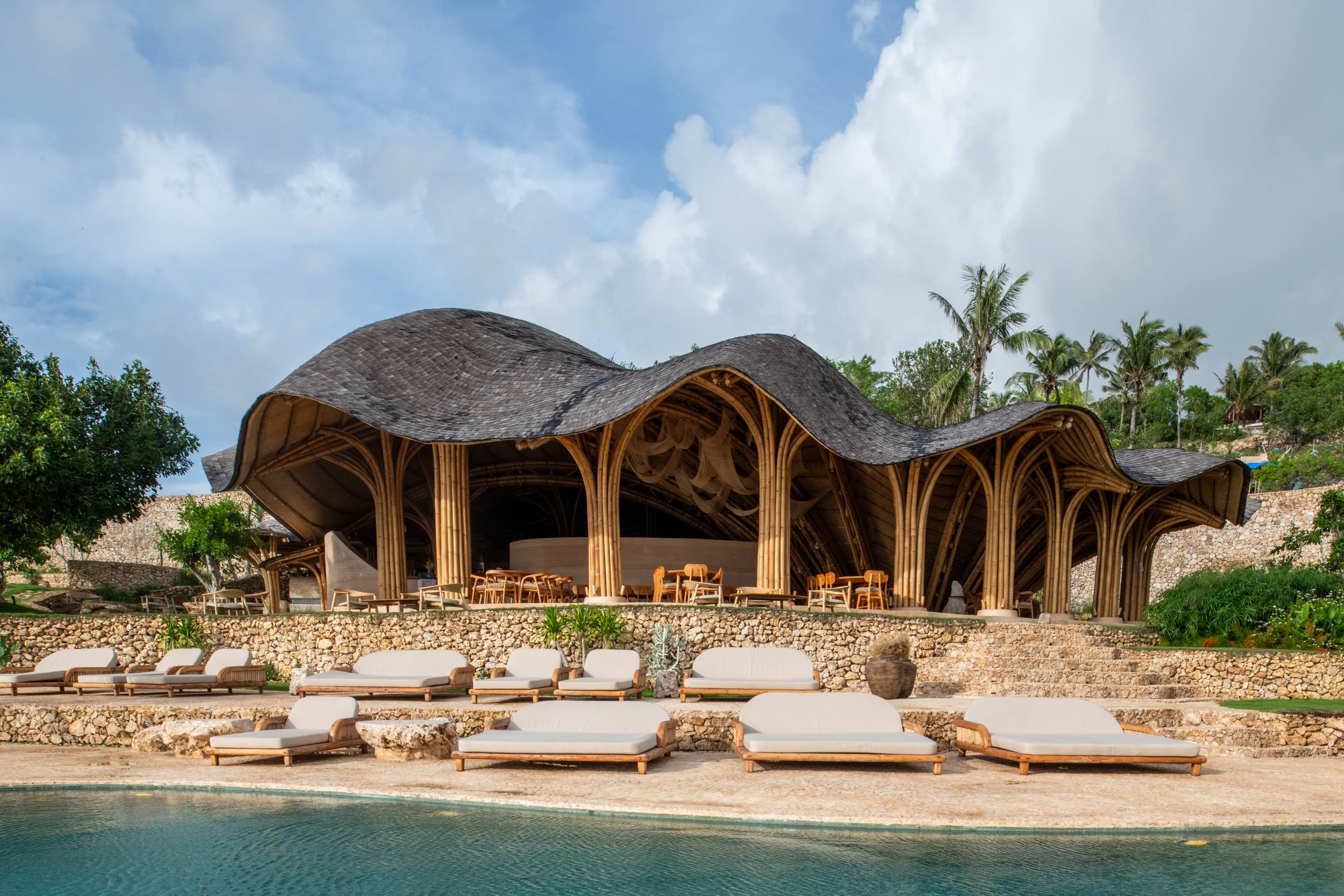
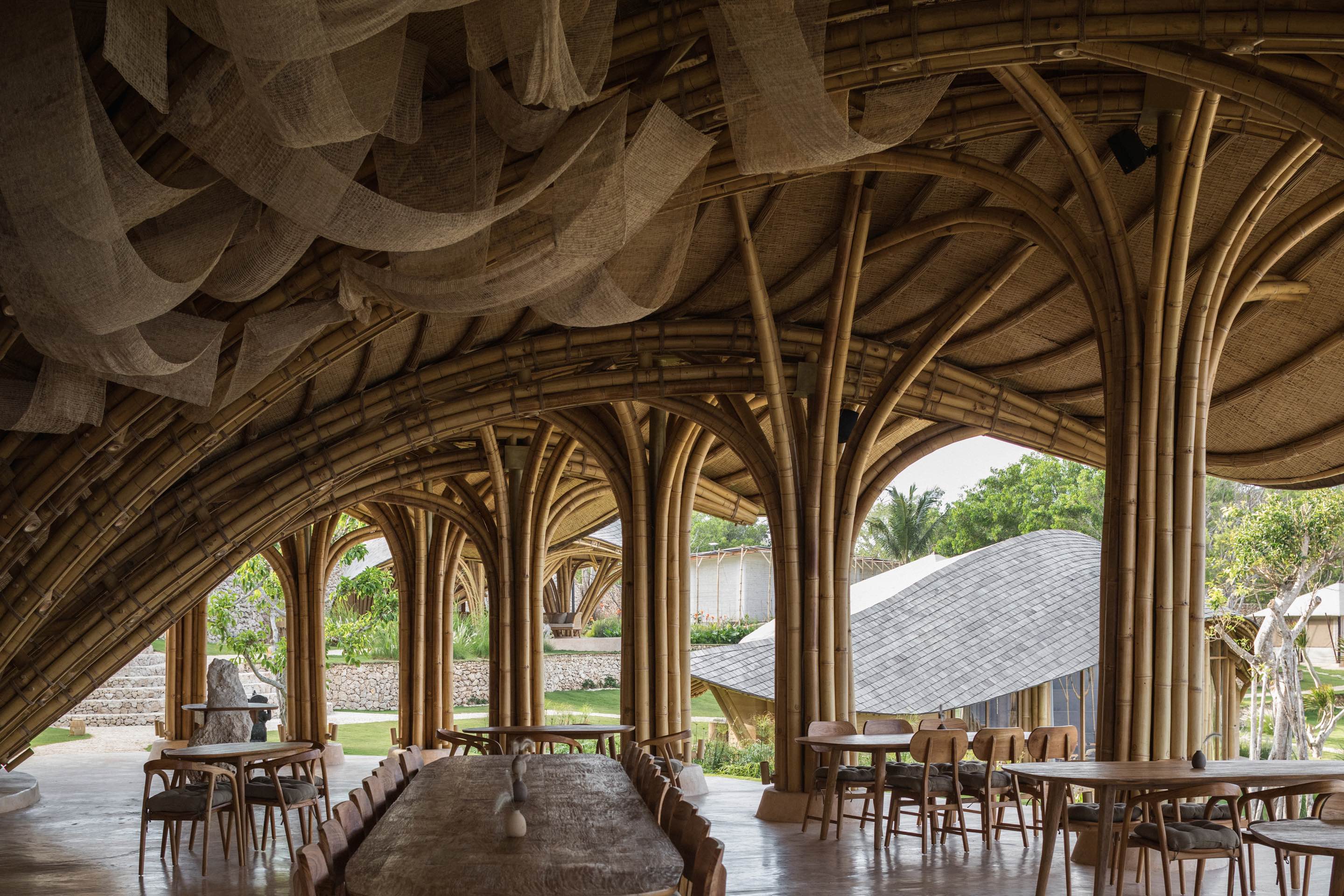
建物は13本の構造軸によって支えられており、いずれもデンドロカラマス・アスペル竹で構成されている。高低を交互に配置したこれらのトラスが有機的な屋根の基盤を形成し、手編みの竹編みで仕上げられた屋根面は木製板によって自然素材の質感を強調している。
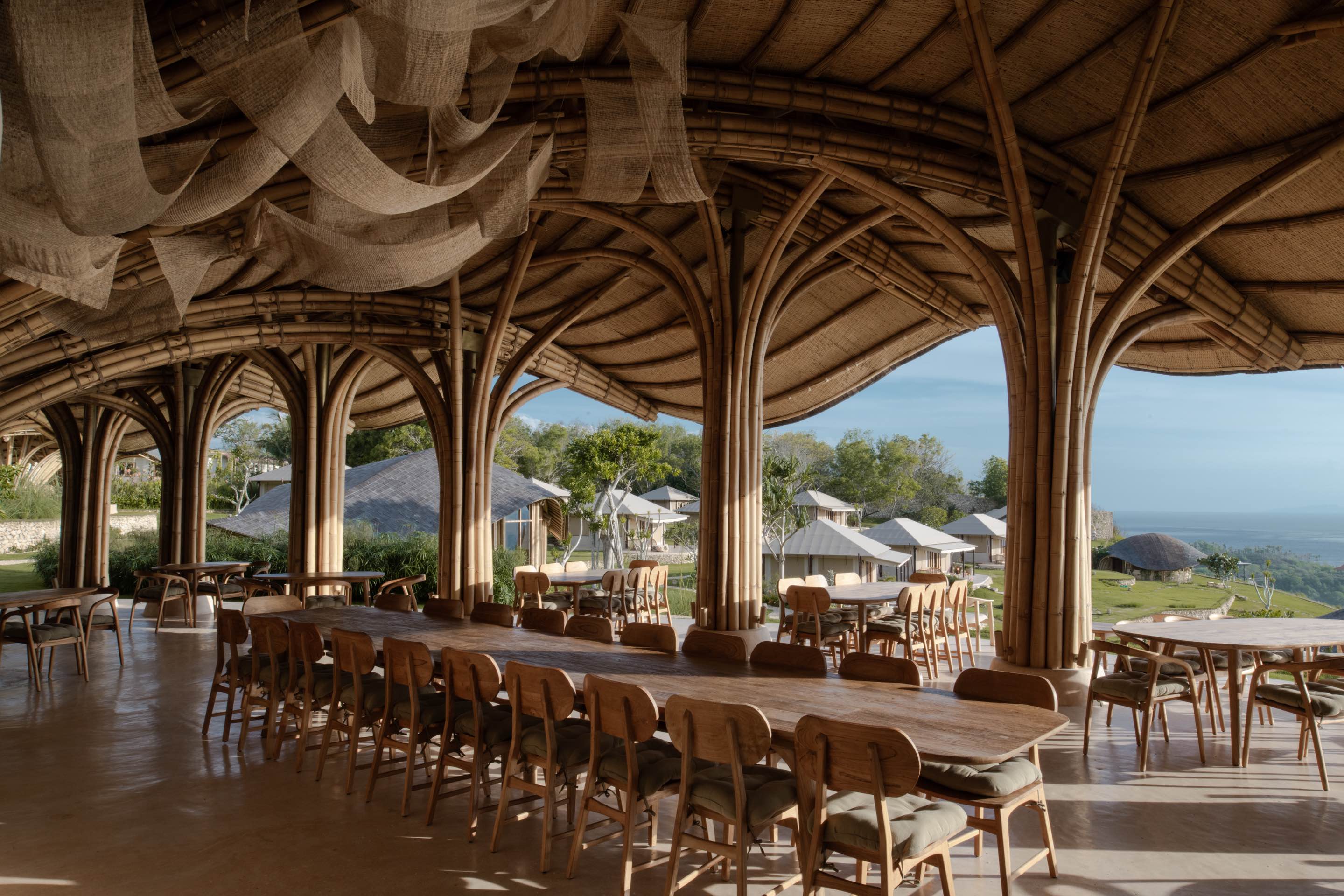
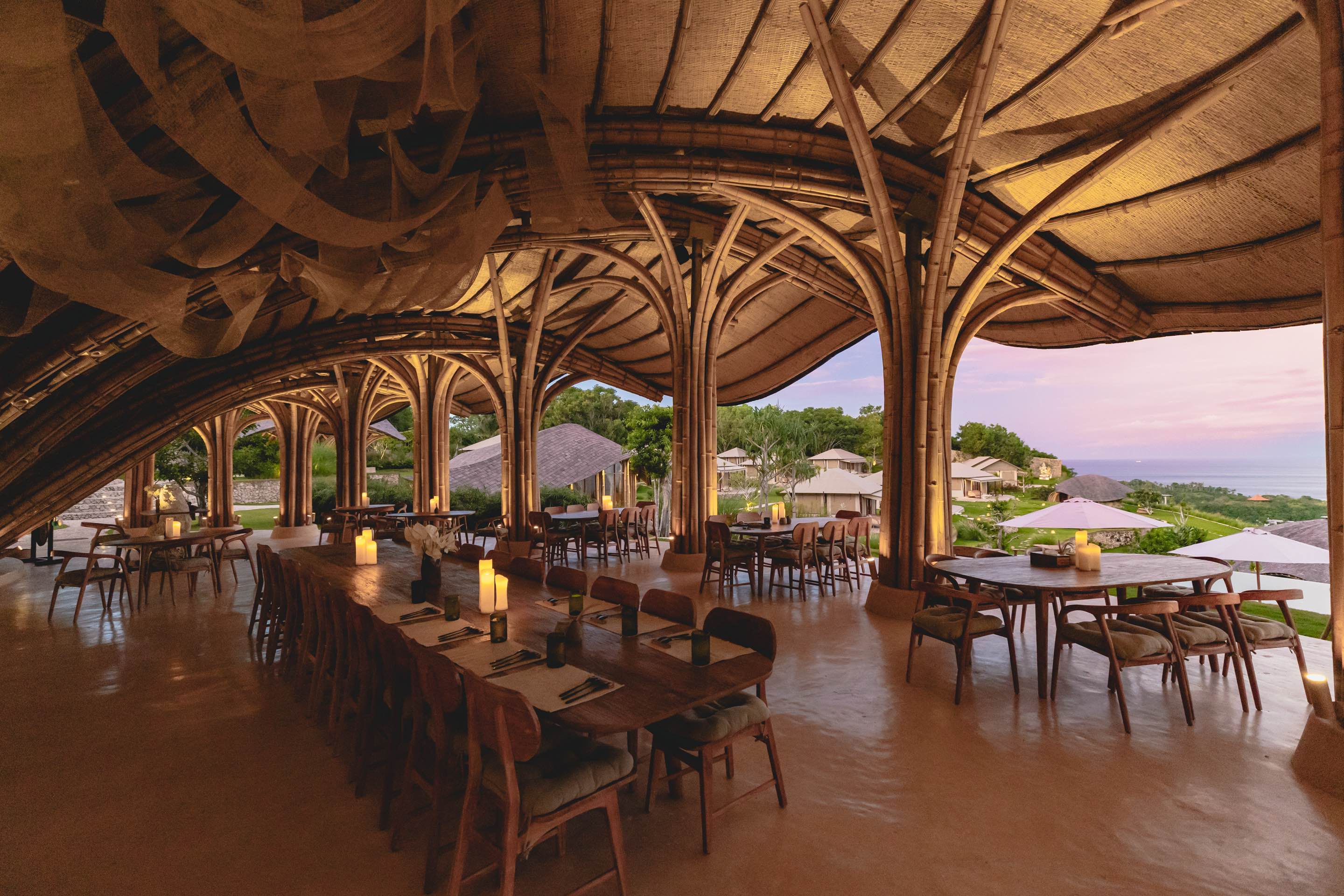
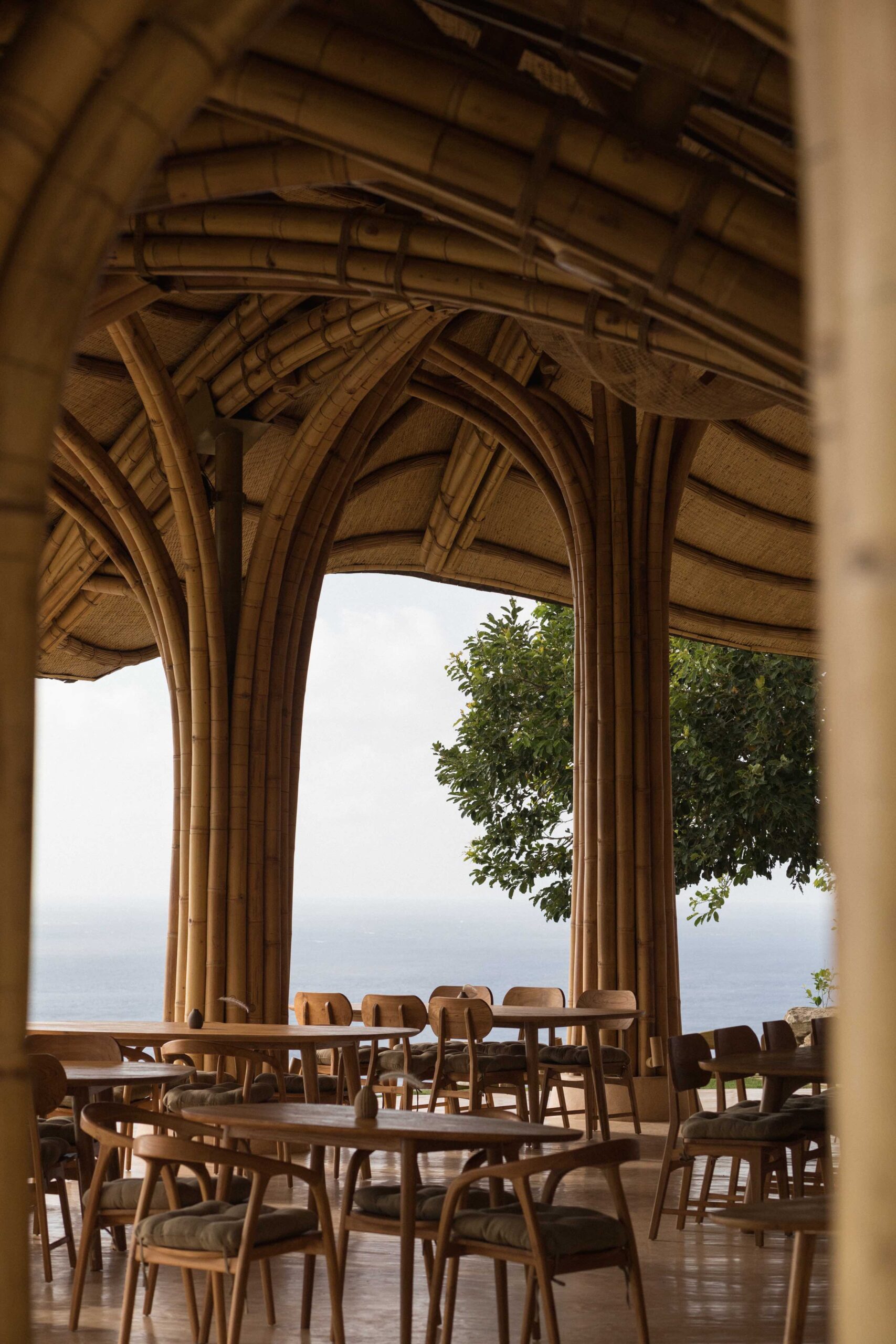
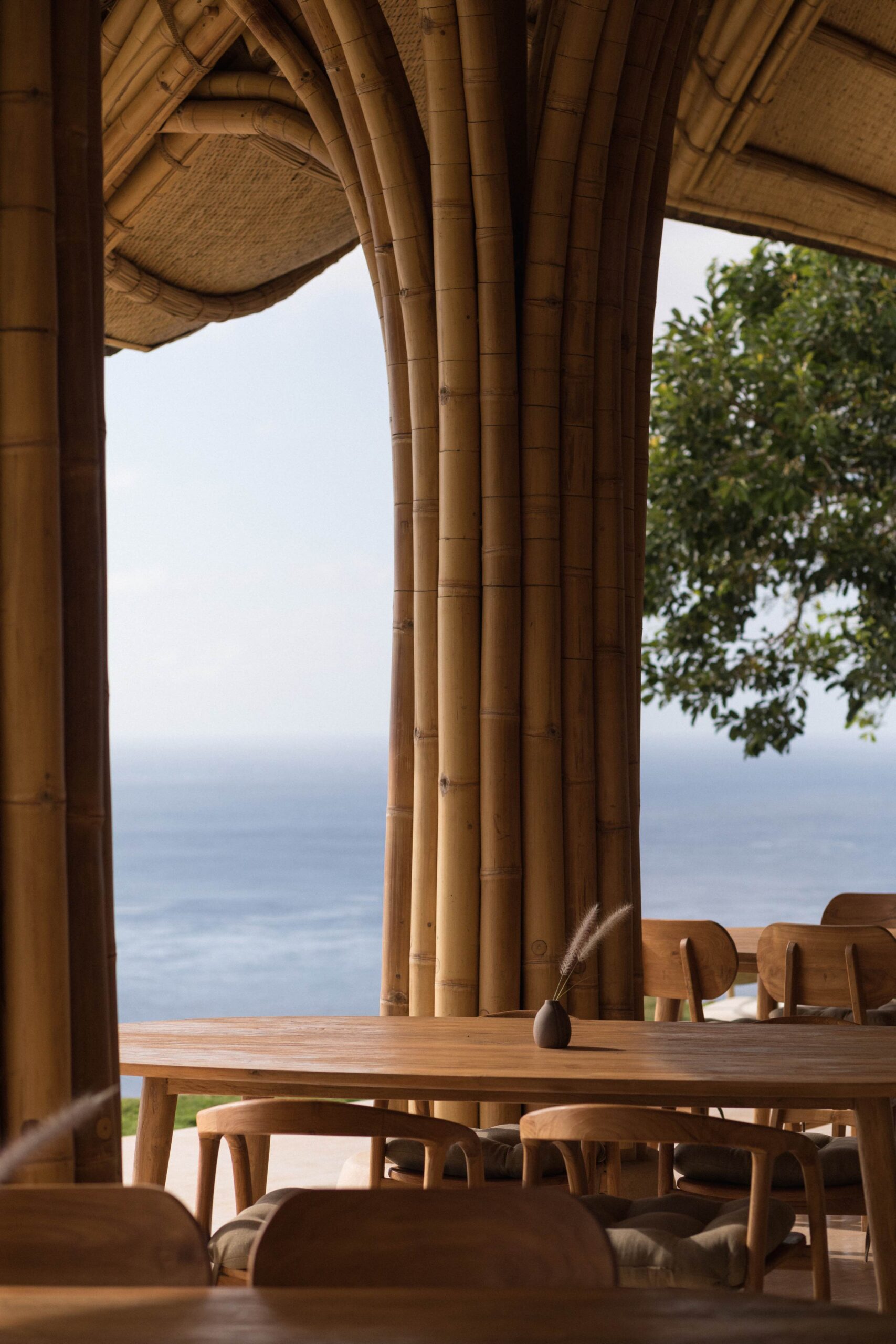
前方に伸びるトラスは鋼製支柱によって支持され、さらに対になった竹竿で構成された樹木状の柱がそれを補完する。この前柱は構造的な支えであると同時に、自然光を取り込み、空間の雰囲気を高め、人工照明の必要性を抑制している。
©︎ Tommaso Riva
©︎ Mo Arpi
空間の広がりと自然への連続性
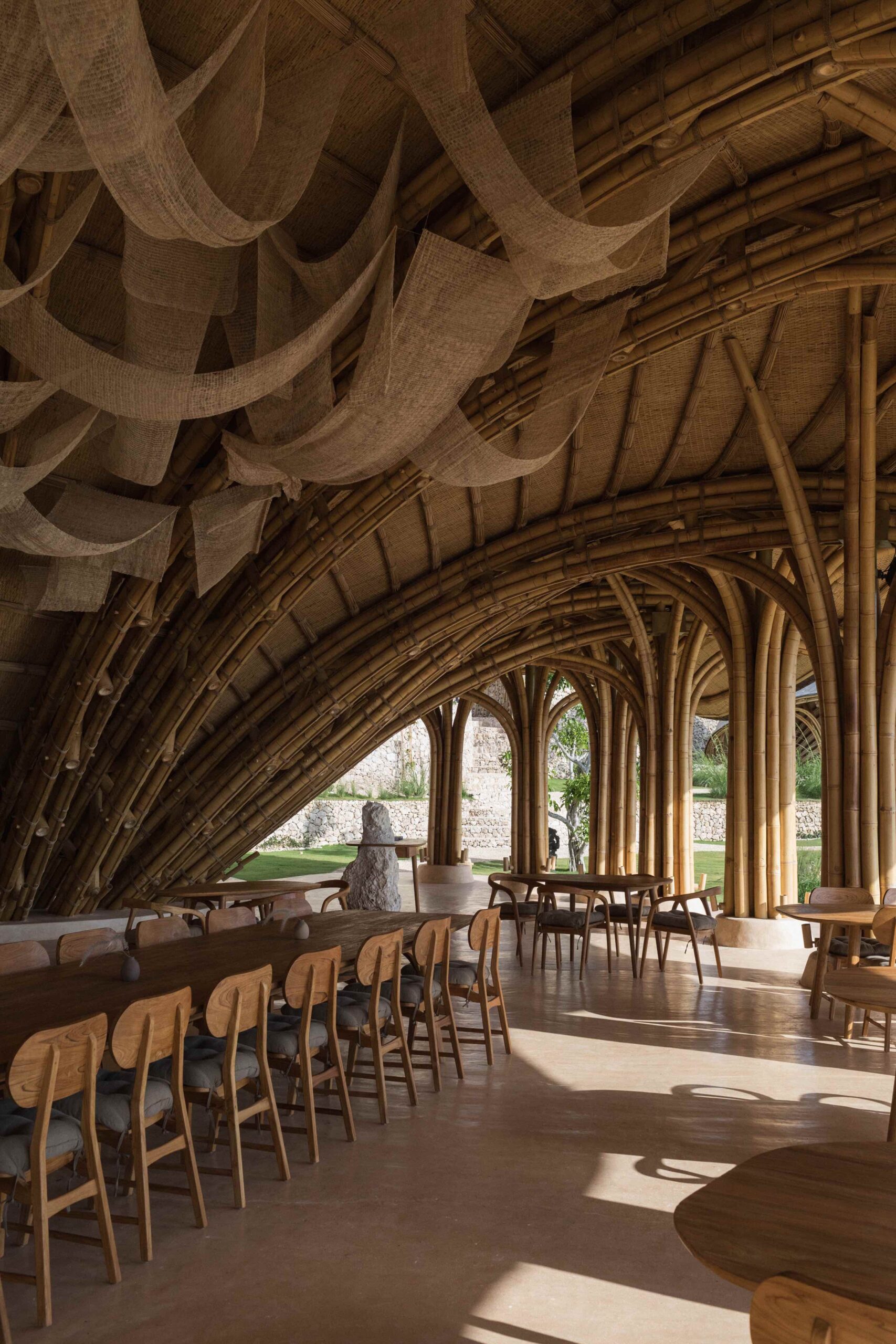
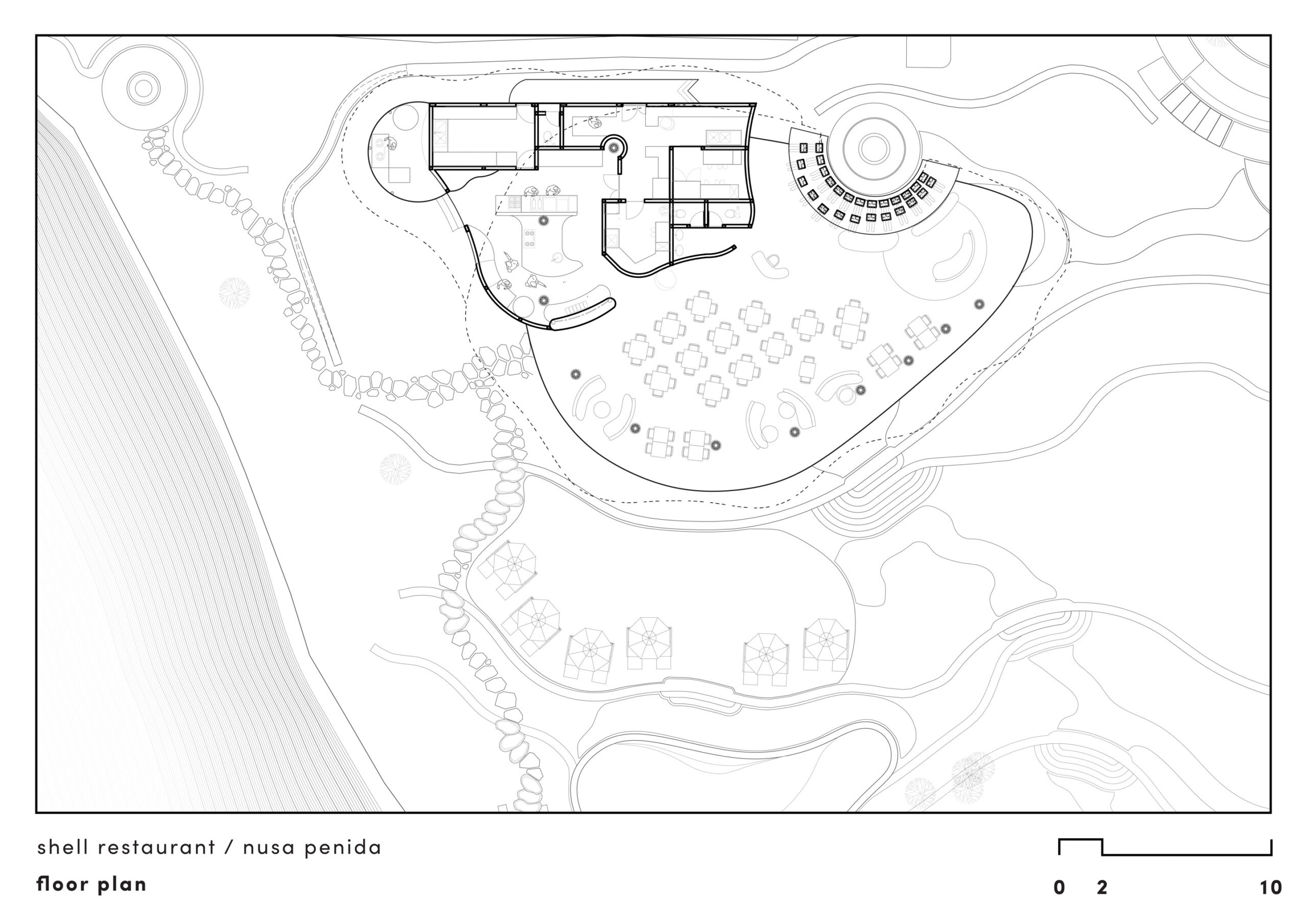
入口から内部へと進むにつれて、トラスのスパンと前柱の高さが徐々に増し、構造は垂直・水平方向の両方に広がっていく。この空間的な展開が開放感を生み出し、訪問者を滑らかに内部空間へと導く。
海の地平線へ向かって配置された曲線的なトラスは穏やかなラインを描き、建物内を移動する中で徐々に調和の取れた体験をもたらす。
©︎ Tommaso Riva
竹の構造が導く開放的な建築体験
竹製トラスは中間支持体を必要としないため、内部は開放的で柔軟なレイアウトが可能となる。この構造は機能性を高めるだけでなく、利用者と環境との相互作用を促進する役割を担う。正面の樹木状の柱は建築のリズムを強調し、構造体と自然環境の間に意図的な結びつきを生み出している。
〈シェル・レストラン〉の設計は、〈インタヤ・リトリート〉の理念を体現している。すなわち、持続可能な素材と熟慮された建築戦略を通じて、自然環境と調和しながら存在する建築を創出することである。
©︎ Mo Arpi
©︎ Tommaso Riva
©︎ Tommaso Riva
©︎ Maximiliano Allendes Medeiros
以下、パブロ・ルナ・スタジオのリリース(英文)です。
Project Name: Shell Restaurant
Office Name: Pablo Luna Studio
Office Website: https://pablolunastudio.com/
Social Media Accounts: https://www.instagram.com/pablolunastudio/
Contact email: connect@pablolunastudio.com
Firm Location: Ubud,Bali, Indonesia
–
Completion Year: 2024
Gross Built Area (m2/ ft2): 265 m2
Project Location: Nusa Penida, Indonesia
Program / Use / Building Function: Restaurant
Lead Architects: Pablo Luna
Lead Architects e-mail: pablo@pablolunastudio.com
Interior Design: Imaaya CreativesStructural engineer : Esteban Morales
Architecture team
Fillologus Iryono
Adhi Guna Dharma
Raditya Manggala Hutama
Krisnantara Putra
Giovanni Presti
Muhammad Yusron Saputra
300 – 500 Words
The Shell Restaurant is an integral part of Intaaya Retreat, a project designed and built by Pablo Luna Studio on the cliffs of Diamond Beach, Nusa Penida, Bali. Conceived as an architectural response to its surroundings, it integrates seamlessly with the landscape while prioritizing sustainability. Every design decision was made with a commitment to minimizing environmental impact—adapting the construction to the terrain and using locally sourced materials.
The retreat is self-sufficient in water, drawing from a deep well and incorporating rainwater collection, efficient water appliances, and low-irrigation landscaping to reduce consumption. To ensure a regenerative water cycle, Waste Water Gardens, developed in collaboration with the Biosphere Foundation, treat all wastewater and redirect it for garden irrigation. Environmental responsibility also extended to the construction process, with a Sustainable Construction Plan in place to prevent pollution, control erosion, and manage waste. A large portion of the project’s electricity demand is met by photovoltaic solar panels, reinforcing its commitment to energy efficiency.
Intaaya’s design is deeply inspired by the ocean and the marine species that inhabit it. For the Shell Restaurant, marine shells and the movement of the waves served as direct inspiration to create an organic and welcoming structure. The curved roof of yellow Petung bamboo, evoking the ribs of a shell, emerges naturally from the ground at the rear of the building, with 13 structural axes composed of 13 trusses made entirely from Dendrocalamus asper bamboo. These trusses, arranged at alternating heights, serve as the foundation of the organic roof. The roof is crafted from a hand-woven bamboo weave, complemented by wood shingles that maintain the natural materiality of the design. The trusses extend toward the front, where they are supported by steel pillars, complemented by tree-like columns composed of paired bamboo poles. These front columns not only provide structural support but also allow natural light to enter the space, enhancing the interior atmosphere and reducing the need for artificial lighting.
From its entrance, the structure gradually expands both vertically and horizontally, following the span of the trusses and the increasing height of the front columns. This spatial progression provides a sense of openness and guides visitors seamlessly through the space. The curved trusses, oriented toward the oceanic horizon, establish a visual flow through their gentle lines, offering a gradual and harmonious experience as one moves through the building.
The bamboo trusses enable an open and adaptable interior layout, free from intermediate supports, optimizing both functionality and the interaction between users and the surrounding environment. The tree-like columns at the front enhance the architectural rhythm, fostering a purposeful connection between the structure and its natural setting.
This design reflects the principles of Intaaya Retreat: employing sustainable materials and thoughtful architectural strategies to create a structure that harmonizes with its natural environment.
パブロ・ルナ・スタジオ 公式サイト
https://pablolunastudio.com/our-work/lodtunduh-studio/
【購読無料】空間デザインの今がわかるメールマガジン TECTURE NEWS LETTER
RECOMMENDED ARTICLE


![[Report]コールテン鋼の〈笹塚緑道公衆トイレ〉が笹塚駅前に登場!トイレの専門家がデザインした日本財団「THE TOKYO TOILET」プロジェクトの16カ所目のトイレ](https://magazine-asset.tecture.jp/wpcms/wp-content/uploads/2023/03/29234532/20230310sasaduka-toilet_01-2endo3678-900x660.jpeg)

