CULTURE
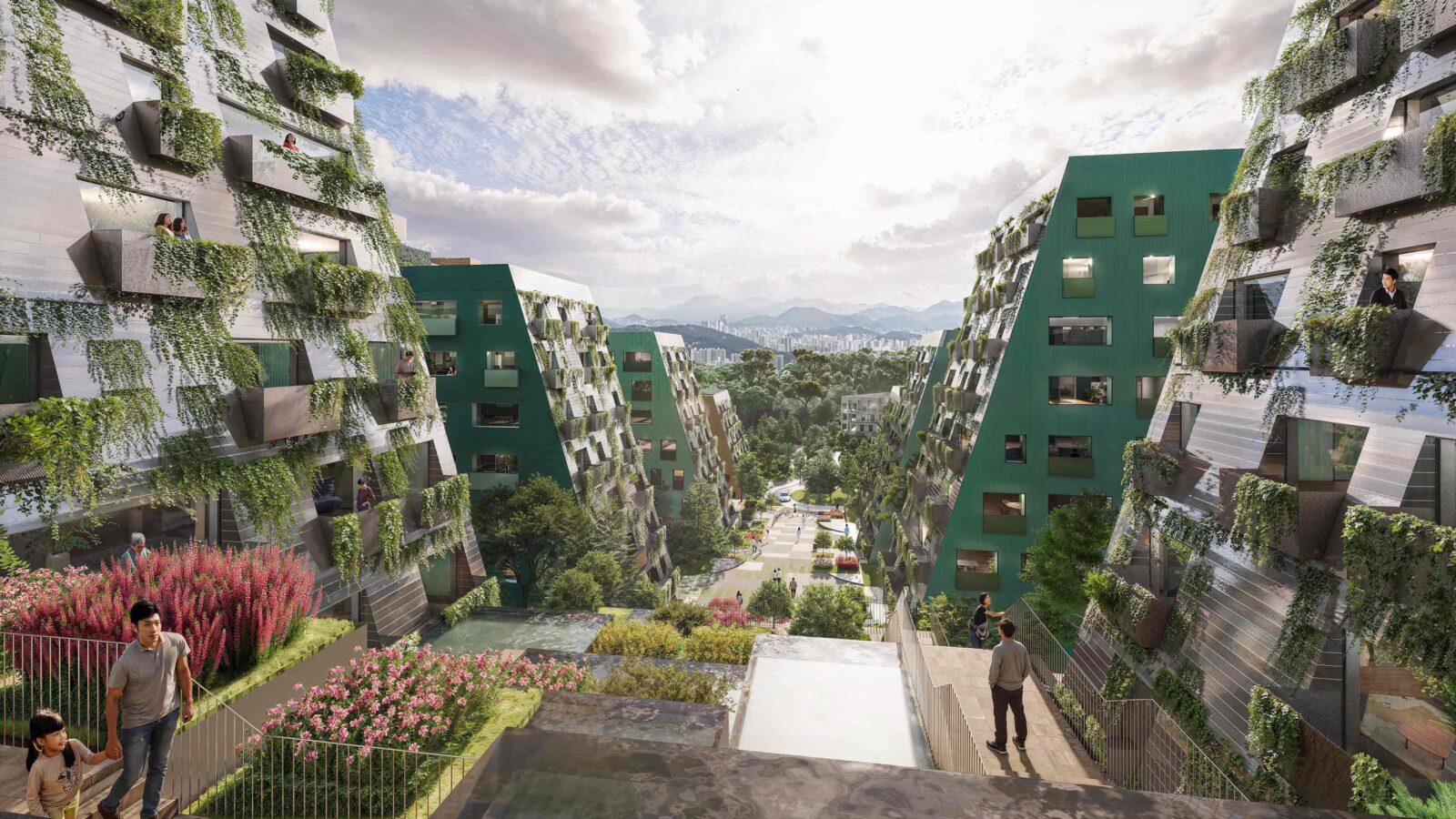
〈釜山スロープハウジング(Busan Slope Housing)〉は、釜山建築フェスティバル(BAF:Busan Architecture Festival)にて発表された、既存の地形や街路の活気を失わずに再生を図る再開発モデルの提案です。
レム・コールハース(Rem Koolhaas)らによって1975年に設立され、数多くのスター建築家を排出する設計事務所 OMAが設計しました。
注目ポイント
- 戦争の危機下で形成された斜面集落を「都市の原型」として再評価
- 「高層団地」に依存しない再開発モデルの提案
- 都市中心部と郊外丘陵の対照的な2つの敷地で検証する再現可能な手法
- 「建物」ではなく「動線」から始まる都市デザイン
(以下、OMAから提供されたプレスキットのテキストの抄訳)
©︎ OMA
丘陵に生まれた都市の原型
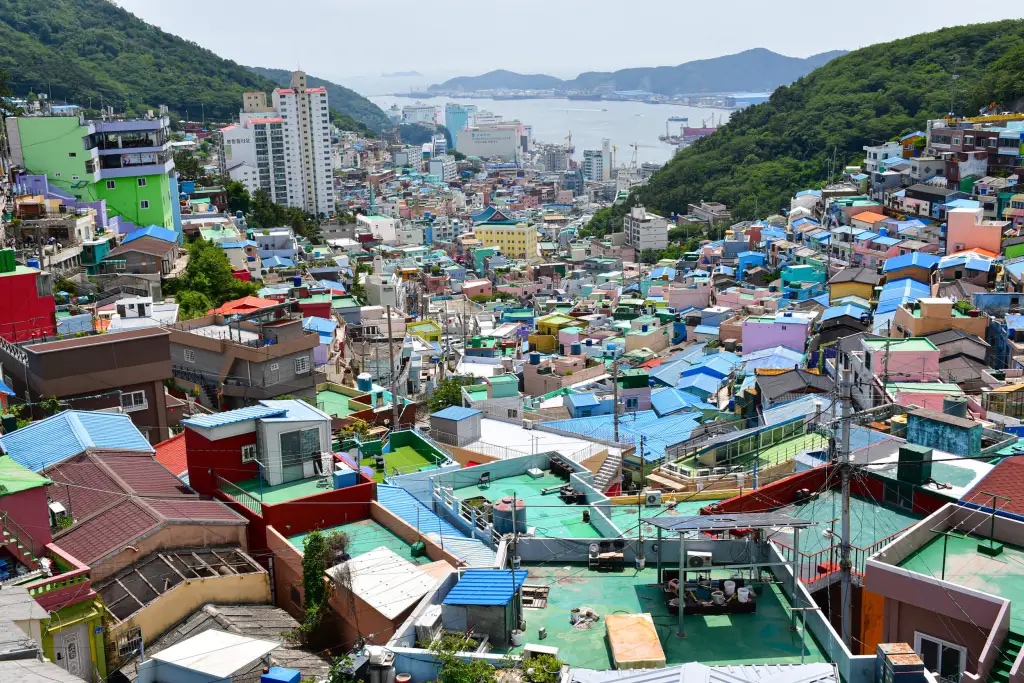
朝鮮戦争中、釜山は避難都市となった。人口が急増する中、丘陵地帯が唯一の居住可能な土地となり、避難民たちは廃材を用いて仮設住宅を建設し、即興的な集落を形成した。これらの集落は斜面に特化した形で発展し、やがて活気に満ちた緊密な地域コミュニティへと進化したのである。
危機から生まれたこれらの集落は、釜山の景観と精神を象徴する存在となった。今日、それらの地域は一等地となっているが、急勾配の路地や老朽化した構造物は、現代の生活ニーズには適合しなくなっている。
市場の標準的な再開発手法である高層団地は、快適性と効率性を提供する一方で、地形を平坦化し、かつて丘陵地を特徴づけた街路の活気を失わせてしまう。では、別の選択肢はあり得るのだろうか。
©︎ OMA
再開発への新たな視点:2つのケーススタディ
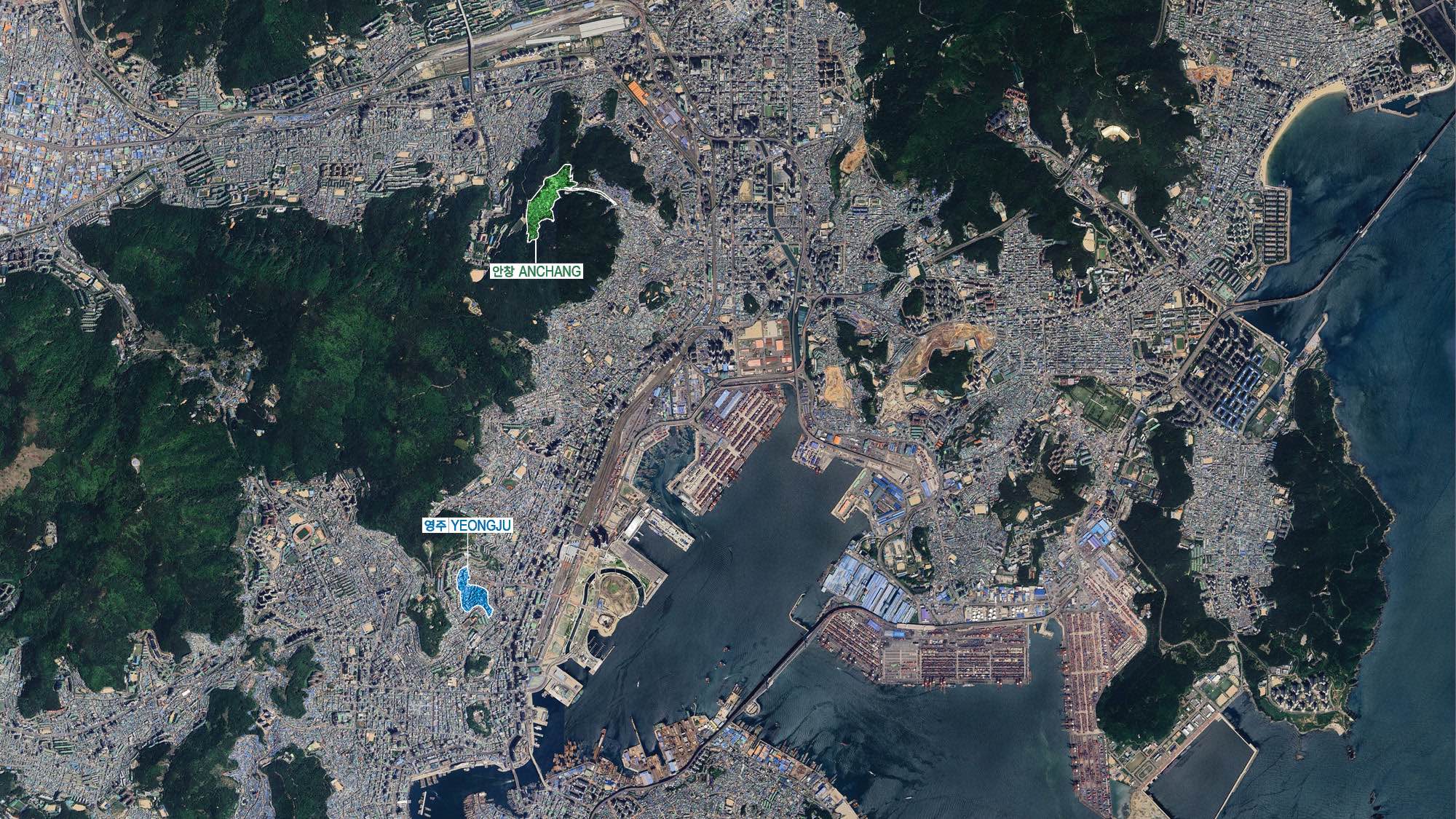
本プロジェクトは、釜山建築フェスティバル(BAF:Busan Architecture Festival)および住宅・建築局と共同で開発されたものであり、再開発のための2つのケーススタディを提示している。我々は、非公式な街のもつ強みを活かし、活気ある街路と調和の取れたスカイラインを創出する柔軟な手法を提案する。
Yeongju ©︎ OMA
選定されたのは、対照的な2つの敷地である。1つは釜山中心部に位置するヨンジュ(Yeongju)、もう1つは森林に囲まれた尾根の間に孤立するアンチャン(Anchang)である。両者の差異こそが、既存の微細な都市構造と現代的な大規模団地とを調和させる、再現可能な手法を検証する理想的な条件を提供する。
Anchang ©︎ OMA
動線から始まる都市構築の再定義
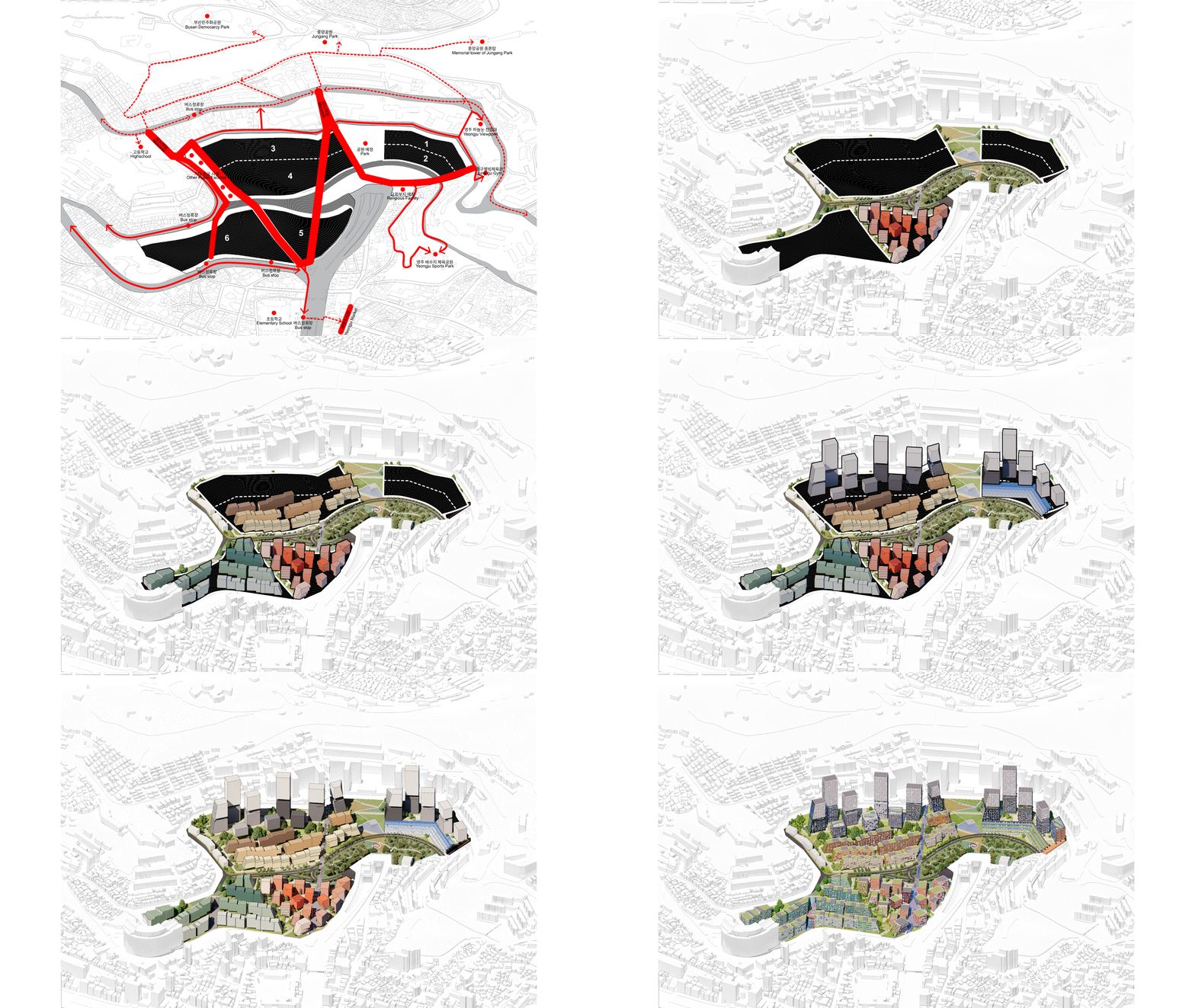
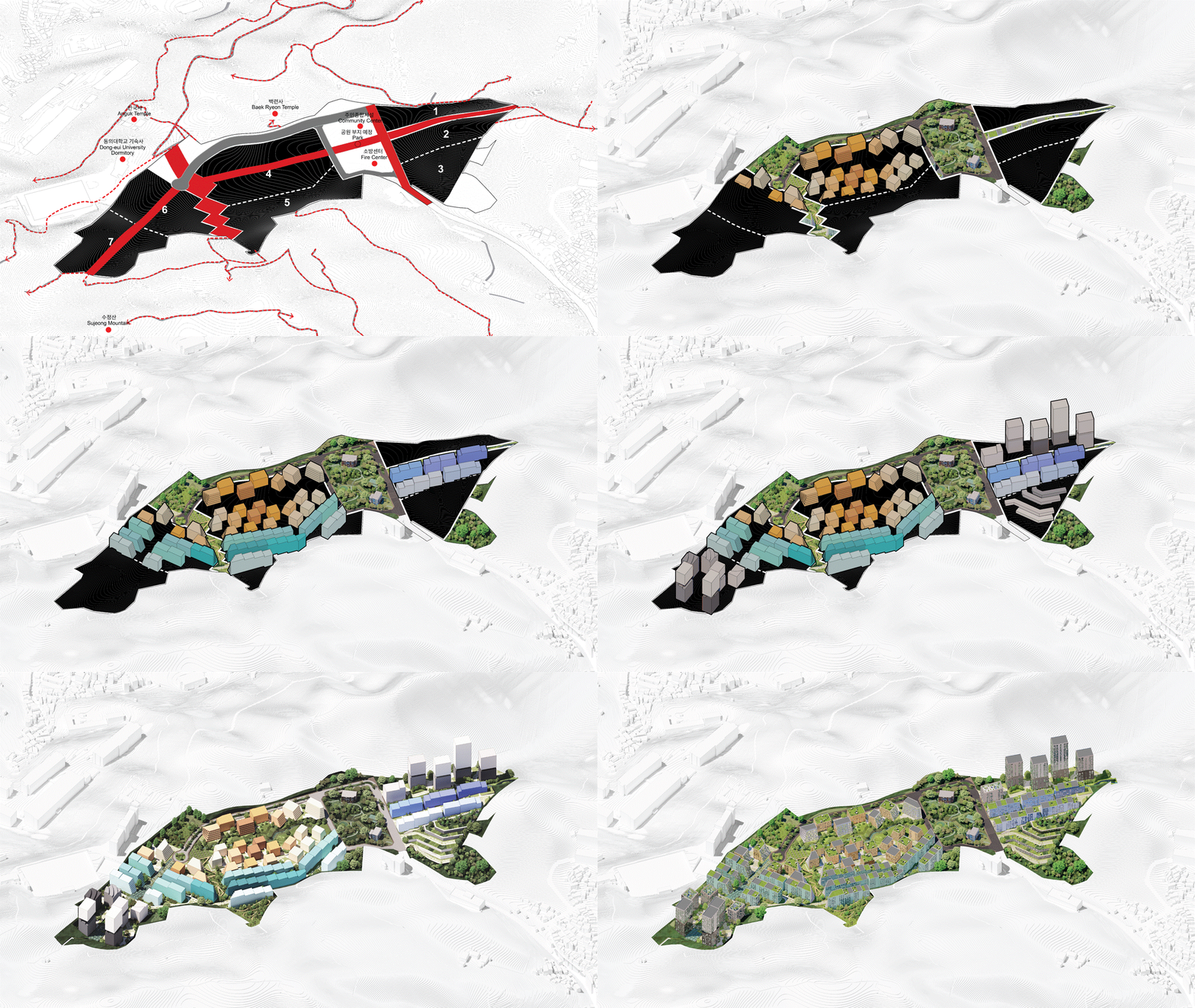
私たちはプロジェクトの設計を、建物からではなく「動線」から着手した。政府の土地利用計画を補完する形で、主要な公共拠点(バス停、モノレール駅、学校、公園、市場、登山道の起点、寺院)を結ぶ歩行者回廊ネットワークを設計したのである。これにより、日常生活が斜面を横断して展開できるようになった。
この枠組みによって、隣接性・勾配・アクセス・眺望によって形成される自然な「ポケット・ネイバーフッド」が生まれた。各ポケット内では、斜面安定化と車両アクセス、眺望と日照、共有踊り場と個別入口といった複雑なトレードオフを調整する必要があった。目指したのは高層ビルの排除ではなく、多様なタイプを組み合わせる中で、より豊かな都市構成へと再調整することである。
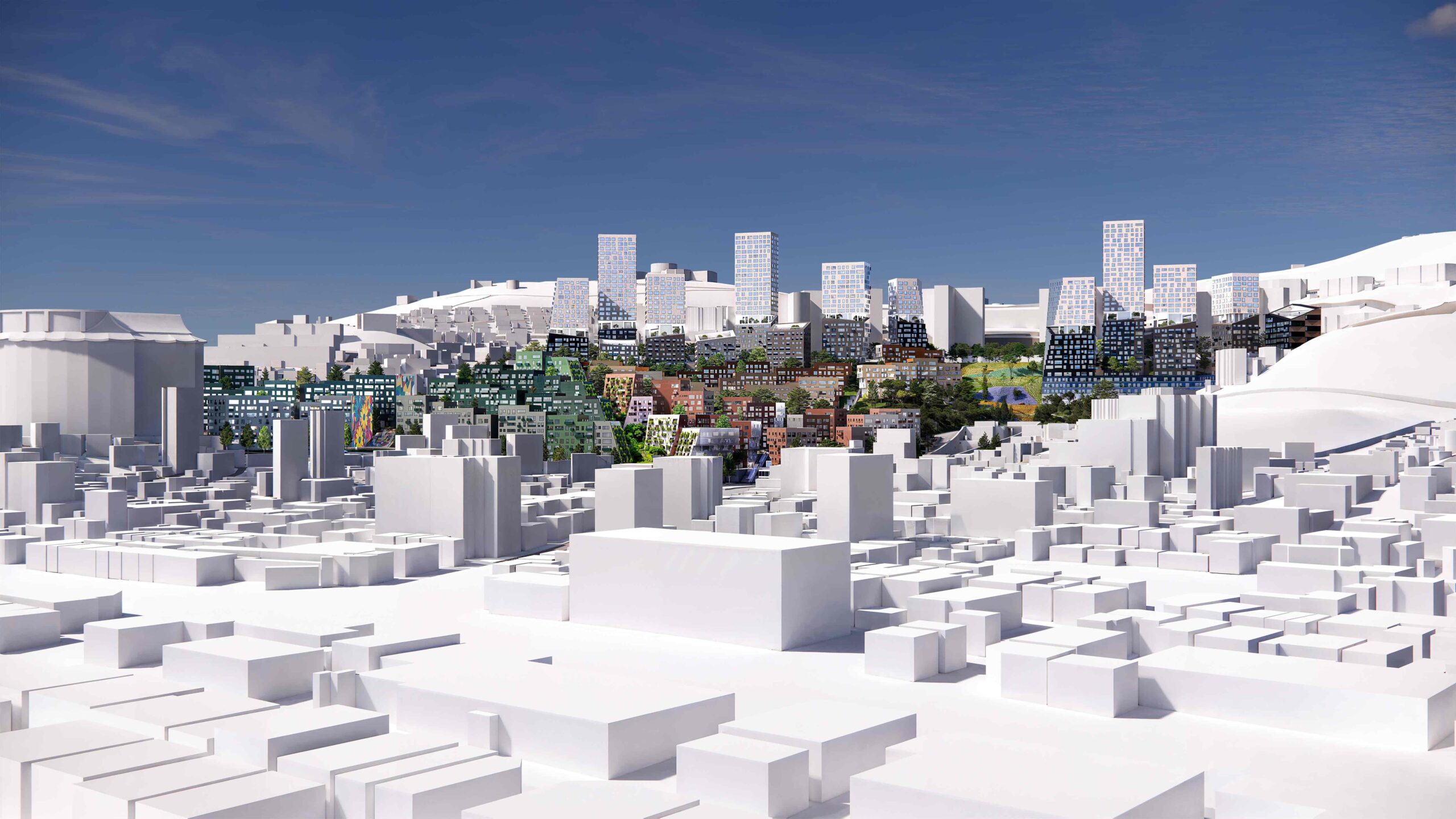
Yeongju ©︎ OMA
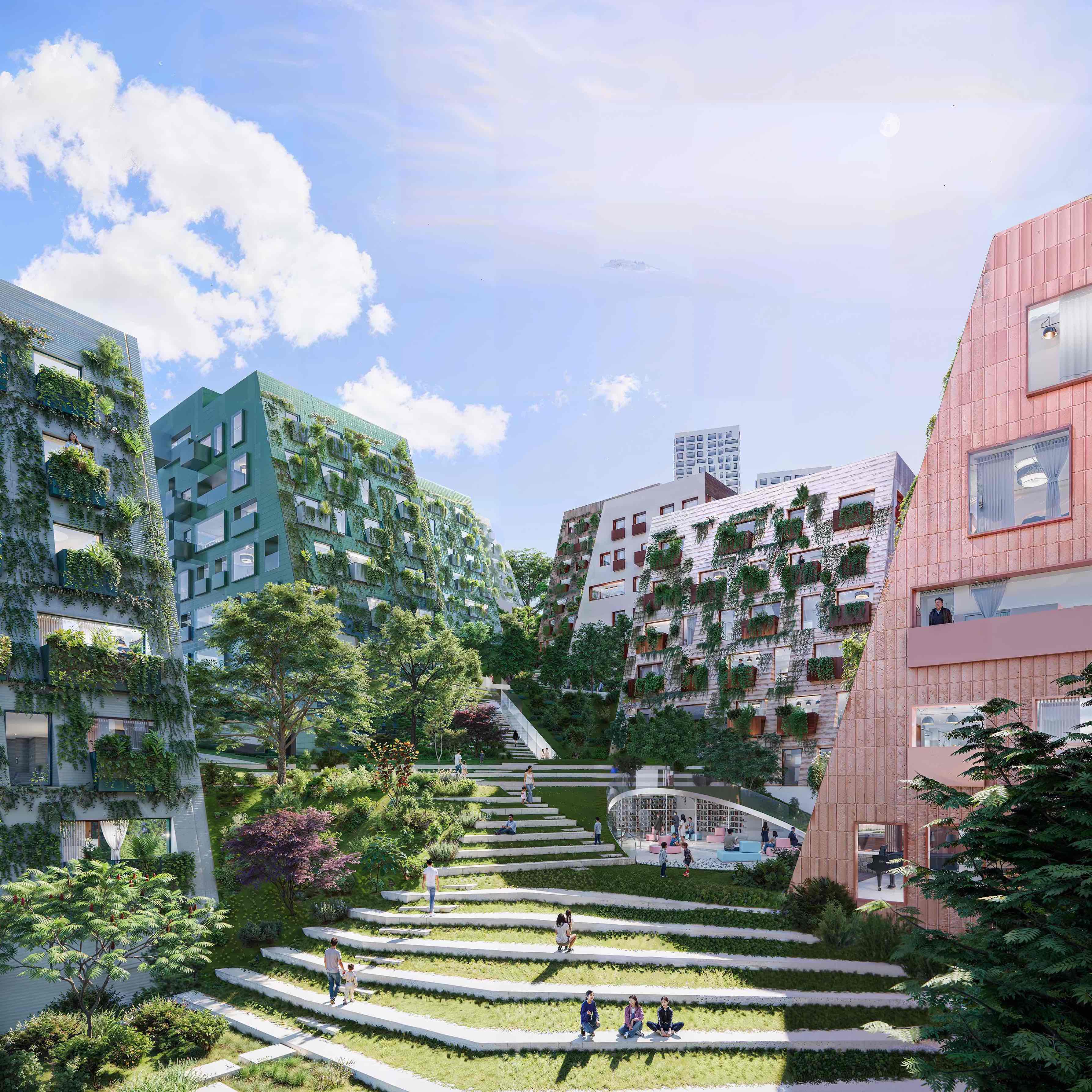
Yeongju ©︎ OMA
地形が導く4つの住宅タイプと構成原理
検討の過程で、テラスハウス、都市型ヴィラ、連棟住宅、高層ビルの4つのカテゴリーが浮かび上がった。各敷地において、斜面条件、日照、方位、敷地面積を分析し、複数のタイプが成立する場所では、さらに質的フィルターを重ねた。具体的には、公共空間への近接性、アクセスの勾配、眺望域、視覚的多様性といった要素である。
このプロセスにより、地形・光・社会的論理が形づくる独自の構成が導かれた。タイプは最適な場所に配置された。高台にはタワー、都心部にはヴィラ、尾根沿いには連棟住宅、急斜面の窪地にはテラスハウスが位置する。
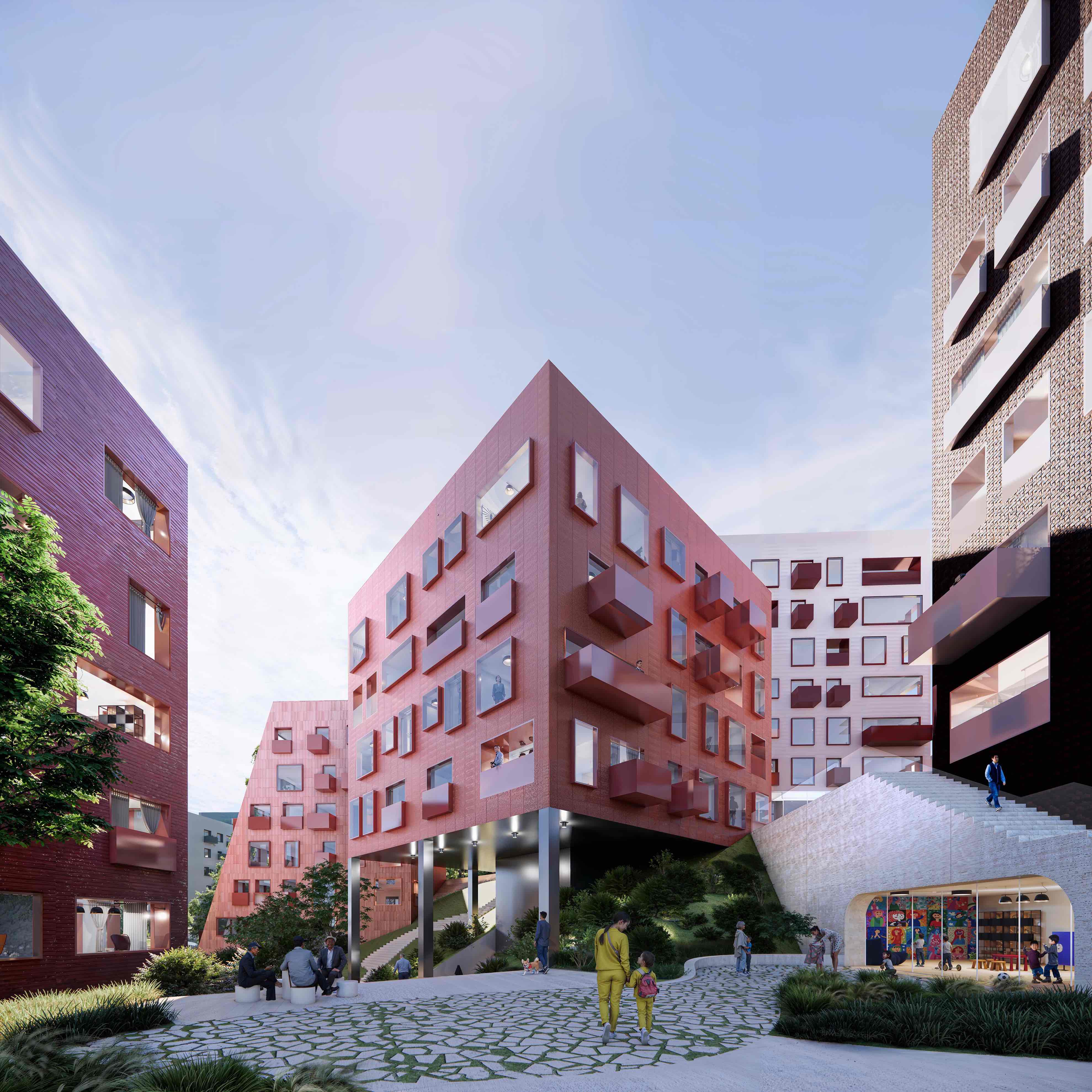
Yeongju ©︎ OMA
均質ではない「精密なパッチワーク」としての街
その結果は画一的な解決策ではなく、相互に連動するゾーンの精密に調整されたパッチワークとなった。フェンスや駐車場の代わりに、階段、踊り場、テラス、小さな広場を軸に街区が構成される。移動経路が社交の場となり、屋外空間が共有の領域となる。丘陵地帯での生活が再び可視化されたのである。
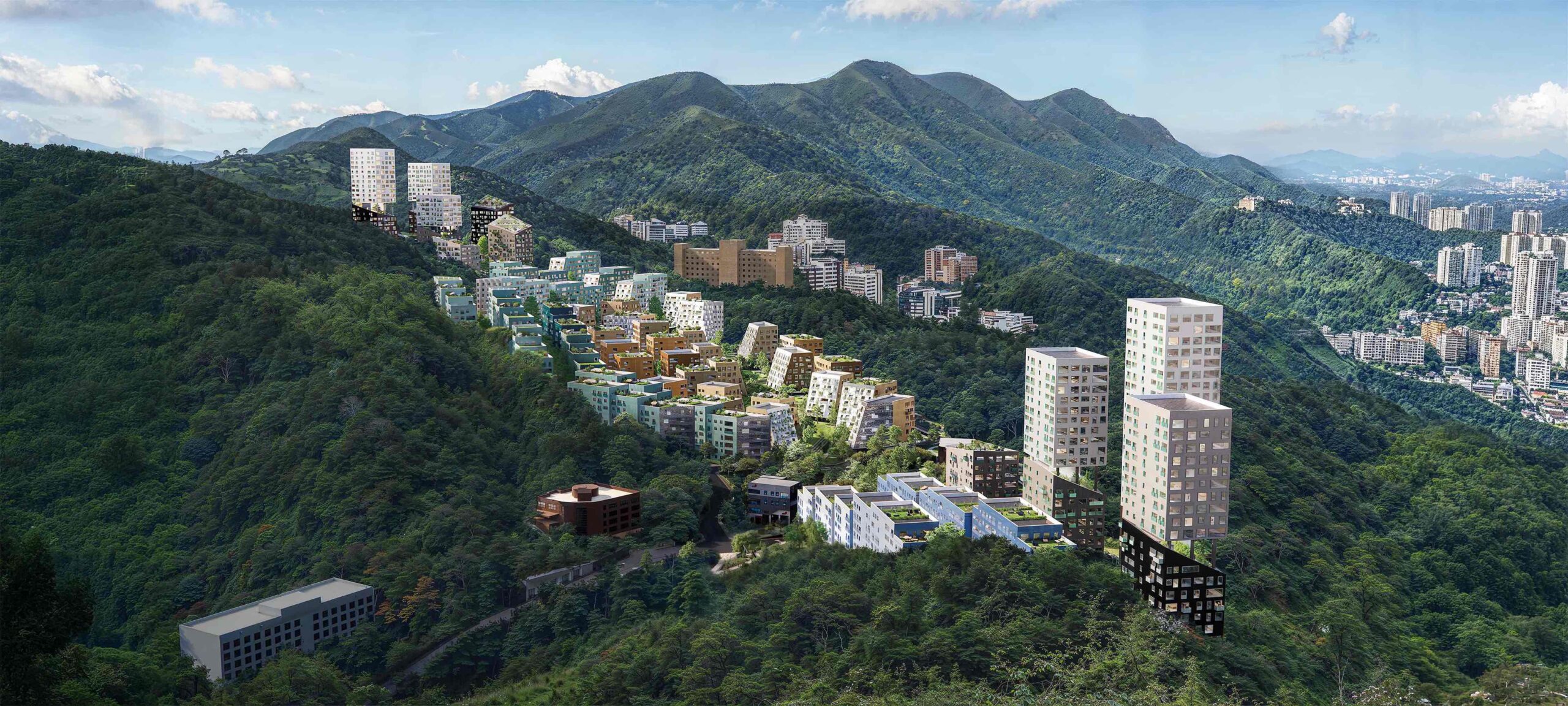
Anchang ©︎ OMA
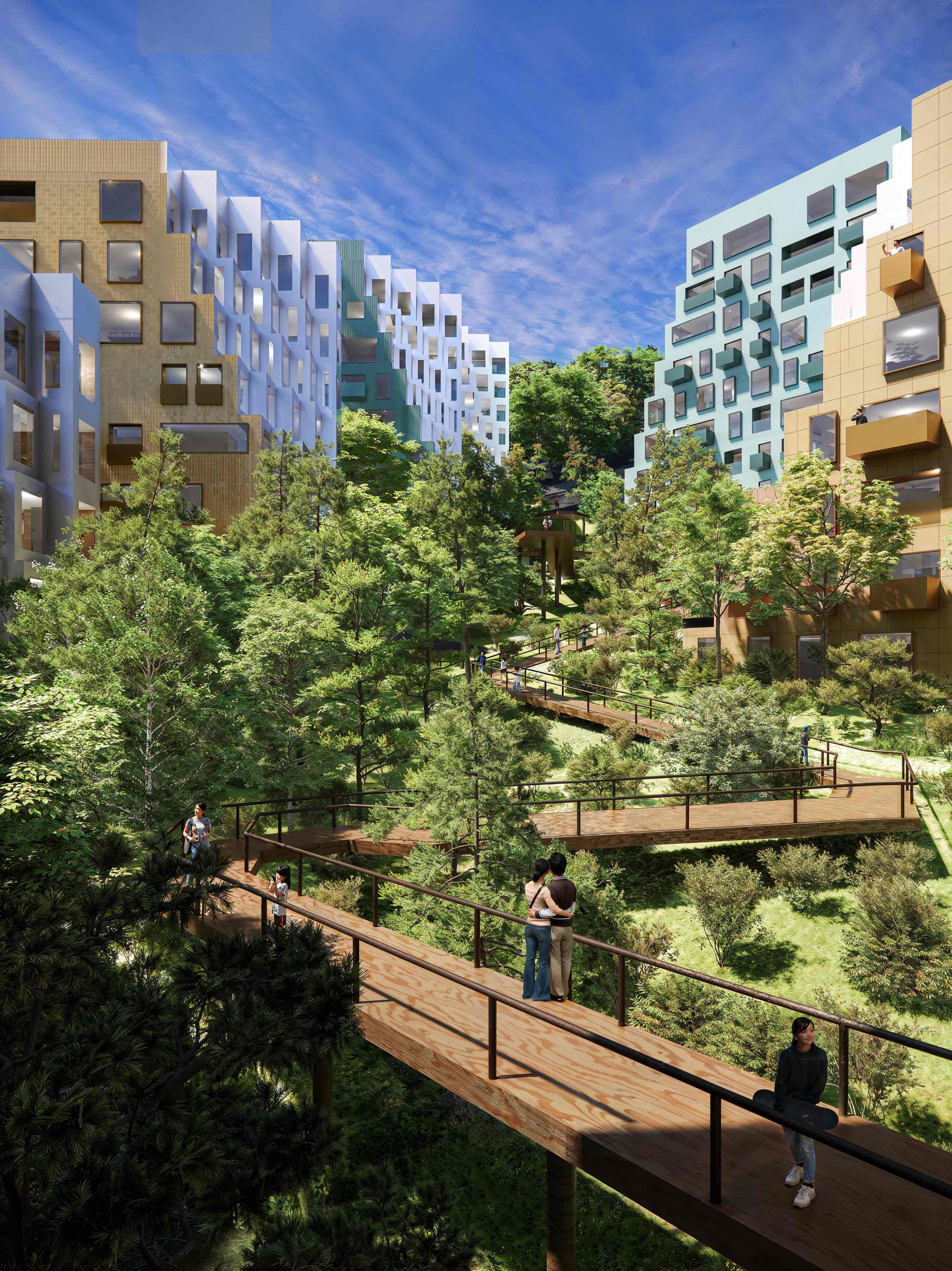
Anchang ©︎ OMA
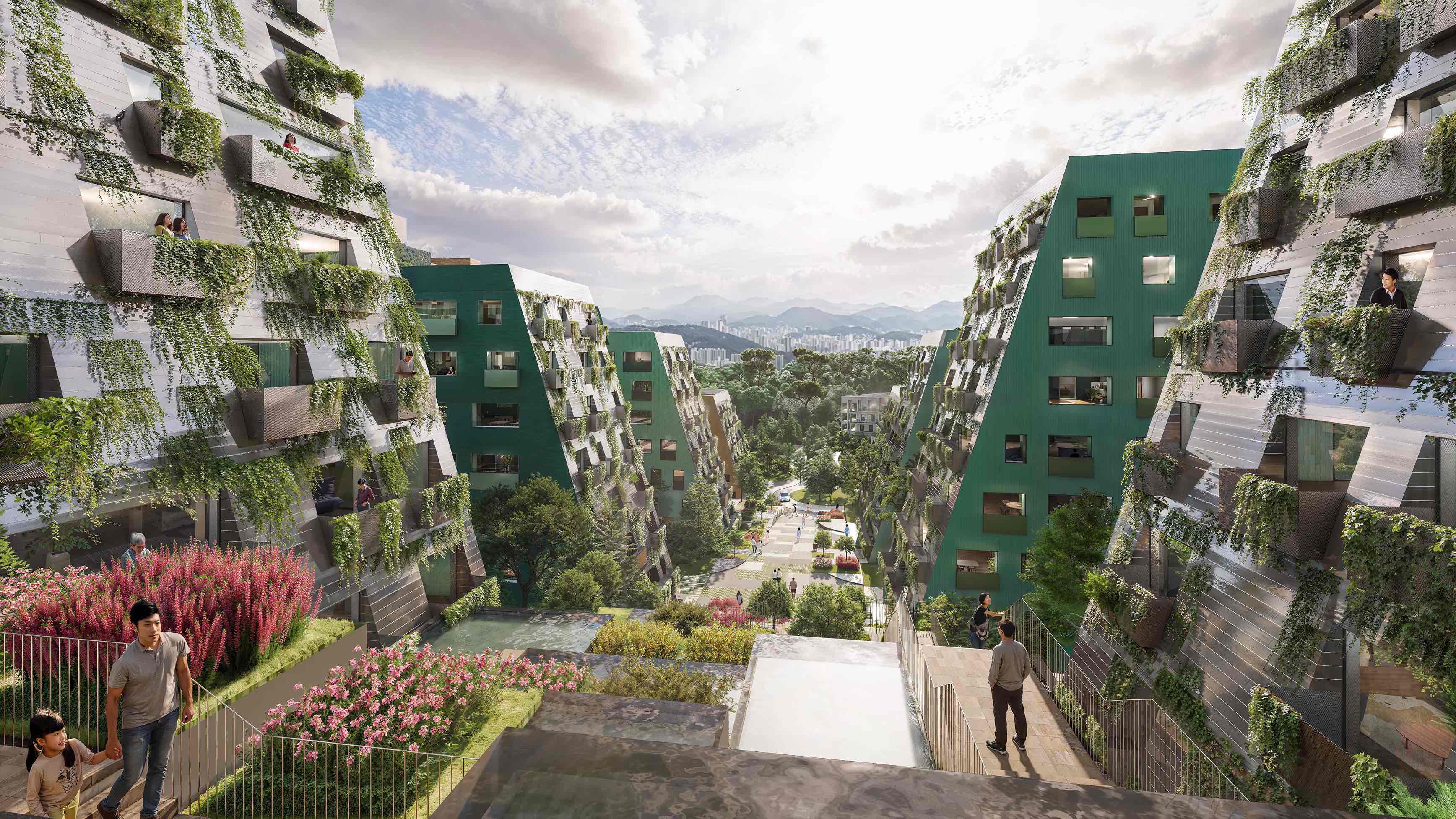
Anchang ©︎ OMA
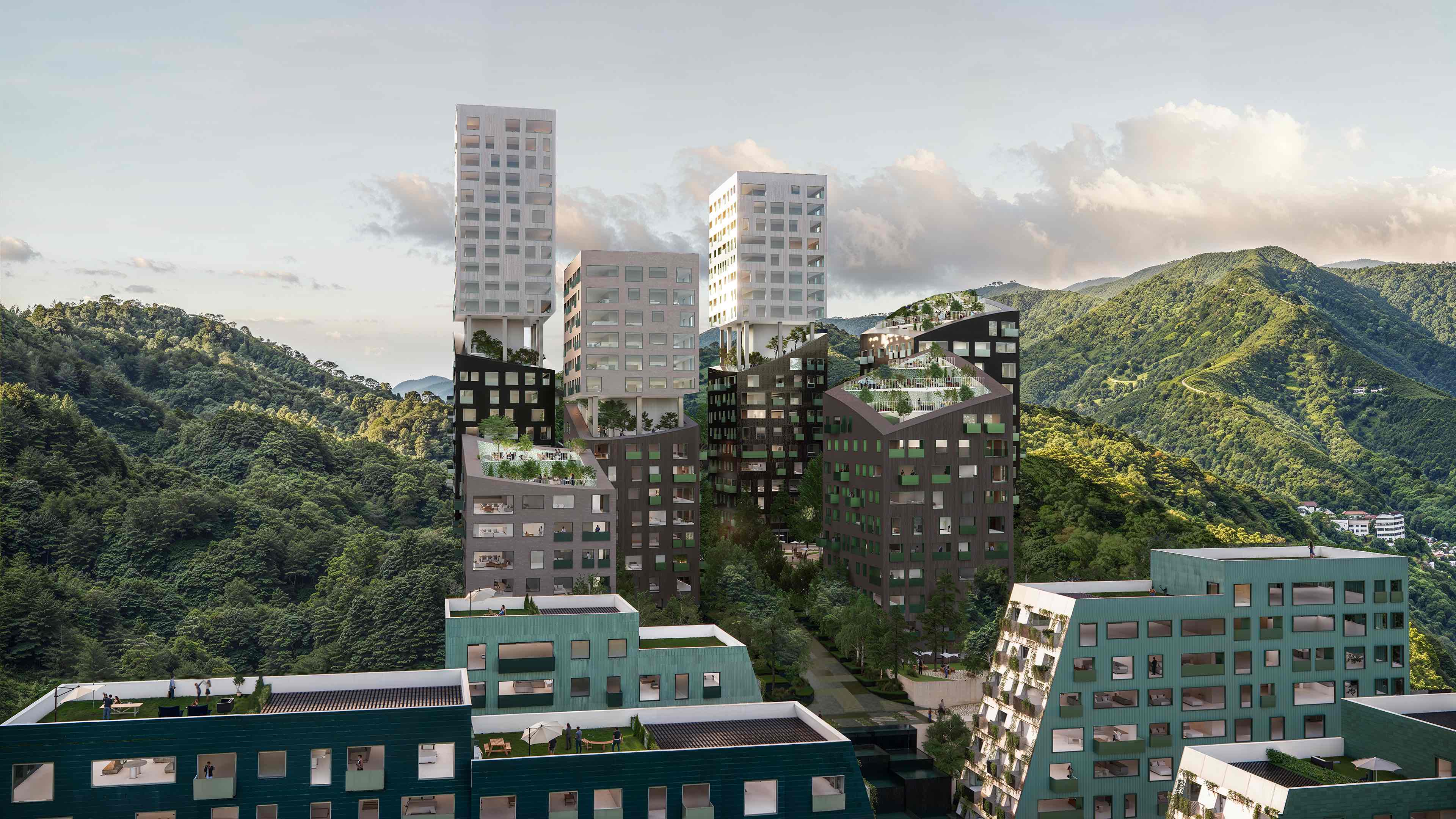
Anchang ©︎ OMA
以下、OMAのリリース(英文)です。
Busan Slope Housing
Status: Commissioned study
Year: 2025
Client: Busan Architecture Festival
Location: Busan, South Korea
Program: MasterplanPartner: Chris van Duijn
Associate: John ThurtleTeam
Jeremy Chow, Felicia Gambino, Freddy Maggiorani, Suhin Park, Xaveer RoodbeenProject Text
During the Korean War, Busan became a city of refuge. With the population surging, the hillsides were the only land left to settle. Refugees built makeshift homes from salvaged materials, forming improvised villages that evolved into vibrant, tightly knit neighborhoods – uniquely adapted to the slope. Born of crisis, they became a signature of Busan’s landscape and spirit. Today, those same neighborhoods sit on prime ground, but steep lanes and aging structures no longer meet contemporary needs. The default market response – the tower estate – delivers comfort and efficiency but flattens terrain and suppresses the very street life that once defined these hillsides. Is there an alternative?
This project, developed with the Busan Architecture Festival (BAF) and the Department of Housing and Architecture, presents two case studies for redevelopment. We propose an adaptable method, translating the strengths of informal neighborhoods into a new model for lively streets and coherent skylines. Two contrasting sites have been selected: Yeongju, embedded in central Busan, and Anchang, isolated between forested ridgelines. Their differences make them ideal for testing a reproducible approach that balances and mediates their existing micro-grain urban fabric with the contemporary macro-scale estate.
We began not with buildings, but with circulation. To supplement the government’s land-use plan, we choreographed a network of pedestrian corridors linking key public nodes – bus stops, monorail stations, schools, parks, markets, trailheads, temples – so that daily life could flow across each slope. This framework revealed natural ‘pocket neighborhoods’, shaped by adjacency, gradient, access, and view. Within each pocket, trade-offs had to be negotiated: slope retention vs. vehicle access; views vs. daylight; shared landings vs. granular entries. The aim was not to reject towers but to rebalance them among a richer composition of types.
Four categories emerged: terrace housing, urban villas, row housing, and towers. We tested them across each site for slope, solar access, orientation, and area. Where multiple types were viable, we layered in qualitative filters: adjacency to public space, access gradient, viewshed, and visual variety. This allowed each site to suggest its own composition, shaped by terrain, light, and social logic. Types were placed where they perform best: towers on high points, villas at urban centers, row houses along ridges, terraces embedded in steep pockets. The result is not a uniform solution, but a calibrated patchwork of interlocking zones. Instead of fences and parking decks, neighborhoods are structured around stairs, landings, terraces, and small squares. Circulation becomes social. Outdoor space becomes communal. Life on the hillside becomes visible again.
【購読無料】空間デザインの今がわかるメールマガジン TECTURE NEWS LETTER
RECOMMENDED ARTICLE