CULTURE

©︎ Seilaojiong
©︎ Seilaojiong
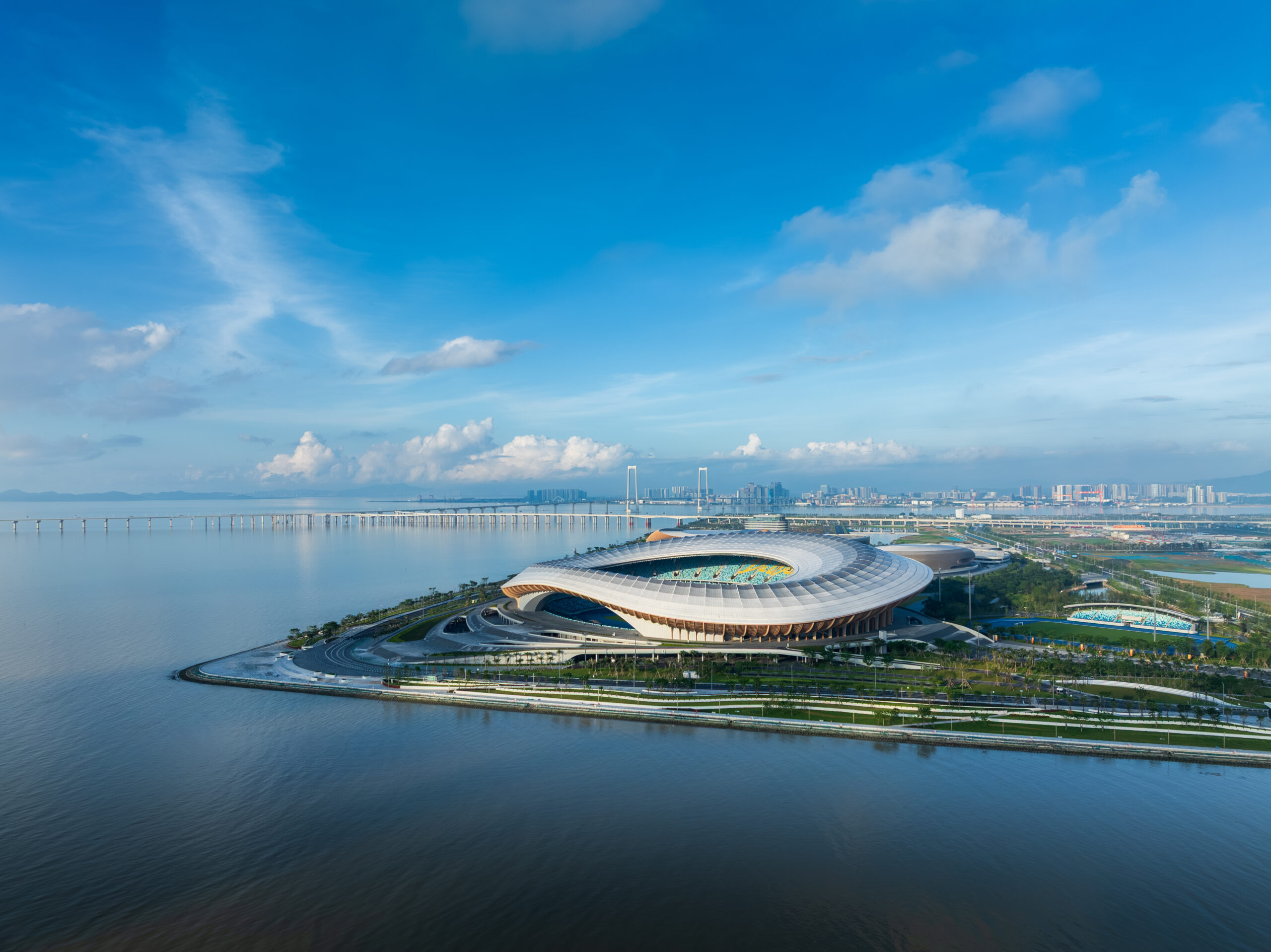
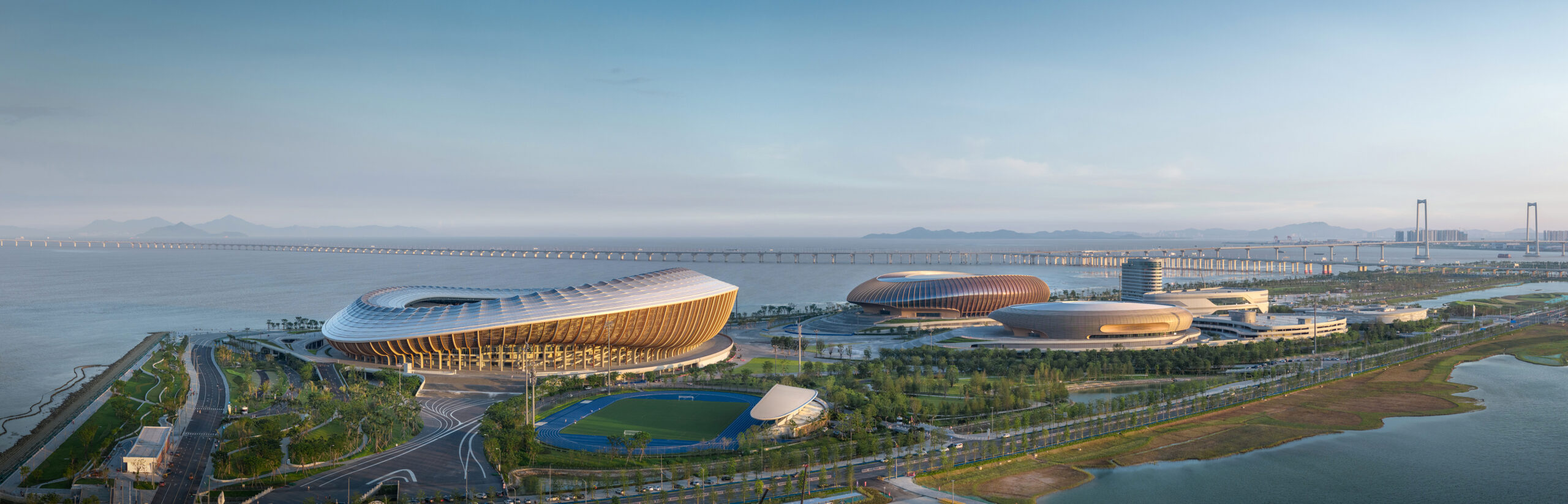
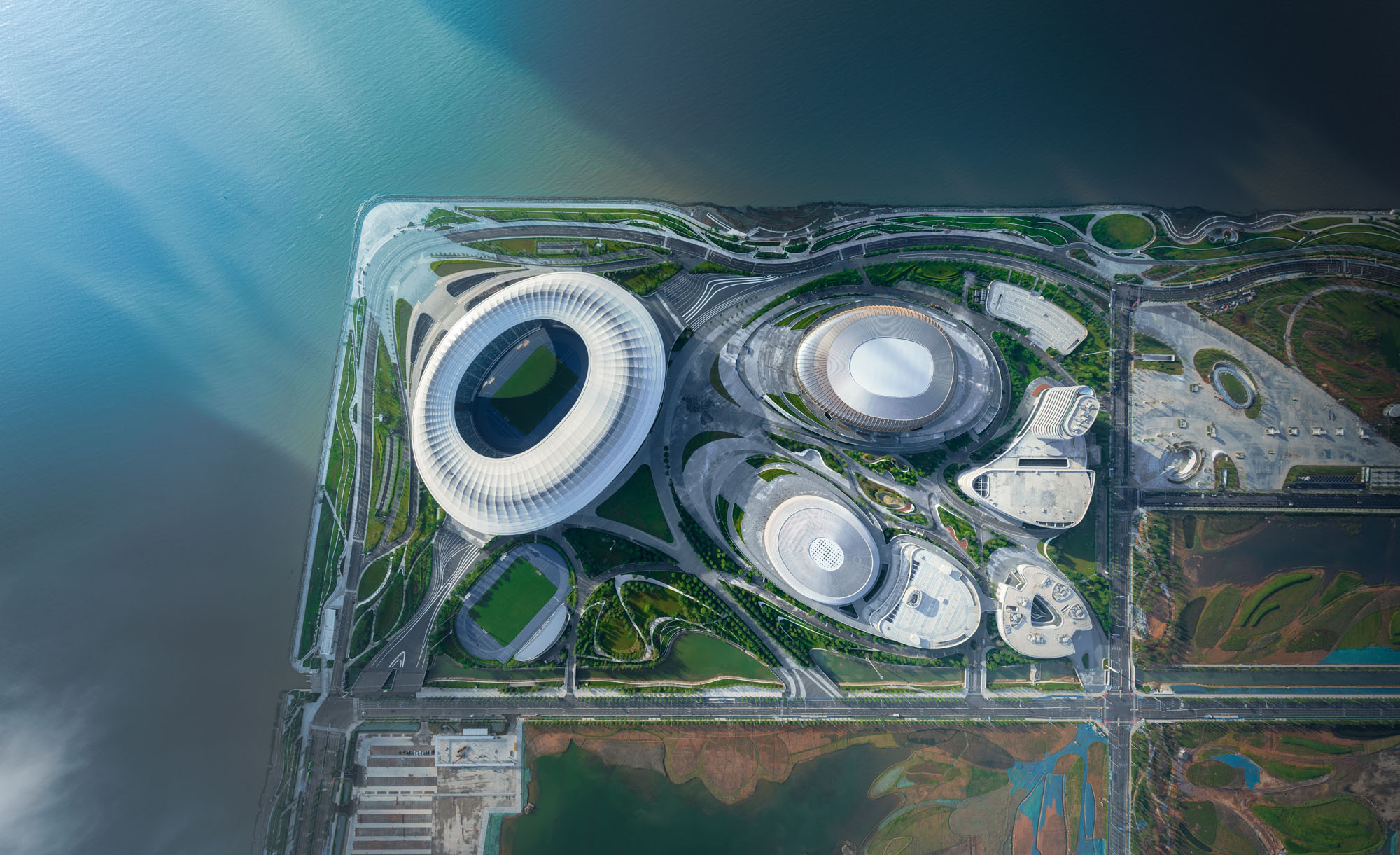
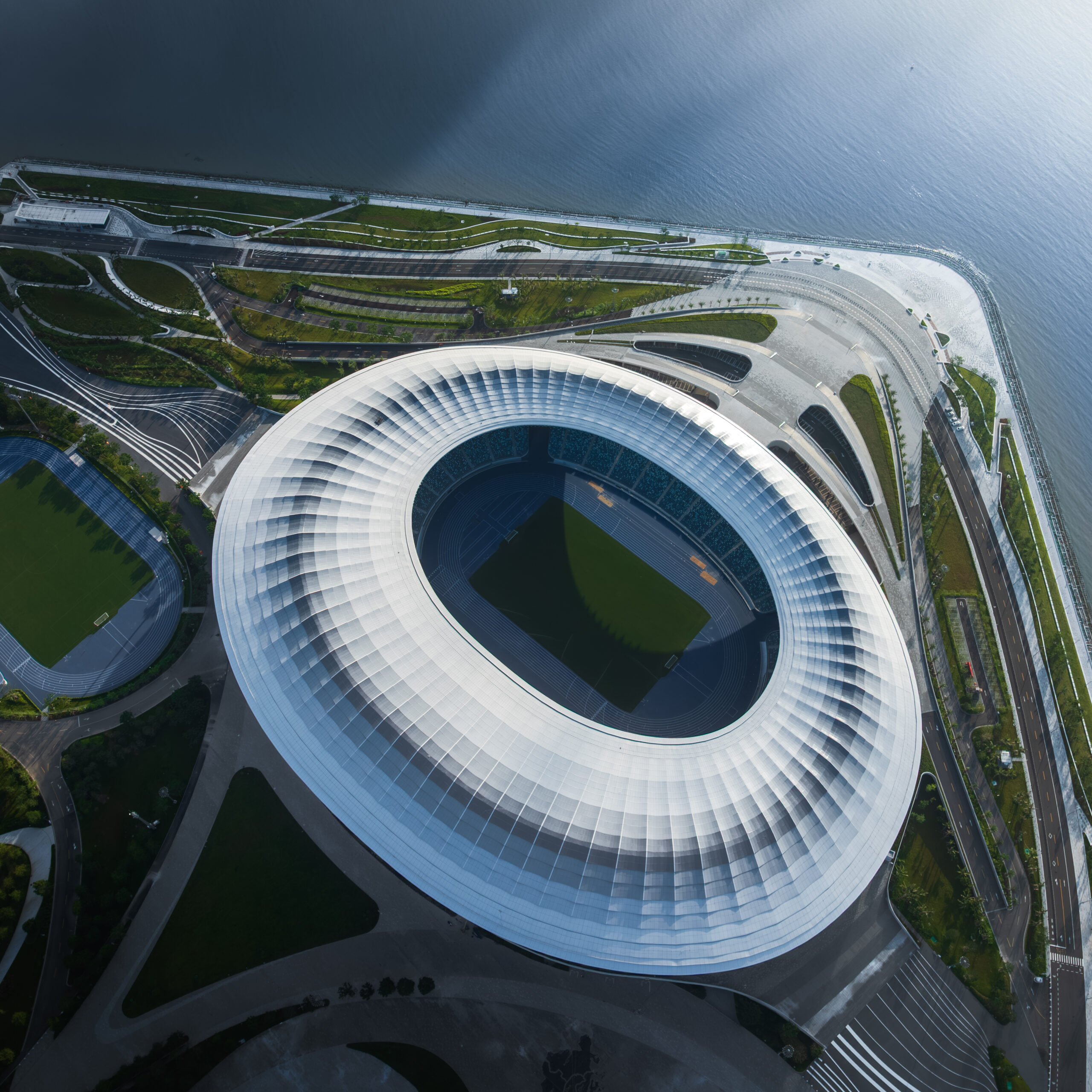
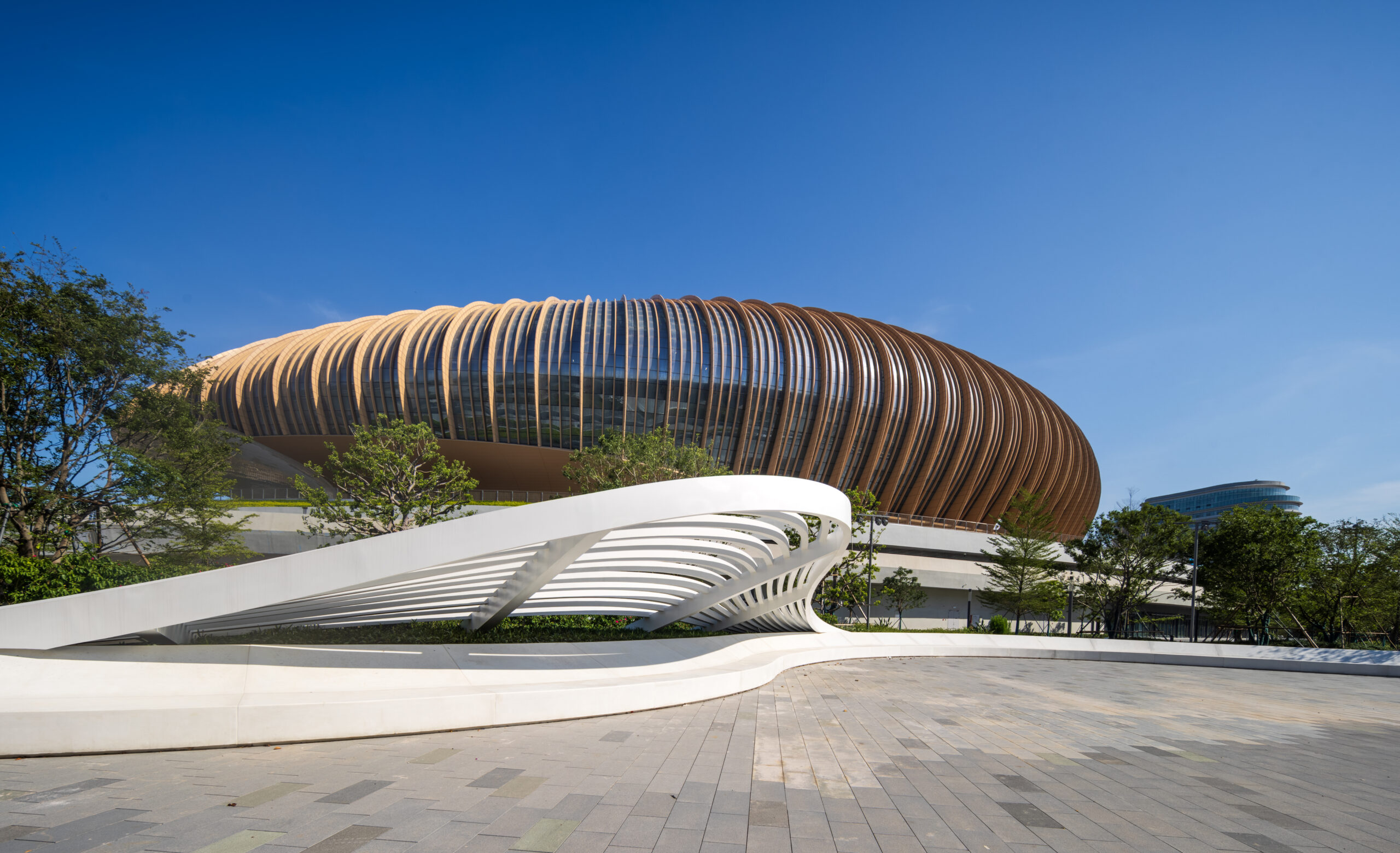
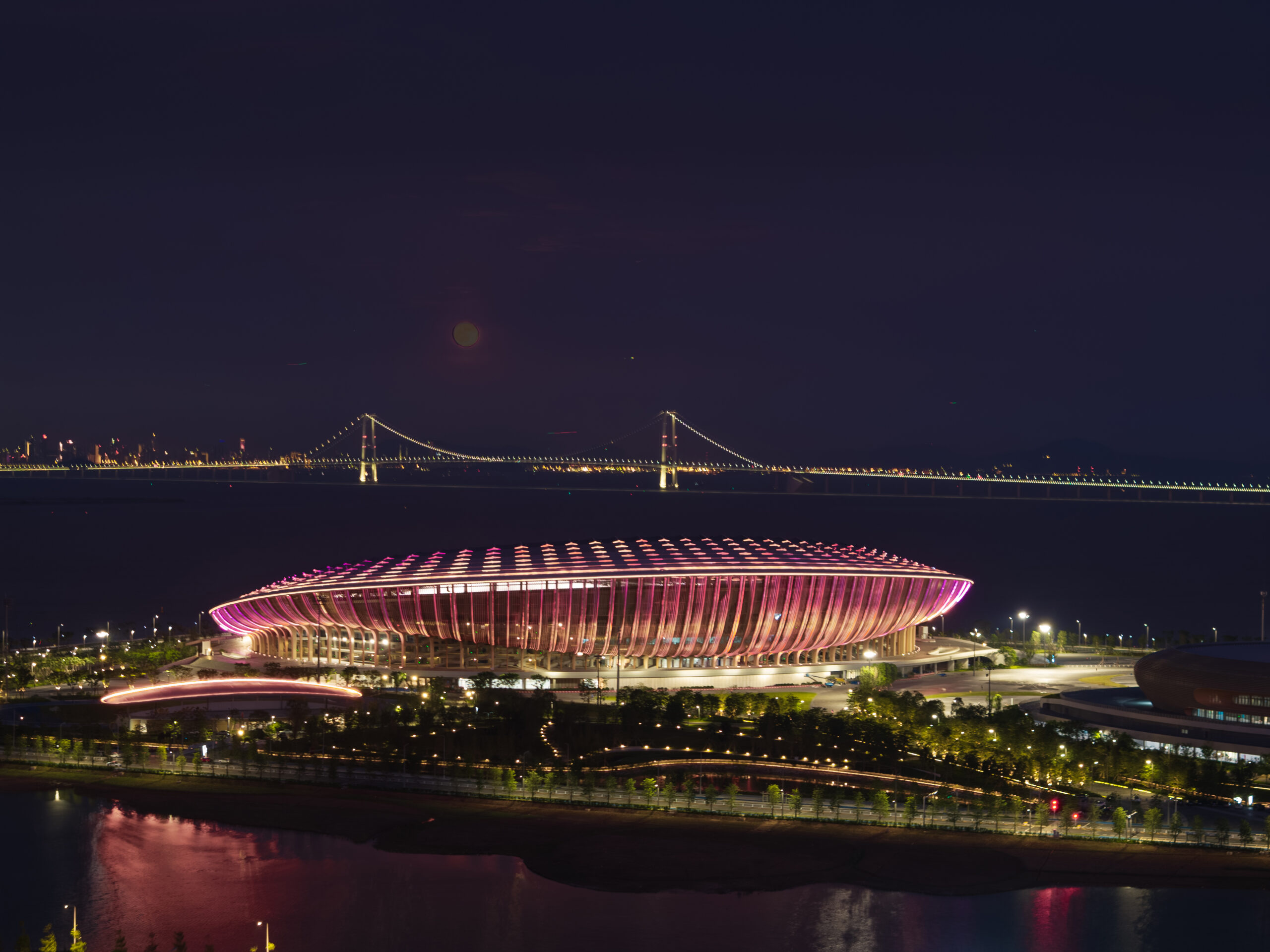
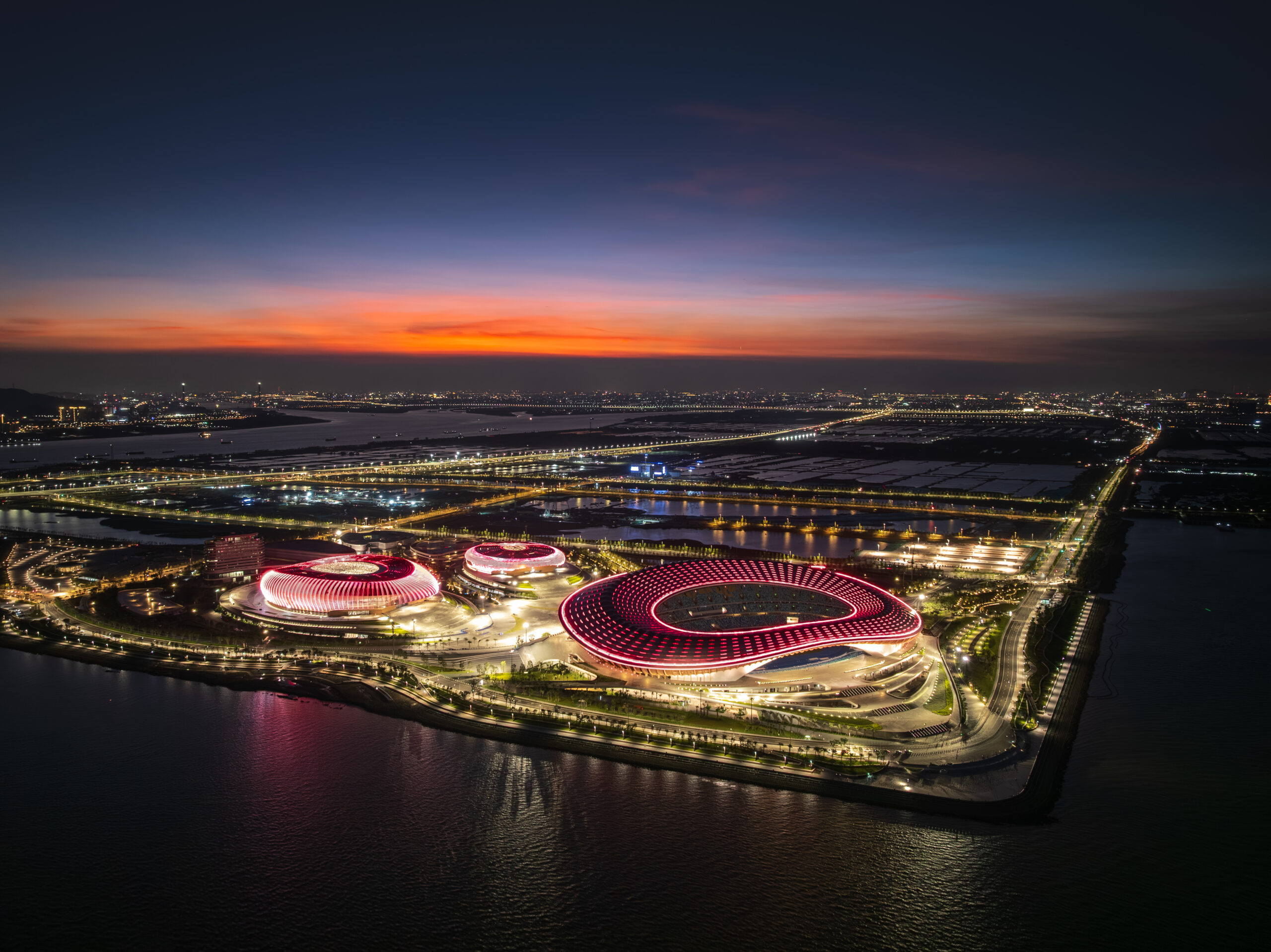
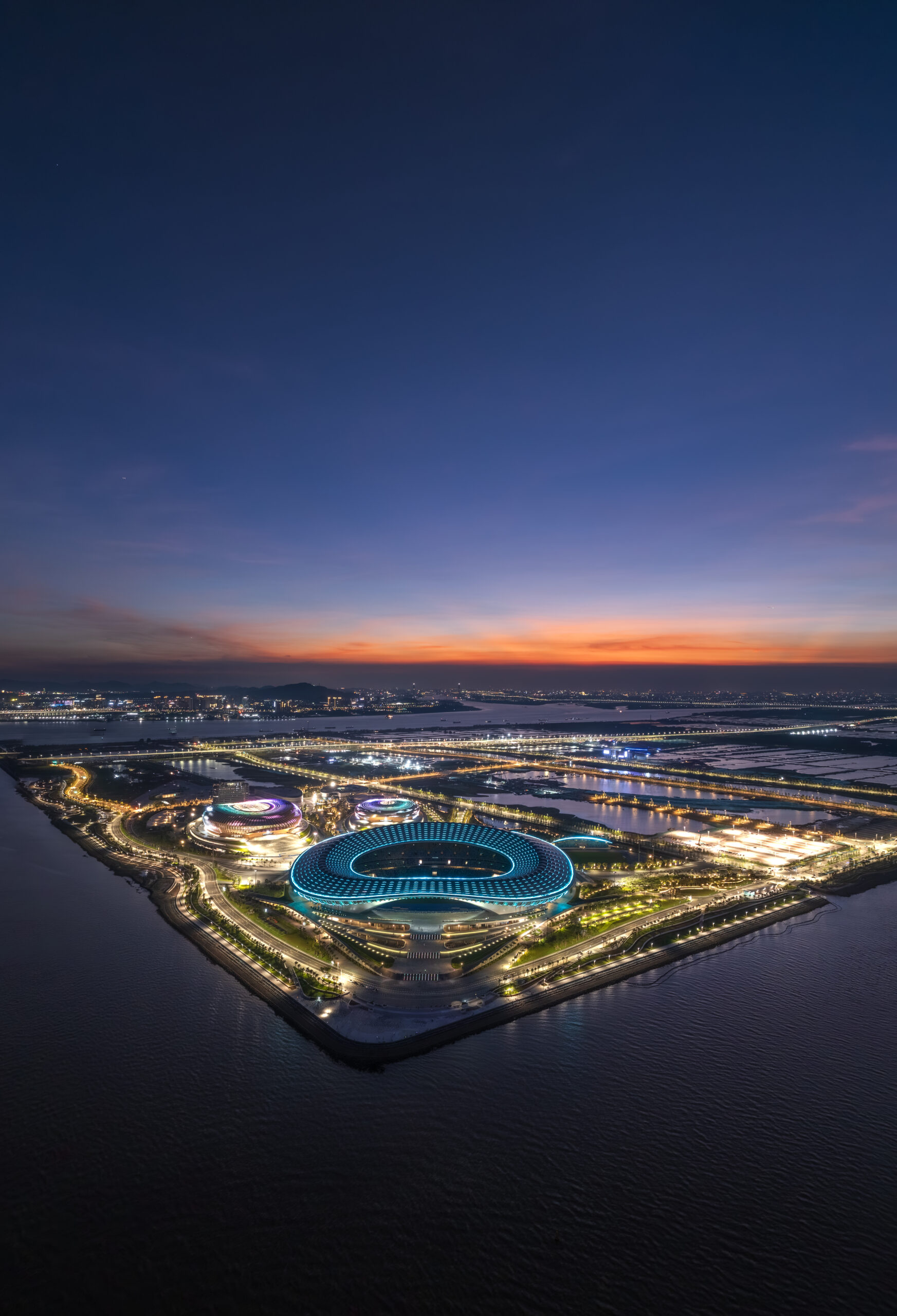
〈グレーターベイエリア・スポーツセンター(Greater Bay Area Sports Centre)〉は、広東省、香港、マカオを結ぶ世界最大級のベイエリアに建設された、3棟の主要スポーツ施設と70ヘクタールの広大な公園からなる、スポーツとレクリエーションのための拠点です。
ザハ・ハディド・アーキテクツ(Zaha Hadid Architects)と広東省建築設計研究院(Guangdong Architectural Design & Research Institute)が共同で設計しました。
注目ポイント
- アスリート育成と地域スポーツ振興を両立するプログラム構成
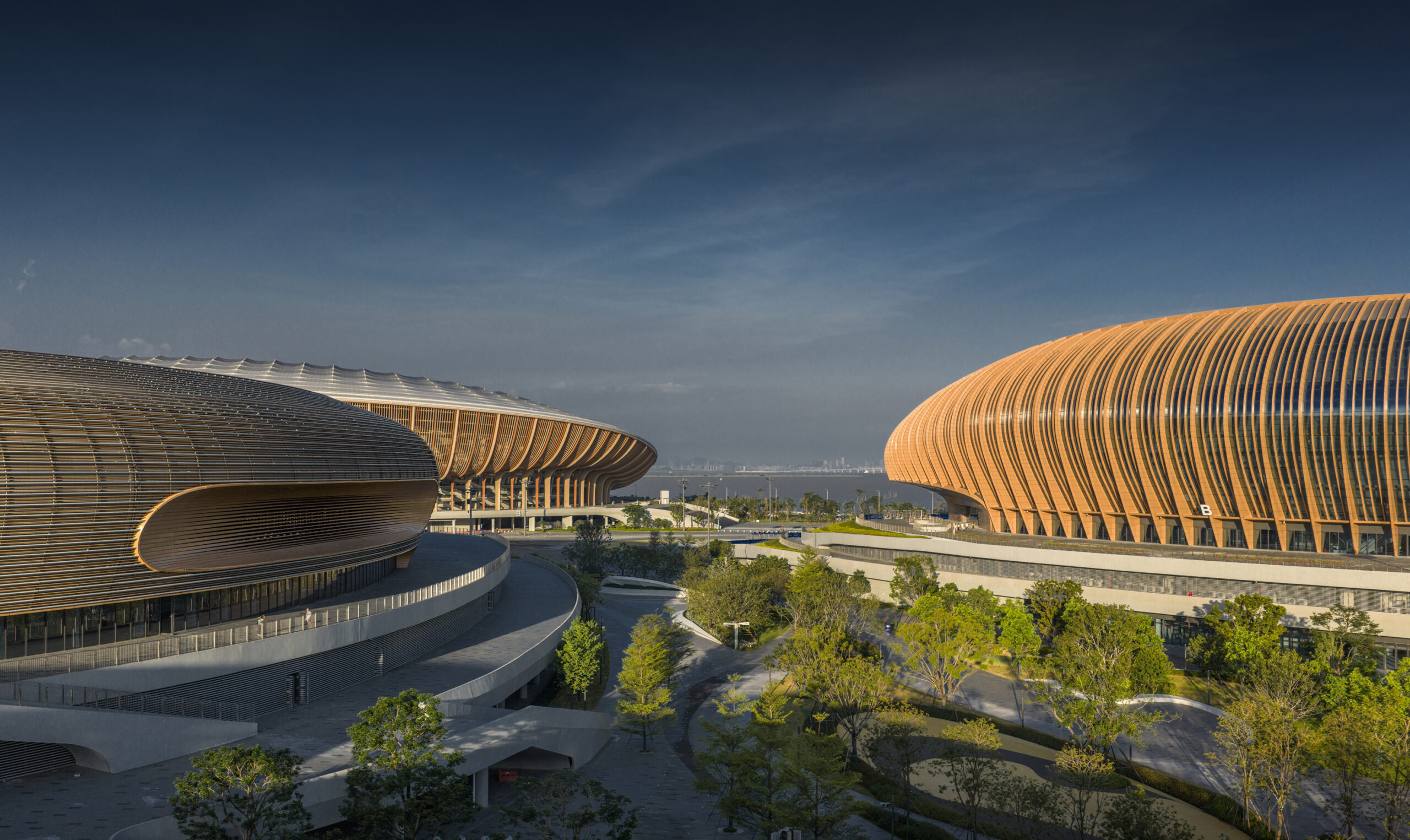
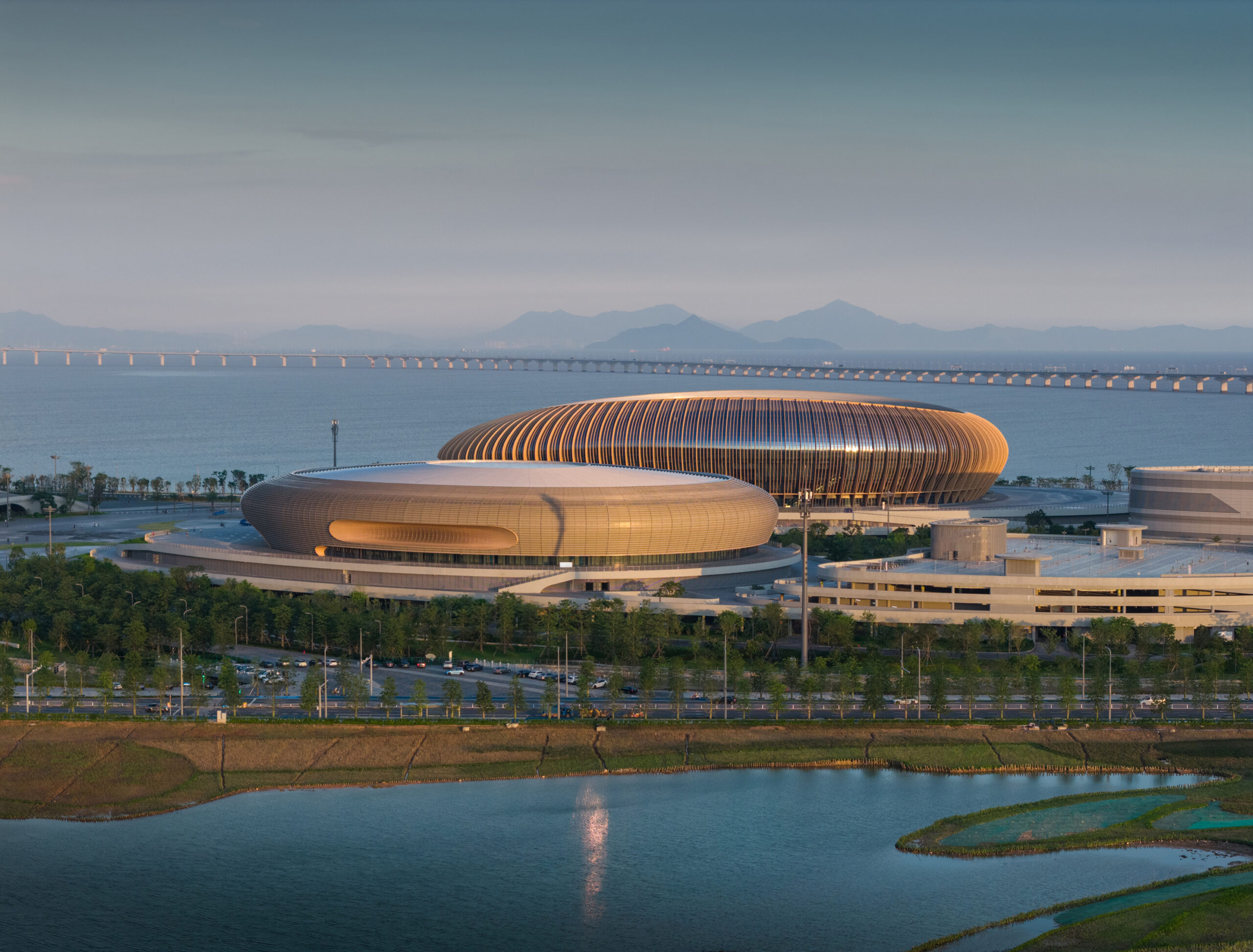
- 伝統帆船を参照した、流線形な3つの主要施設(スタジアム/アリーナ/水泳場)
- 風環境解析と3Dモデリングで最適化する建物配置と建築形態
- ベイエリア北部の「ゲート」機能を担う象徴的立地とアイコニックな外観
(以下、ザハ・ハディド・アーキテクツから提供されたプレスキットのテキストの抄訳)
©︎ CRLand
©︎ CRLand
©︎ CRLand
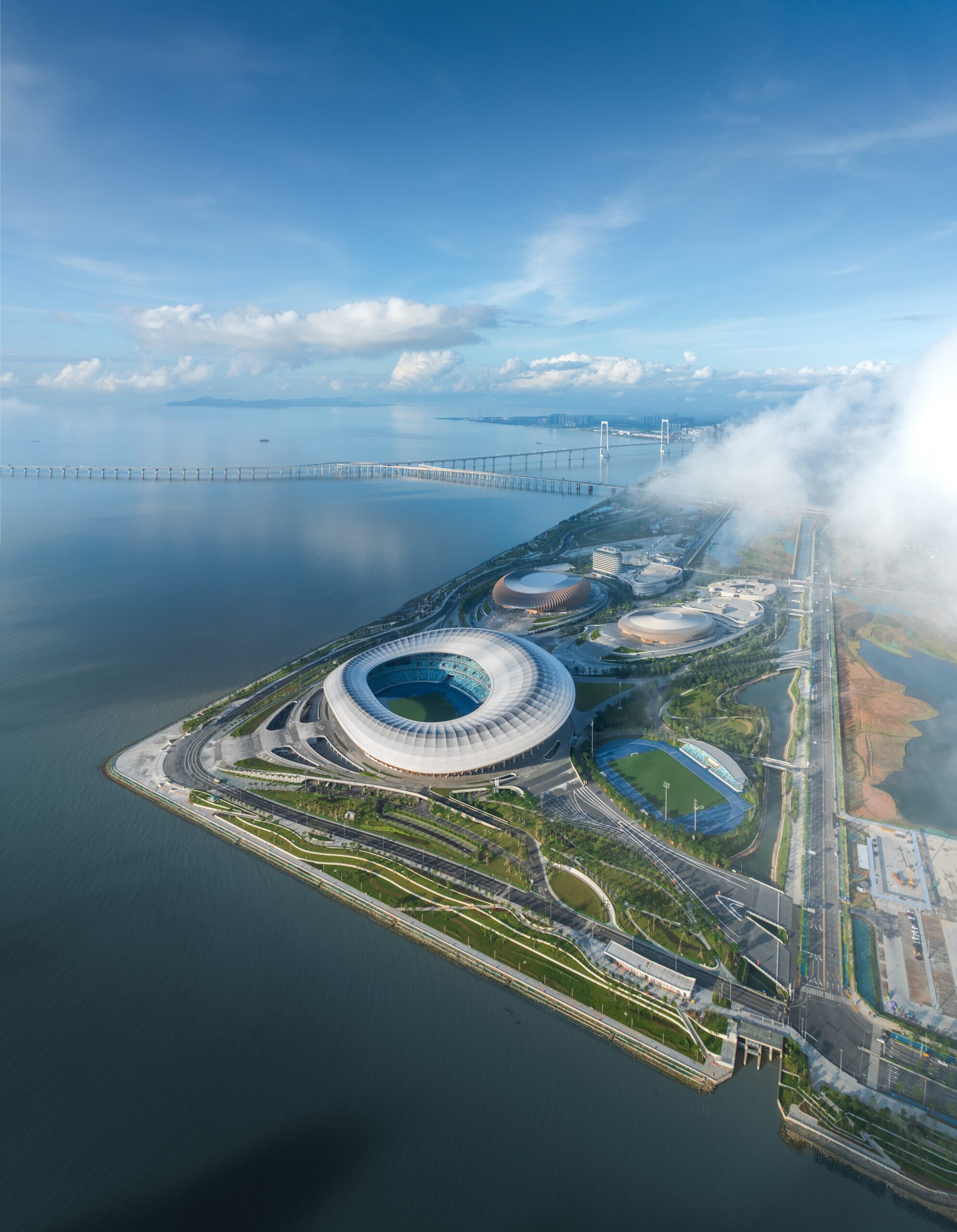
広東・香港・マカオを結ぶベイエリアの広域拠点
〈グレーターベイエリア・スポーツセンター〉は、2025年12月5日より始まる4公演の完売コンサートを皮切りに、初の大規模イベントの開催を予定している。
本センターは、広州、深圳、香港、マカオを含む珠江デルタ地域の都市にサービスを提供し、これらは世界最大の都市圏である広域湾区を構成している。同地域の人口は2030年までに1億人に達すると予測されている。
グレーターベイエリア:香港、マカオ、広東省の9の都市(広州、深圳、珠海、仏山、中山、東莞、恵州、江門、肇慶)を結ぶ、世界最大級のベイエリア
©︎ Seilaojiong
南沙区に形成する新たな中核地区
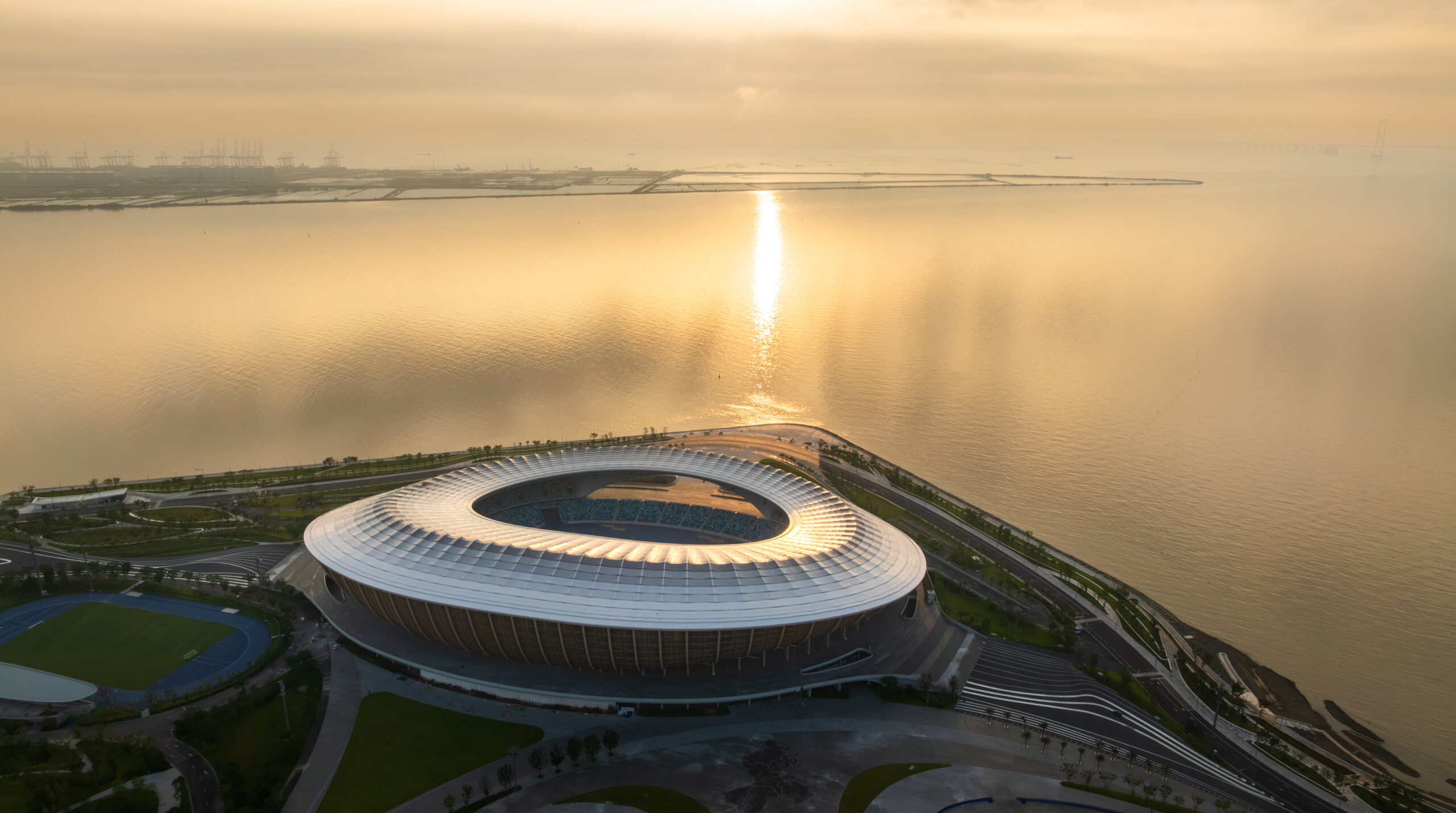
広州市南沙区南部、河川のデルタ地帯西岸に位置する〈グレーターベイエリア・スポーツセンター〉は、広東湾岸地域の中核となる市民・ビジネス・住宅地区を支える基幹施設となる。
国内外イベントに対応するアクセス性と機能
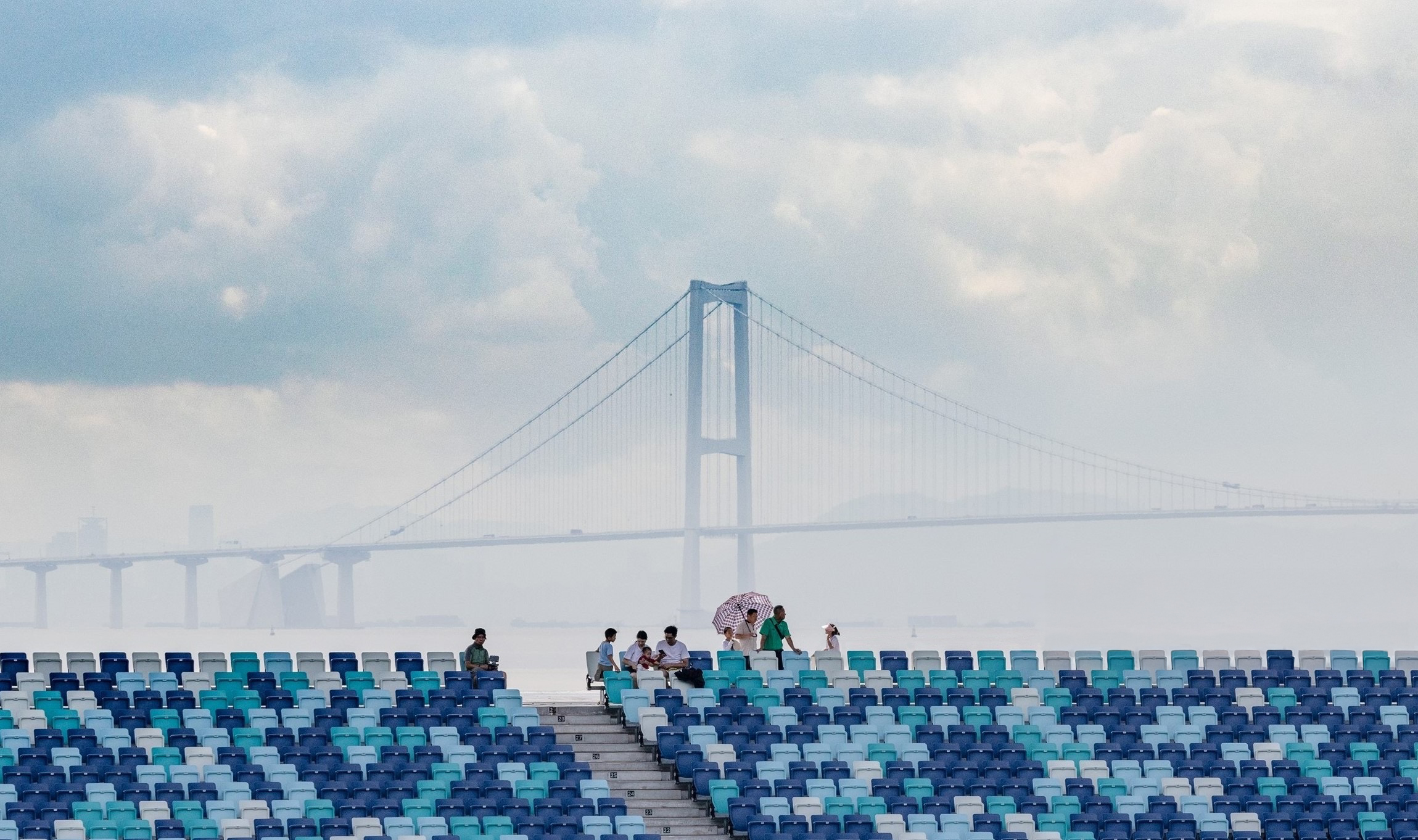
本センターは地域コミュニティに最高水準のスポーツ施設を提供するだけでなく、多様な国内・国際スポーツ大会や文化公演の開催にも対応する設計となっている。広州地下鉄18号線と新設の深中大橋により、大湾区全域から容易にアクセス可能である。
©︎ Seilaojiong
©︎ Seilaojiong
地域スポーツ振興とアスリートの育成環境
〈グレーターベイエリア・スポーツセンター〉は南沙の学校やスポーツクラブが利用できる優れた施設を提供するとともに、地域および国家レベルにおける中国の継続的なスポーツ開発プログラムを推進する。
陸上競技を含む競技アスリートが必要とするインフラを備え、南沙の温暖な冬を活かした設計により、将来の遺産を育む理想的な屋外トレーニング施設と環境を実現している。
©︎ Seilaojiong
©︎ Seilaojiong
広大な公園と3棟の主要施設
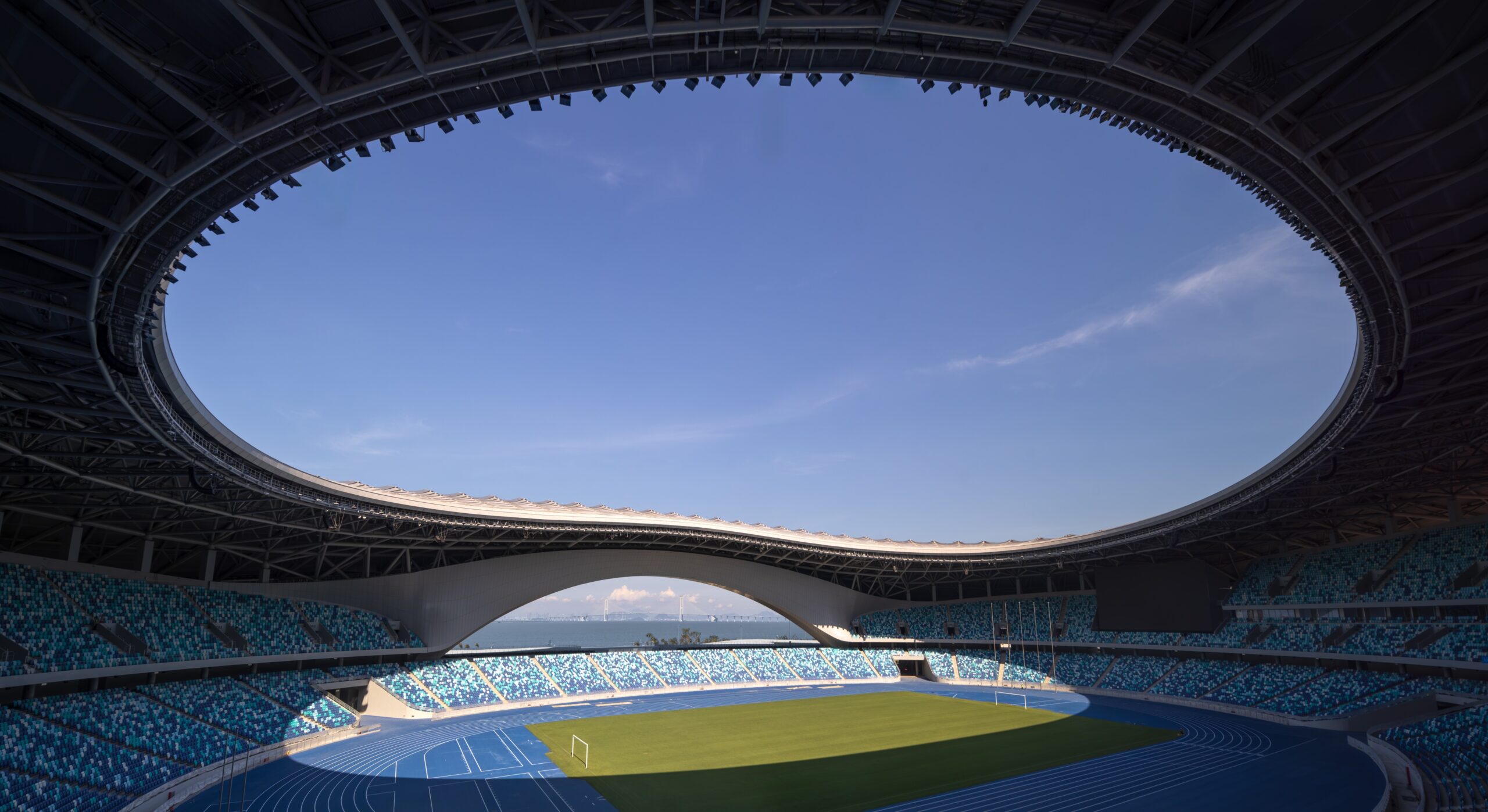
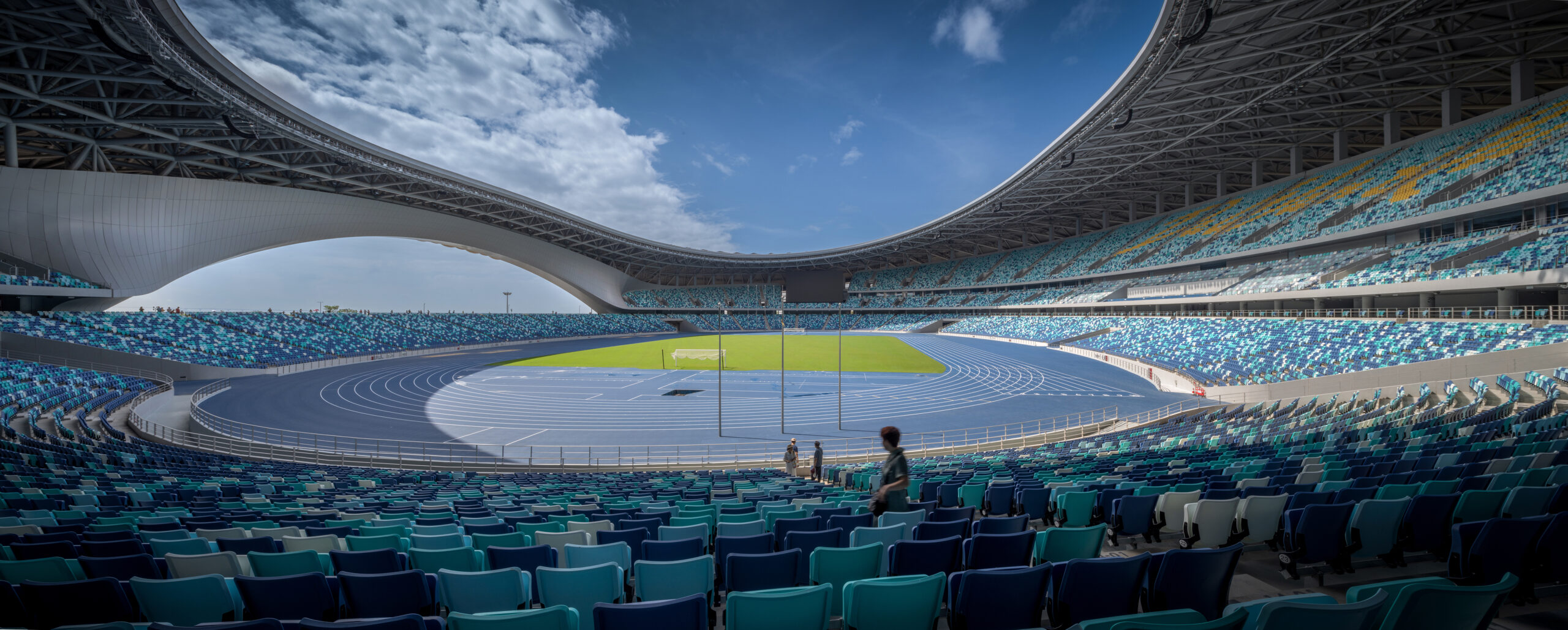
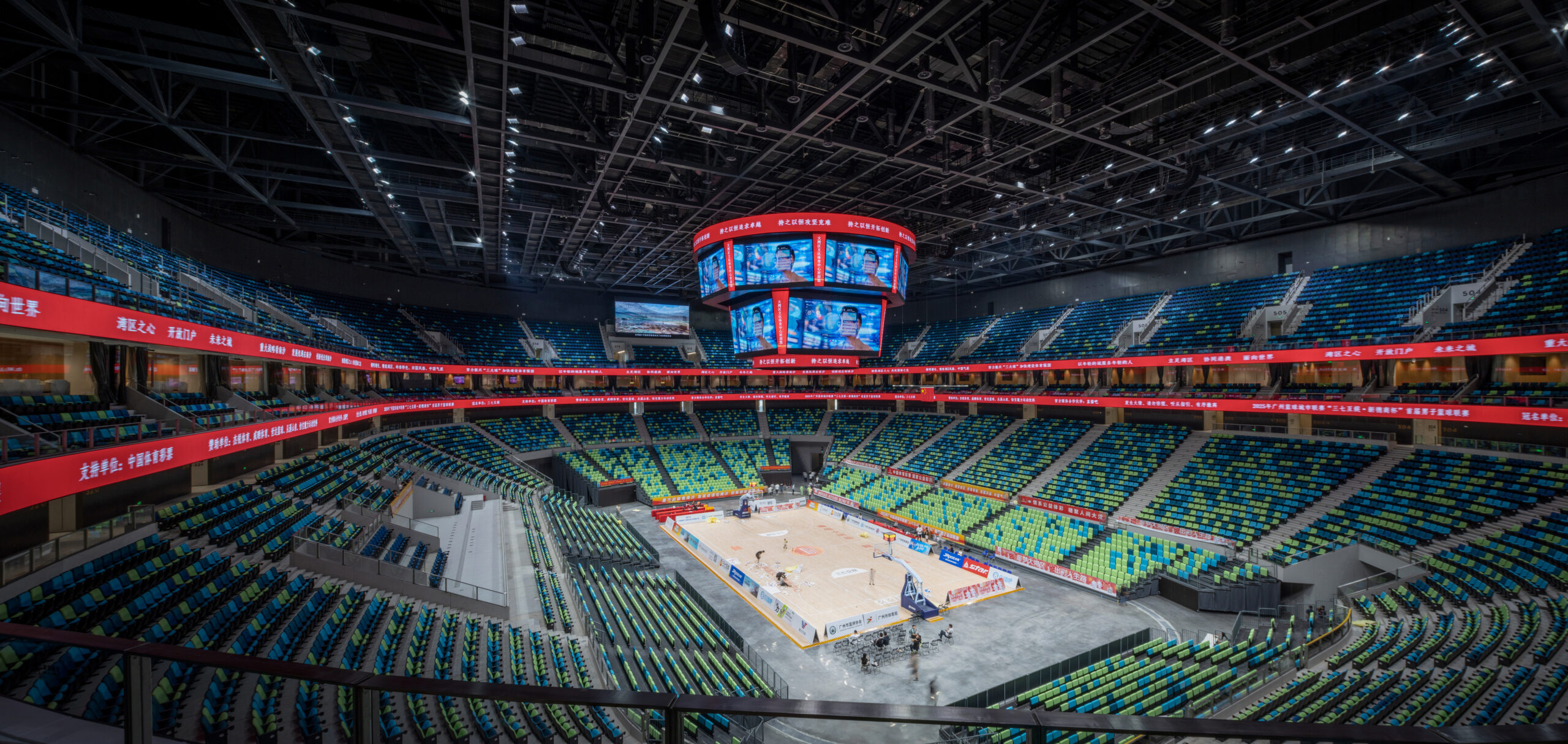
70ヘクタールの公園は、南沙住民に河川沿いの多様な景観空間を提供し、スポーツとレクリエーションを可能にする。施設には、6万人収容のスタジアム、2万人収容の屋内アリーナ(バスケットボール等)、4,000人収容の水泳競技場(50mプールと飛び込み用プールを備える)が含まれる。
このスポーツセンターには選手用宿泊施設をはじめ、広範な付帯施設が整備されている。屋外練習ピッチやランニングトラックは、地域の若年層の健康増進を目的とした学校スポーツ参加促進プログラムを支援する。
©︎ Seilaojiong
©︎ CRLand
洪水対策としてのウォーターフロント公園
広東省の亜熱帯モンスーン気候に位置するこの70ヘクタールのウォーターフロント公園は、地区の洪水対策の重要な要素として設計されており、極端な海面変動時の過剰な水を管理する湿地帯を含む。
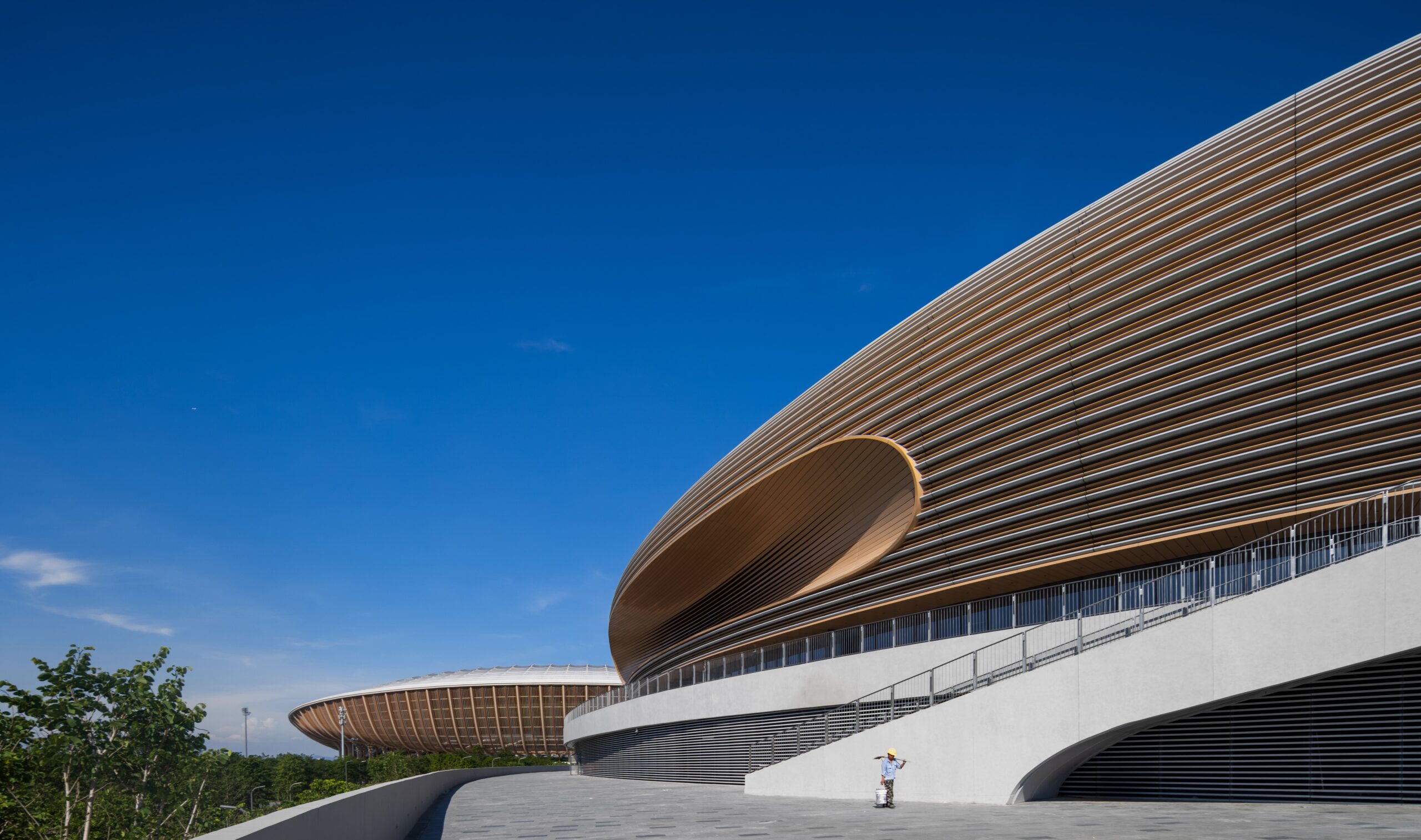
伝統帆船を参照した流線形デザイン
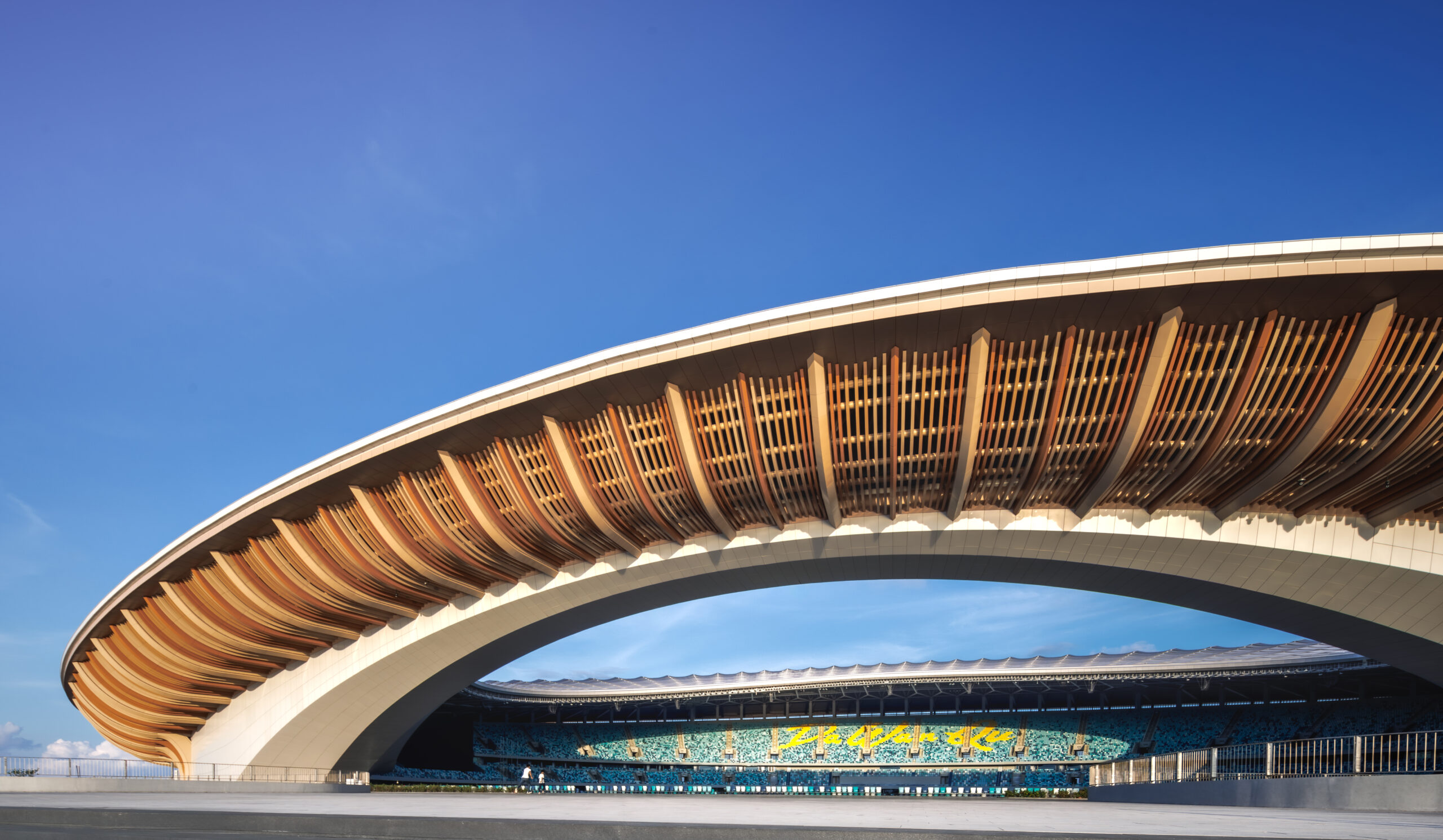
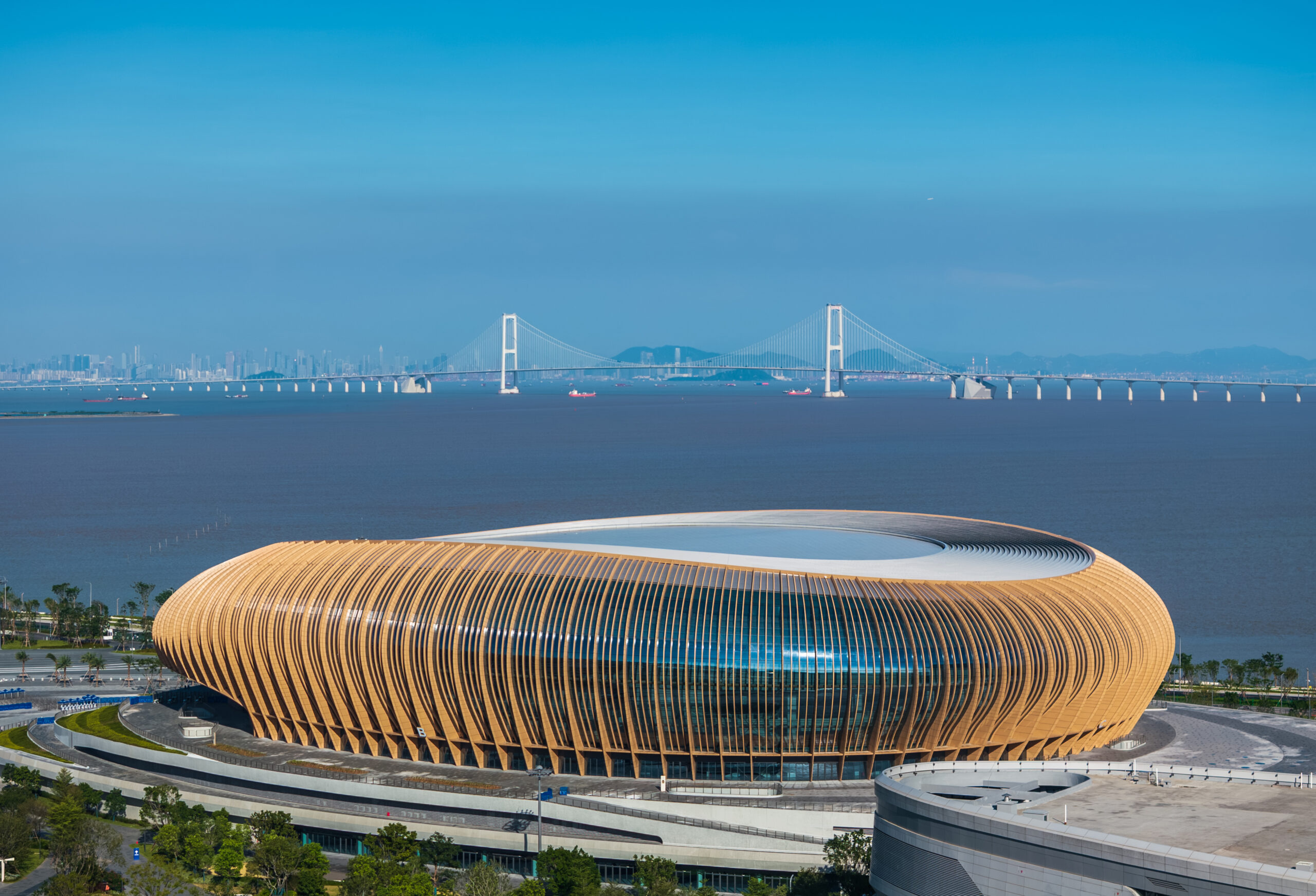
施設の流線形デザインは、約千年前の宋代に設計された地域の伝統帆船の船体に見られる先細りの幾何学形状を反映している。これらの歴史的船舶は珠江を中国の世界への玄関口として確立した。
©︎ Seilaojiong
©︎ CRLand
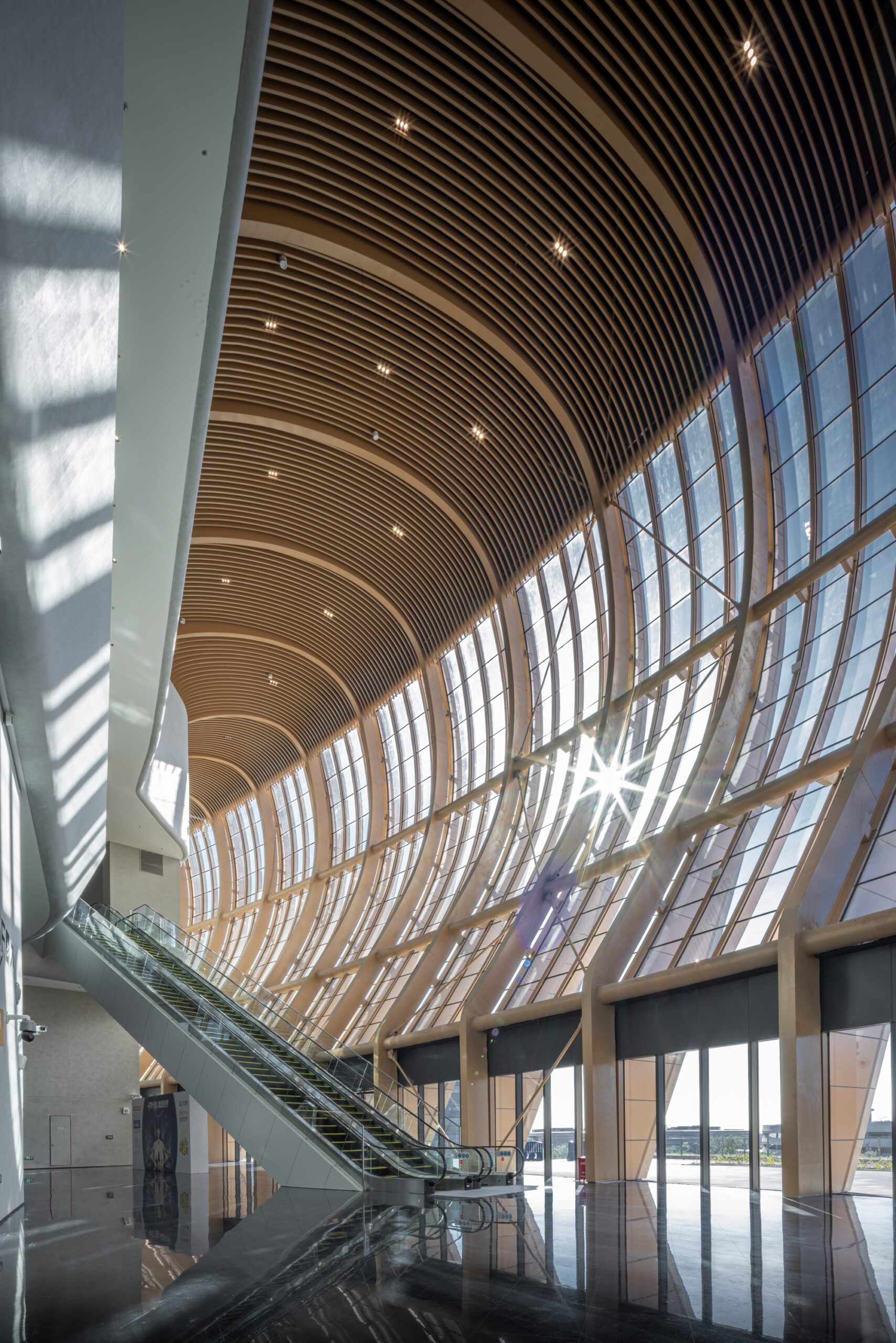
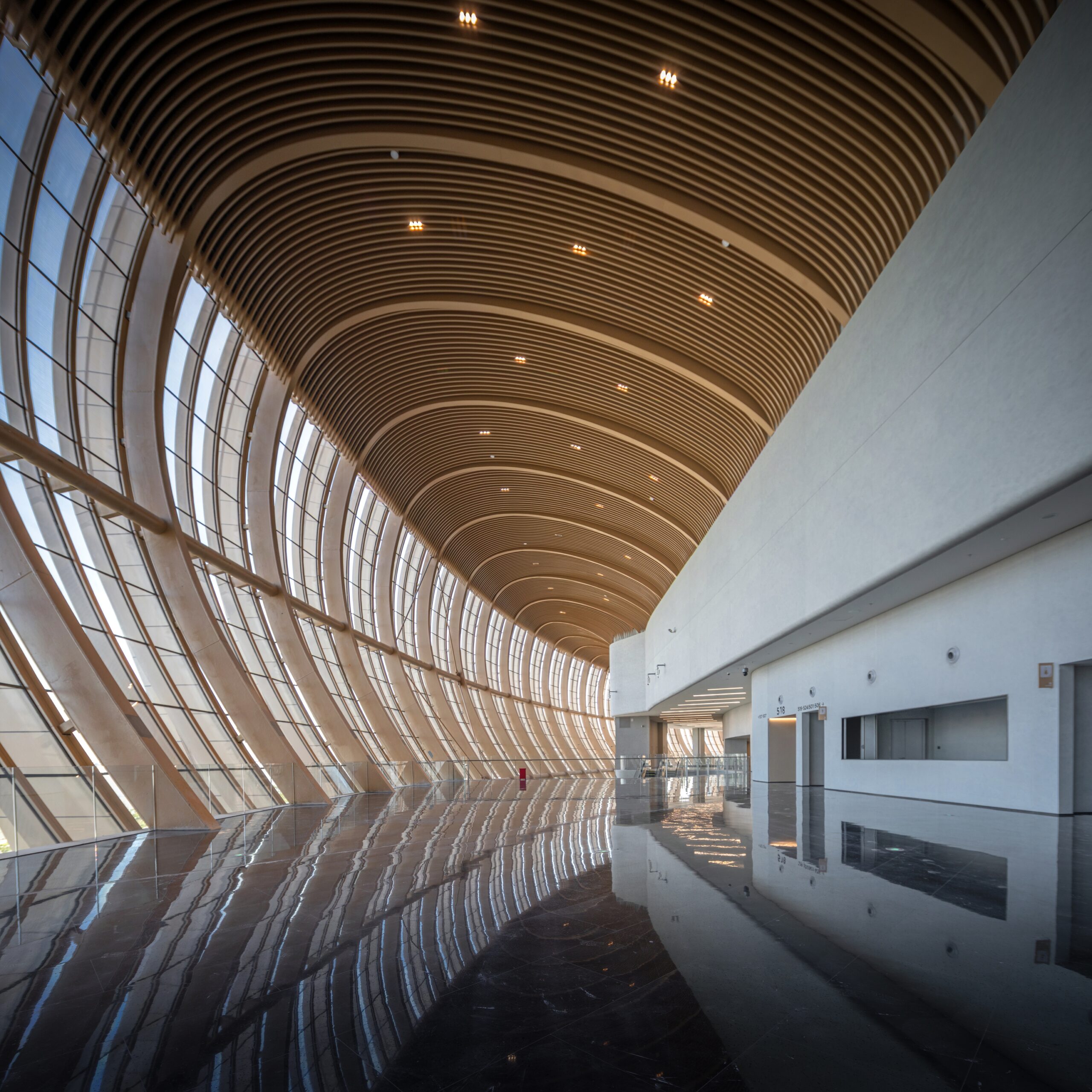
自然換気を促す層状屋根構造
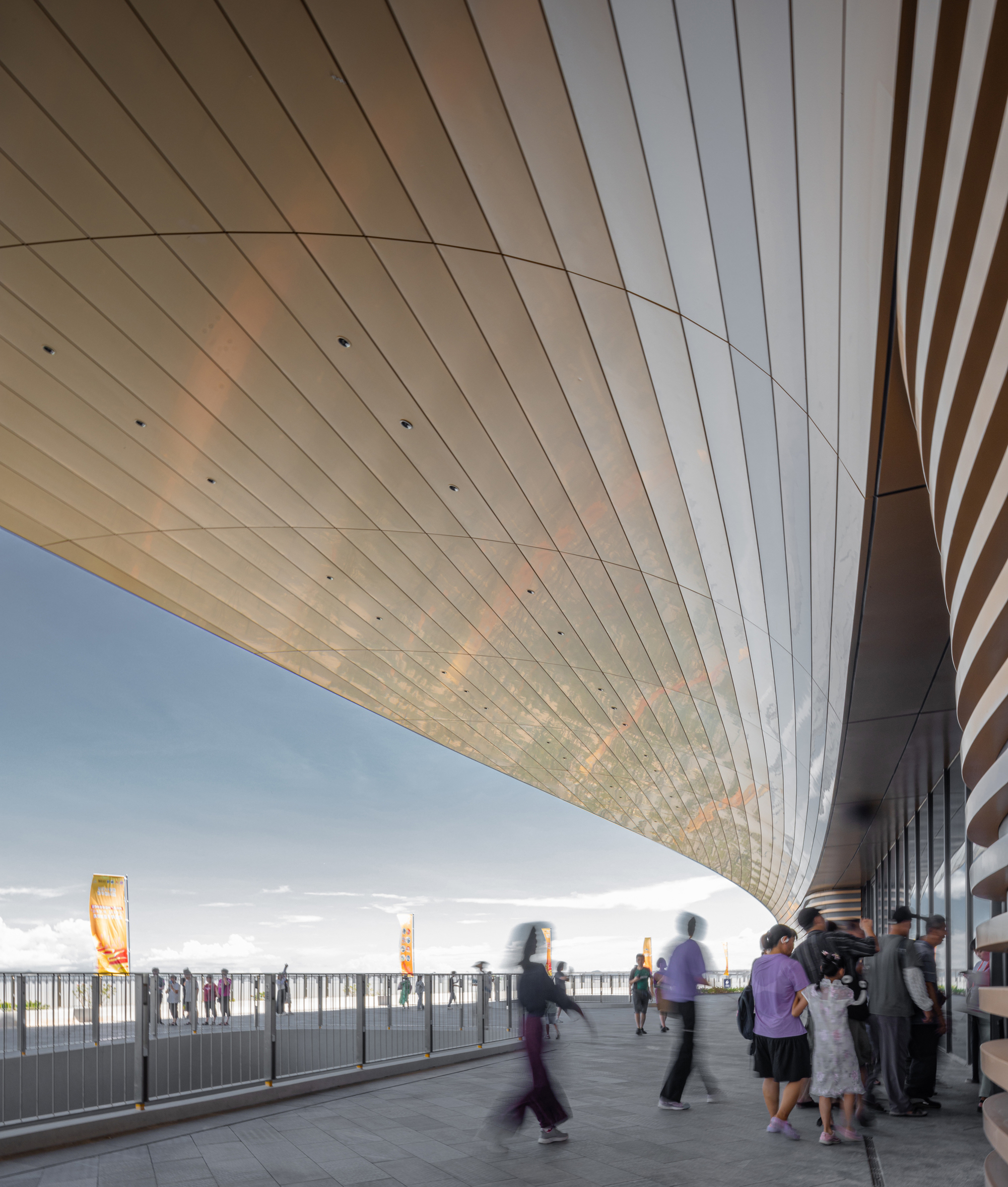
スポーツセンターは、夏季に効果的な自然換気技術で冷却される広々とした遮蔽空間など、嶺南地方の伝統的建築様式から環境コンセプトを取り入れている。
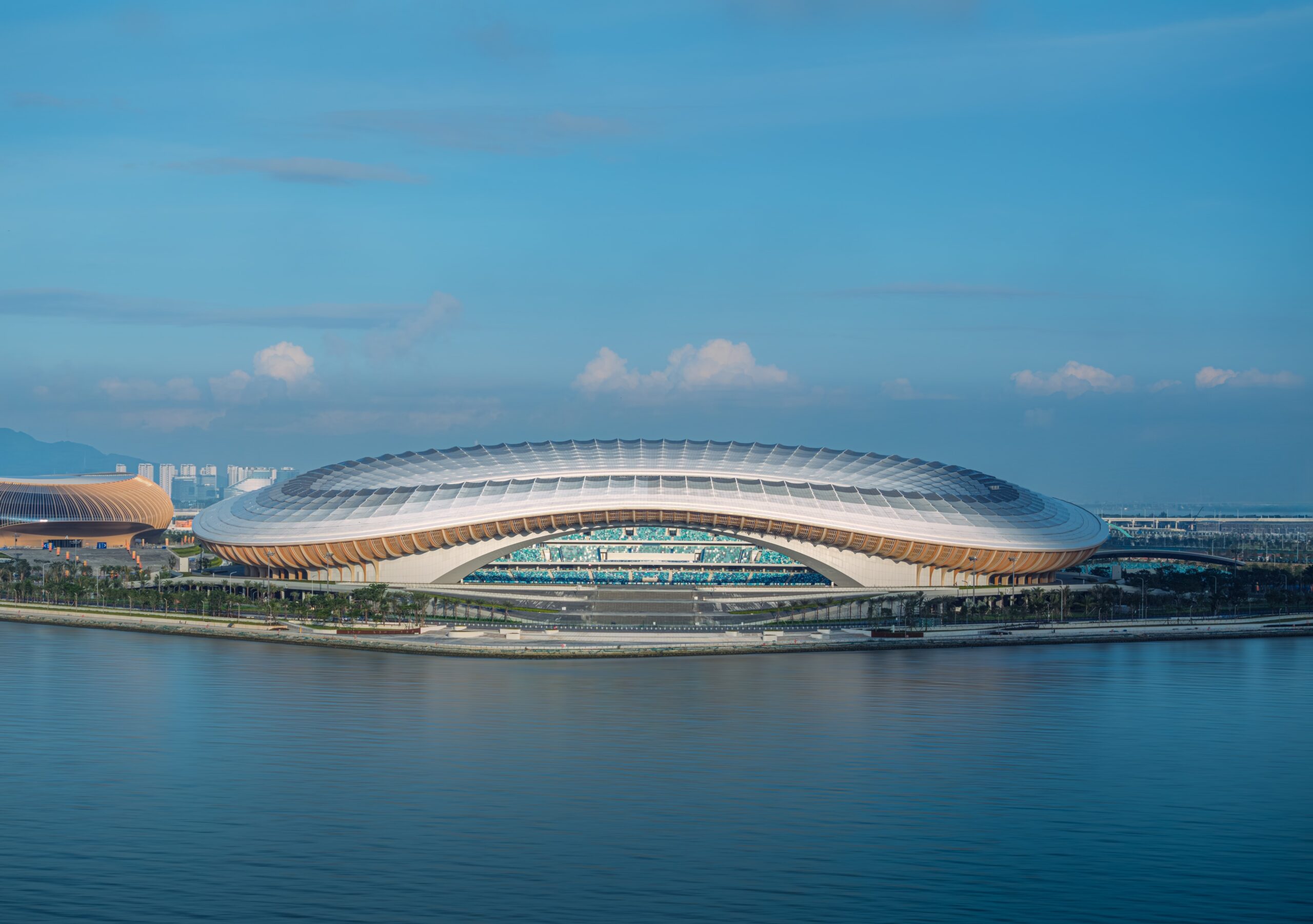
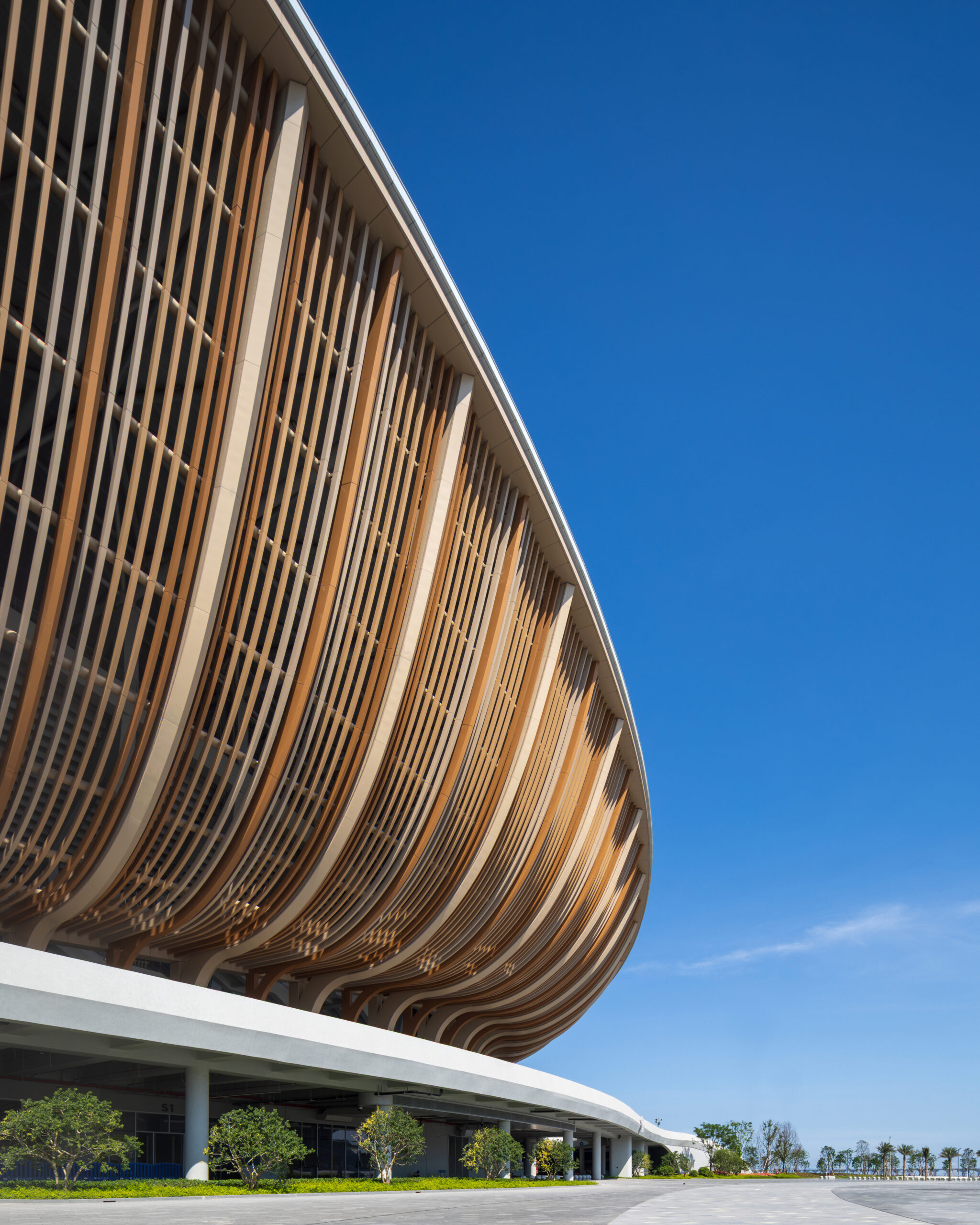
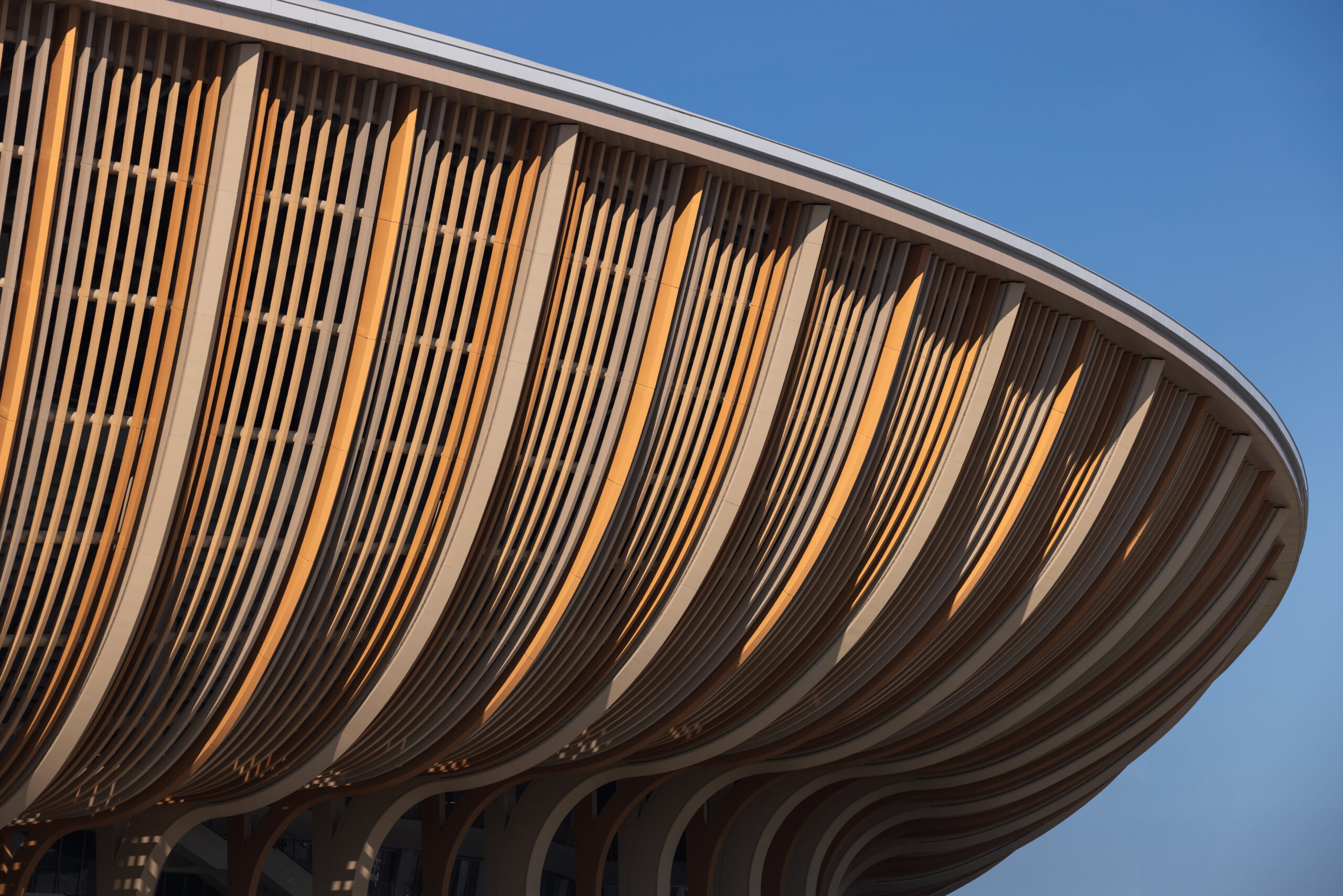
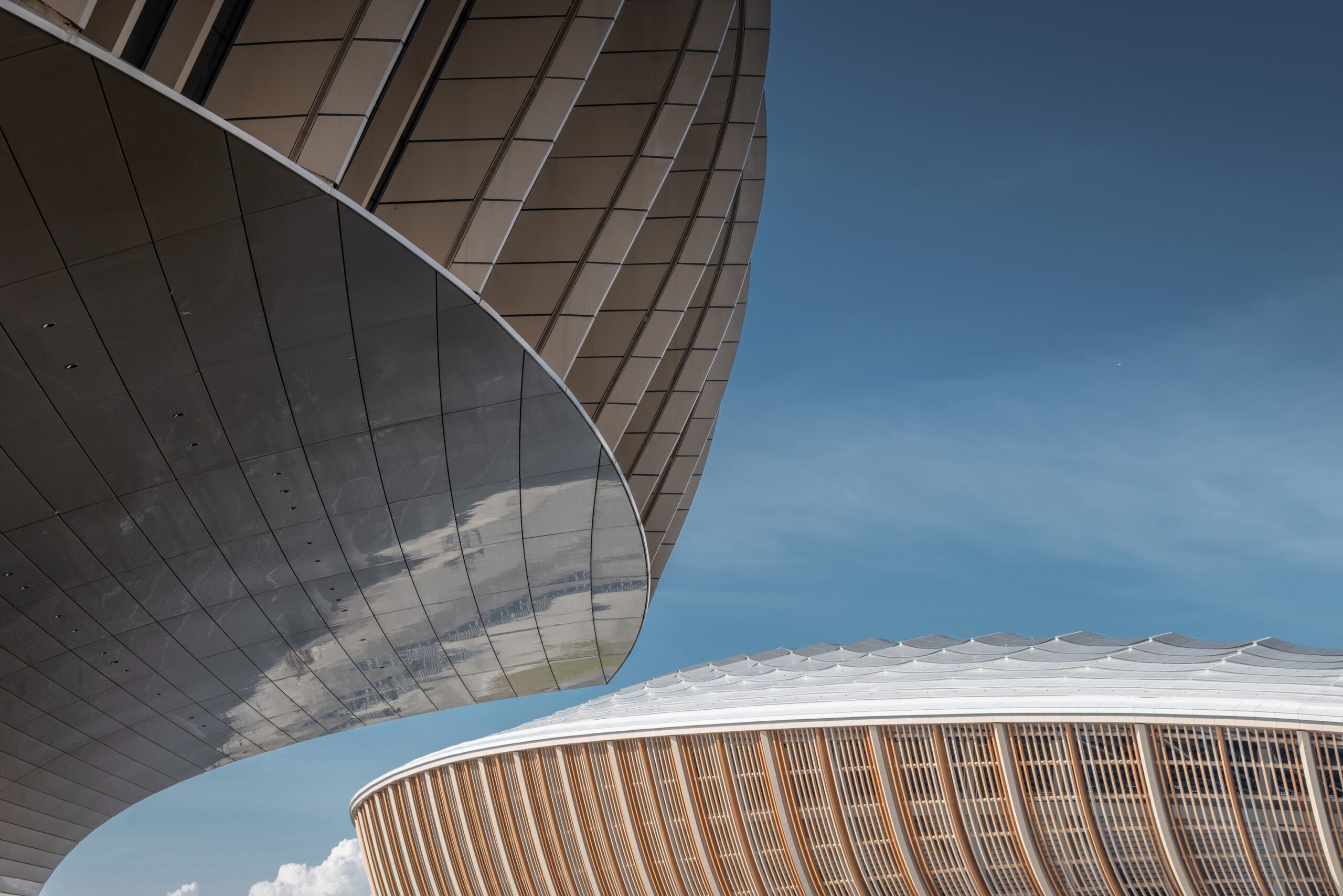
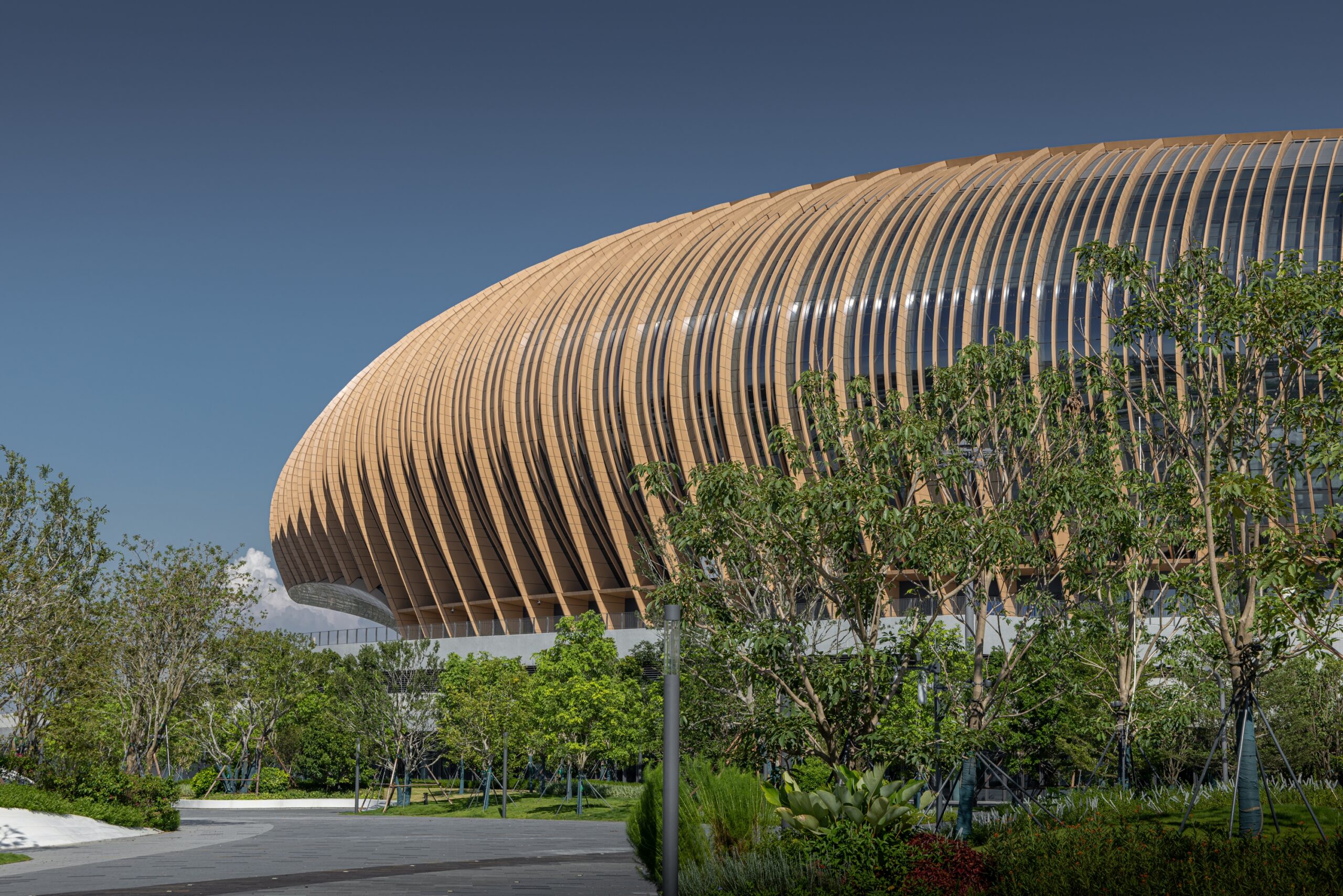
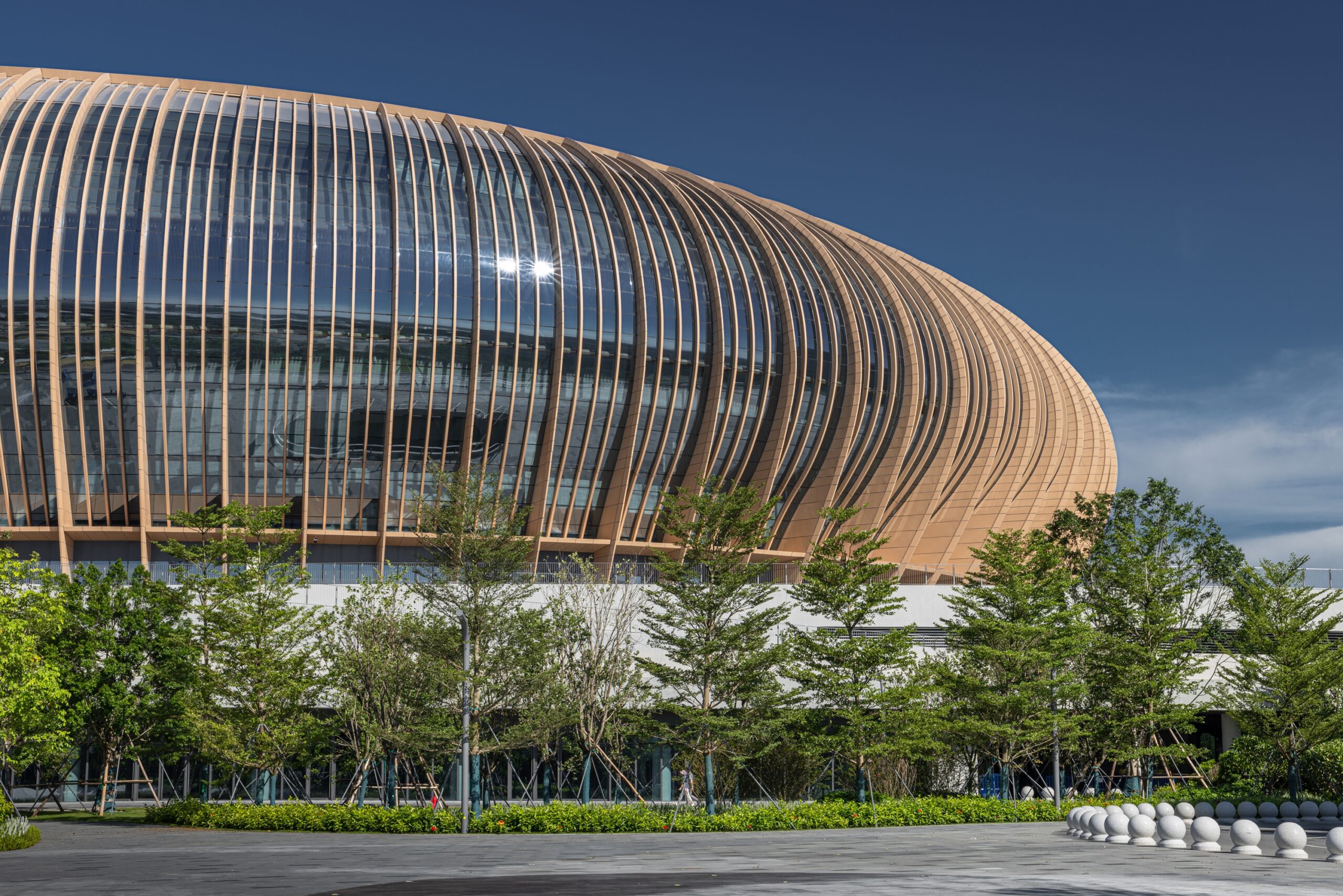
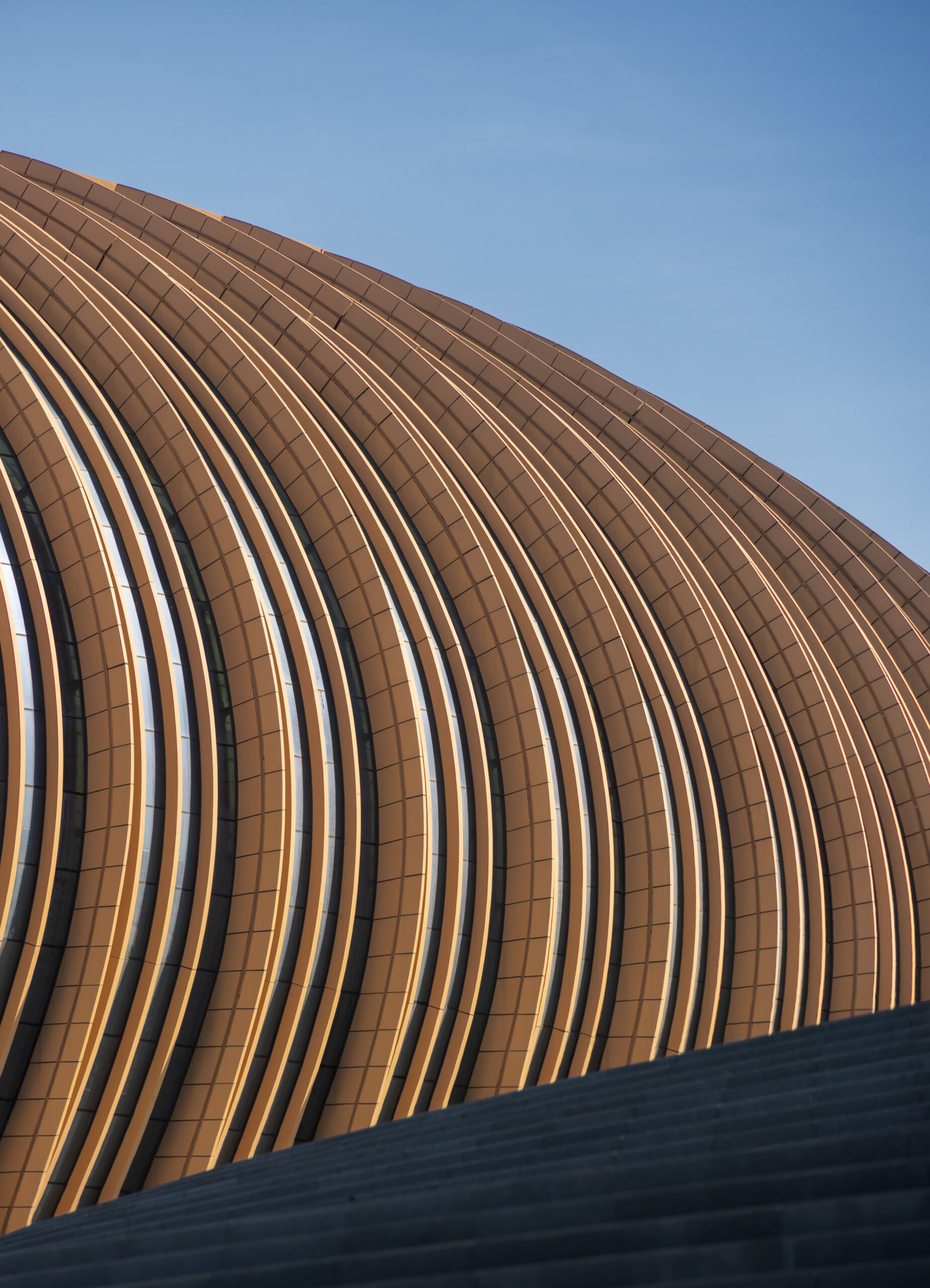
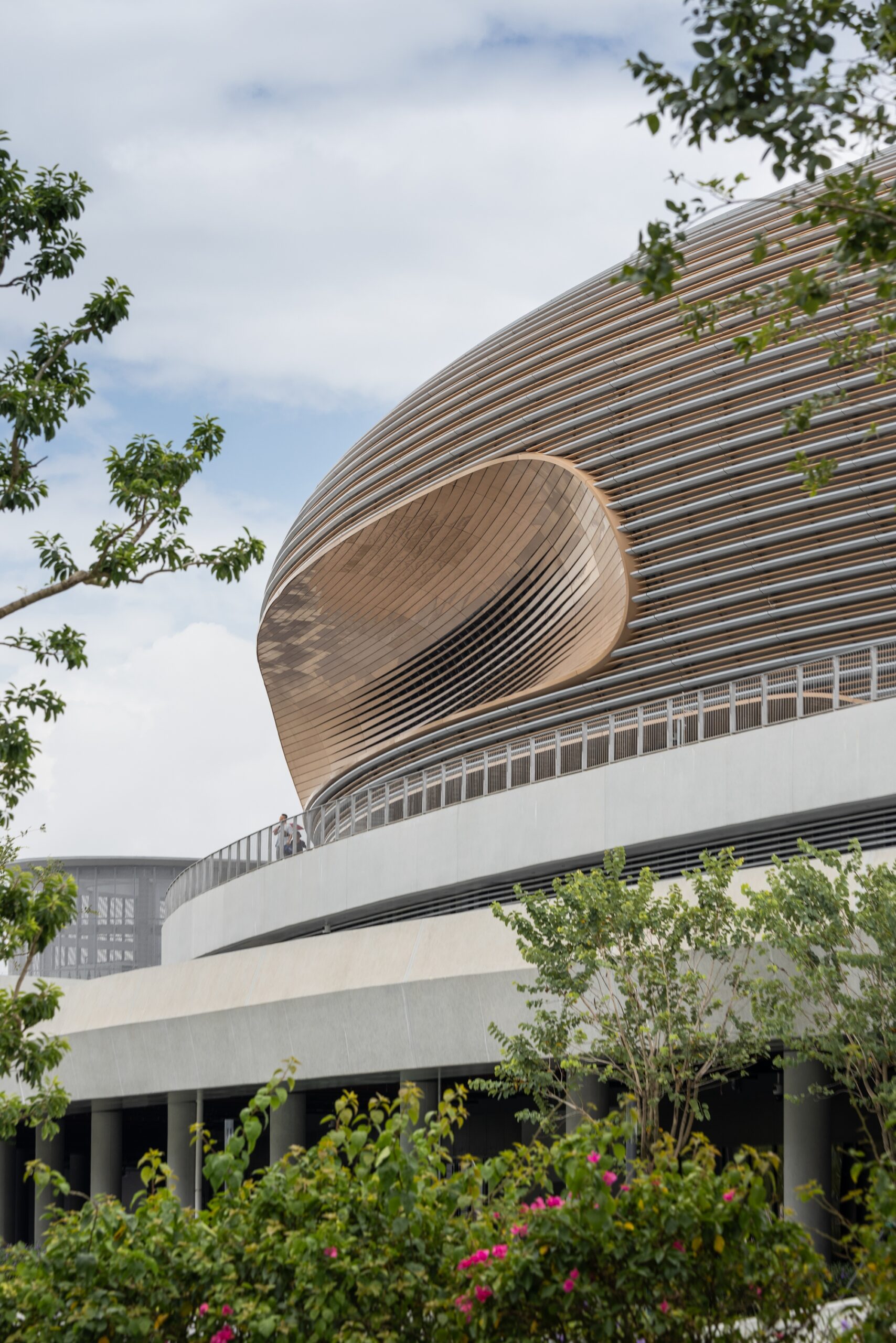
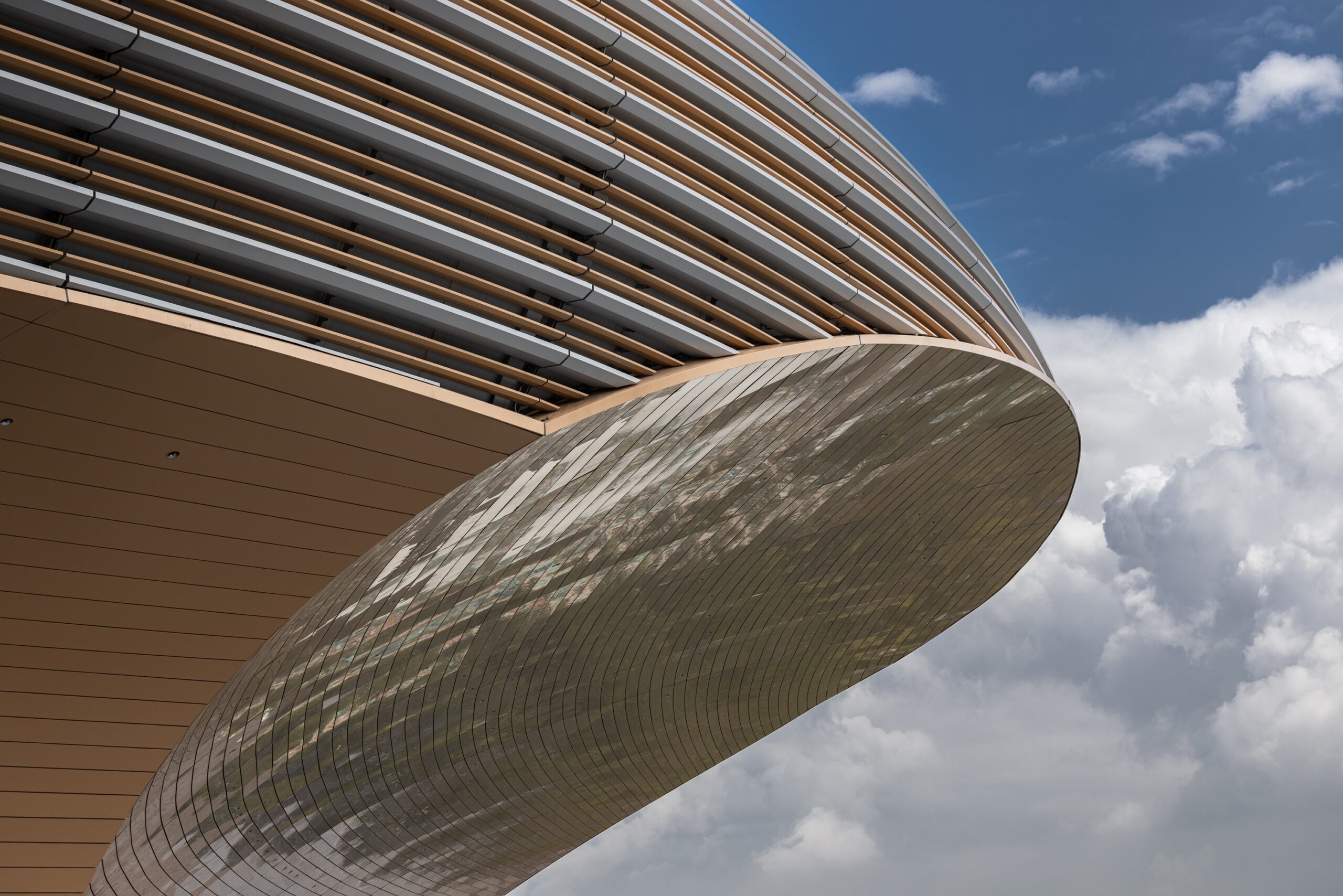
スタジアムの屋根は、6万人の観客を雨や直射日光から遮りつつ、上昇する温かい空気を建物外へ自然排出する多層構造として設計されている。この特徴的な層状屋根はスタジアムを囲み、伝統的な中国扇子のプリーツ構造を模したものである。
©︎ Seilaojiong
グレーターベイエリア北部の玄関口を象徴する建築
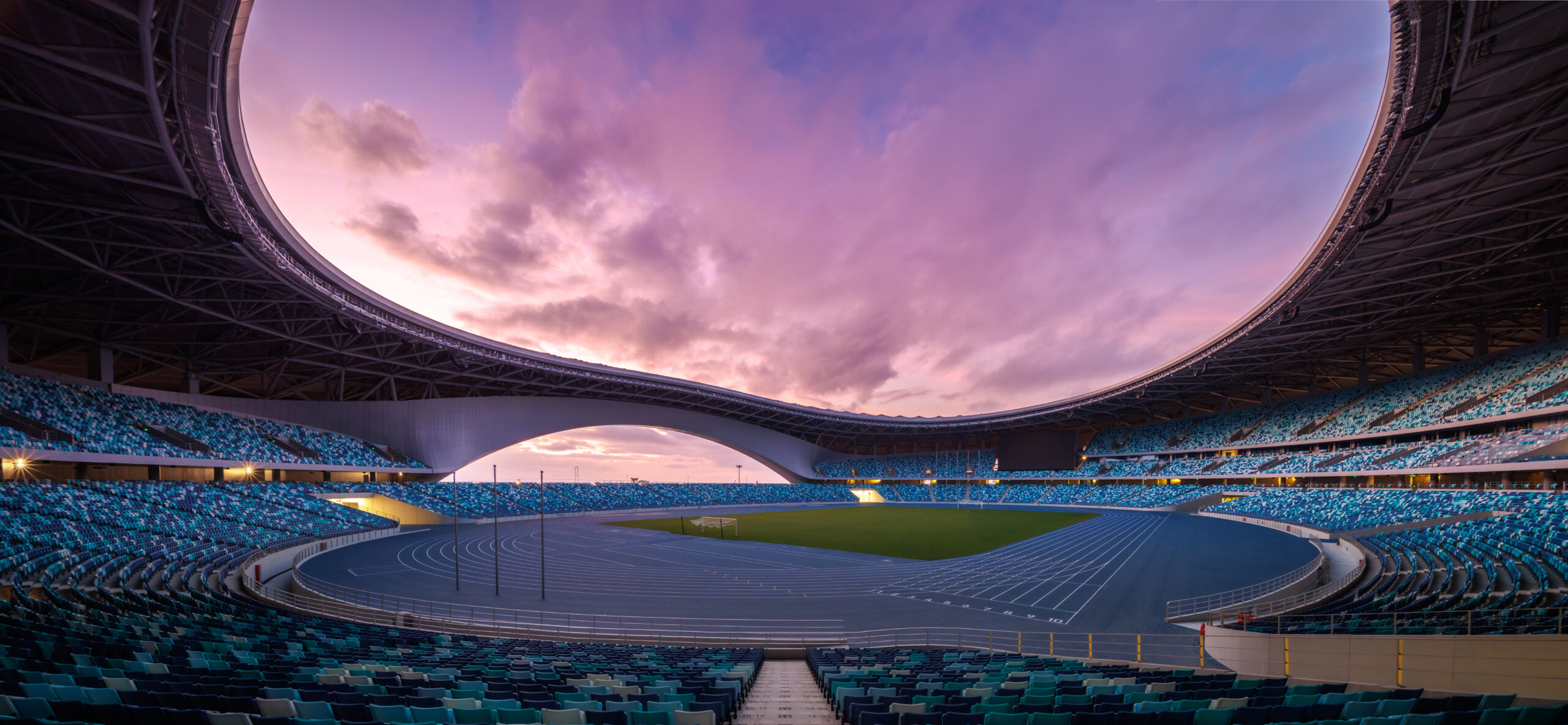
グレーターベイエリアの主要都市を結ぶ深中通道の北側主要アクセス路に位置する本センターは、珠江河畔に佇むことで、広州および大湾区北部地域への玄関口を象徴する建築となっている。
©︎ Seilaojiong
©︎ CRLand
風環境を最適化する建物配置と垂直ルーバー
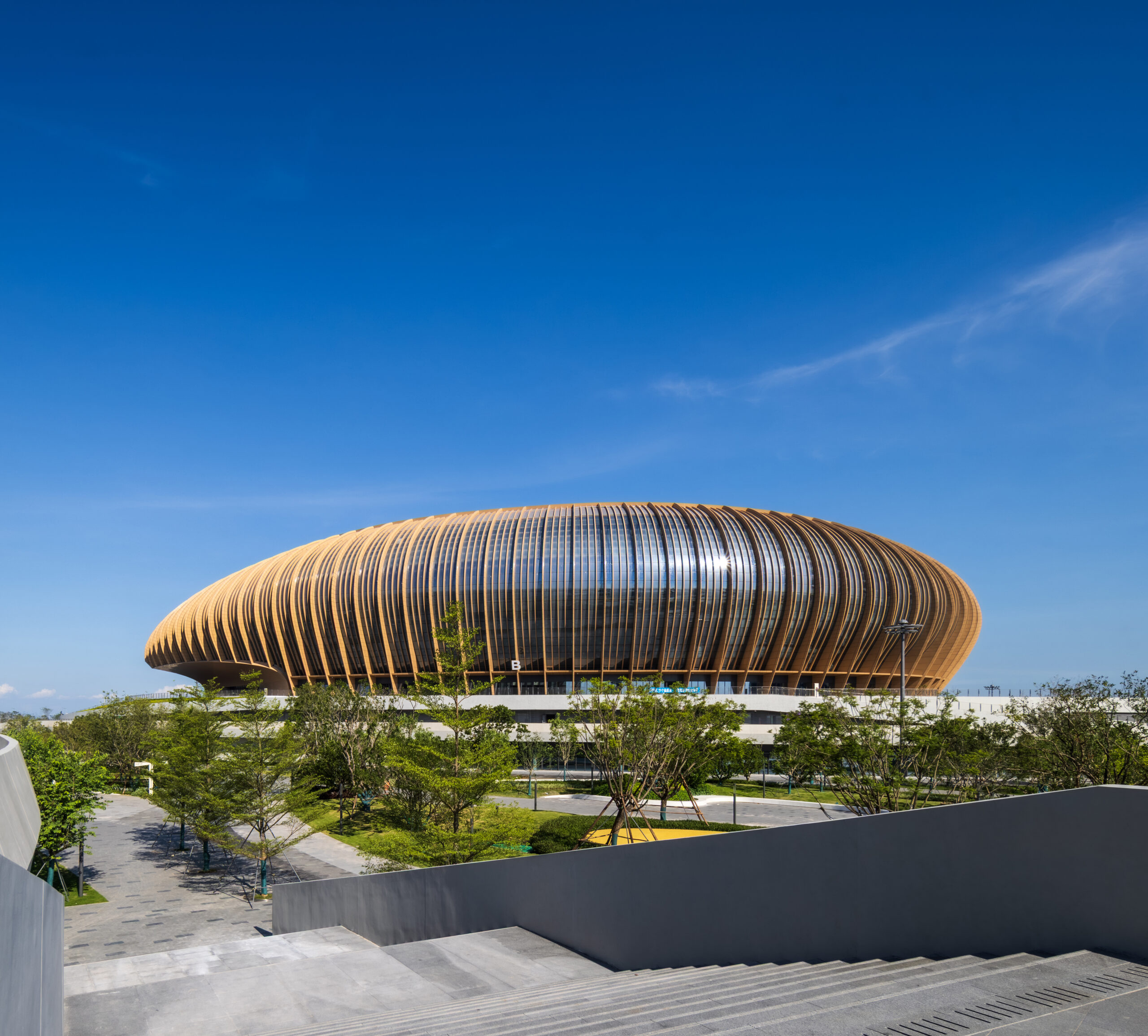
垂直ルーバーのネットワークがセンター内の建物の曲線を定義する。各建物は、詳細なデータ分析と先進的デジタル3Dモデリングに基づき、市民空間における日陰と自然換気を最適化するための構成・方位が決定されており、南シナ海から内陸へ吹く夏の風を取り込む設計となっている。
©︎ Seilaojiong
競技・文化公演に対応する可変スタジアム
6万人収容のスタジアムの観客席は、各種スポーツイベントに最適化された観戦環境を提供できるよう調整可能である。選手の見やすさと熱気あふれる観戦体験を実現しつつ、年間を通じて多用途に対応する柔軟性を備える。
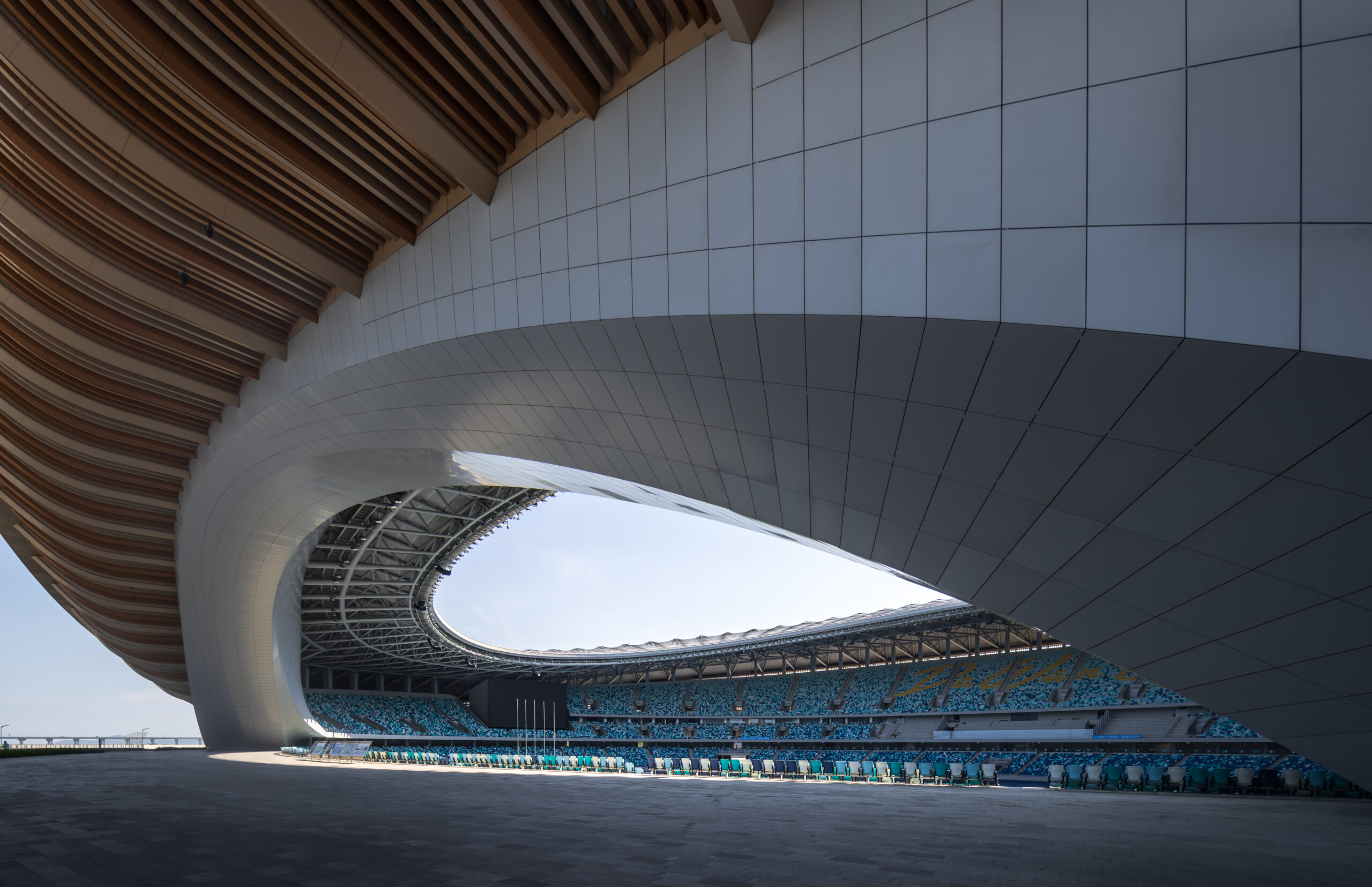
また、文化公演時には観客がステージに向き合う構成が可能であり、舞台背景には独特の景観を組み込む。設計上の巨大なアーチ構造は、珠江河口からの冷たい海風をスタジアム内に導き、競技者と観客を涼ませると同時に、スポーツ・文化イベント中に河川の眺望を提供し、観客と河畔環境を直接結びつける役割を果たす。
2023年の国際設計コンペティションを経て南沙区文化体育局より委託された本施設は、ザハ・ハディド・アーキテクツが広東省建築設計研究院と共同で設計を担当した。
©︎ Seilaojiong
©︎ Seilaojiong
©︎ CRLand
©︎ CRLand
©︎ Seilaojiong
©︎ CRLand
©︎ CRLand
©︎ CRLand
©︎ Seilaojiong
©︎ CRLand
©︎ CRLand
©︎ CRLand
©︎ Seilaojiong
©︎ Seilaojiong
©︎ Seilaojiong
©︎ Seilaojiong
以下、ザハ・ハディド・アーキテクツのリリース(英文)です。
Greater Bay Area Sports Centre to host inaugural events
The Greater Bay Area Sports Centre will host its first large-scale events with a series of four sold-out concerts beginning 5th December 2025.
The new sports centre serves cities within the Pearl River Delta including Guangzhou, Shenzhen, Hong Kong and Macau which comprise the Greater Bay Area—the world’s largest conurbation, with its population anticipated to reach 100 million by 2030.
Situated in the south of Guangzhou’s Nansha District on the western bank of the river delta, the sports centre will anchor a new civic, business and residential quarter at the heart of the Greater Bay Area.
Offering its local community sports facilities of the highest standards, the centre has also been designed to host a diverse programme of major national and international sporting events, as well as cultural performances, that can be easily accessed by all residents of the Greater Bay Area via Line 18 of the Guangzhou Metro and the new Shenzhen-Zhongshan Bridge.
In addition to providing exceptional facilities for use by Nansha’s local schools and sports clubs, the centre will continue China’s ongoing sports development programmes at regional and national levels. Providing the essential infrastructure for competitive athletes including those participating in all track and field events, the centre’s design optimises Nansha’s warm winters to create the ideal outdoor training facilities and conditions to foster future legacies.
The centre’s 70-hectare park gives Nansha’s residents a variety of landscaped spaces on the banks of the river for sports and recreation, and incorporates a 60,000-seat stadium, a 20,000-seat arena for basketball and other indoor events, as well as a 4,000-seat aquatic centre with 50-metre swimming pool and diving well for training and competition.
The sports centre also provides extensive supporting facilities including athletes’ accommodation, as well as outdoor training pitches and running tracks that will support local government programmes which encourage increased sports participation in its schools to enhance the well-being of the region’s younger generations.
Located within Guangdong’s subtropical monsoon climate, this 70-hectare waterfront park has been designed as an integral element of the district’s flood protection measures and will include wetlands that manage excess water during extreme sea-level fluctuations.
The fluid forms of the centre’s architecture echo the tapering geometries evident in the hulls of the region’s traditional sailing ships that were initially designed during the Song Dynasty approximately a thousand years ago. These historic vessels established the Pearl River as China’s gateway to the world.
The sports centre also integrates environmental concepts from the local Lingnan vernacular architecture that include generous areas of sheltered spaces cooled with effective natural ventilation techniques during the region’s humid subtropical summer months.
The stadium’s roof has been designed as a system of layers that shelter the 60,000 spectators from rain and direct sunlight while also enabling rising warm air to be naturally vented outside the building envelope. This distinctive layered roof encircles the stadium, emulating the pleated silk structures of traditional Chinese fans.
Located on the primary approach from the north to the Shenzhen-Zhongshan Bridge which connects the Greater Bay Area’s major urban cities, the sports centre’s architecture on the banks of the Pearl River marks the gateway to Guangzhou and the districts of the northern Greater Bay Area.
A network of vertical louvres defines the curvatures of each building within the centre. Informed by detailed data analytics and advanced digital 3D-modelling to optimise shading and natural ventilation within their civic spaces, each building’s composition and orientation has been designed to encourage cooling by the prevailing summer winds that blow inland from the South China Sea.
Hosting 60,000 spectators for a variety of different sports, the stadium’s seating bowl can be adjusted to provide ideal spectator conditions for each specific event; ensuring optimal views of the athletes and the most exciting event atmosphere, together with maximum flexibility for differing uses throughout the year.
The stadium can also be configured for cultural performances with spectators facing a stage that includes a unique backdrop. The grand arch within the design permits colder sea air from the Pearl River estuary to enter the stadium—cooling athletes and spectators while also giving views of the river during sports and cultural events, establishing a direct connection between spectators and the stadium’s riverside setting.
Commissioned by the Nansha District Bureau of Culture & Sports following the 2023 international design competition, the centre has been designed by Zaha Hadid Architects in collaboration with the Guangdong Architectural Design & Research Institute.
Architect: Zaha Hadid Architects (ZHA)
Design: Patrik Schumacher
ZHA Project Directors: Lei Zheng, Nils Fischer
ZHA Project Associates: Jinqi Huang, Vishu Bhooshan, Jakub Klaska
ZHA Project Architect: Hung-da Chien
ZHA Project Team: Teodor Andonov, Shajay Bhooshan, Taizhong Chen, Heba Eiz, Vegard Elseth, Matthew Gabe, Sonia Magdziarz, Ling Mao, Keerti Manney, Xin Swift, Ke Yang, Chris Whiteside, Svenja Siever, Tul Srisompun
ZHA Competition Team: Luca Bacilieri, Niran Buyukkoz, Junfei Chen, Nils Fischer, Matthew Gabe, Jakub Klask , Han Hsun Hsieh, Jingwen Yang, Paul Joseph, Shuaiwei Li, Juan Liu, Sonia Magdziarz, Yuling Ma, Satoshi Ohashi, Michael On, Xin Swift, Ceren Tekin, Ke Yang, Bo Zhang, Chu Zhou, Lei ZhengCompetition Sports Consultant: Clive John Lewis
Competition Consortium Member: Guangzhou Architectural Design & Research InstituteConsultants
Executive Architect: Guangdong Architectural Design & Research Institute Group Co.ltd (GDAD), China Southwest Architectural Design and Research Institute (CSWADI)
Structural Engineers: GDAD, CSWADI
General Contractor: China Construction Eighth Engineering Division & China Construction Third Engineering Division
Façade Engineering: RFR(Rice Francis Ritchie sarl) Engineers, GDAD, CSWADI
M&E Engineering: GDAD, CSWADI
Landscape Consultant: AECOM
Lighting Design: Lichtvision Design & Tsinghua Urban Planning and Design Institute (THUPDI)
Site Supervision: Guangzhou Runhe Consulting, Guangzhou Pearl River Supervision and Consulting Group, Guangzhou Construction Engineering Supervision Co.
ザハ・ハディド・アーキテクツ 公式サイト
https://www.zaha-hadid.com/2025/11/25/greater-bay-area-sports-centre-to-host-inaugural-events/
【購読無料】空間デザインの今がわかるメールマガジン TECTURE NEWS LETTER
RECOMMENDED ARTICLE