CULTURE

©︎ Ernest Theofilus
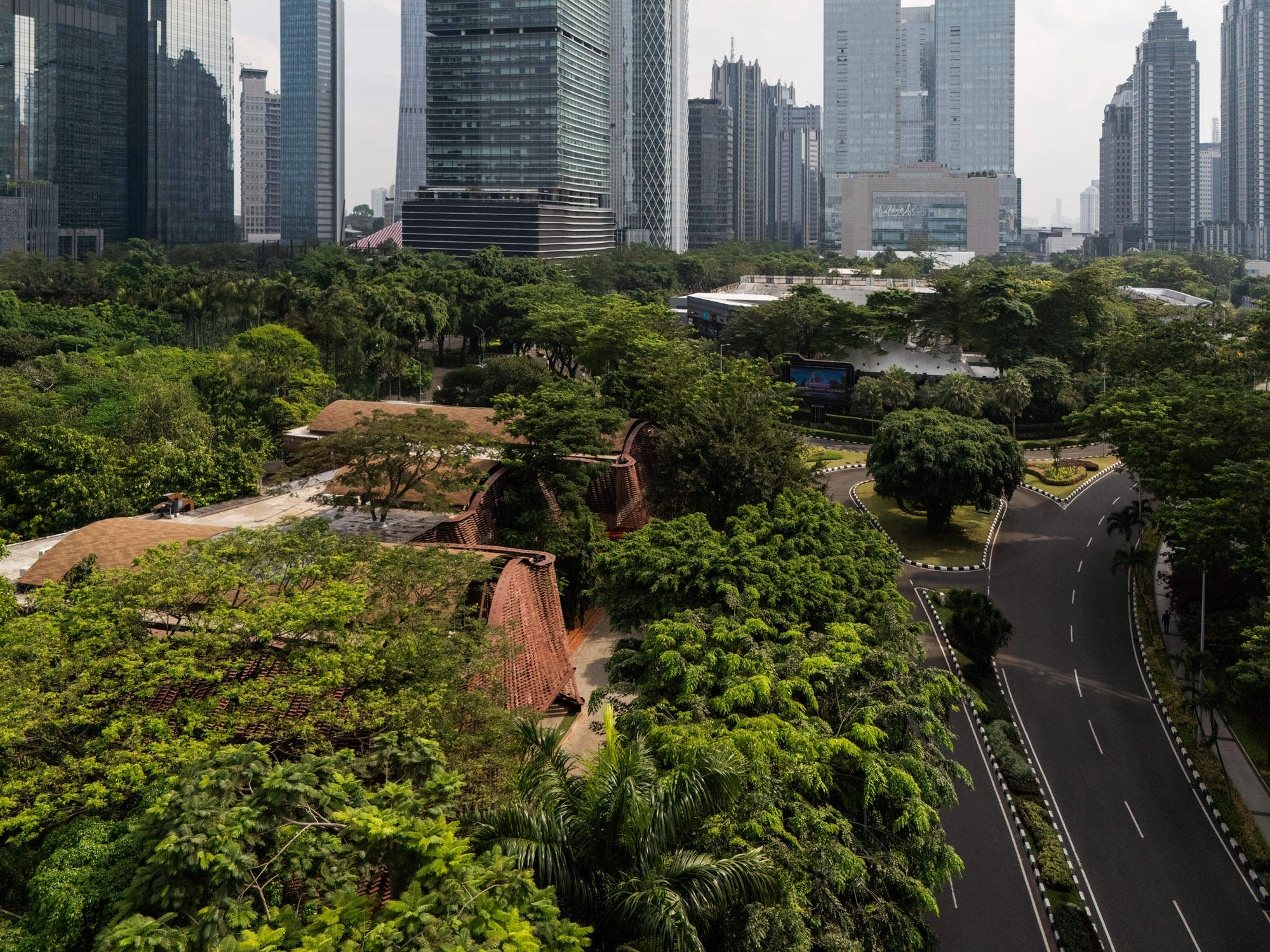
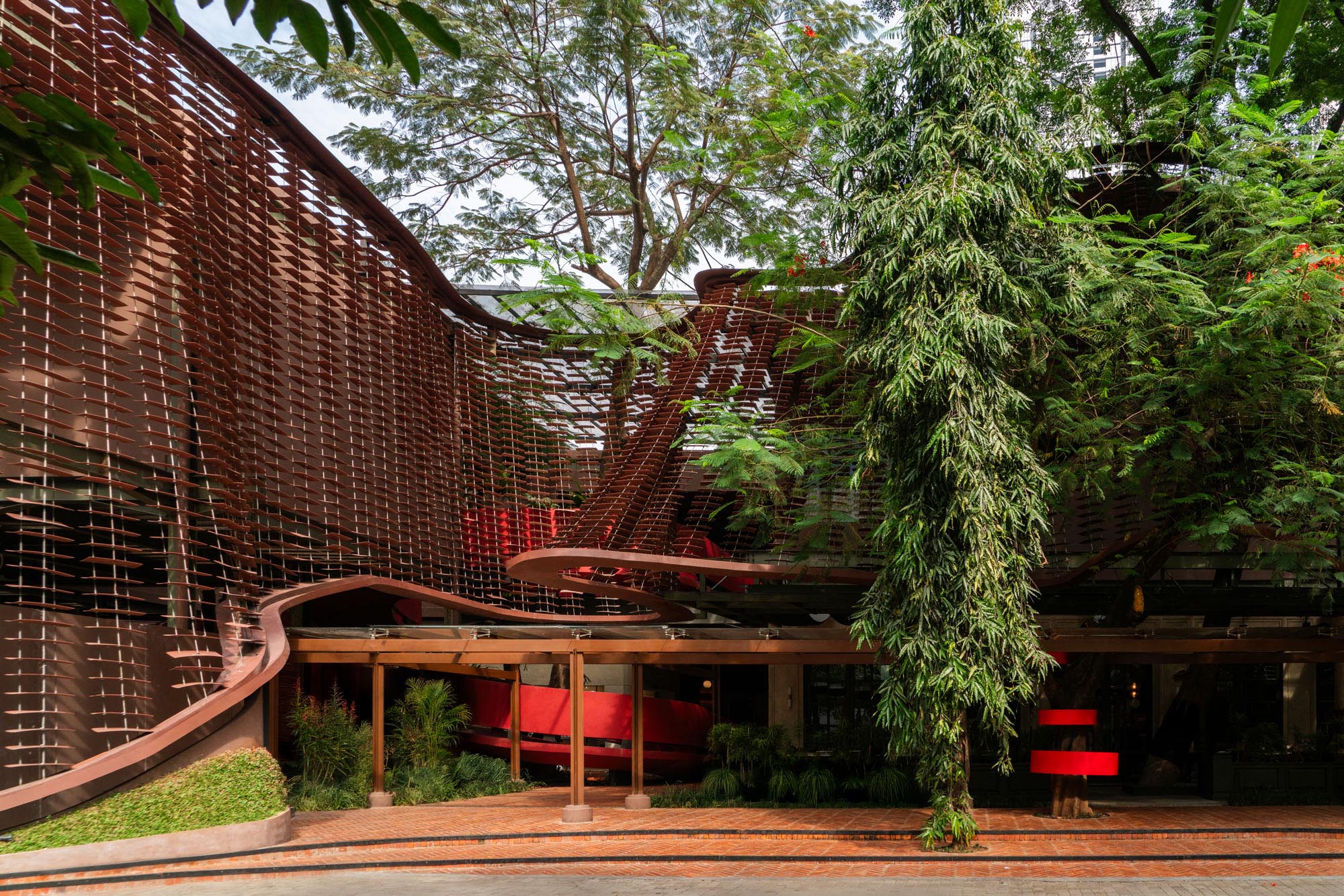
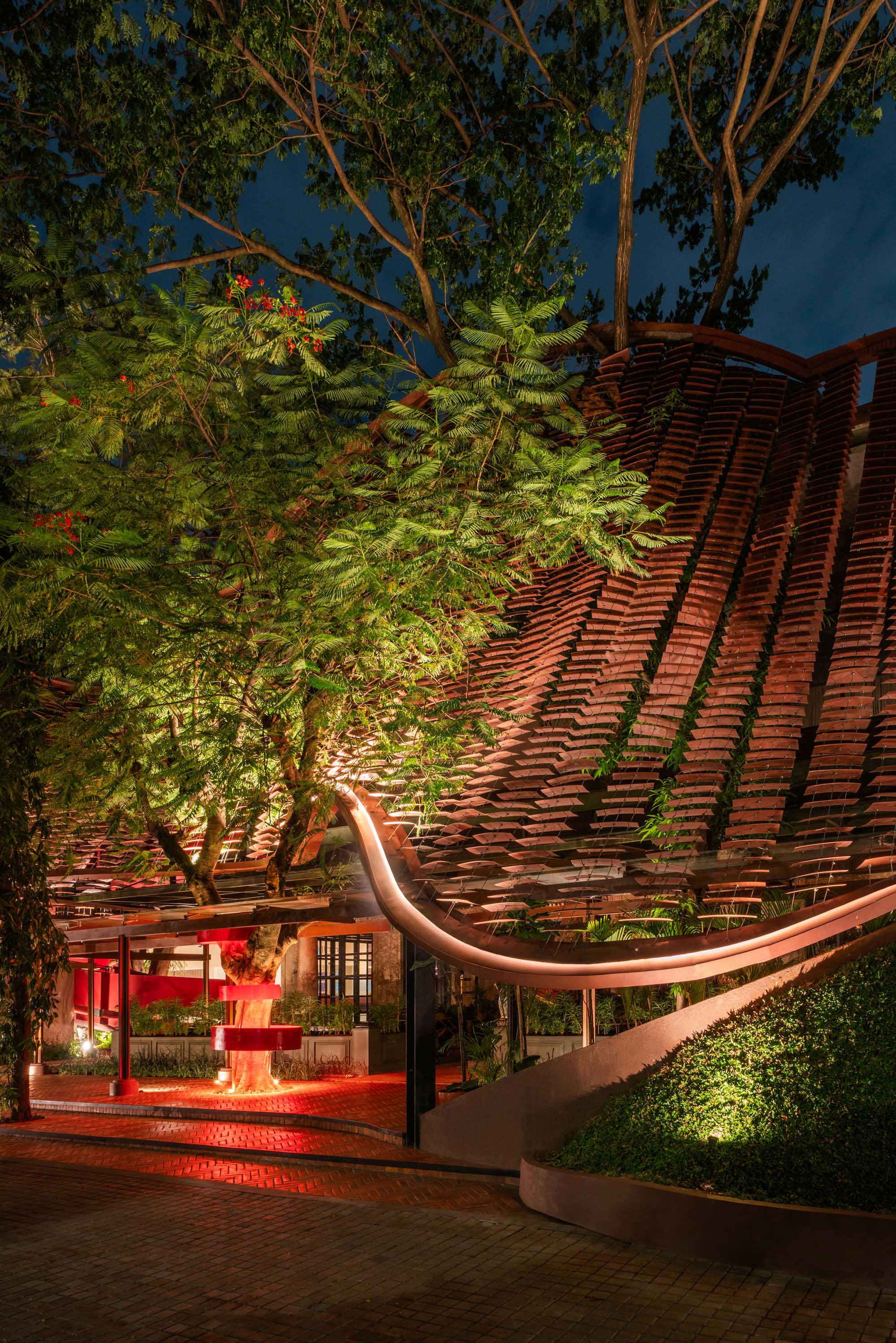
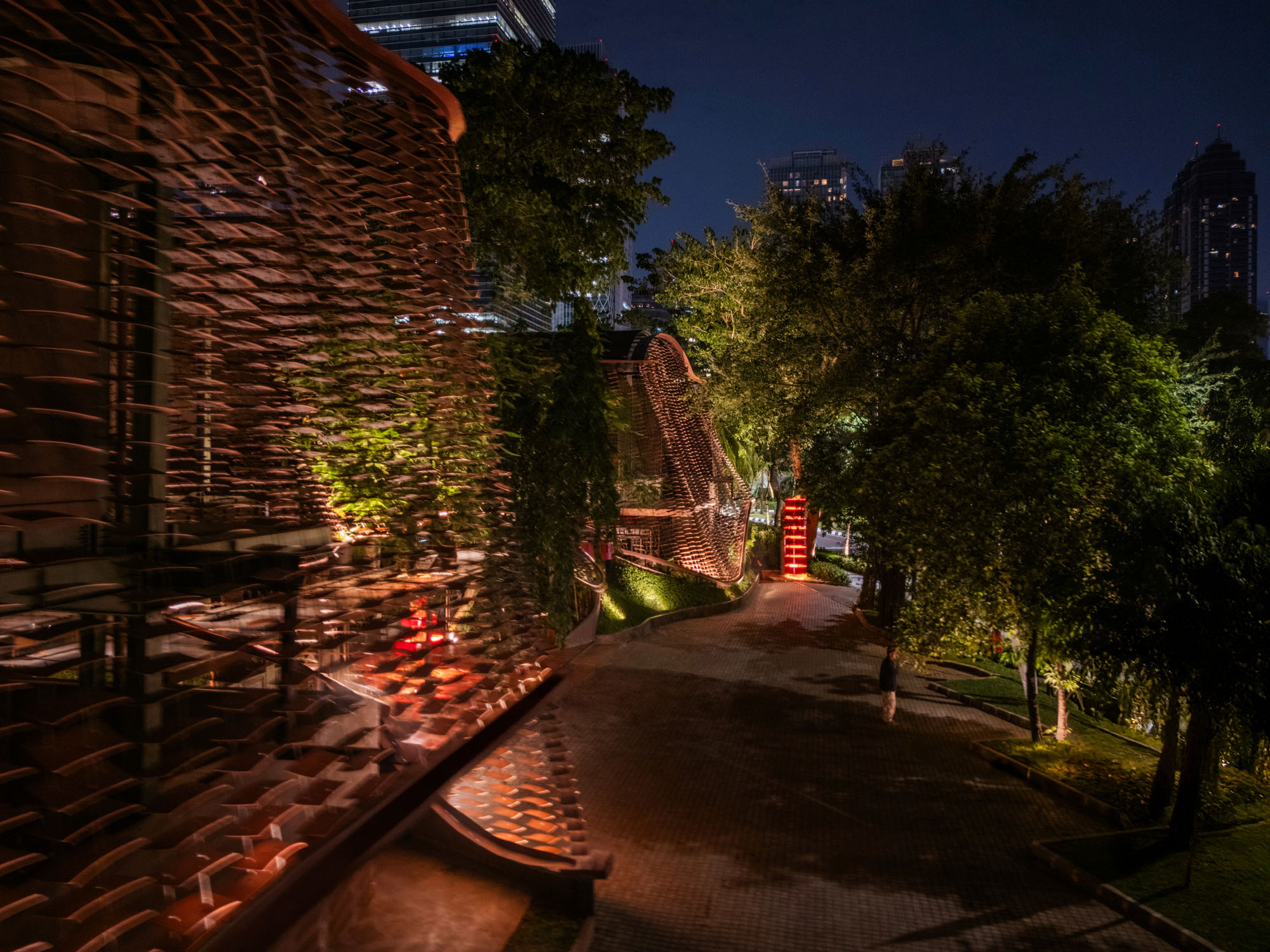
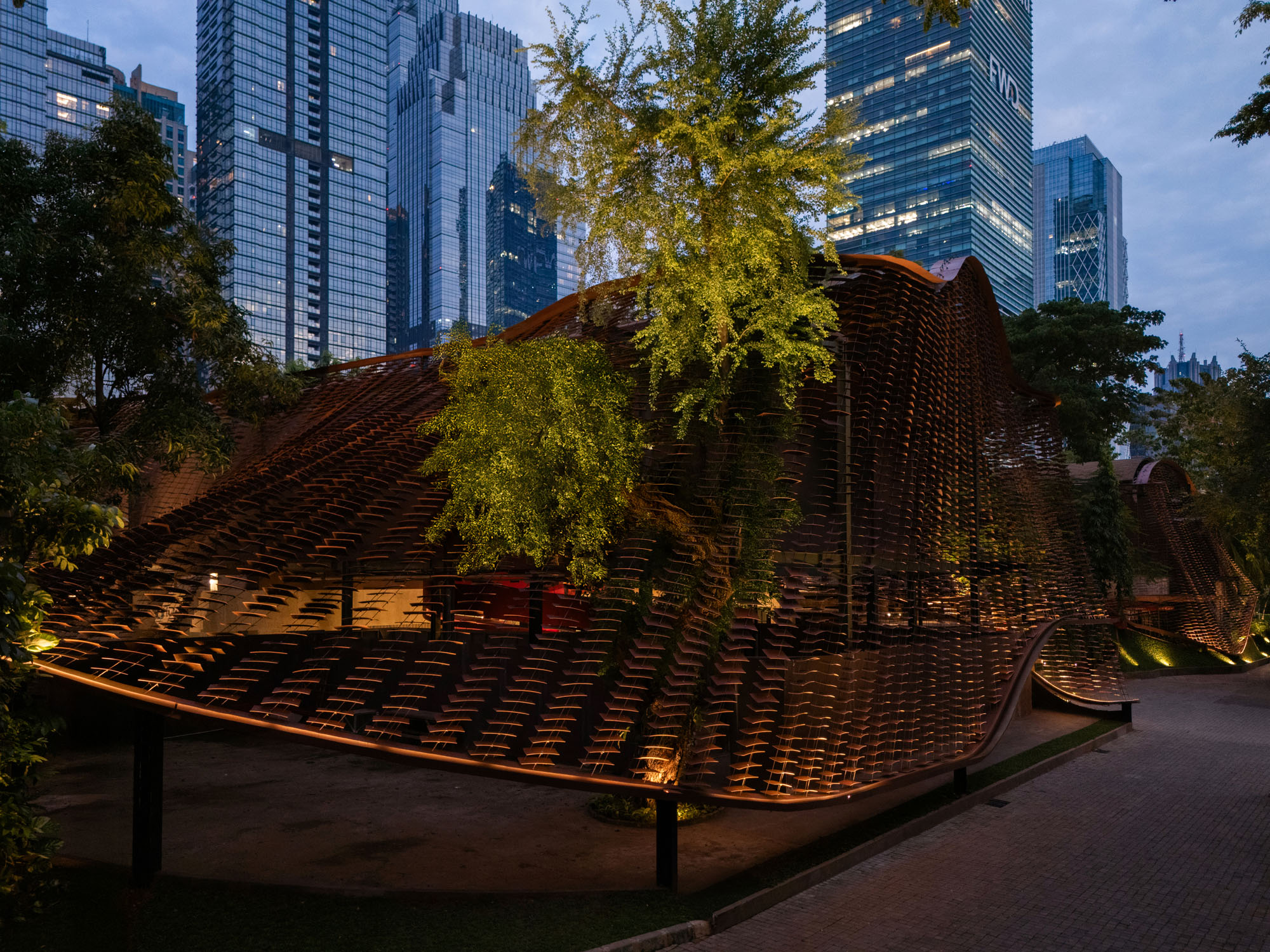
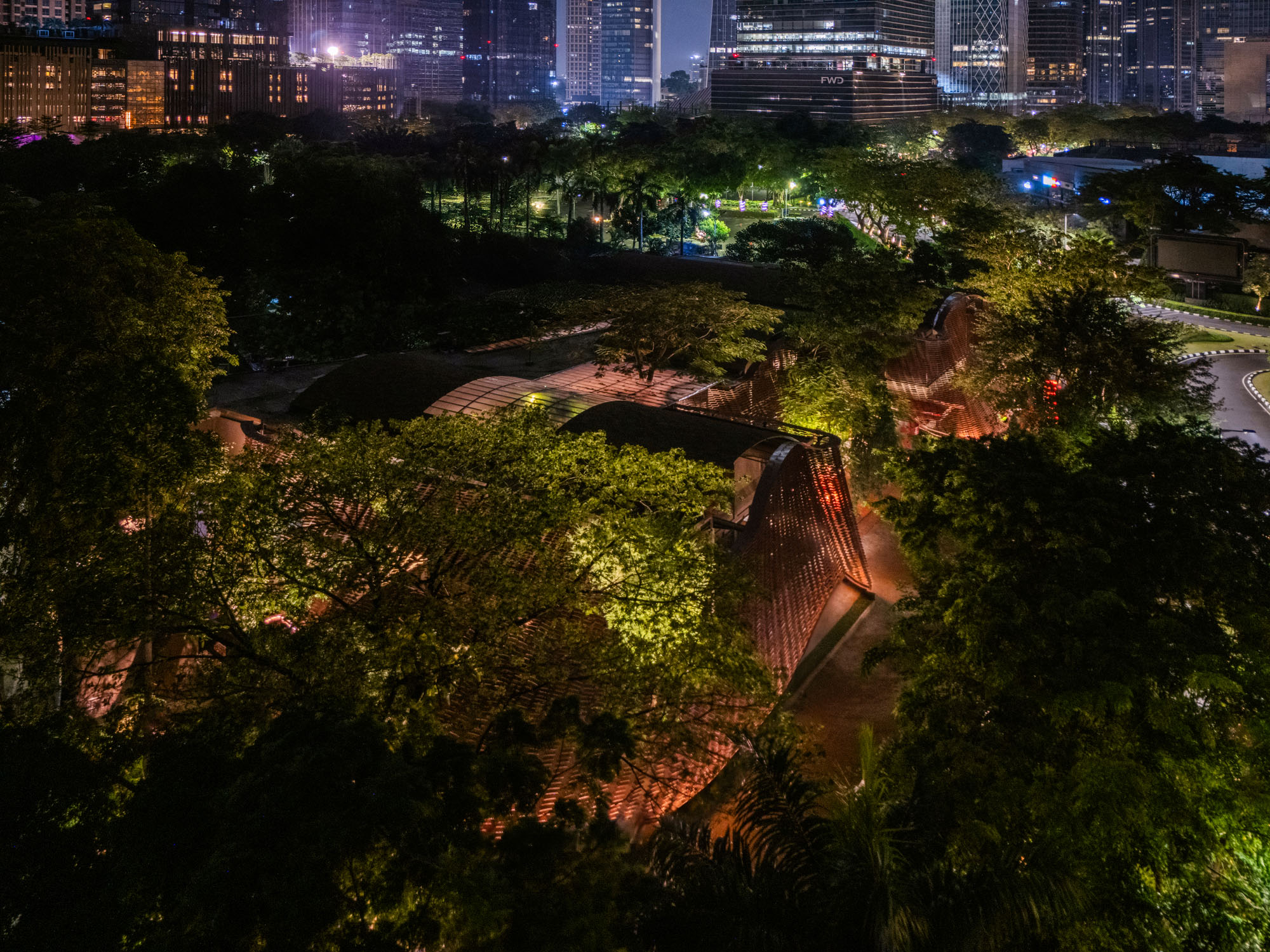
インドネシア・ジャカルタのビジネス地区に建つ〈ラティス・クリエイティブ・ガーデン(Lattice Creative Garden)〉は、プラスチック廃棄物をアップサイクルしたプレートに包まれた商業施設です。
インドネシアという開発の進む発展途上国において、持続可能性を組み込んだ商業施設をさまざまな場所に分散させることにコミットする設計事務所 RAD+ar(Research Artistic Design + architecture)が設計しました。
注目ポイント
- インドネシア建築の伝統的な「格子」とパラメトリックデザインの融合
- 張力ケーブル構造を用いた、流動的で自由度の高い外皮
- 既存の樹木を中心に建築ボリュームを決定する「逆算」の設計プロセス
- 極限まで機械設備に頼らないパッシブデザイン
(以下、RAD+arから提供されたプレスキットのテキストの抄訳)
©︎ Ernest Theofilus
©︎ Ernest Theofilus
伝統的な「格子」の再解釈とバイオクライマティックな進化
インドネシアの熱帯気候において、数百年にわたり建築に不可欠とされてきた「格子構造(ラティスワーク)」の原理。それは高温多湿な環境における気候制御の核心であり、生物気候学的(バイオクライマティック)デザインの優れた事例として、地域の重要なアイデンティティを形成してきた。
©︎ Ernest Theofilus
©︎ Ernest Theofilus
パラメトリックデザインで進化する格子
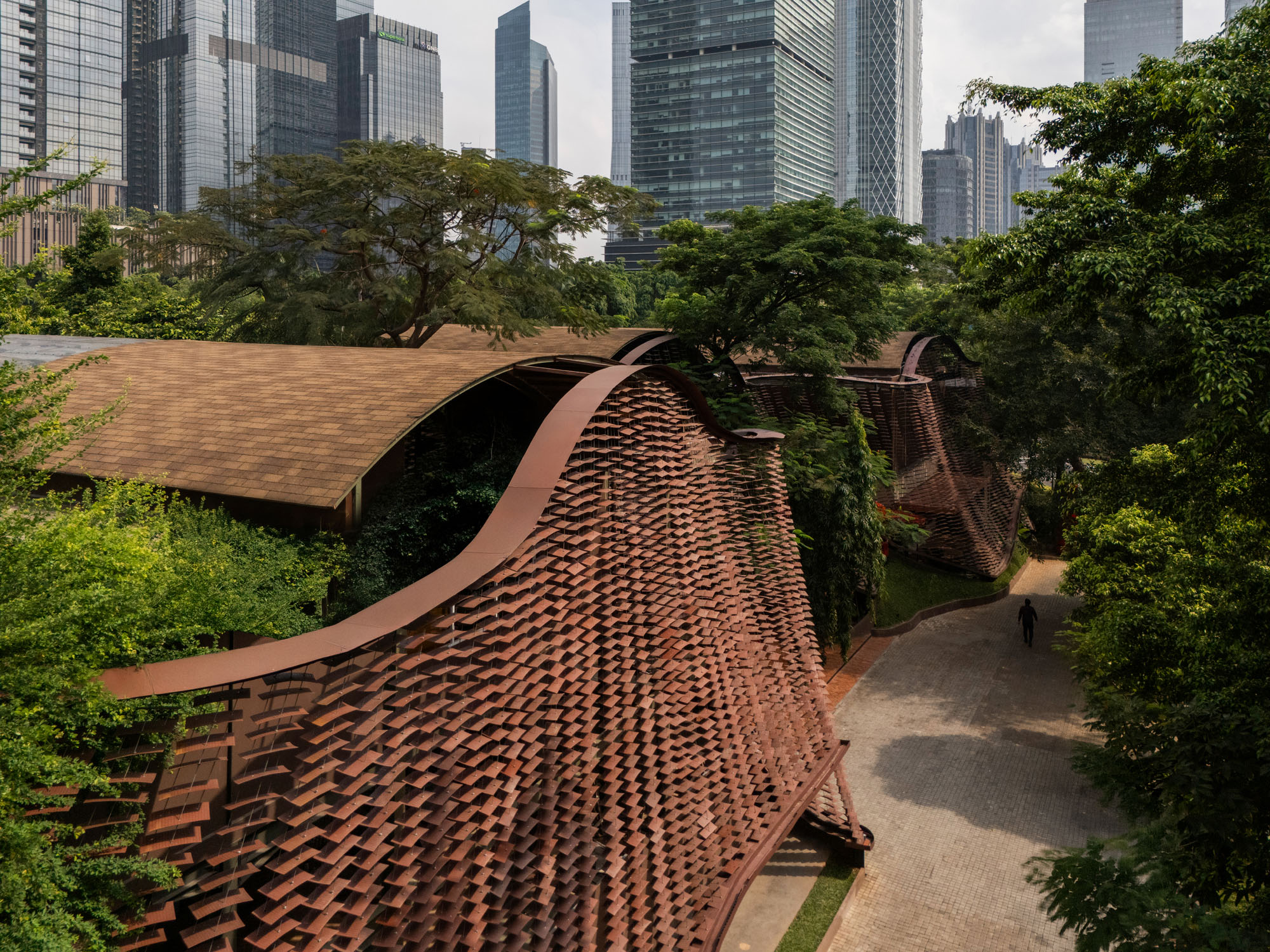
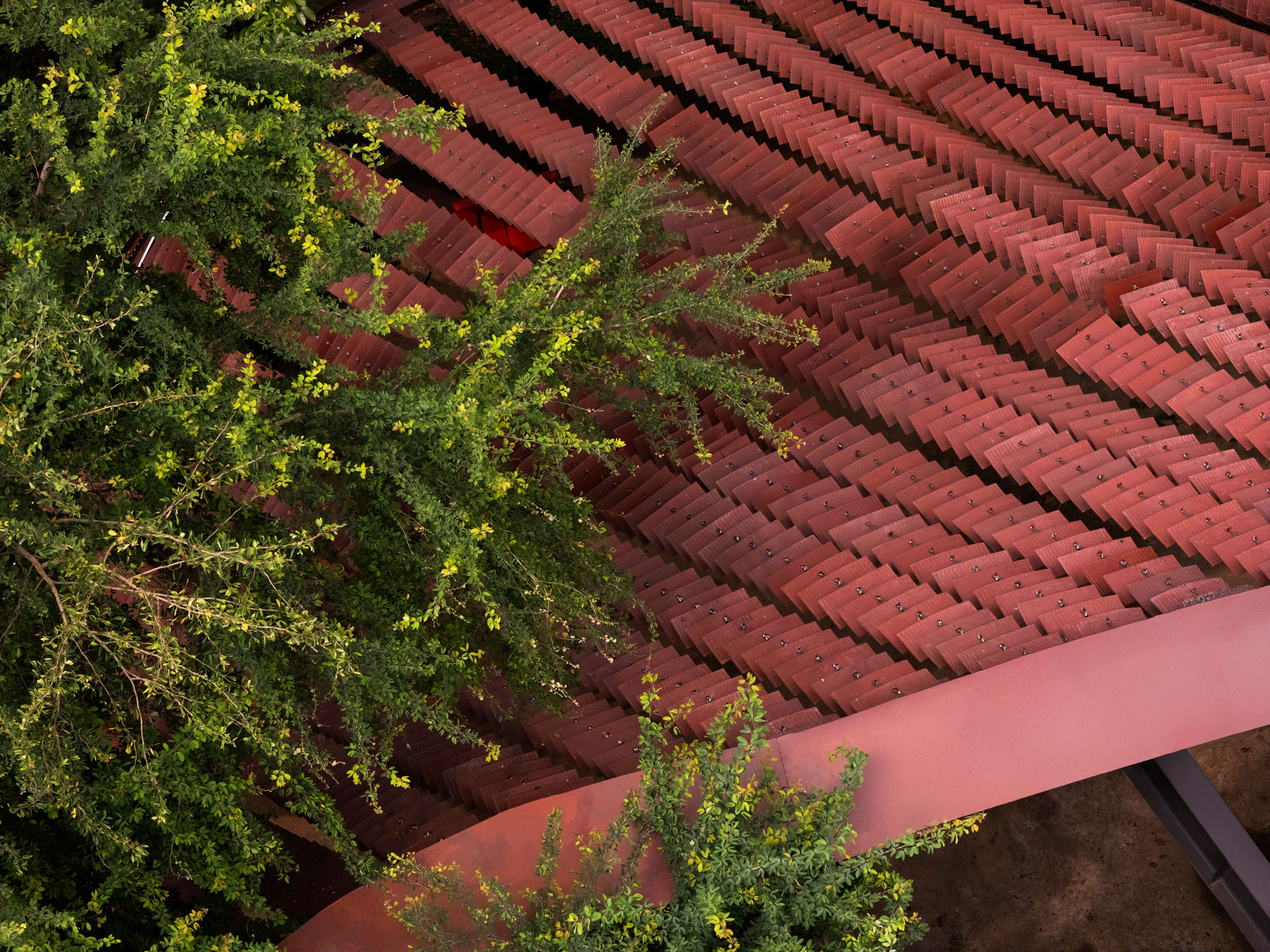
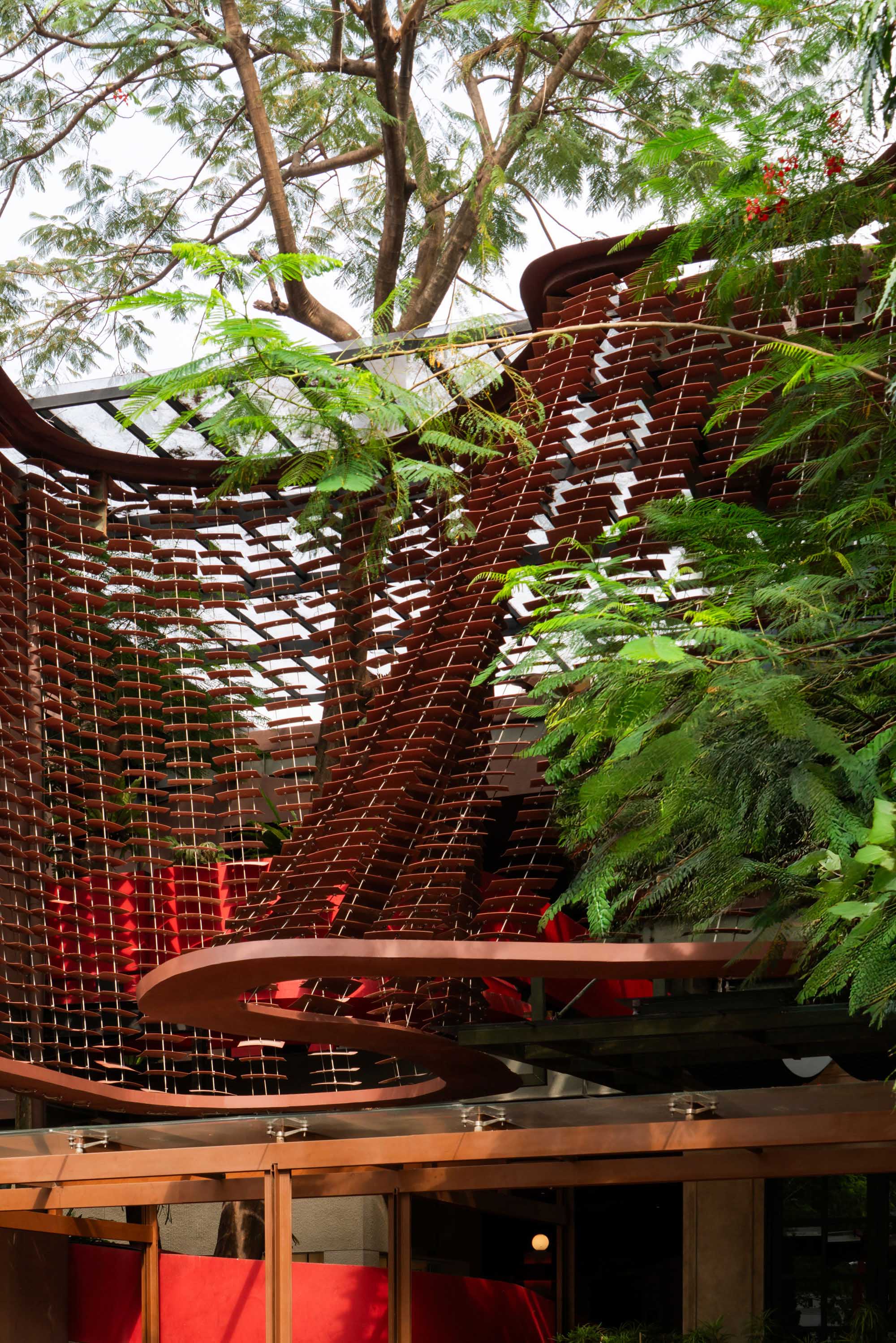
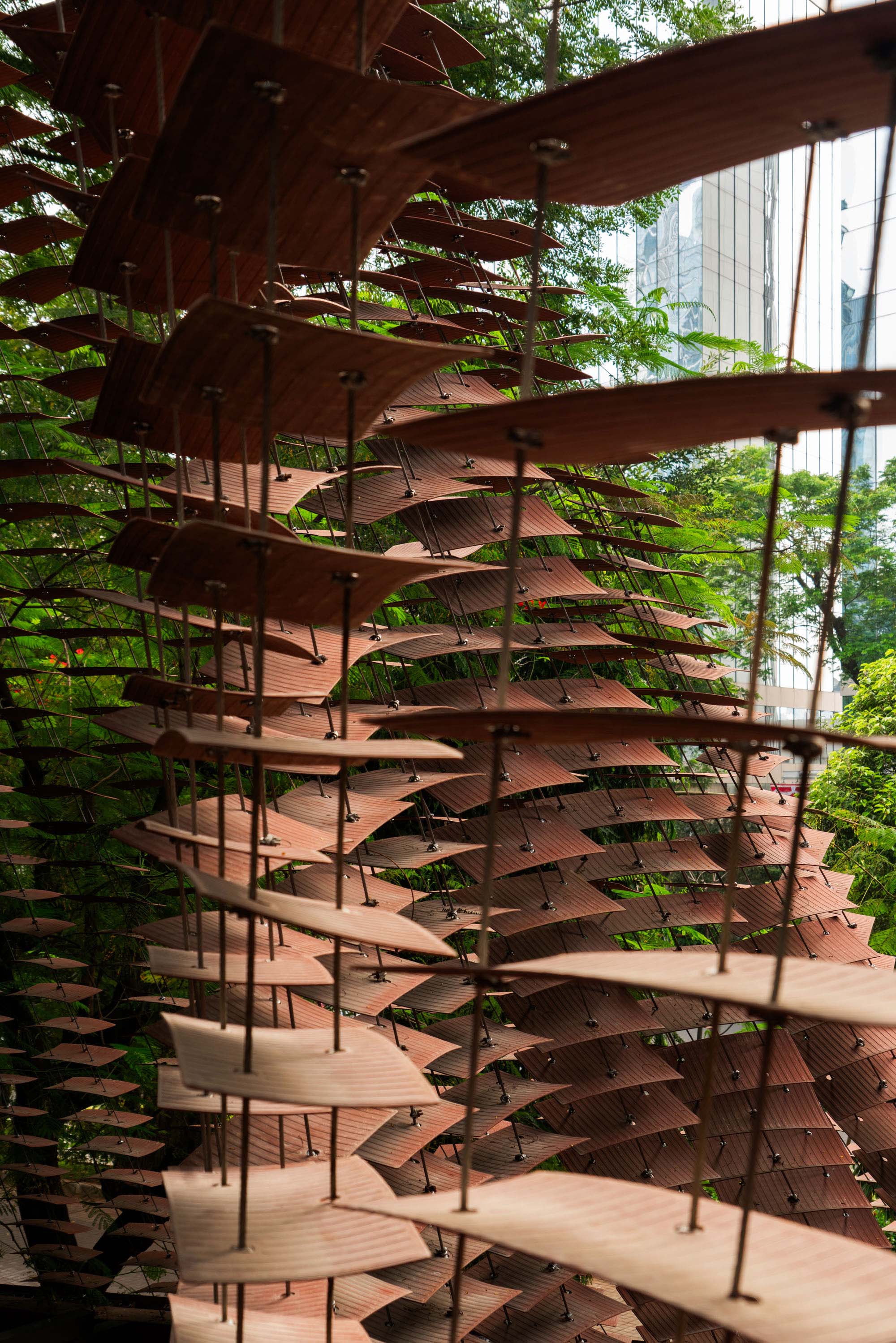
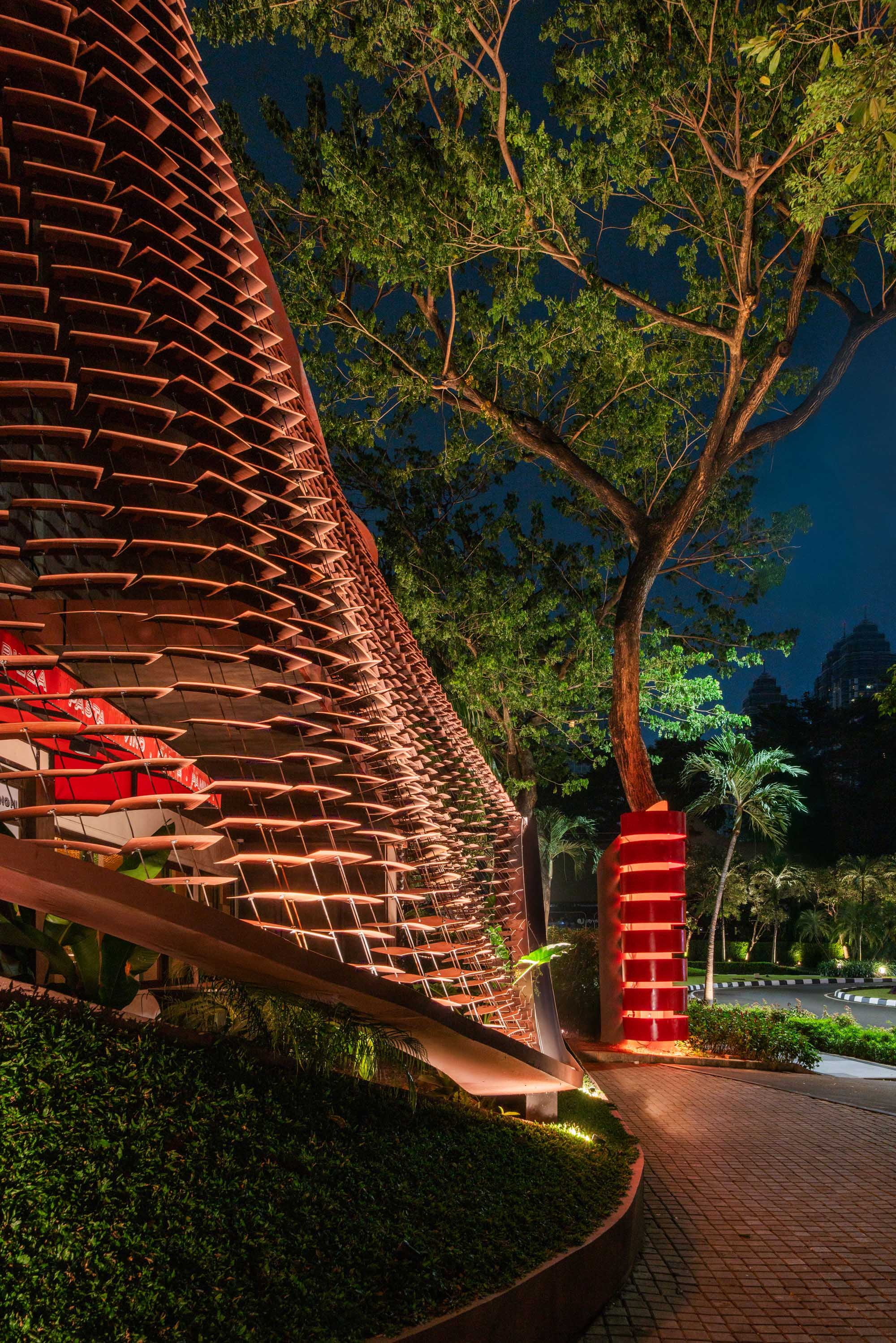
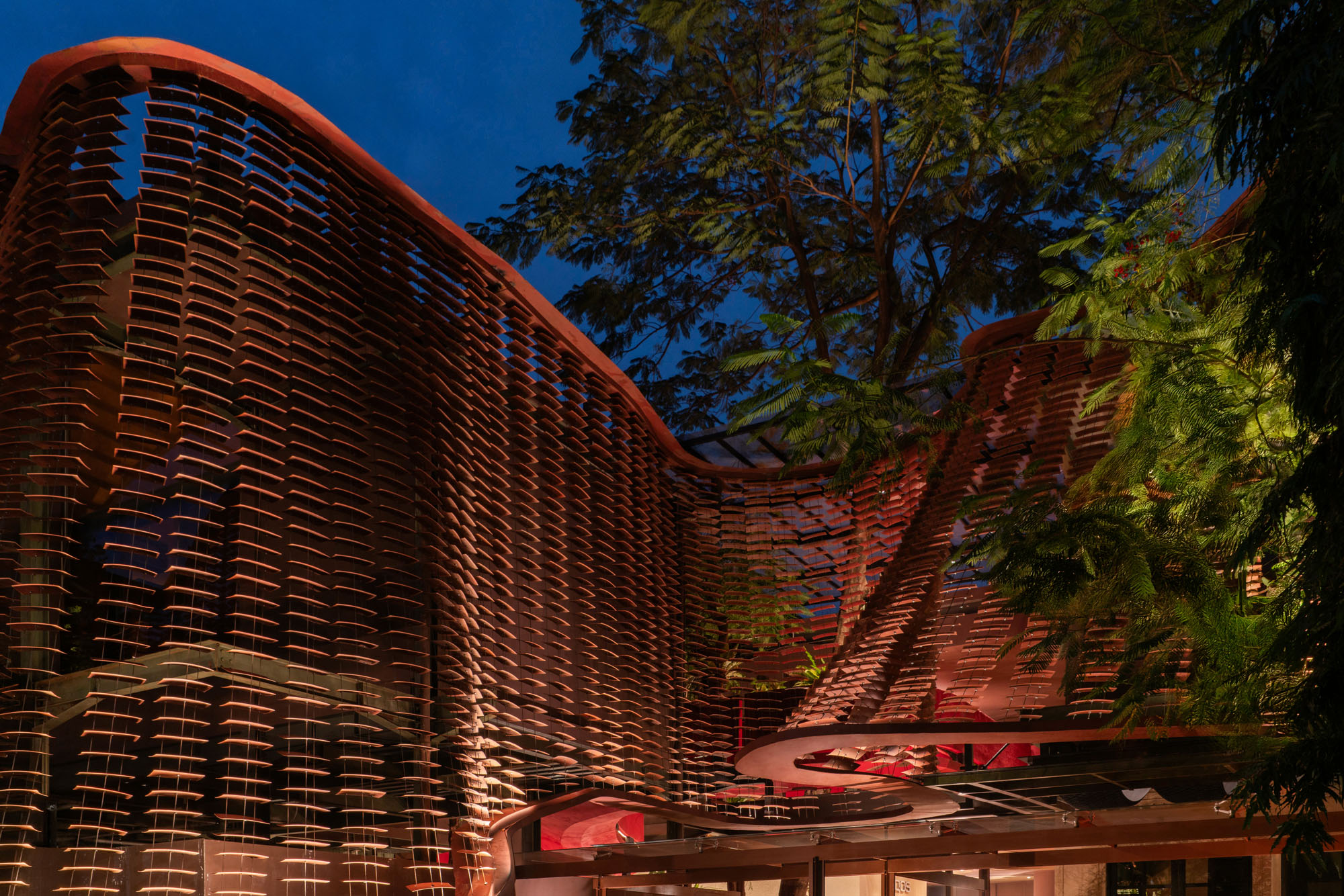
この格子は〈ラティス・クリエイティブ・ガーデン〉において機能性と象徴性という二重のコードを通じて再解釈され、設計の自由度と柔軟性を高め、現代的かつ高性能な遮光装置へと進化した。それは視覚的に豊かで文脈に即したスクリーンとして機能し、持続可能性を追求した現地の建築的実験を想起させるものである。
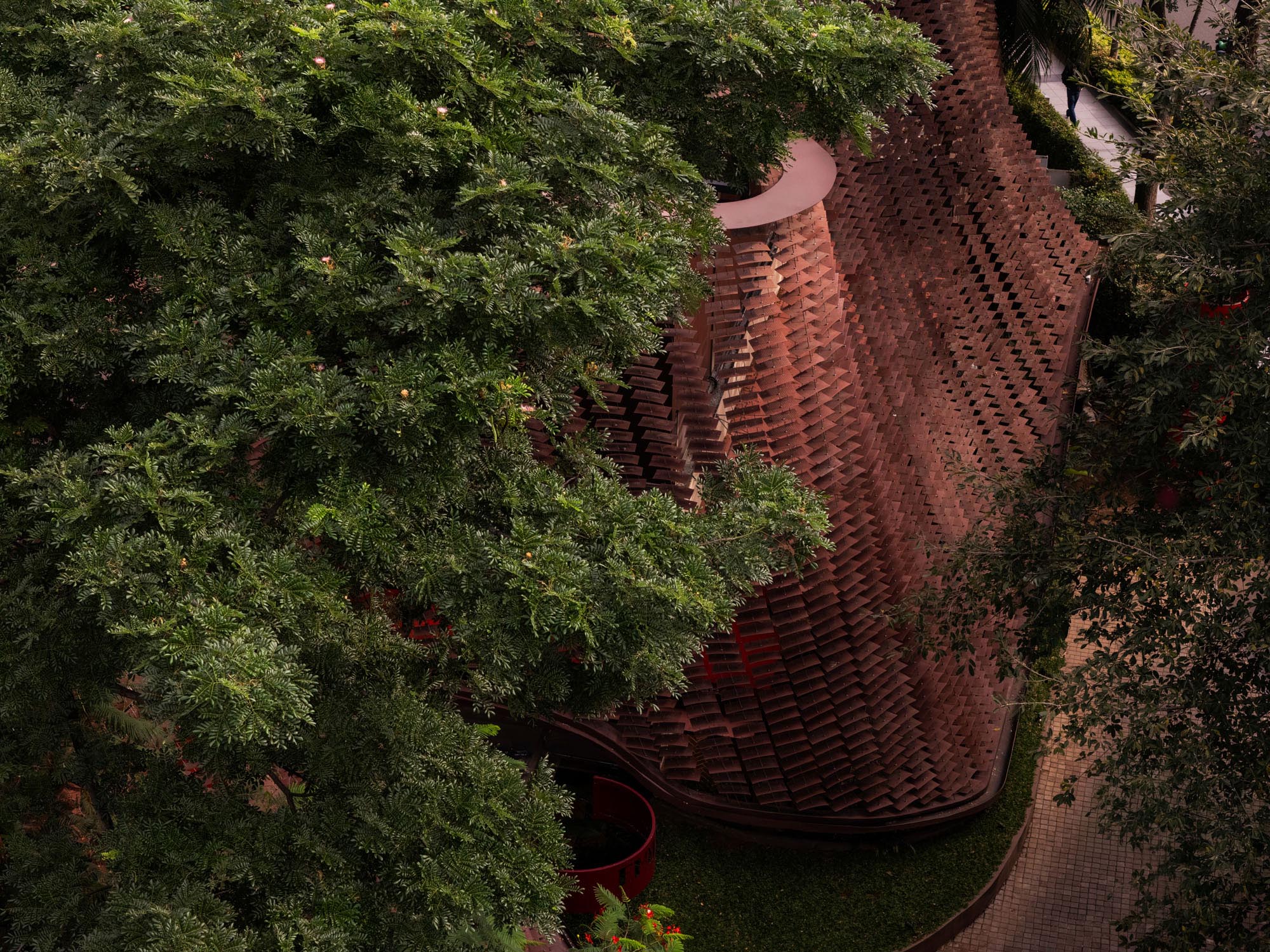
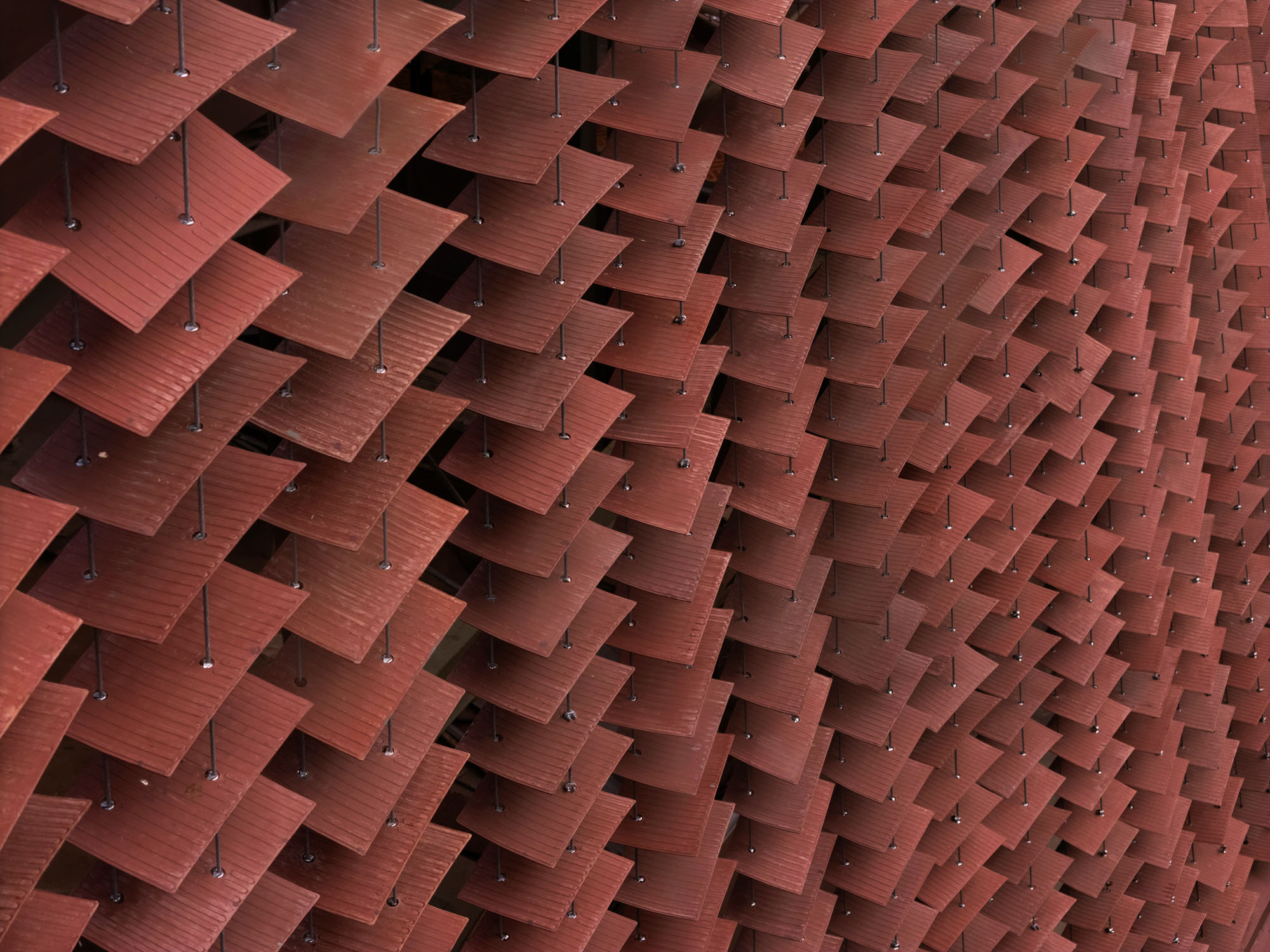
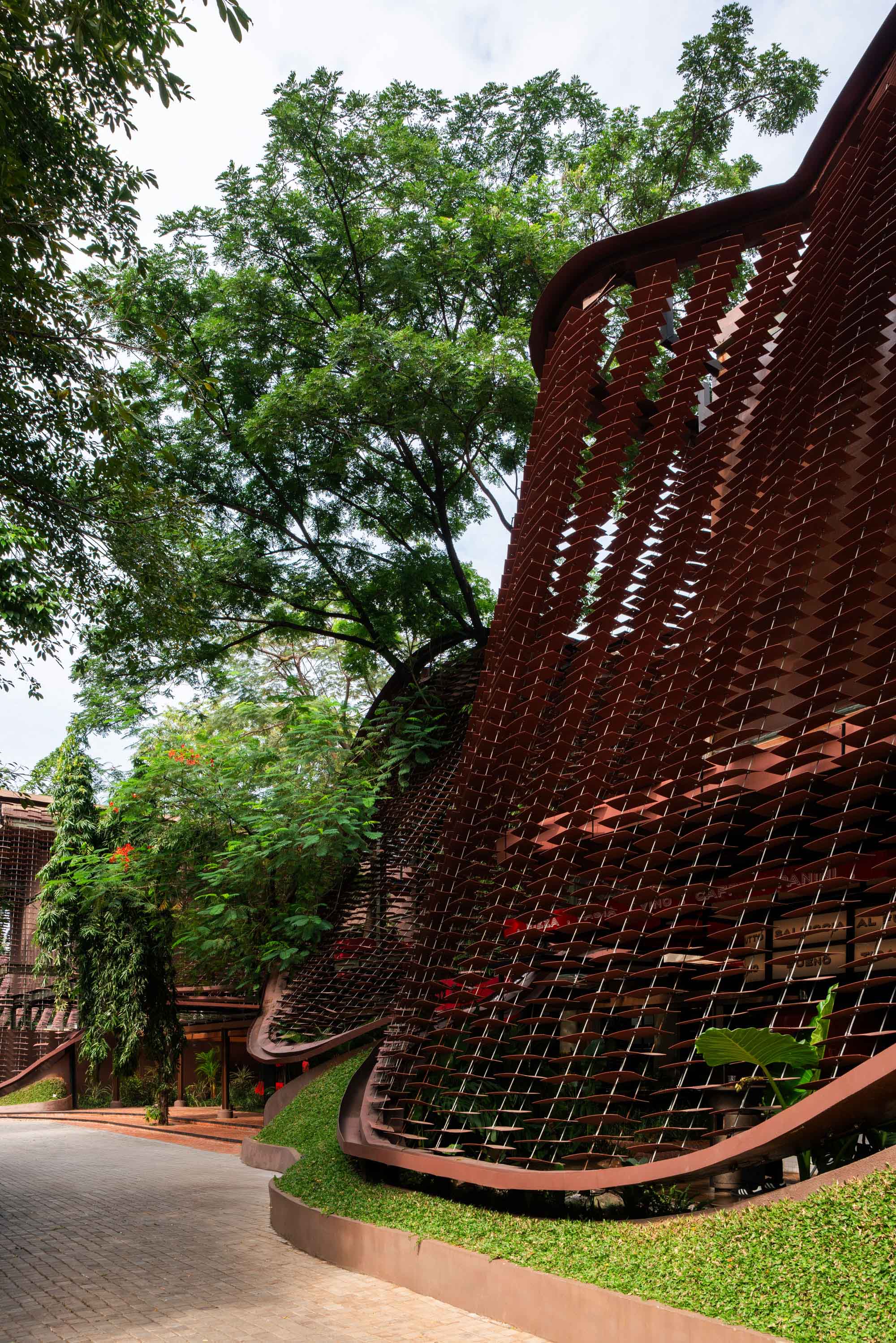
張力ケーブル構造によって洗練された再生プラスチックの部材は、木々の間で踊るようにうねる形態を形成し、建物を包み込むスキン(外皮)となる。計算された日射遮蔽を提供するパラメトリックデザインによって導き出されたこの格子は、気候制御機構であると同時に、環境に応答するバイオクライマティック建築の象徴としても機能している。
©︎ Ernest Theofilus
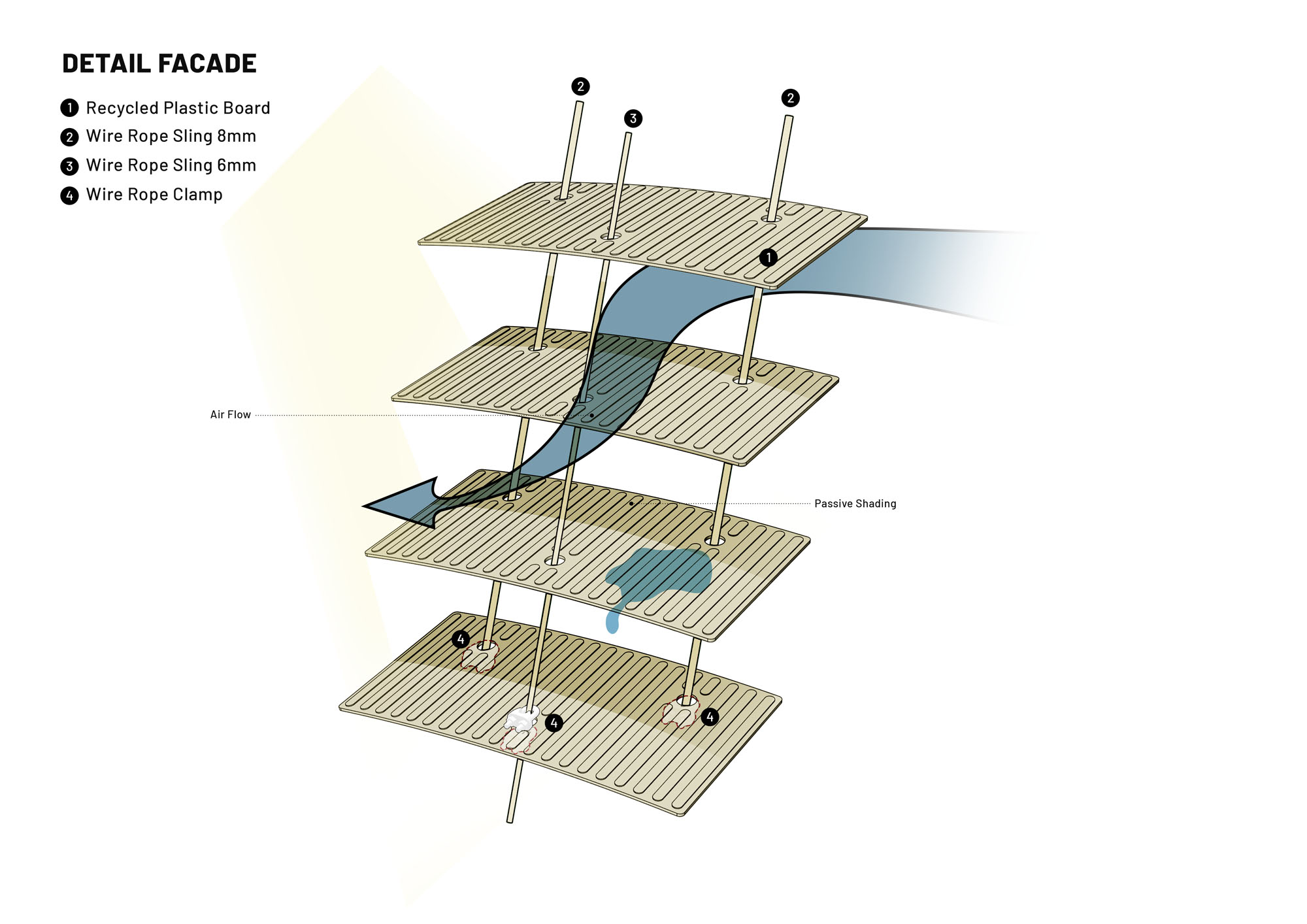
Detail Facade
廃棄物問題を問う、都市部に生み出す再生プラスチックの外皮
本プロジェクトでは、ジャカルタのビジネス地区(SCBD)から毎週排出される4,800kgのプラスチック廃棄物を原料とし、16,800枚もの機能的な建築用ラティスプレートを生成した。
この再生素材システムを都市の主要地に統合することは、単なる建設行為にとどまらない。この構造物は廃棄物管理問題への証言として立ち上がり、インドネシア国内で年間700万トンにも及ぶ未処理プラスチックの存在を、市民や政策立案者に強く想起させる装置となる。

Diagram 1
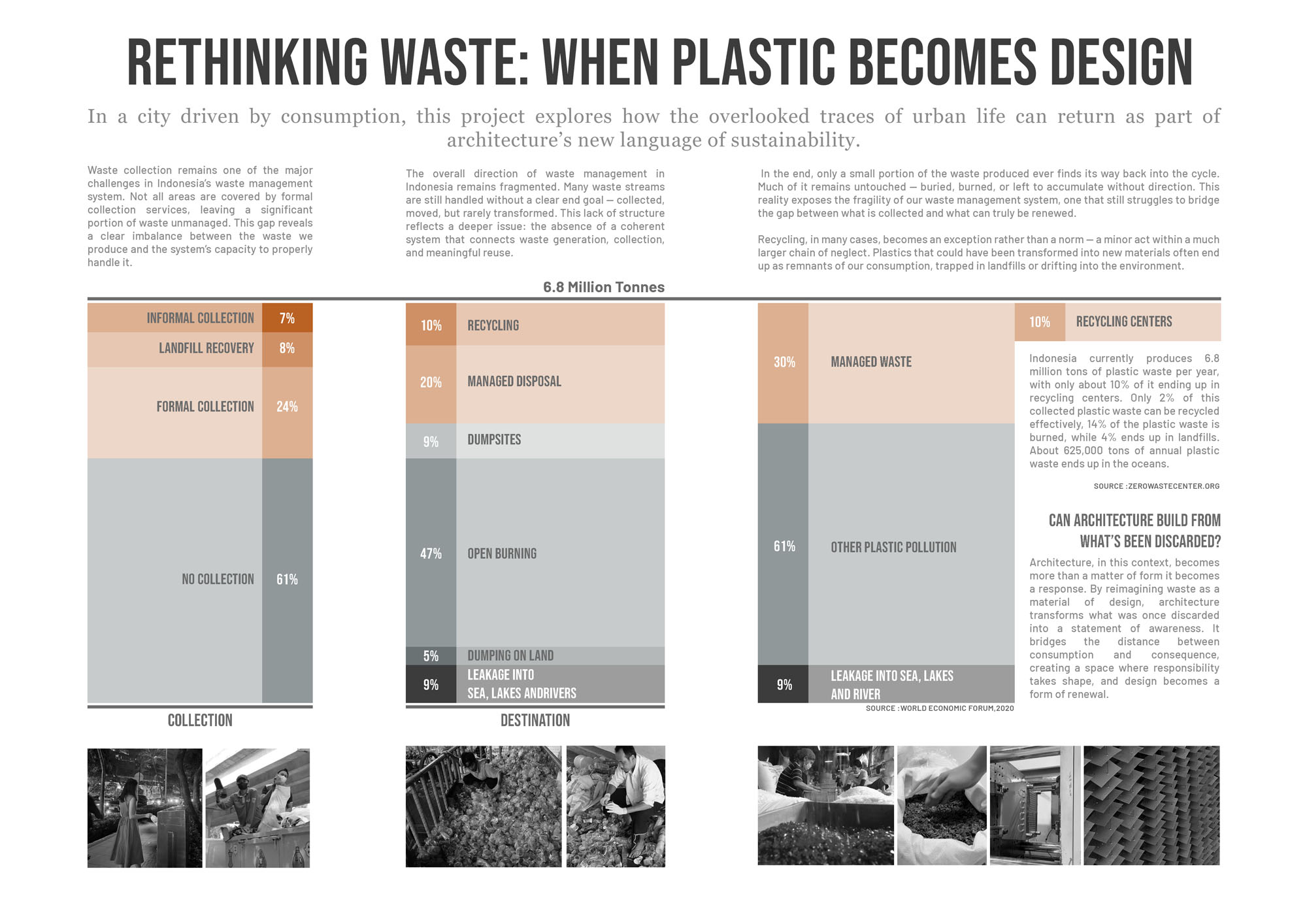
Diagram 2
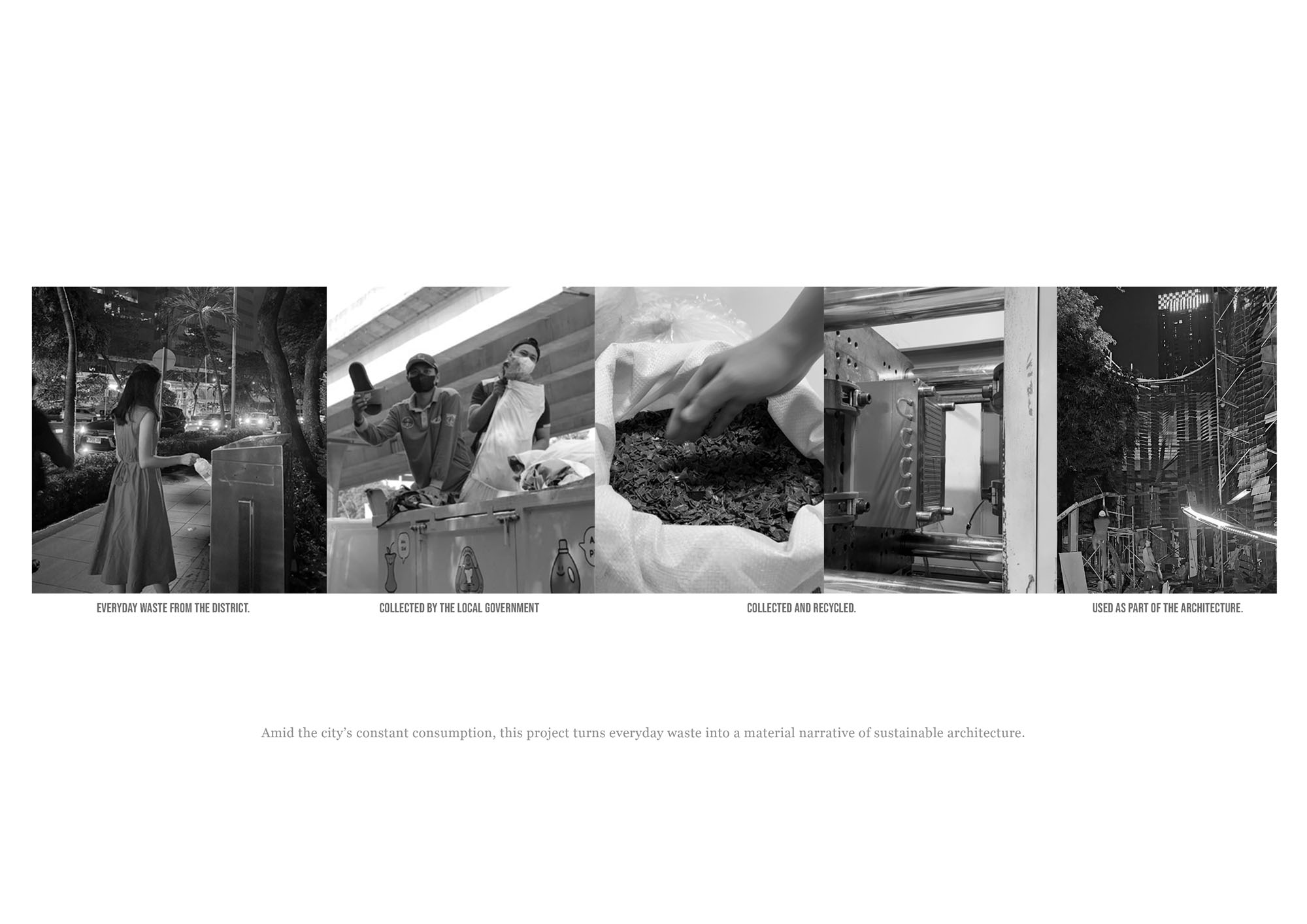
Diagram 3
既存樹木を中心とした設計プロセス
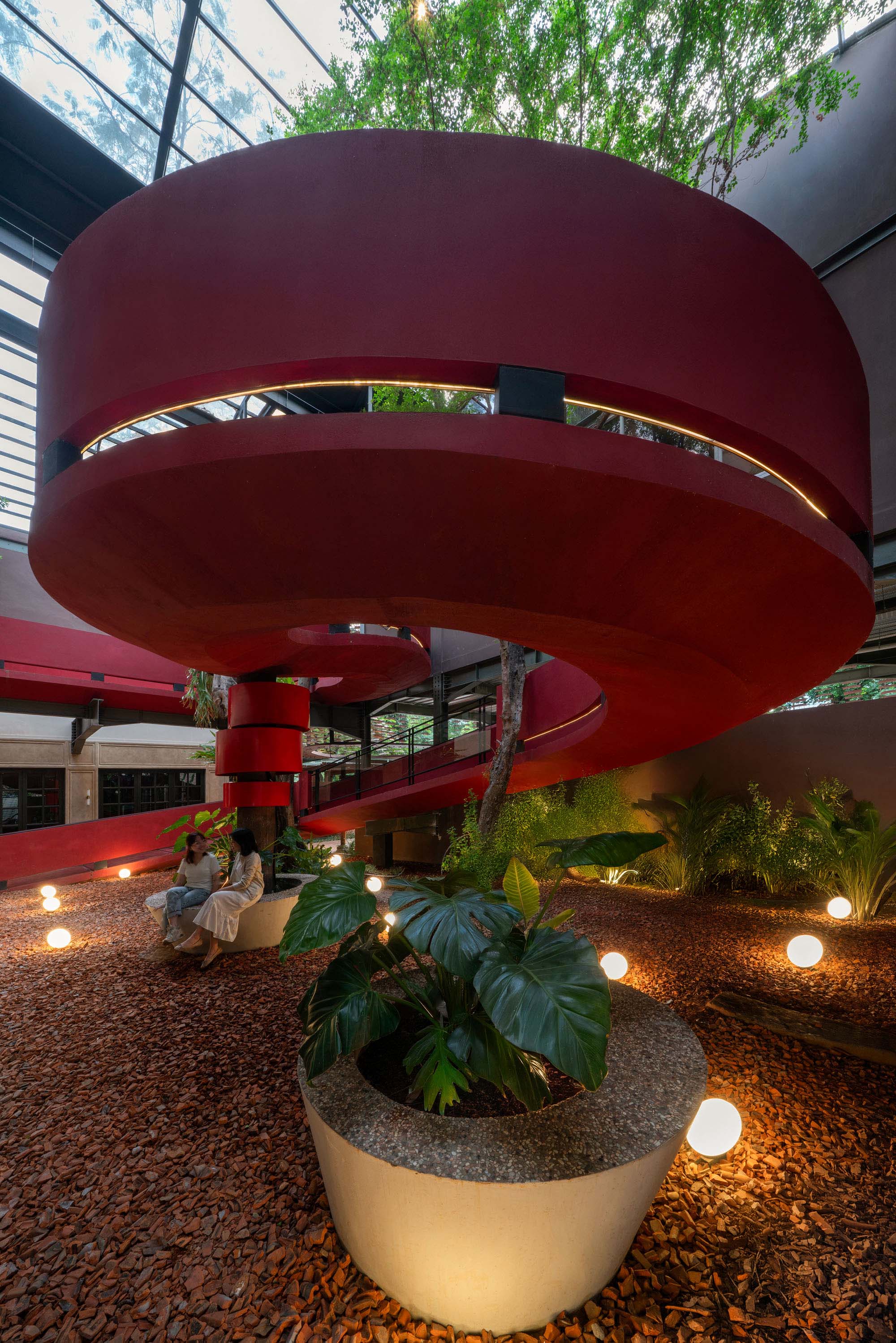
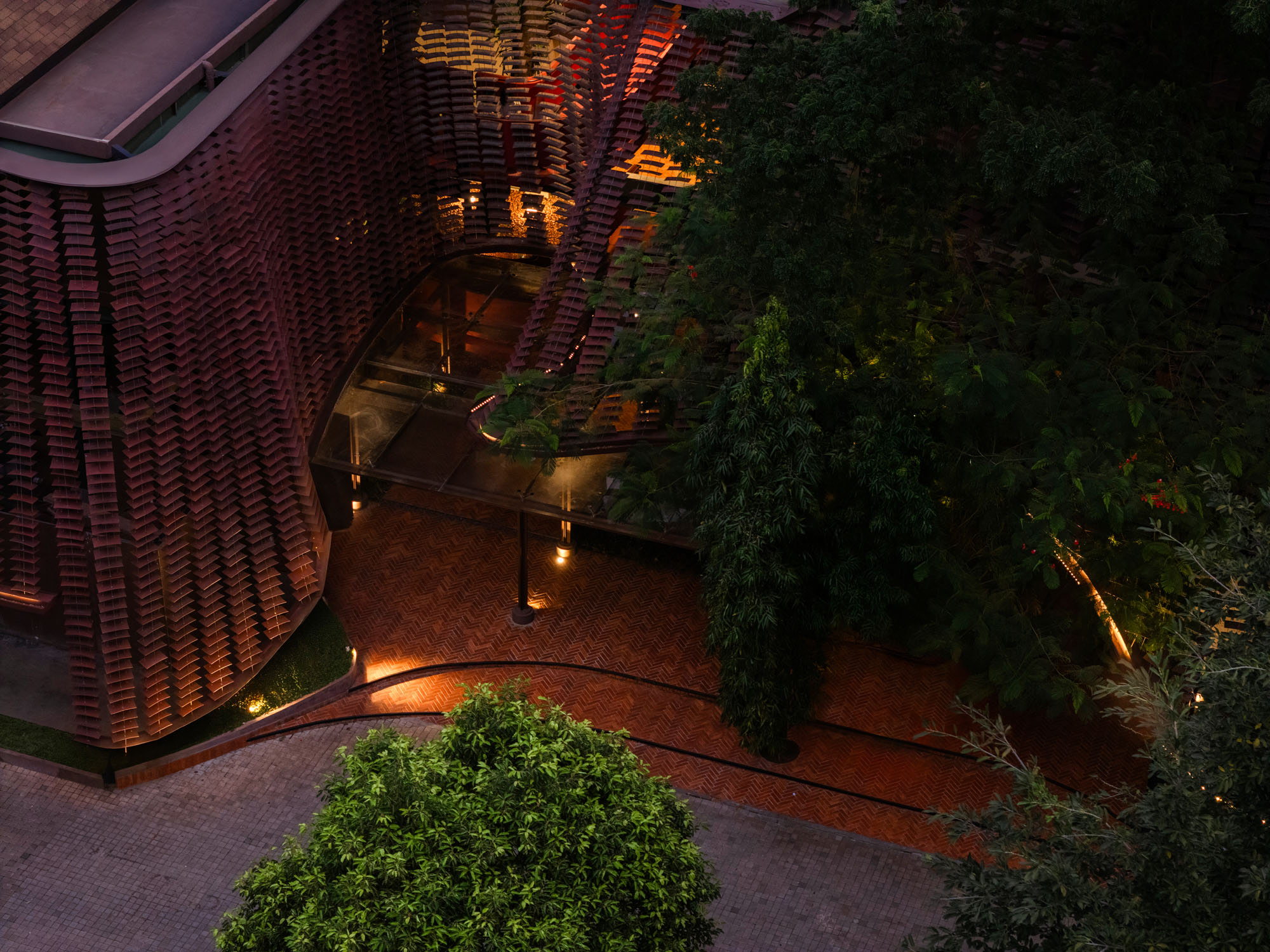
敷地の生態系との共生を図るため、建ぺい率は40%という最小限のレベルに維持した。販売エリアや活動空間は、敷地内に既存する20m級の樹木と織り交ぜるように配置されている。ここでは景観を建築の「付属品」として扱うのではなく、設計プロセスを逆転させ、保存すべき樹木のゾーンを中心に建物のマスを生成した。
これにより、パラメトリックな外皮と自然との間に流動的な対話が生まれ、多孔質のテラスが樹木の繁茂を促しつつ、機能領域の最適化を実現した。結果として生まれたマスは、ファサードと樹木を橋渡しする一連の移行的な屋外テラスを通じて賃貸効率を最大化し、樹木の成長を許容しながら商業的価値を維持することに成功している。
©︎ Ernest Theofilus
パッシブデザインの復権:エネルギー管理への挑戦
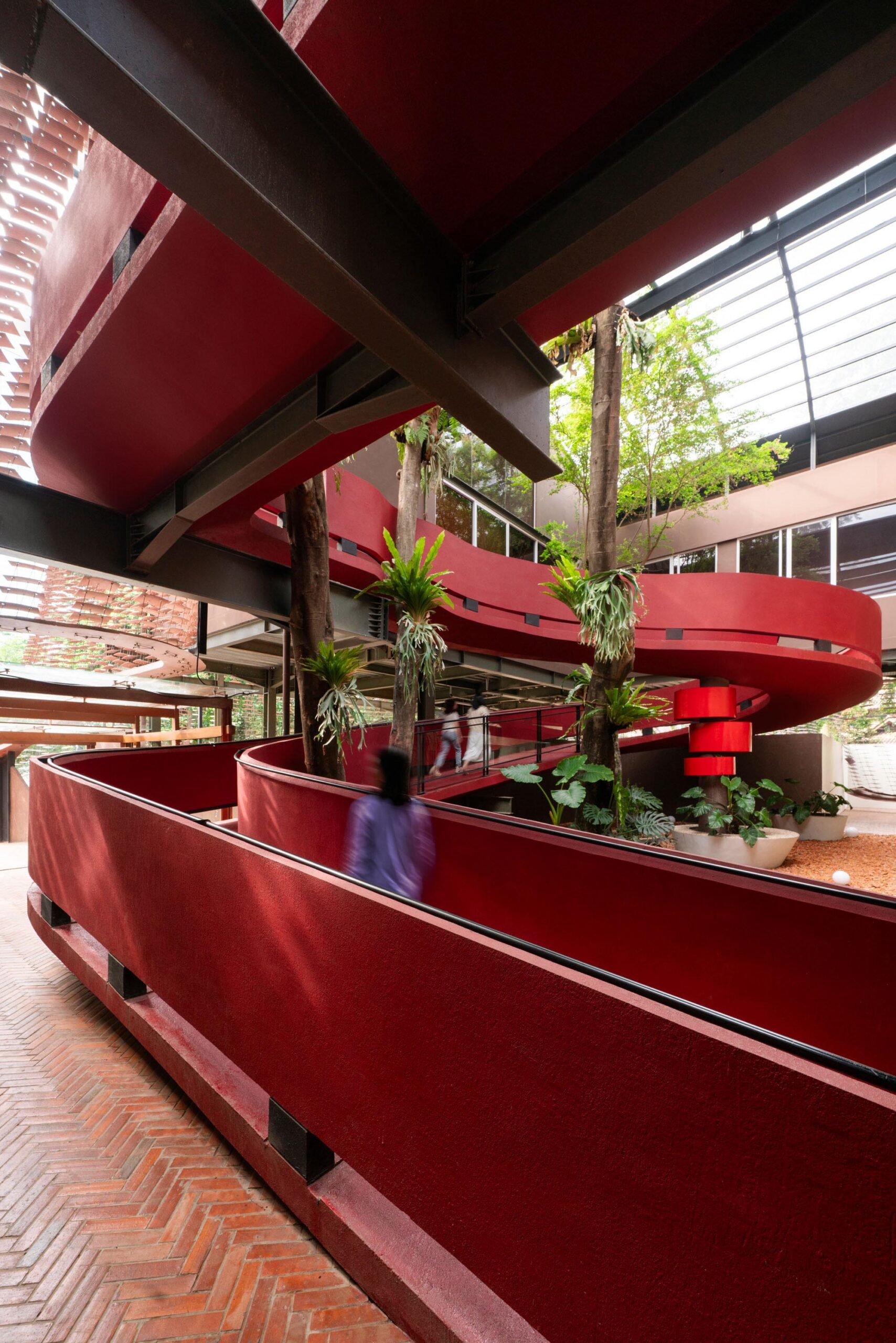
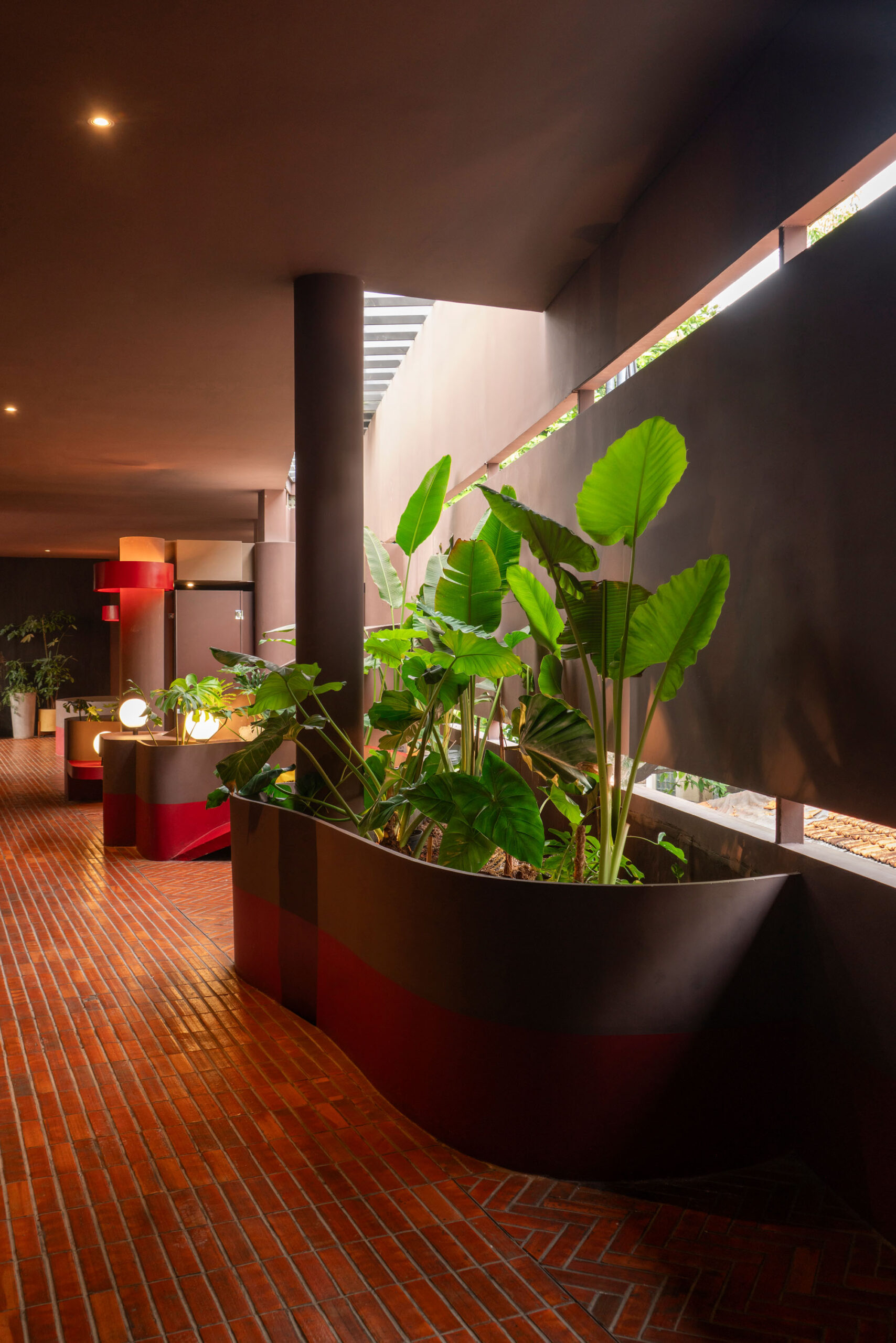
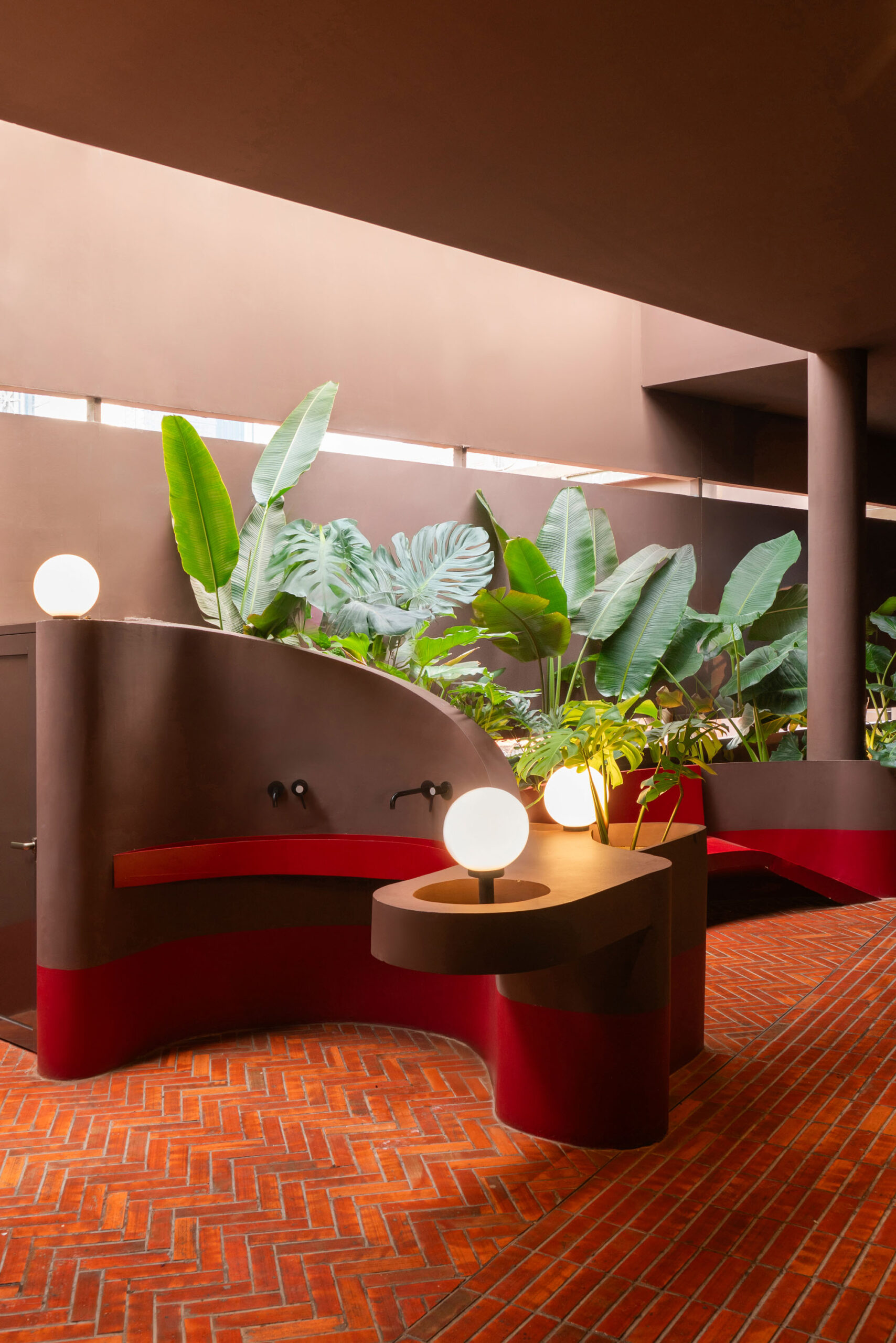
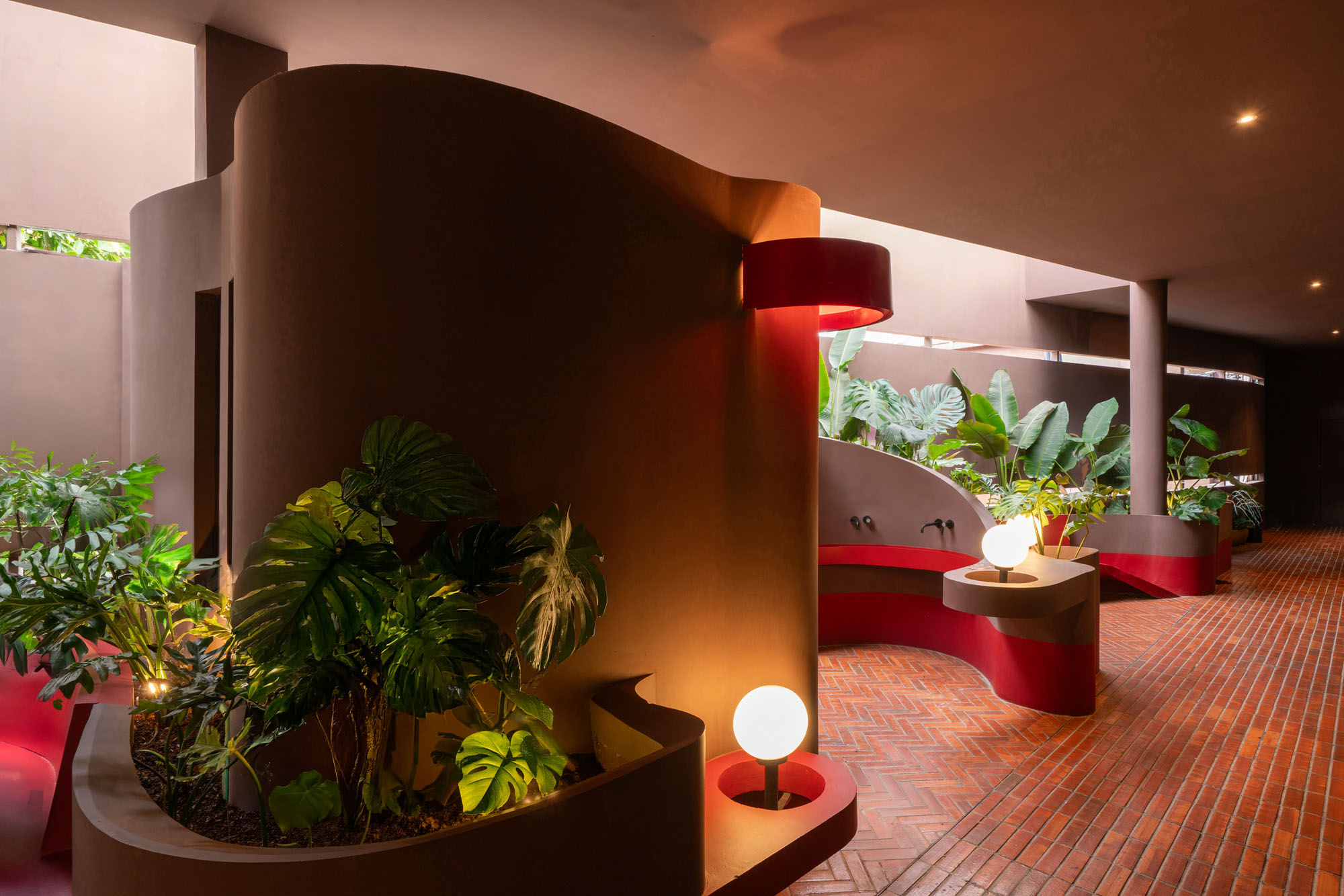
〈ラティス・クリエイティブ・ガーデン〉は、テナントの行動変容とエネルギー管理に関する建築家の試作モデルでもある。不動産価値が高騰する状況下において、あえてパッシブな設計理念を取り戻す試みであり、建築は生い茂る樹木と対話し、究極の日除けシステムを構築する。
ファサードを躯体から分離することで通風路と熱の排気塔(サーマル・チムニー)を創出し、機械式エレベーターの代わりに庭園を蛇行するスロープを配置することで、垂直動線の標準的なあり方に異議を唱えた。その結果、空調とエレベーターへの依存度は大幅に低減された。発展途上の経済圏においても、経済的利益のために環境への配慮を犠牲にする必要はない。本作は、その可能性を示す灯台として立ち現れているのである。
©︎ Ernest Theofilus
©︎ Ernest Theofilus
©︎ Ernest Theofilus
©︎ Ernest Theofilus
©︎ Ernest Theofilus
©︎ Ernest Theofilus
©︎ Ernest Theofilus
©︎ Ernest Theofilus
©︎ Ernest Theofilus
©︎ Ernest Theofilus
©︎ Ernest Theofilus
©︎ Ernest Theofilus
©︎ Ernest Theofilus
©︎ Ernest Theofilus
©︎ Ernest Theofilus
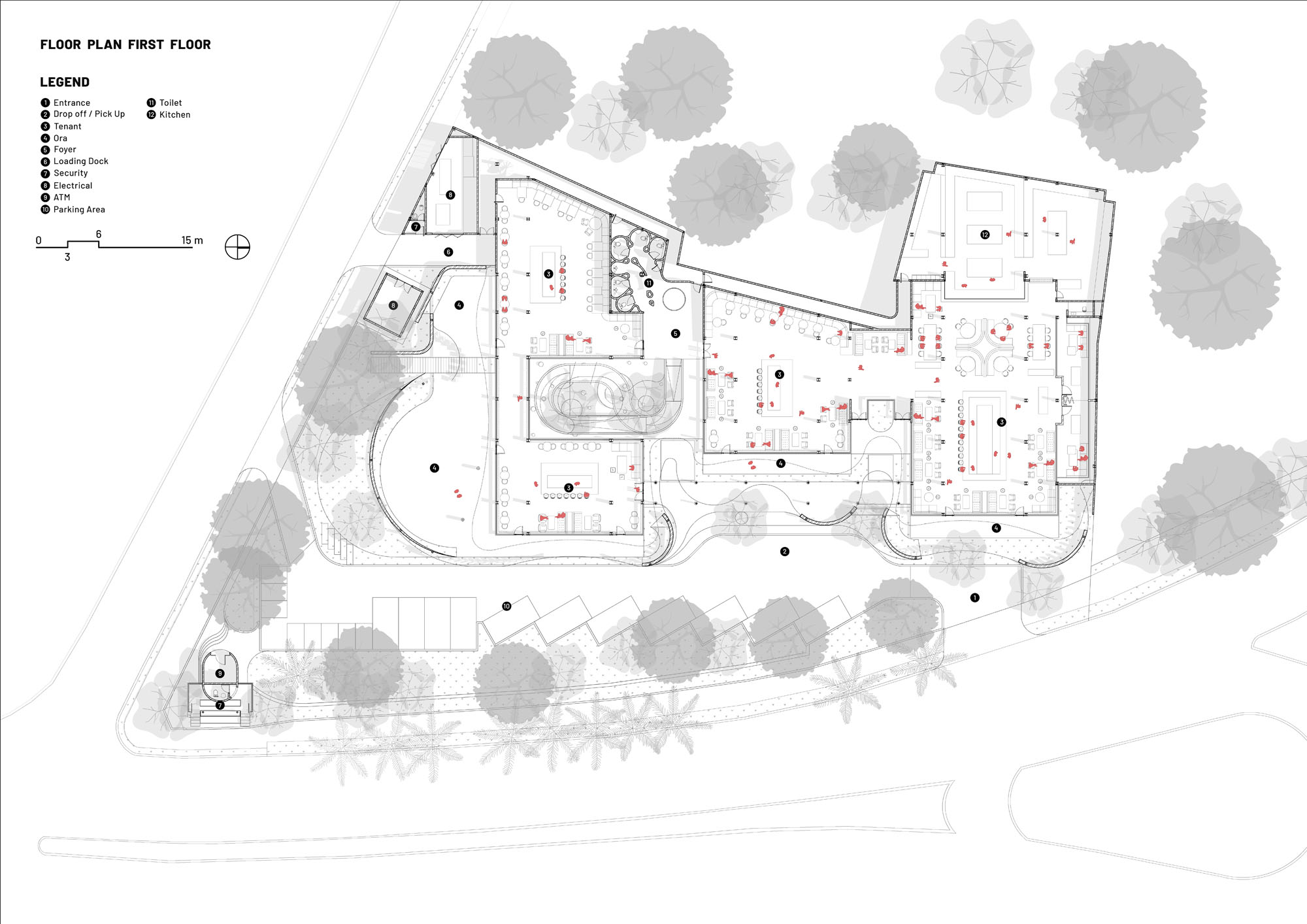
1st floor plan
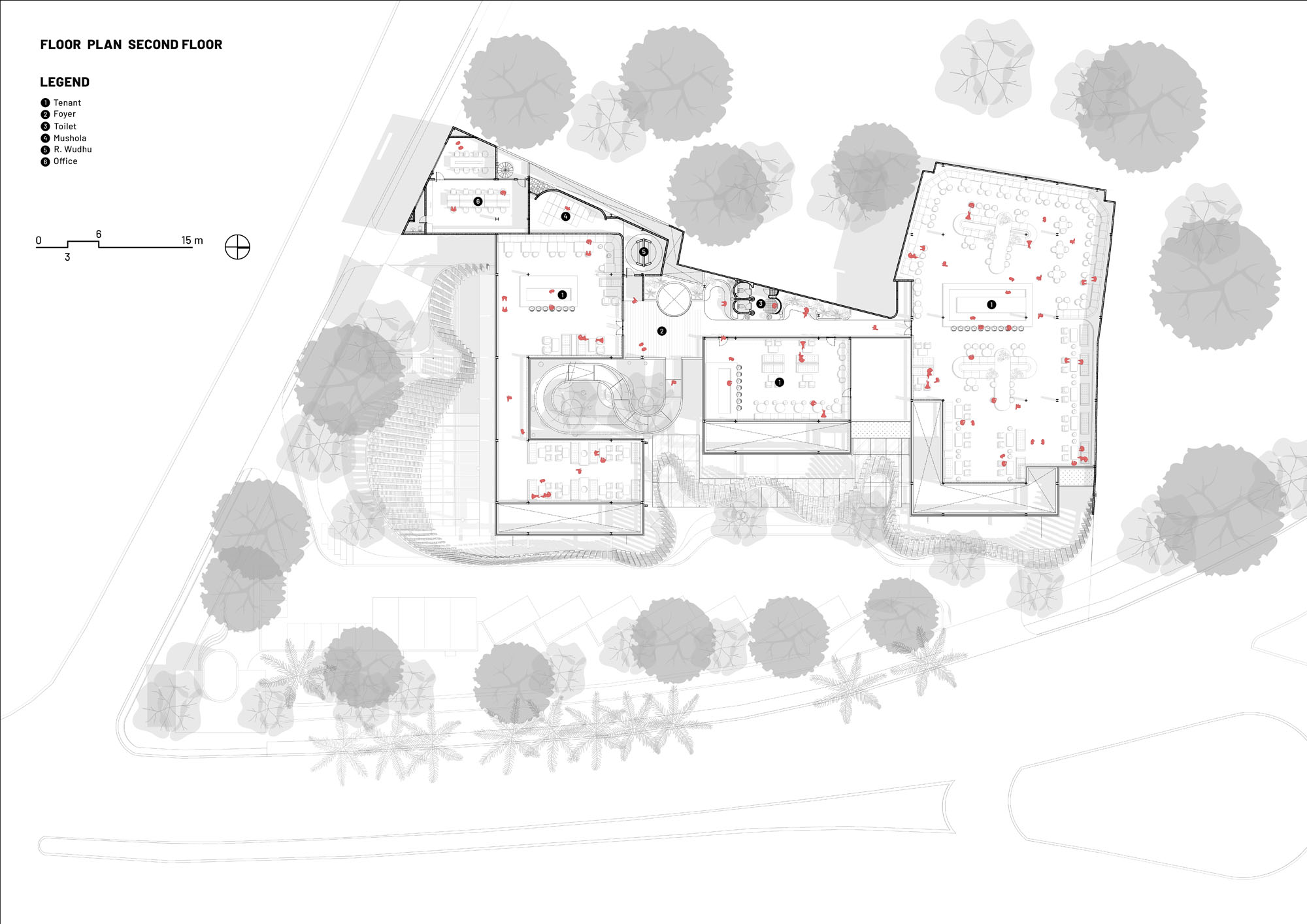
2nd floor plan
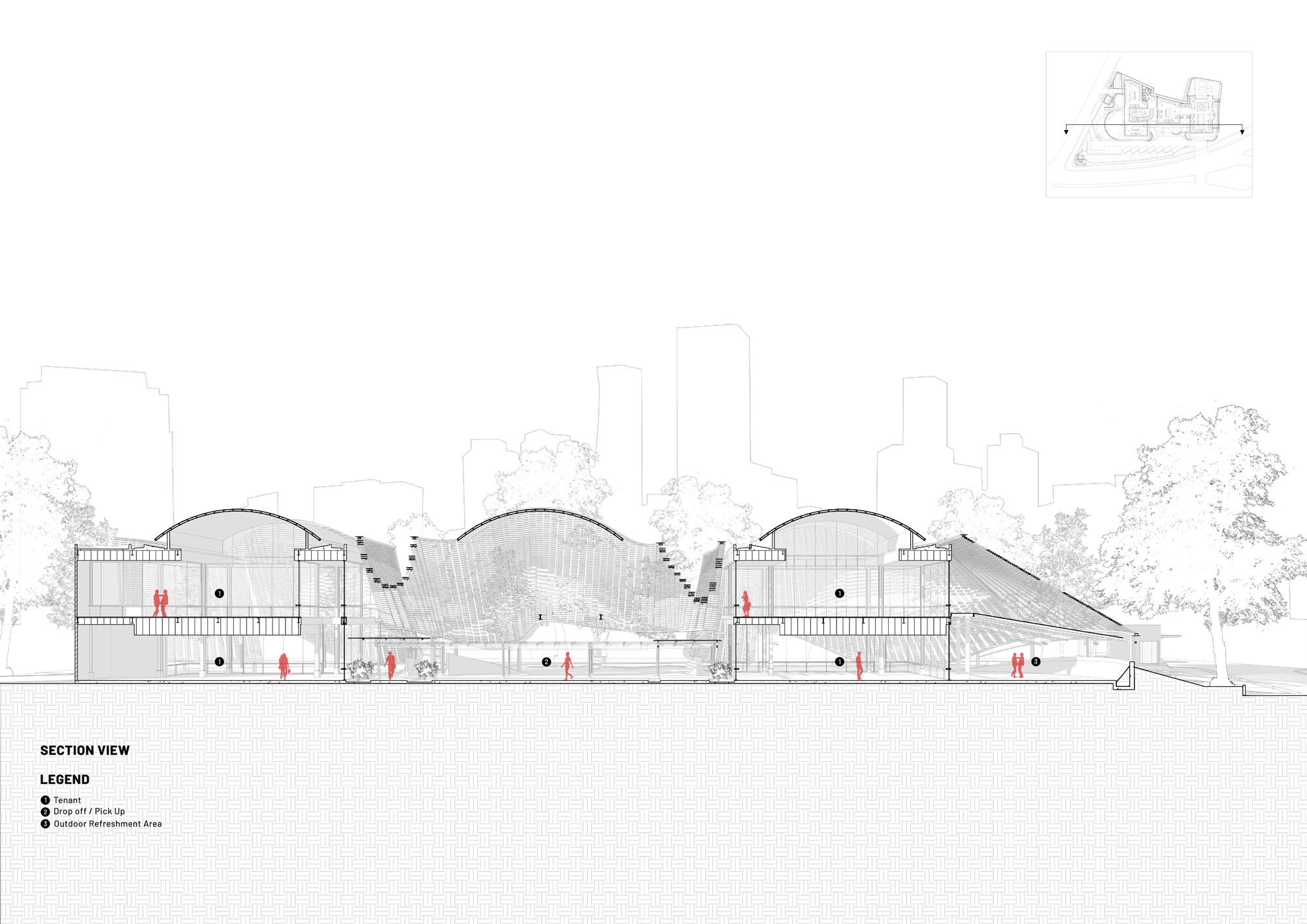
Section
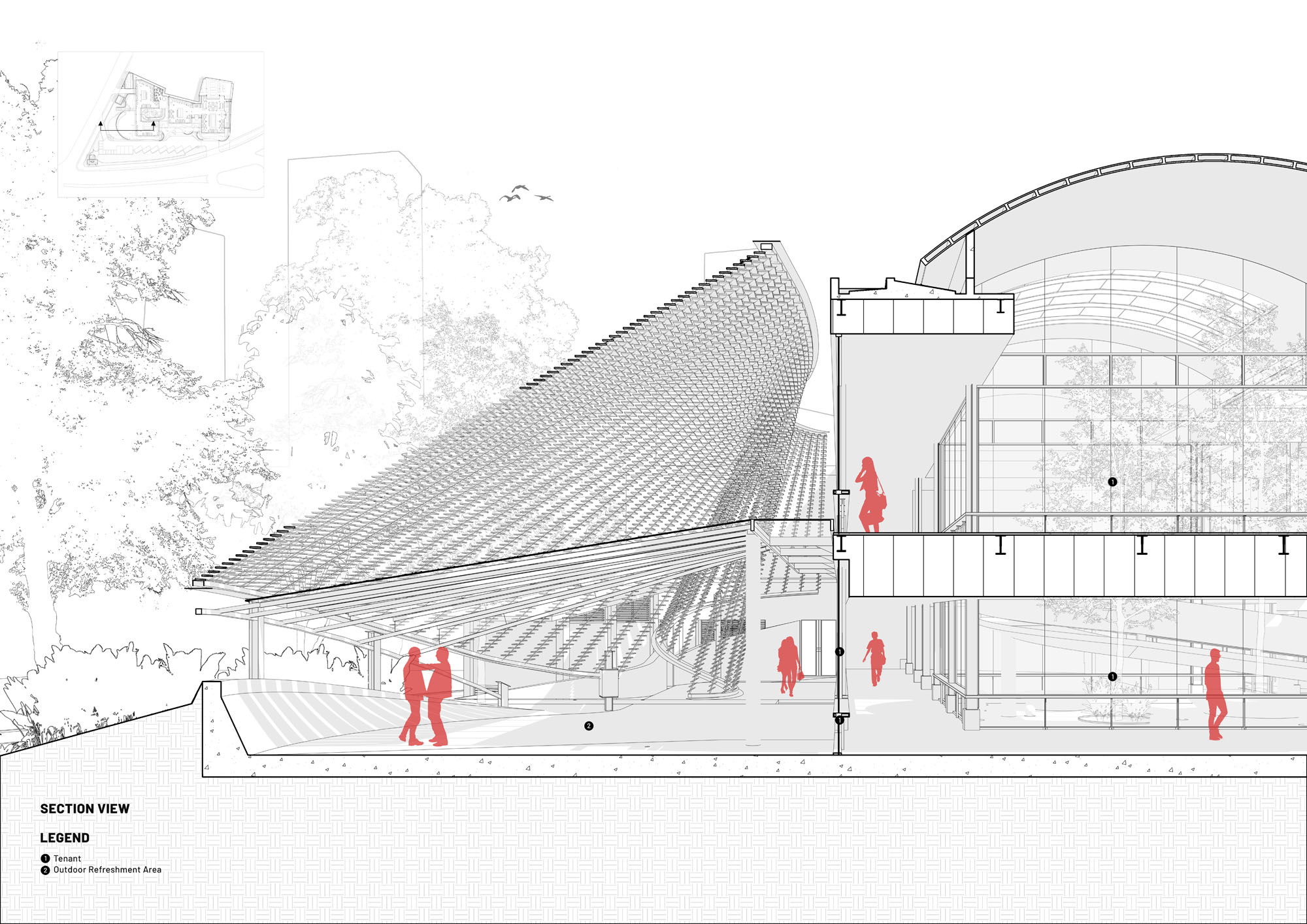
Section
以下、RAD+arのリリース(英文)です。
Project Name: Lattice Creative Garden
Office Name: RAD+ar
Office Website: radarchitecture.net
Social Media Accounts: @radarchitects
Contact email: visionary@radarchitecture.net
Firm Location: Bali & Jakarta, IndonesiaCompletion Year: 2025
Gross Built Area (m2/ ft2): 3000sqm
Project Location: Jakarta, Indonesia
Program / Building Function: Compound Commercial Outdoor MallLead Architects: Dadi Prasojo, Antonius Richard Rusli
Lead Architects e-mail: visionary@radarchitecture.netPhotographerPhoto Credits = Ernest Theofilus
Photographer’s Website = www.ernesttheofilus.com
Photographer’s email = ernest.theofilus@gmail.comProject DescriptionThe latticework principle, having been essential in the hot, humid tropical climate of Indonesia for hundreds of years, is a key identity component for essential climate control and a brilliant example of bioclimatic design. When readapted with greater design freedom and flexibility through dual coding (function and symbolism), the lattice becomes a modern, high-performing shading device that simultaneously serves as a visually rich, contextually-relevant screen recalling local architectural experimentation in sustainability.Refined by a tensioned cable geometry, the recycled plastic elements create an undulating form that dance among the trees. This wrapping lattice skin is parametrically derived to provide calculated solar protection, functioning as both a climate control mechanism and a symbol of responsive bioclimatic architecture.Sourced from 4,800 kg of SCBD’s (Business Districts Area) weekly plastic output, this project generates 16,800 units of functional architectural Lattice Plates. By integrating this recycled material system into a prominent site of Jakarta, the structure stands as a testament to waste management issues, reminding the public and policymakers of the 7 million tons of plastic untreated annually in Indonesia.In a move to coexist with the site’s ecology, the design maintains a minimal 40% ground cover, choreographing saleable areas and activity spaces to interweave with the existing 20-meter tall trees. Rather than treating landscape as a supplement to architecture, the process was reverse-engineered: the massing was generated around the preserved tree zones. This creates a fluid dialogue between the parametric envelope and nature, connected by porous terraces that allow the trees to thrive while optimizing the functional area. The resulting massing maximizes leasable efficiency through a series of transitional outdoor terraces that bridge the parametric facade with the trees, accommodating arboreal growth while retaining commercial value.”Lattice Garden is one of architect’s prototype on tenant behavior and energy stewardship. In a landscape driven by high property values, it reclaims the passive design agenda. The architecture engages in a dialogue with the thriving trees to construct an extreme shading system. By decoupling the facade to create breezeways and thermal chimneys, and replacing mechanical lifts with a meandering garden ramp, the design challenges the standard typology of vertical circulation. The result is a significant reduction in air conditioning and elevator dependency. It stands as a beacon of possibility, illustrating that in a developing economy, environmental responsiveness need not be sacrificed for economic gain.
RAD+ar 公式サイト
https://radarchitecture.net
【購読無料】空間デザインの今がわかるメールマガジン TECTURE NEWS LETTER
RECOMMENDED ARTICLE


![[大阪・関西万博]海外パビリオン紹介_ハンガリー](https://magazine-asset.tecture.jp/wpcms/wp-content/uploads/2025/07/03224519/rR0050410-900x596.jpg)