CULTURE
© Zhang Chao
© Zhang Chao
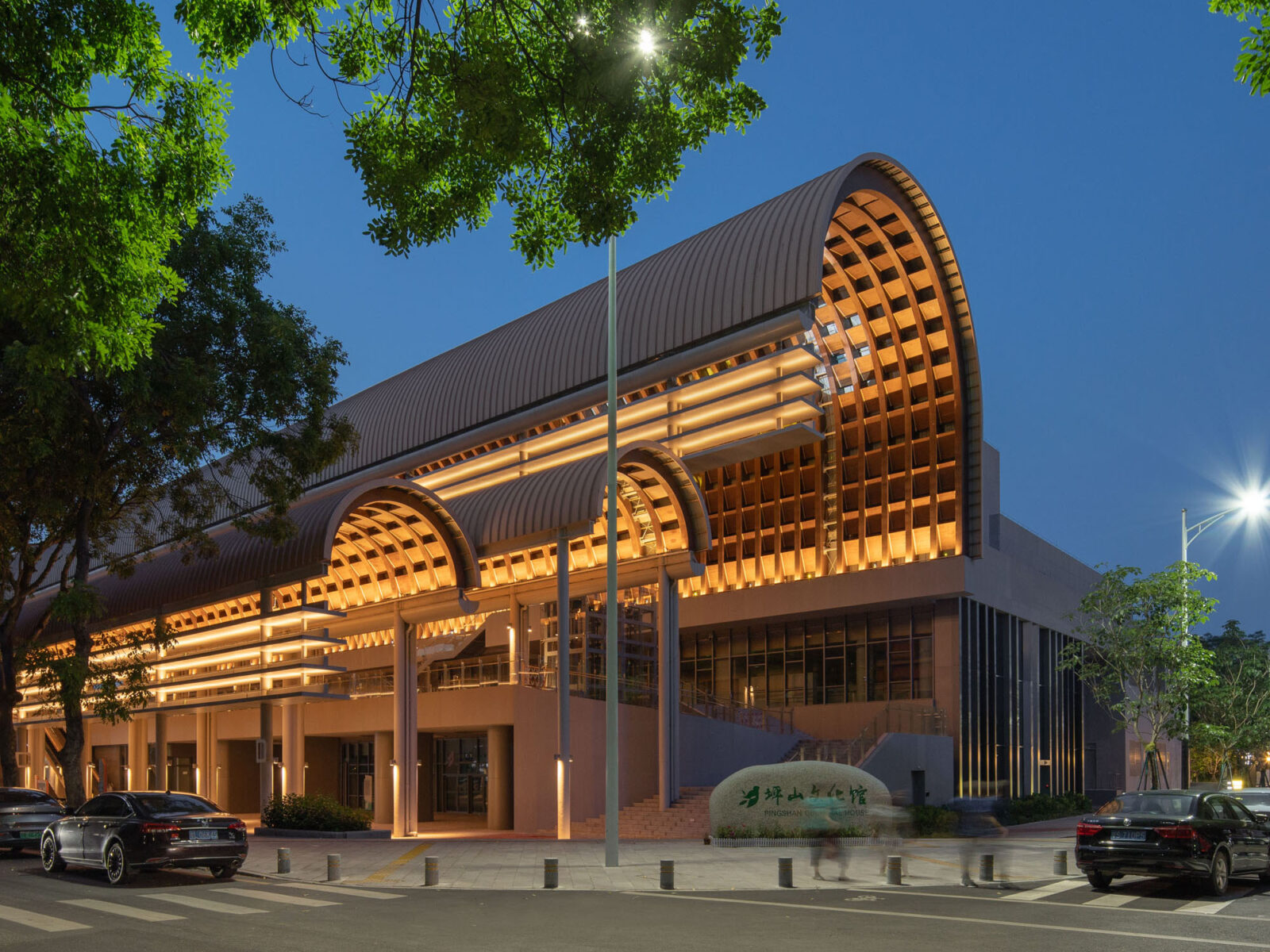
中国の広東省・深圳に位置する〈坑梓文化技術センター(Kengzi Cultural and Technology Centre)〉は、科学技術博物館とブックモールが入る北棟と文化センターが入る南棟からなる複合施設です。
深圳に拠点を置く湯樺建築設計事務所(Tanghua Architect & Associates)が設計しました。
注目ポイント
- 都市、公園、村落をつなぐインターフェースとしての半屋外空間
- 離れた敷地を視覚的につなぐ建築デザイン
- エンジニアードウッド(集成材)を採用した、大規模公共建築における木造化
(以下、湯樺建築設計事務所から提供されたプレスキットのテキストの抄訳)
© Zhang Chao
© Zhang Chao
敷地概要とプログラム構成
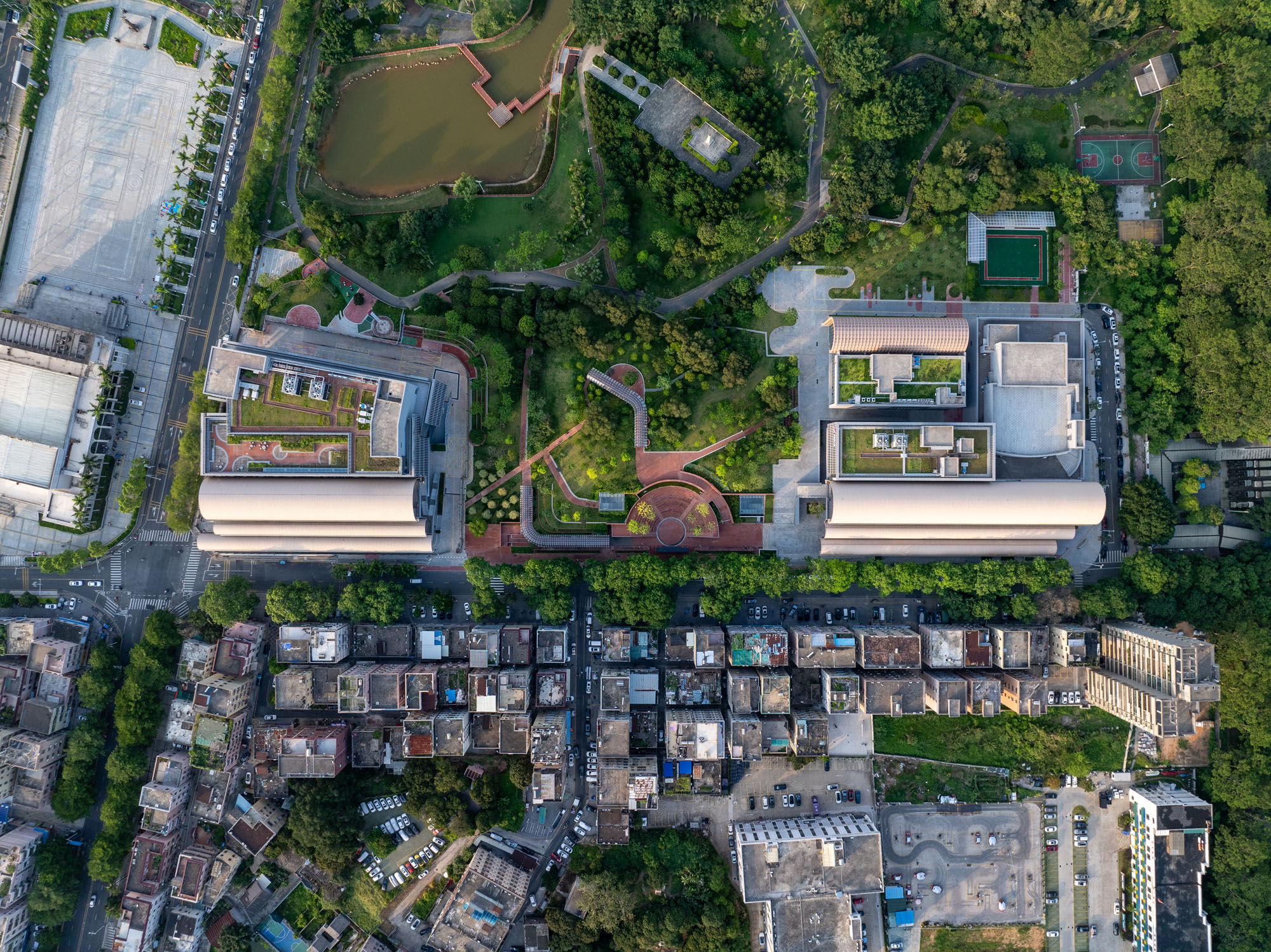
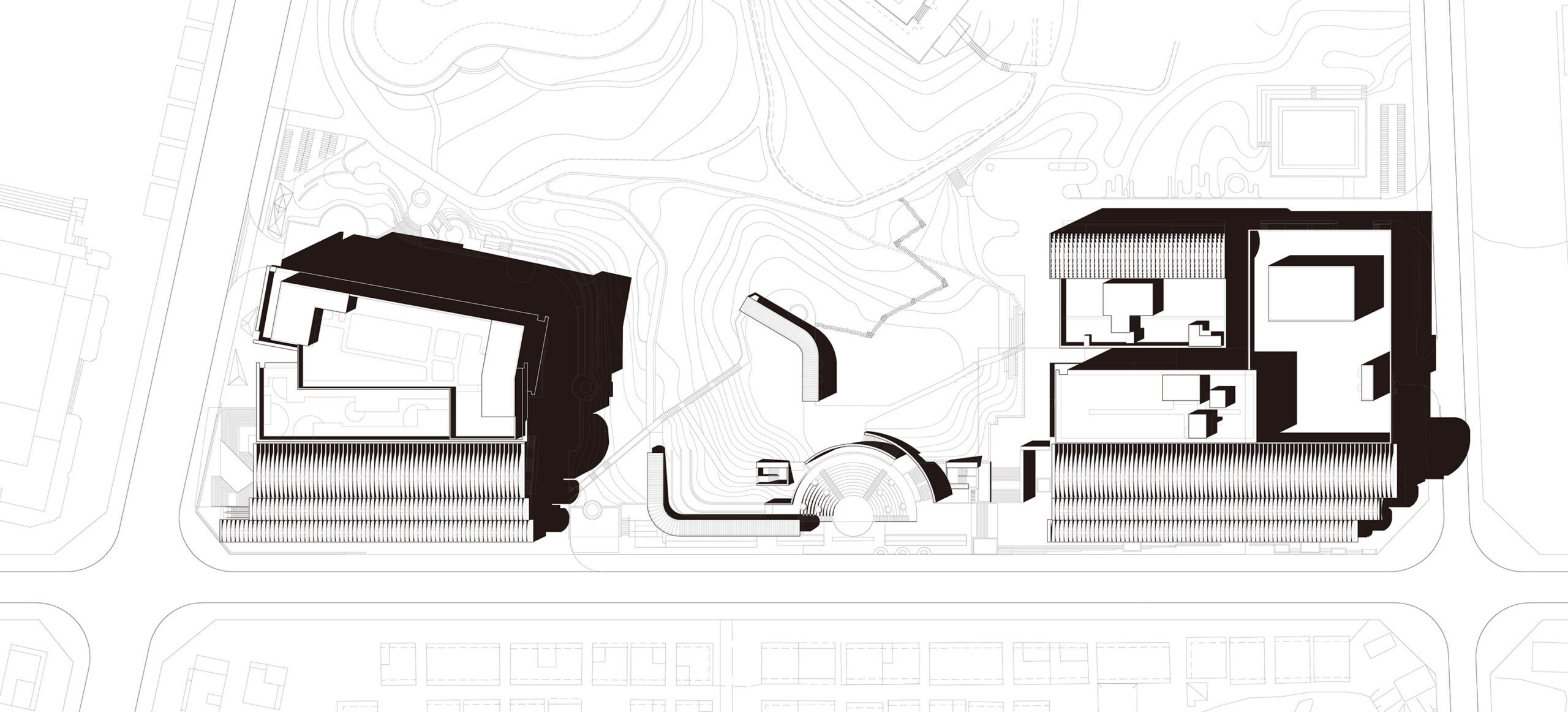
本計画は坑梓鎮(Kengzi)に位置する。敷地は南北に130m以上離れた2区画に分かれており、敷地総面積は21,543m²に及ぶ。
北区画には地上6階・地下2階の建物が配置され、「坪山科学技術博物館」と「ブックモール」が入居する。一方、南区画には地上8階・地下2階の建物が設けられ、「坪山文化センター」として利用される。両区画の中間には広祖公園の西側入口が位置し、地下には防空施設を兼ねた公共駐車場が整備されている。
総建築面積は72,436.62m²であり、その内訳は容積率対象面積が43,176.92m²、非容積率対象面積が29,259.70m²となっている。
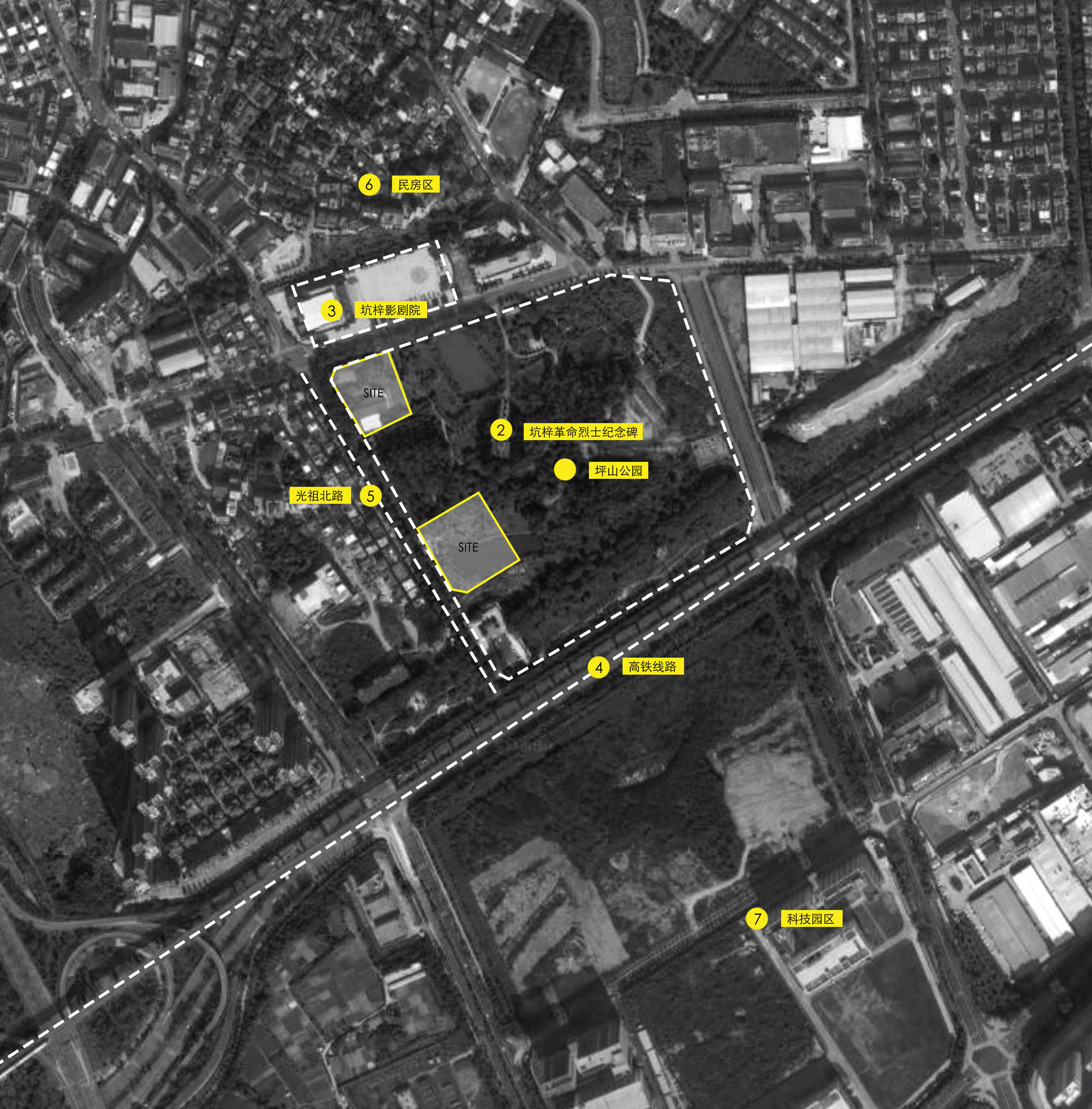
Site Surroundings
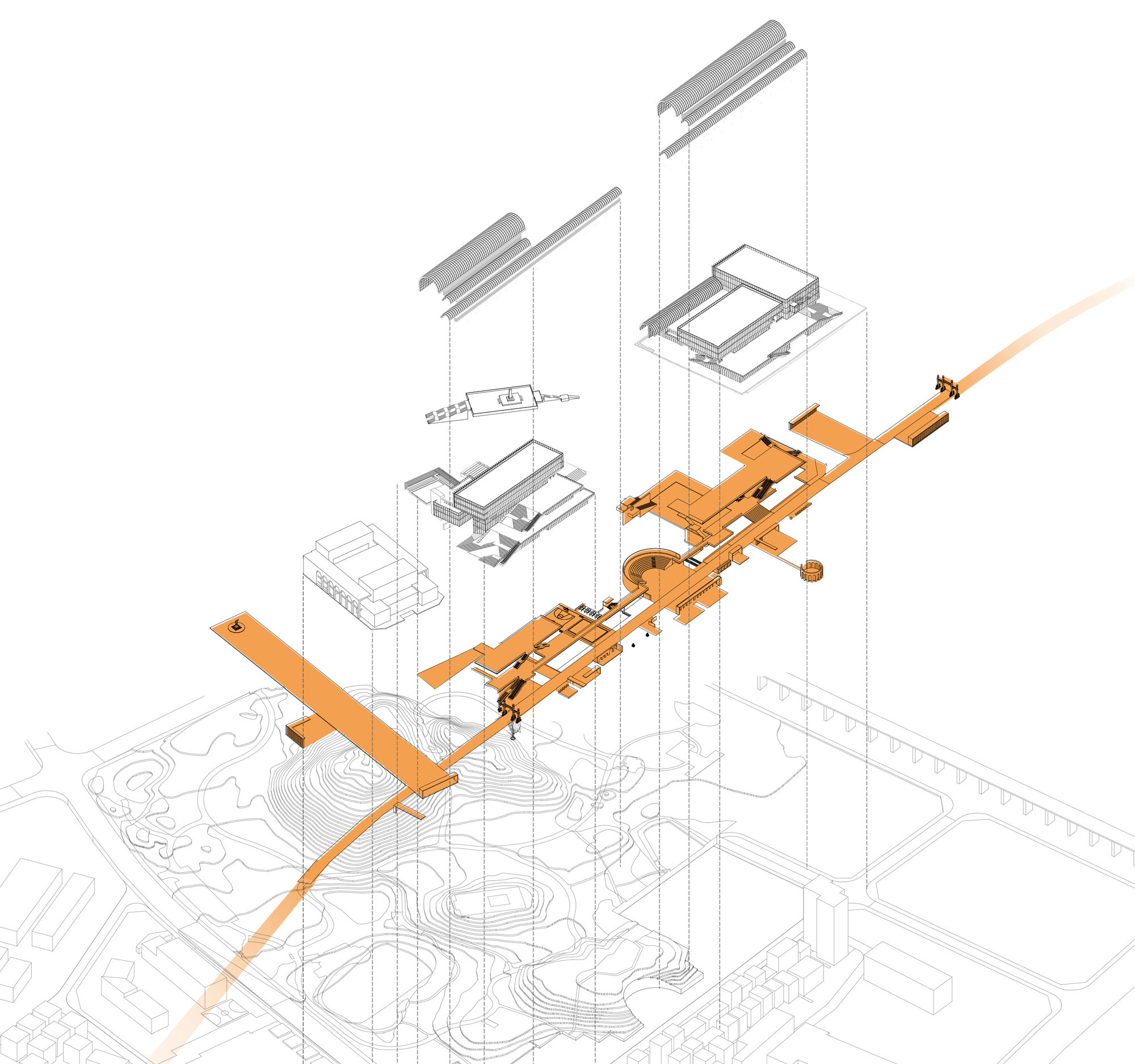
Explosive Diagram
都市の文脈:産業と伝統の結節点
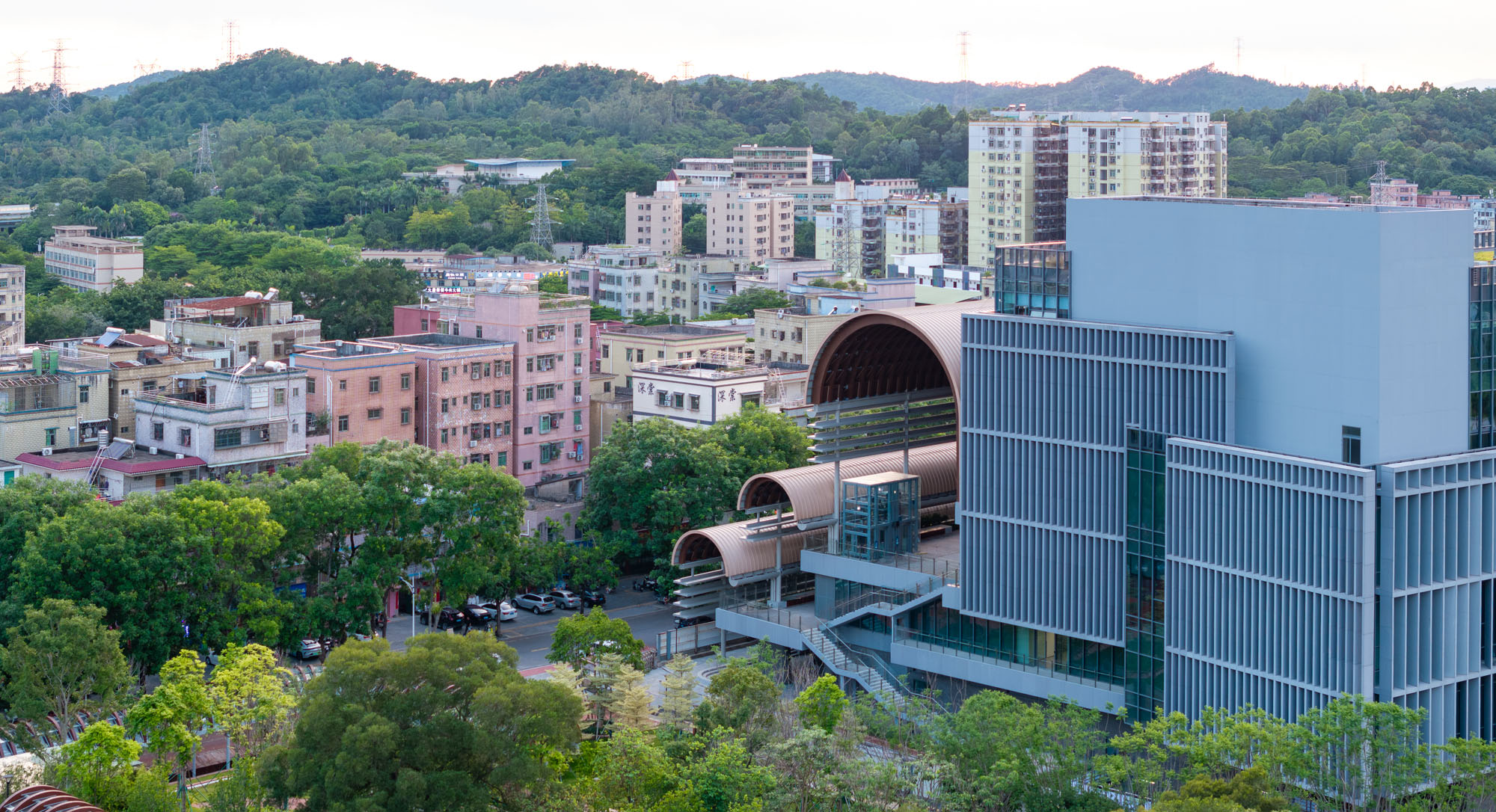
周辺環境に目を向けると、敷地南側には数多くの先進製造業産業パークが立地しており、自動車産業と工業化を主軸とした都市計画によって、大規模かつ体系的な都市構造が形成されている。
対照的に、西側にはアーバン・ビレッジが位置し、北側にはいくつかの村落が点在する。ここには深圳で最大規模となる16棟の客家城壁(Hakka walled)が保存されており、複雑に絡み合う路地と大小様々な建物が独特の景観をつくり出している。また東側には、公共緑地である広祖公園が隣接している。
© Zhang Chao
© Zhang Chao
設計戦略:2つの敷地をつなぐ連続性
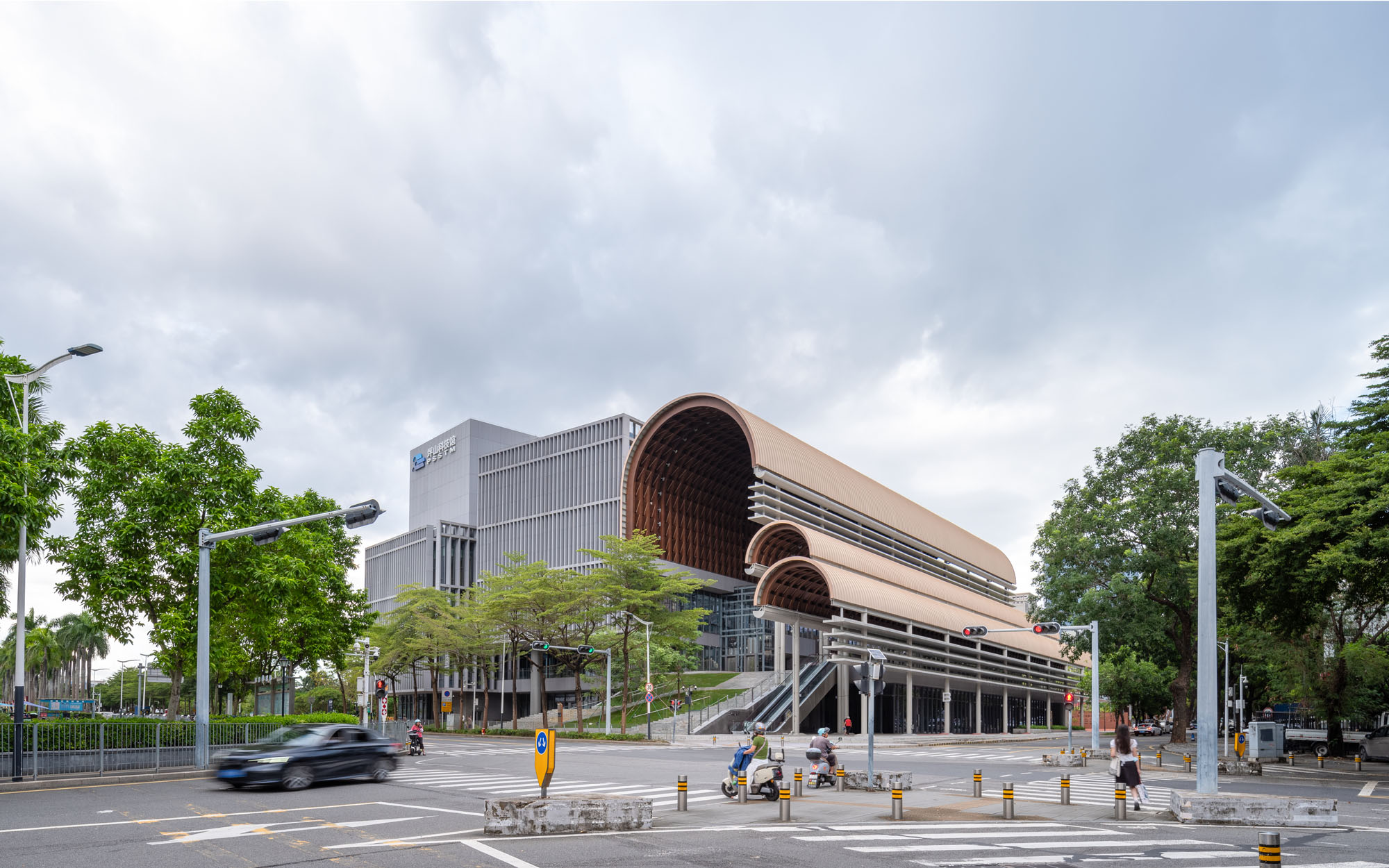
設計構想は、こうした都市開発の全体パターンを起点とし、建築とランドスケープの実用性および運用維持を考慮した上で導き出された。土地の制約により2区画を分離開発する必要があったが、本設計では両区画間に位置する広祖公園西側を計画範囲に含めることで、南北区画間の効率的な接続を実現した。これにより、連続性をもちながらも変化に富んだ街路ファサードが形成され、社会的・文化的・環境的、そして経済的な便益の最大化が図られている。
© Zhang Chao
© Zhang Chao
気候風土に適応した「立体的街路」
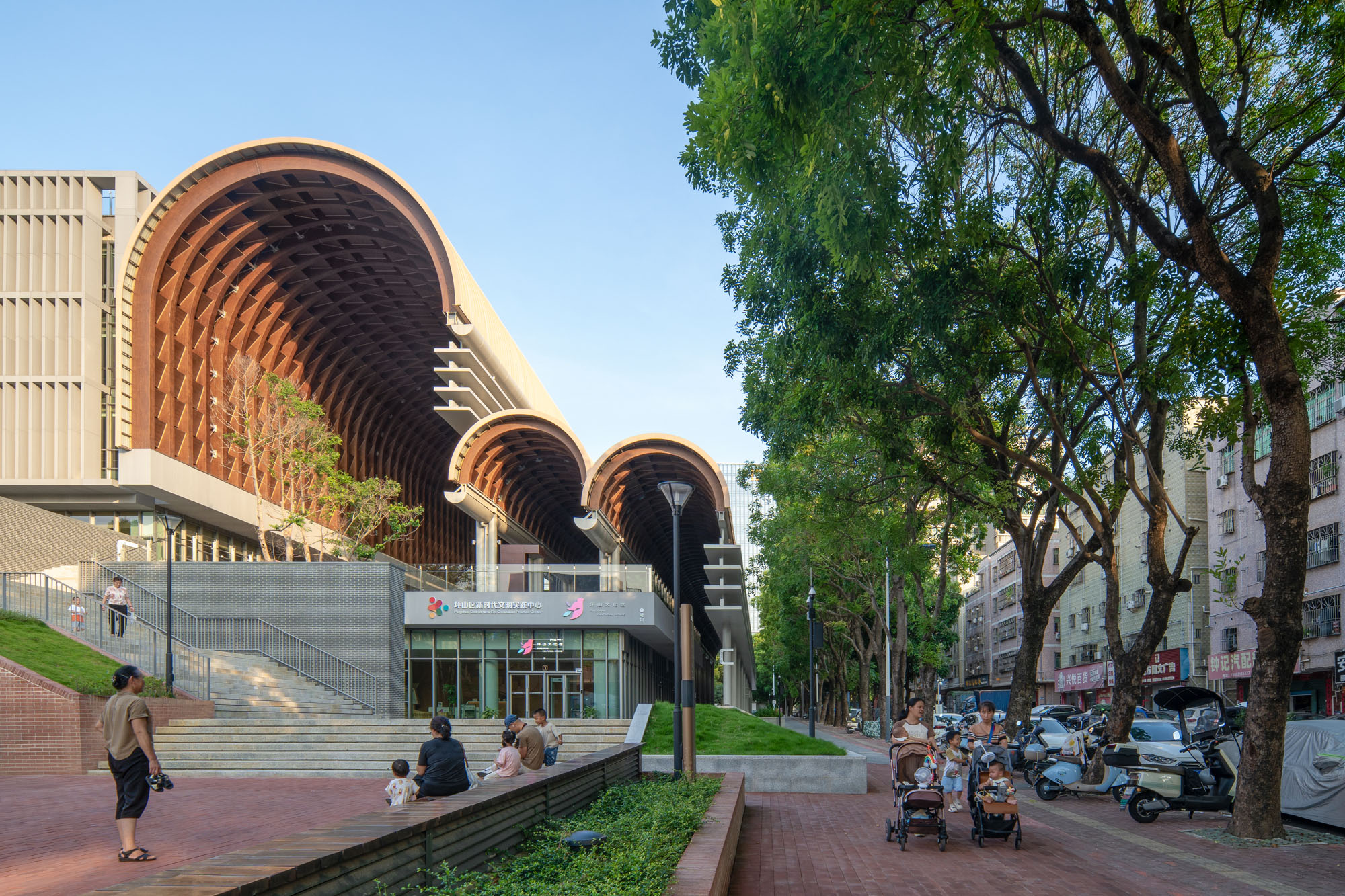
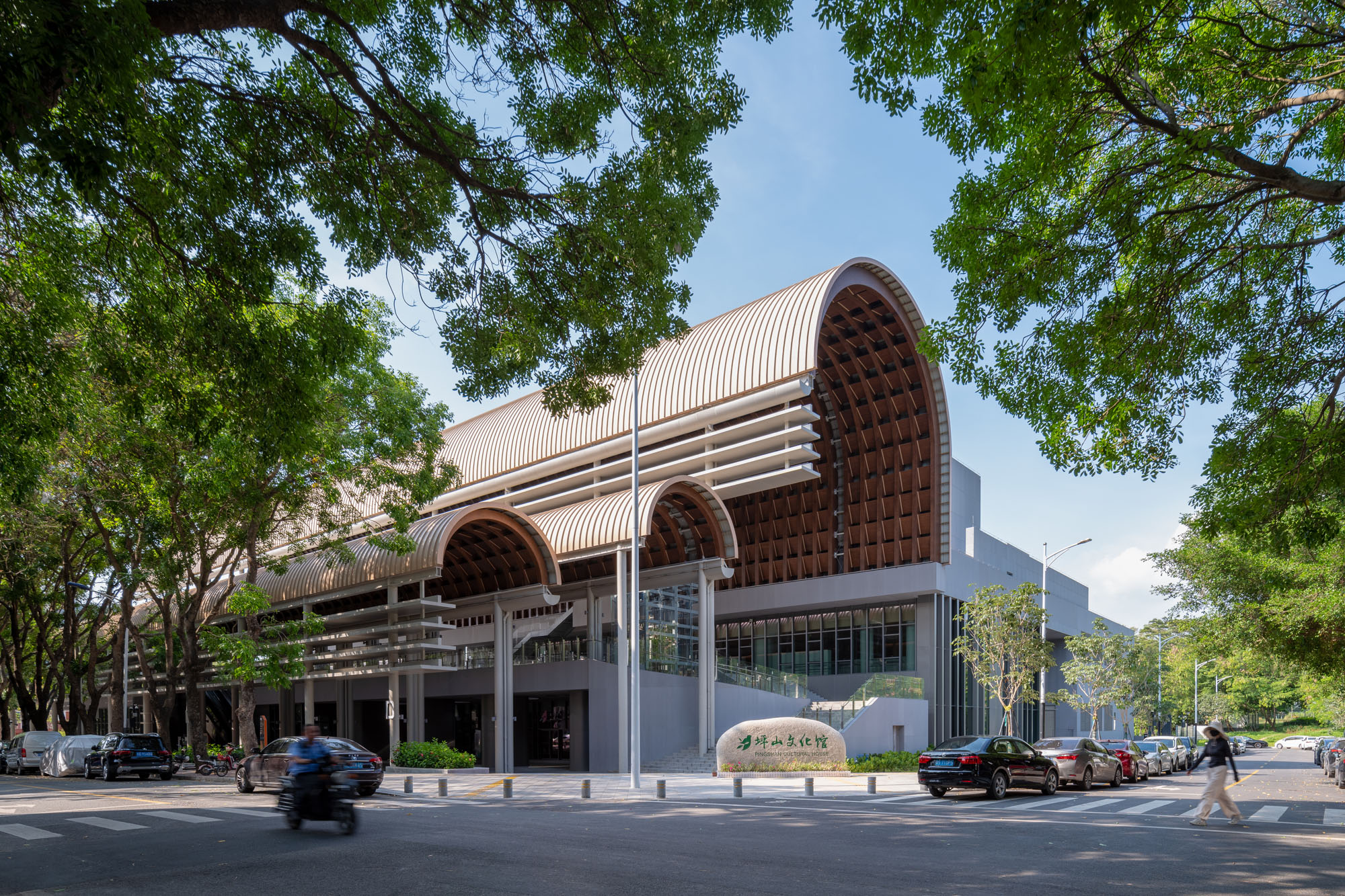
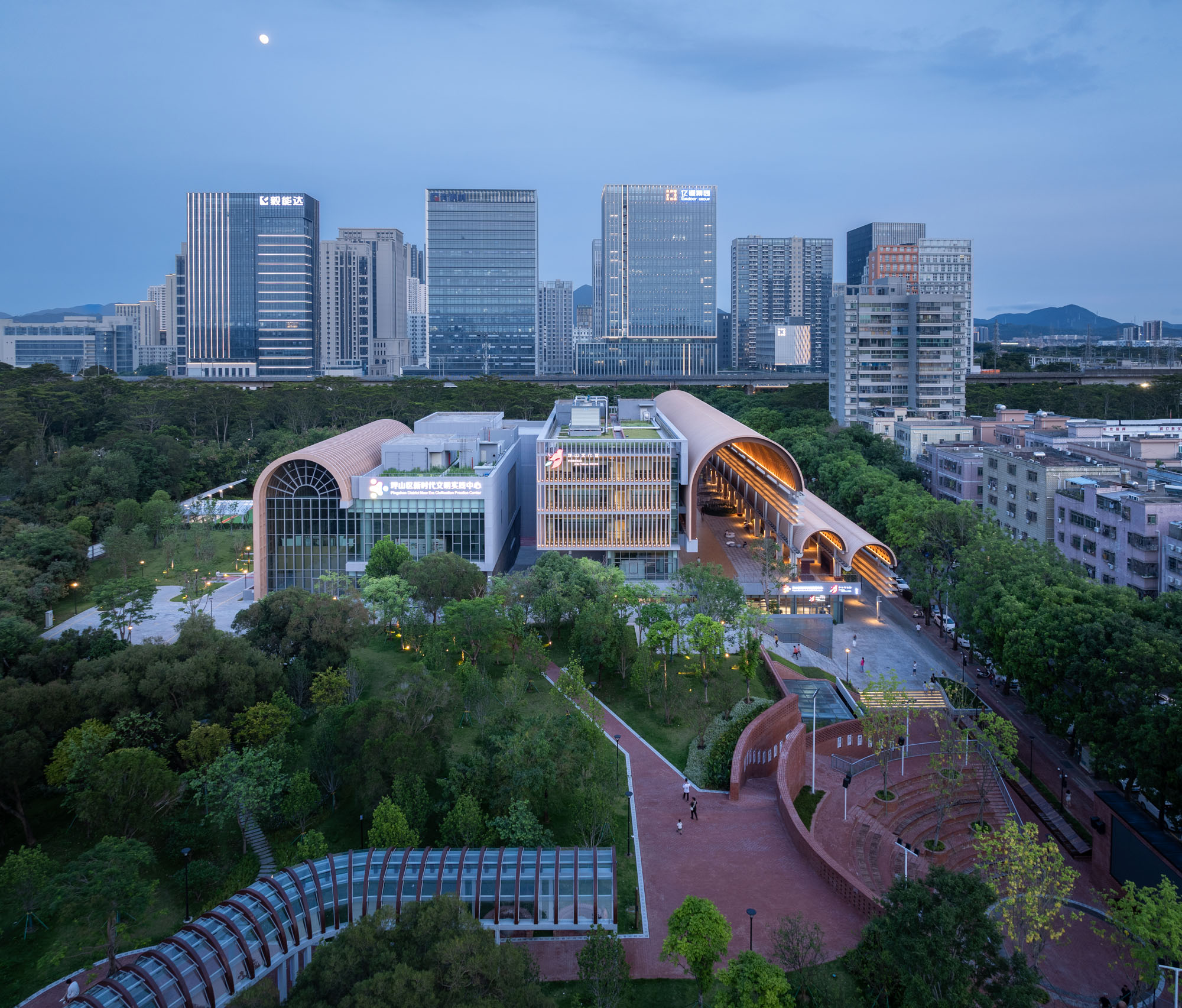
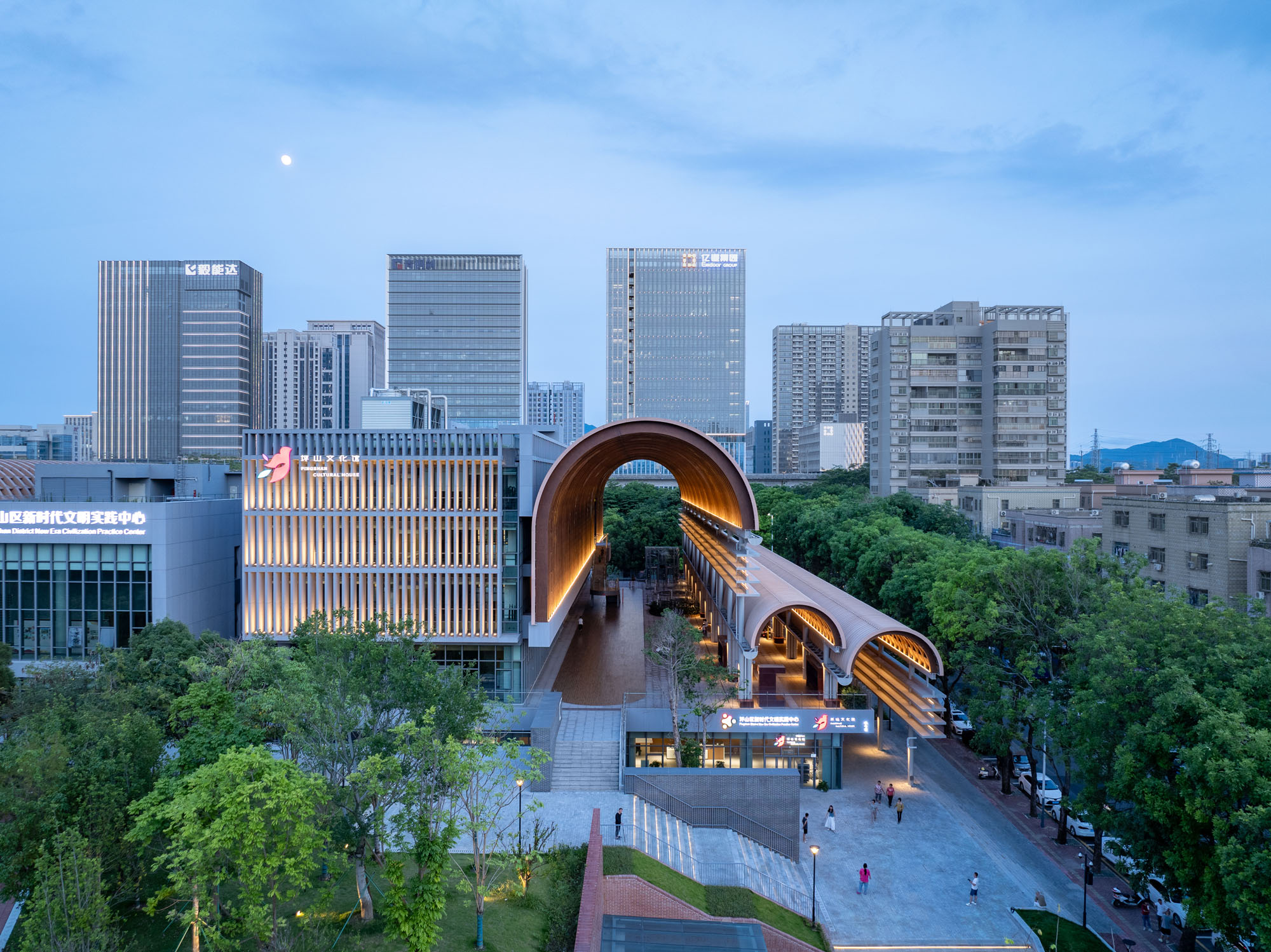
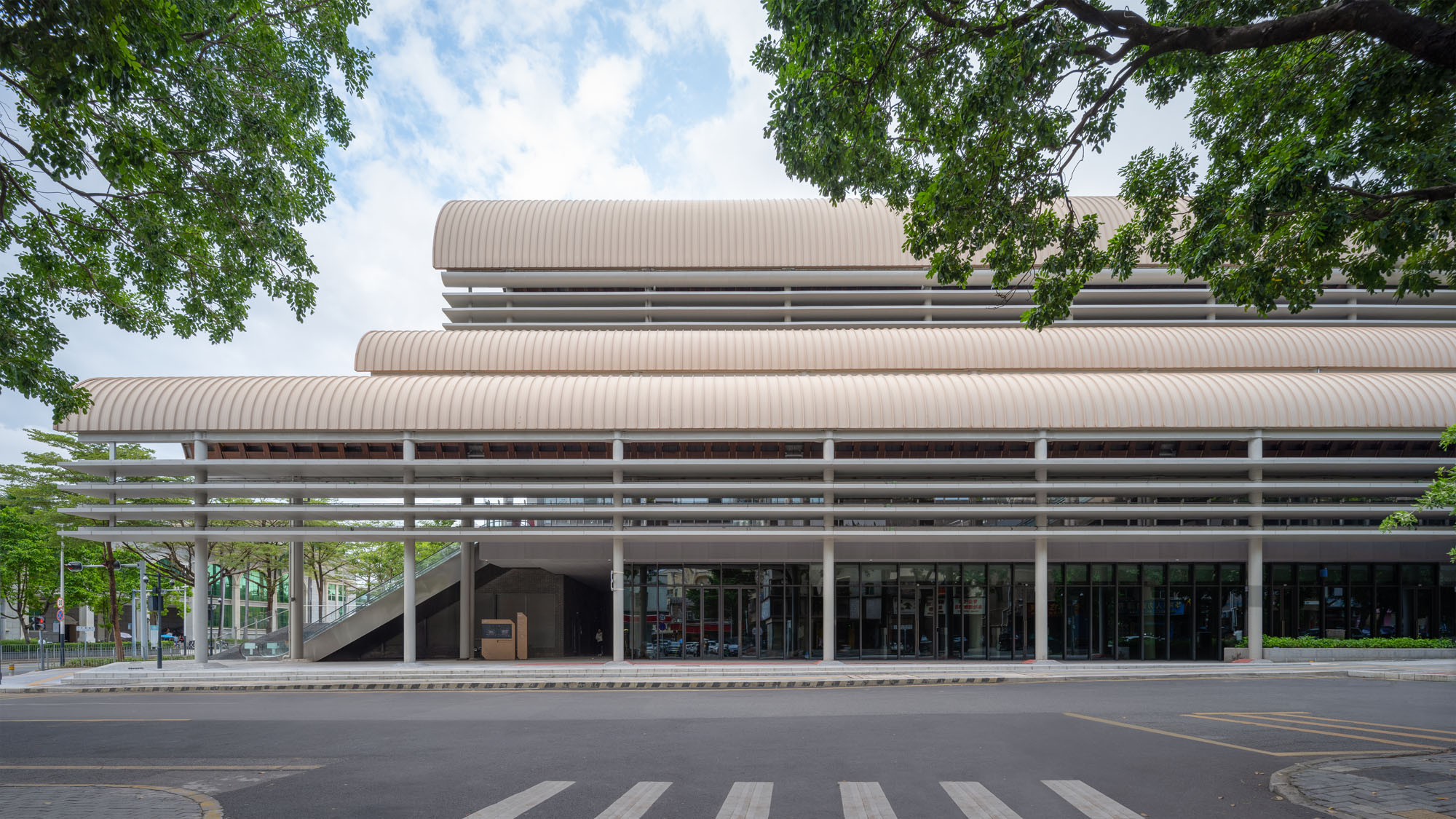
限られた敷地条件に対応するため、建物の2階と3階にはテラス構造を採用し、都市道路沿いにアーケード形式の広場を形成した。これらの空間は段差のあるアーチ屋根で覆われ、中国南部の嶺南地方特有の気候特性に適した公共空間を創出している。
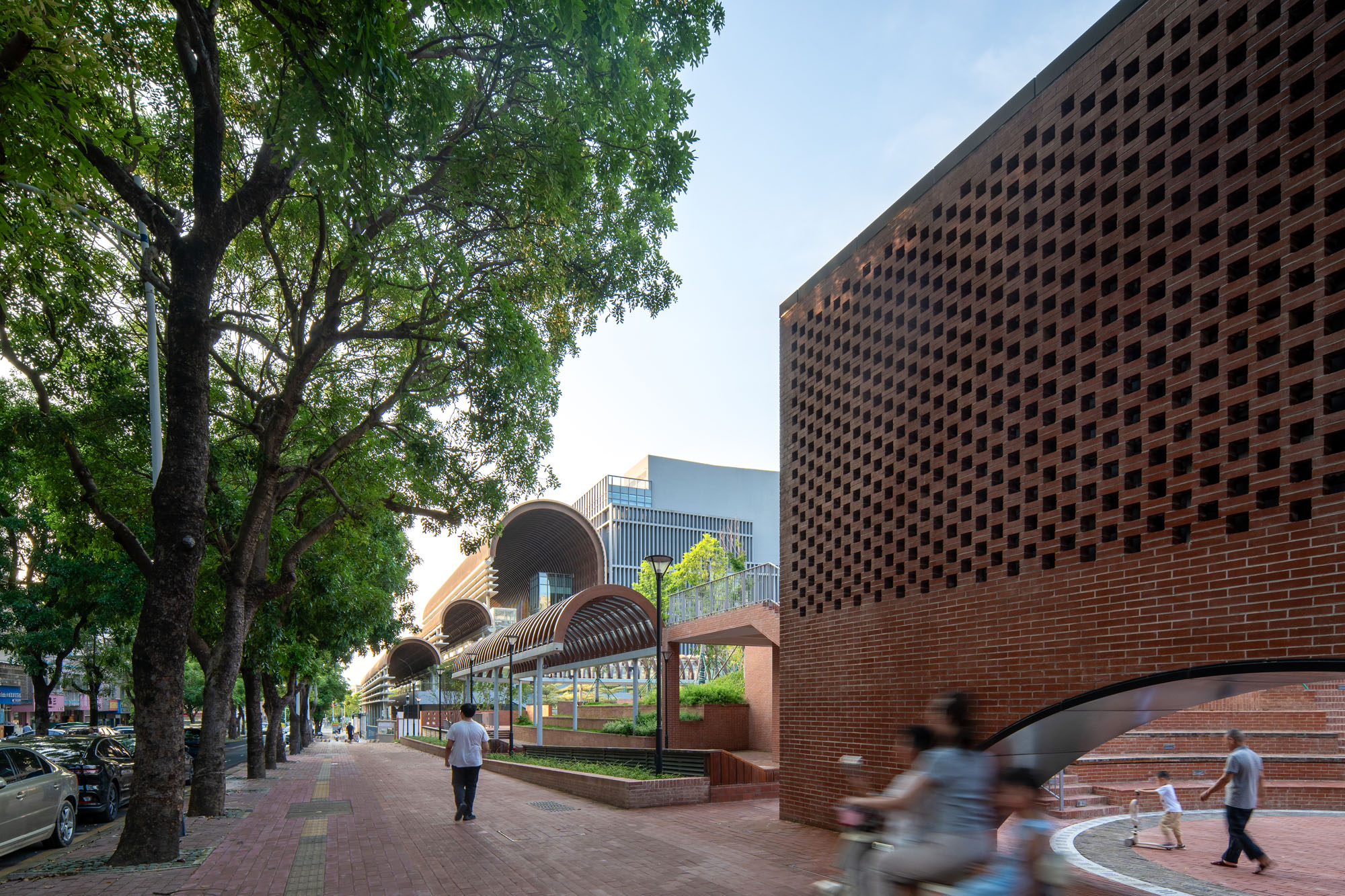
科学博物館の屋外展示エリアや、文化センターのパフォーマンス会場として活用されるこれらの屋根付き屋外空間は、屋内と屋外の相互交流を促し、空間効率を高める役割を果たす。同時に、都市の公共建築と小規模な村落建築の双方にとって、新たな「三次元的な街路」として機能し、異なる都市のテクスチャと文脈を結びつける結節点となる。
© Zhang Chao
© Zhang Chao
象徴としてのエンジニアードウッド
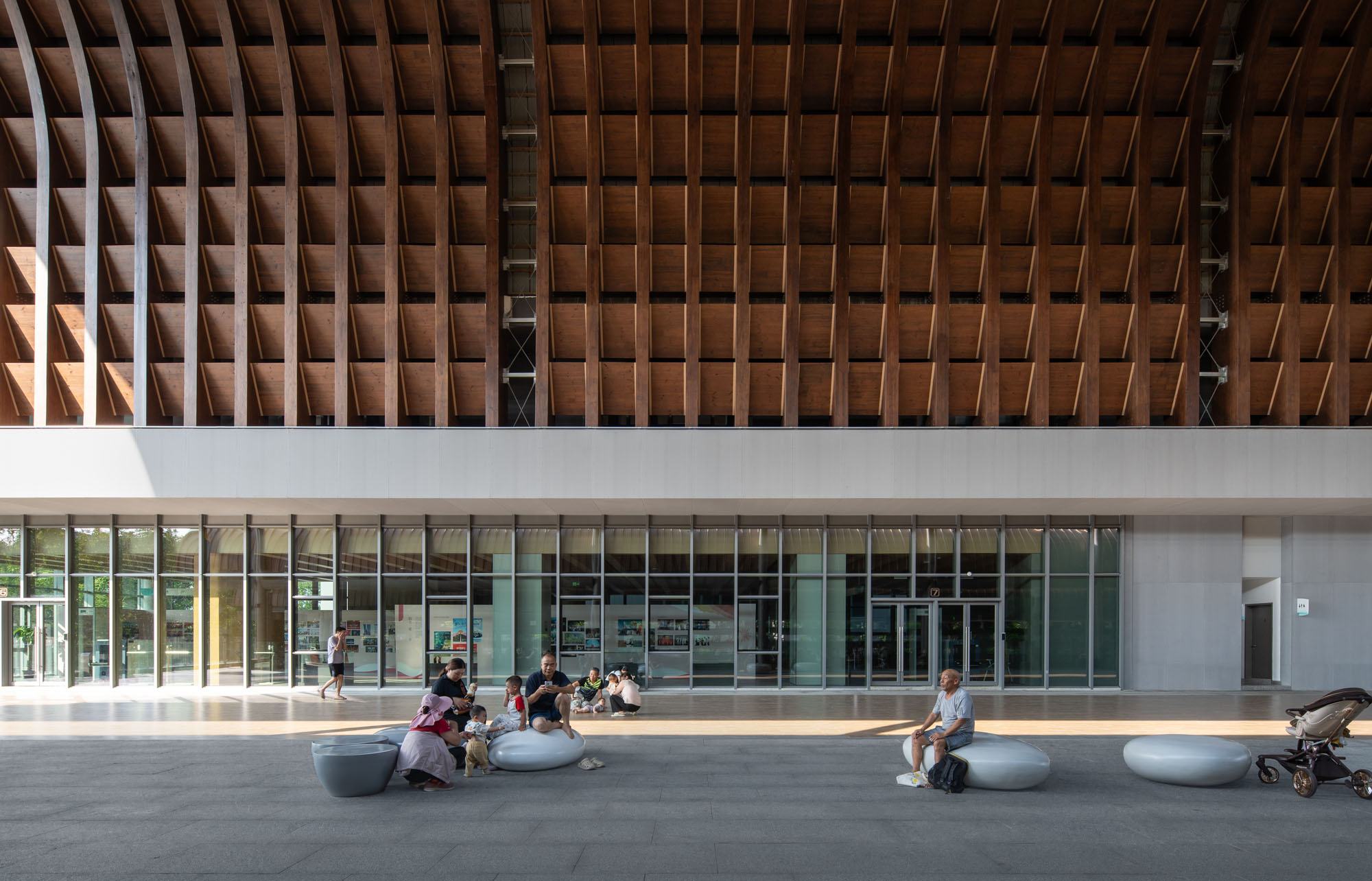
プロジェクト最大の特徴であるアーケードは、現代的なエンジニアードウッドを用いて構築された。これは文化施設への人々の期待に応える温かみのある色調をもたらすと共に、両施設のアイデンティティを示す象徴的な視覚要素となっている。
金属やコンクリート素材と比較して、エンジニアードウッド製品は国家の省エネ政策にも合致しており、建築における新素材・新技術・新手法の成熟した実践例として、モダンで清新かつシンプルな建築イメージを体現している。
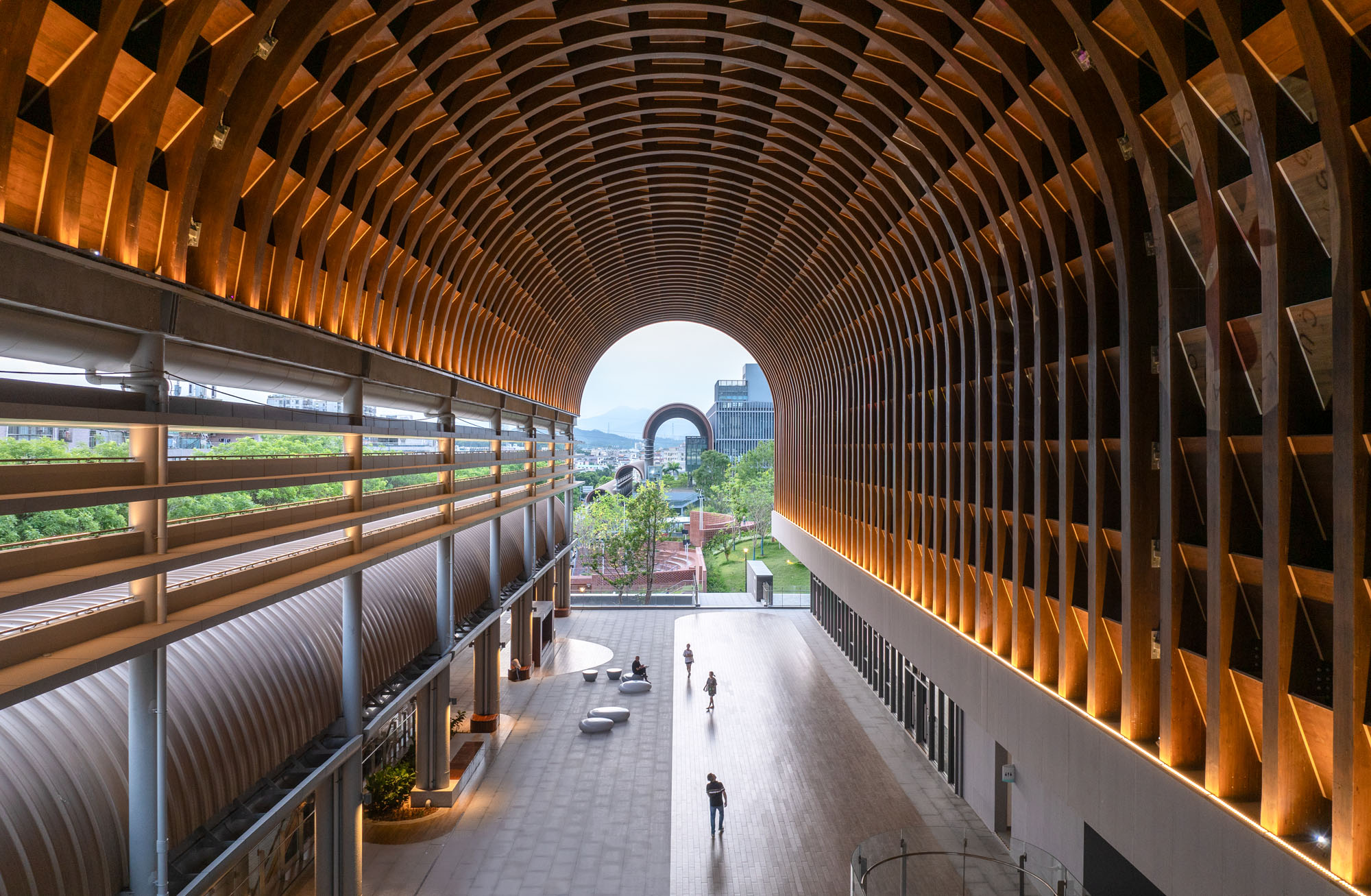
© Zhang Chao
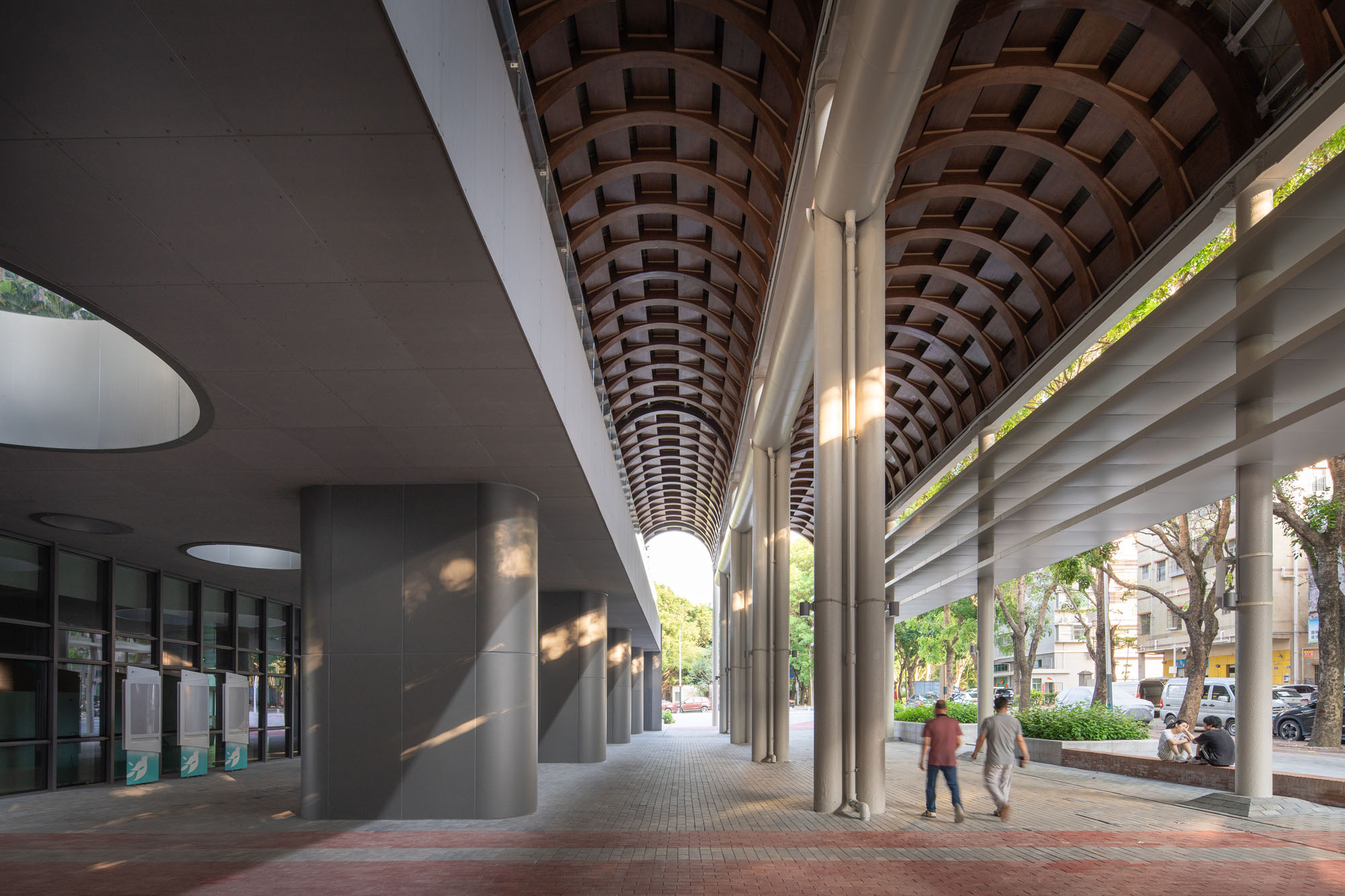
© Zhang Chao
ストリートライフの再生と統合
本設計は、広東省の伝統的な屋外公共活動を、街路に沿った線状の公共開放空間へと統合する試みである。建築と都市の相互作用を通じて、市民のストリートライフを反映した豊かな情景を創出し、多様な文化的要素が相乗効果を生む、補完的かつ相互作用的なパブリックスペースを形成した。地域の風習と活気に満ちた鮮やかなストリートライフが、この場所で表現され、創造されている。
© Zhang Chao
© Zhang Chao
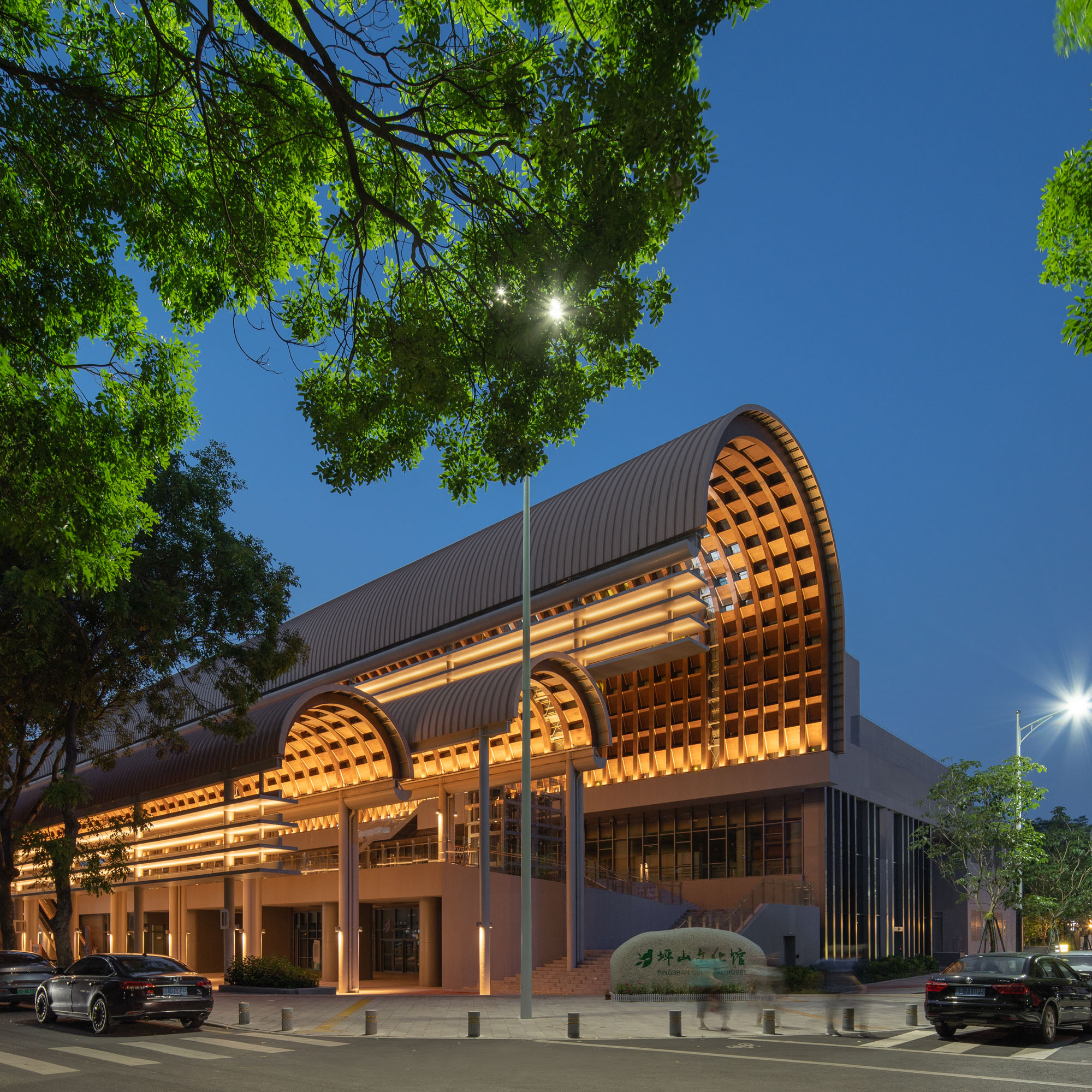
© Zhang Chao
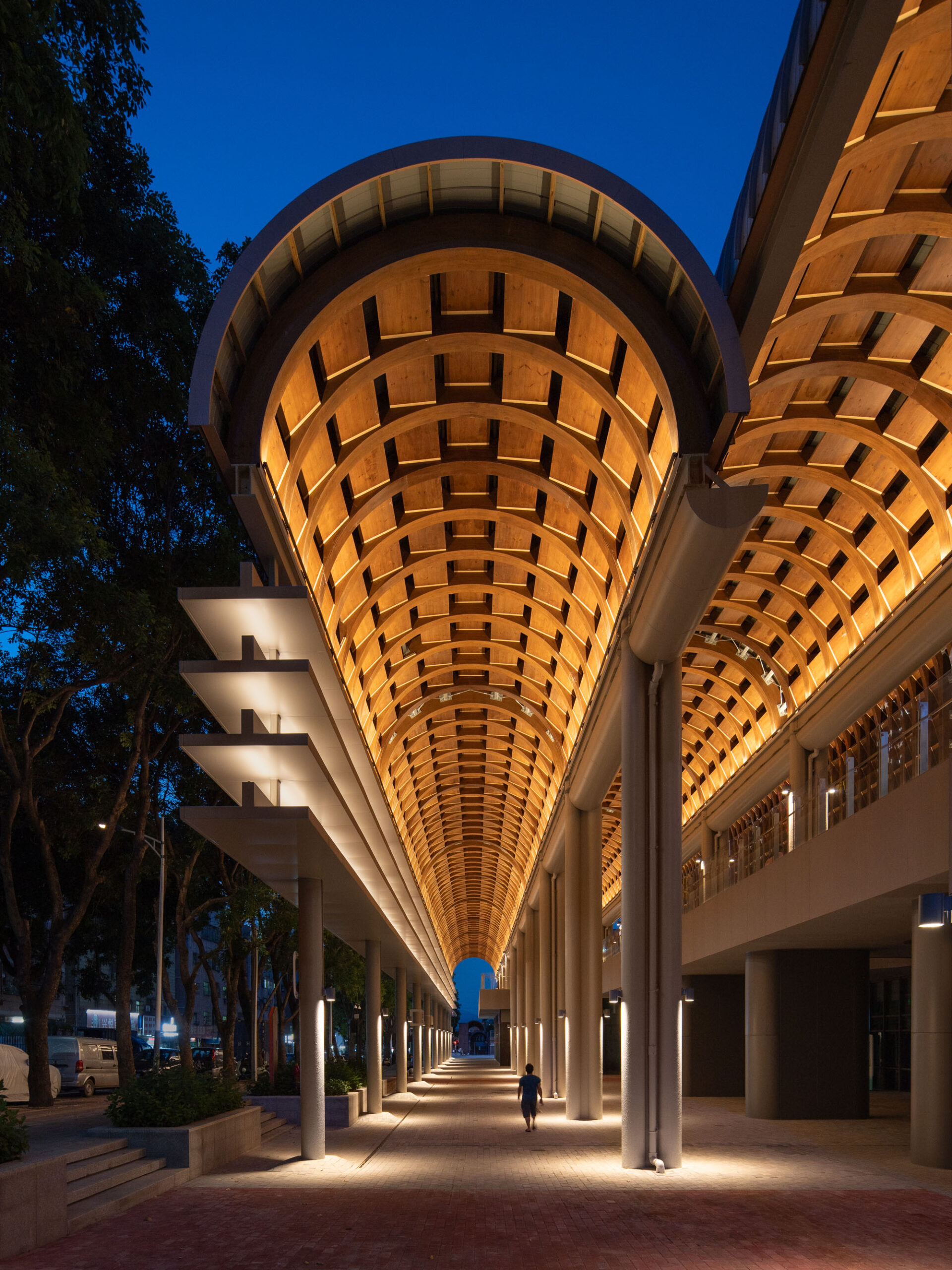
© Zhang Chao
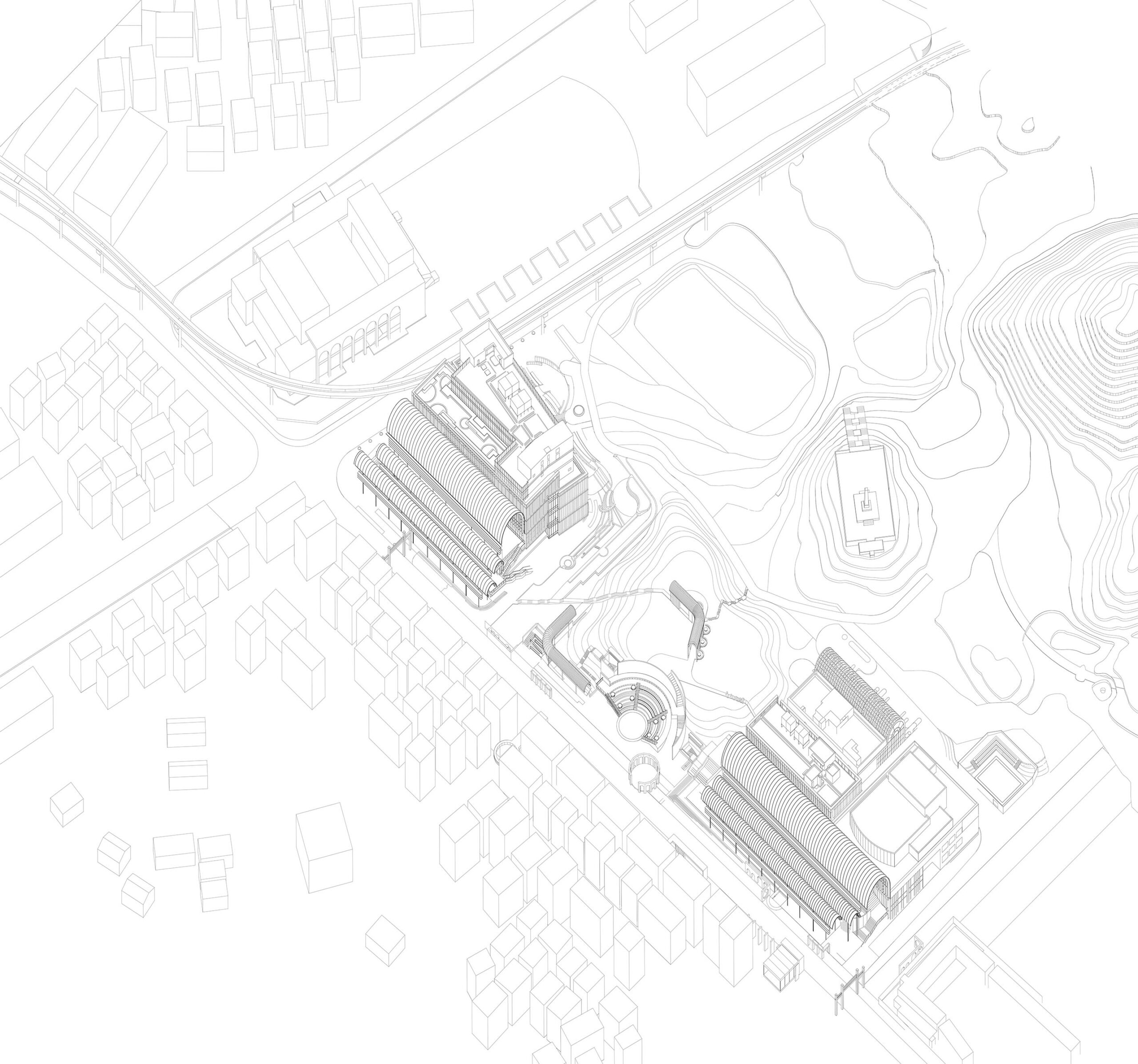
Axonometric
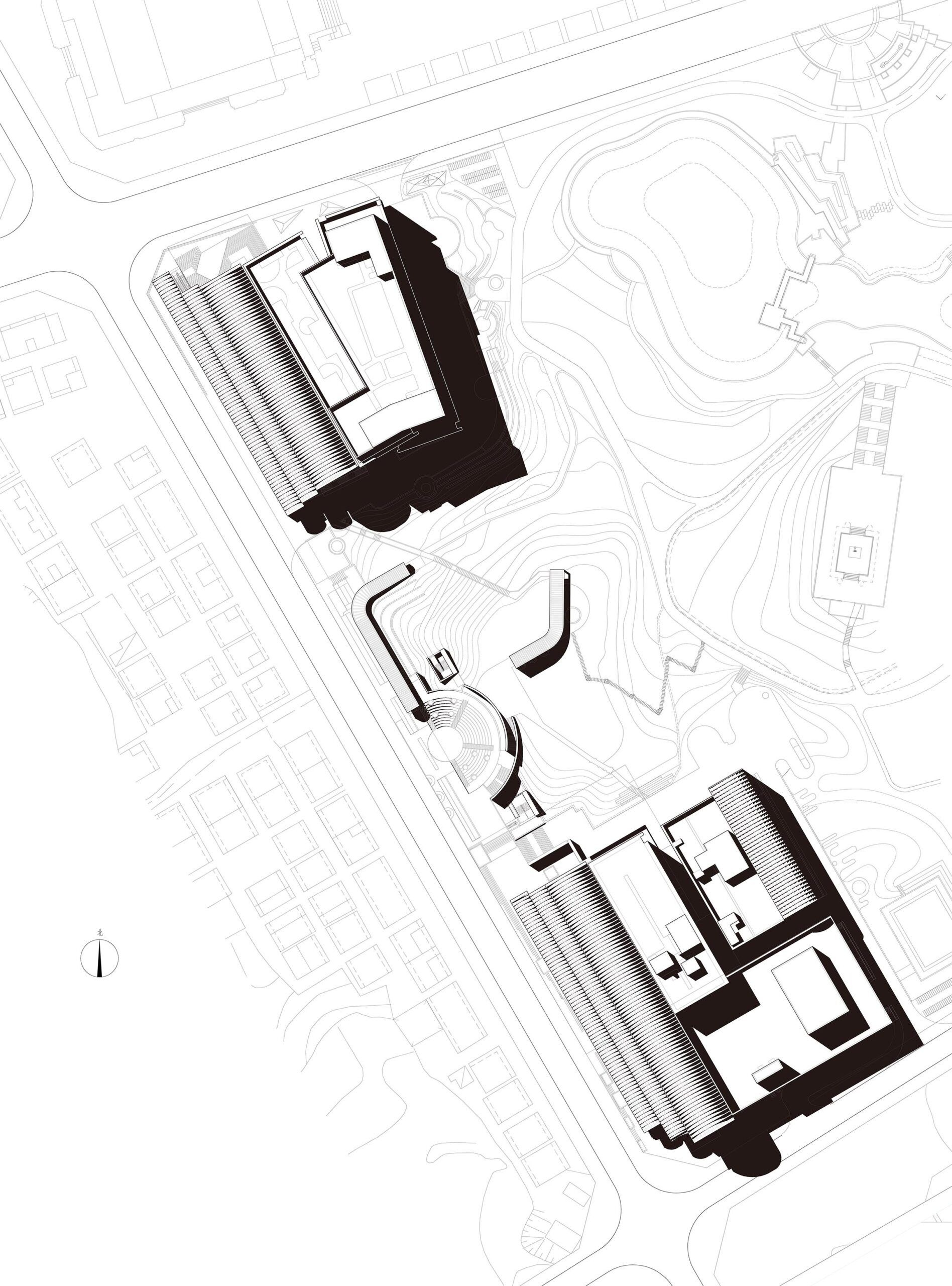
Site Plan
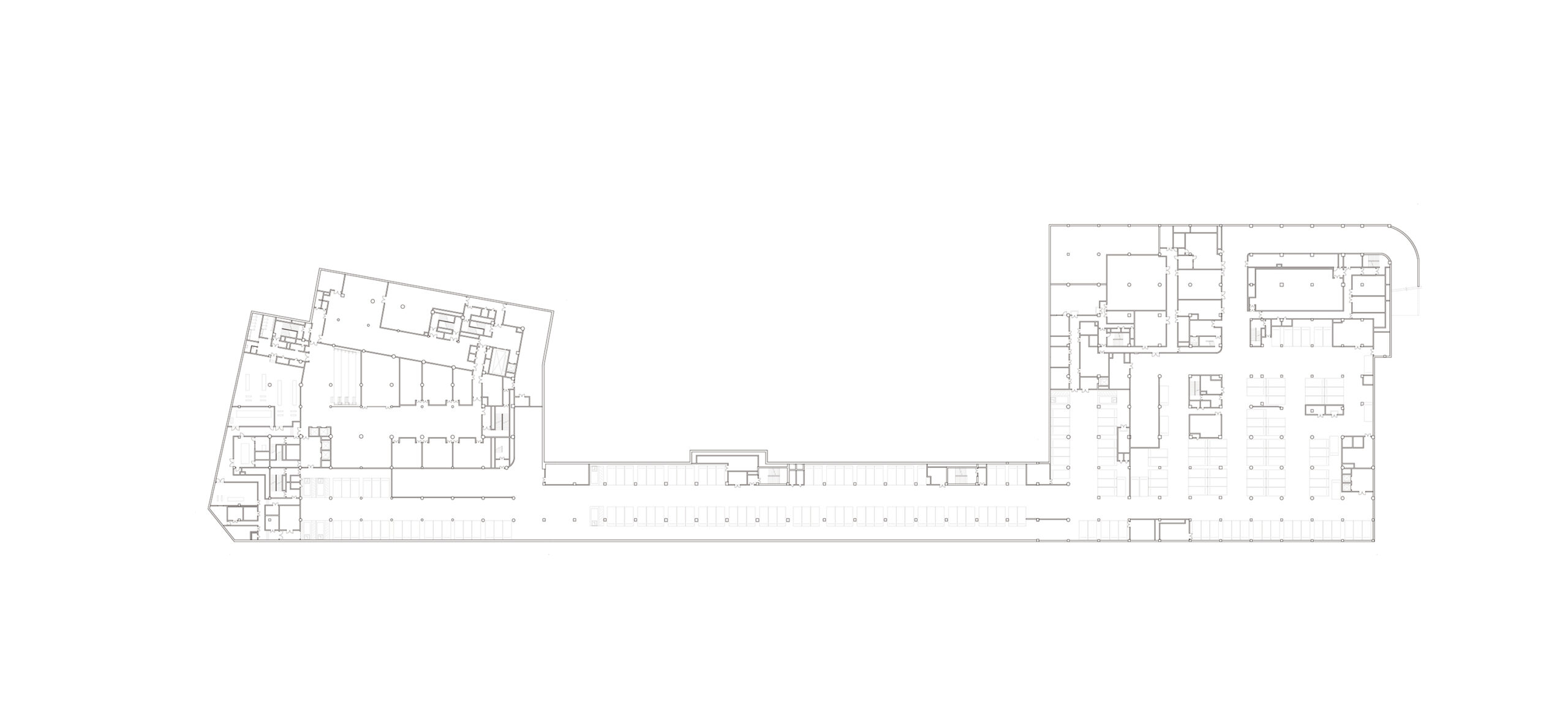
B1F Plan
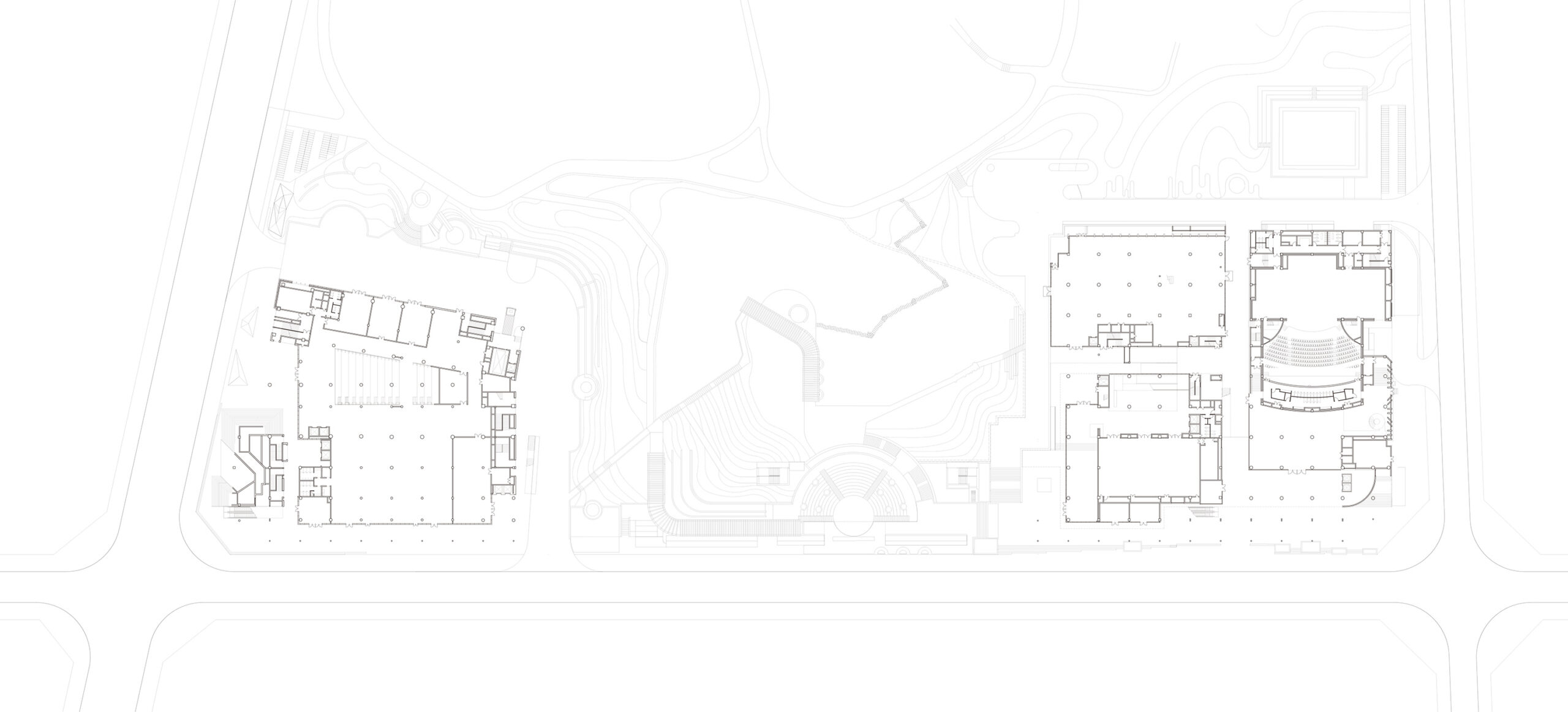
1F Plan
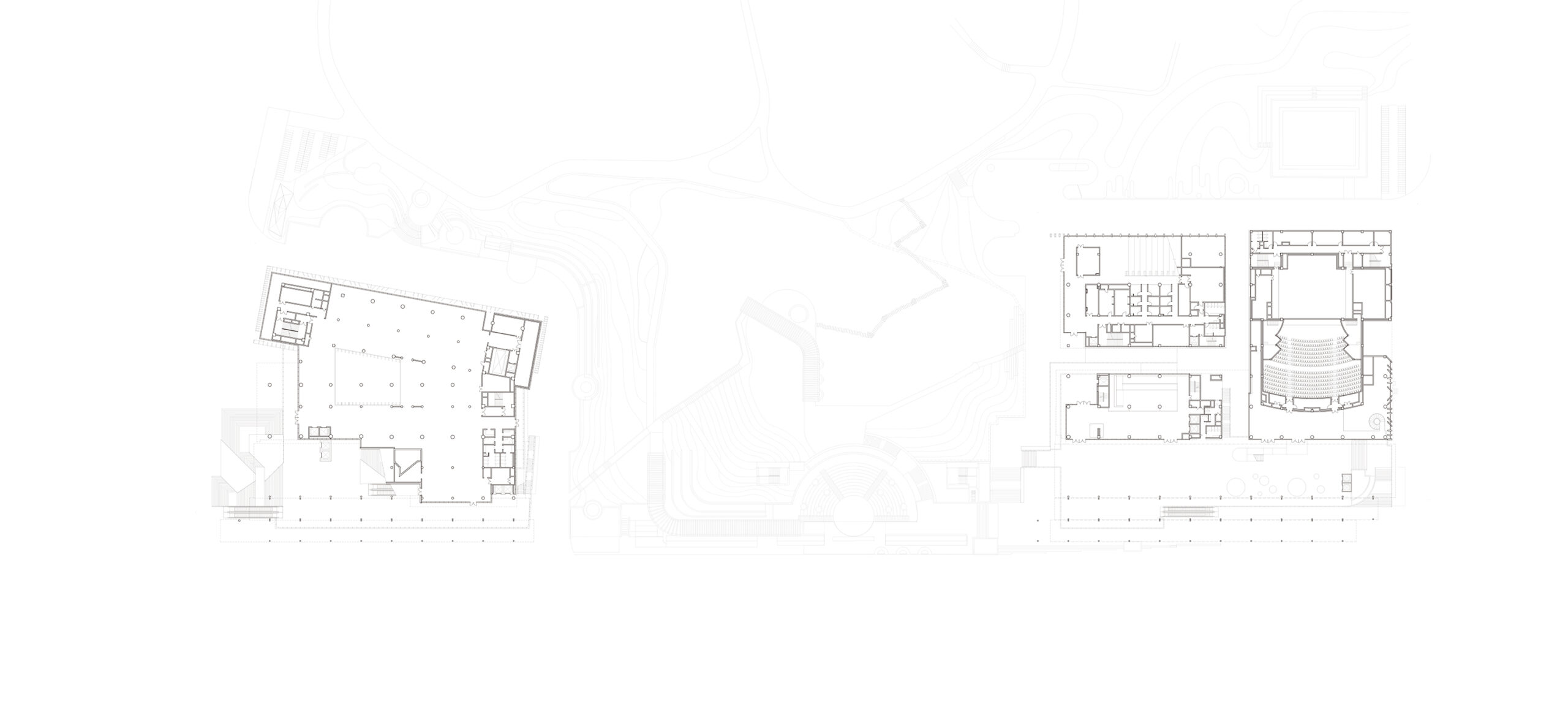
2F Plan
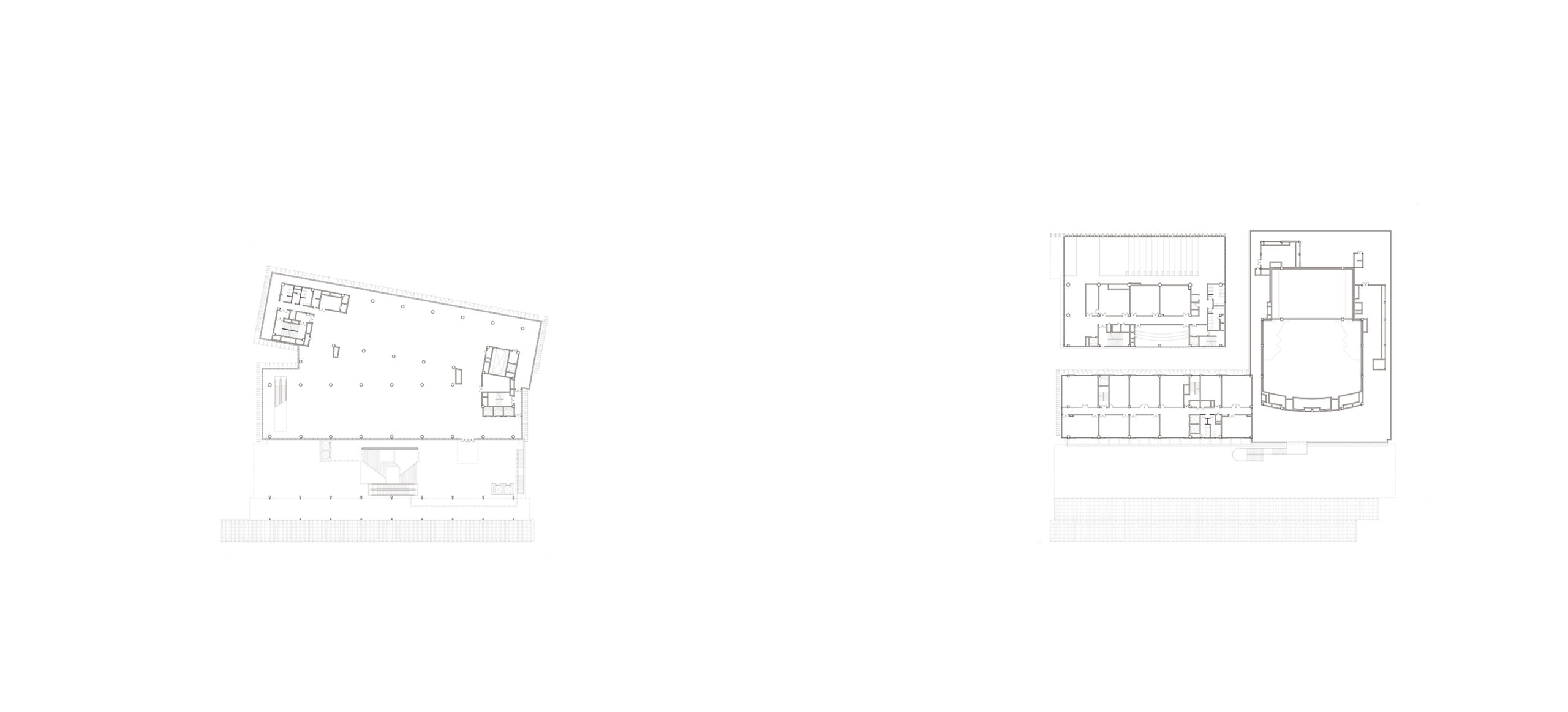
3F Plan
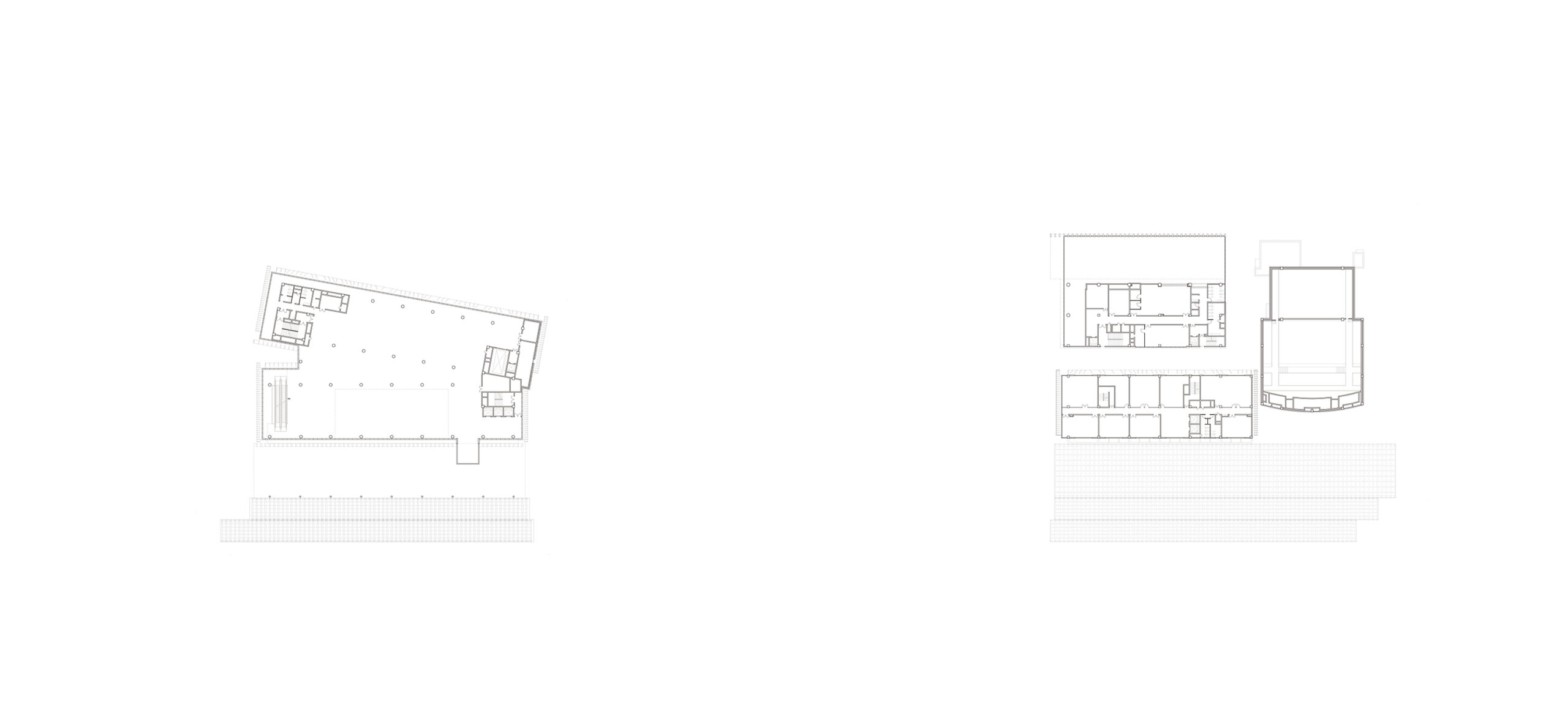
4F Plan
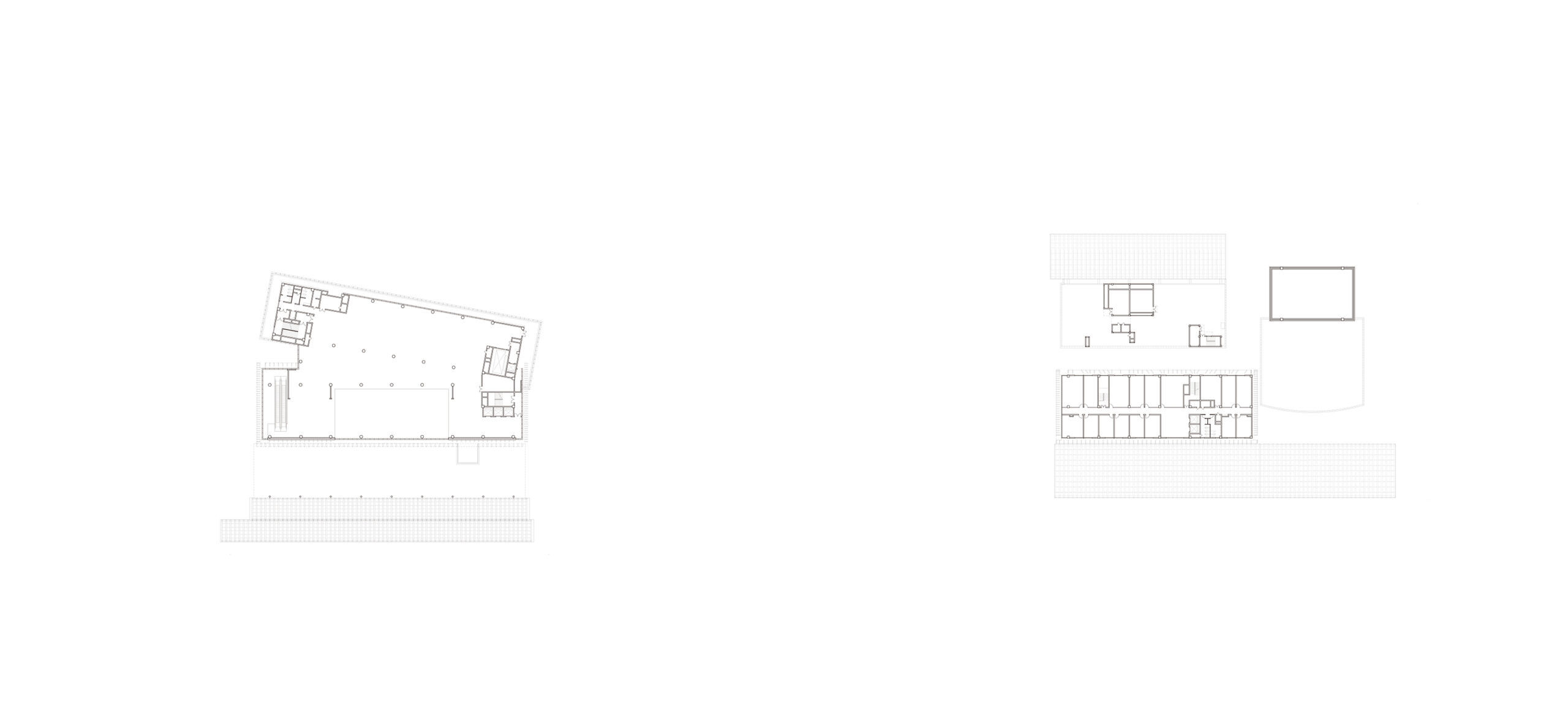
5F Plan
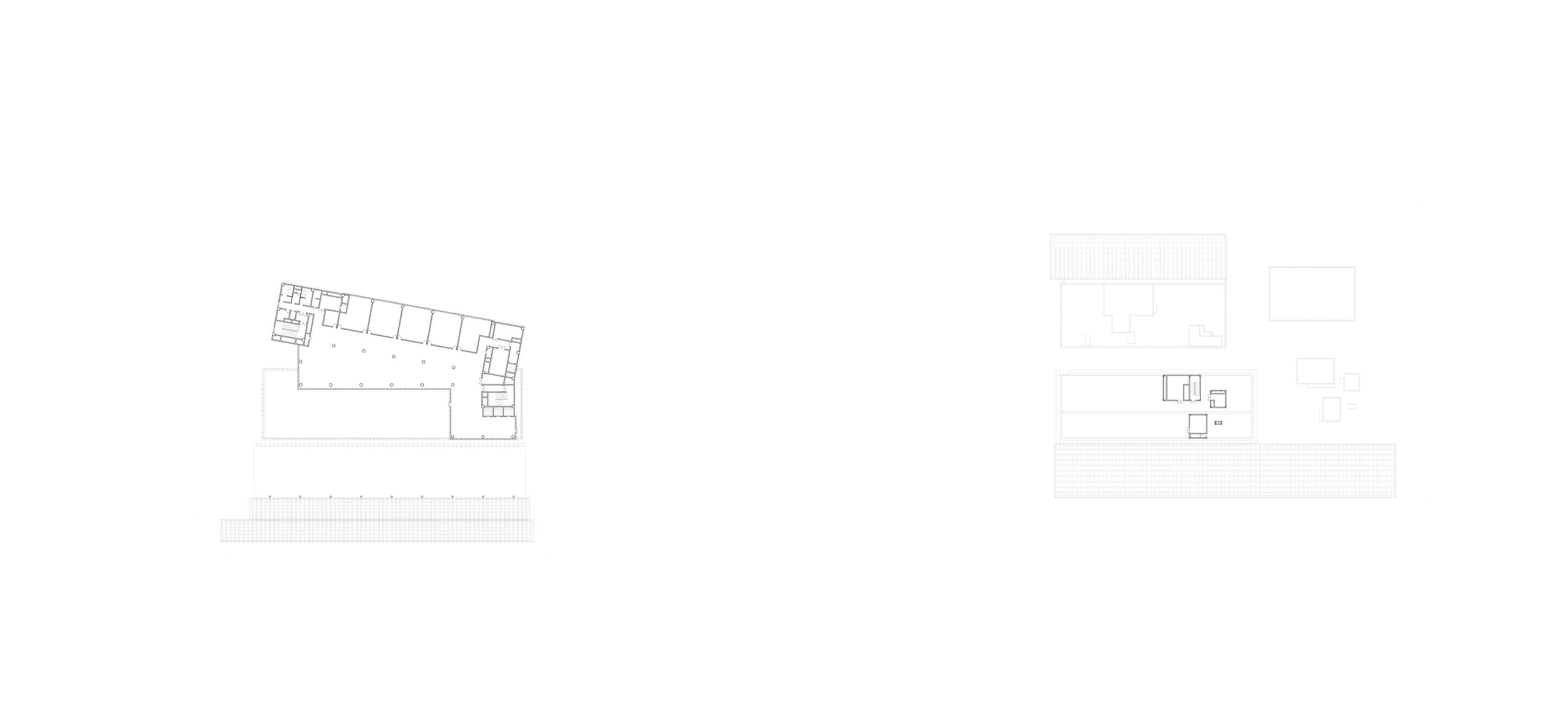
6F Plan
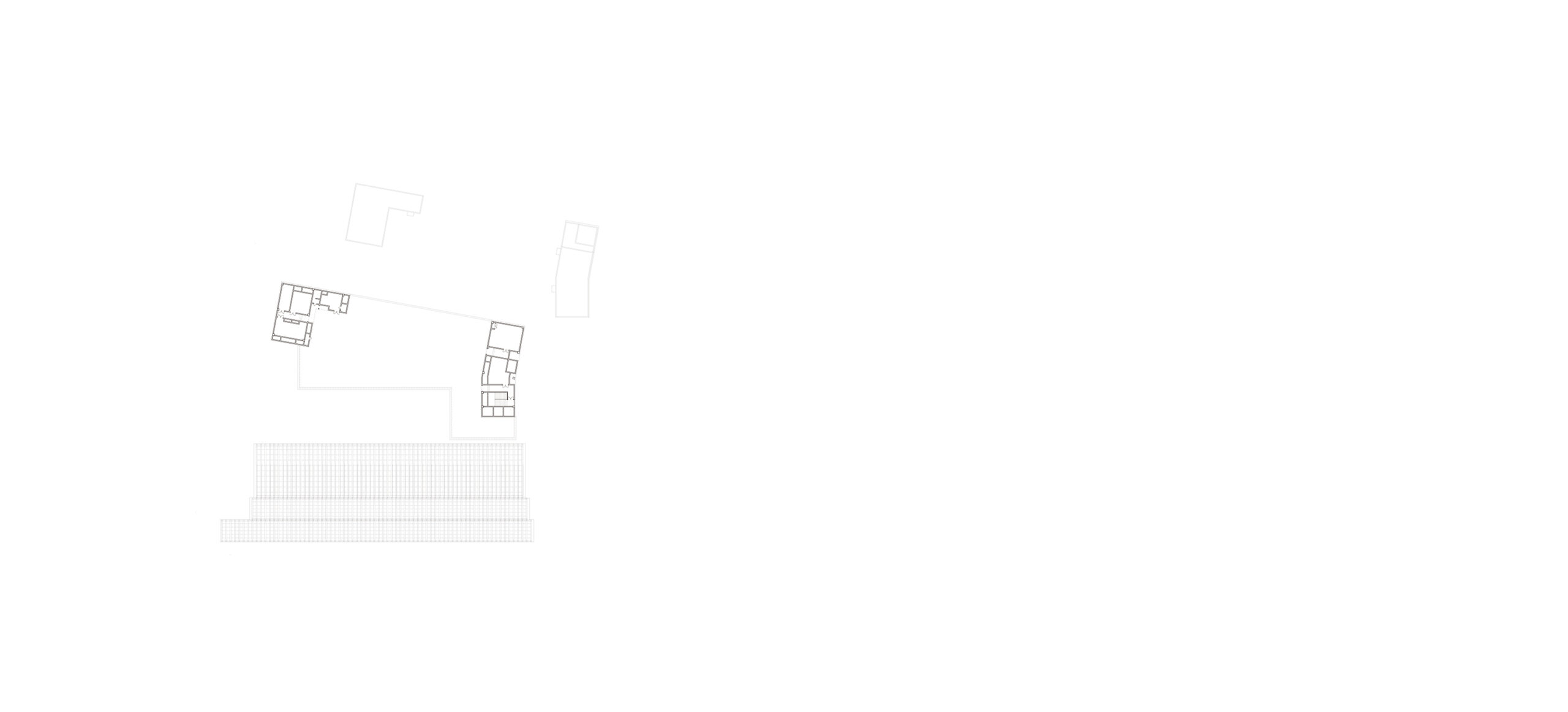
7F Plan
RF Plan
以下、湯樺建築設計事務所のリリース(英文)です。
Project Name: Kengzi Cultural and Technology Centre
Project Type: Cultural Architecture
Design Firm: Tanghua Architects & Associates
Website:www.tanghuaarchitects.com
Email:info@tanghuaarchitects.com
Design Year:2018-2021年
Completition:2024年Design Team:
Chief Architect:汤桦(Tang Hua)
Project Lead:Wang Kun
Design Team: Zhu Chuang、Deng Linwei、Dai Qiong、Tang Meng Chan、Zheng Lipeng、Yan Peiqi、Zhu Huoxing、Liu Ying、Chen Wenfeng、Zheng Xin、Zheng Chengxi、Zhao Jianyi (Intern)、Lin Yu(Intern)
Technical Coordinator:Wang TianhaoProject Location:Pingshan District, Shenzhen, Guangdong Province, China
GFA:72,244.73㎡Photography:Zhang ChaoCollaborator:
Design Consortium Firm:A+E Design
Interior Design:Coordinate Decoration Group
Landscape Design:Lingnan Eco & Culture-Tourism Co., Ltd.
Lighting Design:Alex Xu & Partners Architectural Lighting Design Consultancy (HK)Co.,Limited
Signage System Design:Shenzhen Wang Yue Fei Design
Curtain Wall Consultant:Shenzhen CBS Curtain Wall Design Consulting Co., Ltd.
Timber Structure Consultant:Suzhou Crown Homes
Theatre Design Consultant:Shenzhen Zhongyi Decoration Design & Engineering Co., Ltd.
Contractor:China Construction Science & Technology Group Co., LTD.
Client:Bureau of Public Works of Pingshan District, ShenzhenThe site is located west of Guangzu Park, east of Guangzu South Road, south of Jikang Road, and north of Danzi East Road in Kengzi Street, Pingshan District. The site is divided into two plots—north and south—with a distance of over 130 meters between them, covering a total area of 21,543 square meters. The northern plot includes a six-story building above ground and two basement levels, housing the Pingshan District Science and Technology Museum and a Book Mall. The southern plot features an eight-story building above ground with two basement levels designated for the Pingshan District Cultural Center. Between these two plots lies the western entrance to Guangzu Park, while underground, there is a public parking lot that also serves civil defense purposes. The total construction area is 72,436.62 square meters, including 43,176.92 square meters of floor area ratio (FAR) and 29,259.70 square meters of non-FAR area.To the south of the site are numerous advanced manufacturing industry parks, with urban planning catering to motor vehicles and industrialization, forming a large-scale, well-organized urban structure. To the west lies an urban village, while to the north are numerous organically developed villages, preserving the largest number and scale of Hakka walled compounds in Shenzhen—sixteen in total. The streets here are dense and winding, with buildings of varying sizes. To the east is the public green space—Guangzu Park.The design scheme starts from the overall pattern of urban development, taking into account practical use and operational maintenance of architecture and landscape, leading to several design highlights:Given the necessity to develop the two plots separately due to land constraints, the western side of Guangzu Park between the two plots was included in this design scope, creating an efficient connection between the north and south plots. This results in a continuous yet varied street facade, maximizing social, cultural, environmental, and economic benefits.In response to the tight land availability, terracing is applied to the second and third floors of buildings, creating arcade-style plazas along city roads. These spaces are covered by staggered arch roofs, forming public spaces suited to Southern Chinese Lingnan climate characteristics. Used as outdoor exhibition areas for the science museum and performance venues for the cultural center, these roofed outdoor spaces allows for indoor-outdoor interaction, enhancing spatial efficiency. At the same time, they form extra three-dimensional streets for both urban public buildings and small-scale village architectures, bringing together different urban textures and contexts.As the most prominent feature of the project, arcades are constructed using modern engineered wood, offering a warm color tone consistent with people’s expectations for cultural buildings and distinctive visual features serving as identity markers for the two institutions. Compared to metal and concrete materials, engineered wood products better align with national energy-saving policies, representing mature practices of new materials, technologies, and methods in architecture, showcasing a modern, fresh, and simple architectural image.The design integrates traditional outdoor public activities in Guangdong into linear public open spaces along streets. Through interaction between architecture and the city, it creates rich scenes reflecting citizens’ street life, forming complementary and interactive public open spaces where various cultural elements enhance each other, expressing and creating a vivid street life combined with local customs and vitality.
湯樺建築設計事務所 公式サイト
https://tanghuaarchitects.com/en/
【購読無料】空間デザインの今がわかるメールマガジン TECTURE NEWS LETTER
RECOMMENDED ARTICLE