![[大阪・関西万博]海外パビリオン紹介_スイス](https://magazine-asset.tecture.jp/wpcms/wp-content/uploads/2025/05/03192559/swiss_0-900x688.jpg)
CULTURE
©︎ JAG
エクアドルの首都キトの〈インタラクティブ科学博物館(MIC)〉内に位置する〈AWAWA〉は、歴史ある旧繊維工場を改修した子供向け常設展示スペースです。
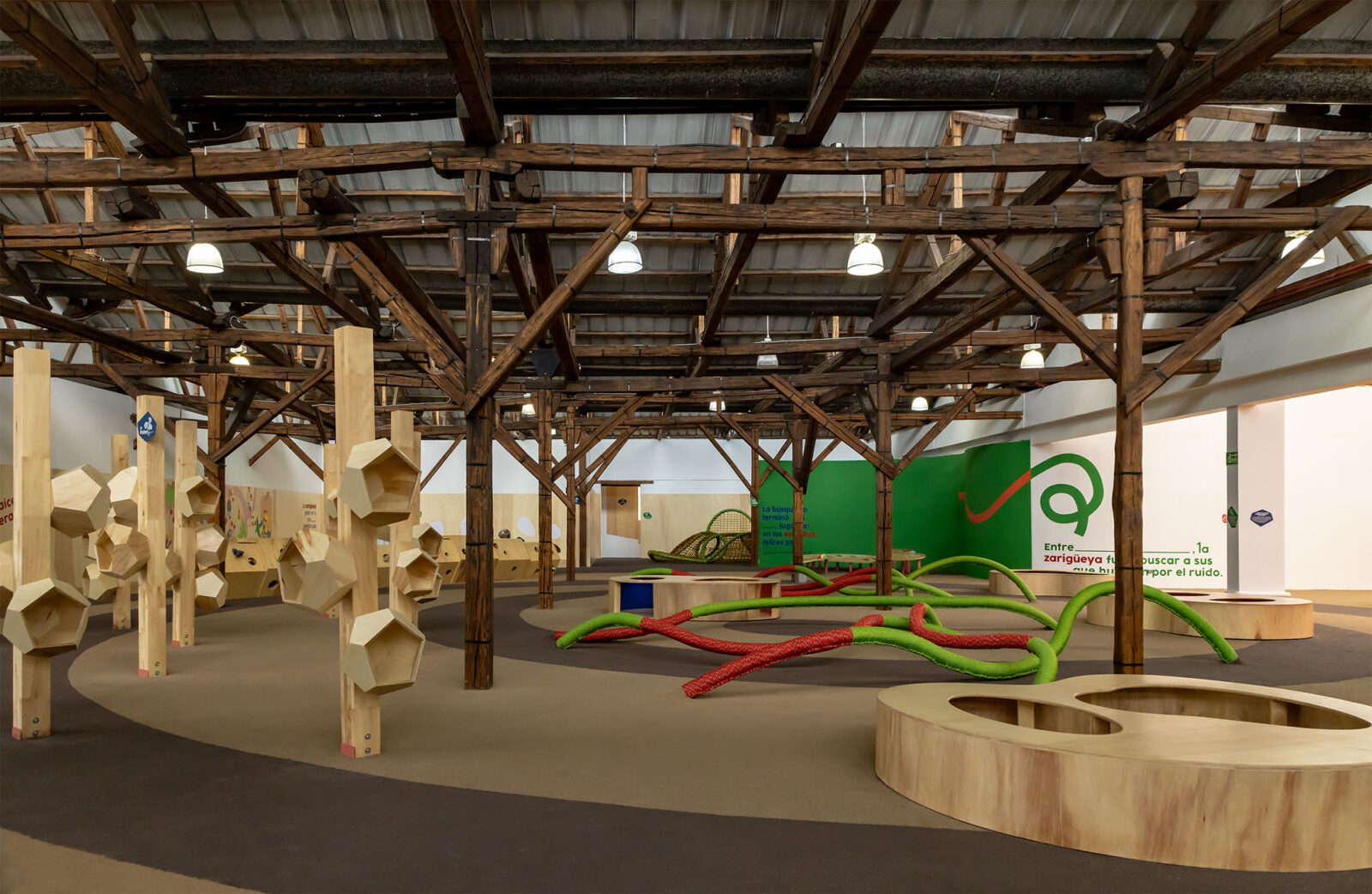
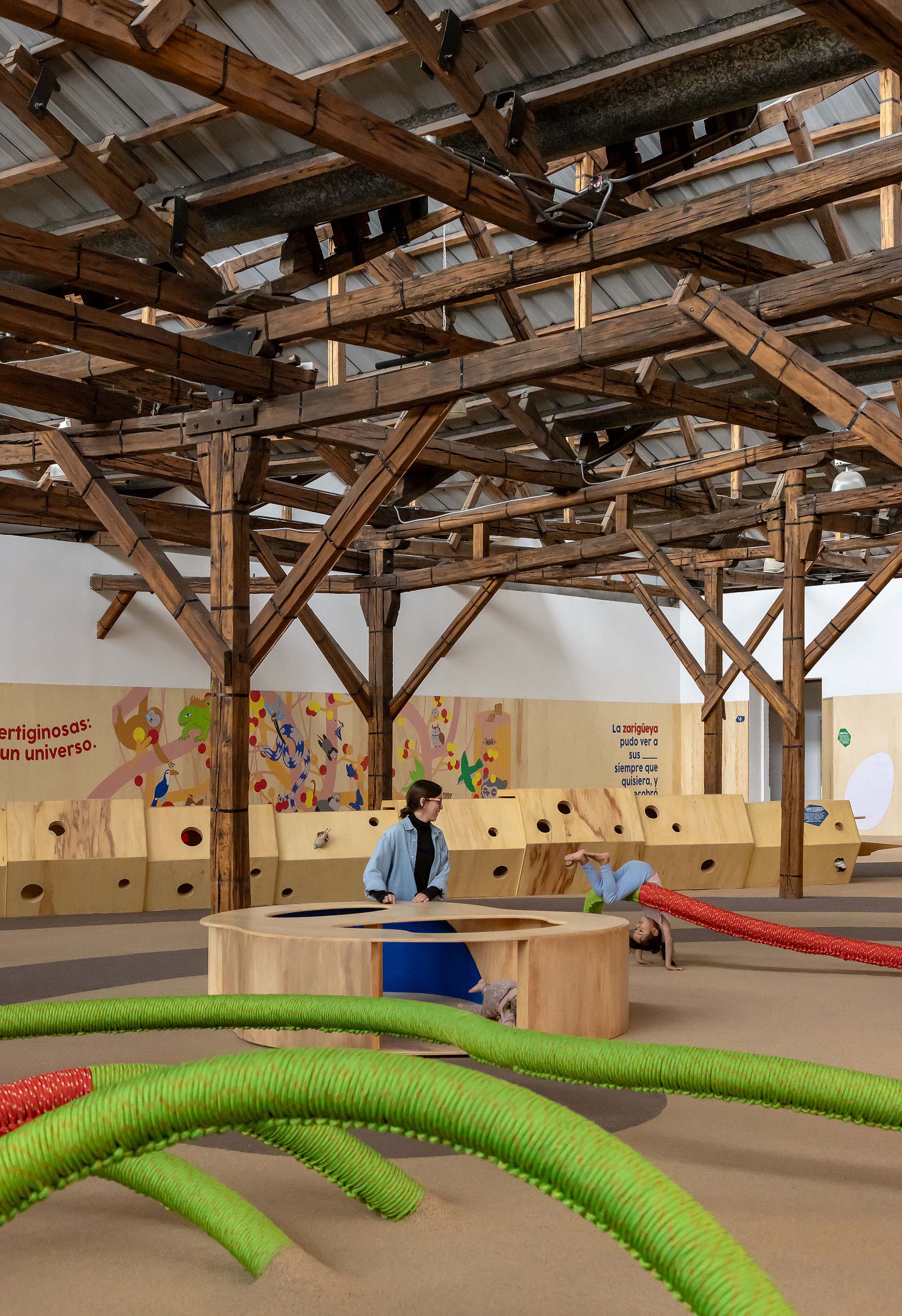
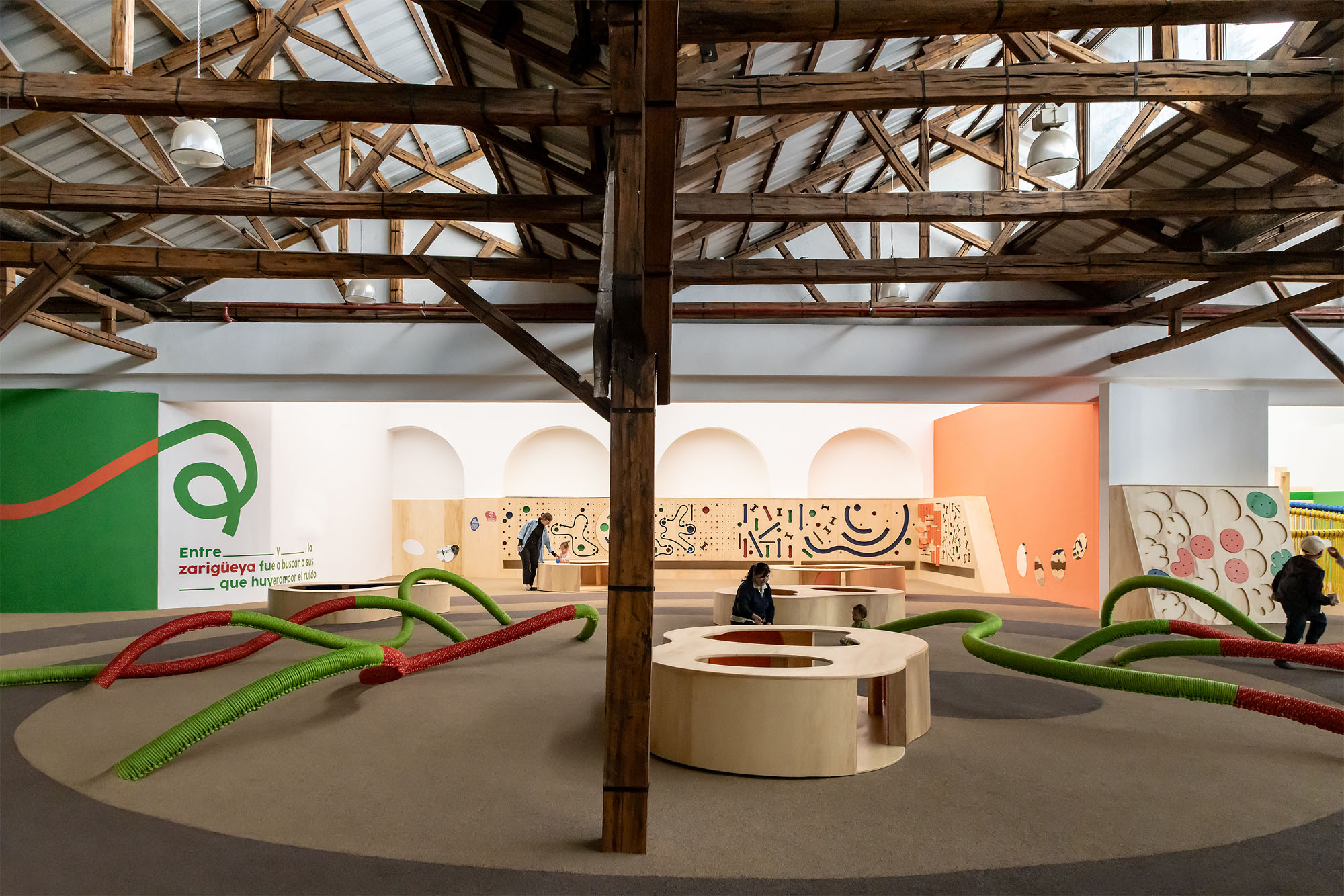
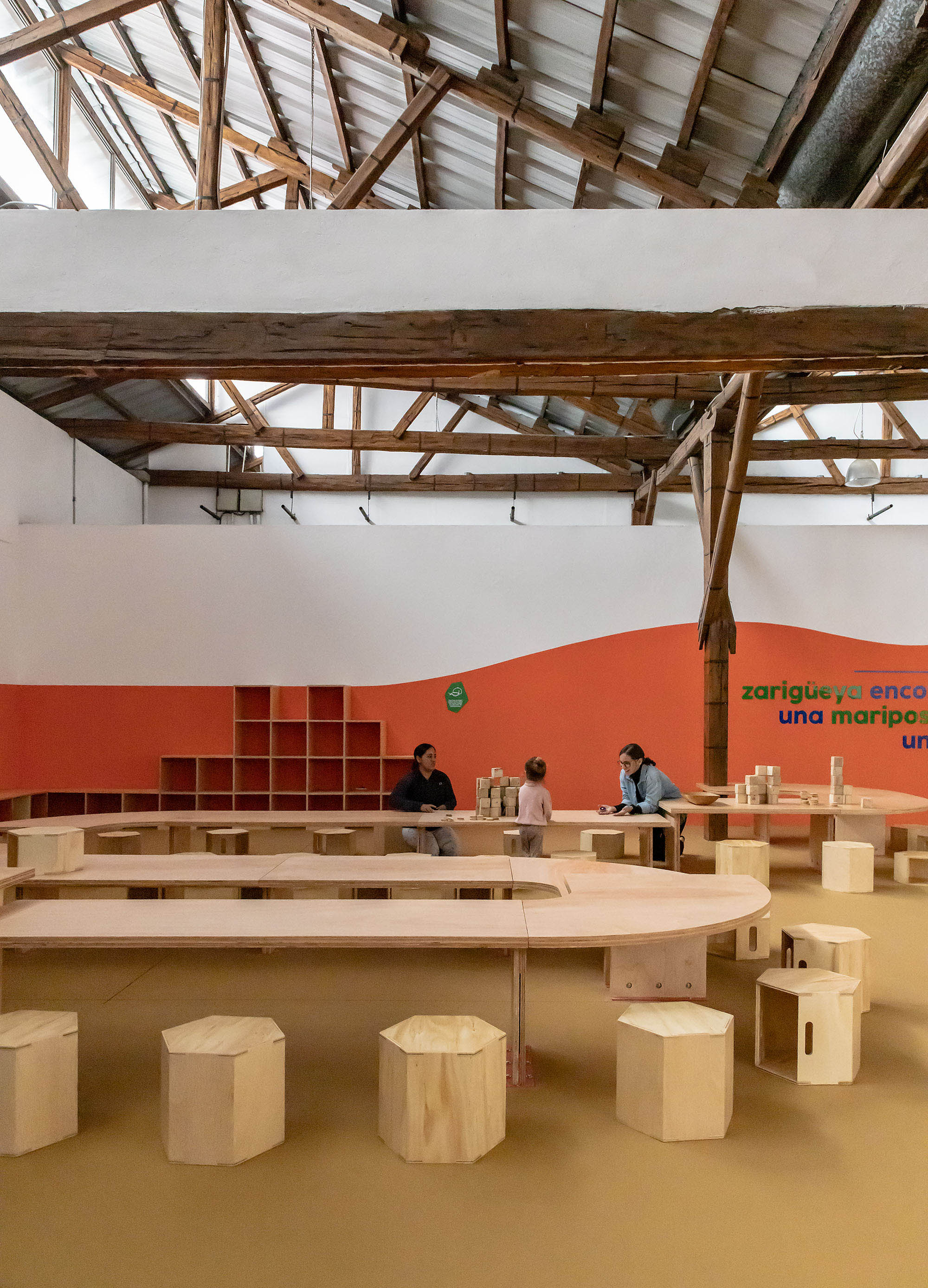
20世紀半ばの堅牢な木造トラスと土壁(アドベ)という産業遺産の大空間を活かしつつ、「樹木」と「アマゾン」の世界観をメタファーとした境界のない流動的な遊び場を創出しています。マドリード、ベルリン、キトに拠点を構えるデザインスタジオ Morphismが設計しました。
注目ポイント
- 工場の記憶を継承しつつ地域コミュニティの拠点へと再生
- 物語を生み出す「樹木」と「アマゾン」のコンセプト
- 子供たちの自発的な探索と予期せぬ遊びを誘発する流動的なゾーニング
- 環境負荷低減と利用者の安全性を両立させたマテリアル選定
(以下、Morphismから提供されたプレスキットのテキストの抄訳)
©︎ JAG
歴史的背景:かつての繊維工場「ラ・インダストリアル」
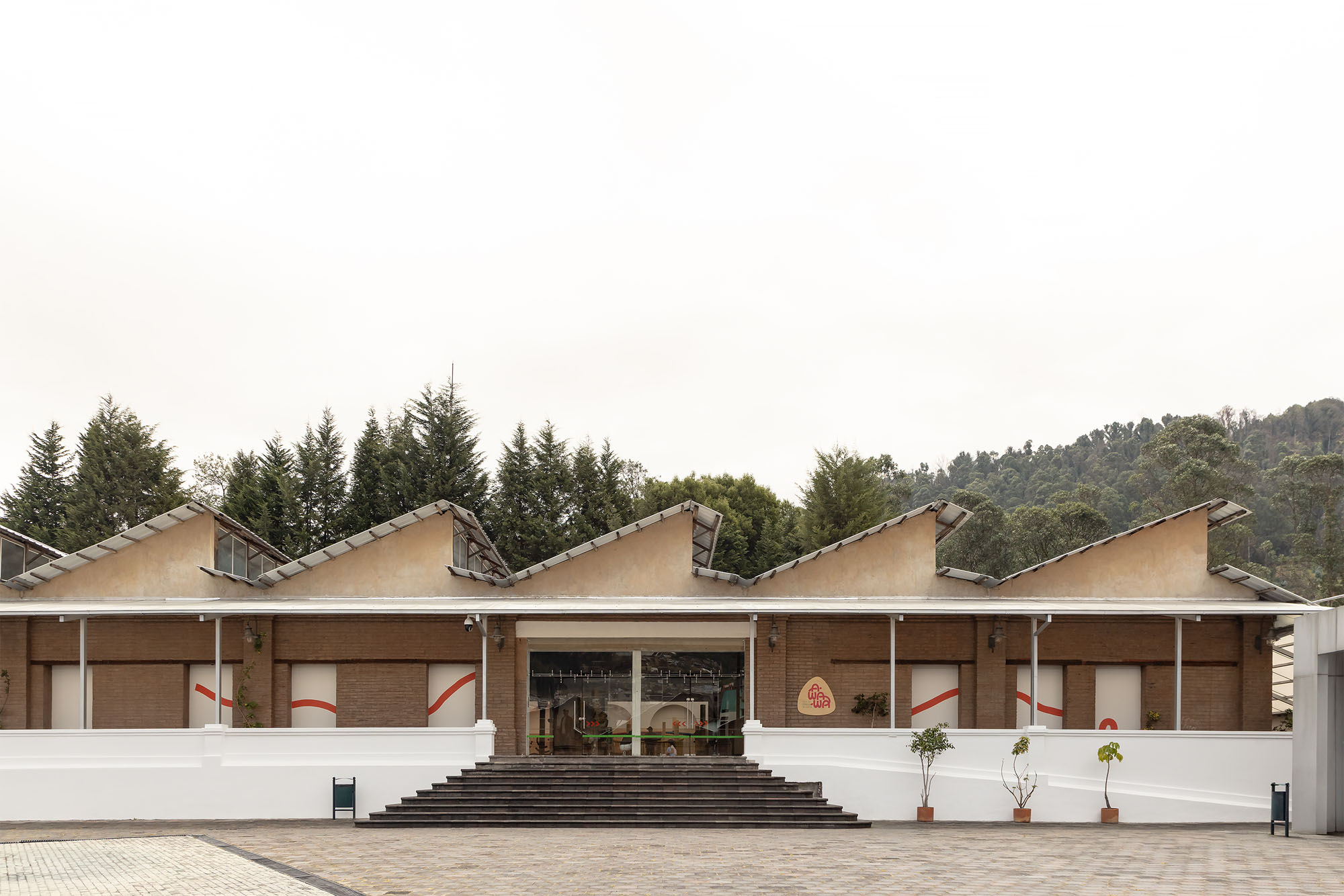
〈AWAWA〉は、かつての繊維工場「ラ・インダストリアル(La Industrial)」の跡地に開発されたプロジェクトである。20世紀半ばに建設されたこの工場は、当時、市内でも最も有名な繊維製造複合施設の1つであった。
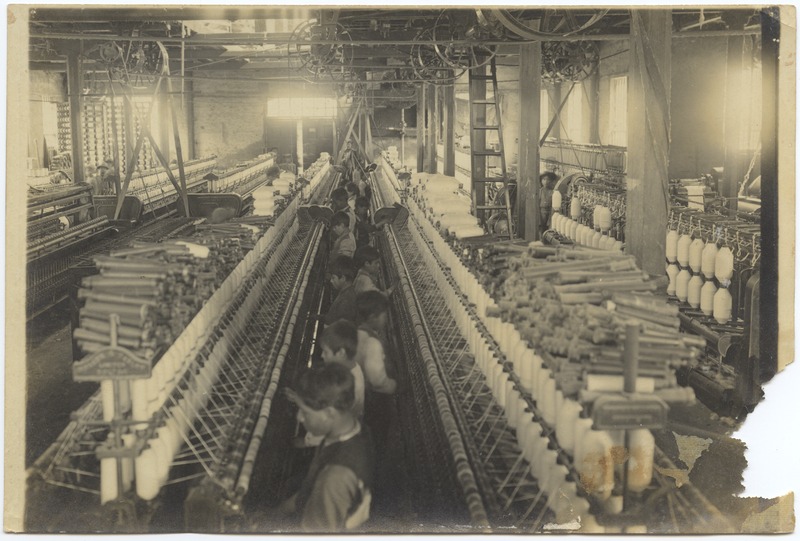
Historical photograph
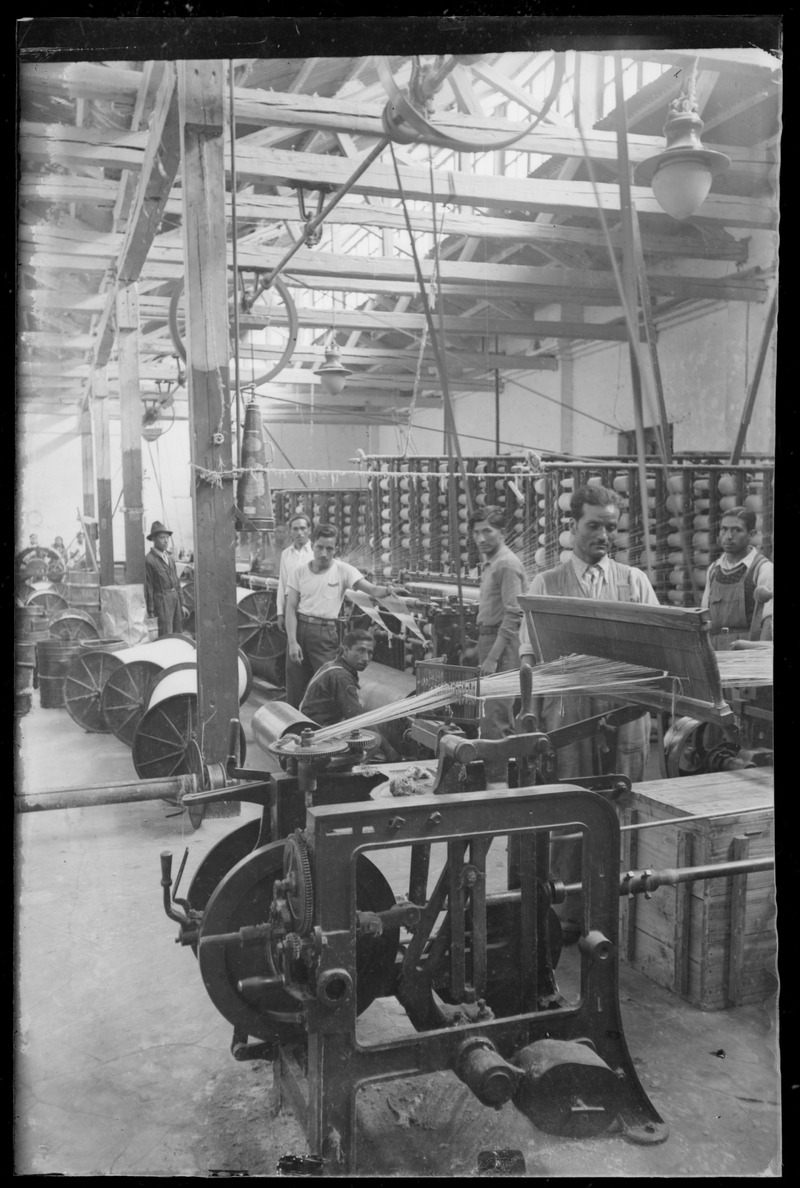
Historical photograph
交通の要衝から住宅街への変遷
敷地はチンバカレ(Chimbacalle)地区に位置する。かつてはマチャンガリジャ(Machangarilla)として知られる先住民の農村集落であり、都市の北部と南部を結ぶ役割を果たしていた。
1908年、鉄道とその主要駅が到来したことで、地域は劇的な変貌を遂げた。マチャンガリジャは重要な生産・貿易の中心地となり、「ラ・インダストリアル」や「モリノス・ロイヤル」といった工場が周辺に建てられ、雇用創出により地区の人口は増加し、都市の境界も拡大していった。
その後、この地域は産業・商業活動を失い、「チンバカレ」という住宅街へと変化した。工場は閉鎖され、数十年にわたり廃虚状態が続いていた。
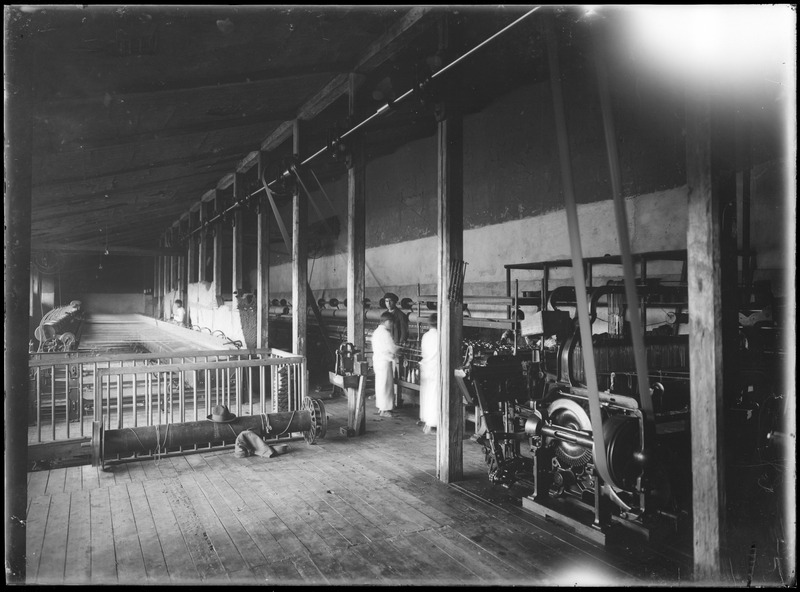
Historical photograph
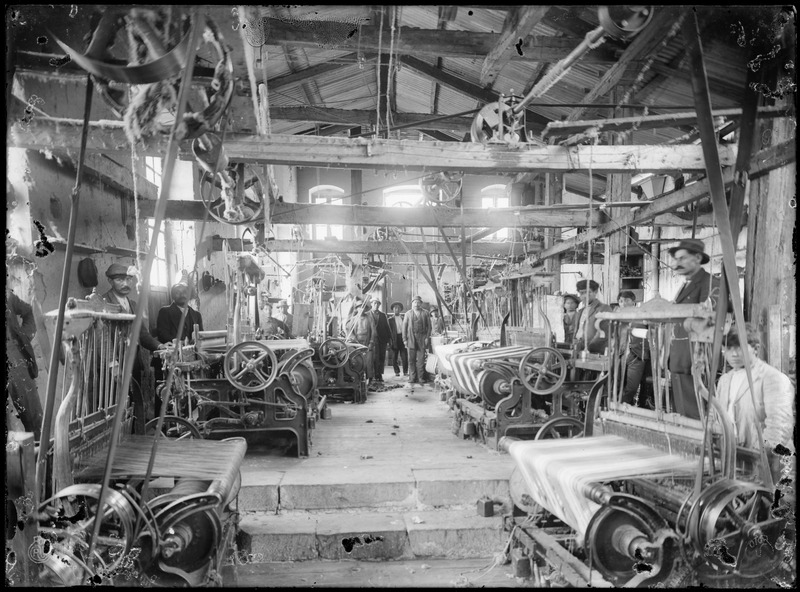
Historical photograph
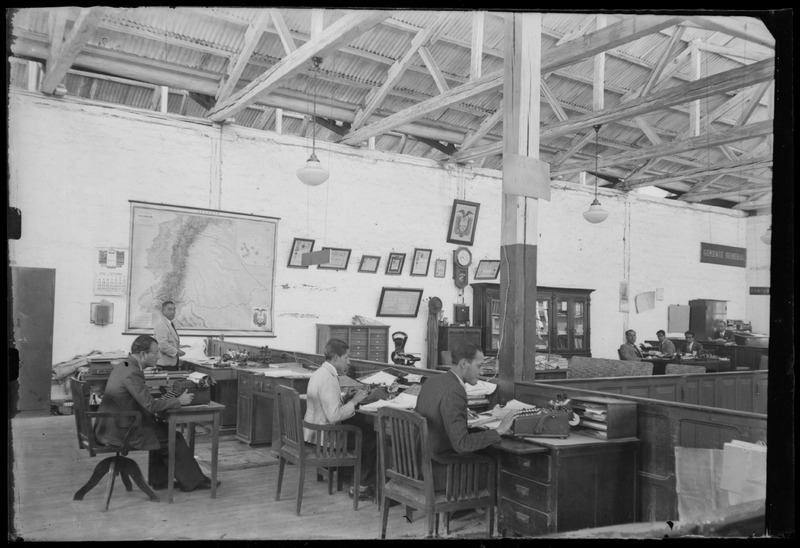
Historical photograph
建築的特徴と産業遺産の再生
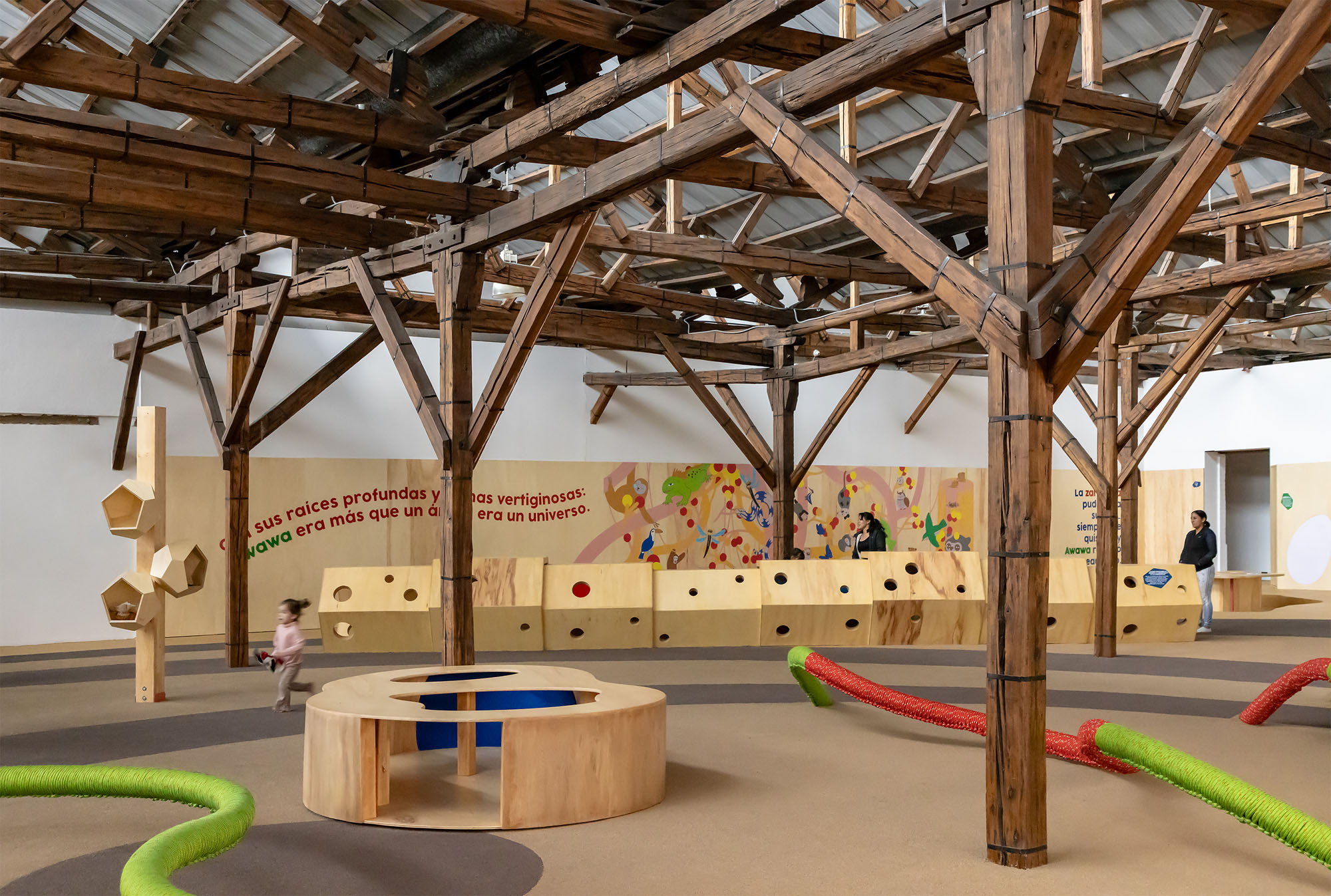
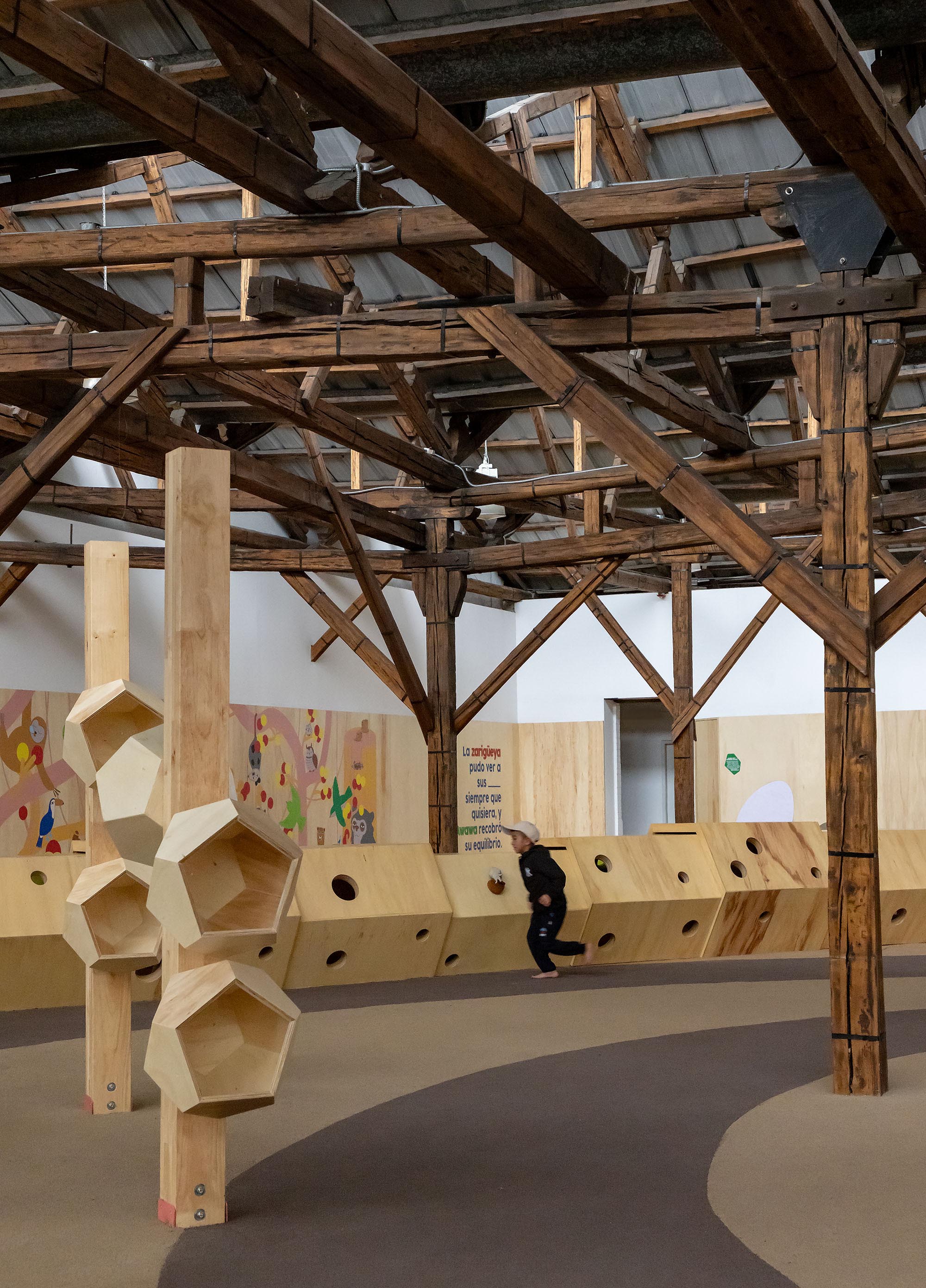
建築的には、建物は広大なスパンと、堅牢な木製柱とトラスで構成された屋根構造を中心に設計されており、生産スペースは厚い土壁(アドベ)で囲まれている。外部には、キト歴史地区の景観を見渡す広々とした開放空間が広がっている。
工場から文化・教育施設への転換は、建物と地域双方の集合的記憶に新たな意味を与えるものである。この文脈において〈AWAWA〉プロジェクトは、産業遺産を想像力、遊び、教育、そしてコミュニティ形成の場へと変容させる建築的基盤を見出しつつ、建物とそこに住んだ人々との強い歴史的絆を維持するものである。
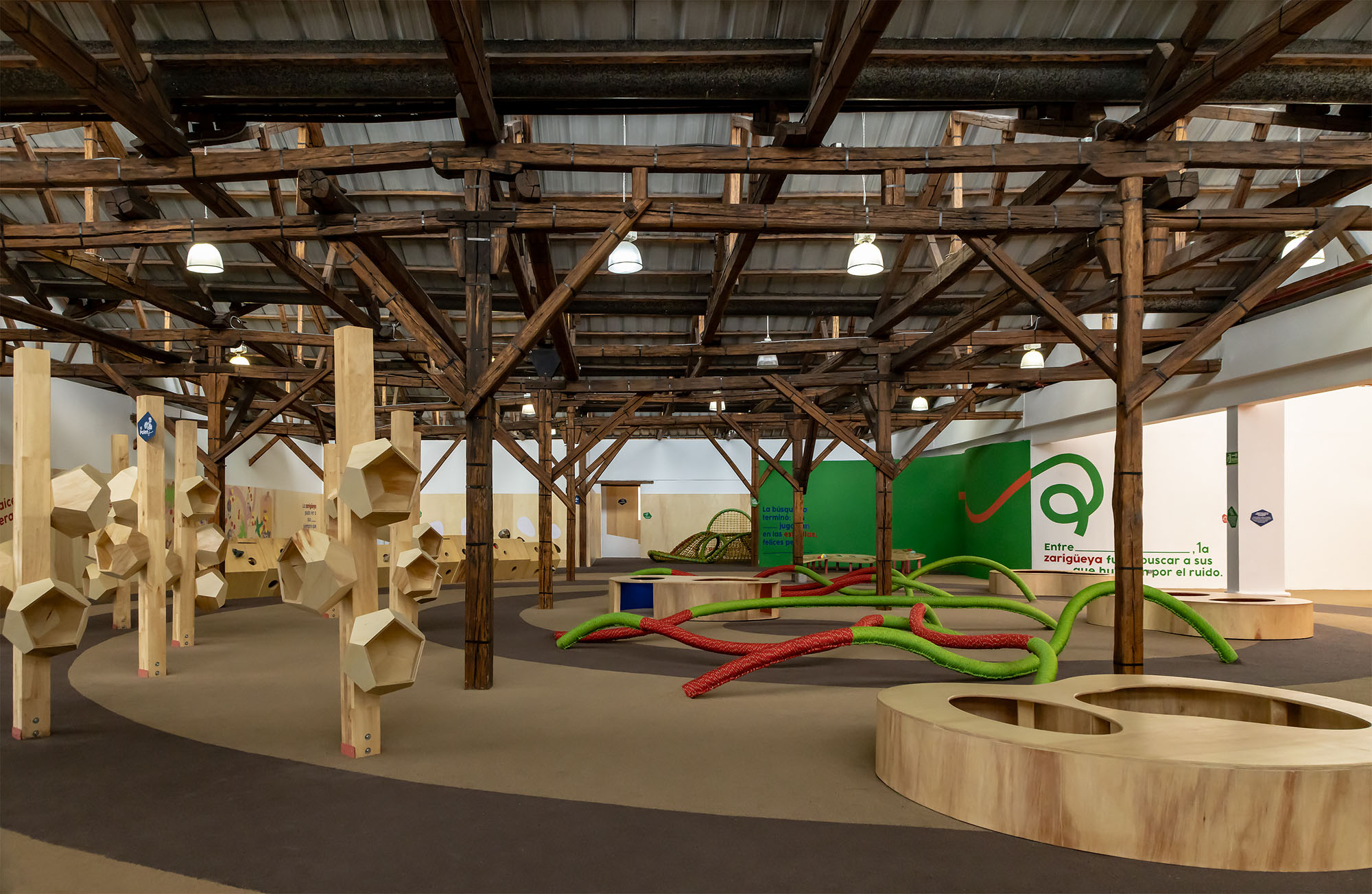
©︎ JAG
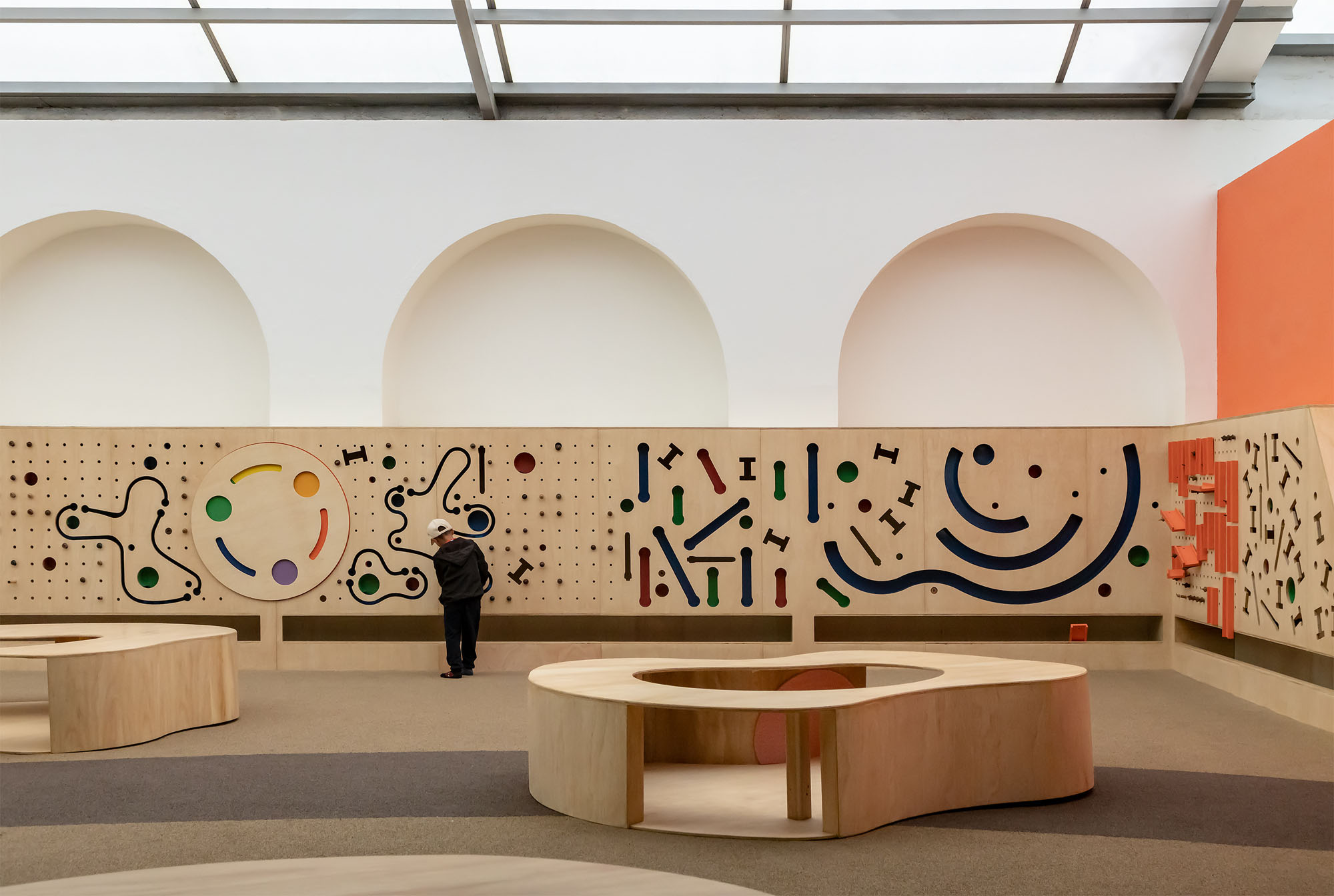
©︎ JAG
プロジェクト概要:幼児のための探求空間〈AWAWA〉
「AWAWA」とは、キチュワ語で「少女/少年」を意味する。〈インタラクティブ科学博物館(MIC)〉内に位置する〈AWAWA〉は、遊びを基盤とした戦略と現代的教育法を通じ、幼児期の子供たちに遊び心あふれる感覚的・探求的な環境を提供する常設展示スペースである。
博物館改修前、この空間は繊維工場として機能していたが、都市の成長と工業化の過程で放棄され、忘れ去られていた。今日、博物館基金はこの場所を再生し、児童教育と科学普及に特化した博物館として運営している。この取り組みと、機関の革新へのニーズにより、〈AWAWA〉は誕生した。
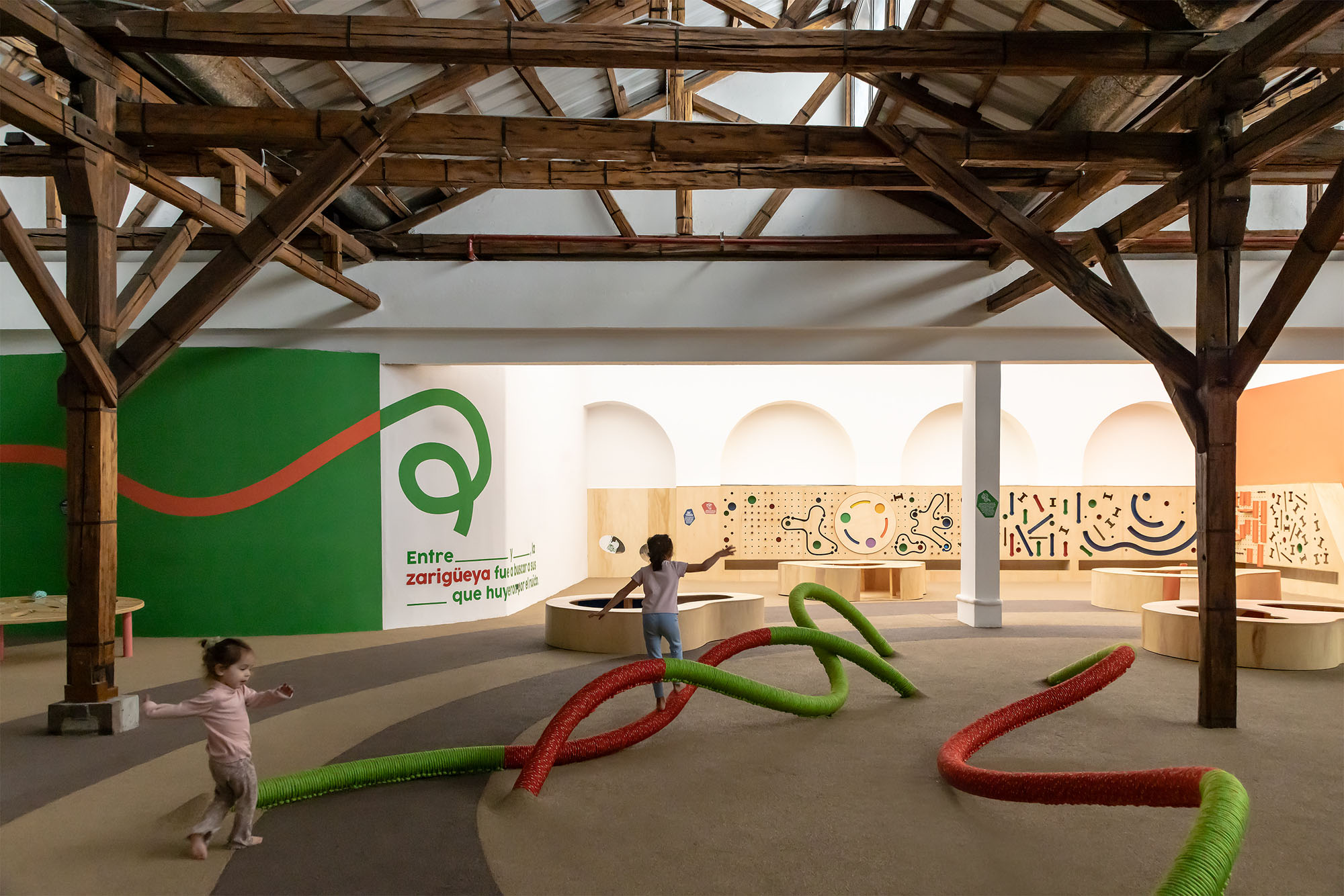
©︎ JAG
©︎ JAG
コンセプト:「樹木」と「アマゾン」の世界観
プロジェクトの意図の一部は、共感力を育み、子供と自然の関係を強化することにある。このため、2つの重要な物語的要素が採用されている。
1つは「樹木」のメタファーである。樹木は複雑で相互接続された異質な古代生態系を宿す生き物であり、そこから多くの知恵を学ぶことができる。
もう1つは、アマゾンの世界観を身近に伝える物語である。これらは自然における生命の重要性と、この相互接続されたシステムの中で個々人が互いを思いやる役割を描き出している。
©︎ JAG
©︎ JAG
空間構成:自由な遊びを誘発するゾーニング
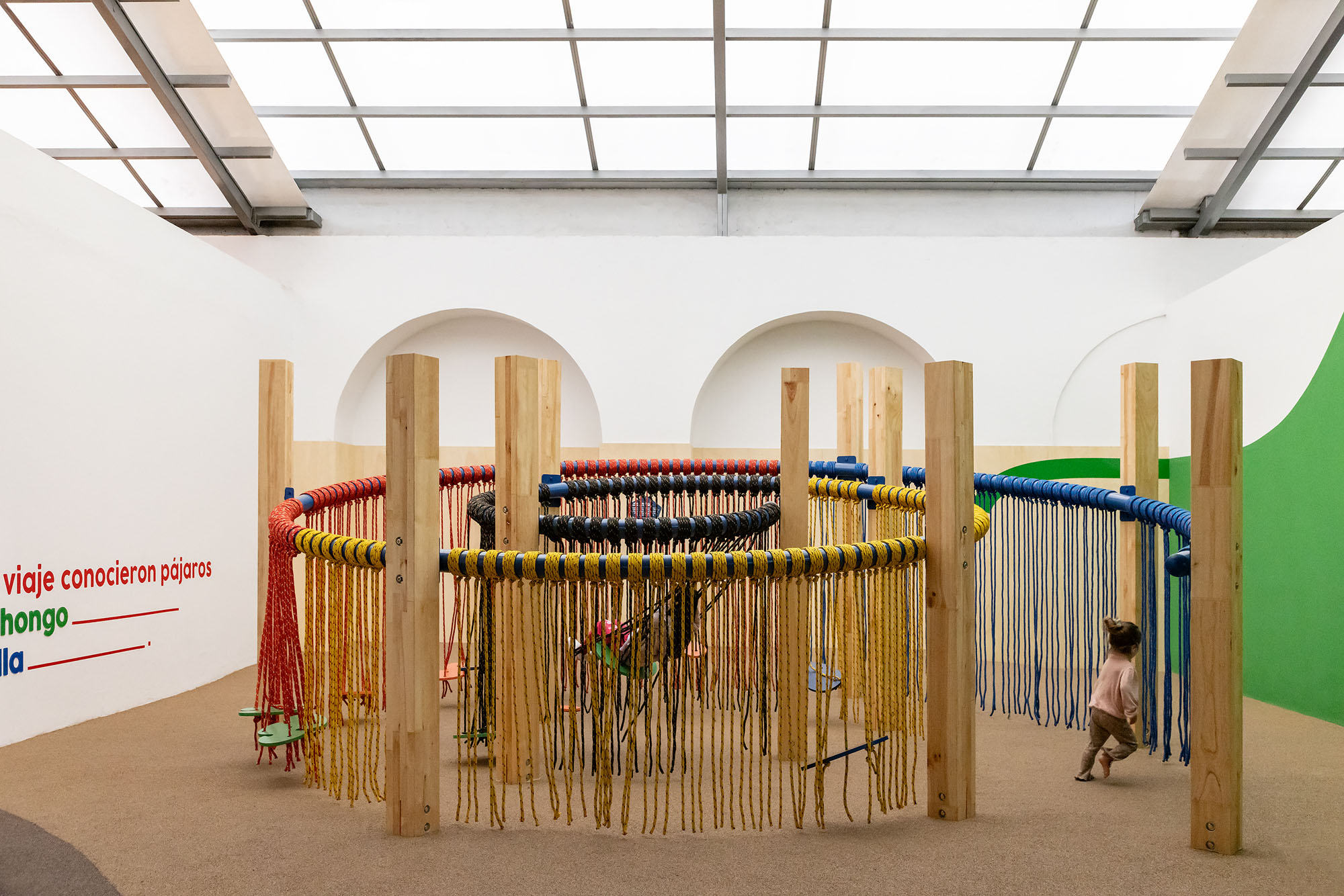
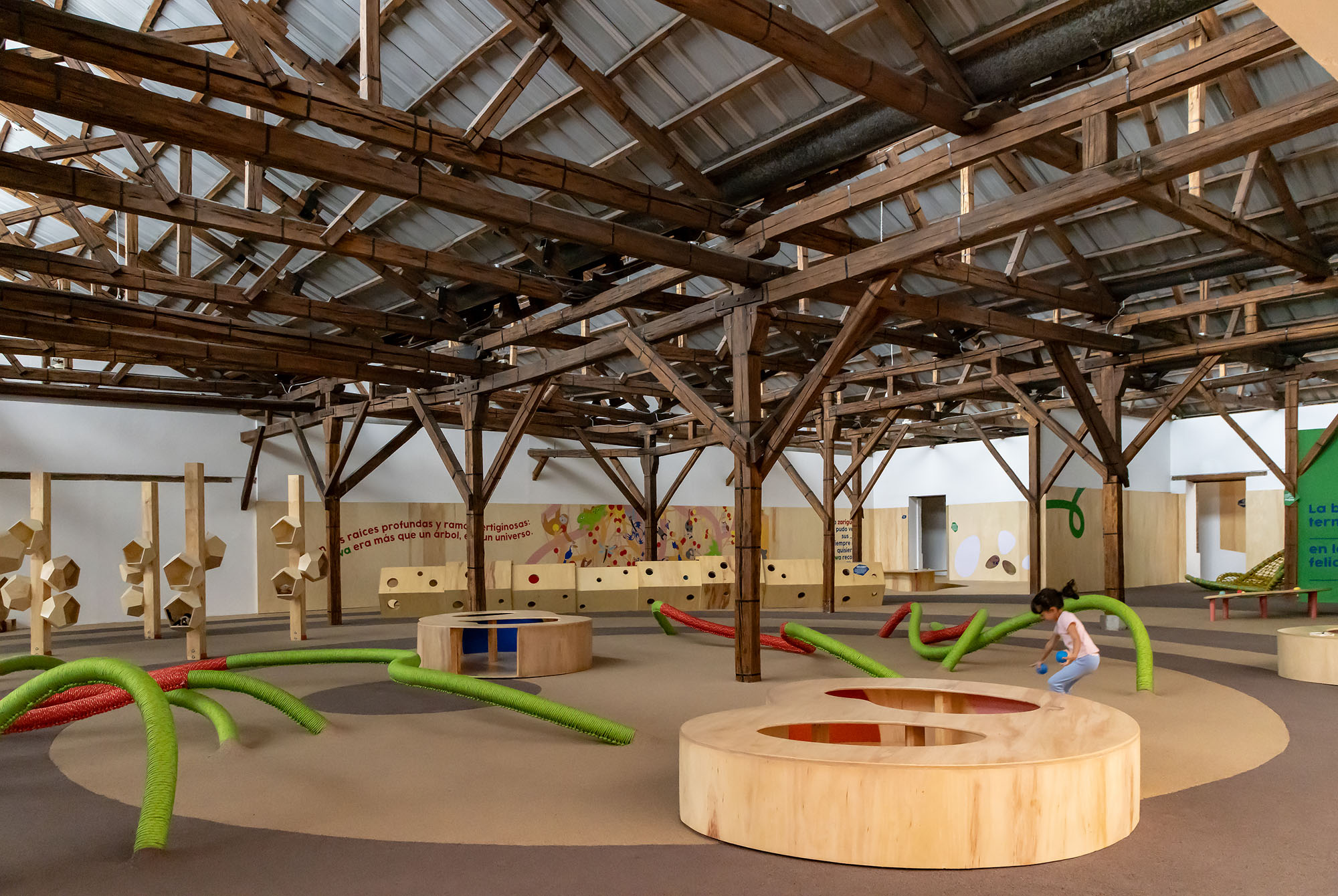
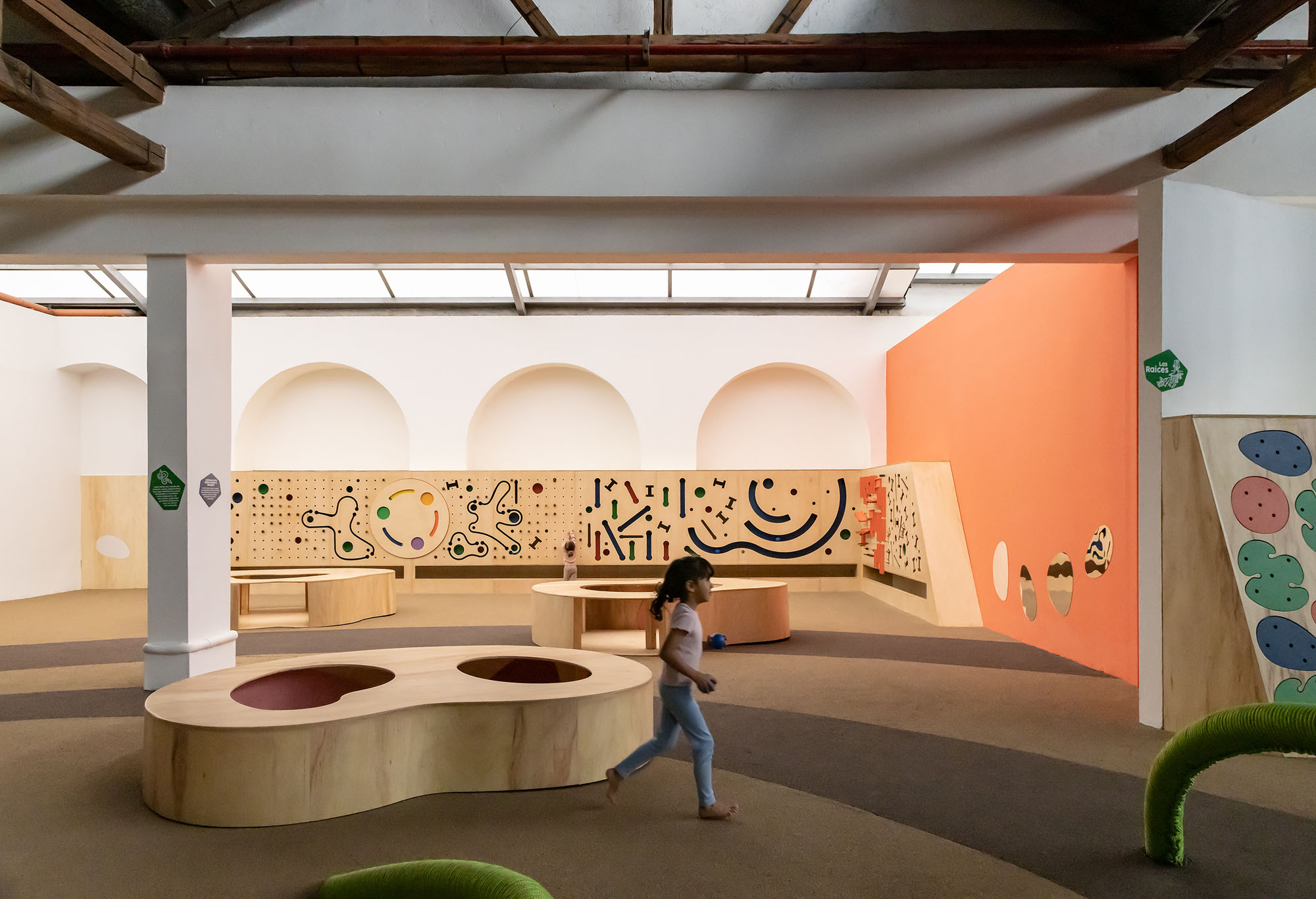
〈AWAWA〉は利用者を自然に空間へと惹きつける。自由な遊びと探求を基盤とし、それぞれの子供の個別リズムを尊重しつつ、好奇心・運動・感覚知覚・想像力を刺激する空間的状況を提案している。空間内には境界のない多様なゾーンが相互に接続され、以下のようなさまざまな用途が提示されている。
- 花粉(Pollen):所持品を置くウェルカムエリア
- 夜(The Night):ライトテーブルとスクリーン投影を用いたデジタルインタラクションルーム
- 蟻塚(The Anthill):水と有機形態を実験する素材世界
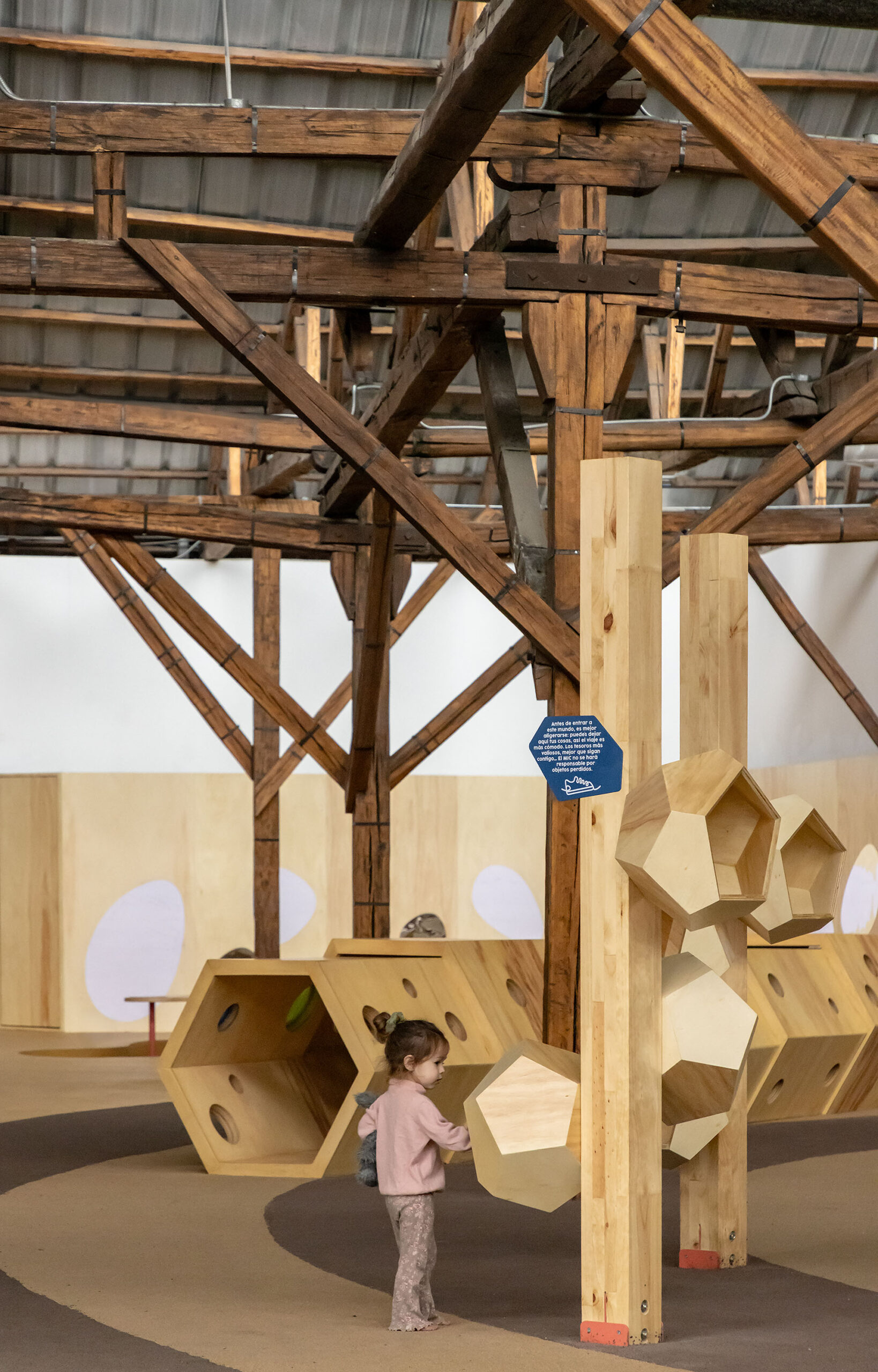
- 巣(The Nests):授乳や読書に最適な休憩エリア
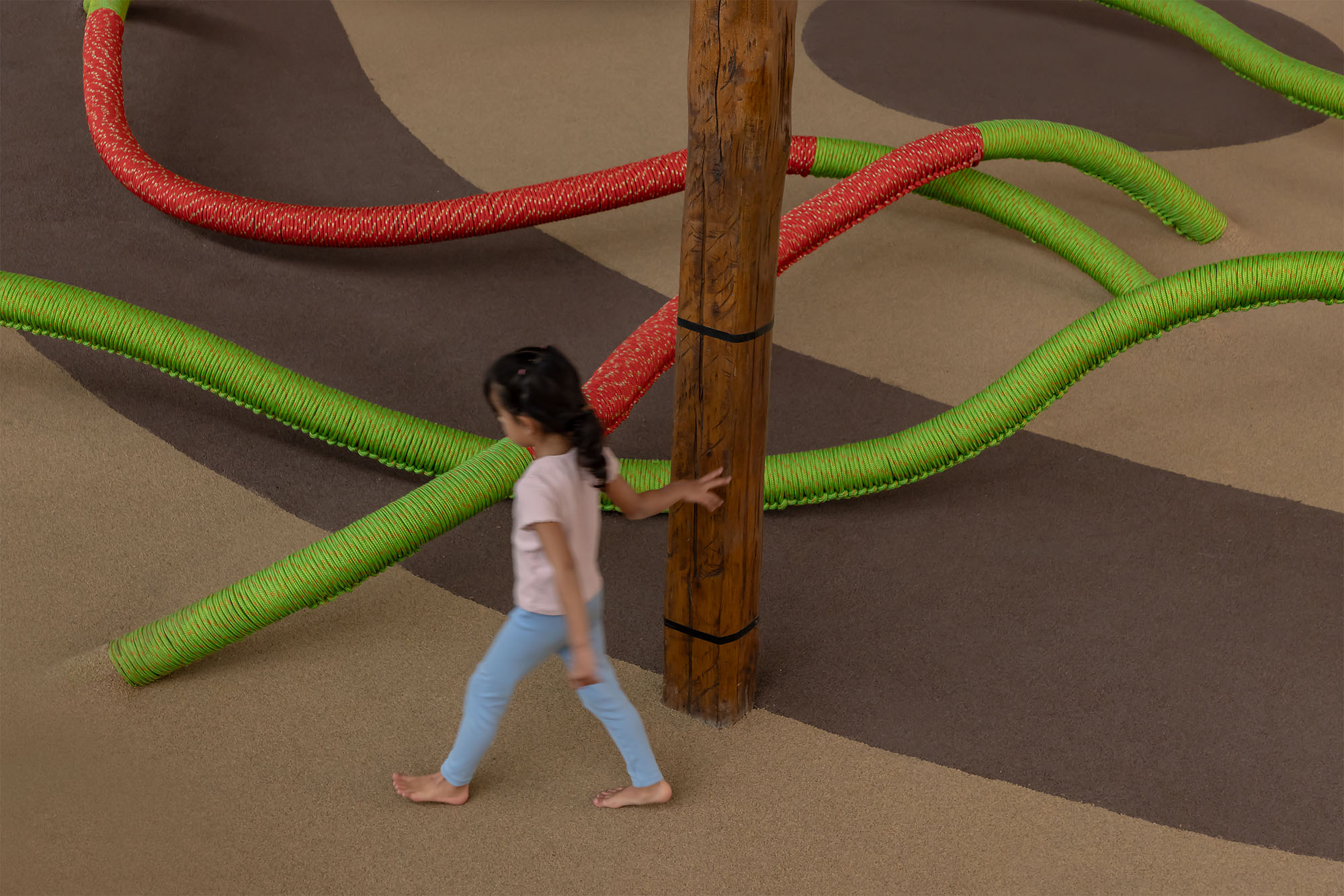
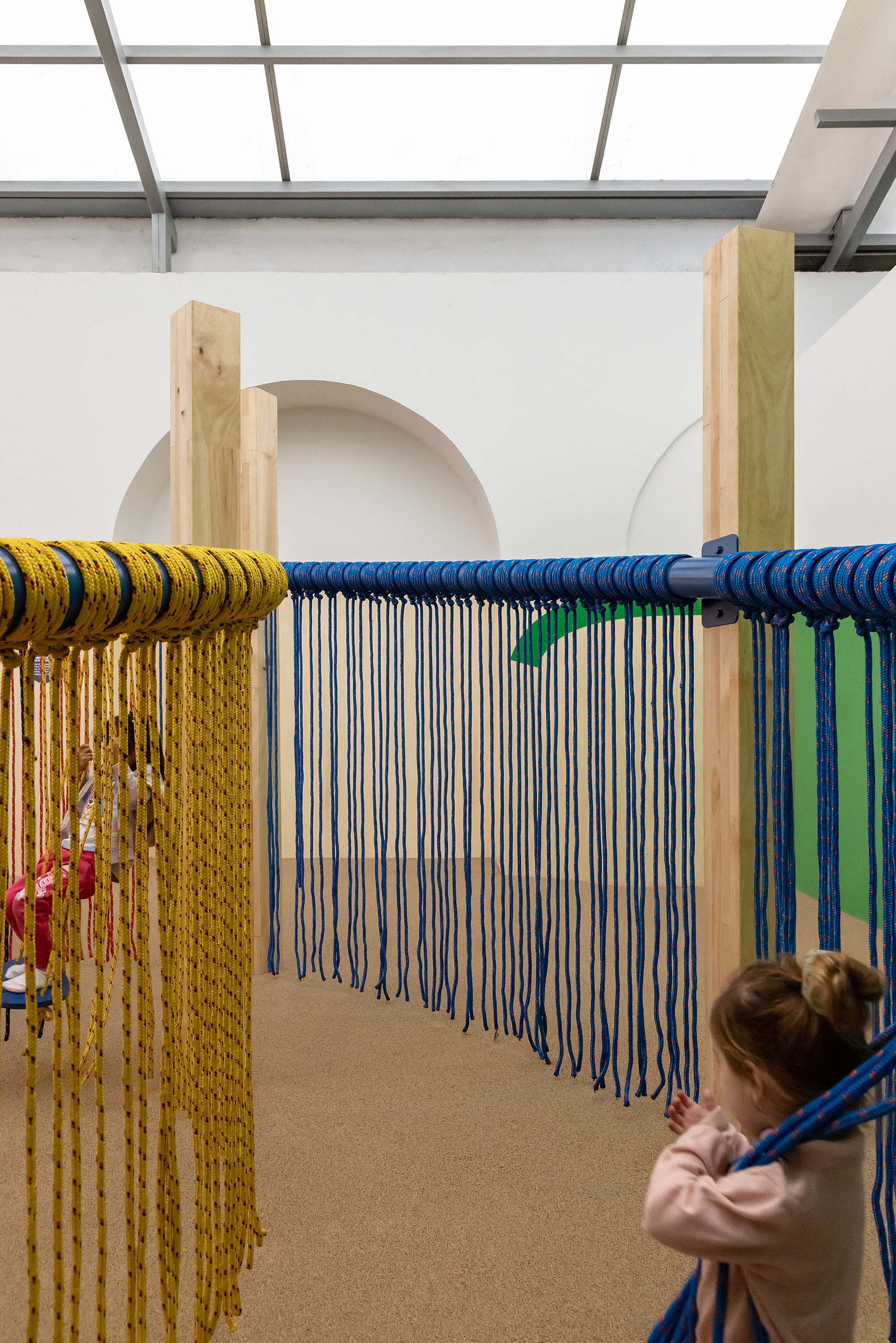
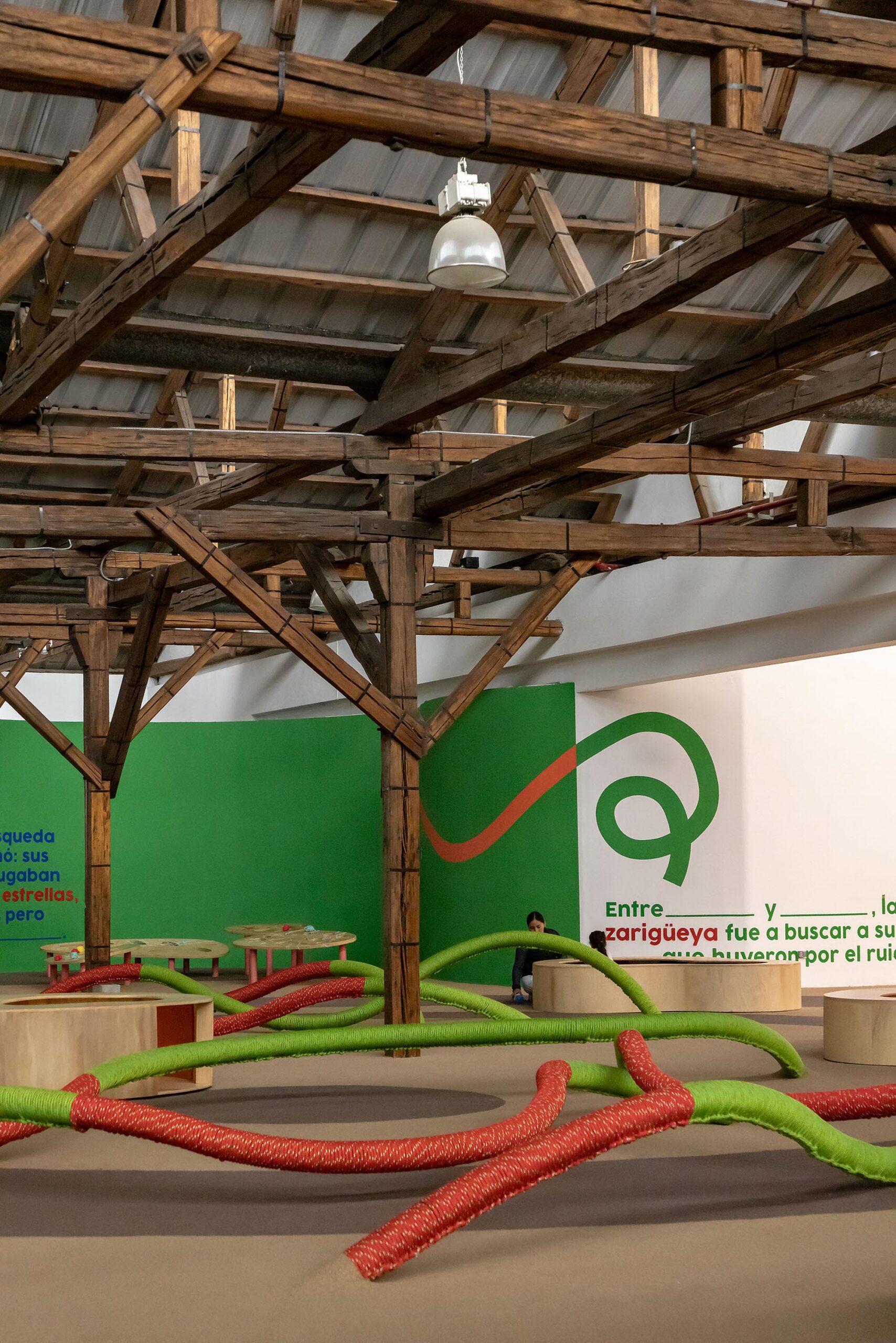
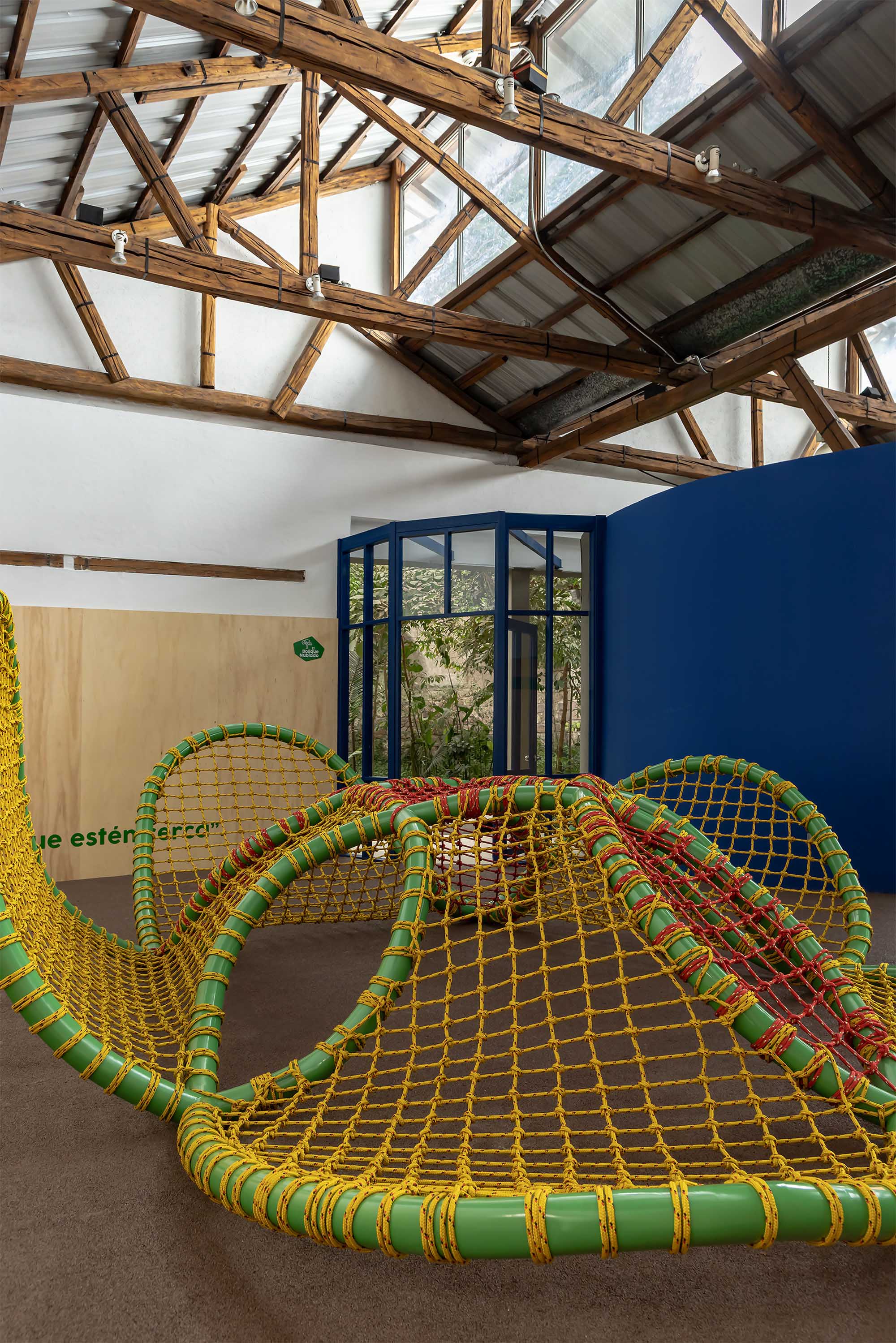
- つる(The Lianas):迷路を思わせるカラフルなロープの螺旋構造。パズルピースがブランコや揺れ要素の支持面に変形する
- 根(Roots):幼い子供や活動レベルが低い子ども向けの、カラフルな反射素材で作られたアメーバ型モジュールによるバランス遊びエリア
- シロアリの巣(The Termite Mound):旧繊維工場の要素を遊びの構成要素として取り入れたインタラクティブな壁
- 葉(The Leaves):大規模な編み込みゾーン
- 滴(The Drops):さまざまな素材に絵の具を用いた探求エリア
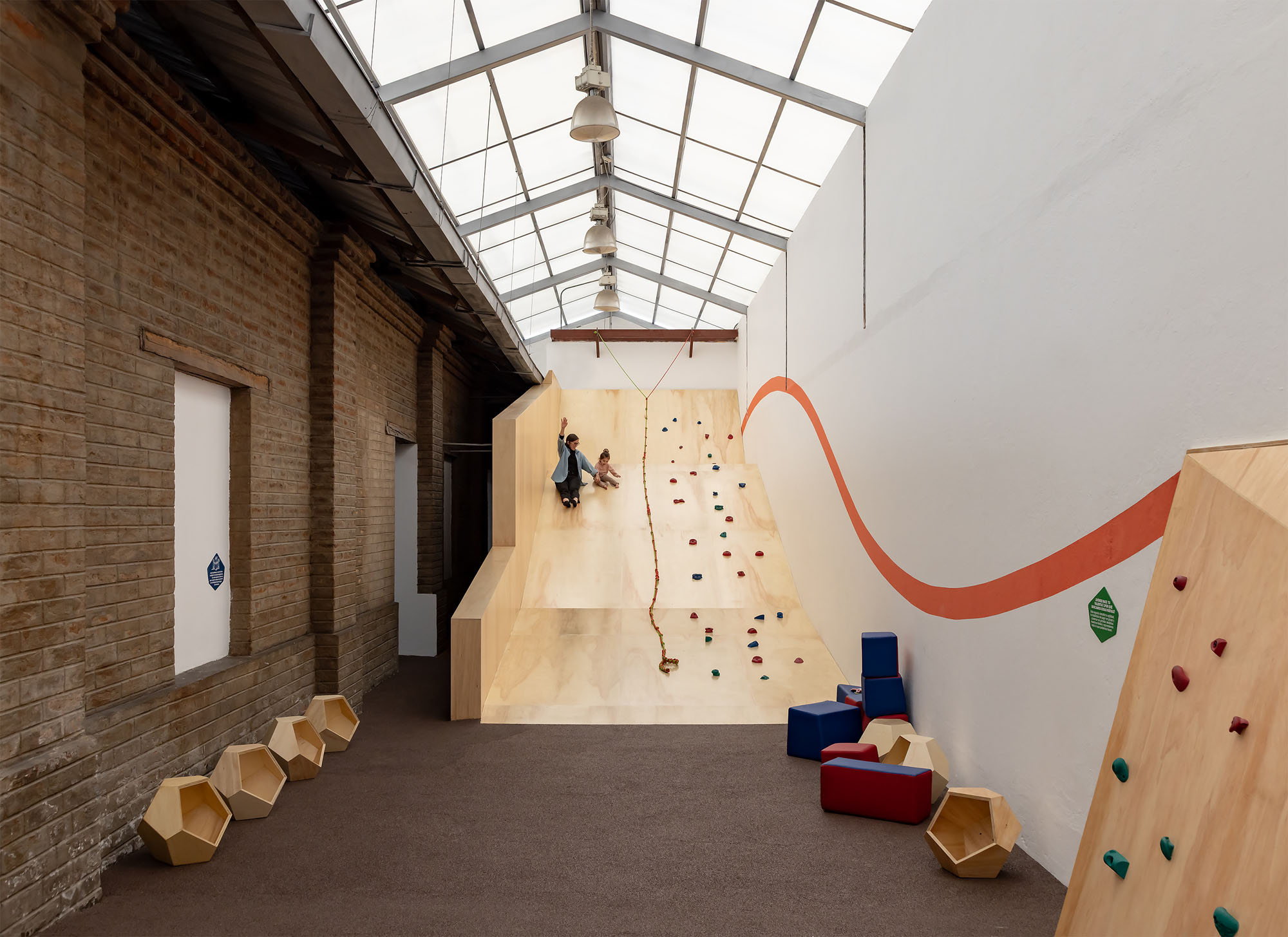
- スズメバチの巣(The Wasp Hive):柔らかく可動式の要素を備えた登攀(とうはん)・滑降エリア
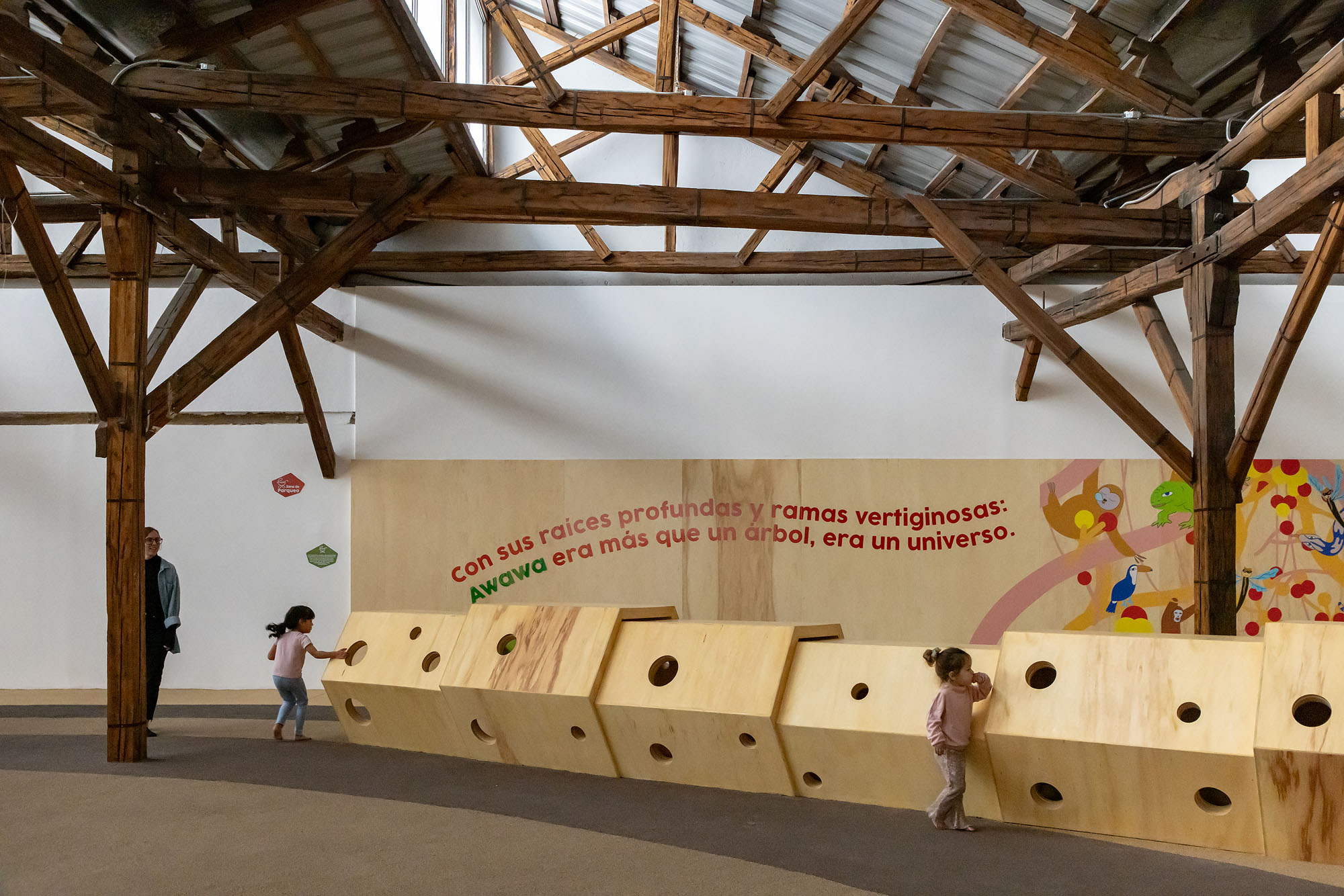
- 幹(The Trunk):倒木を模したトンネル。穴と色彩は神話に基づく壁画に関連付けられている
- 花(The Flower):異なる高さのロープを通じた探求空間
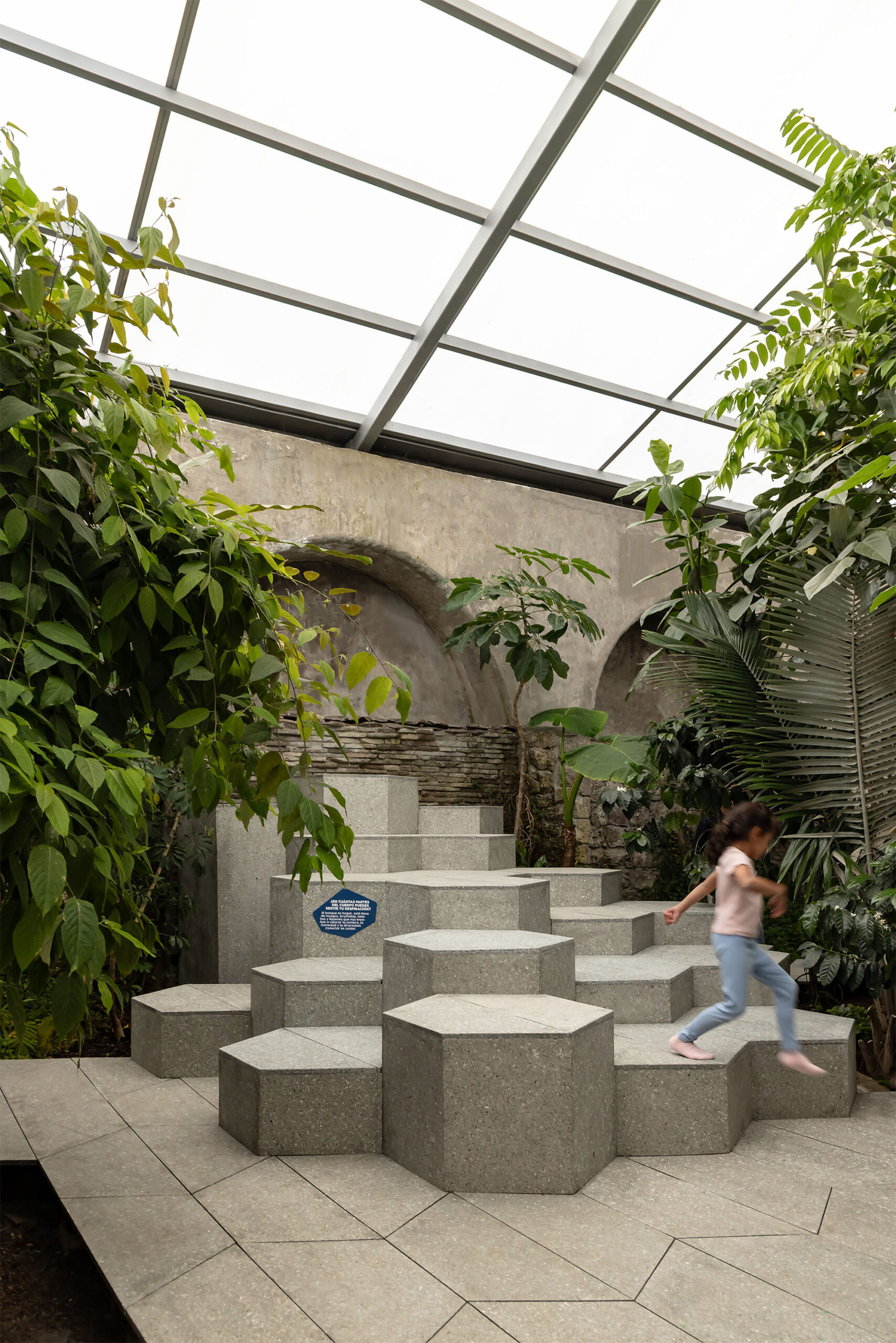
- 雲霧林(The Cloud Forest):探索可能なモジュラー地形を備えた屋内庭園
©︎ JAG
©︎ JAG
©︎ JAG
©︎ JAG
空間の連続性と物語性
開放的でつながった空間として、各ゾーンは次へとつながり、予期せぬ遊びの瞬間を生み出す。神話を用いることで、展示は物語の層を組み込み、それ自体がゲームとなり、来場者が壁に示されたものを自由に完成させられるように設計されている。
©︎ JAG
マテリアル:環境配慮と安全性の両立
環境への配慮に沿い、展示では子供に適した生態系に優しい素材や再生材を使用し、負傷リスクを最小限に抑えている。主要素材には以下のものが含まれる。
- 責任ある森林管理から調達した圧縮木材:子供が直接触れる展示要素や壁面に使用
- バイオラバー:床への衝撃を軽減するため室内エリアに採用
- 再生テトラパック・アルミ複合床材:屋内庭園の耐久性を考慮し選択
- 柔らかな質感の耐久性プラスチック素材:ロープ、クライミングホールド、カラーアクリルなど
©︎ JAG
世代を超えて呼び覚まされる遊び心
子供向けに設計されながらも、〈AWAWA〉は幼い来場者だけでなく、同伴する大人・仲介者・青少年・一般市民にも遊び心を呼び覚ます。遊びと直感と喜びが、誰の心にも生き続けていることを思い出させる空間なのである。
©︎ JAG
©︎ JAG
©︎ JAG
©︎ JAG
©︎ JAG
©︎ JAG
以下、Morphismのリリース(英文)です。
PROJECT INFORMATION
AWAWA
Location: Interactive Museum of Science – MIC. Quito, Ecuador
Area: 1500 sqm
Type: playground / interior design / permanent museum roomCredits:
Design, coordination, and creative direction: Morphism
Design team: Aquiles Jarrin and Bernardo Jarrin
Museography and graphic design: Karina Barragan
Production: Proyectil
Executive design: Paulina Flores
Photos: JAG
Client: Fundación Museos de la Ciudad de QuitoHISTORIC FACTS
“LA INDUSTRIAL” Textile factory
AWAWA is developed within the former textile factory: “La Industrial”. Built in the mid-20th century, the factory was one of the city’s most prominent textile manufacturing complexes.
It is located in the neighborhood of Chimbacalle, formerly a rural indigenous settlement known as Machangarilla, which connected the northern and southern parts of the city. Back in 1908, the neighborhood transformed: the arrival of the railway and its main station in the area transformed Machangarilla into an important center of production and trade, accommodating factories such as “La Industrial” and “Molinos Royal” in its vicinity. Because of the job offering, the neighborhood´s population increased, as well as the city’s perimeter. The area lost its industrial and commercial activity, becoming a residential neighborhood, Chimbacalle, which led to the closure of the factory and decades of abandonment.
Architecturally, the building was organized around large spans and sheds structured by solid wood columns and trusses, with thick adobe walls enclosing the production spaces. The exterior features wide, open areas that overlook the landscape of Quito’s Historic Center.
Its conversion into a cultural and educational facility re-signifies the collective memory of both the factory and the neighborhood. In this context, the Awawa project finds architectural support that transforms industrial heritage into an active setting for imagination, play, education, and community building, while maintaining a strong historical bond with the building and its people.ARCHITECTONIC PROJECT
AWAWA – introduction
Awawa is a Kichwa word meaning girl/boy.
Located at the Interactive Science Museum (MIC), Awawa is a permanent exhibition space that, through play-based strategies and contemporary pedagogies, offers a playful, sensory, and exploratory environment for early childhood.
Before the museum intervention, the space functioned as a textile factory, which, with the growth of the city and the process of industrialization, was abandoned and forgotten. Today, the Museum Fund has recovered this site to operate as a museum dedicated to childhood education and scientific dissemination. Thanks to this initiative and to the institution’s need for innovation, Awawa was created.
Part of the project’s intention is to foster empathy and strengthen the relationship between children and nature. For this reason, two key narrative elements are employed: the metaphor of the tree, a living organism that shelters a complex, interconnected, heterogeneous, and ancient ecosystem from which much wisdom can be learned, and stories that bring Amazonian worldviews closer, describing the importance of life in nature and the role each individual plays in caring for one another within this interconnected system.
AWAWA – distribution and materials
Awawa attracts its users naturally. Structured around free play and free exploration, it proposes spatial situations that stimulate curiosity, movement, sensory perception, and imagination, while respecting the individual rhythms of each child.
The space accommodates a variety of interconnected, non-delimited zones that suggest diverse uses: Pollen, a welcoming area where visitors leave their belongings; The Night, a digital interaction room using light tables and mediated screen projections; The Anthill, a material world for experimenting with water and organic forms; The Nests, a resting area ideal for breastfeeding and reading; The Lianas, a spiral structure of colorful ropes resembling a labyrinth, complemented by puzzle pieces that transform into support surfaces for swings or rocking elements; Roots, a balance play area with amoeba-shaped modules made of colorful, reflective materials for younger children and lower activity levels; The Termite Mound, an interactive wall incorporating elements from the former textile factory as play components; The Leaves, a large-scale weaving zone; The Drops, an exploration area using paint on different materials; The Wasp Hive, a climbing and sliding area with soft, movable elements; The Trunk, a tunnel resembling a fallen tree trunk with holes and colors related to a myth-based mural; The Flower, a space for exploration through ropes at varying heights; and The Cloud Forest, an indoor garden with exploratory, modular topographies.
As an open and connected space, each zone links to the next, creating unexpected moments of play. Through the use of myth, the exhibition incorporates a narrative layer that becomes a game in itself, allowing visitors to freely complete what is suggested on the walls.
In line with its environmental awareness, the exhibition uses ecologically friendly or recycled materials suitable for children, minimizing the risk of injury. Key materials include pressed wood sourced from responsibly managed forests, used in all museographic elements in direct contact with children as well as in walls; bio-rubber, which reduces impact on the floor and is used in the interior areas; recycled pressed Tetrapak and aluminum flooring, chosen for its durability in the indoor garden; and other long-lasting plastic materials with soft textures, such as ropes, climbing holds, and colored acrylics.
Although designed for children, Awawa activates a playful spirit not only in young visitors but also in their companions—adults, mediators, adolescents, and the general public. Awawa is a space that reminds us that play, intuition, and enjoyment remain alive in everyone.
Morphism 公式サイト
https://www.morphism.art
【購読無料】空間デザインの今がわかるメールマガジン TECTURE NEWS LETTER
RECOMMENDED ARTICLE