

CULTURE
©︎ Aiste Rakauskaite
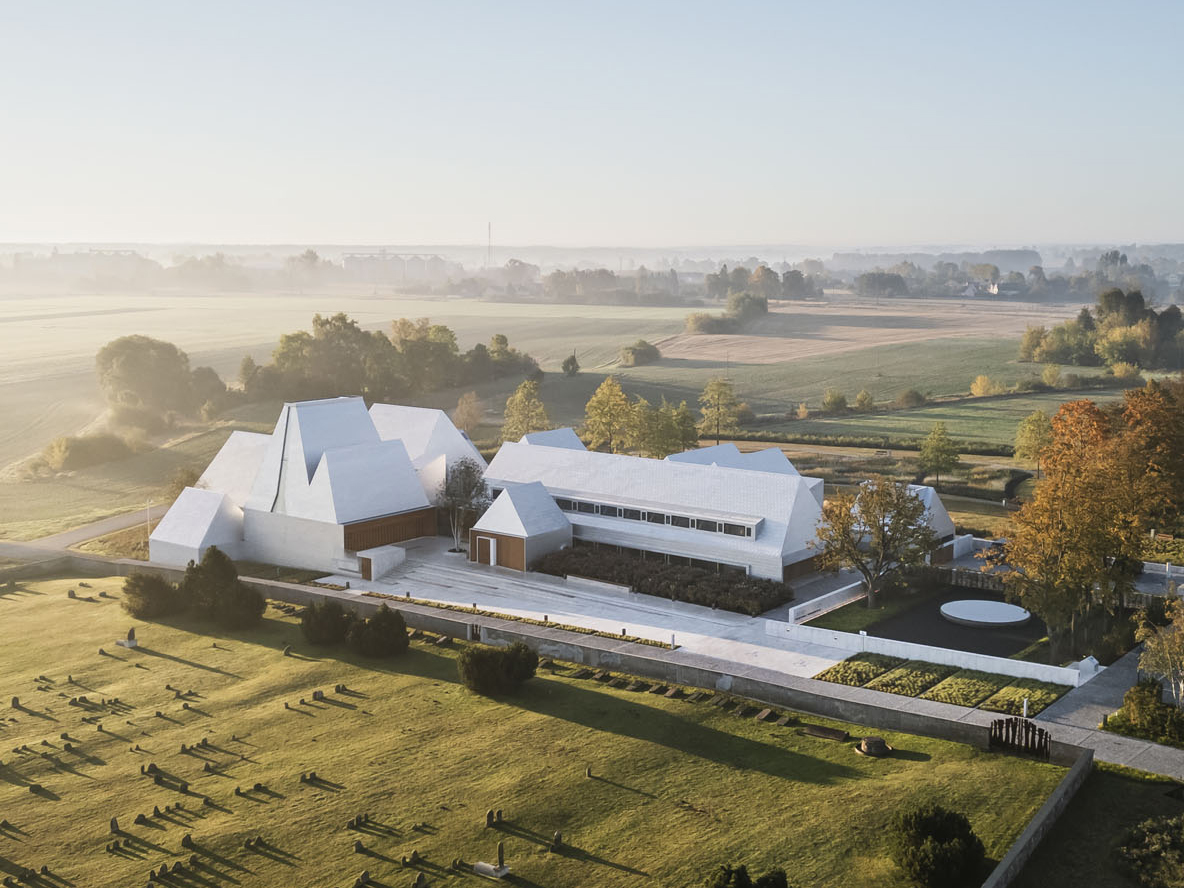
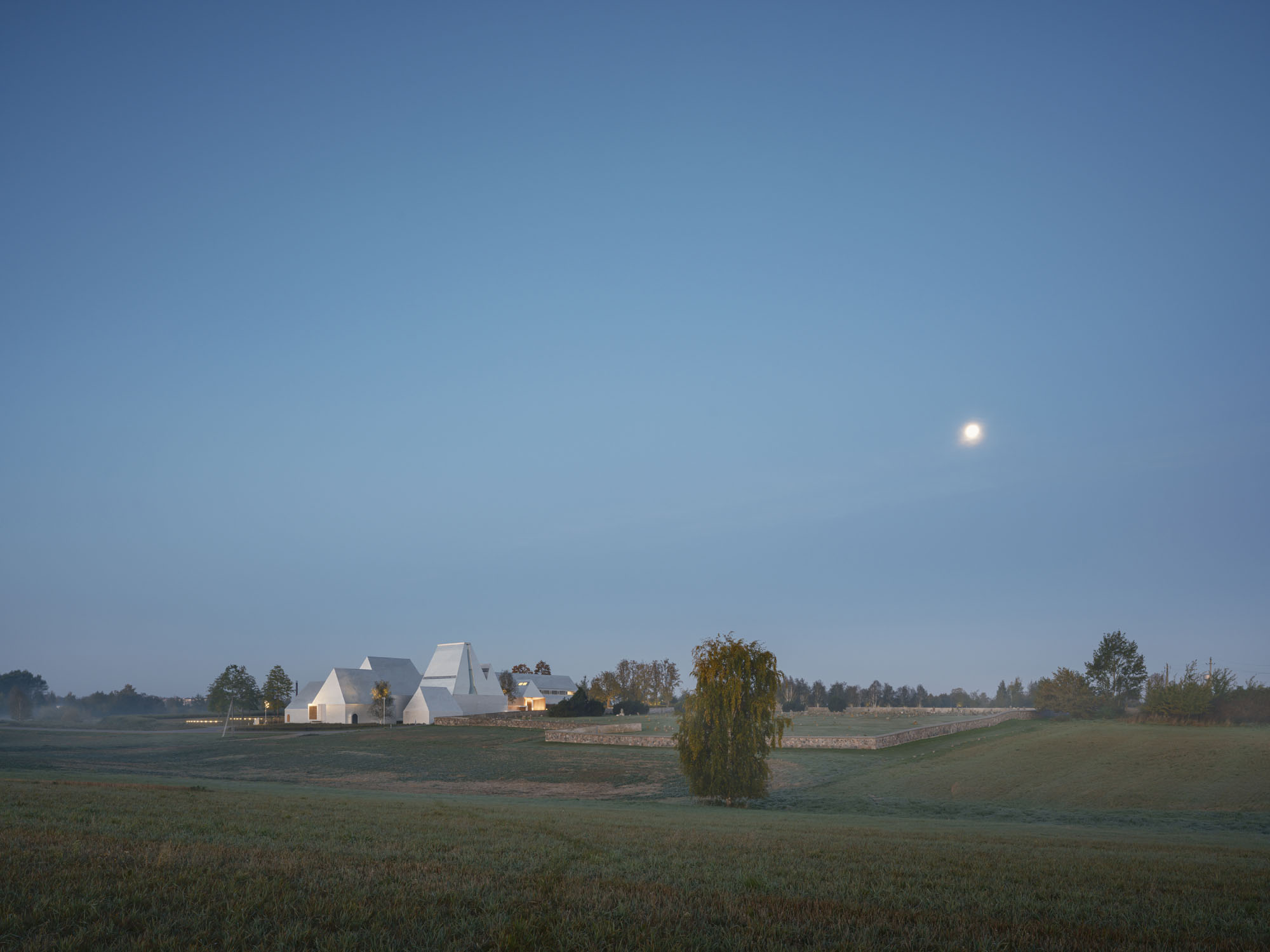
リトアニアのシェドゥヴァに位置する〈ロスト・シュテットル・ユダヤ博物館(The Lost Shtetl Jewish Museum)〉は、1941年に失われたユダヤ人コミュニティの記憶と文化を追悼・展示するための施設です。
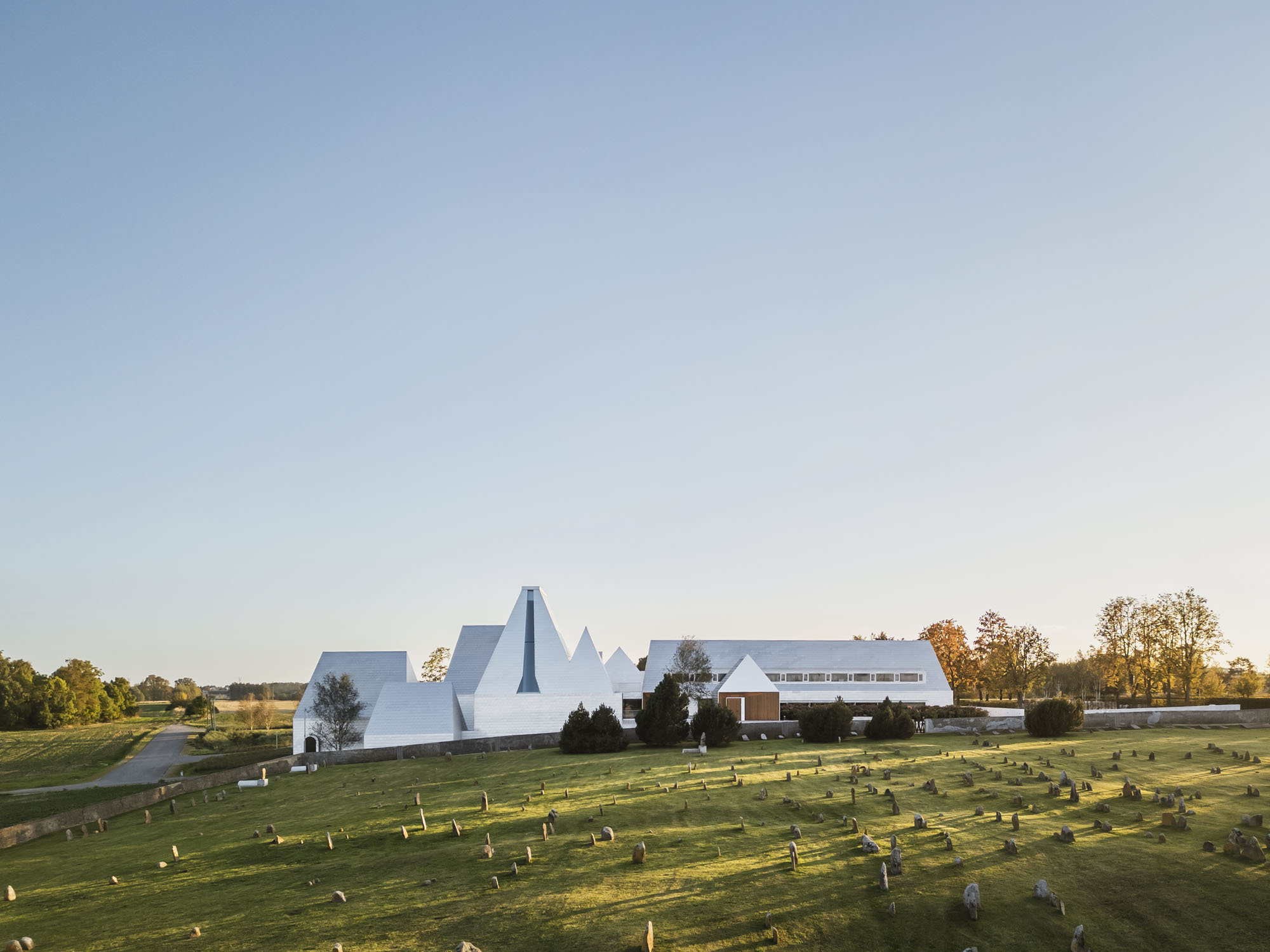
かつての村の情景を彷彿とさせる、寄棟屋根のミニマルで抽象的な「家」の集合体として構成されており、ヘルシンキの設計事務所 ラフデルマ&マフラマキ・アーキテクツ(Lahdelma & Mahlamäki architects)が設計しました。
注目ポイント
- ユダヤ人コミュニティの情景を抽象化した建築デザイン
- 環境に呼応する船舶用アルミニウムのファサード
- 「最後の旅」を追体験するメモリアル・パーク
(以下、ラフデルマ&マフラマキ・アーキテクツから提供されたプレスキットのテキストの抄訳)
©︎ Kuvatoimisto Kuvio
©︎ Kuvatoimisto Kuvio
喪失の記憶を刻む:〈ロスト・シュテットル・ユダヤ博物館〉の思想
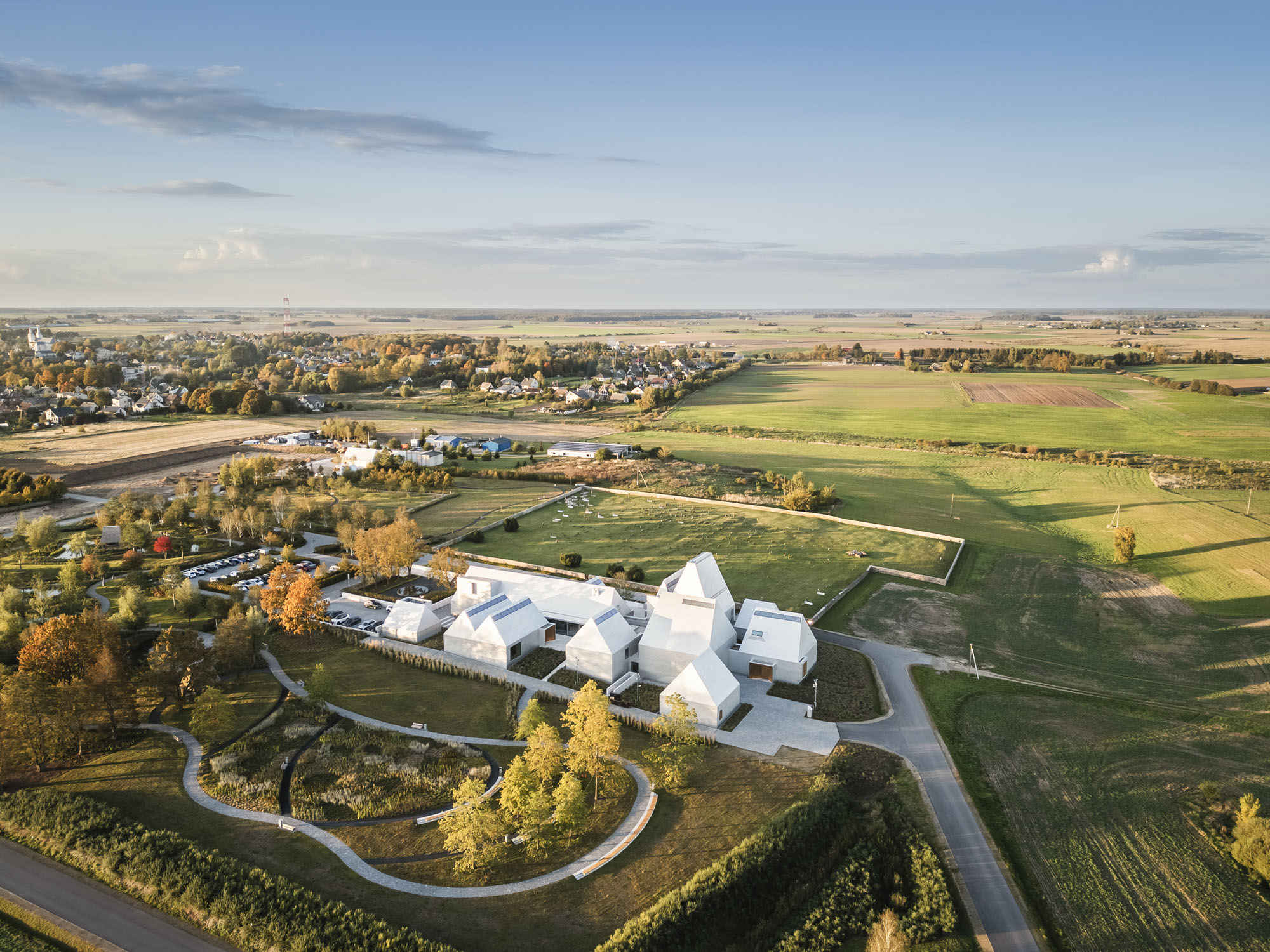
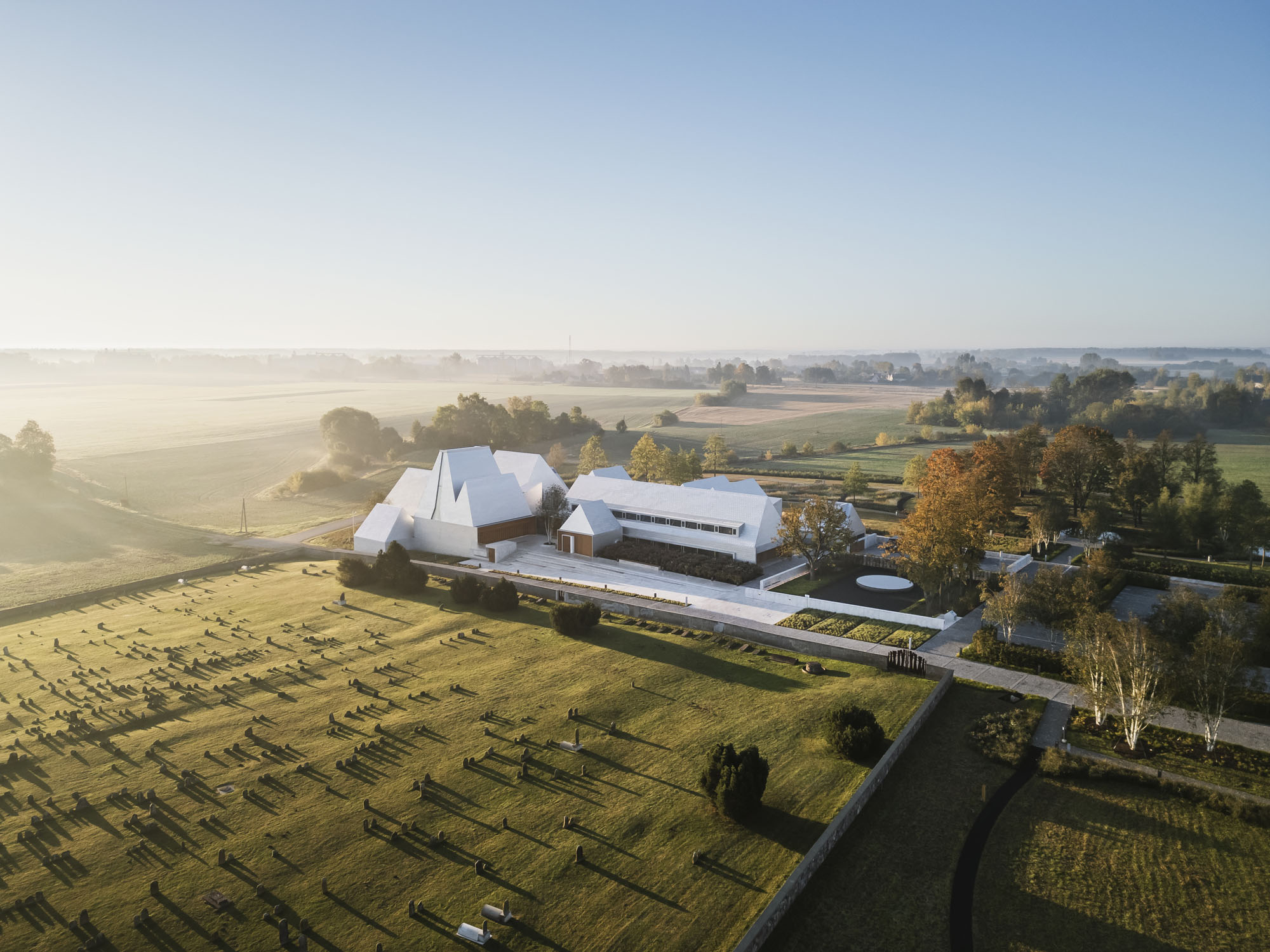
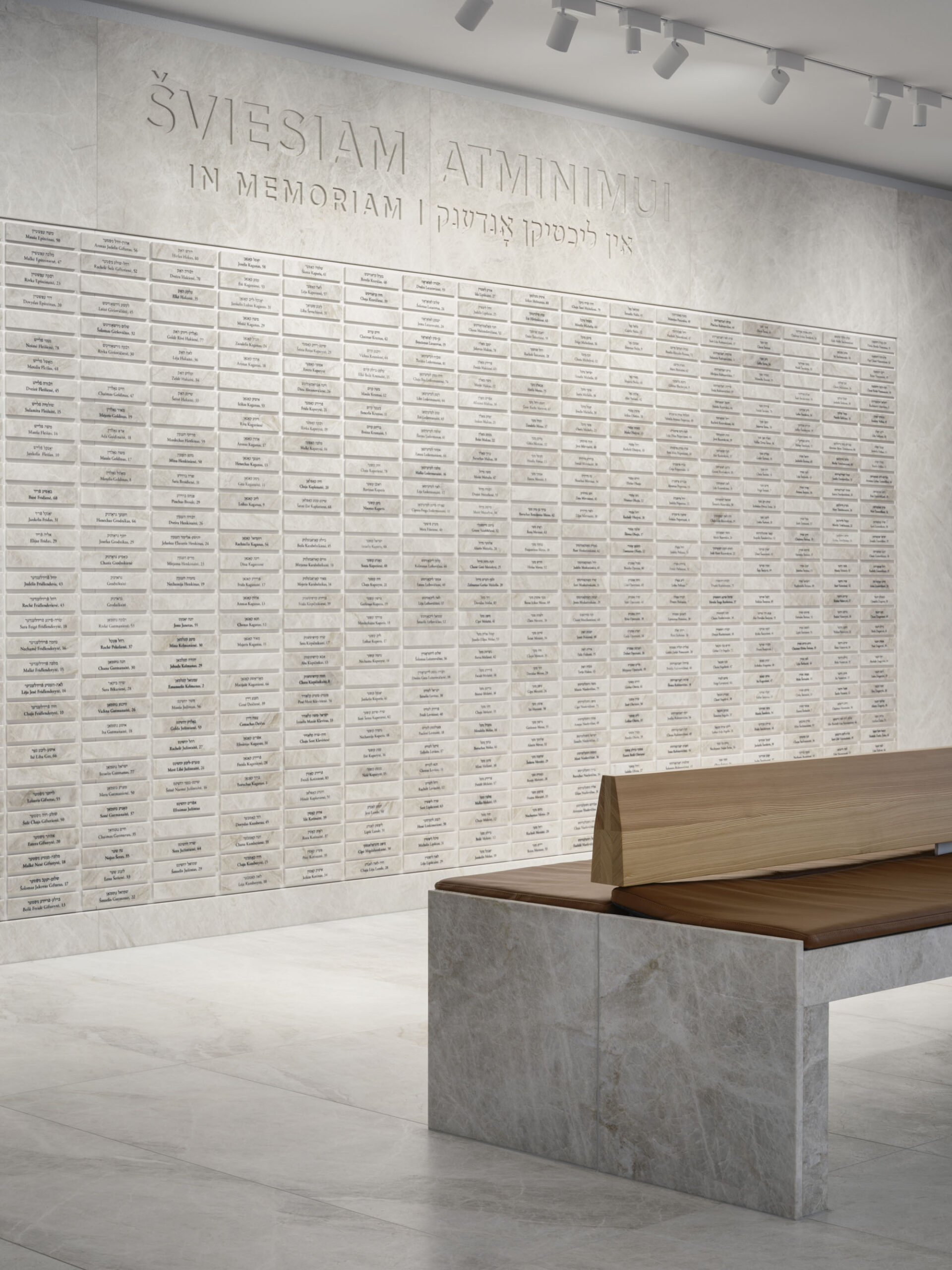
〈ロスト・シュテットル・ユダヤ博物館〉の設計コンセプトは、1941年8月に一夜にして消滅したシェドゥヴァ(Šeduva)という村と、その地で育まれた文化に基づいている。
かつてこの村に暮らしていた664人のユダヤ人が、近隣の森で処刑された。この悲劇により、尊い人命とともに、シェドゥヴァが歩んできた長く豊かな歴史もまた失われることとなった。
本博物館は、これら失われた命と、ユダヤ文化のみならず欧州文化の一翼を担っていたその精神を追悼するために建設された。
©︎ Kuvatoimisto Kuvio
©︎ Kuvatoimisto Kuvio
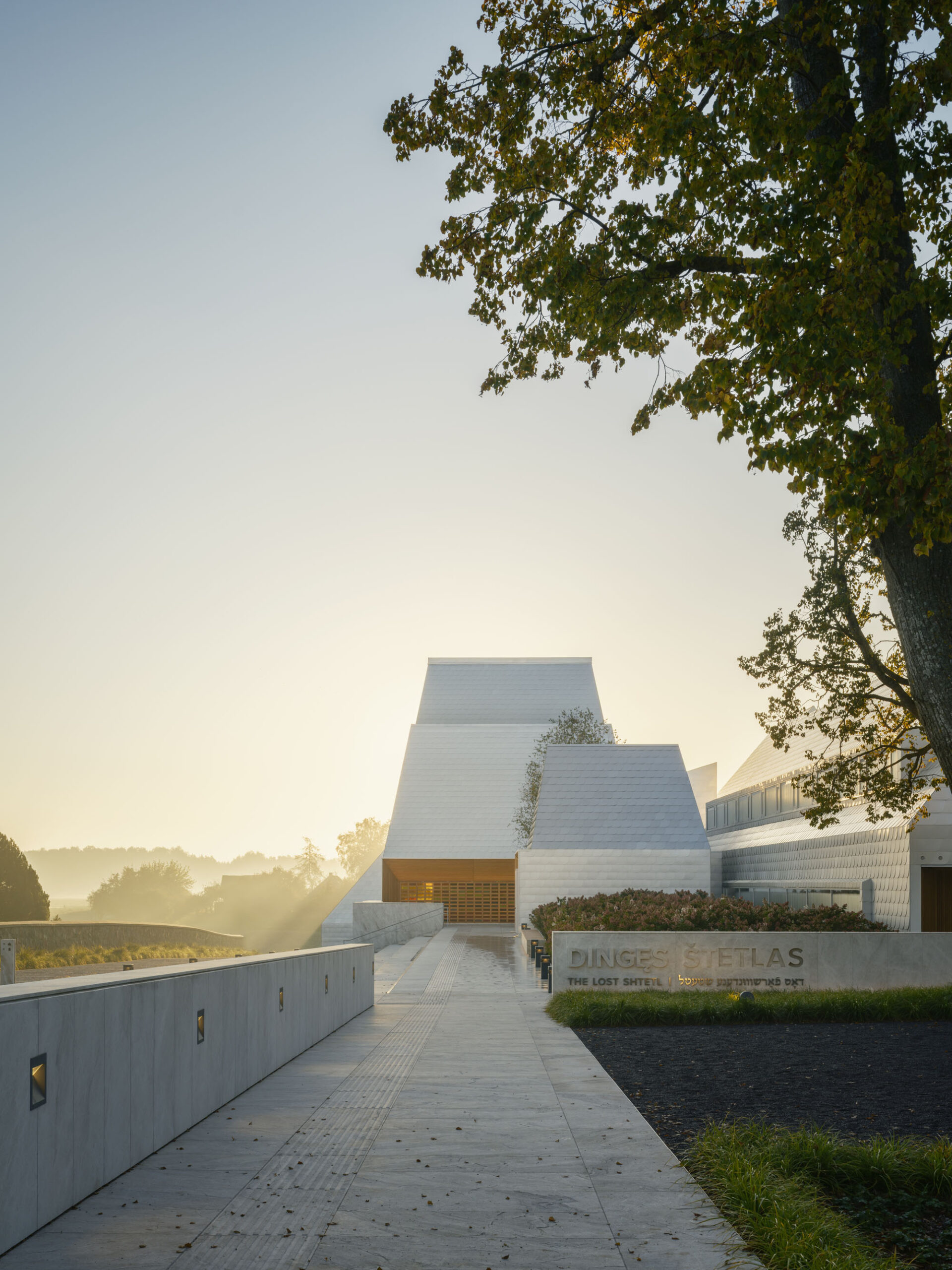
村の記憶を象徴する、抽象化された家々
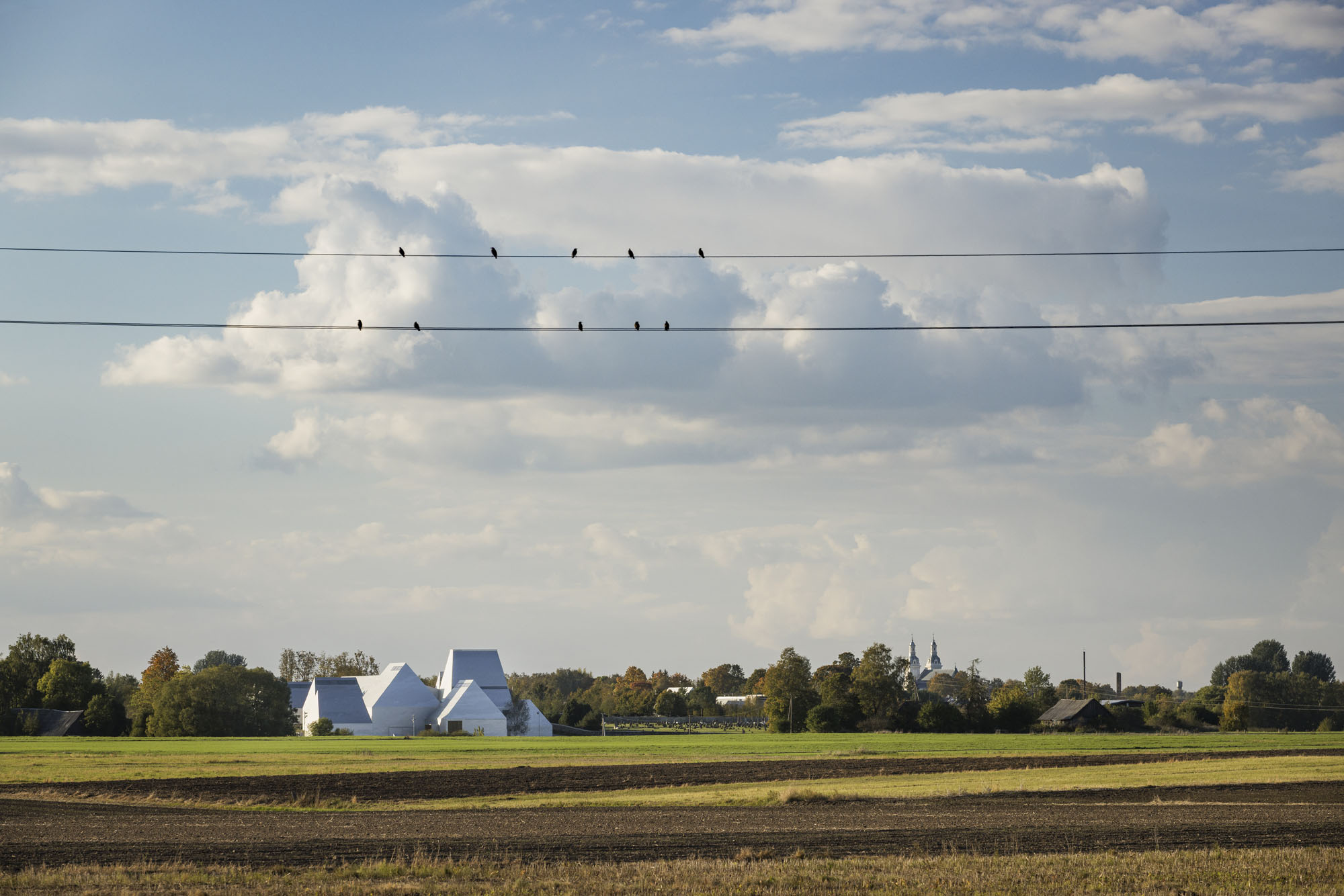
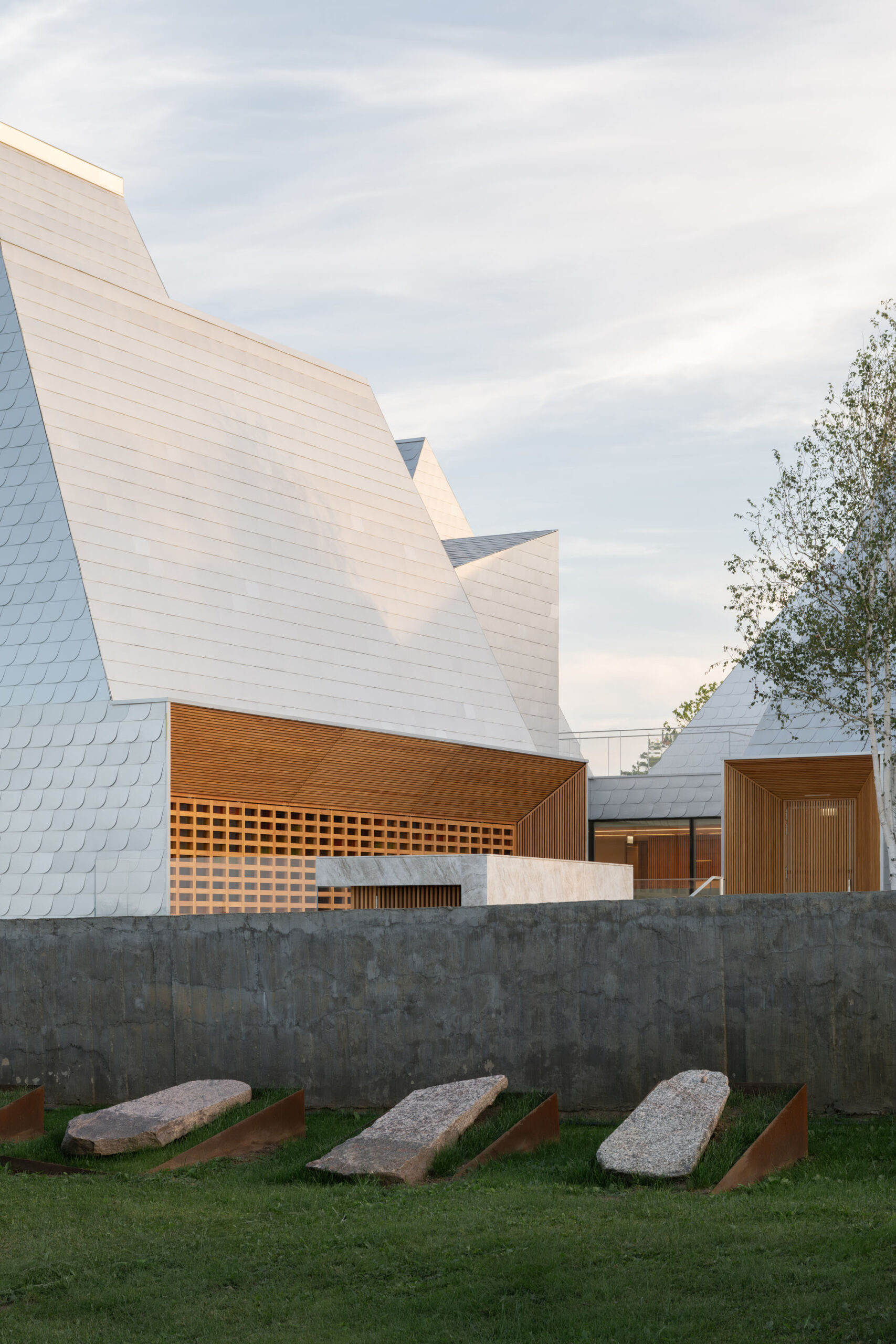
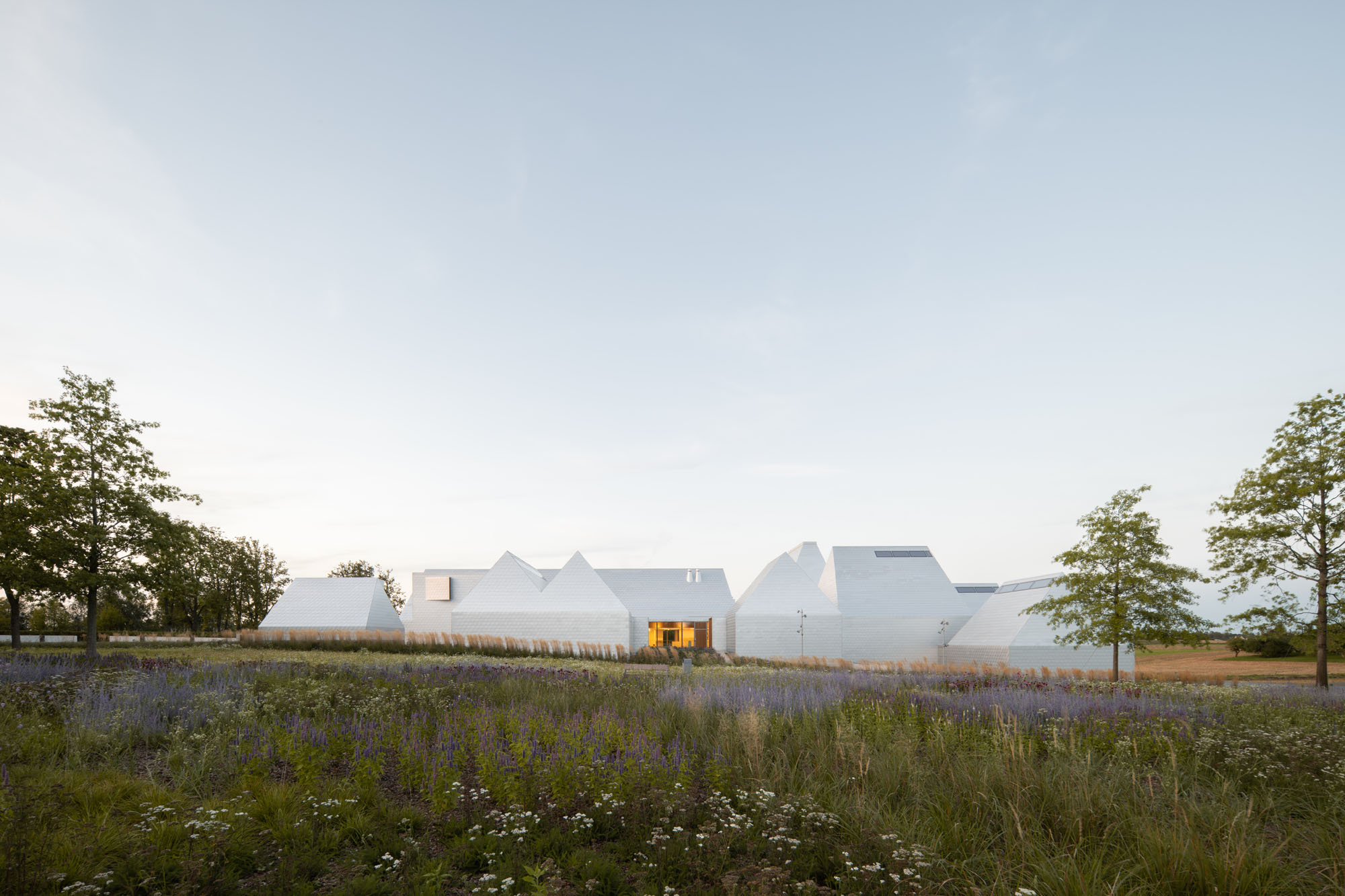
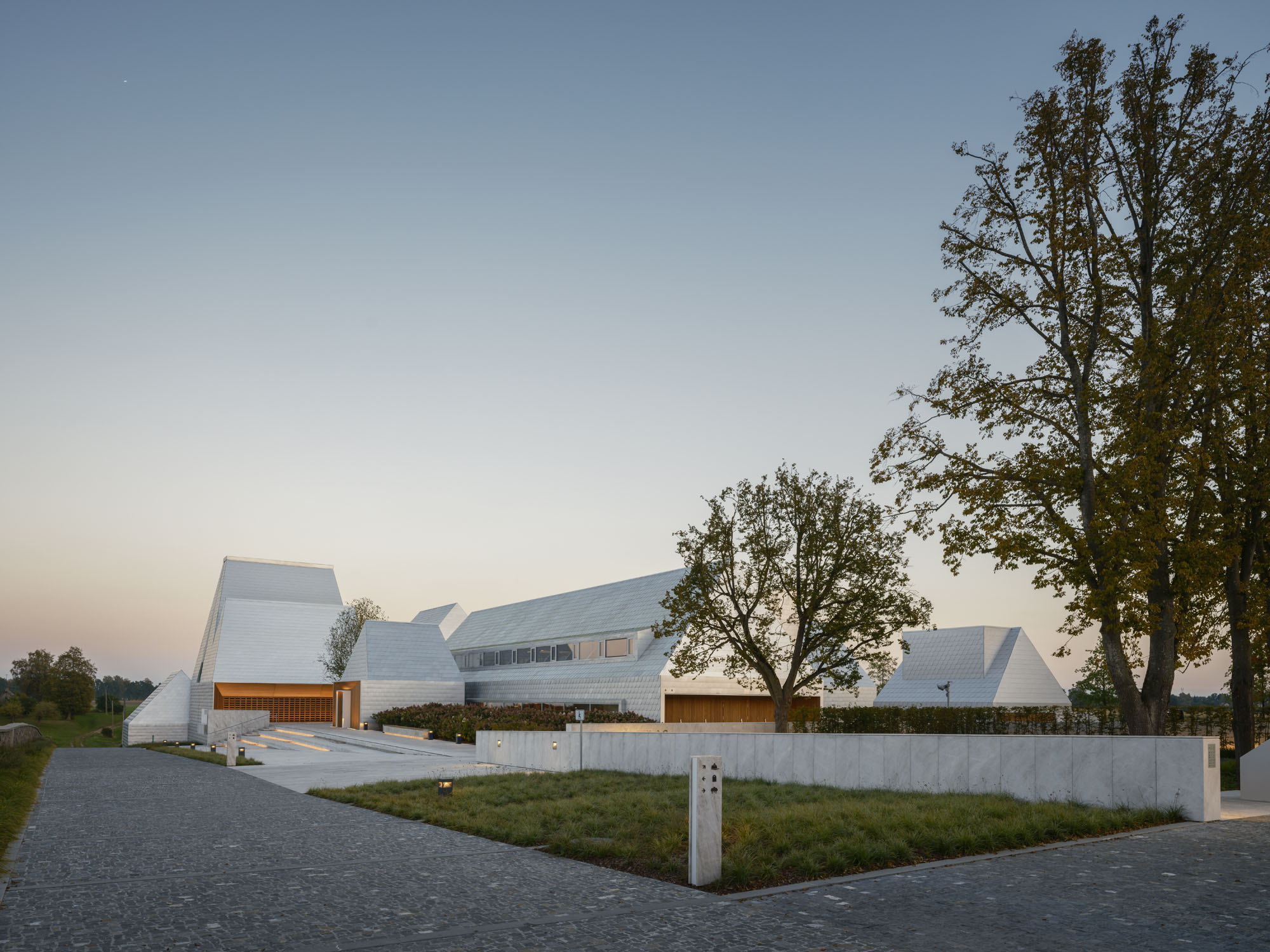
建築は、寄棟屋根をもつミニマルで抽象的な「家」の集合体として構成されている。これらは、かつての村(シュテットル(Shtetl):東欧ユダヤ人の小規模コミュニティ)の情景を彷彿とさせ、夢の中に現れる村のような景観を創出する。この建物そのものが、失われた村の象徴としての役割を担っている。
©︎ Aiste Rakauskaite
©︎ Aiste Rakauskaite
屋根に宿る機能性と空間の二面性
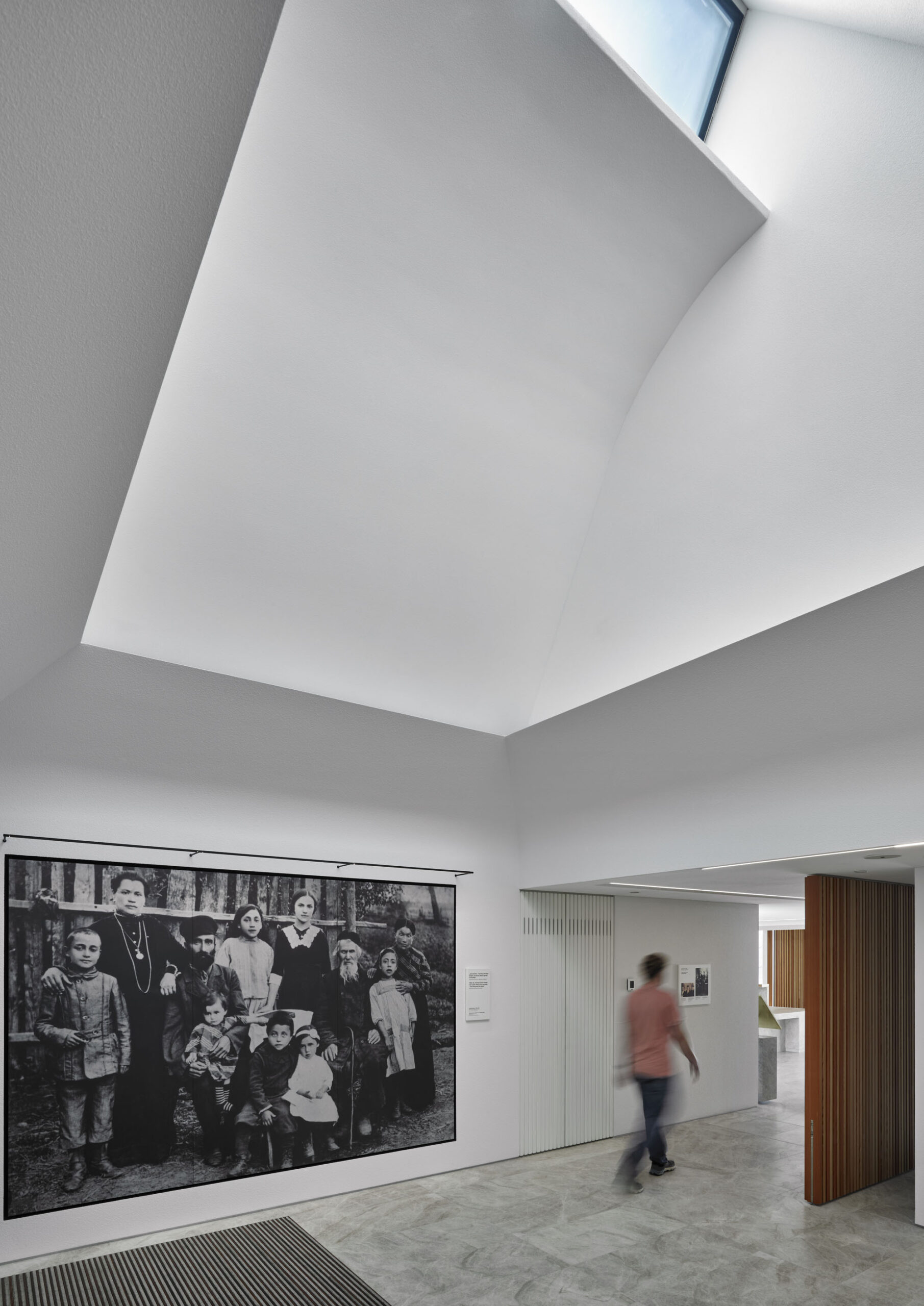
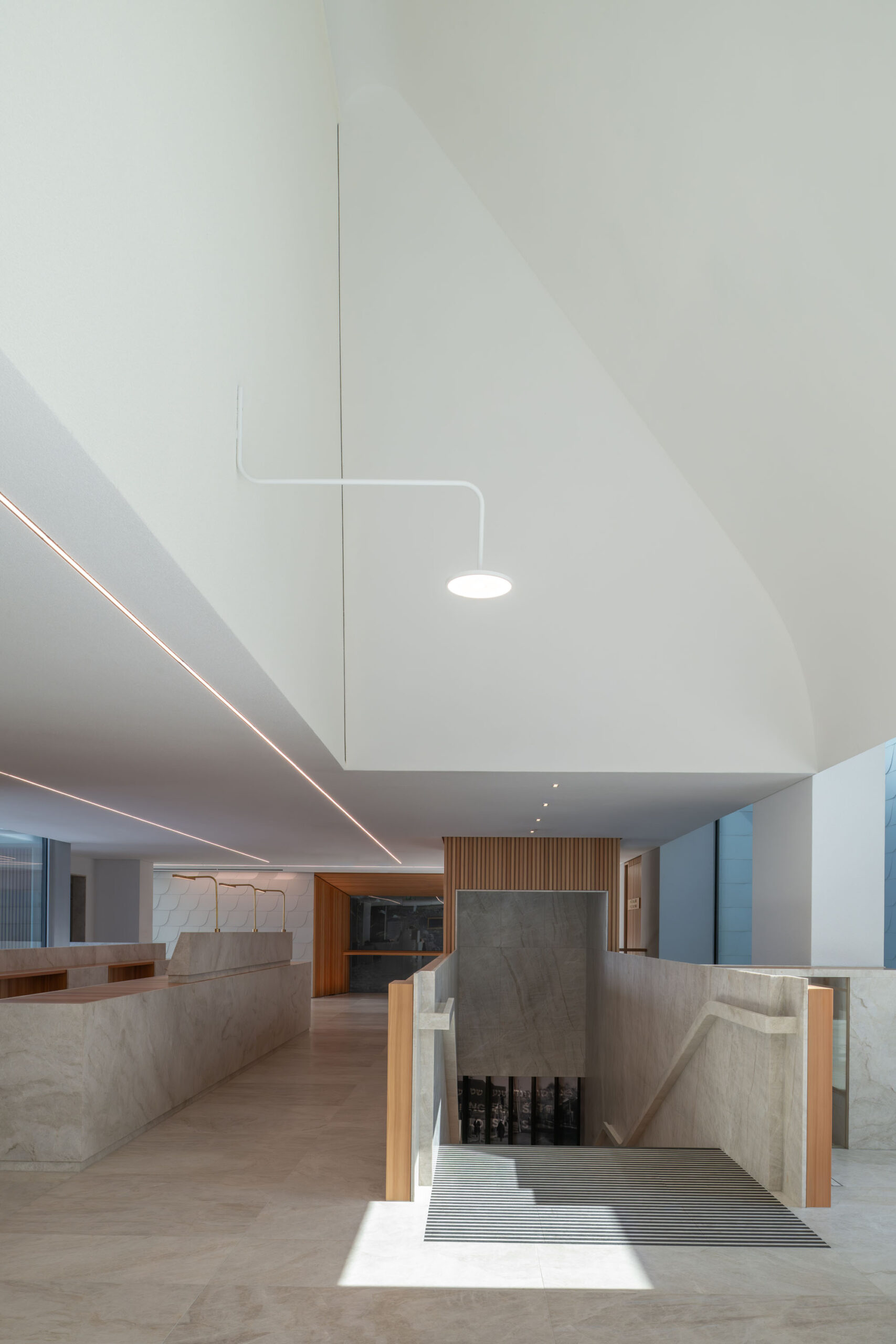
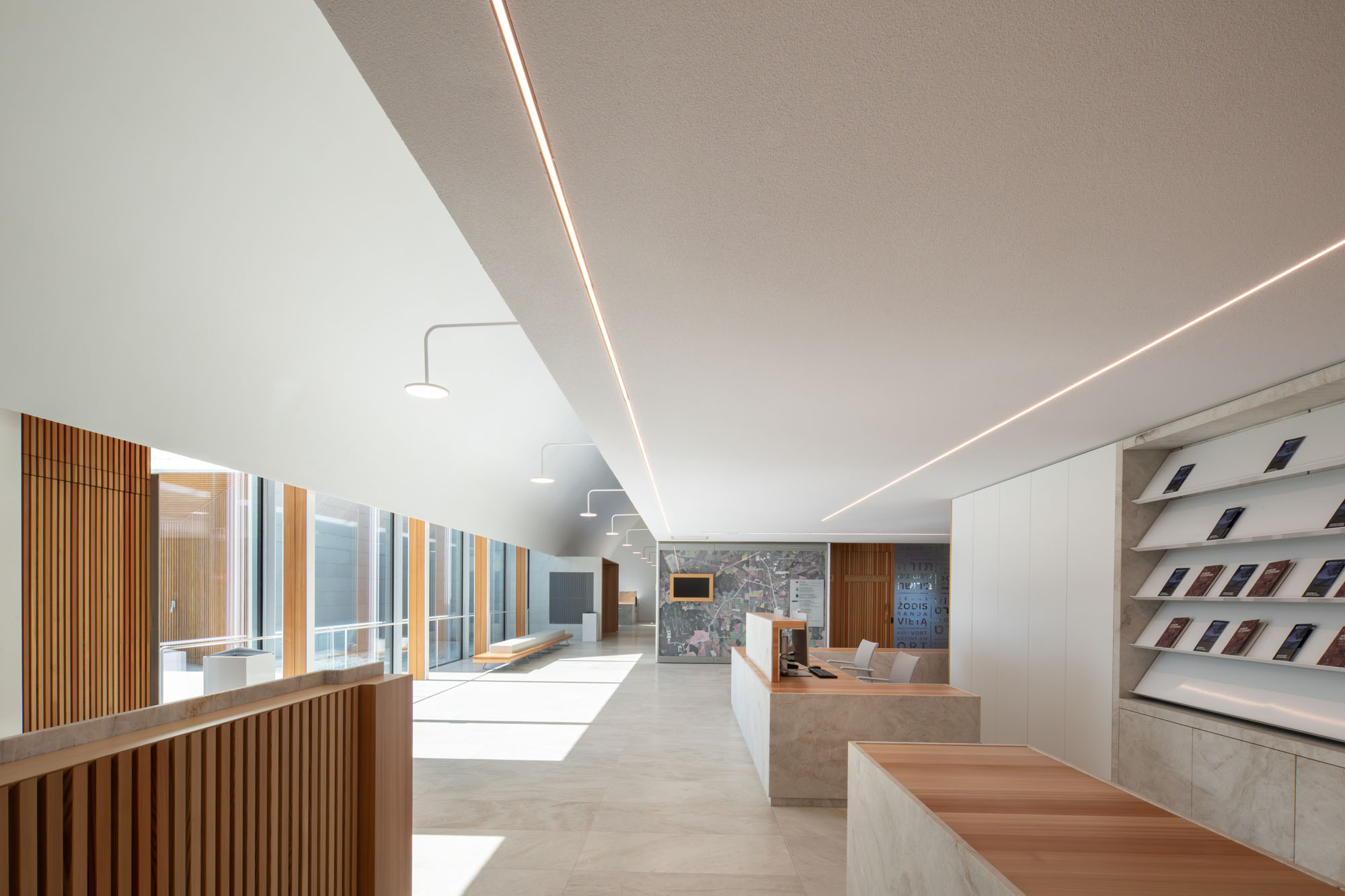
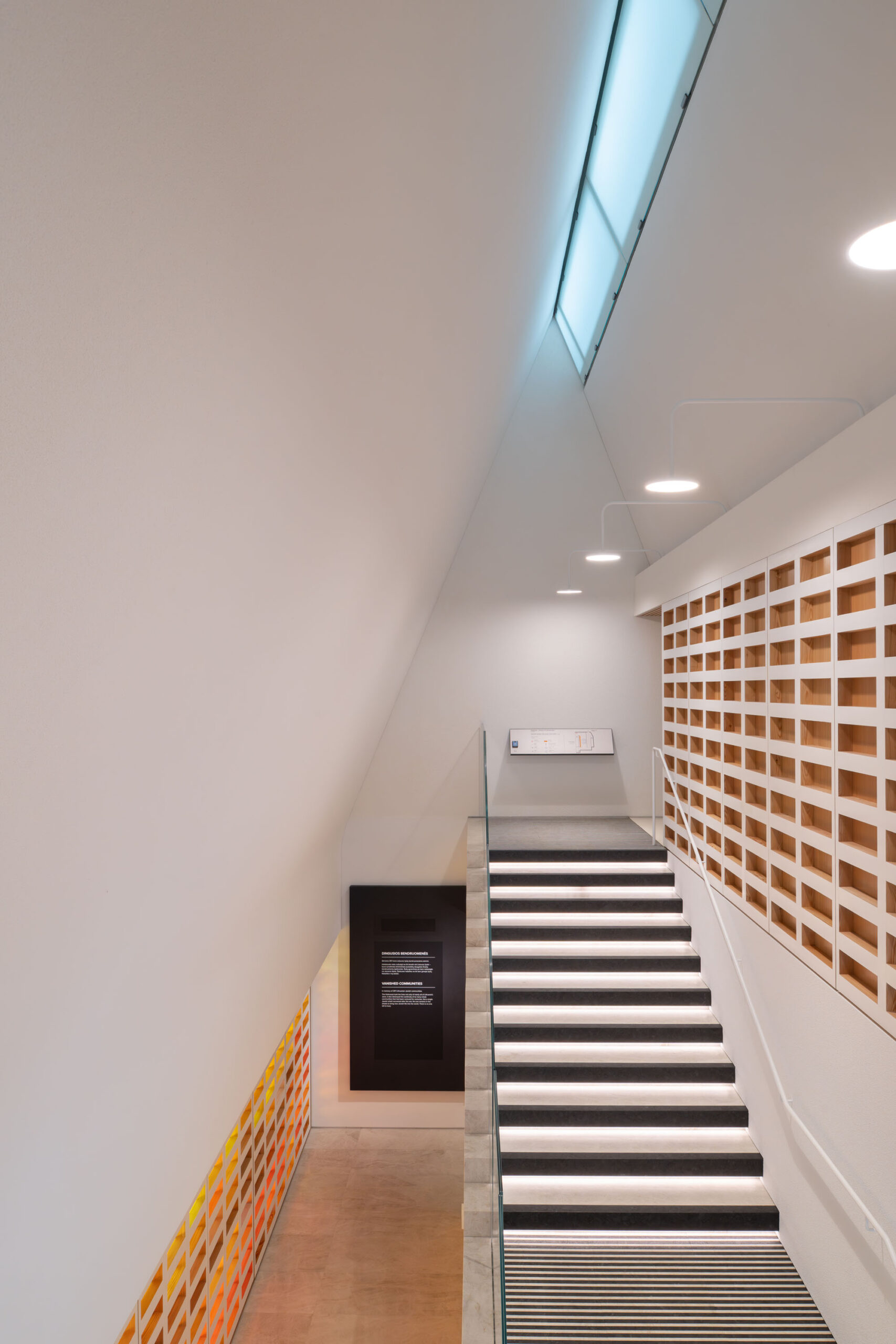
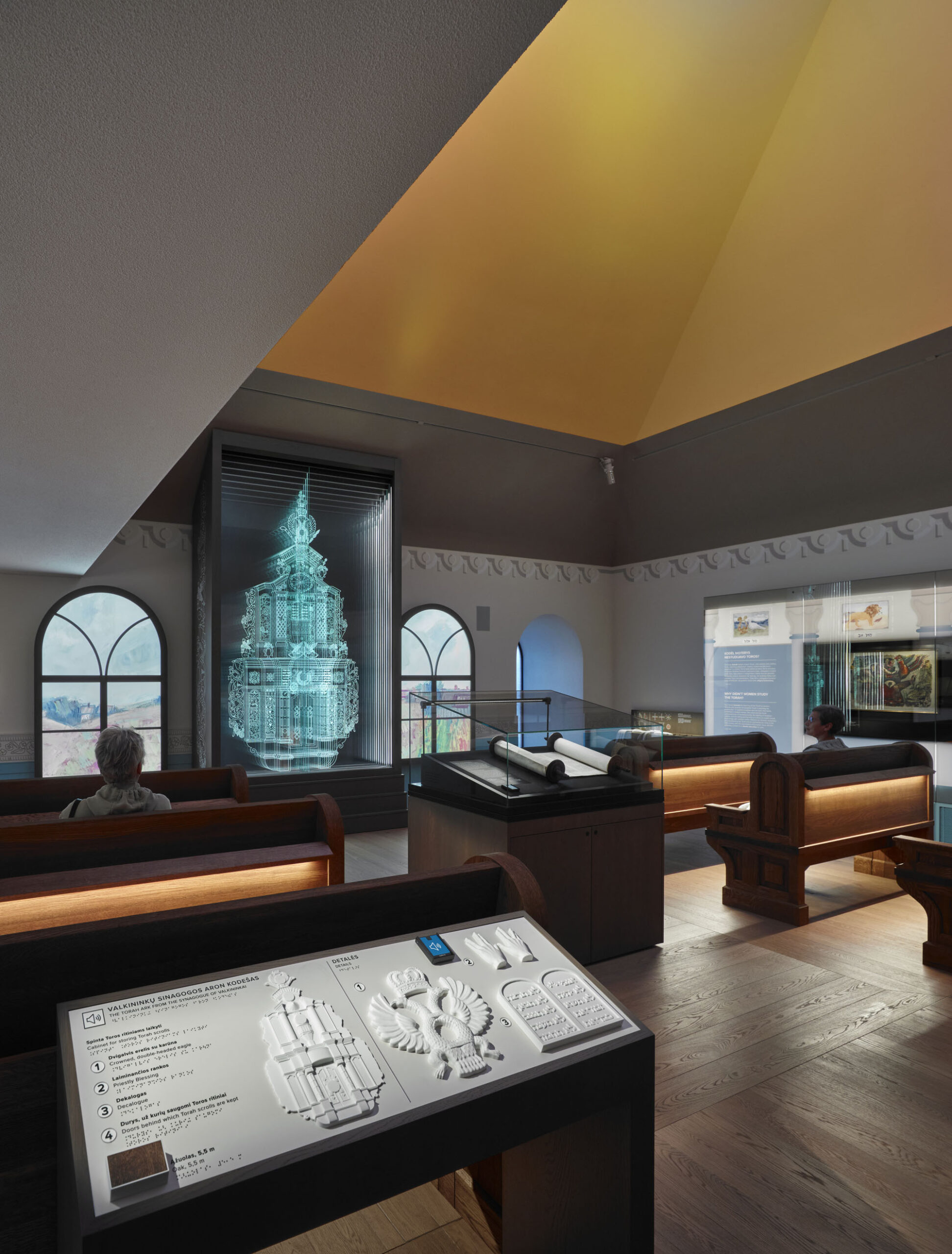
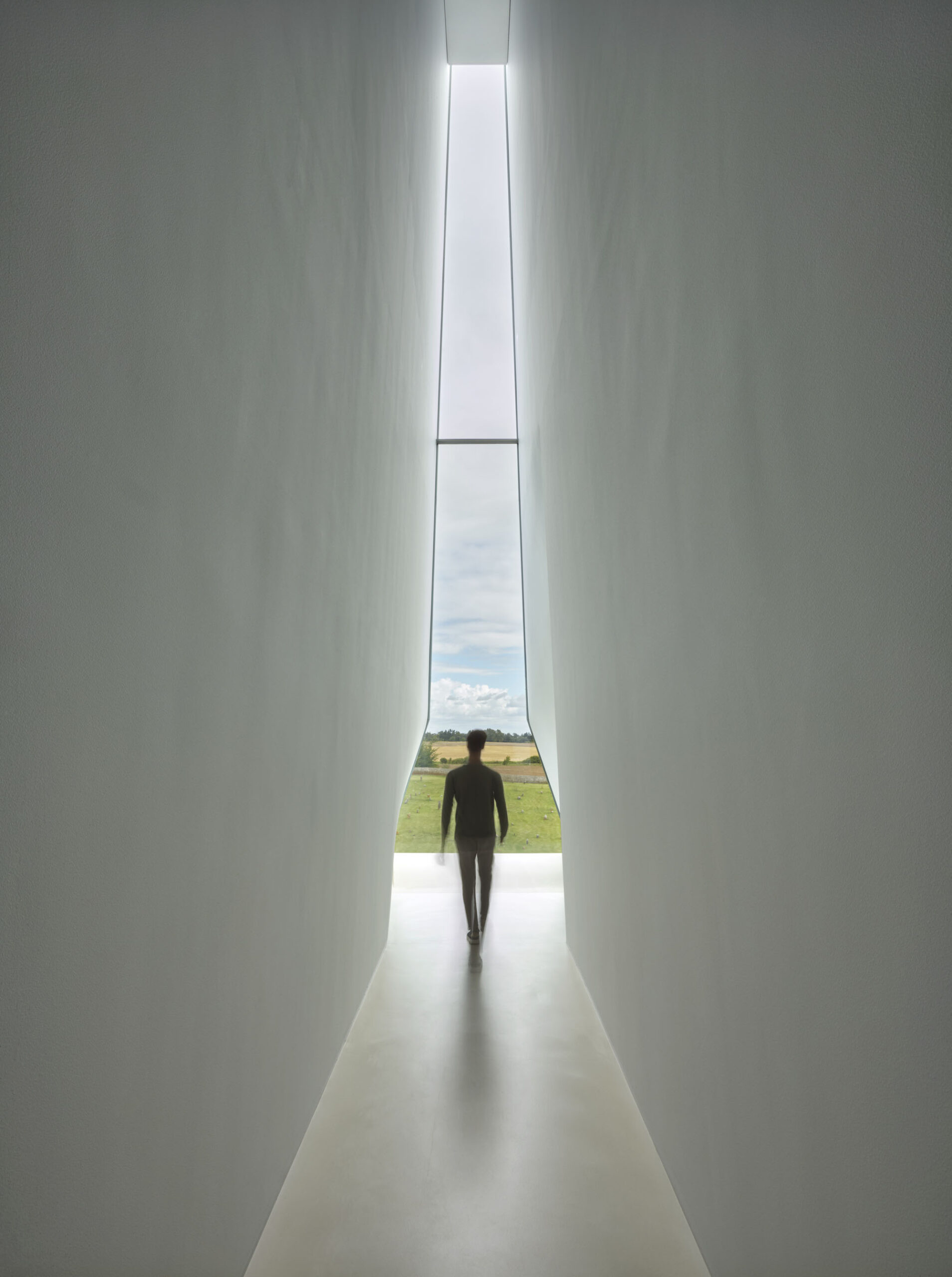
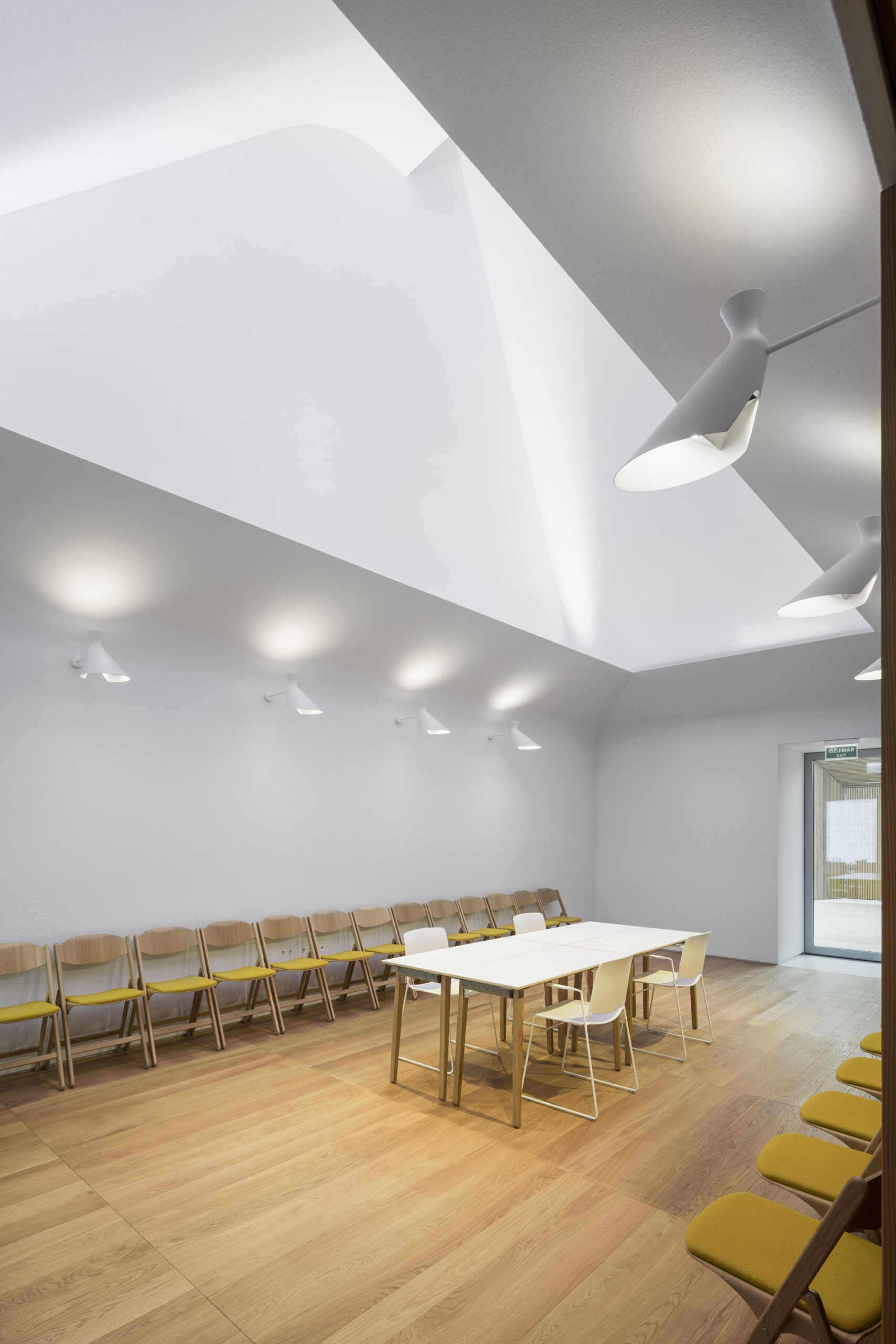
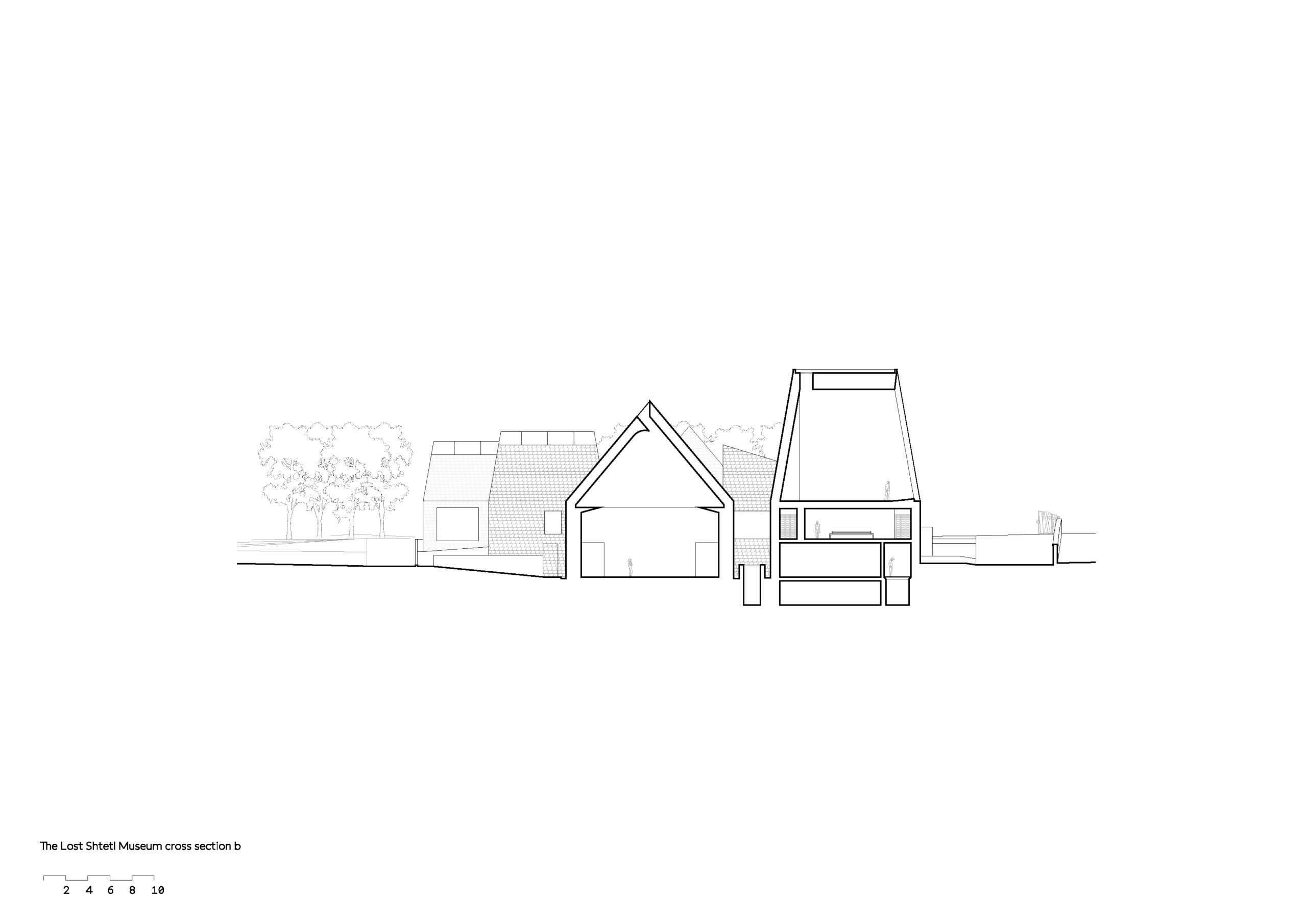
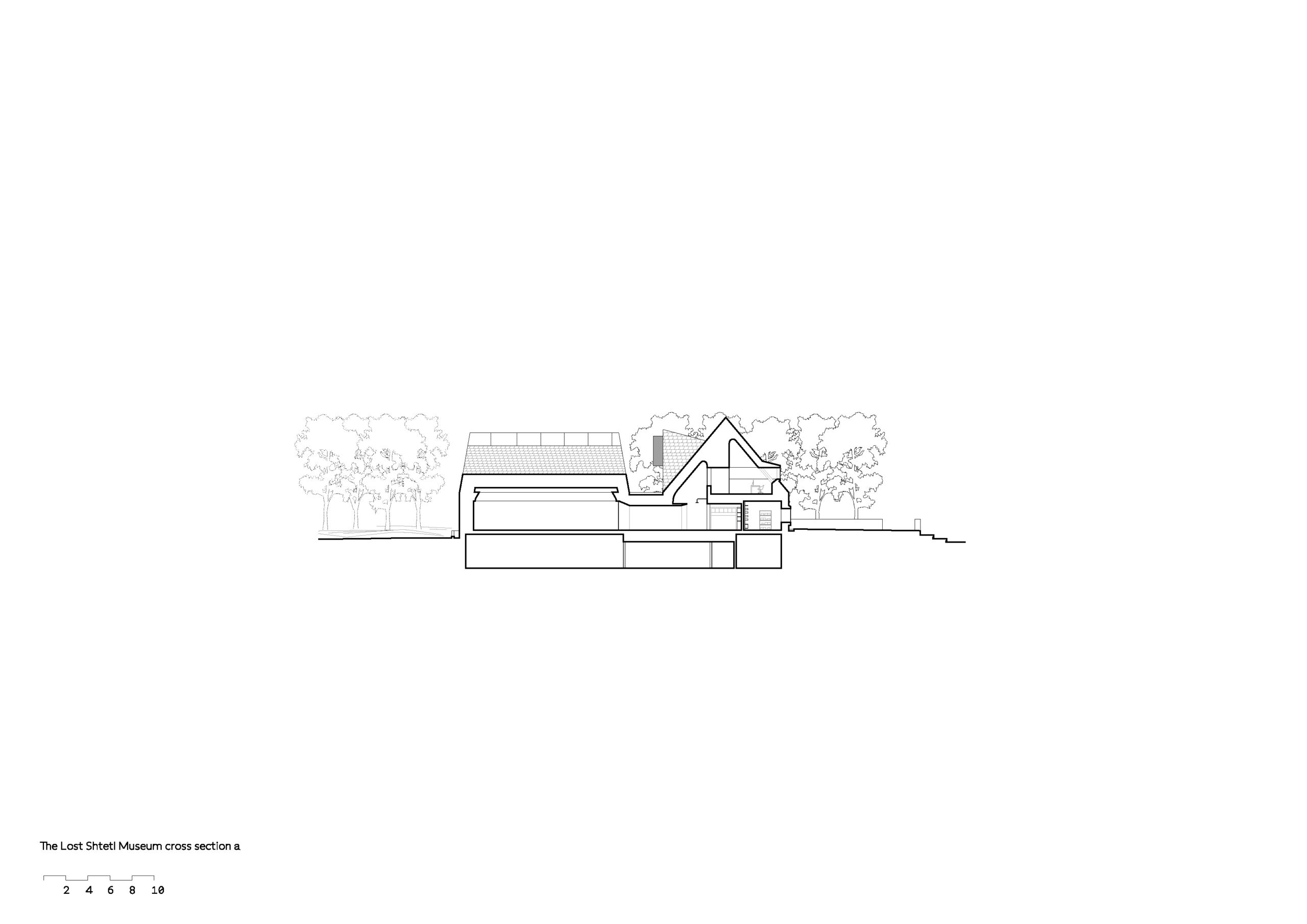
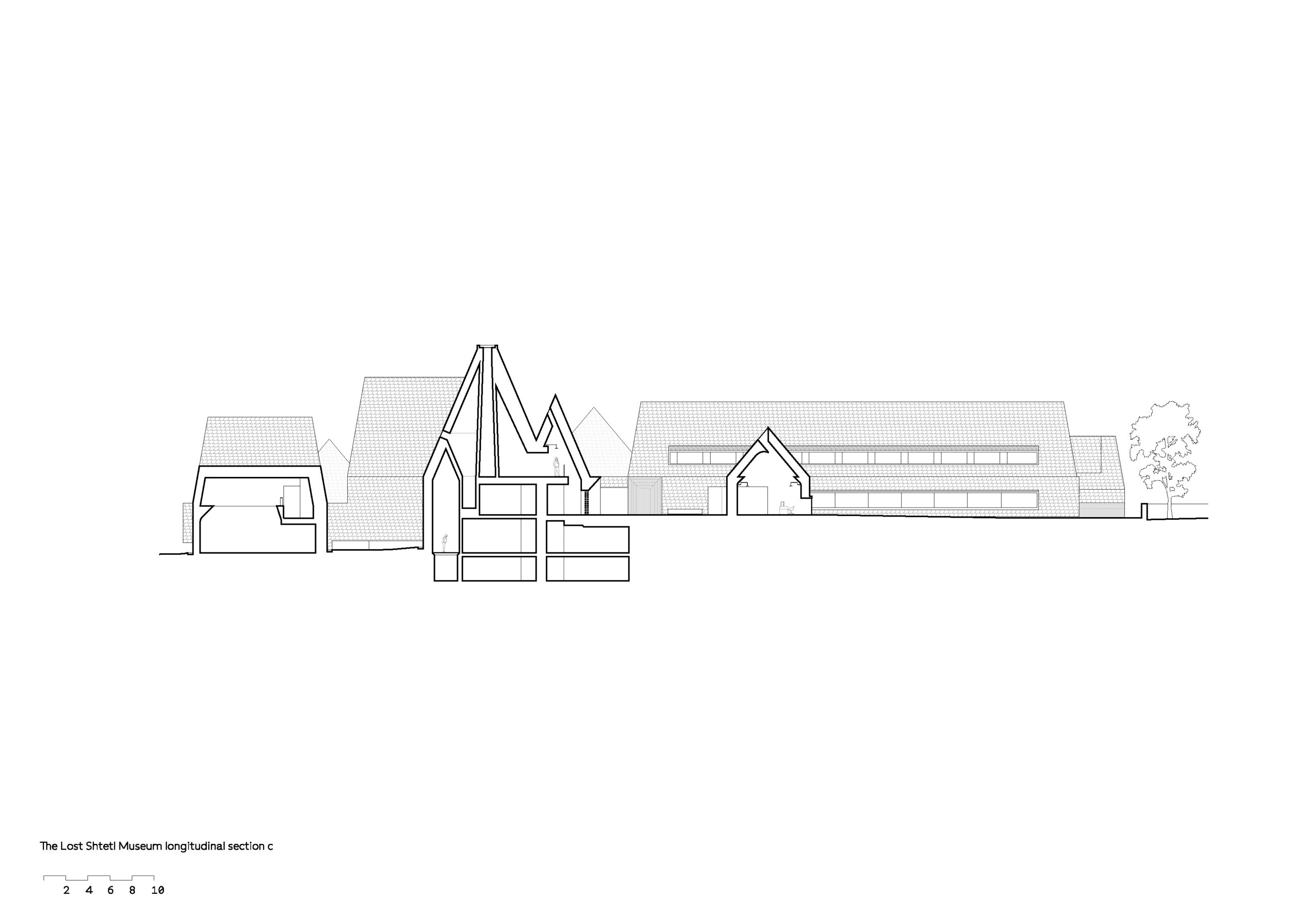
ギャラリーにおける建築的・機能的なコンセプトは、特徴的な屋根のデザインに集約されている。ギャラリー上部は外殻の形状をリフレインするように設計されており、屋根の棟に配された天窓から、コントロールされた自然光を内部へと導く。この上部空間が開放感を演出する一方で、下部空間は展示の内容に深く没入させるような「静的な密度」を特徴としている。
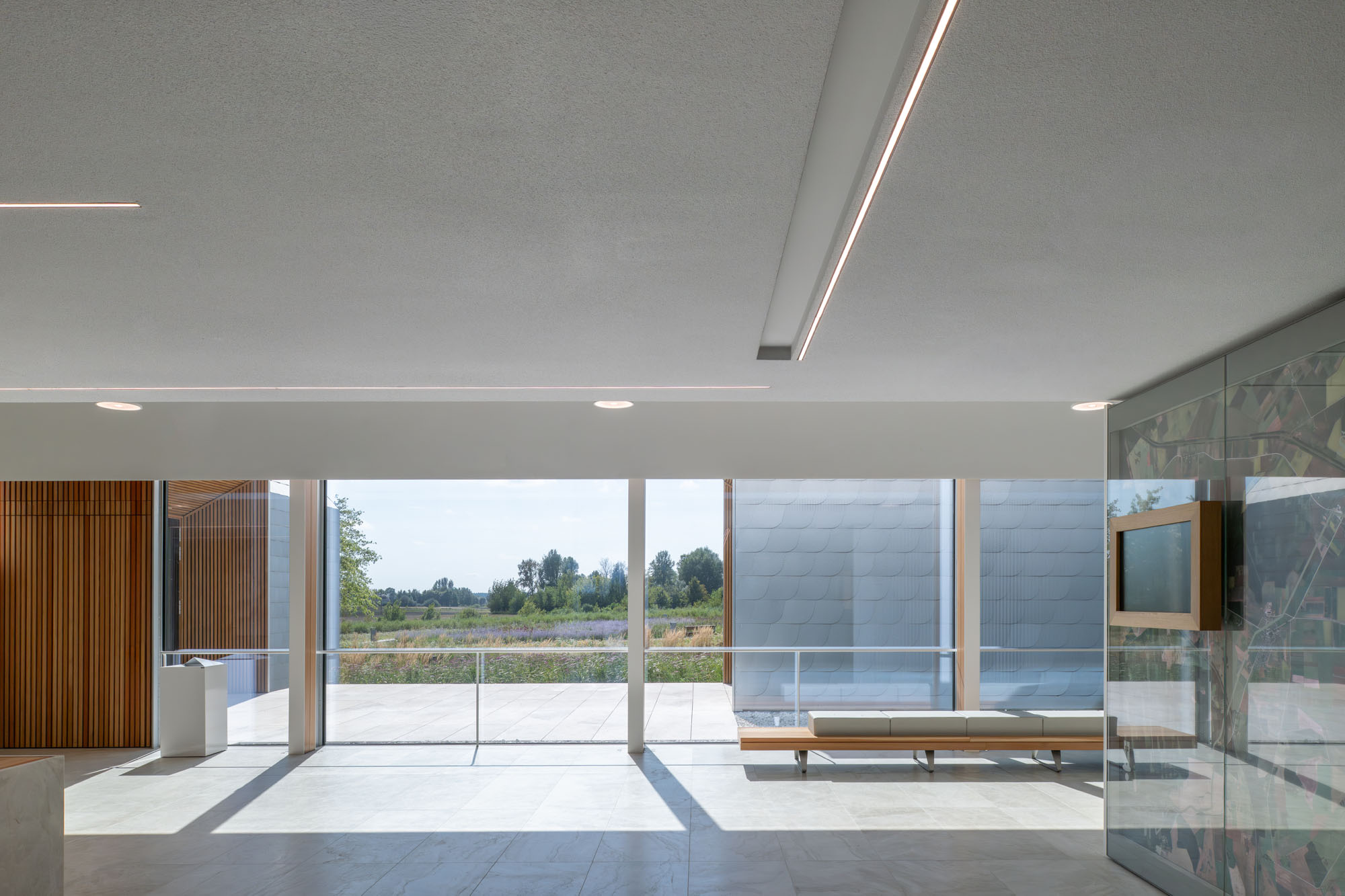
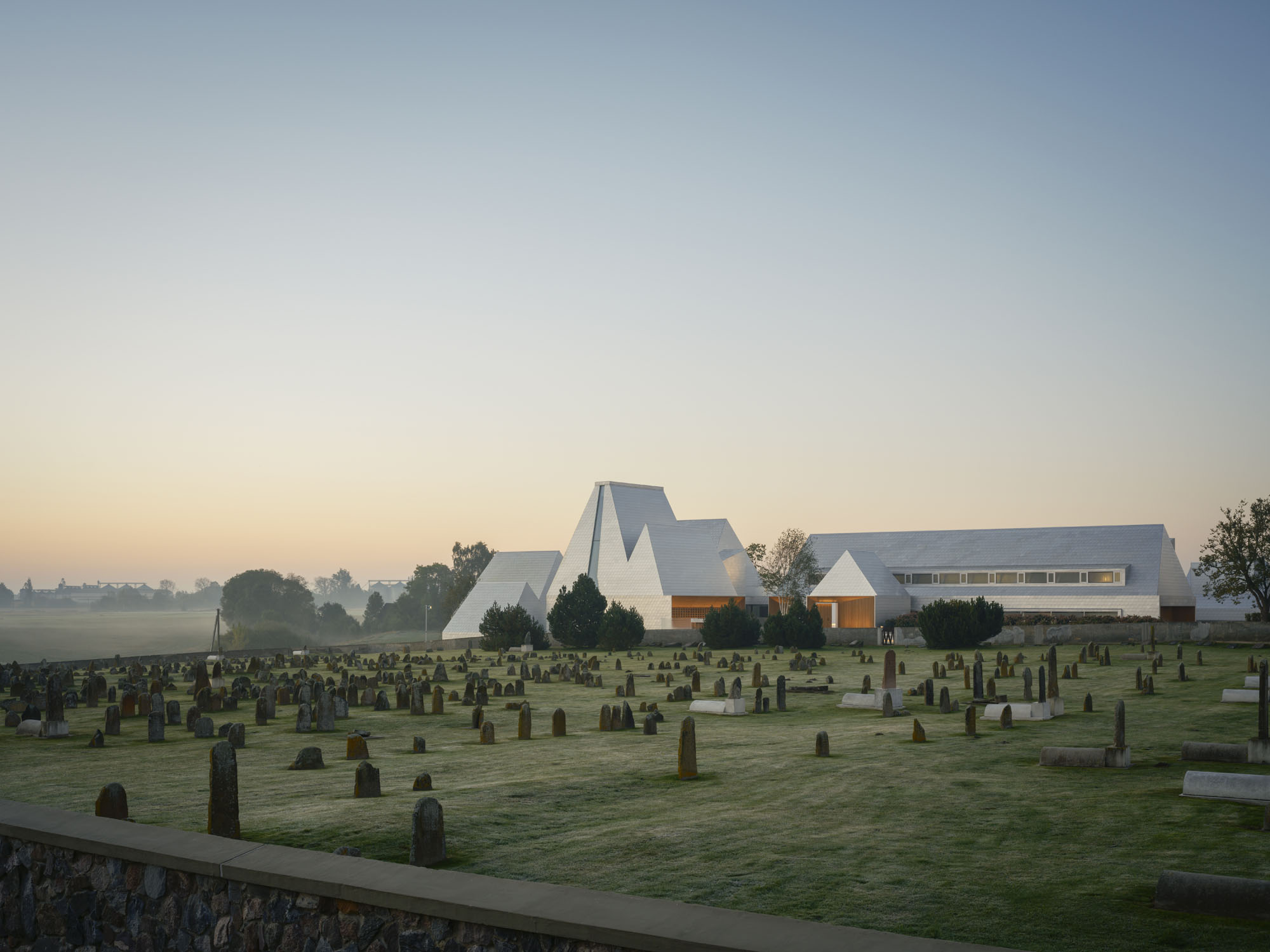
エントランス階のギャラリーも同様の原則に則っているが、ここでは外部の景観を緻密に計算して取り込むことで、視覚的な連続性が付与された。また、1階のスタッフ施設からも歴史的な墓地を望むことができる。さらに、全空間の設計において「汎用性」と「長期的利用の可能性」が重視されており、数十年後であっても展示内容の更新が可能な柔軟性を備えている。
©︎ Aiste Rakauskaite
©︎ The Lost Shtetl Museum
風土を反射する素材:船舶用アルミニウムの採用
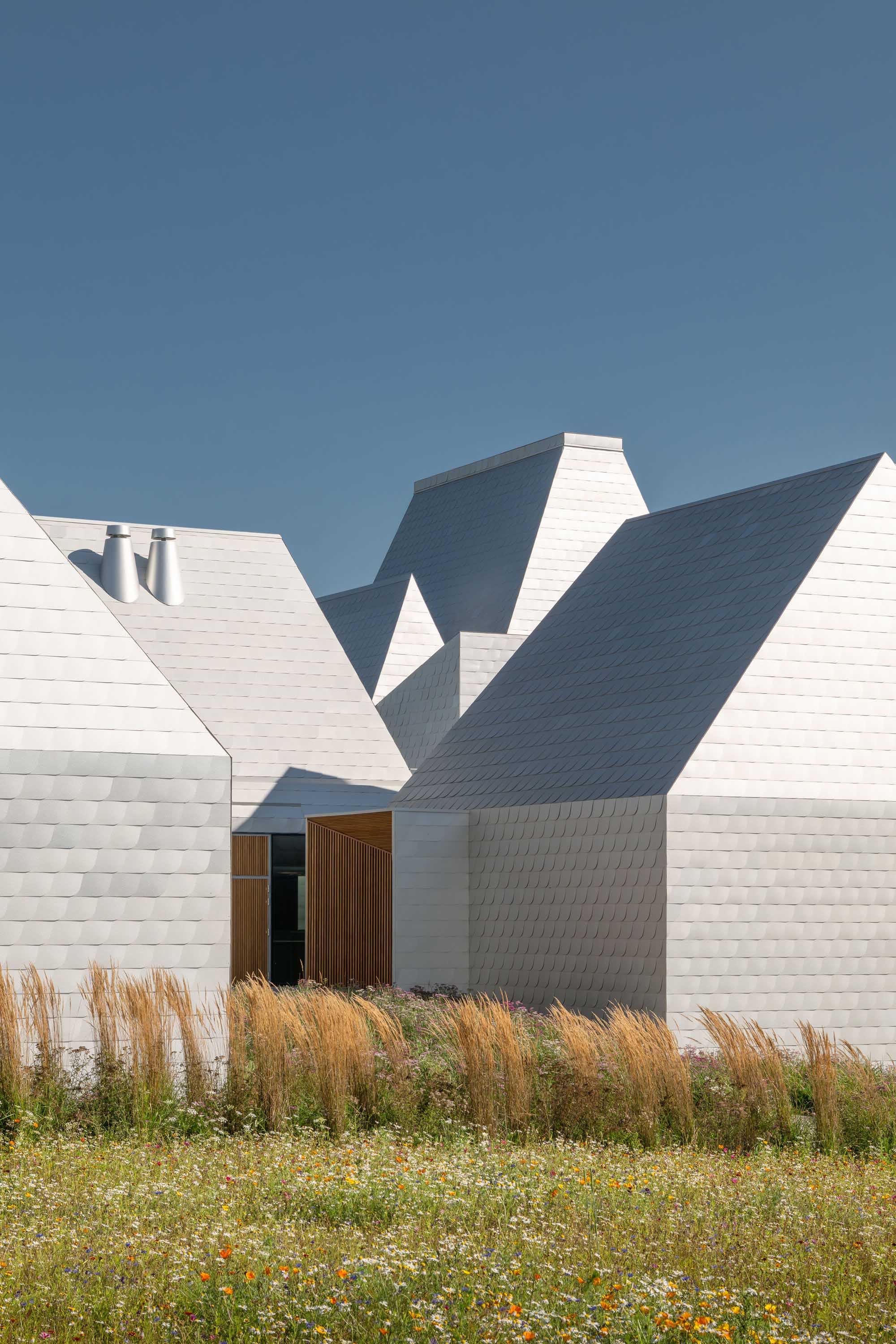
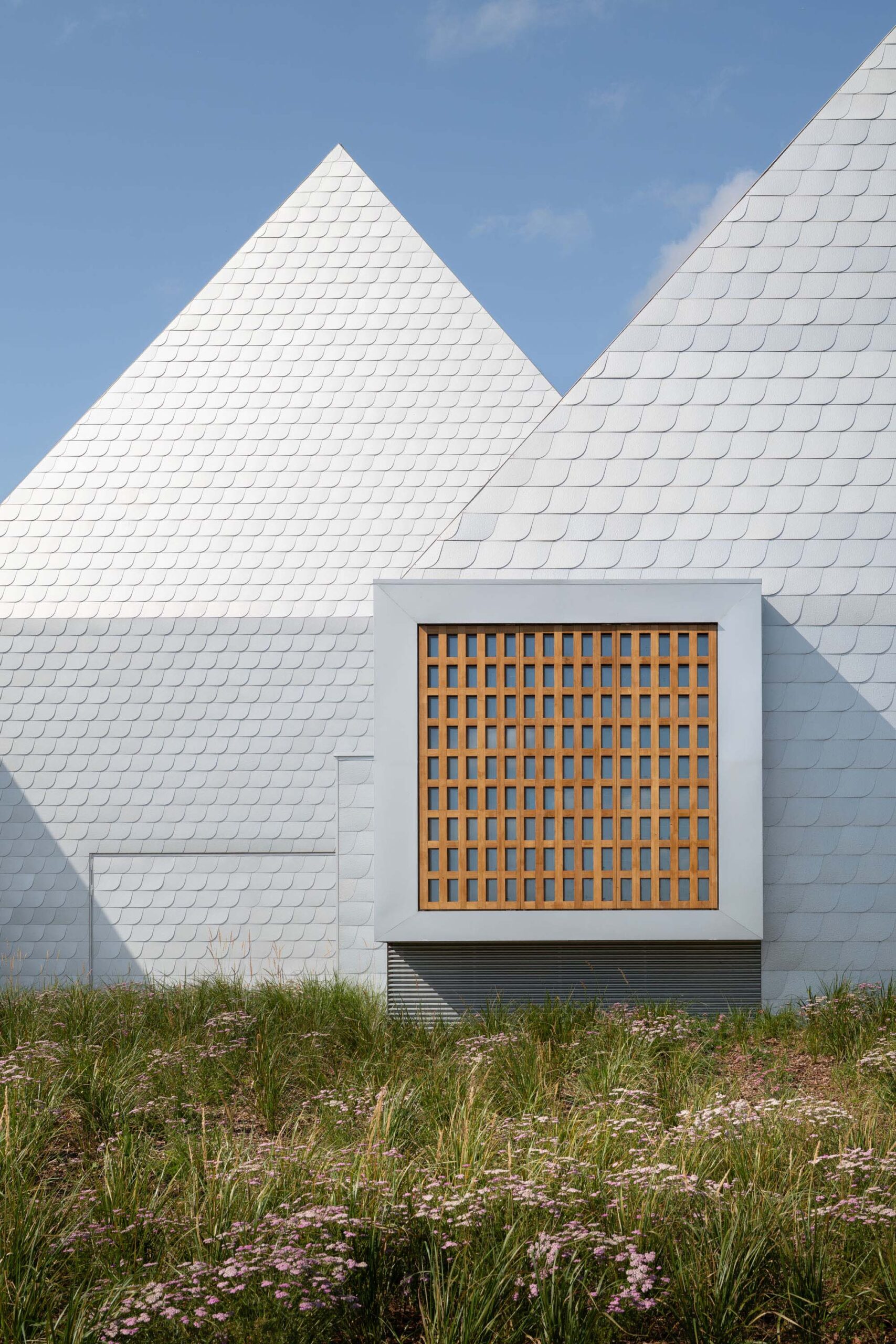
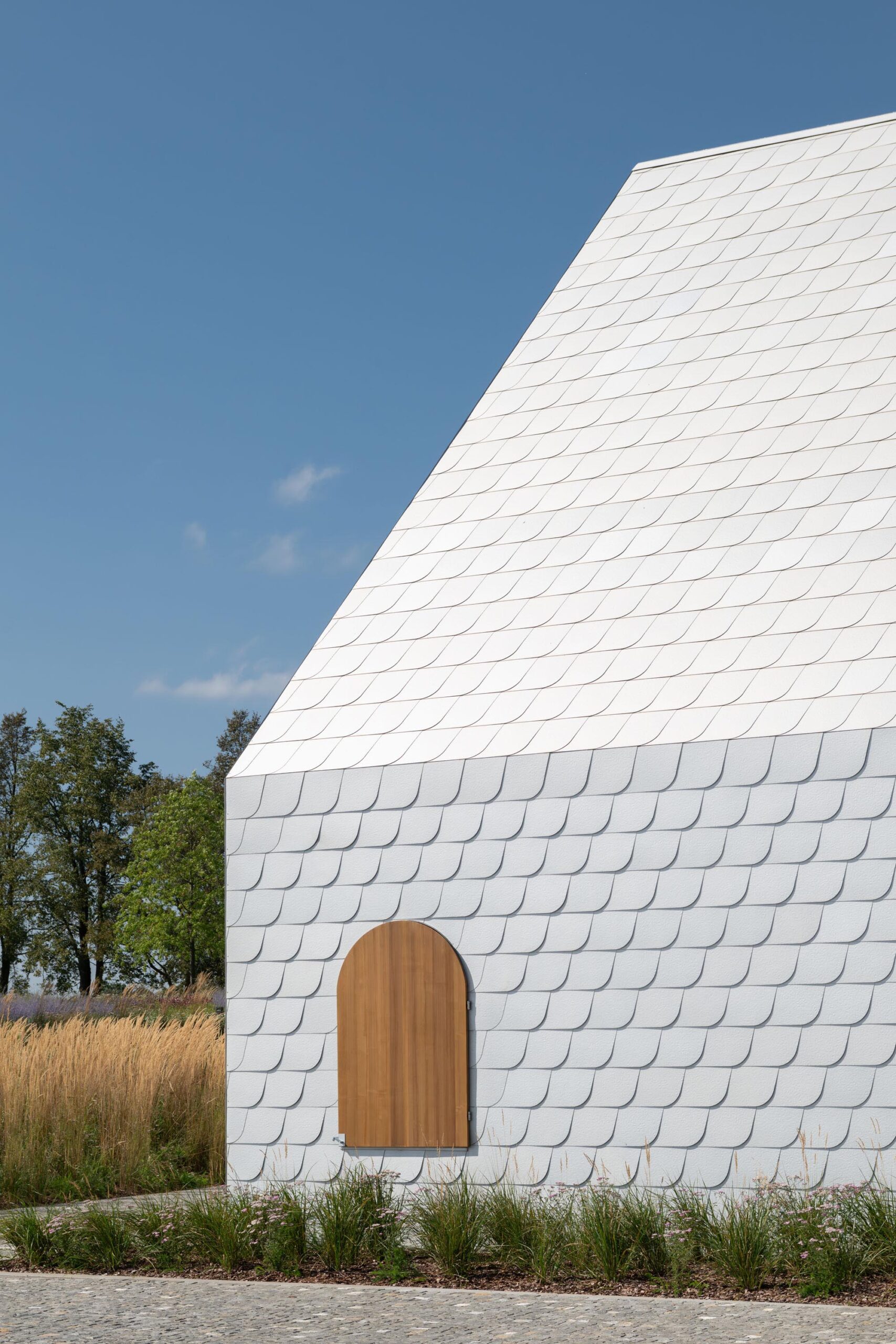
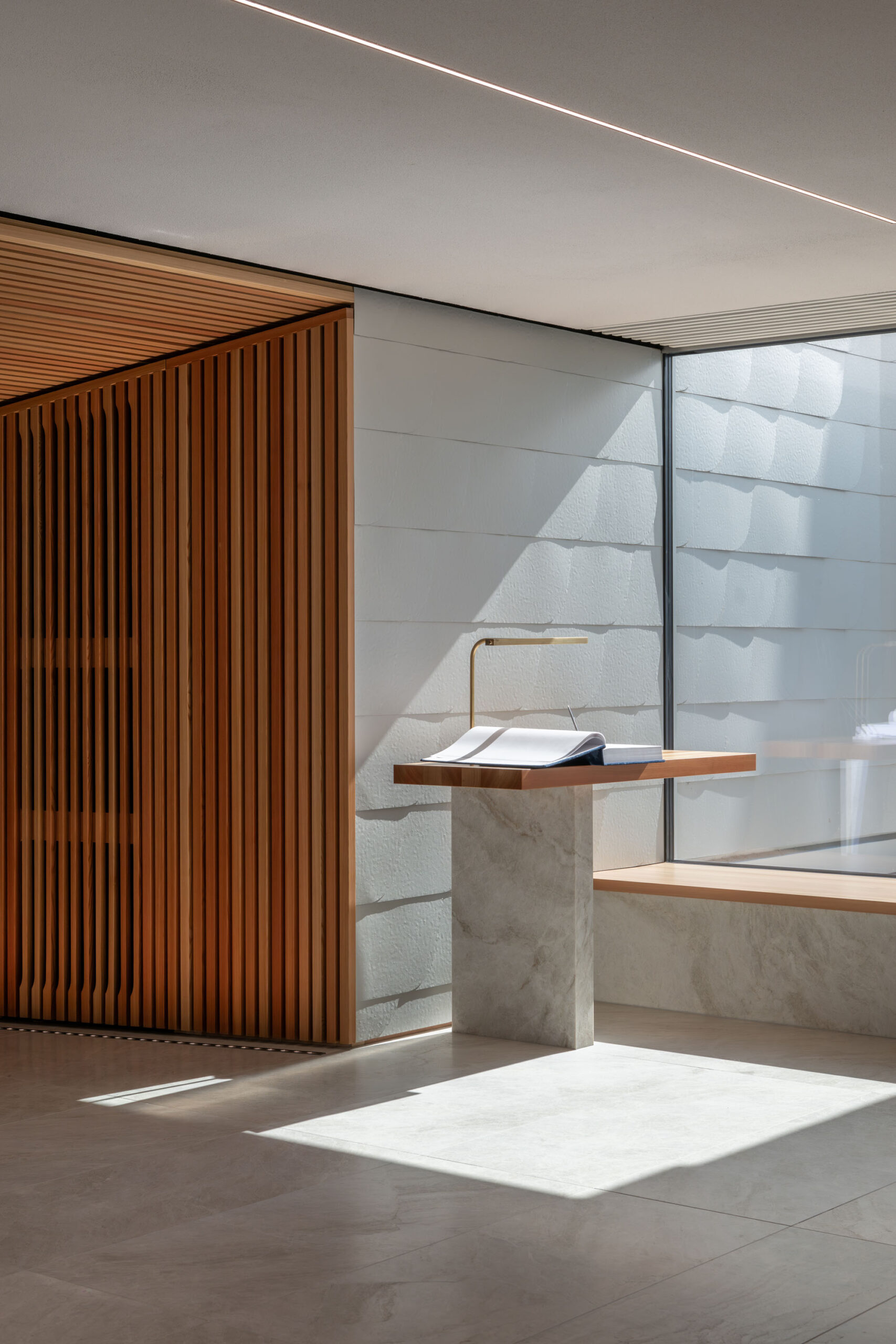
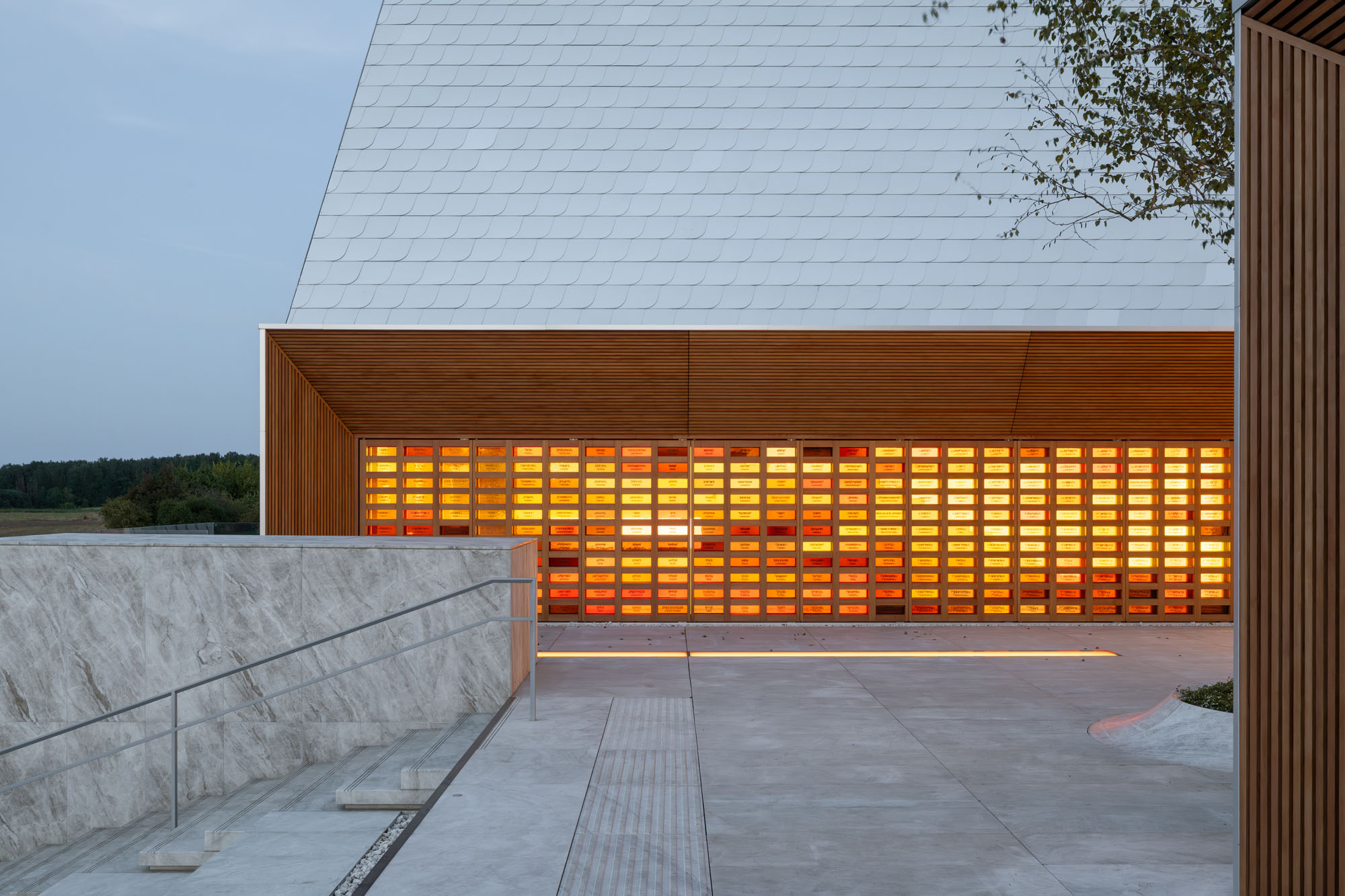
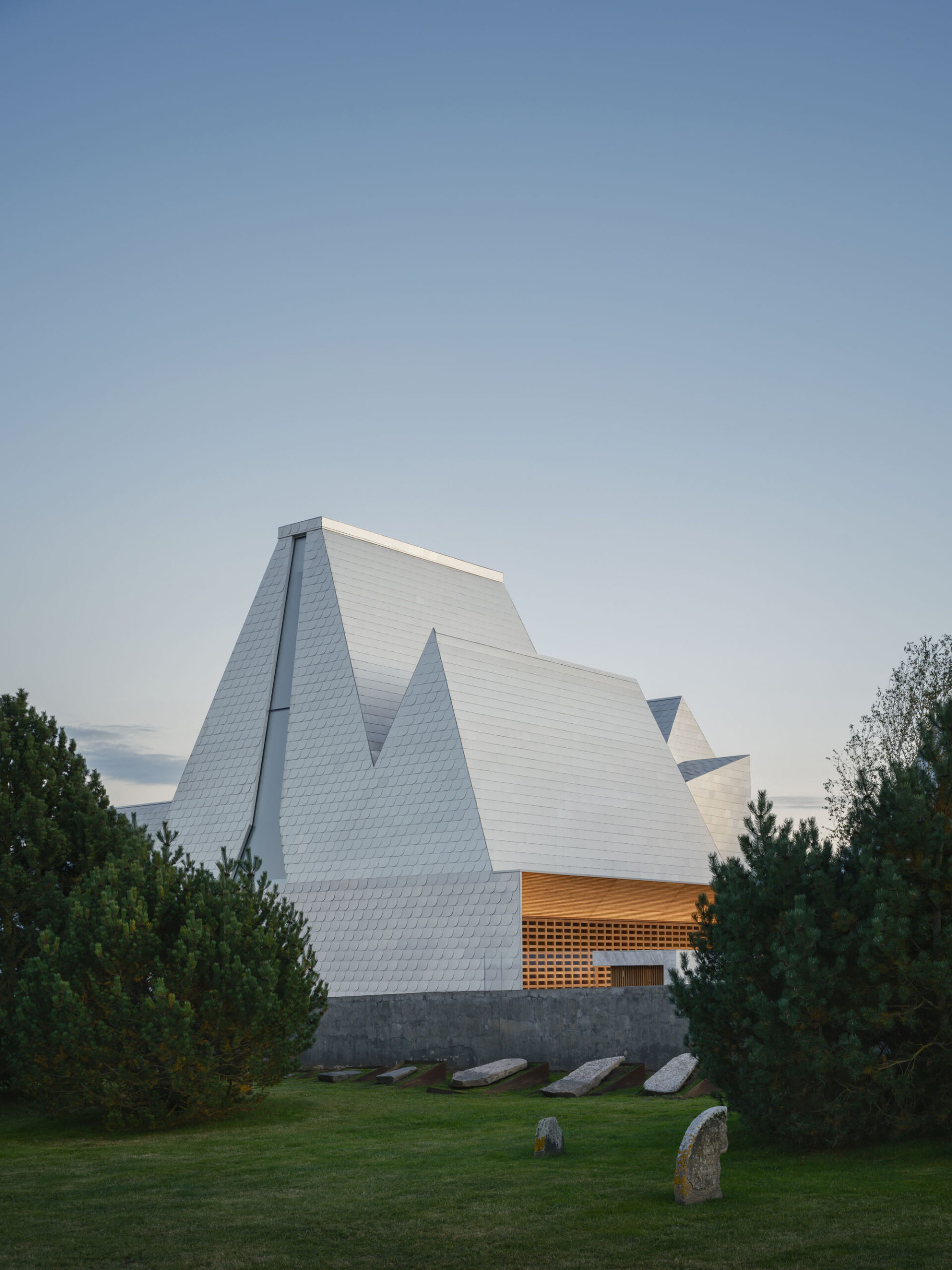
ファサードには、耐久性とリサイクル性に優れた船舶用アルミニウムを採用した。木製の下見板(シングル)を想起させるアルミ板は、鱗状の表面を形成するように精緻に配置されている。この表面は、1日の時間の移ろいや季節のサイクルに応じて光を反射し、常に異なる表情を見せる。
近接して観察すると、アルミ板には点状のテクスチャがプレスされていることがわかる。ある瞬間には滑らかに、またある瞬間にはその質感が際立ち、色彩もまた白からシルバーグレー、あるいは落ち着いたトーンから鮮やかな輝きへと変化する。この素材選択により、建築は周囲の景観や空へと溶け込んでいく。これは同時に、リトアニアの田舎に見られる、時を経て風化した農家の建物を参照したものでもある。
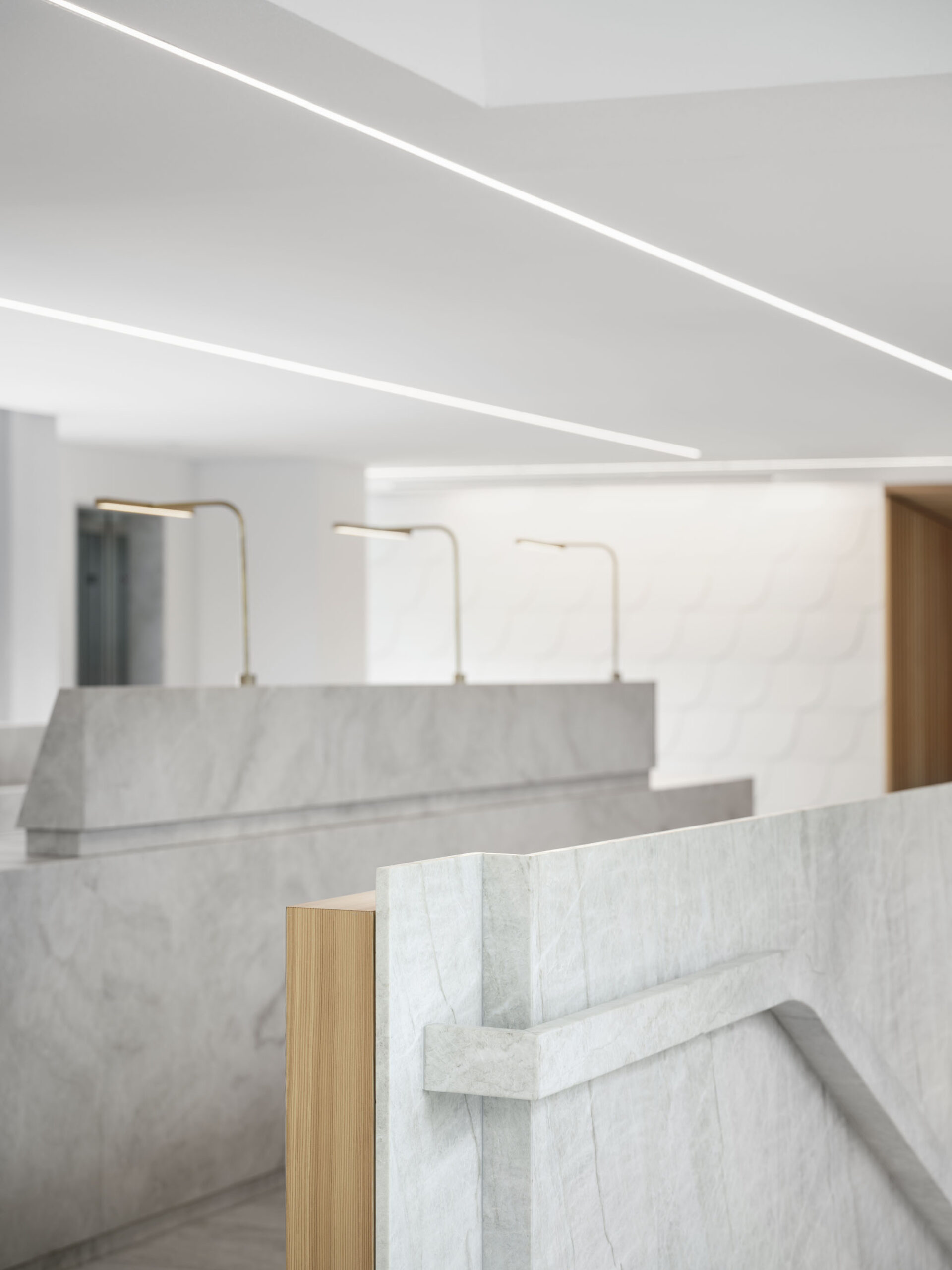
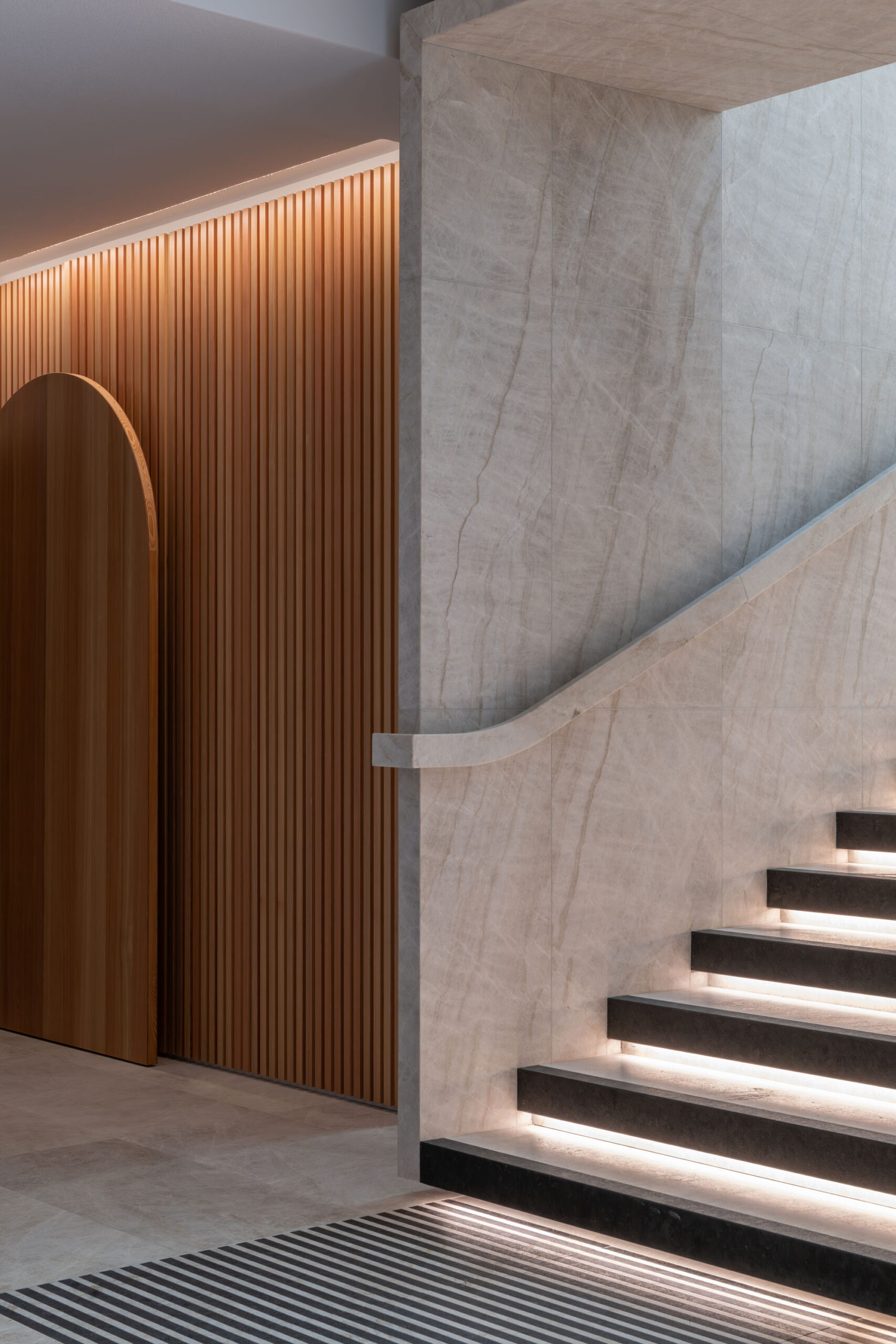
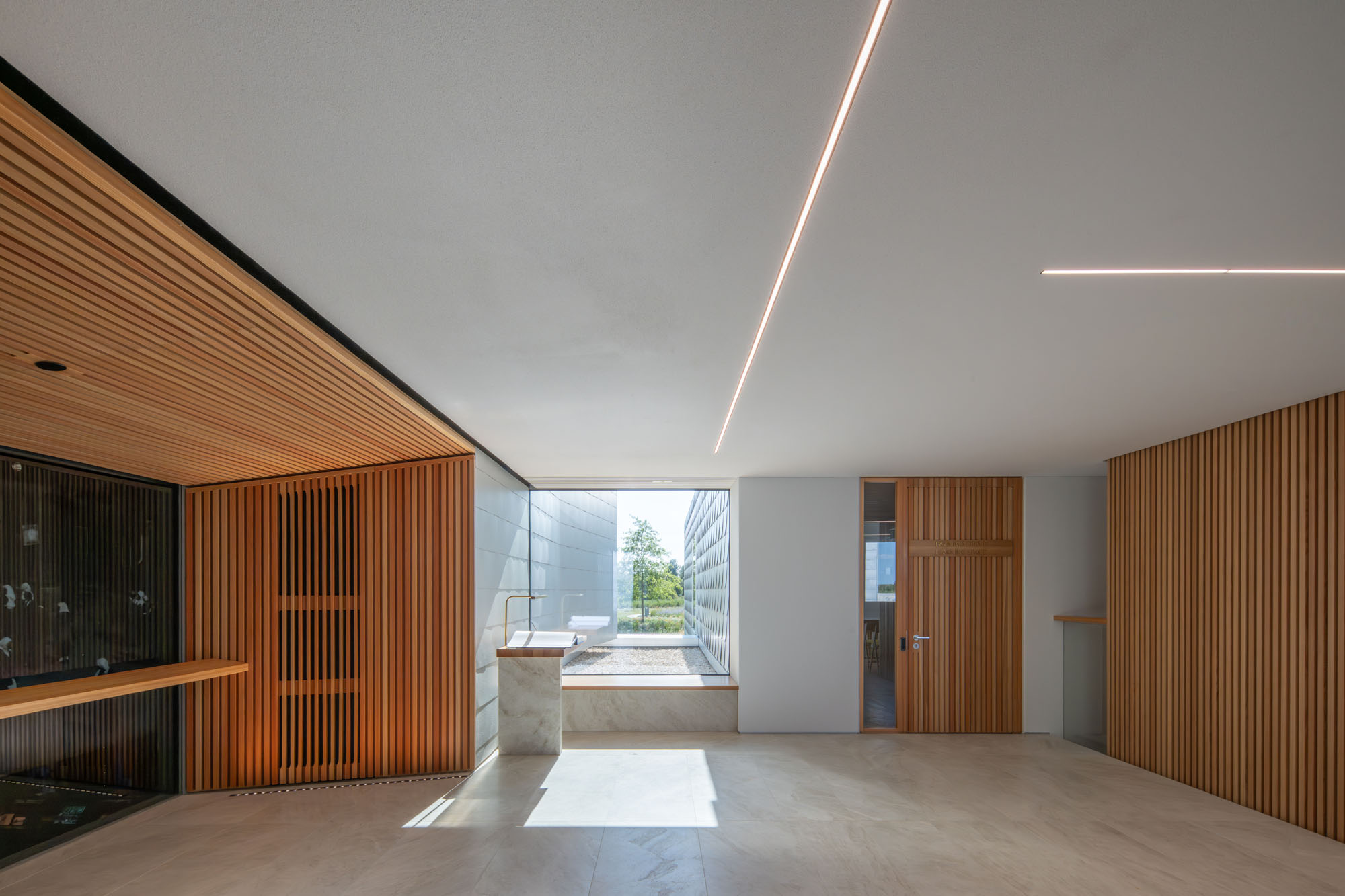
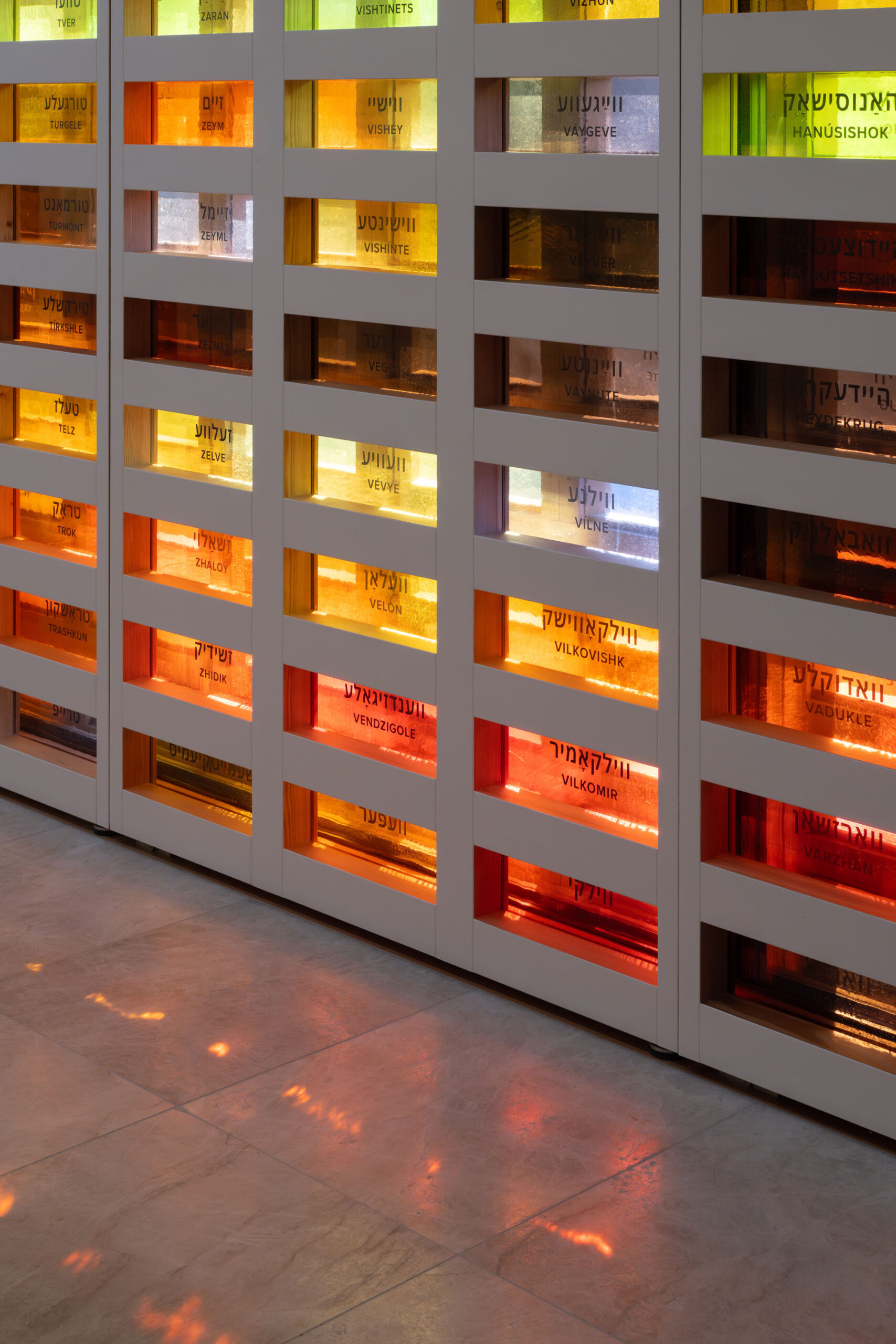
屋根の棟の向きや勾配に変化をつけることで、彫刻的なランダムさを意図的に生み出した。なお、主要素材であるアルミや木に加え、内装・外装の各所に温かみのある淡い色の珪岩が用いられている。
©︎ Andrew Lee
©︎ Aiste Rakauskaite
地域の制約と技術的課題の克服
建物の耐力構造には、現場打ちコンクリートを採用した。この工法は、公共建築を規定するリトアニアの法枠組みにおいて、実質的に唯一選択しうる解決策であった。高度な技術設備や建物のセキュリティ区分、そして現地の建築規制を遵守しつつ、煩雑な設備配管等を視覚から排除し、意匠の純粋性を保つために、設計・施工の両面で多大な労力と時間が投じられた。
©︎ Aiste Rakauskaite
©︎ Aiste Rakauskaite
「最後の旅」を追体験するメモリアル・パーク
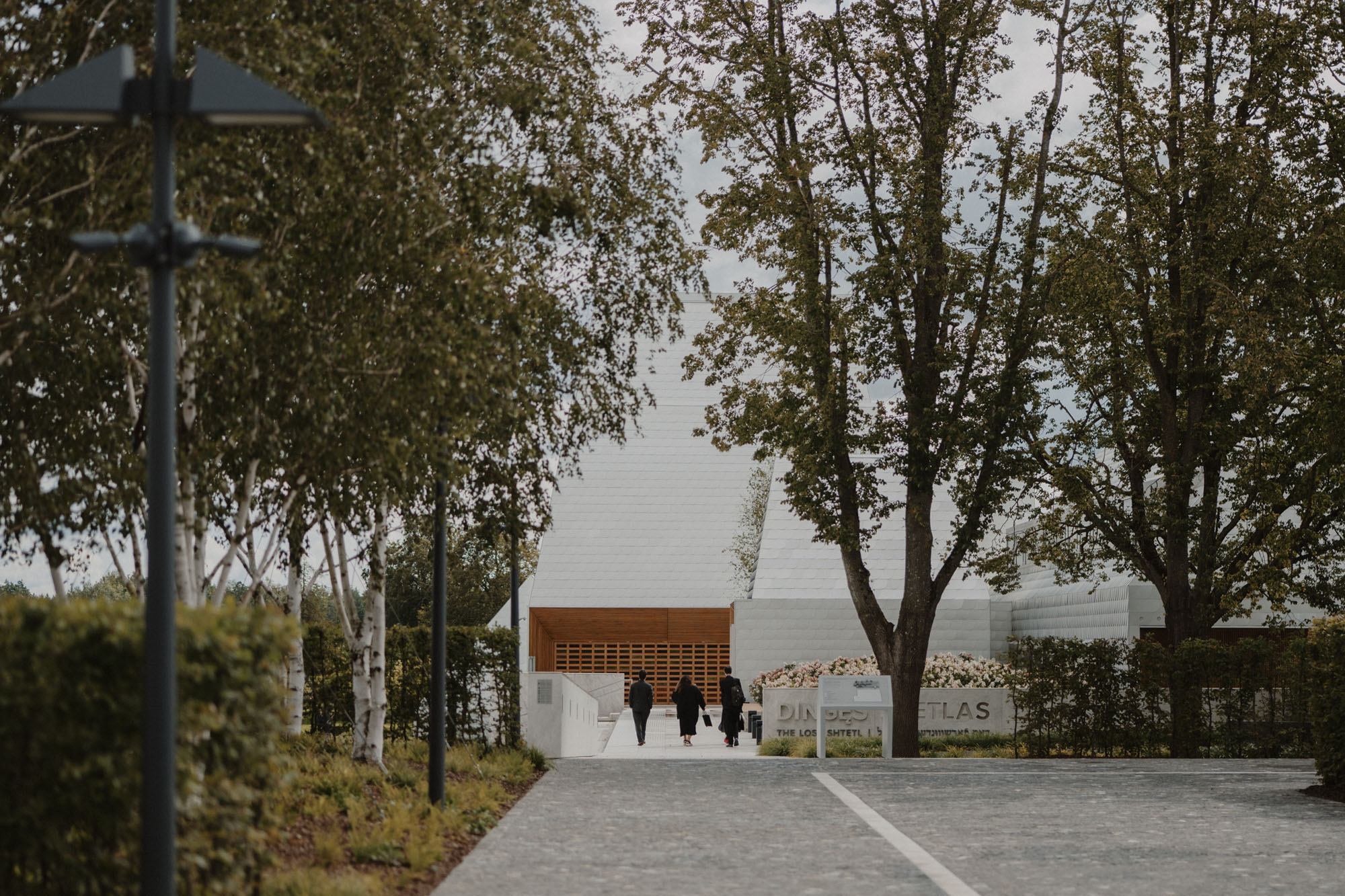
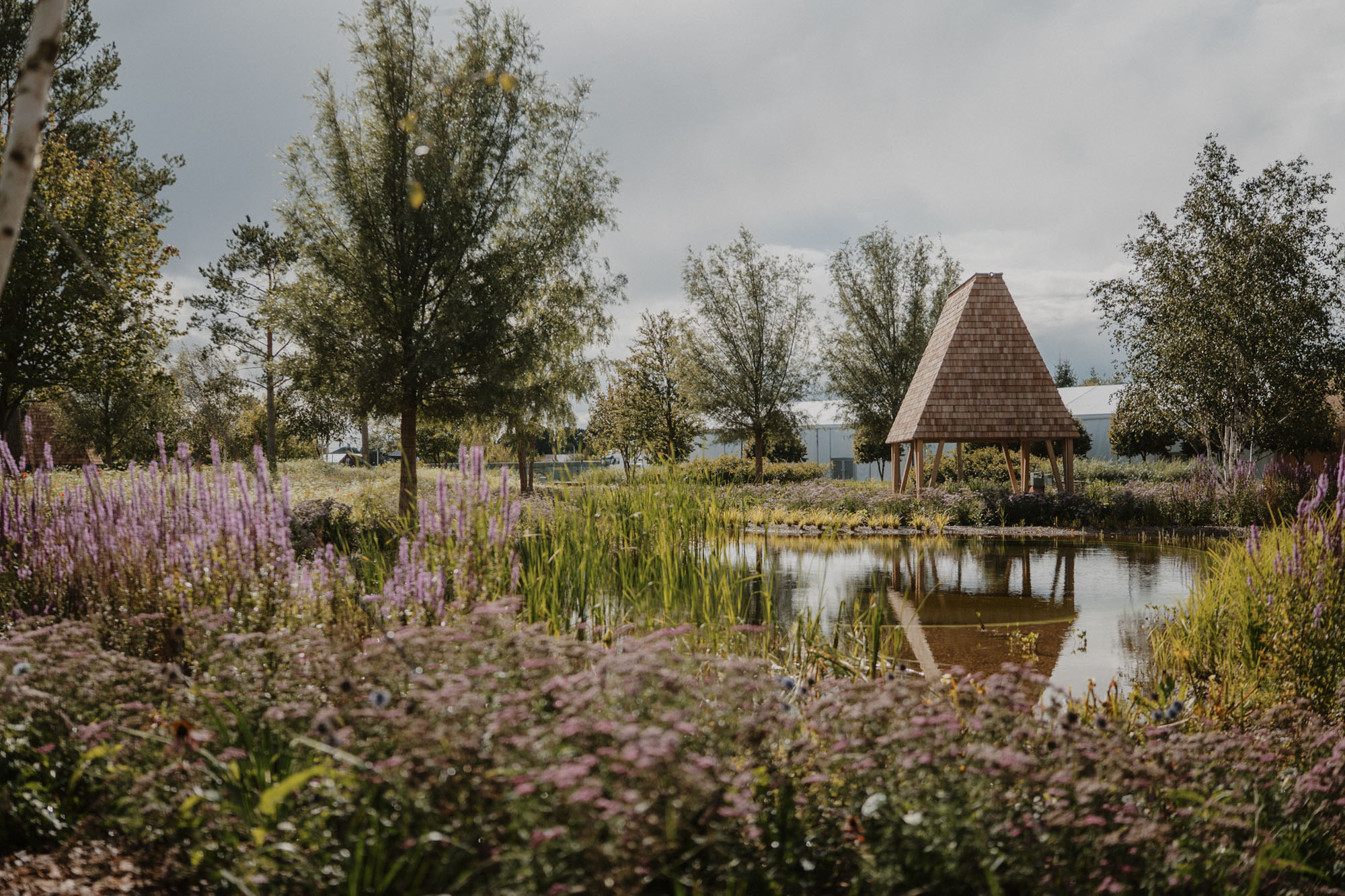
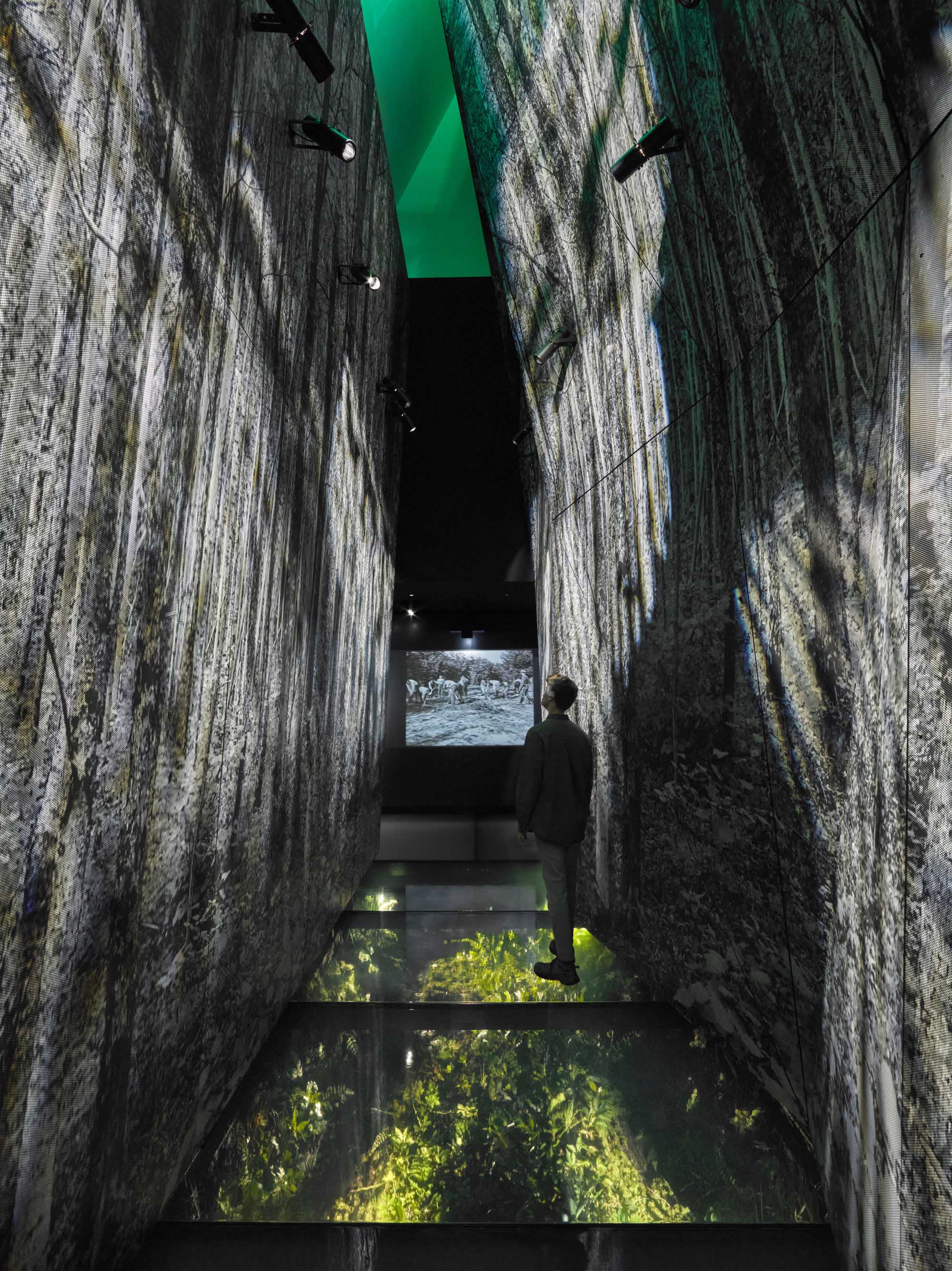
博物館の周辺は、メモリアル・パークとして整備されている。その設計の根幹にあるのは「最後の旅(The last journey)」という主題である。
園内には、シェドゥヴァのユダヤ人たちが処刑の地である森へと向かう道中で目にしたであろう風景——白樺の並木道、花咲く草原、湿地、そして果樹園といった一連のランドスケープが展開されている。また、敷地内にはカラマツ材でつくられたいくつかのシェルターが点在しており、その屋根は時の経過とともに、自然なグレーへとその色を深めている。
©︎ The Lost Shtetl Museum
国境を越えた創造の結晶
この建設プロジェクトは、デザイナー、施工者、そしてクライアント組織による大規模な国際的コラボレーションの成果である。それは、まさに唯一無二のプロジェクトと呼ぶにふさわしい。設計・建設のプロセスには、アメリカ、スイス、イタリア、イギリス、オランダ、エストニア、フィンランド、そしてリトアニアの各国から企業が参加し、この記念碑的な建築を完成へと導いた。
©︎ Kuvatoimisto Kuvio
©︎ Kuvatoimisto Kuvio
©︎ Aiste Rakauskaite
©︎ Andrew Lee
©︎ Andrew Lee
©︎ Andrew Lee
©︎ Kuvatoimisto Kuvio
©︎ Aiste Rakauskaite
©︎ Aiste Rakauskaite
©︎ Aiste Rakauskaite
©︎ Aiste Rakauskaite
©︎ Aiste Rakauskaite
©︎ Kuvatoimisto Kuvio
©︎ Kuvatoimisto Kuvio
©︎ Aiste Rakauskaite
©︎ Kuvatoimisto Kuvio
©︎ Kuvatoimisto Kuvio
©︎ Kuvatoimisto Kuvio
Cross section
Cross section
Longitudinal section
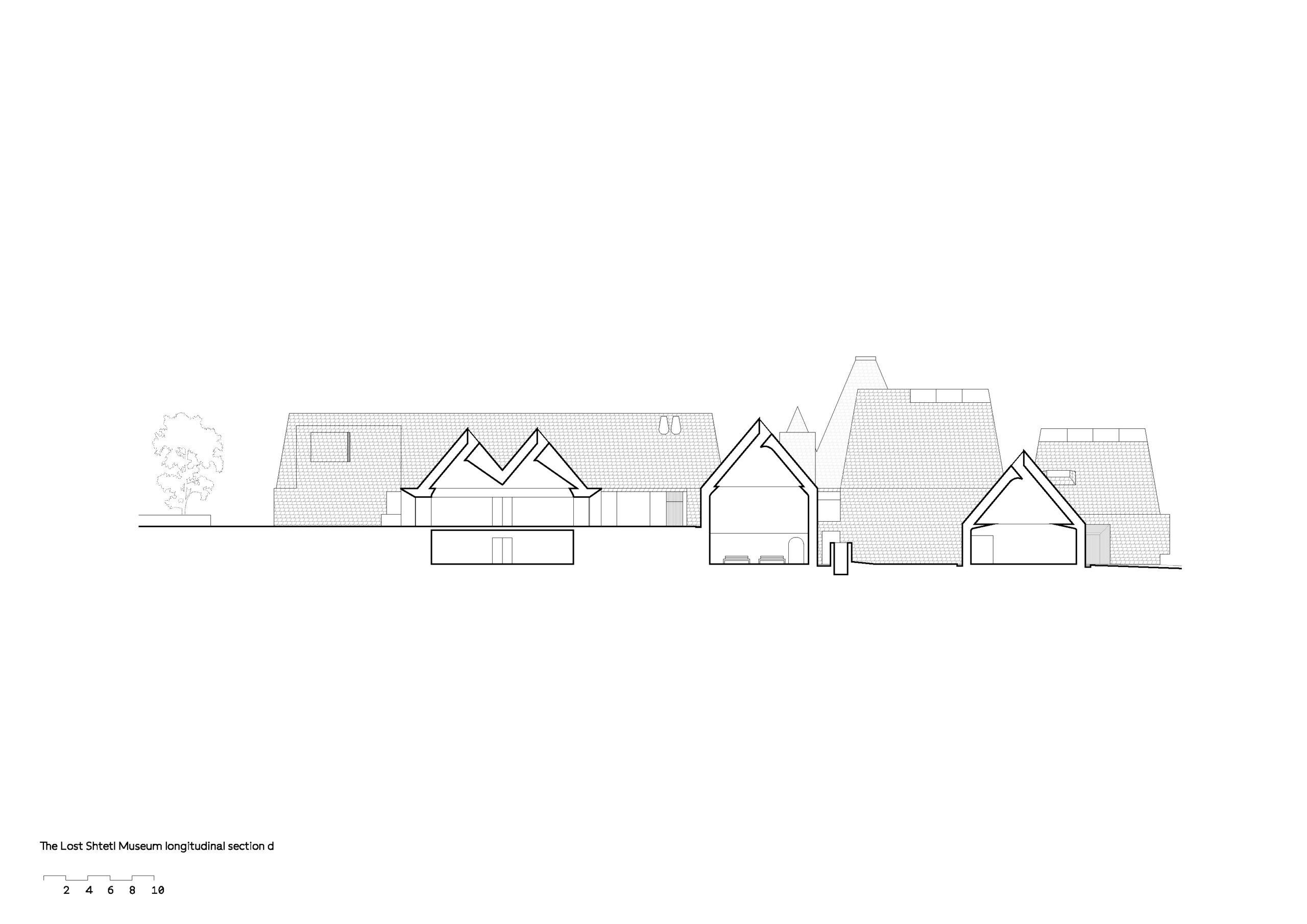
Longitudinal section
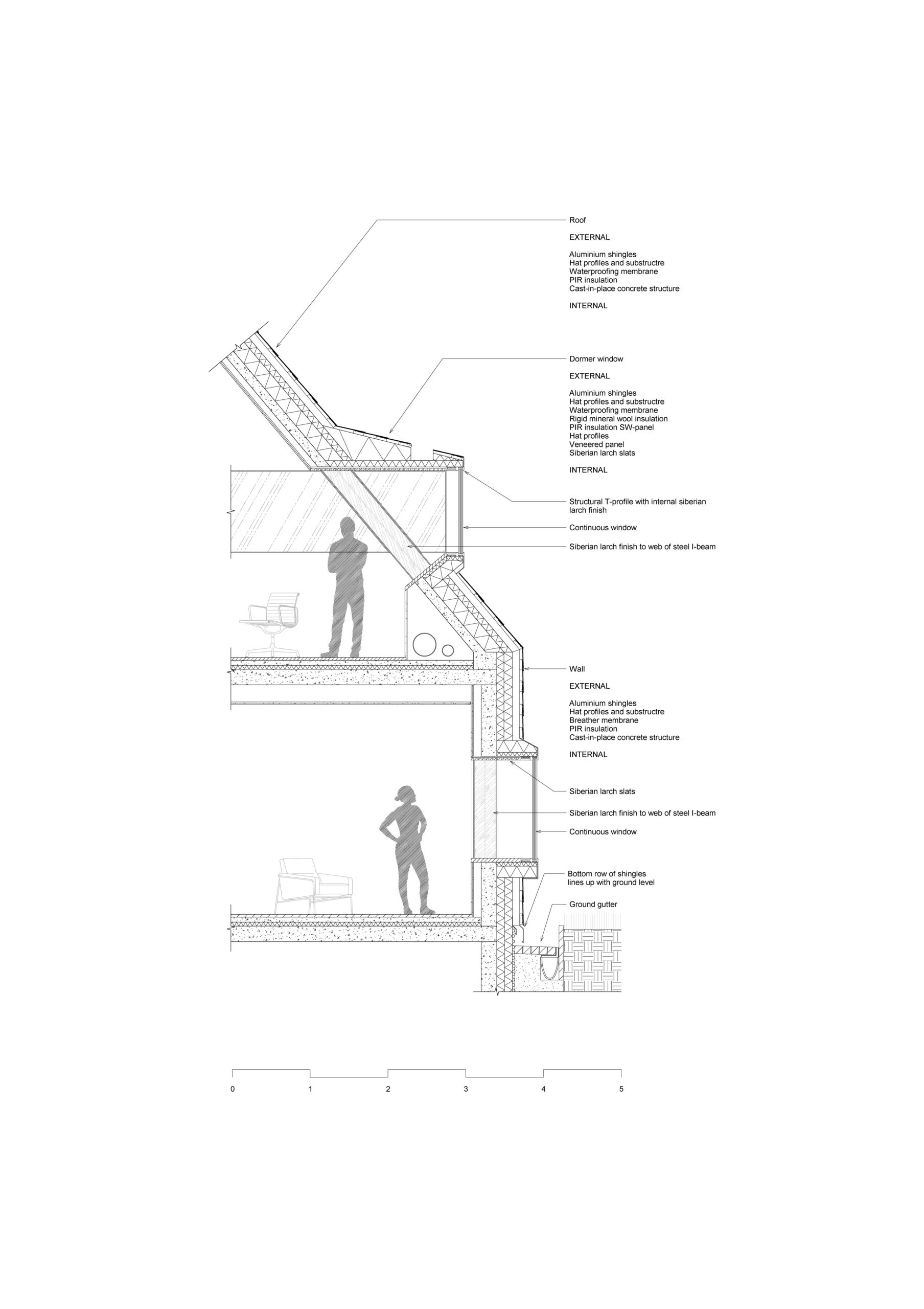
Technical section
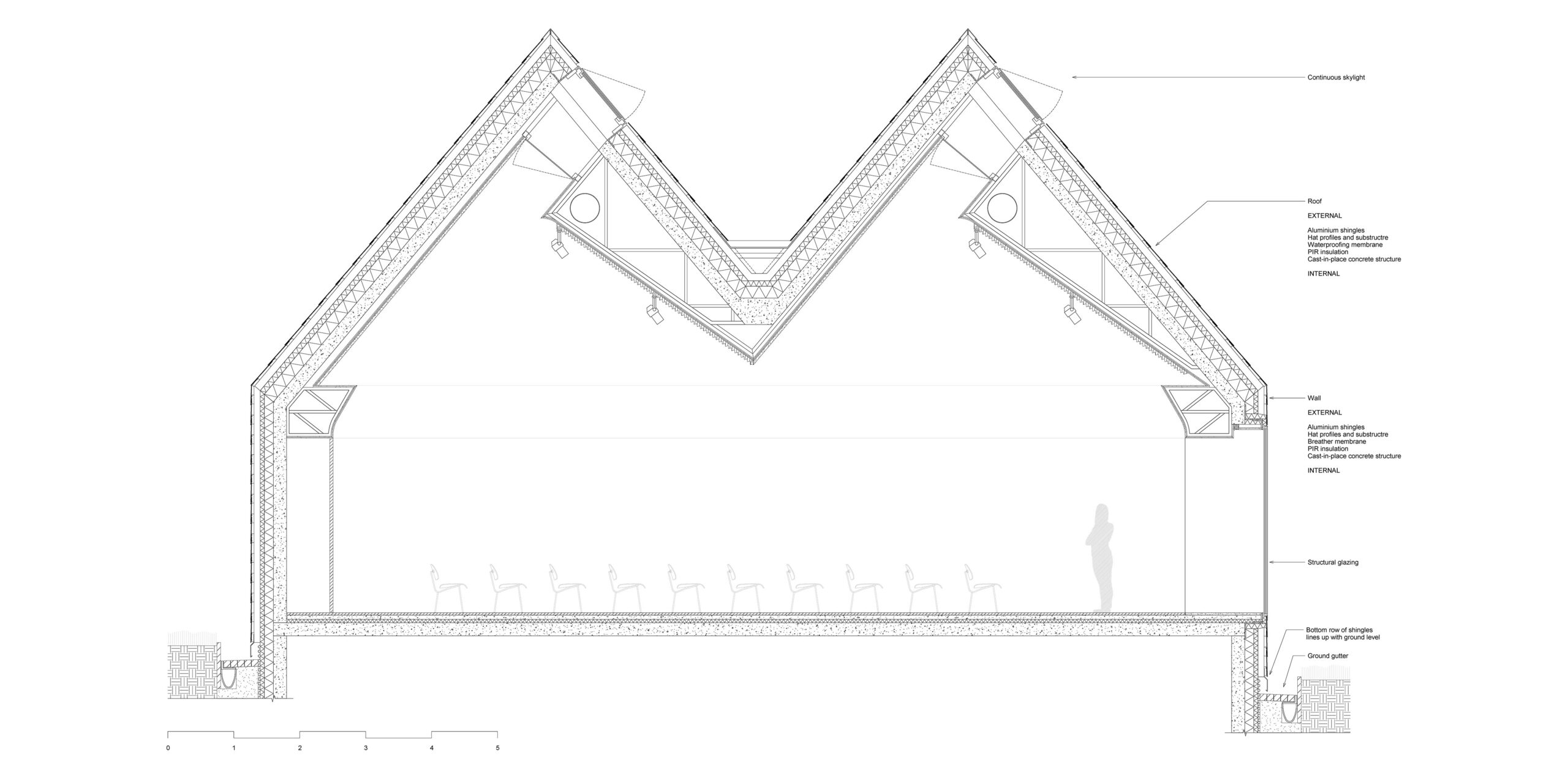
Technical section
以下、ラフデルマ&マフラマキ・アーキテクツのリリース(英文)です。
The Lost Shtetl Jewish Museum
Location: Šeduva, Lithuania
Year: 2025
Size: 4,900 m²
Client: The Lost Shtetl Jewish Museum
Programme: Exhibition spaces, multipurpose hall, administration spaces, library, caféThe concept behind The Lost Shtetl Jewish Museum is based on a destroyed village of Šeduva and its culture, which vanished overnight in August 1941. 664 Jews from the village were executed in the nearby forests. Along with human lives, Šeduva’s long and rich history was also lost. The museum was built to commemorate the lost lives and culture, which represented not only Jewish but also European culture.
The museum consists of minimalist, abstract ‘houses’ with hip roofs. They form a dreamscape of a group of houses, a village – a shtetl. The building is a symbol of the lost village.
The architectural and functional concept of the galleries is reflected in their roof design. The upper part of the gallery echoes the shape of the outer shell. Skylights in the roof ridge allow natural light to enter the space in a controlled manner. The upper part of the gallery creates a sense of open space, while the lower part is characterized by the intensity of the exhibition. The galleries on the entrance floor follow the same principle, but they offer carefully considered views of the open landscape outside. This also applies to the staff facilities on the first floor, which have a view of the historic cemetery. The design of the spaces has been guided by the principle of general applicability and long-term usability: the gallery spaces allow for the renewal of exhibitions even decades later.
The museum’s facades are made of marine aluminium, a durable and recyclable material with a long life span. The aluminium sheets, reminiscent of wooden shingles, are arranged to form a scale-like surface that lives and reflects light according to the cycle of the day and the seasons. Up close, the surface of the sheets reveals a dotted texture pressed into it. The surface appears smooth at times, while at other times its texture becomes more prominent. It appears sometimes white, sometimes silver-grey, sometimes muted and sometimes vibrant. The chosen material blends the building into the landscape and the sky. This choice was also a reference to the weathered farm buildings typical of the Lithuanian countryside. The directions of the roof ridges and their varying steepness create a deliberate, sculptural randomness. In addition to marine aluminium and wood, warm-toned light quartzite stone is visible in both the interior and exterior.
The load-bearing structures of the building were cast on site using concrete. This solution was practically the only one possible within the framework of Lithuanian legislation governing public construction. The versatile technical equipment, the building’s security classification, and Lithuanian building regulations also required time and effort in the design and construction work to keep the technical installations out of sight.
The museum’s surroundings have been designed to serve as a memorial park. The guiding principle has been the idea of the last journey. The park features a series of landscapes that the Jews of Šeduva might have encountered on their way to the nearby forests, where they were executed: a birch alley, flowering meadows, wetlands, and an orchard. A few larch shelters have been erected in the park, whose roofs are gradually taking on their own grey colour.
The construction project has been a major international collaboration between designers, builders, and the client organization. It can rightly be described as a unique project. Companies from the USA, Switzerland, Italy, the UK, the Netherlands, Estonia, Finland, and Lithuania have participated in the design and construction of the museum.
ラフデルマ&マフラマキ・アーキテクツ 公式サイト
https://lma.fi
【購読無料】空間デザインの今がわかるメールマガジン TECTURE NEWS LETTER
RECOMMENDED ARTICLE



