産業遺産の記憶を受け継ぐクリエイティブ拠点 - セルビア・ベオグラードに残る鉄道跡地を再生した〈ロジオニカ〉
©︎ Miloš Martinović
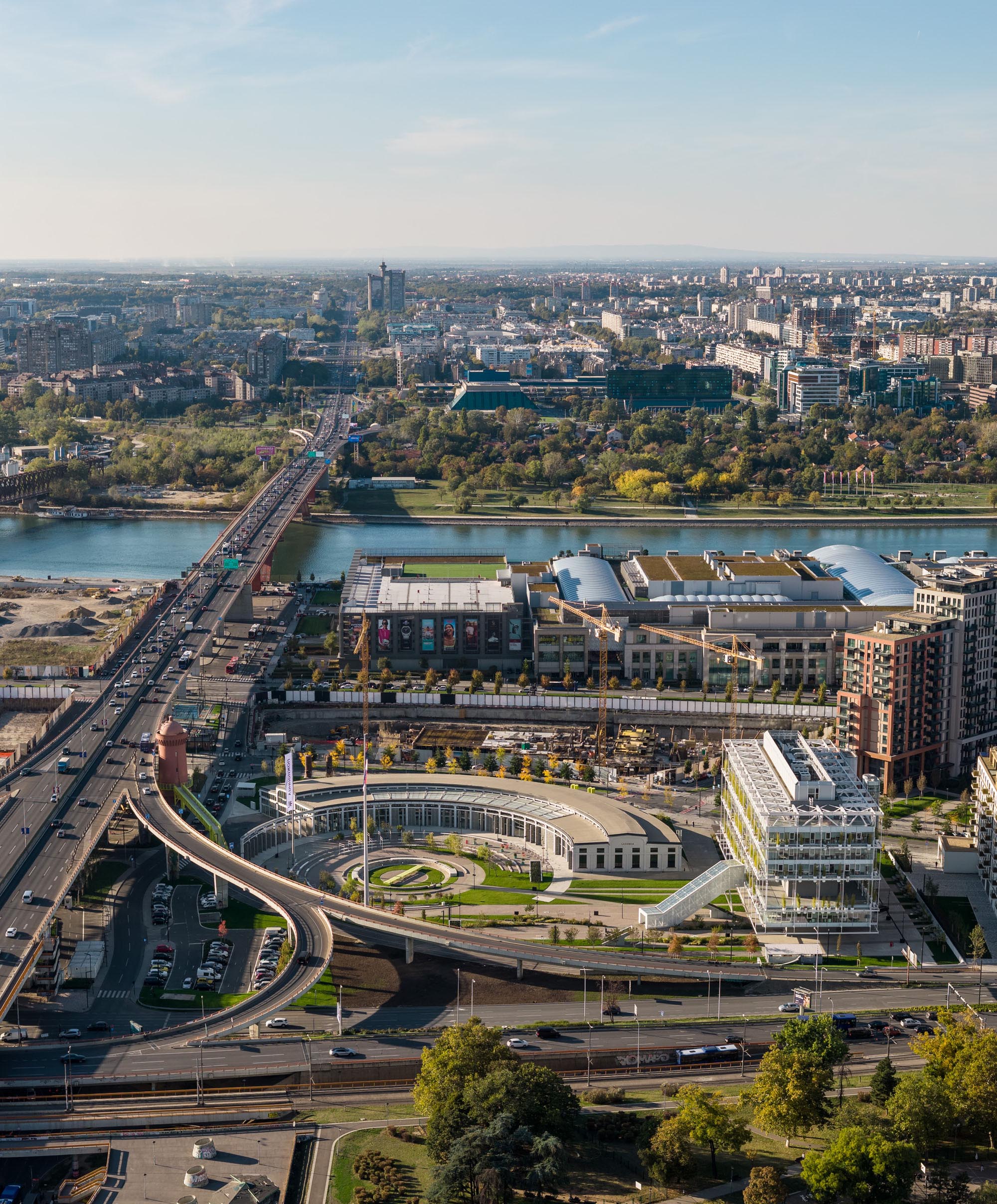
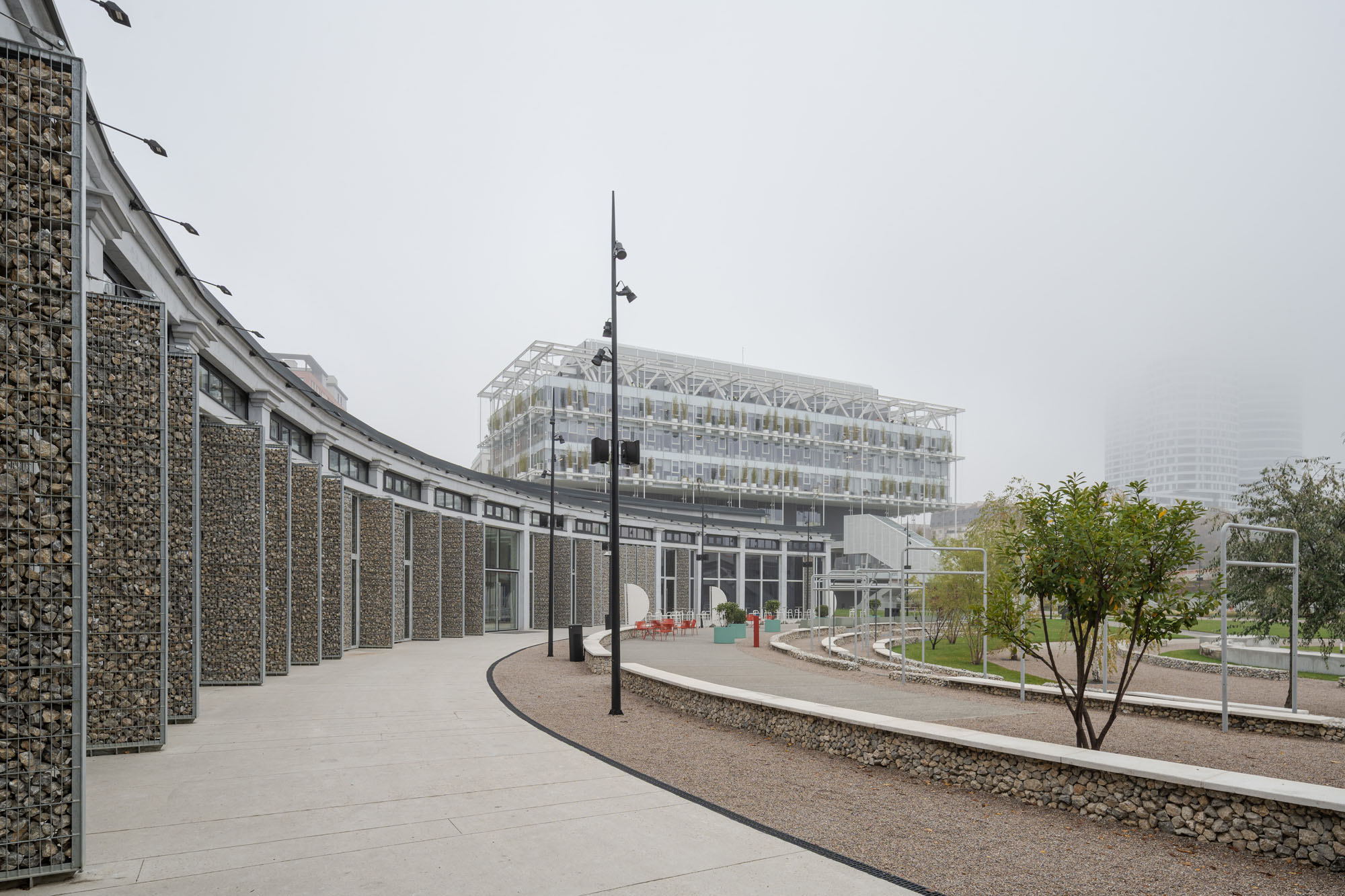
セルビアの首都ベオグラードの鉄道跡地をアダプティブリユースした〈ロジオニカ(Ložionica)〉は、築100年のボイラー室を再生した文化・コワーキング施設と、大胆なキャンチレバー構造が目を引く新築オフィスからなる複合施設です。
ベオグラードに拠点を置く建築スタジオ AKVSアーキテクチャ(AKVS architecture)が設計しました。
注目ポイント
- ボイラー室のスケールを損なうことなく再生するコンセプト「インプラント」
- 鉄道の記憶を再構築したランドスケープ
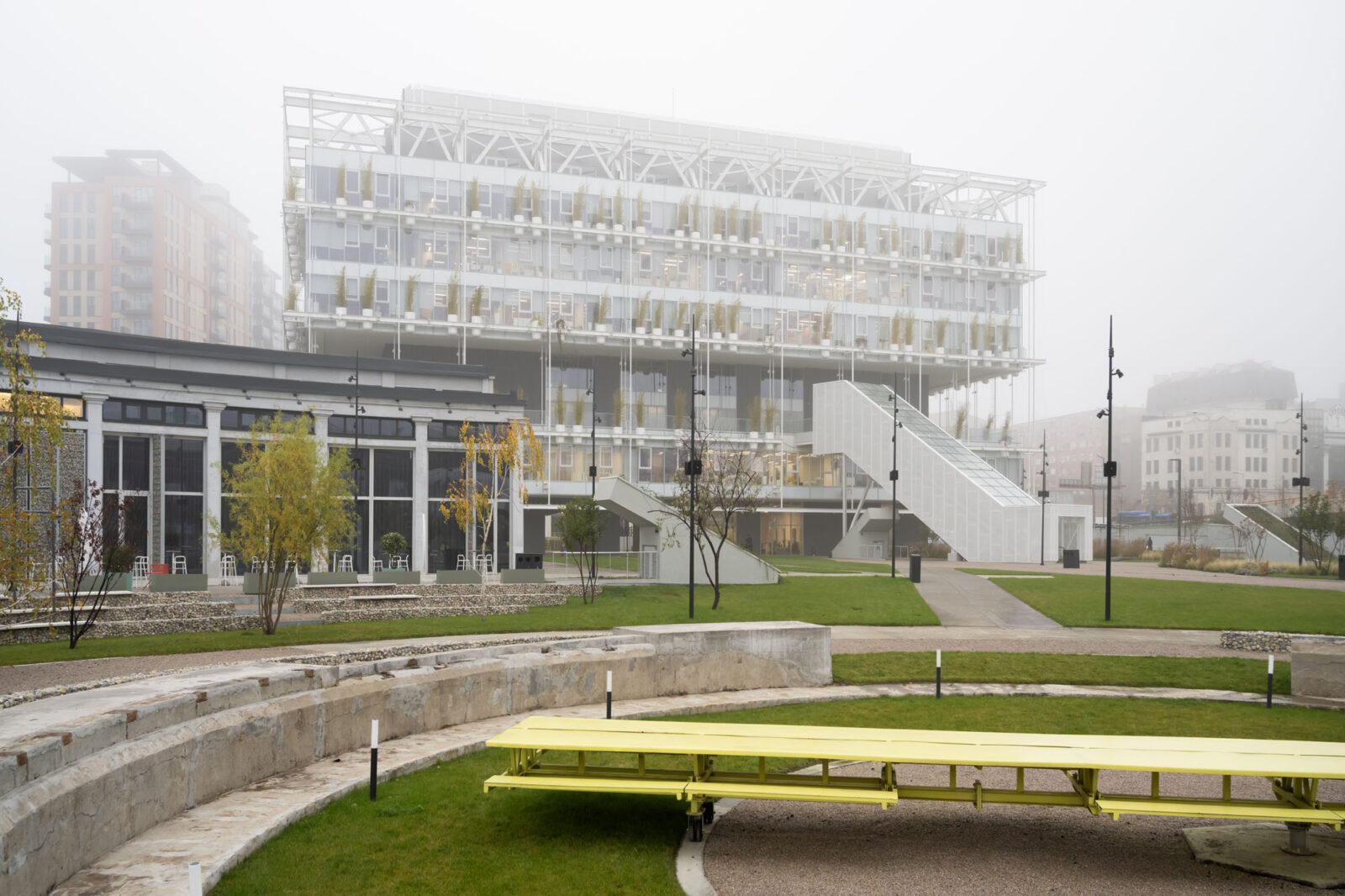
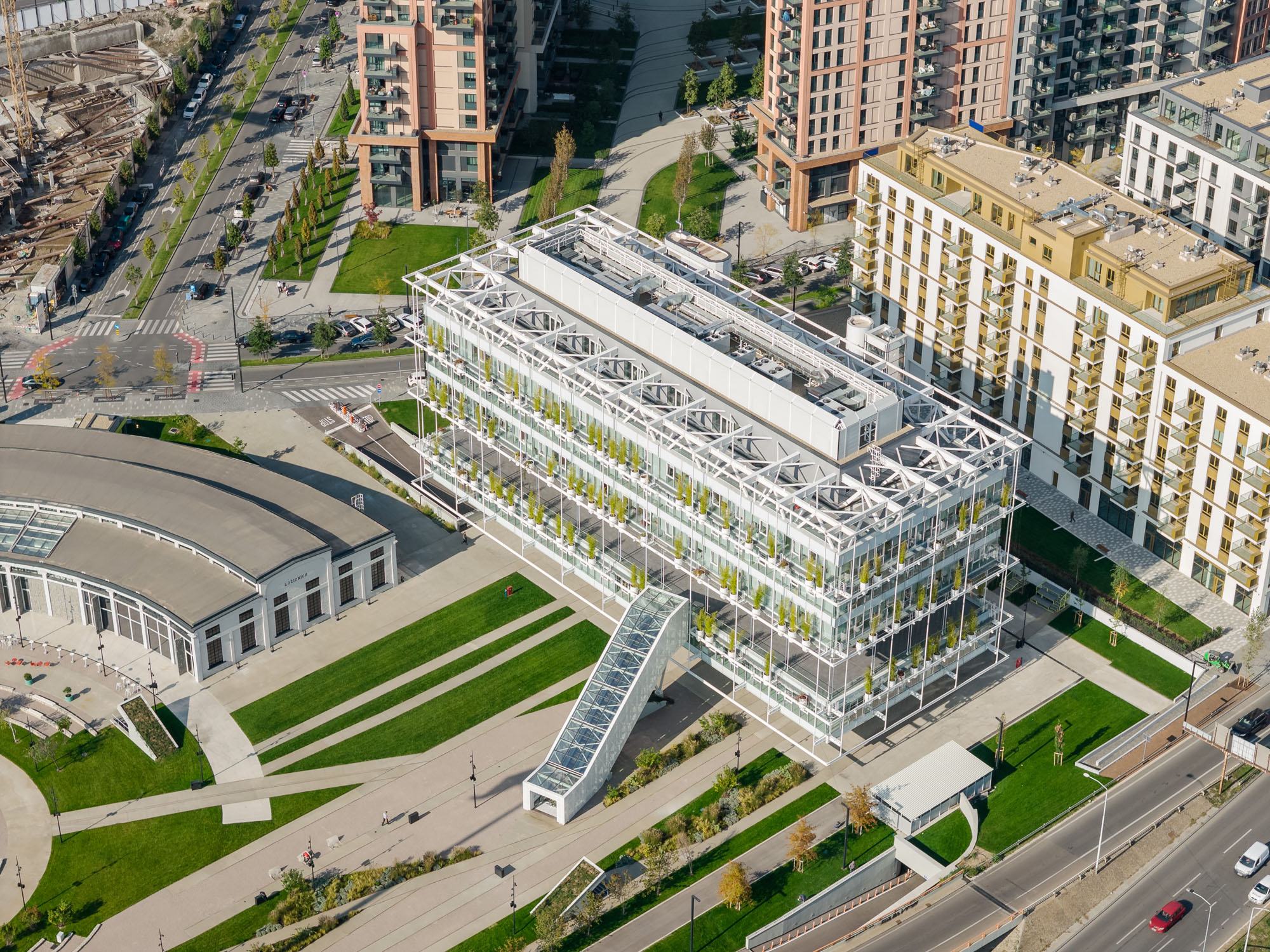
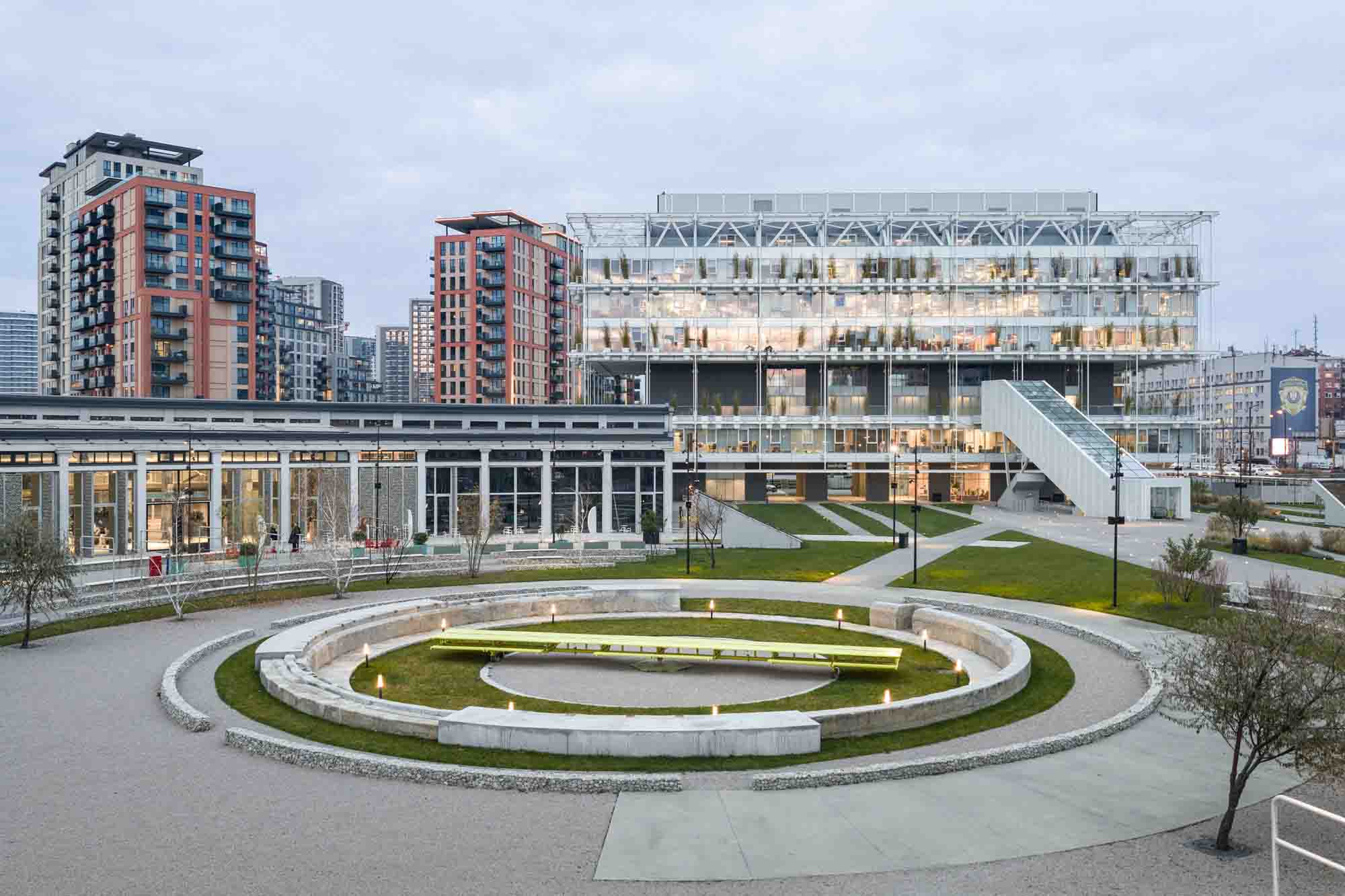
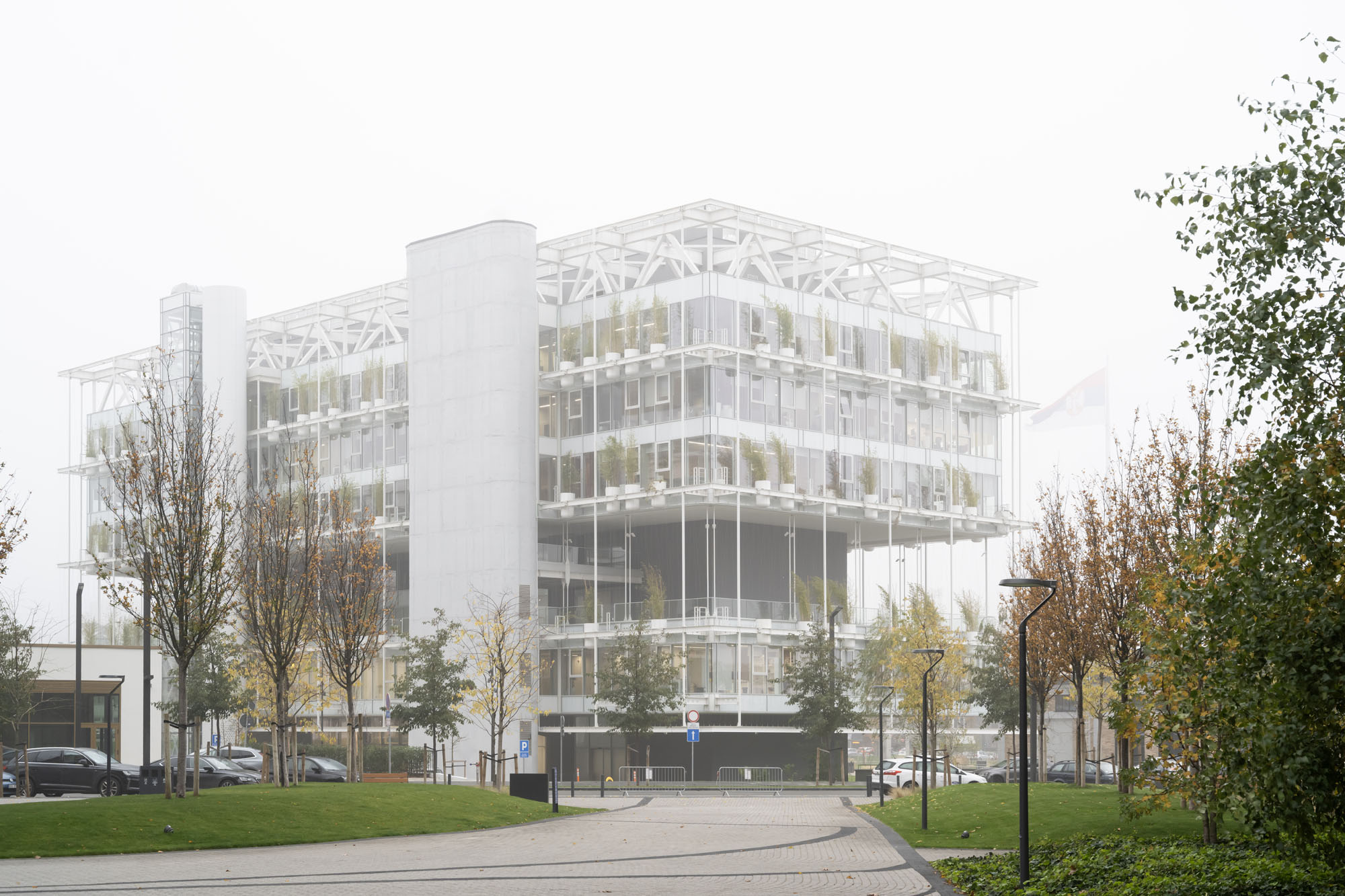
- わずか11mのコアから全方位に8.5m張り出す新築された「電子政府ハウス」
- 建物を包み込む竹林のファサード「酸素の外皮」
(以下、AKVSアーキテクチャから提供されたプレスキットのテキストの抄訳)
©︎ Miloš Martinović
©︎ Miloš Martinović
©︎ Miloš Martinović
©︎ Miloš Martinović
産業遺産の再生と革新:ベオグラードに誕生したクリエイティブ拠点
鉄道跡地を彩る新たな都市の文脈
〈ロジオニカ〉の再生プロジェクトは、アダプティブリユース(適応型再利用)と新築構造物の導入を通じて、セルビアの首都ベオグラードにある歴史的な鉄道跡地を劇的に変貌させた。困難な都市環境の中に、オフィス、公共空間、文化プログラムを独自の手法で融合させた空間を提供している。
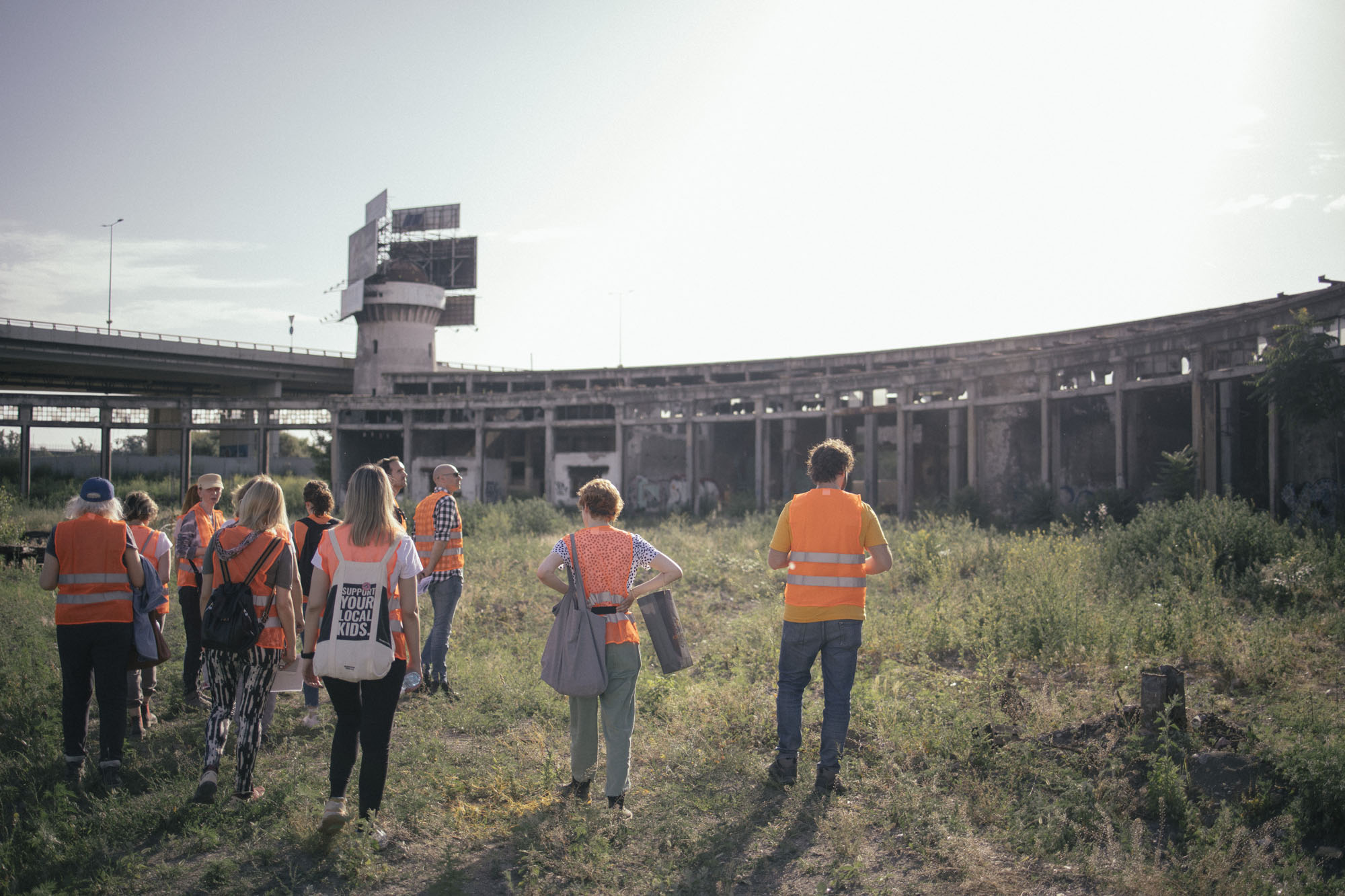
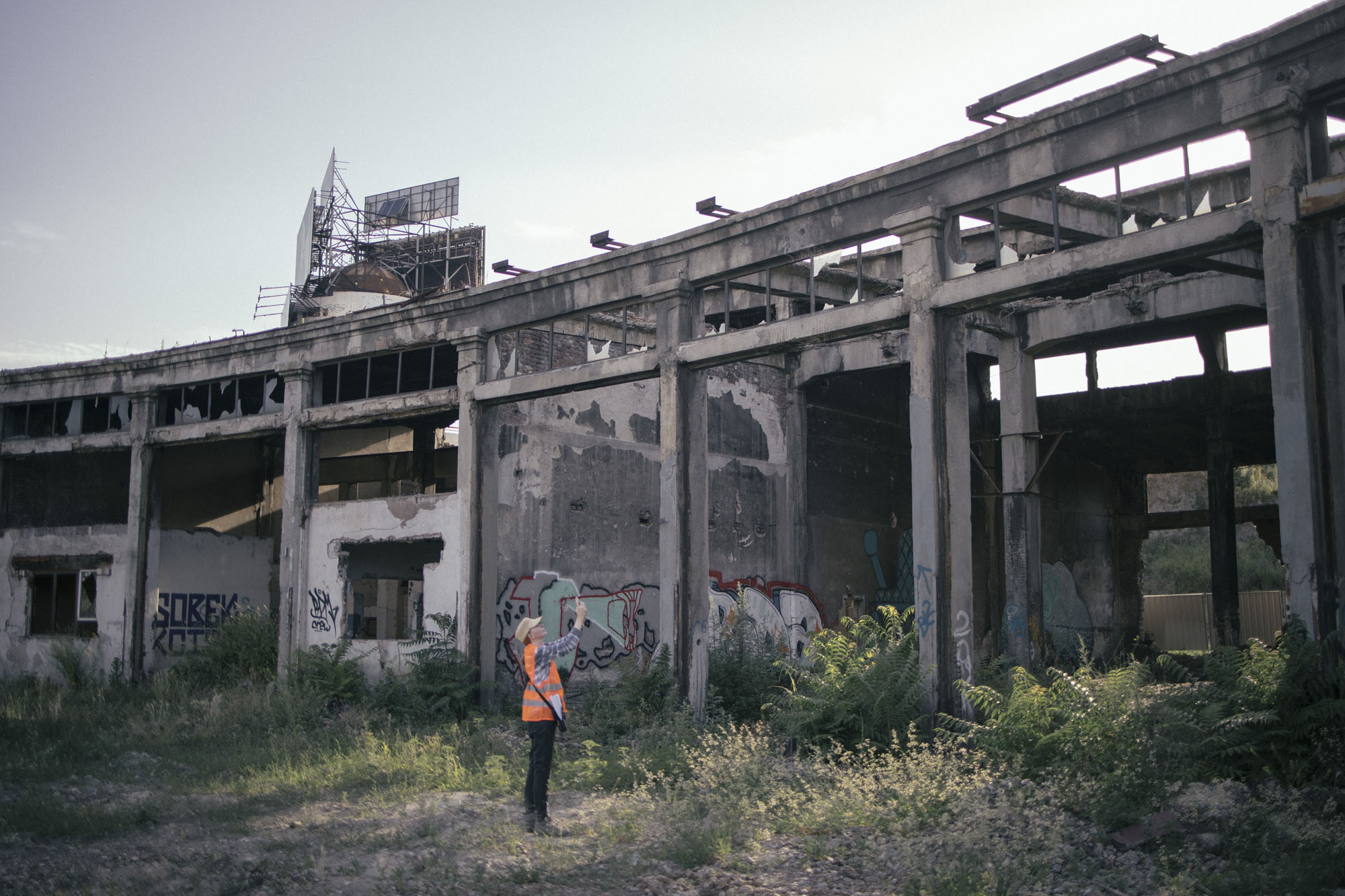
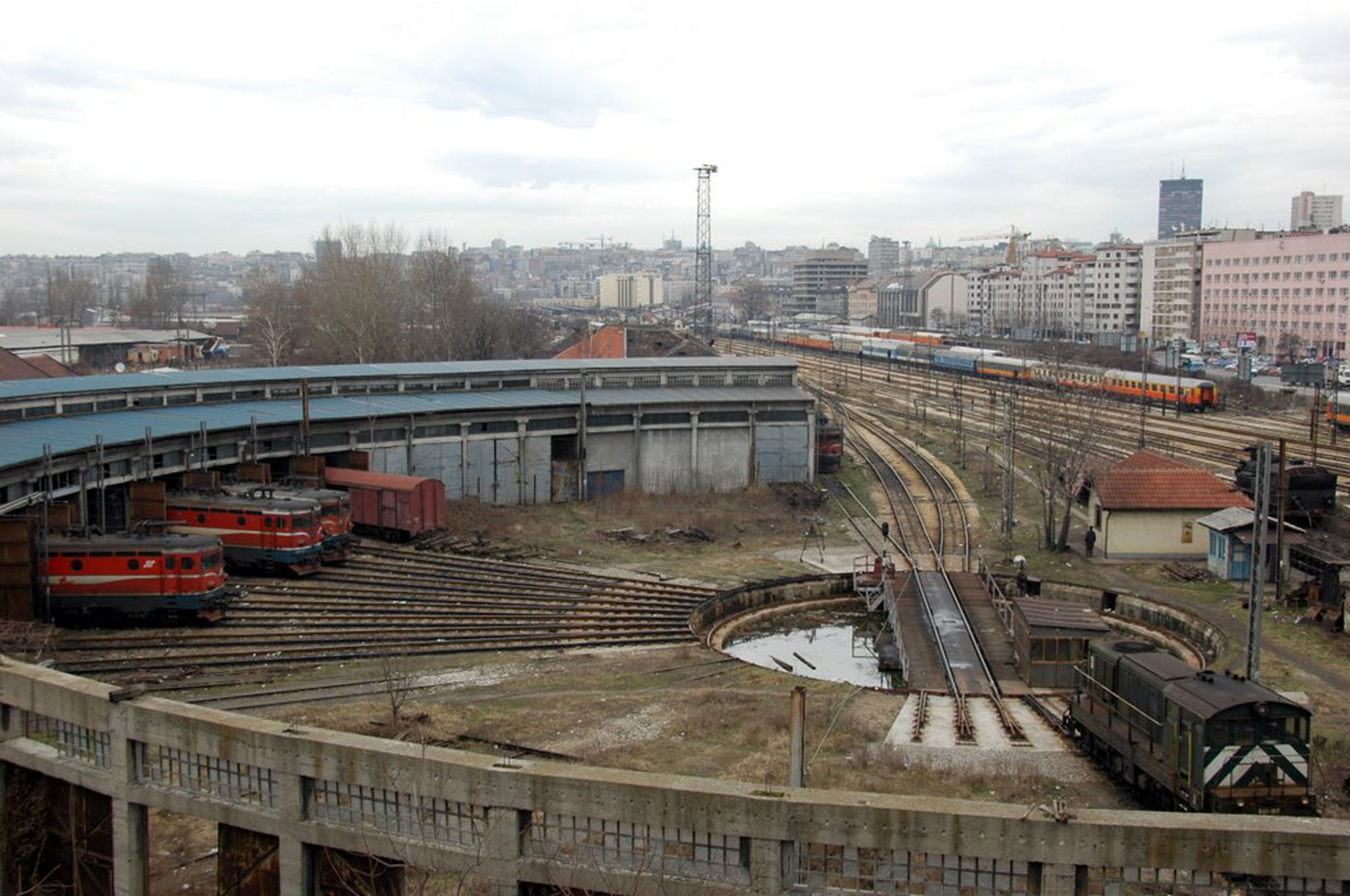
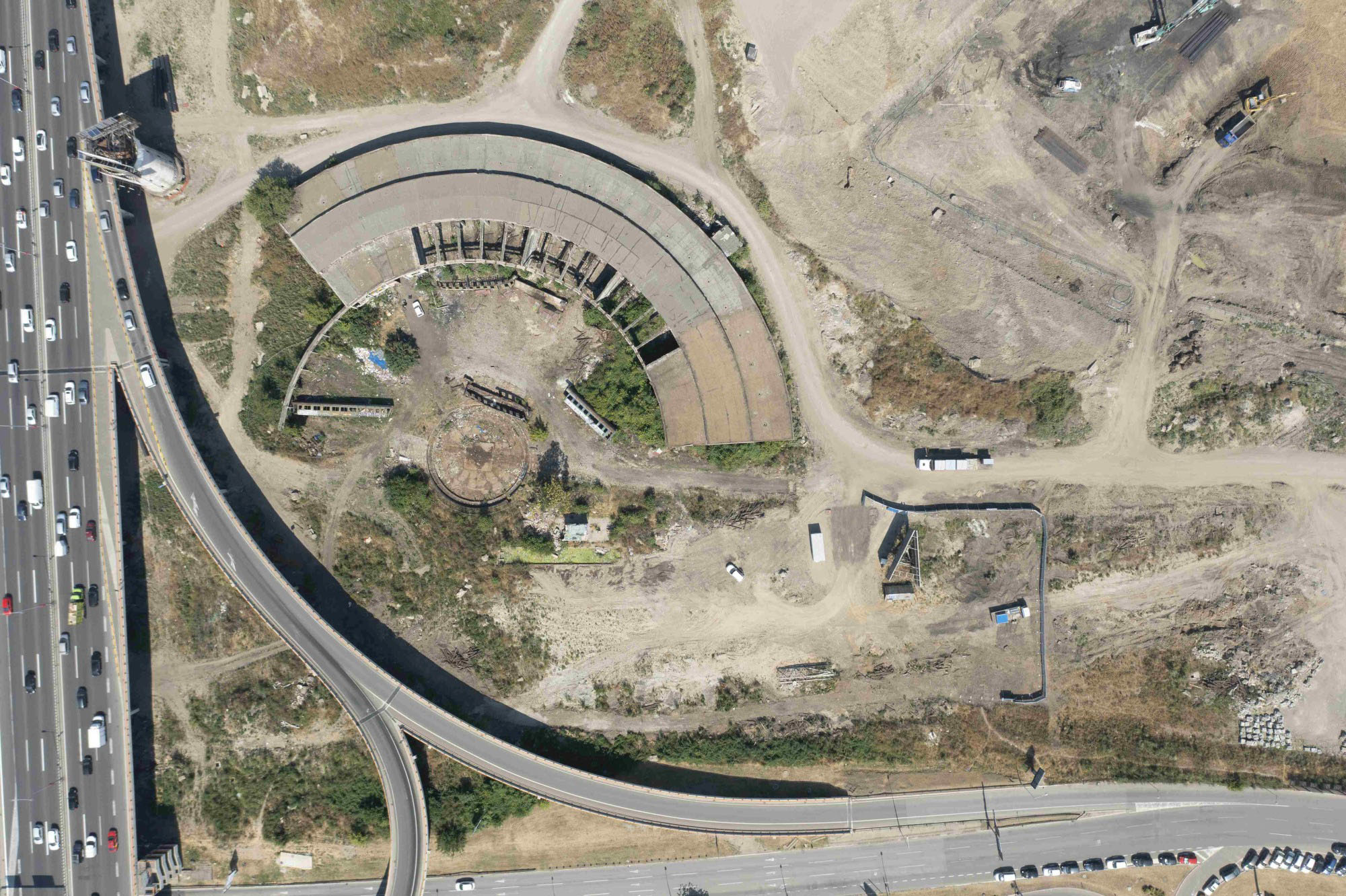
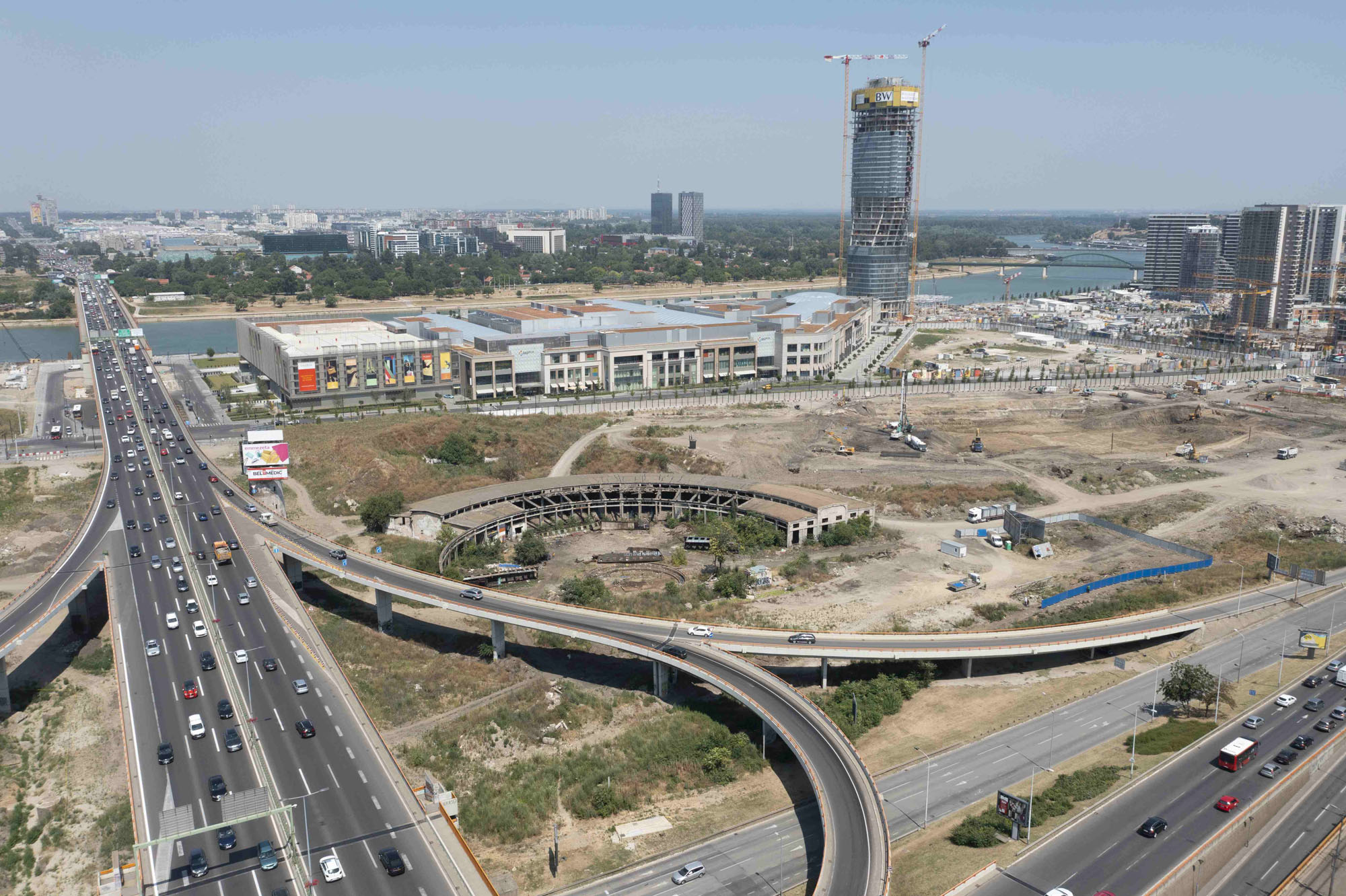
この敷地は、過去数十年にわたり著しい都市化が進行してきたベオグラードの川沿い地区に現存する数少ない産業遺産の遺構の1つである。こうした背景から、2021年にセルビア共和国IT・電子政府局と、国家プラットフォーム「セルビア・クリエイツ(Serbia Creates)」により、セルビア建築家協会が主催する公開建築コンペティションが発表された。
設計要件として、あらゆるクリエイティブ産業が一堂に会する新たな拠点、多機能かつ開放的な公共空間、そして新たな複合用途オフィスビル1棟の増設が求められたのである。
Before ©︎ BINA
Before ©︎ BINA
Before ©︎ UAS
Before ©︎ UAS
Before ©︎ UAS
建築的介入と空間の調和
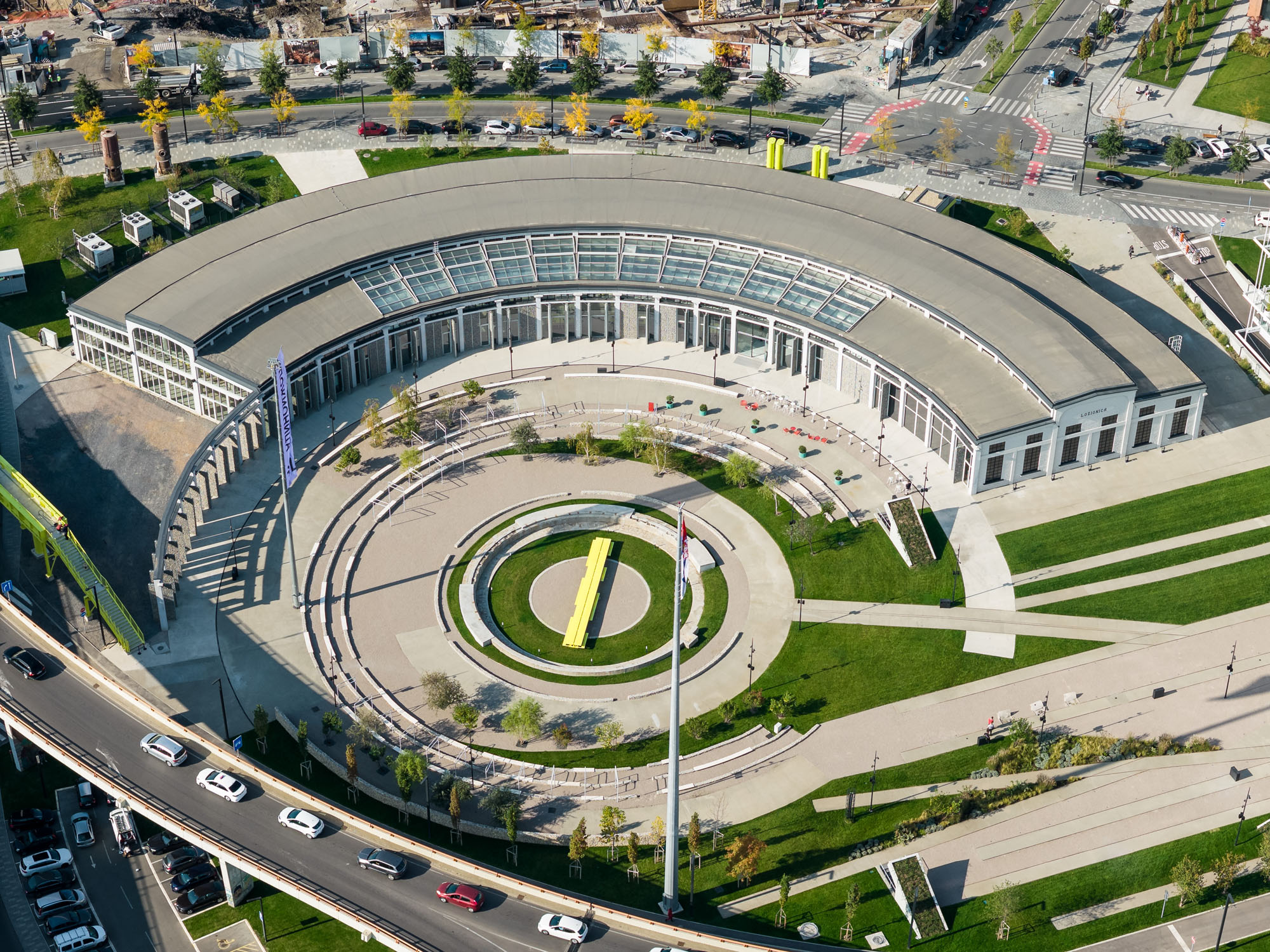
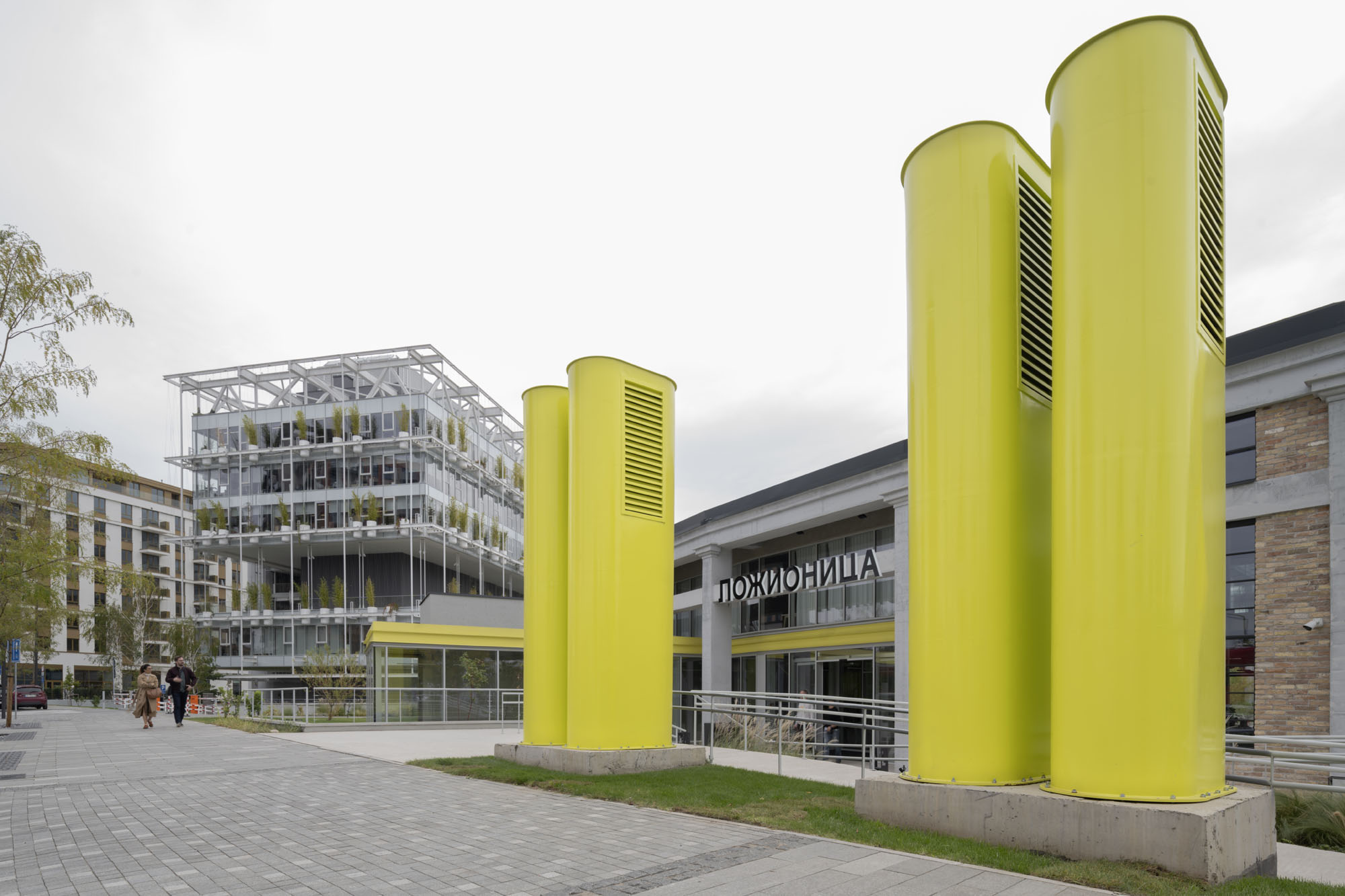
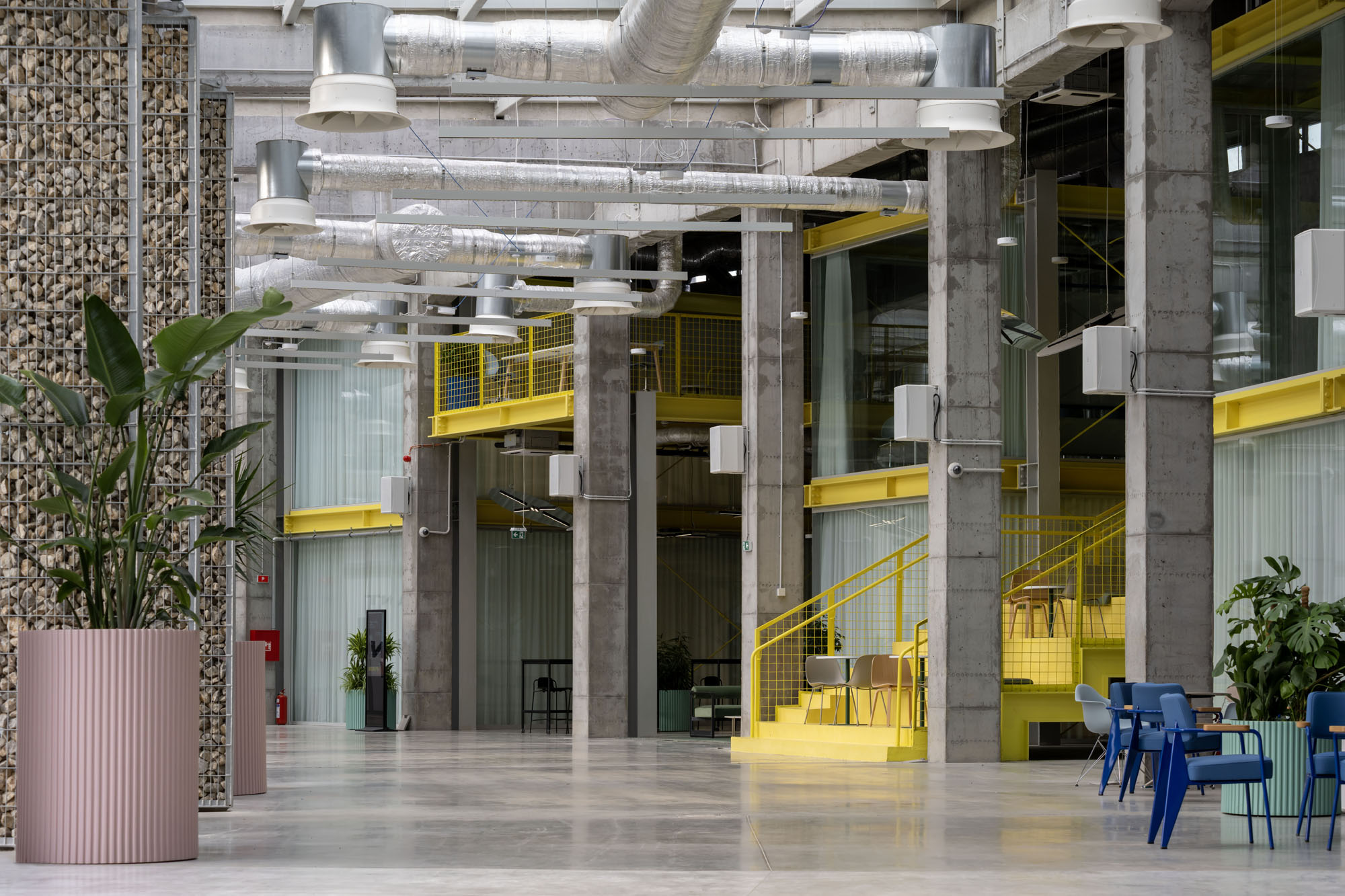
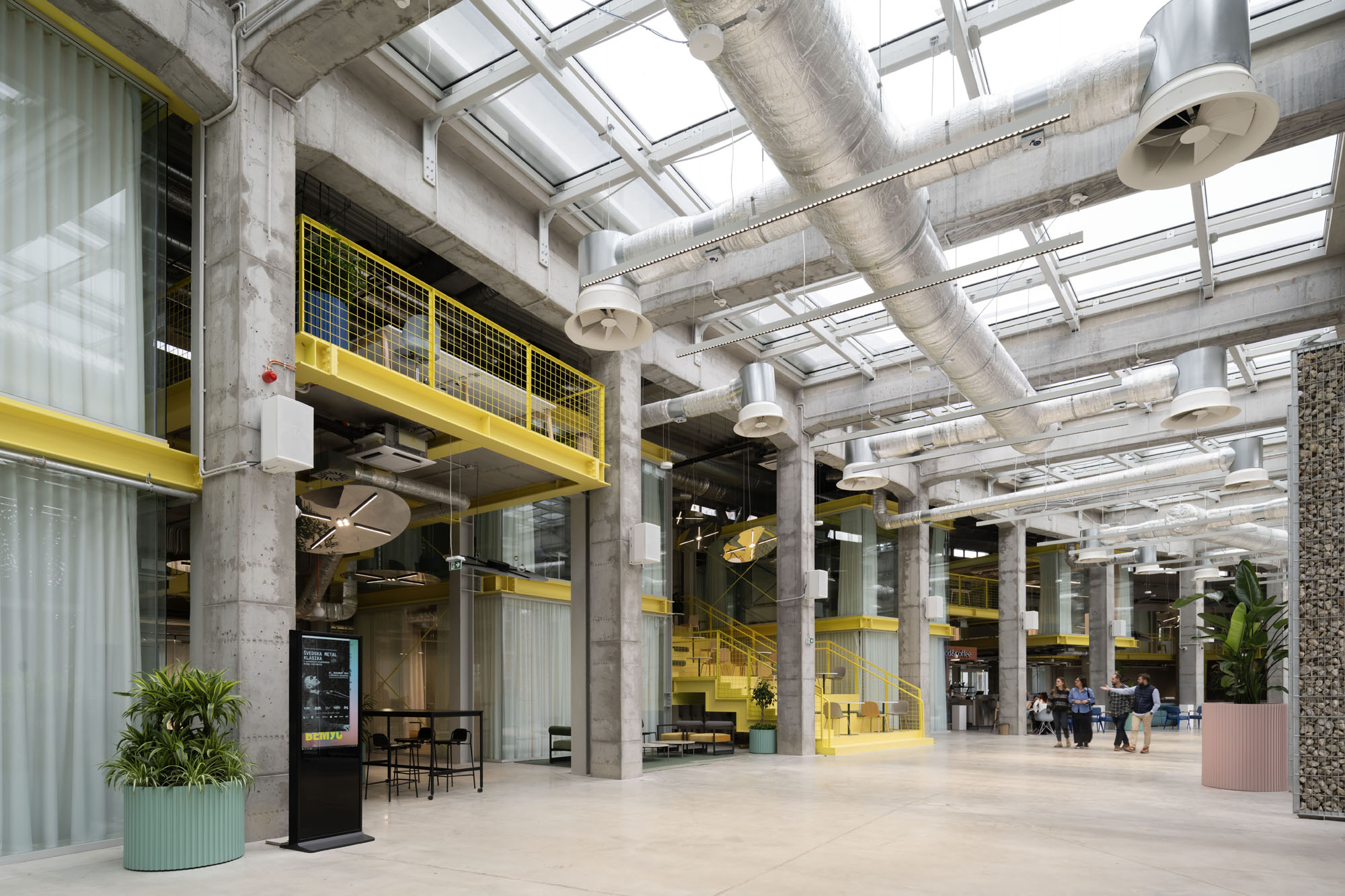
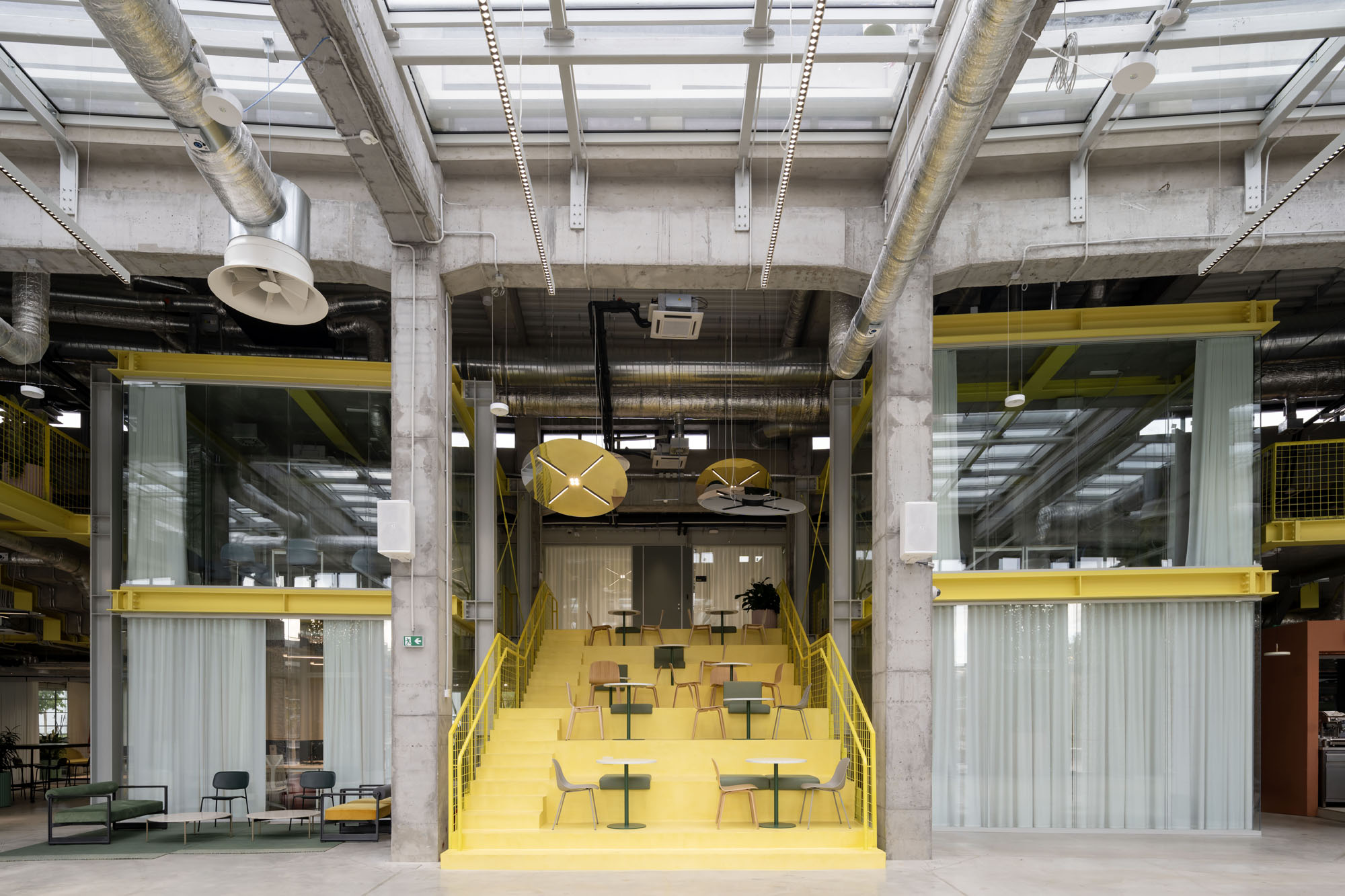
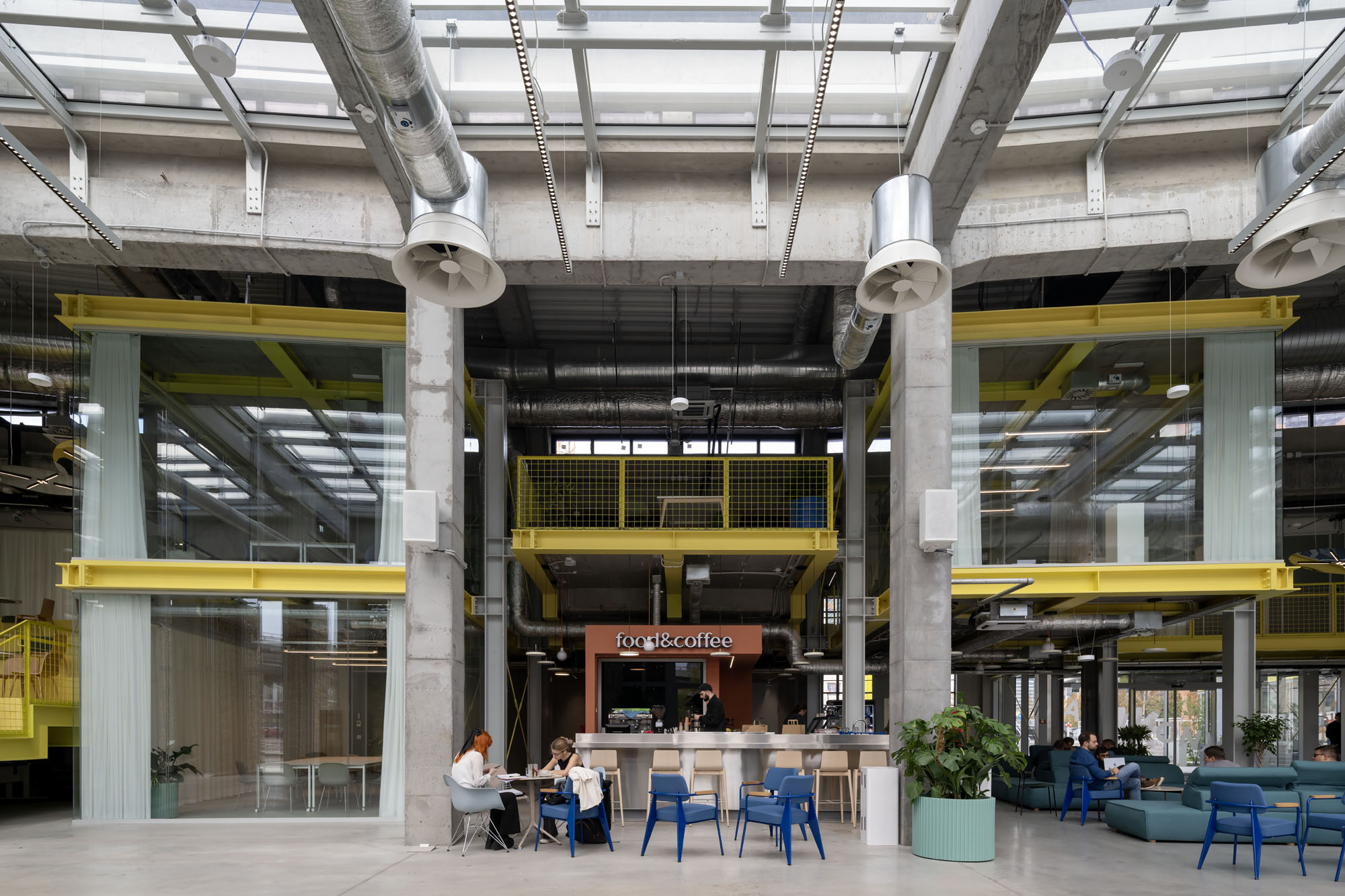
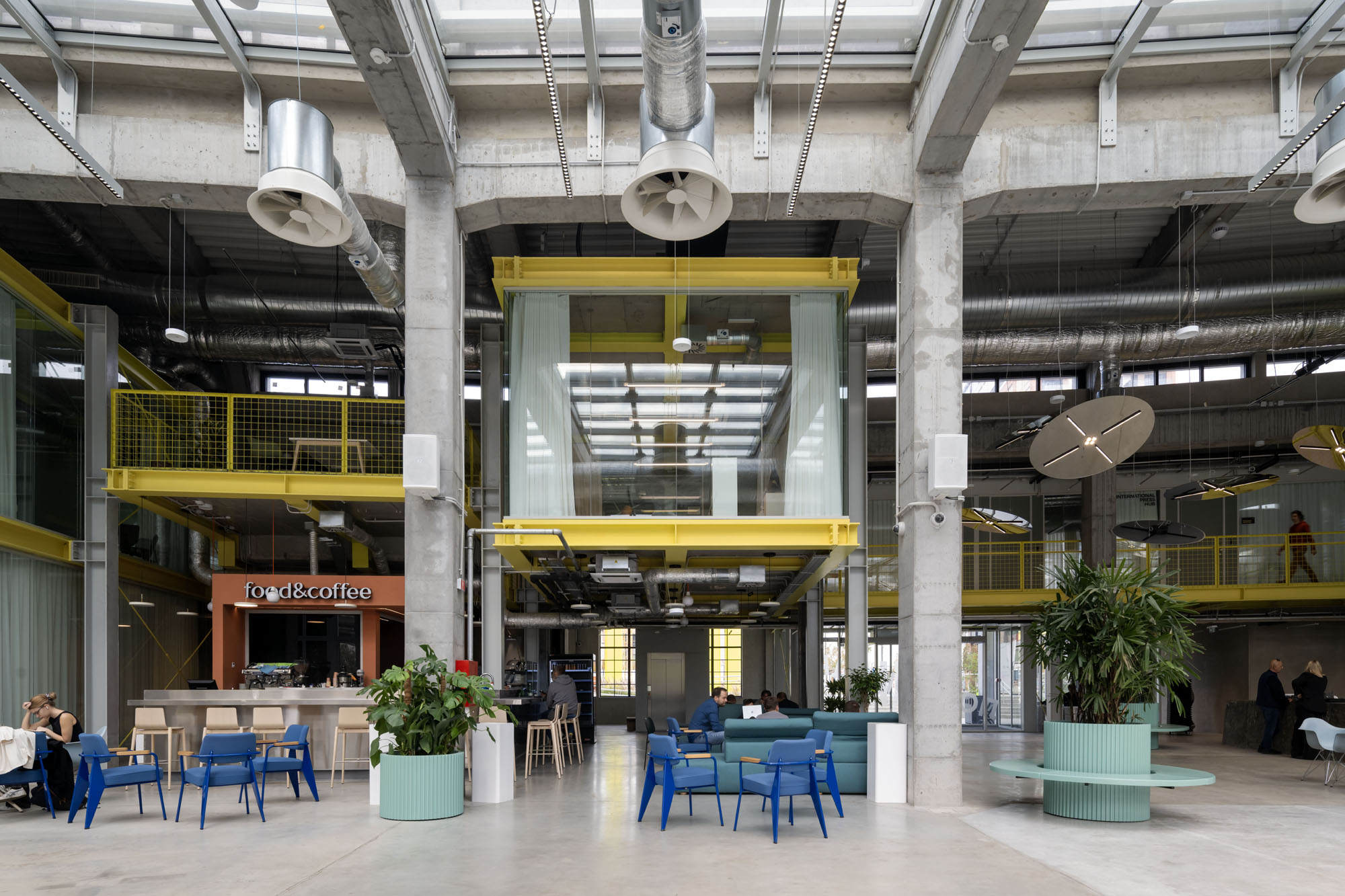
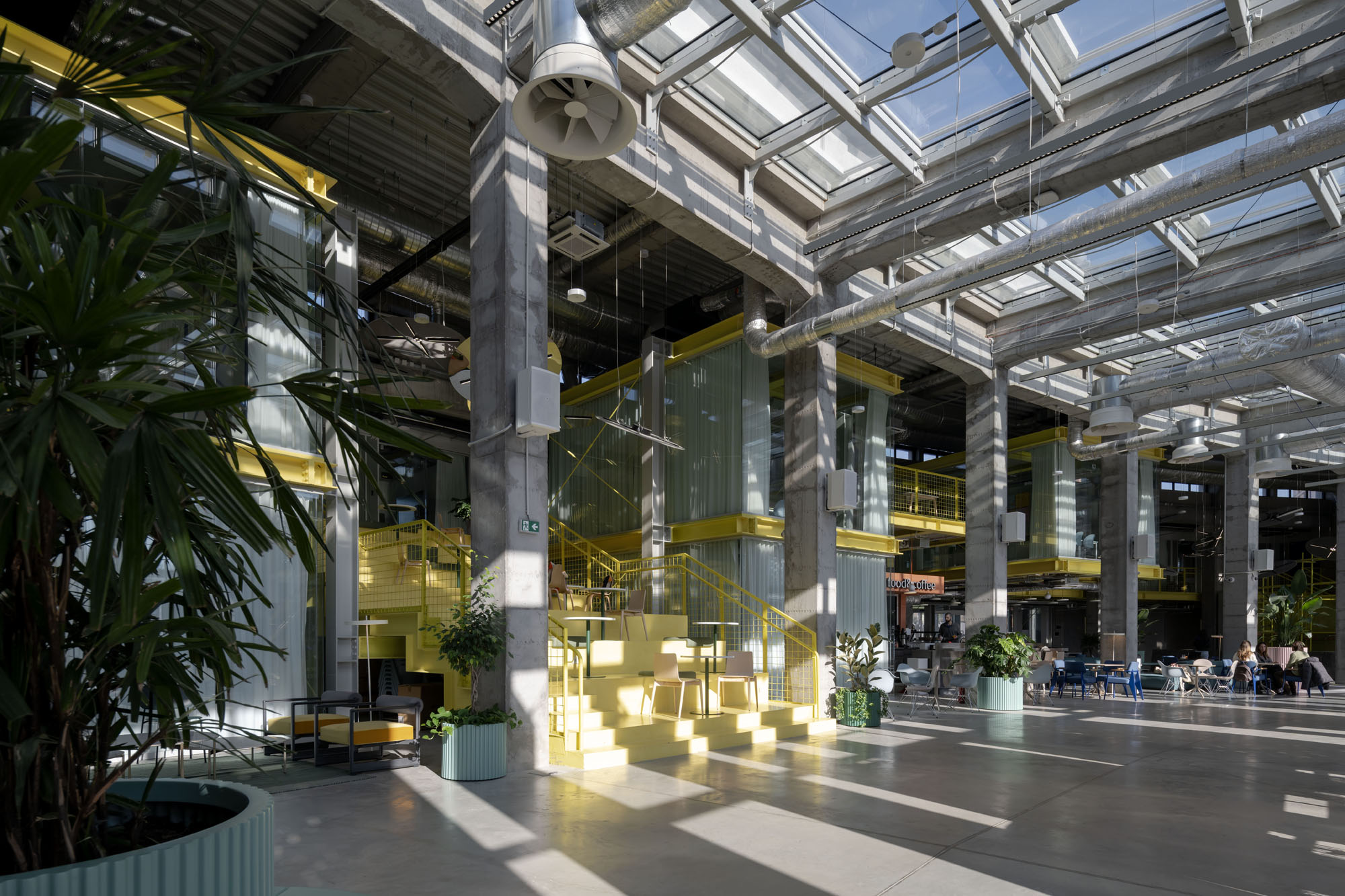
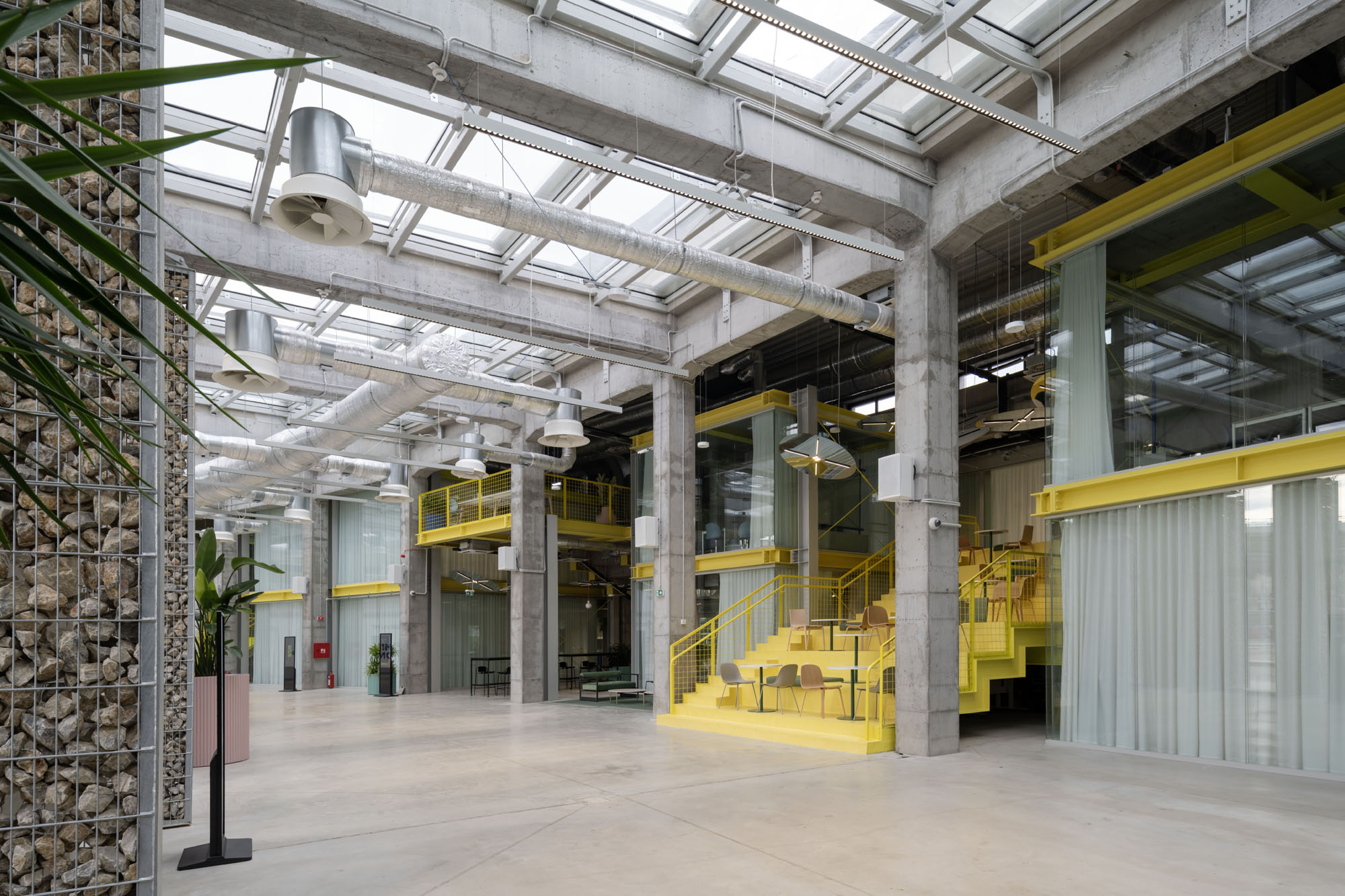
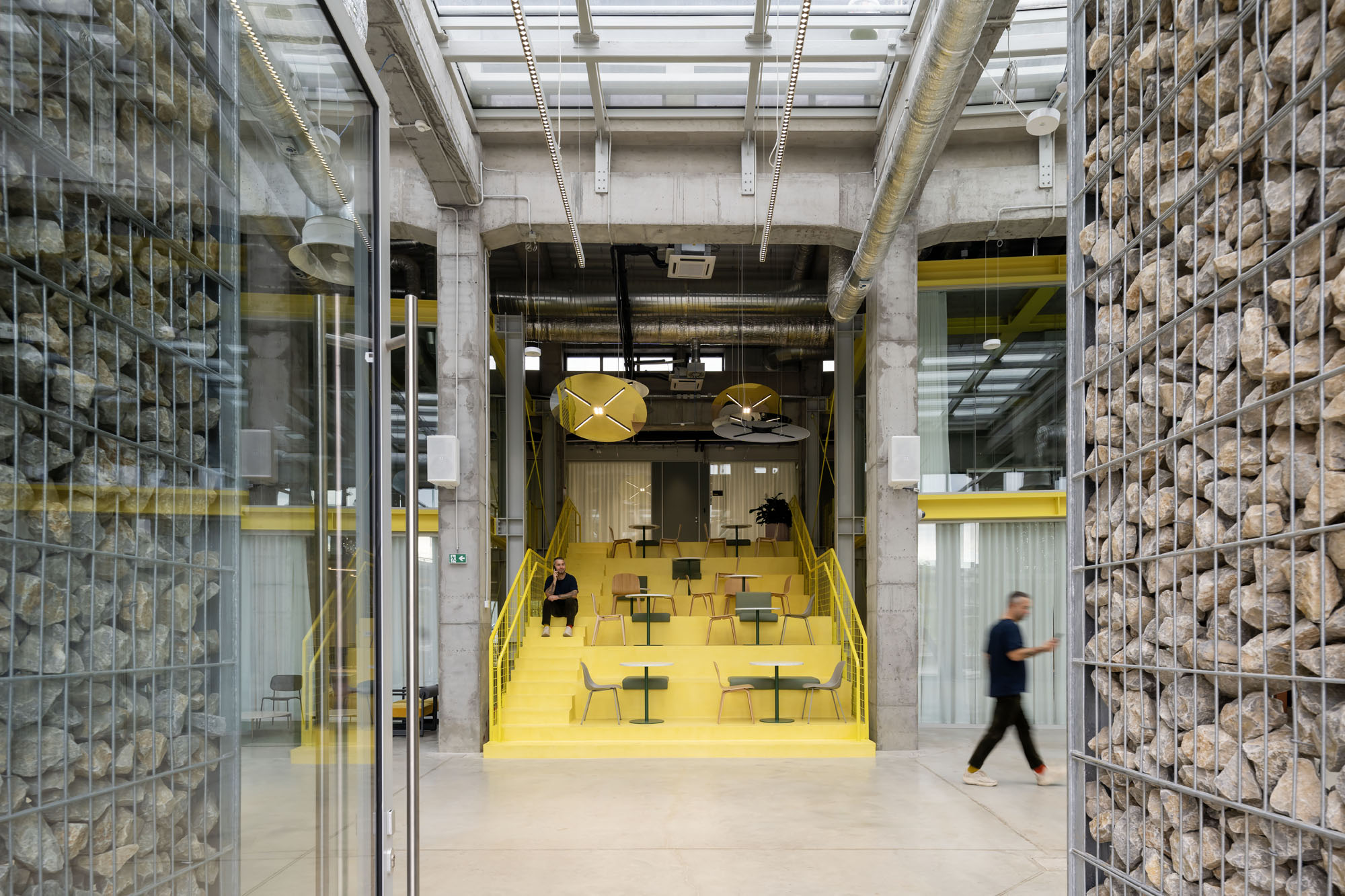
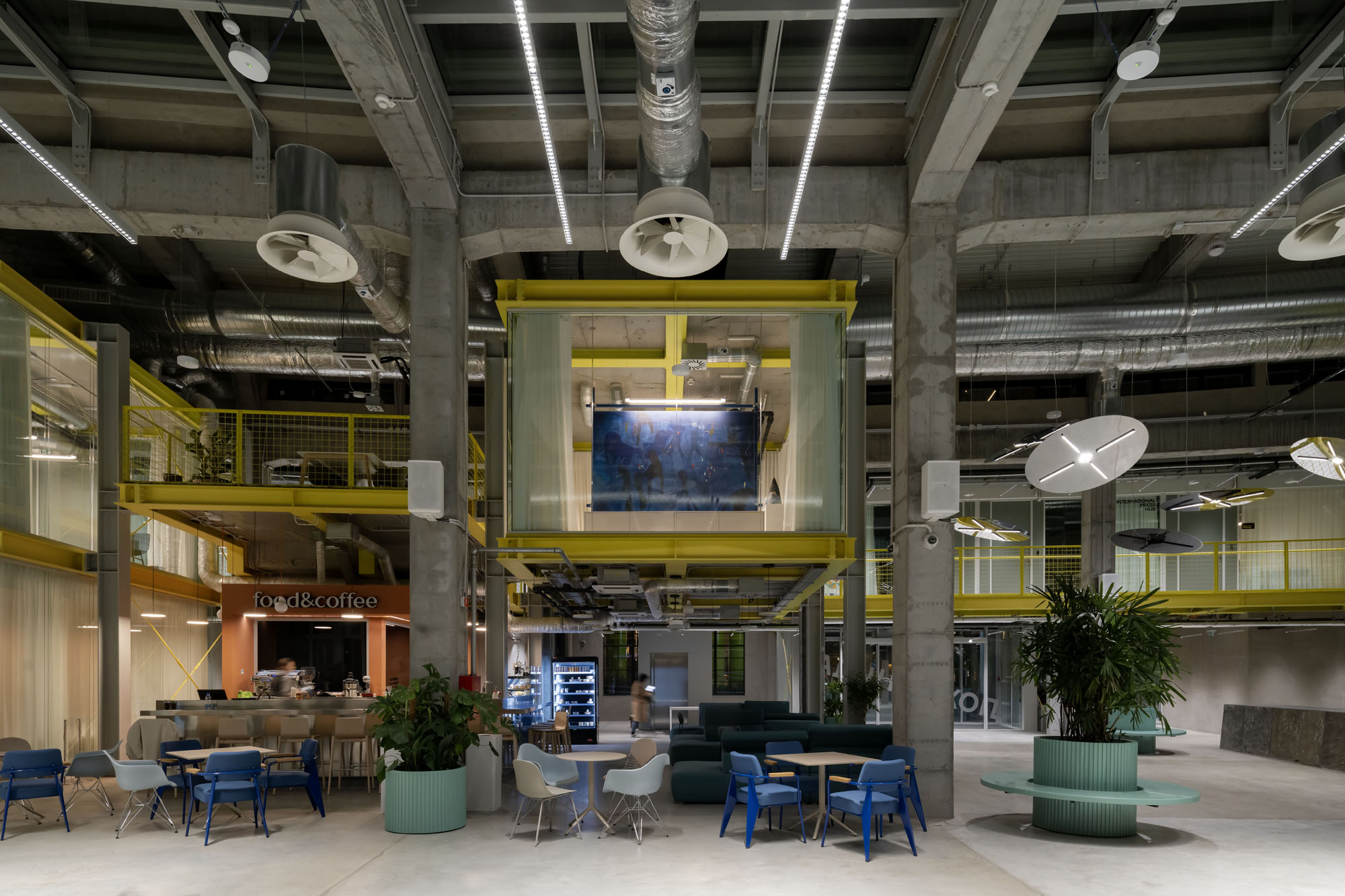
コンペティションで勝利したAKVSアーキテクチャによる設計案は、現代の「インプラント(埋め込み要素)」のように、全体を癒やす役割を果たす新たな建築要素を構想した。築100年のボイラー室の元々の空間は、仕切りを設けず、全高と本来のスケールを損なうことなく保存されている。
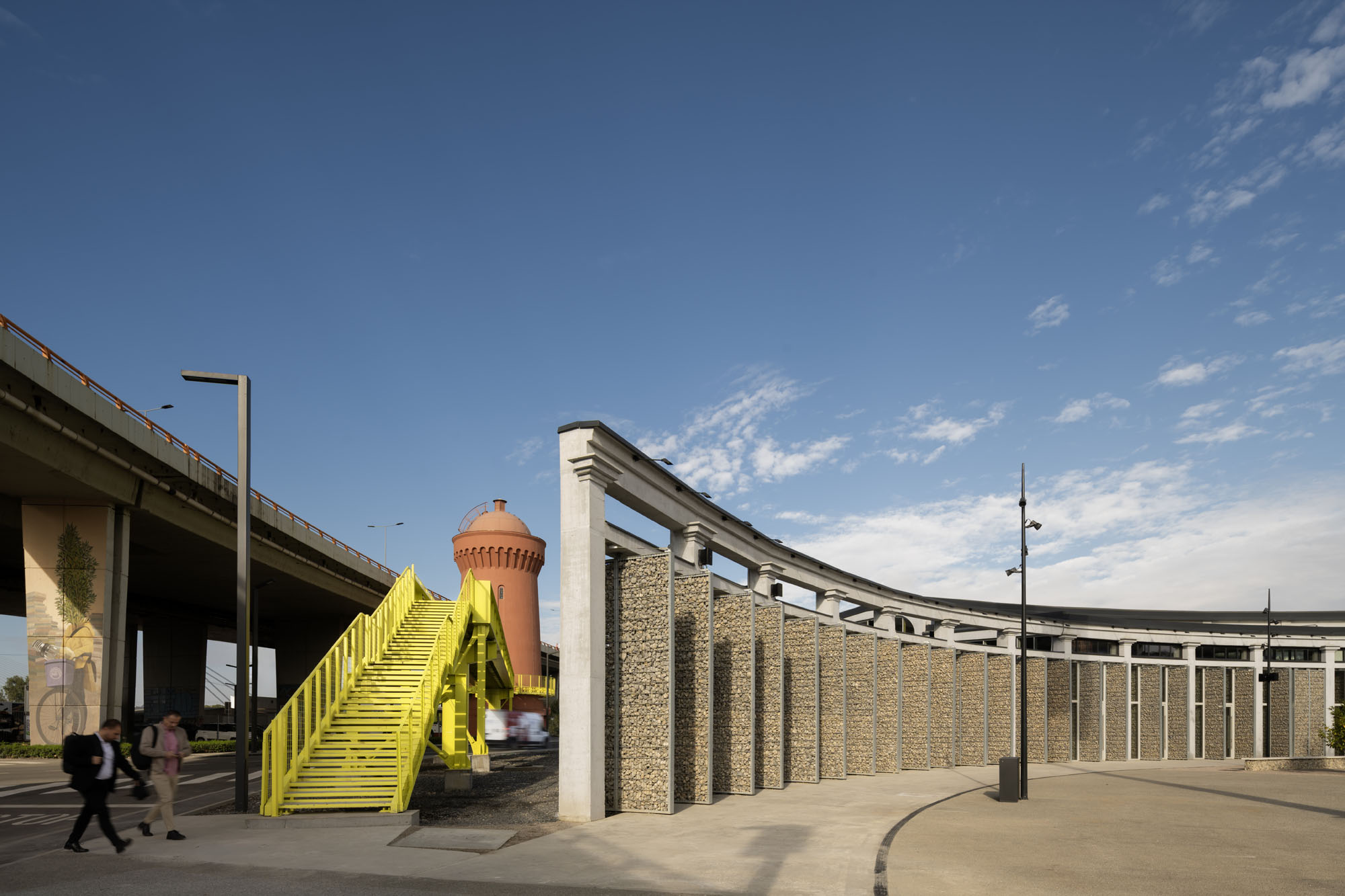
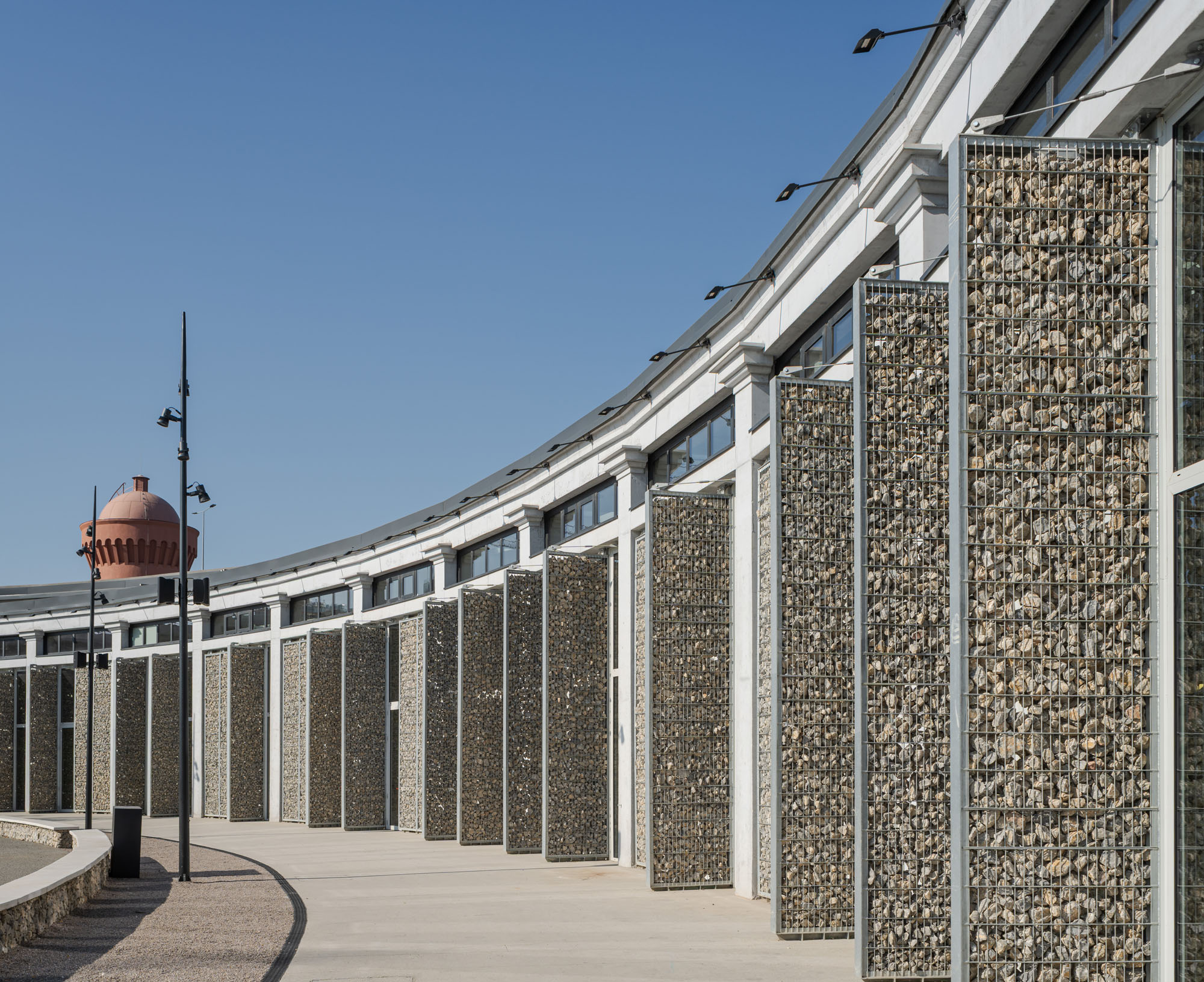
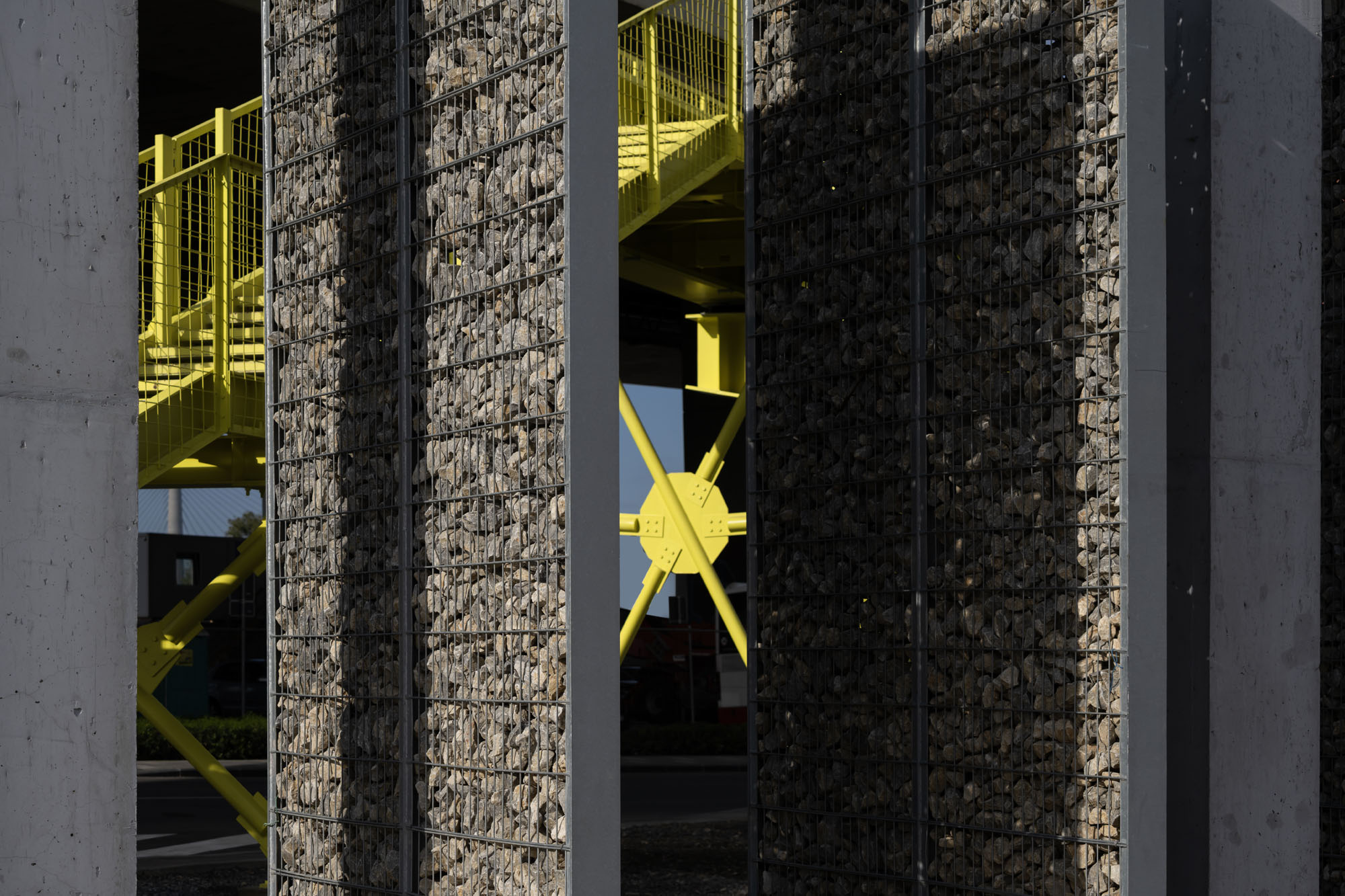
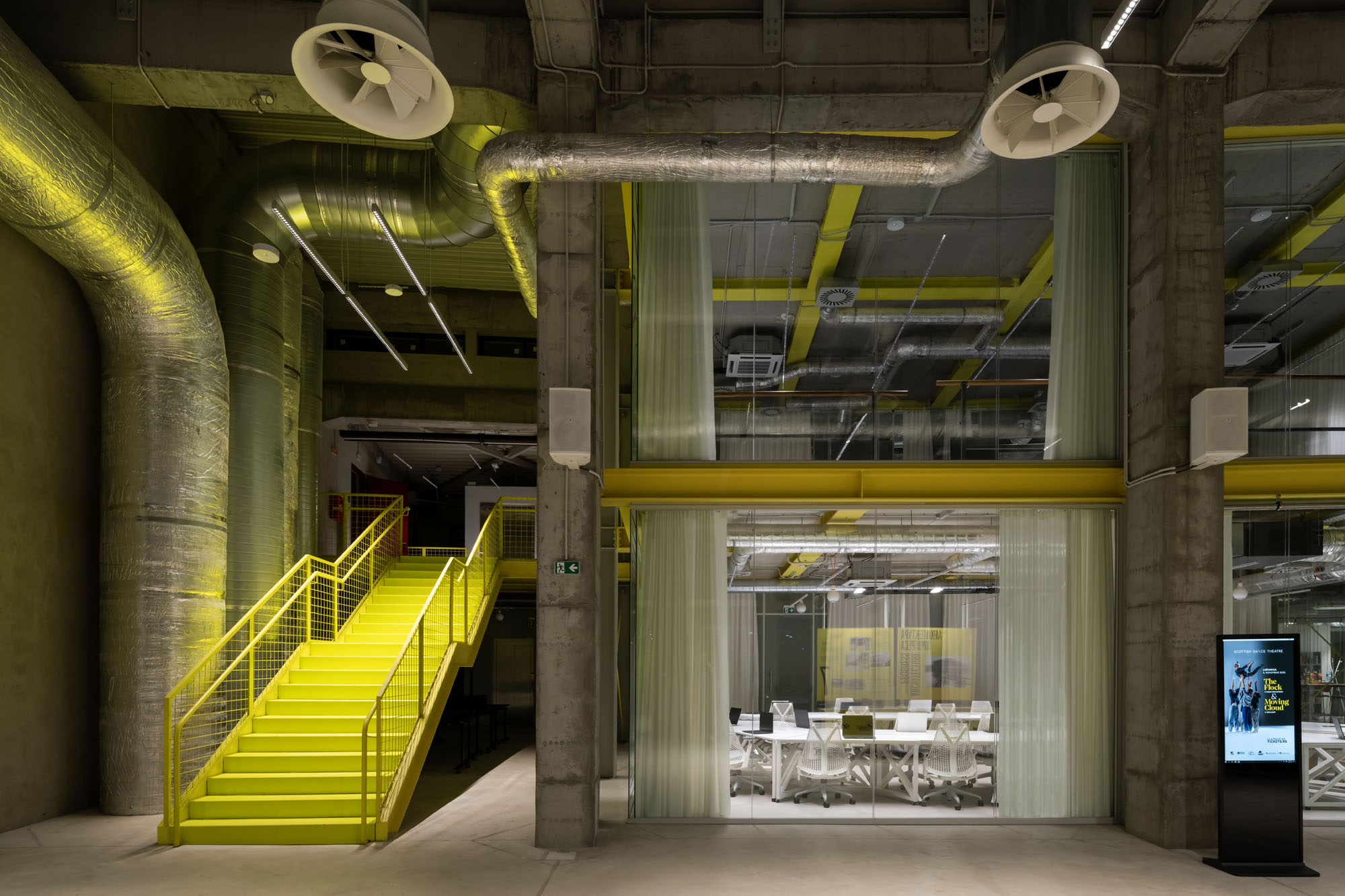
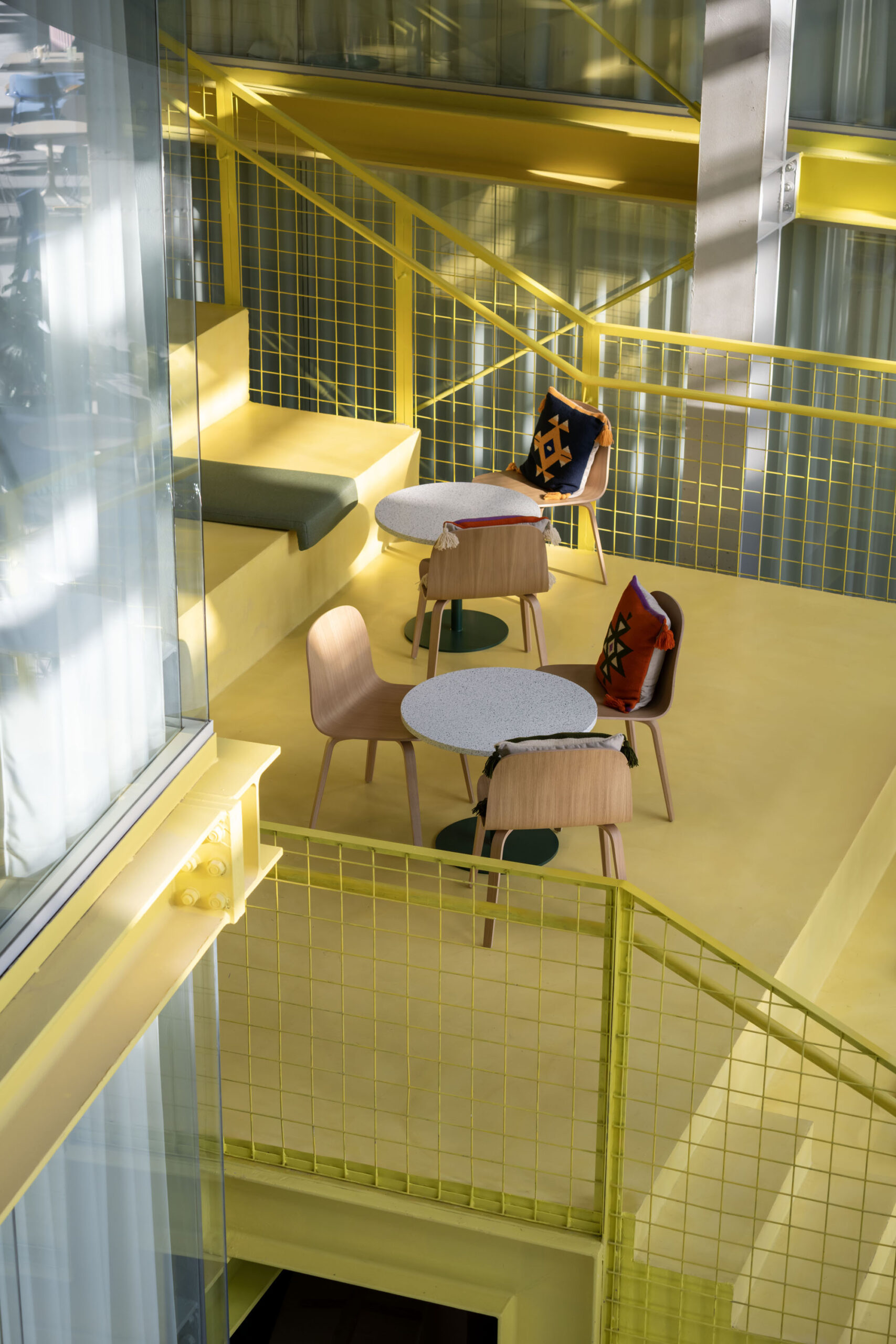
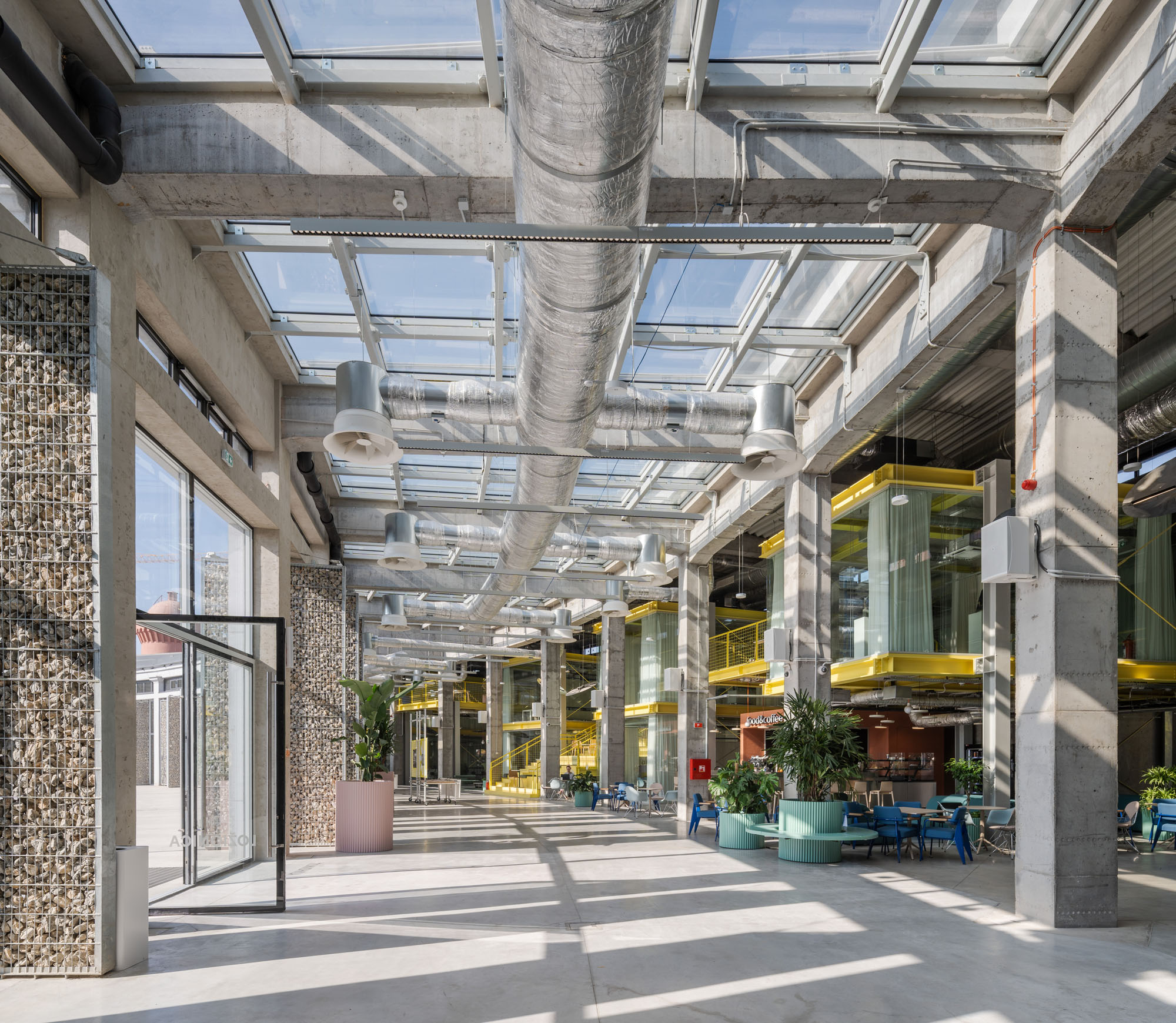
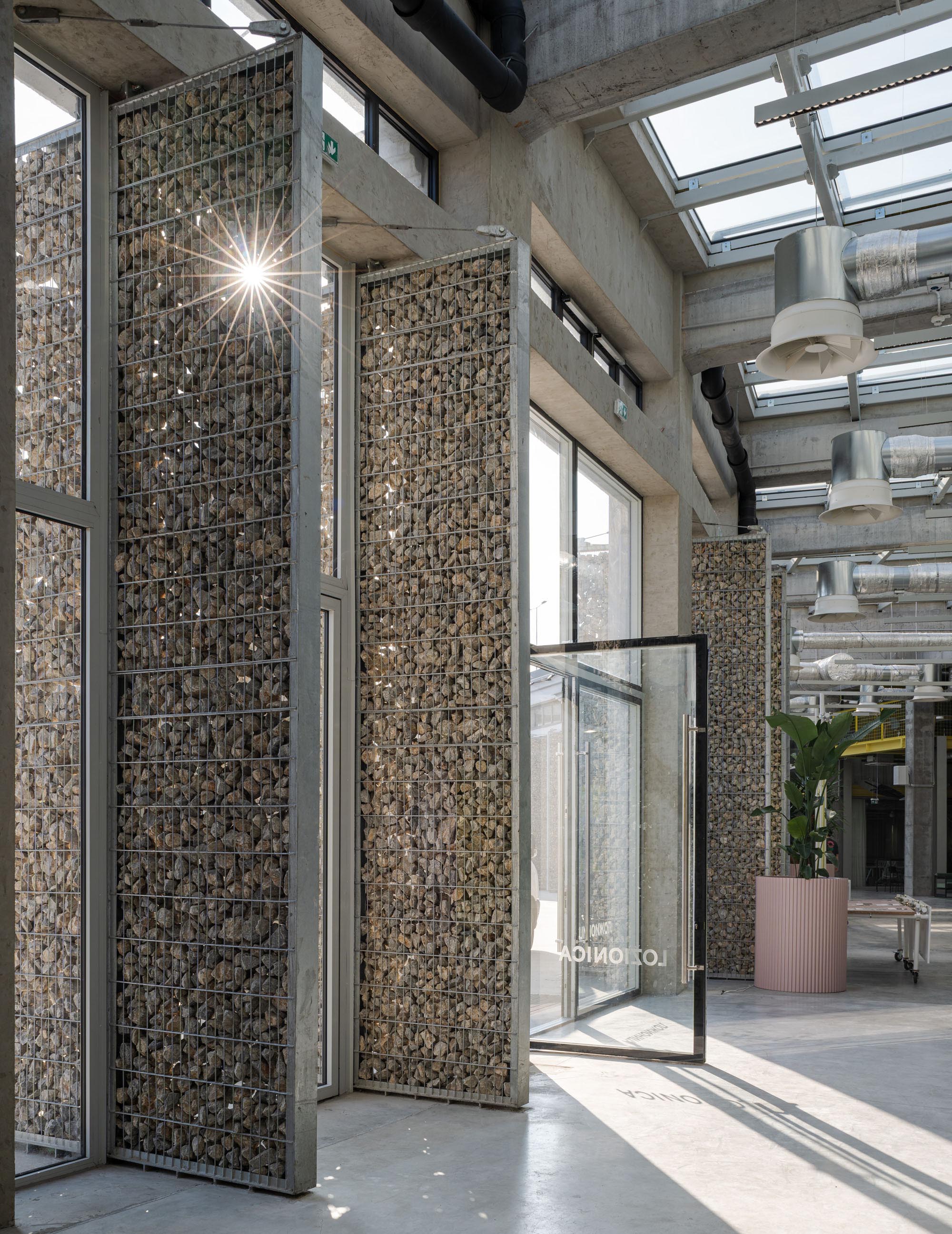
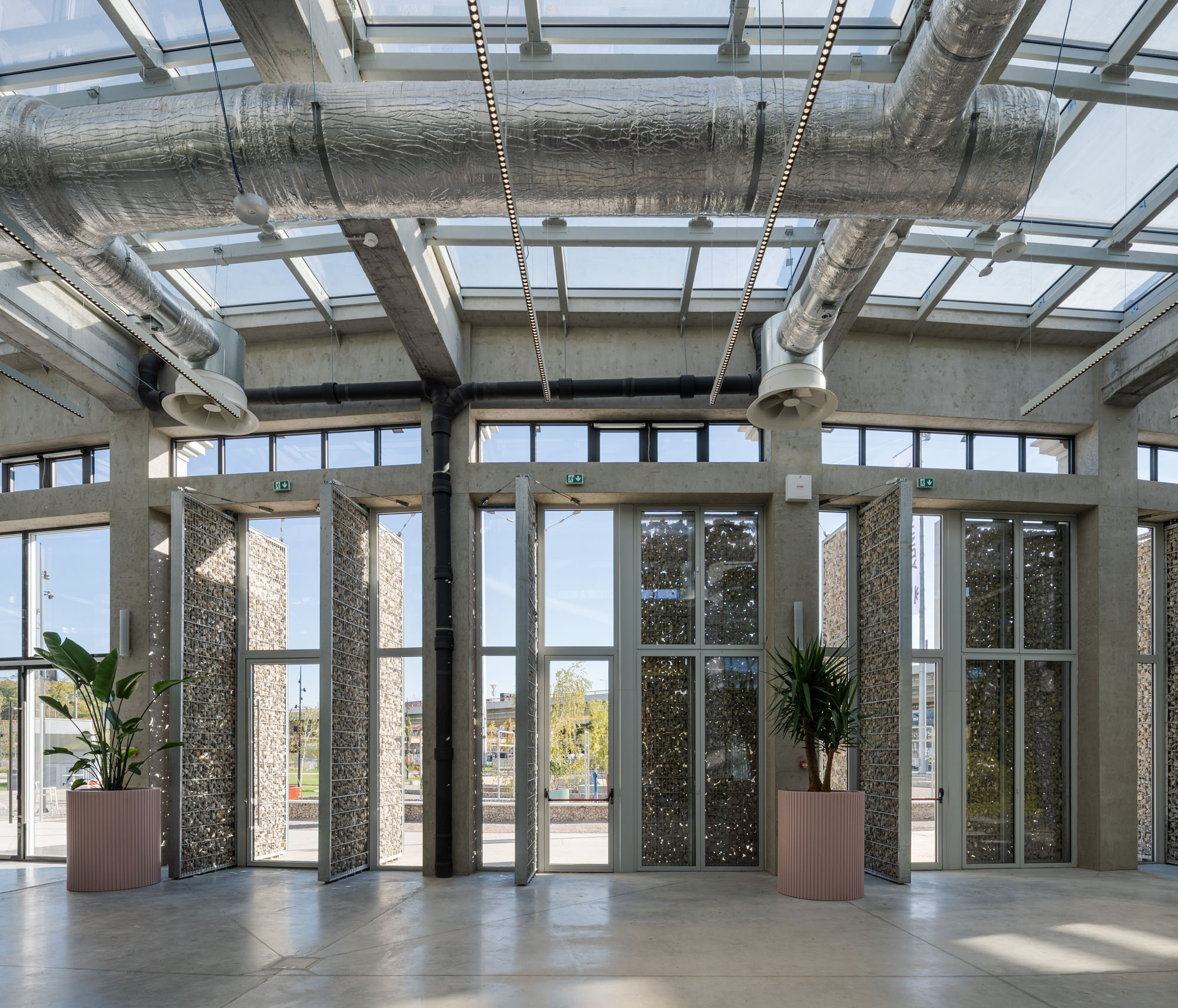
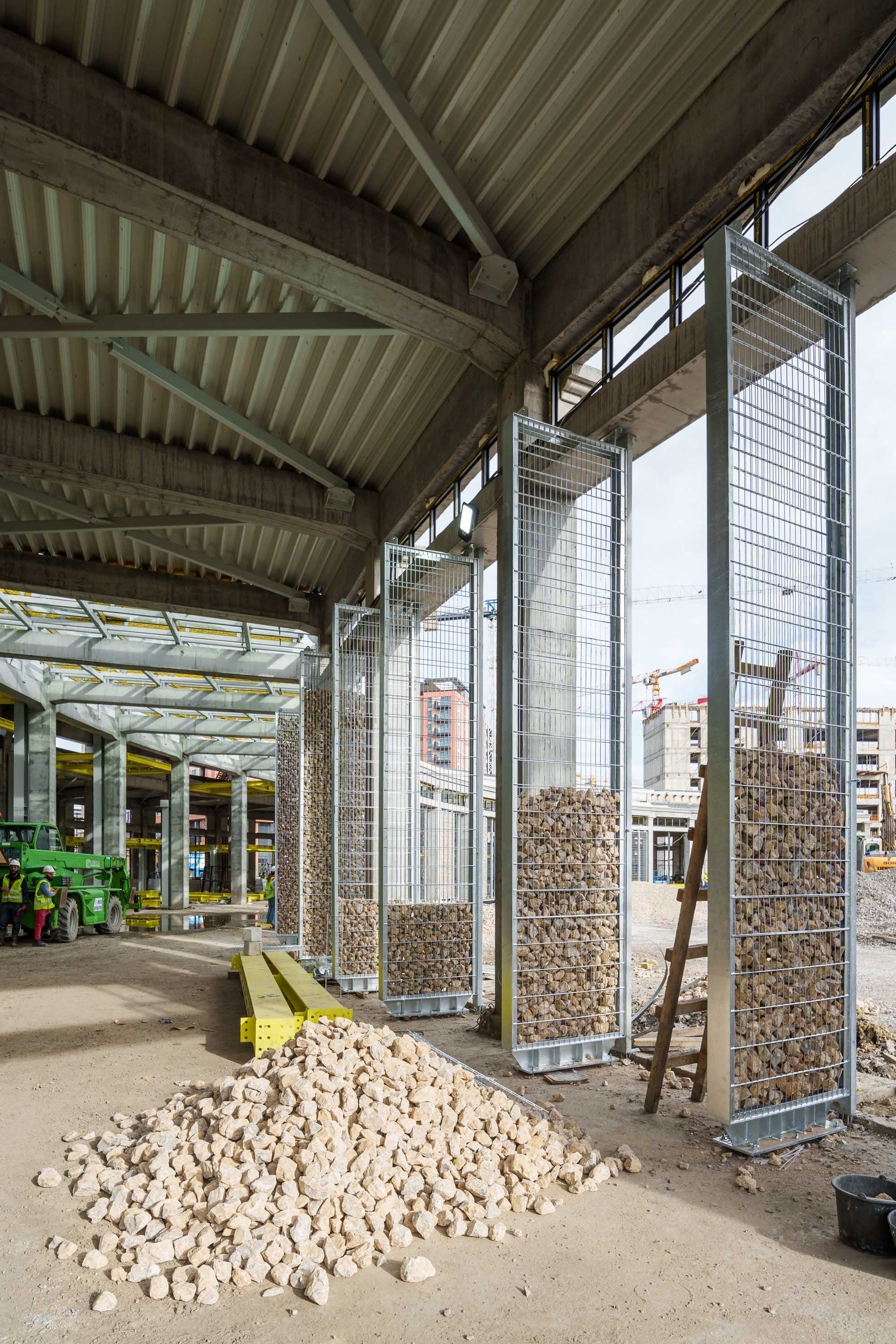
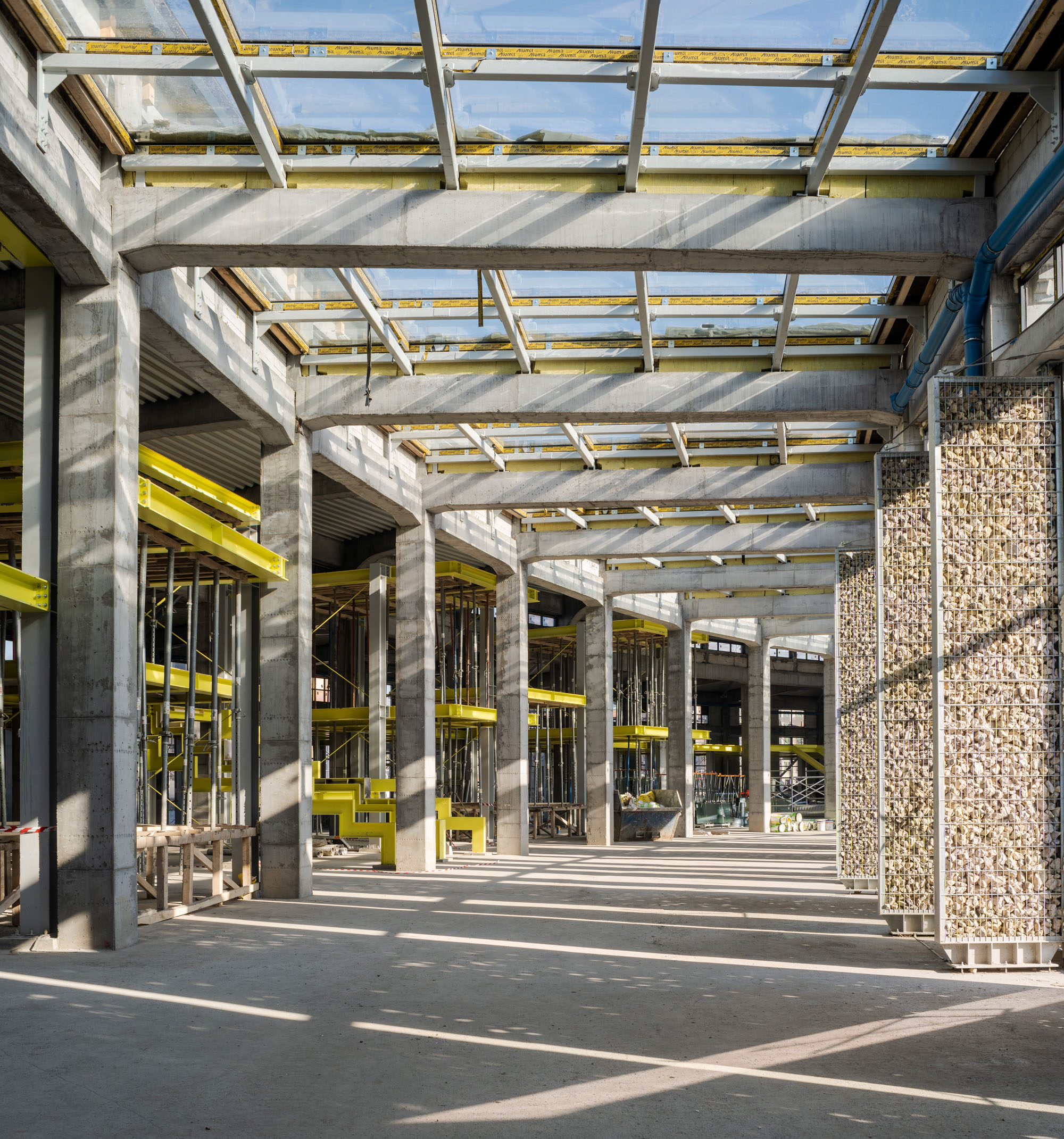
ここでの建築家による介入は、主に3つの特徴的な要素に集約される。追加の作業エリアとして設けられた独立した「黄色いスチール製ギャラリー」、複数の入口に配置された「大型ガビオン(蛇籠)パネル」、そして建物の中心部に設置された「ガラス張りの屋根」である。
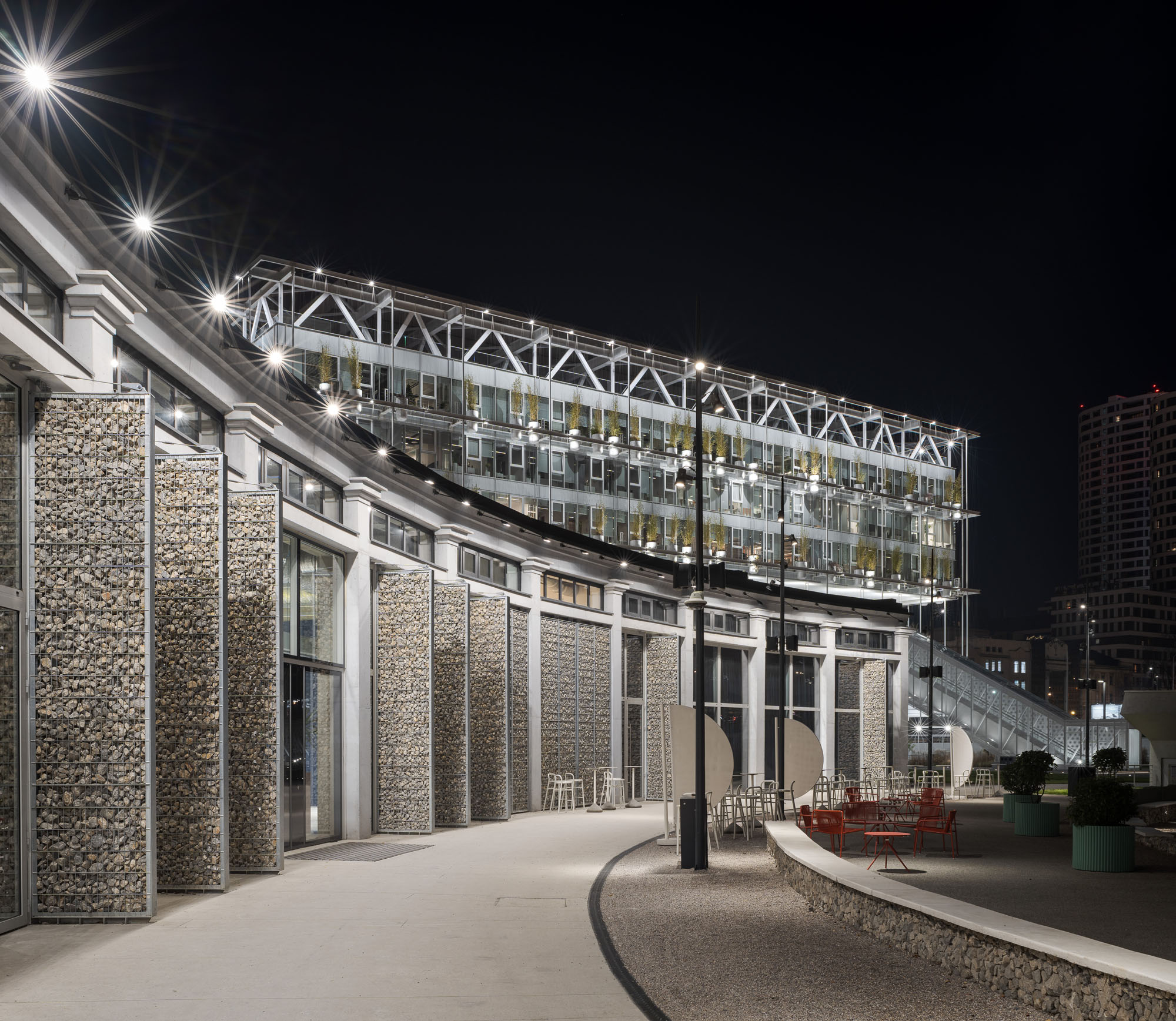
新しいギャラリーを構成するスチール製テラスは、広大な工業空間の中の異なる高さに浮遊するように配置され、〈ロジオニカ〉のクリエイティブ・コミュニティに強固な一体感をもたらす、ユニークなコワーキング・ランドスケープを創出している。また、鉄道の砕石を詰めた高さ5mの細長いガビオンパネルが日光を濾過し、内部に光と影の魔法のような戯れを生み出す。
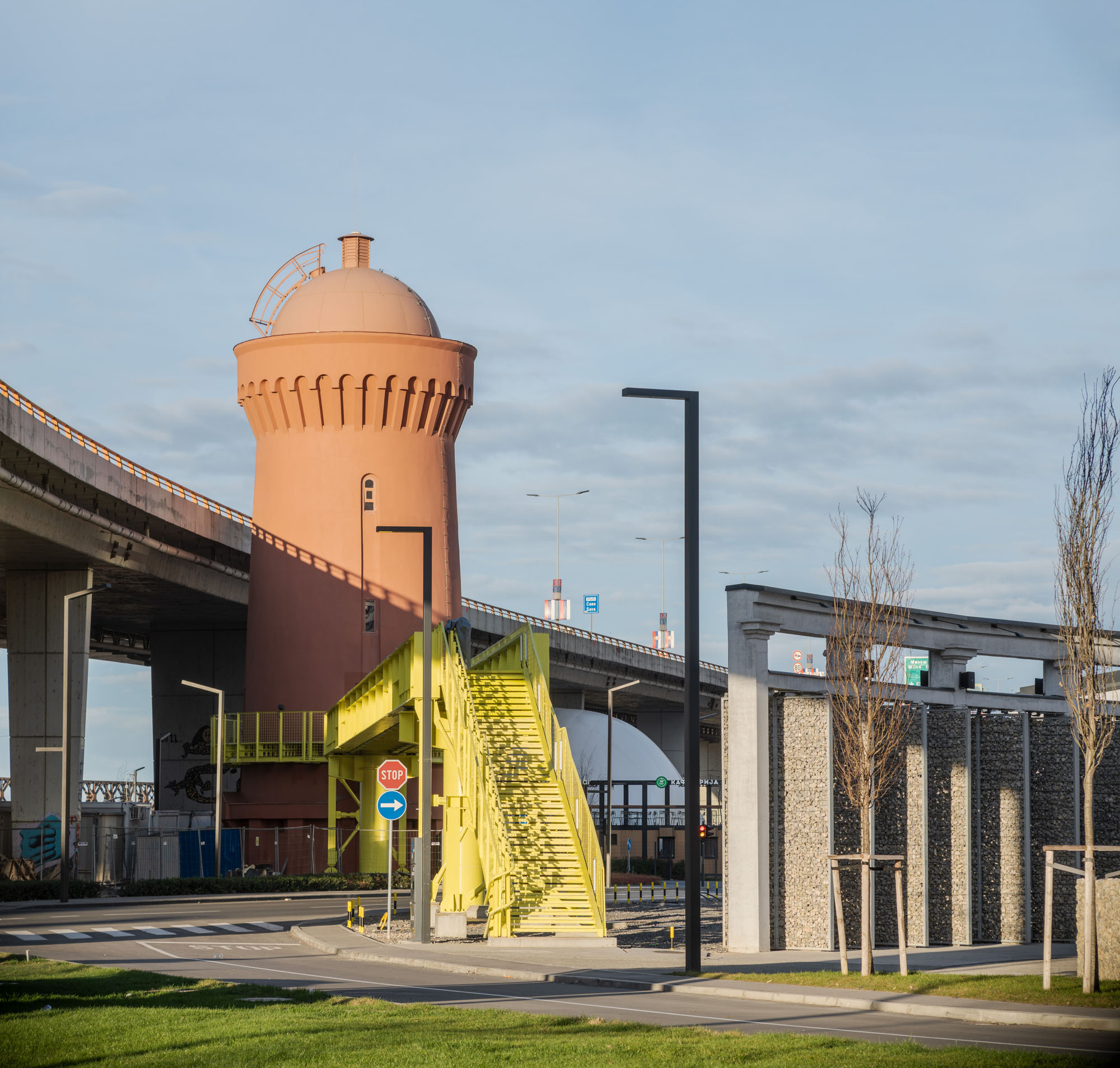
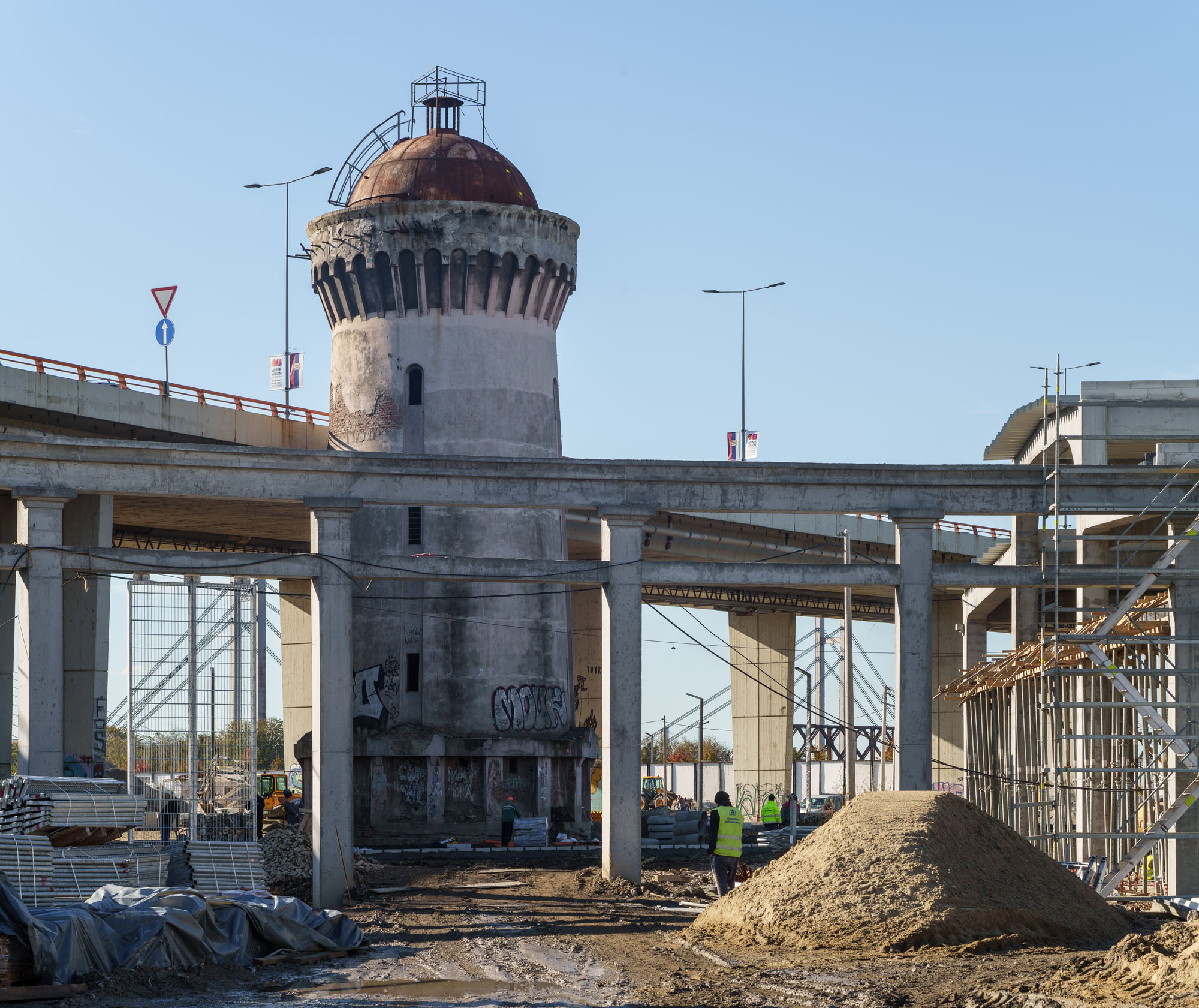
再利用された空間には、多目的ブラックボックスホール、コミュニティレストラン、中央のガラス屋根の下に広がる展示スペース、そして公共空間を見下ろすギャラリー上の多様なコワーキングスペースが含まれている。かつての給水塔は没入型展示のために再利用され、その運命を大きく左右した近隣のガゼラ橋と同様、テラコッタレッドに塗装された。
©︎ Ilya Ivanov
©︎ Ilya Ivanov
©︎ Ilya Ivanov
©︎ Ilya Ivanov
歴史を継承する公共公園
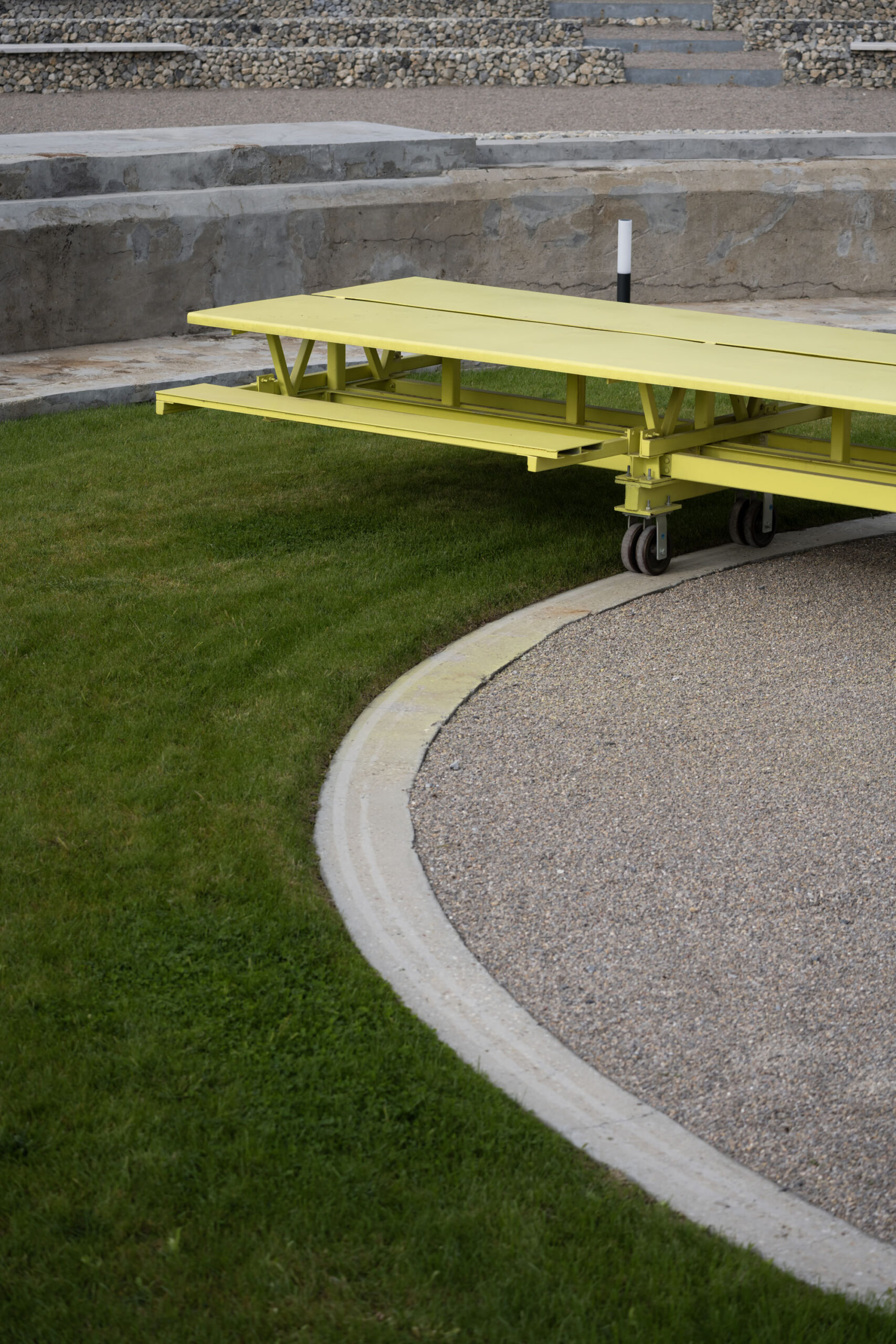
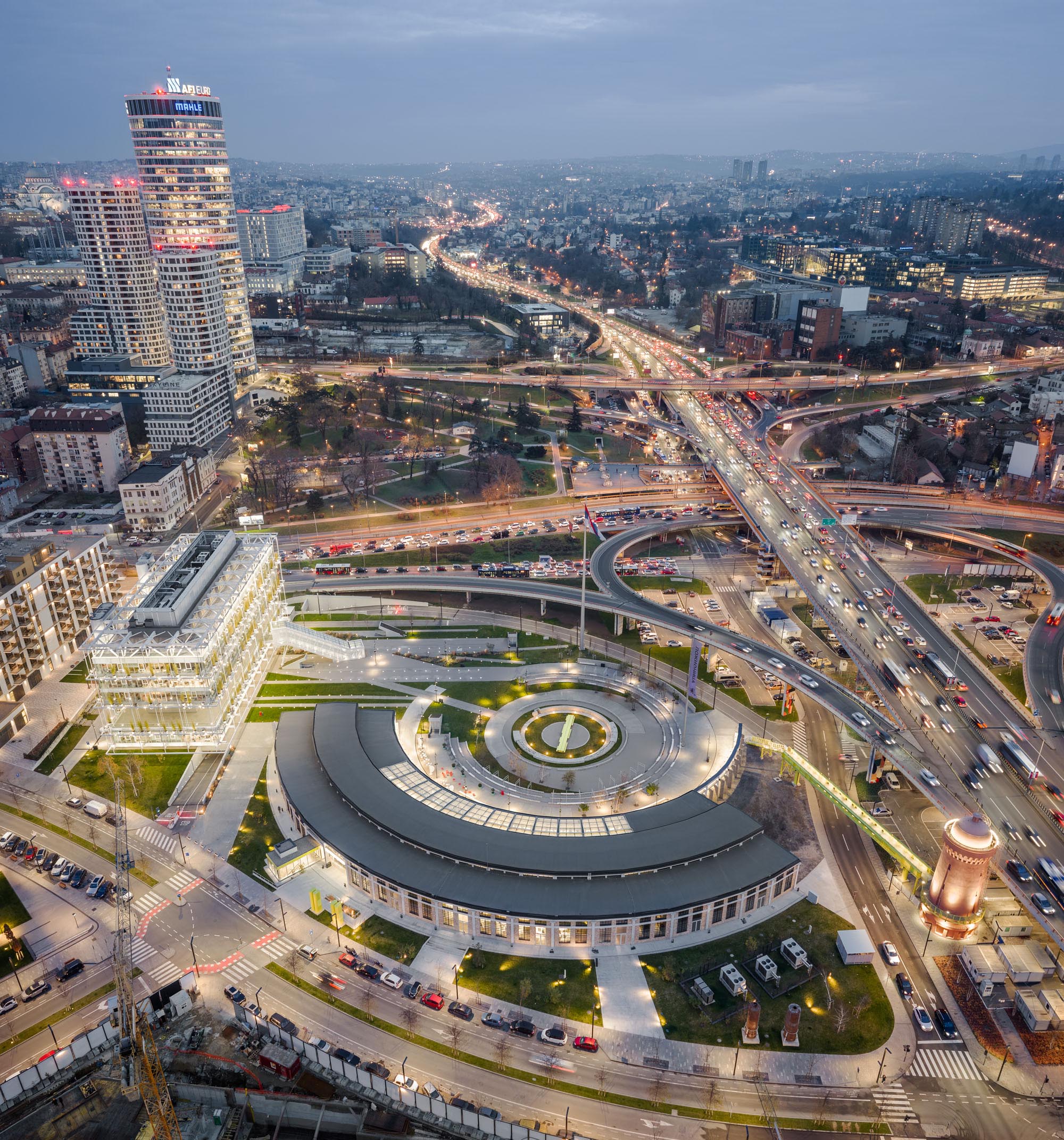
施設は、スパン33mの鋼製歩行者用橋を介して、ロジオニカ公園へとつながっている。この新しい多機能公園は、旧鉄道敷地がもつ豊かな歴史的イメージを基盤として構成されており、かつての機関車の走行ルートが、現在は来訪者の散策路として機能している。
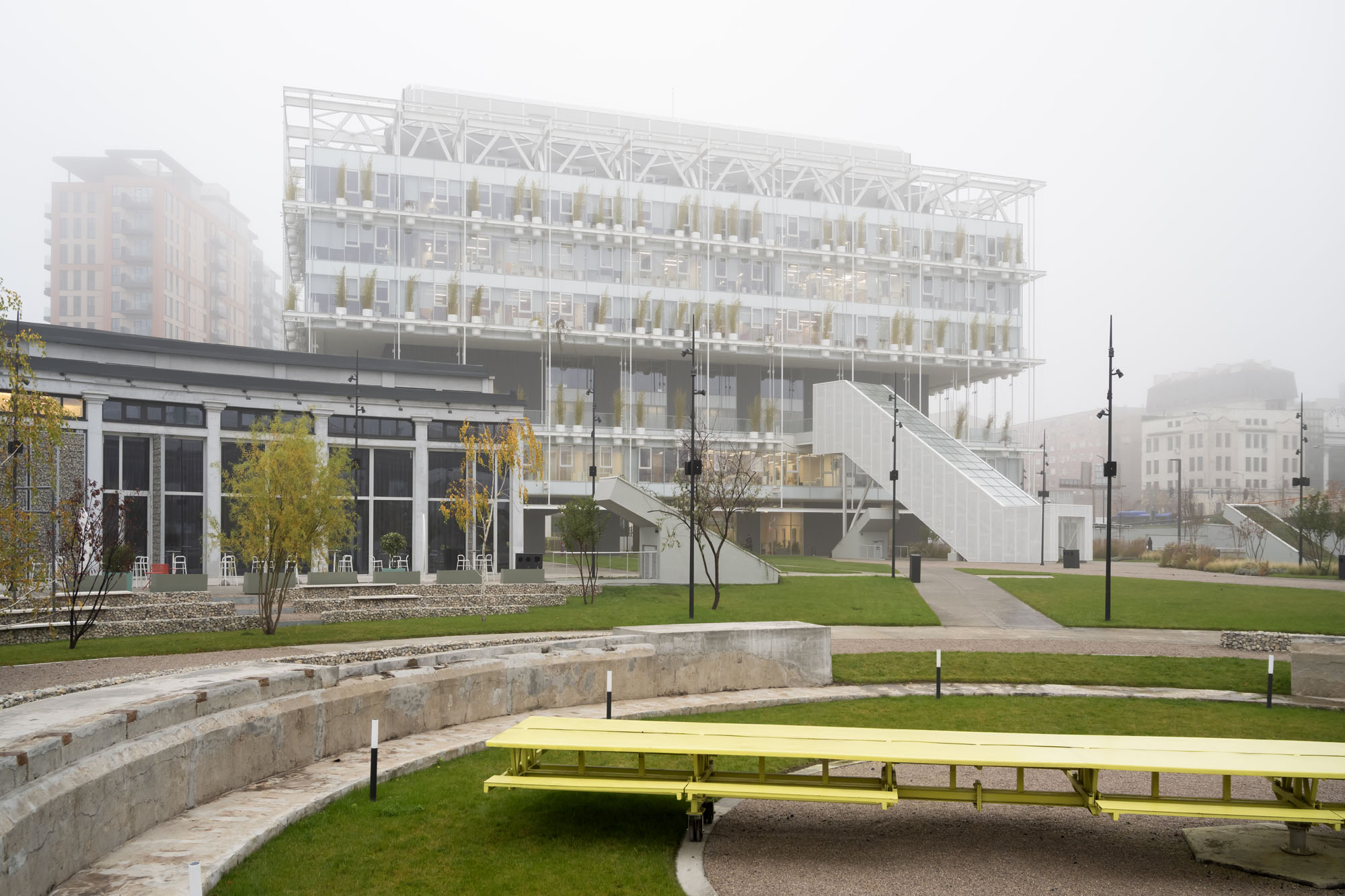
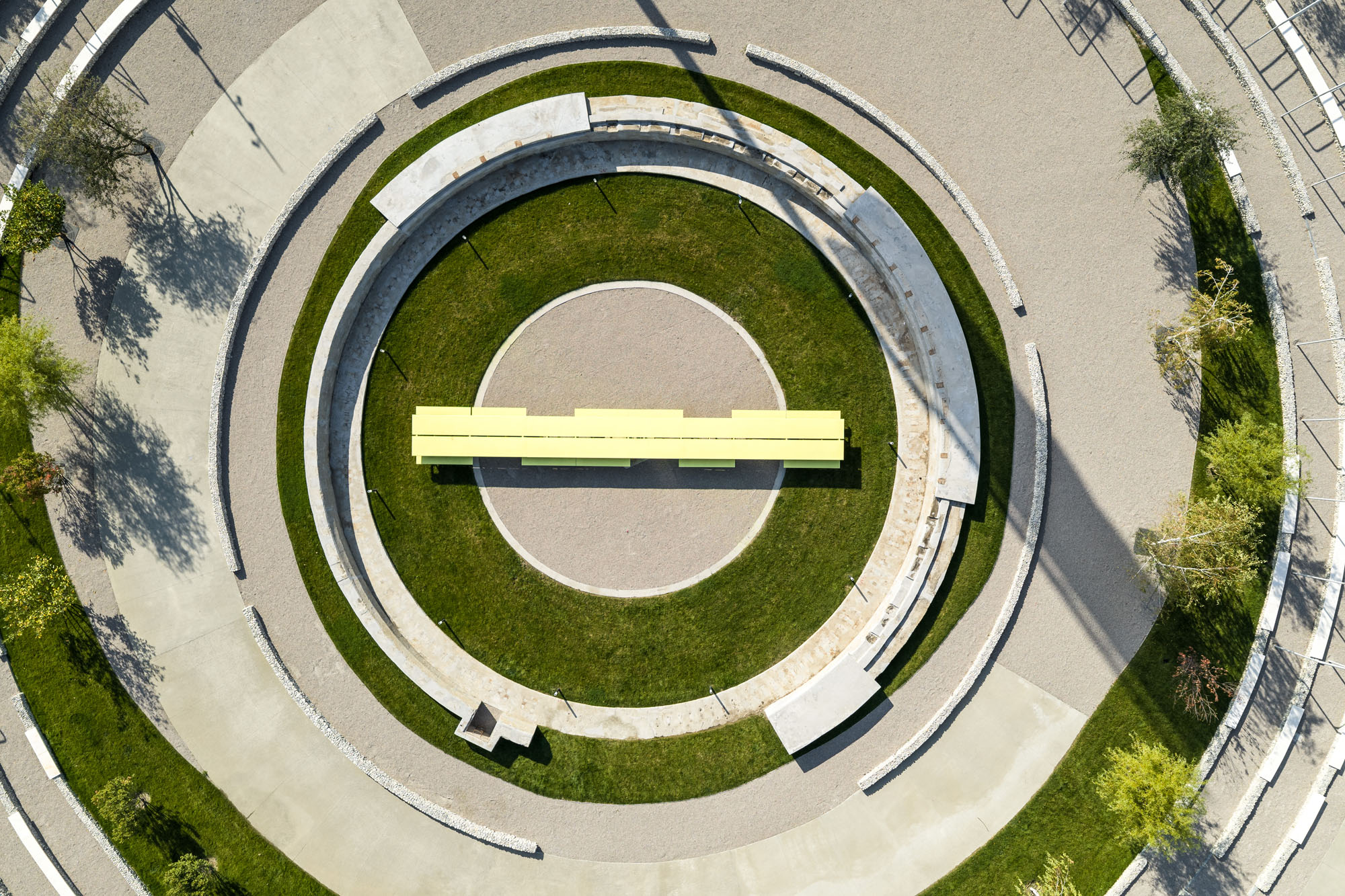
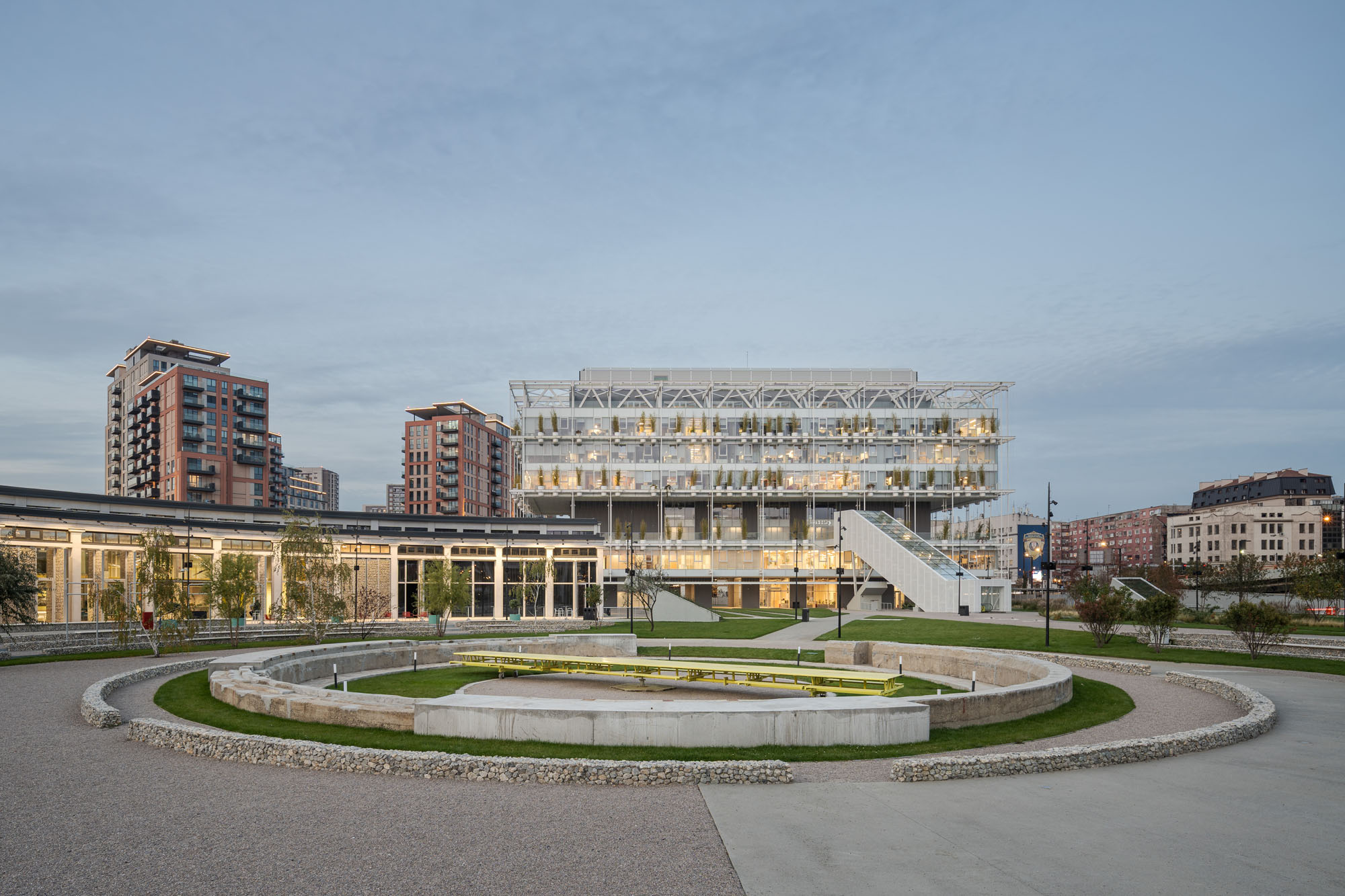
改修された中央のターンテーブルは歩行者動線の要となり、その中心では新たに設置された全長16mのコミュニティテーブルが回転する仕掛けとなっている。
©︎ Miloš Martinović
©︎ Ilya Ivanov
空中に浮かぶ「電子政府ハウス」
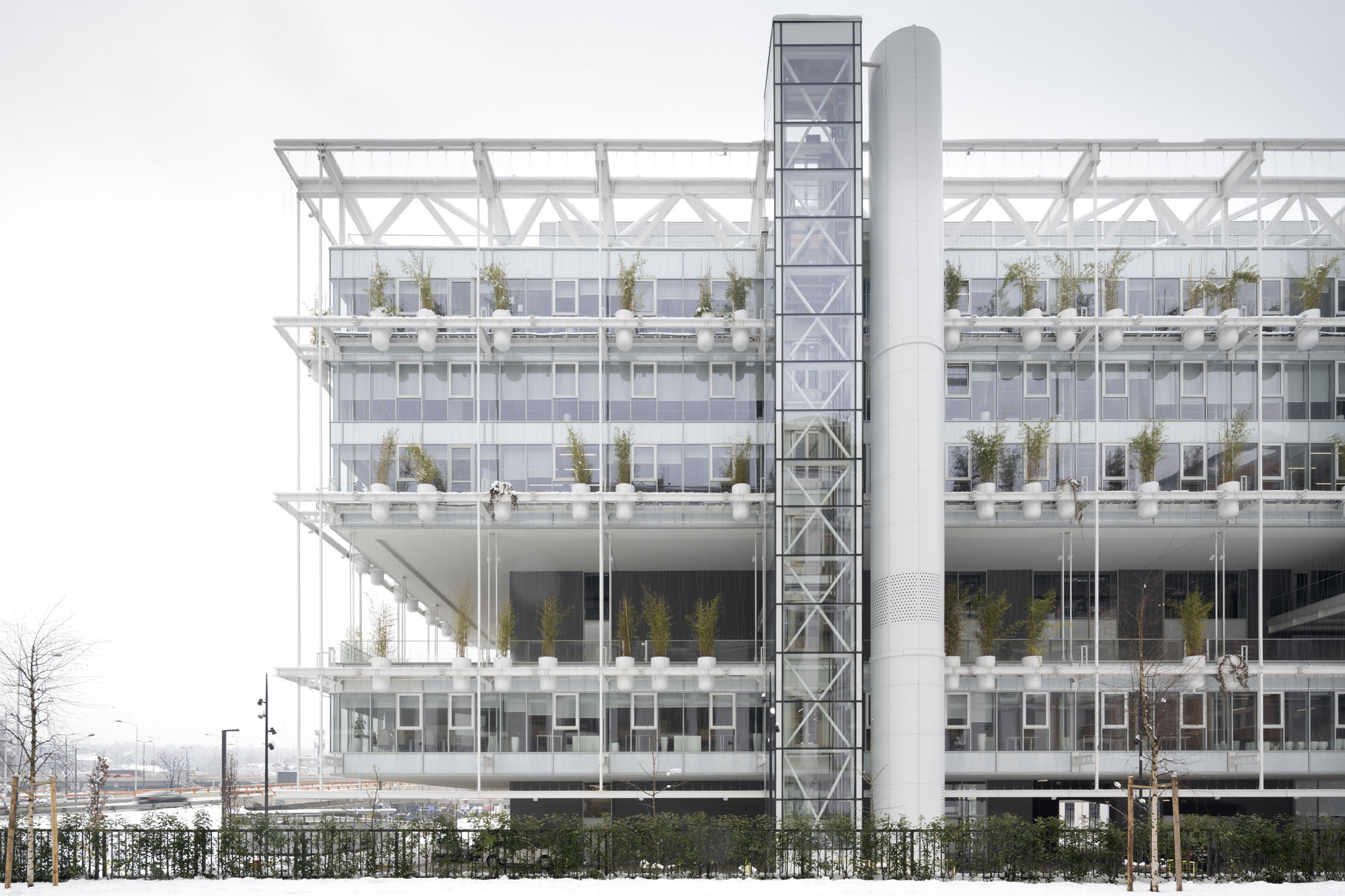
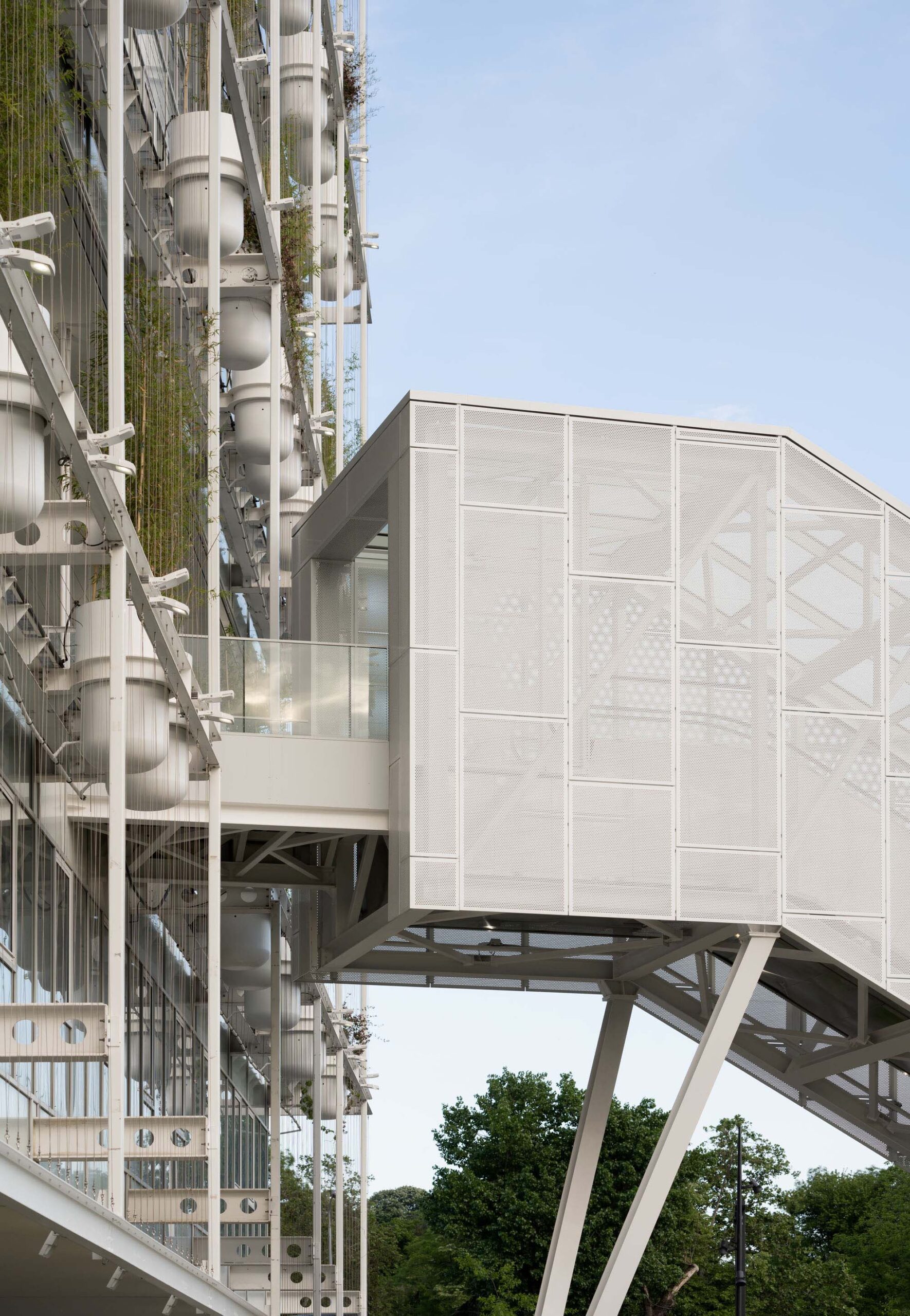
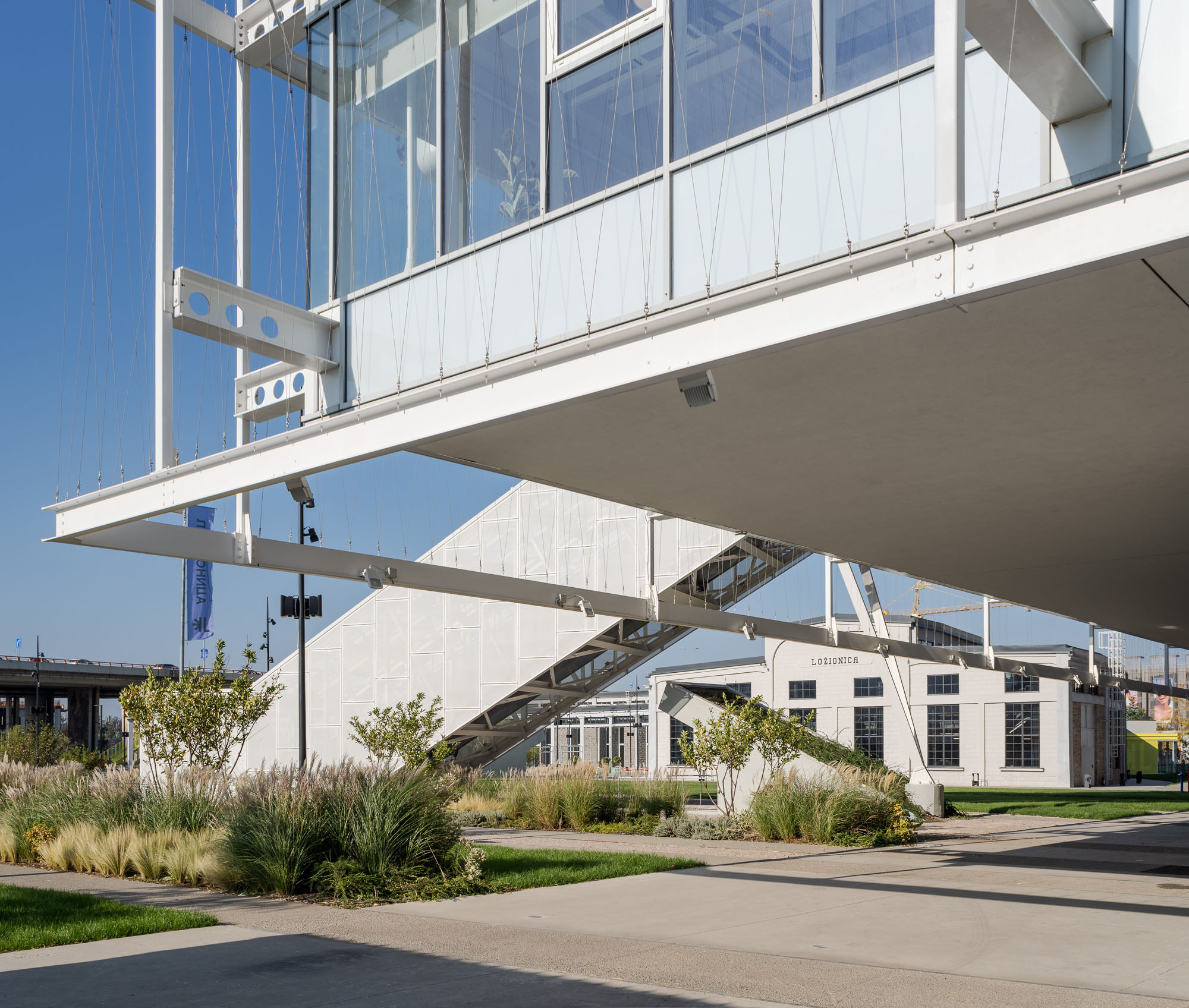
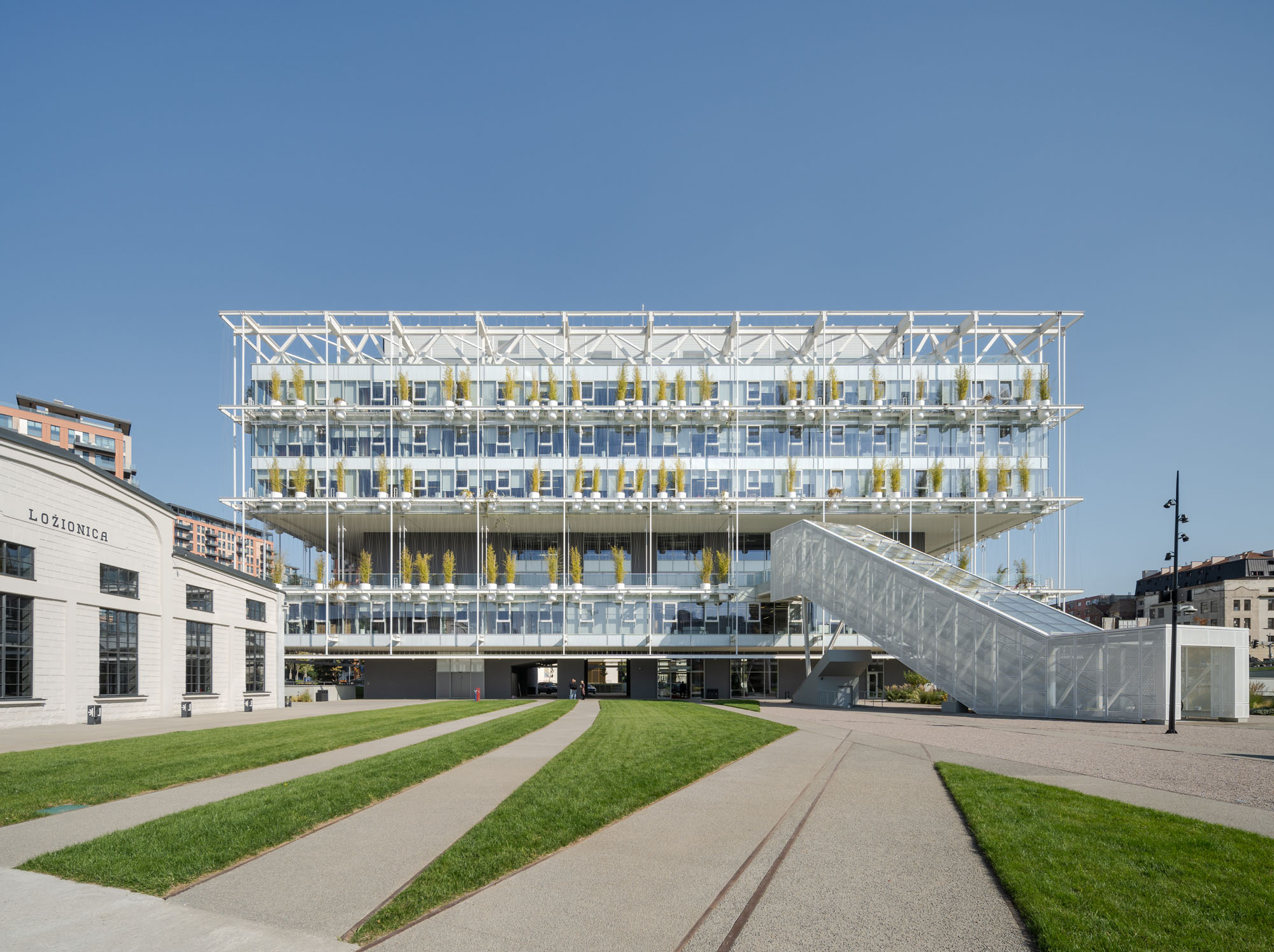
新築された「電子政府ハウス(House of e-Government)」は、この地域全体にとって建築的・構造的な画期となる存在である。幅11mの中央鉄筋コンクリートコアを軸に、周囲を8.5mのキャンチレバー(片持ち構造)で支持することで、まるで空中に浮かんでいるかのような構造を実現した。
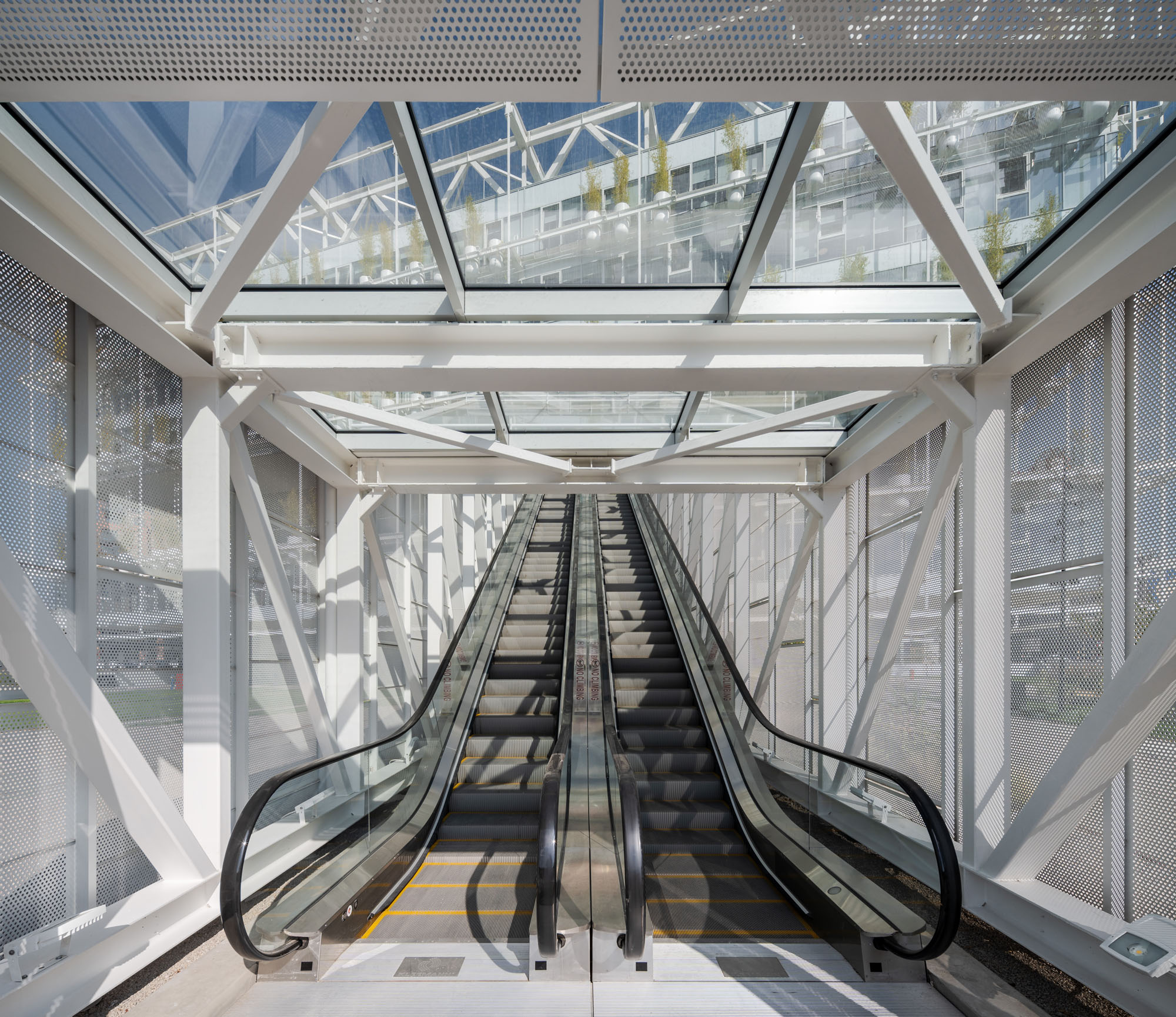
2階にはパノラマビューを楽しめる公共テラスが設けられており、屋外エスカレーターで自由にアクセスできる。この設計は、敷地内の公共エリアを劇的に拡張し、都市との社会的絆を強化する意図によるものである。
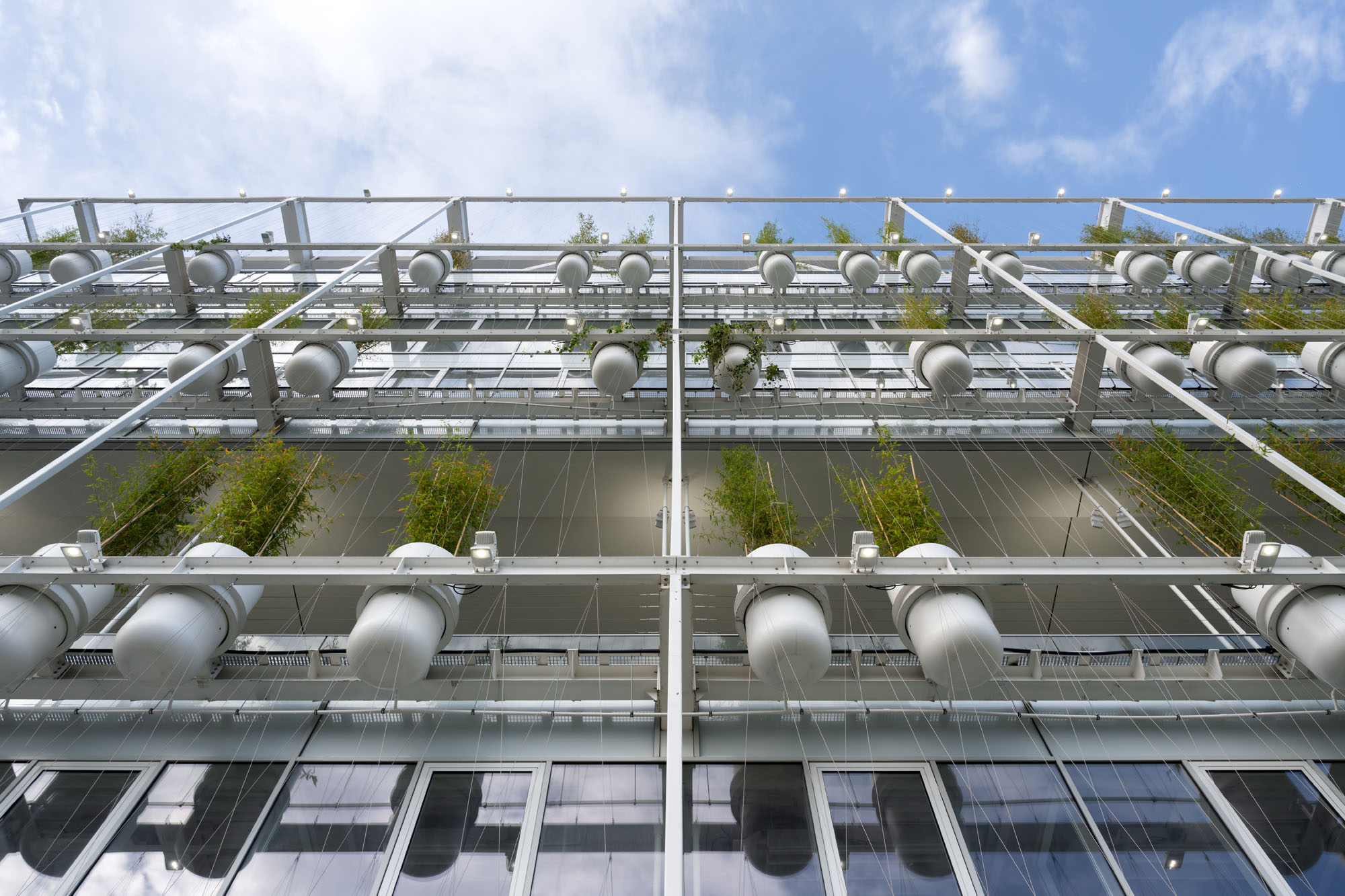
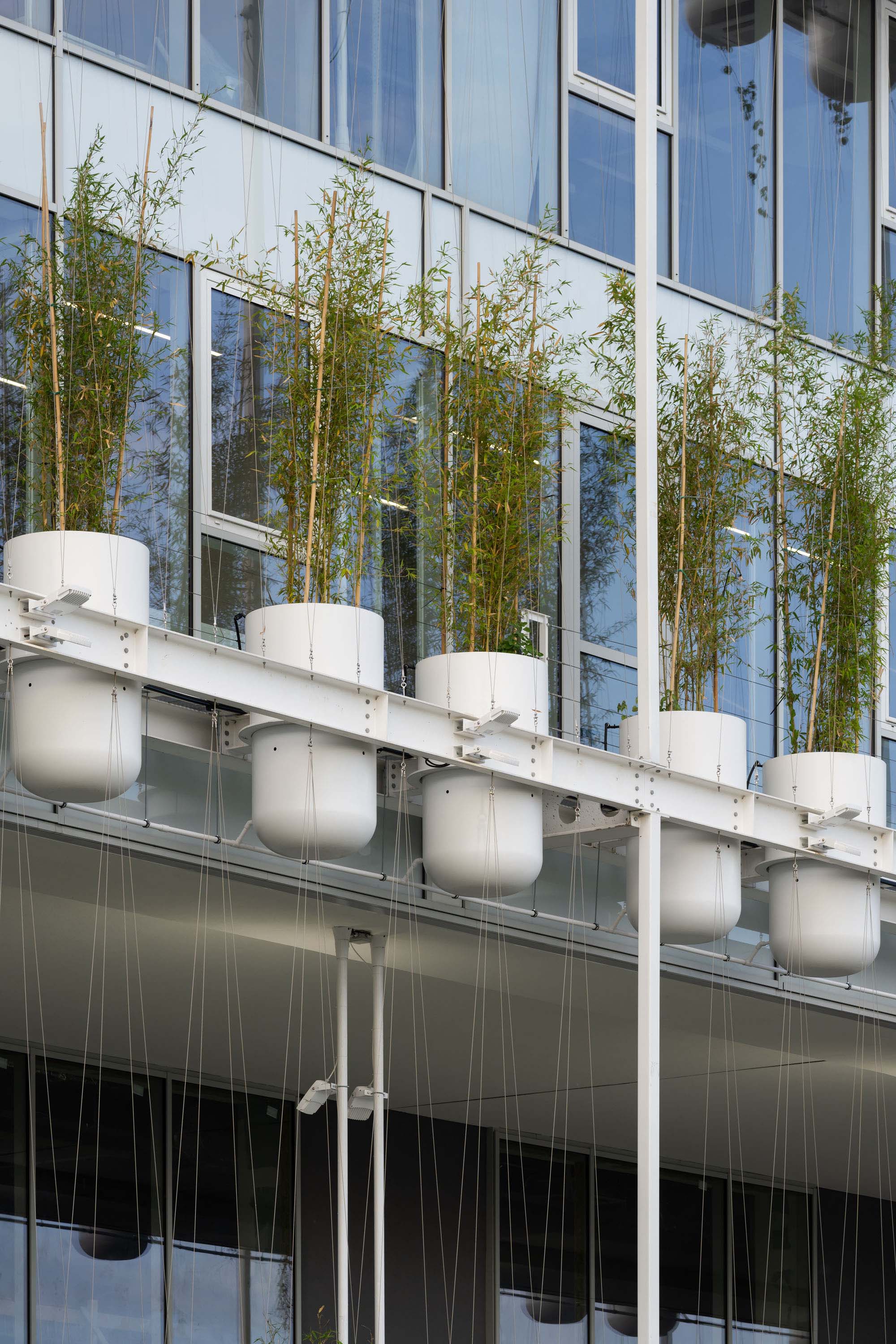
また、建築家によって入念に設計された垂直に伸びる竹林「酸素の外皮」は、ベオグラードで最も大気汚染が深刻な地域の1つにおける作業環境を改善するための試みである。スマートな吊り下げ式プランターと周囲を覆う細いスチールワイヤーメッシュにより、将来的には建物全体を厚い緑の緩衝帯が包み込むことが期待されている。
©︎ Ilya Ivanov
©︎ Ilya Ivanov
©︎ Ilya Ivanov
©︎ Ilya Ivanov
©︎ Miloš Martinović
©︎ Miloš Martinović
©︎ Miloš Martinović
©︎ Miloš Martinović
©︎ Miloš Martinović
©︎ Ilya Ivanov
©︎ Ilya Ivanov
©︎ Ilya Ivanov
©︎ Ilya Ivanov
©︎ Ilya Ivanov
©︎ Ilya Ivanov
©︎ Ilya Ivanov
©︎ Ilya Ivanov
©︎ Ilya Ivanov
©︎ Ilya Ivanov
©︎ Ilya Ivanov
©︎ Ilya Ivanov
©︎ Miloš Martinović
©︎ Miloš Martinović
©︎ Miloš Martinović
©︎ Miloš Martinović
©︎ Miloš Martinović
©︎ Miloš Martinović
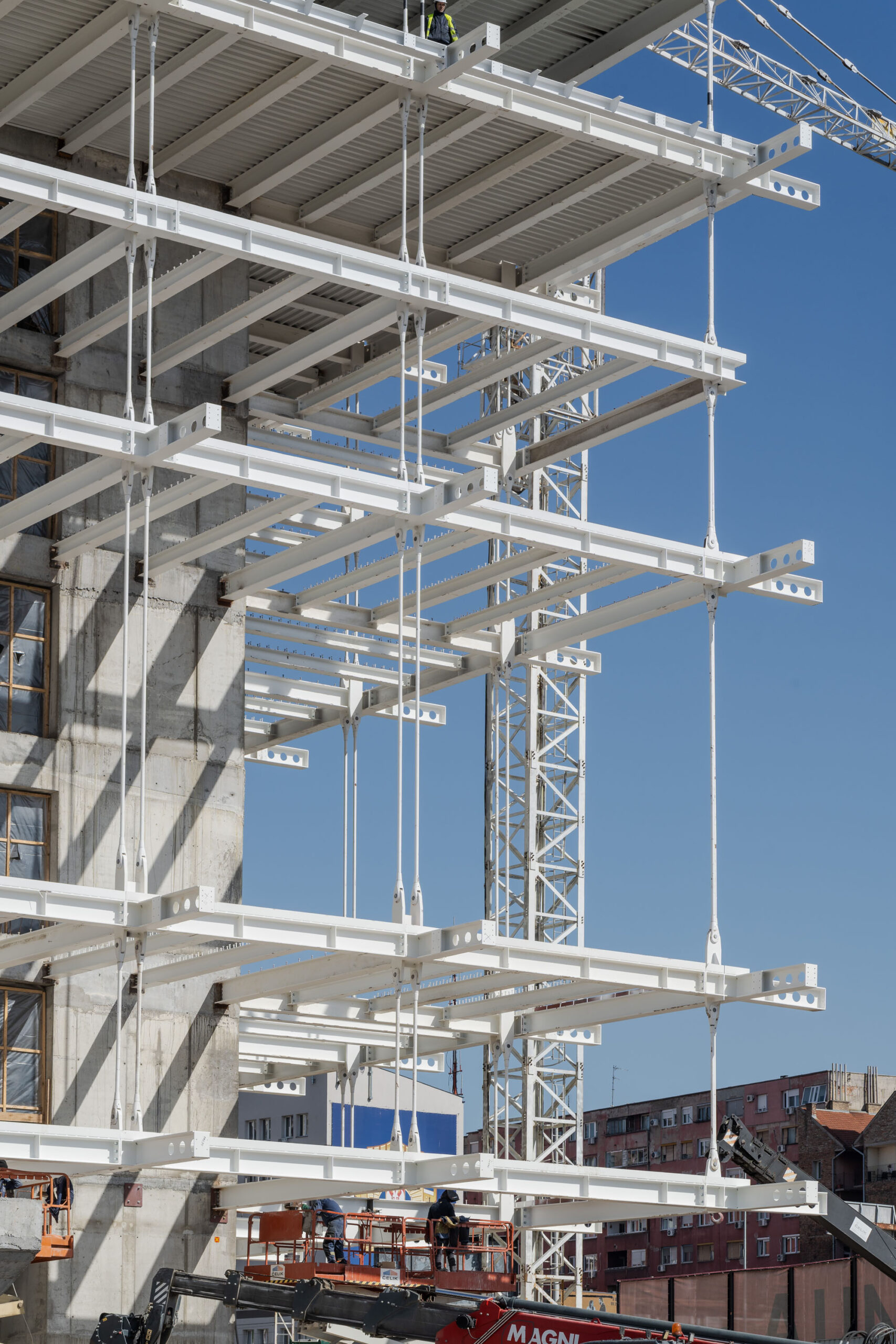
Construction ©︎ Miloš Martinović
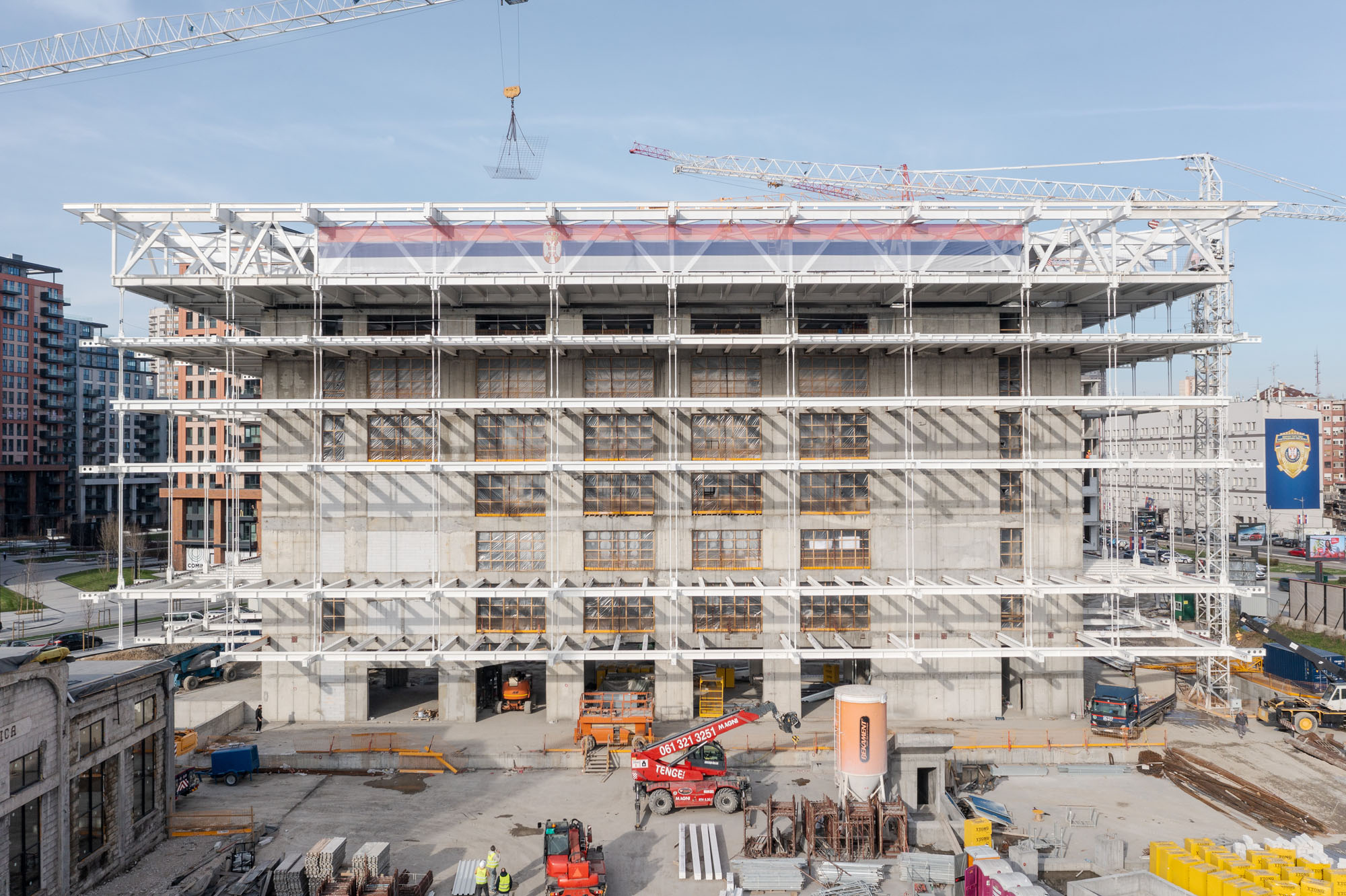
Construction ©︎ Miloš Martinović
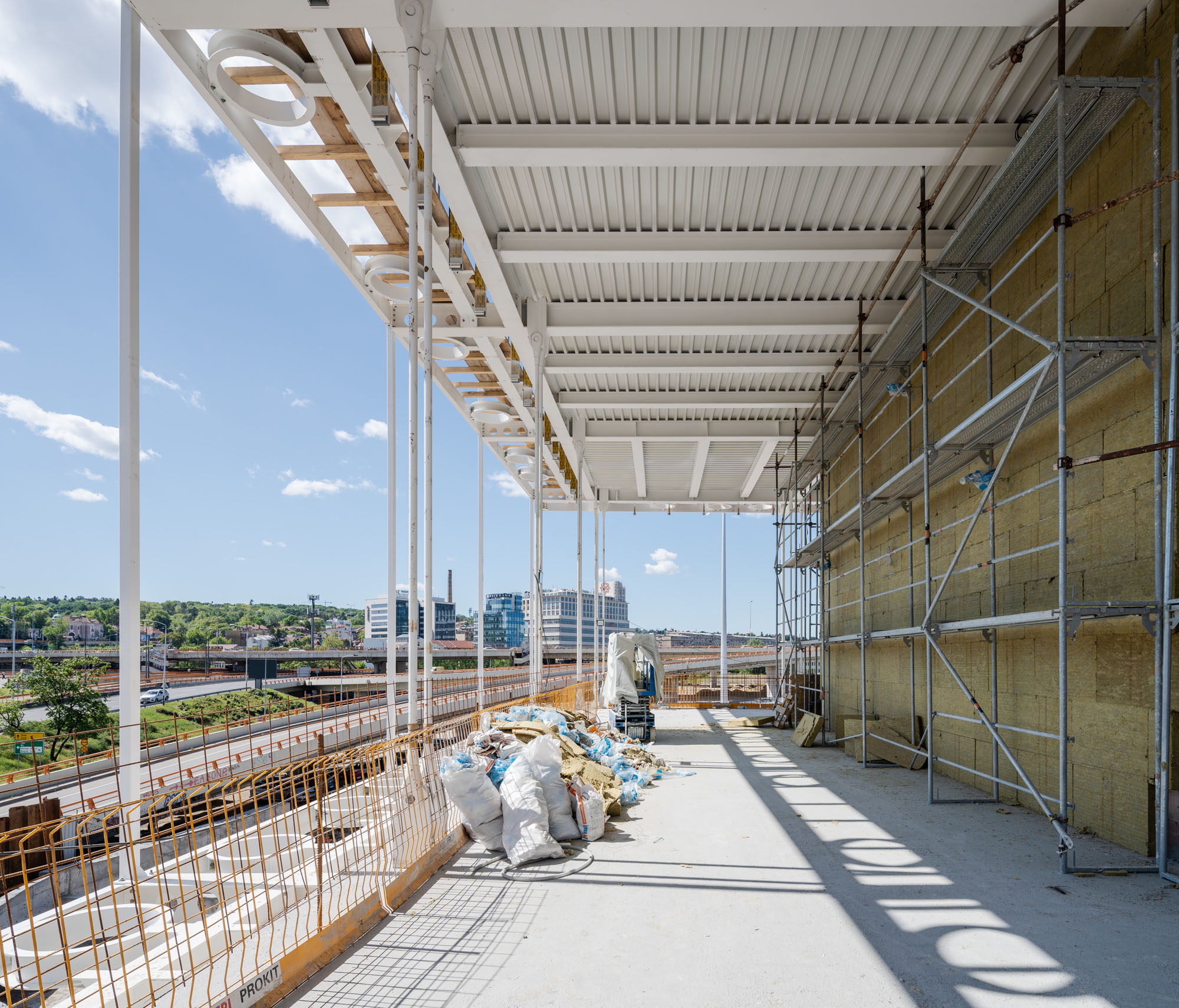
Construction ©︎ Miloš Martinović
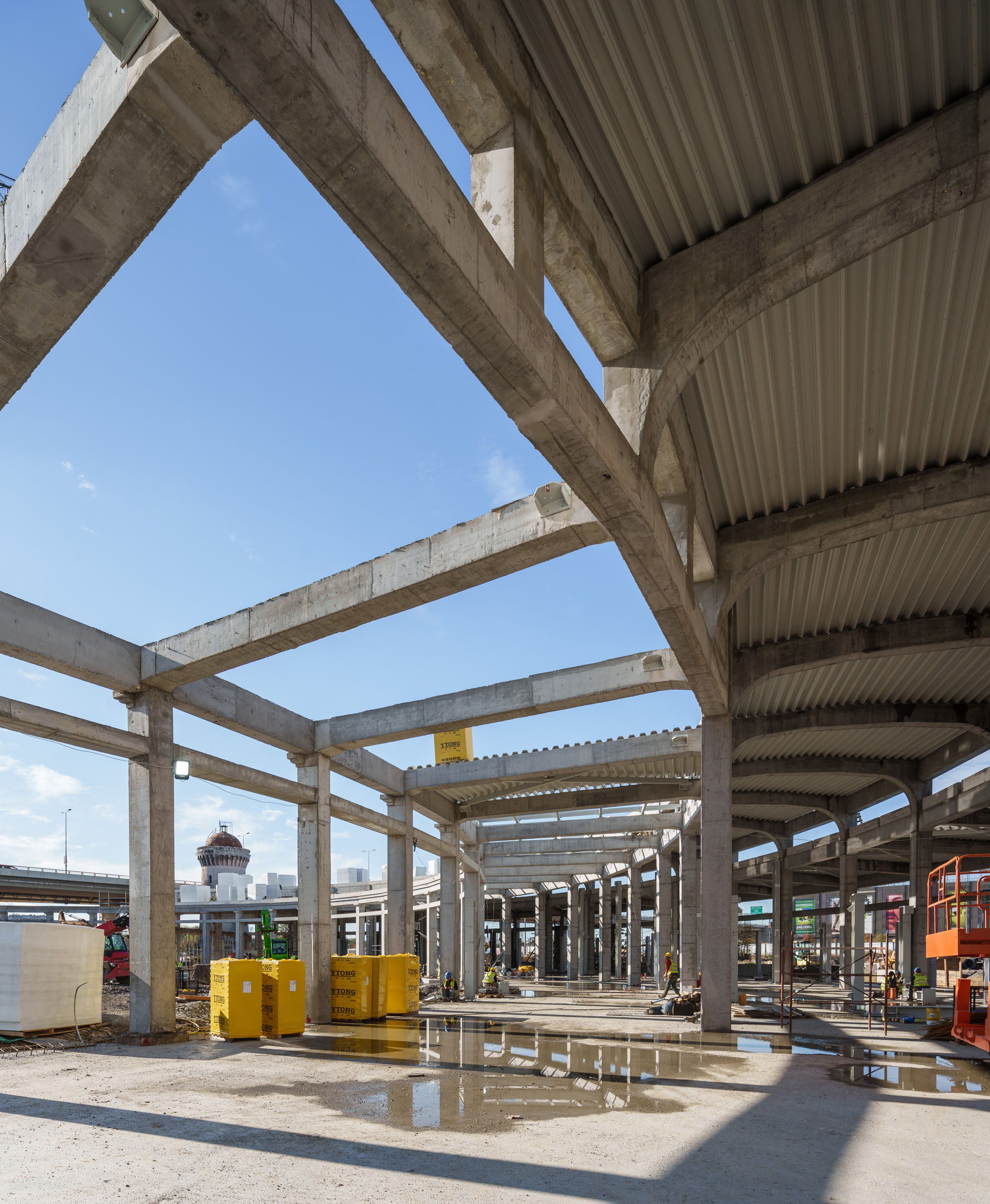
Construction ©︎ Miloš Martinović
Construction ©︎ Miloš Martinović
Construction ©︎ Miloš Martinović
Construction ©︎ Miloš Martinović
以下、AKVSアーキテクチャのリリース(英文)です。
AKVS ARCHITECTURE
Center for Creative Industries and Innovations “Ložionica” and the House of e-GovernmentLožionica’s revitalization project transforms Belgrade’s historic railway site through adaptive reuse and new structures, offering a unique mix of offices, public spaces, and cultural programmes within a challenging urban context. The site represents a few of the remaining industrial heritage mementos of Belgrade riverfront area that has been undergoing significant urbanization during the past few decades. This led to the announcement of an open architectural competition in 2021 by the Office for IT and eGovernment of the Republic of Serbia and the national platform Serbia Creates, organized by the Association of Architects of Serbia. The brief asked for a new home for all creative industries to meet under one roof, a multifunctional open public space, and the addition of one new mixed-use office building.
The winning competition design by AKVS architecture envisioned new architectural elements that, like modern implants, contribute to the healing of the whole. The original space of a one-hundred-year-old boiler room is preserved in its full height and authentic proportions, without divisions. It features three key interventions by the architects: an independent yellow-steel gallery for additional working areas, large gabion panels at multiple entry points, and a glazed roof at the heart of the building. Steel terraces of the new gallery levitate at different heights within the voluminous industrial space, creating a unique co-working landscape with a strong sense of togetherness among Ložionica’s creative community. Slender, 5m high gabion panels, filled with railway rocks, filter sunlight, creating magical plays of sun and shadow inside. The repurposed spaces of Ložionica include a multifunctional black-box hall, a community restaurant, a large exhibition space under the glazed roof in the centre, and a variety of co-working spaces on the gallery overlooking the public space ahead. The old Watertower is repurposed for immersive exhibitions and painted in terracotta red, like the nearby Gazela bridge, which largely determined its fate in the past. It is connected to Ložionica park via a 33m-span steel pedestrian bridge. The new multifunctional park builds upon the rich historical mental map of the old railway site – previous locomotive routes now become routes of its visitors. The refurbished central Turntable becomes the focal point of pedestrian circulation, with the newly added 16-meter-long community table rotating in its center.
The new House for e-Government is an architectural and structural milestone for the entire region, being suspended in thin air around the central 11-meter-wide reinforced concrete core, with an 8.5-meter cantilever all around it. It features a panoramic public terrace on the 2nd floor, fully accessible via an open-air escalator, a gesture that dramatically extends the site’s public area and strengthens its social bonds with the city. Its oxygen envelope – a vertical bamboo forest – was carefully developed by the architects to improve the working conditions within one of the most contaminated aerial environments in Belgrade. With smart suspended planters and a thin steel wire mesh all around, it is expected to grow a thick green buffer all around the building in the future.
AWARDS:
The Award of the City of Belgrade – Despot Stefan Lazarević 2025 for Architecture and Urbanism
Piranesi Honourable Mention 2025, Piran Days of Architecture
GRAND PRIX in Architecture category, Balkan Architectural Biennale 2025
GRAND PRIX in Non-realization category, Balkan Architectural Biennale 2025
”B40 – Creative Industries Youth Awards” for best design and architecture, Agency for Creative Industries, TiranaPROJECT DETAILS:
Project name: Center for Creative Industries and Innovations “Ložionica” and the House of e-Government
Location: Belgrade, SerbiaArchitecture: AKVS architecture
Lead architects: Anđela Karabašević Sudžum, Vladislav SudžumClient: Government of the Republic of Serbia, Office for IT and e-Government, Serbia Creates
Project managers: Dragana Čukić, Nikola MatićCompetition Winner (2021): AKVS architecture
Original design of the Railway complex (1925-1927): Nikola Raičković, engineer
General Designer: Mašinoprojekt KOPRING, Projektinženjering TIM
Interior design: INKA studio (Ložionica), MAPA architects (House of e-Government)
Main contractor: M Enterijer Gradnja
Supervision: Beo Potez, Bureau Cube Partners, AG Institute
Acoustics: Profakustika
Landscape consultant: Ema Đorđević
Suppliers, Subcontractors: Čelik doo, Alumil, Interal, Wiesen, Urban Garden, Struja, EXIng, Terracotta Flooring…
Year of design/realization: 2022 / 2025
Area: 23.200m2, of which Ložionica 4.800m2, House of e-Government 11.000m2, underground garage 7.400m2, open space 10.000m2
Budget: 63 000 000 EUR
Photography: Miloš Martinović, Ilya Ivanov
AKVSアーキテクチャ 公式サイト
https://www.ak-vs.com