
アートサイトの観光客と村民をつなぐ憩いの場 - 村の構造から見出した、微小なずれで環境に溶け込む〈竜游ツーリストセンター〉
© Wen Studio
© Wen Studio
中国・浙江省の竜游県(りゅうゆうけん)に位置する〈竜游ツーリストセンター(Longyou Tourist Center)〉は、100年を経た木造住宅とその前庭を活用した、村民と観光客のための休憩スペースです。
中国の設計事務所 アトリエtao+c(atelier tao+c)が設計しました。
注目ポイント
- 住人同士の関係から自然に形成された不規則な村道のネットワーク
- 周辺環境へ応答する角度や屋根のずれ
- 古民家改修における「消極的な介入」
- 外部者としての立場を意識した、控えめで可逆的な介入
(以下、アトリエtao+cから提供されたプレスキットのテキストの抄訳)
© Wen Studio
住人同士の関係から生まれた村の独特な構造
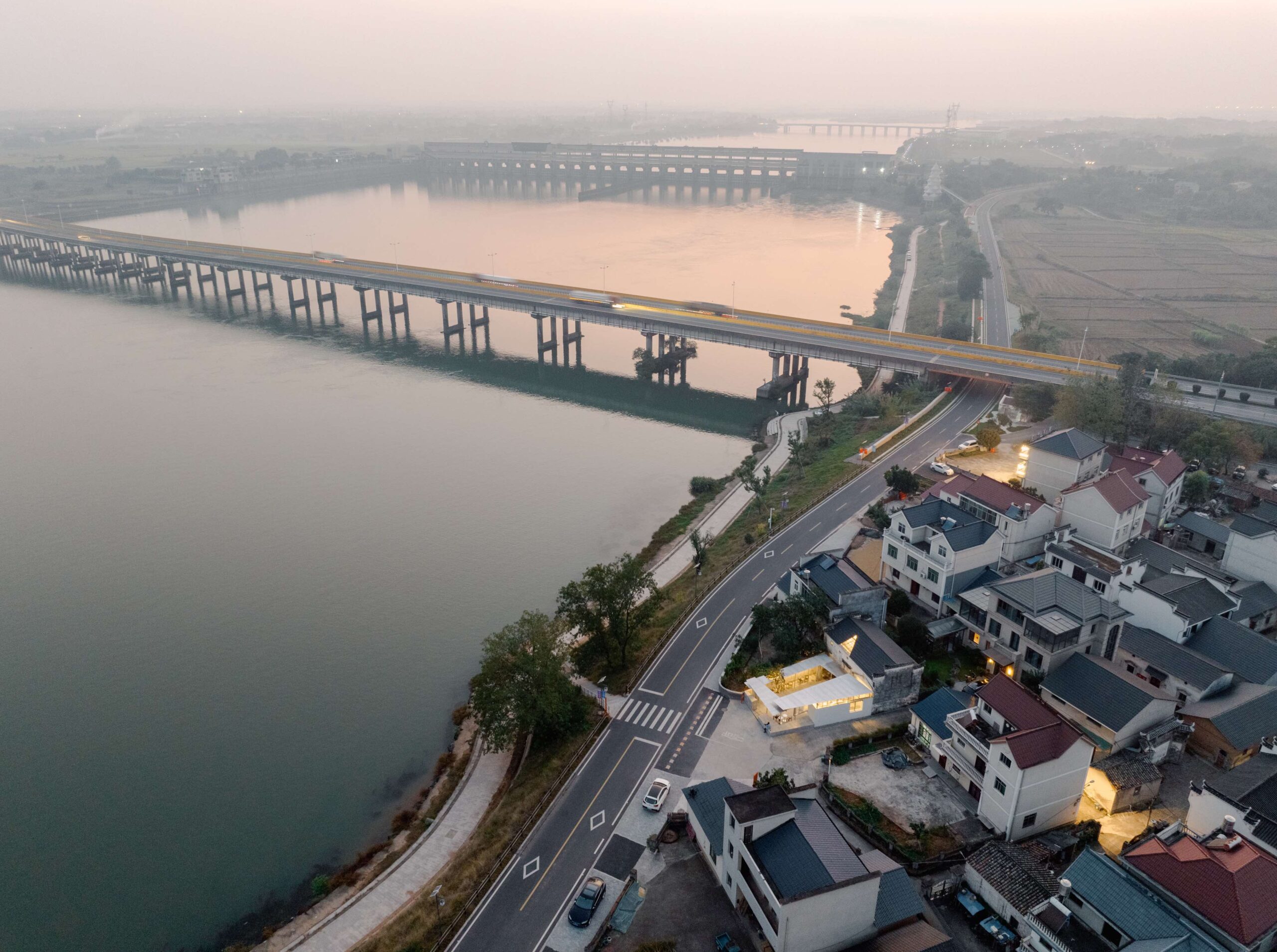
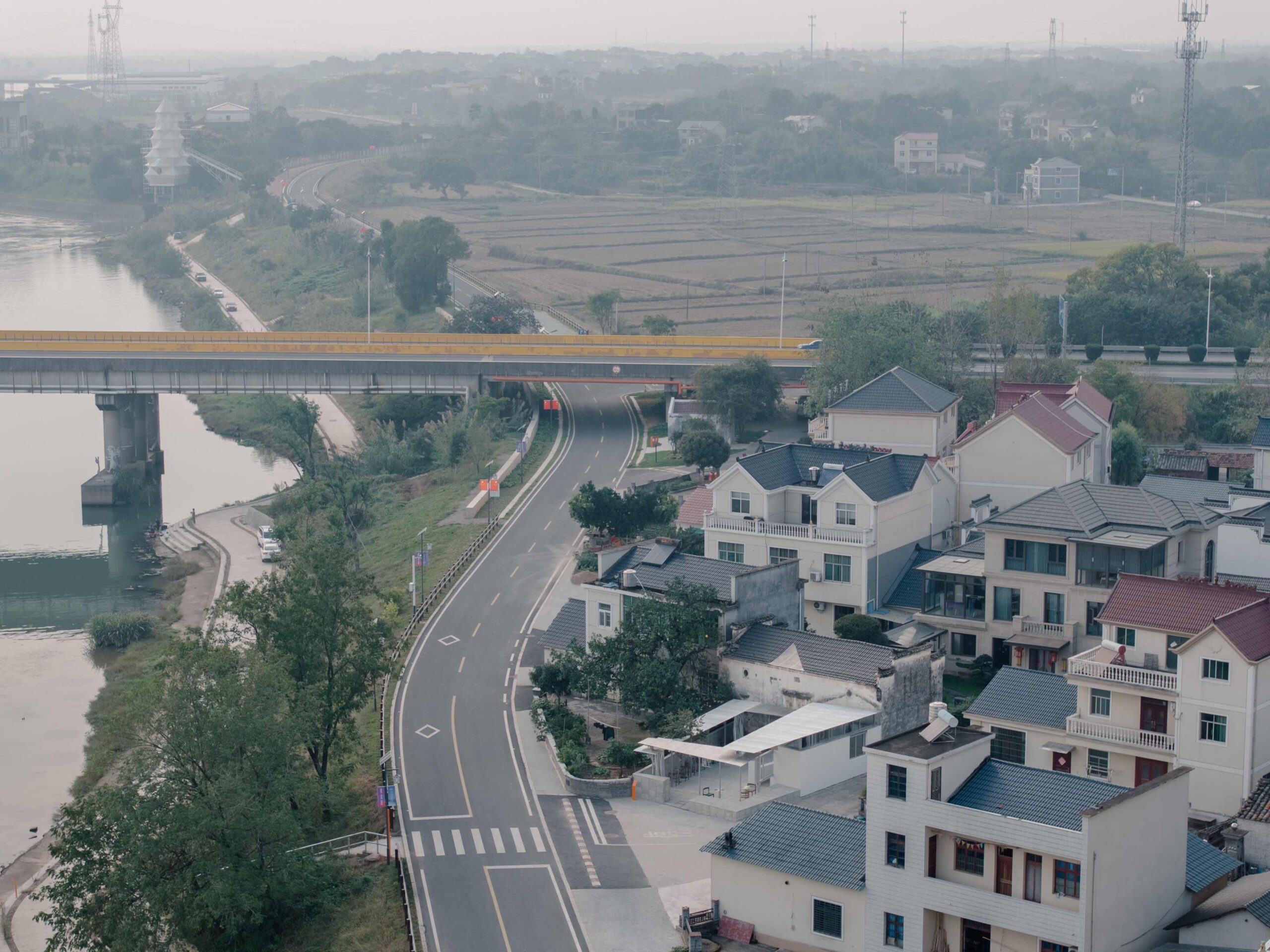
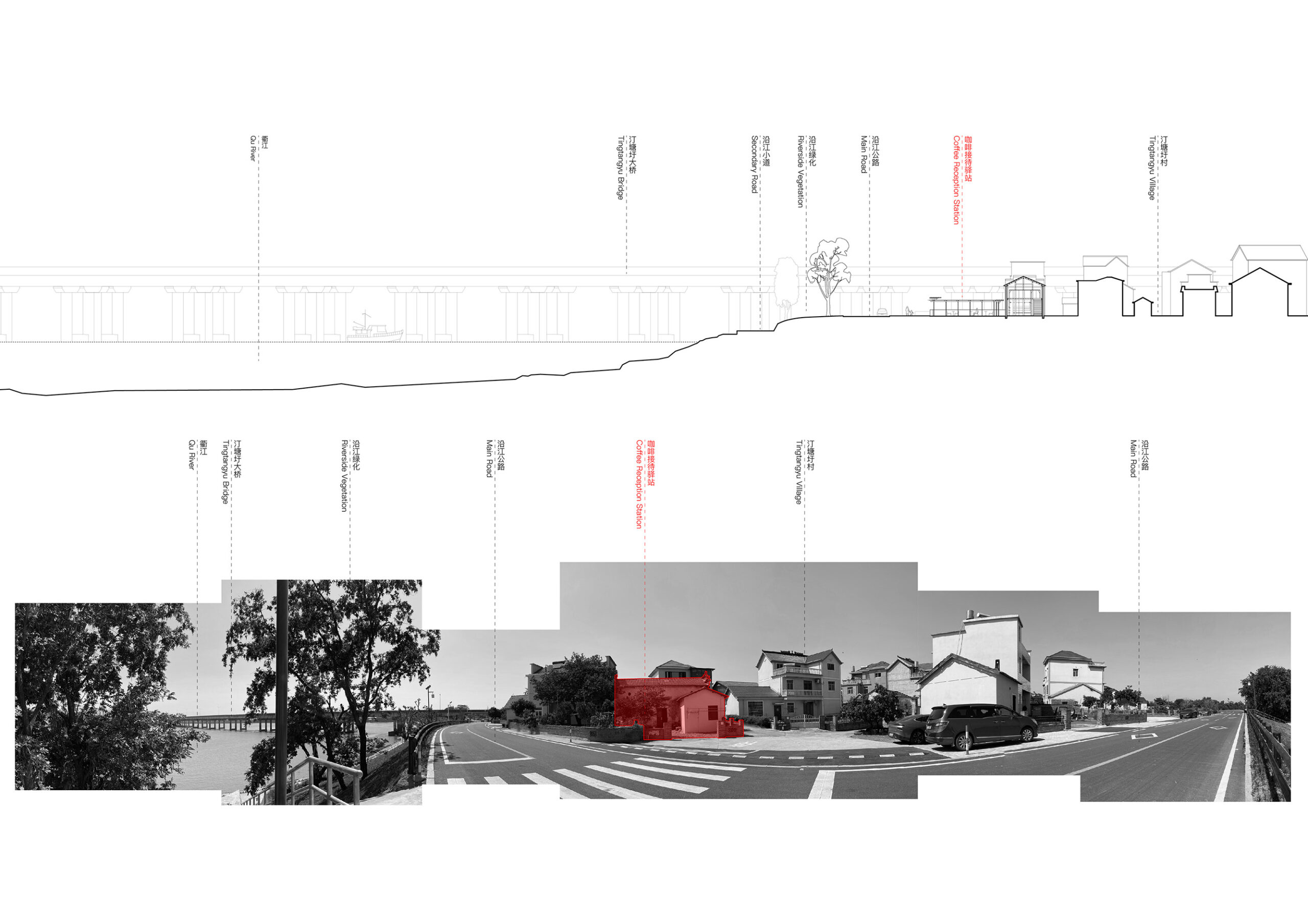
汀塘圩大橋を渡り、衢江を跨ぐと、汀塘圩村に到着する。村は川沿いの道路に寄り添うように広がり、村民は村内に住み、村外の田畑で農業を営む。こうした営みが、汀塘圩村の安定した生活の風景を形づくっている。
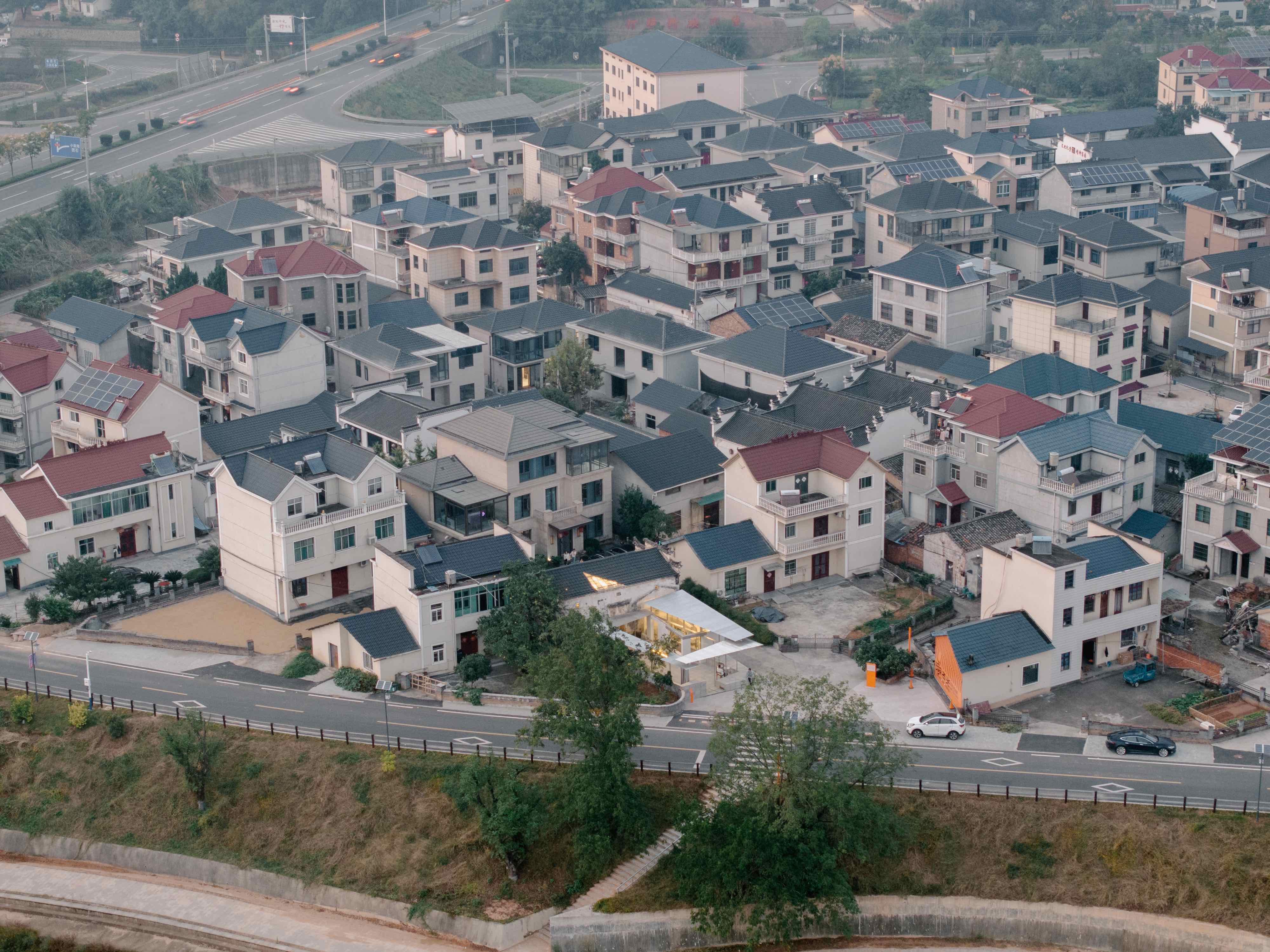
各住戸には不規則な形をした前庭があり、庭であると同時に物干し場でもある。庭の形は、長年にわたる隣人同士の関係から自然に生まれた村道や小径によって切り取られたものである。一見複雑に見える道路網と住宅配置は、農村社会の構造を空間的に映し出したものである。
© Wen Studio
© Wen Studio
瀫石光アートエコサイトの始まり
この村から始まる瀫石光アートエコサイトは、衢江に沿って広がり、アーティストや建築家の作品が点在する。観光客を惹きつけると同時に、村の生活をさりげなく変容させている。
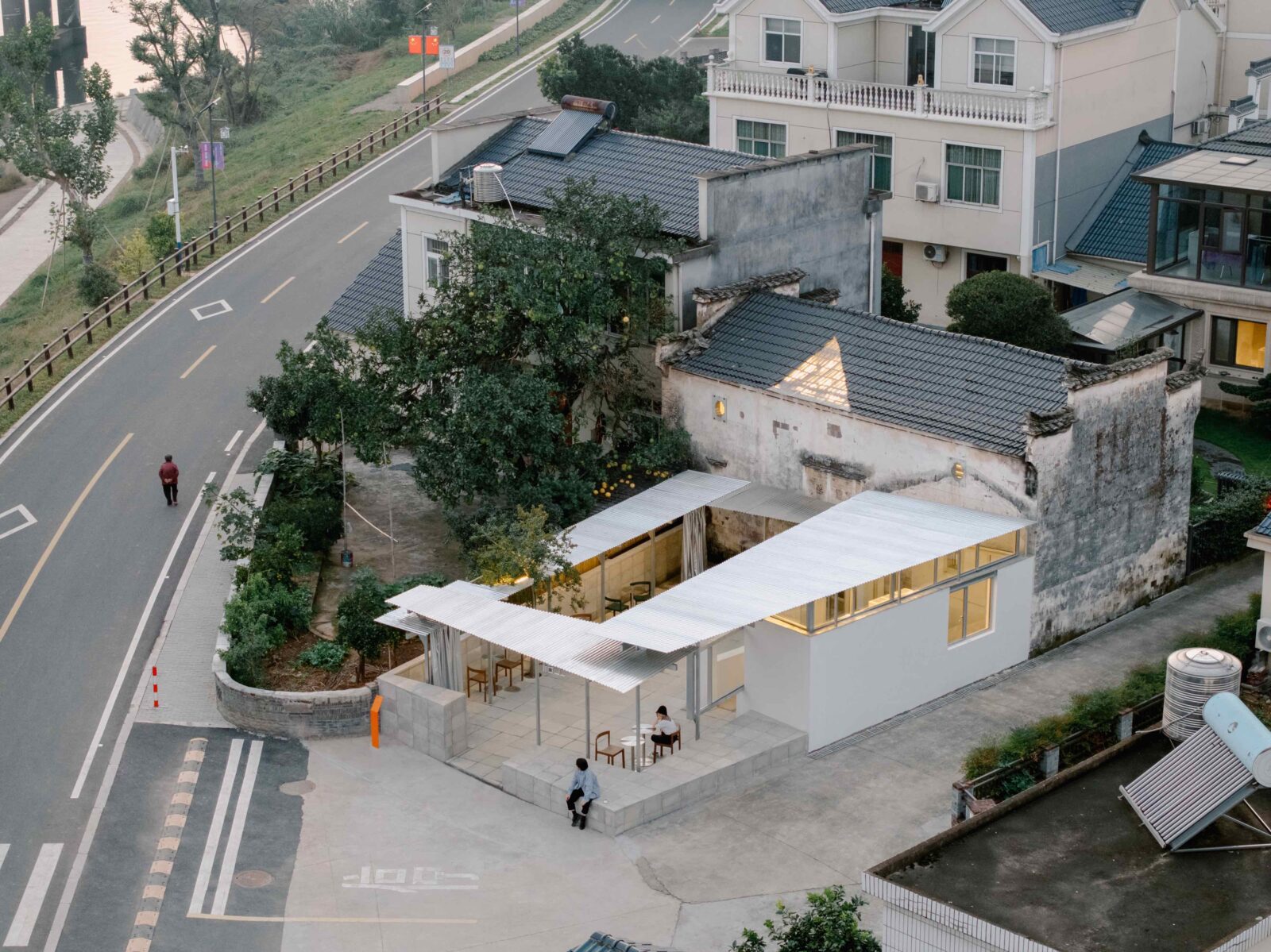
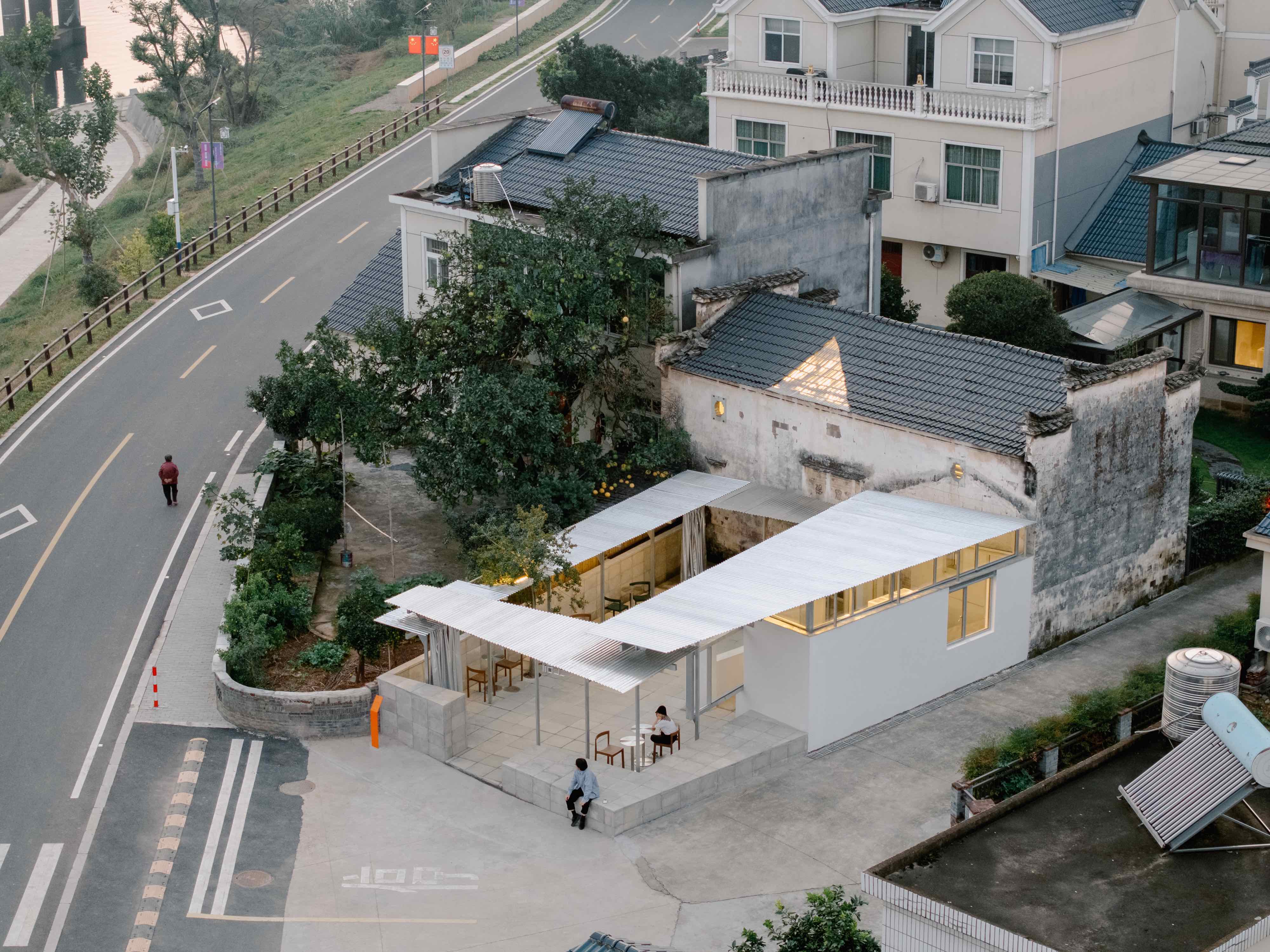
村の入口に位置する一軒の住宅もその一例である。清の時代末期の古い住居、庭、樹木、そして1990年代に増築された台所が特徴であるこの住宅に、アトリエtao+cは休憩スペースを設計した。
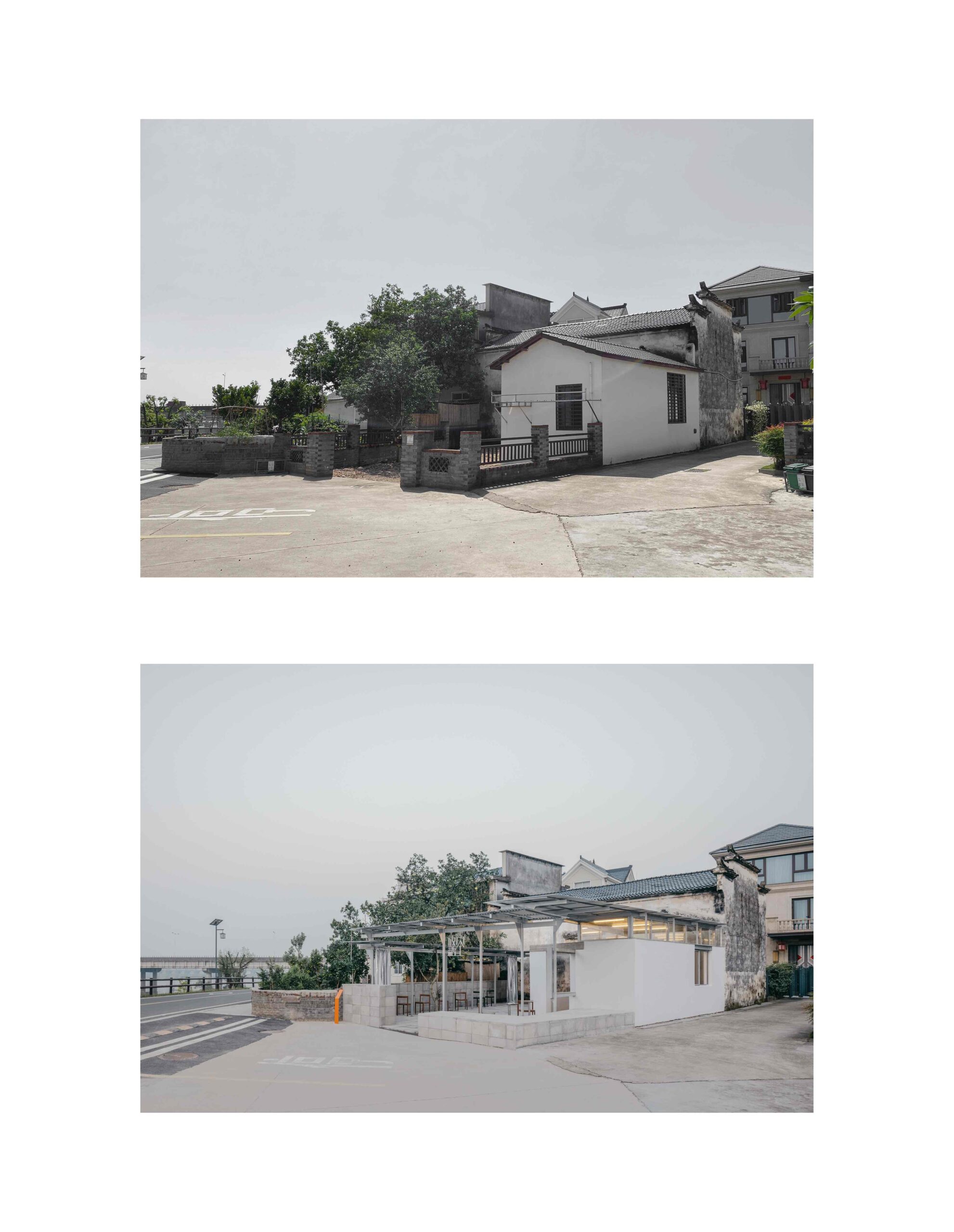
before and after © Wen Studio
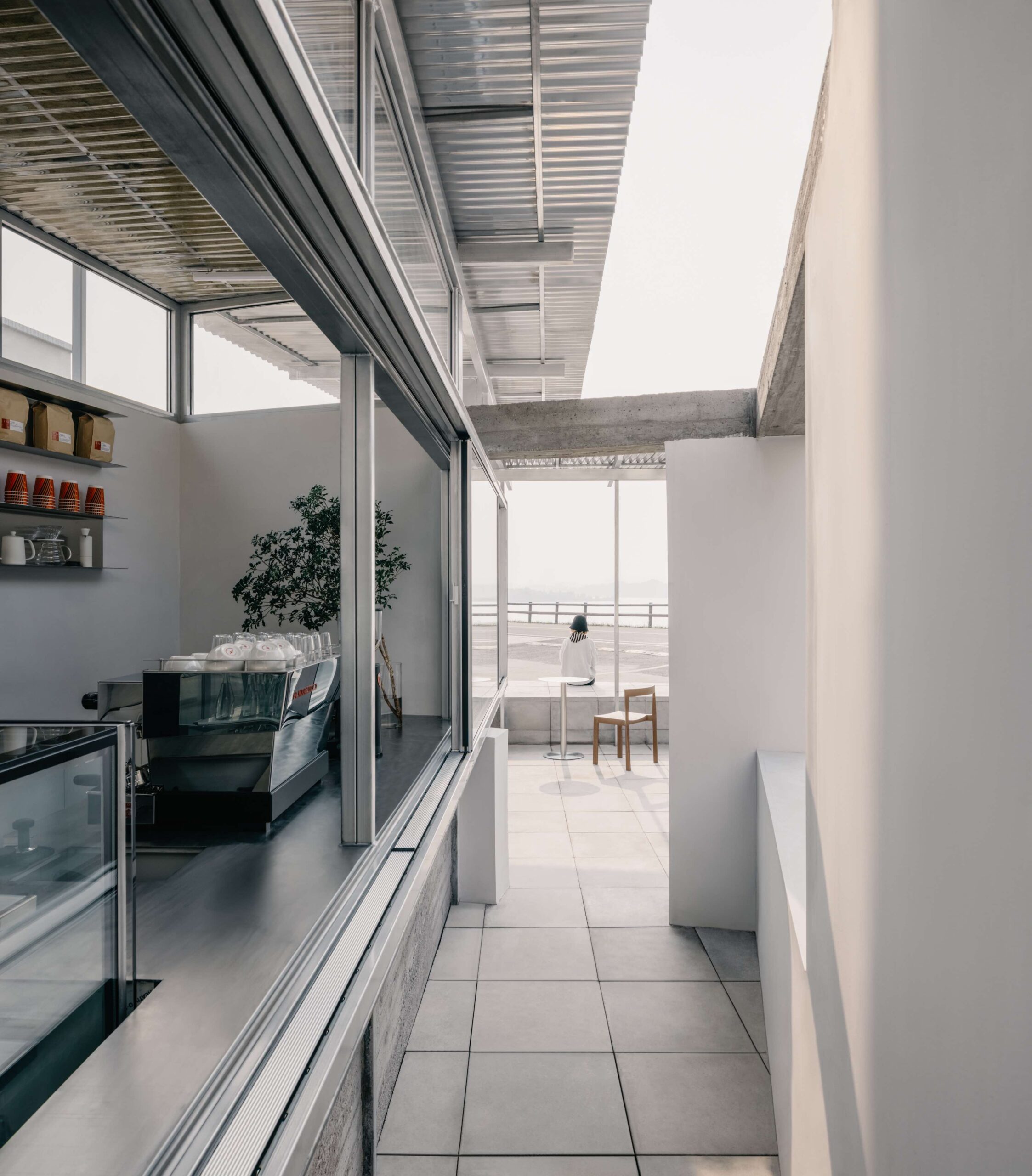
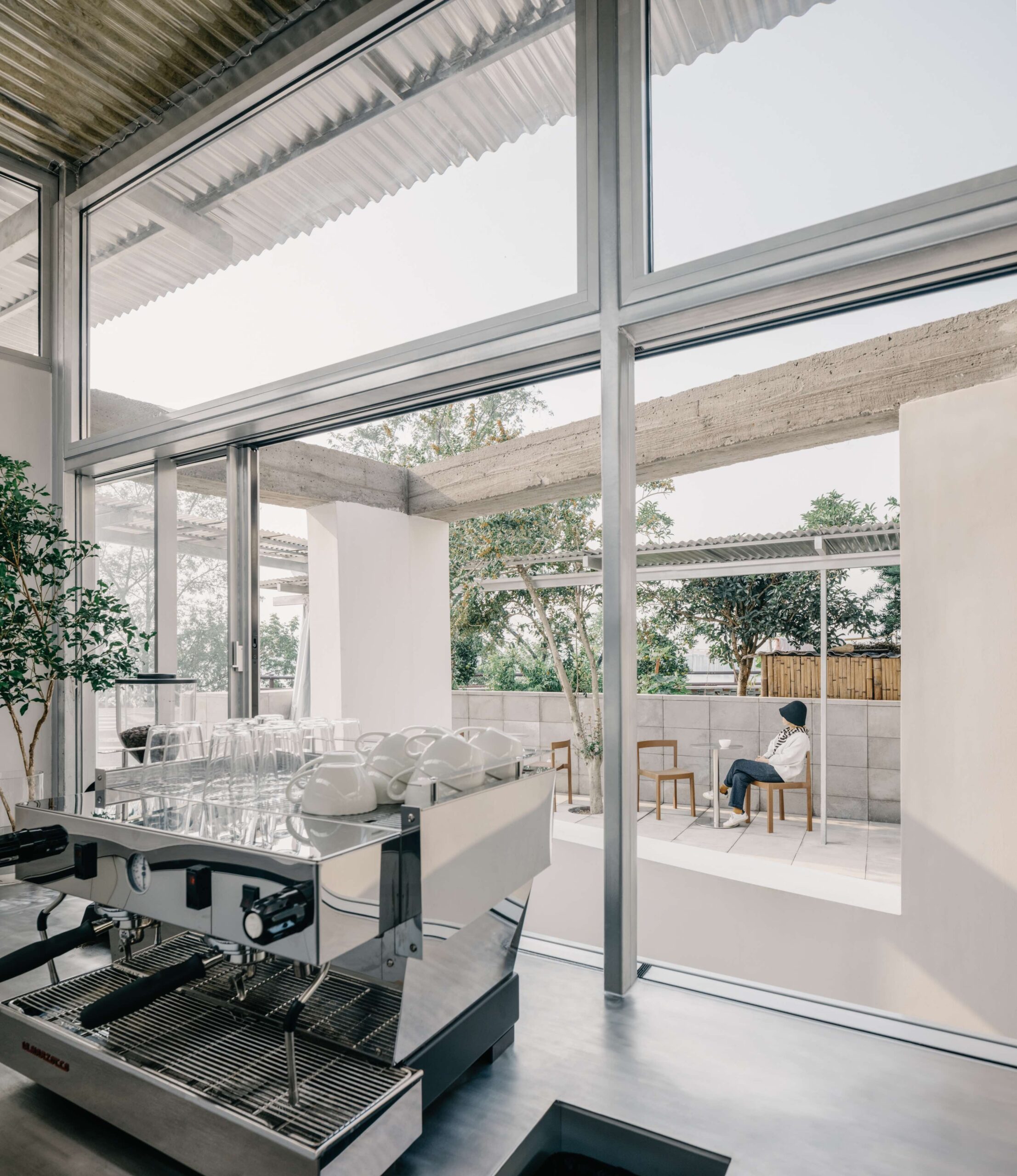
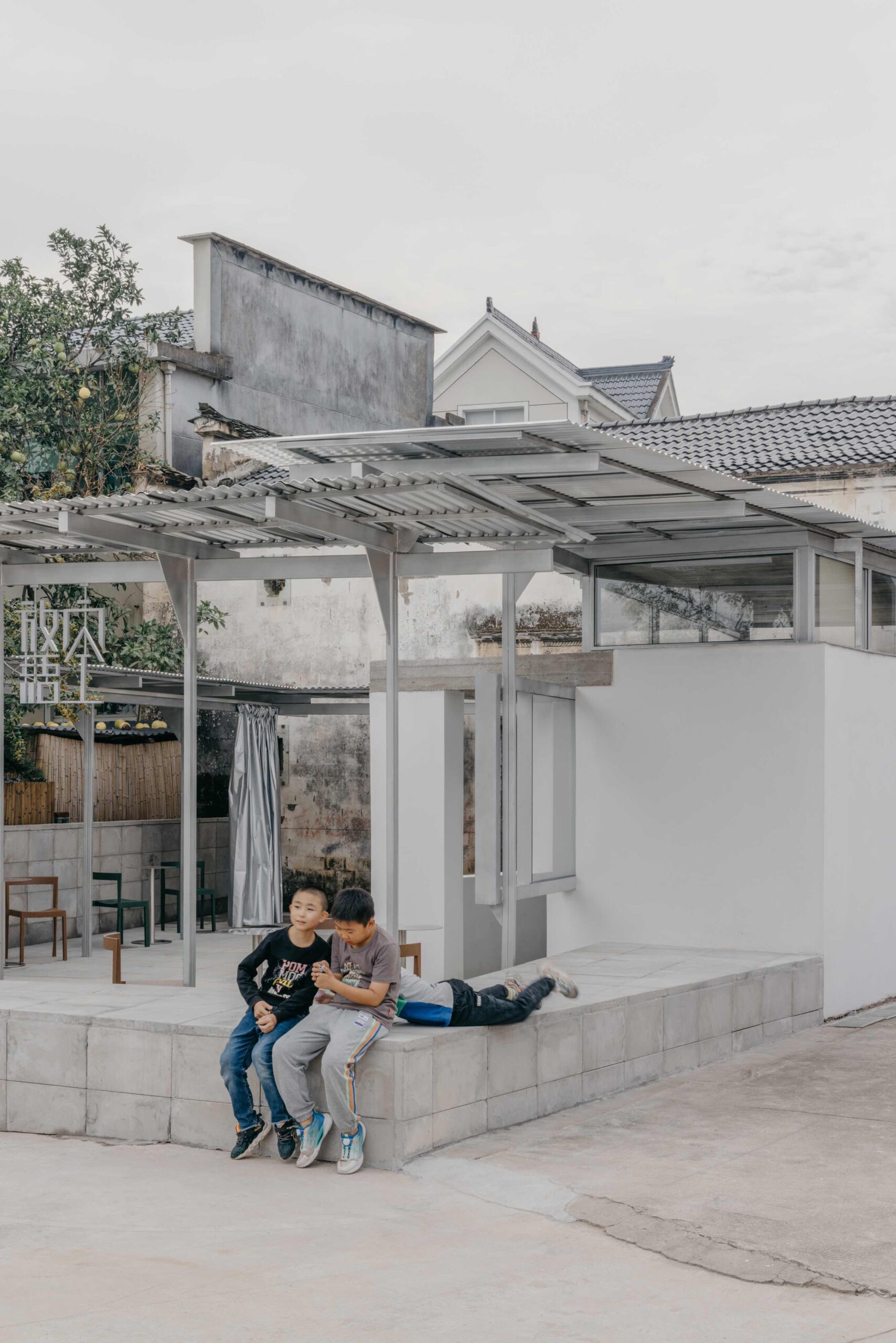
ここは観光ルート沿いの休憩・案内所であると同時に、村民が出入りの折に腰を下ろし、語らう場にもなっており、地元住民と観光客が交わり、自由に交流できる空間となっている。
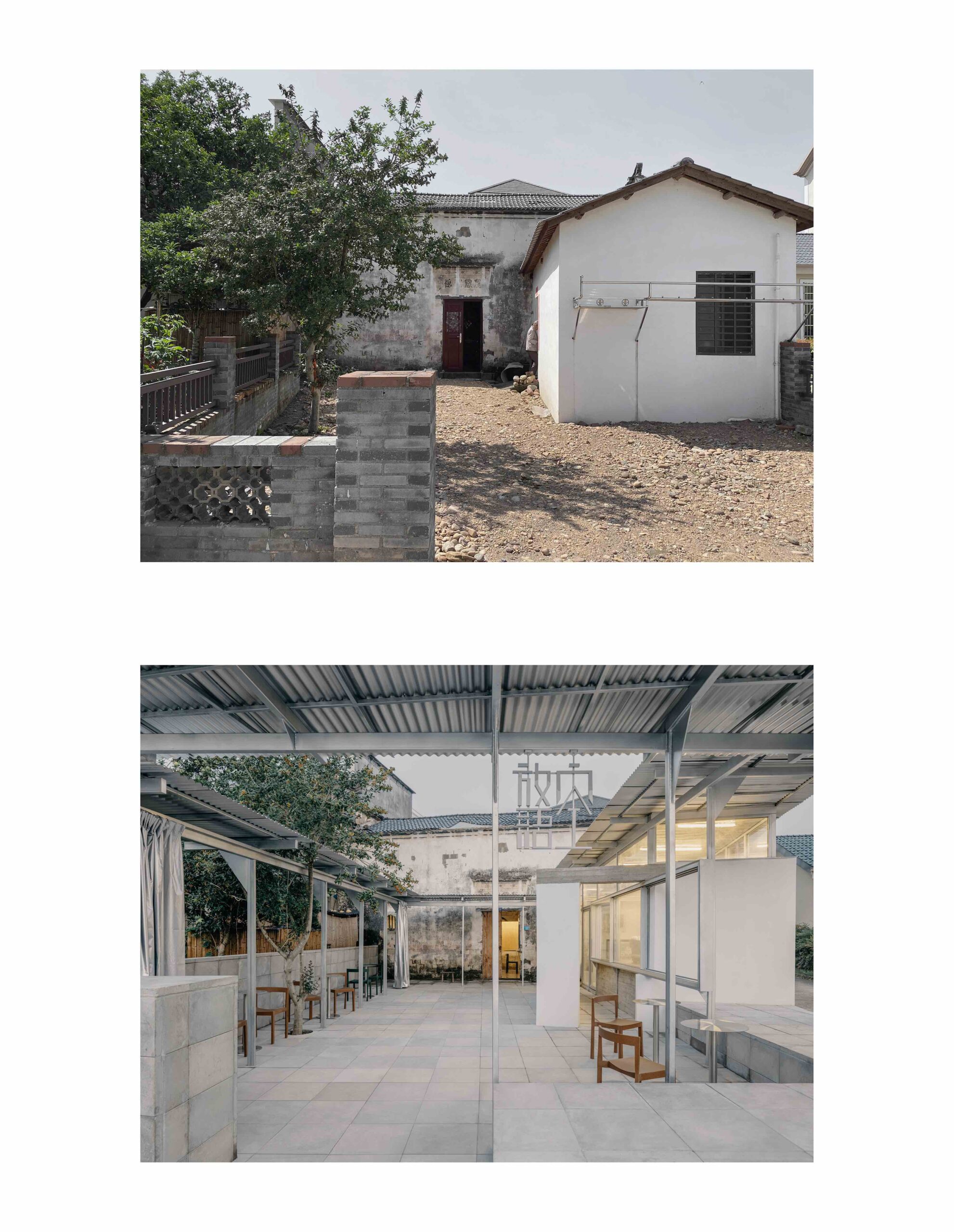
before and after © Wen Studio
微小なずれが生み出す環境との応答
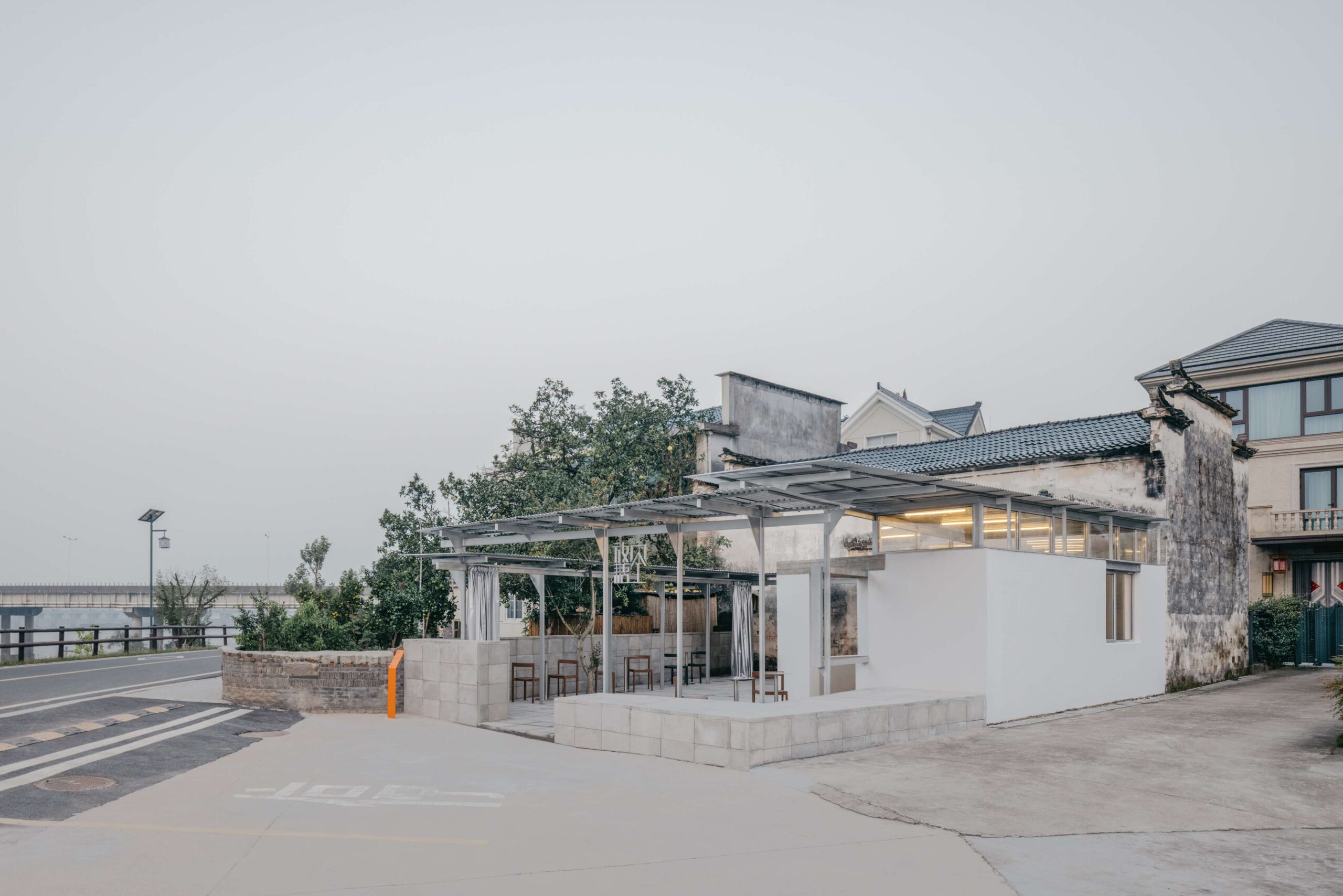
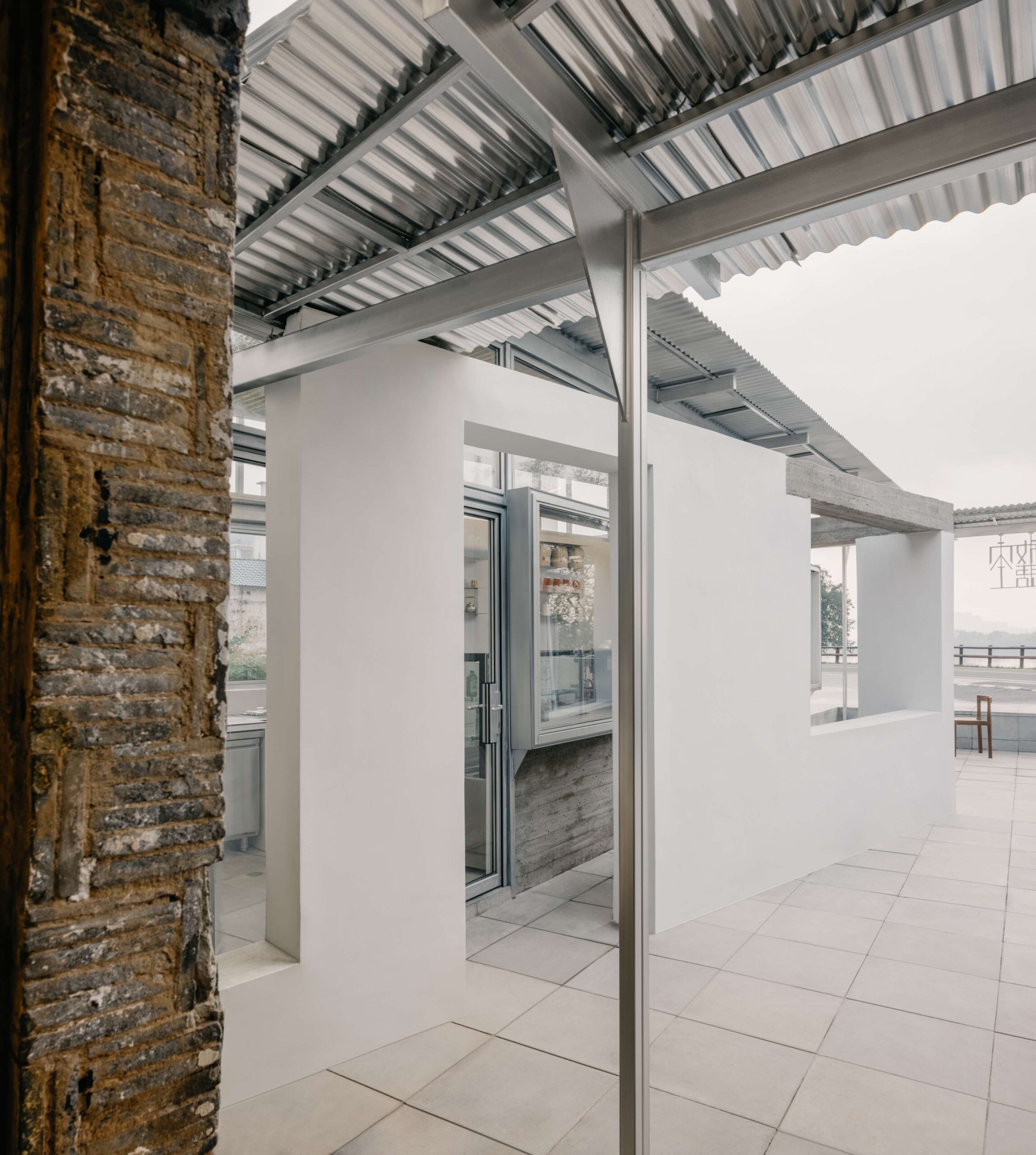
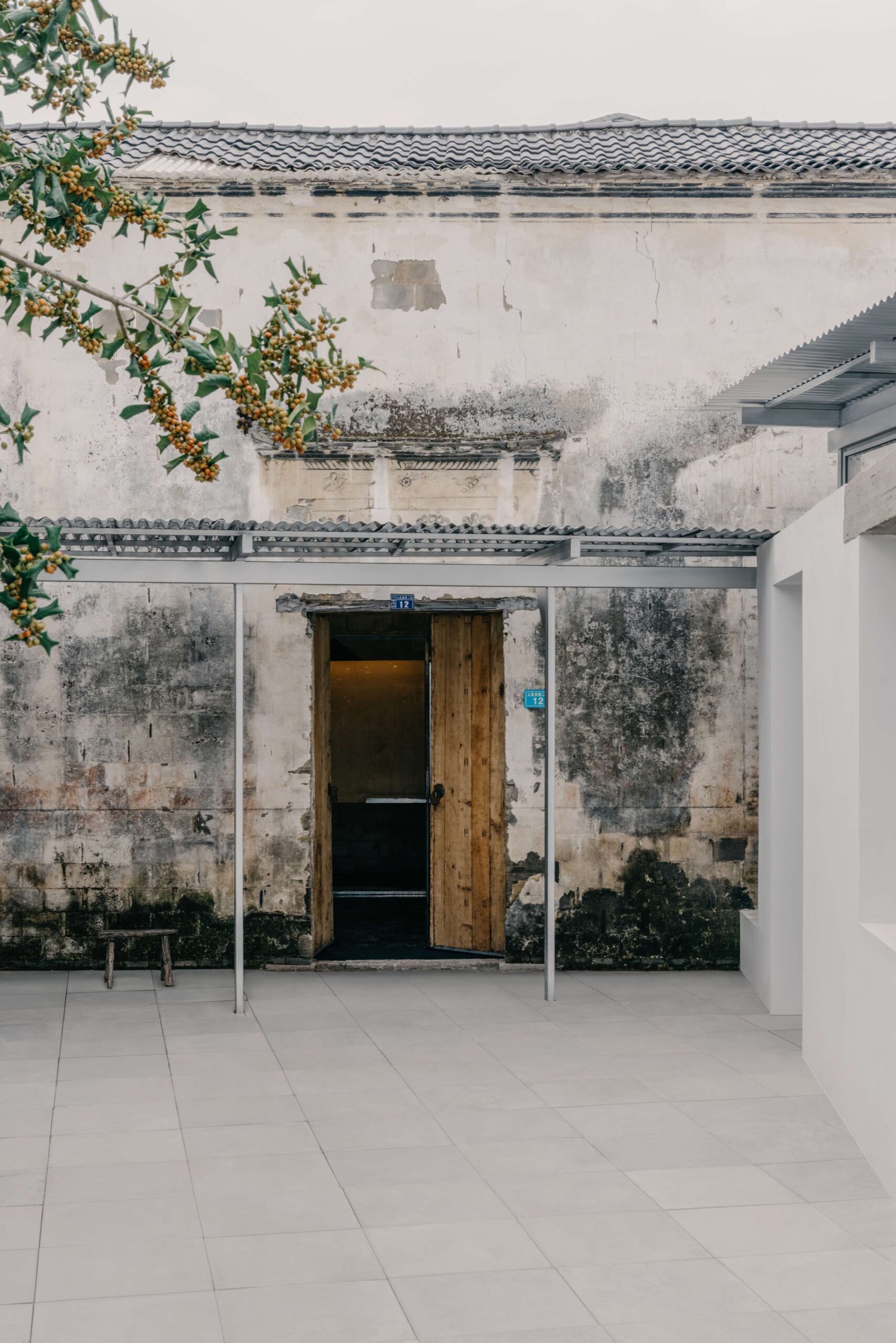
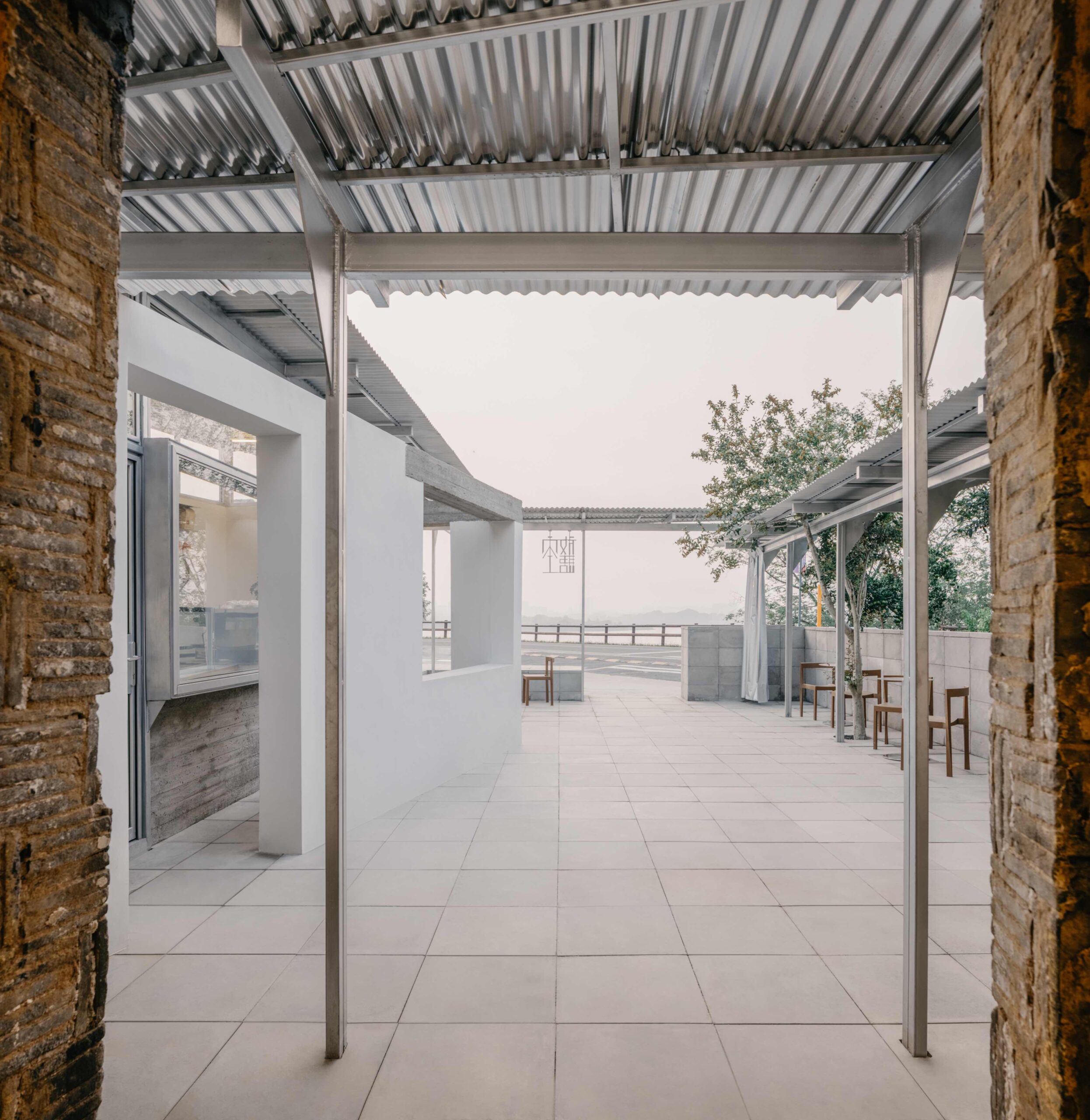
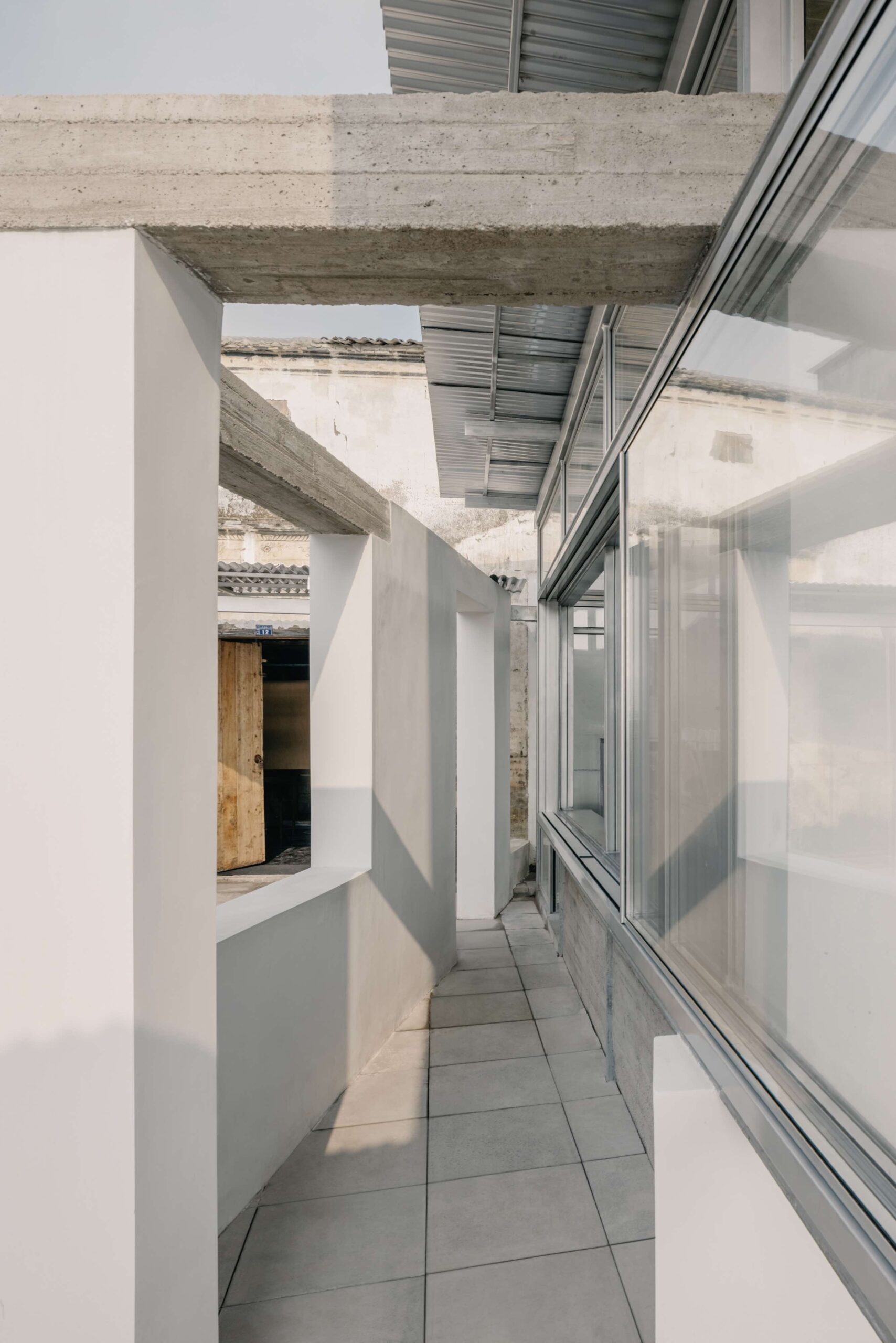
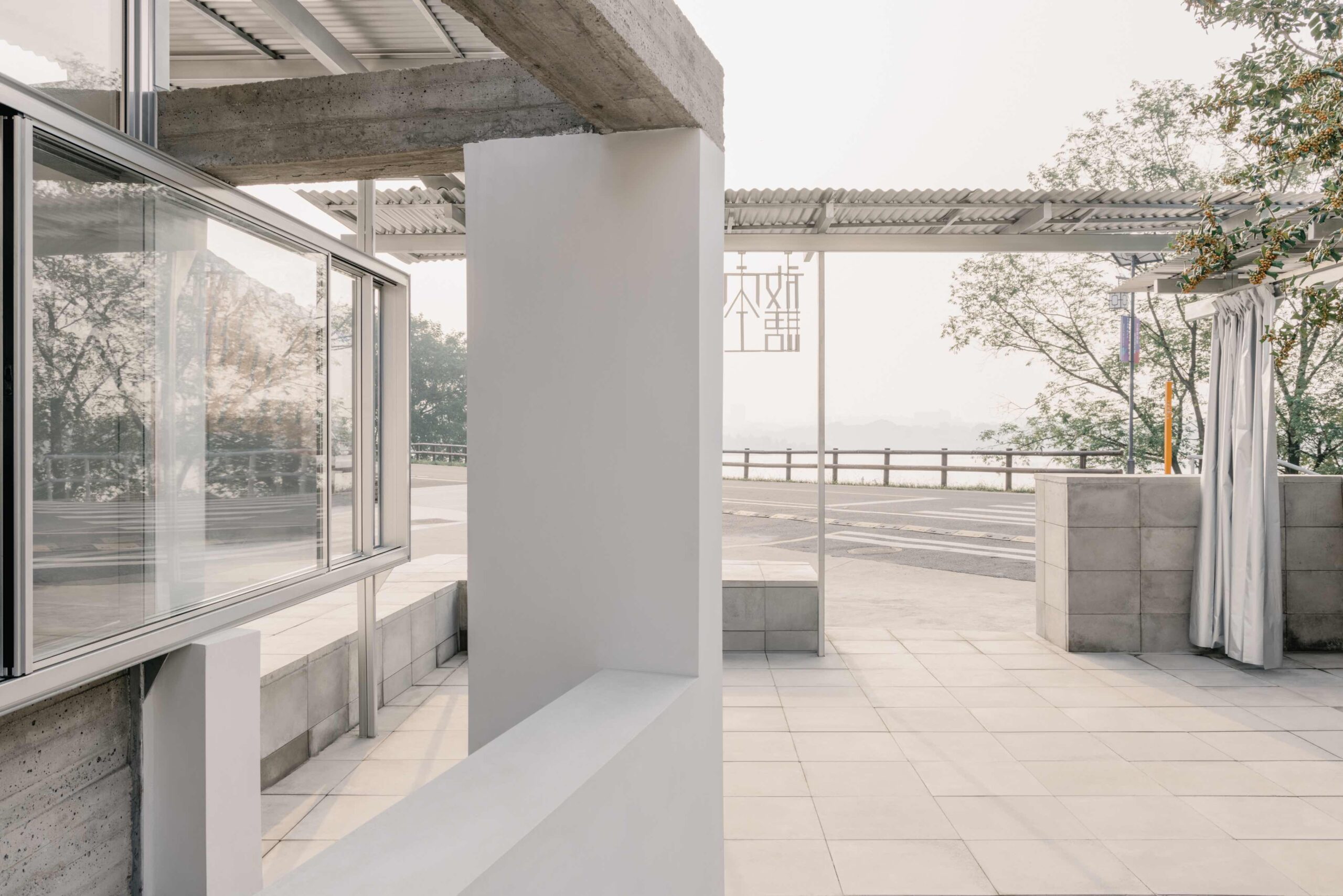
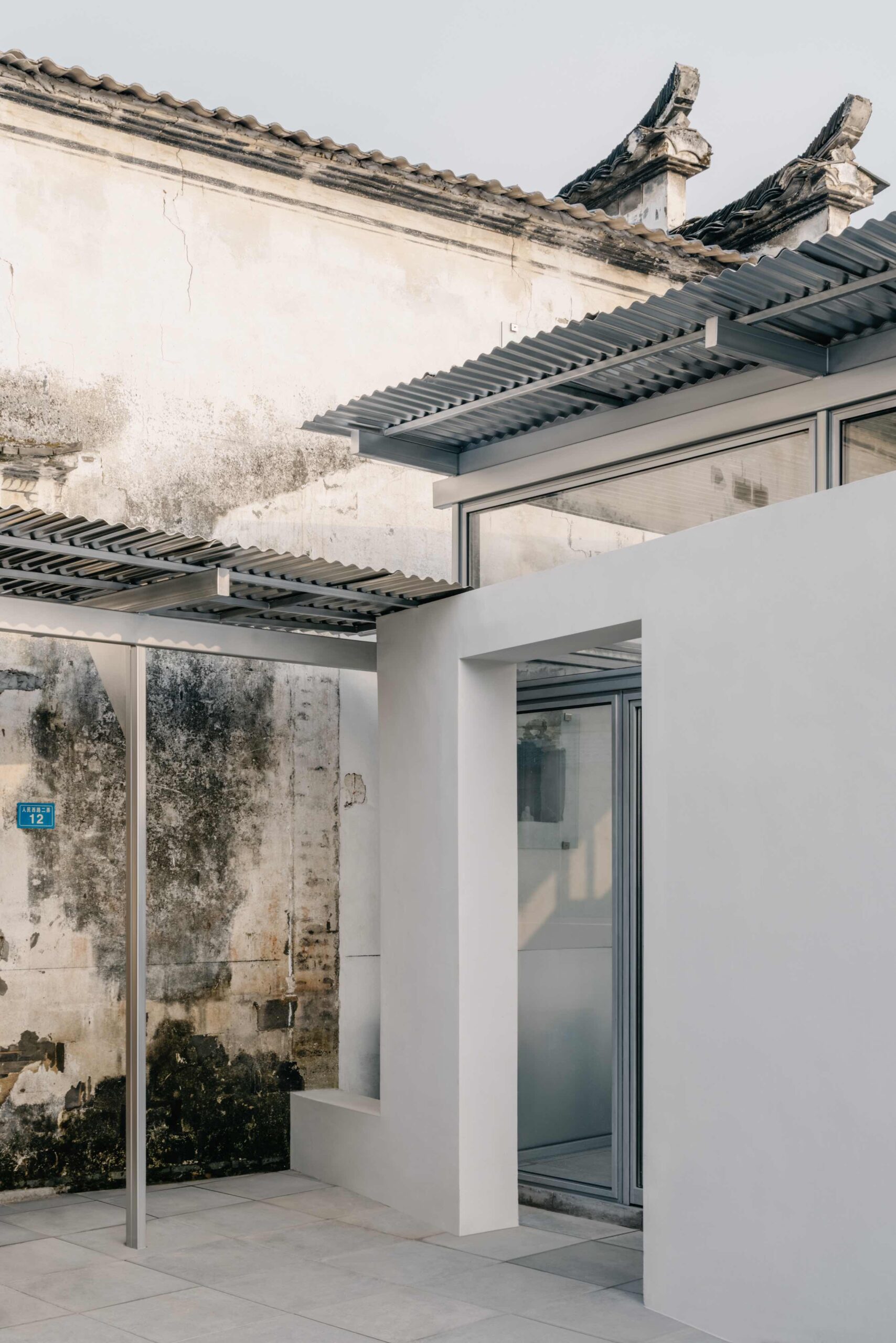
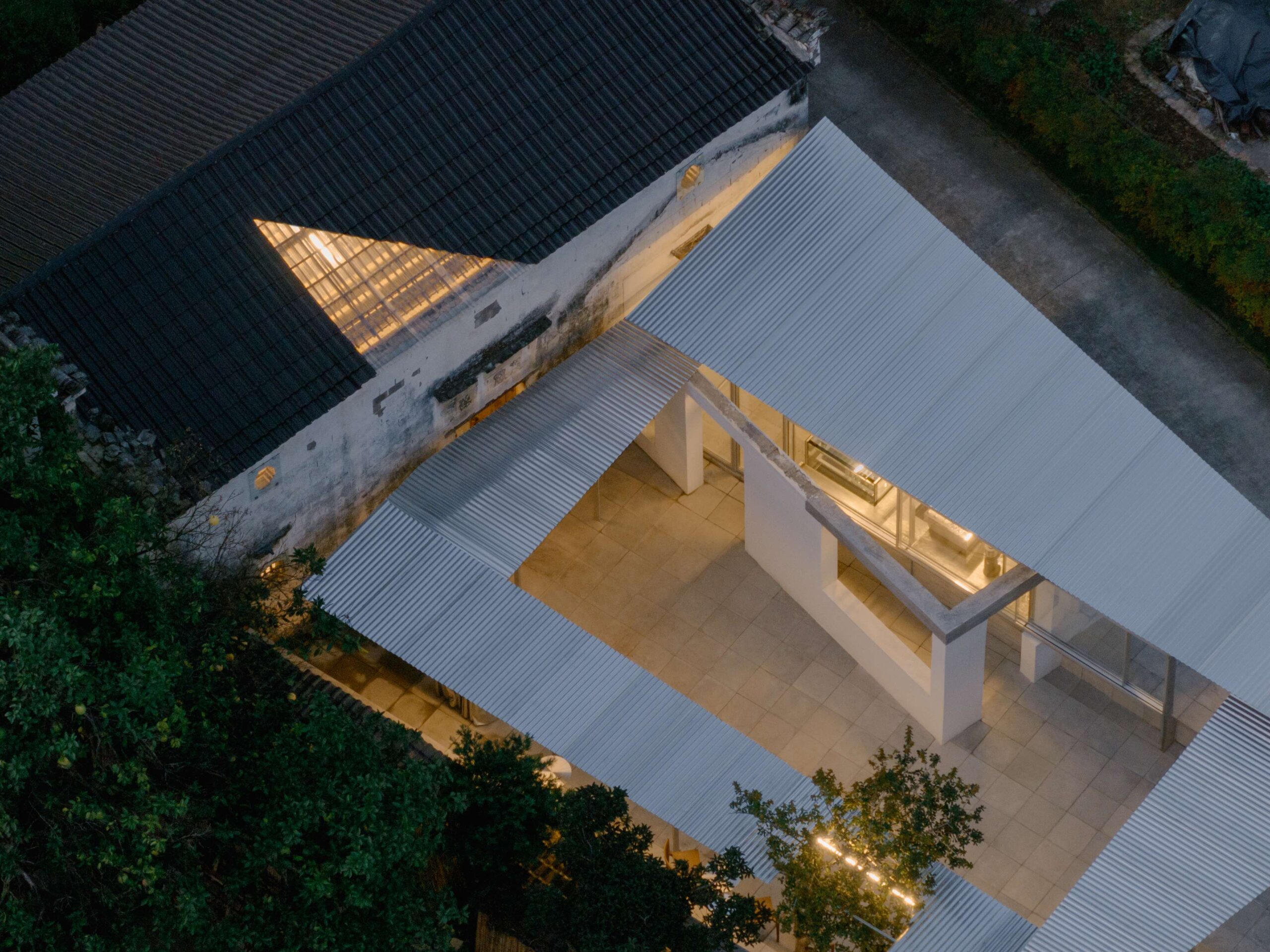
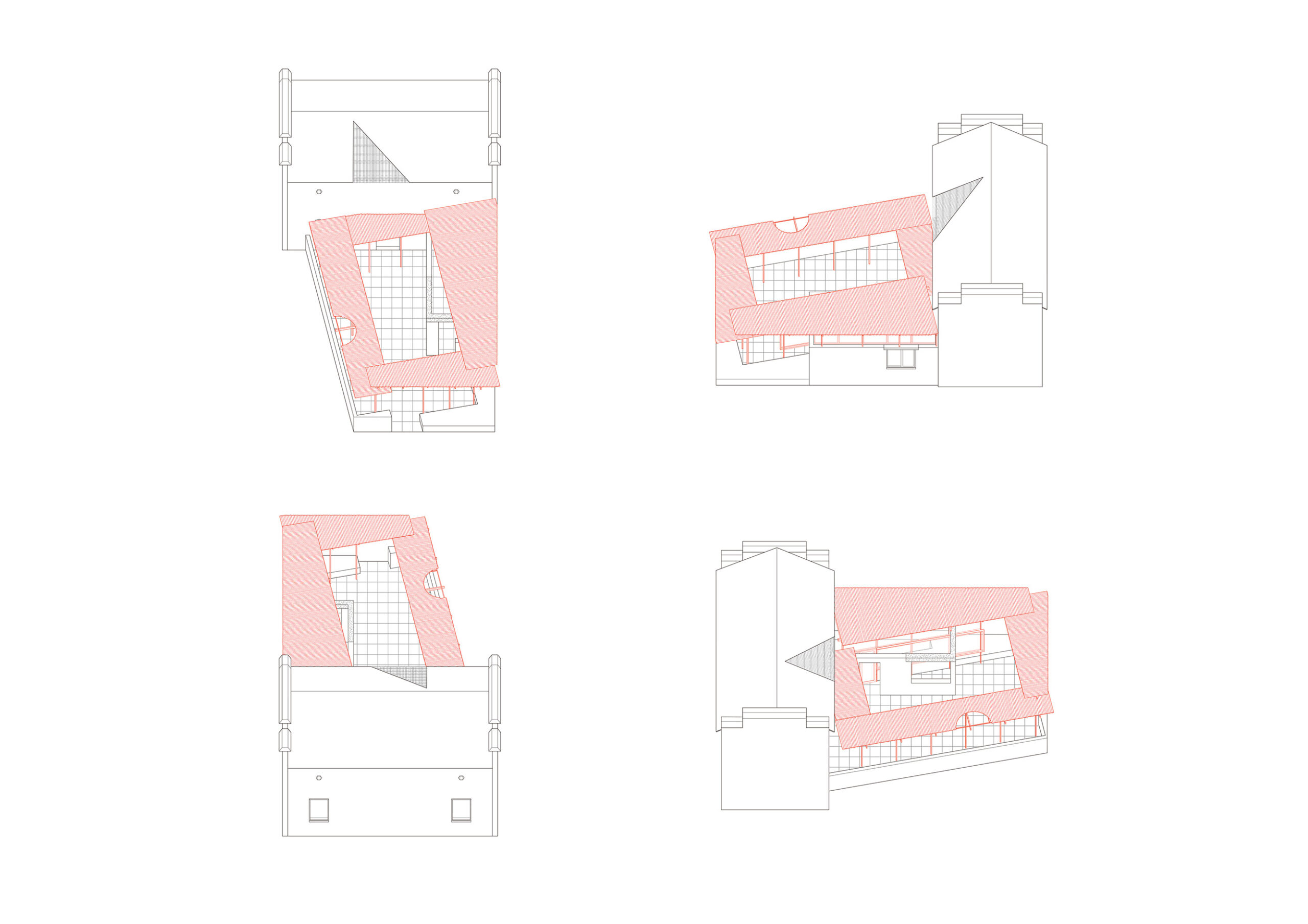
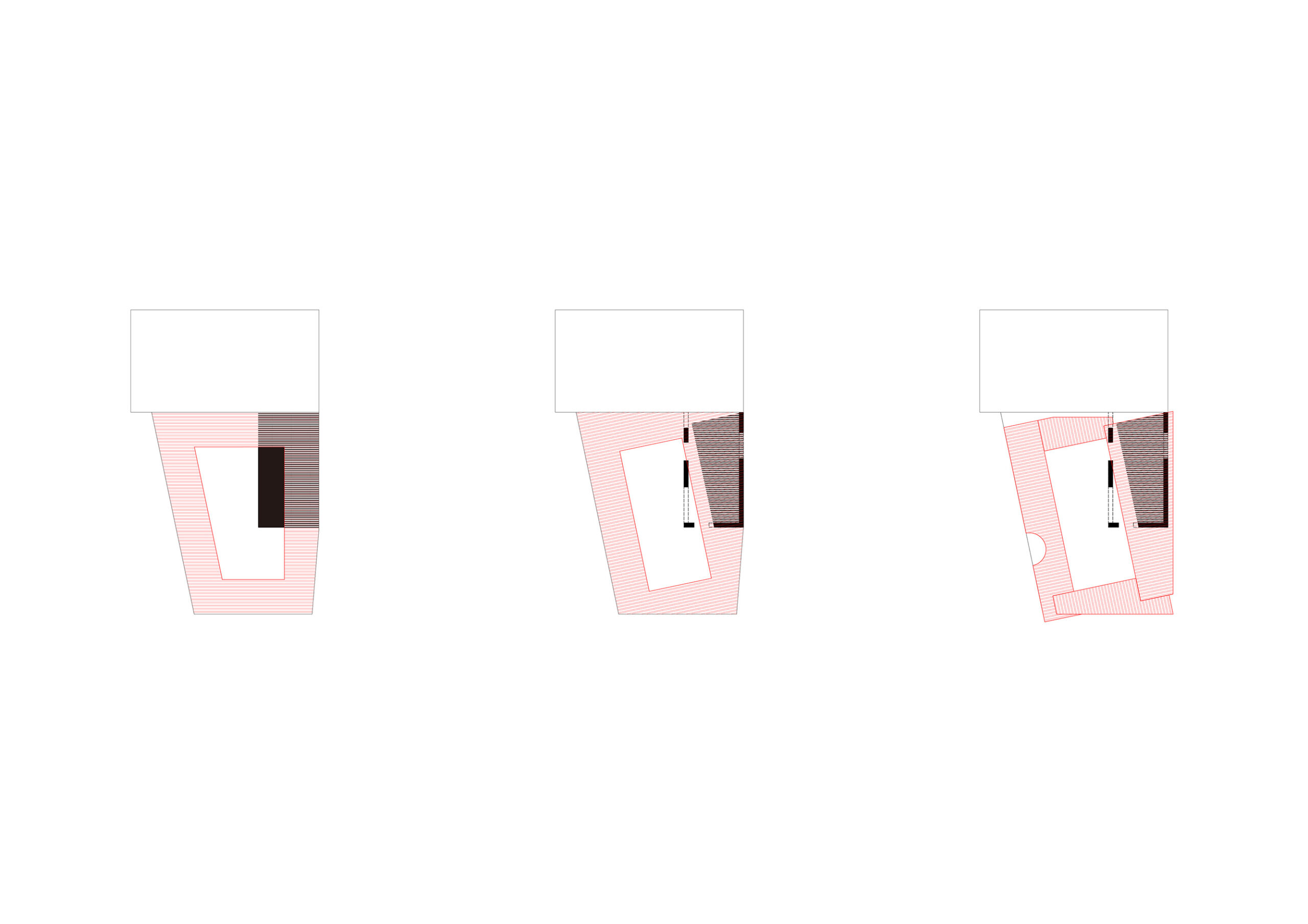
既存の庭は川沿いの道路、村道、隣家の共有壁、古い家屋によって囲まれ、それぞれ異なる角度を生み出しており、アトリエtao+cは庭の輪郭に沿って単柱の軽やかな雨棚をめぐらせ、回廊を形成した。
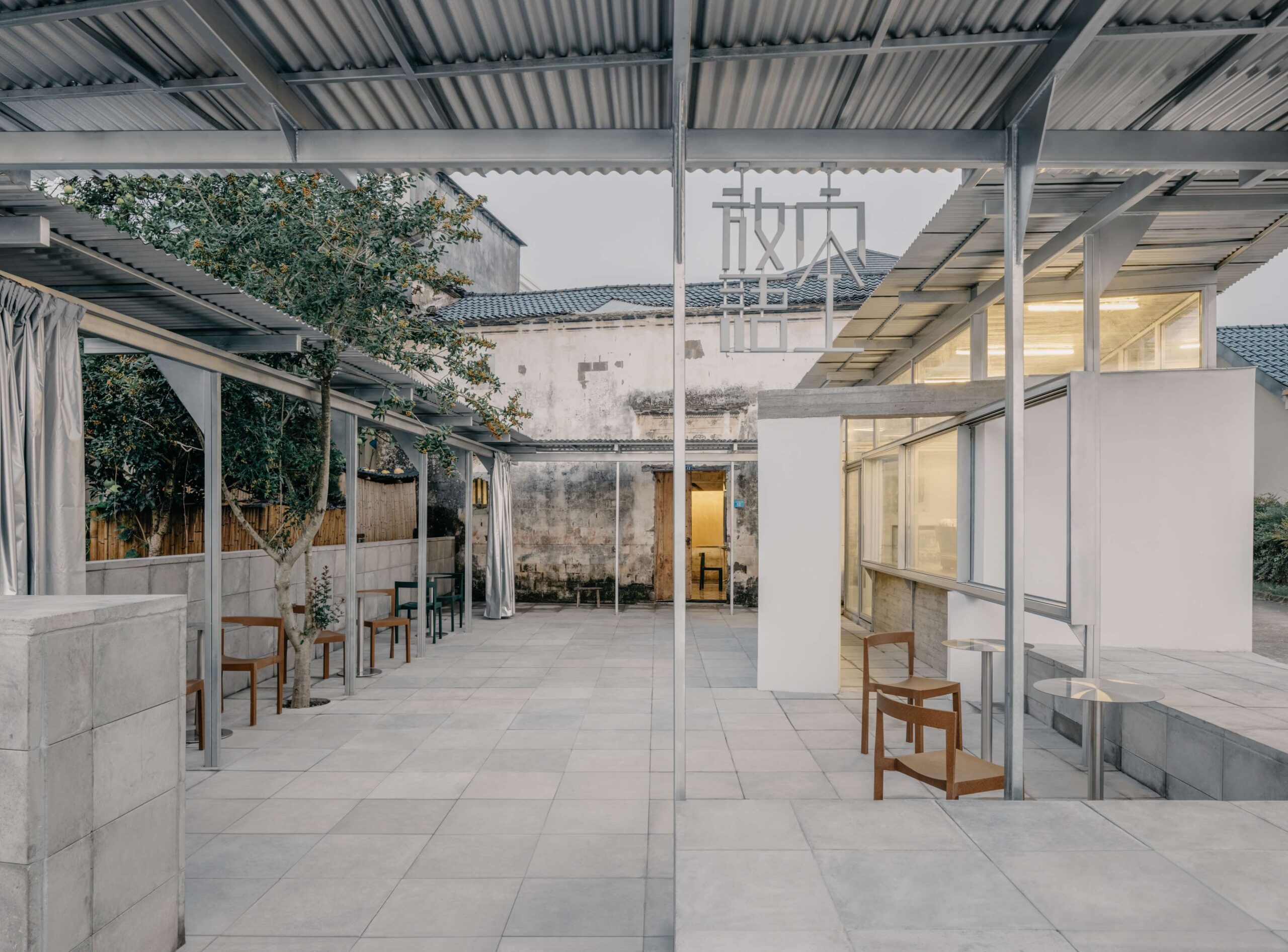
内側には隣家の庭壁の角度を基軸に矩形の中庭を切り出し、清時代の主屋とわずか5度の角度差をつくり出した。この微小なずれが、庭を道路と主屋の間の緩衝帯とし、喧噪を和らげ、川風を通し、古宅との衝突を避けている。
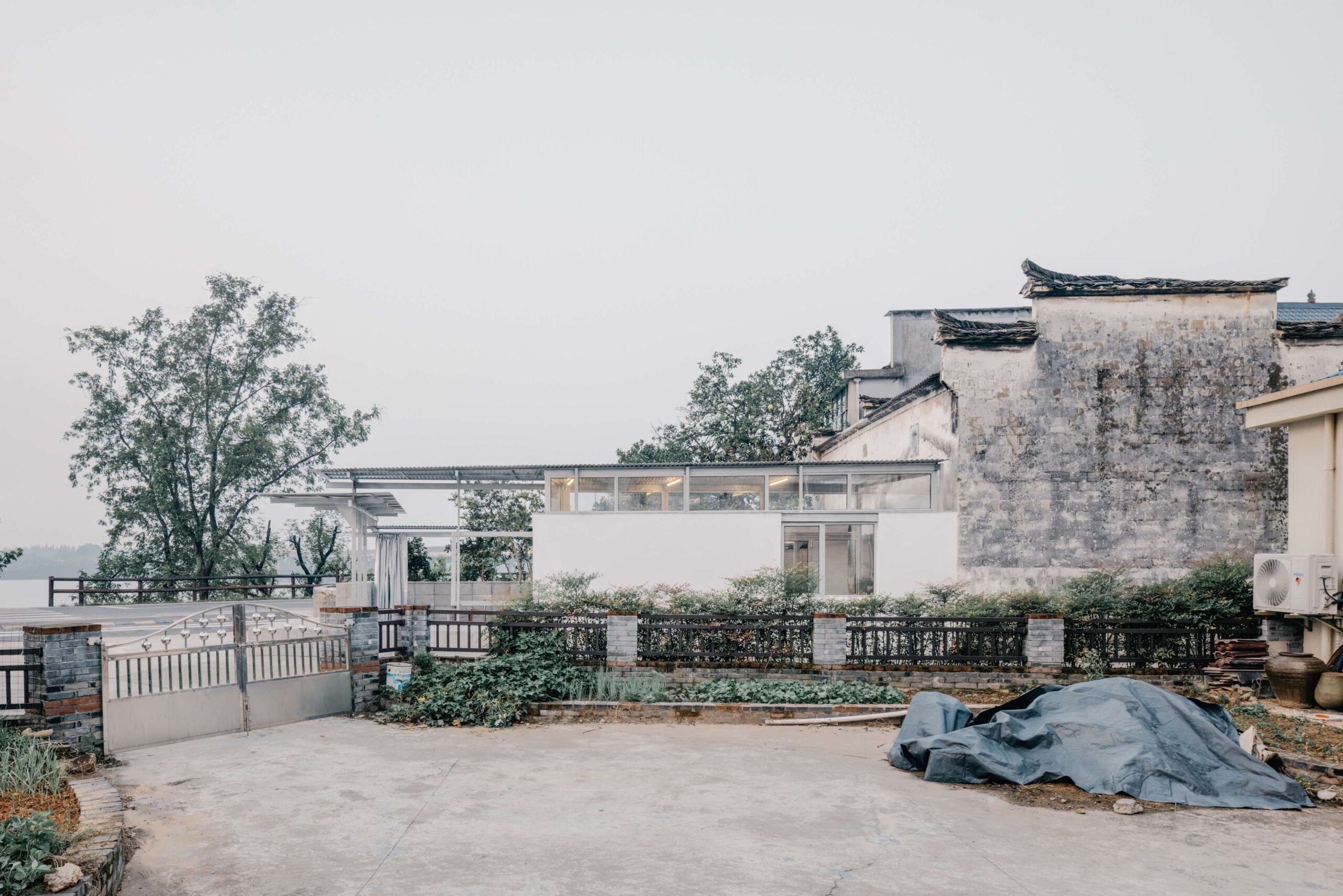
© Wen Studio
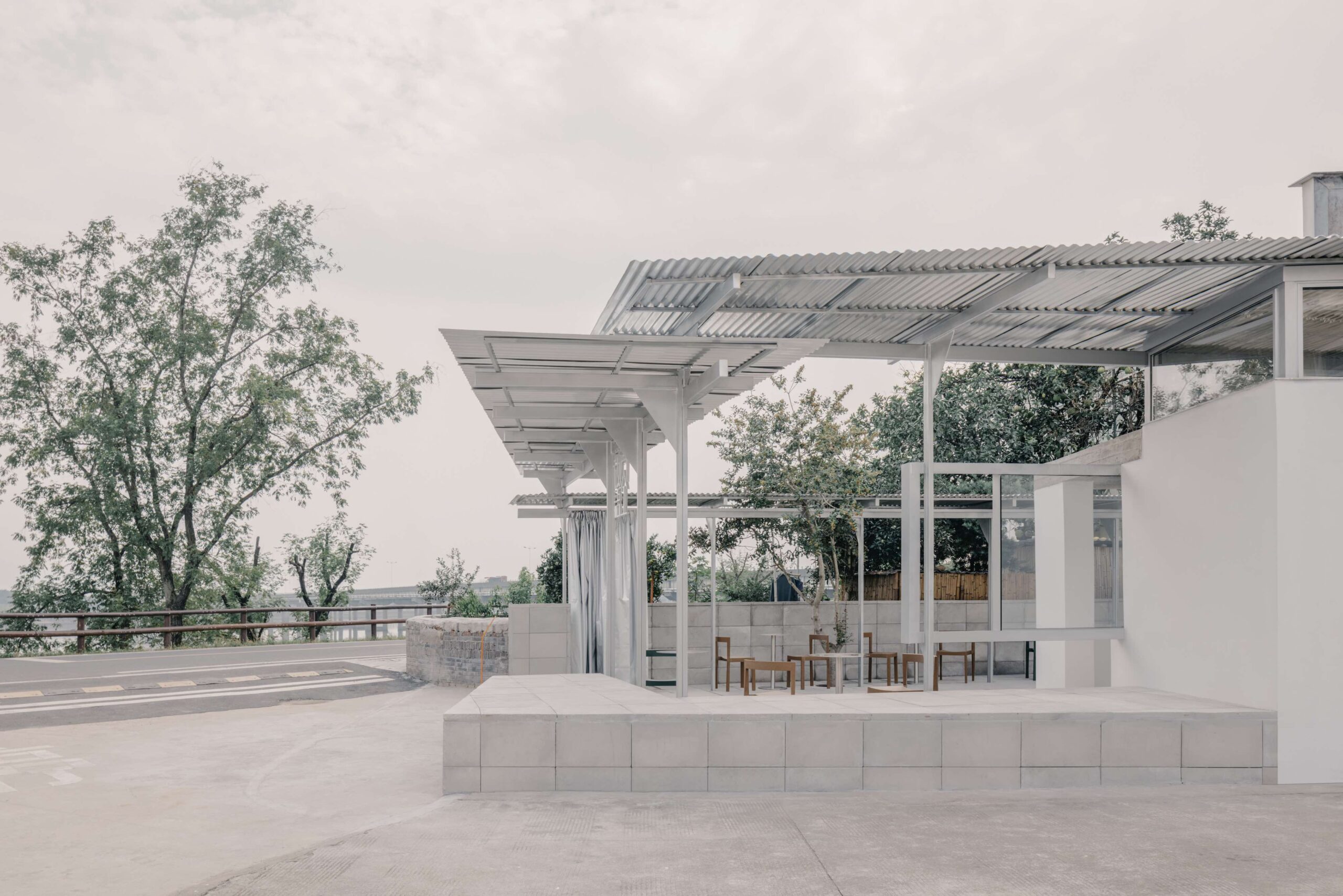
© Wen Studio
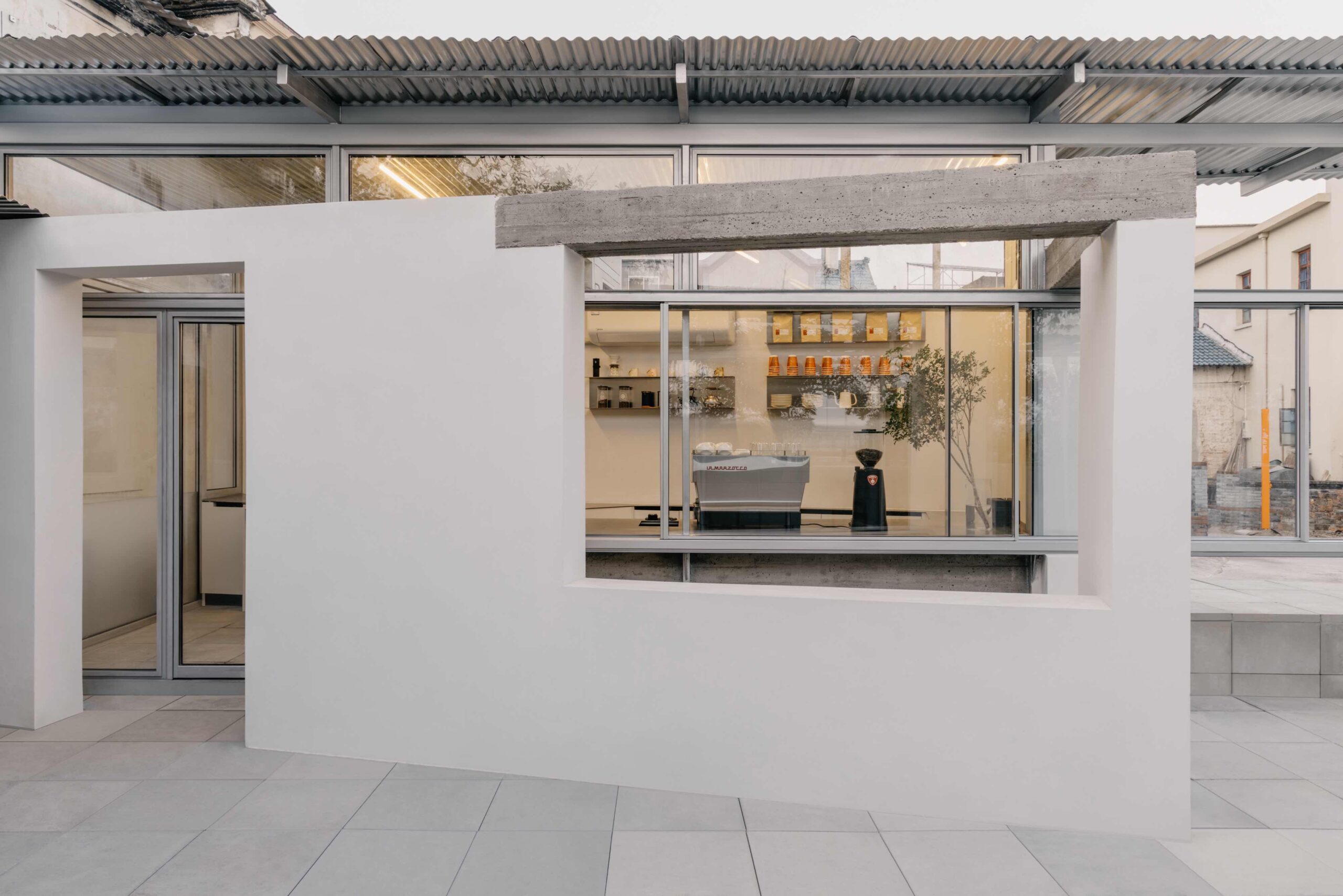
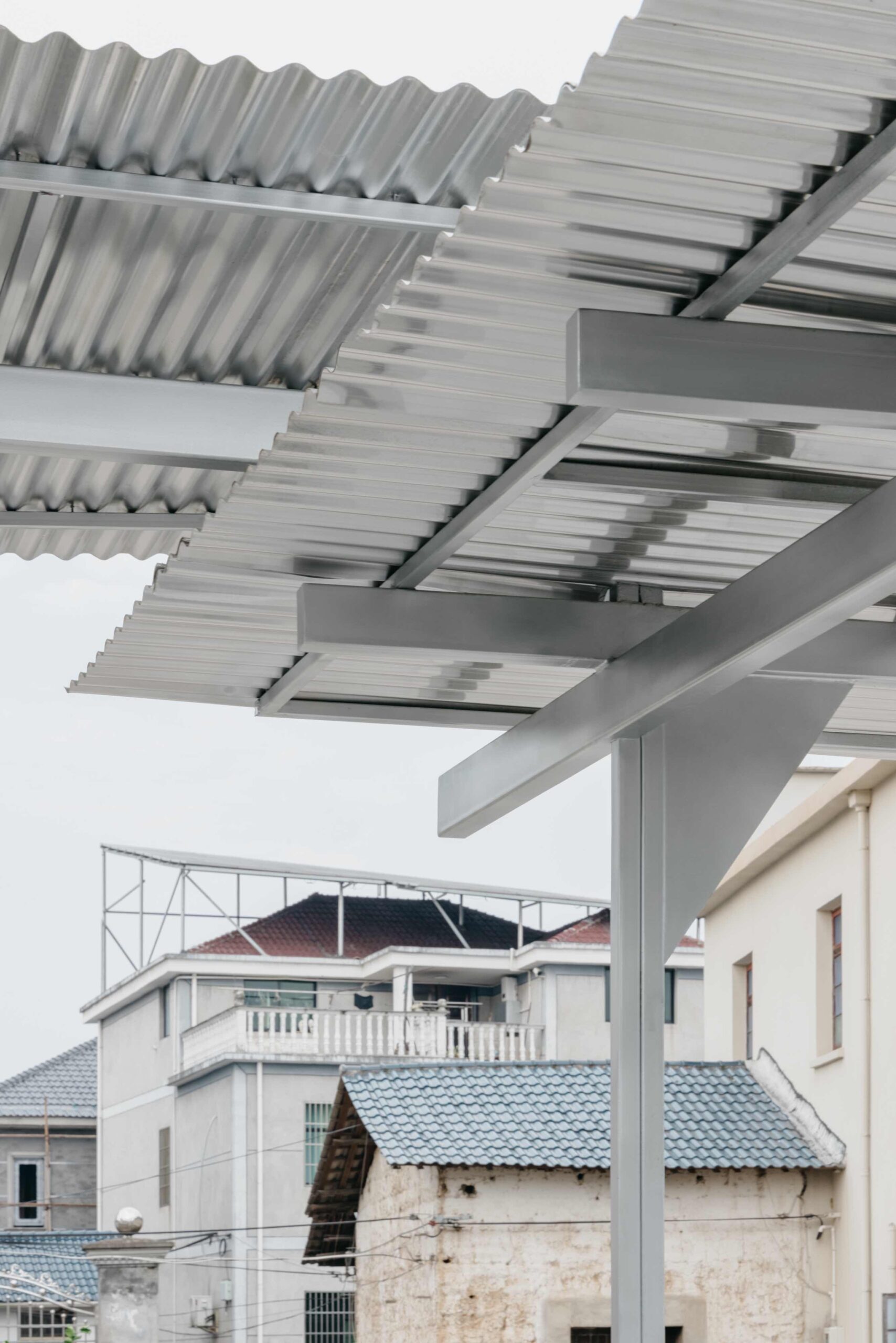
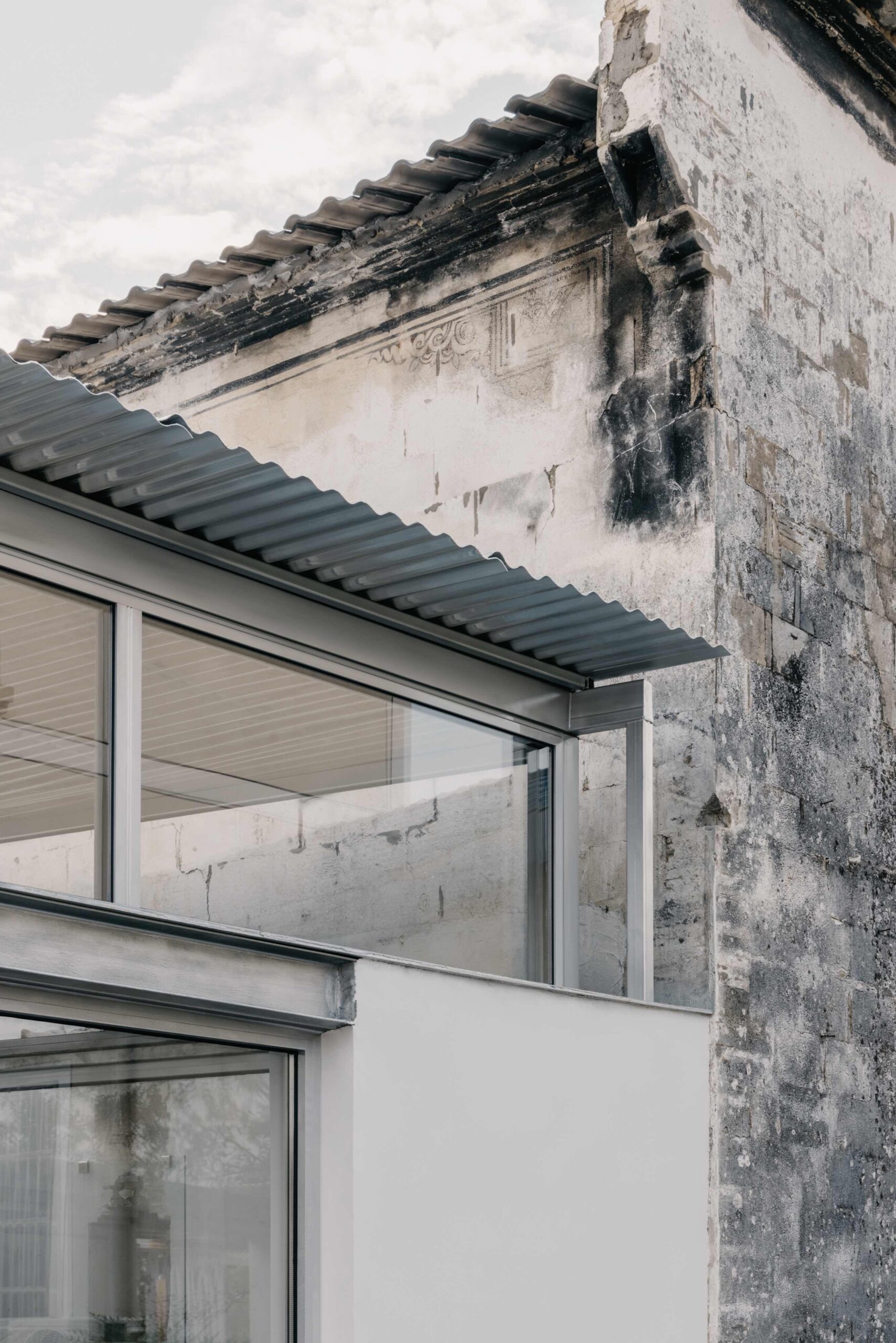
回廊の屋根は三段階の高さに分けられており、段状に下がりながら周囲の環境や用途に応答する。その姿は、敷地と呼応する舞踏のステップのようである。村道側では回廊が旧台所を斜めに切り取り、カフェの窓口を形づくる。そこからやや低くなり、道路に面する入口を構成し、庭から川の景色を振り返る視線を導く。
隣家の境界壁沿いの回廊はさらに低く抑え、樹冠の下に隠れるように設計されており、プライバシーを保つ。さらに清時代の建築の正面に連続し、庭の入口からの視線を1本の線に収束させ、主屋の威容を損なわぬよう配慮されている。
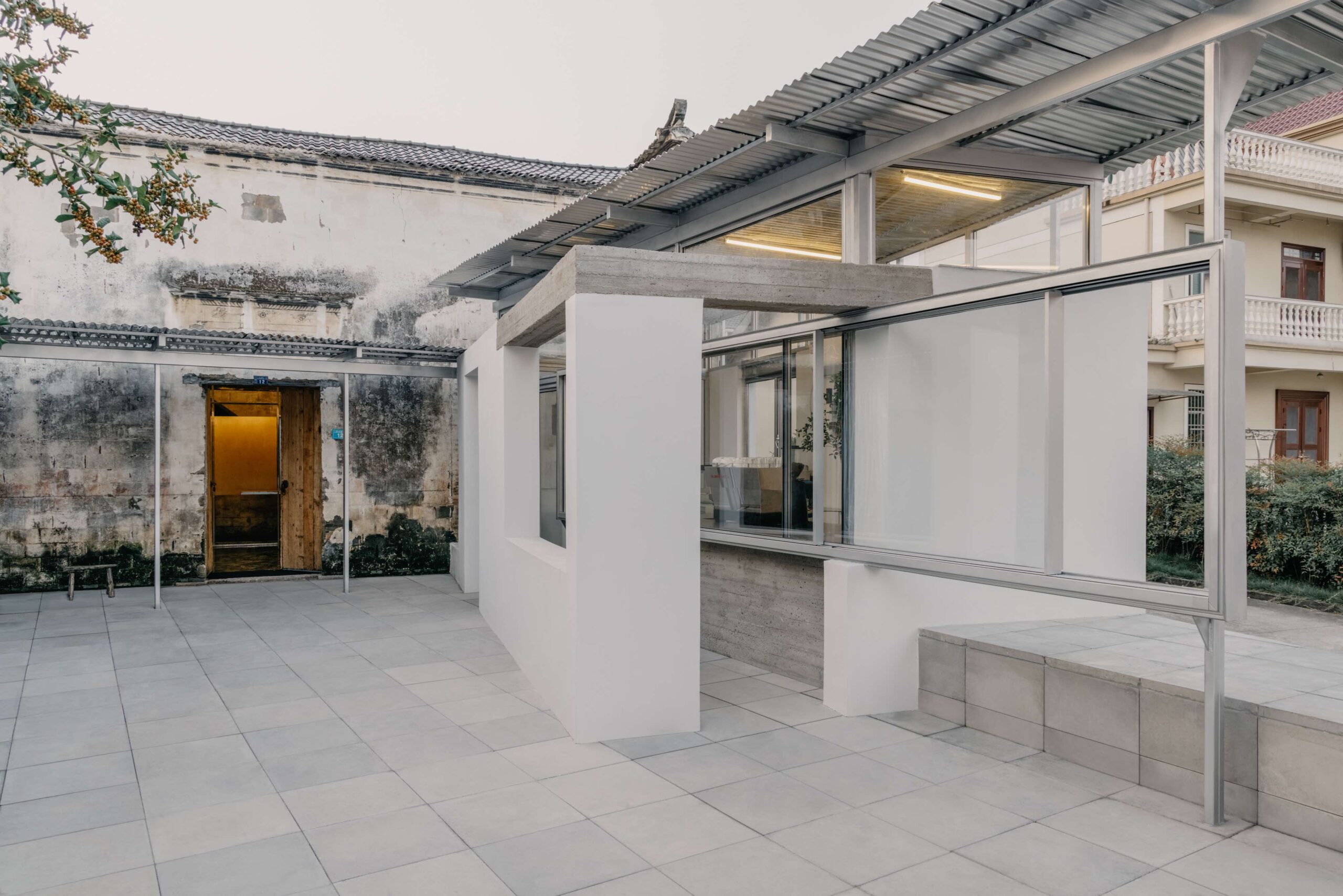
© Wen Studio
© Wen Studio
古い木造住宅への「消極的」な改修
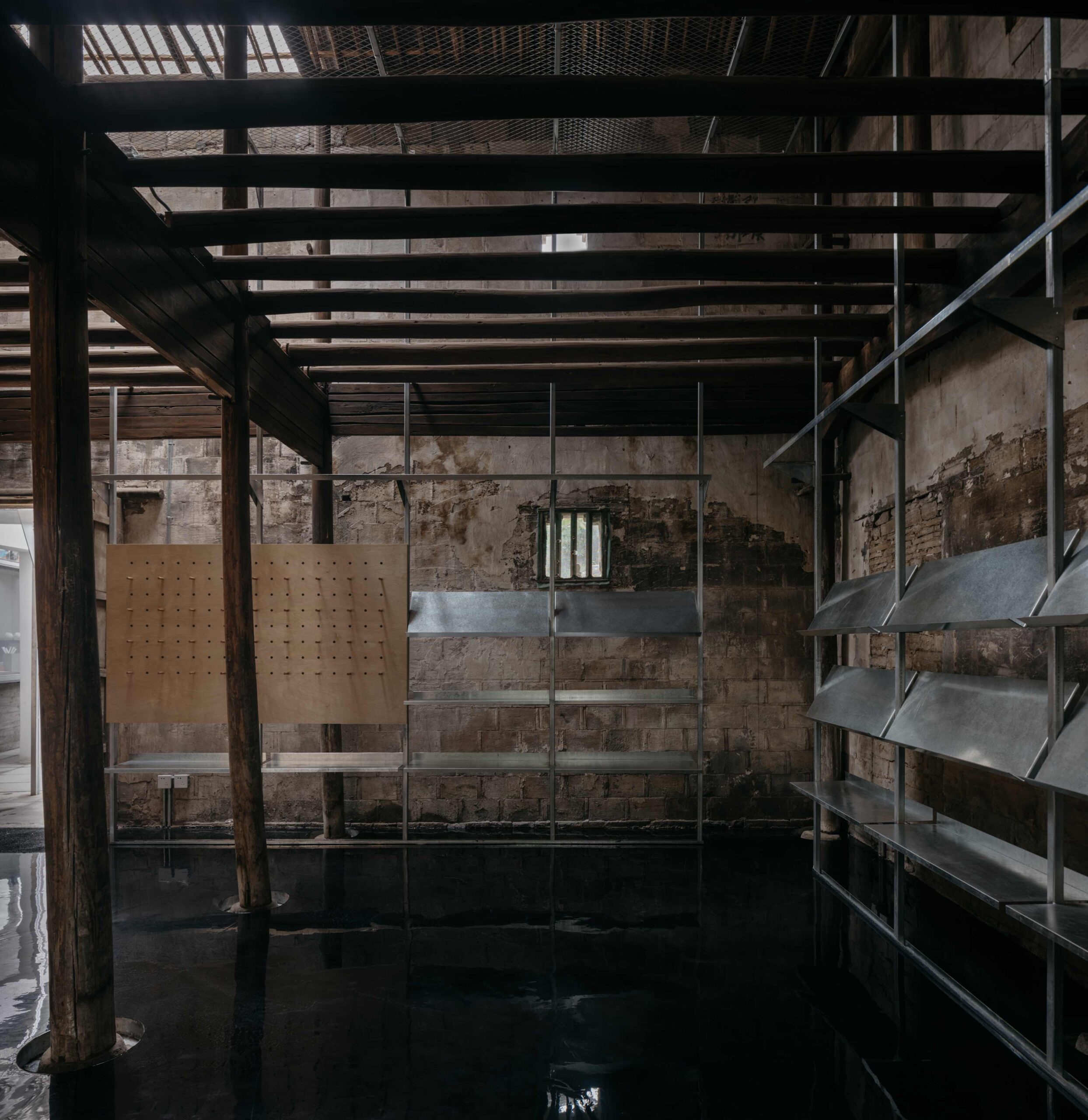
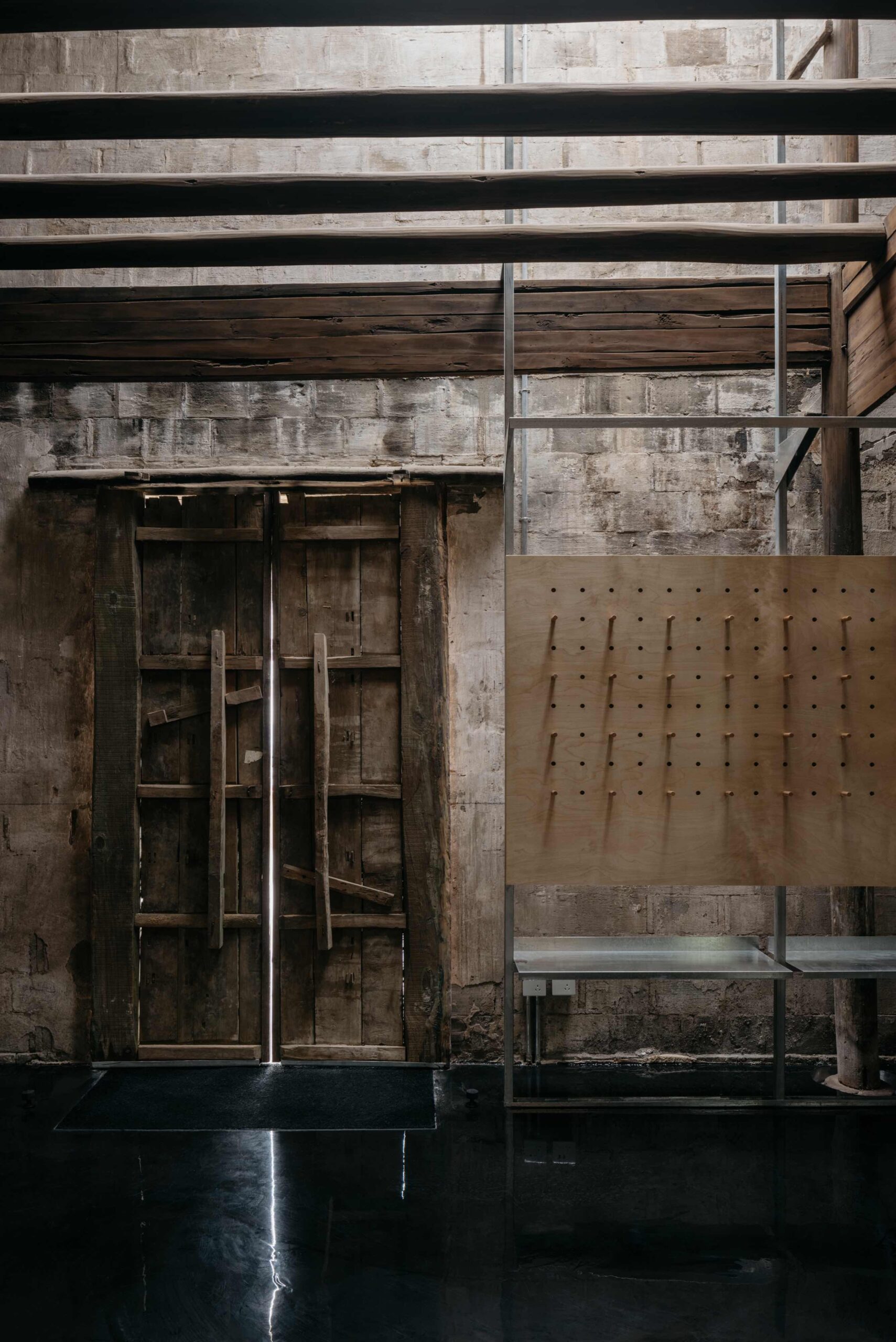
100年を経た木造住宅は、観光客の受付センターとして活用されている。壁は剥落し、木柱はわずかに傾き、長年の生活の痕跡を留めている。
改修の方針は「消極的な介入」であり、使用するが占有せず、設置するが改修せず、痕跡を消さず、老朽化の進行を止めず、その変化に寄り添うものである。
© Wen Studio
© Wen Studio
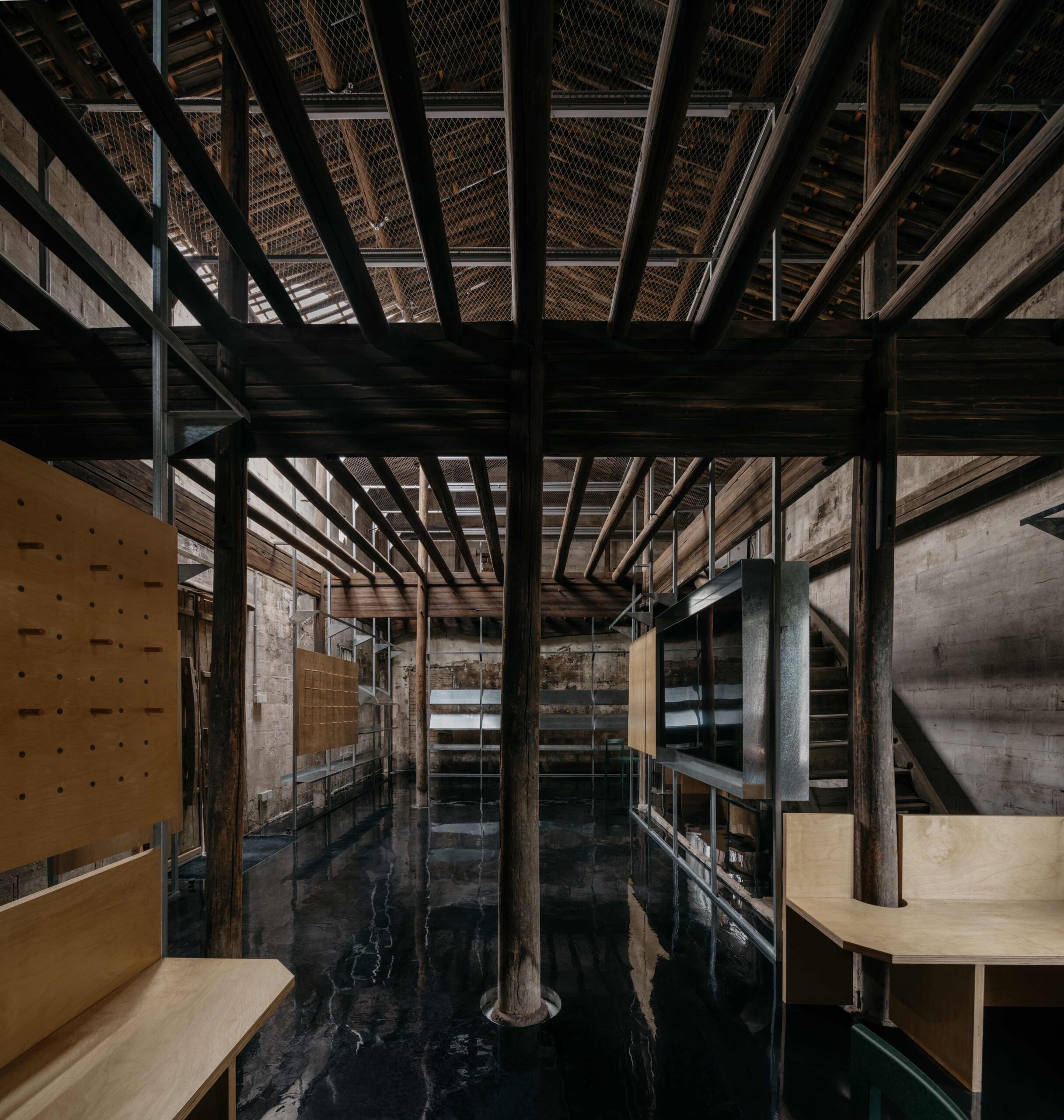
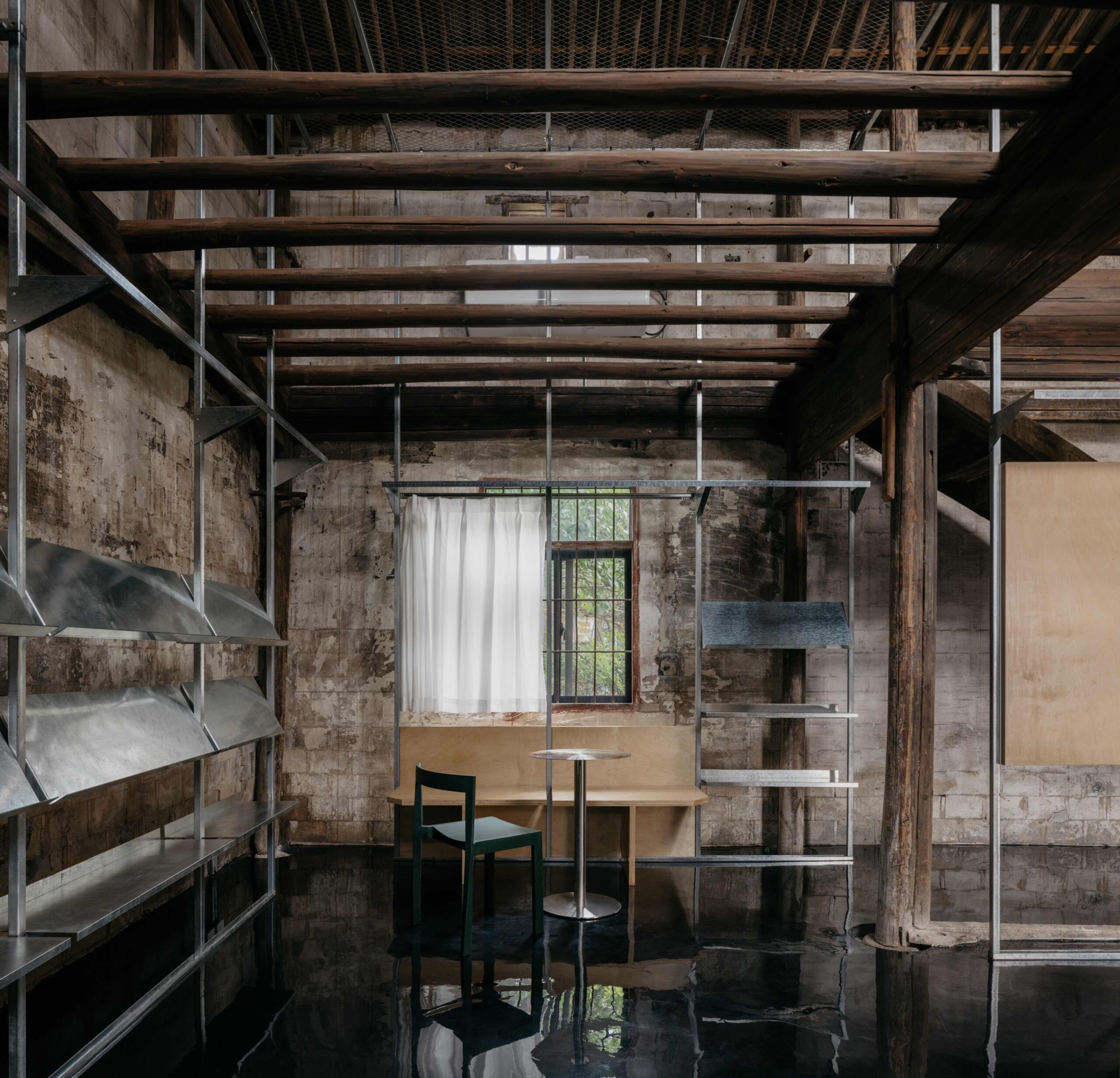
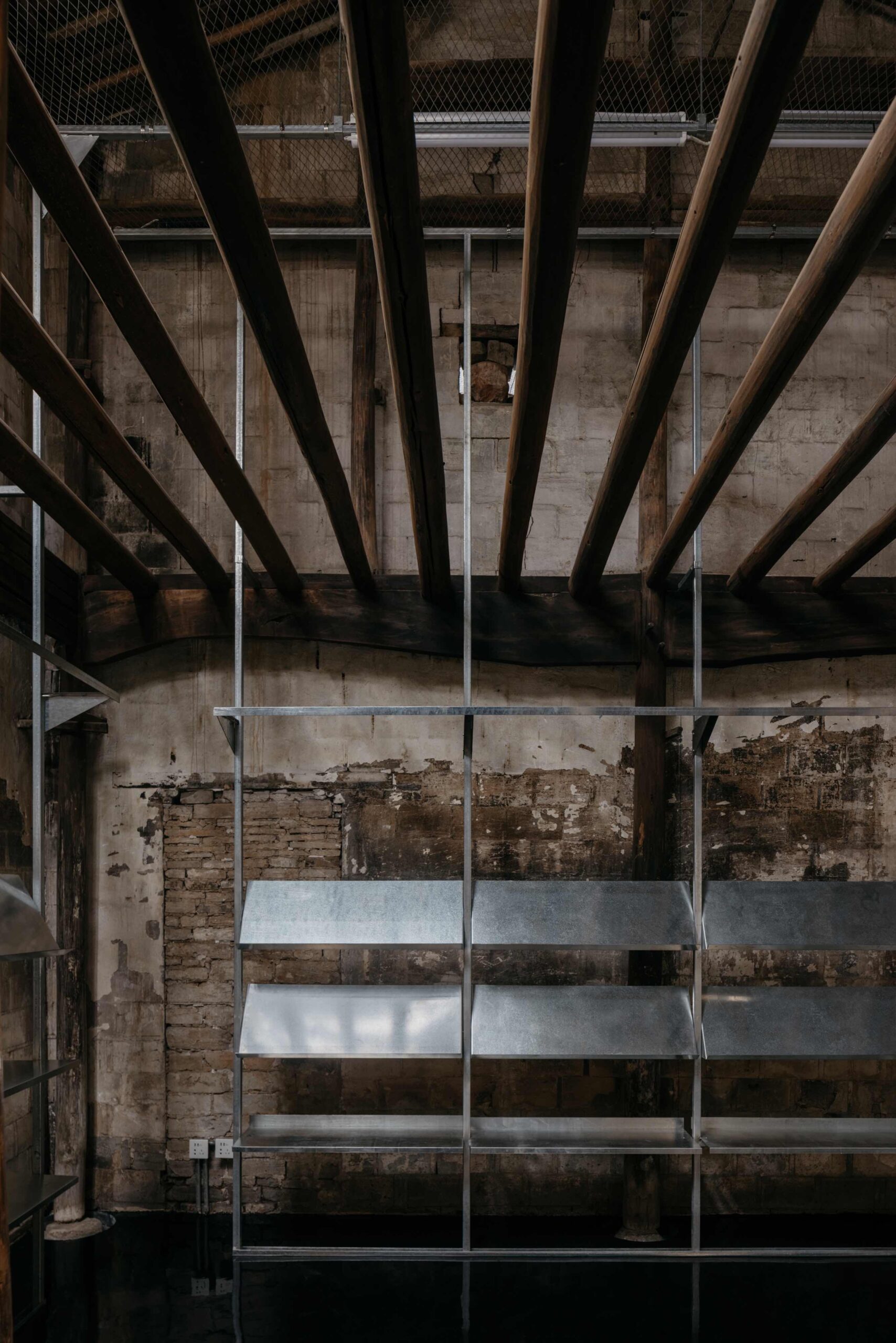
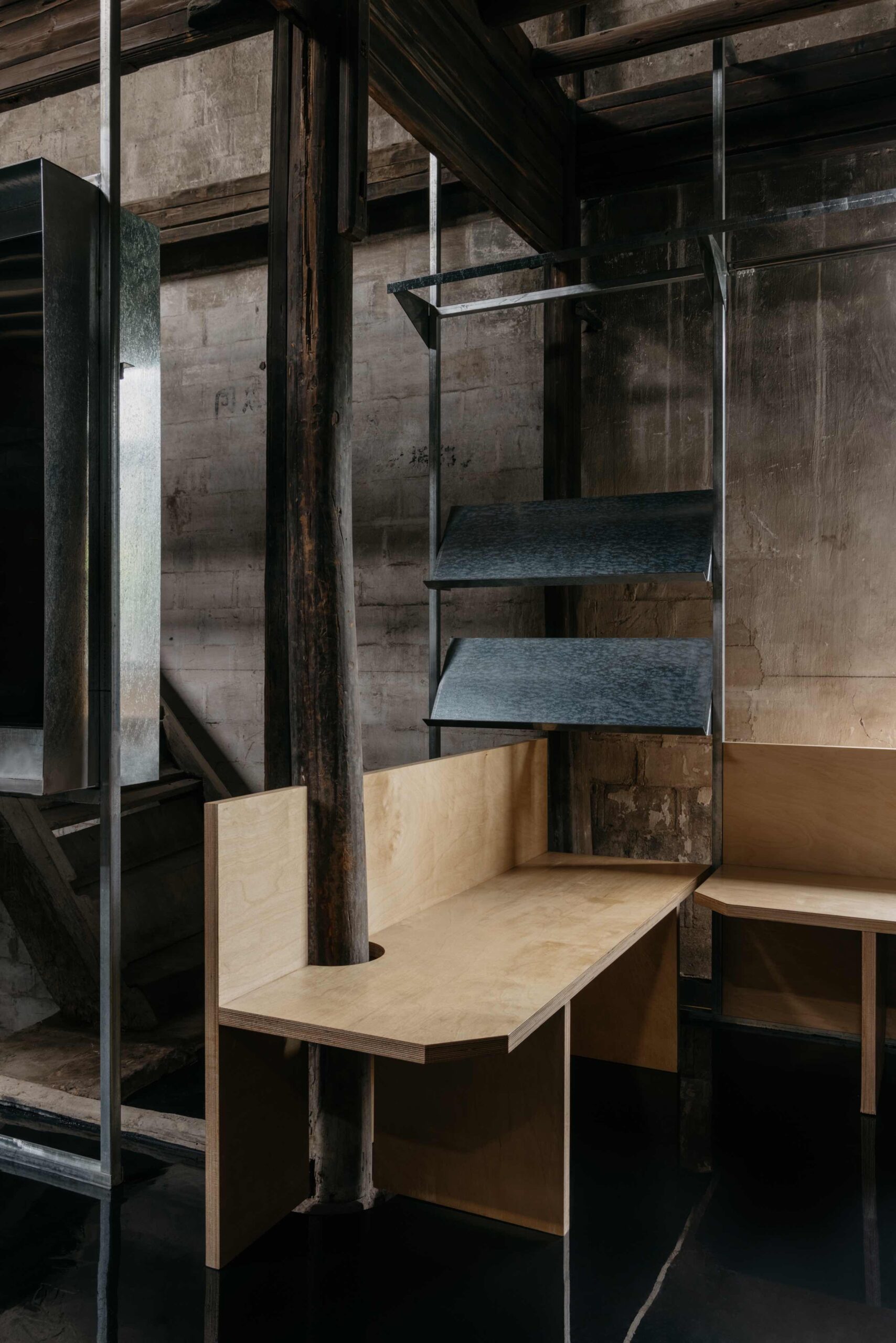
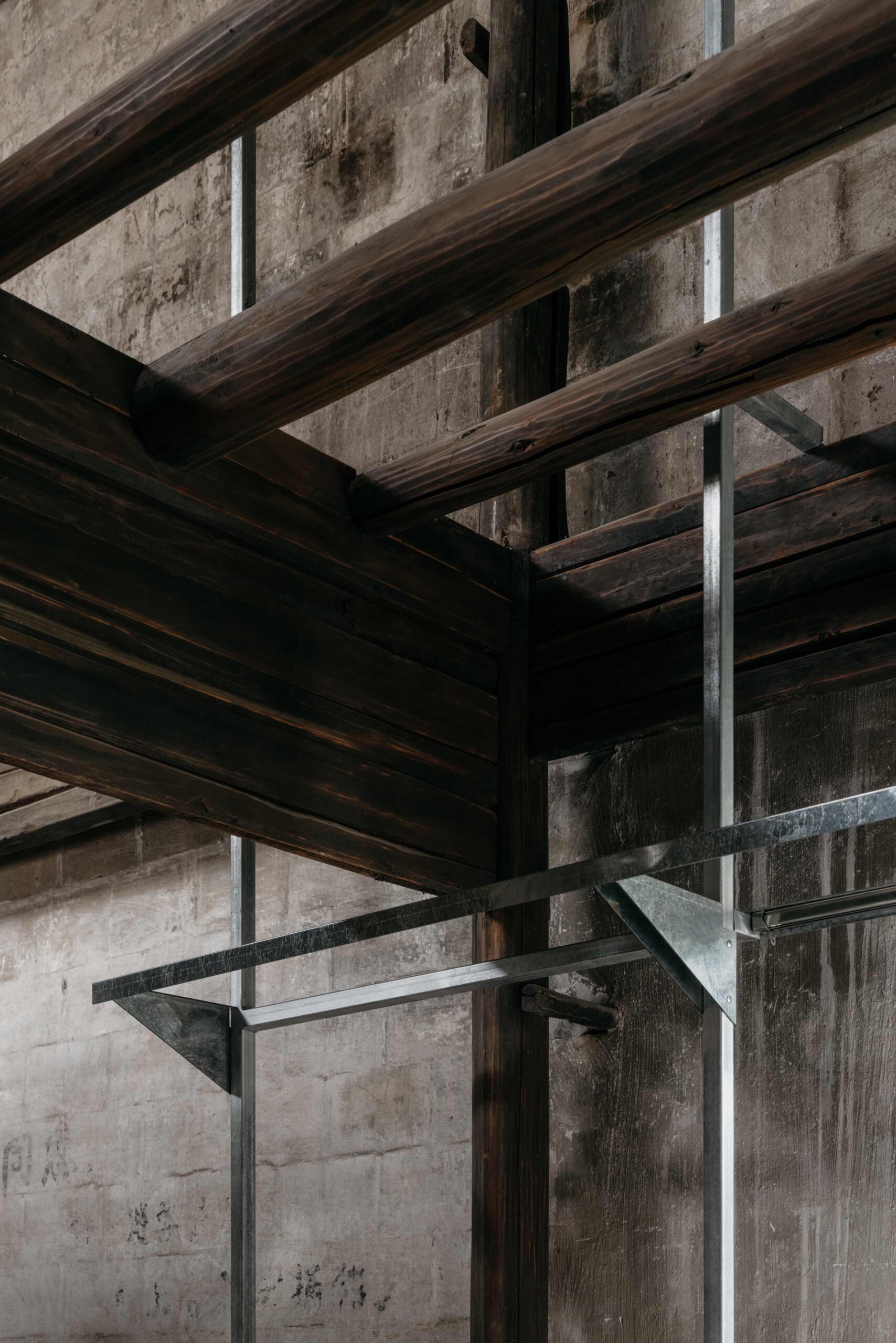
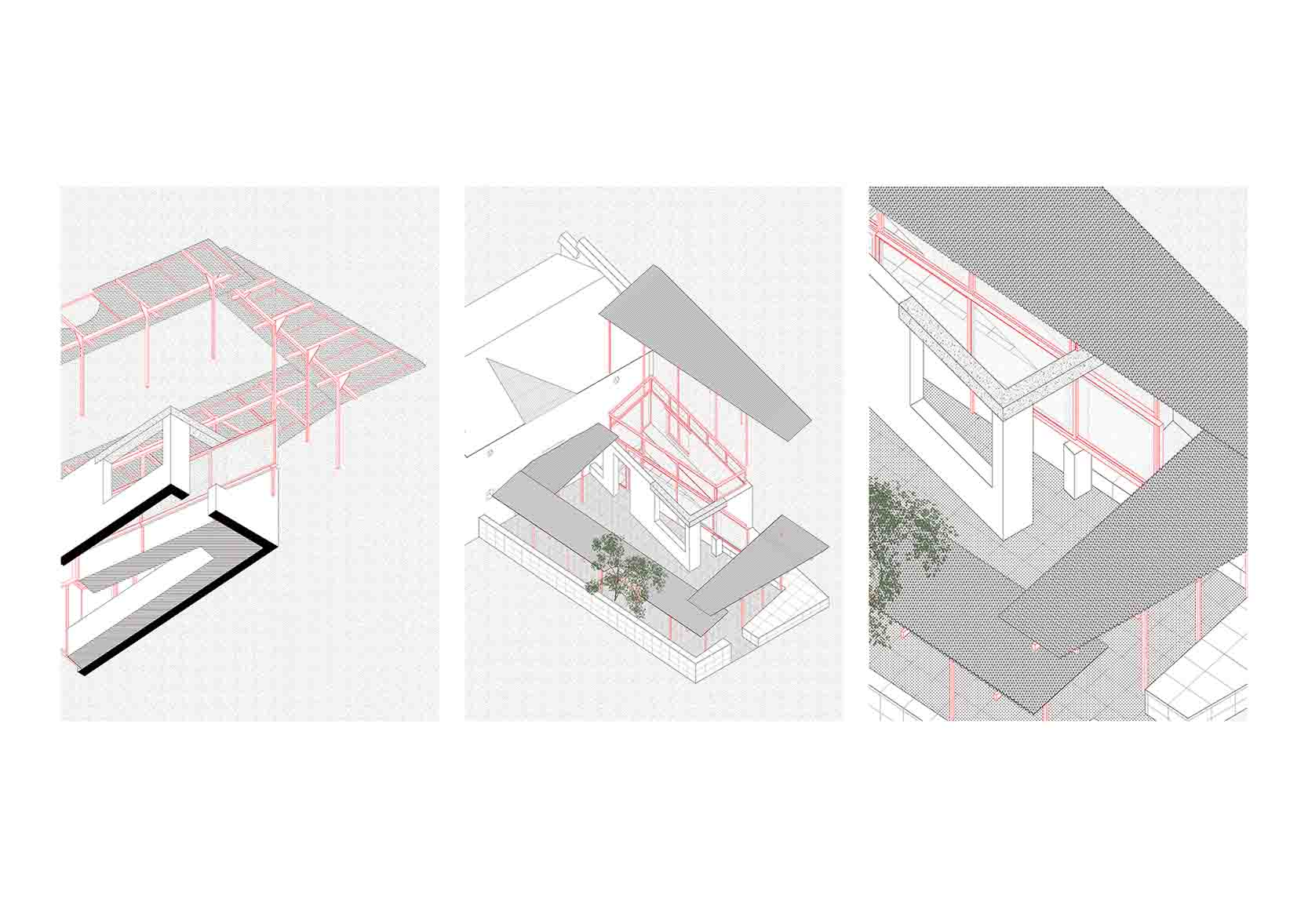
充填されていた木の壁板と床板を取り除き、木梁や小屋組といった建物の骨格を露わにした。細い亜鉛メッキ鋼管を木のフレームの隙間に通し、展示フレーム、椅子、照明を形成する。
この鋼管フレームは古い木構造に寄生するように挿入され、触れるが破壊はしない。床には光沢ある黒色エポキシ樹脂を敷き、新たな素材であることを示しつつ、建物本来の姿を損なわず新しい感覚を与えている。
© Wen Studio
© Wen Studio
素材と手法
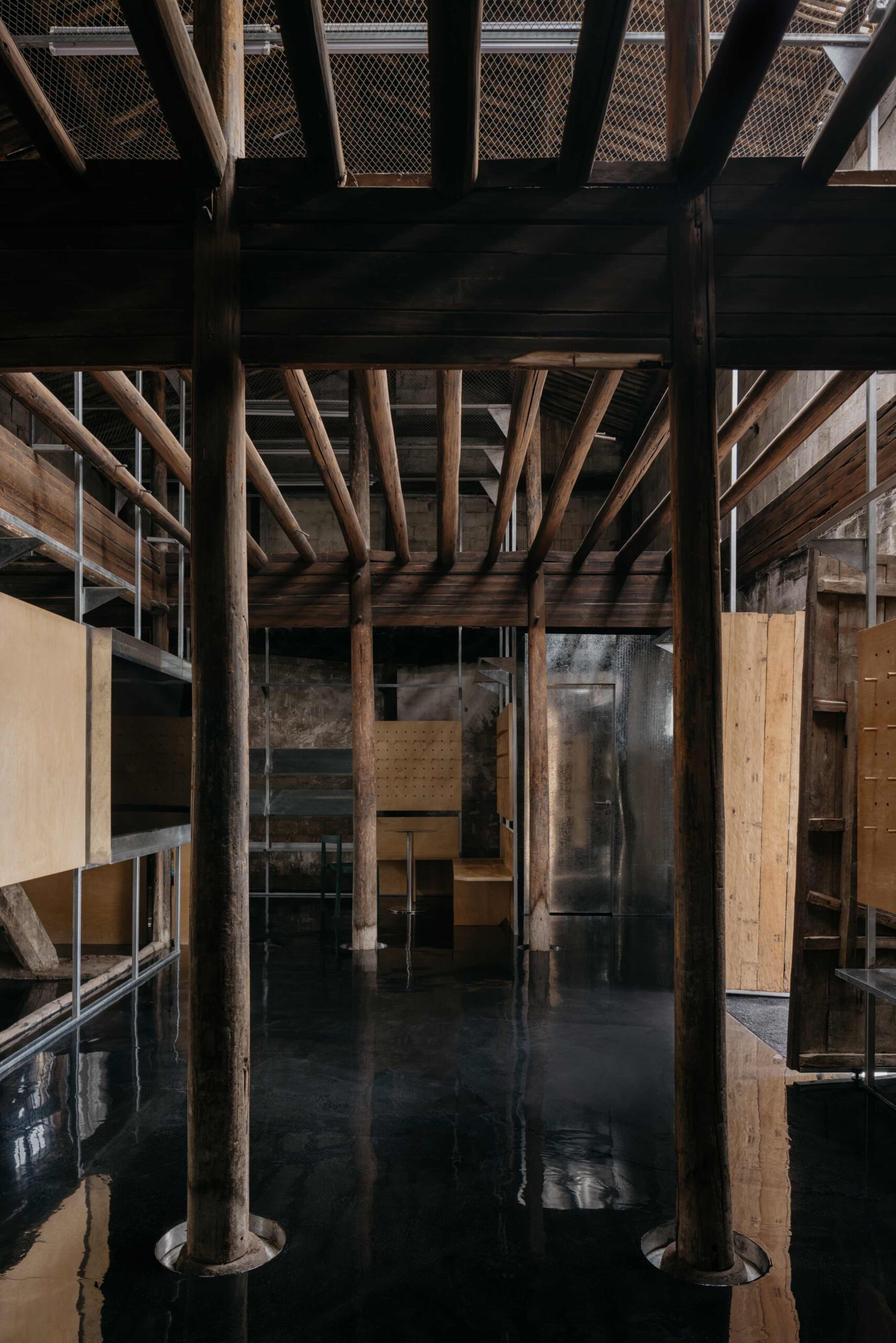
内部の通路と挿入部に使用された材料は、工業標準の亜鉛メッキ鋼管とステンレス鋼の波板であり、地元の建築資材店で容易に入手でき、現場で切断・溶接されている。
一般的な材料の戦略的な使用は、一部の村の家屋で見られる伝統的な建築手法を反映し、介入が農村環境に溶け込むのを助ける。
© Wen Studio
外部の者としての建築家
この農村再生プロジェクトにおいて、建築家は「外部の者としての意識」を維持し、優しく入り込み、静かに語りかけることを目指した。一時的で可逆的な介入を通じて、再解釈と保存のバランスを追求し、将来の変容の可能性を留保している。
© Wen Studio
© Wen Studio
© Wen Studio
© Wen Studio
© Wen Studio
© Wen Studio
© Wen Studio
© Wen Studio
© Wen Studio
© Wen Studio
© Wen Studio
© Wen Studio
© Wen Studio
© Wen Studio
© Wen Studio
© Wen Studio
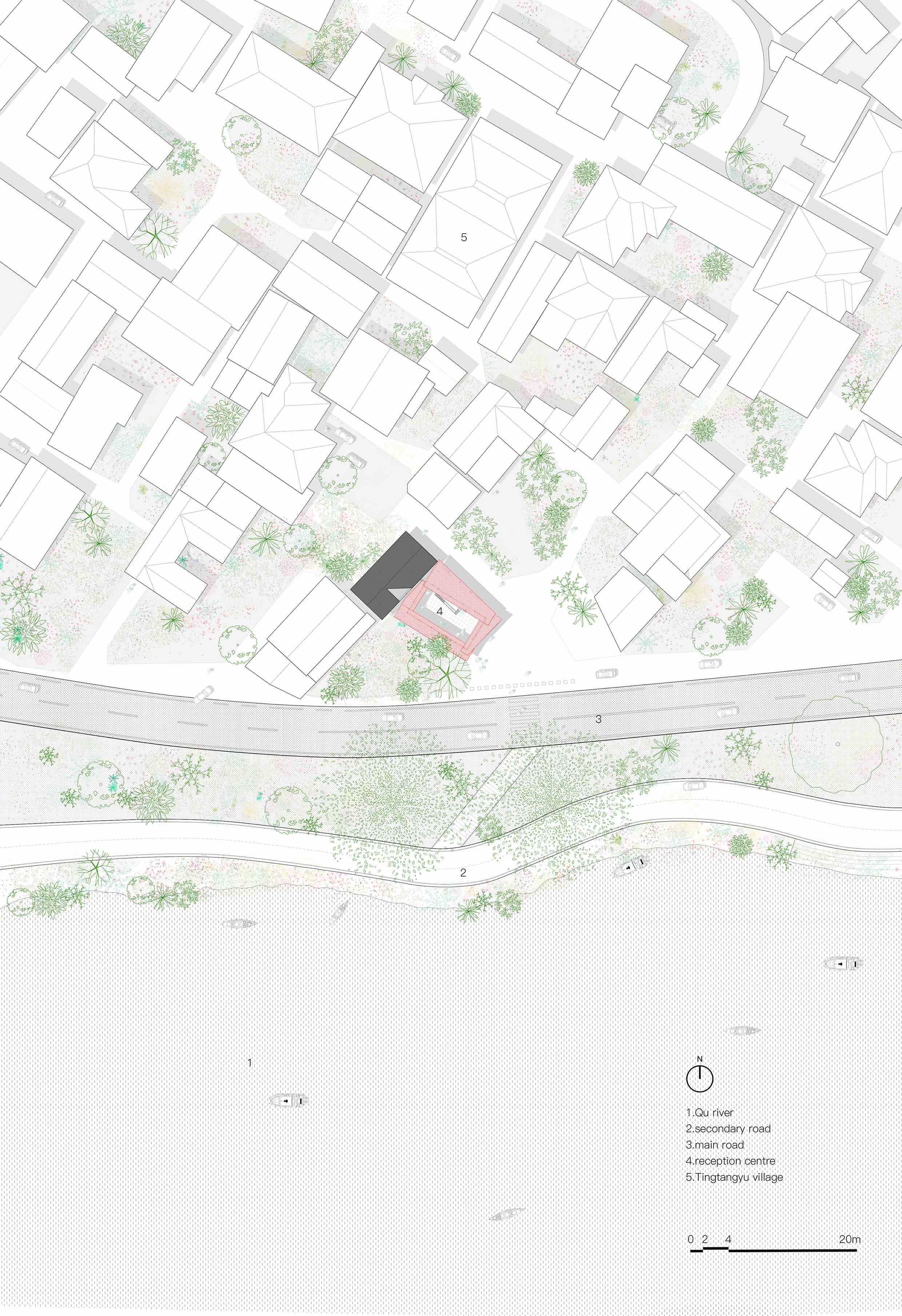
Site plan
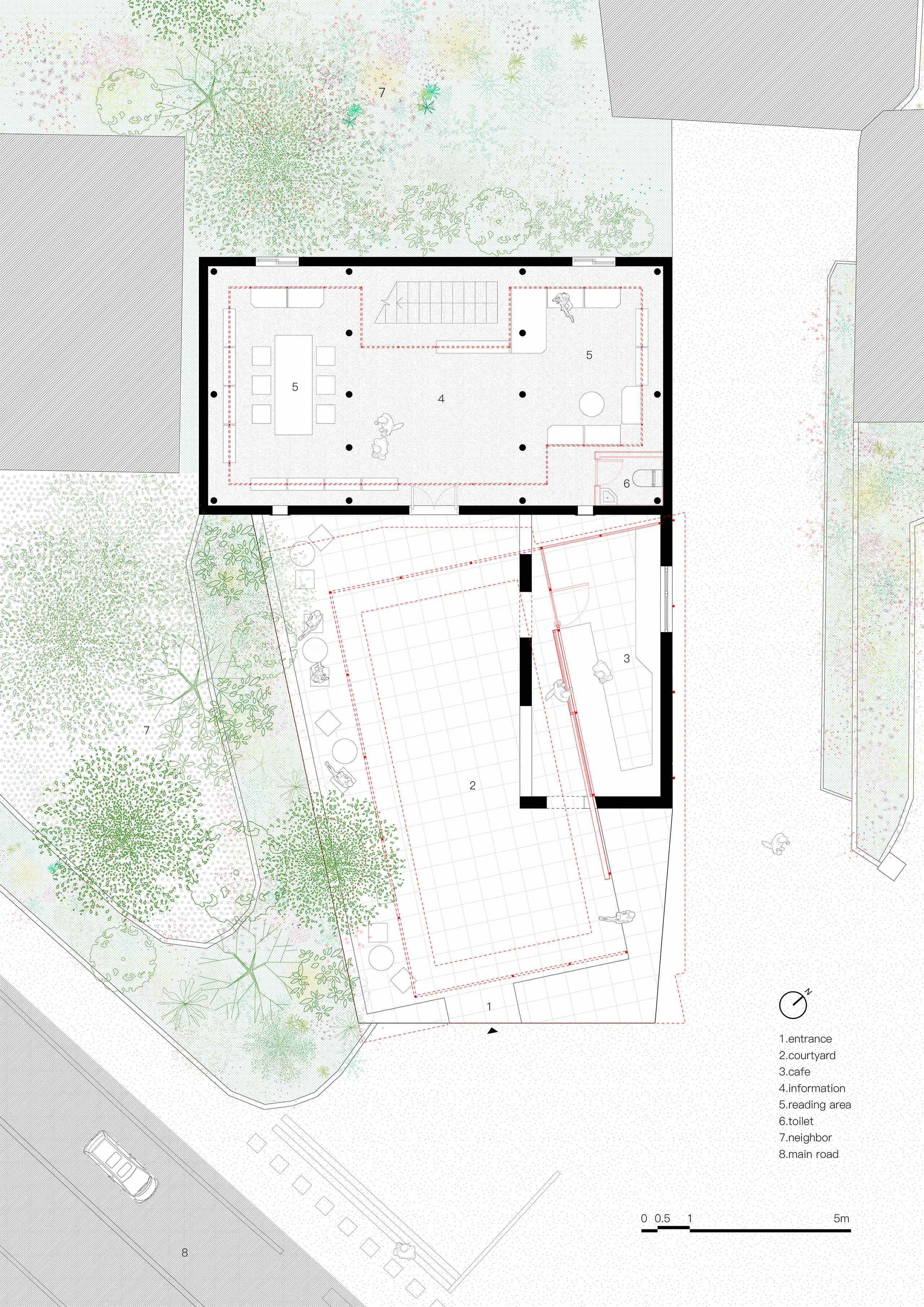
Floor plan
Long section
Axonometric drawing
Process
Detail of courtyard
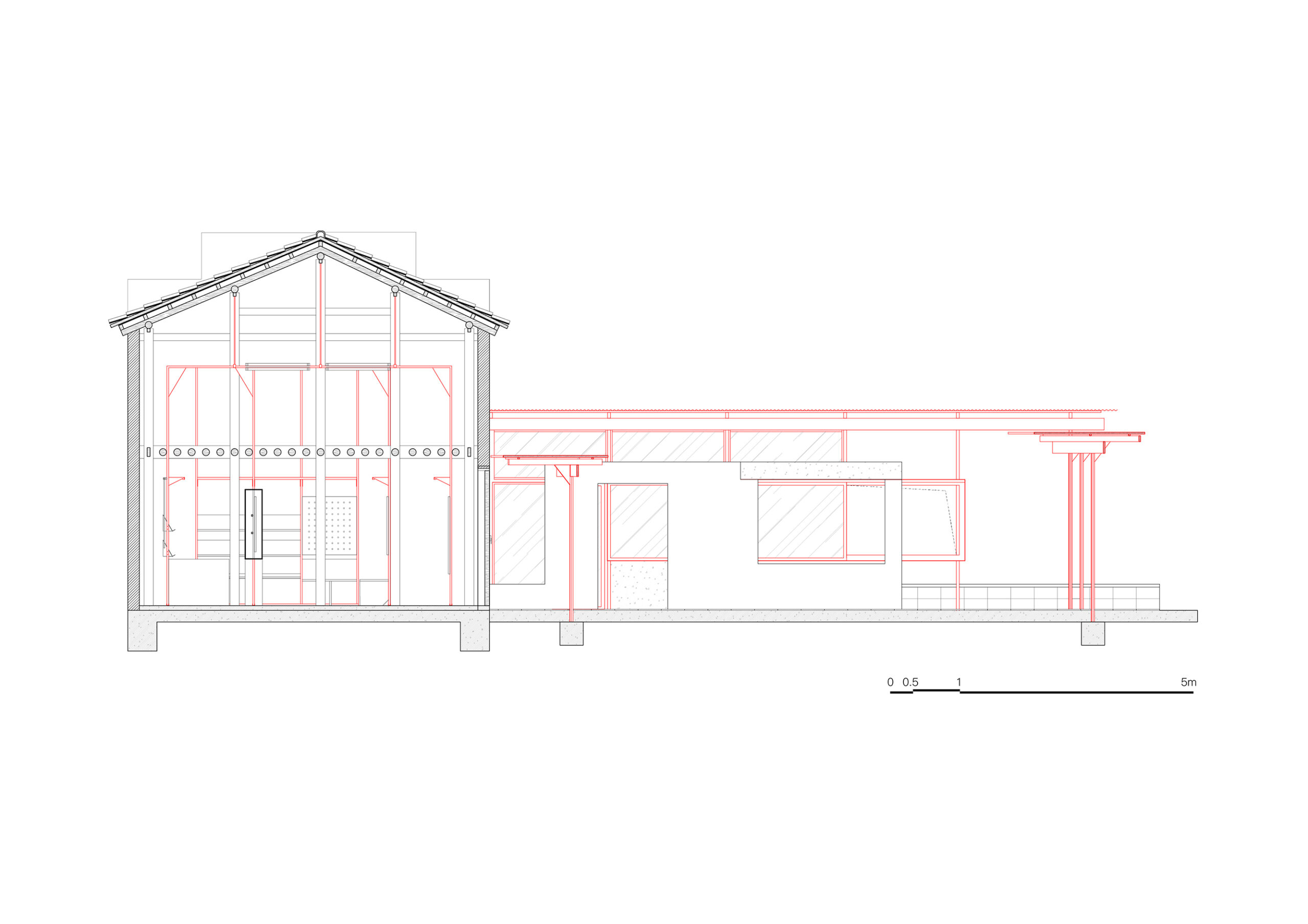
Section
以下、アトリエtao+cのリリース(英文)です。
A light passage, as a rural tourist center
architect studio: atelier tao+c
project type: renovation
address: Longyou,China
completed date: 2023.10
floor area: 178 sqm
design team: Tao Liu, Chunyan Cai, Guoxiong Liu, Xiangfei Tong
materials: Galvanized steel, stainless steel corrugated plate, prefabricated concrete tiles, glass, laminated board, black grossy epoxy floor
furniture: Ziinlife
construction team: Beijing Jianyan Urban Renewal Engineering Technology Co. LTD.
photography: Wen StudioDesign Statement
Crossing the Bridge over the Qu River leads to Tingtangxu Village.
Adjacent to the riverside road, each household in the village adopts a vernacular house with an irregular front yard. The irregular shape of the yards are usually delineated by the interwoven village paths which were set by generations of neighborly negotiations, as a spatial reflection of the rural social structure.
At the village entrance stands such a typical household containing a late Qing dynasty house, a courtyard with a tree and a kitchen annex added in the 1990s. It’s where the Hushiguang Art Eco Site begins. This rural art festival unfolds along the Qu River, with scattered art works in the wild field that attract visitors and subtly reshaping the villages’ life.
Here, atelier tao+c has inserted a light-footprint shed serving as a gathering place with dual purposes: a resting stop for tourists and a meeting spot for villagers to casual chat when entering or leaving the village, and allows local residents and tourist to come across and communicate.
Along the outline of the courtyard, which the oblique shape demarcated by the riverside road, village paths, and the shared wall with the neighbor, the architects inspired a single-column passage wraps around the perimeter and cut out a rectangular courtyard parallel to the shared wall and at a 5° angle to the main house.The establishment of the passages clarified the site’s boundaries and created an intermediate threshold between the road and the main house, filtering out the noise, allowing the river breeze to pass through.
The four sides of the eaves are divided into three different heights. Close to the village road, the passage passes through and cuts diagonally through the original kitchen annex, forming the window of the café. Then it slightly lowers to form the entrance facing the road. Next to the neighbor’s boundary wall, the eave gets lower and adopts the tree; it then turns to the front of the old house and keep a slight distance to it, not disrupting the main house’s front facade. The eaves lower down accordingly, responding to different usage needs and the surrounding environment.
Within the antique house, the infilled wooden wall panels and floor slabs were removed to reveal the clear structure of the old building. A set of galvanized steel framework threads through the old rafters, touching it lightly without causing any damage, unifying an internal programmatic system with display, seating and lighting. The ground is overlaid with black epoxy resin, indicating that all the newly inserted materials are smooth and glossy, to accentuate the original fabric.
The tourist lobby adopts a passive preservation approach, to use but not to occupy the space, insert but not renovate. Without erasing its traces, the aging timber structure and weathered surfaces, remains untouched in its gradual decay.
The materials used for the passages and insertions in interior are industrial standard galvanized steel tubes and stainless steel corrugated plates, which can be easily purchased at local building material stores and are cut and welded on site. The strategic use of common materials echoes vernacular construction methods seen in some village sheds, helps the intervention blend into the rural context.
In this rural renovation project, the architects hope to maintain the awareness of being an outsider, comes in gently, speaks softly. With temporary and reversible interventions which seek a balance between rewriting and preservation, and reserves the possibility for future transformations.
アトリエtao+c 公式サイト
https://www.ateliertaoc.com/#
![[Report]方丈庵から生き方を問う、21_21 DESIGN SIGHT 企画展「方丈記に学ぶ –生きるを編み直す小さな建築–」会場レポート](https://magazine-asset.tecture.jp/wpcms/wp-content/uploads/2026/09/01181900/20260828hojoki-ex_01_mag-endo4350-900x676.jpeg)