

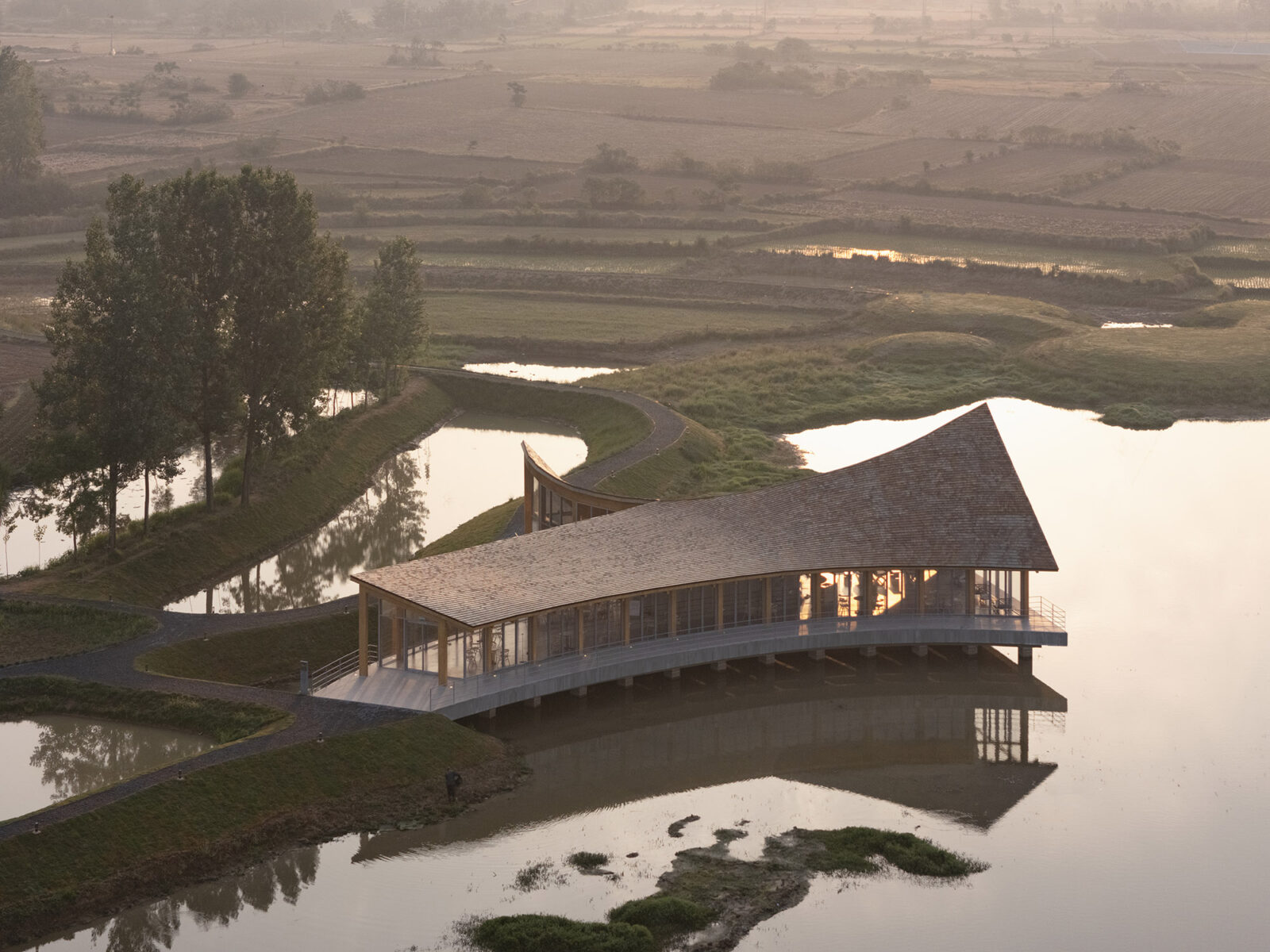
水上に伸びる有機的な木造空間 - 周囲に広がる村の景観と生活を融合する〈ドラフトウッド・ビレッジセンター〉
© Arch-Exist
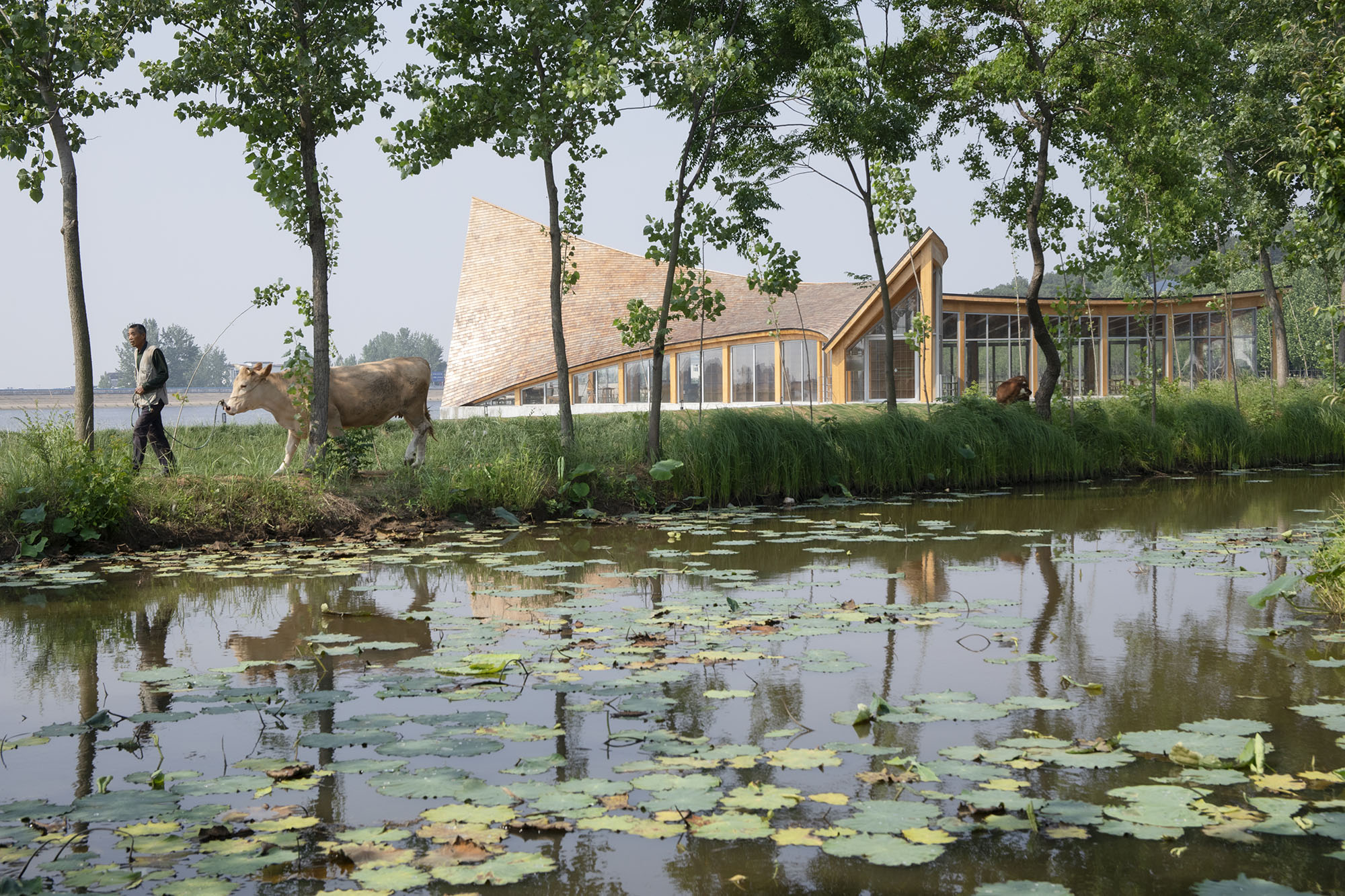
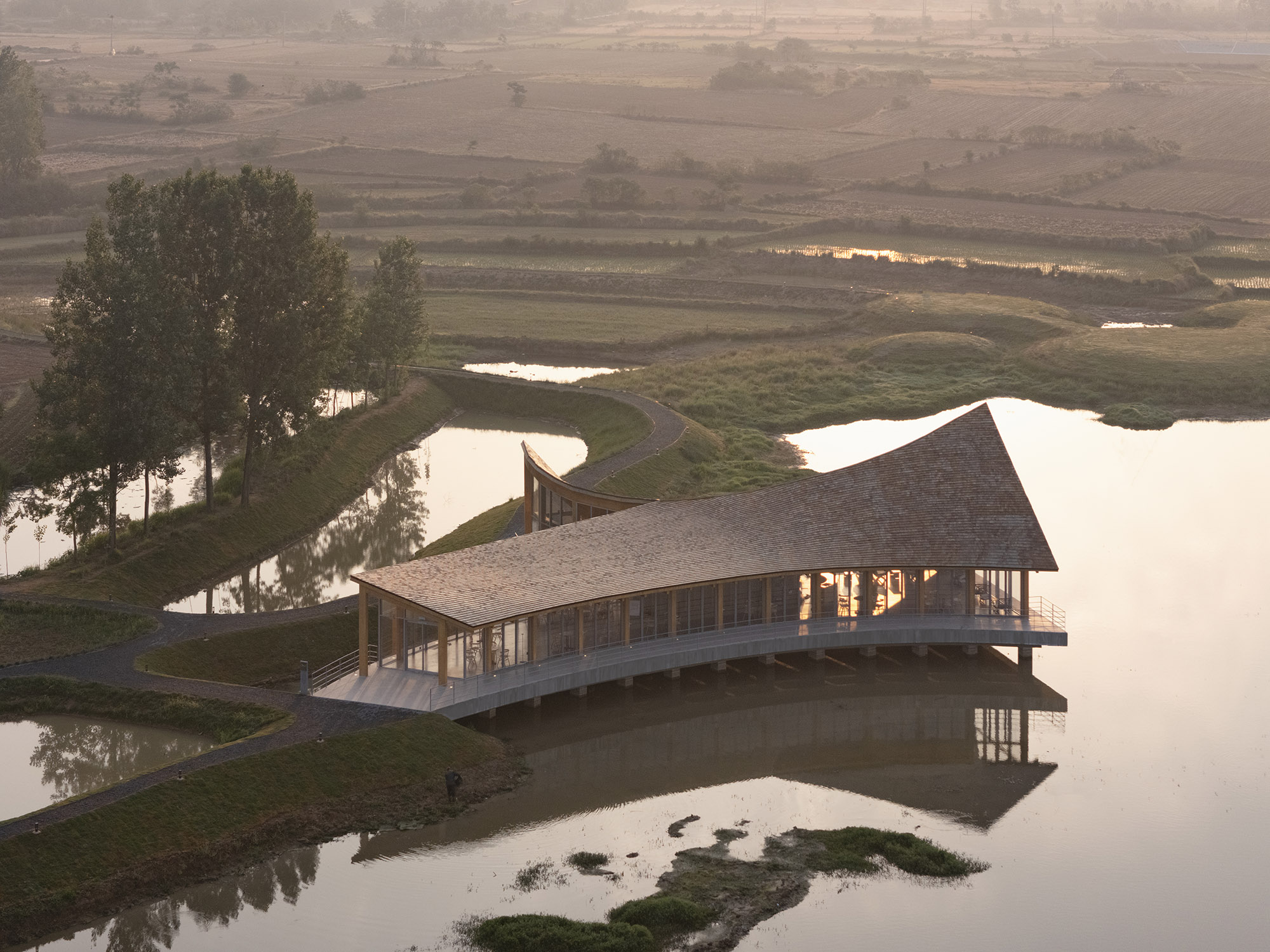
中国河南省・信陽市の村に建つ〈ドラフトウッド・ビレッジセンター(The Driftwood Village Center)〉は、村民のためのティールームや読書ラウンジ、集会ホールを備えた、農耕生活と自然景観の融合する建築です。
建築の本質回帰(Primal)を理念に掲げる北京のプライマリー・アーキテクツ(Primary Architects)が設計しました。
注目ポイント
- 貯水池の水位変動に応答する空間構成
- 田畑の稜線や堤防道の延長として導かれる有機的な平面計画
- 風景を取り込む曲面カーテンウォールや全開放可能な折り戸
- プレファブリケーションによる環境負荷低減と工期短縮
(以下、プライマリー・アーキテクツから提供されたプレスキットのテキストの抄訳)
敷地と背景
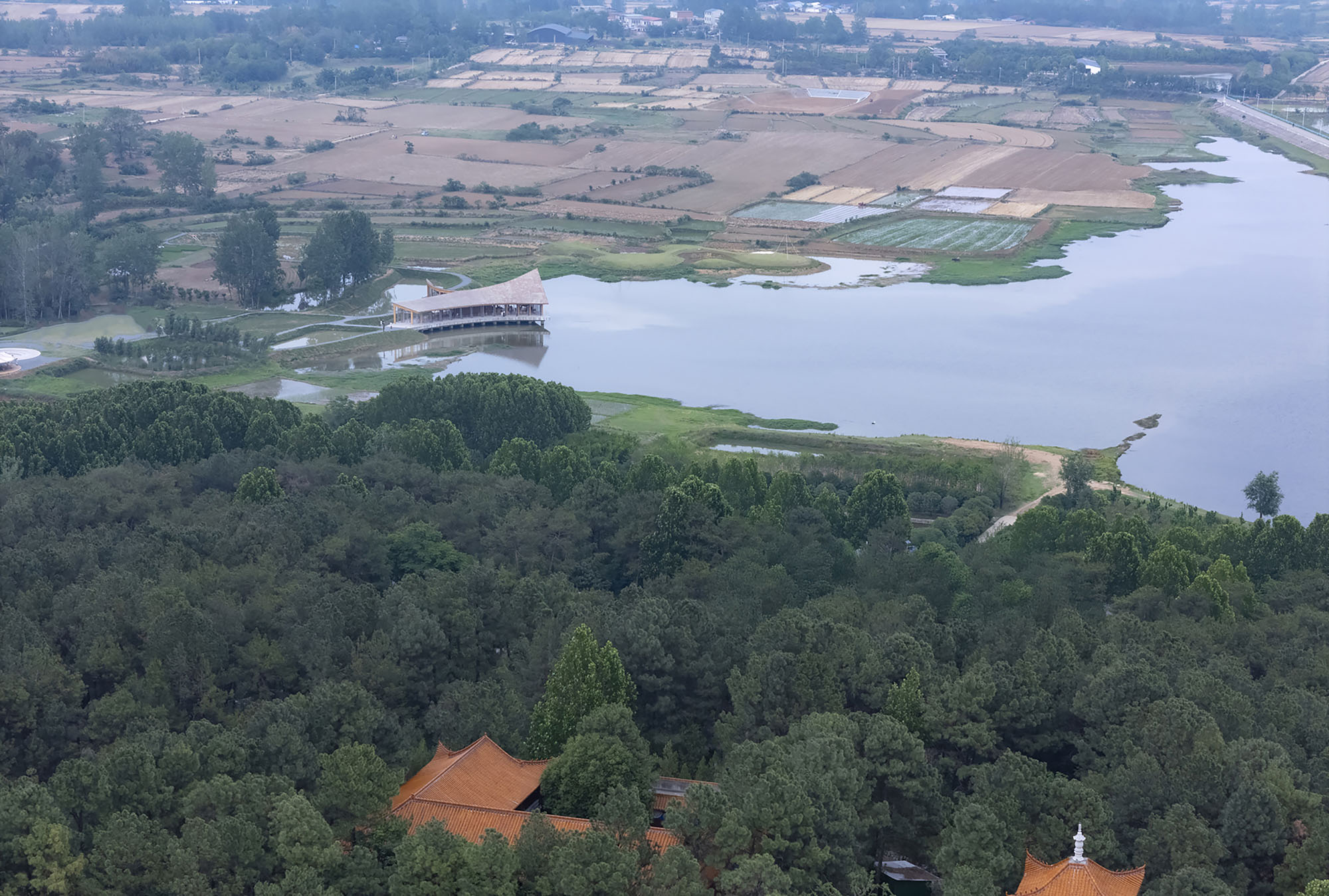
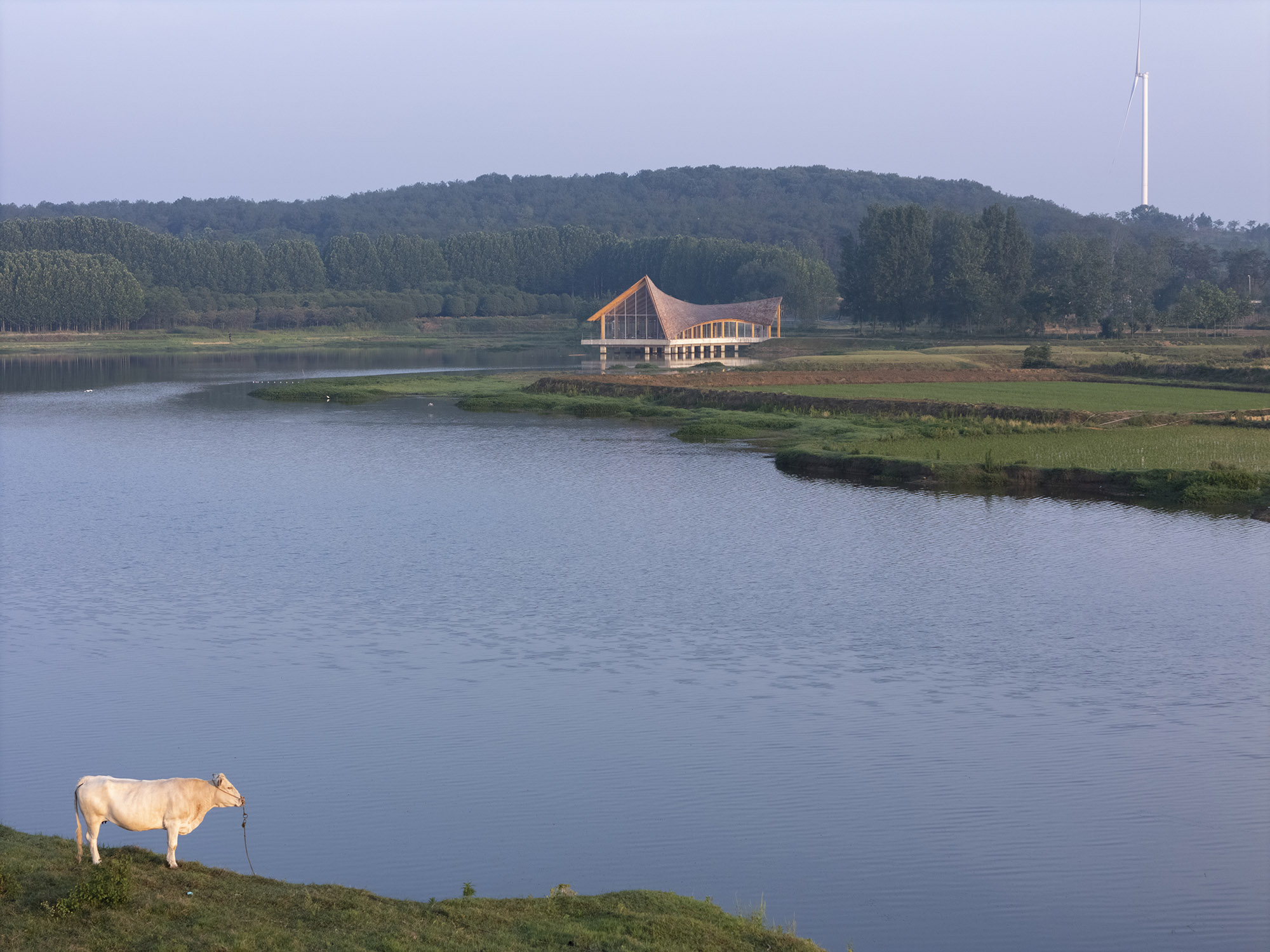
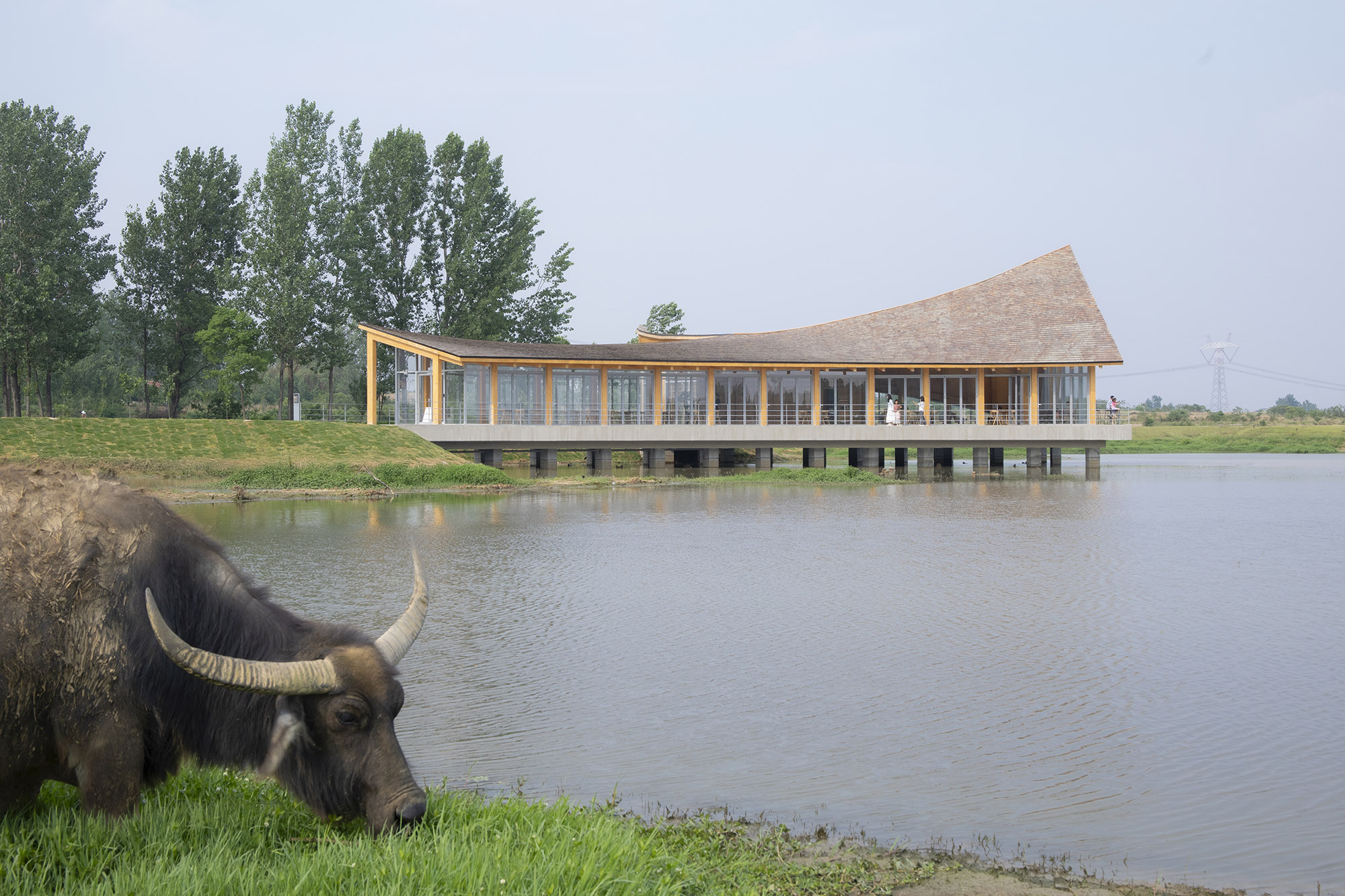
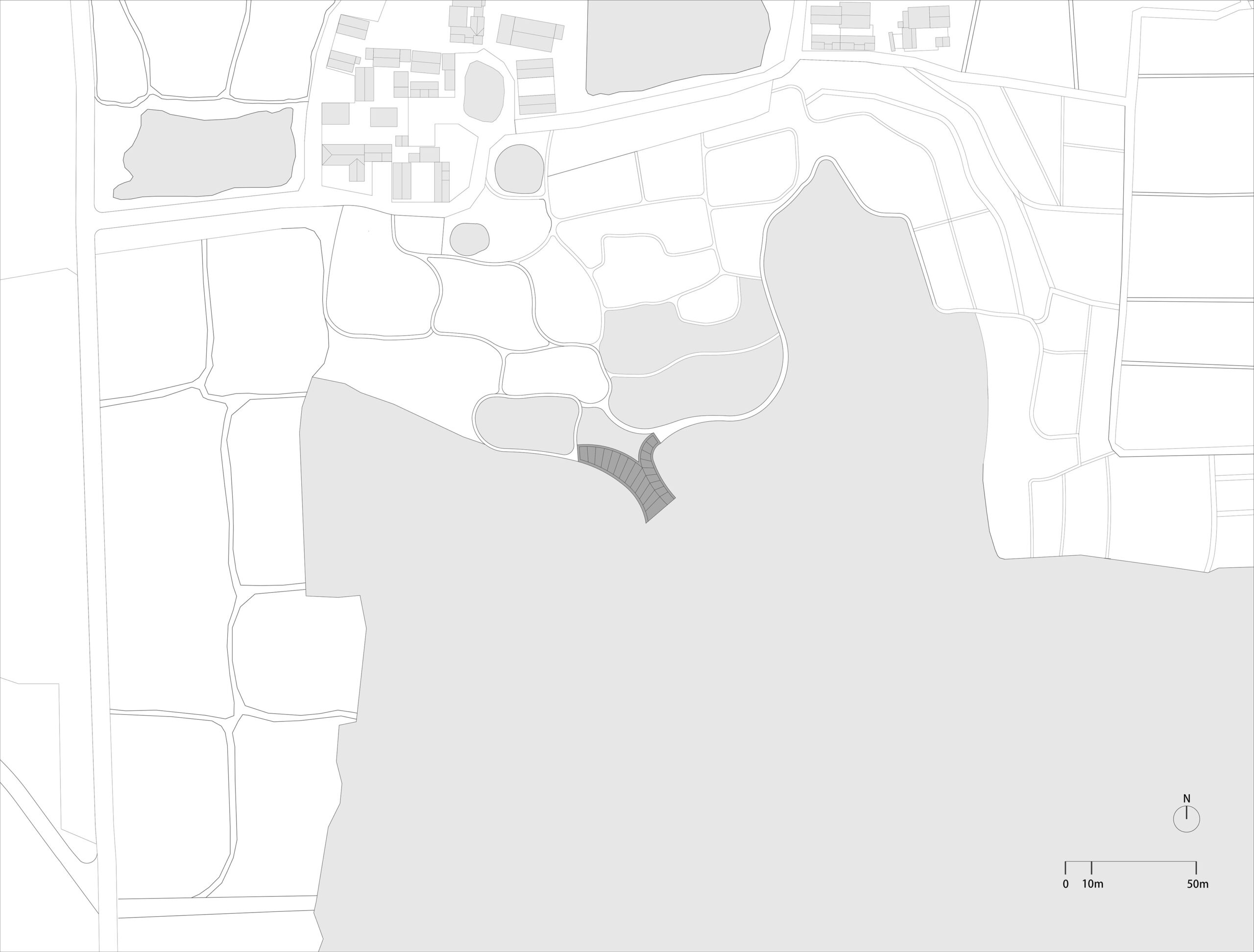
〈ドラフトウッド・ビレッジセンター〉は新陽市柳崗村の貯水池のほとりに位置し、三方を景観に囲まれている。
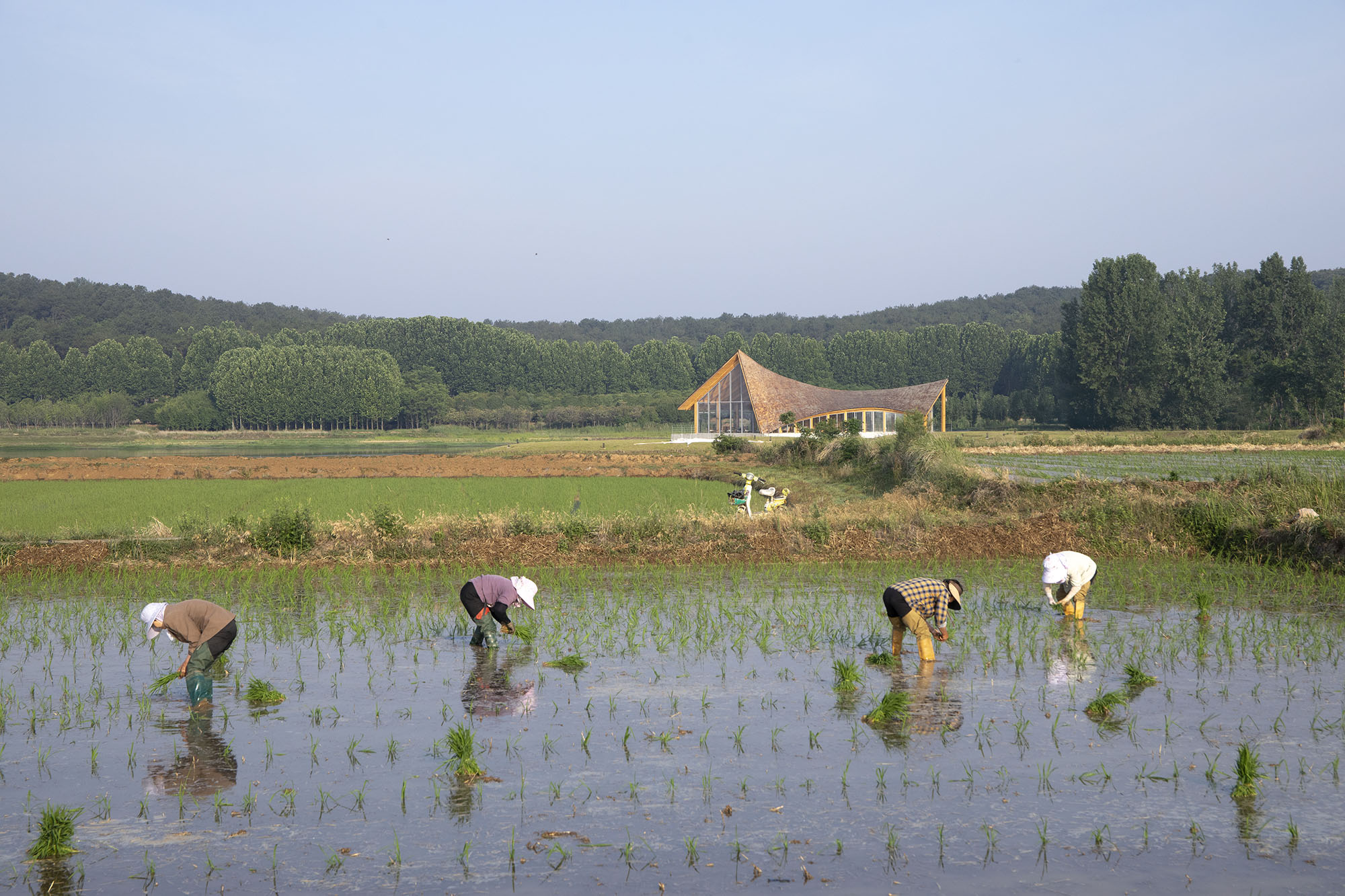
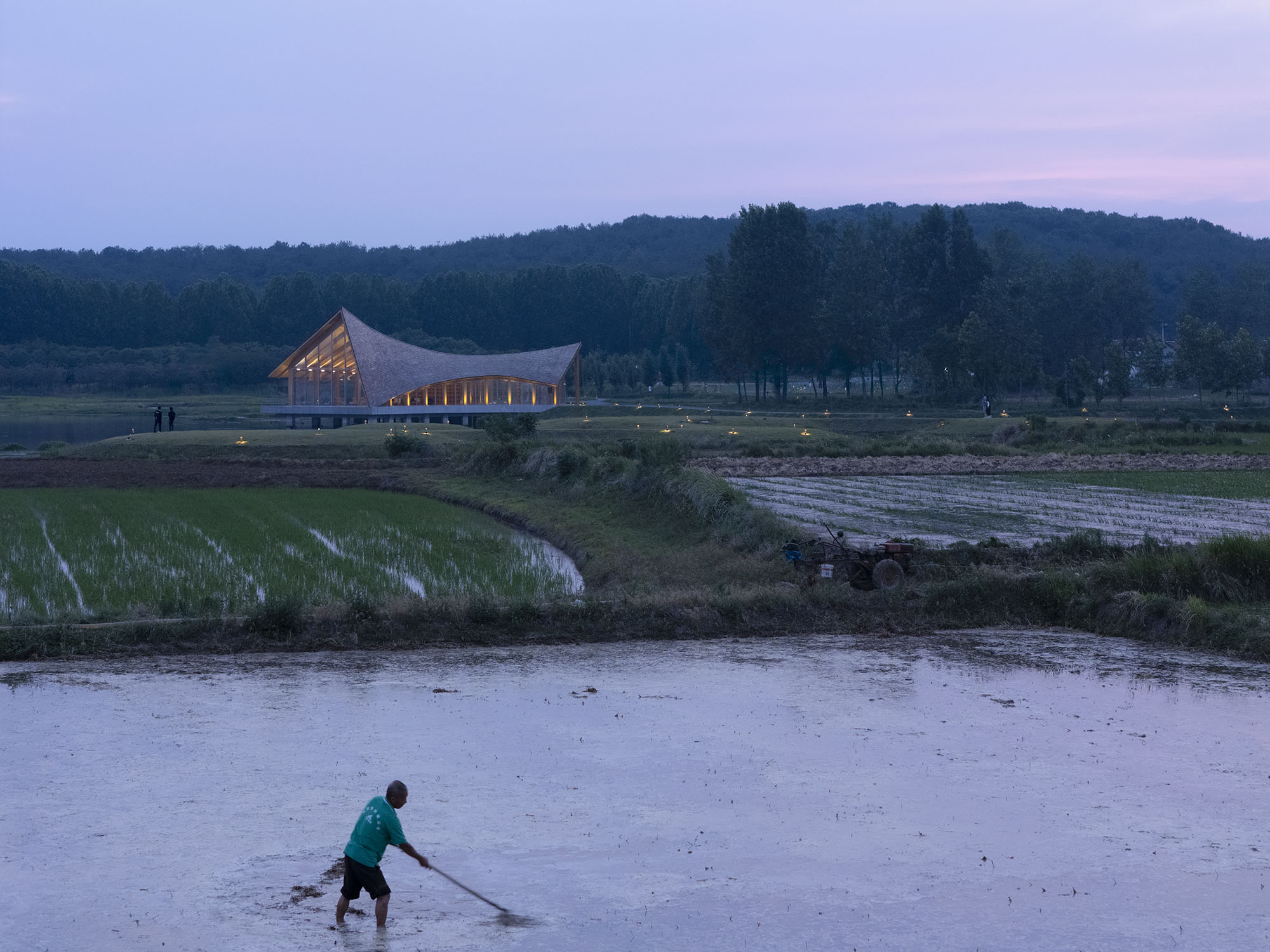
東には広大な水田が広がり、北には村の住宅群、南には灌漑用の貯水池、西には鳳凰山へと続く地形が連なる。農業用水源である貯水池は、農作業の需要に応じて季節ごとに水位が変動する。村民の日常的な農耕生活はこの水辺を中心に展開している。
© Arch-Exist
© Arch-Exist
農閑期に村民が共有する空間として設計されたビレッジセンターには、ティールーム、読書ラウンジ、村民集会ホールが設けられている。
空間構成は農業環境と貯水池の水位周期変化に応答する形で構想されている。建築はその形態を通じて周囲の山々や農地と対話を確立し、農耕生活と自然景観を結ぶ媒介となっている。
© Arch-Exist
© Arch-Exist
田畑と小道の質感
村民の農耕生活は貯水池と密接に結びついており、貯水池は水生植物が豊富で水鳥が生息する、よく保存された自然環境に囲まれている。建設は、この在来の生態系への影響を最小限に抑えることを目指して実施された。
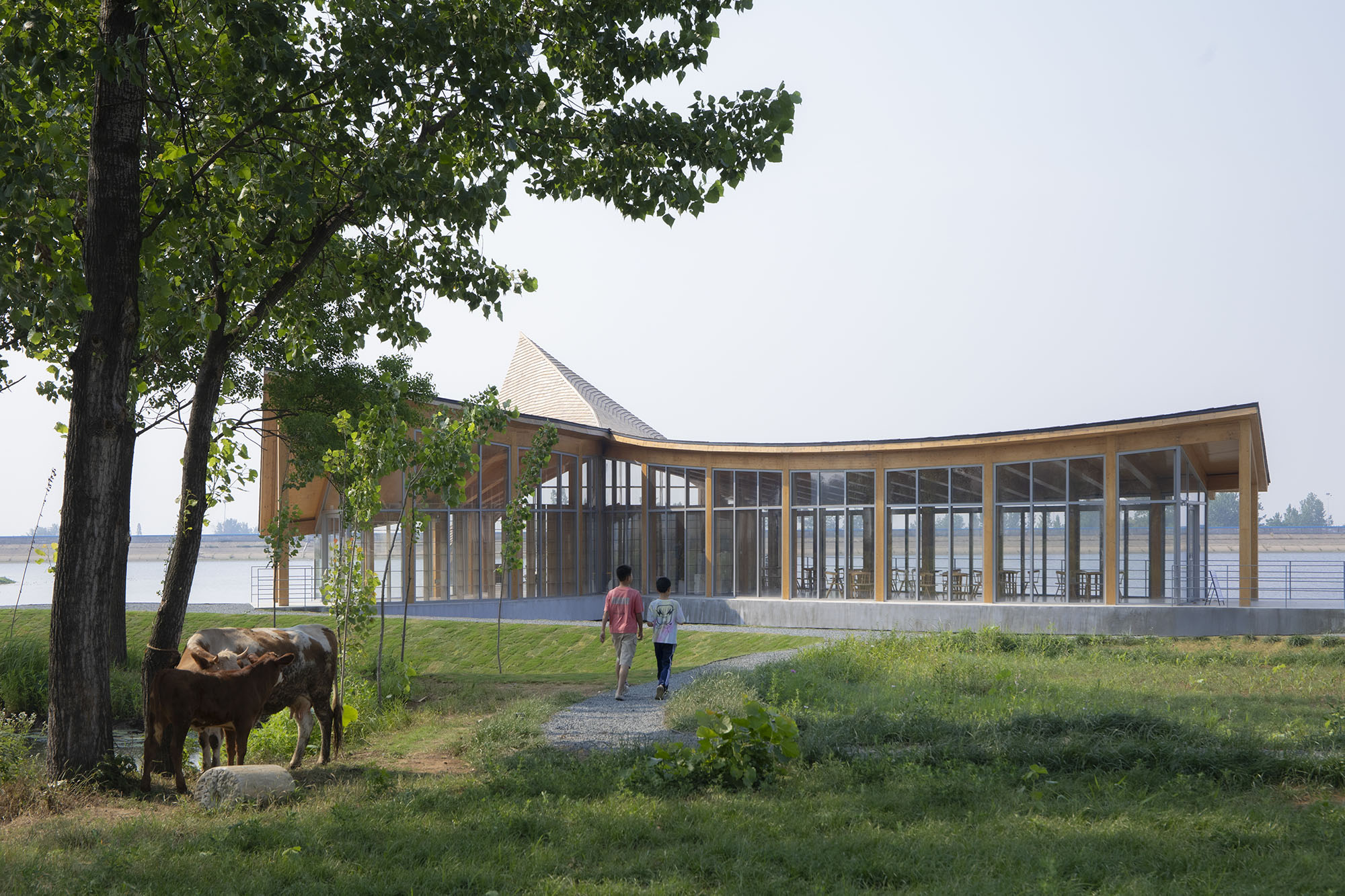
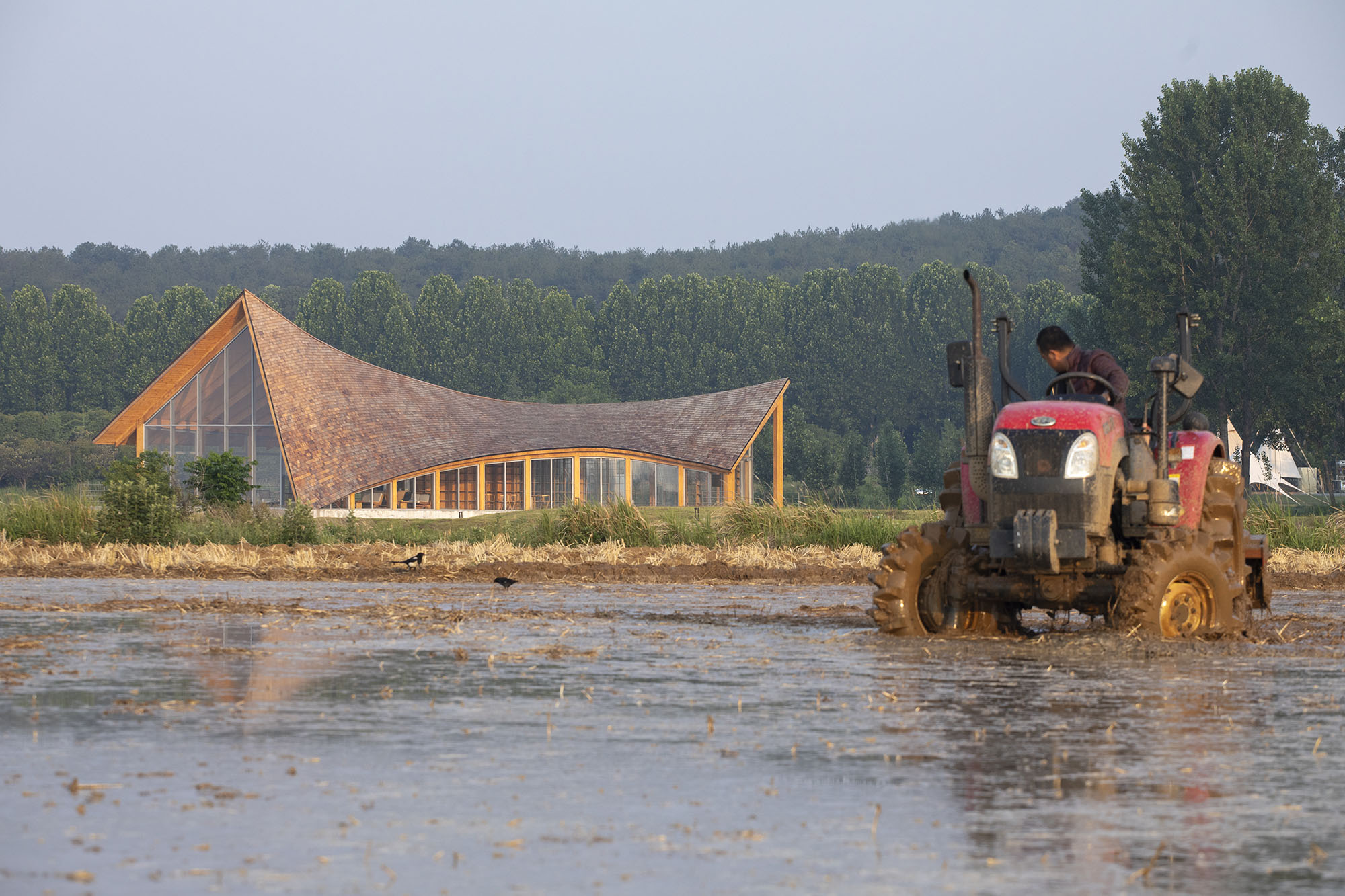
精緻な農法によって形づくられた「田畑の稜線」は、この場所の最も特徴的な要素である。建築は農耕景観に控えめに溶け込みつつ、既存の畝や在来の植生を保存している。建物の形態は、周囲の環境から直接導き出されたものである。
Sketch © Primary Architects
Site Plan ©Primary Architects
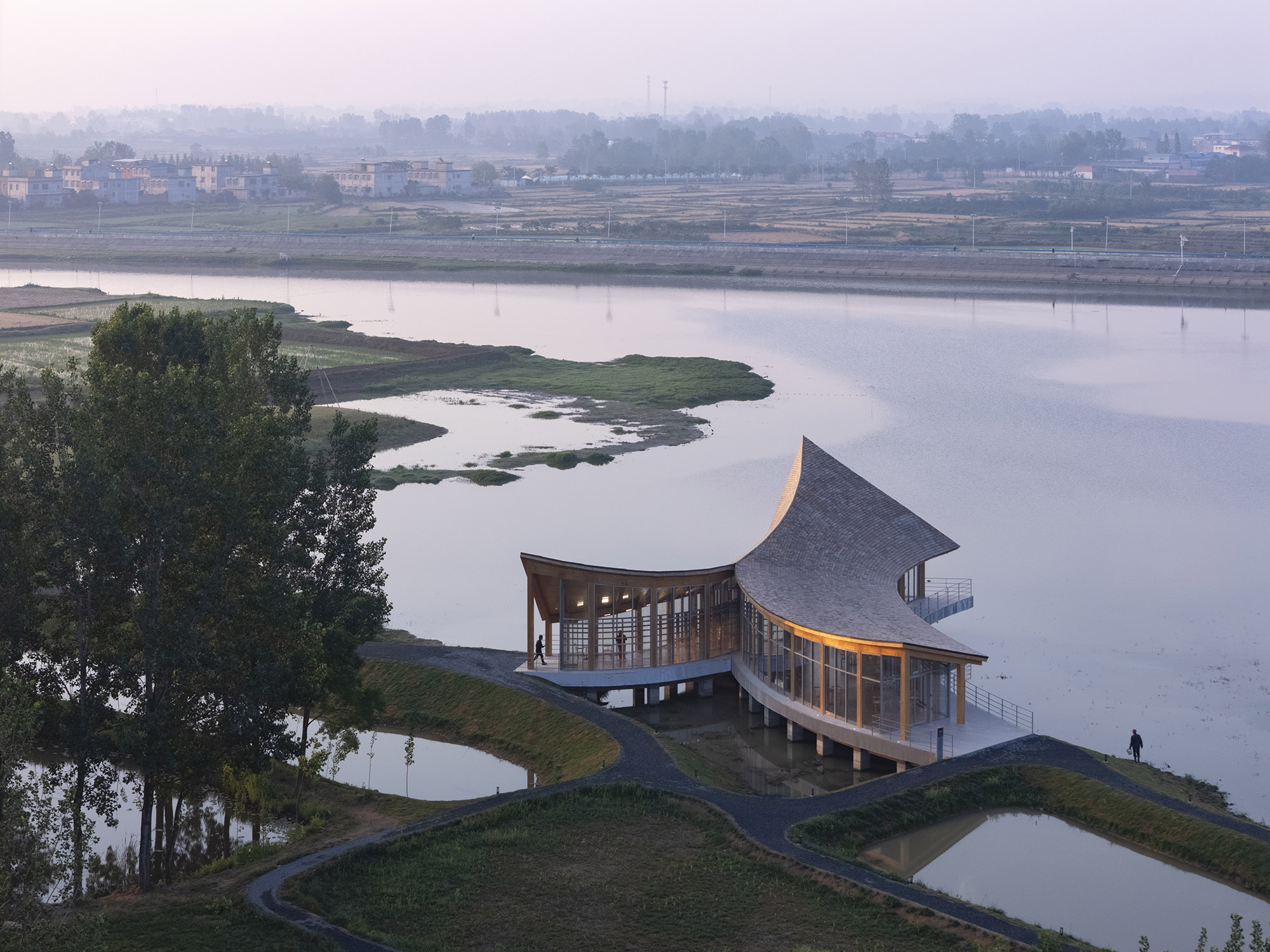
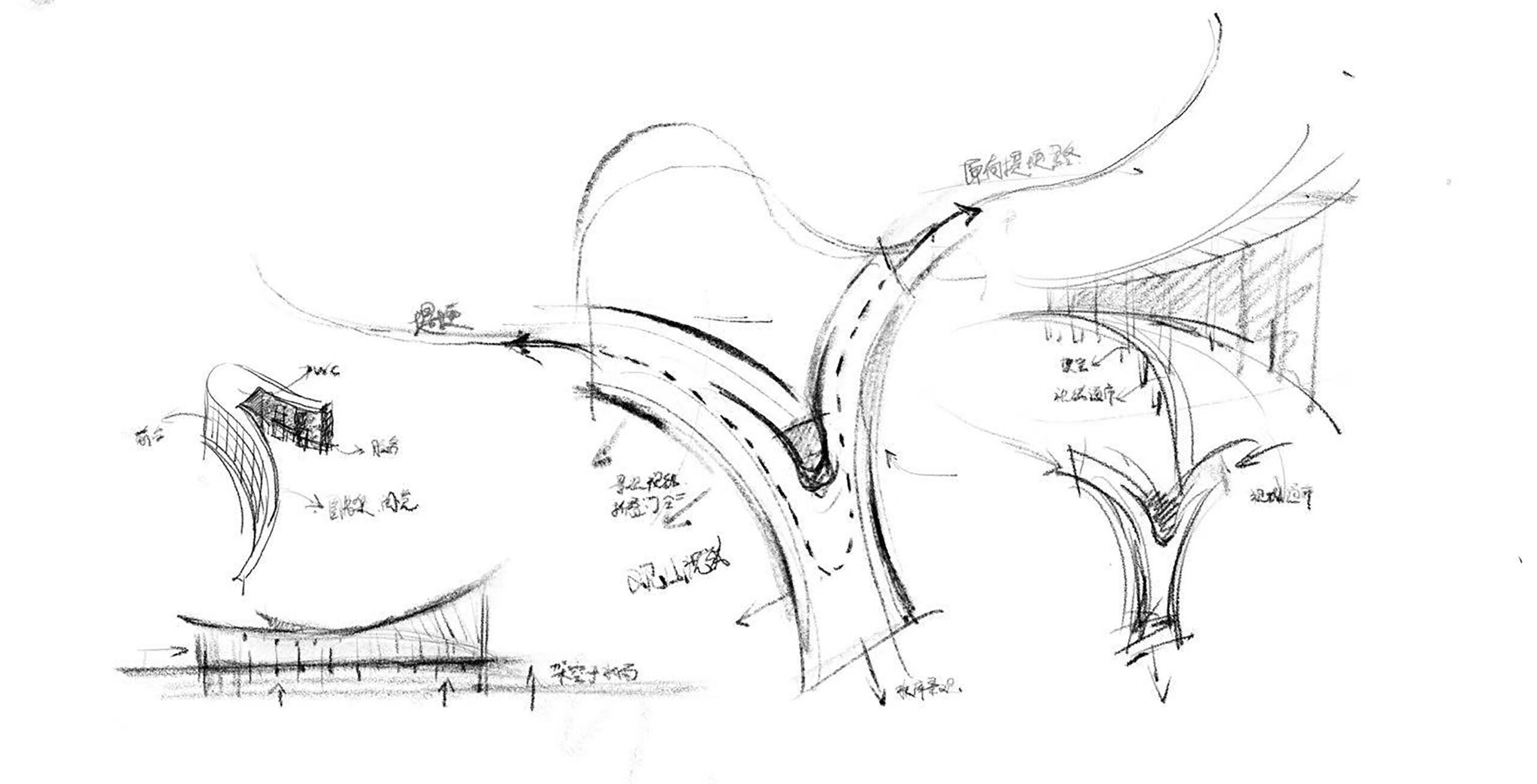
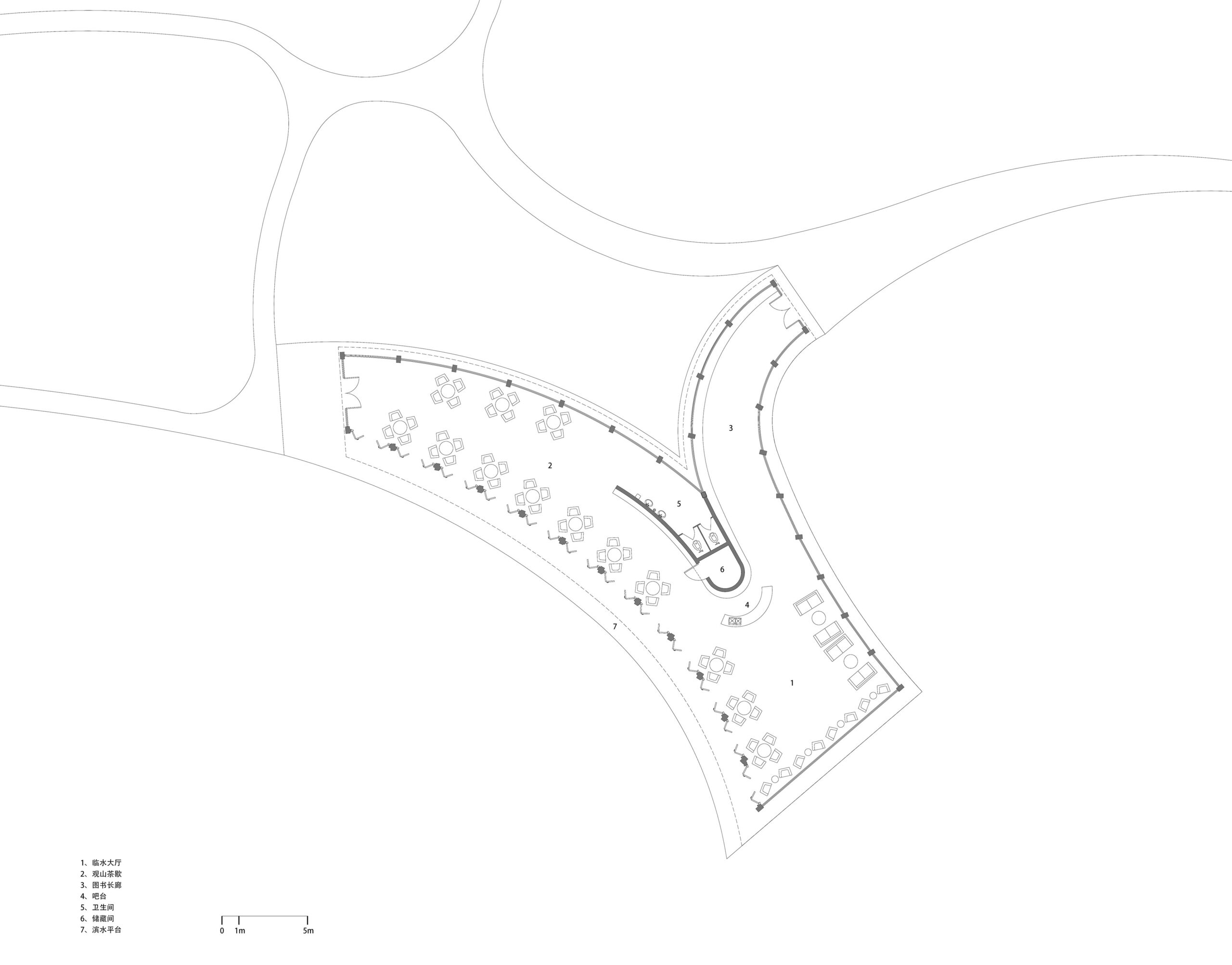
貯水池沿いの堤防道の一部を建築動線の起点としており、平面プランは両端から自然に延びることで、建物は堤防道の有機的な延長となった。
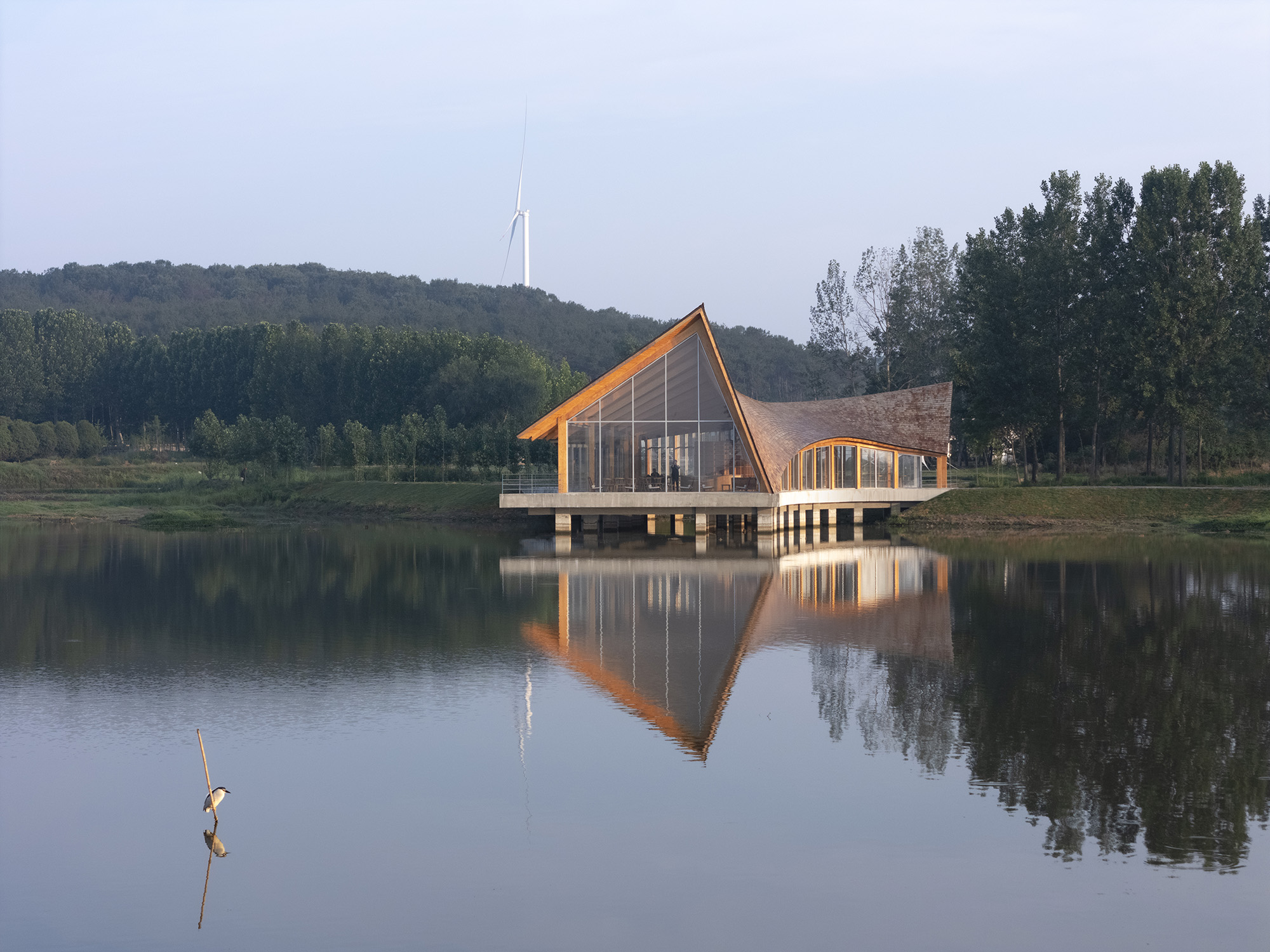
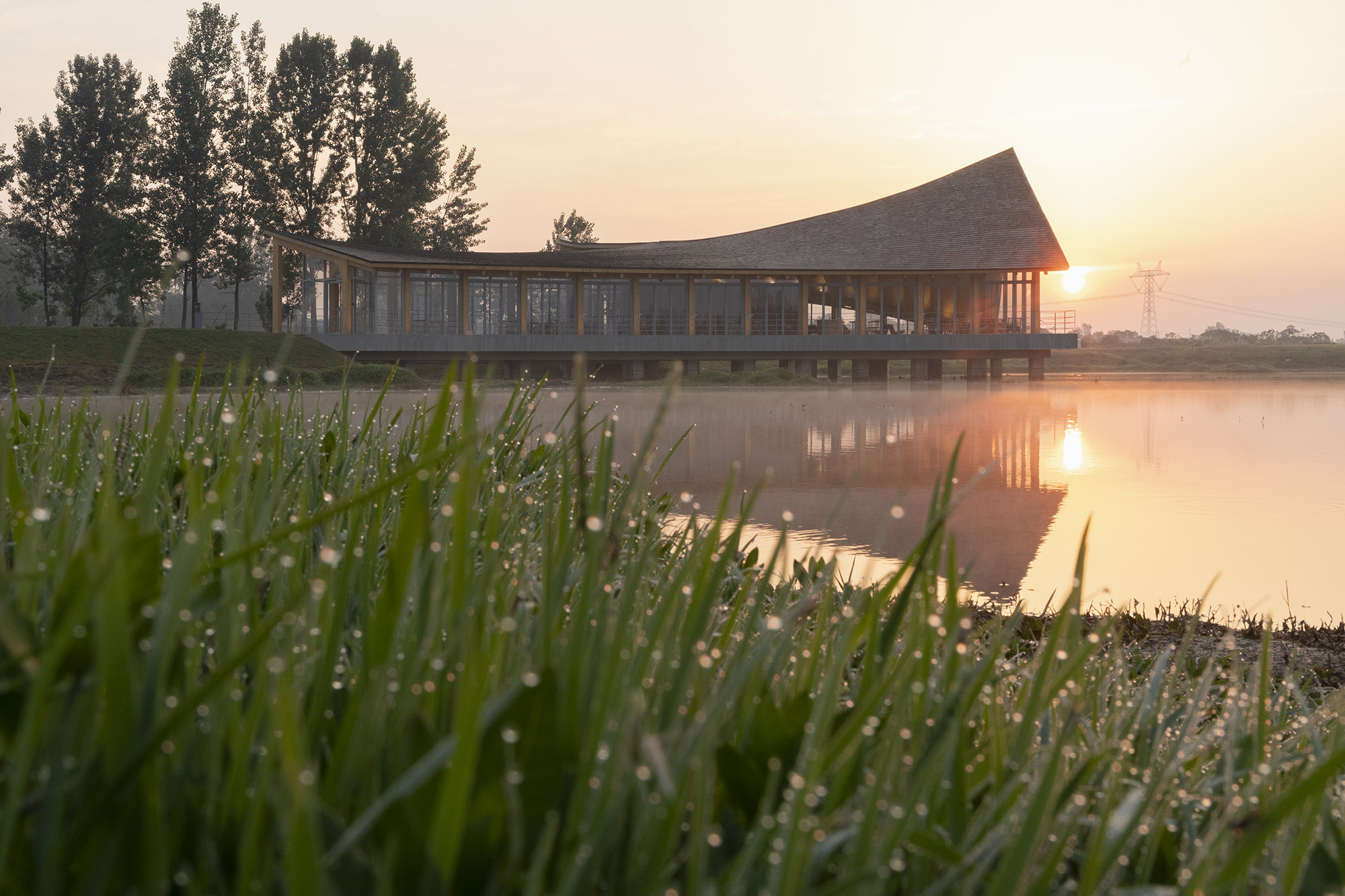
環境感受性のある生成論理に従い、建物は既存の堤防構造に埋め込まれ、高床式プラットフォームが水位変動に対応している。在来植物群落は生態学的緩衝地帯として保全され、建物と水域のシームレスな移行を形成している。
© Arch-Exist
© Arch-Exist
木構造の採用
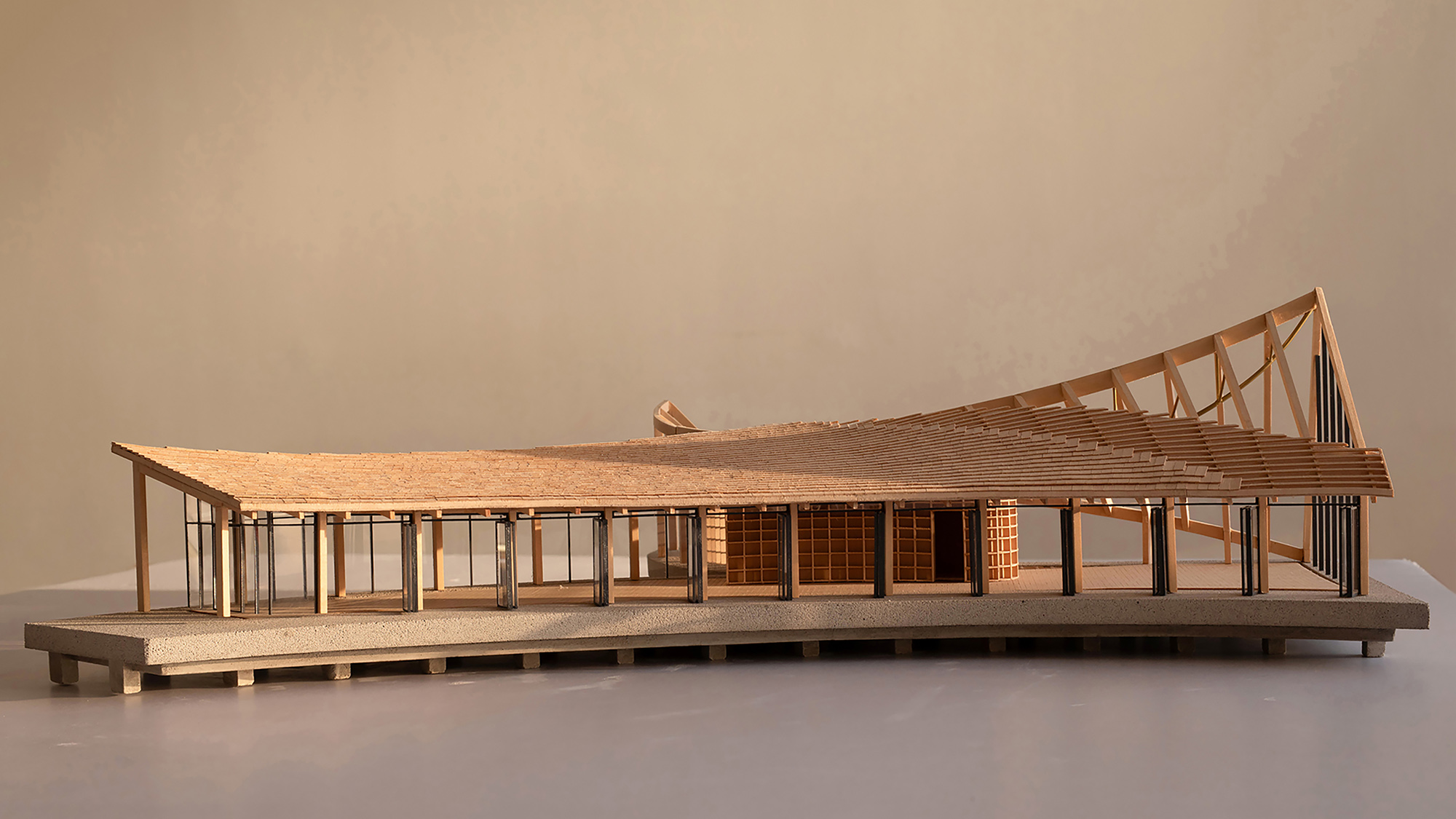
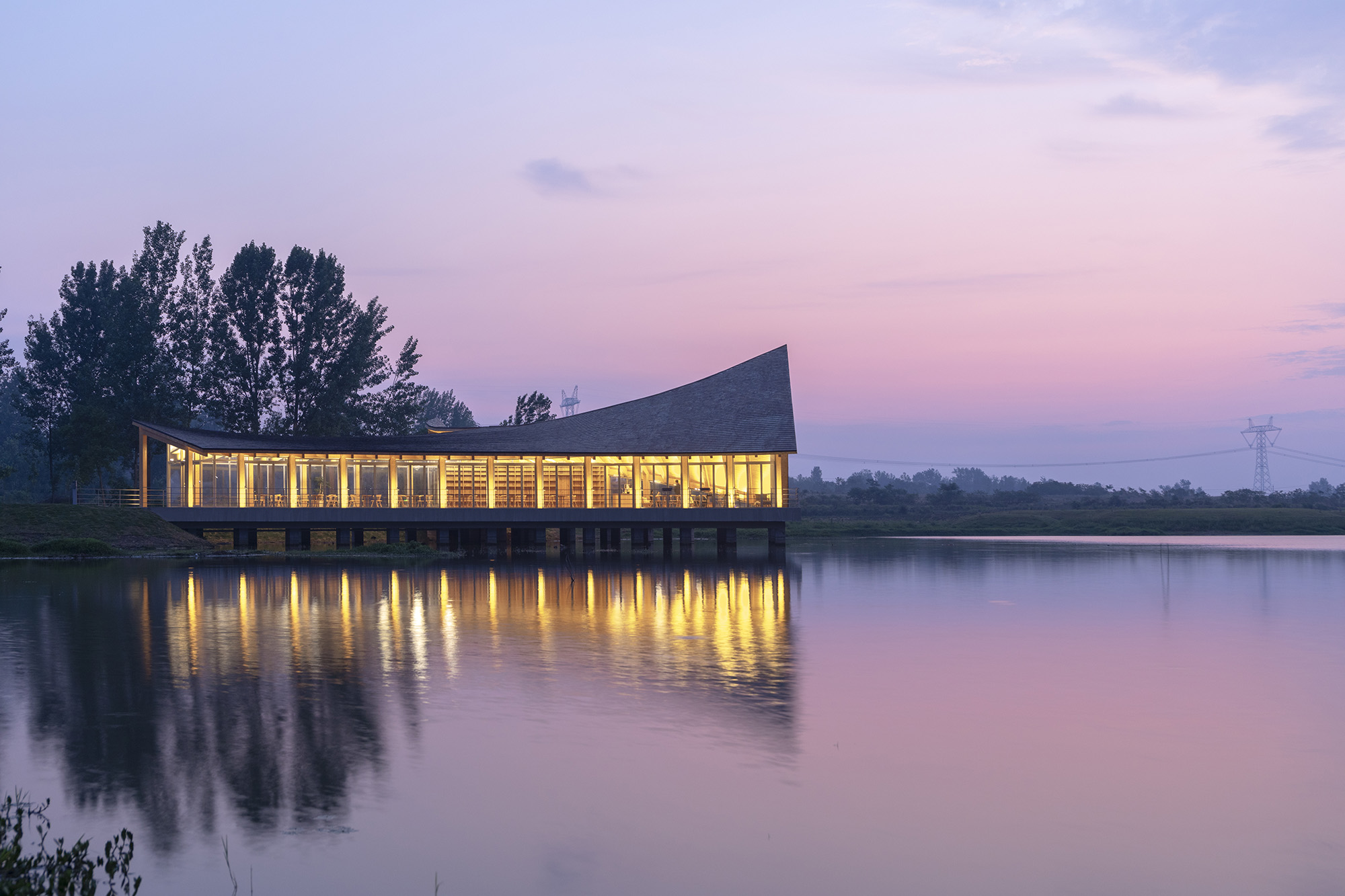
貯水池の湖岸への影響を最小化するため、建築プラットフォームは高床構造とし、その下部に55cmの空洞を設けて空調設備や水道・電力配管を収容している。プラットフォームの高さは貯水池の過去最高水位より20cm高く設定することで、洪水への安全性を確保した。
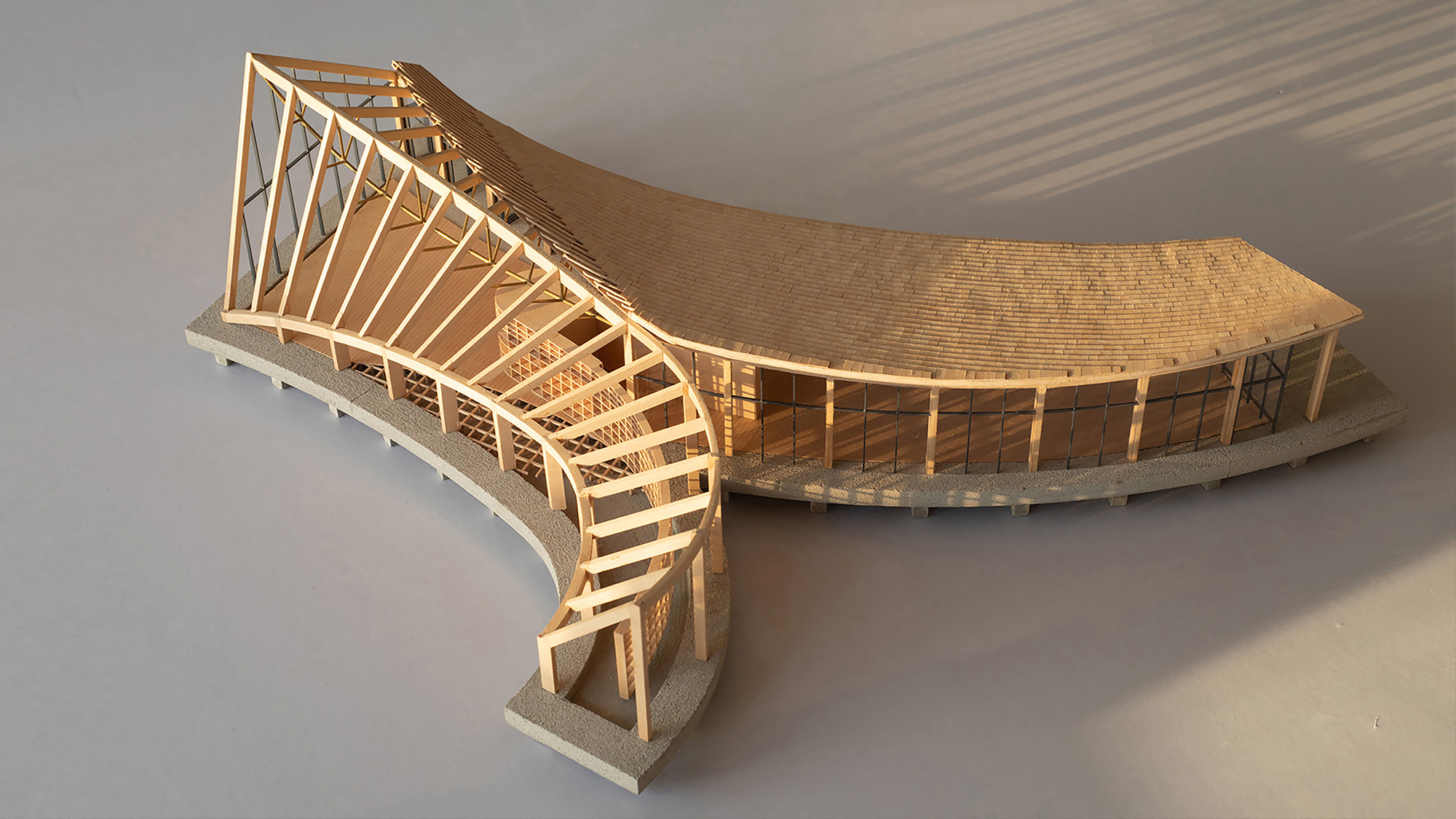
主要構造は鋼製ボルト接合の木造フレームとし、切妻屋根にはガブルフレームシステムを採用した。
Model photo © Primary Architects
Model photo © Primary Architects
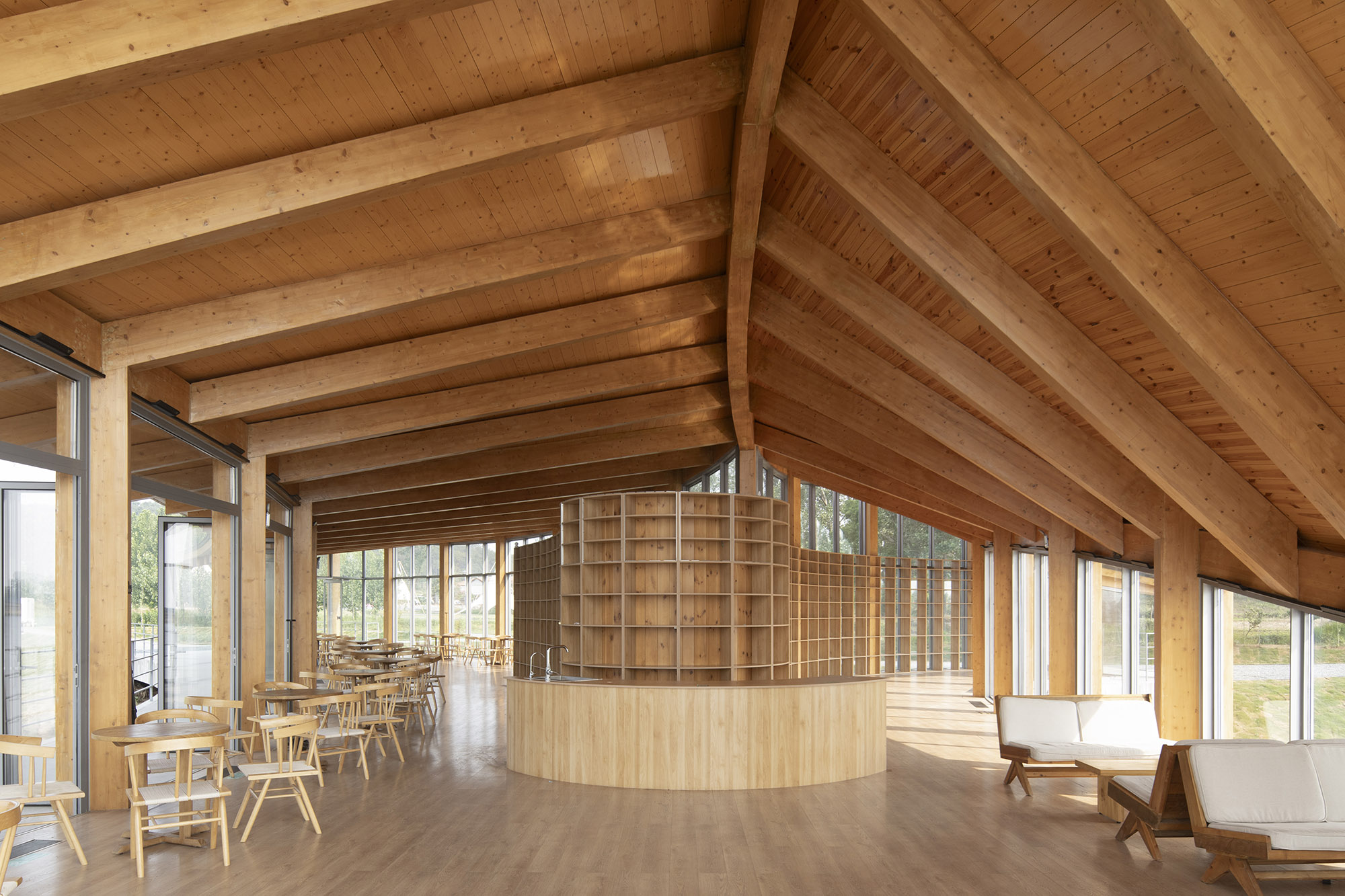
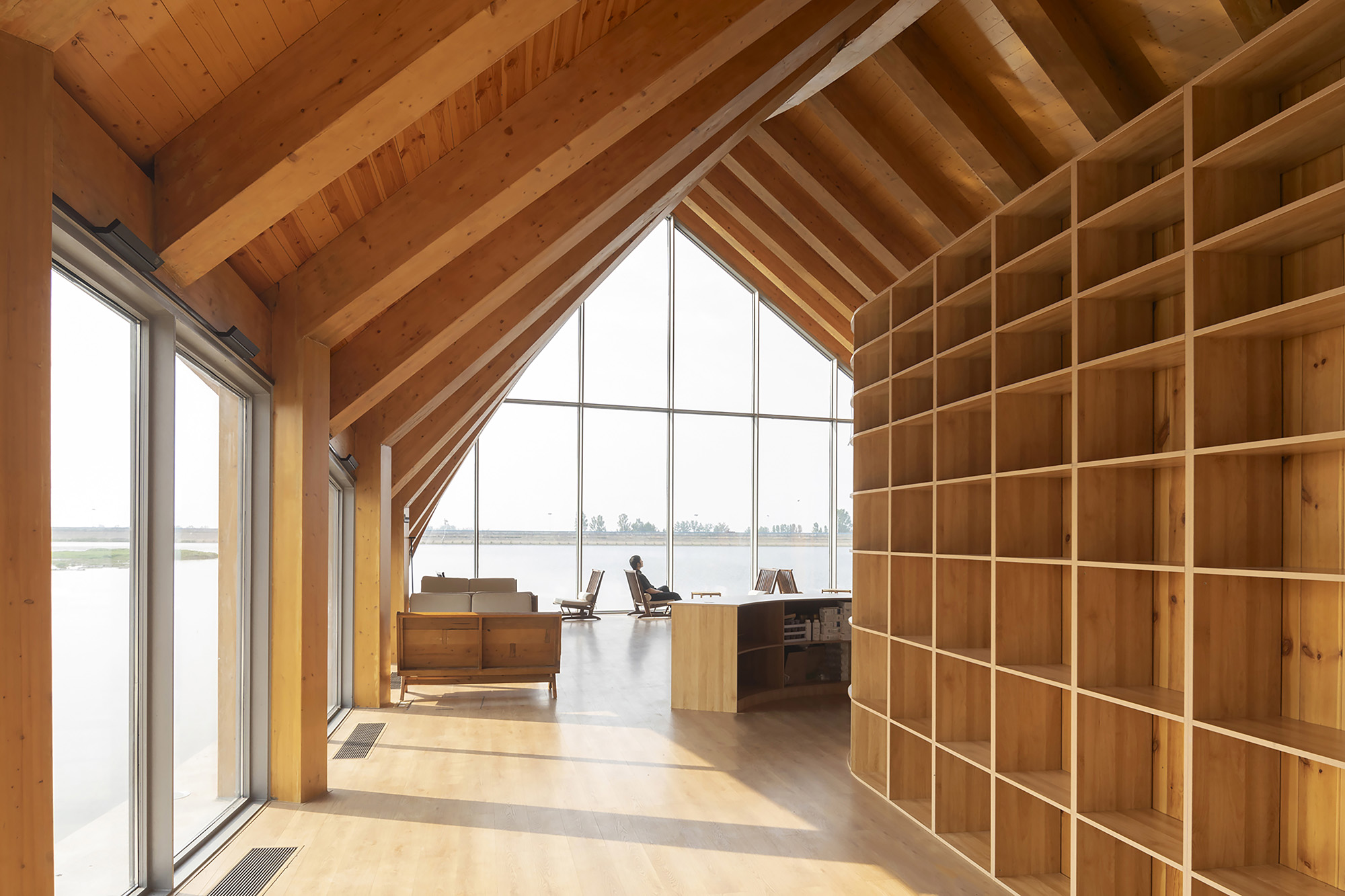
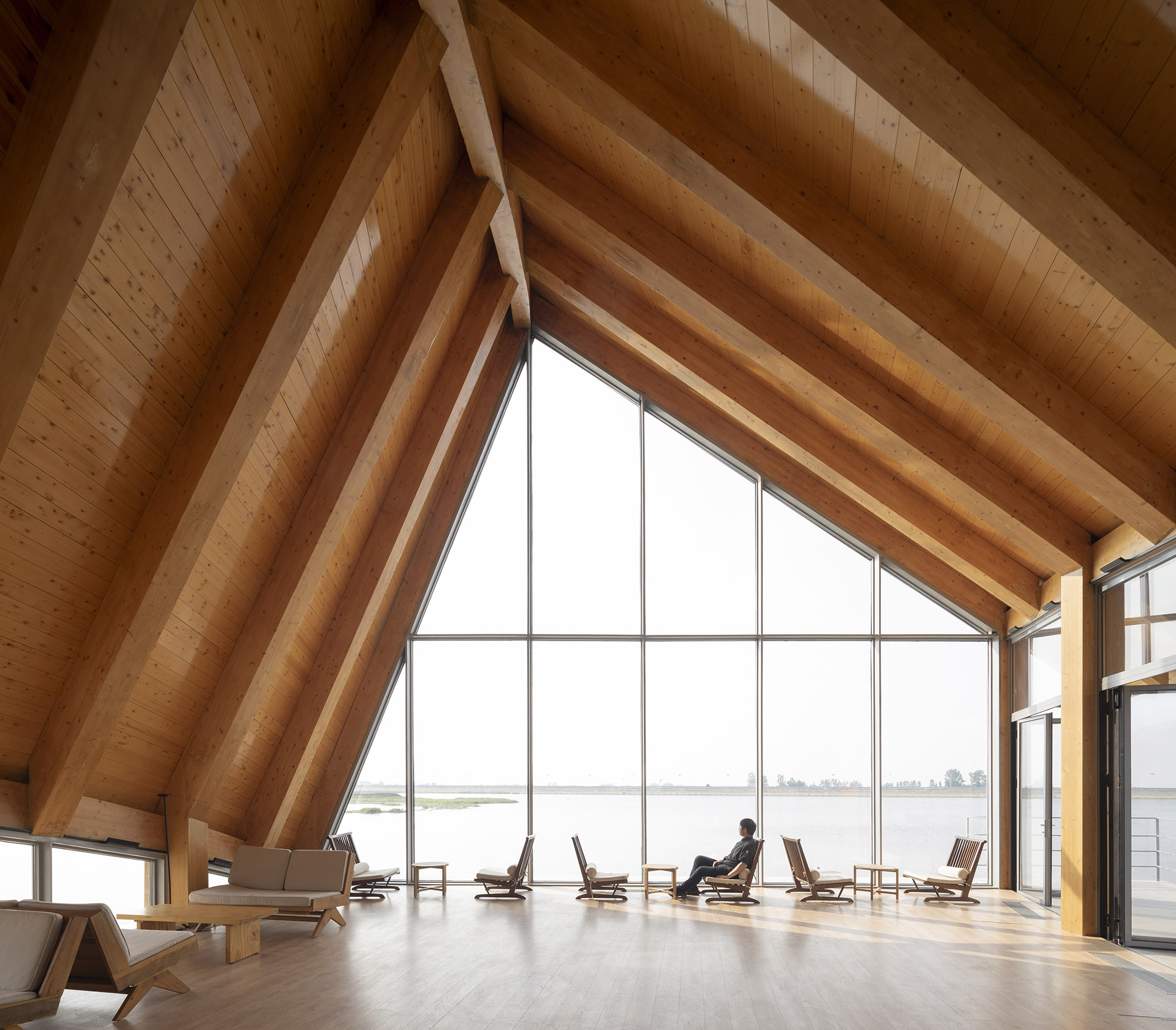
4本の双曲線形状の主梁が屋根の主要構造要素となり、等間隔に配置された二次梁で補強されている。曲線形状は蛇行する堤防に沿い、自然地形に応答しつつ構造的自己安定性を生み出した。内部は柱のない空間となっており、空間的断絶を最小限に抑えている。
すべての建築部材は、コスト効率の高い加工・輸送を前提に設計され、工場でプレファブリケーション化された後、現場で組み立てられた。これにより建設時の環境負荷を大幅に低減し、工期の短縮を実現した。
© Arch-Exist
景観と形態を紡ぐ空間
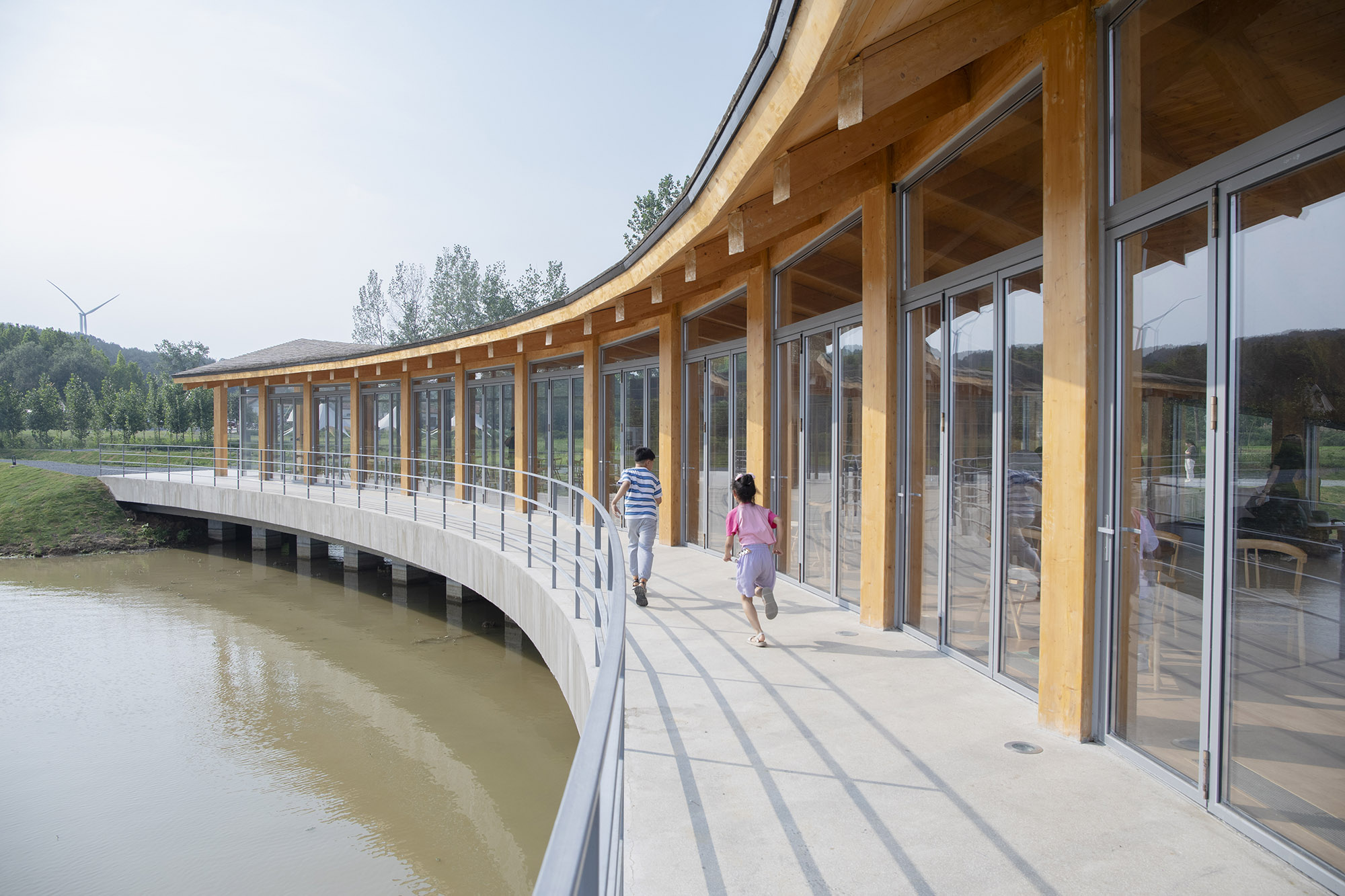
建物両端の曲面カーテンウォールはそれぞれ鳳凰山と貯水池に向けられており、開放的な視線によって外部景観を内部に取り込んでいる。入口は堤防の両端に設けられ、進入前には軒高を落とした移行空間を通過する。内部へ進むにつれ、2つの回廊は徐々に上昇し、柱のないフルハイトのホールへと収束している。
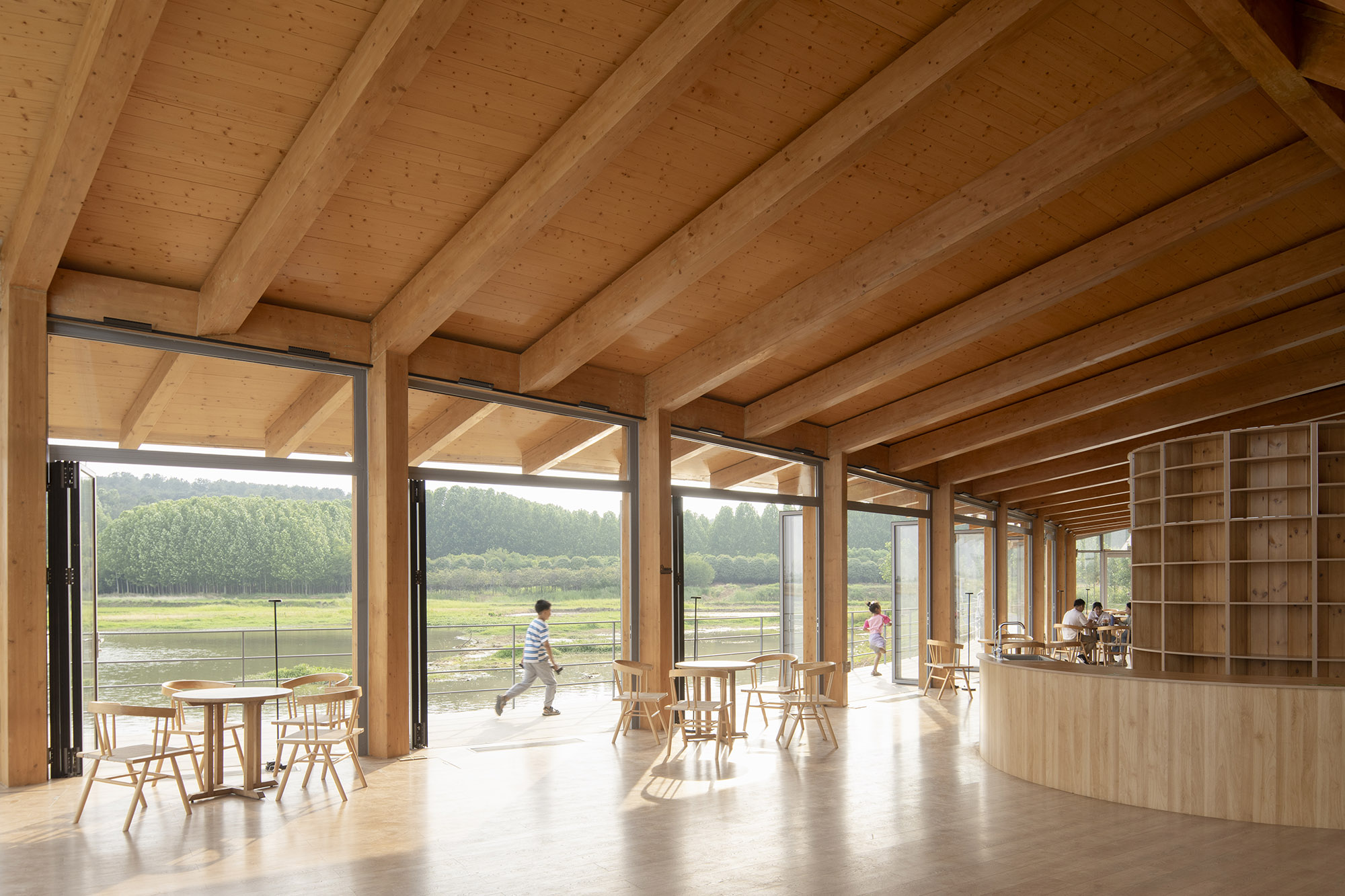
空間を歩むにつれ、建築の開口部を通じて山々、農地、貯水池が絶えず再構成され、刻々と変化する景観を体験できる。西側では折り戸を全開にすることで屋外テラスと接続し、内外の境界を曖昧にしながら光と風が空間を自由に巡っている。
© Arch-Exist
© Arch-Exist
© Arch-Exist
© Arch-Exist
© Arch-Exist
© Arch-Exist
© Arch-Exist
© Arch-Exist
© Arch-Exist
© Arch-Exist
First floor plan © Primary Architects
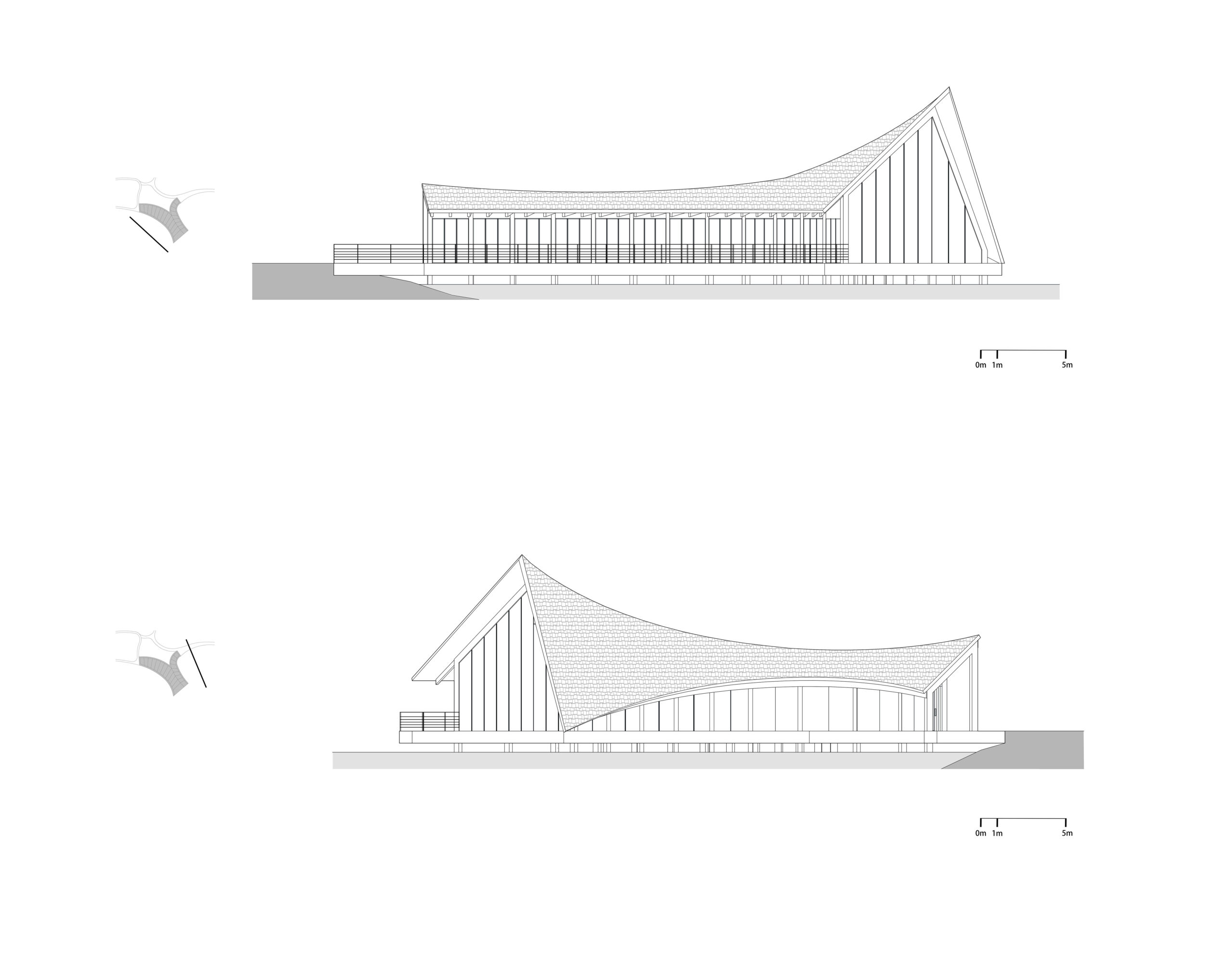
Elevation © Primary Architects
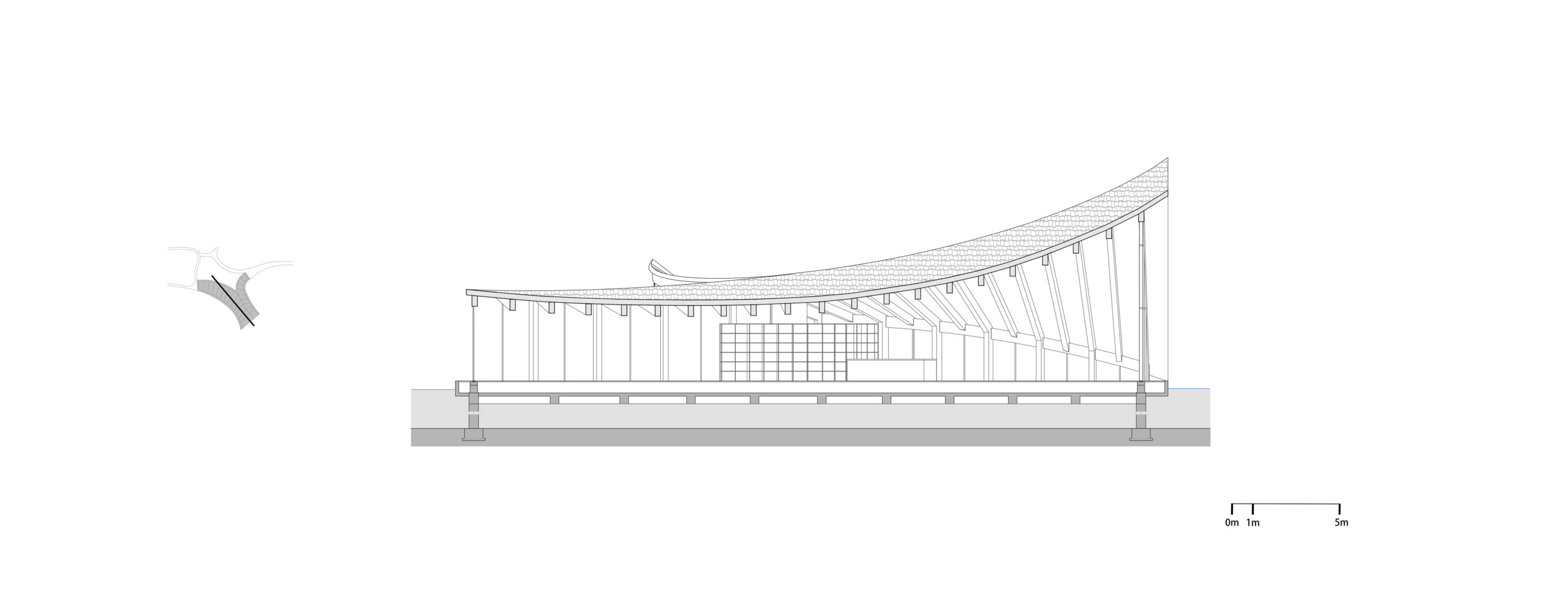
Section © Primary Architects
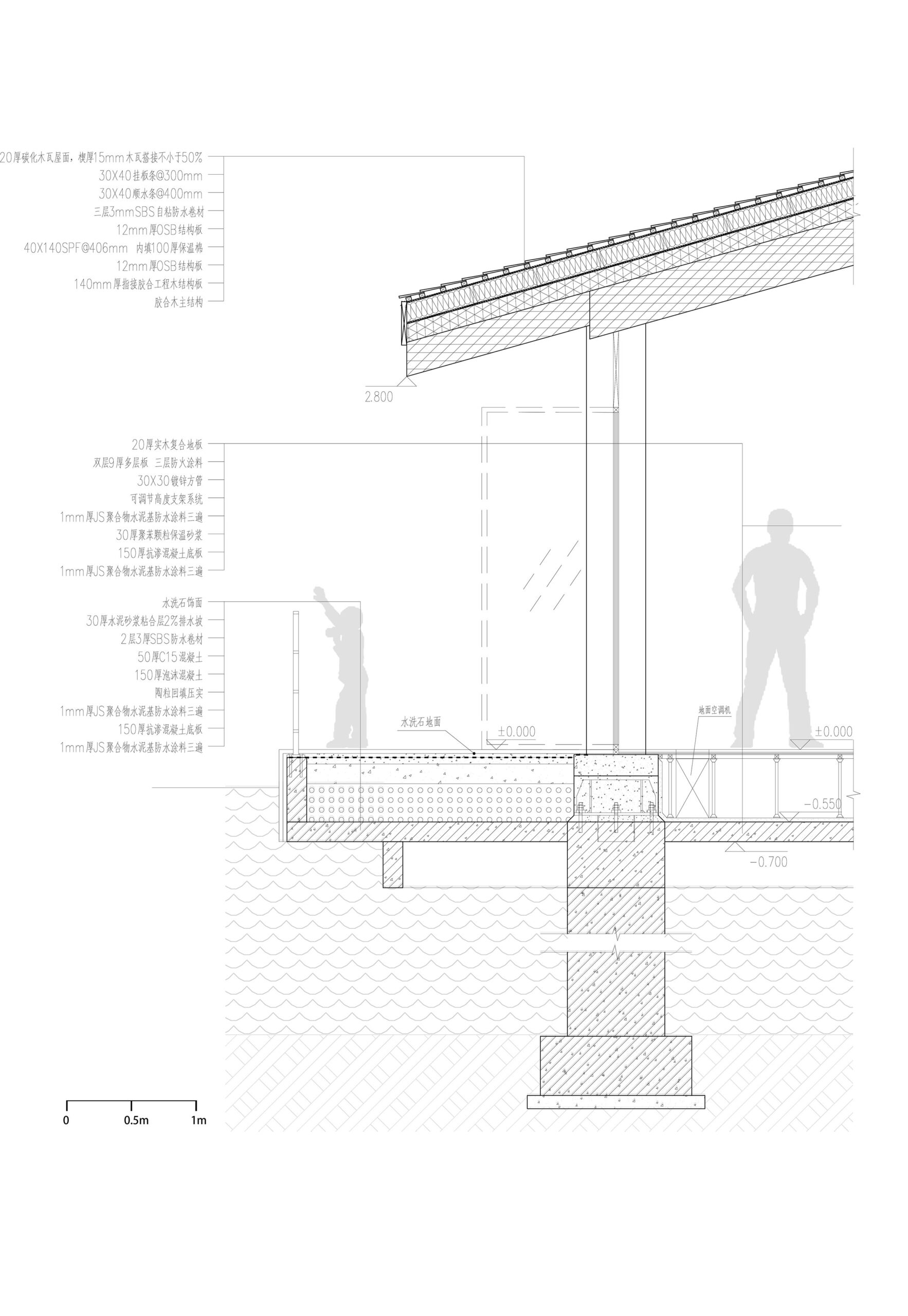
Construction details of the wall © Primary Architects
以下、プライマリー・アーキテクツのリリース(英文)です。
The Driftwood Village Center, Xinyang / Primary Architects
Connecting Agrarian Life and Natural LandscapeSite
The Driftwood Village Center is located on the bank of a reservoir in Liugang Village, Xinyang, forming a spatial layout of “three-sided scenery.” To the east lie vast rice fields; to the north, the residential clusters of Liugang Village; to the south, the irrigation reservoir; and to the west, the terrain merges into Phoenix Mountain. As a source of agricultural irrigation, the reservoir experiences seasonal fluctuations in water level due to farming needs. The daily agrarian life of the villagers revolves around this water body.
Designed as a shared space for villagers during the farming off-season, the Village Center includes a tea room, reading lounge, and a villagers’ assembly hall. The spatial arrangement is conceived in response to the agricultural environment and the periodic changes in reservoir water levels. Through its form, the architecture establishes a dialogue with the surrounding mountains and farmland, becoming a medium that connects agrarian life with the natural landscape.The texture of the fields and paths
The villagers’ agricultural life is closely tied to the reservoir, which is surrounded by a well-preserved natural environment rich in aquatic plants and inhabited by waterfowl. The construction aims to minimize disturbance to this native ecology.
The “grain of the fields” shaped by fine farming practices is the site’s most distinctive feature. The architecture integrates humbly into the agricultural landscape, preserving existing field ridges and native vegetation. The building form is derived directly from the surrounding environment.
A stretch of the dike path along the reservoir was chosen as the cue for the architectural circulation, allowing the floor plan to naturally extend from both ends, making the building an organic continuation of the dike road. The design follows an environment-sensitive generative logic: the building is embedded within the original dike fabric, while a raised platform adapts to fluctuations in water levels. The native plant system is preserved as an ecological buffer zone, forming a seamless transition between the building and the water body.
Timber Construction
To minimize disruption to the reservoir’s shoreline, the building platform is designed as an elevated structure, leaving a 55 cm cavity beneath it to house HVAC systems and water-electric pipelines. The platform elevation is raised 20 cm above the historical highest water level of the reservoir, ensuring flood safety.
The main structure is timber-framed with steel bolt connections, using gable frame systems with pitched roofs. Four hyperbolic main beams serve as the roof’s key structural elements, complemented by evenly spaced secondary beams. The curved form follows the meandering dike, responding to the natural terrain and creating structural self-stability. The interior is a column-free space, minimizing spatial interruption.
All building components are designed for cost-effective processing and transportation, prefabricated in factories and assembled on-site. This significantly reduces the environmental impact of construction and shortens the construction period.Shape forms with landscapes
The curved curtain walls on both ends of the building face Phoenix Mountain and the reservoir respectively, drawing the exterior landscape into the interior through open sightlines. Entrances align with both ends of the dike; before entering, one passes through a lowered eave-covered transitional space. As visitors move inside, the two corridors gradually rise and converge into a column-free, full-height hall.
As one walks through the space, the mountains, farmlands, and reservoir are continuously reframed through architectural openings, offering ever-changing vistas. On the west side, folding doors can be fully opened to connect with the outdoor terrace, blurring the boundary between inside and outside, allowing light and wind to flow freely through the space.Project Name: The Driftwood Village Center
Design Firm: Primary Architects
Chief Architects: Xiang Huang, Songyan Mao
Architectural Design Team: Cong Liu, Zhiyan Lin, Le Chang, Dawei Wu, Qi Lu, Zilin Tian
Grade A Design Institute: Zhongke Architectural Planning and Design Research Institute
Construction Company: Henan Wujian Second Construction and Installation Co., Ltd.
Client: Government of Zhashan Township, Xinyang City
Project Location: Liugang Village, Zhashan Township, Xinyang City, Henan Province
Building Area: 425 square meters
Photographer: Arch-Exist
Video Production: Primary Architects
Design Time: February 2024
Completion Time: December 2024
プライマリー・アーキテクツ 公式サイト
http://en.primary-architects.com/ProDetail.aspx?ProId=15



![[Report]方丈庵から生き方を問う、21_21 DESIGN SIGHT 企画展「方丈記に学ぶ –生きるを編み直す小さな建築–」会場レポート](https://magazine-asset.tecture.jp/wpcms/wp-content/uploads/2026/09/01181900/20260828hojoki-ex_01_mag-endo4350-900x676.jpeg)