

SOMによる「マシュラビーヤ」が包む大学施設 - クウェートの伝統的な装飾格子を受け継ぐ〈クウェート大学管理棟施設〉
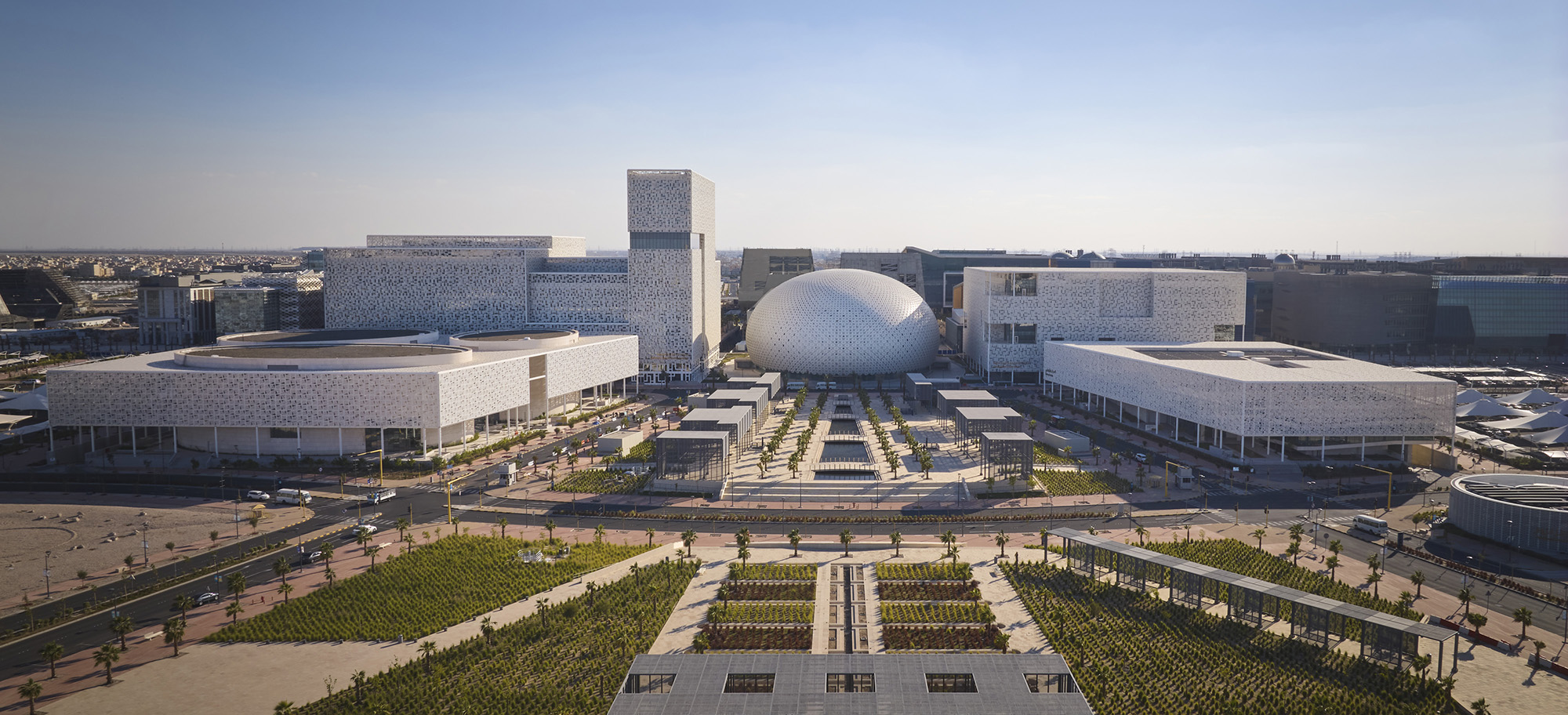
Photo: Dave Burk © SOM
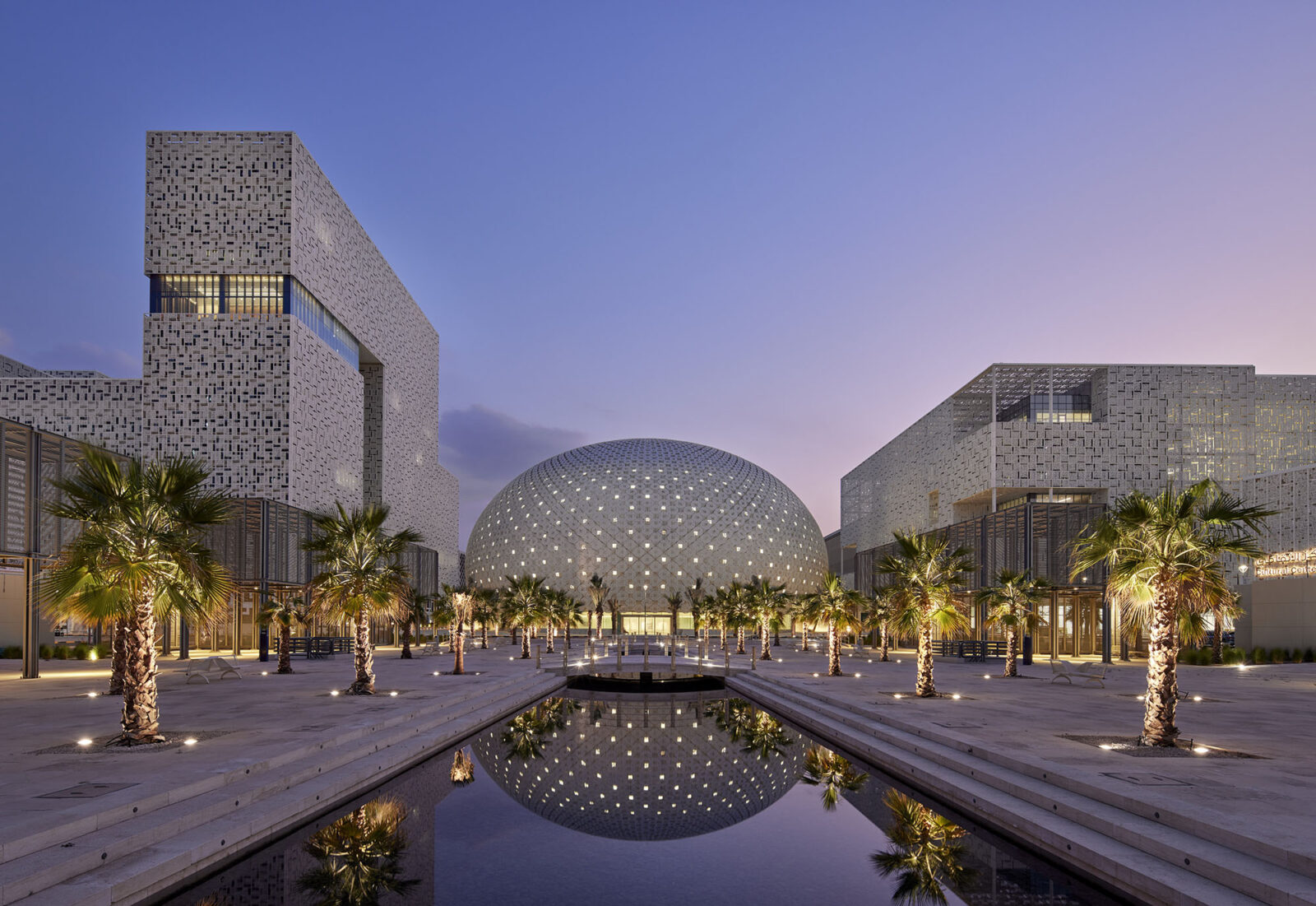
〈クウェート大学管理棟施設(Kuwait University Administration Facilities)〉は、クウェート大学に設計された図書館、文化センター、ビジターセンター、会議施設、管理棟、講堂からなる6棟の建物群です。
80年以上にわたり、業界や分野を飛び越えたさまざまな学際的なプロジェクトを手がける建築事務所 スキッドモア・オーウィングズ・アンド・メリル(Skidmore, Owings & Merrill、以下SOMと表記)が設計しました。
注目ポイント
- クウェート市最大の学術機関の中核かつ玄関口を形成する建築群
- キャンパスを象徴する球体建築「パール」
- クウェート建築遺産「マシュラビーヤ」を参照した、砂漠気候に対応するスクリーン
- アーティストによるカリグラフィーモチーフを適用したスクリーンデザイン
(以下、SOMから提供されたプレスキットのテキストの抄訳)
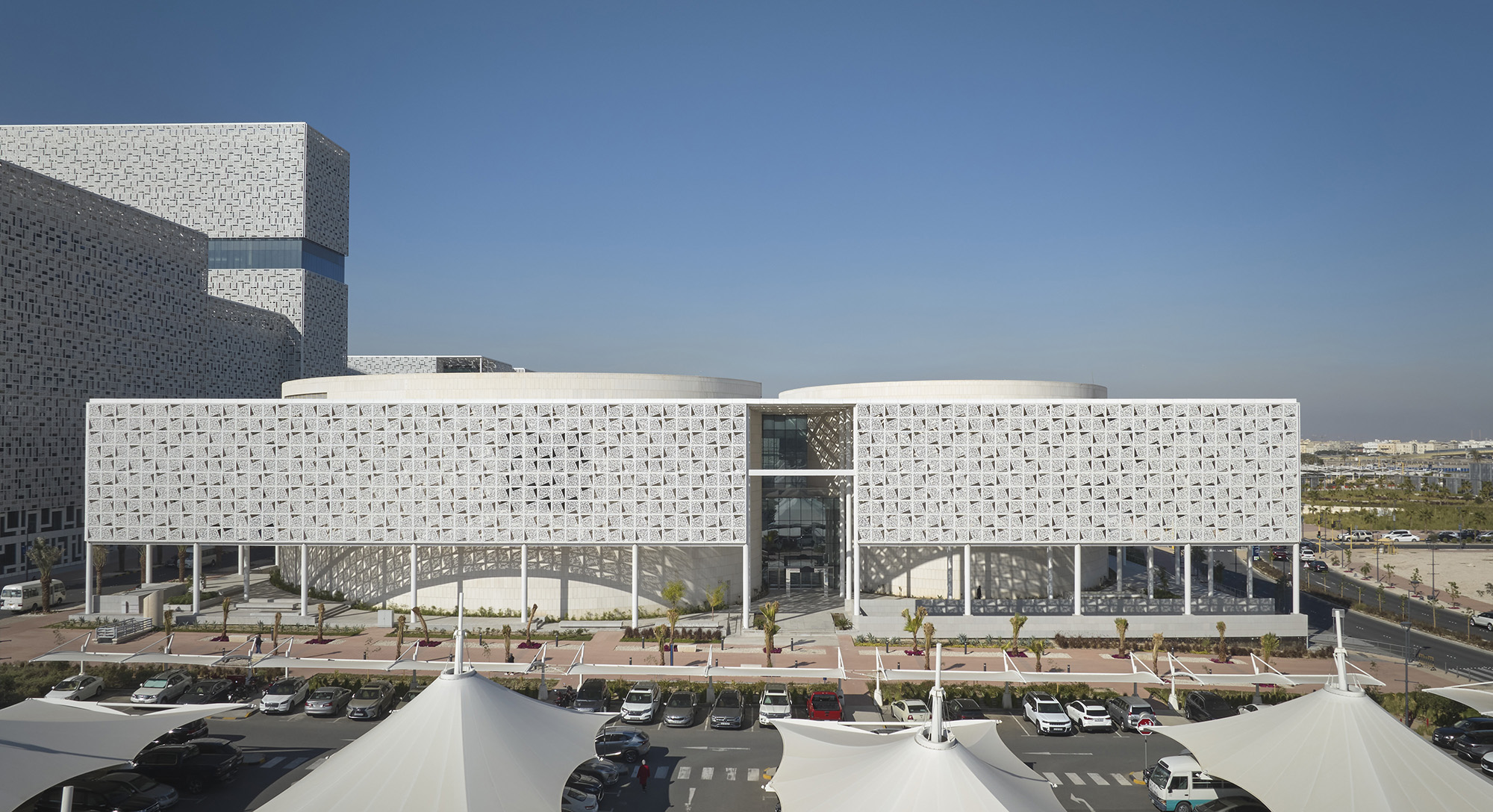
Photo: Dave Burk © SOM
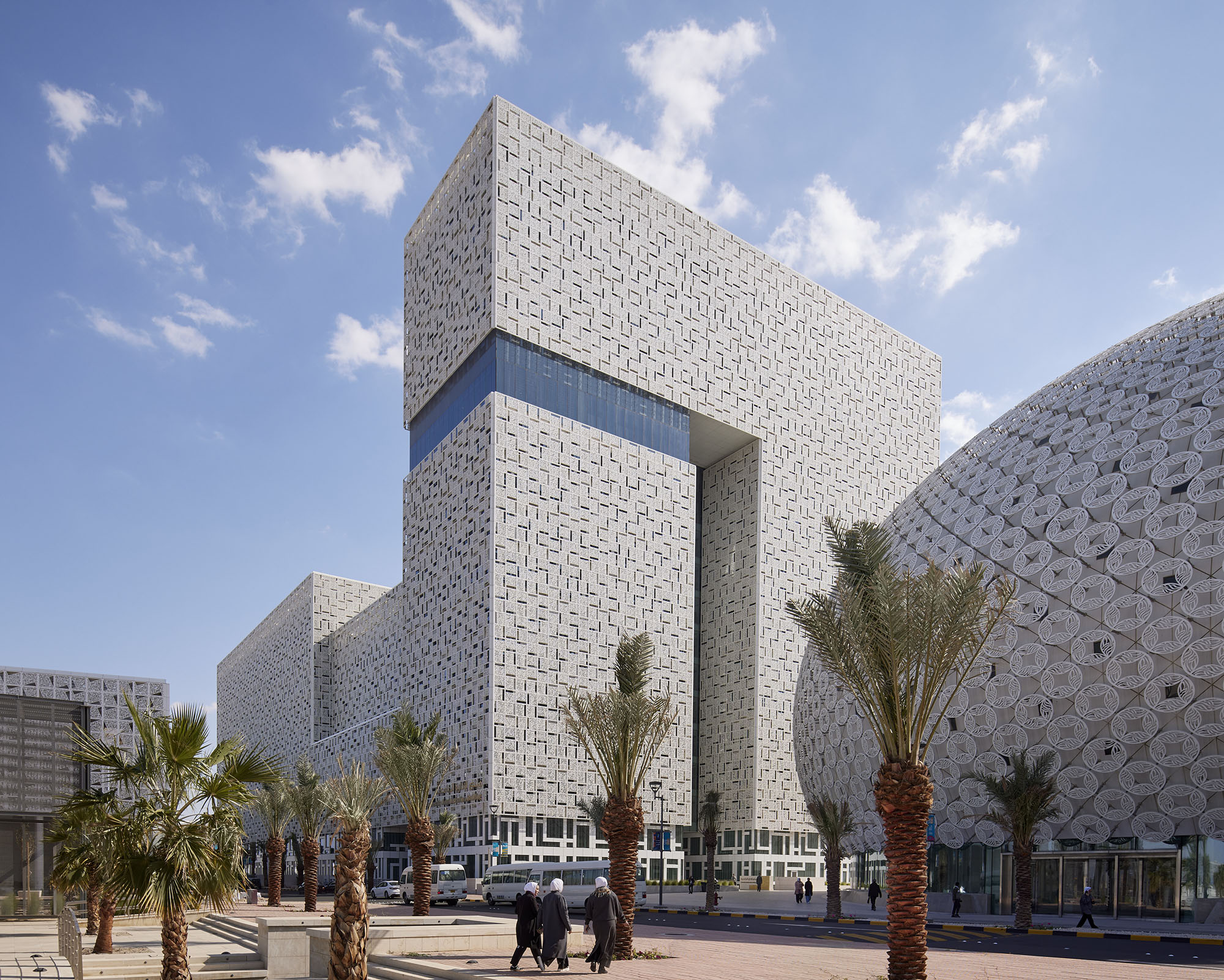
Photo: Dave Burk © SOM
クウェート市最大の学術機関の中核かつ玄関口を形成する6棟の建物群
長年にわたり、クウェート大学は市内各所の建物を用いて学生を教育してきた。
国内を代表する公立大学として拡大を続ける同機関には、21世紀にふさわしい集中型キャンパスが求められていた。そこは4万人の学生とコミュニティが集い、学習・協働・展示・公演・会議を行う核となる場所である。
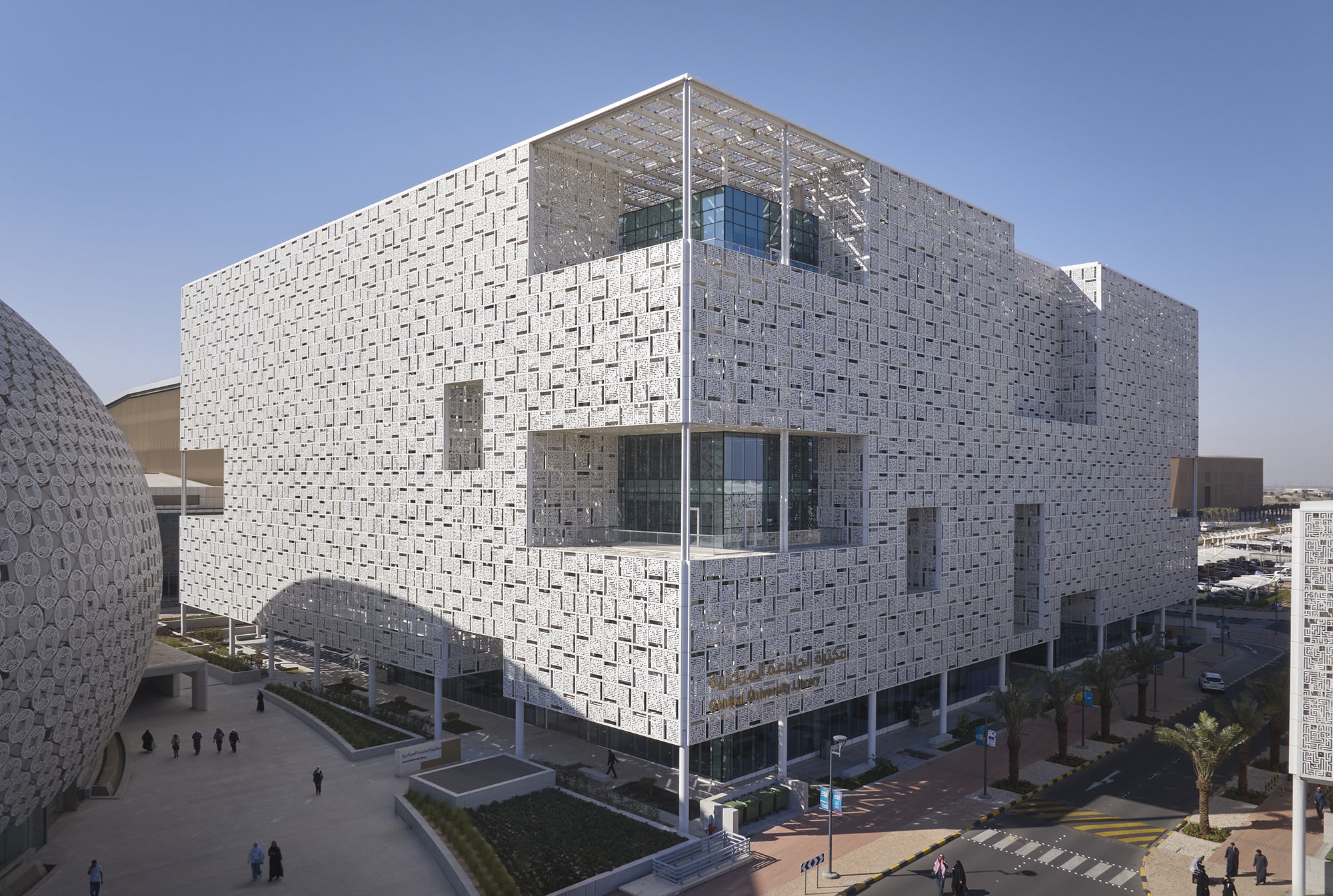
Photo: Dave Burk © SOM
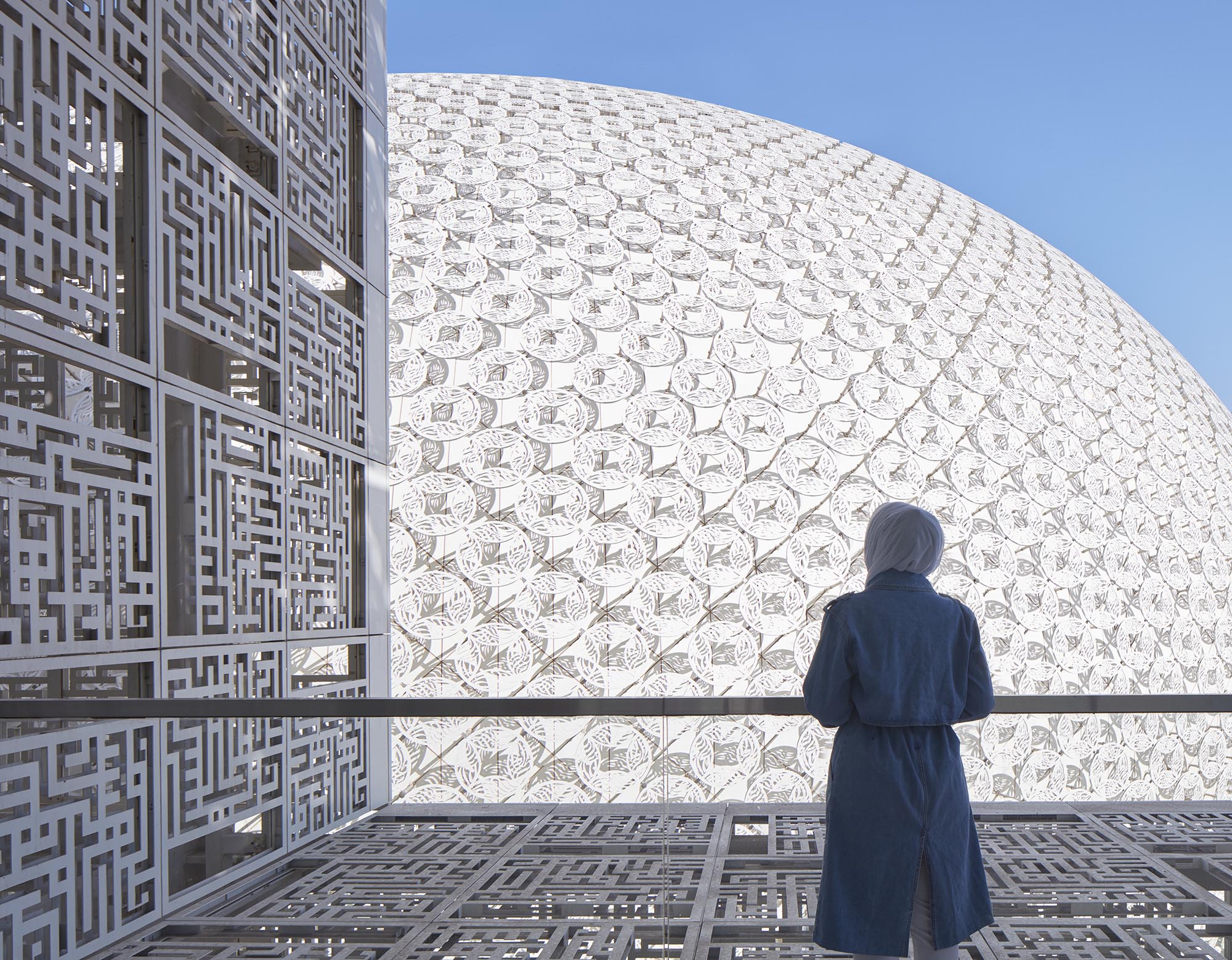
Photo: Dave Burk © SOM
SOMはこれまでに運動施設や学生生活施設を設計してきた経験を活かし、この新たなキャンパスの中核施設を「対外的な顔」でありながら「学生生活の中心地」として構想した。
相互に連結された6棟には、図書館、文化センター、ビジターセンター、会議施設、管理棟、そしてランドマークとなる講堂が含まれる。これらの建物は、クウェートの建築的遺産に根ざしつつ、砂漠気候への応答を示す共通の建築アイデンティティを共有している。
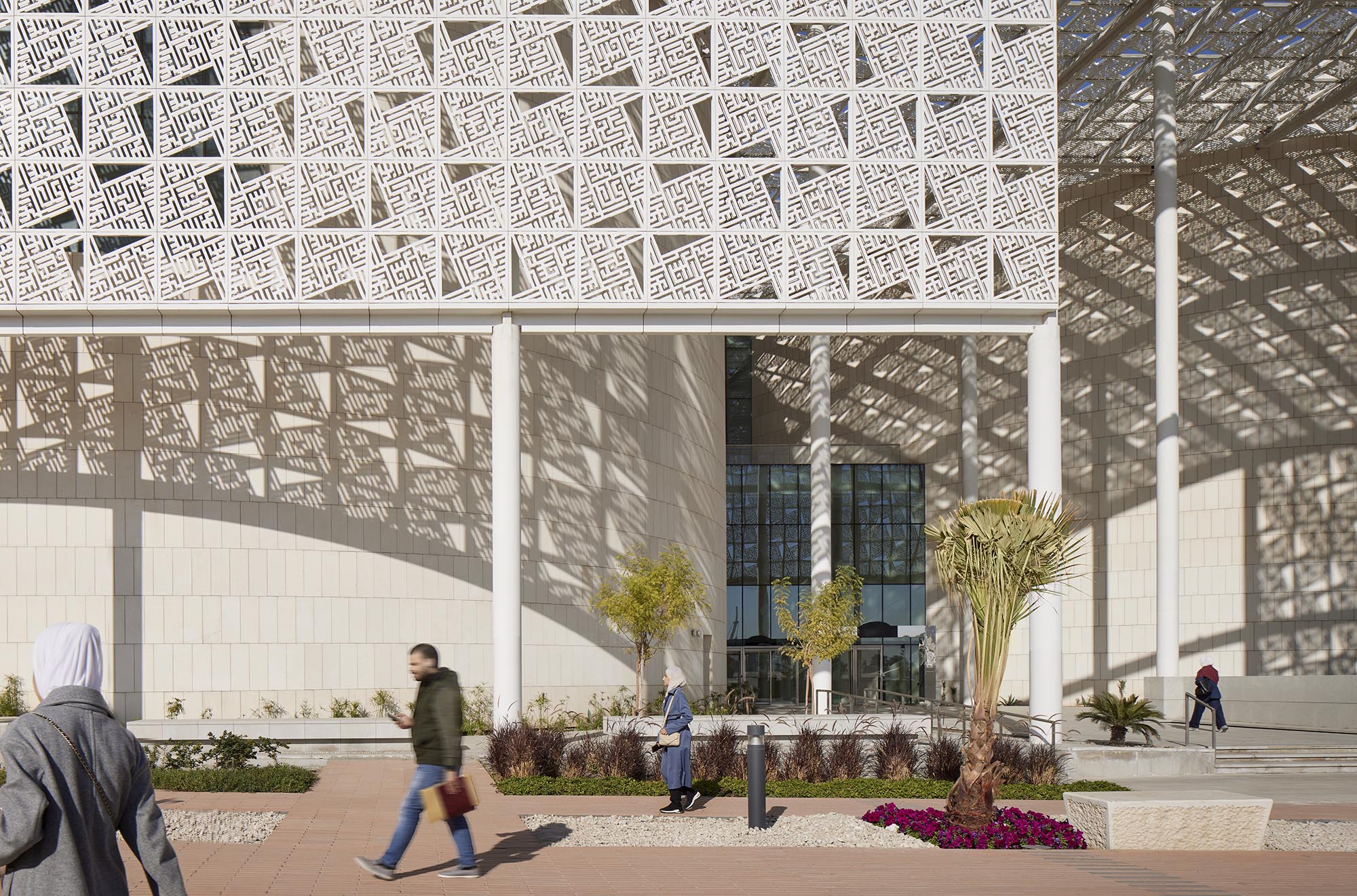
Photo: Dave Burk © SOM
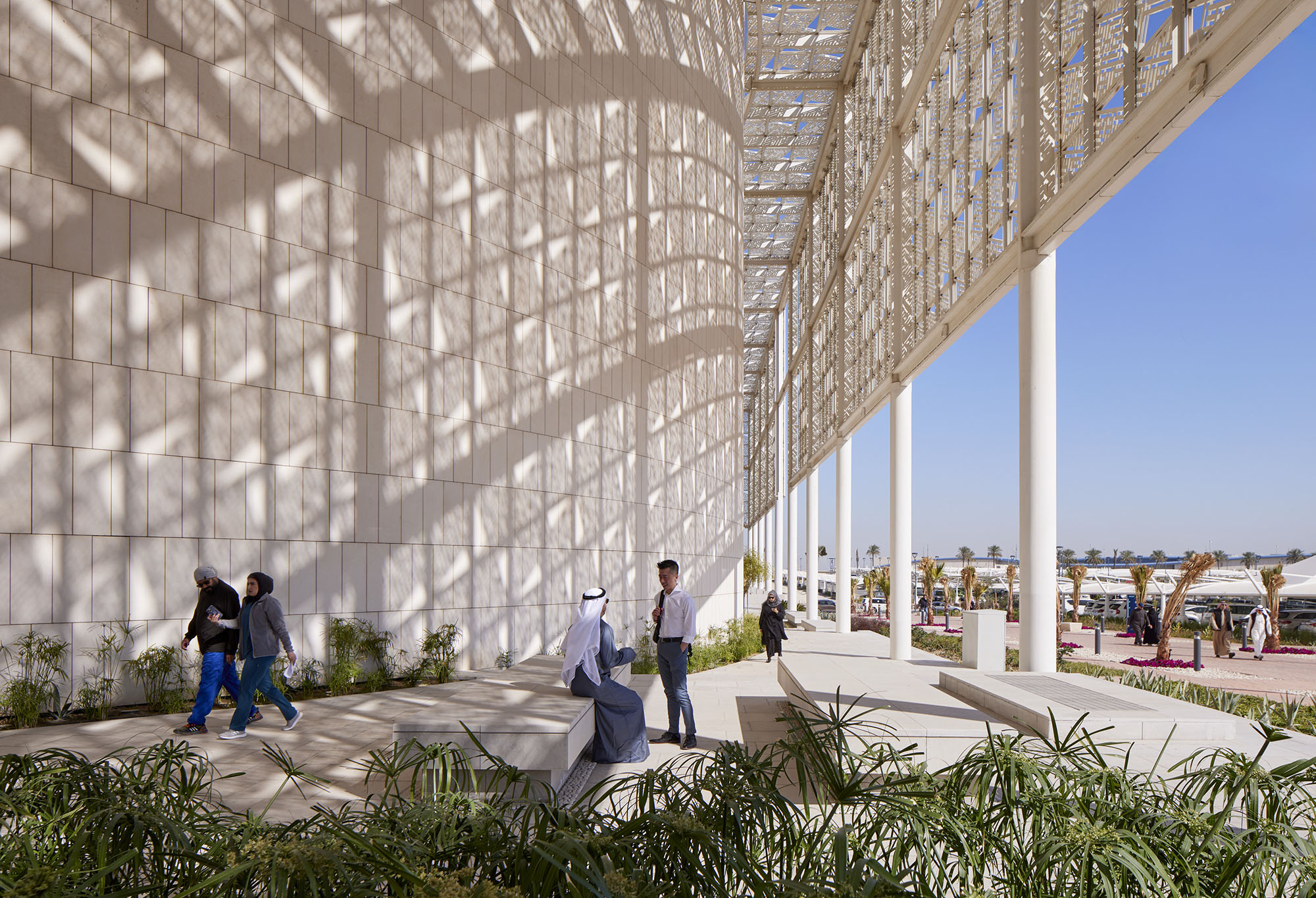
Photo: Dave Burk © SOM
持続可能性と芸術性の融合
中東建築の核心的特徴の1つに「マシュラビーヤ」がある。格子状の窓やファサードは室内を遮光し、通風を促進すると同時に、幾何学模様による強い美的アイデンティティを生み出す。この数世紀にわたり発展した設計手法は、砂漠気候下における快適性を提供するものである。
新キャンパスの6棟すべての建物のファサードはこの伝統に着想を得て、互いに調和し、周囲の都市景観とも響き合っている。
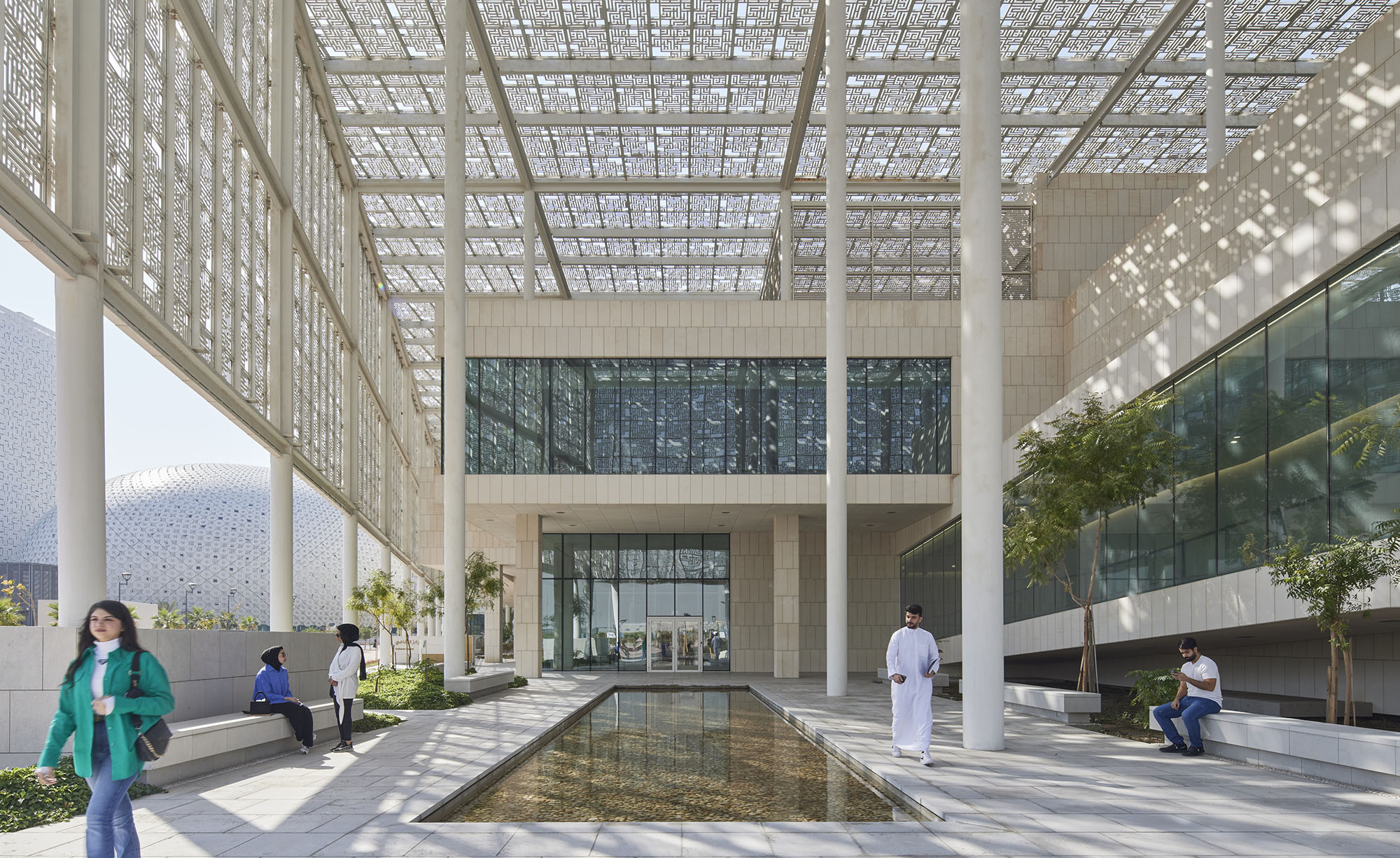
Photo: Dave Burk © SOM
建物と屋外空間は軽量なマシュラビーヤスクリーンに包まれ、クウェート人アーティスト、ファラー・ベベハニ(Farah Behbehani)との協働により、各建物のスクリーンにはアラビア文字やクーフィ文字を抽象化した模様が施されている。
これらの複雑なパターンは太陽の移動に合わせて光と影の戯れを生み出し、室内を斑模様の光で満たすとともに、砂漠の熱から屋内外空間を守る。緑と流れる水、そしてスクリーンが相互に作用することで、建物の周囲には快適な微気候が形成される。摂氏52度に達することもある都市において、日陰のベランダガーデンは学生に涼しく心地よい集いの場を提供する。
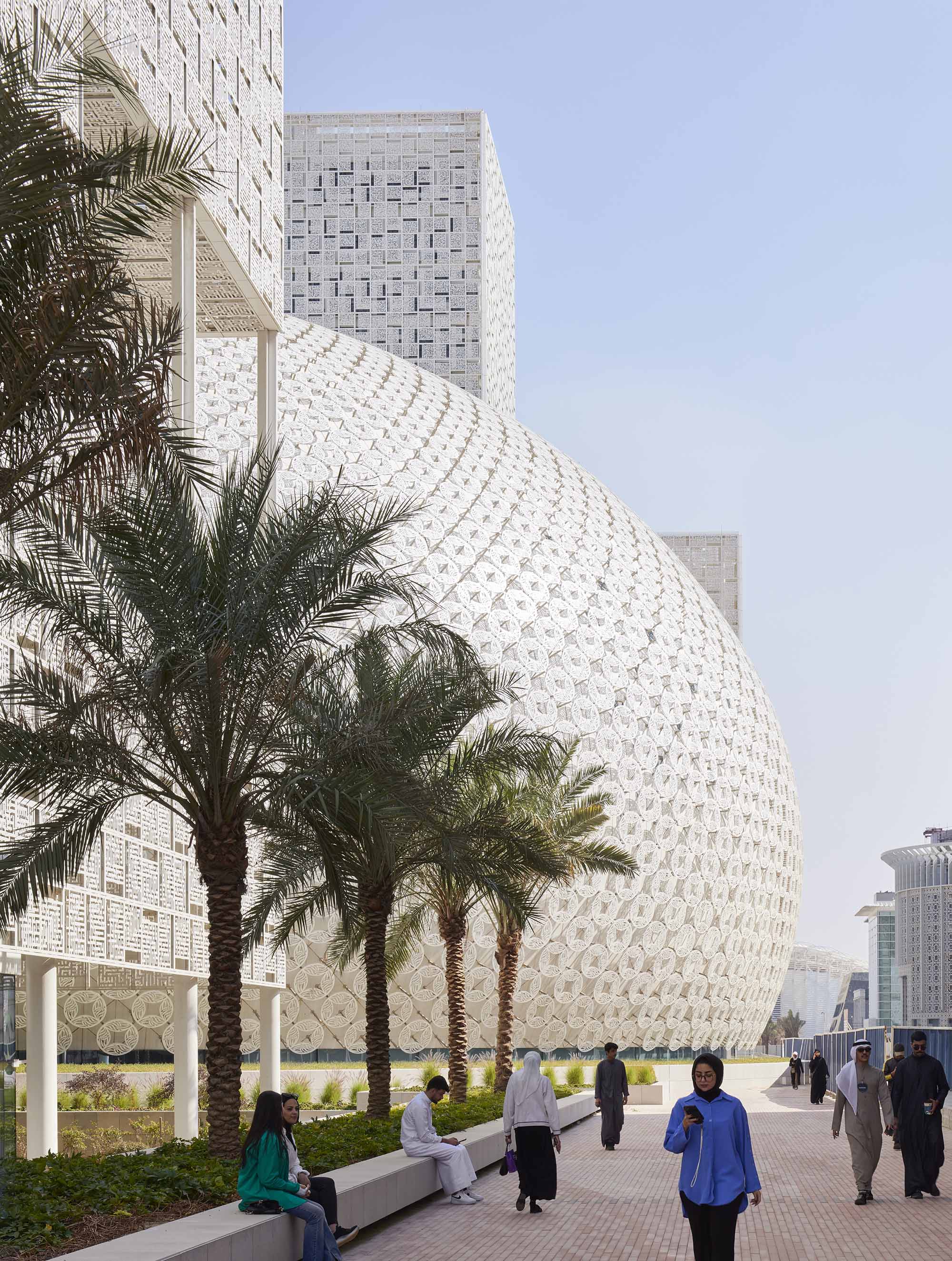
Photo: Dave Burk © SOM
壮大な焦点「パール」
キャンパスの中心を飾るのは「パール」と呼ばれる記念碑的な球体建築である。庭園の正面に位置し、管理棟と図書館に囲まれるパールには、学生オリエンテーションや卒業式、年間を通じた公演に対応する1,600席の劇場が収容されている。
パールの外装は数千枚の複雑な幾何学模様を描く日除けパネルで覆われている。これらのパネルには、オスマン帝国後期の草書体であるスンブリ書体で「アルダナ(極めて貴重な大粒の真珠)」と記されたアラビア語が刻まれている。構造フレームに取り付けられたパネル群は建物のマシュラビーヤを形成し、頂部の天窓から自然光を内部へ導いている。
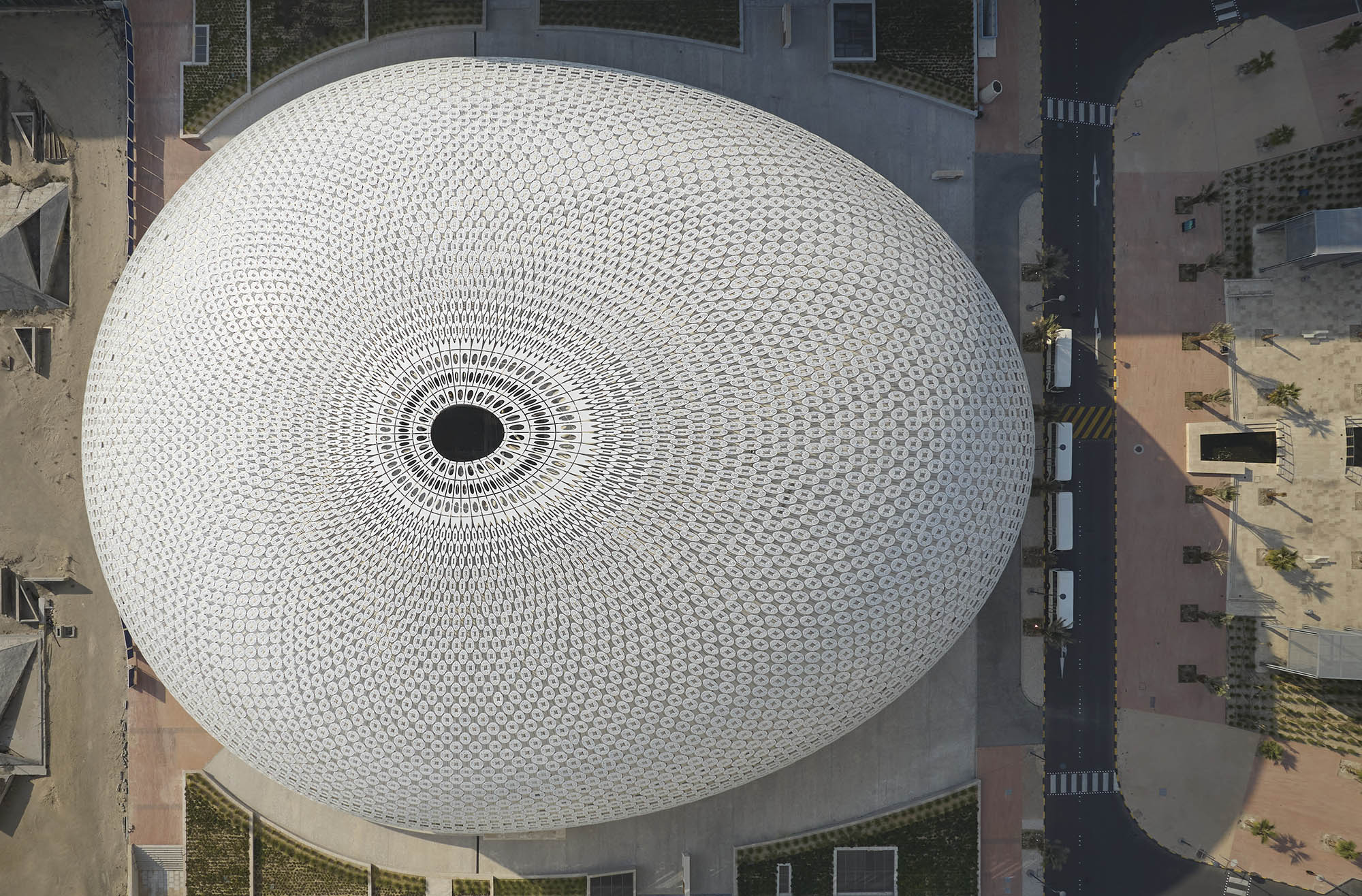
Photo: Dave Burk © SOM
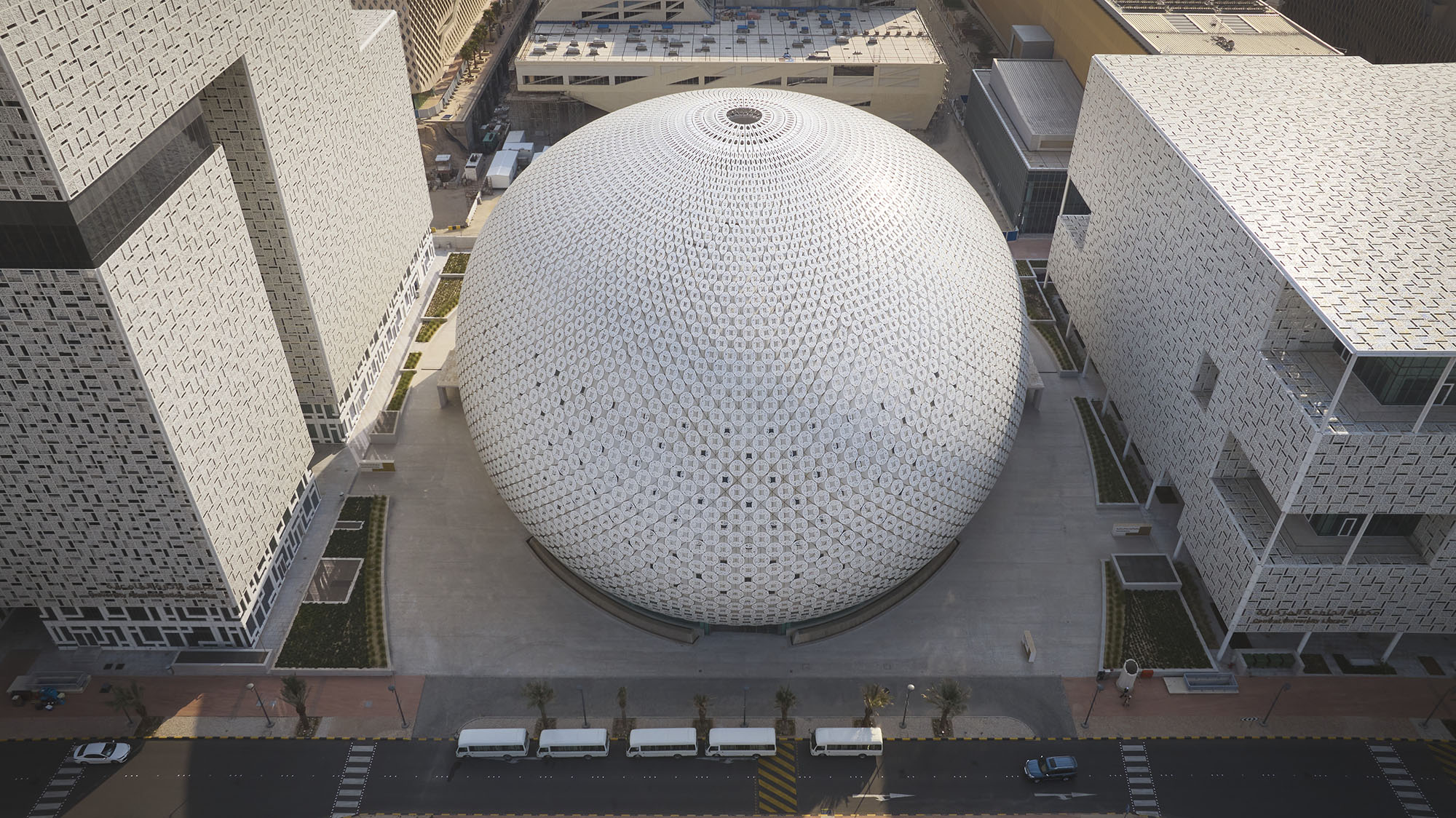
Photo: Dave Burk © SOM
つながりを生むインテリア
インテリアデザインは、学生・教職員・訪問者が偶然出会い交流する瞬間を創出することを意図している。
中央管理棟には地上階に回廊が設けられ、座席と天窓の眺望を提供する。図書館内では劇場的な階段がジグザグに配置され、各階にバルコニーを形成している。さらに会議センターでは螺旋状のスロープが上昇し、ループ状の通路がギャラリーを通って文化センターへ歩行者を導く。
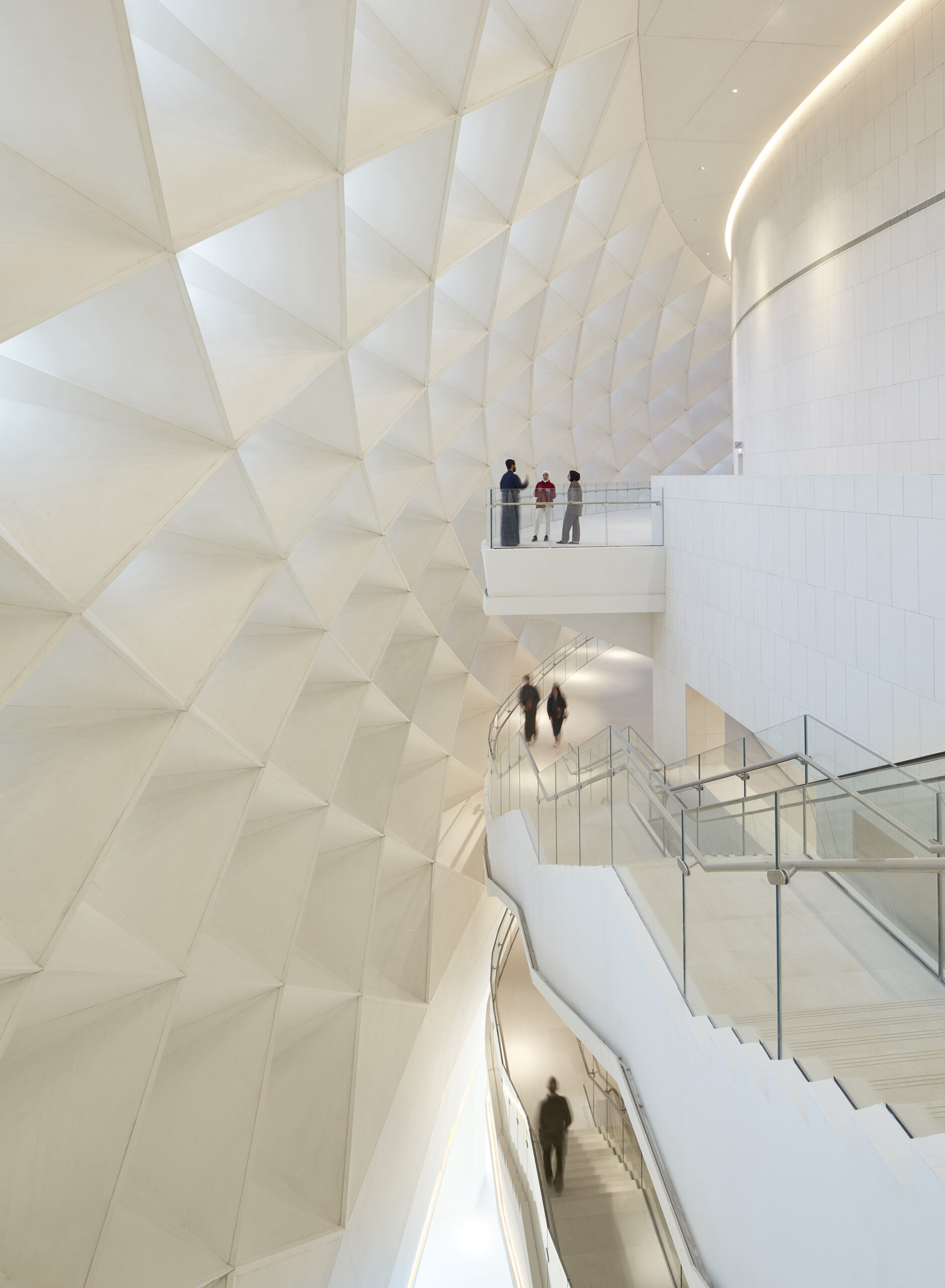
Photo: Dave Burk © SOM
マシュラビーヤスクリーンの制作
SOMとアーティスト、ファラー・ベベハニによるスクリーンデザインは、クウェート文化を称揚するものである。複雑なカリグラフィーモチーフを通じて伝統的イスラム美術を再解釈したファサードデザインは、技術的効率性、持続可能性、そしてクウェートの美的遺産を融合させている。
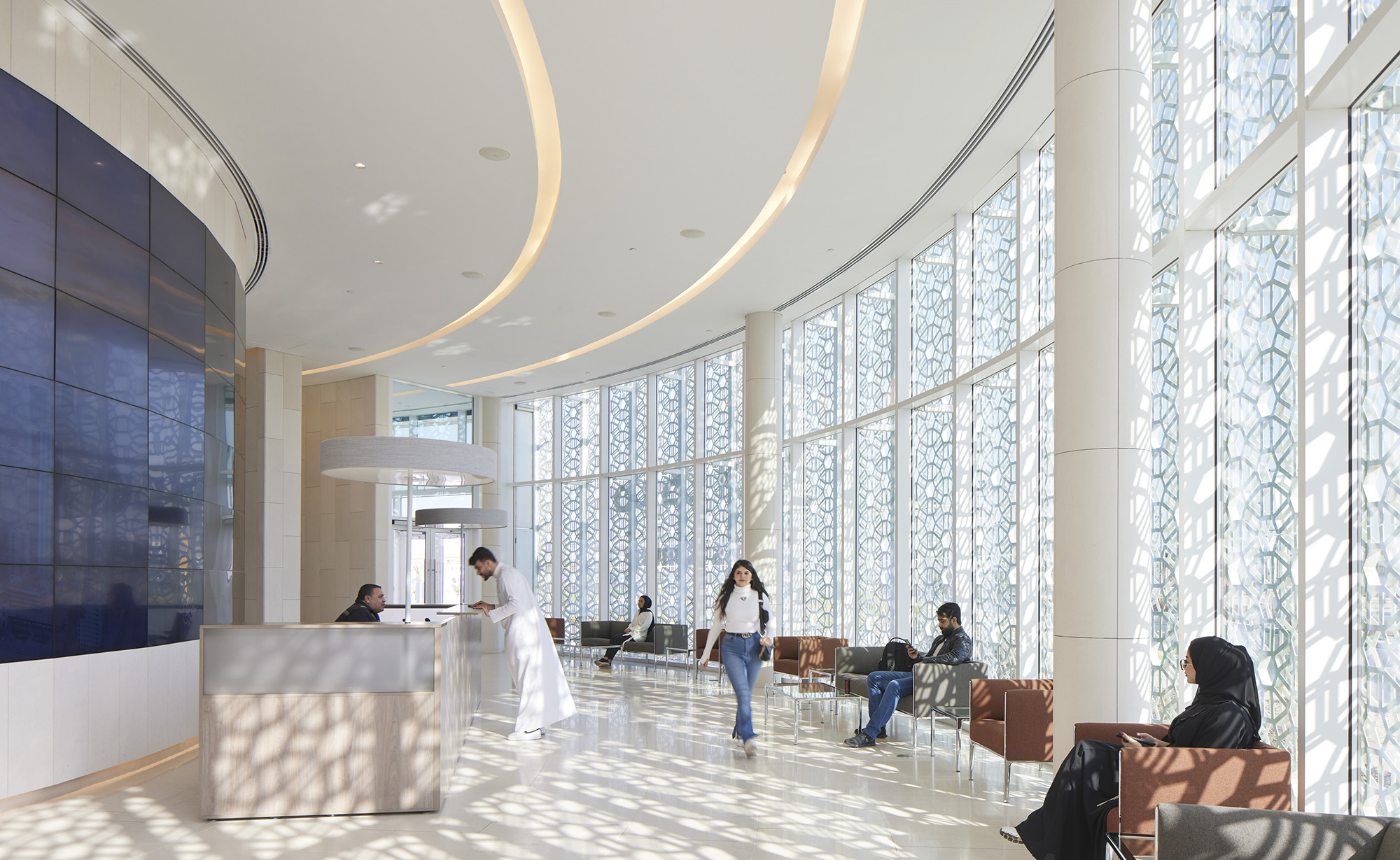
Photo: Dave Burk © SOM
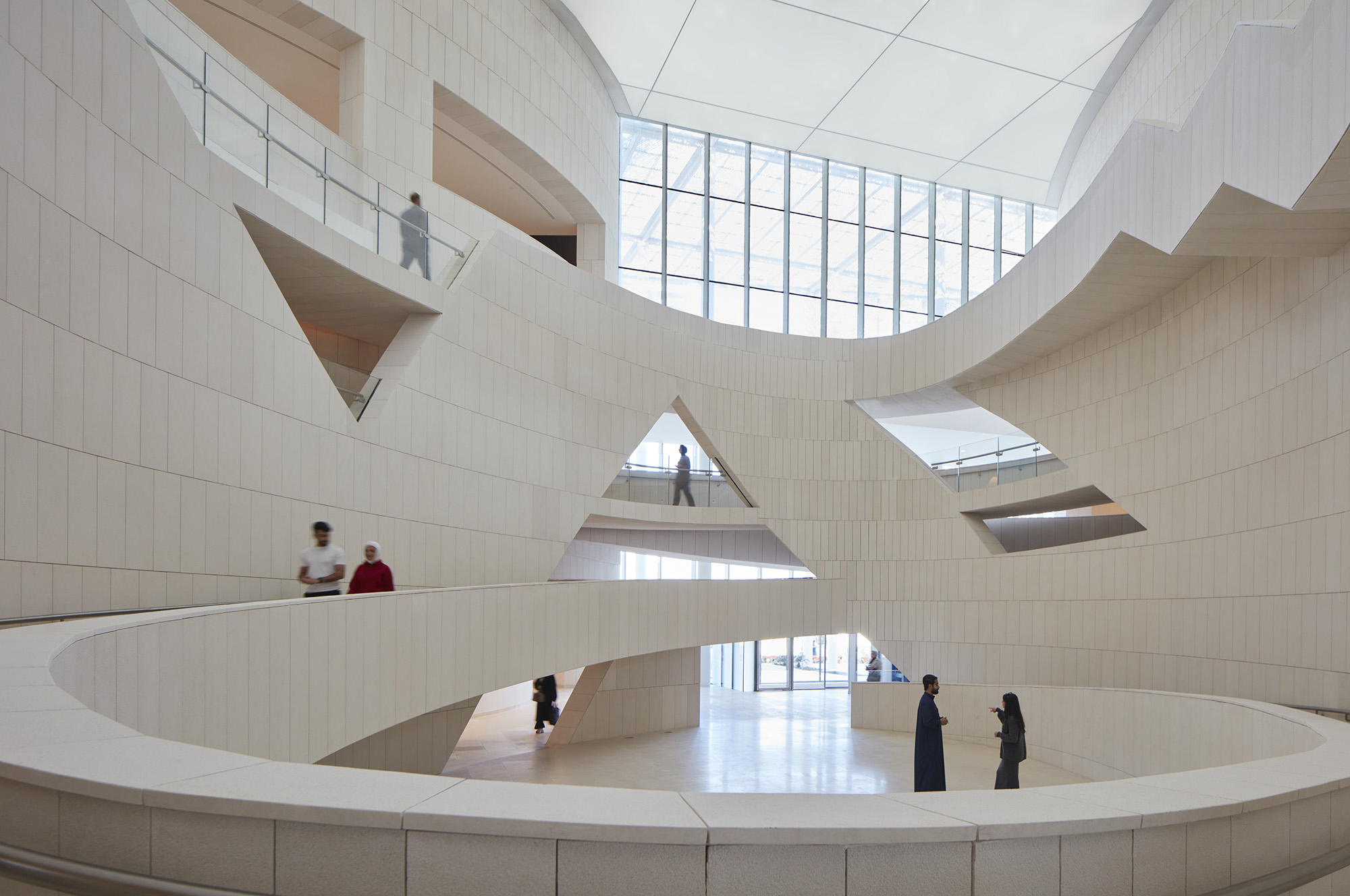
Photo: Dave Burk © SOM
カリグラフィーはクーフィー体文字、クルアーンの散文、アラビア詩の詩句を応用し、各建物のスクリーン用にカスタムテンプレートを作成した。
統一されたテーマをもつこれらのテンプレートは、教育から歴史・文化に至るまで幅広い主題を扱い、建物の目的を伝えるとともに視覚的多様性をもたらすよう設計されている。
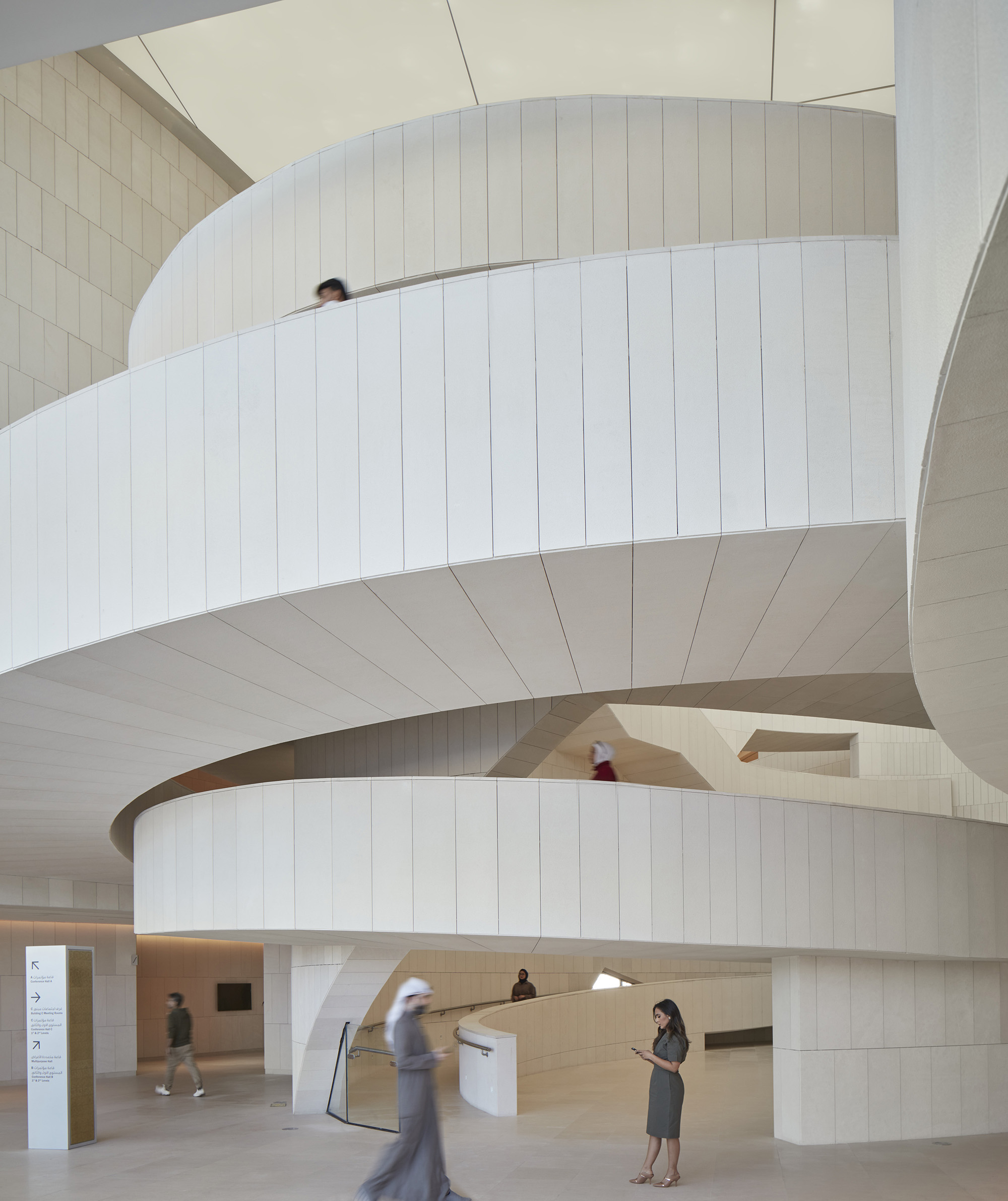
Photo: Dave Burk © SOM
図書館のファサードには、10世紀の詩人アル=ムタナッビ(Al-Mutanabbi)による「時の中で最良の伴侶は書物である」という詩句が刻まれている。
またキャンパス中央のパールには「アルダナ」という語がスクリーンに刻まれ、真珠採取を通じて発展してきた地域経済の歴史を称えつつ、クウェート文化における美の象徴として表現されている。
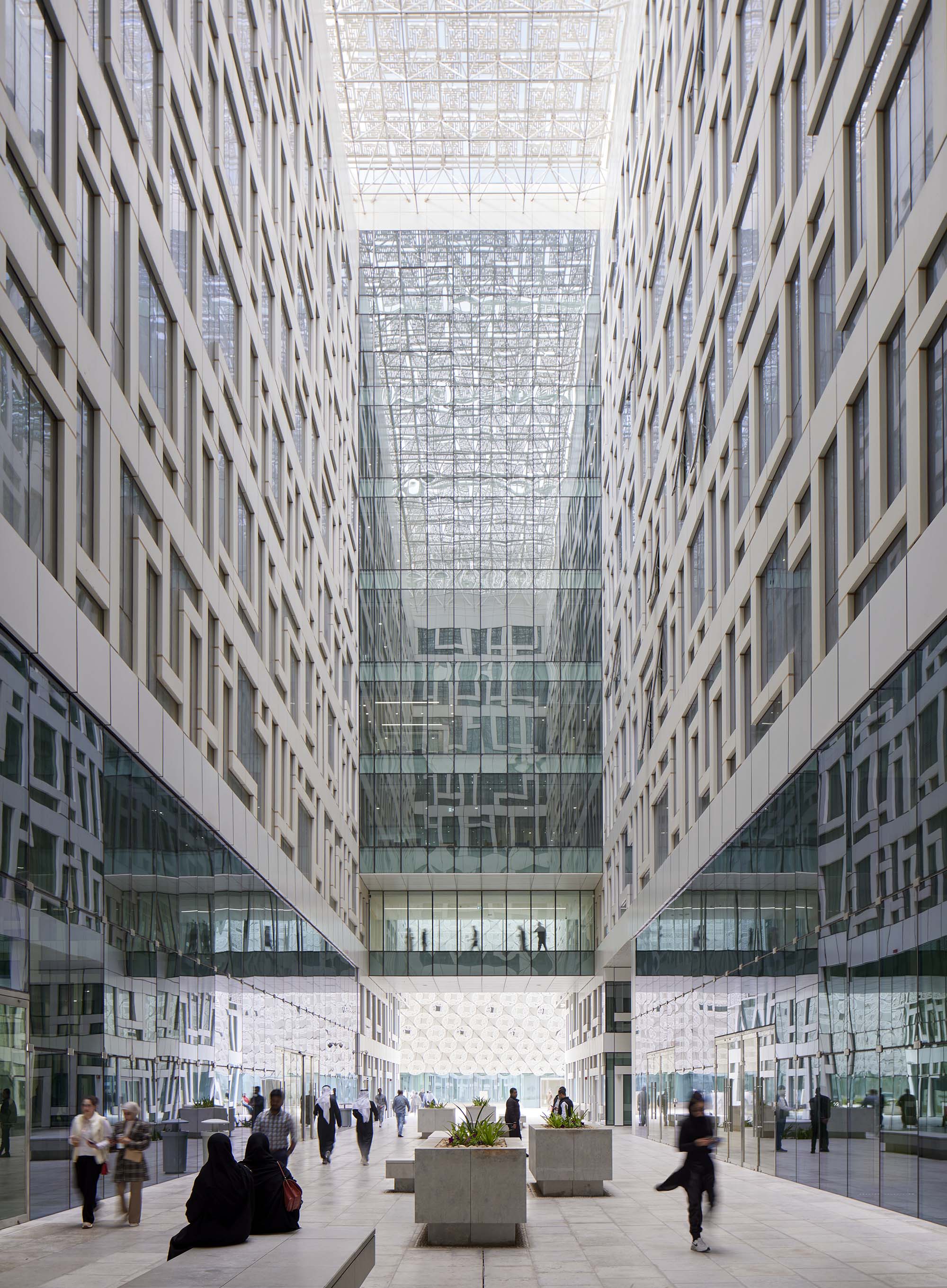
Photo: Dave Burk © SOM
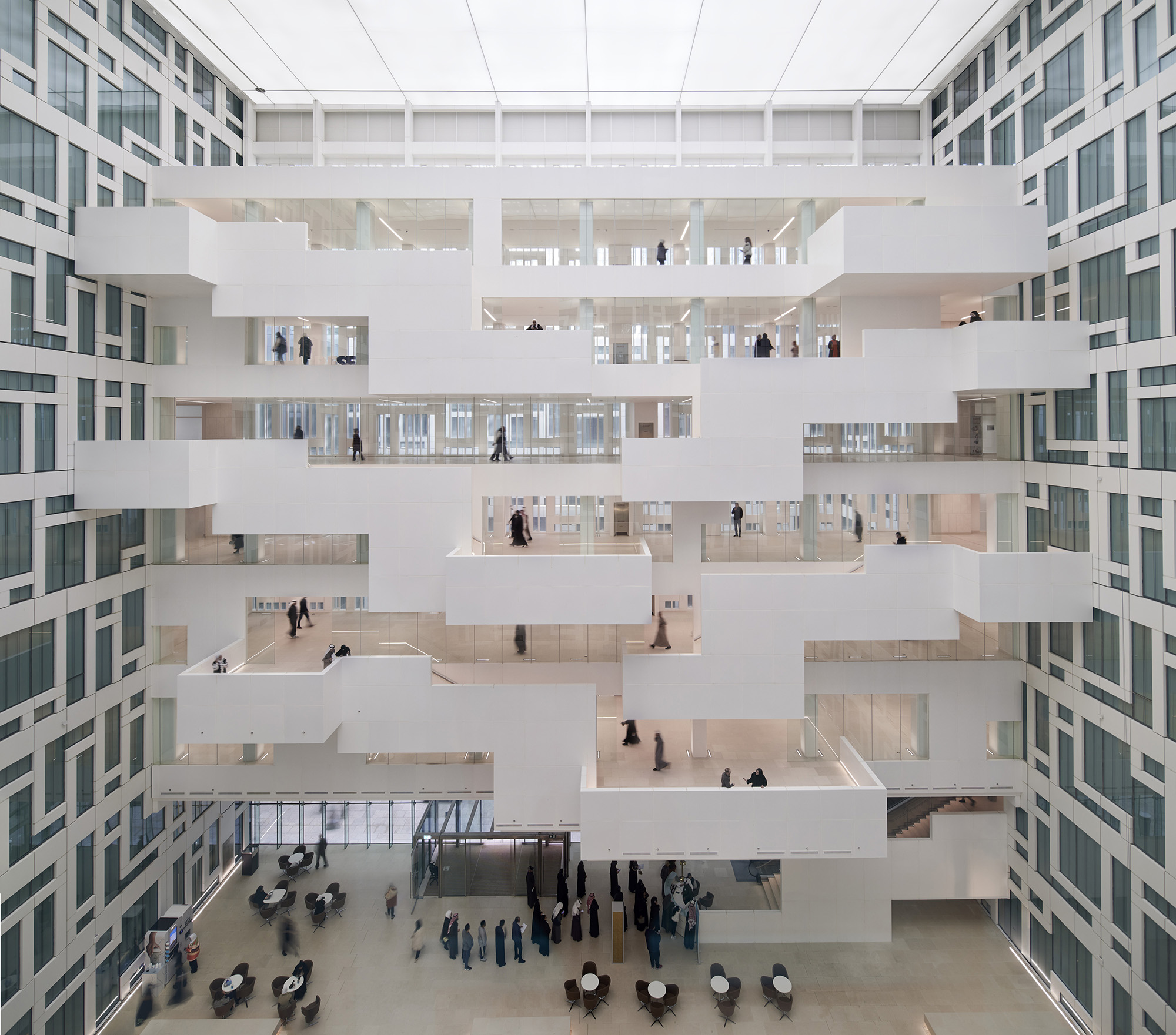
Photo: Dave Burk © SOM
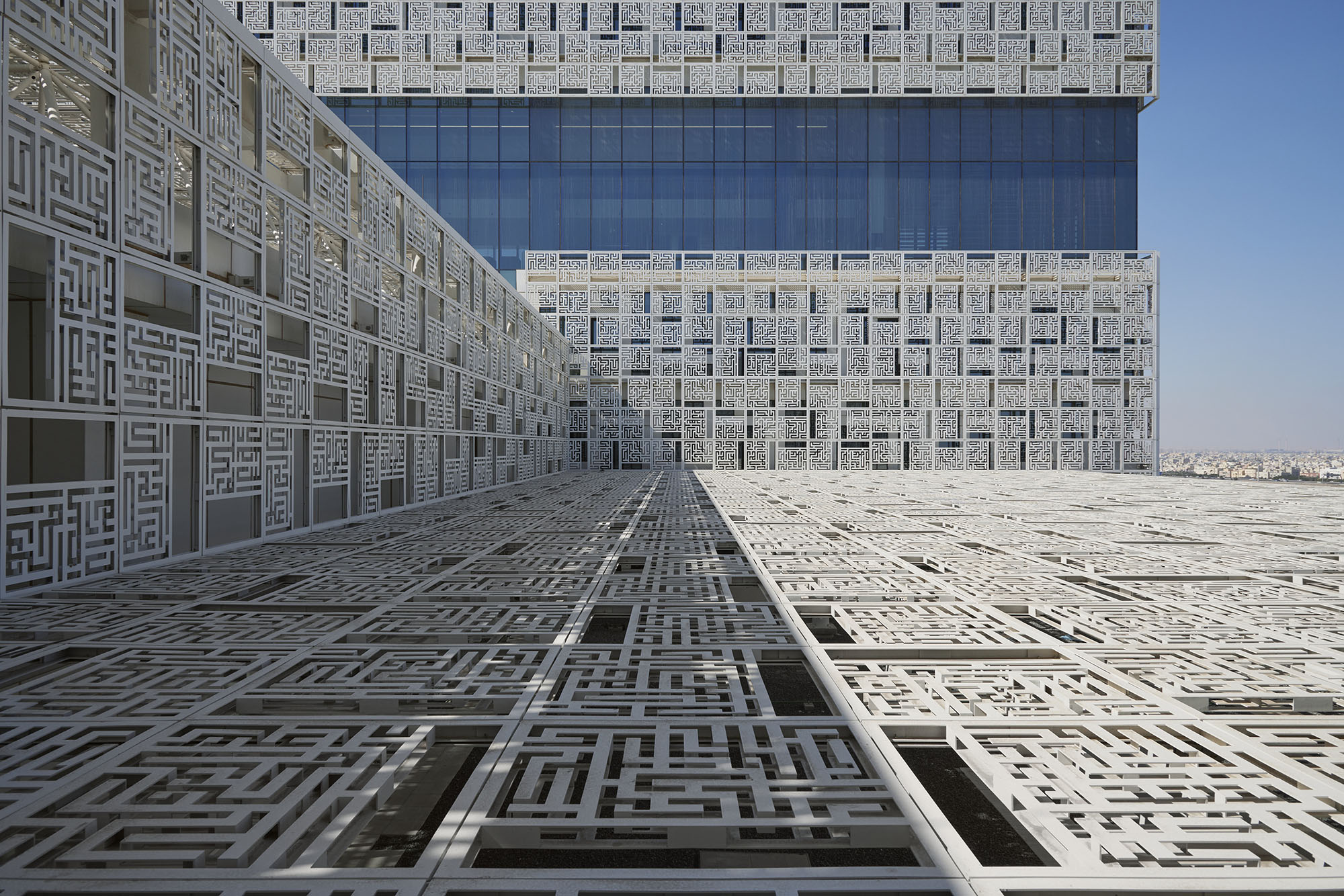
Photo: Dave Burk © SOM
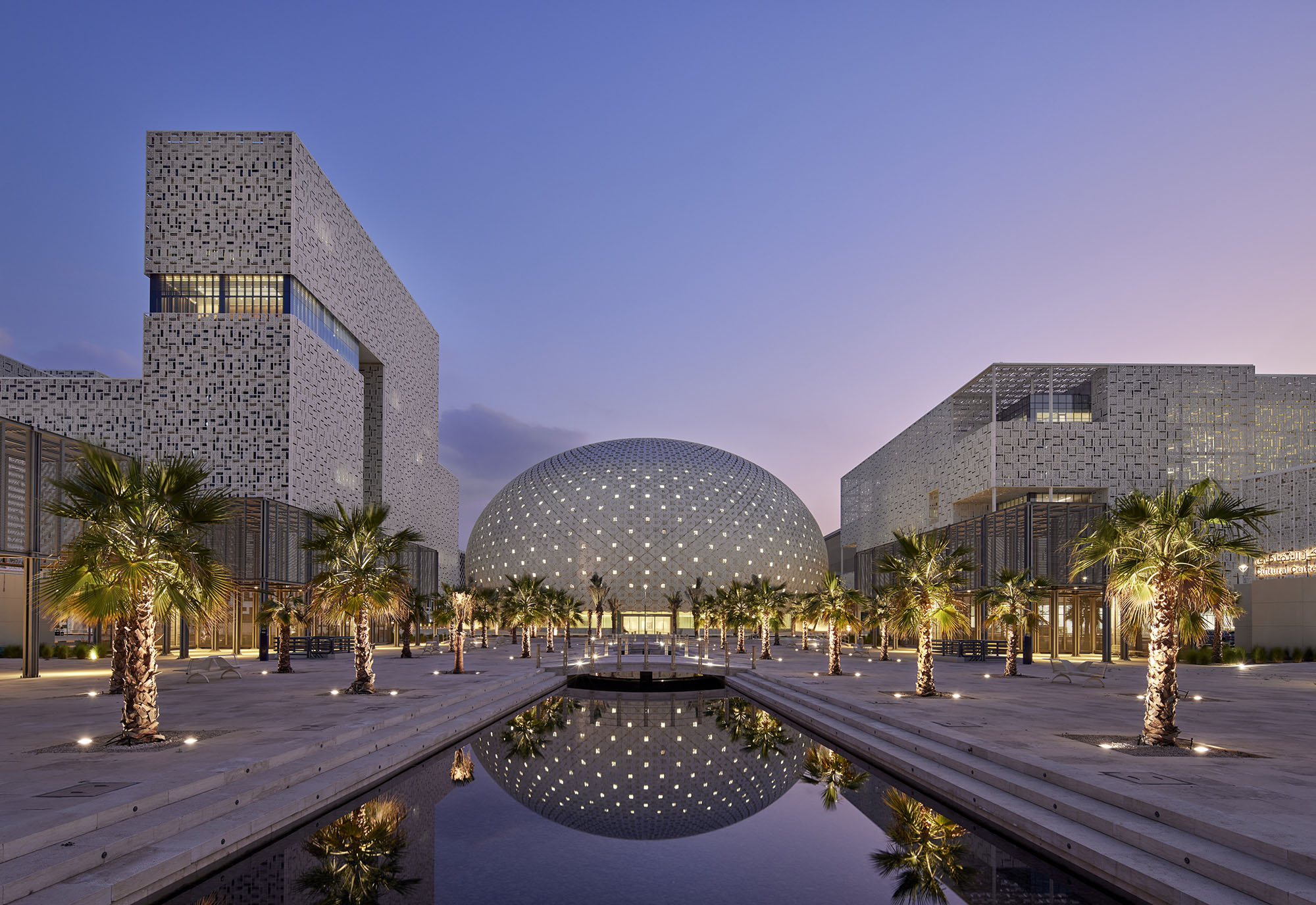
Photo: Dave Burk © SOM
以下、SOMのリリース(英文)です。
Kuwait University Administration Facilities
Shadadiya, KuwaitSituated at the northern edge of the Kuwait University campus, these six buildings form the heart and front door of Kuwait City’s largest academic institution.
Envisioning the heart of the campus
For many years, Kuwait University educated its students across a range of buildings throughout Kuwait City. As the premier public university in the country, the growing institution needed a centralized campus for the 21st century—a nucleus for its community and 40,000-student body to gather for study, collaboration, performances, exhibits, and conventions. Having also designed a series of athletics and student life buildings for Kuwait University, SOM conceived this new campus core as both a public-facing component and a center of student life. The six interconnected buildings include a library, cultural center, visitors center, conference facility, administration building, and a landmark convocation hall. Together, they share a common architectural identity that draws upon Kuwait’s architectural heritage while responding to its desert climate.
Merging sustainability and artistry
One of the core characteristics of Middle Eastern architecture is the mashrabiya—a latticed window or facade that shades interiors, promotes airflow, and creates a strong aesthetic identity through geometric patterning. This design strategy, developed over centuries, provides comfort in a desert climate. The facades of all six buildings draw inspiration from this tradition, harmonizing with one another and with the surrounding city.
The new campus buildings and their outdoor spaces are enveloped by lightweight mashrabiya screens. SOM’s design team collaborated with Kuwaiti artist Farah Behbehani, who abstracted forms of Arabic and Kufic calligraphy for each building’s screen. These intricate patterns create a play of light and shadow as the sun moves across the sky, filling the interiors with dappled light while shading indoor and outdoor spaces from the desert heat. The outdoor spaces are a key component of the master plan for a walkable campus. Greenery and flowing water, combined with the screens, create comfortable microclimates at the building edges. In a city where temperatures can reach as high as 52 degrees Celsius, these shaded veranda gardens offer students cool, inviting spaces to gather.
A grand focal point
The campus centerpiece is the Pearl, a monumental spheroid building located in front of the arrival garden. Framed by the administration building and the library, the Pearl houses a 1,600-seat theater venue for major events, including student orientation, graduations, and performances throughout the year.
The Pearl is enclosed by thousands of sun-shading panels arranged in a complex geometry. The panel design spells out the Arabic word aldanah—meaning a large and extremely precious pearl—in Sumbuli calligraphy, a late Ottoman cursive style. Mounted on a structural frame, these panels form the building’s mashrabiya, culminating in a skylight aperture that brings natural light into the building.
Creating moments to connect
The interior design fosters opportunities for students, staff, and visitors to cross paths and meet. A ground-level corridor traverses the Central Administration Building, offering seating and views toward a skylight. Within the library, a theatrical stair zigzags to create balconies on every floor. A ramp spirals upward in the conference center, while a looping pathway guides foot traffic through the galleries and toward the cultural center.
Deep dive: Crafting the mashrabiya screens
SOM’s collaboration with artist Farah Behbehani on the screen design celebrates Kuwaiti culture. By reinterpreting traditional Islamic artwork through intricate calligraphy motifs, the facade designs merge technical efficiency, sustainability, and Kuwait’s aesthetic heritage. The calligraphy adapts Kufic scripts, prose from the Qur’an, and verses from Arabic poetry to create custom templates for each building’s screen. Unified by this theme, the templates—which address topics ranging from education to history and culture—were designed to convey the buildings’ purpose while offering visual variety.
On the library’s facade, a verse by Al-Mutanabbi, the prolific 10th-century Arab poet, reads, “The best companion in time is a book.” At the Pearl structure at the center of campus, the Arabic word for pearl, aldanah, is inscribed into the screen. This design represents a symbol of beauty that holds special meaning in Kuwaiti culture, acknowledging the country’s legacy of pearl diving, once a vital part of the region’s economy.
SOM 公式サイト
https://www.som.com/projects/kuwait-university-administration-facilities/


![[Interview]iF Design代表のウヴェ氏に聞く、建築と都市の2026年メガトレンド](https://magazine-asset.tecture.jp/wpcms/wp-content/uploads/2026/07/23221054/iF_AwardCeremony_2026_AwardCeremony-82-900x600.jpg)
![[Report]激変する時代の中で、建築とデザインはどう拡張するか。「iF DESIGN AWARD 2026」授賞式&最新トレンド](https://magazine-asset.tecture.jp/wpcms/wp-content/uploads/2026/07/24010304/iFDesignTrendConference26-45-900x600.jpg)
![[Report]RUI Architectsが可動モジュールを設計して松竹のアートスペースをリニューアル、柿落とし展「継承のトランジション」の会場デザインも担当](https://magazine-asset.tecture.jp/wpcms/wp-content/uploads/2026/07/24141011/20260713shutl_press11-01309-c-900x629.jpeg)