
SOMによるミラノ冬季五輪の選手村が竣工 - オリンピック後にも生き続ける「未来への投資」としてのプロジェクト
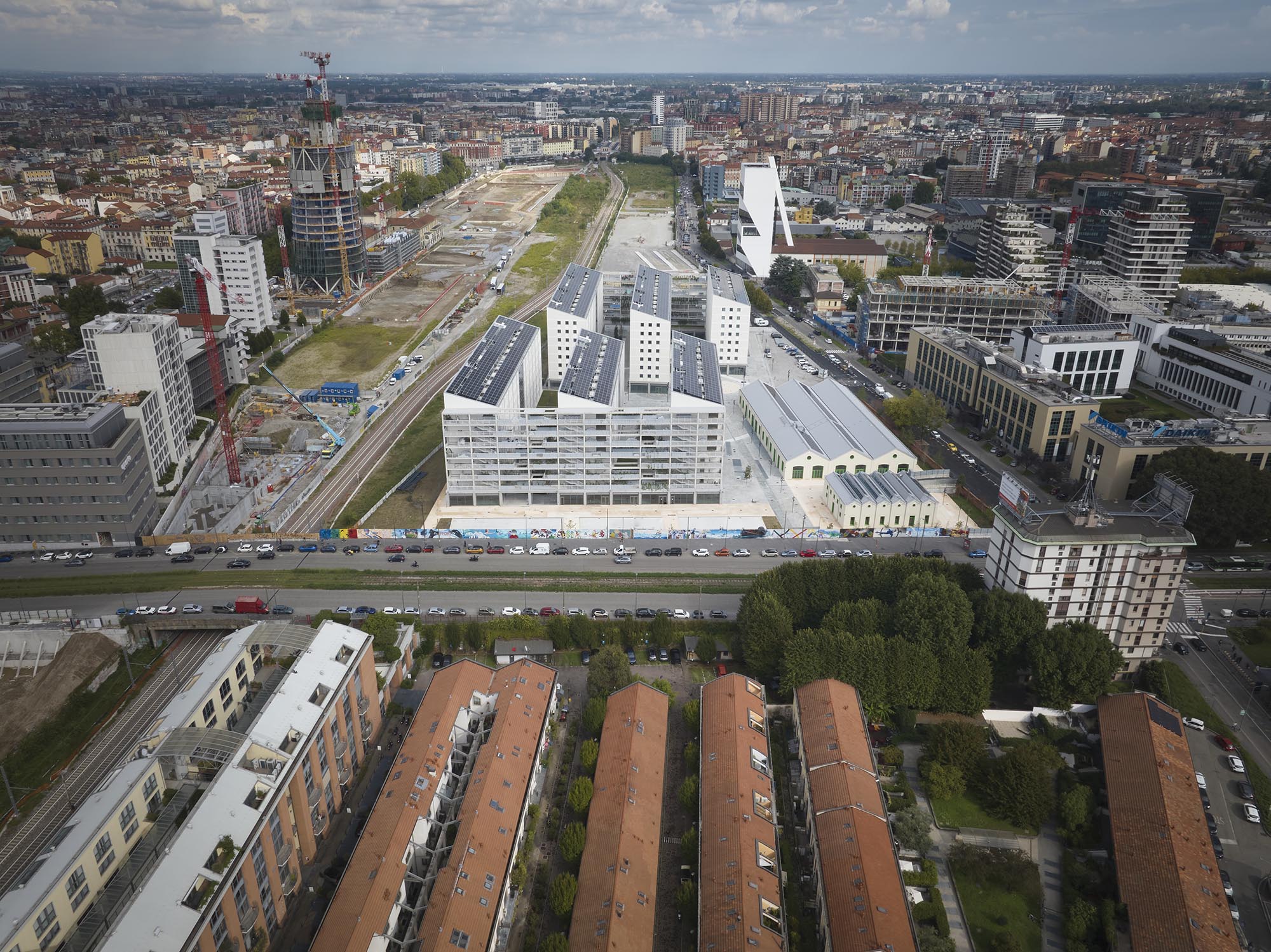
Photo: Dave Burk © SOM
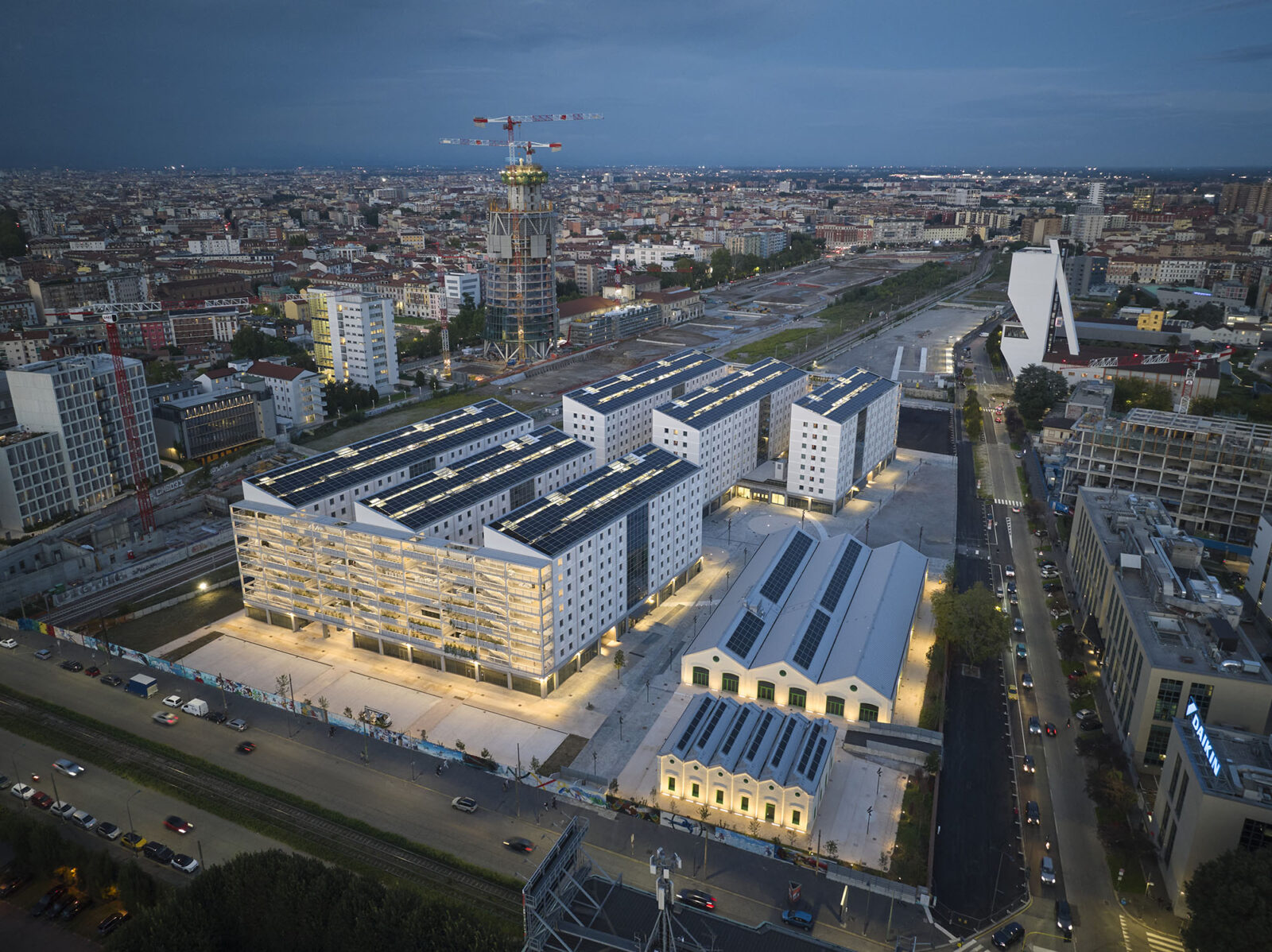
イタリア・ミラノのポルタ・ロマーナ地区の中心部に、ミラノ・コルティナ2026冬季オリンピックの選手村が竣工しました。
スキッドモア・オーウィングズ・アンド・メリル(Skidmore, Owings & Merrill、以下SOMと表記)が旧鉄道操車場跡地に設計した〈ミラノ・コルティナ・オリンピック選手村(Milano Cortina Olympic Village)〉は、産業遺産の再生を軸にした都市再生プロジェクトです。
注目ポイント
- オリンピック後の恒久的利用(学生・家族向け住宅)を前提としたプロジェクト
- 敷地に残る歴史的建造物を保存・再生し、まちからの玄関口へと転換
- マスティンバーやパッシブクーリング等によるサステナビリティ
- 都市再生×社会的レジリエンスを統合する、オリンピック後も継続する「生きた都市構造」
(以下、SOMから提供されたプレスキットのテキストの抄訳)
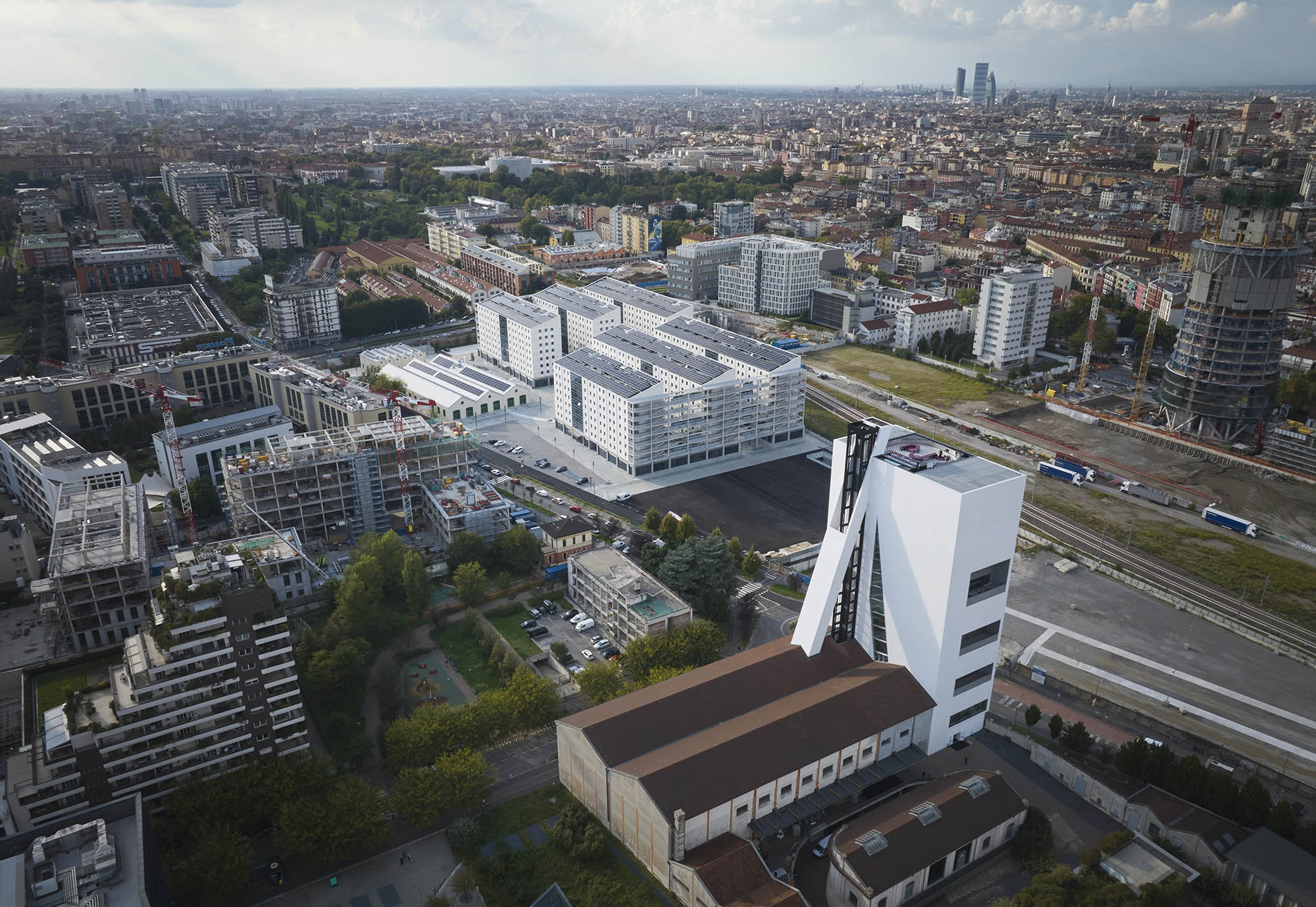
Photo: Dave Burk © SOM
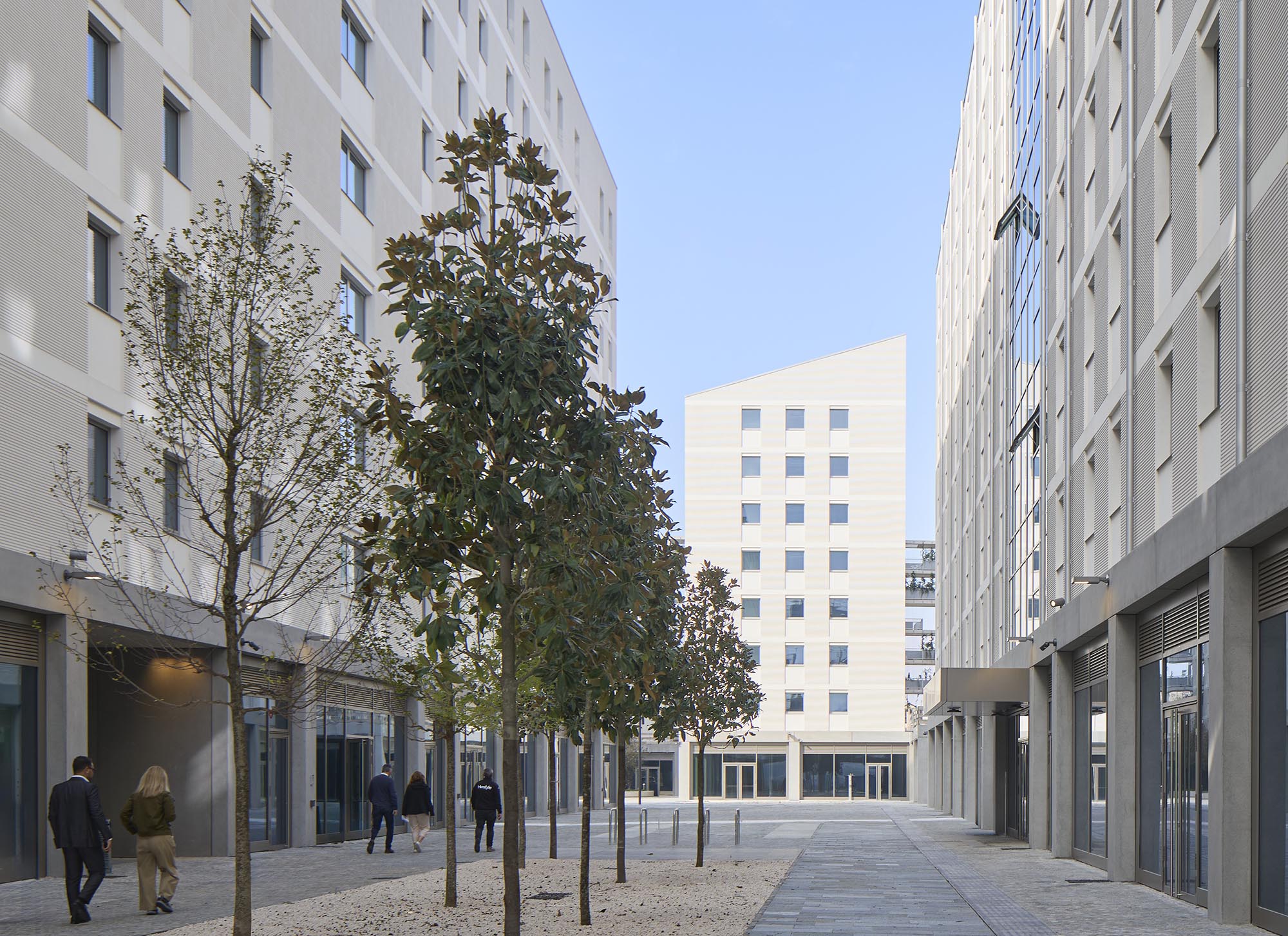
Photo: Dave Burk © SOM
ポルタ・ロマーナの選手村は、2026年ミラノ・コルティナ冬季オリンピックという稀有な機会を活用し、ミラノの活気あるポルタ・ロマーナ地区の中心に、持続可能で世代を超えたグリーンコミュニティを創出するプロジェクトである。
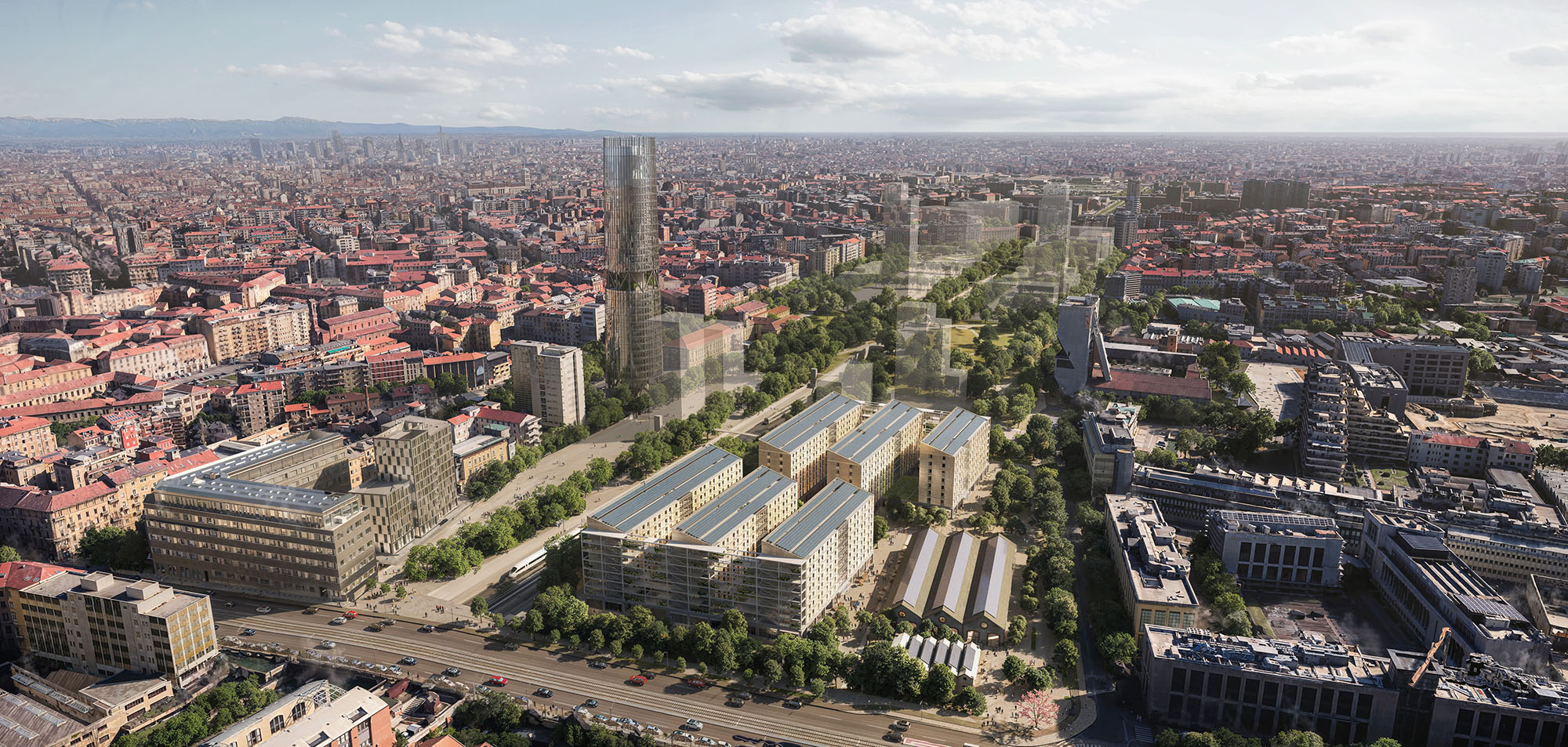
この村は、ミラノの都市構造に不可欠な一部となることを目的に設計されており、一連の公共緑地、2棟の歴史的建造物の再生、そして6棟の新築住宅棟で構成されている。住宅棟はオリンピック期間中に選手団の宿泊施設として利用され、その後は学生や家族向けの住宅へと転用される予定となっている。
最終的に、この村は社会的公平性、環境への取り組み、ウェルネス、包摂性、レジリエンスの原則に基づいた、活気ある自立型の地域として機能することを目指す。
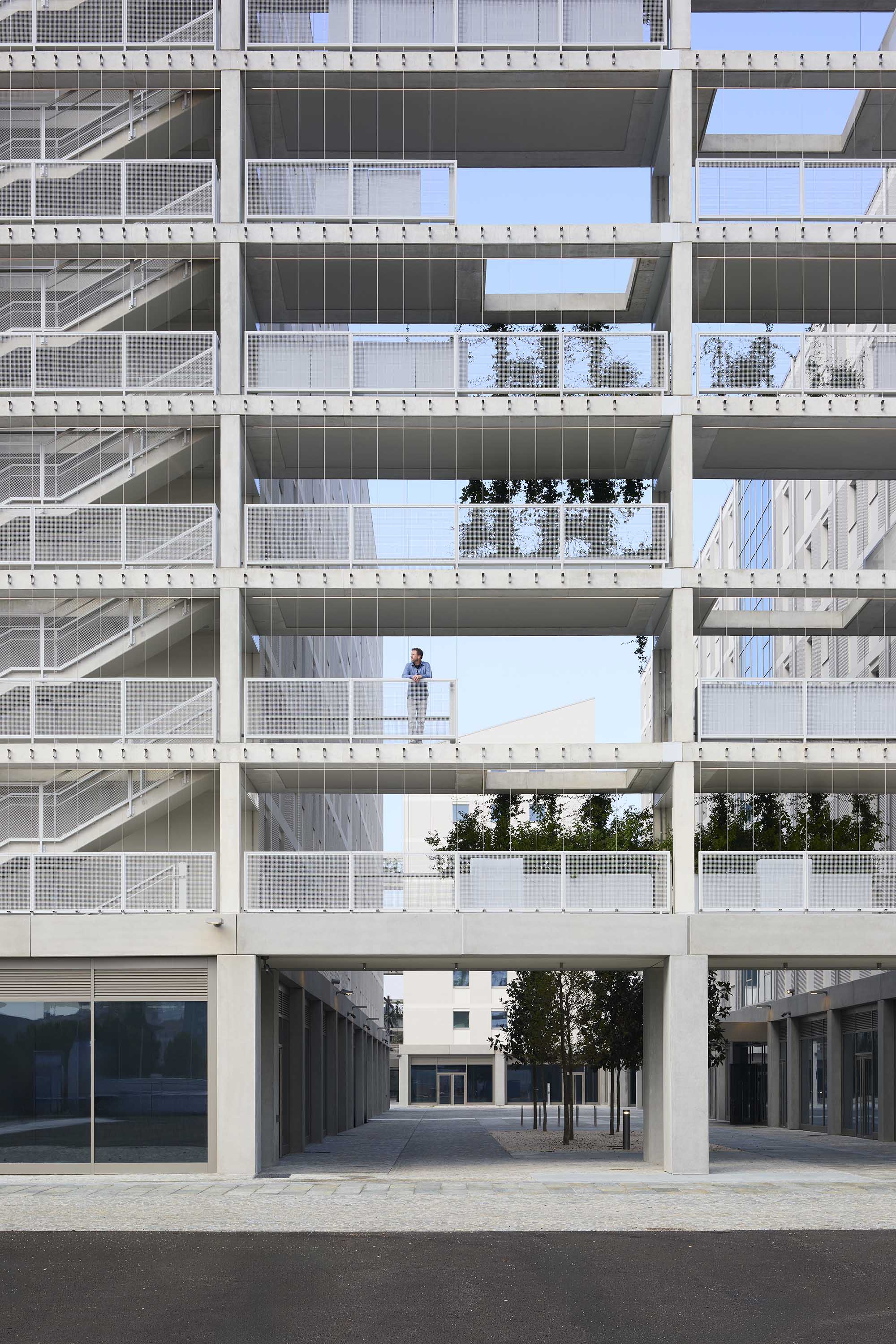
Photo: Lucas Blair Simpson © SOM
都市構造との調和とデザイン
旧鉄道操車場跡地に位置する〈ミラノ・コルティナ・オリンピック選手村〉は、その工業的歴史とミラノの建築様式から着想を得ている。敷地計画は周辺街路のリズムを取り込み、多様な公共通路を備えた透過性のある都市ブロックを形成し、ポルタ・ロマーナ鉄道地区マスタープランの一部として連続性をもたせている。
保存された歴史的建造物と住宅棟の1階部分には、文化的・経済的機能を担う施設を配置し、住民と訪問者の双方にサービスを提供する。これにより、ミラノの都市景観を特徴づける1階レベルの多様な活動をさらに豊かにしている。
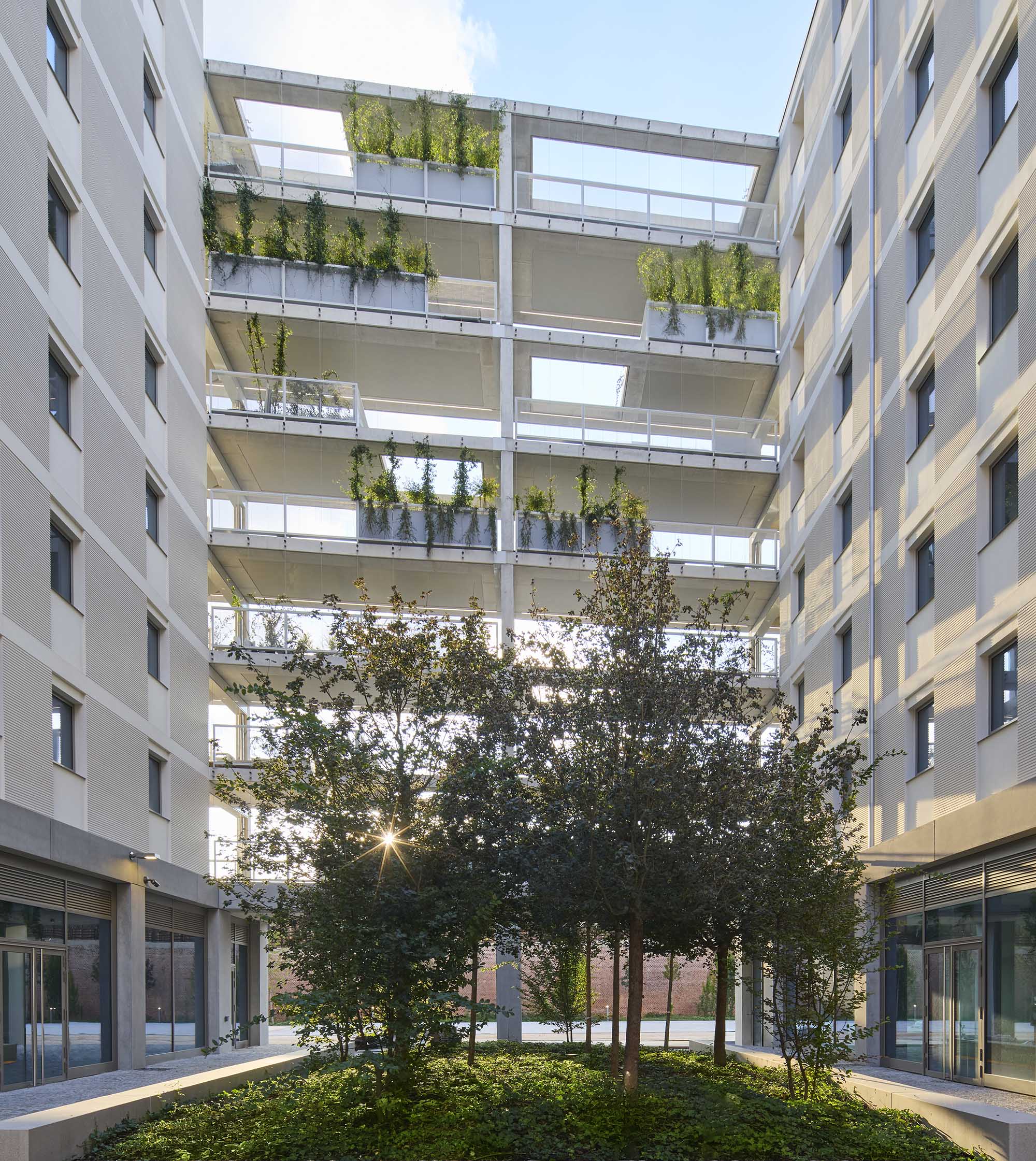
Photo: Dave Burk © SOM
現代的な再解釈と共有空間の構築
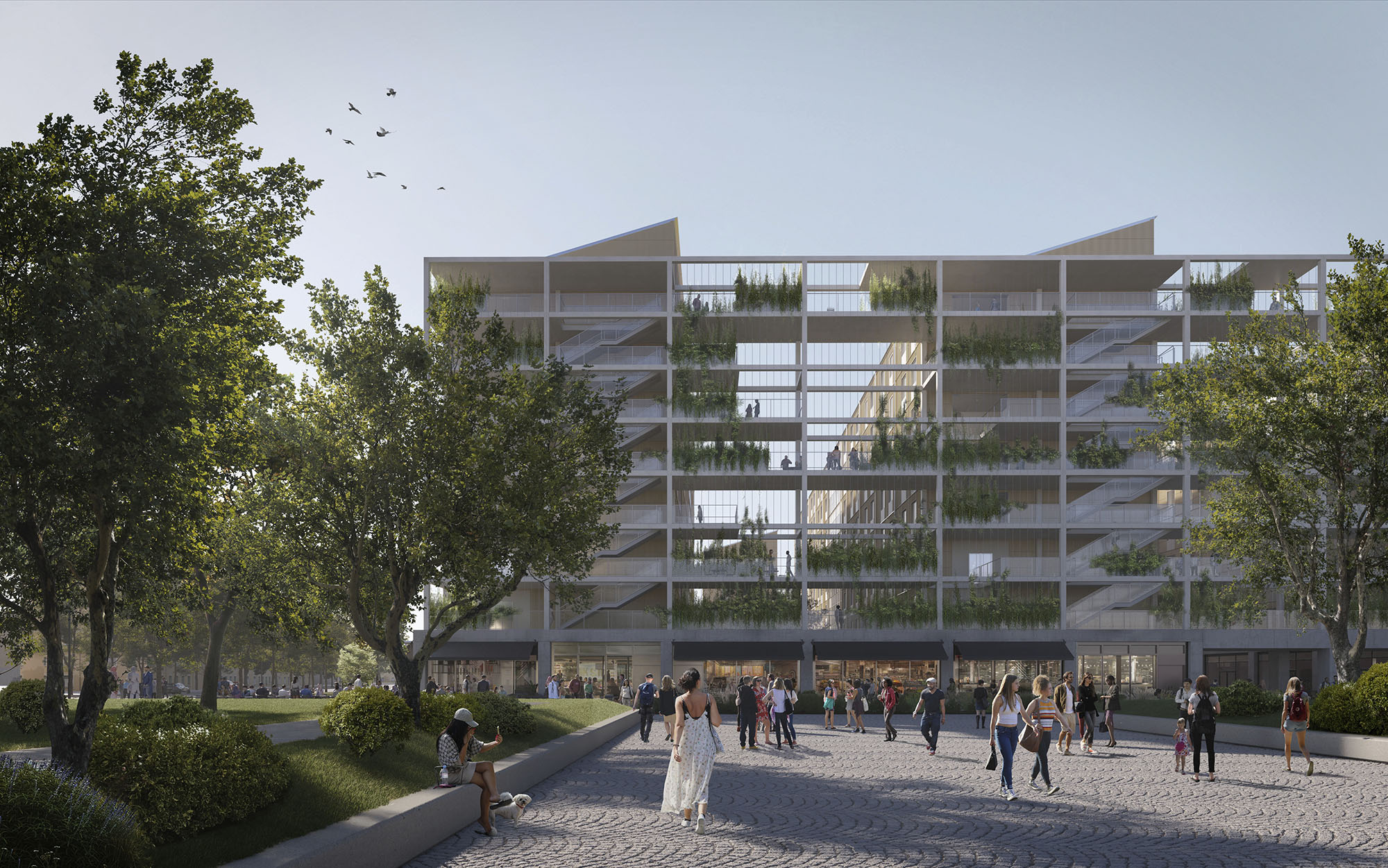
新たに建設された建物には周辺環境に調和しつつも現代的な素材パレットを採用し、地区に馴染み深い直線的なバー型建築様式を新たな精度で再解釈している。敷地両端を結ぶ共用テラスは、物理的・社会的な架け橋として機能し、環境性能と人的つながりの両面から新しい共有インフラを形成する。
垂直に伸びる植栽による日陰が特徴のこれらのテラスは、学生たちにとって象徴的な集いの場や屋外学習空間となり、複合施設全体に活気と生命感をもたらす。
また、テラスは周囲の賑やかな道路や公共空間と居住ユニットとの間を緩衝する役割も担う。屋外空間への緑の統合は、地域の気候レジリエンスを高め、居住者や訪問者の快適性・健康・ウェルビーイングの向上に寄与する。
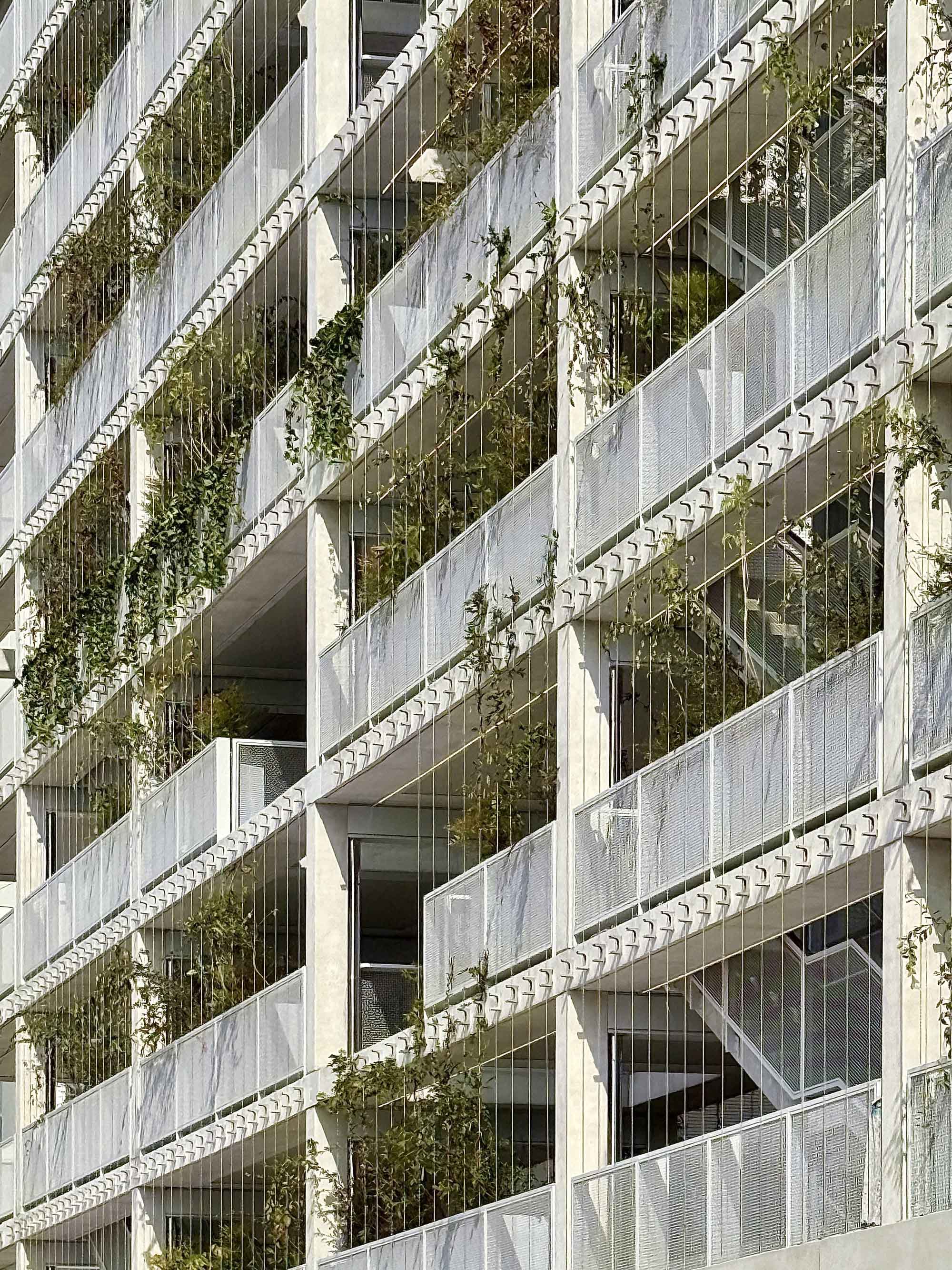
Photo: Colin Koop © SOM
柔軟なプログラムを支えるポディウム
新棟の基部には、用途の変化に柔軟に対応できるポディウムが設けられている。これは、イタリアの歴史的宮殿が時代とともに用途を変えてきたあり方に倣うものである。通り抜け可能な路地や都市のポケットで構成される多孔質な1階部分は、人々の探索や偶発的な体験を促す設計となっている。
オリンピック期間中、これらの空間は選手のためのレクリエーションやサポートエリアとして機能し、大会後には学生施設や公共プログラムへと転換される。
敷地の四隅には、メディア・文化イベントのための「ザ・シーン(The Scene)」、コワーキングや社交空間を備えた「ザ・ソーシャル(The Social)」、フィットネスとウェルネスをテーマとする「ライブ・ウェル(Live Well)」という核となる3つのエリアが設けられる予定となっている。
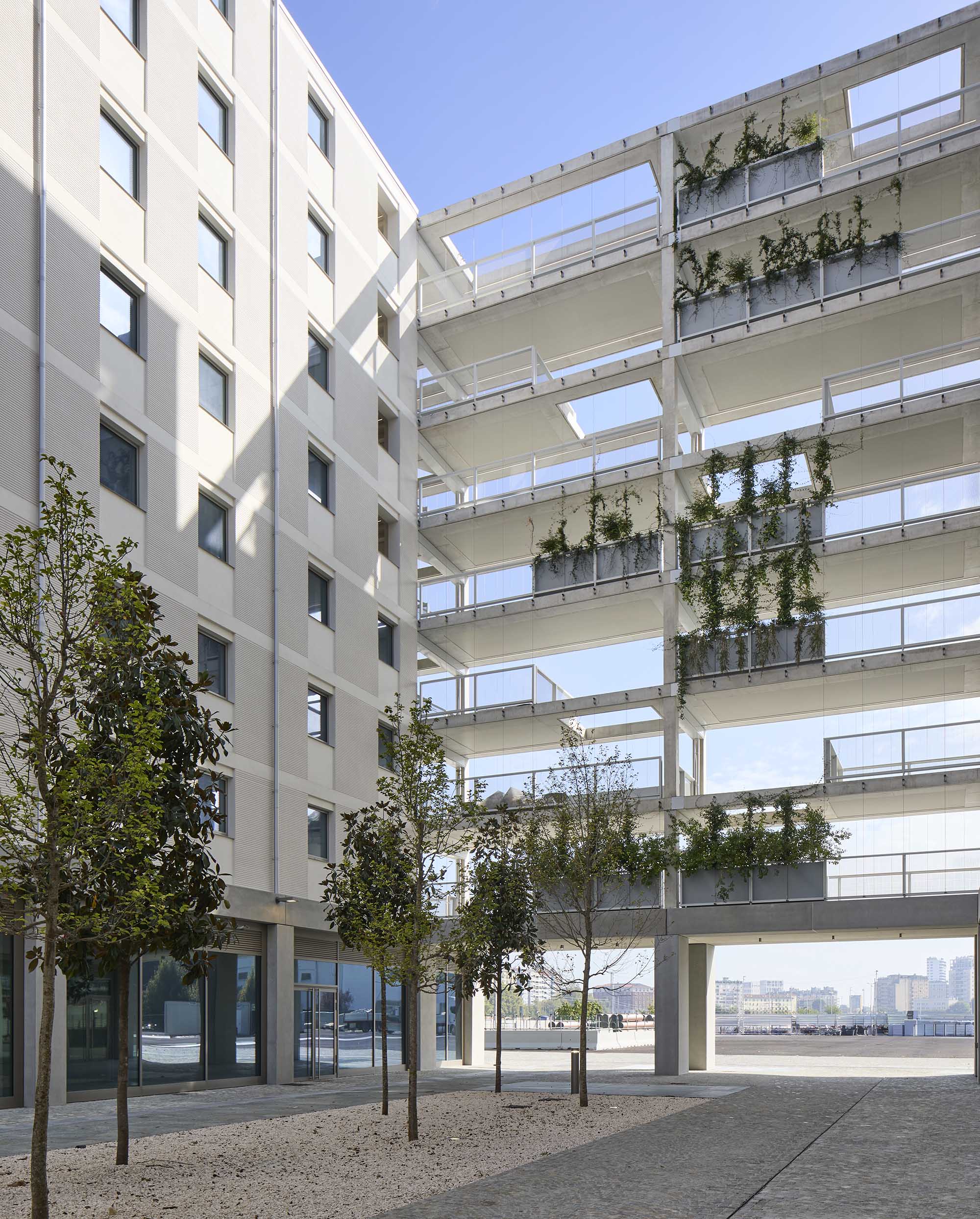
Photo: Lucas Blair Simpson © SOM
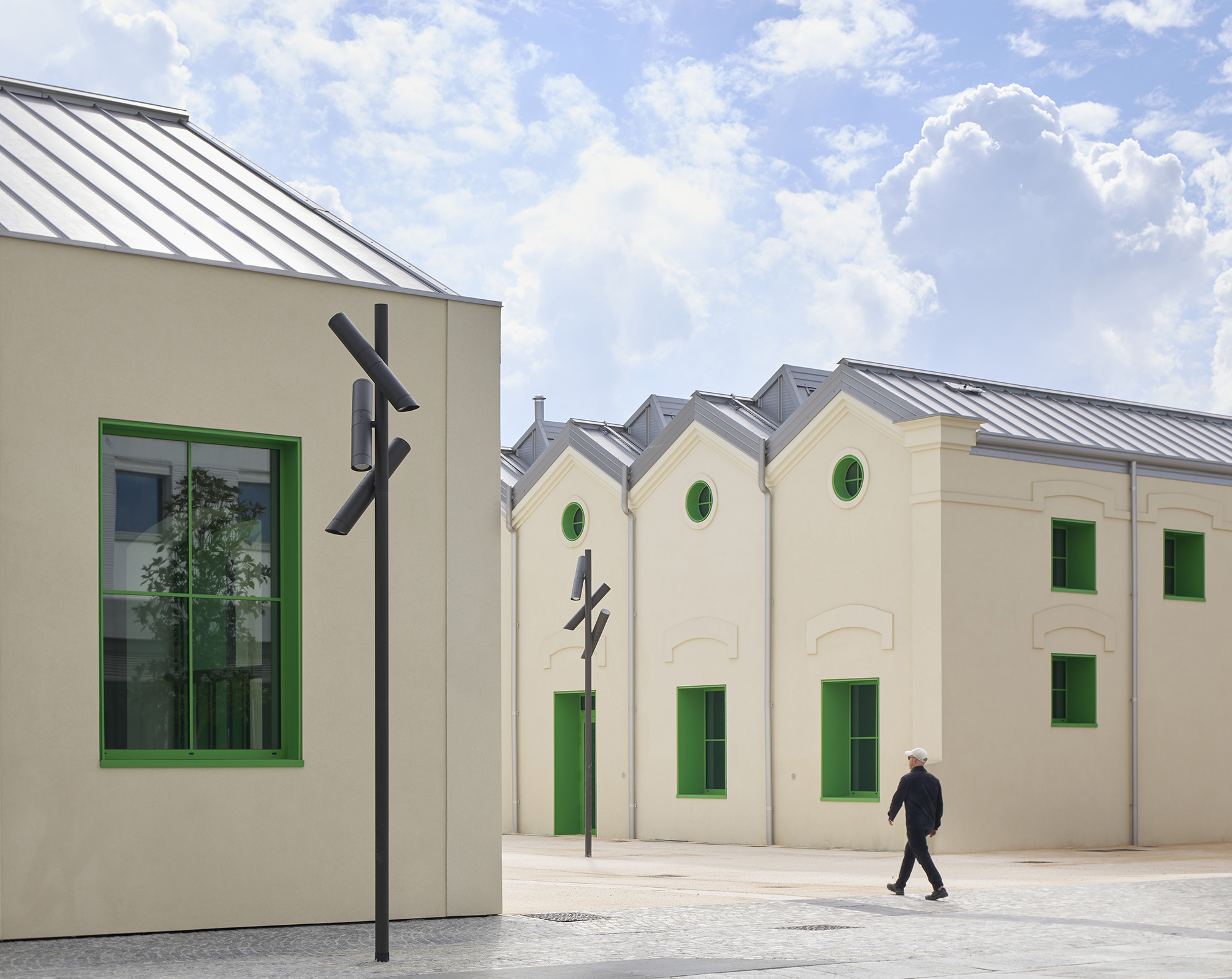
Photo: Dave Burk © SOM
歴史的建造物の再生と地域の記憶の継承
敷地南西角のジョヴァンニ・ロレンツィーニ通り沿いには、歴史的建造物であるエクス・スクアドラ・リアルゾ棟とバジリコ棟が位置する。いずれも工業用途で建設された建物であり、柔軟な公共プログラムへの転用が可能である。これら2棟は複合施設の玄関口を形成し、この地区の歴史的重要性を象徴する存在となる。
両建物の外壁と屋根は全面的に修復され、内部の石造・木造・鉄骨構造を露出させることで、この地域が産業拠点から現代的な都市地区へと変貌した過程を物語る。内部には、新しい木造屋根、機械設備、飲食・コミュニティ施設のインフラ、アート作品などを導入し、劇的でありながら歴史への敬意を保った改修が行われる予定である。
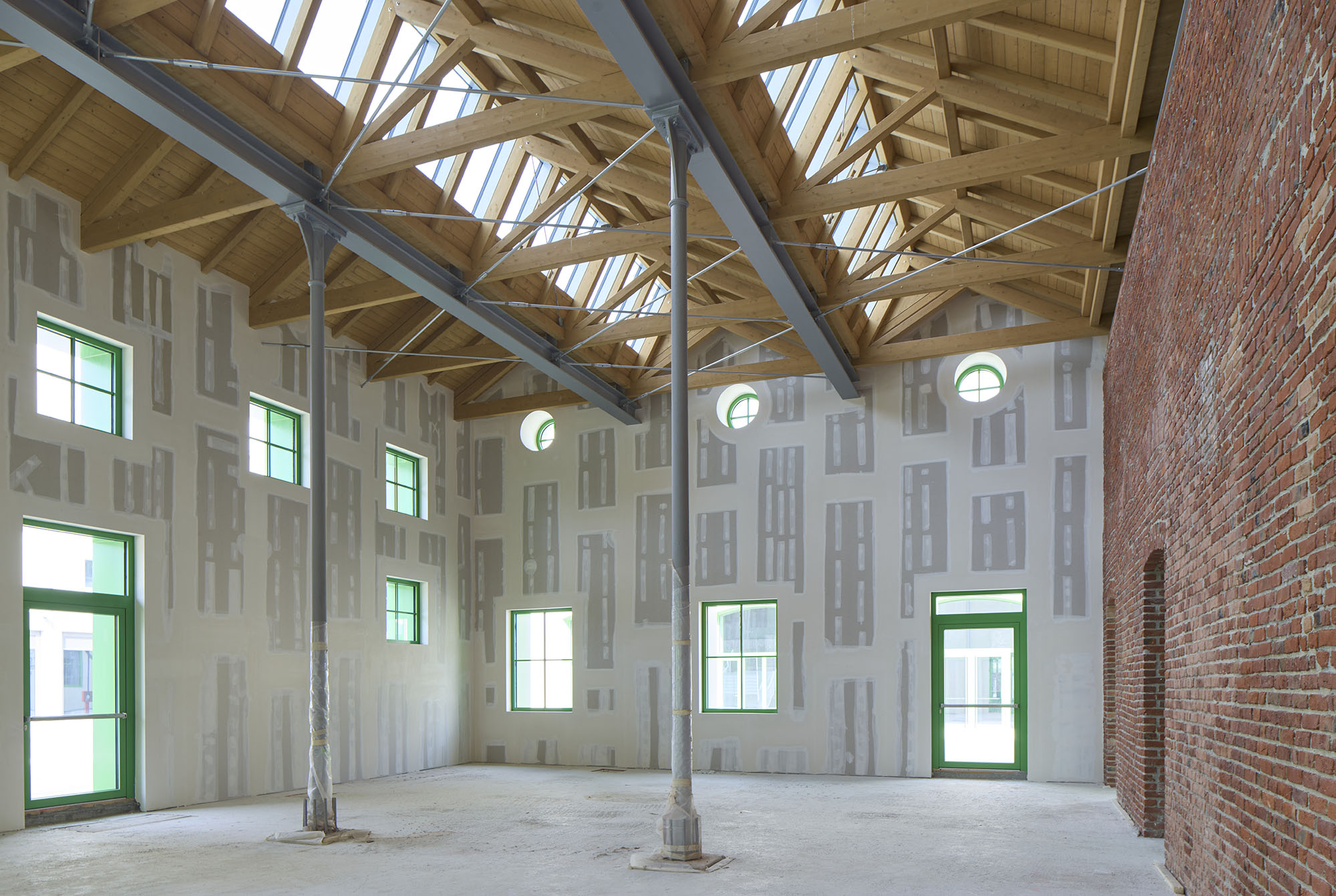
Photo: Dave Burk © SOM
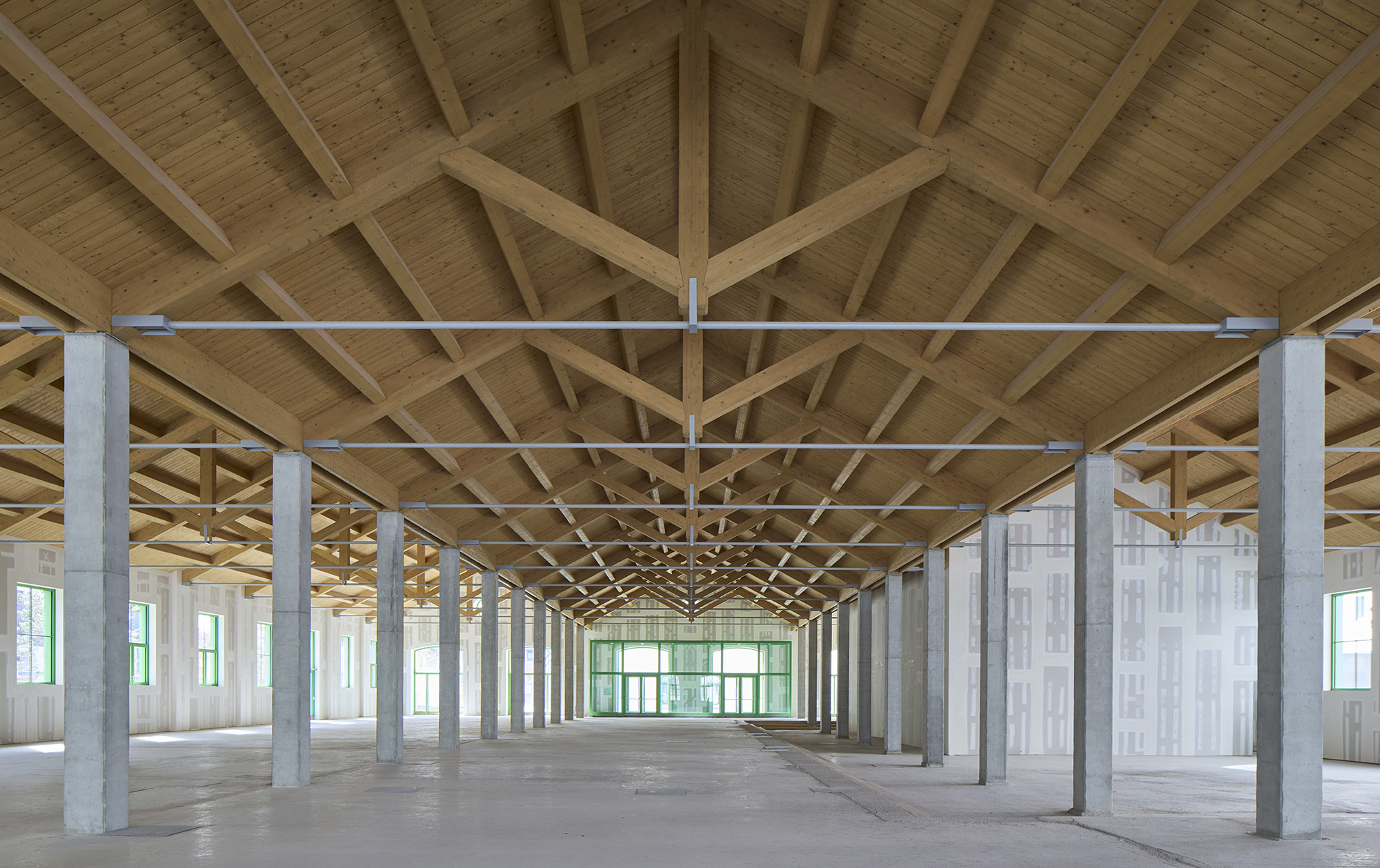
Photo: Dave Burk © SOM
スマートかつ持続可能な都市複合体の形成
オリンピックビレッジ全体は、スマートシティと持続可能な都市の原則に基づいて設計されている。
機械システムは地区全体の循環システムと接続されるが、パッシブクーリング、太陽光パネル、屋上庭園などの採用により、エネルギー浪費を抑え、現地でのエネルギー自給を実現する。さらに、新築の建物ではマスティンバー構造や低炭素外装材など、持続可能な建材の利用を最大化している。
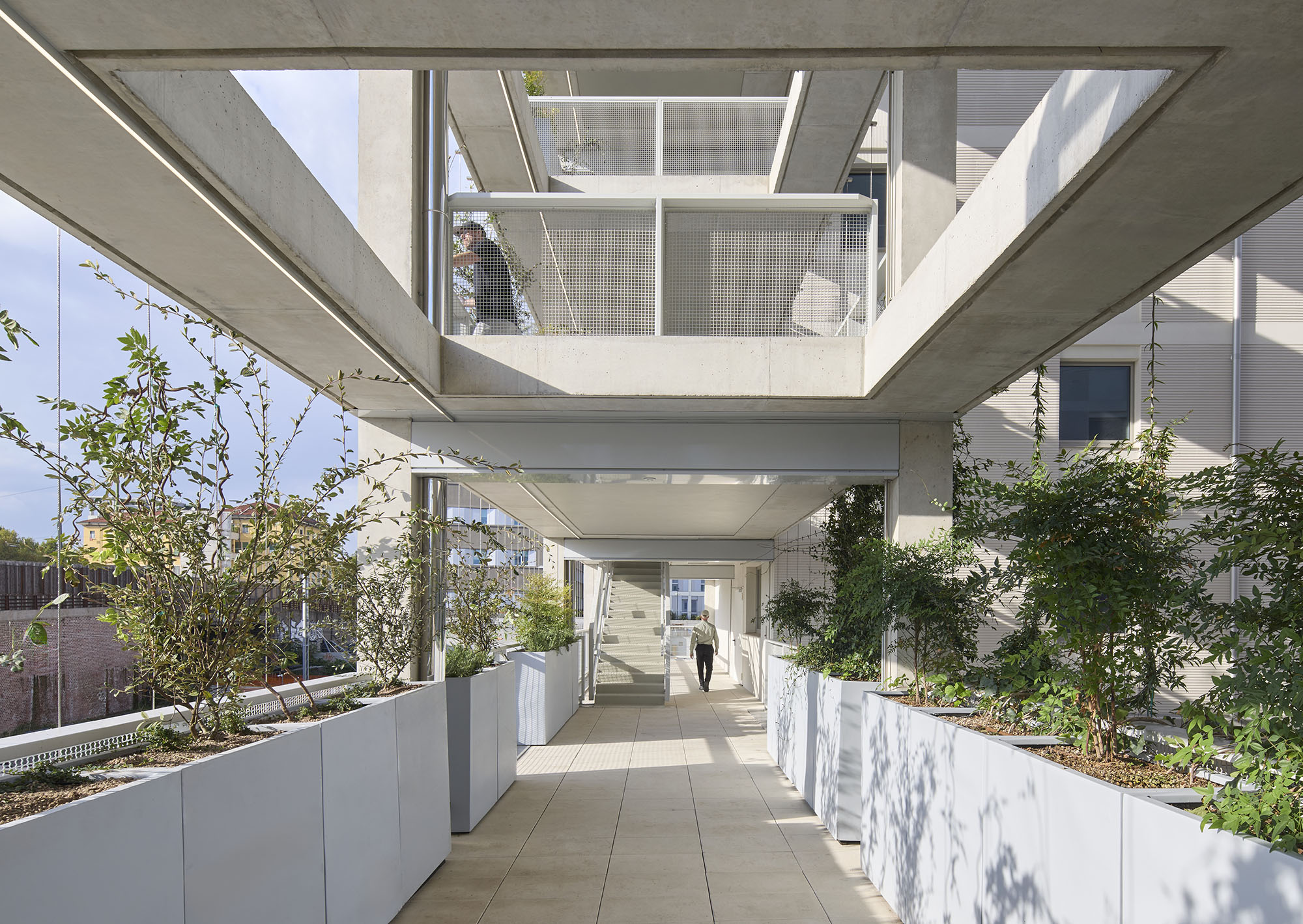
Photo: Dave Burk © SOM
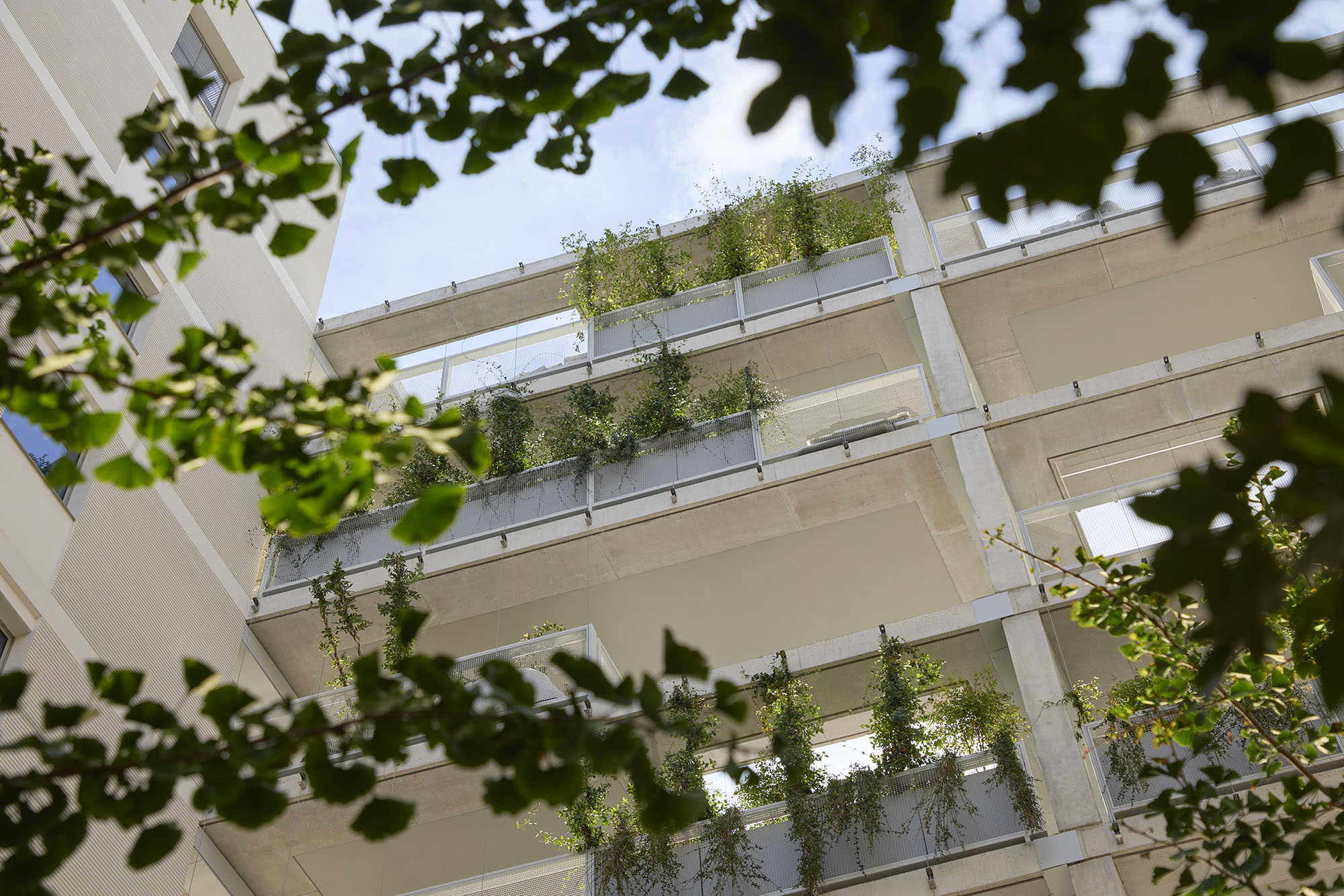
Photo: Dave Burk © SOM
都市再生としての持続可能性
このプロジェクトは都市スケールにおいて、機能を失った都市空間を再生し、新たな命を吹き込む取り組みである。
設計理念は「建設量の最小化」「効率的な建設」「柔軟性のある設計」を掲げ、既存の工業建物2棟を保存・修復しながら、効率的に計画されたモジュラー式直線棟を導入している。
これらは周辺の歴史的建築と調和し、ミラノの産業遺産や合理主義的住宅の特徴を想起させる。中庭や日陰の路地で結ばれた新棟群は、屋外活動を促進し、街に開かれた居住環境を形成する。
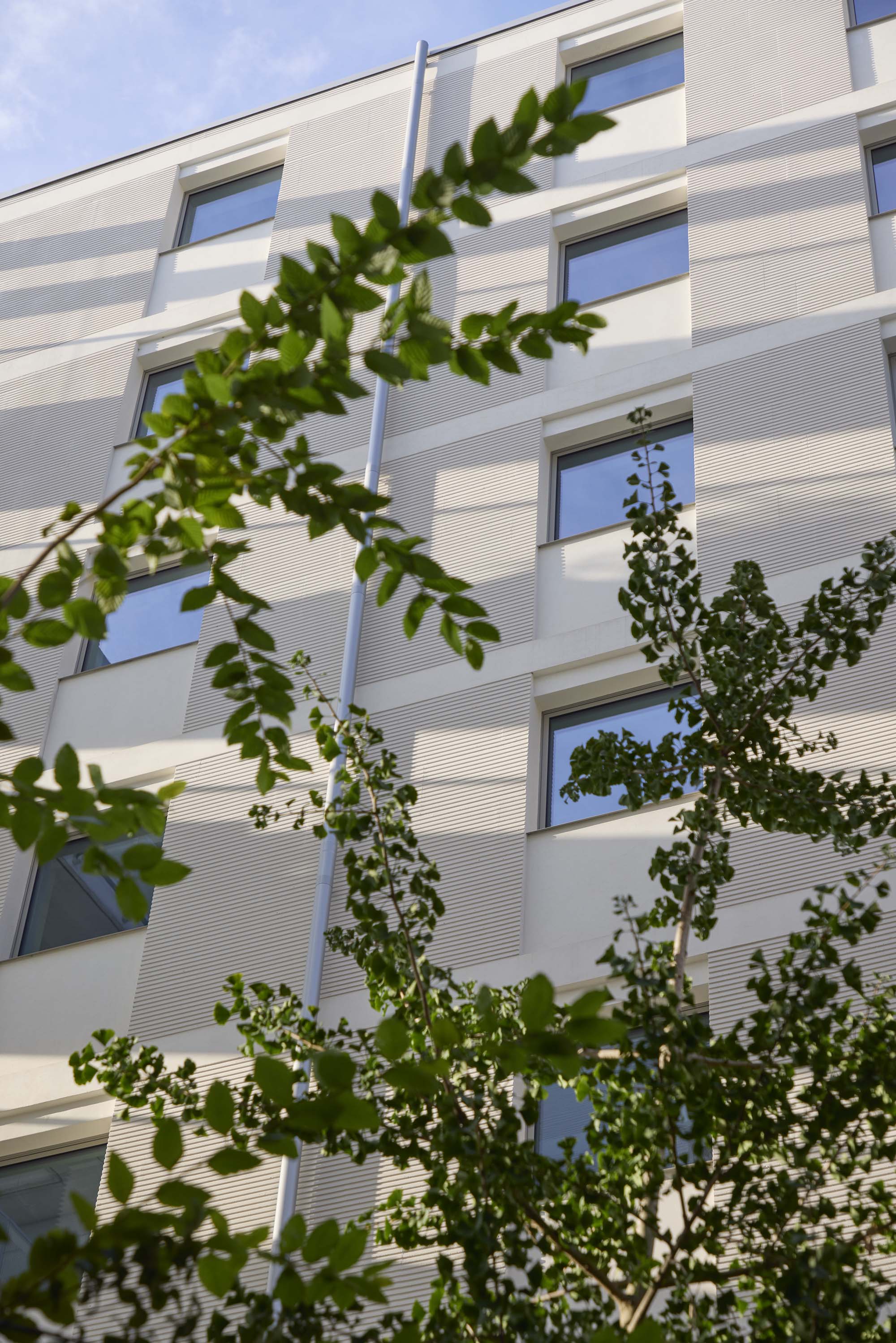
Photo: Dave Burk © SOM
オリンピック後を見据えた都市構造の継承
このプロジェクトの最も重要な意義は、オリンピックを超えて都市構造の一部として永続する開発を実現する点にある。
設計を担当するSOMは、選手村を廃棄物ゼロで学生寮に転用する構想を掲げており、閉会式から数か月後には2026年秋学期に向けて学生の入居が開始される予定である。ジム、屋外スポーツ施設、ガーデンテラス、外部階段などを備えた建物は、アクティブなライフスタイルと自然との強い結びつきを促す。
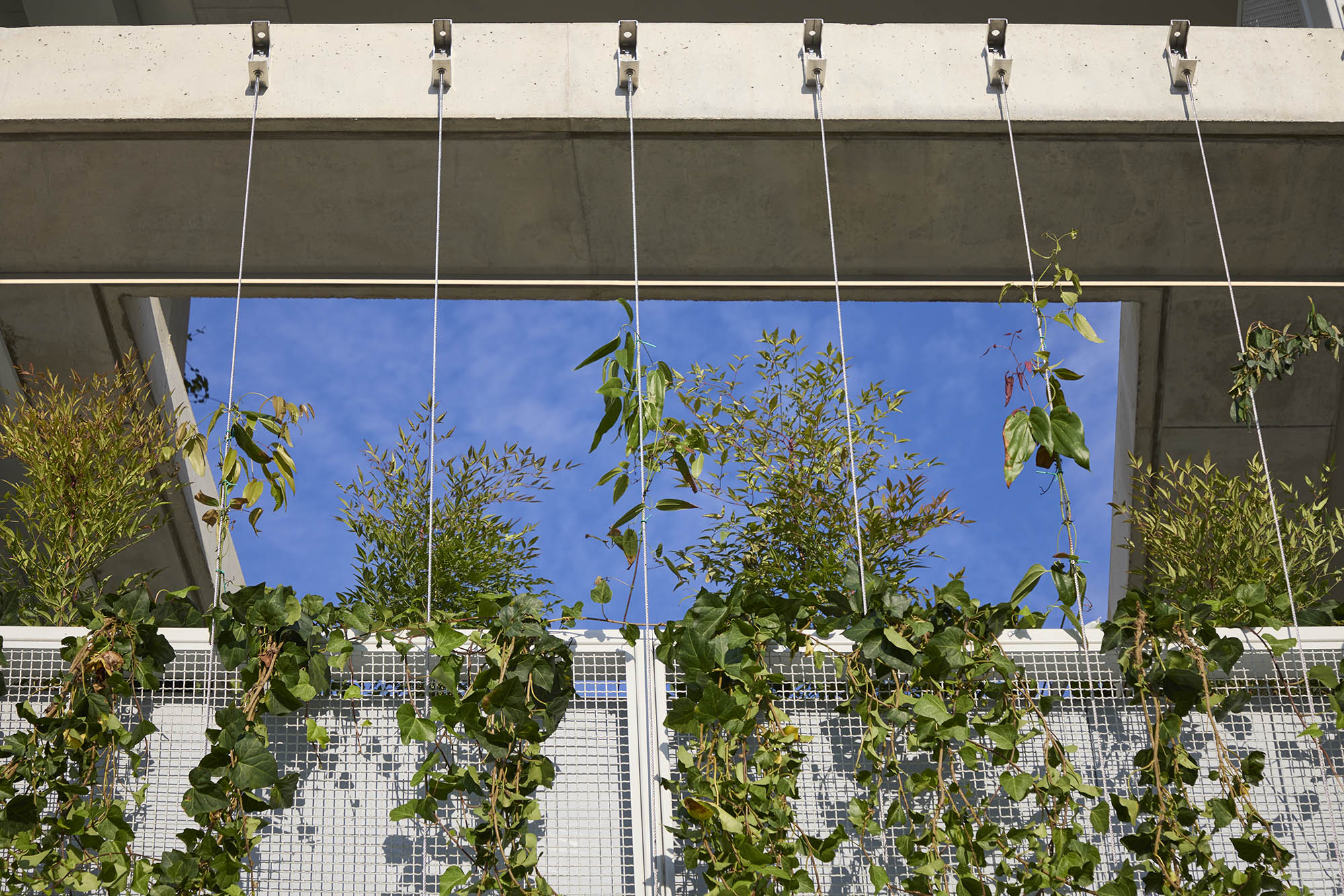
Photo: Dave Burk © SOM
持続可能な建設と資源循環への配慮
プロジェクト全体において、持続可能性は敷地計画・景観設計・資材選定・施工方法のあらゆる段階で考慮されている。
住宅棟にはプレファブリケーション外壁パネルを採用し、施工期間の短縮と廃棄物削減を実現した。これらのパネルはマスティンバーを基材とし、建設時の炭素排出量を低減する。
屋上には太陽光パネルを設置し、再生可能エネルギーを供給する。さらに、地区全体の水循環システムに統合され、透水性舗装や広大な緑地が雨水の再利用と生態系回復力の向上を支える。
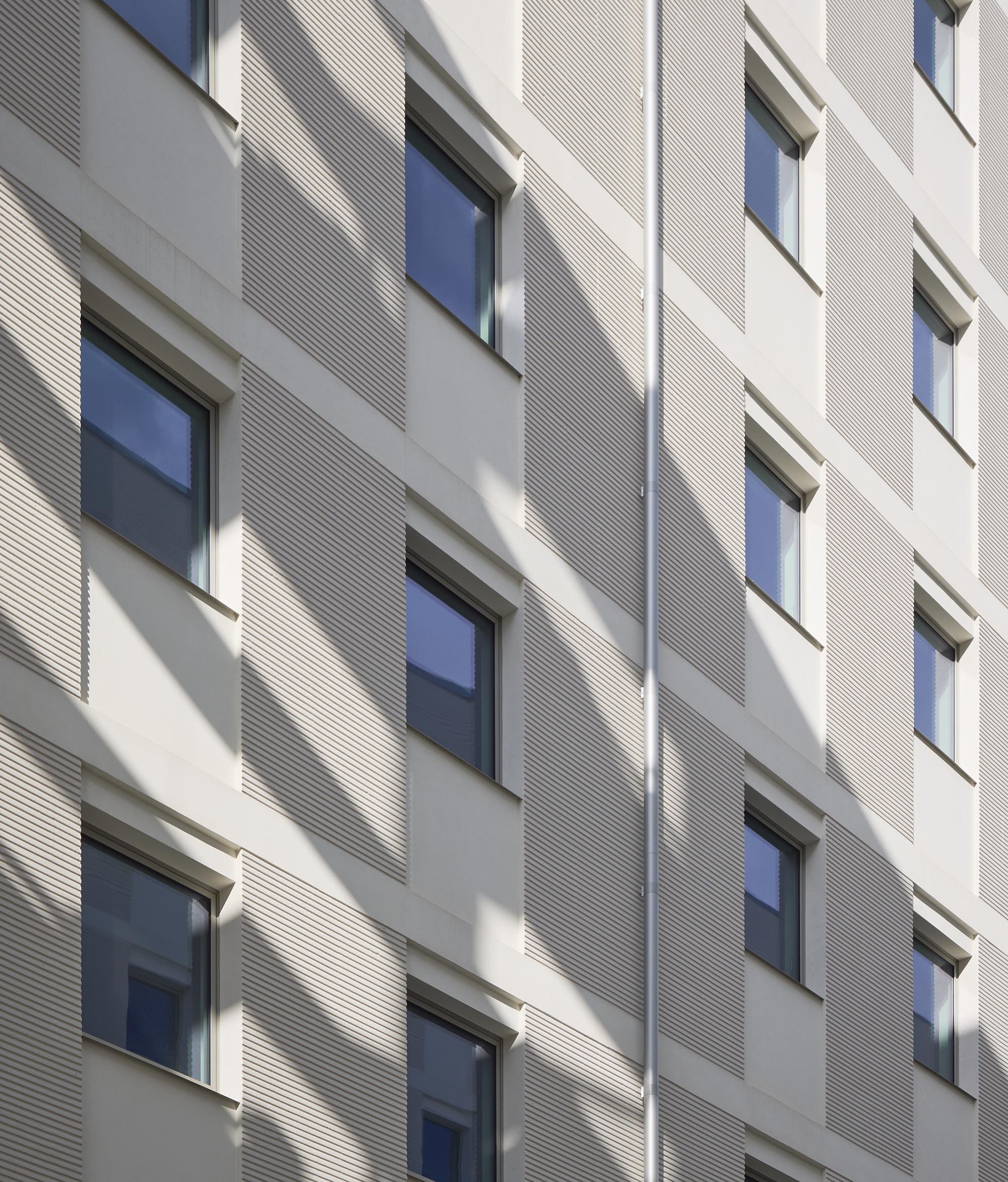
Photo: Dave Burk © SOM
素材選定と地域性の表現
素材選定では、経済性と耐久性を両立している。合板に直接スタッコを塗布することで繊細な質感と陰影を生み出しつつ、資材使用量を大幅に削減した。
また、地元産の石材と打ち放しコンクリートを用いることで、廃棄物と環境負荷を抑えながら、地区の産業遺産を反映している。
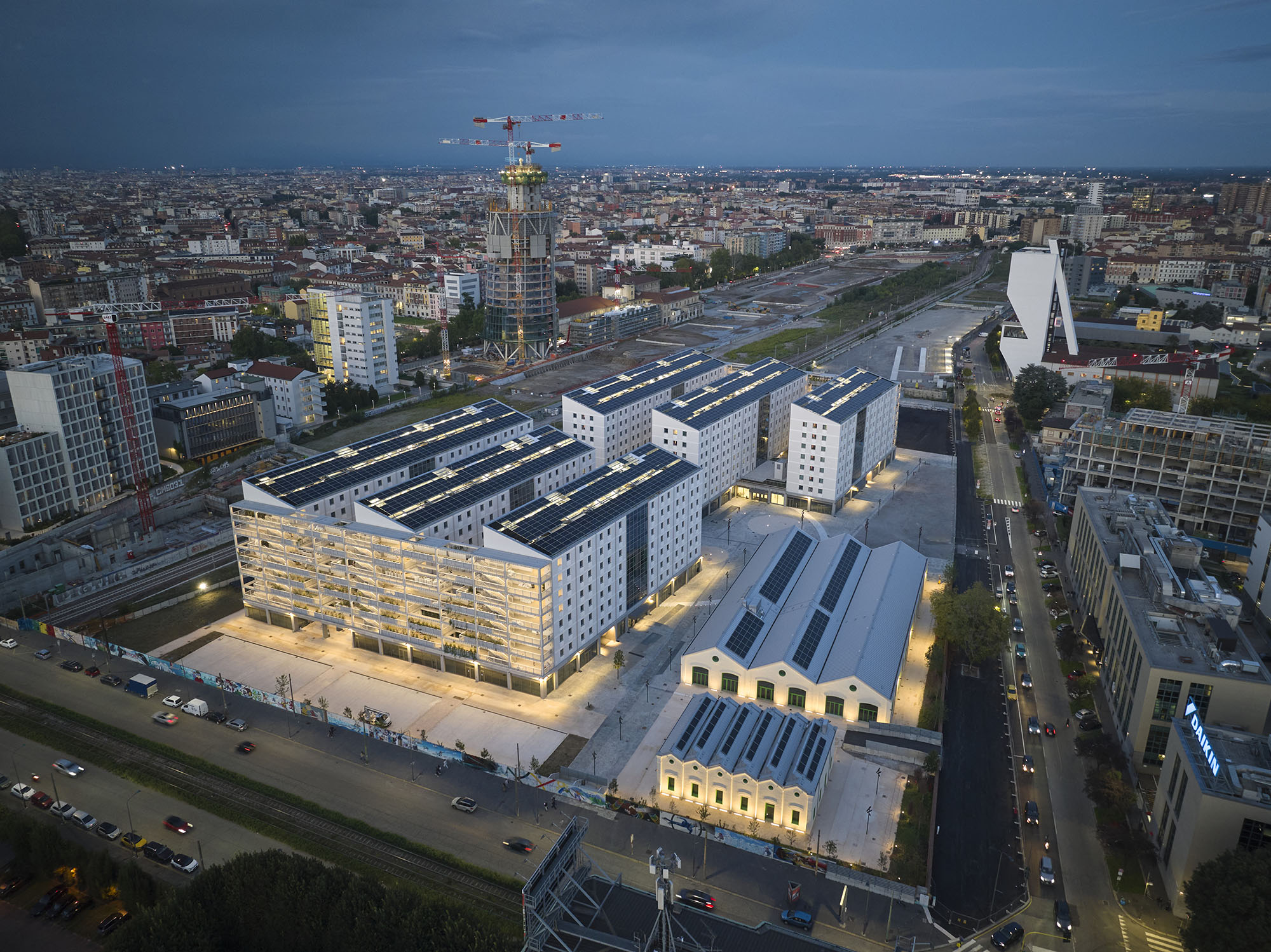
Photo: Dave Burk © SOM
都市の未来への投資としてのオリンピックビレッジ
SOMは都市を持続可能性の砦と捉え、思慮深い建設と素材の意識的な使用を通じて都市景観の進化を促すことを目指している。
オリンピックビレッジは単なる建築プロジェクトにとどまらず、社会的・生態学的レジリエンスへの投資であり、手頃な住宅の供給、歩行者環境の促進、自然の統合を通じて、よりつながりの強い、回復力ある未来の都市像を提示する。
オリンピック後の完成予想図 © SOM | Pixelflakes
オリンピック後の完成予想図 © SOM | Pixelflakes
以下、SOMのリリース(英文)です。
Milano Cortina Olympic Village
Project Narrative
September 2025The Porta Romana Olympic Village leverages a rare opportunity—the 2026 Milan-Cortina Winter Olympics—to create a sustainable, intergenerational, and green community in the heart of Milan’s dynamic Porta Romana district. Designed, first and foremost, to become an integral part of Milan’s urban fabric, the village encompasses a set of public green spaces, the transformation of two historic structures, and six new residential buildings that will serve Olympic athletes in the short term, and subsequently transition into much-needed housing for students and families. Ultimately, the village will become a vibrant, self-sustaining neighborhood built around principles of social equity, environmental commitment, wellness, inclusivity, and resilience.
Located on the site of a former rail yard, the Olympic Village takes architectural inspiration from the site’s industrial history, as well as the building typologies of Milan. The site plan adopts the rhythm of the surrounding streetscape, creating a porous urban block with a variety of new public pathways and connections to additional components of the Porta Romana Railway Area Master Plan. The preserved historic structures and ground floor of the residential buildings will house a variety of cultural and economic anchors that serve both residents and visitors, enhancing the tapestry of ground floor experiences that define the urban landscape of Milan.
The new buildings reinterpret the neighborhood’s familiar linear bar typology with a fresh precision, by pairing it with a material palette that is at once contextual and resolutely contemporary. Bookending the campus, communal terraces act as connective bridges—both physically and socially—to establish a new form of shared infrastructure, one rooted as much in human connection as in environmental performance. Shaded by vertical plantings, these terraces will become signature gathering spaces and outdoor study rooms for students, lending the complex a sense of energy and life on every level. The terraces will help buffer the private residential units from the busy streets and public spaces at the edges of the site. Integration of greenery for the outdoor areas is key to the neighborhood’s climate resilience, as well as for the comfort, health and wellbeing of the occupants and visitors.
At the base of the new buildings, flexible podiums accommodate programs that evolve with the usage of the village—just as historic palazzos throughout Italy have provided users with the flexibility to adapt to new uses over time. The porous ground floor with connected alleyways and urban pockets encourages exploration and experiences that create unexpected moments. During the Olympics, these spaces will house recreational and support areas for the athletes. After the games, they will transform into student amenities and public programs, curated as three ‘districts’ forming anchors at the corners of the site: The Scene for media and culture events; The Social where coworking and flexible social spaces will live; and Live Well for fitness and wellness.The historic structures, the Ex Squadra Rialzo Building and Basilico Building, are located adjacent to Via Giovanni Lorenzini on the southwestern corner of the site. Both buildings were built for industrial uses and similarly lend themselves to flexible, public programs. Together they form a gateway to the complex and establish the importance of the area’s history. The exterior envelope and roofs of both buildings will be fully restored, and their interior structures of masonry, wood, and iron will be exposed, illustrating the neighborhood’s transformation from industrial center to contemporary urban district. Dramatic yet respectful interventions within the buildings’ interiors, like new timber roofs, mechanical systems, infrastructure for restaurant and community space, and art pieces, may also be undertaken.
The entire Olympic Village is designed according to the principles of a smart and sustainable city, creating a complex that is at once connected and self-sufficient. The village’s mechanical systems will tie in to the precinct’s loops, yet passive cooling strategies, solar panels, and rooftop gardens—among other features—will ensure that the complex avoids energy waste and generates much of what it consumes on site. In addition, the new buildings maximize the use of sustainable materials, from the mass timber structure of the residential buildings to low-embodied carbon facade materials.
Sustainability at Olympic Village
At an urban scale, Olympic Village is an endeavor to reoccupy pockets of the city whose functions have fallen out of use, giving them new life—the exemplification of sustainability through urban regeneration. The design embraces a core concept: build less, build efficiently, design with flexibility. Two existing industrial buildings are preserved and restored, while a series of efficiently planned modular linear structures are introduced. These echo the historic architecture of the surrounding area in their form, materials, and human scale. With elements that recall Milan’s industrial heritage and its classic rationalist housing, the new buildings are interlinked with courtyards and shaded alleyways that invite residents and visitors to linger outdoors.
One of the most exciting aspects of this project is the opportunity to create a development that extends far beyond the Olympics, to become a lasting part of the city’s fabric. SOM envisioned a zero-waste conversion of athletes’ residences into student housing. Within months of the closing ceremony, students will begin moving in for the Fall 2026 term. Designed with gyms, outdoor sports facilities, garden terraces, and exterior stairs, the buildings encourage active lifestyles and a strong connection to the outdoors.
Sustainability was considered at every stage—from site and landscape design, to material selection, to construction methods. The new residences feature prefabricated façade panels, which accelerate construction and reduce waste. These panels are fabricated with a mass timber substrate, lowering the carbon impact of construction.
Energy and water systems were equally important. Rooftops are topped with photovoltaic panels, generating renewable power for the development. The buildings are integrated into a water exchange loop serving the broader Porta Romana plan. Shading strategies and extensive green spaces, with porous surfaces to capture rainwater, further contribute to ecological resilience in a changing climate.
Material selections emphasize both economy and durability. Stucco is applied directly onto plywood to achieve subtle texture and nuanced shadow while significantly reducing material quantities. Locally sourced stone and exposed concrete echo the district’s industrial heritage while minimizing waste and environmental impact.
We see cities as bastions of sustainability, where thoughtful construction and mindful use of materials can foster a positive evolution of the urban landscape. More than an architectural project, the Olympic Village is an investment in social and ecological resilience—providing affordable housing, encouraging walkability, and integrating nature to nurture a more connected and resilient future.
SOM 公式サイト
https://www.som.com


![[Interview]iF Design代表のウヴェ氏に聞く、建築と都市の2026年メガトレンド](https://magazine-asset.tecture.jp/wpcms/wp-content/uploads/2026/07/23221054/iF_AwardCeremony_2026_AwardCeremony-82-900x600.jpg)
![[Report]激変する時代の中で、建築とデザインはどう拡張するか。「iF DESIGN AWARD 2026」授賞式&最新トレンド](https://magazine-asset.tecture.jp/wpcms/wp-content/uploads/2026/07/24010304/iFDesignTrendConference26-45-900x600.jpg)
![[Report]RUI Architectsが可動モジュールを設計して松竹のアートスペースをリニューアル、柿落とし展「継承のトランジション」の会場デザインも担当](https://magazine-asset.tecture.jp/wpcms/wp-content/uploads/2026/07/24141011/20260713shutl_press11-01309-c-900x629.jpeg)