

"単調さ"を打ち破る、MVRDVによるモジュール建築 - 効率性と意匠性を両立した、シンガポールのプレファブ集合住宅〈アーウェル・ヒル・レジデンス〉
© Finbarr Fallon

© Finbarr Fallon
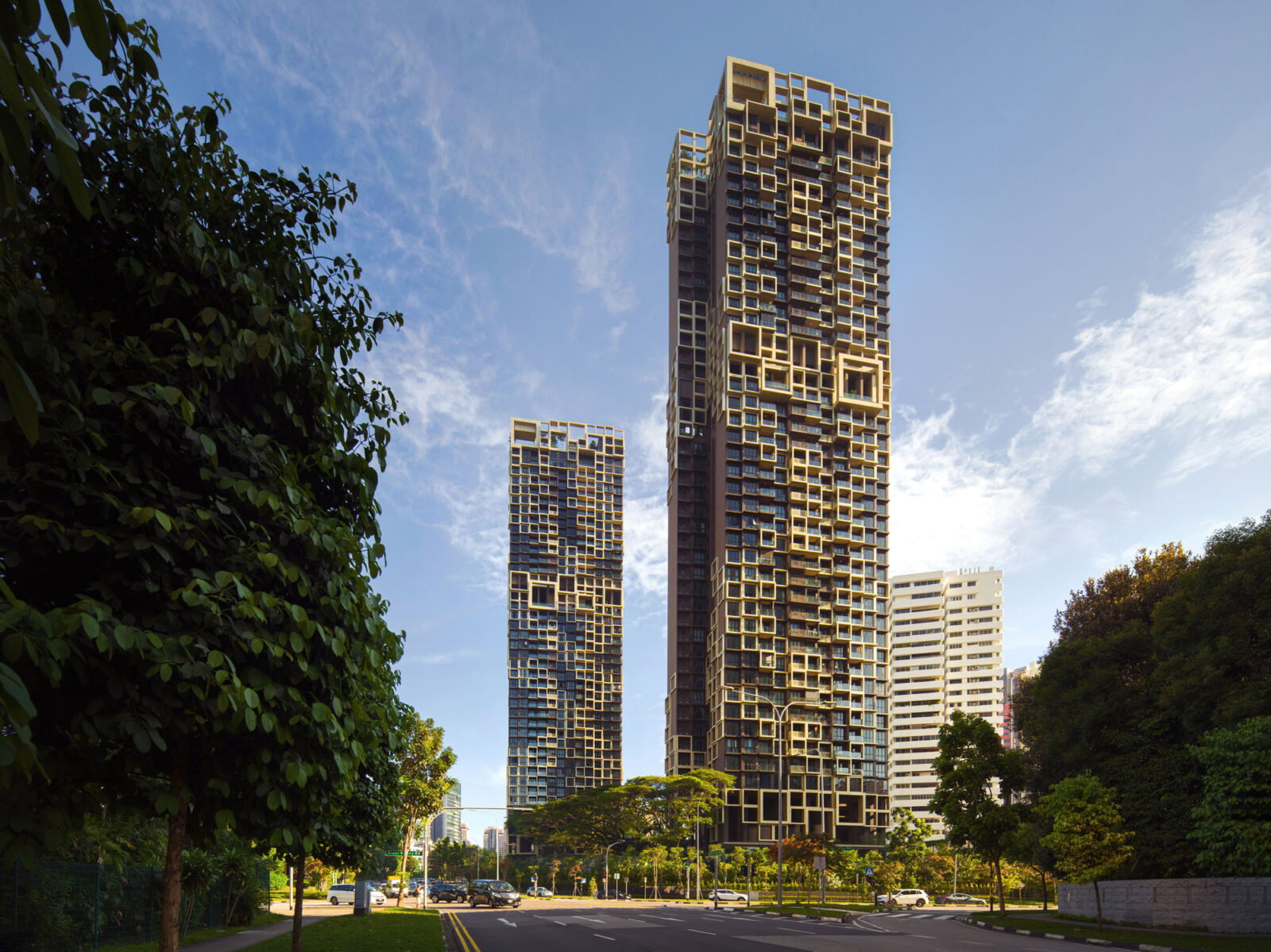
シンガポールのアーウェル・バンク・ロードに建つ〈アーウェル・ヒル・レジデンス(Irwell Hill Residences)〉は、同国にて広く普及する「PPVC(事前に部材の製作・仕上げを行う)工法」を発展活用した集合住宅です。
オランダ・ロッテルダムを拠点とする建築家集団MVRDVとシンガポールの設計事務所 ADDPアーキテクツ(ADDP Architects)が設計しました。
注目ポイント
- 「モジュール建築=単調」という課題を打ち破るファサードデザイン
- 各ユニットのスケールと配色による有機的で複雑な表情
- 工期短縮や廃棄物削減と、地域に長く愛される意匠性を兼ね備えた「真のサステナビリティ」
- シンガポールが世界をリードする「モジュール建築」分野をさらに革新するプロジェクト
(以下、MVRDVから提供されたプレスキットのテキストの抄訳)
© Finbarr Fallon

© Finbarr Fallon
プレファブ・モジュールタワーに個性を与えるファサードデザイン
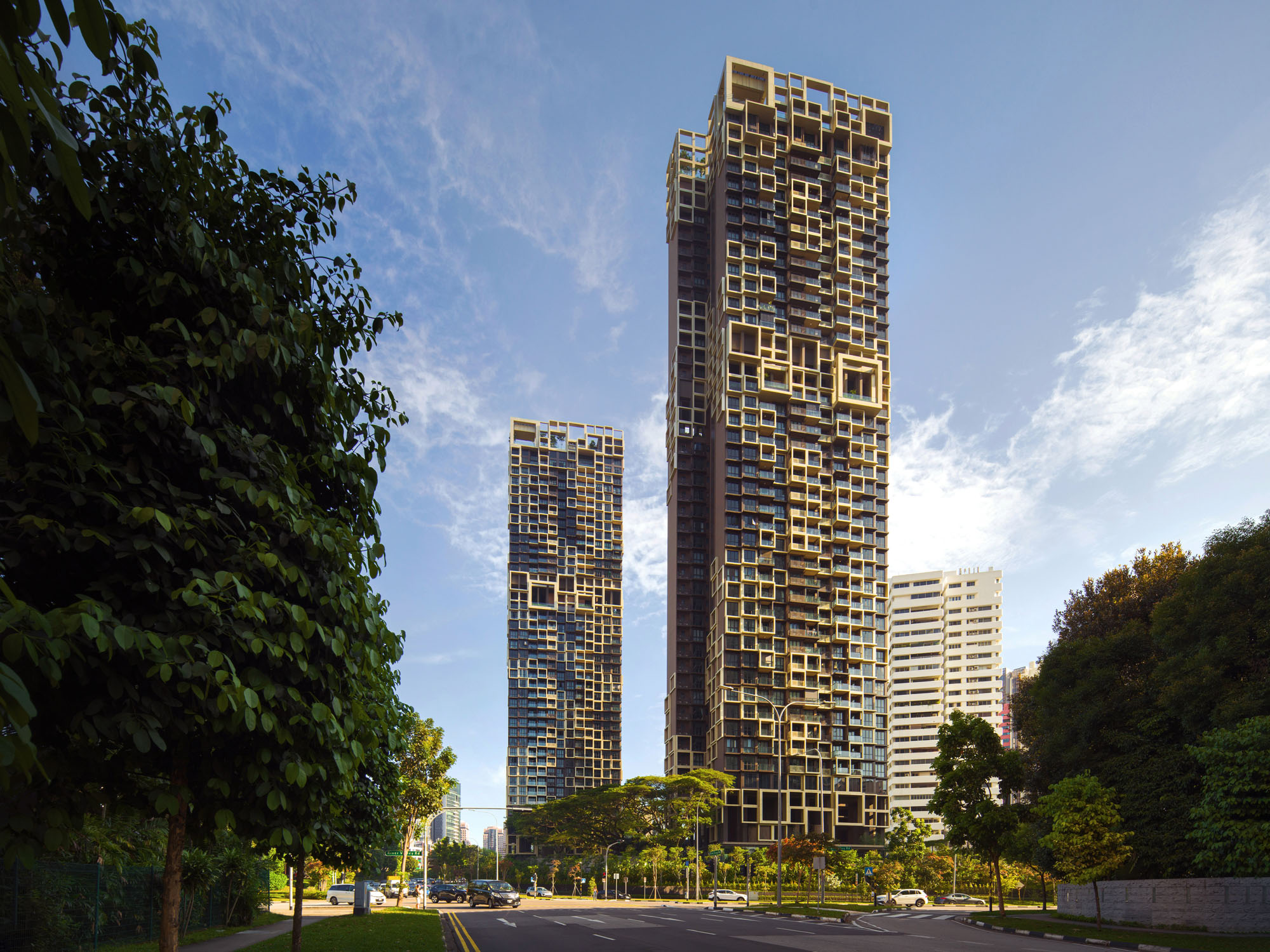
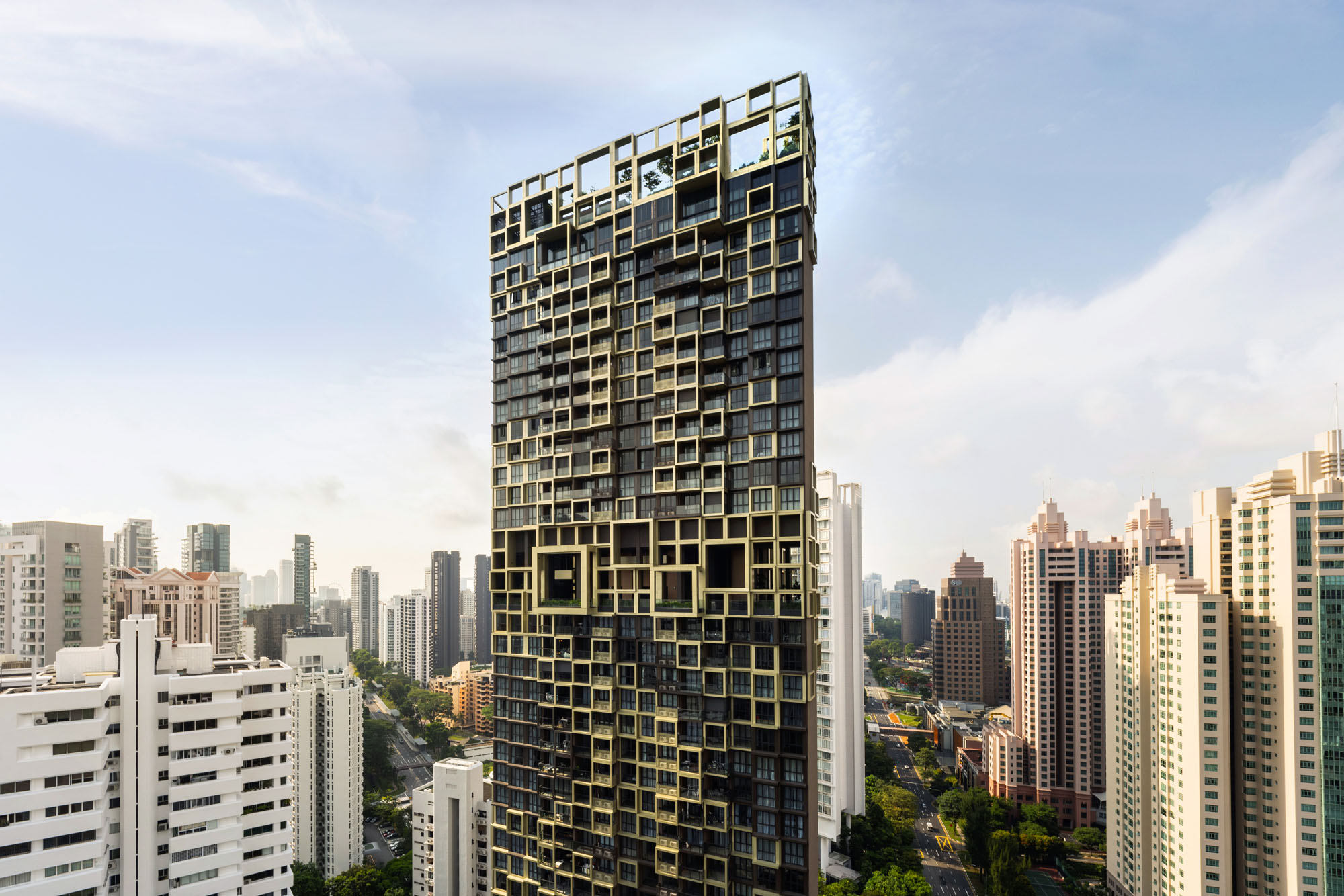
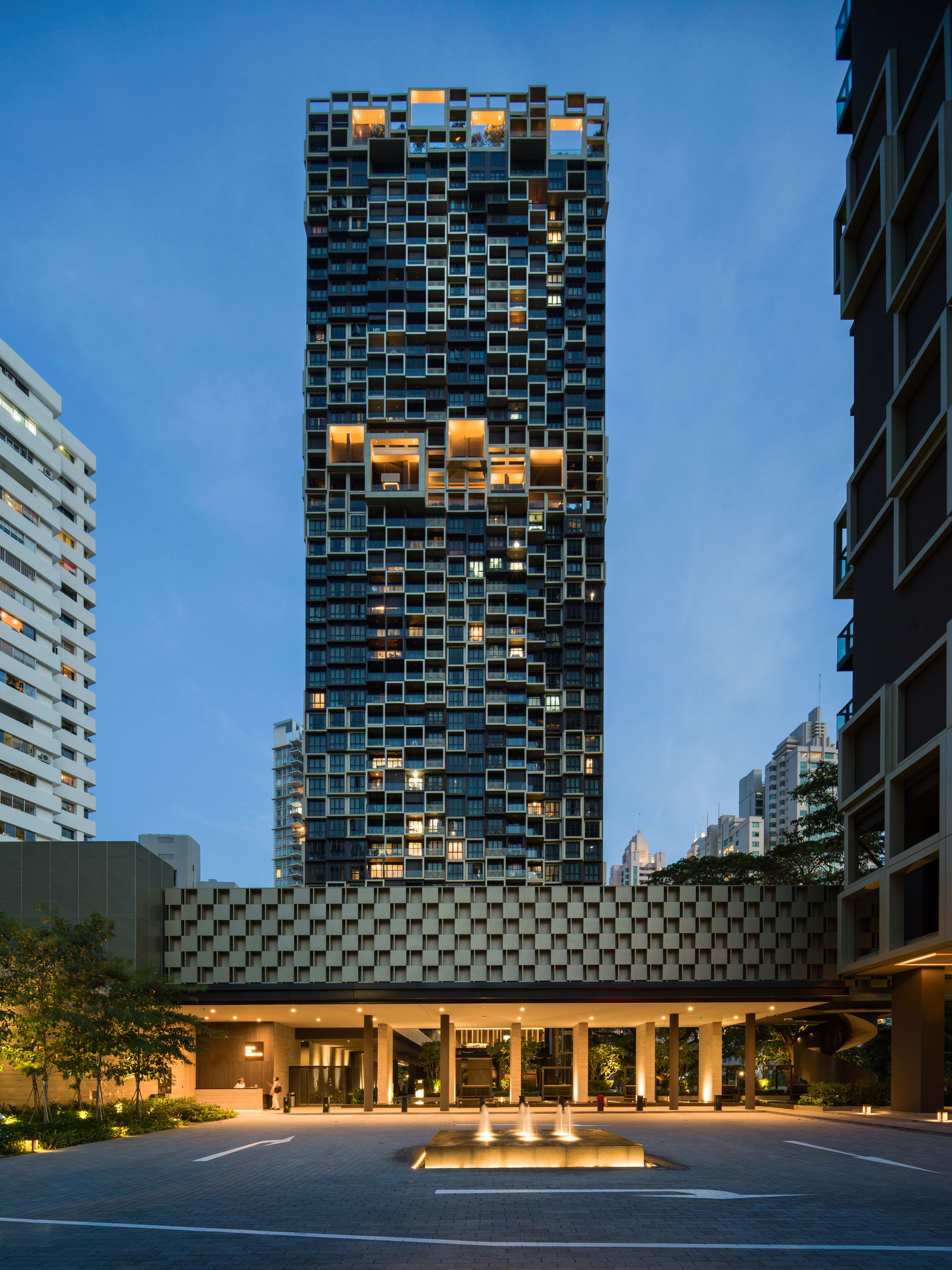
シンガポールのアーウェル・バンク・ロードに、36階建ての住宅タワー2棟が完成した。この建物は、MVRDVによる活気あふれる「ピクセル状」のファサードデザインを特徴としている。
シンガポールを拠点とするADDPアーキテクツによる高効率なプレファブリケーション・モモジュール建築をベースとしつつ、MVRDVの手による多彩なファサードが外観に躍動感を与えている。また、24階と屋上に設けられた緑豊かな共用スペースが、デザインによって際立たされている。本建築は、効率性とコストパフォーマンスが、建築の個性や独自性と調和して共存できることを示している。
© Finbarr Fallon
シンガポールで主流の「PPVC工法」の採用
シンガポール証券取引所に上場する大手不動産企業、シティ・デベロップメンツ・リミテッド(CDL)が開発を手掛けた〈アーウェル・ヒル・レジデンス〉は、MVRDVがシンガポール都心部で初めて協働したプロジェクトである。
施工には「プレファブリケイト・プレフィニッシュド・ボリュームティック・コンストラクション(PPVC)」工法が採用された。これは、内装やファサードを含む部屋全体を工場で製造し、現場で積み上げていく建築手法である。
© Finbarr Fallon
© Finbarr Fallon
PPVCはシンガポール国内で広く普及している技術である。現場での作業強度や必要な作業員数、工期を削減できるため、過密な都市環境における混乱を最小限に抑える貴重な手段となっている。
さらに、輸送や重機の使用、現場作業を抑制することで、廃棄物の削減や建設に伴うCO2排出量の低減にも寄与する。こうした利点から、シンガポールの建築建設庁(BCA)は、生産性向上につながるこの工法の業界能力を高めるべく、対象を絞った規制や枠組み、認証制度を整備している。
© Finbarr Fallon
規格化されたファサードに生命を吹き込むデザイン
一方で、PPVCには「外観が反復的で単調になりがちである」という課題がある。そこでMVRDVは、タワーに個性を与え、視覚的な魅力を付加するためのデザイン上の工夫を施した。それは、反復する平面計画の中に、変化があるような錯覚を生み出す役割を果たしている。
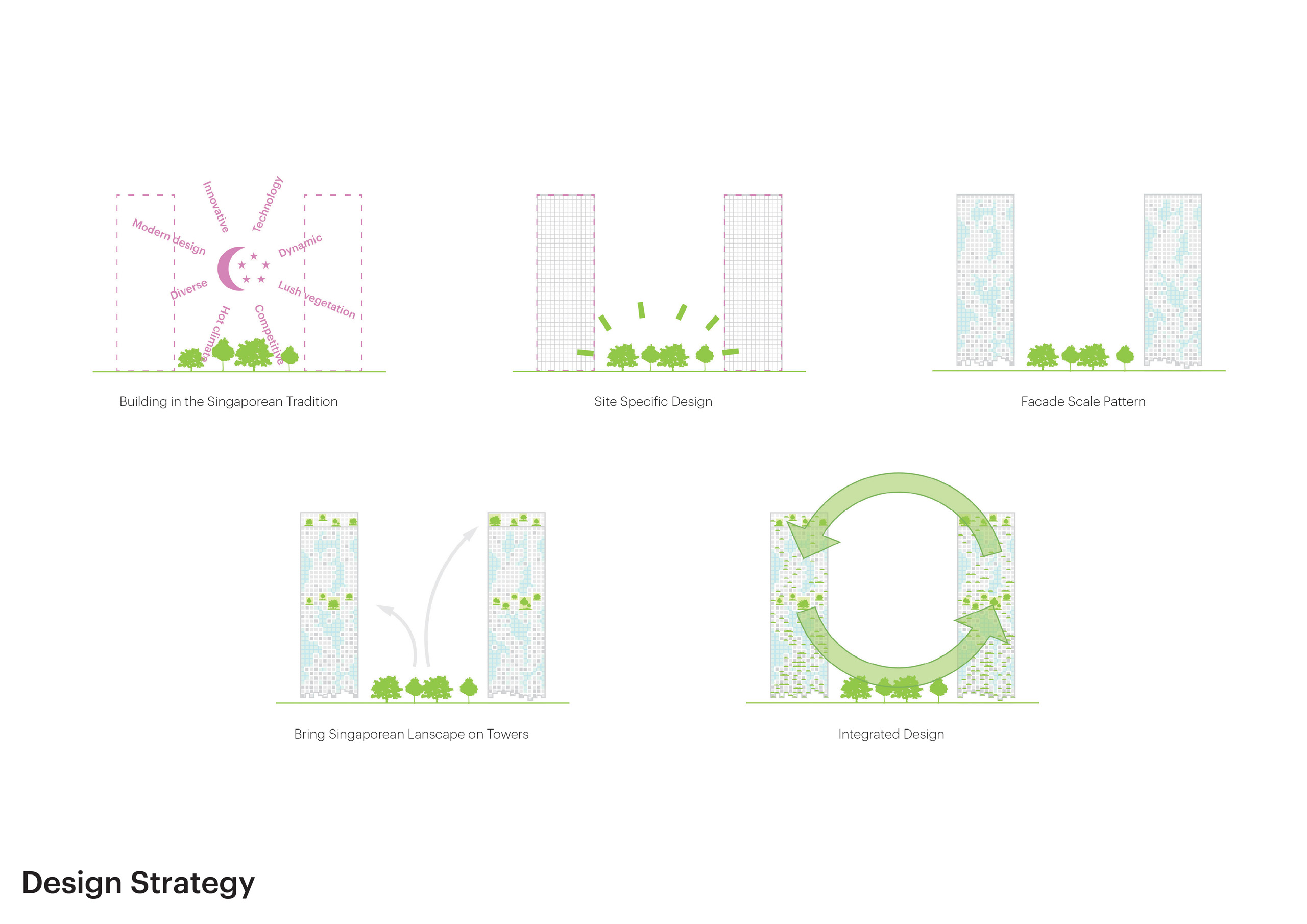
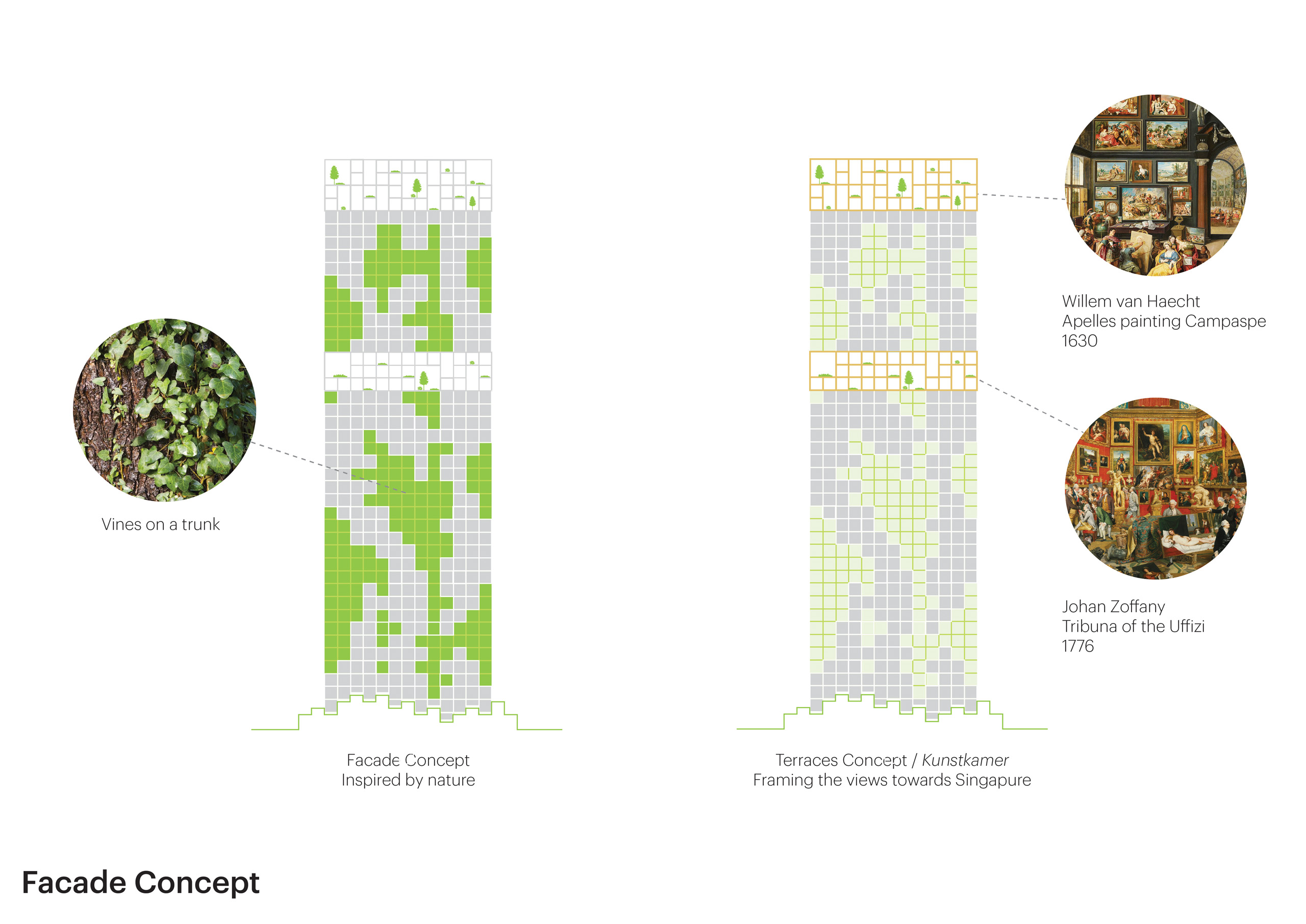
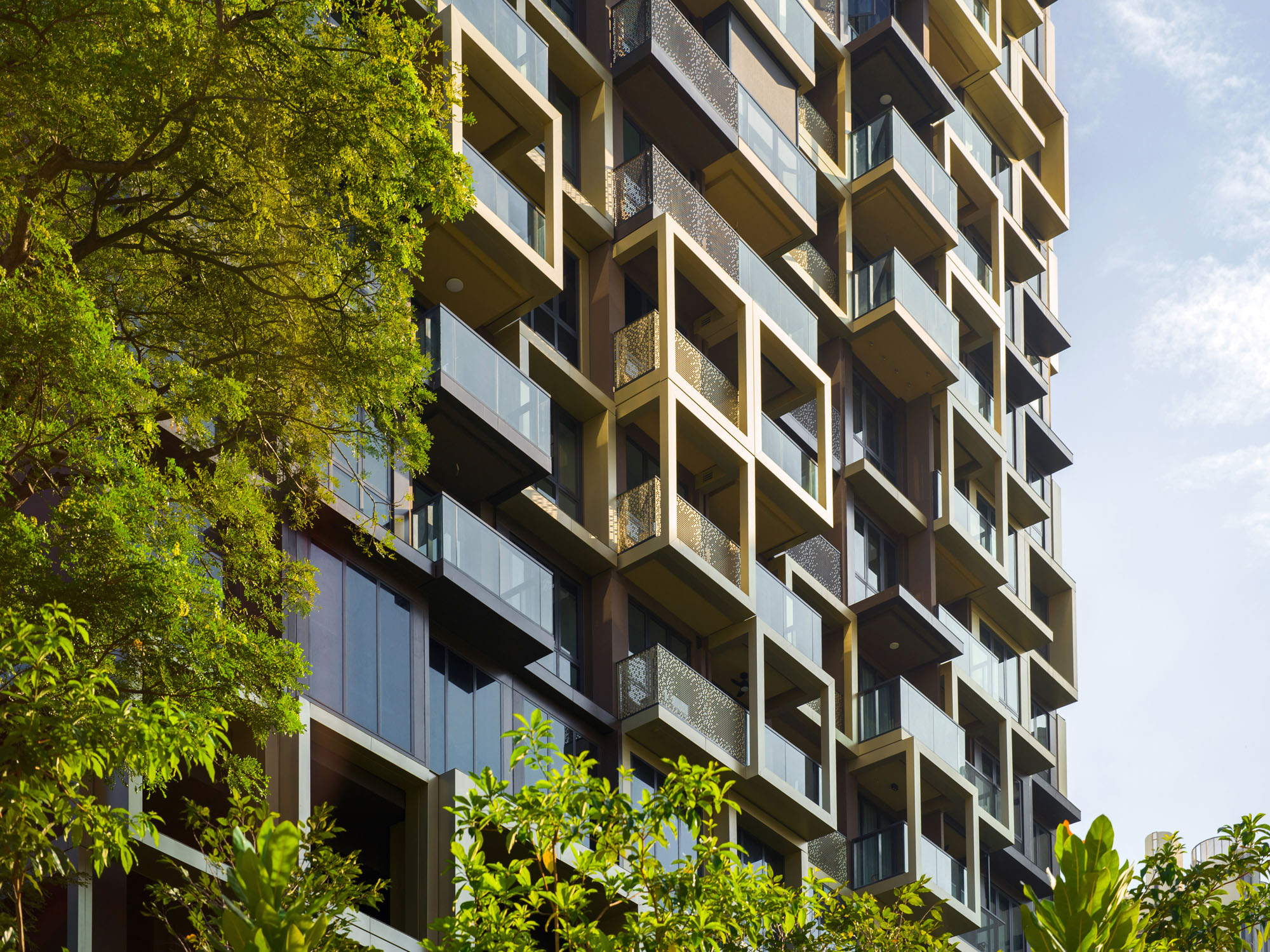
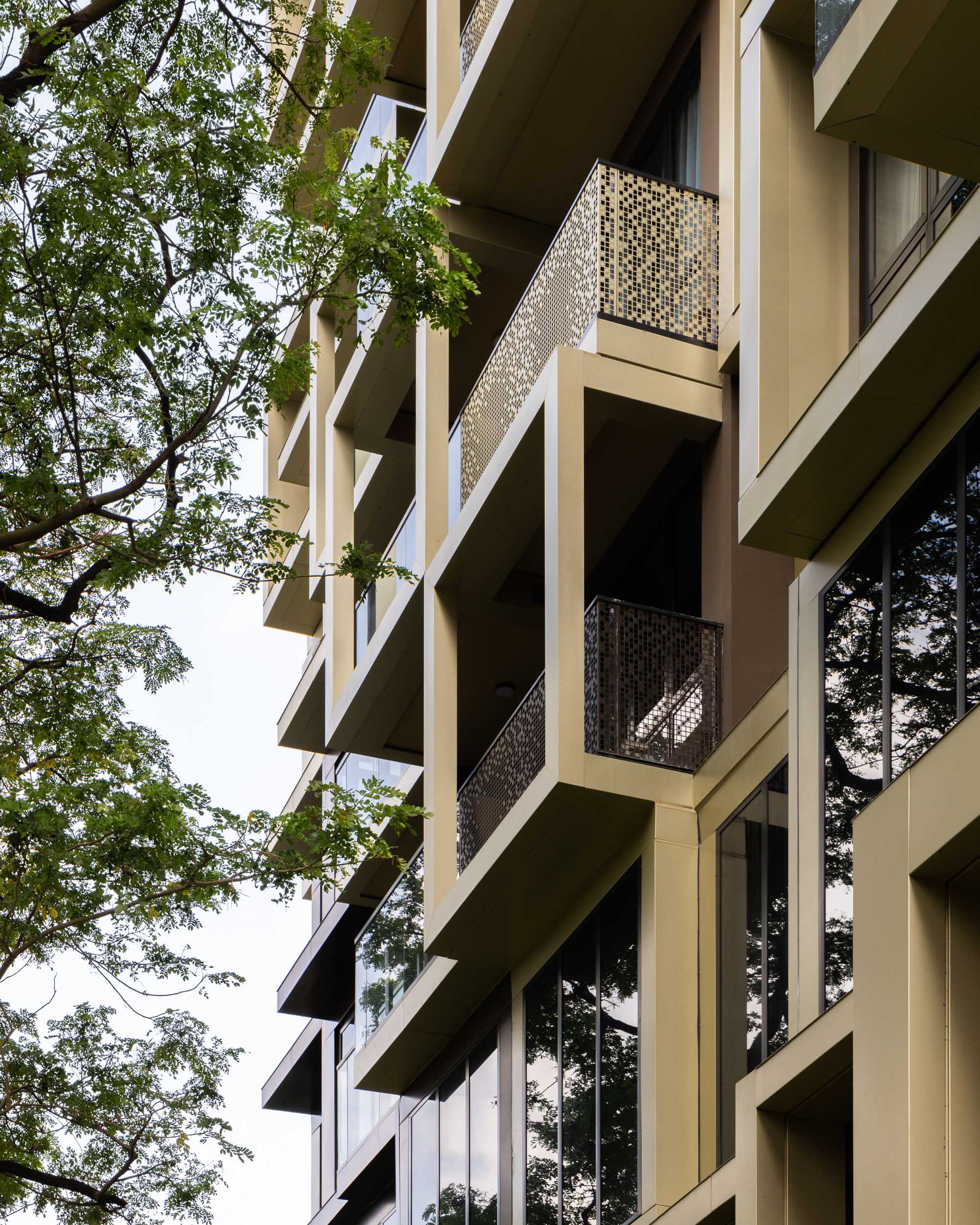
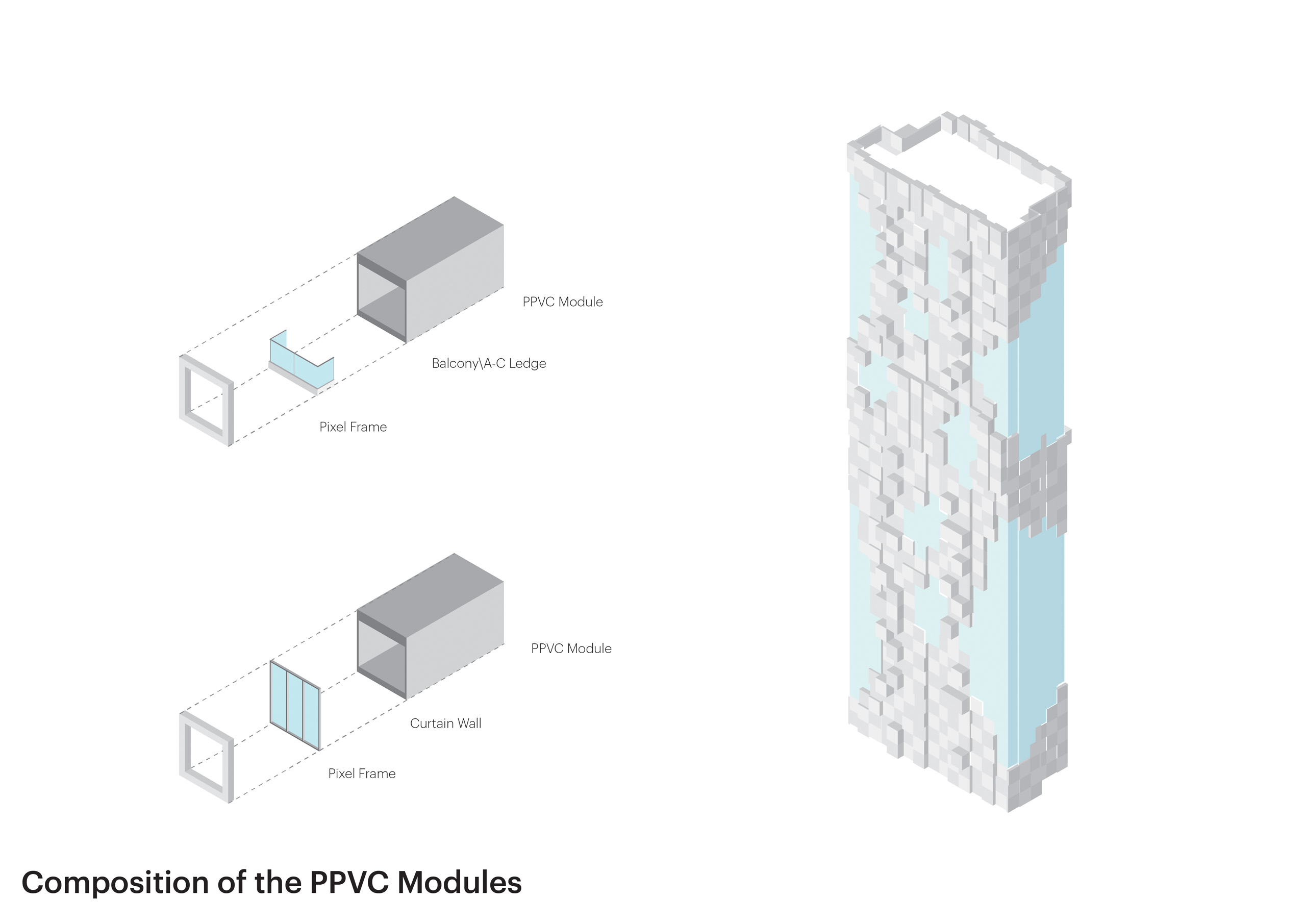
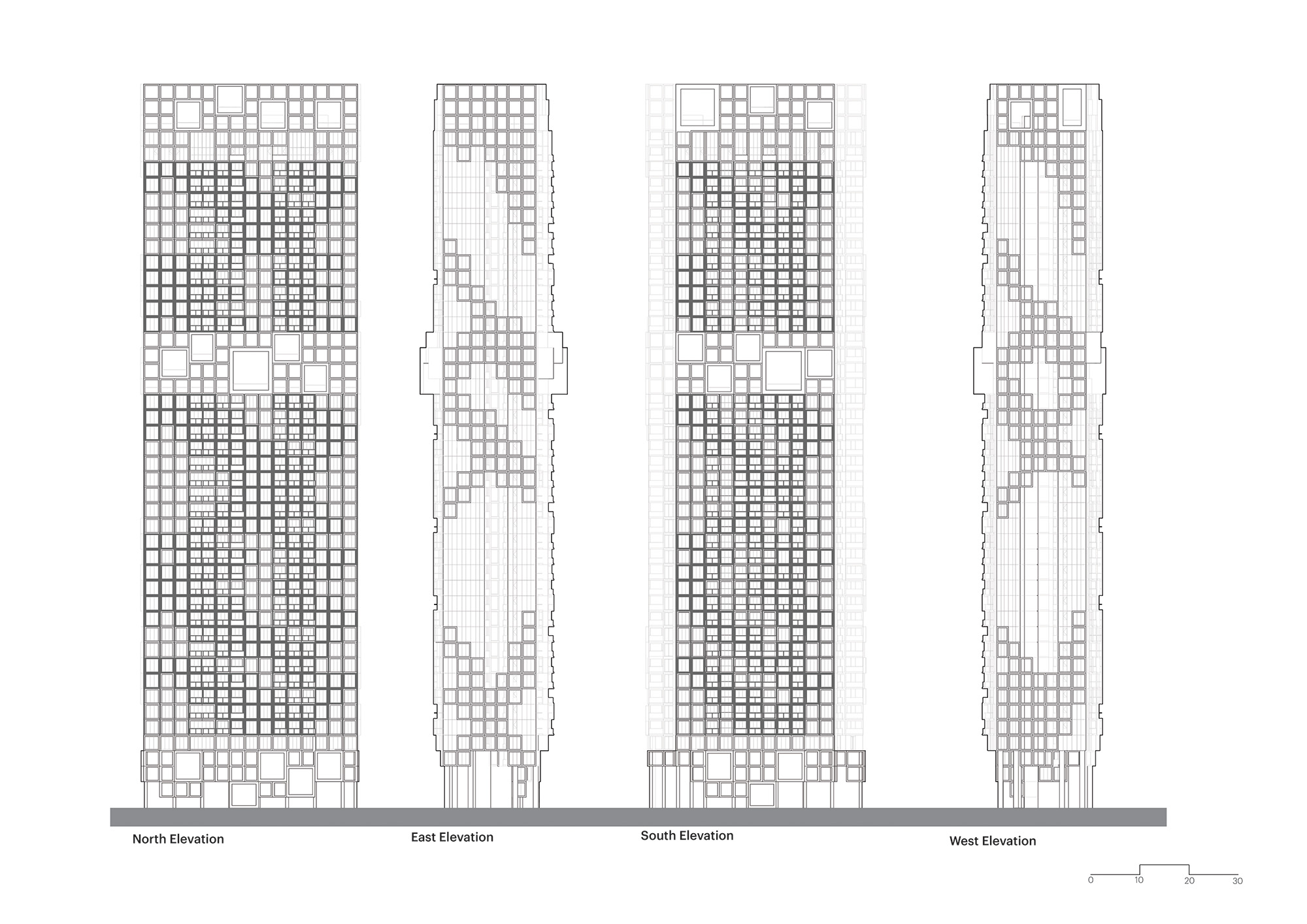
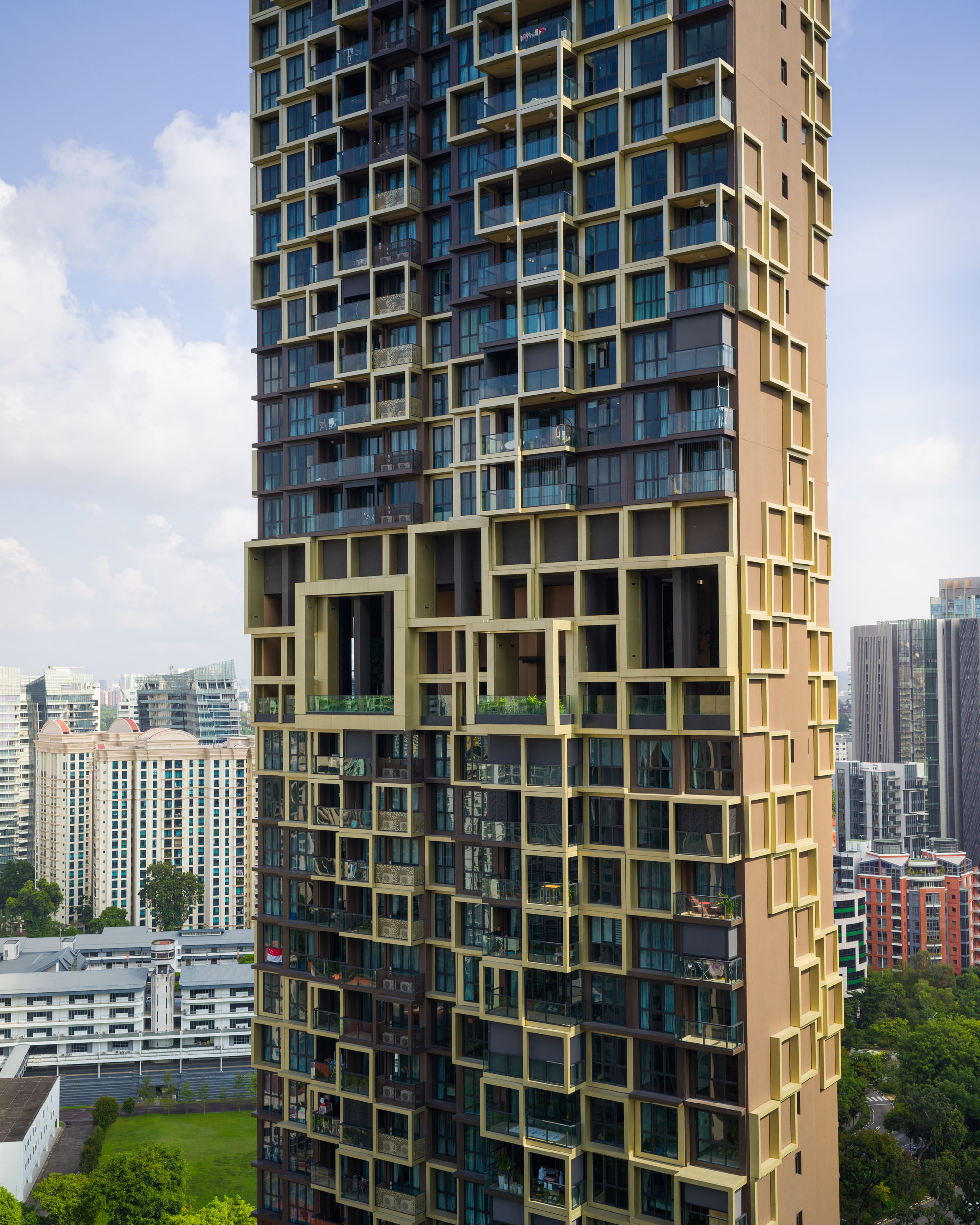
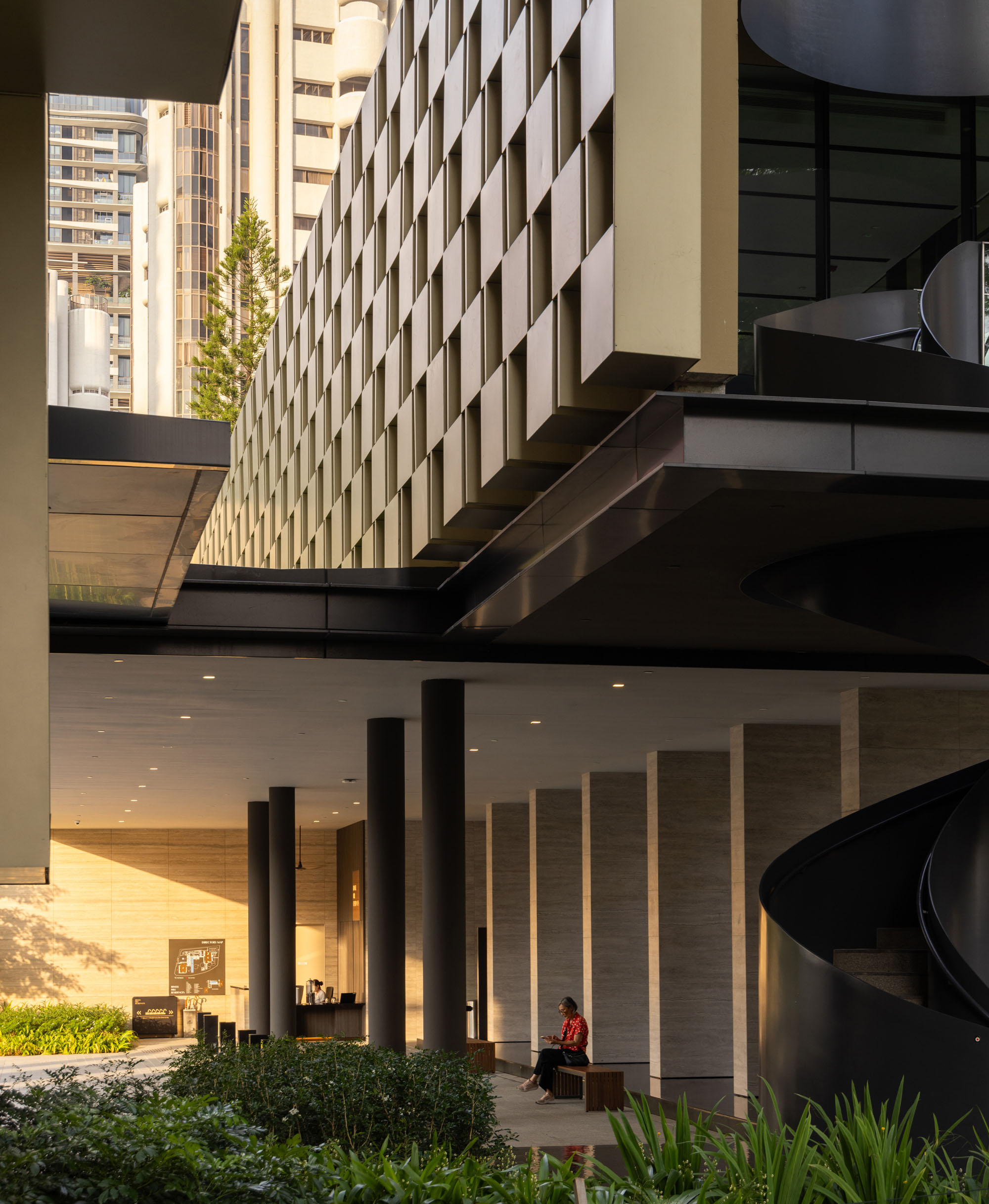
MVRDVはPPVCシステムの特性を逆手に取り、各プレファブリケーション・ユニットを「1つのピクセル」に見立てたファサードを実現した。金属フレームを用いてユニットを凹ませたり突出させたりすることで、多様なタイプのバルコニーを創出している。
これにより、建物の外観に奥行きと興味深い表情が加わった。この凹凸による効果は、ゴールドとダークブラウンの配色と相まって、つる植物の有機的な形状に着想を得た抽象的なパターンをファサード全体に形成している。
建築イノベーションの次なるフェーズへ
「シンガポールは数十年にわたり、建築と都市計画において驚異的な革新性を示してきた都市である。同市は今、モジュール建築においても主導権を発揮しており、PPVCが廃棄物や炭素排出量の削減、そして市民生活への影響軽減にもたらす利点を実感している。ADDPアーキテクツと共に手がけた〈アーウェル・ヒル・レジデンス〉では、この革新の物語における次なる段階、すなわち『多様性と居住性を優先したPPVCプロジェクト』を目指した。」
MVRDV創設パートナー
ナタリー・デ・フリイス(Nathalie de Vries)
© Finbarr Fallon
厳格なグリッドを解き放つ、緑豊かな共用空間
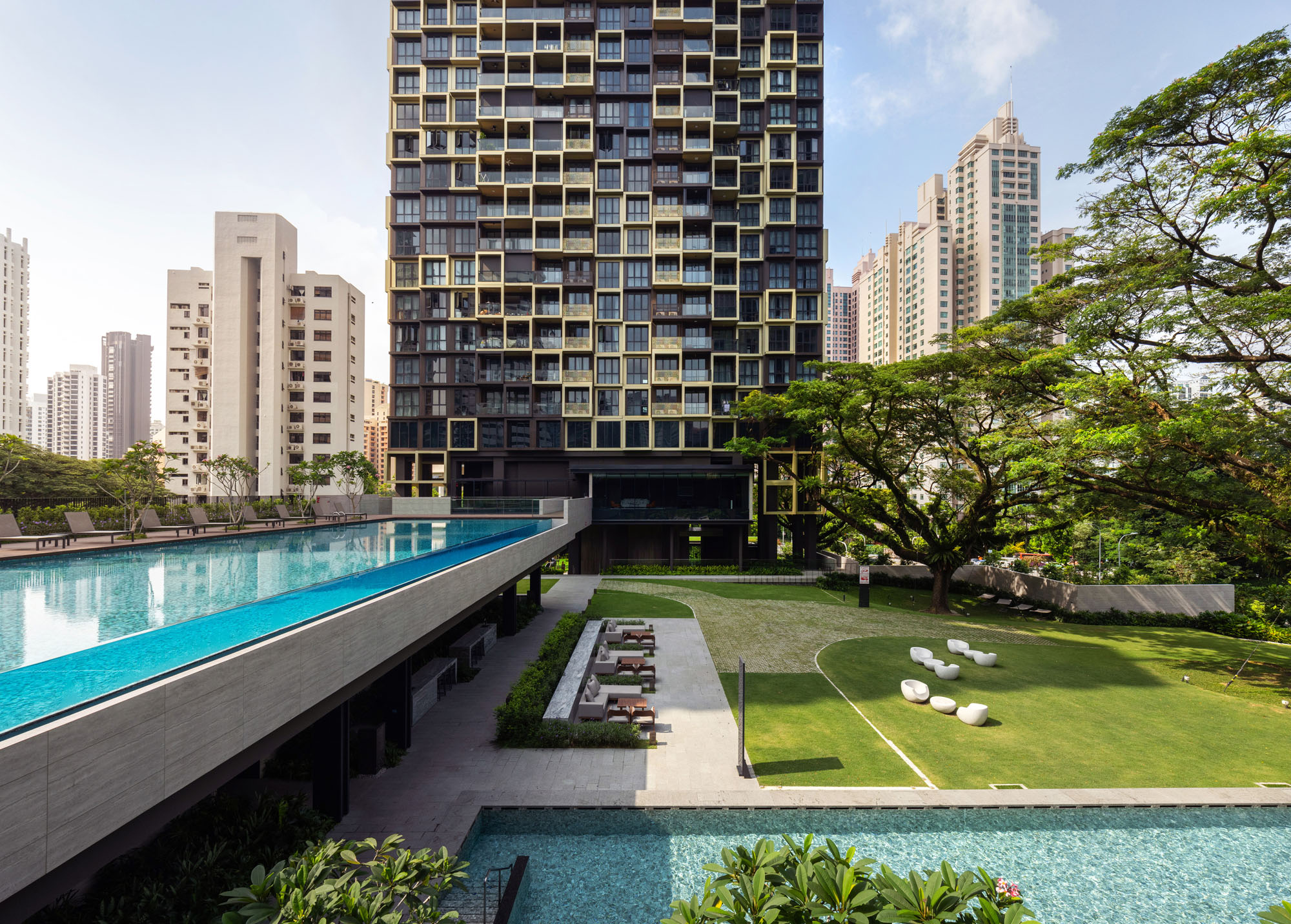
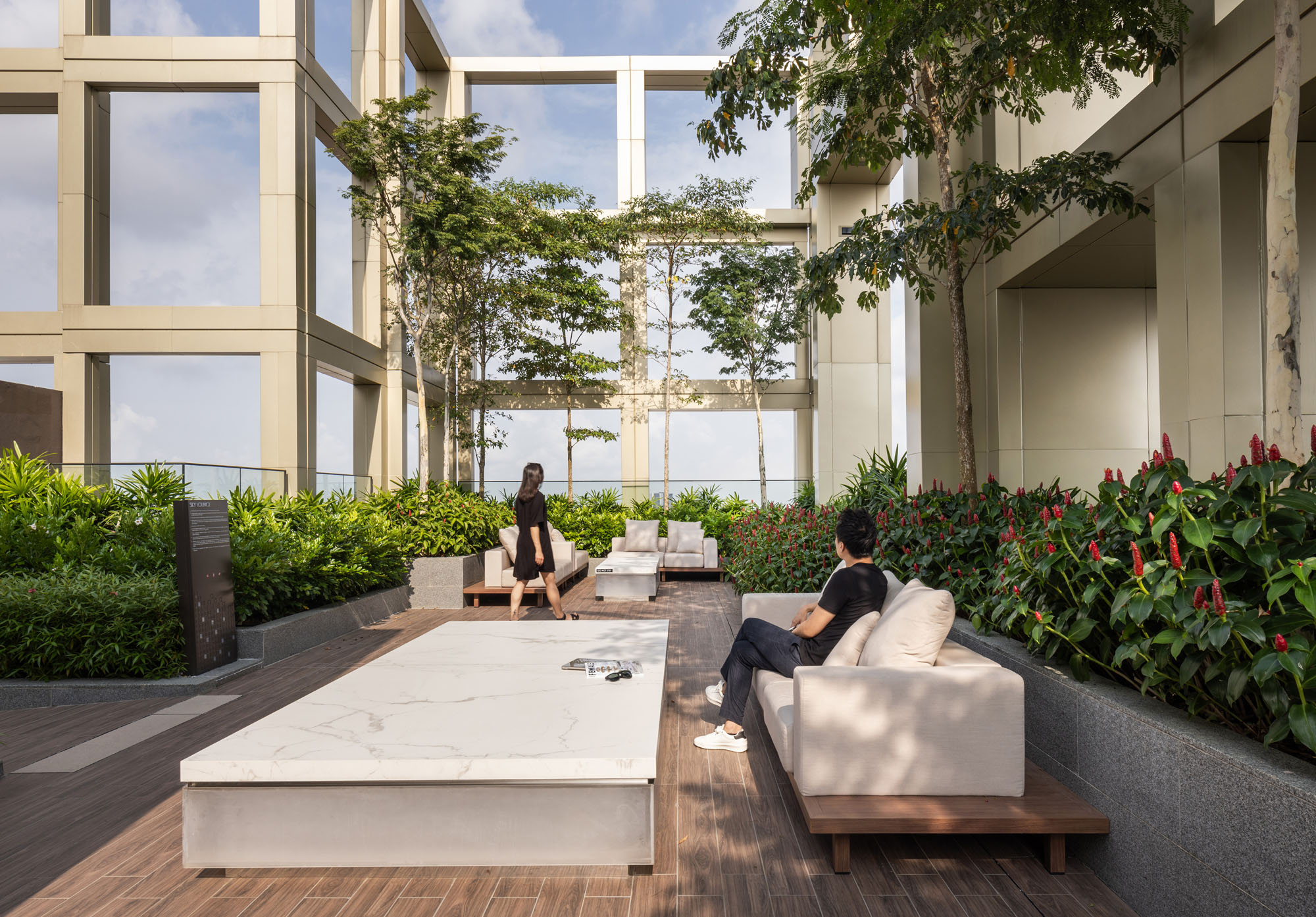
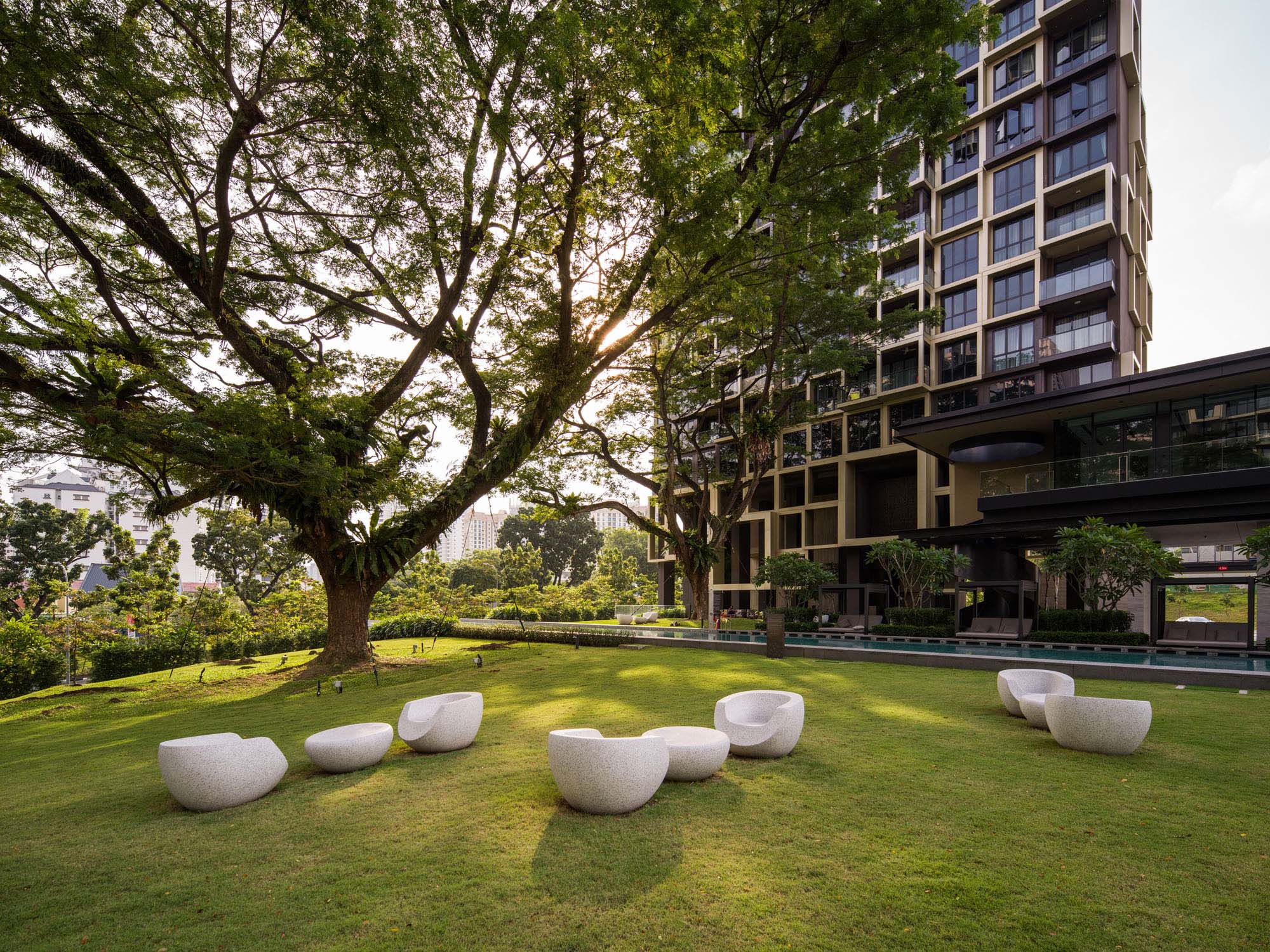
ピクセル状のパターンは、シンガポール特有の豊かな緑を特徴とする共用施設を際立たせる役割も担っている。
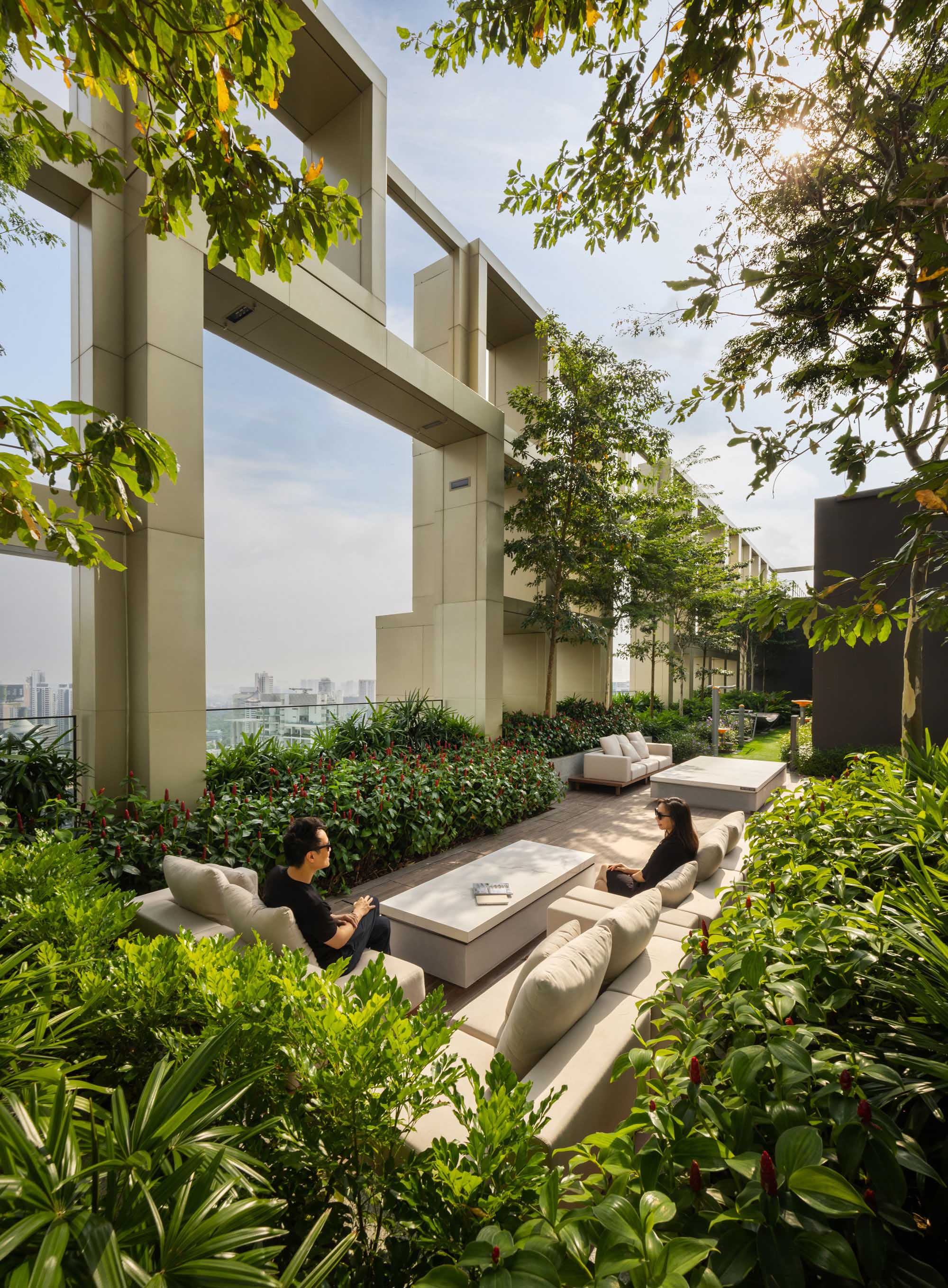
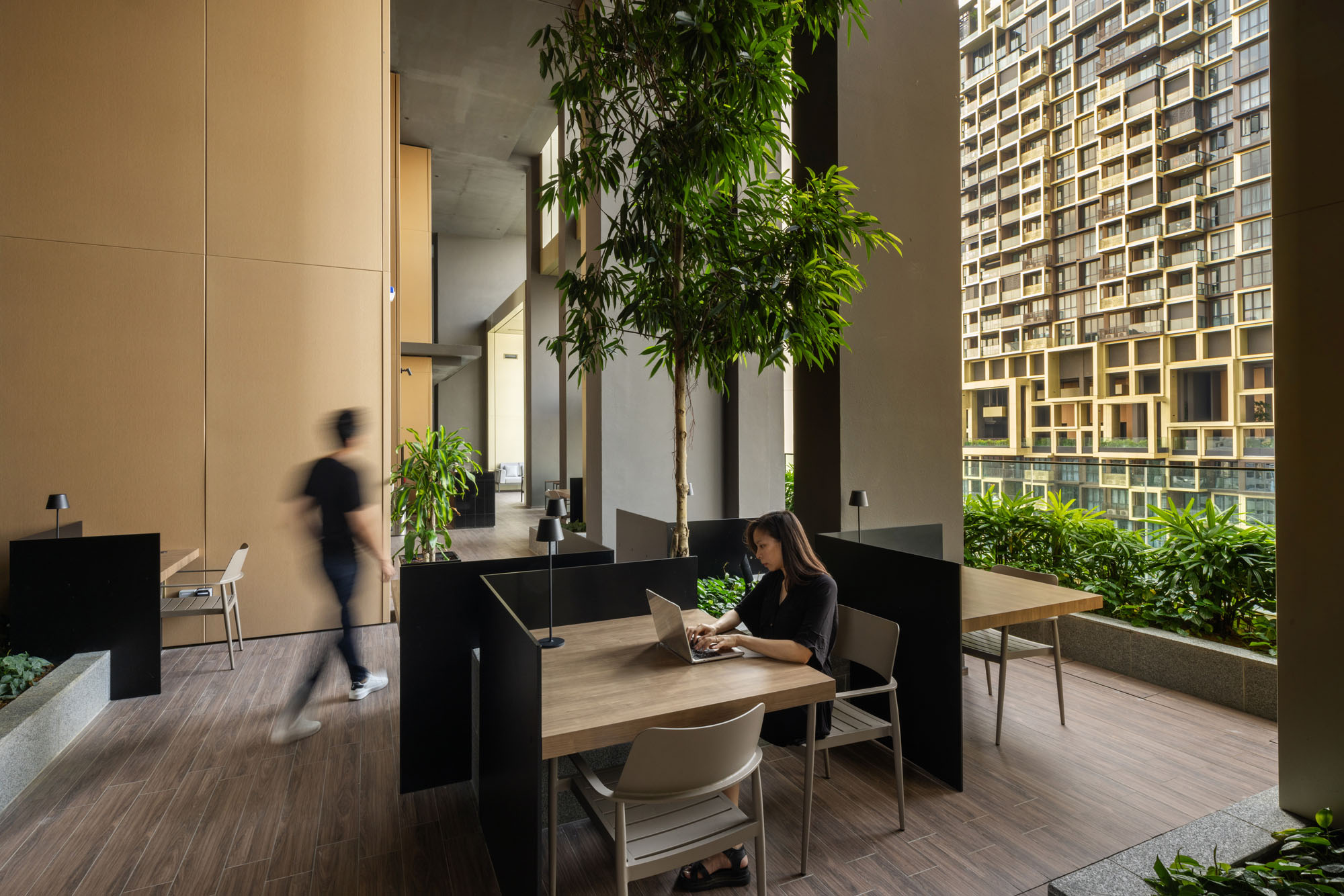
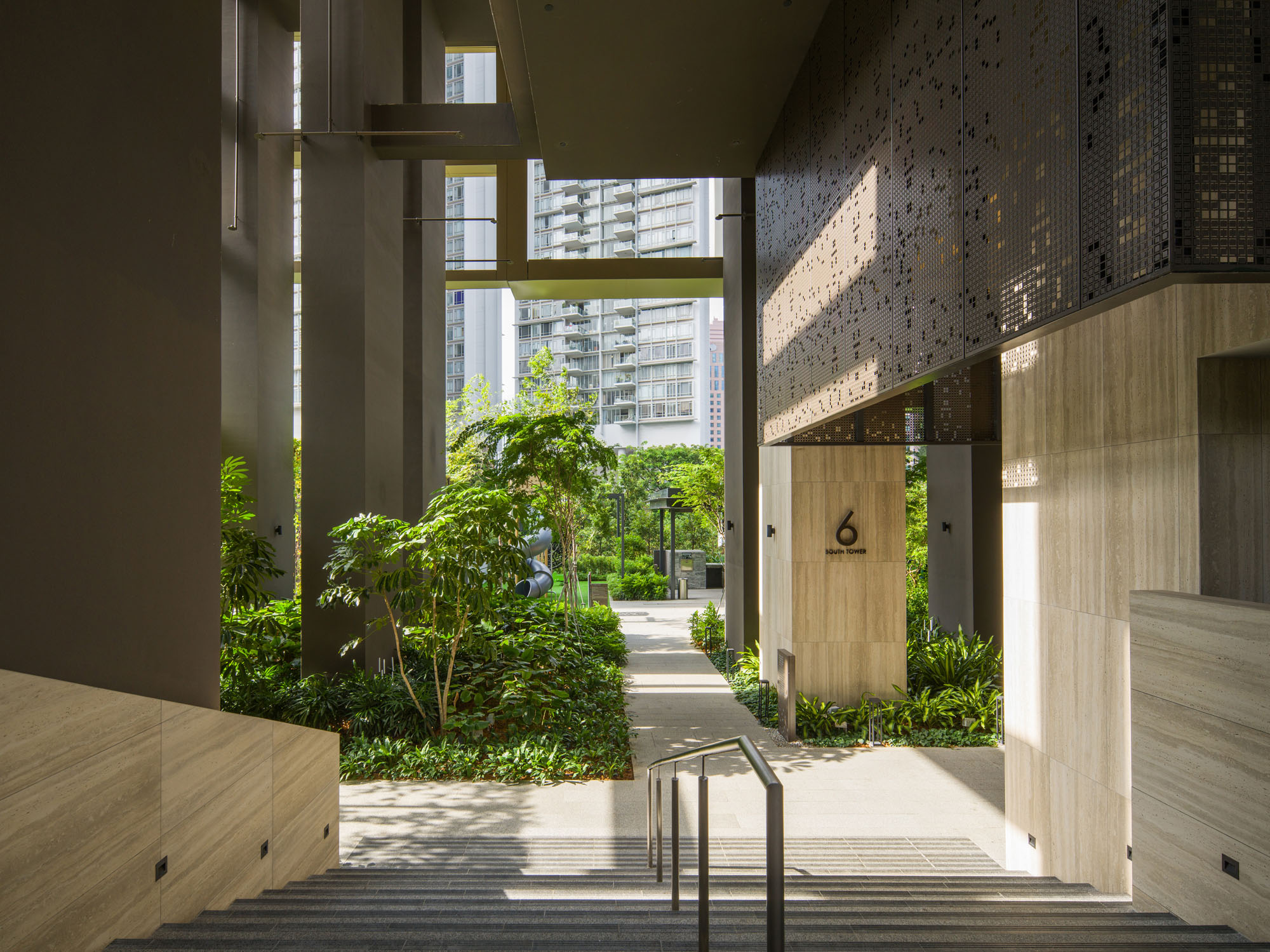
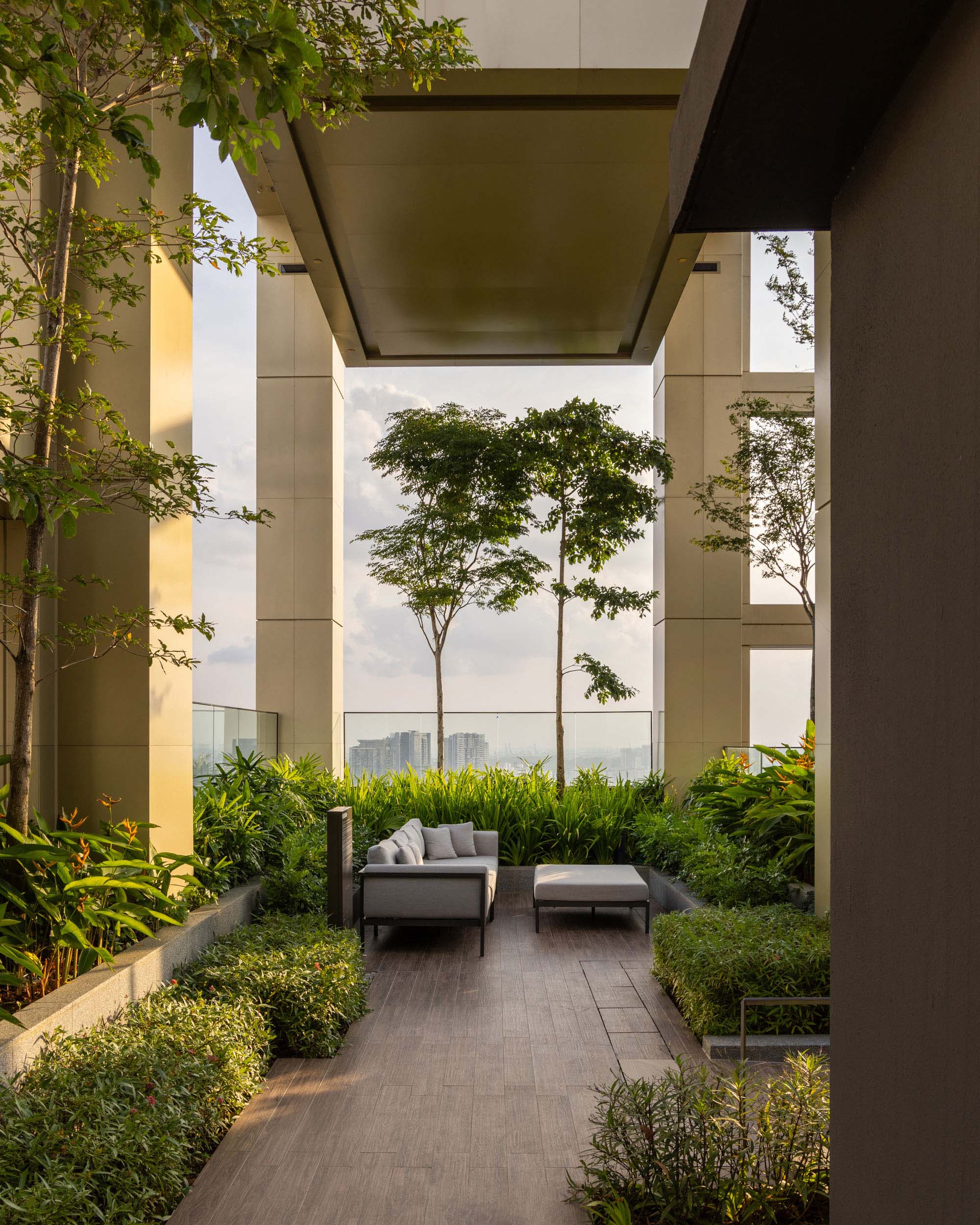
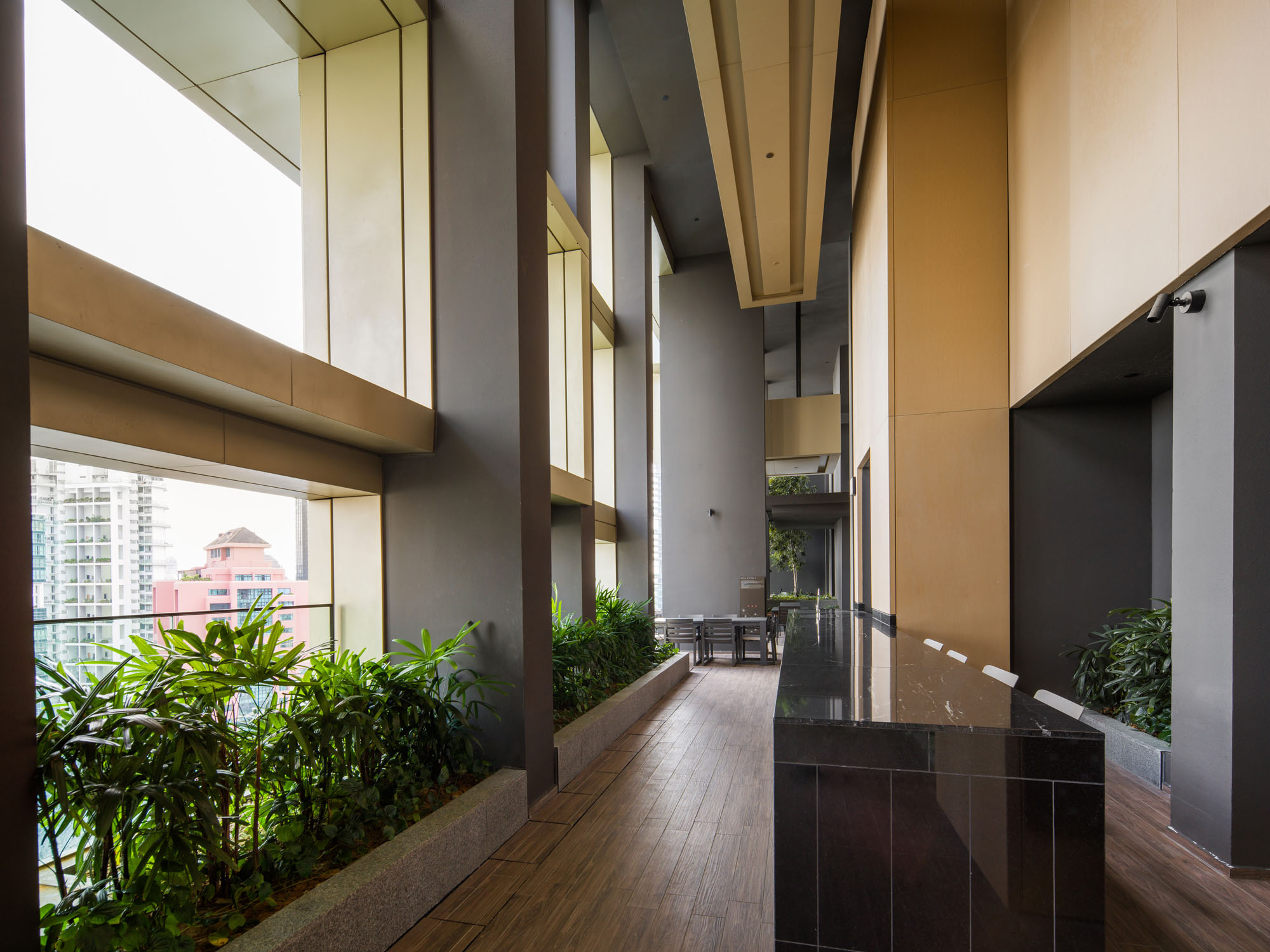
24階には約4層分の高さをもつスカイガーデンが設けられ、タワー最上階には社交の場となる親密な空間「アーウェル・スカイ」を配置した。これらのエリアでは、単一ユニットによる厳格なピクセルのグリッドが緩められ、2倍・3倍サイズのフレームが採用されている。このスケールの変化が、内部の樹木や植物の存在感をより一層引き立てている。
© Finbarr Fallon

© Finbarr Fallon
真の持続可能性と「愛される建築」
工場生産によって高品質かつ廃棄物の少ない施工を実現するPPVCは、本質的に持続可能な建築技術であり、シンガポールの国家環境計画「グリーン・プラン2030」とも連動している。
ただし、廃棄物の少ない建築が真に持続可能であると言えるのは、その建物が地域社会に価値ある貢献を果たし、長く愛され続ける場合に限られる。MVRDVによる〈アーウェル・ヒル・レジデンス〉のファサードデザインはこれを実現し、実用的な設計アプローチであっても、興味深く多様性に富み、活気ある建築となり得ることを明確に示している。
© Finbarr Fallon
© Finbarr Fallon
© Finbarr Fallon
© Finbarr Fallon
© Finbarr Fallon
© Finbarr Fallon
© Finbarr Fallon

© Finbarr Fallon
以下、MVRDVのリリース(英文)です。
MVRDV’s pixelated façade design brings variety and identity to prefabricated modular towers in Singapore
At Irwell Bank Road in Singapore, these two 36-storey residential towers have a lively, pixelated façade design by MVRDV. Taking as a base the highly efficient, prefabricated, modular building design by Singapore-based ADDP Architects, MVRDV’s variegated façade adds liveliness to the buildings’ external appearance and highlights the green communal spaces on the buildings’ 24th floor and roof, showing that efficiency and cost-effectiveness can happily coexist with character and individuality.
Developed by leading Singapore-listed real estate company City Developments Limited (CDL), Irwell Hill Residences marks MVRDV’s debut in collaborating on a building in the urban core of Singapore. The development was designed by Singapore-based firm ADDP Architects using prefabricated prefinished volumetric construction (PPVC), a type of construction in which entire rooms, including their finished surfaces and facades, are built in a factory and stacked together on site. PPVC is a widely adopted construction technique in Singapore. It reduces the intensity of on-site construction, the number of construction workers required, and the length of the construction period – all valuable tools to reduce disruption in a dense urban environment. It also reduces waste and lowers construction-related carbon emissions by minimising transport, equipment usage, and site operations. Given these benefits, the country’s Building and Construction Authority has instituted targeted regulations, frameworks, and accreditation schemes to advance the industry’s capability in construction methods that improve productivity.
However, PPVC also tends to result in repetitive, monotonous building appearances, so MVRDV was brought on board to add a design twist that imbues the towers with both identity and visual appeal, creating the illusion of variation within a repeating floor plan. MVRDV’s design capitalises on the qualities of the PPVC system to create a “pixelated” façade, with each prefabricated unit creating one pixel. Units are recessed or extended using metal frames, creating balconies in a variety of types and adding depth and interest to the building’s appearance. This relief combines with a colour scheme of gold and deep brown to form an abstract pattern across the whole façade, inspired by the organic shapes of climbing plants.
“Over the decades, Singapore has shown itself to be a city of incredible innovation in architecture and urbanism”, says MVRDV founding partner Nathalie de Vries. “The city is once again showing leadership in modular construction, and is seeing the benefits of PPVC in reducing waste, carbon emissions, and disruption to city life. With Irwell Hill Residences, alongside ADDP Architects we took aim at the next step in that story of innovation: a PPVC project that prioritises variety and liveability.”
The pixelated pattern also serves to highlight the building’s communal features, with their lush greenery characteristic of Singapore. On the 24th floor is a sky garden approximately four storeys tall, while at the top of the towers is Irwell Sky, an intimate space for social gatherings. In both of these sections of the building, the rigid grid of single-unit pixels loosens, with double- and triple-size frames showing off the trees and plants within.
Thanks to the high-quality, low-waste construction enabled by factory production, PPVC is by its nature a more sustainable construction technique, and has been linked to Singapore’s Green Plan 2030. However, low-waste construction is only truly sustainable if a building makes a valued, long-term contribution to its neighbourhood and thus has longevity. MVRDV’s façade design for Irwell Hill Residences achieves this, demonstrating that a pragmatic design approach can also be an interesting, diverse, and lively one.
Facts
Project Name: Irwell Hill Residences
Location: Singapore
Year: 2020–2025
Client: City Developments Limited
Programme: Residential façadeCredits
Architect: MVRDV
Founding Partner in charge: Nathalie de Vries
Partner: Wenchian Shi
Design Team: Lorenzo Mattozzi, Marco Gazzola, Alberto Menozzi, Luca Beltrame, Fredy Fortich, Amanda Galiana Ortega, Andrea Ventura, Monika Wiecha, Chi Zhang
Visualisations: Antonio Luca Coco, Gianlorenzo Petrini
Copyright: MVRDV Winy Maas, Jacob van Rijs, Nathalie de VriesPartners:
Co-architect (Building design, project coordination): ADDP Architects LLP
Landscape Architect: Ecoplan
Structural engineer: TW-Asia Consultants Pte Ltd.
MEP: United Project Consultants Pte Ltd.
Interior architect: Index Design Pte Ltd.
Photography: © Finbarr Fallon
MVRDV 公式サイト
https://www.mvrdv.com/projects/460/irwell-hill-residences


![[Interview]iF Design代表のウヴェ氏に聞く、建築と都市の2026年メガトレンド](https://magazine-asset.tecture.jp/wpcms/wp-content/uploads/2026/07/23221054/iF_AwardCeremony_2026_AwardCeremony-82-900x600.jpg)
![[Report]激変する時代の中で、建築とデザインはどう拡張するか。「iF DESIGN AWARD 2026」授賞式&最新トレンド](https://magazine-asset.tecture.jp/wpcms/wp-content/uploads/2026/07/24010304/iFDesignTrendConference26-45-900x600.jpg)
![[Report]RUI Architectsが可動モジュールを設計して松竹のアートスペースをリニューアル、柿落とし展「継承のトランジション」の会場デザインも担当](https://magazine-asset.tecture.jp/wpcms/wp-content/uploads/2026/07/24141011/20260713shutl_press11-01309-c-900x629.jpeg)
![[Interview]BIM図面審査がスタート! さまざまな設計者のニーズに応えるVectorworksによる「限界のないデザイン」の世界](https://magazine-asset.tecture.jp/wpcms/wp-content/uploads/2026/07/13084316/rinterview_vectorworks_056-e1784200974912-900x555.jpg)