
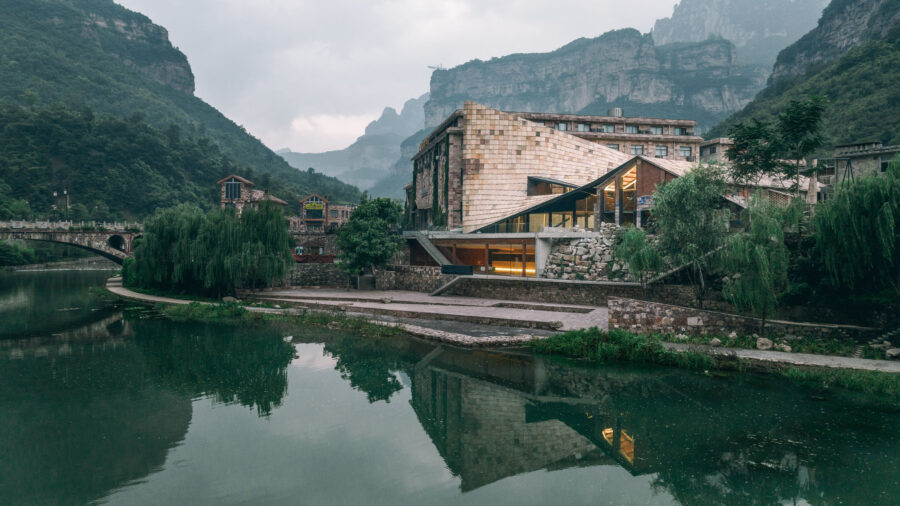
100年の時を再編する、歴史ある窯のリニューアル - 多孔質なレンガ壁が龍窯の気流を可視化する〈歴史的な硋窯のアダプティブ・リニューアル〉
©︎ Shan-jian images
©︎ Shan-jian images
中国福建省北東部に位置する〈歴史的な硋窯のアダプティブ・リニューアル(Heritage “Ay” Kiln Adaptive Renewal)〉は、100年以上の歴史をもつ窯の改修プロジェクトです。
中国の設計事務所 YFSとWUGE Studioが共同で設計しました。
注目ポイント
- 100年間にわたり増改築された建築を、現代の機能(展示・制作・生活)に耐えうる空間へと再編
- 龍窯の気流を視覚化した「高さ8mの多孔質レンガ壁」
- 職人のワークフローを妨げずに訪問者の動線を重ね合わせた「生産そのものの展示」
(以下、YFSから提供されたプレスキットのテキストの抄訳)
©︎ Shan-jian images
©︎ Shan-jian images
伝統の継承と「硋」の風景
「硋(エイ)」は、中国福建省北東部の山岳地帯に伝わる黒釉陶器の一種であり、陶器と磁器の中間に位置する独特の性質をもつ。愛吉は丘陵に築かれた100年以上の歴史をもつ伝統的な硋窯であり、細長い傾斜状の「龍窯」を形成している。
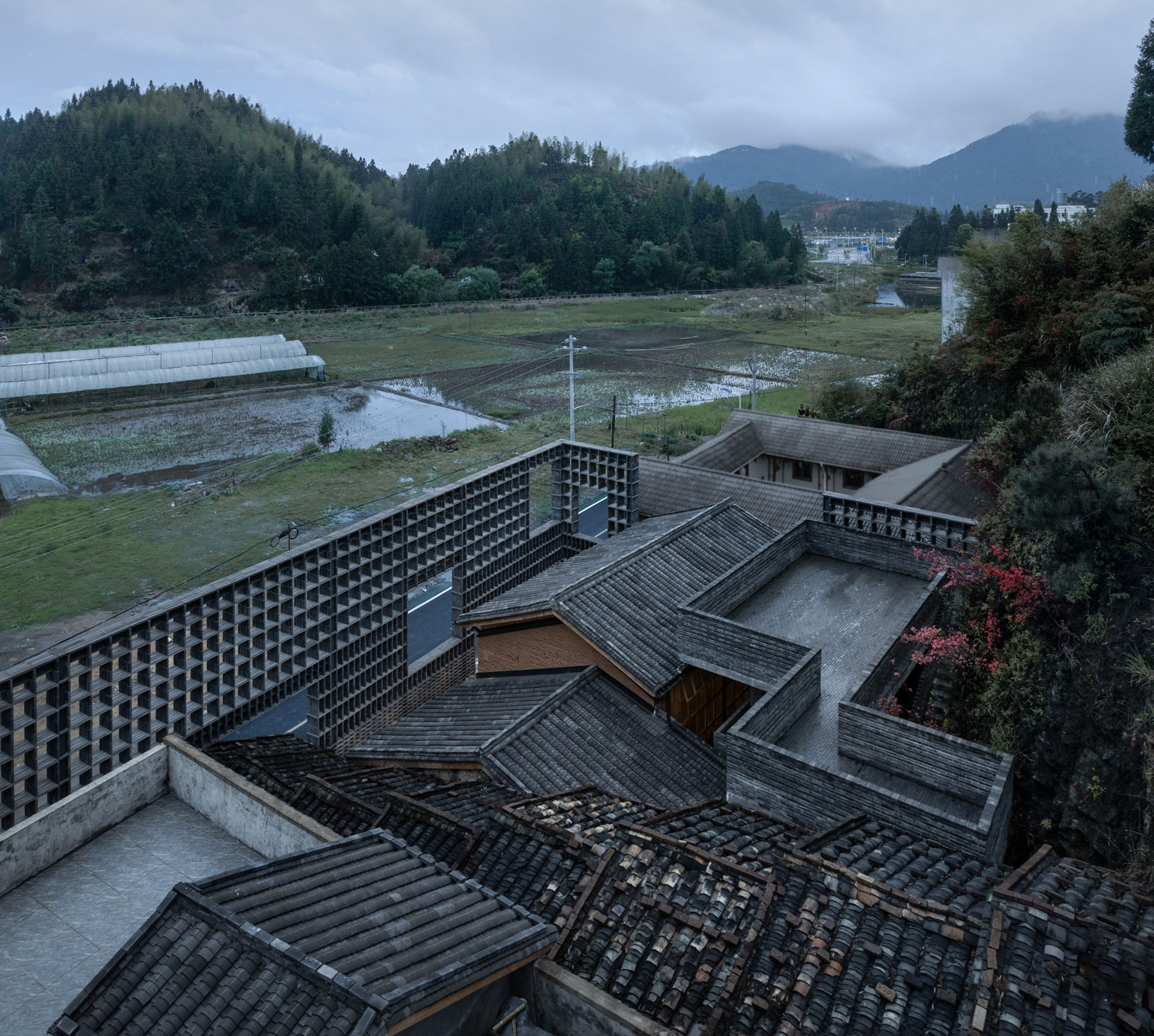
村の入口という象徴的な場所に位置し、周囲を広大な田畑に囲まれたこの敷地は、農村における手工芸複合施設の典型的な佇まいを見せている。中央には窯が据えられ、西側には古びた土塀の家屋、東側には現代的なレンガ・コンクリート造の住居が建ち、その周囲には石造の付属建物が点在している。
©︎ Shan-jian images
©︎ Shan-jian images
100年の変遷が生んだ有機的秩序
異なる時代の建築要素が共存する現在の姿は、意図的な設計によるものではなく、100年にわたる自律的な生産活動の結果である。
必要に応じて空間が拡張され、修復され、積み重ねられてきたこの有機的な変遷は、地域の職人技を体現する一方で、現代的な課題も生んでいる。すなわち、作業・居住・展示・制作の境界が断片化して視覚的な過負荷を招き、文化的な深みが日常の労働の中に溶解してしまっているのである。
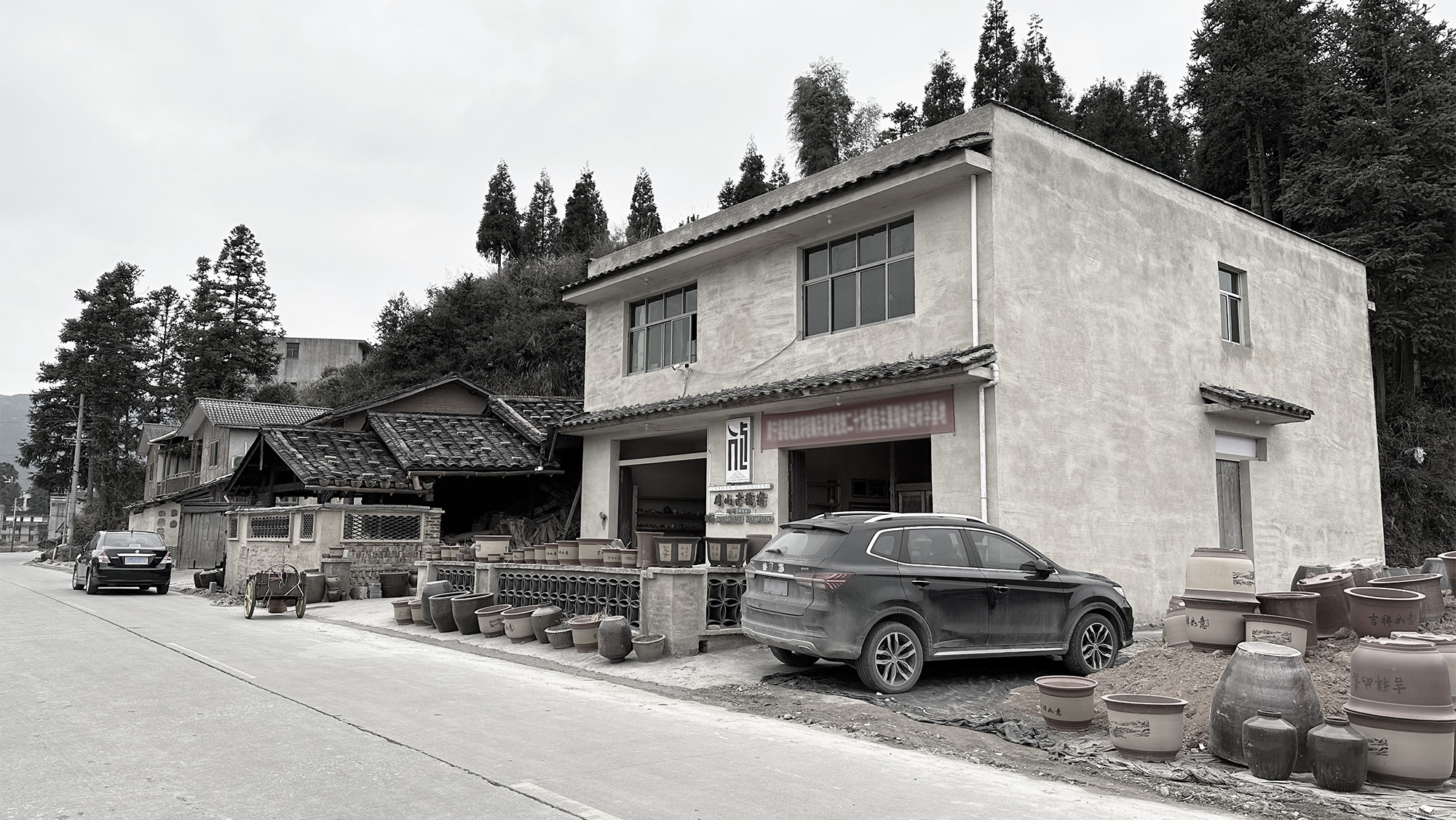
Original site condition ©︎ YFS
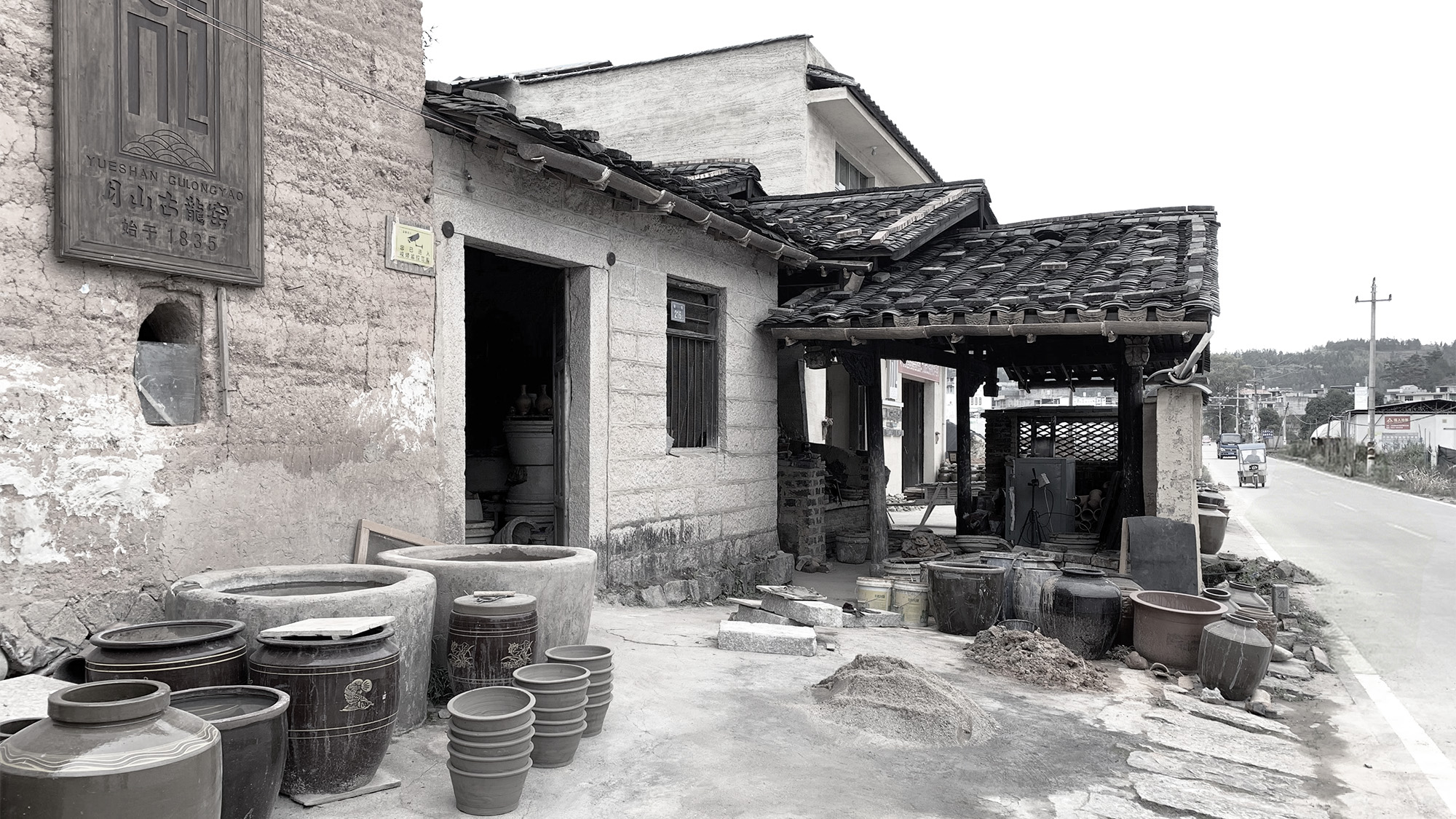
Original site condition ©︎ YFS
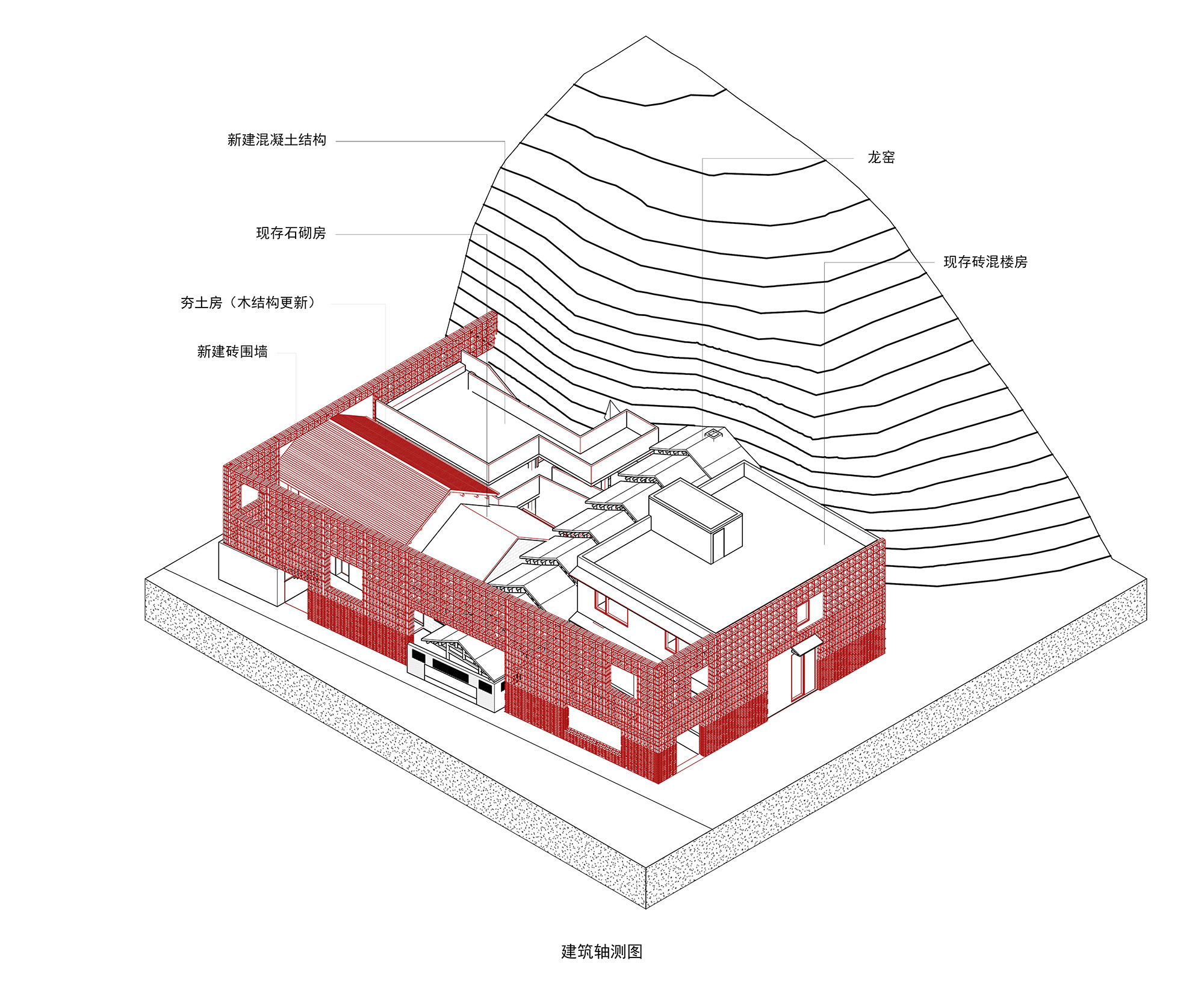
Axonometric View
透明性と障壁:空間の再構築
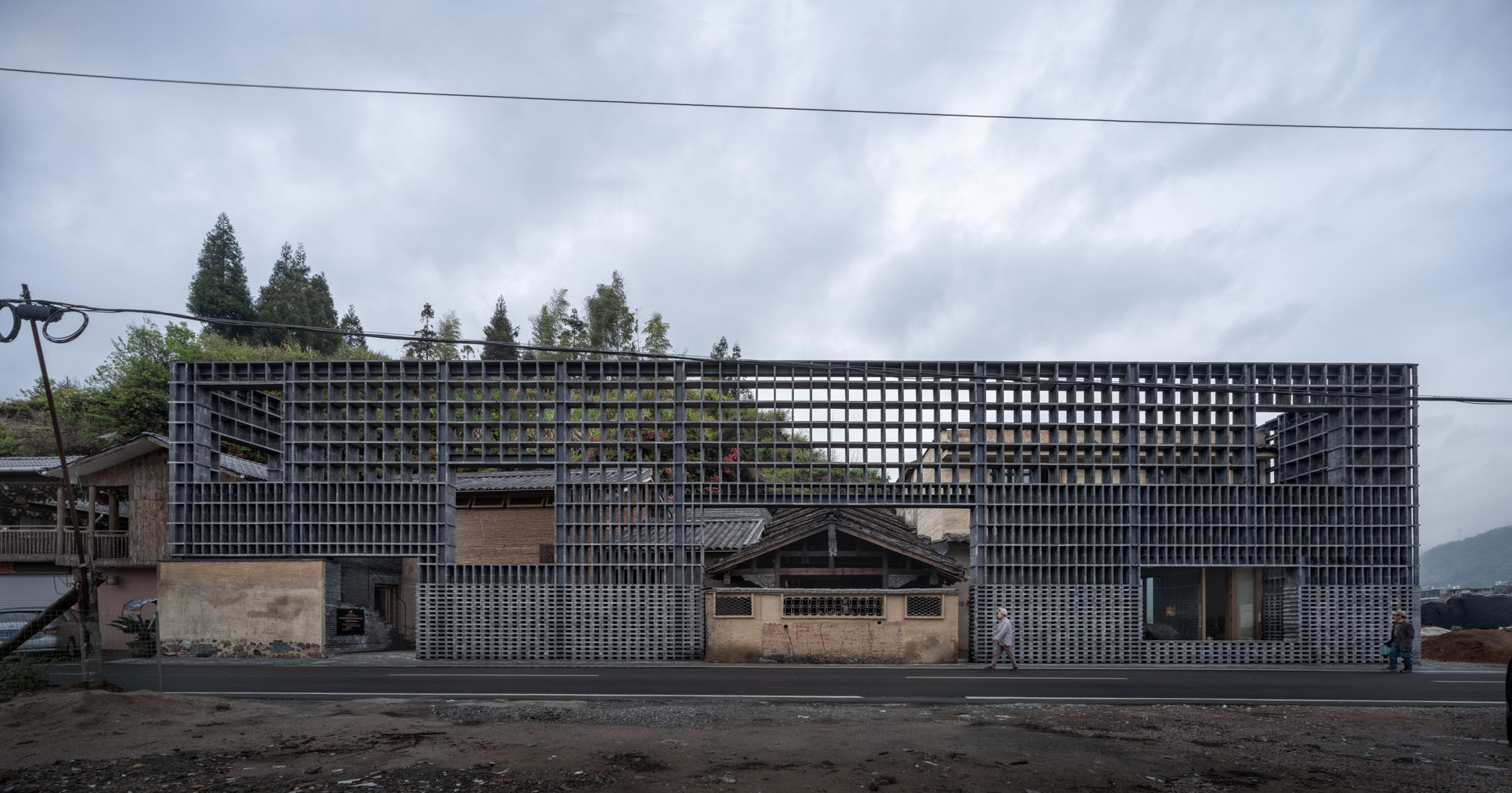
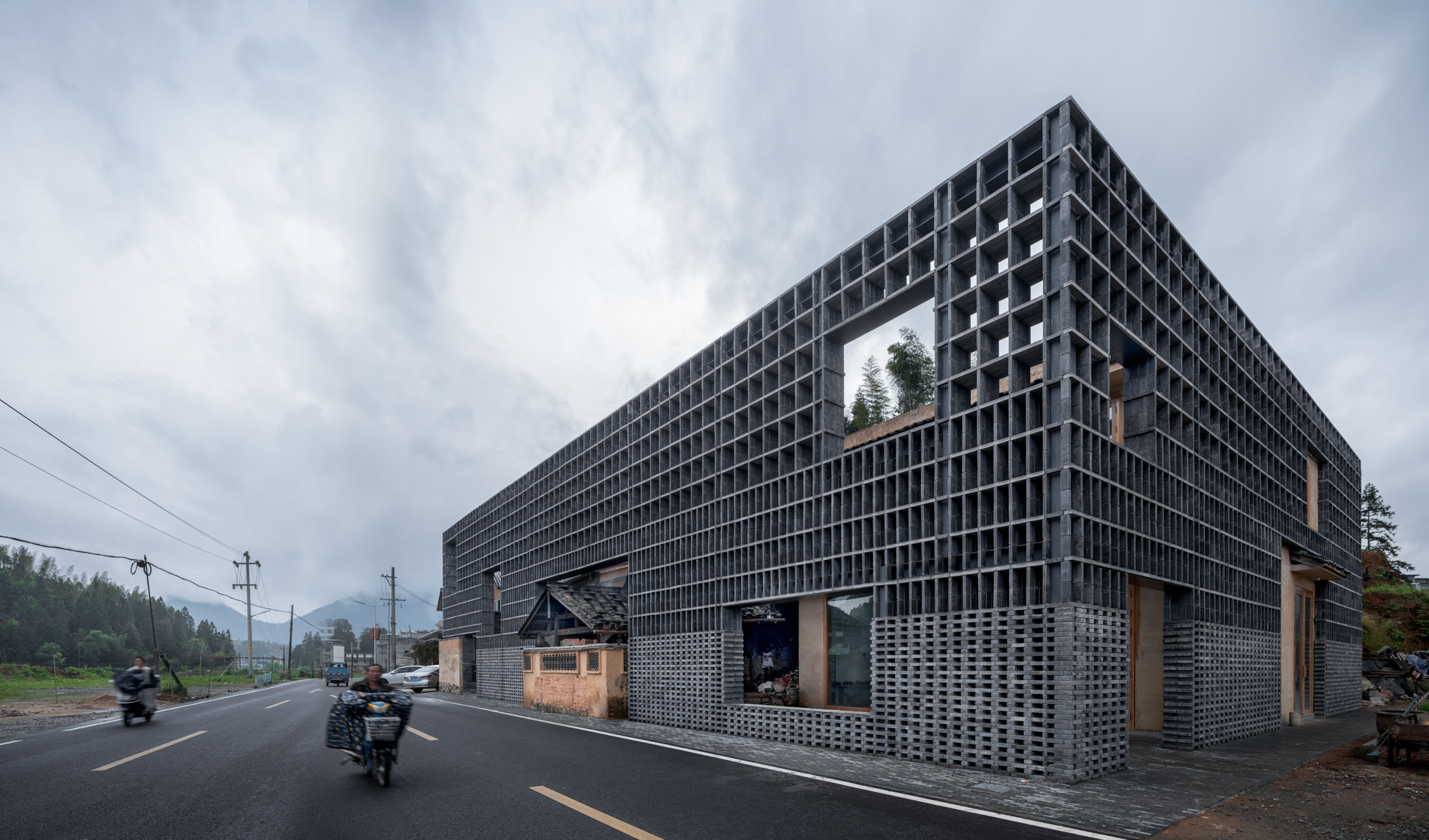
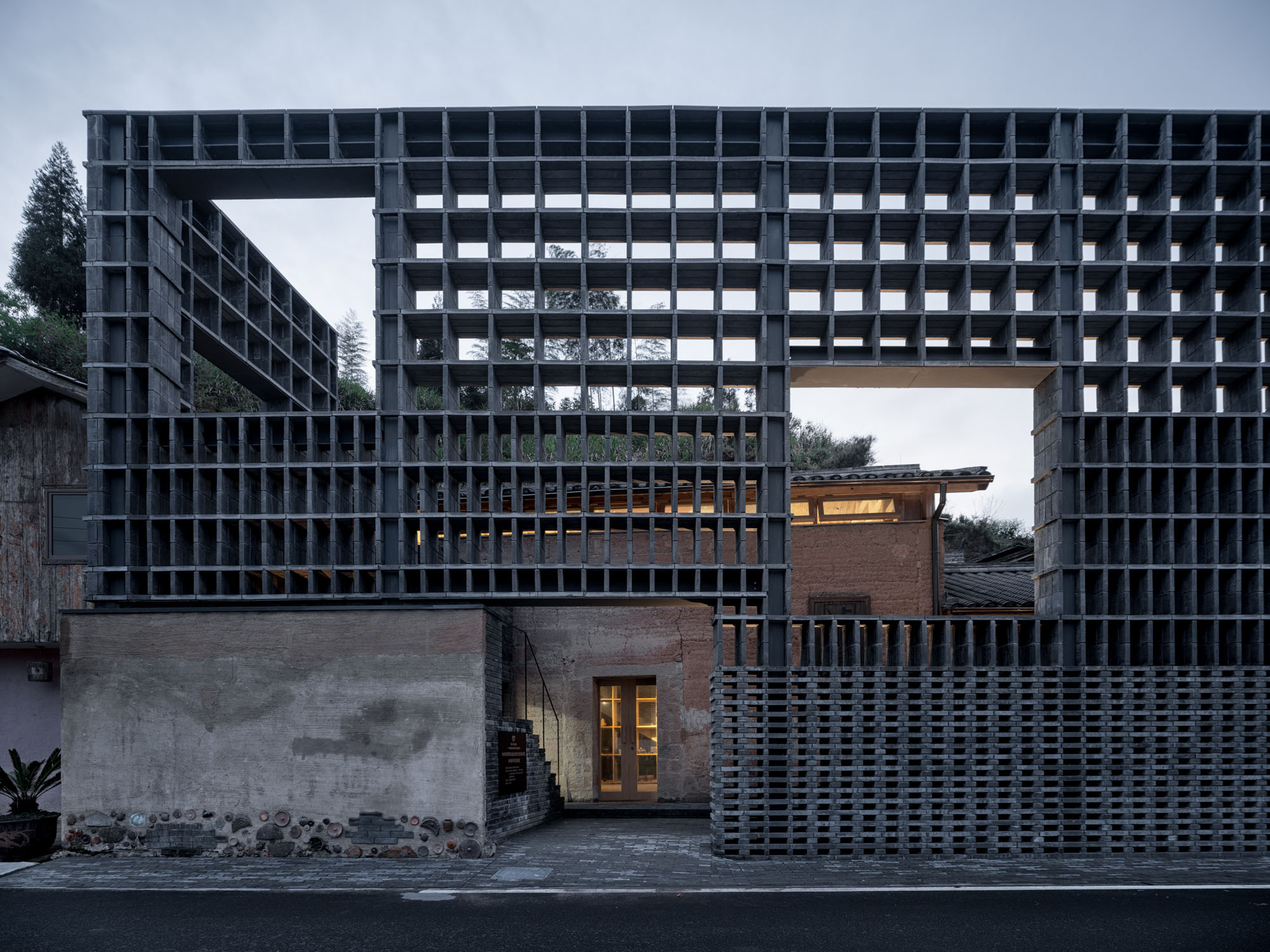
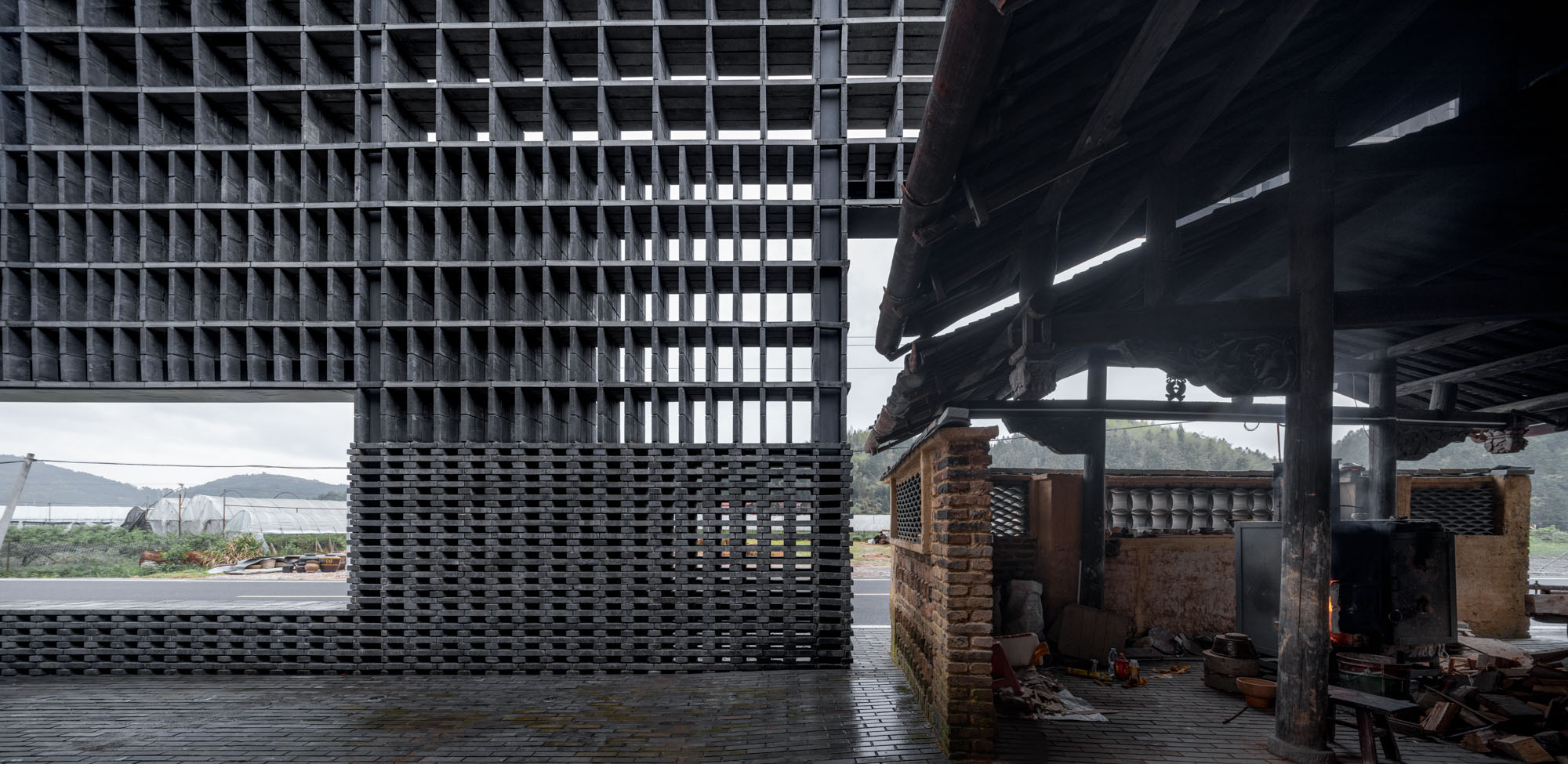
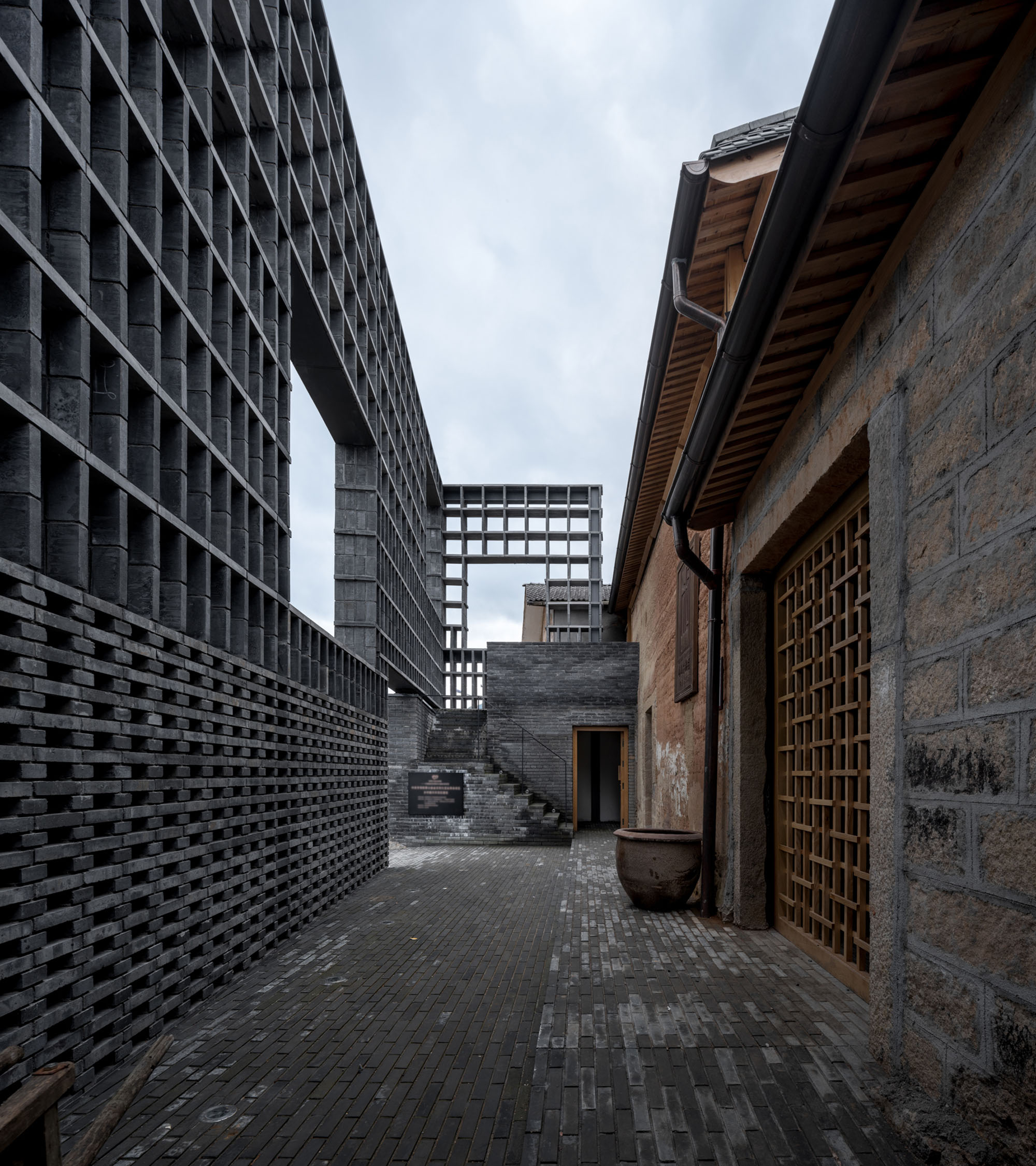
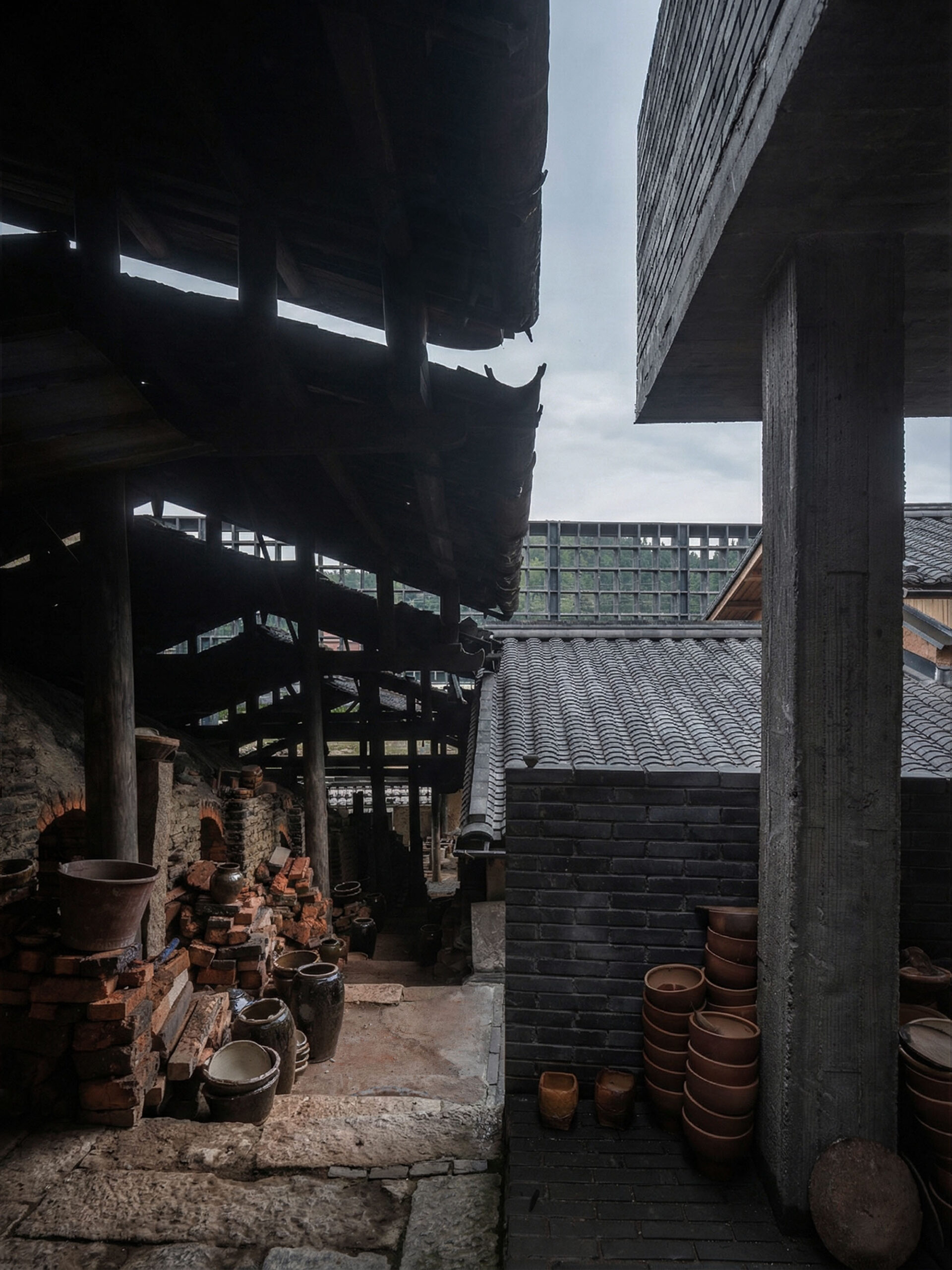
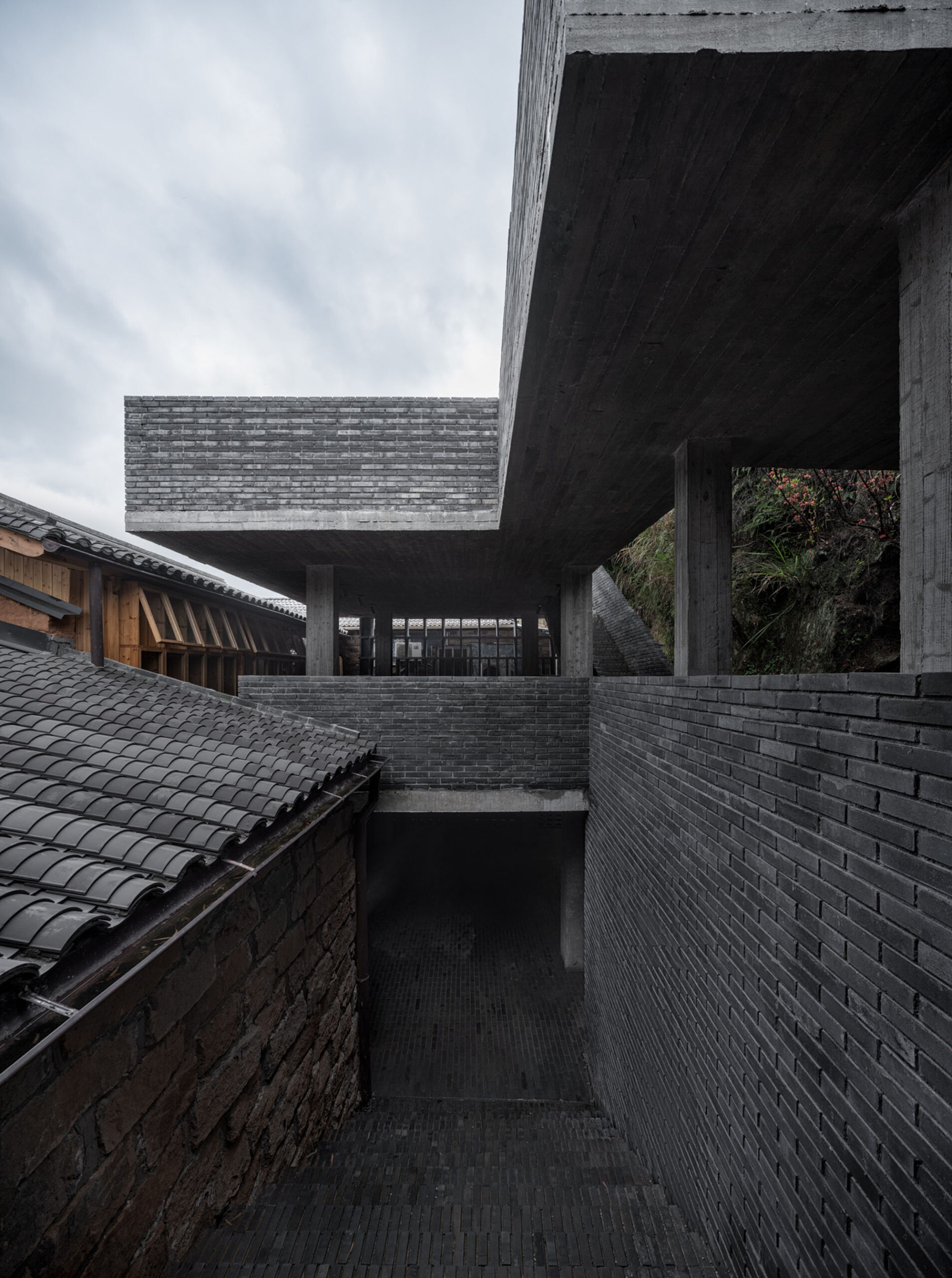
敷地と隣接する道路の間に緩衝空間が不足していたため、設計では敷地の縁に沿って2階建ての「境界壁」を導入し、空間の仲介役とした。これにより分散していた建物群を整理し、幾何学的な精度で境界を明確化することで、既存の構造物を歴史的遺物として再認識させることに成功した。版築、木材、石材、そして竜窯は保存され、新たな建築システムと連動しながら、多層的な時空フィールドを形成している。
この設計概念は、ジャン・スタロバンスキーの著作『透明性と障害』と呼応する。「透明な」現実の追求は、往々にして現実そのものによって阻まれる。ここでの建築は、まさにこうした「障害」を通じて機能する。障壁を再編成することによって、かつて隠されていたものを明瞭にするのである。「透明性」と「障害」は弁証法的であり、物理的な壁が無秩序を調和させると同時に、慎重に配置された開口部が視界を切り取り、人々の注意を集中させる。物質性を消し去るのではなく、工芸に基づく景観に特有の、境界によって定義された「認知的透明性」を構築することが、このプロジェクトの本質である。
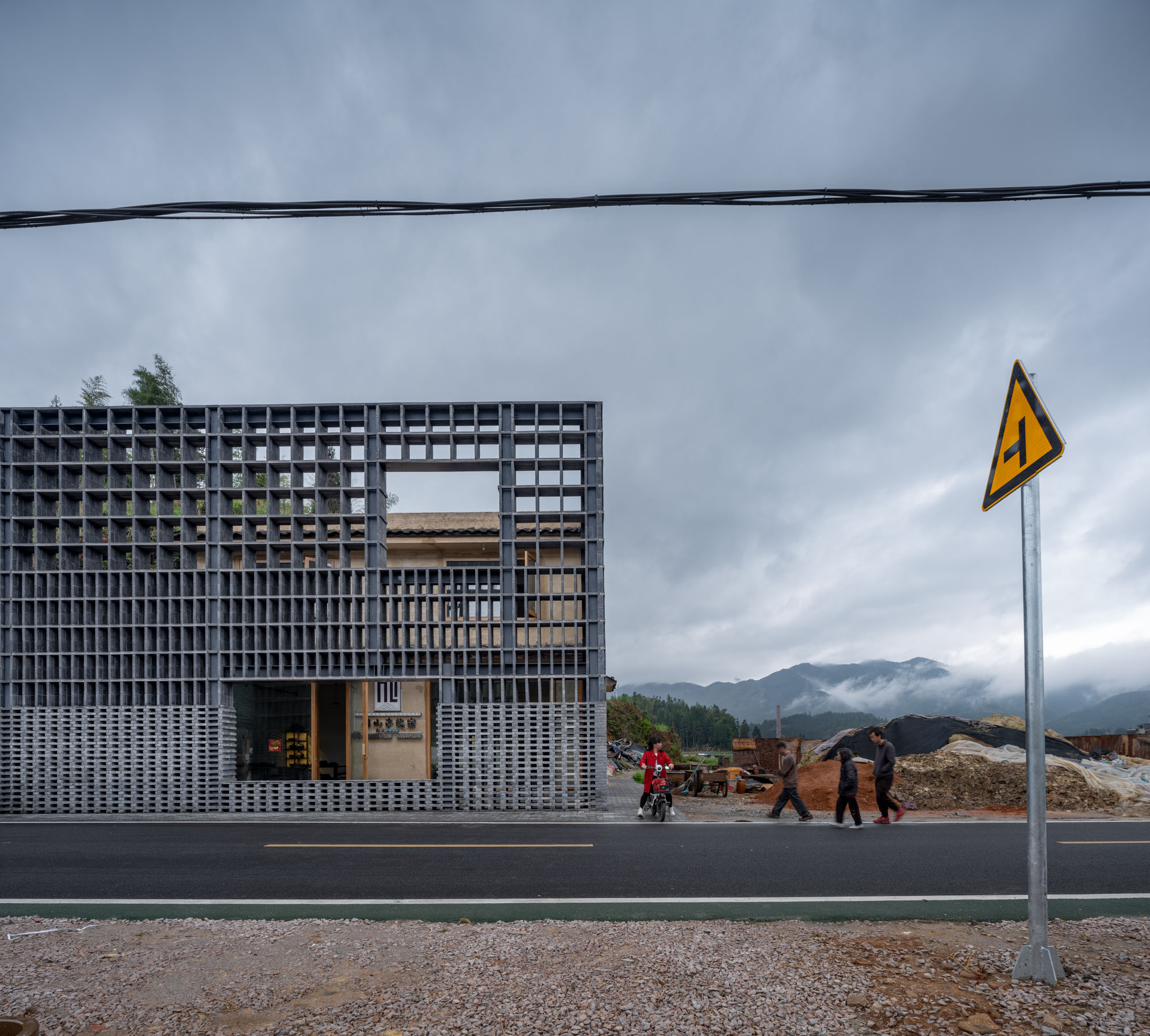
©︎ Shan-jian images
©︎ Shan-jian images
©︎ Shan-jian images
空間構成:生産そのものを展示とする
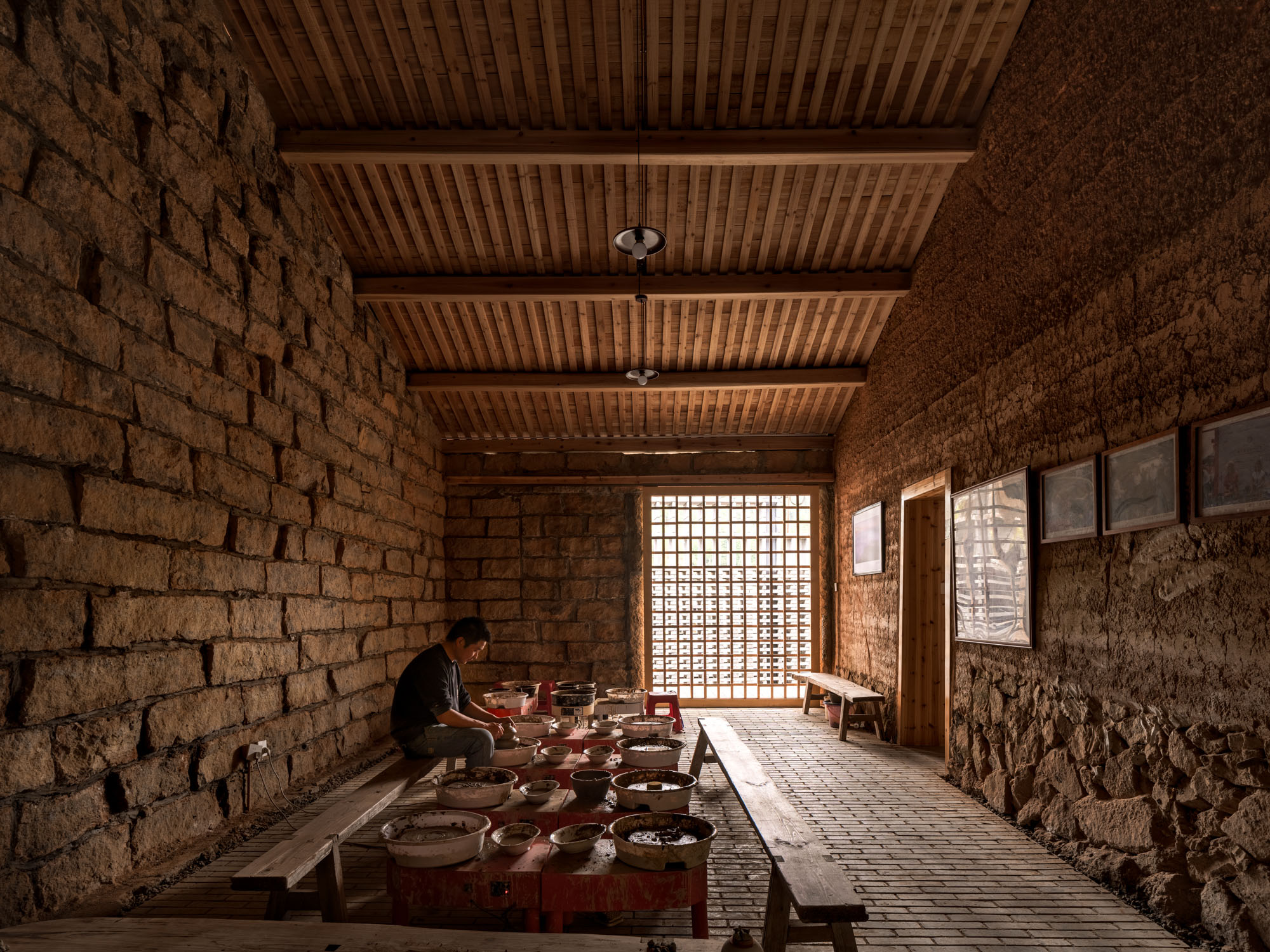
伝統的な陶芸制作の工程(原料、成形、釉薬、焼成、展示・体験、販売)を空間的に明示する構成をとっている。作業空間、一般見学、体験プログラムを階層化することで、「生産そのものを展示とする」仕組みを構築。訪問者の動線と職人の作業フローを、互いに干渉させることなく整合させている。
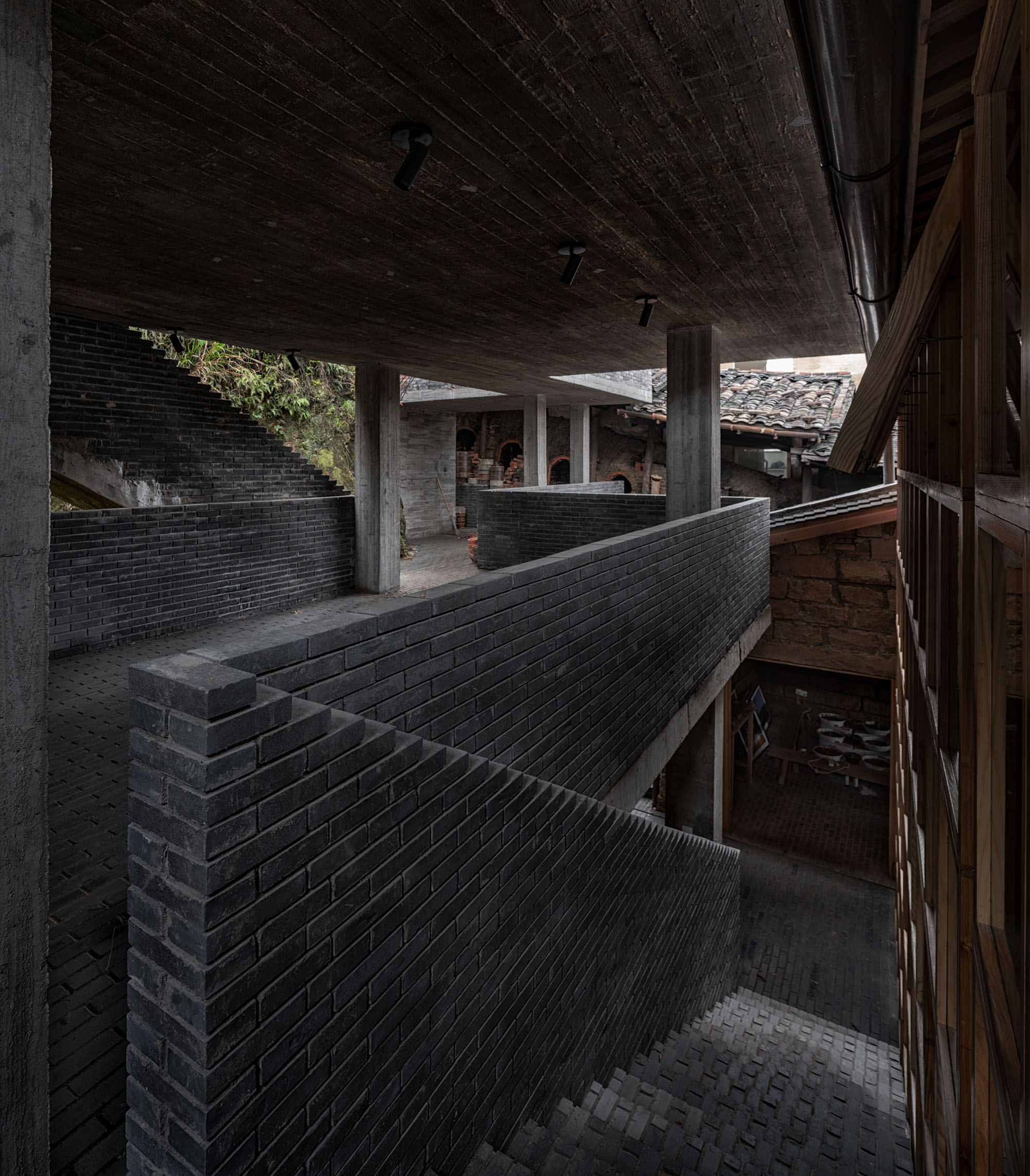
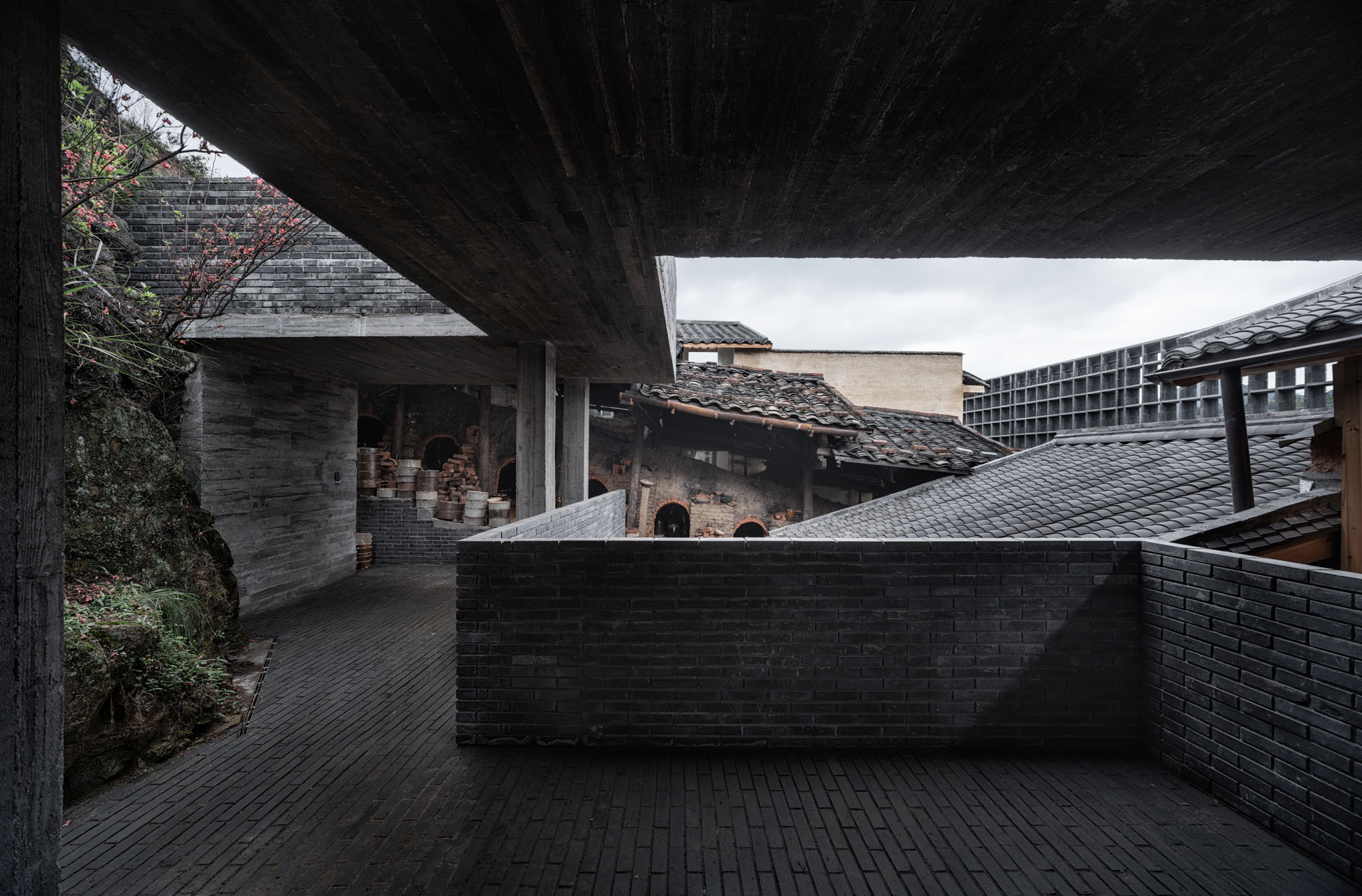
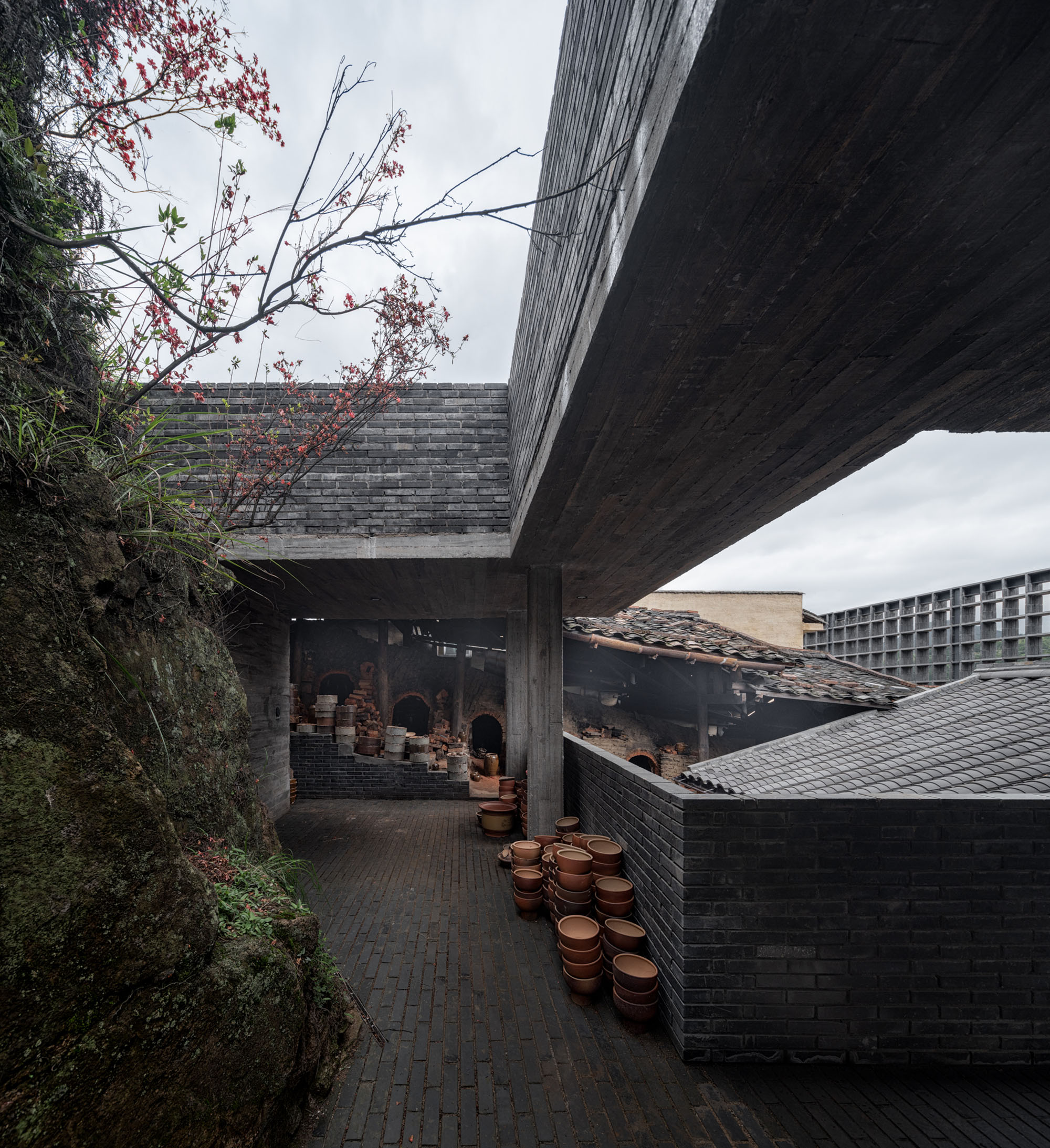
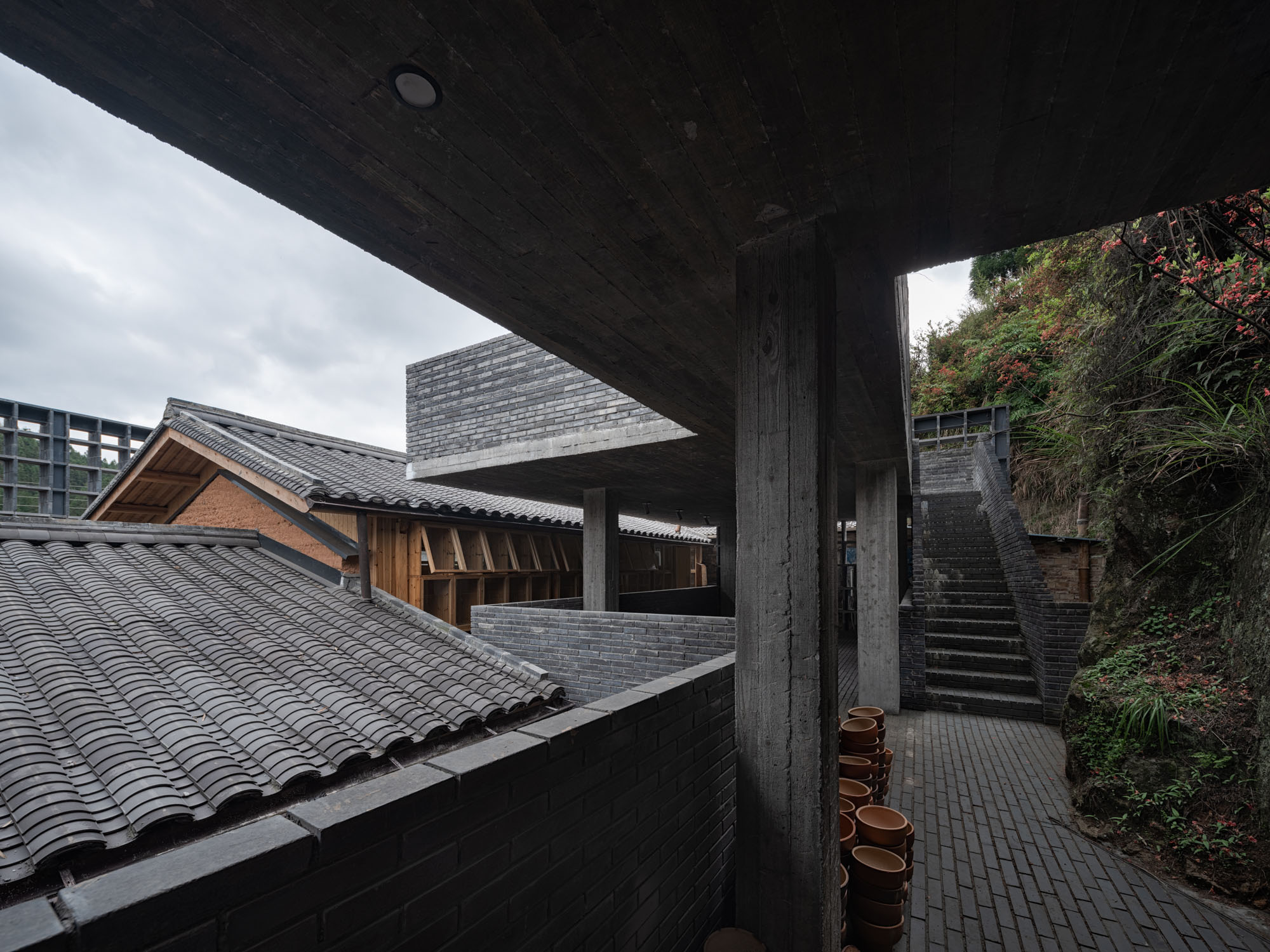
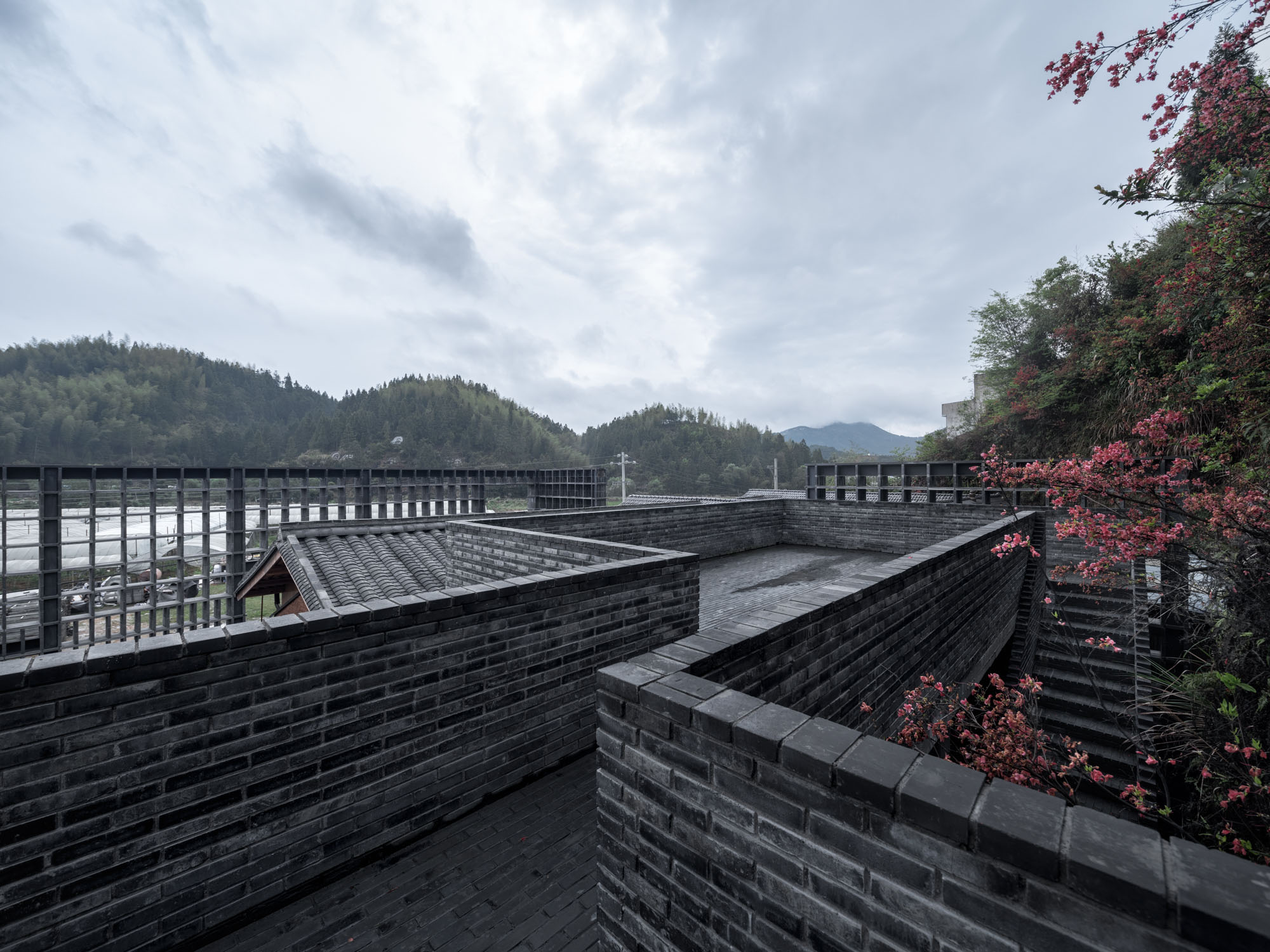
境界壁と内部の建物は、3つの中庭を形成する。正面の中庭は受付と展示に供され、中央の中庭は日常的な生産の場となる。そして後方の中庭は地形と丘陵に接続し、多層的なプラットフォームと階段がパノラマ的な観察を可能にする。訪問者は単に無形文化遺産の断片を目にするだけでなく、その展開を実体験として享受するのである。
©︎ Shan-jian images
©︎ Shan-jian images
©︎ Shan-jian images
素材と構造の戦略:時間の積層を可視化する
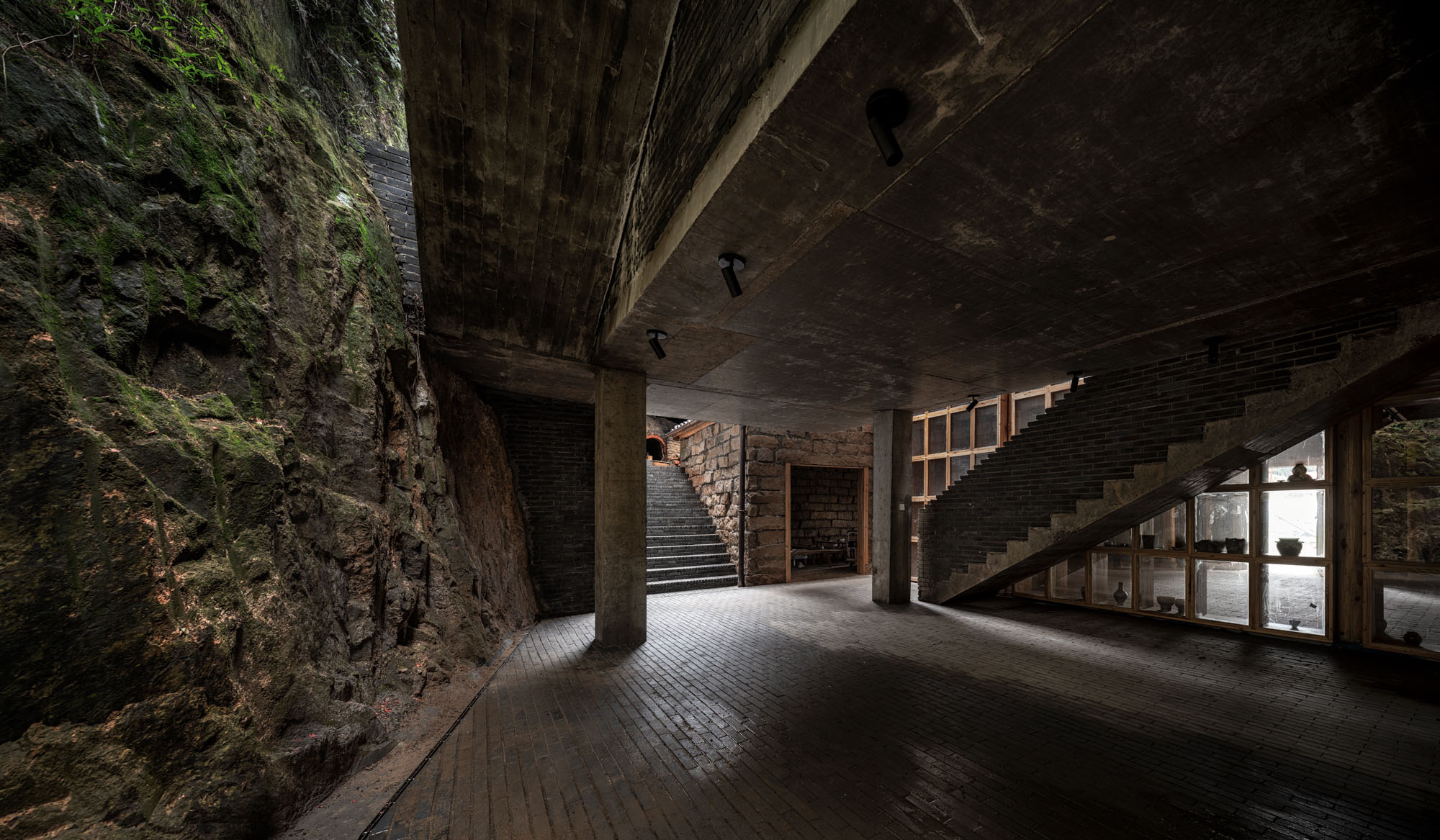
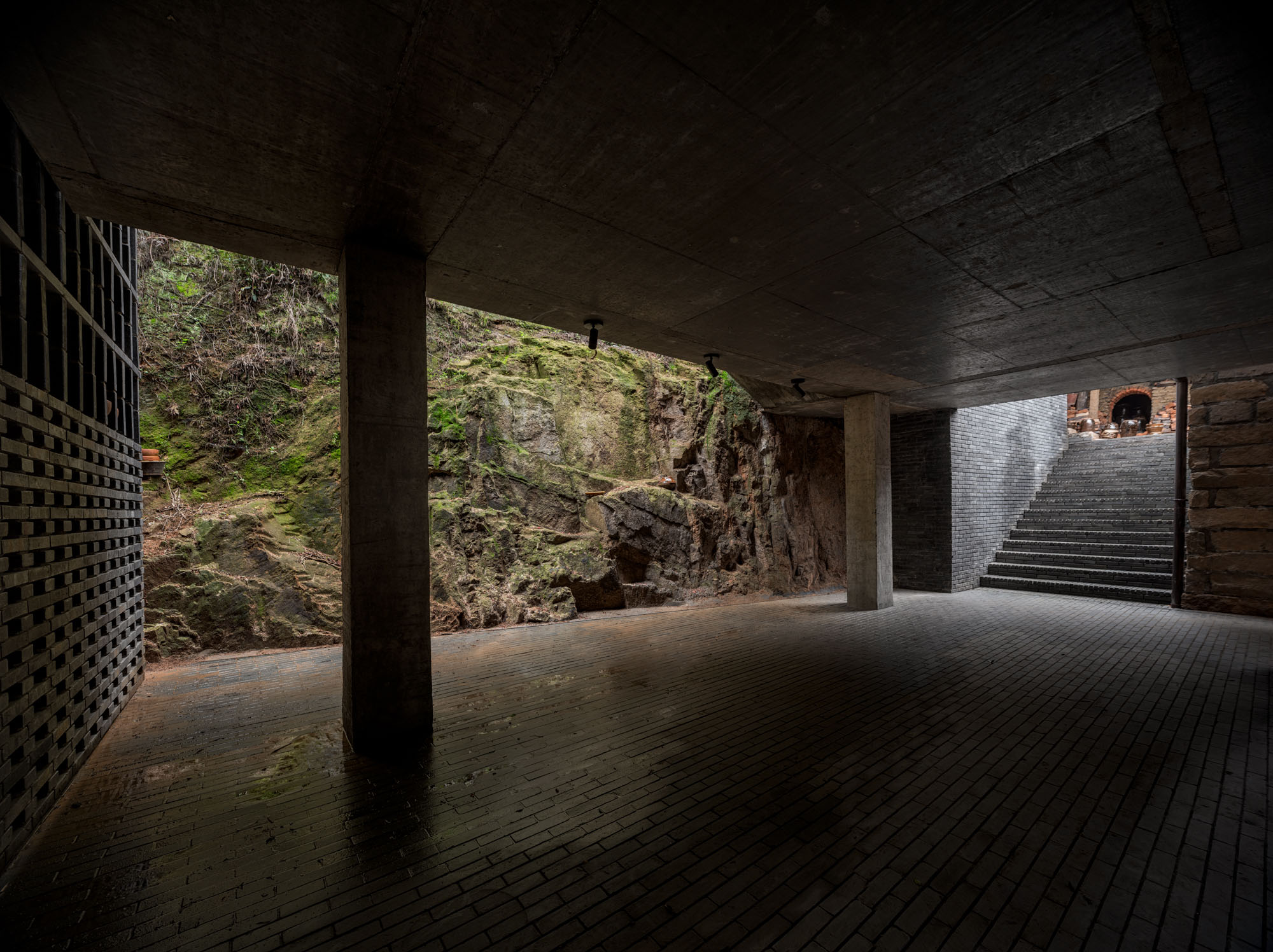
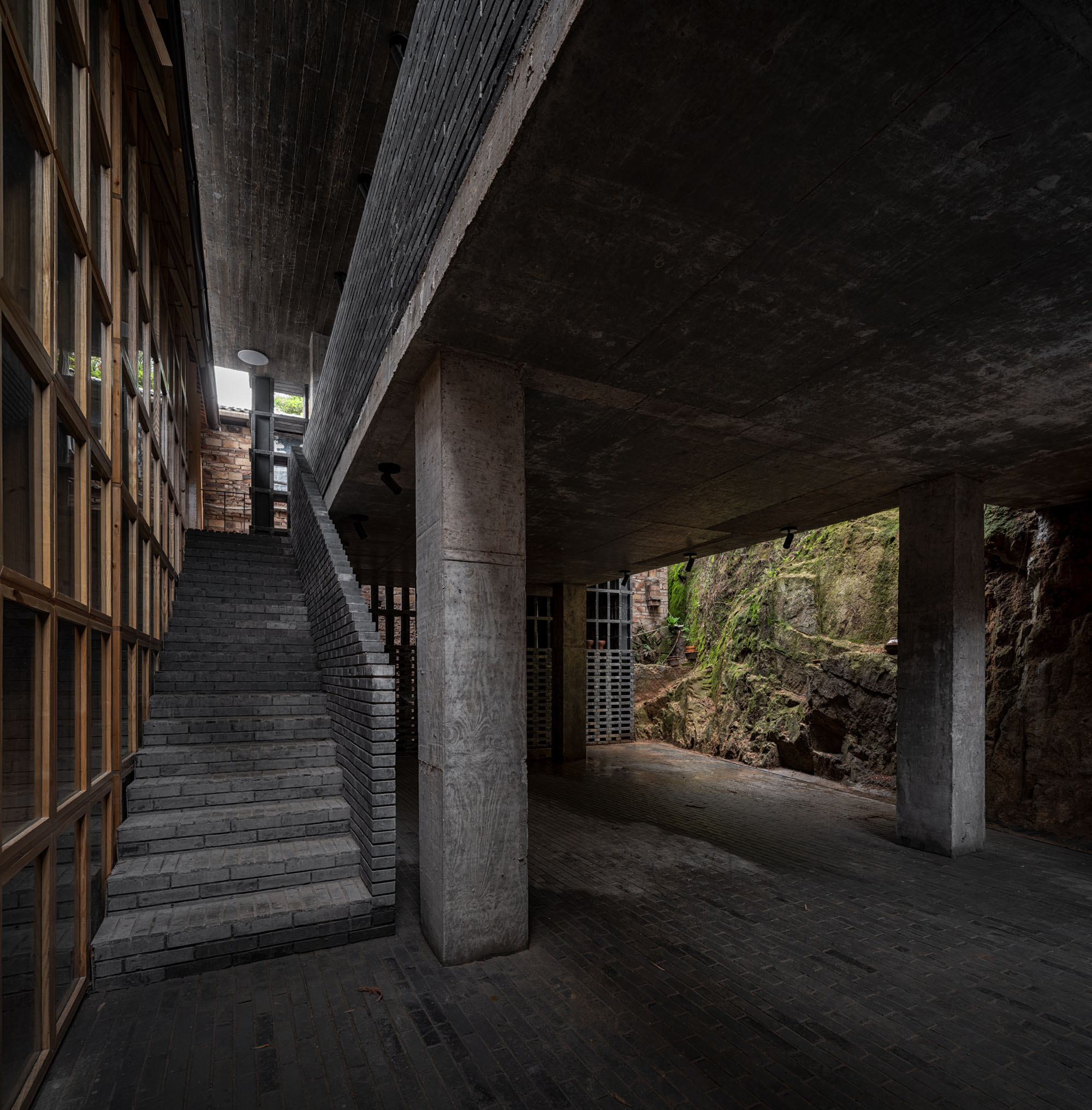
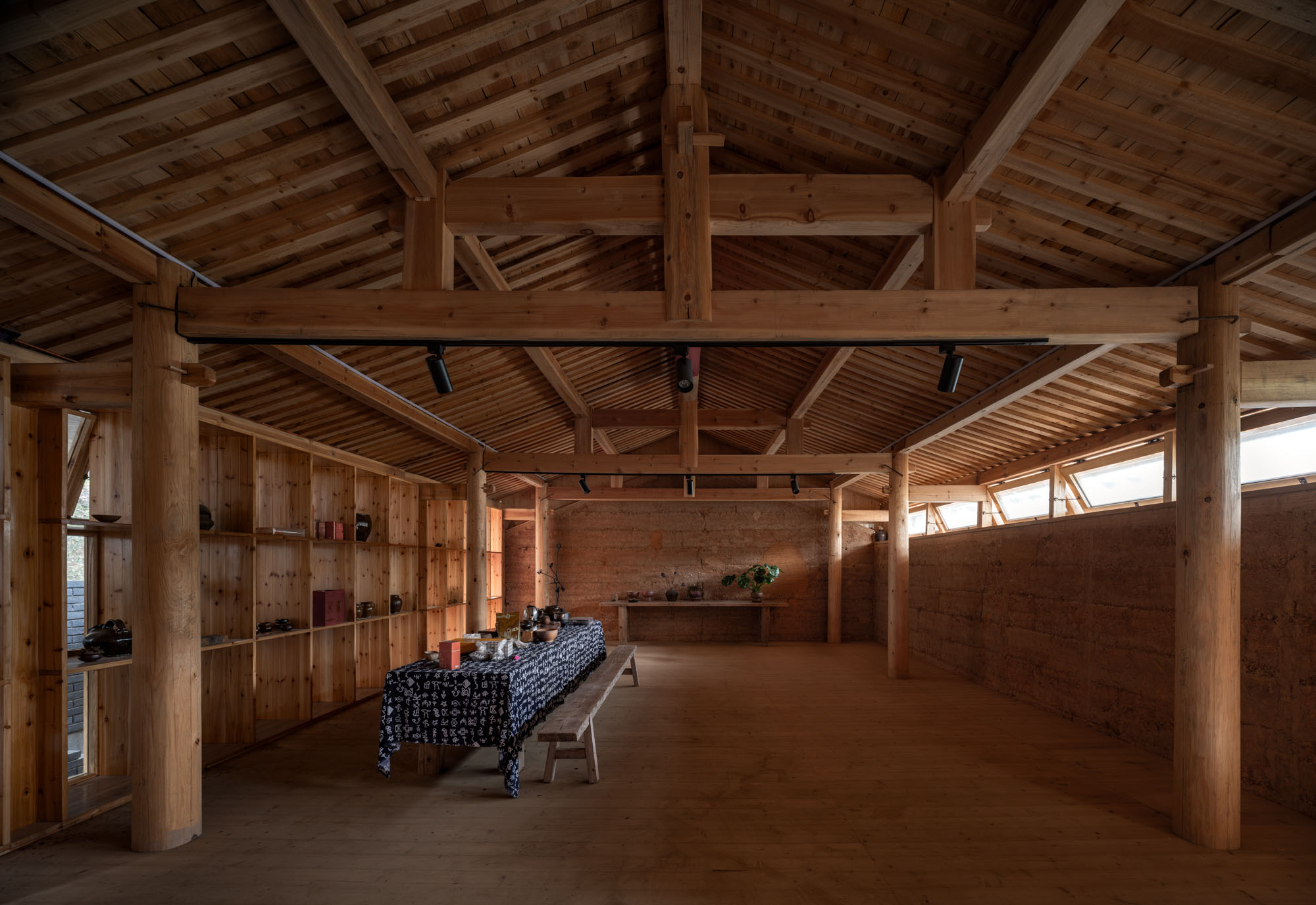
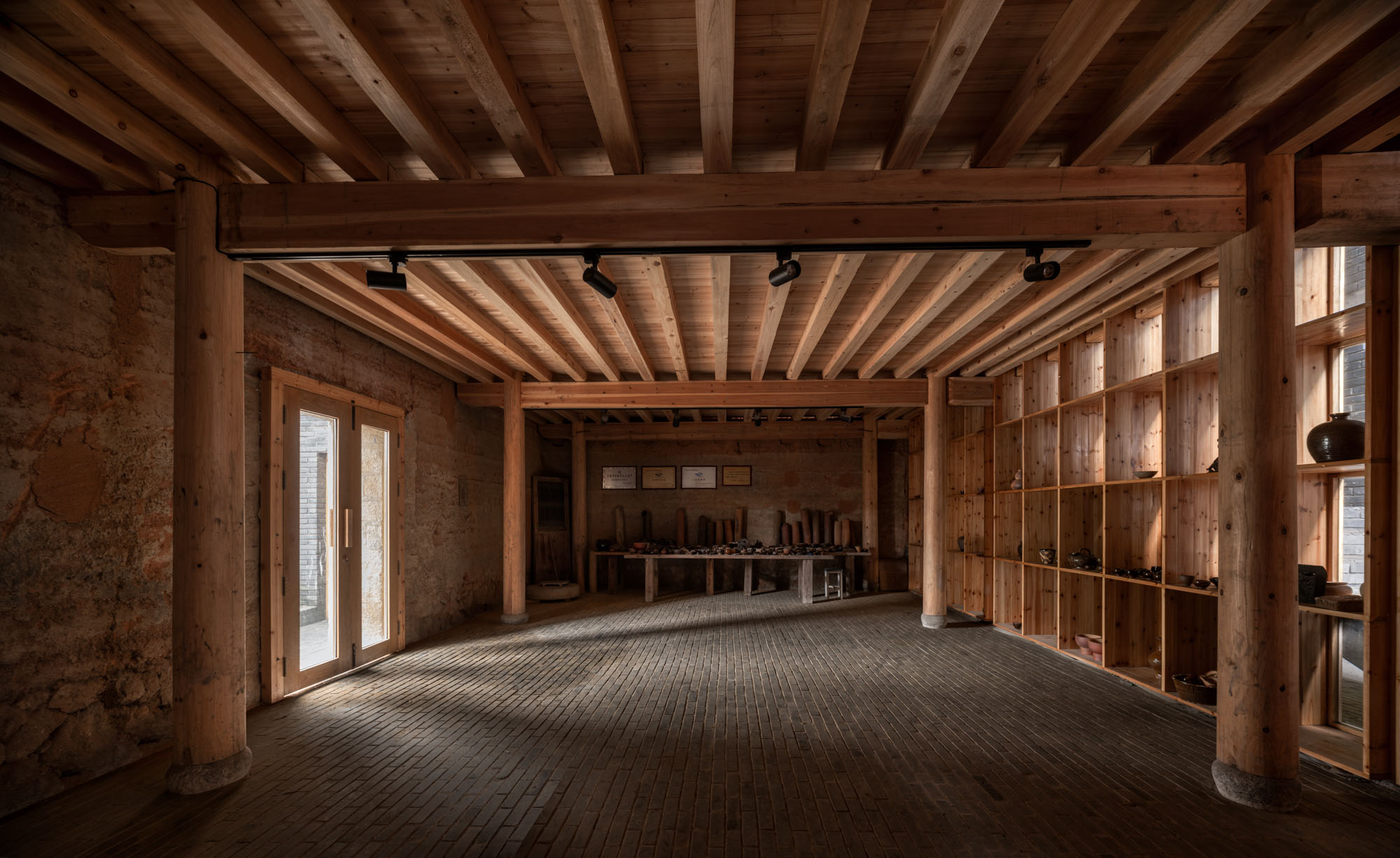
既存の構造ロジックを尊重しながら、時間の層を露わにする素材の介入が行われた。再利用可能な版築壁と石壁は保存され、かつて窯に構造的に隣接していた石材は、地盤としての質量を維持するために補強された。老朽化した版築土壁の一部は木製の棚とガラスの展示壁に置き換えられ、内部には地元の大工の手による二重層の木造骨組みが採用されている。
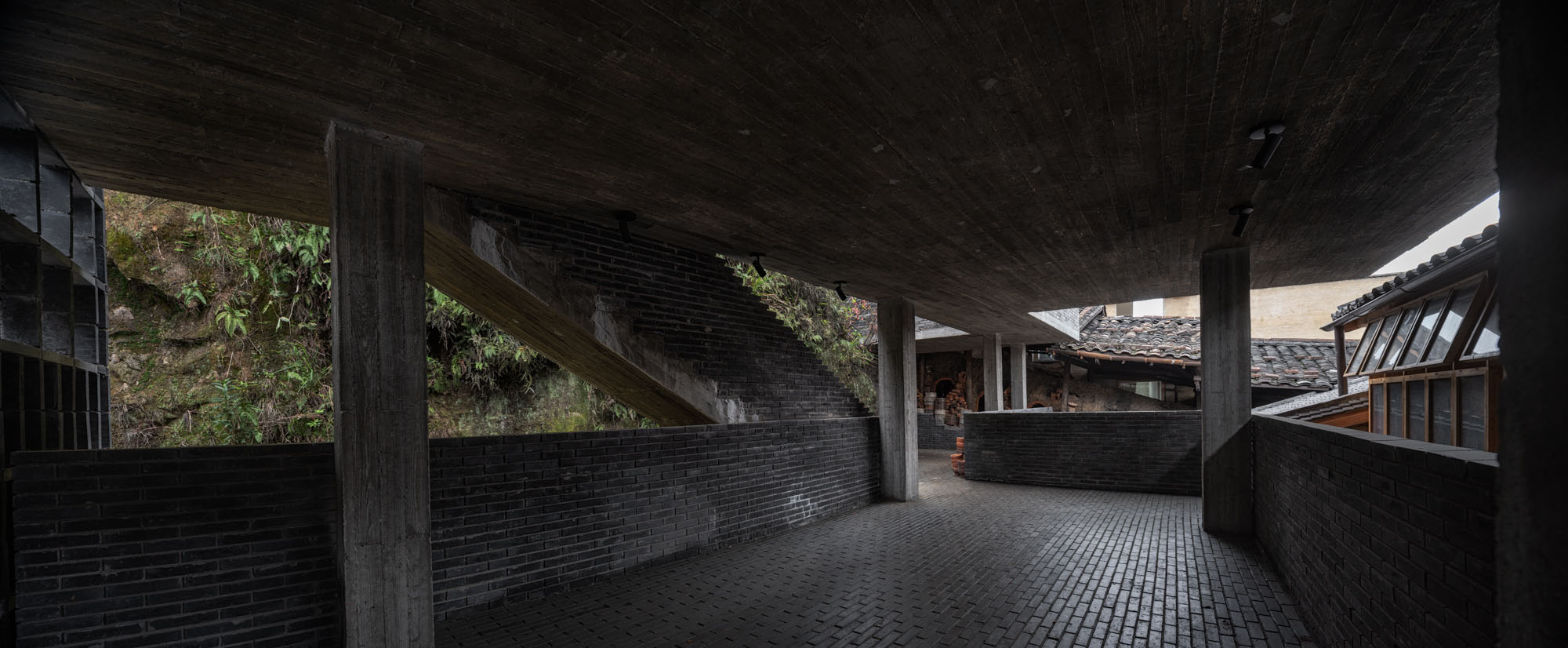
新設された後部のプラットフォームには、梁のないコンクリートスラブシステムを採用した。10cmの木目調テクスチャを施すことで、かつて流動的であったコンクリートの物質性が、固い岩と多孔質な土壌の間を媒介し、自然地形と建造構造の架け橋となっている。
©︎ Shan-jian images
©︎ Shan-jian images
©︎ Shan-jian images
レンガ構造:伝統と現代を媒介する壁
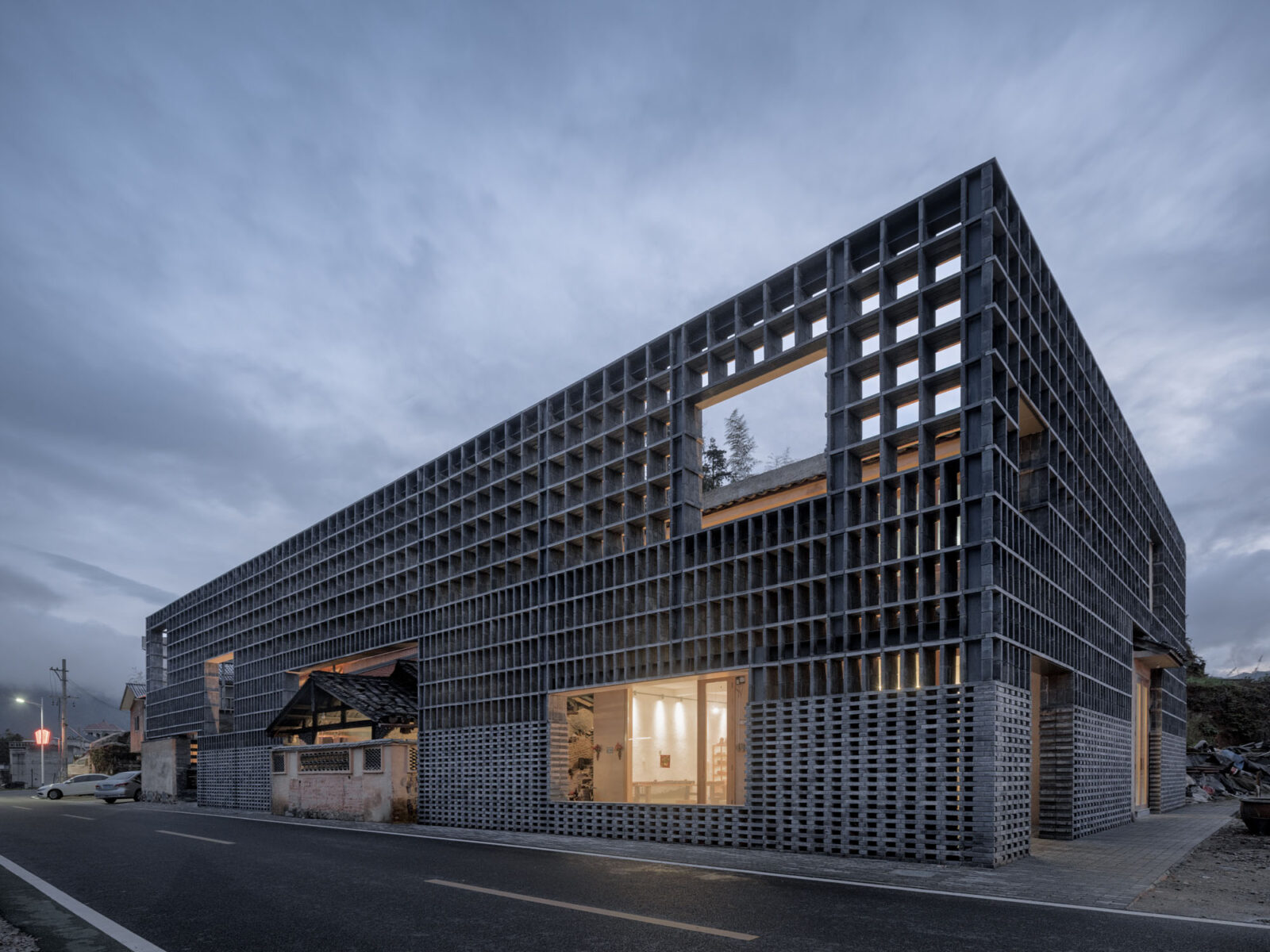
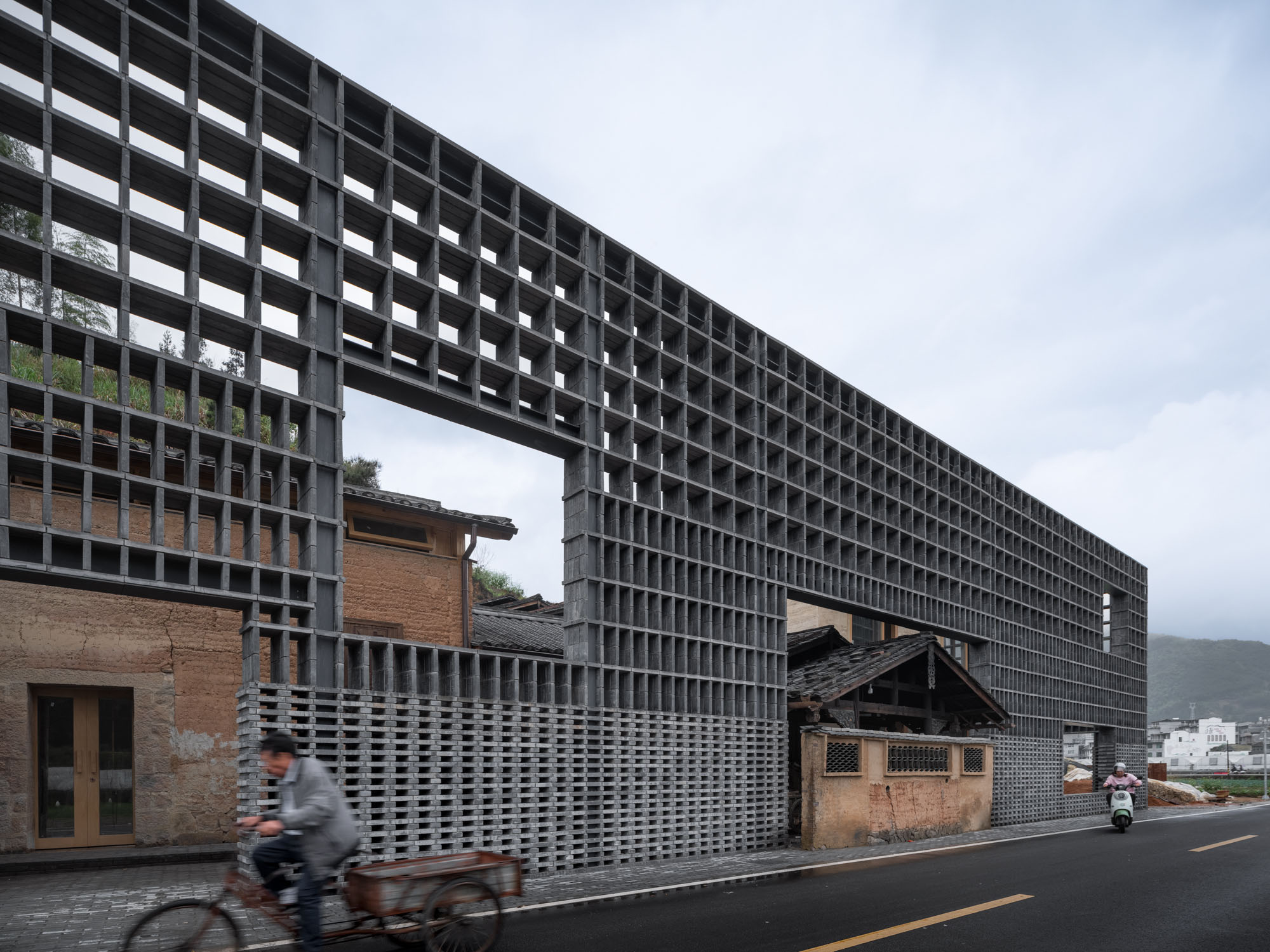
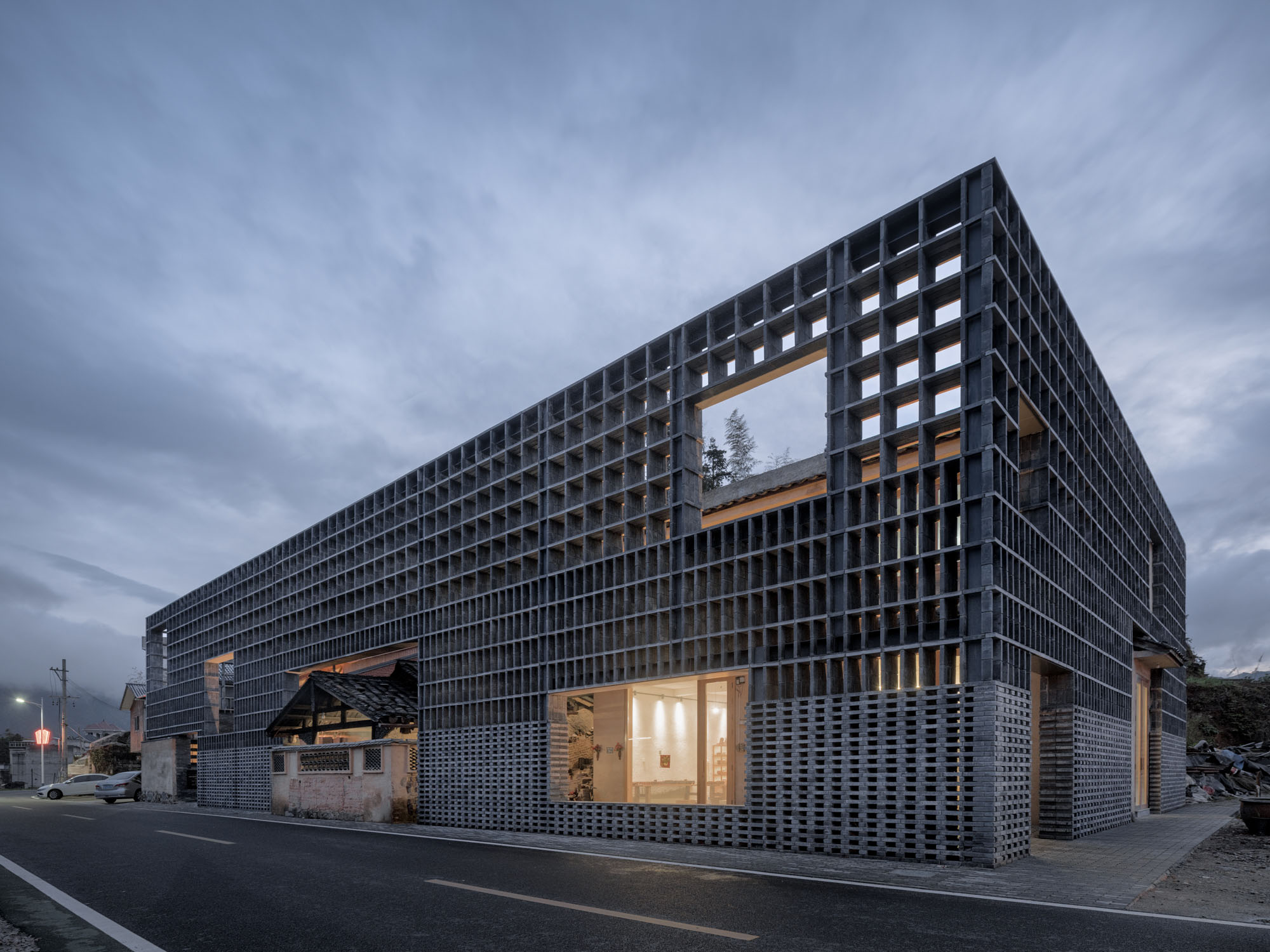
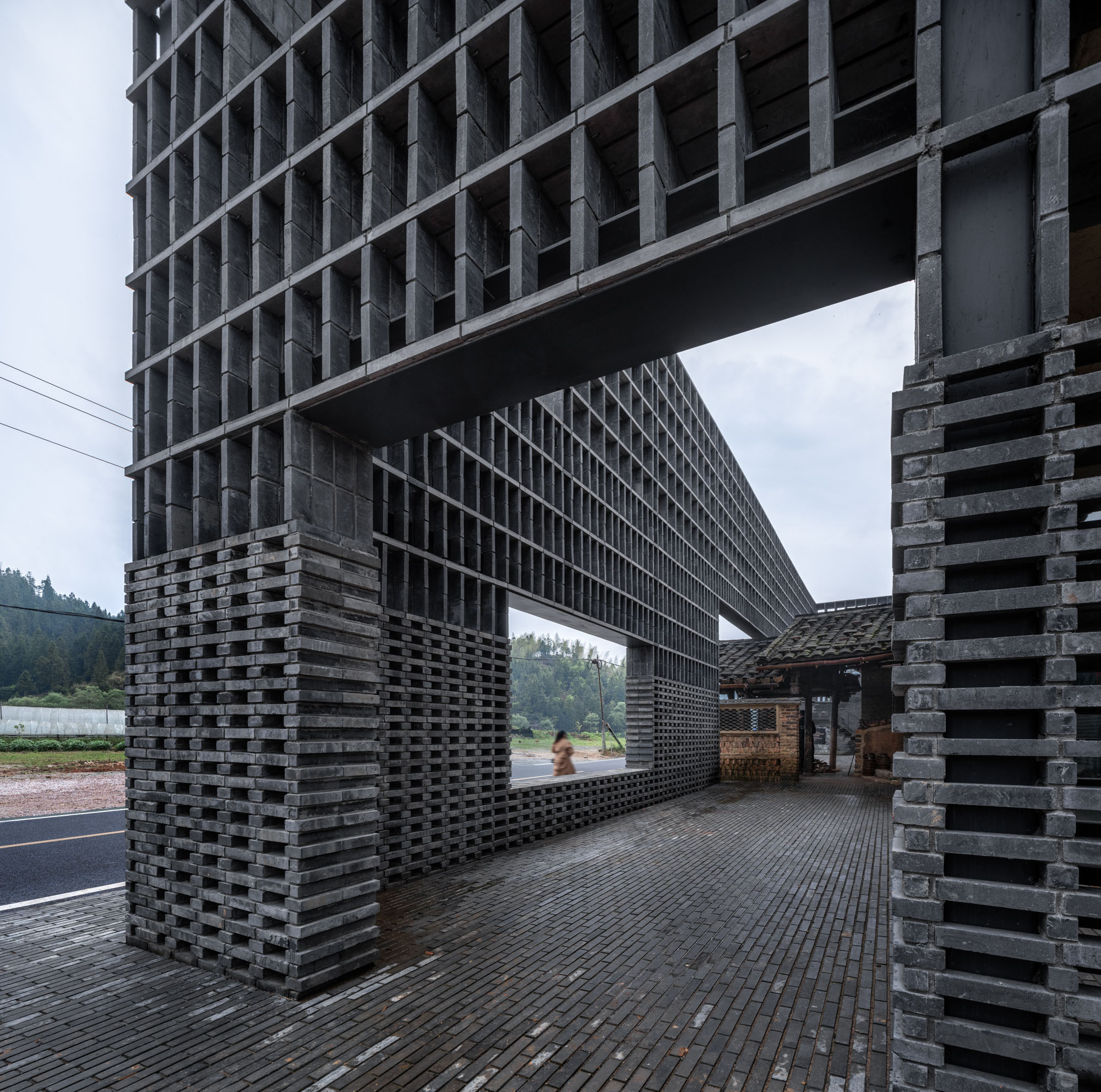
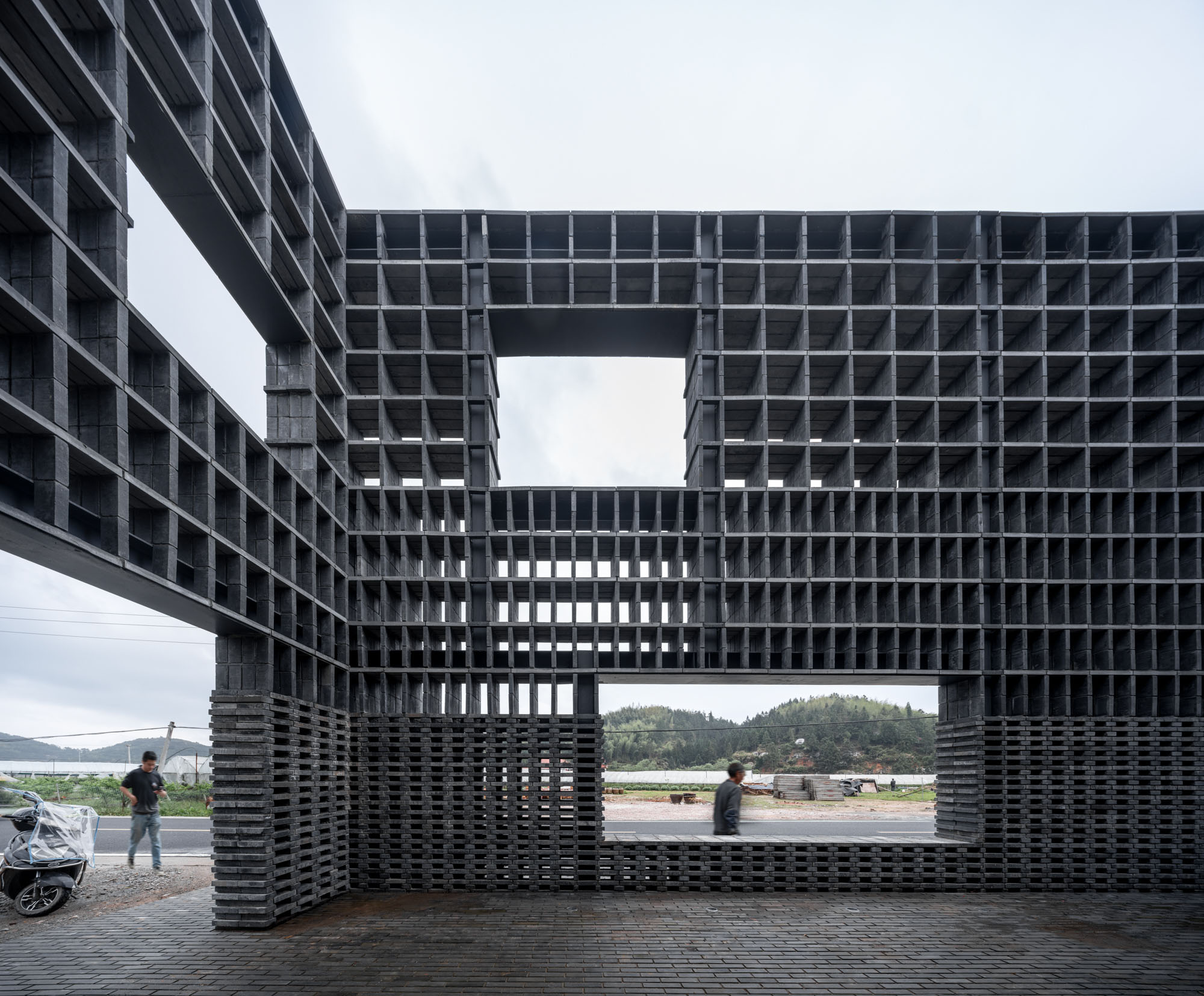
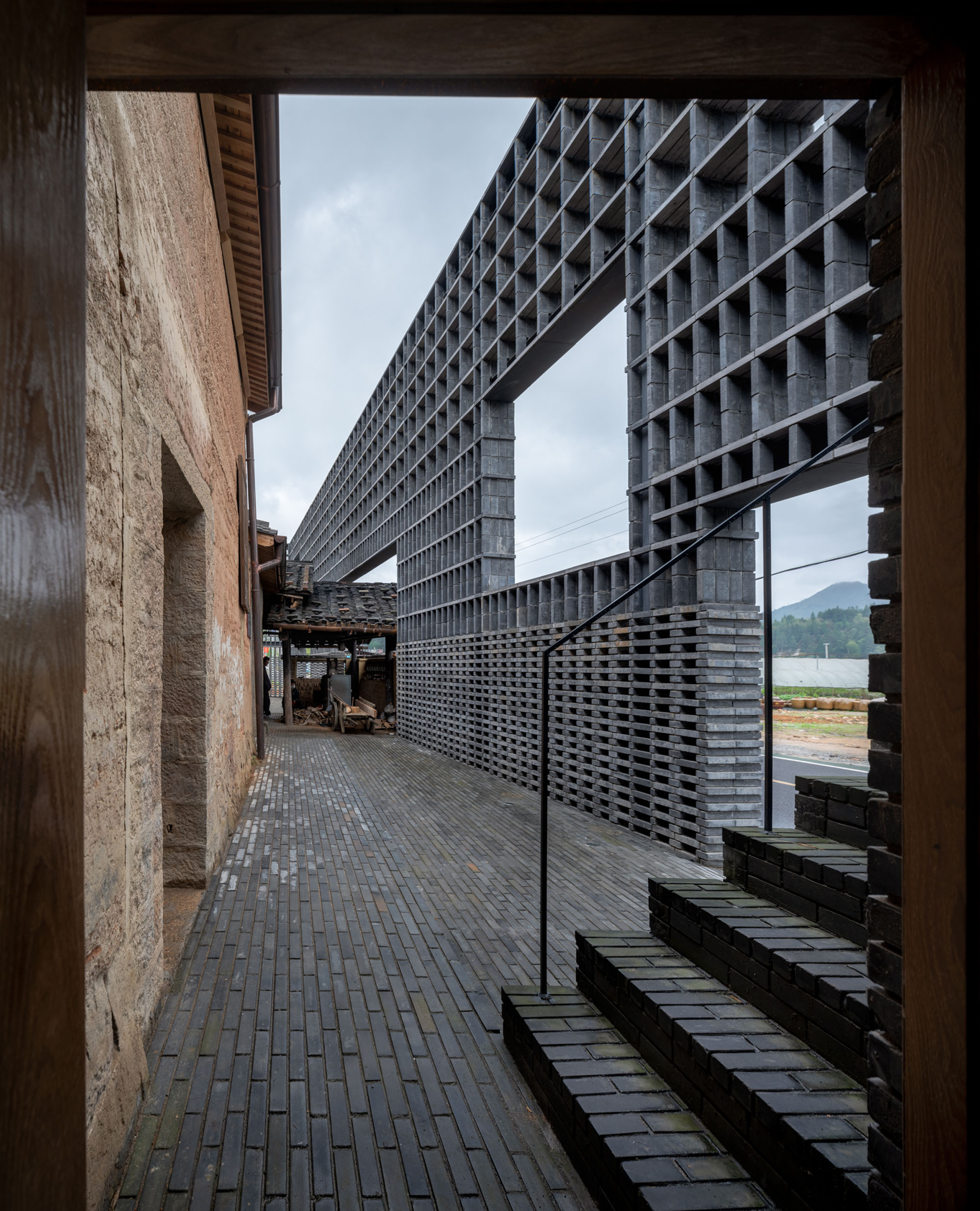
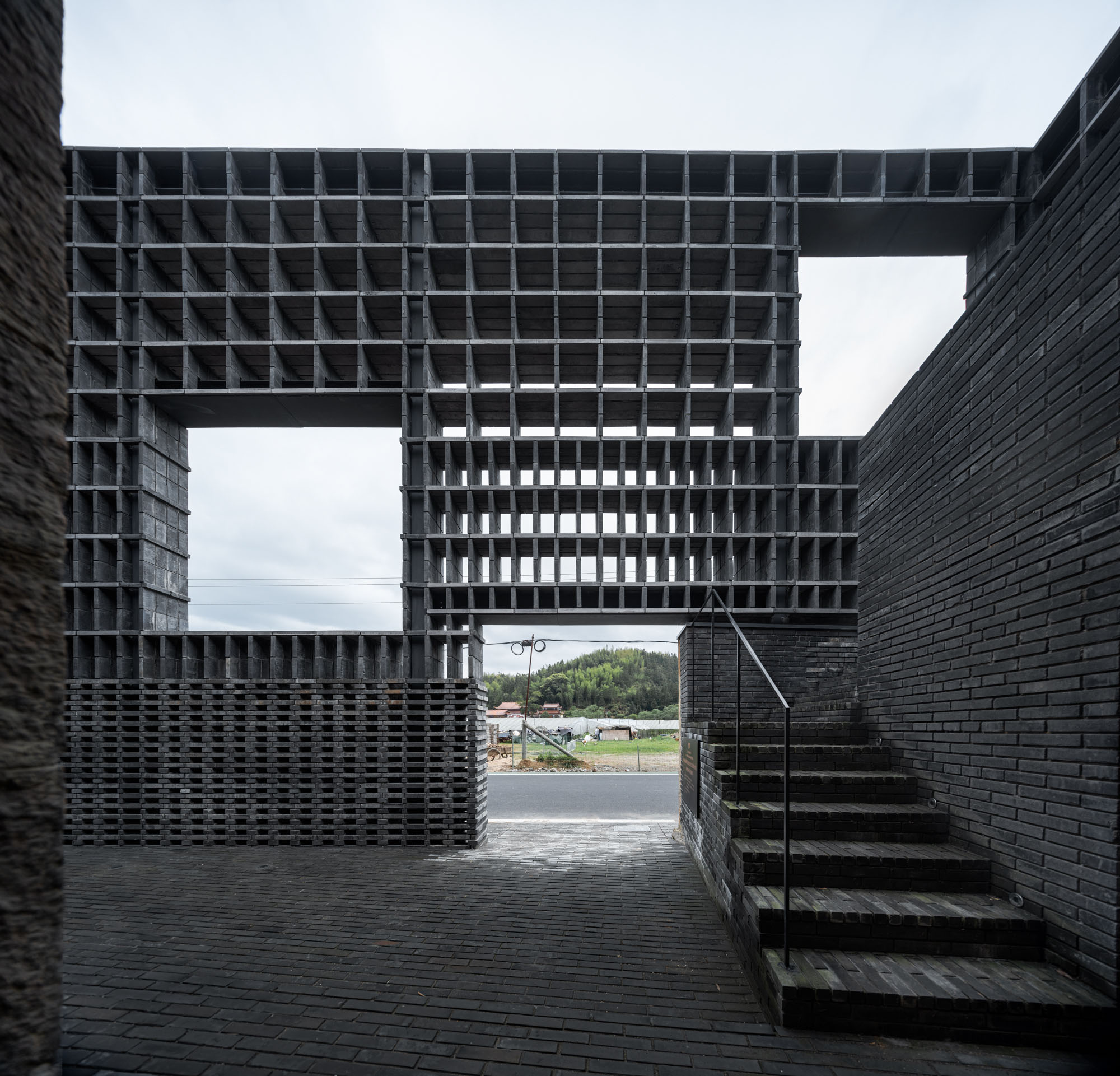
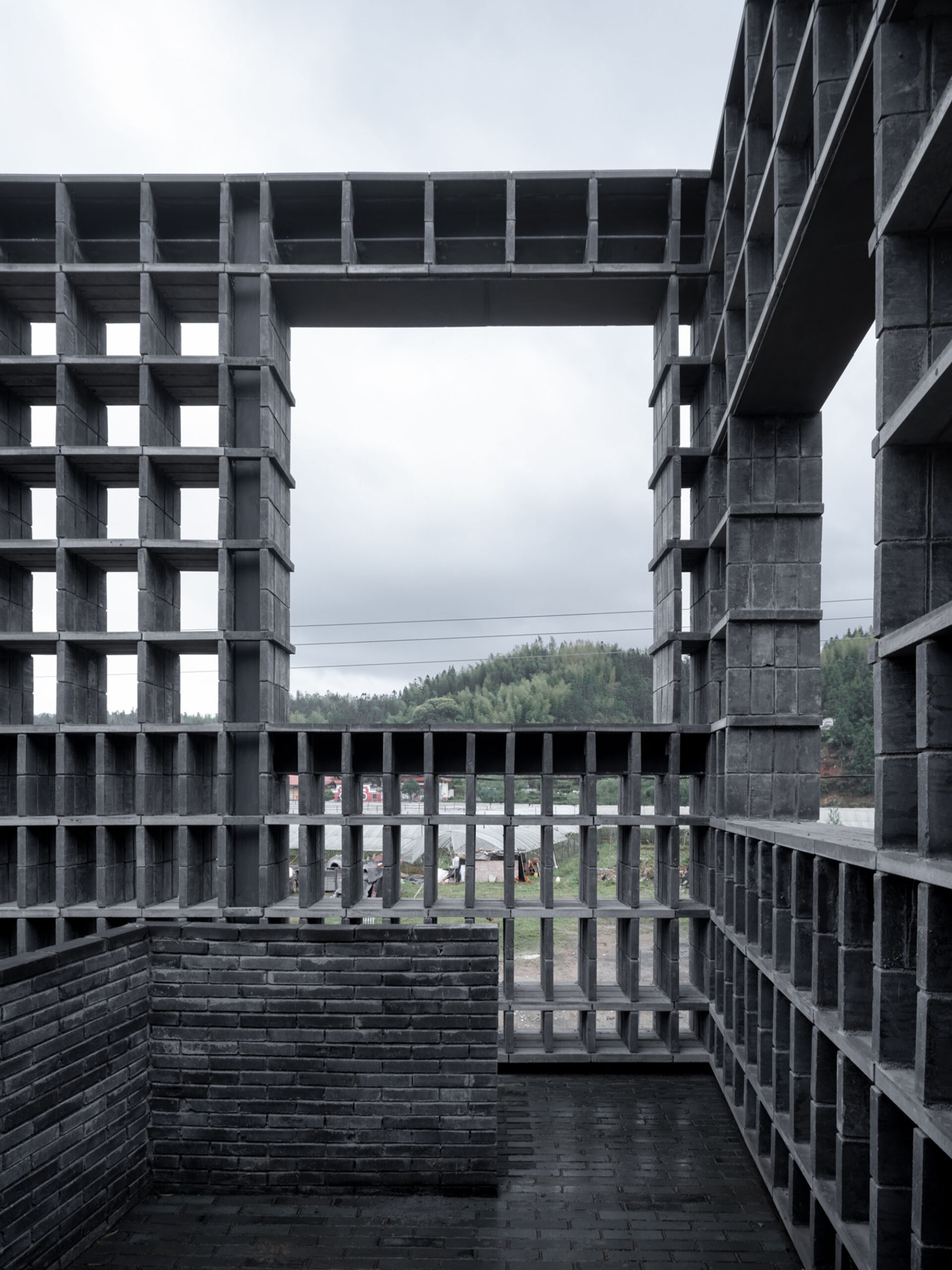
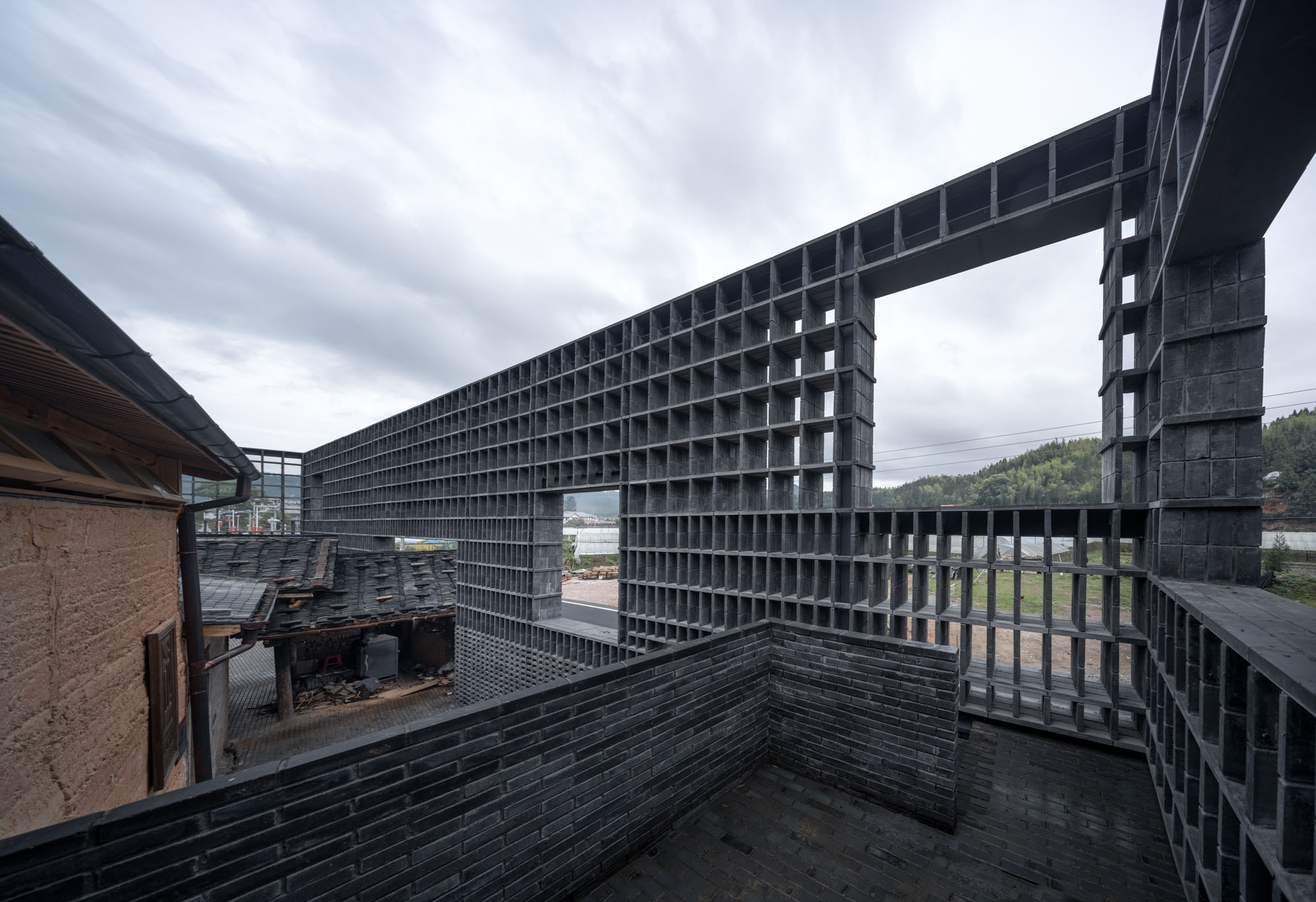
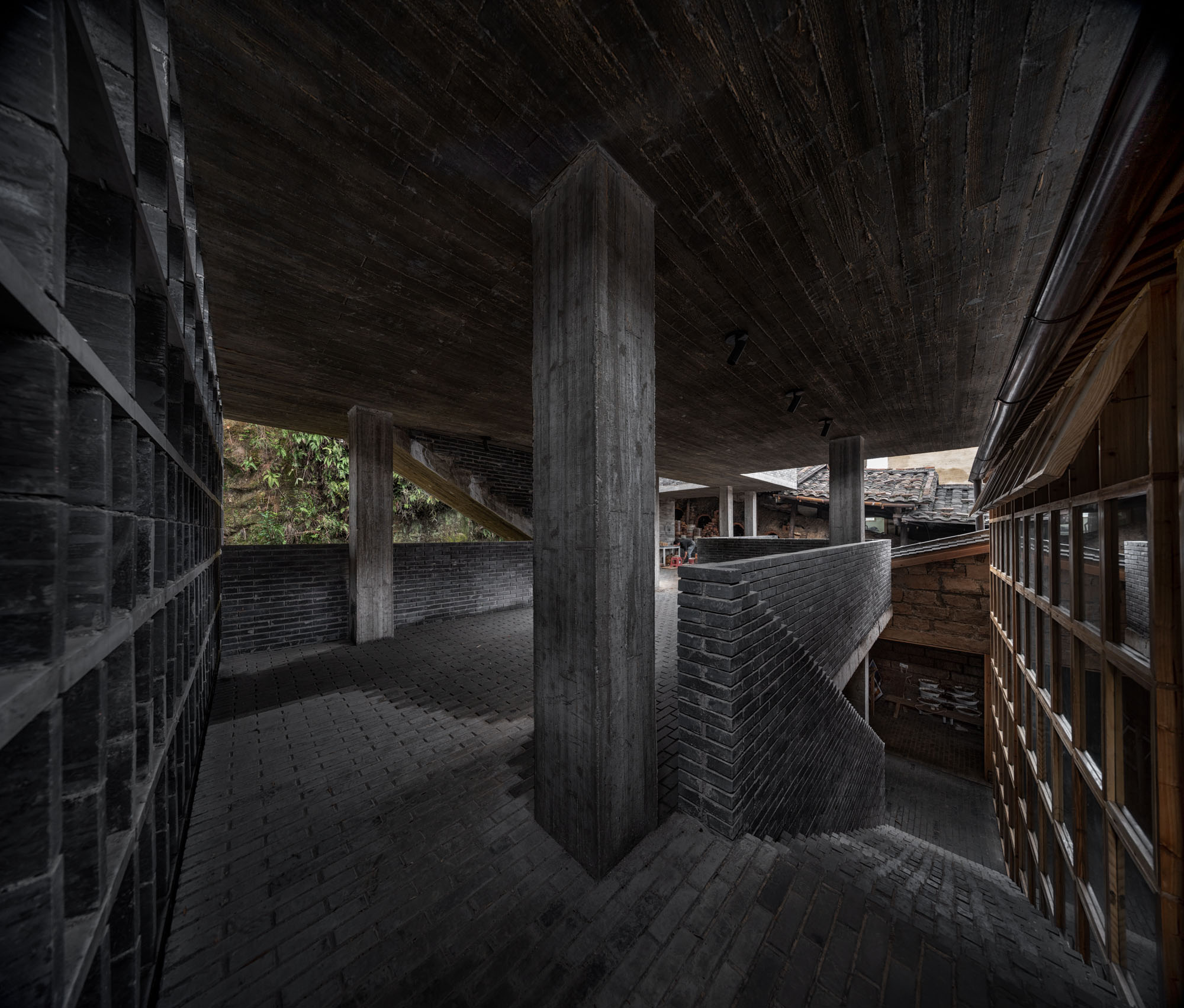
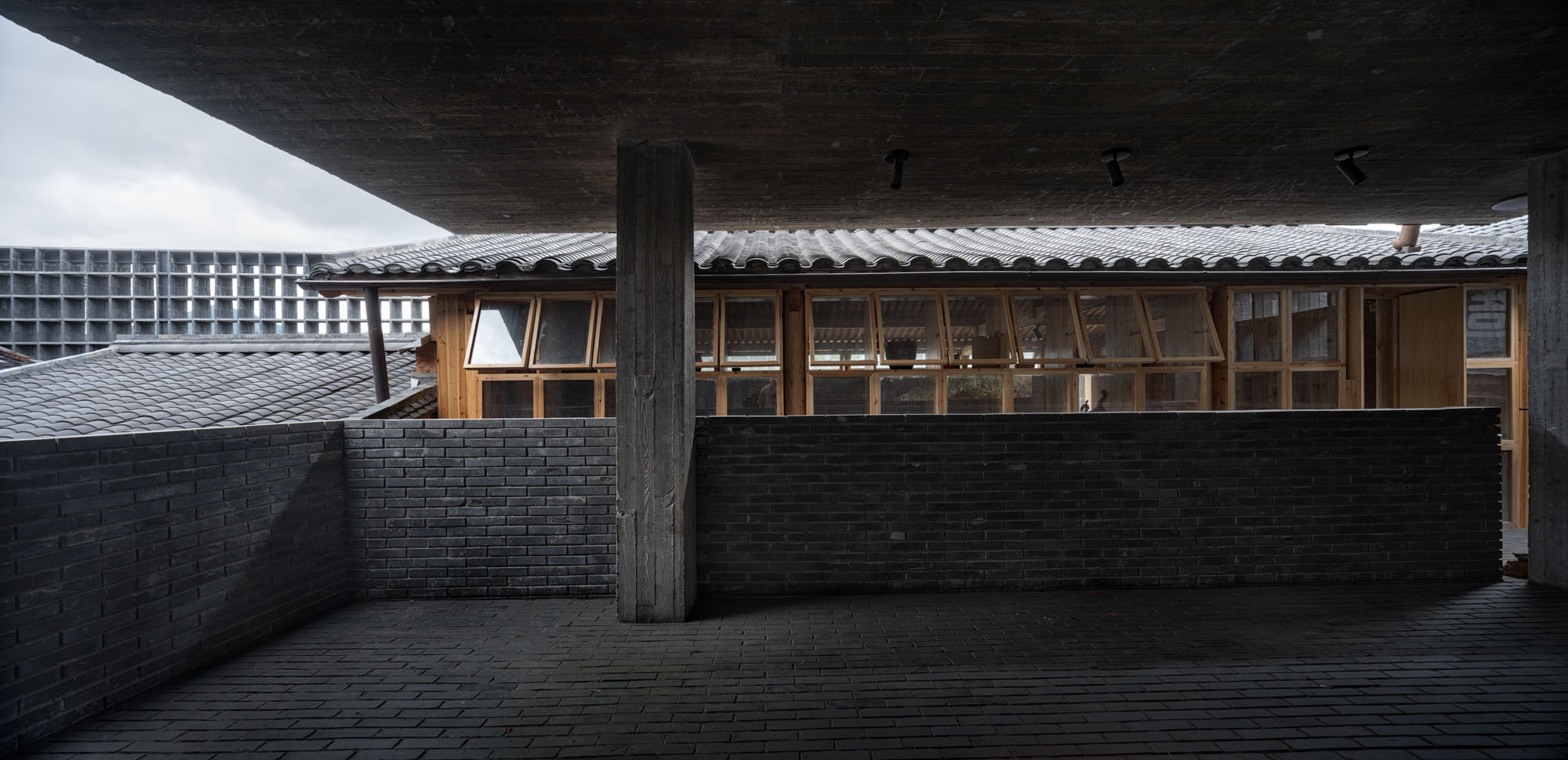
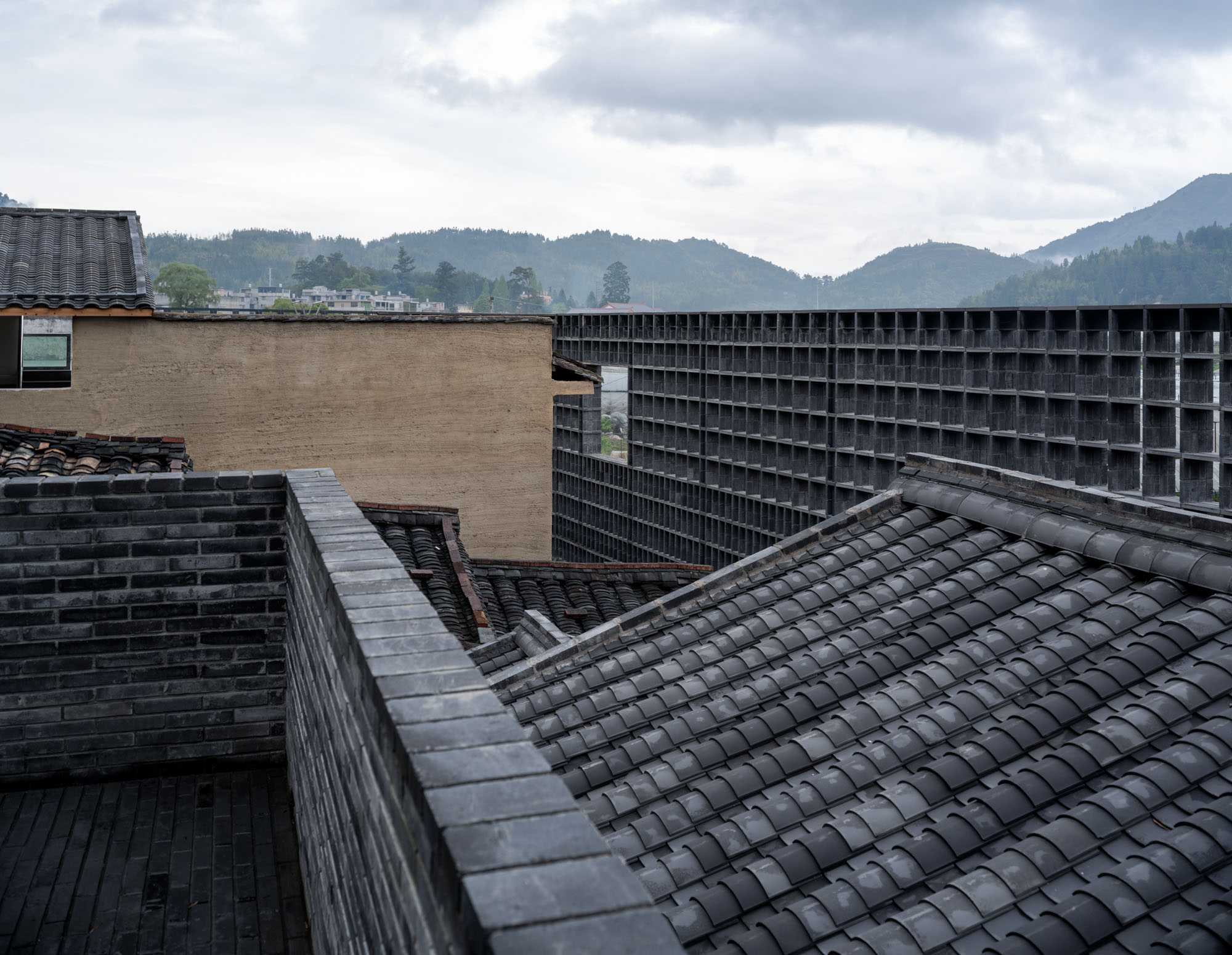
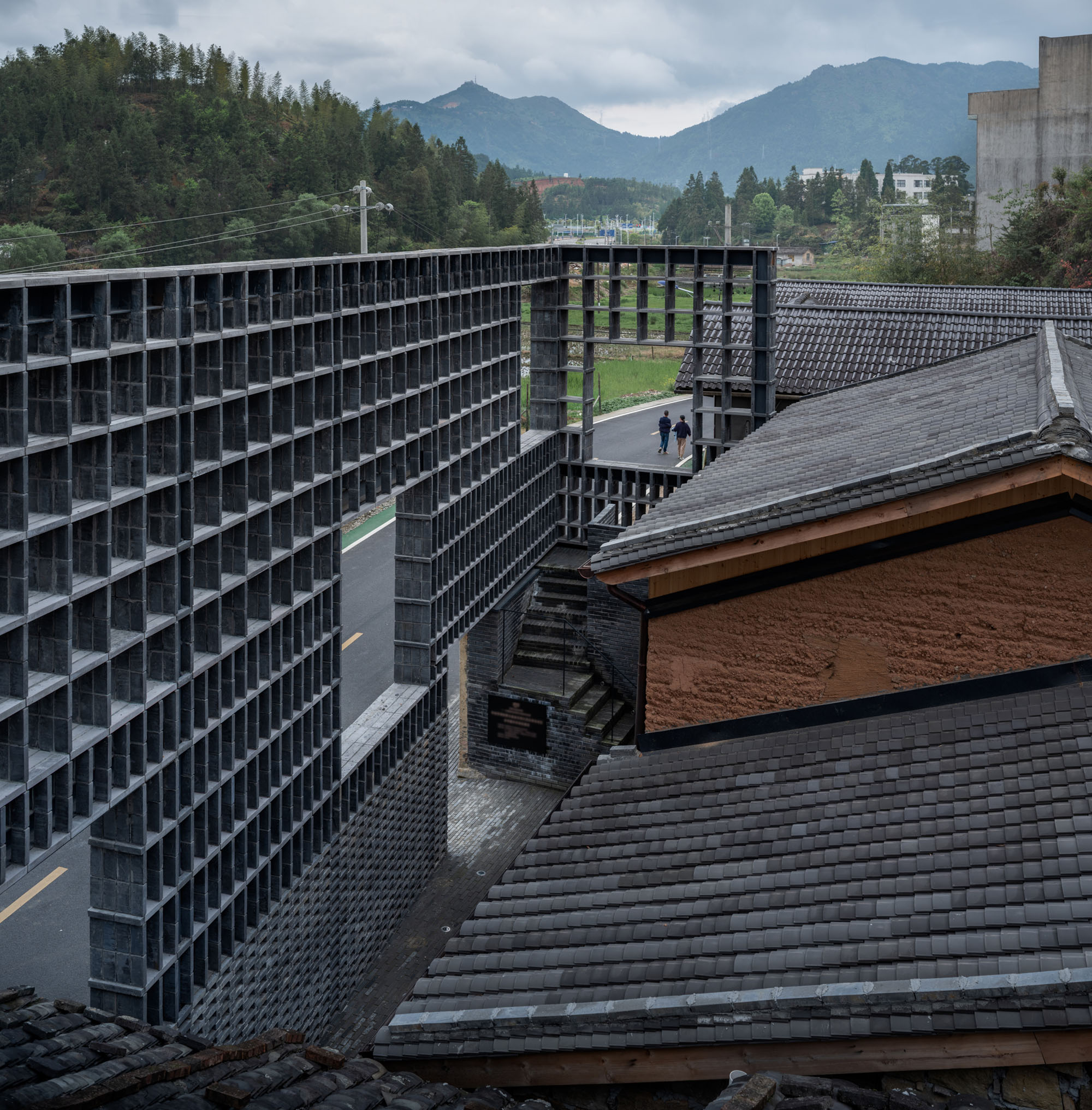
高さ8mに及ぶ灰色のレンガ壁は、空間幾何学、構造技術、そして象徴的凝縮装置としての役割を同時に担う。この壁は竜窯の切妻と位置を合わせ、窓によって選択的に開かれている。フレーミングという行為を用いることで、三次元の生産プロセスを、象徴的な共鳴を持つ立面図のようなイメージへと変換する。
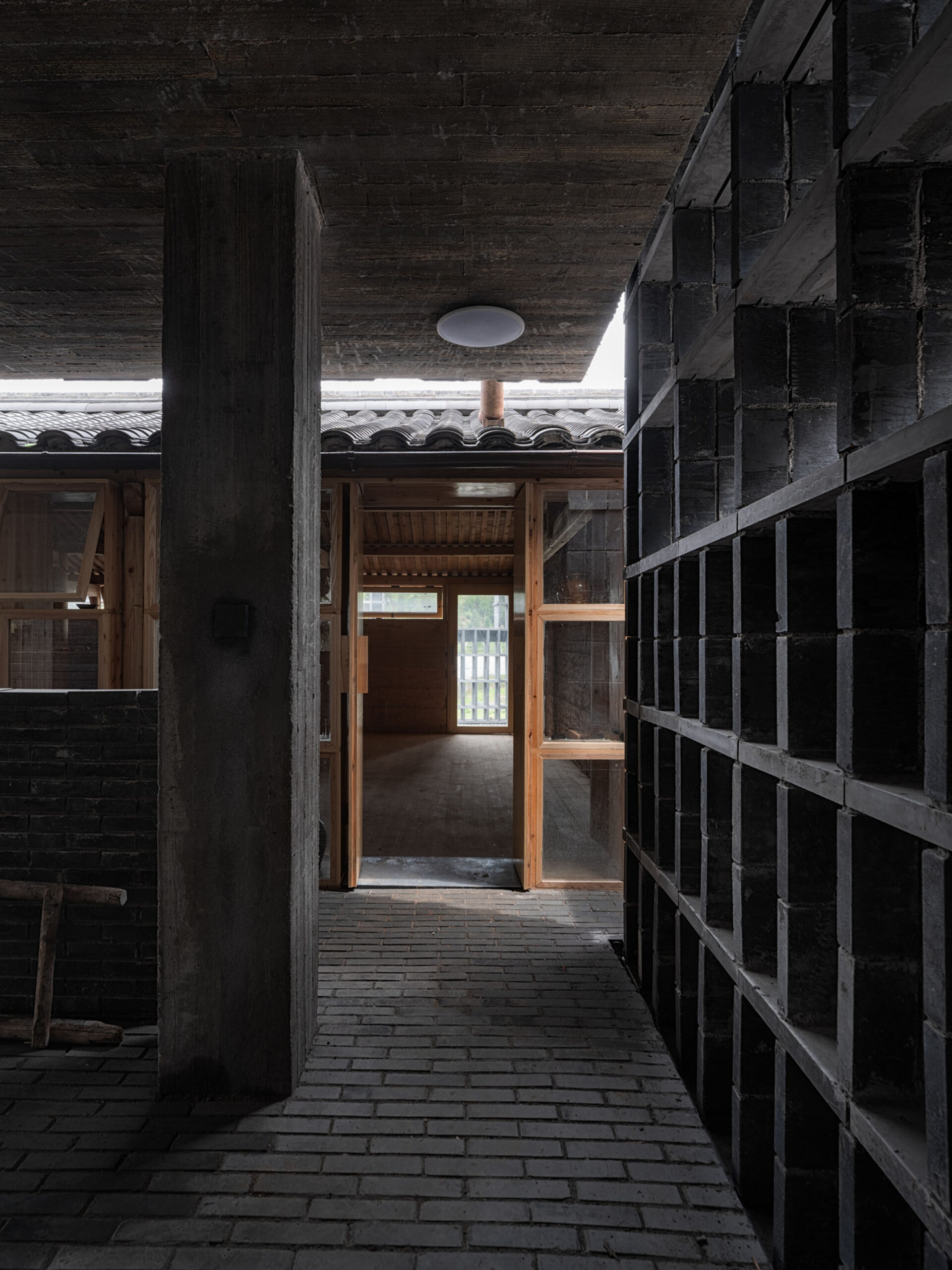
多孔性を実現するため、内部構造には鋼製フレームと鉄筋格子が用いられた。レンガユニットはモジュール化され、密から疎へと変化するグラデーションを生成する。これが窯の気流を暗示しつつ、重厚感と軽やかさの間に視覚的な緊張感を生み出している。壁は「障壁」と「窓」の両方の機能を併せ持ち、アヤ陶器を想起させる土焼レンガという素材を用いることで、伝統と現代的介入を媒介し、工芸の系譜と建築的行為を1つに結びつけている。
©︎ Shan-jian images
©︎ Shan-jian images
©︎ Shan-jian images
©︎ Shan-jian images
©︎ Shan-jian images
©︎ Shan-jian images
©︎ Shan-jian images
©︎ Shan-jian images
©︎ Shan-jian images
©︎ Shan-jian images
©︎ Shan-jian images
©︎ Shan-jian images
©︎ Shan-jian images
©︎ Shan-jian images
©︎ Shan-jian images
©︎ Shan-jian images
©︎ Shan-jian images
©︎ Shan-jian images
©︎ Shan-jian images
©︎ Shan-jian images
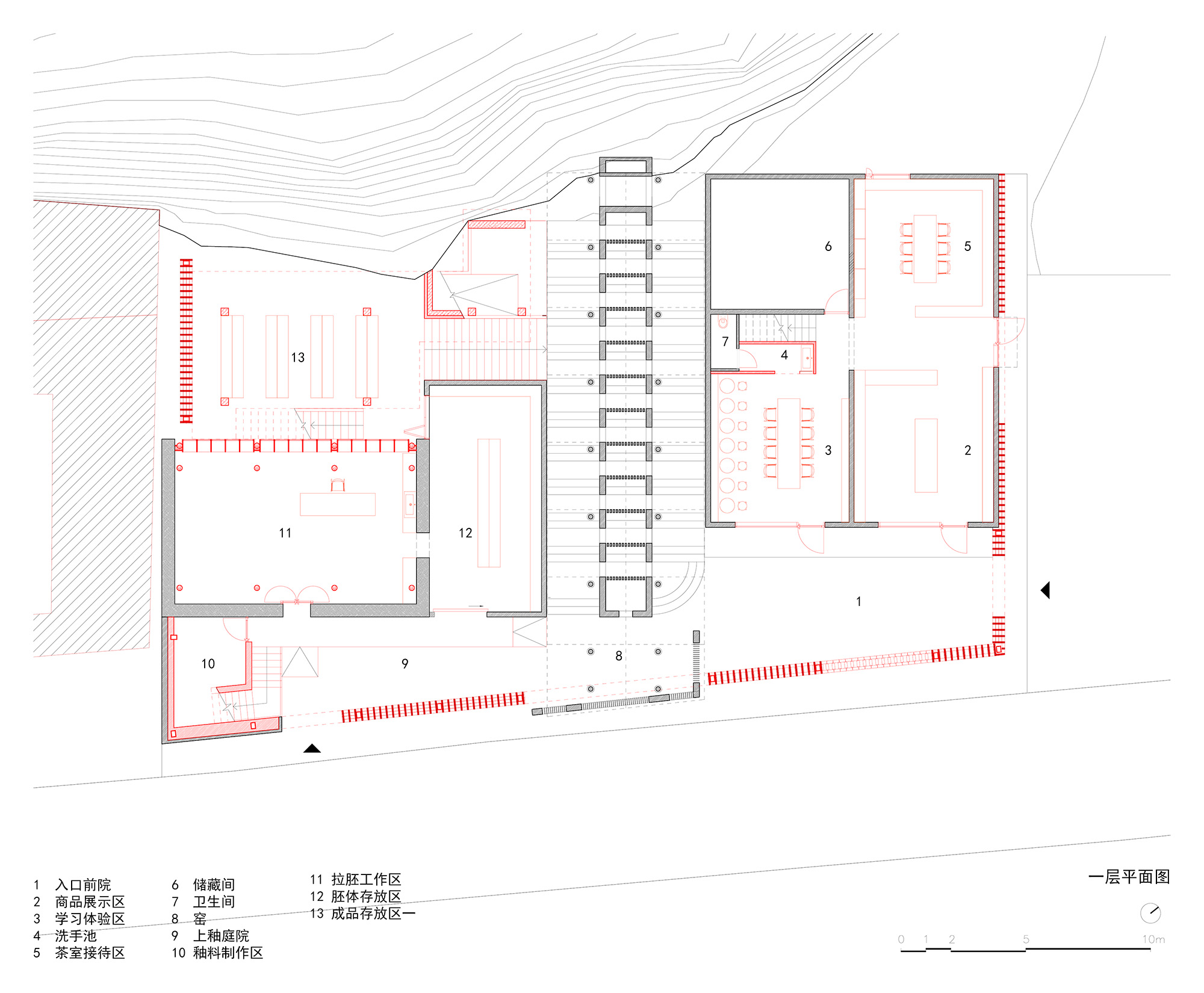
Ground Floor Plan
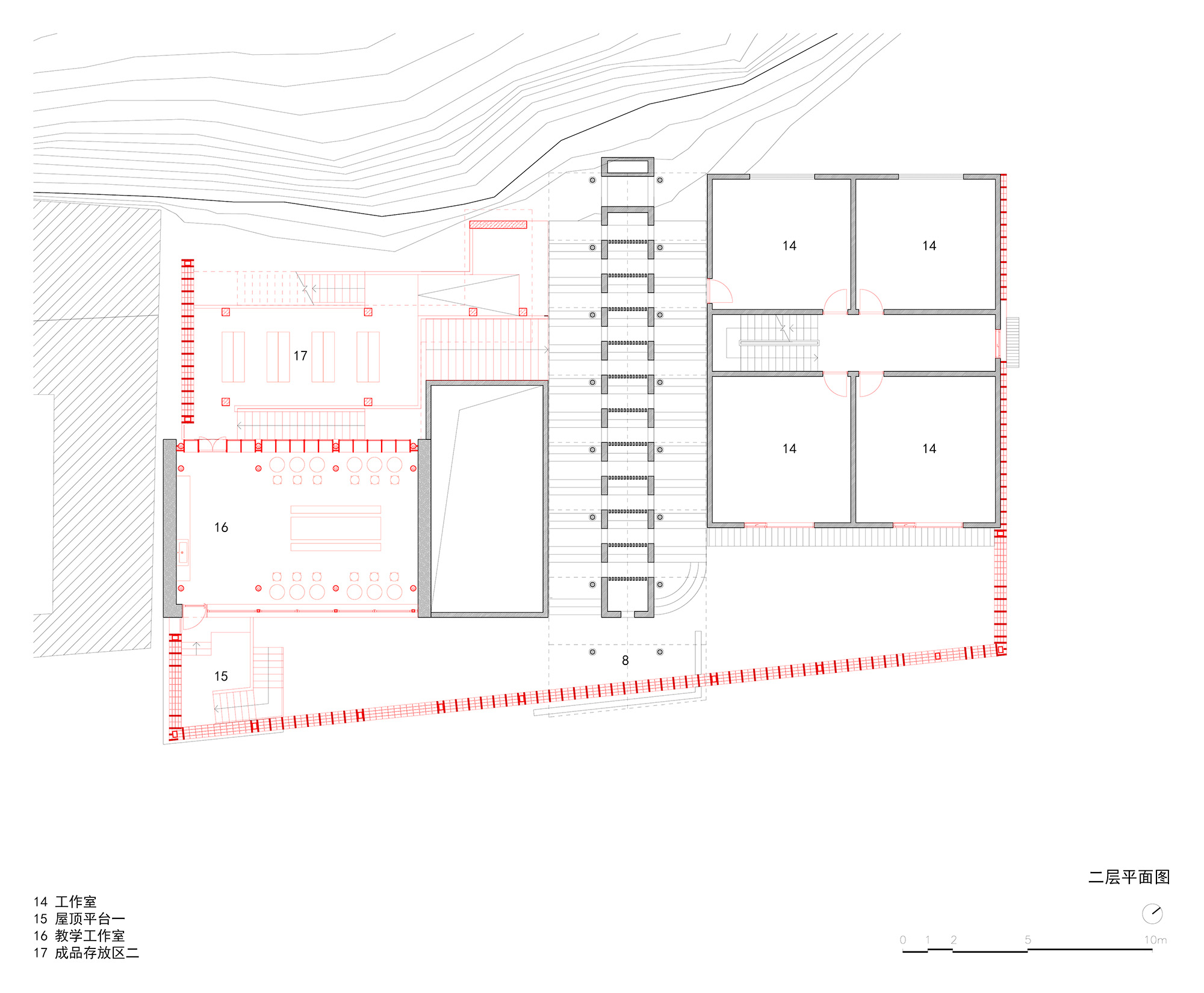
Second Floor Plan
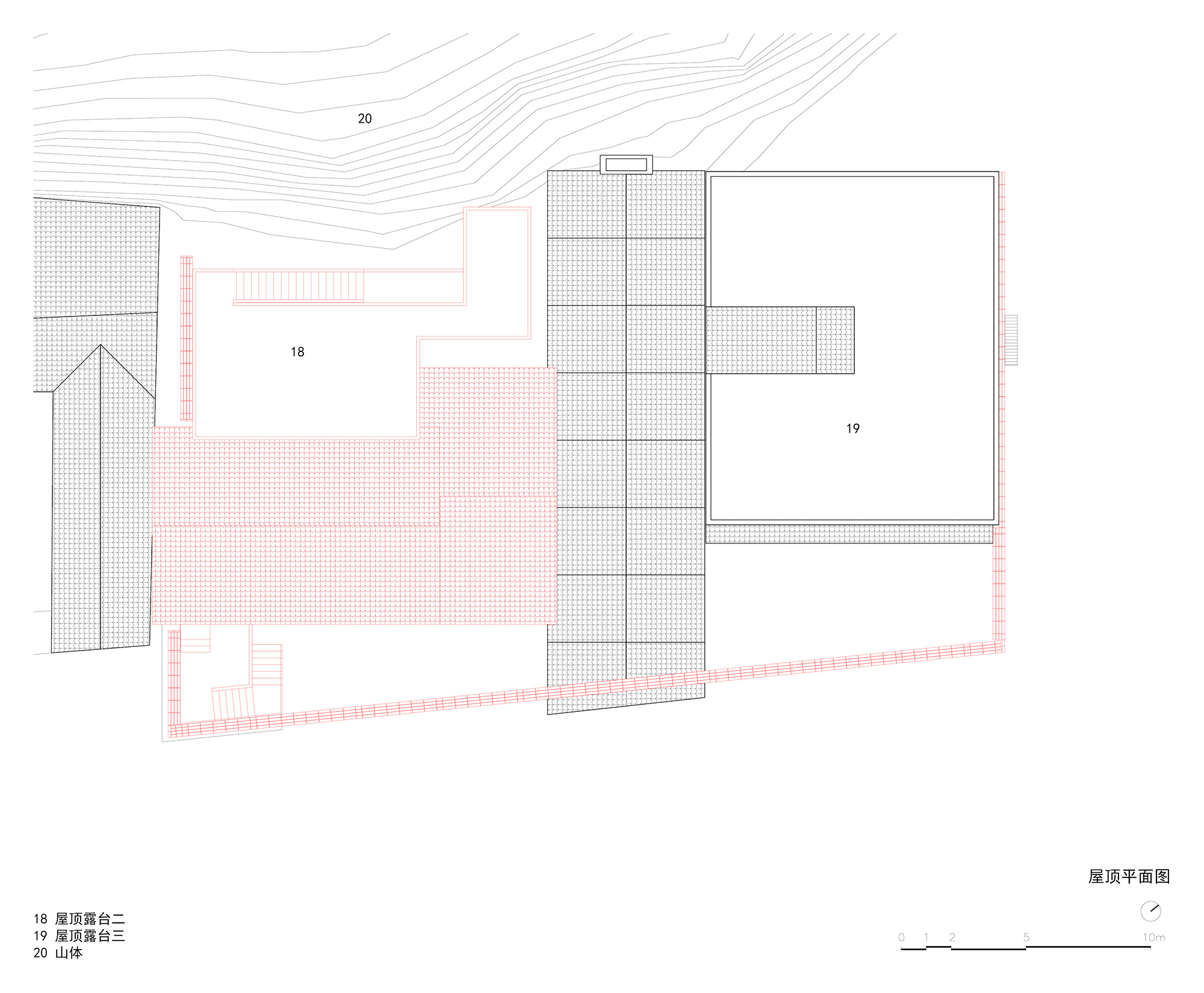
Roof Plan
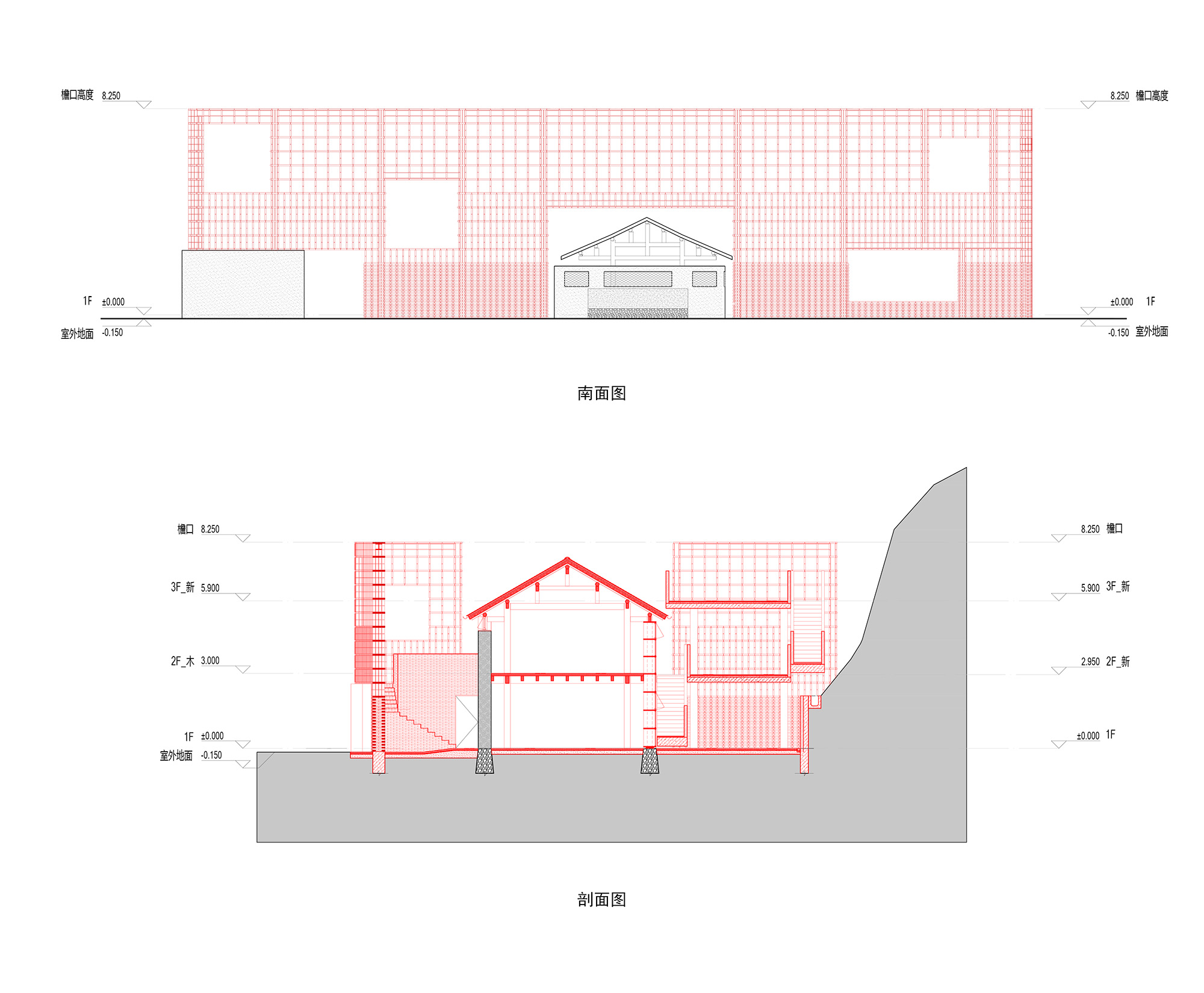
Elevation and Section
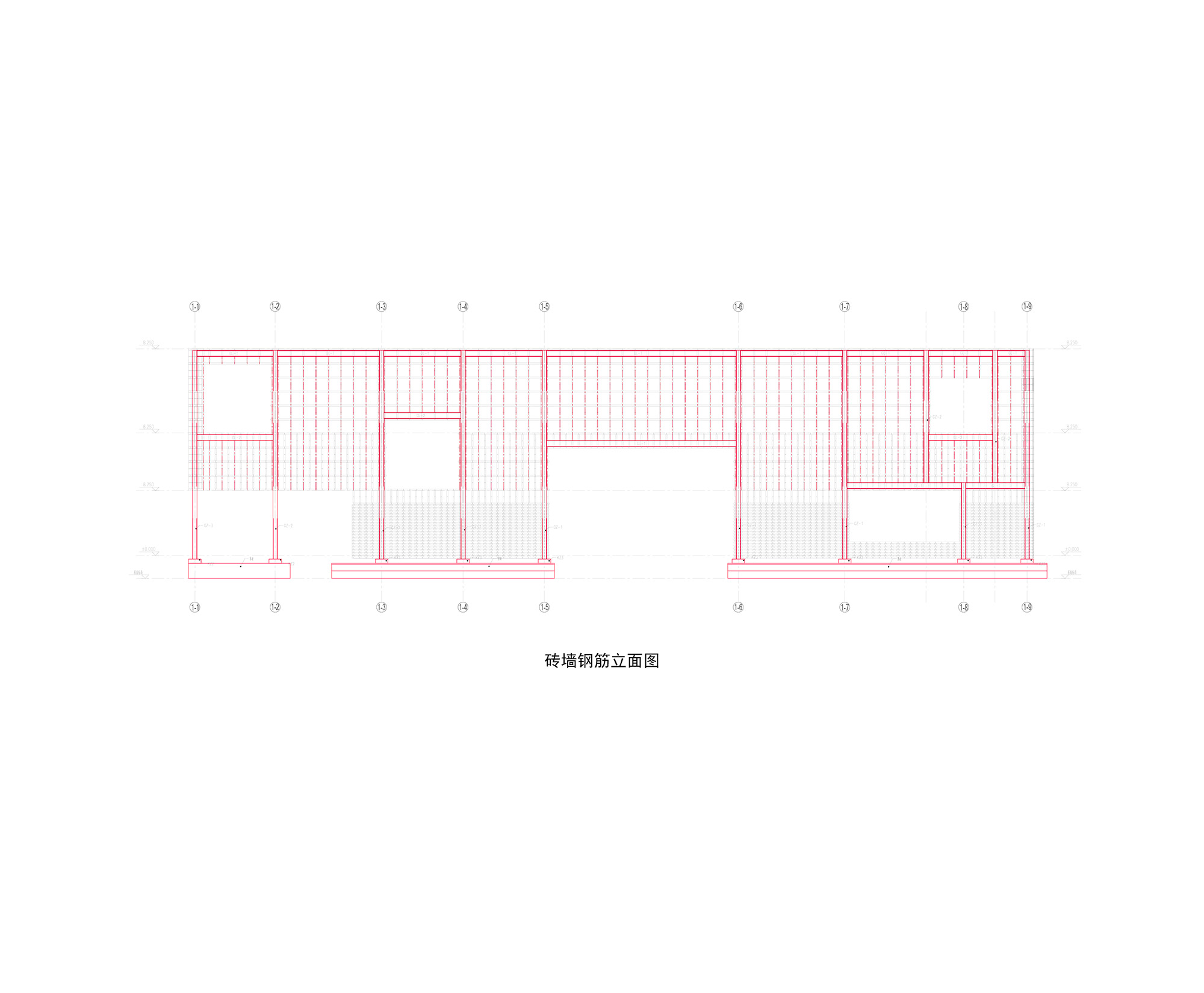
Brick Wall Structural Diagram
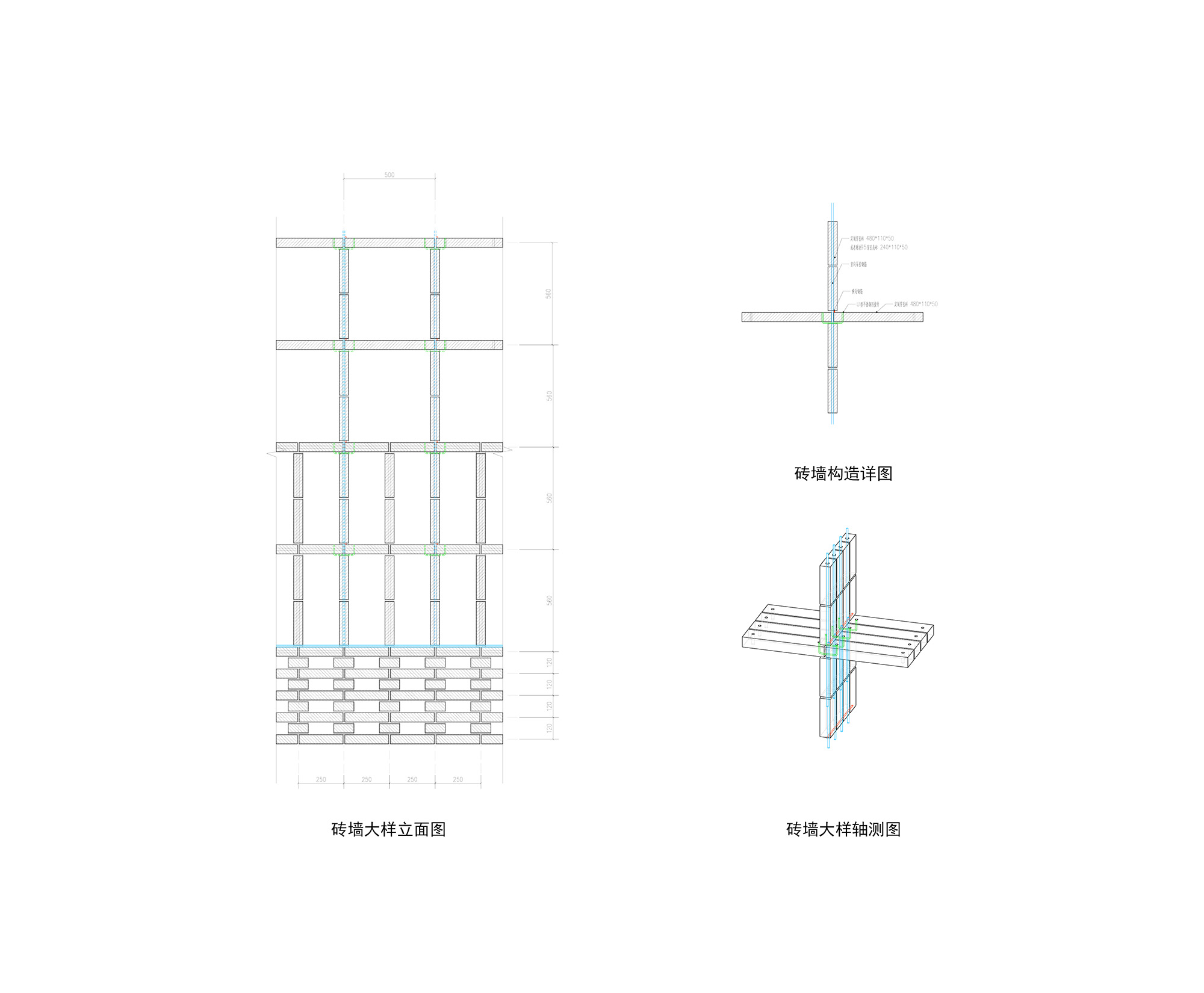
Brick Wall Detail
以下、YFSのリリース(英文)です。
Heritage “Ay” Kiln Adaptive Renewal: Transparent Boundaries
Project Information
Project Name: Heritage “Ay” Kiln Adaptive Renewal
Location: Zhouning, Fujian Province, China
Architects: YFS + WUGE Studio
Design Leads: Wang Lulu & Zhang Mingming (WUGE Studio); Zhang Yifan (YFS)
Project Team: Yan Juan, Xu Junwei, Gu Songming
Structural Consultant: Yang Xiaotian (iStructure)
Design / Completion: 2023 / 2025
Gross Floor Area: 778 m²
Site Area: 1,048 m²
Photography: Wu QingshanOffice Contact
YFS
office_YFS@yeah.net
www.z-yfs.comWUGE Studio
wugestudio@gmail.com
www.wugestudio.comProject Description
“Ay” (硋) is a type of black-glazed ceramic indigenous to the mountainous region of northeastern Fujian, positioned between pottery and porcelain. The site is a century-old traditional Ay kiln built against a hillside, forming an elongated, sloped “dragon kiln.” Situated at the village entrance and flanked by open fields, the site exhibits characteristics of a rural handicraft compound: the kiln sits at the center, an old rammed-earth house to the west, a modern brick-and-concrete dwelling to the east, and several stone outbuildings scattered around.The coexistence of elements from different periods was not intentionally curated, but resulted from a century of self-organized production—spaces expanded, repaired, and stacked as needs arose. While this organic evolution embodies local craftsmanship, it also imposes contemporary constraints: boundaries between working, living, displaying, and making became fragmented and visually overloaded, dissolving cultural depth into ordinary labor.
Transparency & Obstacle
Lacking a buffer space between the site and the adjacent road, the design introduces a two-story boundary wall along the plot edge as a spatial mediator—organizing dispersed buildings, clarifying boundaries with geometric precision, and allowing the existing structures to be read as historical artifacts. Rammed earth, timber, stone, and the dragon kiln are retained and interlocked with new construction systems to form a multi-temporal field.
The concept resonates with Jean Starobinski’s La Transparence et l’Obstacle: the pursuit of the “transparent” reality is often obstructed by realities themselves. Architecture here operates precisely through such obstacles—by reorganizing barriers to clarify what was once obscured. “Transparency” and “obstacle” are dialectical; the physical wall reconciles disorder, while carefully placed apertures frame views and focus attention. Rather than dissolving materiality, the project constructs a bounded form of cognitive transparency—one unique to this craft-based landscape.
Spatial Organization
The traditional ceramic-making sequence is spatially clarified:
raw material → forming → glazing → firing → display/experience → retail. Workspaces, public visits, and experiential programs are layered to enable “production-as-exhibition,” aligning visitors’ circulation with craftsmen’s workflows without interference.The boundary wall and inner buildings generate three courtyards: the front courtyard for reception and display; the central courtyard for daily production; the rear courtyard connected to terrain and hillside, where multi-level platforms and stairways enable panoramic observation. Visitors thus not only see but encounter the unfolding of intangible heritage.
Material & Structural Strategy
Material interventions respect existing logic while exposing temporal layers. Reusable rammed-earth and stone walls were preserved. Stone—once structurally adjacent to the kiln—was reinforced to maintain its grounded mass. Dilapidated rammed-earth areas were replaced by timber shelving and glass display walls; interiors adopt a double-layer timber framework executed by local carpenters.
New rear platforms employ beamless concrete slab systems with 10 cm wood-grain textures—allowing concrete’s once-fluid materiality to mediate between solid rock and porous earth, bridging natural terrain and built structure.
Brick Construction
The 8-meter-tall grey-brick wall operates simultaneously as spatial geometry, structural technique, and symbolic condenser. The wall aligns with the gable of the dragon kiln and opens selectively with windows, using the act of framing to translate the three-dimensional production process into an elevation-like image with symbolic resonance.
To achieve porosity, a steel frame and rebar lattice form the internal structure. Brick units are modularized to generate a gradient—from dense to open—suggesting the kiln’s airflow and producing a visual tension between heaviness and lightness. The wall functions as both “obstacle” and “window,” using a material (earth-fired brick) that echoes Ay ceramics to mediate between heritage and contemporary intervention—linking craft lineage and architectural agency.
YFS 公式サイト
www.z-yfs.com
WUGE Studio 公式サイト
www.wugestudio.com
![[Interview]iF Design代表のウヴェ氏に聞く、建築と都市の2026年メガトレンド](https://magazine-asset.tecture.jp/wpcms/wp-content/uploads/2026/07/23221054/iF_AwardCeremony_2026_AwardCeremony-82-900x600.jpg)
![[Report]激変する時代の中で、建築とデザインはどう拡張するか。「iF DESIGN AWARD 2026」授賞式&最新トレンド](https://magazine-asset.tecture.jp/wpcms/wp-content/uploads/2026/07/24010304/iFDesignTrendConference26-45-900x600.jpg)
![[Report]RUI Architectsが可動モジュールを設計して松竹のアートスペースをリニューアル、柿落とし展「継承のトランジション」の会場デザインも担当](https://magazine-asset.tecture.jp/wpcms/wp-content/uploads/2026/07/24141011/20260713shutl_press11-01309-c-900x629.jpeg)
![[Interview]BIM図面審査がスタート! さまざまな設計者のニーズに応えるVectorworksによる「限界のないデザイン」の世界](https://magazine-asset.tecture.jp/wpcms/wp-content/uploads/2026/07/13084316/rinterview_vectorworks_056-e1784200974912-900x555.jpg)