
歴史的遺構に"触れられる"再生プロジェクト - 赤い通路が建築群を縫い合わせる中国・南京の商業飲食施設〈ビッグ・レッド・クレイフィッシュ〉
©︎ Cong Lin
中国・江蘇省の南京市に建つ〈ビッグ・レッド・クレイフィッシュ(Big Red Crayfish)〉は、老門東の歴史的建築群を「ロブスター」をテーマに再生した商業・飲食施設です。
中国の建築・インテリアデザインスタジオ DAED design and researchが設計しました。
注目ポイント
- 4つの庭を貫き、各棟を縫合する「朱色(チャイニーズ・レッド)」の鋼製通路
- 歴史的建築に「避難経路」とSNSによる「集客効果」を付与
- 遺構の保存だけでなく「触れられる歴史」へと昇華するプロジェクト
(以下、DAED design and researchから提供されたプレスキットのテキストの抄訳)
©︎ Cong Lin
©︎ Cong Lin
歴史と日常が交錯する、南京・老門東
南京の老門東側に位置し、秦淮河のほとり、烏衣巷(ういこう)の入口に建つこのプロジェクトは、東晋時代の名門、王道と謝安の旧宅跡地に立地している。古雅な建築群はかつての繁栄を偲ばせつつ、古都南京の伝統的な生活様式が息づく空間である。ここでは文化遺産と日常の活気が交わり、独特の雰囲気を醸し出している。
©︎ Cong Lin
©︎ Cong Lin
「長期的視点」に基づく歴史的建築の改修
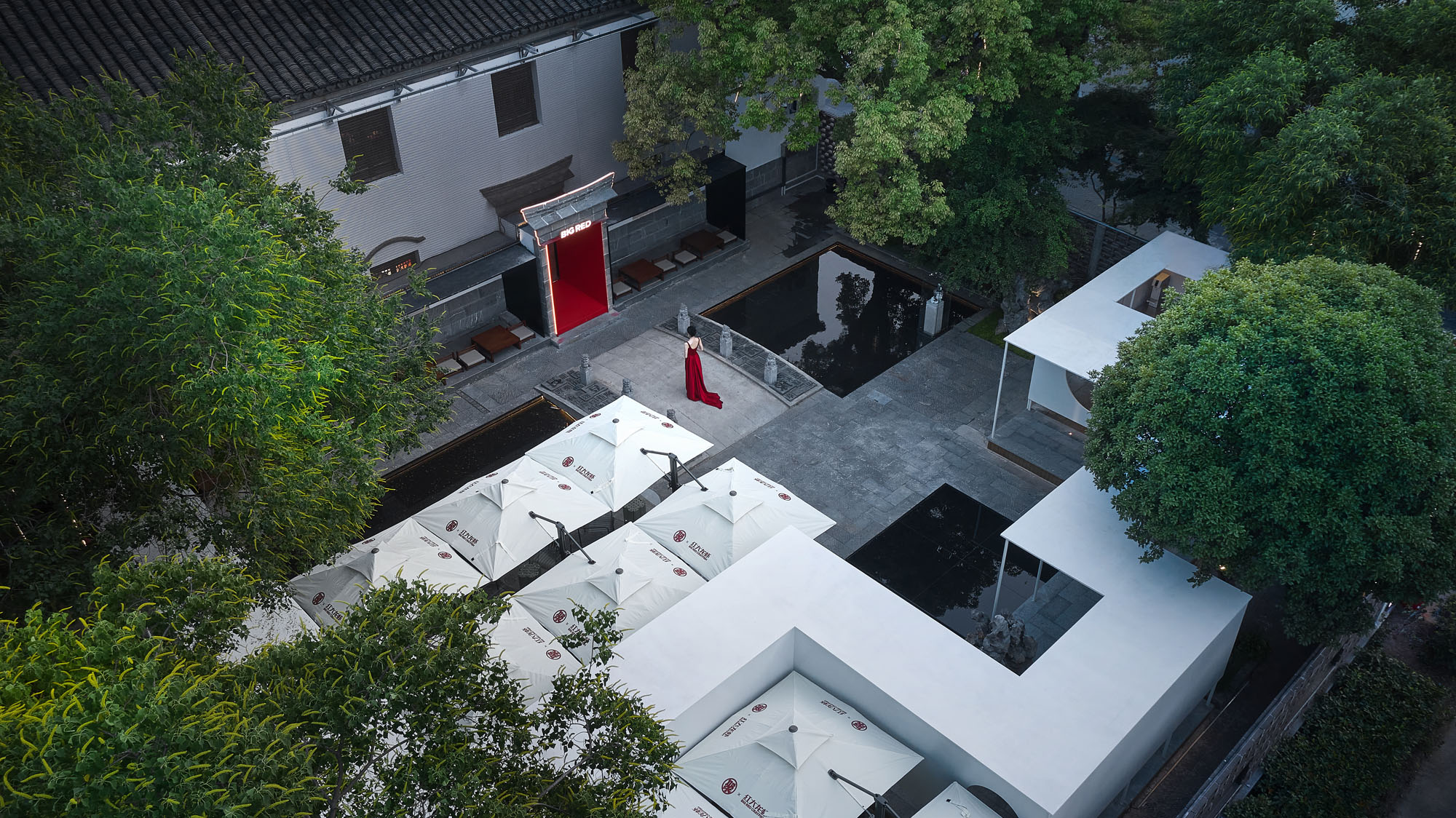
本プロジェクトは、DAED design and researchによる新たな歴史的建造物の改修事例である。2,000m²の歴史的建造物を、「ロブスター」をテーマとした飲食・商業空間へと再生するプロジェクトであり、一貫して「長期的視点」を追求した。歴史的な遺構の最大限の保存と建物の持続可能性の向上を最優先事項としている。
©︎ Cong Lin
©︎ Cong Lin
聖域ではなく「触れられる歴史」へ
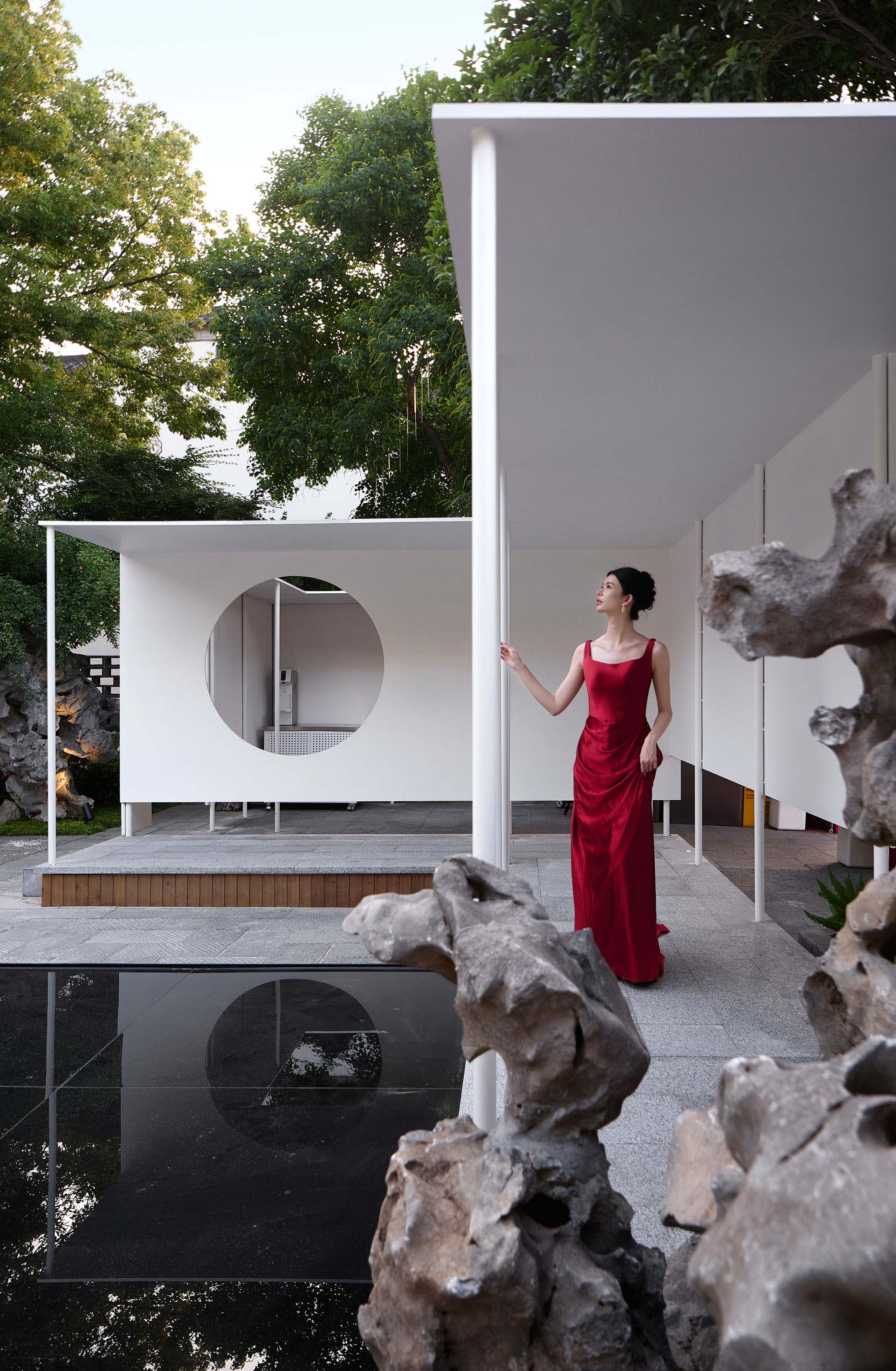
DAED design and researchにとって、歴史的建造物を守る最良の方法は、触れてはならない聖域として扱うことではなく、人々が入り込み、触れ、活用できるようにすることである。
現代生活の一部とすることで、新たな機能的文脈の中で歴史的空間の可能性と豊かさを再構築し、「遺物」が単なる過去の化石となるのを防ぐのである。
©︎ Cong Lin
空間を縫合する朱色の曲線
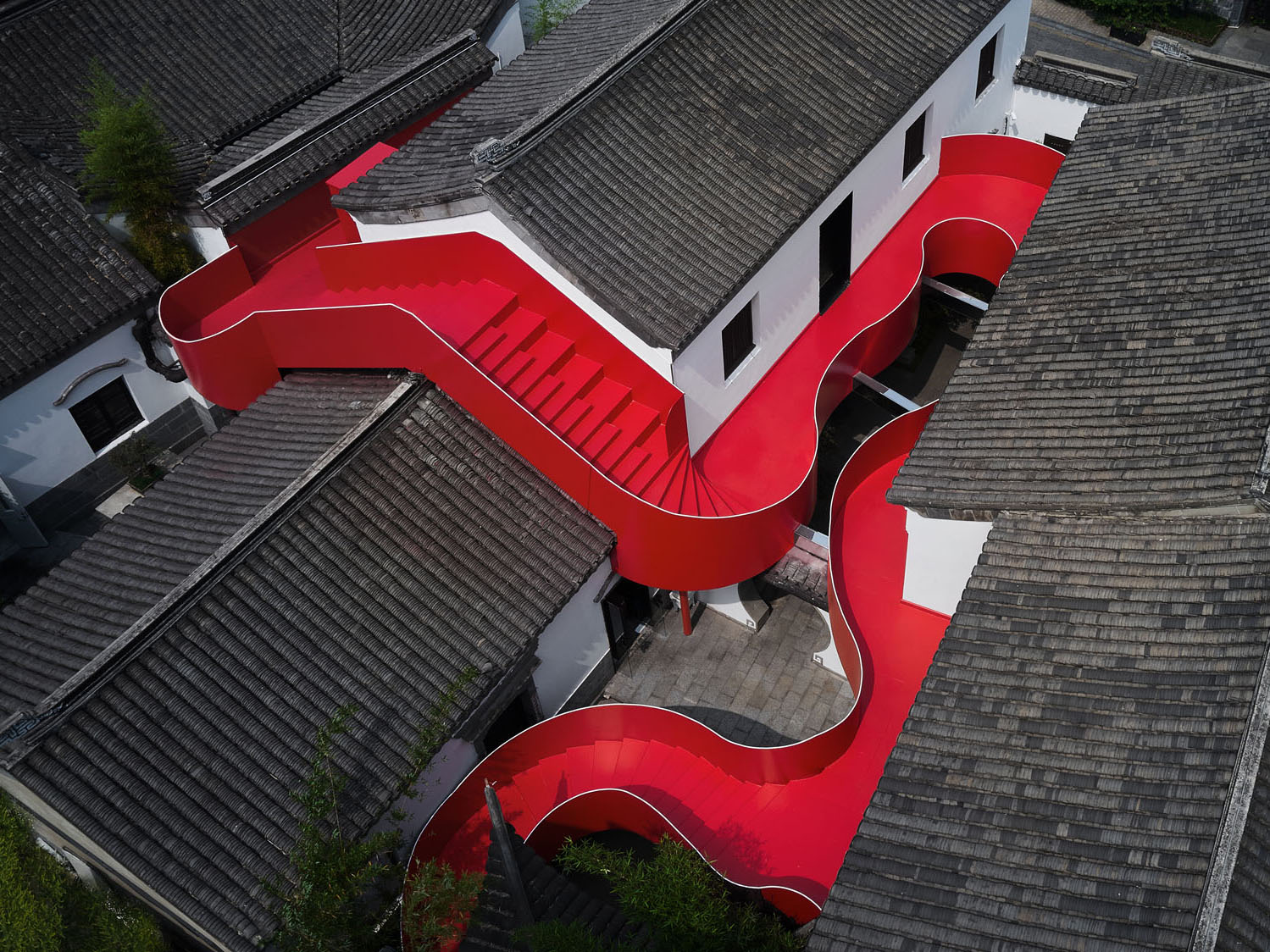
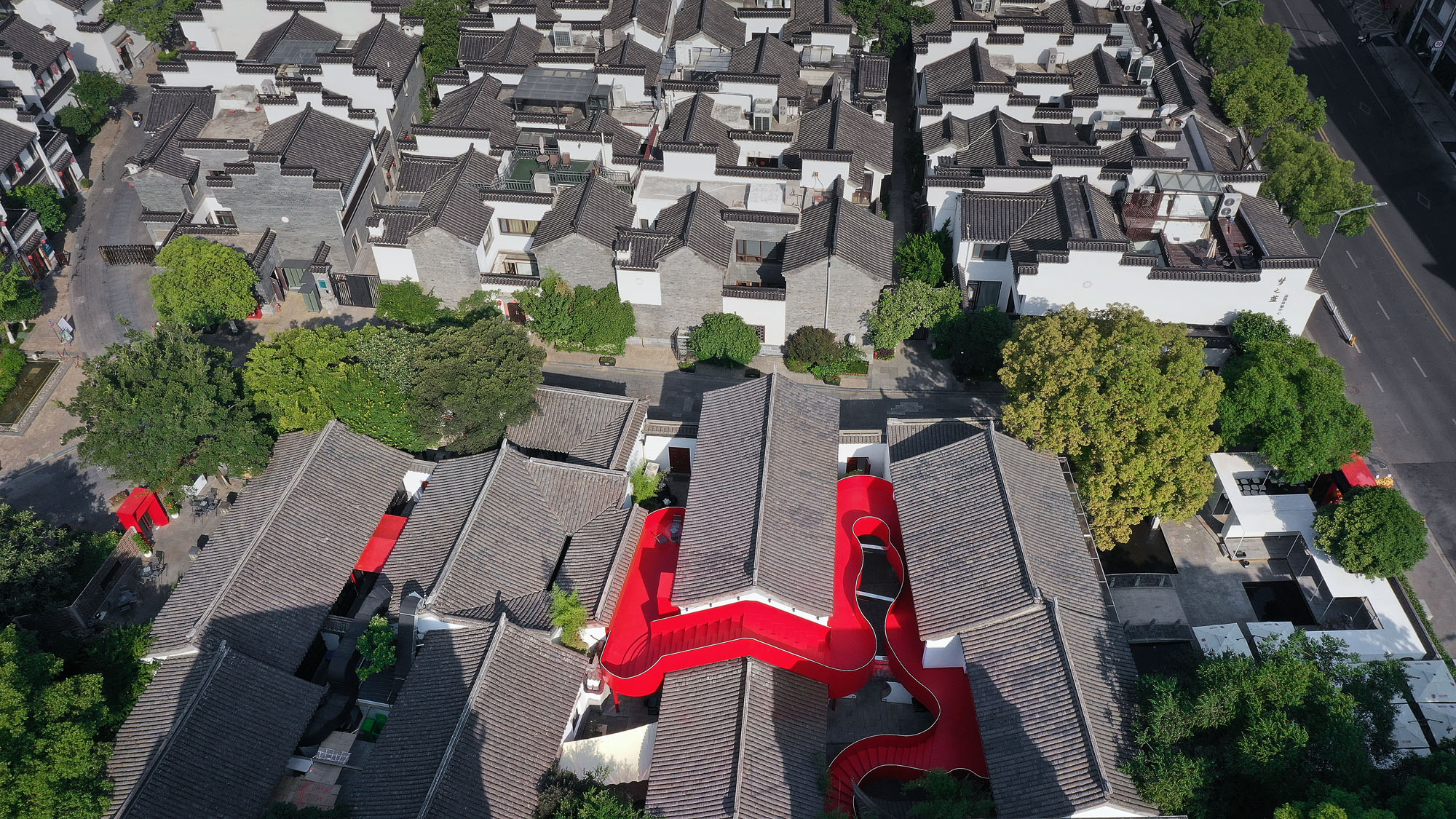
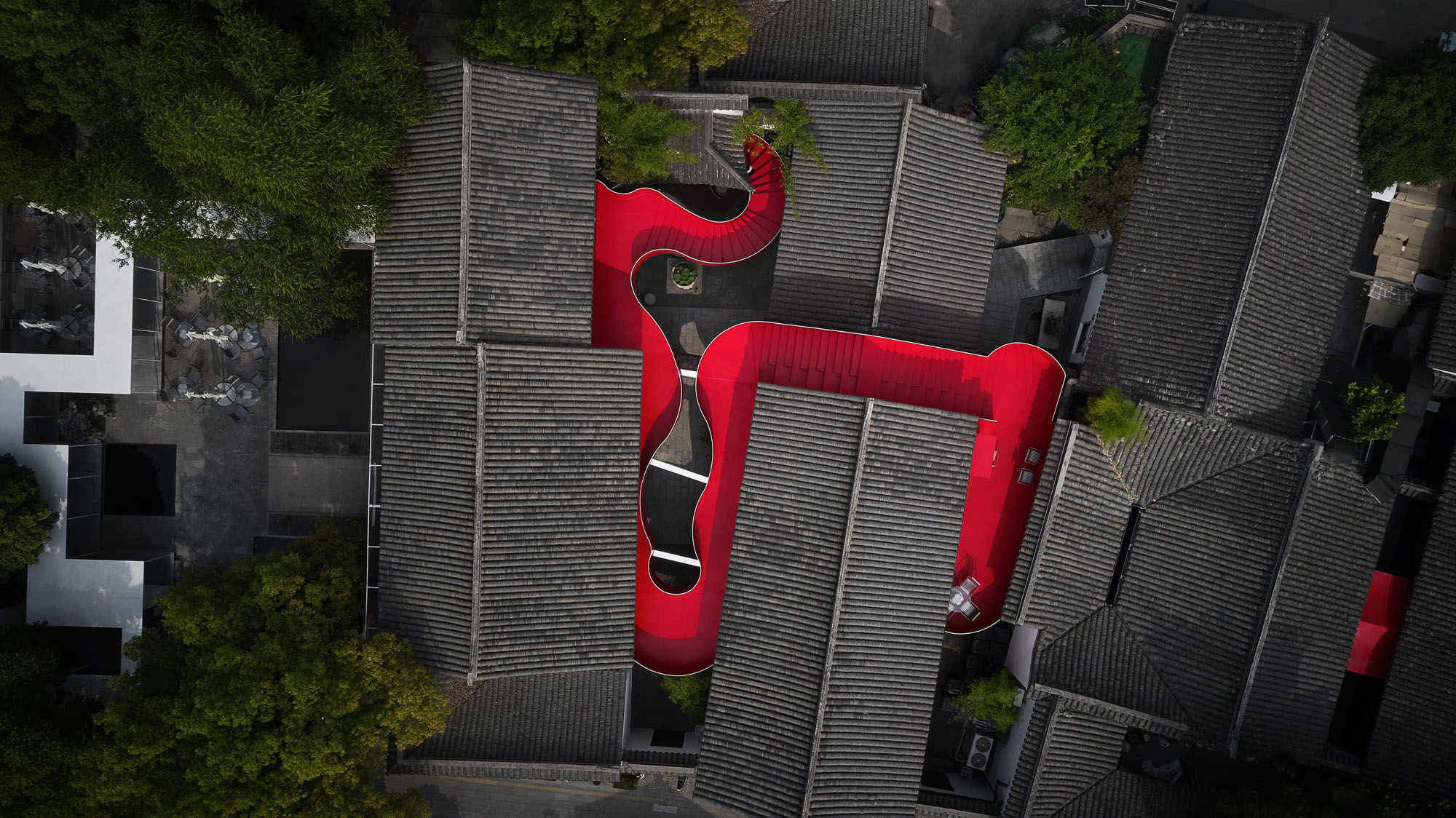
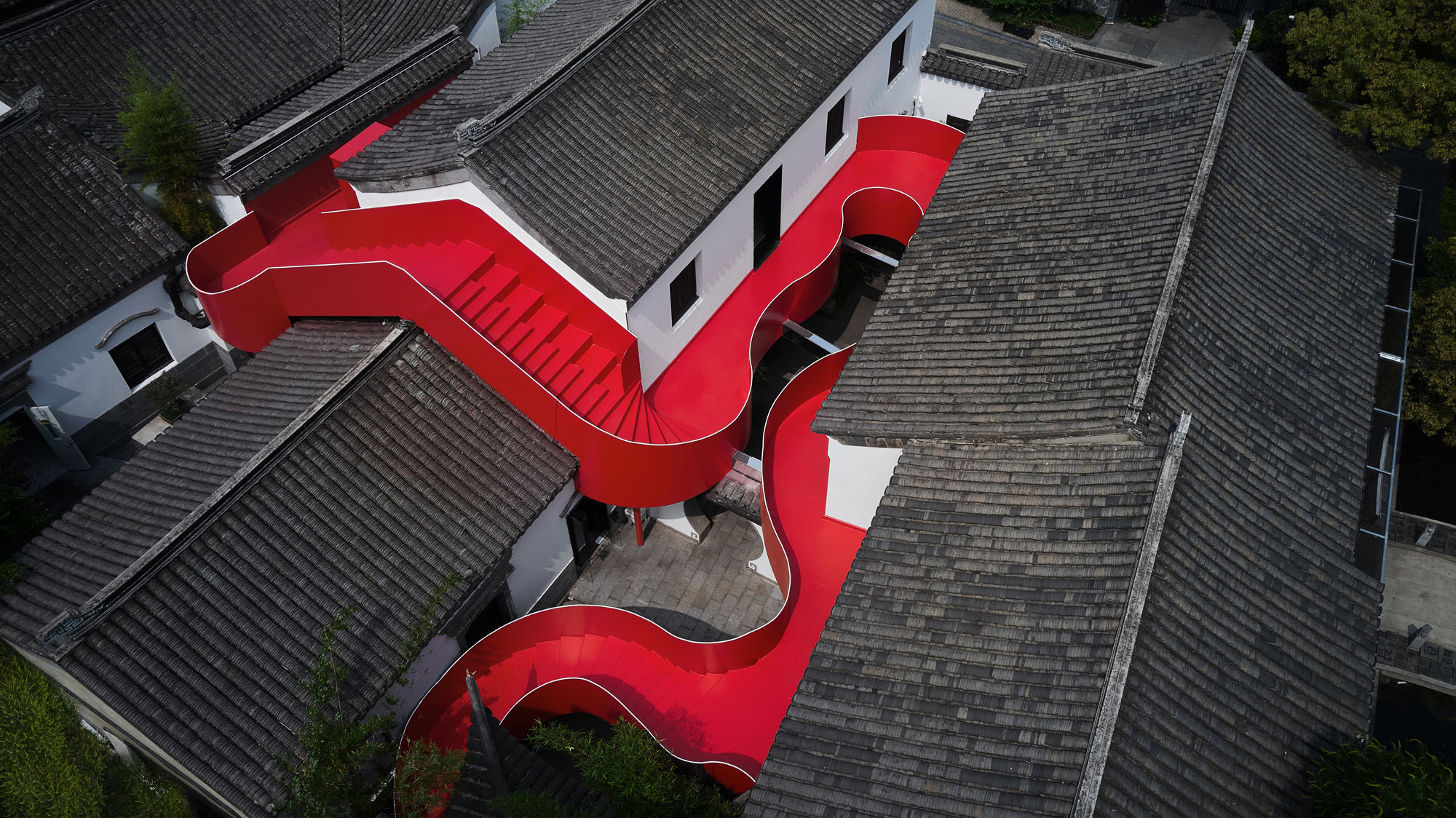
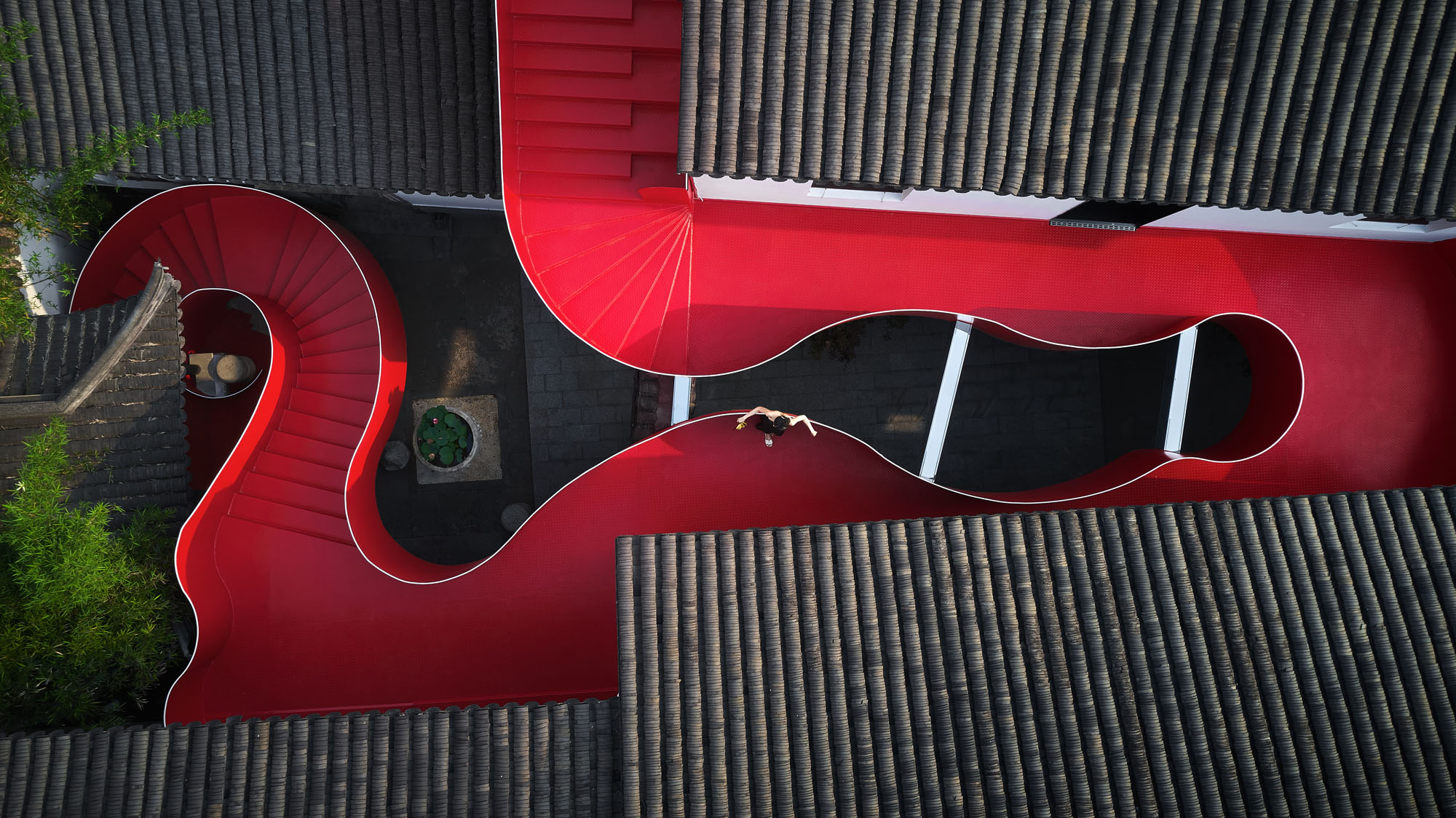
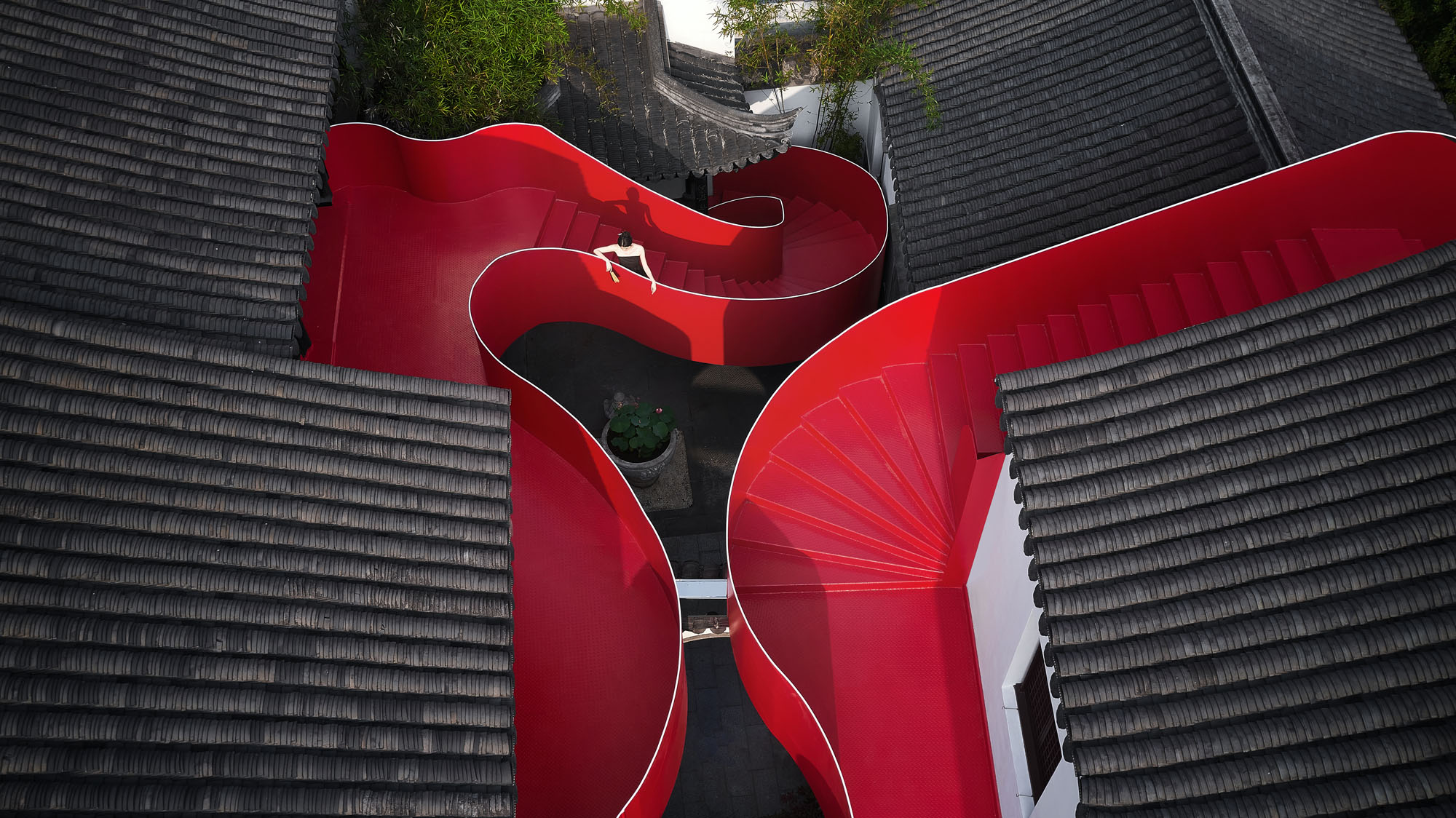
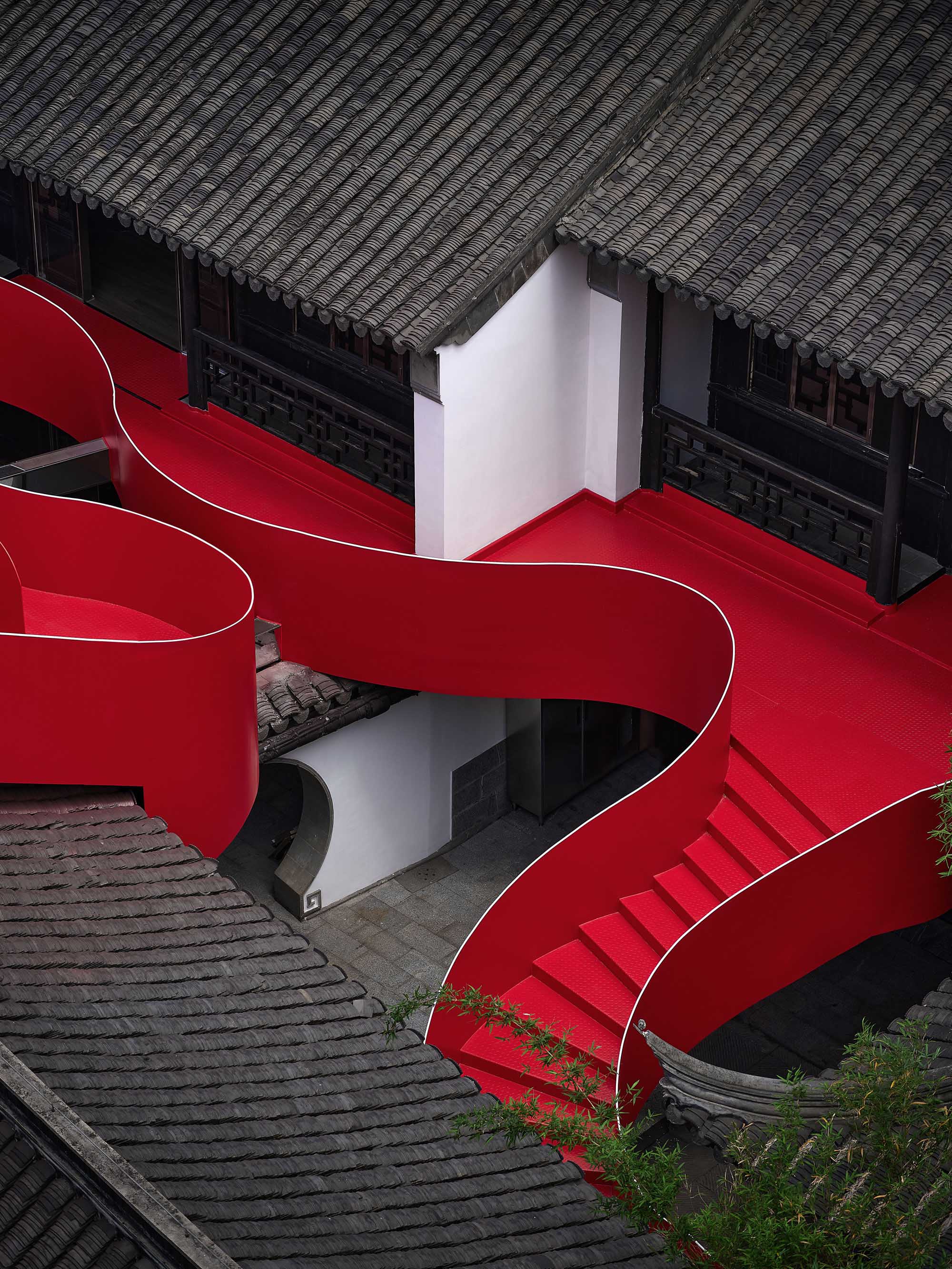
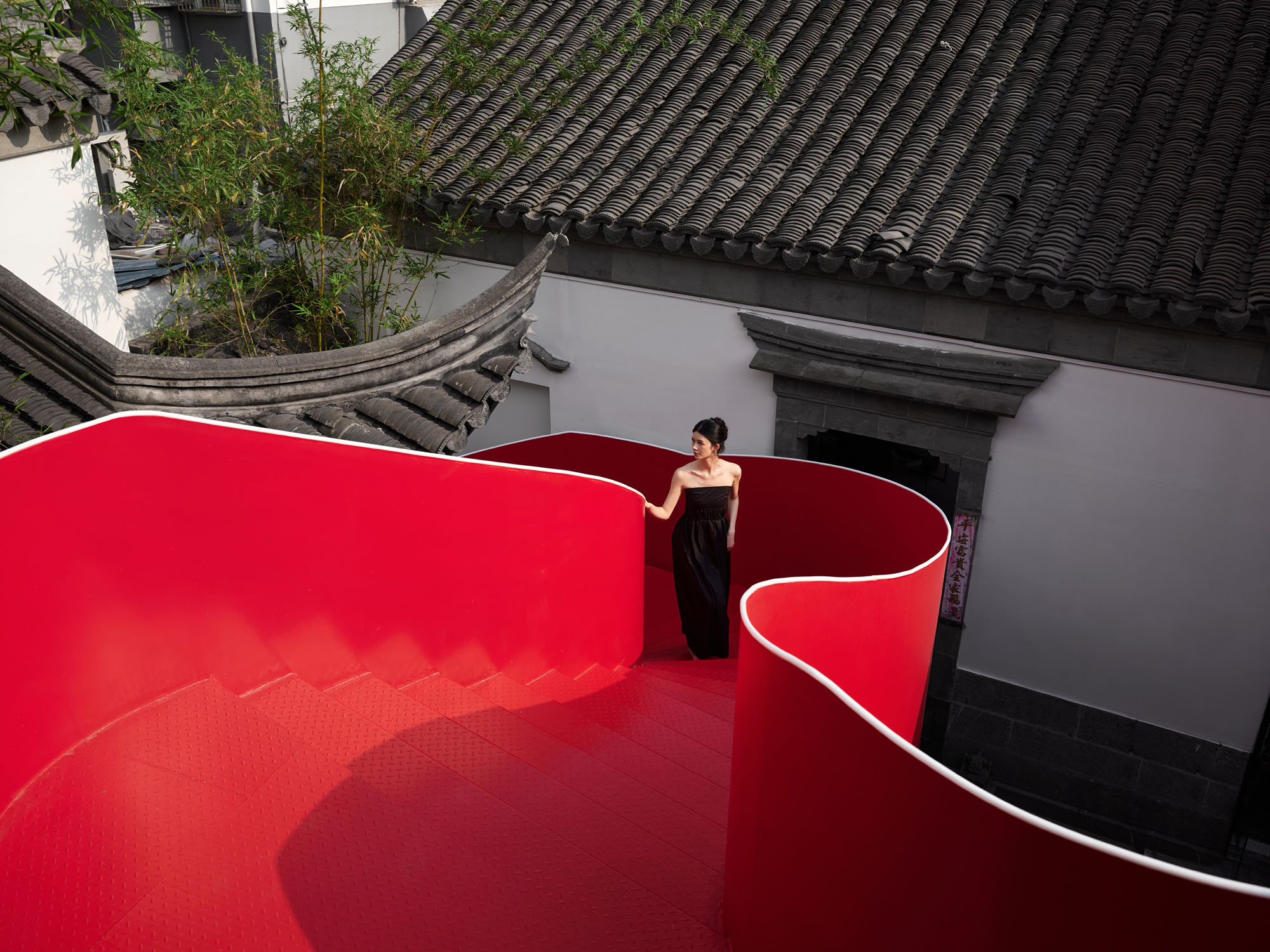
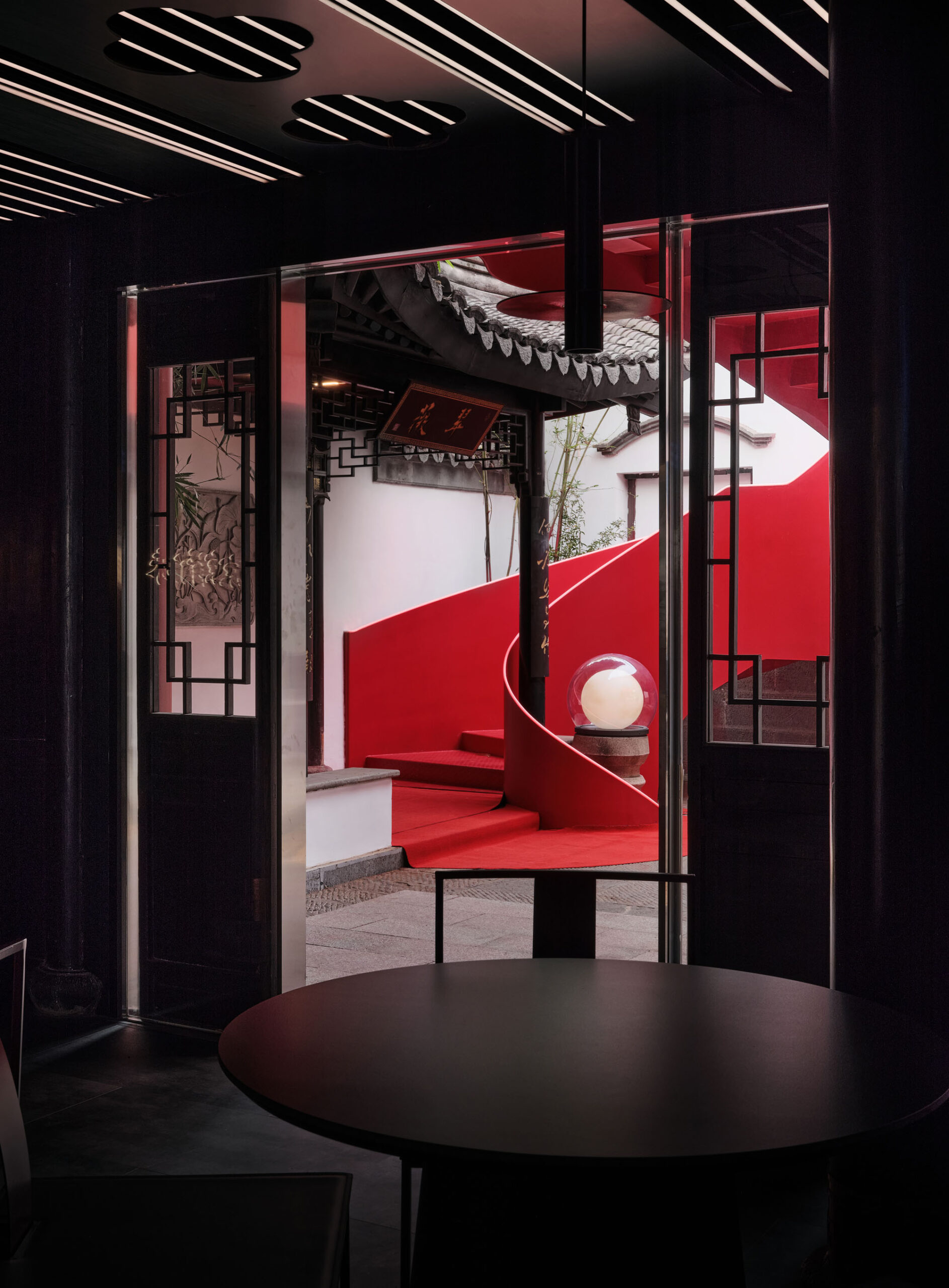
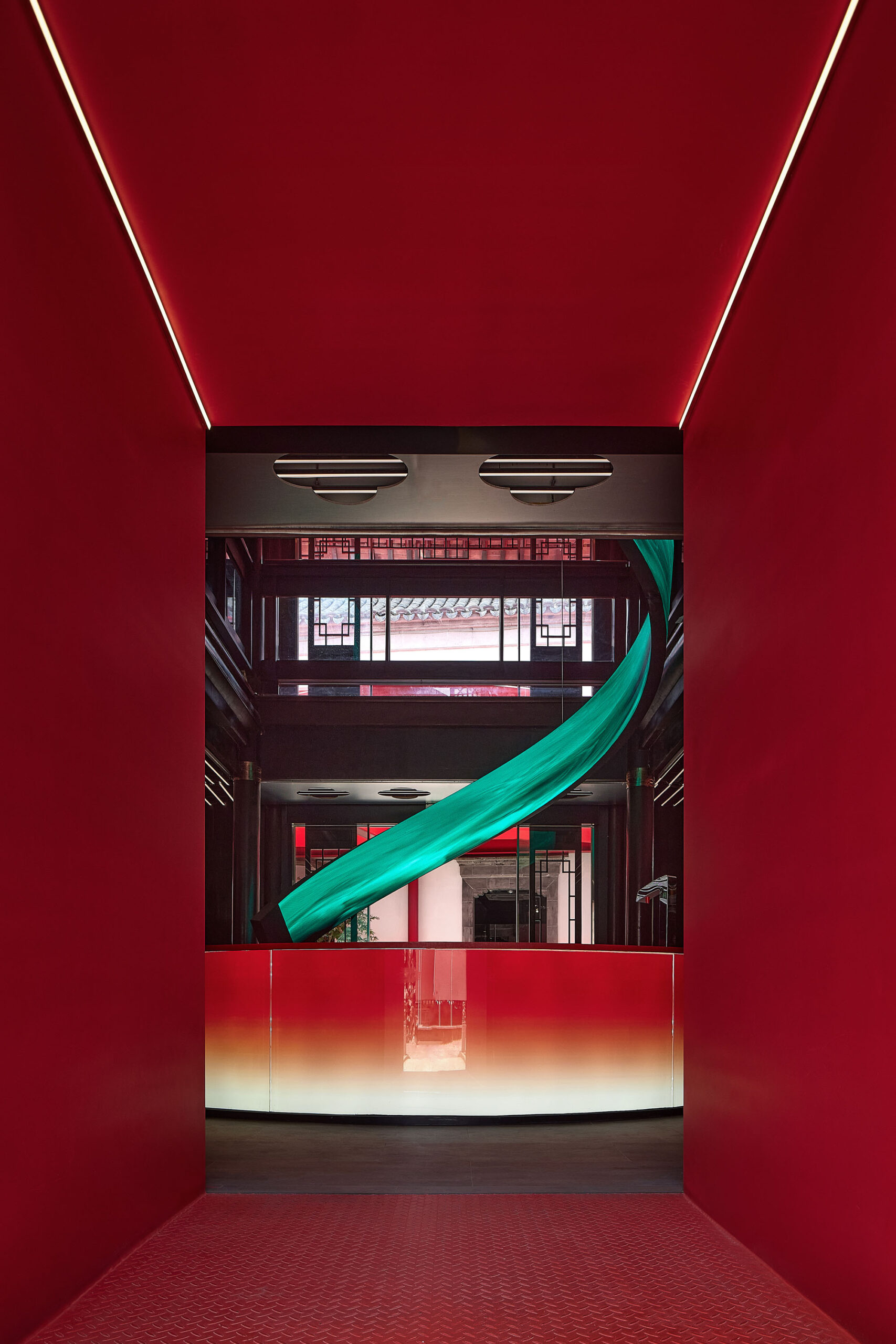
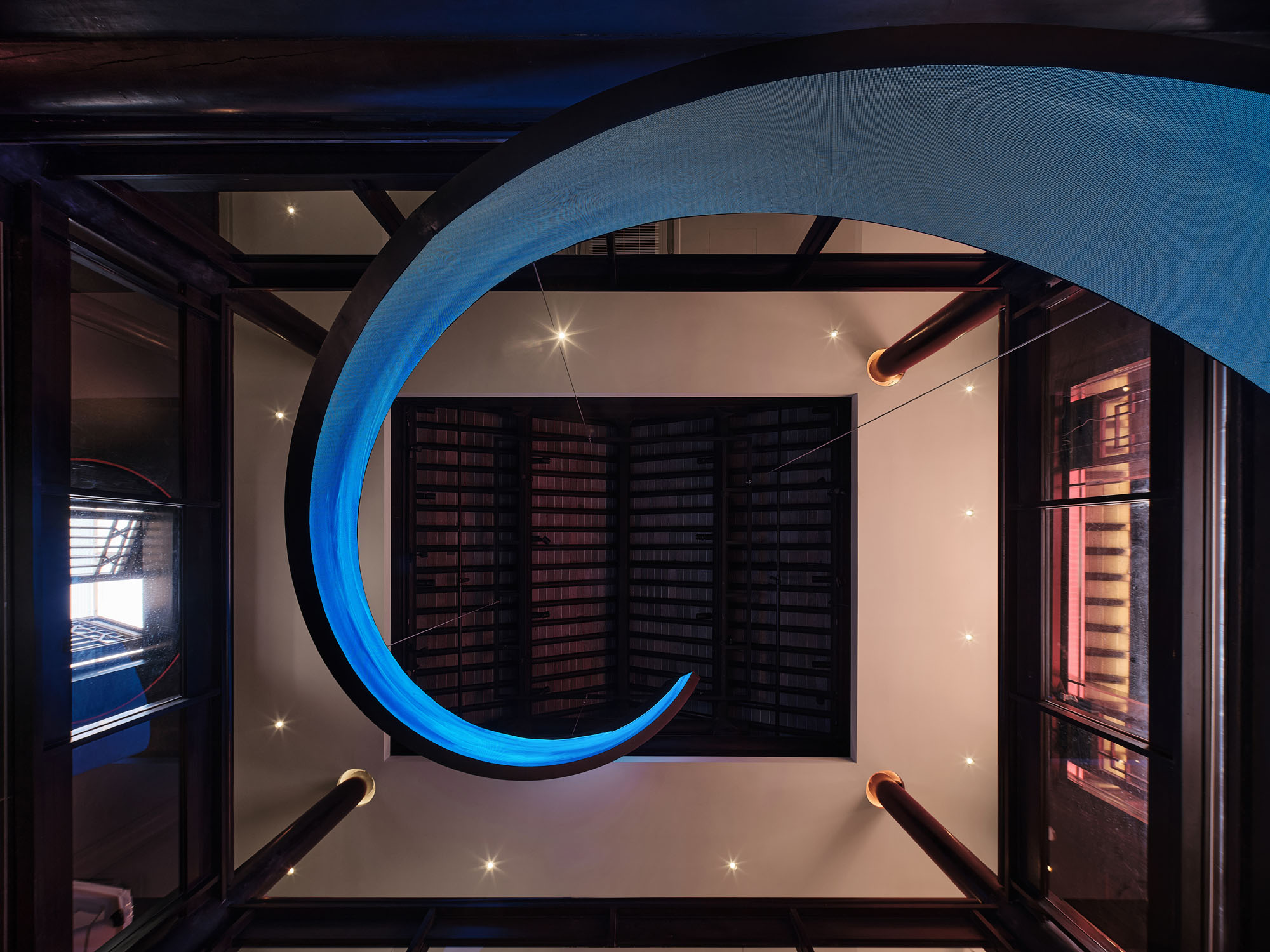
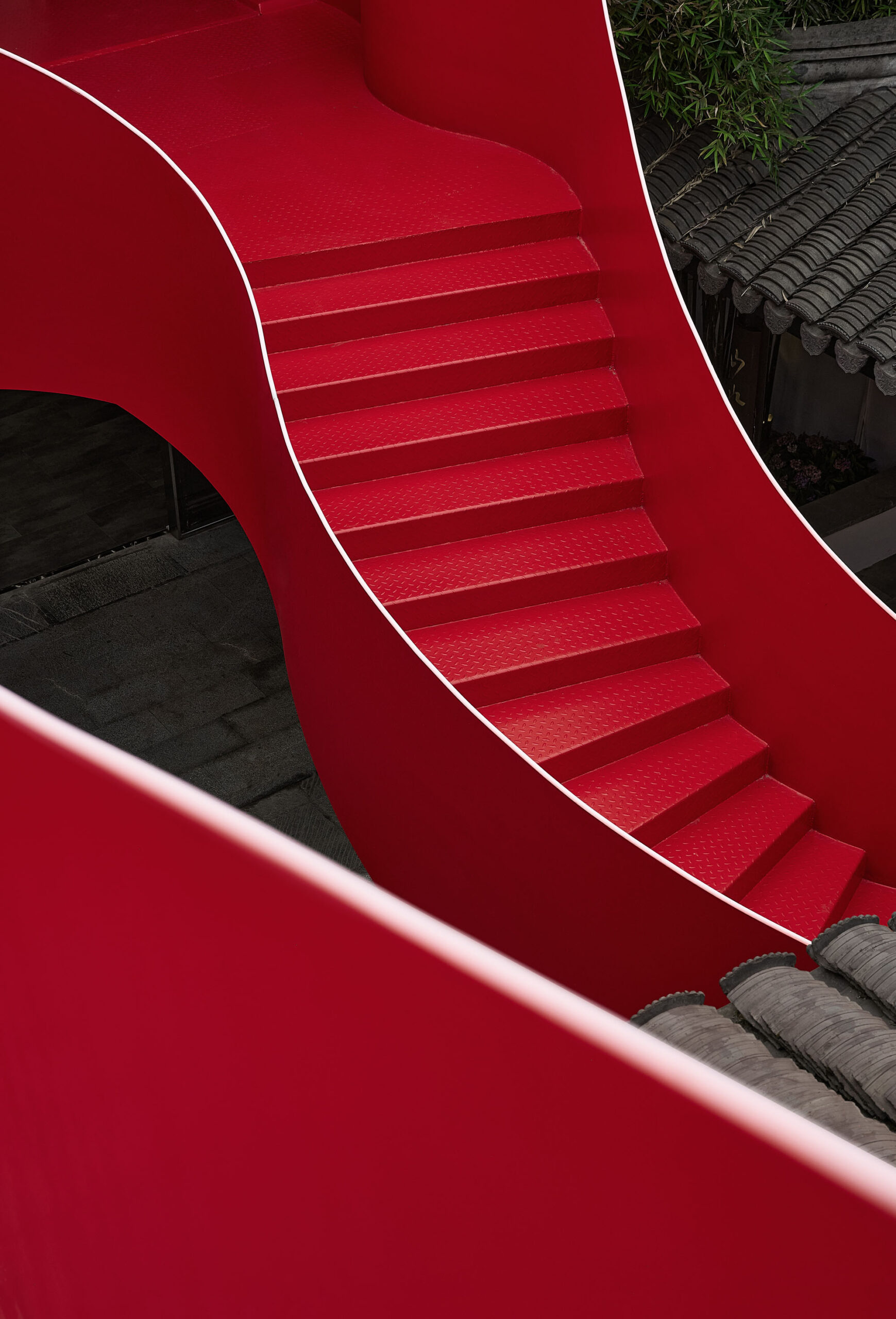
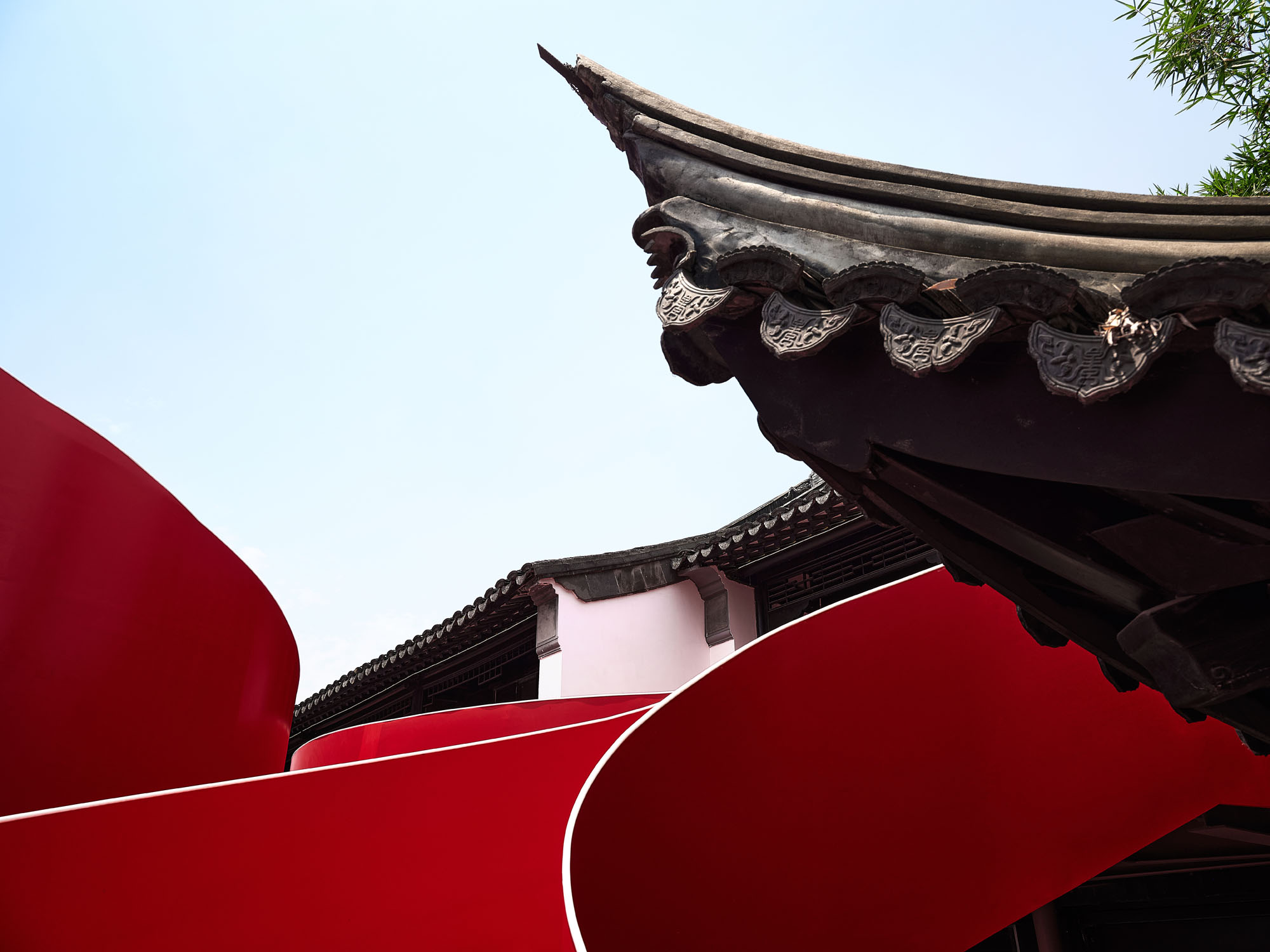
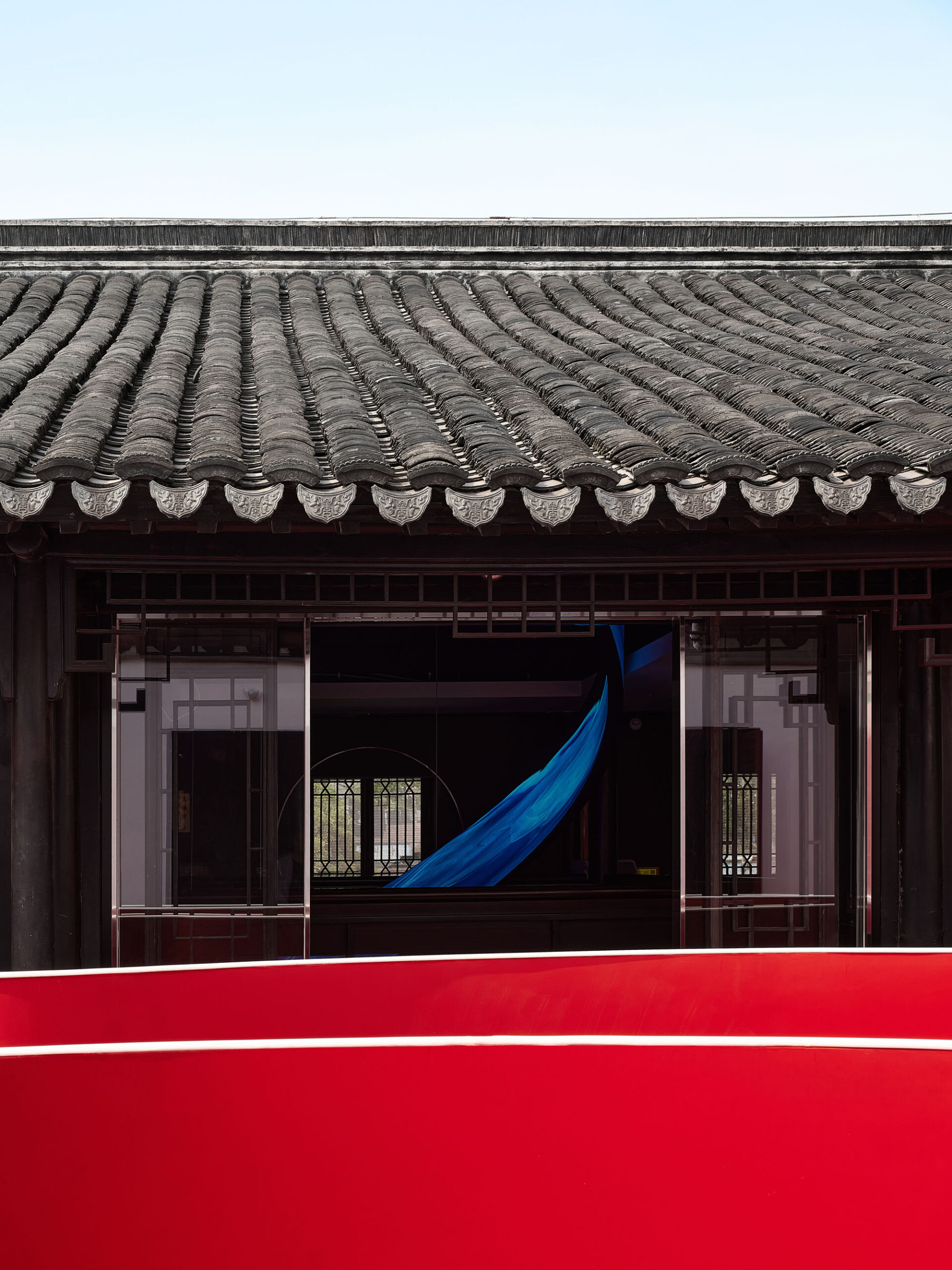
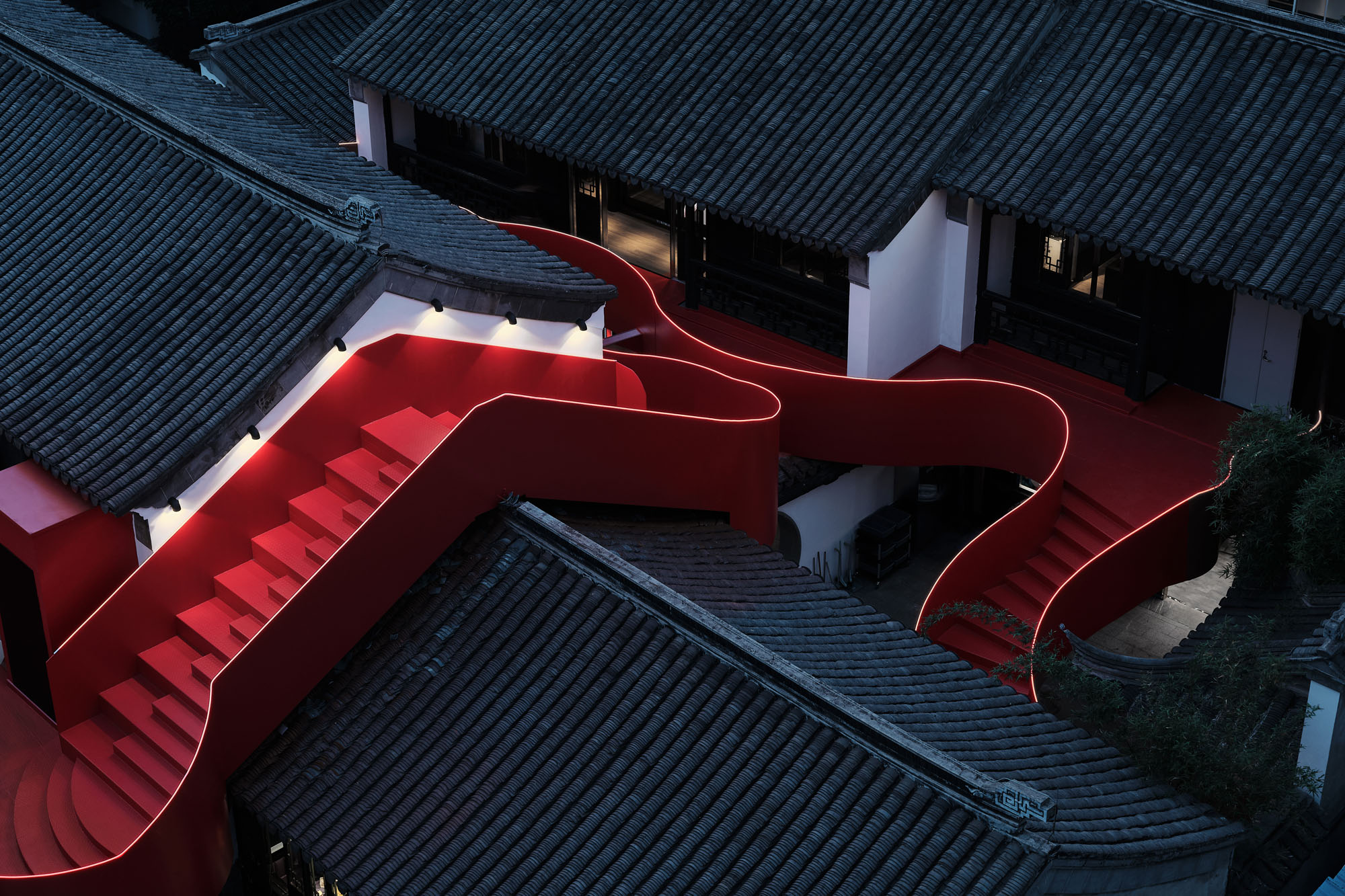
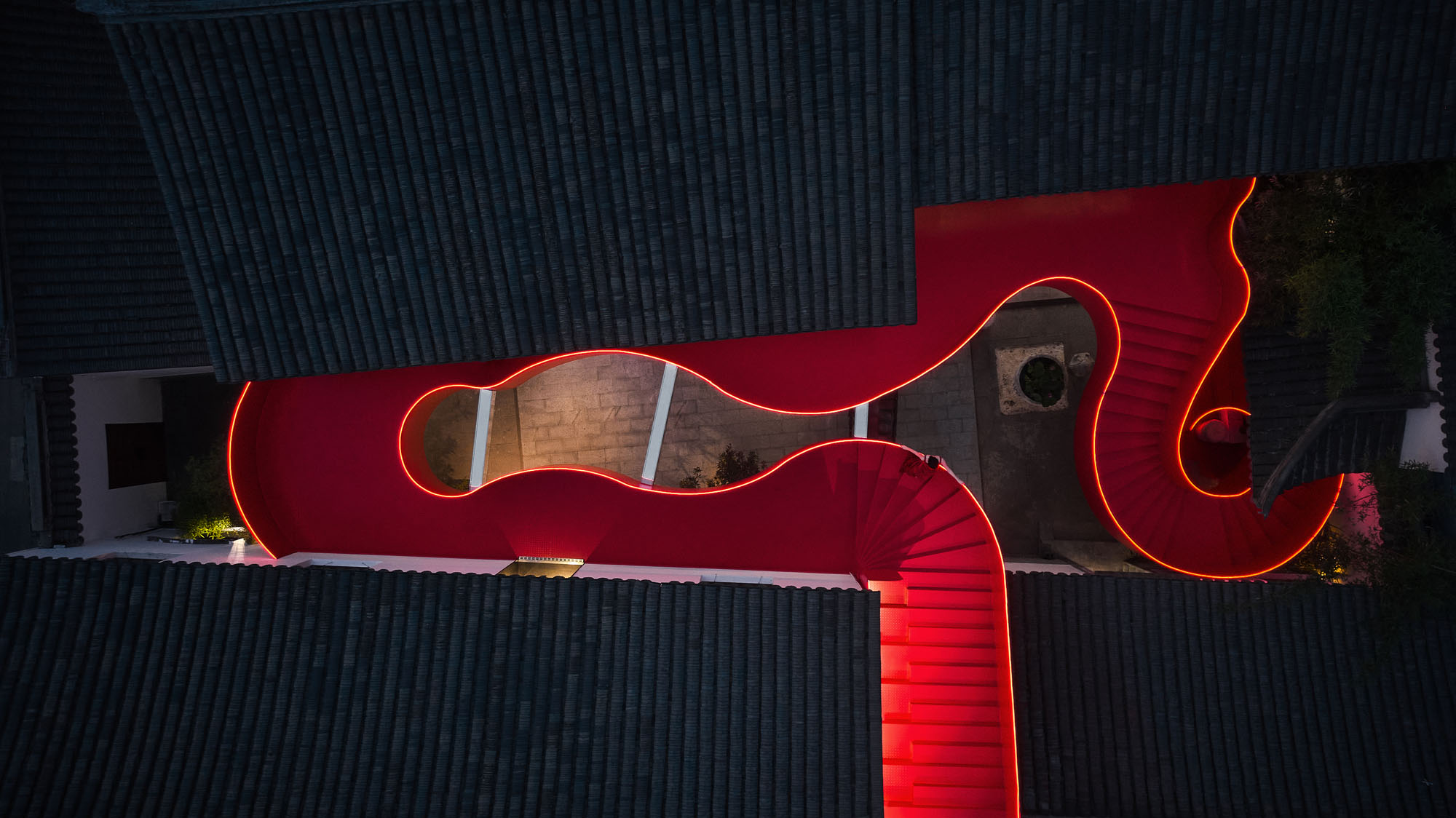
4つの庭を貫くように敷地全体を横断する、流線型の鋼製階段を構築し、2階空間を接続した。それは流れる水のように、複数の建物の「孤立した島々」を一体感のある全体へと結びつける。
伝統建築の列を蛇行する守護竜を思わせるその曲線は、強力な視覚的対比を生み出している。色彩面では「朱色(チャイニーズ・レッド)」がモノクローム調の建物の中で際立つだけでなく、「レッドロブスター」ブランドを想起させ、情熱的な食体験を視覚化する。この赤い階段は新たなランドマークとしてSNSで話題を集め、集客効果と付加的な商業価値をもたらした。
©︎ Cong Lin
形態は機能に従う:避難経路と新たな眺望
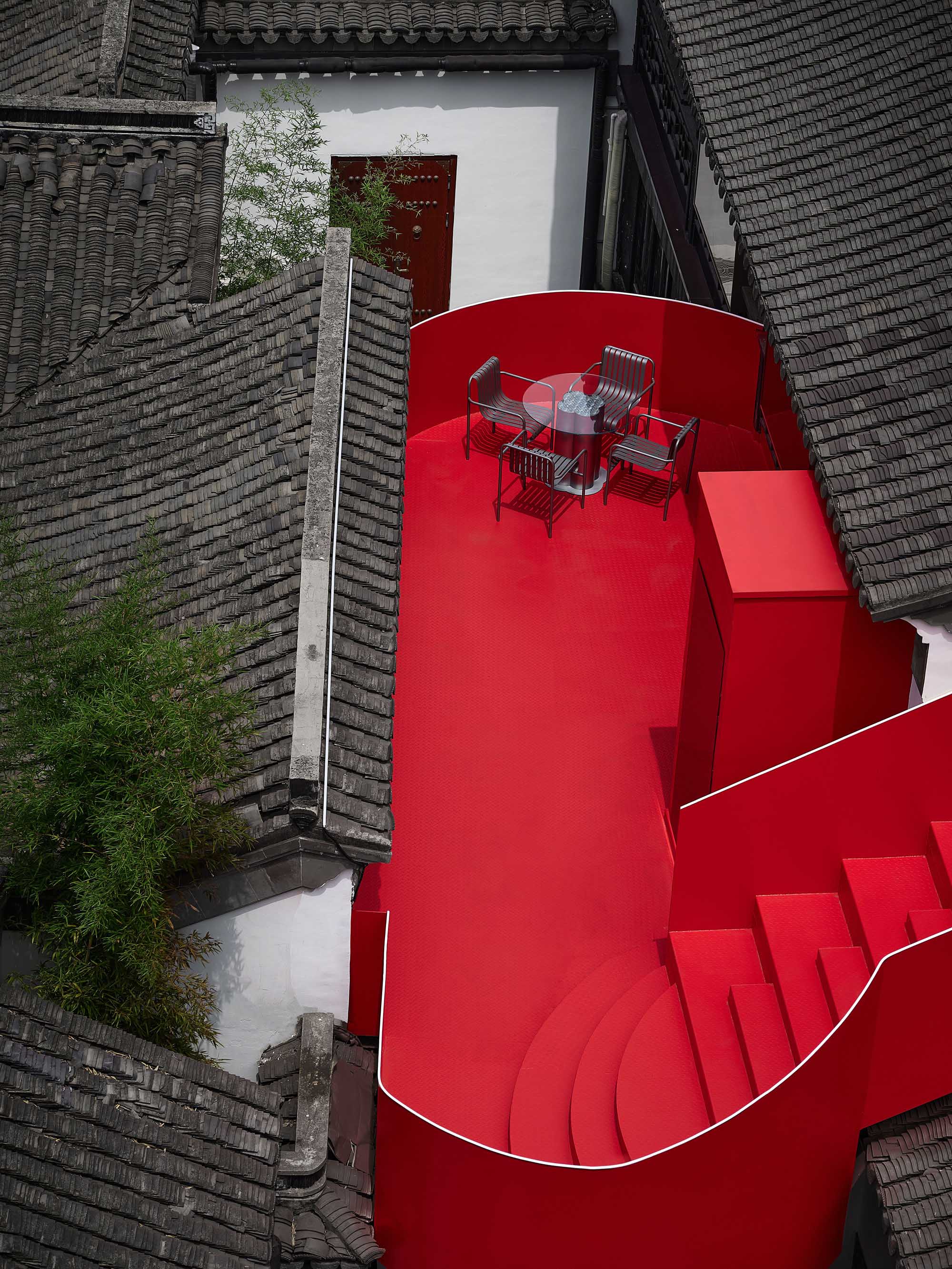
DAED design and researchは一貫して「形態は機能に従う」という理念を貫いた。彫刻的な階段は単なる「視覚的装飾」にとどまらず、空間をつなぐと同時に、古い建築に必要な避難経路としての機能も担っている。
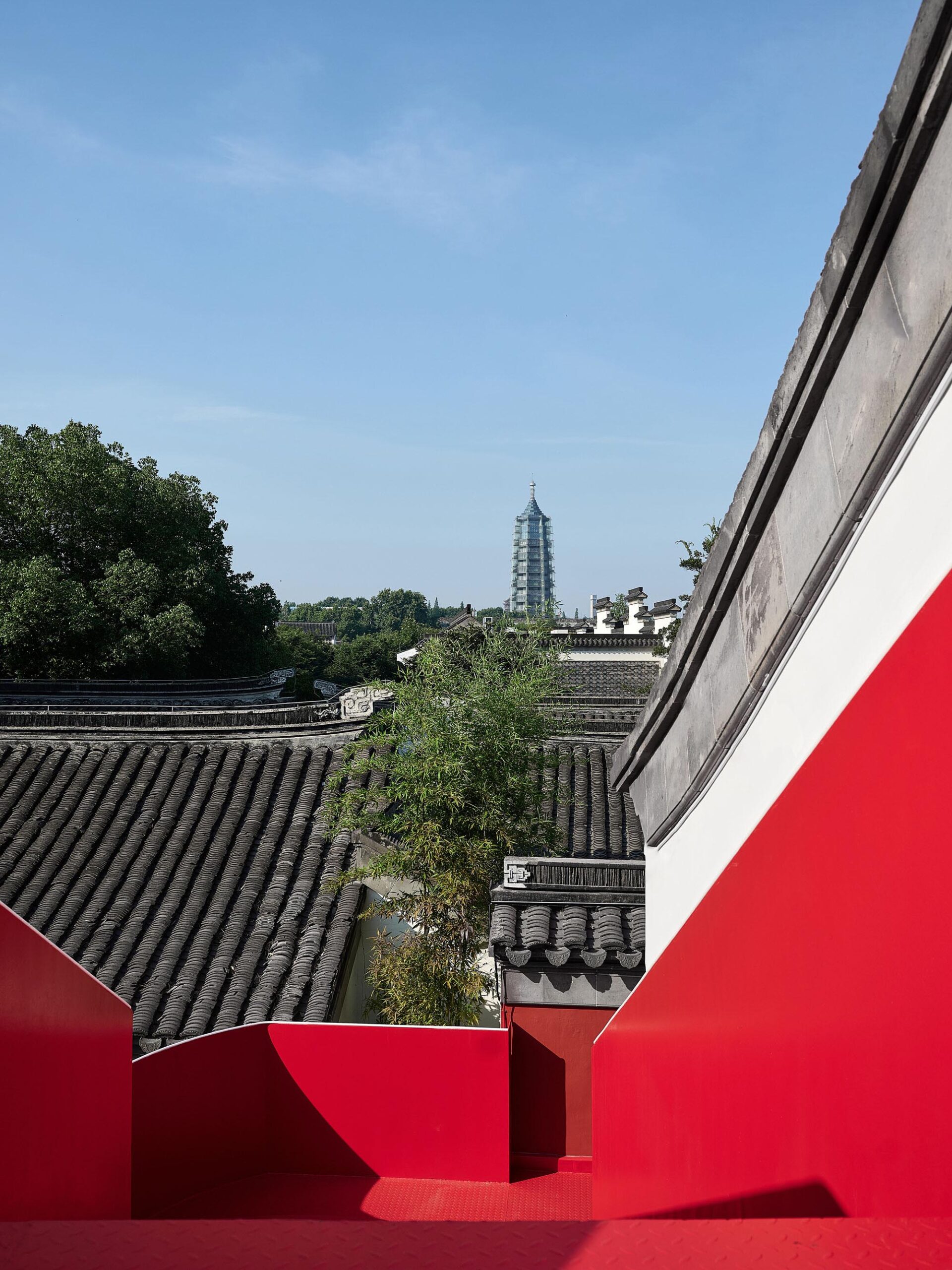
実用面では、1階部分に雨天時の出前配達や来客のための雨宿りスペースを提供した。さらに階段の踊り場は、隣接する大報恩寺の新たな眺望ポイントとなり、立地条件を最大限に活かしている。
©︎ Cong Lin
サイバー・シノワズリ:多次元的な美学の融合
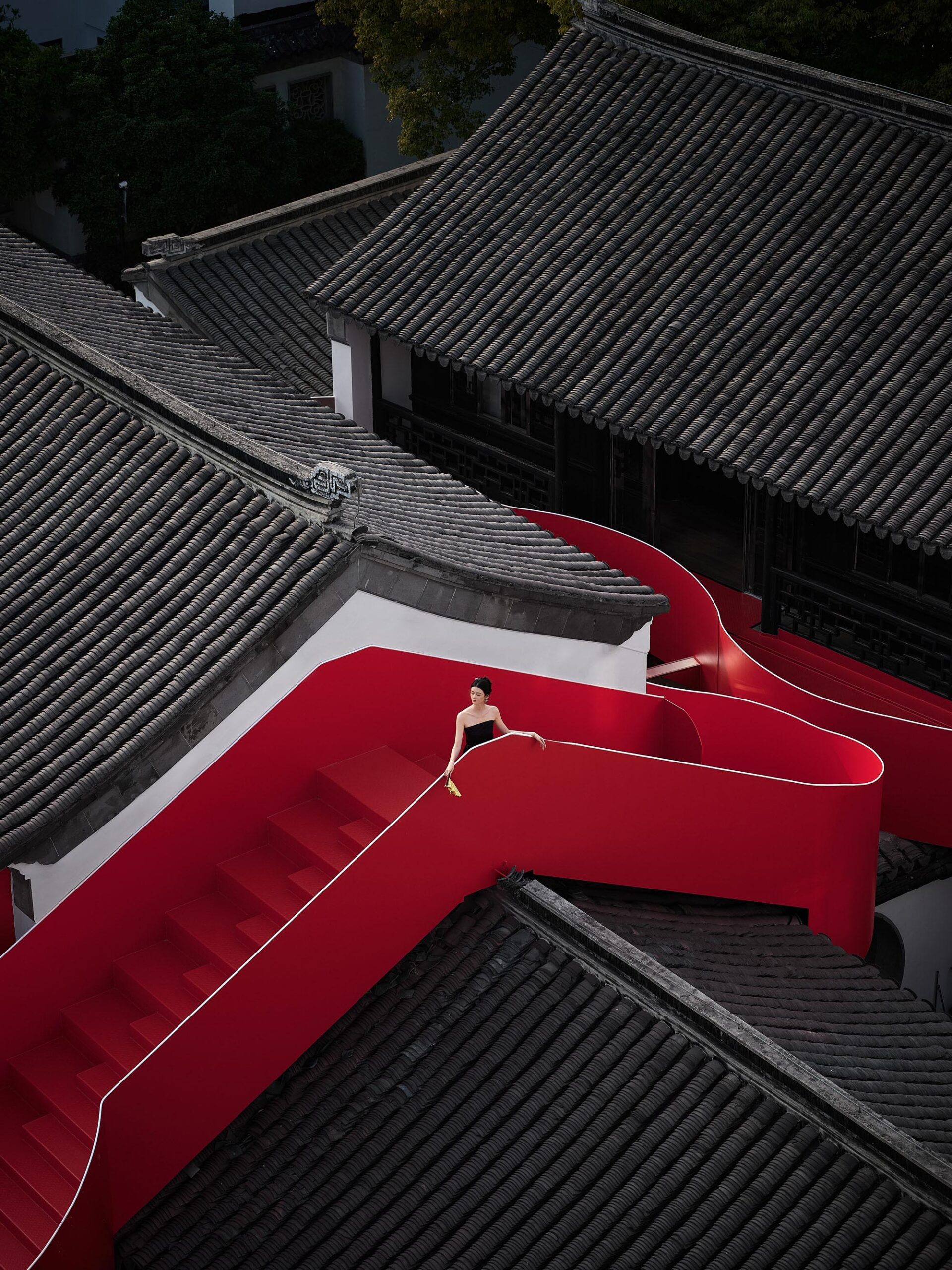
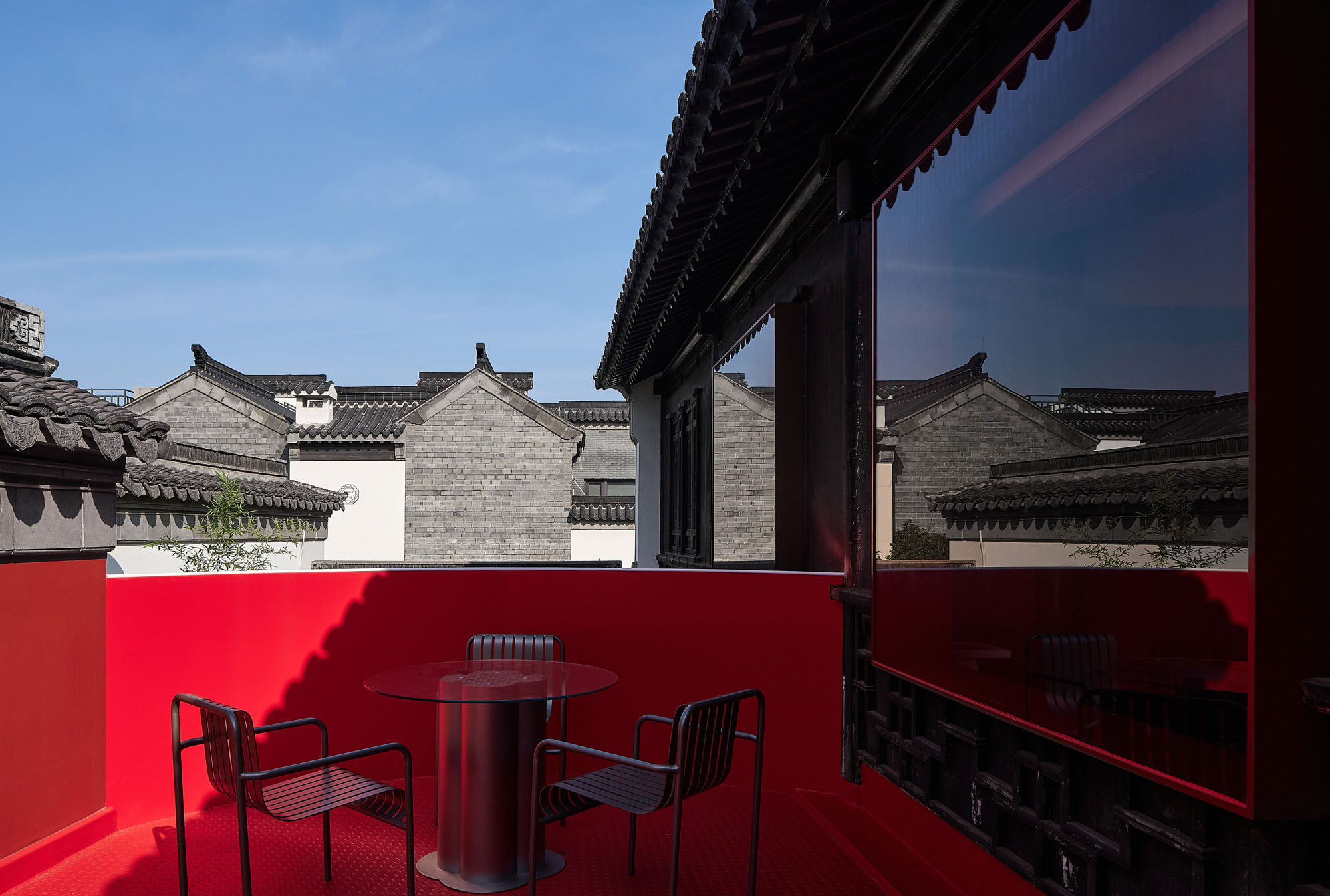
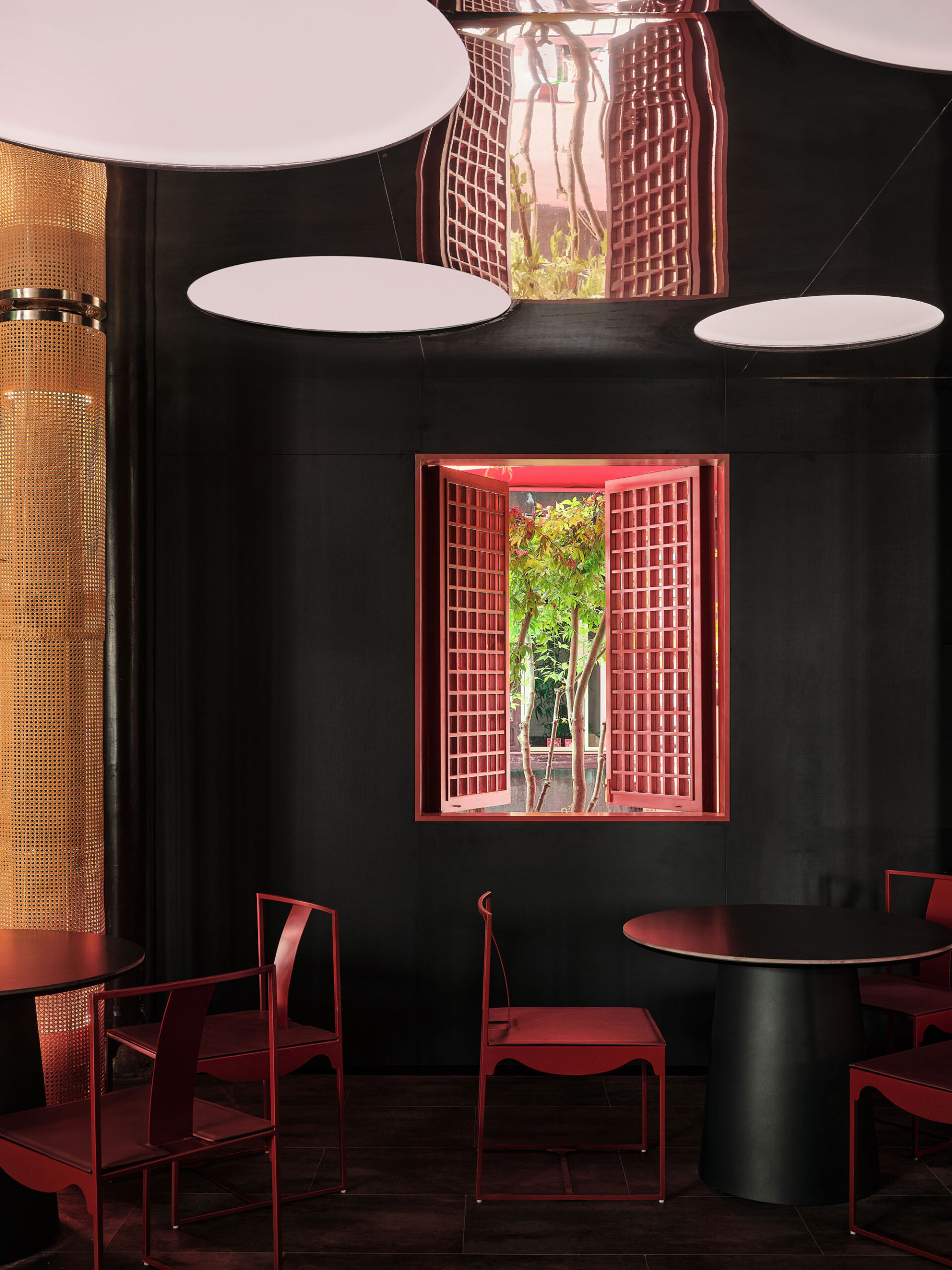
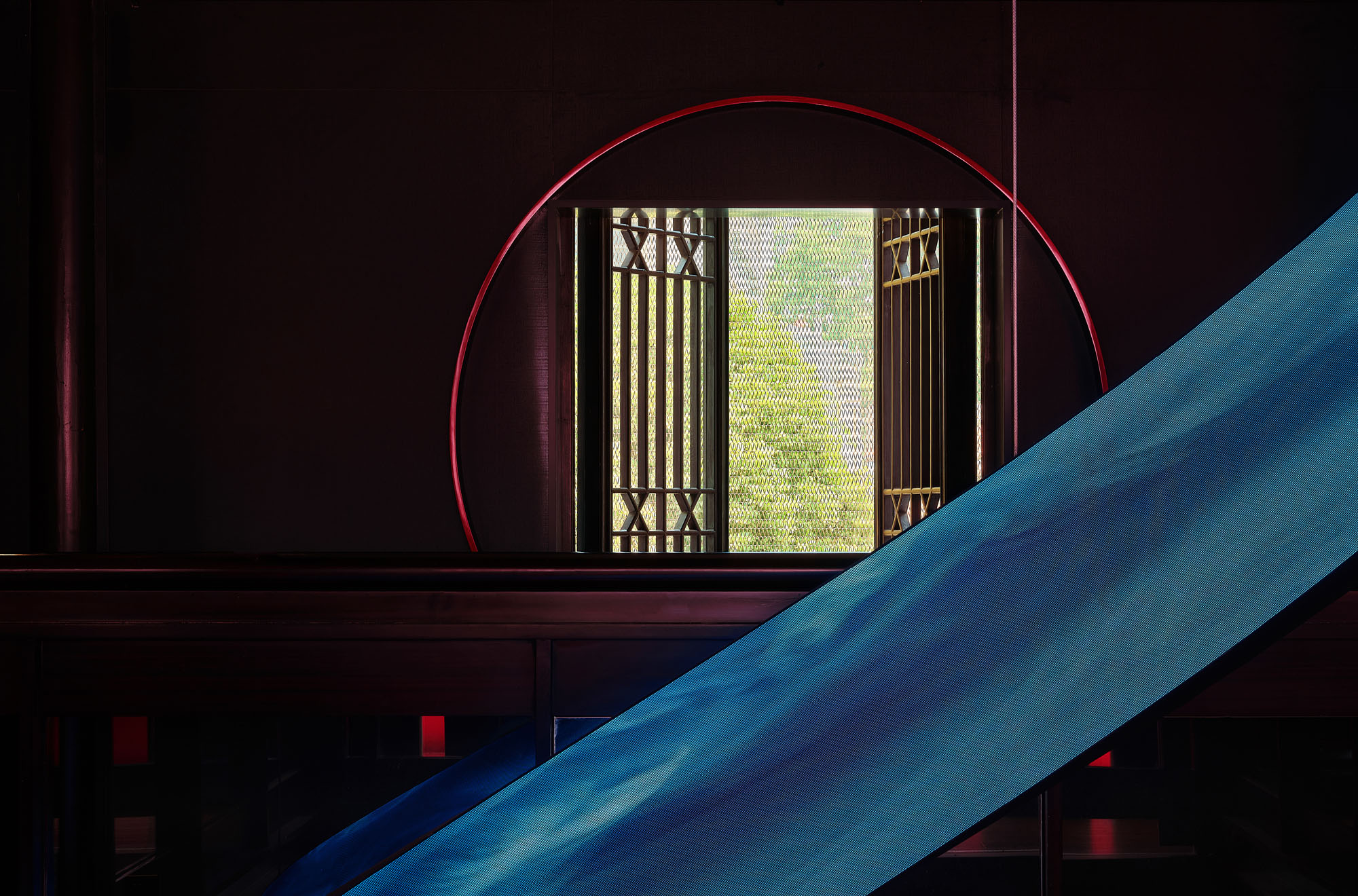
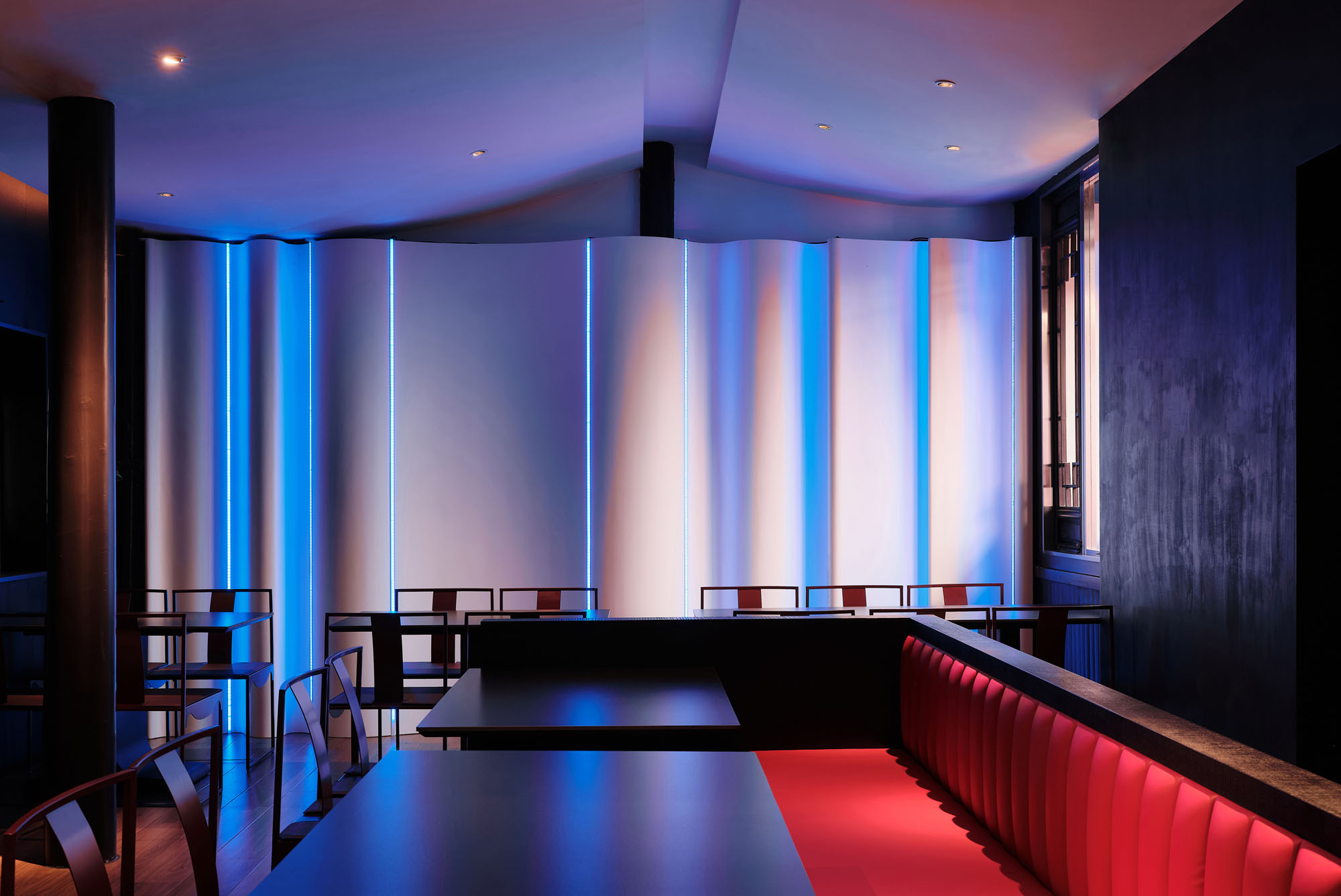
美学面では、現代素材と古典様式を融合させた。金属とガラスを用いて古典的な楼閣やテラスを再構築し、ラインを簡素化しながら「サイバー・シノワズリ」の要素を取り入れた。
古代の雰囲気、現代的な感覚、そして未来への想像力が重なり合うこの多次元的な美学の融合が、歴史的空間により豊かな含意とダイナミックな可能性を与えている。
シノワズリ(Chinoiserie):17世紀~18世紀のヨーロッパで流行した中国の雰囲気をもった美術様式
©︎ Cong Lin
©︎ Cong Lin
「減法」の施工と遺産への敬意
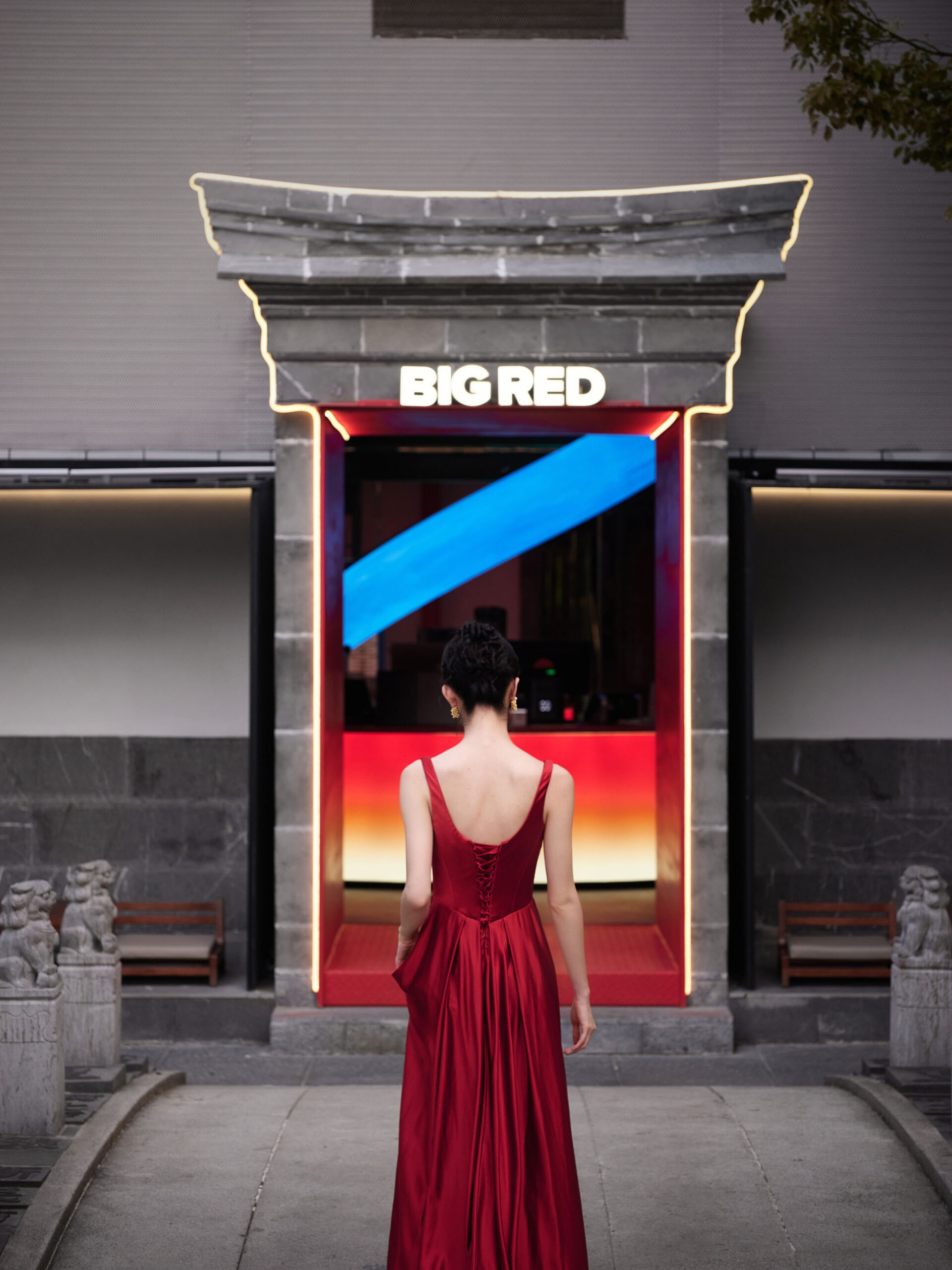
施工プロセスでは「減法」と地産地消を重視した。既存の扉は撤去後にガラスケース化しスクリーンとして再生、太湖石は収集・再配置して機能的な間仕切りとした。階段を含むすべての新設構造物は既存構造物への直接接着を避け、古い建築の遺産的価値と持続可能な再利用への姿勢を体現している。
©︎ Cong Lin
©︎ Cong Lin
©︎ Cong Lin
©︎ Cong Lin
©︎ Cong Lin
©︎ Cong Lin
©︎ Cong Lin
©︎ Cong Lin
©︎ Cong Lin
©︎ Cong Lin
©︎ Cong Lin

©︎ Cong Lin
©︎ Cong Lin
©︎ Cong Lin
以下、DAED design and researchのリリース(英文)です。
Project Name: History is Future(Garden Coffee)
Location: Laomen East, Nanjing, Jiangsu Province, China
Design Company: DAED (Dayi Design)
Chief Designer: Zhou Yi
Area: 2,000 square meters
Cost: 5 million RMB
Design Cycle: October 2023
Completion Time: March 2024
Main Materials: Stainless steel, steel plate, aluminum plate
Client Name: Hongda Red Lobster
Photographer: Cong LinProject Description
Located on the east side of Laomen in Nanjing, on the banks of the Qinhuai River and at the entrance of Wuyi Lane, this project sits on the former site of Wang Dao and Xie An’s residences during the Eastern Jin Dynasty. The ancient and elegant architectural complex offers a glimpse of past prosperity, while remaining infused with the traditional lifestyle of old Nanjing, creating a unique atmosphere where cultural heritage meets the vibrancy of daily life.This project marks another historical renovation by Dayi Design. The mission was to transform this 2,000-square-meter historical site into a lobster-themed dining and commercial space. As always, we followed the principle of “long-termism,” prioritizing the maximum preservation of historical relics and enhancing the building’s sustainability.
For Dayi Design, the best way to protect historical sites or ancient buildings is not to treat them as untouchable shrines, but to allow people to enter, touch, and use them. By making them part of modern life, we reconstruct the possibilities and richness of historical spaces within new functional contexts, preventing “relics” from becoming mere fossils of the past.
We constructed a streamlined steel staircase that traverses the entire site across all four courtyards, connecting the second-floor spaces. Like flowing water, it links the “isolated islands” of several buildings into a cohesive whole. Its curved form, resembling a protective dragon winding through the rows of traditional architecture, creates a powerful visual contrast. In terms of color, the “Chinese Red” not only stands out against the monochrome palette of the buildings but also echoes the “Red Lobster” brand, visualizing a passionate culinary experience. This red staircase has become a new landmark and a popular social media spot, driving traffic and creating additional commercial value.
Dayi Design consistently adheres to the philosophy that “form follows function.” The sculptural staircase is not merely a “visual plug-in”; beyond connecting spaces, it serves as a necessary fire escape for the ancient structure. Practically, the structure provides cover on the ground floor, solving food delivery challenges during rain or snow and offering shelter for guests. Furthermore, the staircase platform unlocks a new vantage point for viewing the nearby Great Bao’en Temple, maximizing the site’s geographical advantages.
Regarding aesthetics, we fused modern materials with classical styles. Using metal and glass, we recreated the classic forms of pavilions and terraces, simplifying the lines while incorporating “Cyber-Chinoiserie” elements. This blend of multi-dimensional aesthetics—where ancient atmosphere, contemporary feeling, and future imagination overlap—gives the historical space richer connotations and dynamic possibilities.
The construction process focused on “subtraction” and local sourcing. Original doors were removed, encased in glass, and repurposed as screens; original Taihu stones were collected and rearranged as functional partitions. We ensured that all new additions, including the stairs, avoided direct adhesion to the original structures, demonstrating our commitment to the heritage and sustainable reuse of ancient architecture.
DAED design and research 公式サイト
http://www.dae-dae.com

![[Report]方丈庵から生き方を問う、21_21 DESIGN SIGHT 企画展「方丈記に学ぶ –生きるを編み直す小さな建築–」会場レポート](https://magazine-asset.tecture.jp/wpcms/wp-content/uploads/2026/09/01181900/20260828hojoki-ex_01_mag-endo4350-900x676.jpeg)