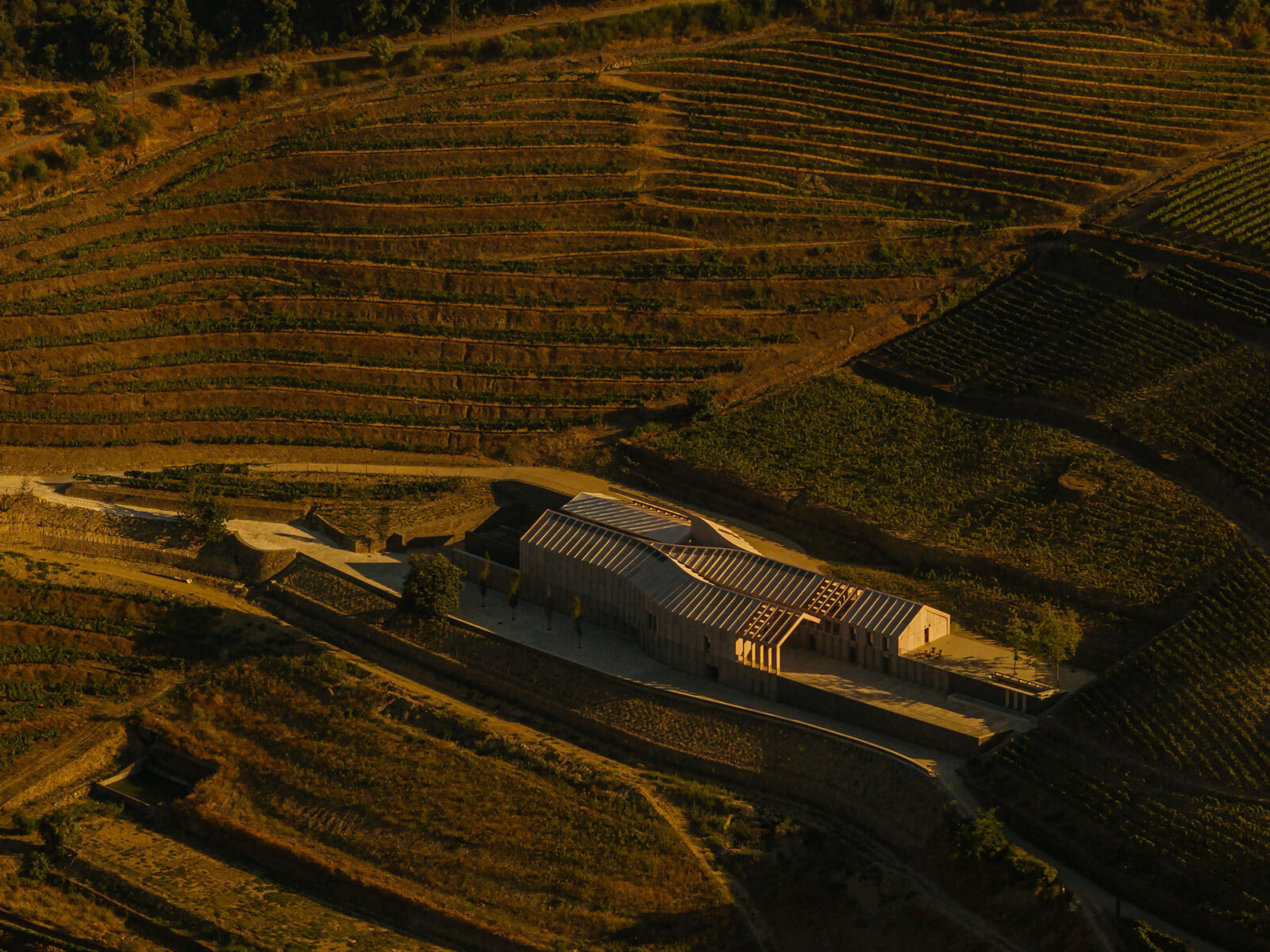
アトリエ・セルジオ・レベロがポルトガルに手がけた、敷地の傾斜に調和する有機的な木造屋根〈キンタ・デ・アドリゴ・ワイナリー〉
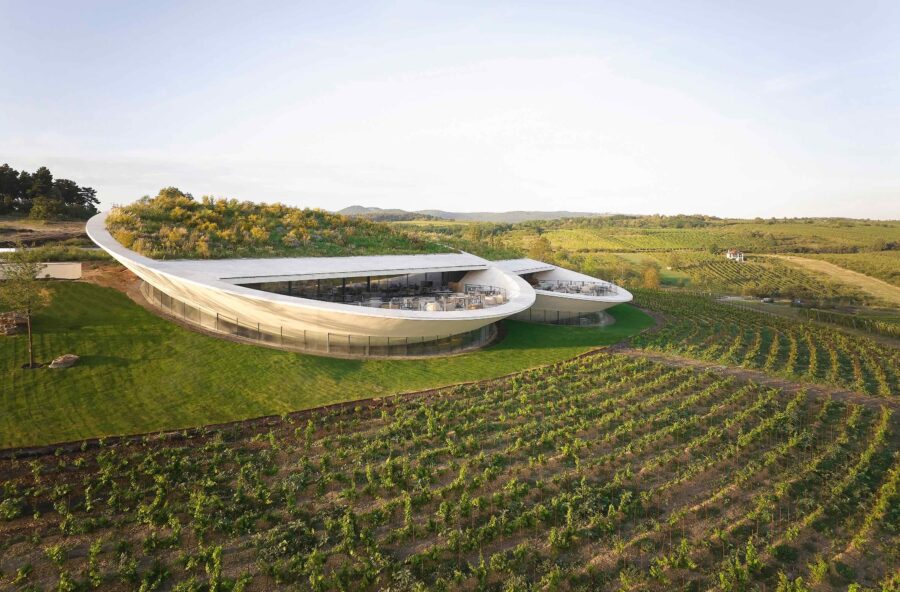
世界遺産の景観が広がるポルトガルのアルト・ドウロ・ヴィニャテイロに建つ〈キンタ・デ・アドリゴ・ワイナリー(Quinta de Adorigo Winery)〉は、ホテルやスパを含むワインツーリズム開発の一環として計画された、生産・テイスティング・観光の機能を併せもつワイナリーです。
傾斜地の地形をそのまま活かした有機的な木造屋根が特徴的な建築であり、アトリエ・セルジオ・レベロ(Atelier Sérgio Rebelo)が設計しました。
注目ポイント
- 高低差による重力を利用したワイン醸造プロセスを一体化した建築構成
- 伝統の切妻を再解釈した有機的なCLT木造屋根
- CO2排出量を40%削減したハイブリッド構造とローカル調達
(以下、アトリエ・セルジオ・レベロから提供されたプレスキットのテキストの抄訳)
©︎ Fernando Guerra
世界遺産の地に誕生した新たなワイナリー
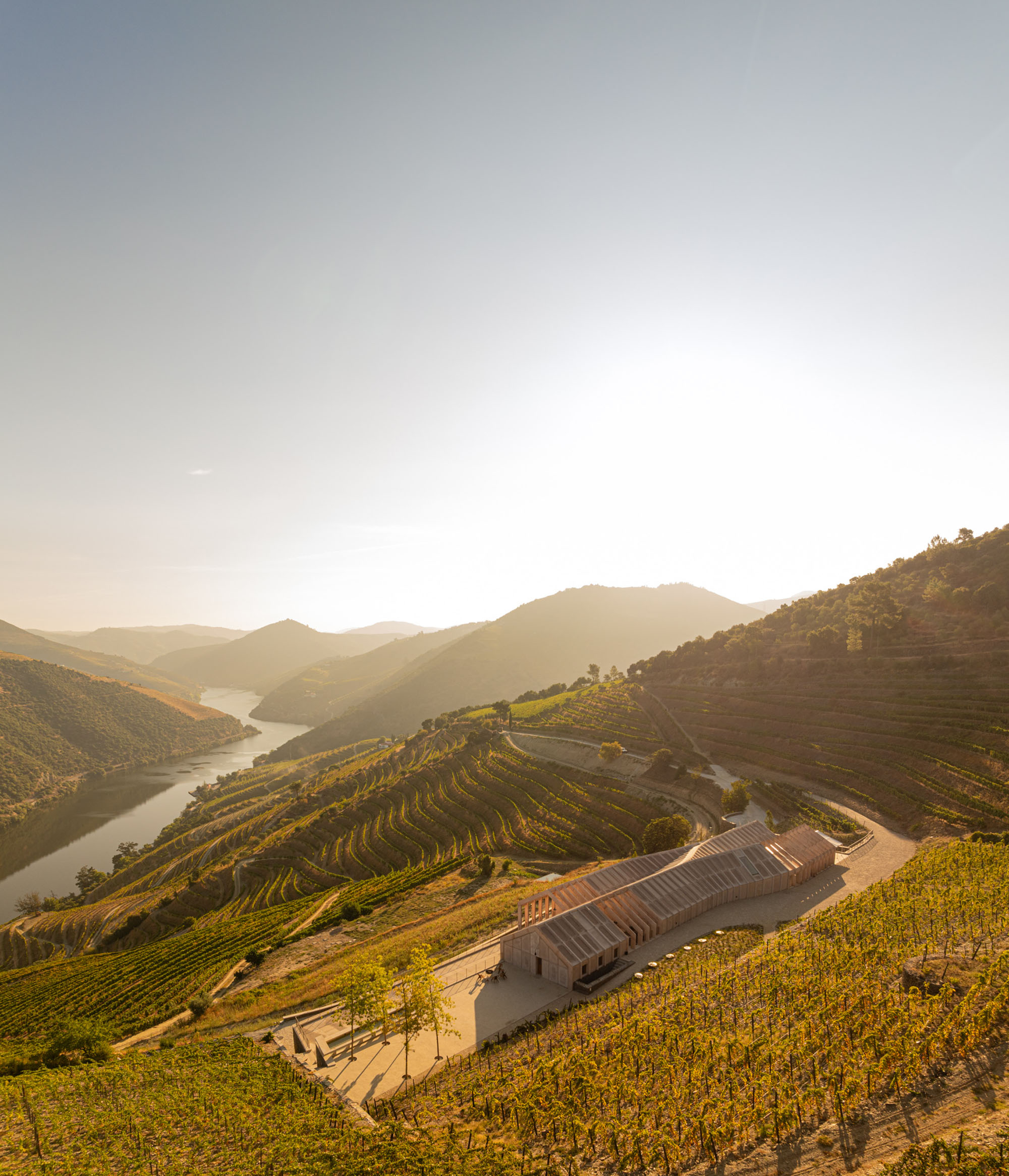
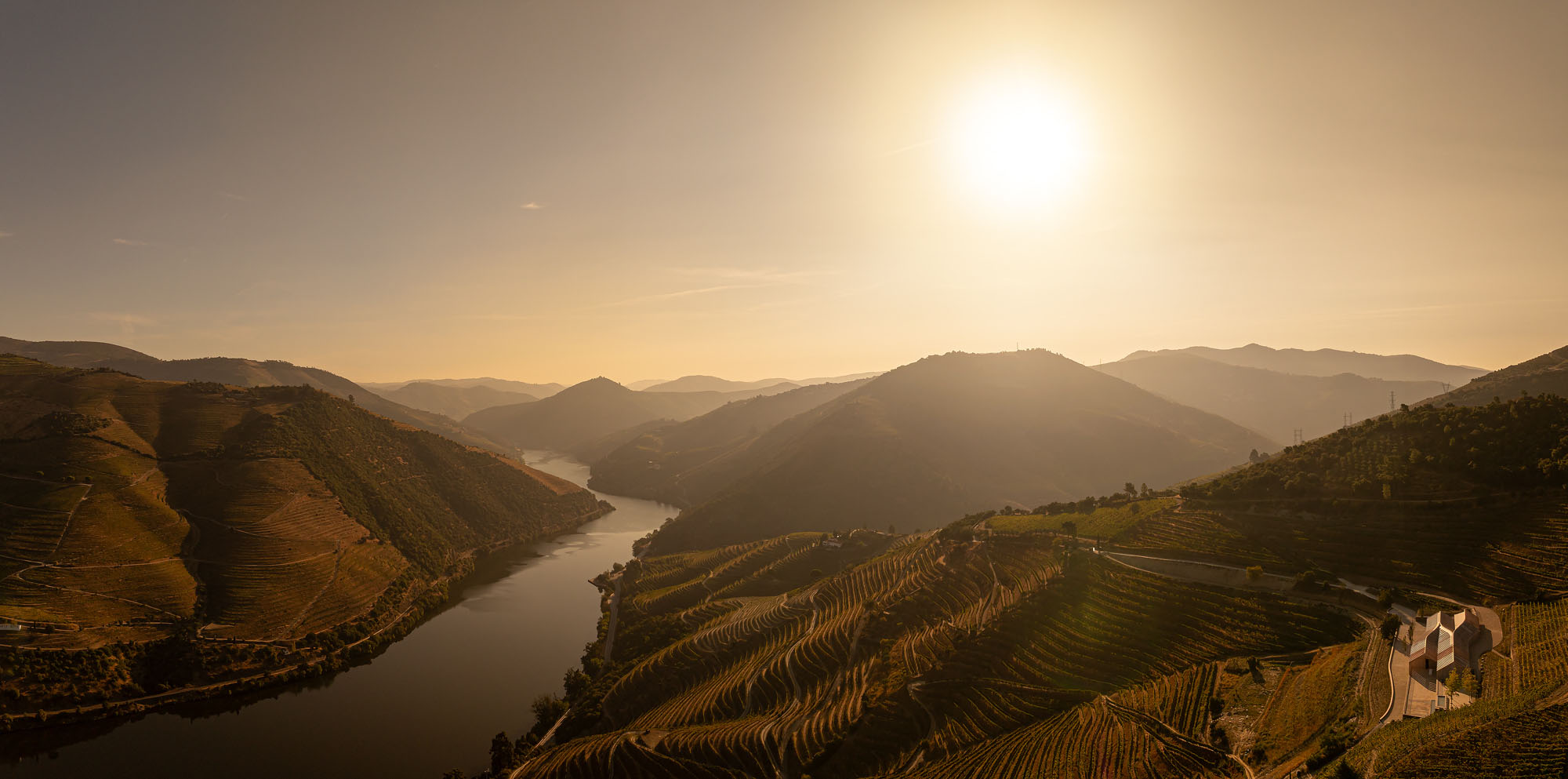
2024年に完成した〈キンタ・デ・アドリゴ・ワイナリー〉は、現在建設中のホテルも含めた、家族経営によるワインツーリズム開発プロジェクトの一環である。このぶどう園が位置するのは、ポルトガルで最も名高いワイン産地であるアルト・ドウロ・ヴィニャテイロ(Alto Douro Vinhateiro)である。この地域は、2001年からユネスコの世界自然・文化遺産に登録されている。
周囲の自然が醸し出す比類なき美しさ、数千年にわたる人々の営み、そして何世紀にもわたって受け継がれてきたワイン生産の伝統。これらが、景観と地域文化を尊重しながら、革新的な建築手法と確かな持続可能性を体現する建築プロジェクトの原動力となった。
©︎ Fernando Guerra
©︎ Fernando Guerra
地形と調和する重力式の構造美
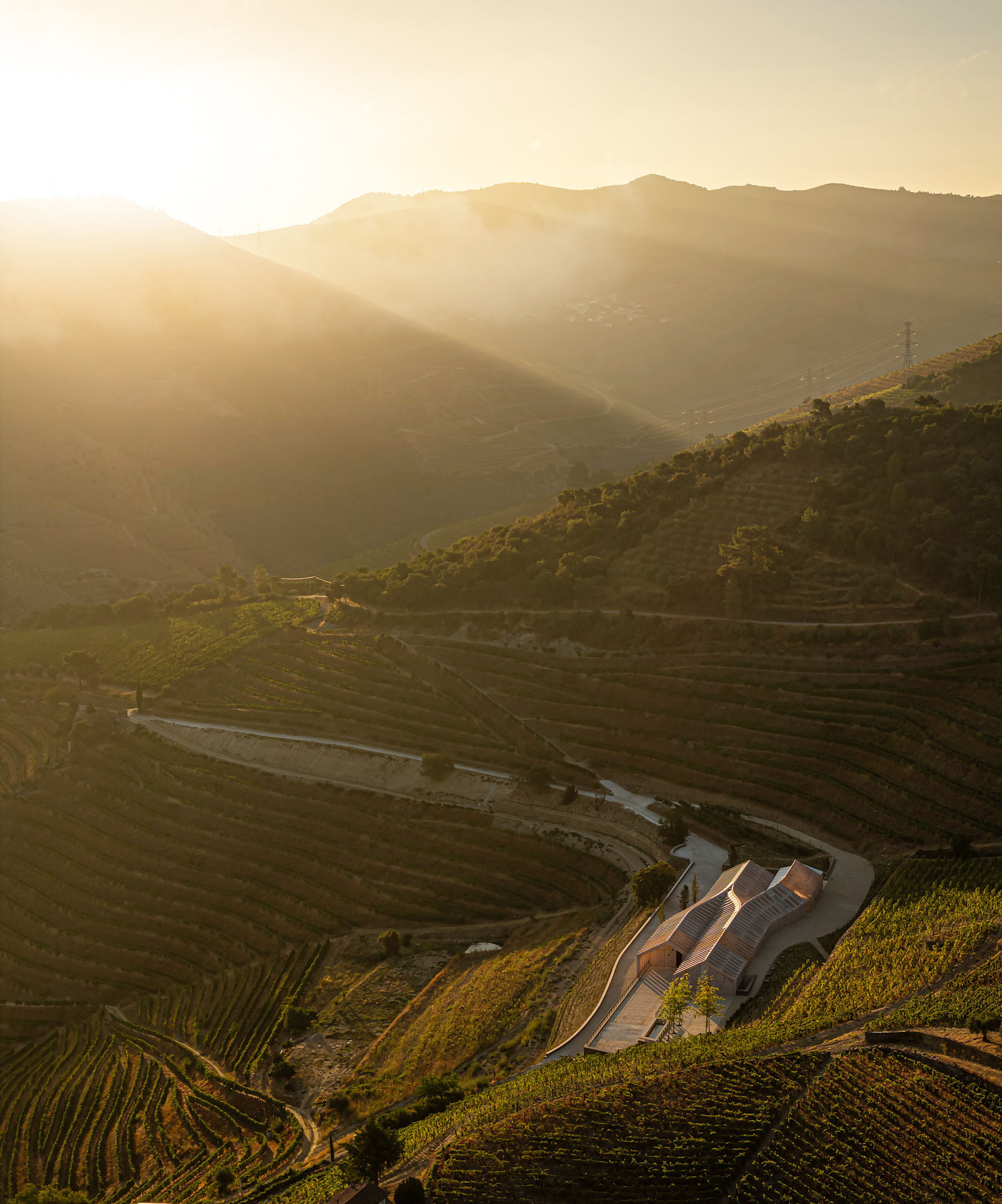
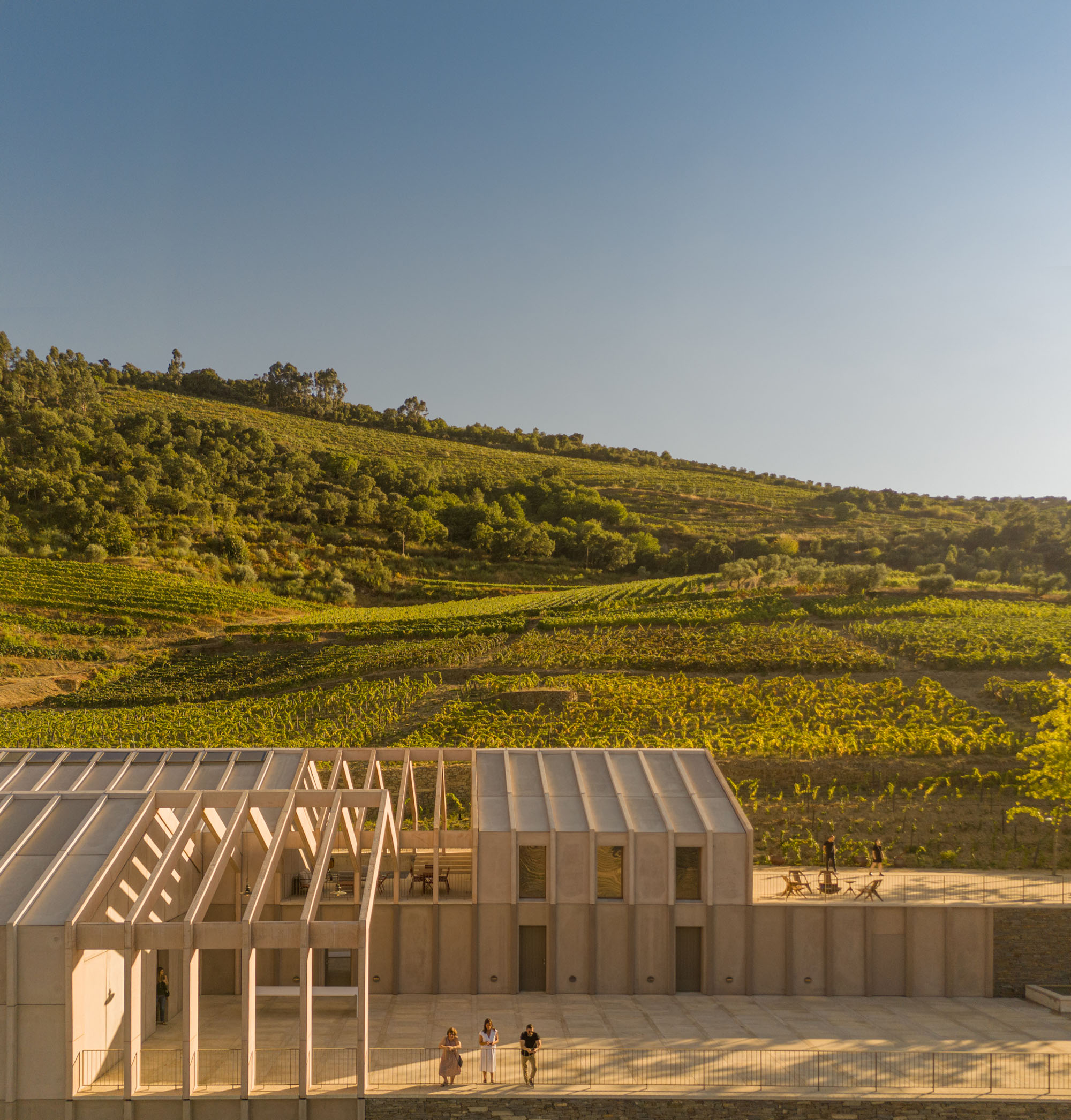
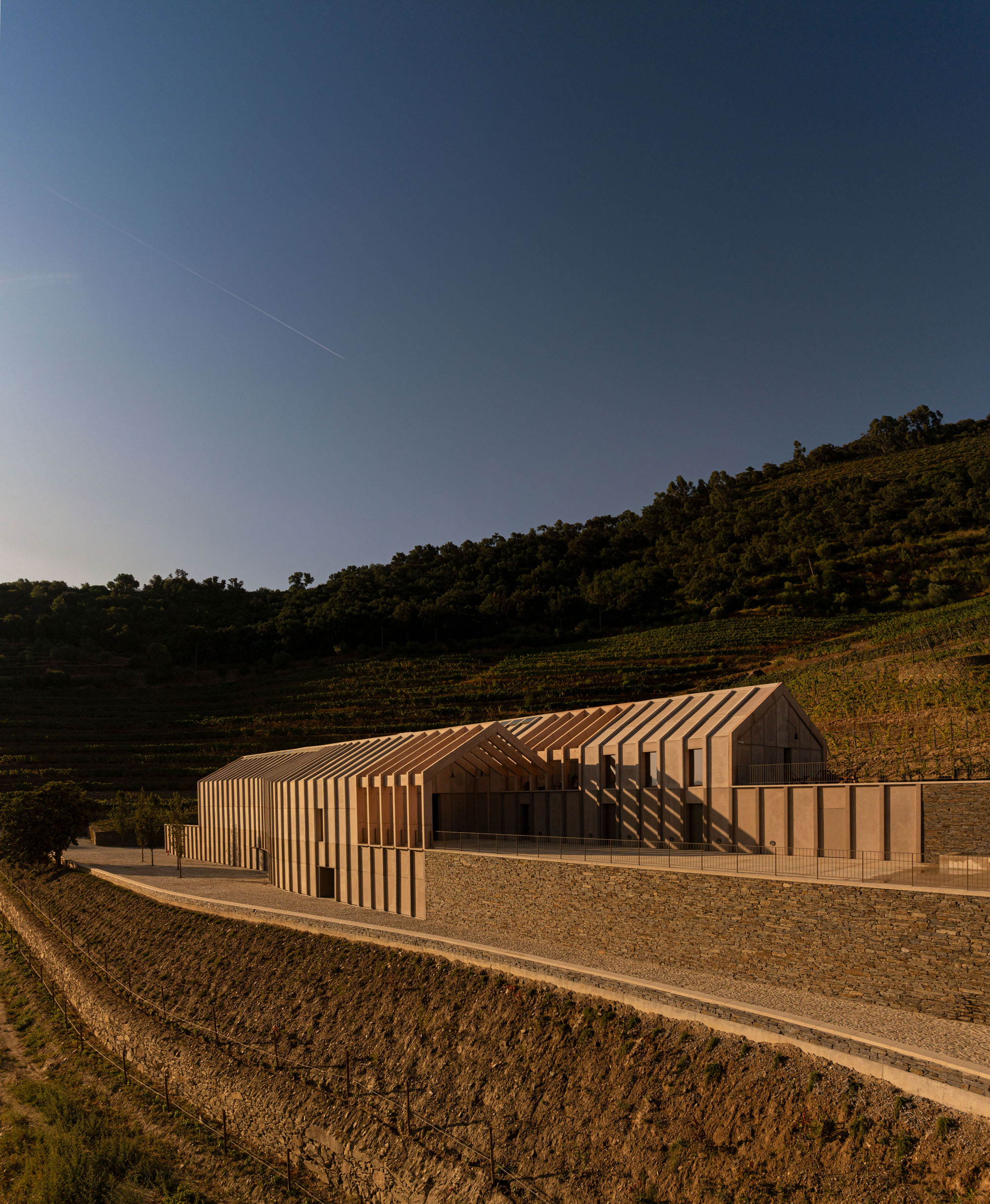
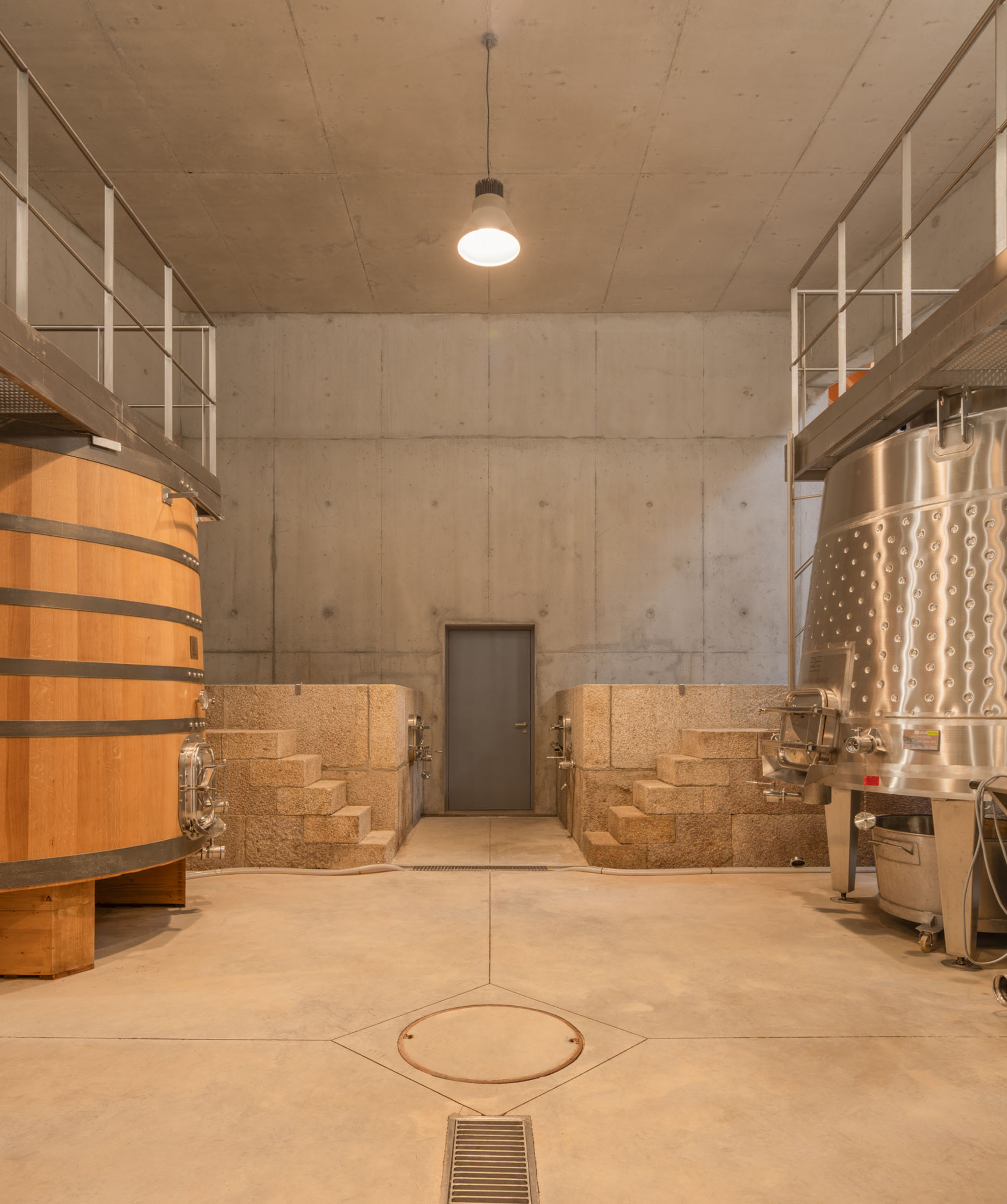
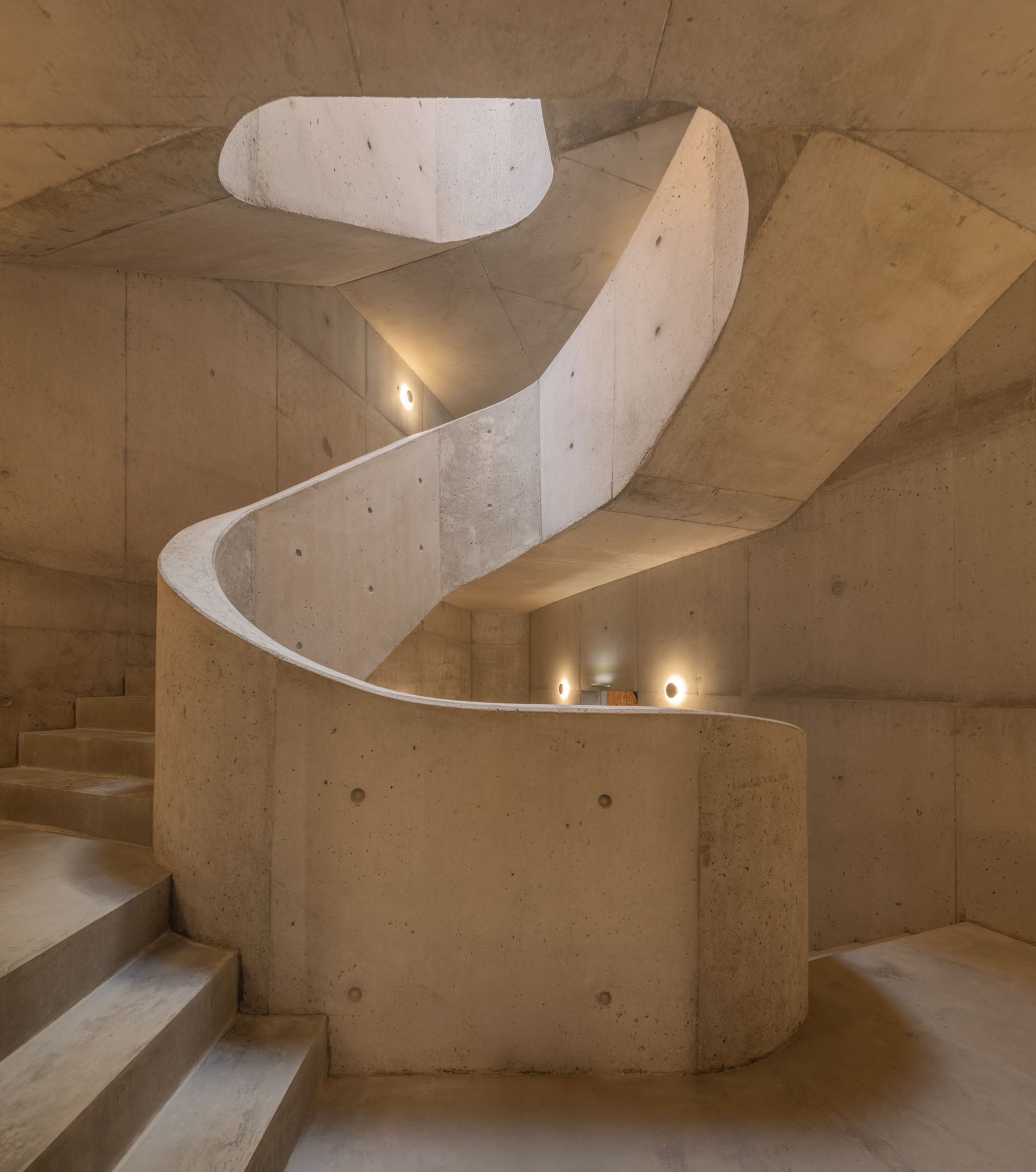
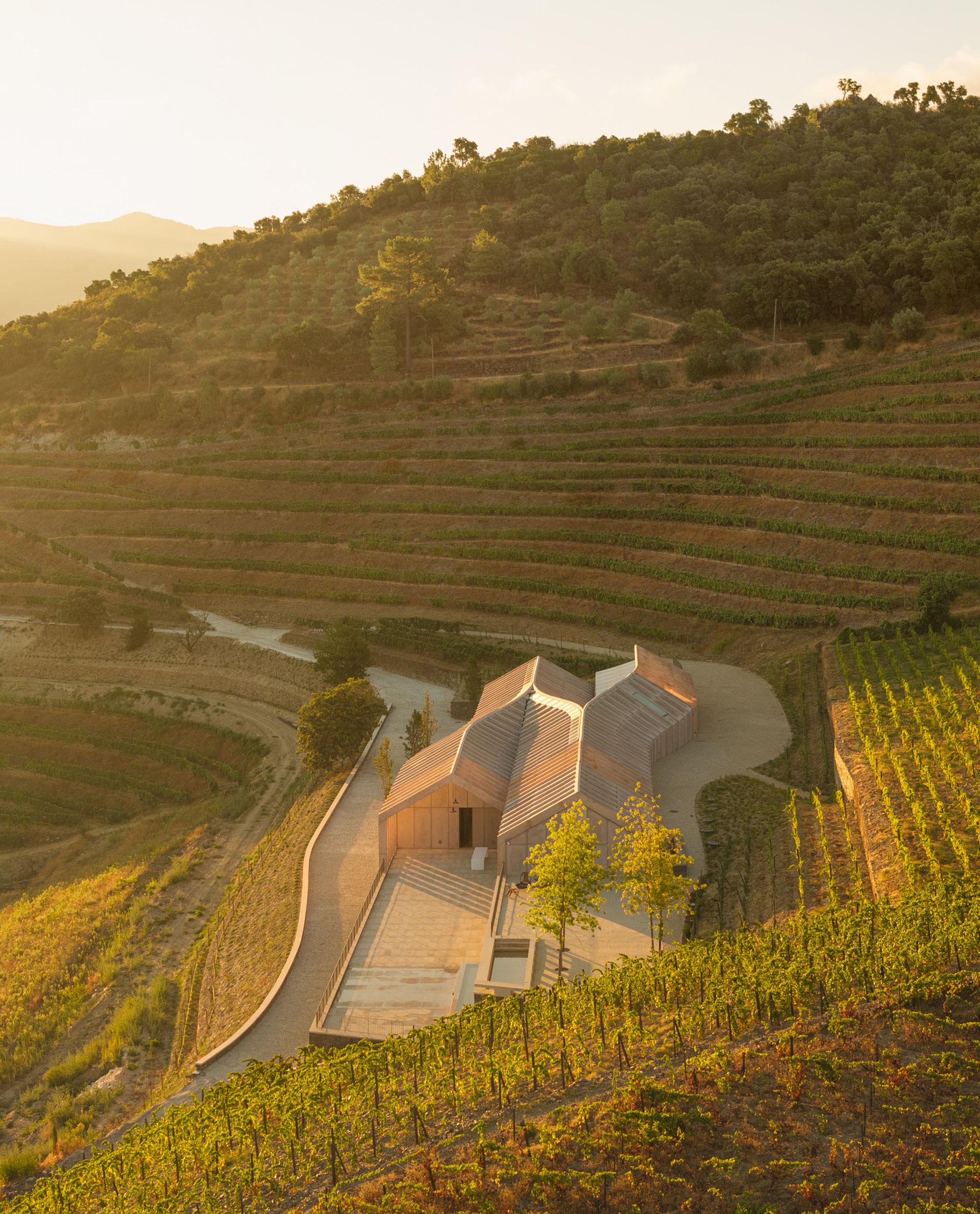
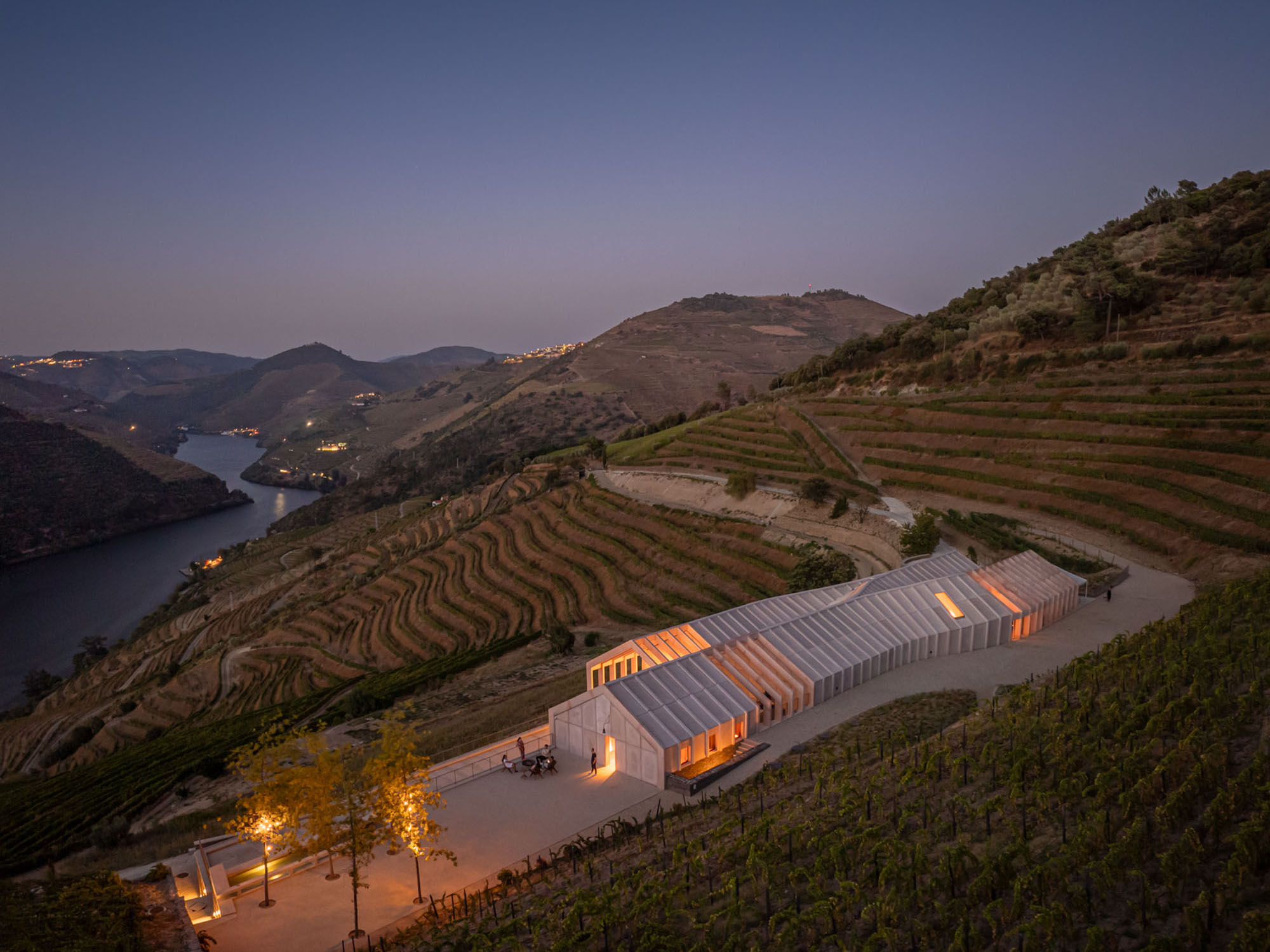
ワイナリーの水平で曲線的な形状や各エリアを結ぶ動線は、周囲の丘や谷に広がるブドウ畑のジグザグとした起伏を映し出している。しかし設計チームは、日常の業務や動線、コミュニケーションを損なうような景観の模倣は避けることとした。それどころか、土地の段丘に沿って下向きに延びる建物の形状は内部の仕組みをそのまま反映している。ここではドウロ川の河畔で一般的な手法である、重力を利用したワイン醸造プロセスが行われている。
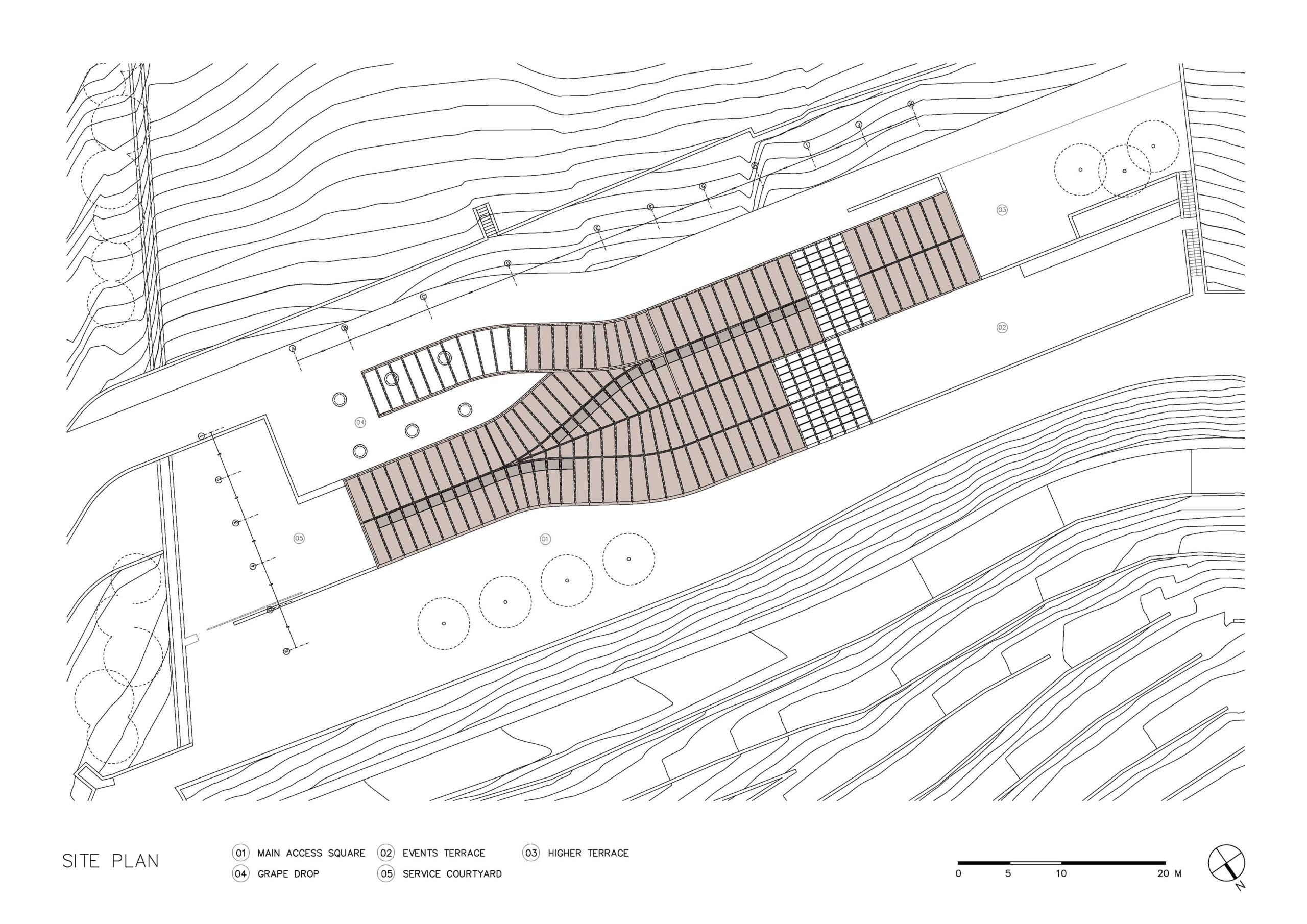
この地域特有の重力式ワイン製造システムは、現代における高度な運用能力とともにこの場所で実証されている。したがって建物の構成は、既存の地形的な傾斜に沿って織りなされた一連の区画からなり、それが内部のさまざまな階層へと再現されている。
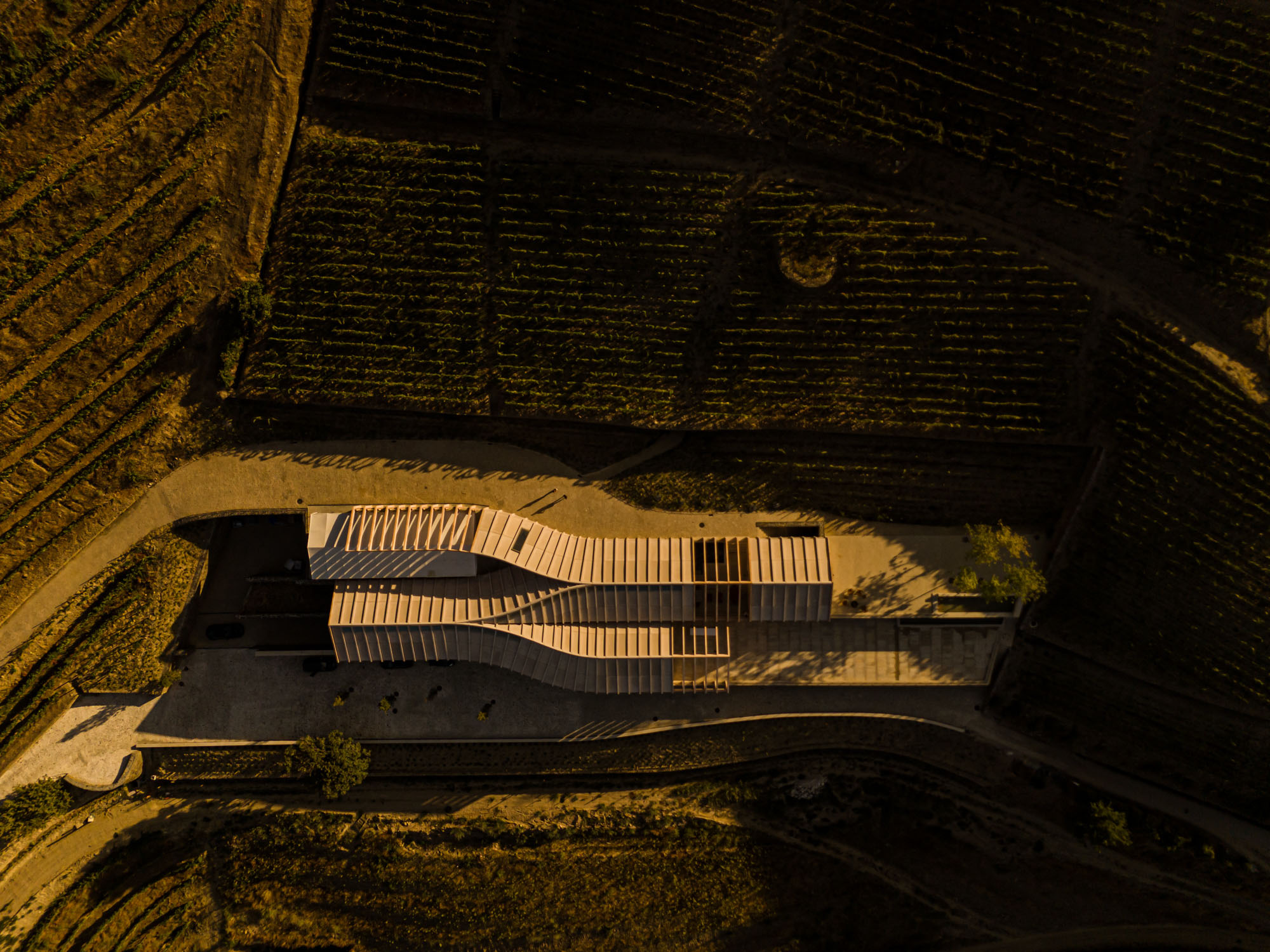
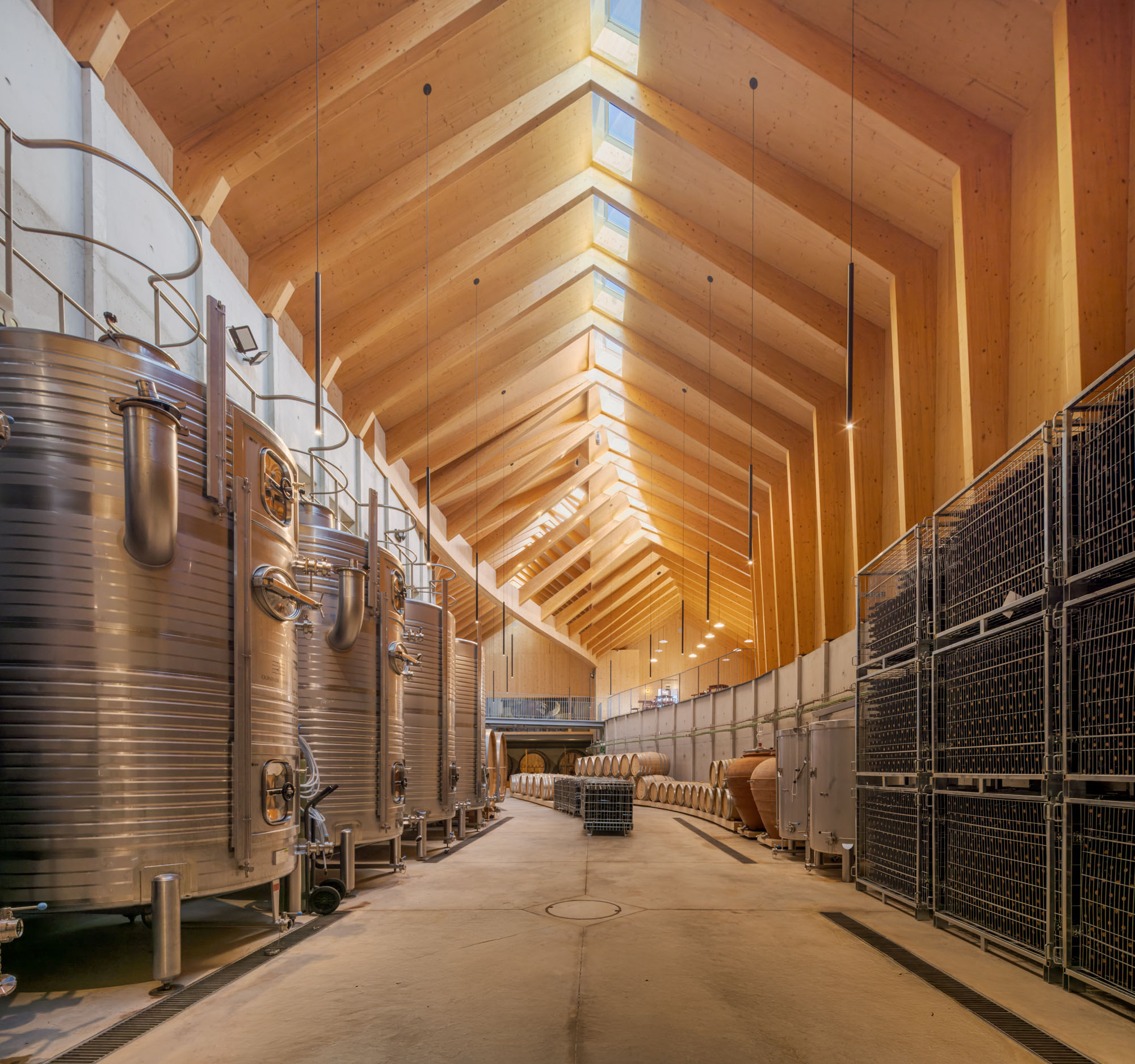
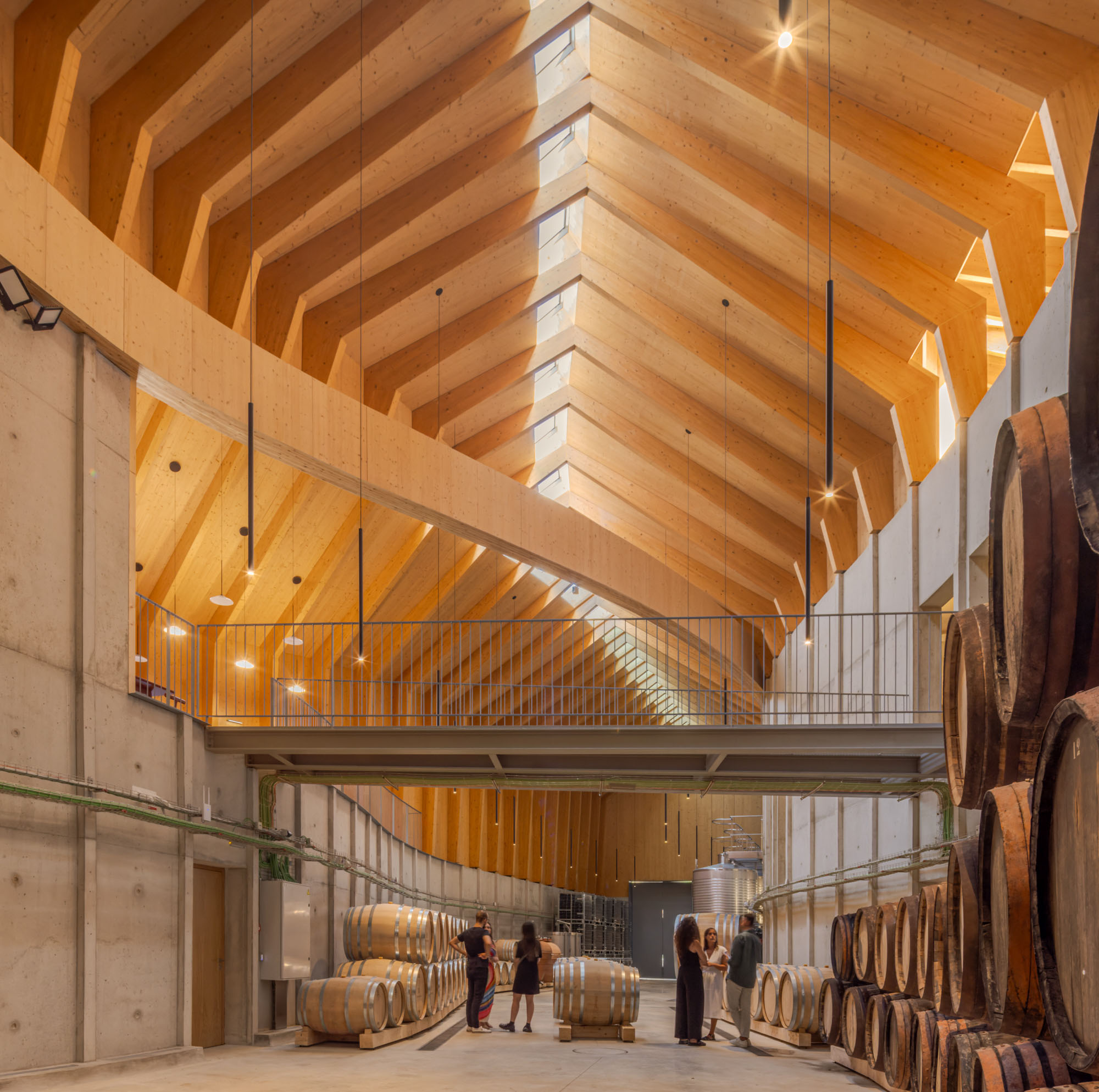
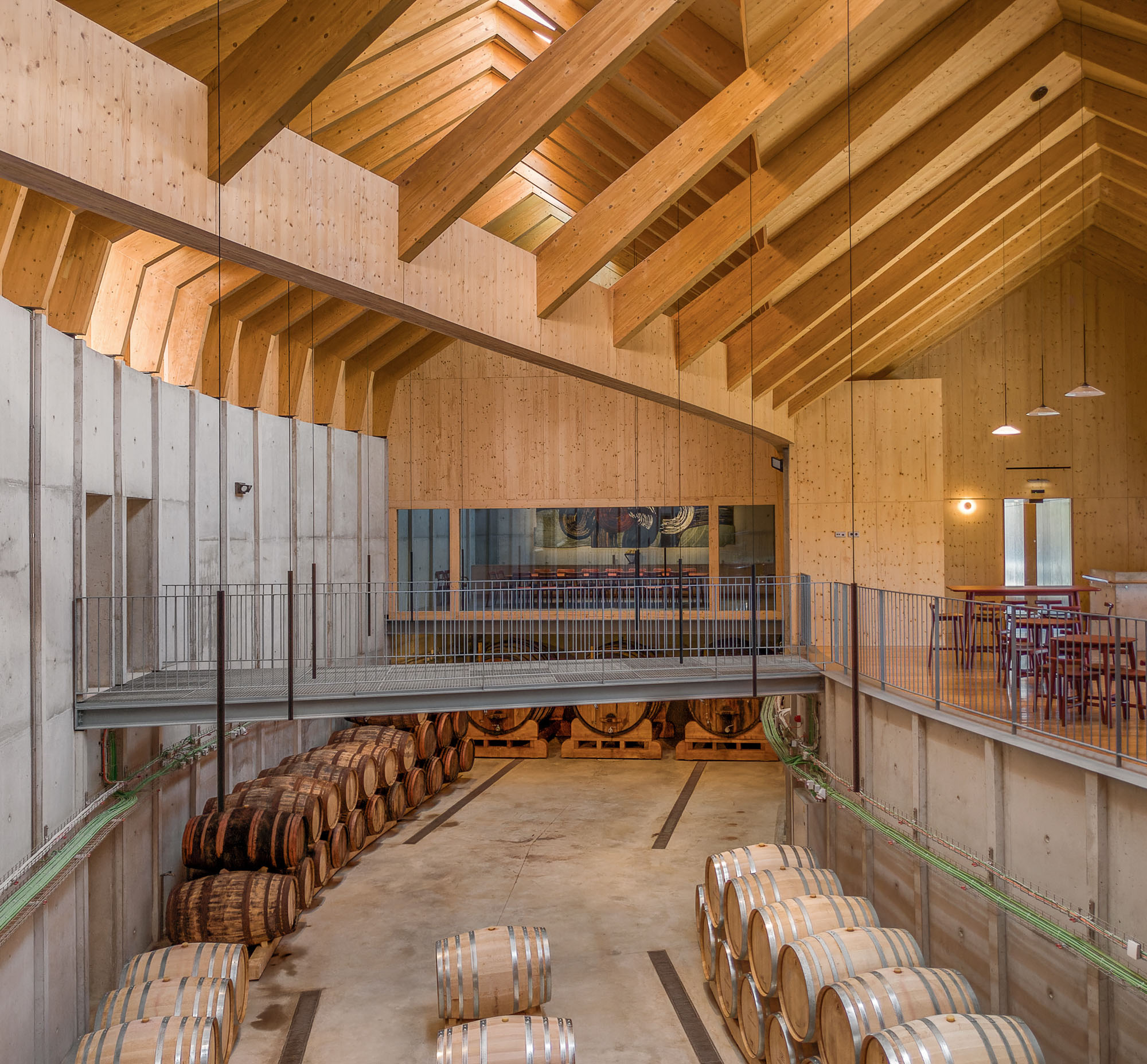
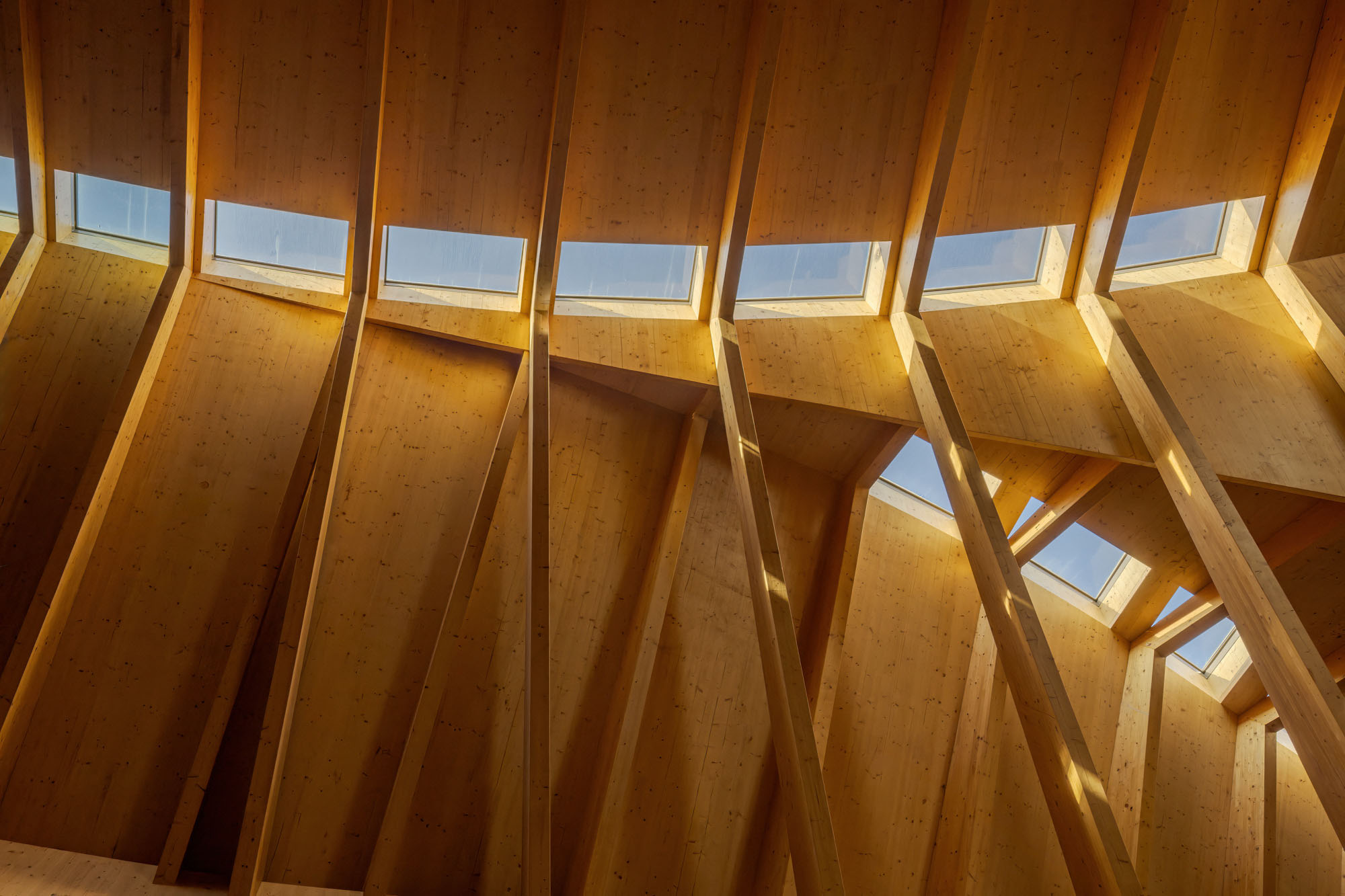
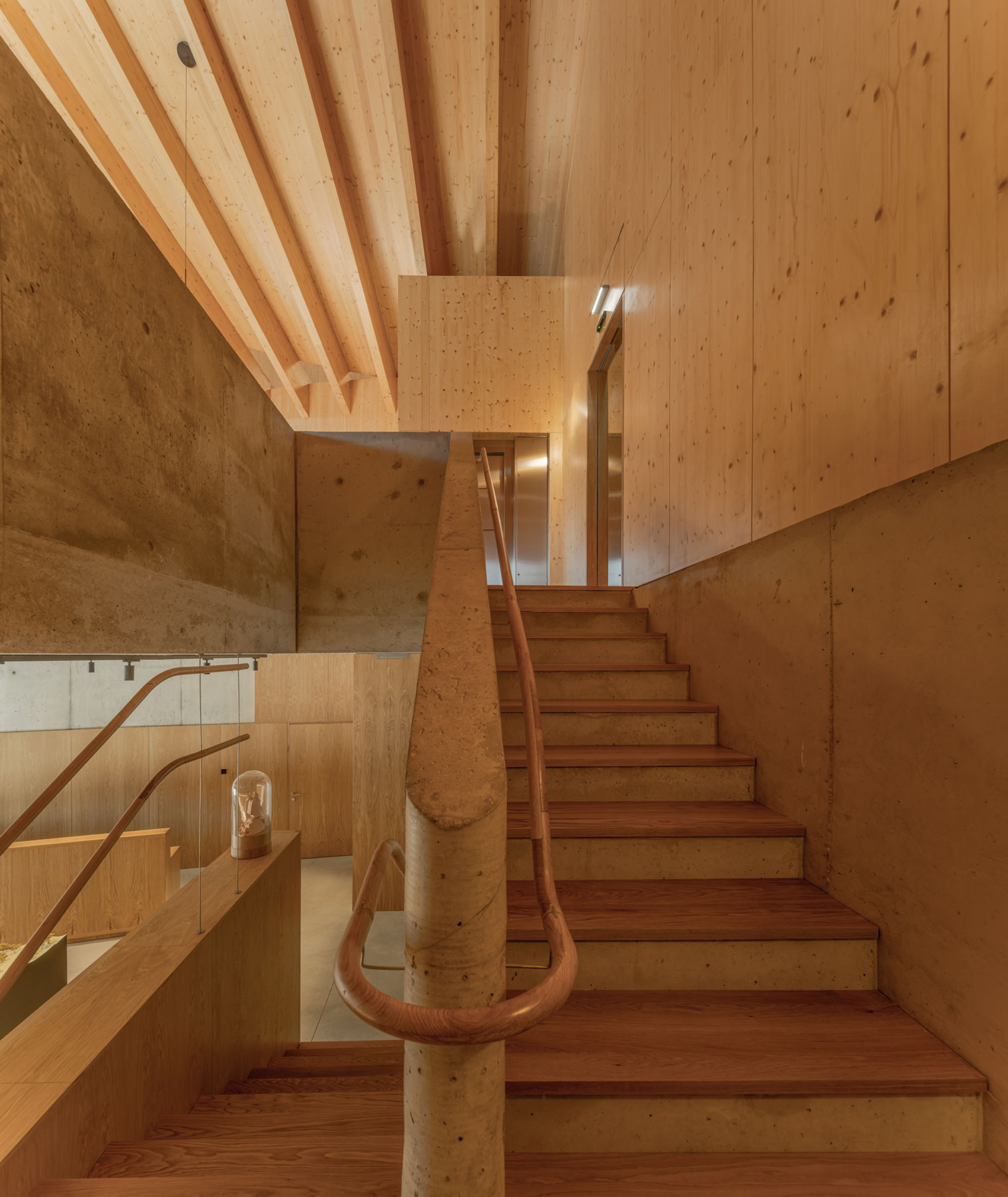
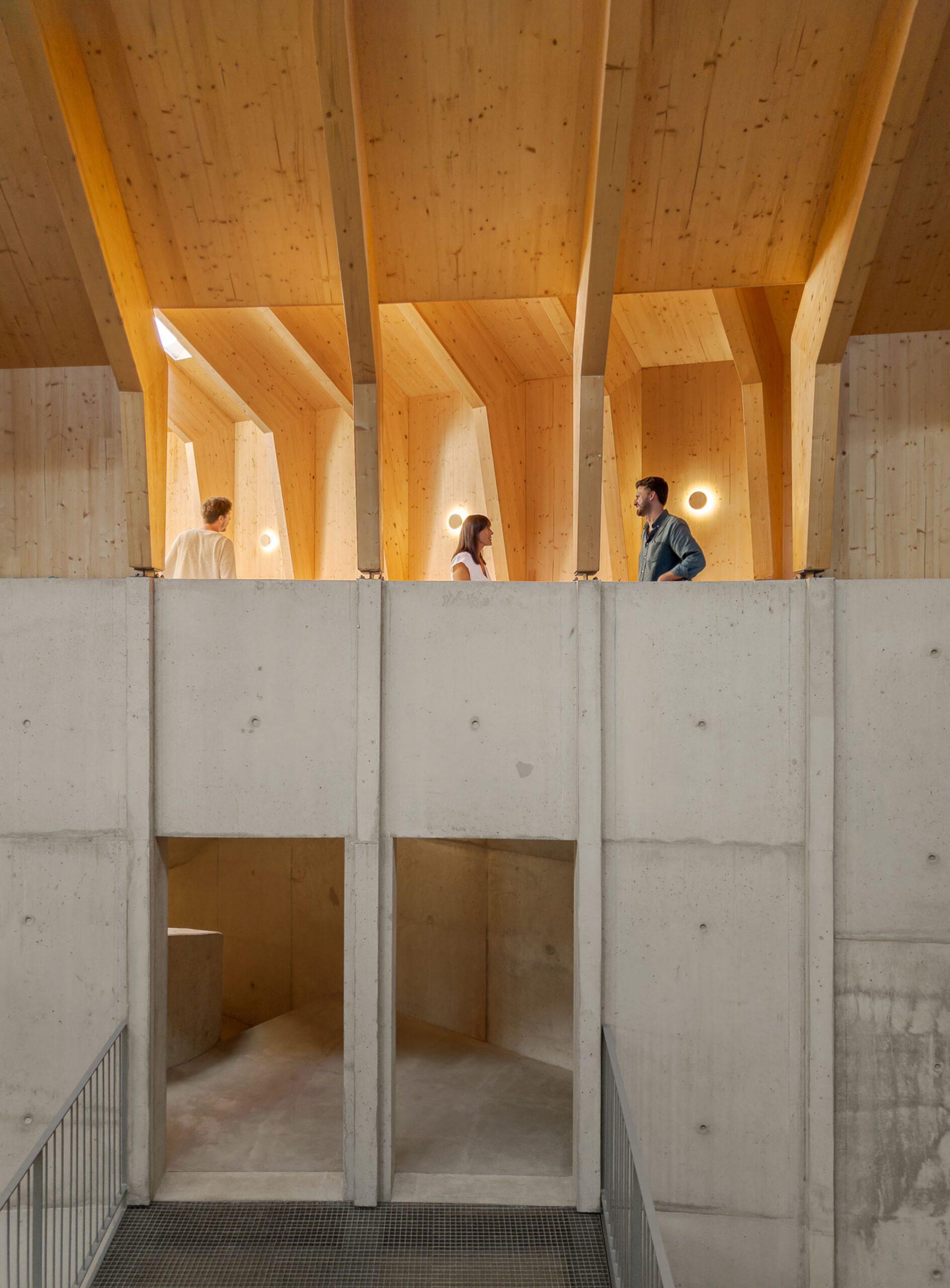
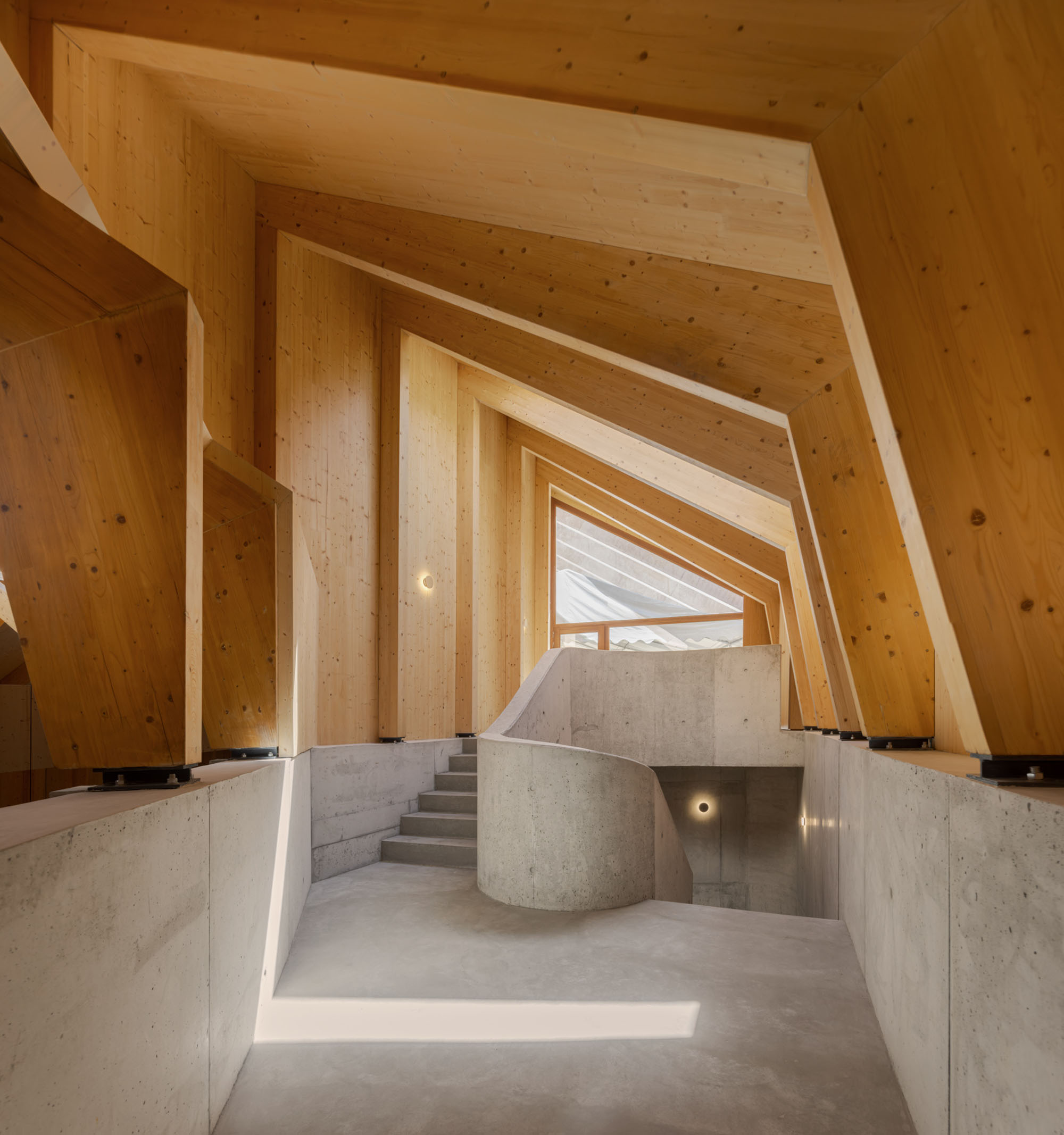
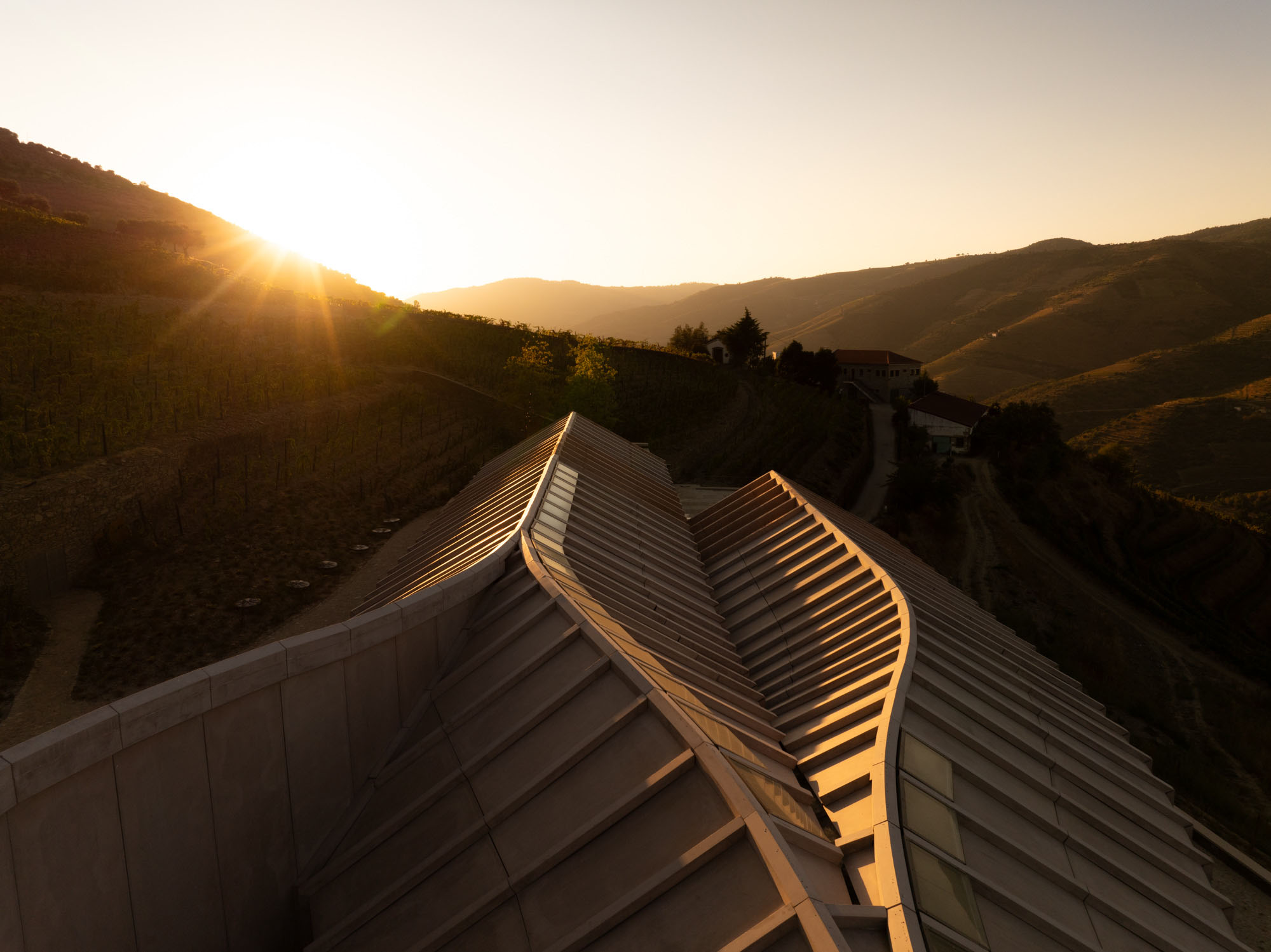
ワイナリーの屋根の幾何学形状は、伝統的な木造の切妻屋根を再解釈したものである。この構造はワイナリー内部でそのまま引き継がれ、露出した状態で表現されている。そして、ぶどう畑の斜面が描く接線曲線に沿って流れるような、しなやかで連続的かつ有機的な彫刻的要素へと昇華された。
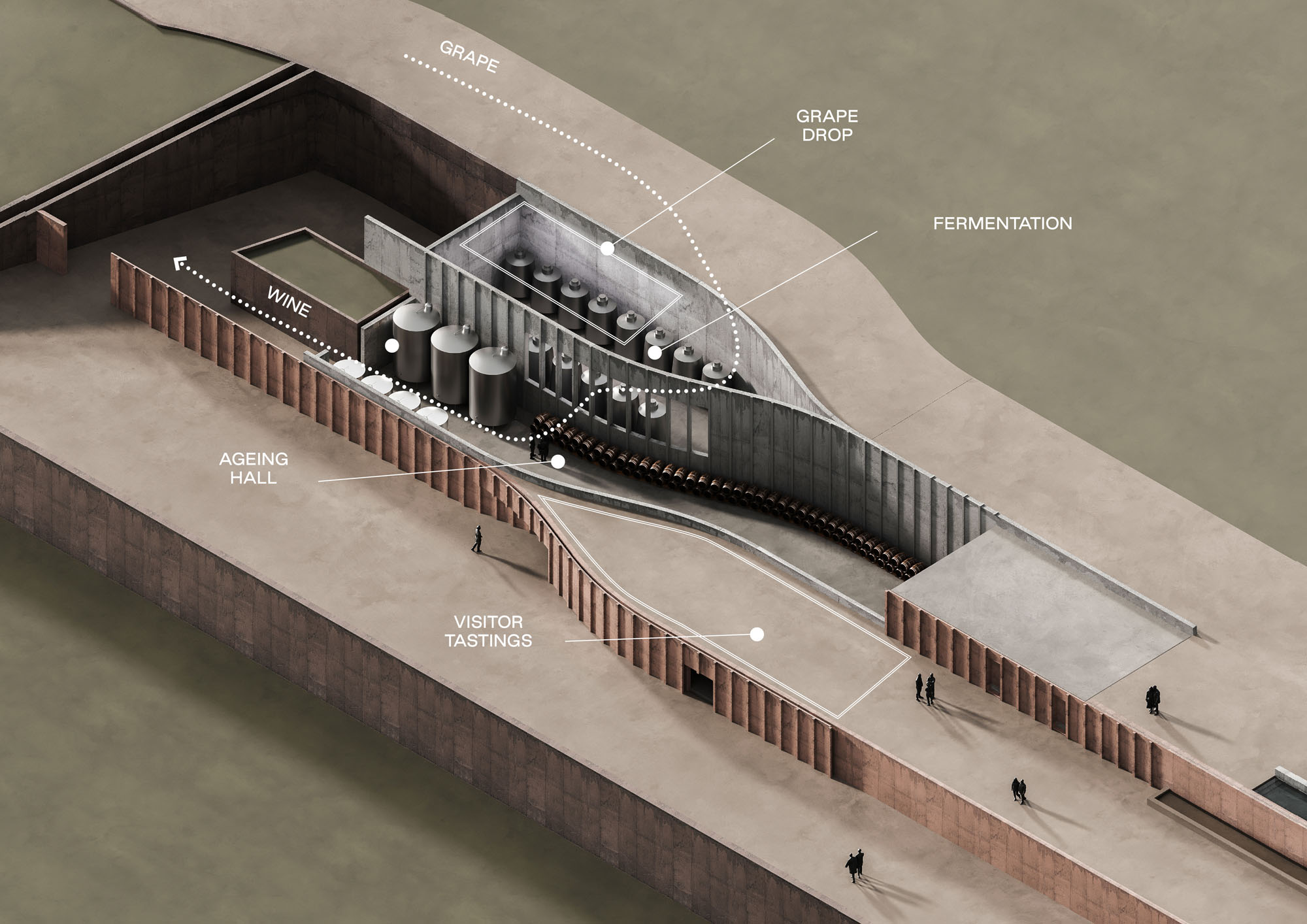
CONSTRUCTION 01, Wall
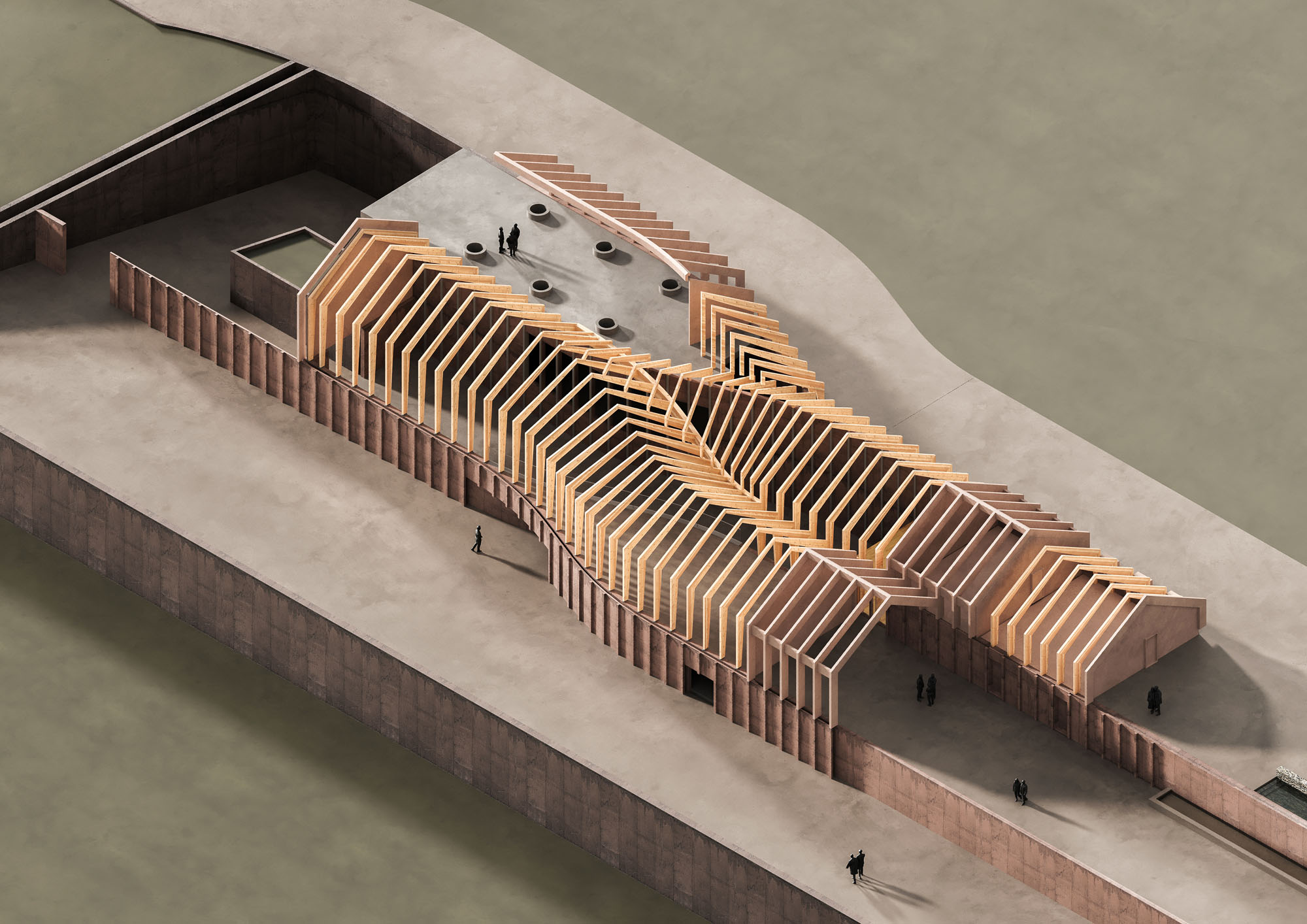
CONSTRUCTION 02, Wood structure
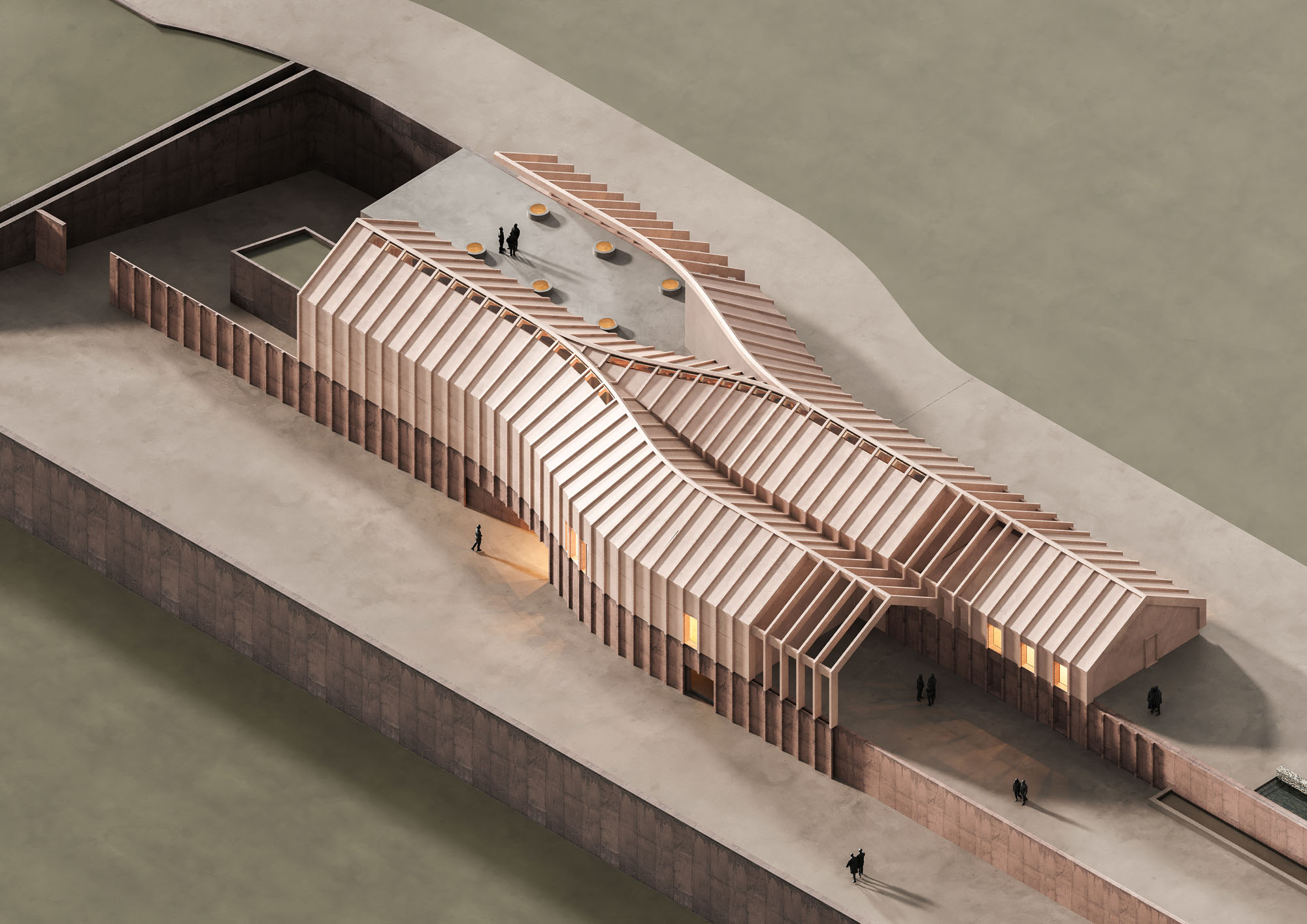
CONSTRUCTION 03, Complete
職人技と現代テクノロジーが融合した木造屋根のワイナリー
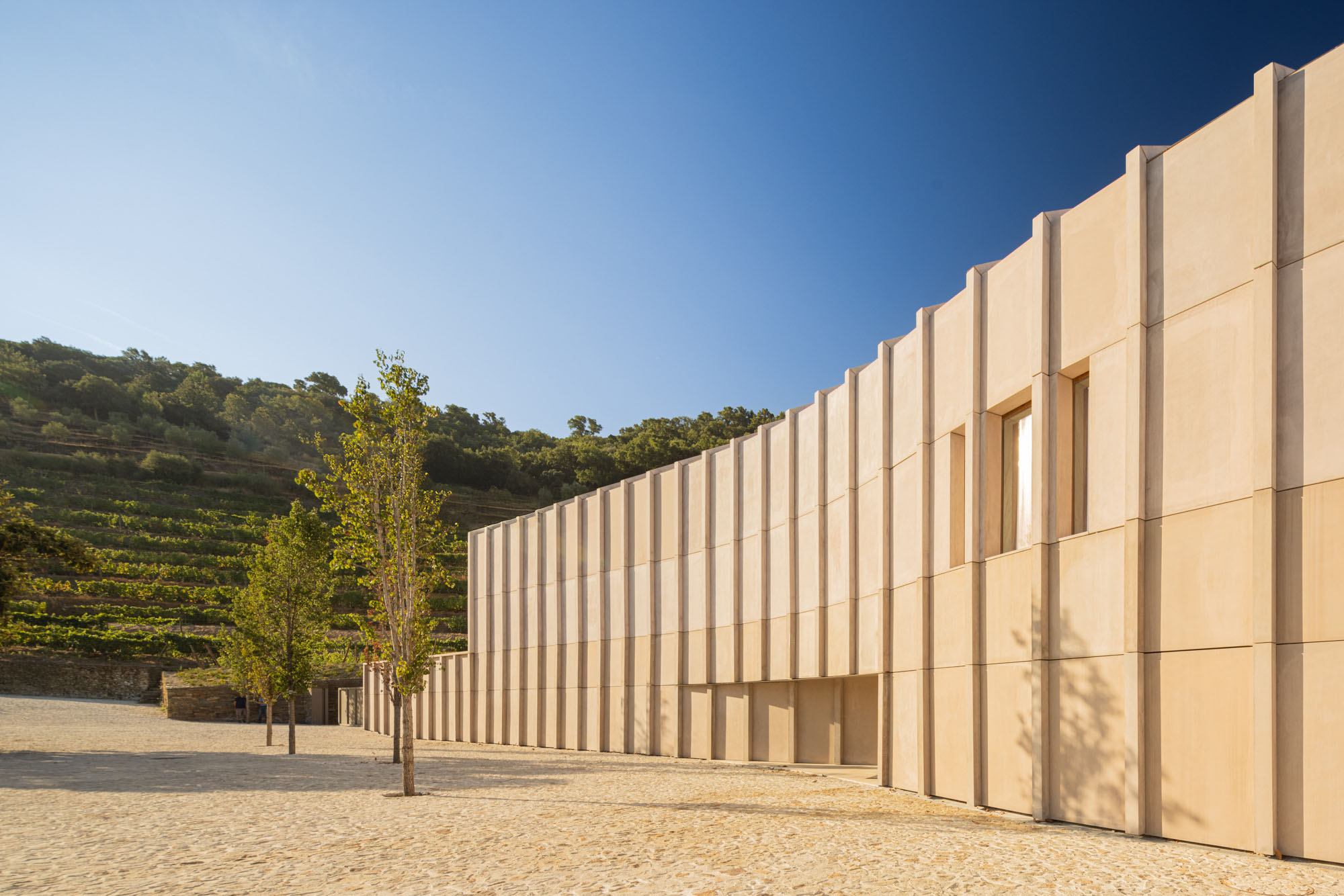
ワイナリーに使用されている素材は、ピンクがかった茶色、緑、グレーといった自然のカラーパレットを再現している。伝統的な技術や職人技を強調しながらも、現代のテクノロジーによってそれらを刷新した。外装部材および内部のコンクリート擁壁には、片岩と花崗岩が使用されている。
建物の身廊部分の構造は、積層木フレームとCLT(クロスラミネートティンバー)パネルで構成され、ワイナリーから150km圏内にある北部の工場で製造されたプレファブリケーション式のGRC(ガラス繊維補強コンクリート)外装パネルで覆われている。これは北部の産業と地域社会に貢献するとともに、資材の長距離輸送を削減するという持続可能な取り組みを体現するものである。また、これらのプレファブリケーション建築部材を採用したことで、現場での施工工数を削減し、敷地内の車両通行量も低減することに成功した。
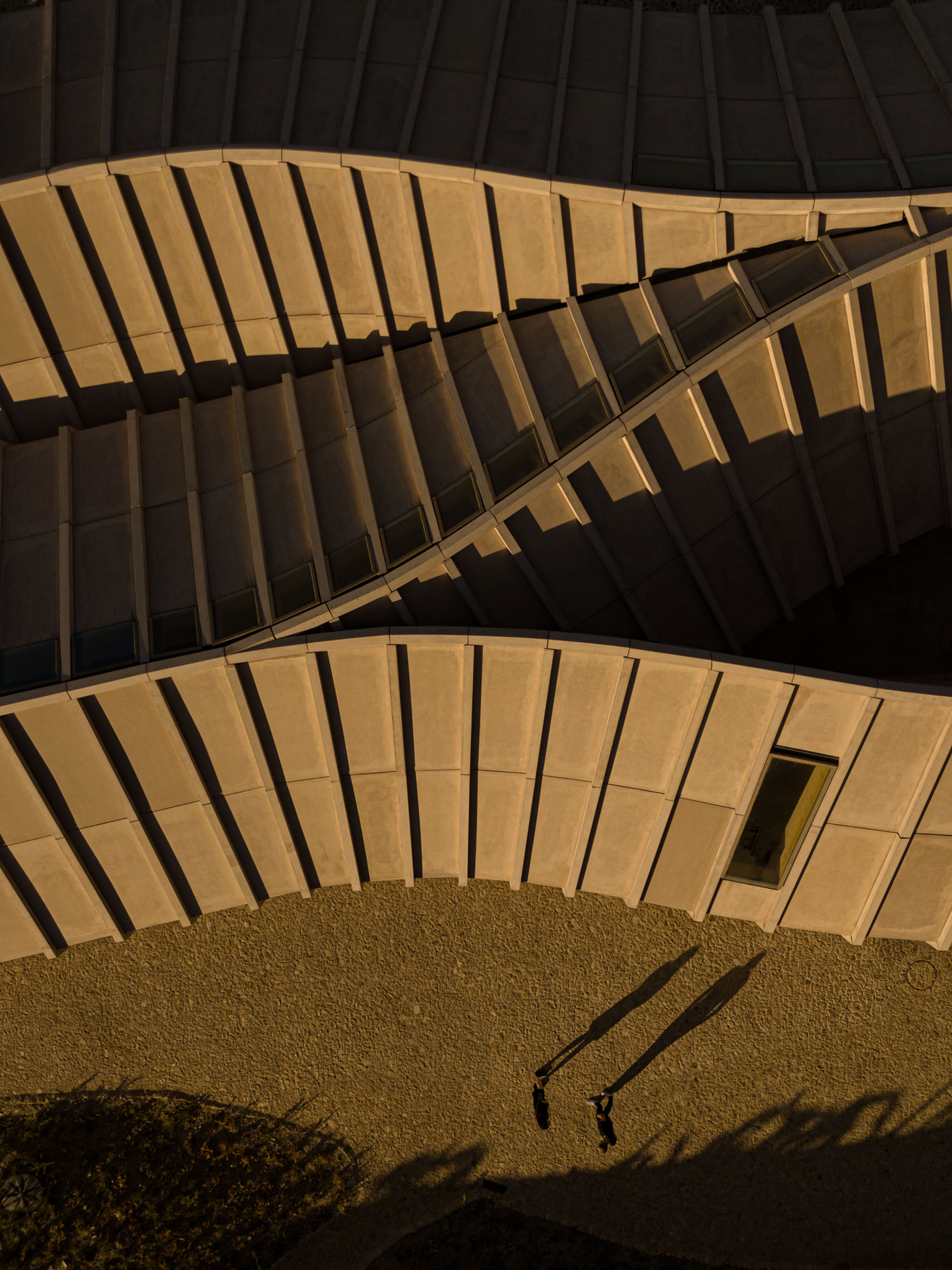
©︎ Fernando Guerra
©︎ Fernando Guerra
©︎ Fernando Guerra
©︎ Fernando Guerra
建物が地面に接していない部分には木造構造が採用されている。これによりコンクリートの使用量を最小限に抑え、完全にコンクリートで造られた建物と比較して、大気中へのCO2排出量を40%削減することに成功した。
気候の影響を受けることで、これらの素材はすべて美しい色合いと質感を取り込んでいく。これによりワイナリーは周囲の自然環境へとさらに溶け込み、良質なポートワインのように、時が経つにつれて建物の質を高めていく。
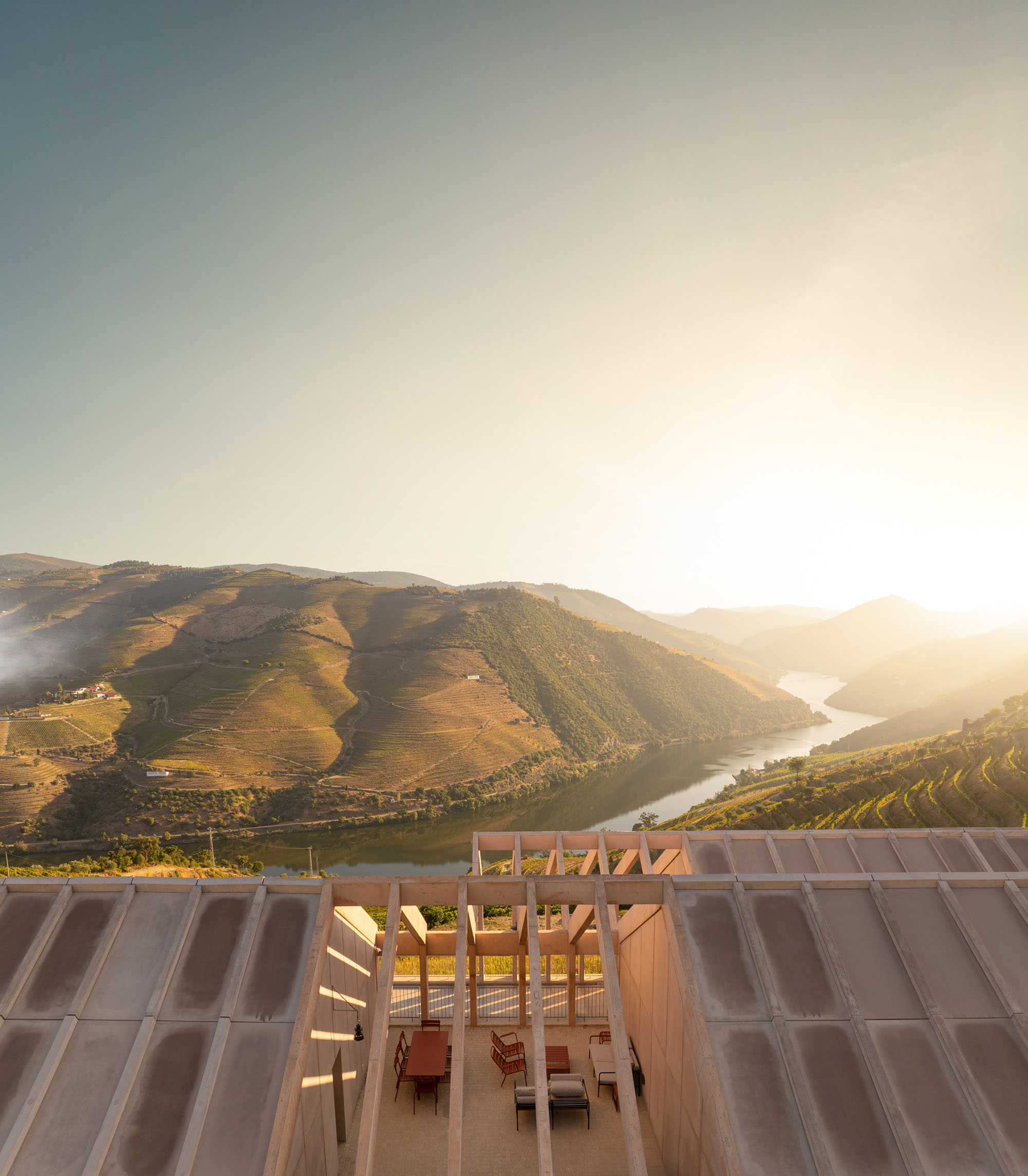
この建物は、ワイナリー内部からの眺めを額縁のように切り取ることで自然との関わりを促す。さらに屋外には、内省、熟考、瞑想、散策、そして交流へと人々を誘う小道、隠れ家、パティオが散りばめられている。
©︎ Fernando Guerra
©︎ Fernando Guerra
©︎ Fernando Guerra
©︎ Fernando Guerra
パッシブ戦略と最新システムによるエネルギーの最適化
ワイナリーのエネルギー最適化においては、省エネとエネルギー生産のソリューションを組み合わせて導入した。これによりエネルギー消費を最小限に抑え、大気中への温室効果ガス排出を削減している。
これらのエネルギーソリューションは、建築の潜在能力を活かし、パッシブ戦略を活用するものである。冬から夏にかけて外気温が-5℃から45℃の範囲で激しく変動する環境にありながら、ワイン熟成エリアの内部空間を常に14〜16℃という理想的な温度に保つことを目指している。設計チームは、建物の南側の外壁を地面に接するように配置して地熱の慣性を活用するとともに、夏でも日照が少ない北側にメインファサードを向けることでこの目標を達成した。
さらに、中央システムによって管理される地域電力生産ソリューションを導入・統合し、省エネを図るとともに、エネルギーの運用状況をより適切に制御・監視できる体制を整えた。部分的に地中に埋設された建物は地中の熱的安定性を活用しており、低エンタルピー地熱ソリューションによって電力を生成・回収・貯蔵している。このエネルギープログラムは初期コストこそ高いものの、再生可能エネルギーの潜在能力が高く、メンテナンスもほとんど必要としない。さらに、ワイン産業および人間の快適性にとって理想的な水熱環境を確保できるため、短期間で投資を回収することが可能である。
©︎ Fernando Guerra
©︎ Fernando Guerra
©︎ Fernando Guerra
受動的システム(パッシブ)と能動的システム(アクティブ)の巧みな組み合わせにより、設置された機械システムの熱出力とエネルギー消費量は大幅に削減された。公共の水道インフラがないこのワイナリーでは、雨水を利用し、井戸から飲料水を確保した上で、灌漑、清掃、消火用に水を処理・再利用するための独自のソリューションが構築された。水の浪費を防ぐため、歩道や小道、公園の舗装には透水性のある素材を採用し、雨水は最終的に農業活動へと還元される。
ランドスケープデザインにおいては、景観に彩りと香りを添える在来の植物種を復活させた。これらはブドウ園に有益な動物たちの生息地となり、ワイン生産と並行して行われるさまざまな活動を支えている。
©︎ Fernando Guerra
©︎ Fernando Guerra
©︎ Fernando Guerra
©︎ Fernando Guerra
景観と建築を称えるビジター体験
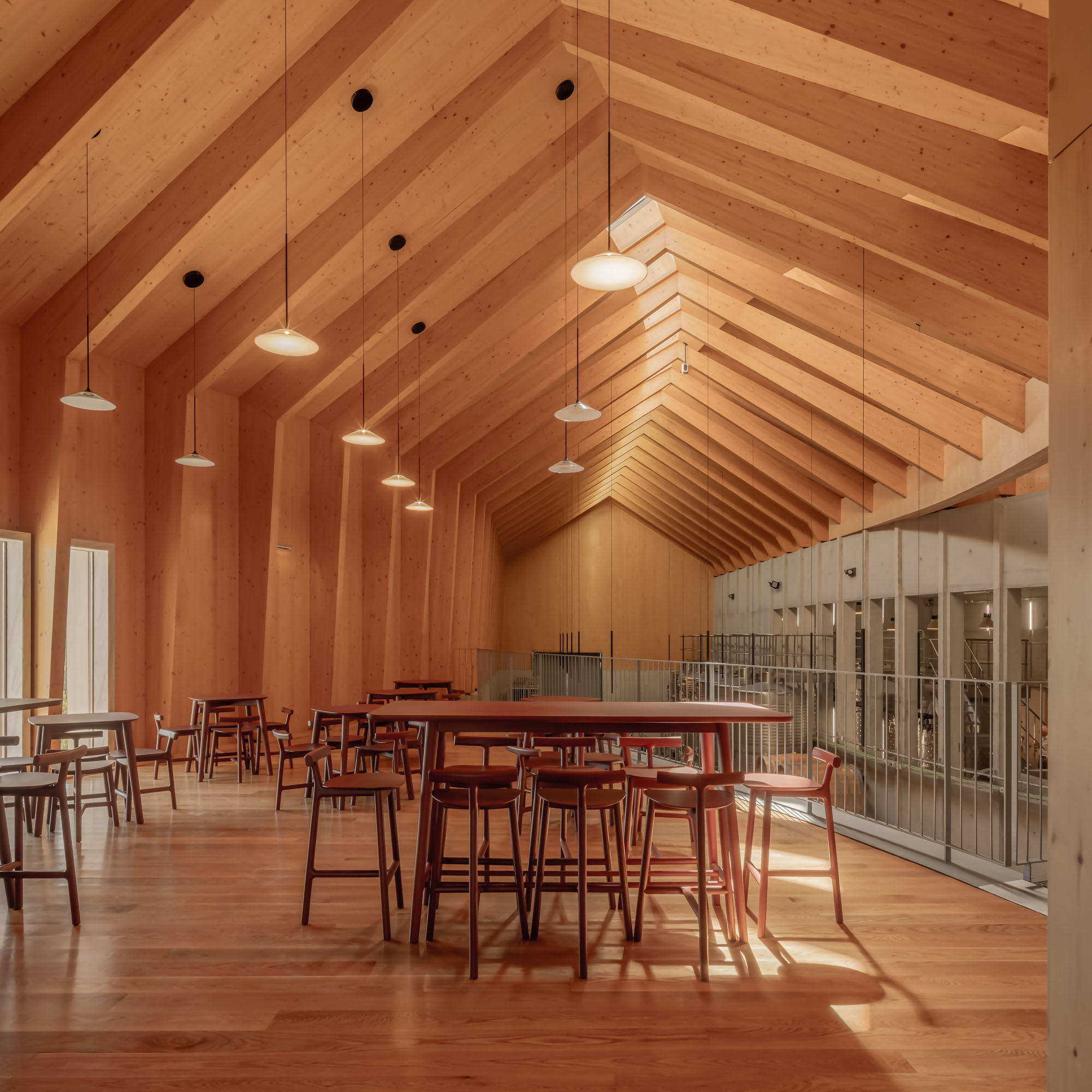
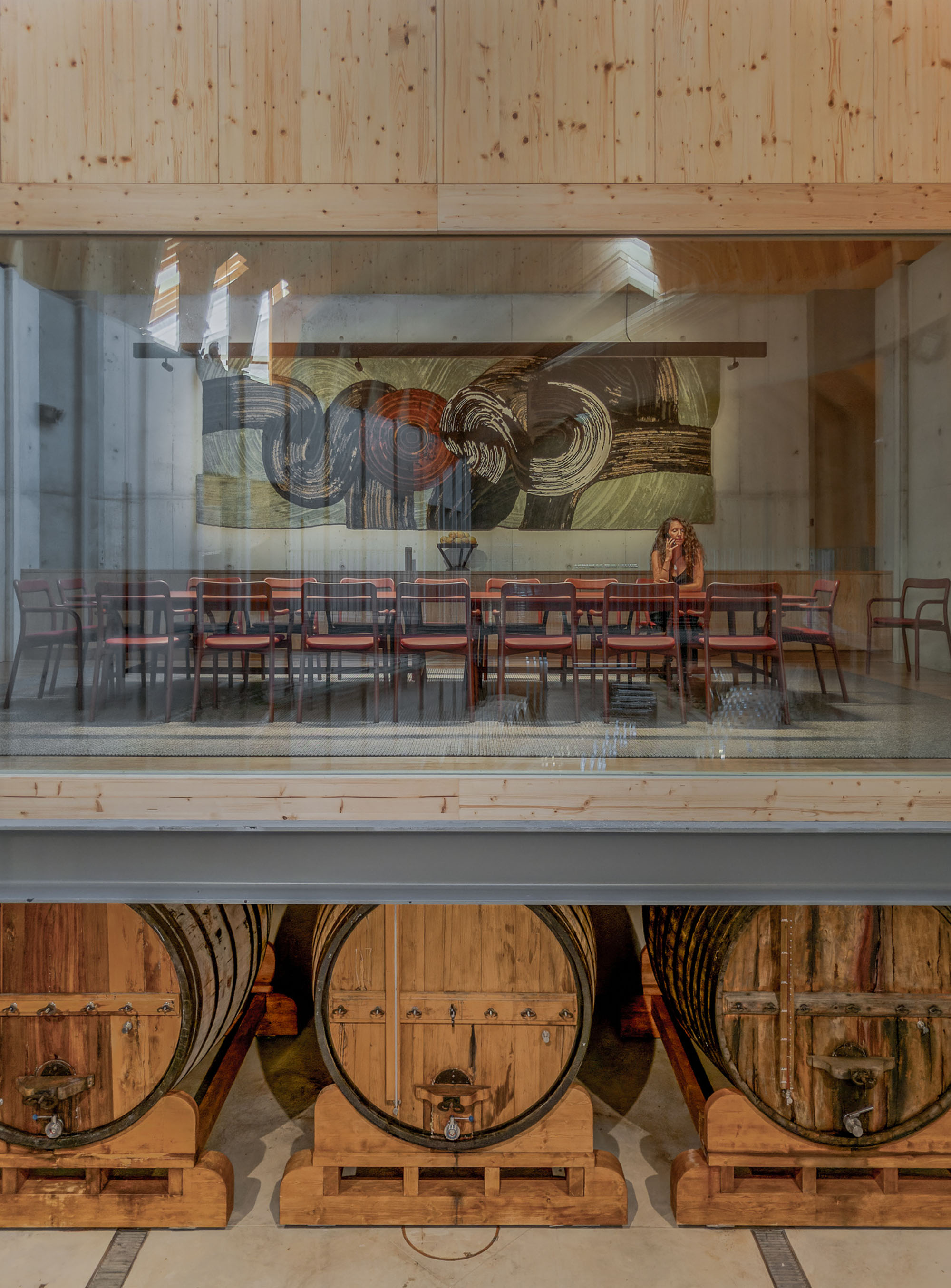
ワイナリーのメインファサードには、受付デスクとワインショップを備えたビジターセンターの入口が設けられている。ここから全面ガラス張りの壁をもつ会議室へと上がり、さらに広々としたバルコニー付きのギャラリーにあるワインテイスティングエリアへと動線が続く。この空間からは、建物の中央身廊にあるワイン熟成エリアと、目の前に広がるブドウ畑、そして雄大な川を一望することができる。
これらの空間からは、ドウロ川を見下ろす広々としたテラスを経由して、屋外のぶどう畑や礼拝堂へと直接アクセスすることが可能である。このテラスでは、ワイナリーやこの地域を広くPRし、美しい景観と優れた建築の両方を称えながら、格調高いワインツーリズムを促進する数々のイベントが開催されている。
©︎ Fernando Guerra
©︎ Fernando Guerra
©︎ Fernando Guerra
©︎ Fernando Guerra
default
Site Plan
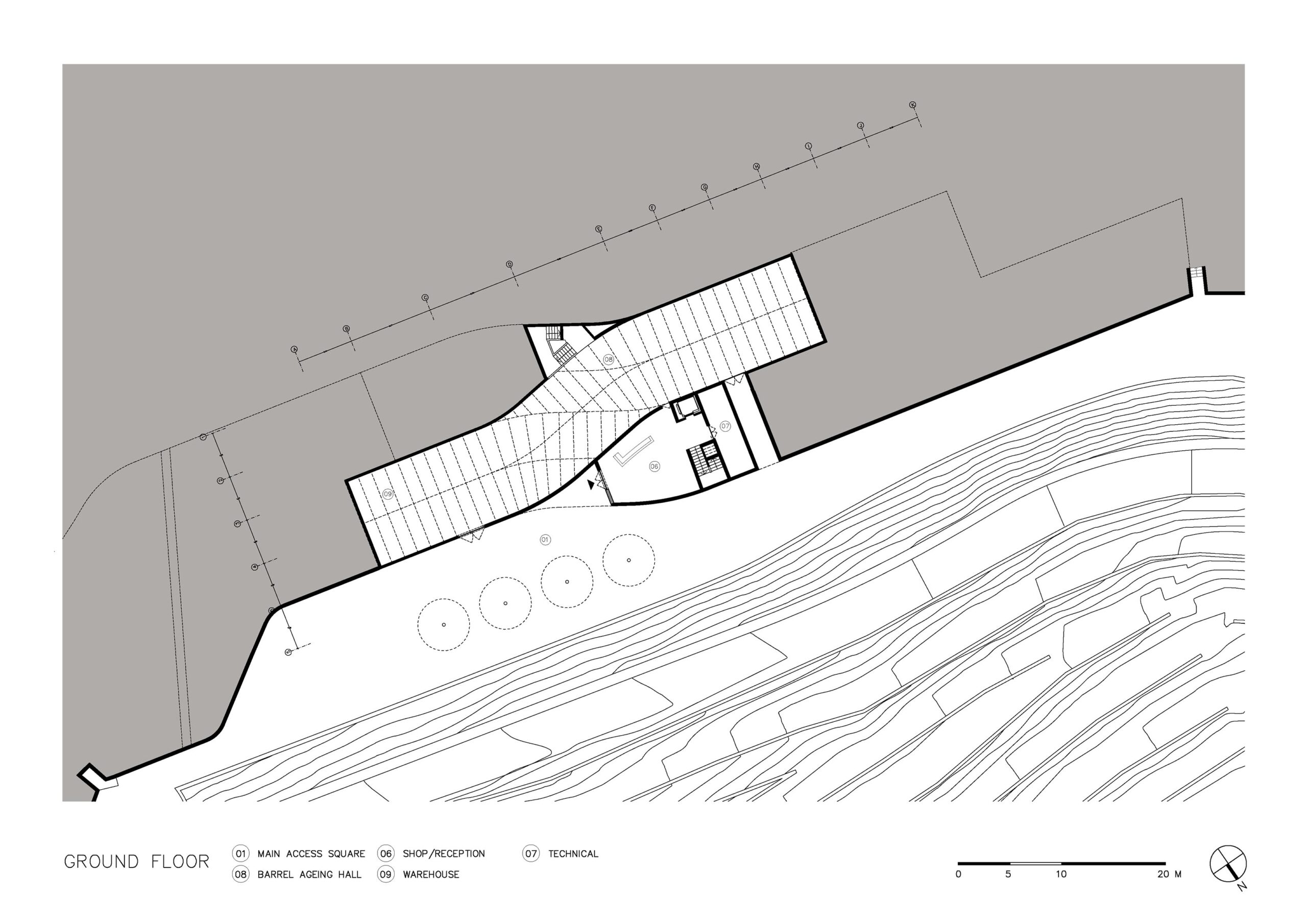
Ground Floor Plan
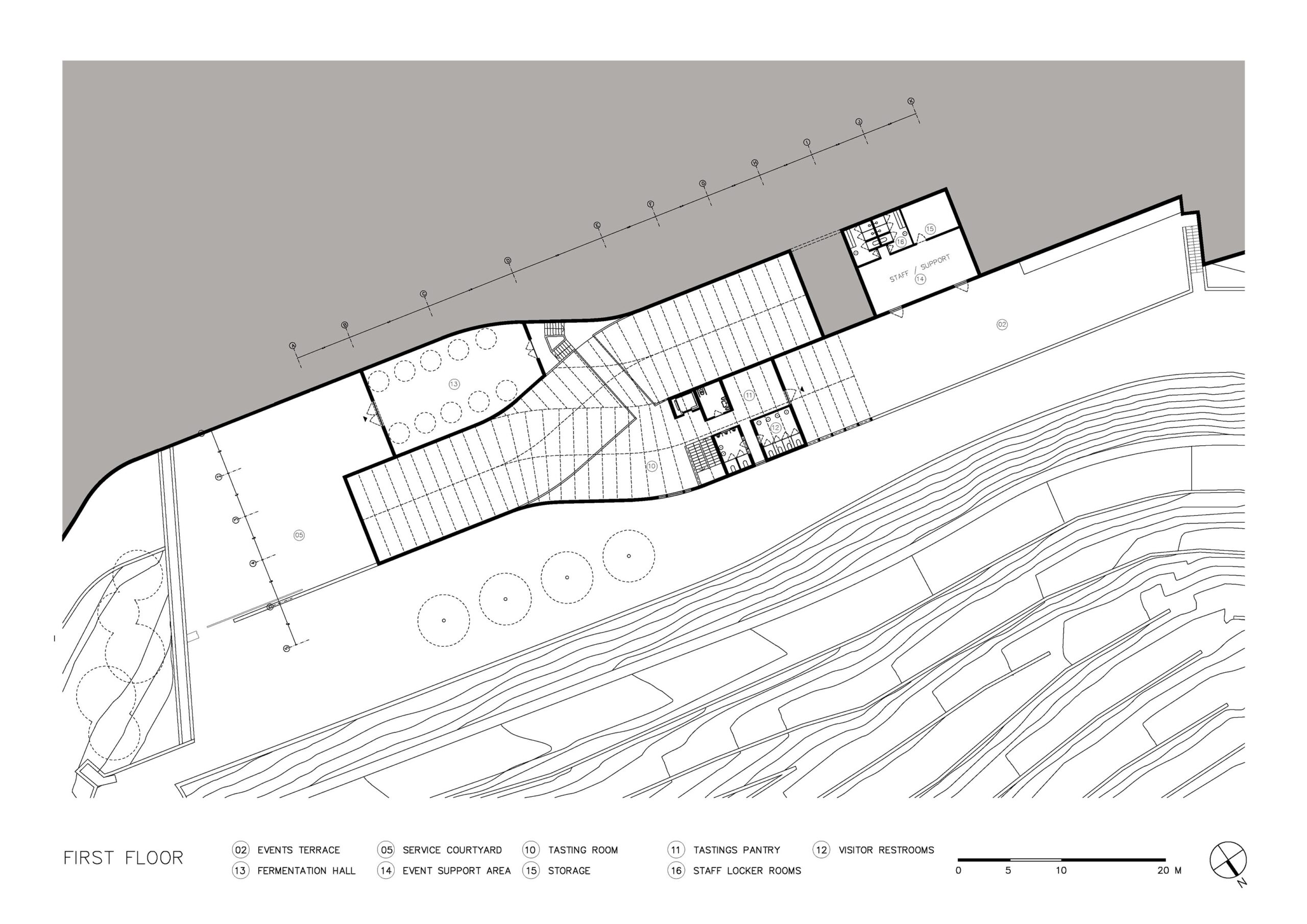
1st Floor Plan
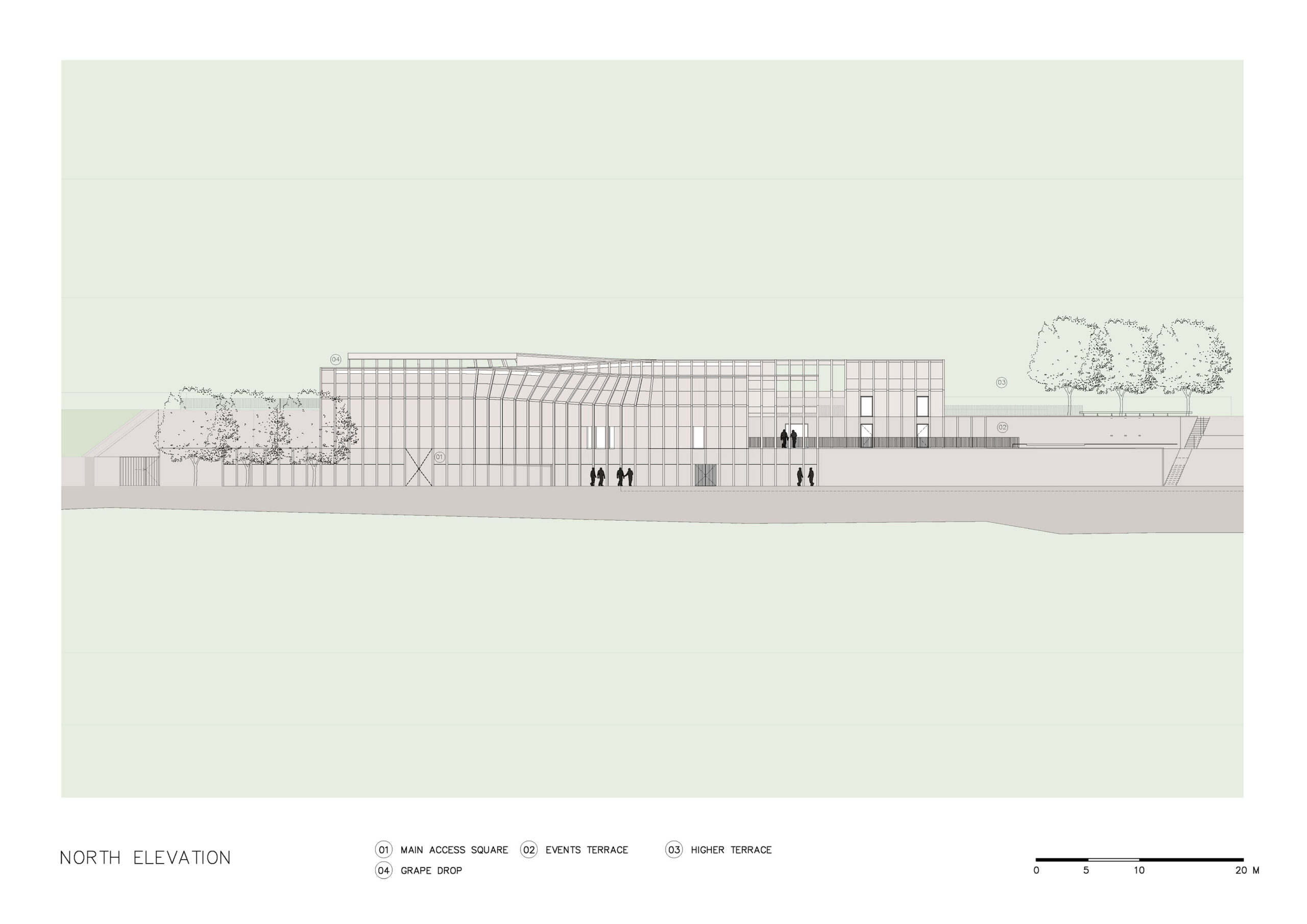
Elevation
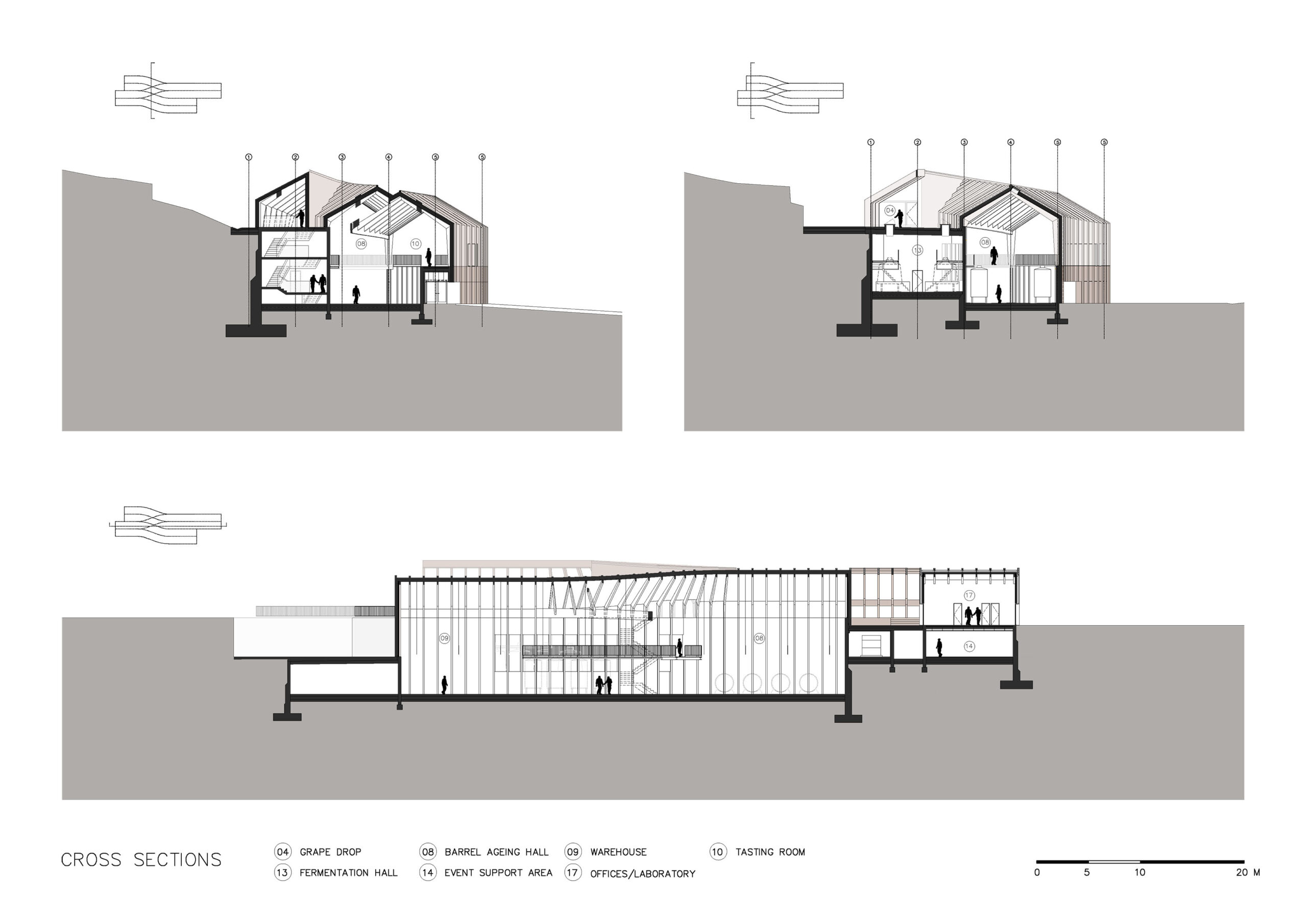
Sections
以下、アトリエ・セルジオ・レベロのリリース(英文)です。
Quinta de Adorigo Winery
The winery at Quinta de Adorigo was completed in 2024 and is part of a family wine tourism development that also includes a hotel, which is still under construction. This quinta is located in the Alto Douro Vinhateiro, Portugal’s most prestigious wine-growing area, listed by UNESCO as a World Natural and Cultural Heritage Site since 2001.
The exceptional beauty of the natural surroundings, the millennia-old human occupations and the centuries-old tradition of wine production motivated an architectural project that honors the landscape and local culture and presents innovative construction strategies and effective sustainability.
The horizontal curvilinear shapes of the winery and the circuits between areas mirror the zigzags of the vineyards in the surrounding hills and valleys. However, we avoided literally quoting the landscape, compromising daily routines, circulation, and communication. On the contrary, the downward movement of the building on the terraces of the land reflects its internal mechanics, where the winemaking process takes place by gravity, a common procedure on the banks of the River Douro.
The gravitational wine production system, so characteristic of the region, is demonstrated here with its current operational capabilities. The configuration of the building is therefore a set of interwoven naves that follow the existing topographic slope, replicated on the various interior levels.
The geometry of the winery’s roof interprets the vernacular gable roof structured in wood. This structure has been taken over and exposed in this winery and has become a sinuous, continuous, and organic sculptural element that flows through the tangential curves of the vineyard slopes.
The winery’s materials replicate the natural palette of pinkish browns, greens and greys, underlining traditional skills and crafts, but updated by modern technologies. Schist and granite were used in the exterior elements and in the interior concrete retaining walls.
The structure of the building’s naves is made of laminated wood frames and CLT (Cross Laminated Timber) panels, covered with prefabricated GRC (Glass-Fiber Reinforced Concrete) cladding panels, produced in the north, less than 150 km from the winery. This benefits the northern industry and community and reflects the sustainable practice of cutting down on the long- distance transportation of materials. These prefabricated building elements also saved on-site construction and reduced traffic on the property.
Wooden structures have been used at the points where the building does not touch the ground, to also minimize the use of concrete, which has reduced CO2 emissions into the atmosphere by 40%, compared to what a building completely made of concrete would emit.
Exposed to the effects of the climate, all these materials take on beautiful shades of tone and texture, that better integrate the winery into its natural surroundings and allows the building to improve its quality over time, just like a good Port wine.
This building encourages an involvement with nature by framing views from inside the winery and, outside, there are trails, nooks and patios that invite introspection, contemplation, meditation, walking and socializing.
The winery’s energy optimization implemented and combined preservation and energy production solutions, selecting the lowest energy consumption and reducing greenhouse gas emissions into the atmosphere.
The energy solutions explore the potential of architecture to take advantage of passive strategies to preserve the interior space of the wine ageing area with a temperature between 14 and 16 degrees, when the outside temperature range between -5º and 45º Celsius degrees from winter to summer. We achieved our goal placing the building with the southern envelope in contact with the earth, taking advantage of its inertia, and turning the main façade to the north where there is little sunlight, even in summer.
Local electricity production solutions managed by a central system were implemented and combined to save energy and better control and monitor the energy modus operandi. The partially buried building takes advantage of the thermal stability of the ground and a low enthalpy geothermal solution produces, recovers and stores electricity. The high initial cost of this energy program is recovered in the short term, as it has high renewable potential, requires little maintenance and ensures ideal hydrothermal levels for the wine industry and human comfort.
This combination of passive and active systems has significantly reduced the thermal power and energy consumption of the mechanical systems installed. For this winery with no public water supply infrastructure, solutions were created to use rainwater, obtain drinking water from artesian boreholes and treat and recycle water for irrigation, cleaning and firefighting. To avoid wasting water, the exterior sidewalks of sidewalks, paths and parks are permeable, and rainwater is returned to agricultural activities.
The landscape design recovers species of native flora that add color and perfume to the landscape, which serve as a habitat for animals that are beneficial to the vineyards, and which support activities that run parallel to wine production.
On the main façade of the winery is the entrance to a visitor center with a reception desk and a wine store. From here you go up to a meeting room with an all-glass wall and to the wine tasting area in a spacious balconied gallery, overlooking both the wine aging area in the central nave of the building and the vineyard and river.
These rooms have access to the outside, to the vineyards and the chapel, via a large terrace overlooking the Douro. Events are hosted here that promote the winery and the region, celebrating both the landscape and the architecture and promoting prestigious wine tourism.
TECHNICAL DATA
NAME OF THE PROJECT: Quinta de Adorigo Winery
CLIENT: Quinta de Adorigo
TIPOLOGY: Winery and Hospitality
STATUS: Built
LOCATION (City, State, Country): Tabuaço, Alto Douro Vinhateiro, Portugal
LAND AREA: 24 Hectares
BUILT AREA: 1100 m2
START DATE: 2019
COMPLETION DATE : 2024
PHOTOGRAPHER: Fernando GuerraAWARDS:
• Dezeen Awards, 2025 – Hospitality
• World Architecture Festival, 2025 – Production, Energy & Logistics
• World Architecture Festival, 2025 – Best Use of Timber
• World Architecture Festival, 2025 – Best Use of Light, Highly Commended
• Archisearch Awards 2025 – Best Mixed Hospitality Design of the Year
• Prémio de Arquitetura do Douro, 2024
• Architizer A+ Awards, 2021 – Unbuilt Hospitality and Popular Choice Award
• World Architecture Festival, 2021 – Leisure Led Development, Future Project
アトリエ・セルジオ・レベロ 公式サイト
https://www.atelier-sr.com/