CULTURE
© Eugene Chan
© Leon Xu Liang
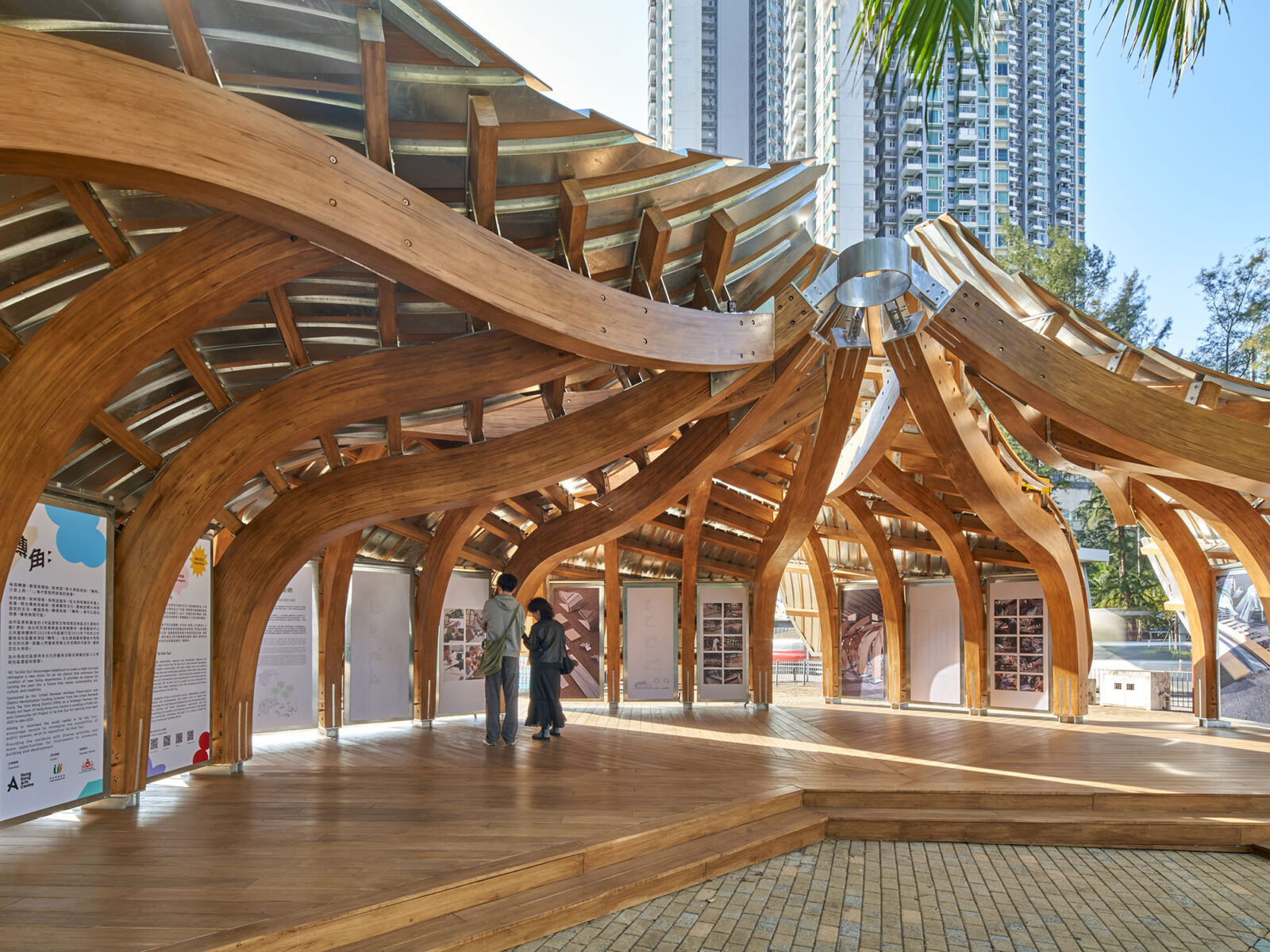
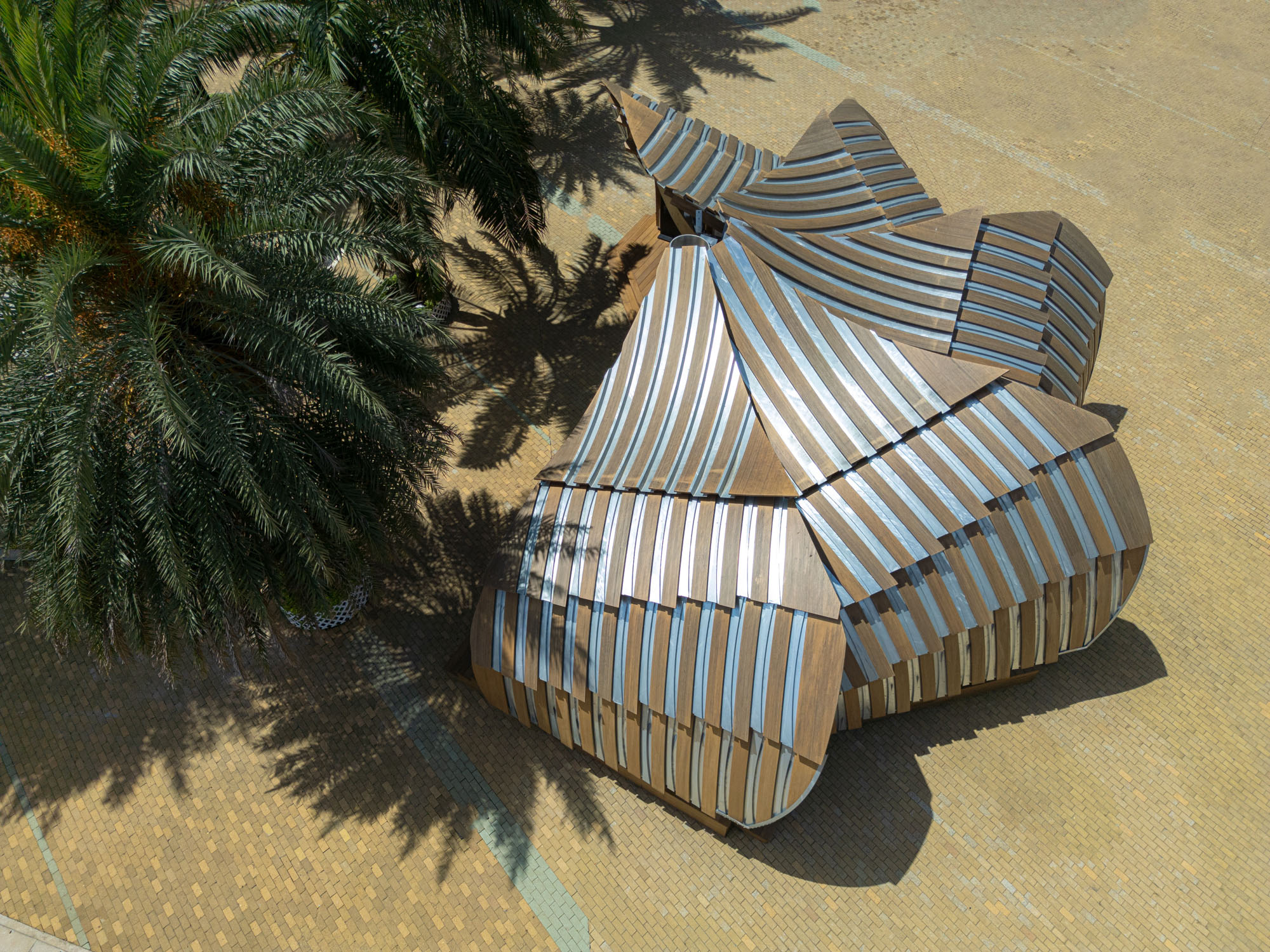
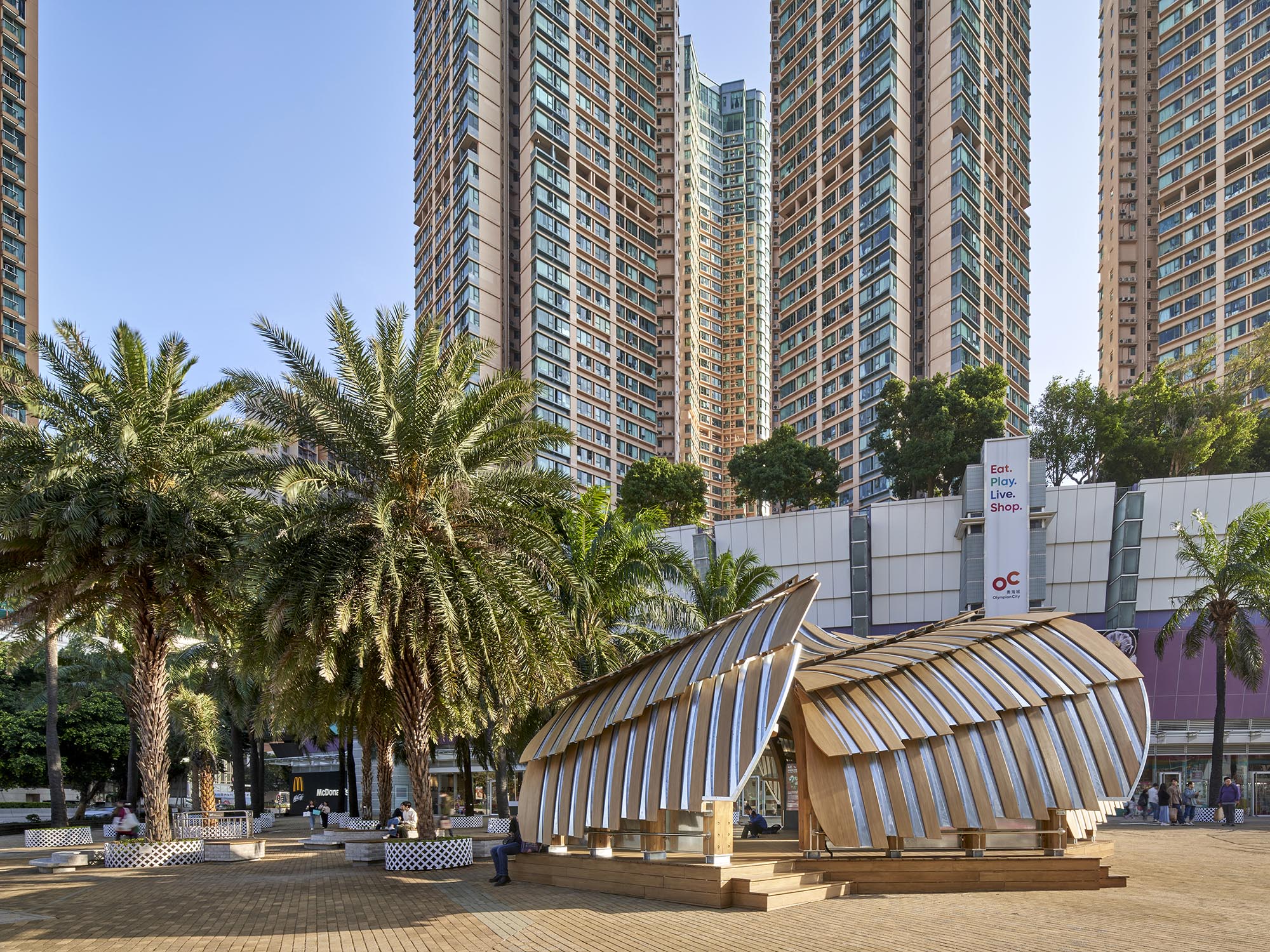
香港に位置する〈アーバン・リビング・ラボ(Urban Living Lab)〉は、地域を象徴する亜鉛メッキ鋼板と竹集成材を用いて都市の未活用地に構築された、休息し、集い、楽しむための空間です。
香港で初となるグルーラム竹構造を採用した建築であり、香港を拠点とするSu Chang Design Research Officeが設計しました。
注目ポイント
- 元造船所の歴史を反映した「亜鉛メッキ鋼」の伝統工芸
- 竹の栽培、加工、建築利用における長い歴史を象徴する「構造用グルーラム竹材」
- 地域住民が休息し、集い、楽しむための「パブリック・パラソル」
- 5つのモジュールに解体し、それぞれの場所にて再構築される「循環型建設システム」
(以下、Su Chang Design Research Officeから提供されたプレスキットのテキストの抄訳)
© Kris Provoost
© Kris Provoost
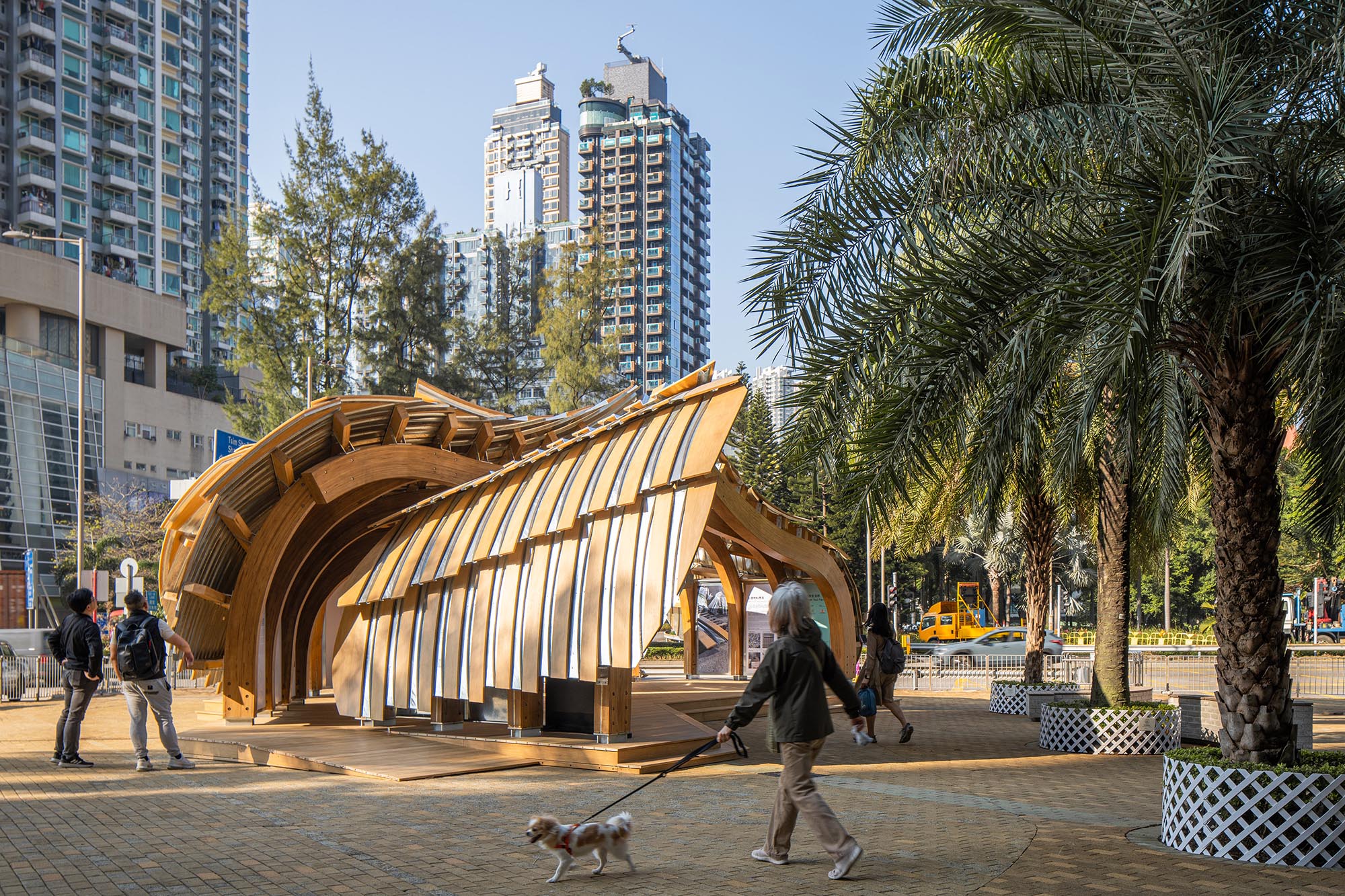
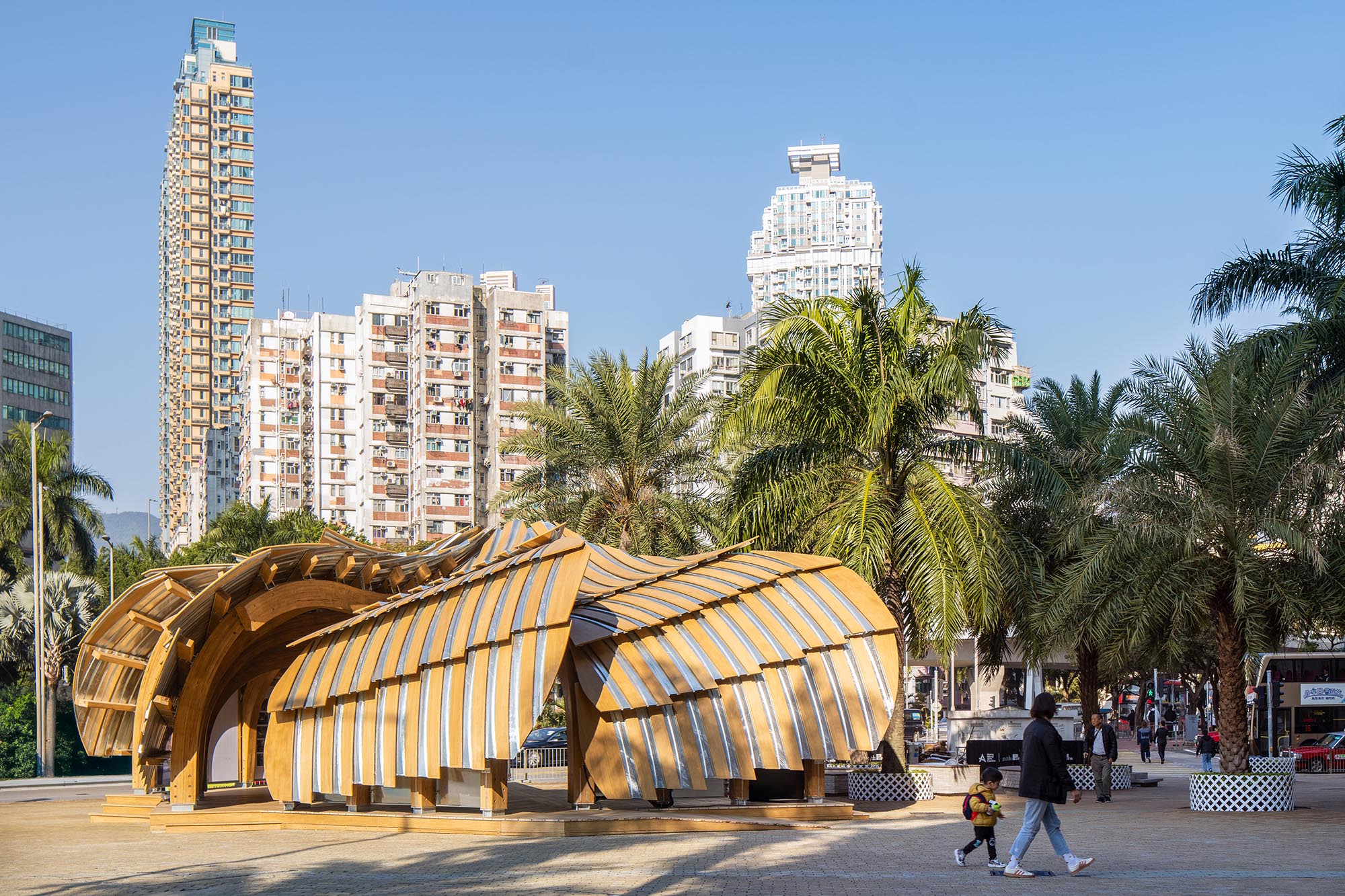
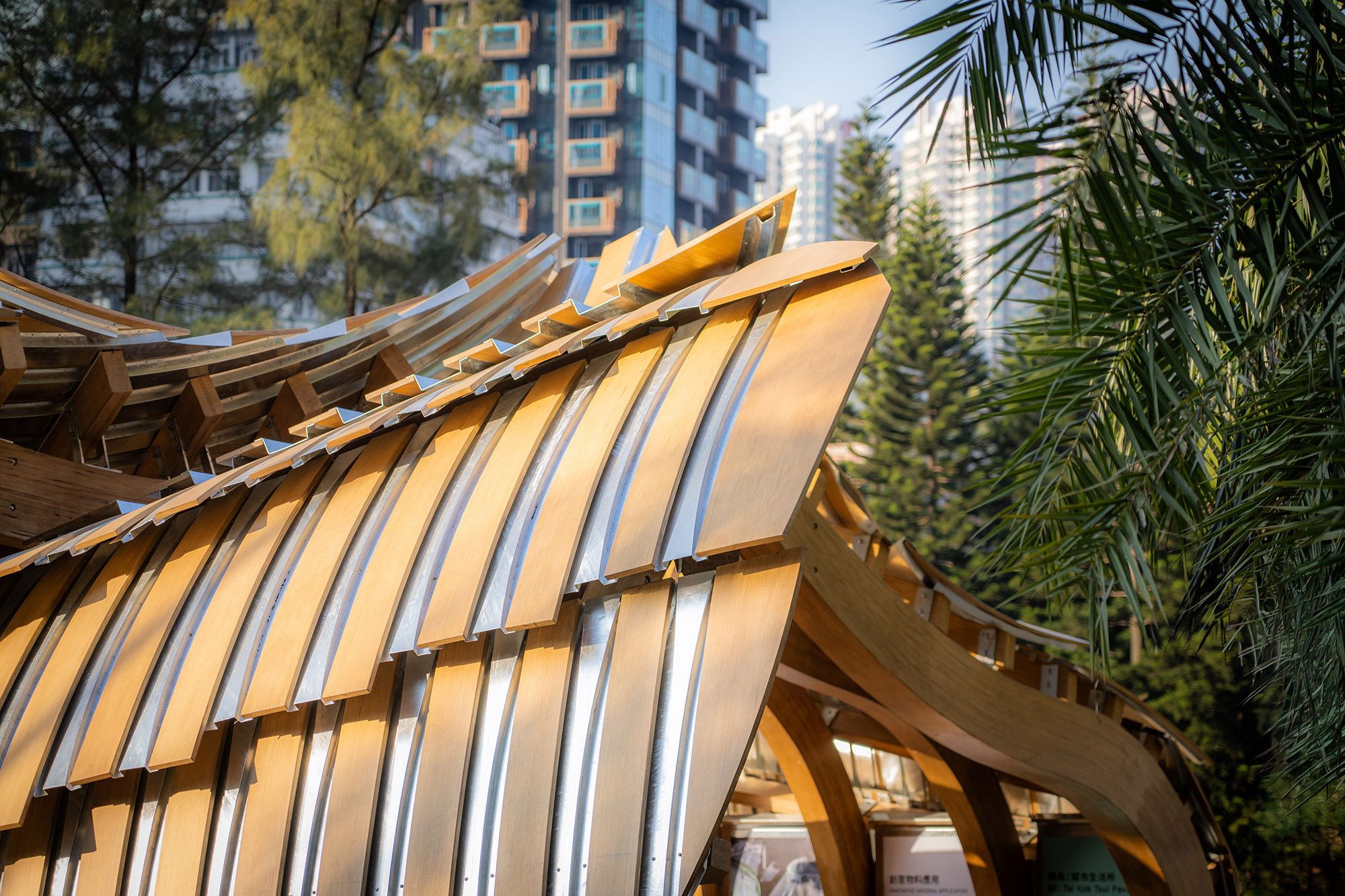
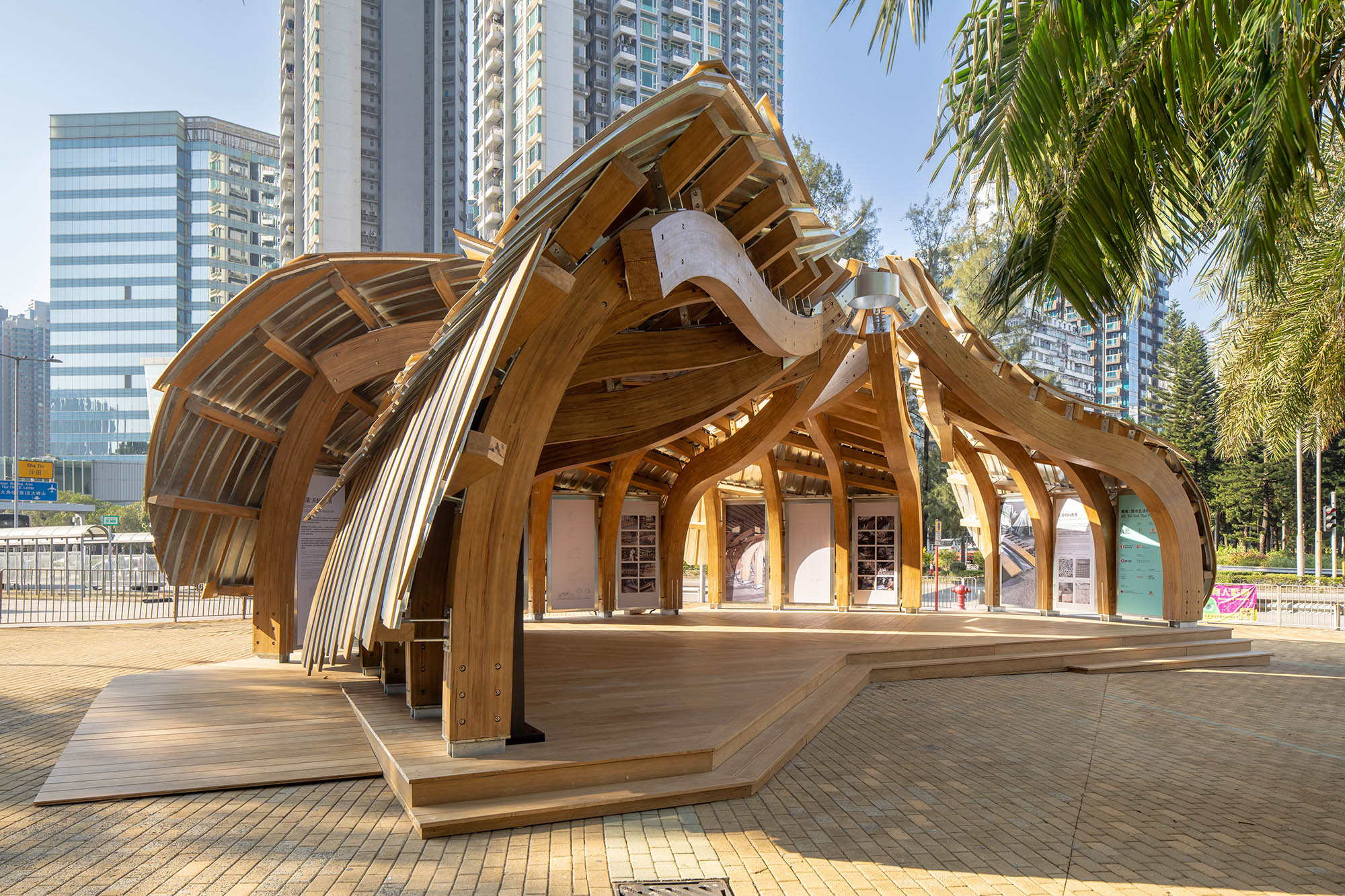
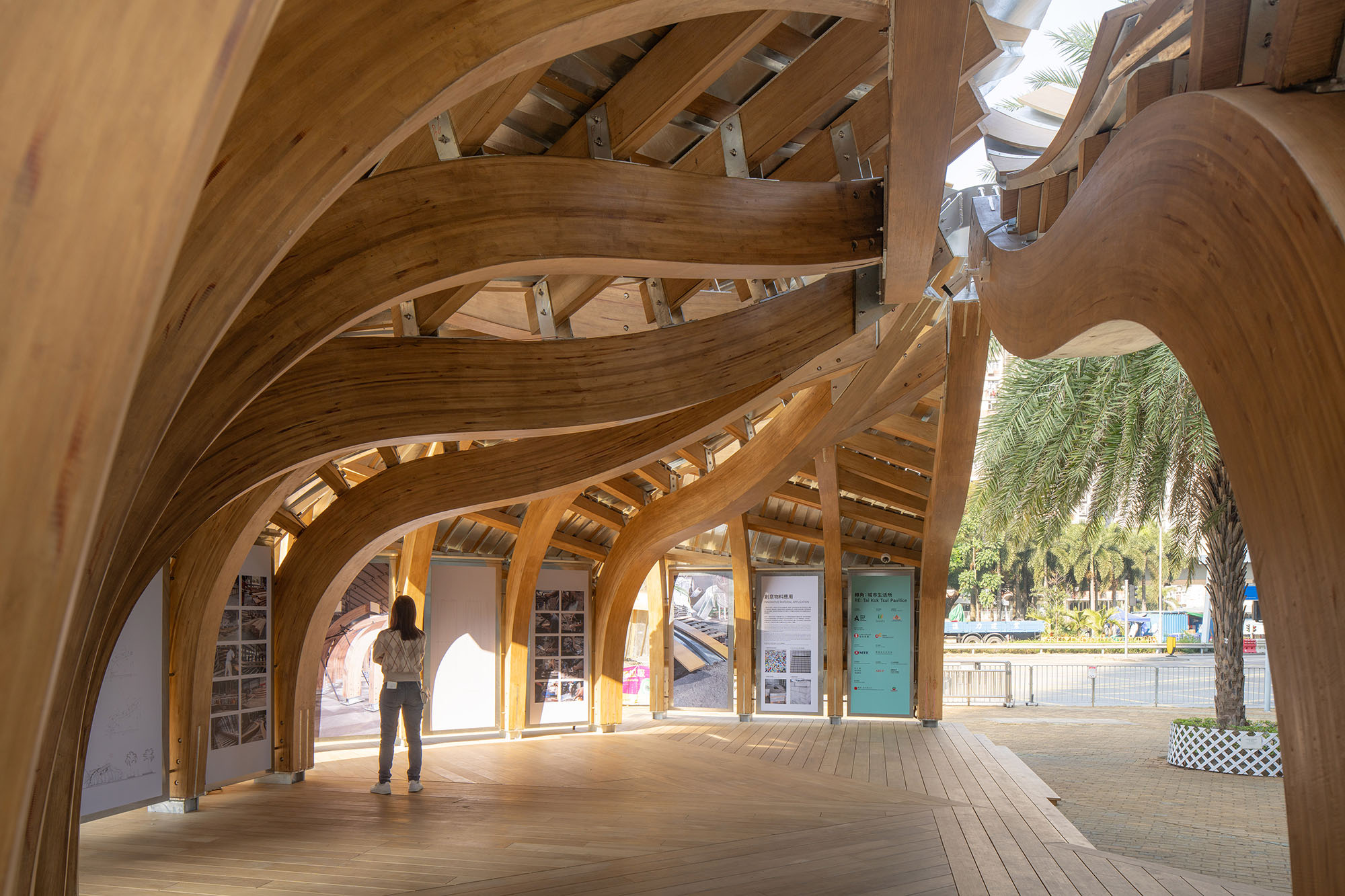
〈アーバン・リビング・ラボ〉の設計は、地元の亜鉛メッキ鋼の伝統工芸と竹集成材を組み合わせ、変容を続ける大角咀(ダイコクスイ)地区のためのコミュニティスペースを創造している。
流線型の形状は波の動きを想起させ、海と陸の間に広がる大角咀独自の空間的特徴に関する人々の集団的記憶を再活性化し、都市の未来に対する新たな想像を喚起する。
© Kris Provoost
© Kris Provoost
高密度都市「大角咀」における公共空間の課題
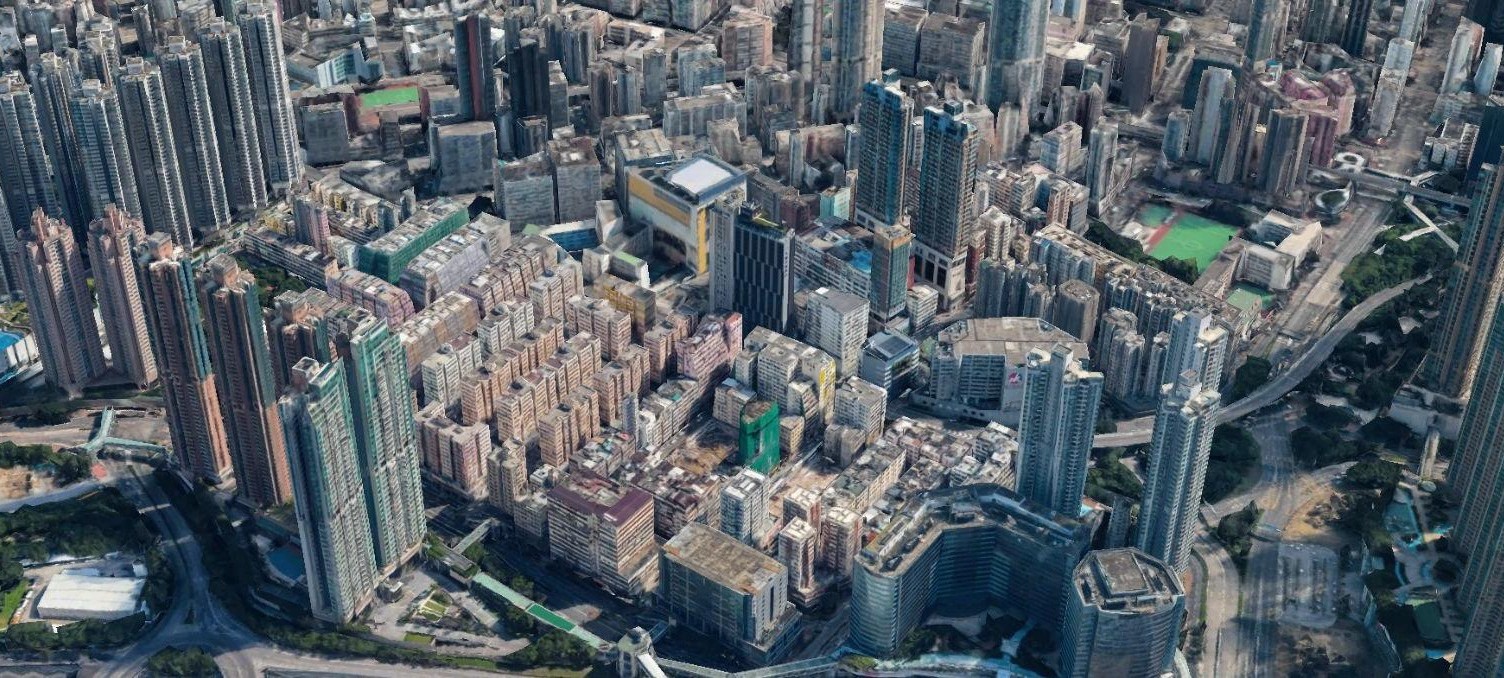
大角咀は、香港で最も急速に都市再生と再開発が進む地域の1つである。建物の3分の2以上が築40年以上であり、今後15年間で多様な再開発や改修プロジェクトに直面する見込みとなっている。
人口密度は1,000m²あたり180人と香港平均の6倍であるにもかかわらず、レクリエーション用公共空間は1人当たり0.43m²に過ぎない。老朽化、高密度、急速な再開発という条件下で質の高い公共空間を創出することが、都市生活デザインの焦点となっている。
Tai Kok Tsui Area
Tai Kok Tsui Reclamation History© Su Chang Design Research Office
都市史と複雑な空間所有権
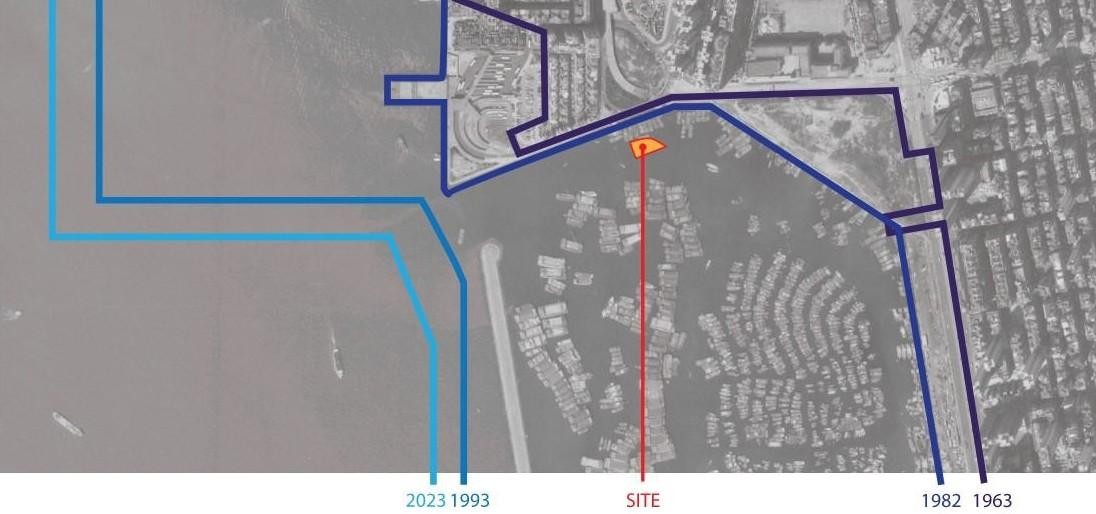
大角咀はかつて香港の主要な造船業の集積地であり、埋め立て前には造船と修理業が盛んであった。複数回の埋め立てと都市開発により、多層的な都市の地層と豊かなテクスチャが形成され、多様な都市史を内包している。
一方で、この独自の発展史は複雑な公共空間の所有権問題も生み出した。敷地は元々台風避難所であり、埋め立て後は政府、地下鉄会社、開発業者、NGOなど複数主体が所有・管理・維持に関与している。このような多重所有の空間において高品質な公共空間を創造することが、主要な設計課題である。
© Kris Provoost
© Leon Xu Liang
「パブリック・パラソル」のデザイン
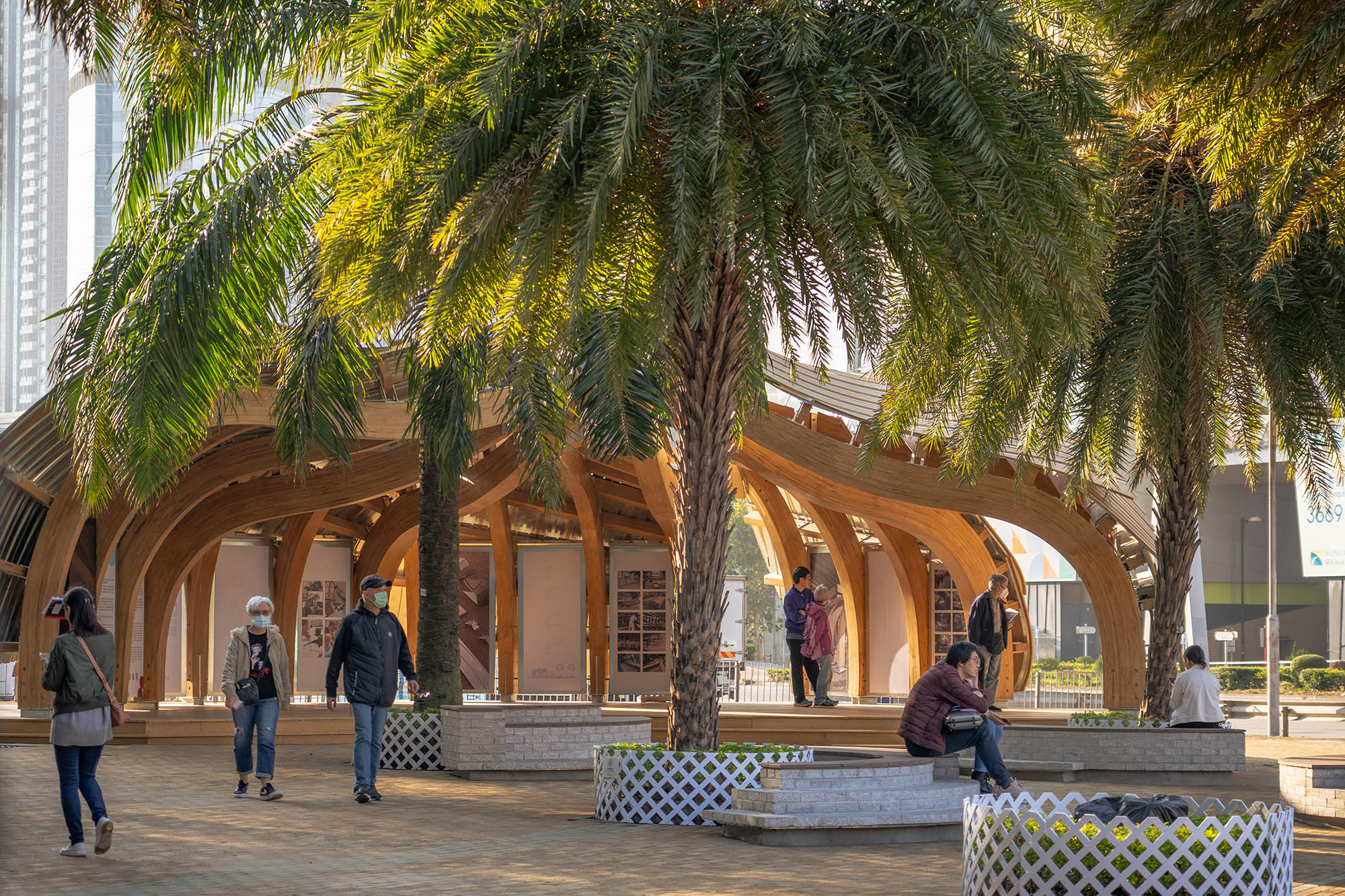
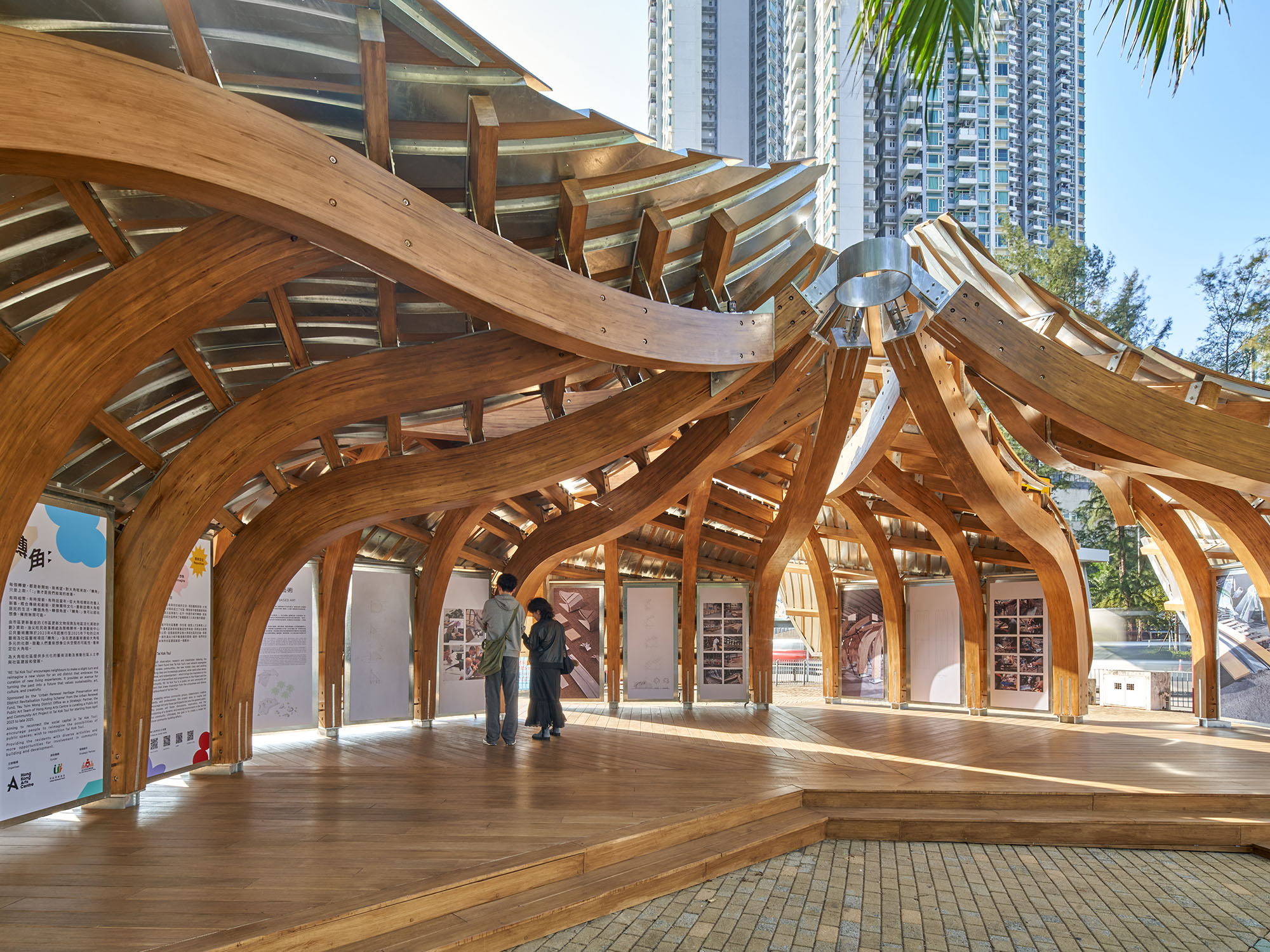
本計画は、ショッピングモール〈オリンピアン・シティ2〉北側の公共空間において、地域住民が休息し、集い、楽しむための「パブリック・パラソル」を提案するものである。
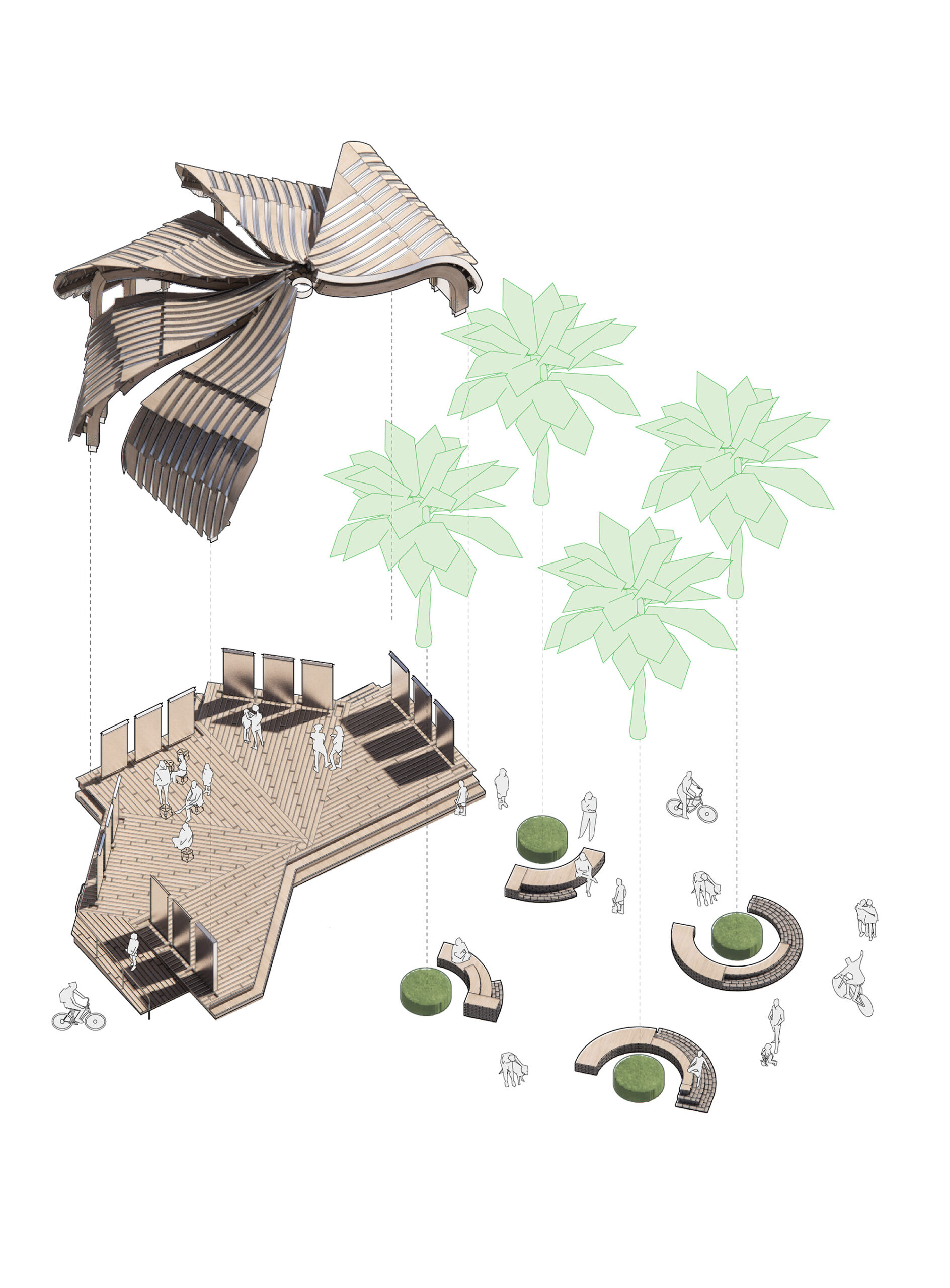
シェル形状は既存のヤシの木を囲むように設計され、日陰と影の面積を最大化するとともに、風の通りを確保する。未活用の公共空間を再活用する都市プラットフォームとして、環境を前面に押し出し、変容する大角咀地区における集団的な場所を形成する。
Design Diagram© Su Chang Design Research Office
建築形状は、夏の強い南西日差しを遮り、冬は反射光を導入するよう配慮されている。
竹集成材と鋼板によるシェル構造は、雨水を透水性レンガ広場へ直接排水し、竹材の低比熱容量を活用して自然で快適な休憩空間を実現する。さらに、ヤシの木と組み合わせることで亜熱帯モンスーン気候に適応した自然換気空間を形成する。
© Kris Provoost
© Kris Provoost
地域の素材文化を示す「亜鉛メッキ鋼板」と「竹」
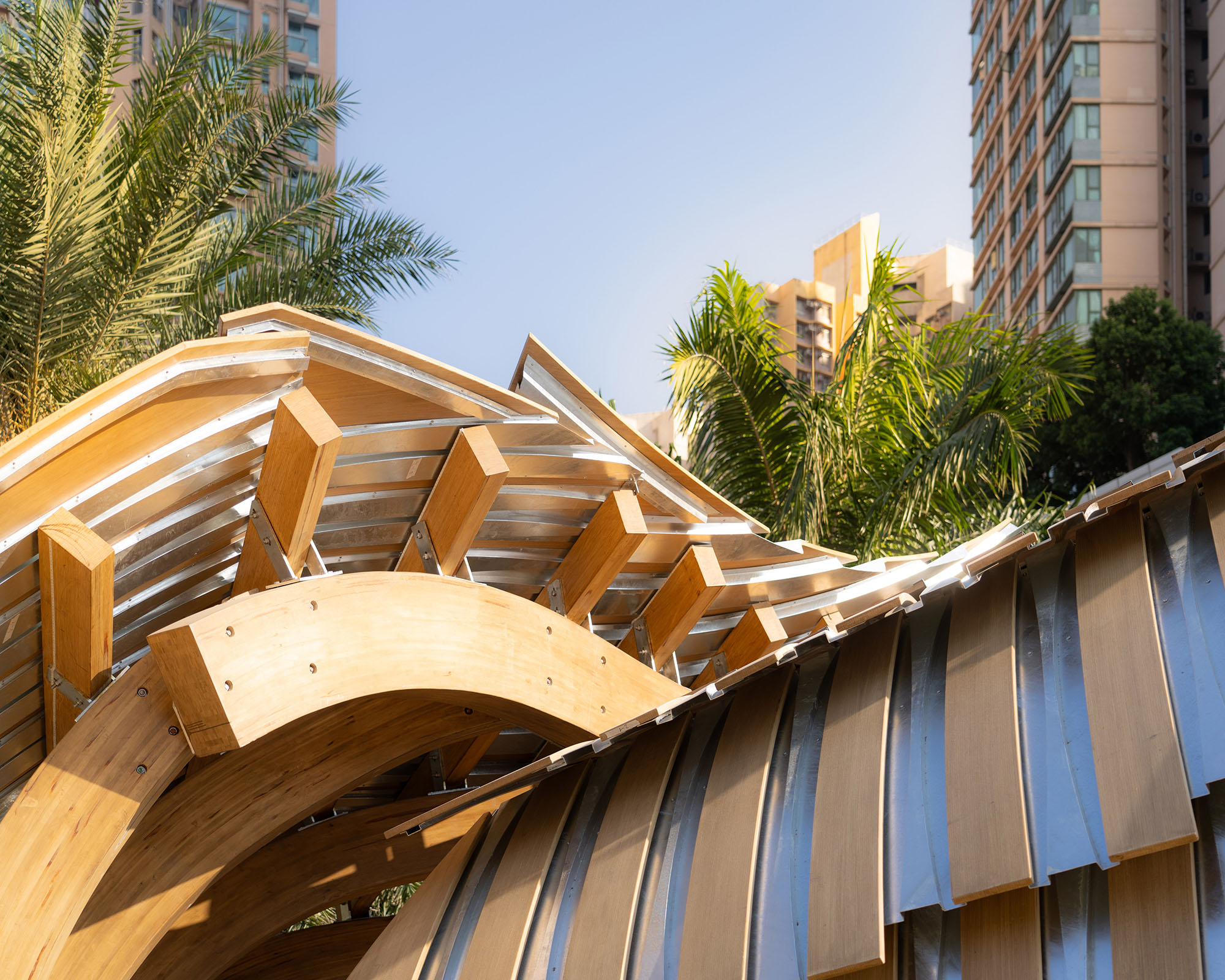
敷地の造船所および台風避難所としての歴史から着想を得て、地元の金属工芸家と協働し、伝統的な鋼鉄工芸を再生した。伝統技術と現代製造法を融合し、竹と鋼を統合したハイブリッド構造を採用することで、海と陸の間にある独自の素材文化の記憶を保存している。
南中国は竹の栽培、加工、建築利用において長い歴史を有しており、本計画では建設業者・製造業者との連携により構造用グルーラム竹材の製造技術を開発した。香港初のグルーラム竹構造として、鋼構造と比較して埋め込み炭素を75%削減し、推定7トンのCO2削減を実現している。
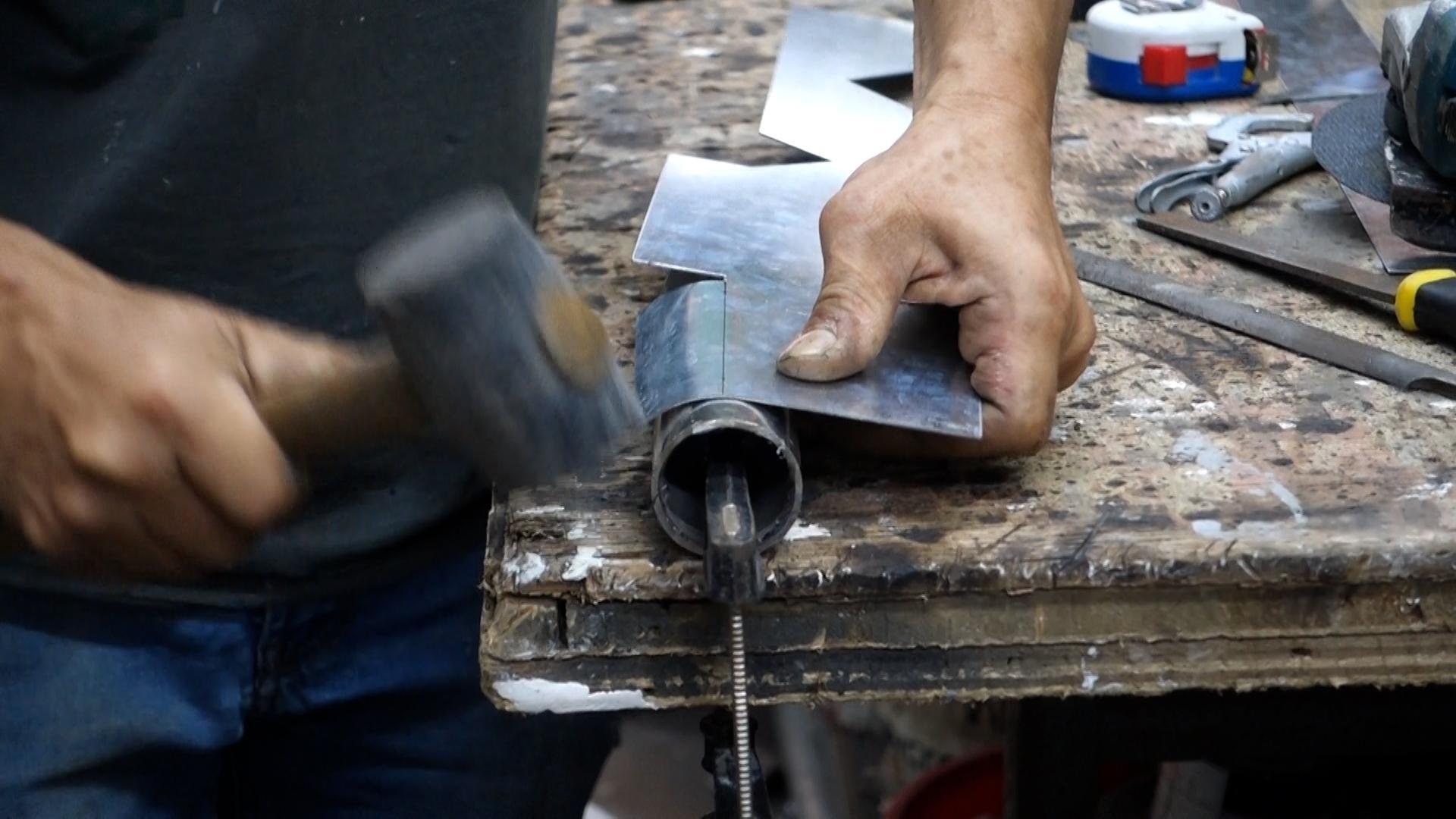
Galvanized Steel Fabrication © Su Chang Design Research Office
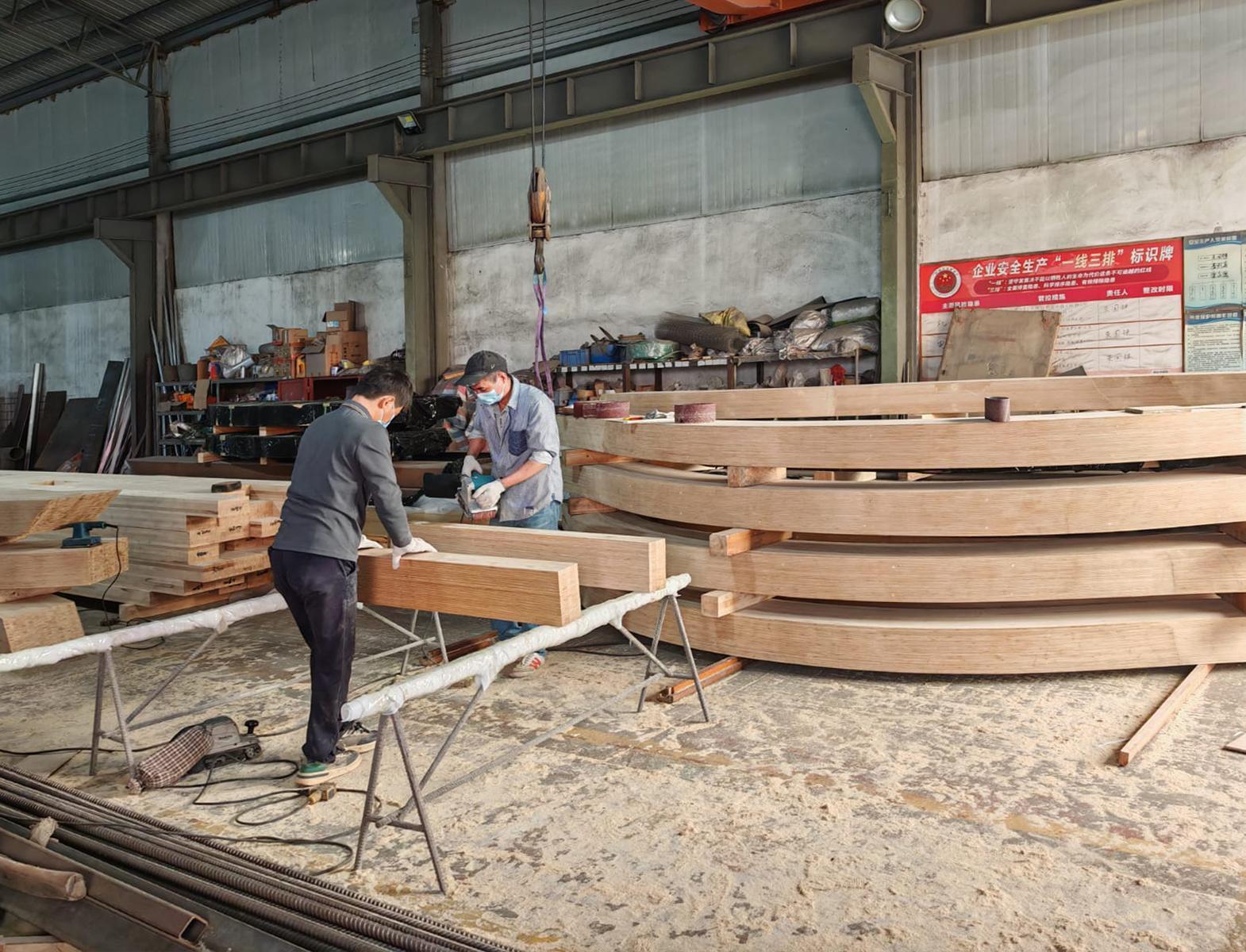
Laminated Bamboo Fabrication © Su Chang Design Research Office
参加型デザインのプロセス
設計プロセスでは会議、展示、ワークショップ、セミナーなどを通じて多様なステークホルダーの意見を収集した。調査や観察、アンケートの結果、定期利用者からは日陰の必要性が強調された。
〈アーバン・リビング・ラボ〉は単なる休憩スペースにとどまらず、進化する地域におけるコミュニティの集いの場や教育活動の拠点として機能する。
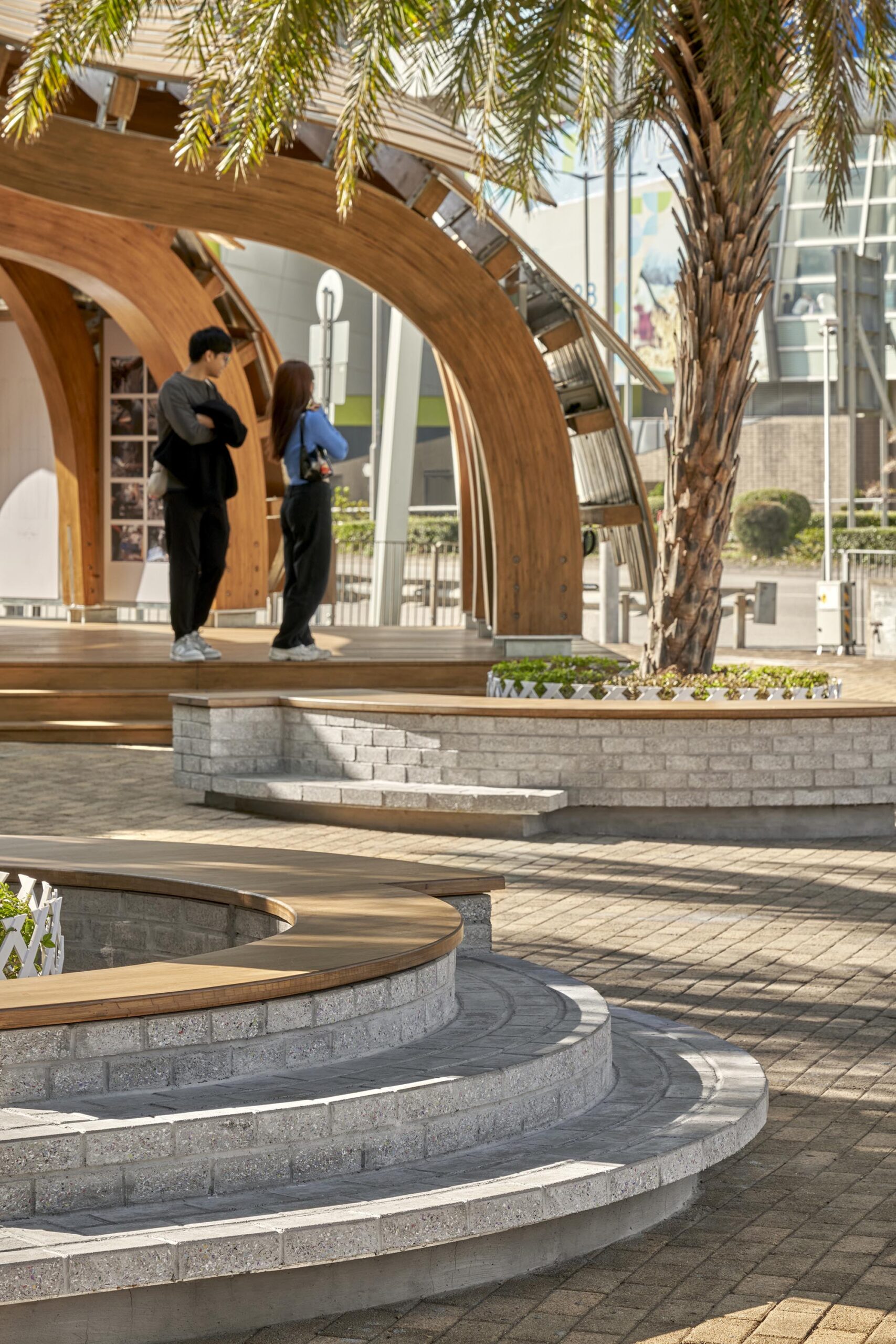
© Leon Xu Liang
解体し分散配置がなされる「循環型建設システム」
本プロジェクトは、異なるフェーズと場所により再利用可能な設計を採用している。フェーズ1は触媒的役割とショーケースとしての機能をもち、12カ月後にフェーズ2へ移行する。5つのモジュールは解体され、類似の都市再生課題を抱える新たな場所に再配置・再組立される予定である。
最終目標は、地域調達の竹材と伝統的鉄工技術を統合し、従来の建築材料に新たな持続可能性の価値を付与する、バイオベースかつカーボンネガティブな循環型建設システムを確立することである。
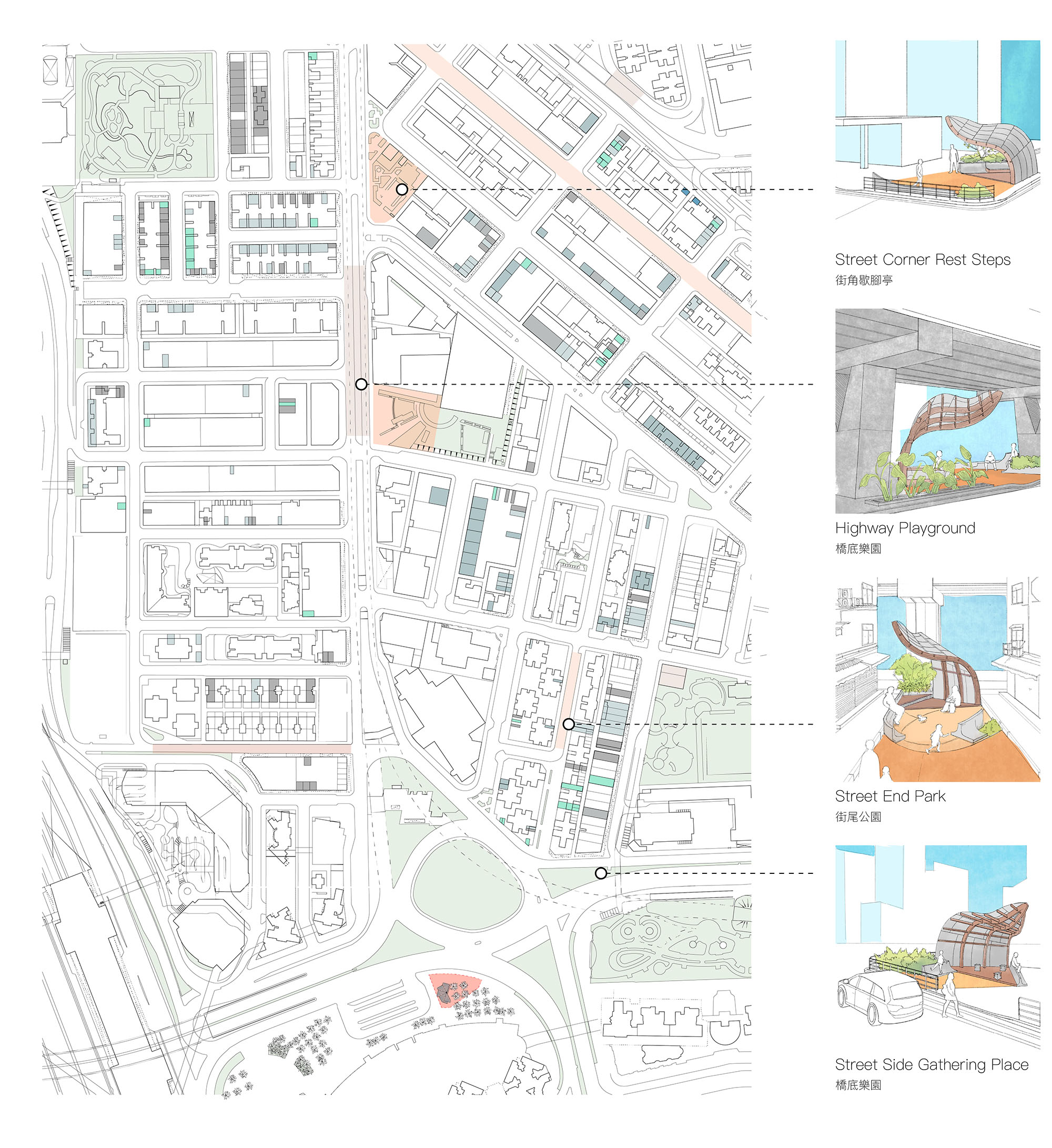
Future Public Space Imagination © Su Chang Design Research Office
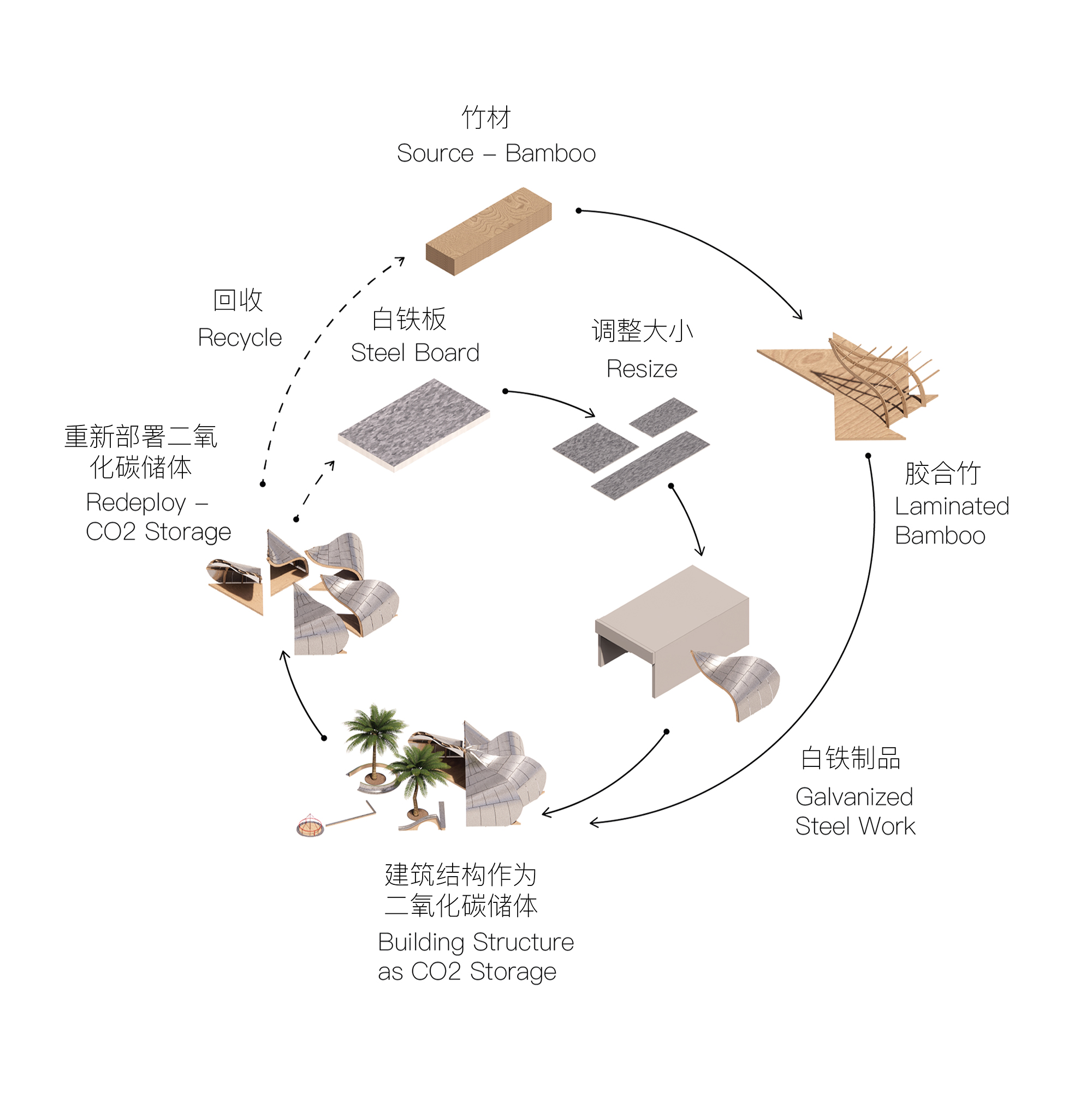
Circular Construction © Su Chang Design Research Office
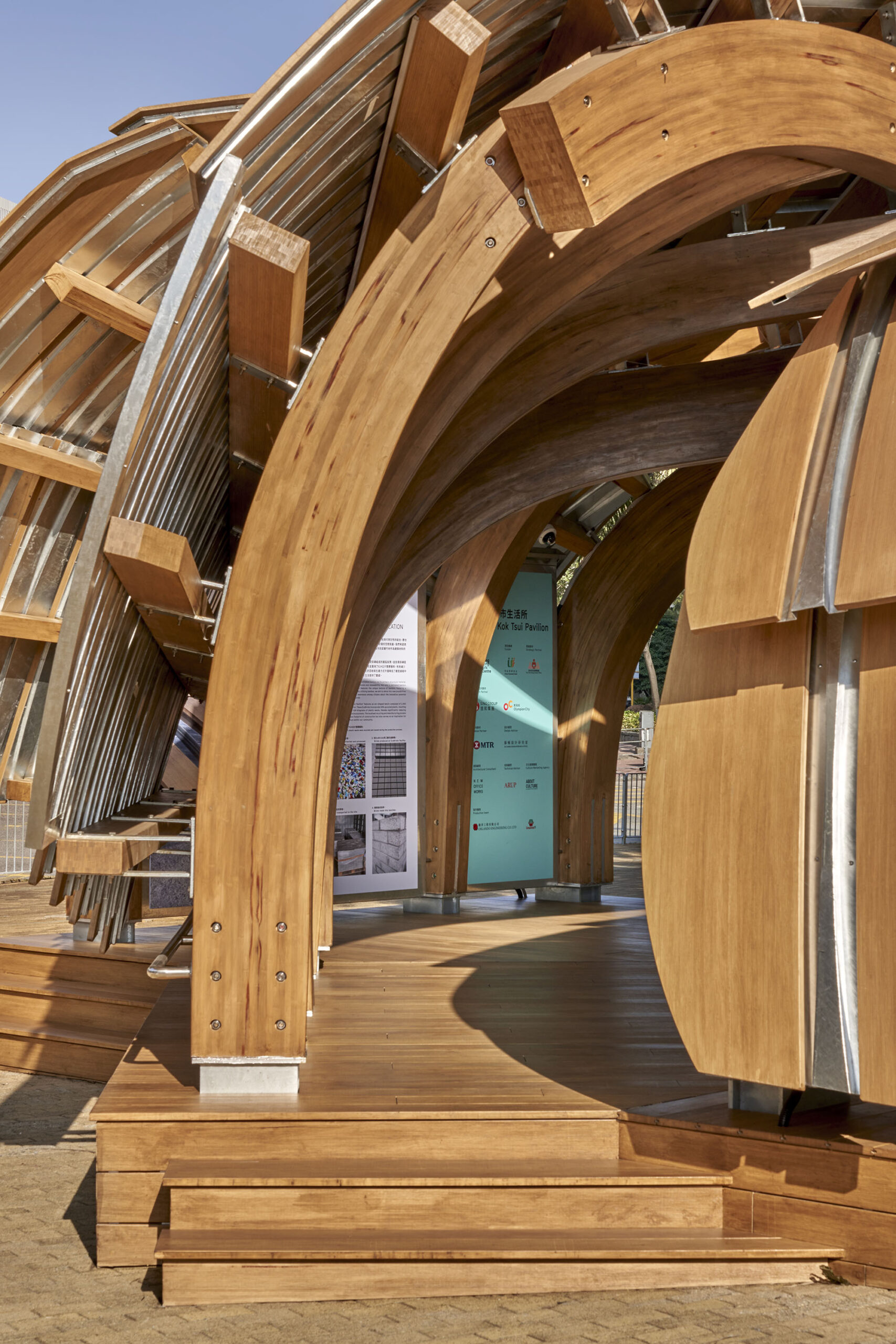
© Leon Xu Liang
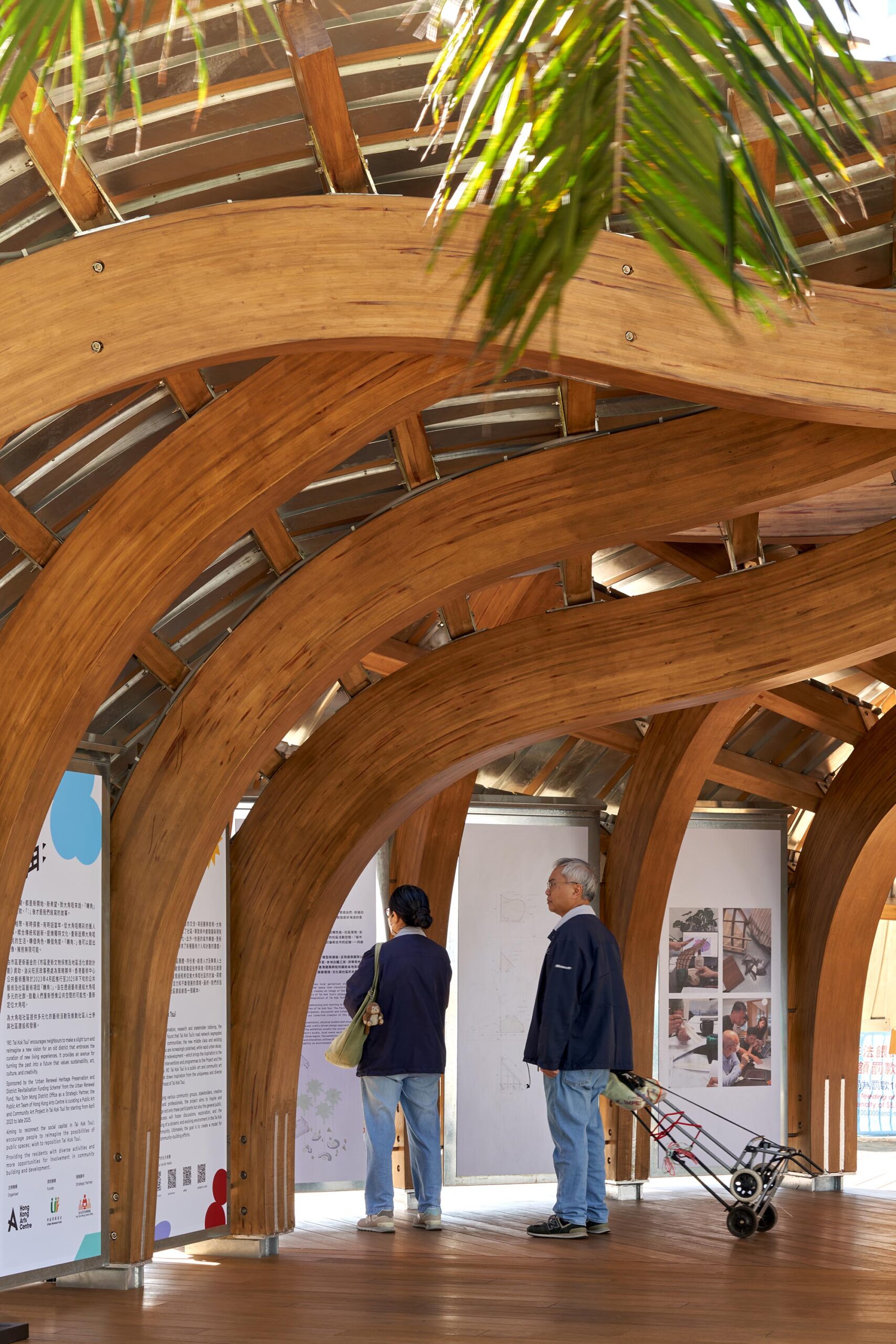
© Leon Xu Liang
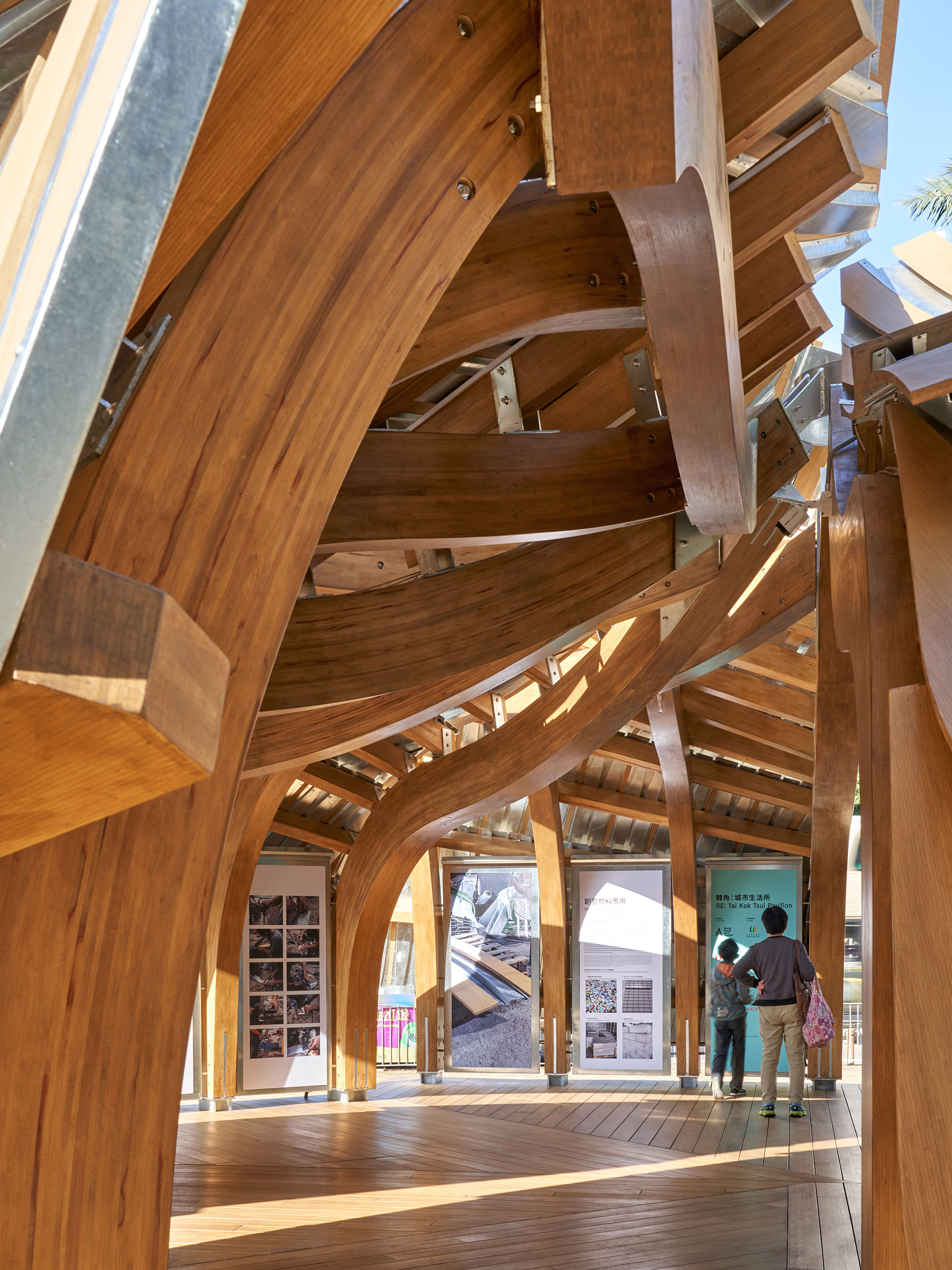
© Leon Xu Liang
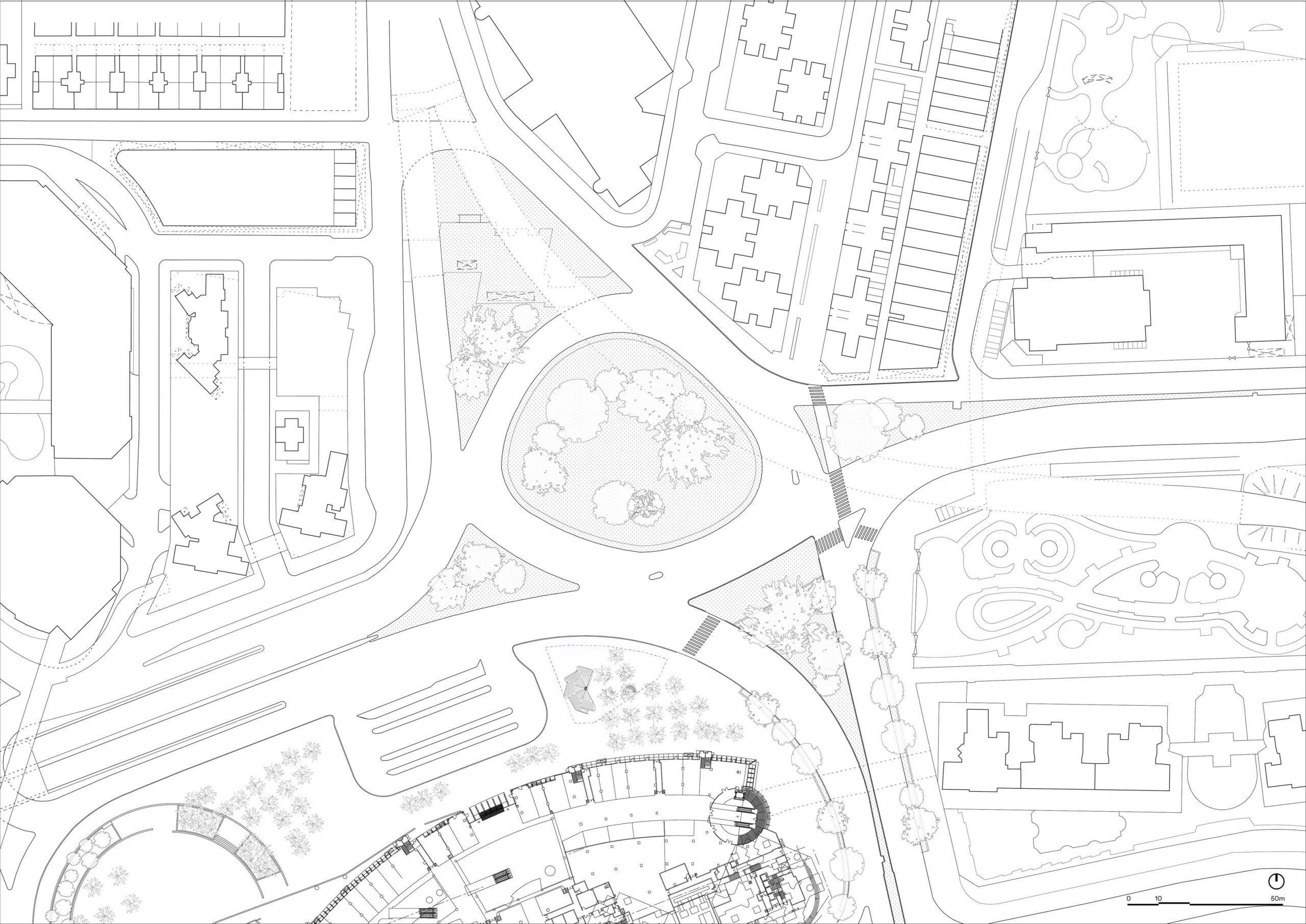
Urban Plan © Su Chang Design Research Office
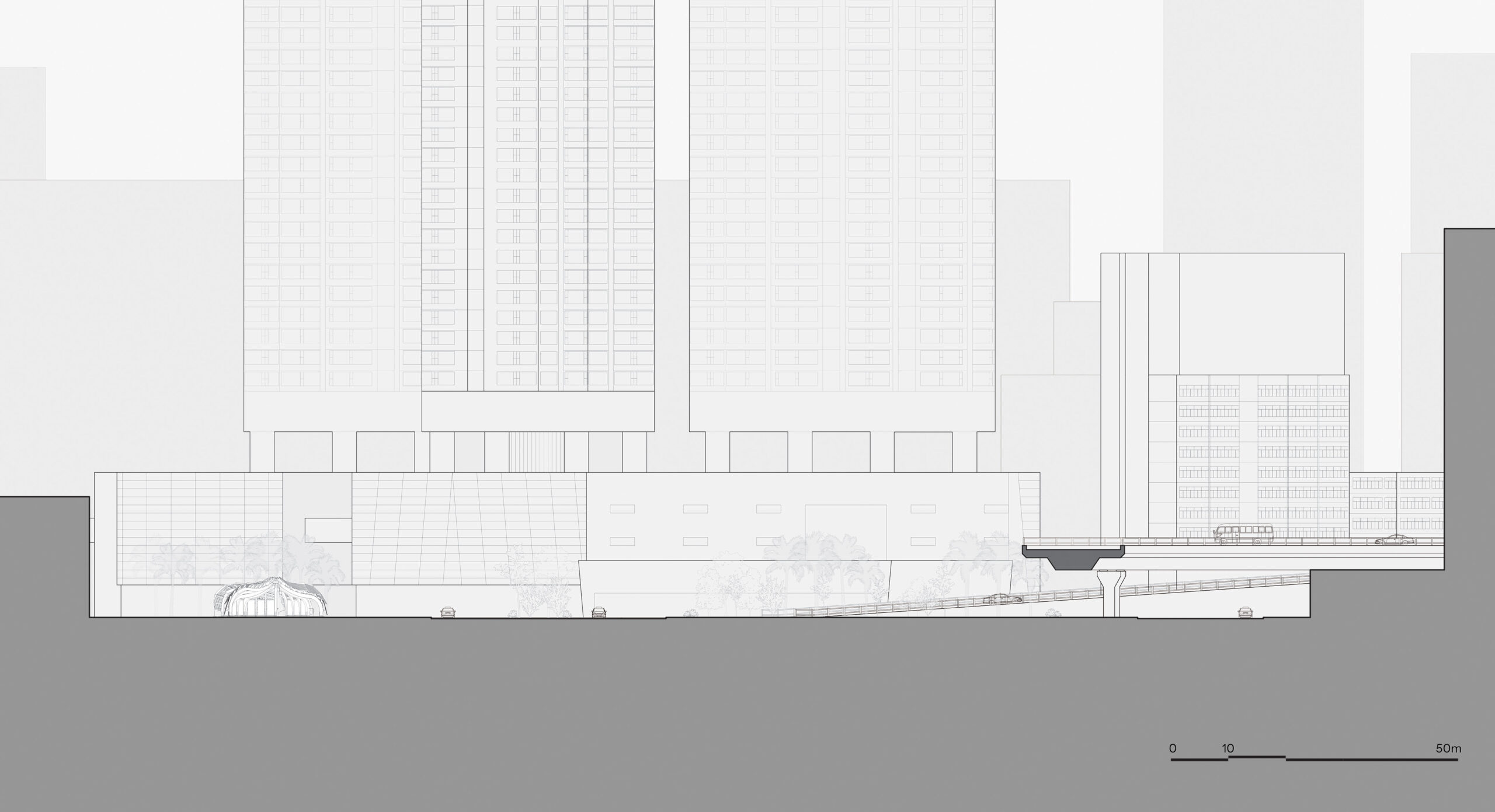
Site Section © Su Chang Design Research Office
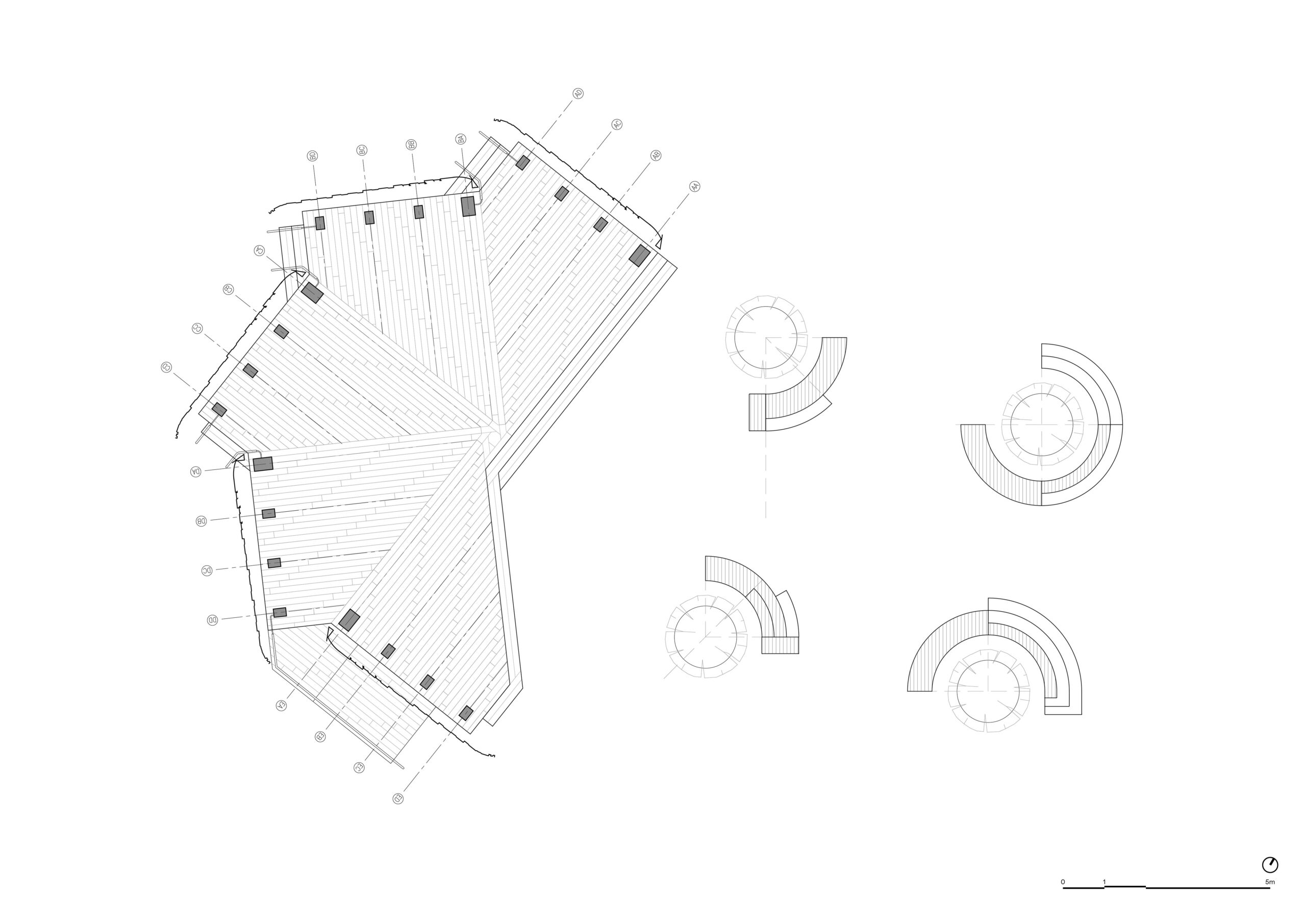
Plan © Su Chang Design Research Office
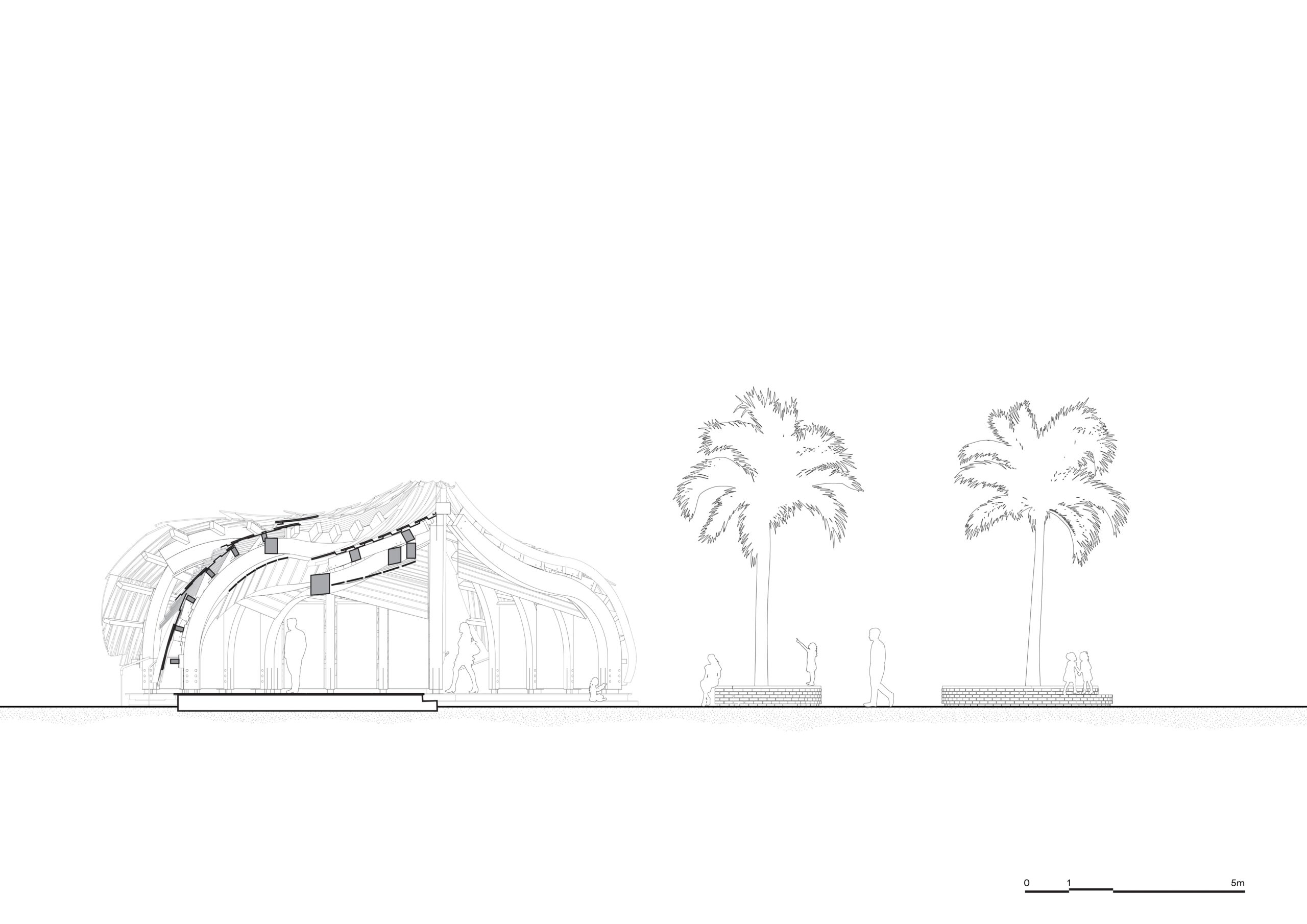
Site Section © Su Chang Design Research Office
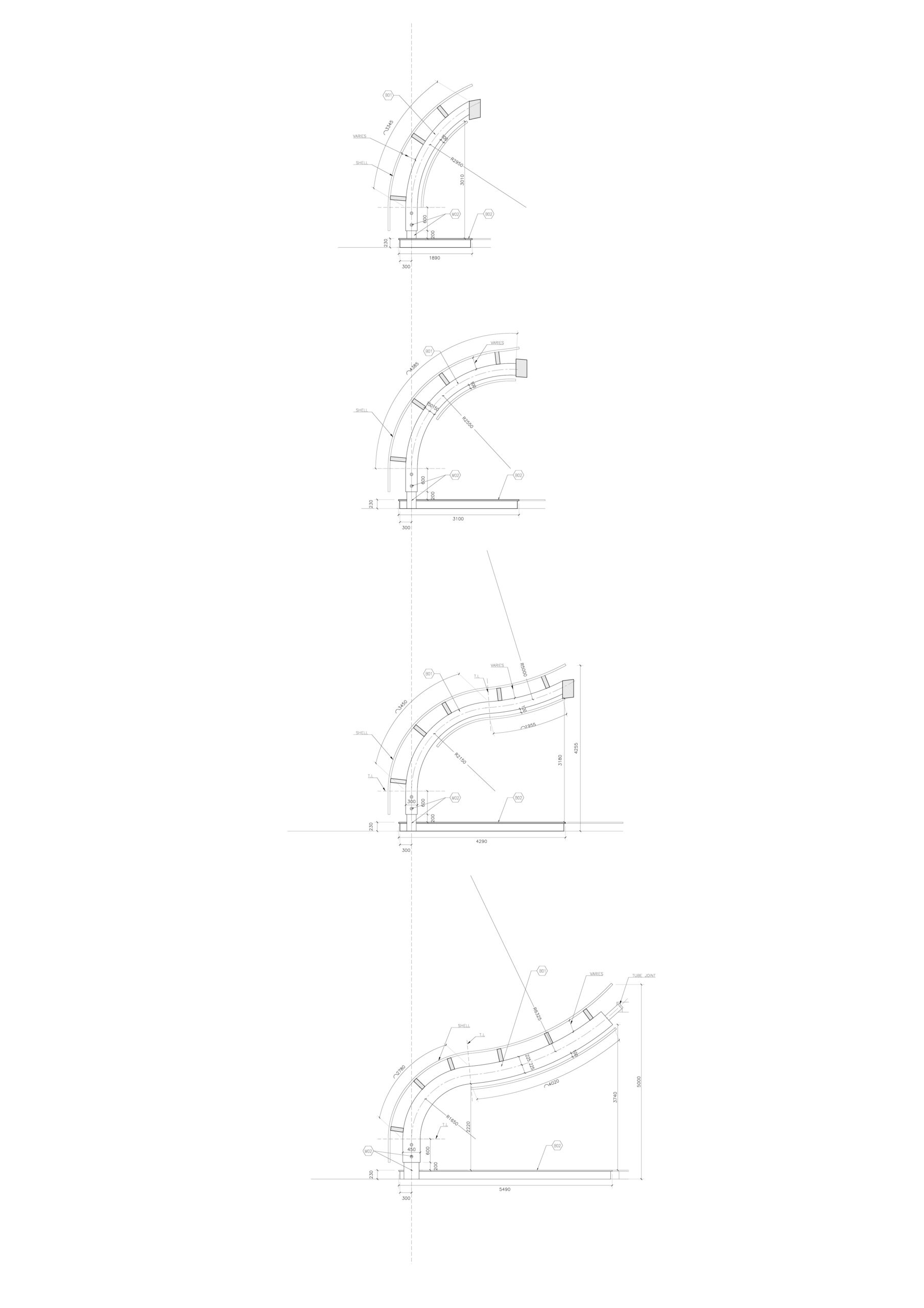
Sections © Su Chang Design Research Office
以下、Su Chang Design Research Officeのリリース(英文)です。
Project Name: Urban Living Lab
Completion Year: 2025
Gross Built Area: 100sqm
Project location: Tai Kok Tsui, Hong Kong
Design Firm: Su Chang Design Research Office
Company Website: https://suchang.design/
Contact Name: Su Chang
Contact e-mail: office@suchang.design
Firm Location: Hong Kong
Lead Architects: Su Chang
Lead Architects e-mail: sc@suchang.designAdditional CreditsArchitectural Design: Su Chang Design Research Office
Organizer: Hong Kong Arts Centre
Structural Consultant: Arup (Hong Kong)
Contractor: Orlando Engineering, Timmax Industrial
Lead Architect: Su Chang
Design Team: Au Cheuk Fan Frankie, Tam Wing Huen Raven, Wong Chun Yan Oscar, Zhou Yuying Cherrie, Zhu Yalan Julia, Ng Hou Ming Matthew, Tang Chun Hei IsaacMedia ProviderPhoto credits: Eugene Chan, Kris Provoost, Leon Xu Liang
Video link: https://drive.google.com/file/d/1a9gnWkrB5CjxHIIXQeEZLd-EX1YZlhex/view?usp=sharingProject DescriptionThe design of Re:Tai Kok Tsui Pavilion combines local galvanized steel crafts and laminated bamboo materials to create a communal space for the transforming Tai Kok Tsui neighbourhood. The fluid form of the vessels creates an image of the moving waves and reactivates the public’s collective memory of Tai Kok Tsui’s unique spatial quality between sea and land, provoking a new imagination of Tai Kok Tsui’s urban future.Public Space in High-Density Urban LandscapeTai Kok Tsui is one of the areas with the fastest urban renewal and reconstruction in Hong Kong. More than two-thirds of the buildings are over 40 years old and will face reconstruction and renovation projects to varying degrees in the next 15 years. Tai Kok Tsui is also one of the most densely populated communities in Hong Kong, with a population density of 180 people per 1,000 square meters, which is 6 times the average population density in Hong Kong, but the per capita public space for recreation is only 0.43 square meters. How to create quality public spaces for communities with aging buildings, high density and rapid renewal is the focus of urban life design.Urban History and Spatial OwnershipTai Kok Tsui was an important shipyard cluster in Hong Kong in history. It had a rich shipbuilding and repairing industry before land reclamation. With the multiple land reclamation and urban development in history, Tai Kok Tsui has a rich urban layer and texture, and also brings different urban historical stories. Tai Kok Tsui’s unique urban development history also brings complex public space ownership issues. The area where the site is located was originally a typhoon shelter. After land reclamation, the current ownership, management rights, and maintenance rights involve multiple groups and departments such as the government, subway companies, developers, and NGOs. How to create a high-quality public space in a space with multiple ownerships is a major design challenge.Public ParasolThe design imagines a public parasol that creates a respite from the subtropical climate for residents from the community to gather, meet, and enjoy the public space north of Olympian City II. The geometry of the shell is built around the existing palm trees to maximize the extent of shade and shadow while allowing for breezes to move around the public space. As an urban platform to reclaim under-used public space, the pavilion foregrounds its environment to create a site-specific collective place within the transforming Tai Kok Tsui neighbourhood.The overall shape of the building takes into account the conditions of the site, shielding the strong southwest sunlight in summer and introducing reflected sunlight in winter. The shell structure of composite bamboo material combined with tinplate is conducive to the direct drainage of rainwater to the permeable brick square around the site. On the other hand, it takes advantage of the low specific heat capacity of bamboo materials to provide a natural and comfortable rest space. At the same time, it forms a naturally ventilated space with the palm trees on the site to cope with the unique climatic conditions of the subtropical monsoon.Material Culture – Galvanized Steel & BambooDrawing inspiration from the site’s heritage as a significant shipyard and typhoon shelter, we collaborated with local metalworkers to rejuvenate traditional steel craftsmanship. Blending traditional techniques with modern fabrication methods, we create a hybrid approach that integrates bamboo and steel, preserving the collective memory of the site’s unique material cultures between the sea and the land.South China has a rich history of cultivating, harvesting, processing and utilizing bamboo in construction. We have developed techniques for producing glulam bamboo materials for structural purposes through partnerships with contractors and manufacturers. As the first glulam bamboo structure in Hong Kong, the project achieved a 75% reduction in embodied carbon compared to steel systems, leading to an estimated 7-ton CO2 emission reduction.Participatory DesignThe design process incorporates a range of stakeholder engagements such as meetings, exhibitions, workshops, and seminars to gather input from the community. Extensive research, observation, and surveys were conducted, with regular site users highlighting the necessity for shade to enliven this empty urban space within the city center. Urban Living Lab serves as not only a resting area but also as a focal point for community gatherings and educational activities within the evolving neighborhood.Circular ConstructionThe project is designed to reuse for different phases and locations. Phase 1 serves as a catalyst and showcase initiative. Following twelve months, the project will transition to phase 2, and each of the five modules will be dismantled, relocated, and reassembled at new sites facing similar urban renewal challenges. The goal is to establish a bio-based, carbon-negative, circular construction system by integrating locally sourced bamboo materials and traditional steel craftsmanship, bringing new sustainable design values to traditional building materials.
Su Chang Design Research Office 公式サイト
https://suchang.design/URBAN-LIVING-LAB
【購読無料】空間デザインの今がわかるメールマガジン TECTURE NEWS LETTER
RECOMMENDED ARTICLE