CULTURE
© Sun Group
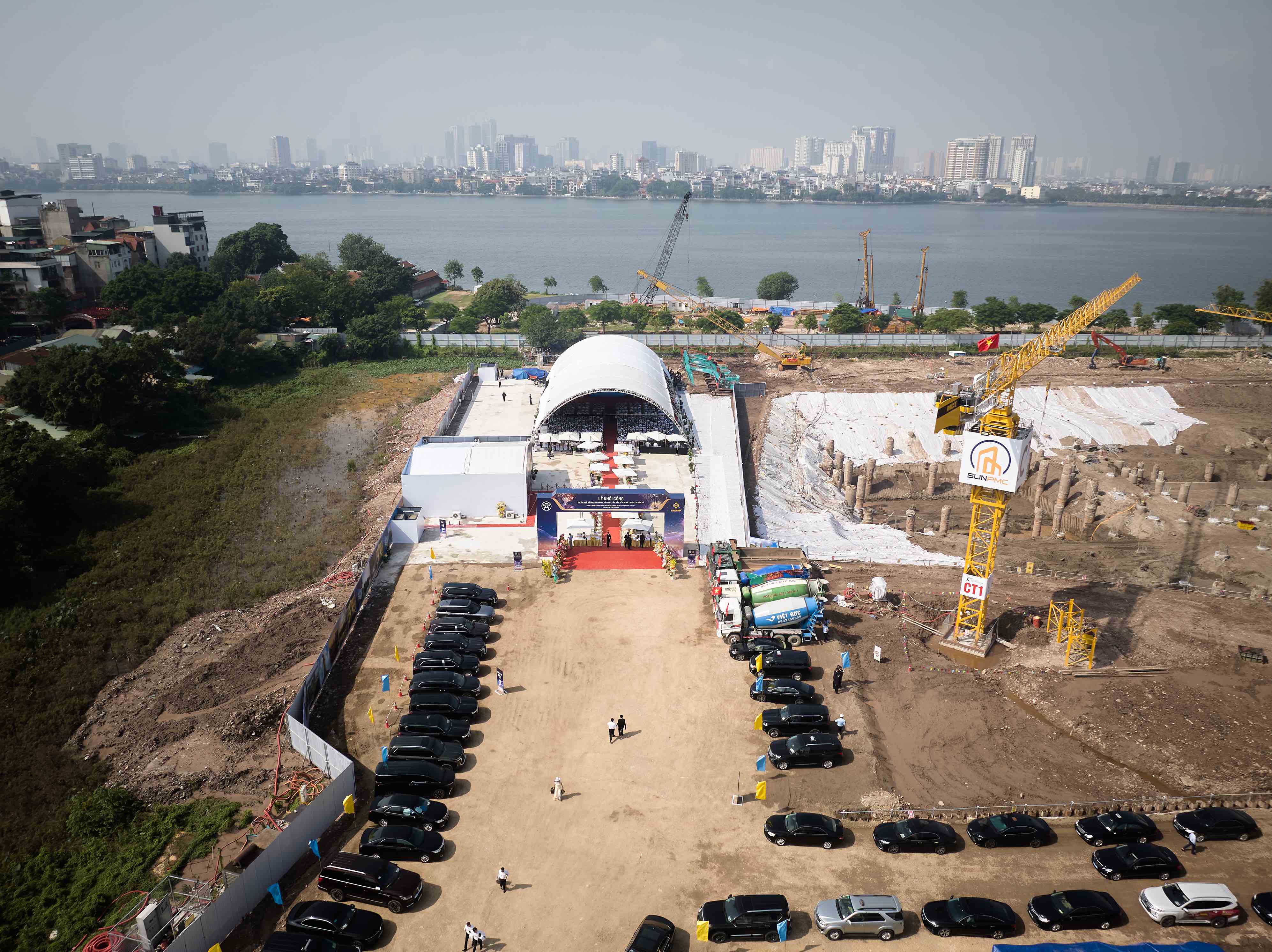
レンゾ・ピアノ(Renzo Piano)が創設したRPBW(Renzo Piano Building Workshop)とPTWアーキテクツ(PTW Architects)による〈イゾラ・デッラ・ムジカ(Isola della Musica)〉が建設を開始しました。
真珠の産地であったベトナム・ハノイの湖に計画されている、有機的な形態とセラミックタイルの外皮が特徴的なオペラハウス兼コンベンションセンターです。
注目ポイント
- 2つの湖をつなぐ、湖上に浮かぶランドマーク的文化施設
- 自然界の数学的秩序を参照し、構造と形態を融合させた「三次元懸垂線構造」
- 建築形態が内部プログラムを可視化する、自然の原理に基づくデザインアプローチ
- セラミックタイルを用いたピクセル状の外皮による、真珠のように輝く外皮
(以下、RPBWから提供されたプレスキットのテキストの抄訳)
© RPBW
© RPBW
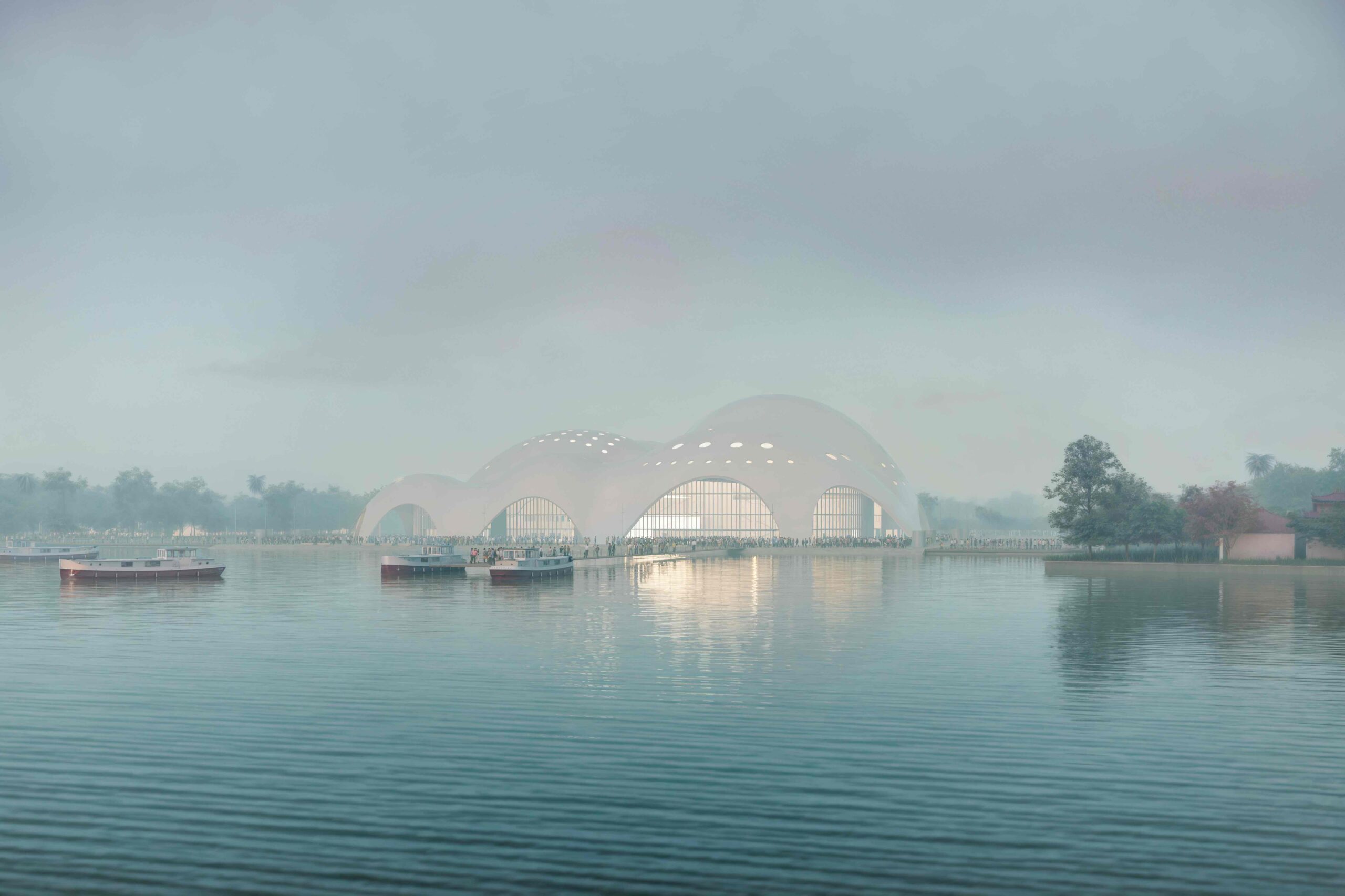
西湖に浮かぶ新たな「真珠」
かつてハノイの西湖周辺に住む農民たちは、淡水貝「Trai」を捕獲し、希少な真珠を育むことで生計を立てていた。その真珠は上品なピンクやオレンジ、時には白く輝き、人々を魅了してきた。
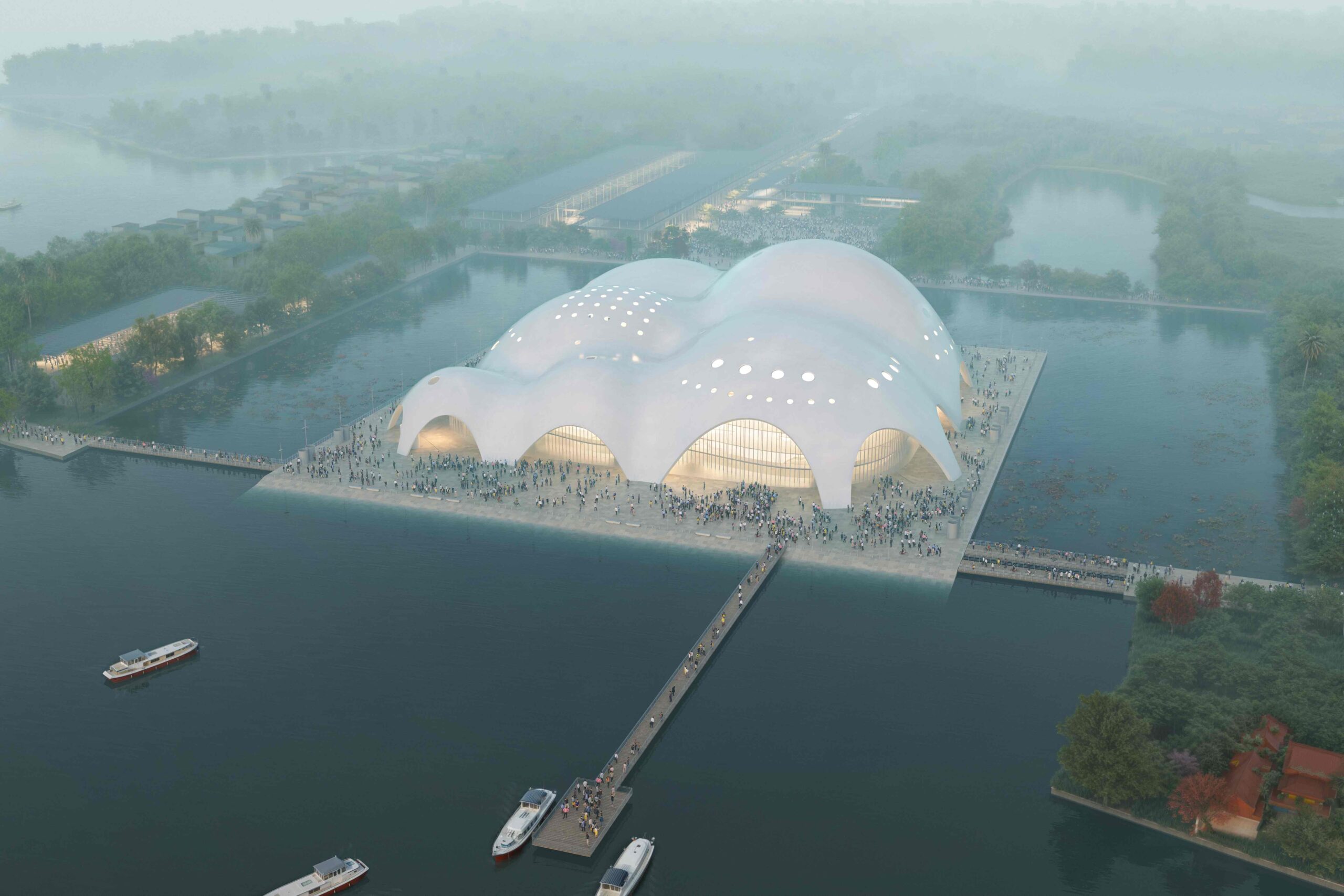
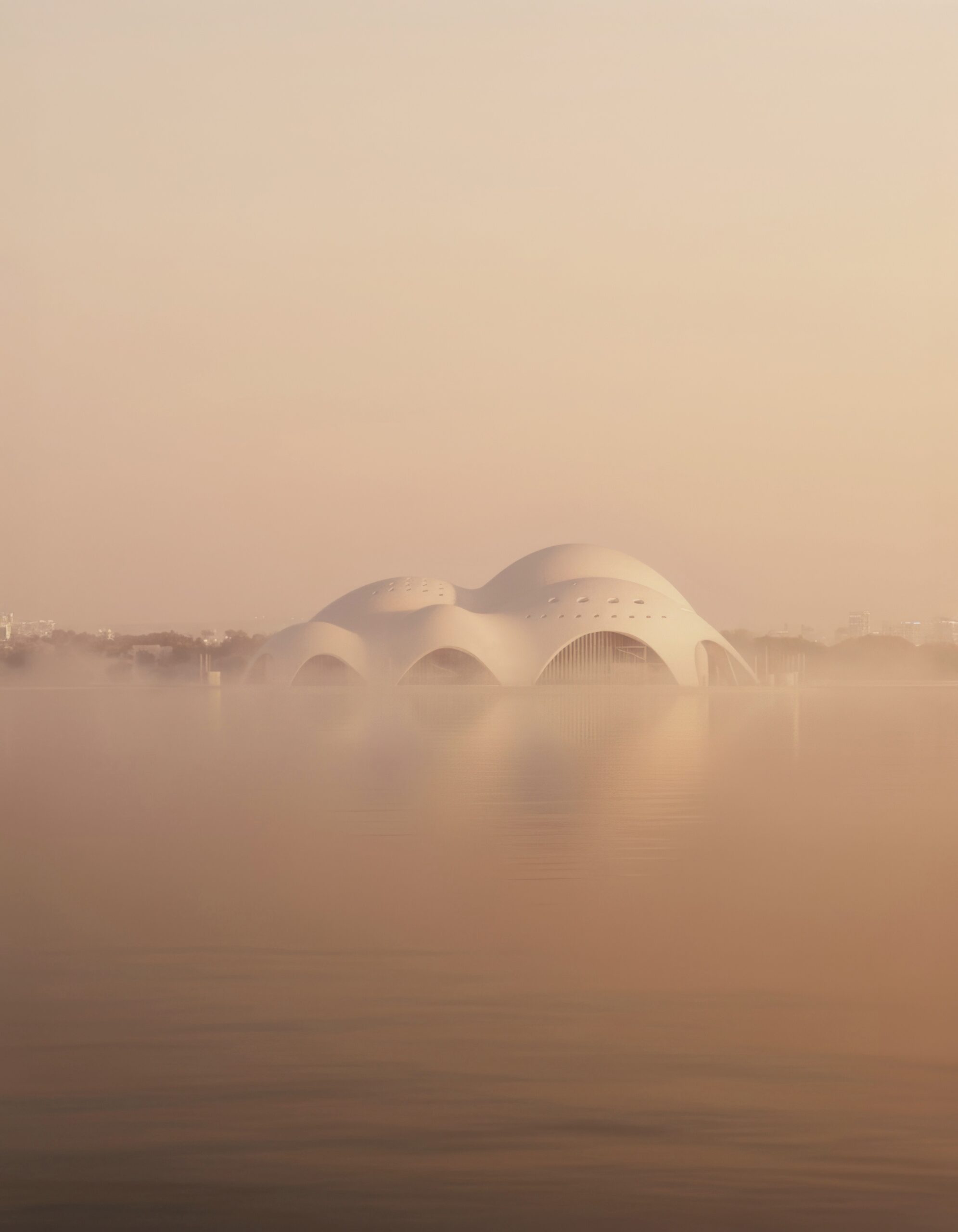
今日、〈イゾラ・デッラ・ムジカ〉が湖面から新たな真珠として姿を現し、繊細な光のニュアンスで風景に新たな表情を与える。この建築は、西湖とオペラ湖の境界に位置し、ハノイの広範なマスタープランの一環として計画されたものである。
© RPBW, rendering by Aesthetica Studio
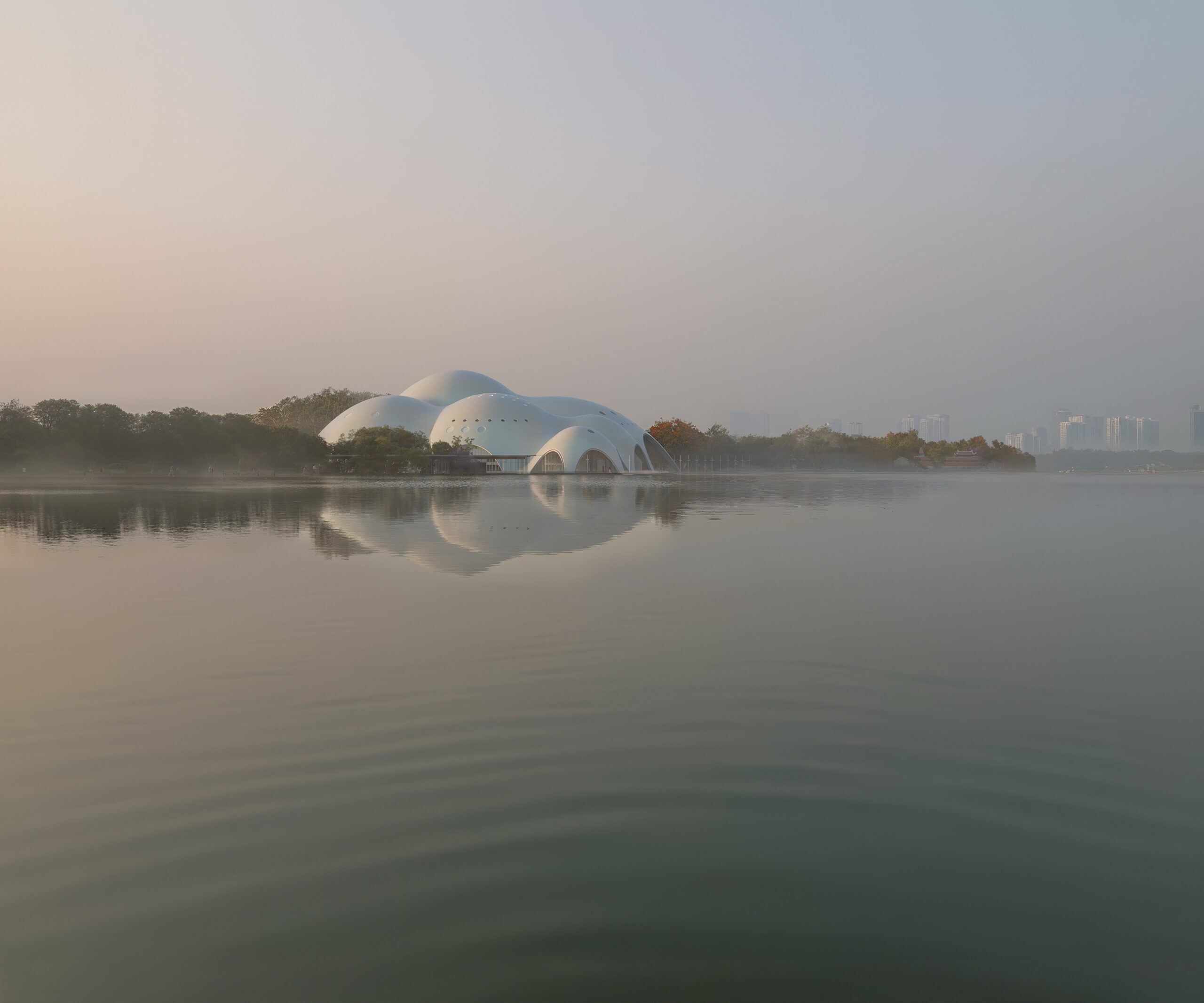
湖をつなぐランドスケープの再構築
計画では、既存の土地13,347m²を除去することで、西湖とダム・トリ湖を連結させることを目指している。
従来、水中での建設には専門的な囲い堰の構築が必要となる。しかし本プロジェクトでは、島を既存の土地境界内に収めることで、より伝統的な設備による盛土構築を可能にするという実行的な代替案を提示している。これにより、複雑な水中施工を避けつつ、自然環境との共存を図る設計手法が採用されている。
© RPBW, rendering by Aesthetica Studio
© RPBW, rendering by Aesthetica Studio
自然の数学的秩序から生まれる形態
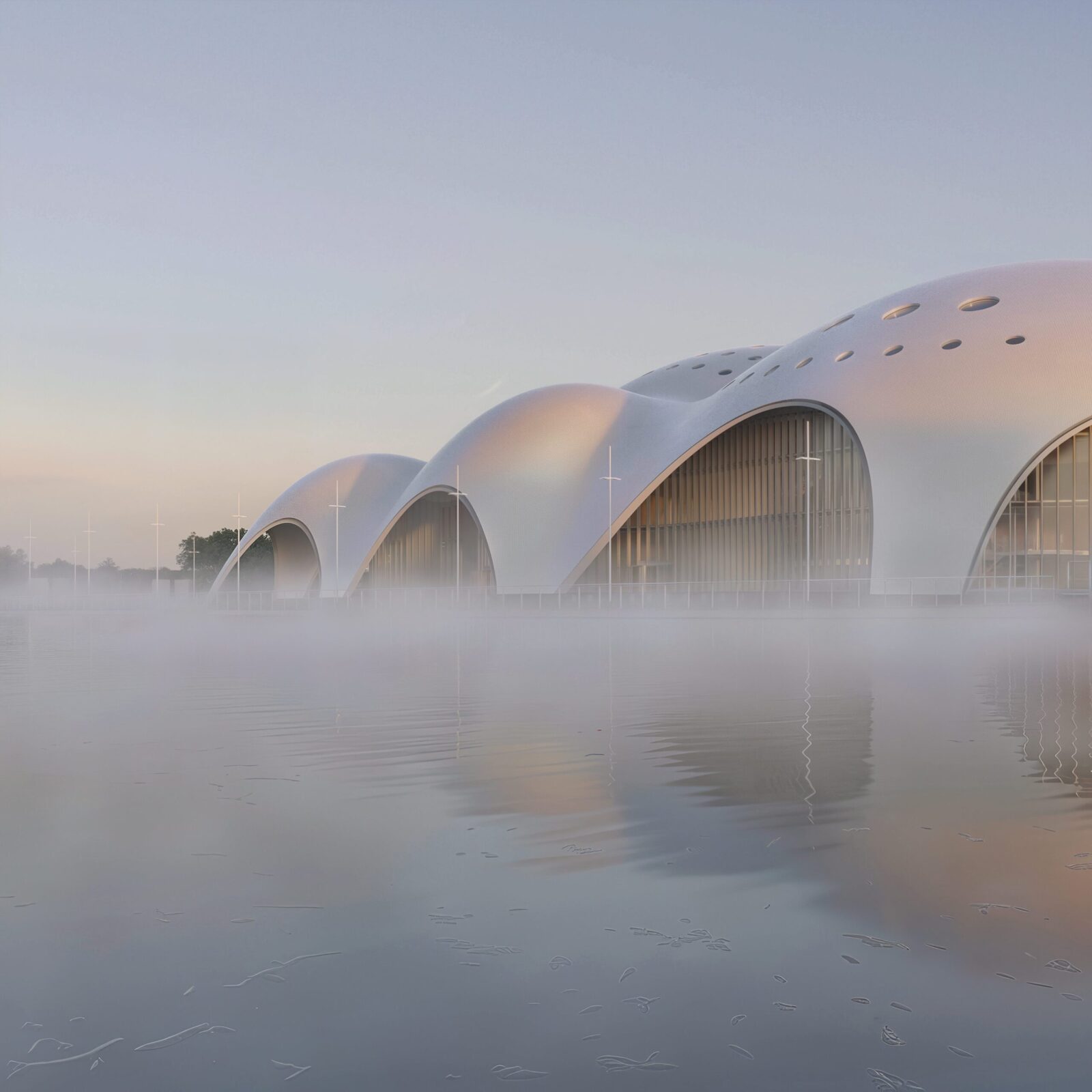
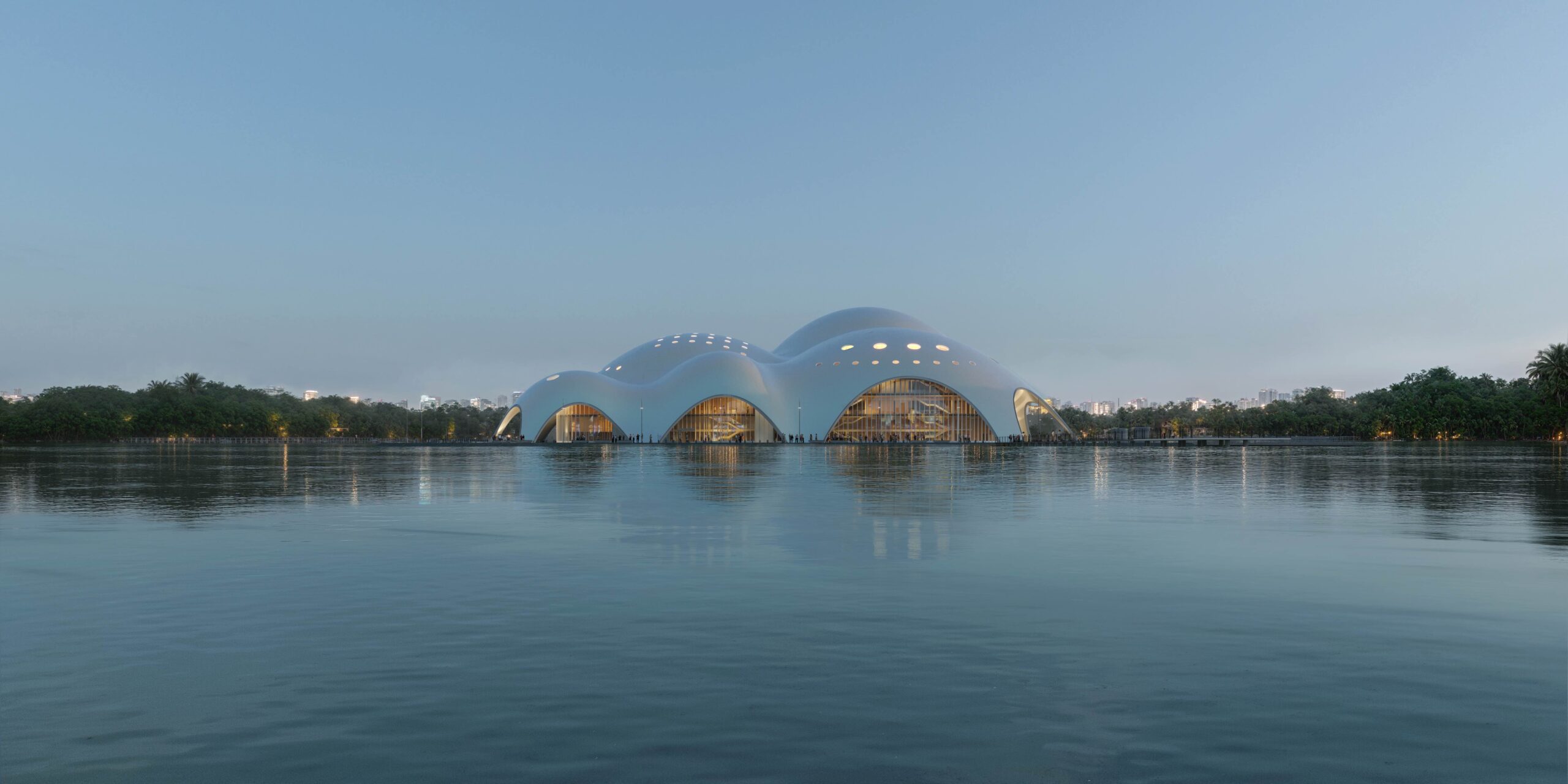
〈イゾラ・デッラ・ムジカ〉は、単なる形式的な造形ではなく、自然界に内在する数学的モデルを深く研究した成果として生まれた建築である。その姿は真珠のように柔らかく湖面から浮かび上がり、公演スペースや公共空間を包み込む。
西湖とダム・トリ湖の両方を望む新たな島は、公演スペースと公共空間を収容する。こうして西湖に新たな存在が加わり、すべての岸辺からその姿を望むことが可能となる。
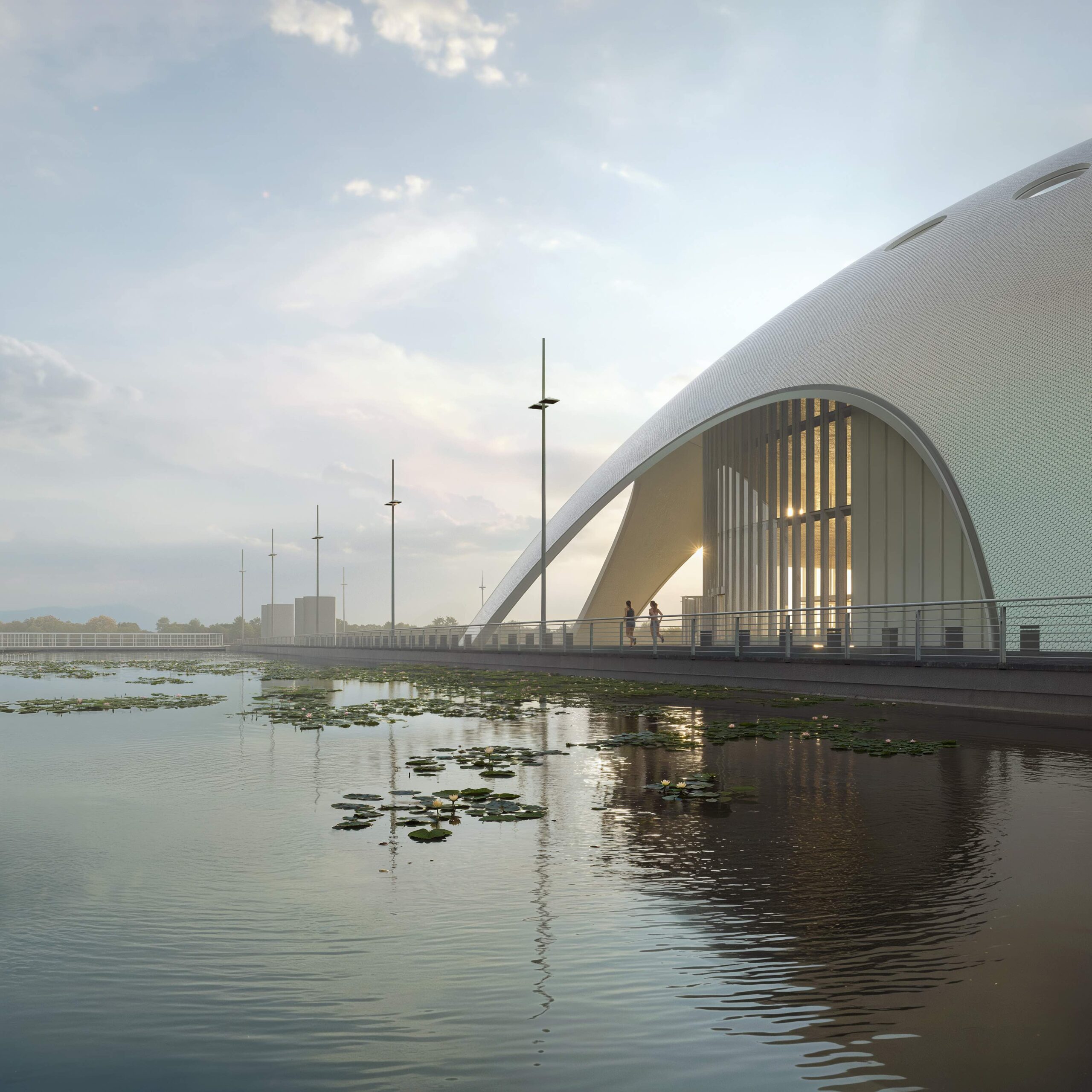
© RPBW, rendering by Aesthetica Studio
二重構造が導く形と機能の統合
自然界に見られる二重構造の造形を参照しており、内部プログラムを外部形態で表現するという意図が設計当初から貫かれている。
2つの公演ホールを包む形状の生成方法として、石鹸の泡から二次元懸垂線エンベロープまで多様な案を検討し、最終的に三次元懸垂線曲面という形態を採用した。
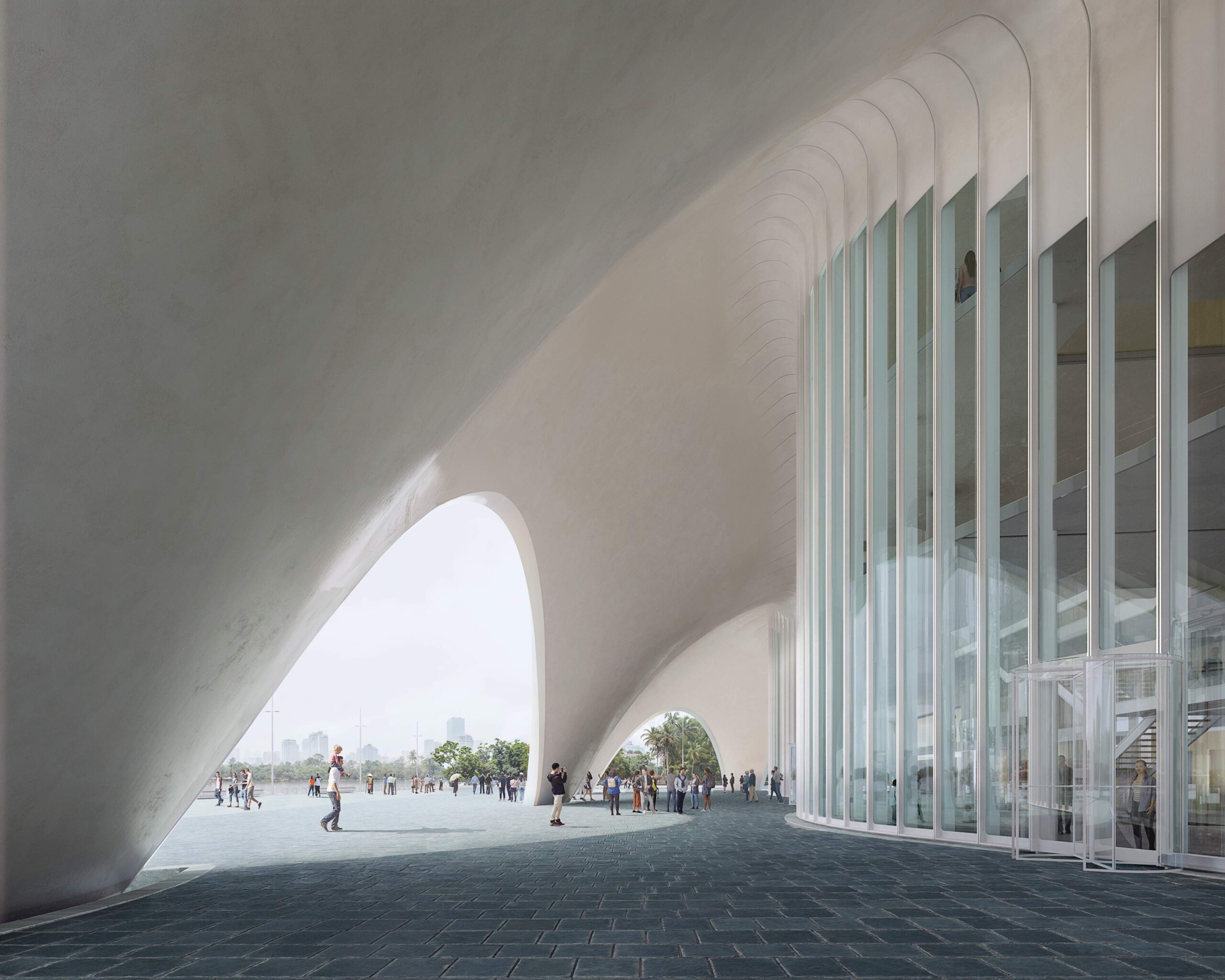
© RPBW, rendering by Aesthetica Studio
圧縮で成立する三次元懸垂線構造
主要構造は薄肉リブコンクリートによる三次元懸垂線形状であり、数学的には完全圧縮作用を受ける構造体である。この構造要素は、正方形の島状構造体上部の内部のいくつかの点と外周部のいくつかの点に荷重を分散することが可能であり、本建築の本質的原型となる。
リブの間には、構造性能に影響を与えない開口部を設けることが可能である。シェルの形状は恣意的ではなく、機能と被覆されるボリュームに関連している。
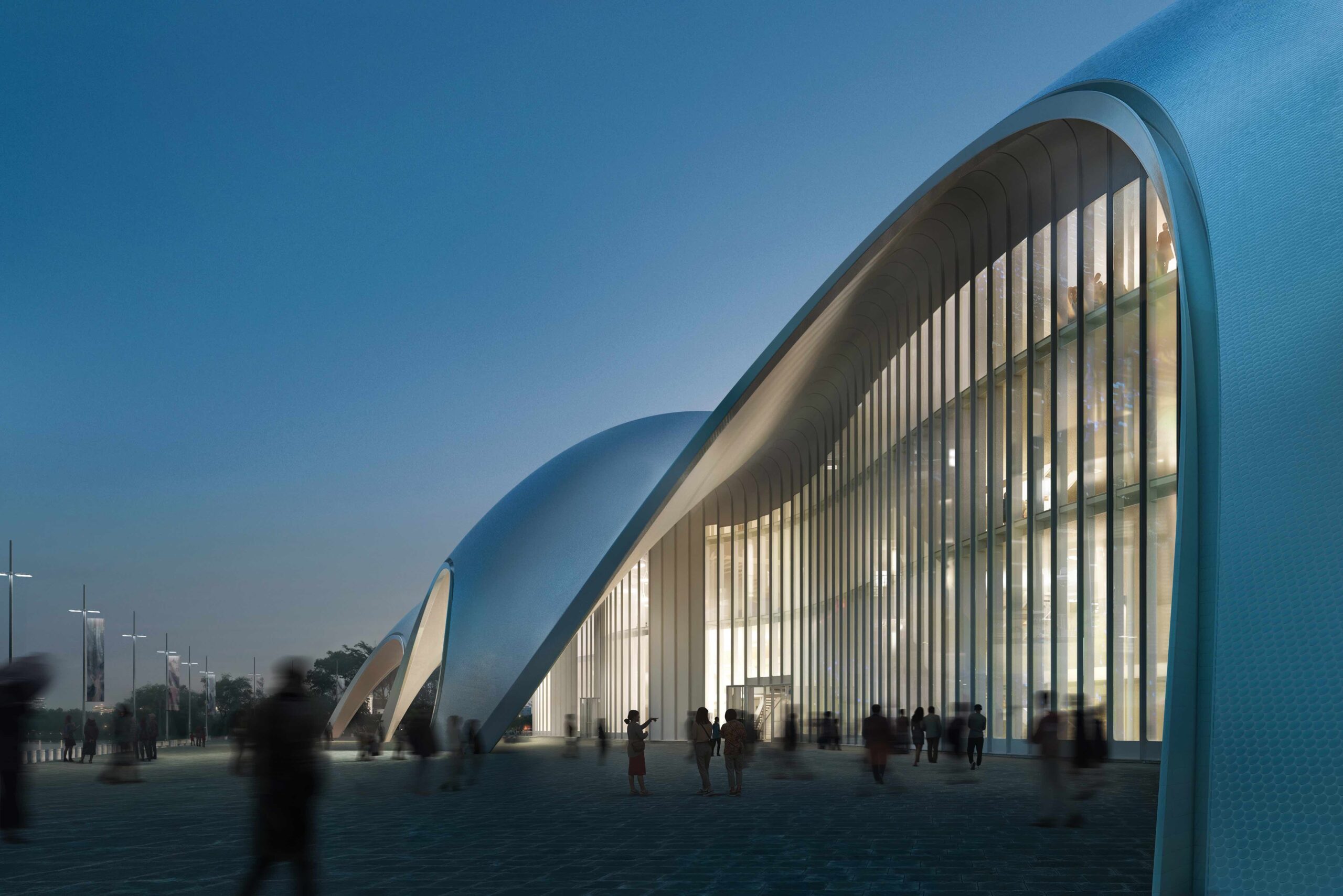
© RPBW, rendering by Aesthetica Studio
プライマリシェルは雨除けスクリーンとして機能する、セラミックタイルを採用予定の外皮で覆われる。プライマリシェルの内面は、追加の非構造層で仕上げられる。この要素は遮音・遮熱目的だけでなく、建築的役割も果たす。
シェルは局所的に二次構造で支持される場合があり、これは主要な内部プログラム空間を定義するために必要な要素である。
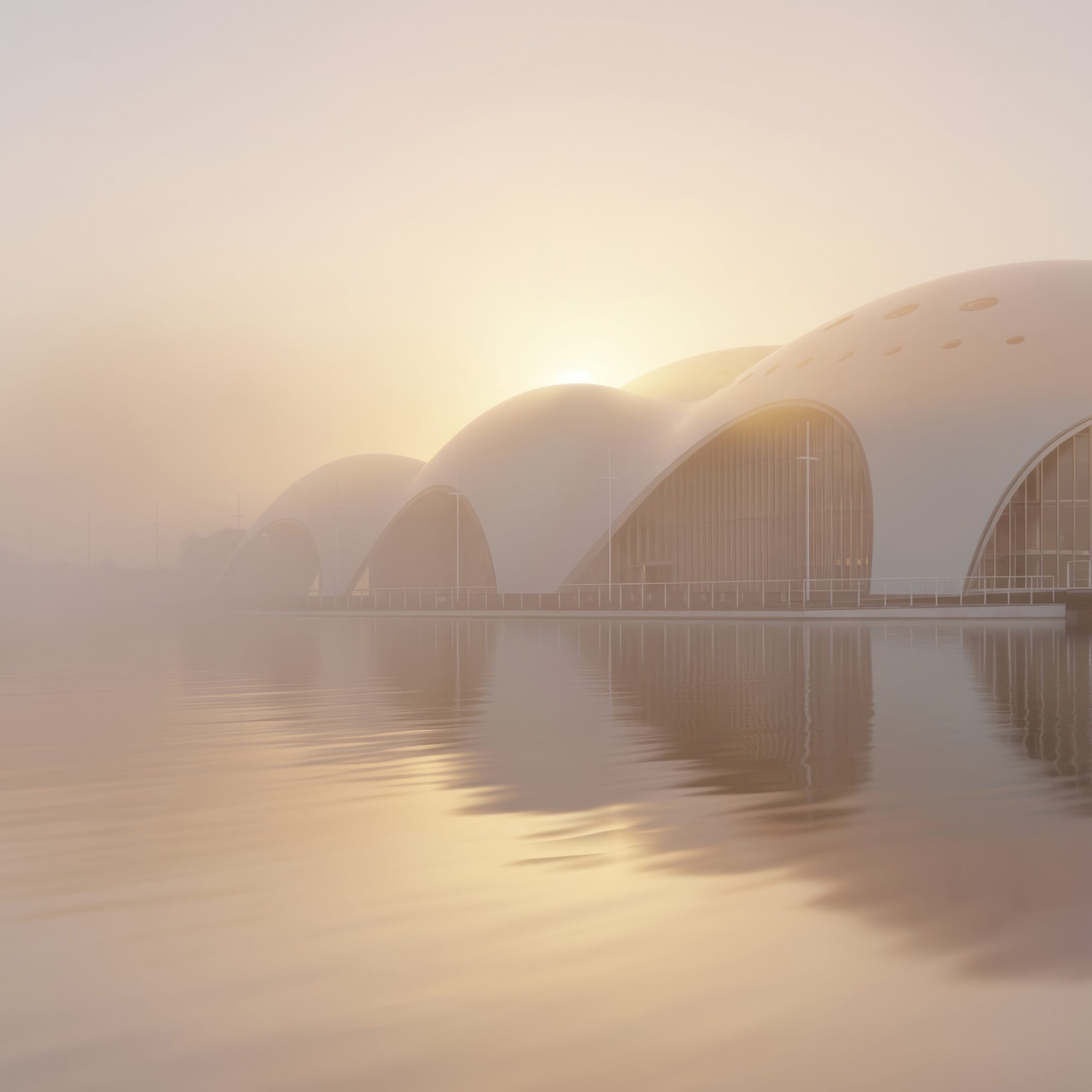
© RPBW, rendering by Aesthetica Studio
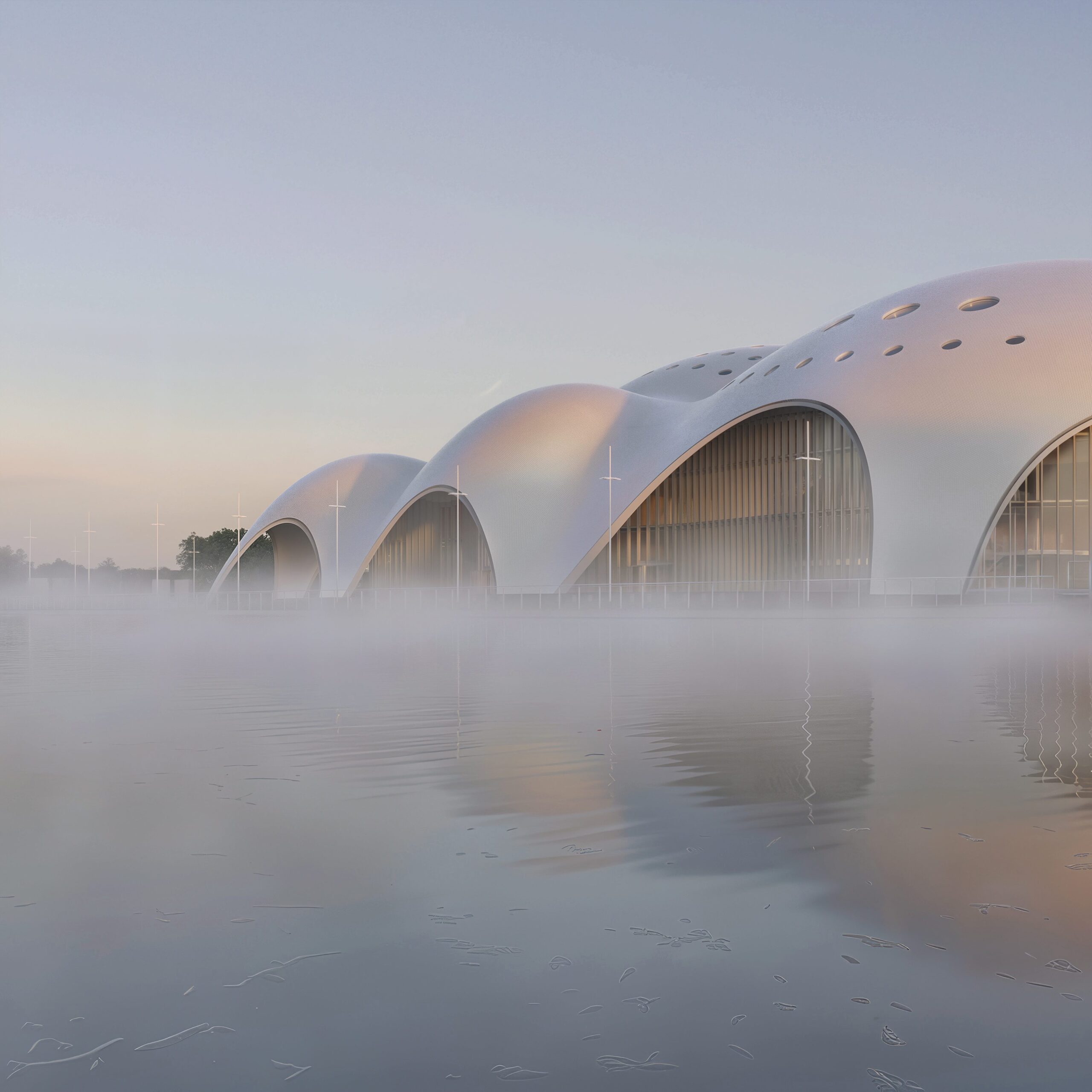
真珠のように輝く外皮
外皮はシェルの曲線に沿って大小さまざまなセラミックタイルで構成され、ピクセル化された表情を生み出す。この構成により、必要に応じて開口部を設けることも可能となる。
外観は1日の光や天候の変化に応じて繊細に表情を変え、真珠のような輝きを放つ。タイルの反射が湖面の光と呼応し、建築全体が呼吸するように風景と一体化する。
内部の1800席のオペラホールと1000席のコンベンションホールは、多様なプログラムや公演に対応できるよう設計されている。
© RPBW, rendering by Aesthetica Studio
以下、RPBWのリリース(英文)です。
Isola Della Musica
Hanoi / VietnamIn the past, the farmers who lived around the Hanoi’s West Lake (Ho Tay) had earned their living by hunting big “Trai”, a freshwater oyster able to grow a rare variety of pearls. Their colour is elegant pink, orange and more occasionally white. Today, as the new Pearl of West Lake, the ‘‘Isola della Musica’’ emerges from the water surface and with its nuances it delights the sight of the landscape.The Isola della Musica is situated on the existing border between West Lake and Opera Lake in Hanoi, Vietnam, as part of a wider Masterplan project.
By removing 13347 m2 of existing land, the Isola della Musica will make the connection between the Đam Tri Lake and West Lake possible. Traditionally building in water would require the construction of coffer dams which are specialist elements. However, by keeping the Isola della Musica within the boundary of the pre-existing land, we would propose that a viable alternative is to construct a series of berms from which more traditional equipment could be used.
Conceived as a deep study of mathematic models existing in nature and not just as a formal gesture, the building emerges from the lake’s waters with its mother-of-pearl gentle shapes. It shelters performance and public spaces on a new island overlooking both West Lake and Đam Tri Lake. Suddenly a new entity becomes part of the Hanoi West Lake, visible from all the shores.
The initial intent to express the interior program through the exterior form has always been clear as it happens in double layered natural structures. Many different options on how to generate the shape to enclose the two performance halls were studied, from the soap bubble shell to the 2D catenary envelope, until the final 3D catenary surface was developed which represents the study in this report.
A thin ribbed concrete structure is the primary structural component, which, mathematically, is a 3D catenary form working completely in compression. This structural element is able to discharge the different loads at few internal points and more points on the perimeter on top of the square island, which becomes the actual archetype of the building. Between the ribs, the thin concrete structure can have openings without engaging the structural performance. The shape of the shell is not arbitrary but is related to the functions and the volumes covered. The primary shell is covered by an outer skin, working as a rain screen. Presumably, this external skin will be made of ceramic tiles. The inner surface of the primary shell is completed with an additional not structural layer. This element is not only used for acoustic insolation purposes, but also it plays an architectural role. Sometimes the shell is locally supported by a secondary structure. While this is not part of the shell, this secondary structure is necessary to define the major inner programmatic volumes.
The skin is made up of ceramic tiles of various sizes to follow the curves of the shell, creating a pixelated effect and also allowing for openings when needed. The surface’s appearance will change in different weather and light conditions over the course of the day with a mother-of-pearl shining effect. The following pages show the differences on the surface according to the various patterns.
The 1800 Seat Opera Hall and 1000 Seat Convention Hall have been designed such that they may adapt and accomodate for varying programs and performances.
Project Details
Status: 2017 – ongoing
Client: Sun Group
Design: Renzo Piano Building Workshop, architects in collaboration with PTW Architects (Sydney, Hanoi)
Design Team: G.Bianchi (partner in charge)
RPBW 公式サイト
https://www.rpbw.com/project/isola-della-musica
【購読無料】空間デザインの今がわかるメールマガジン TECTURE NEWS LETTER
RECOMMENDED ARTICLE