CULTURE
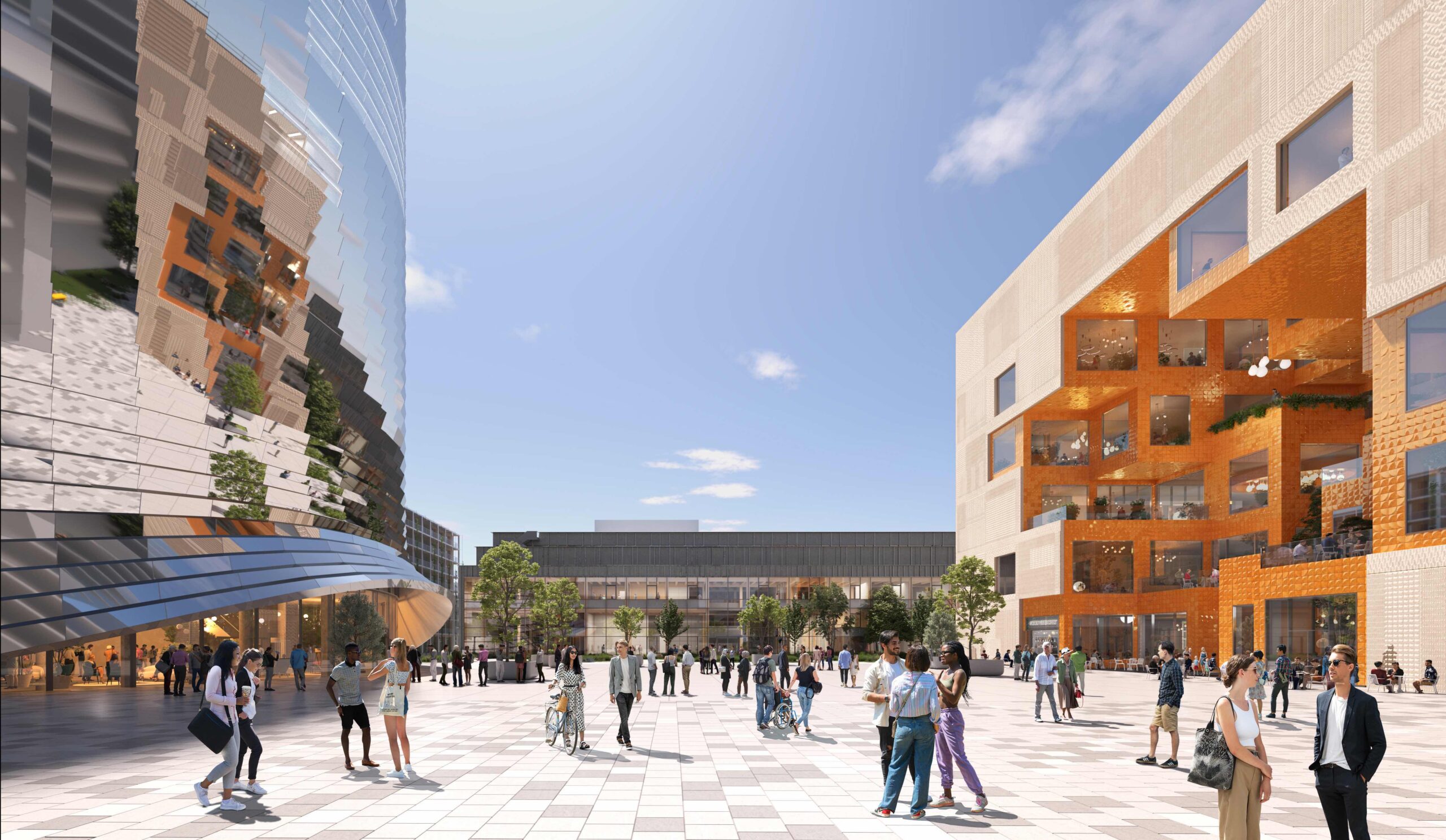
Piazza © IPAI, MVRDV
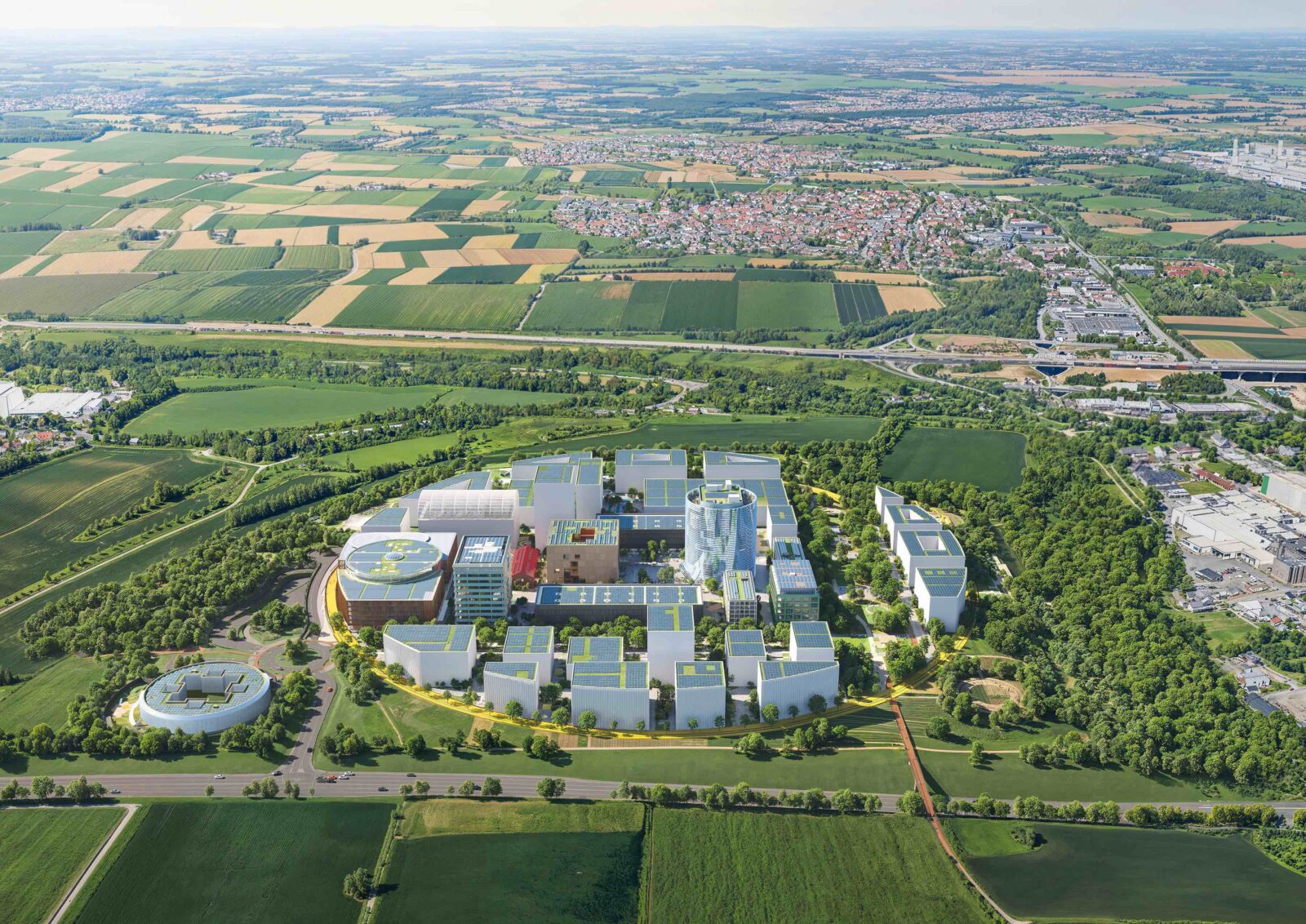
ドイツ・バーデン=ヴュルテンベルク州の都市ハイルブロンに建築家集団MVRDVがマスタープランを手がけた〈イノベーション・パーク・AI(IPAI:Innovation Park Artificial Intelligence)〉が着工した。
「人類のAIのグローバル拠点」として計画された30ヘクタールの円形キャンパスであり、AIソリューションの開発に携わる5,000人以上の人々が集う国際的ハブが形成される予定です。
注目ポイント
- ドイツ政府・州・民間財団・自治体が連携する国家的AI拠点プロジェクト
- 象徴的な円形マスタープランと2本の偏心軸による構成
- 長時間画面に向き合うAI研究に対し、「ウェルビーイング」を中心に据えた都市構想
- 含有炭素量を定量評価するMVRDVのツール「CarbonSpace」による設計支援
(以下、MVRDVから提供されたプレスキットのテキストの抄訳)
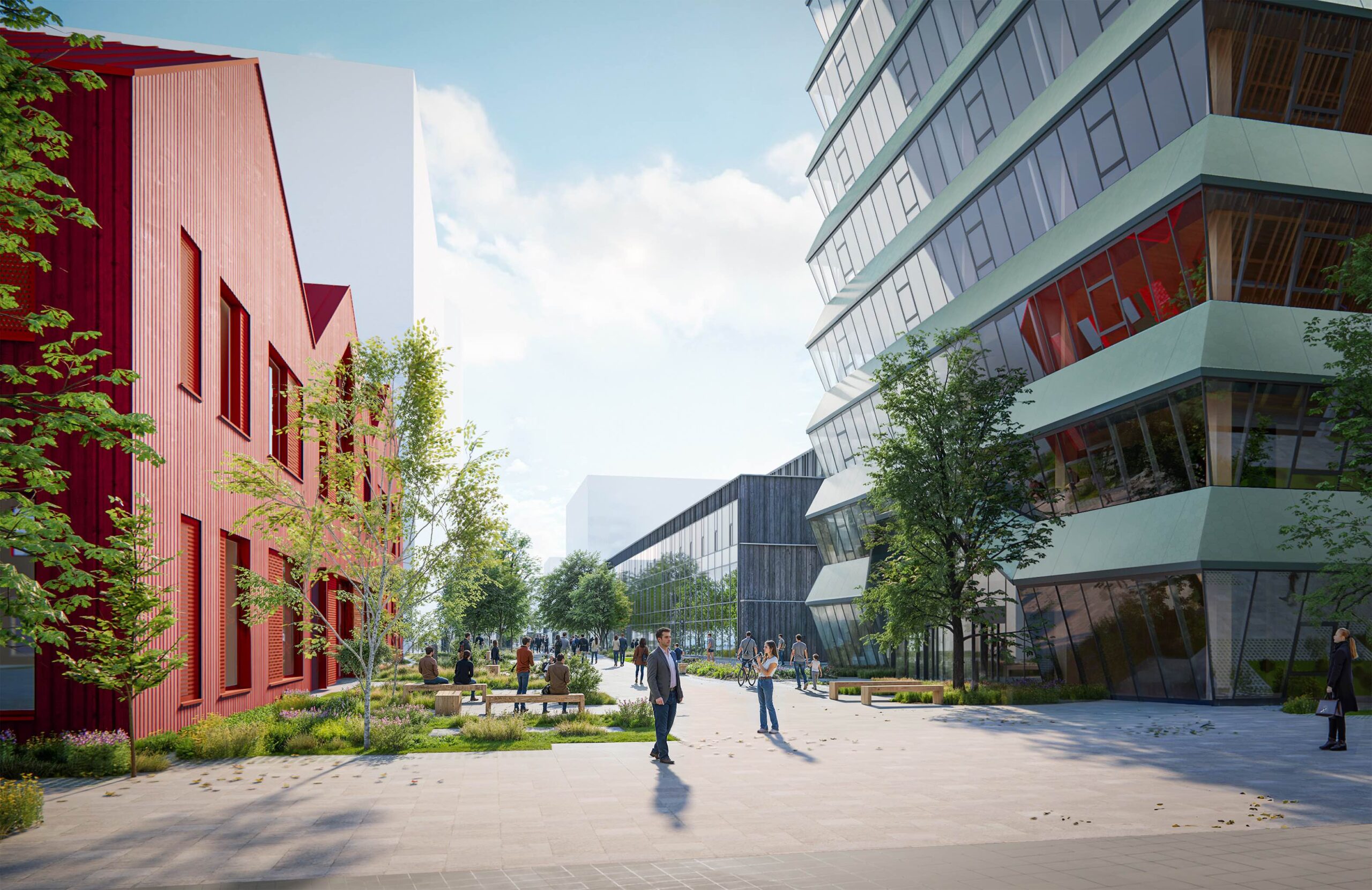
Promenaden © IPAI, MVRDV
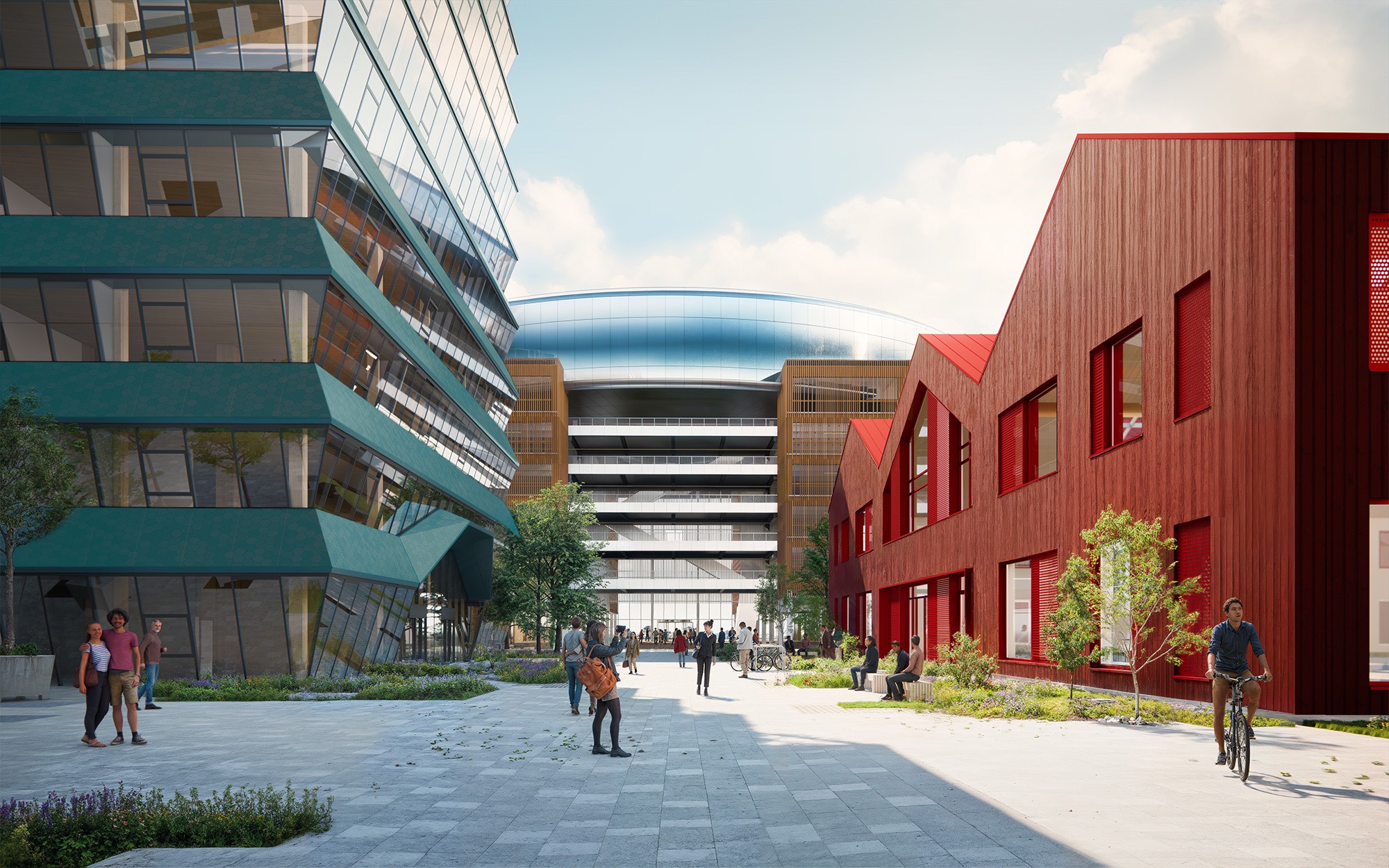
Promenaden © IPAI, MVRDV
「人類のAIのグローバル拠点」着工
2025年10月21日、ドイツのバーデン=ヴュルテンベルク州において、ディーター・シュワルツ財団(Dieter Schwarz Foundation)、シュワルツ・グルッペ(Schwarz Gruppe)、ハイルブロン市によって構成されるIPAIコンソーシアムは、〈イノベーション・パーク・AI〉キャンパス建設開始を祝した。
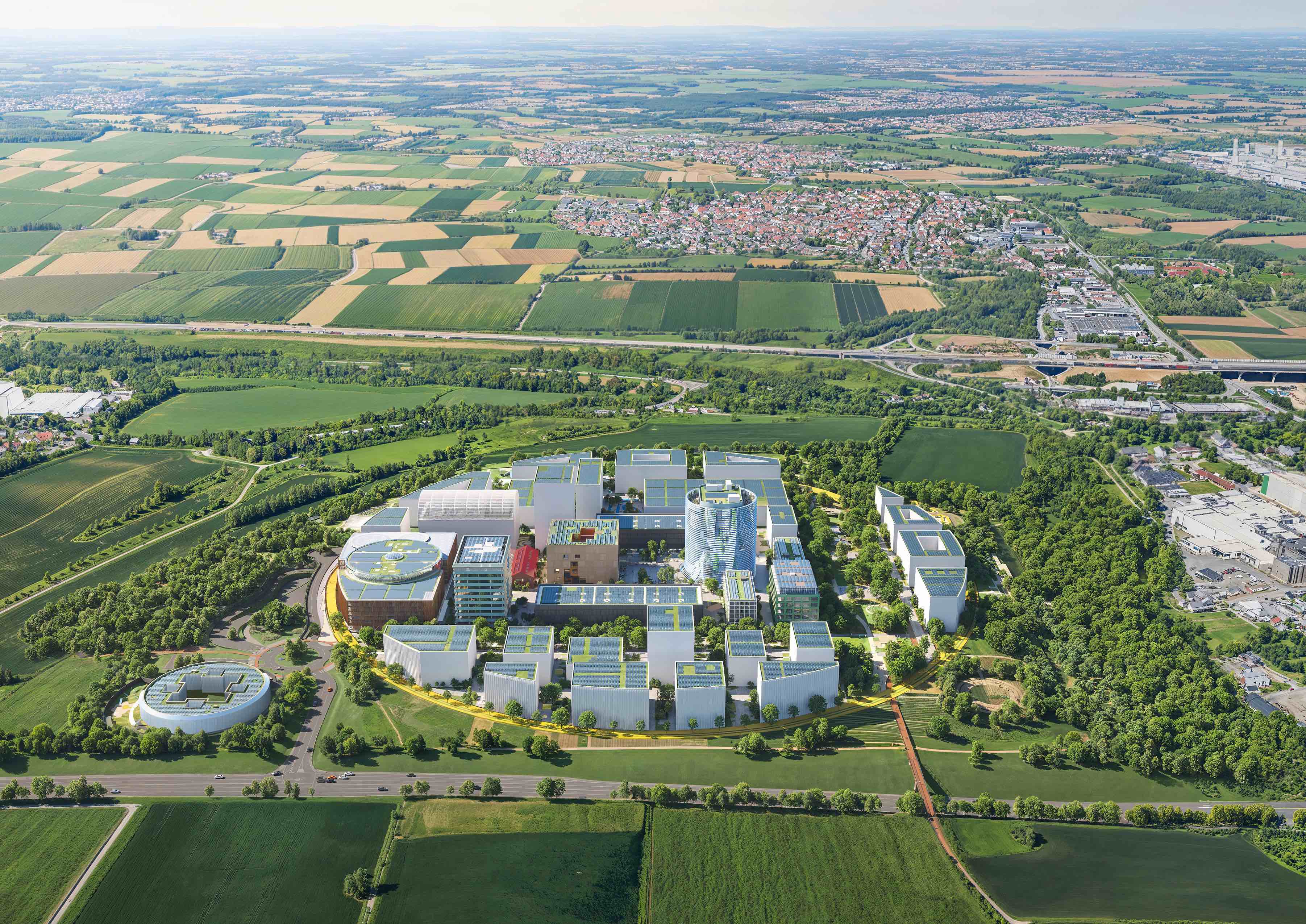
© IPAI, MVRDV, Vivid
ドイツ・ハイルブロンに位置する30ヘクタールの敷地には、革新的かつ責任あるAIソリューションの開発に携わる5,000人以上の人々が集う国際的ハブが形成される予定である。
このキャンパスは開放性・協調性・持続可能性を基盤とし、魅力的な職場環境であると同時に、世界を変える技術開発の現場を体験できる場としても設計されている。AI分野およびドイツ国内におけるIPAIの重要性を示すように、起工式にはフリードリッヒ・メルツ首相をはじめ、国・州・市から著名な政治家や関係者が出席した。
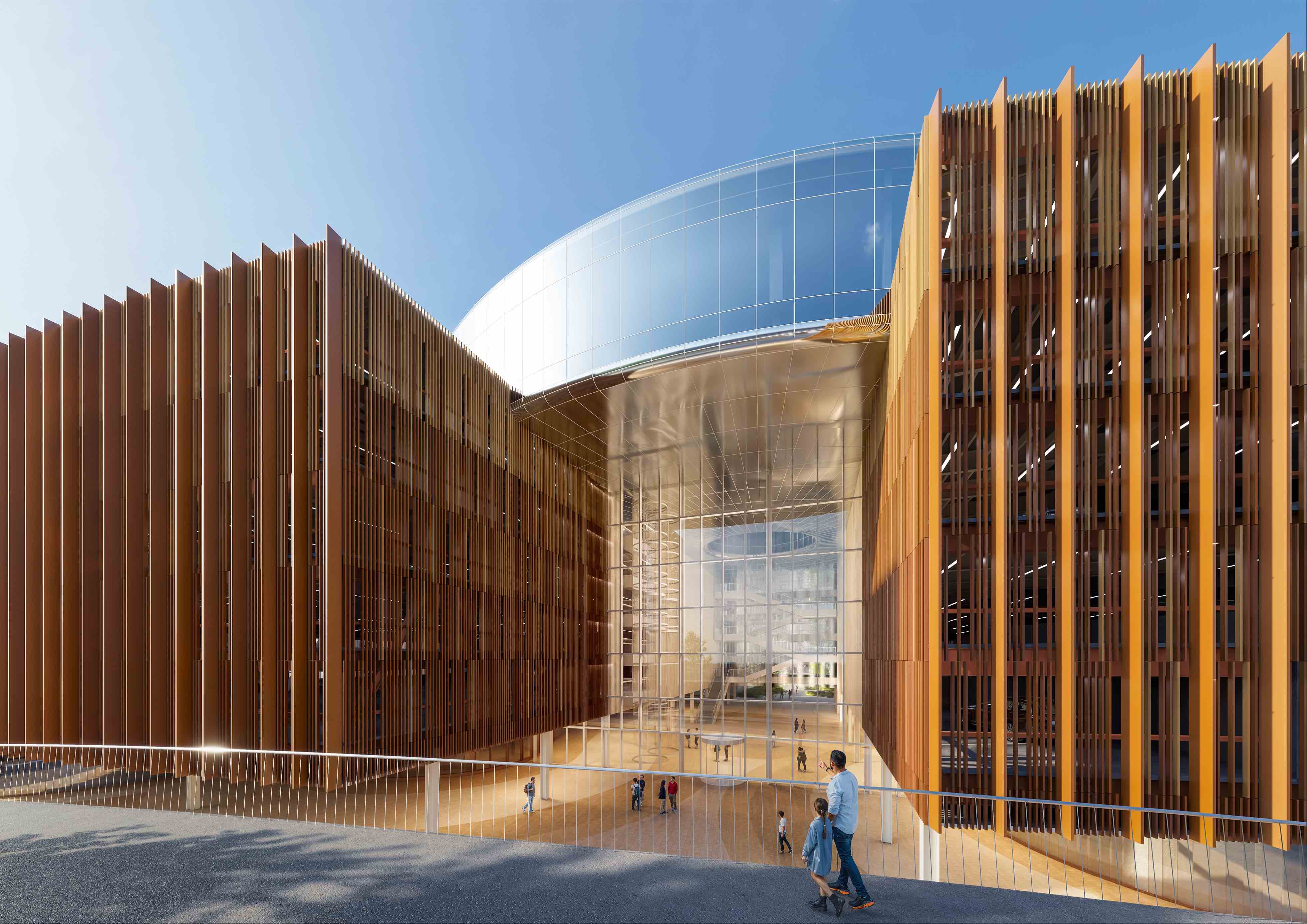
Mobility Hub © IPAI, MVRDV, Vivid
円形マスタープランが描く都市的構想
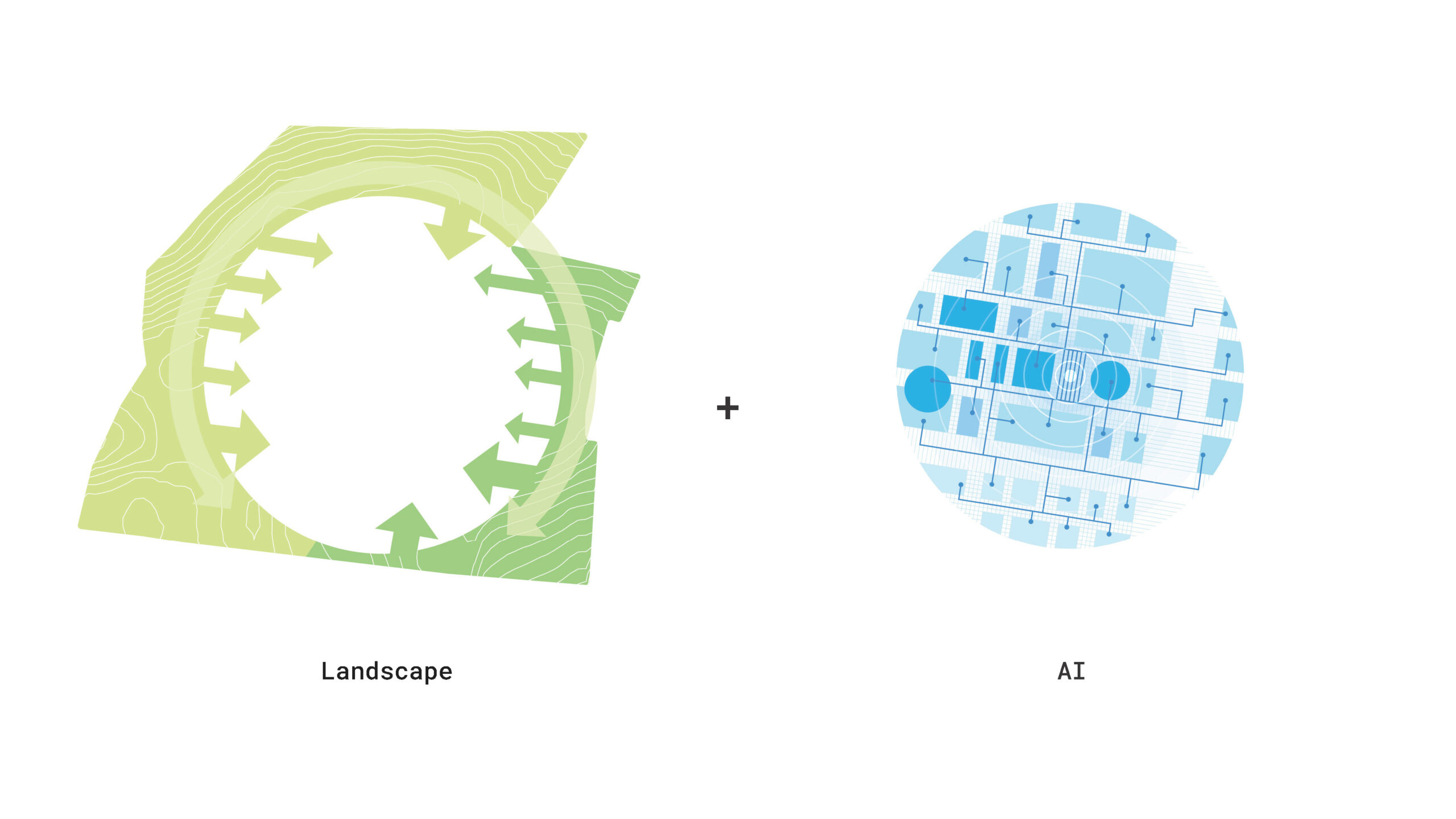
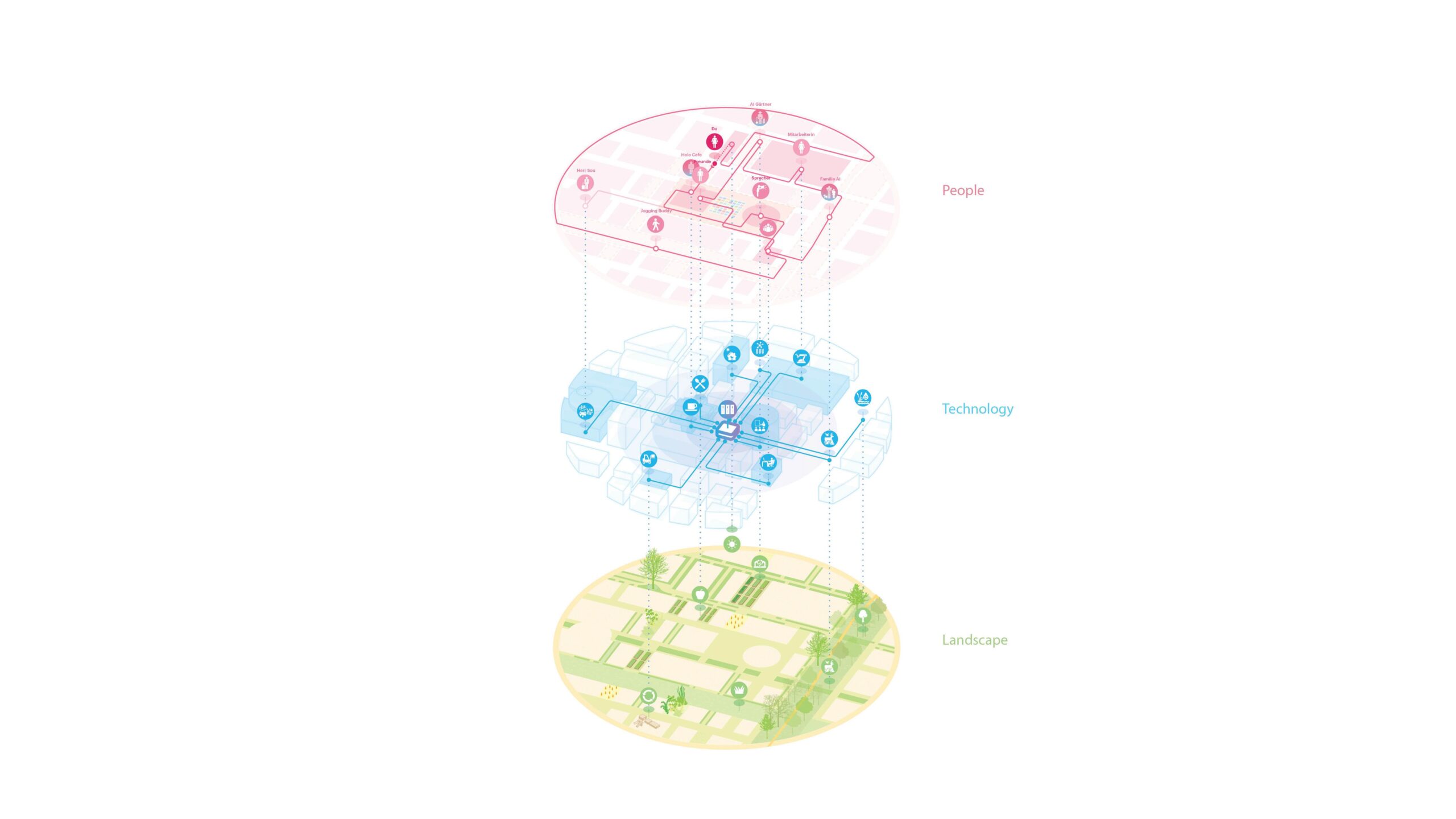
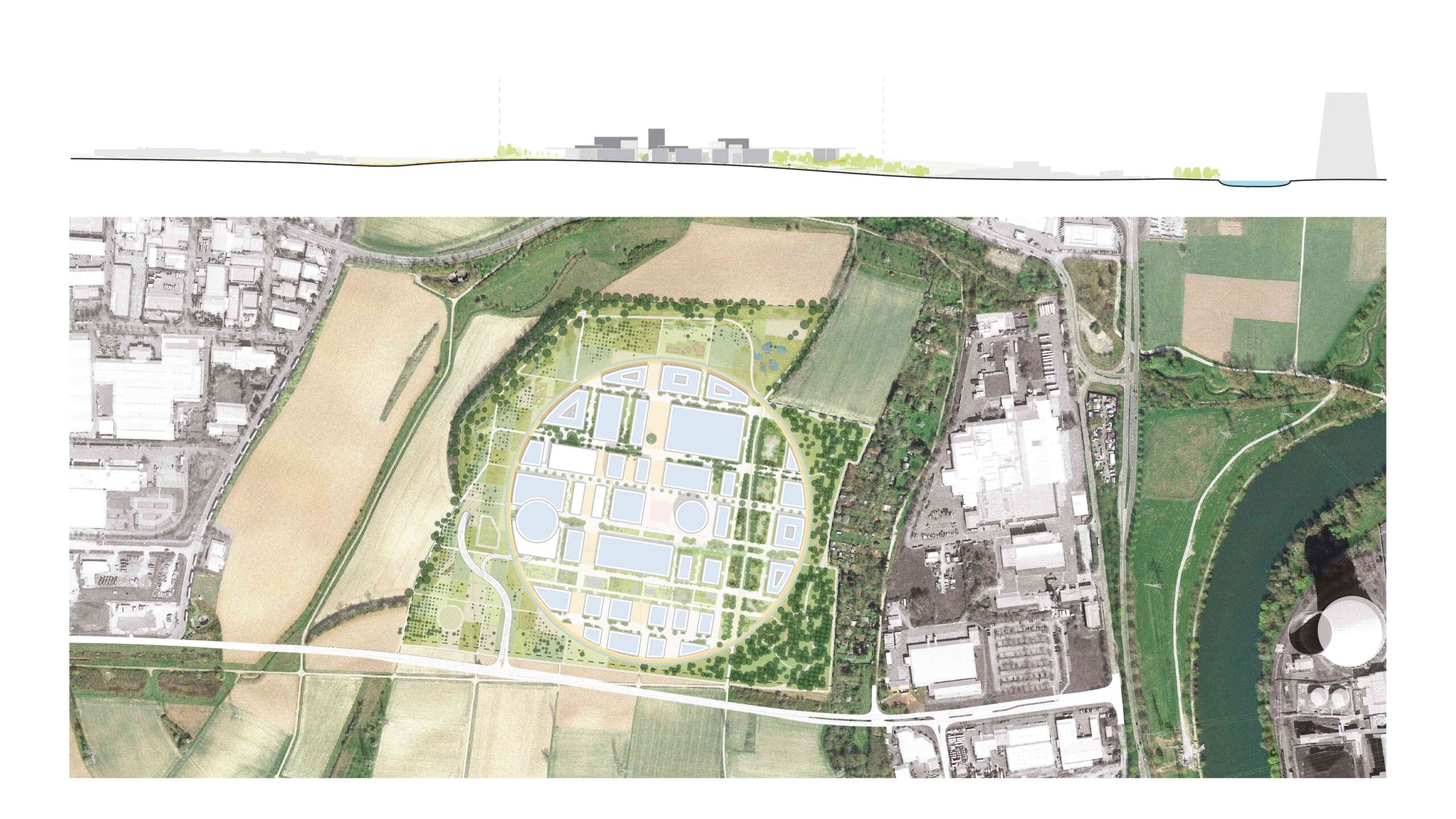
MVRDVによるマスタープランは、特徴的な円形構成と2本の偏心軸によって定義されている。このプランは研究所や住宅に加え、市民との交流を担う中心的な文化施設を備えたビジネスキャンパスを構想するものである。
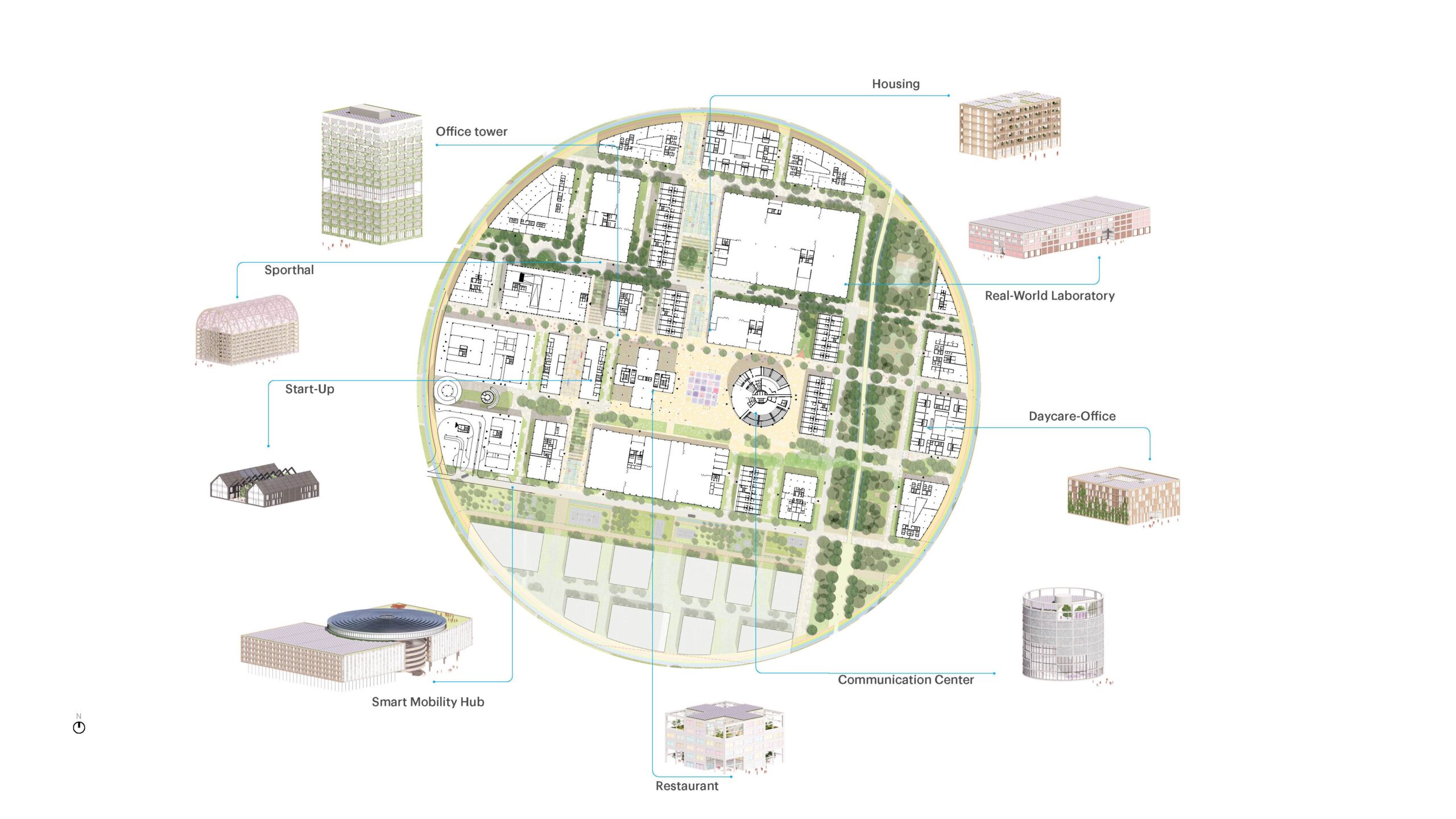
建設第1段階では、将来のキャンパスの中心部を形成する主要建物群が整備される。円形敷地の西端からコミュニケーションセンター、レストラン棟へと広がるエリアが公共広場を定義づけ、キャンパスの核となる。さらにモビリティハブ、スタートアップ・イノベーションセンター、大規模な「リビングラボ」、10階建てのオフィスビルもこの段階で建設される。
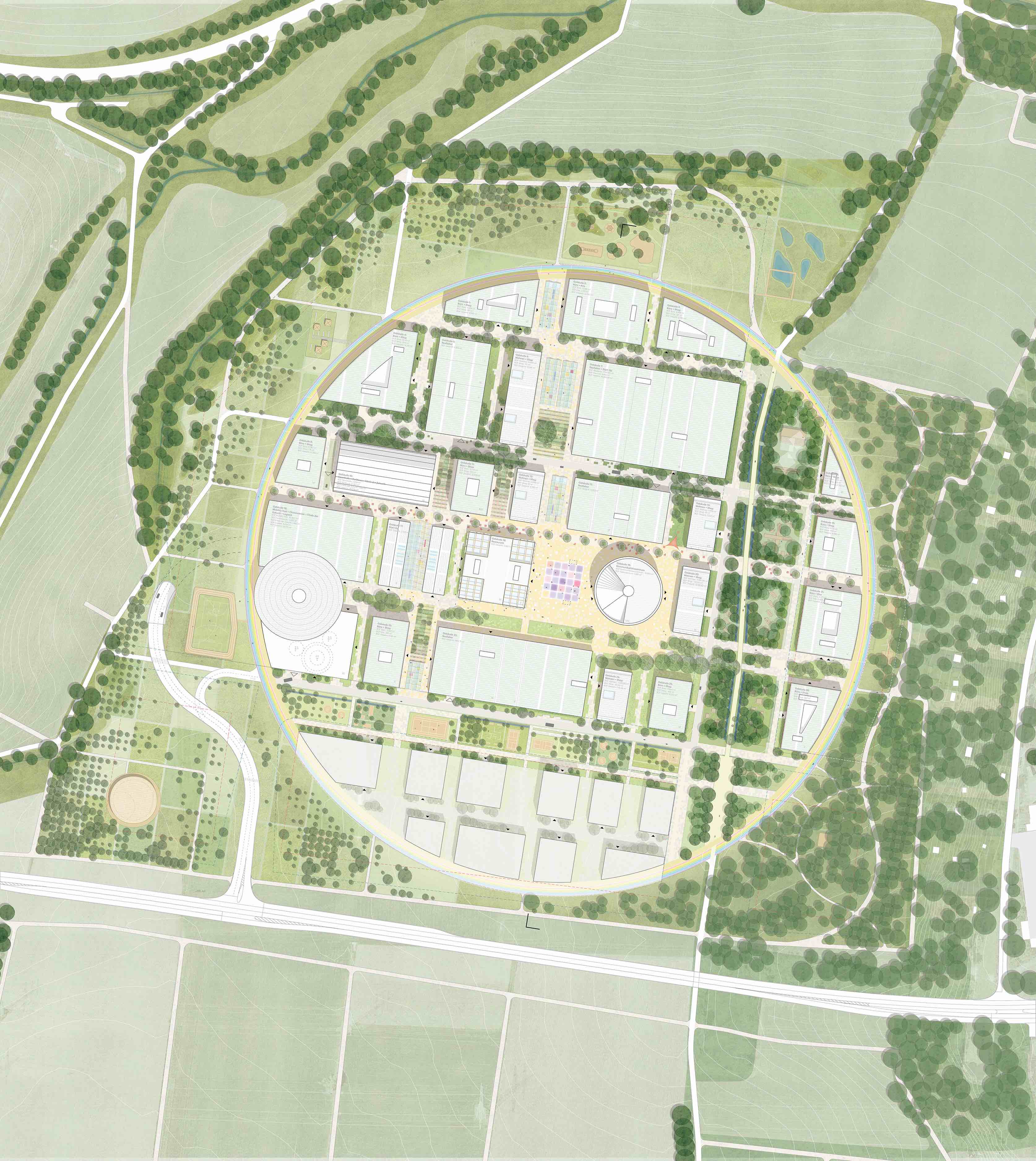
Siteplan © MVRDV, LOLA
ウェルビーイングを重視した人間中心の設計
「AI分野の仕事は非常に技術的で、人々は長時間画面に向かう。私たちはその対極として、ウェルビーイングを重視したキャンパスを設計した。敷地は車両通行禁止とし、緑豊かなランドスケープと触覚的な有機素材を用いた建築で構成している。」
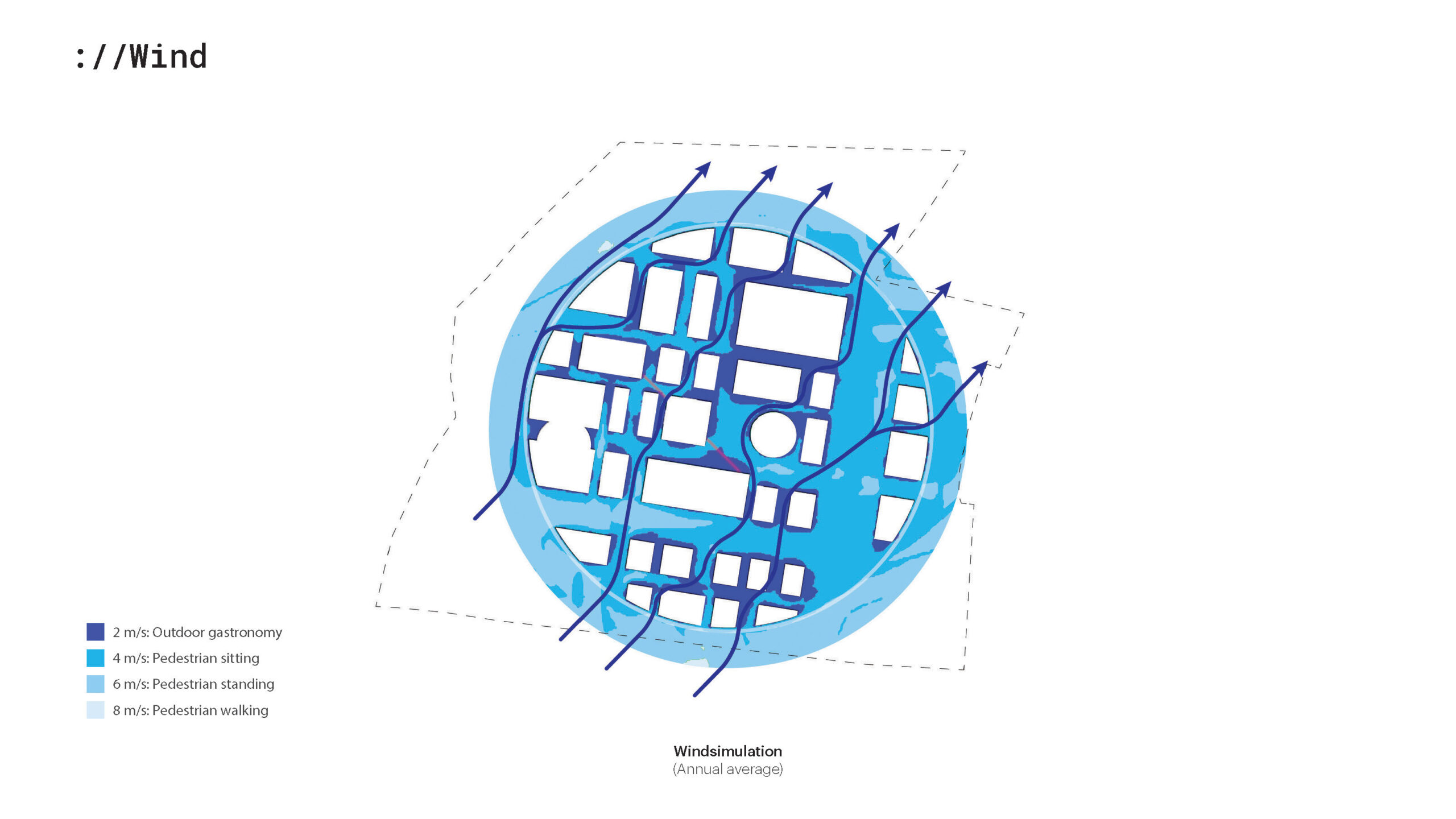
「公共空間の快適な微気候を確保するために風況調査を行い、利用者が屋外空間を積極的に活用できるよう配慮した。この設計思想は、『人間とAIのグローバルな拠点』となるというIPAIの使命における”人間”の側面を明確に打ち出すものである。」
MVRDV創設パートナー
ヤコブ・ファン・ライス(Jacob van Rijs)
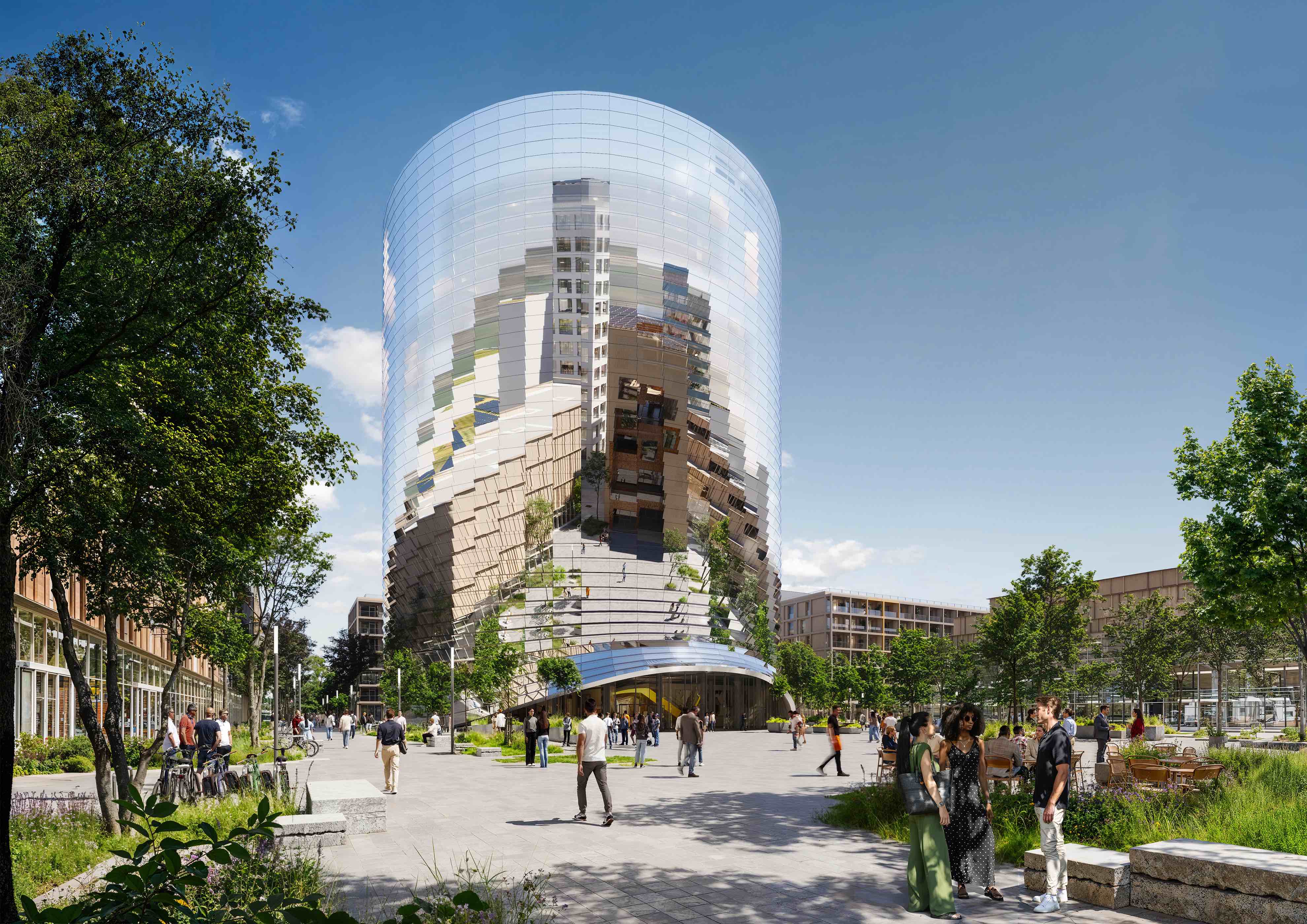
Kommunikationszentrum Nacht Landscape © IPAI, MVRDV, Vivid
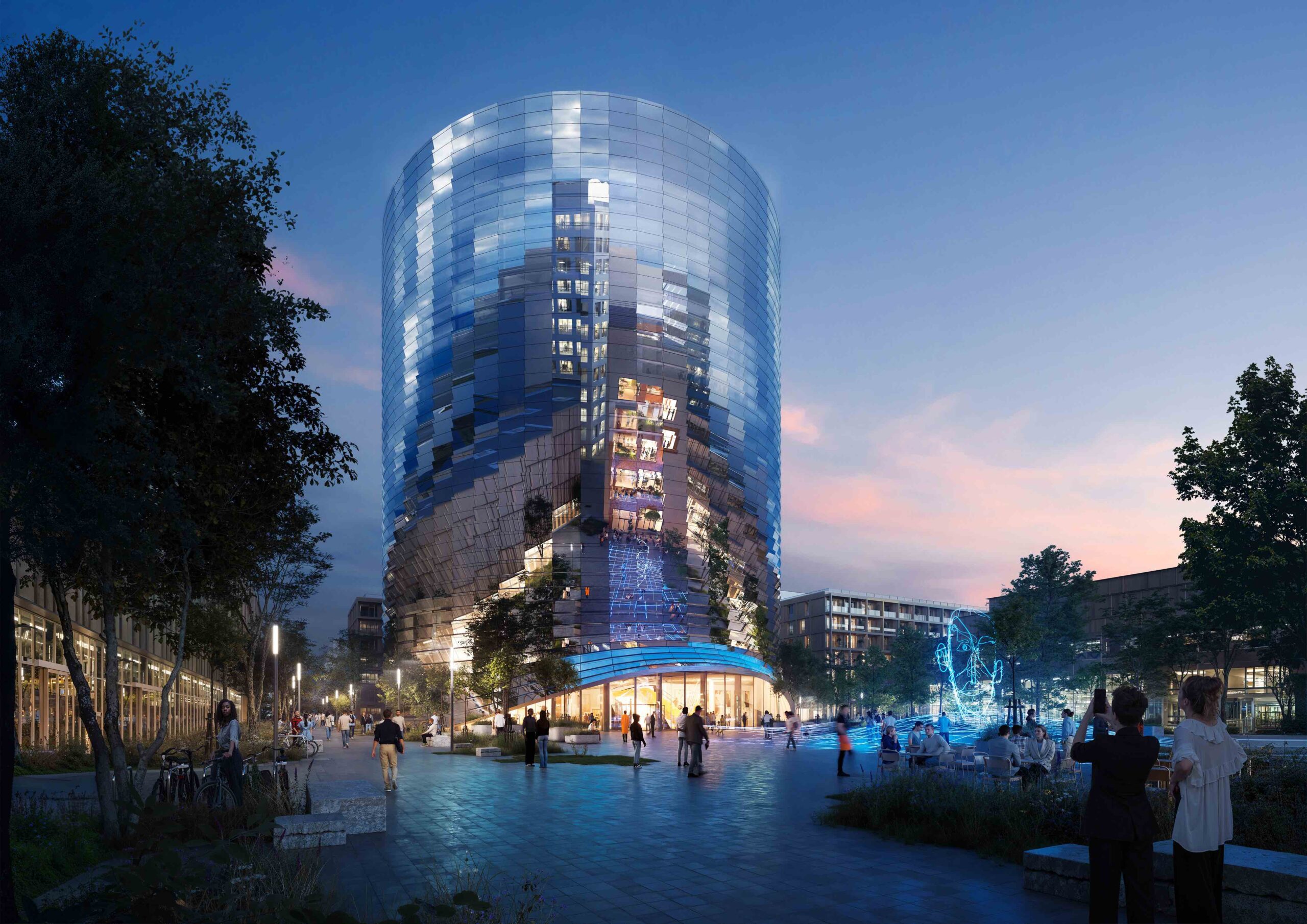
Kommunikationszentrum Nacht Landscape © IPAI, MVRDV, Vivid
多様な建築群が形成する知のコミュニティ
IPAIキャンパスの建築群は折衷的であり、各棟が固有のプログラムに応じた設計を採用している。展示や会議、セミナーを開催するコミュニケーションセンターは円筒形で、反射性の高いファサードが特徴である。対面するレストランはクリーム色の壁面にオレンジ色の「洞窟ファサード」を刻み、テラスでの交流を促す。
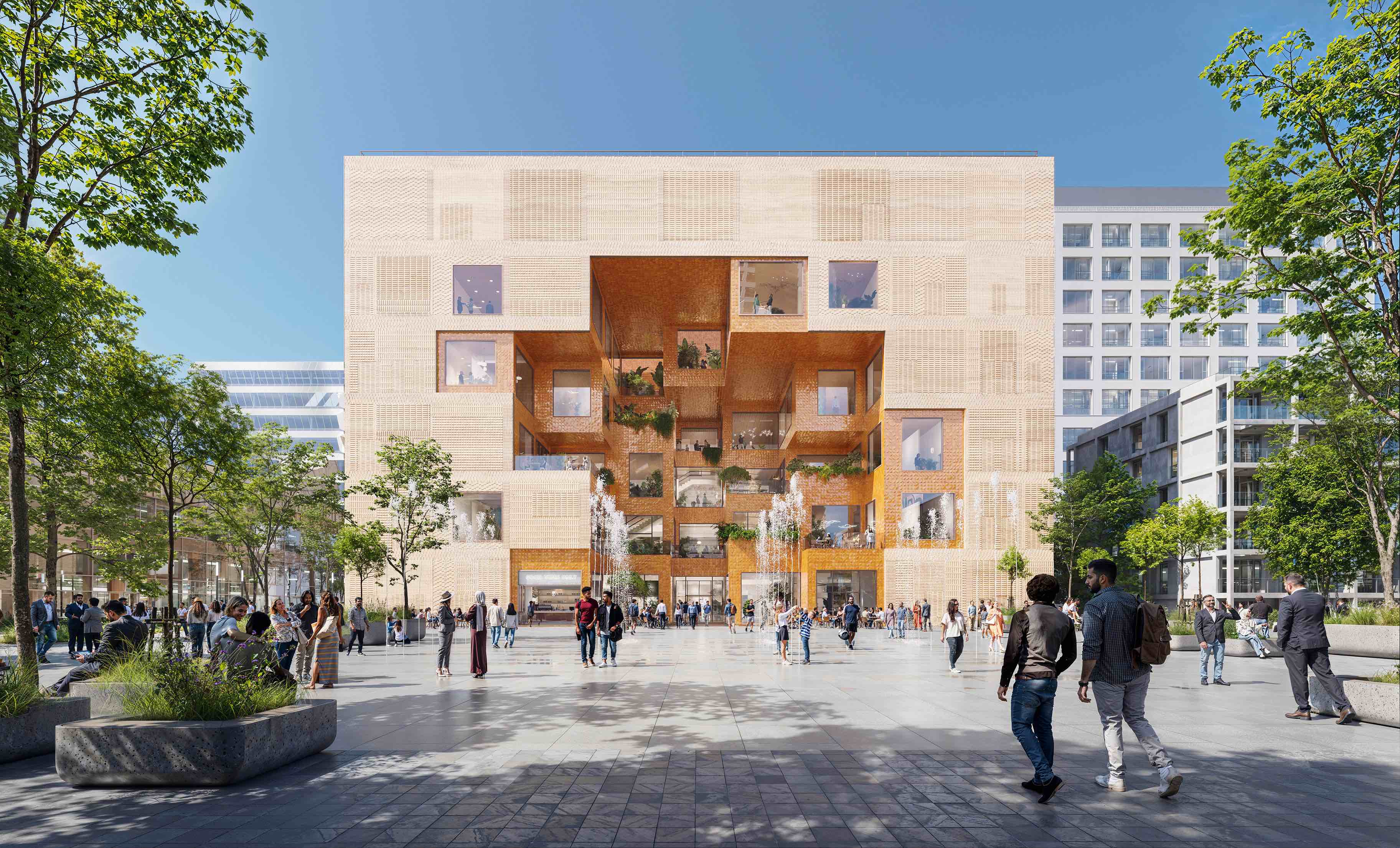
Restaurant © IPAI, MVRDV, Vivid
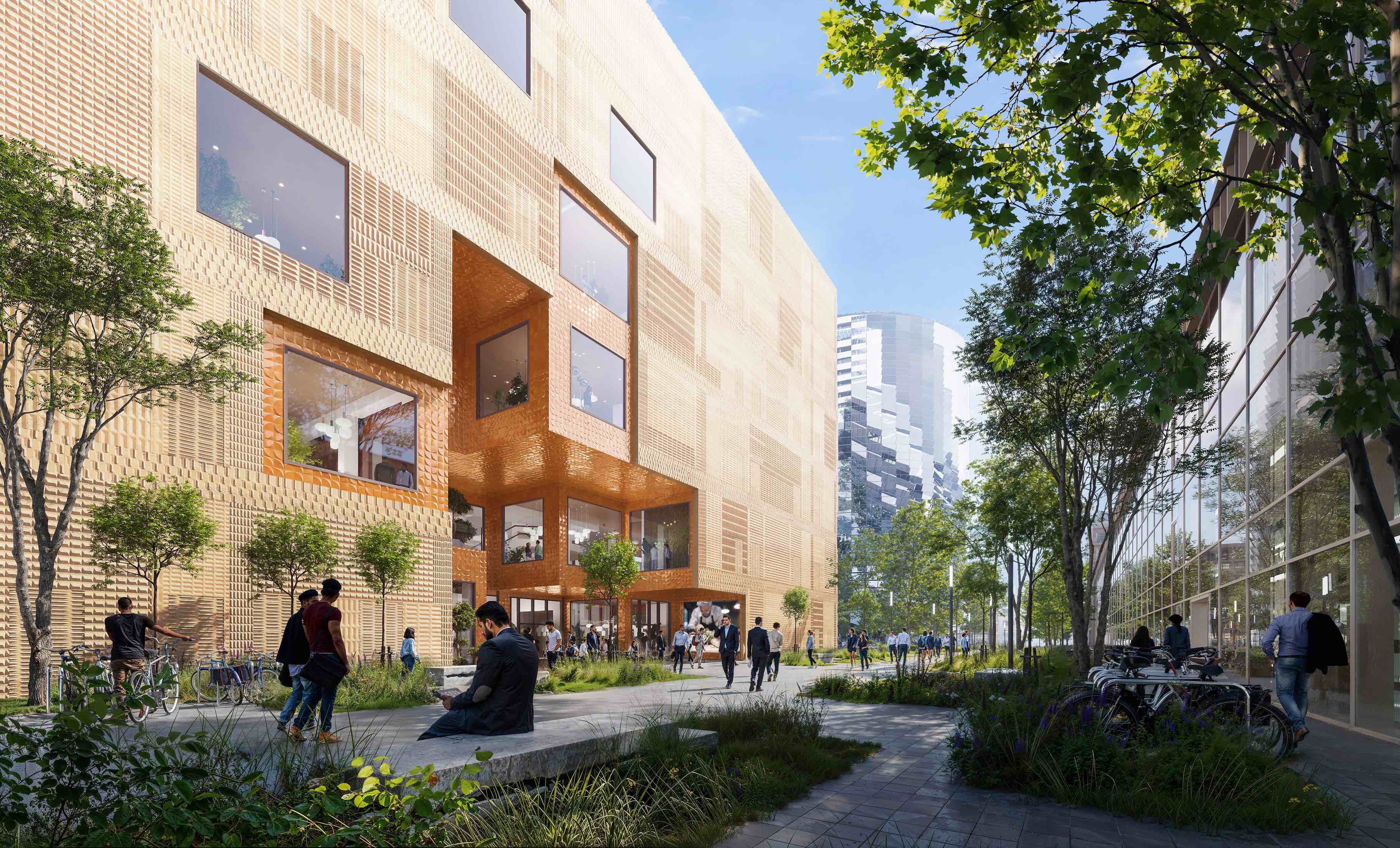
Restaurant © IPAI, MVRDV
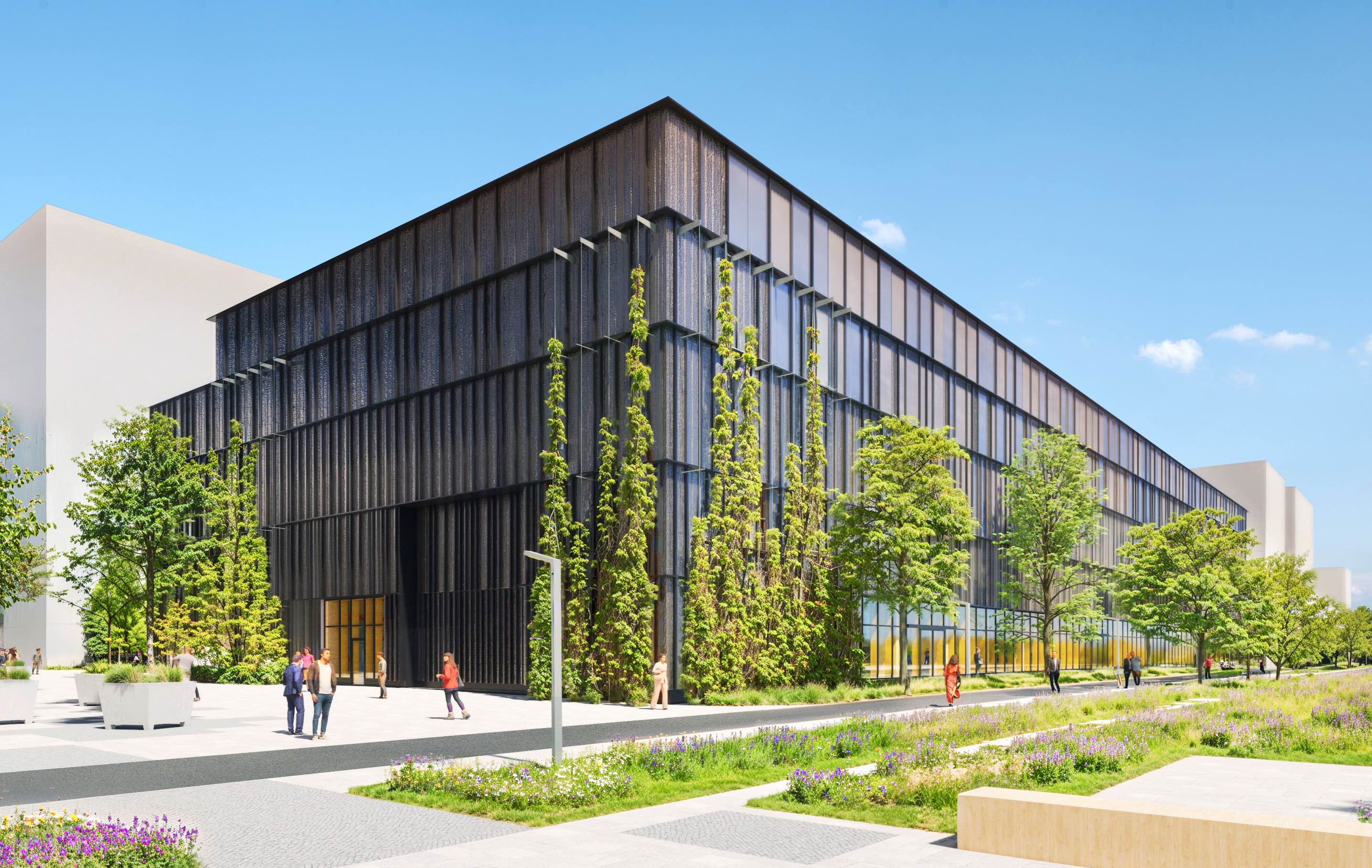
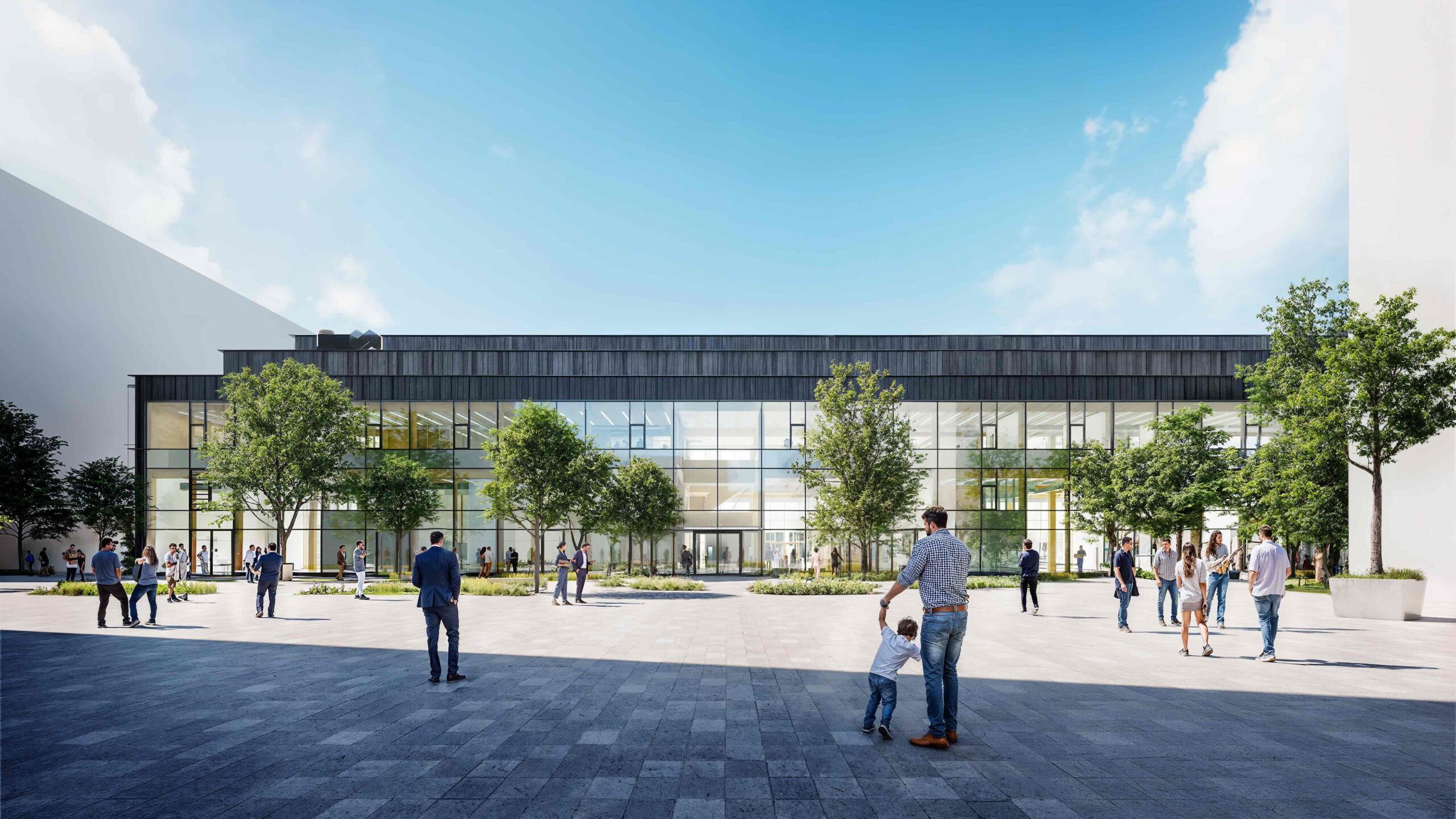
モビリティハブは物流とインフラの中枢として、広々としたアトリウムで来訪者を迎える。リビングラボは南側にオフィス、北側にキャンパス中央広場へ開く大実験ホールを配置し、パノラマ窓から実験の様子を望むことができる。
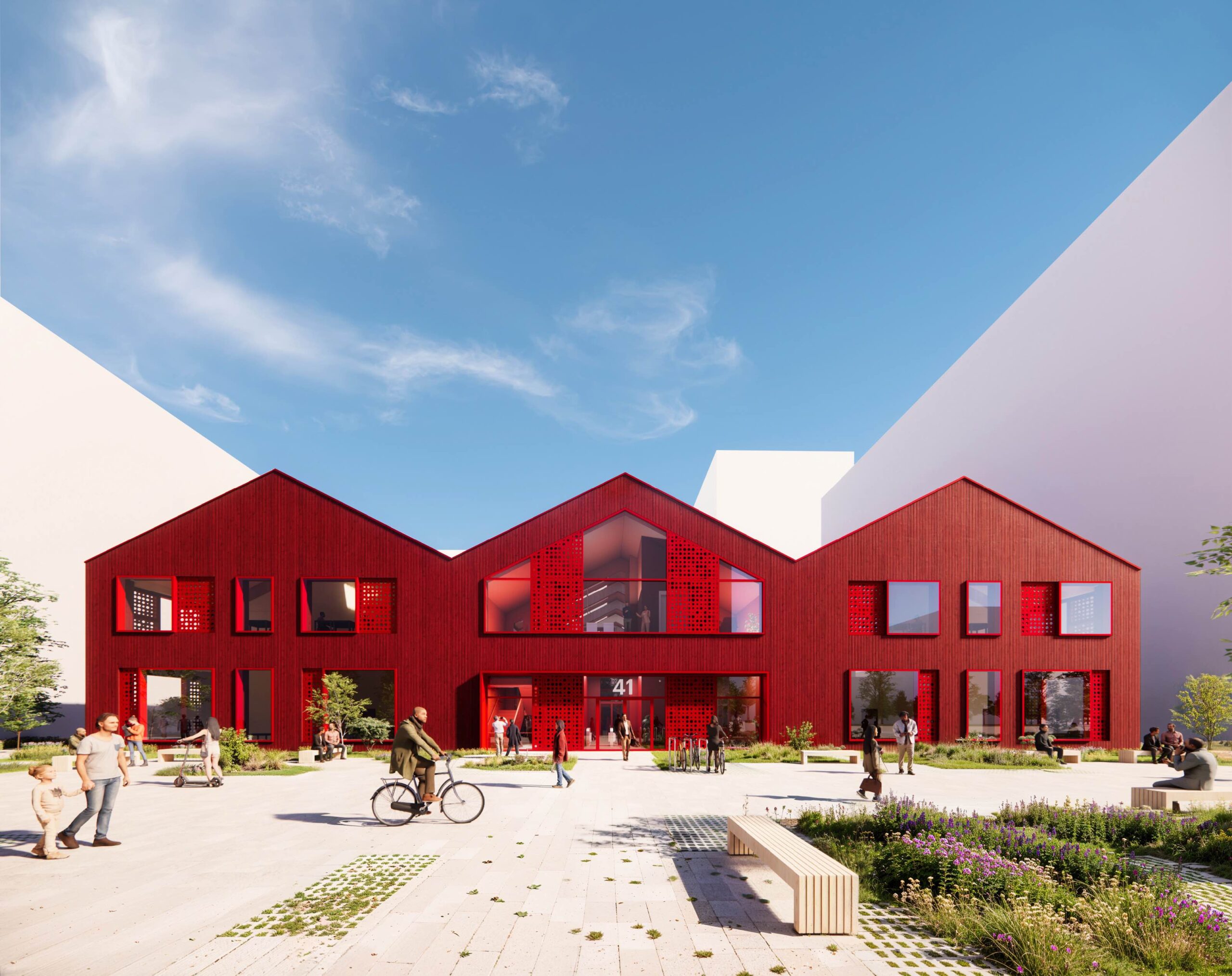
鮮やかな赤のスタートアップ・イノベーションセンターは、傾斜屋根と中央の緑のミーティングスペースによって協働的な雰囲気を醸成する。オフィスビルは太陽光発電ファサードを支えるプリーツ状の外装を持ち、各階には2層分の高さのある社交的な「リビングルーム」が設けられている。
Start Up Center © IPAI, MVRDV
Mobility Hub © IPAI, MVRDV, Vivid
持続可能性を中核とする設計プロセス
2023年の設計コンペティションでの優勝以降、MVRDVはIPAIコンソーシアムとの綿密な対話を通じて各建物の設計を進めてきた。キャンパスの中核原則として持続可能性を確立するため、設計過程ではMVRDVが手がけた設計ツール「CarbonSpace」を活用し、設計判断が含有炭素に与える影響を定量的に把握することで、低炭素設計を実現している。
これにより、多くの建物でハイブリッド木材構造などの軽量・バイオベース構造を採用した。キャンパスおよび主要建物群は、ドイツ持続可能建築評議会(DGNB)のプラチナ認証取得を目標としており、環境性能の面でも先導的なプロジェクトとなっている。
Concept 01
Concept 02
Concept 03
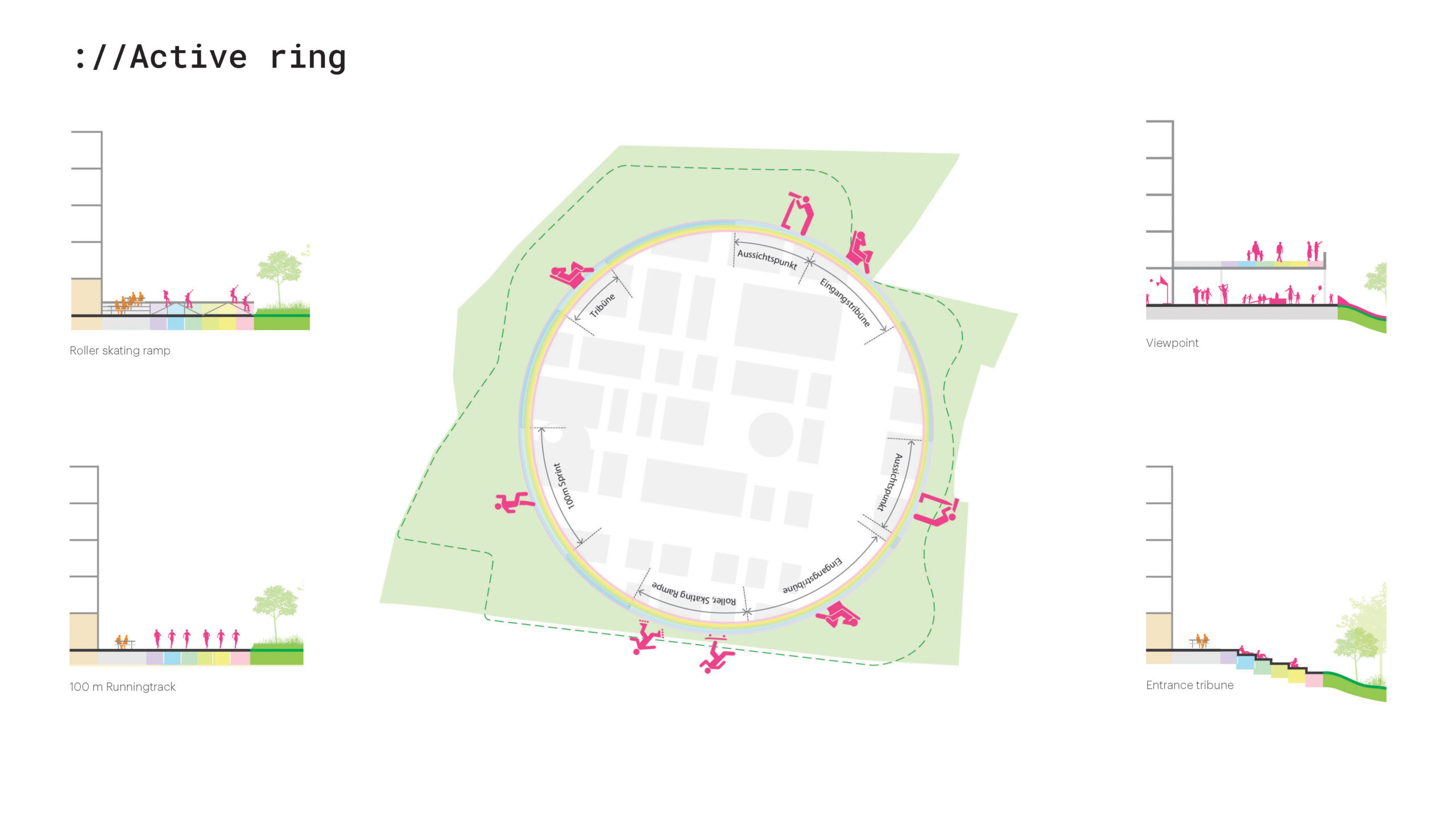
Concept 04
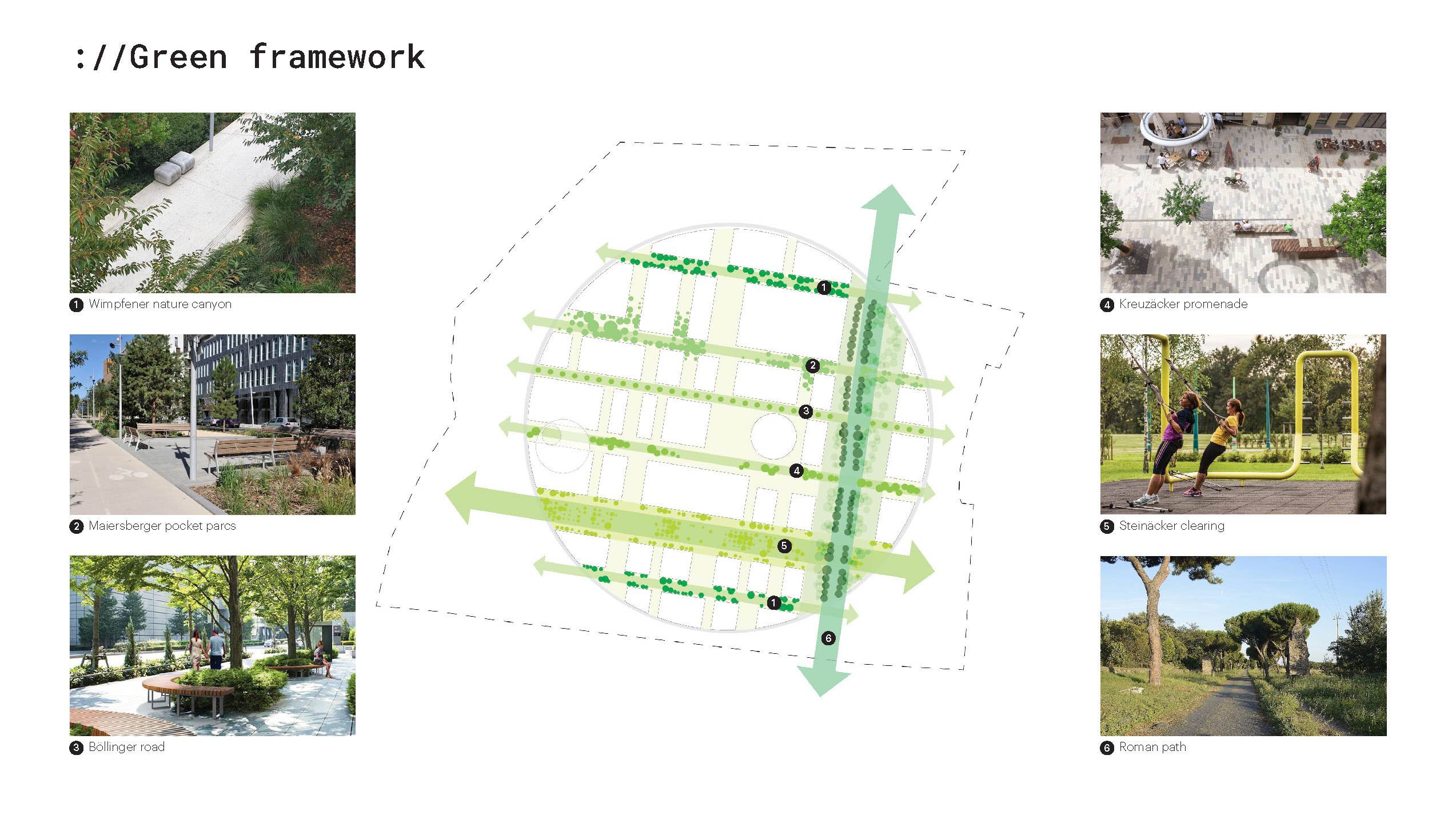
Concept 05
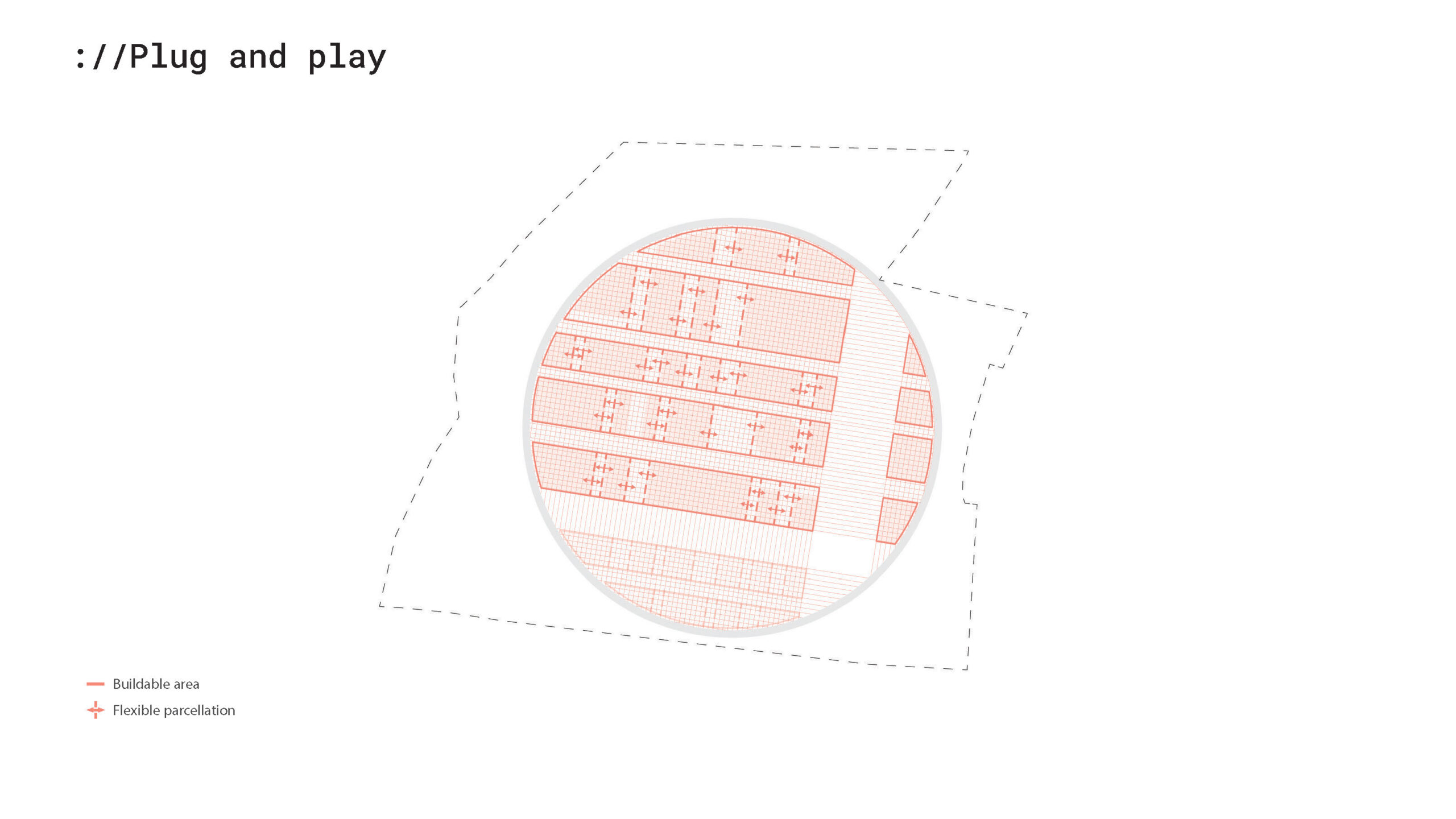
Concept 06
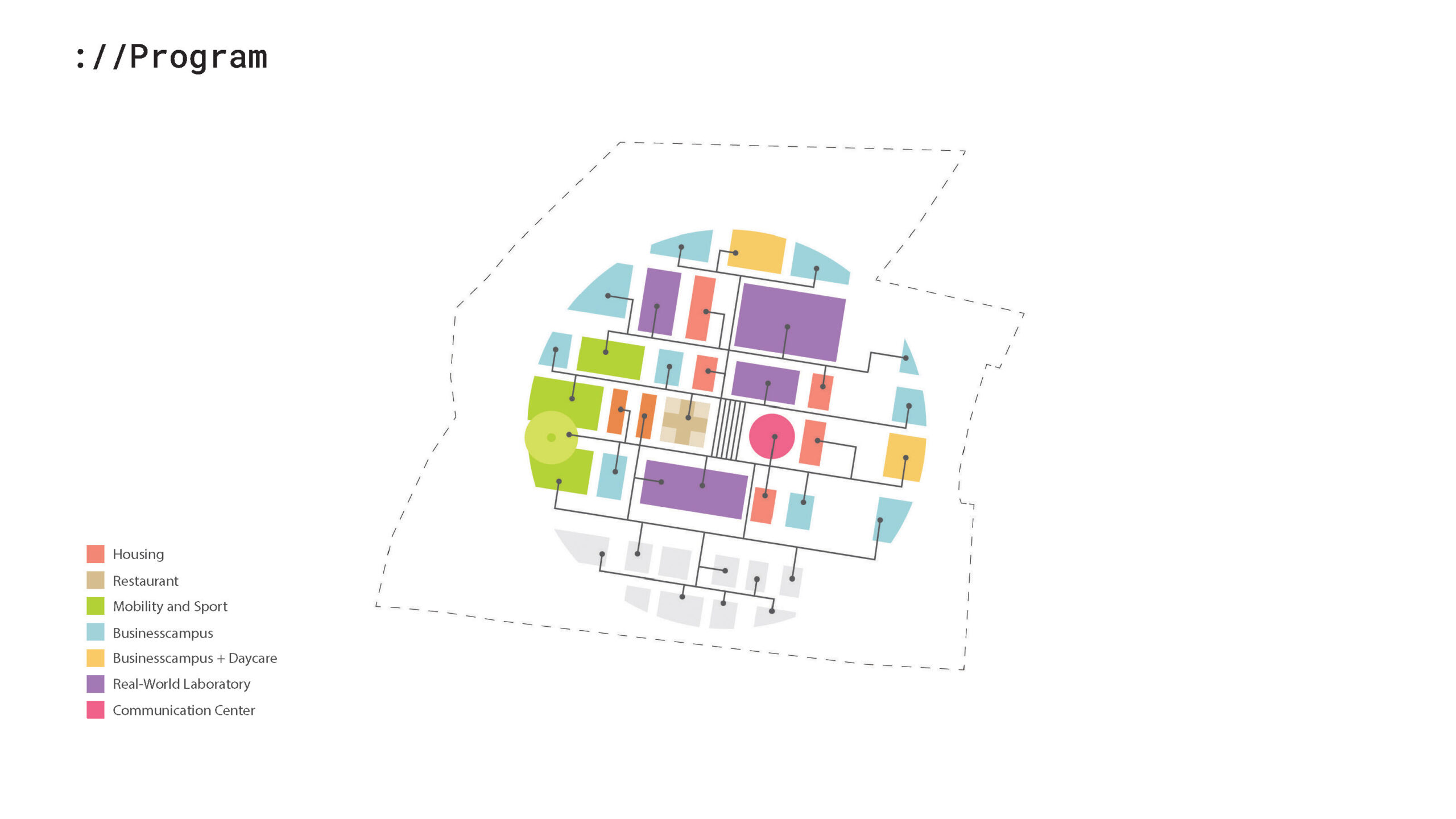
Concept 07
Concept 08
Concept 09
Reallabor © IPAI, MVRDV
Reallabor © IPAI, MVRDV
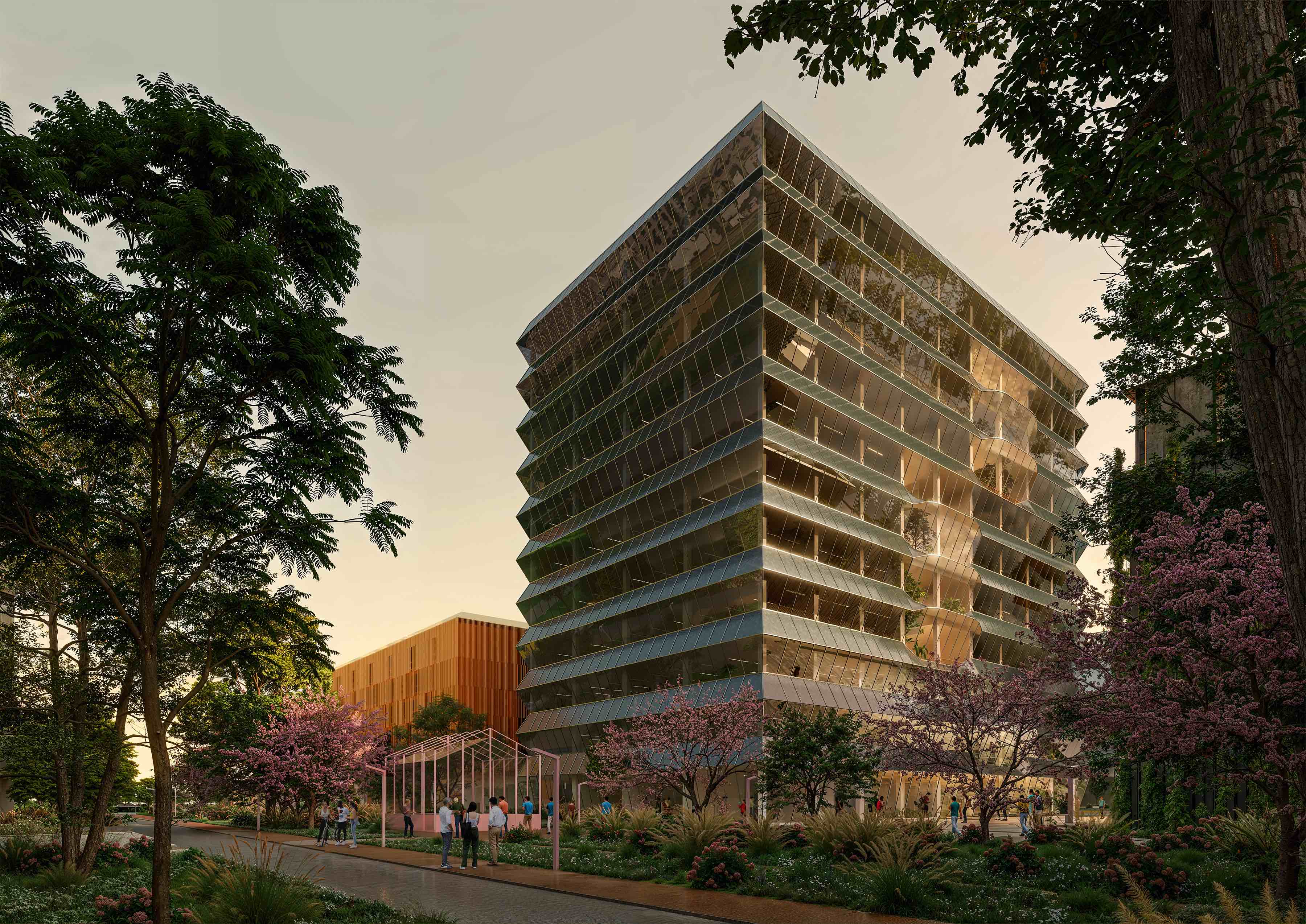
Hochhaus © IPAI, MVRDV
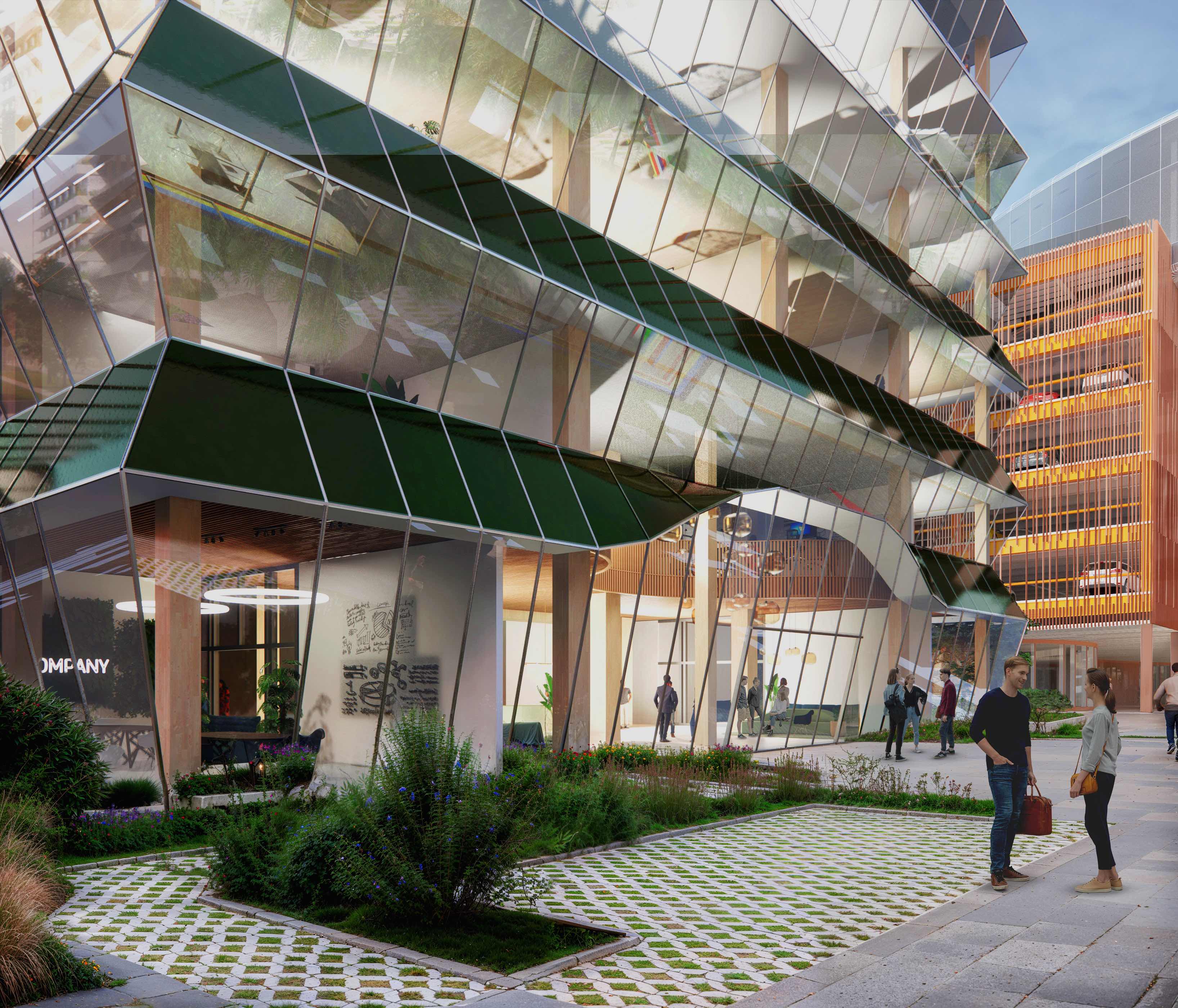
Hochhaus © IPAI, MVRDV
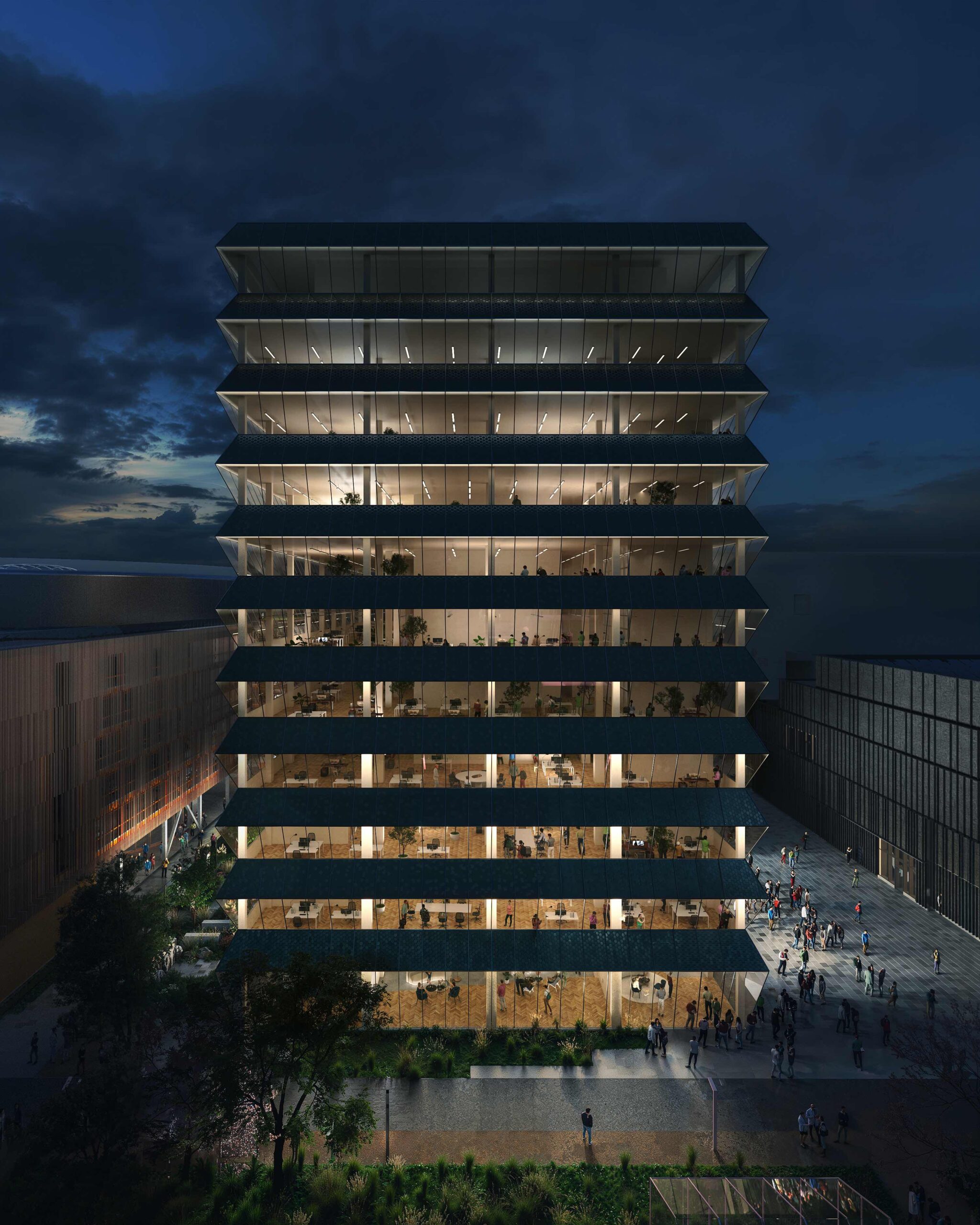
Hochhaus © IPAI, MVRDV
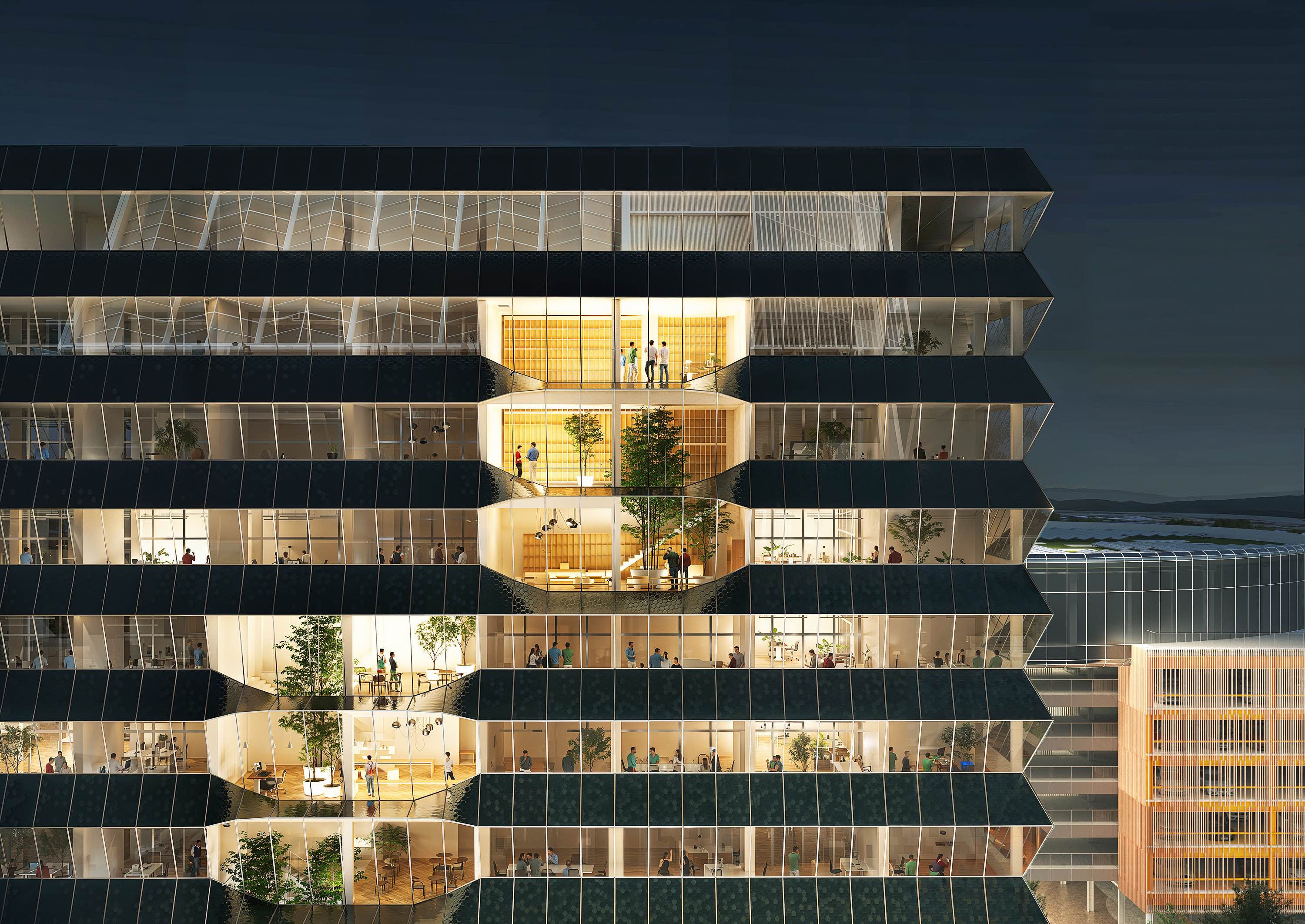
Hochhaus © IPAI, MVRDV
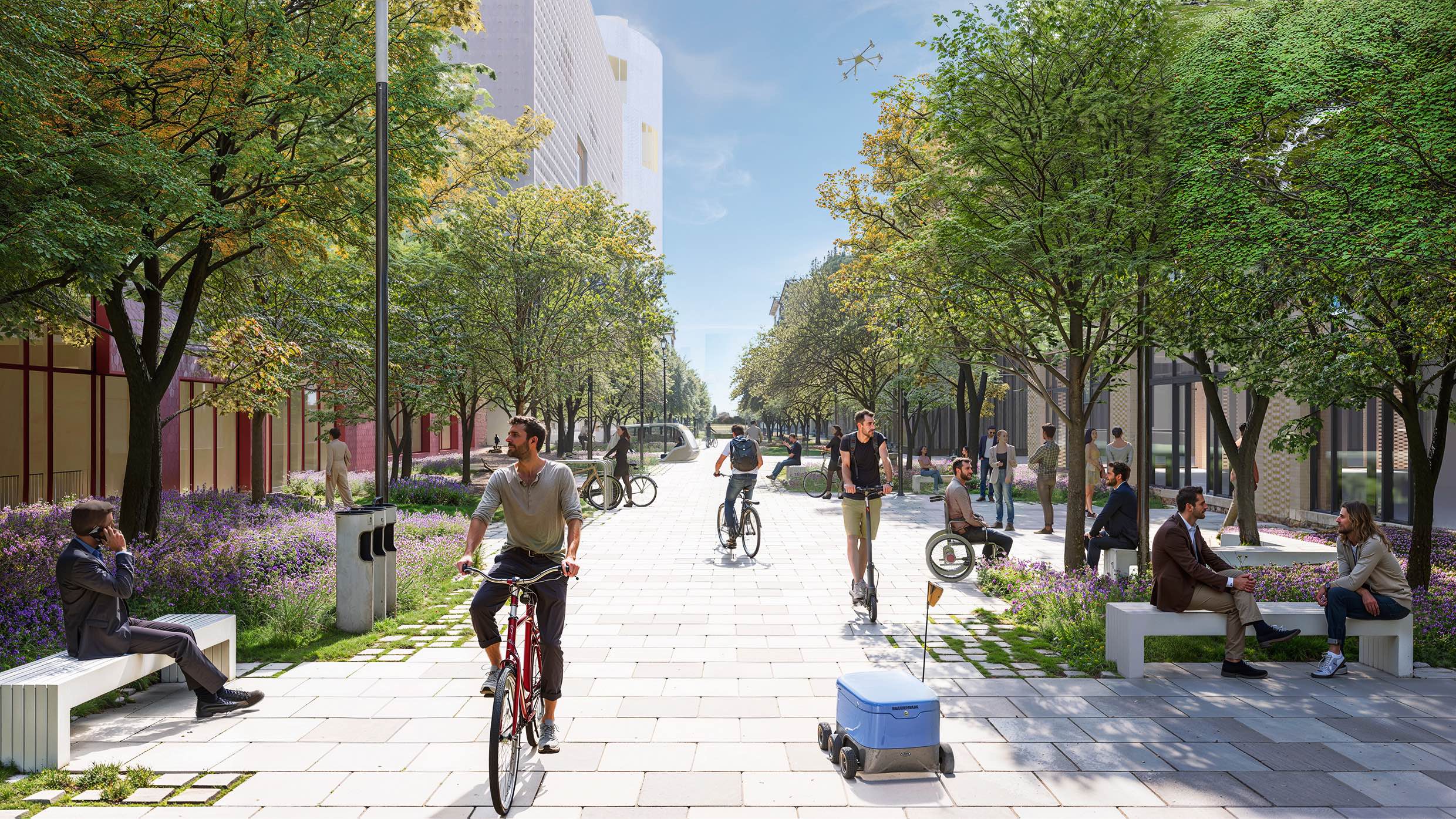
Aussenanlagen © IPAI, MVRDV
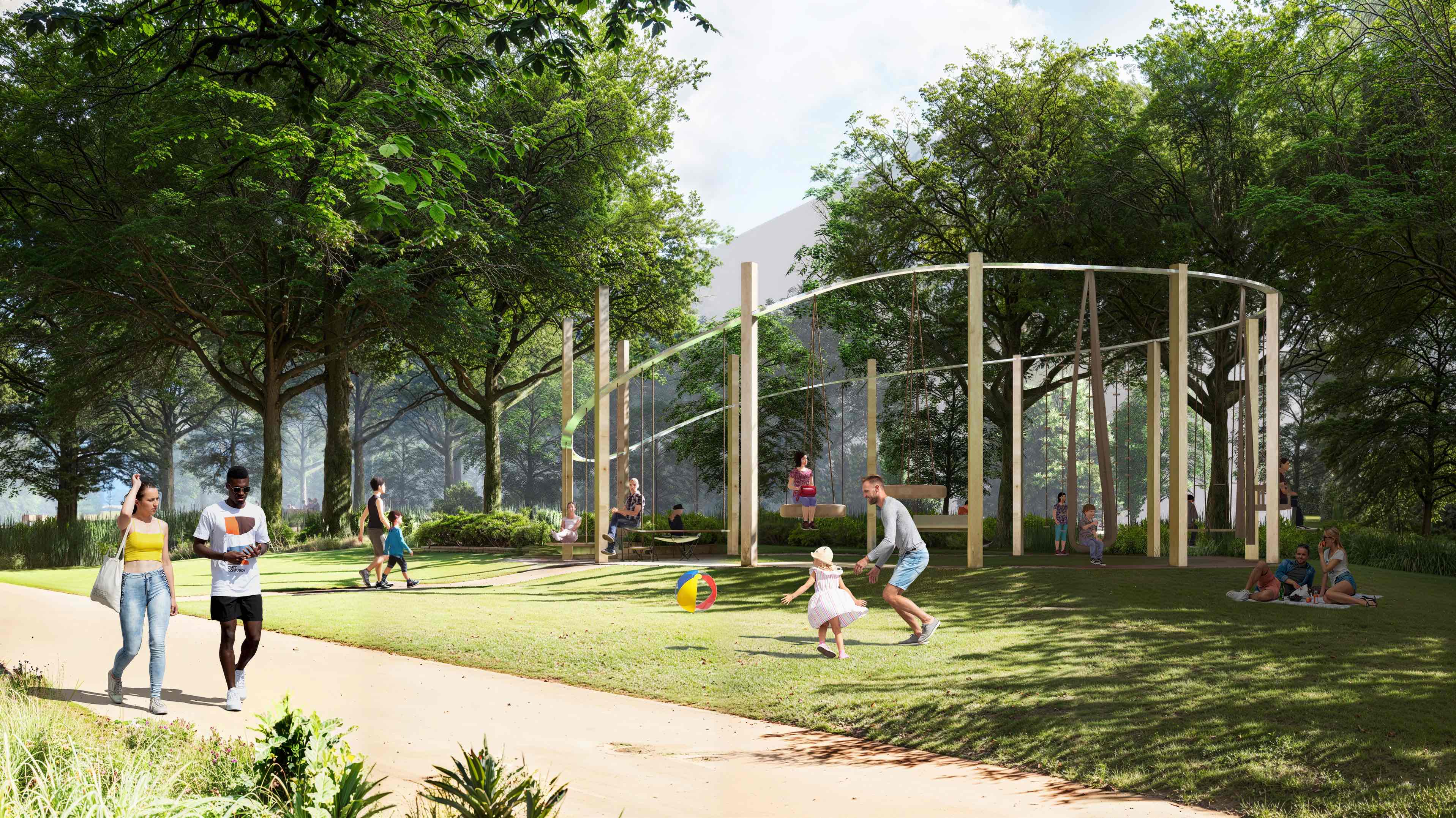
Aussenanlage © IPAI, MVRDV
以下、MVRDVのリリース(英文)です。
Rotterdam, October 22nd 2025
“The global home of human AI”: German Chancellor Friedrich Merz breaks ground for MVRDV-designed IPAI CAMPUSOn October 21st, 2025, the IPAI Konsortium – comprising the State of Baden-Württemburg, the Dieter Schwarz Foundation, Schwarz Gruppe, and the City of Heilbronn – celebrated the start of construction of the new campus of the Innovation Park Artificial Intelligence (IPAI CAMPUS). Located in Heilbronn, Germany, the 30-hectare campus will serve as an international hub for over 5,000 people working on the development of innovative and responsible AI solutions. Based on the principles of openness, collaboration, and sustainability, the campus will be an attractive place to work as well as a destination for curious visitors to engage with the development of world-changing technologies first hand. In recognition of IPAI’s significance in both the field of artificial intelligence and in its home country, the ground breaking ceremony was attended by German Chancellor Friedrich Merz, alongside high-profile politicians at national, state, and city levels, as well as VIPs of the IPAI Konsortium.
MVRDV’s masterplan design is defined by its distinctive circular shape, and by two off-centre axes. It envisages a business campus complete with laboratories, housing, and a central cultural building to communicate with the public. The first phase of construction includes many of the key buildings in the campus, and will form the core of the future campus, extending from the western edge of the circle to the communications centre and restaurant building, which define a public plaza at what will eventually be the centre point of the campus. In addition to the communications centre and restaurant, the phase includes the mobility hub, start-up and innovation centre, a sizeable “living lab”, and a ten-storey office building.
“Working in AI is very technical; people spend a lot of time tied to their screens”, says MVRDV founding partner Jacob van Rijs. “We designed the IPAI CAMPUS as a counterweight to this, with a focus on wellbeing. The site will be car free, the landscape is green, and many of the buildings are tactile and made with visible organic materials. We did wind studies to ensure a pleasant microclimate in the public spaces, allowing people to take advantage of the facilities that will be there. It’s a design that really emphasises the ‘human’ part of IPAI’s mission to be the global home of human AI.”
The buildings of IPAI are eclectic in character, with each one tailored to its own specialised programme. The communication centre, which will serve as the public heart of the campus with exhibitions, conferences, and seminars, is cylindrical, with an eye-catching reflective façade. The cream-coloured walls of the restaurant opposite are indented by orange “grotto façades” that create terraces for relaxation and socialising over a meal. The mobility hub, which serves as a central hub for logistics and infrastructure, welcomes arrivals with a spacious atrium. The living lab features offices on the southern edge, with a huge laboratory hall facing north onto the campus’ central plaza, with panoramic windows providing a view onto the tests being conducted inside. The bright red start-up and innovation centre provides an informal, collaborative atmosphere with its pitched roofs and central green meeting space. Finally, the office building features a pleated façade supporting a photovoltaic façade, while double-height social “living rooms” are available on each floor.
Since winning the campus design competition in 2023, MVRDV has developed the designs of each building through an intensive dialogue with the members of the IPAI Konsortium. With the goal of establishing sustainability as a core principle of the campus, the design process was accompanied throughout by MVRDV’s CarbonSpace tool, which allowed the design teams to measure the impact of their design decisions on embodied carbon and steer towards low-carbon designs. Through this process, a number of the projects now under construction were developed with lightweight and bio-based structures, such as the hybrid timber construction systems employed in the start-up innovation centre, the living lab, and the office building. In addition the campus, as well as the individual buildings of the communications centre, the startup and innovation centre, and the office building will receive DGNB sustainability certification – targeting platinum certification – from the German Sustainable Building Council.
The attendees of the IPAI CAMPUS ground-breaking ceremony included Friedrich Merz, chancellor of Germany; Dr. Karsten Wildberger, the German digital minister; Dorothee Bär, the German research minister; Winfried Kretschmann, minister-president of Baden-Württemberg; Dr. Nicole Hoffmeister-Kraut, the minister of economic affairs, labour, and housing for Baden-Württemberg; Harry Mergel, mayor of Heilbronn; Professor Reinhold R. Geilsdörfer, chairman of the board of the Dieter Schwarz Foundation; Moritz Gräter, CEO of IPAI; and Jacob van Rijs, founding partner of MVRDV.
MVRDV 公式サイト
https://www.mvrdv.com/projects/952/innovation-park-artificial-intelligence-ipai
【購読無料】空間デザインの今がわかるメールマガジン TECTURE NEWS LETTER
RECOMMENDED ARTICLE